In what can be described as a major change on permanent residency, Japan announced that the residency period for naturalization will be doubled to ten years effective April 1, 2026, according to a news report by Kyodo News. At the same time, there will be changes on the verification period of tax payments and social insurance premiums.
To put things in perspective, posted below is an excerpt from the news report of Kyodo News Some parts in boldface…
The Japanese government said Friday it will double the minimum residency requirement for naturalization to 10 years starting April 1.
The Justice Ministry said it will also extend the verification period for tax payments to five years and for social insurance premiums to two, both from one year currently. Those who have already applied will also be subject to the changes.
Prime Minister Sanae Takaichi instructed Justice Minister Hiroshi Hiraguchi in November to tighten the rules on acquiring Japanese nationality, saying the current conditions were too lax.
The country’s Nationality Act sets the minimum requirements for naturalization, including residing in Japan for at least five consecutive years and being a person of good conduct with adequate means of support in terms of assets or skills possessed by the applicant, spouse or relatives.
The screening process also takes into account “compatibility with Japanese society,” including the ability to speak Japanese without difficulty in daily life.
According to the ministry, extending the minimum residency requirement to 10 years is part of efforts to ensure such compatibility. The changes were included in comprehensive measures on foreign resident policy compiled in January.
For permanent residency, Japan sets detailed eligibility requirements under the immigration law, including properly fulfilling public obligations such as tax and national insurance payments, as well as a minimum residency period of 10 years.
Let me end this piece by asking you readers: What is your reaction to this development? Do you agree with the move of the Japanese government on extending the residency period for naturalization to ten years? Do you think the said change will ensure better chances for immigrants to become more adjusted and compatible with Japanese society? Do you think the reforms implemented will compel foreigners from Third World nations to think very seriously before applying to migrate to Japan?
Welcome back my readers, YouTube viewers and all others who followed this series of articles focused on YouTube videos worth watching. Have you been searching for something fun or interesting to watch on YouTube? Do you feel bored right now and you crave for something to see on the world’s most popular online video destination?
I recommend you check out the following videos I found.
#1 2002 Resident Evil Movie Revisited – Almost a quarter-century ago, the first-ever live-action Resident Evil movie was released in cinemas directed by Paul W.S. Anderson and starring Milla Jovovich. Believe it or not, the 2002 movie was realized after the original film project involving zombie movie legend George Romero – who even directed the Japanese market TV commercial of Resident Evil 2/Bio Hazard 2 – got scrapped. Having played many RE games, I saw the movie in the local cinema upon release and went home feeling numb and alienated. Even though the film was never an adaptation of the games (note: no RE character from the games appeared in the movie) and it had its own concepts, there are still some people who enjoyed it or endured the moments of suspense and horror. To learn how it impacts viewers, watch the reaction videos below.
#2 Ranting For Vengeance Slams Spider-Man: Brand New Day And The Modern Culture Behind It –The first trailer of the upcoming movie Spider-Man: Brand New Day drew a lot views from around the world but YouTuber Ranting For Vengeance was not fooled by it. In his recent video, he slammed the new movie and explained in detail the woke elements or so-called modern culture behind it. He also stressed that the real good stories of Spider-Man are in the comic books from long ago and the only good Spider-Man films are those directed by Sam Raimi. To learn more, watch Ranting for Vengeance’s video below.
#3 The Negative Effects Of Sports Betting Exposed – As technology evolved, making bets on sports events – right down to specific achievements or action – has gotten more convenient to do and has turned normal in society. However, there are indeed negative effects and regrets that come with it. Watch and learn from the 700 Club video below.
#4 Remember America’s Lunch Counters? – Decades ago in the United States, lunch counters were popular as they provided customers not only a place to enjoy their meals but also become a part of a “counter community” where they interact with the cook (or assistant) on the other side, and chat with fellow customers on the side. Lunch counters have disappeared in most parts of America and there are some young people who never knew they existed. Here is a nostalgic look back at America’s lunch counters.
#5 Cancelled Creatures Of Resident Evil Games – The Resident Evil games franchise turned 30 this year. Not only did Capcom release a lot of RE video games through the decades and had several characters which resonated with gamers, a lot of monsters/creatures were also featured on top of the zombie hordes. Like movies or TV shows, the RE video games had content that never made it in versions that were commercially released and among them are many creatures or monsters that were either conceptualized or even produced. To find out what those cancelled creatures are, watch ScorePN’s number below.
#6 Customers Attracted By Kappabashi Kitchen Town – Have you heard of Kappabashi Kitchen Town? It’s a place in Tokyo, Japan, which has been attracting different types of customers as it has a nice variety of products for sale. There are locals who need something for their cooking needs or for their business operations. Unsurprisingly, foreigners are also attracted to the place. To find out more about Kappabashi Kitchen Town, watch the Nippon TV video below.
#7 Starman Retrospective – I saw the 1984 science fiction film Starman a number of times through the decades. Directed by John Carpenter and starring Jeff Bridges, Starman is about an unlikely relationship between a recently widowed woman and an alien being who cloned the human body of her later husband. Starman is a fine film and its production history is also fascinating to explore. To find out more about Starman, watch the videos below from Represent This.
Welcome back my readers, YouTube viewers and all others who followed this series of articles focused on YouTube videos worth watching. Have you been searching for something fun or interesting to watch on YouTube? Do you feel bored right now and you crave for something to see on the world’s most popular online video destination?
I recommend you check out the following videos I found.
#1 Resident Evil Bonanza (1996 Original and 2002 Remake) – Thirty years ago this month, the original Resident Evil video game was released on PlayStation and it impacted console gaming by moving towards an adulterated direction with zombie horror and mad science as core elements. The 1996 game led Capcom to making Resident Evil sequels and spin-offs in the years that followed. Then in 2002, an ambitious remake of Resident Evil was released on the Nintendo GameCube and it became the definitive version RE creator Shinji Mikami and his team came up with. To explore Resident Evil in its original version and the remake, watch the videos below.
#2 Living In Las Vegas –For decades, Las Vegas in Nevada has always been known as a major tourist destination with lots of hotels, casinos and other entertainment joints clustered together. There is also the perception that a lively city like it means there are lots of job opportunities and business or investment options to pursue there. What most people do not realize is that Las Vegas is not exactly the ideal city to move into and live in due to many factors that can be challenging and stressful to deal with. To discover why, watch the videos below.
#3 Popcorn In Bed Reacts To Logan’s Run – It has always been argued that science fiction movies released before Star Wars were not too exciting to watch. One of them was Logan’s Run which continues to have a divisive reception among movie buffs both young and old. There are some who liked its concept and execution, while others dismissed it for being corny or even being symbolic about the sexual revolution of the 1960s and 1970s. If you want to discover the film without spending money on it, watch Popcorn in Bed’s reaction video below. Observe how the movie impacts her.
#4 The History Of Atari Arcade Games – I was fortunate enough to have played games in video arcades in the 1980s. In the old days, Atari was a major arcade industry player apart from being big on console gaming. Atari was also responsible in bringing its arcade games to Japan (with Namco as its partner) and also brought some of Namco’s games into American arcades. If you love Atari, arcade games and retro gaming in general, watch the video documentaries below.
#5 Ranting For Vengeance Demolishes Woke Nuts’ Take On Resident Evil’s Chris Redfield – Going back to Resident Evil, it is not surprising that the mob of woke zealots, LGBTQ activists and other Leftists keep on creeping in on existing entertainment franchises to deform them and make it fit their wicked ideology. Recently there were woke nuts online who targeted the Resident Evil icon Chris Redfield and perceive him as gay. Ranting For Vengeance posted a video to demolish the woke mob’s take on Redfield and he explains in detail why the iconic hero has always been straight since the very beginning. Watch the video below and share it with all Resident Evil fans out there.
#6 Forgotten Video Games Based On Movies – Remember back in the old days when there were a lot of video games based on movies released? Back then, there was money to be made on licensing and merchandising. As a gamer and movie buff since youth, there definitely was excitement whenever I learned a game about a film I enjoyed was made available. Of course, there were games that turned out fun and others ended up being disappointing or even very poor in quality. Check out the video below about the forgotten movie-based games.
#7 How Hollywood Killed The Oscars – Avoiding the Academy Awards (AKA Oscars) is absolutely fine. It no longer celebrates the best of filmmaking and it has been overwhelmed by woke activists, Satanic Leftists, modern day Commies and the like. Communist Hollywood (Commiewood) has been using the Academy Awards to amplify its wicked agenda for a long time now. The old glory and the celebration of the best of filmmaking are truly gone. Watch the video below.
#8 National Security Council Secretary Ali Larijani And Basij Commander Of Iran Eliminated By Israel – I recently blogged about the eliminations of two high-ranking officials of the Islamic terrorist regime of Iran as the conflict in the Middle East went on. It was Israel which successfully killed Ali Larijani and a Basij commander and it was the most significant achievement since the elimination of the demon Ali Khamenei. Right now, it is not clear who is really leading the remaining wicked regime and Iran’s military has been decimated by America and Israel. Keep in mind that the military operations against Iran is all about bringing down the Islamic terrorist regime and liberating the oppressed Iranians so they can take their country back after 47 years. For insight about what happened, watch the videos below.
#9 The Revival Of A Japanese Sake Brewery – It is always depressing to see your own business get destroyed because of a natural disaster. In Japan, a certain brewery that produced sake got ruined when a huge earthquake struck. Since then, the owner started hard efforts to revive the business. To discover what happened, watch the Nippon TV video below.
Recently a survey conducted by OCTA Research and commissioned by the Embassy of Japan in the Philippines revealed that almost eight out of ten Filipinos trust Japan, according to a news article by the Philippine News Agency (PNA).
To put things in perspective, posted below is an excerpt from the news article of the PNA. Some parts in boldface…
A survey of a private polling and research firm, OCTA Research, released on Monday showed that eight in 10 adult Filipinos trust Japan.
The survey, commissioned by the Embassy of Japan in the Philippines and conducted from December 3 to 11, 2025, among 1,200 respondents aged 18 and above, asked the question: “How much does the Philippines trust Japan?”
A total of 79 percent of the respondents answered they “strongly trust/somewhat trust” Japan, while at least 17 percent responded “can’t say if I trust or not”, and 4 percent have shown distrust.
This result suggests that positive perceptions of Japan are deeply embedded in Philippine public opinion.
Filipinos also trust the Japanese people, with 74 percent expressing trust and 6 percent expressing distrust. About 20 percent answered that they are undecided.
This indicates that goodwill toward Japan extends to interpersonal perceptions of Japanese citizens, according to OCTA Research.
Most or 70 percent of the respondents said they view the relationship between the Philippines and Japan as “very good” while 24 percent view it as neither good nor poor.
These favorable perceptions of Japan were observed across Metro Manila, Balance (of) Luzon, the Visayas, and Mindanao, as well as across socioeconomic classes.
“Cultural exchanges, tourism, educational cooperation, and the growing Filipino community in Japan contribute to familiarity and mutual goodwill between the two societies,” OCTA Research said.
Let me end this piece by asking you readers: What is your reaction to this development? Do you think the governments of Japan and the Philippines should engage more with each other diplomatically, economically and militarily? Do you think Filipinos see the Japanese as an ally while the Philippines remains in conflict with Communist China at the West Philippine Sea? Are you one of the hundreds of thousands of Filipinos who traveled to Japan yearly?
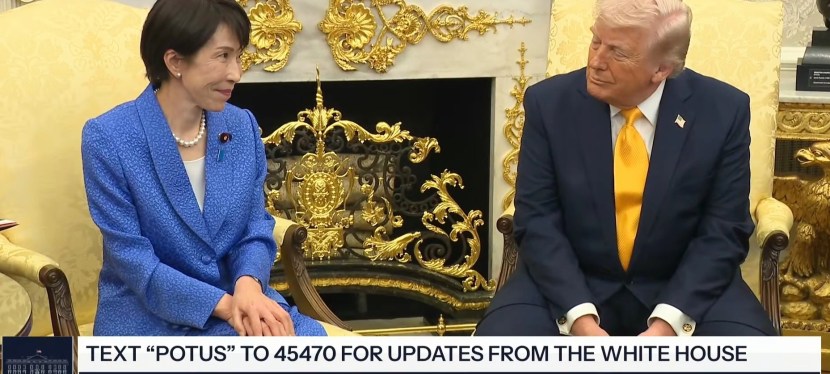
Japanese Prime Minister Takaichi Sanae visited Washington for the first time as the head of her nation and met with US President Donald Trump at the White House where they discussed very important matters in front of the media and officials, according to a news report by Kyodo News. Takaichi also praised the President for his peace efforts.
To put things in perspective, posted below is an excerpt from the news report of Kyodo News Some parts in boldface…
Prime Minister Sanae Takaichi told U.S. President Donald Trump on Thursday that Japan is ready to contribute to the safety of the Strait of Hormuz as the U.S.-Israeli war on Iran intensifies, while explaining Tokyo’s legal constraints on sending ships from its defense forces to the region.
Takaichi told reporters after her meeting at the White House with Trump that she told the U.S. leader “in detail what Japan can do and cannot do” from a legal perspective under the country’s war-renouncing Constitution.
Trump, for his part, reiterated his expectation that Japan would be engaged, while saying during the part of their talks open to media that he believes Japan has been “stepping up to the plate” in recent days over the Iran war, “unlike NATO.”
The U.S. leader has made public his dissatisfaction with Washington’s allies, including Tokyo and members of the trans-Atlantic alliance, over their reluctance to pitch in to help secure the Hormuz strait, a vital waterway for global oil transportation now largely blocked by Iran.
“I expect Japan to step up, because, you know, we have that kind of relationship,” he said. “We have 45,000 soldiers in Japan. We have, we spend a lot of money on Japan…so I expect, I’m not surprised that they would step up.“
Noting also that more than 90 percent of Japan’s crude oil imports normally pass through the strait, Trump said Japan has a “big reason” to do more.
In affirming Japan-U.S. collaboration on expanding U.S. energy production, Takaichi said she proposed to Trump a joint oil-reserve project to ease supply concerns driven by the Middle East conflict.
At the talks, Takaichi praised Trump’s “peace” efforts, expressing readiness to assist by reaching out to other countries. “Donald is the only person who can bring peace and prosperity across the world,” she said.
Takaichi emphasized that the prospect of Iran developing nuclear weapons is unacceptable. Trump alluded earlier to Iran’s nuclear program to explain the U.S. decision to launch its military campaign against the country.
Facing an increasingly assertive China, Takaichi also reminded Trump that the security environment remains severe in the Indo-Pacific, at a time when reports have emerged that some U.S. military assets are being moved from the region to the Middle East.
The two leaders “committed to peace and stability across the Taiwan Strait as an indispensable element of regional security and global prosperity” and “opposed any attempts to unilaterally change the status quo, including by force or coercion,” the White House said in a press release without naming China.
They confirmed that their nations oppose measures threatening critical mineral supplies such as export controls, senior Japanese government officials told reporters, apparently referring to Beijing’s tighter regulations on rare earths exports.
They agreed to advance broad defense cooperation, including joint missile development and production, and promote a free and open Indo-Pacific, according to Takaichi. The White House said the production of the interceptor Standard Missile-3 Block 2A in Japan will be quadrupled.
“We were able to affirm many concrete forms of cooperation that will further enhance the quality of our alliance in wide-ranging fields,” Takaichi said, adding that she and Trump are aiming to elevate bilateral ties to “a higher level” together.
Trump welcomed Japan buying “a lot of” U.S. military equipment. He further stressed that he has a “very fine relationship” with Takaichi, describing her as “a very special person” who is doing a “fantastic job.”
The U.S. side did not bring up fresh demands for Japan to spend more on its defense, the officials said.
Takaichi’s main goals in her first trip to the United States since taking office in October were to strengthen the personal trust in her ties with Trump and reaffirm the U.S. security commitment to the Indo-Pacific region as China’s influence grows.
The meeting came amid increasing concerns within Japan that the U.S. focus in terms of policy and military assets could shift from the Indo-Pacific to the Middle East if the U.S.-Israeli war with Iran drags on, a development that would work in China’s favor.
The U.S. military has reportedly begun relocating the amphibious assault ship Tripoli and over 2,000 Marines from their bases in southwestern and southern Japan to the Middle East.
Takaichi got off to a positive start in building personal ties with Trump when they met in person for the first time in October in Tokyo, shortly after she became Japan’s first female prime minister.
Since the outbreak of the Middle East conflict, Tokyo has sought to strike a delicate balance between maintaining its strong alliance with Washington and its friendly relations with Tehran.
For more insight about the Trump-Takaichi meeting, watch the videos below.
Let me end this piece by asking you readers: What is your reaction to this development? What is your impression about the many matters and announcements that happened during the Trump-Takaichi meeting at the White House? Were you surprised when it was announced that US allies Japan, Italy, England, Netherlands, Germany, and France jointly agreed to secure the Strait of Hormuz in response to Trump’s demand? With Japan having a close relationship with Trump’s America now, do you think Communist China and North Korea will feel intimidated at their side of the Pacific?
To put things in perspective, posted below is an excerpt from the news report of Kyodo News Some parts in boldface…
Prime Minister Sanae Takaichi is considering expressing Japan’s desire to cooperate on the U.S. “Golden Dome” next-generation missile defense system at her upcoming meeting with President Donald Trump, Japanese government sources said Tuesday.
The envisaged missile defense collaboration is among the expected agreements, covering various areas from the long-standing Japan-U.S. alliance to the fields of economic security and cutting-edge technology, at the summit slated for Thursday in Washington, the sources said.
Revealed by Trump in May, the Golden Dome scheme is intended to detect and destroy hypersonic missiles, which can fly at above five times the speed of sound, in outer space in mid-flight. The total costs are estimated at $175 billion.
The trajectories of hypersonic weapons are irregular and low-altitude, making them difficult to shoot down or track by radar. China, North Korea and Russia have been aggressively pursuing such arms.
In August 2023, Tokyo and Washington agreed to develop a new type of missile to intercept hypersonic weapons, with the goal of completing it by the 2030s. It is intended that Aegis destroyers of the U.S. Navy and the Japan Maritime Self-Defense Force will be equipped with the missile.
To enhance the missile defense system’s detecting and tracking capabilities, the U.S. military has been building a “satellite constellation” system that allows it to capture incoming missiles with high accuracy by linking multiple small satellites.
Japan’s Defense Ministry, which has also been conducting research on technologies necessary for detecting projectiles from outer space, is eyeing information sharing with the United States, the sources said.
During the summit talks, which will take place amid the Middle East conflict following U.S. and Israeli attacks on Iran, Takaichi also plans to ask Trump about purchasing crude oil produced from Alaska, according to the sources.
Japan, which relies heavily on the Middle East for its crude oil imports, has once again had its energy vulnerability exposed in the wake of the war in the region, with the effective closure of the Strait of Hormuz disrupting oil flows.
Takaichi and Trump, meanwhile, are expected to agree on a $100 million joint project in shipbuilding, a sector both countries are keen on enhancing amid dominance by Chinese makers.
Let me end this piece by asking you readers: What is your reaction to this development? Do you think the US-Japan summit this week will result in big breakthroughs with regards to defense, economics and energy? What do you hope to see happen after President Trump and Prime Minister Takaichi meet in Washington? Do you think the Golden Dome missile defense project will be fully realized and operational in the years to come?
Welcome back my readers, YouTube viewers and all others who followed this series of articles focused on YouTube videos worth watching. Have you been searching for something fun or interesting to watch on YouTube? Do you feel bored right now and you crave for something to see on the world’s most popular online video destination?
I recommend you check out the following videos I found.
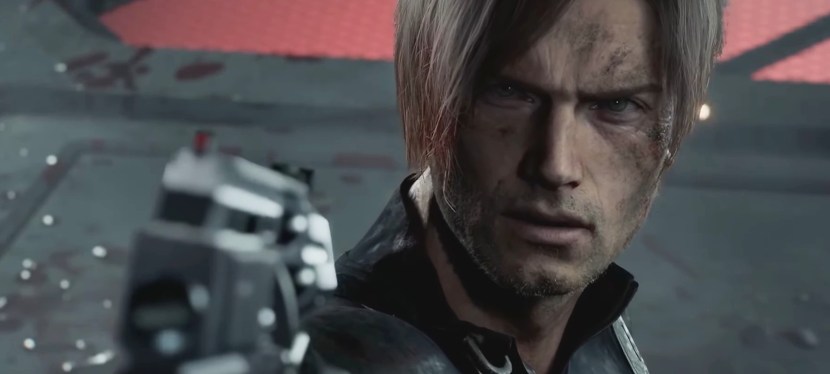
#1 Leon Kennedy Is Gaming’s Significant Action Hero – Have you guys played Resident Evil: Requiem? I have not played it but the most notable buzz I heard about it was it emerged as a commercial success, and Leon Kennedy’s significance as a video game action hero is stronger than ever. Having played Resident Evil 2 of 1998 and 2019, plus Resident Evil 6, I can say that Leon Kennedy is a video game icon by today’s standards. In my view, the fictional hero is comparable with Clint Eastwood’s Dirty Harry. To learn more about the significance of Leon Kennedy and the quality of Resident Evil: Requiem, watch the video of Ranting for Vengeance below.
#2 Resident Evil of 1996 Revisited – Thirty years ago this month, Capcom released Resident Evil on PlayStation (followed by the Windows PC and Sega Saturn versions) and it became a big hit with gamers and critics. Since then, the Resident Evil games grew into a popular multimedia entertainment franchise and it is easily one of the most significant game franchises of all time. The 1996 original game was a successful experiment and it had a lot of content that added to its replay value. Times like these, it is important to revisit the first-ever Resident Evil game and I found a very comprehensive video about it which you can watch below.
#3 Fast Food In 1980s America – When I first visited the United States of America in 1989, me and my relatives had lots of fast food stops as we moved from one state to another by car. We had a nice variety of meals from food joints like Carl’s Jr., Burger King, McDonald’s, and Taco Bell to name some. I also had fast food stops when I revisited America in 1997, 2001, 2008 and 2011 but those experiences never matched the food stop experiences I had in 1989. To see what fast food in America was like in the 1980s, watch the video below.
#4 How Las Vegas Joints Scam Customers Without Breaking Laws – When I visited Las Vegas in 2011, I did not enjoy it that much because almost everything around me was too expensive. We stayed at a hotel along the famous Las Vegas strip which meant we were literally trapped by high rates here and there. As it turns out, the businesses there have been scamming customers and tourists without necessarily violating laws. How did they do it and what can you do to avoid such scams? Watch and learn from the video below.
#5 You, Me And The Movies React To The Godfather Trilogy – What is there to say about The Godfather movies of 1972, 1974 and 1990? Directed by Francis Ford Coppola, those movies were the most definitive cinematic portrayals of the mafia as well as the struggles of an Italian-American family. Al Pacino will forever be remembered as Michael Corleone while the late Robert Duvall was very memorable playing the great lawyer Tom Hagen. A few years ago, You, Me and the Movies took the effort to watch and react to The Godfather, The Godfather Part II and The Godfather Part III. I like how each movie – even with the third being the weakest and most disappointing one – drew their reactions. Watch and enjoy their reaction videos below.
#6 Ashleigh Burton Reacts To Annie – I never saw the 1982 musical film Annie in the cinema. As a young boy back then, I do remember the strong marketing and promotion of the movie prior to its release. A short time after its theatrical run, there were people in our local community singing “Tomorrow, Tomorrow, I Love You, Tomorrow, You’re Always A Day Away” and citing lines from the movie. Historically, Annie was not exactly a gigantic hit and it was made with a very large budget of $35 million. If you want to discover what Annie is about, I encourage you all to watch Ashleigh Burton’s entertaining reaction video below.
#7 Affordable Japanese Cruises – Have you thought about visiting Japan and spending time in a cruise ship? Considering the economic developments and trends of recent years, it seems cruises there are becoming more affordable and the great deals are only increasing. Watch and learn from the Nippon TV video below.
#8 The Ticking Structural Disaster Of San Francisco – Do you often spend time in San Francisco? Deep within the city is the high-end Millennium Tower and it is already a ticking disaster that could cause massive damage and deaths. This is because Millennium Tower has been leaning and sinking for many years now, and there is no solid way to solve its problem. If you intend to work and/or live in San Francisco, better stay away from Millennium Tower!
As expected, Japan officially started releasing yesterday its oil reserves to stabilize the distribution of petroleum products and to ensure a good supply as the war against the Islamic terrorist regime of Iran continues, according to a Kyodo News report.
To put things in perspective, posted below is an excerpt from the news report of Kyodo News Some parts in boldface…
Japan began to release oil from its reserves Monday to alleviate supply concerns that have grown amid the U.S.-Israel war with Iran and stabilize the distribution of petroleum products, taking the step ahead of a planned International Energy Agency-led move.
In its first oil release since 2022, when it joined an IEA coordinated effort following Russia’s full-scale invasion of Ukraine, Japan is initially freeing up 15 days’ worth of reserves held by the private sector, with a month’s worth of state-held oil to follow.
Chief Cabinet Secretary Minoru Kihara said the release was decided as Japan’s crude oil imports are expected to decrease significantly from late March onwards due to the effective closure of the Strait of Hormuz, which many tankers traverse.
“We plan to make efforts so that (the released oil) will circulate in the market smoothly,” he said, adding the government will “continue to take every possible step to ensure the stable supply of energy, through international coordination and without ruling out any options.”
The IEA said Sunday the planned coordinated release of oil by its 32 member countries, including Japan, will “soon start.”
It said last week that the countries will make 400 million barrels of oil available to the market in response to the disruptions resulting from the Middle East conflict.
Crude oil futures have been surging amid growing prospects of a prolonged conflict, with the benchmark West Texas Intermediate crude oil futures contract briefly topping $100 per barrel again in New York on Sunday, after a similar spike a week earlier.
The Japanese government will reduce the mandatory 70-day reserve requirement for oil refiners and trading companies under Japan’s oil stockpiling law to 55 days’ worth, allowing them to draw down their existing stocks for use.
Last Wednesday, Prime Minister Sanae Takaichi announced the government’s plans to release about 80 million barrels of oil, the largest ever, equivalent to 45 days’ worth of domestic consumption and 1.8 times the amount released after the massive earthquake and tsunami in 2011 that devastated Japan’s northeast.
Preparations are under way to sell oil in government-held reserves to wholesalers.
As of the end of 2025, Japan held reserves of approximately 470 million barrels of oil, equivalent to 254 days of domestic consumption, of which 146 days’ worth were government-owned, 101 days held by the private sector, and the remainder jointly stored by oil-producing countries.
Let me end this piece by asking you readers: What is your reaction to this development? Do you think newly released oil reserves will stabilize the Japanese market for petroleum products? Do you think the joint Israel-US campaign against the Islamic terrorist regime of Iran will ultimately cause the enemy to surrender this month?
Even as the United States is busy working alongside Israel on the war against the Islamic terrorist state of Iran, the Trump administration announced that it will launch tariff investigations on several countries including trade partners like Japan, according to a news report by Kyodo News. The probes are meant to find out if unfair trading practices exist.
To put things in perspective, posted below is an excerpt from the Kyodo News report. Some parts in boldface…
U.S. President Donald Trump’s administration said Wednesday it will launch tariff investigations into what it sees as unfair practices by China, Japan and over a dozen other American trading partners.
According to U.S. Trade Representative Jamieson Greer, the move is intended to “uncover a variety of unfair trading practices related to excess capacity in production” in the manufacturing sector, and replace Trump’s sweeping tariff regime that was invalidated by the Supreme Court in February.
“Our view is that key trading partners have developed production capacity that is really untethered from the market incentives of domestic and global demand,” Greer told reporters.
The other trading partners facing the investigations, carried out under Section 301 of the Trade Act of 1974, are the European Union, Bangladesh, Cambodia, India, Indonesia, Malaysia, Mexico, Norway, Singapore, South Korea, Switzerland, Taiwan, Thailand and Vietnam, Greer said.
The statute, which allows the U.S. government to impose tariffs in response to a foreign country’s alleged unfair practices, was a favorite tool of Trump for justifying higher tariffs on Chinese imports when he started a trade war with Beijing during his first term as president.
After the U.S. top court on Feb. 20 struck down a large chunk of Trump’s far-reaching tariff agenda as imposed under the International Emergency Economic Powers Act, his administration introduced a new 10 percent global duty.
However, the new 10 percent surcharge, relying on a different legal framework, can only last 150 days unless Congress approves an extension.
Greer said the Trump administration seeks to complete the investigations as quickly as possible and prepare for new Section 301 tariffs within the 150-day period.
The statute requires consultations with the governments of the targeted trading partners before tariffs can be imposed.
Let me end this piece by asking you readers: What is your reaction to this development? Do you think the United States is doing the right thing with the multiple trade investigations? How do you think the Trump administration will adjust its tariff policy once the 150-day period expires?
As many countries around the world are already struggling with the economic disruptions and the spike in oil prices as a result of the ongoing chaos in the Middle East, Japan has decided to release its own oil reserves and it could happen as early as Monday (March 16), according to a news report by Kyodo News.
To put things in perspective, posted below is an excerpt from the news report of Kyodo News Some parts in boldface…
Japan will begin drawing down its oil reserves as early as next Monday to deal with a possible sharp rise in gasoline and other petroleum product prices amid the Middle East conflict, Prime Minister Sanae Takaichi said.
Takaichi told reporters on Wednesday that Japan will release 15 days’ worth of reserves held by the private sector and then one month’s worth of government-held oil without waiting for a decision coordinated by the International Energy Agency.
It will be the first time Japan has released its government oil reserves individually, not in an internationally coordinated way, since the stockpiling of oil began in 1978.
Japan’s dependency on the Middle East for crude oil is “prominently high” compared with other countries and imports are expected to “significantly drop late this month or later,” necessitating measures to prevent a disruption to the supply of gasoline and other petroleum items, Takaichi said.
Citing the possibility that the average price of domestic retail gasoline could surpass 200 yen ($1.26) per liter, Takaichi also said she aims to keep the price at around 170 yen by utilizing a government fund.
The price of gasoline hit as low as 154.70 yen in mid-January but rose to 161.80 yen per liter as of Monday, according to industry ministry data.
“We will flexibly review the support measures to ensure continuous relief for the public even if the (Middle Eastern) situation is prolonged,” Takaichi said.
Japan imports more than 90 percent of its oil from the Middle East, making it highly vulnerable to the effective closure of the Strait of Hormuz, which has prevented the transportation of oil and gas from suppliers in the Persian Gulf, after the U.S. and Israel attacked Iran late last month.
As of the end of December, Japan had 470 million barrels of oil reserves equivalent to 254 days of domestic consumption, of which 146 days’ worth were government-owned, 101 days held by the private sector, and the remainder jointly stored with oil-producing countries.
Let me end this piece by asking you readers: What is your reaction to this development? Do you think Japan made the right decision to release its oil reserves good for fifteen days? Do you think Japan will be able to find new and alternative sources of oil so that it can cut its reliance on Middle East oil?





 Author Carlo Carrasco