Hitachi Energy Ltd. – a global leader in energy technology and electrification – announced yesterday that it will invest almost $530 million to construct a transformer manufacturing plant in the state of Mississippi in the United States, according to a news article by Jiji Press. The investment is to help meet the rising power demand as the use artificial intelligence (AI) keeps on rising.
Hitachi Energy Ltd. is the energy arm of the Hitachi Group with over a century of innovation, and a long list completed projects that helped people for their access to dependable energy.
To put things in perspective, posted below is the entire news article of Jiji Press. Some parts in boldface…
Hitachi Energy Ltd. said Wednesday that it will invest 528 million dollars to build a transformer manufacturing plant in Mississippi to meet surging U.S. power demand amid wider use of artificial intelligence.
The Swiss unit of Hitachi Ltd. expects the plant to more than double its production capacity compared with an existing transformer plant in Mississippi. Construction of the new plant will begin later this year, with production scheduled to start in 2029.
The new plant will be “the cornerstone” of Hitachi Energy’s 1.5-billion-dollar U.S. investment plan, the company said.
In September last year, Hitachi Energy said it would invest 1 billion dollars in the United States. It later expanded the plan as Japan pledged to make 550 billion dollars in investment and loans to the United States as part of a bilateral trade agreement.
Let me end this piece by asking you readers: What is your reaction to this development? Do you consider this new investment by Hitachi a crucial one in relation to the rising demand for power in the United States? Are you hoping that the bilateral trade agreement between the United States and Japan will create economic and energy breakthroughs for Americans in the near future?
Thank you for reading. If you find this article engaging, please click the like button below, share this article to others and also please consider making a donation to support my publishing. If you are looking for a copywriter to create content for your special project or business, check out my services and my portfolio. Feel free to contact me with a private message. Also please feel free to visit my Facebook page Author Carlo Carrasco and follow me on Twitter at @CarloCarrascoPH as well as on Tumblr at https://carlocarrasco.tumblr.com/and on Instagram at https://www.instagram.com/authorcarlocarrasco
Even as the United States is busy working alongside Israel on the war against the Islamic terrorist state of Iran, the Trump administration announced that it will launch tariff investigations on several countries including trade partners like Japan, according to a news report by Kyodo News. The probes are meant to find out if unfair trading practices exist.
To put things in perspective, posted below is an excerpt from the Kyodo News report. Some parts in boldface…
U.S. President Donald Trump’s administration said Wednesday it will launch tariff investigations into what it sees as unfair practices by China, Japan and over a dozen other American trading partners.
According to U.S. Trade Representative Jamieson Greer, the move is intended to “uncover a variety of unfair trading practices related to excess capacity in production” in the manufacturing sector, and replace Trump’s sweeping tariff regime that was invalidated by the Supreme Court in February.
“Our view is that key trading partners have developed production capacity that is really untethered from the market incentives of domestic and global demand,” Greer told reporters.
The other trading partners facing the investigations, carried out under Section 301 of the Trade Act of 1974, are the European Union, Bangladesh, Cambodia, India, Indonesia, Malaysia, Mexico, Norway, Singapore, South Korea, Switzerland, Taiwan, Thailand and Vietnam, Greer said.
The statute, which allows the U.S. government to impose tariffs in response to a foreign country’s alleged unfair practices, was a favorite tool of Trump for justifying higher tariffs on Chinese imports when he started a trade war with Beijing during his first term as president.
After the U.S. top court on Feb. 20 struck down a large chunk of Trump’s far-reaching tariff agenda as imposed under the International Emergency Economic Powers Act, his administration introduced a new 10 percent global duty.
However, the new 10 percent surcharge, relying on a different legal framework, can only last 150 days unless Congress approves an extension.
Greer said the Trump administration seeks to complete the investigations as quickly as possible and prepare for new Section 301 tariffs within the 150-day period.
The statute requires consultations with the governments of the targeted trading partners before tariffs can be imposed.
Let me end this piece by asking you readers: What is your reaction to this development? Do you think the United States is doing the right thing with the multiple trade investigations? How do you think the Trump administration will adjust its tariff policy once the 150-day period expires?
Months after initial communications were made (click here and here), Philippine President Ferdinand “Bongbong” Marcos, Jr. finally met with US President Donald Trump in the White House and this ultimately resulted in a 19% tariff on Philippine goods by America, according to two related news articles (click here and here) by the Philippine News Agency (PNA).
For the newcomers reading this, America initially announced a 17% tariff on products from the Philippines last April and it was recently revised to 20% which surprised many here in the Philippines. Now that the American tariff for Philippine goods has been settled at 19%, President Marcos called the reduction significant. It should be noted that America generated more than $100 billion in new revenue from tariffs under Trump this year.
To put things in perspective, posted below is an excerpt from the first PNA news article. Some parts in boldface…
Philippine exports to the United States (US) will now be subject to a 19 percent tariff, down from the 20 percent Washington initially planned to impose, US President Donald Trump announced following what he called a “beautiful visit” by President Ferdinand R. Marcos Jr. at the White House.
Part of the new deal includes granting zero tariffs for American products bound for the Philippines.
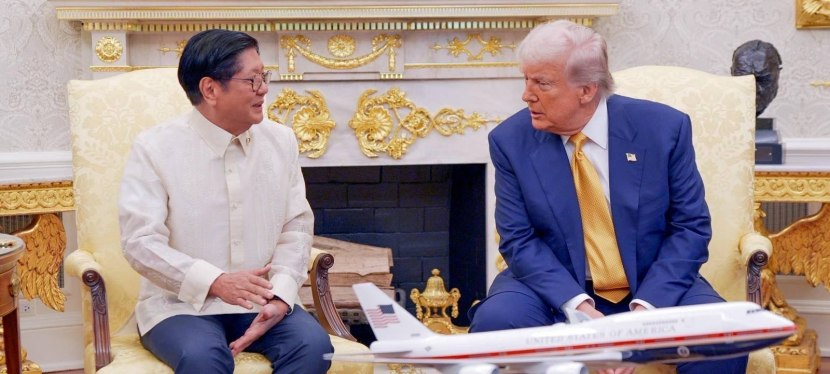
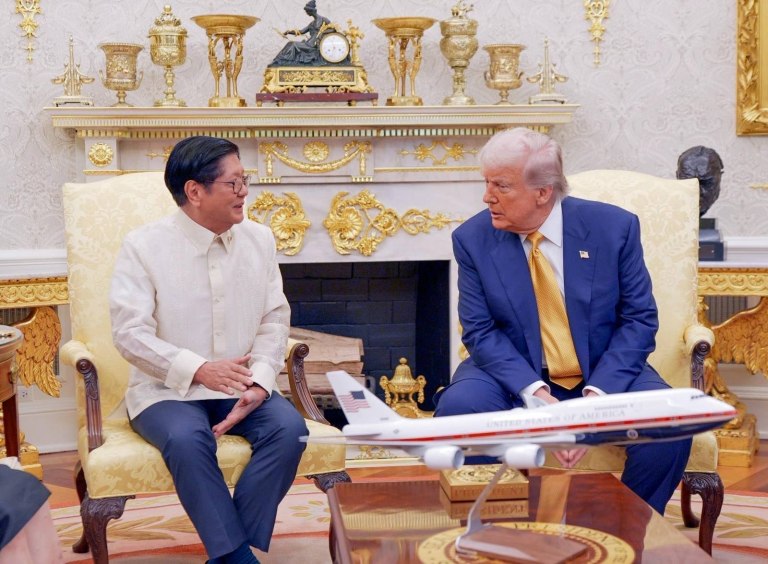
Philippine President Marcos with US President Trump at the White House. (photo source – the White House)
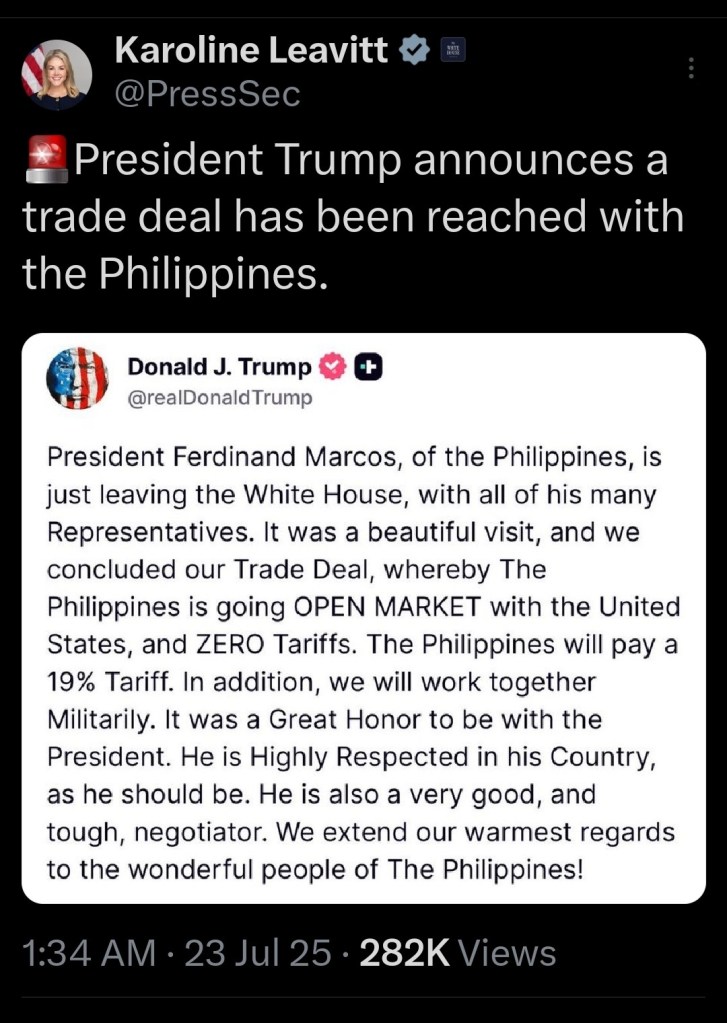
“It was a beautiful visit, and we concluded our Trade Deal, whereby The Philippines is going OPEN MARKET with the United States, and ZERO Tariffs. The Philippines will pay a 19% Tariff,” Trump posted on his Truth Social account early Wednesday (Manila time).
Press Secretary Karoline Leavitt tweet of President Trump’s TRUTH Social post about the meeting with President Marcos and new trade deal.
He also described Marcos as a “very good and tough negotiator.”
Latest data from the Philippine Statistics Authority showed that the US comprised the highest export value amounting to USD1.115 billion, or 15.3 percent of the country’s total exports in May this year.
Posted below is an excerpt from the other PNA news article related to Marcos’ description of the 1% reduction of tariff by America as well as his clarification about Philippines’ zero tariff approach on certain American products coming to the country. Some parts in boldface…
President Ferdinand R. Marcos Jr. defended the Philippines’ new trade arrangement with the United States (US), saying the reduced 19 percent tariff on Philippine exports—down from the proposed 20 percent—is a “significant achievement,” amid questions over its fairness.
“One percent might seem like a very small concession. However, when you put it in real terms, it is a significant achievement,” Marcos said in a press briefing following his meeting with US President Donald Trump at the White House on Wednesday (Manila time).
The President acknowledged that the new deal also opens key Philippine markets to American products—particularly vehicles, agricultural goods, and pharmaceuticals—but said the arrangement will benefit Filipinos through lower prices and stronger bilateral trade.
“We will open that market and no longer charge tariffs on that… para makamura naman ‘yung mga – maging mas mura ‘yung gamot natin (so we can lower the cost of medicines),” he said.
Marcos said while the 19 percent tariff on Philippine goods is still substantial, it reflects a step forward in trade engagement with Washington D.C. and lays the groundwork for future negotiations.
For transparency, posted below is the official video from the White House YouTube channel.
Let me end this post by asking you readers: What is your reaction to this recent development? Do you realize that there is a lot more about US and Philippines relations that go beyond the newly agreed trade agreement? Do you think America’s 19% tariff on exports from the Philippines will add challenged to the Philippine economy? What do you think about the Trump-Marcos meeting? Did you pay attention to the planned Subic Bay ammunition manufacturing plant that was mentioned? If you are based in the Philippines, do you look forward to importing American-made vehicles, agricultural products and pharmaceutical products once they enter the country without any tariffs imposed on them? Do you think the newest exchange between Trump and Marcos will make Communist China concerned or worried?
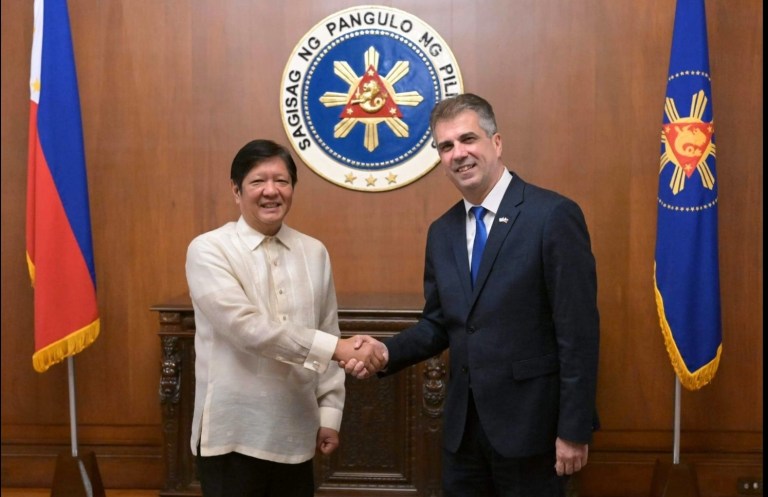
This week has been very significant for Israel-Philippines relations. Israel’s Foreign Minister Eli Cohenarrived here on an official visit and he had a high-level meeting with President Ferdinand “Bongbong” Marcos, Jr. in Malacañang Palace which resulted in very tremendous agreements that include direct flights between Israel and the Philippines, according to a Philippine News Agency (PNA) news article.
To put things in perspective, posted below is an excerpt from the PNA article. Some parts in boldface…
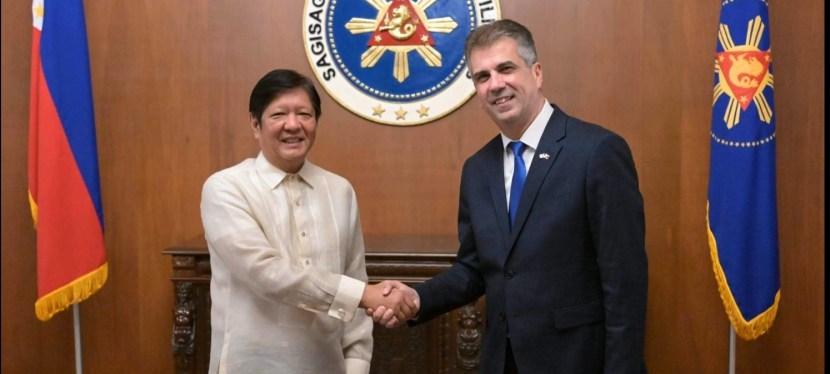
Philippine President Ferdinand “Bongbong” Marcos, Jr., with Israel’s Foreign Minister Eli Cohen. (photo source: Israel in the Philippines Facebook page)
The Philippines and Israel are pushing for the direct flights between the two countries and elevating their partnership in agriculture and water sectors, Malacañang said on Tuesday.
The plan to enhance cooperation between Manila and Tel Aviv was discussed when President Ferdinand R. Marcos Jr. met with Israeli Foreign Minister Eli Cohen at Malacañan Palace in Manila on Monday, Presidential Communications Office (PCO) Secretary Cheloy Garafil said in a statement.
Cohen told Marcos that establishing direct flights between the Philippines and Israel would boost the two nations’ tourism and economic ties.
“There’s another thing that we, both of us, took for an action item. [It] is to have a direct flight… your external sea between Israel and the Philippines,” Cohen, as quoted by the PCO, said during the meeting, referring to his earlier meeting with Filipino officials.
“And I think that we agree that both ministries will work together to have the direct flight. And this is also to bring more business people to come to invest and reach the place between us. So this is also another important action item that we will do.”
The Philippine Airlines was supposed to launch its direct flights to Tel Aviv in 2022, but the plan has been stalled because of geopolitical concerns.
The Philippines has become one of the top tourist destinations for the Israelis in the last few years, Israeli Ambassador to the Philippines Ilan Fluss said in November 2022.
Cohen also told Marcos about Israel’s planned closer cooperation with the Philippines to ensure food security, suggesting that the two nations may open an agricultural hub.
“I think that we can work together on the segment of agriculture. I just let you know that our land, 60 percent of our land is desert. But although 60 percent of our land is desert, we were able to provide all our water needs,” Cohen said.
“And I think that we can work together and let’s say that less import, more export for the Philippines. And I think that we can work together,” he added.
Marcos said he was glad that Cohen raised Israel’s plan, as he expressed admiration for its advancement in agriculture.
He added that agricultural development is “very important” for the Philippines,
“Because when we look at the economy as hard to just test, we said how do we fix the economy. It always comes down to agriculture first, how to fix every policy, then everything else would be great. So that’s the position that we find ourselves in,” he said. “So, the offers that you make for assistance and partnership in those two areas are very, very welcome.”
Cohen said the Philippines and Israel can also collaborate on water management, noting Tel Aviv’s vast experience in this sector.
He said Israeli experts may visit the Philippines to provide advice, noting that Israel has been reusing a large portion of its water resources because of water scarcity and it can share its experience in water management with the Philippines.
Marcos said the Philippines is looking at Israel and Singapore for best practices that the country can imitate.
The establishment of direct Israel-Philippines flights will enable more Filipinos to visit the Holy Land while potential more Israelis will visit more conveniently and boost not only Philippine tourism but also engage in business and investments. For those of you who want to visit Israel to deepen your faith in the Lord, read my Israel 2023 feature articles by clicking here, here, here, here, here and here.
To my fellow Filipinos reading this, I encourage you to accept the truth that Israel is the land God designated specifically for the Jewish people (read Genesis 35:10-12) and His command must be followed by all. If you want to be blessed further by the Lord, do so by loving and blessing the Jewish people (Genesis 12:1-3). I did my part when I was in Israel. Also, let me remind you all that the ties between the Jews and Christians are truly biblical!
The relationship between Israel and the Philippines moved forward some more as they recently signed a major agreement related to investments and economic cooperation, according to a news report by The Jerusalem Post.
To put things in perspective, posted below is the excerpt from report of The Jerusalem Post news report. Some parts in boldface…
Finance Minister Avigdor Liberman and Filipino Secretary of Trade and Industry Ramon Lopez signed an agreement on Tuesday that encourages and protects investments between Israel and the Philippines.
The trade deal
The deal aims to create an investment environment that encourages economic activity by providing a basket of commitments to investors from both Israel and the Philippines. It is expected to provide security and stability to foreign investors and encourage capital movements between the two countries. It covers regulatory issues, prevention of expropriation of assets, free flow of capital and advanced protection mechanisms for the rights of foreign investors in the host country.
“The investment protection agreement signed will help develop economic ties between the countries,” Liberman said. “The commitment between the countries to encourage mutual investment and provide optimal conditions for investors will strengthen existing economic activity and enable new opportunities for the private sector in both countries.”
The Philippines’ economy has grown significantly in the last decade, averaging about 6.4% annually from 2010-2019, according to the World Bank.
Following the coronavirus pandemic, the Philippines managed to bounce back from a 35% decline in global investment flow in 2020, increasing its incoming investment almost 30% this year.
“The high growth in the Philippines over the last decade and the increase in investment flows to it, together with the agreement signed, will strengthen economic cooperation and increase investment between the countries,” said Shira Greenberg, the Finance Ministry’s chief economist.
“The Philippines is a major partner in significant Asia-Pacific regional trade agreements, and in conjunction with the investment agreement signed today, it will open up new opportunities for Israeli companies and investors operating in these markets,” she said.
As for this most recent development between the Republic of the Philippines and the State of Israel, the agreement can lead to a new wave of investments and even business innovation between them. Both nations have their own populations of not just trained workers but also entrepreneurs and investors (both individuals and organizations) who can visit the other nation for fresh opportunities to progress and prosper. Israel itself has an enduring record of being a hot spot for business innovation and startups. As such, the protection of investments between Israel and the Philippines is indeed crucial. This newest development is something we can all be thankful to the Lord for.
If you truly believe in Lord Jesus, the Holy Spirit and God the Heavenly Father wholeheartedly and you continue to be faithful (not religious), you should be aware that Christians are meant to stand united with Israel, love the Jewish people and pray for the peace of Jerusalem. You can do your part supporting Israel by donating to Christians United for Israel (CUFI). Do not forget to read the Holy Bible, then pray in tongues to the Lord in the privacy of your room with the door shut.