Retro Gaming Ads Blast – Part 20

Welcome back readers, fellow geeks and electronic gaming fans!

In this edition of the Retro Gaming Ads Blast (RGAB) series, we will take a look at another batch of retro gaming print ads – including arcade flyers – from the 1980s and 1990s.

For the newcomers reading this, Retro Gaming Ads Blast (RGAB) looks back at the many print ads of games (console, arcade, computer and handheld) that were published in comic books, magazines, flyers, posters and newspapers long before smartphones, social media, the worldwide web and streaming became popular. To put things in perspective, people back in the 1980s and 1990s were more trusting of print media for information and images about electronic games and related products.

With those details laid down, here is the newest batch of retro gaming print ads for you to see and enjoy…

1. River Raid print ad
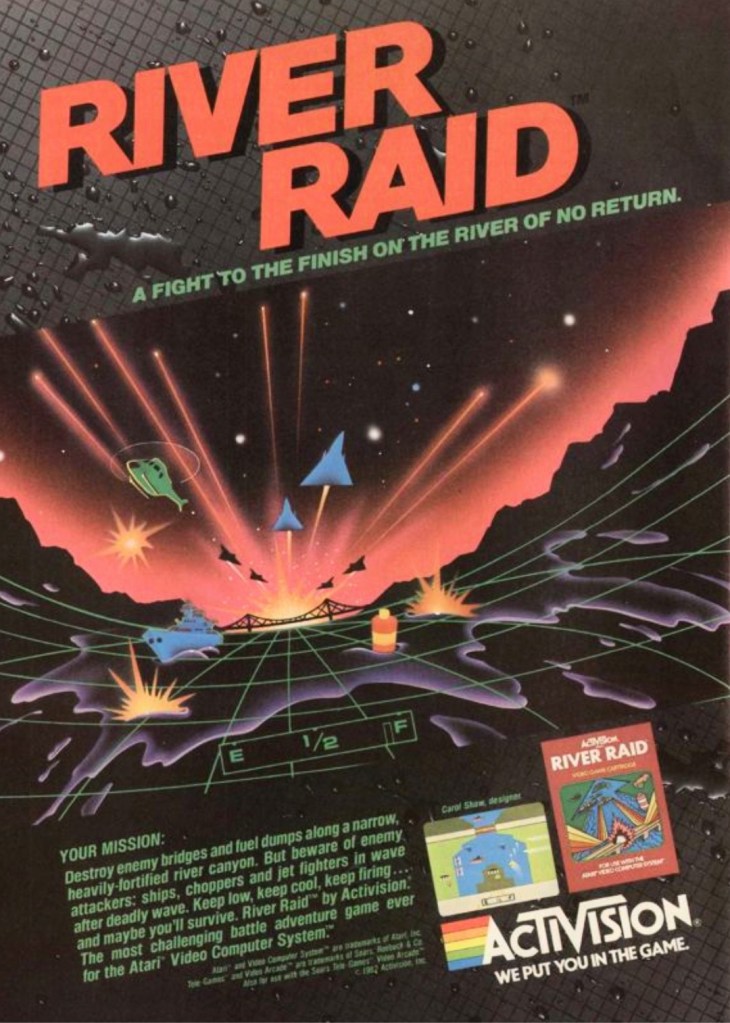
This River Raid print ad appeared on comic books and magazines long ago.

Decades before it became an industry giant with the best-selling Call of Duty games, Activision became a standout publisher in the early 1980s with River Raid on the Atari 2600. Designed by Carol Shaw, River Raid was a huge success ending up as the 2nd best-seller on the Atari 2600 as well as Activision’s best-selling game for the year 1983. Apart from showing one screenshot and the box cover of the game, the print ad of River Raid had this mesmerizing 3D image that caught many gamers’ attention and helped them feel like they will pilot on dangerous missions. The 3D image was futuristic in its own style became forward-moving 3D sequences in video games became reality many years later.   

2. Galaga North American arcade flyer
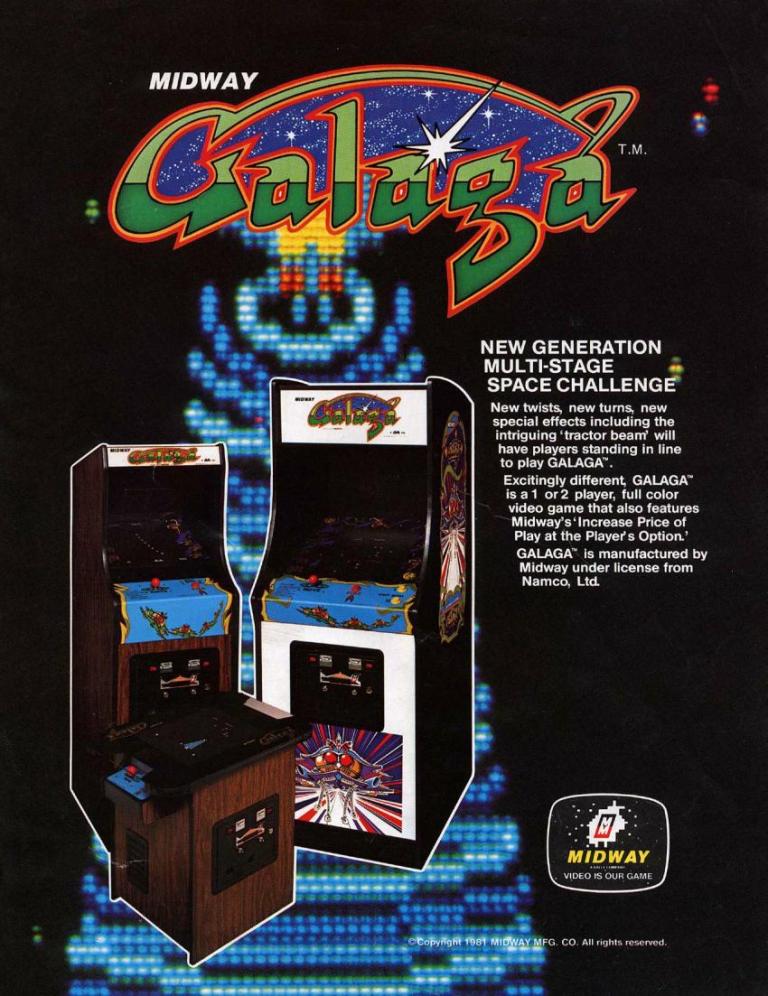
The front of the flyer showing three Galaga machines that arcade operators can choose from.
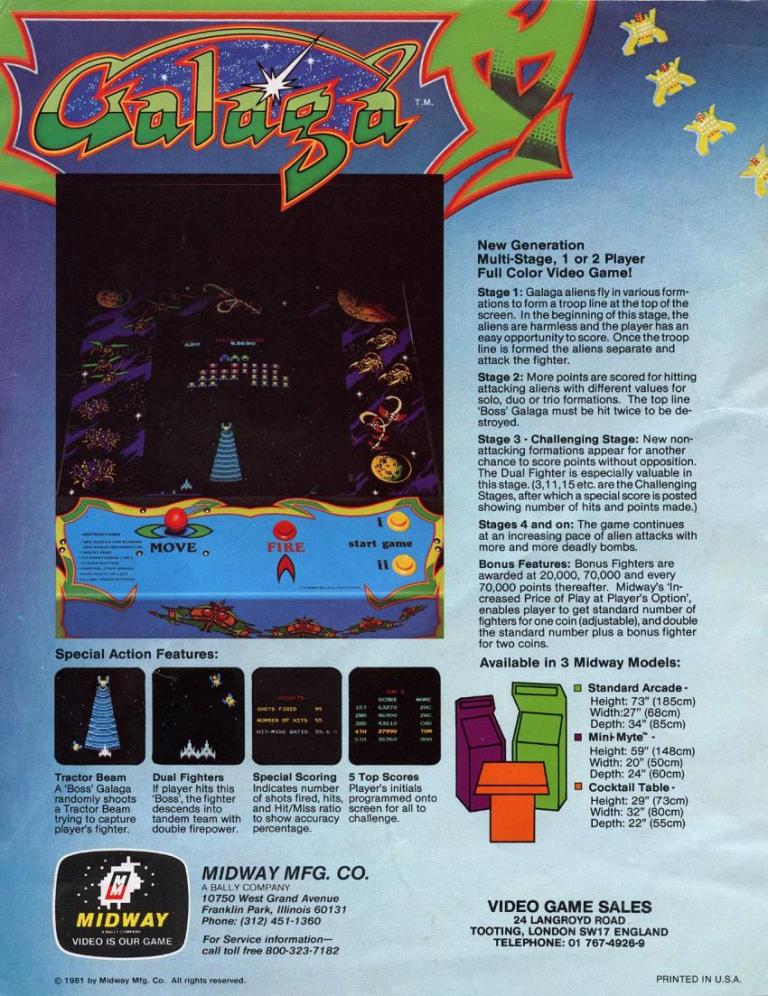
Key details about Galaga were nicely presented on the rear of the flyer.

In the history of gaming, Namco’s Galaga was played by countless millions of gamers and it is still highly regarded as an arcade classic as well as one of the most enjoyable arcade games ever made. In preparation for the North American launch (October 1981), Midway prepared the arcade flyer showing the three types of machine on the front that arcade operators can choose from. On the rear is the really neat approach of explaining the details of the game, what kind of gameplay is to be expected, and how to play. Whether you are an individual player or the manager of an arcade joint, this flyer suits your needs.   

3. Area 51 arcade flyer and conversion kit flyer
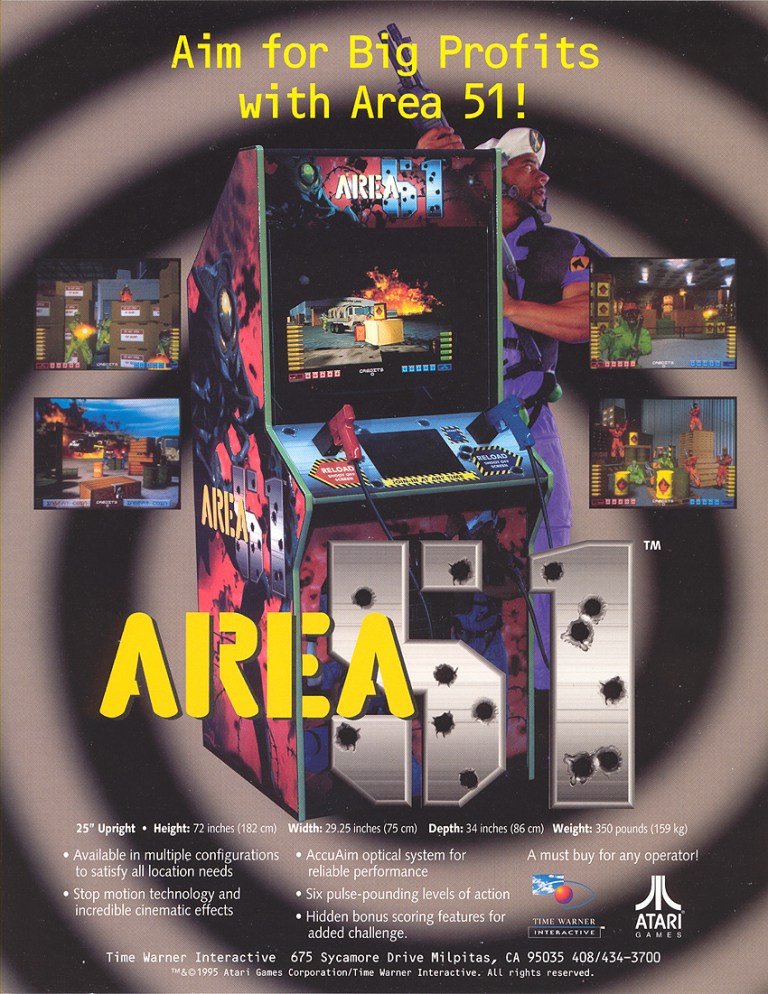
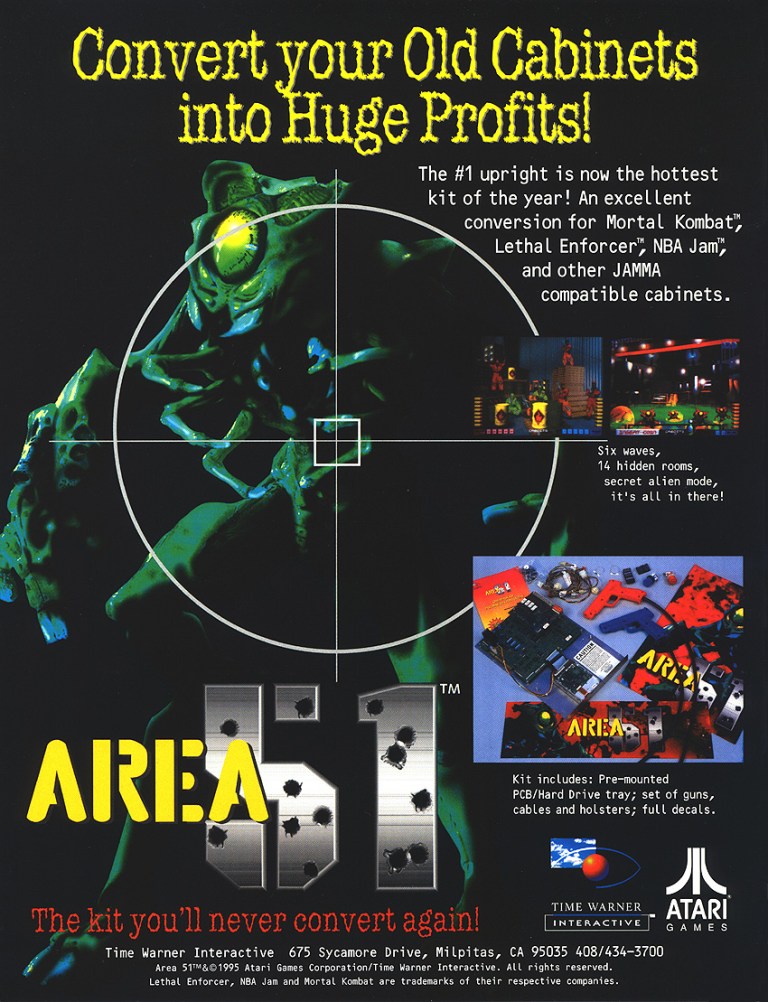
The front of this Area 51 flyer had an enticing message for arcade operators as well as other business owners/managers who are interested in having a machine to add value to their business joints. Atari was already in deep money problems by the time they started making this game.
The Area 51 arcade conversion kit is a cheaper alternative for businesses who want the game.

Moving on to the 1990s, Atari was already struggling financially and desperately needed a hit to lift them up fast. A light gun shooter project was approved as arcade shooters were in good demand and after overcoming serious hurdles during production internally, Atari hired independent team Mesa Logic to take charge of development. After being granted extra time and more creative freedom, the project under Mesa Logic’s handling became a sci-fi shooter titled Area 51. The game became a huge hit in the arcades for Atari resulting in sales of more than 20,000 arcade cabinets as well as a major financial boost for the company (note: Atari still exists today). Atari went on to release Atari 51 versions for PlayStation, Sega Saturn and PC in America in 1996. The Atari 51 flyers you see here are still captivating to look at and were crucial in generating buzz among arcade operators, business joints that had space for arcade cabinets and gamers.

4. Panasonic 3DO print ad
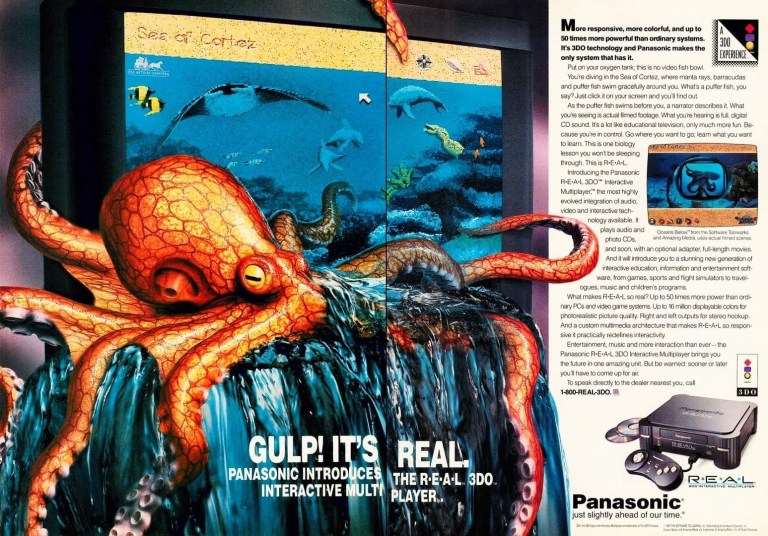
The makers of this print ad forgot to mention the 3DO is also a game machine.

Back in 1993, the 3DO Interactive Multiplayer console manufactured by Panasonic (a licensee of the 3DO Company) was launched with a CD-ROM drive, multimedia features and gaming capabilities (with a 3-button control pad). This print ad strongly emphasized the 3DO’s ability to play high-quality sound and full-motion videos using the Sea of Cortez software which functioned as an interactive movie. Obviously, this did not resonate well with people who loved to play games and by the time the 3DO Company and its partners started marketing games, they could not save the 3DO console from fading to obscurity. The console shown in the ad is specifically model Panasonic FZ-1 R·E·A·L 3DO Interactive Multiplayer. Panasonic was one of five companies that were licensed by the 3DO Company.

5. MechWarrior 3050 SNES print ad
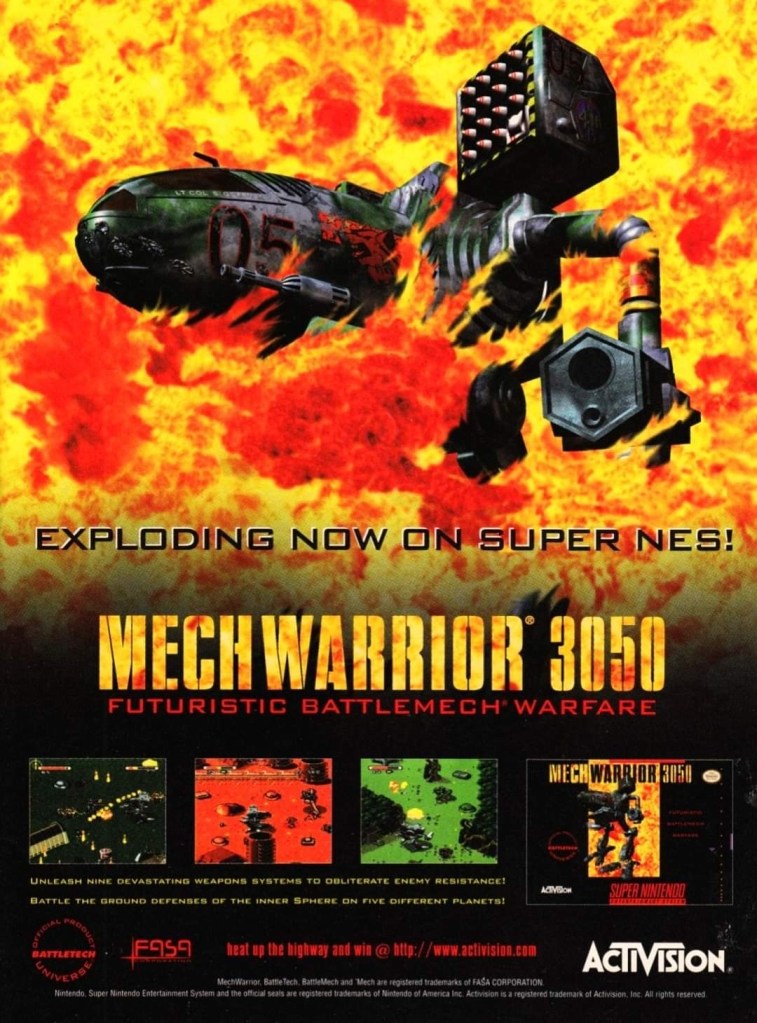
If you were unaware of the 1994 game BattleTech, then this ad would have fooled you into thinking it is promoting a brand new game.

In 1995, the popular BattleTech entertainment franchise arrived on the Super Nintendo Entertainment (SNES) system with MechWarrior 3050 and its print ad had a really blazing artwork of an armed mech in fire which gave readers the illusion of a new and original game. In reality, MechWarrior 3050 was actually a port of BattleTech which was released on the Sega Genesis in 1994. The Genesis game was published by Extreme Entertainment Group while the SNES game was published by the more famous Activision. If you look closely at the MechWarrior print ad, you can tell how hard they tried to sell the game like it was brand new and all-original.

6. Cliffhanger video game print ad
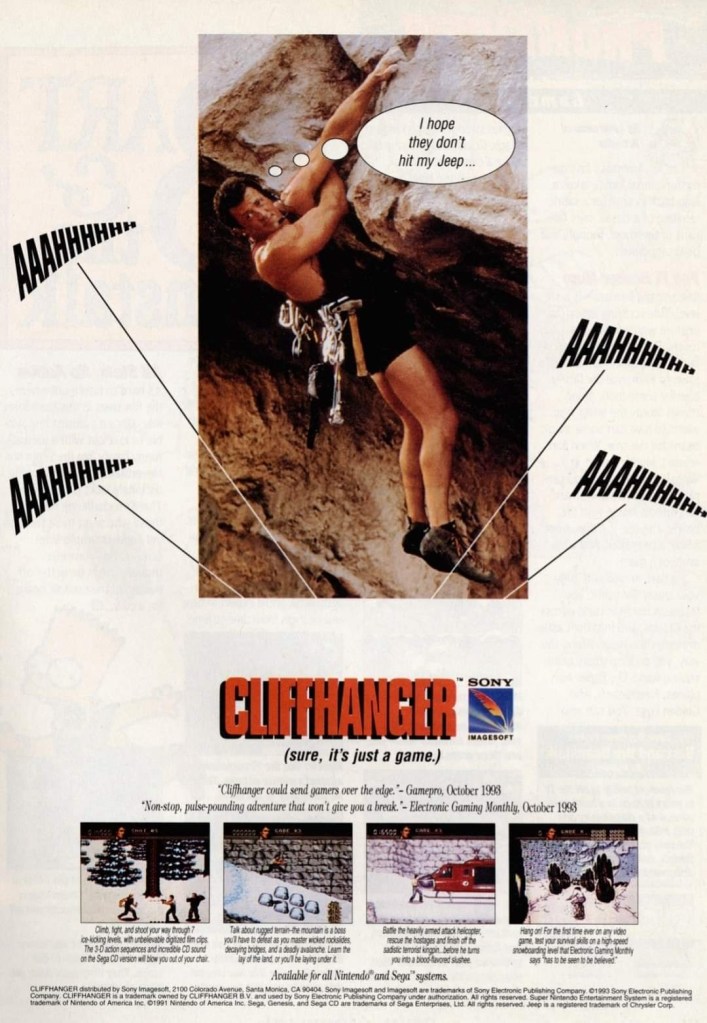
This print ad had Sylvester Stallone hanging on a cliff to be relevant with the title of both the film and the game. They could not show images of Stallone in hard action scenes.

For fans of Sylvester Stallone, 1993 was a big and exciting year as the Hollywood icon appeared in two major action films – Cliffhanger and Demolition Man. Cliffhanger was released first and there were video game adaptations of it released on game consoles, handhelds and computers. This print ad of the Cliffhanger video game had an image of Stallone hanging on a cliff to emphasize the title. The ad makers cleverly posted selected gameplay screenshots and quoted GamePro and Electronic Gaming Monthly (EGM) to make the game look credible and worthy of purchasing. The marketing led to nowhere as the game received mostly negative reviews from critics and it faded to obscurity. Lastly, the Cliffhanger game ad had a noticeable amount of space wasted. They could have made the screenshots and text look somewhat bigger to sell the game.

7. Ballz: The Director’s Cut print ad
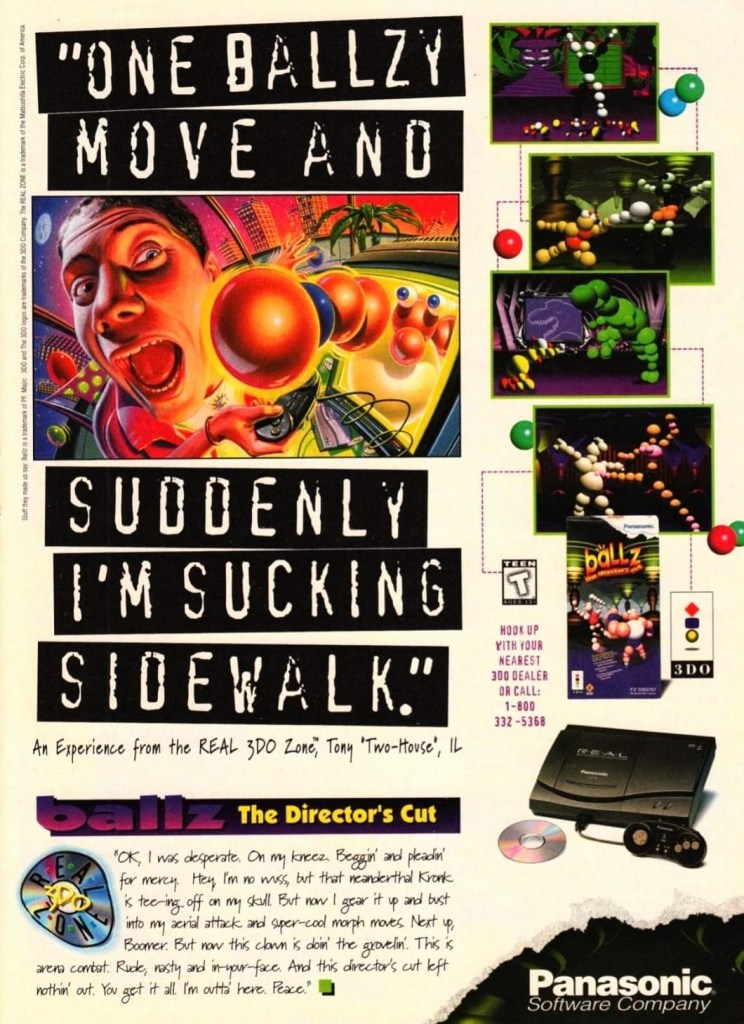
I never got to play this game on the 3DO.

Here is another ad of the video game released on the failed 3DO console. As its title made obvious, Ballz: The Director’s Cut is an enhanced version of the original Ballz game of 1994 that was released on other consoles. The print ad had an eye-catching piece of artwork and posted beside it were selected shots of the gameplay. Strangely enough, the creative writing on the lower part of the ad does not make any sense and did nothing to convince gamers to play the game. As Ballz: The Director’s Cut was released in 1995, this ad shows the revised 3DO console from Panasonic (model: Panasonic FZ-10 R·E·A·L 3DO Interactive Multiplayer).

8. NFL GameDay 2000 print ad
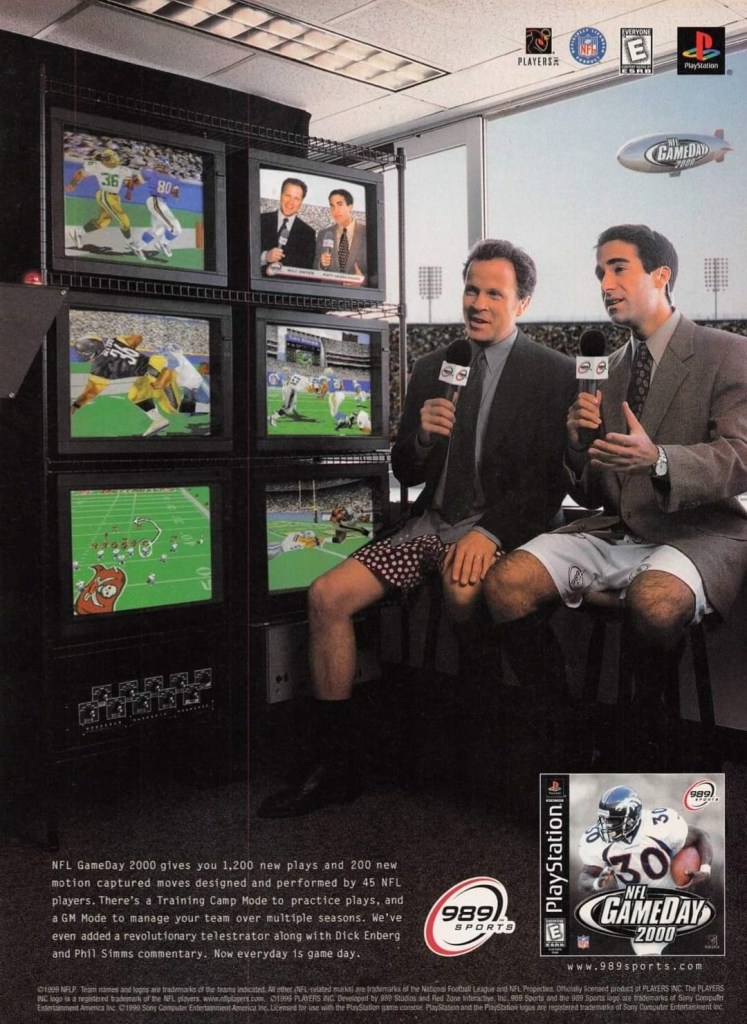
Did you find this ad funny to look at in 1999?

To promote the PlayStation-exclusive NFL GameDay 2000, Sony publisher 989 Sports and the ad makers decided to implement a humorous look at football TV coverage by having two sportscasters wearing shorts in front of a TV camera that was only showing their heads and upper bodies. The TV sets on the side show screenshots from the game to emphasize the sports gaming experience. Ultimately the game scored mostly positive review from the critics.  

9. WildC.A.T.S: Covert Action Teams print ad
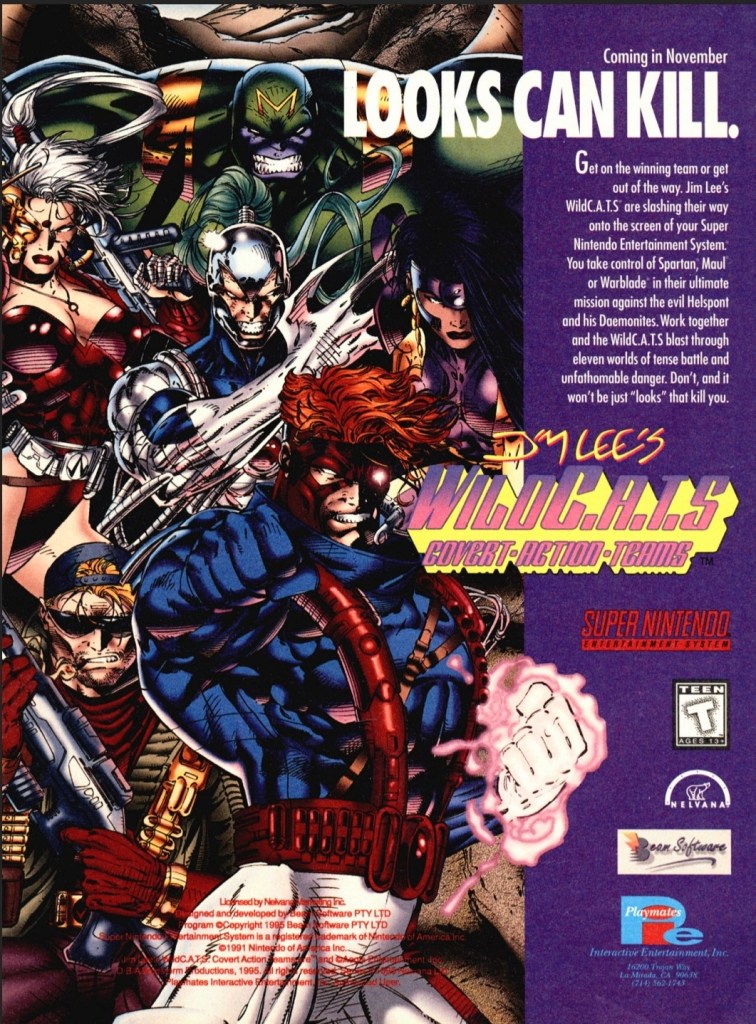
WildC.A.T.S. art by Jim Lee was used to promote the SNES video game.

When Image Comics launched in 1992, WildC.A.T.S: Covert Action Teams was Jim Lee’s creator-owned comic book franchise and its launch issue was a big seller. Years later, WildC.A.T.S. grew in popularity with comic book fans and the franchise achieved multi-media status by venturing into TV (with an animated series) and video games. This print ad promoting the video game adaptation had no screenshots to show which kept fans and gamers guessing how the game will turn out in terms of gameplay and game design. It was obvious that the people who made this print ad had to rely on the best WildC.A.T.S. artwork they could find drawn by Jim Lee. This ad made me laugh back in the old days because if you did not look closely, it might fool you into thinking it was more about comic books than the game on the SNES.

10. Cutthroat Island print ad
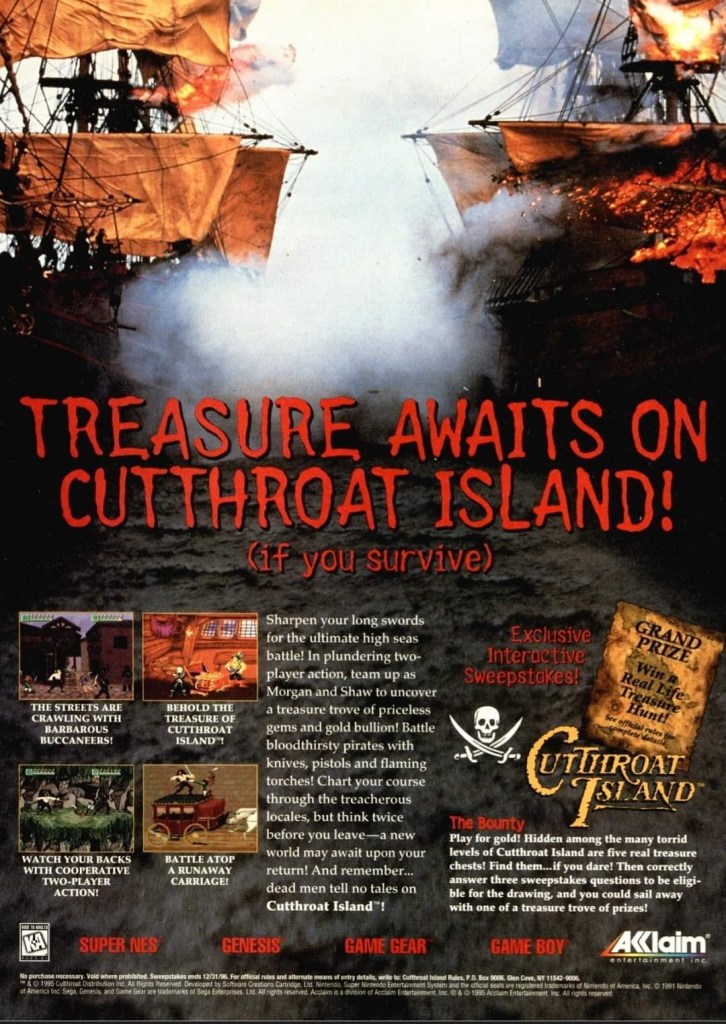
Exciting imagery without Geena Davis and Matthew Modine was used to promote the video game adaptation.

I never saw the Hollywood mega-flop Cutthroat Island nor have I ever played any of its multiple video game adaptations (released on SNES, Sega Genesis, Sega Game Gear and Game Boy). The video game print ad, however, caught my attention back in 1995 because the ad makers cleverly used a photograph from one the many expensive movie sequences filmed and the hard, physical work by the filmmakers was clearly visible. Then the ad makers had four screenshots placed on the lower-left part and inserted descriptive text that sounded exciting. Lastly, the ad mentioned a sweepstakes promo.

Without using any images of stars Geena Davis and Matthew Modine, this ad was a strong attempt to get gamers excited for the video game adaptation. Like the movie itself, this game flopped and has faded away to the land of the forgotten.

11. AH-3 Thunderstrike print ad
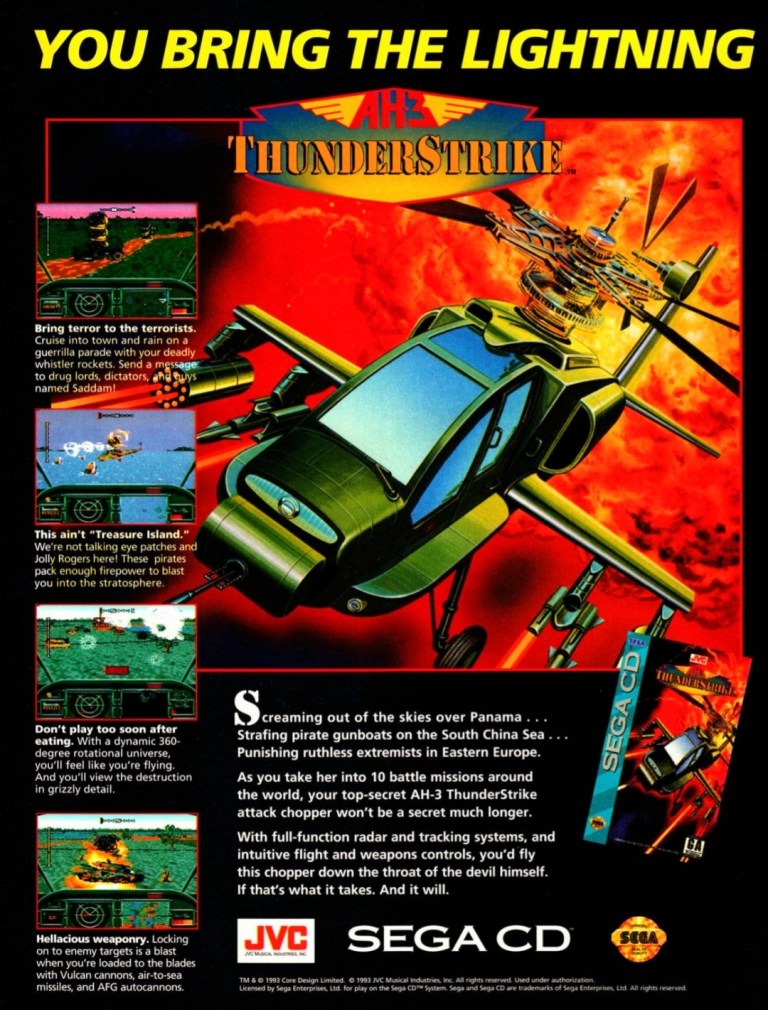
Captivating artwork, vibrant colors and orderly text descriptions made this an effective ad.

AH-3 Thunderstrike is one of the better games that was released on the Sega CD add-on (requires the Sega Genesis console) in 1993. Similar with MechWarrior 3050, the game was actually a port of Thunderhawk which itself was released on the Amiga and MS-DOS PC in 1992. The print ad showcased a captivating artwork (which was also used on the game’s box cover), a few screenshots and strategically placed text descriptions to sell the game. This ad still looks good.

12. James Bond 007 print ad
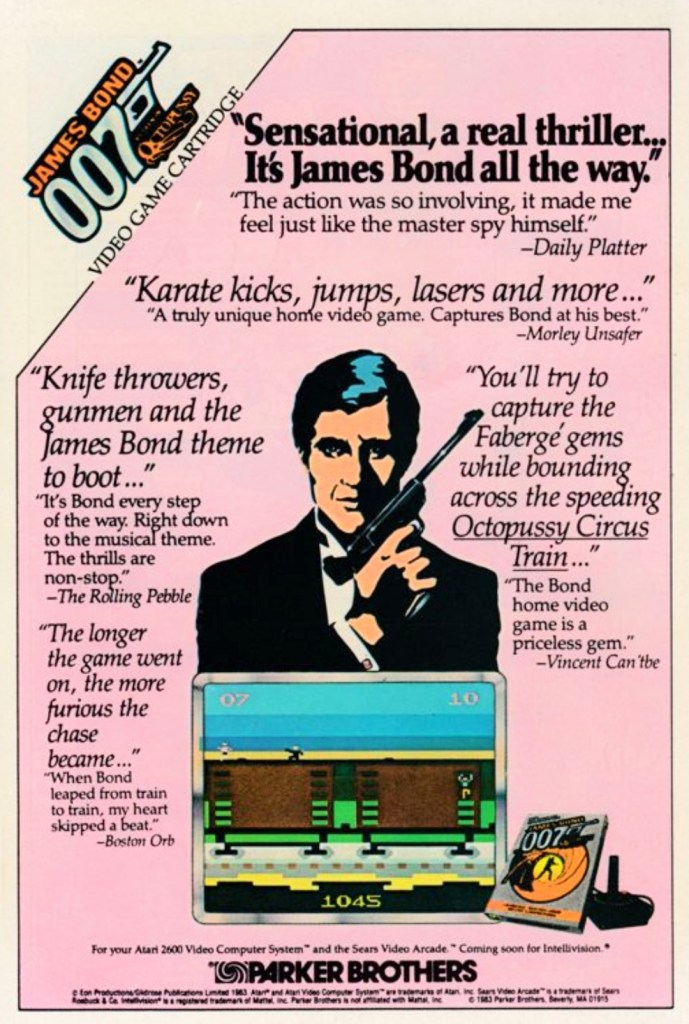
This print ad appeared in many comic books in 1984.

This is a print ad I saw many times while reading comic books in 1984. James Bond 007 for Atari 2600 was an ambitious licensed video game as it featured levels that were inspired by missions in the James Bond movies Diamonds are Forever, The Spy Who Loved Me, Moonraker and For Your Eyes Only. Keep in mind that programmers back then had to deal with memory limitations and primitive tools to make games.

To promote the game, original art of Agent 007 was used which did not resemble the James Bond star of the time – Roger Moore. Strangely enough, the illustrated James Bond slightly resembled Timothy Dalton whose debut as 007 happened in 1987. Adding further zest to the add was the use of fictionalized quotes pointing to fantasized critics as sources (example: Vincent Can’tbe is a reference to real life critic Vincent Canby). The use of a pink background made this catchy ad look really odd.

13. Choplifter III: Rescue Survive print ad
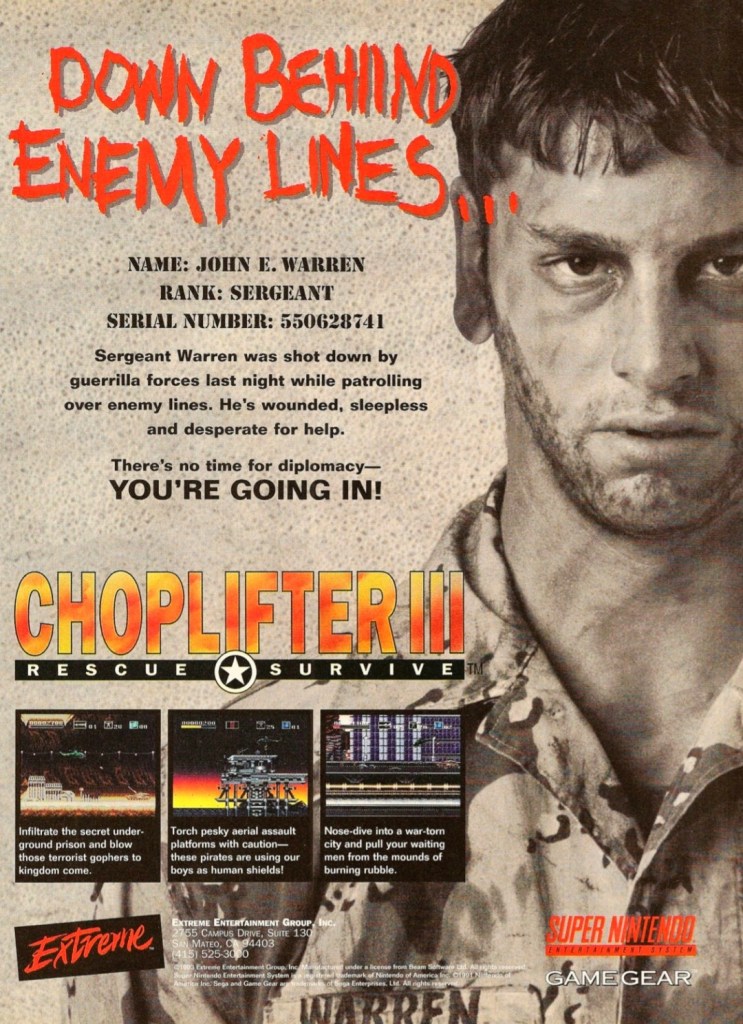
A captivating print ad that brought gamers’ attention to the Choplifter series again.

This print ad of Choplifter III: Rescue Survive has a striking look showing a military officer who needs your help as he has been stranded behind enemy lines. The presentation reflects the long-time tradition of the Choplifter game franchise which has been about piloting an armed helicopter to the opposition’s territory, shooting at bad guys and then rescuing the hostages or prisoners-of-war (POWs). The game eventually gathered mostly positive feedback from video game critics.

14. Defender of the Crown print ad
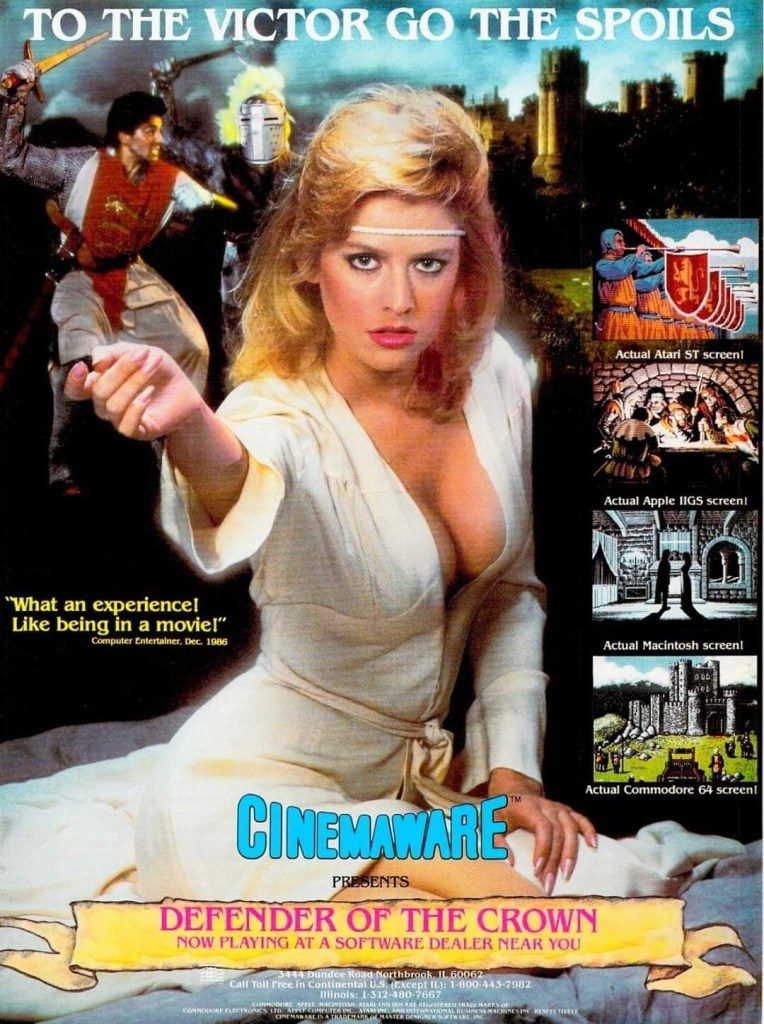
Cinemaware took a gamble with the visual concept of this print ad.

Released in 1986 for home computers, Defender of the Crown was made with a high level of quality backed with solid artistry. To capture gamers’ attention, Cinemaware came up with this print ad showcasing a pretty model looking somewhat seductive which reflects what happens in the game when players rescue a damsel in distress. The selected screenshots showed what the game looked like on different platforms, and the lower part of the ad made the game feel like it was a historical epic waiting to be discovered. Defender of the Crown eventually became a big hit with computer gamers.  

+++++

Thank you for reading. If you find this article engaging, please click the like button below, share this article to others and also please consider making a donation to support my publishing. If you are looking for a copywriter to create content for your special project or business, check out my services and my portfolio. Feel free to contact me with a private message. Also please feel free to visit my Facebook page Author Carlo Carrasco and follow me on Twitter at  @HavenorFantasy as well as on Tumblr at https://carlocarrasco.tumblr.com/ and on Instagram at https://www.instagram.com/authorcarlocarrasco
Retro Gaming Ads Blast – Part 8

Welcome back readers, fellow geeks and electronic gaming fans!

In this edition of the Retro Gaming Ads Blast (RGAB) series, we will take a look at another batch of retro gaming print ads from the 1980s and 1990s.

For the newcomers reading this, Retro Gaming Ads Blast (RGAB) looks back at the many print ads of games (console, arcade, computer and handheld) that were published in comic books, magazines, flyers and newspapers long before smartphones, social media, the worldwide web and streaming became popular. To put things in perspective, people back in the 1980s and 1990s were more trusting of print media for information and images about electronic games and related hardware.

With those details laid down, here is the newest batch of retro gaming print ads for you to see and enjoy…

1. Enemy Zero print ad

I should say Sega did a solid job by making this intriguing and eye-catching print ad for Enemy Zero.

The first time I saw this print ad of Enemy Zero in the late 1990s, I was intrigued by its visual concept and it got me interested to learning more about the game. Enemy Zero was a sci-fi video game developed by Warp and released as a console-exclusive on the Sega Saturn. Since I never owned a Saturn, I never got to play the game but I was inspired to learn more about Warp (which developed the hit game D). As it turns out, Enemy Zero started as a project for PlayStation but because of Sony’s failure to fulfill the pre-orders of D on PlayStation (100,000 copies ordered but less than 30,000 copies printed by Sony), Warp’s head Kenji Eno decided to make Enemy Zero exclusive to the Sega Saturn. Enemy Zero was published by Sega worldwide while Warp published it in Japan, and the game sold between 500,000 to 700,000 copies (based on Eno’s claim).

2. Bionic Commando print ad

For the American market, Capcom showed what the game box and front cover art would look like, then added the details and two screenshots for readers to examine.

Back in the late 1980s, I played Bionic Commando and managed to finish it after enduring lots of challenges along the way. It was a very unique adventure game as it used a highly unusual method of moving from one platform to the next by means of a futuristic grappling gun. This particular print ad showcased what the game’s actual box looked like (with cover artwork made for North America) and used two screenshots from the game. This ad hardly captures the excitement and intensity that awaited gamers and yet it manages to give people a clear look at the grappling concept. While the North American version of the game has certain content altered, it still had the same gory ending (and Adolf Hitler as the main villain) as the Japanese version.

3. RoboCop print ad

This served as an extension of the impact of the very violent 1987 movie.

RoboCop made huge impact on moviegoers as well as people who love science fiction and the R-rated action films Hollywood studios released in the 1980s. That being said, it was not surprising that a video game of RoboCop was released on the Nintendo Entertainment System (Family Computer in Japan) by Data East and the print ad they came up with cleverly used imagery from the movie poster and the screenshots showed exactly what RoboCop fans expected to see such as the enemy robot ED-209 and thugs. This game strongly reflects the business trend of the 1980s when companies made merchandise and adaptations of R-rated blockbuster films to sell to kids and teenagers.

4. Gex 3: Deep Cover Gecko print ads

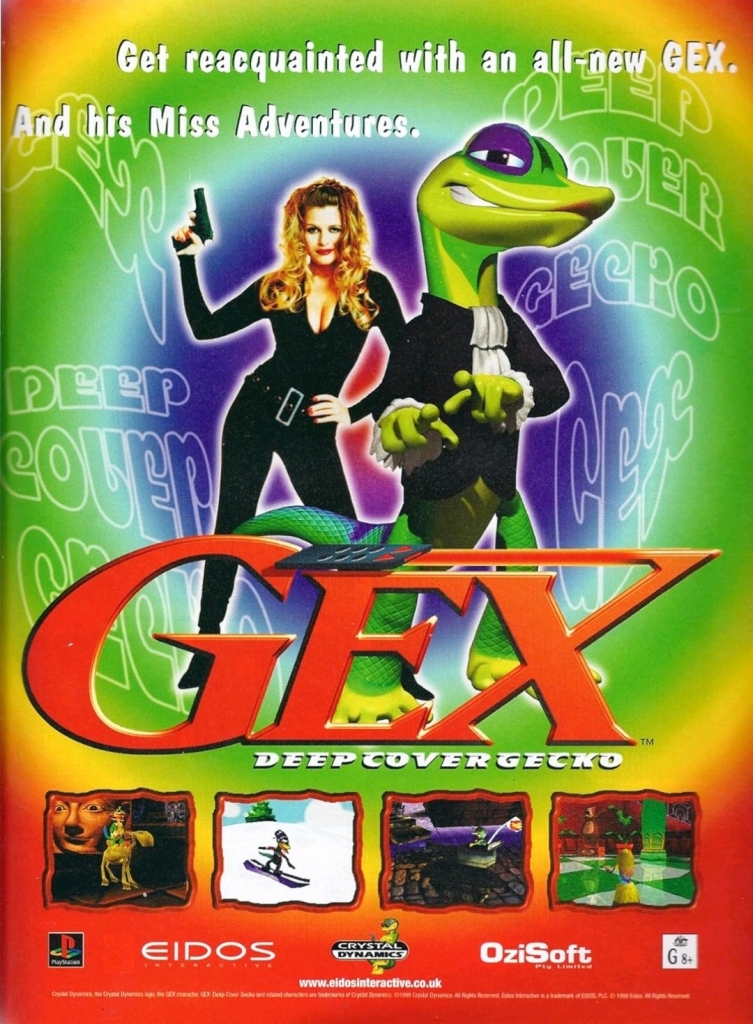
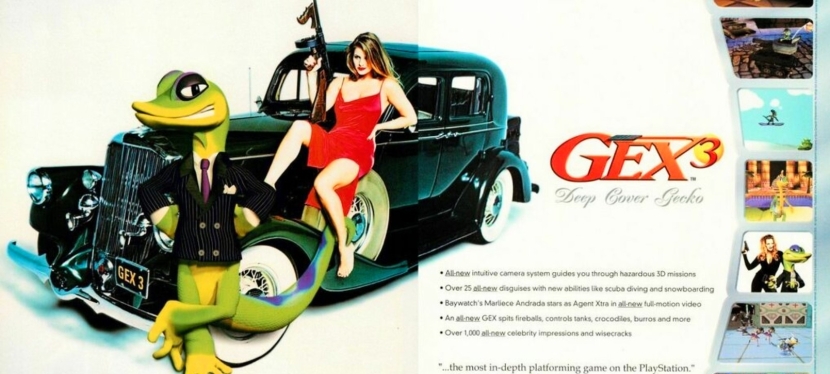
This print ad for Europe had a James Bond vibe.
March 1998 Playmate of the Month on the hood of the car looking at Gex.
The 2-page print ad of Gex 3: Deep Cover Gecko.

In 1999, Eidos Interactive – the company behind the wildly popular Tomb Raider games of the decade – became aggressive marketing Gex 3: Deep Cover Gecko for PlayStation and Nintendo 64. They were so aggressive, they featured actress and Playboy’s Playmate of the Month (March 1998) Marliece Andrada alongside their star character Gex in the marketing which was not limited to America. For the newcomers reading this, a multimedia approach was implemented on the narrative of the game’s PlayStation version which explains why it has full-motion video sequences featuring Andrada as the character Agent Xtra. As seen in these print ads, Eidos Interactive had Andrada looking pretty and sexy to really sell the game.

5. Barkley Shut Up and Jam! print ad

Anyone here a Charles Barkley fan?

I remember the many types of basketball video games that were released on game consoles back in the 1990s. While there were NBA video games that had in-depth rosters of players with seasonal gaming in mind, there were other basketball-related video games that were not about the said league but featured an NBA star. In this print ad, publisher Accolade prominently featured NBA star Charles Barkley to promote the game Barkley Shut Up and Jam!, posted some words emphasizing sports intensity, and showed one screenshot to assure gamers that this is a basketball game. While the critical reception was mixed, the game must have sold enough to convince Accolade to release a sequel two years later with Barkley still the endorser.

6. The Death and Return of Superman print ad

This print ad clearly aimed for the fans of the comic books as well as gamers looking for an action-packed game to play.

Now this is one very eye-catching print ad that appeared in comic books and magazines in the 1990s. Anyone who knows comics would recognize the grey fist (with sharp bones protruding on the knuckles) belonging to Doomsday who killed Superman in Superman (1993), and the bloody presentation on the famous S was very aggressive for its time. The game itself was an adaptation of the two storylines (published in 1992 and 1993 respectively) that saw Superman’s death, his return and the appearances of new Supermen. While sales figures are not available, The Death and Return of Superman eventually attracted mixed reviews from the critics.

7. Dragon Force print ad

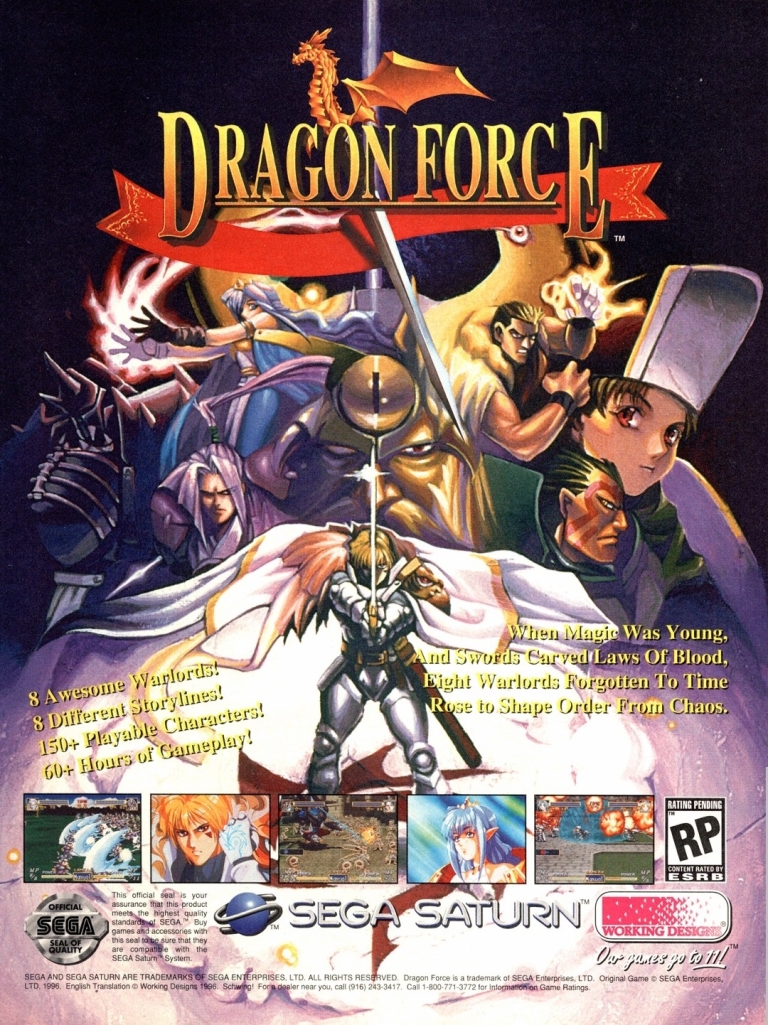
This was printed in magazines at a time when Working Designs had a strong business relationship with Sega.

While the Sega Saturn was undeniably a huge commercial disappointment in North America, the console still had some great games that was widely praised by game critics and heavily bought by gamers. One of those outstanding games on the console was Dragon Force (developed by Sega and J-Force in Japan, localized in America by Working Designs) which received great critical acclaim and achieved commercial success both in Japan and in America. The popular magazine Electronic Gaming Monthly named Dragon Force as the Saturn Game of the Year as well as Strategy Game of the Year in 1996. As a Working Designs release, this print ad has an ambitious fantasy concept visually emphasized, detailed lines of descriptions and screenshots that strongly appealed to the gamers, anime enthusiasts and those who love fantasy. This ad is also a sad reminder that the business relationship between Sega and Working Designs went downhill afterwards (read: Bernie Stolar) and the sequel Dragon Force II was never released outside of Japan.

+++++

Thank you for reading. If you find this article engaging, please click the like button below, share this article to others and also please consider making a donation to support my publishing. If you are looking for a copywriter to create content for your special project or business, check out my services and my portfolio. Feel free to contact me with a private message. Also please feel free to visit my Facebook page Author Carlo Carrasco and follow me on Twitter at  @HavenorFantasy as well as on Tumblr at https://carlocarrasco.tumblr.com/ and on Instagram at https://www.instagram.com/authorcarlocarrasco

Retro Gaming Ads Blast – Part 5

Welcome back readers, fellow geeks and electronic gaming fans!

In this edition of the Retro Gaming Ads Blast (RGAB) series, we will examine print ads from the 1980s and the 1990s that caught my attention and I will explain why they are worth look back at.

For the newcomers reading this, Retro Gaming Ads Blast (RGAB) looks back at the many print ads of games (console, arcade, computer and handheld) that were published in comic books, magazines, flyers and newspapers long before smartphones, social media, the worldwide web and streaming became popular. To put things in perspective, people back in the 1980s and 1990s were more trusting of print media for information and images about electronic games.

With those details laid down, here is the newest batch of retro gaming print ads for you to see and enjoy…

1. Star Wars: Rebel Assault print ad

This print ad was strong enough to capture Star Wars fans’ attention and make them interested with the Sega CD.

If there is anything notable about the Sega CD (Mega CD in other parts of the world) platform, it is the fact that the machine was an add-on to be connected with the Sega Genesis (Sega Mega Drive elsewhere) console. That being said, LucasArts included the Sega CD as one of several platforms for the multiplatform release of their 1993 game Star Wars: Rebel Assault. The above print ad caught my attention with its use of 9 screenshots (emphasizing a wide look at the game’s Star Wars concept) and text description (emphasizing multi-media features connected with gameplay), and for a time it made me interested in the Sega CD. Looking back at the game’s marketing, Star Wars: Rebel Assault was designed to not only give gamers sessions of play to enjoy but also opportunities to immerse themselves deeper into the realm of Star Wars. The game even had selected video clips from the original Star Wars trilogy movies.

2.  Cloak & Dagger print ad

This print ad could have used at least two screenshots from the arcade game…

In 1984, there was a movie titled Cloak & Dagger (read my retro movie review by clicking here) which was not only the 4th cinematic adaptation of the short story “The Boy Cried Murder” (written by Cornell Woolrich) but also had the real-life electronic game Cloak & Dagger as a crucial plot element. To make things clear, there was a Cloak & Dagger game released in the arcades (as emphasized in the above print ad) from Atari. Behind the scenes, the filmmakers and Atari worked together which explains the video game tie-in with the movie. While the above arcade conversion kit print ad does not show screenshots of gameplay, the four images of the playable protagonist Agent X shown were from the game’s short transition sequences (moving from one level to another) which were also displayed in the 1984 movie. Those images were enough to remind me about the movie I enjoyed.

More on the Atari connection, the movie had a cleverly presented short scene showing the young protagonist Davey (played by Henry Thomas) playing Cloak & Dagger on his Atari 5200 console with spliced gameplay footage of the arcade version shown within cuts. In real life, however, Atari never released a version of Cloak & Dagger for any console nor computer in the 1980s. Today, you can play the game on the Atari 50 collection on consoles.

3. BurgerTime print ad

This BurgerTime print ad was entertaining to look at and easily reminded viewers about food and the popular game coming home.

Back in 1982, BurgerTime (Japanese title: Hamburger) was released in the video arcades and turned out to be a big hit in both Japan and America. Seeking to capitalize on the game’s success, Mattel Electronics acquired the rights of the game from Data East and went on to release versions of it for the Intellivision, Atari 2600, Apple II and the IBM personal computer. Mattel went on to market the game for consoles and computers by coming up with a print ad (the one above) that had comic book-style hand drawn art of the playable protagonist chef Peter Pepper running away from walking versions (anthropomorphic figures) a hotdog, an egg, and a pickle. The ad showed a single screenshot which was sufficient enough to show readers the concept of the game clearly. In my experience, I never got to play BurgerTime in the arcades but I first learned about its existence thanks to the eye-catching print ad above which appeared in comic books I read. In addition, the print ad also does an effective job to remind readers about food.

4. SOS print ad

This print ad made me interested in the game as I was already aware of the historical sinking of the Titanic, and I already saw the disaster film The Poseidon Adventure.

Moving back to the 1990s, I saw the above print ad of the video game SOS for the Super Nintendo Entertainment System (SNES) while reading a comic book. The nice artwork caught my attention as it easily reminded me of the disaster movie The Poseidon Adventure (1972) as well as the real-life tragedy of the Titanic. Then I saw the screenshots on the print ad and they made me interested on the game which I later played on a rent-by-the-hour game joint. Looking back at the text description of the print ad, it did not describe what the technical and graphical features of SOS were. That being said, I was surprised to experience the game’s use of the SNES Mode 7 effects which enabled the scaling and rotating of the in-game environment which affected gameplay in many ways. Read my retro review of SOS by clicking here.

5. Star Trek: The Next Generation – Future’s Past print ad

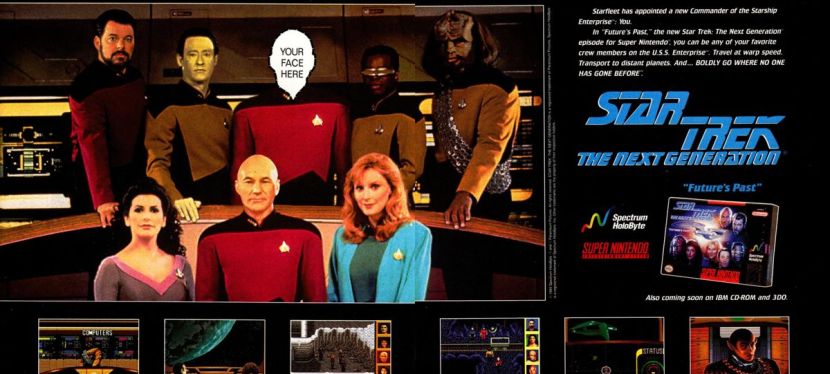
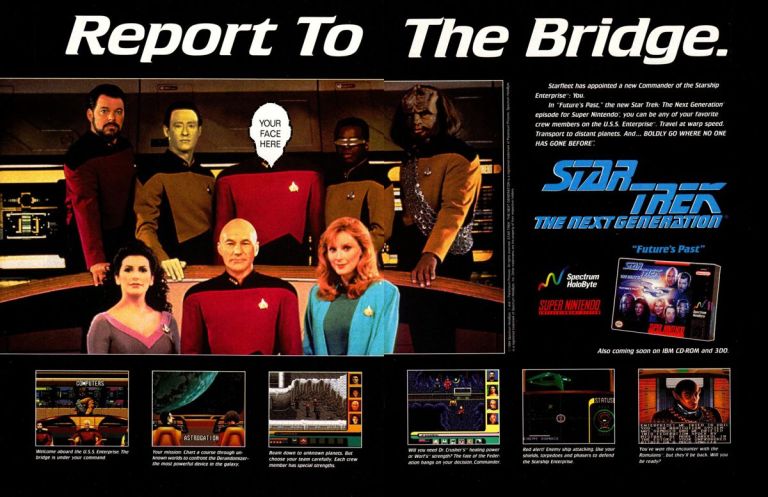
This 2-page print ad was strong enough to invite readers to literally join the Star Trek: TNG crew and go where no man has gone before. By the way, when was the last time you saw Marina Sirtis or Gates McFadden on a video game ad?

Long before wokeness ruined Star Trek in this modern age, the sci-fi franchise reached a tremendous high in popularity and projects in the 1990s as that decade had Star Trek: The Next Generation (most of its TV seasons and three movies were released within the decade), Star Trek: Deep Space Nine and Star Trek: Voyager that kept fans entertained.

Considering its high popularity, it was not surprising that a video game adaptation of Star Trek: TNG was released in 1994 titled Star Trek: The Next Generation – Future’s Past (the version for Super Nintendo Entertainment System) and I saw the above print ad while reading a gaming magazine. Using a slightly altered version of the TNG group photo, the print ad emphasized its concept that the player will be able to lead the crew of the Starship Enterprise and take part in a series of missions in different parts of space with the likes of Captain Picard, Commander Riker, Data, Worf, Dr. Crusher, Deanna Troi and La Forge. While I was never a Star Trek fan, the above print ad caught my attention with its concept, the group photo and the screenshots gave me an idea of what the game has to offer. It should be noted that Star Trek: The Next Generation – Future’s Past was released between the end of Star Trek: TNG’s final season and the theatrical release of Star Trek: Generations.

6. Super Castlevania IV print ad

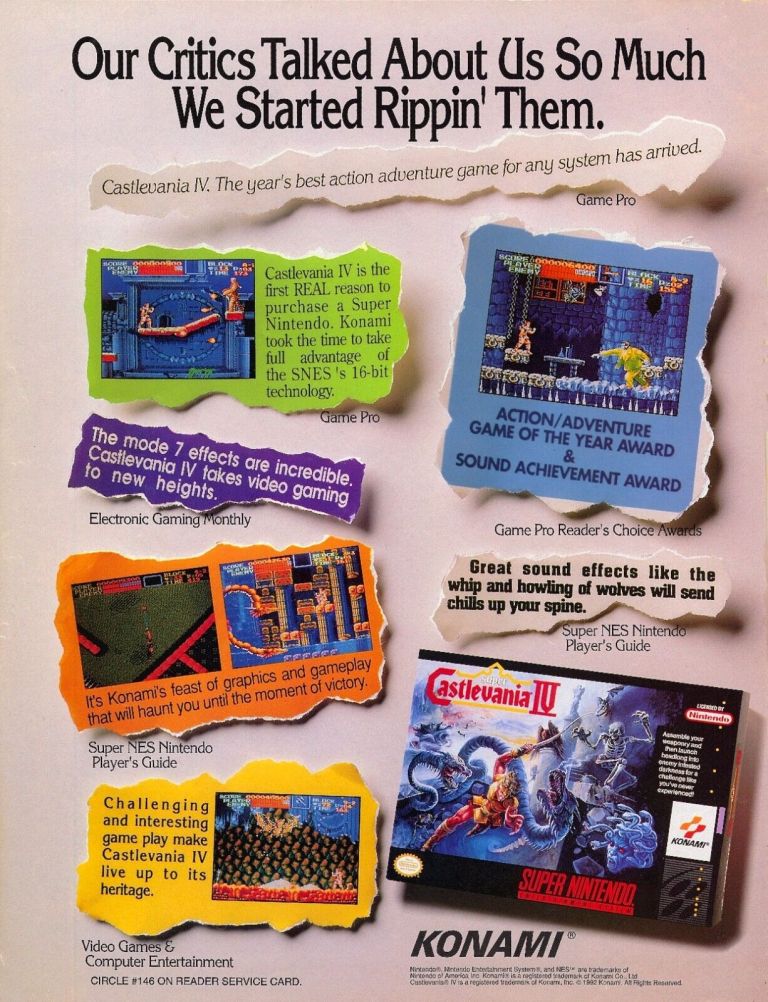
This was one of the most eye-catching print ads I’ve seen about a Konami video game.

The jump in technology from one console generation to the next can be beneficial for gamers if game developers harnessed the advantages of new technologies to make new games that turned out to be more engaging and more enjoyable. Such was the case with Super Castlevania IV for the Super Nintendo Entertainment System (SNES) in 1991. The above print showed Konami highlighting the positive feedback their game received from different gaming media outlets and used screenshots to give gamers and long-time Castlevania fans exciting stuff to see. I got to play the game on the mini SNES console and I can say that in terms of visuals, controls and gameplay, Super Castlevania IV truly lived up to its title and it remains fun to play to this day.

+++++

Thank you for reading. If you find this article engaging, please click the like button below, share this article to others and also please consider making a donation to support my publishing. If you are looking for a copywriter to create content for your special project or business, check out my services and my portfolio. Feel free to contact me with a private message. Also please feel free to visit my Facebook page Author Carlo Carrasco and follow me on Twitter at  @HavenorFantasy as well as on Tumblr at https://carlocarrasco.tumblr.com/ and on Instagram at https://www.instagram.com/authorcarlocarrasco