A Look Back at X-Men Adventures #15 (1993)

Disclaimer: This is my original work with details sourced from reading the comic book and doing personal research. Anyone who wants to use this article, in part or in whole, needs to secure first my permission and agree to cite me as the source and author. Let it be known that any unauthorized use of this article will constrain the author to pursue the remedies under R.A. No. 8293, the Revised Penal Code, and/or all applicable legal actions under the laws of the Philippines.

Welcome back, superheo enthusiasts, 1990s culture enthusiasts, X-Men fans and comic book collectors! Today we revisit the X-Men Adventures monthly series which was the literary adaptation of the popular X-Men animated series of the 1990s.  

Today is my review about the 15th and final issue of the X-Men Adventures adaptation of episodes of the 1st season of the popular animated series. The comic book at hand was the literary translation of the 13th episode and final episode of season one which was broadcast in March 1993.

With those details laid down, here is a look back at X-Men Adventures , published by Marvel Comics in 1993 with a story written by Ralph Macchio and drawn by Andrew Wildman.
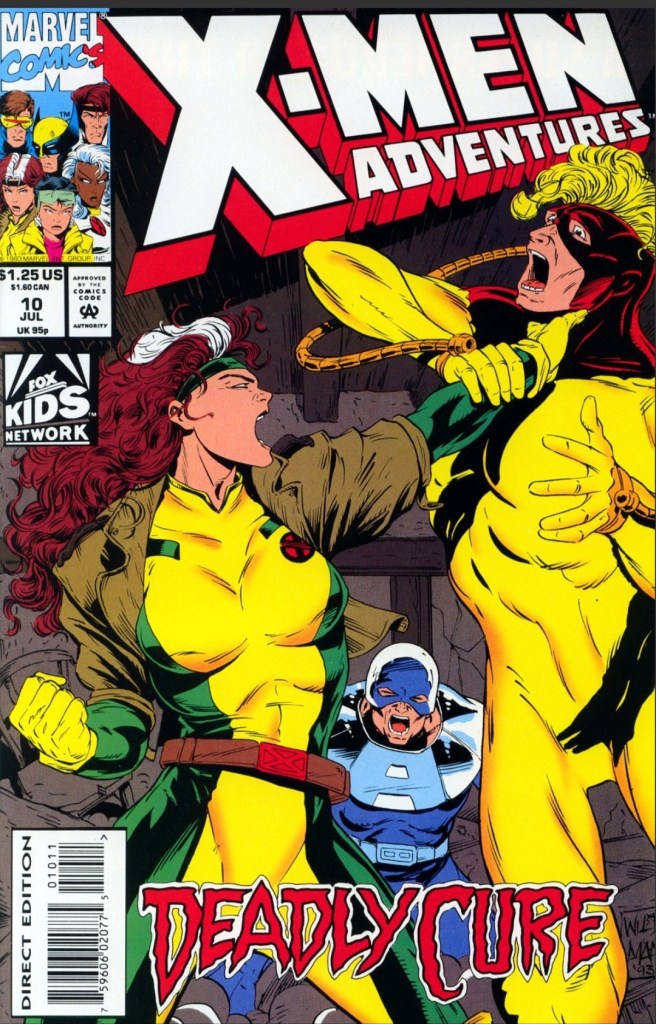
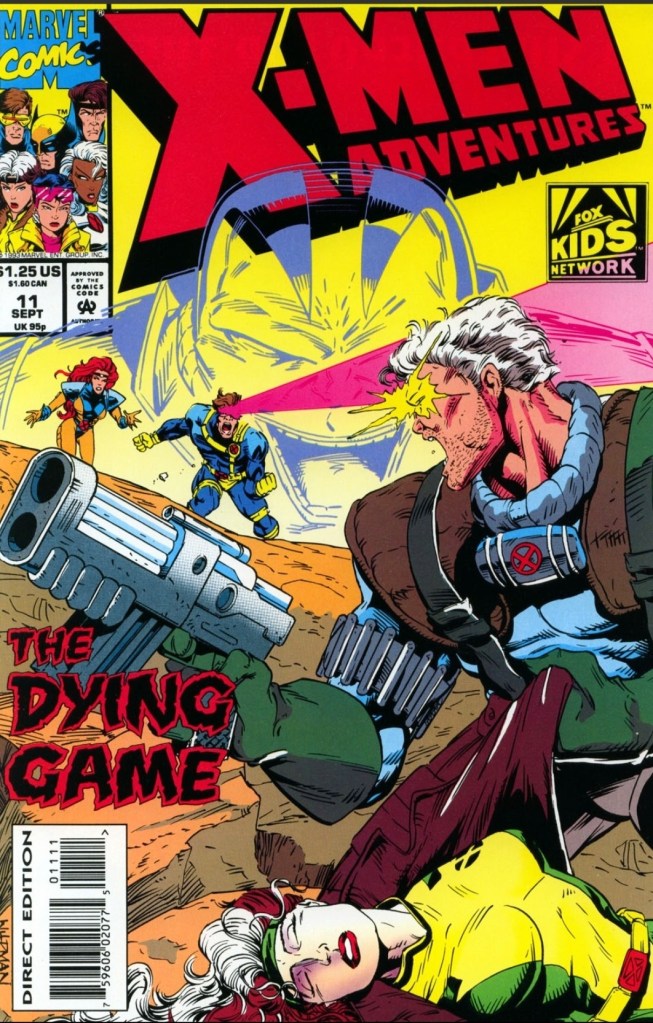
The cover.

Early story

The story begins somewhere in Manhattan where a riot is happening. It turns out that multiple riots have occurred as a result of the of the recent kidnapping of United States Senator Robert Kelly who established himself as the nation’s most prominent anti-mutant public figure.

Deep inside their headquarters, the X-Men watch live news footage of the riot. Even though they were not involved in the kidnapping of Senator Kelly, Charles Xavier and his team are concerned that mutants like them will still be held responsible. The leader tells his team that they must find the missing senator quickly before the wave of intolerance affects all of them mutants. Xavier then starts using Cerebro which he programmed to search for any distortions in the magnetic field of planet Earth.

Elsewhere, inside a vessel that got shipwrecked along the Atlantic seaboard, Magneto has Senator Kelly as his captive. He tells the politician that he holds the key to the future and that they are in agreement that man and mutant cannot co-exist peacefully. For Magneto, the war for dominance must begin as humans remain weak and divided. Suddenly, a huge Sentinel breaks into the place…

Quality

The X-Men, Professor and Magneto.

Being the conclusion of the monthly series based on season one of the X-Men animated series, this comic book’s story packs a lot of stuff, intrigue and some memorable character moments. Thematically, the story emphasizes absolute power, intolerance and instability which got dramatized carefully as the narrative progressed.

For the X-Men, the pressure is tremendous as the stakes have gotten so high not just for them but for all mutants as a population. To fail to save the kidnapped Senator Kelly would cause society to become even more hostile to mutants which could compel the federal government to declare a state of emergency. Complicating matters here is Magneto’s obsession with power in connection with his biggest obsession that mutants are essentially superior over humans and that societies will be reformed – even with violence involved – accordingly. Adding even more the complexity of the situation are the presence of government, technology handlers backed by private financiers, and the one gigantic machine (that produces new Sentinels) that becomes self-aware.

The good news here is that the story is very well written, the narrative does not lose focus and the creative duo of Macchio-Wildman managed to craft a tale that consistently remained engaging complete with ensuring sufficient superhero spectacle for entertainment. As expected, the pay-offs executed for all the build-ups proved to be highly satisfying.

When it comes to characterization, everyone here acts and talks as expected. The team dynamics of the X-Men here make for a cerebral reading experience especially when they have these intense private meetings trying to solve their problems and anticipate what would happen next. The dialogue, filled with varied details, are richly written and yet easy to follow. I should state that having the Sentinels as a force of opposition under the control of a rogue AI added a lot to the stakes involved in the plot. The portrayal of machines acting superior over humans proved to be a unique parallel to the humans-mutants conflict.

Conclusion

The fictional US Senator Robert Kelly in trouble in the presence of Magneto and a Sentinel.

X-Men Adventures (1993) is not only a worthy conclusion to the monthly series based on animated series’ season one episodes. It is indeed the best comic book of the said series that I have read thanks to the great adaptive works of the Macchio-Wildman team. The story had these very high stakes raised and ultimately the pay-off to all the build-up were great resulting in great satisfaction on my part as a reader. At the same time, there are certain key plot elements and character elements here that eventually made their way into the first X-Men live-action movie of 2000. The core story is the clear feature while the bonus pin-up section was the fun additive. This comic book is a must-have!

Overall, X-Men Adventures (1993) is highly recommended!

+++++

Thank you for reading. If you find this article engaging, please click the like button below and also please consider sharing this article to others. If you are looking for a copywriter to create content for your special project or business, check out my services and my portfolio. If you want to support my website, please consider making a donation. Feel free to contact me with a private message. Also please feel free to visit my Facebook page Author Carlo Carrasco and follow me on Twitter at  @HavenorFantasy as well as on Tumblr at https://carlocarrasco.tumblr.com/ and on Instagram at https://www.instagram.com/authorcarlocarrasco/.
A Look Back at X-Men Adventures #9 (1993)

Disclaimer: This is my original work with details sourced from reading the comic book and doing personal research. Anyone who wants to use this article, in part or in whole, needs to secure first my permission and agree to cite me as the source and author. Let it be known that any unauthorized use of this article will constrain the author to pursue the remedies under R.A. No. 8293, the Revised Penal Code, and/or all applicable legal actions under the laws of the Philippines.

Welcome back, superheo enthusiasts, 1990s culture enthusiasts, X-Men fans and comic book collectors! Today we revisit the X-Men Adventures monthly series which was the literary adaptation of the popular X-Men animated series of the 1990s.  

Within the lore of the X-Men, Juggernaut is a significant supervillain who not only gave the X-Men a lot of trouble but also did the same with other heroes within the Marvel Comics shared universe. In the 2006 movie X-Men: The Last Stand, Juggernaut made his first-ever cinematic appearance. In 2018’s Deadpool 2, a new cinematic version of Juggernaut appeared. In my retro comic book review of What If #13 (1990), a different version of Juggernaut was featured by the creators.

With those details laid down, here is a look back at X-Men Adventures , published by Marvel Comics in 1993 with a story written by Ralph Macchio and drawn by Andrew Wildman.

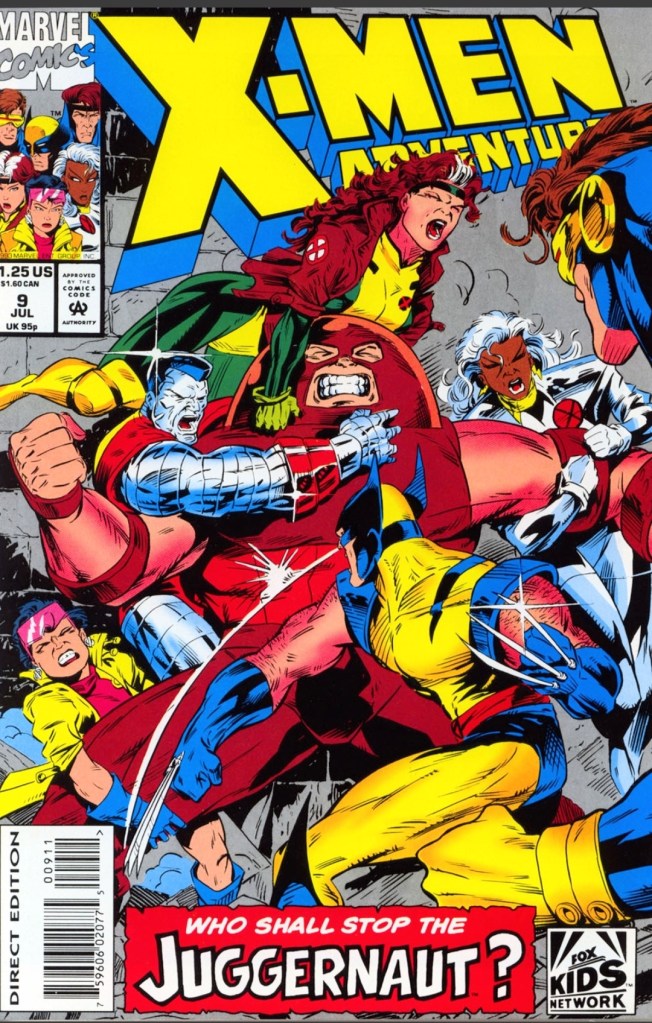
The cover.

Early story

The story begins with the X-Men (riding their jet) arriving from Genosha only to see a part of Professor X’s mansion destroyed. After landing, Cyclops, Wolverine and Jean Grey immediately searched through the rubble and found a path into the War Room. Using Cerebro, they uncovered a prepared video message of Professor X who tells them that he is taking a journey whose results may change their lives forever. After apologizing for the cryptic nature of the message, Xavier tells them that he trusts they will continue with their training and look after the School of Gifted Children in his absence.

The X-Men could not determine if their mentor left the mansion before the destruction took place. In response to Gambit’s question related to detection, Wolverine senses big foot prints and there was a familiar smell left behind. Wolverine decides to go out to keep following the scent which causes Cyclops to insist that the situation at hand is not the time for the team members to separate from each other.

After telling Cyclops he has places to go to, Wolverine then leaves his teammates with a motorcycle. Cyclops tells Storm to take Rogue and Jubilee with her to track Wolverine and stay close to him…

Quality

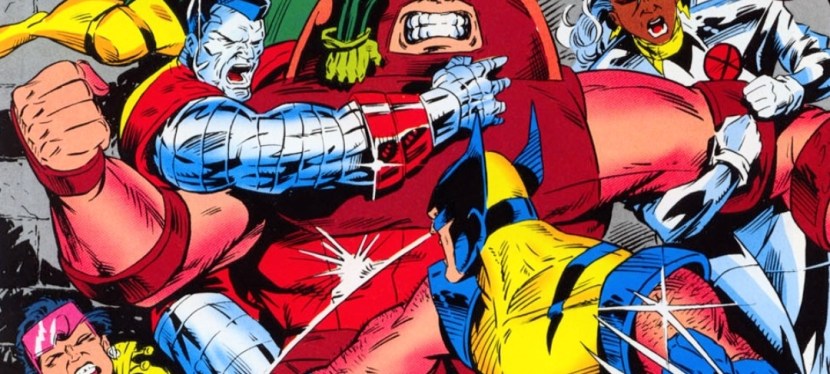
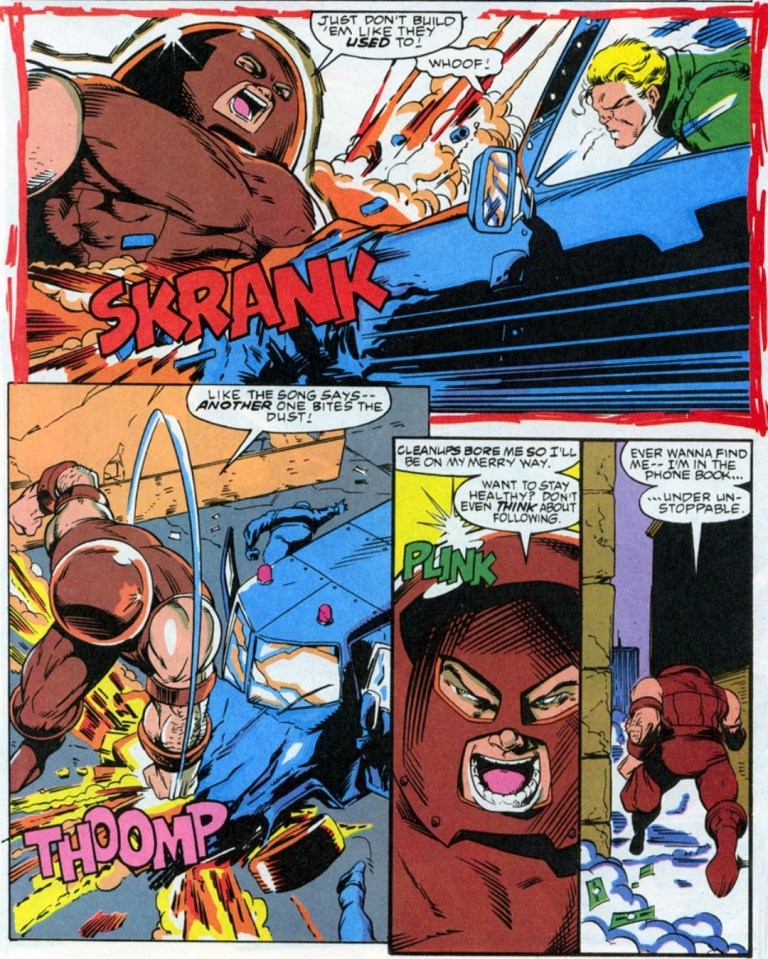
The sheer power of Juggernaut.

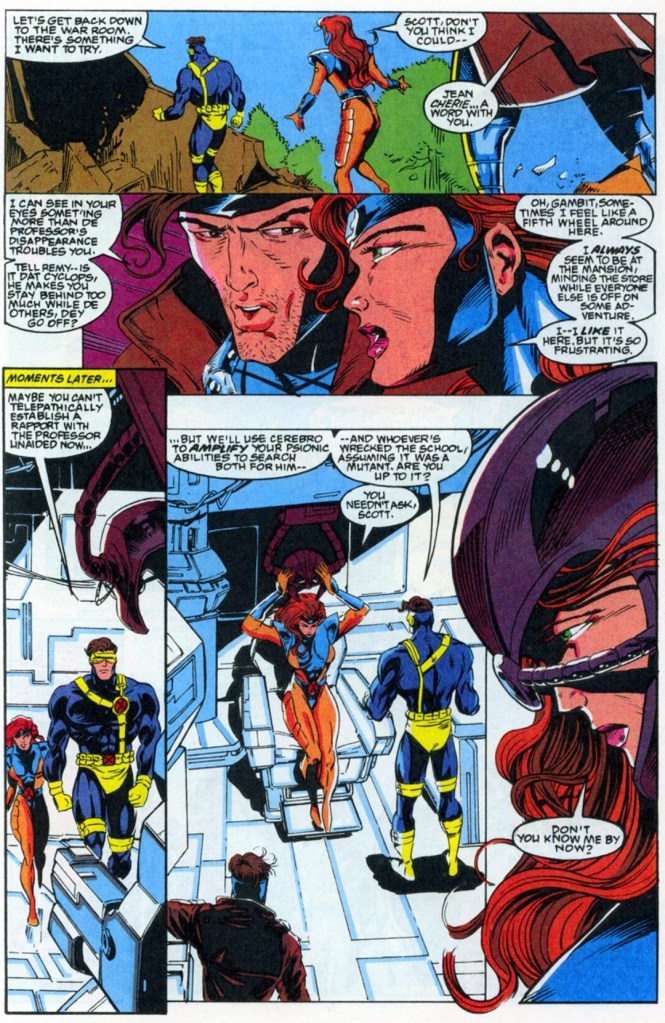
To describe this comic book’s story, I can say it was a fine mix of suspense, mystery and superhero spectacle. As the X-Men struggled to figure out how the damage on the mansion happened and where exactly did Charles Xavier go to, I felt this sense of dread backed with strong mystery. As the plot continued, there were these short-yet-notable character moments among the X-Men such as Gambit getting closer with Jean Grey who believes that she should be helping others on the field as her beloved Cyclops made a decision that kept her with him at the mansion.

The search for who is responsible for the mansion’s big damage creatively took notable paths in the story. One strong figure appeared and became a target of some X-Men members while another one became Wolverine’s target.

As expected, the highlight of this tale is Juggernaut himself and to say that he his huge and powerful is a big understatement. At this point of the X-Men Adventures monthly series, this is the one notable conflict that has multiple X-Men members struggling really hard fighting one single powerful enemy. In some ways, Juggernaut here looks like a much more dangerous foe than Magneto within this series. How the conflict in the story ended in a really intriguing yet sensible way which should resonate with X-Men fans. 

Conclusion

Only Cyclops, Gambit and Jean Grey (who wanted to do more) remained at the mansion.

X-Men Adventures (1993) is fun and intriguing to read. At the stage of this monthly series, the X-Men are not only more developed but are also challenged deeply as their mentor is no longer around to lead them. This makes the path ahead look more enticing to anticipate.

Overall, X-Men Adventures (1993) is recommended.

+++++

Thank you for reading. If you find this article engaging, please click the like button below and also please consider sharing this article to others. If you are looking for a copywriter to create content for your special project or business, check out my services and my portfolio. If you want to support my website, please consider making a donation. Feel free to contact me with a private message. Also please feel free to visit my Facebook page Author Carlo Carrasco and follow me on Twitter at  @HavenorFantasy as well as on Tumblr at https://carlocarrasco.tumblr.com/ and on Instagram at https://www.instagram.com/authorcarlocarrasco/.

A Look Back at X-Men Adventures #5 (1993)

Disclaimer: This is my original work with details sourced from reading the comic book and doing personal research. Anyone who wants to use this article, in part or in whole, needs to secure first my permission and agree to cite me as the source and author. Let it be known that any unauthorized use of this article will constrain the author to pursue the remedies under R.A. No. 8293, the Revised Penal Code, and/or all applicable legal actions under the laws of the Philippines.

Welcome back, superheo enthusiasts, 1990s culture enthusiasts, X-Men fans and comic book collectors! Today we revisit the X-Men Adventures monthly series which was the literary adaptation of the popular X-Men animated series of the 1990s.  

In my previous retro review, the encounter with Magneto ended without any resolution. Back at X-Men headquarters, Sabretooth freed himself and got into a fight with Wolverine which symbolically highlighted tensions from their past encounters.

With those details laid down, here is a look back at X-Men Adventures , published by Marvel Comics in 1993 with a story written by Ralph Macchio and drawn by Andrew Wildman.

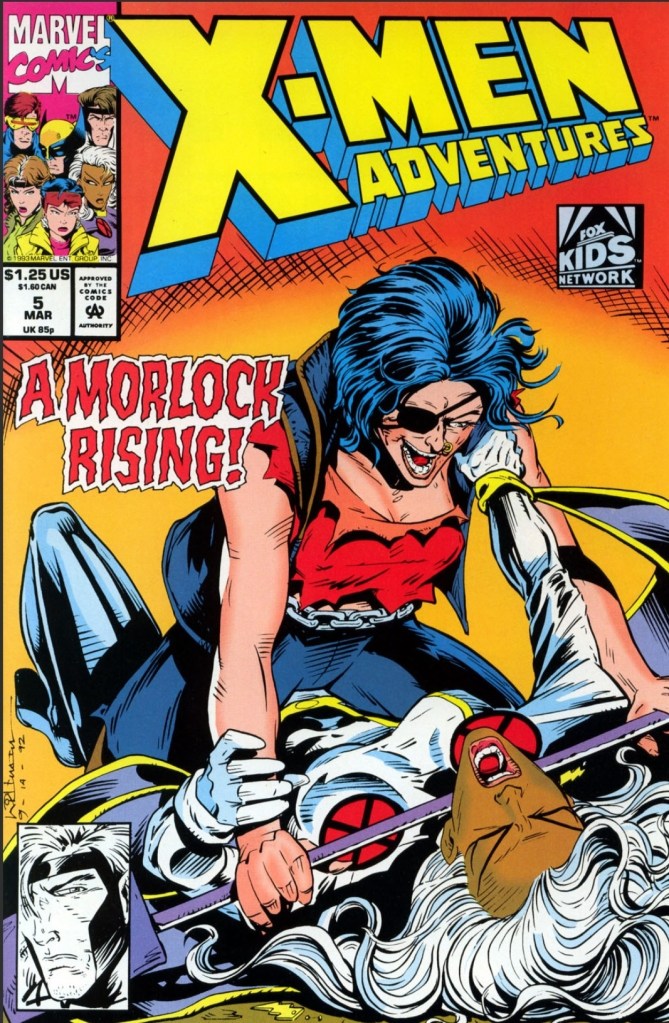
The cover.

Early story

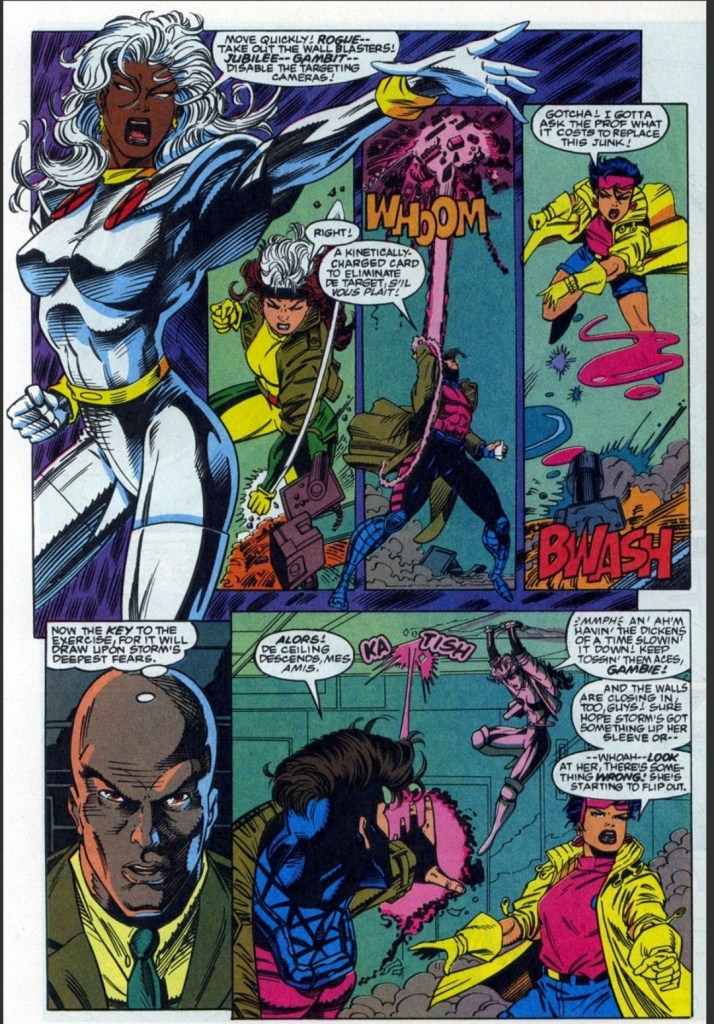
The story begins inside the Danger Room where X-Men members Storm, Rogue, Gambit and Jubilee are tested for combat and skills development under the tight watch of Professor X. While Xavier is aware that while a real-life threat would cause his team to perfect their reflexes and counterattack strategies, it is the leadership of Storm that concerns him the most.

Just as the amount of danger rises, Xavier decides to raise the stakes of the exercise by drawing upon the deepest fears within Storm. Suddenly the ceiling moves down and the walls start closing in on the X-Men. This causes Storm to lose focus as painful memories from her childhood pertaining to claustrophobia suddenly entered her head. The exercise ended on a negative note and Storm tells Professor X that she cannot lead the X-Men as she believes that her claustrophobia will only put others at risk.

Within Xavier’s mansion, the still recovering Wolverine practices martial arts moves. Standing nearby is Jean Grey who starts talking sense into him. Wolverine then notices something in the way Jean looks at him…  

Quality

Cyclops and Jean Grey cornered by the Morlocks led by Callisto.

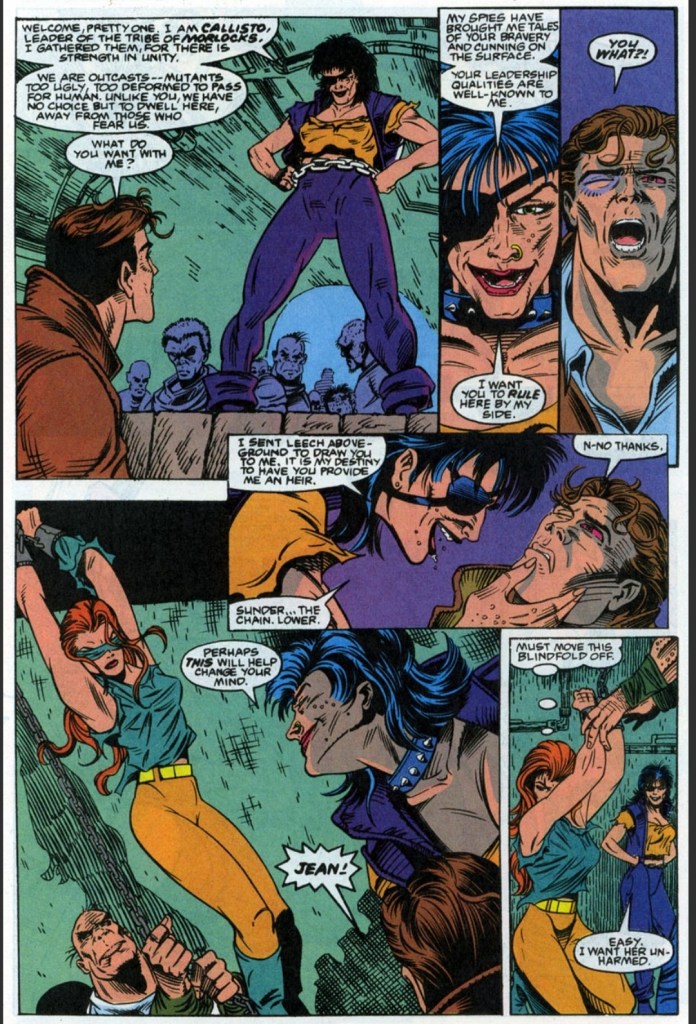
As the cover of this comic book shows, the main feature of the story is the X-Men’s encounter with the Morlocks (first appearance in Uncanny X-Men #169 published in 1983), a group of mutants living underneath the city of New York. Other than being a force of opposition, the Morlocks – led by Callisto – is itself a society composed of outcast mutants who could not really live among humans in normal society not only because of their mutations but also because of their collective look of deformity.

Picking up from the previous issue, the plot moved smoothly starting with a clear focus on Storm and her potential to lead the X-Men followed by the short but intriguing scene between Jean Grey and Wolverine. When the narrative shifted on New York City and the start of the conflict with the Morlocks, the story noticeably turned dark with its tone as the underground mutants become more prominent.

Other than the expected good-versus-evil emphasis of the plot, this comic book sheds light on the social ladder of America with the X-Men symbolizing the normal people and the Morlocks as the misfits. Symbolically speaking, the X-Men are bound to their code of no killing and their search for mutants that their leader Professor X could help, while the Morlocks prefer to be independent believing that isolation best serves their interests. Both the X-Men and the Morlocks have their respective approach on honor which is symbolized further when Storm and Callisto engage in close combat (note: this was the X-Men animated series’ adaptation of their fight as told in 1983’s Uncanny X-Men #170). I should also state that the portrayal of Cyclops and Jean Grey a very vulnerable figures in this story is pretty engaging.

To put things in perspective, the script of this comic book showed that the superhero spectacle is finely balanced with the strong dialogue and dramatization of the X-Men-Morlocks conflict.

Conclusion

The X-Men during the Danger Room session.

X-Men Adventures (1993) is not only a very engaging read on its own, it is also one fine adaptation of the X-Men animated series episode “Captive Hearts” which I first saw on local TV way back in 1993.

Overall, X-Men Adventures (1993) is recommended.

+++++

Thank you for reading. If you find this article engaging, please click the like button below and also please consider sharing this article to others. If you are looking for a copywriter to create content for your special project or business, check out my services and my portfolio. If you want to support my website, please consider making a donation. Feel free to contact me with a private message. Also please feel free to visit my Facebook page Author Carlo Carrasco and follow me on Twitter at  @HavenorFantasy as well as on Tumblr at https://carlocarrasco.tumblr.com/ and on Instagram athttps://www.instagram.com/authorcarlocarrasco/.

A Look Back at X-Men Adventures #4 (1993)

Disclaimer: This is my original work with details sourced from reading the comic book and doing personal research. Anyone who wants to use this article, in part or in whole, needs to secure first my permission and agree to cite me as the source and author. Let it be known that any unauthorized use of this article will constrain the author to pursue the remedies under R.A. No. 8293, the Revised Penal Code, and/or all applicable legal actions under the laws of the Philippines.

Welcome back, superheo enthusiasts, 1990s culture enthusiasts, X-Men fans and comic book collectors! Today we revisit the X-Men Adventures monthly series which was the literary adaptation of the popular X-Men animated series of the 1990s.  

In my previous retro review, the X-Men encountered Magneto for the first time and things turned out for the worse for Charles Xavier’s team.

With those details laid down, here is a look back at X-Men Adventures , published by Marvel Comics in 1993 with a story written by Ralph Macchio and drawn by Andrew Wildman.

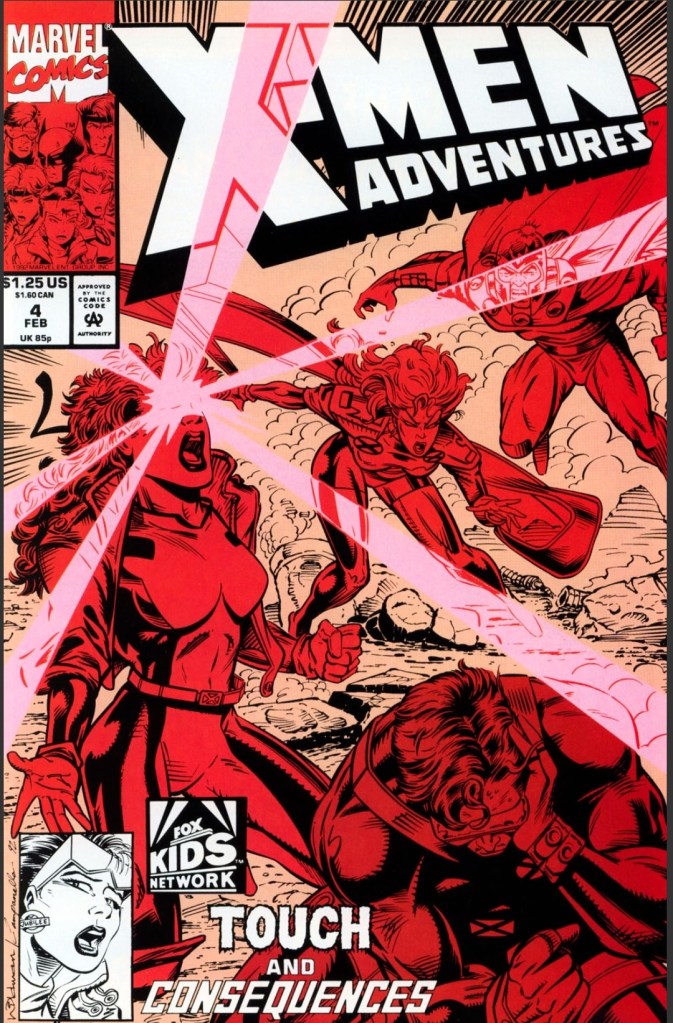
The cover.

Early story

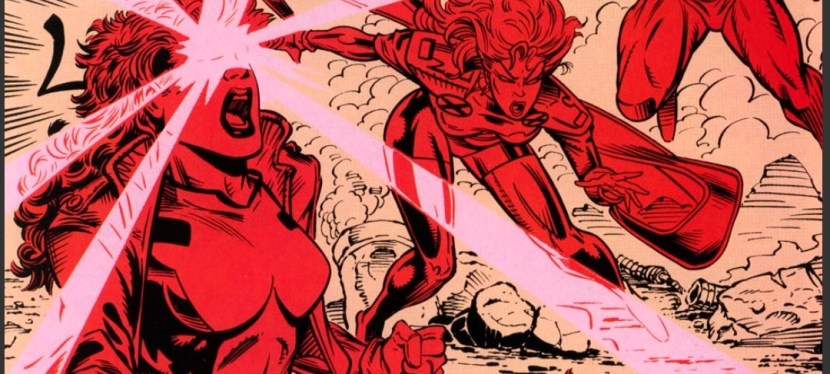
The story begins in a ruined place where Magneto floats in the air and below him are Cyclops, Storm and Rogue who are down and looked knocked out. It turns out Rogue is still conscious and as Magneto remains unaware of her state, she makes her moves to get Storm and Cyclops back up.

Knowing the risk of absorbing another mutant’s power by touching, Rogue executes CPR to revive Cyclops. Just moments after Cyclops gets revived, powerful beams of laser suddenly come out of Rogue’s eyes. As soon as the problem eased, Rogue then flies off towards Magneto in a mad attempt to tackle him…

Quality

The encounter between Wolverine and Sabretooth is a must-read!

To get straight to the point here, this comic book tells two succeeding events starting with the encounter between Magneto and the X-Men. In reflecting Magneto’s first appearance in the animated series, this adaptation emphasizes the first time the X-Men encountered the master of magnetism but with the contemporary character designs and visual aesthetics of the era. On face value, the encounter here looks inspired by the X-Men Blue Team’s encounter with Magneto in 1991’s X-Men #1 but in reality this one was designed in accordance to the animated series creators’ way of establishing the start of the X-Men-Magneto rivalry. There is a good amount of superhero spectacle as Storm, Rogue, Cyclops and Charles Xavier each take turns on bringing down Magneto in their own unique methods. Of course, these developments helped emphasize how powerful Magneto really is.

The other half of this comic book tale focuses more on the presence of Sabretooth as a captive of the X-Men at their headquarters, as well as the eventual rivalry between him and Wolverine. It is during the heat of Wolverine’s encounter with Sabretooth that the dialogue became very rich and engaging to read as elements of their past together got raised, and Sabretooth’s observations on how the X-Men handled things became philosophical. I also enjoyed how the philosophical writing continued within Charles Xavier’s dialogue as he attempts to nullify the rage between Wolverine and Sabretooth.

As with his past works, the art here drawn by Andrew Wildman is very good and he even pushed the limits of on-page superhero violence during two key moments of the physical struggle between Wolverine and Sabretooth (which resulted in altered colors to avoid graphic violence).  

Conclusion

The encounter between Magneto and the X-Men was pretty engaging to read.

X-Men Adventures (1993) is a solid read from start to finish. By the time I reached the final page, the comic book clearly marked the beginning of the rivalry between the X-Men and Magneto (in accordance to what was set up in the animated series). This comic book emphasized the rivalry further with the clever use of dialogue and visuals (complete with the strategic use of panels on the final pages), so much so there was this genuine feel of the start of a new age.

Overall, X-Men Adventures (1993) is highly recommended.

+++++

Thank you for reading. If you find this article engaging, please click the like button below and also please consider sharing this article to others. If you are looking for a copywriter to create content for your special project or business, check out my services and my portfolio. If you want to support my website, please consider making a donation. Feel free to contact me with a private message. Also please feel free to visit my Facebook page Author Carlo Carrasco and follow me on Twitter at  @HavenorFantasy as well as on Tumblr at https://carlocarrasco.tumblr.com/and on Instagram athttps://www.instagram.com/authorcarlocarrasco/.

A Look Back at The Solution #17 (1995)

Disclaimer: This is my original work with details sourced from reading the comic book and doing personal research. Anyone who wants to use this article, in part or in whole, needs to secure first my permission and agree to cite me as the source and author. Let it be known that any unauthorized use of this article will constrain the author to pursue the remedies under R.A. No. 8293, the Revised Penal Code, and/or all applicable legal actions under the laws of the Philippines.

Welcome back superhero fans, 1990s arts and culture enthusiasts, Ultraverse fans and comic book collectors! Today we revisit the Ultraverse through the monthly series of The Solution. To be more precise, this review is about the 17th and final issue ever published.

In my previous retro review, The Solution daringly infiltrated a secret in Taiwan knowing that a major meeting between the heads of gangs will take place there. For Lela Cho/Tech, this is an opportunity for her to recover the company she lost to the Dragon Fang gang (read The Solution #6). Unfortunately for Lela and her teammates, the opposition were prepared for them.

With those details laid down, here is a look back The Solution , published by Malibu Comics in 1995 with a story written by the late James Hudnall and drawn by John Statema.

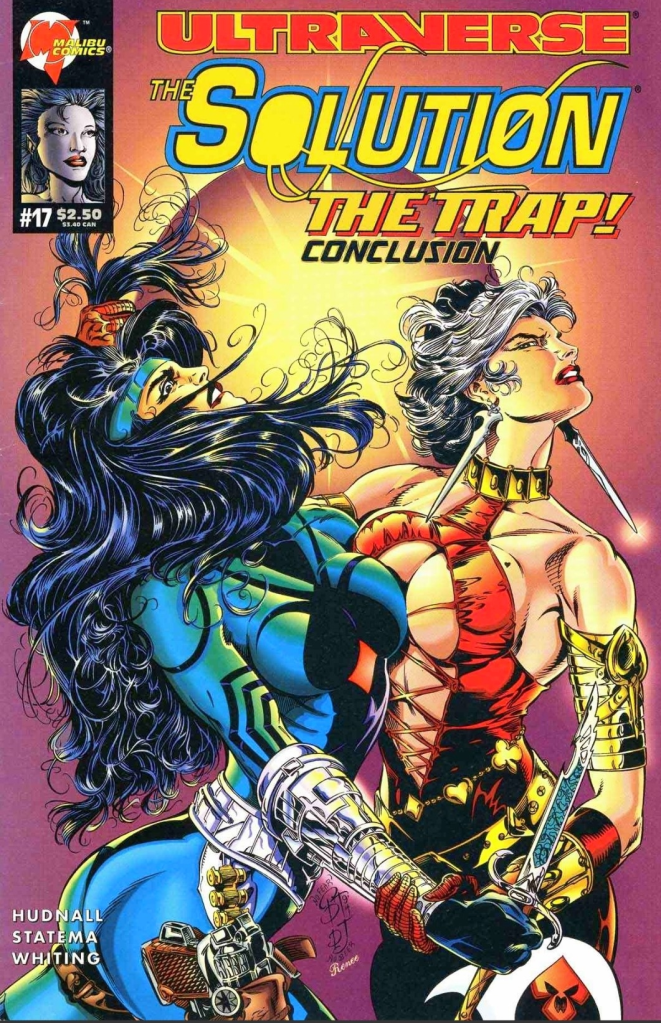
The cover.

Early story

The story begins with the arrival of the so-called lords of the Dragon Fang gang at the facility in Taiwan. As far as they know, The Solution has been brought down and the leader Lela Cho has been captured. They entered with a feeling of triumph only to see a large number of human bodies and severed body parts on the floor.

Inside, the insidious Casino has Lela Cho restrained helplessly on a high-tech chair. The Solution’s leader has been drugged by Casino who tells her that she (Lela) will be brought to some brothel in Thailand.

In another part of the facility, two armed guards approach the motionless body of Dropkick on the floor. Suddenly, The Solution’s martial artist moves and knocks the two guards out…

Quality

A very vulnerable Lela Cho in front of Casino.

In consideration of the build-up that started in the few previous issues, this particular comic book proved to be a worthy pay-off complete with a few notable twists that surprised me. Without spoiling the plot, I can say that the story is intriguing, the spectacle is plenty and the creative managed to keep things fresh. Along the way, there is some really relevant story elements that will compel you to re-read the early issues of The Solution series, especially when it comes to Casino who previously encountered the titular team.

As a good-versus-evil story, this one does not go over the edge and it certainly is not brainless entertainment. There is a lot more behind The Solution’s conflict with the Dragon Fang gang here and the impact can be felt more by those who actually started reading this particular series from issue .

On the visuals, John Statema’s return here is a very welcome move simply because, in my honest opinion, his style and approach to art really defined the looks of both the series and The Solution itself.  

Conclusion

Shadowmage takes on the Commie from Cambodia.

Being the concluding issue of its own series, The Solution (1995) is a solidly fun and intriguing read. Not only did it conclude the build-up that preceded it, it also encouraged revisiting the earlier issues of the series for a deeper understanding of the opposition forces such as Casino and the Dragon Fang gang. While this was the last The Solution series entry, there was a promise of further adventures as it was made clear that another “era” awaited Lela Cho and her team. Unfortunately, as comic book publishing history showed, The Solution as a publishing franchise came to an end as the Ultraverse itself faded to obscurity under the banner of Marvel Comics (which acquired Malibu Comics in 1994). Take note that The Strangers concluded without a really conclusive story (there were even art works for issues to #27) and Prototype ended with a story that felt like a substitute issue. That being said, the only way to keep enjoying The Solution is by simply repeat reading the entire series as well as finding the team’s appearances in other Ultraverse comic books. In my view, The Solution is one of the very best Ultraverse teams!

Overall, The Solution (1995) is recommended.

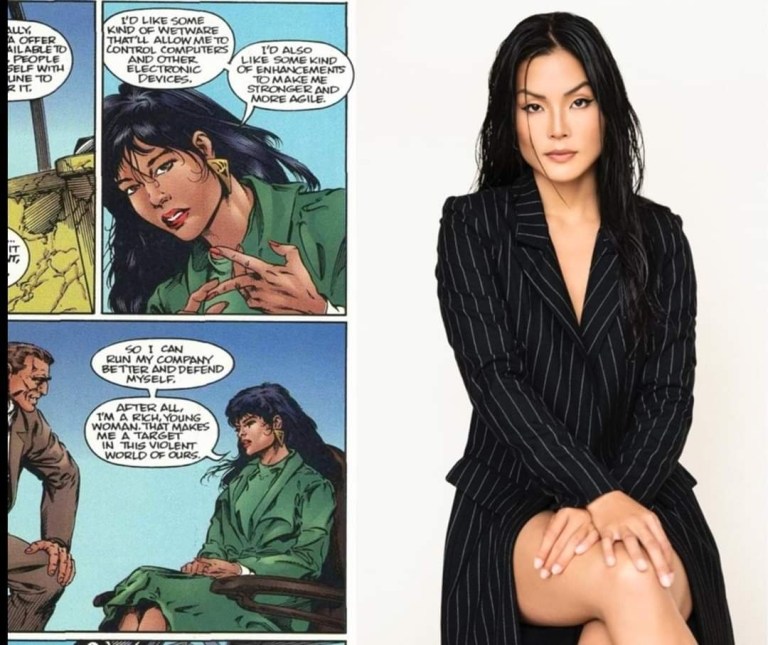
As this is end of my retro reviews of The Solution, posted below are images of fashion models whom I find suitable as cosplay photography models for Lela Cho/Tech and Shadowmage. Please tell me if the models looked their parts. Enjoy!

Model Saria Chen as Tech.
Saria Chen as Lela Cho in civilian form.
Model Shannon Barker as Shadowmage.

+++++

Thank you for reading. If you find this article engaging, please click the like button below and also please consider sharing this article to others. If you are looking for a copywriter to create content for your special project or business, check out my services and my portfolio. If you want to support my website, please consider making a donation. Feel free to contact me with a private message. Also please feel free to visit my Facebook page Author Carlo Carrasco and follow me on Twitter at  @HavenorFantasy as well as on Tumblr at https://carlocarrasco.tumblr.com/ and on Instagram athttps://www.instagram.com/authorcarlocarrasco/.
A Look Back at What If #47 (1993)

Disclaimer: This is my original work with details sourced from reading the comic book and doing personal research. Anyone who wants to use this article, in part or in whole, needs to secure first my permission and agree to cite me as the source and author. Let it be known that any unauthorized use of this article will constrain the author to pursue the remedies under R.A. No. 8293, the Revised Penal Code, and/or all applicable legal actions under the laws of the Philippines.

Welcome back superhero enthusiasts, 1990s arts and culture enthusiasts, Marvel Comics fans and comic book collectors! Today we go back to the year 1993 and explore a part of Marvel Comics’ universe through the reimagined tales emphasized in the What If monthly series.

Back in 2021, I reviewed What If #46 (1993) which told a compelling story about division between the mutants, the clash of beliefs between Professor X and Cable, and how terrorism affects everyone. The comic book was also a mesmerizing portrayal of how the X-Men would have organized themselves without Charles Xavier, Jean Grey and Cyclops.

Considering all the chaos that happened in What If (1993), the time was just right for Magneto – the X-Men’s most dangerous enemy of all time – to come in and make an impact not only on mutants but on the world.

With those details laid down, here is a look back at What If , published in 1993 by Marvel Comics with a story written by Kurt Busiek and drawn by Tod Smith.

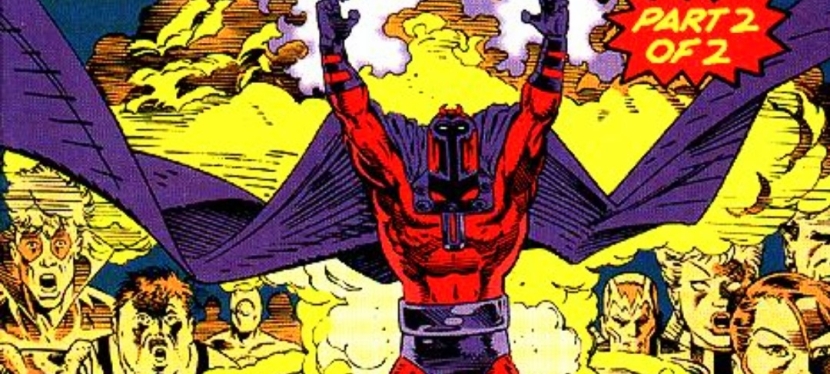
The cover.

Early story

The story begins with Magneto leading a huge legion of mutants to take overwhelm the remaining resistance – including Spider-Man, the Fantastic Four, Captain America, the Avengers and the dedicated American soldiers – in Washington, D.C.

A fierce battle then took place with both sides hitting each other hard. After noticing Magneto’s lack of presence during the battle, Captain America then realizes that the long-time enemy of the X-Men took advantage of the fighting to penetrate the U.S. Capitol’s bomb shelters and got the nation’s leaders hostage. After easing some of his fellow heroes, Captain America decides not to escalate the fight against Magneto in consideration of the lives of America’s top officials…

Quality

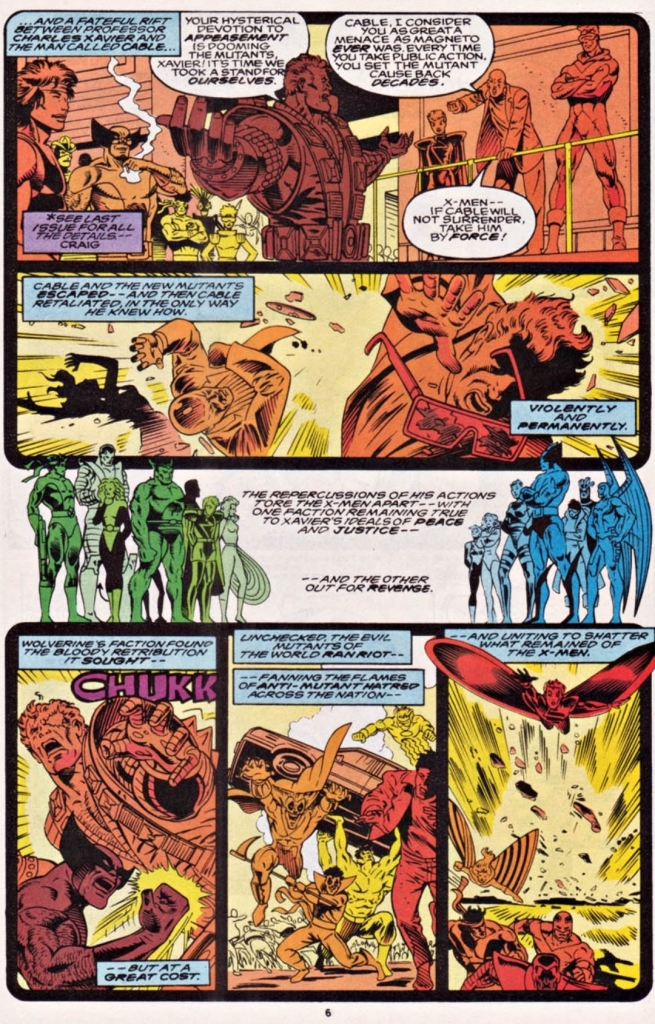
A recap of the events in issue .

To begin with, I can say that this story is a well-planned follow-up to the events of issue . While Magneto’s presence has been magnified a lot here, there are still strong story connections to the previous issue.

With regards to what was emphasized on the front cover of the comic book, this story explores what would happen if Magneto took power to control the entire United States while leading a group of mutants with a platform focused on crushing anti-mutant racism even though it includes pushing the non-mutant people (which is the great majority of America’s people) as well as the dissenting mutants out of the way.

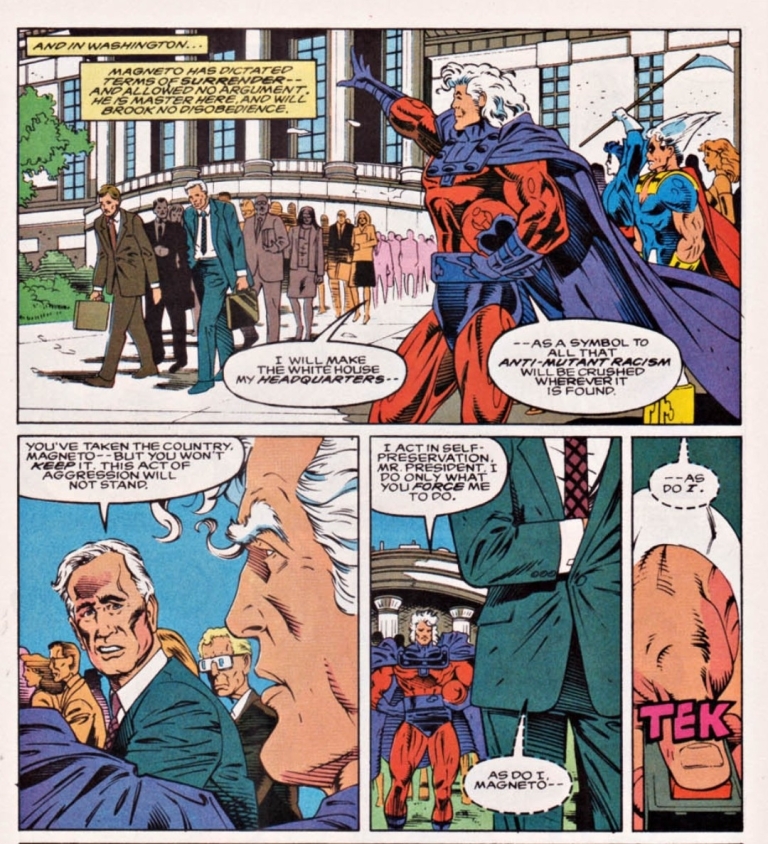
For one thing, this superhero fantasy concept is actually socially relevant with today’s geopolitics and the way America has turned out under the fake leadership of Joe Biden (who is NOT leading as US President but only following the modern-day American Communists and reckless SJWs dictating him to do their evil bidding. Biden also arrogantly denies reality when it goes against the desires of his administration and his Satanic Democrats) It should be noted that the US President visualized in this comic book eerily looks like Joe Biden complete with that absent-minded facial expression.

Next, a clear theme in this What If story is absolute power and why groups who crave for it would sacrifice so much and hurt others just to acquire it. Magneto, who carries deep hatred towards people he perceives to be obstacles or opposition for his quest of uplifting mutants, takes advantage of mutants who have lost hope and are depending on someone to lead them. Indeed, the long-time X-Men nemesis gains power to control America but finds himself facing a new force of opposition which leads the nation into a drastic series of change that clearly do not alight with his vision of a better future for mutants.

Still on the theme of absolute power, the US government in this story was portrayed to have developed technologies designed to overwhelm its citizens, as well as the means to establish infrastructure and protocols to transform America into an automated dictatorial state that enslaves its citizens and violate their rights without restraint. Once again, this aspect of the story makes it socially relevant.  

Considering the epic concept and the dark turn of events the creative team prepared, this comic book does not have a clear good-versus-evil approach but rather it emphasizes chaos that comes with the pursuit and abuse of absolute power over the nation. You will see key elements from the classic X-Men storyline Days of Future Past here in relation to America’s deformation.

Conclusion

Wow! The US President in this comic book eerily looks so much like Joe Biden whose leadership led America into a lot of problems and hardship. Sky high inflation is just one of the problems that happened under Biden.

What If (1993) is truly a very captivating read mainly because of its core concept which goes way beyond the scenario of Magneto taking control of America. Considering its portrayal of America and the exploration of dark themes about people getting overwhelmed by power abusers, the story is a warning about the fall of America told in superhero fantasy form. Considering the intense social degradation that rocked America the past few years (note: riots by the Black Lives Matter terrorists, SJWs disturbing the peace, Democrats allowing more illegal immigrants into the country, socialists in colleges continuing to brainwash students and more), this story is very socially relevant. It will keep you thinking and reflecting deeply, even if you strongly desire whatever superhero entertainment you seek in this comic book.

Overall, What If (1993) is highly recommended!

+++++

Thank you for reading. If you find this article engaging, please click the like button below, share this article to others and also please consider making a donation to support my publishing. If you are looking for a copywriter to create content for your special project or business, check out my services and my portfolio. Feel free to contact me with a private message. Also please feel free to visit my Facebook page Author Carlo Carrasco and follow me on Twitter at  @HavenorFantasy as well as on Tumblr at https://carlocarrasco.tumblr.com/ and on Instagram at https://www.instagram.com/authorcarlocarrasco

A Look Back at X-Men #30 (1994)

Disclaimer: This is my original work with details sourced from reading the comic book and doing personal research. Anyone who wants to use this article, in part or in whole, needs to secure first my permission and agree to cite me as the source and author. Let it be known that any unauthorized use of this article will constrain the author to pursue the remedies under R.A. No. 8293, the Revised Penal Code, and/or all applicable legal actions under the laws of the Philippines.

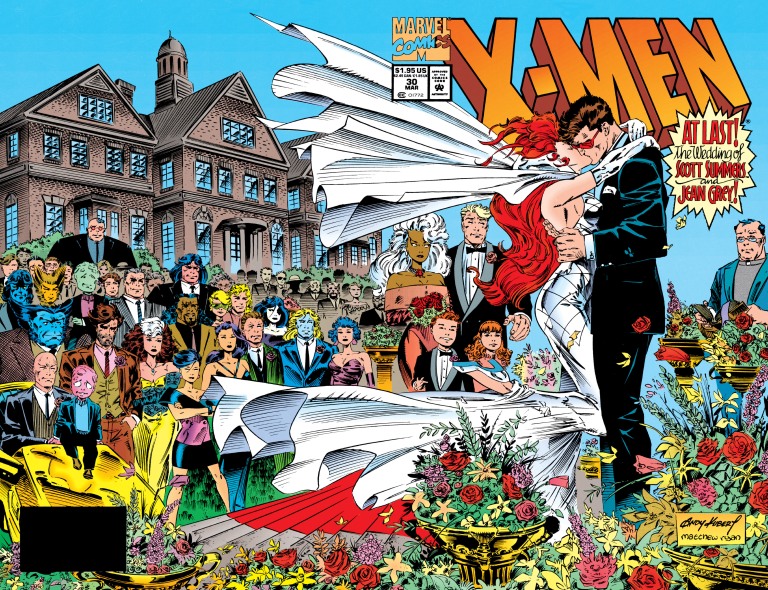
Welcome back, superheo enthusiasts, 1990s culture enthusiasts, X-Men fans and comic book collectors! Today we revisit the X-Men monthly series of the 1990s and look back at one of its most significant events it ever published – the wedding of Scott Summers/Cyclops and Jean Grey. By the time this particular comic book was published, the 30th anniversary celebration of the X-Men (note: Read my Fatal Attractions storyline retro reviews by clicking here and here) had just been concluded and that includes a major change of direction for the iconic X-Men member Wolverine. It is also notable that the X-Men had Sabretooth contained within Charles Xavier’s mansion (for retro reviews, click here, here and here).

With those details laid down, here is a look back at X-Men , published by Marvel Comics in 1994 with a story written by Fabian Nicieza and drawn by Andy Kubert.

The cover.

Early story

The story begins inside Xavier’s mansion. Jean Grey reads a handwritten letter from Logan/Wolverine, who left the household after getting traumatized from their last encounter with Magneto. Logan refers to her and Scott Summers as special. While reading, Jean is already in her fancy wedding dress being assisted by her mother and storm as Rachel Summers looks on. For Jean, the wedding is about her dedication on spending the rest of her life with Scott as well as possibly gaining Rachel (who comes from one possible future) as a daughter.

Professor X with four of his original team members plus Alex Summers.

Elsewhere in the mansion, the groom Scott spends quality time with his original teammates Bobbdy Drake/Ice Man, Warren Worthington/Archangel and Hank McCoy/Beast. With them also is his brother Alex Summers/Havok. Alex tells Scott that the day of his wedding is the first day of the rest of his life which causes Bobby to say something inappropriate.

Suddenly, Professor X comes in to join them…

Quality

Jean Grey in her wedding dress with her mother, Storm and Rachel Summers present.

To get straight to the point here, this comic book serves two purposes: highlighting Scott and Jean’s relationship to an all new level with the wedding as the main event, and offering long-time or die-hard X-Men fans a whole lot of stuff to chew on. Very clearly, Fabian Nicieza wrote the script with X-Men fans in mind while also making references to the past with some creative touches or shortcuts so that the comic book would not be bloated with excessive fan service.

The wedding itself was executed nicely by the Nicieza-Kubert team and was clearly conceptualized to not only be memorable for the fans but also creatively serve as a major pay-off to all those years of Scott and Jean Grey being together early as teammates, getting separated temporarily and getting together again (note: they were also the original X-Factor team). Right after the wedding was executed, the visuals and words elevated the emotions higher and any long-time X-Men fan will find the moment sentimental.

Opposite the wedding are several scenes showing the other X-Men characters plus those from X-Factor and X-Force (with a not-so-recognizable Cable present). The dialogue written ranged from sentimental to comedic. And then there were also a few lines that I felt were just thrown in as fillers.

As far as visuals go, Andy Kubert’s art here are pretty good to look at. While he did his best to really make the story visually appealing and memorable, there were a few panels of art that look rushed.

Conclusion

So many guests. Can you recognize many of them?

Since it highlights the wedding of Scott and Jean Grey with several other X-Men-related characters mixed in, X-Men (1994) is clearly a commemorative story made with X-Men fans in mind. While a lot of work was done to make the story momentous on its own, readers who are unable to immerse themselves deeply into the X-Men mythos (plus X-Force, X-Factor and others) prior to reading this comic book won’t be able to relate to the wedding and the character moments very much. While it may not be significant to newcomers who find this comic book for the first time, it still marks a significant chapter in the history of X-Men within the Marvel Comics universe of the late 20th century. For the long-time fans who were able to read enough of Scott and Jean Grey’s times together from 1963 until the early 1990s, this is one X-Men tale that they can relate with deeply.

Overall, X-Men (1994) is recommended.

+++++

Thank you for reading. If you find this article engaging, please click the like button below and also please consider sharing this article to others as well as making a donation to support my publishing.. If you are looking for a copywriter to create content for your special project or business, check out my services and my portfolio. Feel free to contact me with a private message. Also please feel free to visit my Facebook page Author Carlo Carrasco and follow me on Twitter at  @HavenorFantasy as well as on Tumblr at https://carlocarrasco.tumblr.com/ and on Instagram at https://www.instagram.com/authorcarlocarrasco

A Look Back at X-Men Adventures Season II #4 (1994)

Disclaimer: This is my original work with details sourced from reading the comic book and doing personal research. Anyone who wants to use this article, in part or in whole, needs to secure first my permission and agree to cite me as the source and author. Let it be known that any unauthorized use of this article will constrain the author to pursue the remedies under R.A. No. 8293, the Revised Penal Code, and/or all applicable legal actions under the laws of the Philippines.

Note: Since this retro review mentions both Russia and Ukraine, I encourage you all to help the people of Ukraine (whose lives have been disrupted by Russian forces) by donating to the Ukraine Appeal project of Hillsong Church. Donate now at https://hillsong.com/appeal/

Welcome back, superhero enthusiasts, 1990s culture enthusiasts, X-Men fans and comic book collectors! Today we revisit the X-Men Adventures monthly series which was a literary adaptation of the famous X-Men animated series of the 1990s.

To be more specific, we examine a tale of the major X-Men villain Omega Red within the monthly series adaptation of the 2nd season of the animated series. Take note that I previously reviewed X-Men #4 (1991), X-Men #5 (1992) and X-Men #6 (1992) which told the first tale of Omega Red who turned out to have a history of conflict with Wolverine decades prior.

With those details laid down, here is a look back at X-Men Adventures Season II , published by Marvel Comics in 1994 with a story by Ralph Macchio and drawn by John Herbert.

The cover.

Early story

The story begins in the Caucasus located between Ukraine and Georgia. Inside, a group of people work on a scientific operation resulting a power surge. The surge then causes a stasis chamber’s glass to crack. Moments later, Omega Red emerges and he has clear knowledge about who restrained him, who the government leaders and what happened to the Russian empire. He declares that the Russian empire shall live again. In Moscow, three high ranking military officers discuss their secret plan on restoring the Soviet Union. It turns out, the return of Omega Red is the first step for their ambitious plan.

In America, Jubilee encounters a group of activists who hate mutants inside a convenience store. Peter Rasputin/Colossus, the Russian mutant who encountered the X-Men sometime prior, comes into the store to help Jubilee. Afterwards, Jubilee and Colossus travel to Charles Xavier’s mansion – Xavier’s School for Gifted Children – and discuss important matters. He tells her that Omega Red has emerged in Russia and he need to speak to Professor X. It turns out, Xavier disappeared some weeks prior.

As the situation is so desperate for Colossus, he asks Jubilee if she would help him in his struggle to save his nation. Jubilee makes a hasty decision to do so and leaves a handwritten note telling her teammates that she is off to Russia…

Quality

Colossus and Jubilee in Russia.

While this comic book’s cover art easily reminds me of the Wolverine-Omega Red confrontation on the cover of X-Men (1992), the story here is more varied than that mentioned comic book drawn by Jim Lee. As this is an adaptation of the X-Men animated series episode titled “Red Dawn”, it is not surprising to see the spotlight being divided by many characters.

Omega Red, who has been declared as one of the greatest X-Men villains ever, has a somewhat strong presence serving as the main figure of opposition against Charles Xavier’s team as well as the surviving elite remnant of the Soviet Union. Quite amusingly, Omega Red is totally loyal to the Russian empire similar to how James Bond is very loyal to England and the queen. In comparison to issues to of the X-Men monthly series, the history of conflict between Omega Red and Wolverine was very lightly portrayed.  

Wolverine and Omega Red in battle!

As mentioned earlier, the spotlight is shared a lot by many characters which results a lack of a true protagonist among the X-Men. This is not necessarily a problem as Omega Red’s presence had enough strength. The other Russian Colossus, who at the start of the story has not yet joined the X-Men, got a good share of the spotlight among the good guys and that results some quick and efficient exposition to get readers oriented with him, his family and how he became an outcast in his nation because of his mutation.

The plot itself is light on details which is not surprising due to the high amount of exposition which includes a geopolitical look at the remaining loyalists of the Soviet Union living in Russia which saw some of its regions transformed into republics. With regards to superhero spectacle, this one has a good amount of action and I can easily say the biggest attraction is the fight between Wolverine and Omega Red. Just don’t expect it to be as extensive nor as detailed as the ones Jim Lee drew in the adjective-less X-Men series.  

Conclusion

John Herbert’s take on Omega Red was carefully crafted.

X-Men Adventures Season II (1994) is a fun superhero story to read and I find its portrayal of the Wolverine-Omega Red conflict to be interesting knowing it was not part of comic book canon of the time. Apart from the mentioned conflict, there is something for X-Men fans to enjoy here such as Colossus’ return and his new interactions with the X-Men, how Omega Red’s presence causes danger in Russia, and the current whereabouts of Charles Xavier. Lastly, I should state that John Herbert’s art style is engaging to look at and he made Omega Red look intimidating.

Overall, X-Men Adventures Season II (1994) is recommended!

+++++

Thank you for reading. If you find this article engaging, please click the like button below and also please consider sharing this article to others. If you are looking for a copywriter to create content for your special project or business, check out my services and my portfolio. Feel free to contact me with a private message. Also please feel free to visit my Facebook page Author Carlo Carrasco and follow me on Twitter at  @HavenorFantasy as well as on Tumblr at https://carlocarrasco.tumblr.com/ and on Instagram at https://www.instagram.com/authorcarlocarrasco/

A Look Back at X-Men #24 (1993)

Disclaimer: This is my original work with details sourced from reading the comic book and doing personal research. Anyone who wants to use this article, in part or in whole, needs to secure first my permission and agree to cite me as the source and author. Let it be known that any unauthorized use of this article will constrain the author to pursue the remedies under R.A. No. 8293, the Revised Penal Code, and/or all applicable legal actions under the laws of the Philippines.

Welcome back, superhero enthusiasts, 1990s culture enthusiasts, X-Men fans and comic book collectors! Today we revisit the X-Men monthly series of the 1990s and look back into the one of the comic books that was released in 1993 which was the year Marvel celebrated the 30th anniversary of the X-Men franchise. To be more specific, the comic book in this retro review took place right after the death of Colossus’ sister and just before the big Fatal Attractions stories in Uncanny X-Men #304 (1993) and X-Men #25 (1993).

With those details laid down, here is a look back at X-Men #24, published by Marvel Comics in 1993 with a story written by Fabian Nicieza and drawn by Andy Kubert.

The cover.

Early story

The story begins inside a high-end restaurant wherein Rogue and Gambit, both dressed in formal attire, have dinner and spend quality time together. Their private talk turns awkward when Rogue asks him about his silence about his wife (refer to X-Men ). Gambit, in his attempt to change the subject, asks Rogue why other people do not know her real name. This leads them into staring at each other in silence.

Over the mansion, Dr. Moira McTaggert and Banshee are reunited while Charles Xavier and Beast are inside the laboratory working and analyzing as to how Illyana Rasputin died. Over at a local airport, Jean Grey and Cyclops are reunited…

Quality

Psylocke and Revanche.

Have you heard about the expression “the calm before the storm”? That truly reflects what this comic book is all about. X-Men #24 (1993) was all about build-up of information and character developments, getting specific X-Men characters reunited, tying up some loose ends from the past while also building up tension for near-future events and more. There is no battle between good and evil here as this was written to set up the characters for specific storylines that were set to happen and Fatal Attractions was just a part of them. No superhero action here, just lots of dialogue plus romance, suspense and melodrama.

If there is anything notable here, it is the romantic time Rogue and Gambit have together. While their relationship got deeper, Fabian Nicieza also opened up the possibility that secrets between the two could still derail their romantic connection. Eventually, their relationship got strained as seen in X-Men #33 (1994).

This comic book also took time to explore further the mystery between Revanche and Psylocke, and also the negative impact Illyana’s death towards Jubilee. All throughout, Nicieza’s dialogue is solid and captured the personalities of each character.

To Andy Kubert…why did you draw Cyclops’ eyes like this?!

As for the art, I noticed there is a drop in the quality of Andy Kubert’s work in this comic book. The way I see it, his work looked rushed especially when compared to his more polished works in X-Men to 23, X-Men and others. As far as his X-Men works of 1993 are concerned, this is easily Kubert’s weakest work.

Conclusion

Banshee and Moira reunited.

X-Men #24 (1993) is easily the build-up comic book leading to the massive, highly dramatic events that took place in Uncanny X-Men , X-Men , the wedding of Cyclops and Jean Grey, the Phalanx Covenant storyline, and more. As the 30th anniversary was the most dominant event of the X-Men in 1993, this comic book served its purpose in getting key characters together as well as giving something meaningful (as opposed to being entertaining) for dedicated X-Men fans to enjoy and relate with. That being said, this comic book won’t resonate with newcomers or readers who decide to read this as their personal introduction into the lore of the X-Men within the Marvel Comics shared universe of the time.

If you are seriously planning to buy an existing hard copy of X-Men #24 (1993) be aware that as of this writing, MileHighComics.com shows that the near-mint copy of the regular edition costs $40 while the near-mint copy of the newsstand edition costs $120.

Overall, X-Men #24 (1993) is satisfactory.

+++++

Thank you for reading. If you find this article engaging, please click the like button below and also please consider sharing this article to others. If you are looking for a copywriter to create content for your special project or business, check out my services and my portfolio. Feel free to contact me with a private message. Also please feel free to visit my Facebook page Author Carlo Carrasco and follow me on Twitter at  @HavenorFantasy as well as on Tumblr at https://carlocarrasco.tumblr.com/

A Look Back at X-Men #33 (1994)

Disclaimer: This is my original work with details sourced from reading the comic book and doing personal research. Anyone who wants to use this article, in part or in whole, needs to secure first my permission and agree to cite me as the source and author. Let it be known that any unauthorized use of this article will constrain the author to pursue the remedies under R.A. No. 8293, the Revised Penal Code, and/or all applicable legal actions under the laws of the Philippines.

Welcome back, superhero enthusiasts, 1990s culture enthusiasts, X-Men fans and comic book collectors! Today we revisit the X-Men monthly series of the 1990s and look back into the past between Sabretooth and X-Men member Gambit which was hinted in X-Men #28 (1994). Within the context of that comic book I previously reviewed, Sabretooth was already living in a contained manner in the mansion of Professor X who views him as a patient who could be rehabilitated even though he has an established record of murder and damage. At that particular time, Gambit and Rogue were in a relationship but certain things from the Cajun’s past could negatively affect them both.

With those details laid down, here is a look back at X-Men , published by Marvel Comics in 1994 with a story written by Fabian Nicieza and drawn by Andy Kubert.

The cover.

Early story

The story begins in the past with a much younger Gambit (wearing a dark coat and holding a rod) traversing through the city of Paris in France. As he moves, Gambit spots a pretty lady in distress in the presence of a huge man with an unusual look. He kicks the man out of the way and tells him to back off. It turns out, the man was none other than Sabretooth (in his more classic comic book look) who responds saying that Gambit won’t score any points with the lady he just saved if he were dead and buried.

Gambit sticks close with the lady and says some words back to Sabretooth. He flashes a card and charges it, revealing his mutant power to the beastly man. Sabretooth leaves promising he will be back.

In the present day, it turns out the restrained Sabretooth has been recalling the past and sharing the details to Rogue standing some feet away from him inside the mansion. Using a highly advanced devise, images of Gambit and the lady from the past are displayed in the form of holograms right in the view of Rogue. She tells him to keep telling her more about what happened in Paris…

Quality

Andy Kubert’s own take on Sabretooth and his classic look remains impressive.

This comic book has a very rich script by Fabian Nicieza who smoothly transitions from the past to the present while succeeding in telling a very cohesive story. Without spoiling the plot, I can say that by reading this comic book as well as the earlier issues, you will question the state of the relationship of Gambit and Rogue, and you will also reflect about Sabretooth’s purpose in X-Men lore.

The tale from Gambit’s past was beautifully told and it really gave me a new look into the personality and mindset of the character. Long before he joined the X-Men, Gambit was an impulsive and cocky guy who became a member of a guild of thieves through adoption (meaning he has yet to earn his place). This version of the Cajun was undisciplined and did not take life seriously. Young Gambit also had a thing with ladies and he showed no signs of cleverly betraying a woman in favor of materialism.

Believe it or not, the most interesting character here is actually Sabretooth who appears in both the past and the present. The way he was portrayed here, young Sabretooth was cunning and knew how to be strategic and paced himself even though he had key physical advantages to overwhelm young Gambit. Sabretooth in the present day is more mature and more articulate, especially during his storytelling and interactions with Rogue. The way Sabretooth’s dialogue was structured in telling about the past was very engaging and you can see he clearly understood what happened between him and Gambit.

While the story is great, the art done by Andy Kubert is very good. However, I believe it was a missed opportunity for Kubert to redesign Gambit from the past because the famous X-Men member does not look any different from the other version. In the scenes about the past, Gambit does NOT look like a 17-year-old at all and his hair style and length are just the same! As for drawing the younger version of Sabretooth, Kubert made him more menacing and more detailed while sticking close to his original comic book look.

Conclusion

The 17-year-old Gambit with the pretty lady in France.

X-Men (1994) is one of the most intriguing X-Men stories I read that took place after the Fatal Attractions storyline and the wedding of Jean Grey and Cyclops. In fact, it is also the most memorable X-Men comic book I ever read in 1994 all thanks to the great work by Fabian Nicieza whose script was finely visualized by Andy Kubert. This is one very engaging read and by the time I finished it, I really felt the impact it had on Gambit and Rogue’s relationship. More notably, it made rethink about Gambit and his place with the X-Men.

If you are seriously planning to buy an existing hard copy of X-Men (1994) be aware that as of this writing, MileHighComics.com shows that the near-mint copy of the regular edition costs $30 while the near-mint copy of the newsstand edition costs $90.

Overall, X-Men (1994) is highly recommended!

+++++

Thank you for reading. If you find this article engaging, please click the like button below and also please consider sharing this article to others. If you are looking for a copywriter to create content for your special project or business, check out my services and my portfolio. Feel free to contact me with a private message. Also please feel free to visit my Facebook page Author Carlo Carrasco and follow me on Twitter at  @HavenorFantasy as well as on Tumblr at https://carlocarrasco.tumblr.com/