Retro Gaming Ads Blast – Part 8

Welcome back readers, fellow geeks and electronic gaming fans!

In this edition of the Retro Gaming Ads Blast (RGAB) series, we will take a look at another batch of retro gaming print ads from the 1980s and 1990s.

For the newcomers reading this, Retro Gaming Ads Blast (RGAB) looks back at the many print ads of games (console, arcade, computer and handheld) that were published in comic books, magazines, flyers and newspapers long before smartphones, social media, the worldwide web and streaming became popular. To put things in perspective, people back in the 1980s and 1990s were more trusting of print media for information and images about electronic games and related hardware.

With those details laid down, here is the newest batch of retro gaming print ads for you to see and enjoy…

1. Enemy Zero print ad

I should say Sega did a solid job by making this intriguing and eye-catching print ad for Enemy Zero.

The first time I saw this print ad of Enemy Zero in the late 1990s, I was intrigued by its visual concept and it got me interested to learning more about the game. Enemy Zero was a sci-fi video game developed by Warp and released as a console-exclusive on the Sega Saturn. Since I never owned a Saturn, I never got to play the game but I was inspired to learn more about Warp (which developed the hit game D). As it turns out, Enemy Zero started as a project for PlayStation but because of Sony’s failure to fulfill the pre-orders of D on PlayStation (100,000 copies ordered but less than 30,000 copies printed by Sony), Warp’s head Kenji Eno decided to make Enemy Zero exclusive to the Sega Saturn. Enemy Zero was published by Sega worldwide while Warp published it in Japan, and the game sold between 500,000 to 700,000 copies (based on Eno’s claim).

2. Bionic Commando print ad

For the American market, Capcom showed what the game box and front cover art would look like, then added the details and two screenshots for readers to examine.

Back in the late 1980s, I played Bionic Commando and managed to finish it after enduring lots of challenges along the way. It was a very unique adventure game as it used a highly unusual method of moving from one platform to the next by means of a futuristic grappling gun. This particular print ad showcased what the game’s actual box looked like (with cover artwork made for North America) and used two screenshots from the game. This ad hardly captures the excitement and intensity that awaited gamers and yet it manages to give people a clear look at the grappling concept. While the North American version of the game has certain content altered, it still had the same gory ending (and Adolf Hitler as the main villain) as the Japanese version.

3. RoboCop print ad

This served as an extension of the impact of the very violent 1987 movie.

RoboCop made huge impact on moviegoers as well as people who love science fiction and the R-rated action films Hollywood studios released in the 1980s. That being said, it was not surprising that a video game of RoboCop was released on the Nintendo Entertainment System (Family Computer in Japan) by Data East and the print ad they came up with cleverly used imagery from the movie poster and the screenshots showed exactly what RoboCop fans expected to see such as the enemy robot ED-209 and thugs. This game strongly reflects the business trend of the 1980s when companies made merchandise and adaptations of R-rated blockbuster films to sell to kids and teenagers.

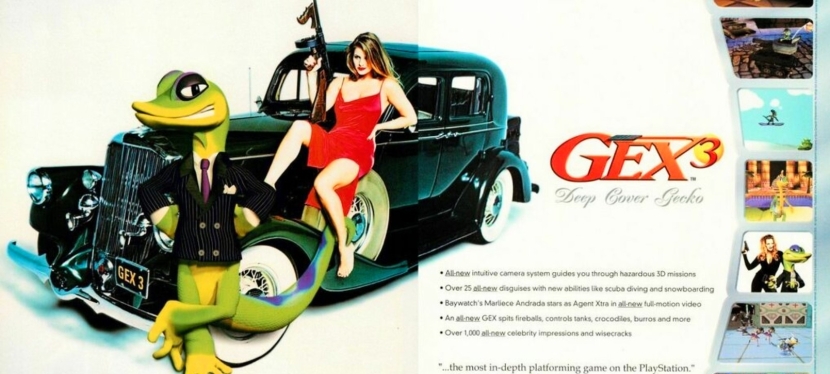
4. Gex 3: Deep Cover Gecko print ads
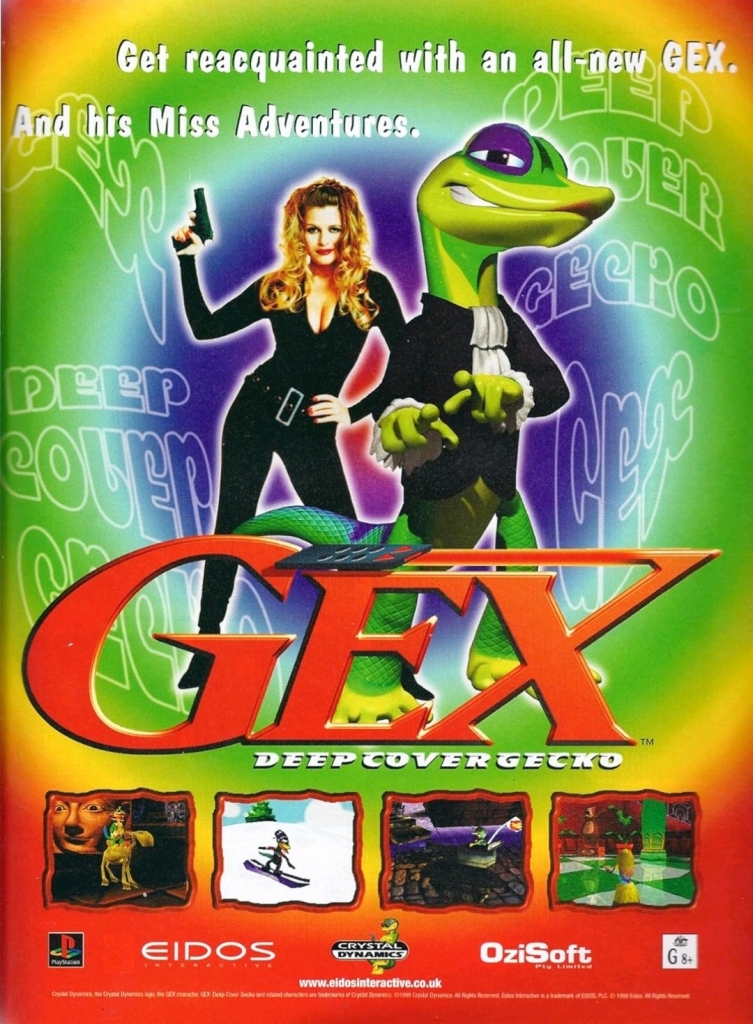
This print ad for Europe had a James Bond vibe.
March 1998 Playmate of the Month on the hood of the car looking at Gex.
The 2-page print ad of Gex 3: Deep Cover Gecko.

In 1999, Eidos Interactive – the company behind the wildly popular Tomb Raider games of the decade – became aggressive marketing Gex 3: Deep Cover Gecko for PlayStation and Nintendo 64. They were so aggressive, they featured actress and Playboy’s Playmate of the Month (March 1998) Marliece Andrada alongside their star character Gex in the marketing which was not limited to America. For the newcomers reading this, a multimedia approach was implemented on the narrative of the game’s PlayStation version which explains why it has full-motion video sequences featuring Andrada as the character Agent Xtra. As seen in these print ads, Eidos Interactive had Andrada looking pretty and sexy to really sell the game.

5. Barkley Shut Up and Jam! print ad

Anyone here a Charles Barkley fan?

I remember the many types of basketball video games that were released on game consoles back in the 1990s. While there were NBA video games that had in-depth rosters of players with seasonal gaming in mind, there were other basketball-related video games that were not about the said league but featured an NBA star. In this print ad, publisher Accolade prominently featured NBA star Charles Barkley to promote the game Barkley Shut Up and Jam!, posted some words emphasizing sports intensity, and showed one screenshot to assure gamers that this is a basketball game. While the critical reception was mixed, the game must have sold enough to convince Accolade to release a sequel two years later with Barkley still the endorser.

6. The Death and Return of Superman print ad

This print ad clearly aimed for the fans of the comic books as well as gamers looking for an action-packed game to play.

Now this is one very eye-catching print ad that appeared in comic books and magazines in the 1990s. Anyone who knows comics would recognize the grey fist (with sharp bones protruding on the knuckles) belonging to Doomsday who killed Superman in Superman (1993), and the bloody presentation on the famous S was very aggressive for its time. The game itself was an adaptation of the two storylines (published in 1992 and 1993 respectively) that saw Superman’s death, his return and the appearances of new Supermen. While sales figures are not available, The Death and Return of Superman eventually attracted mixed reviews from the critics.

7. Dragon Force print ad
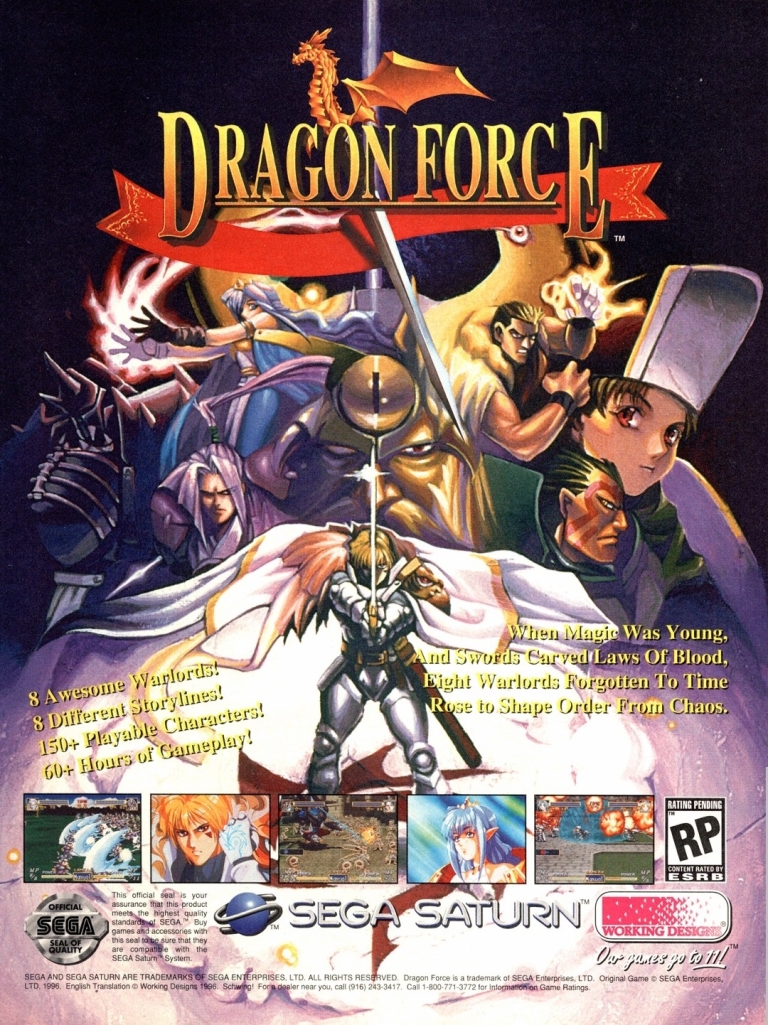
This was printed in magazines at a time when Working Designs had a strong business relationship with Sega.

While the Sega Saturn was undeniably a huge commercial disappointment in North America, the console still had some great games that was widely praised by game critics and heavily bought by gamers. One of those outstanding games on the console was Dragon Force (developed by Sega and J-Force in Japan, localized in America by Working Designs) which received great critical acclaim and achieved commercial success both in Japan and in America. The popular magazine Electronic Gaming Monthly named Dragon Force as the Saturn Game of the Year as well as Strategy Game of the Year in 1996. As a Working Designs release, this print ad has an ambitious fantasy concept visually emphasized, detailed lines of descriptions and screenshots that strongly appealed to the gamers, anime enthusiasts and those who love fantasy. This ad is also a sad reminder that the business relationship between Sega and Working Designs went downhill afterwards (read: Bernie Stolar) and the sequel Dragon Force II was never released outside of Japan.

+++++

Thank you for reading. If you find this article engaging, please click the like button below, share this article to others and also please consider making a donation to support my publishing. If you are looking for a copywriter to create content for your special project or business, check out my services and my portfolio. Feel free to contact me with a private message. Also please feel free to visit my Facebook page Author Carlo Carrasco and follow me on Twitter at  @HavenorFantasy as well as on Tumblr at https://carlocarrasco.tumblr.com/ and on Instagram at https://www.instagram.com/authorcarlocarrasco
A Look Back at Superman vs. Aliens #1 (1995)

Disclaimer: This is my original work with details sourced from reading the comic book and doing personal research. Anyone who wants to use this article, in part or in whole, needs to secure first my permission and agree to cite me as the source and author. Let it be known that any unauthorized use of this article will constrain the author to pursue the remedies under R.A. No. 8293, the Revised Penal Code, and/or all applicable legal actions under the laws of the Philippines.

Welcome back superhero enthusiasts, 1990s culture enthusiasts and comic book collectors! Today we go back to the year 1995 to examine what was back then one of the most unthinkable comic book crossovers to ever happen – Superman vs. Aliens (also referred to as Superman/Aliens).

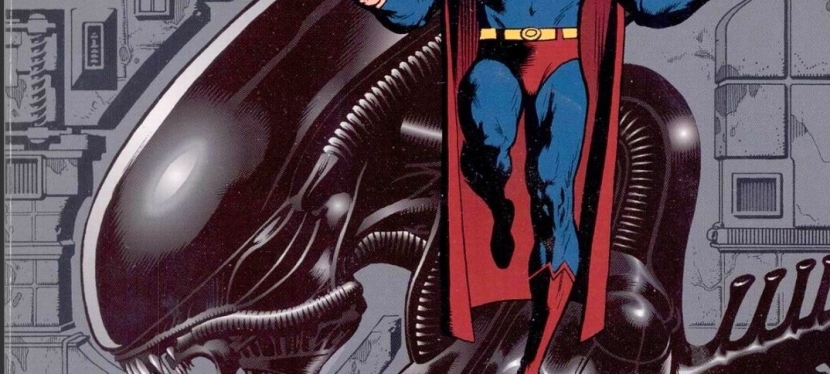
I remember sometime back in 1994, I bought a new superhero comic book from the local comic book retailer and what caught my attention was the print ad on the back – an Alien chestburster crashing through the iconic Superman S logo. A few of my friends who saw the same print ad chuckled at the concept of having the Man of Steel together with the monsters from the movie franchise that first started in 1979 with Ridley Scott’s Alien. Then came 1995 and eventually the first issue of the Superman vs. Aliens mini-series made it on the shelves of local comic book stores. Its cover easily attracted the attention of many and I saw the image of Superman being smaller to the Xenomorph alien in the background, the concept of the crossover started to intrigue me.

With those details laid down, here is a look back at Superman vs. Aliens , published in 1995 by Dark Horse Comics and DC Comics with a story written and drawn by Dan Jurgens with ink work done by Kevin Nowlan.

The cover.

Early story

The story begins in space when a fast moving object from nowhere heads towards Earth which was detected by a satellite of Lex Luthor’s corporation. Behind the scenes, personnel initiated an alert for a certain Dr. Kimble.

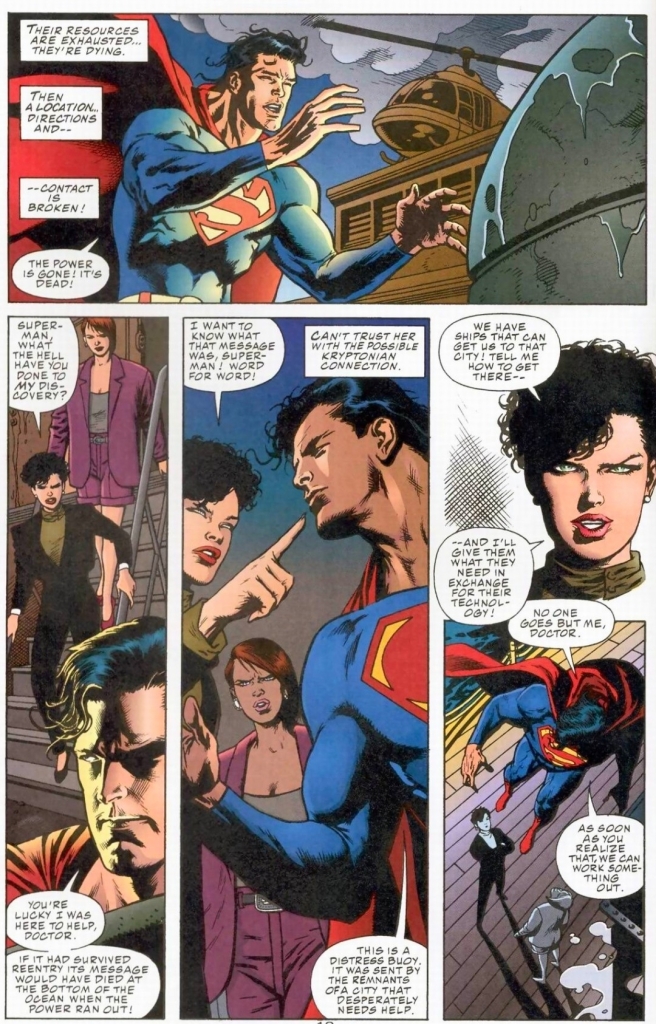
Clark Kent (Superman) and Lois Lane arrive at the headquarters of Lexcorp. It turns out they were suddenly called for by the corporation due to what happened in space. As they ride the elevator heading towards the rooftop, Clark and Lois talk about Lexcorp’s space program and Dr. Kimble who happens to lead the said program.

At the roof, they meet Dr. Cheryl Kimble and immediately ride with her in the helicopter going to a certain destination in anticipation of the probe’s estimated arrival. During the trip, Kimble reveals that they received radio signals from the incoming probe which were garbled almost unintelligible. She then plays an excerpt of the radio signals for Clark and Lois to listen to.

For Clark, he cannot help but feel shocked as he finds the audio sounding like Kryptonian…

Quality

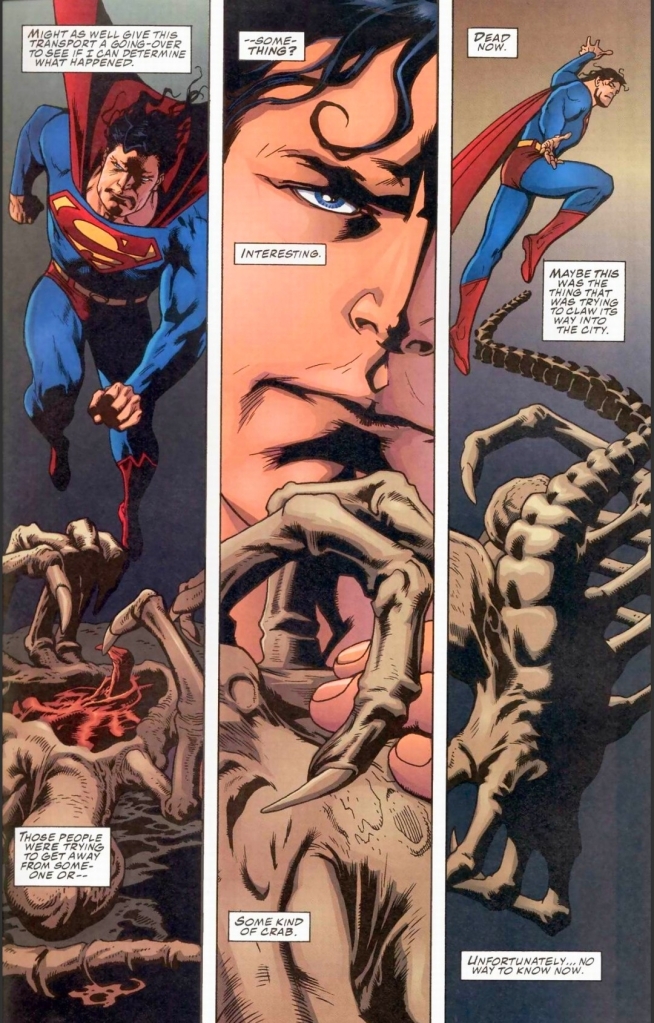
Superman finds a dead Facehugger alien.

Firstly, I can say without any hesitation that the creative team succeeded in making the crossover between Superman and the Aliens believable within this very comic book. For one thing, Dan Jurgens came up with a script and visual design that radically different from what was shown in Superman comic books of the time. The script had this somewhat adulterated tone that made the comic book move away from superhero fantasy and move into the realm of cinematic science fiction. For setting the tone and the look, the creative team scored a home run.

Secondly, the script was properly structured to immerse readers with the tale initially following Superman, Lois Lane and Dr. Kimble which ultimately served as a build-up. The good news here is that readers don’t have to wait too long for the pay-off to be executed. In fact, the pay-off itself (which happens when the Man of Steel finally encounters the Xenomorph for the first time) is huge and immediately the tension and depth of the plot really shifted into high-gear which I enjoyed. Along the way, the expository dialogue or the presentation of details (to help readers understand) was nicely balanced.

Thirdly, I love the way how Dan Jurgens presented Superman as being more troubled and more vulnerable than usual. To see the American icon go into personal obsession over the Kryptonian details was a really unique way to presenting his human side. Also having Superman deep in space far away from any sun or star (the essential source for his powers) really made him truly vulnerable as he actually got weaker even before facing off with a Xenomorph. Being in a vulnerable state, you will see the Man of Steel in real danger which truly goes against type (note: being super strong and invulnerable all the time). As such, the danger of the Aliens against him is believable and intense. What I do find weird, however, is how awkward it is for me to see Superman actually trying to reason with the first Xenomorph he encounters. Of course, he has no previous knowledge about the violent nature of the Aliens but we readers – and millions of people who saw any of the movies – know better than him.

As part of the build-up, Dan Jurgens inserted details and flashbacks that recalled previous tales that were published during the early stage of the post-Crisis era of DC Comics. This not only includes Superman’s arrival on Earth but also his strategic killing of General Zod, Zaora and  Quex-Ul using green Kryptonite (as published in Superman #22 of 1988). As such, Superman’s deep regret of taking life away from others serves as a build-up for his avoidance of killing in this crossover. This actually races the stakes for his upcoming encounters with the Aliens.

Even though the story is told through Superman, Dan Jurgens still had enough room to develop Lois Lane and Dr. Kimble. Kimble symbolizes the driven corporate executive who is in-charge of operations that could help her make claims on scientific discoveries and new technologies. Lois Lane here served as the intellectual opposite of Kimble without ever going into the extremes of gaining something for her journalistic career.

Conclusion

Superman with Lois Lane and Dr. Kimble.

Very clearly, Superman vs. Aliens (1995) is indeed a great comic book as well as great opener for its mini-series. Dan Jurgens established a tale that had sufficient build-up and when the pay-off started, the crossover aspect really made the story more compelling to read. Ultimately, this one made the crossover between Superman and the Xenomorphs believable, engaging and intriguing. This comic book is a great start and I am eager to find out what happens next.

Overall, Superman vs. Aliens (1995) is highly recommended!

+++++

Thank you for reading. If you find this article engaging, please click the like button below, share this article to others and also please consider making a donation to support my publishing. If you are looking for a copywriter to create content for your special project or business, check out my services and my portfolio. Feel free to contact me with a private message. Also please feel free to visit my Facebook page Author Carlo Carrasco and follow me on Twitter at  @HavenorFantasy as well as on Tumblr at https://carlocarrasco.tumblr.com/ and on Instagram at https://www.instagram.com/authorcarlocarrasco
A Look Back at Superman #78 (1993)

Disclaimer: This is my original work with details sourced from reading the comic book and doing personal research. Anyone who wants to use this article, in part or in whole, needs to secure first my permission and agree to cite me as the source and author. Let it be known that any unauthorized use of this article will constrain the author to pursue the remedies under R.A. No. 8293, the Revised Penal Code, and/or all applicable legal actions under the laws of the Philippines.

Welcome back superhero enthusiasts, 1990s culture enthusiasts and comic book collectors! Today we go back to the year 1993 and explore a chapter of the Reign of the Supermen storyline through one of the issues of the Superman monthly series.

To put things in perspective, DC Comics fulfilled its promise to kill the iconic Man of Steel in Superman (1993) which sold a whole lot of copies and the daring death concept made Superman a hot news item. After a brief period showing what the world is like without Superman, DC resurrected him in Adventures of Superman #500 which spawned the different Supermen and a new storyline (the Reign of the Supermen) which took effect on the four Superman monthly series of the time.

With those details laid down, here is a look back at Superman , published in 1993 by DC Comics with a story written and drawn by Dan Jurgens.  

The cover.

Early story

The story begins with Lois Lane still thinking about Superman as she drives her car on a rainy night. At the moment, she still has not learned to live without him. As she is granted access into a facility of Lexcorp, she carefully thinks about the sudden number of many people around the country who claimed to have seen Superman.

Inside the facility, Dr. Meyer meets her and tells her that had met the Man of Steel sometime prior and he believes that the certain person who saved him and others was definitely the same person. Being skeptical, Lois Lane asked him if some other superhero saved them from certain death. In response, he shows to her an image of the heroic figure captured by security cameras. Lois recognizes the face and head even though some parts were shadowed…

Quality

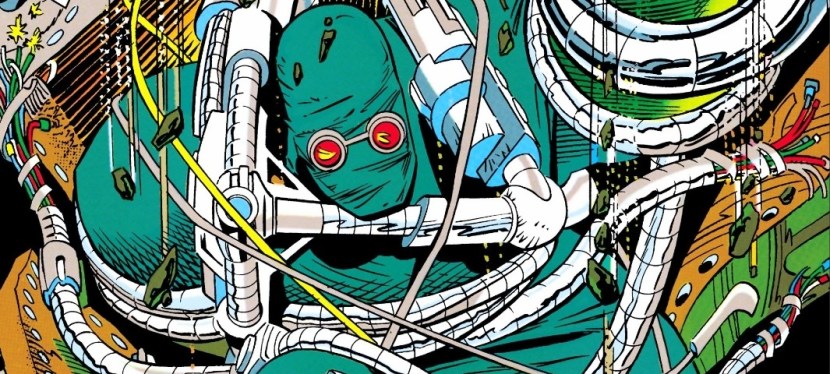
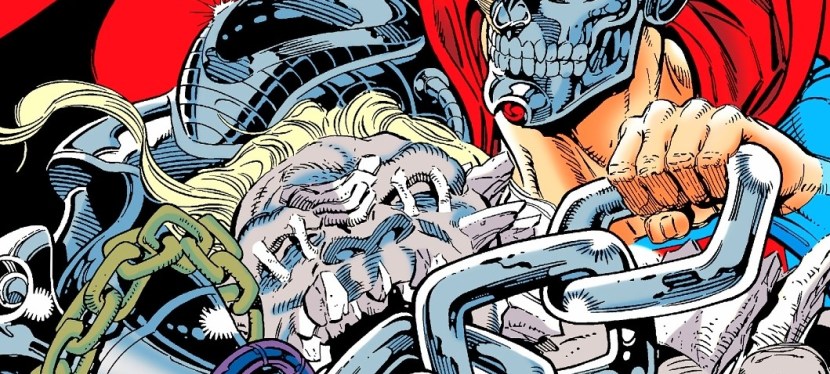
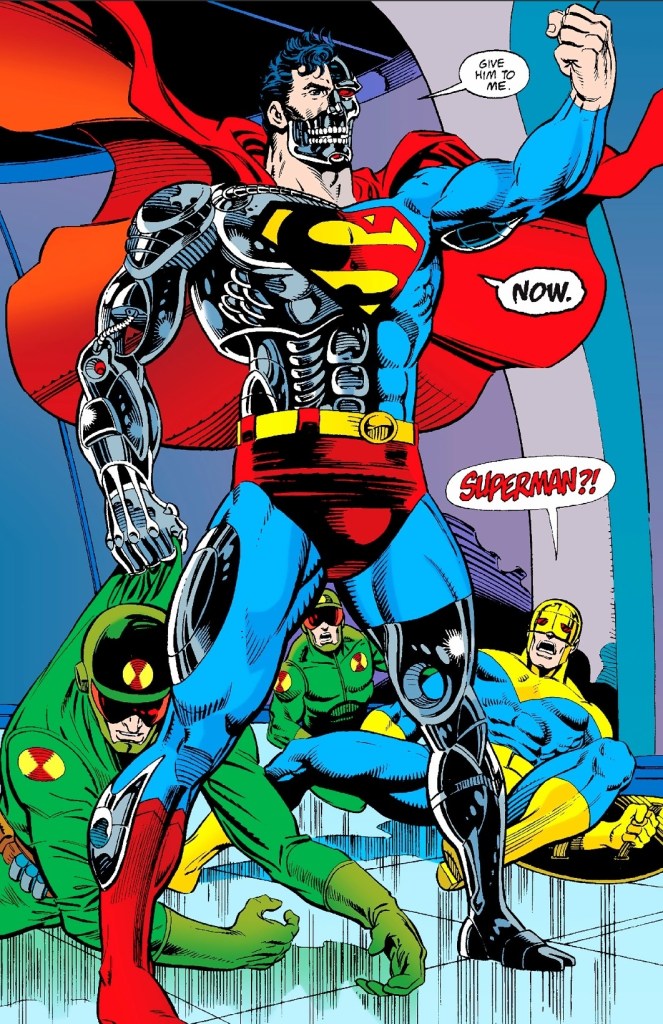
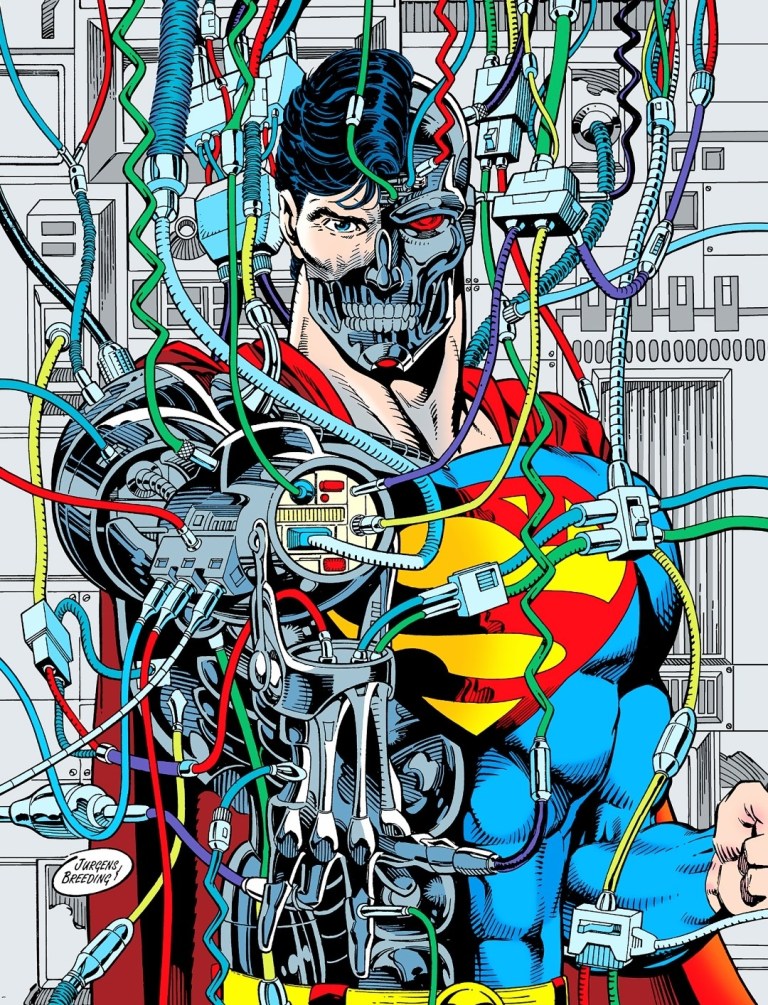
Cyborg Superman in full appearance.

Starting with the storytelling, I can say that this is one solid tale that really pokes the curiosity regarding Cyborg Superman…is he the real Superman or some very clever and capable impostor? Dan Jurgens really knows his Superman stuff and he used a clever approach on arousing the readers’ curiosity while still managing to move the story forward. As one of the early chapters of the Reign of the Supermen storyline, it was very obvious that things were set in motion to set up future post-death Superman stories.

The most engaging parts of this tale were the scenes between Lois Lane and Cyborg Superman (note: he sure looks like a Terminator-inspired take on the Man of Steel which itself was a daring concept back in 1993). Lois Lane here is clearly intelligent and for personal and professional reasons, she would not settle for words as definitive answers but have evidence scientifically analyzed right in front of her. Once again, this is a lively reminder that in the post-Crisis universe of DC Comics, Lois Lane is persistent on verifying facts to realize the truth (which is something clearly missing in today’s world of social media and news media outlets serving as loudspeakers for political forces).

While the storytelling remains good all these decades, what really aged badly in this comic book was the bastardization of Superman’s iconic imagery with some robotic influences of the Terminator mixed in that made him look science fictional in appearance. Of course, Cyborg Superman was just one of the Supermen in this storyline and the Reign of the Supermen concept was clearly an extension of DC Comics’ dishonesty behind the death and return of the Man of Steel. This also shows DC’s irresponsible handling of one of America’s icons. Let’s be honest with ourselves here…how many of you really want to see Cyborg Superman in live-action form in a future DC superhero movie from Warner Bros. and James Gunn?

Conclusion

How many of you have this poster of a very bastardized image of Superman in your homes right now?

While Superman (1993) has a good story told and added to the mystery about the resurrection of Superman, it ultimately served as a build-up platform to set up further stories not only about the Man of Steel but also that of Doomsday (note: a big rematch happened a few years later). The image of Cyborg Superman is clearly a defamation of the iconic look of the Man of Steel and that alone really brought the overall entertainment value of this comic book way down in my view. I find it baffling that there was no major backlash nor an outrage from Superman fans back in 1993 over this.

Overall, Superman (1993) is serviceable.

+++++

Thank you for reading. If you find this article engaging, please click the like button below, share this article to others and also please consider making a donation to support my publishing. If you are looking for a copywriter to create content for your special project or business, check out my services and my portfolio. Feel free to contact me with a private message. Also please feel free to visit my Facebook page Author Carlo Carrasco and follow me on Twitter at  @HavenorFantasy as well as on Tumblr at https://carlocarrasco.tumblr.com/ and on Instagram at https://www.instagram.com/authorcarlocarrasco
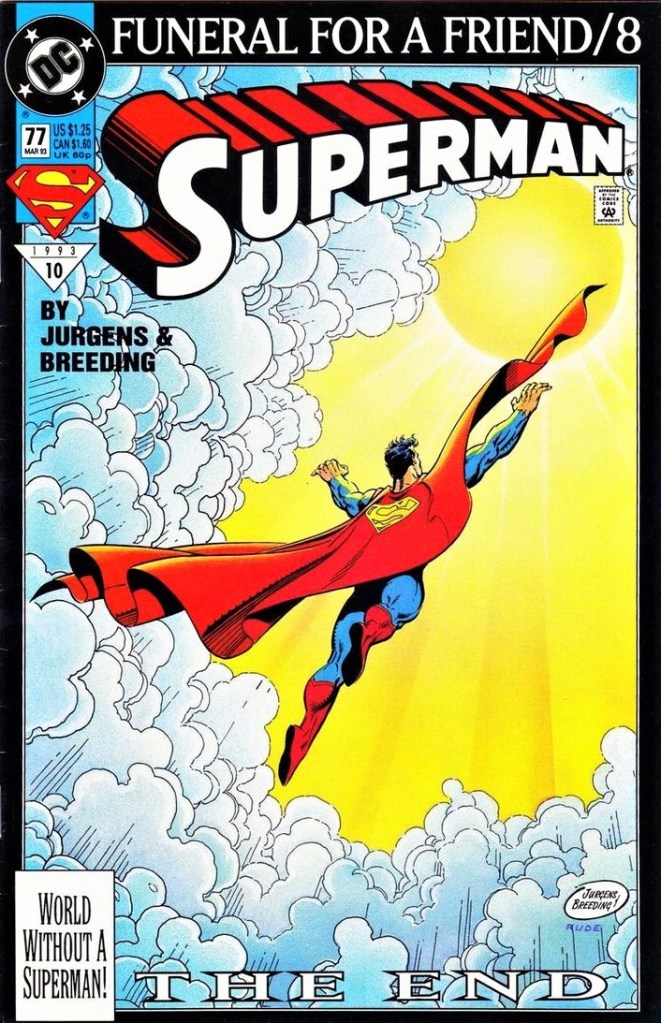
A Look Back at Superman #77 (1993)

Disclaimer: This is my original work with details sourced from reading the comic book and doing personal research. Anyone who wants to use this article, in part or in whole, needs to secure first my permission and agree to cite me as the source and author. Let it be known that any unauthorized use of this article will constrain the author to pursue the remedies under R.A. No. 8293, the Revised Penal Code, and/or all applicable legal actions under the laws of the Philippines.

Welcome back, superheo enthusiasts, 1990s culture enthusiasts, DC Comics fans and comic book collectors! Today we revisit the post-death period of post-Crisis era Superman comic books as published in the early 1990s by DC Comics. Specifically, this is about a tale that took placed between Superman (1993) and the hyped return of the American icon in Adventures of Superman #500 (1993).

What you are about to see is a mix of drama and intrigue that took place sometime after Superman’s death as envisioned by Dan Jurgens. As with other post-death comics of the time, the supporting characters connected to Superman as well as his arch enemy Lex Luthor got their fair share of the spotlight.

With those details laid down, here is a look back at Superman #77, published by DC Comics in 1993 with a story written and drawn by Dan Jurgens. This is part 8 of the Funeral for a Friend storyline.

The cover.

Early story

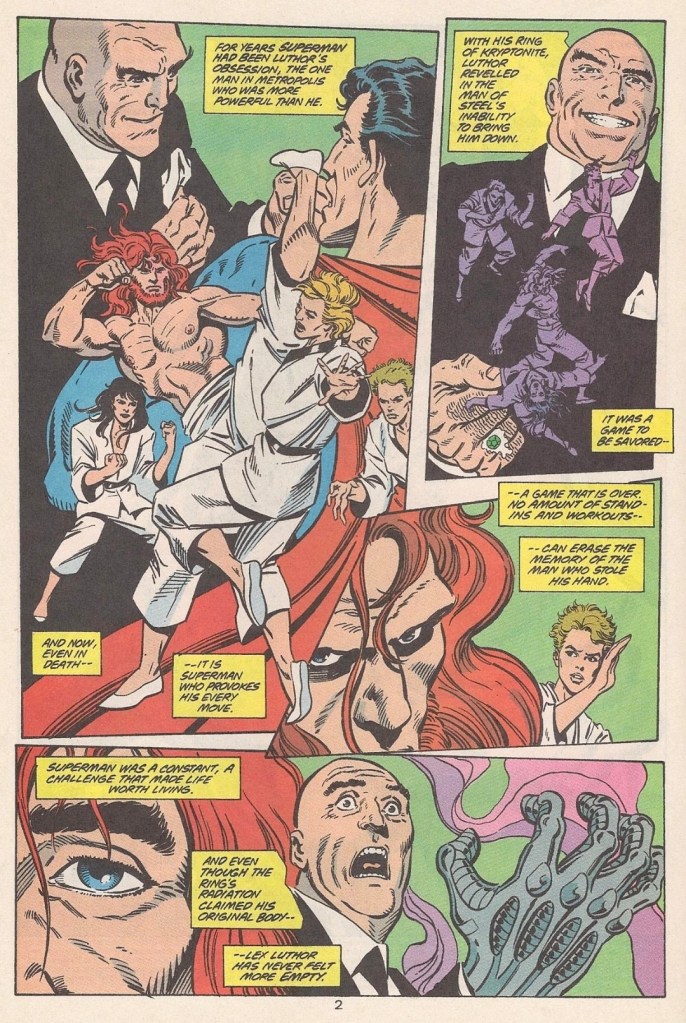
The story begins with the red-headed Lex Luthor (note: in a new physical body totally different from his previous one) in the middle of a combat session. Even though his hatred towards Superman drives him, he could not help but allow his recall of the past to distract him enough to allow one of combatants to strike him down. As Luthor recovers, the session gets interrupted when Supergirl (a clone) appears with Lois Lane beside her.

Lane shares to him a hard copy of a column that she made before it got trimmed down by the editorial team of the Daily Planet. With so much hate in him, Luthor reacts madly to the article which reveals that Superman’s dead body has been taken away by Project Cadmus. Lois tells him that they intend to cut the Man of Steel’s body for cloning.

Luthor then says he will work to get Superman back where he belongs and put Cadmus in its place for good. Moments after, as she walks away from Luthor’s building, Lois Lane expresses concern about how Martha and Jonathan Kent would react had they learned that their adopted son’s body was taken away…

Quality

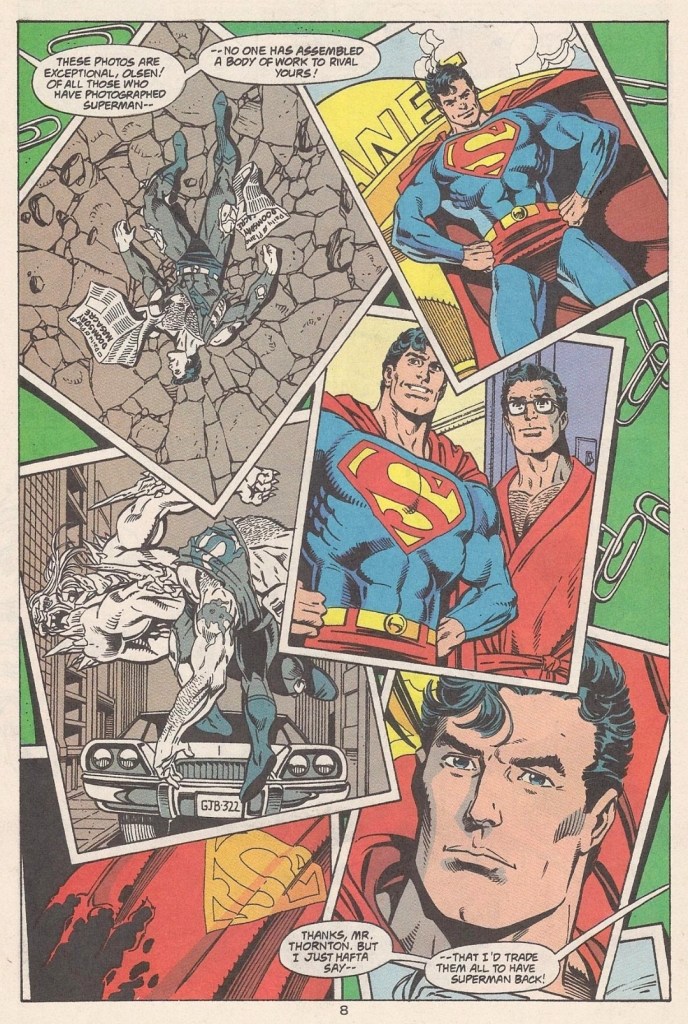
Several photographs of Superman taken by Jimmy Olsen.

I am happy to say that Dan Jurgens crafted a really solid story in this comic book. Character development is easily the biggest feature here which is very notable on how Jurgens highlighted Lois Lane, Lex Luthor and Jimmy Olsen. Each of them had their own moments – Luthor’s obsession and hatred of Superman here will encourage you to revisit the early post-Crisis encounters between them; Lois Lane meanwhile struggles to move on as she misses Clark a lot (note: they were engaged to get married) while also trying to hard to find his missing body; Jimmy Olsen gets the big opportunity to play a major role on deciding the cover image for a printed media tribute of Superman while feeling really down as a result of the sudden death. Jurgens not only crafted the plot structure carefully, he also wrote down very rich dialogue all throughout and he cleverly used dreams and day dream sequences as exposition to give readers notable visions of the past. This is a very compelling read.

Conclusion

Visions of Lex Luthor’s past accompanying his modern day self shows cleverness and efficiency on the part of Dan Jurgens.

Superman #77 (1993) really is a great read thanks to Dan Jurgens delivering high-quality work. At this particular stage of DC Comics’ publishing history, Jurgens not only really knew Superman but he knew how to emphasize the supporting characters (all of which were impacted by the death in Superman ) and what direction to take the Funeral for a Friend storyline to. If there is anything that negatively affects the impact of this comic book, it is the dishonesty and betrayal (towards the fans) that came within Adventures of Superman (1993).

Overall, Superman #77 (1993) is recommended.

+++++

Thank you for reading. If you find this article engaging, please click the like button below and also please consider sharing this article to others. If you are looking for a copywriter to create content for your special project or business, check out my services and my portfolio. If you want to support my website, please consider making a donation. Feel free to contact me with a private message. Also please feel free to visit my Facebook page Author Carlo Carrasco and follow me on Twitter at  @HavenorFantasy as well as on Tumblr at https://carlocarrasco.tumblr.com/ and on Instagram at https://www.instagram.com/authorcarlocarrasco/.

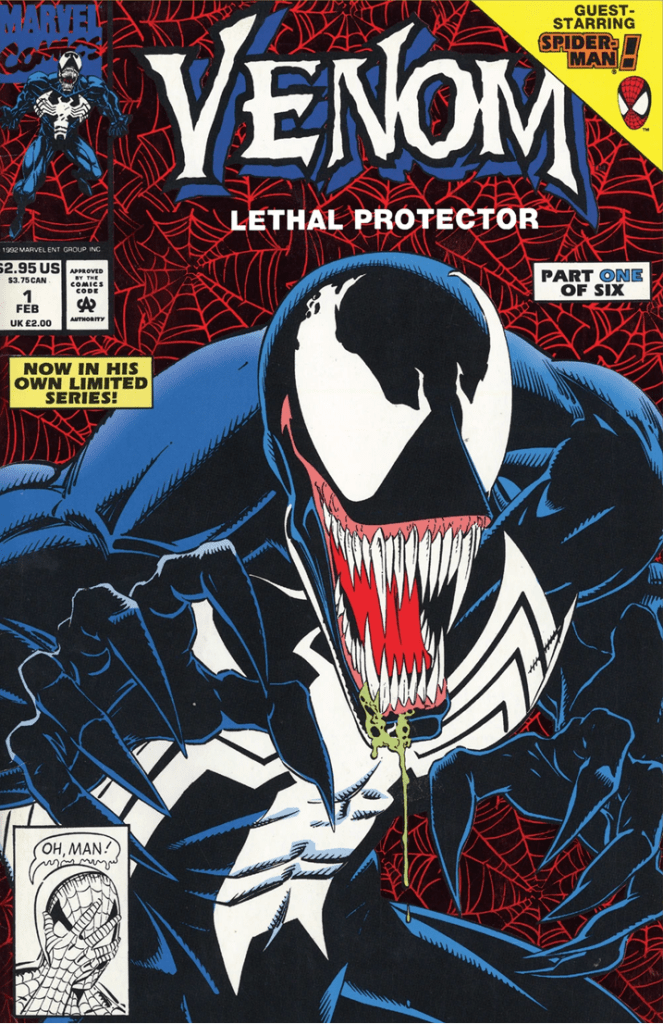
A Look Back at Venom: Lethal Protector #1 (1993)

Disclaimer: This is my original work with details sourced from reading the comic book and doing personal research. Anyone who wants to use this article, in part or in whole, needs to secure first my permission and agree to cite me as the source and author. Let it be known that any unauthorized use of this article will constrain the author to pursue the remedies under R.A. No. 8293, the Revised Penal Code, and/or all applicable legal actions under the laws of the Philippines.

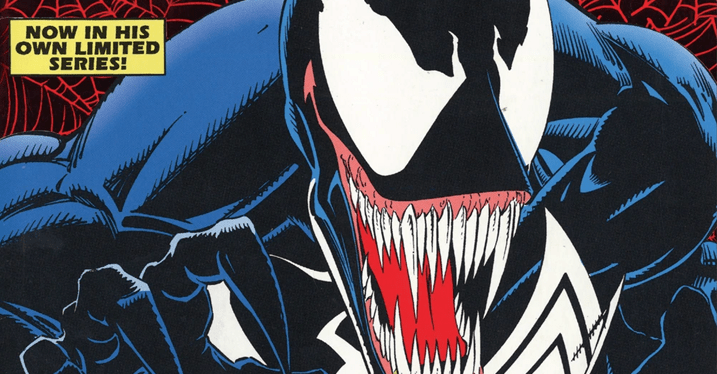
Welcome back superhero enthusiasts, 1990s arts and culture enthusiasts, Marvel Comics fans and comic book collectors! Today we go back to the year 1993 and explore a part of Marvel Comics’ universe through the first-ever limited comic book series featuring one of Marvel’s most iconic villains – Venom.

To put things in perspective, the origin of Venom started within the events of the 1980s series Secret Wars which took place in a far-away planet. As a result of that series, Spider-Man returned home wearing the alien symbiote as a costume which turns out to have a mind of its own. After Spider-Man successful separate himself from the symbiote (again) using the loud bells of a church, the living costume eventually found a desperate Eddie Brock and bonded with him to form Venom. In the late 1980s comics of Amazing Spider-Man, Venom became the deadliest enemy Spider-Man ever faced.

Going into the early 1990s, Venom’s popularity continued to grow tremendously. He became one of Marvel’s most popular non-hero type of characters and helped sell a lot of comics for the publisher. Knowing they had something to sell, Marvel approved a 6-issue limited series showcasing Venom. It was also the most anticipated comic book among collectors right after DC Comics killed Superman with Superman (1993).

With those details laid down, here is a look back at Venom: Lethal Protector , published in 1993 by Marvel Comics with a story written by David Michelinie and drawn by Mark Bagley.

The cover.

Early story

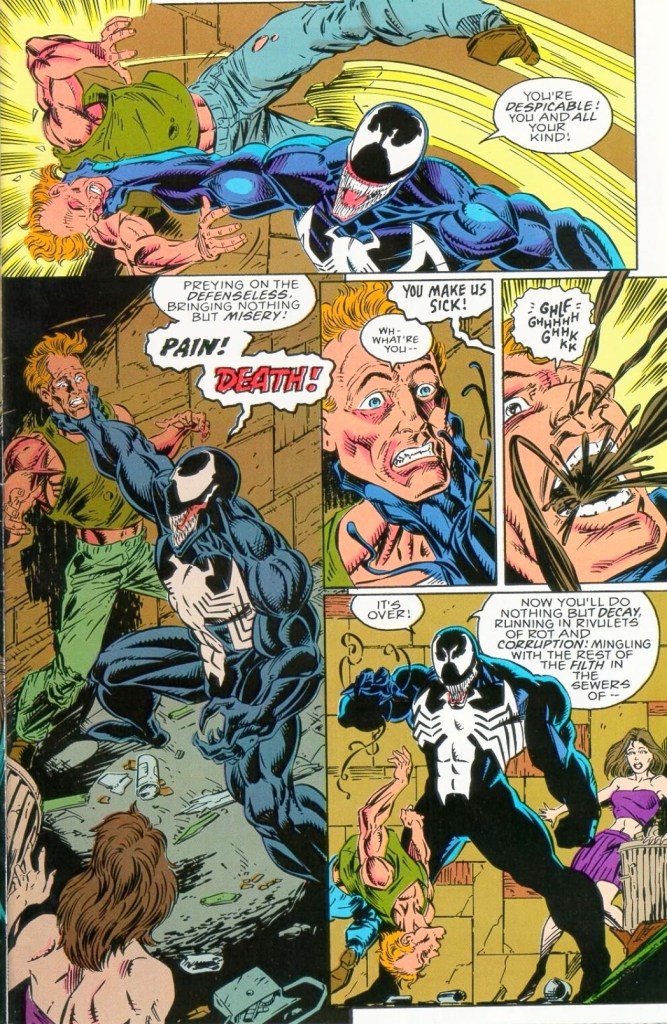
The story begins in San Francisco, California. Deep within the city, a man cornered a lady at the dead end of an alley. Just as he was about do something bad to her, Venom leaps in at them. Totally surprised, the man was easily grabbed by Venom who lifted him and hit the wall bodily. Using his costume, Venom then chokes the man to death through the mouth and nose. Venom then picks up the lady’s purse and gives it to her. As soon as Venom leaves, the shocked lady runs away screaming.

Venom swings and leaps as he travels through the city. While traveling, Eddie Brock tells his living costume that while their hatred towards Spider-Man got reconciled a bit, the said superhero also helps the innocent. Eddie then reveals that he was born in San Francisco and they can start a new life together in it. Secretly, Venom turns into Eddie Brock in his civilian form. As Brock walks down the sidewalk, police officers nearby recognize him. It turns out. Eddie Brock was listed by police as a wanted person…

Quality

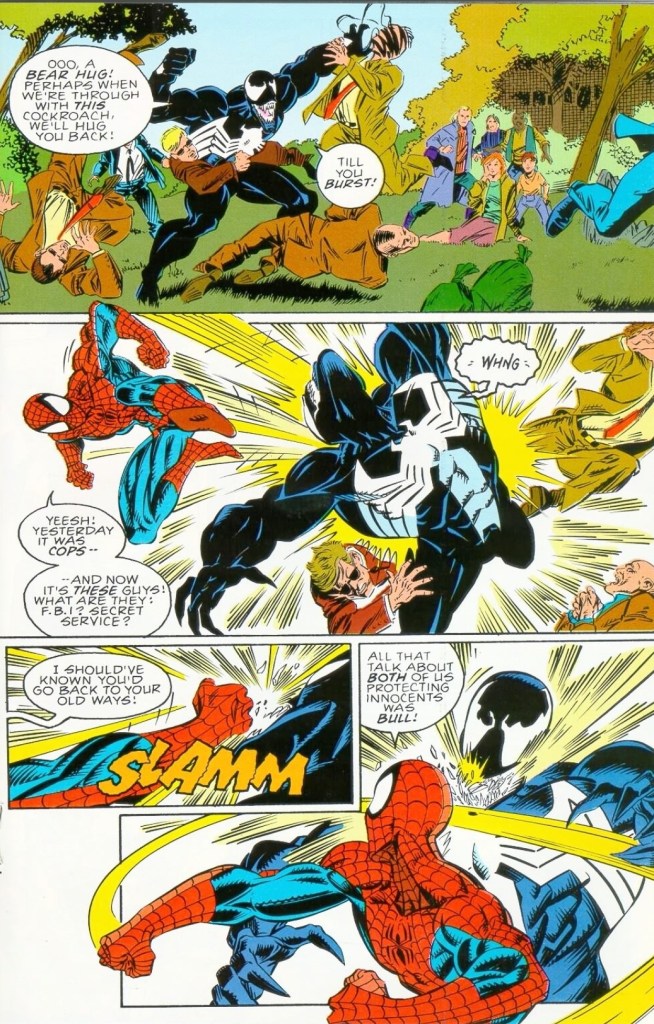
Spider-Man and Venom face each other unexpectedly.

Focusing on the plot, this story took place after the events in Amazing Spider-Man (1993) which was released AFTER this particular comic book. As a standalone Venom story, this one clearly portrays him more of a vigilante in the sense that he goes up against a new force of evil that happens to be pouncing on people that Venom believes to be innocent and powerless. Unsurprisingly, Venom does not seek the help of law enforcers to help the innocent but rather he takes violent action to help the victims, going as far as to kill the so-called bad guys. The bad guys in this story work under a powerful man whose son was killed by Venom a few years prior. Within the context of this comic book, the new force of evil was introduced in subtle ways.

With extensive experience writing tales about Spider-Man and Venom, David Michelinie clearly redefined Venom’s beliefs here. Venom believes in protecting the innocent but he is much more violent and is relentless with cruelty which makes him a clear opposite of Spider-Man. Yet in a way, Venom sure talks and acts in a rather psychotic way and this alone makes him a very unlikable comic book protagonist.

Along the way, the iconic Spider-Man got a rather huge chunk of the spotlight in this comic book making him the 2nd lead next to Venom. I remember back in 1993 when there were Venom fans who complained about Spider-Man literally stealing the thunder away from his greatest enemy while there were a few Spider-Man fans who defended the icon’s guest participation in the story as he has always been linked with Venom’s origin. Considering the lack of depth in the plot, I can say Spider-Man appearance her served as a somewhat helpful filler.  

Conclusion

Helping victims does NOT justify killing. This makes Venom a major turn-off as a comic book protagonist.

Venom: Lethal Protector (1993) is a comic book that can be alienating, especially when you are not a Venom fan. I find Venom too evil and too unbelievable to be a heroic figure even though he strong believes in protecting and helping the innocent. In my view, he is more of vigilante living with the delusion of achieving something worthwhile as he interacts with people who happen to be not assisted by the many, many Marvel Comics superheroes. It is not surprising that Venom definitely will never be a good role model. He is a murderer and the act of helping victims never justifies murder. The comic book’s plot lacks weight and Mark Bagley’s art looked a little rushed. What made this comic book interesting are Venom and Spider-Man themselves. Yes, there is a lot of superhero spectacle here but don’t expect anything new when you see Spider-Man and Venom resume their violent rivalry. This comic book is unsurprisingly a warm-up of things to come within its series. It is not a terrible literary work. It’s just not really good and it did not deserve the hype and sales of its time.

Overall, Venom: Lethal Protector (1993) is serviceable.

+++++

Thank you for reading. If you find this article engaging, please click the like button below, share this article to others and also please consider making a donation to support my publishing. If you are looking for a copywriter to create content for your special project or business, check out my services and my portfolio. Feel free to contact me with a private message. Also please feel free to visit my Facebook page Author Carlo Carrasco and follow me on Twitter at  @HavenorFantasy as well as on Tumblr at https://carlocarrasco.tumblr.com/ and on Instagram at https://www.instagram.com/authorcarlocarrasco
A Look Back at Adventures of Superman #500 (1993)

Disclaimer: This is my original work with details sourced from reading the comic book and doing personal research. Anyone who wants to use this article, in part or in whole, needs to secure first my permission and agree to cite me as the source and author. Let it be known that any unauthorized use of this article will constrain the author to pursue the remedies under R.A. No. 8293, the Revised Penal Code, and/or all applicable legal actions under the laws of the Philippines.

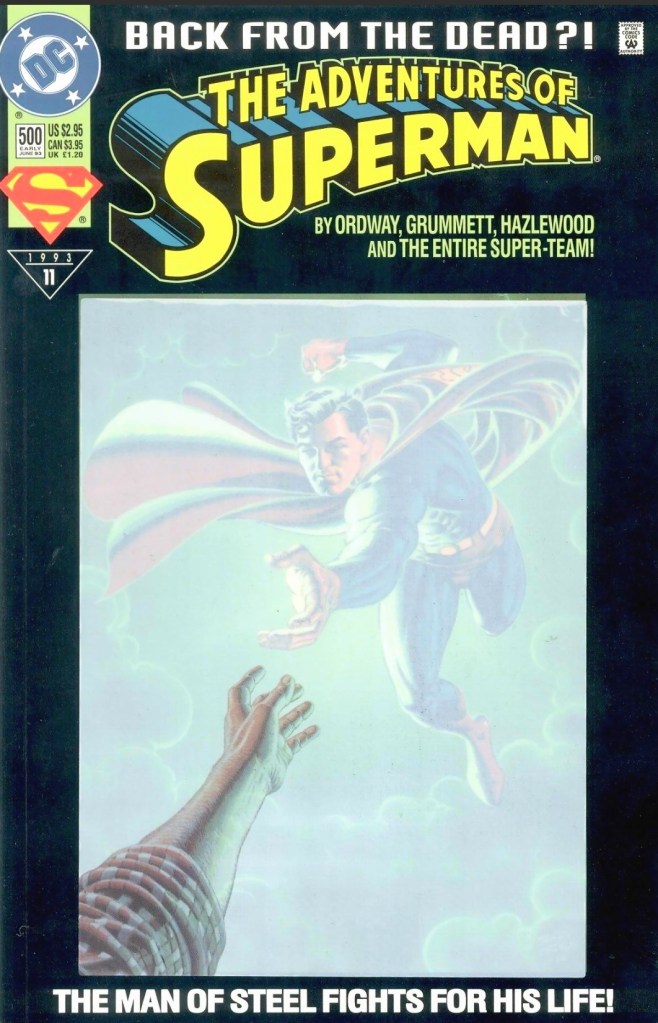
Welcome back superhero enthusiasts and comic book collectors! Today we explore a key chapter in the post-Crisis era of DC Comics through a Superman comic book. This time, however, we go revisit a comic book that literally served as a bridge between the Funeral for a Friend storyline and the eventual Reign of the Superman storyline. I am talking about the 500th issue of the Adventures of Superman monthly series.

To put things in perspective, the Funeral for a Friend storyline dramatized the immediate aftermath of Superman’s sudden death which paved the way for comic book creators to develop not only DC superheroes (affiliated with Superman specifically) but also the supporting characters linked with the Man of Steel in new and creative ways. Not only that, there was even a months-long hiatus on all Superman-related comics before Adventures of Superman was released. Back in the old days when Internet connection and online news were not yet common, I heard lots of buzz about DC resurrecting Superman from the dead which added to the anticipation of the 500th issue of Adventures of Superman.

With those details laid down, here is a look back at Adventures of Superman , published in 1993 by DC Comics with a story written by Jerry Ordway and drawn by Tom Grummett.

The cover of the premium version of this comic book.

Early story

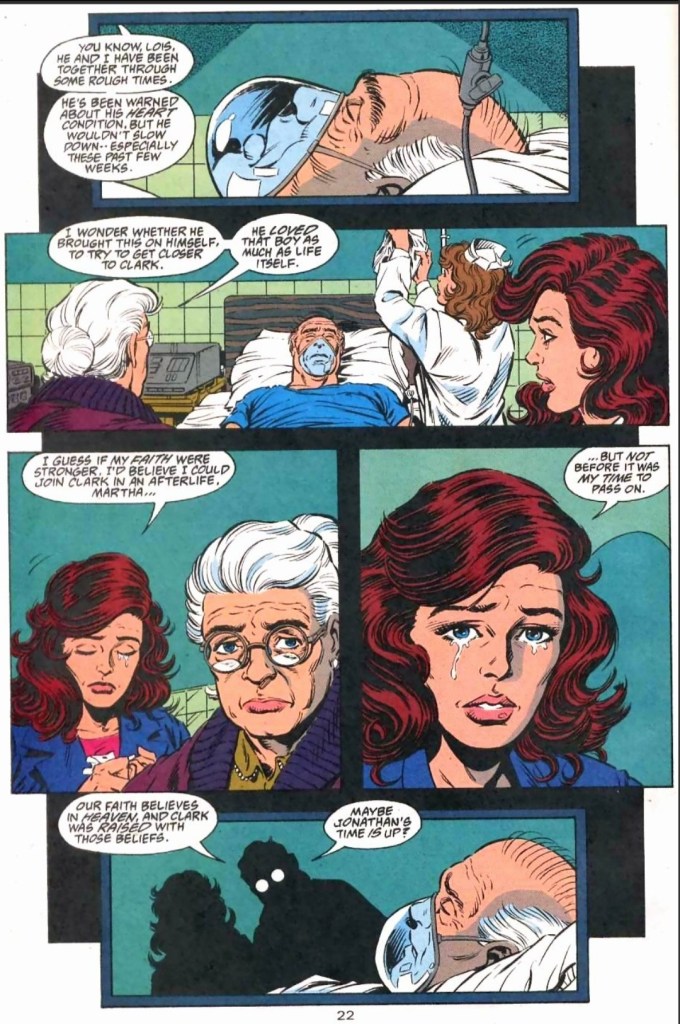
The story begins inside a Kansas hospital where medical professionals are trying to revive Jonathan Kent who lost consciousness. Martha Kent is present witnessing the efforts happen. As his physical body is being worked on, Jonathan Kent finds himself in a dream-like realm and to his shock, he meets his dead son Clark who finds himself being pulled into the bright light in the distance. Refusing to let go, Jonathan Kent accidentally tears off Clark’s clothes which reveal him as Superman in his iconic outfit. Superman tells his adoptive father to rejoin the living.

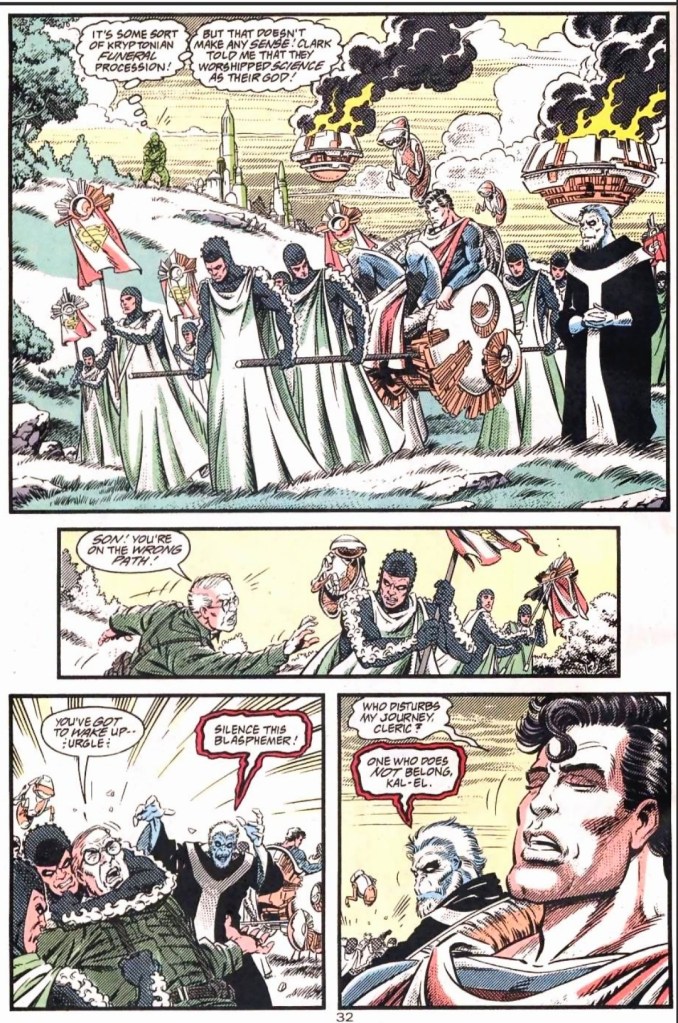
Suddenly two wraiths appeared and escorted Superman into the light. Still defiant, Jonathan then flies himself into the light to follow his son.

Back in the real world, Martha carefully monitors her husband’s health reading. After being assured by the medical staff that they won’t give up on her husband, Martha is surprised to see Lois Lane who arrived all the way from Metropolis…

Quality

Lois Lane with Martha Kent and the recovering Jonathan Kent.

Let me get straight to the point about this Superman story…this is a very dramatized approach on bringing back Superman from the dead without necessarily going all-out. As we comic book geeks know by now, the Reign of the Superman events launched with this comic book serving as a launch pad and that meant that people had to go through many comic books before finally getting to see Superman himself in resurrected form.

More on the story itself, the main feature here is Jonathan Kent’s struggle to follow Superman in the dream-like realm (note: DC’s version of the afterlife which is clearly not spiritual) as he was motivated by his love for him as well as his belief that the world still needs the Man of Steel as their beacon of hope. To be very clear, Jerry Ordway and Tom Grummet nicely executed their presentation of Jonathan Kent and his uncompromising effort to get his son back. The creative team’s imagination really was set into high gear which resulted in Jonathan revisiting a familiar place from his old days as a soldier, getting himself into a lair of demons, flying deep into space and visiting the realm’s own version of Krypton. Very truly, this comic book’s protagonist is Jonathan Kent and the iconic Superman was more of a supporting figure.    

While the Jonathan Kent tale is good to read, Superman’s return from the dead here ended up more as a teaser of things to come (note: the Reign of the Supermen). Considering the big promise that came with this comic book, it is indeed a disappointing pay-off towards all the build-up. Not only that, the side stories are a mixed back. The respective scenes of Lois Lane and Jimmy Olsen added weight to the narrative while the scenes of Gangbuster were pointless and looked more like hollow script filler. As for Cat Grant’s scene, it was designed to make readers feel sorry for her.

As for the scenes – each done by different creative teams – showing the new Superboy, the Eradicator, the black Man of Steel and the Cyborg Superman, these revelations really did not work to recover from the disappointing conclusion of the main story. They were more like creative distractions designed to promote what was coming in the other Superman monthly series of the time.

Conclusion

In the dreamy realm, Jonathan Kent pursues his adopted son Superman who gets treated like a living idol. The father-and-son dynamic is the most entertaining part of this tale.

Even back in the old days, Adventures of Superman (1993) was a disappointing read and it was a highly dramatized effort by DC Comics cautiously expressing that Superman’s death was nothing more than a highly deceptive publicity stunt with Dollar signs in mind.

Within the context of this comic book, the resurrection of Superman was essentially a half-step and his eventual full return in comics did not happen until months later (note: after many Reign of the Supermen stories were published). More on the resurrection aspect of this comic book, I can clearly say that Superman – no matter how iconic he is and no matter what comic book creators tried – will never ever become a beacon of hope nor a true savior for people in real life. It really does not matter that many people bought copies of Superman (the death) believing truly that they would witness the end of the American icon and witness a Superman-less future. What mattered here were the deception and the irresponsible use of a pop culture icon committed by DC Comics. Superman (1993) was the gigantic deception that sold millions while Adventures of Superman (1993) was the big follow-up deception.

The resurrection of Superman in this story does NOT make him a more significant DC Comics icon at all. I know that there are die-hard fans out there who love to compare the Man of Steel with Jesus Christ but such comparisons and forced attempts to link them together are pathetic and worthless. Superman is not real and even if he was, he could never overcome death nor could he save people. The resurrection of Lord Jesus can never be matched and only He saved people and led them to salvation in the presence of His Father, the Lord God.

By today’s standard, this comic book is much more disappointing and even worth less as a piece of American comic book history. While the work done by the Ordway-Grummett team here was not really terrible, it was the dishonesty and deception of DC Comics that led to this. In fairness to the creators, bringing back Superman after all the hype and belief invested related to his death was indeed a major obstacle for them. You could feel sorry for Ordway-Grummett.

Overall, Adventures of Superman (1993) should be avoided. If you really want to read it, try borrowing a copy. Just don’t spend anything on it.

+++++

Thank you for reading. If you find this article engaging, please click the like button below, share this article to others and also please consider making a donation to support my publishing. If you are looking for a copywriter to create content for your special project or business, check out my services and my portfolio. Feel free to contact me with a private message. Also please feel free to visit my Facebook page Author Carlo Carrasco and follow me on Twitter at  @HavenorFantasy as well as on Tumblr at https://carlocarrasco.tumblr.com/ and on Instagram at https://www.instagram.com/authorcarlocarrasco

What to watch on YouTube right now

Have you been searching for something fun or interesting to watch on YouTube? Do you feel bored right now and you crave for something to see on the world’s most popular online video destination?

I recommend you watch the following videos below…

Ashleigh Burton’s Friday The 13th Part 2 movie reaction video – I have seen many movie reaction videos about the Friday The 13th film franchise and among the many YouTubers who published such videos, it is Ashleigh Burton (AKA Awkward Ashleigh) who stands out the most as she is the most entertaining to watch. To find out why, I recommend you watch her video reaction of Friday The 13th Part 2 below from start to finish. Tell me what you think of the video and the presentation by Burton.

Starbucks’ failure in AustraliaStarbucks may be the leading coffee shop chain in the world but there are certain markets where they failed and/or have been struggling in. One notable market they could not make a big impact on is Australia. To find out why Starbucks’ reception among the many coffee-loving Australians did not turn out positively, watch the video below.

KFC’s struggle in Israel – Still on food business, KFC’s struggle in Israel is quite notable and even educational to learn from. Their problem in that nation goes beyond competition. Watch this video and pay close attention to the details.

The 2008 Financial Crisis and its long-lasting effects – It has been almost fifteen years since the financial meltdown of 2008 happened. Back during that time, a lot of people were worried that their savings and investments would simply vanish. While the said crisis has ended, its effects are still felt to this day in more ways than one.

Unsolved Mysteries with the late Robert StackUnsolved Mysteries is one of my all-time favorite TV shows of all time and I am very happy to see that many episodes hosted by the late Robert Stack have been made available for free, full-length viewing on YouTube. As such, posted below are the first five episodes from Season 1 of Unsolved Mysteries for your discovery and enjoyment.

The Death of Superman’s impact on comics – It has been almost thirty long years since DC Comics published the Death of Superman storyline (note: read my retro comic book reviews here and here) with the comic book Superman as the climax. I remember back in late 1992, a lot of people really thought that DC Comics would not only kill the iconic superhero but also go on to publish superhero comics without his presence at all. Unsurprisingly, a lot of readers who spent so much money on the death of Superman got pissed off when DC revived the Man of Steel (preceded by the Reign of the Supermen storyline) in 1993. Superman’s death was more than just a commercial success…it had major ramifications on superhero comic book publishing in America. Watch and learn from the video below.

Twitter’s history – Chances are, you must have heard about the news of Elon Musk’s takeover of social media giant Twitter as well as the changes that took effect since. There is a lot more to the history of Twitter and why Musk pushed through with taking it over. Watch and learn from the two ColdFusion videos below. By the way, how is the Twitter experience for you right now?

+++++

Thank you for reading. If you find this article engaging, please click the like button below, share this article to others and also please consider making a donation to support my publishing. If you are looking for a copywriter to create content for your special project or business, check out my services and my portfolio. Feel free to contact me with a private message. Also please feel free to visit my Facebook page Author Carlo Carrasco and follow me on Twitter at  @HavenorFantasy as well as on Tumblr at https://carlocarrasco.tumblr.com/ and on Instagram athttps://www.instagram.com/authorcarlocarrasco

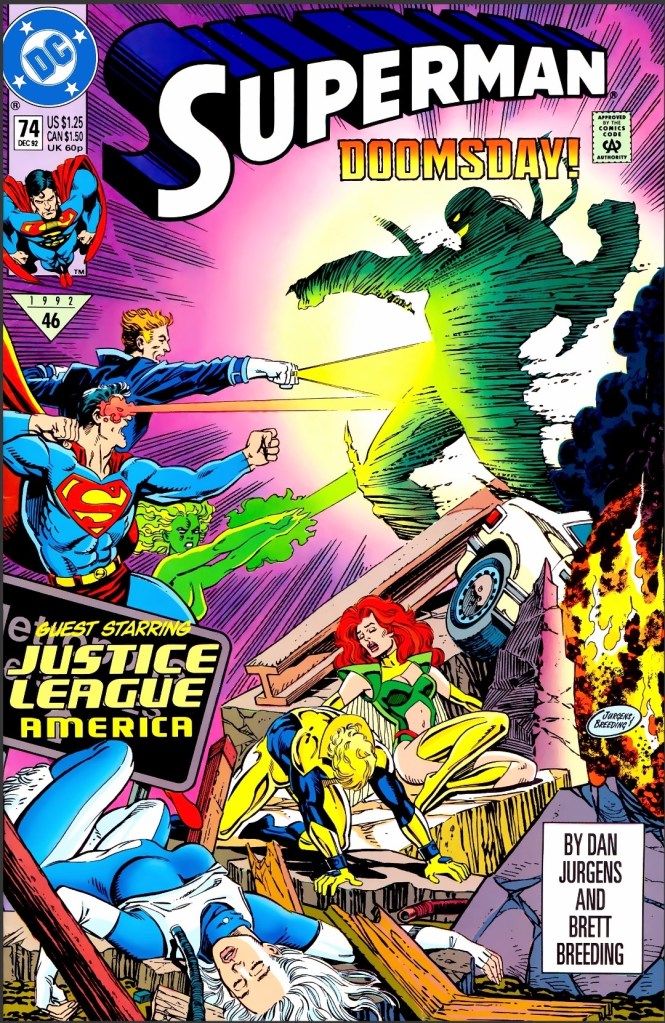
A Look Back at Superman #74 (1992)

Disclaimer: This is my original work with details sourced from reading the comic book and doing personal research. Anyone who wants to use this article, in part or in whole, needs to secure first my permission and agree to cite me as the source and author. Let it be known that any unauthorized use of this article will constrain the author to pursue the remedies under R.A. No. 8293, the Revised Penal Code, and/or all applicable legal actions under the laws of the Philippines.

Welcome back superhero enthusiasts, 1990s culture enthusiasts and comic book collectors! Today we go back to the early 1990s and explore a key chapter in the post-Crisis era of DC Comics through a Superman comic book.

To be more specific, this retro review goes into one of the chapters of the Death of Superman storyline showing more of Doomsday’s rampage but before the climax of the battle with Superman. I’m talking about the 74th issue of the Superman monthly series of the time.

With those details laid down, here is a look back at Superman #74, published in 1992 by DC Comics with a story written and illustrated by Dan Jurgens.

The cover.

Early story

The story begins with Ice and Maxima in the presence of a suffering Blue Beetle who just got hurt badly by Doomsday. While Ice expresses concern for Blue Beetle, Maxima could only care less about him stating that he shall perish as a warrior fallen in battle and that there is no greater honor one can attain. After Ice pleaded her to help Blue Beetle and realize the need to help others who have fallen, Maxima then uses her power to help Blue Beetle to safety. Ice then proceeds to another direction to stop Doomsday.

Meanwhile, a young guy named Mitch arrives home feeling bad about his situation. His mother is taking care of his infant sibling. After a tense talk between them, Ice suddenly crashes into their home. Mitch and his mother look outside and see Doomsday (still covered in a space suit with only his left arm unrestrained as seen in Superman: The Man of Steel #18) carrying a damaged car with his left arm.  

Suddenly Doomsday notices something – the arrival of Booster Gold and Superman…

Quality

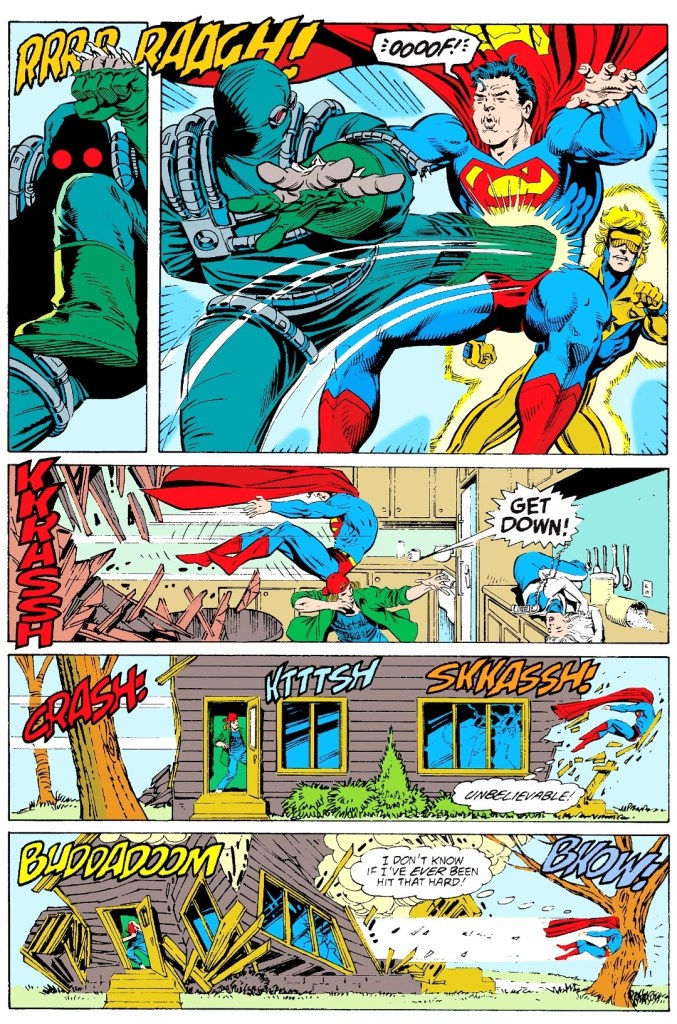
Superman struck really hard by Doomsday!

Apart from being a build-up chapter of the Death of Superman storyline, this comic book is notable for two things: It has the first-ever encounter between Superman and Doomsday in comic book history. Second is the reveal of Doomsday’s face and other physical features as a result of his space suit and restraints getting torn.

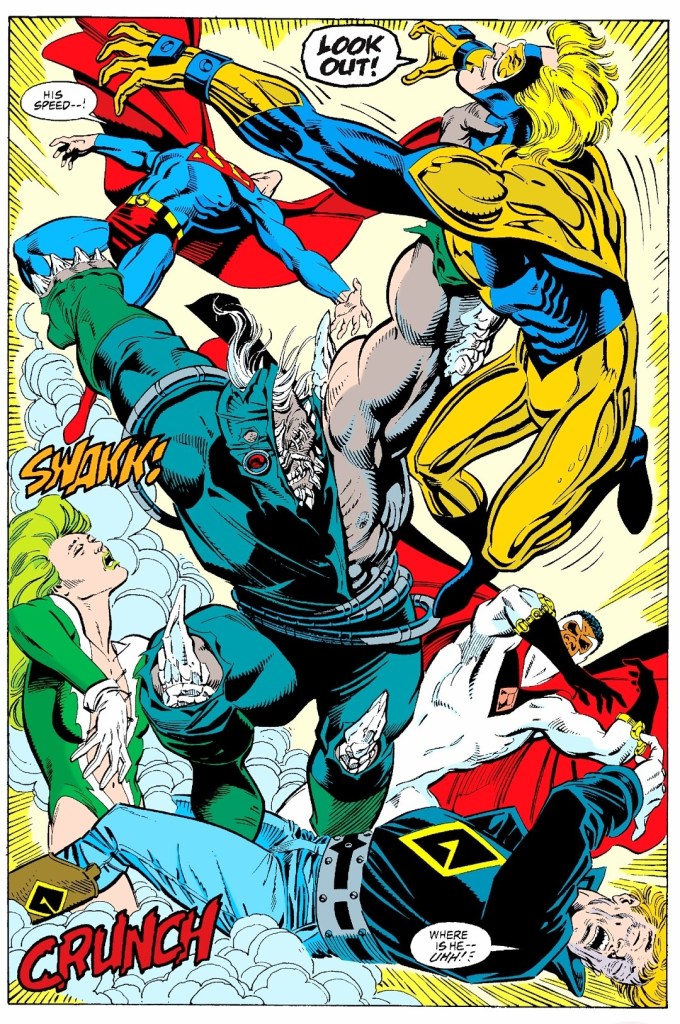
The first-ever Superman-Doomsday encounter here is symbolic as it happened just minutes after the Justice League America (JLA) got overwhelmed by the unstoppable creature from outer space. While Superman had his TV interview, his JLA teammates failed miserably during their encounter with Doomsday (as told in Justice League America #69). By the time the Man of Steel and the creature meet, the stage was set for readers to find out once and for all who is more powerful between them.

Superman’s leadership is also emphasized in this story. The JLA in this issue does not have DC’s most famous superheroes as members but Ice, Maxima, Fire, Booster Gold, Bloodwynd and Guy Gardner functioned well and added nicely to the build-up of this storyline.

There is a lot of superhero spectacle to enjoy here but the most noticeable visual features are the scenes of destruction which strongly symbolize Doomsday’s immense strength, violent nature and complete disregard of both life and logic. The showing of an American family coming close to death in the presence of Doomsday remains disturbing to see.

Lastly, I should state the big reveal of Doomsday’s face and other physical features is excellent and even timeless. There is this undeniable combination of fright and intimidation that Dan Jurgens visualized here. In fact, the big reveal (which happened after Superman and the JLA combined their attacks on the creature) alone is a solid reason to read this comic book.  

Conclusion

Doomsday the unstoppable force that completely disregards life and cannot be reasoned with.

Even as a build-up issue of the Death of Superman storyline, Superman #74 (1992) is still a great read on its own. Not only did it mark the first-ever encounter between Superman and Doomsday in the history of comics, it also emphasized how vulnerable and inferior the superheroes here really are. There is also the symbolism of Doomsday as the unstoppable being that completely disregards life (and can never be reasoned with) and still Dan Jurgens managed to spare some room to symbolize how the superheroes struggled in trying to stop the creature and take care of the helpless whenever they can.

Overall, Superman #74 (1992) is highly recommended.

+++++

Thank you for reading. If you find this article engaging, please click the like button below, share this article to others and also please consider making a donation to support my publishing. If you are looking for a copywriter to create content for your special project or business, check out my services and my portfolio. Feel free to contact me with a private message. Also please feel free to visit my Facebook page Author Carlo Carrasco and follow me on Twitter at  @HavenorFantasy as well as on Tumblr at https://carlocarrasco.tumblr.com/ and on Instagram at https://www.instagram.com/authorcarlocarrasco
A Look Back at Superman #76 (1993)

Disclaimer: This is my original work with details sourced from reading the comic book and doing personal research. Anyone who wants to use this article, in part or in whole, needs to secure first my permission and agree to cite me as the source and author. Let it be known that any unauthorized use of this article will constrain the author to pursue the remedies under R.A. No. 8293, the Revised Penal Code, and/or all applicable legal actions under the laws of the Philippines.

Welcome back superhero enthusiasts, 1990s culture enthusiasts and comic book collectors! Today we go back to the early 1990s and explore a key chapter in the post-Crisis era of DC Comics through a Superman comic book.

Previously, I reviewed Adventures of Superman #498 (1993) and Superman: The Man of Steel #20 (1993) which were chapters of the Funeral for a Friend storyline. In Superman: MOS , a large funeral took place which involved several special guests as well as other DC superheroes who paid tribute to Superman. The entire city of Metropolis is struggling to move forward as the sudden of Superman really impacted all the people, especially on Lois Lane.

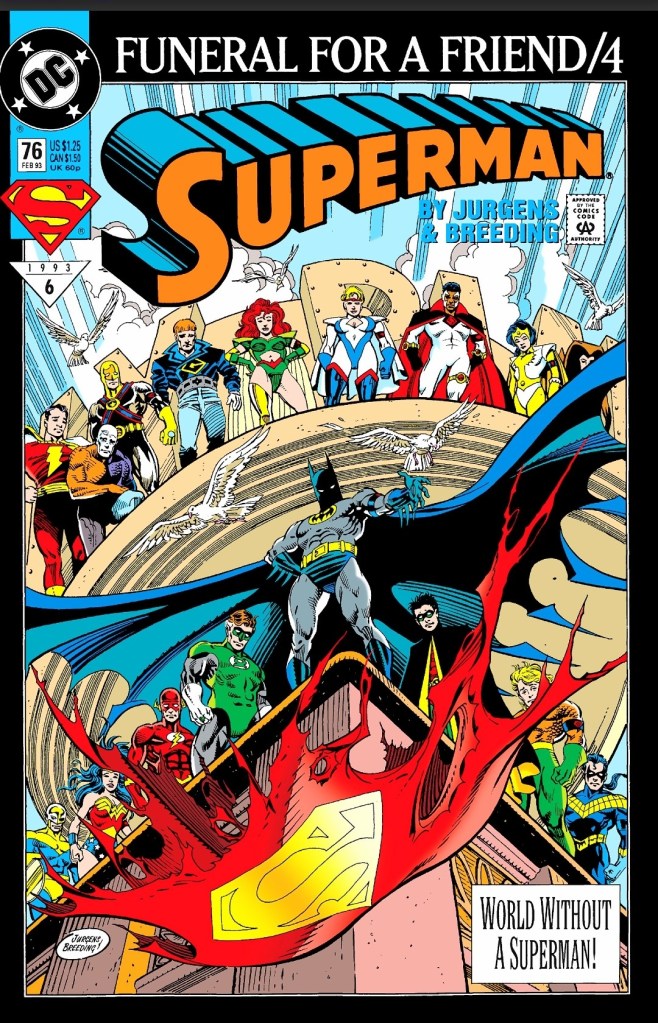
With those details laid down, here is a look back at Superman #76, published in 1993 by DC Comics with a story written and illustrated by Dan Jurgens. This comic book marked the fourth chapter of the Funeral for a Friend storyline.

The cover.

Early story

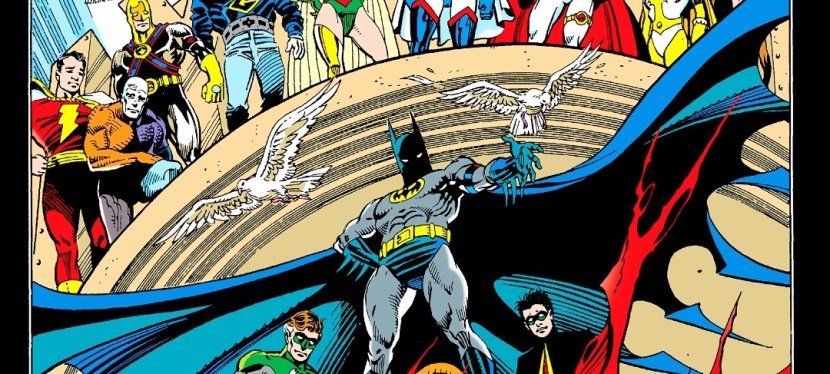
The story begins with Shazam (AKA Captain Marvel) arriving at the rooftop of the Daily Planet where the Flash, Batman, Wonder Woman, Green Lantern, Maxima and others are present. The whole city is experiencing a very somber Christmas season as the death and burial of Superman remains very strong on the people.

On the streets of Metropolis, a long-haired guy named Mitch walks down in the rain feeling troubled not only because Superman died but also due to the fact that their home got smashed during the encounter with the unstoppable Doomsday. Mitch then arrives at a gathering of people outside of a building’s front door. There are several reporters covering a lady speaking to them with a microphone. She tells them that she is Mrs. Superman…

Quality

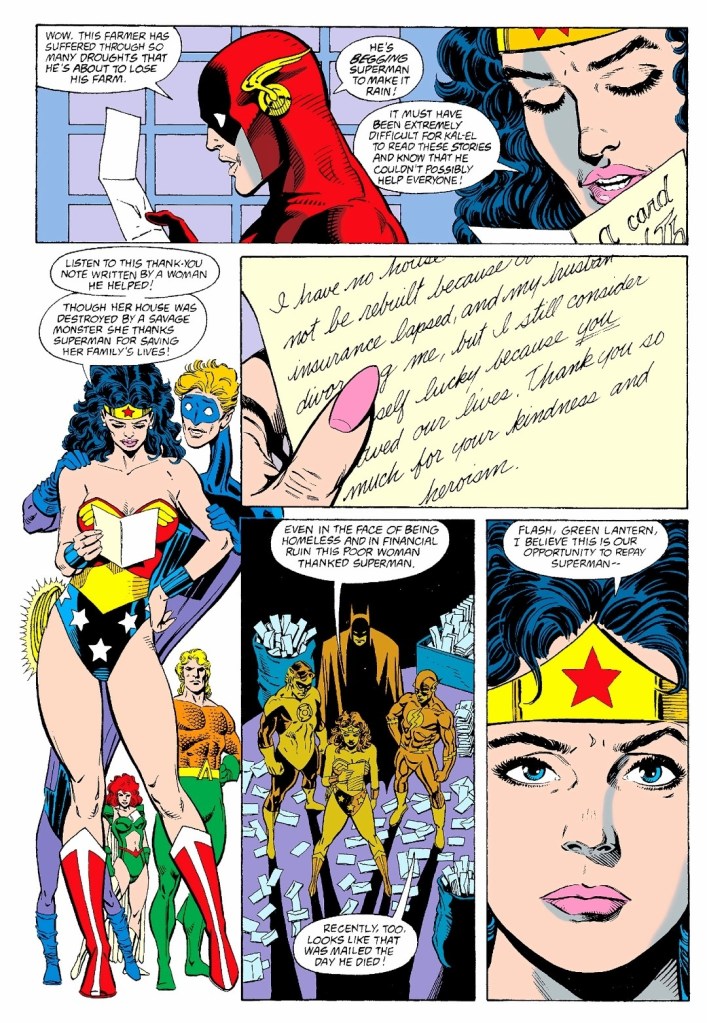
Wonder Woman reads a letter.

Being the 4th chapter of the Funeral for a Friend storyline, Dan Jurgens crafted a story that not only dramatized the post-disaster situation of Metropolis but also had notable twists and developments that proved to be worth reading.

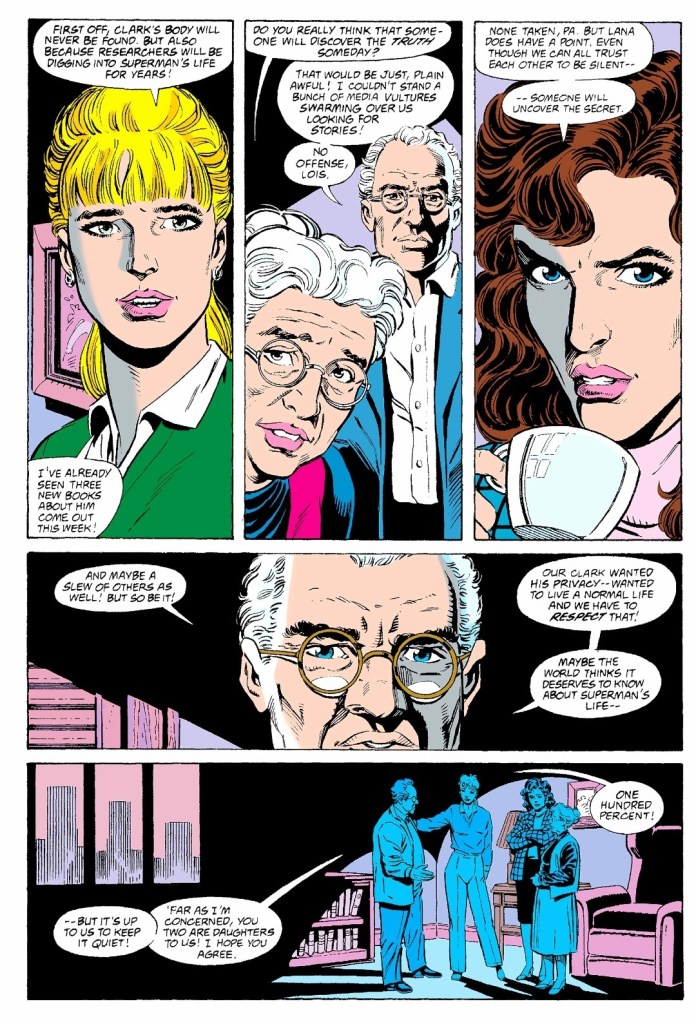
For one thing, this comic book has Lois Lane reunited at last with Clark Kent’s earthly parents Jonathan and Martha which was not only really dramatic but also had very rich dialogue written. By this point in this particular storyline, Lois Lane has gone through waves of deep emotions and pain, while getting stressed with journalistic work. As such, there is this dramatic pay-off that happened during the reunion with the elderly Kent couple.

What is most notable here is the scene in which Superman’s super-powered allies visit a local post office that literally got flooded with lots of mail from around the world addressed to the Man of Steel. On face value, such a scenario looked silly but the way Dan Jurgens crafted the dialogue and the images, the post office scene became believable and sensible to read. This shows that superheroes like Aquaman, Wonder Woman, the Flash and others do have hearts to be caring and sensible to the people.

The scene of the ordinary guy Mitch is significant as well. Clearly the character symbolizes the poor and struggling American who remembers how a complete stranger like Superman came along, stood up to fight for Mitch’s family and died in the process (while Mitch’s father was absent).

This comic book is also a Christmas tale. How Christmas was dramatized here has to be seen and you readers should get a copy of this comic book to find out why. It should be noted that there are themes of reconciliation and the nuclear family that made the Christmas tale meaningful.

Conclusion

Lana Lang, Lois Lane and the elderly Kent couple.

Even without the presence of the Man of Steel and no good-versus-evil conflict, Superman #76 (1993) is a great read as it pushed forward the Funeral for a Friend storyline while successfully telling a meaningful Christmas tale of its own complete with a very unique portrayal of the Justice League and Superman’s allies. How people deal with emotions and stress over Superman’s death was portrayed as highly believable and Dan Jurgen’s writing here was done with really high quality.

Overall, Superman #76 (1993) is highly recommended.

+++++

Thank you for reading. If you find this article engaging, please click the like button below, share this article to others and also please consider making a donation to support my publishing. If you are looking for a copywriter to create content for your special project or business, check out my services and my portfolio. Feel free to contact me with a private message. Also please feel free to visit my Facebook page Author Carlo Carrasco and follow me on Twitter at  @HavenorFantasy as well as on Tumblr at https://carlocarrasco.tumblr.com/ and on Instagram at https://www.instagram.com/authorcarlocarrasco
A Look Back at Superman: The Man of Steel #18 (1992)

Disclaimer: This is my original work with details sourced from reading the comic book and doing personal research. Anyone who wants to use this article, in part or in whole, needs to secure first my permission and agree to cite me as the source and author. Let it be known that any unauthorized use of this article will constrain the author to pursue the remedies under R.A. No. 8293, the Revised Penal Code, and/or all applicable legal actions under the laws of the Philippines.

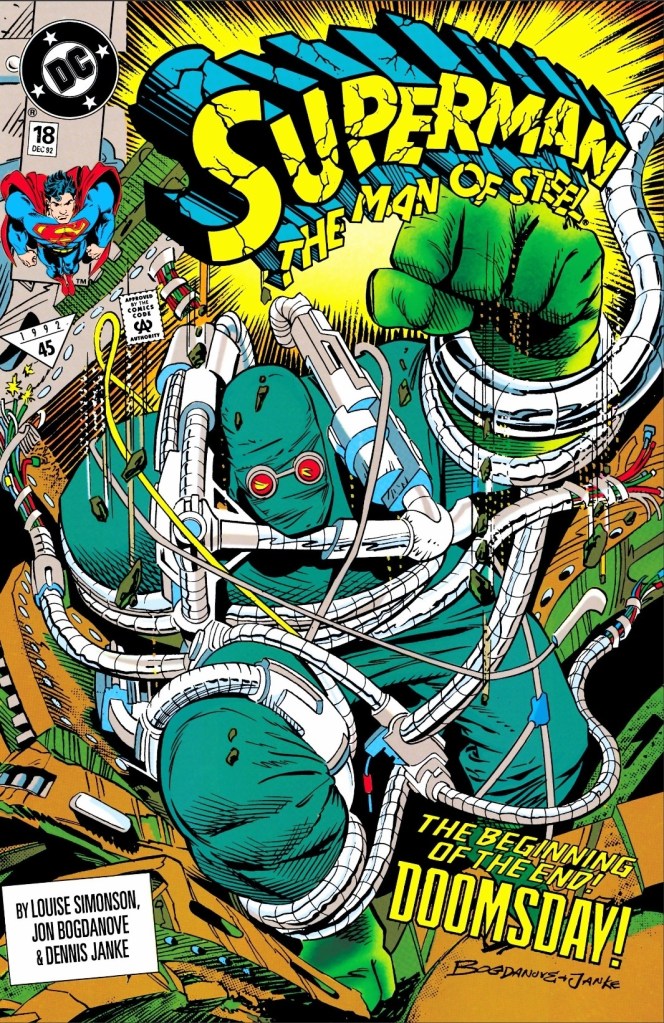
Welcome back superhero enthusiasts, 1990s culture enthusiasts and comic book collectors! Today we go back to the early 1990s and explore a key chapter in the post-Crisis era of DC Comics through a Superman comic book – the first full appearance of Doomsday!

To those of you who read my retro review of Adventures of Superman #498 (1993) – which was the opening chapter of the Funeral for a Friend storyline – you might be wondering why I decided to revisit the Death of Superman storyline so suddenly. It all comes down to context related to Superman’s eventual death and what killed him. Not only did Doomsday become a very important part of DC Comics’ gallery of super villains having achieved the killing of the Man of Steel, the oversized monster became part of DC’s further comic book universe reboots as well as part of multimedia adaptations of DC Comics stories specifically in the Smallville TV series as well as in 2016’s Batman v. Superman: Dawn of Justice.

Indeed, Doomsday’s place in American pop culture is sealed and that shows how much of an impact was made by the unstoppable super villain co-created by Dan Jurgens, Brett Breeding, Jerry Ordway, Louise Simonson and Roger Stern. Doomsday was conceived way back in 1991 during the brainstorming session of the Superman comics writers and editors of the time.

With those details laid down, here is a look back at Superman: The Man of Steel #18, published in 1992 by DC Comics with a story written by Louise Simonson and drawn by Jon Bogdanove. This comic book marked the beginning of the Death of Superman saga.

The cover.

Early story

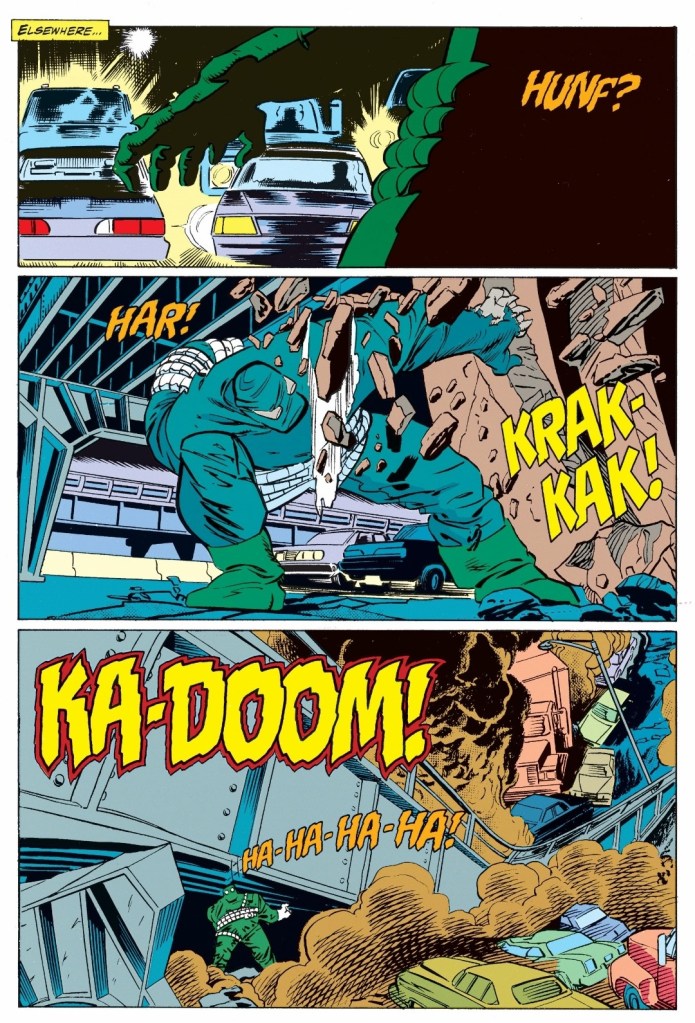
The story begins deep underground as the left fist of a covered, large being keeps punching the metallic wall to get out of containment. As the punches keep on pounding the wall, the glove gets torn revealing a fist with gray skin and sharp bones protruding through the knuckles. After making its way out of containment, the earth shakes and the animals got disturbed as the creature – mostly covered with an alien body suit  with only the left arm freed – makes its way from deep underground.

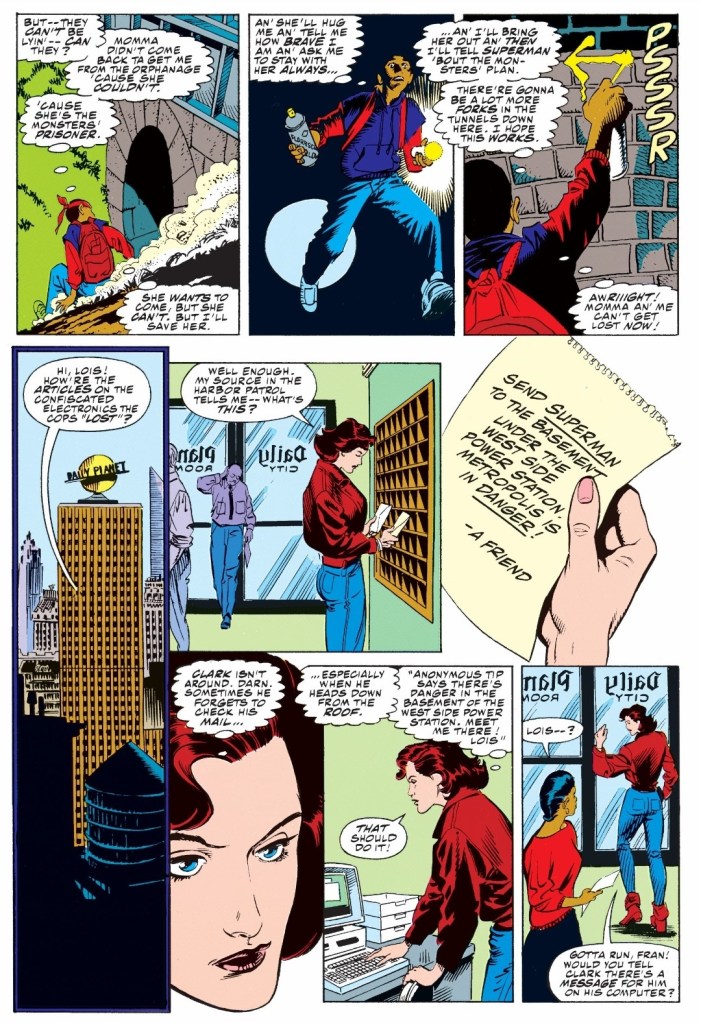
Miles away within the city of Metropolis, a young black boy buys a spray paint container (which has a fluorescent yellow paint that glows in the dark) inside a hardware store. In response to the curiosity of the store owner, the boy denies that he would use the glow-in-the-dark pain on a subway wall. The boy has a very tough task ahead of him as he will be going after monsters.

At a power station, a group of intelligent creatures make their way to steal electricity for their war machines…

Quality

Even with only his left arm free, Doomsday still caused massive destruction causing injuries and deaths to others.

To make things clear, this comic book tells two stories that moved in parallel together. The first story involving Superman, Lois Lane and the affairs that involved the mentioned young black boy is the typical good-versus-evil superhero tale. What made that story standout was Lois Lane’s involvement as she got into trouble facing the opposition before Superman came in to save the day. As before, seeing Lois Lane talk to Superman in the presence of others while keeping his identity secret remains engaging to read. This tale was good enough to read.

The other story that follows the sudden appearance and the early rampage of Doomsday is the more engaging one to read. This was clearly a build-up for the Death of Superman concept but it was highly effective, well-paced and clearly defined by the creative team. Not only will you see Doomsday’s unstoppable power of destruction, you will witness his complete disregard of life – animals and humans – which strongly hints the an immense danger that Superman, the Justice League America (JLA) and the people of Metropolis are not prepared for. Like the Terminator, Doomsday cannot be reasoned with as massive destruction and death are his core elements. Within the pages of this comic book, it can be viewed that Doomsday was designed for endless waves of destroying life and anything that gets in the way.

Lastly, I should state that Simonson and Bogdanove presented Doomsday not only to be destructive but also as a frightening force that people in real life would not want to see realized.

Conclusion

The other tale that involved Lois Lane and the young black boy.

Superman: The Man of Steel #18 (1992) remains a very powerful read. Yes, it is a build-up of Doomsday and the Death of Superman saga but it remains highly significant as it kicked-off the creative change of direction of DC’s Superman creative teams going towards tragedies that Superman and his allies cannot easily stop. This one marked start of Doomsday’s eventual high rise not only in comics but also in pop culture in general. That being said, this comic book is a must-have in your collection.  

Overall, Superman: The Man of Steel #18 (1992) is highly recommended.

+++++

Thank you for reading. If you find this article engaging, please click the like button below, share this article to others and also please consider making a donation to support my publishing. If you are looking for a copywriter to create content for your special project or business, check out my services and my portfolio. Feel free to contact me with a private message. Also please feel free to visit my Facebook page Author Carlo Carrasco and follow me on Twitter at  @HavenorFantasy as well as on Tumblr at https://carlocarrasco.tumblr.com/ and on Instagram at https://www.instagram.com/authorcarlocarrasco