A Look Back at The Strangers #17 (1994)

Disclaimer: This is my original work with details sourced from reading the comic book and doing personal research. Anyone who wants to use this article, in part or in whole, needs to secure first my permission and agree to cite me as the source and author. Let it be known that any unauthorized use of this article will constrain the author to pursue the remedies under R.A. No. 8293, the Revised Penal Code, and/or all applicable legal actions under the laws of the Philippines.

Welcome back, Ultraverse fans and superhero comic book collectors! We are about to return to the Ultraverse through The Strangers. Before doing so, I’d like to discuss one of their members named Elena La Brava AKA Lady Killer. Before the big incident that changed her life and those of her eventual teammates riding the cable car in San Francisco, Elena worked professionally as a fashion designer. She is quite resourceful, brave and organized. Apart from proving to be a very valuable member of the team, she has the special ability to track and this results helping her hit what she aims for. As seen in previous issues leading to issue #16, she has been romantically linked with Atom Bob and has struggled also on leading the team.

With those details mentioned, it’s now time to look back at The Strangers #17, published in 1994 by Malibu Comics with a story written by Steve Englehart and illustrated by Rick Hoberg.

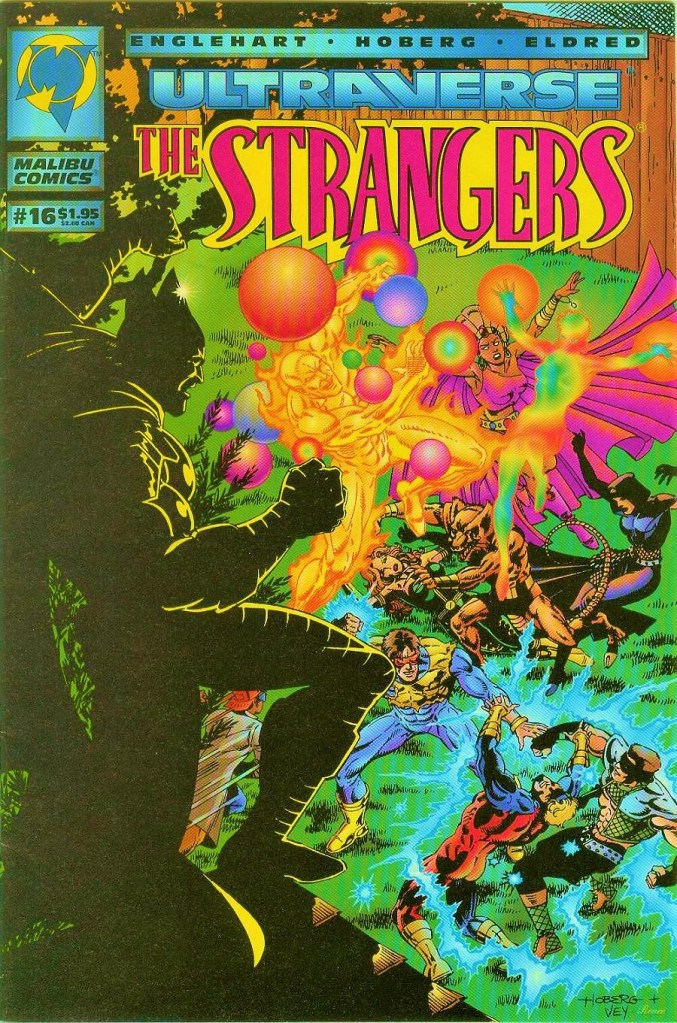
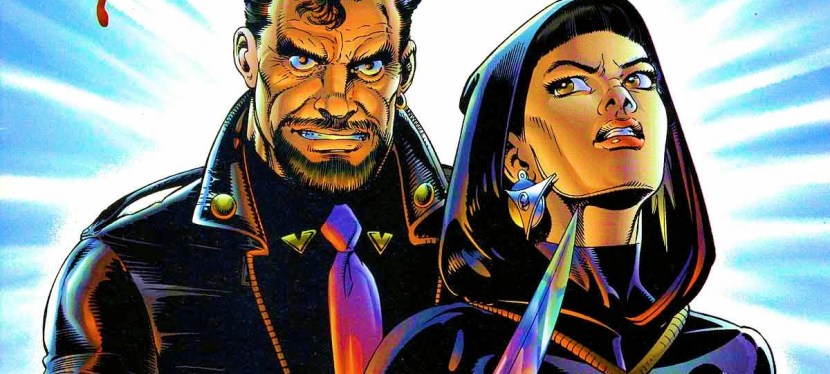
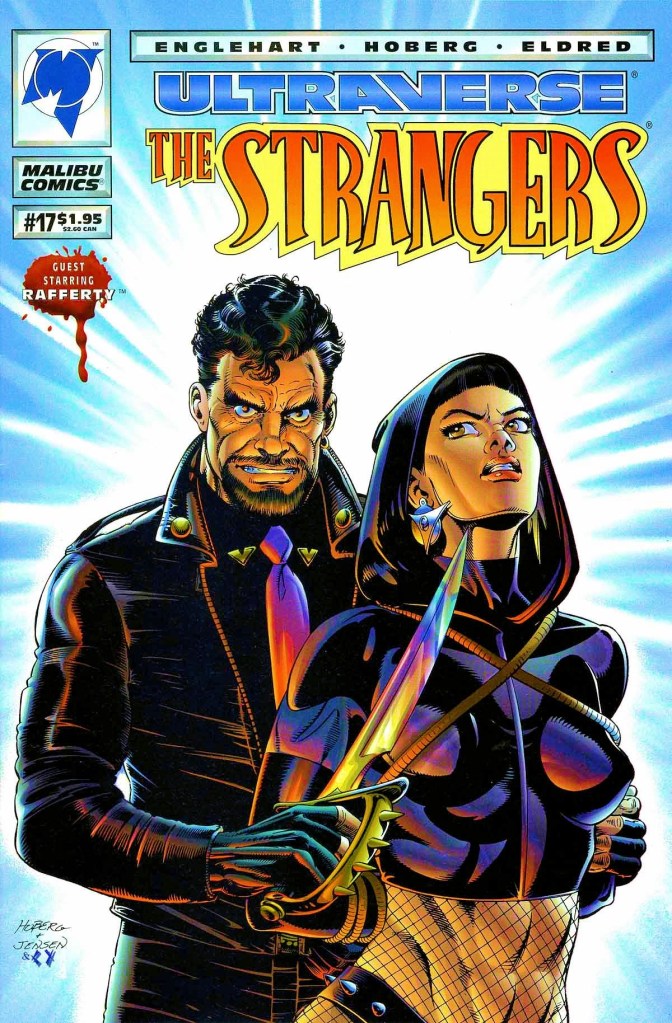
The cover.

Early story

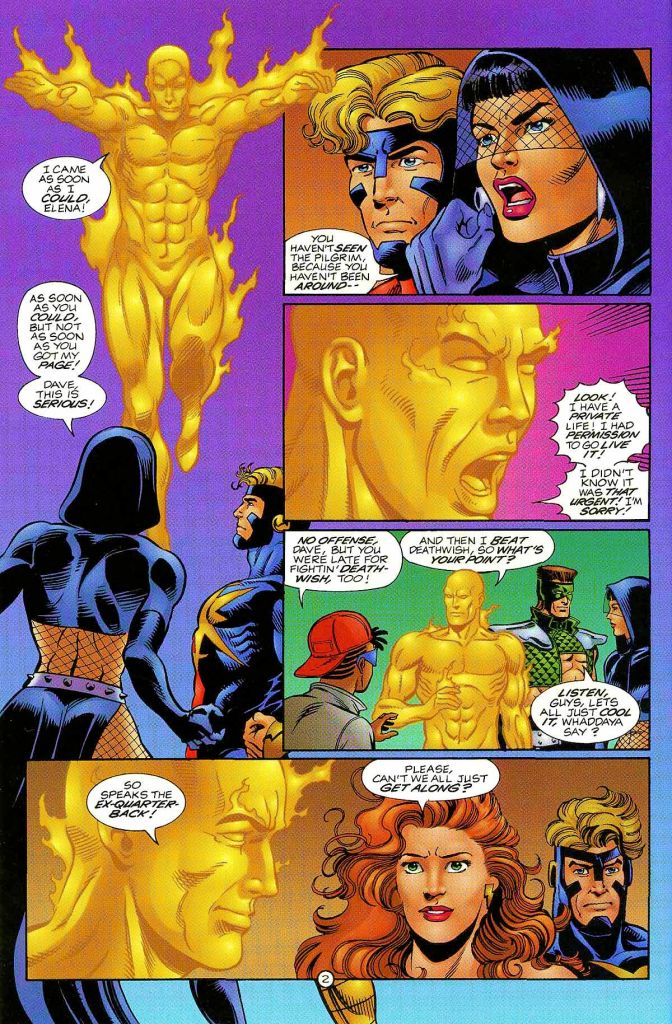
The story begins at the headquarters of The Strangers. Spectral arrives late and apologizes to his teammates who are already feeling disturbed by the Pilgrim. Lady Killer makes an issue about Spectral’s tardiness and reminds him he has not seen the Pilgrim as he was absent. Spectral replied emotionally stressing that he had to attend to his private life.

When asked about the Pilgrim, Grenade replies that nobody knows who their antagonist is. In recent times, the team faced off with various costumed individuals in two encounters and the Pilgrim appeared each time and took them with him. Each time, the Pilgrim swore he would continue to get back at The Strangers until he builds up a team large enough to oppose them.

Knowing that the Pilgrim will keep coming back at her team, Lady Killer states she has a plan…

Quality

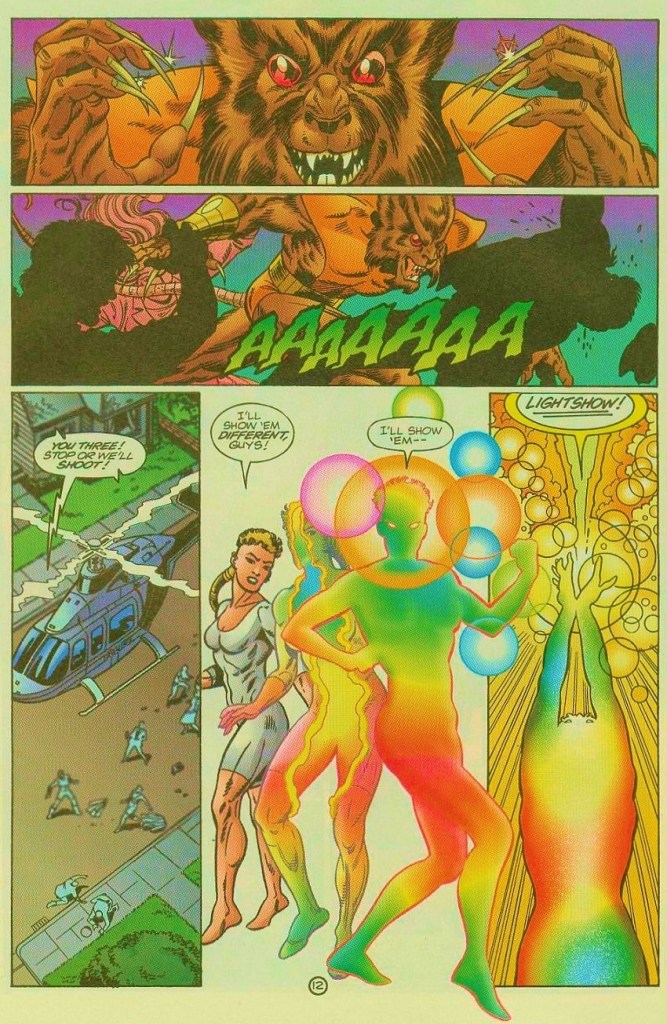
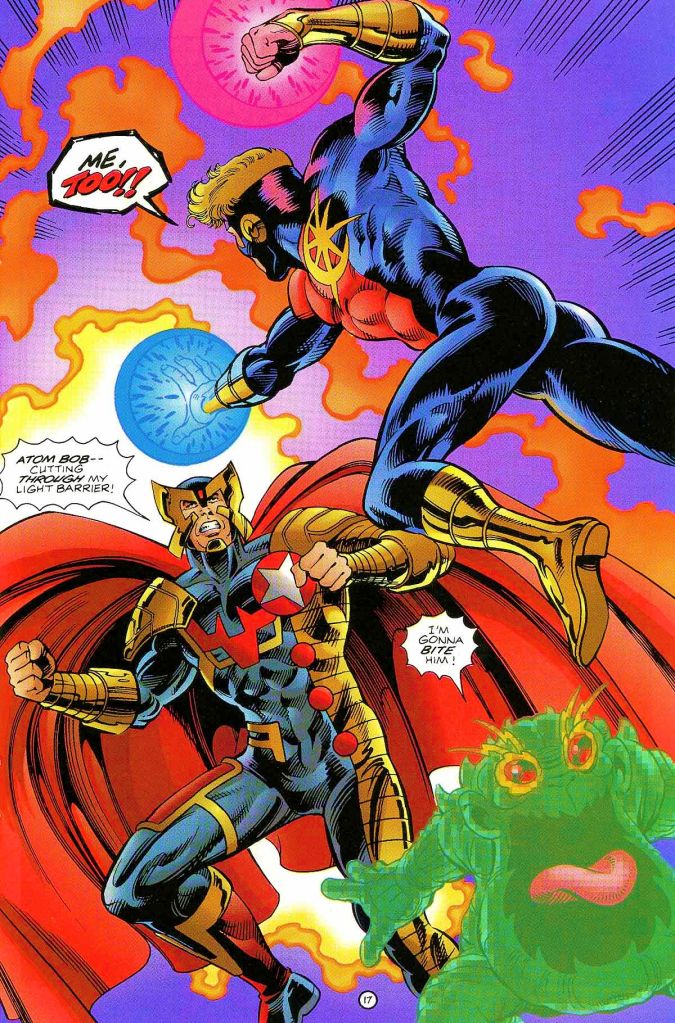
The start of a pretty solid battle between the Pilgrim and Atom Bob.

The writing for this comic book is, as expected, very strong and undoubtedly it is a great follow-up to what happened in issue #16. Instead of just another encounter between The Strangers and another antagonist which turns into an opportunity for the Pilgrim to come out and do his thing, this one has a lot more compelling stuff backed with surprise and intrigue.

Before the big conflict happened, this comic book showed more of Lady Killer’s intelligence and her ability to organize something that is believable to read. Atom Bob, who missed out on the battle of issue #16, is more involved in this comic book and his battle with the Pilgrim was not only heavy on the spectacle but also showed more of his capabilities and his willingness to achieve something.

Unsurprisingly, there is a lot of what I would call the usual visual goodness from artist Rick Hoberg here. He continued to show a consistent high level of quality when drawing the characters, their expressions and making the superhero action scenes look spectacular.

Conclusion

The Strangers meeting early.

The Strangers #17 (1994) is a very good read and what I love about it is that it further added to the build-up of the growing opposition against The Strangers while at the same time developing the core characters more. You will see more of Lady Killer’s leadership values here and eventually, you’ll admire her more. I should state that Rafferty, a serial killer in the Ultraverse, had a notable presence in this comic book and added some impact to the plot.

If you are seriously planning to buy an existing hard copy of The Strangers #17 (1994), be aware that as of this writing, MileHighComics.com shows that the near-mint copy of the comic book costs $8.

Overall, The Strangers #17 (1994) is highly recommended!

+++++

Thank you for reading. If you find this article engaging, please click the like button below and also please consider sharing this article to others. If you are looking for a copywriter to create content for your special project or business, check out my services and my portfolio. Feel free to contact me as well. Also please feel free to visit my Facebook page Author Carlo Carrasco and follow me at HavenorFantasy@twitter.com

A Look Back at X-Men #2 (1991)

Disclaimer: This is my original work with details sourced from reading the comic book and doing personal research. Anyone who wants to use this article, in part or in whole, needs to secure first my permission and agree to cite me as the source and author. Let it be known that any unauthorized use of this article will constrain the author to pursue the remedies under R.A. No. 8293, the Revised Penal Code, and/or all applicable legal actions under the laws of the Philippines.

There is so much said about X-Men #1 of 1991 which was launched to major success by Marvel Comics selling at least eight million copies worldwide. That launch issue, written by Chris Claremont and drawn by Jim Lee, had multiple covers and a version with gatefold covers and high-quality paper which made it an instant hit with collectors chasing profit. In 2011, Marvel even released the so-called 20th anniversary edition of X-Men #1 which was digitally recolored.

In terms of substance, X-Men #1 marked the new era of the X-Men. Charles Xavier returned to his mansion to lead the X-Men which was so large as a group, it had to be divided into two team with Cyclops leading the Blue Team and Storm heading the Gold Team. In terms of publishing, Marvel published tales of the Gold Team in the Uncanny X-Men monthly series while the Blue Team’s stories were published in the adjective-less X-Men monthly series.

With all the attention paid to X-Men #1, I noticed that not too many people cared to talk about what happened after the end of that comic book. Without spoiling plot details, the massive seller of 1991 had its story end in a cliffhanger. To find out what followed and determine the quality of the creative team’s work, here is a look back at X-Men #2 published in 1991 by Marvel Comics with a story co-written by Chris Claremont and Jim Lee (who illustrated).

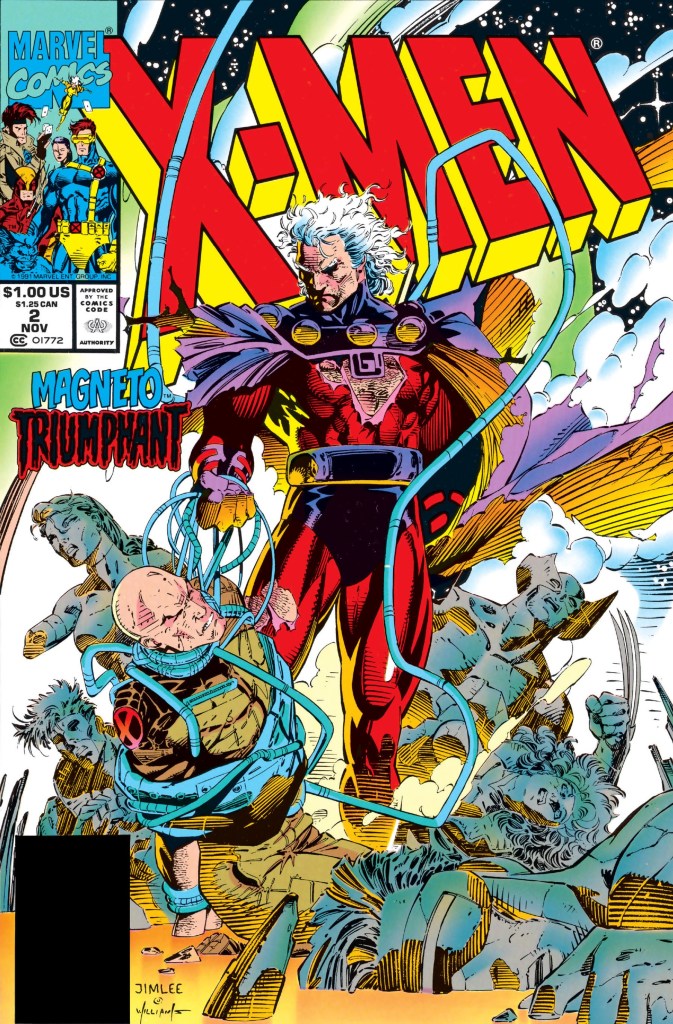
The cover.

Early story

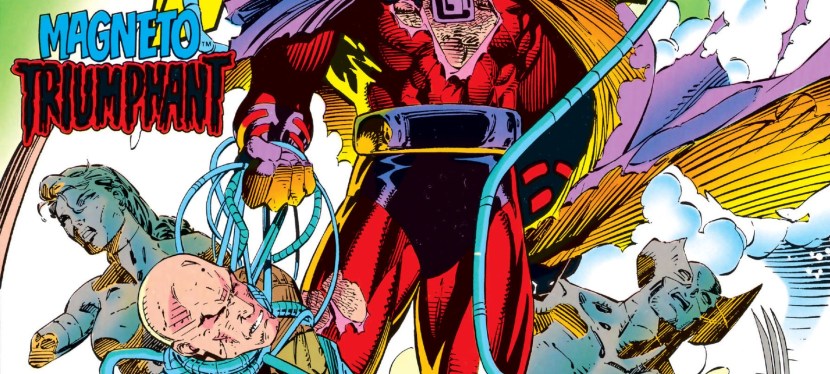
The story begins in the fictional island nation of Genosha which has a legacy of mutant slavery. Having fought with the Acolytes (led by Fabian Cortez), the X-Men now face Magneto who arrived and tells them that he will not abandon the Acolytes.

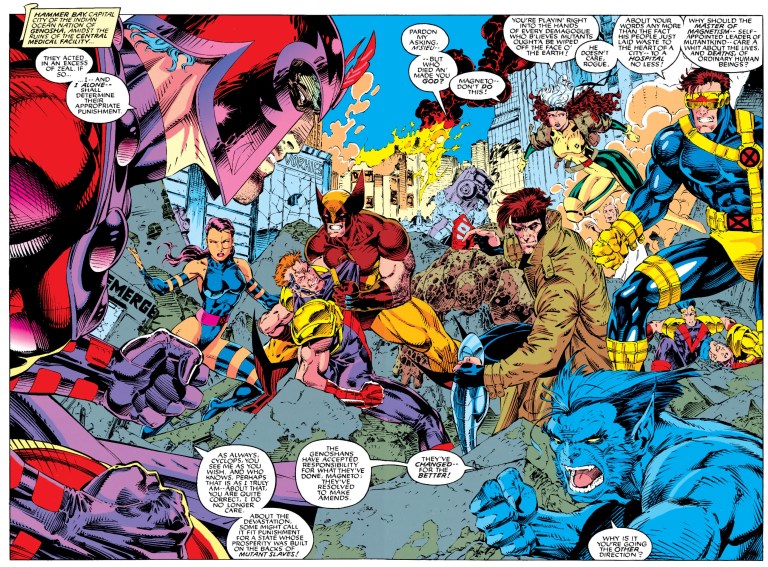
“They acted in an excess of zeal. If so…I..and I alone..shall determine their appropriate punishment,” Magneto tells the team of Cyclops, Gambit, Beast, Wolverine, Psylocke and Rogue. Near them are other Acolytes members down on the ground.

After words spoken by Gambit, Rogue and Cyclops, Magneto referred to the devastation of the city hospital as fitting for punishing a state (Genosha) whose prosperity was built on the backs of mutant slaves. Beast answered back saying that the Genoshans have accepted responsibility for what they have done and resolved to make amends.

While Magneto replies to Beast, a military Genoshan helicopter gunship fires missiles at them from above which the X-Men’s archvillain intercepts. Using his magnetic power, Magneto lifts steal beams and destroys the helicopter with them. He then turns against the X-Men restarting the chaos in the city…

Quality

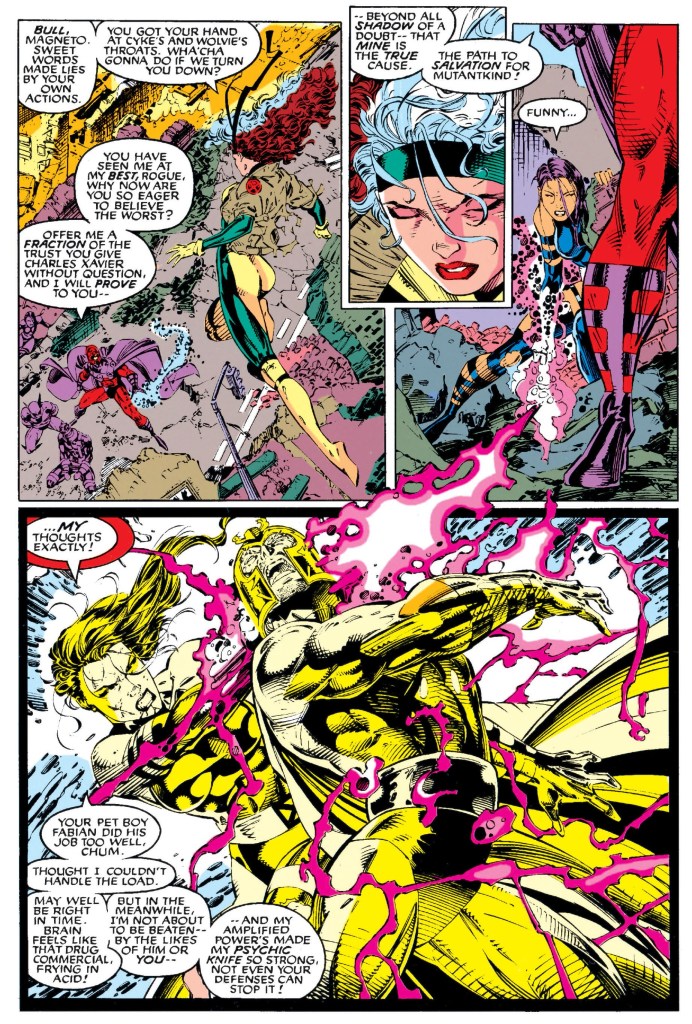
Magneto, Psylocke and Rogue in the middle of the chaos.

Being the middle of a 3-part story, this comic book pushes the entire X-Men group to the edge thanks to strong writing by Chris Claremont. I’m not simply referring to the traditional good-versus-evil formula of superhero storytelling as the story here emphasized themes about sanity, loyalty, legacy, idolatry and even diplomacy. It just so happens that there is a lot of superhero spectacle to enjoy here and there.

The stakes have been raised significantly in this story as Magneto is shown leading the Acolytes who in turn went ahead with their first mission which explains the chaos in Genosha. Magneto’s condition also deteriorates and gets himself healed by Fabian Cortez who is more sinister than what he seems. For his part, Charles Xavier of the X-Men gets to interact with his long-time friend Dr. Moira MacTaggert who is struggling with guilt from something she committed in the past. Through Magneto, Xavier and MacTaggert, there is this solid build-up of tension that led to a very powerful revelation in the 2nd half of the story which, ironically, put the X-Men on the sideline temporarily. There is high drama, deep tension and high intensity involving Magneto and MacTaggert, and their scene together is the highlight of the story.  

Conclusion

The face-off!

To put it straight, as much as I loved X-Men #1 (1991), I find X-Men #2 (1991) more compelling to read. For one thing, it rewards X-Men fans who dedicatedly followed the events of not only the X-Men but also of that of the life of Magneto. It’s really great that Chris Claremont literally dug up the past for details that proved to be useful in this comic book. It also nicely sets up anticipation of the next issue by involving the X-Men’s Gold Team. Unsurprisingly, with the combined talents of Claremont and Jim Lee, this is an excellent read that really looks great.

If you are seriously planning to buy an existing hard copy of X-Men #2 (1991), be aware that as of this writing, MileHighComics.com shows that the near-mint copy of the regular edition costs $4 while the near-mint copies of the Chris Claremont-signed regular edition, the Chris Claremont-signed newsstand edition and the newsstand edition cost $9, $19 and $13 respectively.

Overall, X-Men #2 (1991) is highly recommended!

+++++

Thank you for reading. If you find this article engaging, please click the like button below and also please consider sharing this article to others. If you are looking for a copywriter to create content for your special project or business, check out my services and my portfolio. Feel free to contact me as well. Also please feel free to visit my Facebook page Author Carlo Carrasco and follow me at HavenorFantasy@twitter.com

A Look Back at The Strangers #16 (1994)

Disclaimer: This is my original work with details sourced from reading the comic book and doing personal research. Anyone who wants to use this article, in part or in whole, needs to secure first my permission and agree to cite me as the source and author. Let it be known that any unauthorized use of this article will constrain the author to pursue the remedies under R.A. No. 8293, the Revised Penal Code, and/or all applicable legal actions under the laws of the Philippines.

Welcome back Ultraverse fans, geeks and comic book collectors! Here is another trip back into the Ultraverse, which for me is the most defining line of superhero comics that was realized in the 1990s. The UV lasted for only a few years and along the way publisher Malibu Comics got acquired by Marvel Comics.

History aside, we are about to explore The Strangers again in the sixteenth issue of the monthly series that was spearheaded mainly by the creative duo of Steve Englehart and Rick Hoberg. Here is a look back at The Strangers #16, published in 1994 by Malibu Comics with a story written by Englehart and drawn by Hoberg.

The cover.

Early story

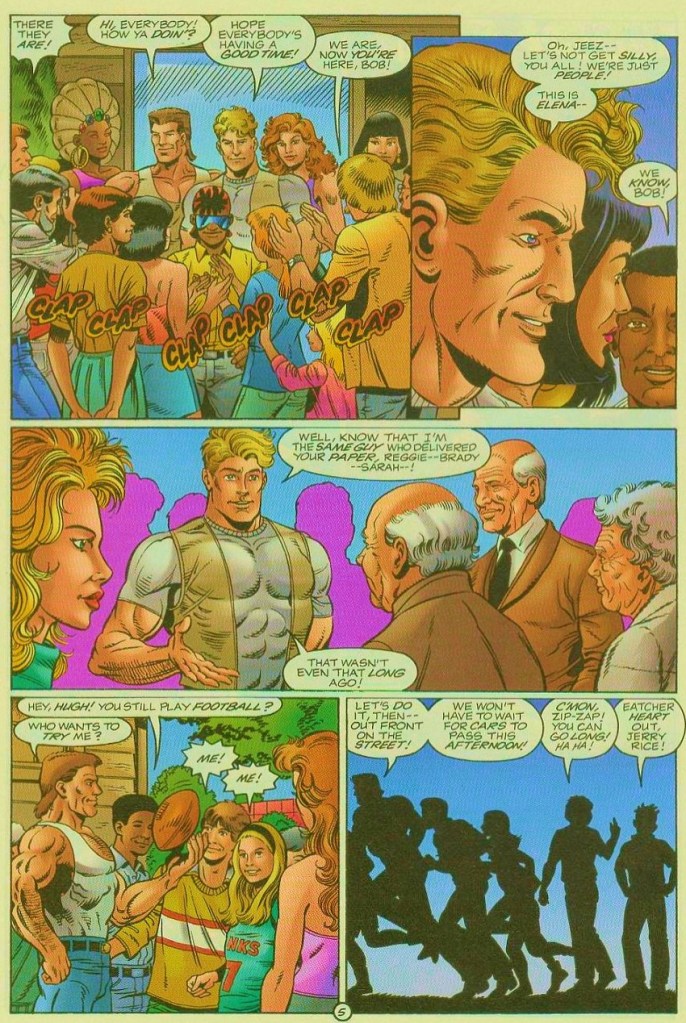
The story begins in a local community in California wherein one of the houses is hosting a block party. Already a disturbance to the neighbors (note: police officers had to temporarily close down a short stretch of the public road and restricted others from getting near), the said party offers people a chance to meet in person Atom Bob who has his teammates with him.

During a private meeting, The Strangers discuss what they encountered lately (note: this refers to their encounters with Gangsta and Brazen. Also involved was someone called the Pilgrim. As they keep talking, Lady Killer stressed that they all need to be ready for further encounters.

Meanwhile in the downtown area of the city, three costumed characters (who previously road a cable car just like The Strangers) are plotting something…

Quality

Meet the opposition.

Let me start first with the art done by Rick Hoberg with ink work by Tim Eldred. I should state that since issue #1, Hoberg not only drew characters, places, creatures and backgrounds with his captivating style, he also maintained a high level of quality and proved he can bring any comic book script into life with images. His art is so good, this comic book is fun reading again and again. I should also state that the coloring for this story is very lively and more dream-like in style thanks to the color design by Moose Baumann and interior color by Prisms.

When it comes to the story, this comic book’s concept is pretty unique and Steve Englehart deserves credit for coming up with something fresh while still leaving room for spectacle and characterization. The idea of a block party held in the middle of a community of family homes celebrating the presence of superheroes is cool and it opened up new ways to define the characters not to mention emphasizing how their presence affects people not on the city level but on the local community! Having worked as a local community newspaper journalist myself, I know what’s it like when local communities have special activities or events that bring together (or captivate) the neighbors. Along the way, the dialogue is varied (note: lots of characters other than The Strangers had lines), the portrayal of The Strangers is consistent and the story’s pace flowed smoothly.

Speaking of characterization, there is notable focus on Atom Bob and Lady Killer who already have feelings for each other. As the home of Atom Bob’s family serves as the venue of the party, you will get to see the character interact with the local neighbors and others he personally knew for a long time which is a very refreshing way of developing him. Lady Killer meanwhile tries to maintain balance between being the team’s professional leader and having feelings for Atom Bob while trying to respect his parents.

And then there is a growing group of ultras who intend to destroy The Strangers. It was at this stage in The Strangers monthly series in which a genuine opposition against the title team really started to take shape. The good news is that the Pilgrim and the other opposing ultras were not portrayed as generic bad guys but people who are struggling and have a cause.

Conclusion

The Strangers and the guests at the party.

There is no doubt that The Strangers #16 (1994) is a whole lot of fun, very compelling and intriguing to read from start to finish. Anyone who loves the title team will find something to enjoy and follow, while those who keep on enjoying the conflict between good-and-evil will find something new and entertaining here. Steve Englehart and Rick Hoberg not only continued to deliver high-quality superhero stories with The Strangers, they really were one of the best creative duos of the 1990s.

If you are seriously planning to buy an existing hard copy of The Strangers #16 (1994), be aware that as of this writing, MileHighComics.com shows that the near-mint copy of the comic book costs $8.

Overall, The Strangers #16 (1994) is highly recommended!

+++++

Thank you for reading. If you find this article engaging, please click the like button below and also please consider sharing this article to others. If you are looking for a copywriter to create content for your special project or business, check out my services and my portfolio. Feel free to contact me as well. Also please feel free to visit my Facebook page Author Carlo Carrasco and follow me at HavenorFantasy@twitter.com

A Look Back at Ravage 2099 #2 (1993)

Disclaimer: This is my original work with details sourced from reading the comic book and doing personal research. Anyone who wants to use this article, in part or in whole, needs to secure first my permission and agree to cite me as the source and author. Let it be known that any unauthorized use of this article will constrain the author to pursue the remedies under R.A. No. 8293, the Revised Penal Code, and/or all applicable legal actions under the laws of the Philippines.

Over a year ago, I reviewed Ravage 2099 #1 (1992) which marked the return of the late Stan Lee on writing stories for a monthly series. Unlike the main heroes of the 2099 universe of the time, Ravage was created by Stan Lee and illustrator Paul Ryan as an original character although he ended up being generic. In my review of the 1st issue of the Ravage 2099 series, I declared that the comic book itself was worth buying way below its original cover price.

Of course, it is understood that, apart from Stan Lee’s outdated style of writing, the debut issue is difficult to make because a lot of explaining (via expository dialogue most of the time) the concept had to be done which causes an imbalance between storytelling, character development and spectacle. That being said, it is time to find out if the Stan Lee-Paul Ryan creative team managed to improve their work together in this look back at Ravage 2099 #2 published in 1993 by Marvel Comics.

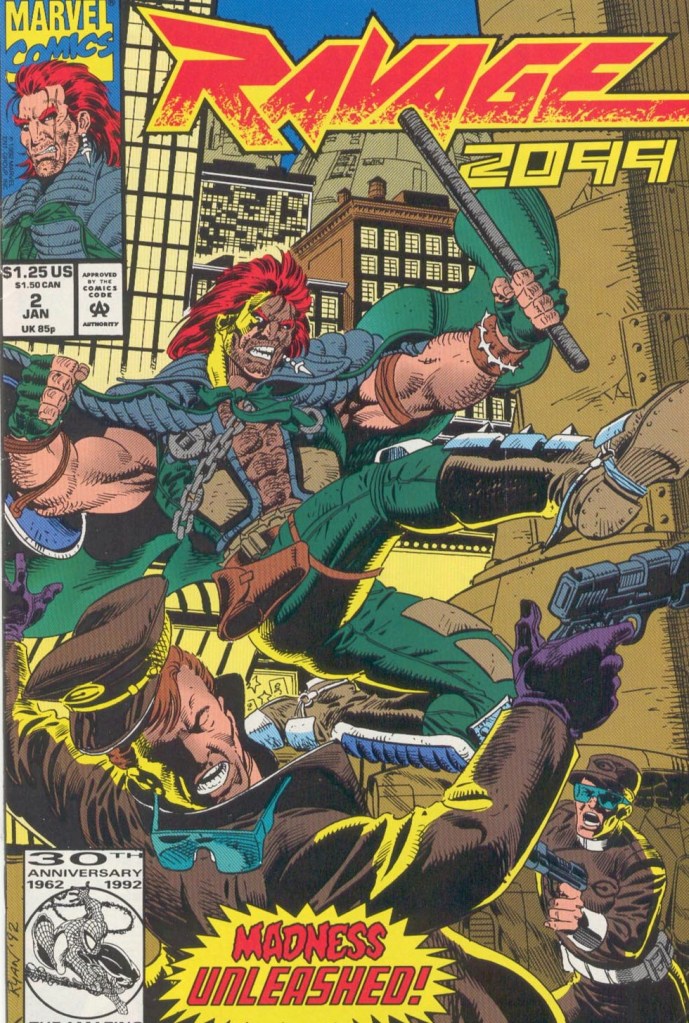
The cover.

Early story

The story begins in the dreaded place called Hellrock. A deformed being named Stormer tries to convince his fellow mutroids to make him their new leader as he believes that current leader Deathstryk is weak and afraid. Soon enough, Dethstryk personally arrives surprising everyone, including Stormer.

After hearing Dethstryk make statements about his temper tantrum and slaying of a fellow mutroid, Stormer attacks him suddenly. In front of many mutroids, Dethstryk easily overpowers Stormer as he lectures him about leadership and strategy. After being offered mercy, Stormer then submits to Dethstryke who in turn declares that their goal is to make the extinction of the human race happen.

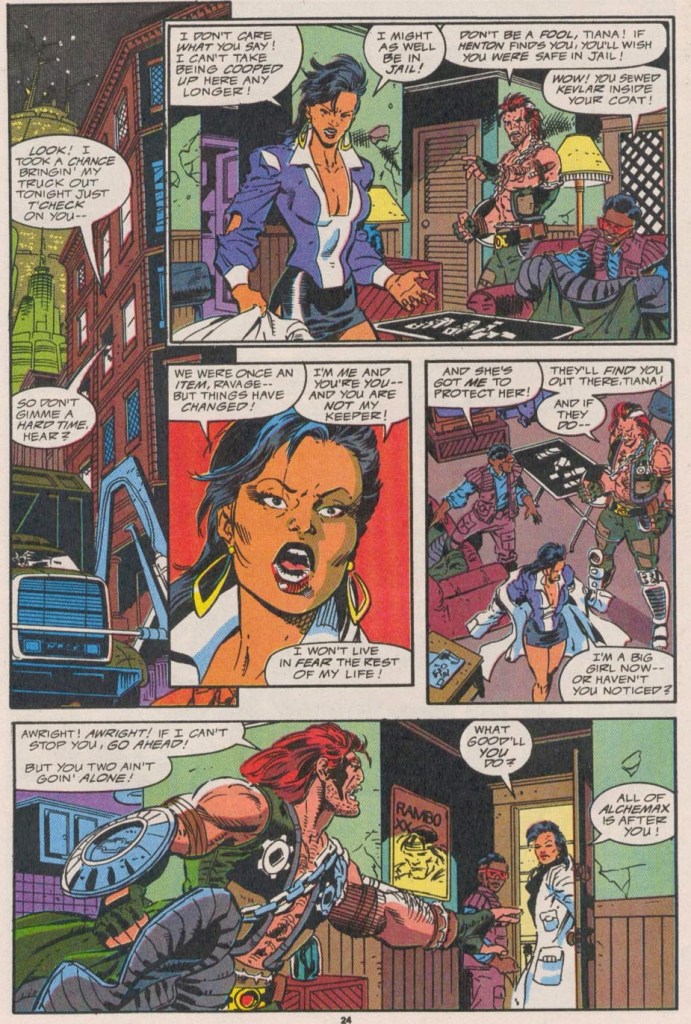
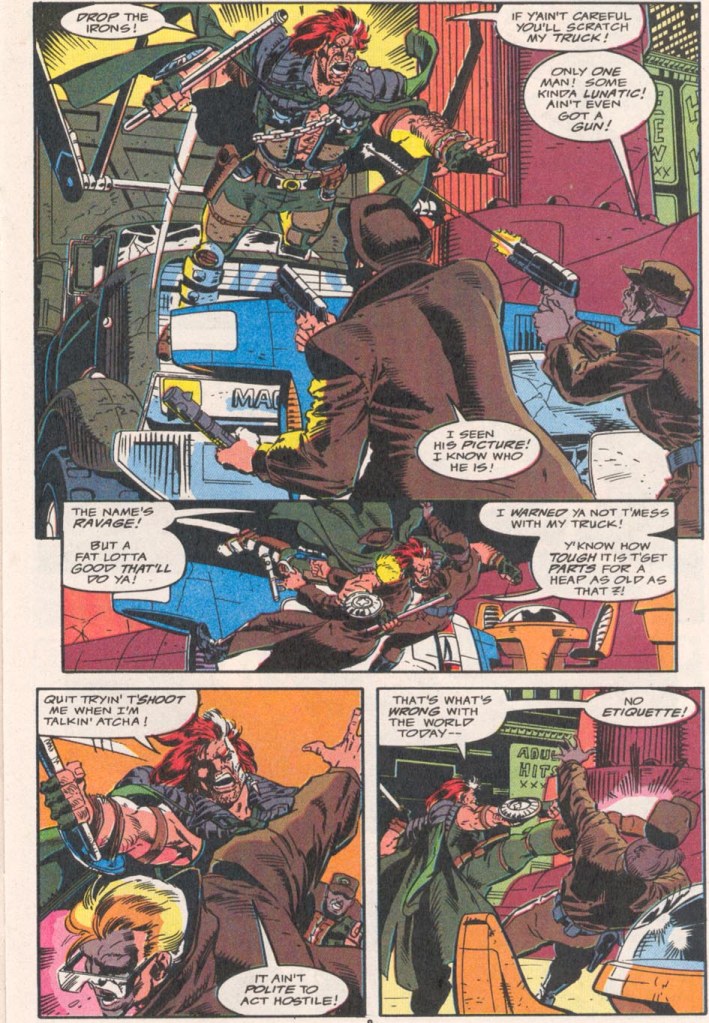
Deep in the middle of the metropolis, Ravage drives a very old, fossil fuel truck and rams a law enforcement car with it causing two officers to react and draw their guns. Ravage leaps into action and beats the two officers in brutal fashion. Afterwards, he goes on to raid the car of its equipment…

Quality

Ravage only acts human with his friends.

I’ll start with the storytelling here. With the fact that there is much less creative baggage remaining since the exposition has been done in the first issue, this comic book’s pacing and overall structure showed some improvements. Not only will you see more of Ravage doing action and really starting out as a vigilante, you will also discover more of the core concept through the exposition focused more on the side of Dethstryk as the villain’s seeress informs him that Ravage is destined to be his nemesis.

What bogs this comic book down is the style of writing by Stan Lee which clearly lacks engagement and the presentation here has a lot in common with comic book storytelling of the 1960s and 1970s. That being said, the corporate intrigue Lee tried to sow here also suffered and the other villain Anderthorpe Henton just looks and acts cartoony.

If there is anything notable that Stan Lee did with writing, it’s the consistency he showed on presenting Ravage as being more antagonistic than a heroic lead figure. If you look closely at what he did to the law enforcers, the armed city security personnel and the punks who encountered him, you will realize that Ravage is actually a menace to society and his humanity is deteriorating. He only acts human when he is with his sexualized former assistant Tiana and Dack.

With regards to the visuals, Paul Ryan’s work here is decent. His style is not that great but I like the effort he exerted on presenting future technology and clearly he took some inspiration from other sci-fi works to give this comic book a distinctive look.

Conclusion

Anyone who despises law enforcers will most likely find this enjoyable. The spirit of rebellion really stinks!

Ravage 2099 #2 (1993), to say it bluntly, is a marginal improvement over its predecessor mainly due to the reduced amount of creative baggage. Exposition in this particular comic book is much lesser in terms of content and it is done efficiently which paved the way for more spectacle to happen. The problems here is that, apart from Stan Lee’s weak writing, there was no real effort to develop the lead character Ravage. I suppose this was intentionally done by the creators to let Ravage be more of an action figure and let the action do the talking about what defines him as a person. Even if that was the case, nothing changes the fact that Ravage here is not heroic and is in fact more antagonistic towards society. Is it any wonder why Ravage ended up as Stan Lee’s failure?

If you are seriously planning to buy an existing hard copy of Ravage 2099 #2 (1993), be aware that as of this writing, MileHighComics.com shows that the near-mint copy of the regular edition costs $8 while the near-mint copy of the newsstand edition costs $26.

Overall, Ravage 2099 #2 (1993) is not recommended. If you really want to buy this comic book at all, better not pay more than fifty cents for it.

+++++

Thank you for reading. If you find this article engaging, please click the like button below and also please consider sharing this article to others. If you are looking for a copywriter to create content for your special project or business, check out my services and my portfolio. Feel free to contact me as well. Also please feel free to visit my Facebook page Author Carlo Carrasco and follow me at HavenorFantasy@twitter.com

A Look Back at The Solution #4 (1993)

Disclaimer: This is my original work with details sourced from reading the comic book and doing personal research. Anyone who wants to use this article, in part or in whole, needs to secure first my permission and agree to cite me as the source and author. Let it be known that any unauthorized use of this article will constrain the author to pursue the remedies under R.A. No. 8293, the Revised Penal Code, and/or all applicable legal actions under the laws of the Philippines.

Welcome back Ultraverse fans and superhero comic book collectors! This is my continuing look back at spin-off tales connected to Break-Thru, the year-ending big crossover event of the Ultraverse which not only mixed the many UV characters together but also impact them.

This time, we examine events connected to Break-Thru in a story written by the late James Hudnall and told through the exploits and struggles of a superhero team (plus one major UV superhero) he handled – The Solution! Here now is a look back at The Solution #4, published in 1993 by Malibu Comics with a story written by Hudnall and drawn by Darick Robertson.

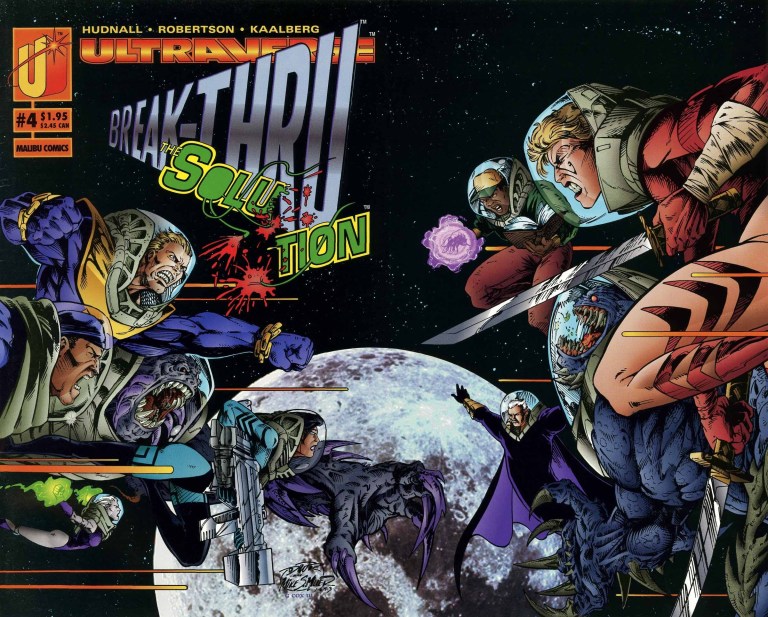
The cover.

Early story

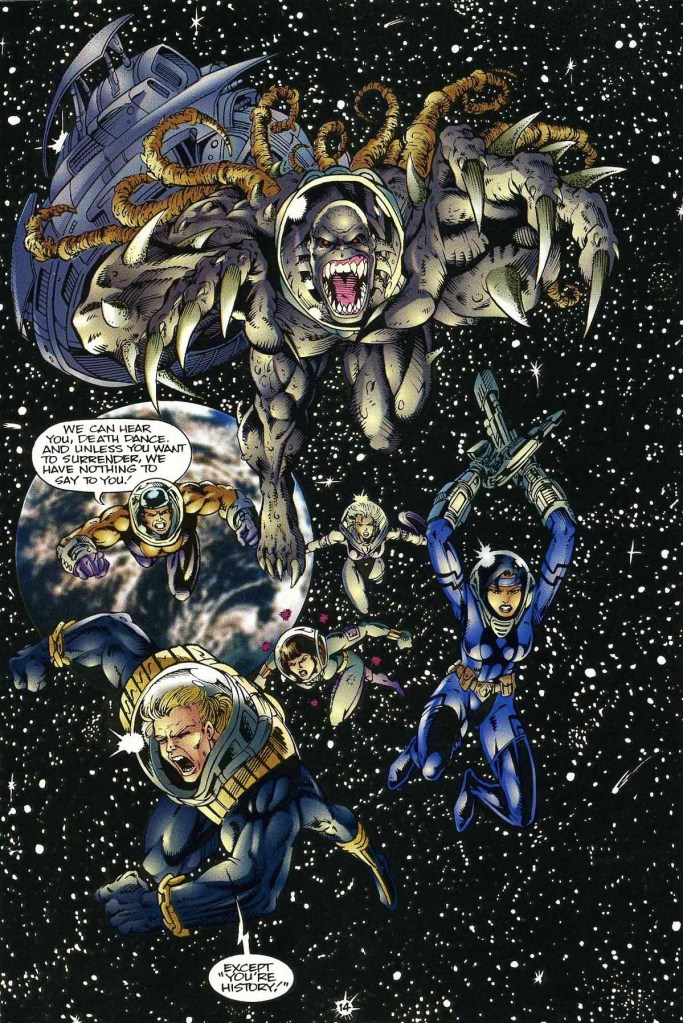
Set a short time after the end of the Break-Thru-related Hardcase #7, the story begins in outer space. Inside a space craft heading towards the moon, Lela Cho/Tech records a new entry into her diary reflecting of how crazy things turned out for her and her teammates. On her end, she pursued getting her corporation back and then took a job that landed her on board a UFO. As it turns out, her team has been hired to find a mysterious object which might provide explanations as to why ultras suddenly appeared all over the world.

Considering the very high stakes of the mission, The Solution had to partner with Hardcase and his companion Choice. This is because they are trying to catch up with another team of ultras (composed of Trouble, Death Dance, Gate, Needler, Gun Nut, Book and Meathook) who were sponsored by Rex Mundi, the rival of The Solution’s client Regina…  

Quality

A nice shot of The Solution with Hardcase and Choice in space.

As this was a build-up type of story meant to connect and add depth to the Break-Thru crossover, the plot was pretty simple and yet it was loaded with a lot of engaging stuff. Given the fact that James Hudnall led the writing for both Hardcase and The Solution, I just love the way he had these ultra heroes interact with each and the way they learned to get to know each other and adjust with one another was done in believable fashion. To say that Hudnall knew the characters deeply and treated them like real people is pretty true.

As expected, there is a good amount of spectacle in the form of action scenes and the fun thing about it is that the battle took place in space. There were match-ups between The Solution’s members and the Rex Mundi-sponsored team which were short and yet filled with interesting banter and satisfying action.

Conclusion

A really nice interaction.

I can declare that The Solution #4 (1993) is more than just a build-up comic book leading to a much bigger event. The characterization as well as the interactions between Hardcase and The Solution members alone make this comic book a must-read. This comic book also works well to prepare you for the subsequent events that took place in Break-Thru #2.

If you are seriously planning to buy an existing hard copy of The Solution #4 (1993), be aware that as of this writing, MileHighComics.com shows that the near-mint copy of the regular edition costs $8 while the near-mint copy of the newsstand edition costs $26.

Overall, The Solution #4 (1993) is recommended.

+++++

Thank you for reading. If you find this article engaging, please click the like button below and also please consider sharing this article to others. If you are looking for a copywriter to create content for your special project or business, check out my services and my portfolio. Feel free to contact me as well. Also please feel free to visit my Facebook page Author Carlo Carrasco and follow me at HavenorFantasy@twitter.com
A Look Back at Mantra #6 (1993)

Disclaimer: This is my original work with details sourced from reading the comic book and doing personal research. Anyone who wants to use this article, in part or in whole, needs to secure first my permission and agree to cite me as the source and author. Let it be known that any unauthorized use of this article will constrain the author to pursue the remedies under R.A. No. 8293, the Revised Penal Code, and/or all applicable legal actions under the laws of the Philippines.

Hey Ultraverse fans and superhero comic book collectors! Are you interested in another look at the Break-Thru crossover through the eyes of Mantra? For the newcomers reading this, Break-Thru was a year-ending crossover that literally gathered many of the Ultraverse characters together in an event that affected their world. The said crossover impacted other characters of the Ultraverse through specific comic books such as Prototype #5, Hardcase #7, The Strangers #7 and Solitaire #2 to name some.

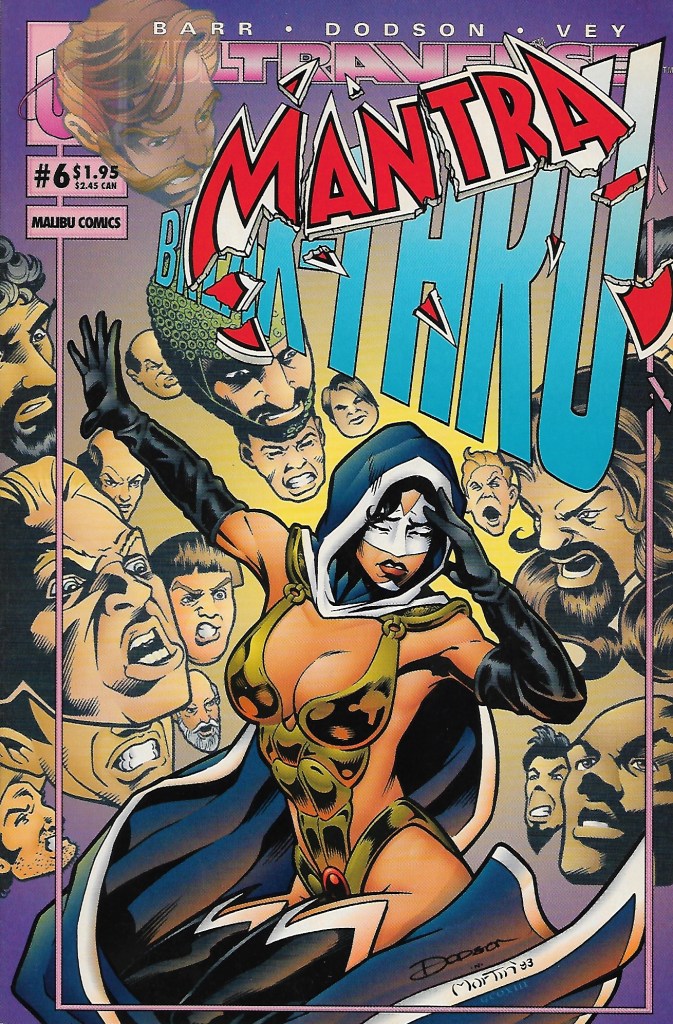
Now we have here is another view of Break-Thru in this look back at Mantra #6, published in 1993 by Malibu Comics with a story written by Mike W. Barr and drawn by Terry Dodson.

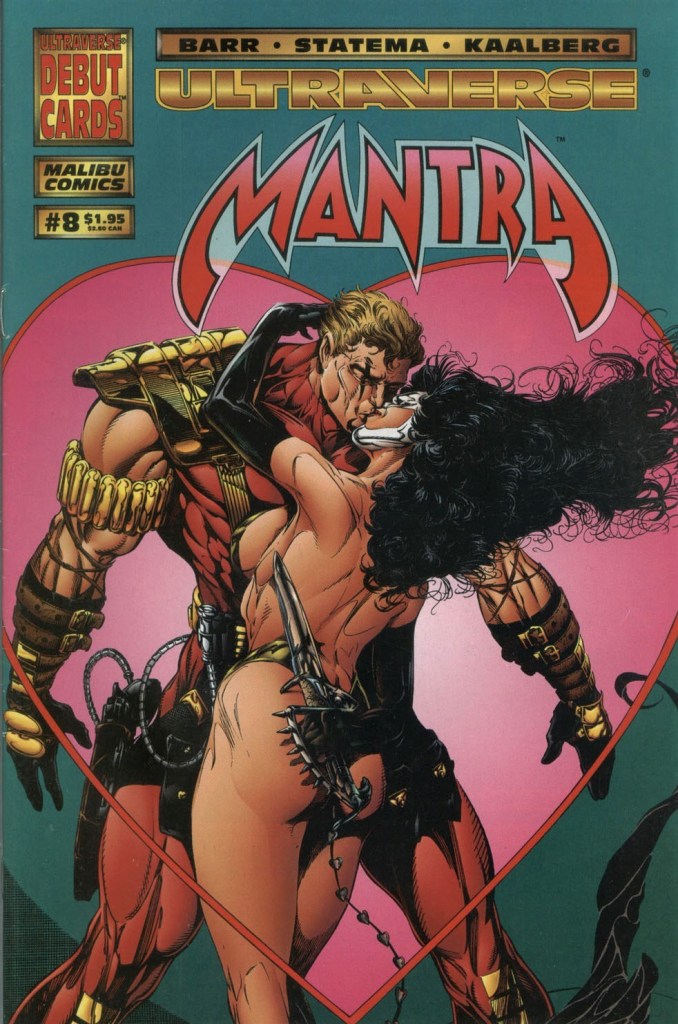
The cover.

Early story

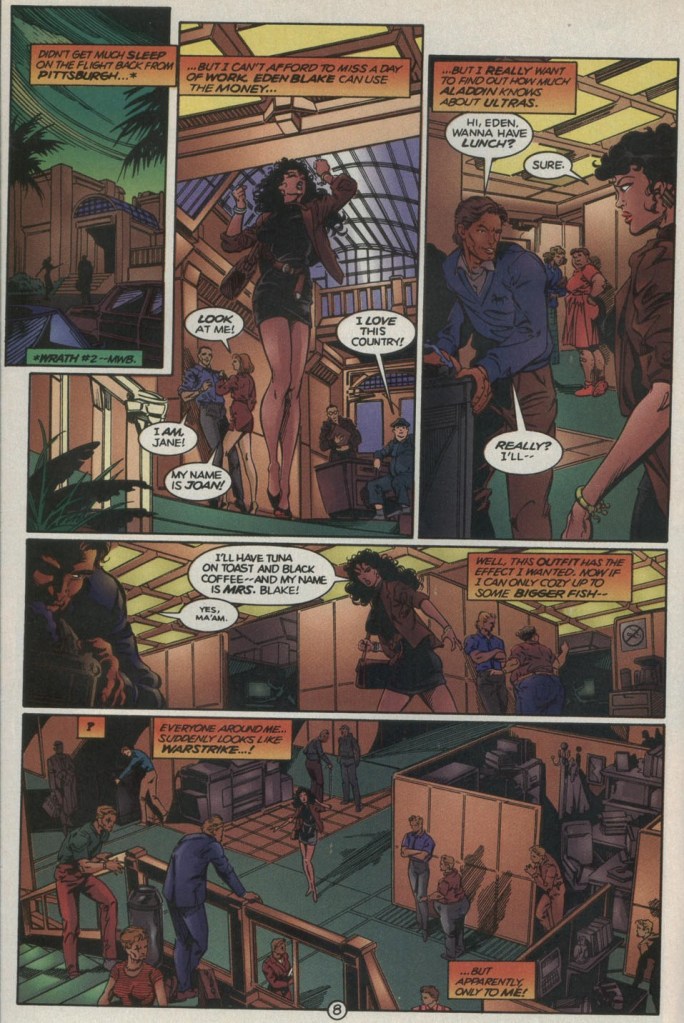
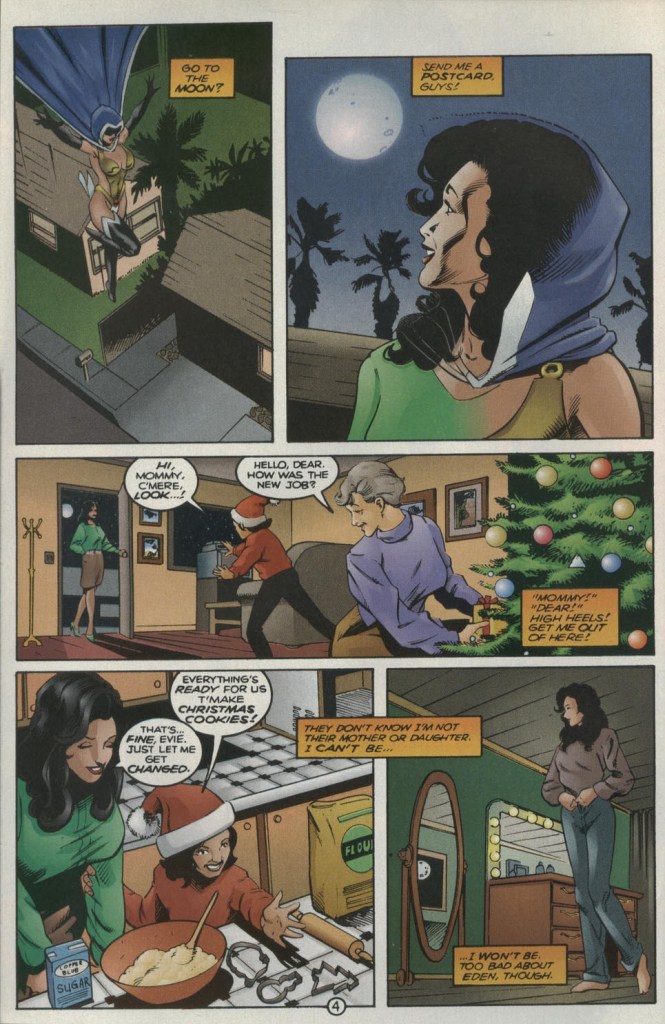
The story begins with Mantra flying during the night thinking about what happened as several Ultras made their way to the moon to fight an entity there that has been mentally contacting a girl named Amber. She thought about her new career at Aladdin as Eden Blake and intends to find ways to transfer her mind into a male body somehow.

Mantra arrives home and instantly changes appearance into Eden in civilian clothes. Upon entering the home, her little daughter (note: nobody in her family is aware that Eden’s soul has been displaced with that of Lukasz’s soul) arrives to greet her back in the presence of Eden’s mother. The daughter is every excited to start making Christmas cookies.

After spending some time alone in the bedroom, Mantra realizes something on the moon and decides to leave pretending she has to go back to work. This saddens Eden’s daughter…

Quality

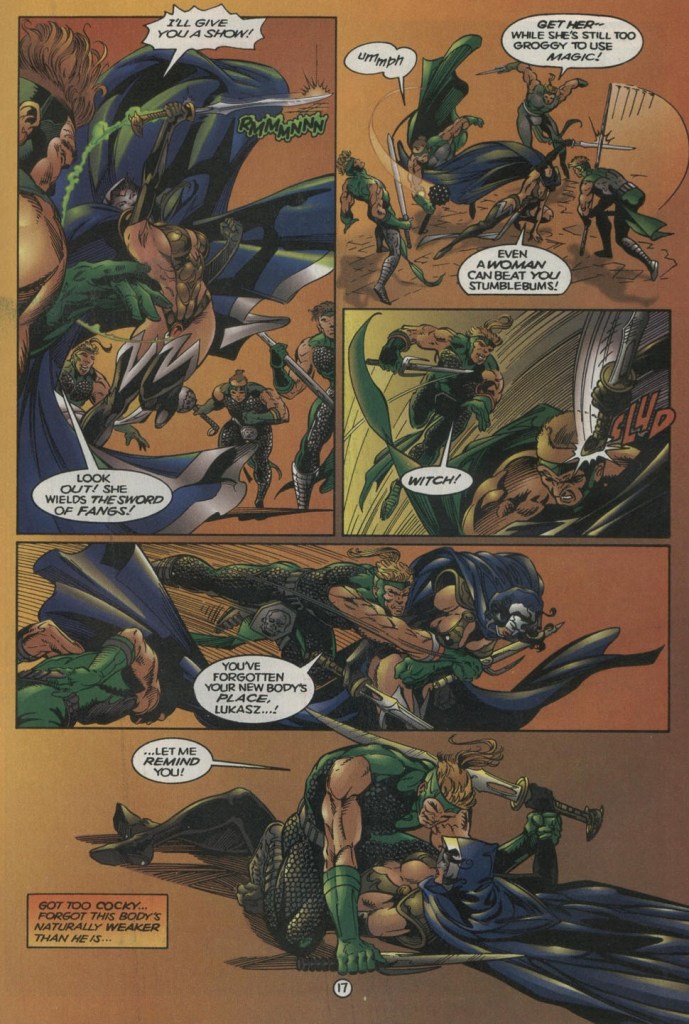
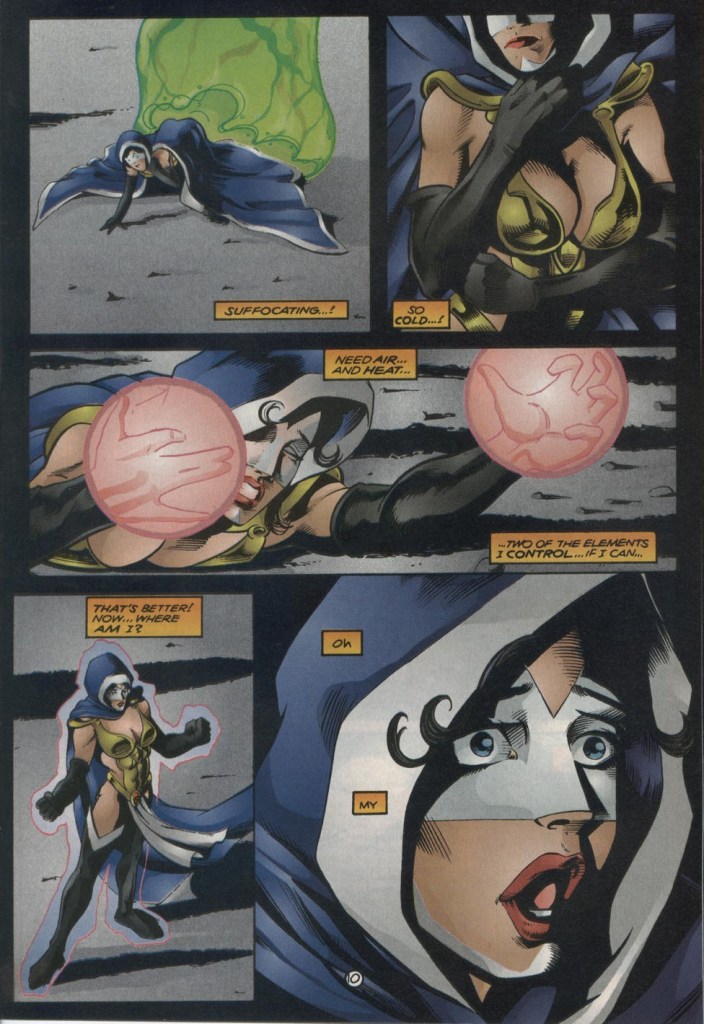
Mantra in the middle of somewhere.

This comic book is not the good-versus-evil type of story. Rather it is more about personal struggle and threads from the past that challenge Mantra, and it is well written. At the same time, the story serves as a build-up leading to the big events that took place in Break-Thru #2 (the conclusion of the big crossover). Getting to know the entity through the experience and view of Mantra is alone a solid reason to read this comic book. In fact, what you will learn here will help you prepare yourself to understand the Break-Thru crossover comic books and the concepts they featured.

Conclusion

Another glimpse on the life of Eden Blake and her family.

Mantra #6 (1993) is an engaging and enjoyable read. It is not only a mere build-up for Break-Thru, it also reveals more about Lukasz (who occupies the body of Eden/Mantra) and why his past haunts him which alone adds a new layer of depth to his character. There are few scenes of spectacle here and there but the strong writing by Mike W. Barr saved it from becoming a complete bore.

If you are seriously planning to buy an existing hard copy of Mantra #6 (1993), be aware that as of this writing, MileHighComics.com shows that the near-mint copy of this comic book costs $8.

Overall, Mantra #6 (1993) is recommended.

+++++

Thank you for reading. If you find this article engaging, please click the like button below and also please consider sharing this article to others. If you are looking for a copywriter to create content for your special project or business, check out my services and my portfolio. Feel free to contact me as well. Also please feel free to visit my Facebook page Author Carlo Carrasco and follow me at HavenorFantasy@twitter.com
A Look Back at X-Men #25 (1993)

Disclaimer: This is my original work with details sourced from reading the comic book and doing personal research. Anyone who wants to use this article, in part or in whole, needs to secure first my permission and agree to cite me as the source and author. Let it be known that any unauthorized use of this article will constrain the author to pursue the remedies under R.A. No. 8293, the Revised Penal Code, and/or all applicable legal actions under the laws of the Philippines.

As an X-Men fan, 1993 was a memorable year for me during my time of collecting comic books and enjoying what was believed to be the modernization of superhero comics in America. Gimmick covers of comic books, the post-event effects of the Death of Superman, the launch of the Ultraverse and then there was the 30th anniversary celebration of the X-Men which was wild.

To put things in perspective, Marvel Comics organized the celebration of the 30th anniversary of Spider-Man releasing lots of merchandise and, most notably, special issues of comic books that came with covers with holograms, more pages for content and a cover price that was more than double than what was normal (note: read my review of one of them). Such comic books were hot stuff for not only Spider-Man fans but also comic collectors who were often hunting for the next great collector’s item that would ensure them great wealth.

Marvel had the same business approach with the 30th anniversary of the X-Men, and there were multiple X-Men-related monthly series of comic book back then. X-Factor #92, X-Force #25, Uncanny X-Men #304, Wolverine #75 and Excalibur #71 all were released with covers with hologram cards on the front, more pages of content and inflated cover prices.

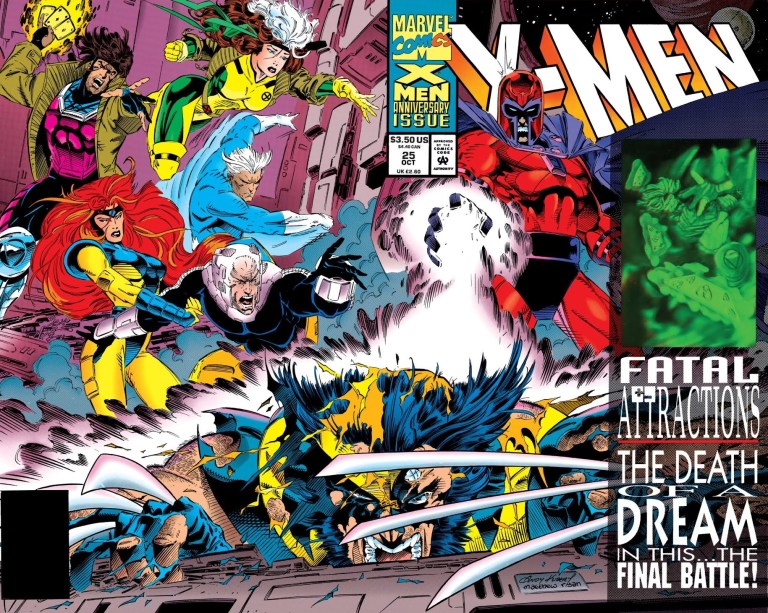
The one 30th anniversary celebration comic book of the X-Men that was most memorable to me was X-Men #25 (Volume 2) and to this day, its plot remains very memorable for its shock value. I bought my copy of this comic book at a store in BF Homes. With the history lesson over, he is my retro review of X-Men #25, published in 1993 by Marvel Comics with a story written by Fabian Nicieza and drawn by Andy Kubert.

The cover.

Early story

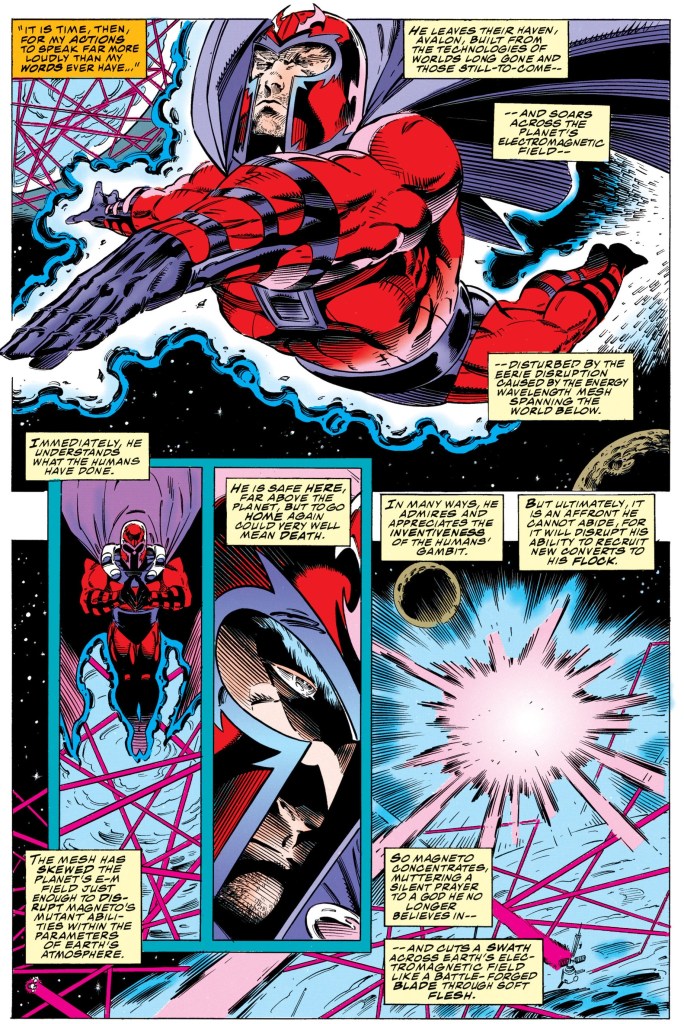
The story begins with the United Nations Security Council’s approval to initiate the alpha and beta parameters of the Magneto Protocols which literally sent waves from the White House to the Kremlin. A short time later, several satellites orbiting the Earth activate and linked with each other to form a protective mesh of electro-magnetic fire. This provokes Magneto (accompanied by Acolytes and Exodus at Avalon) to react by generating a massive pulse wave that affects the entire world. Even the Fantastic Four and Excalibur were not spared.

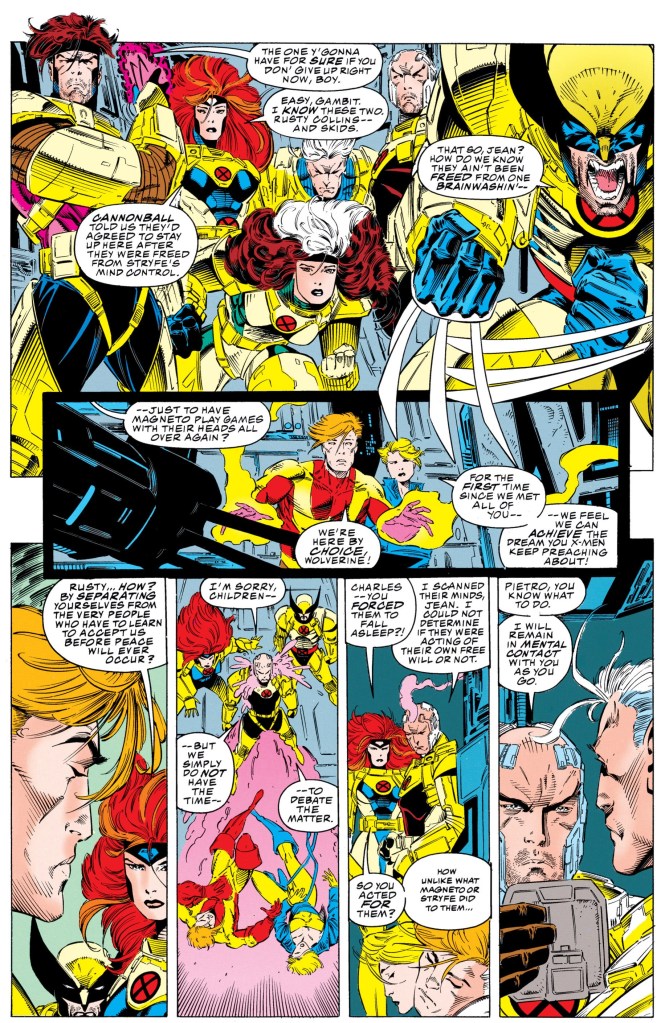
At the School of Gifted Children, Charles Xavier organizes an urgent meeting with the X-Men. Together they discussed the impact of Magneto’s pulse wave which not only rendered world’s mechanical and technological resources useless but also caused trouble (plane crashes, medical equipment failure, etc.) and deaths. For Xavier, the mere fact their team survived (aided by Shi’ar technology) is a mistake on the part of Magneto considering his capability to wipe out life around the world.

In response to Wolverine’s question, Xavier stated, “We do not have the luxury of time, nor the occasion for nobility…at this point, we are not fighting for the philosophy of a cause, a hope, or a dream, we are fighting for our very survival and if we do not win this fight, this planet will be irrevocably lost to us!”

Quality

The X-Men during their daring mission.

I can clearly declare that when it comes to the combined works done by Fabian Nicieza and Andy Kubert with the X-Men, this particularly story was not only the most ambitious collaboration of theirs but also their most compelling and finest work at the time of publishing. Very strong writing (top-notch characterization, plotting and pacing) and great art really defined this comic book!

Characterization is spot-on! Wolverine is arrogant and gritty as usual, Gambit is still the smooth-talker, Cyclops is the focused leader serving under Xavier, etc.

Without spoiling the major details, I can say that the shocking moments executed were greatly done not for the mere intention of shocking but to break new ground with regards to the characters of Wolverine and Charles Xavier. The first time I read this comic book back in 1993, I was really stunned with those particular scenes and I started to question Wolverine’s durability as well as Xavier’s sanity. And then there was the state of Magneto at the end of the story. The thing about the shocking moments was that there was an adequate amount of build-up leading to them and the pay-off was excellently done.

Conclusion

The immense power of Magneto.

There is no doubt in my mind that X-Men #25 (1993) is the true gem of the entire X-Men 30th anniversary celebration. The creative team led by Nicieza and Kubert really outdid themselves and what happened in this comic book had consequences that lasted for a good number of years. The creative team took big risks and pulled them off nicely as the impact of the story was eventually felt in the years that followed. Lastly, unlike Uncanny X-Men #304 (supposed to be the highlight of X-Men’s 30th anniversary celebration), this comic book is more focused and really had no creative baggage nor filler that got in the way of the storytelling.

If you are seriously planning to buy an existing hard copy of X-Men #25 (1993), be aware that as of this writing, MileHighComics.com shows that the near-mint copy of the regular edition costs $50 while the near-mint copy of the newsstand edition is priced at $150. The near-mint copies of the signed-and-numbered edition and the gold edition cost $210 and $368 respectively.

Overall, X-Men #25 (1993) is highly recommended!

+++++

Thank you for reading. If you find this article engaging, please click the like button below and also please consider sharing this article to others. If you are looking for a copywriter to create content for your special project or business, check out my services and my portfolio. Feel free to contact me as well. Also please feel free to visit my Facebook page Author Carlo Carrasco and follow me at HavenorFantasy@twitter.com
A Look Back at Prime #15 (1994)

Disclaimer: This is my original work with details sourced from reading the comic book and doing personal research. Anyone who wants to use this article, in part or in whole, needs to secure first my permission and agree to cite me as the source and author. Let it be known that any unauthorized use of this article will constrain the author to pursue the remedies under R.A. No. 8293, the Revised Penal Code, and/or all applicable legal actions under the laws of the Philippines.

Hey Ultraverse fans and superhero comic book geeks! For those of you who read several comic book of Prime, do you enjoy his struggles on setting things right? That is a theme that will be explored in this new Prime retro comic book review.

The good news here is that the legendary George Perez is involved. Now that the details have been set, here is a look back at Prime #15, published in 1994 by Malibu Comics with a story written by Len Strazewski and Gerard Jones, and art done by George Perez with ink work by Dennis Jensen.

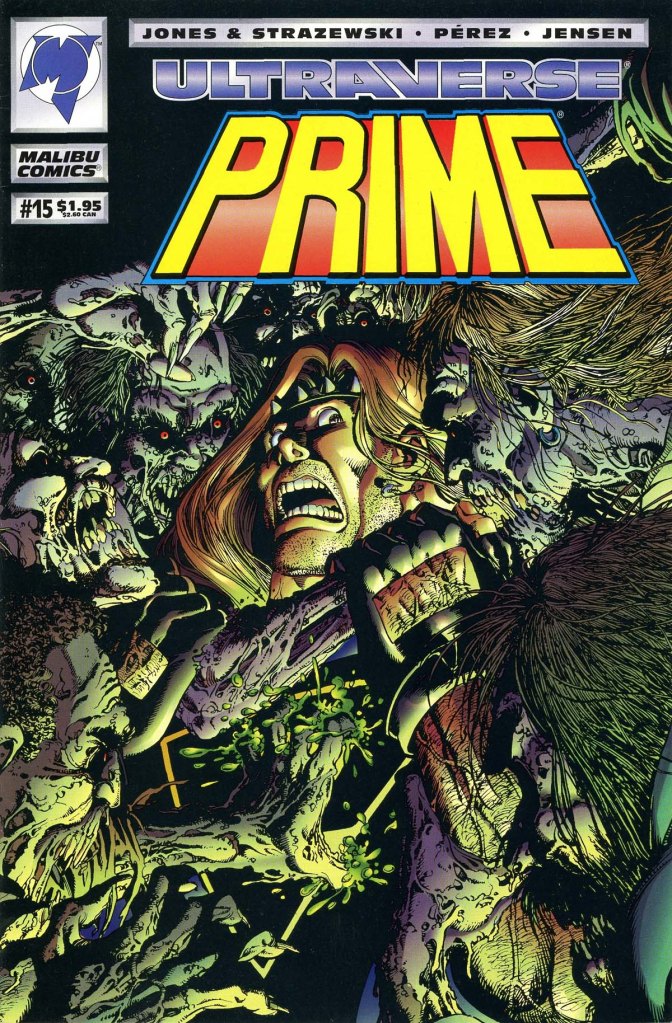
The cover.

Early story

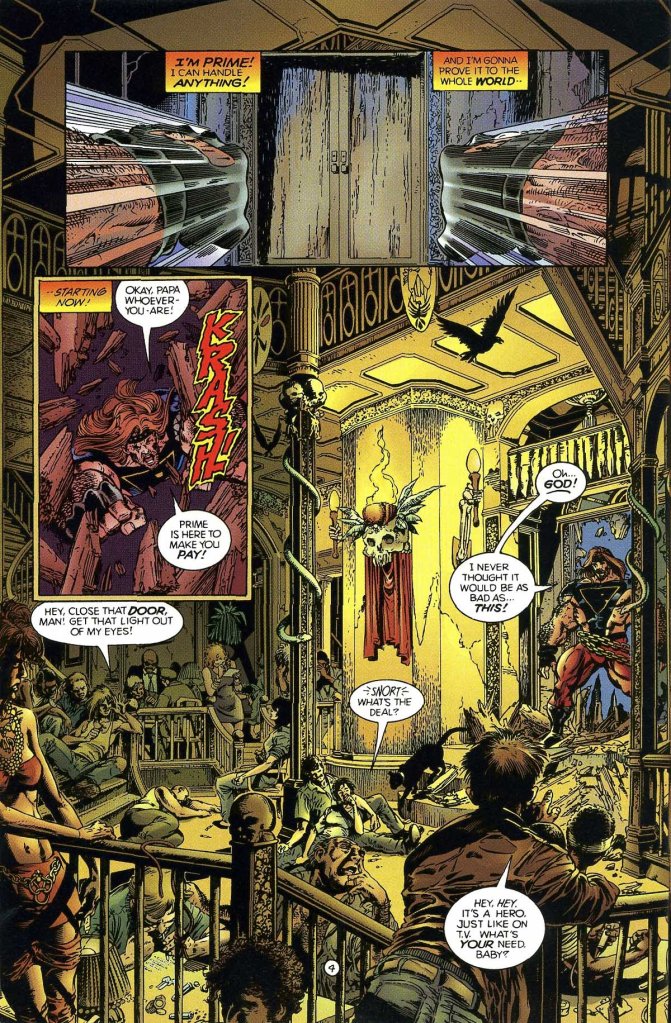
The story begins with Prime’s arrival at a creepy, old looking residence somewhere in Hollywood. He learned that inside the place is the secret headquarters of a drug trafficking operation that allegedly affected half of Los Angeles.

Previously, he beat up a man in front of several abandoned youth and left him bloody. Under intense pain, the man revealed to him where to find the drug trafficking operation leader as well as the parents of the youth. The boss was described as Papa Verite. The man told Prime he can find Papa Verite but cannot touch him.

As he walks towards the front door, Prime thought to himself: Maybe he thought I didn’t have the guts to hurt this “Papa.” Maybe he thinks Prime’s a nice boy, like he used to be! Maybe I should’ve hurt him worse to show him I’ve changed! I’m not just a freaked-out 13-year-old with an ultra-powered body anymore! I’m not just a helpless kid named Kevin whose dad ran out on him! I’m Prime! I can handle anything!

After breaking through the front door, what Prime discovers inside is very disturbing…

Quality

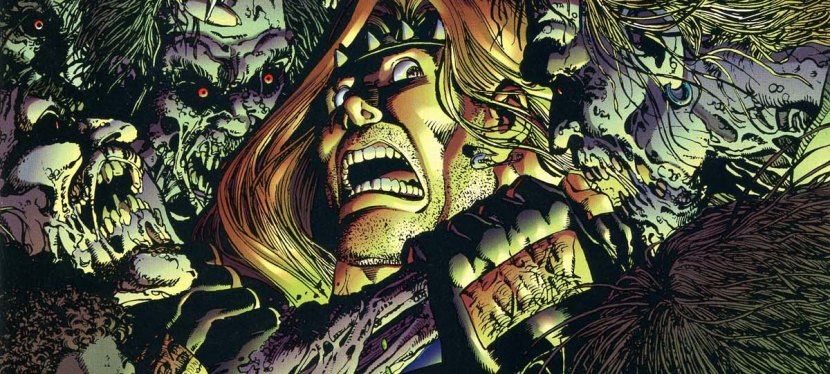
A rather disturbing scene since Prime is truly a teenage boy inside all that muscle.

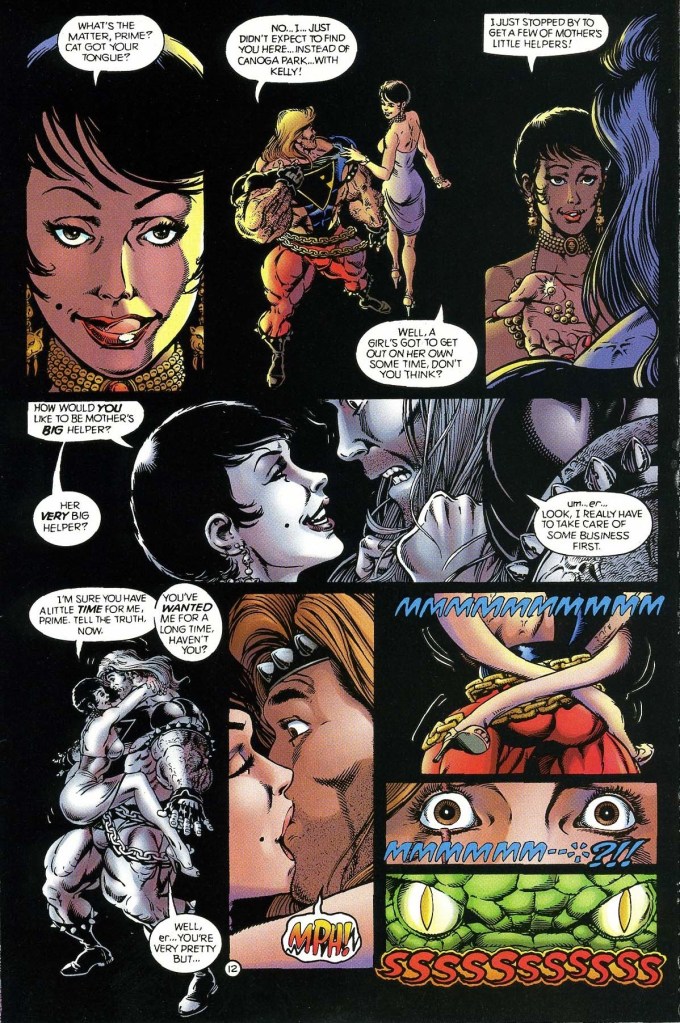
Let me be clear from the start that, once again, the writing by Strazewski and Jones is very strong. To start with, the story has a theme about doing the right things (including helping others by means of getting rid of someone who made victims out of them) without consulting or informing the local authorities. In a way, Prime moved and acted like a vigilante facing criminal elements related to illegal drugs. There were also elements of military conspiracy, molestation and indecent relationship.

When it comes to characterization, it comes to no surprise that Prime (who really is a teenager inside his body) is pushed to the limits of his emotions with his ability to withstand pressure really tested by the presence of certain people from his past who haunted him. Prime is convincing when he is shown with the impulse and arrogance of a teenager who would not stop when he wants to set things right.

The art by George Perez, unsurprisingly, is great to look at. You won’t just see Prime and familiar characters drawn in high detail with the distinct art style of Perez here. What you will see is how creative the famous illustrator proved he is with the visual presentation complete with very expressive facial expressions. More on the characters, Perez also implemented horror elements to his drawings and he really succeeded in making some scary images here and there.

Conclusion

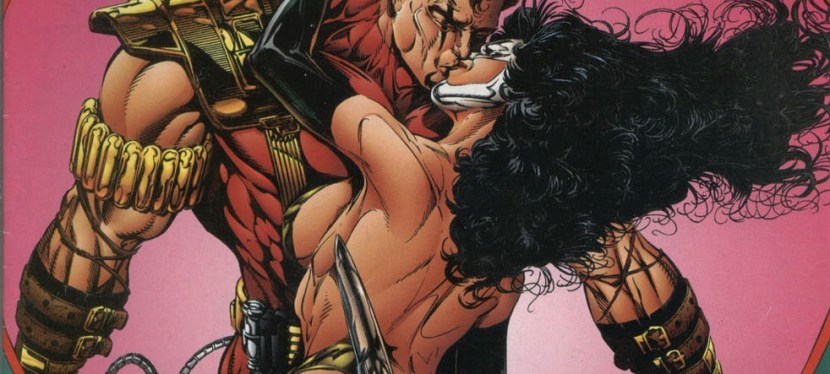
Striking art by George Perez.

This is a very solid read. Prime #15 (1994) is actually a horror themed tale laced with crime elements and drama all molded into a superhero story. There is an element of good-versus-evil here but in my view, it’s a dramatization of Prime being pushed to the limits of his emotions and his sanity. In a way, it is a stress test for the overly muscular major Ultraverse hero that happens to be quite engaging to read.

If you are seriously planning to buy an existing hard copy of Prime #15 (1994), be aware that as of this writing, MileHighComics.com shows that the near-mint copy of the comic book costs $8.

Overall, Prime #15 (1994) is recommended.

+++++

Thank you for reading. If you find this article engaging, please click the like button below and also please consider sharing this article to others. If you are looking for a copywriter to create content for your special project or business, check out my services and my portfolio. Feel free to contact me as well. Also please feel free to visit my Facebook page Author Carlo Carrasco and follow me at HavenorFantasy@twitter.com
A Look Back at X-Men #8 (1992)

Disclaimer: This is my original work with details sourced from reading the comic book and doing personal research. Anyone who wants to use this article, in part or in whole, needs to secure first my permission and agree to cite me as the source and author. Let it be known that any unauthorized use of this article will constrain the author to pursue the remedies under R.A. No. 8293, the Revised Penal Code, and/or all applicable legal actions under the laws of the Philippines.

Do you remember the X-Men animated TV series episode – an adaptation of Days of Future Past – wherein Bishop (who came from the dark future) claimed that Gambit would betray the X-Men and lead them all to darkness? You will see Bishop and Gambit in conflict in this retro review of a Jim Lee-drawn X-Men comic book from the 1990s.

To put things in perspective, back in 1991 Bishop was formally introduced in the Uncanny X-Men monthly series. By that time, Gambit was already wildly popular with X-Men fans. It made sense back then to have the two conflict each other in comic book format as it would add variety and some freshness with the X-Men franchise of the time.

With the short history lesson over, here is a look back at X-Men #8, published in 1992 by Marvel Comics with a story done by Jim Lee and Scott Lobdell. The art was handled by Lee and Art Thibert.

The cover.

Early story

The story begins at the X-Men’s headquarters with Wolverine using the computer to gain access into something until he got interrupted by Jubilee who is accompanied by Cyclops. She tells him that Charles Xavier is about to introduce Bishop to their teammates. Wolverine tells them to go away.

At the mansion, Storm welcomes Bishop in the presence of Xavier who explains to her that the newcomer is from the far future. Slowly Xavier and Storm guide Bishop around the mansion and introduce him to their members. Bishop, who still remembers the legends of the X-Men from his time in the far future, referred to Forge as Genesis. Moments later, Bishop meets Cyclops, Jean Grey, Beast, Rogue, Psylocke, Jubilee and Gambit.

After expressing that there was little know about Gambit, Bishop then claims that a certain someone was the last person to see the X-Men alive before they got betrayed by one of their own. Bishop then tells Xavier to scan Gambit’s thoughts…

Quality

The interaction between Storm and Bishop is great!

What really defines this comic book apart from having art by Jim Lee and the lack of villains are the storytelling and characterization. The good news is that the respective qualities of the plotting (by Lee) and scripting (by Lobdell) were very solid. While there is a lack of a good-versus-evil plot element, characterization alone made this an engaging comic book to read. Without spoiling the plot, the story has a lot more than the promised Bishop-Gambit conflict (I’ll describe it as a short yet sweet part of the story). I also love the big twist that happened in the 2nd half of the story.

More on characterization, I love the fact that Gambit got more developed here complete with a few threads from his past that got visualized efficiently. I also enjoyed the interactions between Gold Team leader Storm and Bishop. Bishop comes from a future filled with violence and desperation which explains why he is always on the edge often thinking of action whenever something happens. Storm meanwhile tried hard to explain to Bishop that their present day society is more peaceful and that he could take things a bit easier, be more reasonable and try to level with others as he became a new part of the X-Men.

As for Jim Lee’s art, his work here is really beautiful to look at which is not surprising at all. As expected, he made the action scenes look dynamic and managed to draw some emotions from certain characters in key scenes.

Conclusion

Bishop meeting the X-Men.

X-Men #8 (1992) is a pretty good comic book to read. At the time of its publication, the integration of Bishop into the X-Men was done months after Chris Claremont’s departure and was clearly an effort by the X-Men creators to modernize the superhero team and keep it fresh. This comic book is not exactly a landmark read but it is pretty entertaining and engaging.

If you are seriously planning to buy an existing hard copy of X-Men #8 (1992), be aware that as of this writing, MileHighComics.com shows that the near-mint copy of the regular edition costs $50 while the near-mint copy of the newsstand edition costs $150.

Overall, X-Men #8 (1992) is recommended.

+++++

Thank you for reading. If you find this article engaging, please click the like button below and also please consider sharing this article to others. If you are looking for a copywriter to create content for your special project or business, check out my services and my portfolio. Feel free to contact me as well. Also please feel free to visit my Facebook page Author Carlo Carrasco and follow me at HavenorFantasy@twitter.com
A Look Back at Prime #12 (1994)

Disclaimer: This is my original work with details sourced from reading the comic book and doing personal research. Anyone who wants to use this article, in part or in whole, needs to secure first my permission and agree to cite me as the source and author. Let it be known that any unauthorized use of this article will constrain the author to pursue the remedies under R.A. No. 8293, the Revised Penal Code, and/or all applicable legal actions under the laws of the Philippines.

Hey Ultraverse fans and superhero comic book enthusiasts! Are you ready for another tale of Prime? What I am about to review is one of the anniversary Ultraverse issues published by Malibu Comics.

What could be new or special to justify the anniversary of the Prime monthly series? We can all find out in this look back at Prime #12, published by Malibu Comics with a story written by Len Strazweski and Gerard Jones, and drawn by the late Norm Breyfogle.

The cover.

Early story

The story begins with a young guy named Kuttner who tests his deadly ability to easily cut through solid objects with his powered blades on his hands. He is driven to get revenge against Prime who broke his hand previously. Kuttner, whose career in entertainment had declined, thinks he can establish a new career for himself as a powered being and Prime is his first target.

Meanwhile at school, Kevin Green (Prime) is struggling with the stress over his parents’ separation which he is guilty of. He finds it very weird to be back in school after everything he went through such as his struggles with Colonel Samuels, the Federal Government, Break-Thru and more. After slamming his locker shut, students begin to move away from him…

Quality

Symbolically, Prime meets Norm Breyfogle.

To begin with, the writing by Len Strazewski and Gerard Jones is very solid as expected. That being said, the real heart of the story in this comic book is Kevin Green’s personal struggle with life not just with the difficulty of balancing himself between his personal life and being a superhero, but also his place in local society being tainted as a result of his acts as Prime. The way that the events of the previous issues affected (in negative ways) the local community’s perception of Kevin was very compelling and straight to the point.

The strong writing, unsurprisingly, worked very well with the character development. Kevin was presented to be struggling with making the right decisions and he struggles to analyze what would happen if he presents himself to others as Prime or as simply himself. As for the scene between Prime and Kelly’s mother, there was that touch of awkwardness (through Prime) that was present as the scene raised the disturbing idea of the two possibly getting involved sexually.

When it comes to the spectacle of action, there is little to be seen here but the good news is that Norm Breyfogle illustrated them to be energetic and eye-catching. The late illustrator really knew hot to ramp up the energy for the readers making the most out of what it is limited.

Conclusion

The tremendous strength of Prime!

Prime #12 is a pretty engaging read. Was it worth the anniversary promotion? It is indeed! If you look back at Prime #1 and read all the succeeding issues leading to this one, you will notice how much Kevin Green changed as well as how his personal growth moved. In a way, Prime #12 symbolizes the growing-up pains Kevin keeps on having.

It should be stated that being 64-pages, Prime #12 is actually one of Malibu’s flip issues. The other side of this comic book is Ultraverse Premiere #3 which contains standalone short stories of Prime, War Strike and a certain villain. This comic book also has “A Primo Farewell” which is a nice tribute (by today’s standards) to Norm Breyfogle. For the newcomers reading this, Breyfogle was one of outstanding comic book artists in America and before joining Malibu Comics, he worked for other publishers like Marvel Comics, DC Comics, Eclipse Comics and First Comics. At DC Comics, his work on their icon Batman is widely remembered. Breyfogle passed away in 2018.

If you are seriously planning to buy an existing hard copy of Prime #12 (1994), be aware that as of this writing, MileHighComics.com shows that the near-mint copy of the comic book costs $8.
Overall, Prime #12 (1994) is highly recommended!

+++++

Thank you for reading. If you find this article engaging, please click the like button below and also please consider sharing this article to others. If you are looking for a copywriter to create content for your special project or business, check out my services and my portfolio. Feel free to contact me as well. Also please feel free to visit my Facebook page Author Carlo Carrasco and follow me at HavenorFantasy@twitter.com