A Look Back at Uncanny X-Men #157 (1982)

Welcome back superhero enthusiasts, 1980s culture enthusiasts and comic book collectors! Today we go back to the year 1982 to take a close look at one of the many tales of the Marvel Comics shared universe told through the monthly series of Uncanny X-Men.

In my previous retro review, Charles Xavier got reunited with his beloved Lilandra, the empress of the Shi’ar Empire, as they were trapped temporarily by the Brood. Elsewhere, Corsair reveals to his son Cyclops what happened before they got separated on Earth twenty years prior. The X-Men and the Starjammers got captured by the Brood’s massive transport which turned out to be a massive organic creature. The conflict that followed saw another battle between the X-Men and the Brood but with the stakes raised higher.

With those details laid down, here is a look back at Uncanny X-Men #157 published in 1982 by Marvel Comics with a story written by Chris Claremont and drawn by Dave Cockrum.  

The cover.

Early story

The story begins in space where the X-Men and the Starjammers worked together to repair the external parts of the Starjammer ship. An incident happens in which Wolverine starts to float away from the ship while Colossus loses consciousness. One of the Starjammers saved Wolverine.

Just as the Starjammers used their advanced technology to help the unconscious Colossus, Empress Lilandra tells Professor X and a few others that she used her imperial commlink and private code to each Chanellor Araki to confirm to him that she is free and unharmed. Supposedly, Lilandra’s move should compel Araki to call off the punitive strike against Earth.

As Lilandra starts communicating with the flagship that carries Araki, Admiral Lord Samedar takes control of the ship and declares that they will execute Araki’s orders to obliterate Earth…

Quality

Kitty Pryde on the move against all odds.

Following the events of the two previous issues, this story is another engaging pay-off to the established build-up but with the stakes raised higher as Earth becomes a target of the defiant Shi’ar officials who themselves turned out to be defiant towards their empress Lilandra all along. Not only that, there is a good amount of intrigue with the way the Shi’ar people are portrayed here.

The X-Men here continue to struggle not only because of Colossus’ weakness but also because something bad happened to their leader Professor X (a must-read scene). Far away from the rest of their teammates, Nightcrawler and Kitty Pryde became major players in this particular story and what happened with them was nicely structured by Chris Claremont. This is clearly a big pay-off to what was staged in issue #155 and it sure is worth anticipating!

If you have great interest with the Brood, you will be delighted to see more of the way they communicate and how they treat foreigners like Deathbird as they live on with their uncompromising belief that their race backs winners only.

Conclusion

How the Brood treats Deathbird.

Uncanny X-Men #157 (1982) is an action-packed sci-fi tale that continued Claremont’s direction of the X-Men while also emphasizing the Brood as well as the Starjammers and the Shi’ar as crucial players in this particular storyline. There is plenty of superhero spectacle to enjoy here, a few memorable character moments and if you are fond of Chris Claremont’s works, you will enjoy the twists and surprises he pulled off here.

Overall, Uncanny X-Men #157 (1982) is recommended!

+++++

Thank you for reading. If you find this article engaging, please click the like button below, share this article to others and also please consider making a donation to support my publishing. If you are looking for a copywriter to create content for your special project or business, check out my services and my portfolio. Feel free to contact me with a private message. Also please feel free to visit my Facebook page Author Carlo Carrasco and follow me on Twitter at  @HavenorFantasy as well as on Tumblr at https://carlocarrasco.tumblr.com/ and on Instagram at https://www.instagram.com/authorcarlocarrasco

A Look Back at Uncanny X-Men #156 (1982)

Welcome back superhero enthusiasts, 1980s culture enthusiasts and comic book collectors! Today we go back to the year 1982 to take a close look at one of the many tales of the Marvel Comics shared universe told through the monthly series of Uncanny X-Men.

In my previous retro review, the X-Men got involved in a high-stakes mission to find and rescue the kidnapped Shi’ar empress Lilandra. Things are not easy on the X-Men’s side as Cyclops is still uneasy over the truth he learned about his father Corsair while the leader Charles Xavier had to deal with the Shi’ar officials who have their agenda that could cause trouble on Earth. What the X-Men faced was a few of the Brood and Deathbird.

With those details laid down, here is a look back at Uncanny X-Men #156 published in 1982 by Marvel Comics with a story written by Chris Claremont and drawn by Dave Cockrum.  

The cover.

Early story

The story begins in New York City. The X-Men just fought with the Brood and Deathbird, and Charles Xavier has gone missing. Wolverine, Storm, Corsair, Cyclops and the Avengers member Tigra attend to a mortally wounded Colossus who was hit with acid.

Just as the local police arrived, Tigra tries her best to talk with them. Suddenly a gigantic space ship arrived floating above New York shocking everyone. The ship unleashes a beam of light down to pick up Wolverine, Cyclops, Storm, Corsair and the ailing Colossus. The giant ship then flies away leaving a lot of people stunned.

It turns out the ship belongs to the Starjammers, a group of space pirates that Corsair leads. Colossus then gets treated with alien technology…

Quality

The spectacle and the new encounter with the Brood were nicely done.

Similar to issue #155, the story here is very in-depth and has so much details and plot-related connections, it will require a great amount of attention from you in order to understand what is going and what is happening within. In this issue, you will get to see the Starjammers gang that Corsair spent a long time with, further development between Corsair and son Cyclops, the reunion between Charles Xavier and Empress Lilandra, and more of the Brood.

To put things clearly, Chris Claremont invested a lot of details when it comes to dramatizing the characters, insert revelations from the past, emphasized the many reactions of the X-Men members and carefully implemented stronger science fiction elements that really added depth to the plot. In many ways, this story is a huge pay-off to the build-up of the previous comic book and there is a lot more to the connection between Deathbird (a very capable villainess) and the Brood.

Having read lots of Claremont-authored X-Men stories, I found this 1982 story enjoyable and compelling to read. The big difference is that there is a stronger element of spectacle in this story which is related to the stronger sci-fi elements as well as Claremont’s strategic handling of the X-Men. At this point, it is clear that something new was being built up with the Brood, space travel and new frontiers. This is a strong sci-fi X-Men tale.

Conclusion

Professor X with his beloved Lilandra.

Uncanny X-Men #156 (1982) is indeed an enjoyable read provided that you pay close attention to the details, the characters and you have read the previous issue. This is the X-Men literally going deeper with science fiction and the Brood here was just about to rise further as a major force of opposition that would impact Marvel’s mutants. I should also state that Professor X and Empress Lilandra being together is a pretty compelling scene to read. As of this writing, I am convinced to keep on exploring further tales from this era of the X-Men.  

Overall, Uncanny X-Men #156 (1982) is highly recommended!

+++++

Thank you for reading. If you find this article engaging, please click the like button below, share this article to others and also please consider making a donation to support my publishing. If you are looking for a copywriter to create content for your special project or business, check out my services and my portfolio. Feel free to contact me with a private message. Also please feel free to visit my Facebook page Author Carlo Carrasco and follow me on Twitter at  @HavenorFantasy as well as on Tumblr at https://carlocarrasco.tumblr.com/ and on Instagram at https://www.instagram.com/authorcarlocarrasco

A Look Back at Uncanny X-Men #155 (1982)

Welcome back superhero enthusiasts, 1980s culture enthusiasts and comic book collectors! Today we go back to the year 1982 to take a close look at one of the many tales of the Marvel Comics shared universe told through the monthly series of Uncanny X-Men.

This review will examine not only the first-ever appearance of the X-Men foes the Brood but also the effects of other developments that made their impact on key members of Marvel’s team of mutants.

With those details laid down, here is a look back at Uncanny X-Men #155 published in 1982 by Marvel Comics with a story written by Chris Claremont and drawn by Dave Cockrum.  

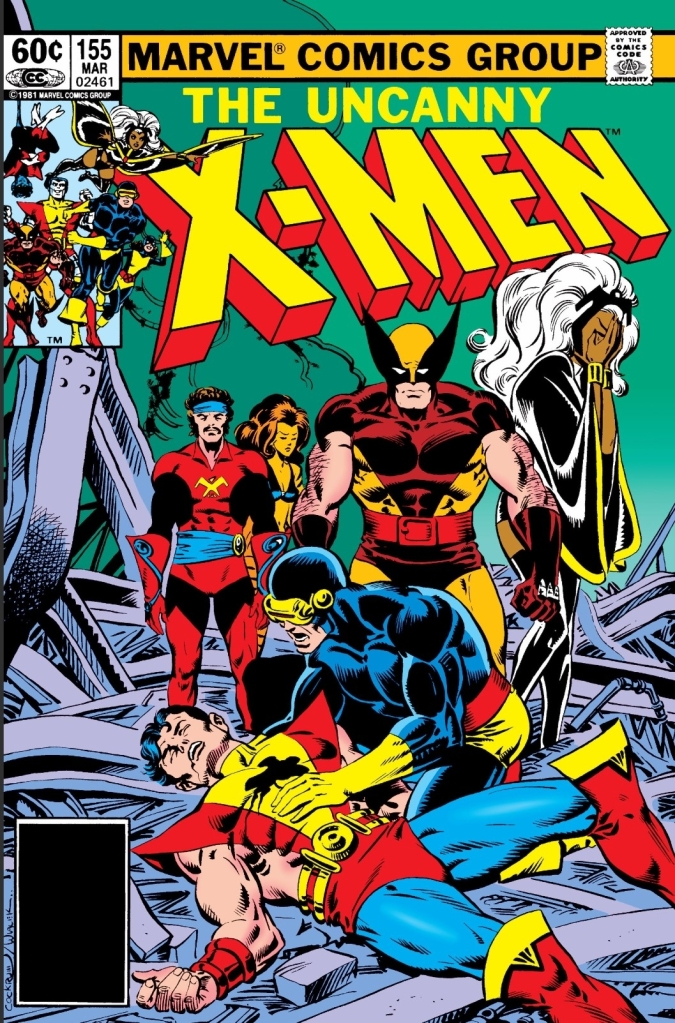
The cover.

Early story

The story begins as a jet carrying Cyclops, Storm and Corsair flies. Tensions are already intense as Cyclops is struggling with the shocking truth that his father – Corsair the leader of the Starjammers – is still living and recently returned to Earth seeking help.

Storm tries to emotionally reconnect with her teammate but Cyclops pushes back as he just found out that she knew Corsair was his father for several months already and never bothered to tell him. Tension grew worse as Corsair tried explaining himself to his son only to get a harsh response in return. Cyclops questioned his father if he even tried to learn what happened to him and his brother Alex (Havok) over the previous twenty years.

Suddenly the jet begins to glow. It turns out that a transporter beam hit them. In an instant, jet got transported forty thousand kilometers above the Earth and into the deck of the Shi’ar Dreadnought. Cyclops, Storm and Corsair find themselves surrounded by armed personnel and an audience of several alien beings.

Suddenly, Colossus, Nightcrawler, Kitty Pryde, Wolverine and Professor X appeared out of nowhere and right next to the jet…

Quality

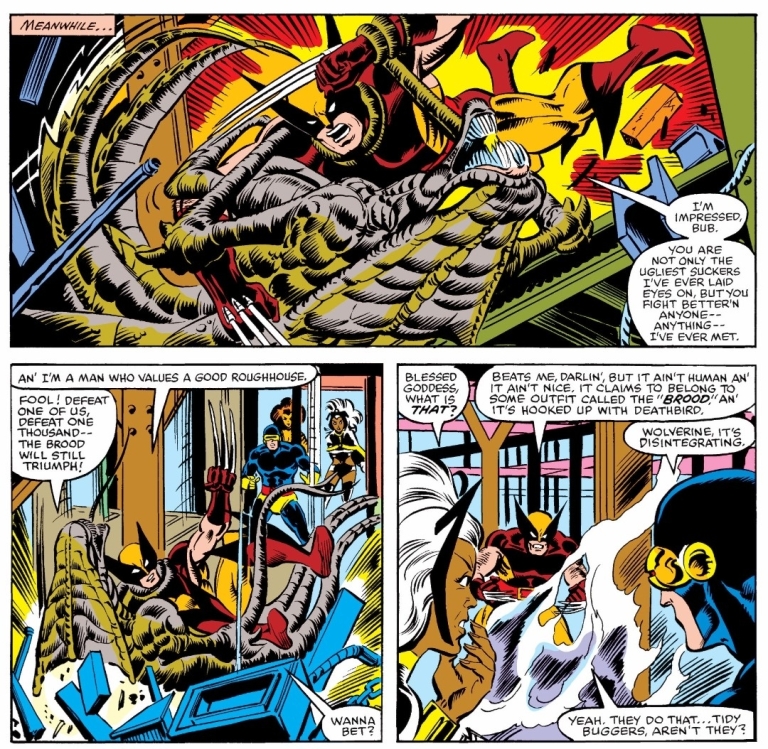
Wolverine takes on one of the Brood. As this marked the Brood’s first appearance in comics, Wolverine’s encounter with one of them here is a prelude of more intense things to come.

Upon close inspection of the storytelling, this comic book is pretty loaded with details related to developments that took place in previous issues. Apart from Cyclops’ personal struggle on accepting the truth about his father’s existence, there are references to what happened recently on the parts of Xavier, Colossus, Nightcrawler, Wolverine and Kitty Pryde. Not only that, this story also reveals details about Professor X’s past interaction with Empress Lilandra and the Shi’ar race.

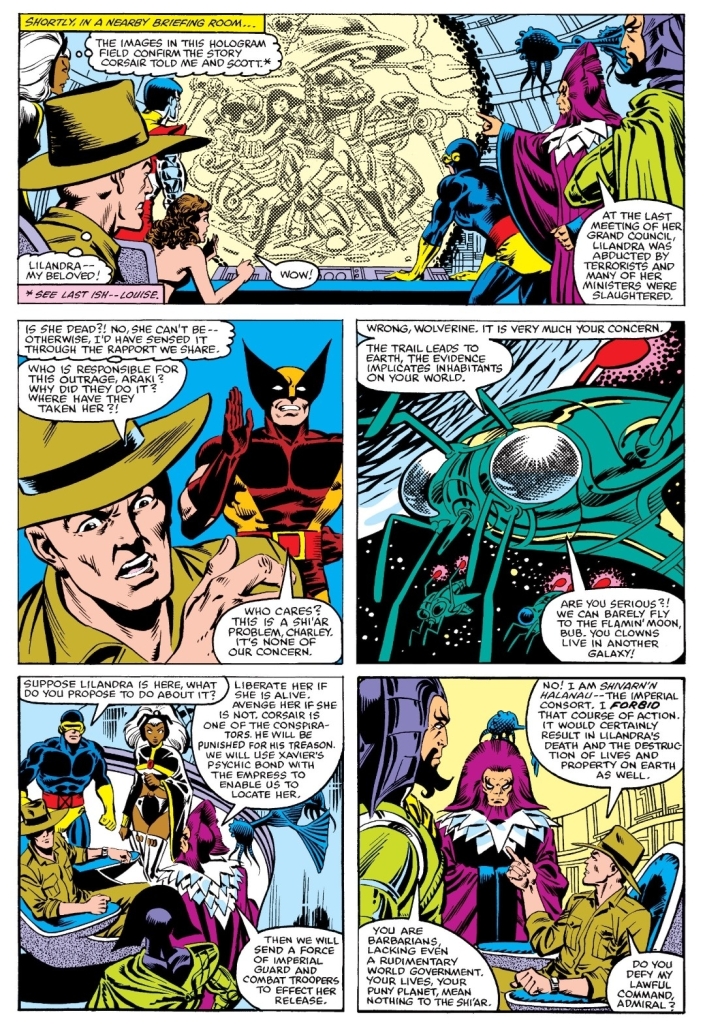
As it turns out, the Empress was abducted by terrorists and many of her ministers got killed. This previous event incidentally sets the stage for the new tasks for the X-Men to handle in this particular story which also comes with strong science fiction elements.

Adding further to the X-Men’s new mission to follow the trail to Earth and liberate Empress Lilandra if she is still living, Cyclops’ father Corsair was found to be a conspirator (to be punished) and the Shi’ar’s high officials will only follow Xavier’s lawful command (as the imperial consort) to a certain limit. This new conflict is literally loaded with lots of details that became part of the build-up, and to really grasp it all, you should pay close attention to the details here and in the previous comic books. In other words, this is not an easy read.

Apart from the general concept and plot structuring, Chris Claremont pulled off some clever moves with the way he portrayed Charles Xavier’s leadership and cunning. The X-Men leader knows that a lot is at stake in the new mission and he is certain that further Shi’ar presence on Earth would result in catastrophe.

As for the mission itself, the X-Men got someone from the Avengers to aid them. With Storm and Corsair moving and operating apart from the rest of the team. This leads to another series of developments plus twists that you should read for yourselves.

Conclusion

An intense scene that really puts the X-Men into a predicament and a potential conflict between worlds.

Uncanny X-Men #155 (1982) is not an easy read but if you have a strong understanding of the many plot details and related character developments, then you will eventually enjoy this story. The literary debut of the Brood here is not too significant as it preceded the further emphasis of the alien monster race in the succeeding issues. A highlight here is the intriguing portrayal of Professor X as X-Men leader, as Lilandra’s lover and as the bridge between humanity, mutants and the aliens of the Shi’ar empire. There is also a good amount of spectacle to keep you entertained, particularly during the 2nd half of the story. Considering all the build-up and exposition that took place in this comic book, don’t expect the mission to be concluded within.

Overall, Uncanny X-Men #155 (1982) is highly recommended!

+++++

Thank you for reading. If you find this article engaging, please click the like button below, share this article to others and also please consider making a donation to support my publishing. If you are looking for a copywriter to create content for your special project or business, check out my services and my portfolio. Feel free to contact me with a private message. Also please feel free to visit my Facebook page Author Carlo Carrasco and follow me on Twitter at  @HavenorFantasy as well as on Tumblr at https://carlocarrasco.tumblr.com/ and on Instagram at https://www.instagram.com/authorcarlocarrasco
A Look Back at WildC.A.T.S.: Covert Action Teams #15 (1994)

Welcome back superhero enthusiasts, 1990s arts and culture enthusiasts, Marvel Comics fans and comic book collectors! Today we go back to the mid-1990s to explore another notable chapter of Jim Lee’s WildC.A.T.S.: Covert Action Teams during the creator’s time with Image Comics.

For any fan, witnessing a change of creative direction can either be alienating or engaging to follow. As clearly done in the WildC.A.T.S.-Huntsman storyline done by Chris Claremont and Lee, there was a serious change of direction of the team as it involved in-depth redevelopment of Zealot, the introduction of Claremont’s creation (Huntsman), the introduction of new characters and moving certain WildC.A.T.S. members into the background. Read my retro reviews by clicking here, here, here and here.

After the publication of Erik Larsen’s creative handling of WildC.A.T.S.: Covert Action Teams with issue #14, a new creative team came into the picture with several new stories and the further redevelopment of the titular team in mind.

With those details laid down, here is a look back at WildC.A.T.S.: Covert Action Teams #15, published in 1994 by Image Comics with a story written by James Robinson and drawn by Travis Charest.

The cover.

Early story

The story begins at Jacob Marlowe’s high-end place in Aspen, Colorado. In presence of Spartan, Grifter, Void, Zealot, Voodoo, Maul and Warblade, Marlowe tells them he has important matters to attend to as he, along with other heads of corporations, has been asked by the new government to run an energy commission. The said commission is part of the government’s plan to repair the damage that was done by the possessed US Vice President Dan Quayle.

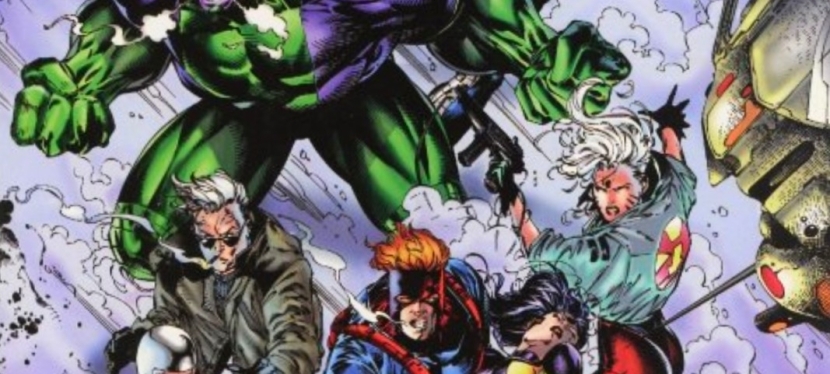
Suddenly a heavily armed helicopter arrives out of nowhere and fires at them causing a lot of damage. During the attack, Voodoo gets hit and suffers a serious injury. Grifter fires a barrage of bullets at the helicopter which causes it to explode and crash. With Voodoo out of commission, the team just lost its advantage to spot Daemonites.

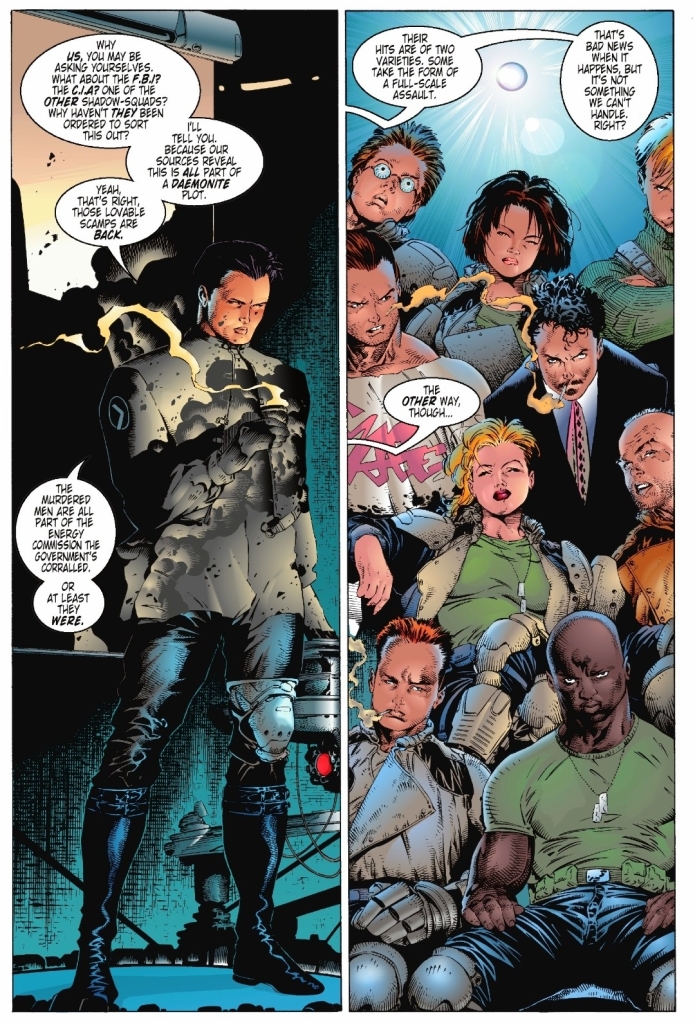
The next day at the headquarters of IO (International Operations), the team Black Razors hold a meeting as their member Ben Santini has been elevated as their new leader. He leads the briefing and informs the members of the assassination attempts on the members of the commission…

Quality

Meet Ben Santini (left), the new leader of the Black Razors. At right are the members.

When I first read this story way back in 1994, I was alienated a bit by the creative team’s approach to emphasize the Black Razors at the expense of the titular team. And yet, I was pleasantly surprised by the Robinson-Charest creative direction as the Black Razors turned out to be a sensible and strong parallel team to the WildC.A.T.S. without becoming another force of evil. While it is clear that the Daemonite threat is strong with several of the aliens hidden among members of human populations, there clearly had to be another force of opposition for the titular team to face-off with and the Black Razors (which serve IO) clearly fit in well with the concept.

Any dedicated fan of this franchise will realize that the Black Razors first appeared in the original 1992 mini-series but it was only in this issue when Ben Santini (who was shot on the knee by Jacob Marlowe) was realized as a character.

Ben Santini’s introduction here was engaging and his motivations to lead the team were made clear while other Black Razor members had their own small slices of the spotlight. Santini is not exactly evil but he has a clearly defined goal in serving his superiors at IO. This means he intends to make an impact as he struggles with the responsibilities of leading the team even as the other members are not so trusting towards him.

While the paramilitary influence within the WildC.A.T.S. series has often been present, it was noticeably revived strongly by the Robinson-Charest duo in this comic book. The story also served as a creative update of IO for readers to absorb complete with elements of espionage and geo-political developments. In some ways, this comic book made the series more grounded with reality while still maintaining some fantasy concepts to keep readers entertained.

Conclusion

Grifter successfully defeated the armed helicopter but Voodoo remained seriously injured from the attack.

I can say out loud that WildC.A.T.S.: Covert Action Teams #15 (1994) is still great to read and the debut of James Robinson and Travis Charest as handlers of the comic book series remains rock solid in terms of quality and creativity. While the titular team and fan-favorite characters had a very limited presence in this comic book, the introduction of Ben Santini and the stronger emphasis on the Black Razors as a group of trained members (as opposed to being faceless during their appearance in the mini-series) more than made up for it. In fact, the build-up of the Black Razors has a lot of variety and nice quality work by Robinson and Charest. Ultimately, I was entertained with this comic book and it proved effective to make me look forward to the next issue.

Overall, WildC.A.T.S.: Covert Action Teams #15 (1994) is highly recommended!

+++++

Thank you for reading. If you find this article engaging, please click the like button below, share this article to others and also please consider making a donation to support my publishing. If you are looking for a copywriter to create content for your special project or business, check out my services and my portfolio. Feel free to contact me with a private message. Also please feel free to visit my Facebook page Author Carlo Carrasco and follow me on Twitter at  @HavenorFantasy as well as on Tumblr at https://carlocarrasco.tumblr.com/ and on Instagram at https://www.instagram.com/authorcarlocarrasco

A Look Back at Amazing Spider-Man #129 (1974)

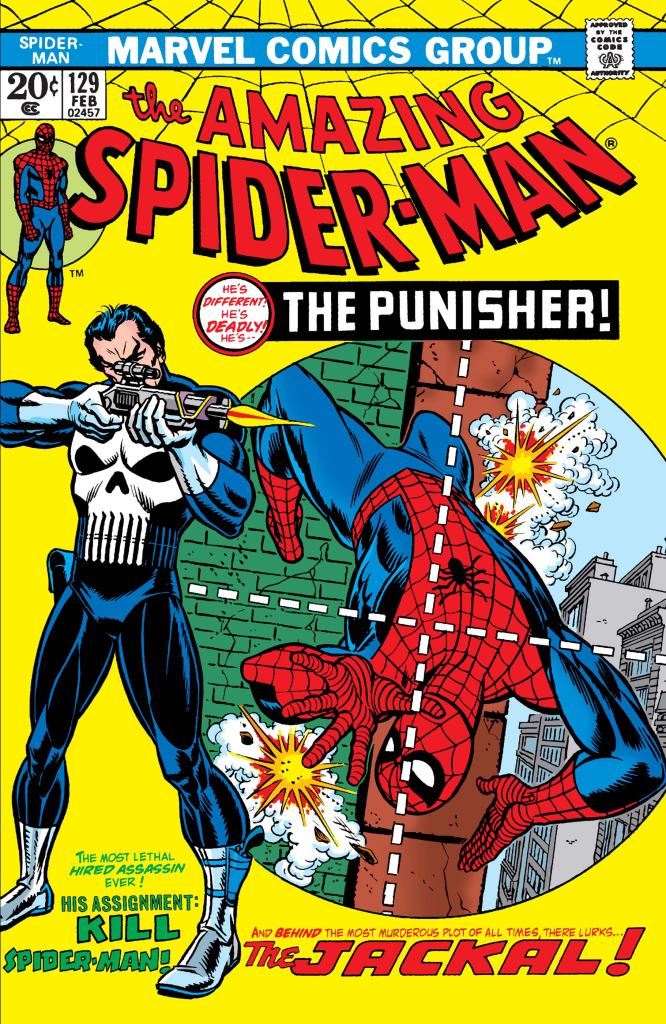
Welcome back superhero enthusiasts, 1970s arts and culture enthusiasts, Marvel Comics fans and comic book collectors! Today we go back to the year 1974 to examine a highly significant tale from Marvel Comics’ shared universe – the first appearance of the Punisher and his first-ever encounter with Spider-Man.

To put things in perspective, Punisher’s literary debut was told within the Amazing Spider-Man comic book series and it happened not too long after the legendary tragedy of Gwen Stacey. During the 1970s, Hollywood made and released several action movies and crime thrillers that were violent, gritty and highlighted vigilantes and assassins. Some of that influence somehow made it into Marvel’s shared universe which was symbolized creatively through the Punisher who debuted as an assassin.

With those details laid down, here is a look back at Amazing Spider-Man #129, published in 1974 by Marvel Comics with a story written by Gerry Conway and drawn by Ross Andru (the same creative duo behind Superman vs. The Amazing Spider-Man crossover).

The cover.

Early story

The story begins inside a private facility an assassin wearing black with a huge skull on his upper body heavily damages a solid statue of Spider-Man using a powerful rifle. This impresses the hideous villain called the Jackal who tells him that if he does well with the real Spider-Man, he would have performed a great service for the world. Knowing he impressed the Jackal, the Punisher states that he will only kill those who deserve killing and he expresses his belief that the webslinger deserves to die.

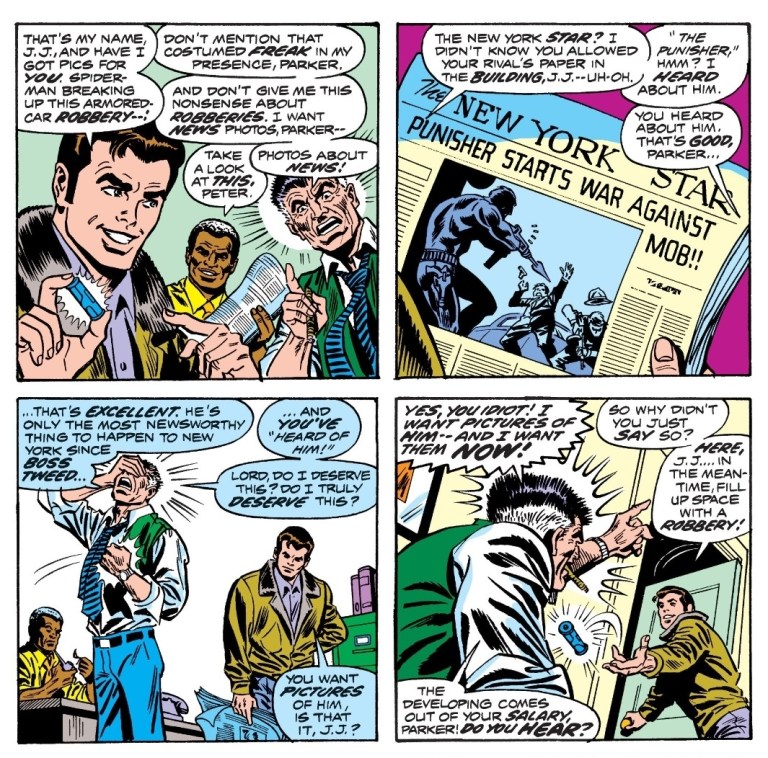
Elsewhere, Spider-Man swings into action and successfully stops an armed robbery from happening. Along the way he managed to capture photographs, changes into his civilian clothes and enters the Daily Bugle’s office ready to submit the roll of film as Peter Parker. Unfortunately, his superior J. Jonah Jameson disregards Parker’s submission and points out that the Punisher made waves with New York’s readers via the Bugle’s competitor The New York Star. For Jameson, the Punisher is only the most newsworthy thing to happen to New York and tells Parker he wants photos of the assassin…

Quality

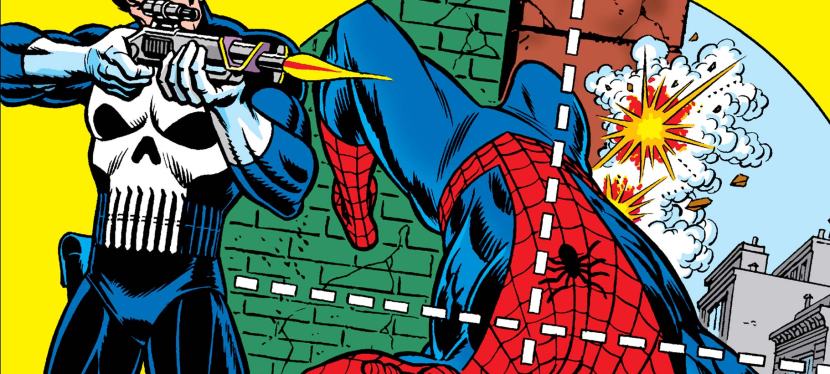
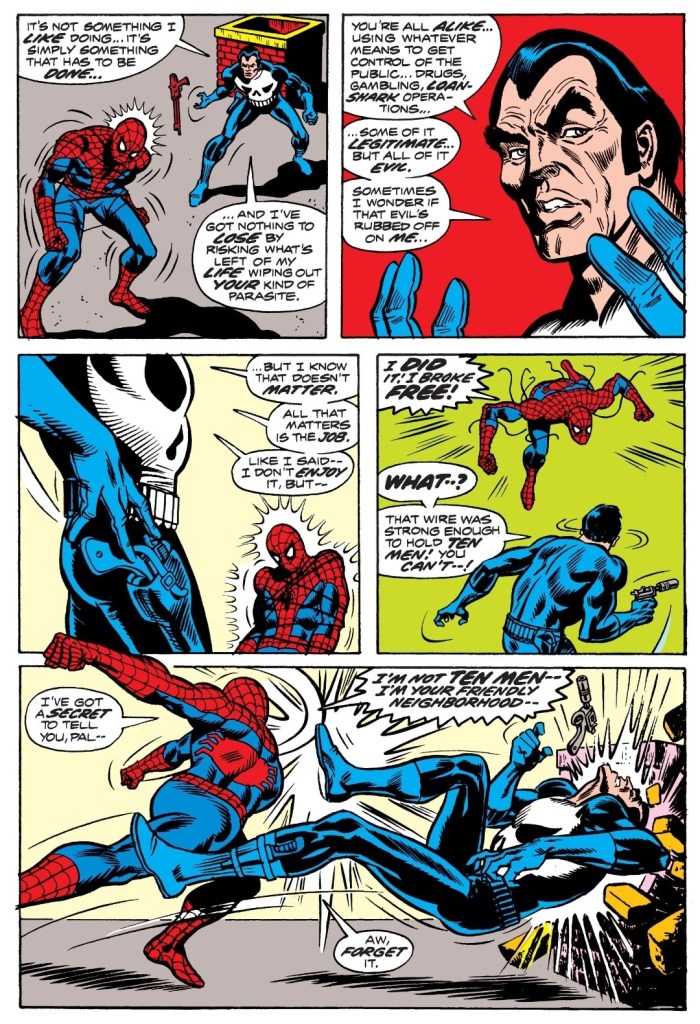
This is a scene from the first of two encounters between Spider-Man and the Punisher who was introduced as an assassin.

To make things very clear about storytelling without spoiling plot details, this is a tale about intrigue and the darker side of society that involves vigilantes and murdering. The Punisher here did not debut as a crime-busting vigilante but rather an assassin who accepts assignments from clients as long as the jobs fall in line with his personal philosophy that focuses on taking the lives of those who deserved to be killed. That being said, it is clear that Hollywood’s vigilante flicks of the 1970s influenced the presentation and I can say that whenever the story focuses on the Punisher, there definitely is a grim tone which contradicts the tone of Spider-Man’s scenes.

Spider-Man here continues to struggle somewhat with his personal life having recently lost Gwen Stacey while remaining disturbed about the identity of the Green Goblin. The webslinger also has to live with the heavy situation in which a lot of people in New York were convinced that he killed Norman Osborne which was the result of his own boss’ handling of the Daily Bugle. These elements along with his civilian involvement with his newspaper creatively added to the build-up of Spider-Man’s eventual encounters with the Punisher. The build-up was structured nicely and the pay-off was worth it.

There was also the introduction of Jackal. While he has a hideous appearance, his participation was more about scheming than action which contrasted him with the Punisher. For the newcomers reading this, Jackal is actually Miles Warren in a more monstrous form. From this comic book, it was clear that Jackal was created to be a recurring for of Spider-Man and this was strongly executed in the controversial Clone Saga of the 1990s.

Going back to the Punisher, he symbolically uses guns with designs that were more grounded in reality (inspired by real-life guns in looks) instead of taking influence from science fiction. As an assassin living with a strong code, the Punisher is truly determined to eliminate Spider-Man whom he even referred to as a murderer. The perception of Spider-Man as a criminal on the part of the Punisher clearly reflected the defamation caused by the Daily Bugle on the webslinger. Gerry Conway established the assassin to be a strong believer in fighting evil by using violence and killing.

The build-up of the Punisher is very solid and the pay-off in the form of battles with Spider-Man is tremendous and very satisfying to read. There is a lot of action to enjoy here and most notably Gerry Conway maintained a strong narrative throughout.

Conclusion

Have you ever worked in a newspaper before?

I can say out loud that Amazing Spider-Man #129 (1974) is truly a great read and a true illustrated literary classic of Marvel Comics. This tale alone added a touch of darkness and grit (in the form of vigilante and assassins cultures) into the Spider-Man legacy. Apart from its status as a comic book classic, this one paved the way for the rise of the Punisher in terms of more comic book appearances and the publishing of new comic book series featuring him. While the Punisher’s legacy as a killer is obviously not something worth believing in, Marvel Comics took the risk of having him as one of their primary characters in the decades that followed. This particular story is so significant, Marvel Comics revisited it with What If #58 (1994). Check out my other Punisher-related retro reviews by clicking here, here, here, here and here.

Overall, Amazing Spider-Man #129 (1974) is highly recommended!

+++++

Thank you for reading. If you find this article engaging, please click the like button below, share this article to others and also please consider making a donation to support my publishing. If you are looking for a copywriter to create content for your special project or business, check out my services and my portfolio. Feel free to contact me with a private message. Also please feel free to visit my Facebook page Author Carlo Carrasco and follow me on Twitter at  @HavenorFantasy as well as on Tumblr at https://carlocarrasco.tumblr.com/ and on Instagram at https://www.instagram.com/authorcarlocarrasco
A Look Back at Godzilla: King of the Monsters #1 (1977)

Welcome back superhero enthusiasts, 1970s arts and culture enthusiasts, Marvel Comics fans and comic book collectors! Today we go back to the year 1977 when Marvel Comics had the license to publish comic books about Japan’s iconic monster Godzilla (Gojira in Japanese) and even integrated him into their shared comic books universe.

The mid-1970s saw a decline of Godzilla’s popularity in Japan as reflected in the commercial disappointment of the movie Terror of Mechagodzilla (1975). The company Toho decided to put on-hold the production of its monster movies without permanently ending the Godzilla film franchise. The next Godzilla movie released was The Return of Godzilla (1984) which proved to be a solid rebound of the Japanese film franchise.

Sometime between the mentioned movies, there was interaction between Toho officials and Marvel Comics – including the late Stan Lee – when the Japanese company screened the movie Godzilla vs. Gigan (titled in America as Monster Island) to the comic guys in relation to the film’s American theatrical release. It turns out Stan Lee enjoyed the movie a lot and seated next to him was writer Doug Moench (the eventual writer for the Godzilla comic book series).

With those details laid down, here is a look back at Godzilla: King of the Monsters #1, published in 1977 by Marvel Comics with a story written by Doug Moench and drawn by Herb Trimpe.

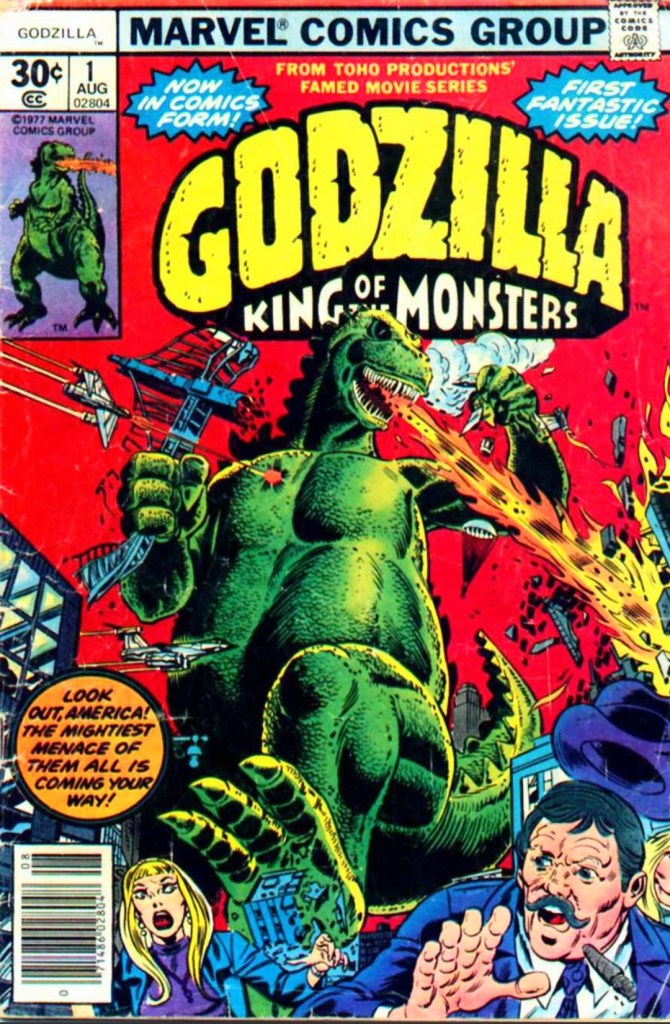
The cover.

Early story

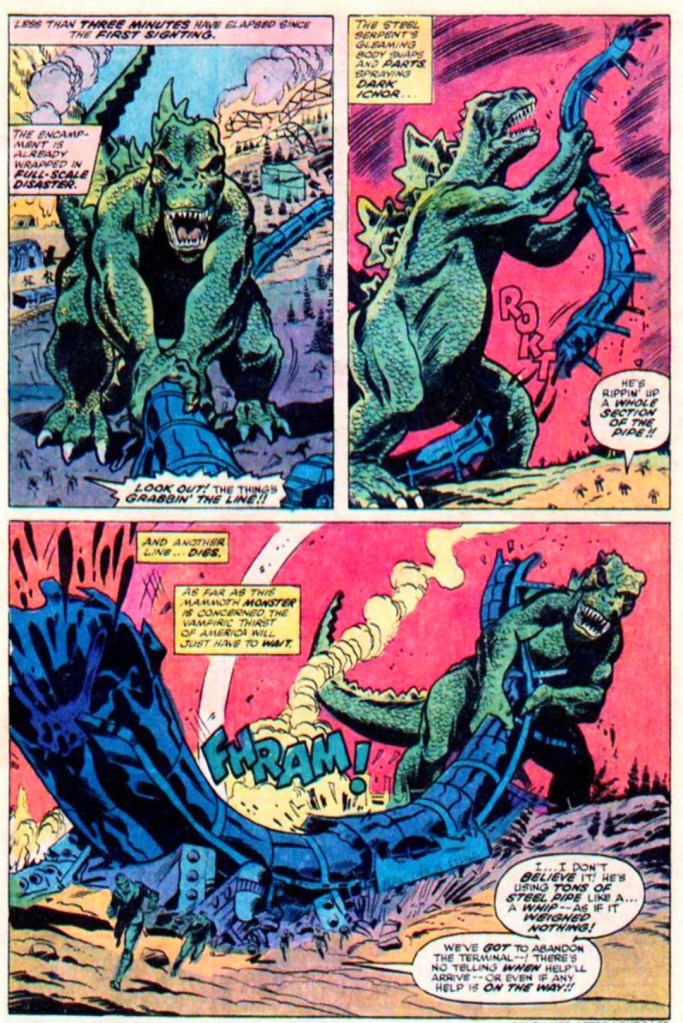
The story begins in Alaska when a huge iceberg suddenly deteriorates unleashing a gigantic monster with sharp teeth, dorsal fins and immense strength – Godzilla. After instantly crushing a supply ship, the monster moves onto the land destroying structures and disrupting the lives of every person nearby.

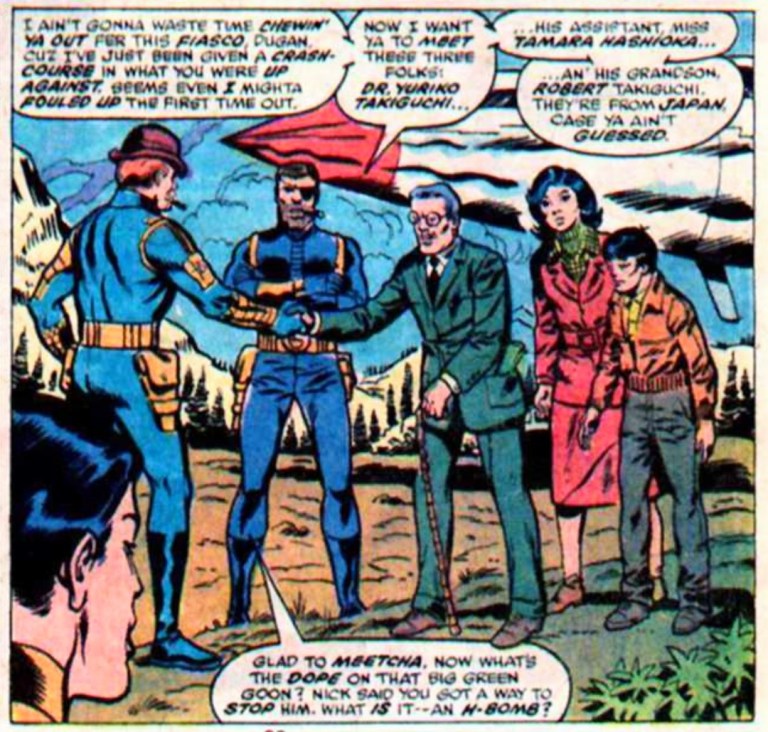
In response to Godzilla’s rampage in Alaska, S.H.I.E.L.D. dispatches its agents to the site of destruction to take on the monster. Meanwhile, S.H.I.E.L.D. director Col. Nick Fury is transporting with him three Japanese individuals deemed important (with clearances from the Pentagon and the White House)…

Quality

Dum Dum Dugan, Col. Nick Fury and the Japanese characters.

To get straight to the point, this comic book not only marked the literary debut of Japan’s iconic monster under Marvel Comics’ banner but also his integration into the shared universe of the time. That being said, the story written by Doug Mench was pretty much a functional build-up of Godzilla’s presence within the realm of Marvel which includes a strategic choice of having S.H.I.E.L.D. and its characters encountering the monster. In short, the creative team decided not to literally pull out Marvel’s biggest guns (the more popular superheroes and teams) as such a move would have lessened the impact of Godzilla’s debut.

For the most part, S.H.I.E.L.D.’s Nick Fury and Dum Dum Dugan had lively portrayals and the way they reacted to the rampage of Godzilla was believable. The introductions of the Japanese characters (who could provide breakthroughs on dealing with the giant monster) were clearly inspired by the Japanese scientists who were crucial in the plot of the original 1954 movie Gojira.

Going further, Doug Mench went on to efficiently establish Godzilla’s origin which creatively is a sensible reinterpretation of what was established in the 1954 movie. The giant monster’s rise as a result of humanity’s testing of powerful weapons on Earth is definitely here.

As expected, Godzilla is the unrestrained force of destruction but as this comic book was released in the 1970s, the destruction scenes lacked impact as they were creatively sanitized with deliberate moves of showing no casualties no matter what happened. This limitation on the part of Marvel Comics showed they were not willing to emulate the approach on destruction and death that was clearly emphasized in the first Godzilla movie of 1954.

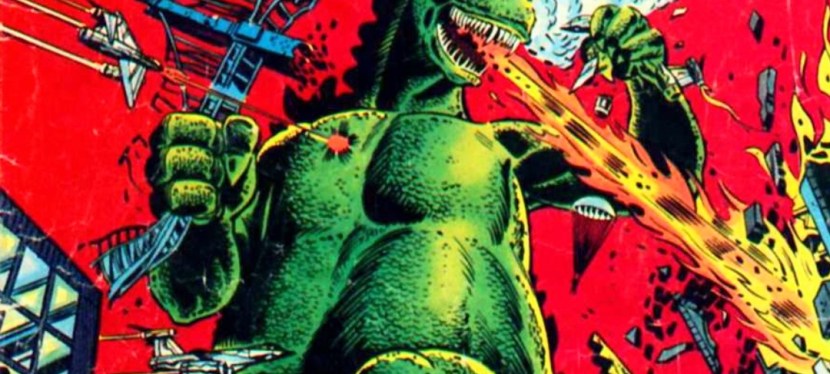
As for Godzilla himself, Herb Trimpe’s visual approach is not really good. While Trimpe implemented the guy-in-a-suit shape on the giant monster’s form, he made Godzilla his own (took no inspiration from Godzilla’s cinematic designs) which resulted in making the icon look unrecognizable. There were inconsistencies on Godzilla’s head as well. In certain shots, Godzilla looked terrifying but in other shots, he looked weird or cartoony. The use of the color green did not make Godzilla look reptilian but rather comical.    

Conclusion

I can only imagine the SJWs and the climate change extremists enjoying these images of an unrecognizable Godzilla wreaking havoc to the oil supply. Are there lots of people in your local community who were brainwashed to hate oil and gas?

Godzilla: King of the Monsters #1 (1977) is a serviceable approach on debuting the iconic monster within the fantasy realm of Marvel Comics and sparking a new wave of crossovers. There were uneven levels of quality here and there, and Herb Trimpe’s visual approach on Godzilla was alienating to say the least. Honestly, I did not really see Godzilla in this comic book but rather a green-colored dinosaur-like creature that was mislabeled as Godzilla. What works here is the writing by Doug Mench which proved to be entertaining enough.

Overall, Godzilla: King of the Monsters #1 (1977) is satisfactory.

For my other Godzilla-related posts, click here, here, here, here and here.

+++++

Thank you for reading. If you find this article engaging, please click the like button below, share this article to others and also please consider making a donation to support my publishing. If you are looking for a copywriter to create content for your special project or business, check out my services and my portfolio. Feel free to contact me with a private message. Also please feel free to visit my Facebook page Author Carlo Carrasco and follow me on Twitter at  @HavenorFantasy as well as on Tumblr at https://carlocarrasco.tumblr.com/ and on Instagram at https://www.instagram.com/authorcarlocarrasco
A Look Back at What If #7 (1989)

Welcome back superhero enthusiasts, 1980s arts and culture enthusiasts, Marvel Comics fans and comic book collectors! Today we go back to the late 1980s to examine an alternate universe portrayal of Wolverine and S.H.I.E.L.D. told through an issue of the 2nd What If comic book series.

While Wolverine has always been identified with the X-Men, the famous mutant spent time with the Canadian team Alpha Flight and his early encounter with the Hulk remains a highly significant chapter of Marvel Comics’ superhero universe.

With those details laid down, here is a look back at What If #7 published in 1989 by Marvel Comics with a story written by Joe Valentino and drawn by Rob Liefeld.

The cover.

Early story

The story begins with the Watcher looking back at Wolverine’s encounter with not only the Hulk but also the Wendigo (as recorded in Incredible Hulk #180 and #181). A short time later, Wolverine is alone in the forest and gets visited by Nick Fury (S.H.I.E.L.D.) and Hudson (Alpha Flight) who arrived by helicopter.

Hudson tells Logan that an agreement has been made to loan him to the United States which prompts a response – Wolverine claims he is nobody’s property and tells Fury to reveal the details.

As it turns out, Wolverine joined Fury at the helicarrier of S.H.I.E.L.D. for a briefing. Fury reveals to him that the internal security of S.H.I.E.L.D. has been breached by an advanced model of Hydra LMDs (life model decoys) and their sensors cannot even detect them. An agent with top security clearance was recently caught trying to transmit classified data. The said agent blew up…

Quality

Wolverine, Nick Fury, Black Widow and some S.H.I.E.L.D. personnel take on Hydra!

I can say that I am very impressed and entertained with what Valentino and Liefeld came up with in this comic book. The story has a pretty strong structure designed to engage readers, pull off some surprises here and there, while also emphasizing the legacy of conflict between S.H.I.E.L.D. and Hydra with efficiency.

With regards to this comic book’s subject matter, Valentino succeeded in exploring the concept of Wolverine becoming an agent of S.H.I.E.L.D. complete with great interactions between the characters. While Wolverine has his ideological differences with Nick Fury, the story went on to show great chemistry between them when S.H.I.E.L.D. operates (with the clawed mutant involved). Wolverine and Black Widow make a solid duo in action and the writer managed to dramatize the conflict between Fury and Baron Strucker (Hydra). For the newcomers reading this, Baron Strucker is Marvel’s super villain with a Nazi heritage and he first appeared in the 1964 comic book Sgt. Fury and his Howling Commandos #5. Strucker here is very intimidating and powerful and Hydra’s use of LMDs symbolically reflect his ruthlessness.

When it comes to the visuals, Rob Liefeld’s art here is really great to look at and it truly is one of the best looking Marvel comics I have read with his artwork as well as the most distinctive looking What If story. Great not only because of his stylized take on the established characters (note: the Hulk and Wendigo looked very visceral) but also because Liefeld truly brought Valentino’s solid script into life from start to finish. The action scenes drawn were excellent, the facial expressions were lively and detailed to look at (note: Wolverine’s got some very visceral faces here) and most of all, Liefeld managed to make the established characters look recognizable.

Conclusion

Really nice action of Wolverine and Black Widow against many drawn by Rob Liefeld.

Thanks to Jim Valentino and Rob Liefeld’s combined works, What If #7 (1989) is a great comic book and easily one of the best tales of the 2nd volume of What If that I have ever read. The way it emphasized Wolverine as an agent of S.H.I.E.L.D. was highly imaginative, compelling and fun to read from start to finish. There is so much enjoyable stuff here that should appeal strongly to fans Wolverine, Nick Fury and S.H.I.E.L.D. In retrospect, this comic book was published just a few years before Valentino and Liefeld left Marvel Comics to establish Image Comics and right here you will see the great creativity from their younger days. Lastly, I can say that this What If tale has a strong conclusion which should compel you to read specific Marvel comic books to realize the connections

Overall, What If #7 (1989) is highly recommended!

+++++

Thank you for reading. If you find this article engaging, please click the like button below, share this article to others and also please consider making a donation to support my publishing. If you are looking for a copywriter to create content for your special project or business, check out my services and my portfolio. Feel free to contact me with a private message. Also please feel free to visit my Facebook page Author Carlo Carrasco and follow me on Twitter at  @HavenorFantasy as well as on Tumblr at https://carlocarrasco.tumblr.com/ and on Instagram at https://www.instagram.com/authorcarlocarrasco
A Look Back at Spider-Man 2099 #43 (1996)

Welcome back superhero enthusiasts, 1990s culture enthusiasts and comic book collectors! Today we go back to the year 1996 and explore a part of the Marvel 2099 comics universe through a tale of the Spider-Man 2099 monthly series.

In my previous retro review, Miguel O’Hara learns how challenging it could be for him to direct the path of Alchemax which is symbolize with himself being surrounded by the managers. He recently stopped his father Tyler Stone from taking control of his office. As his office needs a secretary, someone very exceptional came in.

With those details laid down, here is a look back at Spider-Man 2099 #43, published in 1996 by Marvel Comics with a story written by Peter David and drawn by Andrew Wildman and Ron Lim.

The cover.

Early story

The story begins when one of the undersea bases of Alchemax explodes to the surface in heavily damaged form. Something terrible happened to it deep below and there is only one man (wearing a protective suit) still living floating on the sea. Just as he notices sharks coming his way, Spider-Man comes down to save him with the use of one of Alchemax’s floating vehicles. As Spider-Man pulls the helpless man up with his web, one of the sharks leaped high at them. The web breaks and both the man and Spidey fall into the sea.

Meanwhile at Alchemax, Gabriel O’Hara confronts his mother Conchata who very recently started working as the office secretary of Miguel. Gabriel asks how could she be working for Miguel as part of Alchemax which is the very corporation she hated. The mother answered back stating that she resolved her accumulated anger related to Miguel and has realized that he needs her…

Quality

The rise of the mutate rebel Roman and Miguel O’Hara’s corporate interactions dramatized efficiently in this single page.

Moving further away from what was dramatized in issues #40 and #41, Peter David crafted this tale focusing on a new threat that endangers not only Spider-Man but the people and their local society as a whole. To put things in perspective, it is recommend you revisit issue #8 and focus on Alchemax’s aquatic division called Atlantis which had been working on a major reclamation project under the sea with the objective of becoming a tourist attraction in the years to come. Right there, Tyler Stone mentioned Miguel’s involvement with the project which includes bio-engineered workers.

The key elements of Atlantis mentioned in issue #8 literally resurfaced in this comic book and Peter David heavily emphasized the related details and integrated it all in the plot which essentially justified the existence of the new opposition led by Roman who is the charismatic leader of the mutates (genetically designed sentient beings) who had long been working hard and long outside of the undersea bases which had humans living comfortably inside. Roman here is not related in any way to Marvel’s aquatic hero Namor the Sub-Mariner but he is an imitation of him (note: his name is Namor in reverse).

The conflict of Atlantis revives the business-laborers conflict but was twisted to show the conflict between humans and mutates, as well as Atlantis being symbolized as a physical project of Alchemax to exploit the aquatic life and resources deep under the sea. The build-up of the human-mutates conflict in this particular comic book is surprisingly beefy and was efficiently done.

As for Spider-Man himself, you will get to see him more involved with Alchemax just as he successfully keeps his civilian identity secret. Along the way, you will see more of Miguel O’Hara doing more corporate work and negotiations. As expected, his drive to lead Alchemax with his own perception of being compassionate encounters hurdles from the established order – both within and outside his company. His mother was portrayed to be more sympathetic than before and she shows lots of signs of having mellowed. The development on Miguel and Conchata here were deep and they made a lot of sense with the plot itself.

Conclusion

The futuristic Spidey interacts with a huge shark!

Spider-Man 2099 #43 (1996) is another tale that has aged well as its foundations and elements proved to be very solid until now. With regards to the big event that took place near the end of this comic book, it seems that Peter David took inspiration from what was portrayed in Fantastic Four #4 (1962) as well as from Namor the Sub-Mariner himself. I really enjoyed how this story became a huge pay-off to the minor build-up in issue #8.

Overall, Spider-Man 2099 #43 (1996) is highly recommended!

+++++

Thank you for reading. If you find this article engaging, please click the like button below, share this article to others and also please consider making a donation to support my publishing. If you are looking for a copywriter to create content for your special project or business, check out my services and my portfolio. Feel free to contact me with a private message. Also please feel free to visit my Facebook page Author Carlo Carrasco and follow me on Twitter at  @HavenorFantasy as well as on Tumblr at https://carlocarrasco.tumblr.com/ and on Instagram at https://www.instagram.com/authorcarlocarrasco
A Look Back at Punisher 2099 #3 (1993)

Welcome back superhero enthusiasts, 1990s culture enthusiasts and comic book collectors! Today we go back to the year 1996 and explore a part of the Marvel 2099 comics universe through a tale of the Punisher 2099 monthly series.

In my previous retro review, the futuristic Punisher moved on from the deaths of his family members. Influenced strongly by the writings of the late Punisher Frank Castle, Jake Gallows begins operating as a vigilante even though he still has a full-time career as a law enforcer with Private Eye. Not only that, he gets opportunities to face off once again with Kron Stone (Venom 2099 himself) who is responsible for the deaths of Jake’s family.

With those details laid down, here is a look back at Punisher 2099 #3, published in 1993 by Marvel Comics with a story written by Pat Mills and Tony Skinner, and drawn by Tom Morgan.

The cover.

Early story

The story begins on one snowy night within the city. A lady who has grown very addicted with Total Reality makes a deal with a sinister merchant and makes her escape out of reality and into a living digital realm without caring about the consequences she will physically experience.

A black ambulance arrives and out comes the Punisher who hits the merchant hard enough with his weapon for a quick knockout. He then takes off the lady’s optical device (note: this should remind you somewhat of Microsoft’s HoloLens in terms of physical similarities) which brings her back to reality. Gallows knows fully well that Total Reality can actually kill users who do not practice any restraint, and he then crushes the lady’s device. Instead of thanking the Punisher, she expresses her frustration and anger to him before leaving.

Afterwards, Gallows brings the merchant into the black ambulance and puts him on stretcher. There are sharp devices nearby that can kill the merchant if he makes any attempt to escape…

Quality

Among his colleagues at work, Jake Gallows simply acts as he himself is the Punisher captured on video (but his face has been protected digitally).

While the first two issues of this monthly formed the origin and establishment of Punisher 2099, this comic book shows him doing vigilante work and acting as judge, jury and executioner all together. Going back to issue #1, the creative team made it clear that in 2099, justice can be bought and punishment for criminals is much softer compared to how it was in the 20th century. This alone serves as a powerful motivation for Jake Gallows to bring back old-fashioned, harsh punishment for criminals even if it means he has to do it by himself outside of the law. This is the core concept of this comic book and along the way, there is this build-up of the villain Fearmaster and his henchman Multi-Fractor.

More on the story, the creative team took their time to develop Jakes Gallows and emphasize how his mind functions each time he works secretly as a vigilante (who cannot be identified visually) and privately as a Private Eye cop (the organization’s psychologist noticed something about him). More on his secret as the Punisher, it turns out Gallows was able to establish a secret prison complex, equipment for crime-fighting and even a deadly chair underground.

As he continues to be obsessed with fighting criminals with the harsh ways of the past, the futuristic Punisher symbolically becomes a questionable protagonist. On face value, he seems to be good by simply opposing crime and yet he seems to be evil as he commits acts outside of 2099’s laws.

Conclusion

Clearly acting out of the law, the Punisher of the future imprisons criminals and acts as judge, jury and executioner without hesitation. This also shows his dark side.

With its simply concept, Punisher 2099 #3 (1993) succeeds in defining the futuristic Punisher’s motives, intentions and execution. Compared to Frank Castle Punisher, Jake Gallows lives in a society which has laws that are so weak to push back against crime, justice becomes hollow and even laughable. That being said, this comic book is very socially relevant (note: Leftists in America weakened laws which benefited criminals, supported illegal immigrants at the expense of citizens, and have varied movements of arrogant protesters and activists who intimidated people and caused serious damage around the country) and what has been happening in America under the influence of the Democrats makes the dark future of 2099 looking like it could happen. At the same time, the Punisher in this story incidentally became somewhat unlikable as his crime-fighting obsession is gradually turning him into becoming as bad as the bad guys. This is a lively reminder that even in a society that is plagued with crime and weak justice, vigilantism is still a big no-no and it is also very destructive. To be a vigilante means becoming wicked.

Overall, Punisher 2099 #3 (1993) is satisfactory.

+++++

Thank you for reading. If you find this article engaging, please click the like button below, share this article to others and also please consider making a donation to support my publishing. If you are looking for a copywriter to create content for your special project or business, check out my services and my portfolio. Feel free to contact me with a private message. Also please feel free to visit my Facebook page Author Carlo Carrasco and follow me on Twitter at  @HavenorFantasy as well as on Tumblr at https://carlocarrasco.tumblr.com/ and on Instagram at https://www.instagram.com/authorcarlocarrasco

A Look Back at Spider-Man 2099 #42 (1996)

Welcome back superhero enthusiasts, 1990s culture enthusiasts and comic book collectors! Today we go back to the year 1996 and explore a part of the Marvel 2099 comics universe through a tale of the Spider-Man 2099 monthly series.

In my previous retro review, the futuristic webslinger encountered a group of dangerous people who are convinced that he betrayed them by becoming a corporate tool (note: the result of Goblin 2099 poisoning people’s minds). Not only that, the still-recovering Tyler Stone came back at Alchemax, saw his captured son Kron (Venom 2099 himself) and cold heartedly ordered his execution.

With those details laid down, here is a look back at Spider-Man 2099 #42, published in 1996 by Marvel Comics with a story written by Peter David and drawn by Andrew Wildman.

The cover.

Early story

The story begins with Miguel O’Hara now wielding tremendous corporate power at Alchemax where he is surrounded by managers. Some time had passed since he prevented Tyler Stone from returning to power and he made it known to him that he is aware that they are biologically father-and-son. Miguel then played “duck, duck, goose” on the managers while he stood up on his desk. He made clear to them that he is aware of their so-called game of “who can jerk the new boost and get the most for himself?”

Miguel then tells them that he will review their requests and address their concerns in his own time and his own way. They get dismissed by him. Miguel then meets someone who just arrived for the post of office secretary.

Meanwhile in the downtown section of New York, Raff and Kasey watch a union group composed of construction guys, watchdogs, sewer workers and truckers marching down the street and making noise. As Kasey wonders where the group was heading, she notices a man named Boru whom she previously heard was dead…

Quality

Spider-Man 2099 faces a tough opponent.

Storywise, this tale by Peter David moved away from the themes of issues #40 and #41 by focusing more on Miguel’s newest rise in Alchemax’s corporate hierarchy and how this adds more tension to his already troubled living as a secret superhero, an executive and as a person. By this stage, he knows Tyler Stone is his true father and the man known as Venom 2099 is his half-brother and relationships within his family are far from being normal or ideal. Still on the corporate aspect, a very notable person gets to work as Miguel’s new secretary which I won’t spoil here because I can say that the build-up and pay-off are well worth reading. The new secretary also added to the further development of specific characters and what was dramatized here will compel you to revisit earlier issues of the Spider-Man 2099 series. As always, Peter David’s writing is rich here.

Outside of Alchemax, the group led by Boru (who is symbolically a leader of hardened and desperate labor union members) emerges as an intimidating force of opposition for Miguel, the corporation he leads and even in his Spider-Man identity. Boru himself is quite a strong opponent for Spidey and the way their battle ended is something can intrigue readers or even frustrate die-hard fans of the protagonist. These conflicts, combined with Miguel’s struggle with all the tension hitting him from all angles, made this tale very intriguing and compelling to read.

Conclusion

While walking through the city, Miguel O’Hara spots members of Fantastic Four 2099 in conflict with Stark-Fujikawa.

Spider-Man 2099 #42 (1996) may not look like the expected continuation of what was built up in the previous two issues but its standalone story combined with strong twists, in-depth character development and sheer intrigue in key points of the story made this a must-read. I can also say that I am motivated to find out what happens next, especially given how this particular tale ended.

Overall, Spider-Man 2099 #42 (1996) is highly recommended!

+++++

Thank you for reading. If you find this article engaging, please click the like button below, share this article to others and also please consider making a donation to support my publishing. If you are looking for a copywriter to create content for your special project or business, check out my services and my portfolio. Feel free to contact me with a private message. Also please feel free to visit my Facebook page Author Carlo Carrasco and follow me on Twitter at  @HavenorFantasy as well as on Tumblr at https://carlocarrasco.tumblr.com/ and on Instagram at https://www.instagram.com/authorcarlocarrasco