Looking good on the way to Xbox Series consoles launch

Things are looking really good for Microsoft’s Team Xbox as far as launching their next-generation machines Xbox Series S and Xbox Series X is concerned. The two upcoming consoles will launch officially on November 10, 2020 in America and some other parts of the world. Xbox Series S in America is priced at $299 and while the premium Xbox Series X (which has a 4K Blu-ray disc drive) is priced at $499.

At this stage, the last thing any company wants to go through is a pre-launch blunder or controversy that would discourage consumers from buying the new products. While the final lineup of launch games for Xbox Series S and Xbox Series X has yet to be declared, there are notable developments that are already delighting Xbox fans and casual gamers. No, it’s not about the megaton Xbox – Bethesda deal that gamers are still talking about. Something else, really.

Xbox Series S and Xbox Series X.

Firstly, there is really good news that the promised backward compatibility feature on Xbox Series X is not only working but also enhanced the games tested. Screen Rant wrote: Games that are locked at 30 frames per second on Xbox One are able to easily hold a locked 60 frames per second on the Xbox Series X, even with upgrades in resolution. They also added: The ability of the Xbox Series X to play older games may end up being a bigger deal now than Microsoft expected. The game industry has been hit with lots of delays this year, mostly as a result of the COVID-19 pandemic, meaning both next-gen consoles will have lighter than expected launch lineups.

Den of Geek meanwhile reported that Rise of the Tomb Raider, Sekiro, Hitman 2 and even the 12-year-old Grand Theft Auto IV all ran better on Xbox Series X than they ever did in their respective original consoles of release. More on GTA4 (first released on Xbox 360), Den of Geek wrote: Even some older titles are “rescued” by the power of the Xbox Series X. The report highlights Grand Theft Auto 4 as a game that not only infamously struggled on the Xbox 360 (where it was borderline unplayable at times) but even burdened the mighty Xbox One X. On Xbox Series X, though, Rockstar’s sometimes controversial classic hits that fabled 60 FPS benchmark and even does so while offering enhanced visuals and improved load times.

Take note that Den of Geek and Screen Rant took references from Digital Foundry’s video that highlighted their testing of backward compatibility on Xbox Series X which you can watch right below…

Secondly, the load times related to the backward compatibility all showed clear improvements on Xbox Series X. Remember how long it took your Xbox One console to load up Red Dead Redemption 2? Remember what you did during all the times your Xbox 360 or Xbox One console struggled to load up the game? Those times are history!

According to The Verge, massive changes to the load times were the most significant improvements. They wrote: Games like Sea of Thieves, Warframe, and Destiny 2 have their load times cut by up to a minute or more on the Series X. In Destiny 2, for example, I can now load into a planet in the game in around 30 seconds, compared to over a minute later on an Xbox One X and nearly two minutes in total on a standard Xbox One. These improved load times are identical to my custom-built PC that includes a fast NVMe SSD, and they genuinely transform how you play the game — you can get more quests and tasks done instead of sitting and looking at a planet loading.

Warframe and Sea of Thieves are equally impressive with their load times now. I can now open Warframe and the game is ready to play just 25 seconds later. That same load takes literally a minute longer on my Xbox One X. Sea of Thieves now loads to menu screens in around 20 seconds, with another 28 seconds to load into a session. On my Xbox One X, it takes a minute and 21 seconds to even load the game initially, and then another minute and 12 seconds to get into a game session.

None of these games have been fully optimized for the Xbox Series X either. This is simply Microsoft’s backward compatibility support in action.

Thirdly, there is also the issue of game performance. To be specific, it’s about frame rates and consistency related to Destiny 2, Warframe and Sea of Thieves. The Verge wrote: Destiny 2 is a great example of a game that was held back by the weaker CPU and slow HDD in the Xbox One X. It’s a title that hit native 4K previously, but the 6 teraflops of GPU performance in the One X was bottlenecked by a laptop-like CPU and an old spinning hard disk. This meant the game was stuck on 30fps.

While Bungie has committed to enhancing Destiny 2 for the Xbox Series X and PS5 with 60fps support, it already feels faster without the patch. I would regularly notice frame rate drops in Destiny 2 on the Xbox One X when things got a little hectic on screen during a public event or in a raid with mobs of enemies coming at you. I haven’t seen a single stutter running Destiny 2 on the Xbox Series X.

This console has also improved other parts of Destiny 2 that were slow on the Xbox One. Loading into the character menu sometimes takes a few seconds on the Xbox One X, but on the Series X it feels like I’m playing on my PC as it’s near instant.

On the other two games, they wrote: I’ve noticed similar improvements across Warframe and Sea of Thieves, where games just seem to automatically benefit from the CPU, SSD, and GPU improvements to run more smoothly.

When it comes to multiplayer performance and compatibility, The Verge wrote: The other benefit to the Xbox Series X and this next generation is that games aren’t separated out like they were in the shift from Xbox 360 to Xbox One. Back then, you could only match Xbox One players in a lot of games, leaving out friends who still played on the Xbox 360. In every multiplayer game I’ve tested on Series X, I was able to join friends who were using an Xbox One and match against other Xbox One players.

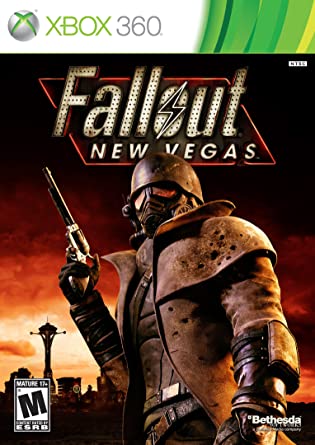
See? Things are really looking good in the run up to November 10 launch of Xbox Series S and Xbox Series X. Backward compatibility ensures that your huge collection of games played (as recorded in your Xbox LIVE account) in previous generations’ Xbox consoles will NOT go to waste and, at the same time, the said feature is a great way of preserving video games from the past. I personally am happy about this not simply because I am nostalgic but because there are some great games from the past that need playing such as Lost Odyssey (Xbox 360), Halo 3 (Xbox 360), Elder Scrolls IV: Oblivion (Xbox 360), Fallout New Vegas (Xbox 360) and Star Wars: Knights of the Old Republic (original Xbox).

In addition, the tests showed that previous generation games are not only playable on the next-generation Xbox but they also perform better, load much faster and will have varying visual enhancements. And then there is also cross-play for multiplayer. Just imagine how that would impact online multiplayer as we know it.

In ending this, posted below are Xbox-related videos for your learning and excitement for the next-generation! Be confident, fellow Xbox fans! This coming new generation of console gaming will be much more fun than the current one! Team Xbox truly cares about us gamers, much more so than Sony’s PlayStation team!

+++++

Thank you for reading. If you find this article engaging, please click the like button below and also please consider sharing this article to others. If you are looking for a copywriter to create content for your special project or business, check out my services and my portfolio. Feel free to contact me as well. Also please feel free to visit my Facebook page Author Carlo Carrasco and follow me at HavenorFantasy@twitter.com

For more Xbox-related stuff, check out the Xbox Series Philippines Facebook group at https://www.facebook.com/groups/XboxOnePH
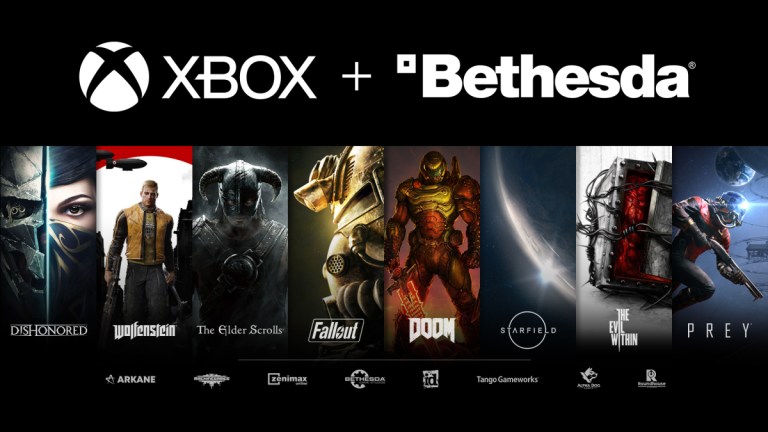
My Observations: Future Bethesda games being exclusive on the Xbox ecosystem lock out competitors

For so long have many people criticized Team Xbox of Microsoft for being too weak with their 1st party games and for having not enough exclusive games. Such criticism does not matter anymore because Microsoft made the heavy investments in expanding their Xbox Game Studios member developers through acquisitions and such developments further escalated with Microsoft acquired ZeniMax Media and have game publisher Bethesda integrated with Team Xbox.

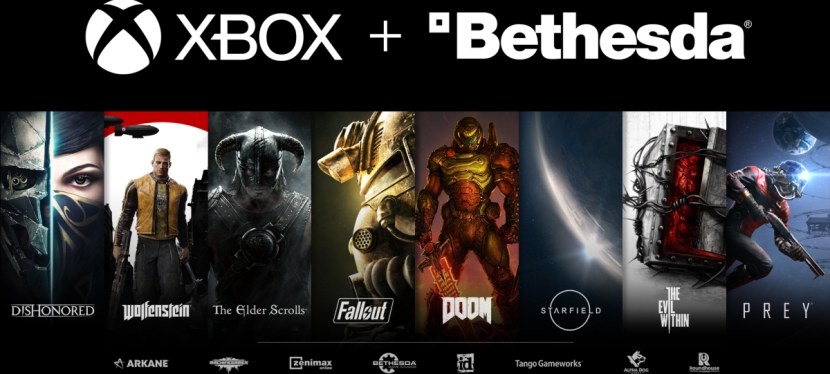
Think about it. Bethesda game developers moved Xbox Game Studios teams from 15 to a whopping 23! This also means that Microsoft effectively owns the established Bethesda intellectual properties and game franchises of Dishonored, Doom, Prey, Wolfenstein and the best-selling franchises Fallout and The Elder Scrolls! Very clearly Microsoft spent $7.5 billion very strategically and as a result, the Xbox 1st party lineup of developers and franchises easily overwhelmed those of PlayStation.

Future games of these established video game franchises – plus the upcoming game Starfield – will be available only through the Xbox ecosystem. What Microsoft owns, Sony and Nintendo cannout touch.

This bring me to my next point – the Xbox ecosystem exclusivity of Bethesda’s future games and franchises! This is the one topic that made PlayStation fanboys disappointed and very uneasy, and I spotted a lot of them on Twitter. Why? For starters, the Xbox ecosystem is composed of the Xbox consoles (Xbox One and its variants, plus the upcoming next-generation Xbox Series S and Xbox Series X), Windows 10 PC plus the many millions of smartphones that will be able to play games via streaming (with Project xCloud).

More on the exclusivity of Bethesda’s future games for Xbox, here is an excerpt from Yahoo! Finance’s interview with Xbox division head Phil Spencer.

Spencer confirmed that ZeniMax games will appear on Microsoft’s xCloud the same day they are released in retail, making the service even more worthwhile for dedicated gamers.

But it also leaves the question as to whether Microsoft will bring ZeniMax games to competing consoles like the PlayStation 5 and Nintendo Switch. Making games exclusive to a single console can be incredibly lucrative, as it forces gamers to buy certain systems to access their favorite games.

Microsoft, however, has also shown that it’s willing to share such properties with rivals as evidenced by its decision to put “Minecraft” on the PlayStation 4 and Nintendo Switch, as well as Android and iOS.

“In terms of where games will show up, our commitment is that our games will show up in Game Pass, PC, and on console and be available on xCloud,” Spencer said. “In terms of other platforms, I think we’ll take it on a case-by-case basis.”

As seen at the end of the above excerpt, Phil Spencer’s “our games” quote refers clearly to what games Microsoft owns and that already includes Bethesda’s games. He went on to confirm his company’s games will be released for the Xbox console users and Windows 10 users through the fast-growing Xbox Game Pass subscription service and Project xCloud. There definitely is no PlayStation console included. Even though Spencer did not mention the word “exclusive”, he confirmed the exclusivity when he referred to their games and the Xbox ecosystem. If PlayStation gamers really want future games of Wolfenstein, Fallout and The Elder Scrolls on PlayStation 5 (PS5), they can shout all they want but Sony cannot make it happen for them because it is Microsoft who has the final word to make that happen. Hence the “case-by-case basis” words of Spencer.

Of course, Microsoft did not spend $7.5 billion only to make Bethesda games and franchises available on non-Xbox platforms. They already invested so much on Xbox Game Pass and Project xCloud, now is the time for them to fill it with exclusive content and gamers who want the Bethesda games will need a Windows 10 PC and/or an Xbox console (note: the next-generation Xbox Series consoles are recommended since Xbox One is on its way out). For Microsoft making Bethesda games available on PS5, Nintendo’s Switch (and its successor) is a self-defeating move.

As for Yahoo! Finance’s mentioning of Minecraft being a multiplatform release, they did not mention the fact that the said game was already available on other platforms BEFORE Microsoft acquired Mojang in 2014. Clearly this is not the same with the Xbox-Bethesda deal, and Microsoft will use Bethesda properties as leverage against Sony and Nintendo when it comes to exclusive content for the Xbox ecosystem.

The next-generation console competition is only heating up and Team Xbox has the advantages! Nintendo and Sony cannot do anything to compel Microsoft to have Bethesda release The Elder Scrolls VI, Starfield and Fallout 5 on their respective consoles. Those two do not own Bethesda and Sony’s exclusive games deals with Bethesda is only temporary at best. After that deal ends with no renewal, there will be no more new Bethesda games for PlayStation gamers and they will only have to settle with old ones like The Elder Scrolls Online, Skyrim, Fallout 4.

In the near future, this upcoming fantasy RPG will be available only on Xbox Series consoles and Windows 10 PC through Xbox Game Pass and Project xCloud.

For the role-playing game (RPG) genre, Team Xbox already has the very talented inXile Entertainment (Wasteland 3) and Obsidian Entertainment (The Outer Worlds) making even new exclusive RPGs for the Xbox ecosystem. Add Bethesda’s Starfield, The Elder Scroll VI and the unannounced Fallout sequel, then it is very clear that the Xbox ecosystem will be the best destination for gamers who love compelling, fun and enduring RPGs. Meanwhile, Sony itself does not have the talents nor the resources to make their own high-quality RPGs which is why they desperately signed a timed-exclusive deal with Square Enix to have Final Fantasy XVI first on PS5.

Again, all of these details and developments show that the $7.5 billion Xbox-Bethesda deal is for the long-term and Microsoft now has the means to build up the Xbox ecosystem in terms of content, features and the global userbase. It should be noted that the franchises of Doom, Fallout, Dishonored, Wolfenstein and Elder Scrolls have many millions of dedicated fans and to continue enjoying future games they will definitely be flocking into the Xbox ecosystem (goodbye Sony and Nintendo gamer communities). It truly is a megaton, video game industry shaking business deal that really caught Sony and Nintendo off-guard. I should state that the promise of future Bethesda releases alone will convince gamers (the Bethesda franchise fans, the casual gamers and hardcore gamers) to buy Xbox Series S or Xbox Series X even though the forming lineup of launch games does not look too hot. It will be in the 2nd year of the next-generation Xbox Series consoles that the real blockbuster exclusive games will come out and attract gamers who want the best gaming experiences that can only be found in the Xbox ecosystem. Lastly, the Xbox-Bethesda deal ensures that Team Xbox will not suffer from any lack of exclusive games in the years to come. We will see if Nintendo and Sony can keep up with Team Xbox’s pace, only this time without new games of Doom, Fallout, Elder Scrolls.  

In ending this, watch these Xbox-Bethesda videos from Colteastwood and Rand al Thor 19. Watch and listen very closely. 

+++++

Thank you for reading. If you find this article engaging, please click the like button below and also please consider sharing this article to others. If you are looking for a copywriter to create content for your special project or business, check out my services and my portfolio. Feel free to contact me as well. Also please feel free to visit my Facebook page Author Carlo Carrasco and follow me at HavenorFantasy@twitter.com

My Observations: Bethesda now part of Team Xbox

As I start to write this, I still am in a state of shock over the most ambitious video game business announcement that I never anticipated would happen particularly with Xbox. People are already talking about it a lot right now. I’m referring to Microsoft’s megaton acquisition of ZeniMax Media which is the parent company of game publishing giant Bethesda Softworks. The deal is worth $7.5 billion (in cash) and it includes acquiring Bethesda Softworks, Bethesda Game Studios, id Software, ZeniMax Online Studios, Arkane, MachineGames, Tango Gameworks, Alpha Dog, and Roundhouse Studios. The said studios have a combined work force of more than 2,300 employees. This megaton development alone makes me want to acquire an Xbox Series X unit even more!

To put things in perspective, below is an excerpt (with key parts in bold) from the Xbox.com blog post by Xbox head Phil Spencer:

Bethesda’s games have always had a special place on Xbox and in the hearts of millions of gamers around the world. Our teams have a close and storied history working together, from the amazing first DOOM, and its id Tech engine, innovating games on PCs to Bethesda bringing their first console game to the original Xbox, the groundbreaking The Elder Scrolls III: Morrowind. Over the years I’ve had many deep conversations with the creative leaders at Bethesda on the future of gaming and we’ve long shared similar visions for the opportunities for creators and their games to reach more players in more ways.

Just as they took the bold first steps to bring The Elder Scrolls franchise to the original Xbox, Bethesda were early supporters of Xbox Game Pass, bringing their games to new audiences across devices and have been actively investing in new gaming technology like cloud streaming of games. We will be adding Bethesda’s iconic franchises to Xbox Game Pass for console and PC. One of the things that has me most excited is seeing the roadmap with Bethesda’s future games, some announced and many unannounced, to Xbox console and PC including Starfield, the highly anticipated, new space epic currently in development by Bethesda Game Studios.

Like us, Bethesda are passionate believers in building a diverse array of creative experiences, in exploring new game franchises, and in telling stories in bold ways. All of their great work will of course continue and grow and we look forward to empowering them with the resources and support of Microsoft to scale their creative visions to more players in new ways for you.

All of our work, and the foundation of our relationship with you, starts with a commitment to deliver a breadth of amazing games to discover and play on Xbox.  Over the last few weeks, we’ve been excited to share more detail on important elements of a plan we’ve been building towards for years. A plan that is the fulfilment of a promise, to you the Xbox player, to deliver the most performant, immersive and compatible next-generation gaming experiences, and the freedom to play blockbuster games with your friends, anytime, anywhere. Today is a landmark step in our journey together and I’m incredibly energized by what this step means for Xbox.

As confirmed by Spencer, the acquisition of Bethesda is more than just adding to Xbox Games Studios existing lineup of game makers and more than just adding games for Xbox and PC gamers to play. The acquisition also means adding even more games to the fast-growing and successful Xbox Game Pass subscription program which recently saw its subscribers reach 15,000,000+ (a jump of 50% in less than six months’ time!). The addition of Bethesda’s iconic franchises – Elder Scrolls, Fallout, Wolfenstein and Dishonored to name some – will surely add tremendous value to Xbox Game Pass and even more exciting is the confirmation that Bethesda’s upcoming sci-fi Starfield will also be added! These developments are already exciting gamers to order Xbox Series S or Xbox Series X as I write this.

Think about it. If you are already a paying Xbox Game Pass subscriber by the time Starfield gets released, you can simply visit Xbox LIVE and download the said game for free (because you already paid for the subscription). Those who are not XGP subscribers will have to pull out a lot of money to buy Starfield at the retail store or elsewhere online.

Already Team Xbox and its many Xbox Games Studios are already creating new and exclusive games for Xbox Series S and Xbox Series X plus PC. Microsoft no longer has a shortage of console exclusives and all the criticism thrown at them (“Xbox has no exclusives!”, “Xbox has no great games!”) are meaningless now. The addition of Bethesda studios into the many Xbox Game Studios further ensures more exclusive games in the years to come and this alone gives Microsoft a huge advantage over Sony and Nintendo!

This brings me to another sensitive topic: the Bethesda projects that are exclusive to others or are multi-platform in arrangement. Bethesda currently has two games that are exclusive to Sony’s PlayStation 5 (PS5) and Phil Spencer made clear that Microsoft will honor the exclusivity commitments of those games. In short, the Bethesda-Sony deal for those two games won’t be scrapped. Other Bethesda games coming to platforms that are not Xbox-related will happen on a case-by-case basis with Microsoft having the final decision. All of these are part of the complications that come with acquiring a huge game publisher with existing deals made with other platform makers.

But if you look into the far future, the Xbox-Bethesda megaton deal will eventually lead to sequels of Fallout, Elder Scrolls and other franchises that will be released exclusively on Xbox platforms and PC, and the Bethesda brand will remain. Bethesda’s famous role-playing game (RPG) franchises alone makes Xbox an even more attractive ecosystem for gamers who love RPGs. Think about it! Imagine playing Fallout and Elder Scrolls sequels (or remastered versions of Skyrim or Fallout 4) on Xbox Series X years from now enjoying all the massive content presented with 4K resolution, 60 FPS frame rate, great visuals and much shorter load times. With Microsoft having the more technologically superior console (Xbox Series X compared to PS5 with disc drive) and a much bigger and stronger 1st party game lineup, gamers will realize the benefits of the Xbox-Bethesda deal.

If Microsoft wants to make even more money and sell more, they can always decide to make Fallout and Elder Scrolls sequels available on PS5 and other platforms (even on Nintendo’s next-generation console). Microsoft acquired Mojang years ago and kept Minecraft available on multiple platforms (including those of Sony, Nintendo, iOS and more). When it comes to the next console generation with Bethesda’s many games being played, I expect their multi-platform games to look and play better on Xbox Series X than on PS5.

With Bethesda and Obsidian Entertainment together with Team Xbox, producing a sequel to Fallout New Vegas is no longer an impossible dream!

I should also state that Microsoft having Bethesda under its extensive corporate umbrella and ownership of the many intellectual properties (IP) of the company means that the dream of producing sequel to Fallout New Vegas is no longer impossible! Microsoft also owns Obsidian Entertainment, the very same team that worked with Bethesda for Fallout New Vegas, and they can decide to assign them to produce a sequel complete with a lot of human, technological and financial resources to back them! While I love the idea of Obsidian making Fallout New Vegas 2, I personally prefer they keep focusing on making their major fantasy RPG Avowed (ironically an ambitious game described as something to rival Bethesda’s Skyrim) and making a next-generation sequel to The Outer Worlds (which I love playing). A new Fallout New Vegas can be released on Xbox Series S and Xbox Series X AFTER the respective releases of Avowed, Starfield and Elder Scrolls VI many years from now.

Apart from the very promising benefits gamers will soon have from the Xbox-Bethesda deal, Microsoft also deserves praise for their transparency with gamers about their next-generation consoles, their expanding 1st party game studios lineup, Xbox All Access, Xbox Game Pass and the like. Transparency aside, Team Xbox also proved to stay honest and well organized with gamers unlike Sony’s PlayStation division. Watch the videos below regarding Sony…

The Xbox-Bethesda deal alone motivates me even more to acquire an Xbox Series X console and also sign up at last on Xbox Game Pass. I am certain that I am not the only geek experiencing the excitement about the very bright future of fun, engaging and high-value gaming with Xbox. With Bethesda’s RPG franchises alone, Xbox is already the best and definitive ecosystem for people who love playing role-playing games (note: Microsoft has Avowed coming and hopefully a The Outer Worlds sequel from Obsidian, plus established support from Square Enix with a Dragon Quest game coming out this December). This is something that Sony (even with Final Fantasy XVI a timed exclusive on their PS5) and Nintendo cannot match! Going back to Bethesda, they really had gone a long way and their decades-old history of doing business with Microsoft is undeniable. The very first time I played a Bethesda game on Microsoft hardware was none other than Elder Scrolls IV: Oblivion on Xbox 360 and that was way back in 2006. In the past decade, I played Skyrim on Xbox 360 and Fallout 4 on Xbox One. Personally, I am happy that Microsoft acquired Bethesda with not only the Xbox Series S and Xbox Series X in mind but for the long term…the far future!

In ending this, watch these videos from Dealer Gaming, Colteastwood, Rand al Thor 19 and Zalker 87 for additional insight about the Xbox-Bethesda deal!

+++++

Thank you for reading. If you find this article engaging, please click the like button below and also please consider sharing this article to others. If you are looking for a copywriter to create content for your special project or business, check out my services and my portfolio. Feel free to contact me as well. Also please feel free to visit my Facebook page Author Carlo Carrasco and follow me at HavenorFantasy@twitter.com

My Observations: Xbox Series S and Xbox Series X

What a roller coaster ride that has been. The leaks were made and the speculating is all over. Microsoft is officially launching its next-generation game consoles Xbox Series S (economic all-digital model) and Xbox Series X (premium model) on November 10, 2020 with prices of $299 and $499 respectively! Pre-ordering of the consoles will begin on September 22, 2020.  

Xbox Series X and Xbox Series S together!

In an Xbox.com article, Xbox division chief Phil Spencer stated: On November 10, a new generation of console gaming begins. That’s when our vision becomes reality with the most performant, immersive and compatible next-generation console gaming experiences, and the freedom to play your games with your friends, anytime, anywhere.

For the newcomers reading this, the premium Xbox Series X was officially announced many months ago and it was only very recently that the budget-friendly Xbox Series S was officially announced (after the leakages, take note).

So what are the differences between the two? Posted below for your general reference are the official specs from Xbox.com

The most obvious difference starts with the GPU with the Xbox Series S having 32 lesser compute units (CUs) as well as a lower frequency per CU compared with the premium Xbox. This results the Xbox Series S also having 4 teraflops of GPU power or barely one-third of the more powerful one. The $299 Xbox also lesser GDDR6 RAM and lower bandwidth. In terms of resolution, Xbox Series X can render visuals in native 4K resolution (3840×2160) while the less powerful Xbox can do up to 1440P. Both of them, however are expected to deliver similar results when it comes to frame-rates. On storage, Xbox Series S has 512GB SSD (solid state drive) which is roughly half that of the premium console. If you enjoy watching movies on Blu-ray or 4K Blu-ray discs, or if you intend to use physical copies of video games, the Xbox Series X has a 4K Blu-ray disc drive while the cheaper Xbox has no such drive at all (note: it’s all digital).

Considering the huge $200 price difference, the two next-generation Xbox consoles will appeal to different kinds of gamers and eventually other consumers who want to improve their home entertainment (or in the case of individuals living away from their families, the personal entertainment) set-up. I can imagine gamers who enjoy playing video games using their PC monitors (at the desks inside their bedrooms or in the house study), who prefer digital downloads over physical media for their games, and looking for bargains will be attracted to Xbox Series S. Gamers who still use optic media for their games, who want to upgrade their movie viewing experience with their 4K TV at home (and start collecting movies on 4K Blu-ray disc format), who want a lot more SSD storage available, and who want the best of 4K gaming will finds Xbox Series X a preferred machine.

Gamers who started their respective Xbox legacies (with Xbox LIVE accounts) for more than one console generation should be happy to know that their old Xbox-related game collection will NOT go to waste as both Xbox Series S and Xbox Series X have been confirmed to be backward compatible with original Xbox, Xbox 360 and Xbox One titles. The beauty with Xbox backward compatibility is that the old games will not only be played, they will have visual enhancements too.

More on the Xbox Series S, the $299 tag price is indeed very enticing especially during this time of pandemic and economic uncertainty. The cheaper console, which has a surprisingly small size compared with other game consoles, is literally a very powerful beast performance wise and (like the premium Xbox) it also has ray-tracing.

Microsoft’s Head of Platform Engineering and Hardware Liz Hamren confirmed the following details: Xbox Series S delivers the same next generation speed and performance that define Xbox Series X. It is similar in CPU and has the identical I/O performance as Xbox Series X, making it easier for developers to deliver the same great performance, while rendering at a lower resolution. Xbox Series S delivers 4x the processing power of an Xbox One console and supports experiences up to 120fps, more immersive and responsive gameplay with support for hardware-accelerated DirectX Raytracing and Variable Rate Shading. In addition, Xbox Series S includes 512GB of custom SSD storage and is powered by the Xbox Velocity Architecture, delivering more than 40x the I/O bandwidth of an Xbox One resulting in faster loading times, steadier frame rates and Quick Resume for multiple titles.

You’ll also experience the same great audio on Xbox Series S that you will on Xbox Series X with Spatial Sound, including support for Dolby Atmos. What’s more, support for Dolby Vision via streaming media apps like Disney+, Vudu and Netflix will be available across Xbox Series S and Xbox Series X at launch, and Dolby Vision support for gaming will come first to our next-gen Xbox consoles in 2021.

As of this writing, I noticed a number of gamers online expressing concern about the 512GB SSD storage on the Xbox Series S. On face value, 512GB looks insufficient considering the sizes of video games and DLC (downloadable content) today. Like the premium console, the SSD storage of Xbox Series S can be upgraded by means of using the proprietary Xbox Storage Expansion Card which will be a very expensive affair for consumers and the sad thing is that traditional SSDs cannot be used.

When it comes to digital services and subscriptions, Microsoft is really going all-out with brand new offerings via the Xbox All Access program which will start in twelve nations. Take note that the wildly popular Xbox Game Pass is included!

Xbox Prdouct Marketing General Manager Jeff Gattis announced the following details: Whether you’re upgrading to the newest consoles or joining the Xbox family for the first time, with Xbox All Access, you can get everything you need to play — an Xbox Series X or Xbox Series S and 24 months of Xbox Game Pass Ultimate — from $24.99 a month for 24 months with no upfront cost. We’re also excited to bring Xbox All Access to more fans around the world this holiday, and to offer existing Xbox All Access members more flexibility in their upgrade option.

With Xbox All Access you not only get the latest consoles, but also an instant library of over 100 high-quality games for console, PC, and Android mobile devices (Beta).  Plus, you get all new Xbox Game Studios titles the same day they release, including Halo Infinite. What’s more, starting this holiday Xbox Game Pass Ultimate and Xbox Game Pass for PC members get an EA Play membership at no additional cost.

And then there is EA Play!

As if that was not good enough, there is also Dolby Vision for Xbox Series X and Xbox Series S! Read the details at Dolby.com

With Xbox Series X at $499 and Xbox Series S at $299 backed with very enticing online offerings and features that promise strong value for customers, it is clear that Microsoft is looking strong with launching the two next-generation consoles even though Halo Infinite has been delayed beyond launch. Times like this, I wish that the Xbox-exclusive The Gunk was launch title.

Without Halo Infinite as the showcase of the next-generation launch, Microsoft will have to rely on 3rd-party video games (both cross-generation and next-generation that will be released along with or shortly after the new consoles’ launch) looking and playing great on the next-generation Xbox consoles to convince gamers to make the technological jump forward early. It’s already confirmed that Ubisoft’s much-awaited Assassin’s Creed Valhalla will not only run at 60FPS on Xbox Series X but also in 4K resolution! Considering the open-world design of the said game, playing it the “4K60” way should be mind-blowing to gamers.

It is also clear is that, with the latest Xbox development, Sony has challenges to overcome when it comes to announcing the prices and offerings related to launching its two PlayStation 5 (PS5) consoles – one with a disc drive and the other without. $299 is a very hard launch price for Sony to match with the drive-less PS5, and it should be noted that PS5’s backward compatibility is limited to PS4 games (in other words, Mark Cerny and his team failed to find ways to make PS1-PS2-PS3 game discs play on their upcoming console). PS5 games look interesting but none of them convinced me to buy Sony’s new console. My choice is Xbox Series X because I know the exclusive games coming out in the next two years will be worth the wait plus I love the Gears of War, Halo and Forza Motorsport franchise of games. I also want the premium Xbox for my Blu-ray movie collection and, eventually, the start of a new collection of movies in 4K Blu-ray discs.

In ending this piece, I recommend you watch the videos from Dealer Gaming, Colteastwood and Digital Foundry.

+++++

Thank you for reading. If you find this article engaging, please click the like button below and also please consider sharing this article to others. If you are looking for a copywriter to create content for your special project or business, check out my services and my portfolio. Feel free to contact me as well. Also please feel free to visit my Facebook page Author Carlo Carrasco and follow me at HavenorFantasy@twitter.com

A Look Back at What If #42 (1992)

Disclaimer: This is my original work with details sourced from reading the comic book and doing personal research. Anyone who wants to use this article, in part or in whole, needs to secure first my permission and agree to cite me as the source and author. Let it be known that any unauthorized use of this article will constrain the author to pursue the remedies under R.A. No. 8293, the Revised Penal Code, and/or all applicable legal actions under the laws of the Philippines.

Believe it or not, there was a time when the iconic superhero Spider-Man had additional arms on both sides of his body which made him even more like a spider. Such a story was told in Amazing Spider-Man #100 and #101 published decades ago by Marvel Comics.

In 1992, Marvel Comics published What If #42 to revisit the old crazy story and tell an alternate reality of it. Take note that this comic book we’re about to examine together was released the same year Marvel celebrated the 30th anniversary of Spider-Man.

Cover
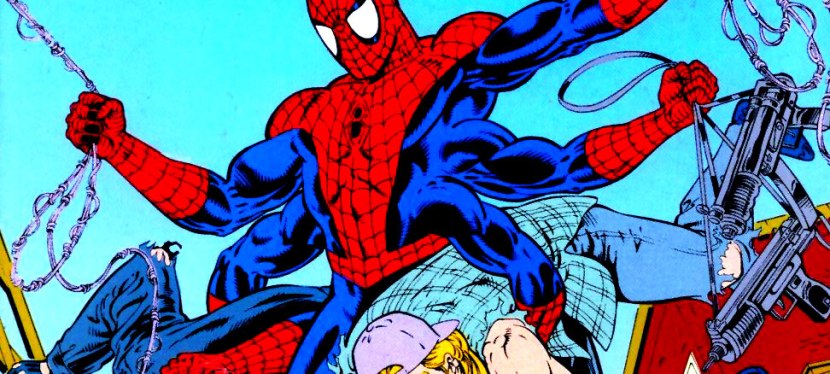
A very eye-catching cover.

Here’s a look back at What If #42 written by Michael Gallagher and drawn by Kevin West. The hot question: What if Spider-Man had kept his six arms?

Early story

The comic book begins with the Watcher telling readers a recap of what happened to Spider-Man in Amazing Spider-Man #100 and #101. It is recalled that Peter Parker got fed up with being Spider-Man as it complicated his personal life with a bunch of problems. After he attempted to eliminate his super powers by creating and using a potion, Peter Parker suddenly grew four additional arms instead.

In reaction, Parker reached out to his friend Dr. Connors/Lizard (who was in Florida) who granted him access to his laboratory in Long Island. Tried as hard as he could, Parker could not come up with a solution.

Meanwhile, many miles away, the vampire Morbius harms the crew of a ship on the sea before diving into the water. Morbius gets overwhelmed by multiple sharks and dies. His death, as it turns out, marked the end of the solution to Spider-Man’s extra arms problem. Morbius had an enzyme unique only to vampire body chemistry which would have cured Spider-Man’s condition.

10
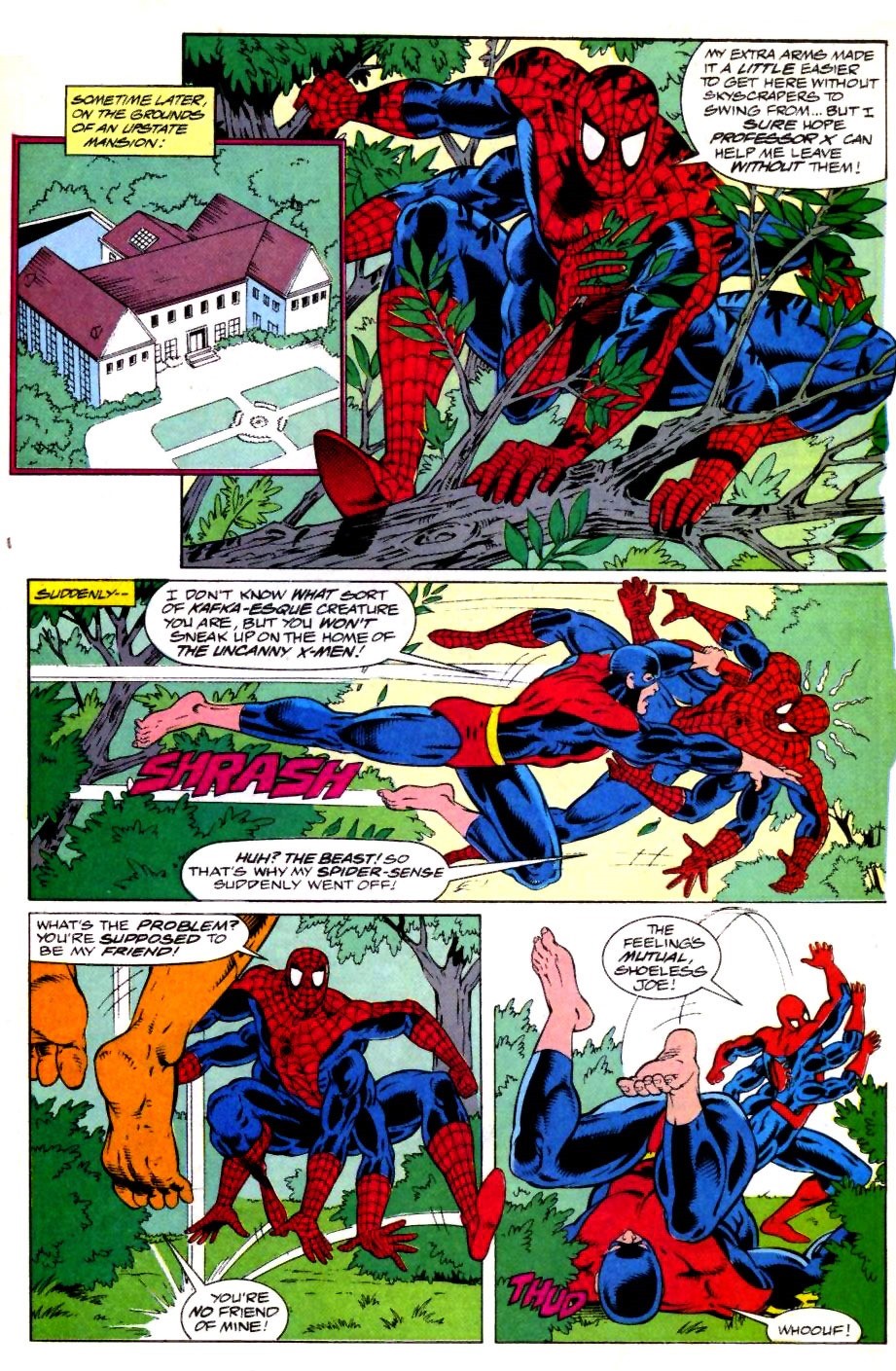
Spider-Man and Beast of the X-Men.

This leaves Spider-Man with an even longer lasting problem leading to a new reality.

Quality

The story is well written and nicely paced. There is a nice balance between storytelling, characterization and action here. As far as the alternate reality of events go, What If #42 is a smash in the sense that it nicely explores what would happen not only to Peter Parker had he actually kept those extra arms of his, but also what would happen to the people around him as well as balance of superheroes in the state of New York. If you just imagine yourself as Peter Parker having four extra arms, try visualizing how your personal life got destroyed and your connections with people you care about getting strained or even cut off. Nobody in real life would want to end up living like a freak, and this concept is well emphasized with Spider-Man.

Character development on Spider-Man is well done. As you read his lines and thoughts, you will feel the pressure and hassle he is experiencing with the extra arms. You’ll wonder how his Aunt May would react not only to those new arms but also his prolonged absence. As Peter Parker becomes very determined to find a solution in the absence of Morbius, you’ll even relate with his struggle. On top of these, the dialogue was well written and there were even a few intriguing moments.

I also enjoyed the way the comic book creators emphasized the shared universe of Marvel Comics here. You will see the X-Men and Fantastic Four plus several more Marvel characters make appearances.

Along the way, there is a nice scene at the Daily Bugle (the newspaper where Peter Parker works as a photographer) showing how sinister and abusive J. Jonah Jameson really is as he remains obsessed with destroying Spider-Man by means of distorted presentation of news. In this age of fake news, sinister propaganda, distorted views and local community print media publications being operated by people who don’t really know journalism, the Daily Bugle scene is pretty relevant by today’s standards.

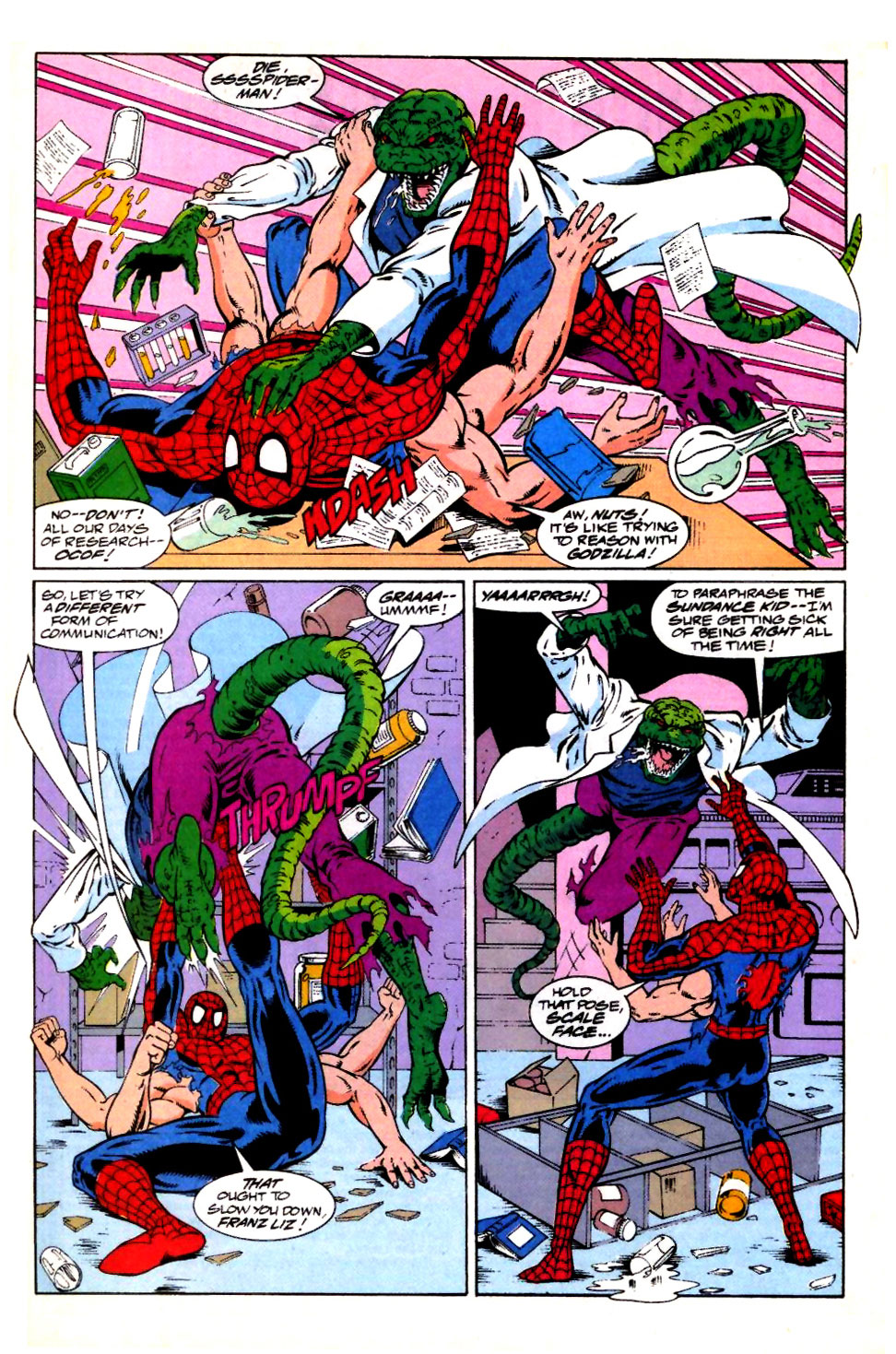
As such, Michael Gallagher’s script and story structure here are very strong. For the art, Kevin West did good work. Not only was I able to recognize the Spider-Man-related characters and other Marvel superheroes, West’s notably made the Lizard look visceral enough and the same can be said of his take on Venom. The comic book art had a nice flow as the story was told and West provided enough impact on the action scenes.

Conclusion

What If #42 is a pretty good comic book to read exploring how things would have been had Spider-Man kept those extra arms and really looked truly spider-like. Apart from the good quality of storytelling and visuals, the presence of other Marvel Comics universe characters further add some depth into the story as Peter Parker struggled to find a solution to his problem.

7
Spidey and Lizard!

This is the kind of story that I don’t believe we will ever see happen on the big screen. It’s just too jarring and even shocking for Sony Pictures and Marvel Studios to actually show Tom Holland as Spider-Man with extra arms. Such a cinematic move will surely outrage fans and might even put a dent on the credibility and believability of the Marvel Cinematic Universe.

If you are seriously considering buying an existing hard copy of What If #42, be aware that as of this writing based on the ratings of MileHighComics.com, a near-mint copy of the regular edition is at $12 while the near-mint copy of the newsstand edition is priced at $39.

Overall, What If #42 is recommended.


Thank you for reading. If you find this article engaging, please click the like button below and also please consider sharing this article to others. If you are looking for a copywriter to create content for your special project or business, check out my services and my portfolio. Feel free to contact me as well. Also please feel free to visit my Facebook page Author Carlo Carrasco and follow me at HavenorFantasy@twitter.com

A Look Back at Super Star Wars: The Empire Strikes Back

In this age of photo-realistic 3D graphics in video gaming, I sure miss the days when 2D gaming and highly detailed pixel art were the standard. I’m referring to the so-called 16-bit era of the Super NES/SNES (Super Nintendo Entertainment System) back in the 1990s.

In 1991, Super Star Wars was released on the Super NES and it became a big hit with the gamers, the critics and fans. That game was heralded as one of the best video game adaptations of movies.

Naturally, a follow-up to that game was released in 1993 – Super Star Wars: The Empire Strikes Back.

That being said, here is my retro gaming review of Super Star Wars: The Empire Strikes Back.

Screenshot_20200118-222140_YouTube.jpg
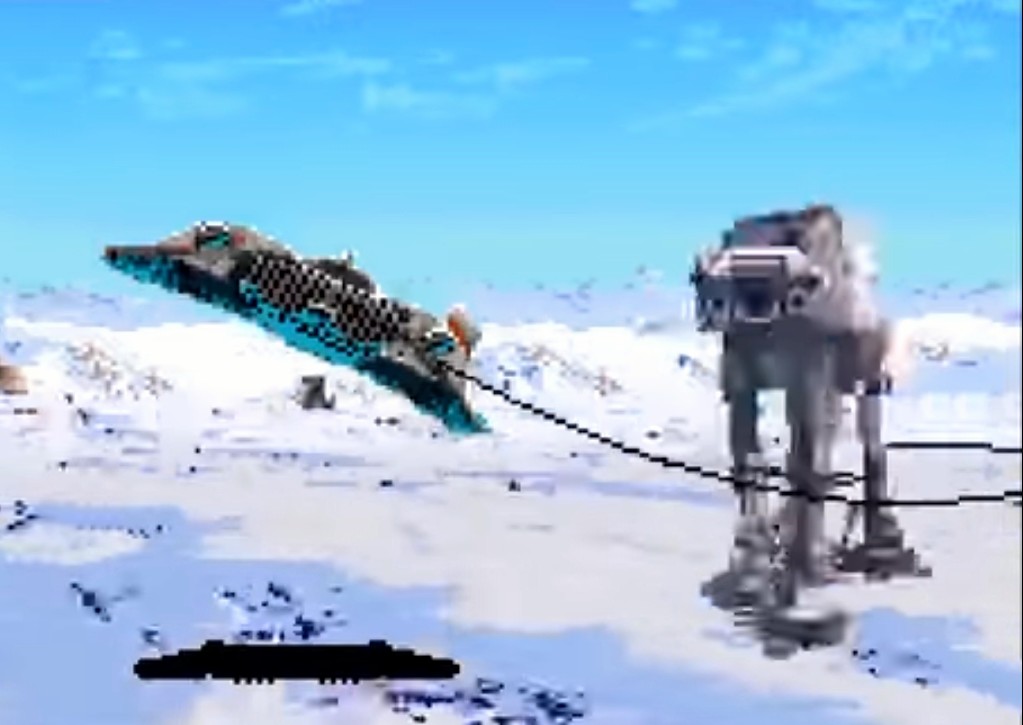
The experience of using a Rebel speeder to bring down an AT-AT walker with the cable remains awesome.

Developed by Sculptured Software and LucasArts and published in America by JVC, this game is based on The Empire Strikes Back which today has been considered to be the greatest Star Wars movie ever. Of course, in order to make a cohesive video game adaptation out of the classic movie, a lot of liberties were taken when it comes to following the story. This was inevitable as the game developers needed a lot of creative freedom to make a cohesive video game.

Early story (and some notable differences from the movie)

Super Star Wars: The Empire Strikes Back begins with Luke Skywalker riding a Tauntaun. Unlike the movie, Luke (controlled by players) visits some places of the wasteland of Hoth, notably caverns and hills fighting several forms of wild life (including wampa beasts), and even some probe droids.

Screenshot_20200118-223405_YouTube.jpg
Luke jumping on to a wampa beast.

Unlike the movie, Luke does not get rescued by Han Solo in the wilderness. Instead he defeats a giant-sized probe droid and a giant-sized wampa beast (as in-game bosses) and make his way back to Echo Base to rejoin the rebels. Upon returning at the base, he finds it filled with Imperial troopers and their machines (where are Luke’s fellow rebels?) and fights his way through to fly a rebel speeder (note: without the movie co-pilot Dak) and proceed in the Battle of Hoth.

image-2.jpg
This never happened in the movie.

image-3.jpg
Luke jumping into a snow speeder without a co-pilot.

Back at Echo Base, Han Solo (player-controlled) has to make his way through a wave of Imperial enemies and machines to meet Princess Leia, secure her and ride away on the Millennium Falcon. The Falcon (player-controlled) enters the asteroid field being attacked gradually by over twenty TIE Fighters. Once all of them have been eliminated, the Falcon jumps into light speed (which contradicts the movie).

Gameplay

Super Star Wars: The Empire Strikes Back is composed mostly of 2D, side-scrolling action sequences in which players control their characters moving from left to right in order to make the game progress. The sequences are filled with lots of action-packed moments mainly due to the MANY enemies challenging the players plus sequences of shooting, jumping and using special weapons (note: the thermal detonator was awesome to use). When it comes to filling up the health meter of your character, defeating enemies result random releases of hearts (symbolizing health) which you need to pick up. Key side-scrolling segments of the game will have players facing off with in-game bosses or enemies that are large, intimidating and have their own health meters for players to reduce to zero.

As typical with most 2D side-scrolling games of the era, this game is really tough and will take gamers some patience and perseverance to complete.

What really stood out in this game are the makeshift 3D segments (made possible by Mode 7) which were pretty extensive and really interactive. The Battle of Hoth in Mode 7 was pretty engaging as players get to fly a rebel speeder over a snowy field complete with lots of Imperial enemies (including the AT-ST walkers and the AT-AT walkers) and each of them is composed of multiple 2D sprites making them look 3D as the speeder moves around. Apart from simply shooting, the interactive sequence of tagging an AT-AT walker with a cable, flying around it and wrapping it with the cable, and then watching it fall to the ground really is an awesome gaming experience which really showed how hard the game developers pushed 2D visuals and pixel art.

Screenshot_20200118-222830_YouTube.jpg
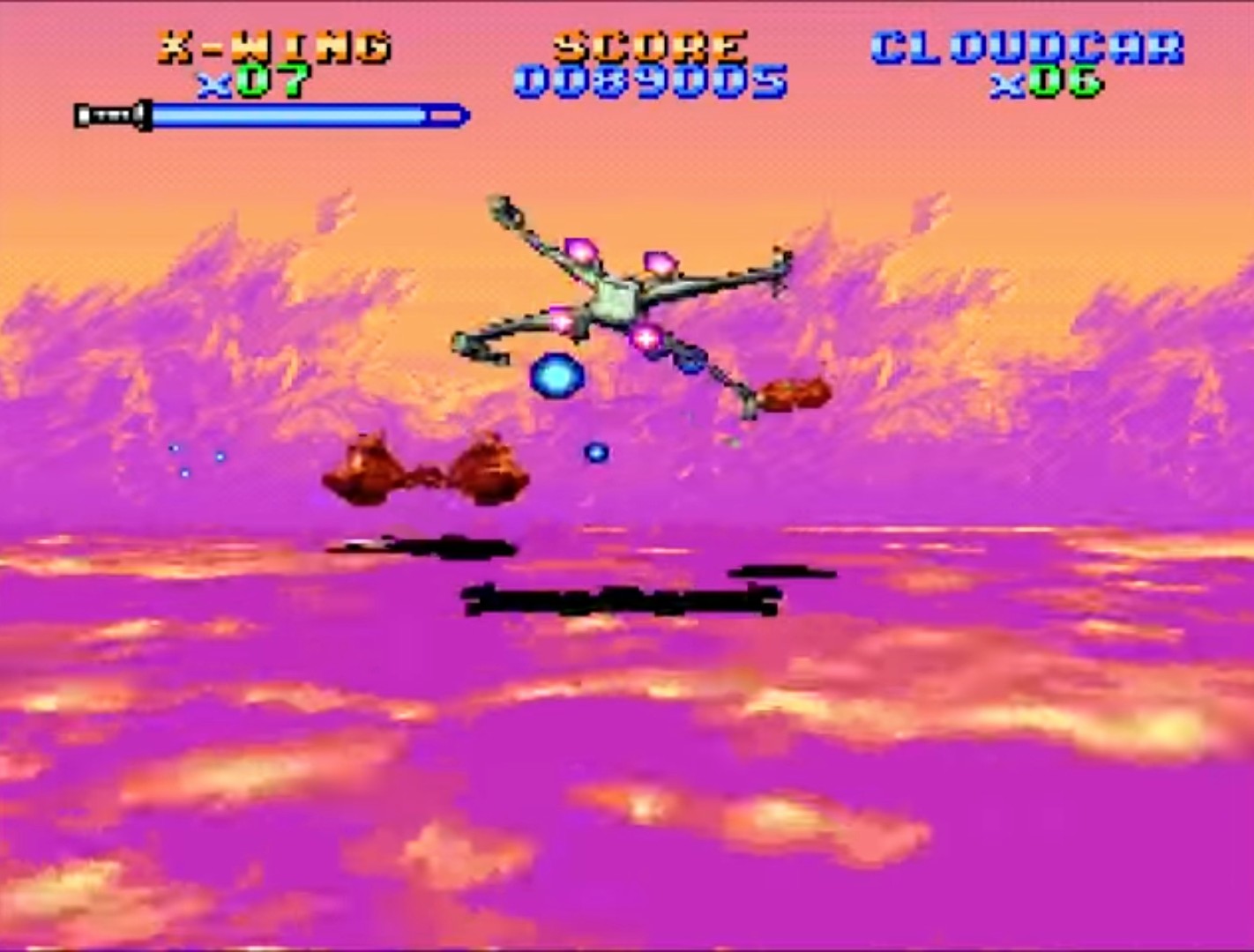
A Mode 7 sequence late in the game had players using an X-Wing fighter.

Screenshot_20200118-222213_YouTube.jpg
The Battle of Hoth was a great and lengthy use of Mode 7.

Apart from the Battle of Hoth, there was also another Mode 7 sequence involving the X-Wing Fighter approaching Cloud City. That particular sequence was noticeably shorter and did not have a standout action sequence as it was limited to the X-Wing Fighter simply shooting Bespin fighters. Another non-2D segment was the Millenium Falcon’s flight through the asteroid field which was done with the cockpit view (first-person view exactly) in which you move a cursor for targeting and moving the ship to. This segment was pretty tough because players were not only required to eliminate more than 20 TIE Fighters but also avoid incoming asteroids and maintaining the Falcon’s energy shields (which serves as a health meter)

Going back to the 2D side-scrolling segments, the use of the lightsaber by Luke remains a lot of fun to do. Not only could he slash bad guys, he could use the lightsaber defensively protecting himself from incoming energy blasts (which get deflected by the lightsaber). On the offense, Luke can jump into the air and spin with the lightsaber turned on making him an aerial slasher over the bad guys.

In keeping with the theme of the movie showing Luke Skywalker learning to be a Jedi, the Dagobah segment in the game has Luke gaining varied Force powers and he also has a separate Force energy meter. The Force powers can be used in subsequent segments of the game and they are quite useful when Luke encounters Darth Vader as the final boss in Cloud City.

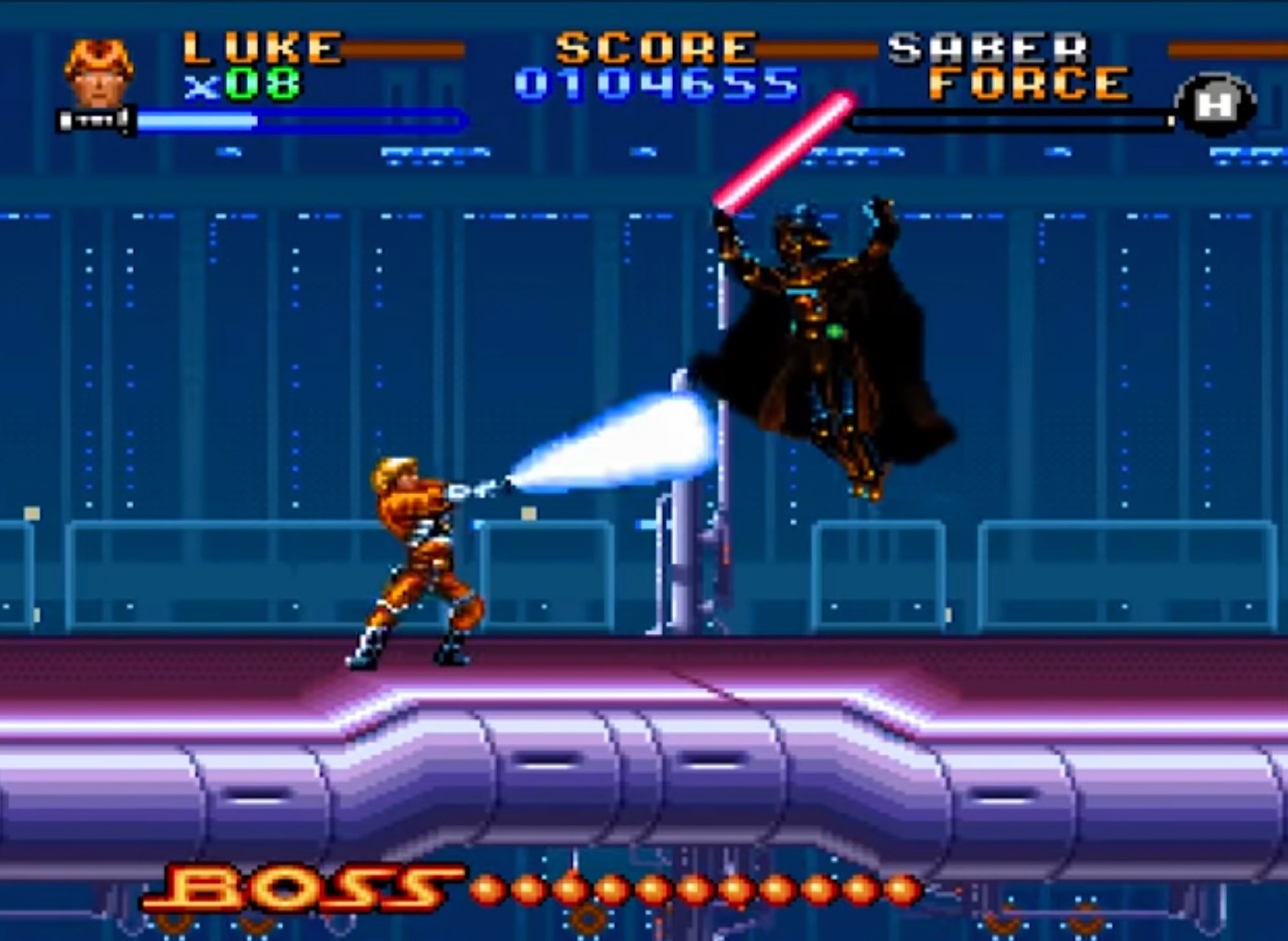
The fights with Darth Vader were nicely designed. With creative freedom, the game developers expanded on Darth Vader’s use of the Force to move several pieces of debris and machines towards Luke who has to defend himself from all sides. Fighting Darth Vader with the lightsaber was tricky and for the most part, I had Luke slashing on villain with just enough space between them and many times I had Luke use the lightsaber on him while jumping and spinning in the air. Defeating Vader was a requirement to complete the game.

Screenshot_20200118-222758_YouTube.jpg
Very nice artwork made for the storytelling cut scenes.

Finally, like in Super Star Wars, players can also play as Han Solo (special attack: grenade throw) and Chewbacca (special attack: offensive spin) but only in specific segments of the game supposedly to keep in line with its story.

Conclusion

Even by today’s standards, Super Star Wars: The Empire Strikes Back is still a high-quality video game that is a lot of fun to play with even though it is tough (a password system is used for in-game progress so that gamers can come back to continue) all throughout. Gameplay aside, the presentation of visuals and audio is also very solid. The sprites for the in-game characters, enemies, machines and animal were detailed to look at while the background art were immersive (like in the movies, Cloud City, Hoth and Dagobah had their distinctive visuals). The Super NES audio chip was greatly used on recreating 16-bit sound from the movies, especially John Williams’ movie scores and lightsaber sound effects.

Take note that this game was released in 1993 which is significant in the sense that people had moved on since the release of the movie Return of the Jedi (1983) and the Star Wars prequel trilogy did not begin until 1999 with Star Wars Episode I: The Phantom Menace. This game was released at a time when 2D gaming was still in strong demand and most gamers did not expect that 3D polygonal graphics would reshape video gaming eventually. In retrospect, the polygon-focused gaming consoles Sega Saturn and the original Sony PlayStation launched in late 1994 or more than a year after Super Star Wars: The Empire Strikes Back.

Screenshot_20200118-223133_YouTube.jpg
The inevitable battle between Luke Skywalker and Darth Vader.

I myself had lots of fond memories playing this game back in the mid-1990s. I simply endured the many challenges of it and ultimately had a lot of enjoyment completing it. I even replayed the game from the start even though I knew how the game presented the ending and key story elements of the movie. I also got to replay The Empire Strikes Back on home video around the time I played this game.

Believe it or not, Super Star Wars: The Empire Strikes Back was the first of the Super Star Wars trilogy on the Super NES that I actually played. After completing it, I borrowed the Super Star Wars cartridge from a friend and later bought a copy of Super Star Wars: Return of the Jedi. I completed those two other games and I can clearly say that Super Star Wars: The Empire Strikes Back remains the best in game design, the best in terms of fun factor and the most memorable of them all.

If you love Star Wars and you want the best 16-bit era video game (note: you’ll need a working Super NES console or Nintendo’s Virtual Console for any Super Star Wars game) experience of it, Super Star Wars: The Empire Strikes Back is highly recommended.


Thank you for reading. If you find this article engaging, please click the like button below and also please consider sharing this article to others. Also my fantasy book The World of Havenor is still available in paperback and e-book format. If you are looking for a copywriter to create content for your special project or business, check out my services and my portfolio. Feel free to contact me as well. Also please feel free to visit my Facebook page Author Carlo Carrasco and follow me at HavenorFantasy@twitter.com

Macross at Toycon 2019

Sorry for this late feature but I wish to share to you geeks and hobbyists that during the 2019 edition of the Toycon held this past June at the SMX Convention Center in Pasay City, I spotted the display of Macross.

I’m a Macross fan and I always make it a point to find stuff related to my favorite anime franchise whenever a convention happens. Here are some that I spotted during the Toycon.

20190629_105722.jpg
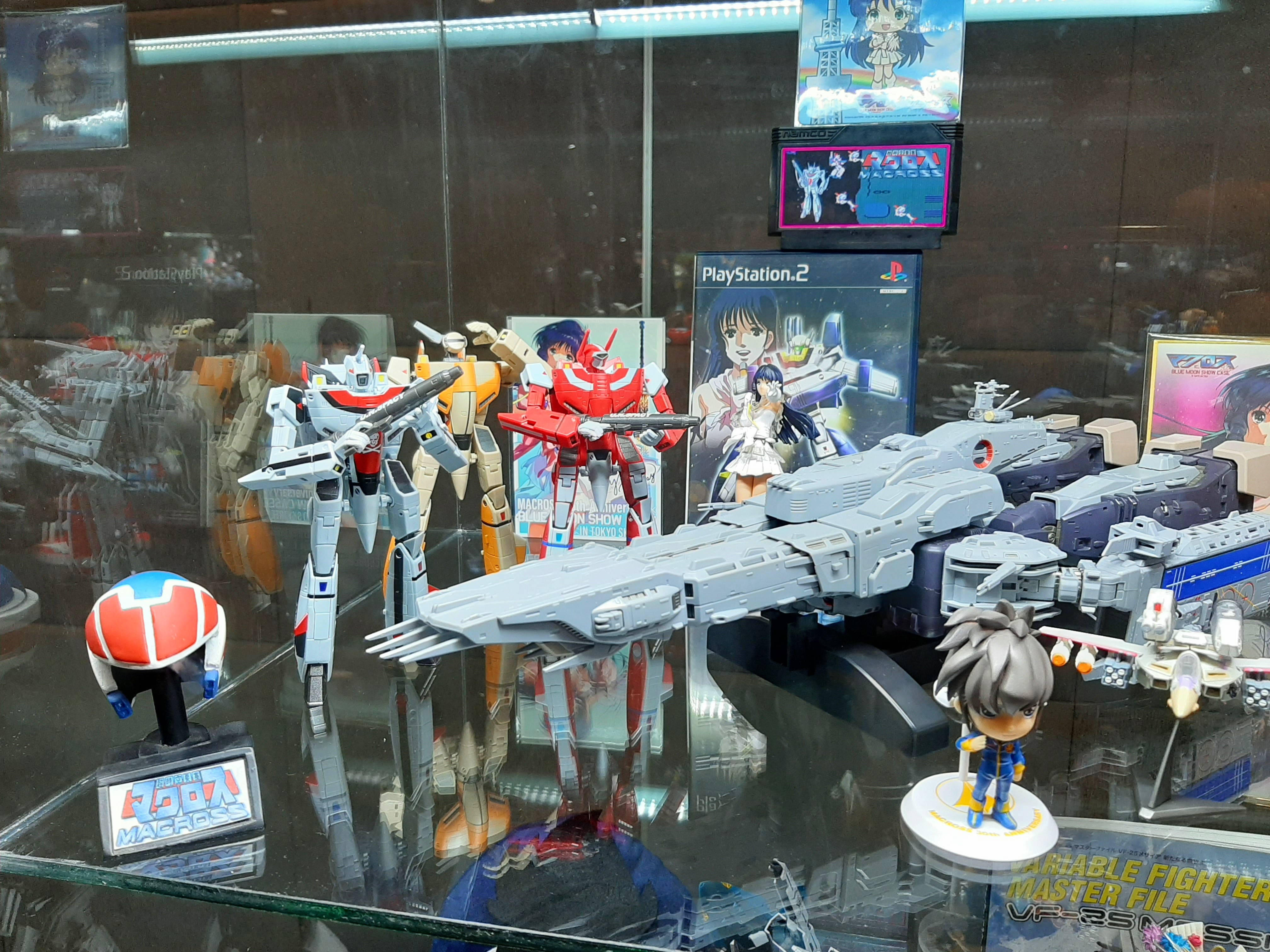
The YF-19 from Macross Plus and its weapons on display. Behind it are varied video games and manuals.

20190629_105754.jpg
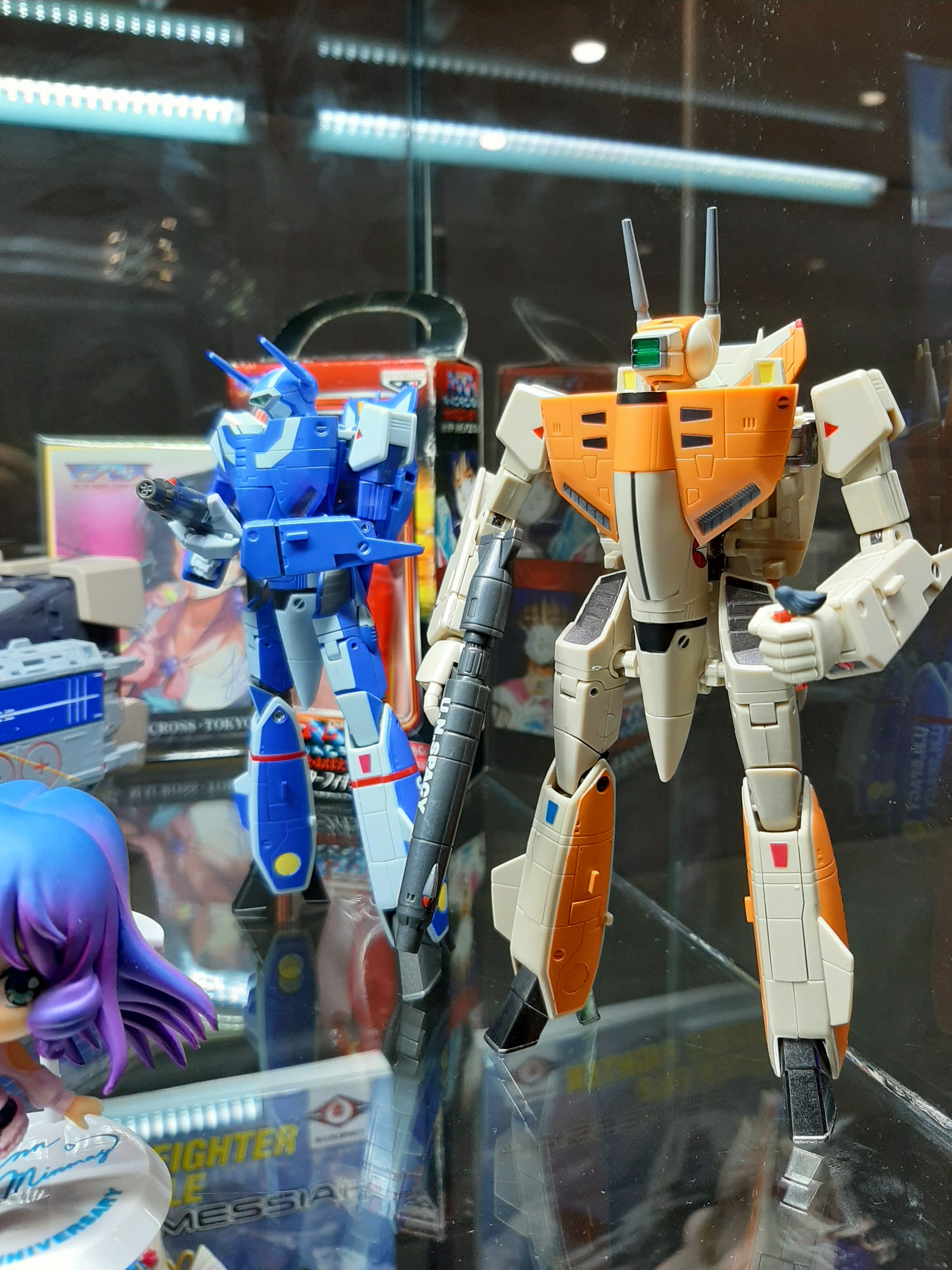
A close look at these mean machines. The one on the right reflects the model of used by Hikaru in the first few episodes of the 1980s Macross anime TV series complete with holding Lynn Minmay for safety.

At the 2nd level of the convention center was a function hall which has a large display of collected items of varied entertainment franchises. The one showcasing Macross had toys, action figures, plastic models, video games, music CDs and some printed materials.

What caught my attention was the display of the YF-19 from Macross Plus complete with its weapons in full view.

20190629_105744.jpg
Memories of the 1980s anime TV series as well as the 1984 classic movie Macross: Do You Remember Love? entered my mind.

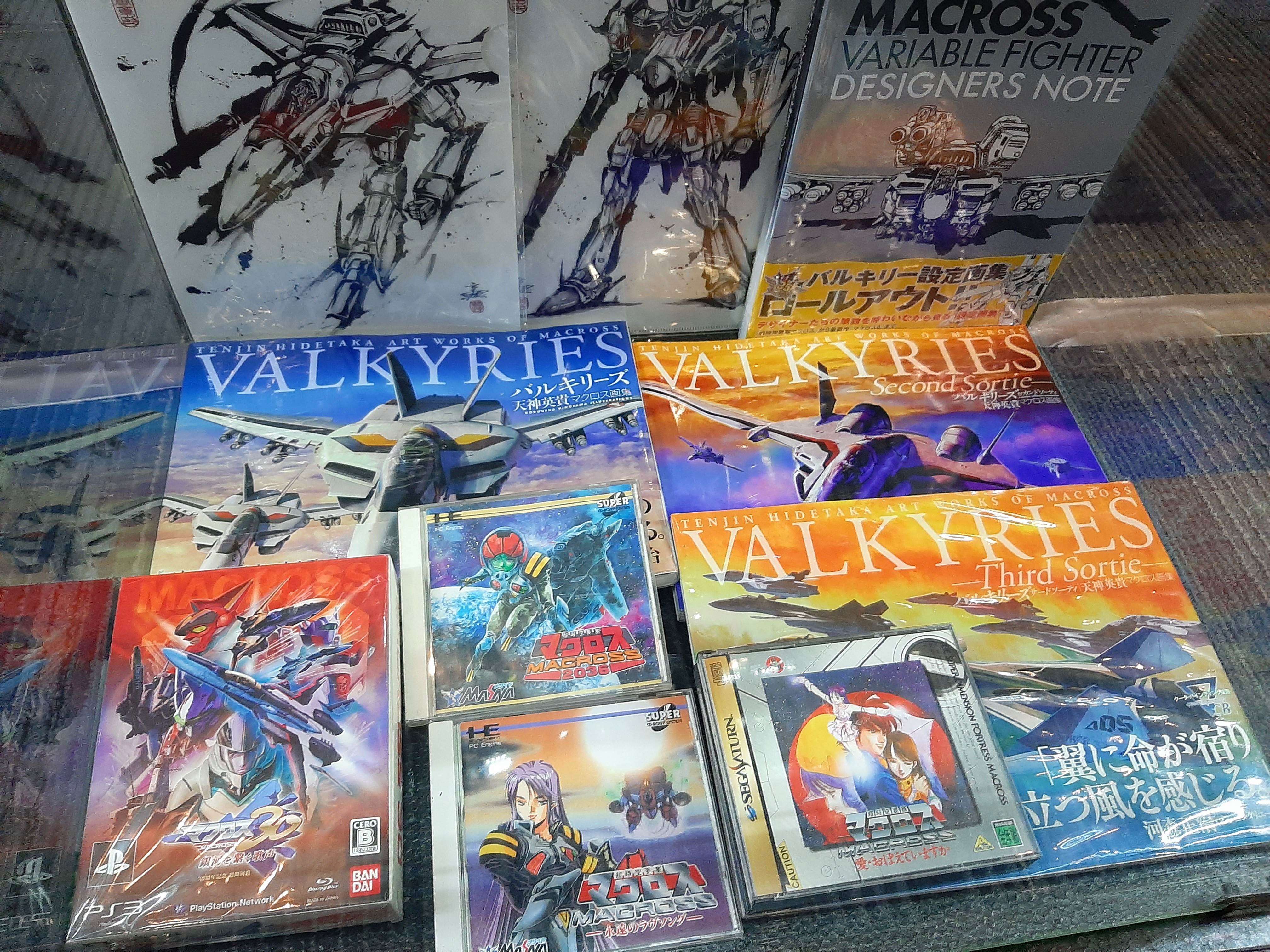
Also seeing an original copy of the 1990s Sega Saturn video game adaptation of Macross: Do You Remember Love? instantly made me remember playing and enjoying the PlayStation version of that game. The Sega Saturn game can be seen in the picture below.

20190629_105730.jpg
Art, books, soundtracks and the Sega Saturn video game.

As much as I enjoyed the display of Macross memorabilia, I regret to say that I was unable to find any more related collectibles or products for sale among the many vendors at the lower level during the Toycon. I searched for whatever Macross stuff I could find (t-shirts, comic books, action figures, models, cards and others) but ended up with nothing.

Then again, it should NOT be surprising at all. Macross as an entertainment franchise is not exactly popular here in the Philippines and Macross Mania in the country has ended long ago. To say the least, the popularity of Macross here in the Philippines is limited to older fans and collectors. Anime is a lot more popular among Filipinos in this modern age but that does not mean Macross found a new nor large audience.

If ever the legendary Shoji Kawamori (whom I met at AsiaPOP Comicon Manila in 2017) or any notable Macross-related talent comes here in the Philippines, only then will the Macross brand gain attention.

20190629_105810.jpg
Another close look.

If you love anime or Macross, then I invite you to read my retro movie review of Macross: Do You Remember Love? right here. I also wrote about the famous Lynn Minmay here.


Thank you for reading. If you find this article engaging, please click the like button below and also please consider sharing this article to others. Also my fantasy book The World of Havenor is still available in paperback and e-book format. If you are looking for a copywriter to create content for your special project or business, check out my services and my portfolio. Feel free to contact me as well. Also please feel free to visit my Facebook page Author Carlo Carrasco and follow me at HavenorFantasy@twitter.com

Final Fantasy Bonanza for Xbox Fans!

When rumors floated online in 2005 that Square Enix was being attracted by Microsoft to release games on what was back then their upcoming game console the Xbox 360, there were some gamers who just dismissed those rumors claiming that the Japanese company would NEVER release its role-playing games (RPGs) – specifically Final Fantasy games – on a console of an American company.

It was a different time back then for console gaming. Square Enix released Final Fantasy X, Final Fantasy X-2, Final Fantasy XII plus some Dragon Quest and Front Mission games on Sony’s highly successful PlayStation 2 (PS2) console. The company even developed a Final Fantasy spin-off for the GameCube with Nintendo as publisher.

For the original Xbox console, Square Enix made no games for it at all.

Things turned during the time of the Xbox 360. Square Enix published several games for it and to the delight of Xbox fans who love Final Fantasy, the company released Final Fantasy XIII, Final Fantasy XIII-2, Final Fantasy XI and other games.

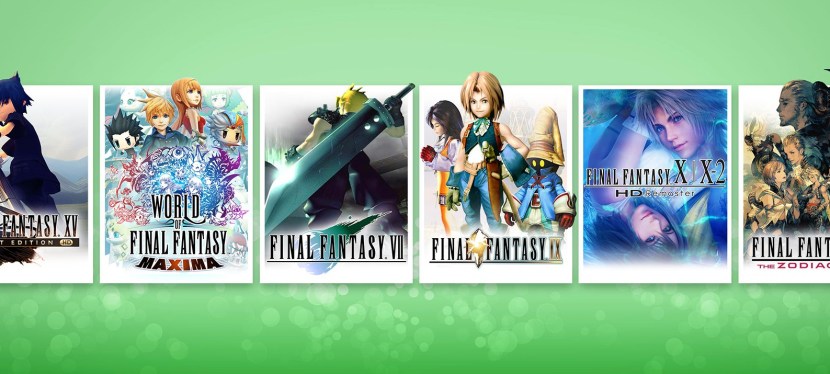
This year Square Enix released several of their classic Final Fantasy games released for Xbox One gamers via Xbox LIVE – Final Fantasy VII, Final Fantasy IX, Final Fantasy X and X-2 and a few others.

The other announced game, Final Fantasy XII (The Zodiac Age), will be released on April 30.

Among these games, I’m currently playing Final Fantasy IX on my Xbox One and even though it has been almost twenty years since I last played it, I can say that I am enjoying it again. The game is technically a port of the PC version (which comes with cleaned-up graphics most evident on the character and creature models) and not a remastered version. More importantly, the gameplay is still fun (even though it has those random battles) and the story has a lot of heart.

With the classic Final Fantasy games available via Xbox LIVE, now is the time for Xbox fans (who love Final Fantasy or those who are very interested in Japanese role-playing games) to acquire them while they can. We should be very thankful to Square Enix (and surely to Microsoft’s Xbox team led by Phil Spencer) for those games.

Final Fantasy X and X-2 were remastered for Xbox One while the upcoming Final Fantasy XII has already been confirmed to run at a super smooth 60-frames-per-second on the premium Xbox One X console.

What is missing from the FF classics is Final Fantasy VIII which continues to puzzle gamers to this day.

If more Xbox gamers buy these classic FF games, then perhaps Square Enix will be convinced to release more of their past hits of their other franchises like Front Mission and Dragon Quest. Perhaps they will consider releasing the older, 2D FF games like Final Fantasy IV, Final Fantasy V and Final Fantasy VI.

Apart from enjoying the varied stories, characters and gameplay styles, gamers will also enjoy the music of Nobuo Uematsu.

For your enjoyment, I embedded below Xbox channel videos of Final Fantasy.


“Spider-Man” Biking In The Philippines

Imagine yourself driving down the road in your car until you see a famous pop culture icon also moving along by biking.

In the City of Valenzuela in the Philippines, an unidentified person wearing a Spider-Man costume was seen biking along the road and his presence became viral on social media according to this Tagalog-language news video below.

Watch and see more.

I wonder if that costumed biker was a cosplayer heading to some sort of a superhero or geek event. Perhaps he was a hired entertainer heading towards a party with guests.

Speaking of Spider-Man, are you looking forward to the next movie starring Tom Holland? Did you read any good Spider-Man comic books lately?


A look back at Resident Evil 3: Nemesis

Screenshot_20190115-204136~2.png

First released in late 1999 on the PlayStation console in America, Resident Evil 3: Nemesis (Japan title: Biohazard: Last Escape) was a notable game of the Resident Evil franchise that not only proved to be a lot of fun but also a memorable experience for fans. To this day the game is fondly remembered.

In recent times, the Resident Evil franchise made waves with gamers worldwide with Resident Evil 7 (which came with a very daring change of style and gameplay) and the Resident Evil 2 remake demo (which I played the full 30 minutes of). The RE2 demo instantly brought back my own memories of enjoying the PlayStation version of early 1998. Granted, Resident Evil 2 in 1998 was truly a great sequel and its concept was epic compared to its predecessor’s. Because that game was a major blockbuster, Capcom had to come up with worthy follow-ups.

Then something happened over at Capcom in Japan. The initial concept for a sequel to RE2 was in the form of a story set on a luxury cruise liner but the company decided it lacked the time to produce a game out of it and this was related to Sony’s unveiling of the PlayStation 2 console.

Screenshot_20190115-203934~2.png

After some shuffling of executives and creative people, a team composed of not-so-experienced talents led by game director Kazuhiro Aoyama was formed to produce a spin-off  with a plot penned by company writer Yasuhisa Kawamura. The story was reviewed and approved by Flagship (an internal team that led the creative charge of Resident Evil projects) and RE creator Shinji Mikami worked as producer on the project.

Regarding its status, Resident Evil 3 was developed in tandem with the Sega Dreamcast-bound game that became Resident Evil: Code Veronica which was a bigger project and was the true sequel to RE2. The tricky part was that Capcom decided that its RE games released on PlayStation will carry a number on the title for “consistency” while RE games released on other platforms would carry subtitles.

RE3 followed the exploits of Jill Valentine, who was a protagonist in the 1996 original Resident Evil game. The story begins with her stuck in the middle of Raccoon City surrounded by flesh-eating zombies and she has no choice but to fight, run and escape to survive. Along the way, she discovers that what she learned from Umbrella in the first game was nothing compared to the more sinister intentions of the company she discovers in RE3. Making matters even harder for her was Nemesis, a large walking bio-weapon whose purpose is to destroy members of the city’s police unit S.T.A.R.S. (which Jill belongs to).

Screenshot_20190115-210004~2.png

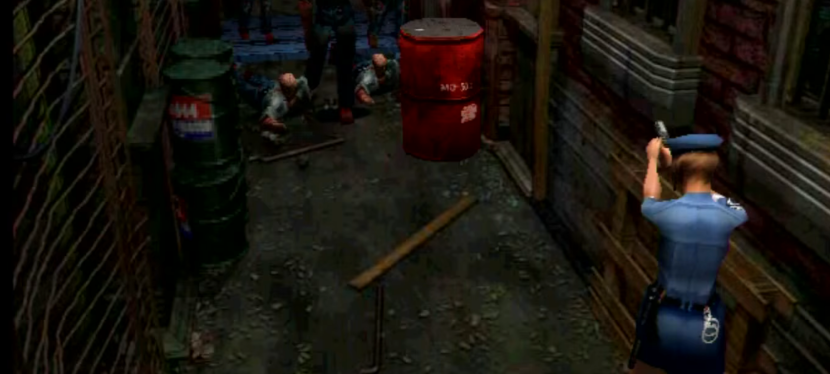
For what started as a spin-off, Resident Evil 3’s gameplay showed notable improvements over that of Resident Evil 2. As a survival horror game, it has the awkward tank-like controls, the static pre-rendered environments with fixed camera angles and challenges of moving from one place to another while dealing with zombies or monsters.

The most notable improvement made was the addition of the ability for players to do 180-degree quick turn-around movements when controlling the character. Not only does this make moving the character easier, it also adds more speed and strategy into the game itself especially when the protagonist is surrounded by many zombies or monsters. The pace of gameplay also quickened with the quick turn-around.

Another addition is the ammunition crafting system that allows you to make more ammo for your weapons by combining the raw material (example: gun powder) into the in-game ammo-making device. This results making different types of ammunition for different weapons. By the time you reached deeper into the game, more powerful ammunition for newer weapons can be made and used.

Meanwhile the game had key moments that compel players to make a decision as that the narrative and gameplay would move forward. The element of choice is a nice gameplay addition and each choice made showed different results as to what happened next. When Nemesis appears, the game’s movement slows down presenting choices for gamers to make. The good news here is the decision making affects the quality of the story’s ending.

Screenshot_20190115-204827~2.png

The one addition I find questionable in the game is the dodge which works rather unpredictably in terms of response. There are times it worked and there are times it failed. No matter how you use the controls and time them with the action, the results are always inconsistent.

The biggest addition, not to mention the biggest impact, made in the game is Nemesis himself. Unlike Mr. X in Resident Evil 2, Nemesis is the unrelenting stalker whose presence and action deepened the gaming experience. Not only was Nemesis tough to fight with, he also appeared when gamers least expected and he runs a lot to get to Jill (or the mercenary Carlos who was also controlled temporarily by players). The music accompanying Nemesis’ presence also heightened the fear factor. It is argued that Nemesis himself is the most defining feature of Resident Evil 3 and deserved to have the game’s subtitle made after him.

Screenshot_20190115-202827~2.png

In my honest opinion, Nemesis reminds me a lot of the horror icon Jason Voorhees from the Friday The 13th slasher horror movie franchise. Like Jason, Nemesis is heavily disfigured (horrific to look at), stalks his prey relentlessly and does a lot (and anything) to kill his prey. Nemesis’ killing of Brad only shows how deadly he is. Like Jason, Nemesis cannot be reasoned with nor does he feel any pity. He simply won’t stop until he kills you in the game.

In terms of technology, RE3 used the same game engine as RE and RE2. By this time, the technology experts at Capcom improved the visual quality and the 2D pre-rendered backgrounds always felt convincing to me each time I played. Rare are the times when I noticed the 3D polygonal characters or monsters stood out from the 2D environments. With regards to the anti-hero elements, the zombies are more varied and most of all the monsters are creepier to look at. The Hunters made a nice return as well.

In terms of exploration, Resident Evil 3 makes heavy use of the city environment complete with many varied interiors mixed with believable exteriors. There were these alleys, streets (with some stores to enter) and more. The many puzzles as well as machines that required key items to be retrieved provide a good challenge although some may find the backtracking a bit tedious.

The return of Jill

jill

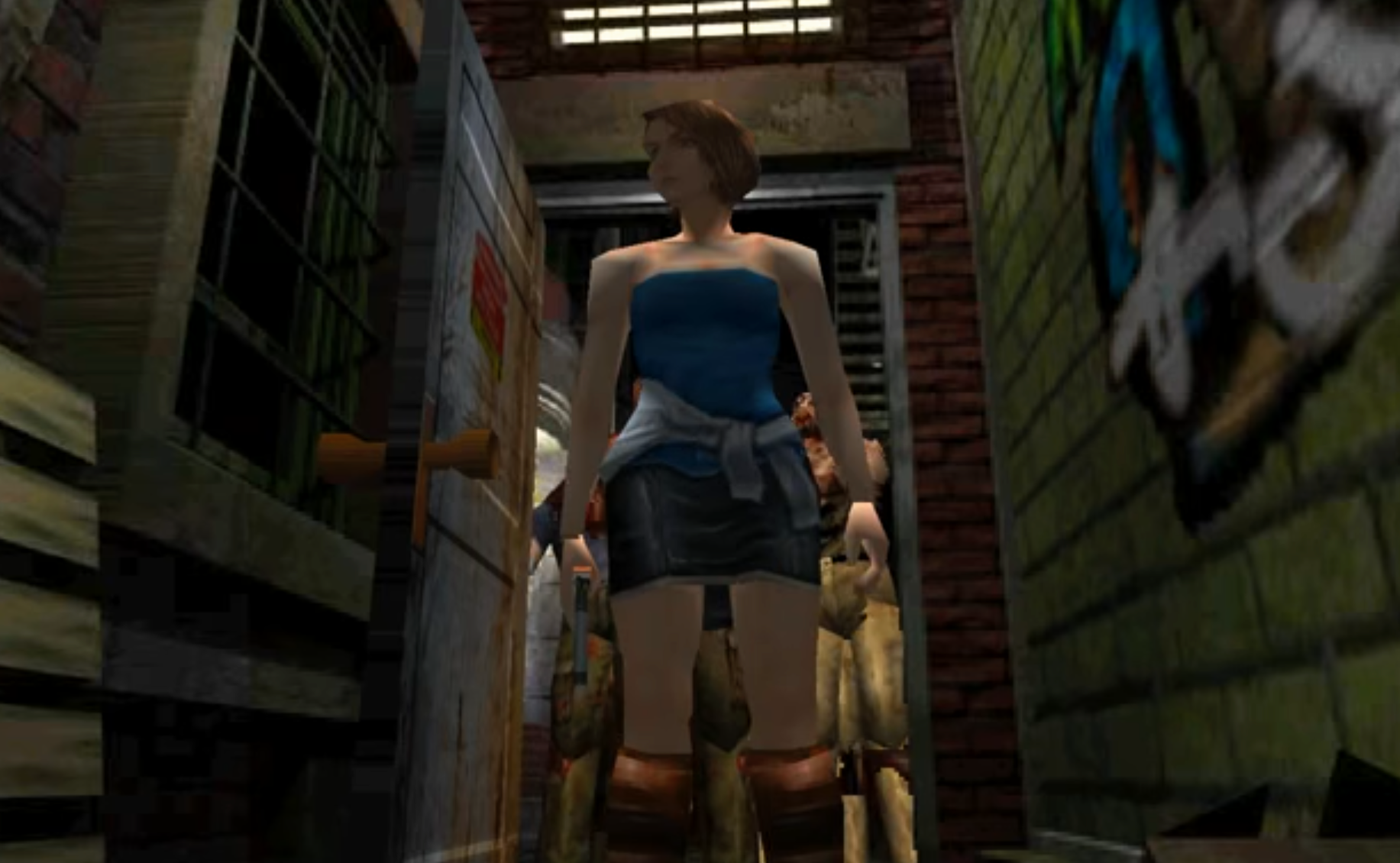
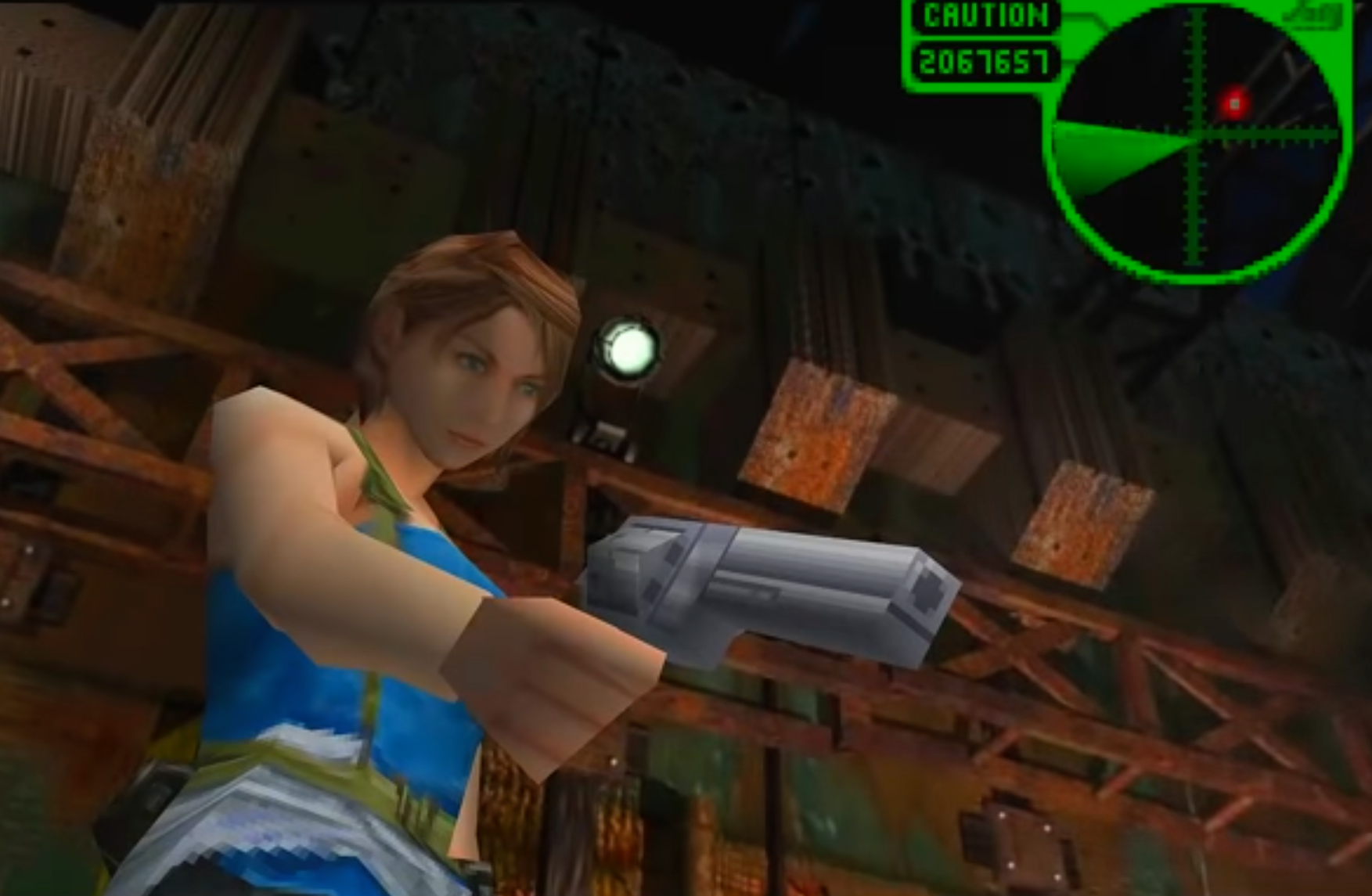
Jill Valentine made a nice return as the protagonist of the game. Right from the start, it was explained that she had resigned from the police force. Regarding her skimpy appearance (the blue tube top she wore with short skirt and boots), it turned out she was on her way out of town when the zombie infestation of Raccoon City begins in RE3.

More on Jill’s sexy default appearance in the game, I believe that Capcom’s creative team designed her like that in response to the sexy, armed woman charm popularized by Lara Croft of the best-selling Tomb Raider game franchise.

Take note of this. The first Resident Evil was released in 1996 many months before the first Tomb Raider came out. By the time Resident Evil 3 was released, the Tomb Raider franchise already had three games (note: there was a 12-month cycle for releasing sequels back then) that each sold in the millions and Lara Croft was quickly established as not only as a pop culture icon but also as a digital sex symbol idolized by millions of guys worldwide. I have this theory that some members of the Resident Evil 3 team subconsciously came up with the tube top look for Jill Valentine with Lara Croft as an influence. To say the least, both Jill and Lara are brave women capable of fighting with varied types of guns.

Screenshot_20190115-210306~2.png

Sex appeal aside, Resident Evil 3’s story is truly a defining tale of Jill Valentine as a character. By connecting her RE3 tale with that of the events of the first game from 1996, I come to realize that her stories made sense. Her becoming disillusioned with the failure of the city police department to go against Umbrella and eventual quitting from the police force was believable. In addition, Nemesis proved to be the ultimate monster she ever faced and all the monsters she encountered in the first game paled in comparison to him.

Alone and without having access to police resources, Jill’s struggle in Resident Evil 3 is a story that won’t be forgotten and the game’s fun and engaging gameplay only made her story even more memorable.

The cinematic “adaptation”

reapocalups
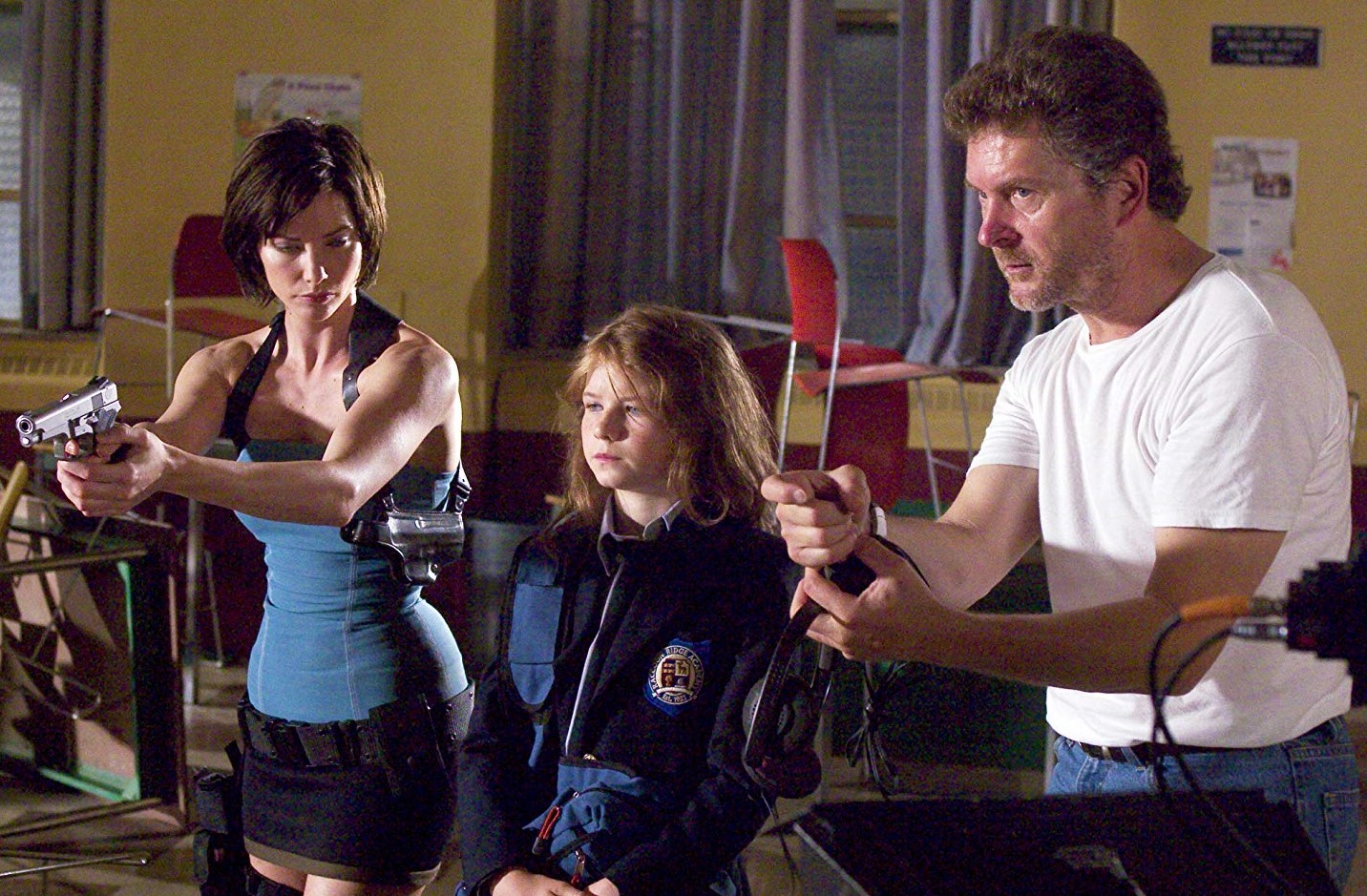
Sienna Guillory as the cinematic Jill Valentine at the left. With her were Sophie Vavasseur as Angela Ashford and director Alexander Witt. (credit: Screen Gems, Inc.)

In 2004, the second Resident Evil live-action movie Resident Evil: Apocalypse was released in cinemas starring Milla Jovovich. The concepts of Resident Evil 3: Nemesis were carelessly adapted by the movie showing a Raccoon City filled with zombies and a live-action Jill Valentine played by Sienna Guillory who appeared with the tube top, short skirt and boots. In a sequence in the movie, Guillory even tried moving like her character’s video game counterpart.

While attention was paid on Jill’s Resident Evil 3 look, Guillory’s portrayal of her was nothing special and this has a lot to do with the screenplay by Paul W.S. Anderson, the directing by Alexander Witt (not really a prolific director) and notably Milla Jovovich’s dominance of the spotlight.

Whenever I watch Guilloy’s Jill in the movie, I really never felt like watching RE3’s Jill at all. Also the film had Jill being inferior to Alice (Milla Jovovich) on screen. There are two scenes in the movie wherein Jill does something to solve the problem, Alice comes in to do it better than her.

Having seen all Resident Evil live-action movies, which I regret for the most part, it is no secret that the filmmakers treated the concepts, characters and other elements from the RE video games with no real respect and certainly with no care about the concerns of Resident Evil game fans.

If you have not seen Resident Evil: Apocalypse and have been interested to see it for the RE3 elements, better not waste your time. Better play the video game instead.

Conclusion

Screenshot_20190115-210810~2.png

Ultimately Resident Evil 3: Nemesis is a classic even though it was never meant to be the big budget sequel to the classic Resident Evil 2. The game deservedly got released on the Sega Dreamcast, the Nintendo GameCube and Windows PC.

Now that Resident Evil mania is back in gamers’ minds right now, I should say that Capcom should consider re-releasing digitally RE3 for Xbox One, PlayStation 4, Nintendo Switch and Windows 10 if ever possible. Even though its tank-like controls are very outdated by today’s standards, Resident Evil 3: Nemesis is a classic that gamers of different ages must enjoy without having to go through the hassle of acquiring old existing copies of it (not to mention having an existing old console to play it). I myself am willing to pay for RE3 to be re-released and play it on my Xbox One. Very recently an enhanced re-release of Onimusha: Warlords was done by Capcom. Making the same treatment with RE3 only makes sense.

Who knows what impact a re-released RE3 would create? Such a re-release could lead to a popular demand for Capcom to make a big budget remake of Resident Evil 3 similar to what they have done with RE2. This will also give today’s gamers an opportunity to experience the one defining story of Jill Valentine.

In ending this article, I posted some YouTube videos of RE3 for your enjoyment.


Thank you for reading. If you find this article to be engaging, please click the like button below and also please consider sharing this article to others. Also my fantasy book The World of Havenor is still available in paperback and e-book format. If you are looking for a copywriter to create content for your special project or business, check out my services and my portfolio. Feel free to contact me as well. Also please feel free to visit my Facebook page Author Carlo Carrasco.