A Look Back at Uncanny X-Men #286 (1992)

Welcome back superhero enthusiasts, 1990s arts and culture enthusiasts, Marvel Comics fans and comic book collectors! Today we go back to the early 1990s to explore one of the many tales of the Marvel shared universe through the Uncanny X-Men series.

While issue #284 marked the turning point following the successful return of Jean Grey and the encounter with Bishop, issue #285 generated strong vibes of the sci-fi TV series Otherworld as it revealed most of the X-Men’s Gold Team members in a completely different world filled with unknown inhabitants and culture. Clearly a lot has happened following the Gold Team’s debut in issue #281 which reflects the respective contributions of the creators.

With those details laid down, here is a look back at Uncanny X-Men , published in 1992 by Marvel Comics with a story co-written by Jim Lee and Scott Lobdell (who worked on the script). The art was done by Whilce Portacio with ink work by Art Thibert.
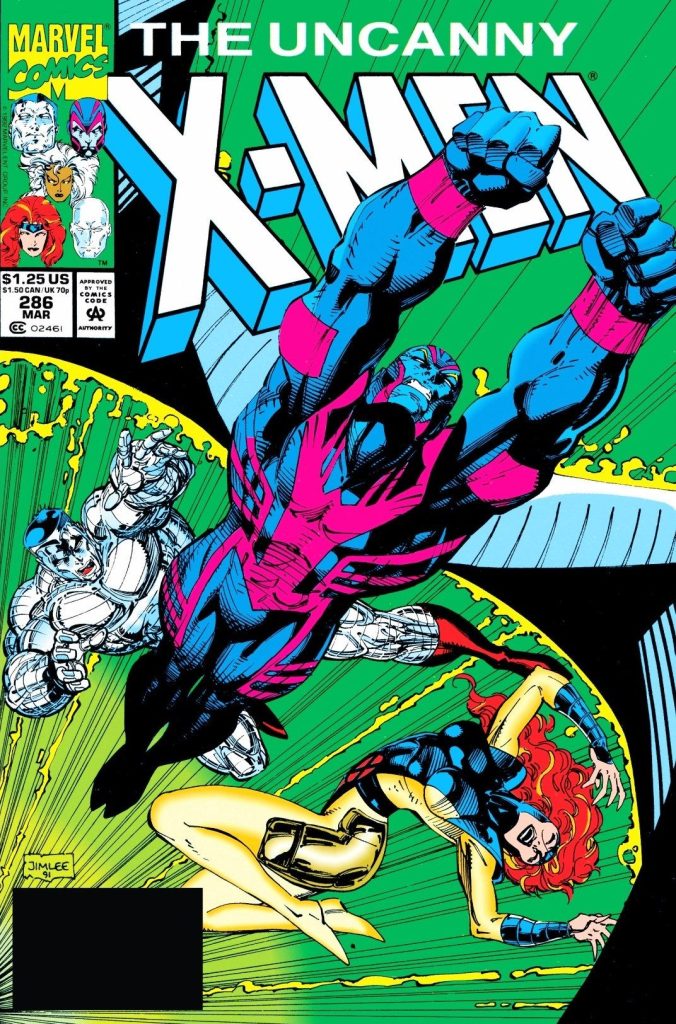
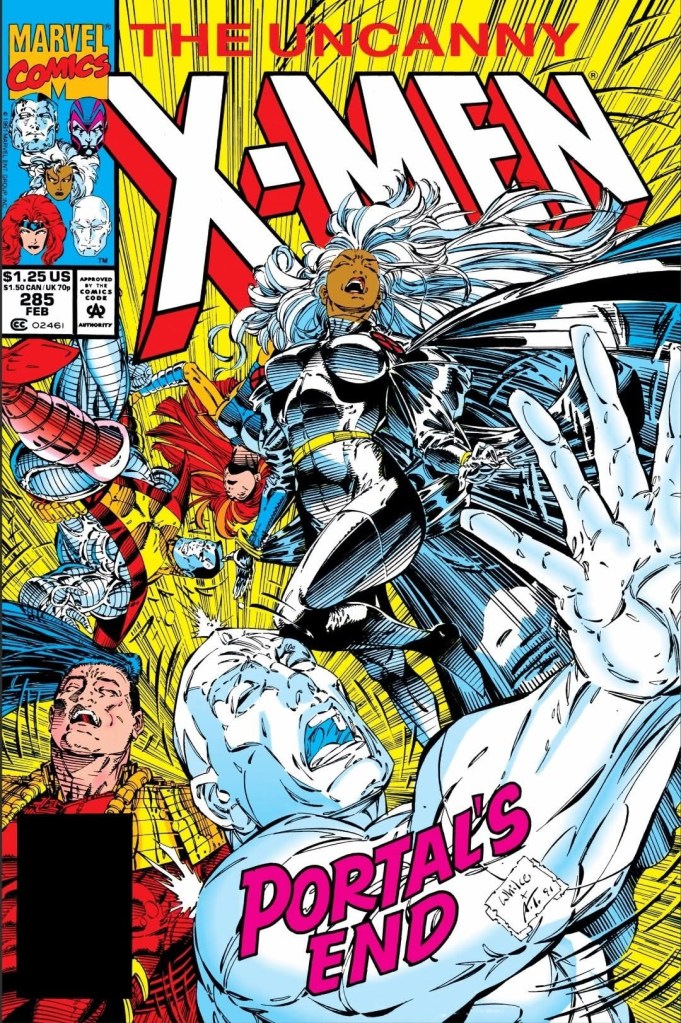
The cover.

Early story

The story begins with Jean Grey, Colossus, Storm and her male companion (Mikhail Rasputin) together. While Jean is surprised and relieved to see Storm again (she was separated from the team temporarily in the last issue), Colossus is shocked to see his long-lost brother Mikhail alive and well. Mikhail reveals that so many years have passed since he last stood with his little brother and had long abandoned any hope of a reunion.

The reunion is interrupted when a portal has grown larger by the moment and it means that it is only a matter time before Earth is pulled into the realm they are in. Both worlds are at risk of getting destroyed…

Quality
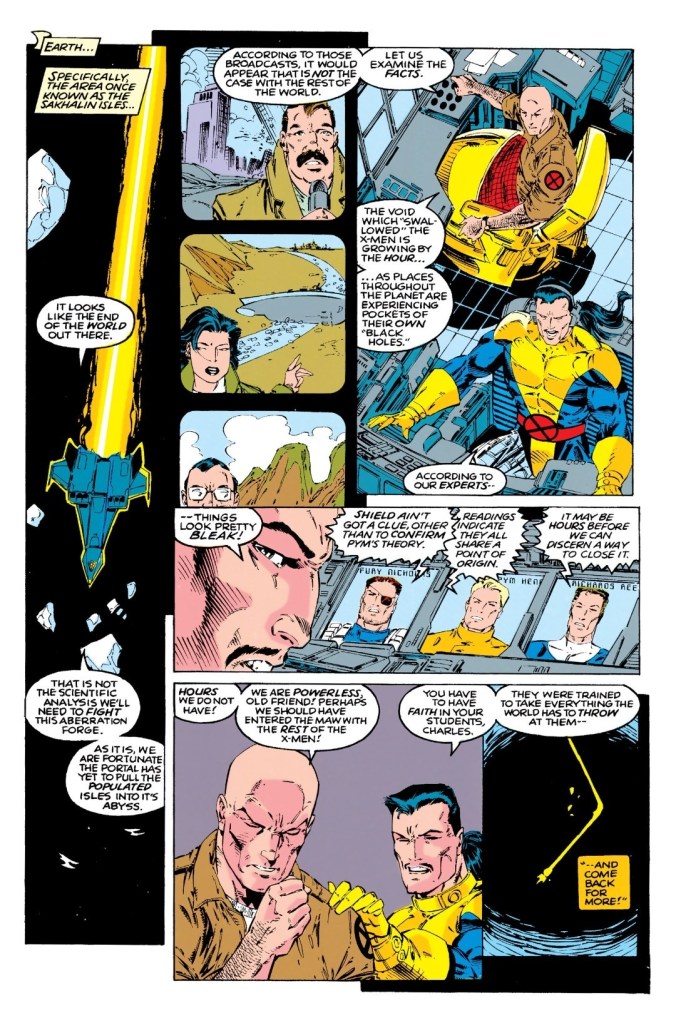
Charles Xavier and Forge are still on Earth separated from the rest of the X-Men’s Gold Team members.

Following the build-up and character developments that happened in the previous issue, this X-Men tale is pretty much a strong pay-off while leaving some space for suspense and surprises. The writers intended to conclude what started in issue and along the way, they had to go through the challenges of introducing a new world, new people and the conflicts within. Mikhail Rasputin – the same guy who helped Storm in issue – is easily the most impactful addition to this tale and because of him and what he revealed, Colossus became emotional and felt like his life was crumbling as he simply could not handle the truth. Colossus’ despair and emotional state here served as the creative seeds that later led to the betrayal he would eventually commit (in Uncanny X-Men ).

The Mikhail-Colossus interaction was easily this comic book’s source of emotions which added some weight to the plot. By the time I reached the end of this issue, I felt really satisfied and at the same time curious about the state of Colossus (note: there’s a still a long road of X-Men tales before Uncanny X-Men ).

With regards to the writing, John Byrne’s intricate touch on the dialog was clearly missing but Scott Lobdell did a fine job taking over. While Whilce Portacio was credited as illustrator, there were a few pages that looked like they were drawn by someone else. The same also happened with regards to the inking in different parts of the comic book…Art Thibert’s inking has a fine touch and there were some images that had aggressive and thicker inking (it has to be the work of someone uncredited).

Conclusion
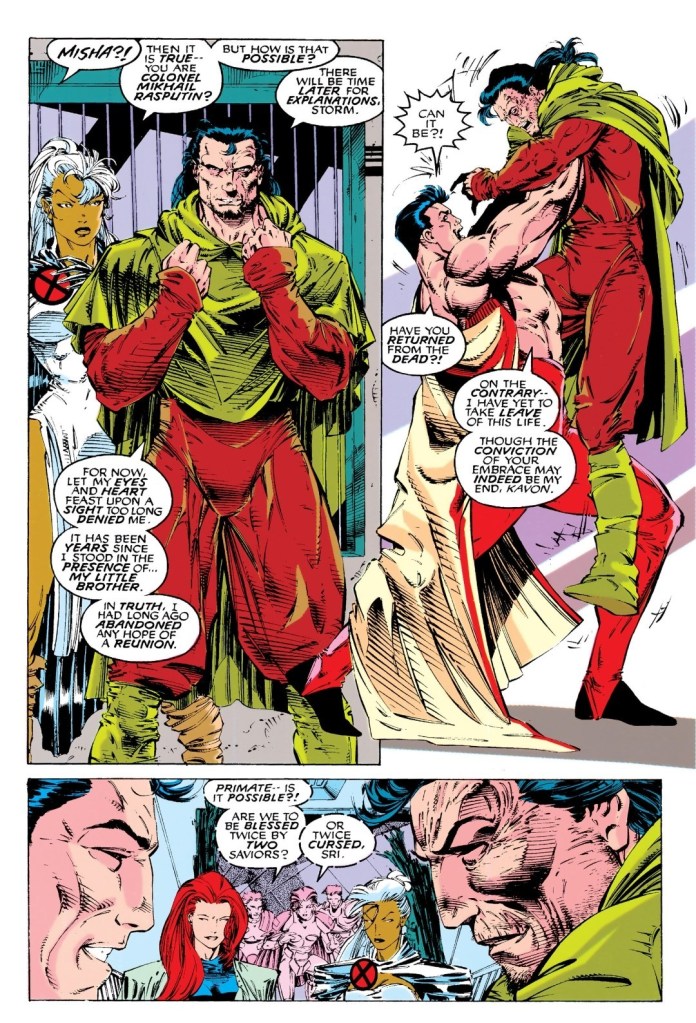
A very significant moment for the Rasputin brothers witnessed by Jean Grey, Storm and a few of the locals.

While there were some inconsistencies on the quality of the artworks, Uncanny X-Men (1992) had a really strong script and the good news here is that the creative team managed to pull off a solid conclusion. This is the kind of tale in which the X-Men utilized their skills and made tough decisions while being far away from Charles Xavier. At this particular stage of the Uncanny X-Men series, the Gold Team’s development really progressed and they became a more appealing team to follow.

Overall, Uncanny X-Men (1992) is highly recommended!

+++++

Thank you for reading. If you find this article engaging, please click the like button below, share this article to others and also please consider making a donation to support my publishing. If you are looking for a copywriter to create content for your special project or business, check out my services and my portfolio. Feel free to contact me with a private message. Also please feel free to visit my Facebook page Author Carlo Carrasco and follow me on Twitter at  @HavenorFantasy as well as on Tumblr at https://carlocarrasco.tumblr.com/ and on Instagram at https://www.instagram.com/authorcarlocarrasco
A Look Back at Uncanny X-Men #285 (1992)

Welcome back superhero enthusiasts, 1990s arts and culture enthusiasts, Marvel Comics fans and comic book collectors! Today we go back to the early 1990s to explore one of the many tales of the Marvel shared universe through the Uncanny X-Men series.

What happened in issue #284 was a turning point in storytelling and it is only a part of the early period of the X-Men – Gold Team’s operation. The X-Men were on the way home (with Jean Grey successfully retrieved and restored) following their encounters with Fitzroy’s gang and the mutant from the future Bishop only to proceed to a specific island in response to a distress call. By the end of it, something significant happened which separated the X-Men from Professor X and Forge.

With those details laid down, here is a look back at Uncanny X-Men , published in 1992 by Marvel Comics with a story co-written by Whilce Portacio, Jim Lee and John Byrne (who worked on the script). The art was done by Portacio with ink work by Art Thibert.

The cover.

Early story

The story begins with Jean Grey and Colossus (carrying a female primate) who find themselves not only disoriented but also separated from their teammates Iceman, Archangel and Storm. A unknown amount of time has passed since they were sucked forcefully into a void which turned out to be a portal into a new world of unknown origin.

As soon as they land, several primates (humans wearing armor and futuristic gadgets) immediately ganged up on them, knocking Jean Grey out successfully while ramping up their attacks on Colossus. With Colossus down after intense hits, the Russian X-Men member does not fight back and eventually saw his metallic skin turn into flesh fully exposing his human identity. The primates suddenly changed their attitude as they referred to Colossus as a returned savior who has fulfilled the prophecy they grew up with.

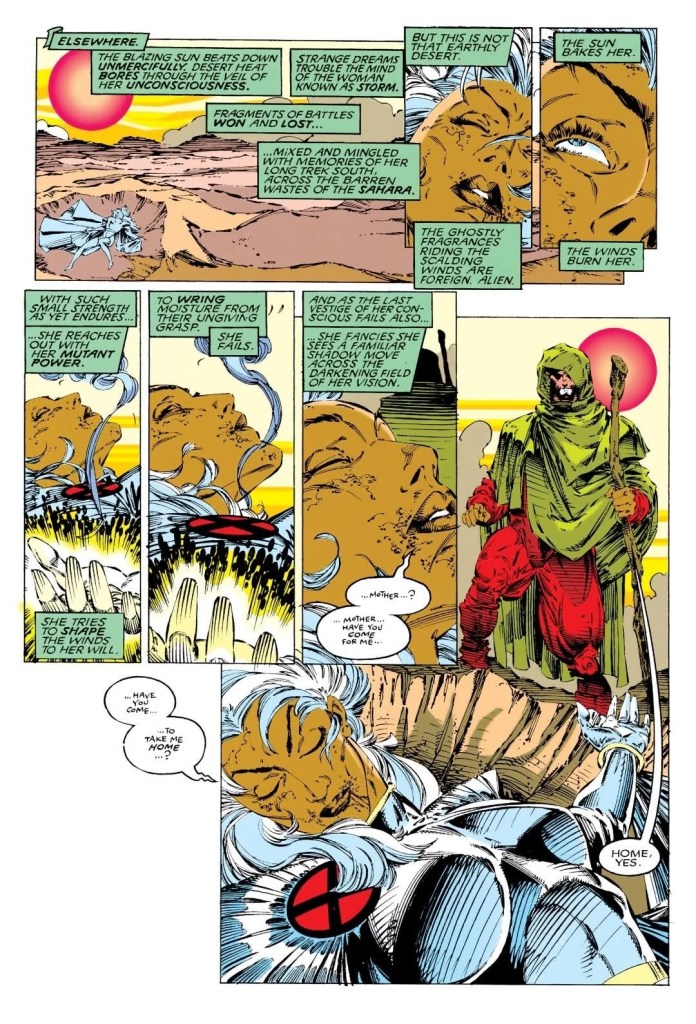
Elsewhere, in the middle of a hot desert, Storm is down on the sand feeling weak and groggy. She tries to alter the wind but fails. Suddenly, a man arrives with the intention of carrying Storm to his home…

Quality

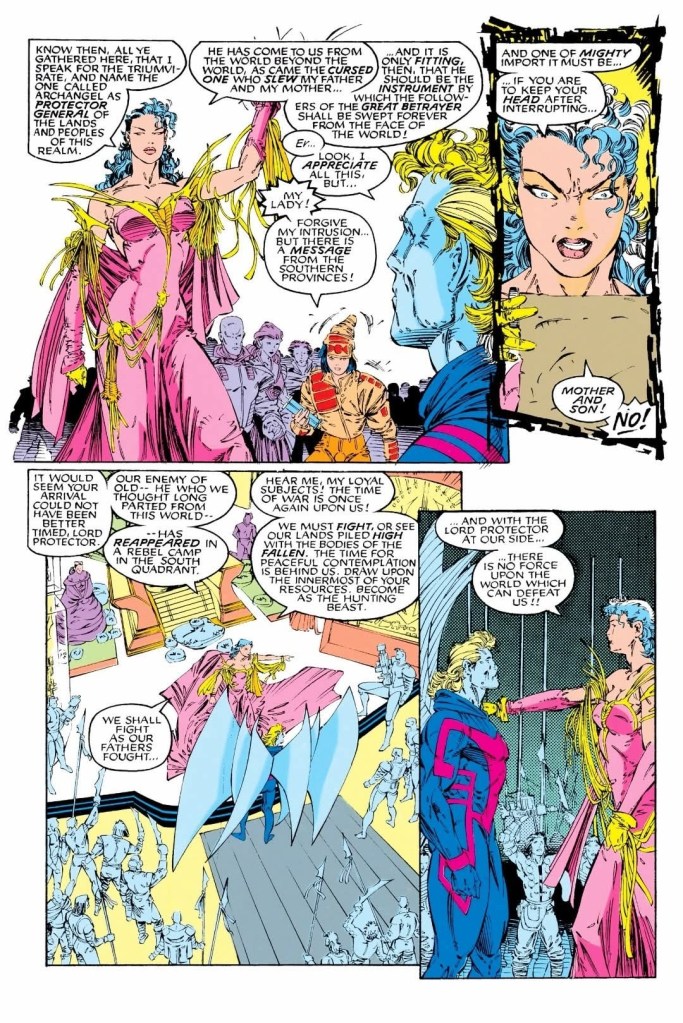
The natives in this page, Archangel is not only accepted by the leader but also perceived to be a great figure of destiny in connection with their beliefs.

This particular X-Men tale is the result of the turning point that happened in the previous issue. In this comic book, the X-Men’s Gold Team members are separated from each other and the world they are in is alien in nature and yet filled with unusual looking humans who clearly have a long-lasting culture, history and cultural norms formed through generations. This concept the creative team came up with has strong vibes of the 1980s American science fiction TV series Otherworld which I saw a very long time ago. In fact, I find the overall concept of this comic book an inspired piece of work.

Like in Otherworld, the X-Men are in a totally new and unknown world that somewhat looks like Earth but then it is not as the natives they encountered are totally unlike anything they encountered before. Like in The Empire Strikes Back, the X-Men here are separated from each other which opened up opportunities for the creators to develop the characters, show particular threads of their respective personalities (or their talents) and emphasize how they perceive new people and the new world they are in.

Without spoiling the plot, I can say that the natives of the unknown world are living with the foolishness of idolatry which can be seen at least in how they believe Colossus (in the flesh) is their savior and the fulfillment of the prophecy they were oriented with. The idolatry aspect of the tale serves as the twist on the primates’ (specifically the few who went to Earth willing to fight to the death) who first appeared to the X-Men as very daring opponents and it adds depth to the X-Men’s struggle on understanding the new world they are in.

When it comes to character development, Colossus and Jean Grey are strongly emphasized by the creative team who also managed to do the same with Iceman, Storm and Archangel. This tale also serves as a relief from the back-to-back good-versus-evil battles that took place since issue #281 and I can say the writing is solid.

Conclusion

A very helpless Storm is approached by a man in the middle of the desert.

While it lacks the usual conflict between Marvel’s mutants and evildoers, Uncanny X-Men (1992) is an inspired piece of work filled with sci-fi concepts, the overwhelming power of discovering a new world and established natives, and a lot of character development on Colossus, Storm, Jean Grey, Ice Man and Archangel. As I read the story, the mystery builds up and there were these subtle pay-offs that happened along the way. Overall, this comic book is a huge pay-off to what was established in issue and the notable thing is that the X-Men Gold Team (who have Sunfire with them) are just getting started in the unknown world.

Overall, Uncanny X-Men (1992) is highly recommended!

+++++

Thank you for reading. If you find this article engaging, please click the like button below, share this article to others and also please consider making a donation to support my publishing. If you are looking for a copywriter to create content for your special project or business, check out my services and my portfolio. Feel free to contact me with a private message. Also please feel free to visit my Facebook page Author Carlo Carrasco and follow me on Twitter at  @HavenorFantasy as well as on Tumblr at https://carlocarrasco.tumblr.com/ and on Instagram at https://www.instagram.com/authorcarlocarrasco
A Look Back at Uncanny X-Men #284 (1992)

Welcome back superhero enthusiasts, 1990s arts and culture enthusiasts, Marvel Comics fans and comic book collectors! Today we go back to the early 1990s to explore one of the many tales of the Marvel shared universe through the Uncanny X-Men series.

As of this writing, I really enjoyed reading the tales about the Gold Team of the X-Men under the co-writing of Whilce Portacio and John Byrne (click here, here and here). Following Bishop’s debut in issue , issue featured his intense first-ever encounter with the X-Men while concluding the mutants mission (retrieving Jean Grey).

With those details laid down, here is a look back at Uncanny X-Men , published in 1992 by Marvel Comics with a story co-written by Whilce Portacio and by John Byrne (script). The art was done by Portacio with ink work by Art Thibert, Scott Williams and Karl Altstaetter.

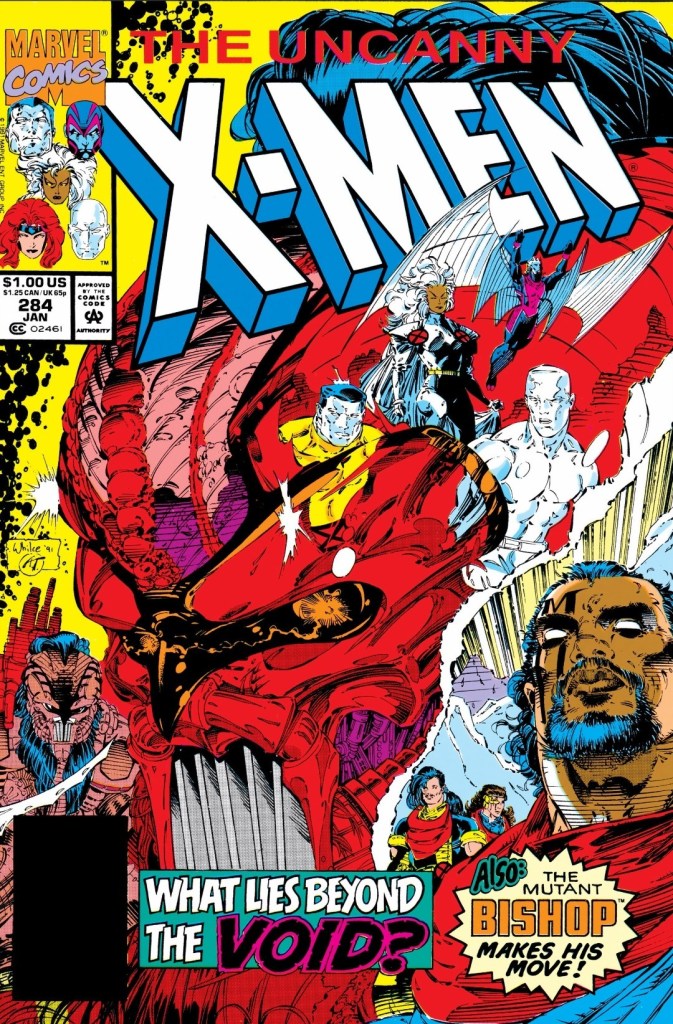
The cover.

Early story

The story begins at the Sakhali islands located off the coast of Siberian Russia and separated from Hokkaido of Japan. Previously a territory of China and explored by the Japanese, the island is now bustling with unusual activity as government officials and personnel of both Russia and Japan focus on a massive, sealed crater there. After meeting with the Russians and his fellow Japanese on location, the mutant Sunfire (Shiro Yoshida) proceeds to do a task with his immense power on the crater. The scientists quickly detect intense readings that went off the scale and it seems the void of the crater is responding to Sunfire’s assault. The void adapted its own frequencies with Sunfire’s and returns fire at him. The void then begins to change.

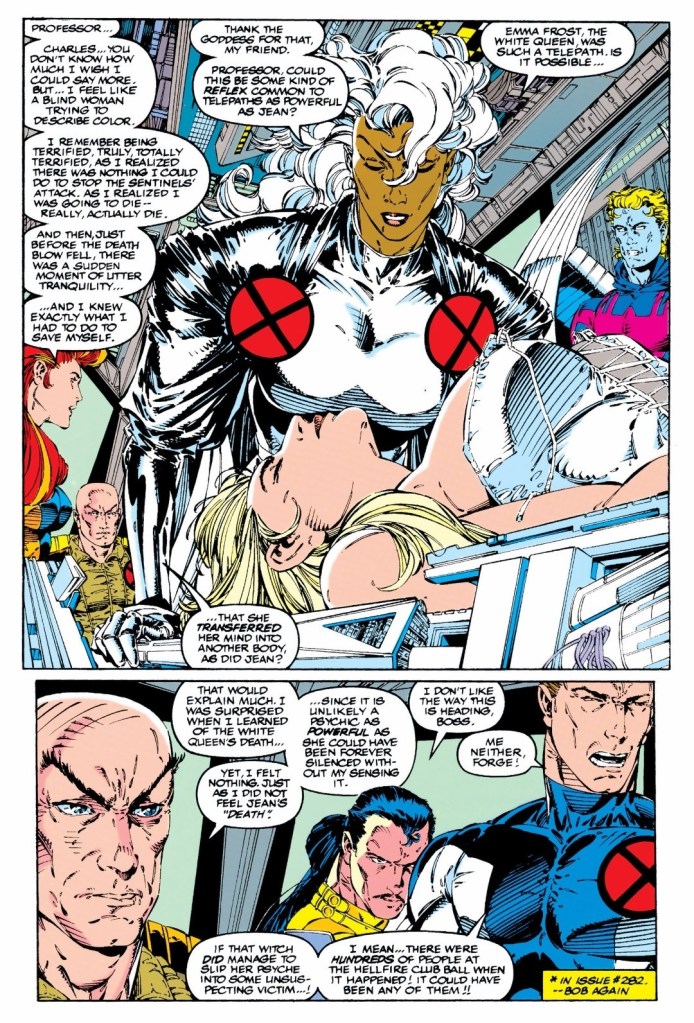
Elsewhere, the X-Men’s Gold Team are spending quality time together on board their supersonic blackbird heading home. Jean Grey, who previously occupied Emma Frost’s body temporarily, is back as herself and interacting with her teammates. With them is the unconscious body of Emma Frost (White Queen). Professor X and his mutants are uncertain as to what happened to Emma Frost’s mind and Bobby Drake (Iceman) speculates that she could have transferred her psyche into some unsuspecting victim (note: the party at the Hellfire Club’s headquarters in issue was filled with hundreds of people).

Having heard Iceman’s opinion, Professor X decides to scan Emma Frost for the last dim echo of her personality. He tells Jean Grey to join him to scan Frost. Suddenly, the X-Men receive a distress call from the Sakhalin islands…

Quality

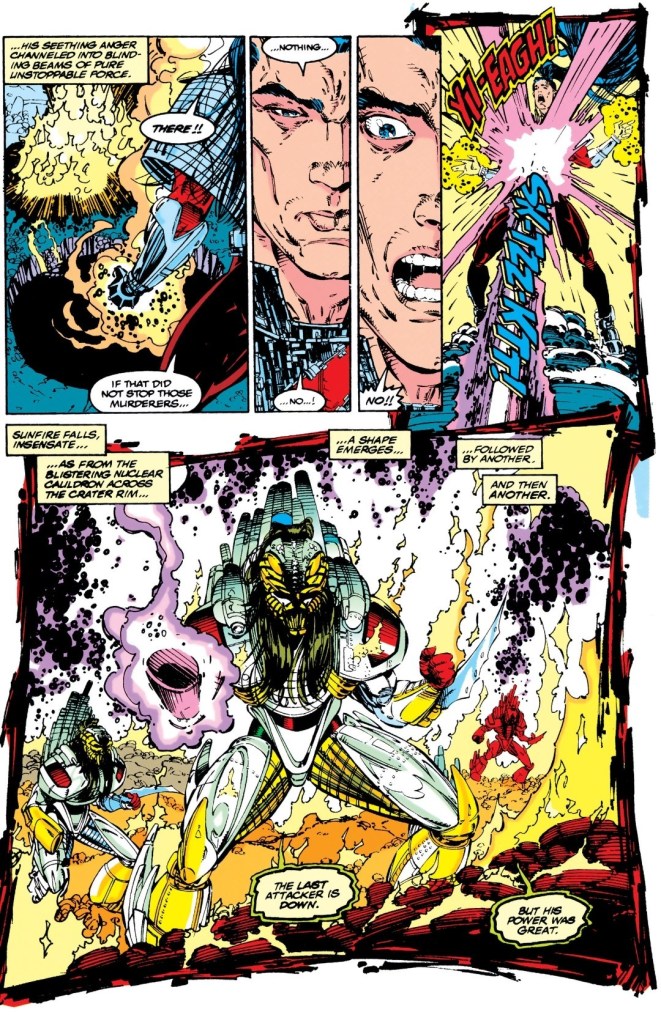
After Sunfire got hit, a new batch of enemies emerged from the void.

Following the intense and enduring events of issues until , this comic book’s concept had Charles Xavier and the Gold Team get busy yet again due to an emergency at the Sakhalin islands. This opened the opportunity for Portacio and Byrne to introduce a new conflict at the said islands (which turns into a war zone), a new force of opposition for the X-Men and giving the Japanese mutant Sunfire a share of the spotlight in X-Men comics.

At the heart of the conflict is the crater and void at the mentioned islands which brought out a strong element of mystery slowly backed up with intriguing revelations. The new force of opposition are armored, human-like beings (whose heads, hair and masks easily remind me of the Predator design of Stan Winston in the movies) who are armed, dangerous and determined to achieve their goals no matter how difficult. What is intriguing is how the new beings (referred to as aliens) remain concerned and caring with each other even during the intense moments of their encounter with the X-Men.

The climax of the conflict here is a must-see. You just have to get a copy of this comic book to find out.

When it comes to the visuals, Portacio continues to deliver solid artworks which showcased intense scenes, scenic shots, dynamic superhero action and subtle moments of drama (especially when the X-Men are together and in comfort). As there were three guys who inked Portacio’s work, there is a noticeable inconsistency with the visuals as the story went on.

Conclusion

Following their recent encounters with Bishop and Trevor Fitzroy, the X-Men still have the unconscious body of Emma Frost with them.

While some readers might find the X-Men Gold Team’s involvement in the conflict rushed, Uncanny X-Men (1992) remains an enjoyable read. As the situation is very new, the stakes are different here and for the most part, this comic book is a build-up of a new concept that just happened to be filled with a lot of action scenes. Portacio and Byrne delivered a fun-filled read with a good amount of intrigue and some surprises as they introduced a new force opposite the X-Men. And for the people are who are fond of Bishop, he and his companions are here but not with the X-Men.

Overall, Uncanny X-Men (1992) is recommended.

+++++

Thank you for reading. If you find this article engaging, please click the like button below, share this article to others and also please consider making a donation to support my publishing. If you are looking for a copywriter to create content for your special project or business, check out my services and my portfolio. Feel free to contact me with a private message. Also please feel free to visit my Facebook page Author Carlo Carrasco and follow me on Twitter at  @HavenorFantasy as well as on Tumblr at https://carlocarrasco.tumblr.com/ and on Instagram at https://www.instagram.com/authorcarlocarrasco
A Look Back at Uncanny X-Men #283 (1991)

Welcome back superhero enthusiasts, 1990s arts and culture enthusiasts, Marvel Comics fans and comic book collectors! Today we go back to the year 1991 to explore one of the many tales of the Marvel shared universe through the Uncanny X-Men series.

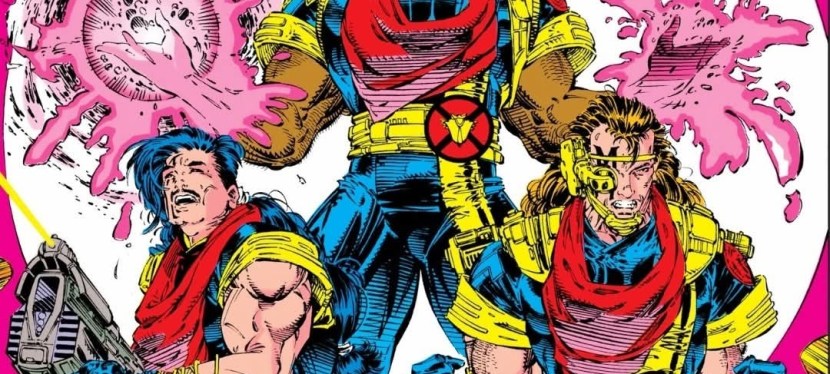
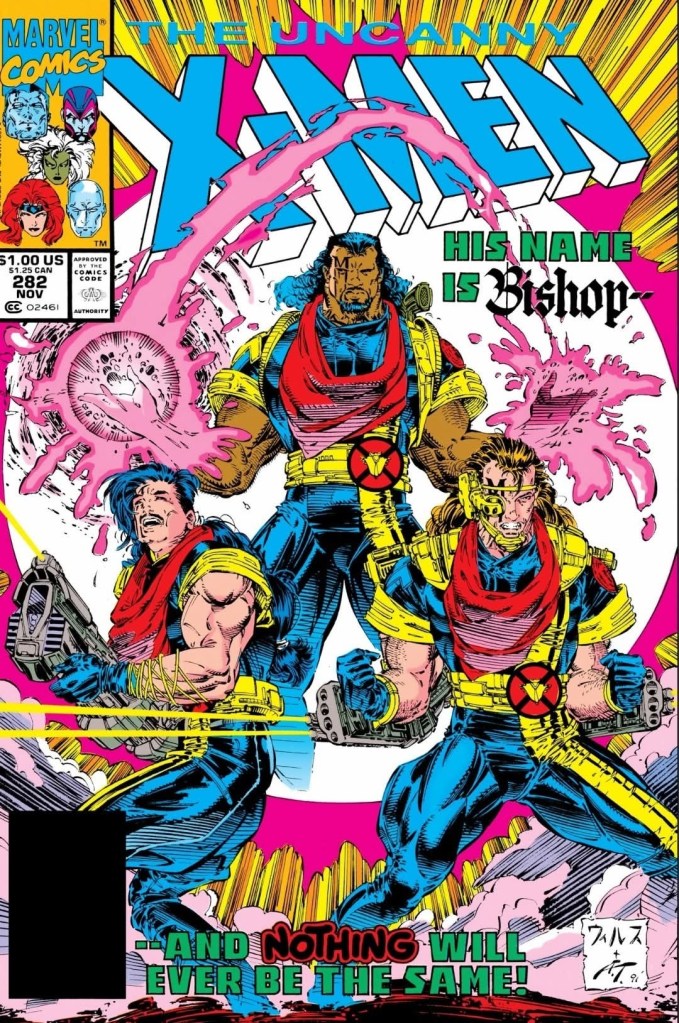
Uncanny X-Men #282 marked the continuing conflict between the X-Men and Trevor Fitzroy’s group, and the arrival of one of the most notable additions to Marvel’s Mutants…Bishop. To be clear, Bishop was not alone when arrived from the future through one of Fitzroy’s portals. In relation to everything that happened in the comic book, the arrival was a very powerful conclusion to read.

With those details laid down, here is a look back at Uncanny X-Men , published in 1991 by Marvel Comics with a story co-written by Whilce Portacio and by John Byrne (script). The art was done by Portacio with ink work by Art Thibert.

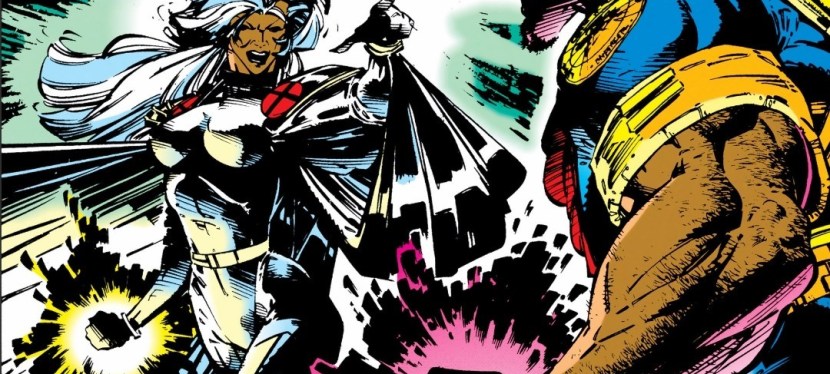
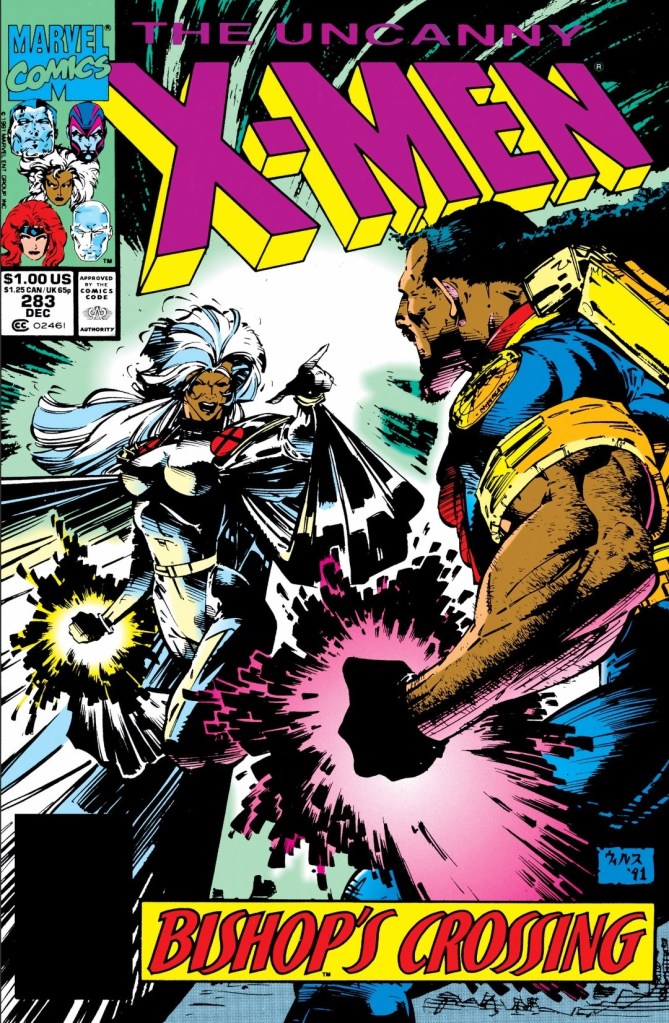
The cover.

Early story

The story begins in the arctic lair of Trevor Fitzroy. The arrival of Bishop and his two mutant companions – Malcolm and Randall – from the future caught everyone by surprise (including the X-Men). Bishop, who has Trevor Fitzroy subdued, tells his companions to throw their takes (members of Fitzroy’s force) into the portal.

Bishop intends to have Fitzroy go first which draws a loud reaction from the mutant madman. Fitzroy, who had been using the life force of captive mutants to open portals, knows exactly what would happen if he goes first. His exchange of words with Bishop shows they have a history together.

When Bishop’s companion moved a subdued person into the portal, it tore him apart. Fitzroy reveals to Bishop that the portals he created only function one-way and he tells him that he and his companions are stuck in the 20th century.

In response, Bishop assumes complete judicial authority and tells Malcolm and Randall to standby for termination sweep. The X-Men begin to react…

Quality

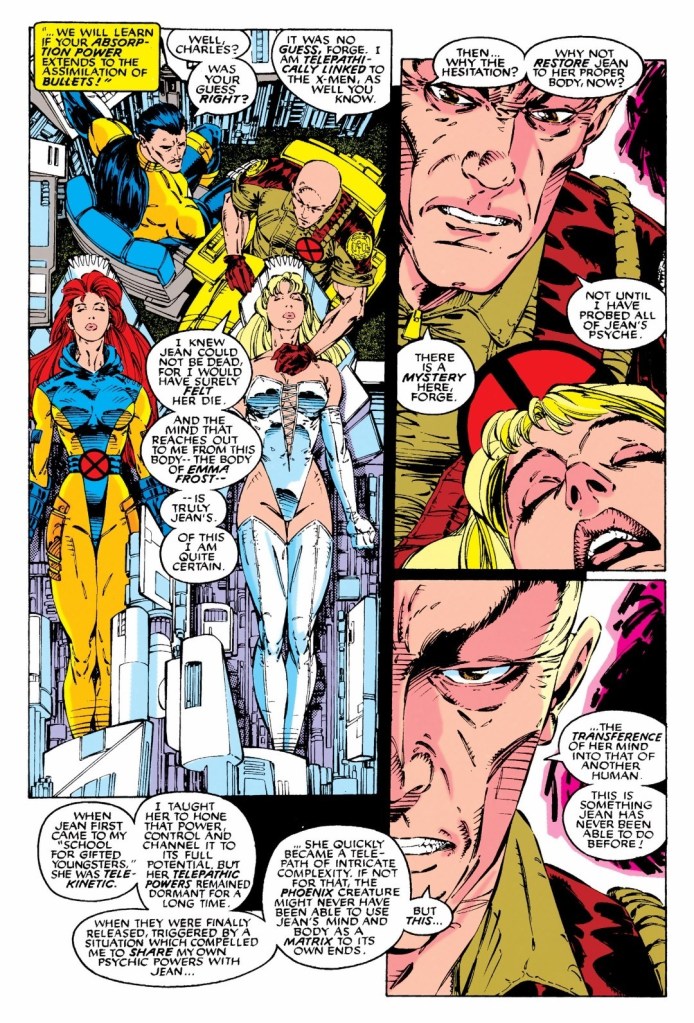
Professors takes a huge risk to help Jean Grey who recently occupied the body of Emma Frost.

When it comes to the creativity, this comic book is both a strong pay-off to the build-up of issues and while also serving as a new build-up focusing on Bishop’s arrival. At the heart of this tale is Bishop’s first-ever personal encounter with the X-Men which instantly expanded the lore of Marvel’s mutants a lot.

Bishop is a mutant from one possible future (of the Marvel Comics shared universe) in which Storm, Iceman, Archangel, Charles Xavier and others are remembered as legacy figures of the X-Men. In this comic book, you will see there is a good amount of depth with the way Bishop is dramatized and with many notable details on the dialogue prepared for him. Co-created by Whilce Portacio and John Byrne, Bishop is really an inspired work and clearly is not a mere addition. There is Filipino inspiration behind the creation of Bishop (click here and here) with some elements of John Ford and Prince mixed in (click here).

As far as the storytelling is concerned, there is notable shift of tone here as Bishop, Malcolm and Randall received much of the spotlight and yet there was still some room left for focus on the X-Men and Fitzroy’s group respectively. What makes this comic book an intriguing read is the first-ever personal encounters between Bishop and the X-Men which involved the temporary blurring of the boundary between good and evil. The interactions between Storm and Bishop are easily the most dramatic to see, and you will witness how their respective toughness (plus leadership) collide intensively.

Along the way, there is a lot superhero action to enjoy here. In fact, there are many forms action that served as extensions or pay-offs to the exchange of words between Bishop and a few specific X-Men members. Even a non-action scene like Professor X helping Jean Grey (who was in Emma Frost’s body temporarily) resulted in some visual spectacle.

Conclusion

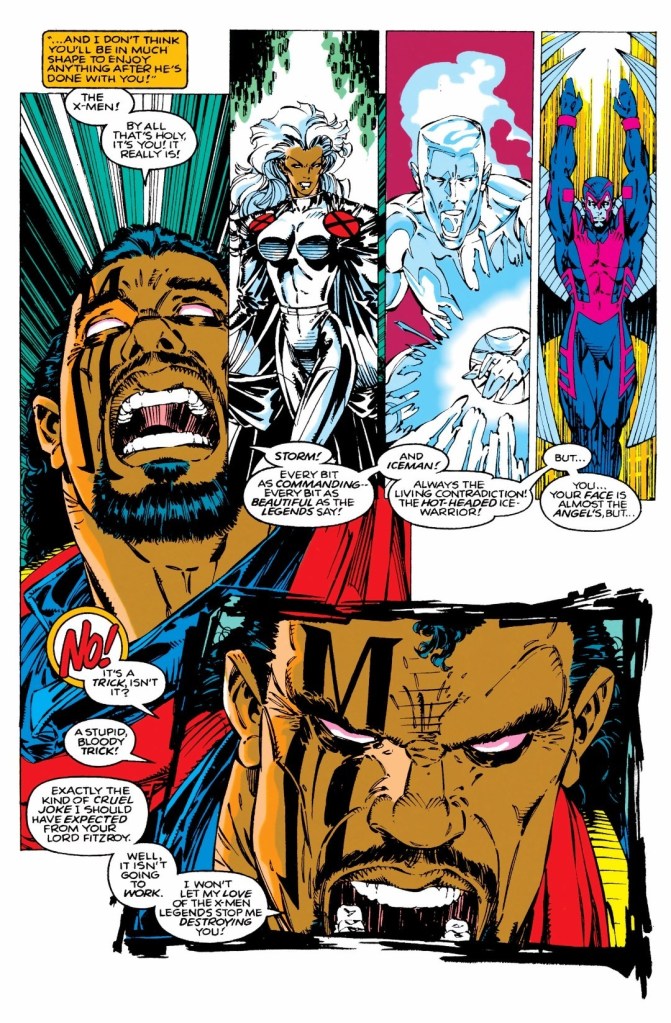
Bishop’s first-ever encounter with the X-Men not only challenged his perception but also brought out traits of his attitude.

Uncanny X-Men (1991) is another very compelling, intriguing and entertaining read from the Portacio-Byrne duo. The X-Men lore has been expanded more and Bishop’s first encounter with the X-Men is easily the most engaging aspect of the story. At the same time, the conflict between the X-Men’s Gold Team and Trevor Fitzroy took a twist that really turned the plot to an unexpected new direction which is not surprising as Bishop’s presence made a huge impact (even on Storm herself). This is one of the best superhero stories of 1991 I have read so far.

Overall, Uncanny X-Men (1991) is highly recommended!

+++++

Thank you for reading. If you find this article engaging, please click the like button below, share this article to others and also please consider making a donation to support my publishing. If you are looking for a copywriter to create content for your special project or business, check out my services and my portfolio. Feel free to contact me with a private message. Also please feel free to visit my Facebook page Author Carlo Carrasco and follow me on Twitter at  @HavenorFantasy as well as on Tumblr at https://carlocarrasco.tumblr.com/ and on Instagram at https://www.instagram.com/authorcarlocarrasco
A Look Back at Uncanny X-Men #282 (1991)

Welcome back superhero enthusiasts, 1990s arts and culture enthusiasts, Marvel Comics fans and comic book collectors! Today we go back to the year 1991 to explore one of the many tales of the Marvel shared universe through the Uncanny X-Men series.

Uncanny X-Men was a great read. For most of the early 1990s, I read more X-Men stories about the Blue Team than the Gold Team. In Uncanny X-Men – which took place after X-Men #5 – the spotlight was on the Gold Team which showed the strategic leadership of Storm, the X-Men revisiting the headquarters of the Hellfire Club, Jean Grey’s own recollections of past events and the new threat of Trevor Fitzroy and the Sentinels.

With those details laid down, here is a look back at Uncanny X-Men , published in 1991 by Marvel Comics with a story co-written by Whilce Portacio and by John Byrne (script). The art was done by Portacio with ink work by Art Thibert.

The cover.

Early story

The story begins inside the School For Gifted Youngsters when the Gold Team arrives (with Colossus carrying the inactive body of Jean Grey) and disrupts the chess game between Professor X and Forge. Charles Xavier mentally examines Jean and notices that her psyche survives and has been displaced. He realizes Jean is alive but not in her body.

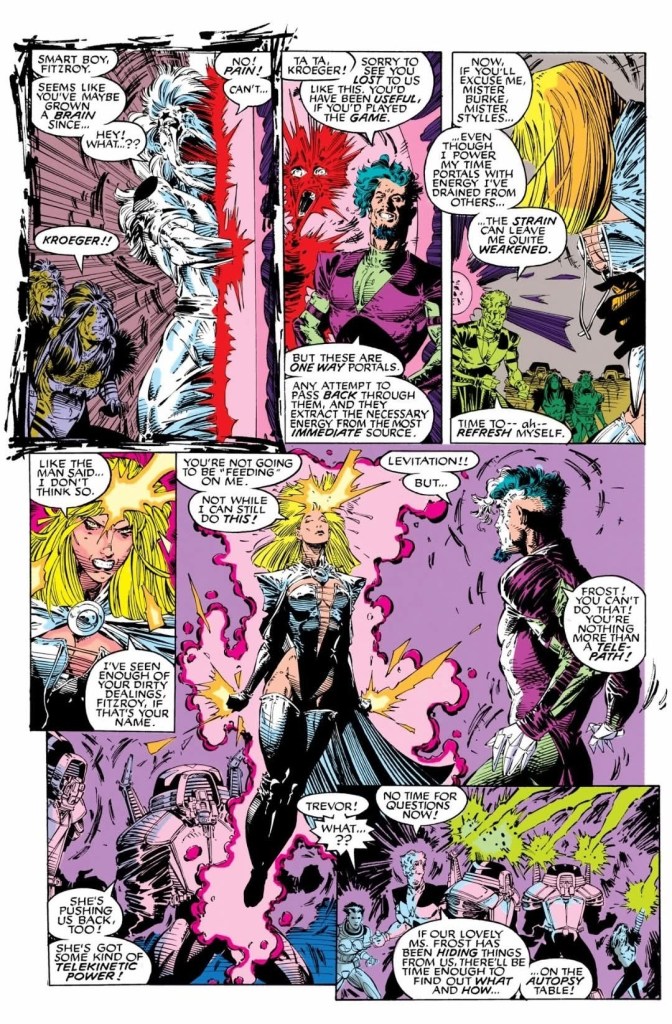
In New York City, Trevor Fitzroy (who is carrying the body of an inactive Emma Frost) and his Sentinels surprise Shinobi Shaw showing what is left of the cyborg of Pierce. Trevor boasted to Shinobi that he won claiming that he has terminated one of the founders of the inner circle, captured a small band of Hellions and has Emma Frost as a trophy. Very slowly, Jean Grey – now occupying Frost’s body – wakes up…

Quality

Trevor Fitzroy does not know who is inside Emma Frost’s body.

I can say out loud that this is a great follow-up to the previous issue (which itself is a great read) as it has a lot of hefty payoffs to the build-up from before. With the story concept already established in issue , the progression continued strongly, the narrative is clearer and the stakes were raised even higher.

In this issue, Trevor Fitzroy still has extreme tendencies and he might look insane or unhinged to you. Still, Fitzroy really has diabolical plans to execute and those plans involves his ability to open portals to bring in his reinforcements from far away, including the “denizens of the future.” Adding to Fitzroy’s merciless and arrogant personality is his use of the captives’ life force to energize himself to open portals. Really, he does not care much about the lives of captives as he treats them as nothing more than bodies of energy for his use. Whilce Portacio really excels in not only bringing the script to life but also showcasing the personality and expressions of Fitzroy who at this point in comic book history was a brand new villain for the X-Men.  

As for the X-Men’s Gold Team, not having Jean Grey was really disadvantageous to them which compels Professor X to actually join them on their mission. This is a notable development as Xavier is very close with Jean (his original student and fellow telepath) and he knows that great odds await their team. Xavier’s involvement added a lot to the plot itself and I love the way John Byrne and Portacio portrayed him here.

When it comes to the storytelling, the pace noticeably moved faster as a lot of payoffs to the build-up were executed here. The X-Men themselves each got their respective share of the spotlight and all of them were portrayed consistently in character. The stakes were raised here this time and the handling of all the details and developments was very solid.

Conclusion

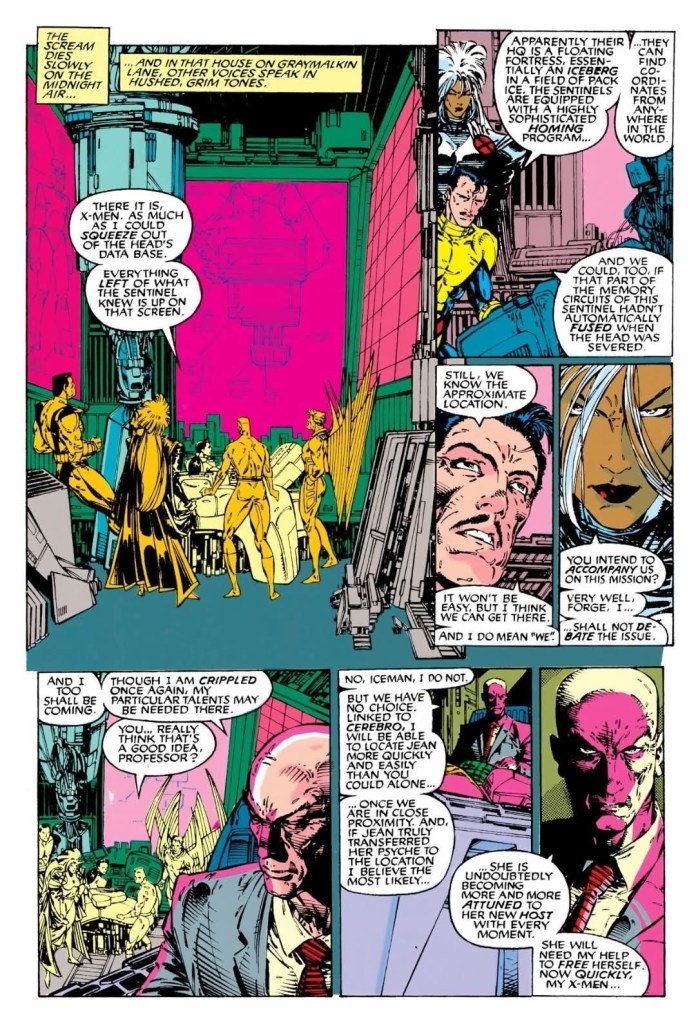
Knowing great odds await them, Charles Xavier joins the X-Men on their mission to save Jean Grey.

Even with the stakes raised higher, the creative team delivered the great stuff Uncanny X-Men (1991) is a very worthy follow-up to the previous issue. In fact, I find this comic book more entertaining and more intriguing to read from start to finish. Fitzroy is indeed a very worthy new enemy for the X-Men’s Gold Team, and there is much that long-time X-Men fans can enjoy here.

Overall, Uncanny X-Men (1991) is highly recommended!

+++++

Thank you for reading. If you find this article engaging, please click the like button below, share this article to others and also please consider making a donation to support my publishing. If you are looking for a copywriter to create content for your special project or business, check out my services and my portfolio. Feel free to contact me with a private message. Also please feel free to visit my Facebook page Author Carlo Carrasco and follow me on Twitter at  @HavenorFantasy as well as on Tumblr at https://carlocarrasco.tumblr.com/ and on Instagram at https://www.instagram.com/authorcarlocarrasco
A Look Back at Uncanny X-Men #273 (1991)

Welcome back superhero enthusiasts, 1990s arts and culture enthusiasts, Marvel Comics fans and comic book collectors! Today we go back to the year 1991 to explore a chapter of the Uncanny X-Men series that took place between X-Tinction Agenda and Mutant Genesis (the modernization point of Marvel’s mutants for the 1990s).

For the newcomers reading this, X-Tinction Agenda was a very notable part of the history of the X-Men comic book franchise as it marked the first time that the X-Men, X-Factor and the New Mutants were combined and also reunited several X-Men members who were scattered around the world. That being said, the state of mutants within Marvel Comics’ shared universe created a sense of uncertainty towards Charles Xavier’s grand dream of establishing a peaceful co-existence between humans and mutants.

With those details laid down, here is a look back at Uncanny X-Men , published in 1991 by Marvel Comics with a story written by Chris Claremont and drawn by Whilce Portacio, Klaus Janson, Jim Lee, John Byrne, Rick Leonardi, Marc Silvestri, Michael Golden and Larry Stroman.

The cover.

Early story

The story begins in the control center within the complex located deep under the ruins of Charles Xavier’s mansion. Storm (X-Men), Jean Grey (X-Factor), Cyclops (X-Factor) and Cable (New Mutants) carefully examine the worldly forces that oppose them. After Storm asked about what they could do about the opposing forces located in different parts of the world, Cable says that they should hit them hard and fast as they have the power to do so.

Storm asked Cable if violence is his only solution. Even though violence got things done for Cable, Cyclops rejects it and states that his fellow mutants (pertaining to the X-Men and X-Factor) are not like him.

As the conversation intensifies, Jean Grey tells Cable that they are not warriors and the school was not founded by Professor X to have mutants to fight wars. Cable replied that war is what they got and reminded them of the two mutants they lost and another one who ended up as a genetically engineered slave. Cable asked them if they want to see more of their fellow mutants end up badly…

Quality

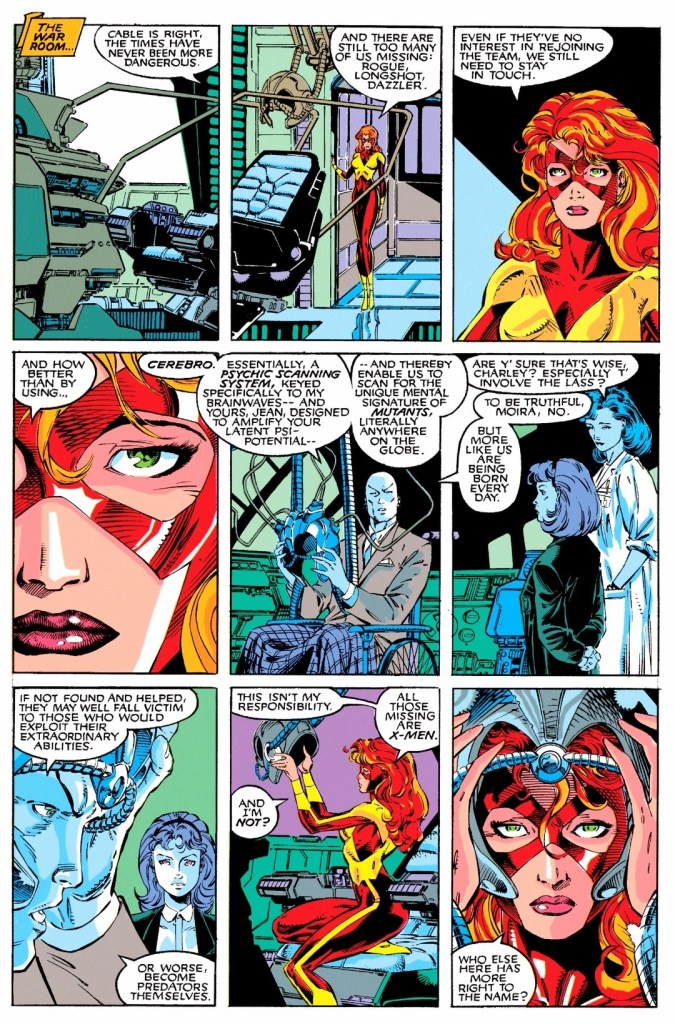
In the absence of Professor X, Jean Grey (then a member of X-Factor) revisits Cerebro and recalls what she learned long ago.

In relation to the mentioned fact that this particular story took place between X-Tinction Agenda and Mutant Genesis, this is a tale that reflects a period of transition leading to the latter. That being said, Chris Claremont took the opportunity to emphasize the current state of the X-Men and the other mutants, as well as the uncertainty ahead of them all. To be clear, this story does not have Marvel’s mutants going up against another super villain nor a group that opposes them.

The story opened very strongly with the leading figures of the X-Men (Storm), X-Factor (Cyclops and Jean Grey) and the New Mutants (Cable) being together analyzing the global situation and the forces that oppose them.

For Cable, violence is necessary for their survival and progress because he sees war against mutants already happening and there is simply no room left for error nor compromise. Very symbolically, Storm, Cyclops and Jean Grey – who all were nurtured by Professor X with his pacifist dream of bridging the gap between mutants and humans – reject Cable’s beliefs as they don’t see themselves as warriors and they do not dream of conquering their enemies at all. All the dialogue that took place in the argument are very richly written and there are layers of meanings which long-time X-Men fans will able to relate with.

Along the way, Claremont and the other creators made good use of available comic book space to develop the other characters which resulted in the gradual developments within each team of mutants. Gambit here is a brand new member of the X-Men and his talk with Storm is very sensible to read. There was also this notable Danger Room training session between Archangel and Cannonball in which the former (who is already very experienced as one of the original X-Men and a current member of X-Factor) shares wisdom to the very young mutant (who later went on to lead X-Force some time later). The creative team also inserted a few moments of humor on the other character development scenes.

Conclusion

Truly this is one of the most symbolic and most engaging arguments between the leading figures of the X-Men, X-Factor and New Mutants (which later became X-Force).

Even though it was mainly focused on character development and has no battle with any enemy, Uncanny X-Men (1991) remained a very engaging read as it tackles not only the current state of the three mutant teams of the time but also realigned their direction creatively and the results were fully realized through the eventual Muir Island saga as well as Mutant Genesis and even in further tales (including Fatal Attractions). In many ways, this comic book served as a solid foundation of things to come and this partially explains the eventual reform of the X-Men into a much larger group that had to be composed of two teams shortly after the return of Professor X (as seen in X-Men #1 and Uncanny X-Men in 1991).

Overall, Uncanny X-Men (1991) is highly recommended.

+++++

Thank you for reading. If you find this article engaging, please click the like button below, share this article to others and also please consider making a donation to support my publishing. If you are looking for a copywriter to create content for your special project or business, check out my services and my portfolio. Feel free to contact me with a private message. Also please feel free to visit my Facebook page Author Carlo Carrasco and follow me on Twitter at  @HavenorFantasy as well as on Tumblr at https://carlocarrasco.tumblr.com/ and on Instagram at https://www.instagram.com/authorcarlocarrasco
A Look Back at X-Men Adventures Season II #7 (1994)

Welcome back superhero enthusiasts, 1990s arts and culture enthusiasts, Marvel Comics fans and comic book collectors! Today we go back to the mid-1990s to explore the adaptation of the second season of the X-Men animated series in the form of the X-Men Adventures comic book series.

Before getting to the new retro comic book review, I should state that decades ago, the use of future timelines was implemented on the X-Men comics. I’m talking about the possible future where Cable and Stryfe came from, another possible future where Phoenix/Rachel Summers came from, and the more established future of the classic Days of Future Past storyline. Time travel and possible future timelines are the themes in the next X-Men Adventures comic book I reviewed recently.

With those details laid down, here is a look back at X-Men Adventures Season II , published in 1994 by Marvel with a story written by Ralph Macchio and drawn by Scott Rosema.

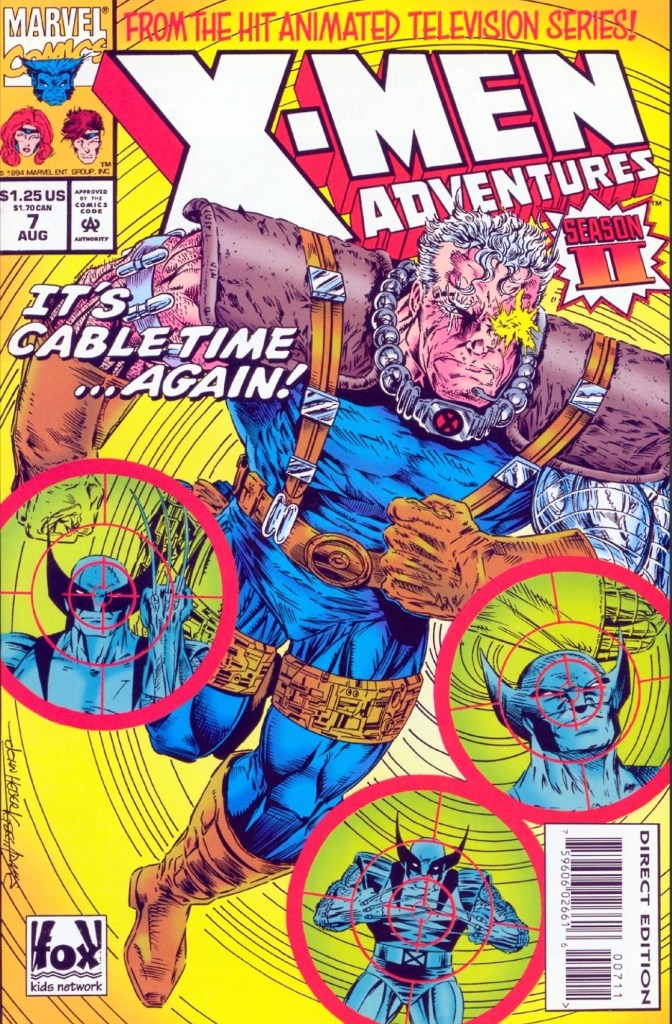
The cover.

Early story

The story begins on Earth in the far future of 3999 AD. Cable, who is fighting for the rebels, battles the deadly forces of the powers that be. It turns out, he and his teammates have been struggling a lot and their team suffered several deaths already. Even though they are very tired and heavily outnumbered, Cable refuses to give up and bravely calls for a frontal assault against their enemies.

Suddenly, Apocalypse appears on the battlefield and commands his robotic troops to destroy Cable and his fellow rebels. To Apocalypse’s surprise, a temporal storm appears and Cable notices it appearing so close to them. One of his teammates got caught by the storm which pushes Cable away. After receiving computer updates, Cable decides to get away from the robotic troops.

Meanwhile in another time period and place, Bishop returns from his mission (his interactions with the X-Men of the 20th century – click here and here) only to discover from Forge that nothing has changed and the plague still rages on…

Quality

The X-Men have a new problem to deal with.

Having read X-Men Adventures and of season 1, I found this particular tale (clearly a sequel to Bishop’s interaction with the X-Men after traveling through time) relatable and enjoyable. There is a strong science fiction vibe here and the time travel aspect added a lot to the build-up of tension.

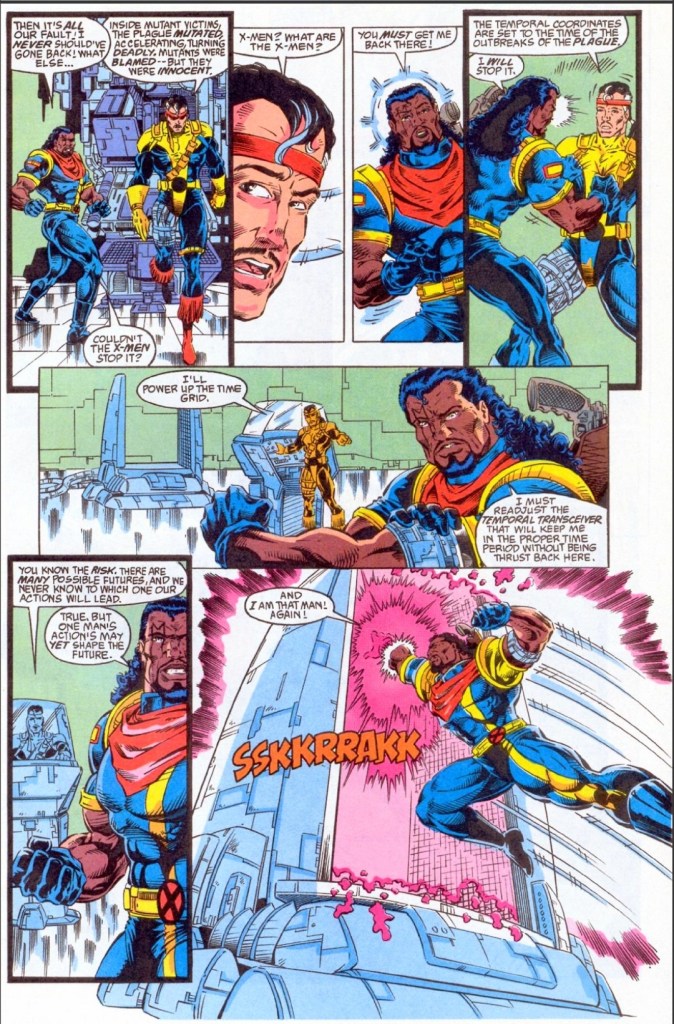
Bishop here is almost the protagonist as the story showed an altered future in which Forge has no memory of the X-Men and only made a reference to a plague that has lasted for a long time. This compels Bishop to go back to the 20th century again hoping to meet the X-Men and somehow prevent the plague from bringing down society.

The impact of the mysterious virus is tremendous as so many people got infected and authorities suspect mutants to be the carriers. At this stage, the social aspects inserted by the creators really started to grow stronger within the narrative and you will see the X-Men struggling with not only the increased scrutiny on mutants but also with the manipulative tactics of anti-mutant activists who can’t help but see golden opportunities to wipe out mutants in a more clever fashion.

The dialogue here is noticeably gripping to read and the dramatization worked accordingly. There is also a good amount of superhero spectacle to enjoy here even though the X-Men have no super villains to fight with.

Conclusion

Forge has no memory of the X-Men.

X-Men Adventures Season II (1994) looks like a repeat or even a remake of what happened in X-Men Adventures (Season I) but its concept turned out to be not only unique with strong social commentary and sci-fi elements, but also became really engaging thanks to the fine execution by the creative team. On the aspect of social relevance, this comic book will remind you about the internment of Japanese Americans in America (1942-1946) and the COVID-19 restrictions and the quarantine on communities imposed by governments that disrupted people’s lives. As this comic book marks the first part of the Time Fugitives, I can say that I enjoyed it and I’m looking forward to the next chapter.

Overall, X-Men Adventures Season II (1994) is recommended.

+++++

Thank you for reading. If you find this article engaging, please click the like button below, share this article to others and also please consider making a donation to support my publishing. If you are looking for a copywriter to create content for your special project or business, check out my services and my portfolio. Feel free to contact me with a private message. Also please feel free to visit my Facebook page Author Carlo Carrasco and follow me on Twitter at  @HavenorFantasy as well as on Tumblr at https://carlocarrasco.tumblr.com/ and on Instagram at https://www.instagram.com/authorcarlocarrasco
A Look Back at X-Men #5 (1992)

Disclaimer: This is my original work with details sourced from reading the comic book and doing personal research. Anyone who wants to use this article, in part or in whole, needs to secure first my permission and agree to cite me as the source and author. Let it be known that any unauthorized use of this article will constrain the author to pursue the remedies under R.A. No. 8293, the Revised Penal Code, and/or all applicable legal actions under the laws of the Philippines.

Welcome back, superhero enthusiasts, comic book collectors, fans of 1990s culture and fans of Marvel Comics! Today we revisit the adjective-less X-Men monthly series (Volume 2) that started in 1991 with the combined talents of Chris Claremont and Jim Lee. For those who are unaware, Chris Claremont had his conflict behind the scenes with then X-Men comics editor Bob Harras which led to him departing the X-Men series with issue #3.

Previously I reviewed X-Men #4 which by today’s standards is highly significant and very expensive to acquire as it marked the literary debut of Omega Red who made quite an impact with X-Men fans. It should be noted that Wolverine and Omega Red had encountered each other far back in time and issue marked the renewal of their rivalry.

With those details laid down, here is a look back at X-Men , published in 1992 by Marvel Comics with a story written by Jim Lee (plot) and John Byrne (script), The art was done by Lee with ink work done by Scott Williams, Art Thibert, Bob Wiacek and Joe Rubinstein.

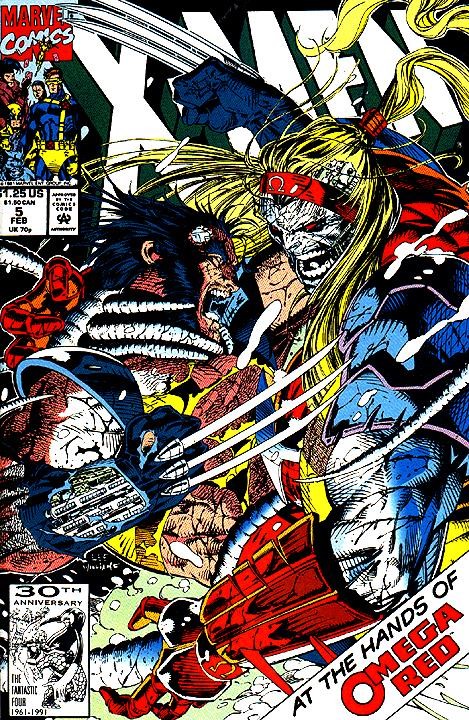
The cover.

Early story

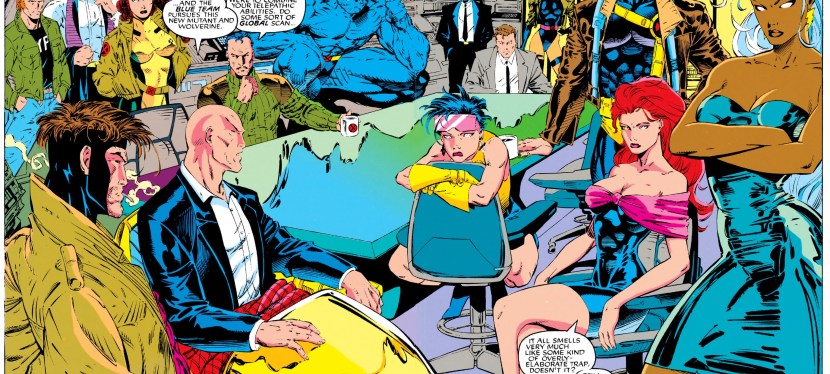
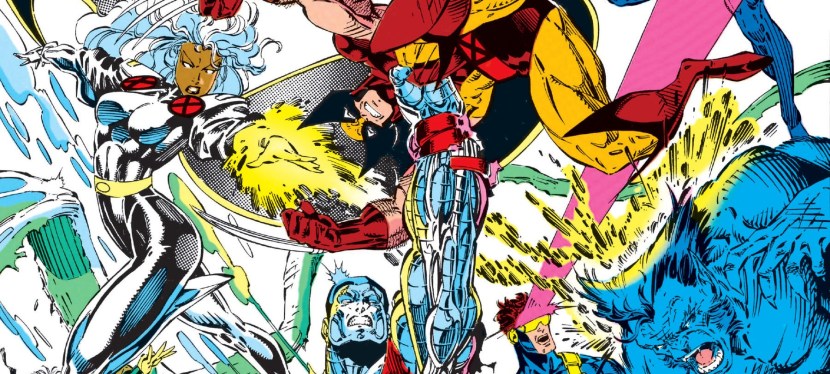
This for me is the money shot of the comic book. Although Wolverine is absent, you get to see the entire Blue and Gold teams with Charles Xavier as drawn by Jim Lee.

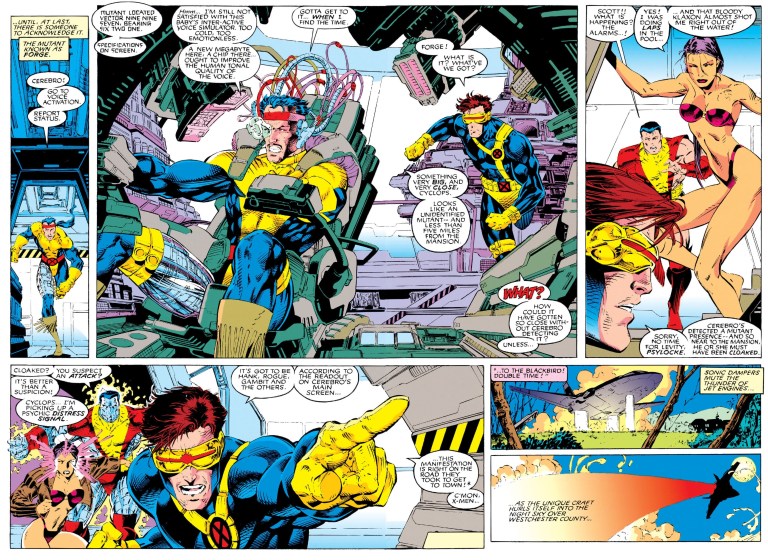
The story begins with Cerebro detecting an unidentified mutant signature in the presence of X-Men members who were out of the mansion. Forge tells Cyclops about the disturbance happening less than five miles away from their mansion. Colossus and Psylocke join in and quickly they leave the mansion with Cyclops using the Blackbird.

Not too far away, Gambit, Rogue, Jubilee and Beast are held captive inside a vehicle with an armed man in their presence. Gambit starts the effort to free his teammates using one of his charged cards.

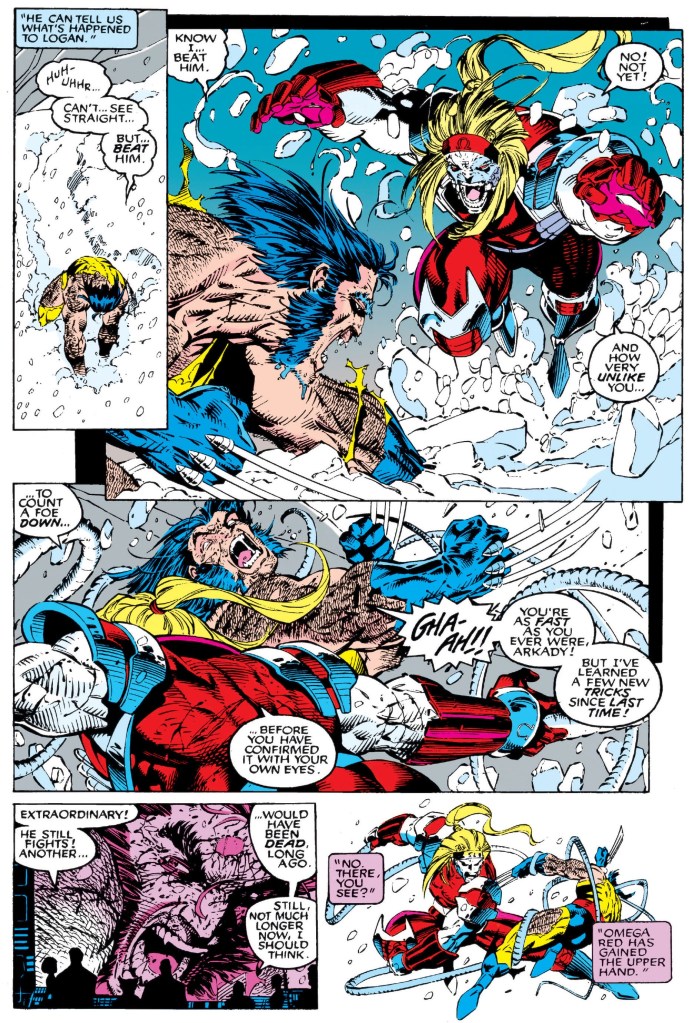
Elsewhere in a snowy place, Wolverine is seen struggling thinking he defeated his old rival Omega Red. Suddenly the Russian mutant jumped at him and the two resumed fighting. Their fight is being monitored from a distance…

Quality

The Wolverine-Omega Red rivalry is a must-see.

When it comes to storytelling, it is obvious that the writing duo of Jim Lee and John Byrne did their best to push the envelope and break new ground as far as telling an X-Men story goes. For one thing, there is the presence of paramilitary elements which are common with Jim Lee’s creations. There are even flashbacks into the past in which Wolverine (then called Logan) actually took part in a special forces operation with a few notable others. These flashbacks expands further the personal history of Wolverine in a really intriguing way. With the way the story was presented, it is clear that the new creative team pulled off serious moves in modernizing the way X-Men stories were told in comparison to the way Chris Claremont told all those many such stories during his long run.

When it comes to the visuals, Jim Lee did another great job as each page looks great and he proved to be clever with the way he visualized the script. As this comic book was inked by more than one inker, there were subtle differences with regards to contrast as well as ink intensity.

Conclusion

Cyclops and his teammates move out.

X-Men (1992) is another great comic book that involved Jim Lee’s art. Apart from the modernizing of the storytelling, this comic book further expanded the past of Wolverine while successfully giving readers more of Omega Red who is now a major supervillain of Marvel’s.

If you are seriously planning to buy an existing hard copy of X-Men (1992), be aware that as of this writing, MileHighComics.com shows that the near-mint copy of the regular edition costs $27 while the near-mint copy of the newsstand edition costs $79.

Overall, X-Men (1992) is highly recommended!

+++++

Thank you for reading. If you find this article engaging, please click the like button below and also please consider sharing this article to others. If you are looking for a copywriter to create content for your special project or business, check out my services and my portfolio. Feel free to contact me as well. Also please feel free to visit my Facebook page Author Carlo Carrasco and follow me at HavenorFantasy@twitter.com
A Look Back at X-Men #3 (1991)

Disclaimer: This is my original work with details sourced from reading the comic book and doing personal research. Anyone who wants to use this article, in part or in whole, needs to secure first my permission and agree to cite me as the source and author. Let it be known that any unauthorized use of this article will constrain the author to pursue the remedies under R.A. No. 8293, the Revised Penal Code, and/or all applicable legal actions under the laws of the Philippines.

Welcome back, X-Men fans, superhero enthusiasts and comic book collectors! Today I’m about to review another Chris Claremont-Jim Lee comic book of the X-Men from 1991.

Before getting to the retro comic book review, let’s take a look back at history. Marvel Comics started publishing comic book of the X-Men in 1963 which involved the combined talents of Stan Lee and Jack Kirby. The original X-Men members were Cyclops, Beast, Marvel Girl, Angel and Iceman all under the mentorship of Charles Xavier (AKA Professor X). That monthly series was not a strong seller and was weak compared to the other monthly titles of Marvel. Although Roy Thomas and Neal Adams were brought in to reinvigorate the X-Men series with new characters, success in sales did not materialize and eventually the series was turned into a reprint series (from issues #67 to #93).

In 1975, Len Wein and Dave Cockrum made Giant-Size X-Men which introduced a new team. Along the way, Wein (who was also the editor-in-chief of Marvel at the time) hired Chris Claremont to become the lead writer of the X-Men series starting issue #94 which was released that same year. Claremont redefined the X-Men by developing the characters deep inside and emphasized their respective personalities. As the years passed by, Claremont wrote notable X-Men storylines such as The Dark Phoenix Saga, Days of Future Past, Mutant Massacre, and Fall of the Mutants to name some. Not only did Claremont write The New Mutants, he also co-created many other characters that became part of the X-Men franchise.

Then came the year 1991. The launch of the new X-Men monthly series (focused on the Blue Team led by Cyclops) saw sales tremendous success with issue #1 and by that time Jim Lee was established as one hot new creators under Marvel. Behind the scenes, however, Claremont clashed with then X-Men books editor Bob Harras. Eventually, issue of the 2nd X-Men monthly series marked the end of the X-Men era of 1975-1991.

I should say that I enjoyed reading issue #2 in which Claremont wrote a story that not only raised the stakes but also pushed the entire group of mutants to the edge. We will find out soon enough if Claremont’s X-Men era of 1975-1991 will end strongly in this retro review of X-Men , published in 1991 by Marvel Comics with a story by Claremont and Jim Lee (who also illustrated).

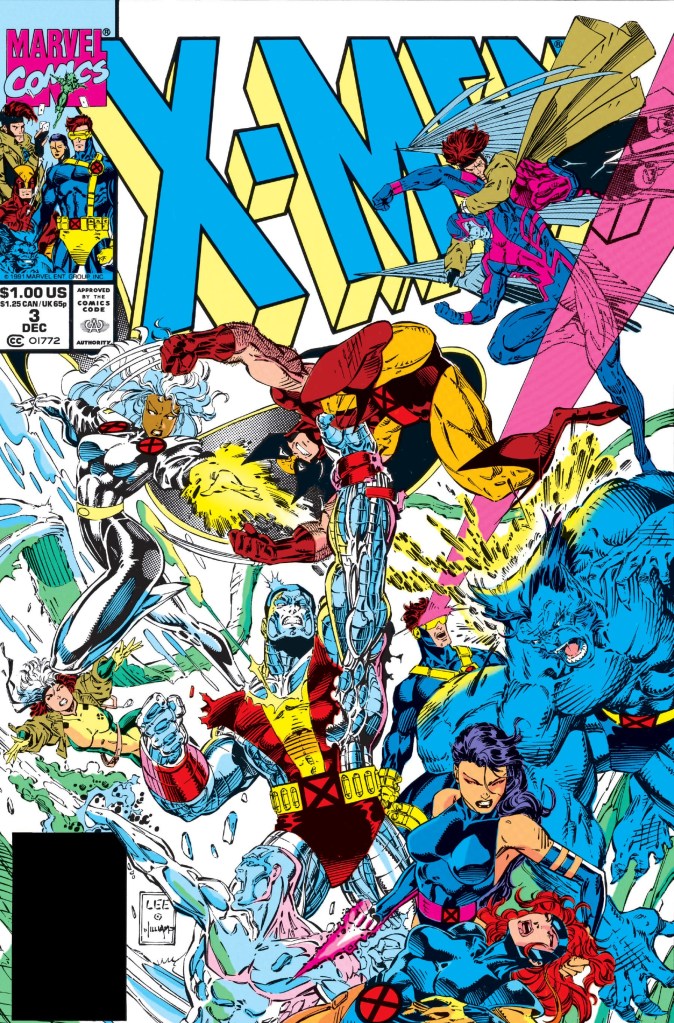
The cover.

Early story

The story begins in outer space. Members of X-Men’s Gold Team (composed of Archangel, Storm, Jean Grey, Forge, Iceman, Colossus and Banshee) fly stealthily towards Asteroid M where Magneto and his Acolytes are with Charles Xavier and Moira MacTaggert held captive. With the exception of a few, members of the X-Men Blue Team were brainwashed by MacTaggert to follow Magneto.

On Earth, the plasma cannon is being prepared to destroy Asteroid M. Nick Fury warns his colleagues about the possibility of tremendous damage if ever Asteroid M hits the surface of the planet. Valerie Cooper tells him that the firing trajectory has been calculated to blast the target away and into deep space. An exchange of words follows over diplomacy and following orders issued by the leaders.

Over at Asteroid M, Charles Xavier is alone in a room with a wide view of the Earth and space. Behind the scenes, Fabian Cortez points to Xavier as Magneto’s deadliest enemy. He asked his master why not use Moira MacTaggert’s procedure (to brainwash and turn) on Xavier. Magneto, already suffering physically, does not want Xavier turned but be broken…

Quality

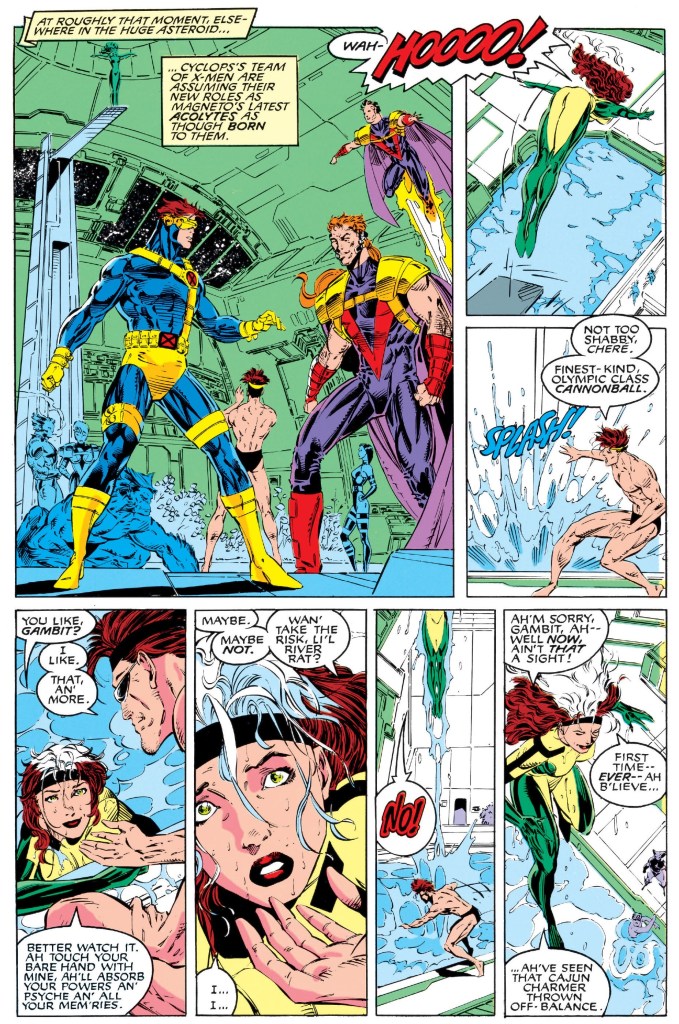
X-Men Blue Team members relaxing at Asteroid M in the presence of the Acolytes.

Like in issue , the story here is very engaging and highly dramatic. While it paid close attention to Magneto’s ruthlessness as well as his rage towards Moira who committed something unethical to him in the past, the story managed to focus enough on the X-Men which involves both the Blue Team and Gold Team mixed up. While this comic book’s cover shows a battle royale between the Blue and Gold teams, there is a lot of substance beyond the action. I’m talking about moments spent on the mutants of Xavier which was done in a satisfying manner (never felt crammed nor forced) considering the page limits of this comic book. Not only were the X-Men moments executed smoothly, there were pulled off efficiently and orderly.

More on the story, what adds intrigue is the group of Acolytes whose field leader Fabian Cortez has not only gotten very close with Magneto but also does something significant to him along the way. By this issue, the Acolytes led by the master of magnetism have gotten more established as a worthy opposition against Xavier’s mutants. This story also showed that the Acolytes were here to stay, and Fabian Cortez himself is very led by wickedness and ambition. Cortez is also an example about the distortion of righteousness

When it comes to defining the characters, Xavier and Magneto clashing together about their respective dreams about mutants is unsurprisingly epic to read. In this particular conflict, both Marvel icons were portrayed very dramatically and their respective expressions were indeed intense. Adding further intrigue to their clash is Moira’s long-past act of manipulating the very genetics of Magneto which itself raises serious questions about her perception, decision-making and ethics. In some ways, Moira looked more villain-like.

As expected, the art of Jim Lee is great to look at. There were some signs, however, that the very wordy script resulted an increased numbers of panels per page. Fortunately, the art did not look rushed and maintained a clear narrative. Also the action scenes are great to look at which is not surprising.

Conclusion

The Gold Team of the X-Men travel towards Asteroid M in a cloaked vehicle.

To put it straight, X-Men (1991) is an epic read highlighting the very conflict between Magneto and Xavier over the course of mutants and their place in the world of humans. This comic book, which has a very powerful ending, was indeed a very satisfying way to conclude the Xavier-Magneto conflict as well as Chris Claremont’s long-term stint with the X-Men comic book franchise. Back in 1991, this one really looked like the end of an era both in-story and in real life. Of course, what this comic book achieved ultimately became temporary because Magneto was revived for the Fatal Attractions storyline in 1993 (celebrating X-Men’s 30th anniversary) and Chris Claremont himself returned to Marvel Comics some years later. Still, on its own, this comic book is worth reading and adding to your collection, even if you are not an X-Men fan. It is significant enough as a piece of X-Men history from the time when Jim Lee was with Marvel.

If you are seriously planning to buy an existing hard copy of X-Men (1991), be aware that as of this writing, MileHighComics.com shows that the near-mint copy of the regular edition costs $9 while the near-mint copies of the Chris Claremont-signed edition, the signed newsstand edition, the newsstand edition and the Toy Biz edition cost $16, $26, $16 and $21 respectively.

Overall, X-Men (1991) is highly recommended!

+++++

Thank you for reading. If you find this article engaging, please click the like button below and also please consider sharing this article to others. If you are looking for a copywriter to create content for your special project or business, check out my services and my portfolio. Feel free to contact me as well. Also please feel free to visit my Facebook page Author Carlo Carrasco and follow me at HavenorFantasy@twitter.com
A Look Back At Uncanny X-Men #289

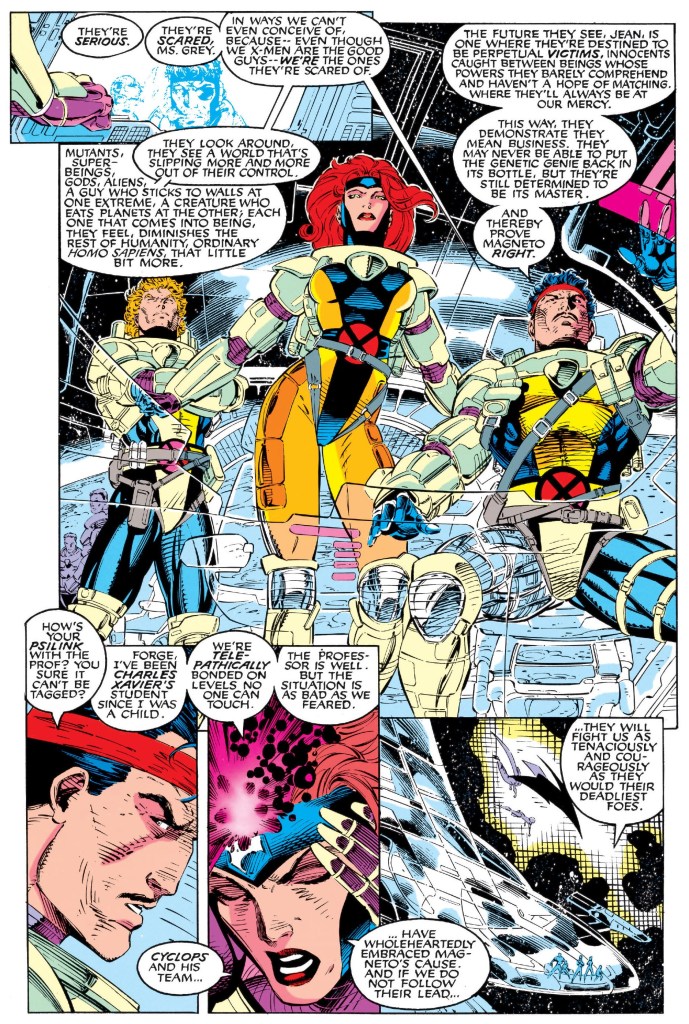
Released in 1992 by Marvel Comics, Uncanny X-Men #289 was written by Scott Lobdell and drawn by Whilce Portacio (with ink work by Scott Williams). Its concept focused on the Gold Team of the X-Men (composed of Jean Grey, Storm, Colossus, Ice Man and Archangel) dealing with Bishop who at the time was still a newcomer.

2019-07-11_095911~2.jpg
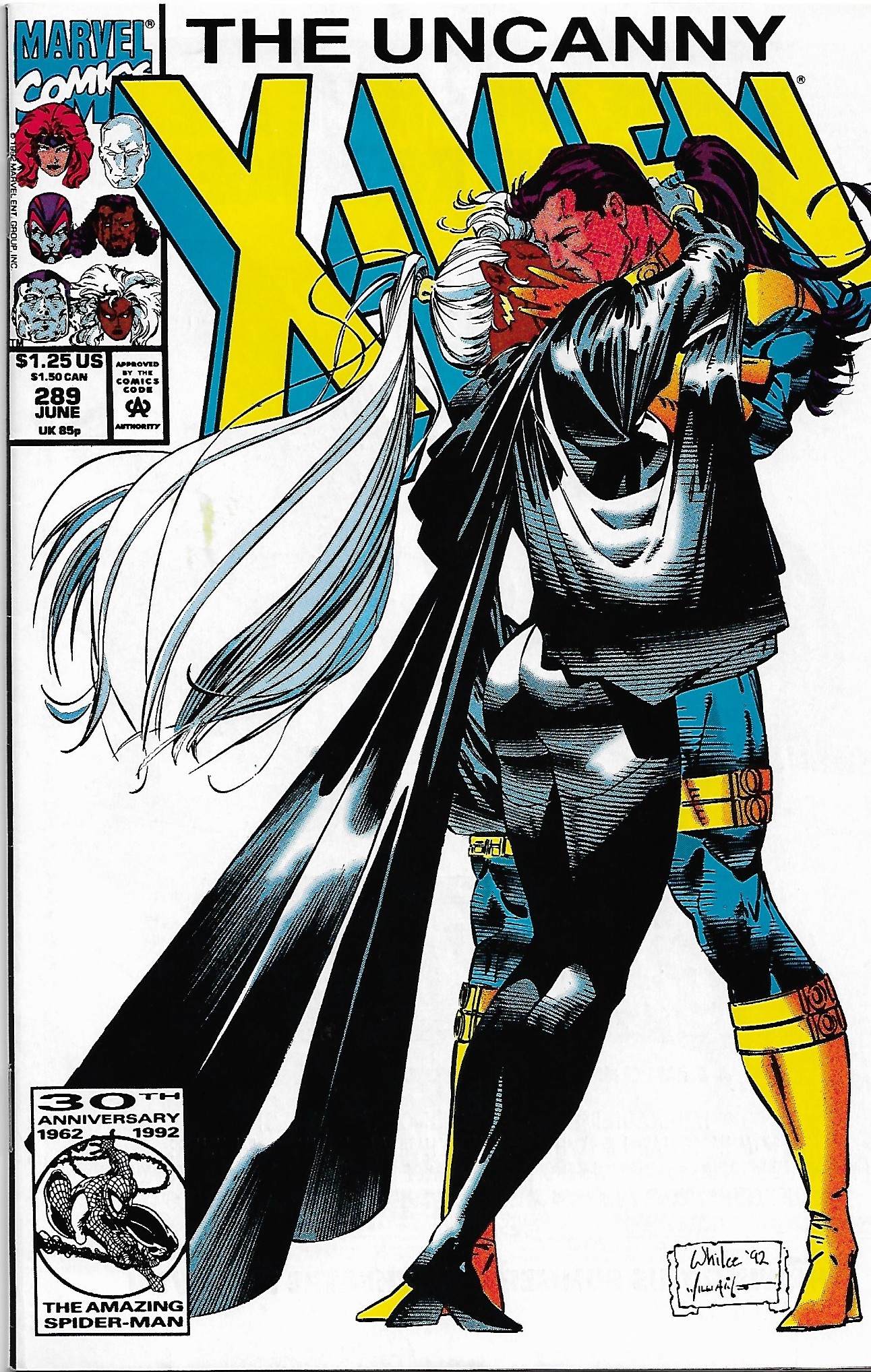
Cover of the comic book.

It begins when Bishop looks at a framed picture of the original X-Men followed by Storm telling him every student who graduated to the role of an X-Man remains dedicated to the ideal of peaceful coexistence between mutants and humans.

As the Gold Team X-Men enjoy their peaceful time at the mansion of Xavier, elsewhere someone spies on William and Maddy Drake who talk about Bobby (Iceman). Back at the mansion, Archangel encounters a spitting image of his younger self (as Angel and with normal skin color) which raises tension attracting the attention of Storm, Bishop and Forge.

2019-07-11_100038~2.jpg
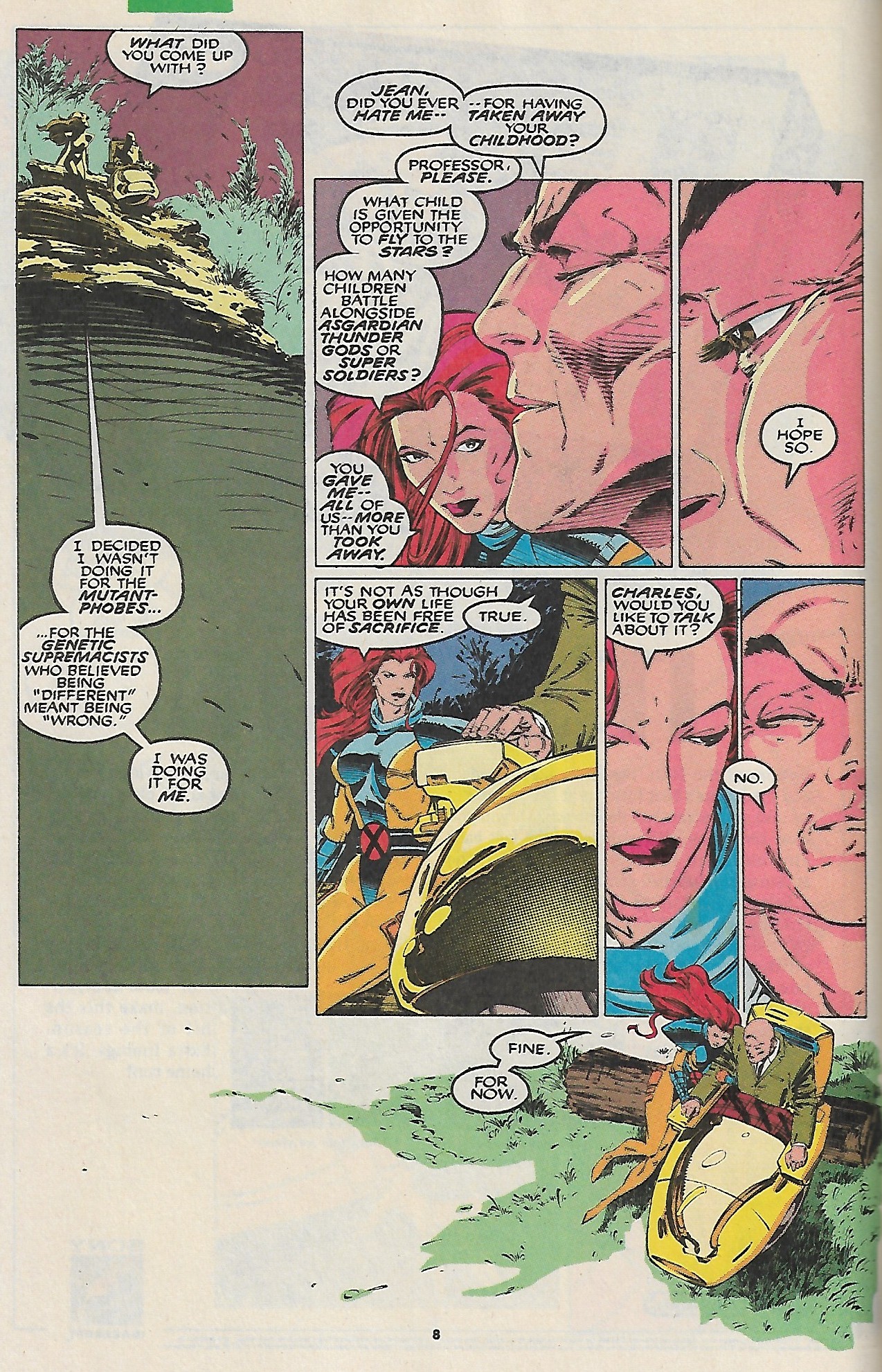
A touching scene between Jean Grey and Charles Xavier.

To describe Uncanny X-Men #289 clearly, the comic book is more focused on character development as it lacks a strong conflict between good and evil. Anyone craving for superhero action will most likely feel unsatisfied here. However, if you want to know the X-Men more passionately and watch the romance between Storm and Forge develop, then this comic book will be engaging.

Scott Lobdell did a good job developing the characters through drama and Whilce Portacio’s art really brought the script to life. I enjoyed reading the interaction between Jean Grey and Charles Xavier who realizes that as he led the X-Men, he took a bit of something from their respective lives.

2019-07-11_100213~2.jpg
Nice layout and style by Whilce Portacio on the team.

Take note of the following exchange of dialogue.

Charles Xavier: Jean, did you ever hate me for having taken away your childhood?

Jean Grey: Professor, please. What child is given the opportunity to fly to the stars? How many children battle alongside Asgardian thunder gods or super soldiers? You gave me…all of us…more than you took away.

That was really nice writing there by Lobdell. There was drama and harmony between the two characters.

Overall, Uncanny X-Men #289 is recommended. Think of it as a comic book that will help you – the reader – get to know the characters more closely.


Thank you for reading. If you find this article engaging, please click the like button below and also please consider sharing this article to others. Also my fantasy book The World of Havenor is still available in paperback and e-book format. If you are looking for a copywriter to create content for your special project or business, check out my services and my portfolio. Feel free to contact me as well. Also please feel free to visit my Facebook page Author Carlo Carrasco and follow me at HavenorFantasy@twitter.com