

Welcome back readers, fellow geeks and electronic gaming fans!
In this edition of the Retro Gaming Ads Blast (RGAB) series, we will take a look at another batch of retro gaming print ads – including arcade flyers – from the 1970s to the 1990s.
For the newcomers reading this, Retro Gaming Ads Blast (RGAB) looks back at the many print ads of games (console, arcade, computer and handheld) that were published in comic books, magazines, flyers, posters and newspapers long before smartphones, social media, the worldwide web and streaming became popular. To put things in perspective, people back in the 1980s and 1990s were more trusting of print media for information and images about electronic games and related products.
With those details laid down, here is the newest batch of retro gaming print ads for you to see and enjoy…
1. Super Contra North American arcade flyer
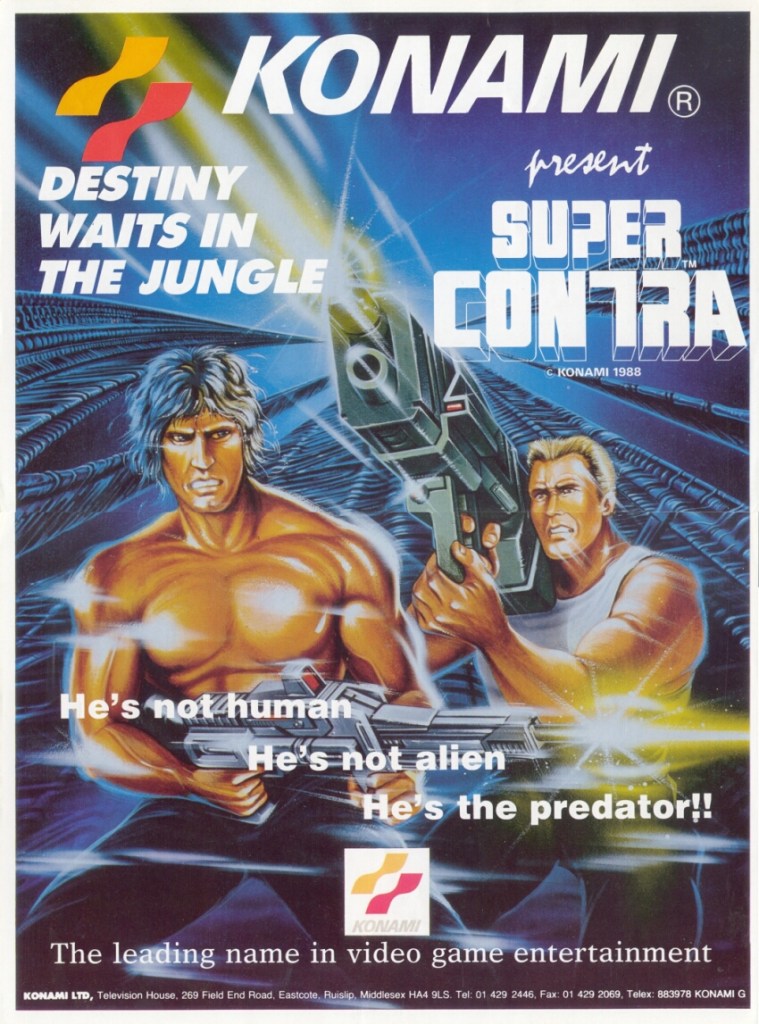
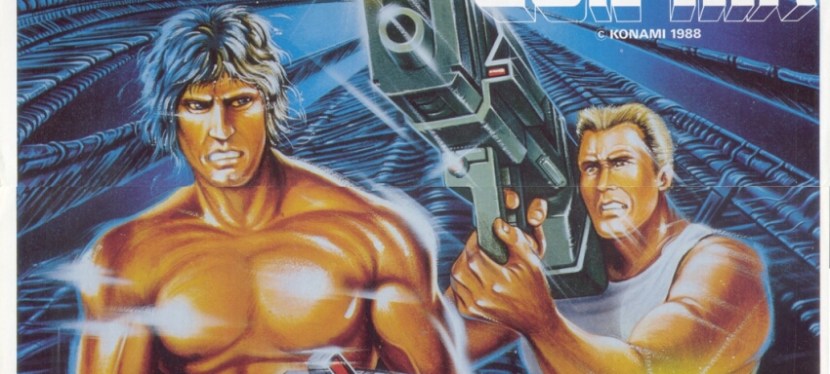
After Konami struck gold with Contra in 1987, it was inevitable that sequels and spin-offs will be made. In 1988, they released the follow-up Super Contra in the arcades and to promote it in America, the company came up with artwork that easily gave gamers the impression they are seeing Sylvester Stallone as a fantasized Rambo and another armed guy who might remind them of Arnold Schwarzenegger’s character in Commando or Dutch in Predator. To capitalize on the movie references even more, the American arcade flyer had the line “He’s not human. He’s not alien. He’s the predator!!” As it was the 1980s, this creative approach to promotion was not surprising as Konami and its game makers were influenced by Hollywood movies.
2. Double Dragon II: The Revenge North American arcade flyer
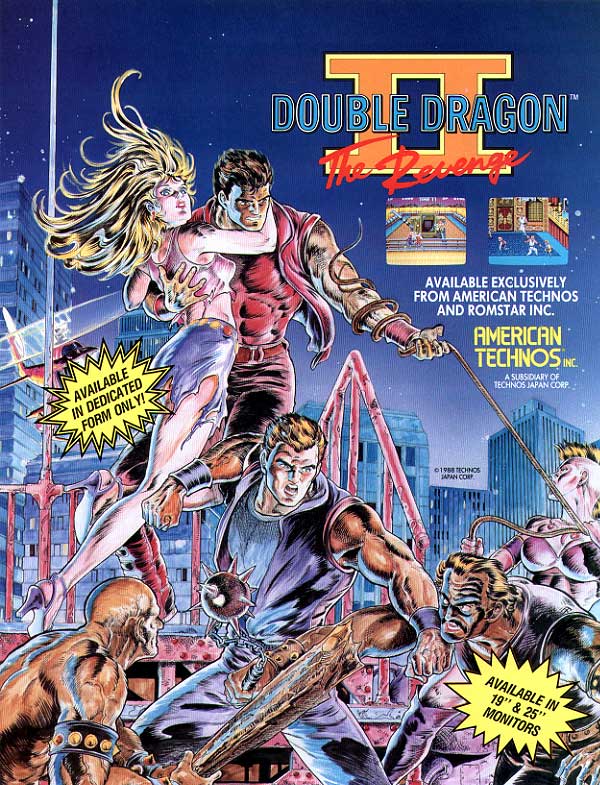
I never played Double Dragon II: The Revenge in the arcade, but I played it on the Nintendo Entertainment System (NES). That being said, I was surprised to see how this old North American arcade flyer has the same hand-drawn artwork used on the cover of the NES version. Take note that the arcade game was released in 1988 while the NES port was released in early 1990. I can only guess that Technos decided to use the same artwork not only for convenience but to have a definitive image emphasizing Double Dragon II to gamers wherever they are.
3. Devastators North American arcade flyer
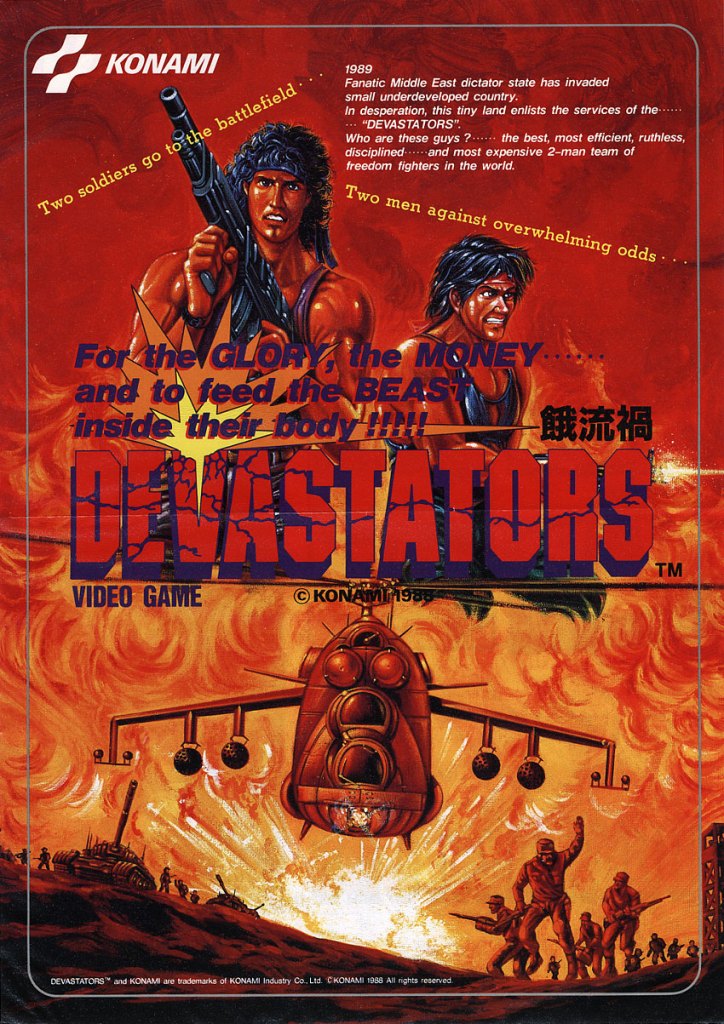
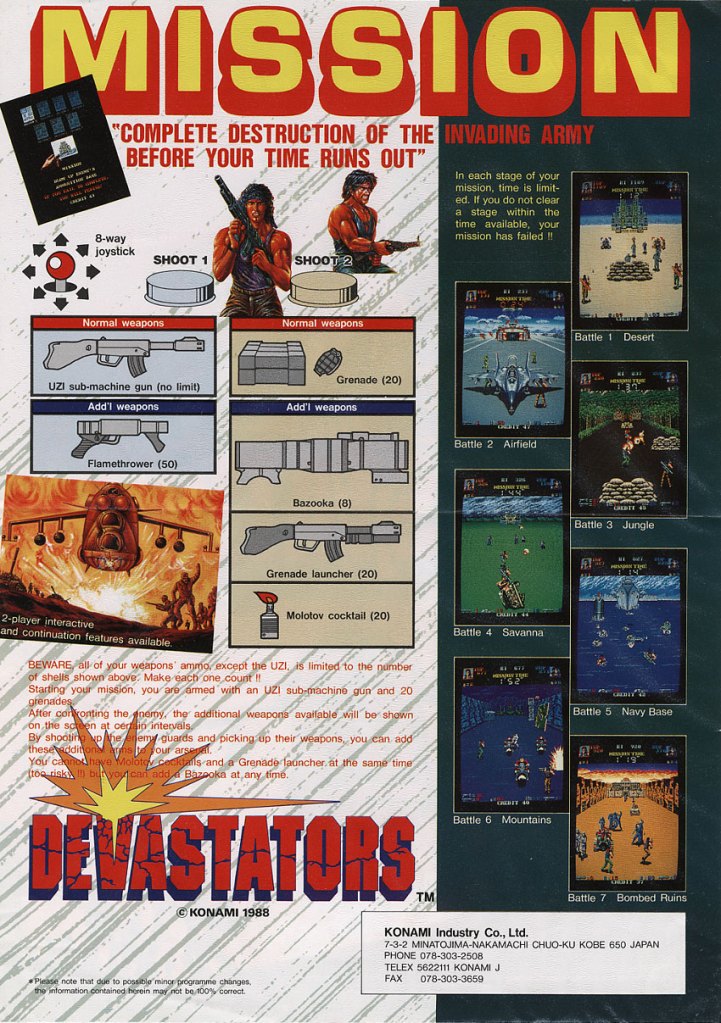
Devastators is another Konami arcade game that had a strong war theme and it was influenced by Hollywood action films of the 1980s. This particular arcade flyer for the North American market is almost identical with the Japanese arcade flyer as both have the same artwork on the front and almost the same visual layout on the rear. The most obvious difference is the use of English text for the North American flyer.
4. Assault North American arcade flyer
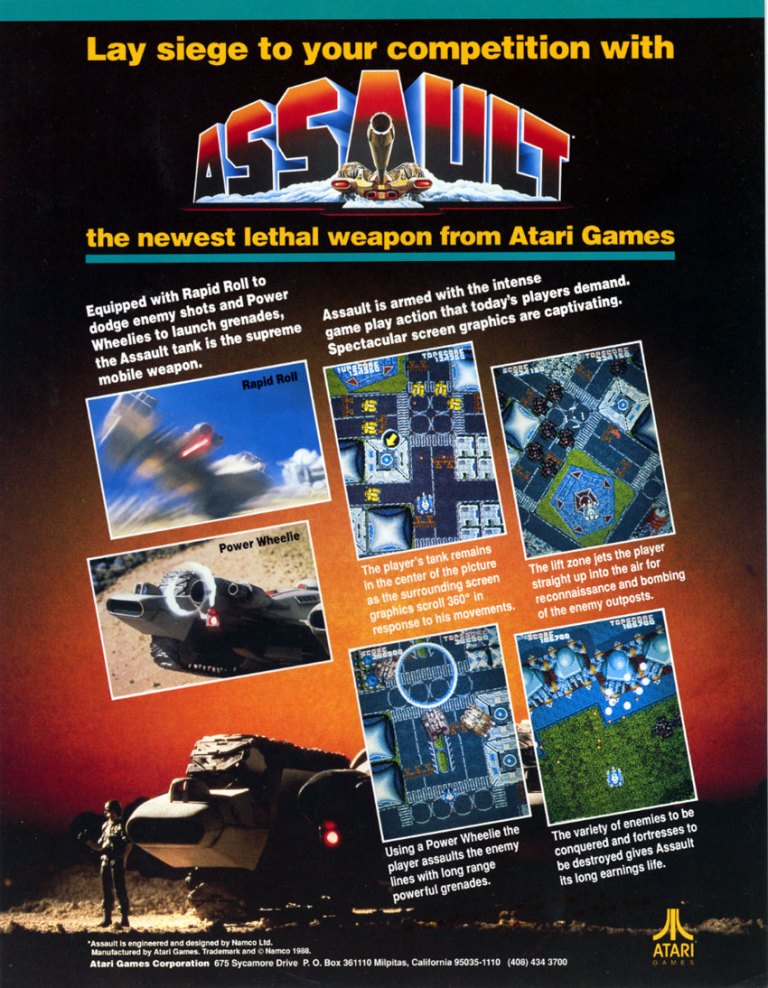
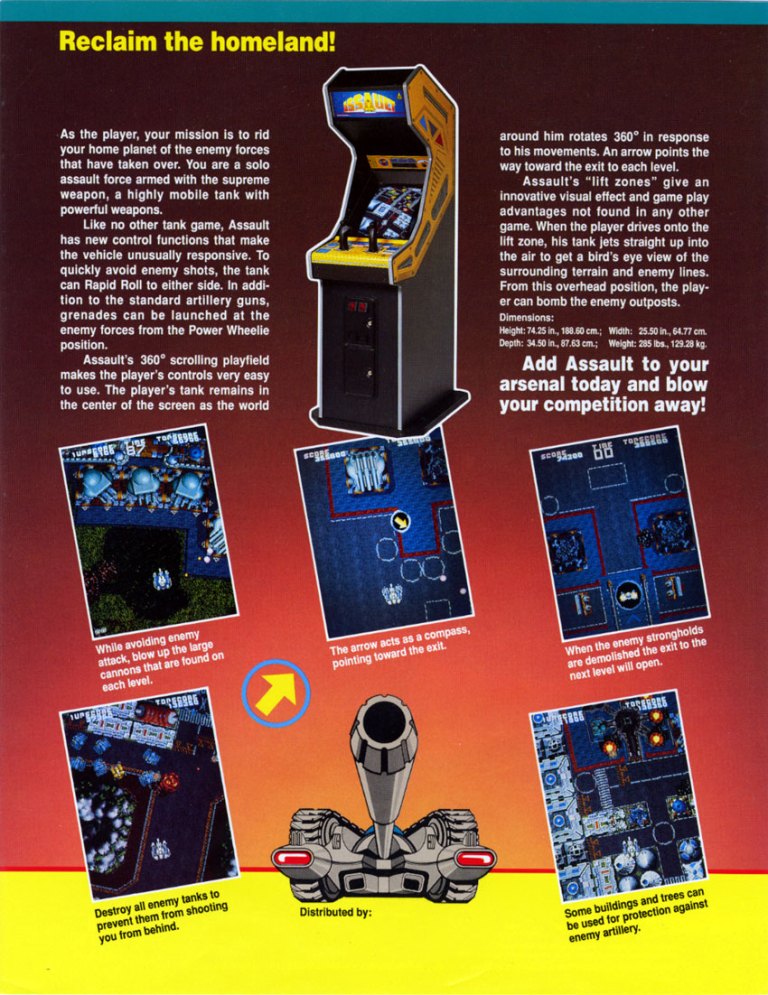
Released in American arcades by Atari, Assault is a multi-directional shooter that had a twin-stick control layout (similar with the classic Battlezone) and players experienced intense battles as well as immersive visual effects such as sprite scaling and environment rotation of up to 360 degrees. To promote the game (this originated in Japan by Namco), Atari came up with this arcade flyer that had selected screenshots and descriptive text on both the front and the rear (which showed the arcade cabinet). Assault was a hit with gamers at the arcades and it was not released on consoles until 2009.
5. Sega CD print ad
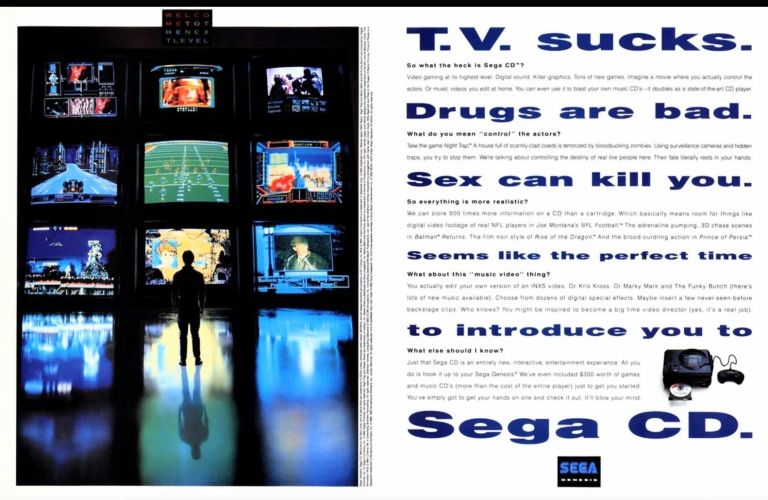
As the Sega Genesis console became a huge commercial success in North America, Sega itself became ambitious about what CD-ROM technology would do for video games. Sega in Japan tasked its Consumer Products Research and Development Labs to create a CD-ROM add-on which resulted in the Sega CD (Mega-CD in other parts of the world) which launched in America in 1992. To promote the add-on towards existing Genesis console owners as well as potential new customers, Sega of America came up with the above 2-page print ad that had a social message on the right and an image of a man standing in front of large monitors (showing Sega CD game footage) on the left. While it looked like an odd way of promoting video game hardware, it still remains catchy to see.
6. Panasonic 3DO print ad
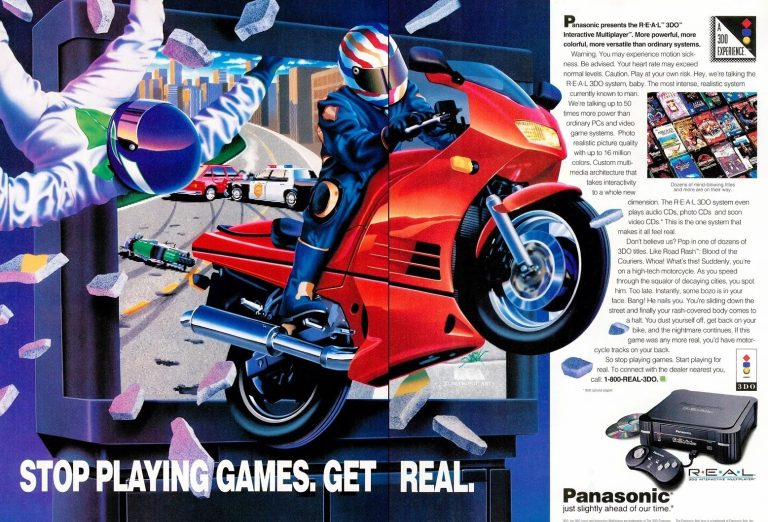
Still in the field of CD-ROM gaming, Panasonic had competitive presence in video gaming when its Panasonic FZ-1 R.E.A.L. 3DO Interactive Multiplayer (with technology licensed by The 3DO Company) was launched in America in 1993. If you look at the print ad closely, you will notice that the descriptive text emphasized the multimedia entertainment aspect more than video gaming. The dominating artwork used does not come from a particular video game as it was made to emphasize home entertainment in general. It’s not surprising that the Panasonic 3DO and other 3DO machines from other manufacturers failed commercially.
7. Shaq Fu print ad
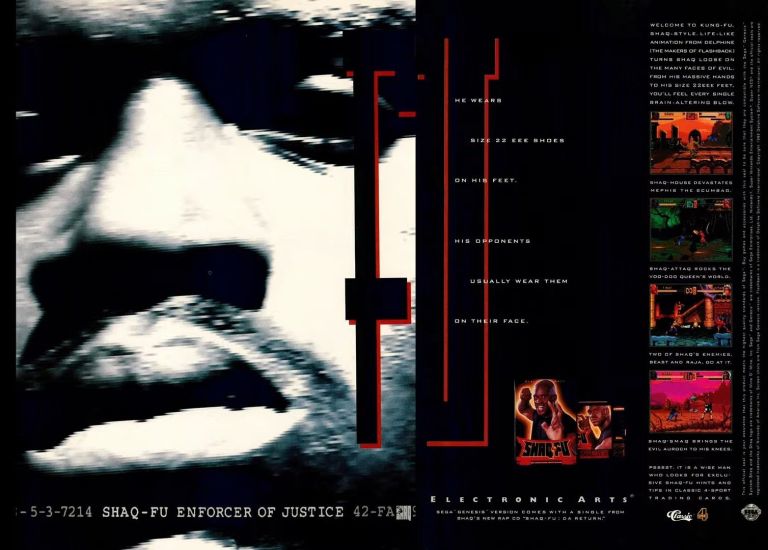
Yes, it is true! There was indeed a video game endorsed by Shaquille O’Neal and it was not a basketball game. Shaq Fu is a 1994 2D fighting game with adventure elements and a story in which gamers play O’Neal as martial artist (note: O’Neal himself participated in the game’s production). To promote the game, Electronic Arts came up with a 2-page print ad that had a very odd black-and-white close-up image of O’Neal’s face on the left leaving small screenshots and hard-to-read text on the right (even though there was some vacant space remaining. I remember seeing this ad while reading a video game magazine and the ad ended up looking more like a promotion of O’Neal (already an NBA superstar) than the game itself. By today’s standards, this print ad is an example of a marketing misfire.
8. Kasumi Ninja print ad
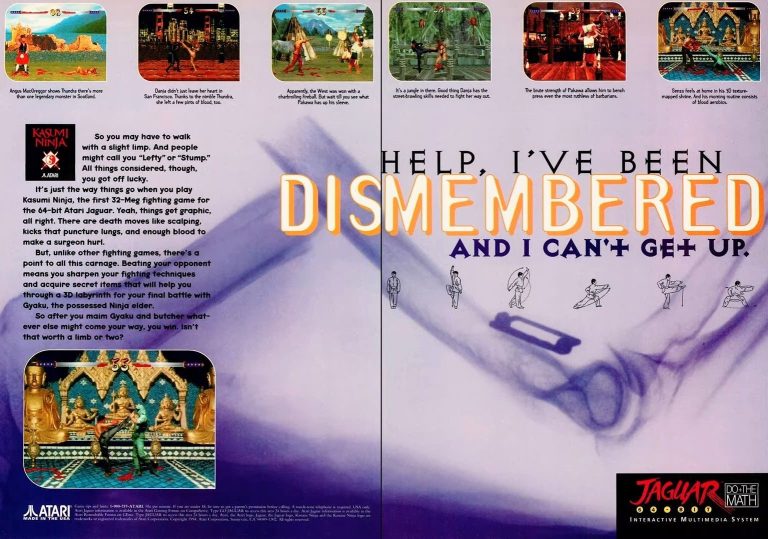
Remember the 1990s video game trends of digitized human images and disturbingly violent 2D fighting games sparked by Mortal Kombat? The Atari Jaguar-exclusive game Kasumi Ninja was made to capitalize on those trends and it failed badly. Apart from the low sales of the Jaguar console, Atari as publisher came up with the above 2-page print ad that was not appealing to gamers’ eyes and it had almost no excitement overall. This is another marketing misfire.
9. Parasite Eve North American and Japanese print ads
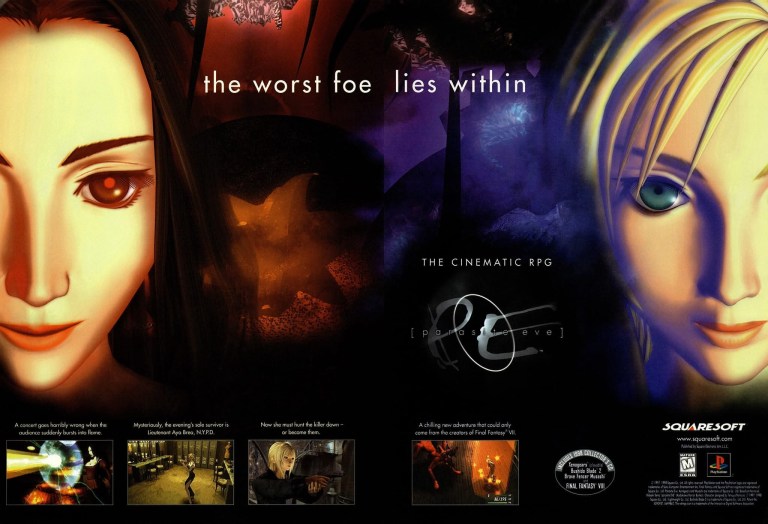
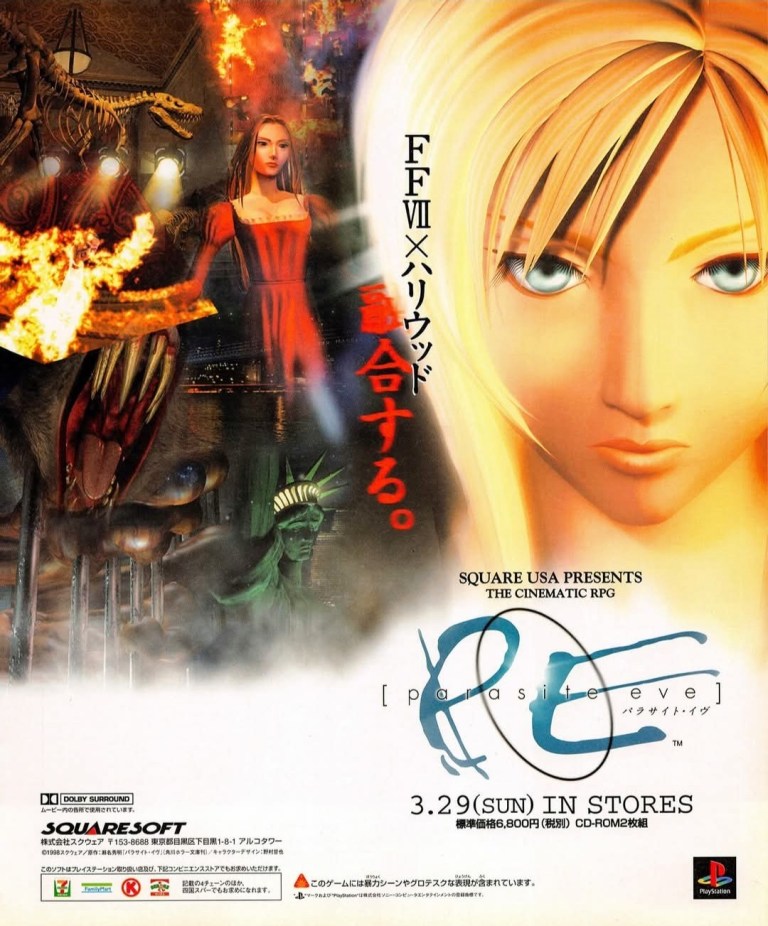
Starting in the mid-1990s, Squaresoft (now Square Enix) really became aggressive with video game creativity and experimentation as they launched several new projects that eventually got released on PlayStation in the late 1990s until 2000. One of those daring new projects was Parasite Eve which was a role-playing game (RPG) that had visual elements – particularly pre-rendered backgrounds – and a style of exploration that reminded gamers of Resident Evil. The game was a sequel to the Japanese science fiction horror novel of the same name and it involved the creativity of Final Fantasy creator Hironobu Sakaguchi (credited as producer). To promote the game, the 2-page North American print ad had protagonist Aya Brea on the right and the enemy on the left with a cryptic line placed strategically between them. The North American ad clearly stated that the game is a cinematic RPG. By comparison, the Japanese print ad of Parasite Eve has a strong horror vibe which is not surprising because of the novel’s horror elements and the fact that Squaresoft was capitalizing on the popularity of horror-related entertainment in Japan. By today’s standards, Parasite Eve is truly a product of the late-1990s and it has a dedicated fanbase.
+++++
Thank you for reading. If you find this article engaging, please click the like button below, share this article to others and also please consider making a donation to support my publishing. If you are looking for a copywriter to create content for your special project or business, check out my services and my portfolio. Feel free to contact me with a private message. Also please feel free to visit my Facebook page Author Carlo Carrasco and follow me on Twitter at @HavenorFantasy as well as on Tumblr at https://carlocarrasco.tumblr.com/ and on Instagram at https://www.instagram.com/authorcarlocarrasco
 Author Carlo Carrasco