Retro Gaming Ads Blast – Part 37

Welcome back readers, fellow geeks and electronic gaming fans!

In this edition of the Retro Gaming Ads Blast (RGAB) series, we will take a look at another batch of retro gaming print ads – including arcade flyers – from the 1970s to the 1990s.

For the newcomers reading this, Retro Gaming Ads Blast (RGAB) looks back at the many print ads of games (console, arcade, computer and handheld) that were published in comic books, magazines, flyers, posters and newspapers long before smartphones, social media, the worldwide web and streaming became popular. To put things in perspective, people back in the 1980s and 1990s were more trusting of print media for information and images about electronic games and related products.

With those details laid down, here is the newest batch of retro gaming print ads for you to see and enjoy…

1. Cabal Japanese arcade flyer/poster
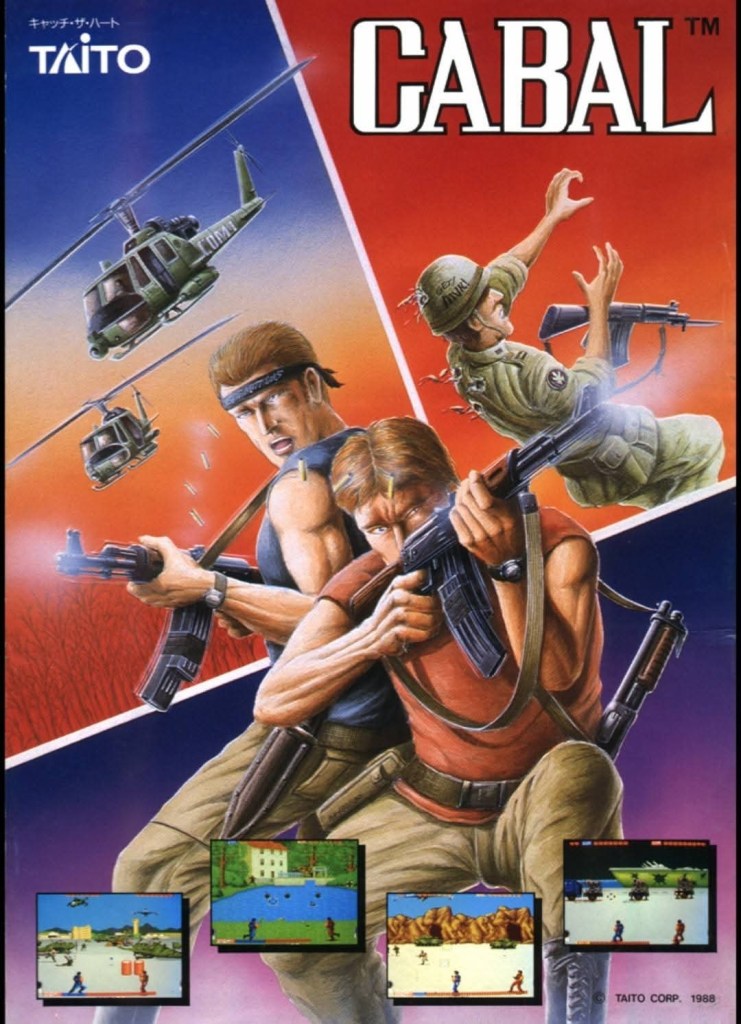
Can you feel the action and intensity here?

When it was first released in video arcades in Japan in late 1988, Cabal was another game inspired by military action movies of Hollywood which explains the art work done for the arcade flyer and poster shown above. The Vietnam War was still fresh in people’s minds and the concept of having one or two players firing their weapons against enemy soldiers resonated with gamers who saw Hollywood’s military action flicks. That said, it is not surprising that Cabal became a huge hit in Japan before getting released in arcades around the world.

2. Willows Japanese arcade flyer
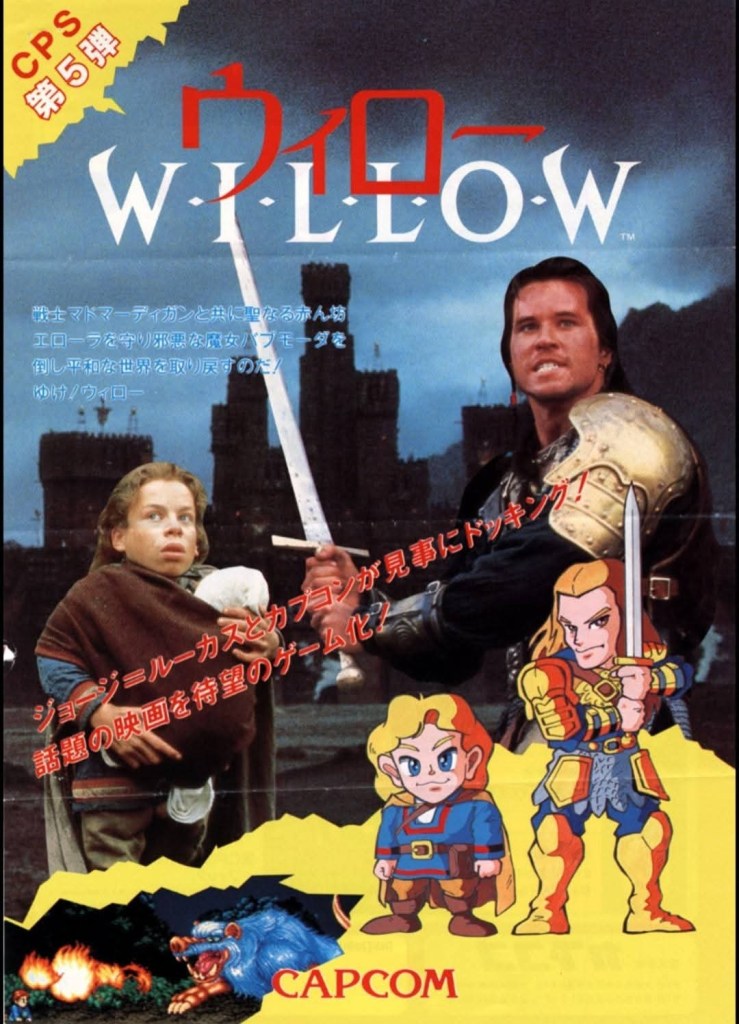
The front.
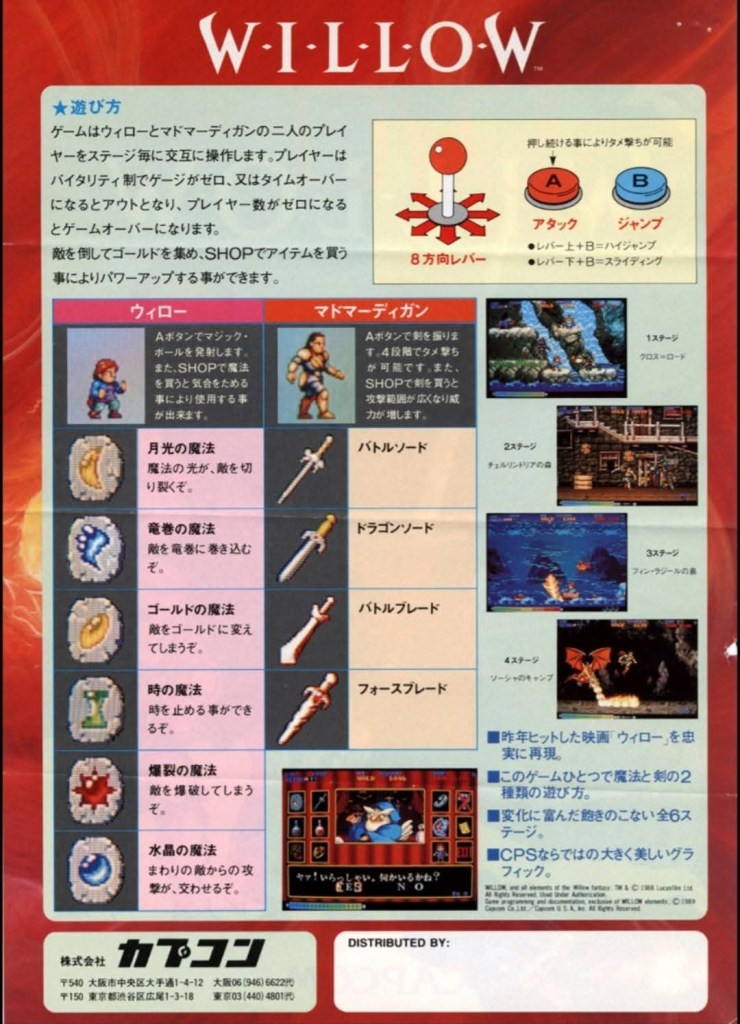
The rear.

Remember the 1988 high fantasy adventure film Willow? That film was produced by George Lucas and was a bold new production of Lucasfilm shifting away from Star Wars. Believe it or not, an official arcade game adaptation of Willow was made by Capcom and they promoted it by having images of Val Kilmer and Warwick Davis on the front of the arcade flyer (opposite the illustrated versions of their characters). The game, which was a side-scrolling platform game with run-and-gun elements, went on to be an arcade hit in Japan and eventually pleased gamers worldwide.

3. Super Punch-Out!! North American print ad
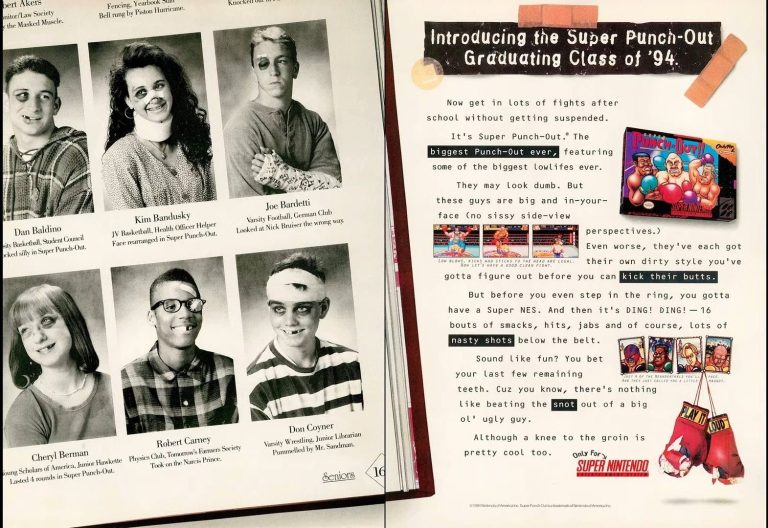
This is funny to look at.

Historically, Nintendo’s Punch-Out!! series started in the arcade in 1984 and the first game was the result of the company’s effort to make a new game using arcade cabinets with two screens. The 2nd game – Mike Tyson’s Punch-Out!! – became a huge critical and commercial hit (over 2 million copies sold in 1988) on console and it made great business sense for Nintendo for release another Punch-Out!! for its console gamers to enjoy in the comfort of home. In 1994, Super Punch-Out!! was released on the Super Nintendo Entertainment System (SNES) in America and to promote it, the company came up with a hilarious 2-page ad that showed fictional high school graduates with boxing-related injuries. The imagery creatively connected with the words “biggest Punch-Out ever” and “Graduating Class of ‘94”.

4. EA Sports 3-in-1 SNES games print ad
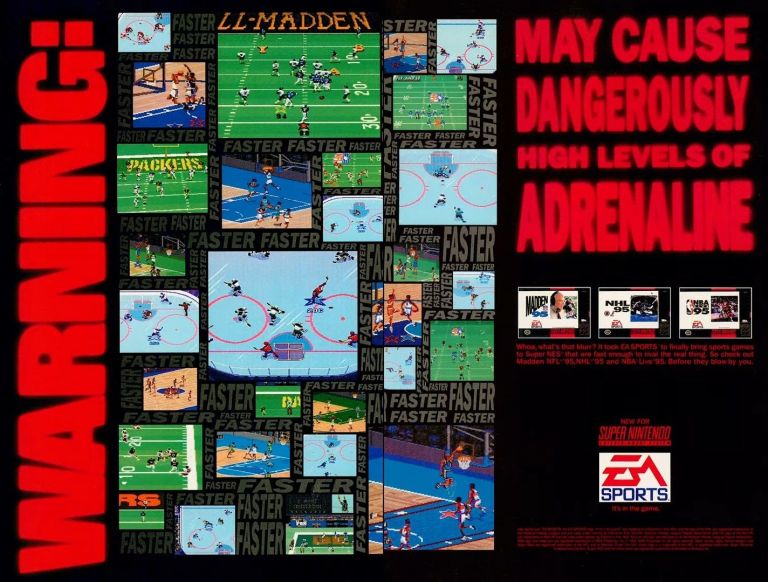
EA Sports games on the SNES.

In 1994, Electronic Arts (EA) released their sports games NBA Live 95, NHL 95 and Madden NFL 95 for consoles at the time. Even though the Sega Genesis sold better than Super Nintendo Entertainment System (SNES) in America at the time, EA went on to aggressively market their 3 sports video games on Nintendo’s console using a 3-in-1 games print ad. In retrospect, the SNES for the most part had better graphics and sounds than the Genesis which is reflected clearly on EA Sports games of the time. This print ad still looks fun and exciting.  

5. Atari Jaguar CD print ad
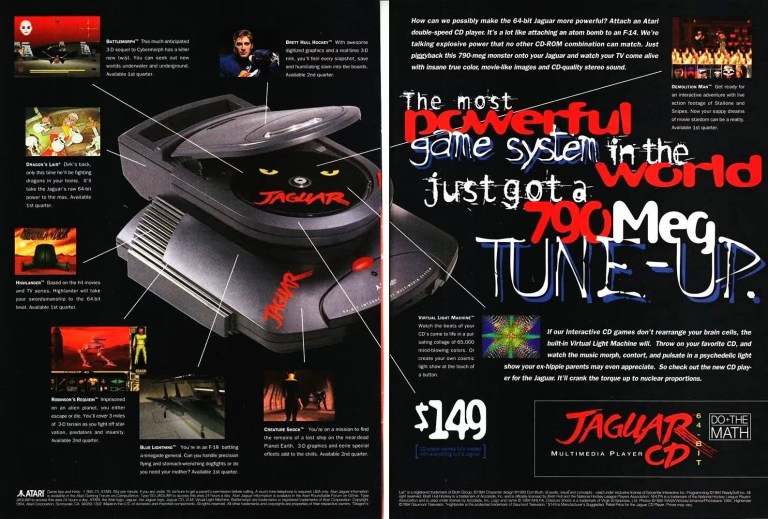
Were you able to play any game on the Atari Jaguar with the CD add-on included?

Apart from the obvious advances of technology that impacted video games, the 1990s is also known for the rise of CD-ROM as a medium for gaming. In an effort to boost sales of the Atari Jaguar console (launched in America in 1993 for around $250) and capitalize on the trust of the fans and console owners, Atari launched a CD-ROM add-on device for about $150 in 1995. To promote it, the company went aggressive with the 2-page ad showing the add-on fully connected on top of the main console, showing off some games and posting a text description emphasizing hardware power and the advantages that come with the CD technology. Even in the captured image, the Atari Jaguar CD still resembled a toilet. This is an aggressive ad campaign that failed as less than 20,000 Atari Jaguar CD units were sold by the time it was discontinued in 1996.

6. 3DO print ad
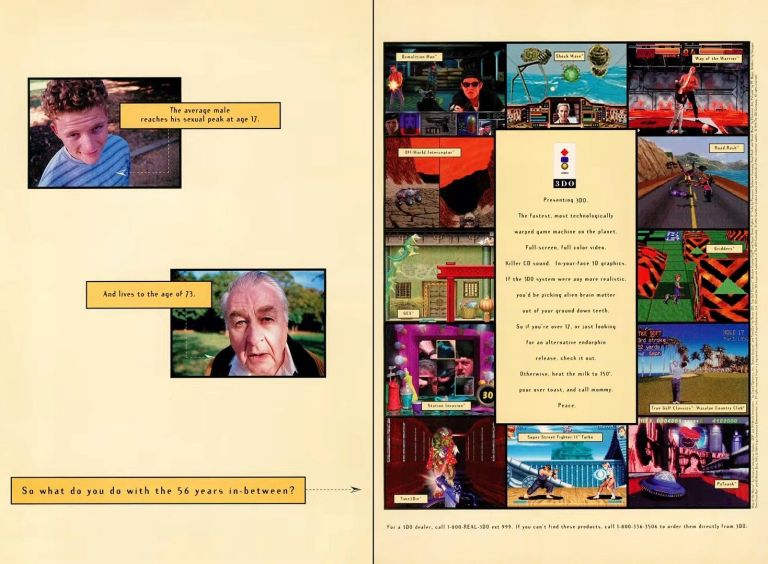
While it lacks intensity, this 3DO ad emphasized the games.

Without showing any hardware, the 3DO Company came up with this 2-page print ad that had a slightly adulterated tone (look at the left page) and aggressively marketed the 3DO console games available at the time. Games like Demolition Man, Shock Wave, Road Rash and Super Street Fighter II Turbo were the standout titles which clearly showed the company made the effort to emphasize gaming more than multimedia features. This 1990s ad tackled the generations with a touch of humor.

7. Lethal Enforcers II: Gun Fighters Sega Genesis print ad
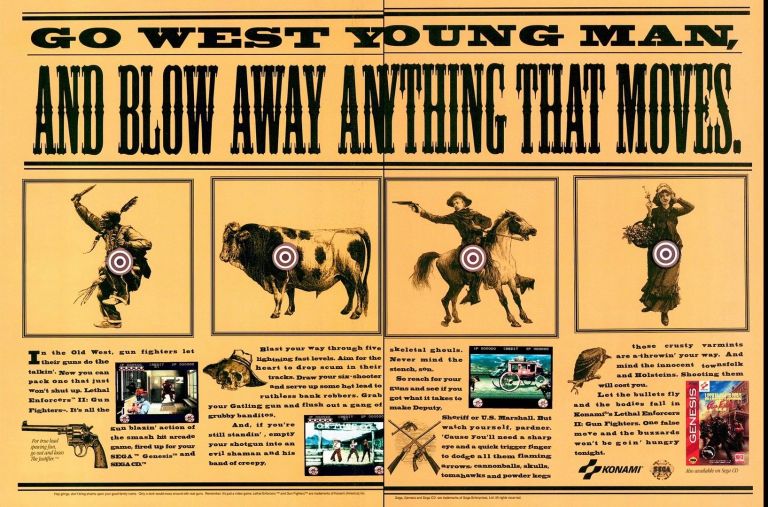
This is a fun ad to look at.

When Lethal Enforcers II: Gun Fighters was released in the arcades in 1994, it became a commercial success for Konami which went on to announce it would port the game to consoles of Nintendo and Sega at the time. While the port for the Super Nintendo Entertainment System (SNES) was never released, Lethal Enforcers II: Gun Fighters made its way to the Sega Genesis and Sega CD. The print ad of the Sega Genesis version (Sega CD mentioned in small text) had an inspired design emphasizing the Old West, shooting and the conflict between cowboys and Indians. The screenshots gave people the clear idea that Old West was the setting (versus modern day in the previous game). This is still fun to look at.

8. Syphon Filter
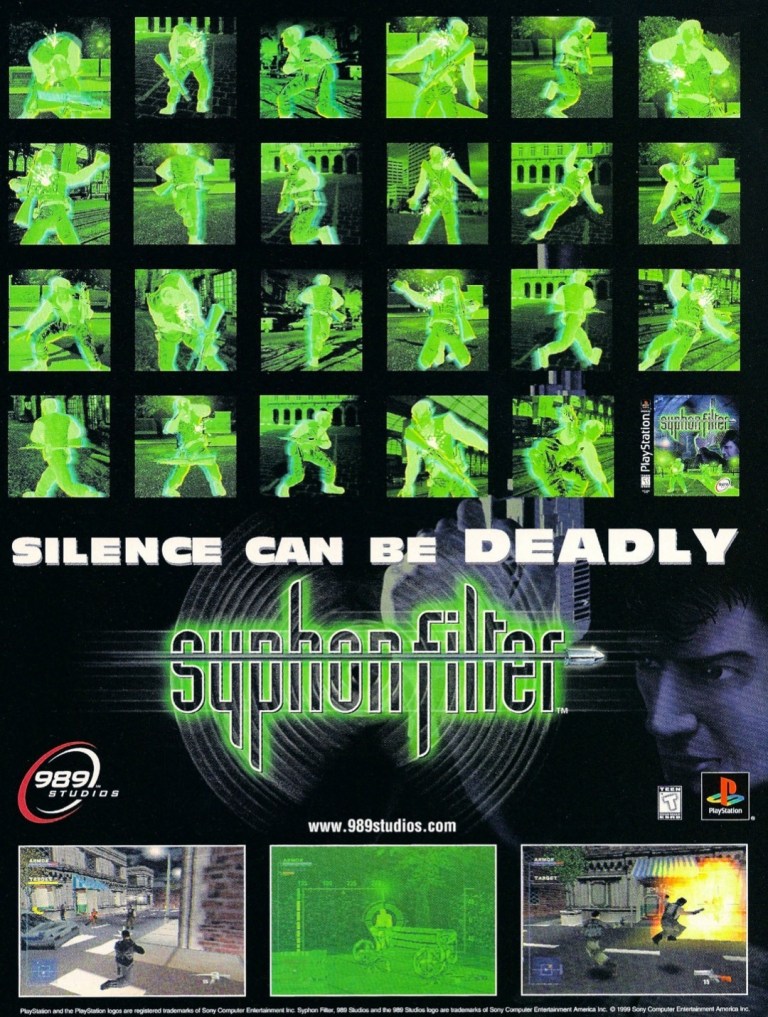
Syphon Filter went on to become a surprise hit game in 1999.

In 1999, Sony’s 989 Studios released Syphon Filter exclusively on the PlayStation console. This single-page print ad showed a few screenshots on the bottom and several action snippets with a night vision touch ultimately emphasizing the stealth aspect within the gameplay. The marketing proved to be effective as the game sold a lot at retail and went on to establish a new game franchise exclusive to PlayStation consoles.

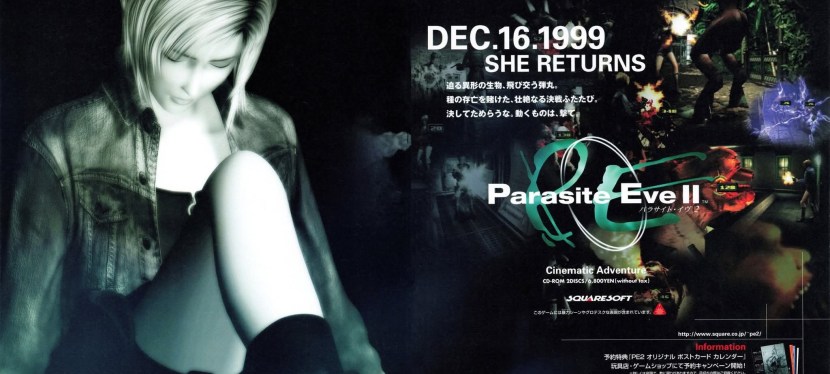
9. Parasite Eve II Japanese print ad
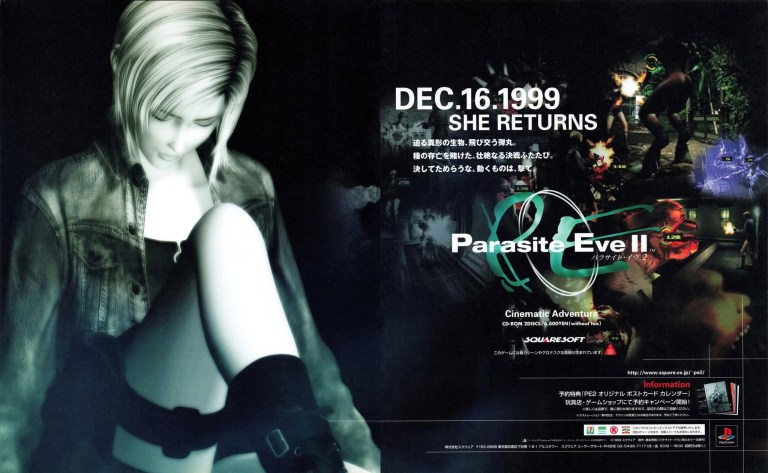
Were you a big fan of Aya Brea and the Parasite Eve franchise in the late 1990s?

Following the critical and commercial success of Parasite Eve in 1998, SquareSoft proceeded with Parasite Eve II and the production (note: initially for a spin-off game before becoming a sequel) did not even involve the main creators of the first game. Instead the company had a different team of developers – including those who previously worked on Resident Evil games for Capcom – in Osaka to make the sequel. This explains why Parasite Eve II had stronger survival horror gameplay resembling a Resident Evil game. As major changes were made during the production, it was decided that Aya Brea would become the main protagonist and already the character was already popular with gamers. That being said, the marketing of Parasite Eve II for the Japanese market heavily featured Aya Brea with subtle sexiness, beauty and action in mind. The marketing intensified leading to its eventual December 16, 1999 release in Japan.

+++++

Thank you for reading. If you find this article engaging, please click the like button below, share this article to others and also please consider making a donation to support my publishing. If you are looking for a copywriter to create content for your special project or business, check out my services and my portfolio. Feel free to contact me with a private message. Also please feel free to visit my Facebook page Author Carlo Carrasco and follow me on Twitter at  @HavenorFantasy as well as on Tumblr at https://carlocarrasco.tumblr.com/ and on Instagram at https://www.instagram.com/authorcarlocarrasco

Retro Gaming Ads Blast – Part 11

Welcome back readers, fellow geeks and electronic gaming fans!

In this edition of the Retro Gaming Ads Blast (RGAB) series, we will take a look at another batch of retro gaming print ads from the 1980s and 1990s. In addition, there will be a few flyers of arcade games as well as promotional posters of a notable console game that was released only in Japan.

For the newcomers reading this, Retro Gaming Ads Blast (RGAB) looks back at the many print ads of games (console, arcade, computer and handheld) that were published in comic books, magazines, flyers and newspapers long before smartphones, social media, the worldwide web and streaming became popular. To put things in perspective, people back in the 1980s and 1990s were more trusting of print media for information and images about electronic games and related products.

With those details laid down, here is the newest batch of retro gaming print ads for you to see and enjoy…

1. M.I.A.: Missing in Action arcade flyer

This is an effective way of catching the attention of both players and arcade operators. I can imagine the woke, the SJWs and rabid feminists getting easily offended by this.

Konami was a very prominent producer of games back in the 1980s. Not only did the company produce high-quality and enjoyable military-themed games on consoles and computers, Konami also made its presence felt in the highly competitive sector of arcade games. In 1989, they released the arcade conversion kit of M.I.A.: Missing in Action and this flyer is the best know promotion of it. M.I.A.: Missing in Action is the follow-up to Konami’s hit game Rush’n Attack.

Visually, the flyer’s display of four screenshots combined with a dominating photographic image of prisoners of war (POWs) getting delightfully released by an attractive female Rambo-type rescuer were designed to catch the attention of young adult and adult gamers. The text descriptions (note: there were more details on the back of the flyer), however, were geared towards arcade operators who were looking for new games to acquire without the hassle of having to buy an entire arcade cabinet. That being said, this flyer was a clever way to appeal to arcade operators and the people who love playing arcade games.

2. Fonz arcade flyer

Simplistic yet effective to look at. If you are an arcade operator, this flyer conveniently has key information displayed.

Believe it or not, Sega was already active in arcade games way back in the 1970s. In this particular flyer, Sega’s arcade game Fonz (also called Moto-Cross, Man T.T.) offered players the unique experience of driving a digital vehicle using actual handlebars on the machine that were meant to create an immersive and realistic feel. If you look closely, the flyer has lots of details written with arcade operators and players in mind.

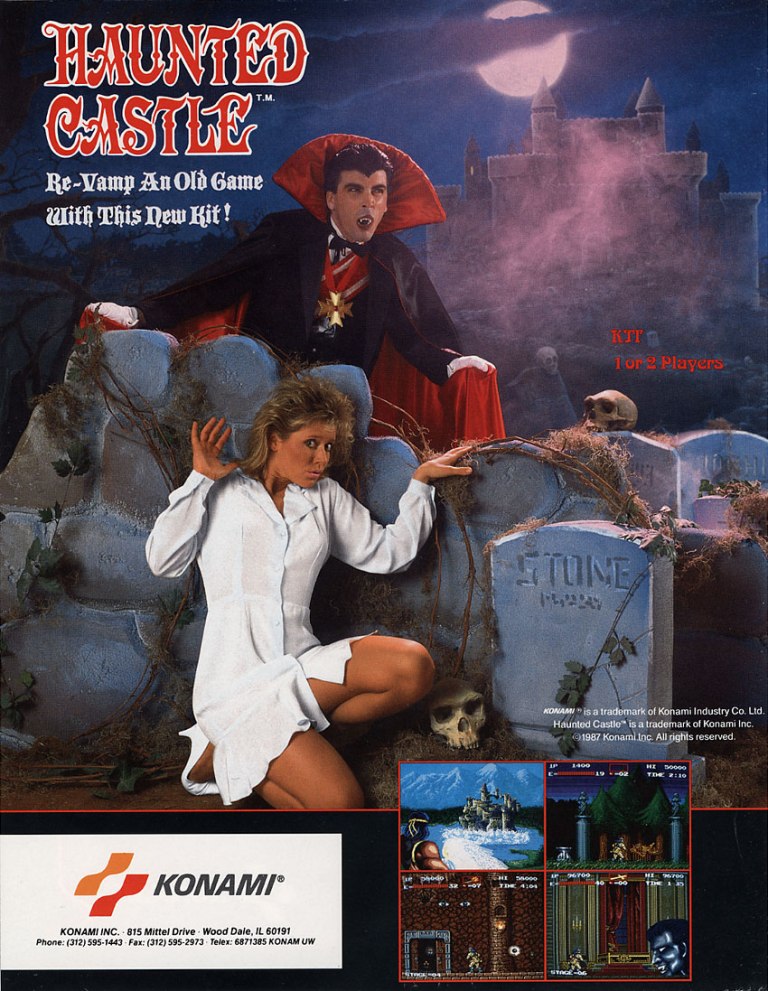
3. Haunted Castle arcade flyer

Indeed, this game is part of the Castlevania game franchise. It was one of the first Castlevania games released for arcades.

Arguably, Konami is best known for the Castlevania game series which covered handheld gaming devices, personal computers, video game consoles and even arcades. Haunted Castle (Japanese title: Akumajō Dracula) is the 2nd arcade game of the Castlevania franchise and it is not a port of any console game. Like the arcade flyer of M.I.A.: Missing in Action, this one was crafted to lure the attention (and money) of arcade operators looking for conversion kits to replace their old games. The visual presentation is eye-catching and even though the Castlevania brand was nowhere to be seen, Castlevania fans could tell this this arcade offering was part of their favorite game franchise.  

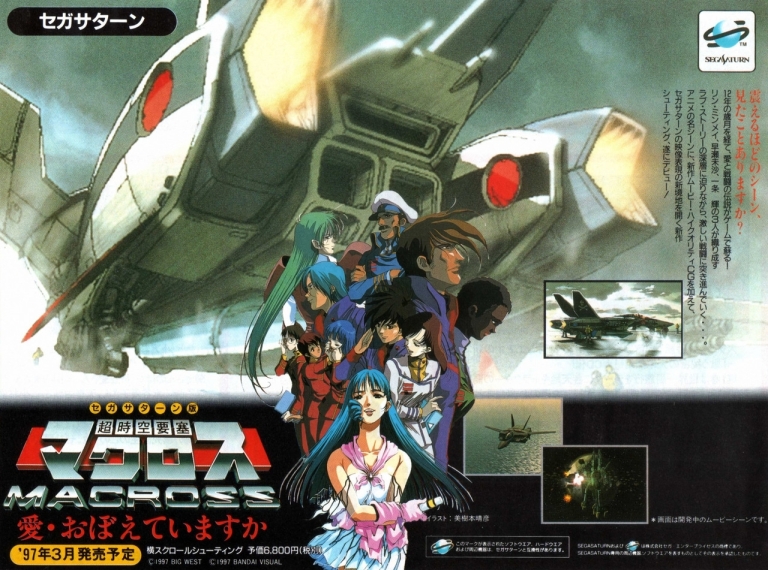
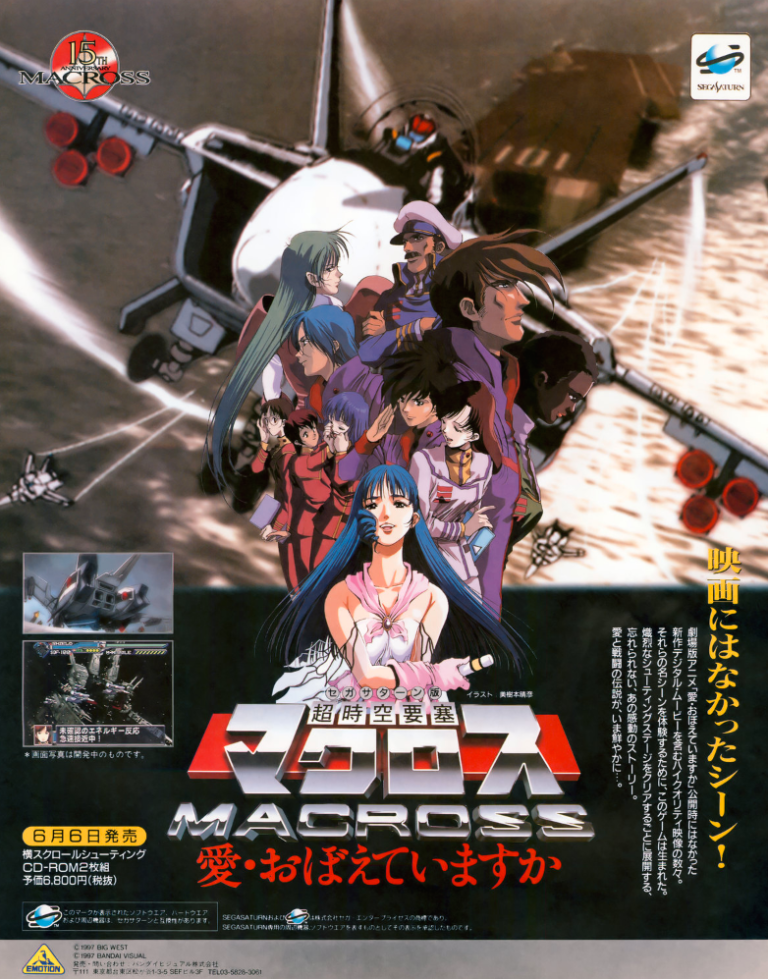
4. The Super Dimension Fortress Macross: Do You Remember Love? flyer and poster

The poster promoting the release of the game for Sega Saturn in Japan.
The flyer promoting the Sega Saturn game’s 1997 release as well as the 15th anniversary of Macross.

In 1997, the 15th anniversary of the Macross multimedia franchise was celebrated in Japan and among the highlights was the release of The Super Dimension Fortress Macross: Do You Remember Love? on the Sega Saturn. To promote the game and the franchise itself, lots of flyers and posters were released in Japan. If you look at the illustrated images on the promotional materials closely, you will realize that they are not from the original 1982-83 Macross anime TV series but rather from the The Super Dimension Fortress Macross: Do You Remember Love? animated movie of 1984 (read my retro movie review by clicking here).

While it might be baffling to some as to why the original anime TV series was not used as the source material for the 15th anniversary celebration through gaming, the 1984 anime feature film was actually more adaptable for a video game project (read my retro review by clicking here). It is so obvious, you just have to ask yourselves this question – how can the game developers compress the entire concepts of the 36-episode Macross anime series into one game while ensuring fun gameplay? Regardless, the game was a lot of fun to play and I enjoyed playing the PlayStation version in 1999.

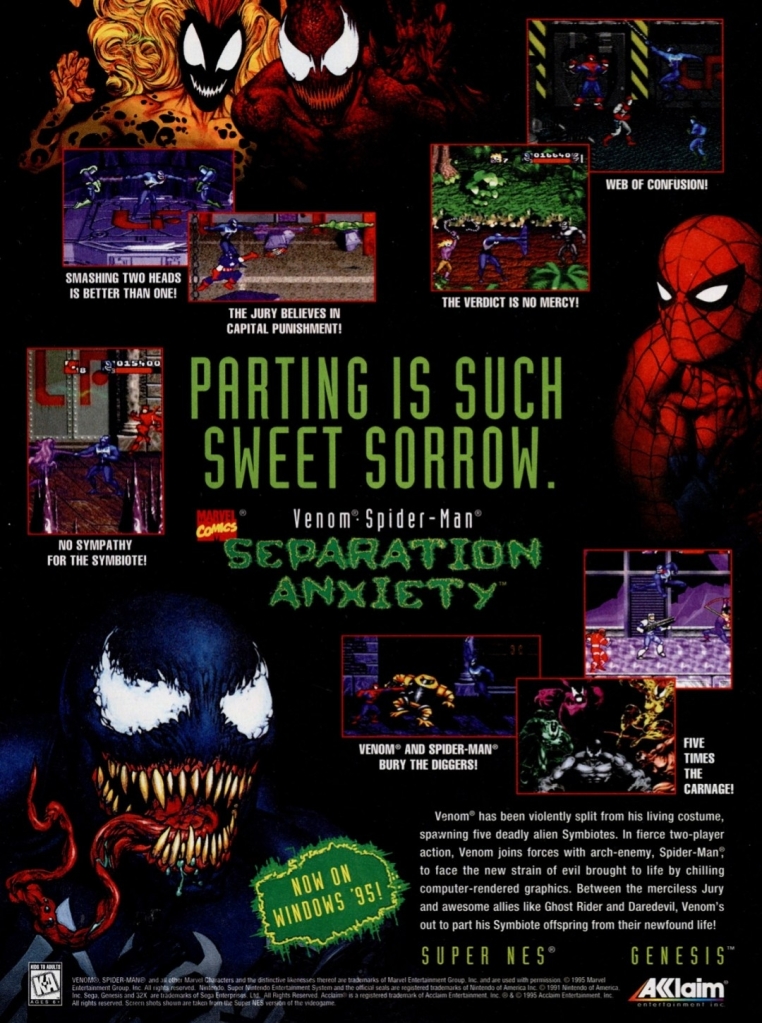
5. Venom/Spider-Man: Separation Anxiety print ad

A clear effort to sell the game to gamers as well as fans of Spider-Man and Venom.

In 1994, Acclaim released Spider-Man and Venom: Maximum Carnage (based on the 1993 comic book storyline Maximum Carnage) on Super Nintendo Entertainment System (SNES) and Sega Genesis ultimately becoming popular with comic book fans and gamers who enjoyed sidescrolling beat-them-up games.

Subsequently, Acclaim and develop Software Creations reunited to release the sequel Venom/Spider-Man: Separation Anxiety a year later on the two leading 16-bit consoles as well as on personal computer (PC). If there is anything notable about this eye-catching print ad, it is the fact that its visual presentation (with graphics on-par with the previous year’s game) cleverly hides the fact that it did not have much new to offer gamers with regards to gameplay and story cutscenes (which the previous game prominently had). Eventually, this game attracted weaker reviews from game critics and has since been forgotten.

6. Tecmo Super Bowl SNES print ad

From the time when Tecmo was still a strong producer of sports video games.

In 1991, Tecmo Super Bowl was released on the aging Nintendo Entertainment System (NES) and because its game design greatly entertained gamers, it became a tremendous commercial success. Not even the very high launch price of $54.99 stopped it from selling a lot.

To keep the commercial success and public interest going, Tecmo announced a new version of the game for the more powerful SNES console with the simple title of Tecmo Super Bowl. If you look closely at the print ad, you will notice that gameplay screenshots were not used at all. Instead, they showed images of the nicely illustrated art works they prepared as eye candy for the game with the intention of making it look cinematic. This is very curious because gameplay itself was the main selling factor of the NES version of Tecmo Super Bowl. I can only guess that Tecmo was not ready to show gameplay images by the time this print ad was made.

7. X-Men 2: Clone Wars print ad

The art used is too alienating for promoting this game.

During the age of the 16-bit consoles, there was a variety of X-Men video games released and produced by different companies. In 1993, an X-Men game published by Sega was released exclusively on the Genesis console which turned out to be fun for gamers and received mostly positive reviews from the critics. Sega went on to publish the sequel X-Men 2: Clone Wars and this print ad caught my attention because of how exaggerated the characters looked. It’s so strange, it’s as if the artist took visual reference from a somewhat blocky 3D polygonal portrait then tried to make them look hand-drawn. I wonder if anyone from Sega regretted this.  

+++++

Thank you for reading. If you find this article engaging, please click the like button below, share this article to others and also please consider making a donation to support my publishing. If you are looking for a copywriter to create content for your special project or business, check out my services and my portfolio. Feel free to contact me with a private message. Also please feel free to visit my Facebook page Author Carlo Carrasco and follow me on Twitter at  @HavenorFantasy as well as on Tumblr at https://carlocarrasco.tumblr.com/ and on Instagram at https://www.instagram.com/authorcarlocarrasco