Retro Gaming Ads Blast – Part 17

Welcome back readers, fellow geeks and electronic gaming fans!

In this edition of the Retro Gaming Ads Blast (RGAB) series, we will take a look at another batch of retro gaming print ads – including arcade flyers – from the 1980s and 1990s.

For the newcomers reading this, Retro Gaming Ads Blast (RGAB) looks back at the many print ads of games (console, arcade, computer and handheld) that were published in comic books, magazines, flyers, posters and newspapers long before smartphones, social media, the worldwide web and streaming became popular. To put things in perspective, people back in the 1980s and 1990s were more trusting of print media for information and images about electronic games and related products.

With those details laid down, here is the newest batch of retro gaming print ads for you to see and enjoy…

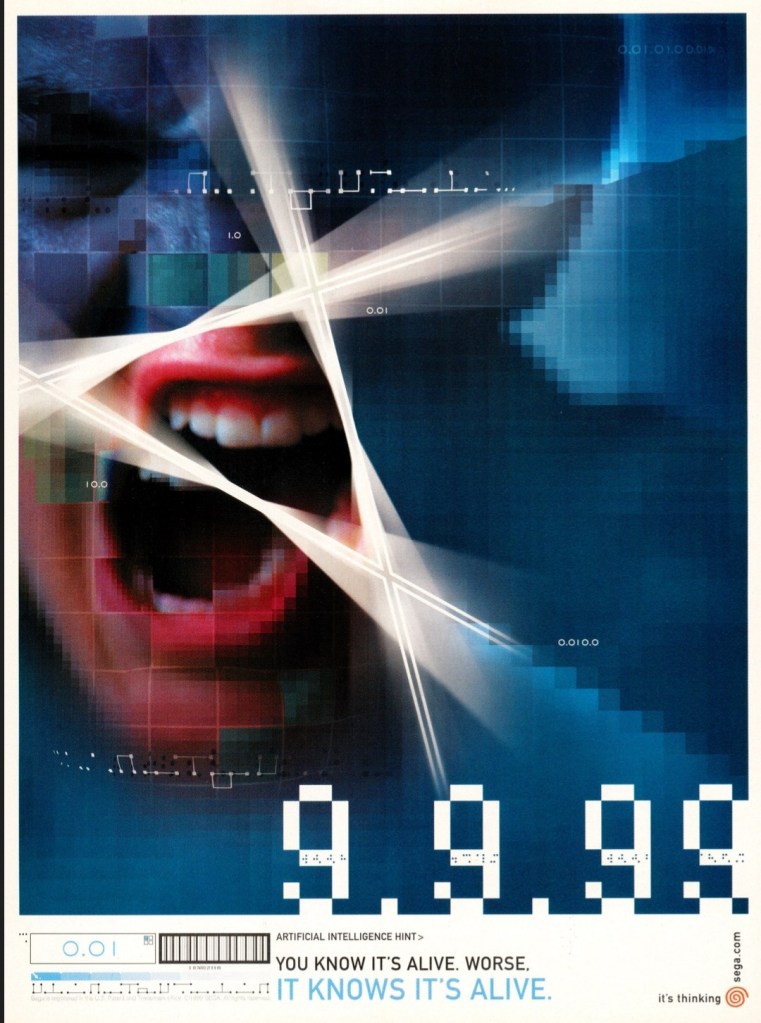
1. Sega Dreamcast launch print ads

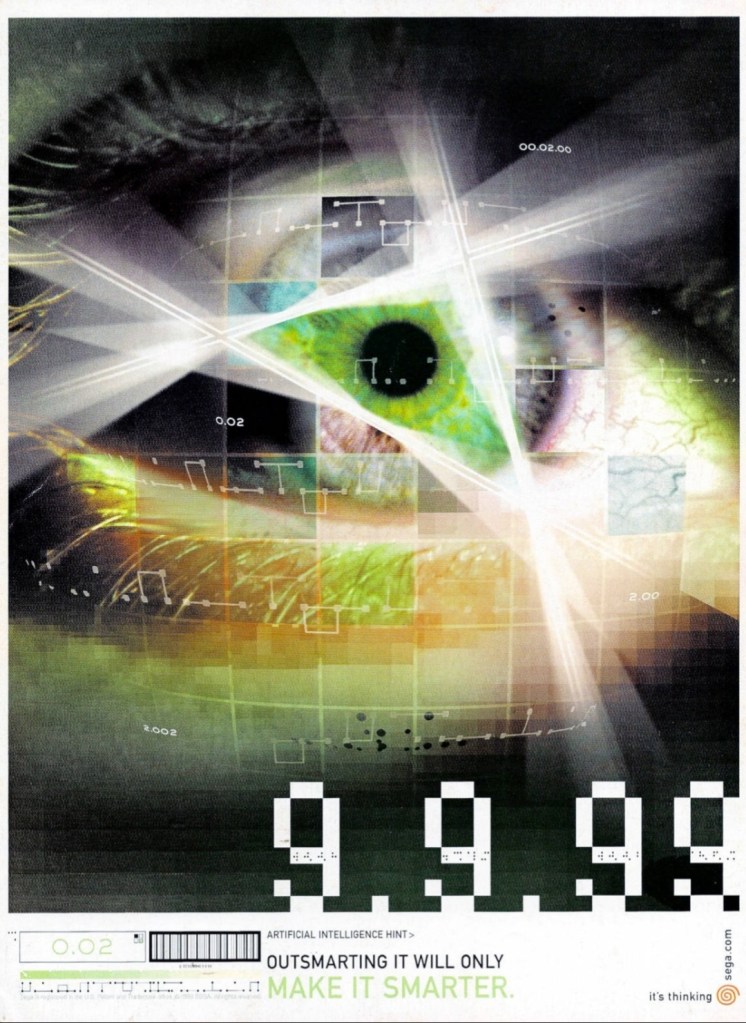
This cryptic Sega Dreamcast American launch print ad has an image that emphasized that gamers are being watched.
This one has an image emphasizing emotions, impulse and excitement.

By the time Sega launched their Dreamcast console in Japan in late 1998, the company was already bleeding from back-to-back years of financial losses. The Dreamcast was their big bet to regain the trust of consumers and business partners, to sell a lot of consoles and games, and somehow survive.

For the North American Dreamcast launch, Sega of America organized an intriguing series of ads emphasizing the September 9, 1999 launch date in very stylized and cryptic ways. As seen in the two selected ads above, the Dreamcast name was not even mentioned but the console’s trademark swirl was present. Anyone who was obsessed with video games – even if one was not a Sega fan – could tell that the print ads made clear that the Dreamcast was going to launch in America. Ultimately, Sega sold roughly $98 million worth of Dreamcast consoles, games and peripherals in the first 24 hours in America.

2. Point Blank 2 print ad

This ad appeared in comic books and magazines.

When Namco released the first Point Blank game, it was commercial successful in both arcades and on the PlayStation console in different parts of the world. To keep on succeeding, Namco made the sequel Point Blank 2 and their confidence in it was made clear with the above PlayStation version print ad that promised it to be multiplayer-oriented and ensure enough content to give players sufficient bouts of fun whichever game mode they pick. The ad’s image of the lady with a gun (Namco’s Guncon peripheral) and the animal trophies were done with humor in mind.

3. Pac-Man arcade flyers

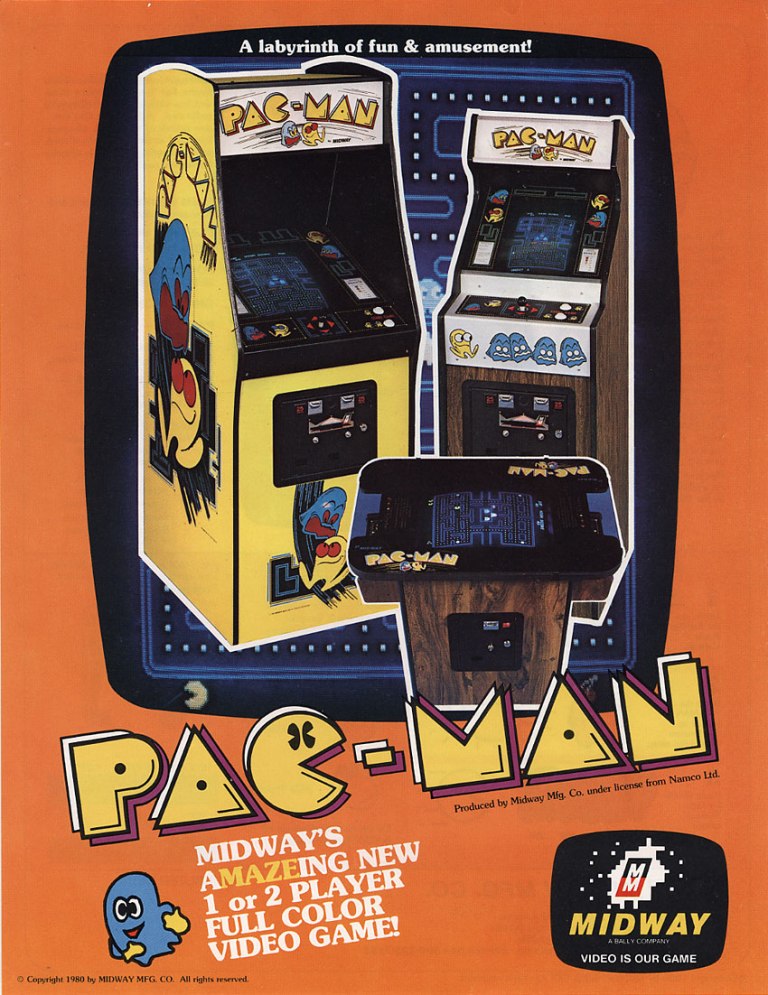
This ad showed that arcade operators can choose which type of machine of Pac-Man they could order.
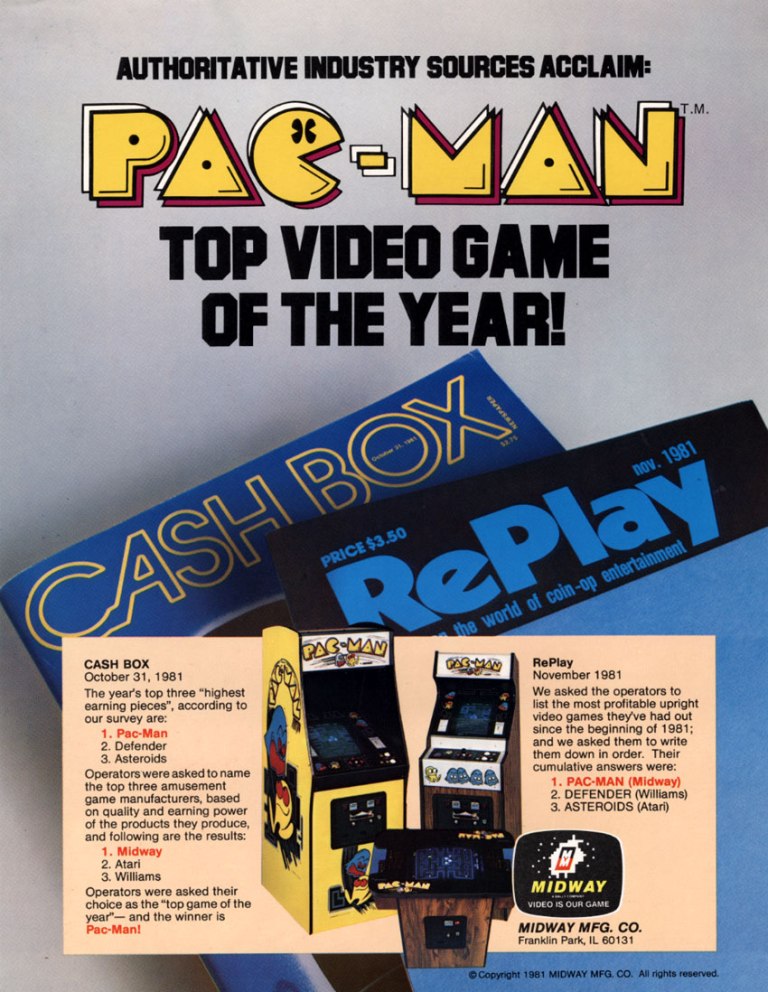
Midway issued this flyer when Pac-Man was already successful.

In 1980, Namco released Pac-Man in Japanese arcades and it became a big hit in a short span of time. This prompted them to bring the game overseas, especially in America which already had a growing arcade market. In November that year, Namco brought Pac-Man and their other arcade game Rally-X game to a tradeshow and only got mild attention from attendees and distributors. After being turned down by Atari, Namco signed a contract with Midway to distribute Pac-Man and Rally-X in America, and they were formally released the following month.

Upon release, Pac-Man became a strong attraction in American arcades with weekly sales surpassing $8 million per week. When it comes to the presentation, Midway’s arcade flyers above gave arcade operators and gamers a clear view that Pac-Man is fun and available in three physical units (emphasized in the first flyer) and that it made a positive commercial impact (emphasized in the 2nd flyer). Ultimately, Midway went on to sell over 100,000 Pac-Man arcade units resulting in a massive gross of over $1 billion in quarters (coins of twenty-five cents in American currency).

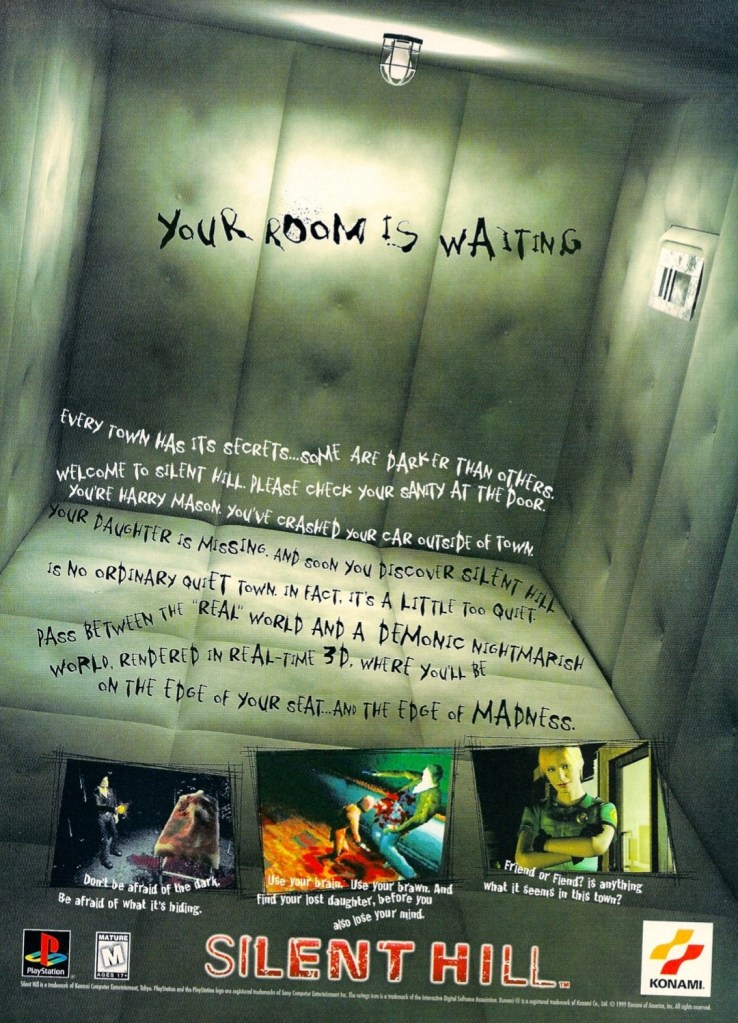
4. Silent Hill print ad

A clear atmosphere of psychological horror in this ad.

Made by a certain team within Konami, Silent Hill on PlayStation turned out to be a surprising and intriguing hit game in 1999. It was a polygonal survival horror game that drew a few comparisons with Capcom’s Resident Evil but ultimately stood out with its gameplay features and psychological horror concept.

The people at Konami must have anticipated that gamers in America would be attracted by the game so they came up with the creepy print ad above which promoted the game with a clear touch of psychological horror. If you look closely, the 2nd screenshot (in the middle) even showed blood in digital form. This Silent Hill print ad was clearly aimed at adult gamers and PlayStation gamers who craved for more horror gaming.

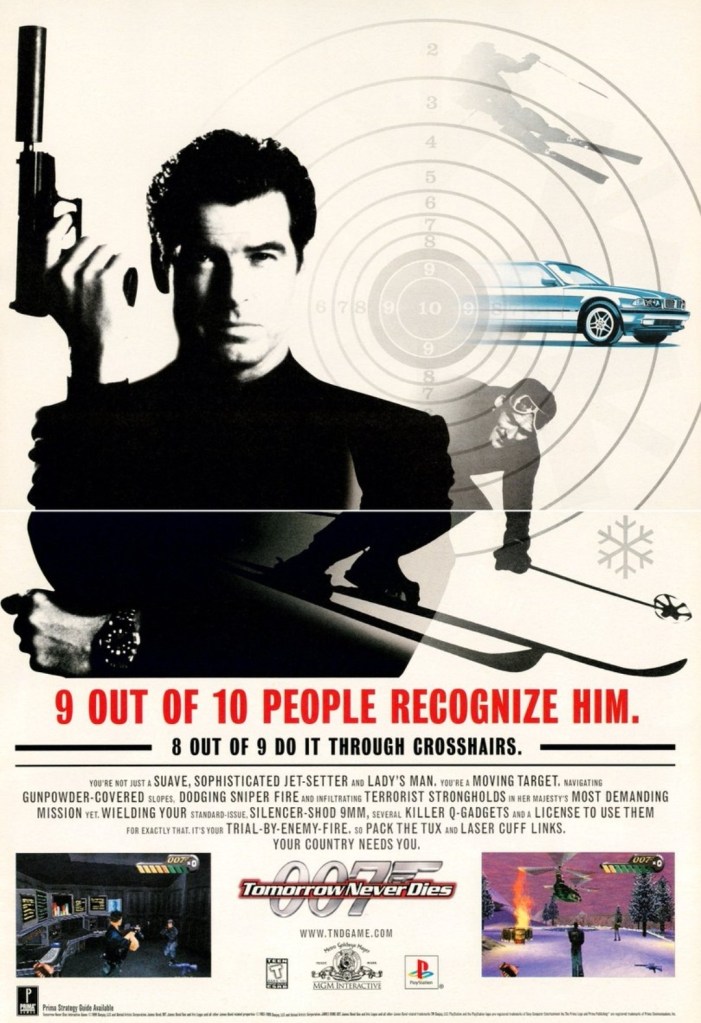
5. Tomorrow Never Dies game print ad

The use of the image of Pierce Brosnan as James Bond in this print ad was the right move to inform readers that the 1997 movie’s video game was coming out.

Believe it or not, there was indeed a video game adaptation of Tomorrow Never Dies (1997) and the weird thing was that it was released for PlayStation in November 1999. In fact, the game was released eight days after the American premiere of the James Bond film The World is Not Enough (1999). The game development was unusually long and the release was delayed several times going into 1999.

To really capture the attention of James Bond fans and gamers, MGM Interactive and Electronic Arts (the co-publishers of the game) came up with a Tomorrow Never Dies game print ad showcasing Pierce Brosnan as the iconic Agent 007 in a dominant fashion leaving a minor space for the text description, two screenshots and other details displayed. While some people might look at the ad as an act of desperation to sell the long-delayed game, I find it eye-catching and engaging to look at. It also was a lively reminder back then that Brosnan was James Bond of the 1990s.

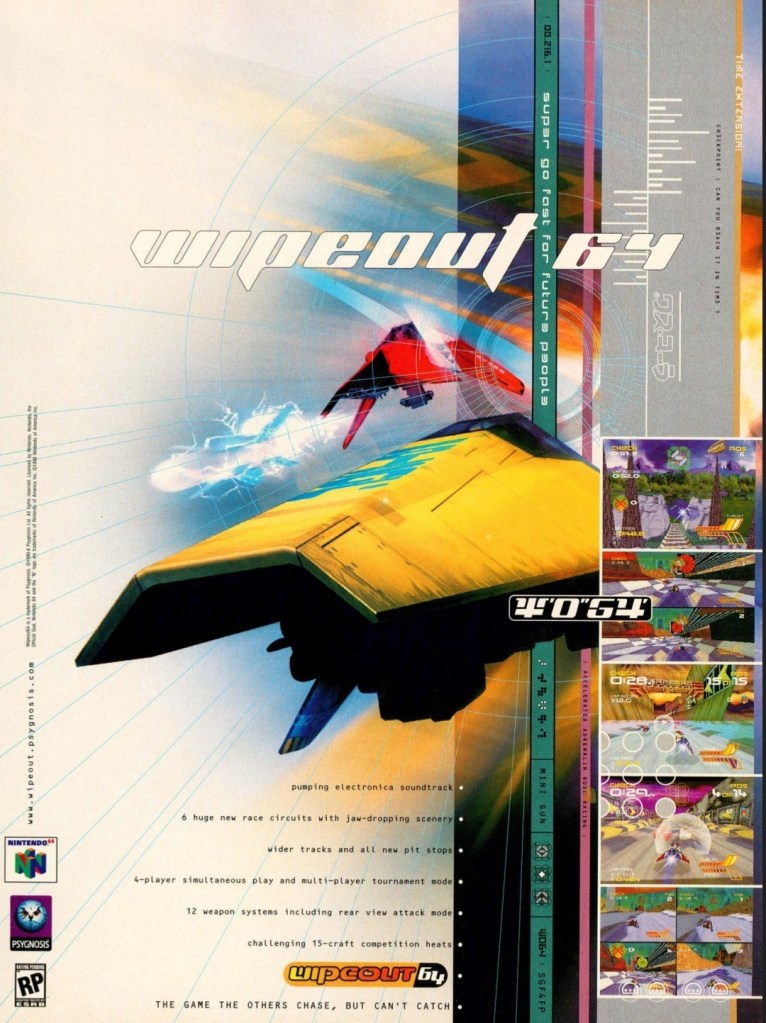
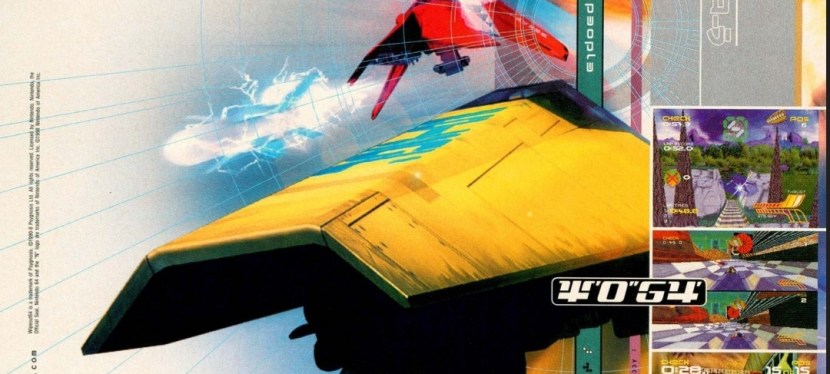
6. Wipeout 64 print ad

This is still cool and sleek to look at.

Wipeout, the series best known for its very futuristic portrayal of high-speed anti-gravity racing, showcase of dynamic visuals and the use electronic dance music, made its way to the Nintendo 64 console with Wipeout 64. This 1998 release was significant because at that time developer Psygnosis was already owned by Sony and most Wipeout games of the decade were released on PlayStation. Wipeout 64 was released before the PlayStation-exclusive Wipeout 3 came out.

The above print ad had this very sleek display of two anti-gravity racers moving at high speed and on the side are five screenshots showing what the game looked like on the N64. If you look very closely, one of them shows the 4-player split-screen mode identified with the Nintendo 64’s capabilities. Overall, the Wipeout 64 print ad captured the vibe of the Wipeout series and remains very cool to look at.

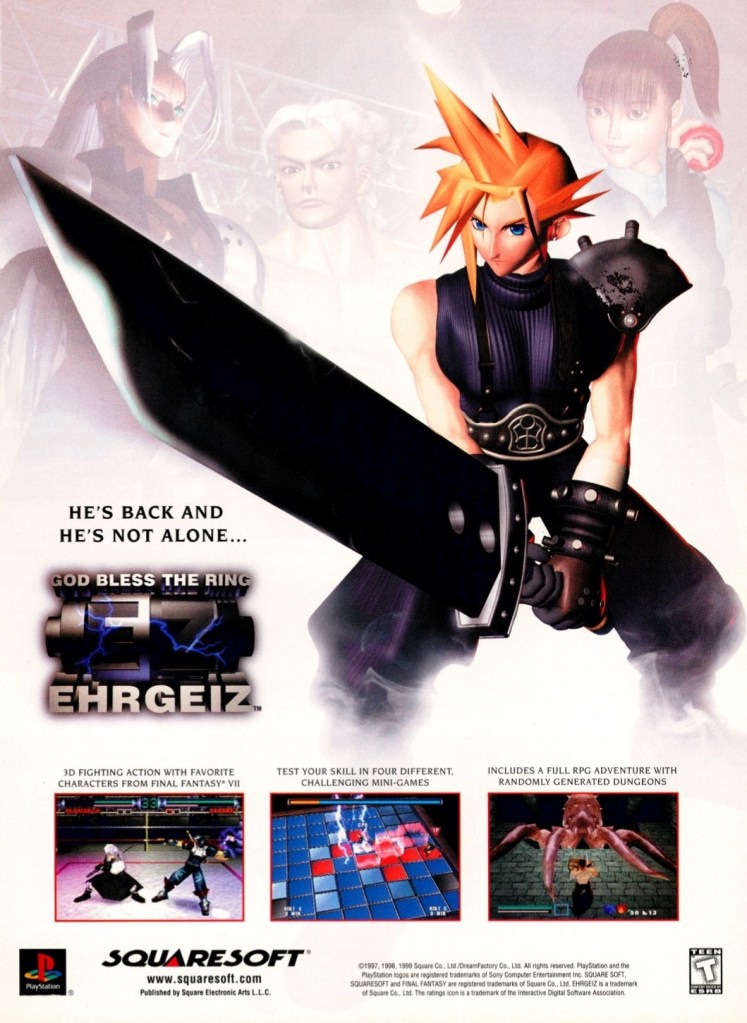
7. Ehrgeiz print ad

You want a 3D polygonal fighting game that has Final Fantasy 7 characters in it? Ehrgeiz was the answer.

In 1999, the landscape of gaming really changed. More gamers played 3D polygonal fighting games over the 2D fighting games, and demand for Final Fantasy and Japanese role-playing games (JRPGs) were in high demand in the West arguably because of the massive commercial success of Final Fantasy VII on PlayStation. That being said, Squaresoft released their own 3D polygonal fighting game that had Final Fantasy VII characters in it – Ehrgeiz.

After achieving success in the arcades, Squaresoft brought Ehrgeiz to PlayStation in America in 1999. Unsurprisingly, the print ad had Final Fantasy VII protagonist Cloud and his signature sword in a prominent position which was obviously done to attract the millions of FFVII for potential sales. The screenshots on the ad were presented not for showing off but to give readers a clear view of what kind of gaming experiences they could expect. Ehrgeiz on console even had a standalone RPG mode.

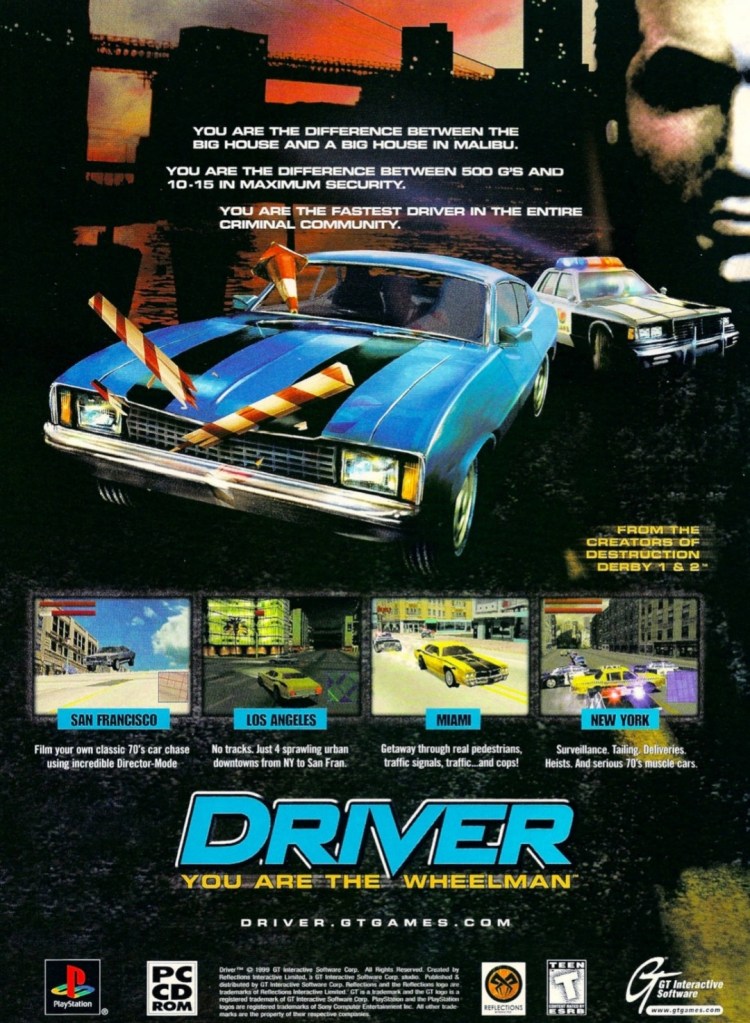
8. Driver print ad

The art used for the muscle car and the police car was a tribute to the car chases of movies from long ago.

Even before it was released on PlayStation and PC in 1999, publisher GT Interactive knew they had something big for gamers to engage with. That game was Driver and developer Reflections Interactive made it with a lot of inspiration taken from cinematic car chases. This particular ad emphasized car chases, the exploration of four real-life cities in digital form, and engaging in a variety of missions. As it successfully delivered what it promised, Driver went on to become a big commercial success on PlayStation and PC, and spawned sequels in the years that followed.  

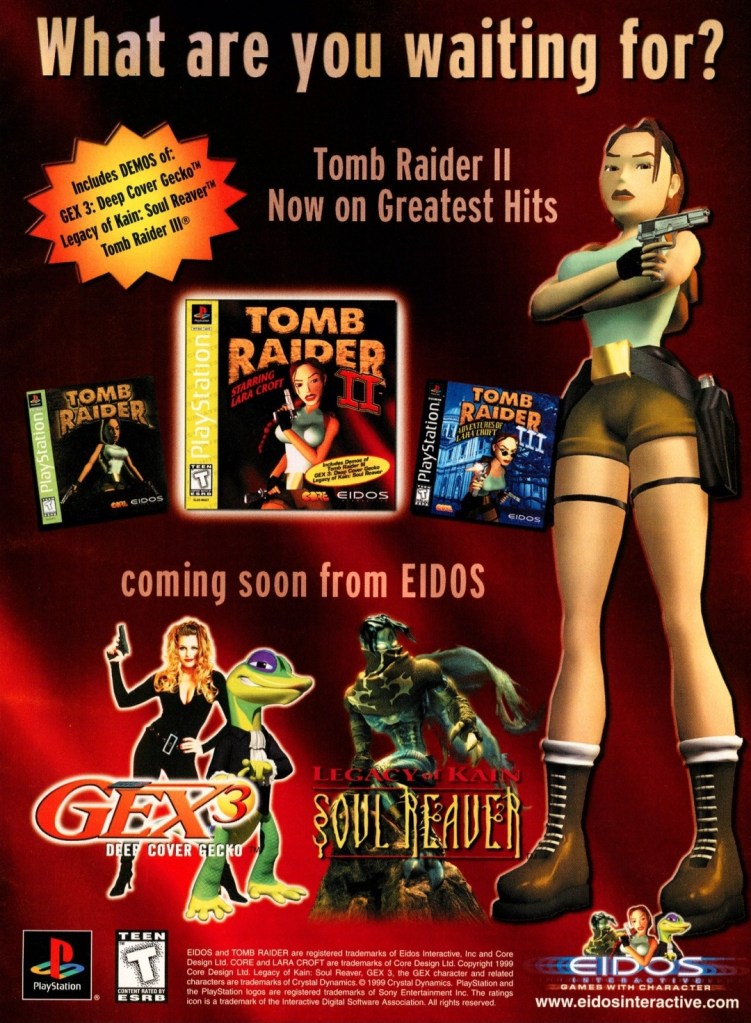
9. Eidos Interactive games print ad

From the time when Eidos Interactive was at the top of its game and Lara Croft was its most popular character.

By the end of the 1990s, Eidos Interactive became a major game publisher which is the result of the massive success they achieved with the Tomb Raider games which collective sold many millions of copies worldwide.

Along the way, they acquired developer Crystal Dynamics which was already a prolific team with many games released and new projects in development. Under Eidos’ banner, Crystal Dynamics went on to release Gex 3: Deep Cover Gecko and Legacy of Kain: Soul Reaver in 1999. That being said, this print ad shows the ambitious offers Eidos Interactive had with the Tomb Raider, Gex and Legacy of Kain franchises. It is a reflection about success and confidence about the future of video games.

+++++

Thank you for reading. If you find this article engaging, please click the like button below, share this article to others and also please consider making a donation to support my publishing. If you are looking for a copywriter to create content for your special project or business, check out my services and my portfolio. Feel free to contact me with a private message. Also please feel free to visit my Facebook page Author Carlo Carrasco and follow me on Twitter at  @HavenorFantasy as well as on Tumblr at https://carlocarrasco.tumblr.com/ and on Instagram at https://www.instagram.com/authorcarlocarrasco
Retro Gaming Ads Blast – Part 16

Welcome back readers, fellow geeks and electronic gaming fans!

In this edition of the Retro Gaming Ads Blast (RGAB) series, we will take a look at another batch of retro gaming print ads – including arcade flyers – from the 1980s and 1990s.

For the newcomers reading this, Retro Gaming Ads Blast (RGAB) looks back at the many print ads of games (console, arcade, computer and handheld) that were published in comic books, magazines, flyers and newspapers long before smartphones, social media, the worldwide web and streaming became popular. To put things in perspective, people back in the 1980s and 1990s were more trusting of print media for information and images about electronic games and related products.

With those details laid down, here is the newest batch of retro gaming print ads for you to see and enjoy…

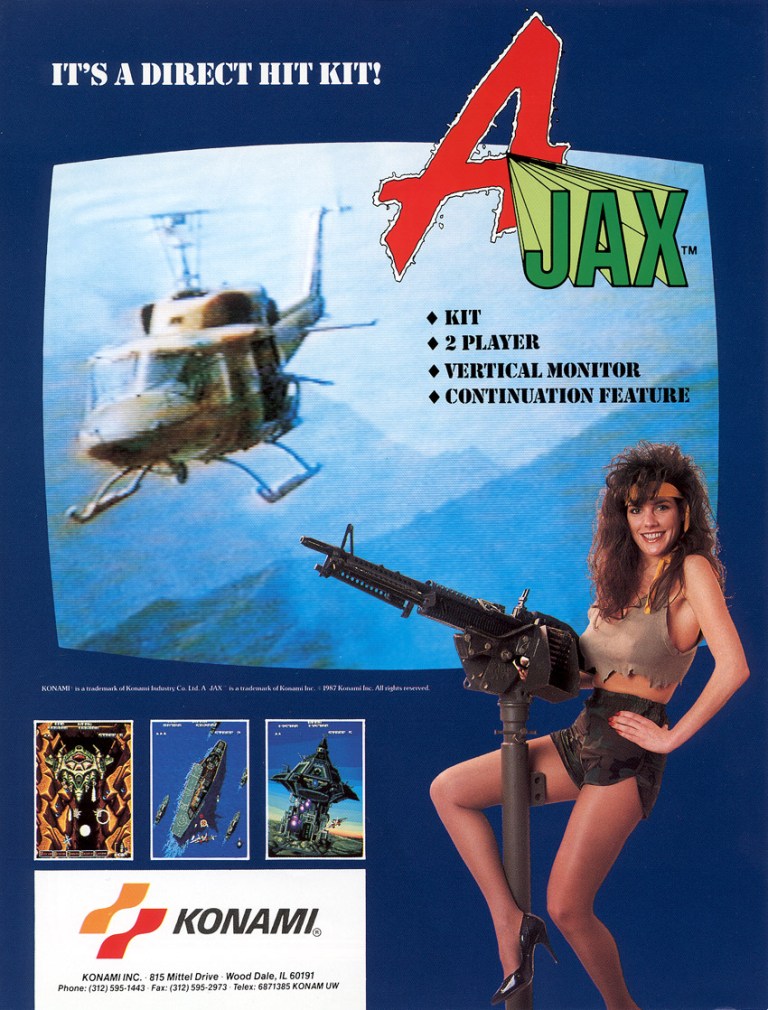
1. A-Jax North American arcade flyer

Another one of Konami’s arcade flyers showing a pretty fashion model with a touch of militarism.

A-Jax (also referred to as Ajax) is another one of the many military themed games Konami released for the arcades in the 1980s. It was a 2D vertically scrolling shooter in which players use aircrafts to shoot enemies both in the air and on the ground. The game was a hit in Japanese arcades and Konami came up with the North American arcade flyer showing three screenshots, an archive footage shot of a military helicopter and a sexy lady (with a light military look) with a machine gun. The style of presentation was similar in style with the North American arcade flyers of Contra and M.I.A.: Missing in Action.

2. The Combatribes print ad

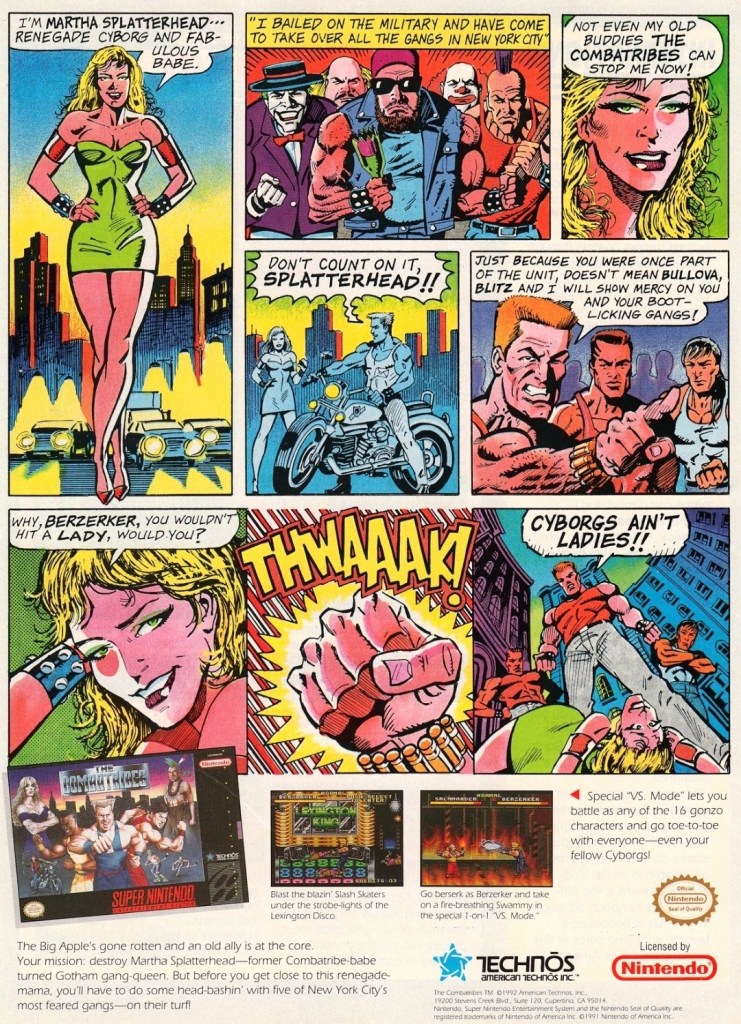
The short comic book approach was used to emphasize the setting and concept of the video game.

Technos, the Japanese company behind the wildly popular Double Dragon games franchise, proved to be successful with the arcade release of The Combatribes. In an attempt to keep the wave of success moving, Technos released The Combatribes on the Super Nintendo Entertainment System (SNES) in 1992 and someone involved with the North American marketing came up with the idea of creating a comic book-style presentation for the print ad. Creatively speaking, the comic book approach was done to emphasize the story and visual concepts of the game, and entice readers to play it. By today’s standards of video game marketing, this print ad’s approach is both unusual and notable.

3. Dead or Alive 2 Dreamcast port print ad

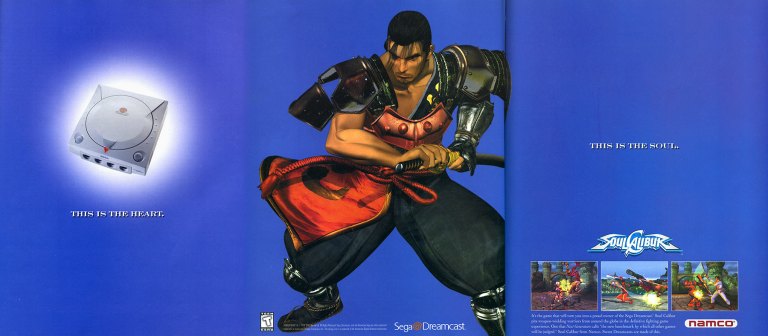
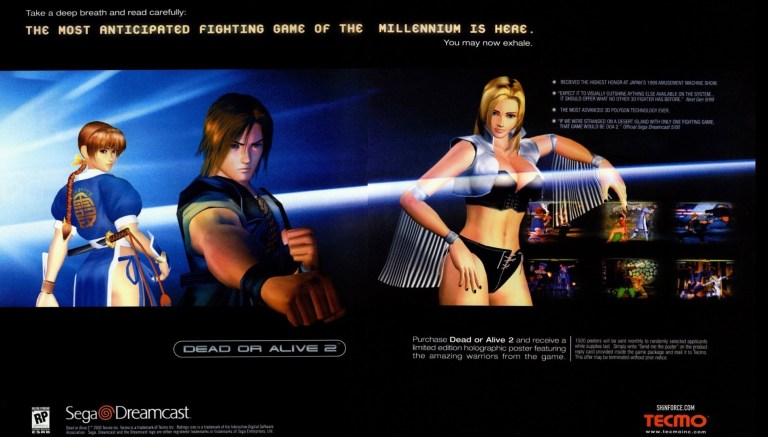
This was a wide print ad that appeared on magazines and it sure was eye-catching. It was an effective way to promote the game and inform people of the Sega Dreamcast’s presence in the market.

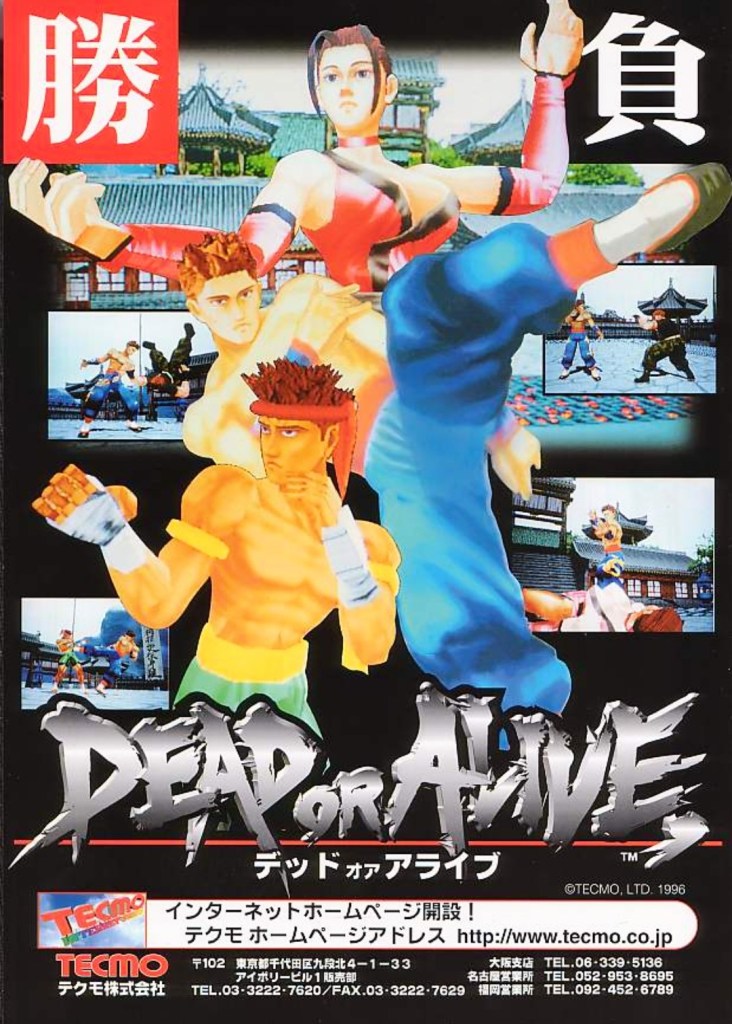
When Dead or Alive 2 was released in the arcades in 1999, a lot of gamers were astounded by it as developer Team Ninja (led by Tomonobu Itagaki) made it much bigger and a lot better than its 1996 predecessor. Team Ninja really went all out making the sequel utilizing Sega’s NAOMI arcade technology, inviting martial artists to do motion-capture, and having a very ambitious game design. Since the game was developed with the NAOMI hardware, porting the game for the Sega Dreamcast was reportedly convenient and smooth for the developers who went on to add more gameplay features and modes. Publisher Tecmo came up with this wide print ad (promoting the Dreamcast release) showcasing three characters, six screenshots and text descriptions emphasizing the universal acclaim the game received. The promotional approach was simple yet effective.  

4. Jet Moto (PC version) print ad

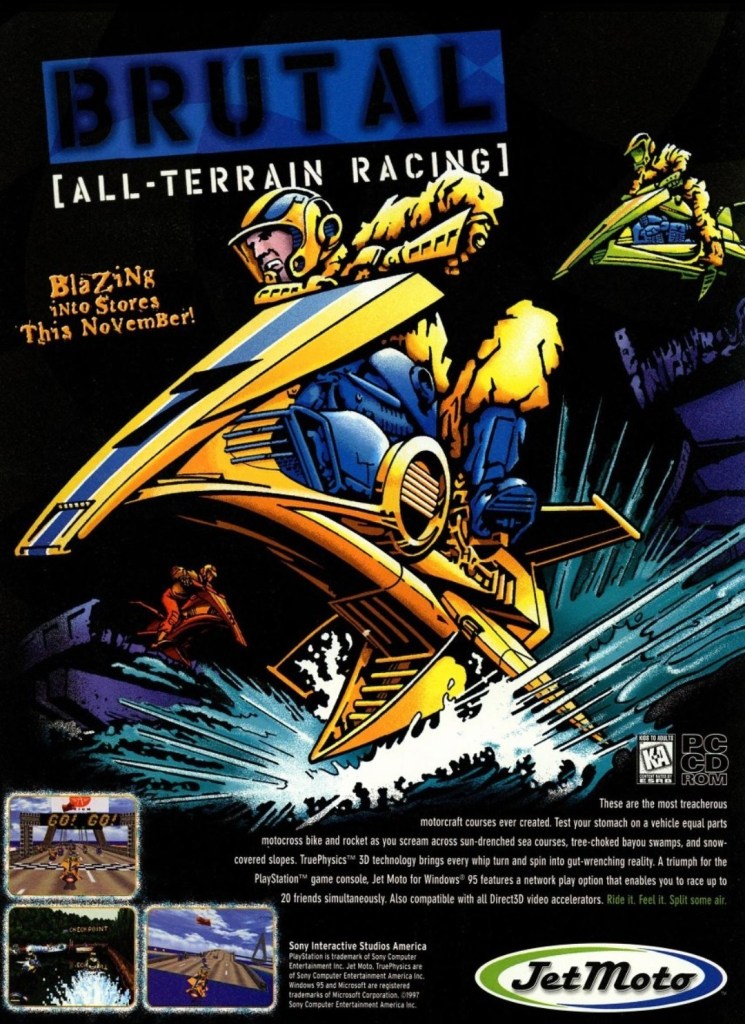
From PlayStation to PC.

In November 1996, the futuristic all-terrain hoverbikes racing game Jet Moto was released on the PlayStation which went on to sell well and attract mostly positive reviews. Sony Computer Entertainment eventually released a version of the game for the personal computer (PC) in November 1997. As seen in the above print ad, the network play option and compatibility with Direct3D video accelerators were emphasized as such features resonated with the interests of PC gamers of the era. This print ad showed how willing Sony was to release PlayStation hits on PC back then.

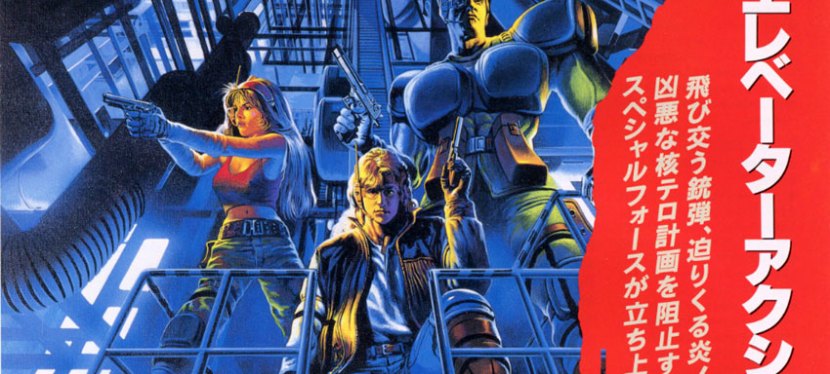
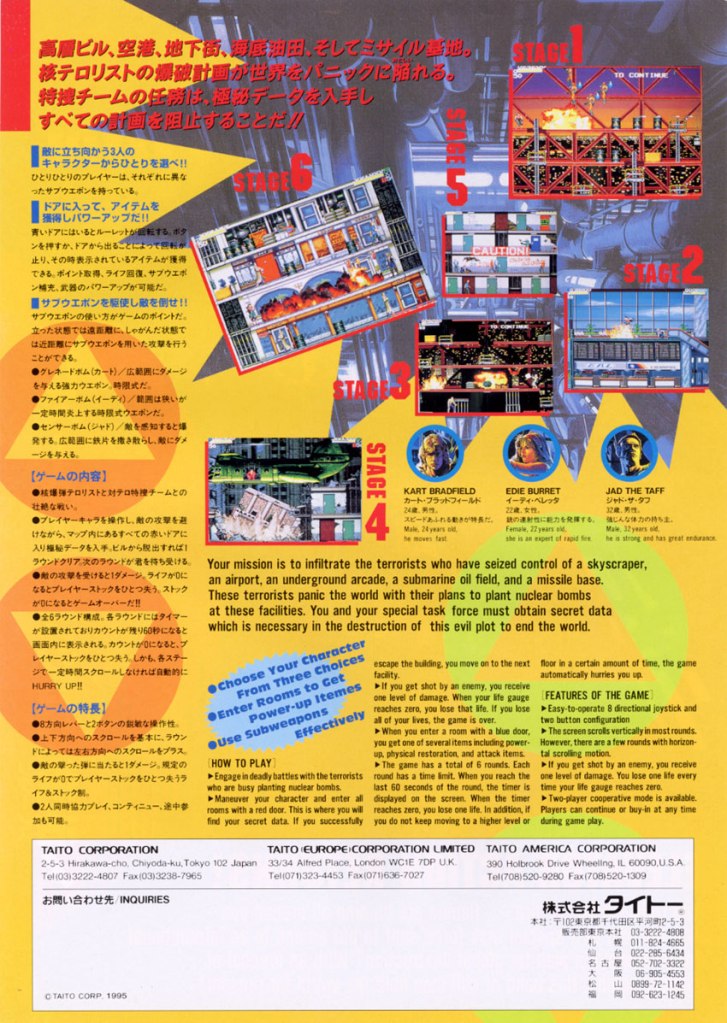
5. Elevator Action Returns Japanese arcade flyer

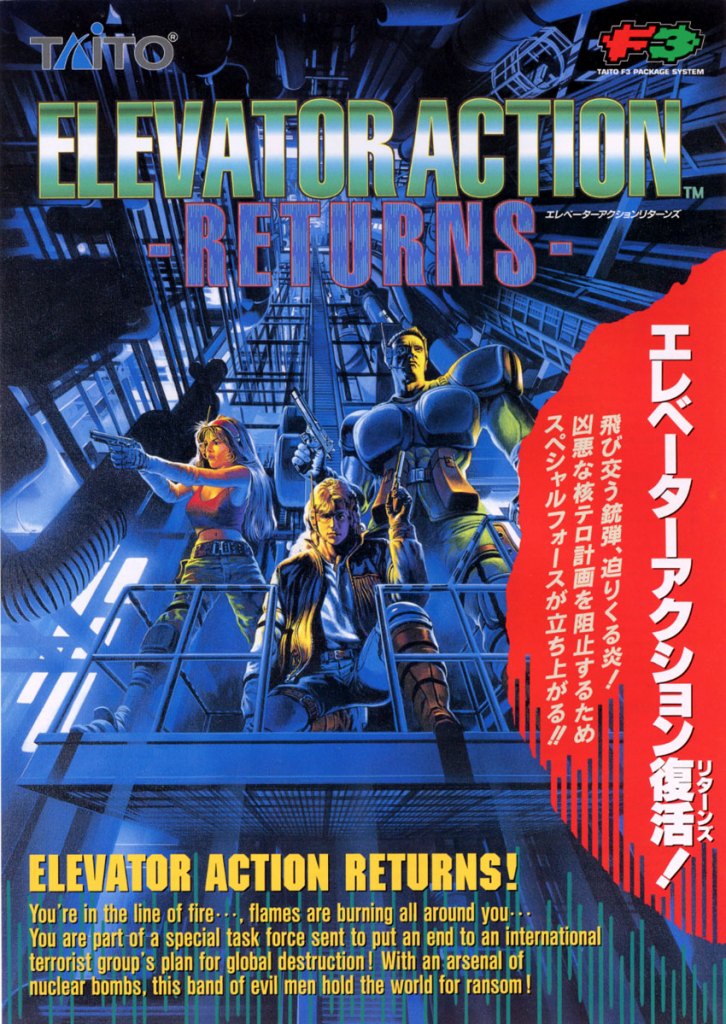
Great looking art on the front.
The rear of the flyer.

When Taito released Elevator Action Returns (also titled as Elevator Action II in other nations) in the arcades in 1994, it became a hit as gamers enjoyed its action-packed gameplay, ambitious 2D visual presentation and varied level designs that clearly went beyond its 1983 predecessor. The front of the Japanese arcade flyer has really nice art showing the three playable protagonists on an elevator on their way to do their mission. The back of the flyer shows screenshots (which emphasized the varied level designs), text descriptions explaining how the game played (English version printed), and what the features are. Another text description confirmed that terrorists are the antagonists that players will be dealing with which was reflective of the rise of Islamic terrorism in the 1990s. Oh yes, if you look closely you will the word “item” misspelled as “items”.

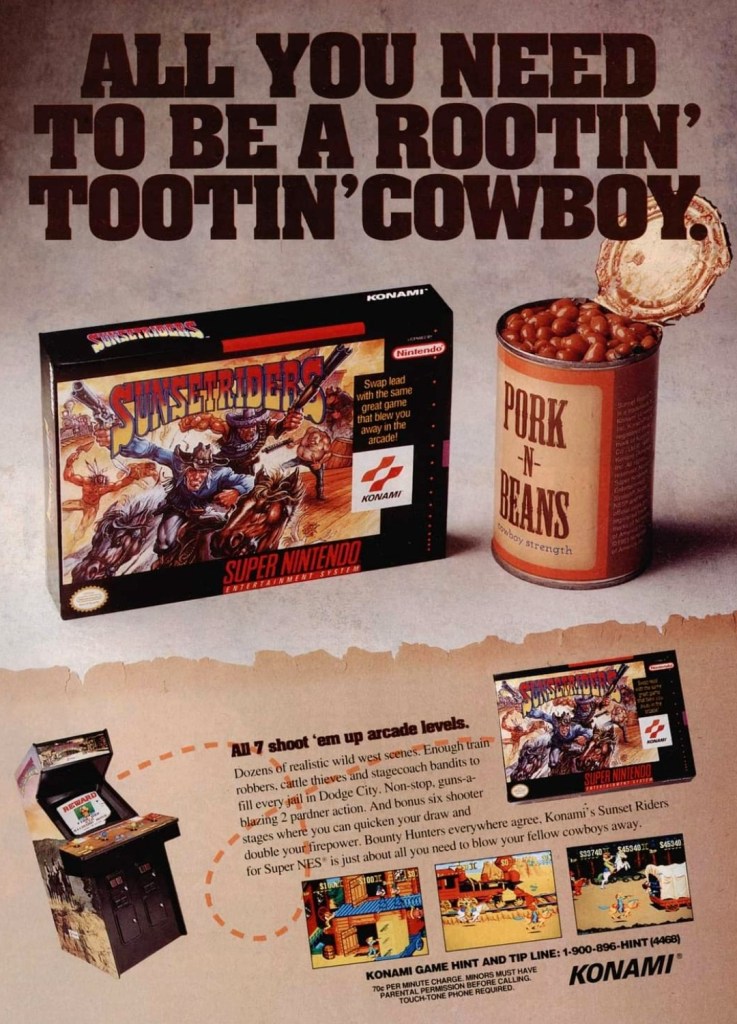
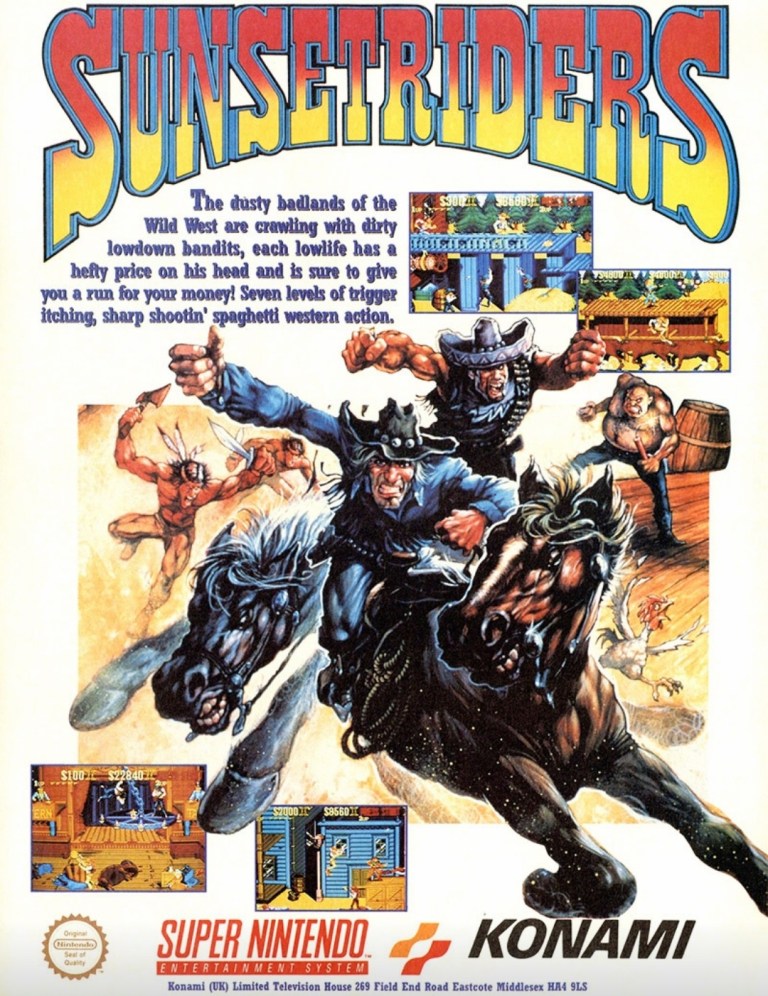
6. Sunset Riders print ads

The Sunset Riders arcade machine, the SNES version, screenshots and a can of pork-and-beans on this ad.
This print ad appeared in some comic books I read long ago.

After enjoying a lot of success in the arcades with their 1991 game Sunset Riders, Konami went on to release ports of it to the Sega Genesis in 1992 and the Super Nintendo Entertainment System (SNES) in 1993. With regards to conversions and procedural/artistic changes between the arcade and console ports, the SNES version had few changes implemented compared to the one released on the Genesis. As seen in one of the print ads of Sunset Riders on SNES, it came with 7 arcade levels, 2-player mode and additional shooter stages. What the print ads did not reveal were notable replacements of specific characters in key parts of the game such as the dynamite-tossing female bandits getting replaced by male bandits, North American Indian villains getting replaced with outlaws, etc.  

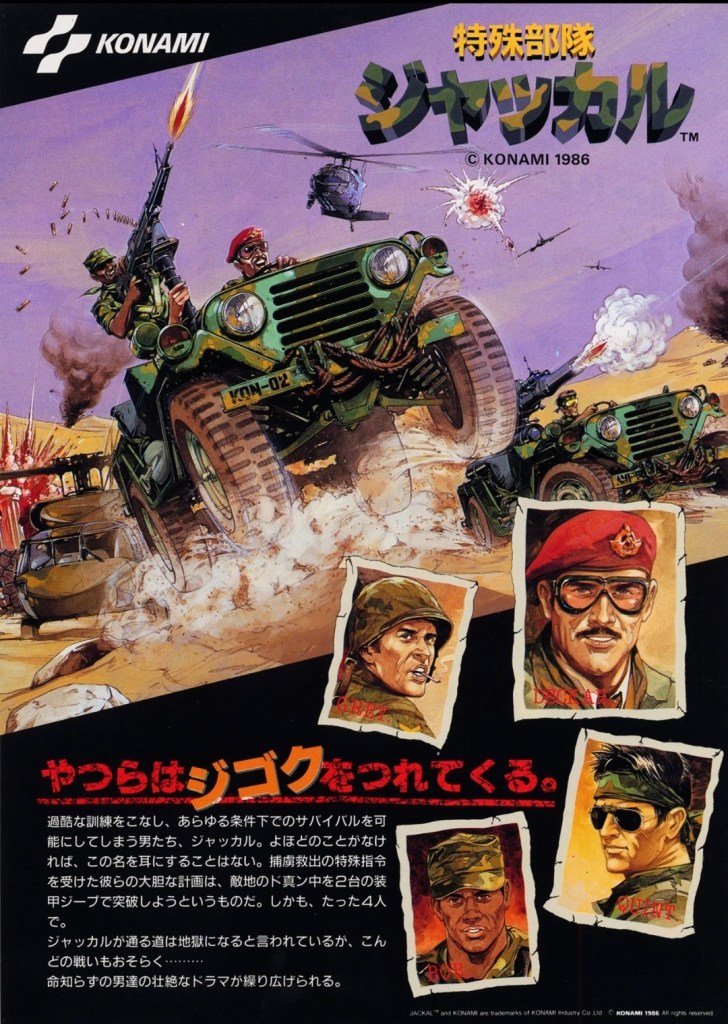
7. Jackal Japanese arcade flyer

Whoever was the artist Konami hired truly delivered great-looking art!

Konami’s military themed game Jackal (Japanese title: Tokushu Butai Jackal) debuted in Japanese arcades in October 1986 and became a hit. The Japanese market arcade flyer had great looking artwork on the front that strongly emphasized the very concept of the game (players move military jeeps to shoot at enemies as they move into enemy territory). One of the characters (the one wearing the red beret) somewhat resembles the late Sean Connery which only shows that someone within Konami’s development team took inspiration from movies. This arcade flyer’s front still looks great.

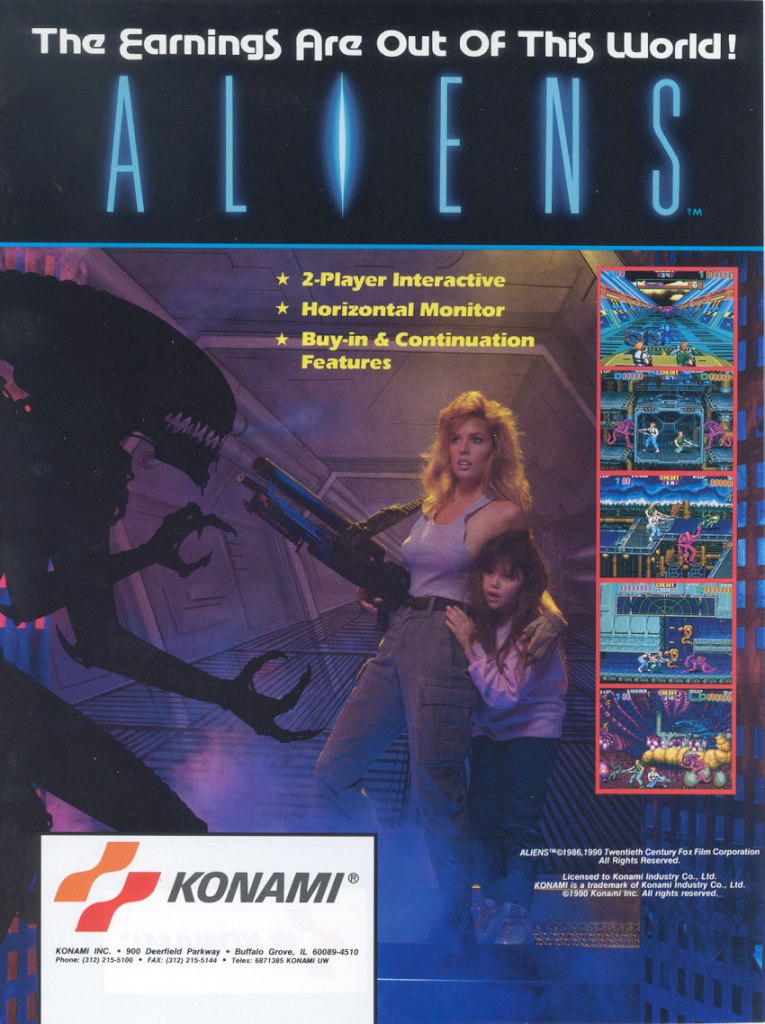
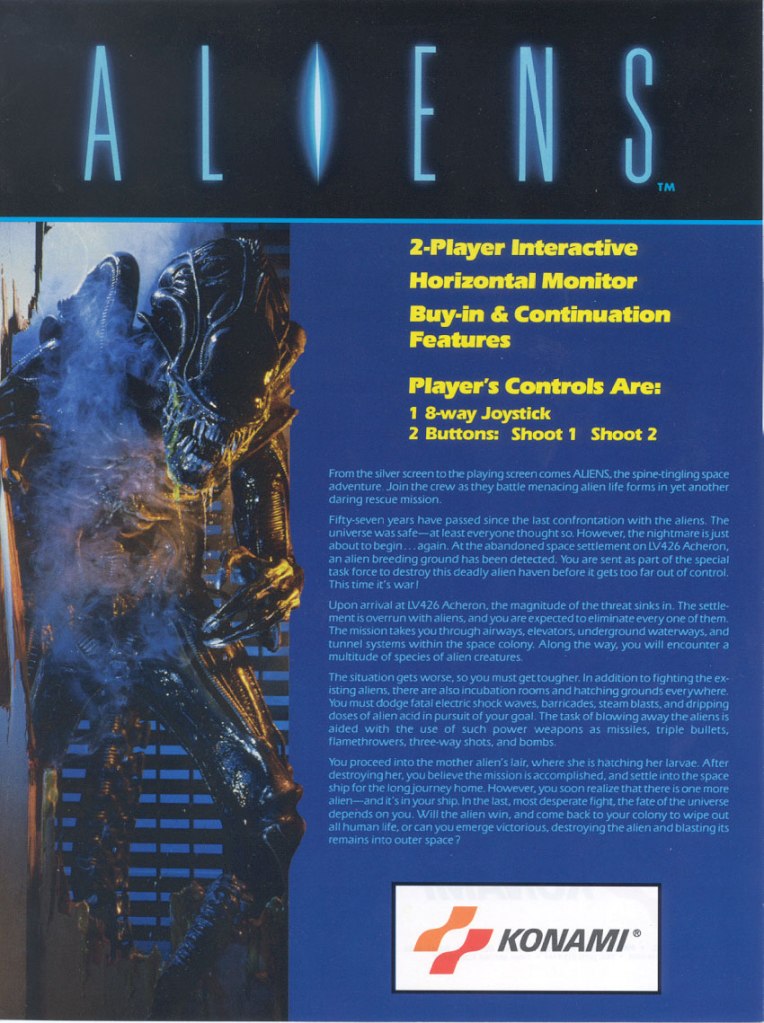
8. Aliens North American arcade flyer

A good amount of effort was done to truly capture Aliens’ concept using hired models (as Ripley and Newt), a Xenomorph physical model and a suitable background.
The key details presented on the rear of the flyer. The Xenomorph’s presence adds tension.

In 1990, Konami released their ambitious arcade game Aliens which was loosely based on the 1986 movie that starred Sigourney Weaver and was directed by James Cameron. As Konami’s Aliens license was only temporary and the movie was so highly regarded, the Japanese company’s marketing team really had to exert extra effort to truly capture the film’s sci-fi horror concept in order to make a strong presentation towards arcade operators and their paying customers (the gamers).

Apart from showing screenshots on the front, the creative team hired a blonde model as Ellen Ripley holding a gun and a young girl as the character Newt, and have them pose convincingly in front of a Xenomorph model (darkened in the foreground). On the back of the flyer, the team heavily revealed the details using the text description to emphasize the gaming experience and story concept. The technical details, meanwhile, were presented in simplistic, easy-to-follow fashion. Aliens was a smash hit in the arcades and there are long-time gamers who regard it as one of the best game adaptations of the 1986 movie. This arcade flyer is a strong reminder that the featured game was never ever ported to any game console nor to any personal computer.

+++++

Thank you for reading. If you find this article engaging, please click the like button below, share this article to others and also please consider making a donation to support my publishing. If you are looking for a copywriter to create content for your special project or business, check out my services and my portfolio. Feel free to contact me with a private message. Also please feel free to visit my Facebook page Author Carlo Carrasco and follow me on Twitter at  @HavenorFantasy as well as on Tumblr at https://carlocarrasco.tumblr.com/ and on Instagram at https://www.instagram.com/authorcarlocarrasco
What to watch on YouTube right now – Part 27

Welcome back, my readers, YouTube viewers and all others who followed this series of articles focused on YouTube videos worth watching. Have you been searching for something fun or interesting to watch on YouTube? Do you feel bored right now and you crave for something to see on the world’s most popular online video destination?

I recommend you check out the following topics and the related videos I found.

John List true crime documentaries – In America, the late John List is one of the most notorious criminals ever in their history. At a very desperate point in his life, List murdered his own family members in 1971 and it took some time for the local authorities to find out what he left behind in their huge home. Having left his home and investigators behind, List traveled across the nation, came up with a fake identity and lived away from the law for almost twenty years. How the law enforcers tracked him down (involving America’s Most Wanted TV show) and arrested him is a great story to follow. All of these are documented in the two videos below.

The Stepfather explanatory video by GoodBadFlicks  – Believe it or not, the story of John List inspired the creation of the 1987 psychological horror film The Stepfather. This video by YouTuber GoodBadFlicks is a must-see.

The assassination attempt on US President Donald Trump – I really cannot ignore the assassination attempt on US President Donald Trump which resulted in the injury on his right ear, the death of a campaign rally attendee and one other person getting injured. Whatever your political views are, this is a tragedy and it clearly was not staged. It was indeed an attempt to kill and already the Satanic Leftist mainstream news media are distorting the facts and lying to you. To get clear insight on what happened and who the suspect (a very young guy who was a registered Republican voter who also donated money to support Democrats and far-left movement), watch the selected videos below.  

HolyLandSite’s Mount of Olives video – Recently, the YouTube channel HolyLandSite published their newest video featuring the Mount of Olives in Israel. I personally visited some of the sites at the Mount of Olives featured in this video and in my experience, I witnessed the Holy Bible come to life and gained insight on what the place was like during the time of Lord Jesus. Mount of Olives was where Lord Jesus last stepped on before ascending into Heaven and He will arrive there sometime in the future. Watch the video below.

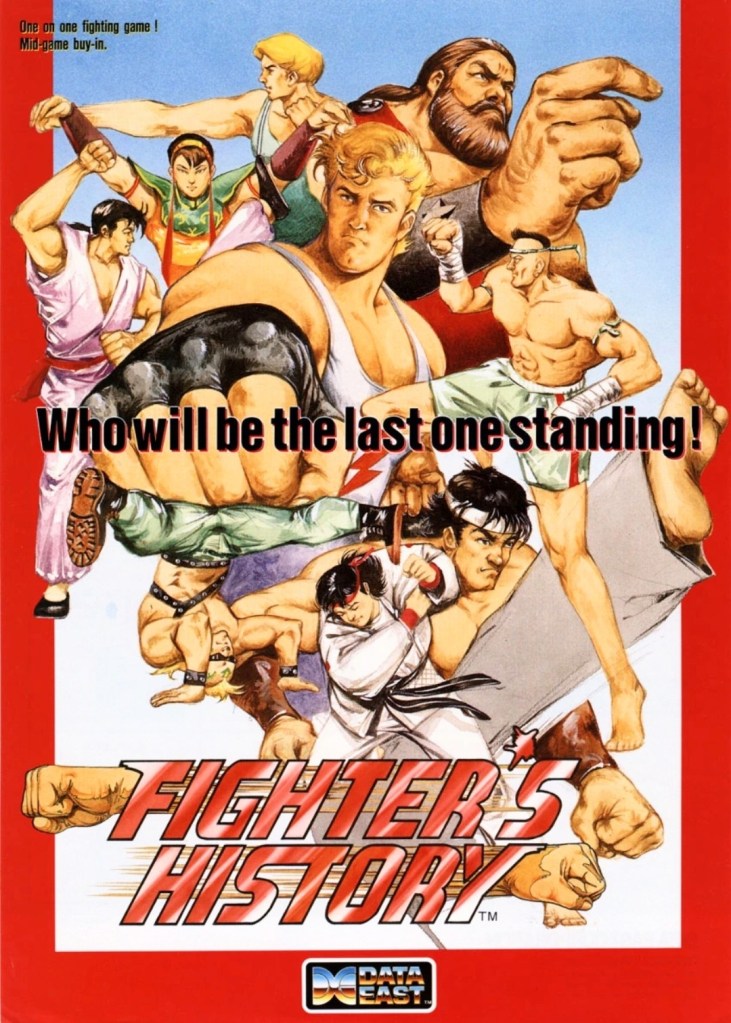
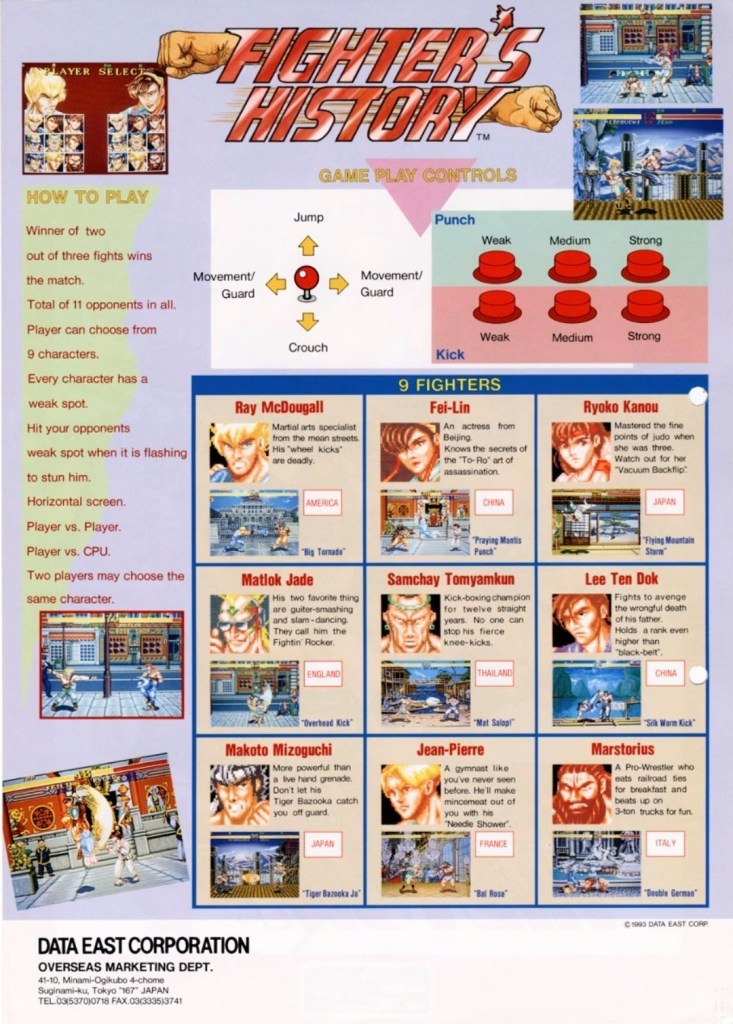
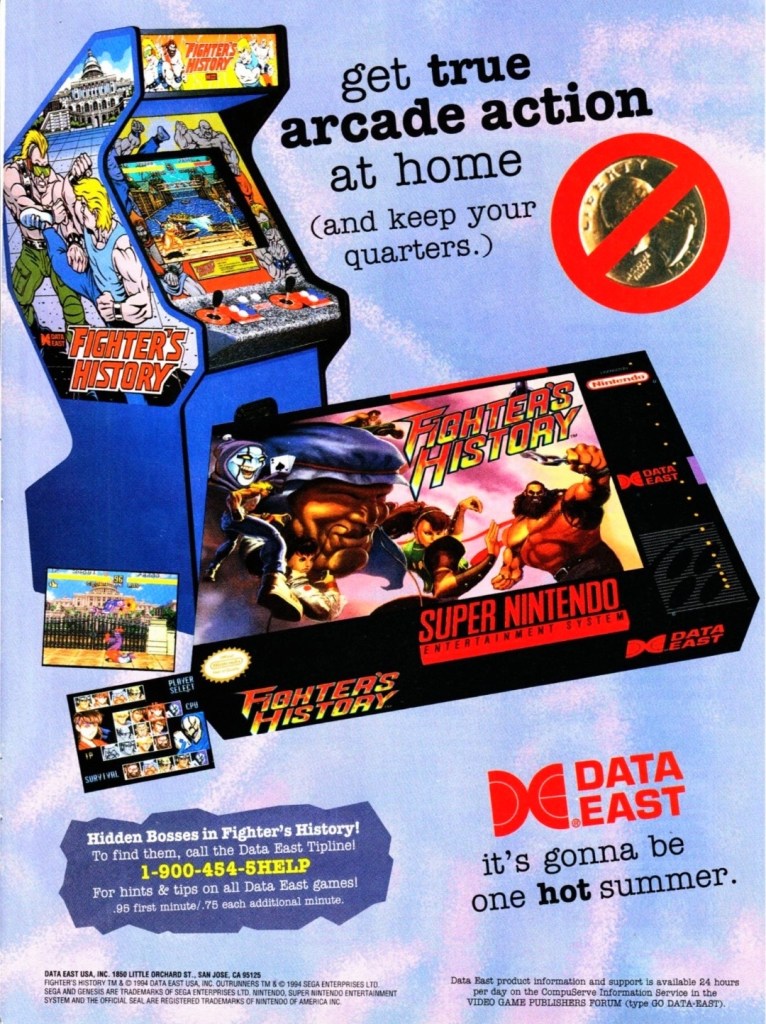
Capcom’s failed case against Data East over Fighter’s History – Remember how popular Street Fighter II was in the arcades in the 1990s? Capcom made tons of profit from SFII which led to the production of sequels, spin-offs and other 2D fighting games that followed. Of course, as the fighting game genre became tremendously popular, there were other fighting games that competed with Capcom’s creations. Believe it or not, Capcom sued Data East alleging that their competitor’s game Fighter’s History infringed the copyright of Street Fighter II. To find out what happened, watch the video from Top Hat Gaming Man below.

6. Donald Trump nominated again by Republicans for President of the United States By the time you are reading this, the 2024 Republican National Convention has concluded a few days ago. Donald Trump has been nominated again for US President by the party, only this time the Republicans are very united and they were reinvigorated arguably because of the failed assassination attempt on their candidate. The Democrats meanwhile are divided and already their powerful members stopped supporting the re-election campaign of Joe Biden. The contrasts between the two parties are so great during the last week. If you want to see all the Republican speeches and the nomination acceptance speech of Trump (whose running mate is US Senator J.D. Vance), watch the Republican National Convention (night 4) below.

+++++

Thank you for reading. If you find this article engaging, please click the like button below, share this article to others and also please consider making a donation to support my publishing. If you are looking for a copywriter to create content for your special project or business, check out my services and my portfolio. Feel free to contact me with a private message. Also please feel free to visit my Facebook page Author Carlo Carrasco and follow me on Twitter at  @HavenorFantasy as well as on Tumblr at https://carlocarrasco.tumblr.com/ and on Instagram athttps://www.instagram.com/authorcarlocarrasco

Retro Gaming Ads Blast – Part 7 (Sega Special)

Welcome back readers, fellow geeks and electronic gaming fans!

In this edition of the Retro Gaming Ads Blast (RGAB) series, we will examine print ads of Sega from the 1990s which was a notable period of time when they went from being a prominent video game company into a desperate, struggling entity by the end of the decade. All the Sega ads in this edition are promotions of their own video games that were exclusive to their consoles during the 1990s.

For the newcomers reading this, Retro Gaming Ads Blast (RGAB) looks back at the many print ads of games (console, arcade, computer and handheld) that were published in comic books, magazines, flyers and newspapers long before smartphones, social media, the worldwide web and streaming became popular. To put things in perspective, people back in the 1980s and 1990s were more trusting of print media for information and images about electronic games and related hardware.

With those details laid down, here is the newest batch of retro gaming print ads for you to see and enjoy…

1. Phantasy Star IV print ad

This was the last single-player Phantasy Star game released. There is no sign of Sega revisiting the franchise for another single-player experience.

Long before the emergence of online console gaming that involved a high number of players, Sega released Phantasy Star IV for the Genesis console in America in 1994 which was praised by gamers and critics. This one also turned out to be the last single-player role-playing game (RPG) of the Phantasy Star series as Sega eventually turned it into a series of online RPGs since the year 2000.

This print ad is significant because a lot of gamers today are not aware that Phantasy Star started as a series of single-player RPGs the same year Final Fantasy debuted in Japan. Anyone interested to play Phantasy Star IV on a modern console should buy the Sega Genesis Classics collection. 

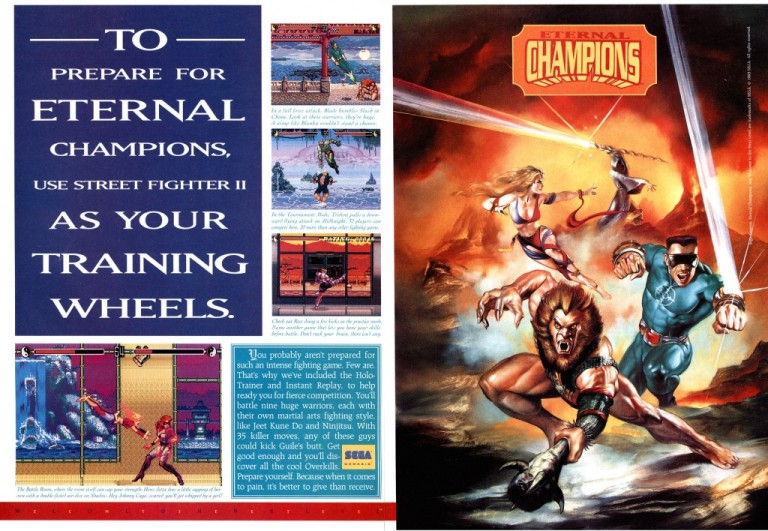
2.  Eternal Champions print ad

This 2-page print ad appeared in many comic books and some magazines that I read long ago.

Back in the 1990s, the fighting game genre became wildly popular with gamers at the arcades and on consoles at home. Capcom literally sparked a wild fire with the Street Fighter II game and its upgraded editions, and other companies went on to make their own 2D fighting games to cash in. Sega was one of them and they released their own 2D fighting game Eternal Champions for the Sega Genesis console.

Unsurprisingly, the game was marketed aggressively and this 2-page print ad really stood out as it had the great looking painted art on the right, screenshots and details of the game, and most notably made a sarcastic reference to Street Fighter II. Eternal Champions sold enough copies, it led to the release of the sequel Eternal Champions: Challenge from the Dark Side and two spin-off games. I can only guess that referencing Street Fighter II was helpful in achieving commercial success.

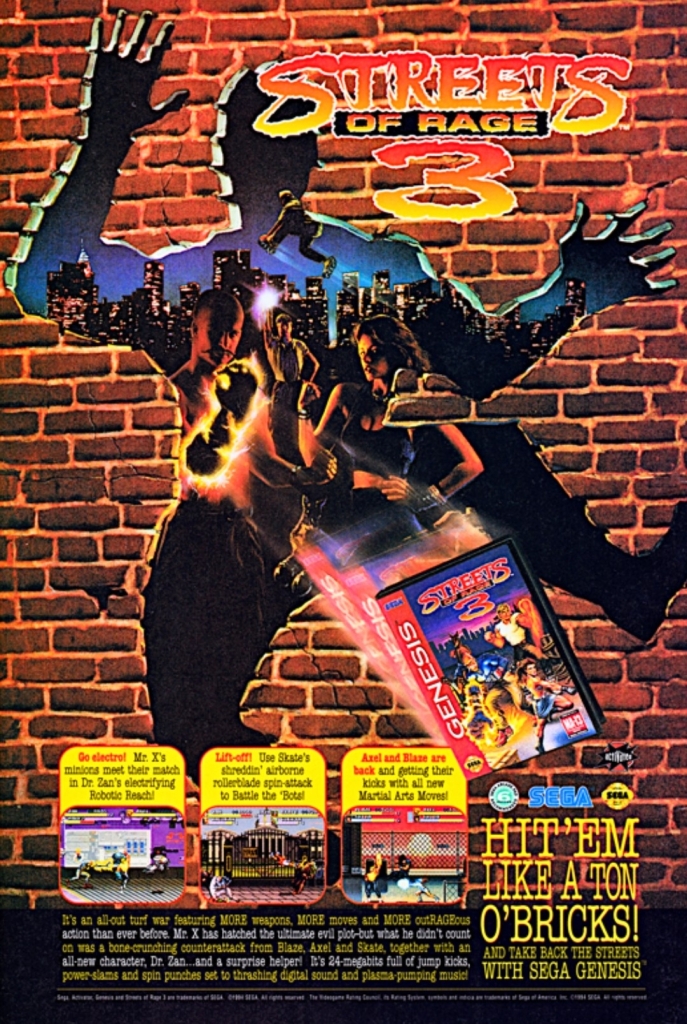
3. Streets of Rage 3 print ad

This ad caught my attention easily when I saw it in comic books I read.

Streets of Rage (Japanese title: Bare Knuckle) was one of the most defining game franchises Sega came up with and it started on the Sega Genesis console. It was a series of side-scrolling, 2D beat-them-up games that ensured action and excitement for gamers. As the first two games were critically and commercially successful, Sega was confident in aggressively marketing Streets of Rage 3 and the print ad seen had a very attention-grabbing artwork.

The artistic style emphasized power and intensity as it shows a damaged wall with the shape of a human body (symbolizing that someone was thrown through it) and then there were images of people on the other side. The game went on to attract mostly positive reviews although it paled in comparison to its predecessors in terms of sales.

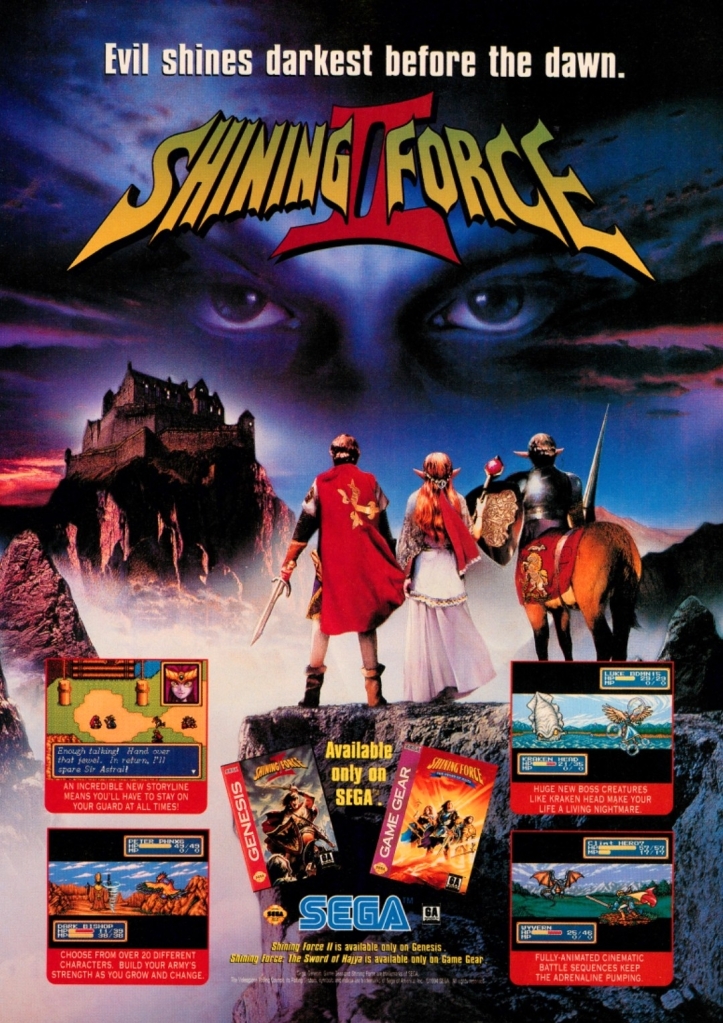
4. Shining Force II print ad

The first time I saw this ad, it made me interested to buy a Sega Genesis console to play it.

As Sega was so prolific with making and releasing games across different genres, they had their own tactical role-playing game series with Shining Force and the first game released on the Sega Genesis was a critical and commercial success. That being said, the company was confident with releasing Shining Force II on the same console more than a year later achieving critical and commercial success.

The North American print ad of the game had a visual presentation that closely captured the foreground-background style (characters facing the distance) used in-game, and the advertising team use photographic imagery to achieve a fantasy look. Very cleverly, Sega inserted the Sega Game Gear title Shining Force Shining Force: The Sword of Hajya into the ad. This print ad made me interested in acquiring a Sega Genesis for Shining Force II.

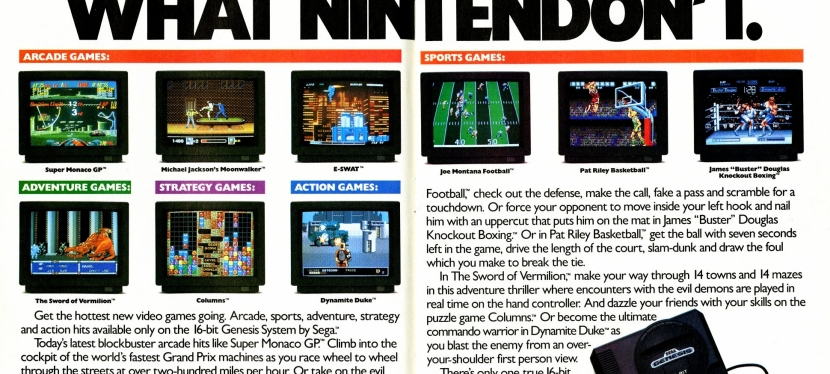
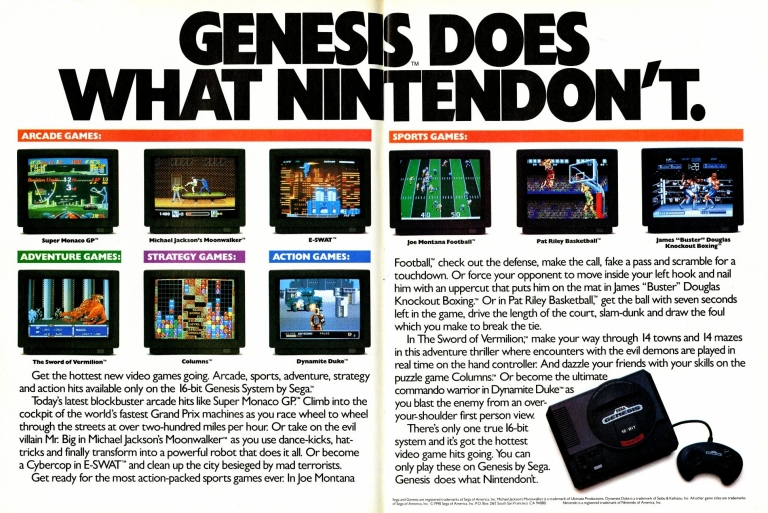
5. Genesis does what Nintendon’t print ad

With the famous line heavily emphasized, this print ad showed how bullish Sega really was in competing with Nintendo.

Now this print ad of Sega’s has the most definitive and best-known advertising line in the so-called 16-bit console generation: Genesis does what Nintendon’t. This was Sega’s aggressive marketing push to convince gamers to buy the Genesis console to play games and experience thrills of fun that they would not find on a Nintendo console at the time. Genesis was launched in America in 1989 with “16-bit” emphasized a lot, and the technological rival Super Nintendo Entertainment System (SNES) was released in the same market more than two years later.

The 2-year advantage helped Sega establish the Genesis as the next-gen machine for gaming at home and there were years in the 1990s when Sega’s console outsold Nintendo’s in America during the so-called 16-bit war. The Genesis also had lots of exclusive games plus strong software support from third-parties. While the SNES would eventually outsell the Genesis in other parts of the world, it was in America where Sega proved to be very competitive and successful. 

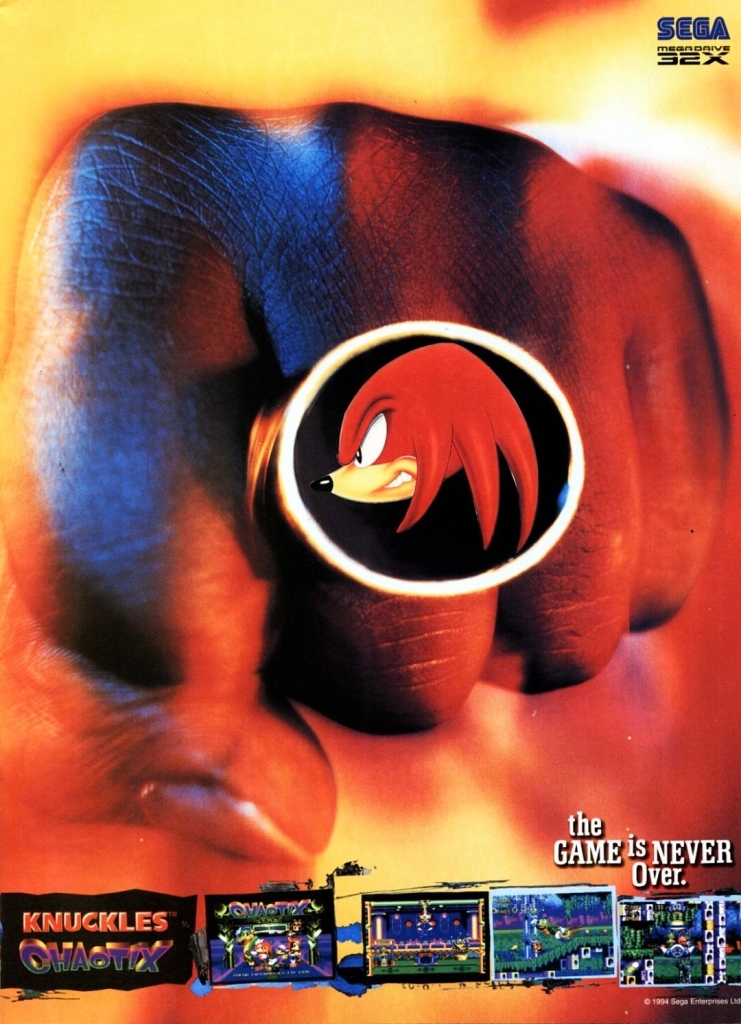
6. Knuckles’ Chaotix print ad

Sega was aggressive with marketing this game for the 32X.

In late 1994, Sega released in America and in Japan the 32X which was an add-on device for the Sega Genesis designed enhance its power while serving as a transition (a warm-up) into the so-called 32-bit era of console gaming. The 32X was the result of corporate decisions involving the American and Japanese executives of the company.

To keep 32X customers happy and boost hardware sales, Sega adjusted the development of Knuckles’ Chaotix (a Sonic spin-off) from being a Sonic project 32-bit console Sega Saturn into a standalone game for the add-on device. Even though Sega knew the game’s development was rushed, they went on to strongly promote the game and the print ad shown here was quite eye-catching.

The image of a fist with a ring showing the character Knuckles (a character from the Sonic games) emphasizes power and the colors used seem to express intensity. Then there were the selected screenshots shown without descriptive text. Although Sega tried hard, Knuckles’ Chaotix (launched in 1995) received mixed-to-positive reviews and sadly sold poorly. Unsurprisingly, the sales of the 32X dropped further and by then a lot of consumers knew that the Sega Saturn (the true successor to the Genesis) was all set to launch in America and Europe within 1995.

7. Sonic 3D Blast for Sega Saturn print ad

Too bad Sega and its teams failed to make the true Saturn Sonic game.

Back in the 1980s and 1990s, having a high-quality, console-exclusive game featuring a company mascot was crucial to sell game consoles while keeping dedicated fans happy. Like what Nintendo did with their icon Mario, Sega achieved great commercial success with the three Sonic the Hedgehog games they released exclusively on the Sega Genesis console and this naturally created expectations they would make new Sonic games on the Saturn console. Unfortunately, Sega and its teams failed to complete development of the Saturn-exclusive game Sonic X-treme and the company cancelled it which sent shockwaves through the games industry news.

With the 1996 holiday shopping season too crucial to ignore, Sega commissioned a Saturn version of the game Sonic 3D Blast which was originally made for the Genesis console. Sonic 3D Blast on the Saturn took seven weeks to make and there were some graphical enhancements implemented. While Sonic 3D Blast’s Genesis version attracted a positive reception from critics (and sold 700,000 copies), the reception for the Saturn version was mixed. This print ad of Sonic 3D Blast on Sega Saturn is a reminder of the company’s failed attempt to take their icon to the next-generation. They never replicated the big success they had with Sonic on the Genesis.

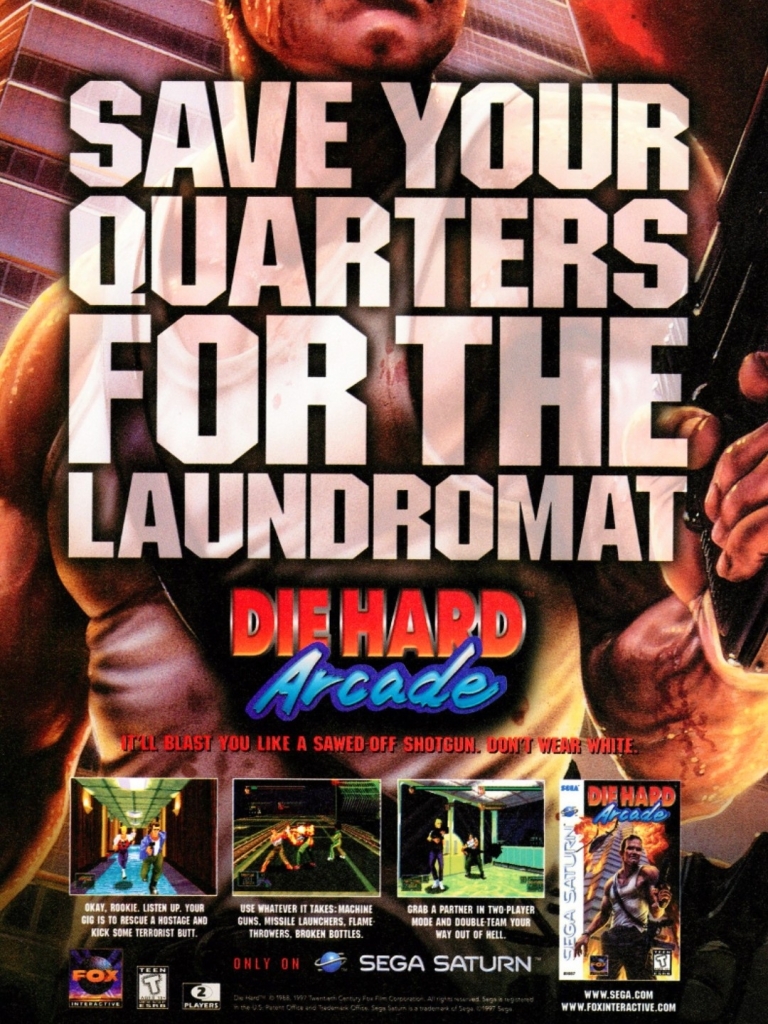
8. Die Hard Arcade print ad

Each time I saw this print ad, it easily reminded me of the classic action film of 1988.

Like many other movie franchises, Die Hard has many video game adaptations released through the decades. In 1997, Sega released Die Hard Arcade (Japanese title: Dynamite Deka) on the Sega Saturn and the game critics praised it for its fun gameplay as well as its flawless conversion of the arcade version (released in 1996). To say the least, the development history of Die Hard Arcade is not as straightforward as many would think. To get the details and explanations of the development of the game, click here.

As for the print ad itself, this one cleverly used official game art as the background with imagery which instantly reminded me of what I saw in the classic 1988 movie that starred Bruce Willis. This ad made me interested to buy a Sega Saturn or find a place to rent it to play the game.

9. Shenmue Japanese print ad

Simplistic with presentation and yet engaging to look at. The Dreamcast-exclusive Shenmue sold over a million copies in Japan alone.

When Shenmue was released exclusively on the Sega Dreamcast in Japan on December 29, 1999, it turned out to be a very mind-blowing experience for many gamers due to its ambitious game design, the intense attention to detail implemented, very high production values, in-depth exploration and very immersive gameplay.

It was the open-world game released at a time when “open-world” was not even a standard gaming term. Often called the masterpiece of the legendary game designer Yu Suzuki, Shenmue sold over 1.2 million copies in Japan and went on to be released worldwide in the months that followed. Sadly, the game failed to make a profit due to its very high budget of $70 million (which Suzuki himself said in English during an interview) and the fact that the number of Dreamcast units already sold to gamers was not massively high.

The Japanese print ad of Shenmue had a simplistic looking visual concept and yet it was engaging to look at because the way the characters appeared was how they appeared in the game during gameplay which was astounding. Take note that back in the 1990s, it was common for video game marketing materials to show human characters in high detail but in reality the polygonal models of those characters appeared looking blocky and much less detailed during gameplay.

+++++

Thank you for reading. If you find this article engaging, please click the like button below, share this article to others and also please consider making a donation to support my publishing. If you are looking for a copywriter to create content for your special project or business, check out my services and my portfolio. Feel free to contact me with a private message. Also please feel free to visit my Facebook page Author Carlo Carrasco and follow me on Twitter at  @HavenorFantasy as well as on Tumblr at https://carlocarrasco.tumblr.com/ and on Instagram at https://www.instagram.com/authorcarlocarrasco