A Look Back at Prototype #15 (1994)

Disclaimer: This is my original work with details sourced from reading the comic book and doing personal research. Anyone who wants to use this article, in part or in whole, needs to secure first my permission and agree to cite me as the source and author. Let it be known that any unauthorized use of this article will constrain the author to pursue the remedies under R.A. No. 8293, the Revised Penal Code, and/or all applicable legal actions under the laws of the Philippines.

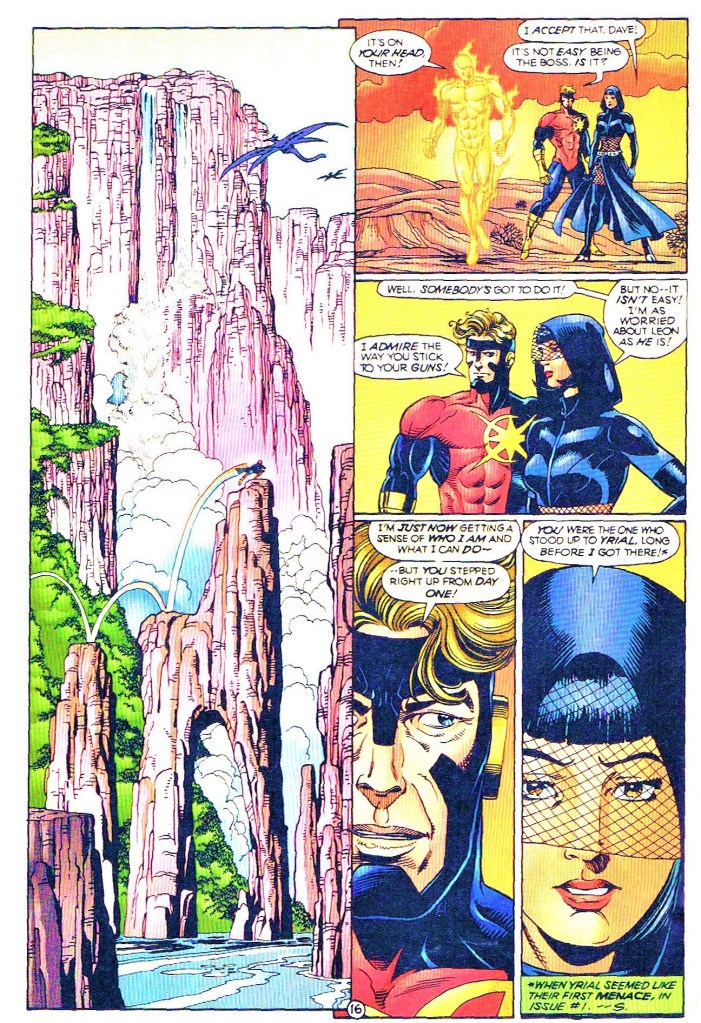
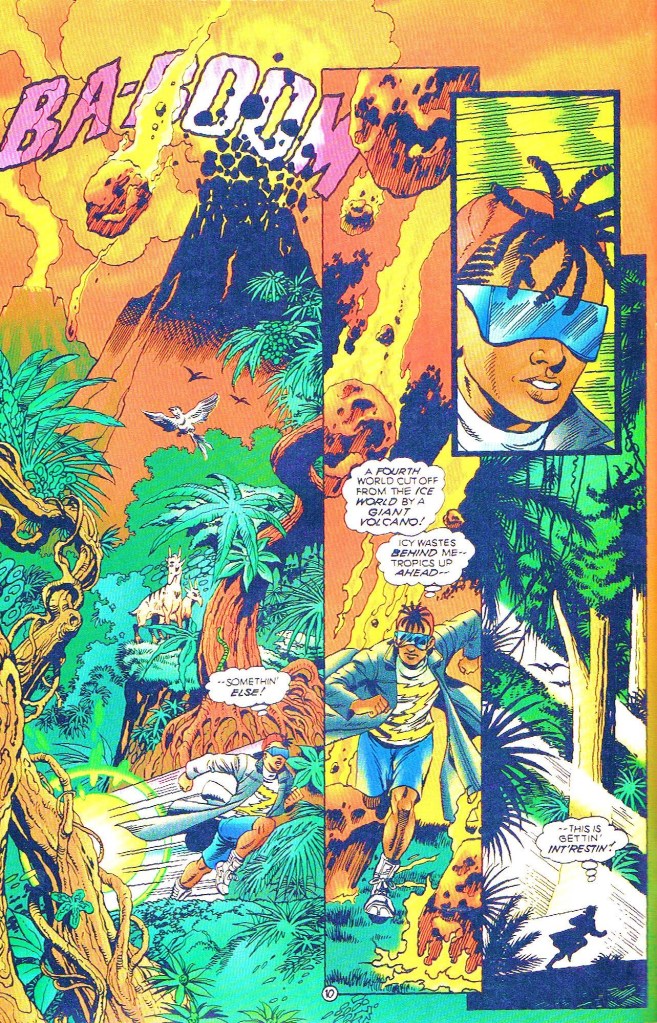
Welcome back superhero enthusiasts, comic book collectors and fans of Malibu Comics! Today, I’ve decided to take a break from the Hostile Takeover storyline of the Ultraverse and focus more on the Prototype monthly series. Last time around, a new chapter in the life of Prototype pilot Jimmy Ruiz started and in the corporate world, he took a job that paid so much less than before.

What exactly will happen to Jimmy? We can all find out in this look back at Prototype #15, published in 1994 by Malibu Comics with a story written by Len Strazewski and drawn by Dean Zachary.

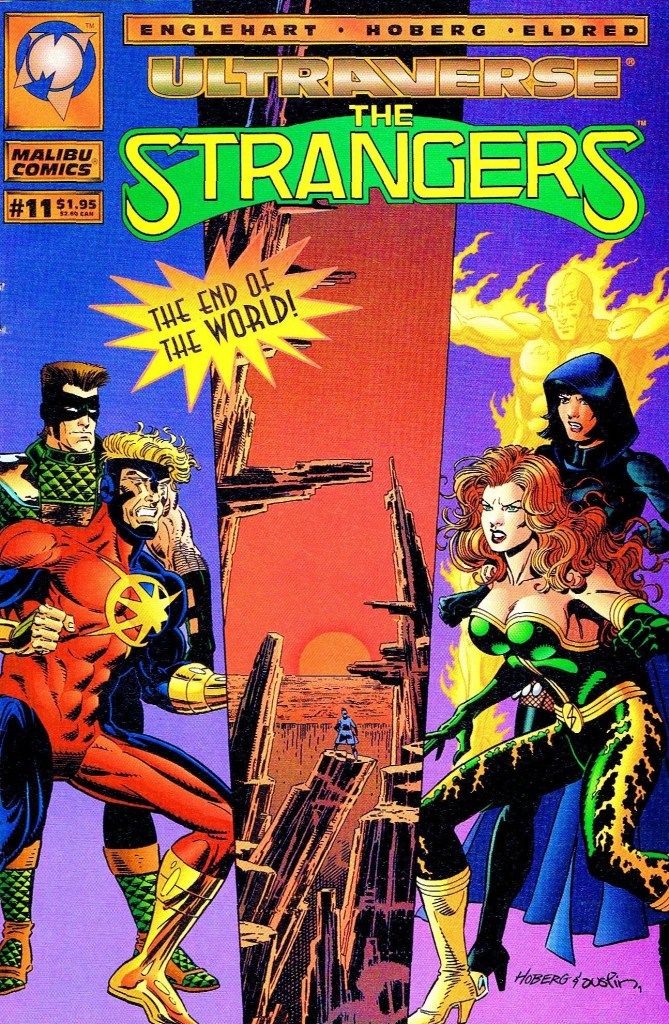
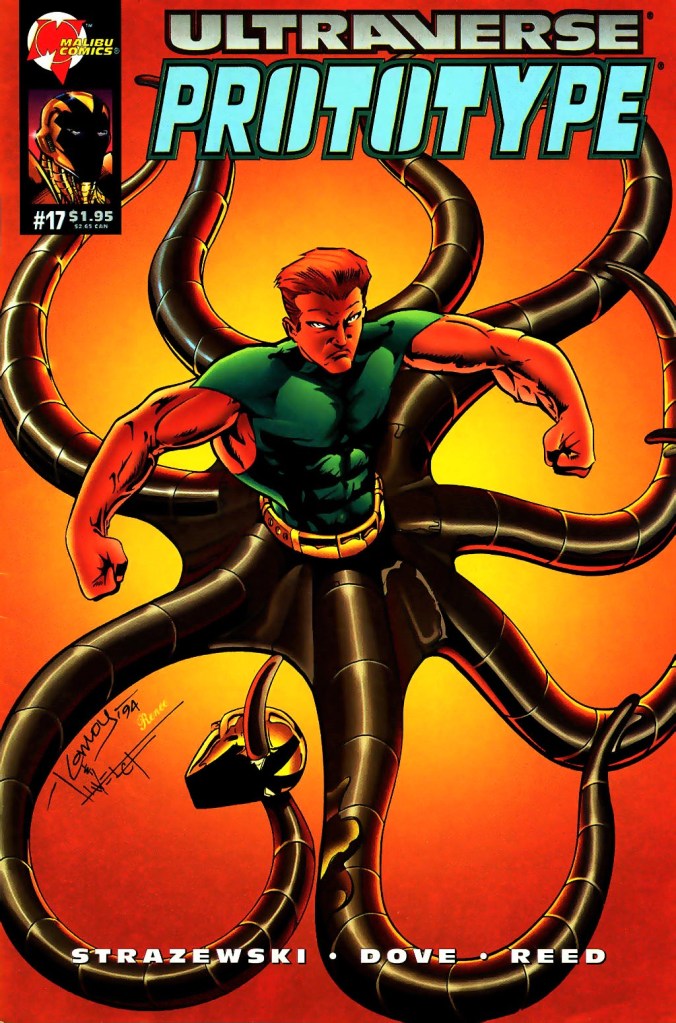
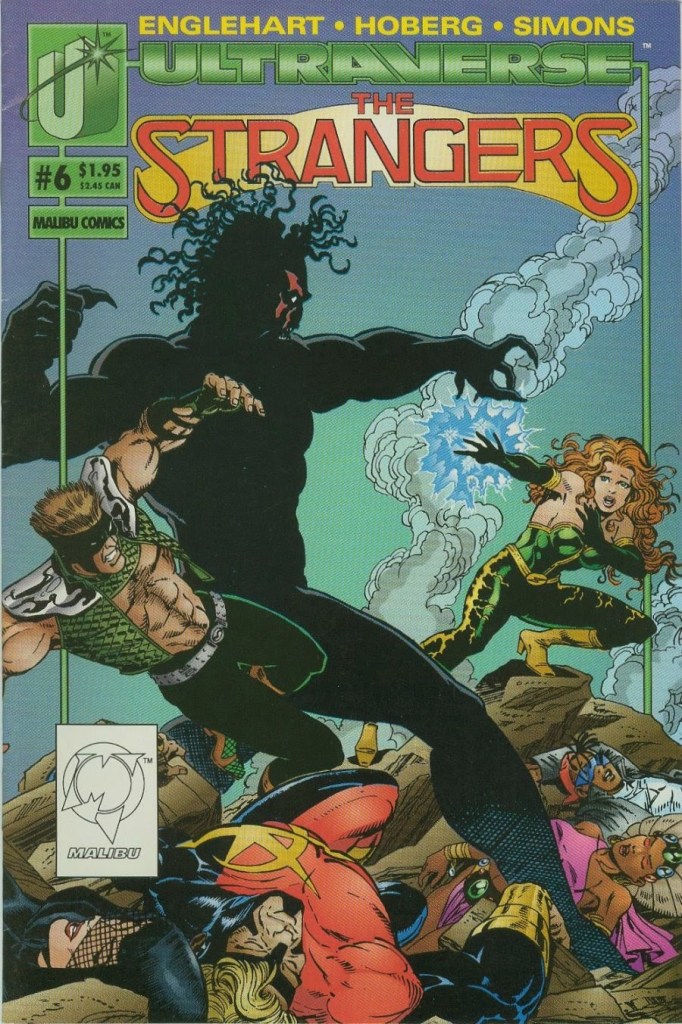
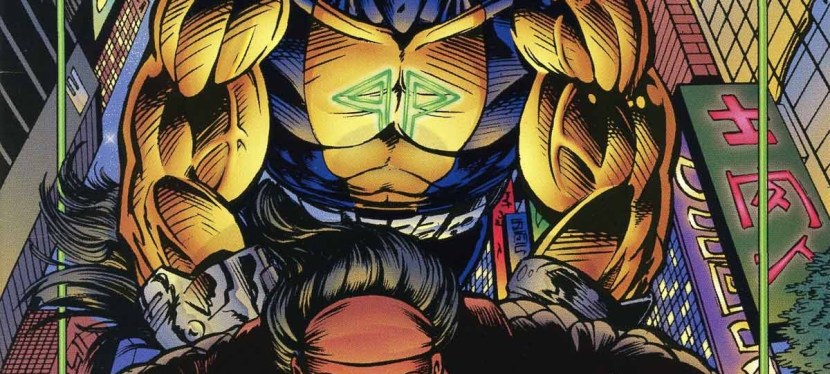
The cover.

Early story

The story begins inside a top-secret facility somewhere in the city of New York. A black man is going through the painful processes of cybernetic enhancements. His name is Donovan Jones and he is told by a shadowy figure that he is a failure and only their organization can turn him into something else…more than a human loser.

“You always were an ultra, Jones…and UltraTech knew this! But they never revealed this toyou,” said the shadowy figure.

Donovan Jones expresses his hatred for UltraTech. He also expresses his intention to destroy Prototype.

Elsewhere, a long vehicular bridge has been damaged. Helping the victims were Ranger (Bob Campbell) and Prototype (Jimmy Ruiz) trying to ensure that they could balance the bridge to prevent cars from falling over the edge. They managed to solve the problem paving the way for things to go back to normal. The affected people express their thanks and admiration to them.

As they fly away together, Bob and Jimmy talk about matters related to being ultra heroes. A short time later, Jimmy takes the train going to New Jersey as a civilian. He arrives at the facility of Direct Contact which is a division of NuWare. It turns out this is his first day of work with them and he is still struggling with the drastic changes now that his huge perks and privileges with UltraTech are no more…  

Quality

Jimmy Ruiz in a tough situation in front with his new boss on his first day at work.

I really like the story and the way Jimmy Ruiz was portrayed. This is really fine writing by Len Strazewski and it seems he organized a plan to not only redefine the protagonist but also change the status quo around him. I liked the way Strazewski set up the first-day-on-the-job struggles of Jimmy which really showed how fragile he is as a person without the armored suit to help him. His boss really was hard on him and made things a bit complicated for him as far as the use of Prototype is concerned under the control of NuWare. I also like the way Jimmy was portrayed in trying to be very responsible about his domestic life and the future ahead of him and his pregnant darling Angella.

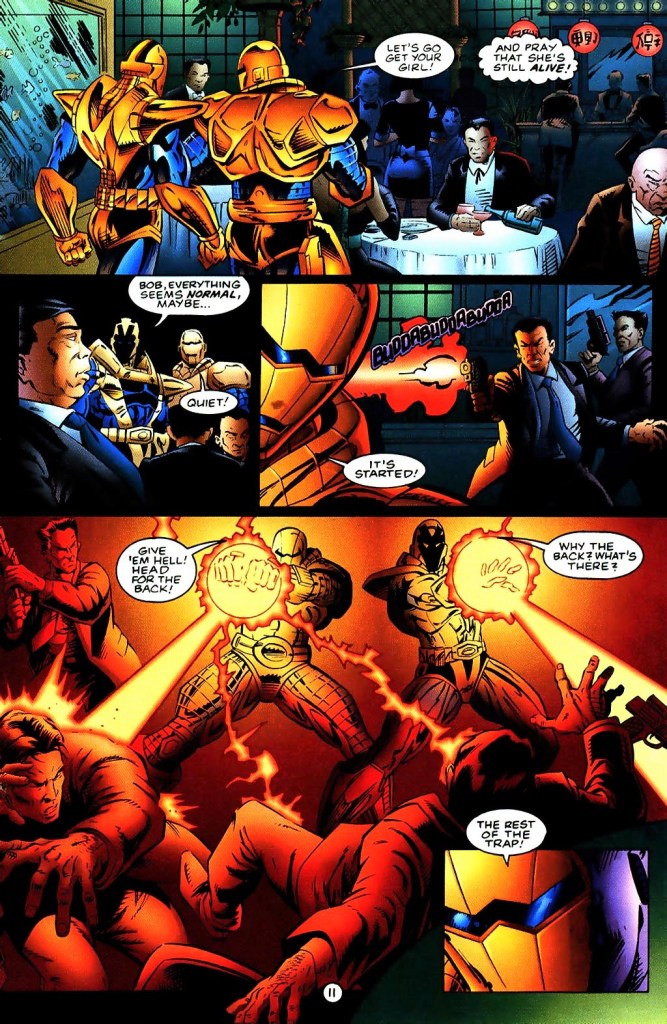
Apart from the in-depth characterization, there is a good amount of superhero action to keep fans satisfied. The action was nicely drawn by Dean Zachary.

Conclusion

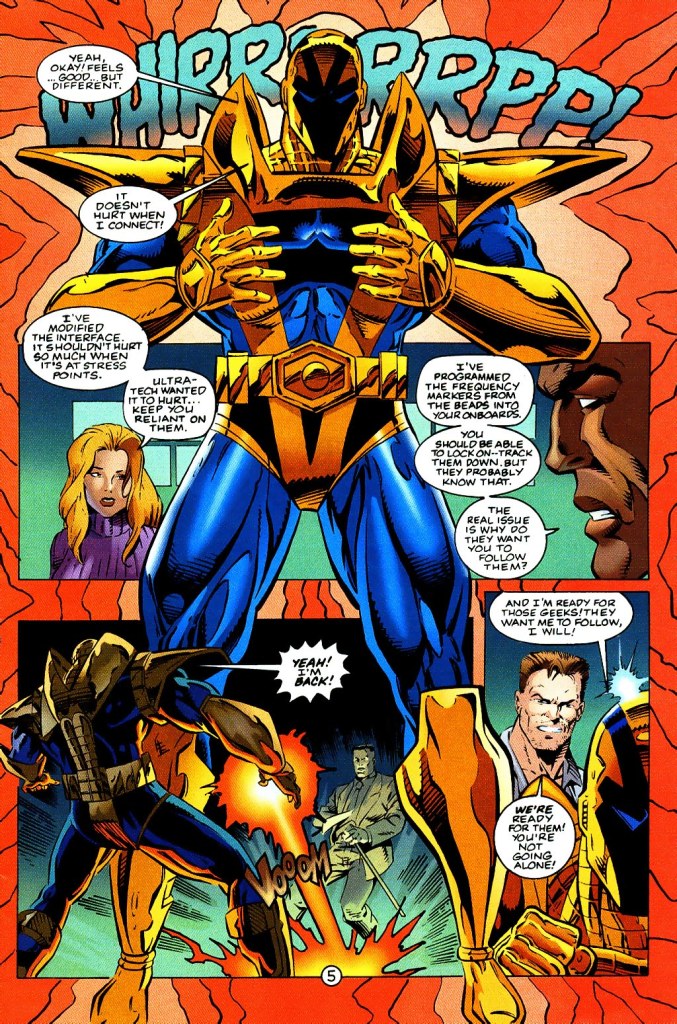
Prototype and Ranger.

Prototype #15 (1994) is a lot of fun and pretty engaging. In fact, this comic book is a nice pay-off following the build-up that was done in issue #14. To see Jimmy Ruiz redefined as a person without the armor is compelling and the story was nicely structured by Len Strazewski. For serious Prototype fans, this is one comic book that is worth reading again and again. Lastly, this one has a very intriguing ending that you have to read and find out.

If you are seriously planning to buy an existing hard copy of Prototype #15 (1994), be aware that as of this writing, MileHighComics.com shows that the near-mint copy of the comic book costs $14.

Overall, Prototype #15 (1994) is highly recommended!

+++++

Thank you for reading. If you find this article engaging, please click the like button below and also please consider sharing this article to others. If you are looking for a copywriter to create content for your special project or business, check out my services and my portfolio. Feel free to contact me as well. Also please feel free to visit my Facebook page Author Carlo Carrasco and follow me at HavenorFantasy@twitter.com
A Look Back at The Solution #13 (1994)

Disclaimer: This is my original work with details sourced from reading the comic book and doing personal research. Anyone who wants to use this article, in part or in whole, needs to secure first my permission and agree to cite me as the source and author. Let it be known that any unauthorized use of this article will constrain the author to pursue the remedies under R.A. No. 8293, the Revised Penal Code, and/or all applicable legal actions under the laws of the Philippines.

If you’ve got a problem that needs solving, you call The Solution. That’s how it is in the Ultraverse with regards to hiring some specialists (and wild at that) for help. For the newcomers reading this, The Solution is a heroes-for-hire group led by Lela Cho/Tech (note: read about her origin story) with three unique teammates.

In recent times, I’ve been reviewing Ultraverse comic books of The Night Man and Solitaire which formed the first two parts of the Hostile Takeover crossover storyline. From this point on we can see the 3rd chapter in this look back at The Solution #13, published by Malibu Comics in 1994 written by the late James Hudnall and drawn by Scott Benefiel.

The cover.

Early story

The story begins with a look back at the private communication between J.D. Hunt and Rex Mundi (as seen in The Night Man #12). After their talk, J.D. Hunt hires The Solution to find out what is going on at the headquarters of UltraTech in New York.

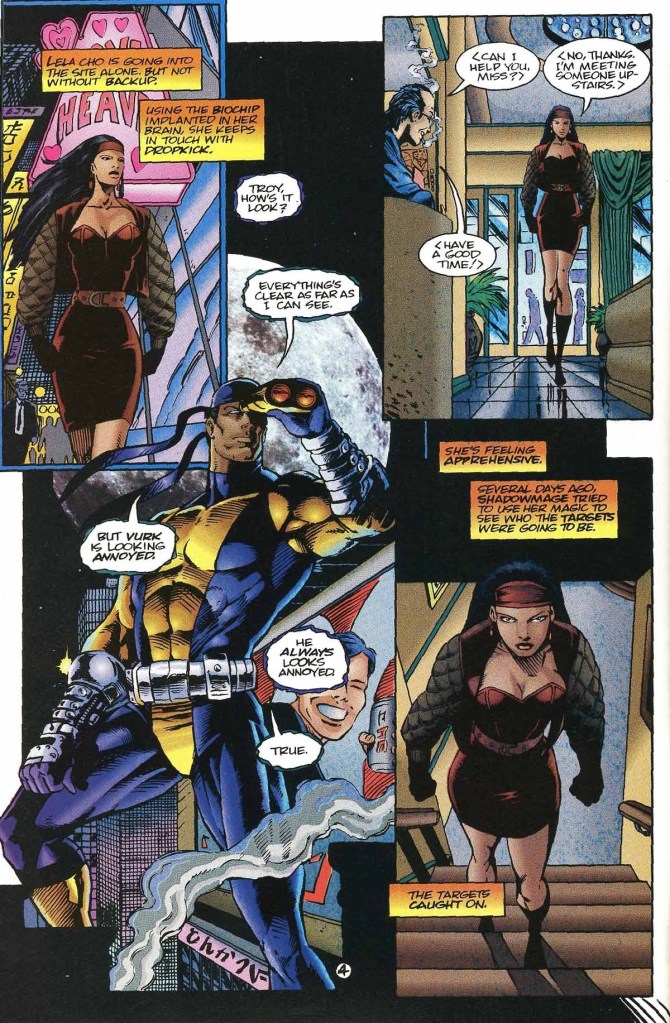
Later under the busy streets of Manhattan, the team make their way through the darkness with Aera using her magic to find the building. When asked by Troy why they took the mission considering J.D. Hunt’s reputation as a “sleaze on wheels”, Lela Cho states that she is certain that he only wants them to find information that could be used against UltraTech. She added that she does not believe Hunt.

As they talk, Night Man quietly listens to them staying still. Just after Aera found the way for the team to enter the basement of UltraTech’s building, Night Man follows them. Elsewhere, Gordon Bell becomes aware of the intrusion which Prototype (Jimmy Ruiz) and Ranger (Bob Campbell) witness. Bell tells Bob to go to the basement and tells Jimmy to go to the roof…

Quality

The Solution with Night Man and Ranger.

I will start with the visual presentation. This comic book has the unusual yet engaging approach of using pairs of pages to form these wide-angle images composed of a dominating view with panels of other images filling the remaining space. It can be jarring at first but once you get the hang of the story, these visuals will flow smoothly at a nice pace. It should be noted that artist Scott Benefiel is pretty good in visualizing Night Man, Prototype and other related Ultraverse characters. He also did a good job with images of action and superhero spectacle.

As far as storytelling goes, this 3rd chapter of the Hostile Takeover crossover storyline is the most interesting and the most enjoyable to read yet. While The Night Man #12 worked as a big build-up and Solitaire #10 worked as a mere side-story, there is a good payoff in this comic book and at the same time it moved the storyline forward to the next stage.

James Hudnall also kept the details tight and the way he wrote the interactions as the established Ultraverse characters got mixed up is simply great. I really enjoyed reading Lela Cho/Tech talking with Bob Campbell/Ranger about his getting screwed by the corporation, and Night Man’s interactions with The Solution’s members were nicely done.  

Conclusion

The stage is set for conflict.

The Solution #13 (1994) is very enjoyable and compelling! It is the complete package of solid storytelling, memorable character interactions and spectacle that also adds depth to the narrative of the Hostile Takeover storyline. Superhero stuff aside, the element of corporate intrigue remains present which also serves as a lively reminder about what this crossover storyline is about.

If you are seriously planning to buy an existing hard copy of The Solution #13 (1994), be aware that as of this writing, MileHighComics.com shows that the near-mint copy of the comic book costs $14.

Overall, The Solution #13 (1994) is recommended.

+++++

Thank you for reading. If you find this article engaging, please click the like button below and also please consider sharing this article to others. If you are looking for a copywriter to create content for your special project or business, check out my services and my portfolio. Feel free to contact me as well. Also please feel free to visit my Facebook page Author Carlo Carrasco and follow me at HavenorFantasy@twitter.com
A Look Back at Solitaire #10 (1994)

Disclaimer: This is my original work with details sourced from reading the comic book and doing personal research. Anyone who wants to use this article, in part or in whole, needs to secure first my permission and agree to cite me as the source and author. Let it be known that any unauthorized use of this article will constrain the author to pursue the remedies under R.A. No. 8293, the Revised Penal Code, and/or all applicable legal actions under the laws of the Philippines.

Some time ago, I reviewed the first issue of the Solitaire series of the Ultraverse. I also published my retro reviews of issues #2 and #7. What makes Solitaire an interest part of the Ultraverse is that he fights crime without fear and takes a lot of risks. He has a special healing ability and is quite proficient in doing his own detective work. Creatively, Solitaire is like a combination of Wolverine and Batman.

In the 1994 crossover storyline Hostile Takeover (which started in The Night Man #12), a series of events took off when the secretive villain Rex Mundi orders corporate player J.D. Hunt to do something about the unstable corporation UltraTech. Hunt hires The Solution to do his dirty work and even went as far as sending his newest weapon Teknight to New York (where UltraTech is). The Night Man also made it to New York continuing his own quest.

With those details laid down, the stage is set for Solitaire’s role in the 2nd chapter of Hostile Takeover and we can find out more in this look back at Solitaire #10, published by Malibu Comics in 1994 with a story written by Gerard Jones and drawn by Jeff Parker and Ernie Steiner.

The cover.

Early story

The story begins with Solitaire moving through the city and meets several people at a public place. It turns out they are losing trust in him over something. As tension rises, the masked vigilante hears something that the others don’t which makes them think he is having a perception problem. Solitaire goes away searching for what he thought was an explosion. He saw nothing and this only confirmed that he cannot trust his own mind.

Elsewhere, Solitaire’s father (Mr. Lone) has a private meeting with top scientists. He expresses to them that his son has been wasting his money and points to it as another one of the scientists’ failures. After the meeting, a certain specialist approaches Lone and they negotiate something.

Back at his secret place, Solitaire talks with Iris about his current predicament. She tells him to do exactly what his mind is telling him not to do, and to go New York to stop the elder Lone…

Quality

This comic book has a good amount of action.

As far as the concept of Hostile Takeover goes, this one builds up on the corporate intrigue as it shows the evil Lone being involved with the events that took place. As for Solitaire himself, this story emphasizes his struggle not only with crime-fighting but himself. In connection with all the nanites inside his body, Solitaire struggles with a distorted perception and even control of himself.

When it comes to spectacle, this comic book has a good amount of action that is expected with Solitaire. Pretty satisfying to see.

Conclusion

Prototype, Night Man and The Solution in their short appearance in this comic book.

In the context of the Hostile Takeover crossover, Solitaire #10 (1994) is really a standalone story of its title character. It will please Solitaire fans but it will disappoint readers who are hoping to see him mix in with other established Ultraverse characters involved in the storyline like The Solution, Night Man and others. Solitaire really has no crossover with those characters which is a bummer. So far, this issue of Solitaire has the least amount of entertainment and engagement for me.

If you are seriously planning to buy an existing hard copy of Solitaire #10 (1994), be aware that as of this writing, MileHighComics.com shows that the near-mint copy of the comic book costs $14.

Overall, Solitaire #10 (1994) is satisfactory.

+++++

Thank you for reading. If you find this article engaging, please click the like button below and also please consider sharing this article to others. If you are looking for a copywriter to create content for your special project or business, check out my services and my portfolio. Feel free to contact me as well. Also please feel free to visit my Facebook page Author Carlo Carrasco and follow me at HavenorFantasy@twitter.com
A Look Back at The Night Man #12 (1994)

Disclaimer: This is my original work with details sourced from reading the comic book and doing personal research. Anyone who wants to use this article, in part or in whole, needs to secure first my permission and agree to cite me as the source and author. Let it be known that any unauthorized use of this article will constrain the author to pursue the remedies under R.A. No. 8293, the Revised Penal Code, and/or all applicable legal actions under the laws of the Philippines.

Welcome back superhero enthusiasts, comic book collectors and fans of Malibu Comics!

I don’t know with you but I personally enjoyed reading the crossover stories of the Ultraverse. The Strangers had nice crossovers with Hardcase and Prototype in different times. The crossover encounter between Prime and Prototype was very memorable. There also was the first grand crossover of the Ultraverse in Break-Thru #1.

While the Ultraverse no longer exists, for me it was the one superhero comic book franchise or imprint that truly defined superhero comics of the 1990s. Malibu Comics really had great talents and other comic book creators who produced lots of fun comic books to read. Their creators also knew what it took to make Ultraverse crossovers stand out.

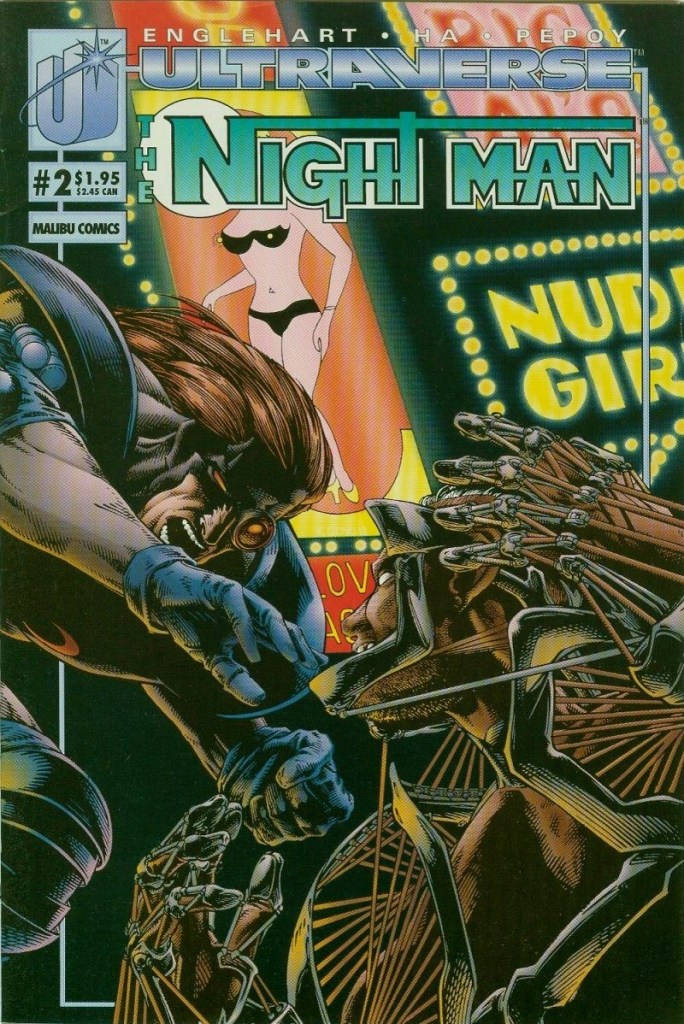
Today, we will start a close look at another particular crossover storyline within the Ultraverse titled Hostile Takeover which involves The Night Man, Prototype, Solitaire, Sludge and The Solution! With those details laid down, here is a look back at The Night Man #12, published in 1994 by Malibu Comics with a story written by Steve Englehart with Len Strazewski and James Hudnall as co-plotters. The art was drawn by John Dennis.

The cover.

Early story

The story begins in the fancy office of J.D. Hunt as he receives a call from the secretive and sinister Rex Mundi. Mundi expressed disappointment in Hunt’s handling of the so-called Ultra Problem but went on to give him a chance to redeem himself. Mundi tells Hunt to take over Ultratech which has gotten into trouble caused by Gordon Bell. Hunt noted that Ultratech is to blame for the Strangers’ hijacking of his space shuttle as the security was handled by the said company.

 After talking with Mundi, J.D. Hunt observes his employees finishing work on a high-tech armor (Teknight) and then communicates privately with The Solution. During the meeting, Hunt reveals to them that he is a major stockholder of Ultratech and he needs them to find out if they got Gordon Bell running things. The Solution takes the job.

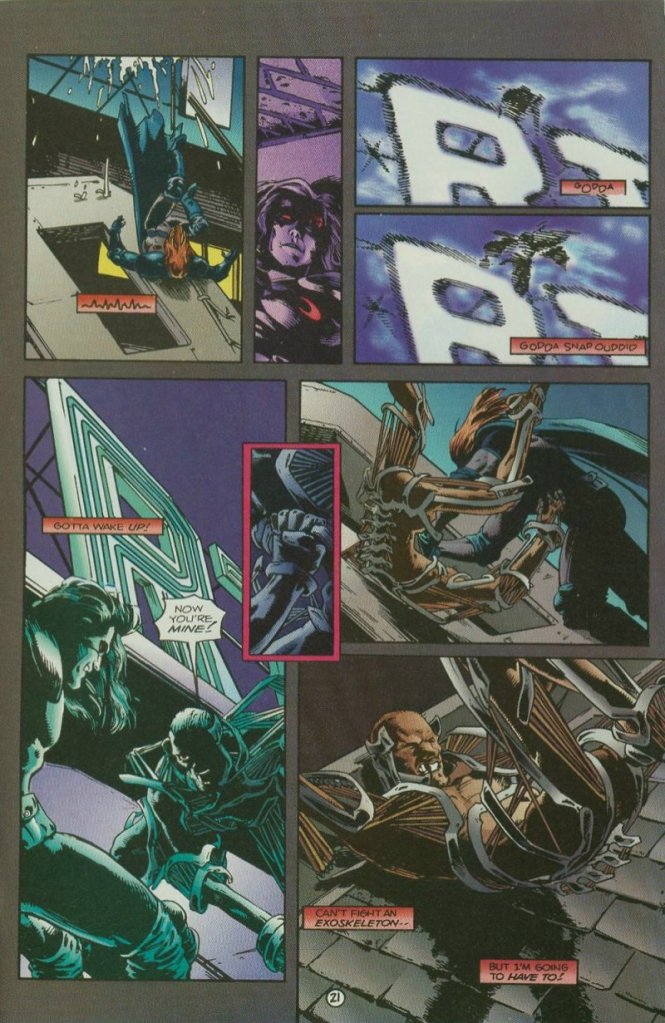
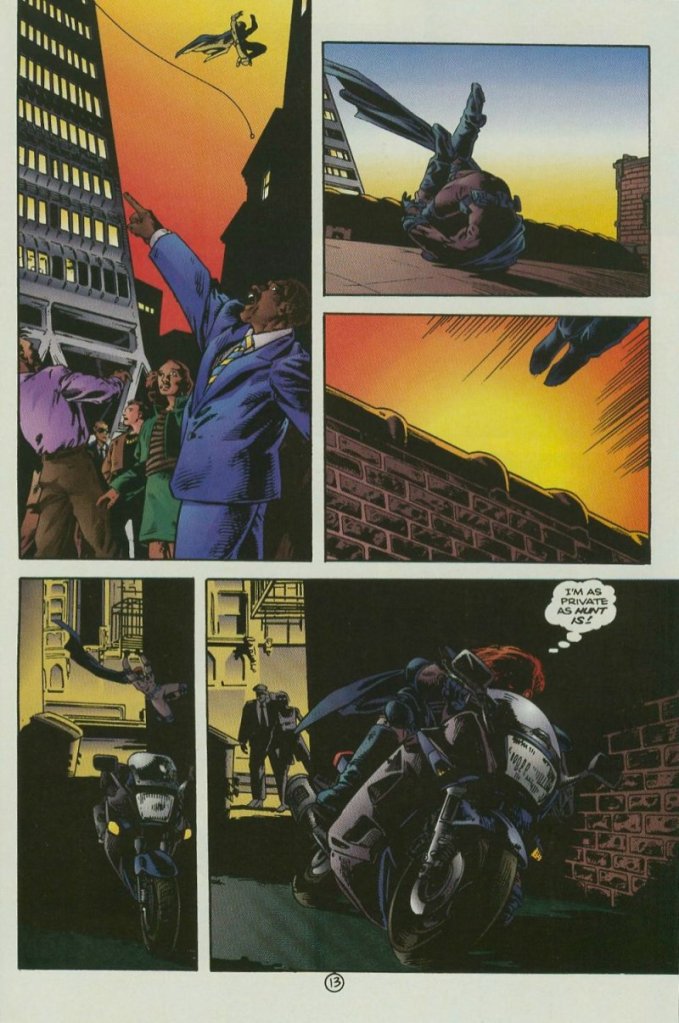
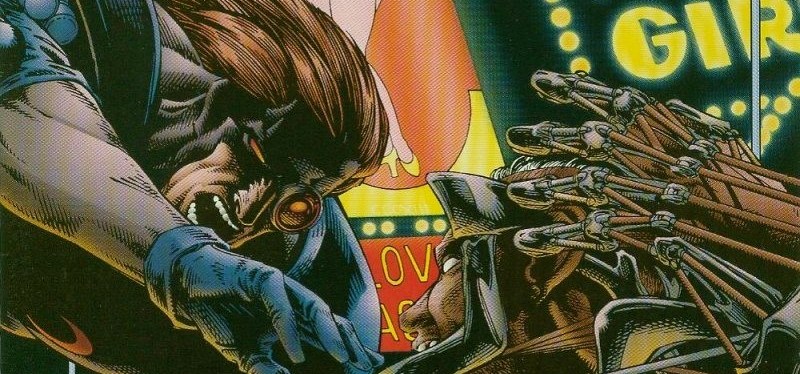
Elsewhere, the Night Man secretly jumps on the top of a moving truck which he knows carries NuWare’s secret project Teknight. Upon arrival at the airport of San Jose, California, Night Man carefully sneaks into an airplane which is where Teknight is loaded at…

Quality

Imagine yourself being Night Man in New York and you do not have the technology nor the means to be able to rise up a skyscraper.

I’ll say it straight right now…the story of this comic book is nicely crafted. With Steve Englehart and the contributions of Len Strazewski and the late James Hudnall, this one score nice points when it came to building-up the concept behind Hostile Takeover which involves a strong sense of corporate intrigue (which was often present in comic books of Prototype). The presence of The Solution is pretty small (this is a Night Man comic book after all) but they contributed nicely to the build-up.

The story of Hostile Takeover was told mainly through the eyes of the Night Man. For the newcomers reading this, Night Man is a vigilante who also does a lot of problem solving similar to Batman. Unlike the mentioned comic book icon, Night Man does not have insufficient resources to back him up and pushes himself to travel around and complete his mission. In this comic book, you will see him really go as far as he could with tracking down the powered suit of armor of Teknight. You will also see him struggle and you might as well relate with his limitations.

There is not too much superhero spectacle to enjoy here but that’s okay because there is a nice amount of very interesting details presented in the build-up of Hostile Takeover’s concept.

Conclusion

Night Man on the pursuit as Teknight gets loaded into the jet.

Even though it lacked spectacle, The Night Man #12 (1994) is still an engaging read and it should score well with readers or Ultraverse fans who enjoy detailed storytelling. This comic book succeeds in building up the concept of Hostile Takeover while setting up the crossover elements between key Ultraverse characters. The story also emphasizes more of Night Man’s struggle to get his mission done.

If you are seriously planning to buy an existing hard copy of The Night Man #12 (1994), be aware that as of this writing, MileHighComics.com shows that the near-mint copy of the comic book costs $14.

Overall, The Night Man #12 (1994) is recommended.

+++++

Thank you for reading. If you find this article engaging, please click the like button below and also please consider sharing this article to others. If you are looking for a copywriter to create content for your special project or business, check out my services and my portfolio. Feel free to contact me as well. Also please feel free to visit my Facebook page Author Carlo Carrasco and follow me at HavenorFantasy@twitter.com
A Look Back at The Strangers #22 (1995)

Disclaimer: This is my original work with details sourced from reading the comic book and doing personal research. Anyone who wants to use this article, in part or in whole, needs to secure first my permission and agree to cite me as the source and author. Let it be known that any unauthorized use of this article will constrain the author to pursue the remedies under R.A. No. 8293, the Revised Penal Code, and/or all applicable legal actions under the laws of the Philippines.

Welcome back, superhero enthusiasts, comic collectors and fans of 1990s comics culture! We go back to the Ultraverse to witness further events from The Strangers told during the late stage of their 24-issue run as a comic book series. In the previous review, Teknight became more prominent as a member of the team as Candy/Electrocute got heavily damaged which led the Strangers to having her repaired not in just any private facility but rather in the facility of a powerful organization.

And then something happened at the end of The Strangers #21.

With those details laid down, here is a look back at The Strangers #22, published by Malibu Comics in 1995 with a story written by Steve Englehart and drawn by Paul Abrams.

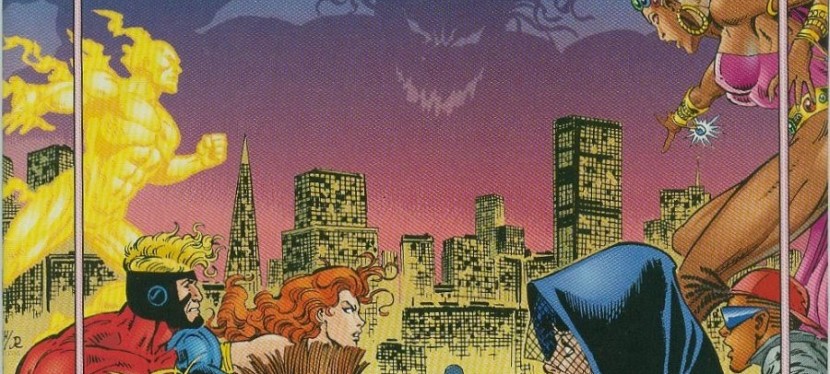
The cover.

Early story

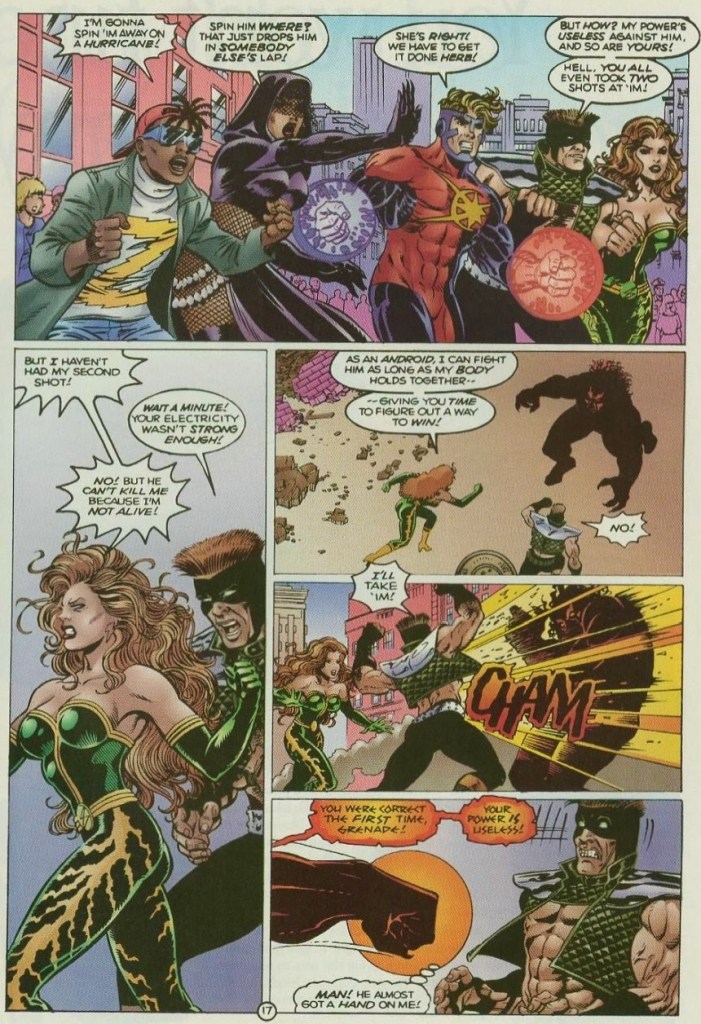
The story begins inside a high-tech facility when the newly repaired Electrocute gets up and attacks her teammates Grenade (her romantic partner) and Teknight. Electrocute is acting under someone’s control. In response to Teknight’s methodical approach on absorbing electric blasts from Electrocute, Grenade warns him about the how capable NuWare is when it comes to control and execution.

Even so, Teknight continues to stand until he gets overwhelmed by the lady’s power and ends up getting paralyzed. An executive walks near Teknight and Electrocute boasting that he loves seeing his designs in action and Grenade comes in to use his power on his romantic partner…

Quality

Grenade and the door.

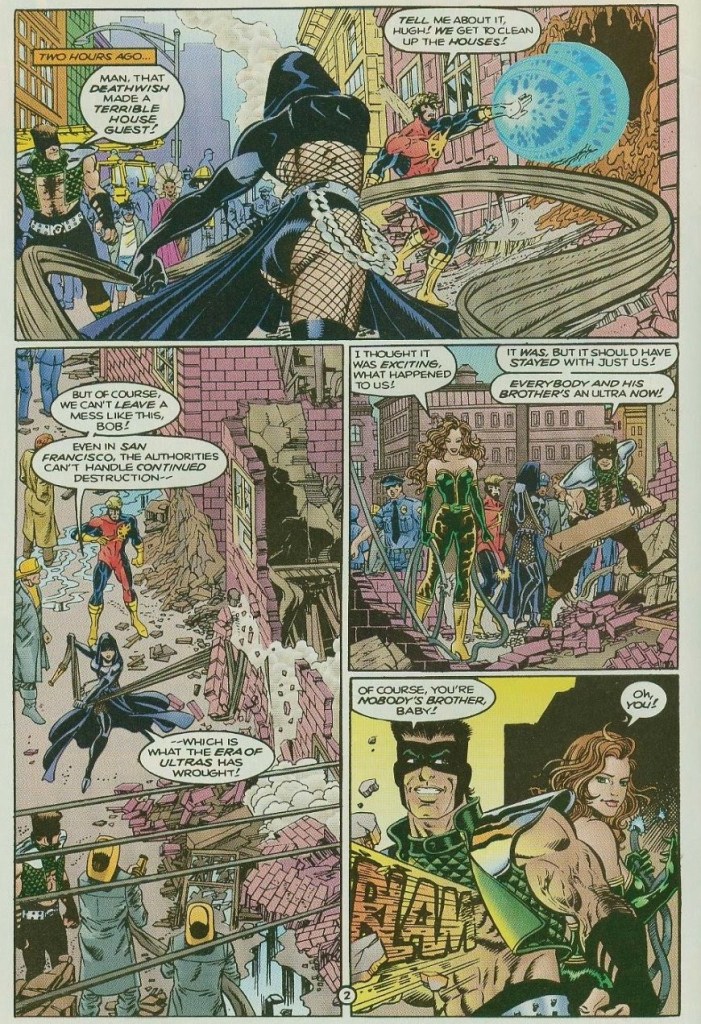
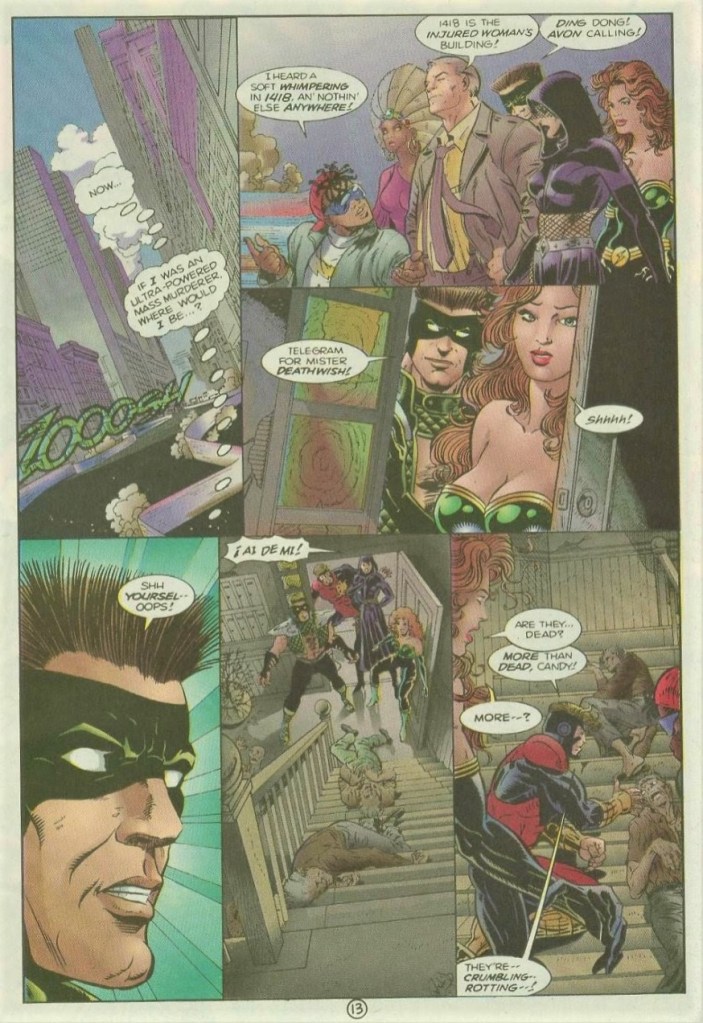
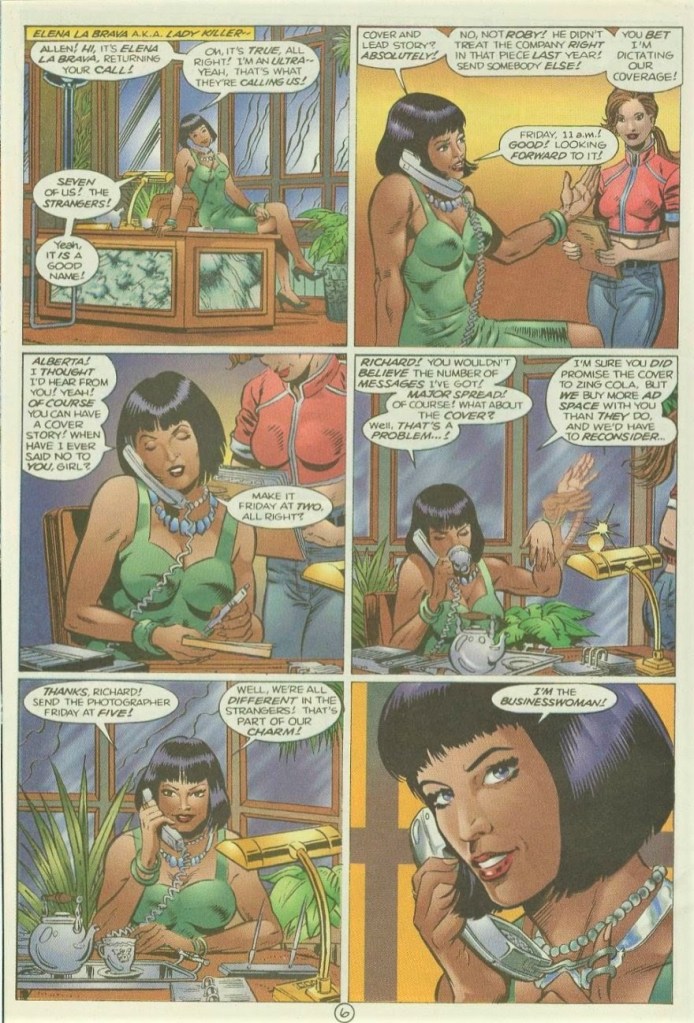
Once again, Steve Englehart crafted another story that keeps this series fresh and fun to read. The story started with a good amount of action involving Grenade, Electrocute and Teknight. As I don’t want to spoil the plot, I can say that what happened after the action-packed opening sheds light on a new yet significant youth who wields a lot of power thanks to his father (clue: a powerful and ruthless executive who was involved not only with the Strangers but also with Mantra and Night Man). The story is very well structured and moves at a nice pace. Also I can say that the spotlight on the Strangers as a whole team was carefully balanced.

When it comes to character development, it is Grenade who clearly got a good dose of it. Apart from the usual display of his feelings towards Electrocute, this comic book dramatizes his effort to understand not only his lady and their new teammate Teknight, but also his realization about the delicate balance between being alive and being linked with technology.

Conclusion

I wonder how today’s SJWs, radical socialists and Black Lives Matter activists would react to this particular scene.

The Strangers #22 (1995) is another fun-filled superhero story which served its purpose in concluding the story that started in the previous issue. It also achieved its goal of emphasizing the role of NuWare (read: corporate intrigue) and the continued relevance of a certain corporate executive that the Strangers could not just get rid of.

If you are seriously planning to buy an existing hard copy of The Strangers #22 (1995), be aware that as of this writing, MileHighComics.com shows that the near-mint copy of the comic book costs $27.

Overall, The Strangers #22 (1995) is recommended.

+++++

Thank you for reading. If you find this article engaging, please click the like button below and also please consider sharing this article to others. If you are looking for a copywriter to create content for your special project or business, check out my services and my portfolio. Feel free to contact me as well. Also please feel free to visit my Facebook page Author Carlo Carrasco and follow me at HavenorFantasy@twitter.com
A Look Back at Wonder Woman #19 (1988)

Disclaimer: This is my original work with details sourced from reading the comic book and doing personal research. Anyone who wants to use this article, in part or in whole, needs to secure first my permission and agree to cite me as the source and author. Let it be known that any unauthorized use of this article will constrain the author to pursue the remedies under R.A. No. 8293, the Revised Penal Code, and/or all applicable legal actions under the laws of the Philippines.

Welcome back, superhero enthusiasts, comic book collectors and fans of DC Comics! Today is the first day of March of 2021. Do you know what that means? It means that Wonder Woman 1984’s scheduled release on DVD, Blu-ray and 4K Blu-ray is just 29 days away! Even though I still have not seen the movie (which as of this writing has not been released in movie theaters here in the Philippines) and even though social media showed that WW fans are divided over it, I still went ahead ordering the 4K Blu-ray combo online. Just today, the online retailer gave me an important update as to when the 4K Blu-ray combo will arrive.

Personally, I’m excited to watch Gal Gadot play the Queen of Superheroes again and her performance in the 2017 Wonder Woman movie is phenomenal and captures the essence of the icon! I am also interested to see how director Patty Jenkins handled the storytelling as she herself co-wrote the screenplay.

More on Wonder Woman, I should say that I really love the way she was redefined by George Perez and Len Wein in the post-Crisis era of DC Comics. Today, we will find out what happens next to her during her time in Greece in this look back at Wonder Woman #19, published in 1988 by DC Comics with a story written and drawn by George Perez (with Frank McLaughlin on the finishes).

The cover.

Early story

The story begins with a short look back at the end of issue #18 which saw Wonder Woman fighting several monsters that surrounded her. Suddenly a powerful blast hits her and knocks her out.

Vanessa, who survived thanks to Wonder Woman’s help, is found by her mom Julie who was accompanied by several armed Greeks. Vanessa states that the scroll she got from her uncle Stavros seemed to attract the monsters which drew a response from local rebel Katina Leikos who belongs to a group that oppose the fabled witch on the nearby island. She states that if they don’t stop the witch, she will destroy princess Diana/Wonder Woman.

Inside the old structure on the said island, Wonder Woman wakes up finding herself on the floor chained by the neck and wrists. Located very near her is Circe, the enchantress who is the daughter of Hyperion and Perseis. The enchantress tells Wonder Woman that it is her destiny to execute her…

Quality

Julia Kapatelis is more involved with the action and mission.

Of all the comic books that I’ve reviewed so far on this particular monthly series in the post-Crisis era, this one is easily the darkest and most grim Wonder Woman story. It also has the heaviest emphasis on monsters and sorcery, complete with sinister rituals and connections to Greek mythology.

As expected, the story here further develops Wonder Woman and her place in man’s world but with emphasis on destiny and legacies. In this case, destiny related to the shared history between Wonder Woman’s fellow Amazons and Circe (who is DC Comics’ own take on the false Greek goddess) which puts the superhero icon in a rather complex situation. For Circe, Wonder Woman’s innocence means nothing because destiny and hatred matter a lot more. The way George Perez wrote, Circe in this particular issue proved to be more menacing than Ares and is also the most sinister villain of Wonder Woman’s.

More on this comic book, I can declare that it is right here where you will get to see the Queen of Superheroes in her most vulnerable and most helpless state yet. For several pages, you will see Wonder Woman struggle not only against Circe and her monsters, but also with the revelations of history. You will also get to see Wonder Woman’s emotional limits pushed.

Regarding the supporting cast, I really enjoyed seeing Julie Kapatelis really putting her academic skills and expertise to great use as well as getting involved in the action. With her Greek heritage and connections with the locals clearly defined, Julie got a good amount of the spotlight among the characters and nicely contributed to the story. I also love the part when Julie said that Diana (Wonder Woman) is like a daughter to her which really emphasize the bond of love and trust between them.

Conclusion

Wonder Woman bravely fights the monsters of Circe.

As far as the visit in Greece goes, Wonder Woman #19 (1988) really ramped up the stakes with Circe’s evil presence emphasized a lot while having Wonder Woman in a vulnerable state which added to her character development in this particular monthly series. It is indeed a very well written tale by Perez who proved to be capable of pushing the boundaries while redefining Wonder Woman in the post-Crisis era. Apart from being the most sinister villain in this monthly series so far, Circe is the complete opposite of Wonder Woman.

If you are seriously planning to buy an existing hard copy of Wonder Woman #19 (1988), be aware that as of this writing, MileHighComics.com shows that the near-mint copy of the regular edition costs $42 while the near-mint copy of the newsstand edition costs $44.

Overall, Wonder Woman #19 (1988) is highly recommended!

+++++

Thank you for reading. If you find this article engaging, please click the like button below and also please consider sharing this article to others. If you are looking for a copywriter to create content for your special project or business, check out my services and my portfolio. Feel free to contact me as well. Also please feel free to visit my Facebook page Author Carlo Carrasco and follow me at HavenorFantasy@twitter.com
A Look Back at Wonder Woman #18 (1988)

Disclaimer: This is my original work with details sourced from reading the comic book and doing personal research. Anyone who wants to use this article, in part or in whole, needs to secure first my permission and agree to cite me as the source and author. Let it be known that any unauthorized use of this article will constrain the author to pursue the remedies under R.A. No. 8293, the Revised Penal Code, and/or all applicable legal actions under the laws of the Philippines.

Welcome back, superhero enthusiasts, comic book collectors, fellow geeks and fans of Wonder Woman! Last time, I found George Perez’s standalone writing of the story about Wonder Woman discovering Greece and its connections to her people’s heritage a really good story. For much of the post-crisis Wonder Woman monthly series’ early stage, the stories were done by Perez and the late Len Wein. In issue #17, Perez not only succeeded in developing Diana/Wonder Woman further, he also captured nicely the wonder of discovery of new places and astonishing aspects of life while traveling overseas.

Of course, issue #17 was not purely a tourism story through the eyes of the Queen of Superheroes. There was an obvious build-up of a new villain who is aware of Wonder Woman’s presence in Greece.

What will happen next? Who could the new force of evil be? We can find out in this look back at Wonder Woman #18, published by DC Comics in 1988 with a story written and drawn by George Perez with ink work done by Dick Giordano.

The cover.

Early story

The story begins deep in the darkness of limbo. Light sparks suddenly as Zeus, Hades and Poseidon arrive in the search of their father called Cronus. Zeus retrieves the Olympian pact. After further talking, they join forces in lighting a flame to burn the pact to make way for something new.

Meanwhile in a hospital in the Greek isle of Cephalonia, Diana wakes up surrounded by Julia Kapatelis, Vanessa, a doctor and other Greeks. Diana states that some kind of aura seemed to clutch her in a chilling grip which Julia dismisses and believes that her Amazon friend was simply tired from all the months-long pushing herself since returning from Themyscira.

Julia introduces Diana to Theophilus Ventouras and his nephew Demetrios. The older Ventouras is the owner of the wealthiest estate on the islands. He tells Diana that the governor asked him to meet her at the dock and reveals to her that a local boy was killed by a wolf which some car calling it as a “magia”.

As they continue talking, a nurse listens to them carefully just outside the door of the room they are in. She learns about Ventouras’ offer of assistance to Diana and quietly leaves. Some time later just outside the hospital, the nurse (named Angela) reveals to a man named Mikos that Diana and her group will be going to Ventourata the next day…

Quality

Without hesitation, Wonder Woman moves to save lives.

I can start by saying that this is another well-written tale by George Perez. Apart from the continuing focus on Wonder Woman’s discovery of Greece, the elements of fantasy, intrigue, suspense and even horror have been used more in this comic book compared to the previous issue.

When it comes to characterization, Diana’s close relationship with the Kapatelises is deepened further as the story explored the already established Greek background of Julia. I also found engaging Wonder Woman’s unflinching moves to search for Vanessa and get her out of trouble any way she could.

For those of you who are aware about the lack of superhero spectacle in issue #17, I can share to you that there definitely is more action in this comic book and it is all nicely presented by George Perez.

Continuing what began in the previous issue, Perez ramped up further the build-up of the new force evil awaiting Wonder Woman. I won’t reveal who it is but rest assured, this comic book’s ending is pretty strong and easily justifies the build-up.

Conclusion

Diana and Julia treat each other like family.

Wonder Woman #18 (1988) successfully continued the redefining of the Queen of Superheroes in the post-Crisis era and George Perez really delivered great stuff as well as a very solid story here. From start to finish, there is a lot to enjoy and examine in the story.

If you are seriously planning to buy an existing hard copy of Wonder Woman #18 (1988), be aware that as of this writing, MileHighComics.com shows that the near-mint copy of the regular edition costs $41 while the near-mint copy of the newsstand edition costs $84.

Overall, Wonder Woman #18 (1988) is highly recommended!

+++++

Thank you for reading. If you find this article engaging, please click the like button below and also please consider sharing this article to others. If you are looking for a copywriter to create content for your special project or business, check out my services and my portfolio. Feel free to contact me as well. Also please feel free to visit my Facebook page Author Carlo Carrasco and follow me at HavenorFantasy@twitter.com
For Wonder Woman fans, be aware that the movie Wonder Woman 1984 will be released in a 4K Blu-ray disc combo on March 30, 2021. Read my article for the details and, if you have decided to order, do it now at Amazon.

A Look Back at Action Comics #500 (1979)

Disclaimer: This is my original work with details sourced from reading the comic book and doing personal research. Anyone who wants to use this article, in part or in whole, needs to secure first my permission and agree to cite me as the source and author. Let it be known that any unauthorized use of this article will constrain the author to pursue the remedies under R.A. No. 8293, the Revised Penal Code, and/or all applicable legal actions under the laws of the Philippines.

To publish a five hundredth issue of an extensive monthly comic book series is clearly a major milestone for any publisher. To do the math, it takes a whole year to publish 12 issues on a monthly schedule. To reach five hundred issues on a monthly pace will require forty-one years and eight months’ time to publish.

Way back in the late 1970s, DC Comics achieved the said milestone with their extensive monthly series titled Action Comics which is often identified with the world’s most famous superhero – Superman! Take note that DC Comics started in 1935 while Action Comics #1 (the first appearance of Superman) was published a few years later.

Going back to the 500th issue of Action Comics, it is easy to wonder what DC Comics’ talent came up with to celebrate the milestone. That being said, we can all find out more in this look back at Action Comics #500, published by DC Comics in 1979 with a story written by Martin Pasko and visualized by Curt Swan and Frank Chiaramonte.

The cover.

Early story

The story begins with Superman arriving at a pavilion named after him at the Metropolis World’s Fair. Countless people welcomed with lots of cheering as he lands near the mayor in the presence of the famous entrepreneur J. Robert Arngrim. Also present were Superman’s closest friends Lois Lane, Lana Lang, Jimmy Olsen and Perry White.

After the formal opening, Superman leads a large group of people as their tour guide. Together they arrived a wide hall containing the Krypton exhibit showcasing alien technology, architecture and life on Superman’s home planet. In response to a request by Arngrim, Superman reluctantly agrees to do a demonstration of the mind-prober ray, a machine Superman himself invented as a boy mainly to retrieve memories from his subconscious.

As the Man of Steel takes his seat on the machine in front of the tourists and Arngrim, an unidentified person located in a secret facility prepares to invade Superman’s mind…

Quality

Teenage Clark Kent gradually becoming Superboy.

To make it clear, this 500th issue of the Action Comics monthly series is an extensive, no advertisements tribute to Superman and I can say that the comic book creators really went all out to present lots of stuff to please Superman fans.

As such, the story was written to help the newer fans of the time to be more familiar of the legacy of Superman (note: this was years before Crisis on Infinite Earths happened) by revisiting and dramatizing established events of the Man of Steel’s legacy such as Jor-El (Superman’s father) failing to convince the Kryptonian science council members that their world was doomed, Superman sent to Earth as a child in a rocket before Krypton’s destruction, getting raised by an American couple after arriving on Earth, becoming Superboy (note: another pre-Crisis element), getting a job at the Daily Planet, welcoming Supergirl on Earth, and so on.

Superman leading the tour.

Of course, Superman does not reveal key details of his personal life to the people during the tour and such recollections were presented to delight us readers. Still, there is richness in the writing and the art. Even though I am already familiar with DC’s icon and the Superman-related mythos, I still had a lot of fun reading the events of Superman’s past, particularly his early years as the adopted son of the Kent couple who in turn did their best to adjust to his super abilities while raising him with good values and discipline.

While the recollections from Superman’s past are engaging, the present-day tour at the Superman pavilion is itself quite fascinating. There were displays of supervillains such as Lex Luthor, Braniac and Parasite. There was even a collection of the different types of Kryptonite. What really nailed the present-day story was a nice twist that allowed for some new superhero spectacle and intrigue to take place.

Conclusion

The first stop of the tour – Krypton exhibit!

While this portrayal of Superman is already outdated given the time of its release, Action Comics #500 (1979) is still a lot of fun to read and it is indeed a great tribute to DC’s most famous superhero. If you are a Superman fan who has gotten sick and tired of the way DC Comics reshaped and modernized Superman since after the end of Crisis on Infinite Earths, this comic book could be refreshing for you. It is also a lively piece of DC Comics’ history.

If you are seriously planning to buy an existing hard copy of Action Comics #500 (1979), be aware that as of this writing, MileHighComics.com shows that the near-mint copy of the comic book costs $210.

Overall, Action Comics #500 (1979) is highly recommended!

+++++

Thank you for reading. If you find this article engaging, please click the like button below and also please consider sharing this article to others. If you are looking for a copywriter to create content for your special project or business, check out my services and my portfolio. Feel free to contact me as well. Also please feel free to visit my Facebook page Author Carlo Carrasco and follow me at HavenorFantasy@twitter.com
A Look Back at Wonder Woman #17 (1988)

Disclaimer: This is my original work with details sourced from reading the comic book and doing personal research. Anyone who wants to use this article, in part or in whole, needs to secure first my permission and agree to cite me as the source and author. Let it be known that any unauthorized use of this article will constrain the author to pursue the remedies under R.A. No. 8293, the Revised Penal Code, and/or all applicable legal actions under the laws of the Philippines.

When was the last time you traveled overseas not to have fun the usual way (partying, spending time in bars, watching movies or stage plays, and the like) but rather to immerse yourself into history by visiting several historical sites? When you plan to travel overseas, have you thought about pursuing the wonder of discovery?

Welcome back, Wonder Woman fans and comic collectors! It has been almost a year since I started publishing retro reviews of Wonder Woman comic books from the post-Crisis age of DC Comics drawn by the famous George Perez. I can say that I really enjoyed the modernizing of the Queen of Superheroes done by Perez along with the late Len Wein. In fact, my enjoyment on the post-Crisis Wonder Woman is greater than what I had for the New 52 Wonder Woman. For those who love Wonder Woman movies, check out my retro review of the 2017 Wonder Woman movie and my feature about the No Man’s Land scene. If you are into the latest movie Wonder Woman 1984 starring Gal GadotChris Pine and Kristen Wiig, be aware that the 4K Blu-ray combo of it will be released on March 30, 2021. I already ordered a copy of it.

Going back to what I mentioned earlier, discovering new places can be tremendous experiences for those who travel abroad. With those details laid down, we can finally start this look back at Wonder Woman #17, published in 1988 by DC Comics with a story written and drawn by George Perez with ink work done by Dick Giordano.

The cover.

Early story

The story begins as a white bird flies high in the sky in the middle of dark clouds and bolts of lightning. The bird is carrying a message and as it continues to move forward, the darkness fades away as light and calm clouds set in.

In Wakefield, Massachusetts, Diana Prince/Wonder Woman receives her special United Nations (UN) passport from Etta Candy. It turns out that Julie Kapatelis is in Athens, Greece, making arrangements for Diana’s first overseas trip in man’s world. As they talk, Etta reveals that Steve Trevor is aware of the connection between Wonder Woman’s costume with his mother.

As Vanessa (Julie’s daughter) comes down from the second floor, Steve Trevor enters the house carrying a bird carrying a message. Even as she recognizes the bird, she is amazed to discover that it arrived there all the way from Themyscira. The message carried by the bird is from Diana’s mother, Queen Hippolyte. She begins to read the message in the car with Vanessa on the way to the airport…

Quality

Diana visits and discovers Greece.

I’ll start by pointing out that this is the first issue of this particular monthly series to be written entirely by George Perez (note: Len Wein was involved with the script for issue #16) and, as I read this comic book, he wrote well and succeeded in further developing Wonder Woman’s personality just as she discovers more of man’s world and its connections with her fellow Amazons.

In this comic book, Wonder Woman (with Vanessa) travels to Greece for an arranged visit with her mentor Julie anticipating her arrival. Upon arriving in Greece, a lot of people warmly welcomed Wonder Woman who in turn got reunited with Julie in the presence of her Greek friend Stavros. In relation to the opening paragraph of this review, this is the story of Diana’s discovery of Greece, its people, its culture and legacy. The way Perez wrote and visualized her discovering and learning of the Greek sites really emphasized her thoughts as her perception of man’s world and its connections to her people and her culture builds up.

Unlike the previous two issues, this story is much heavier with character development and Perez’s writing is indeed engaging. As you read Diana’s words and thoughts, you will experience intrigue and even relate to her experiencing a great wonder of discovery. Also worth reading are her thoughts about Superman.

Apart from the focus on Wonder Woman, this comic book also paid attention to the intrigue that happened among the deities of Olympus – including Heracles – who are still recovering from the great disturbance caused by Darkseid. Oh yes, the story also marked the start of the build-up of another supervillain for Diana to face.

Conclusion

In the airplane on the way to Greece.

While it clearly lacked a strong conflict between good and evil, the wonder of discovery as well as the in-depth characterization made Wonder Woman #17 (1988) a must-read. George Perez, who is best known for his artworks, proved to be a very solid writer and it should be noted that he went on to write a whole lot more stories about the Queen of Superheroes.

If you are seriously planning to buy an existing hard copy of Wonder Woman #17 (1988), be aware that as of this writing, MileHighComics.com shows that the near-mint copy of the regular edition costs $42 while the near-mint copy of the newsstand edition costs $42.

Overall, Wonder Woman #17 (1988) is highly recommended!

+++++

Thank you for reading. If you find this article engaging, please click the like button below and also please consider sharing this article to others. If you are looking for a copywriter to create content for your special project or business, check out my services and my portfolio. Feel free to contact me as well. Also please feel free to visit my Facebook page Author Carlo Carrasco and follow me at HavenorFantasy@twitter.com
A Look Back at The Strangers #21 (1995)

Disclaimer: This is my original work with details sourced from reading the comic book and doing personal research. Anyone who wants to use this article, in part or in whole, needs to secure first my permission and agree to cite me as the source and author. Let it be known that any unauthorized use of this article will constrain the author to pursue the remedies under R.A. No. 8293, the Revised Penal Code, and/or all applicable legal actions under the laws of the Philippines.

Welcome back, superhero enthusiasts, comic book collectors and geeks! We go back yet again into the Ultraverse through the exploits of The Strangers which by this point are still adjusting over Atom Bob’s betrayal. The previous issue did not show much of the team as it told a mostly solo story of Zip-Zap.

With those details laid down, here is a look back at The Strangers #21, published in 1995 by Malibu Comics with a story written by Steve Englehart and drawn by Paul Abrams.

The cover.

Early story

The story begins inside a different type of aircraft. The Strangers, now with new member Teknight and old teammate Yrial, discuss matters about the unconscious Atom Bob whose body has been laid on a platform. In response to Yrial’s question about what should they do about him, Lady Killer (Atom Bob’s ex-lover) states that if a cure for him exists, they will find it. If no such cure exists, she states that the traitorous member should never wake up again.

After being informed by Lady Killer that she knows a private clinic in Europe that may have the solution to their problem, the Strangers get off the plane knowing that they should keep confidential what they just learned.

Shortly after watching Lady Killer’s private plane take off, Candy/Electrocute tells her teammates that they should just get away for a while. She decides to drive Grenade’s car. Suddenly, the car explored leaving Candy heavily damaged…

Quality

Here’s a look at Teknight, the new member of The Strangers.

This is another intriguing yet original story of The Strangers penned by Steve Englehart. To begin with, this is the first issue of this monthly series that saw Teknight actively taking part with the team and his being a new addition opened up really interesting conversations and interactions with existing team members like Grenade.

As the cover already shows, this one has spotlight on a severely damaged Candy. Still, it does not mean that this is a solo story about her (like Zip-Zap’s tale in issue #20) rather it is still a team story with Candy’s tragedy serving as a major plot point. Along the way, there were some scenes focused on Teknight which opens up interesting background details about him. Zip-Zap, who had the spotlight for most of issue #20, proves his heroic value in this comic book.

There are other notable Ultraverse details here and there that would encourage you to check out other UV comic books. What exactly those details are is for you to read this comic book and find out for yourselves.

Conclusion

Zip-Zap doing something heroic.

The Strangers #21 (1995) is intriguingly enjoyable to read. Steve Englehart deserves a lot of credit for keeping the stories of this series fresh, fun and engaging. For his part, Paul Abrams did a fine job with the art and he successfully captured the overall style of presentation of the series and his take on the characters kept them recognizable to my eyes.

If you are seriously planning to buy an existing hard copy of The Strangers #21 (1995), be aware that as of this writing, MileHighComics.com shows that the near-mint copy of the comic book costs $27.
Overall, The Strangers #21 (1995) is recommended.

+++++

Thank you for reading. If you find this article engaging, please click the like button below and also please consider sharing this article to others. If you are looking for a copywriter to create content for your special project or business, check out my services and my portfolio. Feel free to contact me as well. Also please feel free to visit my Facebook page Author Carlo Carrasco and follow me at HavenorFantasy@twitter.com