A Look Back at Wonder Woman #23 (1988)

Disclaimer: This is my original work with details sourced from reading the comic book and doing personal research. Anyone who wants to use this article, in part or in whole, needs to secure first my permission and agree to cite me as the source and author. Let it be known that any unauthorized use of this article will constrain the author to pursue the remedies under R.A. No. 8293, the Revised Penal Code, and/or all applicable legal actions under the laws of the Philippines.

Before I start another retro review of the post-Crisis Wonder Woman comic book series, I need to share to you readers my observations about the recent social media trends that happened inside three Wonder Woman-focused groups within Facebook.

For one thing, I asked a simple question on all three WW FB groups asking the members if they would want to see Zack Snyder replace Patty Jenkins as the director of future Wonder Woman movies. Their reactions were pretty mixed and among them were a few very toxic responses. One group member asked me why do I hate Patty Jenkins (I have no hatred for her and in fact I admired her work in the 2017 Wonder Woman movie and pointed out her work in my piece about the No Man’s Land scene). Another member (an openly feminist-minded male) condemned me of sexism (completely false).

And in most recent times, I posted a few not so favorable media reviews of Zack Snyder’s Justice League on those same three WW groups on Facebook. This member called me a hater (I’m not a hater and I cannot judge a movie I have not even viewed), another member thought I allowed the negative review to influence me (sharing a post of an unfavorable review does NOT mean I believe in it), while another member took it very personal against me by means of verbal attacks (that person does not even know me and he allowed his uncontrolled fanaticism to go on the offense) on me.

Whew! There sure are a lot of Wonder Woman fans out there who are over-sensitive, who lacked self-control, who allowed themselves to be influenced by the socialists, and who allowed themselves to be swallowed by unrestrained political correctness. Clearly there are lots of hostile minds and likely believers of Cancel Culture among fellow WW fans which is unfortunate. What I posted on those FB groups were simply about entertainment, not identity politics and certainly not about attacking others.

I am still standing here!

Anyway, last time I reviewed an issue of Wonder Woman that I determined lacked depth and only served to build-up suspense and anticipation for future events. What will happen next to Wonder Woman and her companions? Will there be a pay-off to the build-up that happened in the pages of issue #22? We can all find out in this look back at Wonder Woman , published by DC Comics in 1988 with a story written and drawn by George Perez with finishes done by Will Blybers.
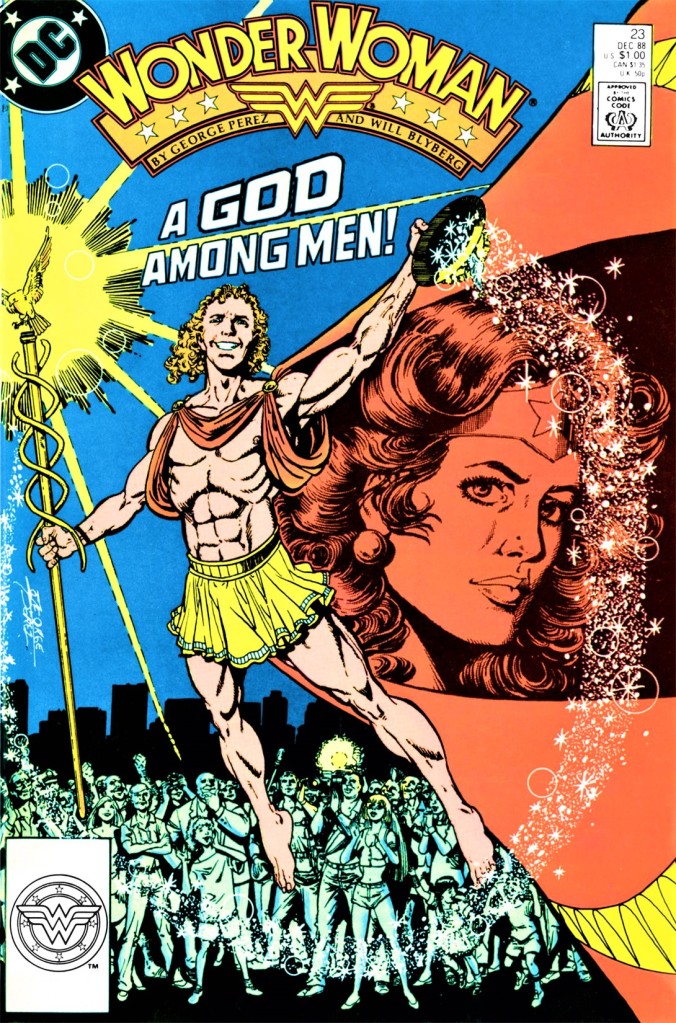
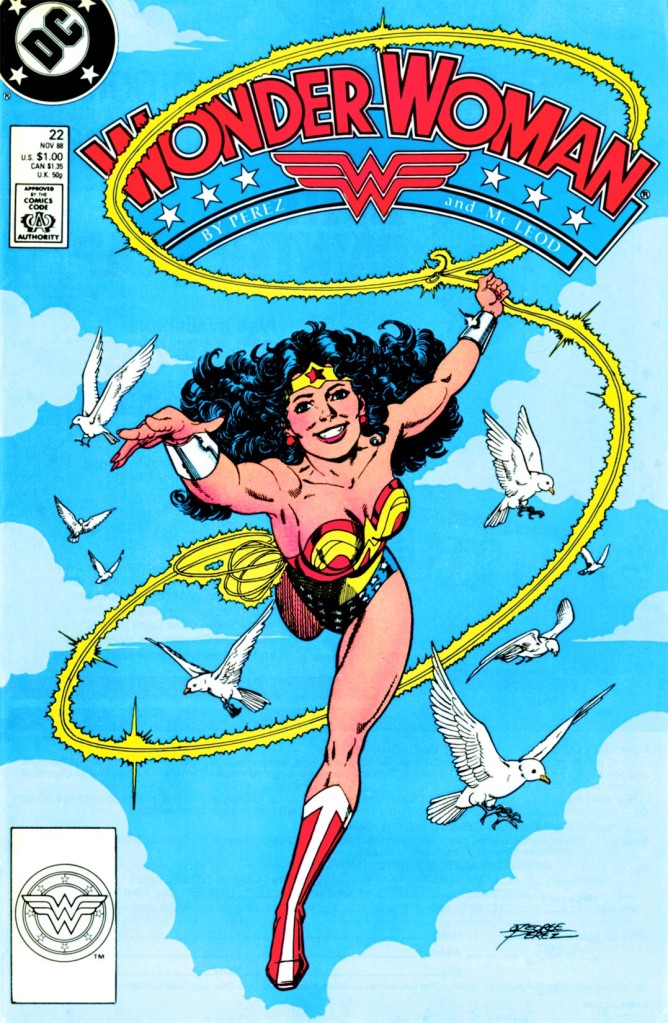
The cover.

Early story

The story begins with a print media blast of Diana, her mother Queen Hippolyte, as well as Julie Kapatelis and her daughter Vanessa all occupying varied parts of the front cover of The World Today magazine with a feature about the royal family of Themyscira. At the corner of the cover says, “Memories of a Boston teen.”

At school, the teenage Vanessa (referred to as Nessie) is completely surrounded by other students who want her to sign their respective copies of the said magazine. She is enjoying the attention being the close, personal friend of the Amazons. Vanessa’s friends Eileen and Meekins can only watch the activity from a distance feeling lonely and let down.

In New York, Wonder Woman delivered a speech to the United Nations general assembly. She spoke on behalf of her mother and formally announced that the gates of Themyscira will be opened to the rest of the world (which is the result of the Amazons’ majority vote in issue #22). The response to her speech ranged from enthusiastic to apathetic.

After the speech, Diana finds herself surrounded by news reporters who ask her a lot of questions about her homeland, Queen Hippolyta’s potential visit to man’s world (AKA patriarch’s world) and the way some assembly members reacted to her speech.

Suddenly a mysterious figure whose head and face cannot be seen emerges. Diana senses something is wrong…

Quality
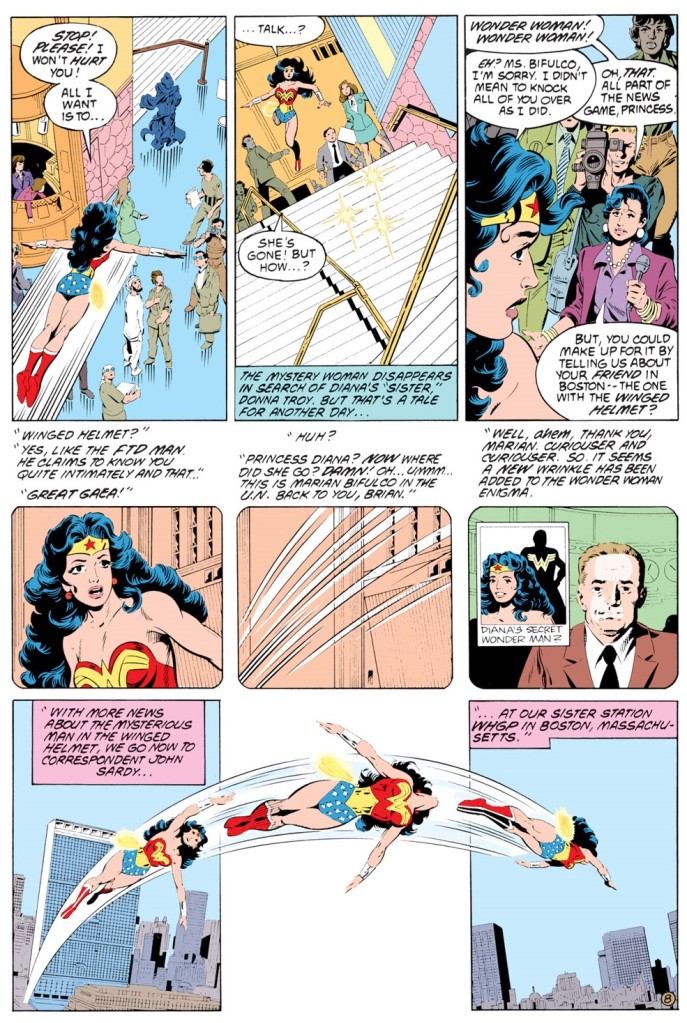
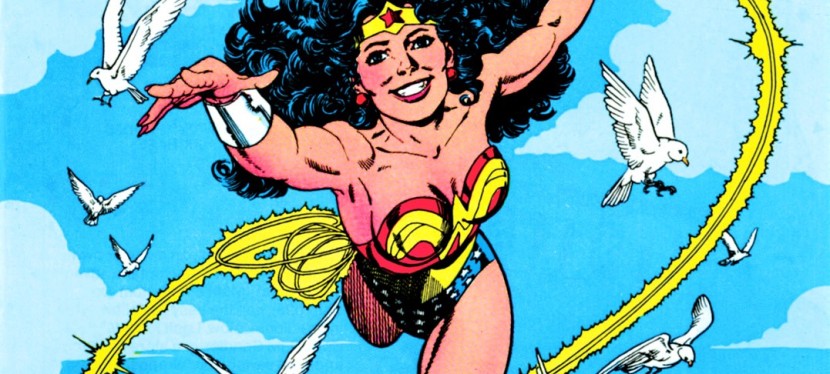
Wonder Woman flying in search of the mysterious figure.

I will start first by confirming that indeed, this comic book’s story has some pay-off to the suspense built-up in issue #22. Take note…some pay-off. It might sound disappointing for those who read issue #22 expecting a big pay-off but after going through the theme of this particular story, it is clear that there were planned plot events lying ahead related to the build-up (in issue #22).

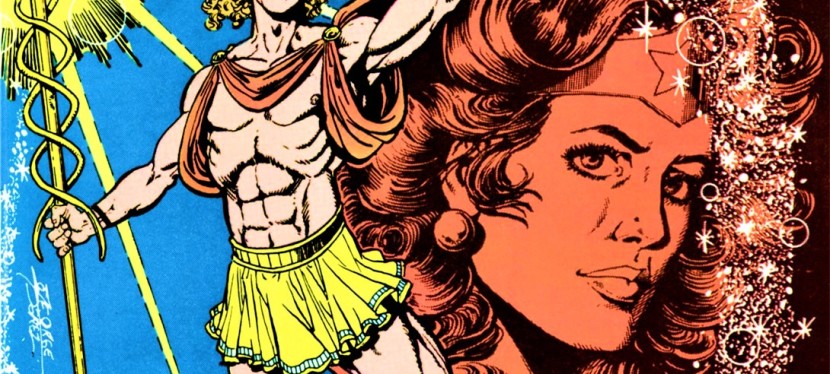
More on the story itself, without spoiling much, I can say that George Perez pushed the envelope yet again by involving Hermes a lot more with Wonder Woman here. A lord to Diana, Hermes appeared not merely for a cameo appearance nor as a guide as seen in the early issues of this series, but rather he has a much bigger role than before. Hermes does not just appear with Wonder Woman who strictly follows him, he also makes an impact with the people on Earth.

When it comes to moral lessons, this comic book is boldly written by touching on themes such as how a deity from Olympus would impact people by bribing them, why mortals let their guard down when they believe what they saw or witnessed, and why would a foreign deity (from Olympus specifically) does not want mortals to challenge their authority.

The good news here is that everything is very well written from the way the plot was structured, the clear presence of emotion that filled much of the dialogue and the notable presence of philosophies that added depth to the dialogue.

When it comes to Wonder Woman herself, I love the way how Perez portrayed her on her struggle of doing her duty (for Themyscira and her deities) and maintaining friendship with the people she loved in man’s world. There is that nice touch of fragility on Diana’s personality and the same can be found on Julie Kapatelis whose struggle with being a mother and a friend is nicely dramatized.

Conclusion
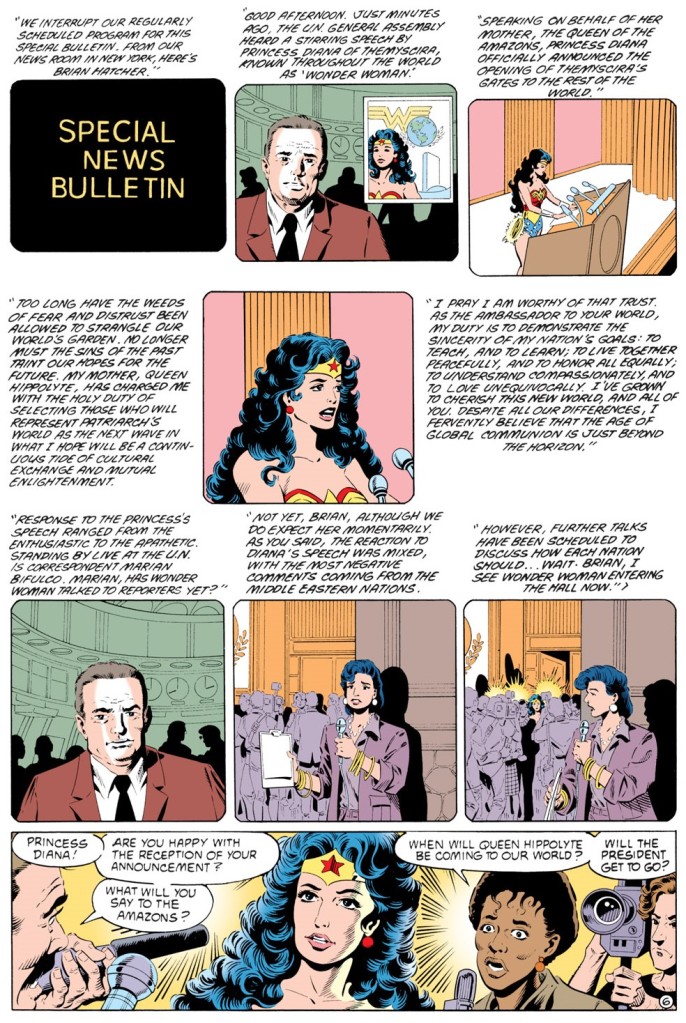
Wonder Woman faces the world through the corrupt United Nations.

I can say that Wonder Woman (1998) is a clear improvement over its predecessor by means of having a solid story concept backed with nice artwork (no surprise) and in-depth writing done by George Perez. I also like the fact that Wonder Woman herself gets upstaged in a rather reasonable way which shows Perez was not afraid to take risks when it comes to redefining the Queen of Superheroes in the post-Crisis era of DC Comics. Lastly, this comic book shows how faith is not to be practiced and why deities of Olympus are not worthy of faith and trust of the people. It also shows idolatry is foolishness.

If you are seriously planning to buy an existing hard copy of Wonder Woman (1988), be aware that as of this writing, MileHighComics.com shows that the near-mint copy of the regular edition costs $35 while the near-mint copy of the 2nd print edition costs $350.

Overall, Wonder Woman (1998) is highly recommended!

+++++

Thank you for reading. If you find this article engaging, please click the like button below and also please consider sharing this article to others. If you are looking for a copywriter to create content for your special project or business, check out my services and my portfolio. Feel free to contact me as well. Also please feel free to visit my Facebook page Author Carlo Carrasco and follow me at HavenorFantasy@twitter.com
A Look Back at The Strangers #5 (1993)

Disclaimer: This is my original work with details sourced from reading the comic book and doing personal research. Anyone who wants to use this article, in part or in whole, needs to secure first my permission and agree to cite me as the source and author. Let it be known that any unauthorized use of this article will constrain the author to pursue the remedies under R.A. No. 8293, the Revised Penal Code, and/or all applicable legal actions under the laws of the Philippines.

Welcome back, superhero enthusiasts, comic book collectors, 1990s culture enthusiasts and fans of Malibu Comics! As of this writing, I am coming close to finally reviewing all issues of The Strangers series of comic books under the Ultraverse line of Malibu Comics. If you have been following my retro reviews, I reviewed issue which was the 2nd-to-the-last of all published issues of The Strangers.

Then I checked for issues I have not reviewed. I went on to review issues #14 and #15. Now I am about to review a few more issues that were published during the first six months of The Strangers.

With those details laid down, here is a look back at The Strangers , published in 1993 by Malibu Comics with a story written by Steve Englehart and drawn by Rick Hoberg.

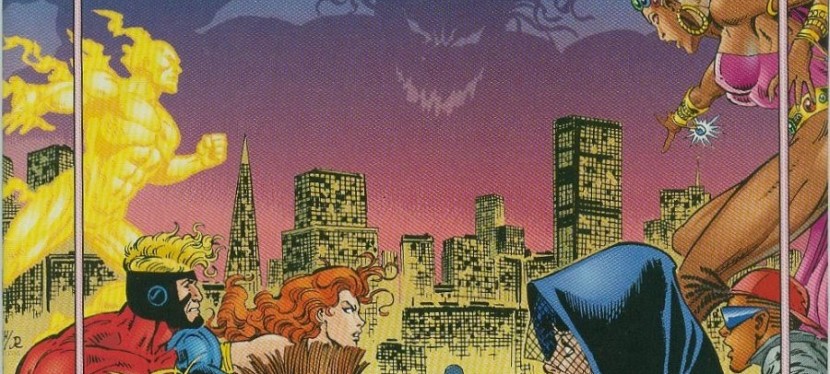
The cover.

Early story

The story begins somewhere in California (shortly after parting ways with Hardcase and Choice). It was decided by the team to take a break from being the Strangers and return to their respective private lives.

Bob Hardin/Atom Bob returns to his parents at home and learns that not only were he and his teammates publicized in the local news, there are many reporters who arrived and stayed just outside their home seeking him.

Zip-Zap arrives in his old neighborhood and immediately encounters a local gang of his fellow black people. Grenade and Electrocute, who are in the same neighborhood as Atom Bob, walk down the street and start to get close with each other. Elena/Lady Killer goes back to her business while Yrial finds herself unable to return to her private life (at the floating island). Suddenly, someone on the sidewalk calls out to Yrial for help…

Quality

Suspense and tension builds up for the Strangers.

Given how hectic times were for The Strangers in the first four issues, this story is a welcome change of pace. The pacing was adjusted to give readers some much needed breathing space to help them focus on the characterization moments, to get to know each team member better and to realize what their place in the entire Ultraverse truly is. For one thing, it is nice to see Atom Bob with his folks and it is quite something to see Yrial finding herself somewhat lost and lonely in the middle of the city as she is unable to come back to her tribe on the floating island.

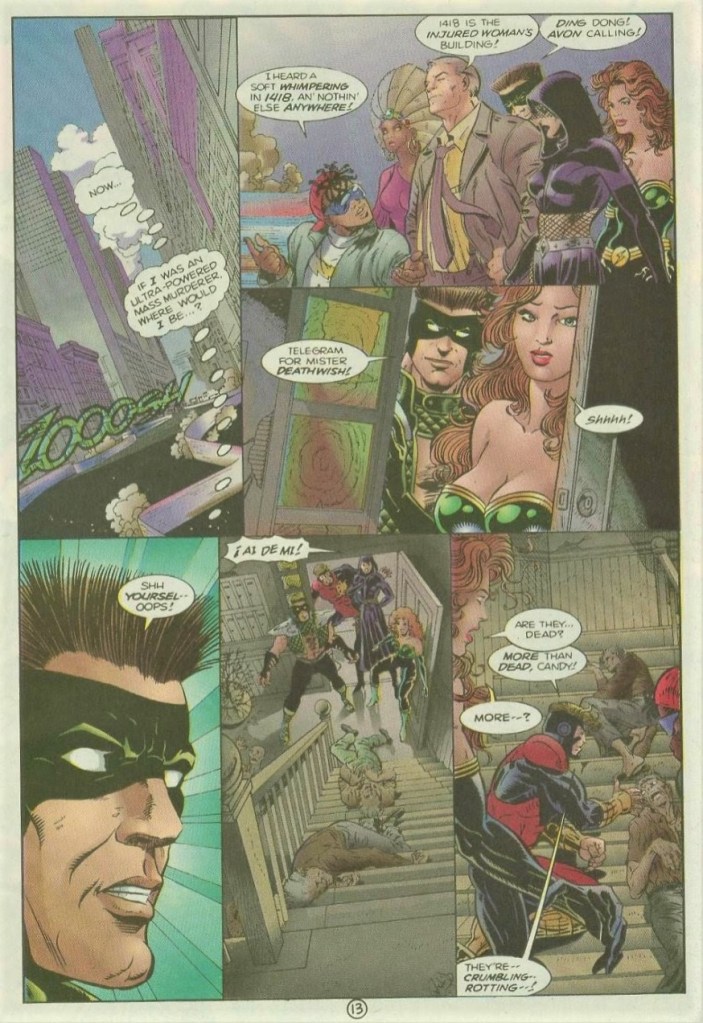
More on storytelling, this comic book still has a good amount of space left for spectacle which was structured in a way to be a pay-off for all the character development scenes that preceded it. That being said, the new villain introduced here is Deathwish who turns out to be quite powerful (powerful enough kill and make corpses rot faster than usual) and easily challenged the Strangers a lot. The encounter results some pretty interesting character moments for each team member. Deathwish also is one of the many other people who rode the same cable car with the Strangers on the day they got hit by energy from above.

More on the spectacle, I just love the way Steve Englehart and Rick Hoberg presented the teamwork dynamics of The Strangers in their fight with Deathwish.

Conclusion

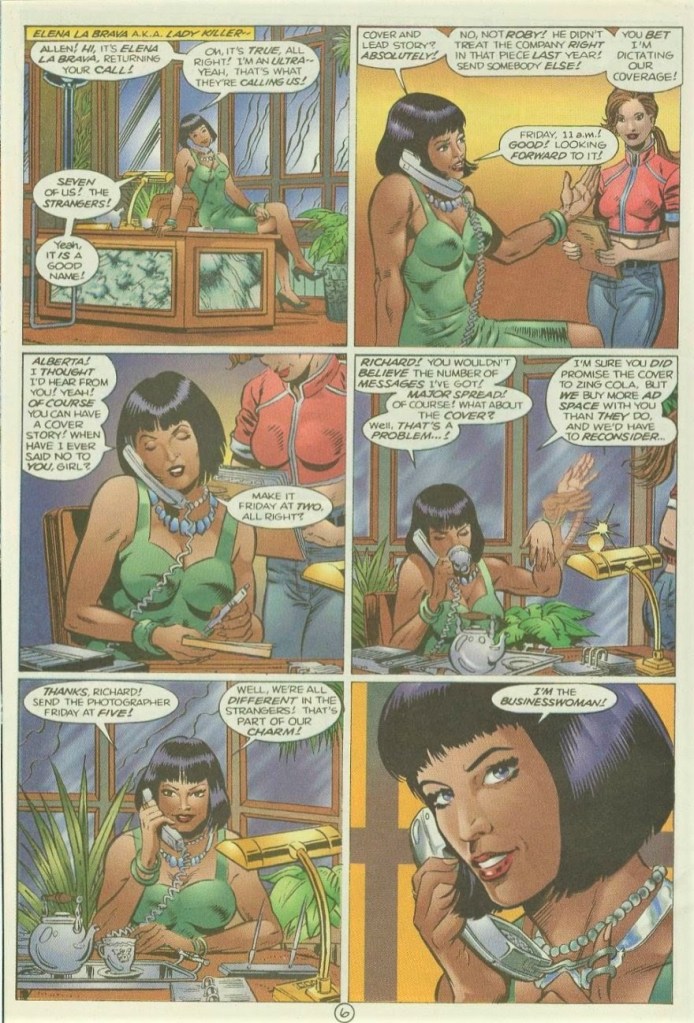
Elena/Lady Killer as the very busy businesswoman.

The Strangers (1993) is another entertaining read from the Englehart-Hoberg duo. This comic book further developed the characters and even gave readers a look at their private lives before resuming the superhero spectacle. It also tried to be socially relevant for the 1990s with insertions about AIDS, cancer and homosexuality (an abomination as clearly written in 1 Corinthians 6:9-10 in the Holy Bible) which are channeled through one particular team member. More notably, it sheds light on the cable car incident from issue to point out that the Strangers are truly not the only ones who got affected by the energy blast from the sky.

If you are seriously planning to buy an existing hard copy of The Strangers (1993), be aware that as of this writing, MileHighComics.com shows that the near-mint copy of the comic book costs $14.

Overall, The Strangers is recommended.

+++++

Thank you for reading. If you find this article engaging, please click the like button below and also please consider sharing this article to others. If you are looking for a copywriter to create content for your special project or business, check out my services and my portfolio. Feel free to contact me as well. Also please feel free to visit my Facebook page Author Carlo Carrasco and follow me at HavenorFantasy@twitter.com

A Look Back at Shogun Warriors #3 (1979)

Disclaimer: This is my original work with details sourced from reading the comic book and doing personal research. Anyone who wants to use this article, in part or in whole, needs to secure first my permission and agree to cite me as the source and author. Let it be known that any unauthorized use of this article will constrain the author to pursue the remedies under R.A. No. 8293, the Revised Penal Code, and/or all applicable legal actions under the laws of the Philippines.

When it comes to showcasing giant robots fighting other robots or monsters, there is no denying that Japan is the leader. In my lifetime, I have seen lots of episodes of varied anime TV series, some anime feature films as well as OVAs (original video animation) of such a genre of entertainment made by lots of Japanese creators. While I never saw any episodes of Brave Raideen nor any episodes of Chōdenji Robo Combattler V, I saw episodes of Dangard Ace on home video.

As seen already in issues #1 and #2 of the Shogun Warriors comic book series, the giant robots were adapted but not their respective original concepts and characters the Japanese established. As such, an all-new concept with Westerners in mind was implemented for the said series.

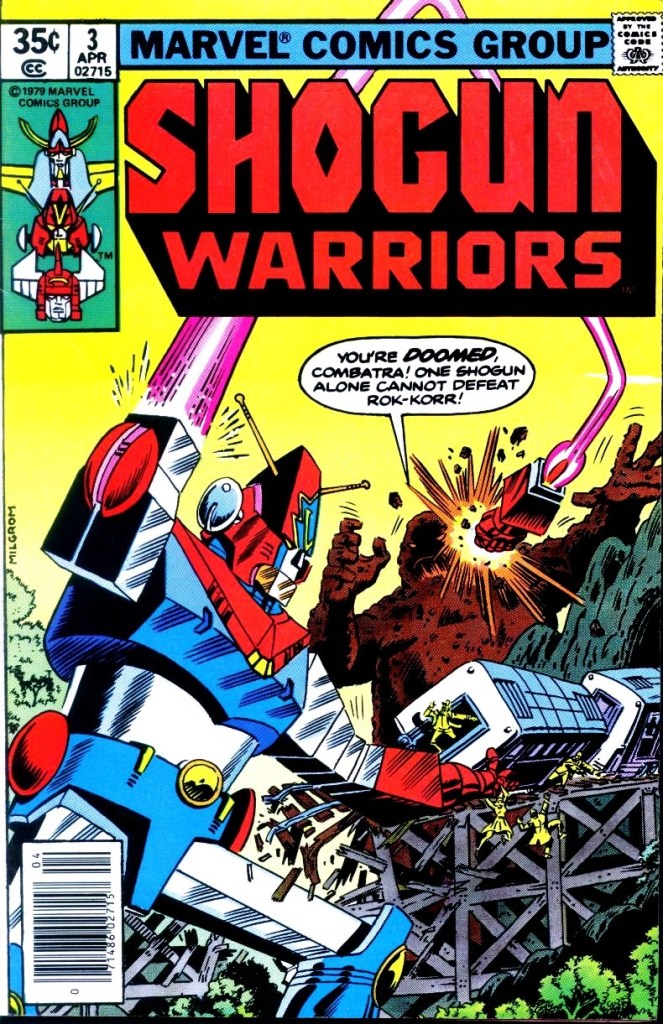
With those details laid down, here is a look back at Shogun Warriors , published by Marvel Comics in 1979 with a story written by Doug Moench and drawn by Herb Trimpe.

The cover.

Early story

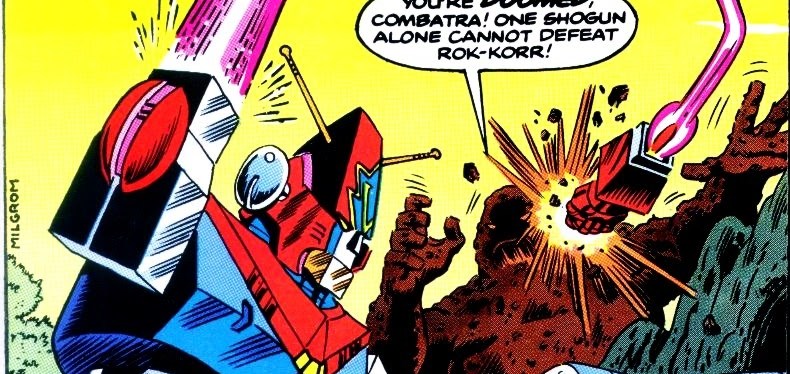
The story begins with Raydeen, Combatra and Dangard Ace on the field facing three giant enemies (each one representing a different element – fire, earth and water). Right near them is the train (on an elevated track) that they just saved which Combatra (piloted by Genji Odashu) notices.

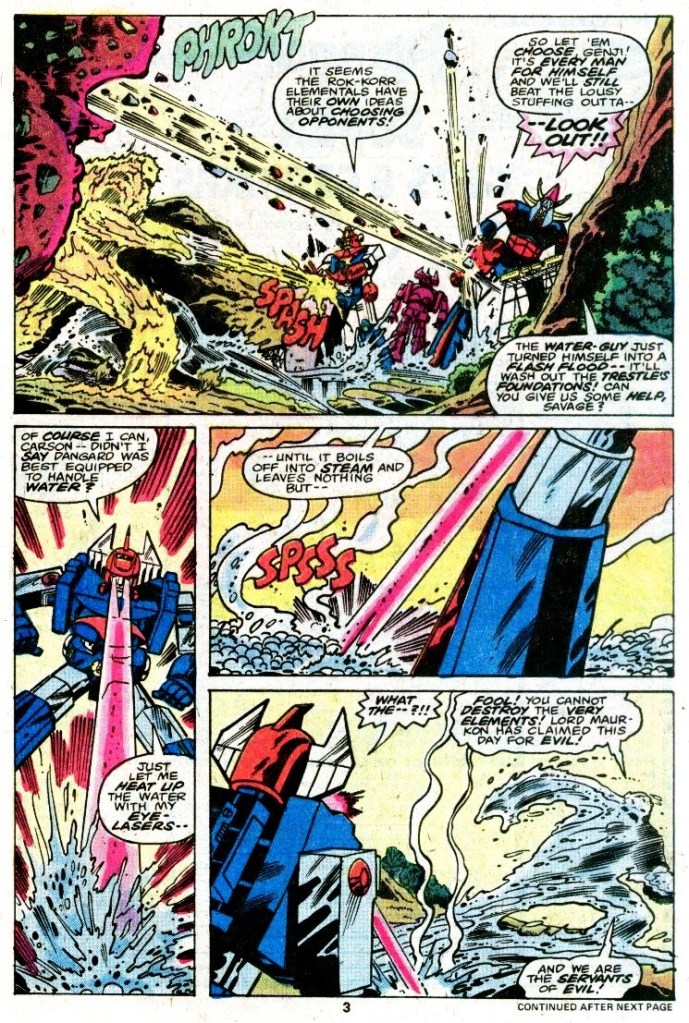
The battle begins with Dangard Ace taking on the water monster while Raydeen and Combatra take on the fire monster and earth monster respectively. During the heat of battle, the stalled train begins to fall as the elevated track gets damaged…

Quality

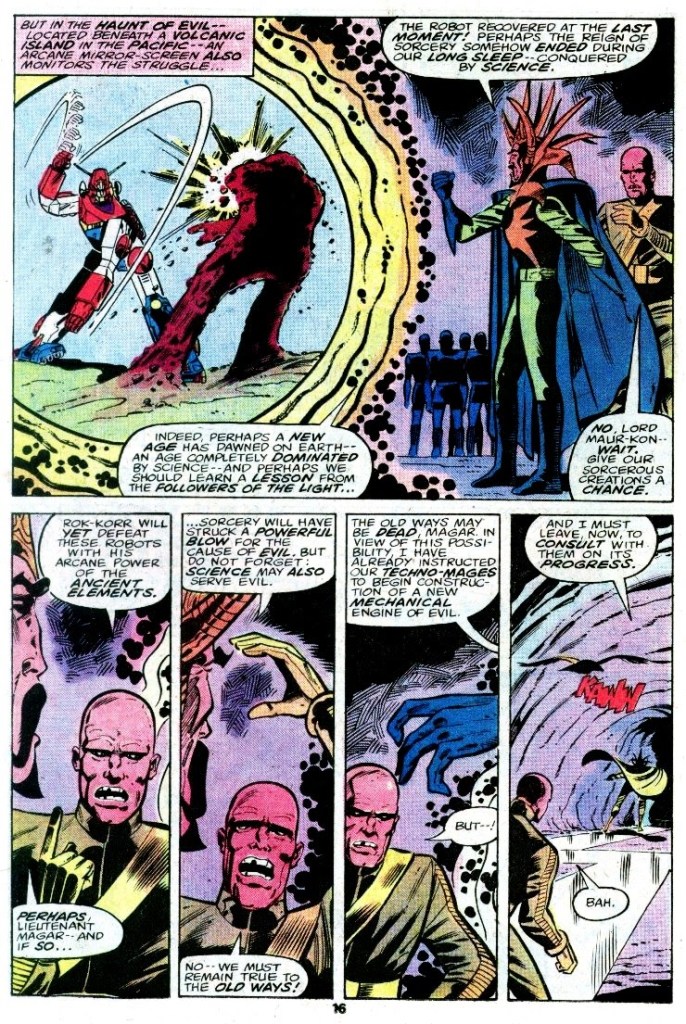
The bad guys watch behind the scenes during the battle.

To be clear and specific, this comic book creatively rebounded when it comes to spectacle. Compared to issue , this one has a lot of action scenes mixed with suspense and some talk scenes that were supposed to be intriguing. When it comes to exposition, this one is a refreshing change from what happened in issue . The exposition was clearly lessened but the creators still managed to insert some scenes to dramatize and explain to readers what the villains are up to and why sorcery is a core element of their power (which kinda explains how they were able to make giant monsters that are capable of talking). Interestingly, this comic book shows that there is division between members of the forces of evil.

Fans who love the three giant robots will have something fun to read. Take note, however, that the action scenes per robot are short and even predictable with the way the spectacle turned out. If you are looking for character development on their respective pilots, you won’t see any here.

Conclusion

Dangard Ace, Raydeen and Combatra fighting their respective counterparts.

Shogun Warriors (1979) does not have much depth but still managed to deliver the goods when it comes to showcasing giant robot spectacle. On the aspect of fun, this one is an improvement over the exposition-heavy issue but that is not saying much. It should be noted that, like the first two issues, this comic book has less than twenty pages of art and story. More notably, there is not much new here other than the very lame and corny attempt by the creators for the big reveal they came up with at the end.

If you are seriously planning to buy an existing hard copy of Shogun Warriors (1979), be aware that as of this writing, MileHighComics.com shows that the near-mint copy of the comic book costs $35.

Overall, Shogun Warriors (1979) is satisfactory.

+++++

Thank you for reading. If you find this article engaging, please click the like button below and also please consider sharing this article to others. If you are looking for a copywriter to create content for your special project or business, check out my services and my portfolio. Feel free to contact me as well. Also please feel free to visit my Facebook page Author Carlo Carrasco and follow me at HavenorFantasy@twitter.com
A Look Back at The Solution #2 (1993)

Disclaimer: This is my original work with details sourced from reading the comic book and doing personal research. Anyone who wants to use this article, in part or in whole, needs to secure first my permission and agree to cite me as the source and author. Let it be known that any unauthorized use of this article will constrain the author to pursue the remedies under R.A. No. 8293, the Revised Penal Code, and/or all applicable legal actions under the laws of the Philippines.

Welcome back, superhero enthusiasts, comic book collectors, 1990s culture enthusiasts and fans of Malibu Comics! Some time ago, I posted my first review of The Solution comic book series. My further retro reviews of the said series were not that many but I had a lot of fun reading one of its character origin stories, the crossover with Hardcase, and most recently their participation in the Hostile Takeover crossover storyline.

For the newcomers reading this, The Solution is a team of specialists that renders varied services for their paying clients.

With those details laid down, we can find more about the team in The Solution , published in 1993 by Malibu Comics with a story written by the late James Hudnall and drawn by Darick Robertson.

The cover.

Early story

The story begins in a secret place where a meeting is being held in. Rex Mundi, the elusive man with power, is very angry. He is fuming mad about The Solution and he tells the people in front of him that he wants them all killed.

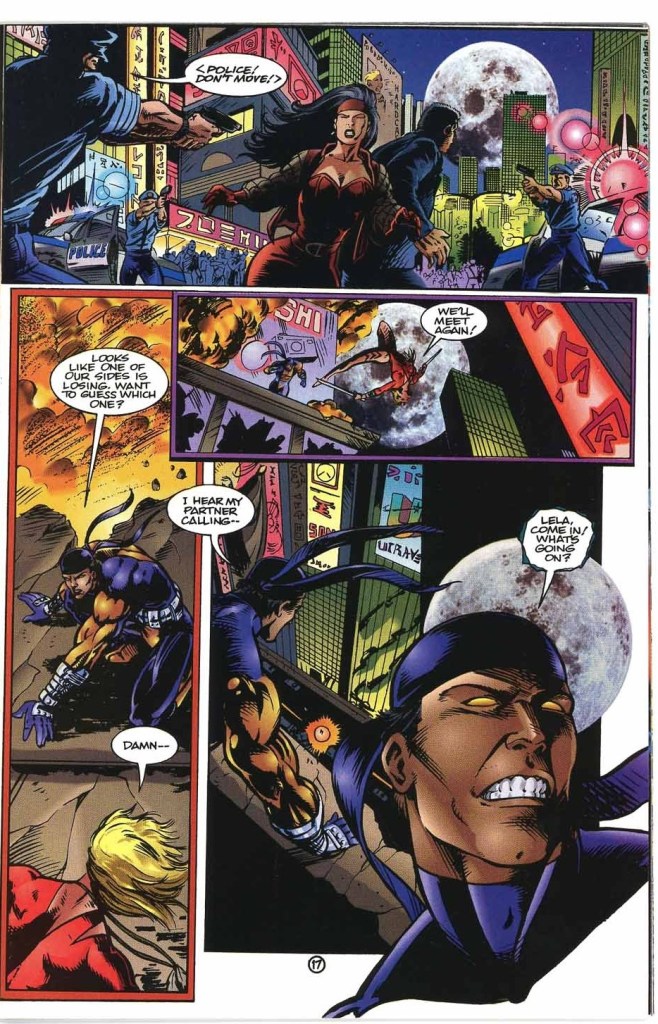
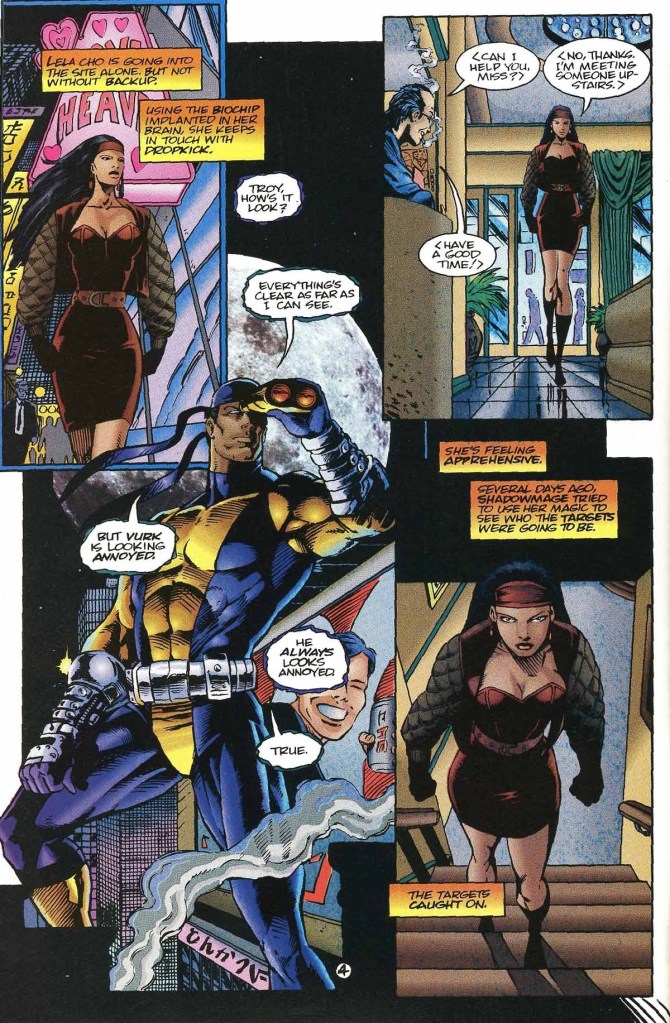
On the streets of Tokyo, Japan, Vurk walks down and his unusual appearance caught the attention of a few people near him. It turns out The Solution is preparing for a meeting with their leader Lela Cho/Tech entering a building while coordinating secretly with her teammate Dropkick (thanks to the biochip implanted in her brain). Dropkick is on the rooftop of a building carefully monitoring the situation while Lela climbs up to find a room to meet Kronstein. Their other teammate, Shadowmage, is inside a room located next to the one where the meeting will take place. She is using her magic skills to sense any trouble.

As soon as the door opens, Lela begins her meeting with Kronstein and tells him that he might a leak somewhere on his side. Suddenly, her teammates begin to sense danger. Dropkick turns to see someone carrying swords approaching to strike at him…

Quality

You will see how The Solution reacts when things go wrong.

The concept of this comic book is pretty simple. What is notable is the way the storytelling was executed. While the plot is very simplistic, this comic book’s script was structured to show The Solution’s members in action with match-ups in mind, while managing to emphasize their respective personalities and how they think and act during tense moments.

When it comes to presenting the respective traits of the team members, this comic book succeeded. You will get to see how Lela works not only with leading the team but also being strategic with her business talk and on-field action. Shadowmage, Vurk and Dropkick all had their moments and got developed more.

Beyond the titular team, this comic book also emphasized how deadly Rex Mundi is as a mastermind and recruiter of deadly villains. The match-ups and conflicts here are short but still enjoyable.

Conclusion

Team leader Lela/Tech makes her move knowing that her teammates have set themselves in place.

There is not much depth with the plot of The Solution (1993), but it served its purpose on developing the main characters while giving readers some interesting match-ups through the implementation of the classic good-versus-evil element of comic book storytelling. This comic book technically is a preview of things to come while showing the tremendous influence of Rex Mundi who also appeared in other Ultraverse comic books.

If you are seriously planning to buy an existing hard copy of The Solution (1993), be aware that as of this writing, MileHighComics.com shows that the near-mint copy of the regular edition costs $14 while the near-mint copy of the newsstand edition costs $42.

Overall, The Solution (1993) is satisfactory.

+++++

Thank you for reading. If you find this article engaging, please click the like button below and also please consider sharing this article to others. If you are looking for a copywriter to create content for your special project or business, check out my services and my portfolio. Feel free to contact me as well. Also please feel free to visit my Facebook page Author Carlo Carrasco and follow me at HavenorFantasy@twitter.com
A Look Back at Prototype #16 (1994)

Disclaimer: This is my original work with details sourced from reading the comic book and doing personal research. Anyone who wants to use this article, in part or in whole, needs to secure first my permission and agree to cite me as the source and author. Let it be known that any unauthorized use of this article will constrain the author to pursue the remedies under R.A. No. 8293, the Revised Penal Code, and/or all applicable legal actions under the laws of the Philippines.

As many of you know by now, I’ve reviewed lots of Ultraverse comic books and that includes a whole lot of issues of Prototype. In recent times, I reviewed the Hostile Takeover storyline that involved not only Prototype but also The Solution, Night Man and even Solitaire. To put things in order, my previous review of Prototype was issue which took place after Hostile Takeover ended. What I enjoyed about it so much is that even though Jimmy Ruiz still has the powered suit of armor with him, his life has changed drastically and he no longer has the high salary and big-time perks that he had from his previous employer.

What will happen next to him? We can all find out in this look back at Prototype , published in 1994 by Malibu Comics with a story written by Len Strazewski and drawn by Roger Robinson.

The cover.

Early story

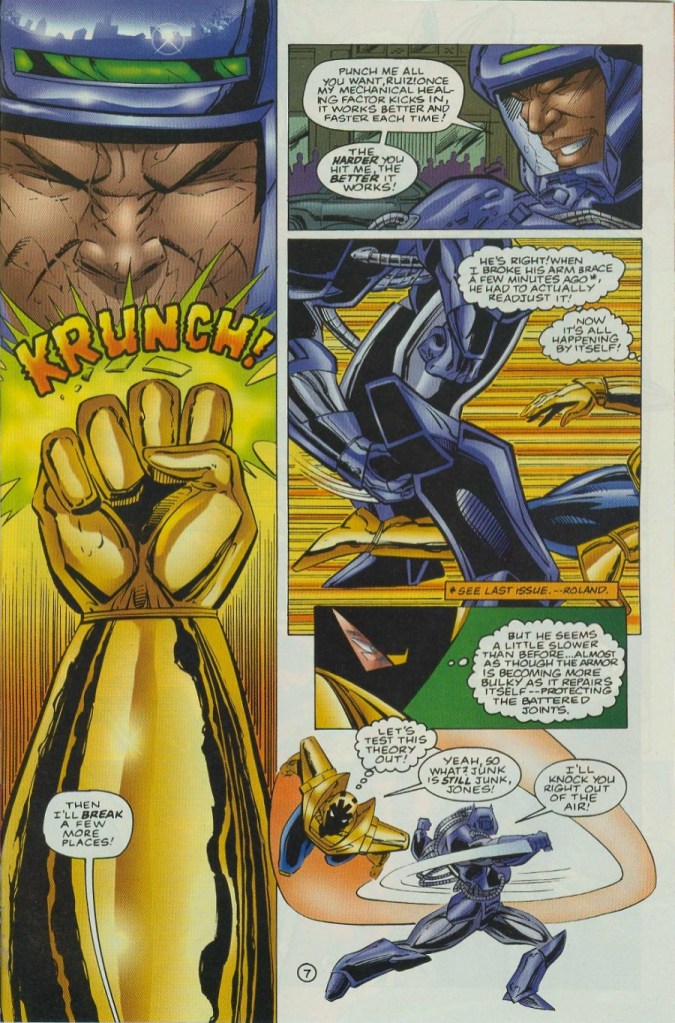
The story begins right in the middle of a battle on a city street between Prototype against a large armored enemy (that intends to kill him) piloted by a man named Donovan Jones. This was supposed to be the night of Jimmy Ruiz getting engaged with Angella.

As his intensity grows, Prototype fires a powerful blast against Jones causing his armored suit to fall back hard and get damaged heavily. Jones finds himself exposed and Angella only hopes that Prototype does not kill him. Jones surprises him by showing his armor magnetically reassembles itself and makes him even more powerful…

Quality

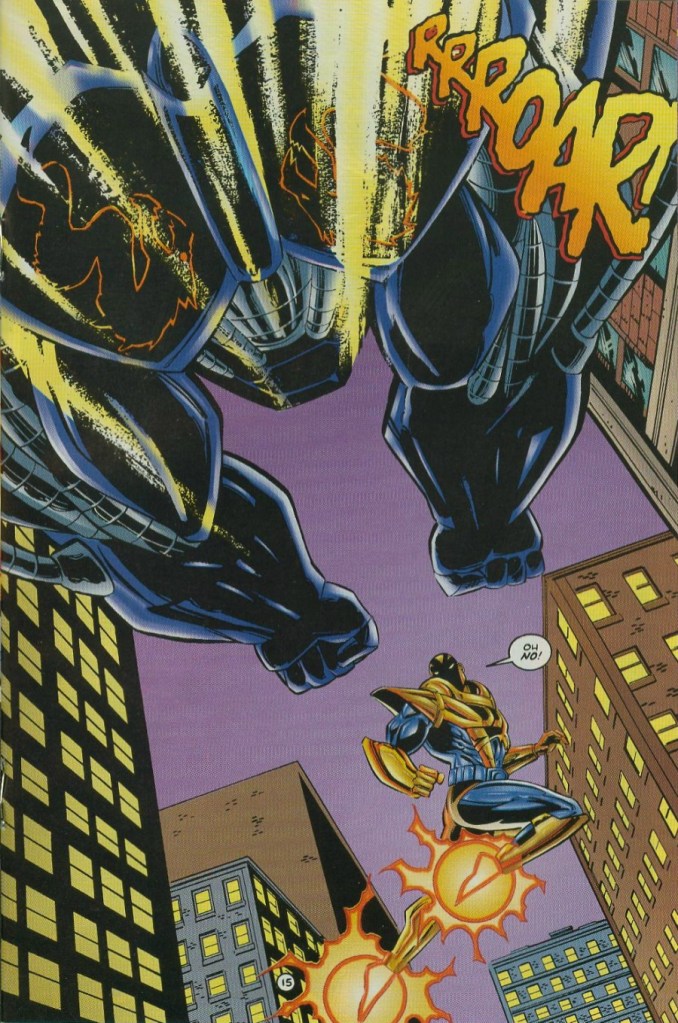
The is one nice shot!

When it comes to plot, this comic book is more about the continuing battle between Jimmy and Donovan Jones. It really pushed aside the development of Jimmy’s new life which is not necessarily a problem as it paved the way for a lot more spectacle for readers to enjoy by means of two armored figures fighting each other hard while trying to outsmart each other. This one has a lot action scenes as well as energy blasts. What I find intriguing and creative here is how Donovan Jones was presented to be a walking, healing factor with improving his physical shell dramatically.

Although filled with spectacle, Len Strazewski still saved some space for character development and exposition. Without spoiling it, I can say that a certain flashback that got dramatized through Angella’s recall of the past adds a new layer into the life of Jimmy Ruiz. It was short but still worthy to read.

As far as Jimmy’s new life goes, the big battle of this comic book is itself a reflection of the impact that the Hostile Takeover storyline had on him. There is not too much corporate intrigue in this story, but the effects of the mentioned crossover storyline can still be felt.

Conclusion

This comic book has a lot of robot-inspired action.

I can say that Prototype (1994) is another good Ultraverse comic book to read. In fact, you will relate with its plot and spectacle a lot more if you managed to read the entire Hostile Takeover storyline. Otherwise, it should be able to satisfy you.

If you are seriously planning to buy an existing hard copy of Prototype (1994), be aware that as of this writing, MileHighComics.com shows that the near-mint copy of the comic book costs $27.

Overall, Prototype (1994) is recommended!

+++++

Thank you for reading. If you find this article engaging, please click the like button below and also please consider sharing this article to others. If you are looking for a copywriter to create content for your special project or business, check out my services and my portfolio. Feel free to contact me as well. Also please feel free to visit my Facebook page Author Carlo Carrasco and follow me at HavenorFantasy@twitter.com
A Look Back at The Strangers #15 (1994)

Disclaimer: This is my original work with details sourced from reading the comic book and doing personal research. Anyone who wants to use this article, in part or in whole, needs to secure first my permission and agree to cite me as the source and author. Let it be known that any unauthorized use of this article will constrain the author to pursue the remedies under R.A. No. 8293, the Revised Penal Code, and/or all applicable legal actions under the laws of the Philippines.

Welcome back, superhero enthusiasts, comic book collectors, 1990s culture enthusiasts and fans of Malibu Comics! Are you ready for another return to the Ultraverse as seen through another tale of The Strangers?

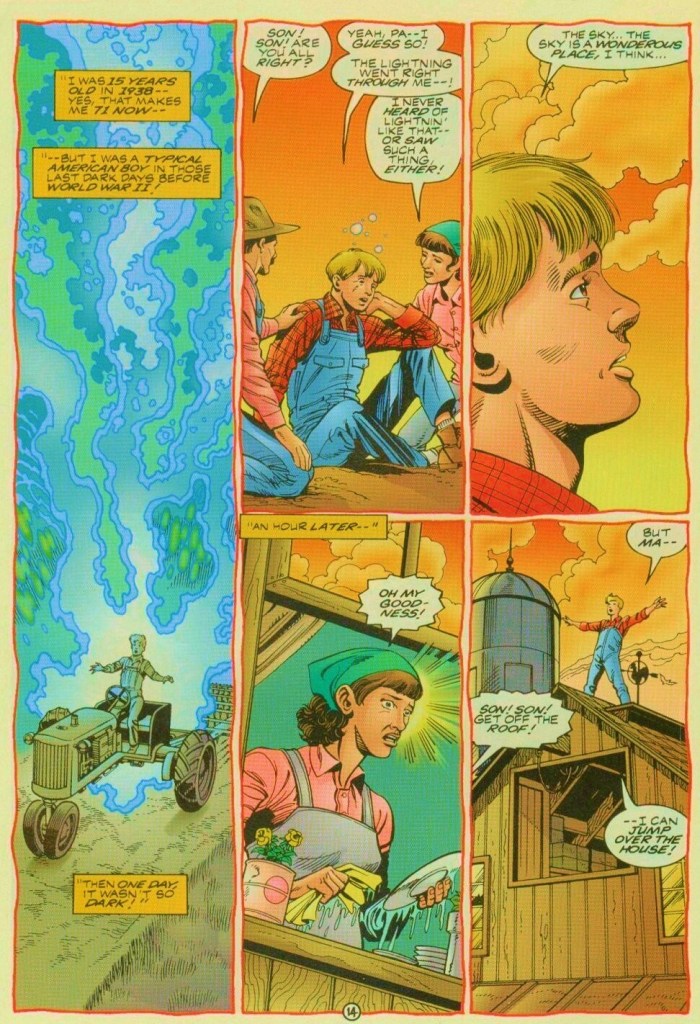
Last time around, I had a lot of fun reading the debut and origin story of Powerhouse who turned out to be an ultra whose powers were realized in 1938 (coincidentally the same year DC Comics launched Action Comics which introduced Superman in real life) and ended up spending more than fifty years of his life in containment. As for the Strangers, only Atom Bob and Grenade were featured but their encounter with Powerhouse (an ultra who was rejected for his being powerful  during his youth and eventually witnessed how modern-day ultras like the two mentioned Strangers were received positively by the public which knew of their powers) proved to be fun and memorable to read.

Now we can go on to another tale of The Strangers but with focus on two other members. To find out, here is my look back at The Strangers , published by Malibu Comics in 1994 with a story written by Steve Englehart and drawn by Rick Hoberg.

Early story

The story begins with the Strangers doing a review of their own members (6) plus ten others who happened to have been on the very same cable car with them the day they all got struck by energy from the sky which turned them into ultra beings. Their leader Lady Killer noted that there are still 43 others unaccounted for who may or may not have realized the got powers. The first ten they verified as ultras were all bad guys they fought with in recent times.

After the end of their discussion, the Strangers decide to take time off to go back to their respective private lives. Yrial asked Leon/Zip-Zap if she could join him. Zip-Zap tells her that his local community is very different from the floating island community she came from. Even so, Yrial stressed she wants to come with him and he accepts.

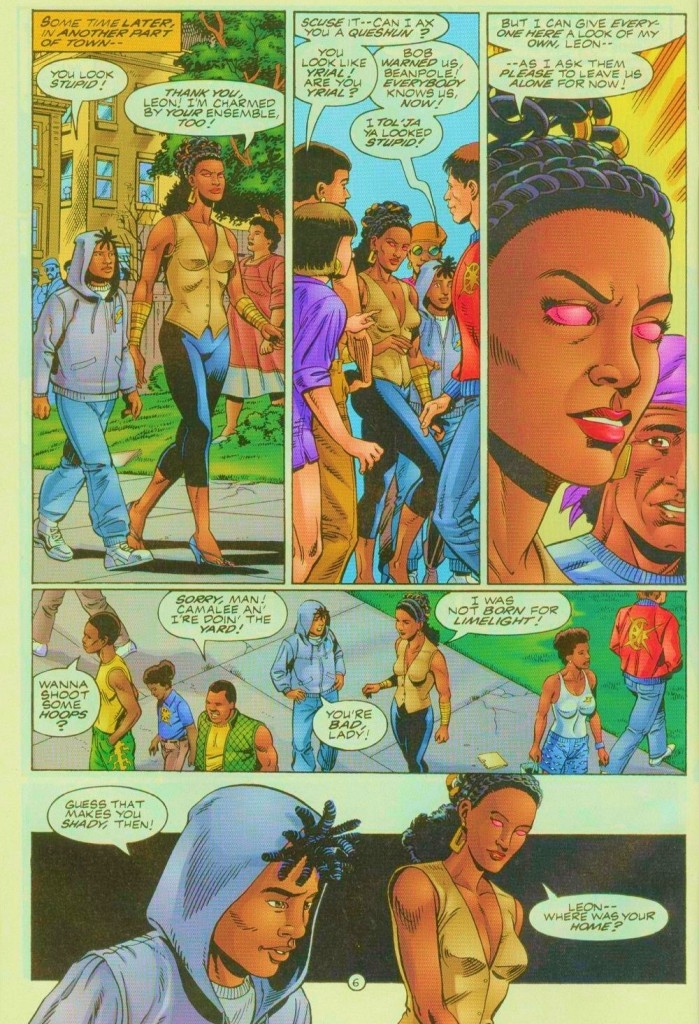
Some time later at another part of town, Yrial and Zip-Zap (both wearing civilian clothes) walk together. A few people somewhat recognized Yrial which reflects the public’s knowledge of her team. As they move on, a gang of tough-looking black people calls Zip-Zap by his real name. It turns out that Colvin (the apparent gang leader) and Leon had a conflict some time back and he knows Leon is with the Strangers.

Colvin introduces Yrial and Zip-Zap to Gangsta and Brazen. This prompts the teenage Leon to warn Yrial that Gangsta is dangerous. Gangsta then unleashes an energy blast on the two Strangers…  

Quality

Yrial and Zip-Zap plus the gang.

I like this story and the way it developed Yrial and Zip-Zap. To be clear, this story is not a typical, good-versus-evil superhero presentation. You won’t see the entire Strangers engage with another group of bad guys nor go against one powerful villain. It’s really all about Zip-Zap and his black lady friend who find trouble at a time when they are supposed to have a restful and easy time together. In other words, what happened to Atom Bob and Grenade in the previous issue also happened to the two black members of the team.

There clearly is a strong visual element of black people here and the story even touches on racial barriers. The new villain Gangsta openly stated that he got his powers from the ancient Egyptian pharaohs which he also described as the direct ancestors of the black race. He even tells Zip-Zap to honor Colvin’s gang, otherwise he will die.

The match-ups here are strategic. Yrial and Gangsta fight each other using magic, and they represent different cultures even as they are both black. For his part, Zip-Zap fights with a gang of black people led by a rival from his past. Their respective conflicts were portrayed in compelling ways.

Going back to Zip-Zap being reluctant in having Yrial with him on his return to his old neighborhood, the teenage member of the Strangers admits that his life has been uneasy. His father died before he was born and his mother died a few years before the day he and his teammates gained their powers while riding the cable car. Zip-Zap also was the littlest kid in a gang. Then life in the neighborhood became harder for him when Gangsta showed up. I should state that the way Steve Englehart emphasized Zip-Zap’s background is really compelling and also believable.   

Conclusion

Visually, having Yrial and Zip-Zap in civilian clothing is a fresh change from the usual.

Thanks to the creative duo of Englehart-Hoberg, The Strangers (1994) is another fun-filled story that succeeded in developing Yrial and Zip-Zap while also keeping the series’ storytelling fresh. It touches on black people and the different cultures that brought the characters together. It even touches on the stereotypes of black gangsters as well as black youth who grew up without a father. That being said, it is a wonder as to how Black Lives Matter (BLM) activists would react if they read this comic book.

If you are seriously planning to buy an existing hard copy of The Strangers (1994), be aware that as of this writing, MileHighComics.com shows that the near-mint copy of the regular edition costs $14.

Overall, The Strangers (1994) is recommended!

+++++

Thank you for reading. If you find this article engaging, please click the like button below and also please consider sharing this article to others. If you are looking for a copywriter to create content for your special project or business, check out my services and my portfolio. Feel free to contact me as well. Also please feel free to visit my Facebook page Author Carlo Carrasco and follow me at HavenorFantasy@twitter.com
A Look Back at Wonder Woman #22 (1988)

Disclaimer: This is my original work with details sourced from reading the comic book and doing personal research. Anyone who wants to use this article, in part or in whole, needs to secure first my permission and agree to cite me as the source and author. Let it be known that any unauthorized use of this article will constrain the author to pursue the remedies under R.A. No. 8293, the Revised Penal Code, and/or all applicable legal actions under the laws of the Philippines.

Welcome back, superhero enthusiasts, comic book collectors and fans of DC Comics! I wonder how many among you readers got to watch Zack Snyder’s Justice League? That was the so-called definitive version of the Justice League live-action movie that Zack Snyder originally envisioned and reportedly it was the big dream come true for fans of the director and his own vision of the current cinematic universe of DC Comics superheroes.

While the so-called Snyder Cut of Justice League has Gal Gadot as Wonder Woman, I personally am not too excited for it but I will watch it much later on Blu-ray or perhaps 4K Blu-ray someday. What I am anticipating right now is the 4K Blu-ray release of Wonder Woman 1984 scheduled for March 30, 2021.

With regards to the literary Wonder Woman (post-Crisis DC Comics universe) as I’ve been reviewing a lot for some time now, things went crazy with what happened in issue #21. I’m talking about something that involved Wonder Woman with the deities of Olympus.

With those details laid down, here is a look back at Wonder Woman #22, published by DC Comics in 1988 with a story written and drawn by George Perez with Bob McLeod credited with the finished art.

The cover.

Early story

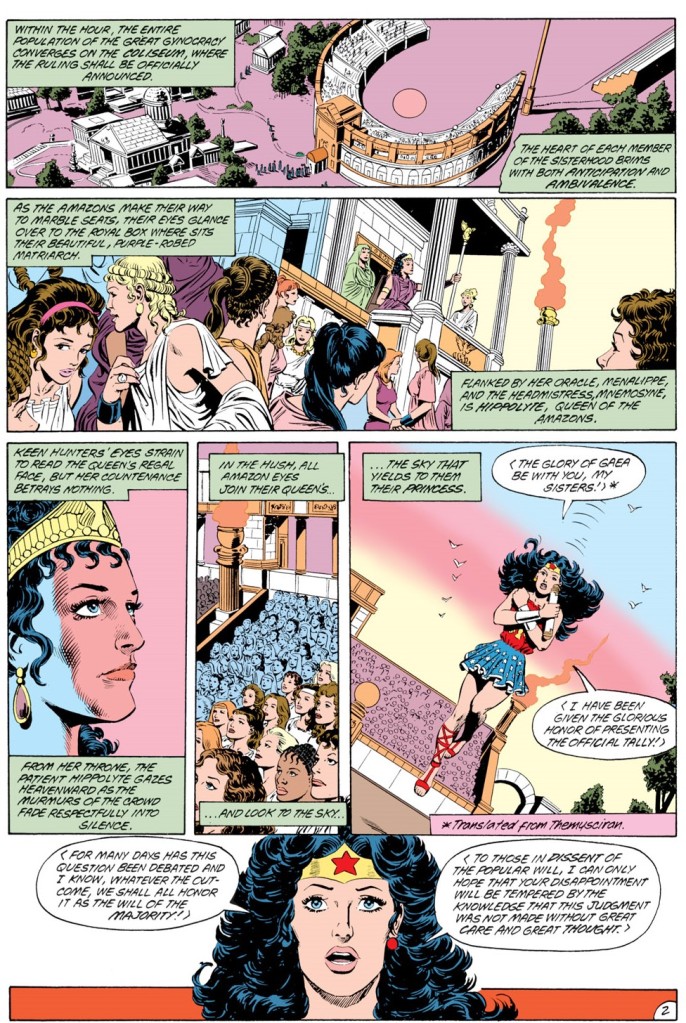
The story begins in Themyscira. All the Amazons are called by Diana to a special audience in relation to an pending proclamation of a new decision that shall chart forevermore the path of the Amazon destiny.

In front of a large audience composed of her many Amazon sisters as well as her mother (Queen Hippolyte), the oracle Menalippe and headmistress Mnemosyne, Diana announces that a majority voted yes on the question of Themyscira opening her gates to the world outside and allowing man to set food on the shores of paradise island.

There was no fanfare, no cheers and no applause from the audience as the announcement marked the beginning of the new stage in the history of Amazons.

Meanwhile in outer space, a silvery orb flies around in very fast speed heading towards Earth…

Quality

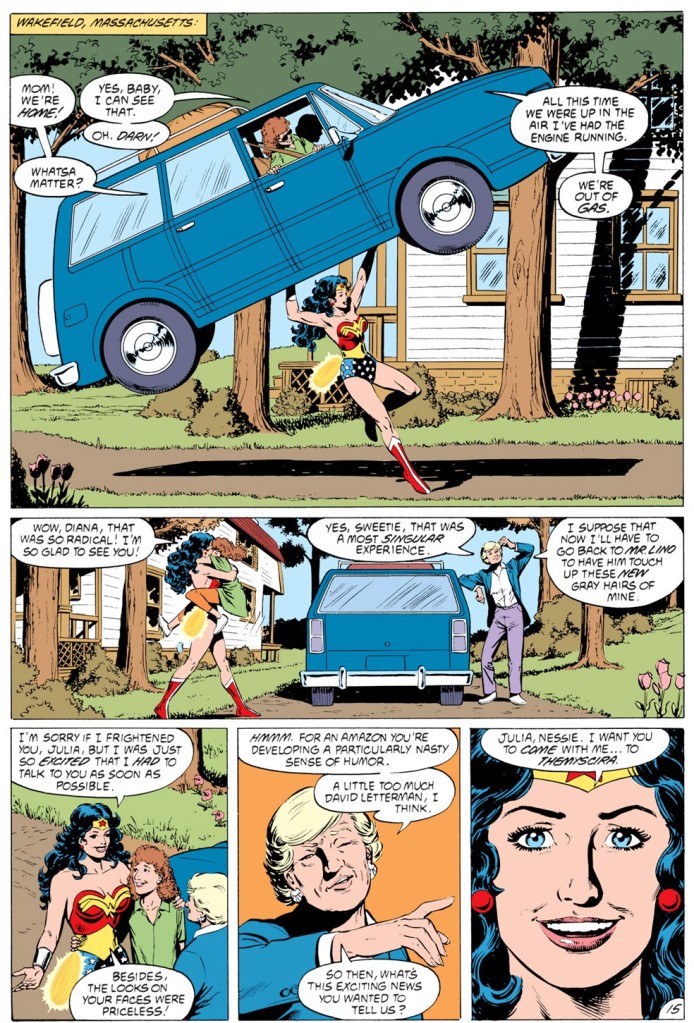
Wonder Woman’s lifting of the car looked inspired by the famous cover of Action Comics from 1938.

To make things clear, the story of this comic book is mainly a build-up for something significant that will happen later. There is no real battle of good-versus-evil here, nor would you see Wonder Woman encounter someone sinister.

In terms of build-up, the approval by the Amazons of cultural exchange and sharing of access with man’s world is itself a set-up for a significant event for Wonder Woman and her two closest friends on Earth. On other matters, the arrival of the space orb on Earth was presented very nicely and it surely is intriguing to see how it builds up for an upcoming new anti-hero element.

If you are a Wonder Woman fan expecting to see more of Diana getting dramatized and developed, you might be disappointed that this comic book has lesser content about her than usual. In fact, there is a good amount of pages here that pay close attention to Vanessa Kapatelis having a bad day in school, plus her mother Julia attracting the attention of a certain school teacher. This particular comic book really tried hard dramatizing the mother-and-daughter relationship of the two supporting characters but ultimately (and not surprising) it’s nowhere as engaging as that of Queen Hippolyte and Diana.

Conclusion

Diana doing her duty in front of a tremendous audience of her Amazon sisters plus her mother Queen Hippolyte.

Behind its beautiful cover, Wonder Woman #22 (1988) is not only an underwhelming follow-up to the epic development in issue #21, it is also the least engaging issue I’ve read about the post-Crisis version of Wonder Woman under the creative direction of George Perez. It’s really more about setting the stages for a future conflict and a special visit to Themyscira (you can guess who would visit to see Wonder Woman’s Amazon sisters). George Perez’s writing is still of pretty good quality and he really knows how to define each character’s personality but it’s the overall concept of the comic book that is underwhelming.

If you are seriously planning to buy an existing hard copy of Wonder Woman #22 (1988), be aware that as of this writing, MileHighComics.com shows that the near-mint copy of the regular edition costs $35 while the near-mint copy of the 2nd printing costs $350.

Overall, Wonder Woman #22 (1988) is satisfactory.

+++++

Thank you for reading. If you find this article engaging, please click the like button below and also please consider sharing this article to others. If you are looking for a copywriter to create content for your special project or business, check out my services and my portfolio. Feel free to contact me as well. Also please feel free to visit my Facebook page Author Carlo Carrasco and follow me at HavenorFantasy@twitter.com
A Look Back at Fatale #1 (1996)

Disclaimer: This is my original work with details sourced from reading the comic book and doing personal research. Anyone who wants to use this article, in part or in whole, needs to secure first my permission and agree to cite me as the source and author. Let it be known that any unauthorized use of this article will constrain the author to pursue the remedies under R.A. No. 8293, the Revised Penal Code, and/or all applicable legal actions under the laws of the Philippines.

Before I start this retro comic book review, if you are a fan of comic book veteran Jim Shooter or if you are interested in his past works, check out my reviews of Warriors of Plasm issues #1, #2 and #3.

Have you ever heard about Broadway Comics? That was a short-lived comic book publisher that was established by Jim Shooter (former editor-in-chief of Marvel Comics and Valiant Comics) in the mid-1990s not so long after the closure of Defiant Comics (a certain lawsuit filed by Marvel Comics drained the company’s funds by means of legal fees). Broadway Comics published a few properties and among them is Fatale which was actually a spin-off of the company’s main series Powers That Be.

Fatale was not just another new project to help a new publisher make a splash in what was back then a lucrative comic book market. There was some inspiration from it as Shooter confirmed in his message in Fatale’s debut issue.

“As we developed Fatale, each person in our group recalled the strong women in their lives,” Shooter recalled.

“I told about my grandmothers, both whose husbands died young, both of whom raised their children alone, struggled and worked into their late eighties. Usually, there were no good jobs to be had (by women), but both did whatever they could, including dishwashing, door-to-door sales, and cleaning hotel rooms. They persevered against all odds, heroically. They taught me that self-reliance and honest work of any kind are the foundation of self-respect,” he added.

With those details laid down, here is a look back at Fatale , published by Broadway Comics in 1996 with a story written by Jim Shooter, Janet Jackson, Joseph A. James and Pauline Weiss with art done by J.G. Jones.

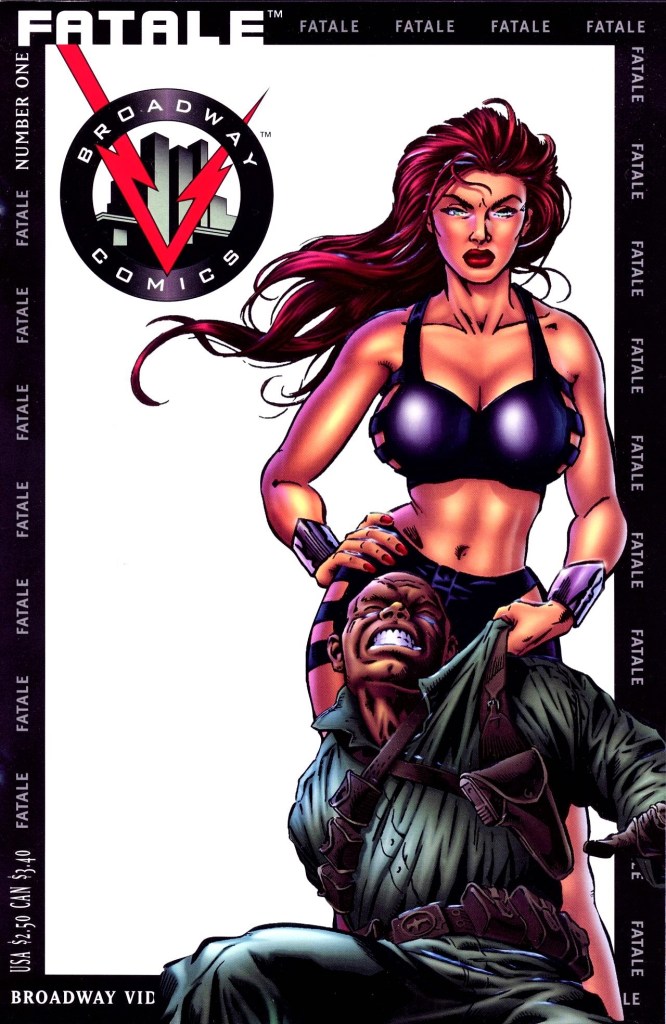
The cover.

Early story

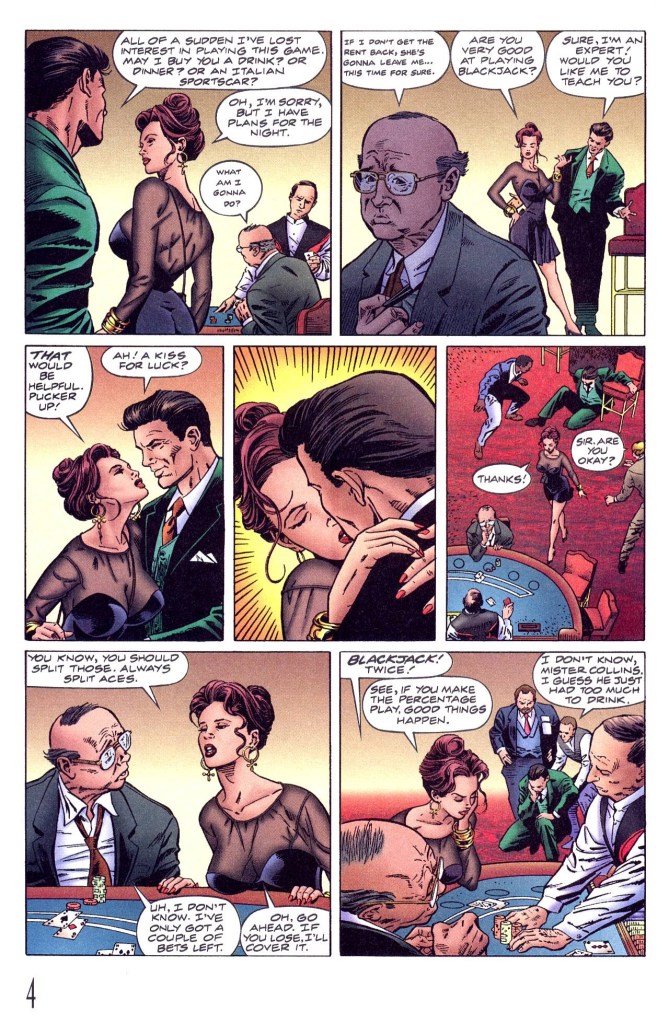
The story begins inside a casino in Atlantic City, New Jersey in September 1995. A very pretty lady walks down and attracts the attention of a few people. Her name is Desiree Hopewell and it turns out she is a gambler and she thinks luck will come to her that night. Just as she makes positive impact on a struggling gambler and starts socializing with a guy who is so attracted to her, a group of men wearing gloves and masks appeared which compels Desiree leave. She happens to be their target.

Just after exiting the casino, Desiree suddenly finds herself completely surrounded by armed people composed of those carrying shields and weapons. Even as a blast blanket successfully landed on her, Desiree finds a way to tear through it causing the armed personnel to use a drum lift on her.

Even so, Desiree continues to be hard for them to restrain and manages to move away from them…

Quality

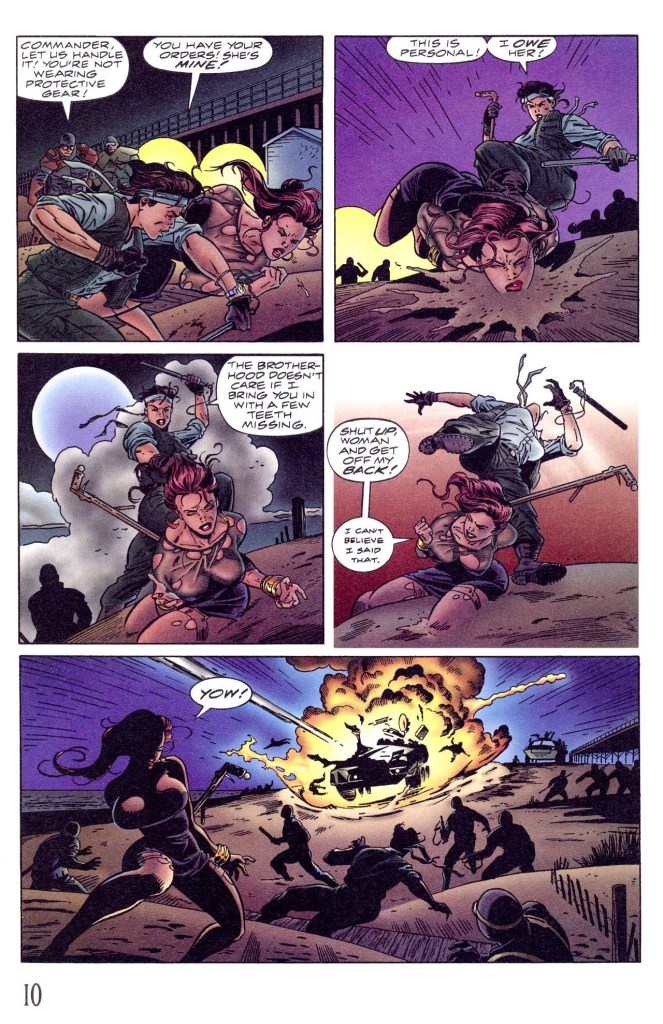
Desiree gets a break as the Brotherhood got attacked.

To start with, this comic book has a really intriguing plot laced with twists. Essentially this is the story of Desiree who is a very unusual lady with the ability to absorb something from men she kisses with on their lips (the Fatale thing). More than that, she is caught in the middle of a conflict between the Brotherhood and the Utah Faction, and she is allied with a few people trying to evade the two conflicting groups.

While the very nature of the conflict was not fully emphasized in this launch issue, Jim Shooter and his co-writers successfully defined Desiree’s nature clearly as well as her association with a man named Bill (a former Brotherhood member). That being said, this comic book is character-focused and it went to great lengths to connect readers with Desiree and the supporting cast.

When it comes to spectacle, there is a lot to enjoy here. On face value, Desiree’s uncanny ability evade the Brotherhood’s attempt to capture her was presented with superhero-inspired spectacle but never reaching the point of defining her as a superhero-type of protagonist.

Conclusion

Desiree the attraction and seasoned gambler.

Fatale (1996) is a rather unusual comic book that has some literary stuff to sell to superhero enthusiasts, and at the same time it has a protagonist who supposedly got presented as a strong-willed figure for women (while showing her personal interests and views that were supposed to be relatable to women). Within the pages of this comic book, Desiree is glamorous and attractive visually. Apart from helping a lady by physically stopping the man troubling her, Desiree has not done anything genuinely heroic and is truly more of an attraction of trouble makers.

As far as storytelling goes, you have a conflict between two groups and Desiree is a target for a reason that was not clearly defined (note: saving the answers for later issues obviously). While Bill is an interesting supporting character, the others are just not too interesting. If you are looking for intrigue, entertainment and mystery, you will find some of those here.

If you are seriously planning to buy an existing hard copy of Fatale (1996), be aware that as of this writing, MileHighComics.com shows that the near-mint copy of the regular edition costs $79 while the near-mint copies of the black-and-white Jim Shooter-signed edition, the black-and-white promo edition, and the Jim Shooter-signed edition cost $79, $53 and $70 respectively.

Overall, Fatale (1996) is satisfactory.

+++++

Thank you for reading. If you find this article engaging, please click the like button below and also please consider sharing this article to others. If you are looking for a copywriter to create content for your special project or business, check out my services and my portfolio. Feel free to contact me as well. Also please feel free to visit my Facebook page Author Carlo Carrasco and follow me at HavenorFantasy@twitter.com
A Look Back at The Strangers #14 (1994)

Disclaimer: This is my original work with details sourced from reading the comic book and doing personal research. Anyone who wants to use this article, in part or in whole, needs to secure first my permission and agree to cite me as the source and author. Let it be known that any unauthorized use of this article will constrain the author to pursue the remedies under R.A. No. 8293, the Revised Penal Code, and/or all applicable legal actions under the laws of the Philippines.

Welcome back, superhero enthusiasts, comic book collectors and fans of Malibu Comics! Previously, I reviewed an issue of The Strangers which happened to be the 2nd-to-the-last issue of its monthly series (which itself was mostly spearheaded by the dynamic duo of Steve Englehart and Rick Hoberg).

I was about to do a retro review of The Strangers #24 but realized that there are still some other comic books of the series that I have not reviewed yet. As such, I decided to read those other issues before reviewing the final issue.

With those details laid down, here is a look back at The Strangers , published by Malibu Comics in 1994 with a story written by Englehart and illustrated by Hoberg.

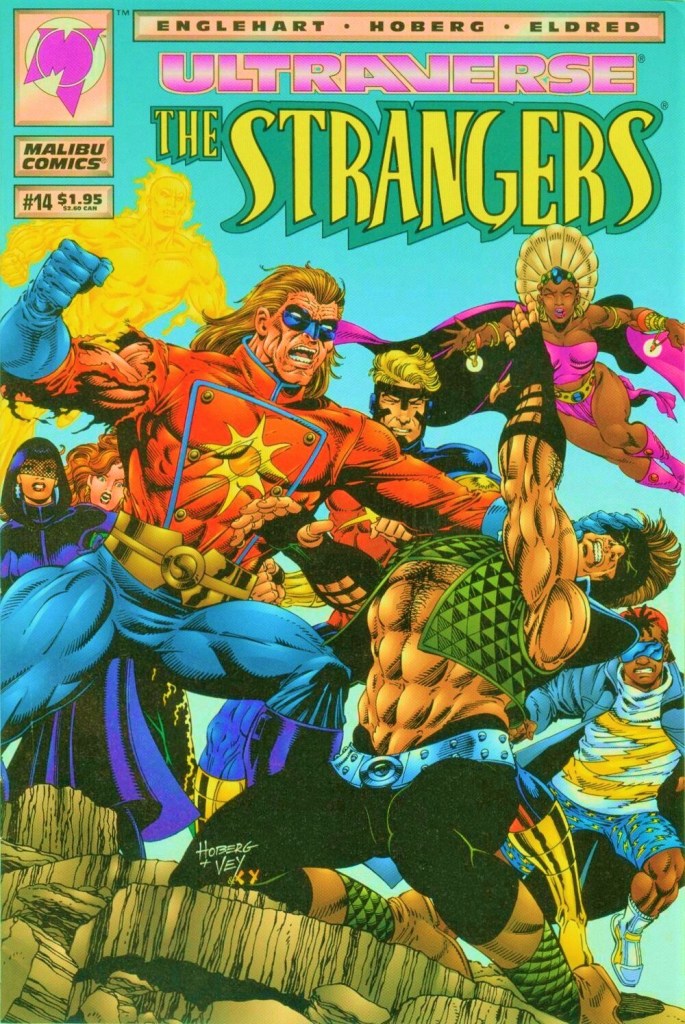
The cover.

Early story

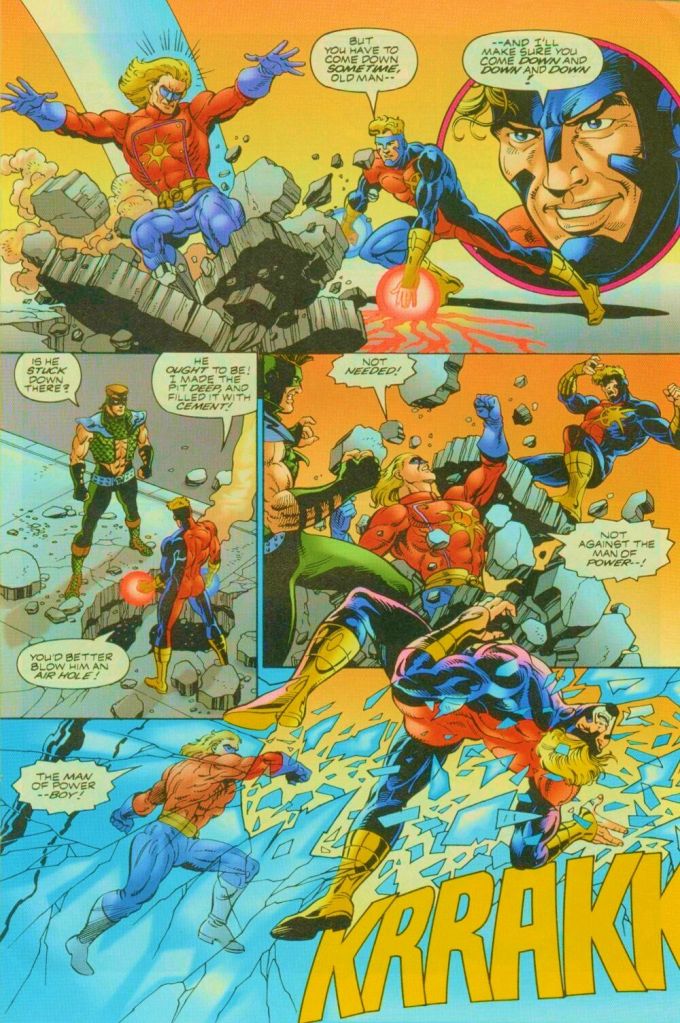
The story begins when a strong, muscular man with long blonde hair strikes a huge rock formation high in the hills to the east of San Francisco Bay in California. While talking to himself (most likely a way to deal with his isolation), he continues to lift very large piece of rock, smashes more rocks and throws a tractor as if it was just a ball.

“I am…Powerhouse! I am Powerhouse! I…am Powerhouse,” he said to himself.

Still talking to himself, Powerhouse realizes that the world must never know about him as it has done its best to destroy him. He quietly changes into civilian clothes and drives away into the distance in his car.

On the streets of East Bay Hills in Berkeley, Hugh/Grenade and Bob/Atom Bob walk down the fancy commercial zone as they enjoy the time-off Elena/Lady Killer gave them. Soon enough, people started recognizing the two as members of The Strangers even though they are not in costume. This community buzz catches the attention of an executive at a local radio station who then picks Powerhouse (in civilian form) to go to East Bay Hills to report about Hugh and Bob…

Quality

When Powerhouse first gained super abilities.

I’ll got straight to the point about what this comic book is all about. This is the story of an ultra who gained powers very long before The Strangers, Mantra, Prime, Hardcase, The Solution and all the other Ultraverse heroes even started. That being said, Powerhouse is an old man (who really does not look like in his sixties or seventies) whose life turned upside-down as a result of gaining super powers as a teenager in the year 1938 (note: this was the year Superman debuted in comics in real life). Having lost DECADES of his time in the world, Powerhouse became a man who found himself lonely and having trouble adjusting into the modern world (1993 in the Ultraverse specifically). What bothers him even more is the fact that super beings like The Strangers members Atom Bob and Grenade are gladly accepted and celebrated by the public which is the complete opposite of how he was perceived when he became a super being.

The writing done by Steve Englehart is very rich to read and through it all, you will feel the pain, frustration and anguish of Powerhouse. As usual, Rick Hoberg’s art is always great to look at and you can see in this comic book how he adjusts his style when the narrative shifts from the talk scenes into the action scenes and the like.

Conclusion

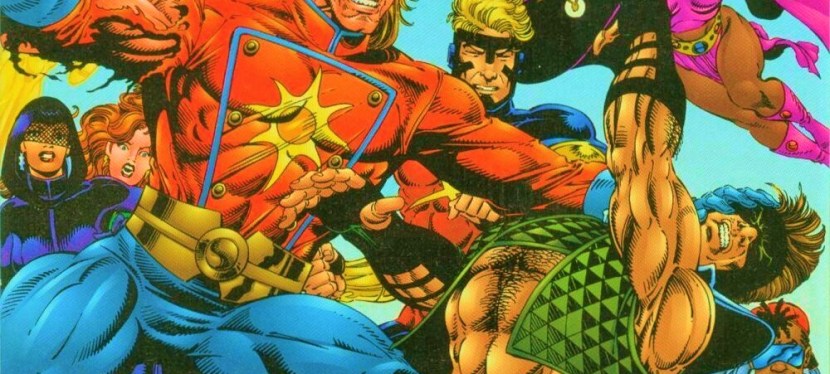
Really, you only see two of The Strangers in this comic book which contradicts what was shown on the cover art.

Fundamentally, The Strangers (1994) highlights Powerhouse (both his present-day self and his origin) with Atom Bob and Grenade literally pushed out of the spotlight. Powerhouse is clearly inspired by the old ages of superhero comics and the creative team cleverly presented him as a super-powered man who finds himself struggling to fit in the 1990s. While this super being debut story is fun and engaging, its only weakness is that The Strangers have little real presence in the story (note: the cover art looks great but is really misleading).

If you are seriously planning to buy an existing hard copy of The Strangers (1994), be aware that as of this writing, MileHighComics.com shows that the near-mint copy of the comic book costs $14.

Overall, The Strangers (1994) is recommended!

+++++

Thank you for reading. If you find this article engaging, please click the like button below and also please consider sharing this article to others. If you are looking for a copywriter to create content for your special project or business, check out my services and my portfolio. Feel free to contact me as well. Also please feel free to visit my Facebook page Author Carlo Carrasco and follow me at HavenorFantasy@twitter.com
A Look Back at Giant Size Prototype #1 (1994)

Disclaimer: This is my original work with details sourced from reading the comic book and doing personal research. Anyone who wants to use this article, in part or in whole, needs to secure first my permission and agree to cite me as the source and author. Let it be known that any unauthorized use of this article will constrain the author to pursue the remedies under R.A. No. 8293, the Revised Penal Code, and/or all applicable legal actions under the laws of the Philippines.

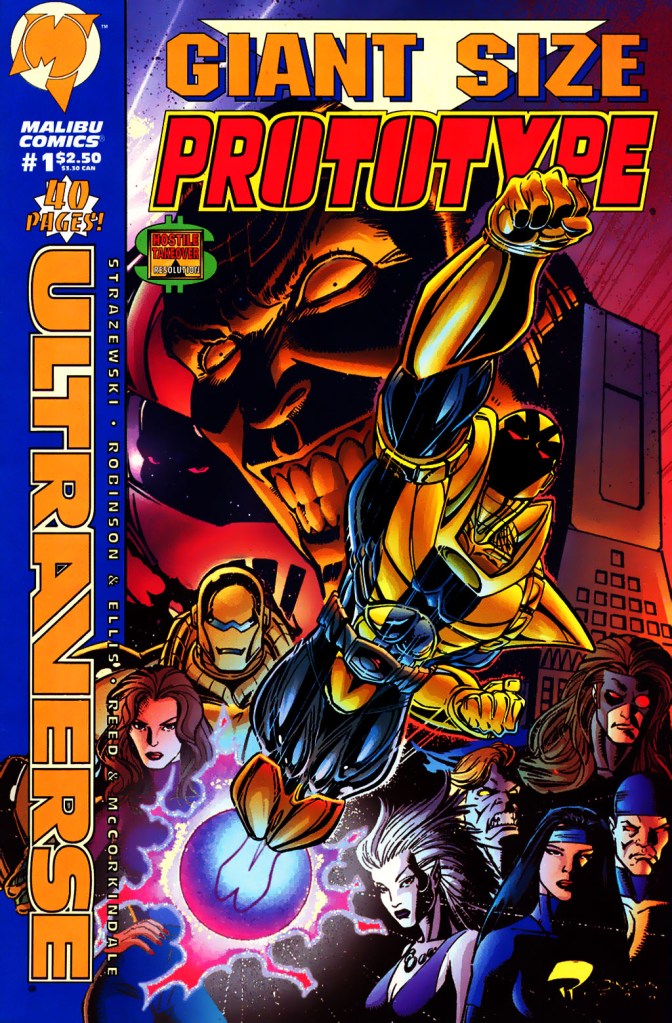
Welcome back superhero enthusiasts, comic book collectors and fans of Malibu Comics! Today we revisit the Ultraverse through the 4th and concluding chapter of the Hostile Takeover crossover storyline which involved the UV’s notable heroes like Prototype, The Solution, Night Man and even Solitaire. To put things in perspective, the first three chapters were told in The Night Man #12, Solitaire #10 and The Solution #13.

At this point in Hostile Takeover, the stakes were raised and things have turned messy not only for the UV heroes but also for the corporate figures involved. To see if everything will truly be resolved, join me in this look back at Giant Size Prototype , published in 1994 by Malibu Comics with a story written by Len Strazewski and drawn by Roger Robinson.

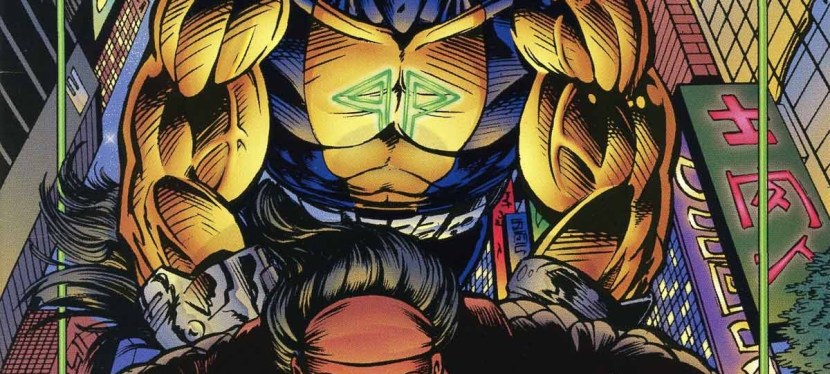
The cover.

Early story

The story begins with TV newscasts about the tremendous collapse of UltraTech as a result of corporate in-fighting which rocked Wall Street. A New York Stock Exchange analyst states on TV: Either the market insiders are completely confused about the future of UltraTech and are speculating wildly or UltraTech is right in the middle of one of the most violent hostile takeovers in corporate history!

Moments back, Prototype (Jimmy Ruiz) and Teknight battled each other while The Solution found Ranger blocking their way.

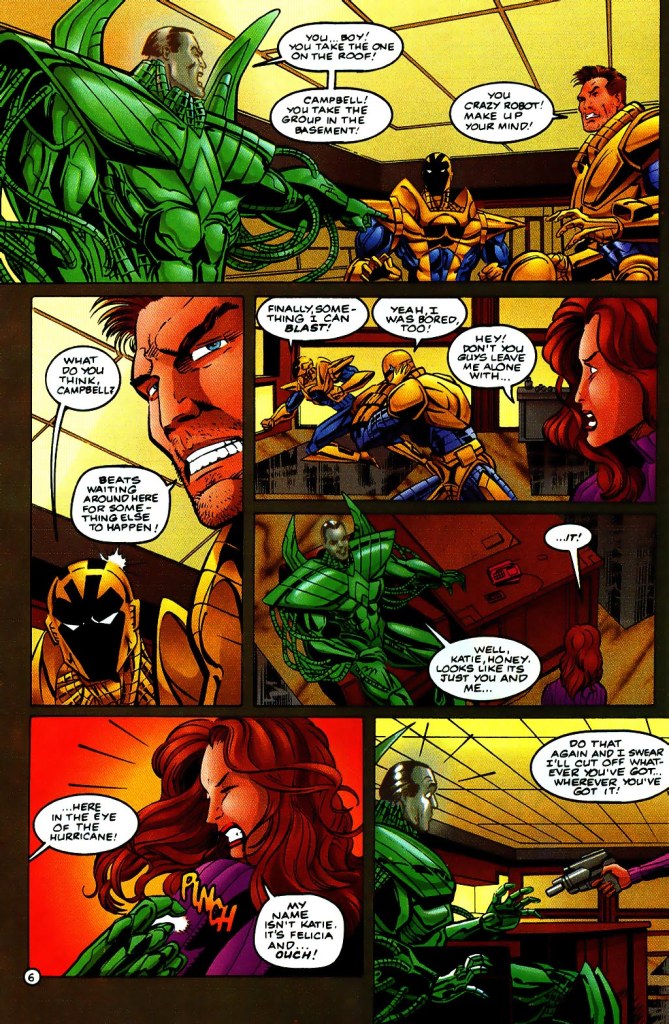
Inside the corporate headquarters, Gordon Bell could not control himself in the presence of Felicia, Jimmy and Bob Campbell. With the helicopter carrying Teknight arriving at the roof top and The Solution (with Night Man) making their way through the basement, Gordon Bell sends Prototype and Ranger to secure the place, leaving Felicia behind.  

Quality

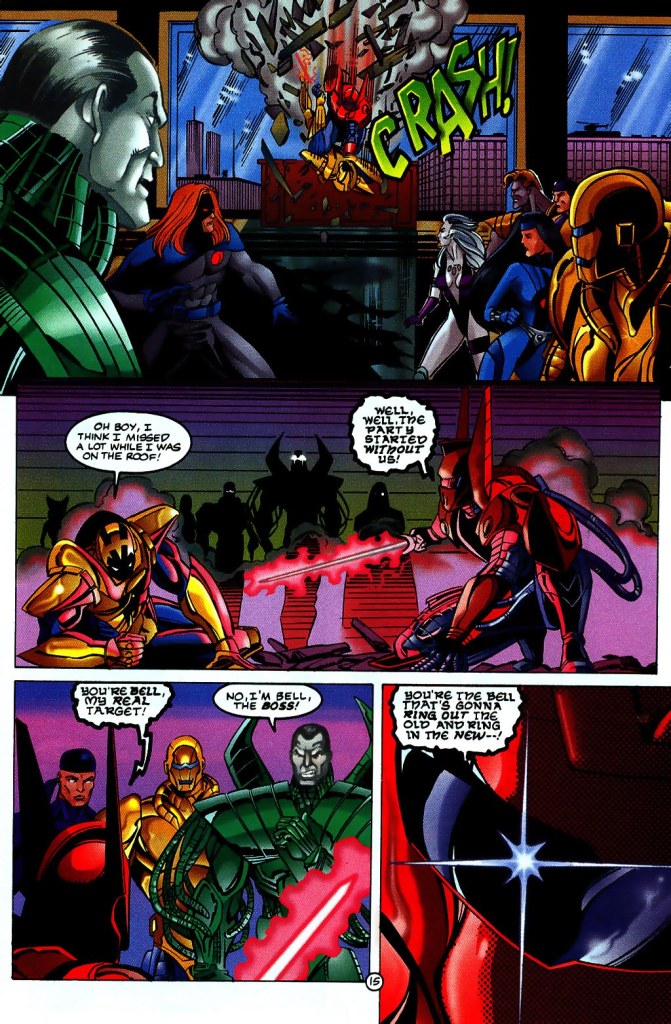
Prototype and Teknight crash into the office of Gordon Bell with The Solution and Night Man as witnesses.

As expected, corporate intrigue remains as the core concept or theme of this extensive (over 30 pages in story) comic book. Without spoiling the plot, I can say that the turmoil of UltraTech is a true turning point within the Ultraverse and its effects were really felt in my recent Prototype retro comic book review. This story also sheds light on the UV’s corporate figures J.D. Hunt and Stanley Leland and it was here where their influence is really felt.

As for the Ultraverse heroes, this story unsurprisingly shows more of what Prototype and Ranger went through in their respective participation of the events and incidents that happened throughout Hostile Takeover (which were also dramatized in smaller parts in the other comic books of this crossover storyline). There is more depth in the encounter between Prototype and Teknight, and in Ranger’s encounter with The Solution and Night Man. The good thing here is that the mentioned encounters are very well written and filled with solid dialogue by Len Strazewski, resulting more engagement between the reader and Prototype and Ranger.

As to how the Hostile Takeover storyline concluded, I would obviously not spoil it here but I can assure you all that it ended with a huge impact and some powerful images.

Conclusion

Prototype, Ranger and Felicia with Gordon Bell.

Giant Size Prototype (1994) served its purpose in concluding the Hostile Takeover storyline and its best feature is its writing. It also served as a definitive turning point in the story of the titular character. As a whole, Hostile Takeover’s concept is really short and the approach to showing readers the moments of the events as seen through the eyes of different Ultraverse characters is flawed (note: this is not your typical straightforward crossover storytelling) and relied on padding to fill the narrative. In addition, there is one standalone short story that should please fans of Bob Campbell as Ranger.

If you are seriously planning to buy an existing hard copy of Giant Size Prototype (1994), be aware that as of this writing, MileHighComics.com shows that the near-mint copy of the comic book costs $14.
Overall, Giant Size Prototype (1994) is recommended.

+++++

Thank you for reading. If you find this article engaging, please click the like button below and also please consider sharing this article to others. If you are looking for a copywriter to create content for your special project or business, check out my services and my portfolio. Feel free to contact me as well. Also please feel free to visit my Facebook page Author Carlo Carrasco and follow me at HavenorFantasy@twitter.com