Recently inside the Subic Bay Freeport Zone, the Subic Bay Metropolitan Authority (SBMA) headed by its Chairman and Administrator Eduardo Jose L. Aliño hosted a delegation from the Embassy of Belgium led by Ambassador Vladislava Iordanova. During the visit, Aliño proposed to them a Sister Port Agreement between the Port of Subic and the Port of Antwerp-Bruges, according to the official announcement by the SBMA.
To put things in perspective, posted below is an excerpt from official announcement by the SBMA. Some parts in boldface…
A sister port agreement between the Port of Subic and the Port of Antwerp-Bruges is being considered during the visit of delegates from the Embassy of Belgium to the Philippines here on March 16, 2026.
Belgian Ambassador Her Excellency Vladislava Iordanova paid a visit along with officials from the Port of Antwerp-Bruges International (PoABI), the consultancy and investment subsidiary of the Port of Antwerp-Bruges.
During their visit, the Subic Bay Metropolitan Authority (SBMA) team, led by Chairman and Administrator Eduardo Jose L. Aliño, proposed a Sister Port Agreement between the two ports to enhance the traditional friendship between the SBMA and the PoABI.
The Port of Antwerp-Bruges is the largest petrochemical cluster in Europe and the second-largest in the world; it is also the largest car-handling port in Europe, handling more than 3 million cars per year. It has two oil refineries and is a frontrunner in the energy transition.
The port is also a driver of economic growth with 4.5% GDP contribution and a total annual throughput of +370 million tonnes, including +13 million TEUs.
Meanwhile, the Subic Bay Freeport has several locators with European Equity, including Agila NY Naval Inc. and Agila South Inc. from the Netherlands, with a combined investment commitment of US$350 million.
Let me end this post by asking you readers: What is your reaction to this recent development? Do you think the proposed Sister Port Agreement between the SBMA and Belgium will eventually be approved in the near future? Do you think that better trade will happen between the Port of Subic and the Port of Antwerp-Bruges will be realized?
In a major move to ensure fairness in women’s sports competitions, to ensure the protection of women who participated in such events and to preserve its own integrity as a global sports governing entity, the International Olympic Committee (IOC) announced a brand new policy which will be applied on the 2028 Olympic Games.
To put things in perspective, posted below is an excerpt from the official announcement of the IOC. Some parts in boldface…
The International Olympic Committee (IOC) has announced a new Policy on the Protection of the Female (Women’s) Category in Olympic Sport and Guiding Considerations for International Federations and Sports Governing Bodies.
Following today’s approval of the policy by the IOC Executive Board, it will apply for the LA28 Olympic Games onwards, and is not retroactive.
The policy explains that, for all disciplines on the sports programme of an IOC event, including the Olympic Games and for both individual and team sports, eligibility for any female category is limited to biological females.
Eligibility for the female category is to be determined in the first instance by SRY gene screening to detect the absence or presence of the SRY gene.
Based on scientific evidence, the IOC considers that the presence of the SRY gene is fixed throughout life and represents highly accurate evidence that an athlete has experienced male sex development. Furthermore, the IOC considers that SRY gene screening via saliva, cheek swab or blood sample is unintrusive compared to other possible methods.
Athletes who screen negative for the SRY gene permanently satisfy this policy’s eligibility criteria for competition in the female category. Unless there is reason to believe that a negative reading is in error, this will be a once-in-a-lifetime test.
With the rare exception of athletes with a diagnosis of Complete Androgen Insensitivity Syndrome (CAIS) or other rare differences/disorders in sex development (DSDs) who do not benefit from the anabolic and/or performance-enhancing effects of testosterone, no athlete with an SRY-positive screen is eligible for competition in the female category at an IOC event.
Athletes with an SRY-positive screen, including XY transgender and androgen-sensitive XY-DSD athletes, continue to be included in all other classifications for which they qualify. For example, they are eligible for any male category, including in a designated male slot within any mixed category, and any open category, or in sports and events that do not classify athletes by sex.
Speaking about the policy, IOC President Kirsty Coventry said: “As a former athlete, I passionately believe in the rights of all Olympians to take part in fair competition. The policy that we have announced is based on science and has been led by medical experts. At the Olympic Games, even the smallest margins can be the difference between victory and defeat. So, it is absolutely clear that it would not be fair for biological males to compete in the female category. In addition, in some sports it would simply not be safe.”
She continued: “Every athlete must be treated with dignity and respect, and athletes will need to be screened only once in their lifetime. There must be clear education around the process and counselling available, alongside expert medical advice.”
Why was the policy developed? – The IOC administration was tasked with drafting a policy on the protection of the female category in an Olympic context that would reflect the findings of the Working Group on the Protection of the Female Category, various IOC consultations, and consideration of recent developments, including in international human rights law.
The policy was developed on the basis that it is universally accepted that providing for a female category is necessary to allow both males and females equal access to elite sport. It was guided by the IOC’s modern goals relating to equality (equal opportunities for female athletes in finals, on podiums and in championships); enhancing Olympic value (featuring both women’s and men’s finals in every sport); and visibility and inspiration (celebrating female athletes on the Olympic podium to inspire and represent women and girls worldwide).
What were the findings of the working group? – The working group reviewed the latest scientific evidence, including developments since 2021, and reached a clear consensus. Male sex provides a performance advantage in all sports and events that rely on strength, power and endurance. To ensure fairness, and to protect safety, particularly in contact sports, eligibility should therefore be based on biological sex. The group also agreed that the most accurate and least intrusive method currently available to verify biological sex is screening for the SRY gene, a segment of DNA typically found on the Y chromosome that initiates male sex development in utero and indicates the presence of testes/testicles.
For additional insight, watch the YouTube videos below.
Let me end this piece by asking you readers: What is your reaction to this development? Considering all the details included and emphasized, are you convinced the IOC justified its new policy? Were there any women’s sports events in your locality that allowed transgendered women (males who identified themselves as females) to participate over the past five years? Do you believe that transgendered women should be prohibited from joining women’s sports events?
In what can be described as a major change on permanent residency, Japan announced that the residency period for naturalization will be doubled to ten years effective April 1, 2026, according to a news report by Kyodo News. At the same time, there will be changes on the verification period of tax payments and social insurance premiums.
To put things in perspective, posted below is an excerpt from the news report of Kyodo News Some parts in boldface…
The Japanese government said Friday it will double the minimum residency requirement for naturalization to 10 years starting April 1.
The Justice Ministry said it will also extend the verification period for tax payments to five years and for social insurance premiums to two, both from one year currently. Those who have already applied will also be subject to the changes.
Prime Minister Sanae Takaichi instructed Justice Minister Hiroshi Hiraguchi in November to tighten the rules on acquiring Japanese nationality, saying the current conditions were too lax.
The country’s Nationality Act sets the minimum requirements for naturalization, including residing in Japan for at least five consecutive years and being a person of good conduct with adequate means of support in terms of assets or skills possessed by the applicant, spouse or relatives.
The screening process also takes into account “compatibility with Japanese society,” including the ability to speak Japanese without difficulty in daily life.
According to the ministry, extending the minimum residency requirement to 10 years is part of efforts to ensure such compatibility. The changes were included in comprehensive measures on foreign resident policy compiled in January.
For permanent residency, Japan sets detailed eligibility requirements under the immigration law, including properly fulfilling public obligations such as tax and national insurance payments, as well as a minimum residency period of 10 years.
Let me end this piece by asking you readers: What is your reaction to this development? Do you agree with the move of the Japanese government on extending the residency period for naturalization to ten years? Do you think the said change will ensure better chances for immigrants to become more adjusted and compatible with Japanese society? Do you think the reforms implemented will compel foreigners from Third World nations to think very seriously before applying to migrate to Japan?
As the Philippines is struggling with very expensive fuel prices, Indonesia assured the government that there will be a steady supply of coal for the country’s energy needs, according to a news report by BusinessWorld.
To put things in perspective, posted below is an excerpt from the news report of BusinessWorld. Some parts in boldface…
Indonesia has assured the Philippines of a steady supply of coal, the Philippine energy minister said on Tuesday.
“We have assurance, and we are good partners,” Energy Secretary Sharon Garin told a news briefing.
The Philippines plans to temporarily increase coal-fired generation amid energy pressures, Ms. Garin said.
The country’s fuel supply remains manageable and the government is working to procure 1 million barrels of oil from countries within and outside Southeast Asia to build its buffer stock. The Philippines has around 45 days of fuel supply based on current consumption levels, Ms. Garin said.
The Philippines has Southeast Asia’s most coal-dependent power grid.
After ramping up LNG-fired generation, Manila was poised in 2025 for its first decline in coal power in nearly two decades, but rising LNG costs are forcing it to turn back to coal.
Let me end this post by asking you readers: What is your reaction to this recent development? Do you think coal is a good solution to ensure a stable supply of energy all over the country?
Since the joint Israel-US military operations stated on February 28, the United States successfully hit more than ten thousand against the Islamic terrorist regime of Iran which is a military milestone, according to a Newsmax report. Clearly by this point in time, Iran’s military has been decimated although the wicked regime still has missile launchers that have yet to be destroyed.
To put things in perspective, posted below is an excerpt from the news report of Newsmax. Some parts in boldface…
The U.S. military marked a major milestone Wednesday, almost four weeks into Operation Epic Fury, recording its 10,000th strike on an Iranian target, U.S. Navy Adm. Brad Cooper, commander of U.S. Central Command, said in an operational update on X.
Cooper said U.S. forces have now carried out more than 10,000 strikes since the campaign began on Feb. 28 and remain “on plan or ahead of plan” in achieving objectives to eliminate Iran’s ability to project power beyond its borders.
He described U.S. precision strikes as having “overwhelmed Iranian air defenses,” producing “tangible effects,” and said U.S. combat flights over Iran are degrading Tehran’s ability to attack U.S. forces and regional allies.
Cooper added that U.S. strikes have destroyed the vast majority of Iran’s largest naval vessels, claiming that 92 % are no longer able to sail, and that Iran’s drone and missile launch rates are down by more than 90 % as a result of U.S. and allied operations.
He also said more than two‑thirds of Iran’s missile, drone, and naval production facilities and shipyards have been damaged or destroyed, and that U.S. forces have maintained air superiority and flown over 10,000 combat sorties in the campaign.
Cooper called the performance of long‑range B‑52 bombers and the more than 50,000 U.S. troops involved “embody the courage and resilience” of service members.
Iran has mounted a sustained response with missiles and drones that have struck Israeli territory and U.S. and allied facilities across the Middle East since the conflict began.
Multiple Iranian retaliatory missile barrages have hit locations across Israel, with documented impacts including residential neighborhoods and civilian infrastructure, and one strike on March 1 killed at least nine Israeli civilians.
Iranian missiles and drones have injured thousands of people in Israel, with more than 4,000 reported injured in total.
Iran’s retaliatory strikes have also affected U.S. bases and allied facilities in Gulf states, with missiles flying through regional airspace and causing infrastructure damage, and incidents of drone strikes hitting U.S. Embassy buildings resulting in minor damage.
As of mid‑March, U.S. authorities reported at least 13 U.S. service members killed in the conflict and roughly 232 wounded, with more than 200 of the wounded returning to duty.
For other updates about what has been going lately in the Middle East, watch the YouTube news videos below.
Let me end this piece by asking you readers: What is your reaction to this development? Considering what the US military has achieved against Iran, do you think they still have sufficient ammunition to hit several thousands more? Do you think the Islamic terrorist regime will eventually break down and surrender? Considering what happened so far, do you think NATO can still come in and be helpful towards the US?
Recently in the progressive City of Muntinlupa, Mayor Ruffy Biazon formally signed a resolution from the City Council which opposes the implementation of the Parañaque Spillway Project as it will negatively affect local residents, according to a Manila Bulletin news report.
To put things in perspective, posted below is an excerpt from the news report of the Manila Bulletin. Some parts in boldface…
Muntinlupa Mayor Ruffy Biazon signed a City Council resolution opposing the Parañaque Spillway Project which will displace families in the city.
Muntinlupa Resolution No. 2026-275 reiterates “the City of Muntinlupa’s opposition to the implementation of Paranaque Spillway Project.”
“Pinirmahan ko ang Resolution No. 2026-275 na muling nagpapatibay sa opisyal na pagtutol ng Lungsod ng Muntinlupa sa Parañaque Spillway Project. Noon pang unang termino ko, malinaw na ang posisyon natin dito. Tutol tayo dahil sa direktang epekto sa komunidad, lao sa mga lehitimong residenteng madi-displace ng proyekto (I signed Resolution No. 2026-275 which reaffirms the official opposition of the City of Muntinlupa to the Parañaque Spillway Project. Since my first term, our position on this has been clear. We oppose it because of the direct impact on the community, especially on the legitimate residents who will be displaced by the project), said Biazon.
Biazon said in 2022 the city held a public hearing about the project. In 2023, Biazon sent a letter to the Department of Public Works and Highways to express his opposition to the project. A resolution was passed in 2024 about this.
“Maging ang ating mga barangay ay nagpahayag na rin ng pagtutol, gaya ng naging desisyon ng Barangay Buli noong 2021 na humihiling na ilipat ang proyekto sa mas angkop na lugar. Sa pinakahuling resolusyon na primarily authored by Konsehal Jonas Abadilla, binibigyang-diin din na bumubuo ang lungsod ng isang komprehensibong drainage master plan para sa pangmatagalang solusyon sa pagbaha sa Muntinlupa (Even our barangays have expressed their opposition, such as the decision of Barangay Buli in 2021 requesting the relocation of the project to a more suitable location. In the latest resolution primarily authored by Councilor Jonas Abadilla, it is also emphasized that the city is developing a comprehensive drainage master plan for a long-term solution to flooding in Muntinlupa),” the mayor added.
The new resolution stated that the DPWH announced that the project will proceed this year.
In February, Biazon signed a memorandum of agreement with the “University of the Philippines (UP), for the formulation of Drainage Master Plan for the City Of Muntinlupa, aimed to develop its Drainage Master Plan (DMP), which will serve as the basis for the city’s comprehensive flood management strategy.”
“The City of Muntinlupa reiterates its stand that The Project proponents should present concrete alternate solutions that will lessen/mitigate The Project’s impact on the constituents of the City, more particularly the people of Barangay Buli,” according to the resolution.
It added, “The sentiments of the most affected barangay in the City of Muntinlupa was embodied in Kapasiyahang Barangay ng Buli Bilang 018-2021 Serye 2021 or Kapasiyahang Barangay na Naglalayong Ipalipat sa Orihinal na Planong Pagtatayuan nito o sa iba pang Angkop na Lugar ang Proyekto ng Gobyerno na ‘Paranaque Spillway.’”
Let me end this post by asking you readers: What is your reaction to this recent development? If you are a resident of Muntinlupa City, are you concerned that the Parañaque Spillway Project will displace local residents and worsen flooding in the city? Do you think the DPWH will eventually listen to the City Government and halt the project?
For more South Metro Manila community news and developments, come back here soon. Also say NO to fake news, NO to irresponsible journalism, NO to misinformation, NO to plagiarists, NO to reckless publishers and NO to sinister propaganda when it comes to news and developments. For South Metro Manila community developments, member engagement, commerce and other relevant updates, join the growing South Metro Manila Facebook group at https://www.facebook.com/groups/342183059992673
Even as the fighting against the Islamic terrorist regime of Iran continues, a major proposal to build a permanent United States embassy in the eternal capital of Jerusalem was approved by Israel, according to a news report by The Jerusalem Post.
To put things in perspective, posted below is an excerpt from the news report of The Jerusalem Post. Some parts in boldface…
Israel approved a proposal to allocate land at the Allenby Complex in Jerusalem for the construction of a permanent United States Embassy on Tuesday.
The approval was announced in a joint statement from Prime Minister Benjamin Netanyahu, Minister of Foreign Affairs Gideon Sa’ar, and Construction and Housing Minister Haim Katz.
Netanyahu, Sa’ar, and Katz described the building of the embassy as a “major diplomatic move” originally set in motion by US President Donald Trump’s “courageous and historic decision during his first term to recognize Jerusalem as Israel’s capital and relocate the US Embassy there.”
The establishment of the permanent embassy will serve as a “tangible, central, and long-term expression of the US’ commitment to Jerusalem as the capital of Israel and the resilience of the special relationship between the two countries,” the announcement statement continued.
Netanyahu, Sa’ar, and Katz additionally thanked US Ambassador to Israel Mike Huckabee for his cooperation and the Ministry of Foreign Affairs for working to finalize the decision.
For additional insight, posted below are YouTube videos about the 2018 opening of the US Embassy in Jerusalem.
Still in relation with the recent breakthrough, I share with the holy scripture below and I encourage you to pray to the Lord for the peace of Jerusalem.
Pray for the peace of Jerusalem! May they prosper who love you [the Holy City]!
May peace be within your walls and prosperity within your palaces!
For my brethren and companions’ sake, I will now say, Peace be within you!
For the sake of the house of the Lord our God, I will seek, inquire for, and require your good.
Psalm 122:6-9 (AMPC)
For other updates about what has been going lately in the Middle East, watch the YouTube news videos below.
Let me end this piece by asking you readers: What is your reaction to this development? Are you supportive of Israel’s approval of allocating land in Jerusalem and building a permanent US Embassy on it?
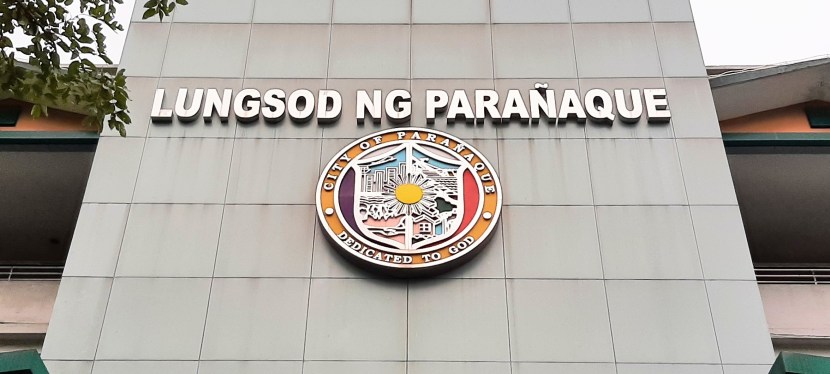
Recently in the City of Parañaque, the local police apprehended five suspects for the theft of copper cables worth more than P200,000, according to a news report by the Manila Bulletin. A local security guard caught them in the act and called the police.
To put things in perspective, posted below is an excerpt from the news report of the Manila Bulletin. Some parts in boldface…
Police arrested five individuals involved in the theft of underground copper cables in Parañaque City on Sunday, March 22.
Parañaque City Police Chief Col. Nicolas Piñon identified the suspects as John, Roel, George, Bryan, and Adrian. They were apprehended at around 4:50 a.m. along KM 17 West Service Road in Barangay Marcelo Green.
Piñon said the suspects were arrested after a security guard noticed suspicious activity involving a parked vehicle and five men forcibly pulling underground copper cables.
The security guard immediately alerted their zone commander, who coordinated with the Marcelo Green Police Substation, leading to the arrest of the suspects who were caught in the act.
Recovered from the suspects were copper cables worth P201,218.64, cutting tools, and a utility vehicle.
The suspects are currently detained at the police custodial facility and are facing charges for violation of Republic Act 10515, also known as the Anti-Cable Television and Cable Internet Tapping Act of 2013.
Let me end this post by asking you readers: What do you think about this recent development? If you are a resident of Parañaque, are you concerned that there could be more attempts by undesirable people to steal copper cables?
For more South Metro Manila community news and developments, come back here soon. Also say NO to fake news, NO to irresponsible journalism, NO to misinformation, NO to plagiarists, NO to reckless publishers and NO to sinister propaganda when it comes to news and developments. For South Metro Manila community developments, member engagement, commerce and other relevant updates, join the growing South Metro Manila Facebook group at https://www.facebook.com/groups/342183059992673
With the ongoing war in the Middle East, the hiked prices of fuel and other problems happening already, the World Bank (WB) sees the economy of the Philippines achieving gross domestic product (GDP) growth of 4.6% this year and 5.3% next year, according to a Manila Bulletin news report.
To put things in perspective, posted below is an excerpt from the news report of the Manila Bulletin. Some parts in boldface…
Philippine economic growth would likely remain below its potential of at least six percent until the end of the Marcos Jr. administration, according to the latest forecasts by the World Bank.
Documents on the latest $800-million Philippines Growth and Jobs Development Policy Loan (DPL) 1, approved by the Washington-based multilateral lender last week, showed a projected 4.6- percent gross domestic product (GDP) growth rate for the country in 2026, inching up from the post-pandemic-low of 4.4 percent in 2025. This forecast is below the government’s downgraded five- to six-percent growth target for the year.
For 2027, the World Bank expects the Philippine economy to grow by 5.3 percent, which would also be lower than next year’s downscaled 5.5- to 6.5-percent goal.
By the time President Ferdinand R. Marcos Jr. steps down and turns over to a new administration in 2028, World Bank projections showed 5.5-percent GDP growth, still below the six- to seven-percent target.
“The growth outlook remains moderate over the near term, with activity expected to remain subdued in 2026 before gradually strengthening… The impact of the government’s anti-corruption efforts and a significantly lower infrastructure budget in 2026 is expected to weigh on public investment,” the World Bank said.
The lender added that a smaller statistical carry-over into 2026 signals weaker initial momentum, with growth projected to average 5.2 percent in 2026 to 2028, driven by recovering private domestic demand amid easing inflation and financing conditions.
“Private consumption is expected to benefit from stable labor income and improved confidence, while private investment gradually strengthens alongside improved credit conditions and a normalization of public capital spending. External demand, particularly for electronics and artificial intelligence (AI)-related exports, is projected to remain supportive, although global trade uncertainty presents downside risks,” the document said.
This World Bank report was prepared in mid-February before it was disclosed last week, which means that the impact of the war in the Middle East was not yet taken into consideration by the lender in its GDP growth forecasts.
At that time, the World Bank projected headline inflation to stay within the Bangko Sentral ng Pilipinas’ (BSP) two- to four-percent target range, averaging about 2.8 percent in 2026 to 2028.
Before the domestic price pressures wrought by the Middle East conflict that sent global oil prices soaring, the World Bank believed that the BSP would likely keep a neutral-to-supportive policy stance while balancing the still-negative output gap against risks from exchange-rate volatility and food inflation. A negative output gap refers to the economy expanding below its potential, which, for the Philippines, is estimated at about six percent annually.
Let me end this post by asking you readers: What is your reaction to this recent development? Do you think the economic growth predictions of the World Bank for the Philippines will turn out to be true in the near future? Do you think there is any hope left for the economy of the Philippines to achieve annual GDP growth of 6%? Do you think more foreign investors will be convinced to invest in the Philippines this year?
An unexpected turn of events just happened as US President Donald Trump announced that America and the Islamic terrorist regime of Iran had very good and productive conversations and already he instructed the Department of War to postpone all military strikes against the Iranian power plants for a period of five days, according to a news report by The Jerusalem Post.
To put things in perspective, posted below is an excerpt from the news report of The Jerusalem Post. Some parts in boldface…
US President Donald Trump asserted on Monday that the US and Iran have had “very good and productive” discussions over the last two days regarding a permanent end to the war.
“I am pleased to report that the United States of America, and the country of Iran, have had, over the last two days, very good and productive conversations regarding a complete and total resolution of our hostilities in the Middle East,” Trump wrote on Truth Social.
Iranian parliament speaker Mohammad-Bagher Ghalibaf is leading the talks with the United States, a source told The Jerusalem Post.
Trump added that, based on the “tenor and tone” of the discussions, which he described as “in depth, detailed, and constructive,” he had instructed the Department of Defense to postpone planned military strikes on Iranian power plants and energy infrastructure.
According to the president, the delay will span a five-day period, “subject to the success of the ongoing meetings and discussions.“
Trump’s post contradicts a statement he published on the social media platform the day prior, when the president vowed the US would destroy Iran’s power plants if the Strait of Hormuz was not fully opened within 48 hours.
Iran reportedly denies talks to end war – An Iranian source later denied that the US and Iran were holding talks about ending the war.
“There is no direct contact with Trump, not even through intermediaries. Trump retreated after hearing that our targets would be all power plants in West Asia,” the unnamed source told the Iranian state-affiliated Fars News Agency.
For additional insight, watch the YouTube news videos below.
I am surprised by this newest development. Trump previously announced that America would strike the power plants of the terrorist regime if Iran does not fully open the Strait of Hormuz within 48 hours. One has to wonder which Iranians has America been conversing with lately because the Islamic terrorist regime denied such talks happened. Could it be that Trump and his team have some sort of strategic surprise to unleash in due time? Remember that this is clearly not a ceasefire. The operations against the military sites, government sites and missile launchers of Iran were never halted. The clock is ticking and the pressure is only rising.
Let me end this piece by asking you readers: What is your reaction to this development? Were you surprised by Trump’s latest announcement? Do you think that America and Iran could be communicating with each other via back channels? What do you think Israel will do now that this development happened? Do you think it is possible for the Islamic terrorist regime of Iran to surrender unconditionally?