

Welcome back my readers, YouTube viewers and all others who followed this series of articles focused on YouTube videos worth watching. Have you been searching for something fun or interesting to watch on YouTube? Do you feel bored right now and you crave for something to see on the world’s most popular online video destination?
I recommend you check out the following videos I found.
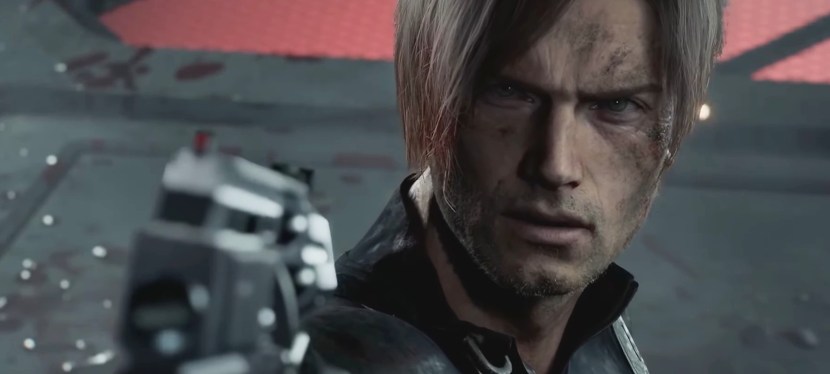
#1 Leon Kennedy Is Gaming’s Significant Action Hero – Have you guys played Resident Evil: Requiem? I have not played it but the most notable buzz I heard about it was it emerged as a commercial success, and Leon Kennedy’s significance as a video game action hero is stronger than ever. Having played Resident Evil 2 of 1998 and 2019, plus Resident Evil 6, I can say that Leon Kennedy is a video game icon by today’s standards. In my view, the fictional hero is comparable with Clint Eastwood’s Dirty Harry. To learn more about the significance of Leon Kennedy and the quality of Resident Evil: Requiem, watch the video of Ranting for Vengeance below.
#2 Resident Evil of 1996 Revisited – Thirty years ago this month, Capcom released Resident Evil on PlayStation (followed by the Windows PC and Sega Saturn versions) and it became a big hit with gamers and critics. Since then, the Resident Evil games grew into a popular multimedia entertainment franchise and it is easily one of the most significant game franchises of all time. The 1996 original game was a successful experiment and it had a lot of content that added to its replay value. Times like these, it is important to revisit the first-ever Resident Evil game and I found a very comprehensive video about it which you can watch below.
#3 Fast Food In 1980s America – When I first visited the United States of America in 1989, me and my relatives had lots of fast food stops as we moved from one state to another by car. We had a nice variety of meals from food joints like Carl’s Jr., Burger King, McDonald’s, and Taco Bell to name some. I also had fast food stops when I revisited America in 1997, 2001, 2008 and 2011 but those experiences never matched the food stop experiences I had in 1989. To see what fast food in America was like in the 1980s, watch the video below.
#4 How Las Vegas Joints Scam Customers Without Breaking Laws – When I visited Las Vegas in 2011, I did not enjoy it that much because almost everything around me was too expensive. We stayed at a hotel along the famous Las Vegas strip which meant we were literally trapped by high rates here and there. As it turns out, the businesses there have been scamming customers and tourists without necessarily violating laws. How did they do it and what can you do to avoid such scams? Watch and learn from the video below.
#5 You, Me And The Movies React To The Godfather Trilogy – What is there to say about The Godfather movies of 1972, 1974 and 1990? Directed by Francis Ford Coppola, those movies were the most definitive cinematic portrayals of the mafia as well as the struggles of an Italian-American family. Al Pacino will forever be remembered as Michael Corleone while the late Robert Duvall was very memorable playing the great lawyer Tom Hagen. A few years ago, You, Me and the Movies took the effort to watch and react to The Godfather, The Godfather Part II and The Godfather Part III. I like how each movie – even with the third being the weakest and most disappointing one – drew their reactions. Watch and enjoy their reaction videos below.
#6 Ashleigh Burton Reacts To Annie – I never saw the 1982 musical film Annie in the cinema. As a young boy back then, I do remember the strong marketing and promotion of the movie prior to its release. A short time after its theatrical run, there were people in our local community singing “Tomorrow, Tomorrow, I Love You, Tomorrow, You’re Always A Day Away” and citing lines from the movie. Historically, Annie was not exactly a gigantic hit and it was made with a very large budget of $35 million. If you want to discover what Annie is about, I encourage you all to watch Ashleigh Burton’s entertaining reaction video below.
#7 Affordable Japanese Cruises – Have you thought about visiting Japan and spending time in a cruise ship? Considering the economic developments and trends of recent years, it seems cruises there are becoming more affordable and the great deals are only increasing. Watch and learn from the Nippon TV video below.
#8 The Ticking Structural Disaster Of San Francisco – Do you often spend time in San Francisco? Deep within the city is the high-end Millennium Tower and it is already a ticking disaster that could cause massive damage and deaths. This is because Millennium Tower has been leaning and sinking for many years now, and there is no solid way to solve its problem. If you intend to work and/or live in San Francisco, better stay away from Millennium Tower!
+++++
Thank you for reading. If you find this article engaging, please click the like button below, share this article to others and also please consider making a donation to support my publishing. If you are looking for a copywriter to create content for your special project or business, check out my services and my portfolio. Feel free to contact me with a private message. Also please feel free to visit my Facebook page Author Carlo Carrasco and follow me on Twitter at @HavenorFantasy as well as on Tumblr at https://carlocarrasco.tumblr.com/ and on Instagram athttps://www.instagram.com/authorcarlocarrasco
 Author Carlo Carrasco