Did a local government unit (LGU) outside of Metro Manila confiscate your driver’s license because you committed a traffic violation within their jurisdiction? The Land Transportation Office (LTO) clarified publicly that all LGUs have no legal basis to confiscate the licenses of drivers who committed traffic violations, according to a news report by GMA News.
To put things in perspective, posted below is an excerpt from the GMA News report. Some parts in boldface…
The Land Transportation Office on Thursday said local government units have no legal basis to confiscate the drivers’ licenses of traffic violators.
“The LTO wishes to clarify to the public that it is currently implementing Department of Transportation (DOTr) Memorandum Circular No. 001-2026, which sets the policy regarding the non-confiscation of driver’s licenses during apprehension,” the agency said in a statement on its official Facebook page.
“Bilang pagsunod sa kautusan, pansamantalang hindi kinukumpiska ng mga law enforcement officers na may deputasyon mula sa LTO ang driver’s license ng mga motoristang lumalabag sa batas-trapiko,” it added.
(In compliance with the directive, law enforcement officers deputized by the LTO are temporarily not confiscating the driver’s licenses of motorists who violate traffic laws.)
The LTO said it seeks to clarify that existing Supreme Court jurisprudence does not grant traffic enforcement officers the general authority to confiscate motorists’ driver’s licenses.
The agency issued the statement after the City of Bacoor in Cavite on Wednesday issued a, “Clarification on Traffic Enforcement in Bacoor,” on social media.
“The City Government of Bacoor reminds the public that, pursuant to City Ordinance No. 11‑2019, Section 23 of the Revised Traffic Code, our traffic enforcers are duly authorized to confiscate driver’s licenses of motorists who violate traffic laws within the city,”the city announced on Facebook.
The Bacoor LGU said that “the recent Supreme Court ruling applies only to Metro Manila LGUs under the MMDA. Bacoor, being outside Metro Manila, continues to exercise its authority under the Local Government Code and its duly enacted ordinances.”
To which the LTO countered: “Existing administrative issuances from the (Department of Transportation) and the Department of the Interior and Local Government—including Joint Memorandum Circular No. 01, Series of 2008, issued by the former DOTC and DILG—acknowledge that traffic enforcers from local government units (LGUs) may issue citation tickets but lack the legal basis to confiscate motorists’ driver’s licenses.”
Let me end this post by asking you readers: What is your reaction to this recent development? Is the clarification by the LTO clear and transparent enough? When was the last time a local government confiscated your license because you committed a traffic violation?
Thank you for reading. If you find this article engaging, please click the like button below, share this article to others and also please consider making a donation to support my publishing. If you are looking for a copywriter to create content for your special project or business, check out my services and my portfolio. Feel free to contact me with a private message. Also please feel free to visit my Facebook page Author Carlo Carrasco and follow me on Twitter at @CarloCarrascoPH as well as on Tumblr at https://carlocarrasco.tumblr.com/and on Instagram athttps://www.instagram.com/authorcarlocarrasco
Welcome back readers, fellow geeks and electronic gaming fans!
In this edition of the Retro Gaming Ads Blast (RGAB) series, we will take a look at another batch of retro gaming print ads from the 1980s to the 1990s.
For the newcomers reading this, Retro Gaming Ads Blast (RGAB) looks back at the many print ads of games (console, arcade, computer and handheld) that were published in comic books, magazines, flyers, posters and newspapers long before smartphones, social media, the worldwide web and streaming became popular. To put things in perspective, people back in the 1980s to the 1990s were more trusting of print media for information and images about electronic games and related products.
With those details laid down, here is the newest batch of retro gaming print ads for you to see and enjoy…
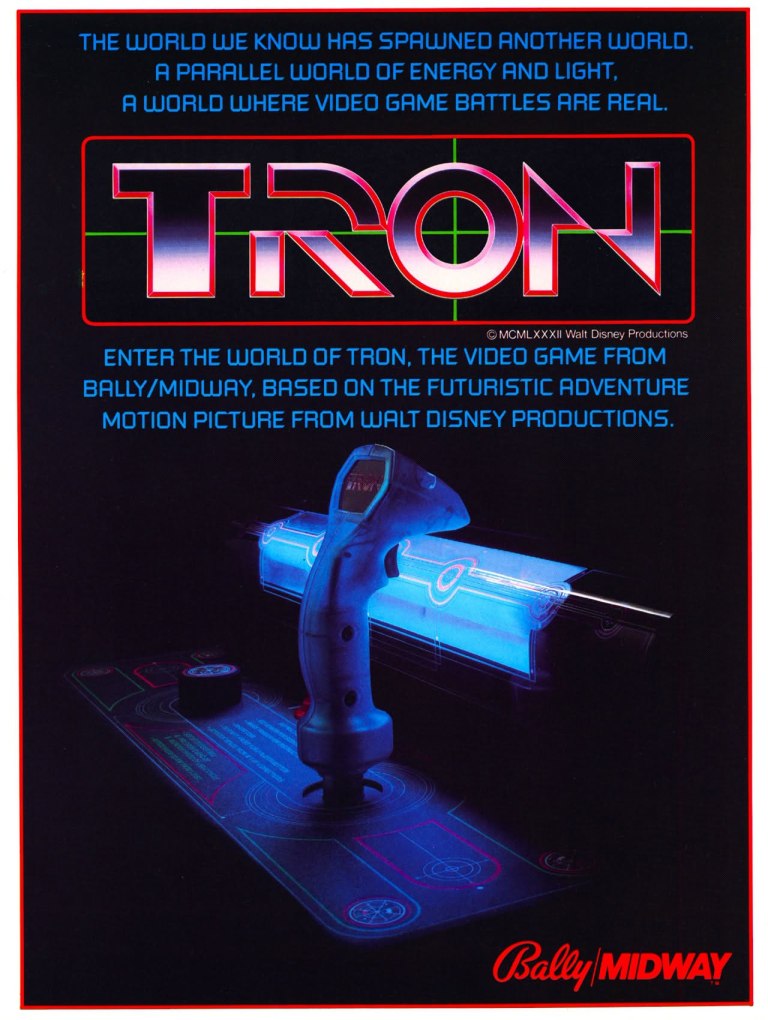
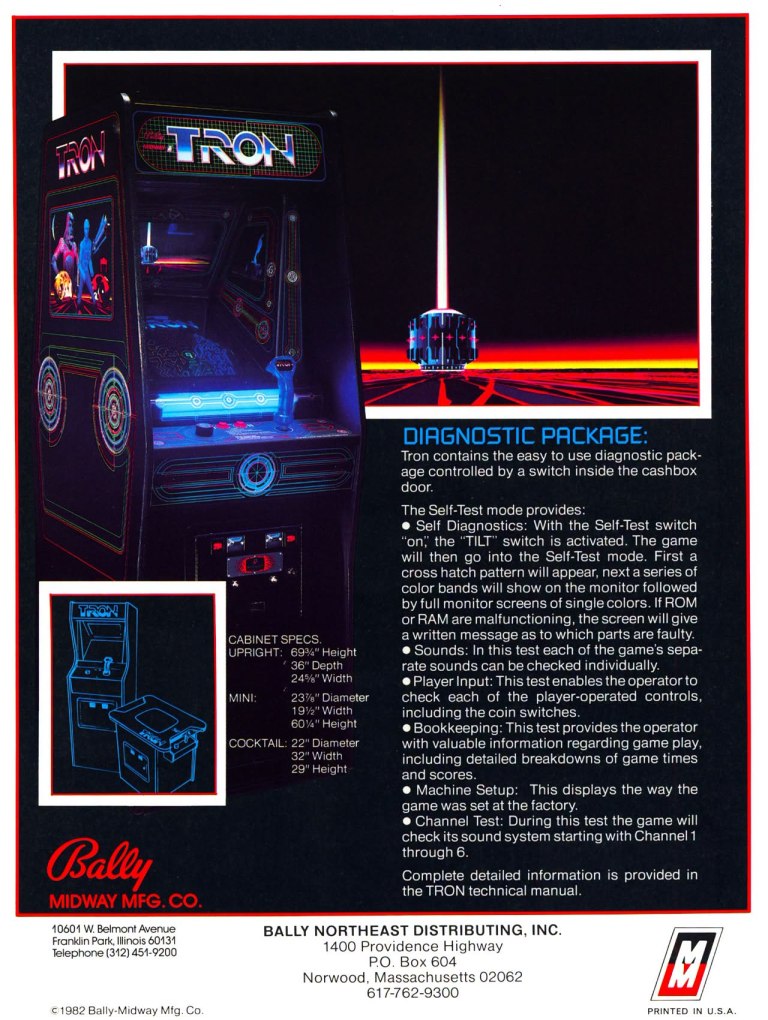
1. Tron Arcade Flyer
The front.
The rear. The details were clearly written for arcade operators.
Remember how dazzling the 1982 movie Tron was when you first saw it? That film had groundbreaking computer-generated graphics and the filmmakers worked very hard to tell a story covering both the real and digital worlds. Along the way, the movie had strong video game vibes which resonated with gamers at a time when arcade gaming was wildly popular in America. Believe it or not, an official arcade game of Tron was released the same year as the movie and it was a massive success. The arcade flyer perfectly captured the vibe and look from the movie and the machine itself had a control stick the same with what was shown to viewers. This old flyer is still great to look at.
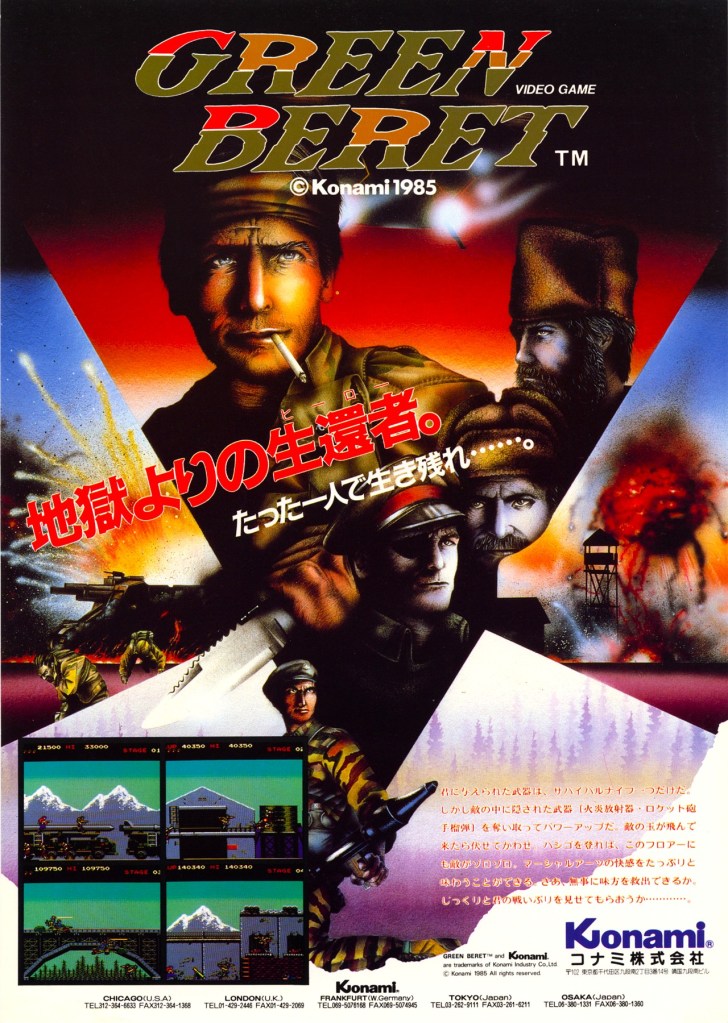
2. Green Beret Japanese Arcade Flyer
This is a very stylish flyer.
Konami was a highly prolific game publisher in the 1980s and it had lots of games that became huge blockbusters. During the decade, their game developers were strongly influenced by both Hollywood action movies and the Cold War. In 1985, Konami released the militaristic game Green Beret in Japanese arcades and to promote it, they created an arcade flyer featuring a very stylish artwork highlighting military images of soldiers (including a guy smoking) and warfare. This ad still looks great and it was not surprising it helped the game achieve huge commercial success. Green Beret was released in America as Rush’n Attack.
3. Darius Japanese And North American Arcade Flyers
The Japanese flyer.
The North American flyer.
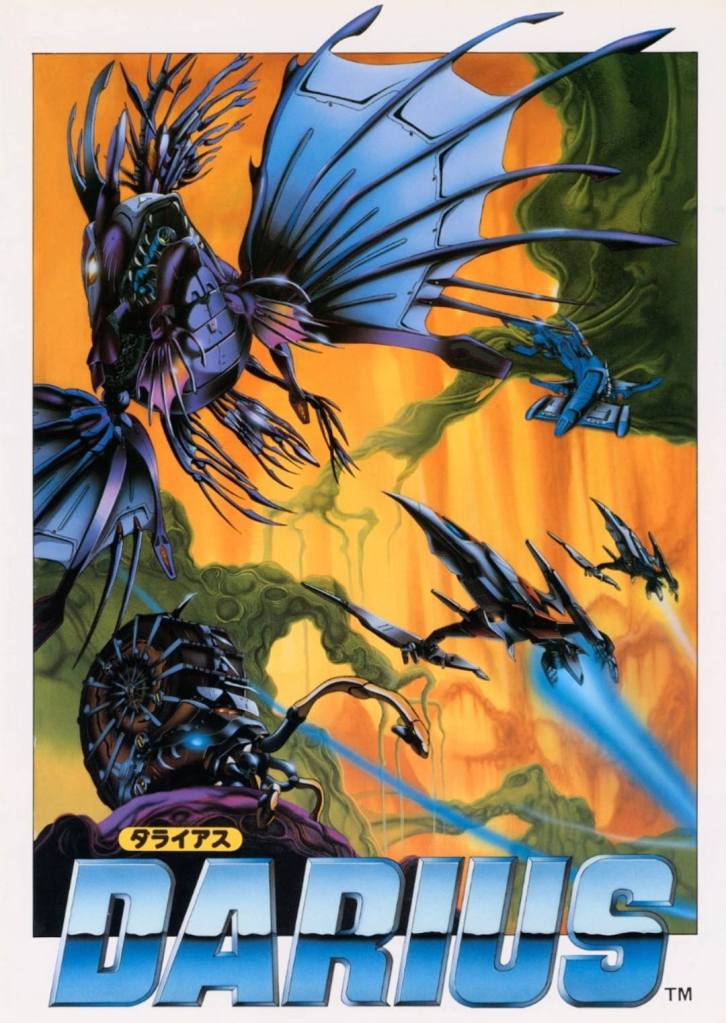
Released in arcades worldwide in 1987, Darius is a 2D side-scrolling shooter game from Taito which had a science fiction concept of the starship Silver Hawk (piloted by players) which sets on a mission to destroy an evil empire before it could destroy the world called Darius. The game was successful, most notably in Japan and it eventually led to sequels being released later. What I find intriguing is how the arcade game was promoted in Japan and in North America. The Japanese arcade flyer had this intriguing artwork that reflected a blend of sci-fi with a touch of horror. The North American flyer had a strong sci-fi touch with a male and female model wearing costumes (that made them look futuristic) standing beside the Darius machine. Which flyer looks more appealing to you?
4. Data East’s Arcade Alley Print Ad
Fun and excitement emphasized in this print ad.
There is nothing like porting arcade hits to computer systems for gamers to enjoy. In 1988 there in Europe, U.S. Gold released Data East’s Arcade Alley for computer systems and it included ports of popular Data East games like Kung Fu Master, Express Raider, Breakthru, Tag Team Wrestling, Last Mission and Karate Champ. U.S. Gold’s print ad showed a guy in the middle of a video arcade looking on both sides to pick which game to play which strongly emphasized the essence of the game collection (offered in cassettes and disk). This old ad is still amusing to look at.
5. Blasteroids European Print Ad
Blasteroids for the Europeans.
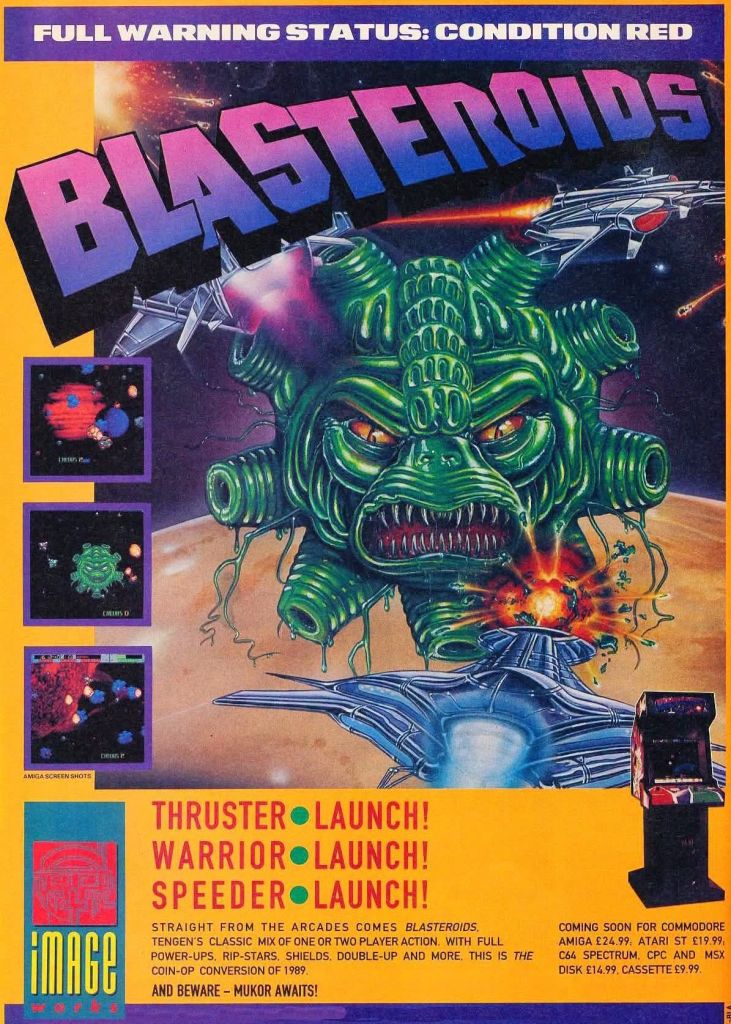
Blasteroids, the third entry in Atari’s popular Asteroids games series, was released in European arcades by Image Works and eventually landed on computer systems there. For Europe, the ad makers came up with artwork showing a creepy, green space monster surrounded by a few spaceships to emphasize the game’s concept. The said monster eventually appeared on the game covers of the computer ports of Blasteroids later. This ad shows creative adjustments taken to promote games in different parts of the world.
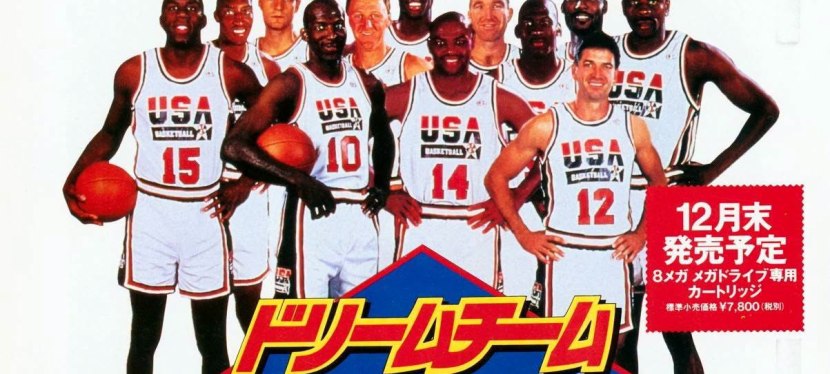
6. Dream Team USA Japanese Print Ad
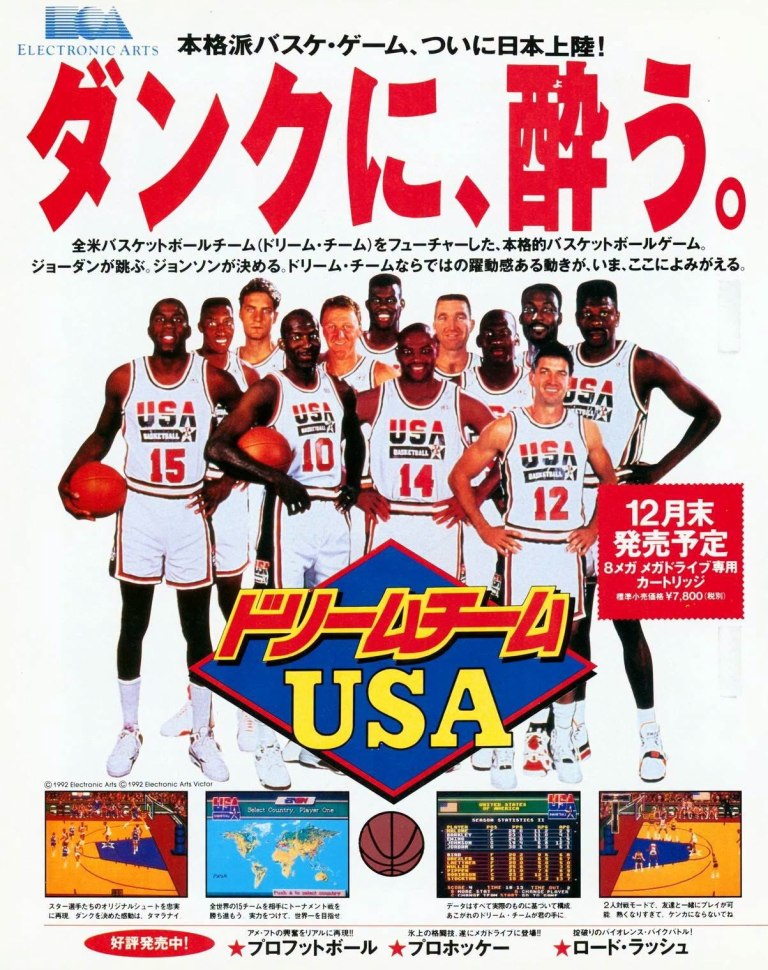
The legends of the NBA in the Japanese version of EA’s Team USA Basketball. Retitling the game as Dream Team USA made more sense because “Dream Team” was a much more popular reference than “Team USA Basketball”.
Remember how wildly popular the Dream Team (Team USA in Olympic basketball) was in 1992? With NBA legends Larry Bird, Michael Jordan, Magic Johnson, Charles Barkley, Karl Malone, John Stockton and more representing America in the basketball tournament of the Olympic Summer Games in Barcelona, Spain, the Dream Team (a media-led reference for the team) was easily the main attraction not only for basketball fans worldwide but also those who craved for excitement in international sports events. That said, Electronic Arts secured the license to make an official video game about the Dream Team and actually released the game Team USA Basketball within 1992 for the Sega Genesis. As basketball is popular also in Japan, EA released the game there titled as Dream Team USA and came up with a Japanese print ad to seriously capture gamers’ attention. This ad is still effective in delighting both basketball and video game enthusiasts.
7. Super Star Wars: The Empire Strikes Back And Return Of The Jedi Print Ad
No screenshots of games used. Just the official images from the posters of the two movies.
Back in the 1990s, there was a resurgence of the original Star Wars trilogy across different forms of media. Apart from the VHS re-releases of Star Wars, The Empire Strikes Back and Return of the Jedi, there was a slew of video games of Star Wars released during the decade and the fans had new stuff to entertain themselves with. Along the way, the company THQ secured the rights to Super Star Wars: The Empire Strikes Back and Super Star Wars: Return of the Jedi for re-release to coincide with the 1997 “Special Edition” theatrical releases of their respective movies. THQ’s print ad simply used official images of Return of the Jedi and inserted a tiny bit of The Empire Strikes Back, and they did not show any screenshots that could have been helpful for Super Nintendo Entertainment System (SNES) and Game Boy users. Still, it was smart for THQ to print two excerpts of game reviews to sell the games.
8. Super Mario RPG North American Print Ad
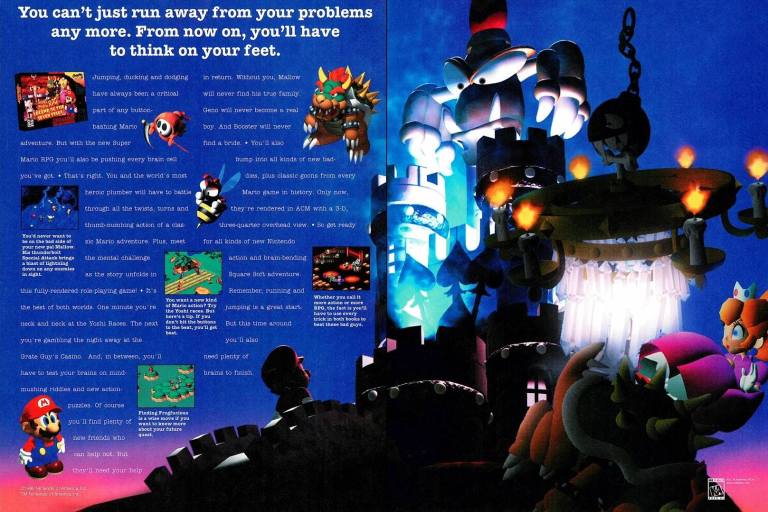
A mesmerizing ad for the acclaimed Super Mario RPG.
Remember back in the 1990s when Nintendo and role-playing game giant SquareSoft had a very healthy business relationship that proved successful? Before their eventual breakup (related to Square signing with Sony for PlayStation development), the two companies joined forces to make a fully featured role-playing game for the SNES featuring Super Mario and related characters…Super Mario RPG: Legend of the Seven Stars. To promote the game, Nintendo (the publisher) created a mesmerizing 2-page print ad highlighting their characters while emphasizing the role-playing and fantasy aspects of the game. At the time of its release, Super Mario was often identified with platform games and the Super Mario RPG print ad was a serious attempt to lure fans into RPGs which the SNES was already rich with. This ad, which I first saw in gaming magazines in 1996, still looks great.
9. NBA Shootout ’97 Print Ad
Did you play this on PlayStation in 1997?
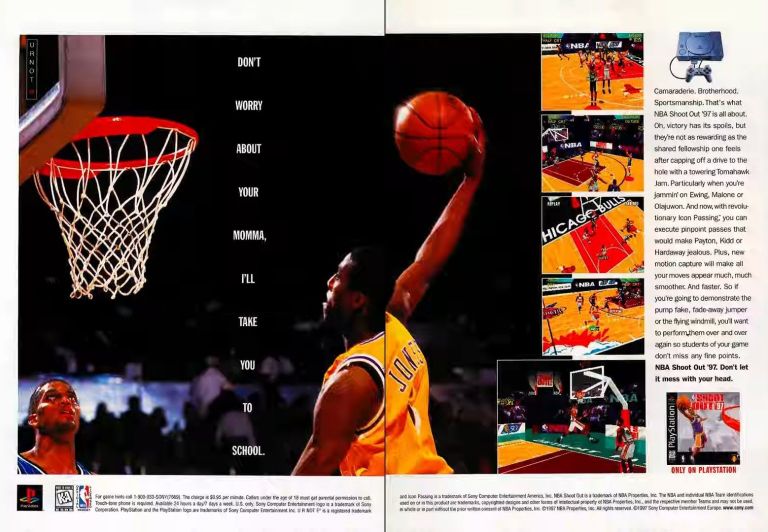
If there is anything I miss about 1990s console gaming, it is the fact that there were a lot of NBA-licensed video games that were offered to players with different tastes in basketball gaming. Sony had its own exclusive NBA games series called NBA Shootout and they were pretty aggressive selling its own basketball games along with the PlayStation going up against the likes of Electronic Arts (NBA Live), Sega and others. This is reflected in this 2-page print ad of NBA Shootout ’97 which was a PlayStation-exclusive release. They featured a photograph of Lakers’ Eddie Jones about to dunk and showed screenshots as well as the descriptive text written with excitement. Since it first started, NBA Shootout was basketball in full 3D polygonal graphics backed with motion-captured moves and dunks that players could enjoy only PlayStation. This ad is a reminder that Sony used to make official NBA games and there is a lack of variety and players’ choice of NBA gaming in today’s world.
10. Legend of Legaia North American Print Ad
Perhaps someone at Sony Computer Entertainment America (SCEA) thought Legend of Legaia was a horror video game.
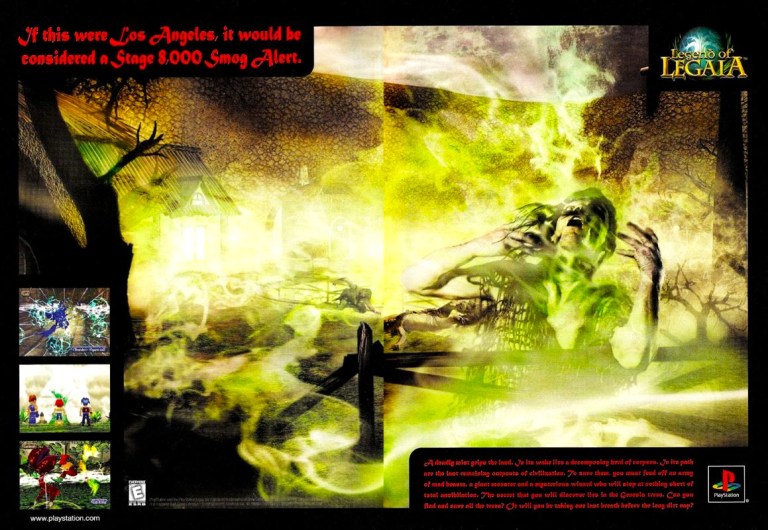
There was a time when Sony produced Japanese RPGs (JRPGs) exclusive for PlayStation consoles. One of them was Legend of Legaia which had a combat system that emphasized martial arts and it had an interesting fantasy concept. For its 1999 North American release, Sony came up with a very bizarre 2-page print ad that had digital artwork with a very strong horror vibe and the visual designs within the three screenshots shown were clearly not related with it. How this ad was made remains unclear. This is easily one of the most misguided gaming ads of the 1990s.
In a serious attempt to attract more travelers from Southeast Asia, the tourism ministry of Israel enhanced the existing ties with travel agencies in the Philippines and Singapore, according to a news article by the Philippine News Agency (PNA).
To put things in perspective, posted below is an excerpt from the news article of the PNA. Some parts in boldface.
Israel’s Ministry of Tourism is seeking to attract more travelers from Southeast Asia by strengthening ties with travel agencies in the Philippines and Singapore, as it promotes the country’s destinations and assures visitors of safety.
The ministry recently hosted a seven-day familiarization tour for travel agents from both countries, showcasing Israel’s religious, historical, adventure and leisure attractions as part of its campaign to expand arrivals from the Association of Southeast Asian Nations (ASEAN) region.
The itinerary includedvisits to Jerusalem, Dead Sea and Tel Aviv, as well as a jeep tour through the Judean Desert and a wine tour in the Golan Heights.
Hassan Madah, international director of the Israel Ministry of Tourism in Jerusalem, said the country remains open to international visitors.
“We welcome you all. Israel is open to everyone, and travelers can be assured that our country is safe to visit,” Madah said.
He saidthe ministry hopes to welcome more visitors from the Philippines and Singapore, citing the country’s religious sites, historic cities, deserts and beaches as key attractions.
The ministry identified thePhilippines as one of its priority markets in Asia, alongside India, China and South Korea, with growth driven largely by faith-based travel.
Singapore, meanwhile, is considered a strategic market because of its position as a regional aviation and travel hub.
The tourism ministry said it has been strengthening partnerships with Southeast Asian travel industry stakeholders through regional events, including ITB Asia in Singapore.
Despite the lack of direct flights between the Philippines and Israel, Filipino arrivals have remained steady, according to the ministry.
TheDepartment of Tourism and the Israel Ministry of Tourism have signed a joint declaration of intent to promote two-way tourism and are engaged in discussions with airlines on improving connectivity.
Israel Ministry of Tourism Philippines Marketing Manager Anna Oraiza Aban saidvisa-free travel access for Philippine and Singaporean passport holders makes visits to Israel more convenient.
To all my readers, I encourage you to thank the Lord for this breakthrough of cooperation between Israel and both the Philippines and Singapore as the Jewish state seeks more visitors from Southeast Asia.
As such, I encourage you all to pray to the Lord for this breakthrough to lead to more breakthroughs in terms of improved travel, more connections between Israel and Southeast Asia, and more opportunities for Southeast Asian people to visit the Holy Land and realize the legacy of God, Lord Jesus and the Jewish people.
At the same time, I encourage you all to realize the truth that Israel is the land God designated specifically for the Jewish people (read Genesis 35:10-12) and His command must be followed without hesitation. If you want to be blessed further by the Lord, do so by loving and blessing the Jewish people (Genesis 12:1-3). I did my part when I was in Israel. Also, let me remind you all that the ties between the Jews and Christians are truly biblical!
I encourage you all to pray to the Lord God in support of Israel, to love and bless the Jewish people, and pray for the peace of Jerusalem.
The Subic Bay Metropolitan Authority (SBMA) announced that it has released almost P220 million in revenue shares to the City Government of Olongapo and seven other local government units (LGUs).
To put things in perspective, posted below is an excerpt from the SBMA’s official announcement. Some parts in boldface…
The Subic Bay Metropolitan Authority (SBMA) released a total of PHP 218,115,671.26 in revenue shares to eight local government units (LGUs) contiguous to this premier freeport zone.
SBMA Chairman and Administrator Eduardo Jose L. Aliño said that this amount released on Tuesday, July 21, 2026,represents the revenue shares for the first semester of 2026, which is 10.24 percent higher than that of last year’s comparative period.
The recipient LGUs areOlongapo City,the municipalities of Subic, San Marcelino, Castillejos, and San Antonio in Zambales, and the towns of Dinalupihan, Hermosa, and Morong in Bataan.
Taking into account the population and land area,Olongapo was allocated the largest amount of PHP 50,420,165.72, received by Olongapo City Mayor Atty. Rolen Paulino, Jr. This was followed by Subic, Zambales, which received PHP 32,871,521.46, accepted on behalf of Mayor Jonathan John Khonghun.
The remaining LGUs received their allocations as follows: Dinalupihan, Bataan, with PHP 27,438,313.68, accepted on behalf of Mayor German Santos, Jr.; San Marcelino, Zambales, with PHP 26,272,445.97, received by Mayor Elvis Soria; Hermosa, Bataan, with PHP 23,422,520.27, accepted on behalf of Mayor Atty. Anne Adorable-Inton; Castillejos, Zambales, with PHP 19,817,470.23, received on behalf of Mayor Jeffrey Khonghun; Morong, Bataan, with PHP 19,340,287.10, received on behalf of Mayor Leila Linao-Muñoz; and San Antonio, Zambales, with PHP 18,532,946.83, received by Mayor Dr. Arvin Antipolo.
TheLGU shares are sourced from five percent corporate taxes paid by business locators in the Subic Bay Freeport. They aredistributed among LGUs based on population (50%), land area (25%), and equal sharing (25%).
OIC-Deputy Administrator for Finance Editha Marzal, along with the finance team, led the distribution of the LGU shares.
Marzal noted that the net shares distributed to the LGUs include not only the current collection period’s allocations but also the 10 percent retention withheld during the first semester of the 2024 distribution.
Let me end this post by asking you readers: What is your reaction to this recent development? Do you see the increased amount of revenue shares as a sign of better economic activities and finances within the Subic Bay Freeport Zone? Do you think the revenue shares would be higher once the Luzon Economic Corridor (LEC) and Pax Silica activities finally start economic activities in the near future?
During his recent State of the Nation Address (SONA), Philippine President Ferdinand “Bongbong” Marcos, Jr., declared that it is time for the nation to revisit nuclear energy production, according to a news report by GMA News.
To put things in perspective, posted below is an excerpt from the GMA News report. Some parts in boldface…
President Ferdinand “Bongbong” Marcos Jr. on Monday said it is time to revisit nuclear energy production, as he touted some 200 energy projects in the pipeline in a bid to boost the country’s power supply and bring down power rates.
In his fifth State of the Nation Address (SONA), Marcos said the administration is working to revisit nuclear energy, as it is already being used in medicine, agriculture, water filtration, and the upcycling of plastic.
“Pushing the envelope further, perhaps it is time for us to revisit nuclear energy production,” he said, noting confidence in its capacity “to reinforce our energy security and bring down the cost of electricity in our country.”
“Titiyakin nating ito ay ligtas. Titiyakin din nating maipaliwanag nang mabuti sa publiko ang magandang dulot sa atin ng enerhiyang nukleyar” he added.
(We will make sure that this is safe. We will also make sure to explain the benefits of nuclear energy properly to the public.)
According to Marcos, the administration has a pipeline covering some 200 power projects across the country that will have a combined capacity of nearly 10,000 megawatts (MW) — 45 of which have already been completed, while 31 are set to be completed this year. The remaining 124 are targeted to be completed by 2028.
These are on top of 1,700 megawatts that the projects will contribute to energy storage systems, which Marcos said will boost energy security.
“Ang mga proyektong ito ay napabilis nang dahil sa mga bagong patakaran at proseso na nagpapadali ng pagnenegosyo dito sa ating bansa, para sa mga Pilipino at dayuhang negosyante,” he said.
(These projects were expedited because of the new regulations and processes that eased doing business here in the country for Filipinos and foreign investors.)
Let me end this post by asking you readers: What is your reaction to this recent development? Do you think the highlighting of nuclear energy production in the State of the Nation address will lead to breakthroughs for a nuclear-powered Philippines? Are people in your local community still afraid of nuclear energy? Do you think unchecked corruption inside the government of the Philippines will derail any nuclear-related efforts?
Thank you for reading. If you find this article engaging, please click the like button below, share this article to others and also please consider making a donation to support my publishing. If you are looking for a copywriter to create content for your special project or business, check out my services and my portfolio. Feel free to contact me with a private message. Also please feel free to visit my Facebook page Author Carlo Carrasco and follow me on Twitter at @CarloCarrascoPH as well as on Tumblr at https://carlocarrasco.tumblr.com/and on Instagram athttps://www.instagram.com/authorcarlocarrasco
Following the lifting of the ban on information technology economic zones in Metro Manila, the Department of Trade and Industry (DTI) expects the new investments to come in as well as new jobs to be generated, according to a news report by the Manila Bulletin.
To put things in perspective, posted below is an excerpt from the Manila Bulletin report. Some parts in boldface…
The Department of Trade and Industry (DTI) expects the information technology and business process management (IT-BPM) sector to generate more jobs and attract new investments after the lifting of the ban on IT economic zones in Metro Manila.
In a statement on Tuesday, July 28, Trade Secretary Cristina Roque welcomed the issuance of Administrative Order (AO) No. 45, which seeks to ease some of the restrictions under the broader prohibition on the processing and evaluation of applications for ecozones imposed during the previous administration.
“This major policy reform is a resounding victory for the IT-BPM sector and a decisive step forward in strengthening the Philippines’ position as a premier global destination for digital services,” the DTI chief said.
AO 45, signed by President Ferdinand Marcos Jr., excludes applications for the establishment of IT centers and IT parks from the ongoing moratorium on ecozone applications.
The order maintains the prohibition on all other ecozone applications in National Capital Region (NCR), as embodied in AO 18, issued by former President Rodrigo Duterte in 2019. The policy was implemented to encourage development and spur investments in the provinces.
With the lifting of the ban, Roque said the government is addressing long-standing investor demand from IT-BPM firms looking to open or expand in NCR while also creating more opportunities for real estate development.
“As we open new avenues for growth in Metro Manila alongside our continuous push to develop regional IT hubs, we are positioning the IT-BPM sector to generate thousands of high-quality jobs, attract foreign direct investments, and ensure economic growth nationwide,” she said.
The DTI earlier endorsed the proposal of the investment promotion agency (IPA) Philippine Economic Zone Authority (PEZA) to lift the moratorium to provide more options for companies seeking to locate in key central business districts in the capital region.
PEZA Director General Tereso Panga earlier told reporters that the ban has essentially forced firms to operate in existing ecozones, restricting their expansion plans.
“We invite our global partners and prospective investors to take full advantage of this renewed momentum and build their future here in the Philippines,” Roque said.
IT-BPM firms operate in ecozones to avail themselves of the fiscal and nonfiscal incentives provided by the government.
Let me end this post by asking you readers: What is your reaction to this recent development? Do you consider Metro Manila suitable for the establish of new economic zones as well as the expansion of existing economic zones? Do you believe that the demand by IT-BPM firms for expansion in Metro Manila is real?
Thank you for reading. If you find this article engaging, please click the like button below, share this article to others and also please consider making a donation to support my publishing. If you are looking for a copywriter to create content for your special project or business, check out my services and my portfolio. Feel free to contact me with a private message. Also please feel free to visit my Facebook page Author Carlo Carrasco and follow me on Twitter at @CarloCarrascoPH as well as on Tumblr at https://carlocarrasco.tumblr.com/and on Instagram athttps://www.instagram.com/authorcarlocarrasco
In a serious effort to weaken the fighting capability and severing the resources (financially and militarily) of the Islamic terrorist regime of Iran, the United States sanctioned entities and individuals in four nations that enabled the Islamic Revolutionary Guard Corps (IRGC), according to the official announcement of the Department of State.
To put things in perspective, posted below is the entire announcement of the State Department. Some parts in boldface…
The United States today sanctioned six entities and individuals in China, India, Russia, and Iran that enable the Iranian regime’s Islamic Revolutionary Guard Corps (IRGC).
These include entities that support Mahan Air, the IRGC’s airline of choice for moving weapons, military personnel, and equipment. Today’s action also targets DadeNegar Startup Studio, an IRGC-affiliated front company supporting Iranian military targeting by soliciting locations of American and Israeli equipment in the Middle East.
The United States calls on the international community, particularly companies and individuals doing business with Mahan Air or any other sanctioned Iranian carrier, to recognize the serious risks raised by continuing such engagement.
The United States will continue to expose and disrupt entities providing the IRGC with the tools and information it uses to threaten American personnel, our partners, and regional stability.
Let me end this piece by asking you readers: What is your reaction to this development? Do you think this new move by the US will cripple the Islamic terrorist regime of Iran financial and militarily? Do you think members of the international community will follow America’s initiative? Do you think other nations like Pakistan, Malaysia and Bangladesh have entities or individuals who are supporting the Islamic terrorist regime of Iran?
Fresh potatoes from the United States could potentially enter Japan’s markets this year as the authorities are assessing the quarantine risks and the concerns raised by Japanese potato farmers, according to a news report by NHK World. The Japanese authorities received a request from Washington regarding American potatoes which led to the ongoing assessment.
To put things in perspective, posted below is the excerpt of the NHK World report. Some parts in boldface…
Japan is taking steps that could lead to it fully opening its market to fresh US potatoes, following a request from Washington.
Japan bans imports of raw potatoes due to concerns over pests and disease, except for some sourced from the United States to be used exclusively for potato chips.
The agriculture ministry is currently assessing the quarantine risks posed by American potatoes, the third step in an 11-stage process before all restrictions can be lifted.
Officials plan to complete the risk assessment as early as this summer, and move on to identifying the pests and diseases that need to be dealt with.
Demand for fresh potatoes is rising in Japan, as domestic production has been on the decline.
Let me end this piece by asking you readers: What is your reaction to this development? Do you think Japan’s agriculture ministry will even allow full market opening to fresh potatoes from the United States? What do you think is the reason why Japan’s domestic production of fresh potatoes has declined?
Due to the low supply of electricity and the high demand recorded this past June, the Philippines had the most expensive electricity rates among member nations of the Association of Southeast Asian Nations (ASEAN), according to a news report by GMA News.
To put things in perspective, posted below is an excerpt from the GMA News report. Some parts in boldface…
The Philippines had the most expensive electricity rates among the Association of Southeast Asian Nations (ASEAN) in June due to low supply and high demand recorded during the month, the Department of Energy (DOE) reported Monday.
According to DOE Undersecretary Rowena Cristina Guevara, the country reported an average rate of P12.43 per kilowatt-hour (kWh) in June, surpassing that of Singapore by P0.093 per kilowatt-hour.
“Sa Visayas, siya talaga ‘yung pinakamahal dahil talagang may kakulangan tayo sa supply doon. Meron tayong 21 plants na naka-forced outage and therefore, dependent siya talaga sa Luzon at sa Mindanao for imported power,” she said in a virtual briefing.
(Visayas was really the most expensive because there was really a lack of supply there. There are 21 plants on forced outage, and therefore, it is really dependent on imported power from Luzon and Mindanao.)
“Alam niyo naman, naka-yellow alert sila palagi (As you know, they have been on yellow alert regularly) since May 13, and that is the one that is driving the price high for Visayas,” she added.
The Visayas grid has been on yellow alert — indicating that the operating margin is insufficient to meet the transmission grid’s contingency requirement — for several days in June, due to the continued forced outage of major coal plants in the region.
Among the outages recorded were Therma Visayas Inc. (TVI) units 1 and 2 and Panay Energy Development Corp. (PEDC).
“For the rest… Meron kasi din tayong mga matataas na demand during the summer months, and therefore we have to operate the more expensive power plants. Imbes na mag-blackout, paandarin na lang ‘yung mga medyo mahal na plant,” Guevara said.
(For the rest… Demand was also high during the summer months, and therefore, we have to operate the more expensive power plants. Instead of blackouts, we ran more expensive plants.)
Let me end this post by asking you readers: What is your reaction to this recent development? What do you think must be done to ensure abundant electricity for the Filipinos? Are you convinced now is the time for the government of the Philippines to go all-in on nuclear power? How much was your electric bill this past June?
Thank you for reading. If you find this article engaging, please click the like button below, share this article to others and also please consider making a donation to support my publishing. If you are looking for a copywriter to create content for your special project or business, check out my services and my portfolio. Feel free to contact me with a private message. Also please feel free to visit my Facebook page Author Carlo Carrasco and follow me on Twitter at @CarloCarrascoPH as well as on Tumblr at https://carlocarrasco.tumblr.com/and on Instagram athttps://www.instagram.com/authorcarlocarrasco
The Philippines, which is already experiencing slower economic growth, higher inflation and having trouble attracting foreign investment, saw its exports to the United States subject to a higher 12.5% tariff as the Trump administration is convinced that the country failed to prevent the entry of goods produced with forced labor, according to a news report by the Manila Bulletin.
To put things in perspective, posted below is an excerpt from the Manila Bulletin news report. Some parts in boldface…
The country’s exports to the United States (US) are now subject to a higher 12.5-percent tariff after the Trump administration determined that the Philippines has failed to prevent the entry of goods produced with forced labor.
In a notice on Friday morning, July 24 (Philippine time), the Office of the US Trade Representative (USTR) said it is imposing a 12.5-percent tariff on the Philippines, in accordance with the directive of US President Donald Trump.
The USTR earlier included the Philippines in its investigation into the US’ top 60 trading partners as it sought to crack down on imports made with forced labor that were found to be harmful to American commerce.
In a report on the probe’s findings, the USTR said the Philippines “has failed to impose and effectively enforce a forced labor import prohibition.”
Apart from the Philippines, 40 other economies are subject to the 12.5-percent tariff.
“The US has had a forced labor import ban for nearly a century, and rigorously enforces it. It’s well past time for our trading partners to do the same,” said USTR Ambassador Jamieson Greer.
“Today’s action will begin to correct what is both a human rights abuse and distortive trade practice to improve the welfare of workers everywhere,” he added.
The USTR said it would exempt certain products from the tariff, including goods that cannot be produced in sufficient quantities or at reasonable prices in the US, and products that could cause economy-wide disruptions if they were subjected to the tariffs.
Philippine goods exempt from the 12.5-percent tariff include most of the country’s major exports to the US, including semiconductors, its top export commodity. Also exempted are agricultural commodities such as coconuts, pineapples, and bananas, as well as raw minerals such as nickel ores and concentrates.
The US remains the Philippines’ largest export market, accounting for $13.46 billion, or 15.9 percent, of the country’s total exports in 2025.
Let me end this post by asking you readers: What is your reaction to this recent development? Do you think the Philippines has been negligent on monitoring the entry of goods produced with forced labor? Does this new economic development dampen your trust in the government of the Philippines?
Thank you for reading. If you find this article engaging, please click the like button below, share this article to others and also please consider making a donation to support my publishing. If you are looking for a copywriter to create content for your special project or business, check out my services and my portfolio. Feel free to contact me with a private message. Also please feel free to visit my Facebook page Author Carlo Carrasco and follow me on Twitter at @CarloCarrascoPH as well as on Tumblr at https://carlocarrasco.tumblr.com/and on Instagram athttps://www.instagram.com/authorcarlocarrasco