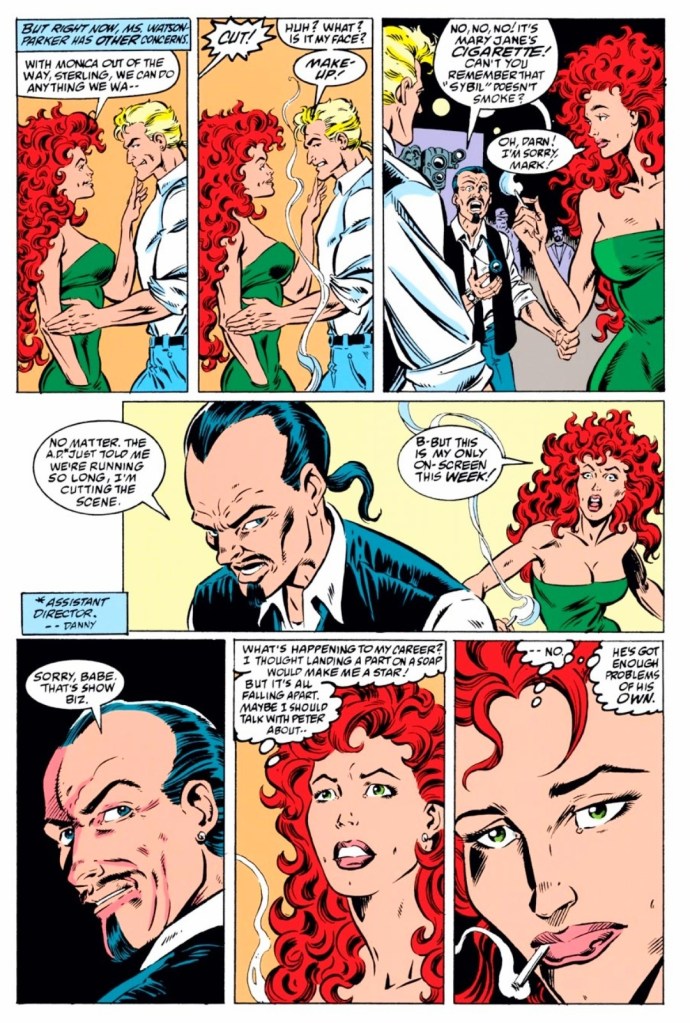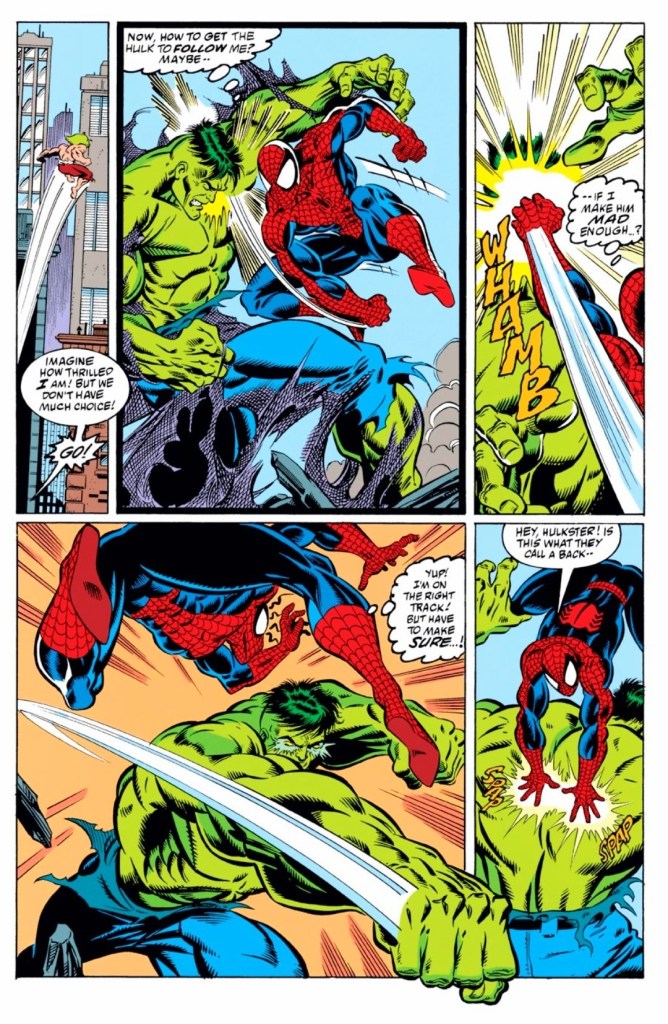
A Look Back at Amazing Spider-Man #381 (1993)

Disclaimer: This is my original work with details sourced from reading the comic book and doing personal research. Anyone who wants to use this article, in part or in whole, needs to secure first my permission and agree to cite me as the source and author. Let it be known that any unauthorized use of this article will constrain the author to pursue the remedies under R.A. No. 8293, the Revised Penal Code, and/or all applicable legal actions under the laws of the Philippines.

Welcome back superhero enthusiasts, 1990s culture enthusiasts and comic book collectors! Today we go back to the year 1993 and explore a part of the Marvel Comics universe through one of the many tales of the Amazing Spider-Man comic book series.

To put things in perspective, 1993 was another busy year for the iconic Spider-Man who not only had four monthly series of his own but also appeared in the Venom: Lethal Protector mini-series, the 14-part Maximum Carnage crossover and in Marvel’s major crossover The Infinity Crusade. As expected, Spider-Man survived through those storylines.

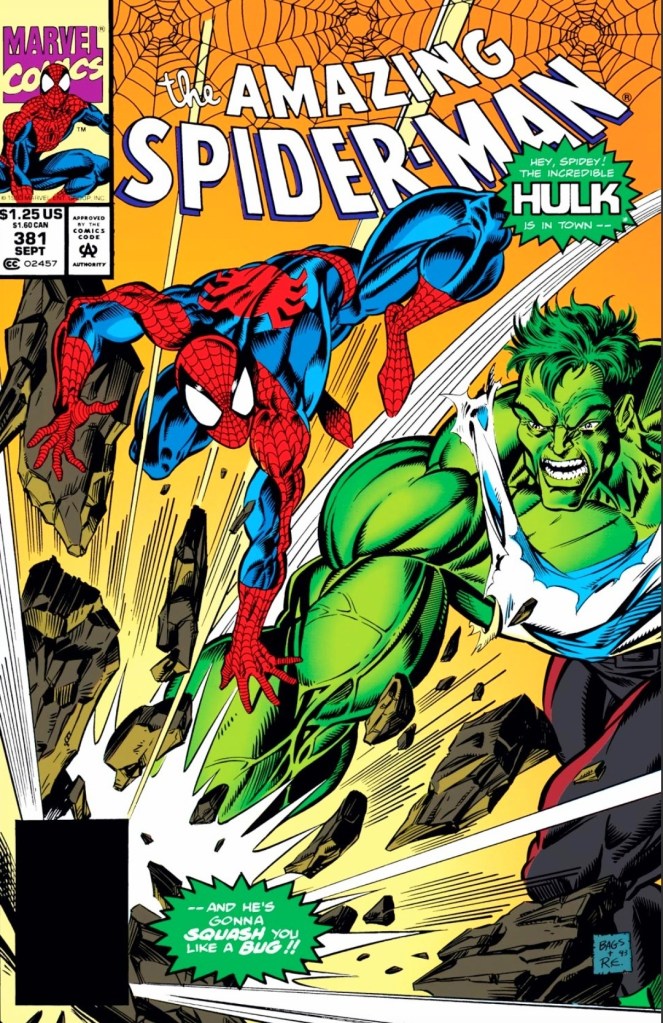
With those details laid down, here is a look back at Amazing Spider-Man #381, published in 1993 by Marvel Comics with a story by David Michelinie and drawn by Mark Bagley.  
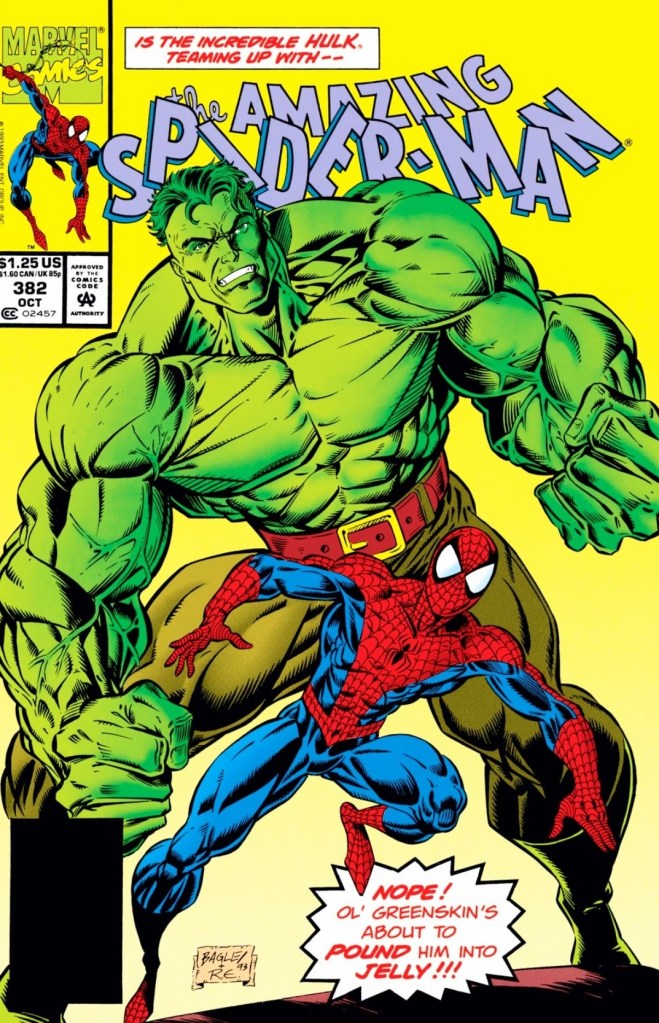
The cover.

Early story

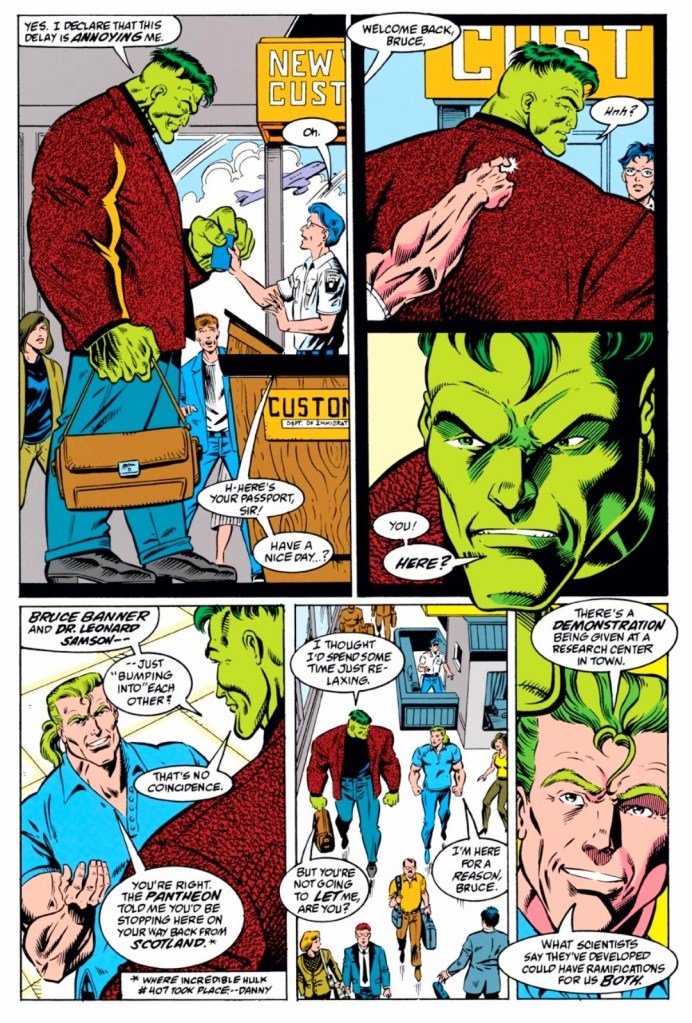
The story begins inside the airport in New York where the incredible Hulk/Bruce Banner himself had just arrived from Scotland. Due to his tremendous size, his physical presence easily distract the people around him. Dr. Leonard Samson surprises Banner and informs him of an upcoming scientific demonstration and the scientists behind it have developed something that could have ramifications for people who got exposed to gamma radiation. Samson explains that there is a radiation virus that releases repressed emotions. The Hulk rejects Samson and leaps to the air above towards an unknow destination.

At a school yard in lower Manhattan, two kids bully another kid into giving them his lunch money. Spider-Man suddenly arrives to stop trouble and immediately the two bullies ran away…

Quality

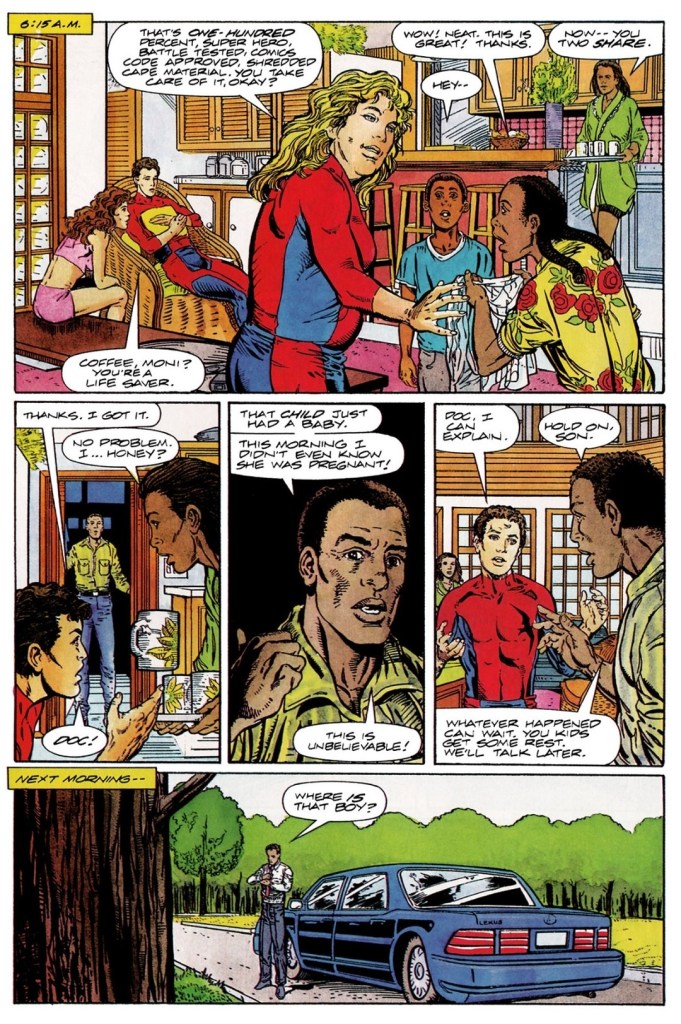
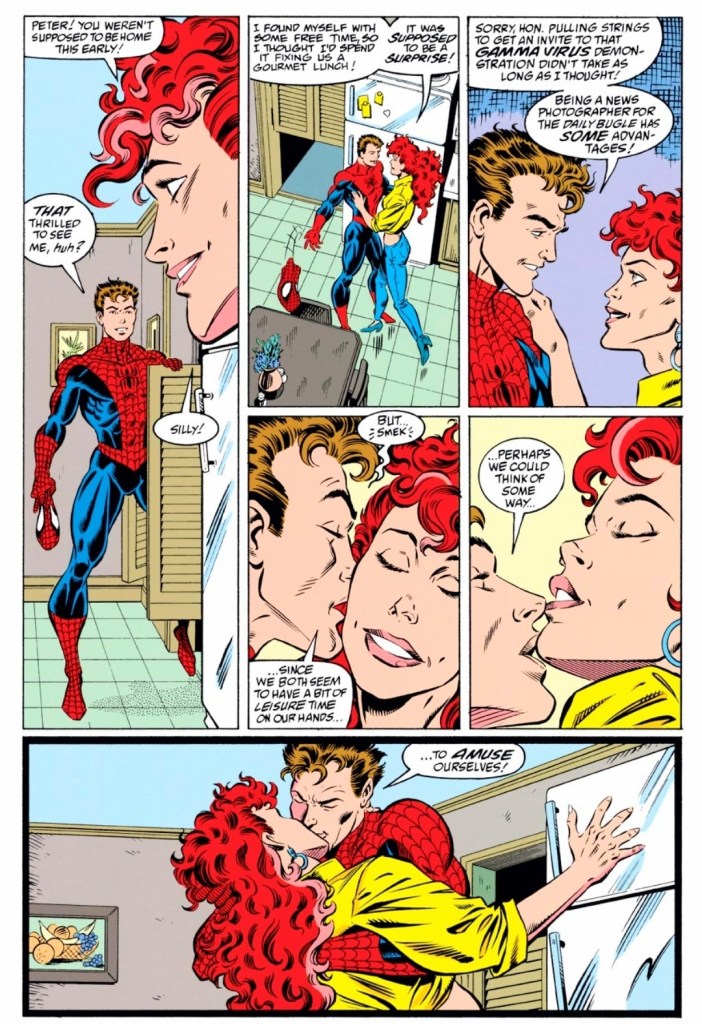
Quality time between Peter Park and wife Mary Jane.

I can say that is one of the more interesting crossovers between Spider-Man and the Hulk who at this stage in Marvel’s comic book history retained his intelligence and personality while in his huge, green-skinned form. Adding variety to the crossover was the presence of Doc Samson who was already an established and notable supporting character in comic books featuring the Hulk.

Set after the events of Maximum Carnage, the Infinity Crusade and Hulk’s time in Scotland (as told in Incredible Hulk #407), this story shows life in New York gradually normalizing. The peace, as it turns out, was only temporary as the big-time scientific demonstration in this story leads to a series of unfortunate events that compels Peter Parker to take action as Spider-Man.

The tale was nicely structured and the creative team took its time to build-up the story concept, the character motivations and execute the superhero spectacle at an overall medium pace. There is simply no boring scene nor any wasted moments. The appearances of Samson and the Hulk in this Spider-Man tale were nicely integrated and they each had their own impact on the plot. There is a lot of stuff here that fans of both Spidey and the green giant can enjoy.

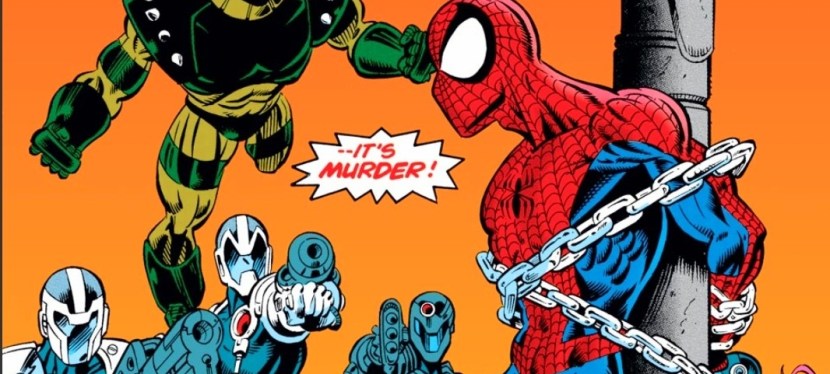
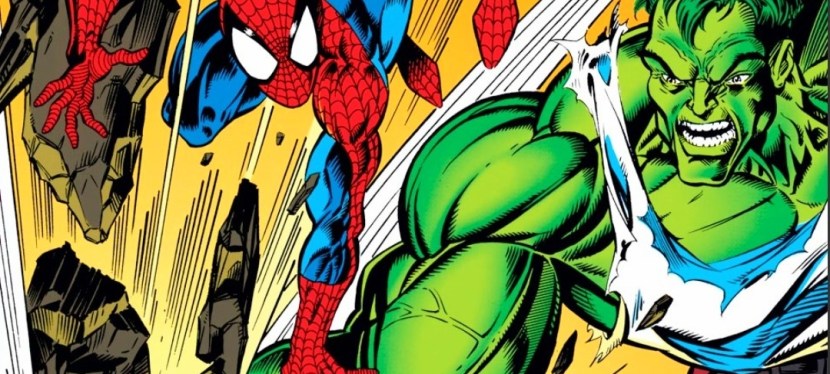
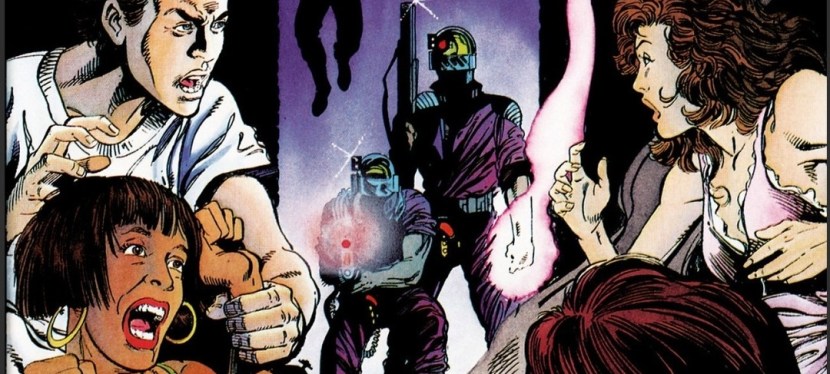
When it comes to the art, I found Mark Bagley’s take on the Hulk distinctive and intriguing to look at. The final shot of this comic book is a must-see.

Conclusion

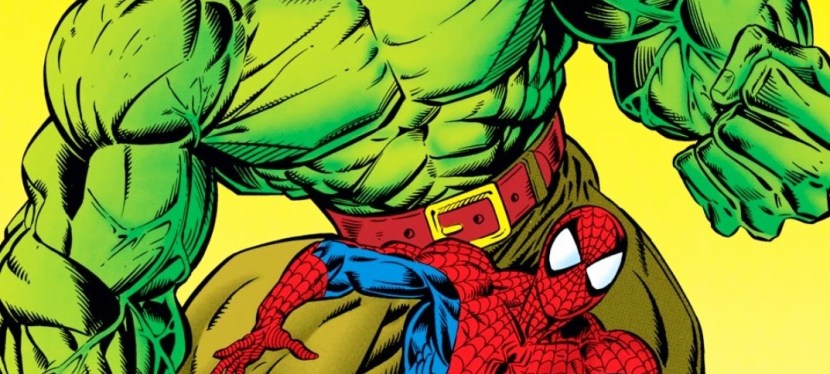
Hulk and Doc Samson at the airport.

While there clearly is no villain, Amazing Spider-Man #381 (1993) still turned out to be a fun read complete with a fine crossover between Spider-Man, Doc Samson and the Hulk. Apart from the lack of space for character development, nothing here felt half-baked with the executions of the storytelling and the spectacle. This is a fun read and it was also a modern take on the personal encounter between Hulk and Spidey during the 1990s. This comic book has something enjoyable that fans of the two Marvel icons won’t find in any of the Marvel Cinematic Universe (MCU) movies and shows.

Overall, Amazing Spider-Man #381 (1993) is recommended.

+++++

Thank you for reading. If you find this article engaging, please click the like button below, share this article to others and also please consider making a donation to support my publishing. If you are looking for a copywriter to create content for your special project or business, check out my services and my portfolio. Feel free to contact me with a private message. Also please feel free to visit my Facebook page Author Carlo Carrasco and follow me on Twitter at  @HavenorFantasy as well as on Tumblr at https://carlocarrasco.tumblr.com/ and on Instagram at https://www.instagram.com/authorcarlocarrasco
A Look Back at Amazing Spider-Man #268 (1985)

Disclaimer: This is my original work with details sourced from reading the comic book and doing personal research. Anyone who wants to use this article, in part or in whole, needs to secure first my permission and agree to cite me as the source and author. Let it be known that any unauthorized use of this article will constrain the author to pursue the remedies under R.A. No. 8293, the Revised Penal Code, and/or all applicable legal actions under the laws of the Philippines.

Welcome back superhero enthusiasts, 1980s arts and culture enthusiasts, Marvel Comics fans and comic book collectors! Today we go back to the 1980s and examine a small part of the Marvel Comics universe through a tale of the Amazing Spider-Man monthly series.

Back in the year 1985, Marvel Comics published their big-time limited series Secret Wars II, which saw the arrival of the powerful yet ignorant deity Beyonder on Earth. As a major publishing event spearheaded by then editor-in-chief Jim Shooter, Secret Wars II had events that impacted a certain number of regular monthly comic book series whenever an issue was released. In one of the early issues of Secret Wars II, the Beyonder converted an entire tall building within New York City into pure solid gold. As the golden building could not support its own weight, it collapsed and the authorities scrambled to secure the perimeter. Spider-Man himself gets involved by rescuing the victims and he learned something along the way (as seen in Web of Spider-Man ).

With those details laid down, here is a look back at Amazing Spider-Man #268, published in 1985 by Marvel Comics with a story written by Tom DeFalco and drawn by Ron Frenz.

The cover.

Early story

The story begins with Spider-Man swinging high and noticing that the perimeter of the collapsed building of pure gold has been covered (with a large tarpaulin) and secured by armed personnel. People were not allowed to pass which makes them speculate about what happened. Having witnessed government operative Anderson compensating the Kingpin with typewriters made of pure gold secretly, Spider-Man is deeply troubled and decides to go home to take a rest.

At the site of disaster, several personnel equipped with laser weapons worked hard to cut down every part of the collapsed building and transport as much gold as possible onto trucks which are tasked to deliver them to a huge cargo ship at the city’s port. The authorities are concerned that the excessive amount of gold from the collapsed golden building will cause tremendous shockwaves in the world’s markets and they strive hard to keep everything secret…

Quality

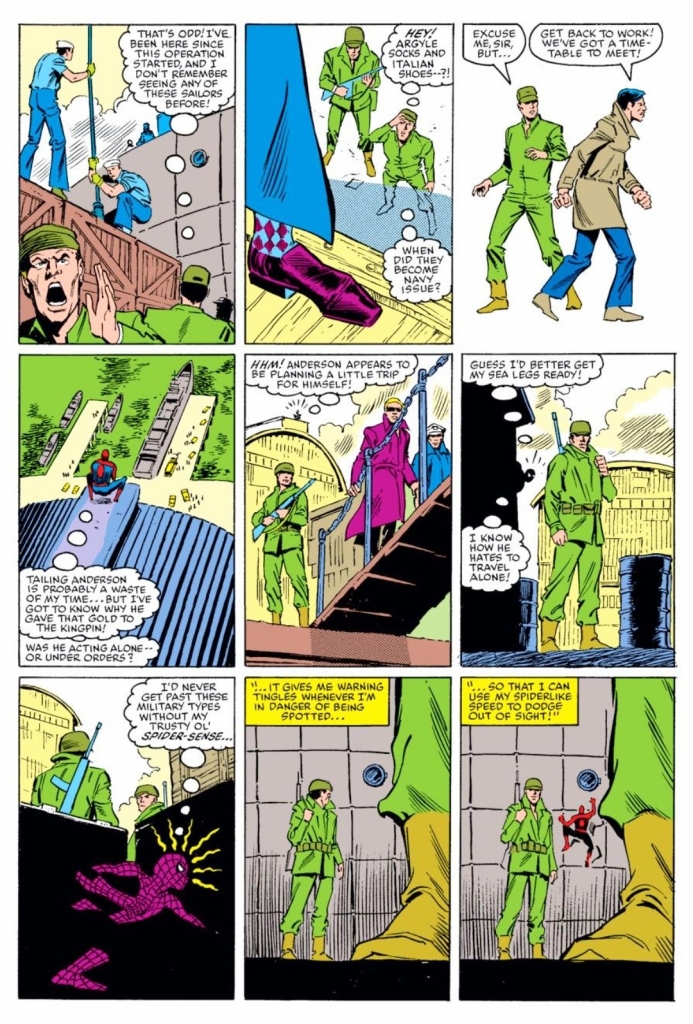
Spider-Man sneaking on to the ship as he pursues answers to hot questions about what has been going on.

Being a tie-in story to Secret Wars II, this is indeed a really unique Spider-Man story that does not put the iconic hero in direct conflict with a powered villain at all which can disappoint certain readers and fans who craved for action-packed conflicts. Instead, this story was designed to be a mystery which strongly reflects the consequences of the Beyonder’s action during his presence in New York. You will get to see Spider-Man work on finding out the answers to all the questions in his head and his knowledge about the involvement of the Kingpin and the United States government were more than enough to motivate him to figure things out even though it means putting himself at risk with powerful authorities.

In terms of story structuring and presentation, the tale moved at a moderate pace and the creators took their time with the revelation of key details (clearly designed to cause intrigue with the readers) as the narrative moved forward. This is indeed an engaging read and it has aged well.

Conclusion

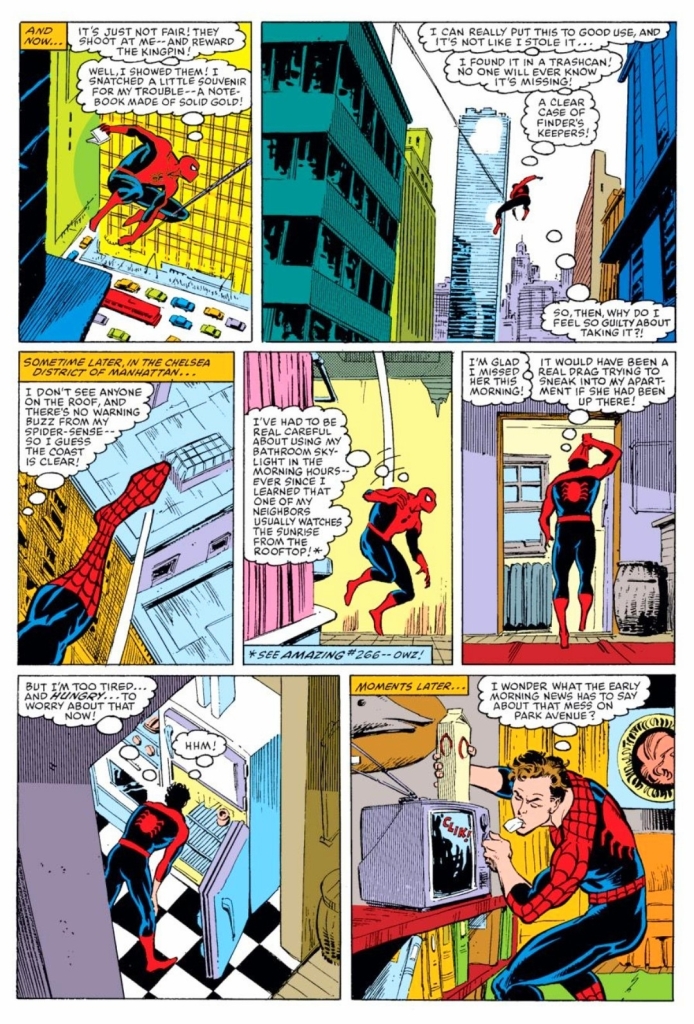
Spider-Man returns home tired.

Amazing Spider-Man #268 (1985) is an intriguing and entertaining read even though it does not have Spider-Man in direct physical conflict with a bad guy. The Kingpin, an established supervillain, is present in the story mainly as a background character who still has strong influence with the sinister forces present. The biggest feature of the comic book is the situation itself (local efforts on dealing with the collapsed building of pure gold while preventing the public from knowing all about it) which got triggered by the Beyonder’s reckless act of trying to help humanity by turning a building into pure gold believing that it would help all people financially and socially. As for Spider-Man himself, it is refreshing to see him work his way through in a mystery tale and this comic book has a very solid approach on mystery.

Overall, Amazing Spider-Man #268 (1985) is recommended.

+++++

Thank you for reading. If you find this article engaging, please click the like button below, share this article to others and also please consider making a donation to support my publishing. If you are looking for a copywriter to create content for your special project or business, check out my services and my portfolio. Feel free to contact me with a private message. Also please feel free to visit my Facebook page Author Carlo Carrasco and follow me on Twitter at  @HavenorFantasy as well as on Tumblr at https://carlocarrasco.tumblr.com/ and on Instagram at https://www.instagram.com/authorcarlocarrasco
A Look Back at Amazing Spider-Man #301 (1988)

Disclaimer: This is my original work with details sourced from reading the comic book and doing personal research. Anyone who wants to use this article, in part or in whole, needs to secure first my permission and agree to cite me as the source and author. Let it be known that any unauthorized use of this article will constrain the author to pursue the remedies under R.A. No. 8293, the Revised Penal Code, and/or all applicable legal actions under the laws of the Philippines.

Welcome back superhero enthusiasts, 1980s arts and culture enthusiasts, Marvel Comics fans and comic book collectors! Today we go back to the 1980s and examine a small part of the Marvel Comics universe through a tale of the Amazing Spider-Man monthly series.

Back in the year 1988, Spider-Man fans enjoyed and got very intrigued with the first-ever Venom storyline which climaxed in Amazing Spider-Man . Some of you might be wondering what happened after the 300th issue of the series.

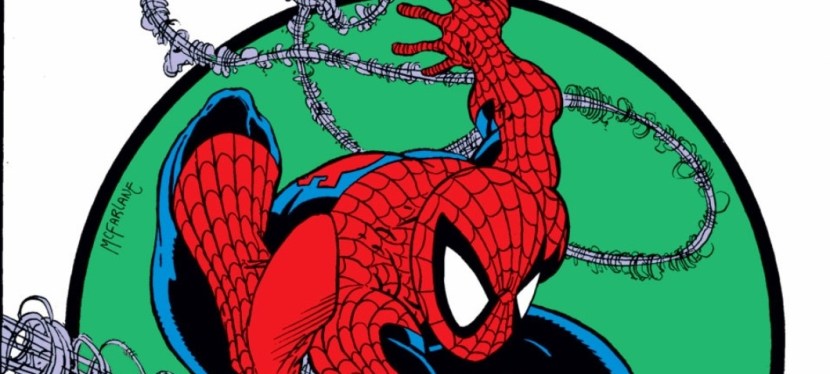
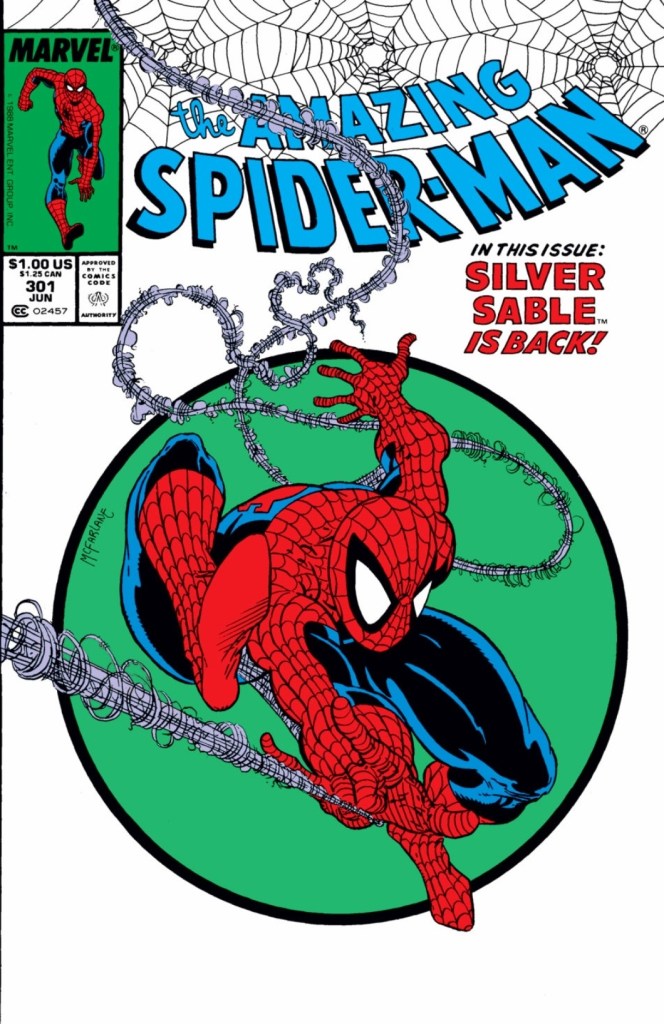
With those details laid down, here is a look back at Amazing Spider-Man #301, published in 1988 by Marvel Comics with a story written by David Michelinie and drawn by Todd McFarlane.

The cover.

Early story

The story begins with a group of armed personnel doing a mission inside a building. In the middle of the corridor, several over-head turrets pop out and fire paint balls at the team which used shields for protection. Moments after, they communicate with an executive called Mr. Cruz by means of live video feeds. Cruz tells them they failed the test.

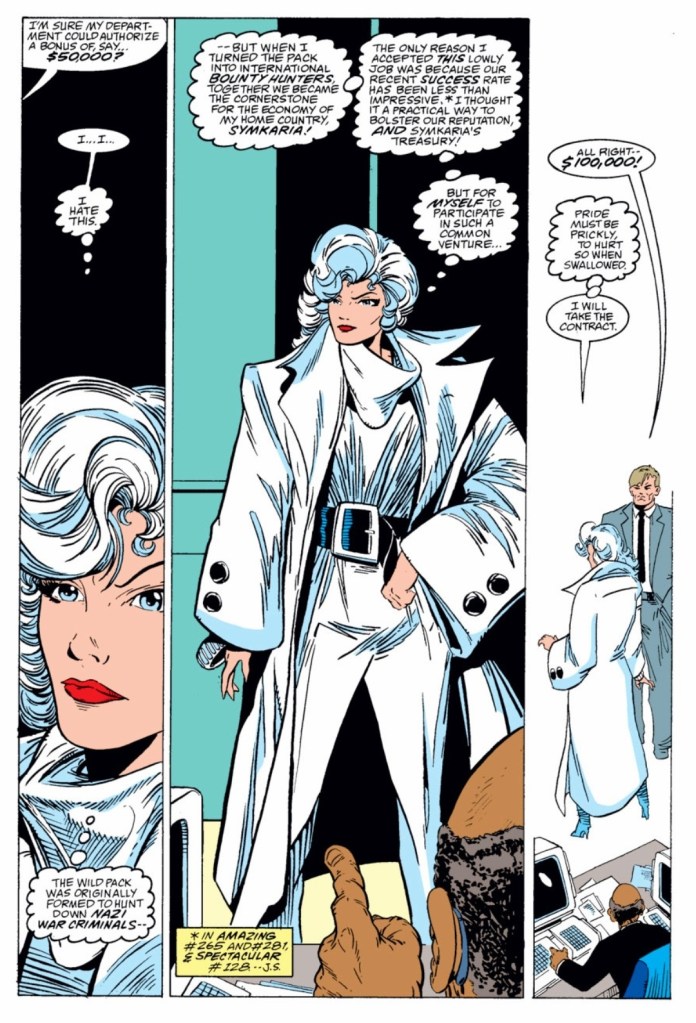
Shortly after, Mr. Cruz and Silver Sable meet with Mr. Pruett and discuss key aspects about the Pruett building’s security. It turns out Pruett himself advertised his building as being the safest locale in New York. Cruz tells him that Silver Sable’s Wild Pack team was fine to a certain extent but he feels much more confident if Sable herself would test building security. After some thinking about her team – international bounty hunters –, their role with the economy of her home country of Symkaria and the less-than-impressive success her team achieved recently, she accepts the contract from Pruett worth $100,000.

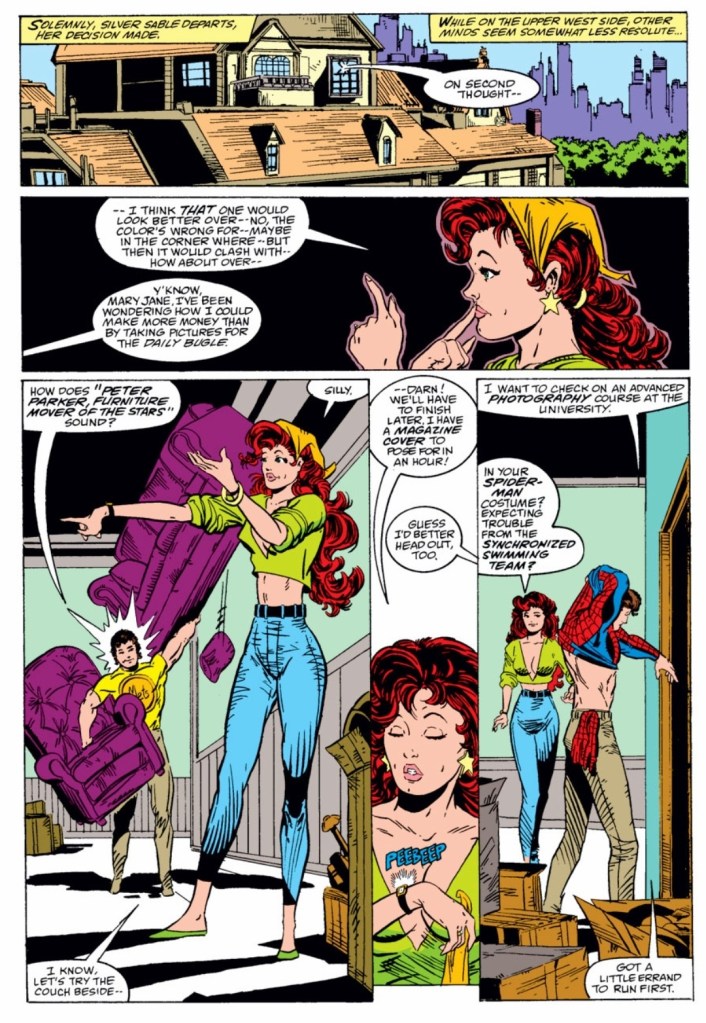
Meanwhile at another location within the city, Mary Jane Parker carefully decides where should her husband Peter (carrying a sofa and a large seat with his own super strength) should put furniture in their home. MJ then has to rush to attend a magazine cover photo session while Peter has to go out and check on an advanced photography course at a university…

Quality

The new couple Peter and Mary Jane Parker together with domestic life.

This is one of the more unique Spider-Man tales of the 1980s I have read. Silver Sable herself is the big feature of this comic book, even overshadowing the famous web-slinger. As this was published years before the Silver Sable and the Wild Pack monthly series launched, David Michelinie portrayed the character as a professional business woman who also happens to be a very capable physical fighter and infiltrator while carrying with her the pride of her homeland Symkaria. Through Silver Sable, you can see the richness of Michelinie’s writing and feel the uniqueness of her personality which makes her stand out among the many other supporting characters or heroes Spider-Man ever interacted with.

As a story set shortly after the climax of the Venom storyline, Peter Parker is portrayed to be in the middle of a transition having gone through college and recently getting married with Mary Jane. Even with the challenges and complications of life, he still finds himself stuck with the perceived obligations of the superhero life. There is also a sub-plot here about a white-haired man searching for him.

Going into the plot itself, Peter Parker could not contain himself from going out again in full costume and web-swinging as Spider-Man as he finds Mr. Cruz a suspicious figure. While it looks like the right thing to do for any superhero, it shows weakness in Peter Parker’s struggle to balance his life. The use of irony is nicely portrayed here.

Conclusion

This is how Silver Sable looked like in the late 1980s.

While the good-versus-evil element of the story is very subtle, Amazing Spider-Man #301 (1988) still succeeded in engaging and entertaining me primarily due to David Michelinie’s very solid storytelling and characterization. Unsurprisingly, Michelinie’s script is brought to life with Todd McFarlane’s fine art from start to finish. Don’t expect Spider-Man nor Silver Sable get to fight some dangerous villain in personal combat as the plot is more about suspense and intrigue laced with some twists. Still, there is plenty of superhero action to enjoy here and McFarlane’s art remains impressive. Silver Sable is very well defined in this comic book and by the end, you will get a solid grasp of herself and her background. This comic book is a must-read before you jump into the Silver Sable and the Wild Pack comic book series.

Overall, Amazing Spider-Man #301 (1988) is highly recommended.

+++++

Thank you for reading. If you find this article engaging, please click the like button below, share this article to others and also please consider making a donation to support my publishing. If you are looking for a copywriter to create content for your special project or business, check out my services and my portfolio. Feel free to contact me with a private message. Also please feel free to visit my Facebook page Author Carlo Carrasco and follow me on Twitter at  @HavenorFantasy as well as on Tumblr at https://carlocarrasco.tumblr.com/ and on Instagram at https://www.instagram.com/authorcarlocarrasco
A Look Back at Spider-Man 2099 #8 (1993)

Disclaimer: This is my original work with details sourced from reading the comic book and doing personal research. Anyone who wants to use this article, in part or in whole, needs to secure first my permission and agree to cite me as the source and author. Let it be known that any unauthorized use of this article will constrain the author to pursue the remedies under R.A. No. 8293, the Revised Penal Code, and/or all applicable legal actions under the laws of the Philippines.

Welcome back superhero enthusiasts, 1990s arts and culture enthusiasts, Marvel Comics fans and comic book collectors! Today we go back to the wild 1990s and explore the far future of 2099 within the Marvel Comics shared universe through one of the tales of Spider-Man 2099.

In my previous retro review, the futuristic Spider-Man got involved with his era’s version of Vulture (Vulture 2099 to us readers). It turns out, Vulture 2099 is not your typical evil supervillain but the leader of a group of violent radical people who are willing to dominate society with a destructive mindset even though there are other opposing groups around them. And then Spidey 2099 realized something very wrong about the Vulture which leads to a big battle between them.

With those details laid down, here is a look back at Spider-Man 2099 , published in 1993 by Marvel Comics with a story written by Peter David and drawn by Rick Leonardi.

The cover.

Early story

The story begins with Spider-Man 2099 and Vulture 2099 crashing into the interiors of the ancient St. Patrick’s Cathedral located in old New York City (underneath the modern city). Unsurprisingly, the people inside the cathedral got very surprised about the unexpected entry of the two fighters.

Elsewhere, Miguel O’Hara’s brother Gabriel helps Kasey with her head. She tells him that she saw Miguel but Gabriel does not believe her. Suddenly, members of a gang knock on the door and Kasey opens it.

Inside St. Patrick’s Cathedral, the fight between Spider-Man and Vulture continues. Spider-Man remembers that he has lapsed as a Catholic and he feels very uneasy about the trouble he and his enemy are causing inside the old church structure. Vulture suddenly throws a wooden bench at Spidey but breaks open a glass window and then goes outside. Upon looking outside, Spider-Man notices a group of Vulture’s gang…the Freakers.

Quality

The battle between Spider-Man 2099 and Vulture 2099 is intense and very compelling to read.

Here is the good news about this comic book…the story here is a fitting conclusion to what happened in issue . The conflict between Spider-Man and Vulture here was carefully crafted and there were several key moments or scenes the provided readers some breathing room to grasp and understand the society of 2099 New York as well as the conflict between the downtown social groups who are deprived of the higher standard of living many miles above them. In some ways, the social divisions portrayed in this comic book is a sad reminder about modern day America and the many radical groups or gangs of people who divide society on race, ethnicity, social class, gender and ideology.

As expected, there is a lot of action executed in the fight between Spider-Man and Vulture of 2099 but there were pauses in between. This is not surprising considering how Peter David crafted the action-packed battles Spidey 2099 had with other enemies in the comic books released before this one. Without spoiling what happened, I can say that the battle between the two was nicely built-up and the conclusion turned out very satisfying to see.

Still on the story, Peter David added some layers of complexity into the conflict that easily made things much more difficult for Spider-Man 2099 on a personal level. I’m talking about his brother Gabriel and Kasey getting involved in the gang war against the Freakers.

Vulture 2099 is once again a standout opposition figure here. Not only is his ability to fly and cause chaos above his obsessed Freakers below is symbolic, his distorted, hardcore beliefs are reflected with his unrelenting use of violence as he fights Spider-Man. Not only that, he turns out to be very philosophical thanks to the rich dialogue Peter David came up with. It is also here that the futuristic Vulture is opposed to God and being the socialist-indoctrinated person he is, he easily blames Alchemax for God’s absence. This should remind you that through Vulture 2099, evil comes with fatal attraction that people could not realize until it is too late. The futuristic Vulture has a lot of common with the evil leaders of Black Lives Matter, Antifa, the Democratic Socialists of America and the long-time regime of Iran. Lastly, I should state that radical socialists are always wrong about God and they often live with distorted perceptions about Him. Vulture 2099 qualifies as a woke figure of 2099 and ultimately wokeness is foolishness.

Speaking of sub-plots, this comic book emphasizes Tyler Stone on how he handles ambitious projects of Alchemax that he believes will benefit people. His interactions with Dana here also sheds light about his very own obsession about the future of humanity.

Conclusion

Spider-Man in trouble with the Vulture’s gang members.

With rich writing, notable in-story details and a very well designed conflict between the futuristic Spider-Man and Vulture, Spider-Man 2099 (1993) is both very engaging and entertainting to read from start to finish. It is a great pay-off to what was built-up in issue . Very notably, the conflict between Vulture 2099 and the protagonist is great to see and it is clear that Vulture is not a disposable supervillain but one of the most definitive forces of opposition against Spider-Man 2099. Of course, as comic book history turned out, Vulture 2099 made it in the crossover comic book event between classic Spider-Man and Spidey of 2099. Along the way, the creative team succeeded with expanding the lore of 2099 and the social underclass of New York.

Overall, Spider-Man 2099 (1993) is highly recommended.

+++++

Thank you for reading. If you find this article engaging, please click the like button below, share this article to others and also please consider making a donation to support my publishing. If you are looking for a copywriter to create content for your special project or business, check out my services and my portfolio. Feel free to contact me with a private message. Also please feel free to visit my Facebook page Author Carlo Carrasco and follow me on Twitter at  @HavenorFantasy as well as on Tumblr at https://carlocarrasco.tumblr.com/ and on Instagram at https://www.instagram.com/authorcarlocarrasco
A Look Back at What If #21 (1991)

Disclaimer: This is my original work with details sourced from reading the comic book and doing personal research. Anyone who wants to use this article, in part or in whole, needs to secure first my permission and agree to cite me as the source and author. Let it be known that any unauthorized use of this article will constrain the author to pursue the remedies under R.A. No. 8293, the Revised Penal Code, and/or all applicable legal actions under the laws of the Philippines.

Welcome back superhero enthusiasts, 1990s arts and culture enthusiasts, Marvel Comics fans and comic book collectors! Today we go back to the year 1993 and explore a part of Marvel Comics’ universe through the re-imagined tales emphasized in the What If monthly series.

Some time ago, I reviewed What If #20 (1990) which explored what would have happened had Peter Parker/Spider-Man did not marry Mary Jane Watson. While that comic book’s story and visuals were engaging, the narrative weakened before the end and it turns out the tales was not really designed as standalone What If story. That being said, the story continues on in the 21st issue of the What If series that I just reviewed.

With those details laid down, here is a look back at What If #21, published in 1991 by Marvel Comics with a story written by Danny Fingeroth and drawn by Jim Valentino.

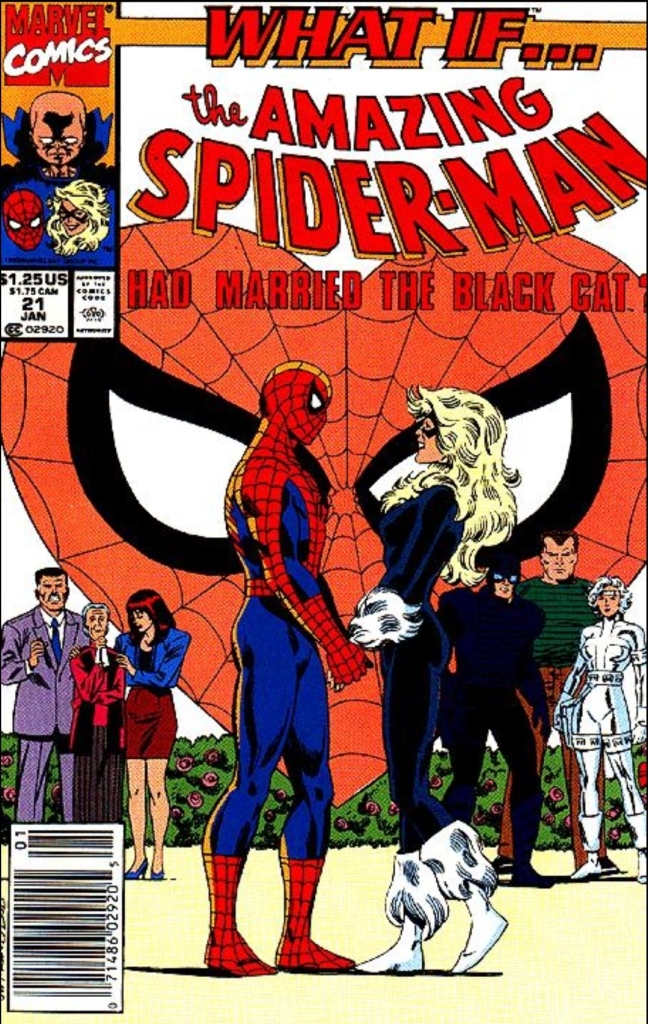
The cover.

Early story

The story begins with a man – who overheard the talk between Black Cat and Mary Jane Watson during the end of issue – who calls someone and starts a negotiation. The unseen person on the other end of the call is not seen but the man knows about the other person’s history of attempts to kill Spider-Man.

Within the City of New York, the romantically bonded Spider-Man and Black Cat work as a crime-fighting duo bringing crooks down. Shortly after, they get married in a private ceremony in Niagara Falls, New York using fake names (Peter Parker as Peter Palmer, and Felicia Hardy as Felina Marvey). During their first night together as husband and wife, Felicia gets out of bed surprising Peter. It turns out, Felicia is in the mood for crime-fighting. This brings them back to New York City where they resume their anti-crime crusade as Spider-Man and Black Cat.

Peter Parker notices something with his new wife. No matter what she says as Black Cat, she is still in love with his Spider-Man identity and only tolerates his true, civilian identity. He wonders if Felicia will come to accept the real him…

Quality

The Vulture attacks Spider-Man’s wife Black Cat.

To begin with, this comic book has a much stronger story, deeper character development, solid twists and a very intriguing conclusion that also happens to be a lot more satisfying compared with issue .

For one thing, the team of Fingeroth-Valentino really ramped up their imaginative creations and took this tale to more daring directions. The core concept of Spider-Man and Black Cat being married is deeply explored which resulted in a tale that is intriguing for most of the time. Their marriage also raises questions as to how Spider-Man and Black Cat perceive each other both as civilians and as costumed crime fighters. Also explored nicely was how they handled their secret identities while struggling with their own emotions deep inside. To say the least, seeing Spider-Man and Black Cat as a married couple as well as a dynamic duo of crime fighters makes a solid reading experience.

I should also state that there is a lot of story and characterization-development pay-offs that reflect not only what was built up in this comic book but also in issue . To really enjoy and experience this issue, you must read the previous issue as well.

Conclusion

Spider-Man and Black Cat as the married couple and duo of crime fighters.

What If #21 (1991) is a very captivating read. To put it short, it exceeds issue on just about everything and the conclusion is a lot more satisfying and intriguing to read. The Fingeroth-Valentino team created an in-depth look at an alternate married life of Spider-Man as well as what would happen once the webslinger and Black Cat work together in fighting criminals while managing their personal secrets and the stress that comes with marriage. I should also state that the twists within the story are much more satisfying than in issue . This is truly a must-read not just for Spider-Man fans but for any superhero enthusiast!

Overall, What If #21 (1991) is highly recommended!

+++++

Thank you for reading. If you find this article engaging, please click the like button below, share this article to others and also please consider making a donation to support my publishing. If you are looking for a copywriter to create content for your special project or business, check out my services and my portfolio. Feel free to contact me with a private message. Also please feel free to visit my Facebook page Author Carlo Carrasco and follow me on Twitter at  @HavenorFantasy as well as on Tumblr at https://carlocarrasco.tumblr.com/ and on Instagram at https://www.instagram.com/authorcarlocarrasco
A Look Back at What If #40 (1992)

Disclaimer: This is my original work with details sourced from reading the comic book and doing personal research. Anyone who wants to use this article, in part or in whole, needs to secure first my permission and agree to cite me as the source and author. Let it be known that any unauthorized use of this article will constrain the author to pursue the remedies under R.A. No. 8293, the Revised Penal Code, and/or all applicable legal actions under the laws of the Philippines.

Welcome back superhero enthusiasts, 1990s arts and culture enthusiasts, Marvel Comics fans and comic book collectors! Today we go back to the year 1992 and explore a part of Marvel Comics’ universe through the reimagined tales emphasized in the What If monthly series.

For this particular retro comic book review, we look at a What If tale that is related with the X-Men, specifically through one of their major characters – Storm. For the newcomers reading, Storm is the black X-Men member whose mutation allows her to manipulate the weather. As seen in X-Men comic books decades ago, Storm was portrayed to be tough and brave, and she became a highly valuable learner under Professor X (Charles Xavier). In the 1990s, Storm rose in prominence among the X-Men, she became leader of their Gold Team. Storm was portrayed in the live-action movies by Halle Berry and Alexandra Shipp. It’s just too bad Storm’s role in X-Men: Days of Future Past (note: for me, it is the best X-Men live-action movie ever) was minimal.

With those details laid down, here is a look back at What If , published in 1992 by Marvel Comics with a story written by Ann Nocenti and drawn by Steve Carr and Deryl Skeleton.

The cover.

Early story

The story begins with the Watcher recalling scenes from the life of Ororo who was born to a mother (a tribal princess in Kenya) and a photojournalist father. After moving from America to Egypt, Ororo loses her mother and became an orphan. Along the way, she experienced severe claustrophobia as a result of being buried under tons of rock. Having survived, she became a thief in Cairo and eventually traveled into Africa by chance. There she discovered her true nature as a walking idol. She eventually meets Charles Xavier.

The Watcher then explores another thread of scenarios of Ororo’s life in which she never stepped on the eventual boat, never sailed for Africa and never met the tribe that worshipped her.

In Cairo, Ororo is a very young thief who made herself look like a male. She uses deceptive tactics on a foreigner who walked by. A short time later, Ororo goes to New York City identified as Jack serving an old man who teaches her to work hard, to gain respect from his friends and immerse herself in a world of grifters and hobos. Ororo lives and works as a thief in the city targeting people who have more than enough…

Quality

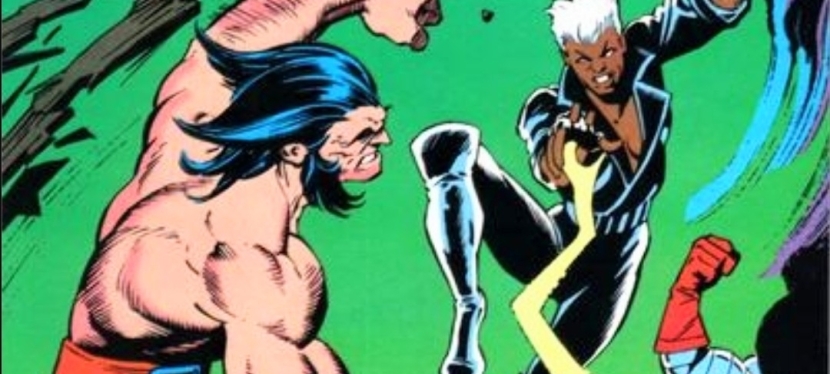
A look at Storm as the super-powered thief. It’s also a portrayal of her as a super villain on the rise.

Among the many What If tales related to the X-Men that I have read so far, this is one of the most well-written and most intriguing alternate universe stories I have read thanks to Ann Nocenti. This was also released at a time when Storm was already established as a brave X-Men team leader and a potential successor to Professor X. In this comic book, there is this strong twist to the established legacy of Storm as a youth and the exploration of what would happen had she remained a thief (a super-powered thief no less) and never followed Charles Xavier turned out to be very compelling in my experience. For one thing, Storm definitely would have given police officers – who clearly are inferior to the powered heroes and villains – a hard time and even help the crime wave overwhelm society’s defenders. It is also quite striking to see Storm to follow and serve a principled yet theft-oriented superior. In fact, this story shows the popular X-Men team leader as a super villain on the rise.

More on storm, Ann Nocenti’s script literally dissected notable traits of Storm’s personality that are connected to the established comic book legacy which creatively created something new that fits in well in this alternate universe story. Through Storm, the story also sheds light on how thieves view life believing that theft is a necessity and their so-called principles justify it. No matter what the thieves and criminals in general think, nothing justifies theft and crime at all and those who commit such acts must be punished accordingly Without spoiling the details, I can say that there are some grey areas within Storm that were nicely emphasized.

Conclusion

Storm as a male-looking teenager behind bars with the ladies who got apprehended. Scenes like this should remind you NOT to vote for political candidates who are soft and sympathetic towards crime.

What If (1990) is indeed a great alternate universe portrayal of one of the X-Men’s most prominent characters of the time. The story is very well structured and the characterization of Storm was clearly organized by Ann Nocenti to be powerful and intriguing to read. This comic book also has a twist that you must see for yourselves as well as an ending that will either surprise or satisfy you depending on what you anticipated. Ultimately, this comic book should remind you all to avoid committing crime and the truth is that poverty is a curse and it NEVER justifies theft. Always remember that the Lord is watching you. For enlightenment, read Exodus 22:1-4, Exodus 22:10-15, Leviticus 6:2-7 and 1 Corinthians 6:9-10 in the Holy Bible.

Overall, What If (1990) is highly recommended!

+++++

Thank you for reading. If you find this article engaging, please click the like button below, share this article to others and also please consider making a donation to support my publishing. If you are looking for a copywriter to create content for your special project or business, check out my services and my portfolio. Feel free to contact me with a private message. Also please feel free to visit my Facebook page Author Carlo Carrasco and follow me on Twitter at  @HavenorFantasy as well as on Tumblr at https://carlocarrasco.tumblr.com/ and on Instagram at https://www.instagram.com/authorcarlocarrasco
A Look Back at What If #10 (1990)

Disclaimer: This is my original work with details sourced from reading the comic book and doing personal research. Anyone who wants to use this article, in part or in whole, needs to secure first my permission and agree to cite me as the source and author. Let it be known that any unauthorized use of this article will constrain the author to pursue the remedies under R.A. No. 8293, the Revised Penal Code, and/or all applicable legal actions under the laws of the Philippines.

Welcome back superhero enthusiasts, 1990s arts and culture enthusiasts, Marvel Comics fans and comic book collectors! Today we go back to the year 1993 and explore a part of Marvel Comics’ universe through the reimagined tales emphasized in the What If monthly series.

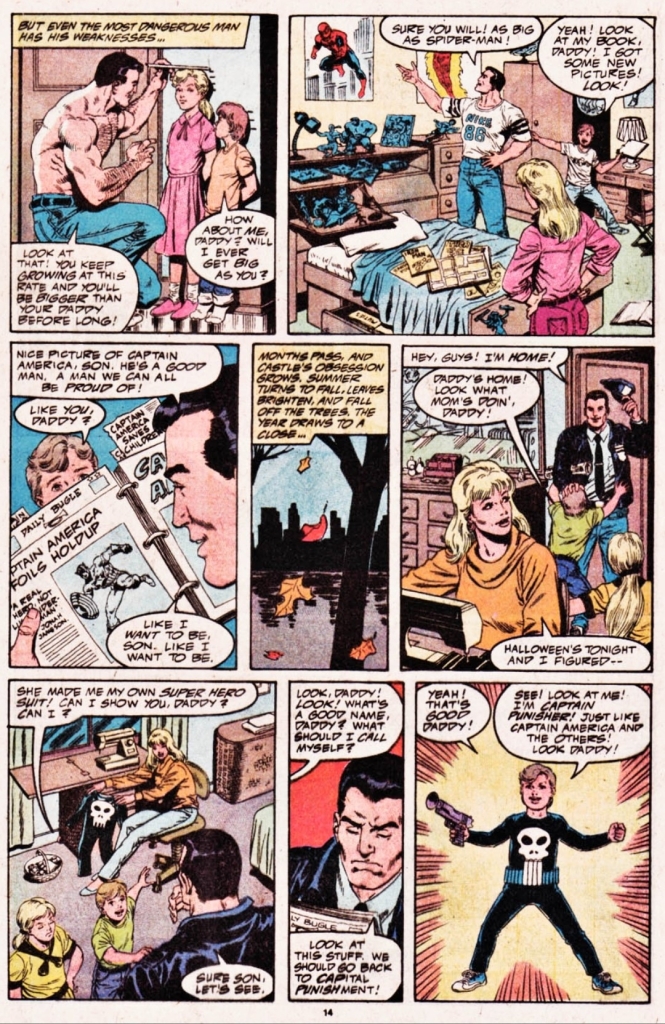
For those of you who have gotten very familiar with Marvel Comics’ vast lineup of superheroes, anti-heroes, super villains and supporting characters, the Punisher is one of the most notable characters as he is the most definitive vigilante the publisher ever has in its shared superhero universe. As a comic book protagonist, the Punisher does “good” in fighting crime but he sure is as bad as the bad guys as he commits torture, issued threats of violence, kidnapping, extortion, coercion and even murder towards them. A major factor in the Punisher’s origin (as Frank Castle) was the killing of his family (wife and two kids) committed by a mob as they witnessed acts of killing in Central Park in New York City. The tragic deaths led Castle to become the Punisher who not only relentlessly waged a personal war against criminals but also often wore dark clothes with a large white skull design on the front of his body. The skull symbolized punishment and death to his enemies.

With those details laid down, here is a look back at What If , published in 1990 by Marvel Comics with a story written by Doug Murray and drawn by Rik Levins.

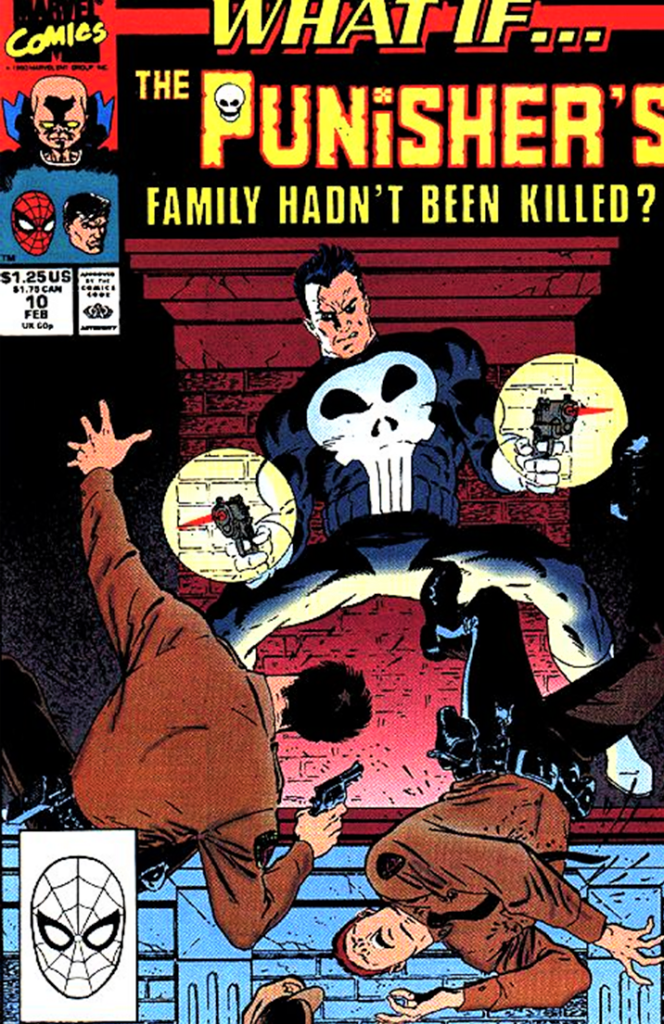
The cover.

Early story

The story begins with the Watcher recalling the time Frank Castle spent with his wife and the two kids at New York City’s Central Park. There, they have fun with their picnic. At this point in time, Frank Castle had previously served his country in the Vietnam War and he carries within him bravery, the experience of violence and vast skills to use weapons.

The weather suddenly worsens as rain starts to fall down causing some inconvenience on the Castle family. Frank’s son struggles as his kite got caught by the large plant nearby. On the other side of the said plant, four armed men and their captive (hanging upside down by the tree) are startled and prepare themselves to shoot anyone who appears.

Frank, who does not realize the mob on the other side of the plant, helps his son get the kite back. The Castle family then decide to go back home not realizing that they came close to discovering and witnessing the illegal activity of the armed men. As the family kept on moving, Frank hears gunfire from a distance…

Quality

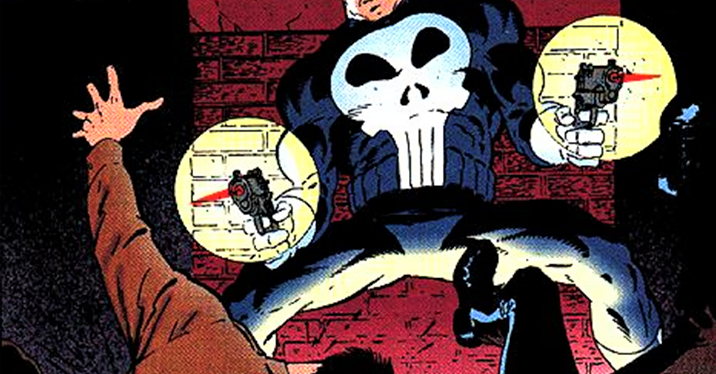
Frank Castle the family man.

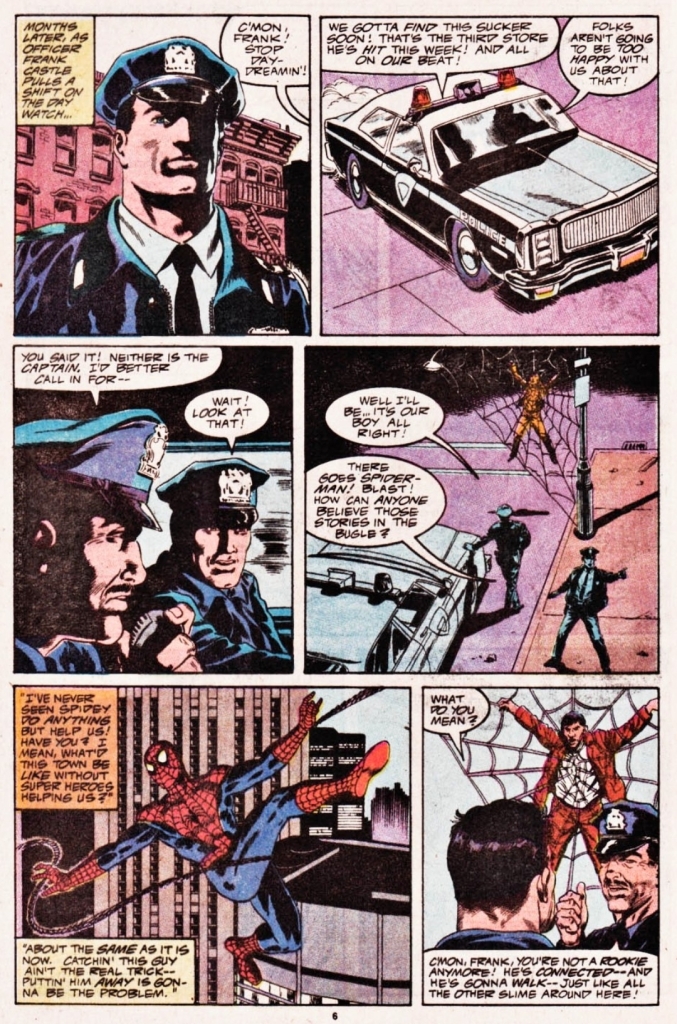
To get straight to the point about this comic book, it’s story is really engaging and it has noticeable amounts of darkness and grittiness without going overboard. While exploring what would happen had Frank Castle’s family not been killed, the comic book shows the Punisher getting involved in public safety as a New York patrolman which puts him in a unique position facing crime in radically different ways from what we comic book readers have been used to seeing. The story also explores corruption within the police and the justice system as well.

The way the events and action turned out showed the creative team focused on realism while also establishing the Punisher’s own place within the comic book’s alternate portrayal of the shared superhero universe. More on the subject matter of this comic book, there is a twist that surprised me a lot and it is something that you readers should see for yourselves.

Going back to Frank Castle, it is indeed very captivating to see him portrayed a lot more as a family man who really strives to support his wife and kids no matter how dangerous his occupation really is. The aspect of family in this comic book is very significant as it will make you realize that the definition of family in America in the 21st century has been distorted as a result of laws or court decisions that reflected wokeness, homosexuality and unrestrained feminism. In short, woke America’s believers reject the concept of the traditional family and the concept of a father leading the family is considered taboo because it goes against LGBT’s so-called values and principles.

Conclusion

Frank Castle as the police officer.

When you think about the legacy of the Punisher not only on comics but also in movies and other forms of entertainment media, you will often remember a one-man-army against criminals. What If (1990) has is a really unique take on the Punisher and I can say it has a very captivating script brought to life with really good artwork. Not only does this alternate version of the Punisher shows how he affects criminals, but also how he impacts other parts of the fictional New York society within the shared universe of Marvel Comics (note: characters connected to Spider-Man and Daredevil are here). From start to finish, this Punisher tale by the Murray-Levins team turned out to be very engaging to read.

Overall, What If (1990) is highly recommended!

+++++

Thank you for reading. If you find this article engaging, please click the like button below, share this article to others and also please consider making a donation to support my publishing. If you are looking for a copywriter to create content for your special project or business, check out my services and my portfolio. Feel free to contact me with a private message. Also please feel free to visit my Facebook page Author Carlo Carrasco and follow me on Twitter at  @HavenorFantasy as well as on Tumblr at https://carlocarrasco.tumblr.com/ and on Instagram at https://www.instagram.com/authorcarlocarrasco
A Look Back at Harbinger #10 (1992)

Disclaimer: This is my original work with details sourced from reading the comic book and doing personal research. Anyone who wants to use this article, in part or in whole, needs to secure first my permission and agree to cite me as the source and author. Let it be known that any unauthorized use of this article will constrain the author to pursue the remedies under R.A. No. 8293, the Revised Penal Code, and/or all applicable legal actions under the laws of the Philippines.

Welcome back superhero enthusiasts, 1990s culture enthusiasts and comic book collectors! Today we go back to the early 1990s and explore a part of the Valiant Comics shared universe through the Harbinger monthly series.

In my previous retro review, Sting, Faith, Kris and Flaming were still on a faraway world as the Unity crossover storyline went on. Things really changed drastically for Kris as she gave birth to a baby boy whose father was none other than the late Torque. Sting, who is still living with the false sense of maturity, dedicates himself to Kris (whom he fornicated a lot with by this time) and their child even though he still had parts to do in the middle of the destructive battles with Erica Pierce.

With those details laid down, here is a look back at Harbinger , published in 1992 by Valiant Comics with a story written by Jim Shooter and drawn by David Lapham. This comic book marks takes place after the end of Unity.

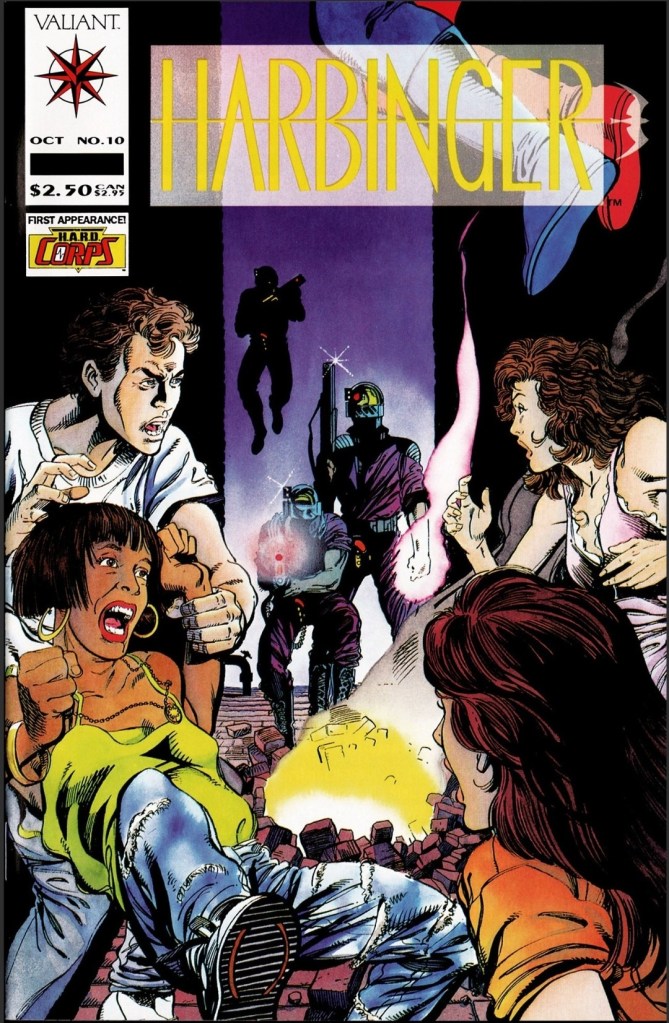
The cover.

Early story

The story begins on April 5, 1992, at 1:15 AM. Sting, Kris, Faith and Flamingo are instantly brought back into the home of Dr. Heyward and his family. Sting finds himself disoriented from the travel while Kris, who no longer has her baby by this point, feels very weak and hot.

The next morning outdoors, Sting meets with Dr. Heyward and reveals to him that he and his three female companions were away for about six months. For Dr. Heyward and everyone else, not too much time passed at all. To help him understand their experiences during Unity, Sting puts several images and memories into Dr. Heyward’s mind. When asked by the doctor what happened to Kris’ baby, Sting claims he does not know at all.

Meanwhile from somewhere, someone is using electronic surveillance…

Quality

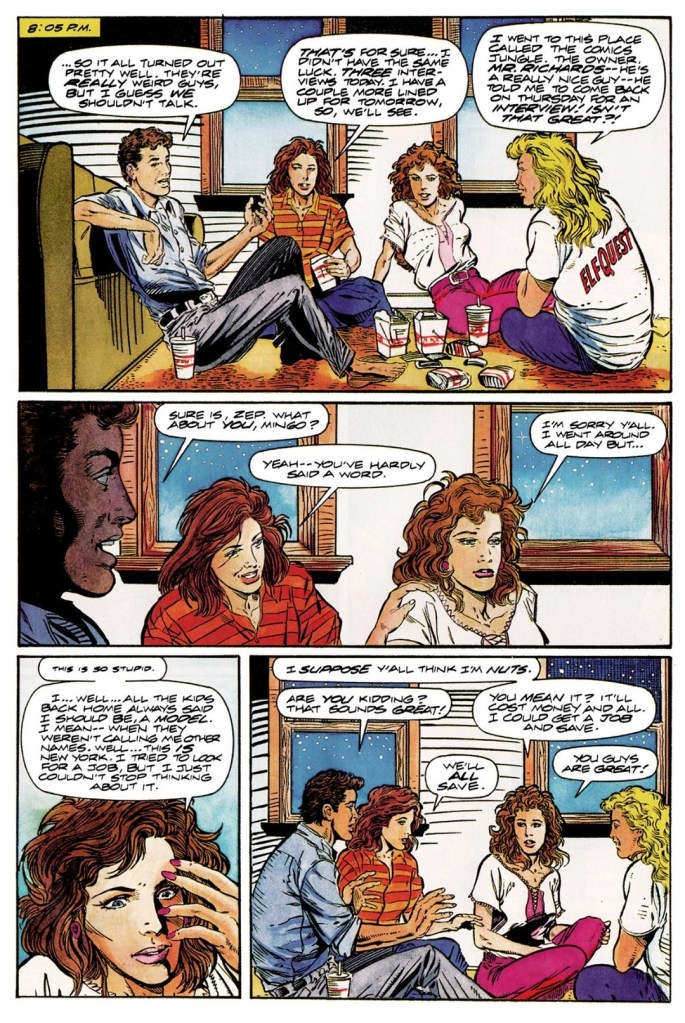
This private scene of Sting, Kris, Flamingo and Faith eerily reminds me of some 1980s Hollywood movies about teenagers.

From a storytelling viewpoint, the wild fantasy that was Unity which had Sting and his team spend time with other major figures of Valiant Comics has indeed ended and this comic book smoothly follows their return to Earth, the sudden shift of their living and keeping up with reality. As such, you will get to see Sting, Faith, Flamingo and Kris think and act like teenagers which is a notable change of presentation after seeing them as nomads during their time in Unity.

Normalcy of living is a clear theme explored in this story and Jim Shooter really had the characters and events move on while being grounded in reality. In relation to that, there is this really dramatic scene between Kris and Sting as they talked about their relationship and what happened to the baby. The said scene was only seven panels long but you can see and feel the emotion flow through the two characters.

With the massive conflict of Unity over, Sting and his team start pursuing a new goal – to find other young super-powered beings like themselves before Toyo Harada and his powerful Harbinger organization make another move. Along the way, a new form of opposition awaits Sting, Faith, Flamingo and Kris. What was told in this comic book is engaging and refreshing to read.

Conclusion

Nothing like being at home after spending many months away even though time on Earth did not move too much.

When you think about the high-quality stories Jim Shooter wrote for the Harbinger monthly series, Harbinger (1992) is clearly another winner. The portrayal of the powered teenagers is believable and very notably, the creators left space for some superhero spectacle for readers to be entertained with as Sting and his teammates start pursuing their new goal. Of course, the new pursuit happened after Sting, Faith, Flamingo and Kris tackled reality first as they returned from spending many months away in Unity while time on Earth moved forward very little. How Jim Shooter and David Lapham managed to emphasize their new story concepts while remaining tight and strong with the storytelling is indeed amazing. I should also state that this comic book marks the start of a new chapter for Sting, Faith, Flamingo and Kris.

Overall, Harbinger (1992) is highly recommended!

+++++

Thank you for reading. If you find this article engaging, please click the like button below, share this article to others and also please consider making a donation to support my publishing. If you are looking for a copywriter to create content for your special project or business, check out my services and my portfolio. Feel free to contact me with a private message. Also please feel free to visit my Facebook page Author Carlo Carrasco and follow me on Twitter at  @HavenorFantasy as well as on Tumblr at https://carlocarrasco.tumblr.com/ and on Instagram at https://www.instagram.com/authorcarlocarrasco

A Look Back at Superman III comic book adaptation (1983)

Disclaimer: This is my original work with details sourced from reading the comic book and doing personal research. Anyone who wants to use this article, in part or in whole, needs to secure first my permission and agree to cite me as the source and author. Let it be known that any unauthorized use of this article will constrain the author to pursue the remedies under R.A. No. 8293, the Revised Penal Code, and/or all applicable legal actions under the laws of the Philippines.

Welcome back superhero enthusiasts, 1980s culture enthusiasts and comic book collectors! Today we go back to the year 1983 which saw the theatrical release of Superman III that featured the late Christopher Reeve as the cinematic Man of Steel.

The 1980s was a very different time with regards to Hollywood’s handling of superhero movies. The concept of a shared cinematic universe was decades away from realization. Warner Bros. back then relied on the Salkind family to produce Superman movies and the first flick in 1978 proved to be a major hit for both viewers and critics while also establishing Christopher Reeve as the definitive live-action Superman for countless people. Unsurprisingly, a sequel was released in the early 1980s which continued box office success for the stakeholders and only led to the approval of another sequel.

Along the way, the late Richard Pryor (a major comedian already) appeared on TV and talked about Superman II which eventually led to him getting hired for Superman III. The movie was released in 1983 making a little over $80 million worldwide while also getting a noticeably weaker reception from critics. More notably, Richard Pryor had a huge chunk of the film’s spotlight as Gus Gorman while the overshadowed Christopher Reeve managed to stretch his cinematic art on playing Clark Kent and Superman (note: there is also the memorable Clark versus Superman battle). Superman III very clearly had a lot more comedy in its presentation. As part of the movie’s marketing, an official comic book adaptation by DC Comics was published.

With those details laid down, here is a look back at the Superman III comic book adaptation,  published by DC Comics in 1983 with a story written by Cary Bates and art made by the late Curt Swan and Sal Amendola.

The cover.

Early story

The story begins inside the unemployment bureau of Metropolis. There, August “Gus” Gorman was told after 36 weeks of chronic unemployment, he is no longer eligible for financial assistance (read: welfare) from the city. As he was about to light his cigarette, he noticed computer job ad on the match. Gorman proceeds to the Archibald Data Processing School where he gets enrolled with several others. In front of others, Gorman does something on a computer which impressed the instructor a lot.

Over at the Daily Planet, Clark Kent/Superman, Lois Lane and Jimmy Olsen meet with Perry White at his office. Kent will be returning home to Smallville and make a news story out of it. White gives Kent his approval and then tells Lois she deserves a vacation.

Hours later, Kent and Jimmy Olsen ride the bus together going to Smallville but their ride stops as a result of a huge fire damaging a large chemical plant. A police officer reveals to Olsen that the scientists inside are worried about the plant and its stuff getting destroyed by the fire.

Kent carefully leaves the bus and discreetly changes into Superman to help solve the problem. Olsen, meanwhile, sneaks past the authorities to get to the burning chemical plant.

Over at Webcoe Industries, company head Ross Webster and his sister Vera learn that more than $85,000 worth of company funds was stolen by someone within. Just outside the office, Gus Gorman enters his fancy looking sports car which Webster, Vera and Lorelei notice. Webster asked how could one of their computer technicians afford such a vehicle worth $75,000…    

Quality

This is a creative way the comic book team used to dramatize Gus Gorman scene revealing and acting the bad news to his boss Ross Webster whose plans were thwarted by Superman.

While it is understandable that not all scenes and not all character moments from the movie  made it on print media, this comic book still managed to capture the film’s essence for the most part. The creative team pulled off their own interpretations of the events and made something entertaining and engaging even though they had to deal with the major challenge of summarizing the movie’s plot and establishing a workable comic book narrative.

I should state that the comic team creatively avoided making in-depth references about liquor and smoking which were obvious in the movie. You will not see Superman drinking liquor at a bar nor will you see Gus Gorman referring to tar listed on a cigarette pack. I suppose this was done to ensure the comic book would be released widely and be acceptable to very young readers and the parents watching them.

The battle between evil Superman and Clark Kent is best viewed in the movie. This one is a shorter and less detailed version of it.

When it comes to establishing the clear lead among all the characters featured, Superman fans should be delighted to know that the Man of Steel is indeed more prominent than Gus Gorman. Take note that in the movie, Richard Pryor’s Gus Gorman overshadowed Christopher Reeve’s Superman/Clark.

Remember the frightening sequence of Vera getting captured and turned into a cybernetic figure by the Super Computer? This is what it looks like in comic book format.

The art done by Curt Swan and Sal Amendola is decent and it seems to me that their time on visualizing Cary Bates’ script was indeed limited. That being said, it was not surprising to me that, with the exception of Ross Webster in one specific image, none of the characters resembled their cinematic counterparts. Clark Kent/Superman never resembled Christopher Reeve, and Gus Gorman looks nothing like Richard Pryor. Clearly, the artists’ focus was visualizing the narrative which they succeeded.  

Conclusion

Clark Kent, Lois Lane, Jimmy Olsen and Perry White in the Daily Planet.
Superman saving Lana Lang’s son from certain death.

Having seen the Christopher Reeve/Richard Pryor movie in the cinema and on cable TV since 1983, I can say that Superman III (1983) is a decent adaptation. It’s not 100% faithful but it is still a worthy read as it will give you the movie’s concept and entertainment values in literary form. If you really want to full essence of film along with the cinematic moments (note: the Superman-Clark battle is the cinematic highlight) all intact, then your obvious choice is to watch the movie. If you are turned off by the movie’s wacky comedy, then the comic book adaptation will deliver to you the more serious approach on telling Superman III’s story. Let me repeat that Superman is more prominent than Gus Gorman in this comic book.

Overall, Superman III (1983) is satisfactory.

+++++

Thank you for reading. If you find this article engaging, please click the like button below and also please consider sharing this article to others. If you are looking for a copywriter to create content for your special project or business, check out my services and my portfolio. Feel free to contact me with a private message. Also please feel free to visit my Facebook page Author Carlo Carrasco and follow me on Twitter at  @HavenorFantasy as well as on Tumblr at https://carlocarrasco.tumblr.com/ and on Instagram at https://www.instagram.com/authorcarlocarrasco/
A Look Back At Superman and Spider-Man

Disclaimer: This is my original work with details sourced from reading the comic book and doing personal research. Anyone who wants to use this article, in part or in whole, needs to secure first my permission and agree to cite me as the source and author. Let it be known that any unauthorized use of this article will constrain the author to pursue the remedies under R.A. No. 8293, the Revised Penal Code, and/or all applicable legal actions under the laws of the Philippines.

I miss the old times when big rivals Marvel and DC Comics would set aside competition temporarily to team up and rely on their respective comic creators to make superhero crossover comic books that the fans can enjoy.

Back in the 1970s, key developments related to the comic book adaptation of The Wizard of Oz brought the two rivals together as partners. In 1976, Marvel and DC’s first superhero crossover Superman vs. The Amazing Spider-Man got published and to this day many comic book collectors and geeks I encountered still enjoy it. A few of them even called it a classic.

The collaboration between Marvel and DC continued in 1981 with Superman and Spider-Man which was published as issue number 28 of the Marvel Treasury Edition series.

1
The cover.

This is my look back at Superman and Spider-Man.

The comic book

Scripted by then Marvel Comic editor-in-chief Jim Shooter (with Marv Wolfman mentioned for plot suggestions) with art drawn by John Buscema and inkwork done by Terry Austin, Al Milgrom, Steva Leialoha, Walt Simonson, Bob Layton, Joe Rubinstein and Bob Wiacek, the comic book begins when Spider-Man swings into a construction site where he encounters several armed men and stops them singlehandedly.

Even though he stopped the bad guys, Spider-Man’s spider sense bothers him making him speculate that, because there’s no clear danger around him, the construction site seemed to be a threat.

After Spider-Man swings away from the police who just arrived, classic Marvel supervillain Doctor Doom watches via surveillance video and he was bother by the way things turned out.

“I did not like the way Spider-Man paused and look around after subduing the thieves – – as if he sensed something unusual about the excavation! Those accursed spider instincts of his,” Doom said before proceeding with his master plan.

A day later, the Hulk arrives in Metropolis causing lots of damage. Separately Superman and Spider-Man arrive to contain the green guy. However, things are not what they seem. This is where the story description ends.

Quality

What this comic book lacked compared to the 1976 Superman-Spider-Man crossover is visual impact. Clearly John Buscema had to follow closely the script which called for multiple panels per page and that left him little room to draw scenes dynamically. That’s not to see the art is weak. In fact, Buscema’s art is pretty good and he has deep knowledge about how the characters (including those many supporting characters and other minor characters from both Marvel and DC Comics) really looked from the size of Hulk’s body, the details on Wonder Woman’s costume, the distinctive look of J. Jonah Jameson, Perry White, etc. In short, I recognized the characters very easily.

15
This remains fun to read.

24
Peter Parker in Metropolis along with the Superman supporting characters. This is one great element that made this comic book worth reading.

While the high number of panels per page limited him, Buscema managed to come up with some action shots that packed some impact.

When it comes to writing and storytelling, this comic book exceeds that of the 1976 Superman-Spider-Man crossover big time! To start with, the plot is much more elaborate, more detailed and yet consistently remained easy to follow.

While the 1976 crossover had the most popular villains of Superman and Spider-Man as the representation of evil, this one instead had Dr. Doom and Parasite. The great news is that these two super villains complement each other nicely and that itself adds good depth into the plot. Dr. Doom is a major schemer and Parasite fitted nicely within his master plan for global chaos.

Regarding dialogue, the script had a lot of strength and was also specific in capturing the personalities of the superheroes, the super villains and the supporting cast. I can easily identify J. Jonah Jameson, Perry White, Lois Lane and others through the dialogue.

Not to be outdone is the deeper approach to the crossover aspect of the story. Right from the start, the comic book creators expected us readers to suspend disbelief and start believing that while the story is non-canon, the respective universes of Marvel and DC Comics co-existed. Because there were TV shows of Wonder Woman and the Hulk playing, the two characters were included in the comic book adding depth to the crossover.

Speaking of crossovers, this comic book was not limited to Superman and Spider-Man. The encounter between the Hulk and Superman was a short but sweet spectacle to read. The encounter between Wonder Woman and Spider-Man meanwhile was short yet fun.

Adding more to the fun in this comic book was how Clark Kent interacted with the Spider-Man supporting characters while Peter Parker interacted with the Superman supporting characters. I enjoyed every moment of these scenes.

As far as narrative is concerned, this comic book is slightly slanted towards Superman. One factor behind this was the implementation of how local authorities interact with Superman and Spider-Man. Whenever he solves crime, Superman is highly respected by the public and the police. This is not the case with Spider-Man who is often perceived to be a social menace even though he helps solve crimes. Another factor was that Superman did more detective-type work (including a visit to Latveria) while Spidey hardly contributed anything to the plot’s development.

38
Nothing can be more frustrating than getting attacked by police officers when you try to help them solve their problems.

Regardless, the two icons got a fair share of the spotlight during the final stages of the story and there was enough spectacle to enjoy.

If there is any complaint I have, it would be the comic book creators’ reluctance on fully connecting itself to the 1976 crossover. In the scene wherein Peter Parker was guided into the film editing room by Jimmy Olsen, he recognized Lois Lane and remembered meeting her in the 1976 crossover (which ended with socializing). And yet when Spider-Man and Superman get together in this comic book, there was a noticeable lack of friendliness and personal cooperation between them even though they bonded nicely in the 1976 story.

Conclusion

Overall, Superman and Spider-Man is indeed a highly engaging, fun-filled superhero crossover comic book. For me, it is a true literary classic and definitely worth searching for out there. I read this crossover many times from start to finish and even though I knew the plot and the dialogue, I still had a lot of fun reading along the way. With the combined talents of Shooter, Buscema and many others, this superhero crossover was indeed one of the very best stories ever told by Marvel and DC Comics.

Given the current corporate climate Marvel and DC Comics are now in, it is very unlikely we will see another creatively fun superhero crossover collaboration between them happening soon. For the newcomers reading this, Marvel is owned by the Walt Disney Company while DC Comics is owned by Warner Bros.

Whether you search for the original comic book or its inclusion in a volume of The Marvel/DC Collection: Crossover Classics Volume 1, Superman and Spider-Man is highly recommended!


Thank you for reading. If you find this article engaging, please click the like button below and also please consider sharing this article to others. Also my fantasy book The World of Havenor is still available in paperback and e-book format. If you are looking for a copywriter to create content for your special project or business, check out my services and my portfolio. Feel free to contact me as well. Also please feel free to visit my Facebook page Author Carlo Carrasco and follow me at HavenorFantasy@twitter.com