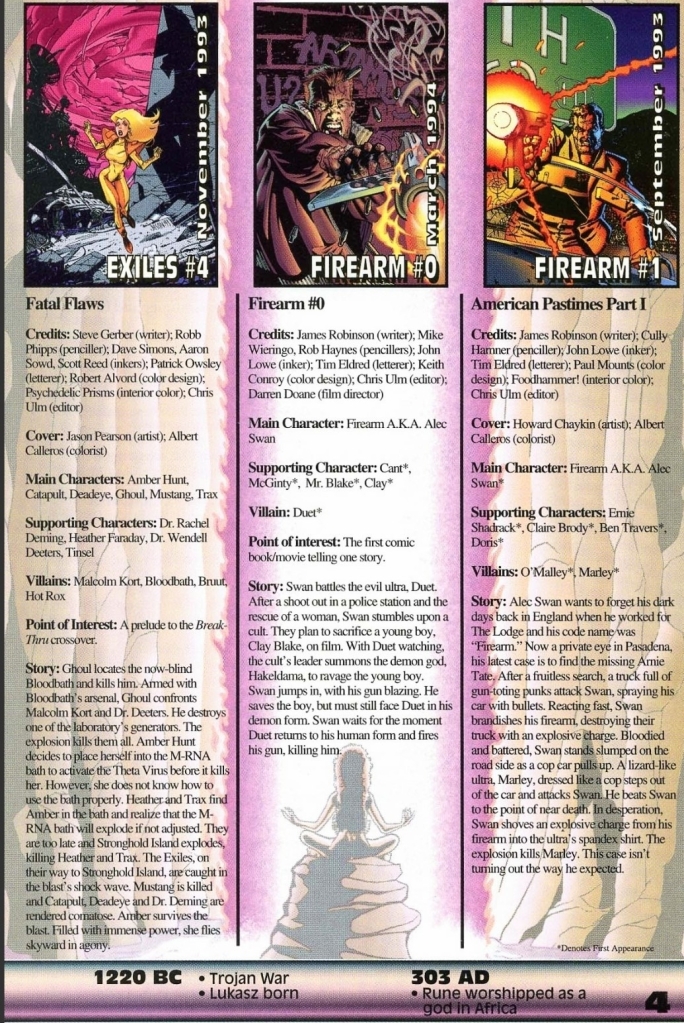
A Look Back at Exiles #2 (1993)

Disclaimer: This is my original work with details sourced from reading the comic book and doing personal research. Anyone who wants to use this article, in part or in whole, needs to secure first my permission and agree to cite me as the source and author. Let it be known that any unauthorized use of this article will constrain the author to pursue the remedies under R.A. No. 8293, the Revised Penal Code, and/or all applicable legal actions under the laws of the Philippines.

Welcome back superhero enthusiasts, 1990s culture enthusiasts and comic book collectors! Today we go back to the mid-1990s which was a really wild time for comic collectors. To be more specific, this newest retro comic book review revisits Ultraverse through the very short series titled Exiles.

It has been years since I reviewed Exiles #1 (1993). Since after, I reviewed a lot of Ultraverse comic books and went through notable storylines such as the Atalon Saga in UltraForce, the Hostile Takeover in Prototype, The Solution, The Night Man and Solitaire, and more. That being said, it was just right that I returned to Exiles for retro reviewing.

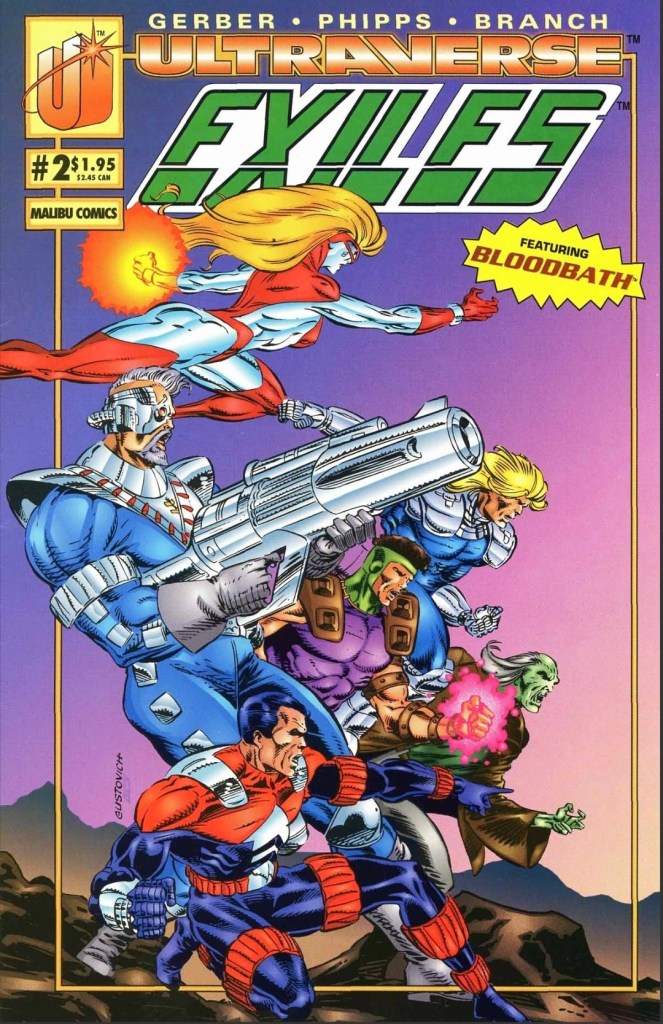
With those details laid down, here is a look back Exiles , published in 1993 by Malibu Comics with a story written by Steve Gerber and drawn by Robb Phipps.

The cover.

Early story

The story begins with Exiles members Catapult and Mustang staring at two bodies (a large man and a lady) on the floor. It turns out their mission was a failure as Timmy Halloran (the young guy they tried to save) went missing while his mother just died.

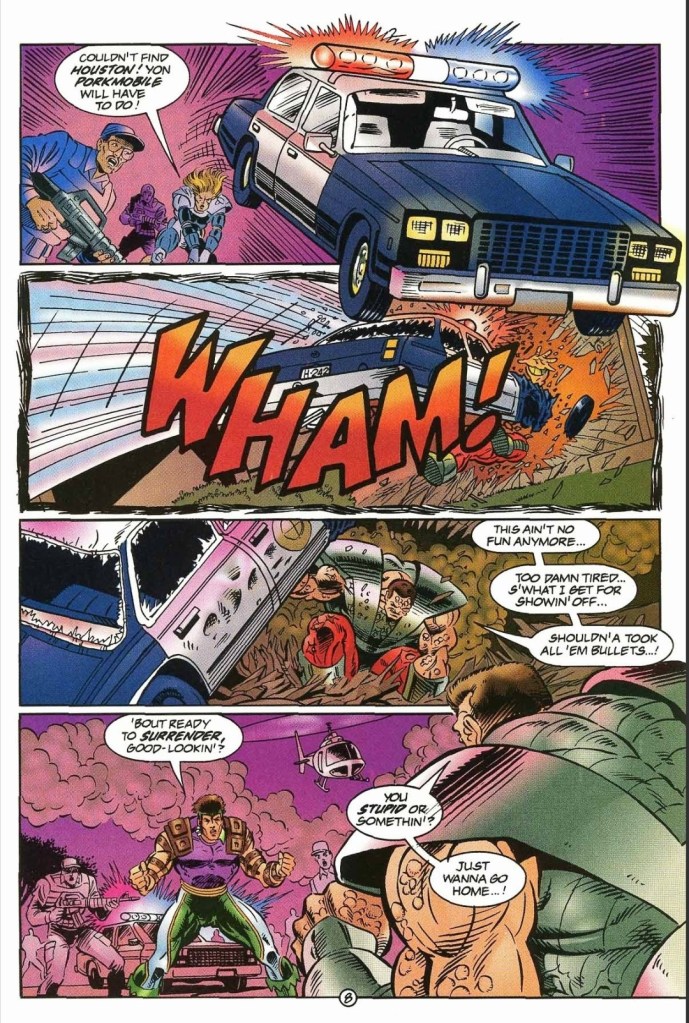
As soon as the two step out of the house feeling bad about their failure, they suddenly find themselves confronted by several police officers. Police cars and a helicopter have surrounded the place. Just as Catapult and Mustang turned themselves in, the large man named Bruut suddenly regains consciousness and attacks the police.

The police officers respond by firing several bullets at Bruut which slowed him down. After noticing that Bruut was only regaining his strength, the two Exile members made their moves before the large man strikes the police…

Quality

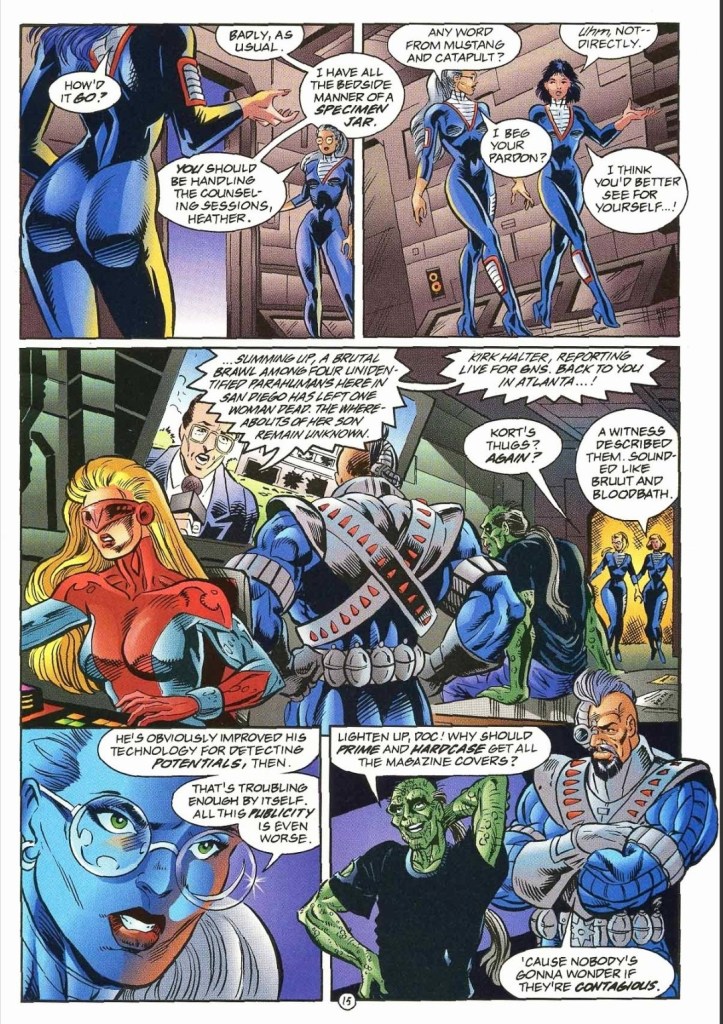
Inside the headquarters of Exiles. Ghoul’s mentioning of Prime and Hardcase seems to foreshadow his eventual part in UltraForce.

As expected, the storytelling in this comic book really progressed and paid off some of the build-up that happened in issue . Here, the conflict between the Exiles and the enhanced forces of business tycoon Victor Kort got clearly defined and what they have in common other than having enhanced beings is their pursuit of individuals who carry within their bodies the Theta virus which unlocks unexpected powers or capabilities. Such developments could impact the people and the world around them when left unguarded or deliberately developed with assistance of guidance.

Amber, who was a key figure in issue , appears much less in this comic book but her purpose with the Exiles gets more elaborated. The lack of spotlight on Amber is not surprising as the creators had to emphasize the conflict between the titular team and Kort’s forces while also introducing Timmy Halloran as a new Theta-carrying individual.

There is a good amount of superhero spectacle here and along the way, the dialogue is good and got witty as well. By the time I reached the end, I found myself anticipating what would come next in issue .

Conclusion

The two Exiles members take on Bruut right in the presence of police officers.

Exiles (1993) is a worthy follow-up to its predecessor and the creators succeeded in making the conflict more engaging while cleverly releasing new details that defined what is at stake and what could follow. In retrospect, Amber Hunt later became a key figure in the 2-part Break-Thru crossover storyline (which was memorably drawn by the late George Perez) and the story here defined how much impact super beings can have on societies filled with mostly people who don’t have super powers or special talents. The conflict between the Exiles and Kort’s forces not only got emphasized a lot, their respective agendas and resources are also well defined.

Overall, Exiles (1993) is recommended.

+++++

Thank you for reading. If you find this article engaging, please click the like button below and also please consider sharing this article to others. If you are looking for a copywriter to create content for your special project or business, check out my services and my portfolio. Feel free to contact me with a private message. Also please feel free to visit my Facebook page Author Carlo Carrasco and follow me on Twitter at  @HavenorFantasy as well as on Tumblr at https://carlocarrasco.tumblr.com/ and on Instagram at https://www.instagram.com/authorcarlocarrasco/

A Look Back at Sludge #10 (1994)

Disclaimer: This is my original work with details sourced from reading the comic book and doing personal research. Anyone who wants to use this article, in part or in whole, needs to secure first my permission and agree to cite me as the source and author. Let it be known that any unauthorized use of this article will constrain the author to pursue the remedies under R.A. No. 8293, the Revised Penal Code, and/or all applicable legal actions under the laws of the Philippines.

Welcome back, superhero fans, 1990s arts and culture enthusiasts and comic book collectors! Today we revisit the Ultraverse of Malibu Comics and examine one of its many stories told through an issue of the Sludge comic book series.

In my previous retro review, the “Street Wars” storyline came to a solid and even shocking end which ultimately left Sludge free and yet desperate and unfulfilled. At this stage, Sludge is clearly a very lost soul and this opens another opportunity for readers to follow him and see where he will go next.

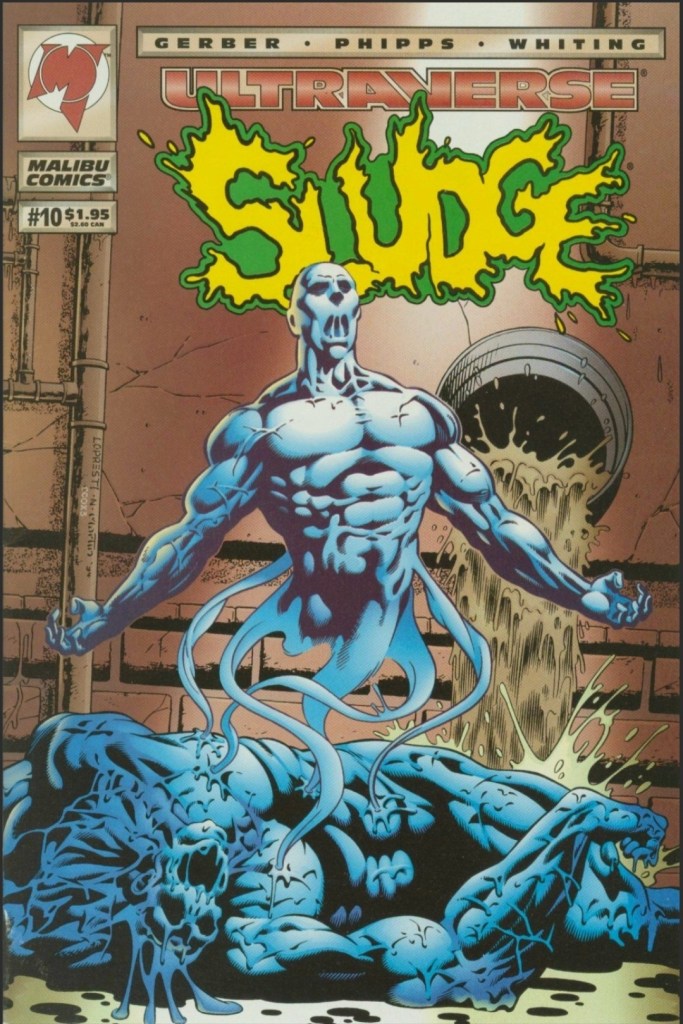
With those details laid down, here is a look back at Sludge , published by Malibu Comics in 1994 with a story written by Steve Gerber and drawn by Robb Phipps.

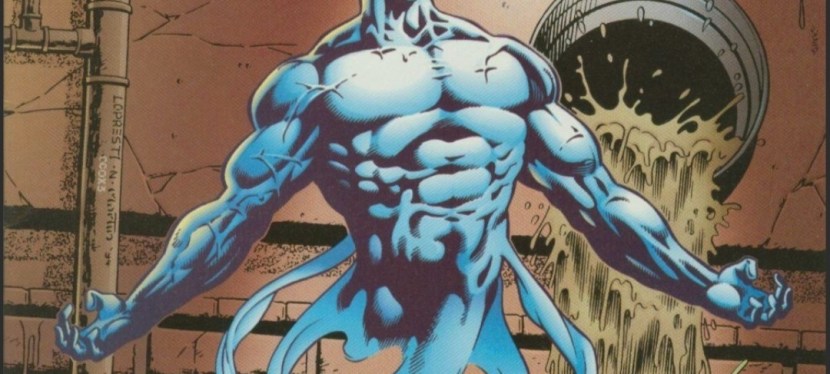
The cover.

Early story

The story begins with Sludge once again alone in the sewers. This time, he holds large quantities of the illegal substance Zuke which he believes will help him achieve something he desires in relation to his existence. Life has been very hard for him since he became a slimy creature.

Then he remembers when the mercenary Bloodstorm was forced fed with Zuke. Afterwards, he consumes the large Zuke containers expecting them to fix him. Nothing happened. No instant results whatsoever which frustrates him. Sludge then walks into the darkness.

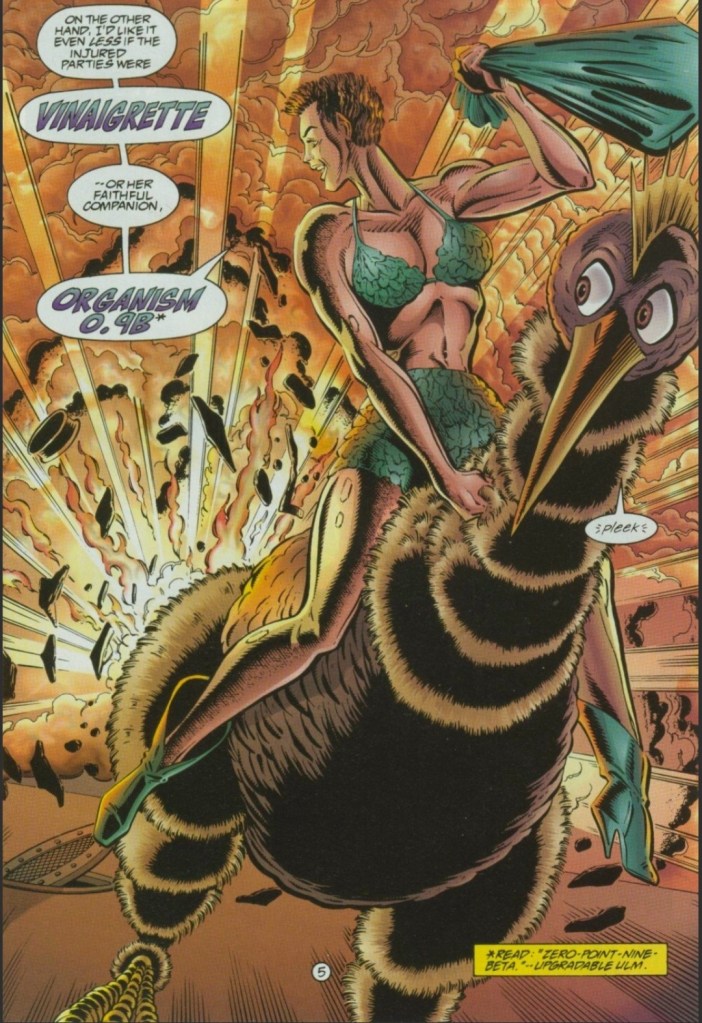
On the city street, police officers in cars chase an unusual target…a lady riding a large bird of unknown species. After causing her pursuers to crash and explode, the lady rider reveals herself to be Vinaigrette.

Just as Vinaigrette and her speedy bird move into an alley, Sludge sees them…

Quality

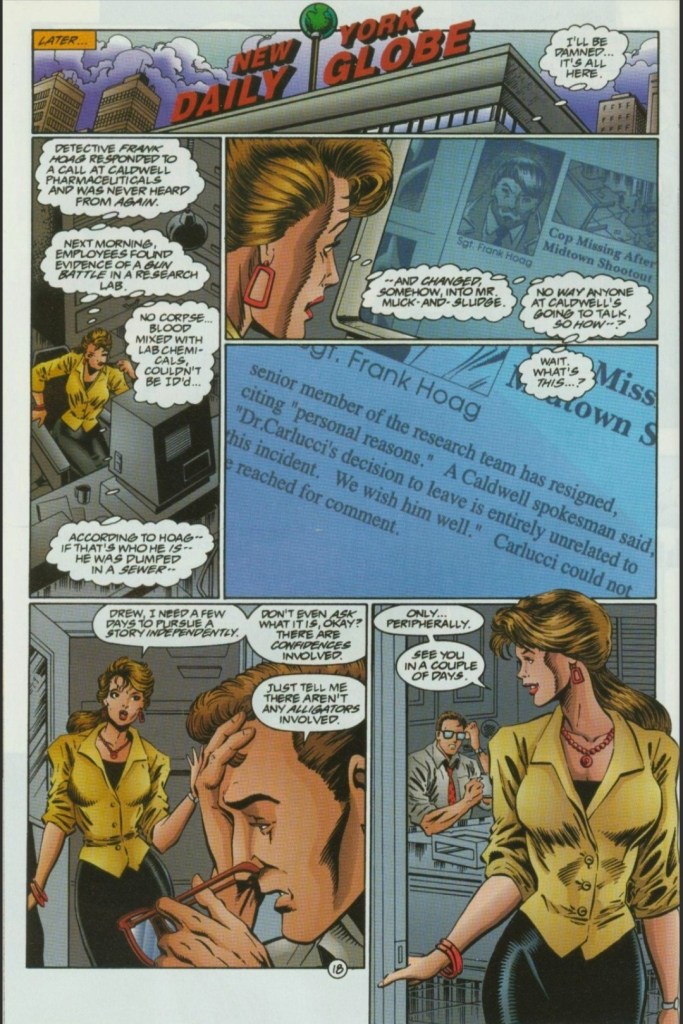
Investigative journalism being done.

When it comes to the story, I can say that the Sludge series really made a serious turn towards a different direction here. Without spoiling the rest of the plot, I can say that very significant changes await readers, so much so their usual expectations towards Sludge become unnecessary. Are you so used to seeing Sludge think or talk inconsistently? Be ready for something really new about him, something that makes him more human moving a bit closer to his past life as a civilian.

Moreover, with the gang war aspect of New York already out of the narrative, this comic book not only follows Sludge more significantly, its story is also more character-driven than before. What Steve Gerber wrote here is very nicely structured and it is also clear he also adjusted his portrayal of the titular character to give readers something fresh and yet familiar to follow.

So what kind of story does this comic book present other than being a more character-driven piece? Definitely it’s not a monster story nor a superhero tale but something more of a misadventure mixed with elements of detective story plus a bit of investigative journalism (mainly due to the series’ notable lady journalist).

Conclusion

A lady and her speedy ride.

In my view, Sludge (1994) is a successful attempt by the creative team to emphasize Sludge’s exploits and personality even more while taking a new direction without ever feeling alienating. I should state that after reading back-to-back issues about the New York gang war which had the titular character caught in the middle, this comic book’s character-driven approach with Sludge is literally like a breath of fresh air. Not only will you see even more of Sludge, you will also enjoy the creators’ attempt on exploring his past life while showing lots of significant new things in connection to the changes he goes through. The story is nicely paced, the storytelling is creatively stylized and there are nice pay-offs for each build-up.

Overall, Sludge (1994) is highly recommended.

+++++

Thank you for reading. If you find this article engaging, please click the like button below and also please consider sharing this article to others. If you are looking for a copywriter to create content for your special project or business, check out my services and my portfolio. Feel free to contact me with a private message. Also please feel free to visit my Facebook page Author Carlo Carrasco and follow me on Twitter at  @HavenorFantasy as well as on Tumblr at https://carlocarrasco.tumblr.com/ and on Instagram at https://www.instagram.com/authorcarlocarrasco/

A Look Back at Freex #13 (1994)

Disclaimer: This is my original work with details sourced from reading the comic book and doing personal research. Anyone who wants to use this article, in part or in whole, needs to secure first my permission and agree to cite me as the source and author. Let it be known that any unauthorized use of this article will constrain the author to pursue the remedies under R.A. No. 8293, the Revised Penal Code, and/or all applicable legal actions under the laws of the Philippines.

Welcome back superhero enthusiasts, 1990s culture enthusiasts and comic book collectors! Today we go back to the mid-1990s which was a really wild time for comic collectors. To be more specific, this newest retro comic book review revisits Ultraverse through the exploits of Freex, the monthly series about a group of young adults with unusual capabilities (or abnormalities) who are constantly on the move as they are social outcasts.

In my previous retro reviews of Freex, the team encountered Contrary (who later became a significant part of UltraForce) and her so-called school of gifted children. Subsequently, they left Contrary’s lair but without Ray who decided to stay behind. Freex, who gained a new member in replacing Ray, went underground encountering Prime and a lone individual called Old Man. After separating from Prime, the team move further underground with Old Man and discovered a lot of things they never expected.

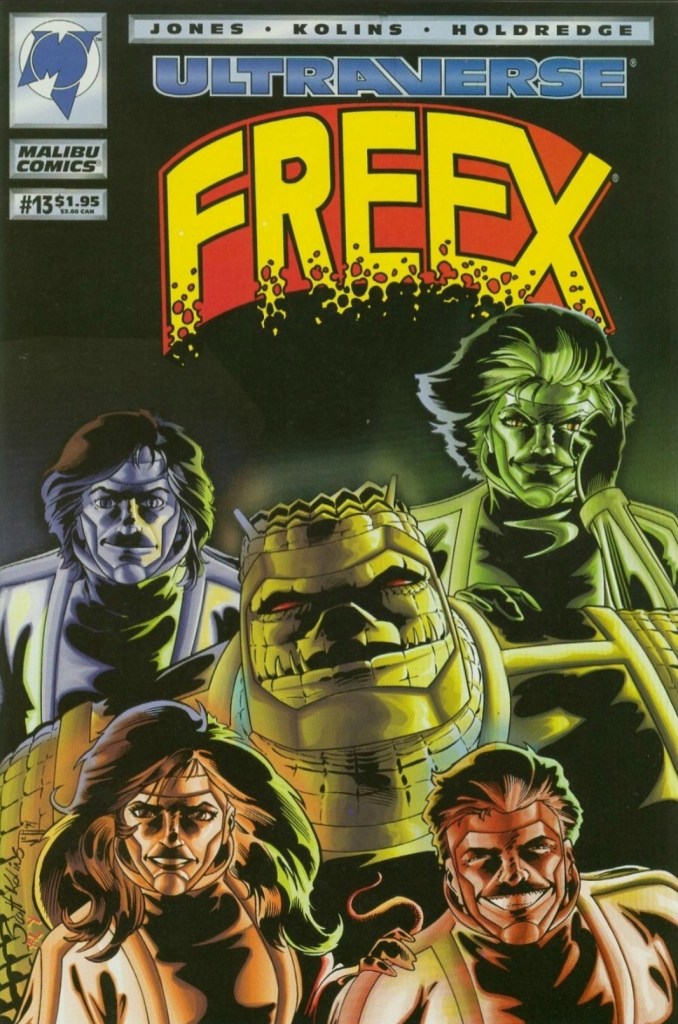
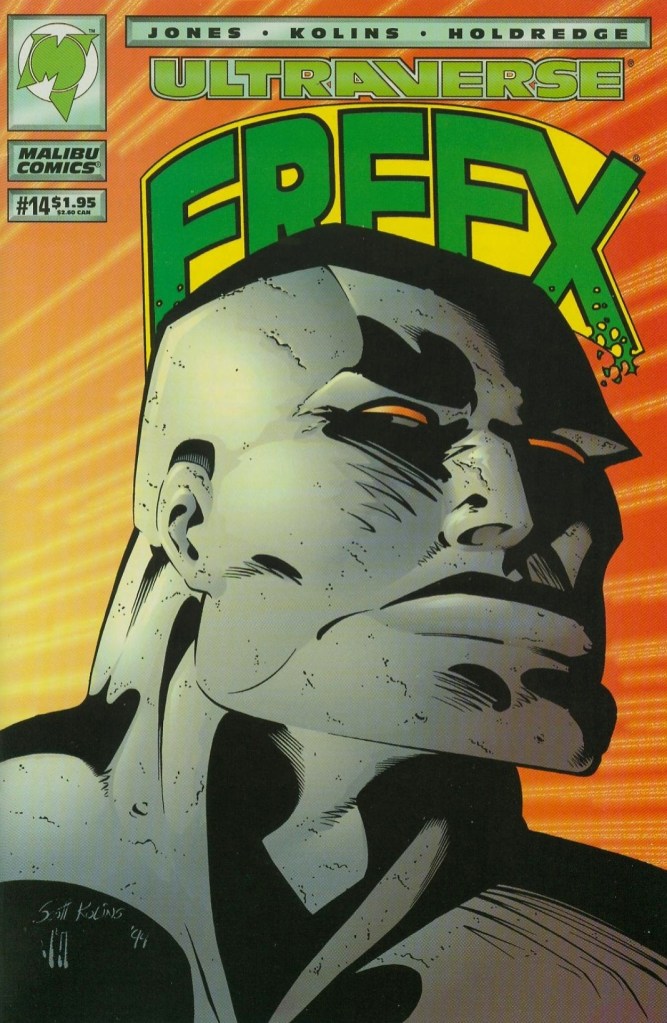
With those details laid down, here is a look back Freex , published in 1994 by Malibu Comics with a story written by Gerard Jones and drawn by Scott Kolins.

The cover.

Early story

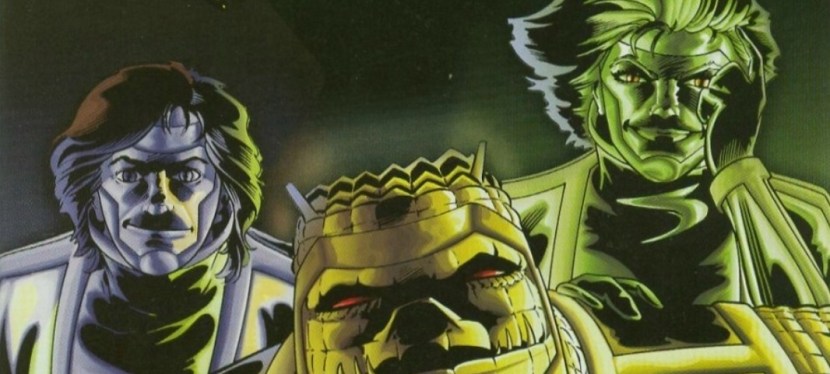
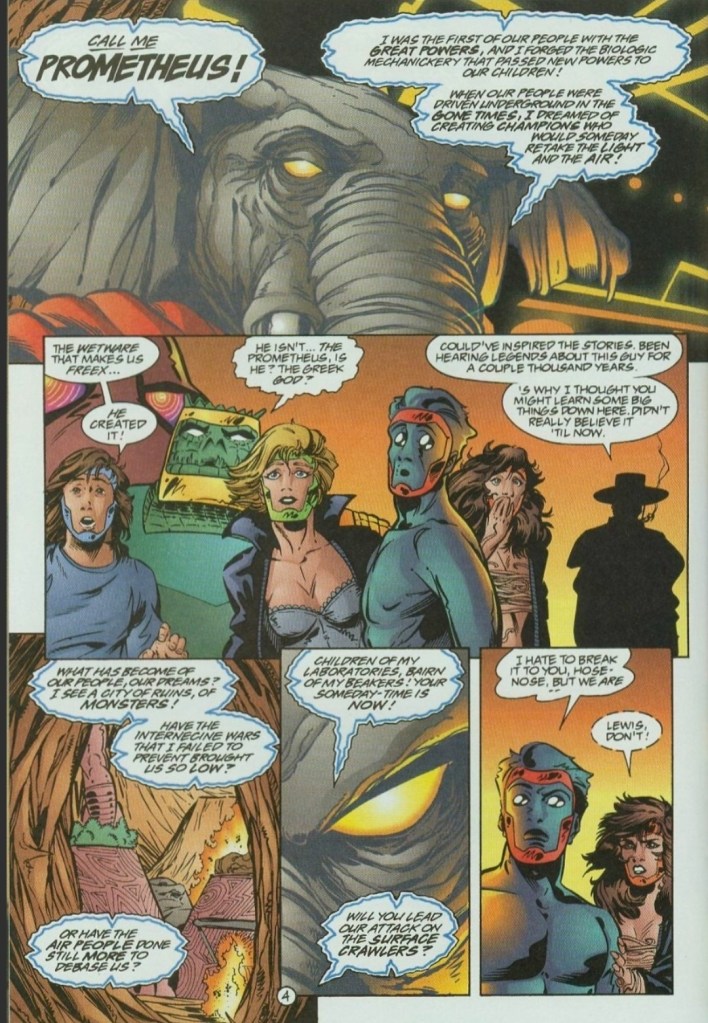
The story begins deep under the Earth’s surface wherein the Freex – AJ, Angela, Michael, Valerie and new member – and Old Man encounter a huge and intimidating sentient being which has the head and tusks of an elephant. The being calls itself Prometheus and claims that he has lived underground for a very long time, created new beings and saw the development of settlements that the people on the surface are not even aware of.

Intriguingly, he reveals to the Freex that he created the substance that were injected by a certain nurse into the bodies of each team member when they were still infants which later manifested into the capabilities and abnormalities they now have…

Quality

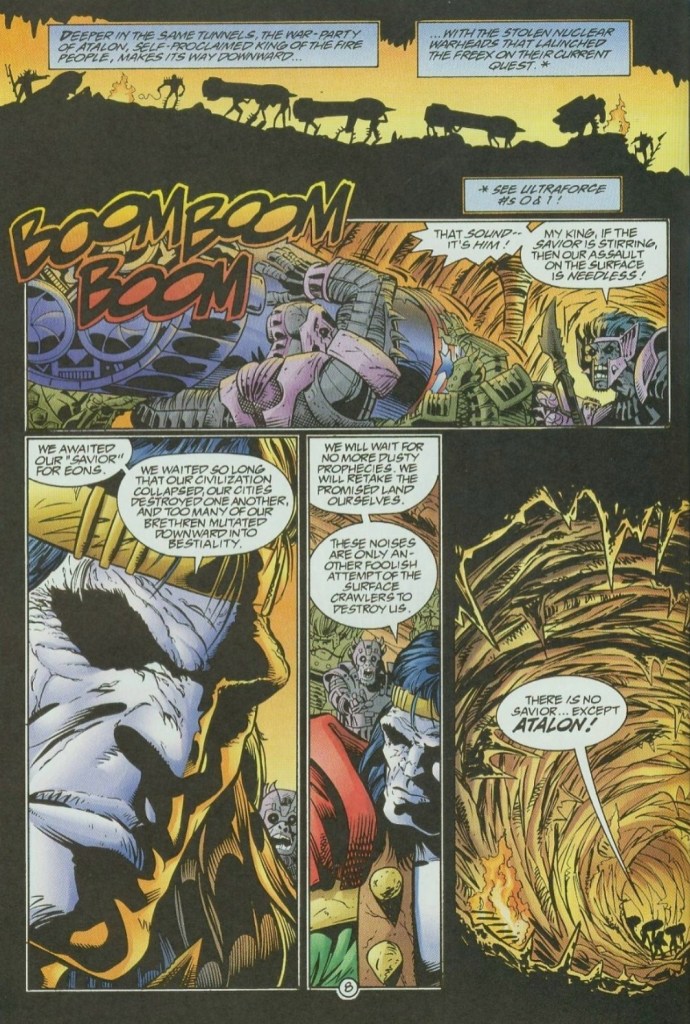
This short scene about Atalon and his army is a prelude to the Atalon storyline in the early issues of UltraForce.

The most significant aspect about this comic book’s story is the clever approach taken by the creators to not only show the further development of Freex but also emphasize and expand the lore of the Ultraverse while connecting this series to UltraForce (the early issues written by Gerard Jones and drawn by the late George Perez) which itself had a great conflict between Atalon’s forces and Earth’s governments. To put it short, this Freex tale is a prelude to the events seen in UltraForce #0, UltraForce and the rest of the Atalon saga. The good news is that the emphasis of in-universe connection (as opposed to crossovers) was done well and nicely structured.

More on the Freex themselves, the revelation that the members’ powers were the result of being injected (by Wetware Mary) into them with the substance created by Prometheus resulted in dramatic reactions from them which also adds to the tension of their current misadventure together so far away from society. The revelation also added tremendous weight into the series’ narrative raising questions such as the following: Wow will each Freex member reintegrate into society as they know the truth about what caused them to have powers/abnormalities? Where will they go once they made it back to the surface? Will they keep secret the existence of Prometheus?

In relation, the creative team took their time to develop each member’s personality and emotions. Most notable was the portrayal of the new friendship between Valerie and their new member (indoctrinated by Contrary) which hints that something significant could happen to not only themselves but to the team itself.

What also struck me in this comic book was the way the 2nd half of the story was presented…by becoming really wild and crazy. Eerily, the confusion felt by Freex during the 2nd half was something I as a reader felt. To find out what I’m talking about, I urge to get a copy of this comic book and read it yourselves.

Conclusion

This page revealed more about the origins of the Freex members.

While the 2nd half of the story had a crazy ride, I still found Freex (1994) to be really engaging and intriguing mainly on the big revelation and UltraForce connections told in the first half. At this stage in the series, it really looked like that the team was on its way into the unknown as their own place within the Ultraverse really widened (similar to what happened on the part of The Solution in issues #10, #11 and #12).

Overall, Freex (1994) is recommended.

+++++

Thank you for reading. If you find this article engaging, please click the like button below and also please consider sharing this article to others. If you are looking for a copywriter to create content for your special project or business, check out my services and my portfolio. Feel free to contact me with a private message. Also please feel free to visit my Facebook page Author Carlo Carrasco and follow me on Twitter at  @HavenorFantasy as well as on Tumblr at https://carlocarrasco.tumblr.com/ and on Instagram at https://www.instagram.com/authorcarlocarrasco/

A Look Back at Sludge #9 (1994)

Disclaimer: This is my original work with details sourced from reading the comic book and doing personal research. Anyone who wants to use this article, in part or in whole, needs to secure first my permission and agree to cite me as the source and author. Let it be known that any unauthorized use of this article will constrain the author to pursue the remedies under R.A. No. 8293, the Revised Penal Code, and/or all applicable legal actions under the laws of the Philippines.

Welcome back, superhero fans, 1990s arts and culture enthusiasts and comic book collectors! Today we revisit the Ultraverse of Malibu Comics and examine one of its many stories told through an issue of the Sludge comic book series.

In my previous Sludge retro review, the conflict between the crime organizations intensified as the titular character continued to struggle with achieving his desired goal which includes getting involved with the Pump’s evil schemes. Eventually something unexpected happened Sludge which involved Zuke, the potent illegal substance the Pump keeps on unleashing to the public.

With those details laid down, here is a look back at Sludge , published by Malibu Comics in 1994 with a story written by Steve Gerber and drawn by Robb Phipps.

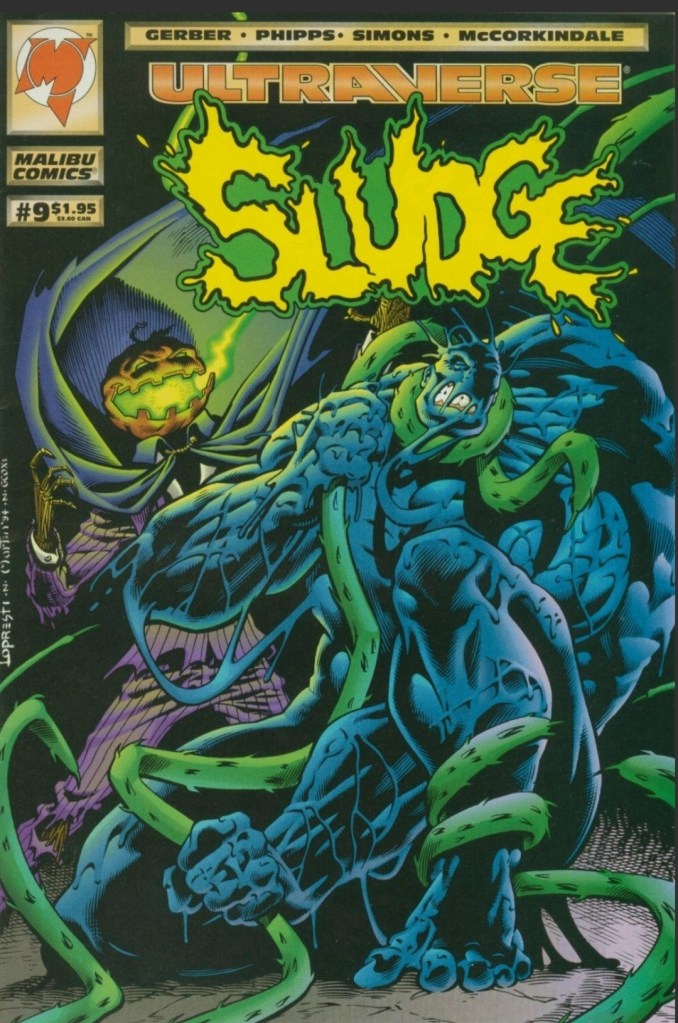
The cover.

Early story

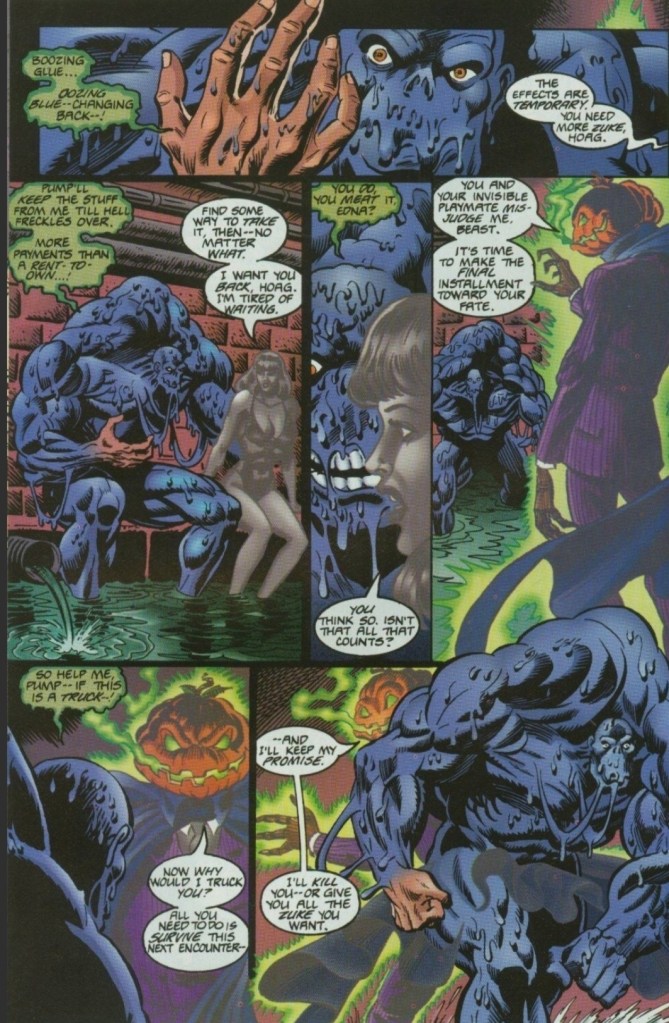
The story begins with Sludge in pain as he pulls out a long spike from his right hand which became flesh again. This was the result of his holding Zuke which his right hand somehow absorbed. Wanting answers, he calls out to the Pump who (along with his teenage protégé) was no longer present in the room. A female ghost appears to Sludge and tells him that the crime boss is downstairs.

It turns out, the Pump has an evil plan in mind which would involve the mercenary Bloodstorm. The crime boss puts a very large capsule of Zuke into the mouth of the restrained Bloodstorm. Just as Sludge arrives, Bloodstorm becomes very enraged as a result of absorbing a high quantity of the illegal substance. Shortly after Pump quells the drugged mercenary, Sludge approaches him for more Zuke as he is convinced that the drug will turn him to normal just like how it turned his right hand back to normal.

The Pump orders Sludge to take Bloodstorm’s body back to his employer Sabatini then return. He reminds him that he has the Zuke and is capable of eradicating him…

Quality

Sludge has yet to realize he could really go up against the very evil Pump.

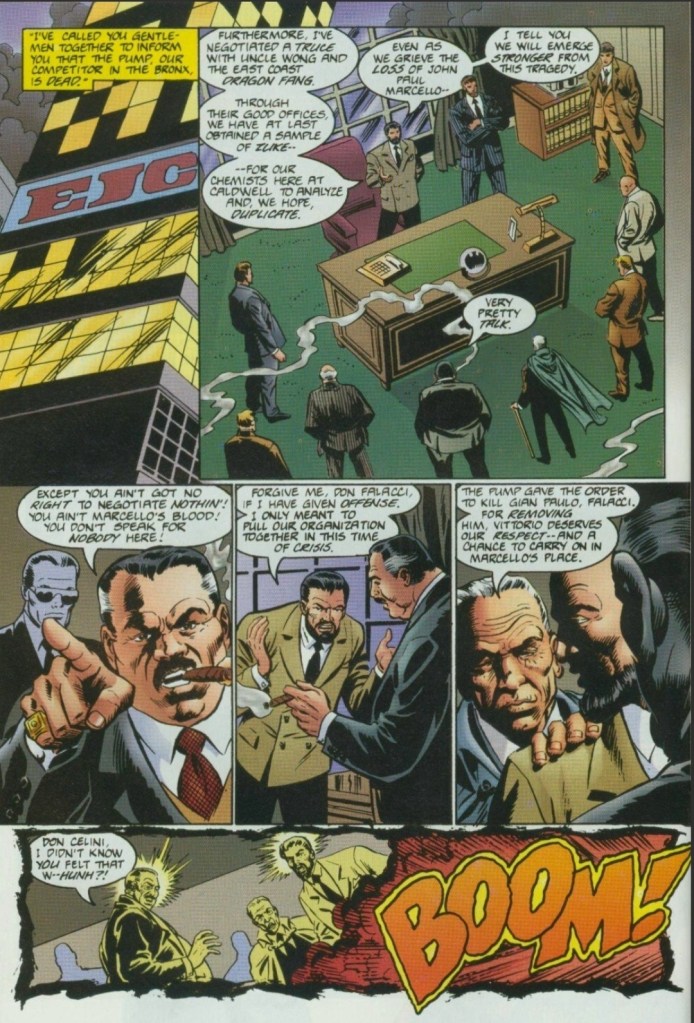
Now this is the most intriguing tale of Sludge in relation to the unstable relations between the gangs of New York. Vittorio, the one trusted assistant of the late crime boss Marcello, leads the gang and tries to craft a new direction with emergence in mind by negotiating a truce with the Dragon Fang while also starting efforts to duplicate the very addicting substance called Zuke which has long been an asset to the Pump’s gang. Unsurprisingly, Vittorio encounters trouble trying to win the trust of the more established crime bosses and he is also unaware that they are all being targeted by the Pump.

Once the Pump unleashes his newest move against the gangs, the situation intensifies and gets twisted which makes this a really solid reading experience. Steve Gerber crafted this story to be intense and unpredictable at the same time, while also showing how Sludge deals with his situation being powerless under the Pump. There is one notable addition to the plot which involves violent action which you must discover for yourselves.

When it comes to the visuals, Robb Phipps take on Sludge is vastly different compared to Aaron Lopresti’s Sludge. The result is that Phipps’ art style made Sludge and the other characters have that cartoony aesthetic and yet they are still recognizable. What visual style and elements Phipps had on certain issues of Mantra he illustrated (click here, here and here) are pretty much present in this comic book.  

Conclusion

A high-stakes meeting disrupted.

Sludge (1994) is another solid read and one of the most intriguing stories of the Sludge series. As the concluding chapter of the “Street Wars” storyline, this comic book has the usual elements that defined Sludge stories while also succeeding in moving the plot forward (note: the storyline conclusion is engaging, even shocking) complete with twists and noticeable intensified violence. At this point in the monthly series, Sludge is off on a path of despair and he is clearly lost. This element alone should compel readers to examine Sludge’s personality closely and analyze where he is heading to and what purpose does he have left.

Overall, Sludge (1994) is recommended.

+++++

Thank you for reading. If you find this article engaging, please click the like button below and also please consider sharing this article to others. If you are looking for a copywriter to create content for your special project or business, check out my services and my portfolio. Feel free to contact me with a private message. Also please feel free to visit my Facebook page Author Carlo Carrasco and follow me on Twitter at  @HavenorFantasy as well as on Tumblr at https://carlocarrasco.tumblr.com/ and on Instagram at https://www.instagram.com/authorcarlocarrasco/

A Look Back at Break-Thru #2 (1994)

Disclaimer: This is my original work with details sourced from reading the comic book and doing personal research. Anyone who wants to use this article, in part or in whole, needs to secure first my permission and agree to cite me as the source and author. Let it be known that any unauthorized use of this article will constrain the author to pursue the remedies under R.A. No. 8293, the Revised Penal Code, and/or all applicable legal actions under the laws of the Philippines.

Welcome back superhero enthusiasts, 1990s culture enthusiasts and comic book collectors! Today we go back to the mid-1990s which was a really wild time for comic collectors. To be more specific, this newest retro comic book review revisits the conclusion of the epic Ultraverse storyline Break-Thru which was illustrated by the late George Perez (1954-2022). I encourage you readers – especially long-time fans of the iconic illustrator – to check out my commemorative article about George Perez by clicking here.

For the newcomers reading this, Break-Thru was a 2-part storyline that creatively involved almost all the main characters of the Ultraverse (The Strangers, Mantra, Prime, Prototype, Freex, The Solution, Hardcase, Sludge, Solitaire and others) who got impacted in varied ways by Amber (of the Exiles) who floated high in the air causing chaos on societies below. Specifically, that was the concept of Break-Thru (1993) and issue has the story continuing with a setting in outer space with the moon as the key destination.

With those details laid down, here is a look back Break-Thru , published in 1994 by Malibu Comics with a story scripted by Gerard Jones (plotted by Mike W. Barr, Steve Englehart, Steve Gerber, James Hudnall, Tom Mason, George Perez, James Robinson and Len Strazewski) and illustrated by the late George Perez.

An epic cover by the late George Perez.

Early story

The story begins at the surface of the moon with Hardcase, Choice and the members of The Solution who just survived the explosion (connected with Hardcase #7 and The Solution #4) of the flying saucer they used on their journey. Nearby, the people responsible for the destruction are riding their own flying saucer, scanning the surface of the moon searching for an entity.

Behind the scenes, the very hidden yet powerful Rex Mundi watches and tells Gate that other ultras are seeking the entity. As the saucer floats to a cave detecting the presence of the entity, the occupants get shaken as Prime hits them hard. Prime tells himself that the entity in the cave feels danger from the searchers and he has to protect it as he has been connected with it (refer to Prime #7). After getting blasted in retaliation by the saucer, Prime finds himself hit even more as Rex Mundi’s enforcers suddenly come out of a portal very near him.  

From a distance, Mantra (refer to Mantra #6) sees the fight happening and needs a life force to survive. Elsewhere, Hardcase, Choice and The Solution witness the arrival of a space shuttle. The Strangers and Prototype (refer to The Strangers #7 and Prototype #5) come out together…

Quality

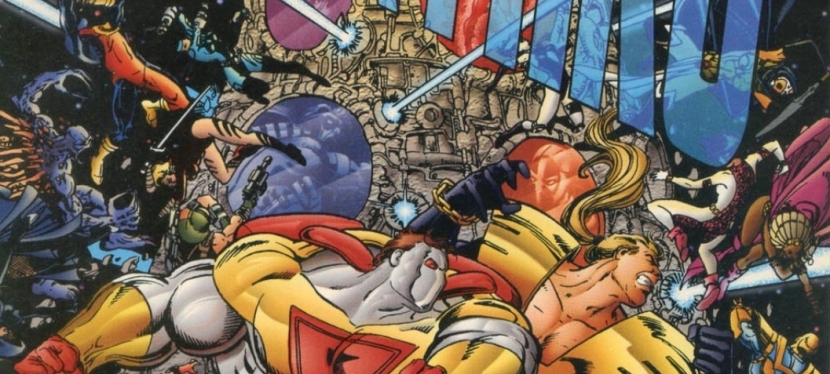
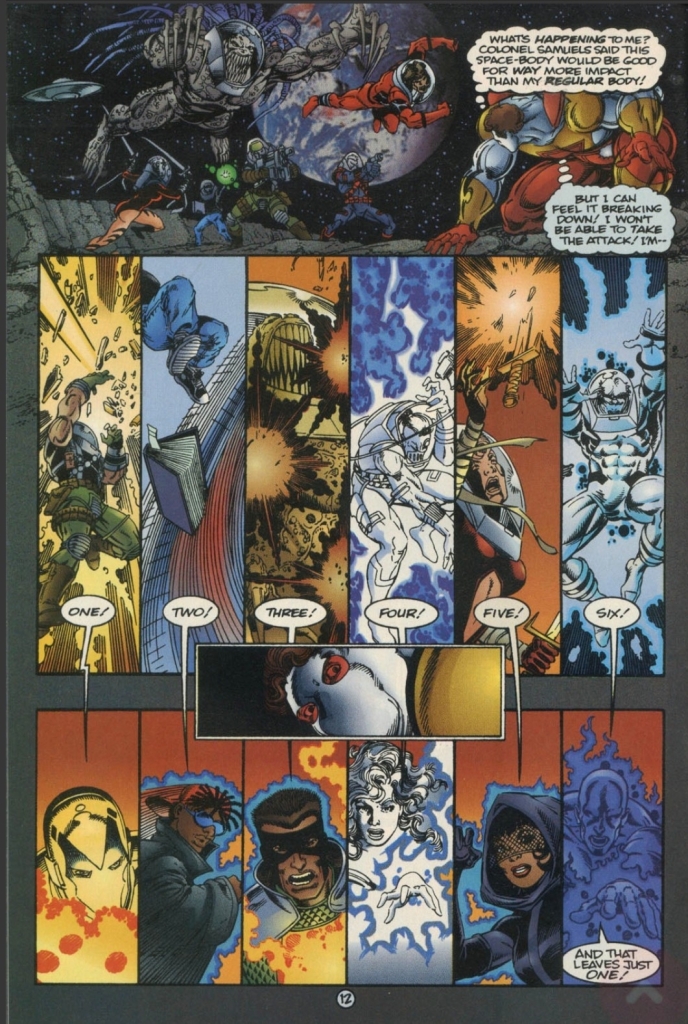
This is classic George Perez presentation of action and characters using multiple panels in a single page.

Starting with the writing, I should mention that all the writers who were involved in plotting this comic book as well as the previous issue should be commended for their combined efforts on making the Break-Thru storyline happen complete with in-universe ramifications, developments and connections to almost all the monthly comic books via the Break-Thru tie-in issue (also check out Sludge #3, Freex #6, Solitaire #2 and Night Man #3). Clearly Break-Thru was planned to be a major turning point of the Ultraverse by involving and mixing most of the major characters together and have them struggle with tremendous obstacles they simply cannot ignore as the stakes were indeed too high.

More on this comic book, the major conflict was set on the moon which proved to be a very unique setting not just for dynamic battles to happen but also to serve as the place where a mysterious and powerful entity is hidden. When it comes to the story, the entity (more science fictional in concept) is mysterious and cleverly not blatantly evil. It is its mysteriousness that makes the entity a worthy force to have the UV’s heroes come after.

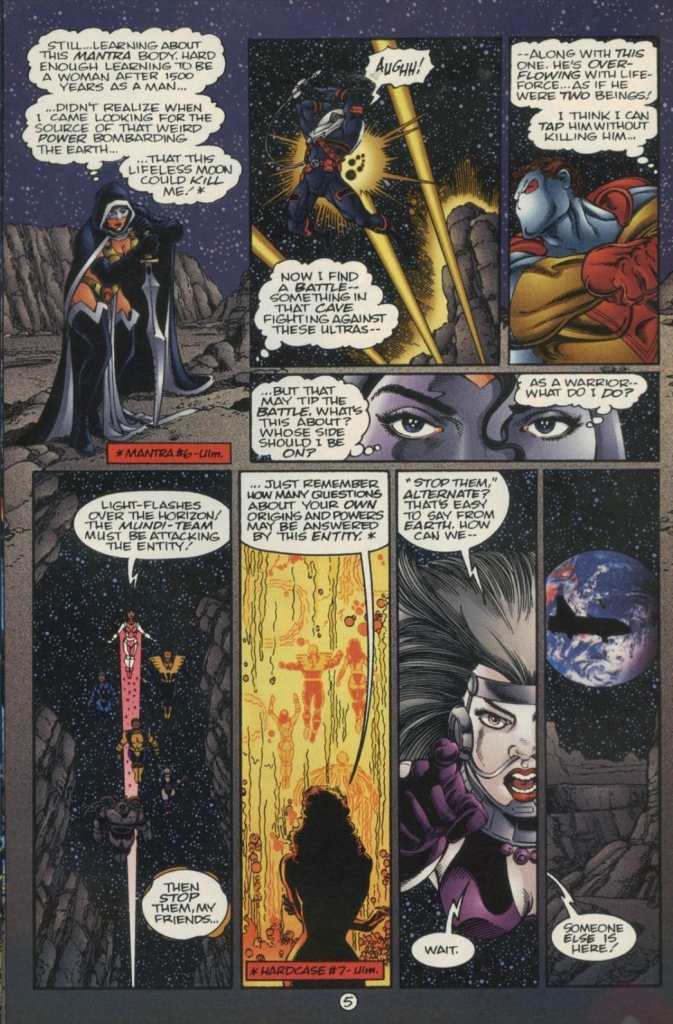
The writers added depth to the plot by showing Yrial of The Strangers and Prototype each having their own vested interests to get to the entity and acquire whatever it has that is valuable. At the same time, Mantra and Prime each discovered valuable knowledge about the entity that impacted their perceptions about their purpose as beings with super powers.

Mantra, Prime, The Solution, Hardcase and Choice.

While the story here still has so many characters expressing themselves and releasing expository information, the narrative is a little bit easier to understand and follow compared to issue (which had a lot more information to release via exposition). That being said, the scenes of spectacle became more enjoyable to read and along the way there were some notable character moments to look at.

Visually, this is unsurprisingly a great looking comic book as it was illustrated by the late George Perez. What I love most about Perez’s art style and visual presentation are all here: high details on each character drawn as well as their surroundings, the dynamic approach on setting up the panels on each page, fantastic looking superhero action, and much more! As with Break-Thru and other Ultraverse comic books drawn by Perez, this one is absolutely great to look at and it easily lifts up the visual/artistic quality of the UV and its heroes. As George Perez was involved in the plot of this comic book, the narrative was never overwhelmed by his great art and the artist really exerted a lot of effort on visualizing each and every one of the established UV characters (including the supporting characters).

Speaking of the established characters, I should state that Perez made Mantra’s face (with mask) look a bit more realistic and feminine while Kevin Green has a more convincing teenage boy look, Sludge looks a bit more creepier and Yrial looks visually identical to the way Rick Hoberg draws her. When it comes to the varied physiques of each established UV hero, Perez captured them all perfectly. Clearly the late artist did his research on every character.

Conclusion

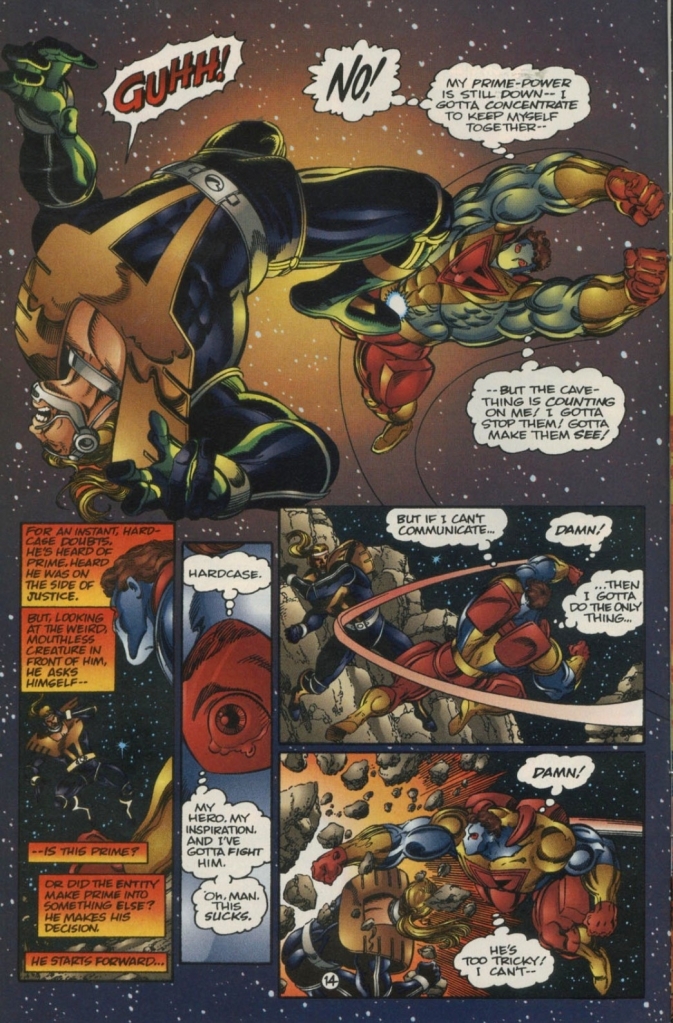
The first physical encounter between Prime and Hardcase. Remember this before reading the UltraForce comics.

Break-Thru (1994) is truly an epic Ultraverse story that also worked as a major turning point of the UV as a whole. Compared to other epic superhero stories that Marvel and DC Comics published, Break-Thru is not the usual large gathering of superheroes who have to work together to defeat an evil force that threatens everyone’s existence. It is more about the UV heroes getting together to solve major obstacles before reaching the main destination. By the time I reached the end of this comic book (and its storyline), I experienced great satisfaction not just from Break-Thru itself but also in relation to how the Ultraverse heroes realized what they are living for and what their respective purposes really are about. What also happened in this comic book explains why jumpstart events happened on Earth. Very clearly, this was an epic story that was planned early and even though this was published just months after the Ultraverse first debuted, the characters were developed enough to make Break-Thru’s concepts sensible and acceptable. There is a lot of fun and engagement in this comic book drawn by the late George Perez (who also worked on DC’s Crisis on Infinite Earths and Marvel’s The Infinity Gauntlet).

Overall, Break-Thru (1994) is highly recommended!

+++++

Thank you for reading. If you find this article engaging, please click the like button below and also please consider sharing this article to others. If you are looking for a copywriter to create content for your special project or business, check out my services and my portfolio. Feel free to contact me with a private message. Also please feel free to visit my Facebook page Author Carlo Carrasco and follow me on Twitter at  @HavenorFantasy as well as on Tumblr at https://carlocarrasco.tumblr.com/ and on Instagram at https://www.instagram.com/authorcarlocarrasco/
George Perez (1954-2022)

George Perez, the incredible comic book artist who made major contributions to illustrated literature (especially the superhero comic book genre), sadly passed away due to complications related to pancreatic cancer. He was 67-years-old and I can say that superhero comic book art and dynamic expressions will not be the same without him.

George Perez with the two Wonder Woman plastic models. (photo source – DC Comics Facebook page)

Already there were comic book industry figures who reacted to the death of the legendary Perez. DC Comics co-publisher and legendary creator Jim Lee paid tribute stating, “We creators may all have access to the same tools of the trade: pen, paper and imagination, but what George could do with his prodigious talents was off the charts.”

For his part, Rob Liefeld stated, “I’ll remember George for his innovative and prolific storytelling. Thank you for all the great memories. Rest In Peace, George Perez.”

For the newcomers reading this as well as those who are simply unaware of Perez’s legacy, he was responsible for visualizing DC Comics’ 1985 epic maxi-series Crisis on Infinite Earths (note: he drew countless characters complete with varied settings or environments in high detail) and redefining Wonder Woman (note: he also wrote the stories) which made her a more essential pop culture icon. George Perez also worked for Marvel Comics over many projects and was chosen to illustrate the memorable 2003 JLA/Avengers crossover series of Marvel and DC. Perez also worked with other publishers such as Malibu Comics for several Ultraverse comic books and Image Comics for Crimson Plague and Witchblade. In recent years, he was responsible for Sirens published by BOOM! Studios.

For me, Wonder Woman was best defined during the post-Crisis era of DC Comics which involved George Perez and Len Wein who wrote the early issues of the Wonder Woman monthly series in the late 1980s.

In his decades-long career in comics, Perez unsurprisingly earned varied awards and honors (references here, here, here and here to name a few).

I should say that George Perez is a long-time favorite comic book illustrator of mine. I enjoyed reading the superhero comic books he illustrated and I love his art style on the characters, the environments and crowds. If there is anything I love about Perez’s art, it is his distinct style along with his implementation of high levels of details on the characters, objects, creatures and surroundings. Perez is also known to capture the distinct visual elements of superhero characters such as Spider-Man’s costume and his spaghetti-like web, Superman’s physique and distinct letter S, Prime’s overly muscular body and more. Every time Perez is involved as artist, the result is almost always a visual feast that often adds punch to the script prepared.

When I was still actively collecting comic books back in the 1990s, I often get excited whenever I learned that George Perez illustrated upcoming comic books. In 1992, he drew Incredible Hulk: Future Imperfect (2 books) which was mind-blowing and intriguing for me! In 1993, I became a fan of the newly launched Ultraverse of Malibu Comics and I got very excited to learn that Perez was hired for their major UV crossover Break-Thru (2 issues). Perez also drew one issue of Prime and most of the early issues of the UV team UltraForce (issues #0, #1, #3, #4, #5 and #6). If you want to see Perez draw ALL the characters of the Ultraverse, you should read the 2-issue Break-Thru storyline.

A page from Break-Thru showing just some of the many Ultraverse characters Perez illustrated. This was published before the release of UltraForce.

Speaking of UltraForce, check out this video by Crypto Comics (with observations on Perez’s art works)…

Going back to George Perez’s amazing run on Wonder Woman, I urge you to watch the video below…

For me, the most defining stories of Wonder Woman ever told in any art form are still the comics that Perez wrote (note: he co-wrote stories with Greg Potter and Len Wein respectively on the early issues) and illustrated during the post-Crisis era of DC Comics. Check out my retro reviews of Wonder Woman 1980s comics on this website.

Truly, George Perez will be missed by a lot of people and his countless pieces of works will be revisited in the foreseeable future. In closing this piece, posted below are varied works (comic book covers and interior art) done by the late creator through the decades for your viewing pleasure and learning. This is a tribute to Perez and may he rest in peace!

+++++

Note: All images shown are properties of their respective companies.

Thank you for reading. If you find this article engaging, please click the like button below and also please consider sharing this article to others. If you are looking for a copywriter to create content for your special project or business, check out my services and my portfolio. Feel free to contact me with a private message. Also please feel free to visit my Facebook page Author Carlo Carrasco and follow me on Twitter at  @HavenorFantasy as well as on Tumblr at https://carlocarrasco.tumblr.com/ and on Instagram at https://www.instagram.com/authorcarlocarrasco/
A Look Back at Sludge #8 (1994)

Disclaimer: This is my original work with details sourced from reading the comic book and doing personal research. Anyone who wants to use this article, in part or in whole, needs to secure first my permission and agree to cite me as the source and author. Let it be known that any unauthorized use of this article will constrain the author to pursue the remedies under R.A. No. 8293, the Revised Penal Code, and/or all applicable legal actions under the laws of the Philippines.

Welcome back, superhero fans, 1990s arts and culture enthusiasts and comic book collectors! Today we revisit the Ultraverse of Malibu Comics and examine one of its many stories told through an issue of the Sludge comic book series.

As seen in my previous Sludge retro review, the stakes were raised even higher and Sludge finds himself in the middle of a major conflict between the gangs of the city with the involvement of the group of the Pump. By this point, the titular character is not only desperate but also is getting torn between good and evil.

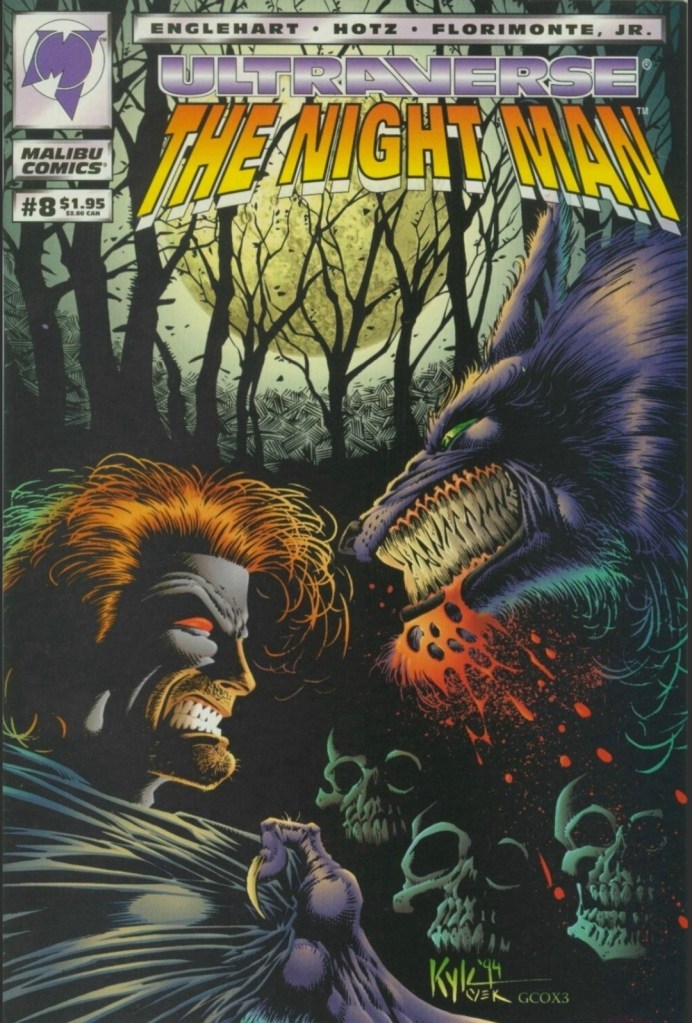
With those details laid down, here is a look back at Sludge , published by Malibu Comics in 1994 with a story written by Steve Gerber and drawn by Aaron Lopresti.

The cover.

Early story

The story begins with TV news coverage doing a recap of events that shook New York City and its people – the abduction of a drug mule, the destruction of a ship filled with illegal immigrants, the destruction in the cemetery left behind by a major conflict there, and the death of crime boss John Paul Marcello which involved action by Sludge.

Sludge then wakes up from another nightmare and finds himself inside a boiler room which has a TV set and a chair. It turns out the place was set up by a janitor who does not even know Sludge is present. Slowly, Sludge sneaks his way back to the sewer.

At a cemetery, the burial of Marcello is being attended by many people and among them is Don Celini who regarded the late crime boss as a man of vision who made a lot of money for many people. Vittorio, the former loyal assistant to Marcello, is told by Don Celini to demonstrate leadership qualities to the heads of the other gangs. In the evening at a discreet place, Vittorio meets with Bloodstorm with a lot of money on the side…

The reporter Shelley on the pursuit for details.

Quality

To make things clear about the storytelling, the conflict between the crime gangs not only became more intense but also turned out quite intriguing. Clearly writer Steve Gerber carefully planned out the events, character developments and twists for this series. That being said, this comic book has a fine mix of suspense, crime story and even the supernatural for the narrative’s progress, and the good news is that these elements were presented in a believable way.

As presented in the previous issues, Sludge’s desperation and death wish will keep on intriguing you especially when he gets bothered by the Pump (arguably the most evil figure of the entire Ultraverse). Even as the war between gangs heat up, the story even had space for investigative journalism moments through the news reporter Shelley (who encountered Sludge in person before) whose pursuit for the facts remains unrelenting.

Conclusion

Sludge in a dark boiler room.

While the previous issue made me think deeply about the state of Sludge’s character and the gang war he became involved with, Sludge (1994) is an even more intriguing Ultraverse read complete with solid twists that must be seen. Without spoiling the story, this comic book will strongly resonate with readers who really started the Sludge series from issue (note: Bloodstorm’s involvement in this comic book will be more relevant if you have previously read his detailed introduction in issue #2). The current storyline – Street Wars – went significant steps forward in this story and I can say that the creative team of Gerber and Aaron Lopresti were successful in making me anticipate the conclusion.

Overall, Sludge (1994) is recommended.

+++++

Thank you for reading. If you find this article engaging, please click the like button below and also please consider sharing this article to others. If you are looking for a copywriter to create content for your special project or business, check out my services and my portfolio. Feel free to contact me with a private message. Also please feel free to visit my Facebook page Author Carlo Carrasco and follow me on Twitter at  @HavenorFantasy as well as on Tumblr at https://carlocarrasco.tumblr.com/ and on Instagram at https://www.instagram.com/authorcarlocarrasco/
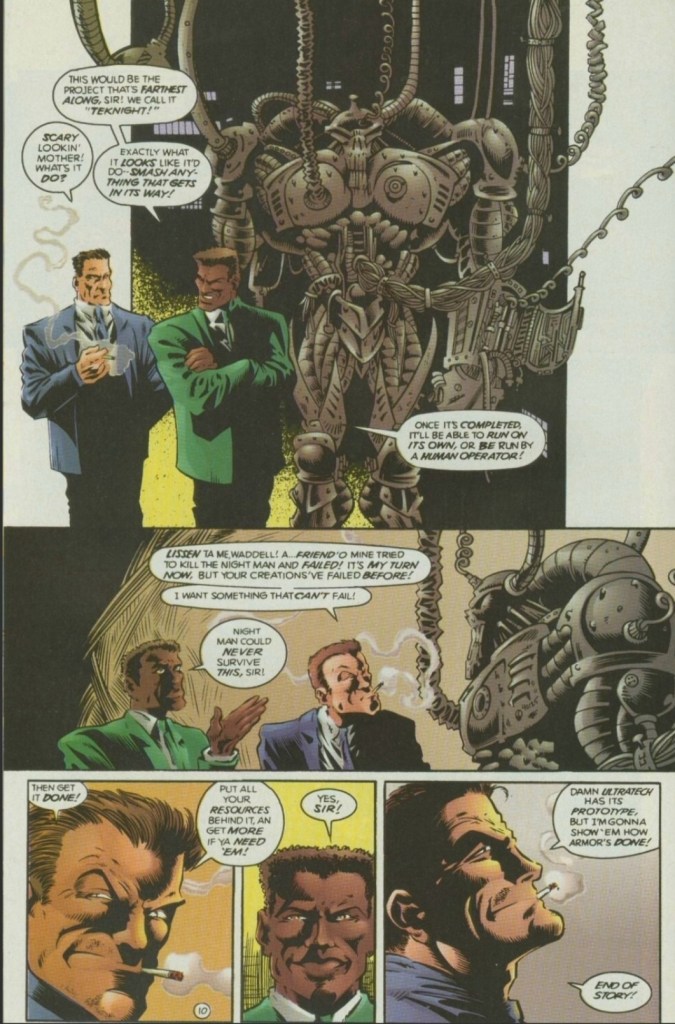
A Look Back at Ultraverse Premiere #4 (1994)

Disclaimer: This is my original work with details sourced from reading the comic book and doing personal research. Anyone who wants to use this article, in part or in whole, needs to secure first my permission and agree to cite me as the source and author. Let it be known that any unauthorized use of this article will constrain the author to pursue the remedies under R.A. No. 8293, the Revised Penal Code, and/or all applicable legal actions under the laws of the Philippines.

Welcome back, superhero fans, 1990s arts and culture enthusiasts and comic book collectors! Today we revisit the Ultraverse of Malibu Comics and examine one of its many stories told through an issue of the Ultraverse Premiere series.

For the newcomers reading this, Ultraverse Premiere was a series of comic books published by Malibu Comics that showcased several tales of the Ultraverse and its characters. These stories were made to expand the lore of the UV, emphasize key characters and give fans a lot of content to enjoy. Certain issues of Ultraverse Premiere served as flip comic books which are thick (a lot more than the normal 32 pages) and allow you to read Ultraverse Premiere tales on side and read another UV comic book on the other side. The Ultravere Premiere comic book I am about to review here had The Strangers #13 on its flip side.

With those details laid down, here is a look back at Ultraverse Premiere , published by Malibu Comics in 1994 with stories written by Len Strazewski and Kurt Busiek, and drawn by Frank Gomez and Kris Renkewitz.

The cover.

Early stories

Story 1 – the story begins with Prime making several appearances protecting innocent people from gangs, muggers, thieves and natural disasters. Specifically, his presence is making an impact on the lives of many neighborhoods and its people.

Sometime later, inside a private facility, the figure identified as Prime turns out to be fake and was designed as a human-shaped suit that was piloted inside by Sy Bernstein. He is personally determined to make an impact on crime in his local community with the fake Prime as his main tool.

Story 2 – the story begins with Lady Killer privately viewing a cartoon preview based on her team – The Strangers – with an executive of Imagine-Arts. Shortly after, Lady Killer meets with more executives of the said company and she is told that Imagine-Arts and Labrava Company (Lady Killer’s own enterprise) make a business deal match and they offer to buy her out. Lady Killer tells them that her company and herself are not for sale…

Quality

Lady Killer talking hard on business.

As far as storytelling goes, this comic book’s two tales succeeded in expanding the lore of the Ultraverse through Prime (as a figure to certain members of the public) and Lady Killer, the leader of The Strangers. The Prime-related story offers a nice take on one small part of the Ultraverse that deals with a local community tainted with crime and how Prime’s influence on the ordinary people impacts the said community in varied ways. Of course, these are all executed not with Prime/Kevin Green himself but rather with someone who happens to have the means to pose as Prime and pretend to be the ultrahero himself. Having read a lot of the adventures of the real Prime, this Prime tale is a really nice take although I should say that the art by Frank Gomez has that very rough look all throughout.

The second story meanwhile is an interesting side-story of The Strangers specifically limited to Lady Killer. She gets into business talk with one company which only leads to an intriguing turn of events which creatively emphasizes capitalism to be corrupt and twisted. In some ways, the anti-corporate theme of the story overshadows the plot itself and as the story progressed, Lady Killer slightly becomes less relevant. To be fair to the creative team, this side-story happens to be the first portion of a storyline that involves J.D. Hunt. To say the least, this tale is worth reading even though its protagonist lost some relevance due to a plot twist that started before reaching the end.

Conclusion

Something very odd here.

Ultraverse Premiere (1994) indeed carries enough entertainment and literary value on its two UV tales alone. Just consider The Strangers as a notable additive thanks to the flip side feature. Prime fans will most likely be intrigued and even entertained with the first story while The Strangers fans might end up dissatisfied with the story centered on Lady Killer not because it is the first chapter of a multi-part story but more on its storytelling quality. At least the art of the Lady Killer tale done by Kris Renkewitz is good to look at.

Overall, Ultraverse Premiere (1994) is recommended.

+++++

Thank you for reading. If you find this article engaging, please click the like button below and also please consider sharing this article to others. If you are looking for a copywriter to create content for your special project or business, check out my services and my portfolio. Feel free to contact me with a private message. Also please feel free to visit my Facebook page Author Carlo Carrasco and follow me on Twitter at  @HavenorFantasy as well as on Tumblr at https://carlocarrasco.tumblr.com/and on Instagram at https://www.instagram.com/authorcarlocarrasco/
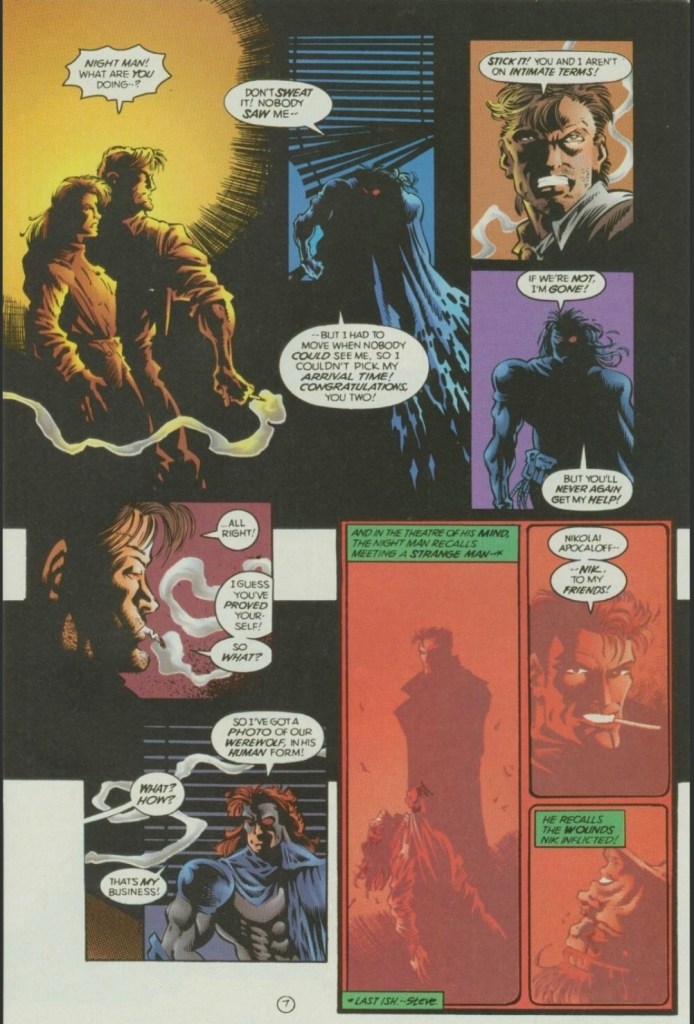
A Look Back at Sludge #7 (1994)

Disclaimer: This is my original work with details sourced from reading the comic book and doing personal research. Anyone who wants to use this article, in part or in whole, needs to secure first my permission and agree to cite me as the source and author. Let it be known that any unauthorized use of this article will constrain the author to pursue the remedies under R.A. No. 8293, the Revised Penal Code, and/or all applicable legal actions under the laws of the Philippines.

Welcome back, superhero fans, 1990s arts and culture enthusiasts and comic book collectors! Today we revisit the Ultraverse of Malibu Comics and examine one of its many stories told through an issue of the Sludge comic book series.

In my previous Sludge retro comic book review, the stakes were raised for Sludge and the city of New York as a new conflict started brewing that brought in two gangs along with the Pump and his own gang, and even mercenaries. Issue was the start of a new multi-part storyline that Steve Gerber crafted and it encouraged re-reading the early issues of the Sludge series to understand the scope of the new conflict.

With those details laid down, here is a look back at Sludge , published by Malibu Comics in 1994 with a story written by Steve Gerber and drawn by Aaron Lopresti.

The cover.

Early story

The story begins with a man and a woman on bed. Their privacy gets interrupted when the Pump suddenly appears in frightening fashion. It turns out, Sludge was in the middle of a nightmare and even sees a frightening vision of Edna. He then makes his way through in the sewer.

One morning at the Eretz Shalom Cemetery, a police investigation is being conducted as the local authorities found several dead bodies as well as scorched ground, bodies fused together and a some odor. Shelley, the very determined reporter of the New York Daily Globe, tries to uncover details at the crime scene only to be interrupted by a detective named Quinn. In response to her question, Quinn admits they are just discovering things and trying to figure things out.

Suddenly a lady wearing a suit and necktie approaches them…

Quality

Avoiding the touch of Sludge is a must!

As far as storytelling goes, this tale is a very solid follow-up to the previous issue. While issue showed the start of a big conflict involving three groups, this one shows the emotional and physical impact on the gang leaders (John Paul Marcello and the Dragon Fang) and the unrelenting pursuit of the Pump and his minions on wrecking down society by means of drug pushing and violence. In a way, this Ultraverse story daringly showed its own portrayal of illegal drugs and gang wars while also showing Sludge suffering more and getting even more desperate with his life. I should also state that there are scenes that added detective story and suspense vibes into the narrative.

It should be noted that at this point in the Sludge series, the titular character does some things here that would maker readers question his moves and his sanity, especially since the Pump (note: the Ultraverse’ very own Satan figure) keeps on tempting and manipulating him. Sludge, who was once a crooked cop when he was still human, clearly is vulnerable deep inside and he also is not resistant to the evil influences around him. Very notably, the story by Steve Gerber is strong enough to make me go on to read the next issue.

Conclusion

Shelley of the city newspaper at the scene of the crime.

Sludge (1994) is the kind of comic book that will make you think deeply about the true nature of the titular character and why should you keep on reading each new comic book of this series when you learn that the said character is far from being heroic. The lines that separate good and evil is very blurred at this stage of the Sludge series. This is one clever and really engaging piece of work done by the Gerber-Lopresti team, and at the same time it is also one of the most intriguing Ultraverse tales ever told. That being said, the comic book’s concept is incidentally not ideal for readers who seek good-versus-evil conflicts that get resolved.

If you are seriously planning to buy an existing hard copy of Sludge (1994) be aware that as of this writing, MileHighComics.com shows that the near-mint copy of the regular edition costs $16.

Overall, Sludge (1994) is recommended.

+++++

Thank you for reading. If you find this article engaging, please click the like button below and also please consider sharing this article to others. If you are looking for a copywriter to create content for your special project or business, check out my services and my portfolio. Feel free to contact me with a private message. Also please feel free to visit my Facebook page Author Carlo Carrasco and follow me on Twitter at  @HavenorFantasy as well as on Tumblr at https://carlocarrasco.tumblr.com/and on Instagram at https://www.instagram.com/authorcarlocarrasco/

A Look Back at Sludge #6 (1994)

Disclaimer: This is my original work with details sourced from reading the comic book and doing personal research. Anyone who wants to use this article, in part or in whole, needs to secure first my permission and agree to cite me as the source and author. Let it be known that any unauthorized use of this article will constrain the author to pursue the remedies under R.A. No. 8293, the Revised Penal Code, and/or all applicable legal actions under the laws of the Philippines.

Welcome back, superhero fans, 1990s arts and culture enthusiasts and comic book collectors! Today we revisit the Ultraverse of Malibu Comics and examine one of its many stories told through an issue of the Sludge comic book series.

In my previous retro comic book review, I found Sludge an inspired piece of work that relates to Mary Shelley’s Frankenstein which also carried elements about resurrection, man’s abuse of science, and the consequences of dealing with the unnatural. The comic book was also the 2nd consecutive issue of Sludge written by artist Aaron Lopresti.

With those details laid down, here is a look back at Sludge , published by Malibu Comics in 1994 with a story written by Steve Gerber and drawn by Aaron Lopresti.

The cover.

Early story

The story begins on the ocean with Sludge hitching a ride on a garbage barge being towed by a ship. Sludge then starts swimming off to a certain destination.

On the upper east side of Manhattan, a nicely dressed lady arrives with a suitcase and meets with a lawyer named Roger Sutton at his office. Inside, a trade happens with papers of a transfer of deed in exchange for highly unusual looking capsules.

Shortly after, as she drives off to her next destination, a blockade of two cars formed to stop her. A few armed men show up and fired bullets into her car to abduct her and take the suitcase containing the capsules.

Quality

Sludge doing something dangerous after waking up from a nightmare.

As this comic book marks the return of Steve Gerber, the story built up tension signaling that an urban war involving crime lords, mercenaries and the evil Pumpkin is coming. Remember Bloodstorm from issue #2? He’s back with a supporting role that fits in nicely within the brewing conflict. The demonic Pump, his teenage crime captain and gang are back serving as the unseen third force in the same conflict.

The way Steve Gerber constructed the brewing conflict is pretty solid and he managed to even efficiently introduce an Asian gang lord (complete with his family business and members) while emphasizing the presence of John Paul Marcello as the other big-time crime figure of the city. As for the titular protagonist, Sludge is portrayed to be struggling with guilt and hopelessness which push him to approach one of the evil forces. Sludge’s knowledge about Marcello will compel you to revisit issue . At this stage in the series, Sludge is becoming more desperate about his existence and purpose while dealing with the stress of being in the middle of a brewing conflict. His personal struggle on dealing with the evil influence of the Pump (clearly the Satan figure of the Ultraverse) is something that people living with weak faith and suffering will find relatable.

Conclusion

The first signs of the brewing crime war in the city.

Sludge (1994) is a strong return by Steve Gerber on the storytelling and it marked the start of a new storyline titled Street Wars which really raised the stakes of the series. The good news is that Gerber’s writing is very good and the characters are all nicely defined. Aaron Lopresti’s visuals maintained that high level of quality and he clearly defined the look of the Sludge series.  

If you are seriously planning to buy an existing hard copy of Sludge (1994) be aware that as of this writing, MileHighComics.com shows that the near-mint copy of the regular edition costs $16 while the near-mint copy of the newsstand edition costs $48.

Overall, Sludge (1994) is recommended.

+++++

Thank you for reading. If you find this article engaging, please click the like button below and also please consider sharing this article to others. If you are looking for a copywriter to create content for your special project or business, check out my services and my portfolio. Feel free to contact me with a private message. Also please feel free to visit my Facebook page Author Carlo Carrasco and follow me on Twitter at  @HavenorFantasy as well as on Tumblr at https://carlocarrasco.tumblr.com/and on Instagram at https://www.instagram.com/authorcarlocarrasco/