A Look Back at Adventures on the Planet of the Apes #1 (1975)

Welcome back literature enthusiasts, 20th century arts and culture enthusiasts, Marvel Comics fans and comic book collectors! Today we go back to the year 1975 to take a close look at Marvel Comics’ very own comic book adaptation of the science fiction film Planet of the Apes (1968).

The first time I ever saw the Charlton Heston-led movie was on local TV but I could only watch a few portions of it as my access to TV was very limited on the day of its broadcast. It took me a purchase of the DVD copy of Planet of the Apes in 2001 and the use of a relative’s TV and DVD player to finally see it entirely.

As the movie was highly philosophical and symbolic with its presentation, I could see why a lot of people regard it as a sci-fi classic. I should state that I do not believe in human evolution nor do I believe that humans and apes share a common genetic ancestor. Science and technology could never solve God’s designs and power of creation of life. As such, the concept of Planet of the Apes – which started as a novel before being adapted into film with the involvement of Rod Serling of The Twilight Zone – is nothing more than fantasy.

As the 1968 movie turned out successful, it not only spawned cinematic sequels but also an official comic book adaptation by Marvel Comics.

With those details laid down, here is a look back at Adventures on The Planet of the Apes , published in 1975 by Marvel Comics with a story written by Doug Moench and drawn by George Tuska. This is the first chapter of a 6-part adaptation of the 1968 movie.
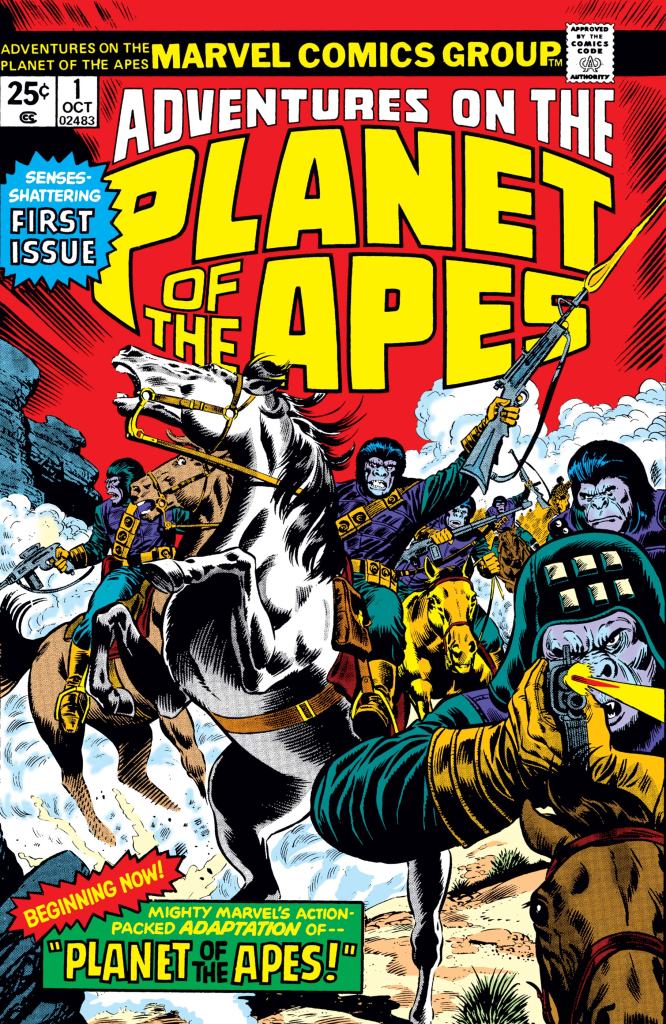
The cover.

Early story

The story begins in deep space. Inside the speeding space ship is the American pilot Taylor doing an audio recording of mission details and his thoughts. He mentions the theory of Dr. Hasslein stating that centuries have already passed back on Earth even though he and his companions Dodge, Landon and Stewart (all three already in a state of suspended animation) hardly aged at all. He then joins his teammates for the long-term sleep expecting that by the time they wake up, they will their destination.

A very long time later, the ship enters the atmosphere of a breathable planet and crash lands on water. Now with facial hair, Taylor, Dodge and Landon wake up and they are shocked to see that Stewart is already dead. Suddenly, water begins to enter the interior of the ship forcing the three men go outside and ride on a boat with the equipment they managed to bring out. They move on as their ship sinks below the water.

Taylor, Dodge and Landon arrive on shore and they realize they are in the middle of a wasteland…   

Quality
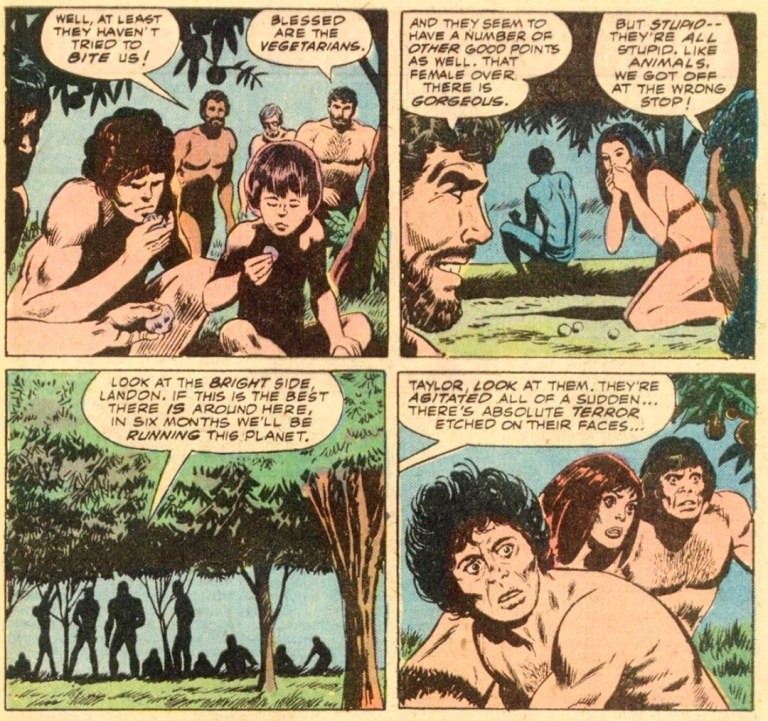
Taylor, Dodge and Landon with the primitive humans.

I am surprised to see that this literary work turned out to be faithful to the movie (specifically from the start until Taylor got shot during the ape-led hunt). It is not a 100% accurate which is not surprising as Marvel’s creators balanced the amount of details for adaptation while still having some space left for them to implement their own creative way of dramatizing the characters.

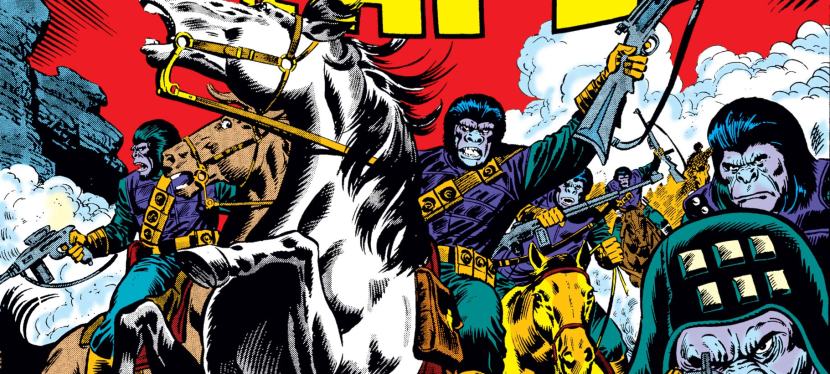
Writer Doug Moench clearly paid close attention to the details from the movie while ensuring that the adaptation will work within the limitations of the comic book format. For his part, artist George Tuska did a fine job drawing the characters, the environments and the apes. The way he drew Taylor, Landon and Dodge, there is clearly some 1970s influence on their space suits and the character designs (example: Dodge has an afro hairstyle). Tuska’s art on the apes unfortunately lacked details and they look rushed. The way they appeared in the comic book, the apes don’t look intimidating at all.

When it comes to adapting scenes from the movie script into comic book form, there were clear differences with regards to the arrangement of the details. For example in the movie, Charlton Heston’s Taylor talks a lot more in the opening scene (inside the space ship) expressing his lack of faith in humanity and desire for something better than his own species. In this comic book, Taylor talked much less in the beginning but his cynicism as well as his sarcastic views on humanity and nation were revealed in a scene when he and his companions were in the middle of the wasteland. Literary Taylor’s putdowns on Landon are much more detailed than what was shown in the movie. In some ways, the dialogue in this comic book is more philosophical than what was executed in the movie when it comes to the common scenes (between comic book and film).

Another example was the scene showing the three men and the waterfall. In the film, they took their clothes off and started swimming in the lake without even checking the quality of the water. In the comic book, Dodge actually tested the water and declared it safe for them to swim in. The comic book also showed more of Dodge’s dedication to scientific testing.

Conclusion
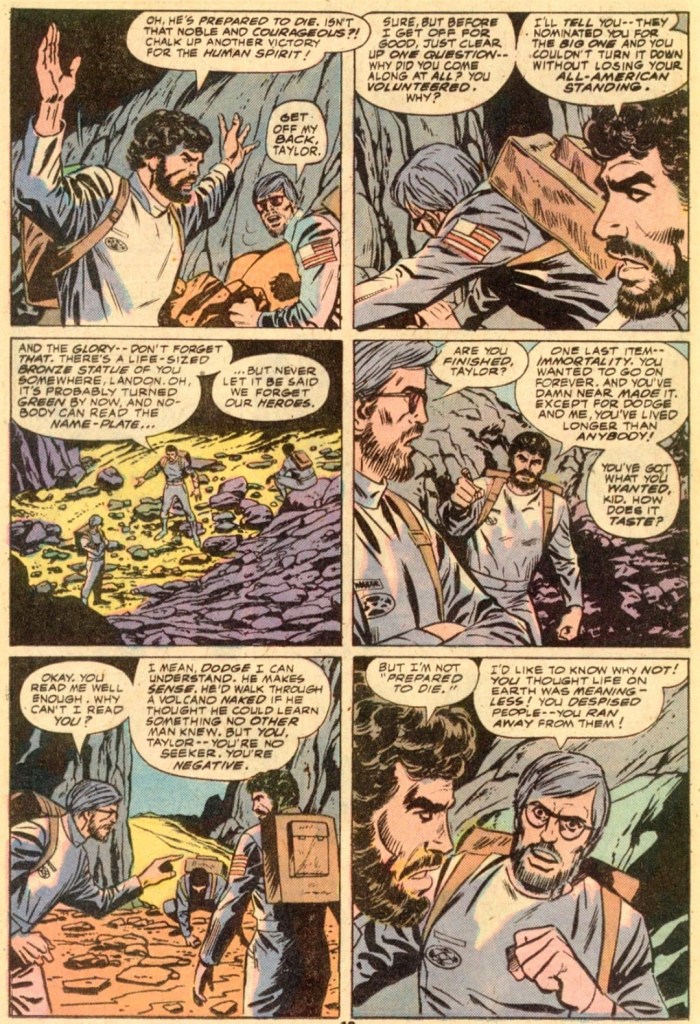
Observe how divisive and cynical Taylor here is. The grey-haired Landon is in conflict with Taylor while Dodge keeps doing scientific work.

I can say that Adventures on The Planet of the Apes (1975) is an entertaining read and a good enough start of the 6-part adaptation of the movie. The Moench-Tuska duo’s efforts resulted in an engaging tale of Taylor and his two teammates who find themselves in a strange world that turned out to have apes being armed and riding horses. This comic book is mostly composed of build-up of details and expository dialogue, and yet the action scenes on the last three pages resulted in a short yet sufficient pay-off.

Overall, Adventures on The Planet of the Apes (1975) is recommended.

+++++

Thank you for reading. If you find this article engaging, please click the like button below, share this article to others and also please consider making a donation to support my publishing. If you are looking for a copywriter to create content for your special project or business, check out my services and my portfolio. Feel free to contact me with a private message. Also please feel free to visit my Facebook page Author Carlo Carrasco and follow me on Twitter at  @HavenorFantasy as well as on Tumblr at https://carlocarrasco.tumblr.com/ and on Instagram at https://www.instagram.com/authorcarlocarrasco
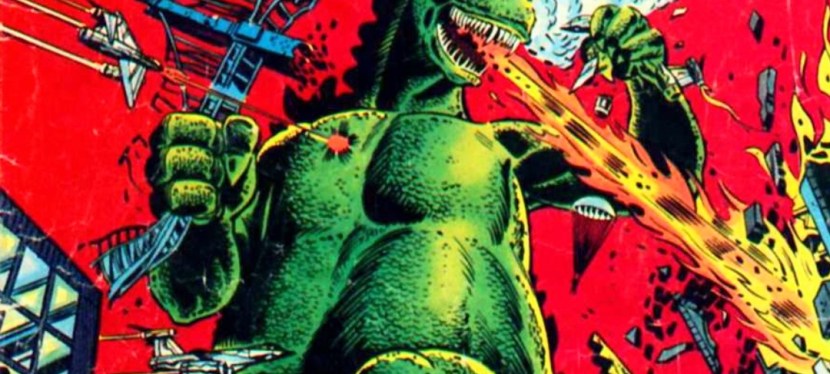
A Look Back at Godzilla: King of the Monsters #1 (1977)

Welcome back superhero enthusiasts, 1970s arts and culture enthusiasts, Marvel Comics fans and comic book collectors! Today we go back to the year 1977 when Marvel Comics had the license to publish comic books about Japan’s iconic monster Godzilla (Gojira in Japanese) and even integrated him into their shared comic books universe.

The mid-1970s saw a decline of Godzilla’s popularity in Japan as reflected in the commercial disappointment of the movie Terror of Mechagodzilla (1975). The company Toho decided to put on-hold the production of its monster movies without permanently ending the Godzilla film franchise. The next Godzilla movie released was The Return of Godzilla (1984) which proved to be a solid rebound of the Japanese film franchise.

Sometime between the mentioned movies, there was interaction between Toho officials and Marvel Comics – including the late Stan Lee – when the Japanese company screened the movie Godzilla vs. Gigan (titled in America as Monster Island) to the comic guys in relation to the film’s American theatrical release. It turns out Stan Lee enjoyed the movie a lot and seated next to him was writer Doug Moench (the eventual writer for the Godzilla comic book series).

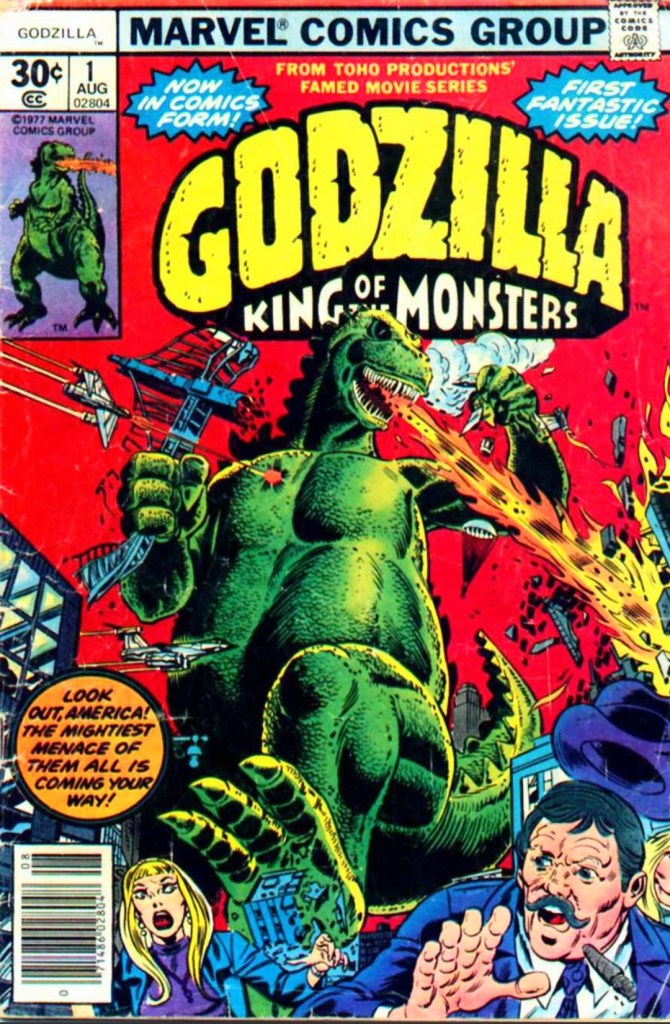
With those details laid down, here is a look back at Godzilla: King of the Monsters , published in 1977 by Marvel Comics with a story written by Doug Moench and drawn by Herb Trimpe.

The cover.

Early story

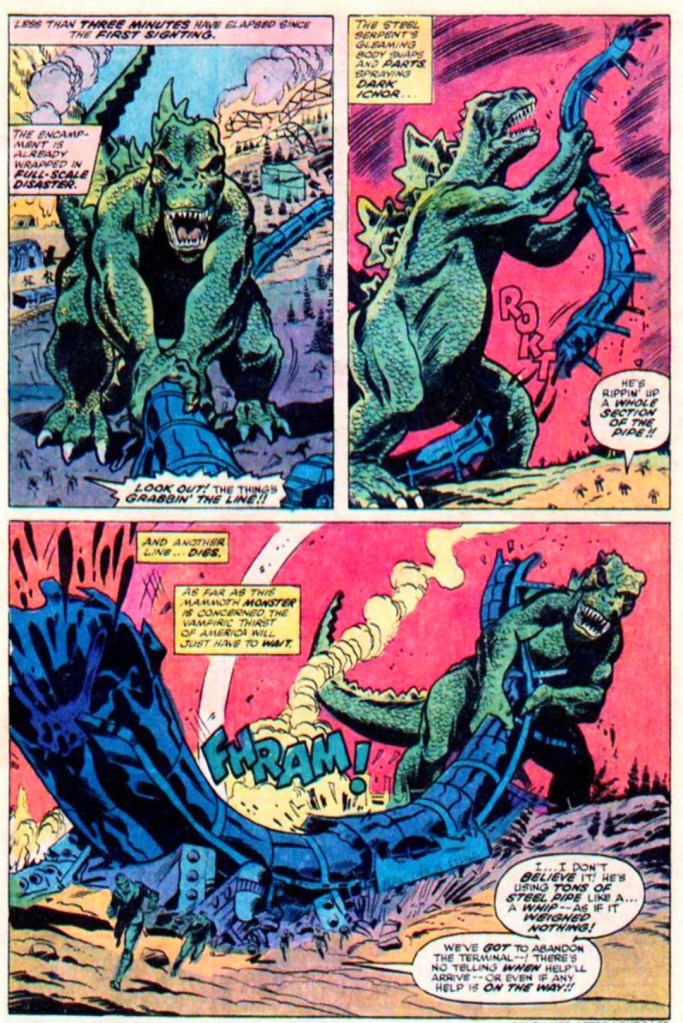
The story begins in Alaska when a huge iceberg suddenly deteriorates unleashing a gigantic monster with sharp teeth, dorsal fins and immense strength – Godzilla. After instantly crushing a supply ship, the monster moves onto the land destroying structures and disrupting the lives of every person nearby.

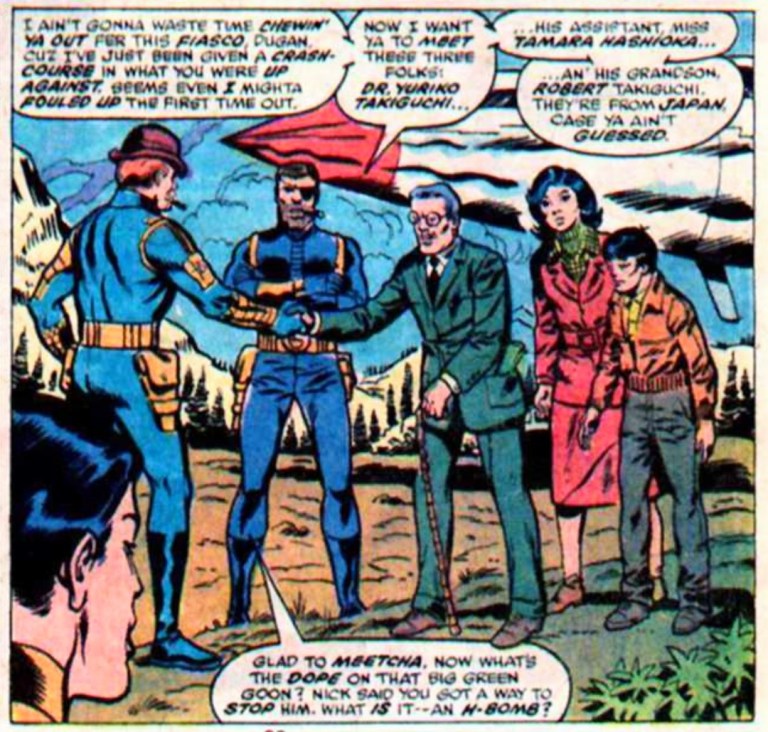
In response to Godzilla’s rampage in Alaska, S.H.I.E.L.D. dispatches its agents to the site of destruction to take on the monster. Meanwhile, S.H.I.E.L.D. director Col. Nick Fury is transporting with him three Japanese individuals deemed important (with clearances from the Pentagon and the White House)…

Quality

Dum Dum Dugan, Col. Nick Fury and the Japanese characters.

To get straight to the point, this comic book not only marked the literary debut of Japan’s iconic monster under Marvel Comics’ banner but also his integration into the shared universe of the time. That being said, the story written by Doug Mench was pretty much a functional build-up of Godzilla’s presence within the realm of Marvel which includes a strategic choice of having S.H.I.E.L.D. and its characters encountering the monster. In short, the creative team decided not to literally pull out Marvel’s biggest guns (the more popular superheroes and teams) as such a move would have lessened the impact of Godzilla’s debut.

For the most part, S.H.I.E.L.D.’s Nick Fury and Dum Dum Dugan had lively portrayals and the way they reacted to the rampage of Godzilla was believable. The introductions of the Japanese characters (who could provide breakthroughs on dealing with the giant monster) were clearly inspired by the Japanese scientists who were crucial in the plot of the original 1954 movie Gojira.

Going further, Doug Mench went on to efficiently establish Godzilla’s origin which creatively is a sensible reinterpretation of what was established in the 1954 movie. The giant monster’s rise as a result of humanity’s testing of powerful weapons on Earth is definitely here.

As expected, Godzilla is the unrestrained force of destruction but as this comic book was released in the 1970s, the destruction scenes lacked impact as they were creatively sanitized with deliberate moves of showing no casualties no matter what happened. This limitation on the part of Marvel Comics showed they were not willing to emulate the approach on destruction and death that was clearly emphasized in the first Godzilla movie of 1954.

As for Godzilla himself, Herb Trimpe’s visual approach is not really good. While Trimpe implemented the guy-in-a-suit shape on the giant monster’s form, he made Godzilla his own (took no inspiration from Godzilla’s cinematic designs) which resulted in making the icon look unrecognizable. There were inconsistencies on Godzilla’s head as well. In certain shots, Godzilla looked terrifying but in other shots, he looked weird or cartoony. The use of the color green did not make Godzilla look reptilian but rather comical.    

Conclusion

I can only imagine the SJWs and the climate change extremists enjoying these images of an unrecognizable Godzilla wreaking havoc to the oil supply. Are there lots of people in your local community who were brainwashed to hate oil and gas?

Godzilla: King of the Monsters (1977) is a serviceable approach on debuting the iconic monster within the fantasy realm of Marvel Comics and sparking a new wave of crossovers. There were uneven levels of quality here and there, and Herb Trimpe’s visual approach on Godzilla was alienating to say the least. Honestly, I did not really see Godzilla in this comic book but rather a green-colored dinosaur-like creature that was mislabeled as Godzilla. What works here is the writing by Doug Mench which proved to be entertaining enough.

Overall, Godzilla: King of the Monsters (1977) is satisfactory.

For my other Godzilla-related posts, click here, here, here, here and here.

+++++

Thank you for reading. If you find this article engaging, please click the like button below, share this article to others and also please consider making a donation to support my publishing. If you are looking for a copywriter to create content for your special project or business, check out my services and my portfolio. Feel free to contact me with a private message. Also please feel free to visit my Facebook page Author Carlo Carrasco and follow me on Twitter at  @HavenorFantasy as well as on Tumblr at https://carlocarrasco.tumblr.com/ and on Instagram at https://www.instagram.com/authorcarlocarrasco
A Look Back at Shogun Warriors #3 (1979)

Disclaimer: This is my original work with details sourced from reading the comic book and doing personal research. Anyone who wants to use this article, in part or in whole, needs to secure first my permission and agree to cite me as the source and author. Let it be known that any unauthorized use of this article will constrain the author to pursue the remedies under R.A. No. 8293, the Revised Penal Code, and/or all applicable legal actions under the laws of the Philippines.

When it comes to showcasing giant robots fighting other robots or monsters, there is no denying that Japan is the leader. In my lifetime, I have seen lots of episodes of varied anime TV series, some anime feature films as well as OVAs (original video animation) of such a genre of entertainment made by lots of Japanese creators. While I never saw any episodes of Brave Raideen nor any episodes of Chōdenji Robo Combattler V, I saw episodes of Dangard Ace on home video.

As seen already in issues #1 and #2 of the Shogun Warriors comic book series, the giant robots were adapted but not their respective original concepts and characters the Japanese established. As such, an all-new concept with Westerners in mind was implemented for the said series.

With those details laid down, here is a look back at Shogun Warriors , published by Marvel Comics in 1979 with a story written by Doug Moench and drawn by Herb Trimpe.

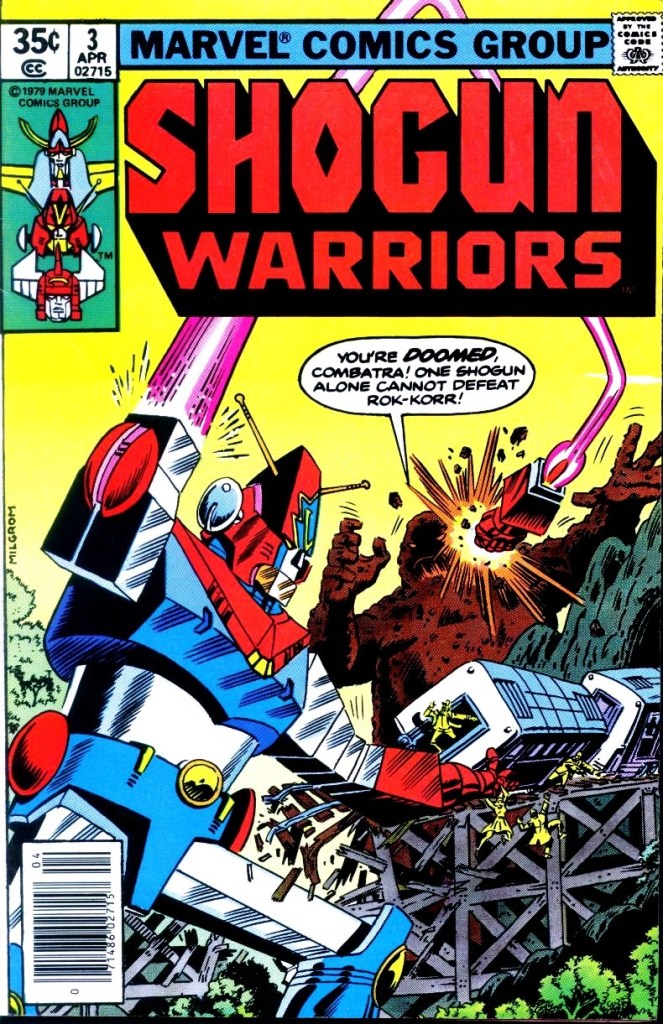
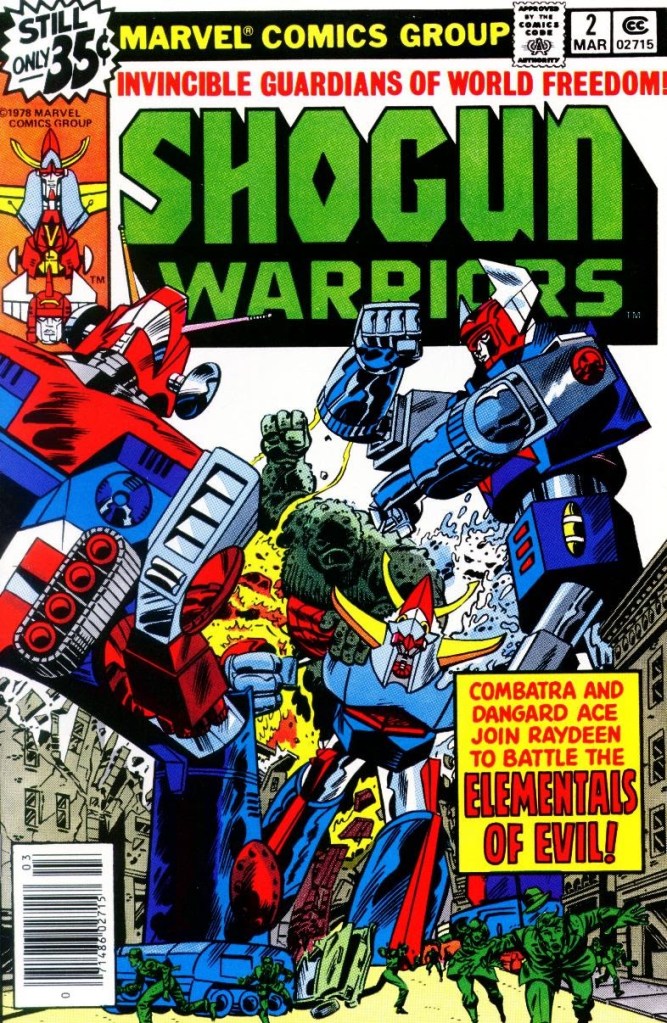
The cover.

Early story

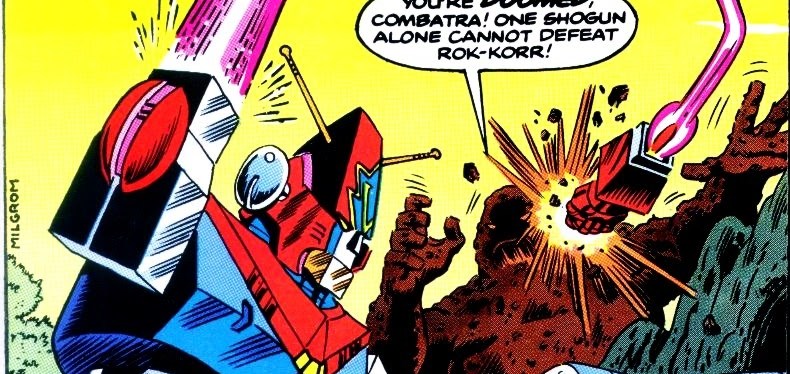
The story begins with Raydeen, Combatra and Dangard Ace on the field facing three giant enemies (each one representing a different element – fire, earth and water). Right near them is the train (on an elevated track) that they just saved which Combatra (piloted by Genji Odashu) notices.

The battle begins with Dangard Ace taking on the water monster while Raydeen and Combatra take on the fire monster and earth monster respectively. During the heat of battle, the stalled train begins to fall as the elevated track gets damaged…

Quality

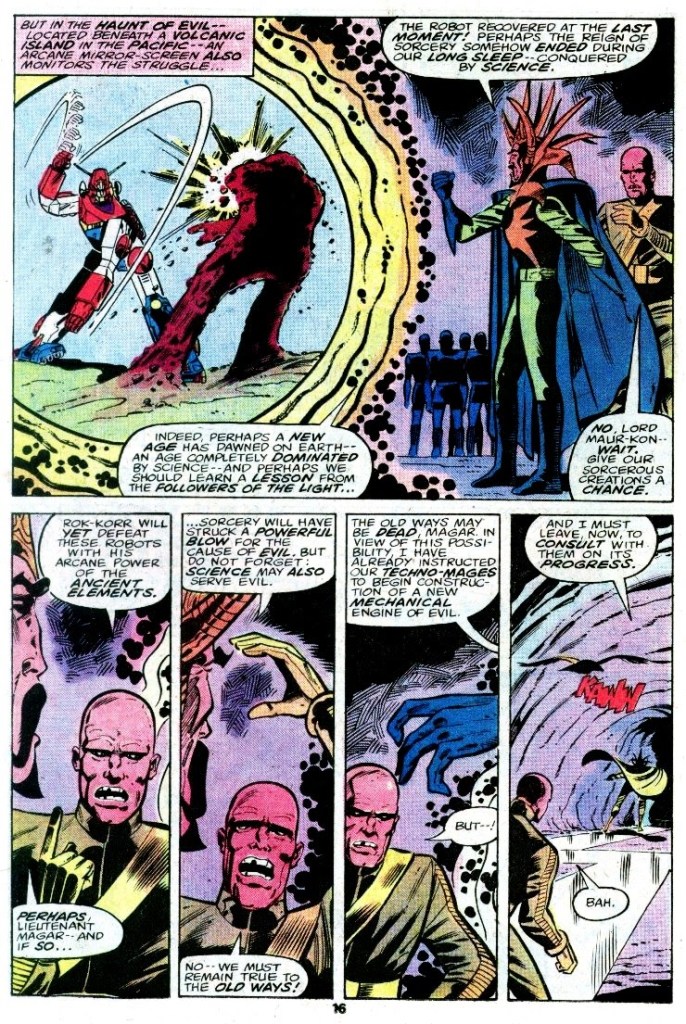
The bad guys watch behind the scenes during the battle.

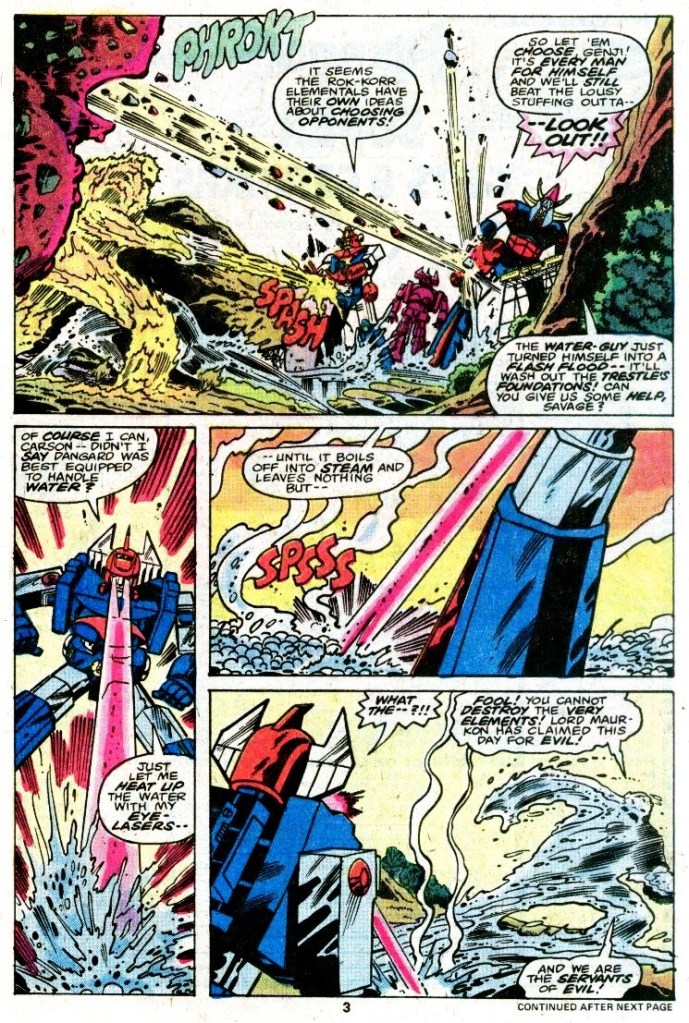
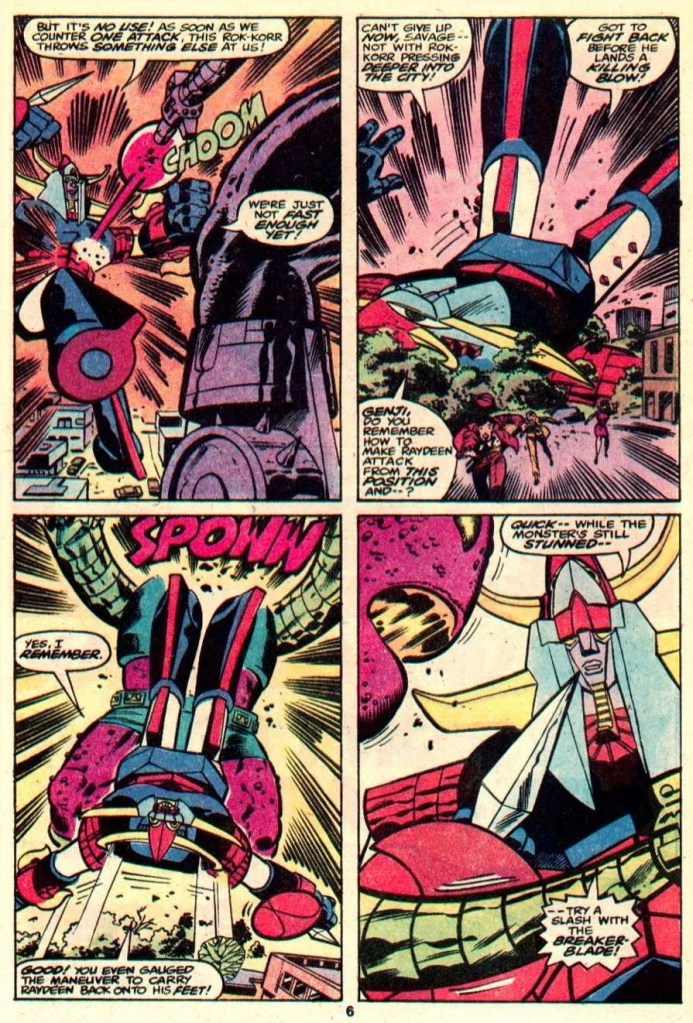
To be clear and specific, this comic book creatively rebounded when it comes to spectacle. Compared to issue , this one has a lot of action scenes mixed with suspense and some talk scenes that were supposed to be intriguing. When it comes to exposition, this one is a refreshing change from what happened in issue . The exposition was clearly lessened but the creators still managed to insert some scenes to dramatize and explain to readers what the villains are up to and why sorcery is a core element of their power (which kinda explains how they were able to make giant monsters that are capable of talking). Interestingly, this comic book shows that there is division between members of the forces of evil.

Fans who love the three giant robots will have something fun to read. Take note, however, that the action scenes per robot are short and even predictable with the way the spectacle turned out. If you are looking for character development on their respective pilots, you won’t see any here.

Conclusion

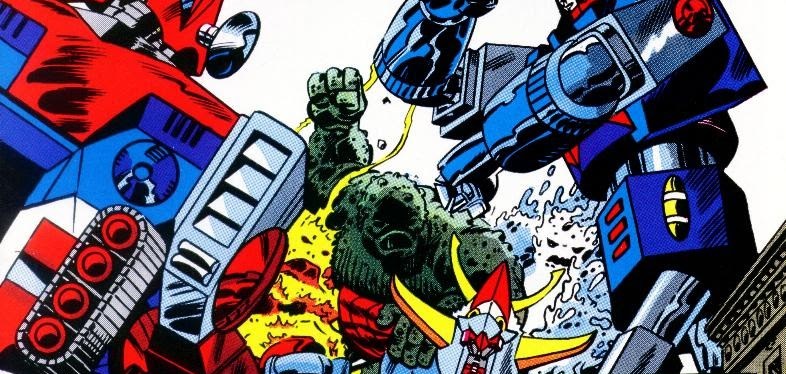
Dangard Ace, Raydeen and Combatra fighting their respective counterparts.

Shogun Warriors (1979) does not have much depth but still managed to deliver the goods when it comes to showcasing giant robot spectacle. On the aspect of fun, this one is an improvement over the exposition-heavy issue but that is not saying much. It should be noted that, like the first two issues, this comic book has less than twenty pages of art and story. More notably, there is not much new here other than the very lame and corny attempt by the creators for the big reveal they came up with at the end.

If you are seriously planning to buy an existing hard copy of Shogun Warriors (1979), be aware that as of this writing, MileHighComics.com shows that the near-mint copy of the comic book costs $35.

Overall, Shogun Warriors (1979) is satisfactory.

+++++

Thank you for reading. If you find this article engaging, please click the like button below and also please consider sharing this article to others. If you are looking for a copywriter to create content for your special project or business, check out my services and my portfolio. Feel free to contact me as well. Also please feel free to visit my Facebook page Author Carlo Carrasco and follow me at HavenorFantasy@twitter.com
A Look Back at Shogun Warriors #2 (1979)

Disclaimer: This is my original work with details sourced from reading the comic book and doing personal research. Anyone who wants to use this article, in part or in whole, needs to secure first my permission and agree to cite me as the source and author. Let it be known that any unauthorized use of this article will constrain the author to pursue the remedies under R.A. No. 8293, the Revised Penal Code, and/or all applicable legal actions under the laws of the Philippines.

Long before Pacific Rim (2013) presented giant robots and monsters slug it out on the big screen with a strong emphasis on action and scale, there were varied animated series of such giants shown in television sets in Japan way back in the 1970s. Then by the end of the decade, Marvel Comics published the Shogun Warriors comic book series in relation to a business deal with Mattel.

Last time, only one giant robot was heavily featured as a defender for human civilization as it became a target by a force of evil that unleashed a giant monster. That robot was Raydeen and as a result of what happened, something led to the unveiling of Combatra and Dangard Ace.

To find out more, here is a look back at Shogun Warriors , published by Marvel Comics in 1979 with a story written by Doug Moench and drawn by Herb Trimpe.

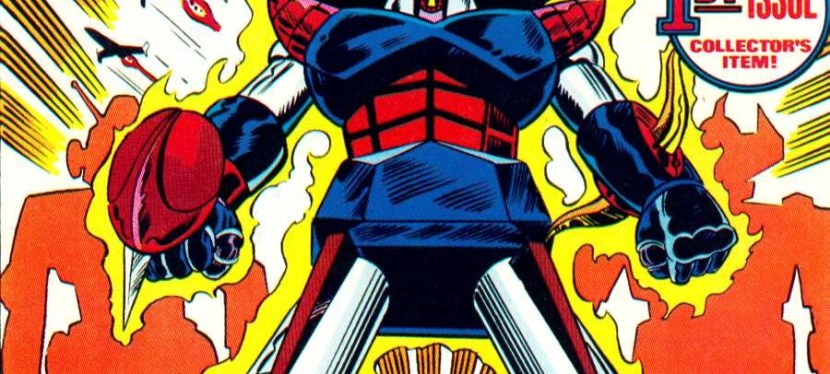
The cover.

Early story

The story begins at the secret facility of Shogun. There the three pilots – Genji Odashu, Ilongo Savage and Richard Carson – are being briefed by Dr. Tambura explains to them that their first mission piloting Raydeen was not a failure at all. While acknowledging that the giant monster Rok-Korr is still a threat, he states to them that giant robots Combatra and Dangard Ace will be deployed and controlled by them.

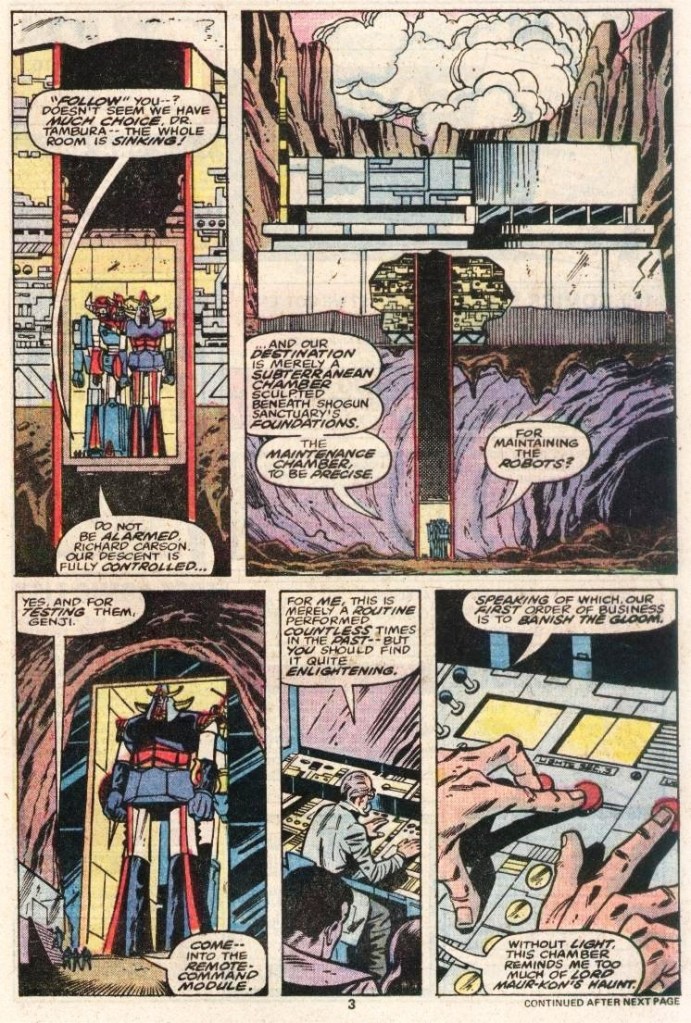
After giving them a quick tour of their subterranean chamber (where the robots receive maintenance and get tested), Dr. Tambura bring the three pilots into another place filled with high-tech controls. From there, they watch Dangard Ace, Raydeen and Combatra perform in field tests via remote control.

Meanwhile on a different island, the evil leader Maur-Kon rallies his so-called dark agents to rise and work together in seeking vengeance for their defeat in the great war chaos as they have found the forces of eternal good anticipating them. After much talk, Maur-Kon and his minions bow and kneel over bubbling magma murmuring evil phrases…

Quality

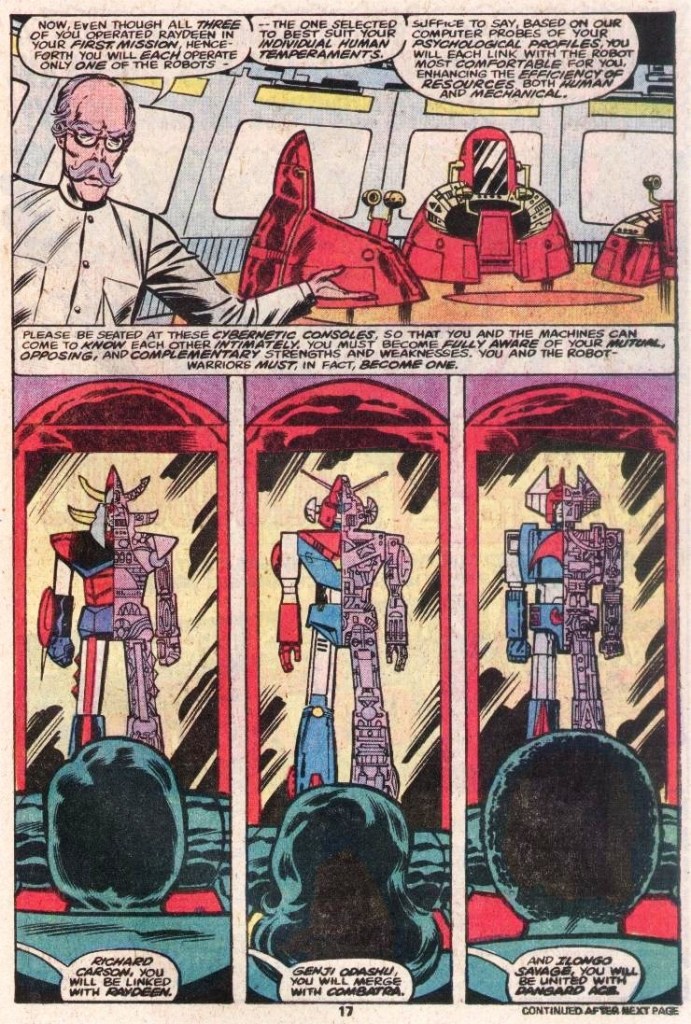
The three pilots get assigned with each robot.

Like the previous issue, this comic book has less than twenty pages of story and art. This results another heavy load of exposition or information dump on readers, and the narrative had a rushed pace. With regards to the battle between Raydeen and the giant monster, there is indeed a continuation of it. The giant monster was given some personality.

Again, there is no real character development here. The three pilots were not written to display any personality nor did the writer exert any effort to make readers relate with them. Instead, you will see them in training in speed beyond belief.

The highlight here is that Dangard Ace and Combatra finally got revealed and emphasized. Be warned, however, that there is lesser spectacle in this comic book and the story predictably served as a setup for what could be a more promising battle.

Conclusion

The pilots and the Shogun Warriors (the robots) go deep down.

Shogun Warriors (1979) suffered from pretty much the same problems as issue . The noticeable difference here is that there is lesser action and lesser giant-sized spectacle shown here. That is not exactly surprising as the creators had to sacrifice something to make way for further explanation of the comic series’ grand concept.

If you are seriously planning to buy an existing hard copy of Shogun Warriors (1979), be aware that as of this writing, MileHighComics.com shows that the near-mint copy of the regular edition costs $35 while the near-mint copies of the price-less and the Whitman editions cost $350 and $35 respectively.

Overall, Shogun Warriors (1979) is less than satisfactory.

+++++

Thank you for reading. If you find this article engaging, please click the like button below and also please consider sharing this article to others. If you are looking for a copywriter to create content for your special project or business, check out my services and my portfolio. Feel free to contact me as well. Also please feel free to visit my Facebook page Author Carlo Carrasco and follow me at HavenorFantasy@twitter.com
A Look Back at Shogun Warriors #1 (1979)

Disclaimer: This is my original work with details sourced from reading the comic book and doing personal research. Anyone who wants to use this article, in part or in whole, needs to secure first my permission and agree to cite me as the source and author. Let it be known that any unauthorized use of this article will constrain the author to pursue the remedies under R.A. No. 8293, the Revised Penal Code, and/or all applicable legal actions under the laws of the Philippines.

If you are fond of giant robots from Japanese pop culture as well as giant monsters and scenes of city structures getting destroyed, then you might want to take a look at the Shogun Warriors comic book series that was published by Marvel Comics from 1979 to 1980. To put things in perspective, Shogun Warriors was made possible through licensing deals and back in the 1970s, Marvel Comics had the rights to publish comic book about Japan’s famous icon Godzilla.

Specifically, Shogun Warriors involved Marvel Comics and Mattel which in turn organized a line of imported toys from Japan based on varied Japanese shows about giant robots. Among the many giant robots of the toy line, the robots Raideen, Combattler V and Dangard Ace became the featured fighting-for-good robots of the Shogun Warriors comic book series. For the literary works, Raideen was renamed as Raydeen while Combattler V was renamed as Combatra. Dangard Ace’s name was left unchanged.

With those details laid down, here is a look back at Shogun Warriors , published in 1979 by Marvel Comics with a story written by Doug Moench and drawn by Herb Trimpe.

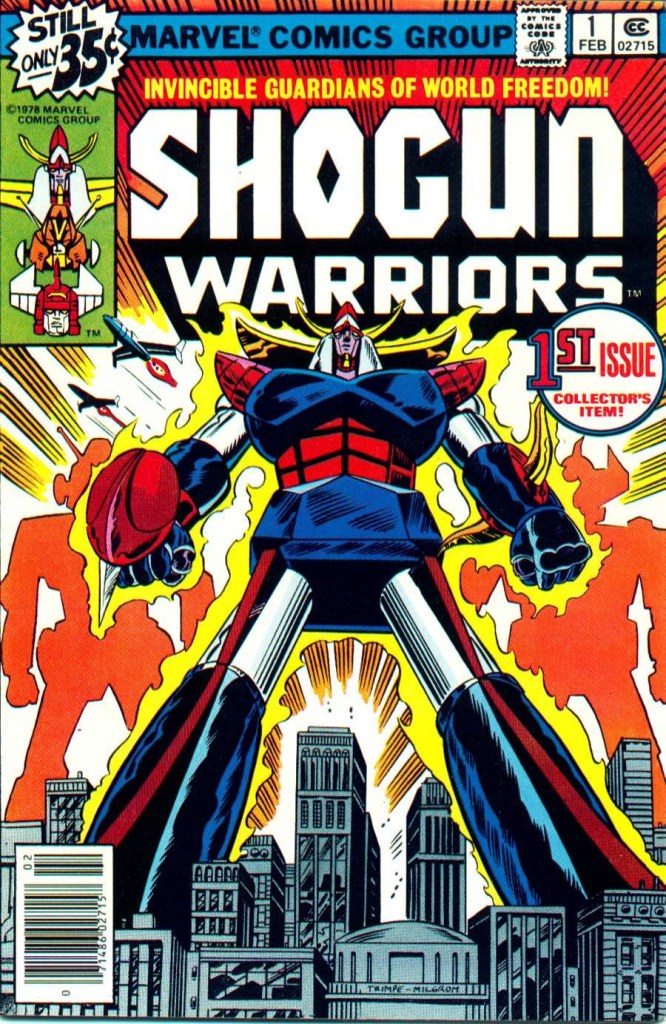
The cover.

Early story

The story begins in the outskirts of Tokyo in Japan where giant robot Raydeen fights a large, tentacled creature enhanced with cybernetics. As the people on the street below them run away from the ongoing destruction, the monster fires a shot at Raydeen who blocks it but subsequently gets tied with one of the tentacles. The giant robot, which is operated by three pilots inside, breaks free and continues to fight the monster.

As the battle rages on, the city continues to get damaged heavily affecting the people…

Quality

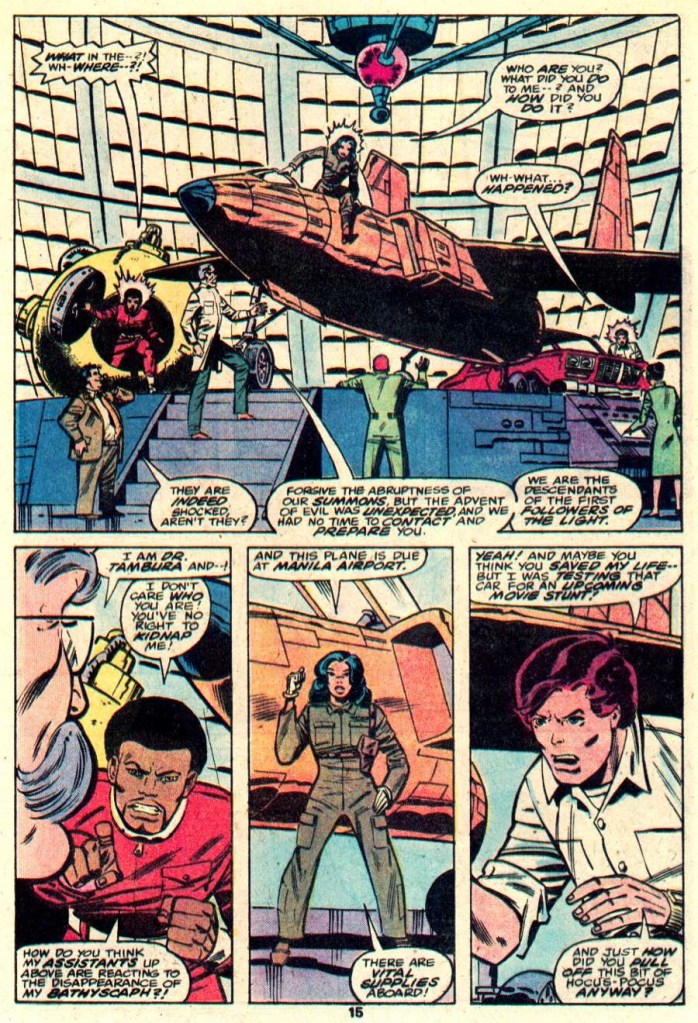
Technically the organization kidnapped three people to be the pilots of their robots for Earth’s defense.

Having seen a lot of anime TV series episodes about giant robots, I’m familiar already with the storytelling formula that often focuses first on the human characters and their struggles before shifting the narrative on the giant robots that often fight large monsters or opposition robots. This particular comic book has some of that but the way the story is structured, it is different and can be a bit jarring.

Doug Moench structured the story to have Raydeen and the monster fighting in the present time followed shortly by a flashback that took place just hours prior. The flashback, which occupies 9 of the comic book’s 18 pages, is heavily filled with exposition meant to introduce readers to the three pilots Genji Odashu/Ilongo Savage/Richard Carson, what Earth defense force The Followers of the Light is, and why there are giant monsters ravaging the world. The exposition’s writing felt crammed and rushed for reading although it still succeeds in establishing the comic book’s grand concept.

When it comes to spectacle, this comic book is loaded with giant robot action and it is quite varied in style and execution. The funny thing is that you will only get to see Raydeen in action as this is an introductory story with only 18 pages of story.

The dialogue is a bit of a mess here, particularly with the early Raydeen scenes. As the battle with the monster goes on, there are these lines of dialogue reflecting the conversations between the pilots inside Raydeen who are not shown talking until late in the comic book.

Conclusion

Raydeen and the giant monster in battle.

Shogun Warriors (1979) has a nice concept and its Westernized take on portraying giant robots and human characters is clearly different from the way things were done in the varied giant robot anime TV series of Japan. There is clearly no Japanese style melodrama as this one has its characters portrayed straight with a touch of American science fiction. That being said, do not expect to see the Japan-made characters of Raideen, Combattler V and Dangard Ace appear here as new characters were made in their place. The comic book’s story structure is a bit jarring to follow and the heavy exposition dump makes reading a bit of a chore. It is fun to read but not great. Those of who are fans of Combatra and Dangard Ace will be disappointed about the near-total absence of those robots.

If you are seriously planning to buy an existing hard copy of Shogun Warriors (1979), be aware that as of this writing, MileHighComics.com shows that the near-mint copy of the regular edition costs $63 while the near-mint copy of the Whitman edition costs $35.

Overall, Shogun Warriors (1979) is satisfactory.

+++++

Thank you for reading. If you find this article engaging, please click the like button below and also please consider sharing this article to others. If you are looking for a copywriter to create content for your special project or business, check out my services and my portfolio. Feel free to contact me as well. Also please feel free to visit my Facebook page Author Carlo Carrasco and follow me at HavenorFantasy@twitter.com
A Look Back at Batman versus Predator II #4 (1995)

Disclaimer: This is my original work with details sourced from reading the comic book and doing personal research. Anyone who wants to use this article, in part or in whole, needs to secure first my permission and agree to cite me as the source and author. Let it be known that any unauthorized use of this article will constrain the author to pursue the remedies under R.A. No. 8293, the Revised Penal Code, and/or all applicable legal actions under the laws of the Philippines.

Do you happen to have any comic books of the Batman versus Predator II crossover in your collection? According to MileHighComics.com, their near-mint copies are valuable and you can sell them to make some much-needed money in this time of pandemic, government overreach and economic hardship.

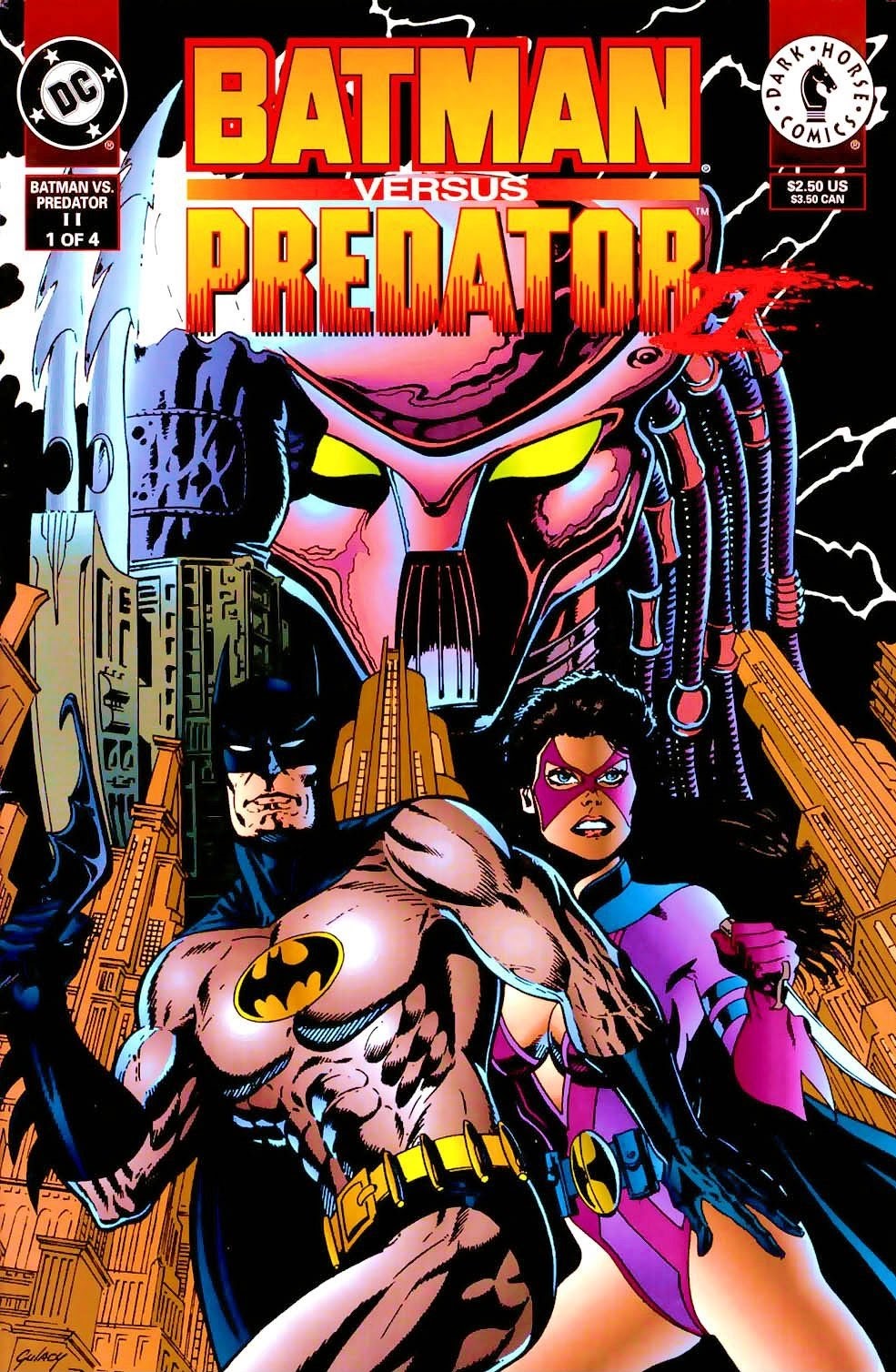
Right now, I am about to finally end my review of the Batman versus Predator II mini-series and so far, I have enjoyed it a lot. To find out if this mini-series will come to a satisfying end, here is my retro review of Batman versus Predator II , published in 1995 by DC Comics and Dark Horse Comics with a story written by Doug Moench and drawn by Paul Gulacy.

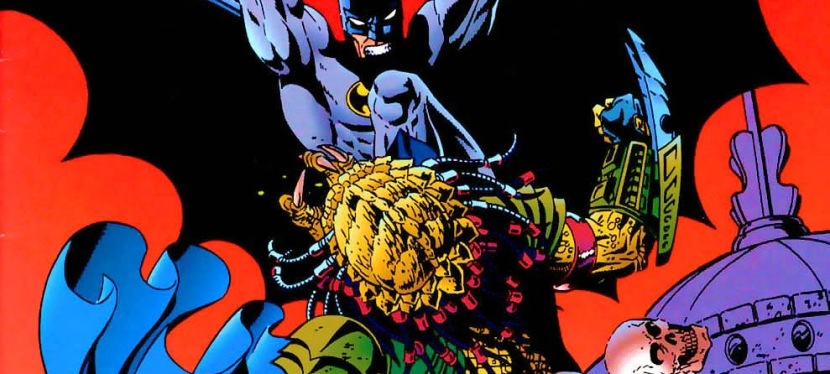
The cover.

Early story

The story begins in the bat cave with Batman and Alfred discussing what happened lately. As it turned out, there were two other Predators on the lose apparently sent to stop the first one (who killed one of the mentioned two). Batman also mentioned the deaths of Song Sung and Terraro. Now there are two hunters remaining who may not know that the man who issued their contracts is dead.

Just before leaving with the motorcycle, Batman receives a call from Commissioner Gordon through the special line. Afterwards, he leaves.

In the city, a thug on a motorcycle starts chasing Batman which catches the attention of the local police…

Quality

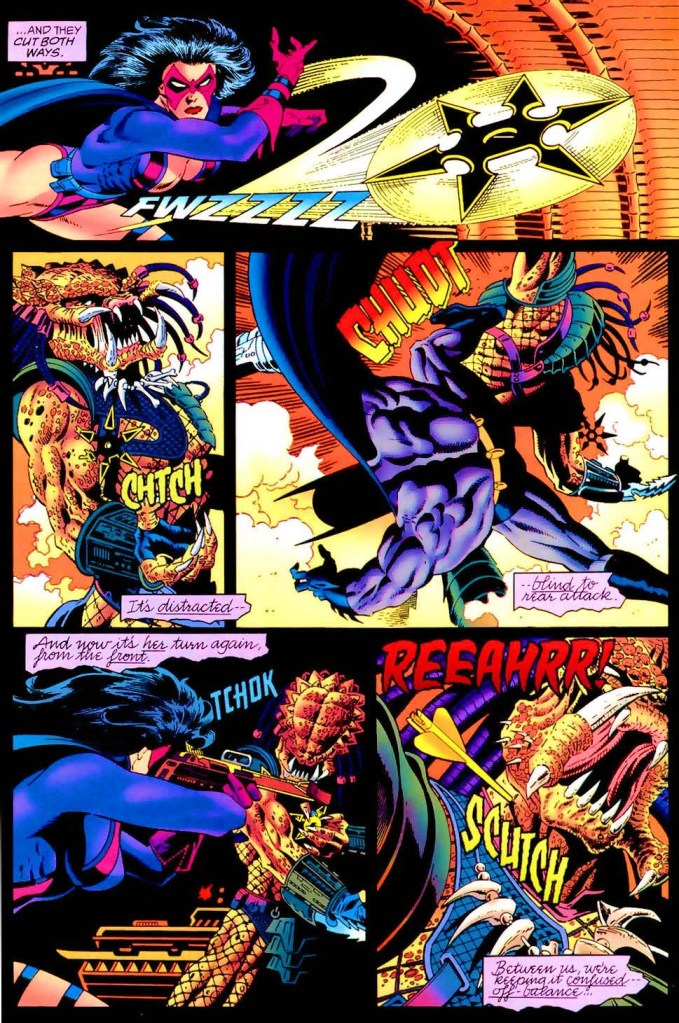
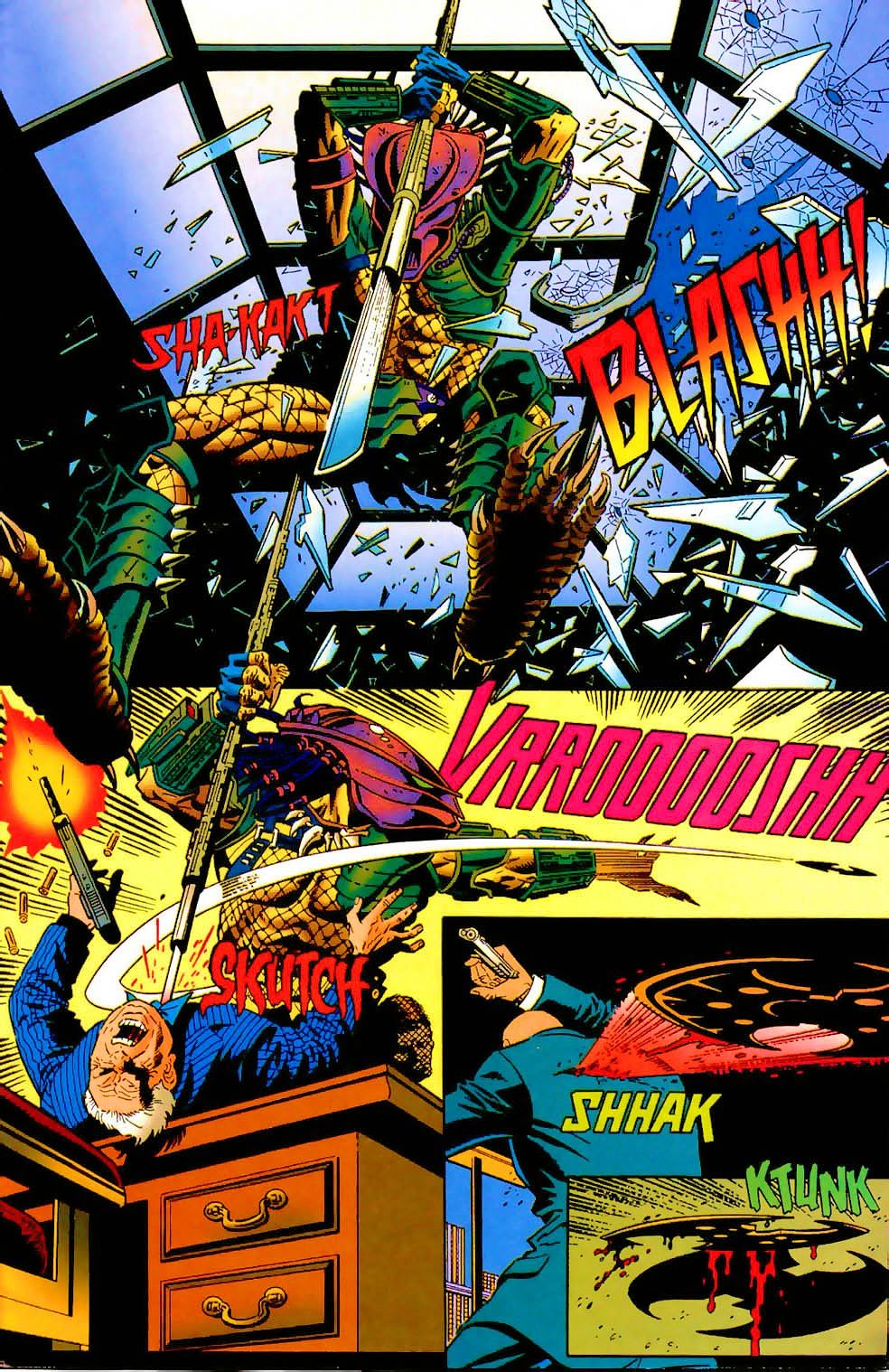
From the final encounter with the hunter from space.

This comic book is a satisfying conclusion to the mini-series. In terms of writing, issue delivered the payoff for what was built-up in issue . This results the return of Batman’s trusted ally as well as some more involvement of the police force as the stakes were raised in issue with the involvement of more than one Predator. The hunter Predator – the one Batman and Huntress encountered in the first two issues – was indeed present and it was very interesting to see it pursue its encounter with the two heroes even though he was being hunted by a fellow Predator.

Having more than one Predator was initially confusing but the confusion did not last too long which readers will find relieving. As expected, the Huntress joined Batman in the final encounter and served nicely as a fighting partner whose assistance proved to be valuable. If there is any weak spot in the presentation, it’s the element of the gang and human hunters who only served to add to the death toll.

As with the first three issues of this mini-series, the action here remains very intense and quite uncompromising with its violence. Expect gunshot wounds and decapitations here and there. The hard action presented, especially in the encounters with the Predator, was indeed satisfying. I should state that the final encounter inside the space ship is very thrilling.

Conclusion

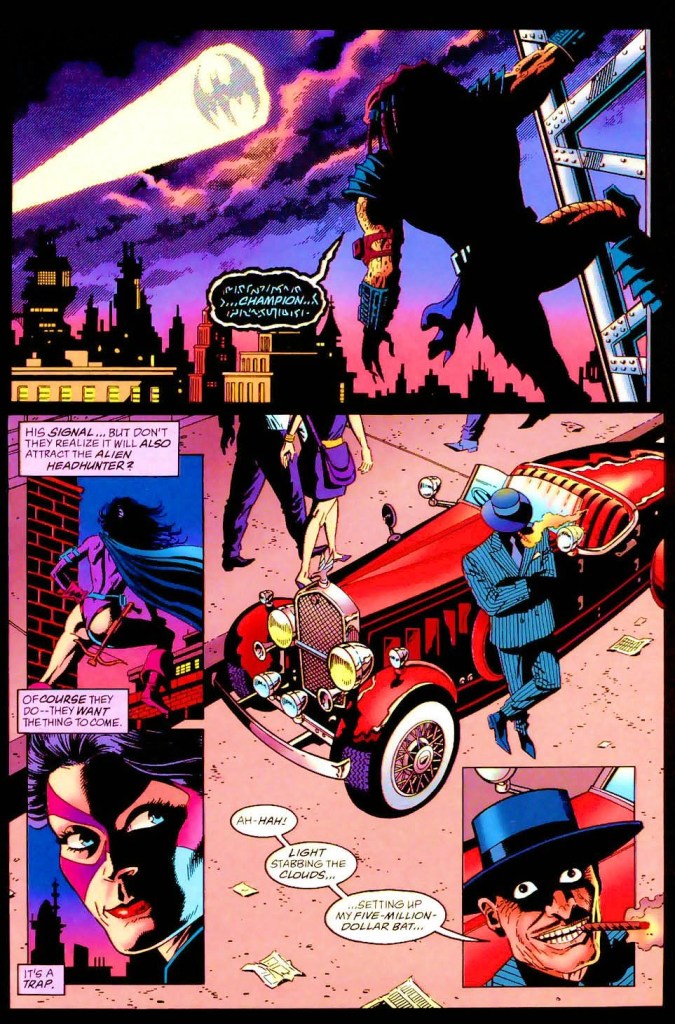
The Bat signal is an attraction to the Predator.

Batman versus Predator II (1995) is a pretty solid read. What was built-up previously, got paid off nicely here. With regards to raising the stakes and making this mini-series different from its predecessor, the creative team succeeded with the resolutions they came up with. In addition, Batman and the Huntress make a solid duo and their interactions together were compelling.

If you are seriously planning to buy an existing hard copy of Batman versus Predator II (1995) be aware that as of this writing, MileHighComics.com shows that the near-mint copy of the comic book costs $50.

Overall, Batman versus Predator II (1995) is highly recommended!

+++++

Thank you for reading. If you find this article engaging, please click the like button below and also please consider sharing this article to others. If you are looking for a copywriter to create content for your special project or business, check out my services and my portfolio. Feel free to contact me as well. Also please feel free to visit my Facebook page Author Carlo Carrasco and follow me at HavenorFantasy@twitter.com
A Look Back at Batman versus Predator II #3 (1995)

Disclaimer: This is my original work with details sourced from reading the comic book and doing personal research. Anyone who wants to use this article, in part or in whole, needs to secure first my permission and agree to cite me as the source and author. Let it be known that any unauthorized use of this article will constrain the author to pursue the remedies under R.A. No. 8293, the Revised Penal Code, and/or all applicable legal actions under the laws of the Philippines.

I am currently enjoying the Batman versus Predator II mini-series of the mid-1990s which was a joint effort between DC Comics and Dark Horse Comics. The first issue was great and nicely built up the energy for the first encounter between Batman and the Predator in issue #2. Along the way, I do enjoy the adulterated tone that came with the presentation. This made each issue look and feel like an R-rated cinematic segment.

Will the strong quality of this crossover continue in the third issue? Find out with me in this look back at Batman versus Predator II , published in 1995 by DC Comics and Dark Horse Comics with a story written by Doug Moench and drawn by Paul Gulacy.

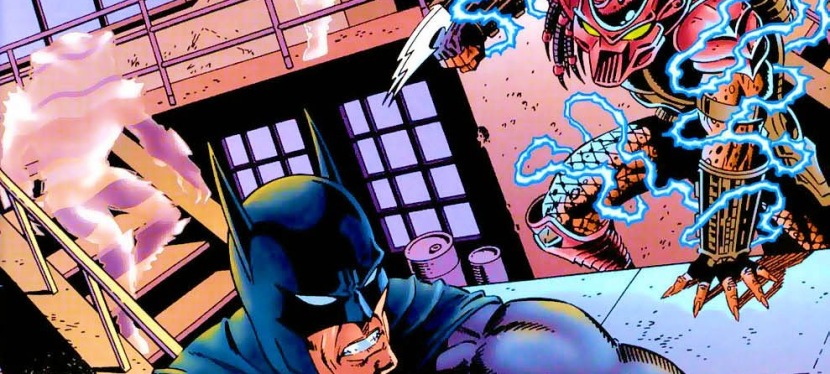
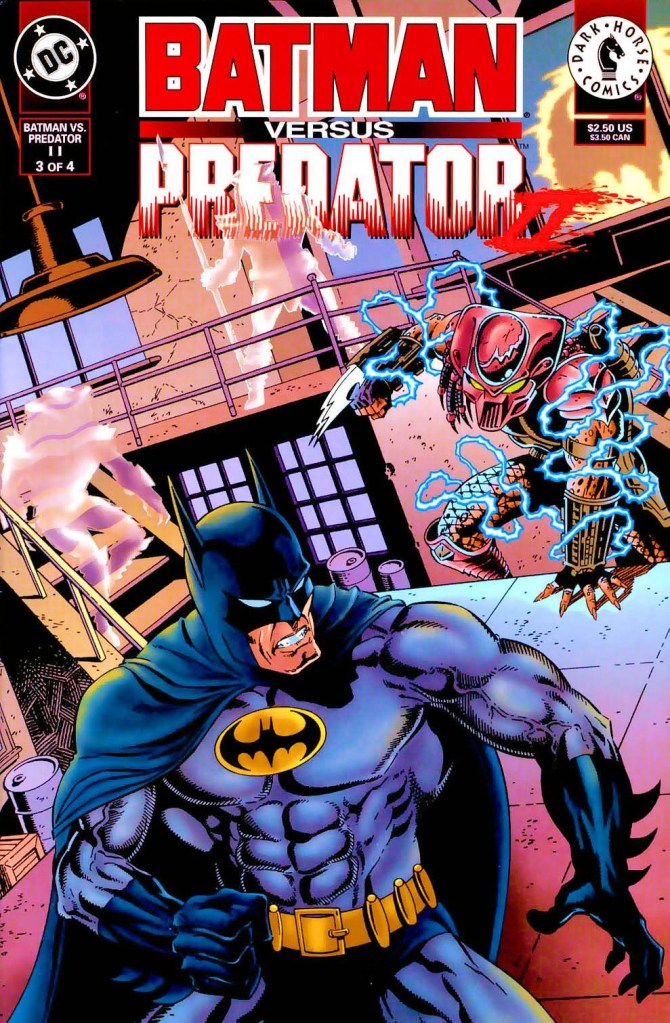
The cover.

Early story

The story begins with Batman emerging from the sewer. He finds himself alone in the middle of a city street and senses danger is around him. Suddenly someone from one of the nearby buildings fires at Batman who dodges and takes cover by a car. He grabs a tool and throws it at the window which hits the rifle. And then, on the street, a man throws a grenade at the caped crusader who deflects it. The grenade enters a nearby establishment and explodes. Batman kicks the antagonist and then encounters a speeding vehicle heading towards him.

The detective fires his weapon which causes the car’s windshield to get smashed. He dodges the car and sees it crash. Suddenly the floor beneath him opens which compels him to use his grapnel to avoid falling down to spikes below.

Meanwhile at another location, the Predator dissolves the decapitated head of a man (killed in issue ) with hot liquid and keeps the skull for his collection of trophies.

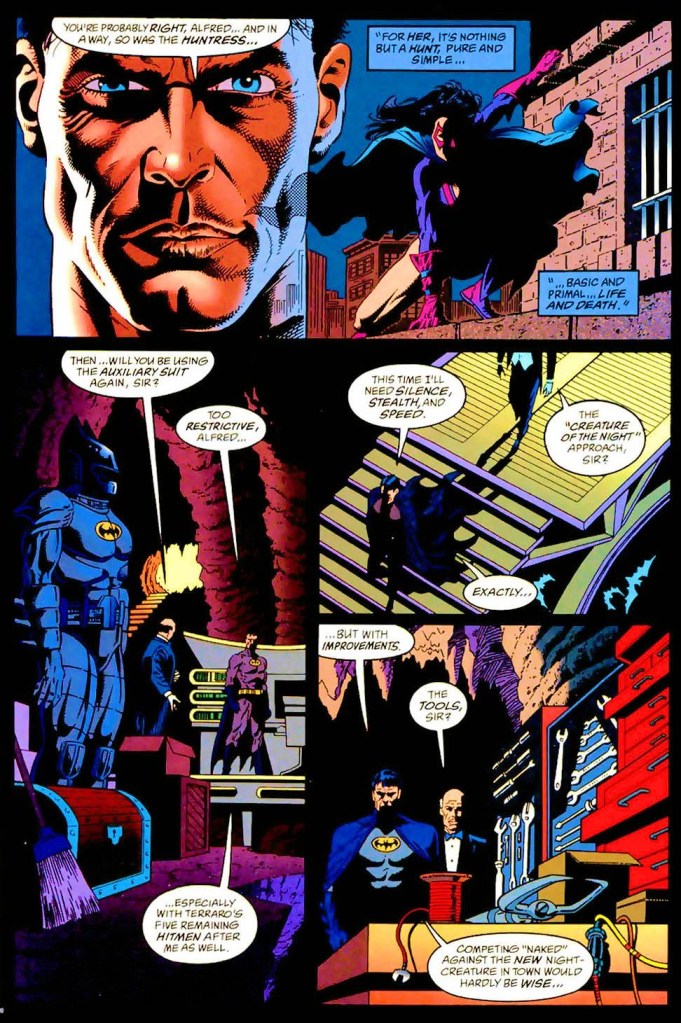
Back at the Bat Cave, Batman and Alfred analyze what happened recently. Alfred states that the Predator killed two of the seven assassins hired by Terraro to kill Batman. The great detective wonders why…

Quality

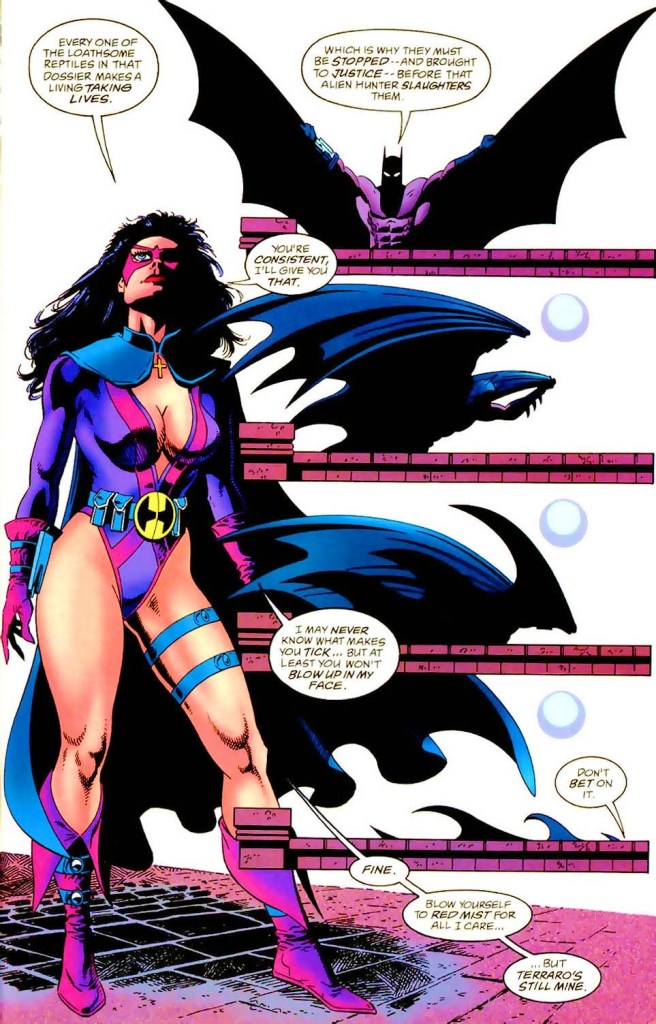
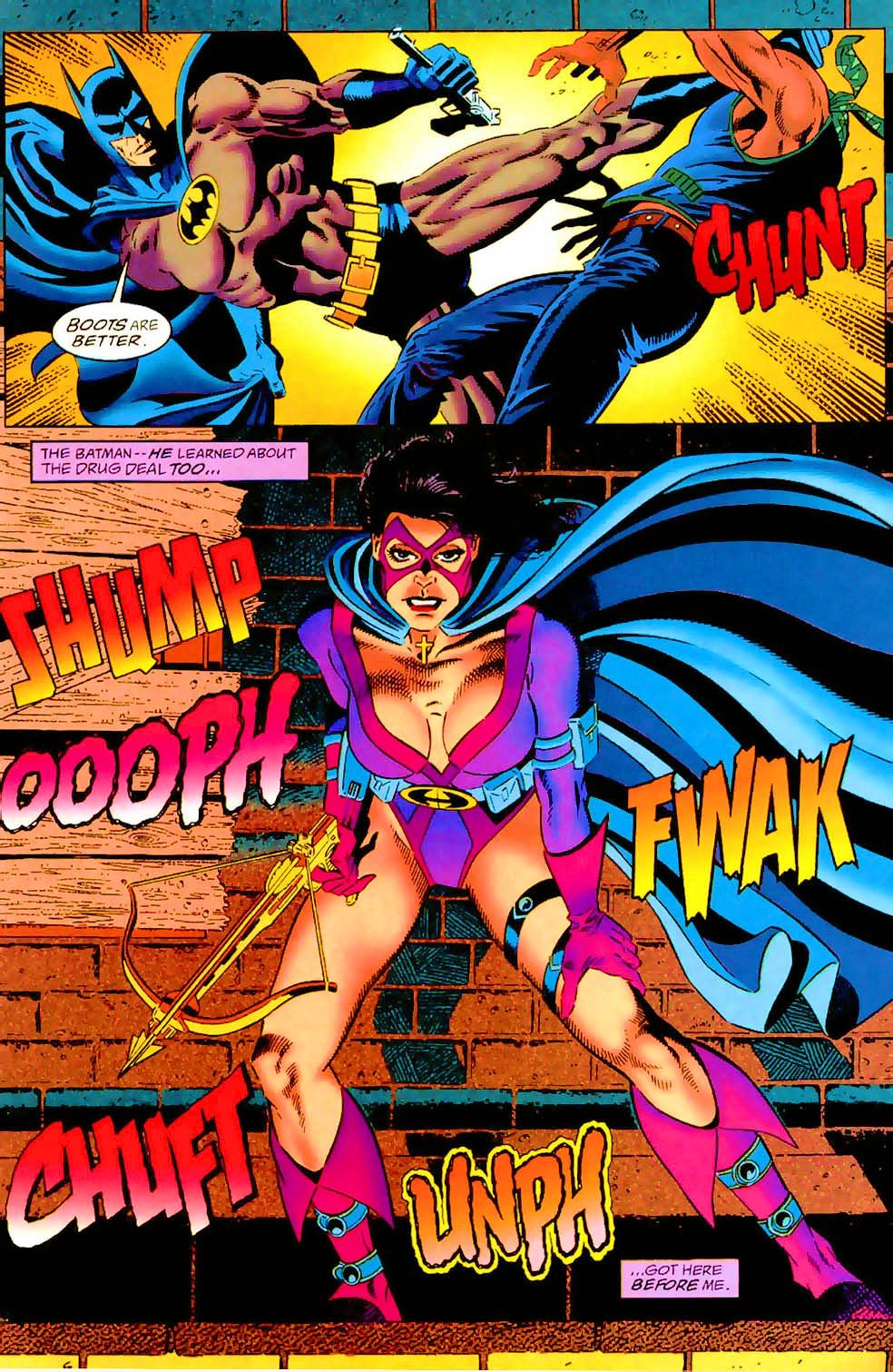
The Huntress and Batman.

Let me start with the storytelling. The writing by Doug Moench is solid and, more importantly, there is a nice payoff here in relation what was gradually built up in the first two issues – Terraro’s assassins and operations getting more lively within the plot. This alone adds some nice variety into the ongoing Batman-Predator rivalry, and symbolically the Huntress (who is after Terraro) is involved with the mafia plot and the said rivalry between Gotham’s detective and the hunter from space.

More on Batman and the Huntress, I like the way Moench wrote these two heroes as being divided even though they both face threats from the crime gang and from the Predator. Both characters are vigilantes but Batman has justice in mind while the Huntress is focused on hunting the powerful crime boss. Adding more depth to the story is the subplot about Commissioner Gordon being helpless and recovering in the hospital which complicates matters for the Gotham City police department.

Another thing that makes this issue more unique is the in-depth presentation of Batman doing detective work in the Bat Cave with Alfred providing insight. This alone makes this issue an improvement over issue .

When it comes to the visuals, artist Paul Gulacy continues to provide really nice artwork backed with strong support by the colorists. Gulacy took his time pacing the story by following the script closely and made key action scenes look dynamic visually when needed.

Conclusion

Remember the armor Batman wore in the previous crossover story against the Predator?

Considering all the good stuff I enjoyed in it, Batman versus Predator II is a great read. It has a better balance on plotting, detective work, spectacle and intrigue. In fact, this comic book has a much more powerful ending than issues and , and the ironic thing is that this only leads to the 4th and final issue which I’ll review soon.

If you are seriously planning to buy an existing hard copy of Batman versus Predator II (1995), be aware that as of this writing, MileHighComics.com shows that the near-mint copy of the comic book costs $40.

Overall, Batman versus Predator II (1995) is highly recommended!

+++++

Thank you for reading. If you find this article engaging, please click the like button below and also please consider sharing this article to others. If you are looking for a copywriter to create content for your special project or business, check out my services and my portfolio. Feel free to contact me as well. Also please feel free to visit my Facebook page Author Carlo Carrasco and follow me at HavenorFantasy@twitter.com

A Look Back at Batman versus Predator II #2 (1995)

Disclaimer: This is my original work with details sourced from reading the comic book and doing personal research. Anyone who wants to use this article, in part or in whole, needs to secure first my permission and agree to cite me as the source and author. Let it be known that any unauthorized use of this article will constrain the author to pursue the remedies under R.A. No. 8293, the Revised Penal Code, and/or all applicable legal actions under the laws of the Philippines.

When done right with the comic book format, fantasy crossover concepts can become very entertaining and memorable. Such was the case with the comic book Batman versus Predator II: Bloodmatch which I enjoyed reading a lot.

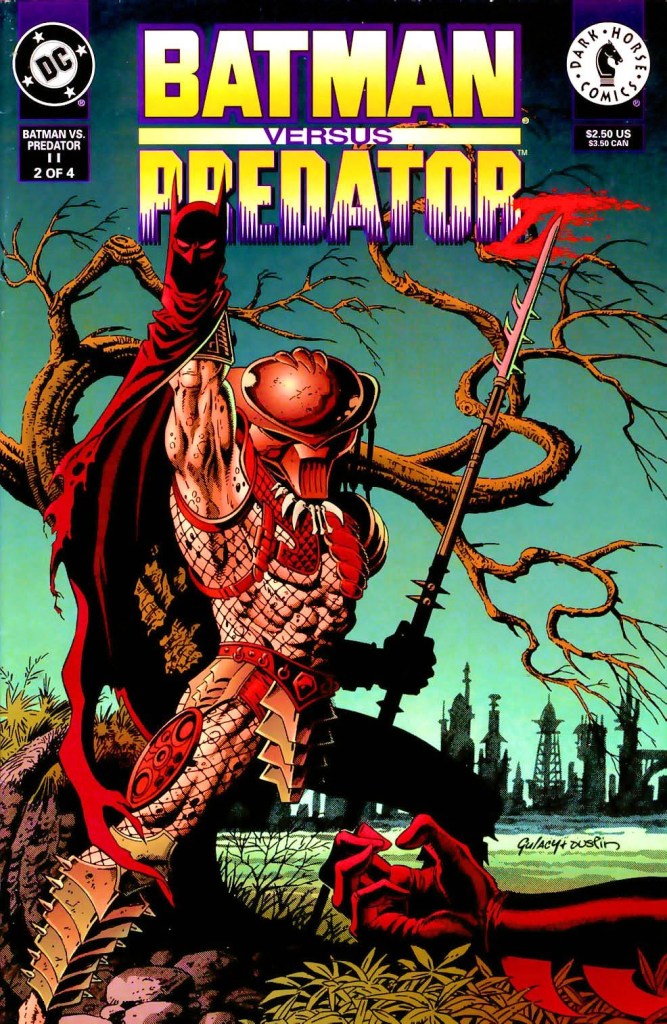
Now we can find out if the creative team behind that memorable comic book could maintain the high quality of fun and engagement in this look back at Batman versus Predator II , published in 1995 by DC Comics and Dark Horse Comics with a story written by Doug Moench and drawn by Paul Gulacy.

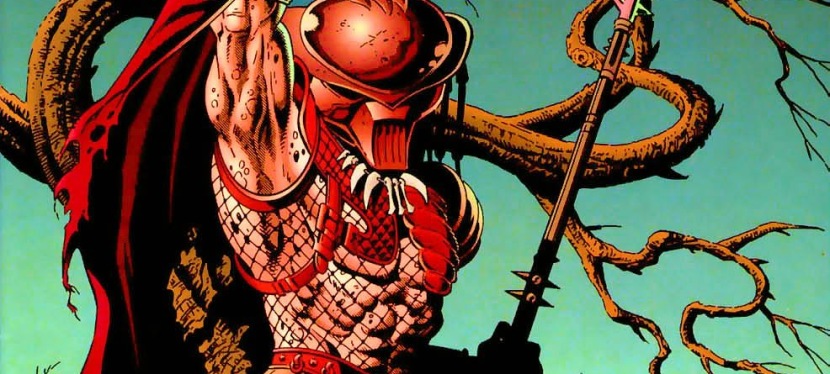
The cover.

Early story

The story begins in the forest outside of Gotham City. A fake use of the Batman signal was lighted there by the Predator which was meant to lure Batman into a potential trap. As soon as he arrived, Batman believes that his old ally commissioner James Gordon bought a portable Batman signal meant to call him to a crime scene far away from the urbanized areas.

Expecting to see Gordon in the woods, Batman sees a tree with several men’s heads hanging each with a net. He realizes that the Predator lured him into what he calls the hunting ground. Batman is correct as the Predator, standing nearby, unleashes a weapon to attack him…

Quality

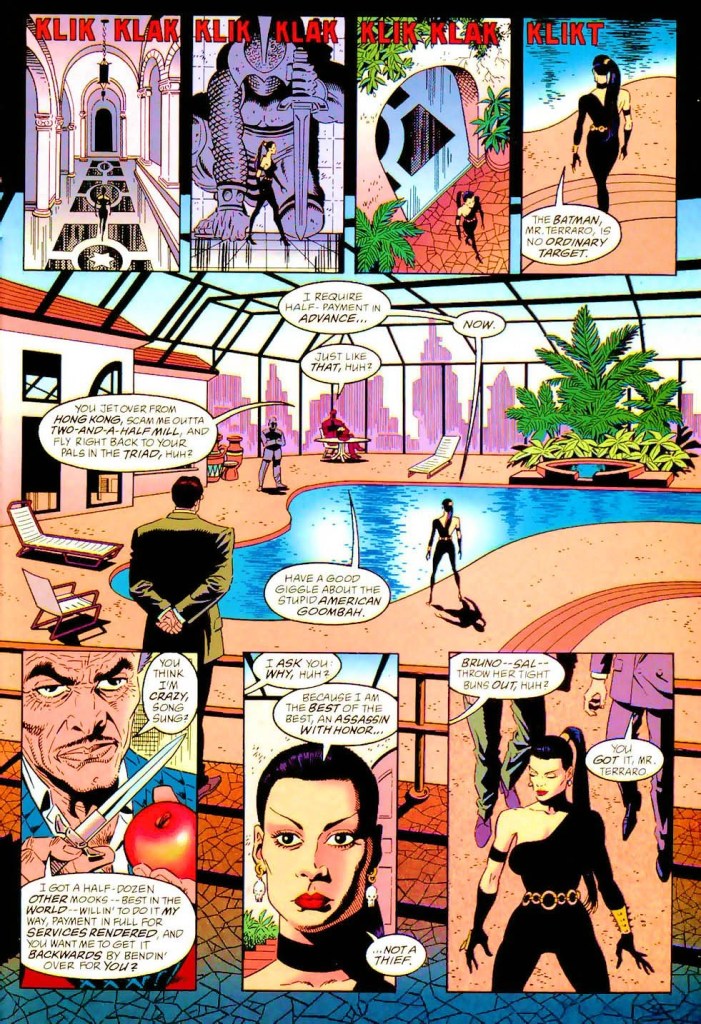
This one really looked out of place in this comic book.

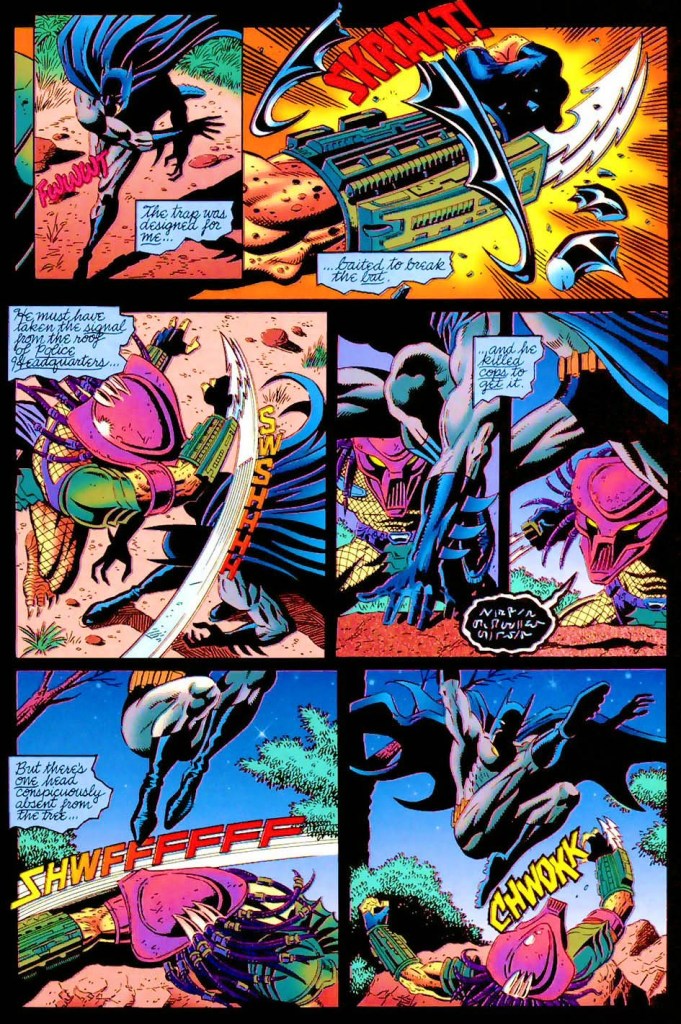
A pretty good crossover comic book. When it comes to storytelling, the comic book starts paying off the anticipation built up in issue by presenting Batman in an early encounter with the Predator which, I must say, was smartly handled complete with key references to the previous Batman versus Predator crossover series from the early 1990s. What happened in the said encounter between the two pop culture icons will make you reflect about what you know about Batman and the Predator. Given how the story turned out, clearly the encounter (which was quite beefy) served as a sign of what is more to come between Batman and the Predator (or the race of Predators). The Huntress meanwhile has a slightly reduced spotlight which is not surprising but she still proved her worth in the conflict. When it comes to presenting the respective views of Batman and the Huntress, I admire the use of narration boxes (instead of the traditional thought balloons) which added depth to the story.

Meanwhile, there is a subplot about an assassin from Asia who came all the way to America for a key transaction. However, this subplot (which does not even look like it’s related to the Batman-Predator conflict) ended up looking like filler.  

Conclusion

An action-packed encounter between the Dark Knight and the warrior from outer space!

Batman versus Predator II (1995) is almost as good as issue but its first, action-packed encounter between the Dark Knight and the warrior from outer space alone makes it worth collecting.

If you are seriously planning to buy an existing hard copy of Batman versus Predator II (1995), be aware that as of this writing, MileHighComics.com shows that the near-mint copy costs $30.

Overall, Batman versus Predator II (1995) is recommended.

+++++

Thank you for reading. If you find this article engaging, please click the like button below and also please consider sharing this article to others. If you are looking for a copywriter to create content for your special project or business, check out my services and my portfolio. Feel free to contact me as well. Also please feel free to visit my Facebook page Author Carlo Carrasco and follow me at HavenorFantasy@twitter.com

A Look Back at Batman versus Predator II: Bloodmatch #1 (1995)

Disclaimer: This is my original work with details sourced from reading the comic book and doing personal research. Anyone who wants to use this article, in part or in whole, needs to secure first my permission and agree to cite me as the source and author. Let it be known that any unauthorized use of this article will constrain the author to pursue the remedies under R.A. No. 8293, the Revised Penal Code, and/or all applicable legal actions under the laws of the Philippines.

If there is anything I love about the comic book format in relation to creative fiction, it is the fact that the said format allows certain crossover match-ups (that could not be realized in movie or TV format) to happen. In this case, I’m talking about having the science fiction monster warrior Predator in conflict with Batman.

Historically, in the early 1990s, DC Comics and Dark Horse Comics teamed up to publish the highly memorable crossover Batman versus Predator with the creative talents of Dave Gibbons, Andy Kubert and Adam Kubert.

The two publishers did not stop there. In 1995, they teamed up again to bring the two pop culture icons together but with a brand new story, a new creative team and with the involvement of the Huntress to support Batman. I was in college back in 1995 and you can’t imagine how surprised I was to see the first issue of the 2nd Batman-Predator crossover displayed on the shelf of the comic book store I visited. I was surprised because there was not much media spotlight for it in the comic book industry magazines I read.

That being said, here is a look back at Batman versus Predator II: Bloodmatch , published in 1995 by DC Comics and Dark Horse Comics with a story written by Doug Moench and drawn by Paul Gulacy.

Cover
The cover.

Early story

The story begins in the city where three guys are about to complete an illegal drugs deal by the dock. As one of the dealers fires his gun at the other party, Batman breaks into the scene to bring him down and pressures him to reveal the location of Terraro. As the downed thug tries to shoot Batman, an arrow fired by the Huntress hits his arm which caught the Dark Knight by surprise.

After knocking the thug out, Batman and the Huntress talk. It turns out both of them are after Terraro. The Huntress leaves as Batman remains to do some detective work on the three men.

Meanwhile from a far distance, a Predator reviews archived video footage of Bruce Wayne/Batman’s final encounter with a Predator (as told in the final issue of the first Batman Versus Predator series) and listens to the audio recording. The Predator is preparing himself to fight Batman by doing research (including familiarizing himself with how Bruce Wayne and his butler Alfred sound like) and he uses his deadly disc to cut off the head of a statue resembling the Dark Knight…

Quality

28
The Predator in action!

Let me start with the story. This comic book essentially tells a crime story mixed with some sci-fi elements. Unsurprisingly, there is a lot of exposition used to help build-up the expected conflict between Batman and the Predator. That’s not to say that the story is hollow. In fact, I still found it compelling even though some of the spotlight was spent on the Huntress who is clearly involved in the crime tale. To say the least, the Huntress adds variety to what could have been a typical Batman-does-all-the-detective-work story.

Batman, who by this time gained tremendous knowledge about the Predator, turns out to be targeted as “dead meat” by a gang leader and it’s nice to see him solve the crime problem while being at odds with the Huntress whom he finds to be too eager and reckless.

As for the Predator, unsurprisingly the alien warrior appears sparingly but that’s not a problem at all. In fact, the writer implemented the spotlight on the Predator without ever overdoing it which added nicely into the anticipation of the so-called rematch with Batman. I also liked how the Predator was portrayed in dealing with the criminal and law elements of the city.

As for the visuals, this one is a mixed bag for me. Firstly, I like the more vibrant and stylish use of colors which made this comic book look radically different from the dark, gritty and less colorful visuals of its predecessor. Secondly, Paul Gulacy’s art on drawing people lack punch and consistency. There were times that his drawings of Batman and Huntress were good, other times not. His work on the Predator is good, however. What Gulacy excelled in was drawing action scenes which are not only dynamic in presentation but also went strong with the violence (lots of bloody scenes, weapons penetrating the body, etc.) which reminded me a lot about the first two Predator movies. Gulacy’s take on the Batmobile looks corny.

Conclusion

6
The Huntress watches as Batman takes action.

Way back in 1995, I enjoyed reading Batman versus Predator II: Bloodmatch  the day I first bought it. Today, I still find it enjoyable to read. It has a nice mix of suspense and spectacle, and the creative team was granted a lot of creative freedom to tell the story with mature readers in mind. The story was well paced and the build-up was worth the time.

If you are seriously planning to buy an existing hard copy of Batman versus Predator II: Bloodmatch (1995), be aware that as of this writing, MileHighComics.com shows that the near-mint copy of the regular edition costs $23 while the near-mint copy of the promotional version with a poster costs $40.

Overall, Batman versus Predator II: Bloodmatch (1995) is highly recommended!


Thank you for reading. If you find this article engaging, please click the like button below and also please consider sharing this article to others. If you are looking for a copywriter to create content for your special project or business, check out my services and my portfolio. Feel free to contact me as well. Also please feel free to visit my Facebook page Author Carlo Carrasco and follow me at HavenorFantasy@twitter.com

A Look Back at Catwoman #50 (1997)

Disclaimer: This is my original work with details sourced from reading the comic book and doing personal research. Anyone who wants to use this article, in part or in whole, needs to secure first my permission and agree to cite me as the source and author. Let it be known that any unauthorized use of this article will constrain the author to pursue the remedies under R.A. No. 8293, the Revised Penal Code, and/or all applicable legal actions under the laws of the Philippines.

I want to make things clear that I’m not really a fan of Catwoman, nor am I a big fan of Batman and other DC Comics characters related to the Dark Knight. While it is a fact that I grew up reading comic books and watching some episodes of the live-action TV series as well as varied animated series featuring Batman, I did not see much of him encountering Catwoman.

I got to watch the movie Batman Returns in 1992 showing Michael Keaton and Michelle Pfeiffer as Batman and Catwoman. Unsurprisingly Catwoman gained prominence in pop culture as a result of that movie. In 1993, DC Comics launched the monthly series of Catwoman.

Recently, I reviewed Web of Spider-Man #100 which showcased the iconic Spider-Man wearing a suit of armor. As the 1990s was a decade of excess which includes armors as a superhero comic book trend (or fashion craze), it was no surprise that DC Comics had Catwoman featured in armored form.

That being said, we can now take a look back at Catwoman #50, published by DC Comics in 1997 with a story written by Doug Moench and drawn by Jim Balent.

Early story

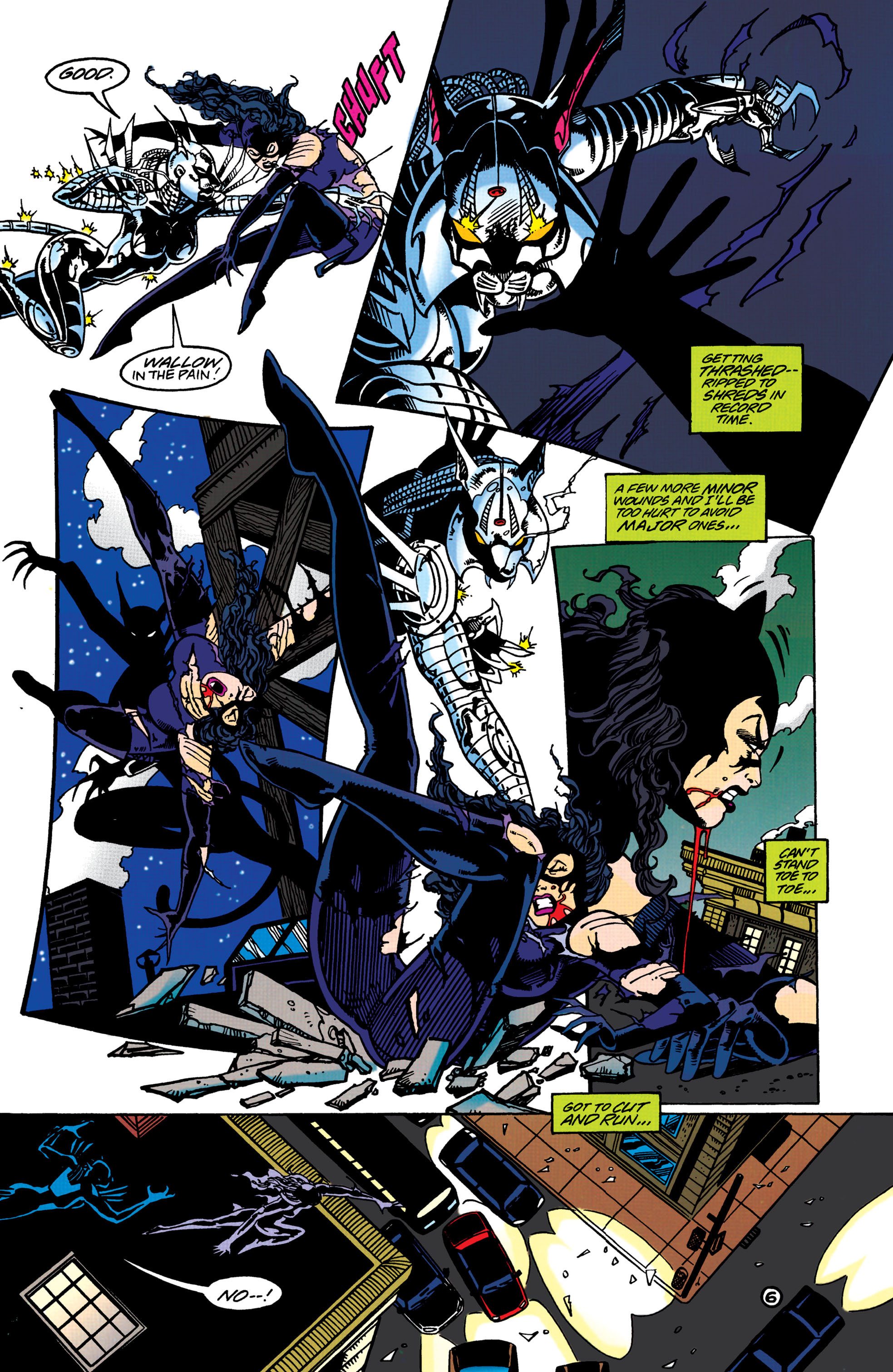
The story begins with Catwoman moving on the rooftop at night. Suddenly a small rocket is fired hitting a chimney near her knocking her out temporarily. After recovering and checking the area near her, she gets hit by Cyber-Cat (first appeared in Catwoman #42). As it turns out, Catwoman knew something about her having worked with Syntex but Cyber-Cat tells her that she’s worker for herself.

Driven by deep anger, Cyber-Cat moves at Catwoman who tries to escape. Catwoman gets hit and suffers slashes on her skin as a result of Cyber-Cat’s vicious attacks. Now losing some blood, Catwoman makes a desperate leap to another building across the street and barely makes it leaving Cyber-Cat behind.

5
Cyber-Cat viciously attacks Catwoman!

“Run, thief—but your run can’t last forever! I found you once, and I won’t rest until I do it agains—to finish what this night started! And remember –every time you cast your cowardly shadow across a roof…you’ll never know which gargoyle might come to sudden life,” Cyber-Cat tells Catwoman across the gap. “You’re finished, thief! Dead already!”

Badly wounded, Catwoman manages to find her motorcycle at an alley and drives on the way back to her hideout…

Quality

21
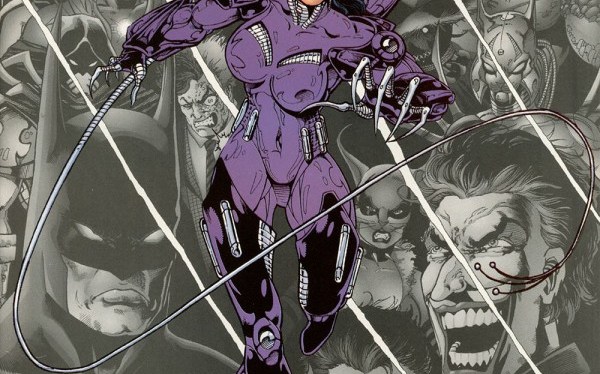
The money shot by Jim Balent! Check out the unrealistic look of the armor.

I should say that Catwoman #50 surprisingly has depth and a nice combination of spectacle, characterization, intrigue and even some detective story elements. Don’t let the cover fool you into thinking this is a shallow and terrible comic book.

For one thing, Doug Moench carefully crafted a story bringing Catwoman and Cyber-Cat back for a new conflict together, only this time the stakes are much higher given the fact that in the previous encounter, Catwoman put Cyber-Cat to shame. This explains why Cyber-Cat is not only more determined to kill Catwoman but also train harder and use cybernetic means more efficiently.

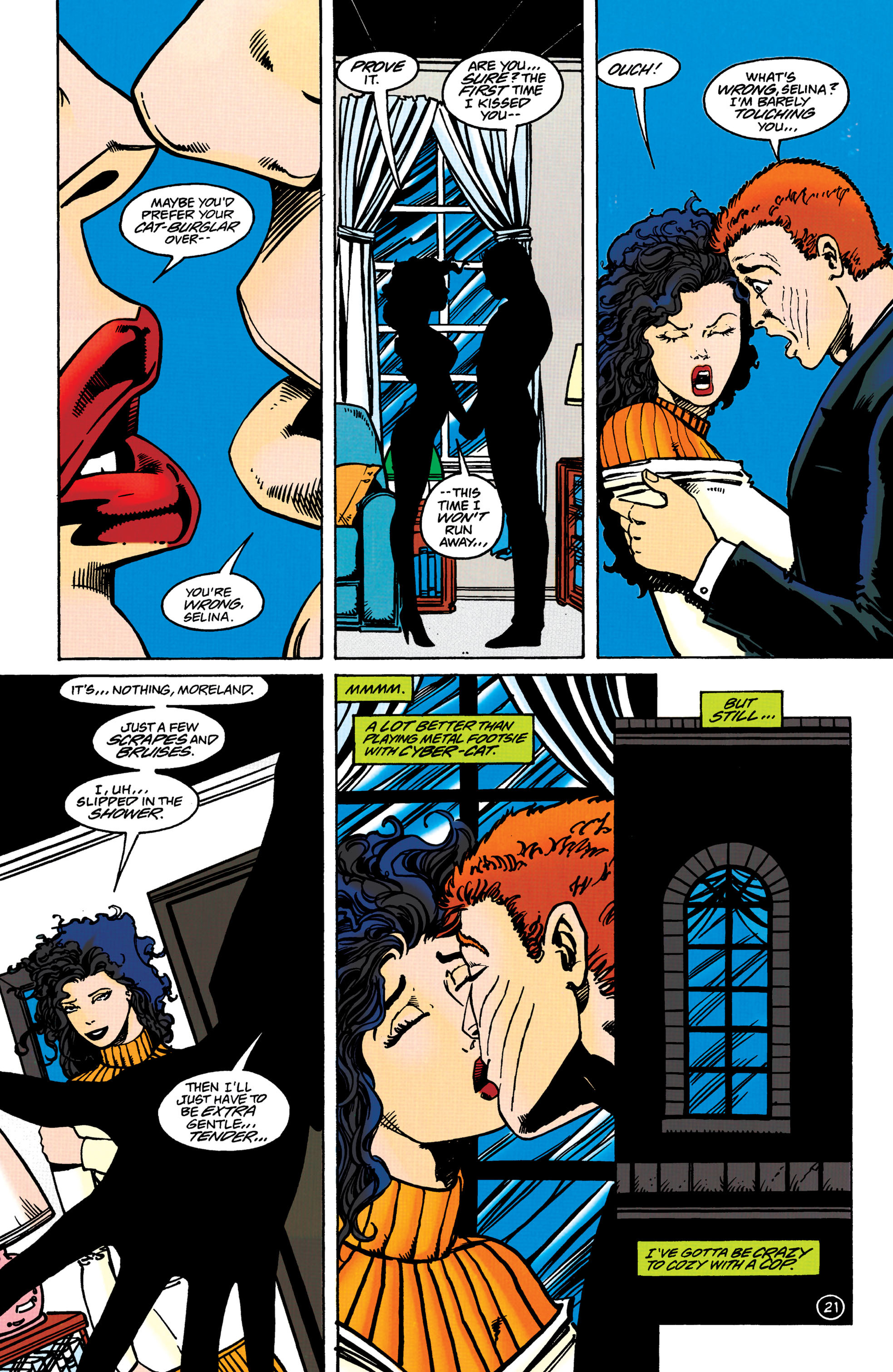
Rivalry aside, this comic book provides a nice look as to what would happen when a professional thief like Catwoman gets involved with a technology company and causes a disturbance not only in the tech sector but also with industry investigators. Doug Moench managed to insert some scenes exploring Selina Kyle/Catwoman’s social life and her involvement with a cop (who does not even know her secret criminal identity).

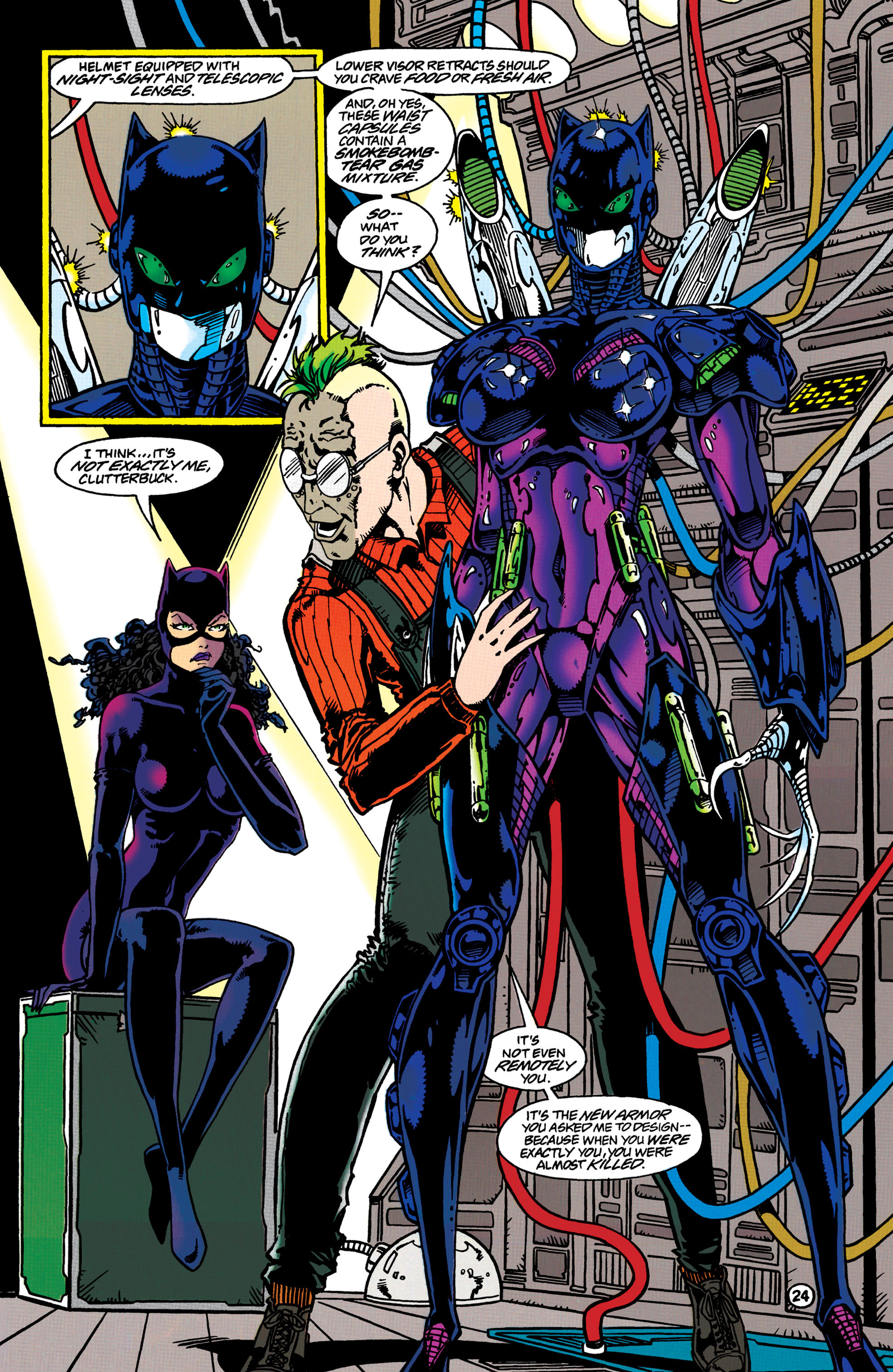
As for the Catwoman armor highlighted on the cover, I really like the way the creators efficiently implemented the “Batman approach” to preparation when it comes to assembling the armor done by Catwoman’s friend. While it is predictable that the armor helped improve her ability to fight and keep up with high-tech measures used against her, I found it rather unbelievable that she is able to maintain quick reflexes, move around fast like before and still look like she’s wearing tights (same problem with Cyber-Cat who is actually Christina Chiles behind the suit).

While the realism is not really a factor here, I should confirm that this comic book sure has a lot of action scenes and attractive visuals in the expected big battle between Cyber-Cat and the armored Catwoman. Artist Jim Balent, who helped start this monthly series, confidently paced the action and delivered lots of dynamic shots of hard action.

Conclusion

18
Selina Kyle the civilian.

Catwoman #50 is surprisingly fun to read and has enough depth to its story. It’s far from being brainless, really. With almost 30 pages of story and art, the creative team paced themselves to tell a cohesive story, add a bit of character development and then have Catwoman suited up for the big fight against the obsessive Cyber-Cat.

When it comes to executing the concept of having a hero or a villain using armor for a big conflict or special mission, Catwoman #50 easily beats the stuffing out of Web of Spider-Man #100 big time! Compared to that very disappointing Spider-Man comic book (featuring an armored Spider-Man), Catwoman #50 has more depth, is paced better, paid closer attention to detail (right down to the features of Catwoman’s armor), and has spectacle that is executed and presented better.

If you are seriously planning to buy an existing hard copy of Catwoman #50 (1997), be aware that as of this writing, MileHighComics.com shows that the near-mint copy of the regular edition costs $9. The near-mint copies of the deluxe, the newsstand deluxe and the newsstand editions cost $10, $22 and $17 respectively.

Overall, Catwoman #50 (1997) is recommended.


Thank you for reading. If you find this article engaging, please click the like button below and also please consider sharing this article to others. If you are looking for a copywriter to create content for your special project or business, check out my services and my portfolio. Feel free to contact me as well. Also please feel free to visit my Facebook page Author Carlo Carrasco and follow me at HavenorFantasy@twitter.com