A Look Back at Spider-Man 2099 Special #1 (1995)

Disclaimer: This is my original work with details sourced from reading the comic book and doing personal research. Anyone who wants to use this article, in part or in whole, needs to secure first my permission and agree to cite me as the source and author. Let it be known that any unauthorized use of this article will constrain the author to pursue the remedies under R.A. No. 8293, the Revised Penal Code, and/or all applicable legal actions under the laws of the Philippines.

Welcome back superhero enthusiasts, 1990s culture enthusiasts and comic book collectors! Today we go back to the year 1995 and explore a part of the Marvel 2099 comics universe through a tale of the Spider-Man 2099 franchise.

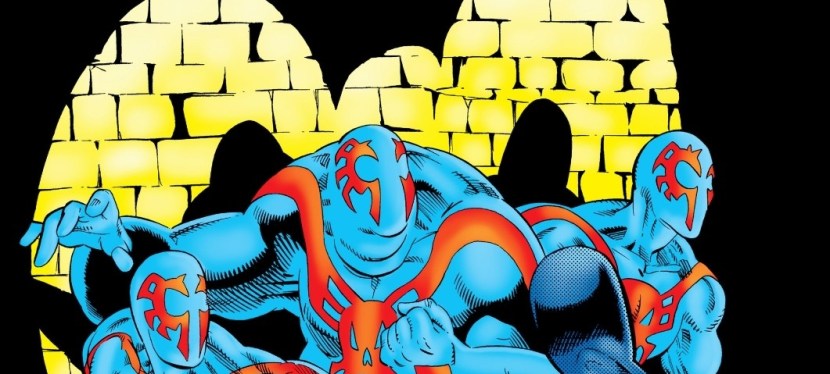
Specifically speaking, we will examine a thick one-shot comic book about the futuristic Spider-Man simply referred to as a special. Back in those days, Marvel Comics hired the famous Brothers Hildebrandt and among the projects they worked on were varied pieces of captivating art about Marvel’s 2099 universe. In relation to this particular retro comic book review, the Hildebrandt brothers made the cover art for the special comic book which contained three standalone stories.

With those details laid down, here is a look back at Spider-Man 2099 Special #1, published in 1995 by Marvel Comics with the main story “The Menace of the Man-Spider” written by Jon Peterson and drawn by Joe St. Pierre.

The cover.

Early story

The story begins at 1:45 AM inside the high-tech laboratory of Synthia when the Man-Spider (a human in a monstrous form of a huge spider) causes havoc and tries to hurt the personnel inside in response to their interference of his work. One of the troubled personnel manages to call for help as the Man-Spider tries to get them.

Just as the two workers get hit by the Man-Spider’s organic green web, armored elements of the security force arrived in response to the call and one of them fires a hot at the beast’s right arm causing a serious wound. Suddenly, the Man-Spider violently jumps away smashing through a large window going into the city. The Man-Spider escapes leaving behind a mess at the laboratory including a high amount of organic web that disgusts the people back there.

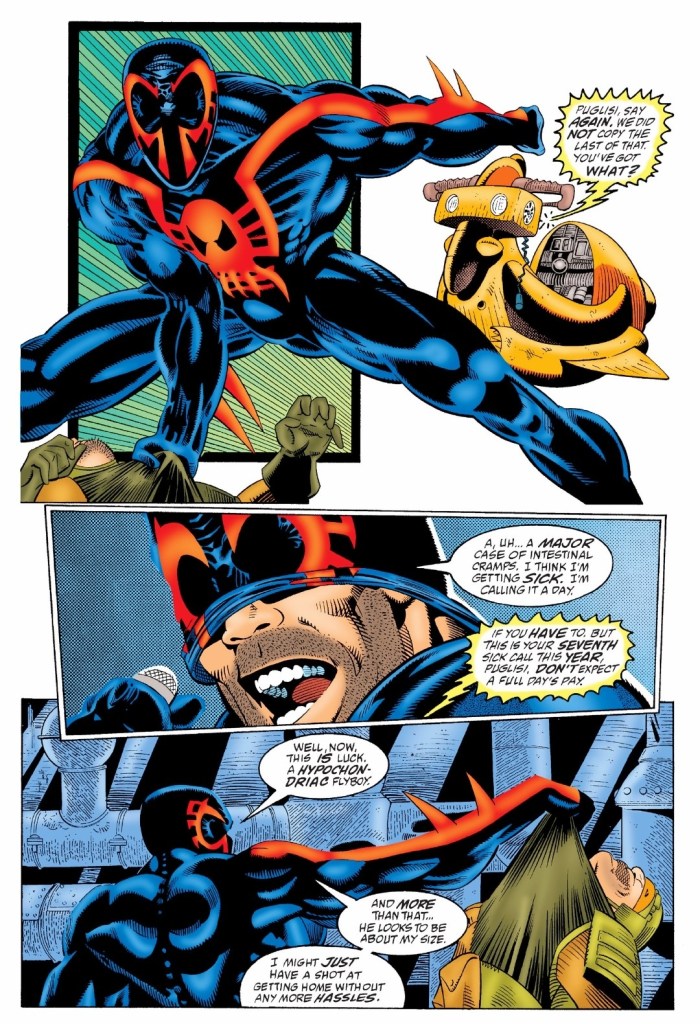
Hours later at another part of the city, Spider-Man got spotted by a floating drone which declares him as under arrest under the authority of the Public Eye. Spider-Man simply kept on swinging away to another destination until he uses his organic web on the drone and hurls it to a wall and explodes into several tiny pieces. Once alone, he changes into civilian clothes as Miguel O’Hara and rushes to Synthia’s facility…

Quality

A huge monster breaks out.

Focusing on the main story (the first story), I find this particular tale of Spider-Man of 2099 rather worthy to read even though there were some flaws here and there. Jon Peterson crafted a story that took place sometime before the 34th issue of the original Spider-Man 2099 monthly series while reflecting what was declared in issue #8 and building up something new with it. The main story was about Spider-Man getting into eventual conflict with the Man-Spider (note: it looks like someone at Marvel decided to copy DC Comics’ Man-Bat and make something new for the Marvel 2099 franchise) who in turn is an antagonist who is deeply troubled and yet not really evil. The Man-Spider is actually a man who does not have super abilities but rather high scientific intelligence and the capabilities to alter genetics using advanced technologies. The Man-Spider is not obsessed with destroying the world or murdering people, but achieving a major breakthrough backed with good intentions.

One of the most notable weaknesses of the script written by Peterson is the emphasis that Miguel O’Hara/Spider-Man 2099, Dana and the so-called resident mad scientist Antoine have a history together since their youth. This one felt very forced and ended up being unbelievable.

Still on the world-building aspect of the story, this comic book showed a true link between the company Synthia and the gigantic Alchemax which reflects what was state in issue #8. This link between the two corporations opened up opportunities for the creators to emphasize Alchemax’s moves on securing valuable stuff for the future.

Ultimately, the main story turned out to be a good read even though there were flaws that somewhat took away credibility from its core concept. I should also state that Joe St. Pierre established a rather unique look for the Spider-Man 2099 franchise. His work here is a nice alternative opposite Rick Leonardi’s Spidey 2099 art.

While the 2nd story of this one-shot was not worth reading at all, the final story has a unique concept exploring voyeurism in 2099 which accidentally reminded me about how social media in real life could ruin the public’s perception and people themselves.

Conclusion

Spider-Man 2099, Dana and the Man-Spider in a dangerous situation.

With a good enough main story, one forgetful 2nd story and a satisfactory third story, Spider-Man 2099 Special #1 (1995) is ultimately a mixed bag. You will find variety here as well as unique takes on the futuristic Spider-Man and 2099’s society from the creators, but don’t expect great stuff. I think the most die-hard Spidey 2099 and Marvel 2099 fans will enjoy this the most.

Overall, Spider-Man 2099 Special #1 (1995) is serviceable.

+++++

Thank you for reading. If you find this article engaging, please click the like button below, share this article to others and also please consider making a donation to support my publishing. If you are looking for a copywriter to create content for your special project or business, check out my services and my portfolio. Feel free to contact me with a private message. Also please feel free to visit my Facebook page Author Carlo Carrasco and follow me on Twitter at  @HavenorFantasy as well as on Tumblr at https://carlocarrasco.tumblr.com/ and on Instagram at https://www.instagram.com/authorcarlocarrasco
A Look Back at Superman vs. Aliens #1 (1995)

Disclaimer: This is my original work with details sourced from reading the comic book and doing personal research. Anyone who wants to use this article, in part or in whole, needs to secure first my permission and agree to cite me as the source and author. Let it be known that any unauthorized use of this article will constrain the author to pursue the remedies under R.A. No. 8293, the Revised Penal Code, and/or all applicable legal actions under the laws of the Philippines.

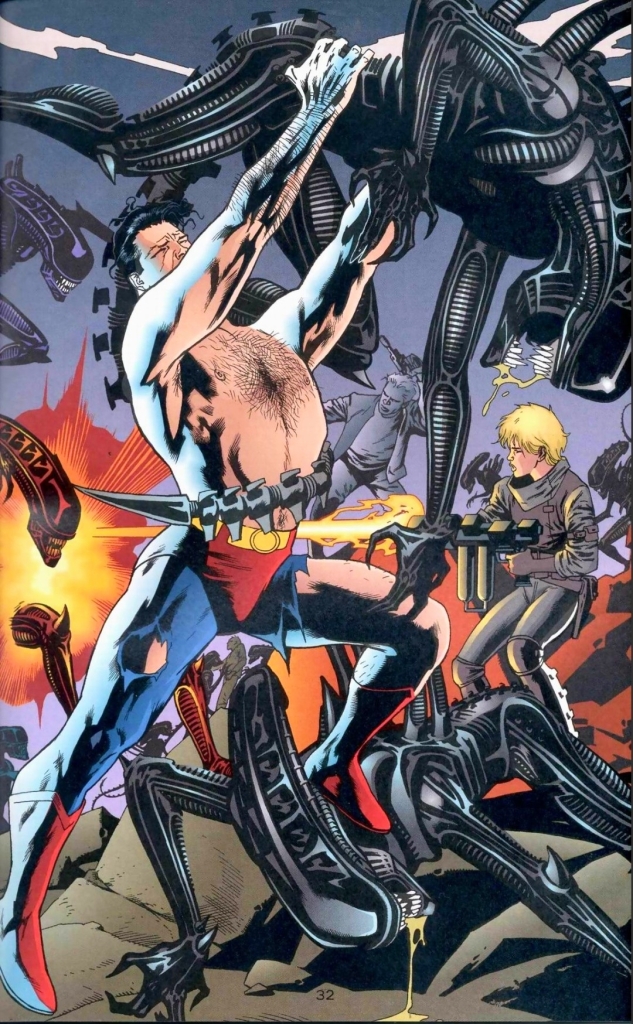
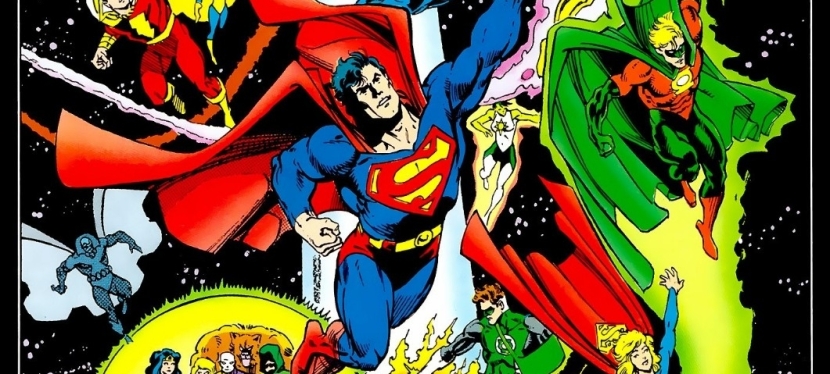
Welcome back superhero enthusiasts, 1990s culture enthusiasts and comic book collectors! Today we go back to the year 1995 to examine what was back then one of the most unthinkable comic book crossovers to ever happen – Superman vs. Aliens (also referred to as Superman/Aliens).

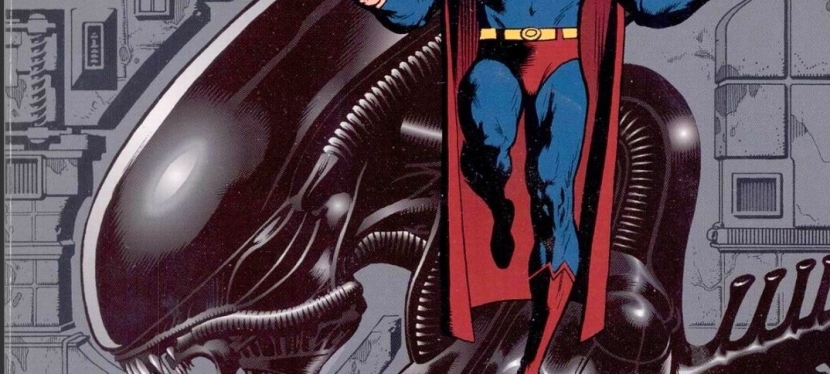
I remember sometime back in 1994, I bought a new superhero comic book from the local comic book retailer and what caught my attention was the print ad on the back – an Alien chestburster crashing through the iconic Superman S logo. A few of my friends who saw the same print ad chuckled at the concept of having the Man of Steel together with the monsters from the movie franchise that first started in 1979 with Ridley Scott’s Alien. Then came 1995 and eventually the first issue of the Superman vs. Aliens mini-series made it on the shelves of local comic book stores. Its cover easily attracted the attention of many and I saw the image of Superman being smaller to the Xenomorph alien in the background, the concept of the crossover started to intrigue me.

With those details laid down, here is a look back at Superman vs. Aliens #1, published in 1995 by Dark Horse Comics and DC Comics with a story written and drawn by Dan Jurgens with ink work done by Kevin Nowlan.

The cover.

Early story

The story begins in space when a fast moving object from nowhere heads towards Earth which was detected by a satellite of Lex Luthor’s corporation. Behind the scenes, personnel initiated an alert for a certain Dr. Kimble.

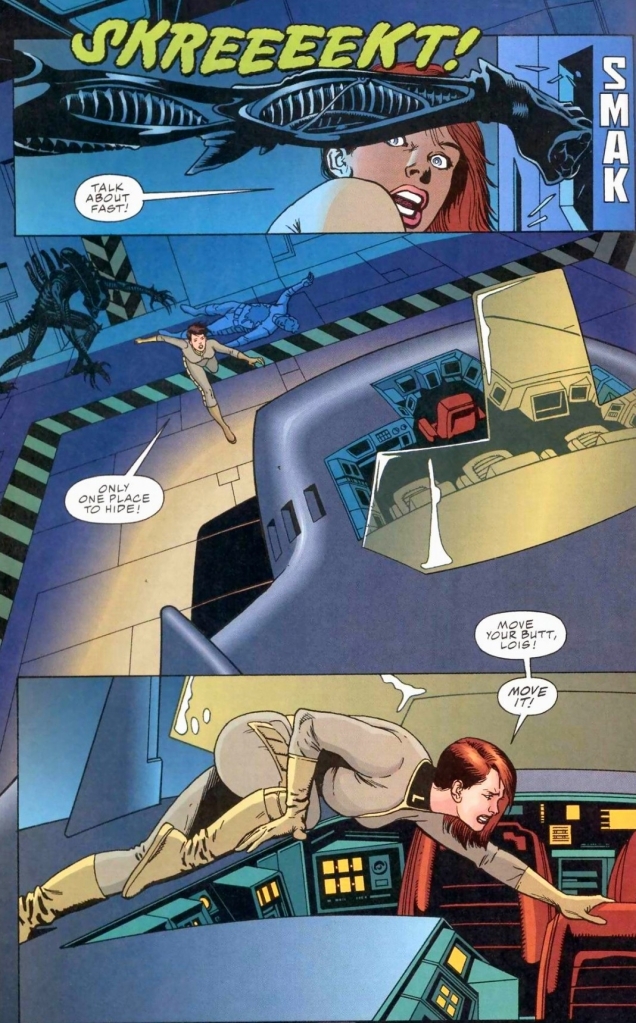
Clark Kent (Superman) and Lois Lane arrive at the headquarters of Lexcorp. It turns out they were suddenly called for by the corporation due to what happened in space. As they ride the elevator heading towards the rooftop, Clark and Lois talk about Lexcorp’s space program and Dr. Kimble who happens to lead the said program.

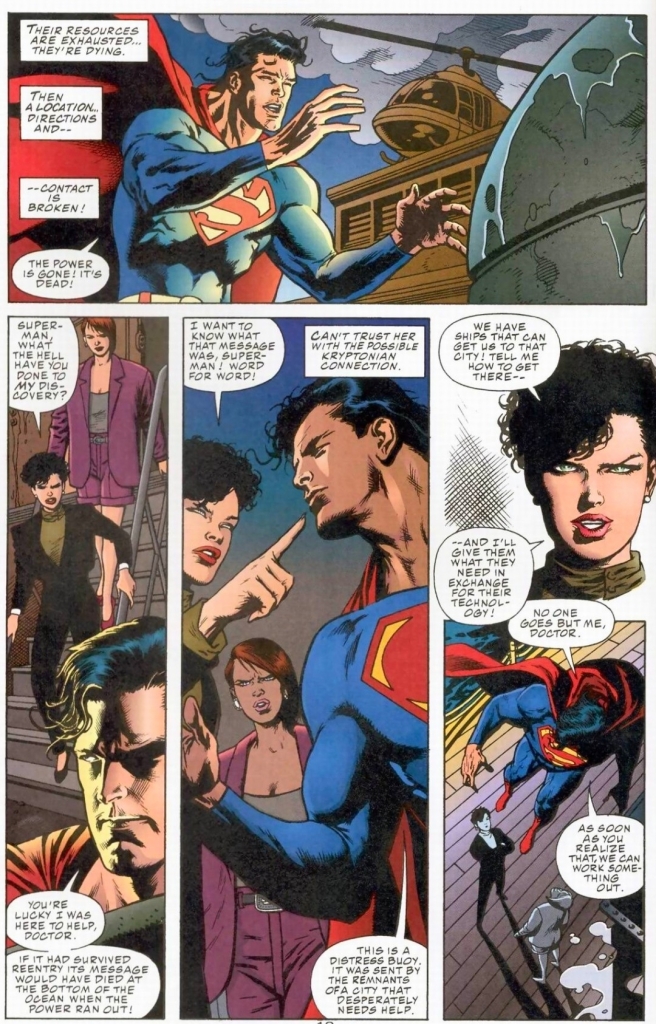
At the roof, they meet Dr. Cheryl Kimble and immediately ride with her in the helicopter going to a certain destination in anticipation of the probe’s estimated arrival. During the trip, Kimble reveals that they received radio signals from the incoming probe which were garbled almost unintelligible. She then plays an excerpt of the radio signals for Clark and Lois to listen to.

For Clark, he cannot help but feel shocked as he finds the audio sounding like Kryptonian…

Quality

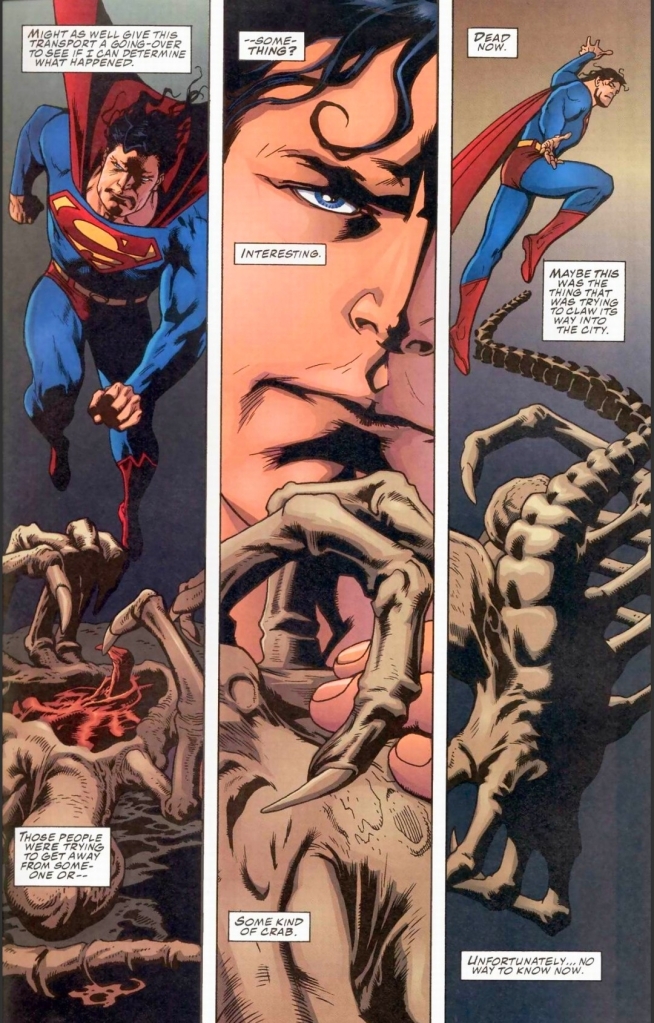
Superman finds a dead Facehugger alien.

Firstly, I can say without any hesitation that the creative team succeeded in making the crossover between Superman and the Aliens believable within this very comic book. For one thing, Dan Jurgens came up with a script and visual design that radically different from what was shown in Superman comic books of the time. The script had this somewhat adulterated tone that made the comic book move away from superhero fantasy and move into the realm of cinematic science fiction. For setting the tone and the look, the creative team scored a home run.

Secondly, the script was properly structured to immerse readers with the tale initially following Superman, Lois Lane and Dr. Kimble which ultimately served as a build-up. The good news here is that readers don’t have to wait too long for the pay-off to be executed. In fact, the pay-off itself (which happens when the Man of Steel finally encounters the Xenomorph for the first time) is huge and immediately the tension and depth of the plot really shifted into high-gear which I enjoyed. Along the way, the expository dialogue or the presentation of details (to help readers understand) was nicely balanced.

Thirdly, I love the way how Dan Jurgens presented Superman as being more troubled and more vulnerable than usual. To see the American icon go into personal obsession over the Kryptonian details was a really unique way to presenting his human side. Also having Superman deep in space far away from any sun or star (the essential source for his powers) really made him truly vulnerable as he actually got weaker even before facing off with a Xenomorph. Being in a vulnerable state, you will see the Man of Steel in real danger which truly goes against type (note: being super strong and invulnerable all the time). As such, the danger of the Aliens against him is believable and intense. What I do find weird, however, is how awkward it is for me to see Superman actually trying to reason with the first Xenomorph he encounters. Of course, he has no previous knowledge about the violent nature of the Aliens but we readers – and millions of people who saw any of the movies – know better than him.

As part of the build-up, Dan Jurgens inserted details and flashbacks that recalled previous tales that were published during the early stage of the post-Crisis era of DC Comics. This not only includes Superman’s arrival on Earth but also his strategic killing of General Zod, Zaora and  Quex-Ul using green Kryptonite (as published in Superman #22 of 1988). As such, Superman’s deep regret of taking life away from others serves as a build-up for his avoidance of killing in this crossover. This actually races the stakes for his upcoming encounters with the Aliens.

Even though the story is told through Superman, Dan Jurgens still had enough room to develop Lois Lane and Dr. Kimble. Kimble symbolizes the driven corporate executive who is in-charge of operations that could help her make claims on scientific discoveries and new technologies. Lois Lane here served as the intellectual opposite of Kimble without ever going into the extremes of gaining something for her journalistic career.

Conclusion

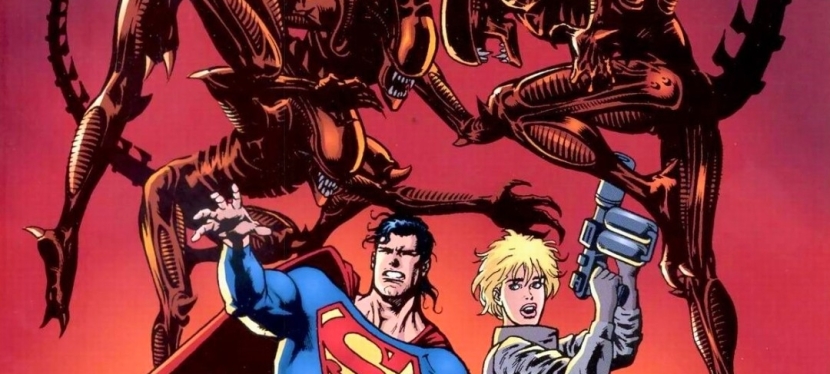
Superman with Lois Lane and Dr. Kimble.

Very clearly, Superman vs. Aliens #1 (1995) is indeed a great comic book as well as great opener for its mini-series. Dan Jurgens established a tale that had sufficient build-up and when the pay-off started, the crossover aspect really made the story more compelling to read. Ultimately, this one made the crossover between Superman and the Xenomorphs believable, engaging and intriguing. This comic book is a great start and I am eager to find out what happens next.

Overall, Superman vs. Aliens #1 (1995) is highly recommended!

+++++

Thank you for reading. If you find this article engaging, please click the like button below, share this article to others and also please consider making a donation to support my publishing. If you are looking for a copywriter to create content for your special project or business, check out my services and my portfolio. Feel free to contact me with a private message. Also please feel free to visit my Facebook page Author Carlo Carrasco and follow me on Twitter at  @HavenorFantasy as well as on Tumblr at https://carlocarrasco.tumblr.com/ and on Instagram at https://www.instagram.com/authorcarlocarrasco

A Look Back at Superman #5 (1987)

Disclaimer: This is my original work with details sourced from reading the comic book and doing personal research. Anyone who wants to use this article, in part or in whole, needs to secure first my permission and agree to cite me as the source and author. Let it be known that any unauthorized use of this article will constrain the author to pursue the remedies under R.A. No. 8293, the Revised Penal Code, and/or all applicable legal actions under the laws of the Philippines.

Welcome back superhero enthusiasts, 1980s culture enthusiasts and comic book collectors! Today we go back to the year 1987 and explore a chapter of the post-Crisis DC Comics universe through a Superman tale.

To put things in perspective, John Byrne became in charge of redefining the iconic Superman during the post-Crisis age and he sure had a lot of creative freedom to not only modernize the character but also make him relevant to the public while also pleasing long-time fans. To say the least, the post-Crisis era was a time of daring concepts with the established superheroes of DC Comics. For more insight on Byrne’s handling of the Man of Steel, read my other retro comic book review by clicking here.

With those details laid down, here is a look back at Superman #5, published in 1987 by DC Comics with a story written and drawn by John Byrne.

The cover.

Early story

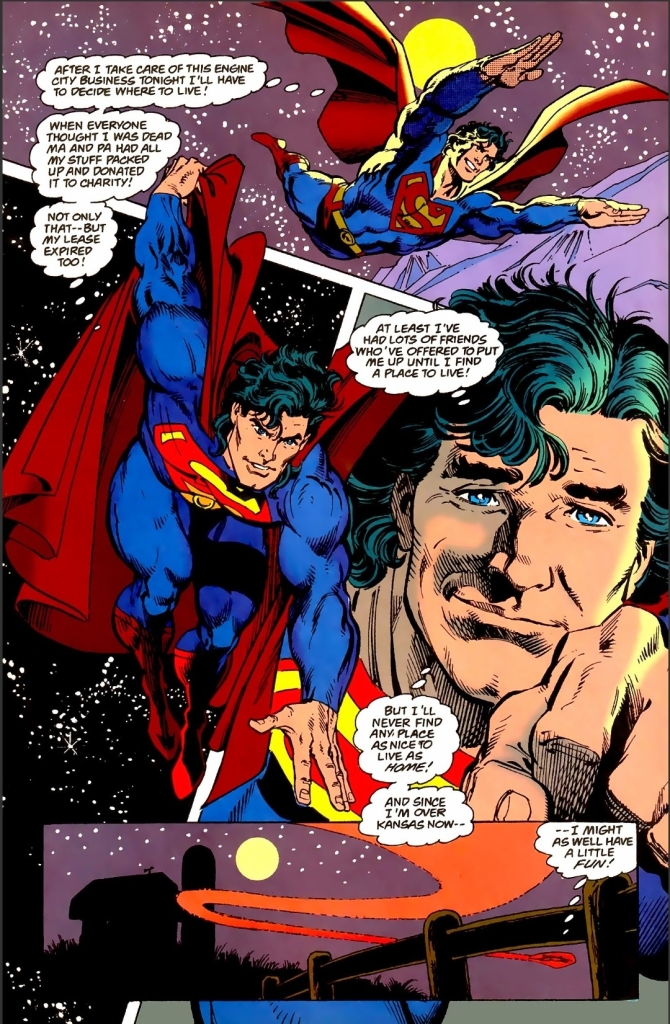
The story begins with Clark Kent having an outrageous dream in which he and Wonder Woman fight powerful enemies together. Shortly after arriving at the Daily Planet for duty, Clark learns from his boss Perry White that his office rival Lois Lane is already in South America literally digging on a significant discovery there. After being sent there by his boss, Clark flies to the south as Superman.

Upon arrival, Superman does a super speed reconnoiter at the dig site in the middle of a forest before changing back into Clark Kent. He eventually finds Lois Lane who is very surprised to see him. Even though he explained things to her, Lois remains doubtful of Clark as she still sees him as a journalistic rival who could potentially ruin her hot scoop…

Quality

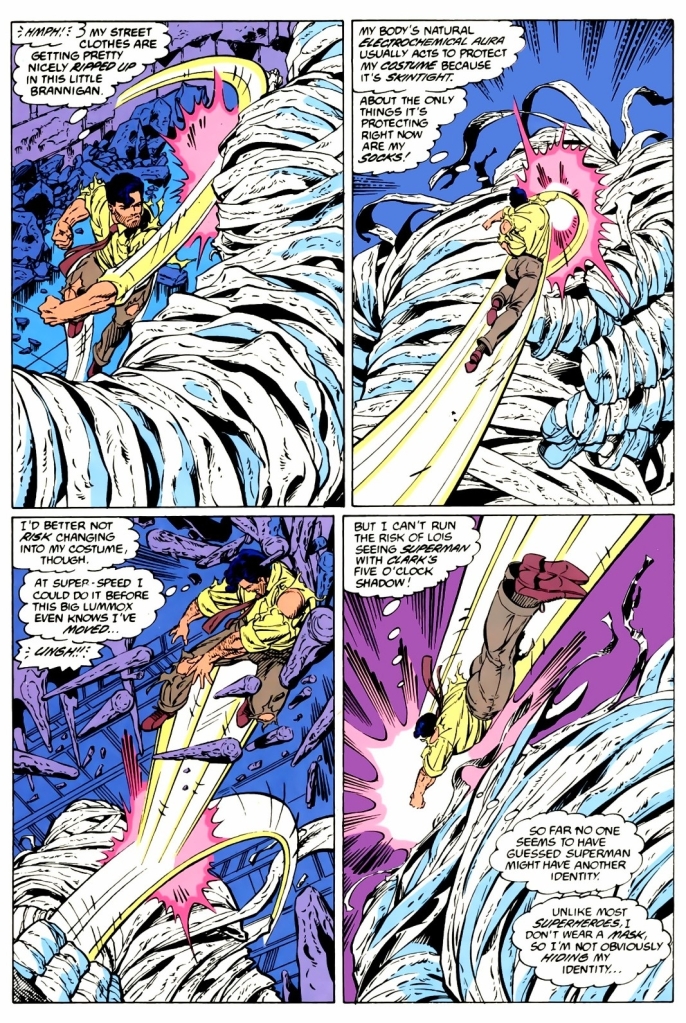
In his civilian form as Clark Kent, Superman fights the huge mummy figure.

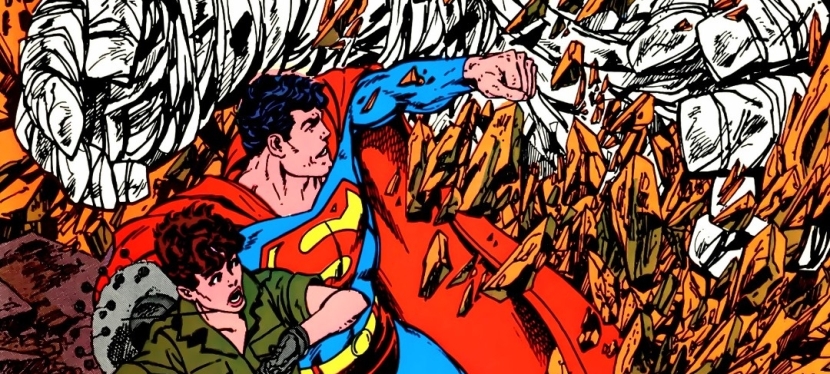
I can say that John Byrne’s brilliance is very evident in this comic book. Firstly, this is a story that sheds light on the journalistic rivalry between Lois and Clark that brings back memories about what happened with the Superman hot scoop in The Man of Steel limited series. Here, Lois remains doubtful about Clark and even shows some bitterness as she is on the verge of a major discovery in South America.

Secondly, this story is also an accidental adventure that creatively has a mix of Indiana Jones, UFOs and ancient horror all throughout. The build-up here is pretty strong as the tale focused strongly on the discovery aspect of the dig site which eventually led to a series of action-packed unfortunate events that really pushed Clark Kent both as civilian and as a superhero. Here, Clark has the tough task to fight an over-sized enemy (note: Byrne’s own take on the mummy) to keep Lois and the others safe while also making certain that he keeps his identity secret.

Along the way, Byrne inserted lots of in-depth details backed with observations (by the characters) which made this action-packed tale a cerebral read. This is a fine example of being creative with handling Superman while catering to readers who love spectacle as well as satisfying those who enjoy a smart presentation of the icon. In other words, there is nothing brainless or dumb to find here.

Conclusion

The journalistic rivalry between Clark and Lois Lane is really engaging to read.

Superman #5 (1987) is a very good read and this is fine showcase of the brilliant handling of the Man of Steel done by John Byrne. Aesthetics aside, this comic book is a relic that highlights the time when Lois and Clark were rival writers and the idea of them getting romantically involved seemed very unlikely at the time of its publishing during the early stage of the post-Crisis era. It was in many ways a defiance of the status quo of the original DC multiverse that had Lois and Superman as lovers. As an adventure, this comic book is very entertaining and engaging and the thing here is that it is only the first part of its arc.   

Overall, Superman #5 (1993) is highly recommended.

+++++

Thank you for reading. If you find this article engaging, please click the like button below, share this article to others and also please consider making a donation to support my publishing. If you are looking for a copywriter to create content for your special project or business, check out my services and my portfolio. Feel free to contact me with a private message. Also please feel free to visit my Facebook page Author Carlo Carrasco and follow me on Twitter at  @HavenorFantasy as well as on Tumblr at https://carlocarrasco.tumblr.com/ and on Instagram at https://www.instagram.com/authorcarlocarrasco
A Look Back at Superman #78 (1993)

Disclaimer: This is my original work with details sourced from reading the comic book and doing personal research. Anyone who wants to use this article, in part or in whole, needs to secure first my permission and agree to cite me as the source and author. Let it be known that any unauthorized use of this article will constrain the author to pursue the remedies under R.A. No. 8293, the Revised Penal Code, and/or all applicable legal actions under the laws of the Philippines.

Welcome back superhero enthusiasts, 1990s culture enthusiasts and comic book collectors! Today we go back to the year 1993 and explore a chapter of the Reign of the Supermen storyline through one of the issues of the Superman monthly series.

To put things in perspective, DC Comics fulfilled its promise to kill the iconic Man of Steel in Superman #75 (1993) which sold a whole lot of copies and the daring death concept made Superman a hot news item. After a brief period showing what the world is like without Superman, DC resurrected him in Adventures of Superman #500 which spawned the different Supermen and a new storyline (the Reign of the Supermen) which took effect on the four Superman monthly series of the time.

With those details laid down, here is a look back at Superman #78, published in 1993 by DC Comics with a story written and drawn by Dan Jurgens.  

The cover.

Early story

The story begins with Lois Lane still thinking about Superman as she drives her car on a rainy night. At the moment, she still has not learned to live without him. As she is granted access into a facility of Lexcorp, she carefully thinks about the sudden number of many people around the country who claimed to have seen Superman.

Inside the facility, Dr. Meyer meets her and tells her that had met the Man of Steel sometime prior and he believes that the certain person who saved him and others was definitely the same person. Being skeptical, Lois Lane asked him if some other superhero saved them from certain death. In response, he shows to her an image of the heroic figure captured by security cameras. Lois recognizes the face and head even though some parts were shadowed…

Quality

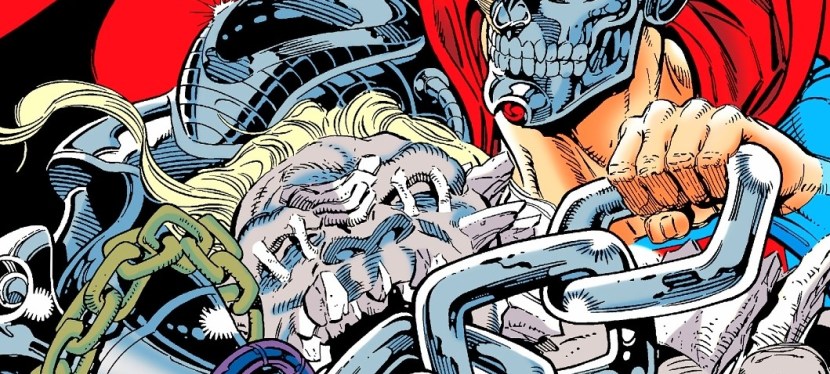
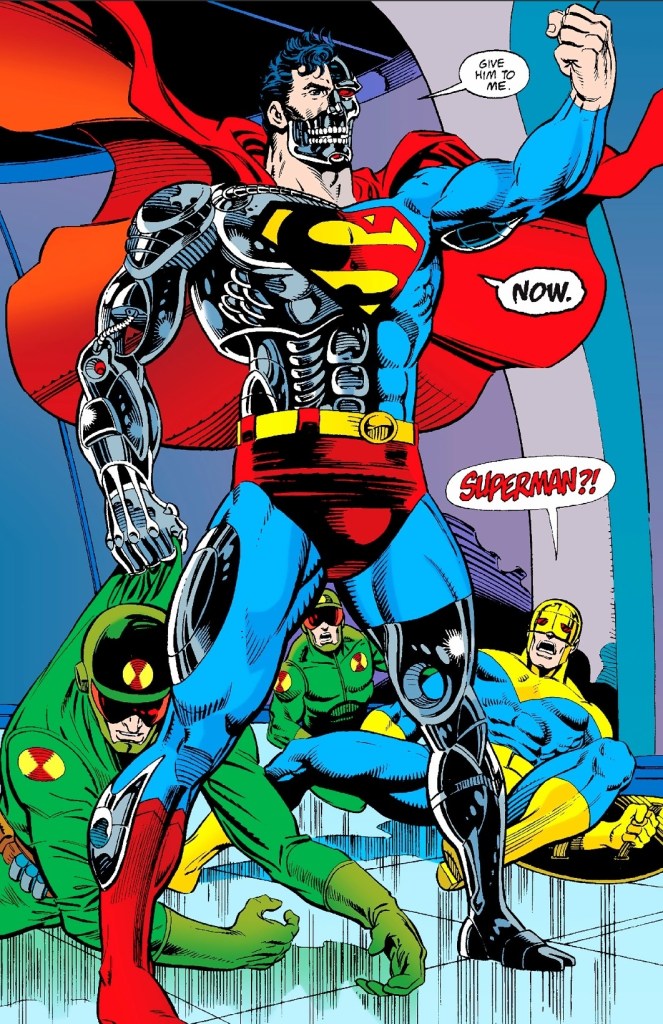
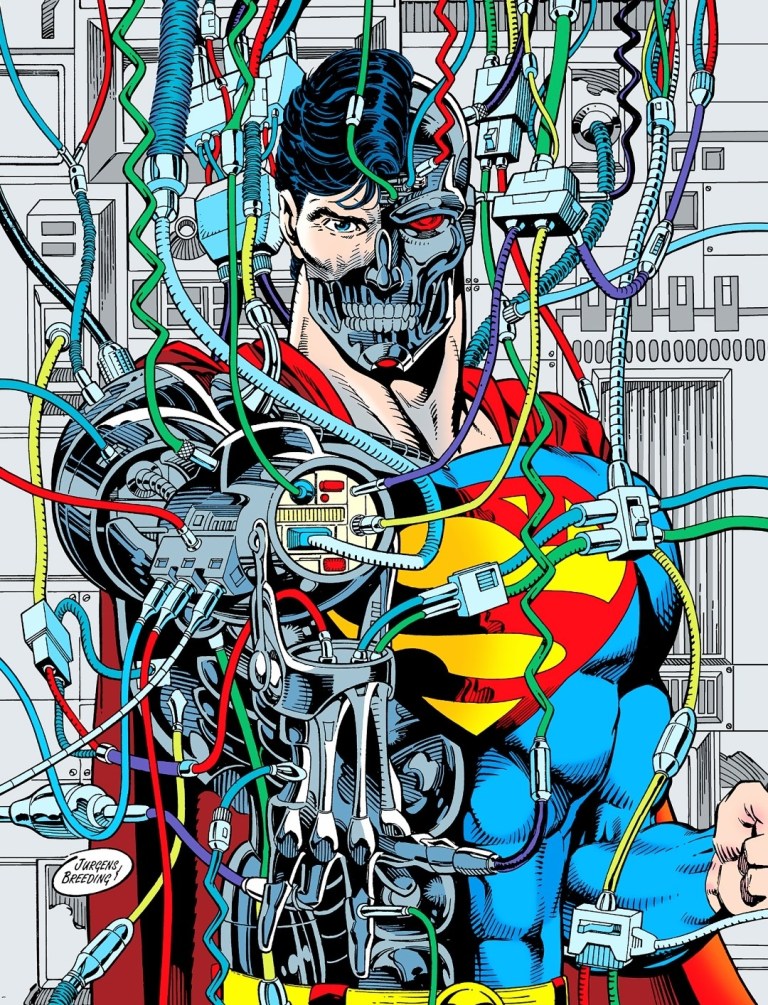
Cyborg Superman in full appearance.

Starting with the storytelling, I can say that this is one solid tale that really pokes the curiosity regarding Cyborg Superman…is he the real Superman or some very clever and capable impostor? Dan Jurgens really knows his Superman stuff and he used a clever approach on arousing the readers’ curiosity while still managing to move the story forward. As one of the early chapters of the Reign of the Supermen storyline, it was very obvious that things were set in motion to set up future post-death Superman stories.

The most engaging parts of this tale were the scenes between Lois Lane and Cyborg Superman (note: he sure looks like a Terminator-inspired take on the Man of Steel which itself was a daring concept back in 1993). Lois Lane here is clearly intelligent and for personal and professional reasons, she would not settle for words as definitive answers but have evidence scientifically analyzed right in front of her. Once again, this is a lively reminder that in the post-Crisis universe of DC Comics, Lois Lane is persistent on verifying facts to realize the truth (which is something clearly missing in today’s world of social media and news media outlets serving as loudspeakers for political forces).

While the storytelling remains good all these decades, what really aged badly in this comic book was the bastardization of Superman’s iconic imagery with some robotic influences of the Terminator mixed in that made him look science fictional in appearance. Of course, Cyborg Superman was just one of the Supermen in this storyline and the Reign of the Supermen concept was clearly an extension of DC Comics’ dishonesty behind the death and return of the Man of Steel. This also shows DC’s irresponsible handling of one of America’s icons. Let’s be honest with ourselves here…how many of you really want to see Cyborg Superman in live-action form in a future DC superhero movie from Warner Bros. and James Gunn?

Conclusion

How many of you have this poster of a very bastardized image of Superman in your homes right now?

While Superman #78 (1993) has a good story told and added to the mystery about the resurrection of Superman, it ultimately served as a build-up platform to set up further stories not only about the Man of Steel but also that of Doomsday (note: a big rematch happened a few years later). The image of Cyborg Superman is clearly a defamation of the iconic look of the Man of Steel and that alone really brought the overall entertainment value of this comic book way down in my view. I find it baffling that there was no major backlash nor an outrage from Superman fans back in 1993 over this.

Overall, Superman #78 (1993) is serviceable.

+++++

Thank you for reading. If you find this article engaging, please click the like button below, share this article to others and also please consider making a donation to support my publishing. If you are looking for a copywriter to create content for your special project or business, check out my services and my portfolio. Feel free to contact me with a private message. Also please feel free to visit my Facebook page Author Carlo Carrasco and follow me on Twitter at  @HavenorFantasy as well as on Tumblr at https://carlocarrasco.tumblr.com/ and on Instagram at https://www.instagram.com/authorcarlocarrasco
A Look Back at Wonder Woman #24 (1989)

Disclaimer: This is my original work with details sourced from reading the comic book and doing personal research. Anyone who wants to use this article, in part or in whole, needs to secure first my permission and agree to cite me as the source and author. Let it be known that any unauthorized use of this article will constrain the author to pursue the remedies under R.A. No. 8293, the Revised Penal Code, and/or all applicable legal actions under the laws of the Philippines.

Welcome back, superheo enthusiasts, 1980s arts and culture enthusiasts, DC Comics fans and comic book collectors! Today we go back to the late 1980s to explore a part of the DC Comics shared universe through a tale of the Queen of Superheroes herself…Wonder Woman!

In my previous retro review, Wonder Woman’s spiritual superior Hermes makes his presence felt on Earth as she continues her interaction with members of the local society. Unsurprisingly, a great disturbance happens with the people as they let their guard down after witnessing something supernatural. This made things more complicated with Wonder Woman who has been trying her best doing her duty as Themyscira’s representative while maintain the personal relationships she established with certain mortals. And then something wrong happened with Hermes.

With those details laid down, here is a look back at Wonder Woman #24, published by DC Comics in 1989 with a story written and drawn by the late George Perez.

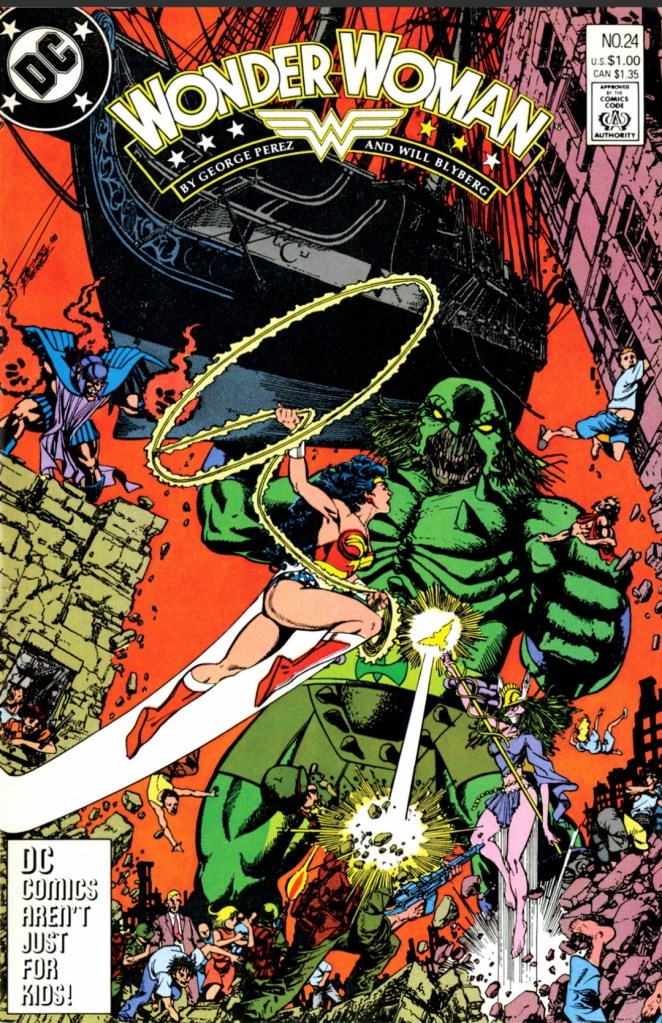
The cover.

Early story

The story begins Vanessa Kapatelis at home watching news on TV about the strange attack on Hermes. In the city of Boston, two police officers find a man sitting with junk at a wall who cannot help but be very scared of something. The man points to a certain building very nearby.

Beneath the foundation of the building, the earth rumbles with very eerie sounds. The gorgon Euryale and Ares’ son Phobos are on top of a pit and below them is Ixion, the first mass murderer to have ever walked the earth. It turns out, Ixion has long been chained to a large wheel that not only restrained him but also tortured him. The generations of torture disfigured Ixion as well. Hermes, who was defeated very recently, cannot help but be shocked at the sight of Ixion whom he left imprisoned in another place. Phobos tells Hermes he could thank his foolish Olympians as they were so busy with the cosmic migration, it paved the way for him (Phobos) to sneak into Hades and pull out Ixion.

It turns out, it was Hermes who forged the unbreakable chains holding Ixion and only he could break it. Euryale, who wears Hermes’ mystical hat, mocks Hermes. Phobos reveals that he has Hermes’ caduceus all to himself and then uses it to capture and harness energy which he uses to free Ixion.

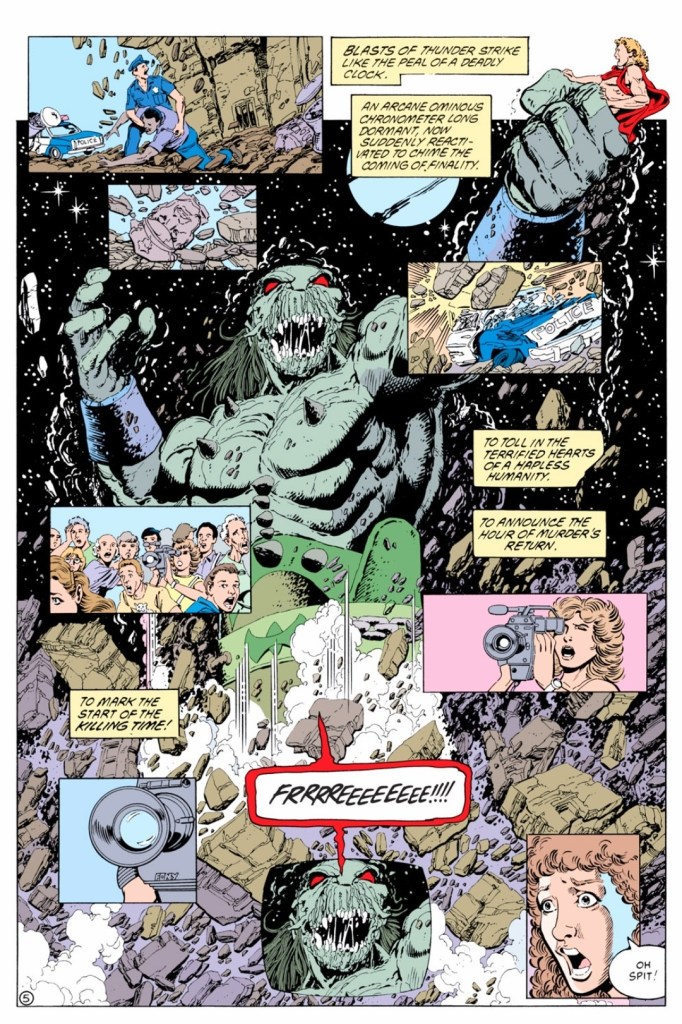
Suddenly, the building crumbles and Ixion emerges with Hermes caught firmly by his oversized hand. The rise of Ixion terrifies the people of Boston…

Quality

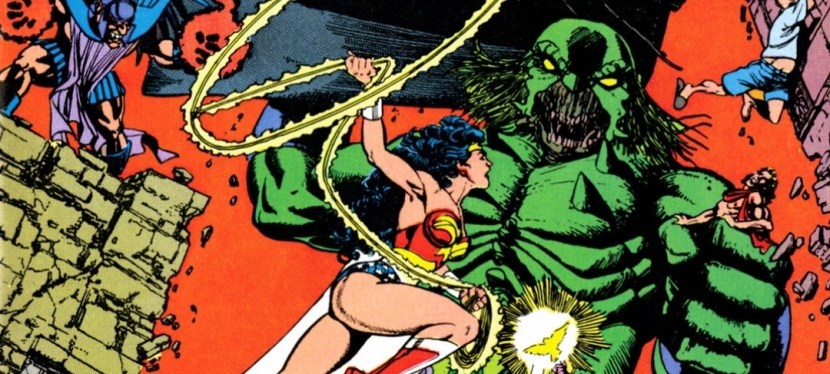
Look at how intimidating Ixion is while Hermes is so helpless and pathetic.

Wow! This is one epic Wonder Woman tale that has a nice blend of fantasy, action and 1980s American culture. The stakes within this comic book are so high as a result of the disaster caused by Ixion who really put many people’s lives in danger. Ironically, the huge scale of disaster did not attract the assistance of other superheroes within the shared comic book universe of DC and this only made Wonder Woman’s involvement more significant. Not only would you see Wonder Woman really struggle with fighting Ixion, you will also see her struggle emotionally and logically when she deals with the helplessness of her superior Hermes (who is rather pathetic here and he really looks like a reject from Olympus) and facing the raging evil of Phobos while trying to prevent any further loss of life. By the way, Ixion here is more than just being one large monster for Wonder Woman to face off with.

While this is indeed a tale heavily loaded with action, the script by Perez sheds light on key themes that are indeed worth thinking over. For one thing, how should Wonder Woman handle herself upon realizing her lord Hermes becomes vulnerable and unworthy of godly authority? How should people deal with idolatry (which is foolish and unholy) when they realize a mythical figure like Hermes is so helpless not so long after he convinced them with his amazing display of the supernatural? More on relationships between mortals and powerful beings, how can an ordinary human like Julia Kapatelis really maintain a sisterly bond with Wonder Woman whose powers and responsibilities are so tremendous and are beyond the reach of humanity? There definitely is something engaging to reflect over in this comic book and the richness behind the writing (as opposed to the visual spectacle) is undeniable.

Themes aside, Perez also crafted very rich dialogue which is very evident near the end of the story. I won’t say which characters engaged in the rich conversation but I assure you it is worth getting this comic book for. The said conversation is not only philosophical but also marks another step in the development of the characters involved. 

Conclusion

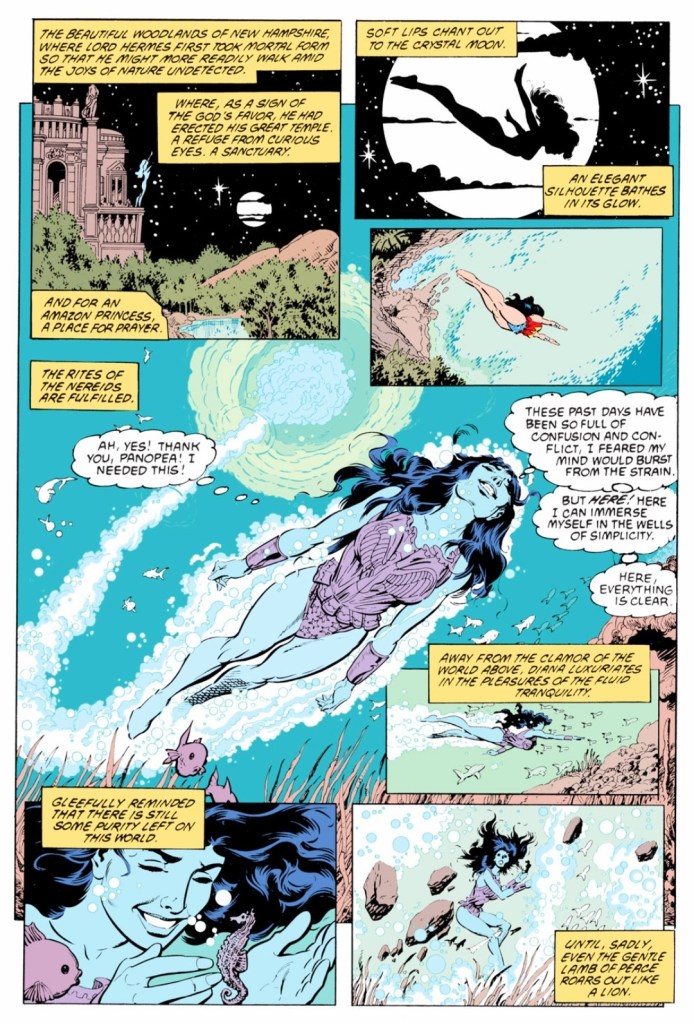
Wonder Woman unwinding.

Wonder Woman #24 (1989) is indeed a great Wonder Woman tale and it is a significant improvement over issues #22 and #23 with regards to storytelling, conflict and characterization. This comic book is a lively reminder about how great George Perez proved to be when it comes to writing. It has lots of superhero spectacle to keep readers entertained but ultimately it is Perez’s writing that made this one a great read. It certainly has aged well and by the time you read this particular comic book, you will really miss the late Perez. Lastly, this Wonder Woman tale should serve as a lively reminder to you all that Zeus, Hermes, Aphrodite and all those so-called gods are all false and you should never fall into worshiping them. You engage in idolatry, and you will go to hell. There is only one true God and He has a Son named Jesus who redeemed humanity, established a living covenant with the faithful, died on the cross, overcame death, met with the faithful again and ascended to Heaven with a promise to return.

Overall, Wonder Woman #24 (1989) is highly recommended!

+++++

Thank you for reading. If you find this article engaging, please click the like button below and also please consider sharing this article to others. If you are looking for a copywriter to create content for your special project or business, check out my services and my portfolio. If you want to support my website, please consider making a donation. Feel free to contact me with a private message. Also please feel free to visit my Facebook page Author Carlo Carrasco and follow me on Twitter at  @HavenorFantasy as well as on Tumblr at https://carlocarrasco.tumblr.com/ and on Instagram at https://www.instagram.com/authorcarlocarrasco/.

A Look Back at Superman vs. The Amazing Spider-Man (1976)

Disclaimer: This is my original work with details sourced from reading the comic book and doing personal research. Anyone who wants to use this article, in part or in whole, needs to secure first my permission and agree to cite me as the source and author. Let it be known that any unauthorized use of this article will constrain the author to pursue the remedies under R.A. No. 8293, the Revised Penal Code, and/or all applicable legal actions under the laws of the Philippines.

Welcome back superhero enthusiasts, 20th century arts and culture enthusiasts, fans of Marvel and DC Comics, and comic book collectors! Today we go back to the year 1976 to examine what is truly a landmark event in the history of superhero comic book publishing – the first-ever superhero crossover event of Marvel Comics and DC Comics with Superman vs. The Amazing Spider-Man (also referred to as Superman vs. Spider-Man for short).

For the newcomers reading this, I previously reviewed the 2nd Superman-Spider-Man crossover comic book titled Superman and Spider-Man. That was released in 1981 and was handled by a different creative team (led by Jim Shooter as writer) compared to the 1976 crossover of the two icons of Marvel and DC. Going back to the 1970s, a crossover between Marvel and DC looked like an impossible dream as the idea of the two companies coming into agreements over the legal, creative and financial aspects was perceived to be unachievable. Indeed there were headaches and challenges during the negotiations but ultimately Marvel and DC came into an agreement to publish a special comic book featuring Superman, Spider-Man and the related supervillains and supporting characters from both sides. Take note that the two publishing giants worked together previously with publishing an official comic book adaptation of the movie The Wizard of Oz (1939).

With those details laid down, here is a look back at Superman vs. The Amazing Spider-Man, published in 1976 by Marvel Comics and DC Comics with a story written by Gerry Conway and Ross Andru. This crossover event was described as the battle of the century.

The cover.

Early story

The story begins at the World News Conference in New York City. Separated by several feet apart, Clark Kent (Superman) and Peter Parker (Spider-Man) arrive with their respective companions and associates. What the two heroes do not know is that Lex Luthor and Doctor Octopus recently escaped from prison.

Peter Parker gets berated by his boss J. Jonah Jameson for not being good enough as a photographer while Clark Kent learns the bad news from Edge Morgan that he is not wanted for the coverage of a national convention.

Shortly after, Lois Lane climbs up a scaffold to get a good view for some photography. Just as she is about to fall down, Peter Parker suddenly grabs her and pulls her to safety. After an exchange of pleasantries, Peter introduces Lois to Mary Jane Watson. Just as MJ and Lois start conversing, Superman suddenly arrives. The Superman figure then fires beams of light from eyes to Lois and MJ, causing them to vanish into thin air. It turns out, the caped figure is an impostor as Peter Parker and Clark Kent react in shock.

Peter quickly runs to the roof of the building and changes into Spider-Man. As soon as he leaps into action, he comes face to face with Superman himself…

Quality

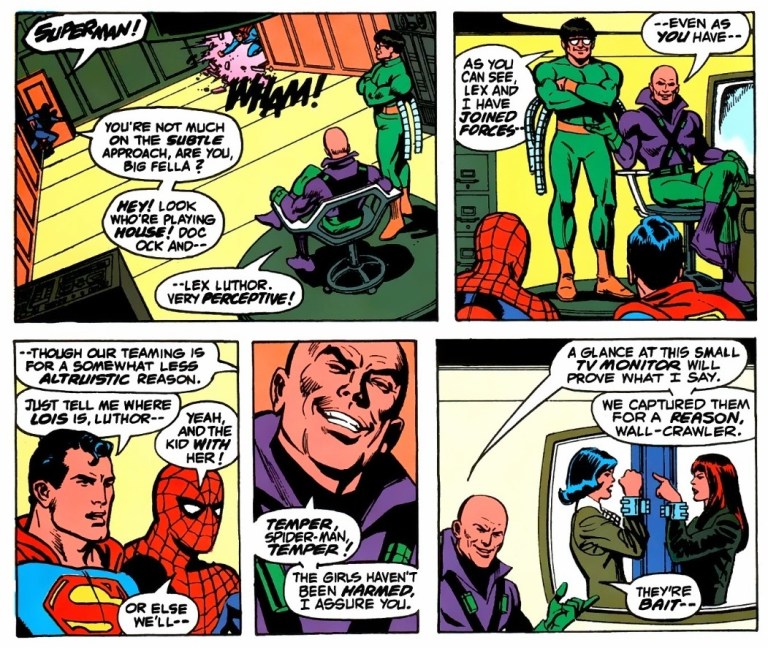
Superman, Spider-Man, Luthor, Dr. Octopus, Lois Lane and Mary Jane Watson shown in this scene.

I can loudly say that this is one pretty enjoyable crossover tale that not only featured Superman and Spider-Man, but also gave their respective mortal enemies Luthor and Dr. Octopus a good share of the spotlight. To be very clear, the story and set-up of scenes do have a somewhat restrictive structure as the creators clearly did their best to make the spotlight on the characters more or less equal in terms of imagery, dialogue amount and the sharing of dynamic shots. While some may easily complain about the so-called old and tired formula of the major characters getting into fighting each other due to a misunderstanding followed by setting aside their differences to work together, take note that the said formula worked really well in this story written by Gerry Conway.

The story concept Conway came up was clearly made to justify Superman and Spider-Man encountering each other (note: the same goes with the super villains and supporting characters) and the way he wrote the two interacting with each other worked seamlessly and convincingly. There are lots of nice exchanges of dialogue between the Man of Steel and the webslinger.

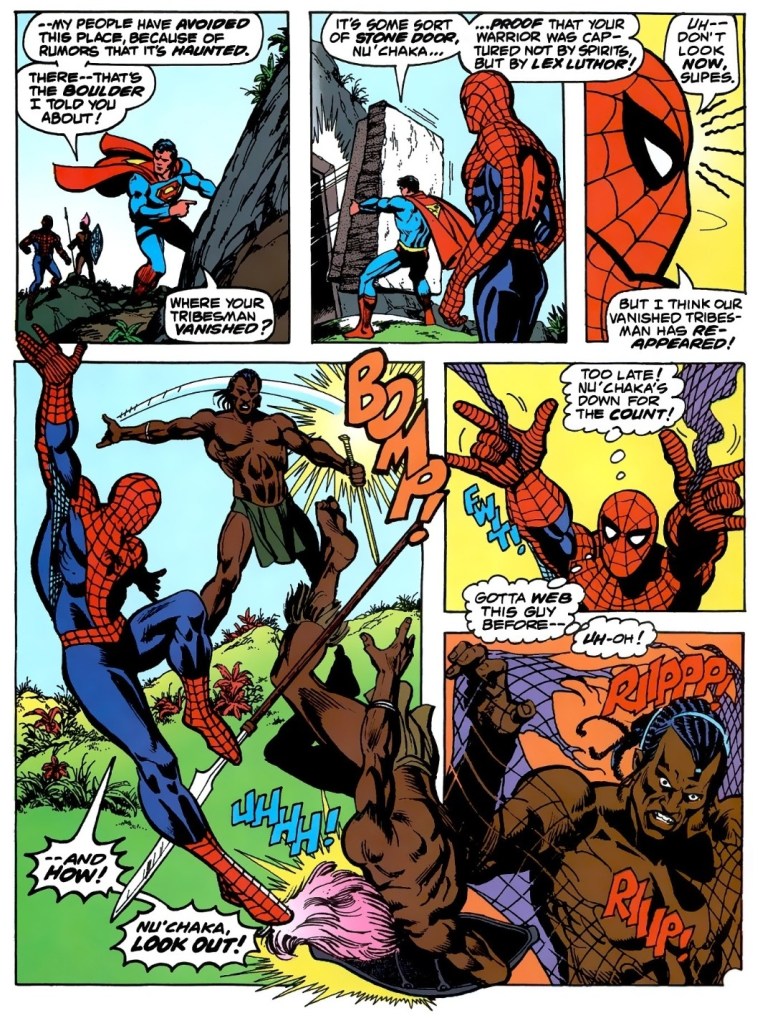
Even the superiors of Clark Kent and Peter Parker had their own crossover.
Don’t let the woke and socialists fool you. There is nothing racist in this comic book. Wokeness is foolishness. Political correctness distorts perception of reality.

Even though the script has this set of creative restrictions to ensure fairness on both Marvel and DC’s sides, the synergy of friendship and cooperation between Superman and Spider-Man is fantastic to read. Similar qualities are also evident with the scenes of Luthor and Dr. Octopus. Very clearly, the creative team did intense research on the Marvel and DC characters and found ways to create a unique mix that resonates with the fans of Superman and Spider-Man.

As expected, this comic book has lots of superhero spectacle for readers to enjoy. The superhero violence is not intense but the action scenes were entertaining to look at. In my opinion, the highlights of the spectacle here is when Superman and Spider-Man literally exchanged mortal enemies to fight with. As for the fight between the two icons as emphasized in the title, it definitely is a special event that really kicked the story into high gear.

While this is indeed a fun superhero crossover to read, there are some notable weak points here. For one thing, the plot itself lacks a strong concept and Luthor’s evil plan is very flawed and unconvincing. That being said, as I read and re-read this comic book, there never was a sense of danger building up nor was the Luthor-Dr. Octopus team ever a grave threat.

Conclusion

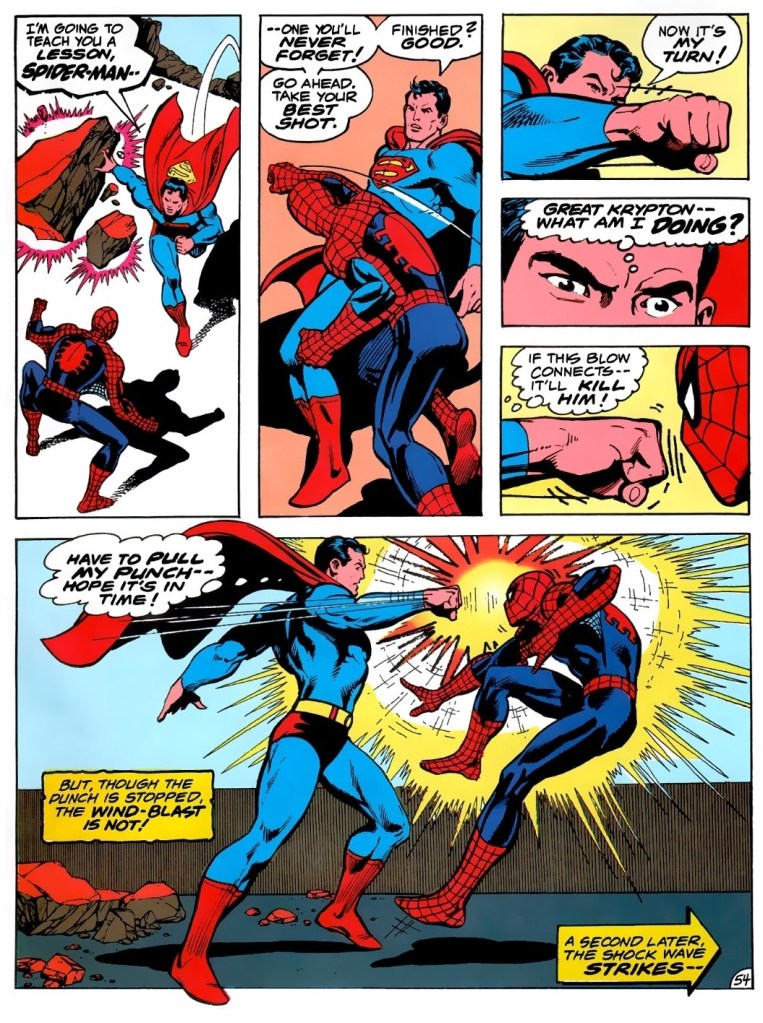
This is only a small sample of the fun in the battle between Superman and Spider-Man.

By today’s standards, Superman vs. The Amazing Spider-Man (1976) is still a fun superhero crossover comic book to read and it remains as a significant part of not just Marvel and DC’s history of collaboration but also that of inter-company superhero crossover comic book publishing in general. While it is better than many other inter-company superhero crossover comic books I have read through the decades, this one is certainly not the best one from Marvel and DC. For me, Superman and Spider-Man (1981) has a more elaborate plot, higher fun factor and deeper impact than this comic book. Meanwhile, Batman vs. The Incredible Hulk (1981) exceeded this comic book in terms of plotting, character interactions, super villain portrayals and establishing a real sense of danger that requires the super heroes to solve. Still, Superman vs. The Amazing Spider-Man (1976) remains an enjoyable read and it definitely is worthy as the strong beginning of Marvel-DC superhero crossover projects of the 1970s and 1980s. It also has more dynamic visuals than its 1981 sequel. This one is also part of the Crossover Classics: The Marvel-DC Collection paperback.

Overall, Superman vs. The Amazing Spider-Man (1976) is recommended!

+++++

Thank you for reading. If you find this article engaging, please click the like button below, share this article to others and also please consider making a donation to support my publishing. If you are looking for a copywriter to create content for your special project or business, check out my services and my portfolio. Feel free to contact me with a private message. Also please feel free to visit my Facebook page Author Carlo Carrasco and follow me on Twitter at  @HavenorFantasy as well as on Tumblr at https://carlocarrasco.tumblr.com/ and on Instagram at https://www.instagram.com/authorcarlocarrasco

A Look Back at Spider-Man 2099 #9 (1993)

Disclaimer: This is my original work with details sourced from reading the comic book and doing personal research. Anyone who wants to use this article, in part or in whole, needs to secure first my permission and agree to cite me as the source and author. Let it be known that any unauthorized use of this article will constrain the author to pursue the remedies under R.A. No. 8293, the Revised Penal Code, and/or all applicable legal actions under the laws of the Philippines.

Welcome back, superhero enthusiasts, 1990s culture enthusiasts, Marvel 2099 fans and comic book collectors! Today we revisit the Marvel 2099 franchise within Marvel Comics’ shared universe during the 1990s. Specifically speaking, we take a look back at one of the early tales of Spider-Man 2099.

In this retro comic book review, the futuristic Spider-Man finally made his way back uptown after spending time in the old city of New York down below where he saw people living in poverty, violent gangs and Vulture 2099.

With those details laid down, here is a look back at Spider-Man 2099 #9, published by Marvel Comics in 1993 with a story written by Peter David and drawn by Kelley Jones.

The cover.

Early story

The story begins at the Wellvale where Conchata O’Hara (mother of Miguel and Gabriel) suddenly suffers an attack from inside her body. The medics were called for emergency.

Elsewhere, Spider-Man jumps with excitement and relief after finally making it back from deep down the modern city. He almost gets hit by a hover car and decides to stop for a while at an isolated spot to calm down and reflect about what happened recently. He just defeated Vulture in battle below prior to climbing back up.

Suddenly, an armed Public Eye flyboy tries to apprehend him. After making getting near the flyboy and making himself look like he was about to submit himself, the flyboy communicates with his team. During that short moment, Spider-Man fires his organic web at the flyboy’s mouth which causes him to fire his weapon and miss. Spider-Man then knocks the flyboy out cold, leaving the communication line hanging…

Quality

The idolaters of Spider-Man 2099 spotted.

Considering everything that happened to Spider-Man in the previous few issues set deep underneath the modern city, this tale was crafted to develop the webslinger’s personality some more while showing for the first time ever the group of Spider-Man 2099 idolaters who are so obsessed, they go around wearing their idol’s costume and even take risks imitating his physical abilities (example: crawling on the wall). There is no good-versus-evil conflict here but more exploration of the modern society Miguel O’Hara has long been part of.

For one thing, at this point of the monthly series, Spider-Man 2099’s misadventures and acts in uptown New York not only caused disturbance with the modern society watched over by Alchemax, he also sparked a new group of people who perceive him to be their holy savior. This kinda reminds me of DC Comics’ very own Sons of Batman which is a youth group inspired by Batman, and to see the Marvel 2099 have its own version of the concept is a pretty neat move by the creators.

Speaking of characterization, the complexities of the relationships between Miguel O’Hara with his brother Gabriel, his mother Conchata, his romantic interest Dana and the relationships the others have with each other begin to really grow in this issue. The good news is that Peter David not only provided solid dialogue for each character but also clearly defined their respective personality traits and thoughts about others. To see Gabriel personally reacting to Kasey’s reaction towards Spider-Man’s body was amusing and even a bit hilarious.

On the artistic side, Kelley Jones work here as guest illustrator was nice to see and certain visual elements of his work on Batman comic books also made it here. The result is a nice change of style and a new approach of showing visual details. I should state that even though his art style is radically different from that of Rick Leonardi, Jones managed to make the established characters look recognizable to me.

Conclusion

Kelley Jones’ visuals on Spider-Man 2099 is nice to see.

Spider-Man 2099 #9 (1993) is clearly a more characterization-oriented story which is a nice change of pace and approach considering the chaotic story developments of the previous few issues. This comic book also shows that Spider-Man 2099 continues to encounter challenges in both local society and personally. The revelation of idolatry and idolaters connected to Spider-Man added a new layer of foolishness and evil to the local society (for insight, click here and here). At this stage of the monthly series, something new was clearly brewing for the futuristic webslinger and this showed that Peter David laid out his plans for the direction of the series’ narrative. Lastly, Kelley Jones’ work here really stands out.

Overall, Spider-Man 2099 #9 (1993) is recommended!

+++++

Thank you for reading. If you find this article engaging, please click the like button below and also please consider sharing this article to others. If you are looking for a copywriter to create content for your special project or business, check out my services and my portfolio. If you want to support my website, please consider making a donation. Feel free to contact me with a private message. Also please feel free to visit my Facebook page Author Carlo Carrasco and follow me on Twitter at  @HavenorFantasy as well as on Tumblr at https://carlocarrasco.tumblr.com/ and on Instagram at https://www.instagram.com/authorcarlocarrasco/.

A Look Back at Superman #77 (1993)

Disclaimer: This is my original work with details sourced from reading the comic book and doing personal research. Anyone who wants to use this article, in part or in whole, needs to secure first my permission and agree to cite me as the source and author. Let it be known that any unauthorized use of this article will constrain the author to pursue the remedies under R.A. No. 8293, the Revised Penal Code, and/or all applicable legal actions under the laws of the Philippines.

Welcome back, superheo enthusiasts, 1990s culture enthusiasts, DC Comics fans and comic book collectors! Today we revisit the post-death period of post-Crisis era Superman comic books as published in the early 1990s by DC Comics. Specifically, this is about a tale that took placed between Superman #75 (1993) and the hyped return of the American icon in Adventures of Superman #500 (1993).

What you are about to see is a mix of drama and intrigue that took place sometime after Superman’s death as envisioned by Dan Jurgens. As with other post-death comics of the time, the supporting characters connected to Superman as well as his arch enemy Lex Luthor got their fair share of the spotlight.

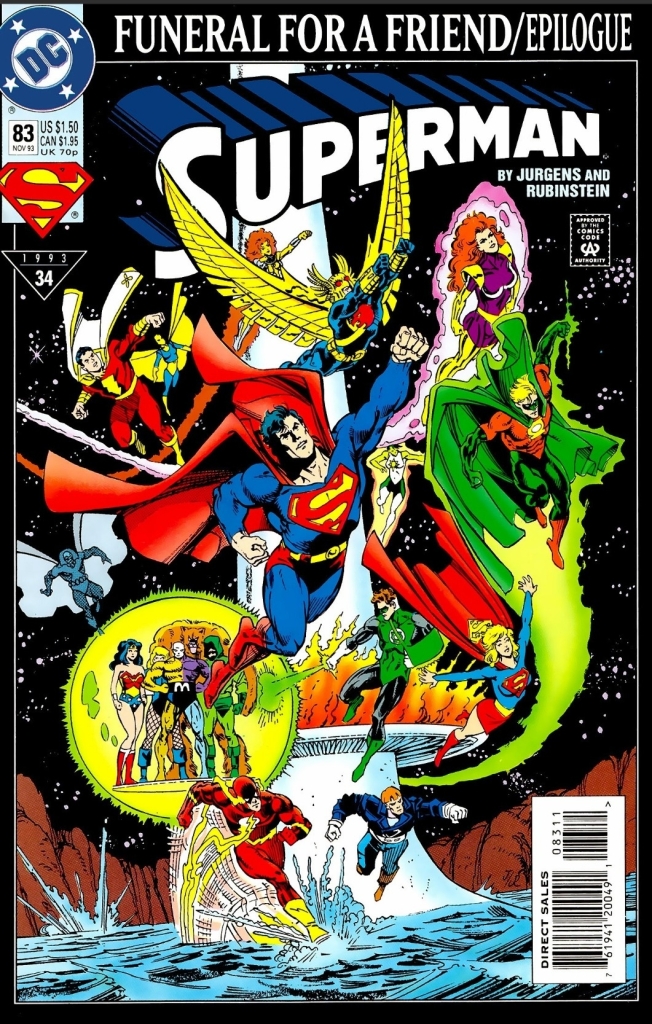
With those details laid down, here is a look back at Superman #77, published by DC Comics in 1993 with a story written and drawn by Dan Jurgens. This is part 8 of the Funeral for a Friend storyline.

The cover.

Early story

The story begins with the red-headed Lex Luthor (note: in a new physical body totally different from his previous one) in the middle of a combat session. Even though his hatred towards Superman drives him, he could not help but allow his recall of the past to distract him enough to allow one of combatants to strike him down. As Luthor recovers, the session gets interrupted when Supergirl (a clone) appears with Lois Lane beside her.

Lane shares to him a hard copy of a column that she made before it got trimmed down by the editorial team of the Daily Planet. With so much hate in him, Luthor reacts madly to the article which reveals that Superman’s dead body has been taken away by Project Cadmus. Lois tells him that they intend to cut the Man of Steel’s body for cloning.

Luthor then says he will work to get Superman back where he belongs and put Cadmus in its place for good. Moments after, as she walks away from Luthor’s building, Lois Lane expresses concern about how Martha and Jonathan Kent would react had they learned that their adopted son’s body was taken away…

Quality

Several photographs of Superman taken by Jimmy Olsen.

I am happy to say that Dan Jurgens crafted a really solid story in this comic book. Character development is easily the biggest feature here which is very notable on how Jurgens highlighted Lois Lane, Lex Luthor and Jimmy Olsen. Each of them had their own moments – Luthor’s obsession and hatred of Superman here will encourage you to revisit the early post-Crisis encounters between them; Lois Lane meanwhile struggles to move on as she misses Clark a lot (note: they were engaged to get married) while also trying to hard to find his missing body; Jimmy Olsen gets the big opportunity to play a major role on deciding the cover image for a printed media tribute of Superman while feeling really down as a result of the sudden death. Jurgens not only crafted the plot structure carefully, he also wrote down very rich dialogue all throughout and he cleverly used dreams and day dream sequences as exposition to give readers notable visions of the past. This is a very compelling read.

Conclusion

Visions of Lex Luthor’s past accompanying his modern day self shows cleverness and efficiency on the part of Dan Jurgens.

Superman #77 (1993) really is a great read thanks to Dan Jurgens delivering high-quality work. At this particular stage of DC Comics’ publishing history, Jurgens not only really knew Superman but he knew how to emphasize the supporting characters (all of which were impacted by the death in Superman #75) and what direction to take the Funeral for a Friend storyline to. If there is anything that negatively affects the impact of this comic book, it is the dishonesty and betrayal (towards the fans) that came within Adventures of Superman #500 (1993).

Overall, Superman #77 (1993) is recommended.

+++++

Thank you for reading. If you find this article engaging, please click the like button below and also please consider sharing this article to others. If you are looking for a copywriter to create content for your special project or business, check out my services and my portfolio. If you want to support my website, please consider making a donation. Feel free to contact me with a private message. Also please feel free to visit my Facebook page Author Carlo Carrasco and follow me on Twitter at  @HavenorFantasy as well as on Tumblr at https://carlocarrasco.tumblr.com/ and on Instagram at https://www.instagram.com/authorcarlocarrasco/.

A Look Back at Venom: Lethal Protector #1 (1993)

Disclaimer: This is my original work with details sourced from reading the comic book and doing personal research. Anyone who wants to use this article, in part or in whole, needs to secure first my permission and agree to cite me as the source and author. Let it be known that any unauthorized use of this article will constrain the author to pursue the remedies under R.A. No. 8293, the Revised Penal Code, and/or all applicable legal actions under the laws of the Philippines.

Welcome back superhero enthusiasts, 1990s arts and culture enthusiasts, Marvel Comics fans and comic book collectors! Today we go back to the year 1993 and explore a part of Marvel Comics’ universe through the first-ever limited comic book series featuring one of Marvel’s most iconic villains – Venom.

To put things in perspective, the origin of Venom started within the events of the 1980s series Secret Wars which took place in a far-away planet. As a result of that series, Spider-Man returned home wearing the alien symbiote as a costume which turns out to have a mind of its own. After Spider-Man successful separate himself from the symbiote (again) using the loud bells of a church, the living costume eventually found a desperate Eddie Brock and bonded with him to form Venom. In the late 1980s comics of Amazing Spider-Man, Venom became the deadliest enemy Spider-Man ever faced.

Going into the early 1990s, Venom’s popularity continued to grow tremendously. He became one of Marvel’s most popular non-hero type of characters and helped sell a lot of comics for the publisher. Knowing they had something to sell, Marvel approved a 6-issue limited series showcasing Venom. It was also the most anticipated comic book among collectors right after DC Comics killed Superman with Superman #75 (1993).

With those details laid down, here is a look back at Venom: Lethal Protector #1, published in 1993 by Marvel Comics with a story written by David Michelinie and drawn by Mark Bagley.

The cover.

Early story

The story begins in San Francisco, California. Deep within the city, a man cornered a lady at the dead end of an alley. Just as he was about do something bad to her, Venom leaps in at them. Totally surprised, the man was easily grabbed by Venom who lifted him and hit the wall bodily. Using his costume, Venom then chokes the man to death through the mouth and nose. Venom then picks up the lady’s purse and gives it to her. As soon as Venom leaves, the shocked lady runs away screaming.

Venom swings and leaps as he travels through the city. While traveling, Eddie Brock tells his living costume that while their hatred towards Spider-Man got reconciled a bit, the said superhero also helps the innocent. Eddie then reveals that he was born in San Francisco and they can start a new life together in it. Secretly, Venom turns into Eddie Brock in his civilian form. As Brock walks down the sidewalk, police officers nearby recognize him. It turns out. Eddie Brock was listed by police as a wanted person…

Quality

Spider-Man and Venom face each other unexpectedly.

Focusing on the plot, this story took place after the events in Amazing Spider-Man #375 (1993) which was released AFTER this particular comic book. As a standalone Venom story, this one clearly portrays him more of a vigilante in the sense that he goes up against a new force of evil that happens to be pouncing on people that Venom believes to be innocent and powerless. Unsurprisingly, Venom does not seek the help of law enforcers to help the innocent but rather he takes violent action to help the victims, going as far as to kill the so-called bad guys. The bad guys in this story work under a powerful man whose son was killed by Venom a few years prior. Within the context of this comic book, the new force of evil was introduced in subtle ways.

With extensive experience writing tales about Spider-Man and Venom, David Michelinie clearly redefined Venom’s beliefs here. Venom believes in protecting the innocent but he is much more violent and is relentless with cruelty which makes him a clear opposite of Spider-Man. Yet in a way, Venom sure talks and acts in a rather psychotic way and this alone makes him a very unlikable comic book protagonist.

Along the way, the iconic Spider-Man got a rather huge chunk of the spotlight in this comic book making him the 2nd lead next to Venom. I remember back in 1993 when there were Venom fans who complained about Spider-Man literally stealing the thunder away from his greatest enemy while there were a few Spider-Man fans who defended the icon’s guest participation in the story as he has always been linked with Venom’s origin. Considering the lack of depth in the plot, I can say Spider-Man appearance her served as a somewhat helpful filler.  

Conclusion

Helping victims does NOT justify killing. This makes Venom a major turn-off as a comic book protagonist.

Venom: Lethal Protector #1 (1993) is a comic book that can be alienating, especially when you are not a Venom fan. I find Venom too evil and too unbelievable to be a heroic figure even though he strong believes in protecting and helping the innocent. In my view, he is more of vigilante living with the delusion of achieving something worthwhile as he interacts with people who happen to be not assisted by the many, many Marvel Comics superheroes. It is not surprising that Venom definitely will never be a good role model. He is a murderer and the act of helping victims never justifies murder. The comic book’s plot lacks weight and Mark Bagley’s art looked a little rushed. What made this comic book interesting are Venom and Spider-Man themselves. Yes, there is a lot of superhero spectacle here but don’t expect anything new when you see Spider-Man and Venom resume their violent rivalry. This comic book is unsurprisingly a warm-up of things to come within its series. It is not a terrible literary work. It’s just not really good and it did not deserve the hype and sales of its time.

Overall, Venom: Lethal Protector #1 (1993) is serviceable.

+++++

Thank you for reading. If you find this article engaging, please click the like button below, share this article to others and also please consider making a donation to support my publishing. If you are looking for a copywriter to create content for your special project or business, check out my services and my portfolio. Feel free to contact me with a private message. Also please feel free to visit my Facebook page Author Carlo Carrasco and follow me on Twitter at  @HavenorFantasy as well as on Tumblr at https://carlocarrasco.tumblr.com/ and on Instagram at https://www.instagram.com/authorcarlocarrasco
Better than Streaming: Black Adam 4K Blu-ray set for January 3, 2023 release

Welcome back, fellow geeks, Blu-ray collectors and movie buffs! Those of you who are die-hard fans of Dwayne Johnson or his recent superhero movie Black Adam should be excited as Warner Bros. officially announced that Black Adam 4K Blu-ray will be released on January 3, 2023. Already orders are being accepted online.

Black Adam 4K Blu-ray.

For the newcomers reading this, Black Adam is the newest DC Comics superhero movie which has grossed over $360 million worldwide in the cinemas. In superhero comics, the feature character is known as a formidable adversary against Superman and Shazam (Captain Marvel). The movie notably has former James Bond star Pierce Brosnan as Dr. Fate. It also has the Justice Society in cinematic form.

To put things in perspective, posted below is the excerpt and key details from the 4K Blu-ray announcement at Blu-ray.com. Some parts in boldface…

Nearly 5,000 years after he was bestowed with the almighty powers of the ancient gods—and imprisoned just as quickly—Black Adam (Johnson) is freed from his earthly tomb, ready to unleash his unique form of justice on the modern world.

Johnson stars alongside Aldis Hodge (“City on a Hill,” “One Night in Miami”) as Hawkman, Noah Centineo (“To All the Boys I’ve Loved Before”) as Atom Smasher, Sarah Shahi (“Sex/Life,” “Rush Hour 3”) as Adrianna, Marwan Kenzari (“Murder on the Orient Express,” “The Mummy”) as Ishmael, Quintessa Swindell (“Voyagers,” “Trinkets”) as Cyclone, Bodhi Sabongui (“A Million Little Things”) as Amon, and Pierce Brosnan (the “Mamma Mia!” and James Bond franchises) as Dr. Fate.

Collet-Serra directed from a screenplay by Adam Sztykiel and Rory Haines & Sohrab Noshirvani, screen story by Adam Sztykiel and Rory Haines & Sohrab Noshirvani, based on characters from DC. Black Adam was created by Bill Parker and C.C. Beck.

The film’s producers were Beau Flynn, Dwayne Johnson, Hiram Garcia and Dany Garcia, with Richard Brener, Walter Hamada, Dave Neustadter, Chris Pan, Eric McLeod, Geoff Johns and Scott Sheldon.

Special Features and Technical Specs:

DOLBY VISION/HDR PRESENTATION OF THE FILM

DOLBY ATMOS AUDIO TRACK

The History of Black Adam

Who is The Justice Society?

From Soul to Screen

Black Adam: A Flawed Hero

Black Adam: New Tech in an Old World

Black Adam: Taking Flight

Kahndaq: Designing a Nation

The Rock of Eternity

Costumes make the hero

Black Adam: A new type of action

4K Blu-ray subtitles: English SDH, Spanish, French, Italian, Danish, Norwegian, Finnish, Canadian French, German SDH, Italian SDH

Blu-ray subtitles: English SDH, Spanish, French, Canadian French

For additional insight, posted below are the details from the Blu-ray.com page of Black Adam 4K Blu-ray. Yes, the visuals will be in native 4K.

Video

Codec: HEVC / H.265

Resolution: Native 4K (2160p)

HDR: Dolby Vision, HDR10

Aspect ratio: 2.39:1

Original aspect ratio: 2.39:1

Audio

English: Dolby Atmos

English: Dolby TrueHD 7.1 (48kHz, 24-bit)

German: Dolby Atmos

German: Dolby TrueHD 7.1

Italian: Dolby Atmos

Subtitles – English SDH, French, German SDH, Italian SDH, Portuguese, Spanish, Danish, Finnish (more)

Discs – 4K Ultra HD, Blu-ray Disc, Two-disc set (1 BD-66, 1 BD-50)

Digital – Digital 4K, Movies Anywhere

Packaging – Slipcover in original pressing

Playback – 4K Blu-ray: Region free, 2K Blu-ray: Region A

I personally have not seen Black Adam in the local cinema. The published movie reviews of the mainstream and entertainment media had nothing to do with it. I just did not read enough comic books of the feature character and the Justice Society. As such, the promotions and release of Black Adam did not motivate me to watch. Still, I heard from some people that the movie was great to look at inside IMAX cinemas even though it was not filmed with IMAX cameras. I noticed that the reception from moviegoers is stronger than the critical reception.

Regardless of reception, Black Adam is significant as it somewhat reflects that DC superhero movies are changing under the leadership of Warner Bros. Discovery CEO and President David Zaslav. For those who missed out on the news, the old regime of AT&T is gone along with Ann Sarnoff, Walter Hamada and Toby Emmerich. Here is hoping that the wokeness (which is purely foolishness) will fade away more as Warner Bros. focuses on making enjoyable DC superhero movies.

Watch out for Black Adam 4K Blu-ray on January 3, 2023.

In ending this, posted below are YouTube videos related to Black Adam.

If you wish to join a group of movie enthusiasts and talk about cinema, visit the Movie Fans Worldwide Facebook group at https://www.facebook.com/groups/322857711779576

+++++

Thank you for reading. If you find this article engaging, please click the like button below and also please consider sharing this article to others. If you are looking for a copywriter to create content for your special project or business, check out my services and my portfolio. If you want to support my website, please consider making a donation. Feel free to contact me with a private message. Also please feel free to visit my Facebook page Author Carlo Carrasco and follow me on Twitter at  @HavenorFantasy as well as on Tumblr at https://carlocarrasco.tumblr.com/ and on Instagram at https://www.instagram.com/authorcarlocarrasco/.