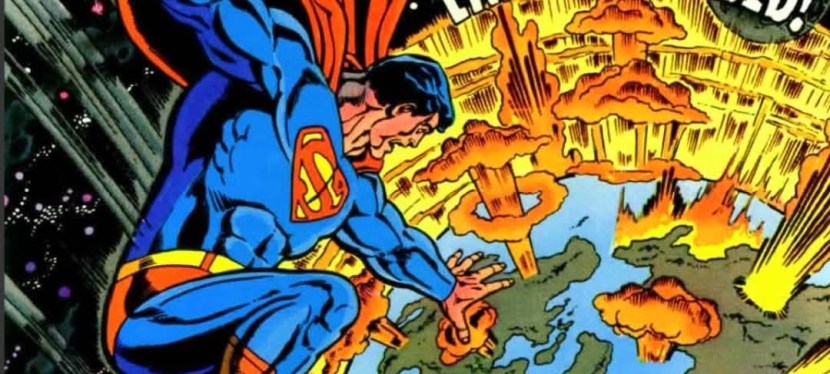
A Look Back at Action Comics #550 (1983)

Welcome back superhero enthusiasts, 1980s arts and culture enthusiasts, DC Comics fans and comic book collectors! Today we go back to the year 1983 to take a close look at a part of the DC Comics universe through a tale of the Action Comics monthly series.

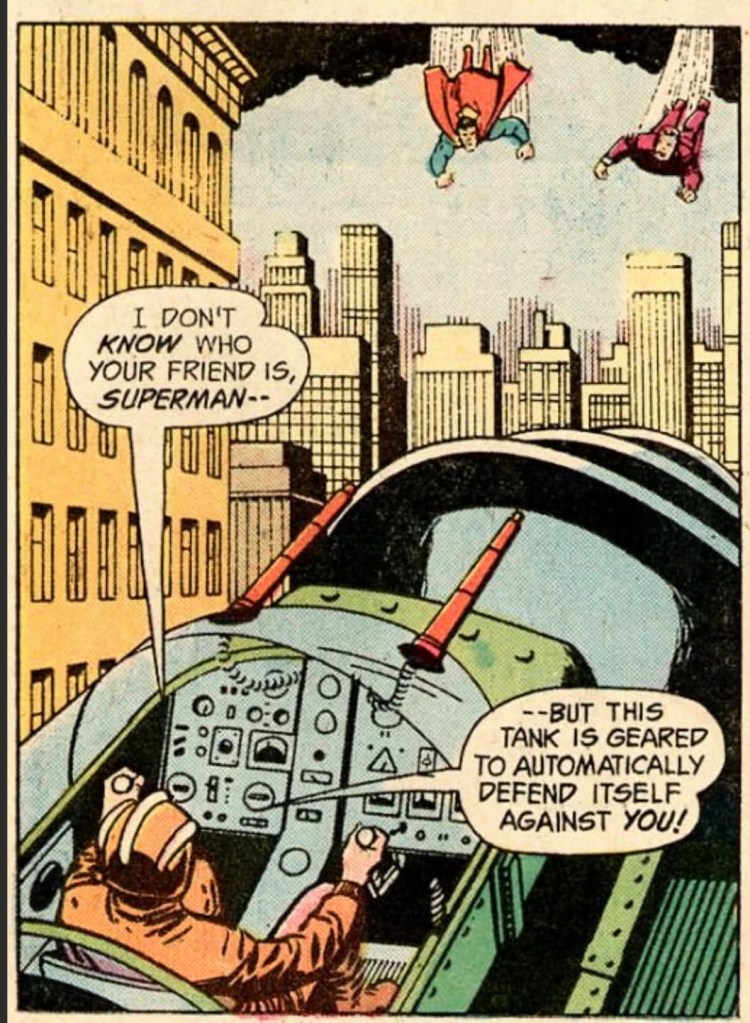
If there is anything notable about the presentation of superhero elements in Superman stories, it is the occasional use of science fiction. From time to time, DC Comics published tales of Superman going deep into space, encounter alien species and visit far-away civilizations. Sometimes, sci-fi is used on major disasters that Superman has to solve.

With those details laid down, here is a look back at Action Comics , published in 1983 by DC Comics with a story written by E. Nelson Bridwell and Bob Rozakis, and drawn by George Tuska.
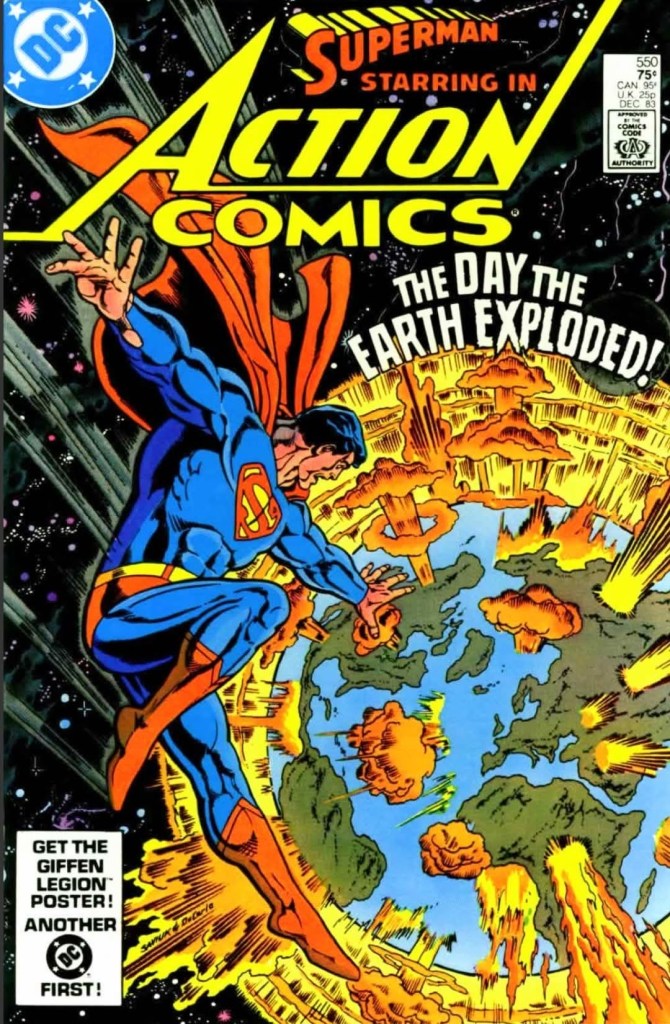
The cover.

Early story

The story begins with Clark Kent and Lana Lang presenting television news at the WGBS station telling viewers about The Exploder who attacked a large jumbo jet full of people. As the program continues, breaking news about an enormous underwater eruption north of New Guinea came in.

Shortly after, Clark quickly and discreetly left the station to fly overseas as Superman. By visiting the site of the reported underwater eruption, he notices the entire New Guinea drifting southward. Superman is compelled to go deep underwater to prevent the nation from drifting further and he also realized there is no volcano that caused the blast.

Quality
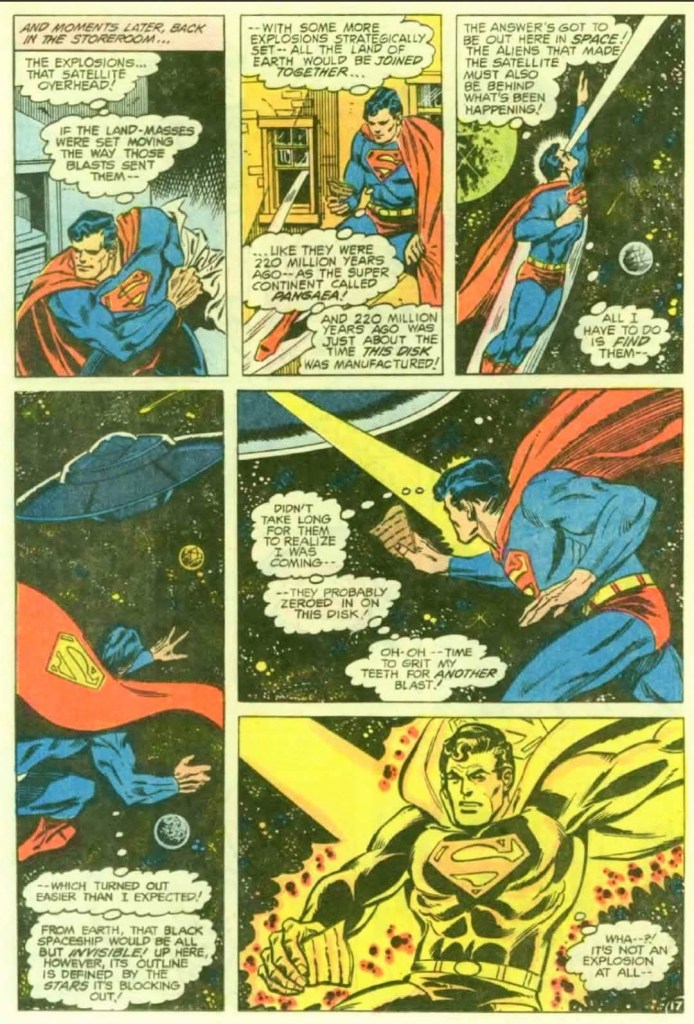
Superman goes to outer space to find answers behind the events that took place on Earth.

This is a Superman tale that does not have the traditional good-versus-evil element of conflict. Instead, it is a sci-fi story that started with solid mystery causing the Man of Steel to do research and detective work to find answers.

The comic book writers behind this were really good in pushing Superman hard on his search for answers to solve mysteries that were really out of this world. Lana Lang’s father appears here as a long-time archaeologist who successfully discovered an ancient artifact described as a so-called disk. The plot turned intense when The Exploder suddenly emerged to take the disk away which unsurprisingly pushed Superman to not only react but also get answers.

I like the fact that as Superman does detective work, Lana Lang and Jimmy Olsen contributed nicely to the plot. At the same time, the mystery and tension really built up as the story went along and the payoff the comic book creators came up with is surprising and also worth it.

Without spoiling the plot, I can say that this Superman tale has its own twists on the concept of UFOs and alien that happen to have special interest on Earth. At the same time, you will realize how dedicated Superman is to protecting the people of Earth and why he would not tolerate aliens who actions would jeopardize billions of lives.

Conclusion
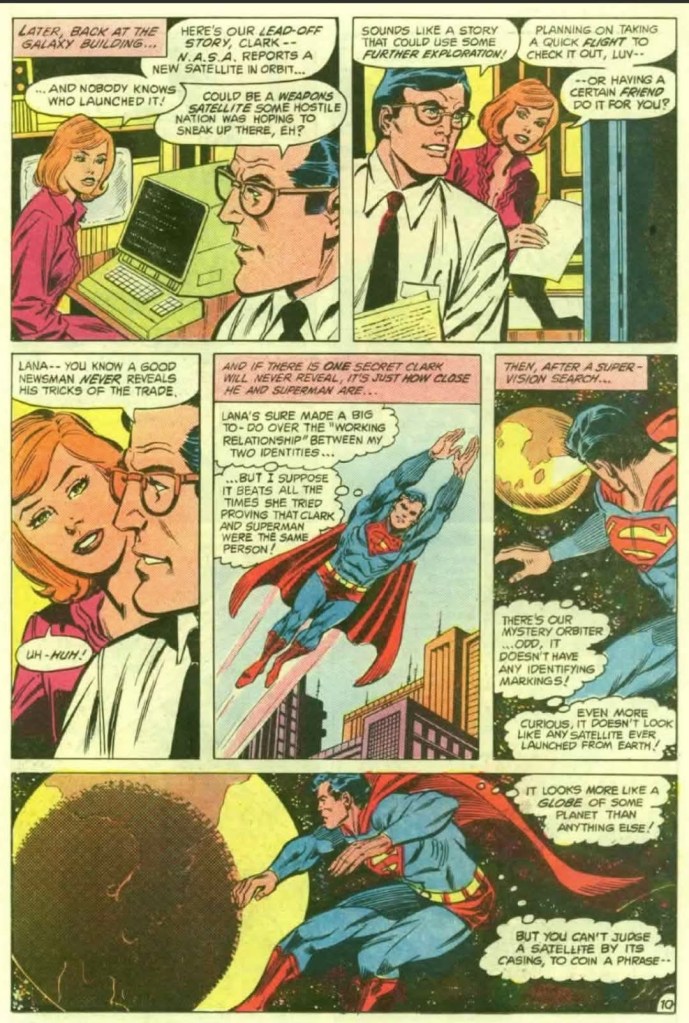
I liked the interactions Clark had with Lana Lang as he tries to solve mysteries.

While Action Comics (1983) does not have a super villain for Superman to battle, you will still see him doing good, solving mysteries and prioritizing Earth’s people. The sci-fi concept the creators came up with looked outlandish on face value but when you read the story and pay close attention to all the details, you will realize that the story is actually believable. I also like the mystery aspect which gave the plot a good amount of depth.

Overall, Action Comics (1983) is recommended.

+++++

Thank you for reading. If you find this article engaging, please click the like button below, share this article to others and also please consider making a donation to support my publishing. If you are looking for a copywriter to create content for your special project or business, check out my services and my portfolio. Feel free to contact me with a private message. Also please feel free to visit my Facebook page Author Carlo Carrasco and follow me on Twitter at  @HavenorFantasy as well as on Tumblr at https://carlocarrasco.tumblr.com/ and on Instagram at https://www.instagram.com/authorcarlocarrasco
A Look Back at Action Comics #497 (1979)

Welcome back superhero enthusiasts, 1970s arts and culture enthusiasts, DC Comics fans and comic book collectors! Today we go back to the year 1979 to take a close look at a part of the DC Comics universe through a tale of the Action Comics monthly series.

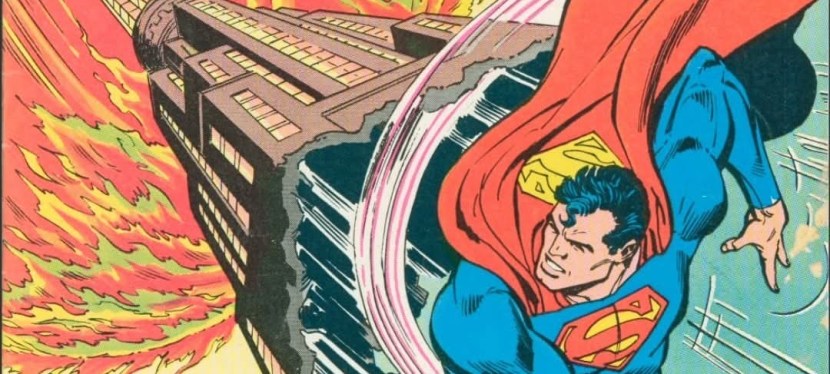
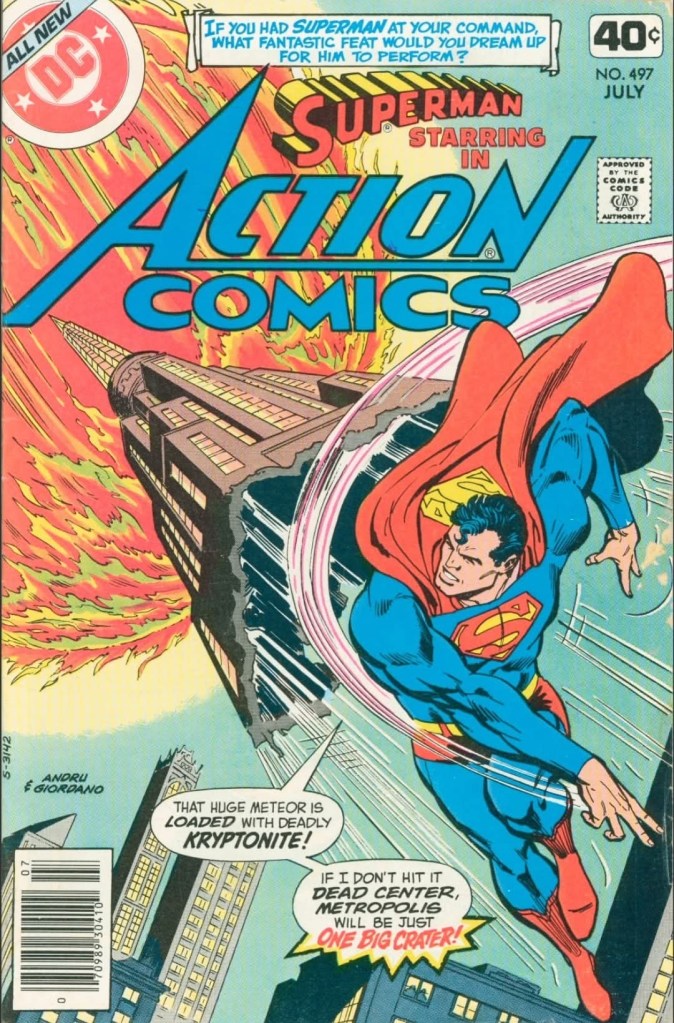
Do you enjoy following stories with the “make-a-wish” concept as a key element? Or do you prefer seeing major events happen because someone else has the power to alter reality? I for one don’t enjoy those concepts very much and the element of wish-making really ruined the story of the glossy cinematic failure Wonder Woman 1984 (written and co-directed by Patty Jenkins). When it comes to Superman, the wish-making or the ability to seriously alter reality could be effect in storytelling when the right creators are involved.

With those details laid down, here is a look back at Action Comics , published in 1979 by DC Comics with a story written by Cary Bates and drawn by Curt Swan.

The cover.

Early story

The story begins inside a shed on a lot with three boys who have their own Superman club and support the Man of Steel’s never-ending battle for truth, justice and the American way. Arthur, who is up for drawing something for the next club newsletter, shared his idea (inspired by what he saw in a movie) about a gigantic meteor from outer space heading towards Metropolis which would compel Superman to save the city. Near the three boys is an empty chair reserved for a particular someone.

Many miles away deep within Metropolis, Clark Kent attends a conference in which Lana Lang delivers remarks to an audience of GBS affiliates. As Lana tells the audience that their news team is determined to maintain high standards of broadcasting, a uniformed door man causes a disturbance by telling everyone that a blackout has plunged the entire city into darkness.

Suddenly, the audience exited the venue and Lana notices that Clark is gone. Elsewhere, Superman quickly flies high and sees a giant meteor (the size of a stadium) on a collision course with Metropolis…

Quality

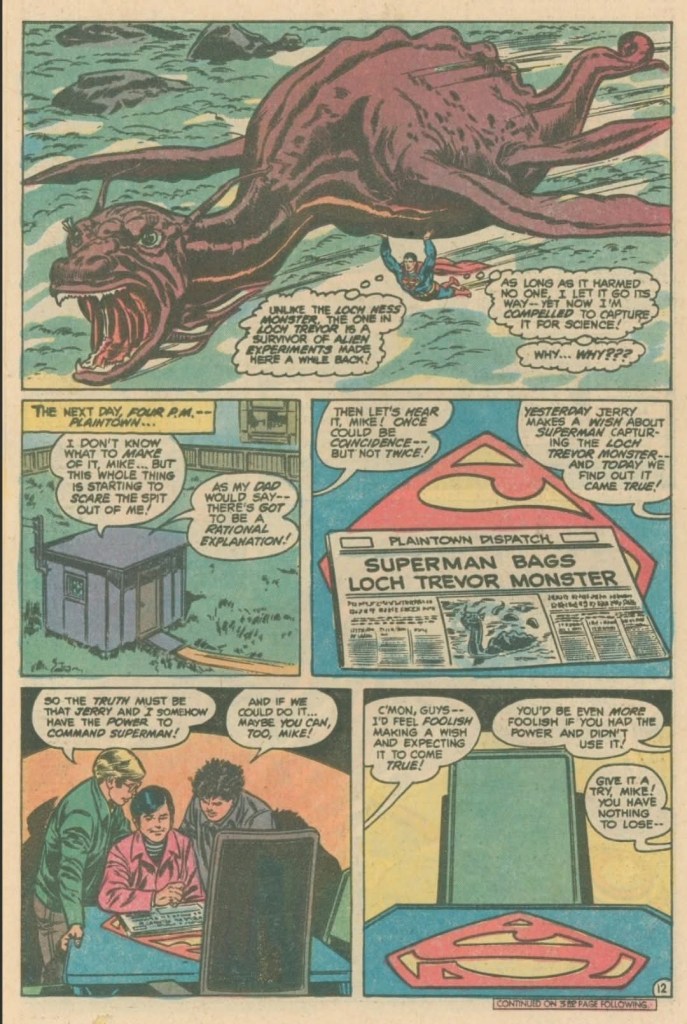
Do you wish you have the power to make superheroes do something as you wish?

Starting with the concept of reality getting seriously altered by someone with tremendous power, the said concept really brought the fantasy aspect of this Superman tale to a very high level. The Man of Steel ends up getting into unbelievable situations and do things that are amazing or shocking. In order words, the concept of altered reality (related to wishful thinking and intense imagination) actually works well in this tale thanks to the Bates-Swan duo.  

Of course, this is not simply a Superman story about wild events that compelled him to react. There are character-driven scenes that emphasize how Superman analyzes what has been going on and why he seems to be controlled or guided to do things that he had no intent of doing. This particular element of the story raises questions about the ethics of having so much power at hand and being able to command a more powerful person to do something (as a wish is made by the one who wields a lot of power).

Considering the wild events that happened throughout the story, I can say that the Bates-Swan duo successfully pulled off a worthy pay-off at the conclusion.

Conclusion

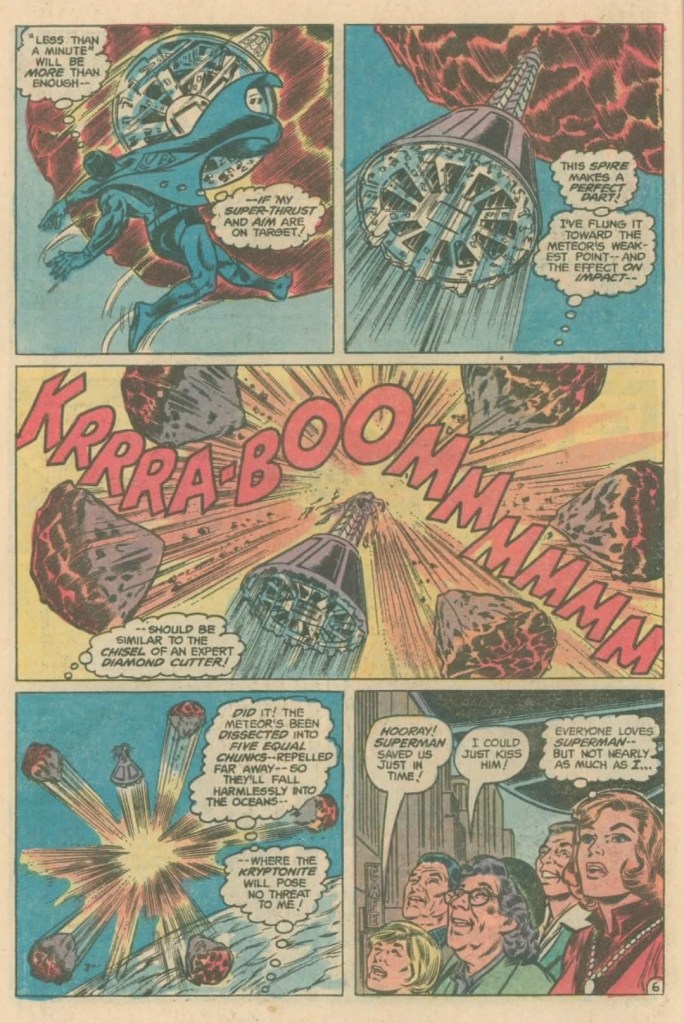
Superman saves Metropolis and many people once again. Lana Lang is among the people on the street.

Action Comics (1979) is an old Superman tale that is worth reading. While you won’t see Superman encountering any super villain, the fantasy elements and wild events more than made up for it. More importantly, the Bates-Swan duo was really careful with using the make-a-wish and reality altering concepts to make the plot believable while preventing it from becoming too outlandish. The result is a Superman tale that is entertaining to read.

Overall, Action Comics (1979) is recommended.

+++++

Thank you for reading. If you find this article engaging, please click the like button below, share this article to others and also please consider making a donation to support my publishing. If you are looking for a copywriter to create content for your special project or business, check out my services and my portfolio. Feel free to contact me with a private message. Also please feel free to visit my Facebook page Author Carlo Carrasco and follow me on Twitter at  @HavenorFantasy as well as on Tumblr at https://carlocarrasco.tumblr.com/ and on Instagram at https://www.instagram.com/authorcarlocarrasco
A Look Back at Action Comics #481 (1978)

Welcome back superhero enthusiasts, 1970s arts and culture enthusiasts, DC Comics fans and comic book collectors! Today we go back to the year 1978 to take a close look at a part of the DC Comics universe through a tale of the Action Comics monthly series.

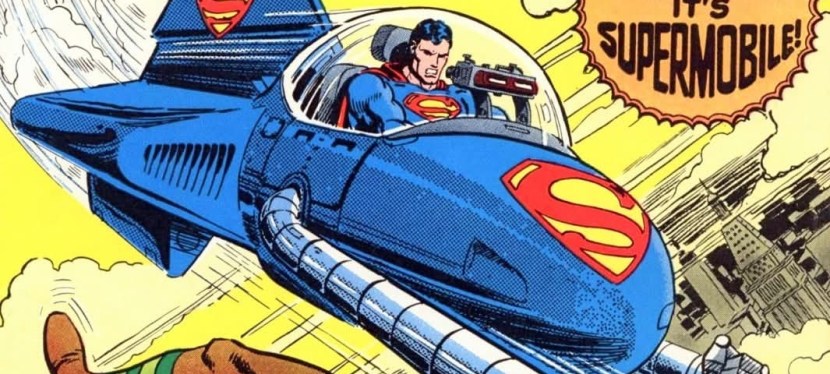
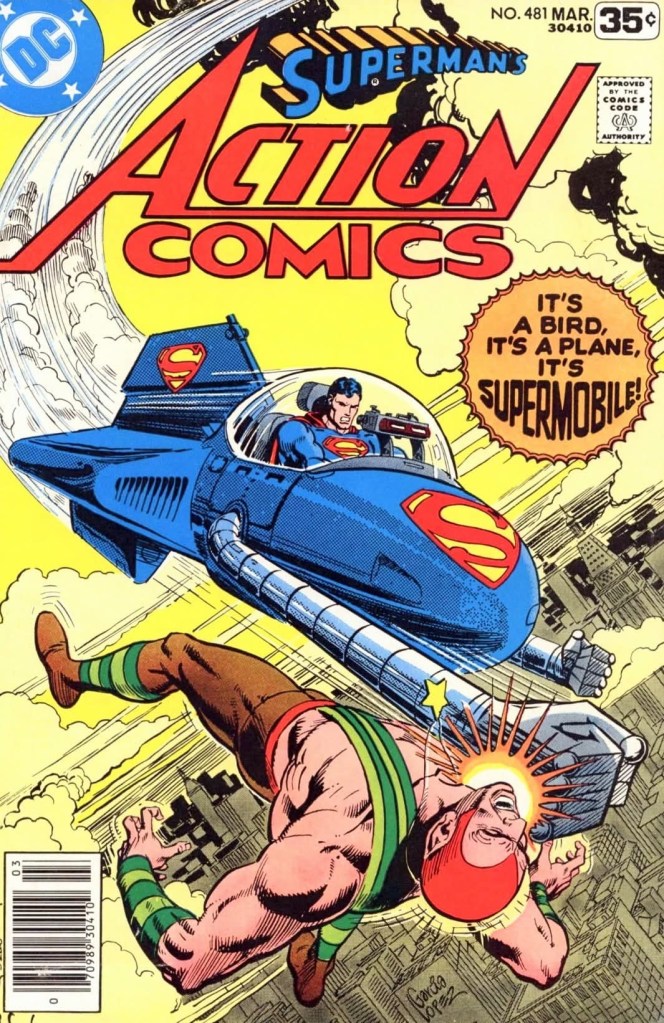
Believe it or not, there were times when Superman used advanced technology and machinery to achieve his goals, to win a battle or at least survive. This is something we people today can relate with since a lot us have smartphones and computers being used daily. As for the Man of Steel, there was a time when I saw an episode of Super Friends on TV in which a very vulnerable Superman had no choice but to use his personal flying vehicle called the Supermobile to travel and do something. It turns out, the Supermobile itself started in comic books.

With those details laid down, here is a look back at Action Comics , published in 1978 by DC Comics with a story written by Cary Bates and drawn by Curt Swan.

The cover.

Early story

The story begins on a city street as Amazo (who recently gained the powers of Justice League members in a previous encounter) is about to strike a weakened Superman and Professor Ivo (who is responsible for Amazo) in front of many people. Amazo strikes but ends up smashing the part of the road as his targets vanished.

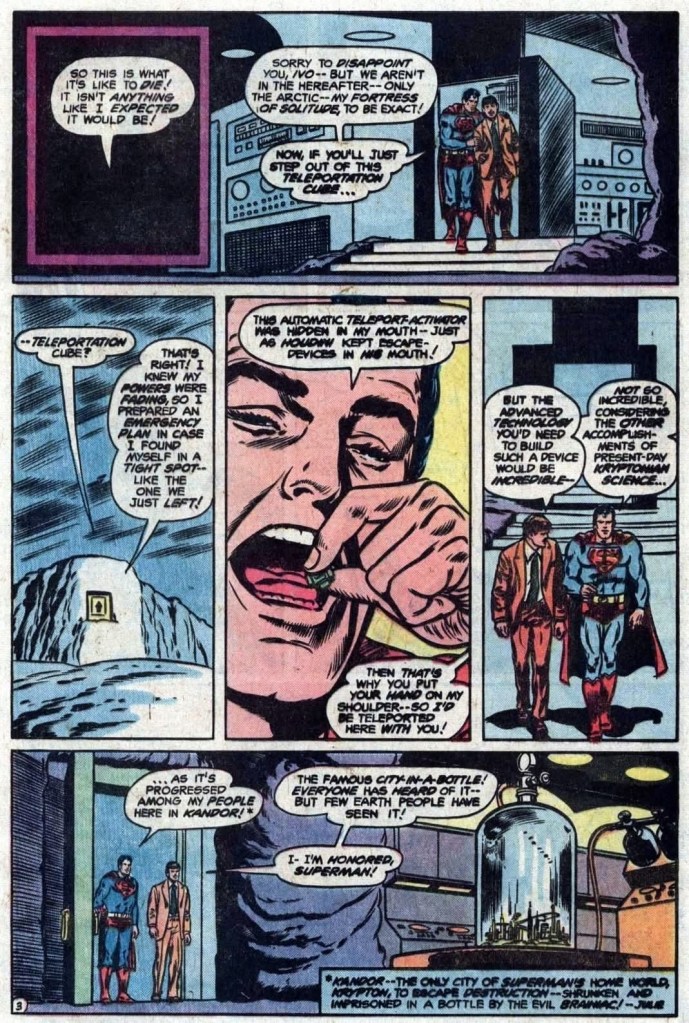
It turns out Superman and the professor were teleported safely all the way into the Fortress of Solitude. With his powers gone due to red radiation, Superman revealed that he made some preparations in relation to Amazo’s eventual rampage….

Quality

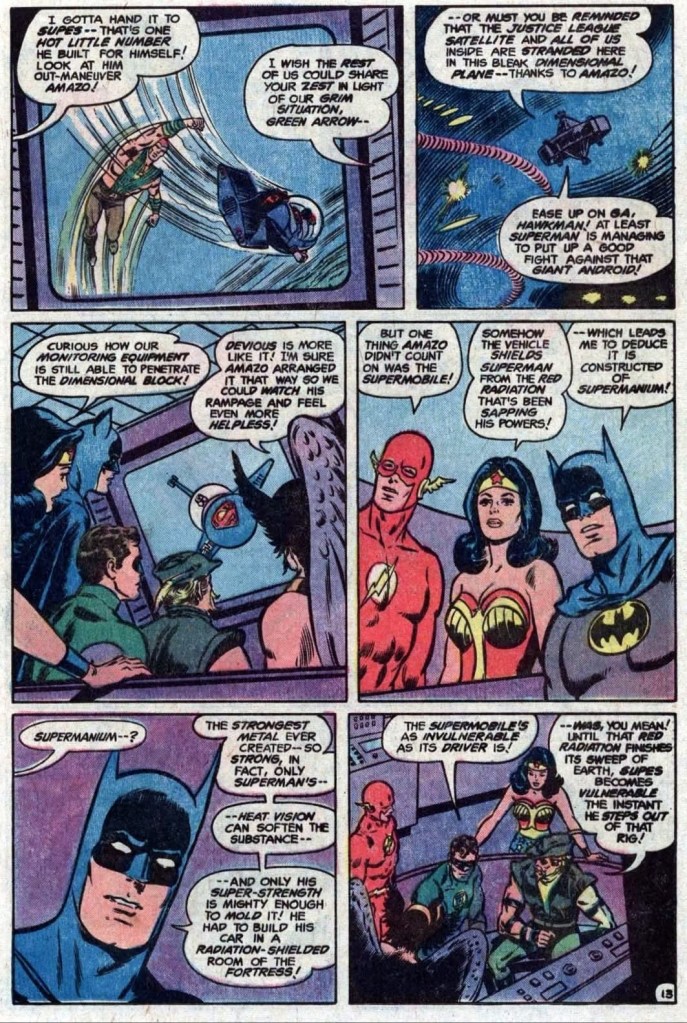
Exposition about the Supermobile in this page showing the trapped Justice League members.

This early, I want to point out that this comic book is not merely a shallow tale designed to introduce the Supermobile in lazy fashion. In fact, there is a lot of work done by the Bates-Swan duo here and this includes plot build-up backed with payoffs, lots of details that were revealed and, most notably, the story has a solid structure complete with smooth execution.

This story was preceded by an unfortunate series of events in which Amazo gained the powers of the Justice League members and had them trapped in space, while Superman got hit by red radiation and managed to get out for a new fighting chance. Here, Superman is powerless and vulnerable, and the fact that Amazo is so powerful, the unveiling and use of the Supermobile is clearly justified. Amazo himself is a fine example of a scientific creation gone wrong and seem inspired by the monster of Frankenstein in literature.

By looking close at the details, the dialogue and the execution of event, this is clearly not a rushed job to introduce the Supermobile. It is a sufficient story on its own and it even delivers a good amount of superhero spectacle to satisfy readers.

Conclusion

Superman and the professor inside the Fortress of Solitude.

Action Comics (1978) is indeed a satisfying and fun read. The build-up leading to the Supermobile’s debut is sufficient and the creators went on to keep building up the plot with Amazo getting bigger as a threat to not only against Superman but also against the Justice League. The Supermobile’s debut is justified and definitely it is not a cheap addition to the plot. The idea of Superman using a personal transport looked silly on face value but this comic book proved it is believable and sensible.

Overall, Action Comics (1978) is recommended.

+++++

Thank you for reading. If you find this article engaging, please click the like button below, share this article to others and also please consider making a donation to support my publishing. If you are looking for a copywriter to create content for your special project or business, check out my services and my portfolio. Feel free to contact me with a private message. Also please feel free to visit my Facebook page Author Carlo Carrasco and follow me on Twitter at  @HavenorFantasy as well as on Tumblr at https://carlocarrasco.tumblr.com/ and on Instagram at https://www.instagram.com/authorcarlocarrasco
A Look Back at Action Comics #438 (1974)

Welcome back superhero enthusiasts, 1970s arts and culture enthusiasts, DC Comics fans and comic book collectors! Today we go back to the year 1974 to take a close look at a part of the DC Comics universe through a tale of the Action Comics monthly series.

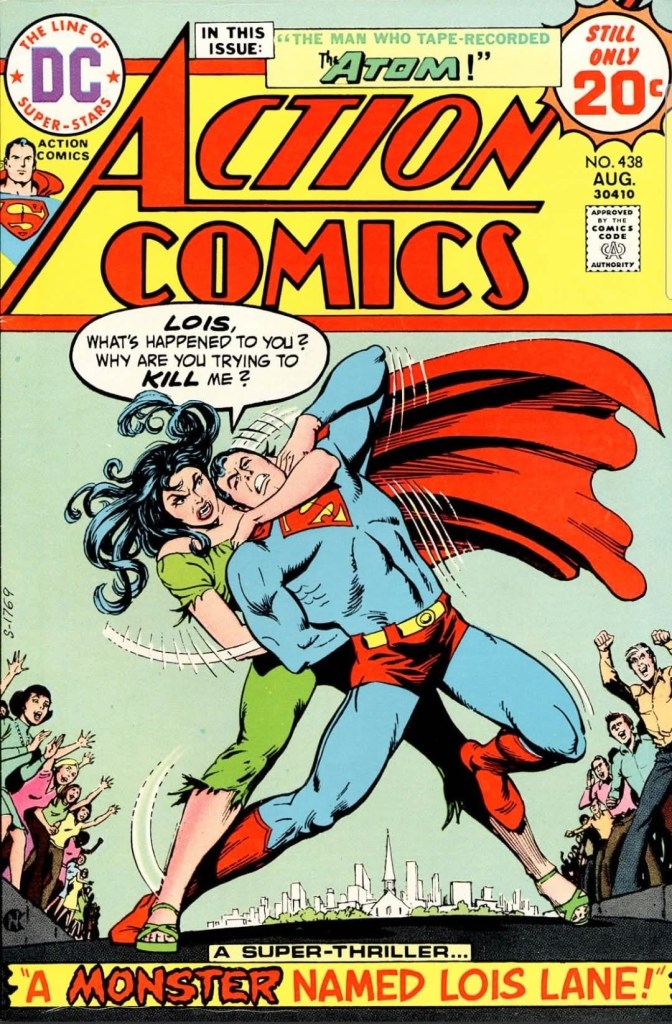
Throughout the superhero comics publishing history of DC Comics, Lois Lane is the definitive leading lady of Superman. Traits of her personality and journalistic work ethic got emphasized through her interactions with fellow reporter Clark Kent (Superman). At times, Lois Lane becomes a rival of Kent’s when it comes to getting the hottest scoop and getting the approval of their boss Perry White for publishing it on the next issue of the Daily Planet. But have ever seen Lane become a monster strong enough to take on Superman?

With those details laid down, here is a look back at Action Comics , published in 1974 by DC Comics with a story written by Cary Bates and drawn by Curt Swan.

The cover.

Early story

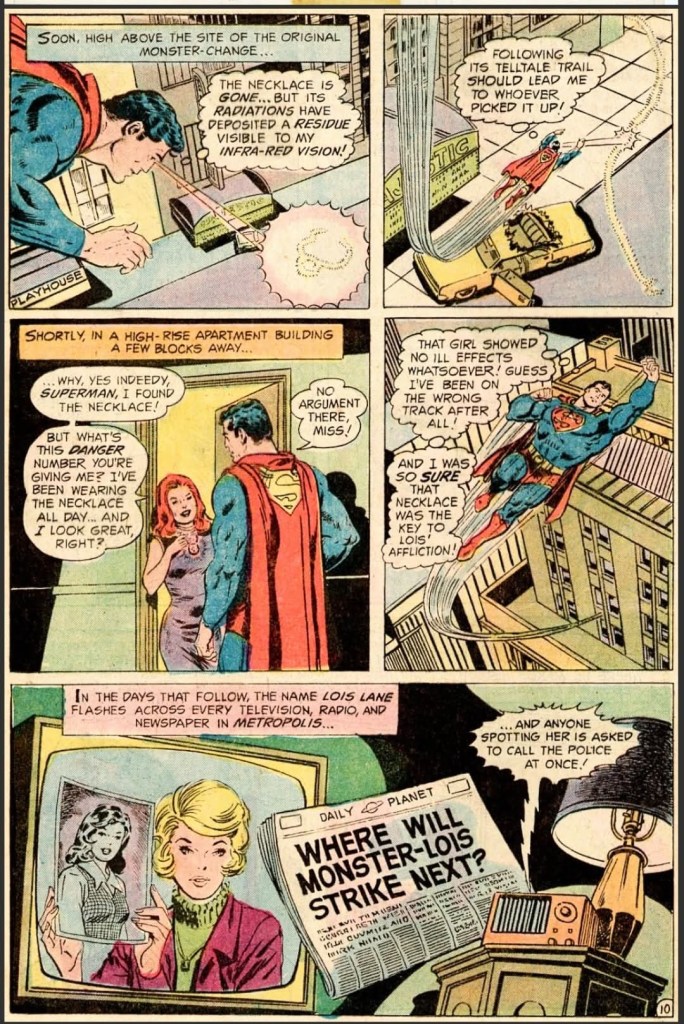
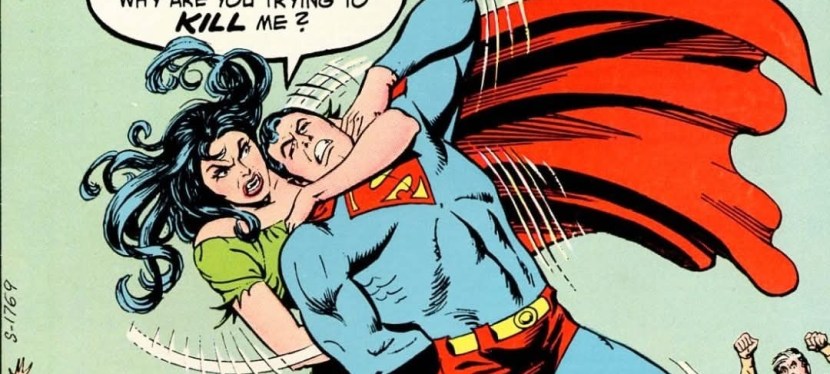
The story begins on the busy streets of Metropolis with Clark Kent and Lois Lane riding in a taxi. He gives her a very unique looking necklace as an advanced birthday gift which she gladly wears. Lois then kisses Clark on the lips which surprises him. Moments later, the taxi stops on a sidewalk as something inside happened. Seconds later, a monstrous woman emerges from the taxi which turned out to be none other than Lois Lane in a transformed state. The monster Lois gets out of the taxi, throws the necklace away and leaves Clark behind. The incident causes a commotion in the city.

Still inside the taxi, Clark discreetly changes into Superman and flies away to search for Lois Lane…

Quality

As Superman works to find monster Lois Lane, the media buzz about her begins on television. This was the time when social media was decades away from realization.

To begin with, the concept of this comic book is clearly outlandish and the creators decided to make a monster out of Lois Lane and explore what would happen to both the city and Superman. The good news here is that the storytelling has a firm structure and the dialogue – most notably that of Superman – still made sense and was believable to follow. Without spoiling the plot, I can say that Superman is still the main focus of the story and how he made moves to solve problems while still caring for Lois Lane is engaging to read.

In this comic book, you will see some interesting developments that emphasize how Clark Kent works within the limitations of his journalistic career and connections, how Superman takes responsibility things he did before, and how he works to protect his secret identity. The Bates-Swan duo really delivered the goods here.  

Conclusion

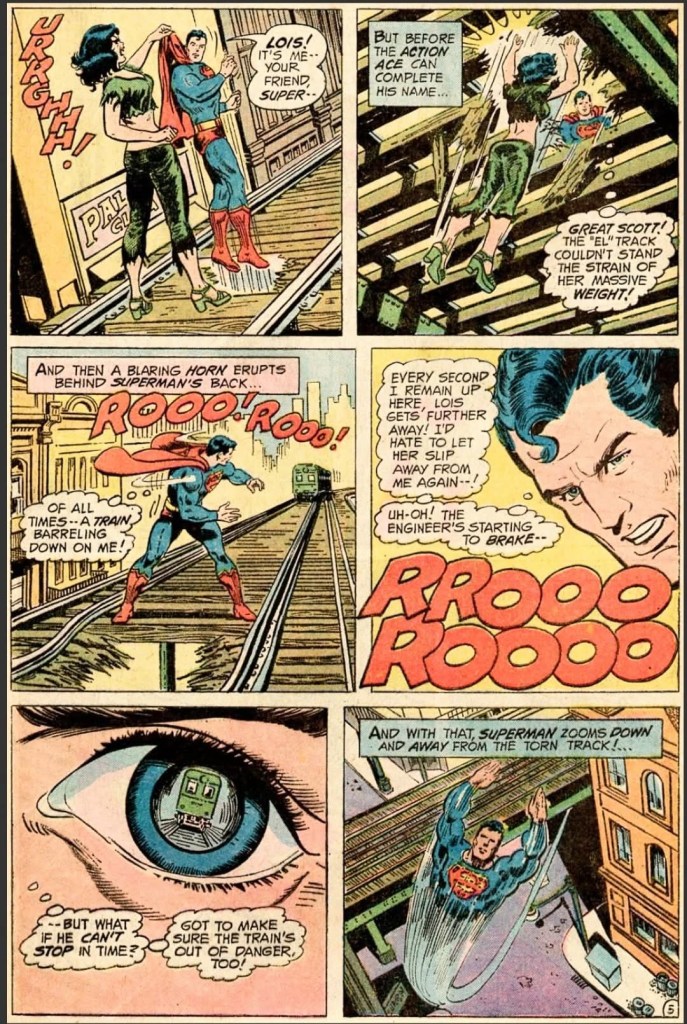
Superman has two problems to deal with – finding monster Lois Lane and preventing a train disaster from happening.

Action Comics (1974) is a fun read but it is not a brainless nor a low-intelligence tale. This is a tale about Superman relying less on his powers and using more of skills as civilian Clark Kent to handle the problem of monster Lois Lane. The story lacked the superhero spectacle of action but it still is entertaining to read, and the emphasis on Superman and Lois alone is worth reading. As for The Atom short story included, it is essentially a somewhat fun additive.

Overall, Action Comics (1974) is recommended.

+++++

Thank you for reading. If you find this article engaging, please click the like button below, share this article to others and also please consider making a donation to support my publishing. If you are looking for a copywriter to create content for your special project or business, check out my services and my portfolio. Feel free to contact me with a private message. Also please feel free to visit my Facebook page Author Carlo Carrasco and follow me on Twitter at  @HavenorFantasy as well as on Tumblr at https://carlocarrasco.tumblr.com/ and on Instagram at https://www.instagram.com/authorcarlocarrasco
A Look Back at Action Comics #436 (1974)

Welcome back superhero enthusiasts, 1970s arts and culture enthusiasts, DC Comics fans and comic book collectors! Today we go back to the year 1974 to take a close look at a part of the DC Comics universe through a tale of the Action Comics monthly series.

If you know the Superman lore in comics, you should be aware that Perry White (first appeared in 1940) is the editor-in-chief of the Daily Planet and is the superior of Clark Kent (Superman), Lois Lane and Jimmy Olsen. As Perry White got race-swapped (a woke move that’s also idiotic) and presented as a black man in Zack Snyder’s Man of Steel and James Gunn’s Superman (2025), be aware that the long-lasting character originated in the comics as a white man who symbolized dedication and management consistently. I still remember the live-action versions of Perry White played by Jackie Cooper in the 1978 movie and by Lane Smith in the TV series Lois & Clark: The New Adventures of Superman.

I read a lot of Superman comic books and many times Perry White appeared as a supporting character. He also appeared in the memorable crossover comic book Superman and Spider-Man, interacting with Peter Parker (Spider-Man). As a supporting character in Superman tales, Perry White occasionally provides journalistic direction or a challenge to Clark Kent who in turn tackles problems in his civilian identity or as Superman.

But what if Perry White overshadows Superman himself?

With those details laid down, here is a look back at Action Comics , published in 1974 by DC Comics with a story written by Elliot S. Maggin and drawn by Curt Swan.

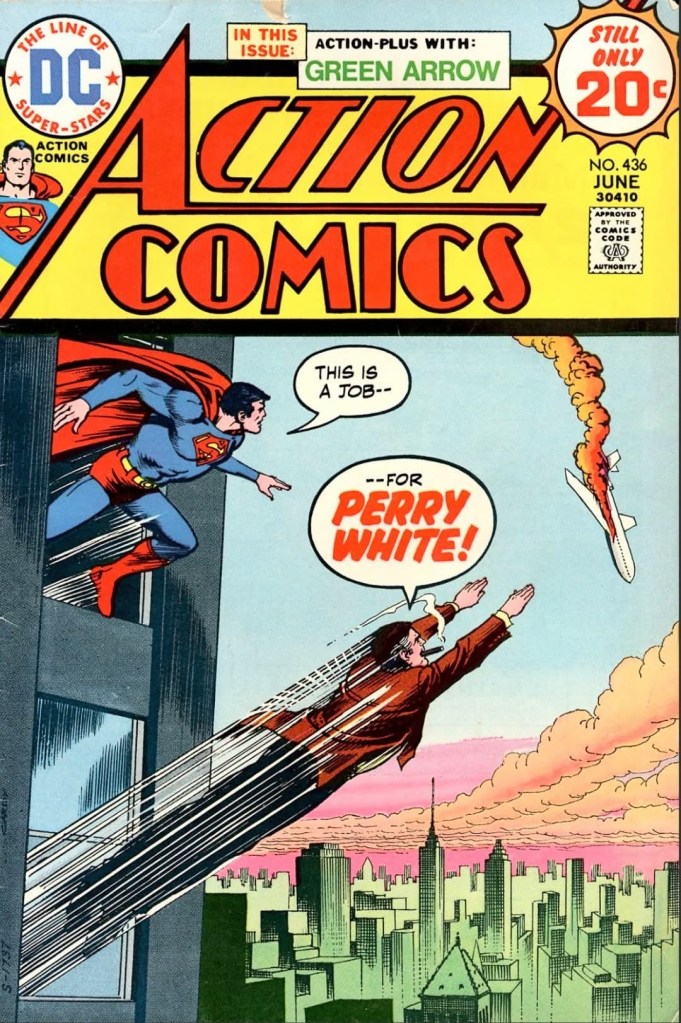
The cover.

Early story

The story begins deep within Metropolis when the Daily Planet’s editor Perry White enters the Galaxy Building. White does not realize that he is being watched by two adults who turned out to have special abilities and together they levitated a gift for him before he reaches his office. The gift for Perry White was their response to the help he provided to them – the mutants – to escape the influence of Calixto sometime before. The two adults then vanished.

As White arrives in his office, Superman discreetly flies into the Galaxy Building and changed into his civilian form as Clark Kent. With his enhanced hearing, Kent heard the phone in his office ringing and quickly rushes to it. Through the phone, White (who was notified he won the Pulitzer Prize again) tells him that Edge Morgan has something big happening on both TV and on paper, and they should fly out to New York to work together…

Quality

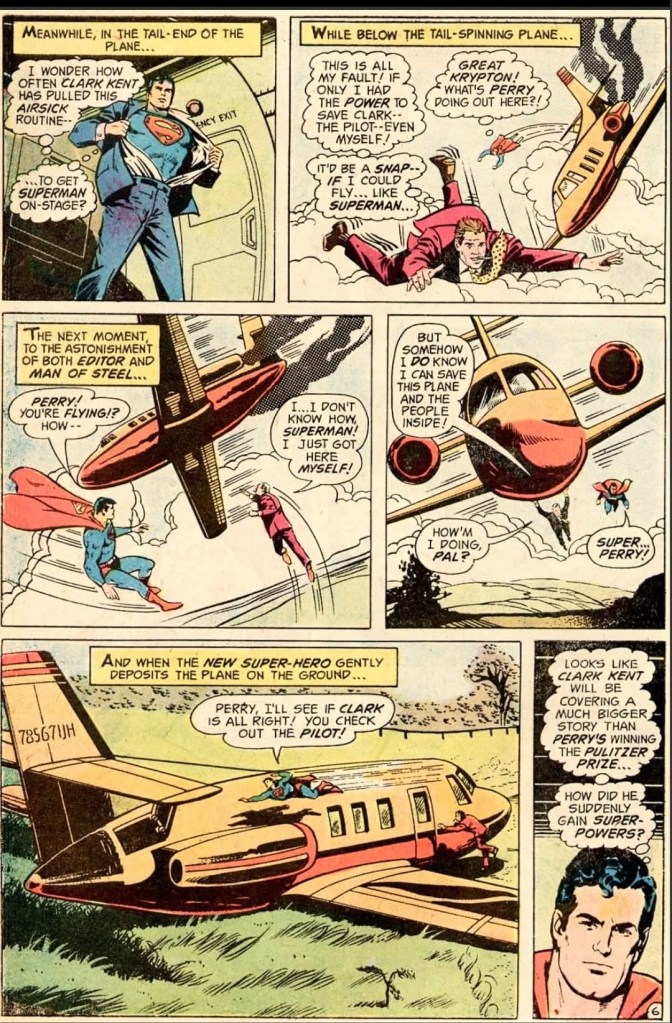
Superman and Perry White fly towards an enemy.

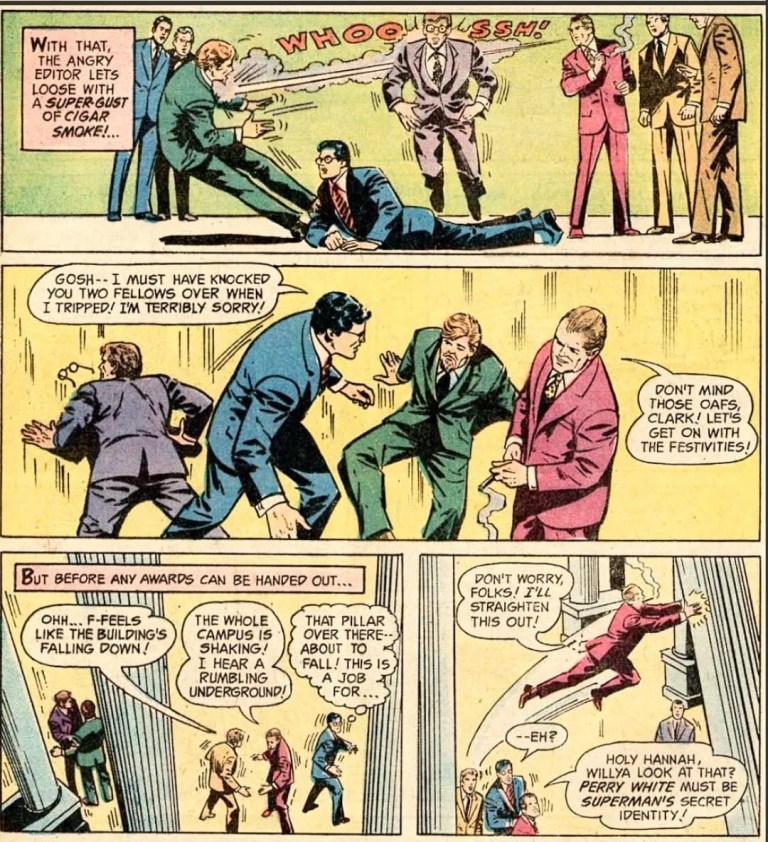
To get straight to the point, this Superman tale shows the wild concept of Perry White overshadowing the Man of Steel in terms of capabilities instead of journalistic power. On paper it sounds crazy but the good news is that the wild concept was told nicely and it is actually fun to follow without ever going over the top.

With witnesses around, Perry White uses his super powers.

Apart from the story’s outlandish idea, the plot shows a new dimension of Perry White transforming from a supporting player (in the form of a newspaper editor) into a more heroic figure. Instead of being a helpless witness of events happening, White becomes more involved and contributes something to the prevention of disaster and even tackling evil head on. That being said, this situation allowed the creative duo to show a new side of White’s personality as he himself realizes the sudden weight and pressure that comes with having super powers, and he still has journalistic standards to live up to.

Conclusion

Superman is surprised to witness Perry White fly and prevent a small plane from crashing.

A product of its time, Action Comics (1974) has a short story that had a zany concept which turned out to be an entertaining read. It is nice to see Perry White actually becoming super while the storytelling done by the Maggin-Swan team never became too outlandish. Think of this comic book – which also has a short story of Green Arrow – as a bout of fun focused on Superman and Perry White. I first read this comic book as a young boy and now as an adult, it is still enjoyable to read again. No woke garbage and no Zack Snyder-style darkness here. This is classic Superman.

Overall, Action Comics (1974) is recommended.

+++++

Thank you for reading. If you find this article engaging, please click the like button below, share this article to others and also please consider making a donation to support my publishing. If you are looking for a copywriter to create content for your special project or business, check out my services and my portfolio. Feel free to contact me with a private message. Also please feel free to visit my Facebook page Author Carlo Carrasco and follow me on Twitter at  @HavenorFantasy as well as on Tumblr at https://carlocarrasco.tumblr.com/ and on Instagram at https://www.instagram.com/authorcarlocarrasco
A Look Back at The Man of Steel #4 (1986)

Welcome back superhero enthusiasts, 1980s culture enthusiasts and comic book collectors! Today we go back to the mid-1980s to explore a part of the DC Comics shared universe through a tale of the iconic Superman.

Shortly after the end of the original multiverse of DC Comics, the publisher organized a massive reboot of its superhero franchises and universe. To reboot and modernize the iconic Superman, DC hired John Byrne and backed him up with a solid creative team. The result was the 6-part comic book mini-series The Man of Steel. Previously, I reviewed The Man of Steel #1 and #2 which collectively established Superman and Lois Lane as the iconic superhero and the definitive supporting character of the post-Crisis age respectively. Of course, the super villain opposite the post-Crisis Superman had to be established.

With those details laid down, here is a look back at The Man of Steel , published in 1986 by DC Comics with a story written and illustrated by John Byrne.

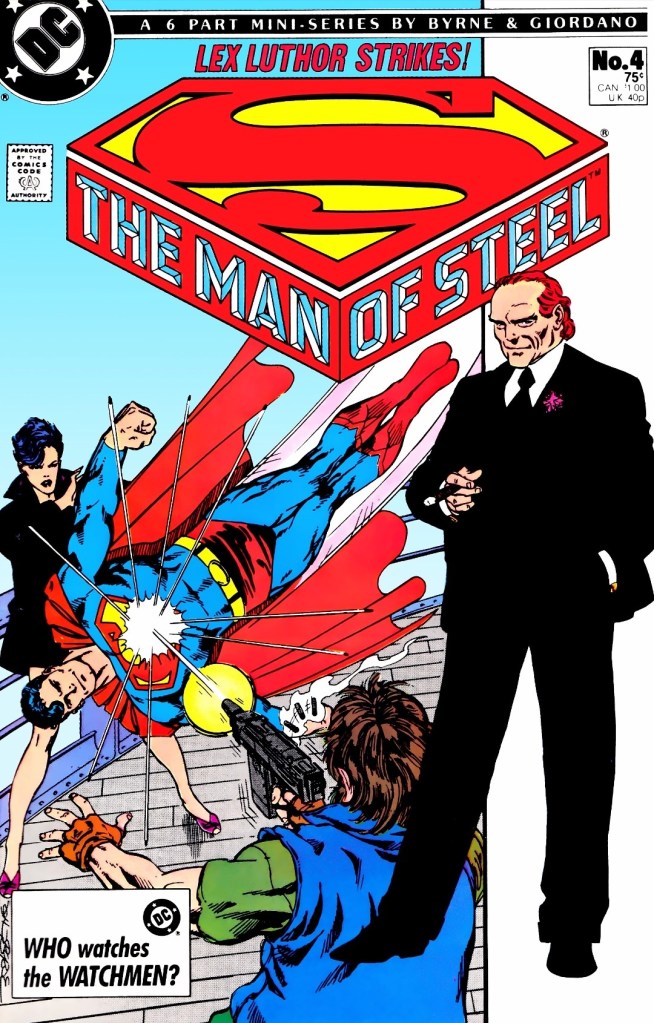
The cover.

Early story

The story begins when a daringly dressed Lois Lane arrives at the apartment of Clark Kent who has not even fully prepared himself for their trip to an extravagant gathering. It turns out, Lois’ ride picked her up earlier than expected which explains her early arrival.

After entering Clark’s apartment, she slowly begins to discover what he looked like in school and who his parents are. By this time, it has been almost eighteen months since Clark beat her to the first-ever Superman news story at the Daily Planet.

Afterwards, Lois and Clark took a surprising helicopter ride going to the luxurious ship of the powerful tycoon Lex Luthor…

Quality

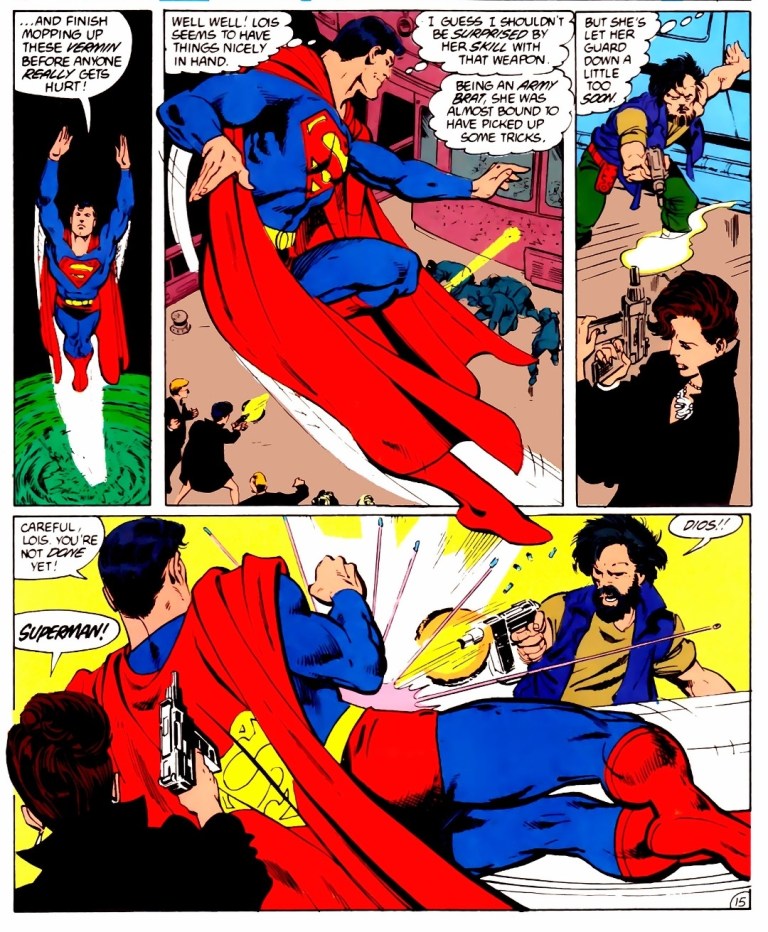
Superman intervenes to protect Lois Lane from one of the terrorists.

To make things clear, this issue is all about John Byrne presenting a new version of Superman’s definitive rival Lex Luthor with the 1980s in mind. Instead of a mad scientist, the post-Crisis Luthor is a billionaire whose corporation (Lexcorp) has an interest in virtually every business in Metropolis and his immense wealth makes him a very powerful figure. This new version of Luthor was clearly done to be more grounded with reality, specifically with regards to the rise of tycoons in America in the 1980s. In short, Luthor was the ruthless and powerful businessman before Michael Douglas even got to play Gordon Gekko in 1987’s Wall Street.

While the effort of making a really new version of Superman’s arch-rival is clear, Luthor here does not appear too menacing at first. The story and impact of Luthor’s evil really started to materialize as soon as the South American terrorists appeared, but not in a way that you might expect. As mentioned above, Luthor here is more grounded with reality and that means you won’t see him oppose Superman with science and technology. Instead, Luthor simply has wealth, the power and resources to go against the Man of Steel. The tycoon also knows that the American-born Kryptonian would not dare attack him as laws already exist.

Having read lots of Superman’s encounters with Luthor in the pre-Crisis era – particularly the 1970s up to the mid-1980s – it is clear to me that their first post-Crisis encounter turned out underwhelming and never dynamic. In fairness, I really enjoyed reading the 2nd encounter between Superman and Luthor as the words of the latter were filled with anger and tension. It should be noted that Byrne’s visual approach on showing the city and the people as Luthor’s dialogue went on was a great touch.

When it comes to the storytelling, it is quite simple which is not surprising because it was crafted to make way for post-Crisis Luthor to be introduced and dramatized. As for the character development, there is indeed progress with regards to the chemistry between Clark Kent and Lois Lane who are portrayed as friends living with a journalistic competition between them. It was also in this comic book where you will see Superman follow the law and the command of Metropolis’ highest official.

Speaking of law, you will notice what kind of impact Luthor has on others when he really does things his own way. This is something you should read in this comic book.

Conclusion

This is John Byrne’s version of Lex Luthor in the form of a powerful tycoon. A complete departure from the mad scientist Luthor of the pre-Crisis era of DC Comics.

While the first-ever conflict between Superman and Luthor in the post-Crisis age was indeed underwhelming, it was John Byrne’s in-depth writing and portrayal of events that made The Man of Steel (1986) a worthy read. Don’t expect to see a lot of action here nor anything spectacular with Superman. Clearly, the tycoon Lex Luthor is the feature character of this tale and the start of his hatred towards Superman is really worth reading. In retrospect, Luthor’s ruthlessness and evil got stronger and clearer after the end of this comic book (for reference, click here).

Overall, The Man of Steel (1986) is recommended.

+++++

Thank you for reading. If you find this article engaging, please click the like button below, share this article to others and also please consider making a donation to support my publishing. If you are looking for a copywriter to create content for your special project or business, check out my services and my portfolio. Feel free to contact me with a private message. Also please feel free to visit my Facebook page Author Carlo Carrasco and follow me on Twitter at  @HavenorFantasy as well as on Tumblr at https://carlocarrasco.tumblr.com/ and on Instagram at https://www.instagram.com/authorcarlocarrasco
A Look Back at The Man of Steel #2 (1986)

Welcome back superhero enthusiasts, 1980s culture enthusiasts and comic book collectors! Today we go back to the mid-1980s to explore a part of the DC Comics shared universe through a tale of the iconic Superman.

Previously, I reviewed the first issue of The Man of Steel mini-series written and drawn by John Byrne. Using a unique structure for storytelling, Byrne gradually told how the post-Crisis version of Superman came to be while also retaining specific classic elements that made DC’s icon inspirational. That very comic book had its influences on other portrayals of Superman beyond comic books such as he Lois & Clark: The New Adventures of Superman TV series and even the very divisive Man of Steel movie.

With those details laid down, here is a look back at The Man of Steel , published in 1986 by DC Comics with a story written and illustrated by John Byrne.

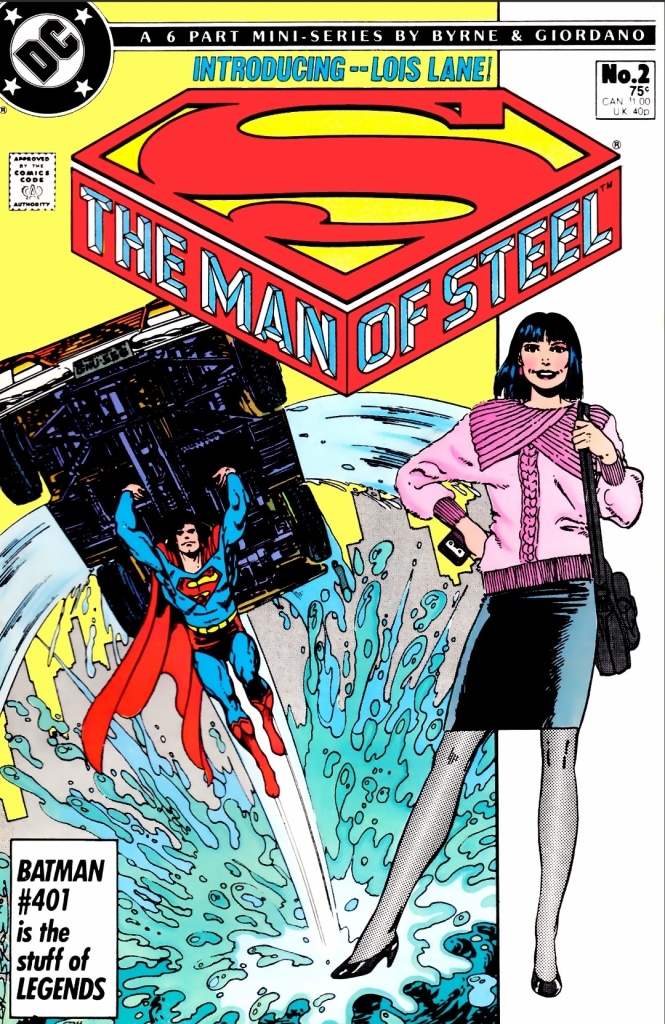
The cover.

Early story

The story begins in the middle of Metropolis when the newly established hero Superman (now in full costume) flies just above the busy road which distracted Daily Planet editor-in-chief Perry White (who was having a coffee break with reported Lois Lane inside a coffee shop). Remembering how the space plane and its crew got saved by Superman (Clark Kent in civilian clothes) sometime prior, White tells Lane (who first encountered Superman immediately after the space plane was saved) to go after him to get the hot scoop.

While Lane crosses the road, a limousine’s opens with the driver telling her that Mister L (Lex Luthor the tycoon) wants to her. Lane declines and proceeds with her chase for Superman…

Quality

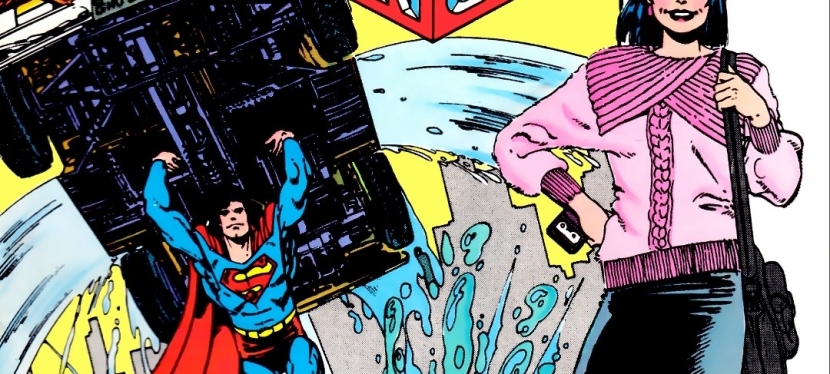
An act of help by Superman for someone who was in trouble.

This story is set during the early days of Superman as the new, randomly appearing hero of Metropolis whose impact on local society is just growing stronger. At the same time, this shows Clark Kent being a very new resident of the city still looking for a job. This is inspired work by Byrne on building up the Man of Steel for what was back then the modern age.

That being said, the most intriguing fact here is that this Superman story has Lois Lane as the actual protagonist. While Lane’s literary presence here is slightly stronger than DC’s icon, this tale is clearly all about her unrelenting approach with newspaper journalism, her use of the Daily Planet’s valuable connections and resources, and how much risk she would take to get the facts, the statements and other details all for the sake of getting the hot story. This is Byrne’s modernization of Lois Lane highlighting the concept that Clark Kent will have serious competition with her within the Daily Planet.  

That being said, there is no romance between Clark and Lois here. This is after all their 2nd encounter (the saving of the space plane in issue was shown in flashback with Lois Lane already present) and Byrne took a careful approach on establishing the first lengthy encounter and interactions between the two. Their encounter here is really engaging.

More on Superman himself, the writer kept the pace of developing him flow smoothly and steadily. You will see how Superman keeps himself in control whenever he talks with normal people or when he encounters criminals who cause danger on others. While he has a priority to help others in need using his powers, he does not neglect his actual identity (and personal life) as Clark Kent and this includes moderating or limiting the use of his special abilities as he levels himself with the rest of the civilian population.

Conclusion

Lois Lane portrayed as the unrelenting and very determined newspaper reporter. Even though Superman always flew away, she just won’t give up.

The Man of Steel (1986) is clearly a very solid follow-up to issue . The continued development of Superman remains solid and the dramatization of Lois Lane as the strongly determined newspaper journalist is compelling to see. With regards to the build-up of the post-Crisis DC Comics shared universe, this particular Superman tale is one of essential parts of it.

Overall, The Man of Steel (1986) is highly recommended!

+++++

Thank you for reading. If you find this article engaging, please click the like button below, share this article to others and also please consider making a donation to support my publishing. If you are looking for a copywriter to create content for your special project or business, check out my services and my portfolio. Feel free to contact me with a private message. Also please feel free to visit my Facebook page Author Carlo Carrasco and follow me on Twitter at  @HavenorFantasy as well as on Tumblr at https://carlocarrasco.tumblr.com/ and on Instagram at https://www.instagram.com/authorcarlocarrasco
A Look Back at Superman #5 (1987)

Disclaimer: This is my original work with details sourced from reading the comic book and doing personal research. Anyone who wants to use this article, in part or in whole, needs to secure first my permission and agree to cite me as the source and author. Let it be known that any unauthorized use of this article will constrain the author to pursue the remedies under R.A. No. 8293, the Revised Penal Code, and/or all applicable legal actions under the laws of the Philippines.

Welcome back superhero enthusiasts, 1980s culture enthusiasts and comic book collectors! Today we go back to the year 1987 and explore a chapter of the post-Crisis DC Comics universe through a Superman tale.

To put things in perspective, John Byrne became in charge of redefining the iconic Superman during the post-Crisis age and he sure had a lot of creative freedom to not only modernize the character but also make him relevant to the public while also pleasing long-time fans. To say the least, the post-Crisis era was a time of daring concepts with the established superheroes of DC Comics. For more insight on Byrne’s handling of the Man of Steel, read my other retro comic book review by clicking here.

With those details laid down, here is a look back at Superman , published in 1987 by DC Comics with a story written and drawn by John Byrne.

The cover.

Early story

The story begins with Clark Kent having an outrageous dream in which he and Wonder Woman fight powerful enemies together. Shortly after arriving at the Daily Planet for duty, Clark learns from his boss Perry White that his office rival Lois Lane is already in South America literally digging on a significant discovery there. After being sent there by his boss, Clark flies to the south as Superman.

Upon arrival, Superman does a super speed reconnoiter at the dig site in the middle of a forest before changing back into Clark Kent. He eventually finds Lois Lane who is very surprised to see him. Even though he explained things to her, Lois remains doubtful of Clark as she still sees him as a journalistic rival who could potentially ruin her hot scoop…

Quality

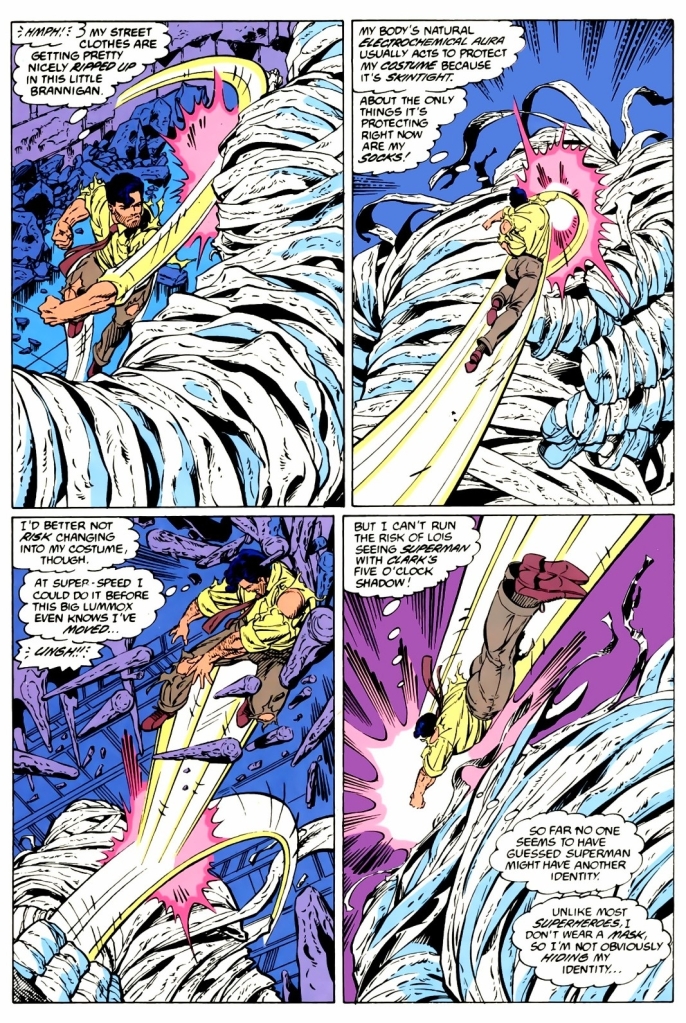
In his civilian form as Clark Kent, Superman fights the huge mummy figure.

I can say that John Byrne’s brilliance is very evident in this comic book. Firstly, this is a story that sheds light on the journalistic rivalry between Lois and Clark that brings back memories about what happened with the Superman hot scoop in The Man of Steel limited series. Here, Lois remains doubtful about Clark and even shows some bitterness as she is on the verge of a major discovery in South America.

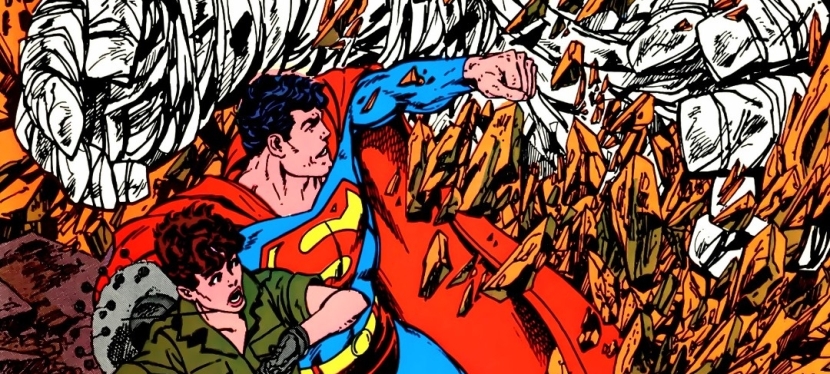
Secondly, this story is also an accidental adventure that creatively has a mix of Indiana Jones, UFOs and ancient horror all throughout. The build-up here is pretty strong as the tale focused strongly on the discovery aspect of the dig site which eventually led to a series of action-packed unfortunate events that really pushed Clark Kent both as civilian and as a superhero. Here, Clark has the tough task to fight an over-sized enemy (note: Byrne’s own take on the mummy) to keep Lois and the others safe while also making certain that he keeps his identity secret.

Along the way, Byrne inserted lots of in-depth details backed with observations (by the characters) which made this action-packed tale a cerebral read. This is a fine example of being creative with handling Superman while catering to readers who love spectacle as well as satisfying those who enjoy a smart presentation of the icon. In other words, there is nothing brainless or dumb to find here.

Conclusion

The journalistic rivalry between Clark and Lois Lane is really engaging to read.

Superman (1987) is a very good read and this is fine showcase of the brilliant handling of the Man of Steel done by John Byrne. Aesthetics aside, this comic book is a relic that highlights the time when Lois and Clark were rival writers and the idea of them getting romantically involved seemed very unlikely at the time of its publishing during the early stage of the post-Crisis era. It was in many ways a defiance of the status quo of the original DC multiverse that had Lois and Superman as lovers. As an adventure, this comic book is very entertaining and engaging and the thing here is that it is only the first part of its arc.   

Overall, Superman (1993) is highly recommended.

+++++

Thank you for reading. If you find this article engaging, please click the like button below, share this article to others and also please consider making a donation to support my publishing. If you are looking for a copywriter to create content for your special project or business, check out my services and my portfolio. Feel free to contact me with a private message. Also please feel free to visit my Facebook page Author Carlo Carrasco and follow me on Twitter at  @HavenorFantasy as well as on Tumblr at https://carlocarrasco.tumblr.com/ and on Instagram at https://www.instagram.com/authorcarlocarrasco
A Look Back at Superman #76 (1993)

Disclaimer: This is my original work with details sourced from reading the comic book and doing personal research. Anyone who wants to use this article, in part or in whole, needs to secure first my permission and agree to cite me as the source and author. Let it be known that any unauthorized use of this article will constrain the author to pursue the remedies under R.A. No. 8293, the Revised Penal Code, and/or all applicable legal actions under the laws of the Philippines.

Welcome back superhero enthusiasts, 1990s culture enthusiasts and comic book collectors! Today we go back to the early 1990s and explore a key chapter in the post-Crisis era of DC Comics through a Superman comic book.

Previously, I reviewed Adventures of Superman #498 (1993) and Superman: The Man of Steel #20 (1993) which were chapters of the Funeral for a Friend storyline. In Superman: MOS , a large funeral took place which involved several special guests as well as other DC superheroes who paid tribute to Superman. The entire city of Metropolis is struggling to move forward as the sudden of Superman really impacted all the people, especially on Lois Lane.

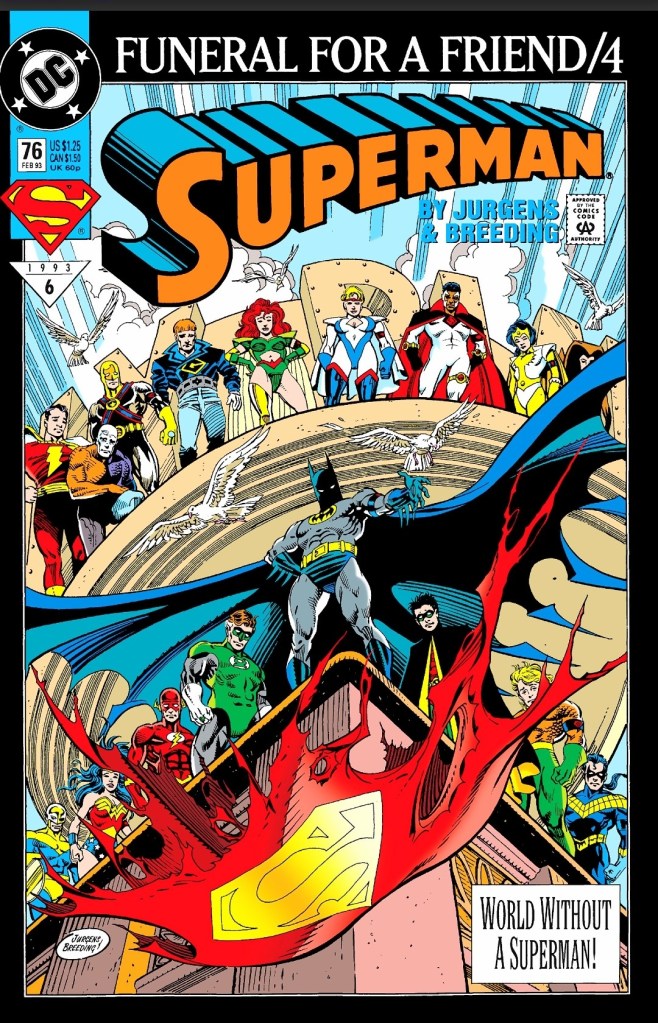
With those details laid down, here is a look back at Superman #76, published in 1993 by DC Comics with a story written and illustrated by Dan Jurgens. This comic book marked the fourth chapter of the Funeral for a Friend storyline.

The cover.

Early story

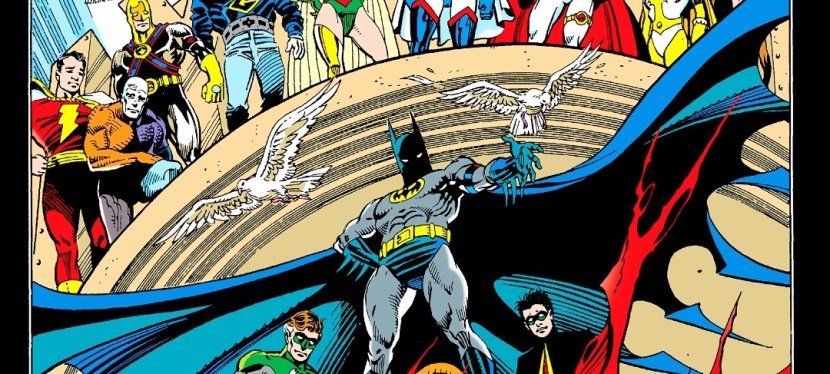
The story begins with Shazam (AKA Captain Marvel) arriving at the rooftop of the Daily Planet where the Flash, Batman, Wonder Woman, Green Lantern, Maxima and others are present. The whole city is experiencing a very somber Christmas season as the death and burial of Superman remains very strong on the people.

On the streets of Metropolis, a long-haired guy named Mitch walks down in the rain feeling troubled not only because Superman died but also due to the fact that their home got smashed during the encounter with the unstoppable Doomsday. Mitch then arrives at a gathering of people outside of a building’s front door. There are several reporters covering a lady speaking to them with a microphone. She tells them that she is Mrs. Superman…

Quality

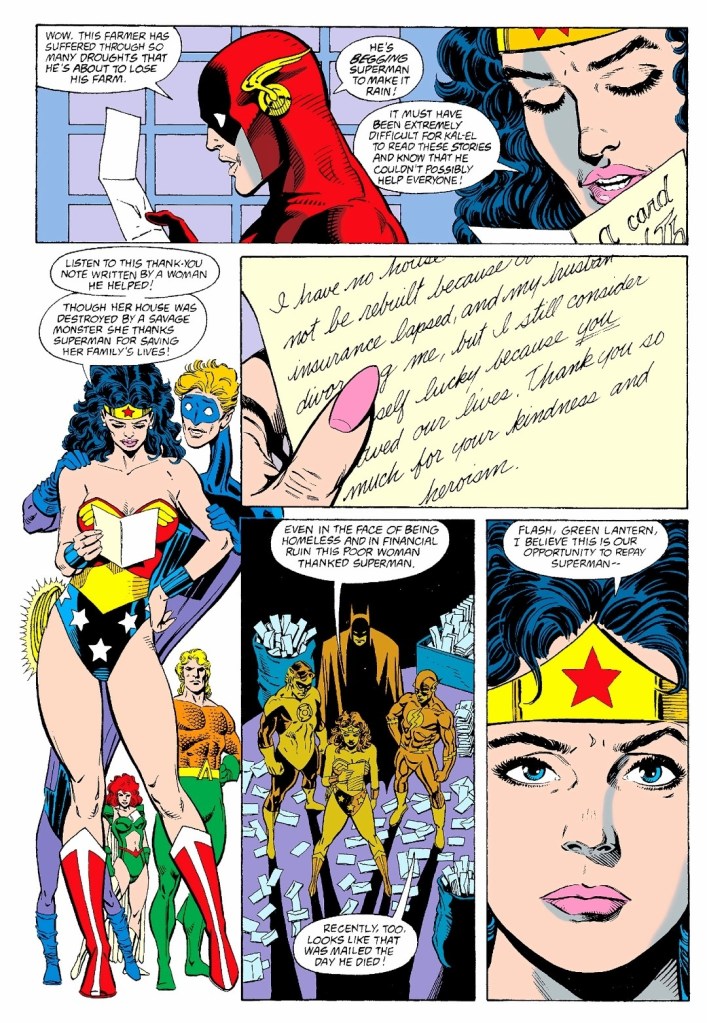
Wonder Woman reads a letter.

Being the 4th chapter of the Funeral for a Friend storyline, Dan Jurgens crafted a story that not only dramatized the post-disaster situation of Metropolis but also had notable twists and developments that proved to be worth reading.

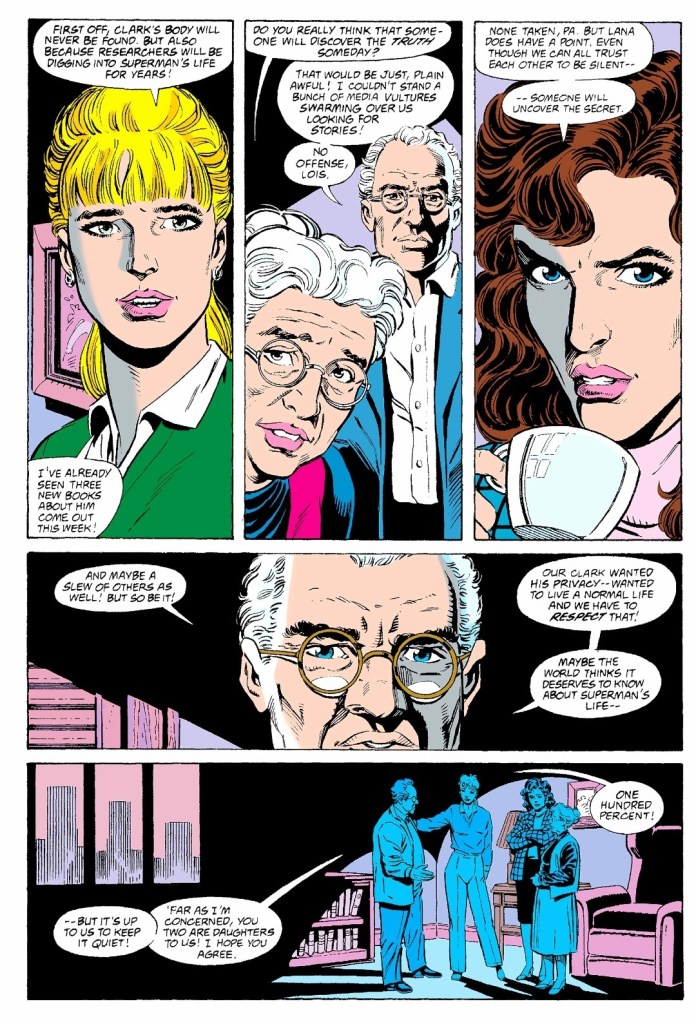
For one thing, this comic book has Lois Lane reunited at last with Clark Kent’s earthly parents Jonathan and Martha which was not only really dramatic but also had very rich dialogue written. By this point in this particular storyline, Lois Lane has gone through waves of deep emotions and pain, while getting stressed with journalistic work. As such, there is this dramatic pay-off that happened during the reunion with the elderly Kent couple.

What is most notable here is the scene in which Superman’s super-powered allies visit a local post office that literally got flooded with lots of mail from around the world addressed to the Man of Steel. On face value, such a scenario looked silly but the way Dan Jurgens crafted the dialogue and the images, the post office scene became believable and sensible to read. This shows that superheroes like Aquaman, Wonder Woman, the Flash and others do have hearts to be caring and sensible to the people.

The scene of the ordinary guy Mitch is significant as well. Clearly the character symbolizes the poor and struggling American who remembers how a complete stranger like Superman came along, stood up to fight for Mitch’s family and died in the process (while Mitch’s father was absent).

This comic book is also a Christmas tale. How Christmas was dramatized here has to be seen and you readers should get a copy of this comic book to find out why. It should be noted that there are themes of reconciliation and the nuclear family that made the Christmas tale meaningful.

Conclusion

Lana Lang, Lois Lane and the elderly Kent couple.

Even without the presence of the Man of Steel and no good-versus-evil conflict, Superman #76 (1993) is a great read as it pushed forward the Funeral for a Friend storyline while successfully telling a meaningful Christmas tale of its own complete with a very unique portrayal of the Justice League and Superman’s allies. How people deal with emotions and stress over Superman’s death was portrayed as highly believable and Dan Jurgen’s writing here was done with really high quality.

Overall, Superman #76 (1993) is highly recommended.

+++++

Thank you for reading. If you find this article engaging, please click the like button below, share this article to others and also please consider making a donation to support my publishing. If you are looking for a copywriter to create content for your special project or business, check out my services and my portfolio. Feel free to contact me with a private message. Also please feel free to visit my Facebook page Author Carlo Carrasco and follow me on Twitter at  @HavenorFantasy as well as on Tumblr at https://carlocarrasco.tumblr.com/ and on Instagram at https://www.instagram.com/authorcarlocarrasco
A Look Back at Superman III comic book adaptation (1983)

Disclaimer: This is my original work with details sourced from reading the comic book and doing personal research. Anyone who wants to use this article, in part or in whole, needs to secure first my permission and agree to cite me as the source and author. Let it be known that any unauthorized use of this article will constrain the author to pursue the remedies under R.A. No. 8293, the Revised Penal Code, and/or all applicable legal actions under the laws of the Philippines.

Welcome back superhero enthusiasts, 1980s culture enthusiasts and comic book collectors! Today we go back to the year 1983 which saw the theatrical release of Superman III that featured the late Christopher Reeve as the cinematic Man of Steel.

The 1980s was a very different time with regards to Hollywood’s handling of superhero movies. The concept of a shared cinematic universe was decades away from realization. Warner Bros. back then relied on the Salkind family to produce Superman movies and the first flick in 1978 proved to be a major hit for both viewers and critics while also establishing Christopher Reeve as the definitive live-action Superman for countless people. Unsurprisingly, a sequel was released in the early 1980s which continued box office success for the stakeholders and only led to the approval of another sequel.

Along the way, the late Richard Pryor (a major comedian already) appeared on TV and talked about Superman II which eventually led to him getting hired for Superman III. The movie was released in 1983 making a little over $80 million worldwide while also getting a noticeably weaker reception from critics. More notably, Richard Pryor had a huge chunk of the film’s spotlight as Gus Gorman while the overshadowed Christopher Reeve managed to stretch his cinematic art on playing Clark Kent and Superman (note: there is also the memorable Clark versus Superman battle). Superman III very clearly had a lot more comedy in its presentation. As part of the movie’s marketing, an official comic book adaptation by DC Comics was published.

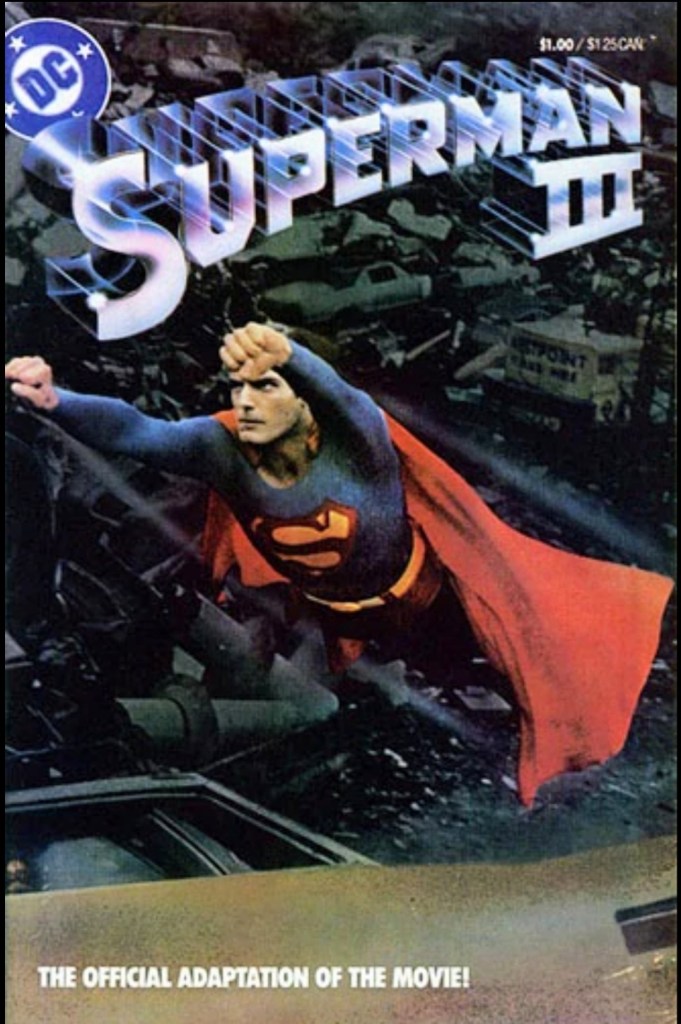
With those details laid down, here is a look back at the Superman III comic book adaptation,  published by DC Comics in 1983 with a story written by Cary Bates and art made by the late Curt Swan and Sal Amendola.

The cover.

Early story

The story begins inside the unemployment bureau of Metropolis. There, August “Gus” Gorman was told after 36 weeks of chronic unemployment, he is no longer eligible for financial assistance (read: welfare) from the city. As he was about to light his cigarette, he noticed computer job ad on the match. Gorman proceeds to the Archibald Data Processing School where he gets enrolled with several others. In front of others, Gorman does something on a computer which impressed the instructor a lot.

Over at the Daily Planet, Clark Kent/Superman, Lois Lane and Jimmy Olsen meet with Perry White at his office. Kent will be returning home to Smallville and make a news story out of it. White gives Kent his approval and then tells Lois she deserves a vacation.

Hours later, Kent and Jimmy Olsen ride the bus together going to Smallville but their ride stops as a result of a huge fire damaging a large chemical plant. A police officer reveals to Olsen that the scientists inside are worried about the plant and its stuff getting destroyed by the fire.

Kent carefully leaves the bus and discreetly changes into Superman to help solve the problem. Olsen, meanwhile, sneaks past the authorities to get to the burning chemical plant.

Over at Webcoe Industries, company head Ross Webster and his sister Vera learn that more than $85,000 worth of company funds was stolen by someone within. Just outside the office, Gus Gorman enters his fancy looking sports car which Webster, Vera and Lorelei notice. Webster asked how could one of their computer technicians afford such a vehicle worth $75,000…    

Quality

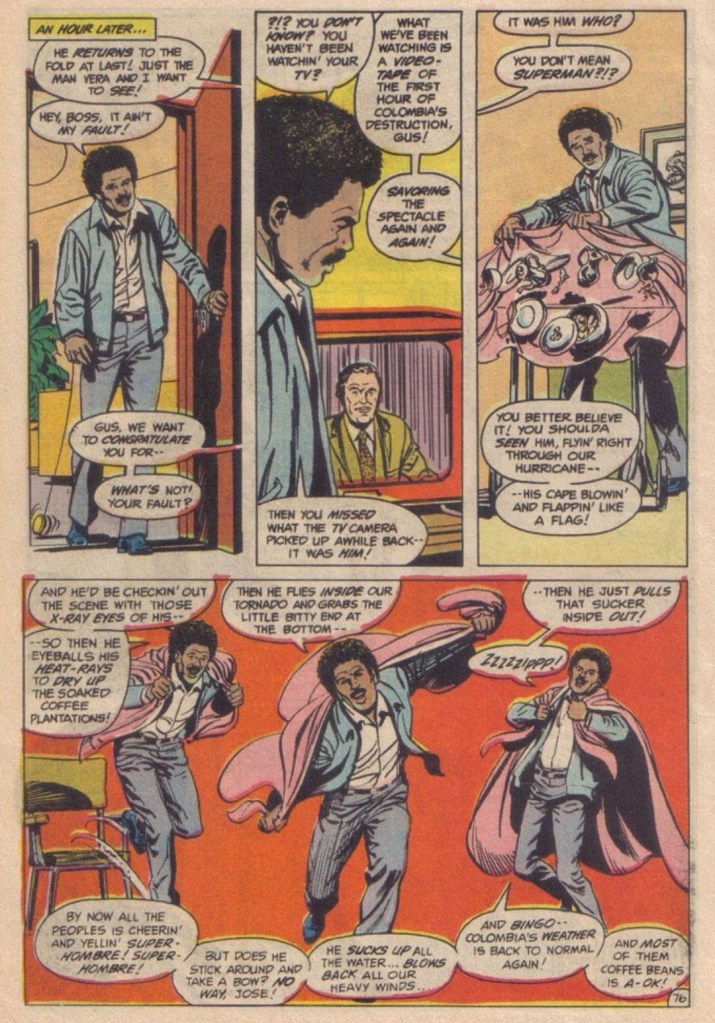
This is a creative way the comic book team used to dramatize Gus Gorman scene revealing and acting the bad news to his boss Ross Webster whose plans were thwarted by Superman.

While it is understandable that not all scenes and not all character moments from the movie  made it on print media, this comic book still managed to capture the film’s essence for the most part. The creative team pulled off their own interpretations of the events and made something entertaining and engaging even though they had to deal with the major challenge of summarizing the movie’s plot and establishing a workable comic book narrative.

I should state that the comic team creatively avoided making in-depth references about liquor and smoking which were obvious in the movie. You will not see Superman drinking liquor at a bar nor will you see Gus Gorman referring to tar listed on a cigarette pack. I suppose this was done to ensure the comic book would be released widely and be acceptable to very young readers and the parents watching them.

The battle between evil Superman and Clark Kent is best viewed in the movie. This one is a shorter and less detailed version of it.

When it comes to establishing the clear lead among all the characters featured, Superman fans should be delighted to know that the Man of Steel is indeed more prominent than Gus Gorman. Take note that in the movie, Richard Pryor’s Gus Gorman overshadowed Christopher Reeve’s Superman/Clark.

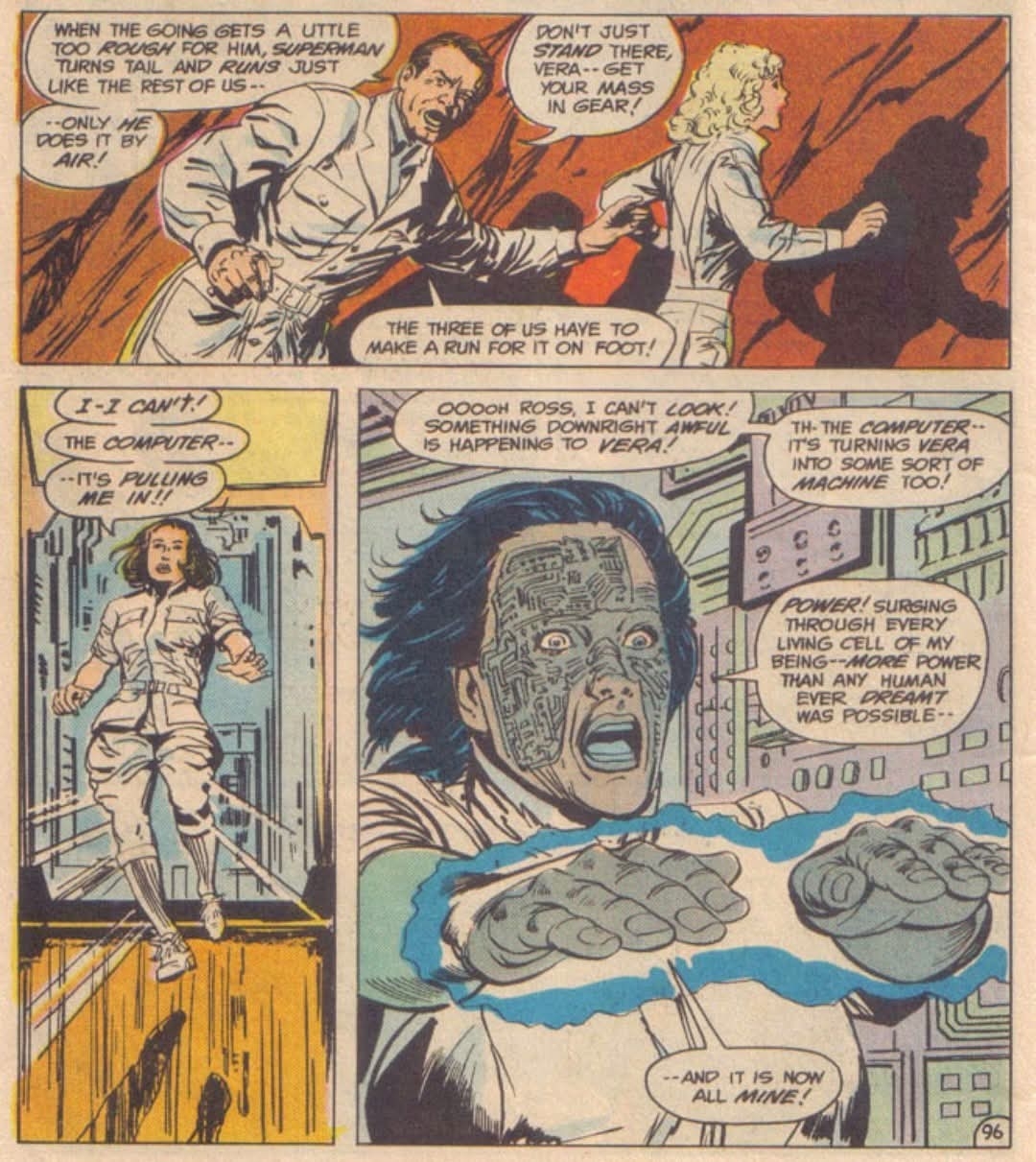
Remember the frightening sequence of Vera getting captured and turned into a cybernetic figure by the Super Computer? This is what it looks like in comic book format.

The art done by Curt Swan and Sal Amendola is decent and it seems to me that their time on visualizing Cary Bates’ script was indeed limited. That being said, it was not surprising to me that, with the exception of Ross Webster in one specific image, none of the characters resembled their cinematic counterparts. Clark Kent/Superman never resembled Christopher Reeve, and Gus Gorman looks nothing like Richard Pryor. Clearly, the artists’ focus was visualizing the narrative which they succeeded.  

Conclusion

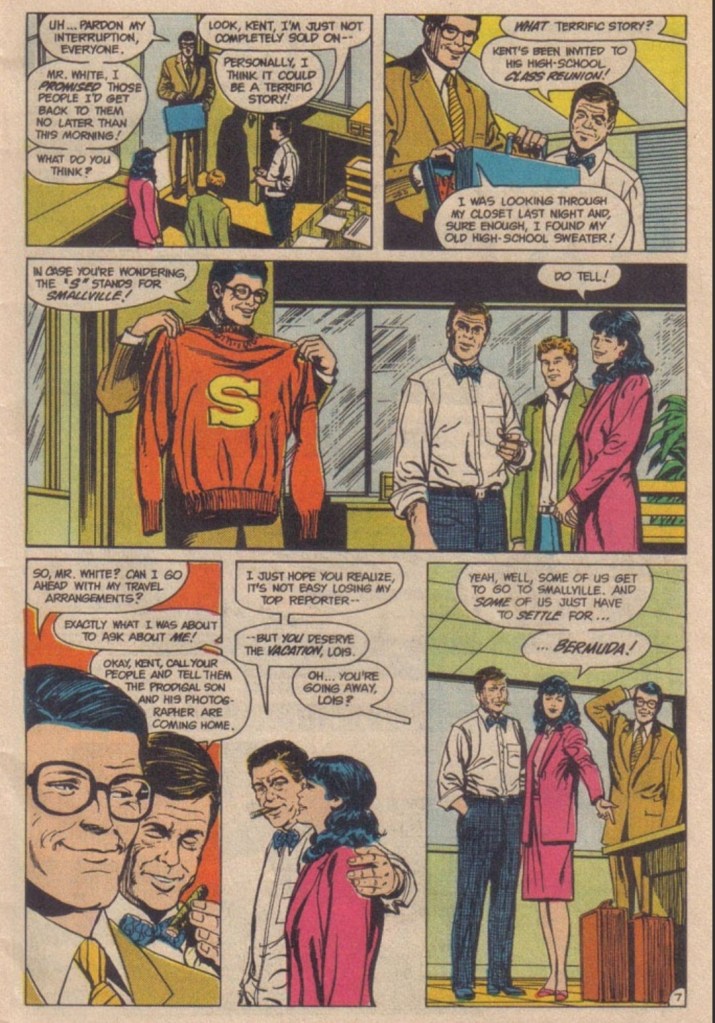
Clark Kent, Lois Lane, Jimmy Olsen and Perry White in the Daily Planet.
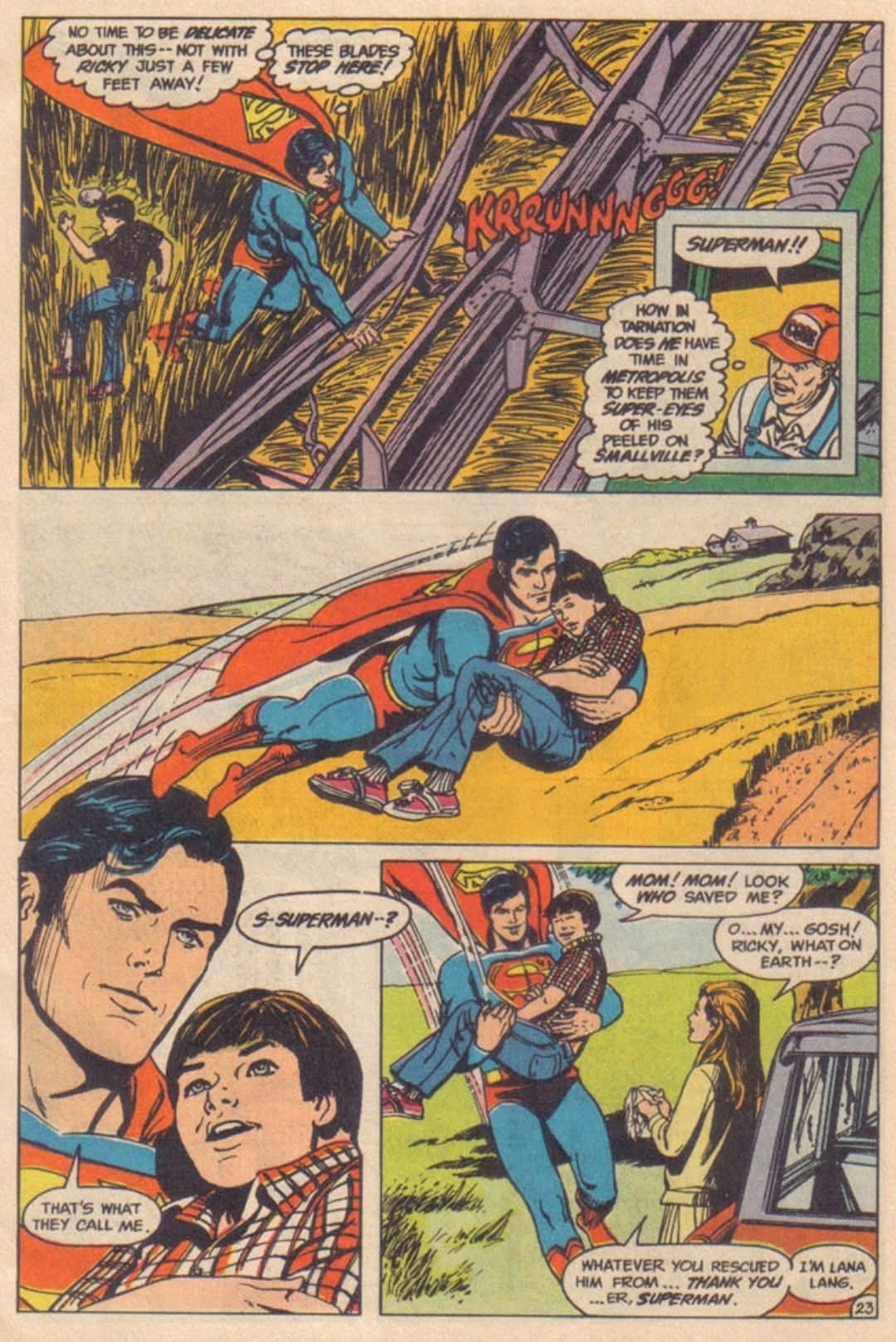
Superman saving Lana Lang’s son from certain death.

Having seen the Christopher Reeve/Richard Pryor movie in the cinema and on cable TV since 1983, I can say that Superman III (1983) is a decent adaptation. It’s not 100% faithful but it is still a worthy read as it will give you the movie’s concept and entertainment values in literary form. If you really want to full essence of film along with the cinematic moments (note: the Superman-Clark battle is the cinematic highlight) all intact, then your obvious choice is to watch the movie. If you are turned off by the movie’s wacky comedy, then the comic book adaptation will deliver to you the more serious approach on telling Superman III’s story. Let me repeat that Superman is more prominent than Gus Gorman in this comic book.

Overall, Superman III (1983) is satisfactory.

+++++

Thank you for reading. If you find this article engaging, please click the like button below and also please consider sharing this article to others. If you are looking for a copywriter to create content for your special project or business, check out my services and my portfolio. Feel free to contact me with a private message. Also please feel free to visit my Facebook page Author Carlo Carrasco and follow me on Twitter at  @HavenorFantasy as well as on Tumblr at https://carlocarrasco.tumblr.com/ and on Instagram at https://www.instagram.com/authorcarlocarrasco/