A Look Back at Wonder Woman #23 (1988)

Disclaimer: This is my original work with details sourced from reading the comic book and doing personal research. Anyone who wants to use this article, in part or in whole, needs to secure first my permission and agree to cite me as the source and author. Let it be known that any unauthorized use of this article will constrain the author to pursue the remedies under R.A. No. 8293, the Revised Penal Code, and/or all applicable legal actions under the laws of the Philippines.

Before I start another retro review of the post-Crisis Wonder Woman comic book series, I need to share to you readers my observations about the recent social media trends that happened inside three Wonder Woman-focused groups within Facebook.

For one thing, I asked a simple question on all three WW FB groups asking the members if they would want to see Zack Snyder replace Patty Jenkins as the director of future Wonder Woman movies. Their reactions were pretty mixed and among them were a few very toxic responses. One group member asked me why do I hate Patty Jenkins (I have no hatred for her and in fact I admired her work in the 2017 Wonder Woman movie and pointed out her work in my piece about the No Man’s Land scene). Another member (an openly feminist-minded male) condemned me of sexism (completely false).

And in most recent times, I posted a few not so favorable media reviews of Zack Snyder’s Justice League on those same three WW groups on Facebook. This member called me a hater (I’m not a hater and I cannot judge a movie I have not even viewed), another member thought I allowed the negative review to influence me (sharing a post of an unfavorable review does NOT mean I believe in it), while another member took it very personal against me by means of verbal attacks (that person does not even know me and he allowed his uncontrolled fanaticism to go on the offense) on me.

Whew! There sure are a lot of Wonder Woman fans out there who are over-sensitive, who lacked self-control, who allowed themselves to be influenced by the socialists, and who allowed themselves to be swallowed by unrestrained political correctness. Clearly there are lots of hostile minds and likely believers of Cancel Culture among fellow WW fans which is unfortunate. What I posted on those FB groups were simply about entertainment, not identity politics and certainly not about attacking others.

I am still standing here!

Anyway, last time I reviewed an issue of Wonder Woman that I determined lacked depth and only served to build-up suspense and anticipation for future events. What will happen next to Wonder Woman and her companions? Will there be a pay-off to the build-up that happened in the pages of issue #22? We can all find out in this look back at Wonder Woman #23, published by DC Comics in 1988 with a story written and drawn by George Perez with finishes done by Will Blybers.
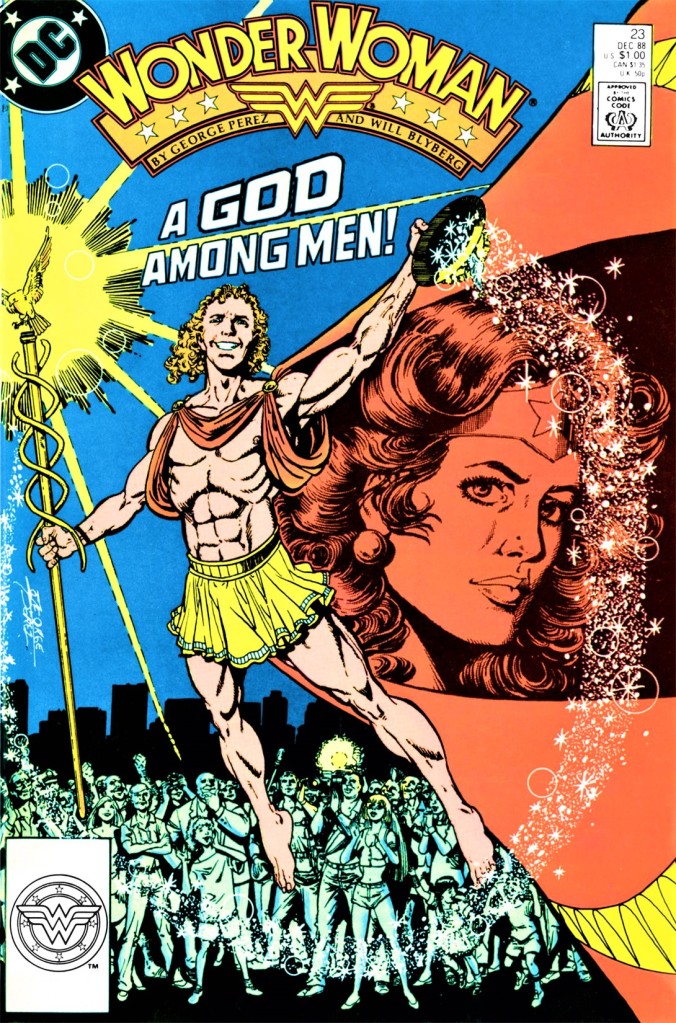
The cover.

Early story

The story begins with a print media blast of Diana, her mother Queen Hippolyte, as well as Julie Kapatelis and her daughter Vanessa all occupying varied parts of the front cover of The World Today magazine with a feature about the royal family of Themyscira. At the corner of the cover says, “Memories of a Boston teen.”

At school, the teenage Vanessa (referred to as Nessie) is completely surrounded by other students who want her to sign their respective copies of the said magazine. She is enjoying the attention being the close, personal friend of the Amazons. Vanessa’s friends Eileen and Meekins can only watch the activity from a distance feeling lonely and let down.

In New York, Wonder Woman delivered a speech to the United Nations general assembly. She spoke on behalf of her mother and formally announced that the gates of Themyscira will be opened to the rest of the world (which is the result of the Amazons’ majority vote in issue #22). The response to her speech ranged from enthusiastic to apathetic.

After the speech, Diana finds herself surrounded by news reporters who ask her a lot of questions about her homeland, Queen Hippolyta’s potential visit to man’s world (AKA patriarch’s world) and the way some assembly members reacted to her speech.

Suddenly a mysterious figure whose head and face cannot be seen emerges. Diana senses something is wrong…

Quality
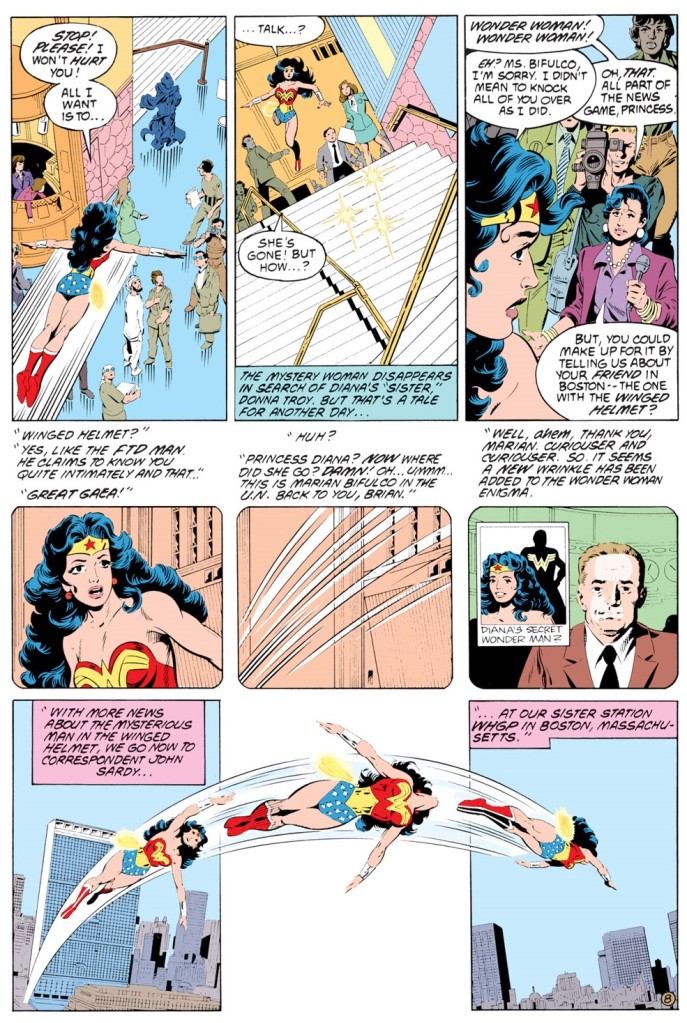
Wonder Woman flying in search of the mysterious figure.

I will start first by confirming that indeed, this comic book’s story has some pay-off to the suspense built-up in issue #22. Take note…some pay-off. It might sound disappointing for those who read issue #22 expecting a big pay-off but after going through the theme of this particular story, it is clear that there were planned plot events lying ahead related to the build-up (in issue #22).

More on the story itself, without spoiling much, I can say that George Perez pushed the envelope yet again by involving Hermes a lot more with Wonder Woman here. A lord to Diana, Hermes appeared not merely for a cameo appearance nor as a guide as seen in the early issues of this series, but rather he has a much bigger role than before. Hermes does not just appear with Wonder Woman who strictly follows him, he also makes an impact with the people on Earth.

When it comes to moral lessons, this comic book is boldly written by touching on themes such as how a deity from Olympus would impact people by bribing them, why mortals let their guard down when they believe what they saw or witnessed, and why would a foreign deity (from Olympus specifically) does not want mortals to challenge their authority.

The good news here is that everything is very well written from the way the plot was structured, the clear presence of emotion that filled much of the dialogue and the notable presence of philosophies that added depth to the dialogue.

When it comes to Wonder Woman herself, I love the way how Perez portrayed her on her struggle of doing her duty (for Themyscira and her deities) and maintaining friendship with the people she loved in man’s world. There is that nice touch of fragility on Diana’s personality and the same can be found on Julie Kapatelis whose struggle with being a mother and a friend is nicely dramatized.

Conclusion
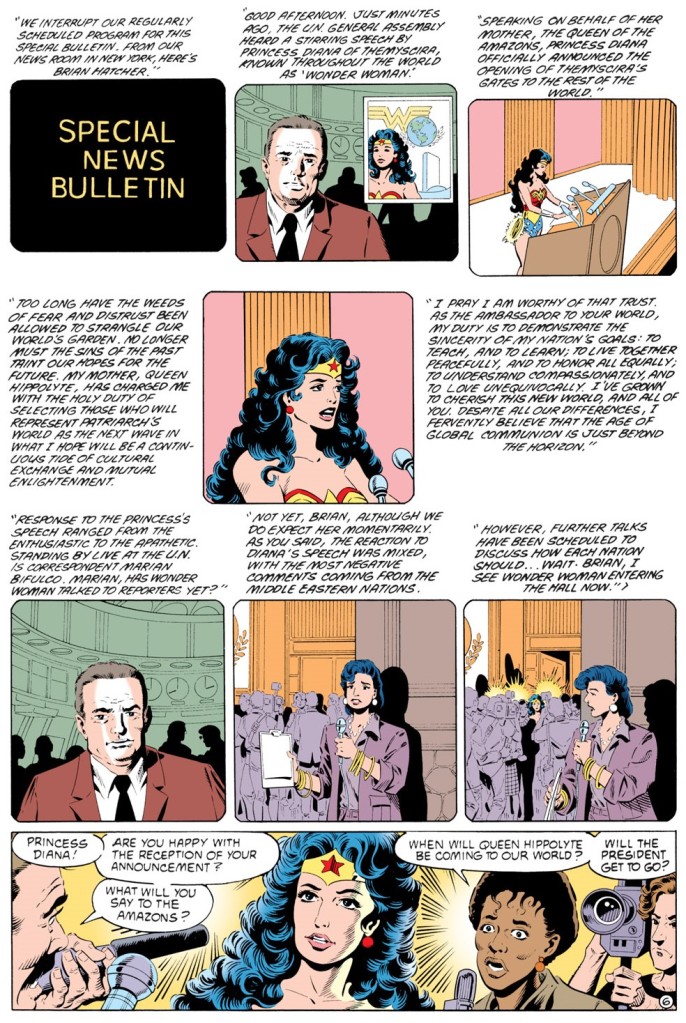
Wonder Woman faces the world through the corrupt United Nations.

I can say that Wonder Woman #23 (1998) is a clear improvement over its predecessor by means of having a solid story concept backed with nice artwork (no surprise) and in-depth writing done by George Perez. I also like the fact that Wonder Woman herself gets upstaged in a rather reasonable way which shows Perez was not afraid to take risks when it comes to redefining the Queen of Superheroes in the post-Crisis era of DC Comics. Lastly, this comic book shows how faith is not to be practiced and why deities of Olympus are not worthy of faith and trust of the people. It also shows idolatry is foolishness.

If you are seriously planning to buy an existing hard copy of Wonder Woman #23 (1988), be aware that as of this writing, MileHighComics.com shows that the near-mint copy of the regular edition costs $35 while the near-mint copy of the 2nd print edition costs $350.

Overall, Wonder Woman #23 (1998) is highly recommended!

+++++

Thank you for reading. If you find this article engaging, please click the like button below and also please consider sharing this article to others. If you are looking for a copywriter to create content for your special project or business, check out my services and my portfolio. Feel free to contact me as well. Also please feel free to visit my Facebook page Author Carlo Carrasco and follow me at HavenorFantasy@twitter.com
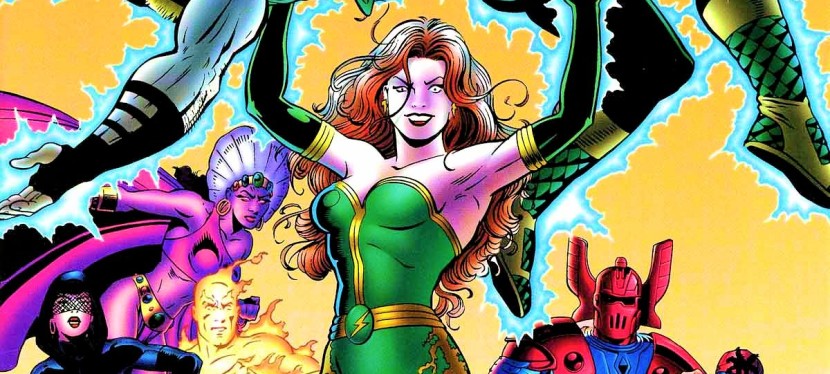
A Look Back at The Strangers #22 (1995)

Disclaimer: This is my original work with details sourced from reading the comic book and doing personal research. Anyone who wants to use this article, in part or in whole, needs to secure first my permission and agree to cite me as the source and author. Let it be known that any unauthorized use of this article will constrain the author to pursue the remedies under R.A. No. 8293, the Revised Penal Code, and/or all applicable legal actions under the laws of the Philippines.

Welcome back, superhero enthusiasts, comic collectors and fans of 1990s comics culture! We go back to the Ultraverse to witness further events from The Strangers told during the late stage of their 24-issue run as a comic book series. In the previous review, Teknight became more prominent as a member of the team as Candy/Electrocute got heavily damaged which led the Strangers to having her repaired not in just any private facility but rather in the facility of a powerful organization.

And then something happened at the end of The Strangers #21.

With those details laid down, here is a look back at The Strangers #22, published by Malibu Comics in 1995 with a story written by Steve Englehart and drawn by Paul Abrams.

The cover.

Early story

The story begins inside a high-tech facility when the newly repaired Electrocute gets up and attacks her teammates Grenade (her romantic partner) and Teknight. Electrocute is acting under someone’s control. In response to Teknight’s methodical approach on absorbing electric blasts from Electrocute, Grenade warns him about the how capable NuWare is when it comes to control and execution.

Even so, Teknight continues to stand until he gets overwhelmed by the lady’s power and ends up getting paralyzed. An executive walks near Teknight and Electrocute boasting that he loves seeing his designs in action and Grenade comes in to use his power on his romantic partner…

Quality

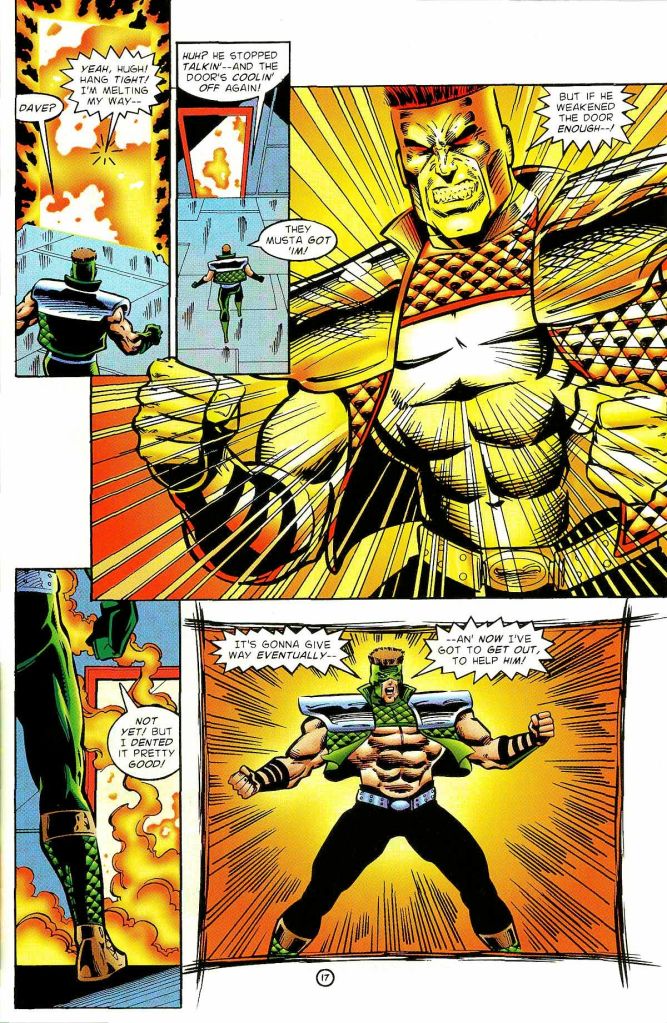
Grenade and the door.

Once again, Steve Englehart crafted another story that keeps this series fresh and fun to read. The story started with a good amount of action involving Grenade, Electrocute and Teknight. As I don’t want to spoil the plot, I can say that what happened after the action-packed opening sheds light on a new yet significant youth who wields a lot of power thanks to his father (clue: a powerful and ruthless executive who was involved not only with the Strangers but also with Mantra and Night Man). The story is very well structured and moves at a nice pace. Also I can say that the spotlight on the Strangers as a whole team was carefully balanced.

When it comes to character development, it is Grenade who clearly got a good dose of it. Apart from the usual display of his feelings towards Electrocute, this comic book dramatizes his effort to understand not only his lady and their new teammate Teknight, but also his realization about the delicate balance between being alive and being linked with technology.

Conclusion

I wonder how today’s SJWs, radical socialists and Black Lives Matter activists would react to this particular scene.

The Strangers #22 (1995) is another fun-filled superhero story which served its purpose in concluding the story that started in the previous issue. It also achieved its goal of emphasizing the role of NuWare (read: corporate intrigue) and the continued relevance of a certain corporate executive that the Strangers could not just get rid of.

If you are seriously planning to buy an existing hard copy of The Strangers #22 (1995), be aware that as of this writing, MileHighComics.com shows that the near-mint copy of the comic book costs $27.

Overall, The Strangers #22 (1995) is recommended.

+++++

Thank you for reading. If you find this article engaging, please click the like button below and also please consider sharing this article to others. If you are looking for a copywriter to create content for your special project or business, check out my services and my portfolio. Feel free to contact me as well. Also please feel free to visit my Facebook page Author Carlo Carrasco and follow me at HavenorFantasy@twitter.com

A Look Back at Ravage 2099 #5 (1993)

Disclaimer: This is my original work with details sourced from reading the comic book and doing personal research. Anyone who wants to use this article, in part or in whole, needs to secure first my permission and agree to cite me as the source and author. Let it be known that any unauthorized use of this article will constrain the author to pursue the remedies under R.A. No. 8293, the Revised Penal Code, and/or all applicable legal actions under the laws of the Philippines.

Welcome back, superhero enthusiasts, comic book collectors and fans of Marvel’s 2099 universe! Do you want to see more of 2099 stories written by the late Stan Lee? There is Ravage 2099, the one original character for the 2099 universe co-created by Lee and illustrator Paul Ryan. In my last review, the story had Ravage desperately trying to survive in an island which is toxic and filled with lots of bad guys hunting him down.  

With those details laid down, here is a look back at Ravage 2099 #5, published in 1993 by Marvel Comics with a story written by Stan Lee and drawn by Paul Ryan.

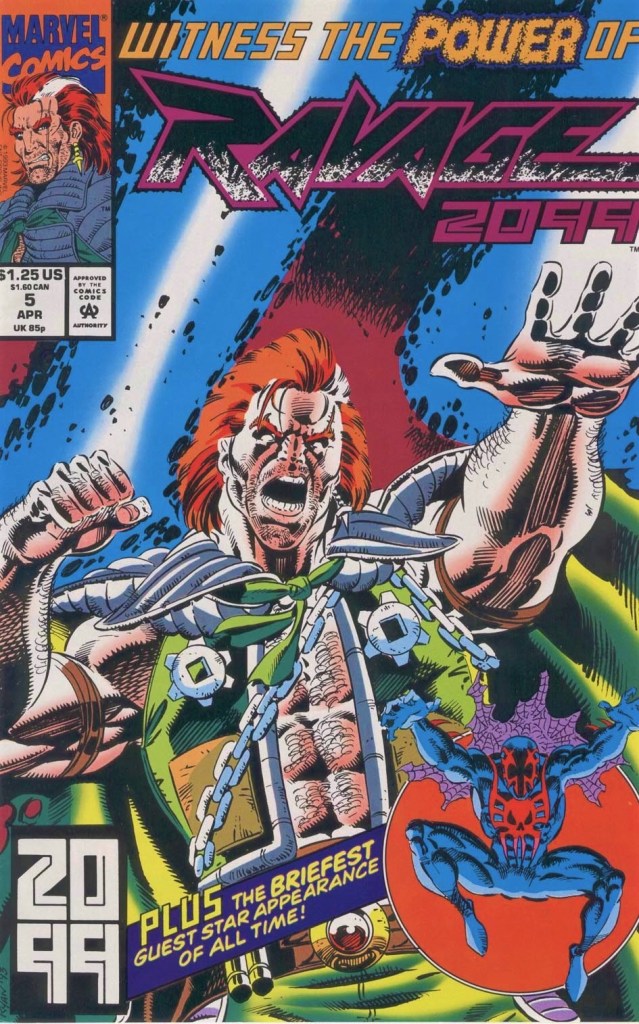
The cover.

Early story

The story begins with Ravage, in the presence of Ursell (the one who saved his life), reacting to his hands burning with light-blue flame. Ursell states it is the radiation causing it. Ravage accuses him of turning him into a troid and that he is not better than Dethstryk, the ruler on the island. As he could not control his anger, Ravage attacks Ursell (who told him his hands are lethal as they destroy what they touch).

Outside, one Dethstryk’s troops spots light (the result of Ravage’s energetic hands) coming from the same cave Ravage and Ursell are in. Eventually Ravage calms down and the energy of his hands weaken. Ursell hands him gloves (composed of complex molecular formula) which help him contain the energy but only for one hour.

Suddenly, Dethstryk’s thugs spot the two in the cave. One of them identifies Ursell as the betrayer of their leader…

Quality

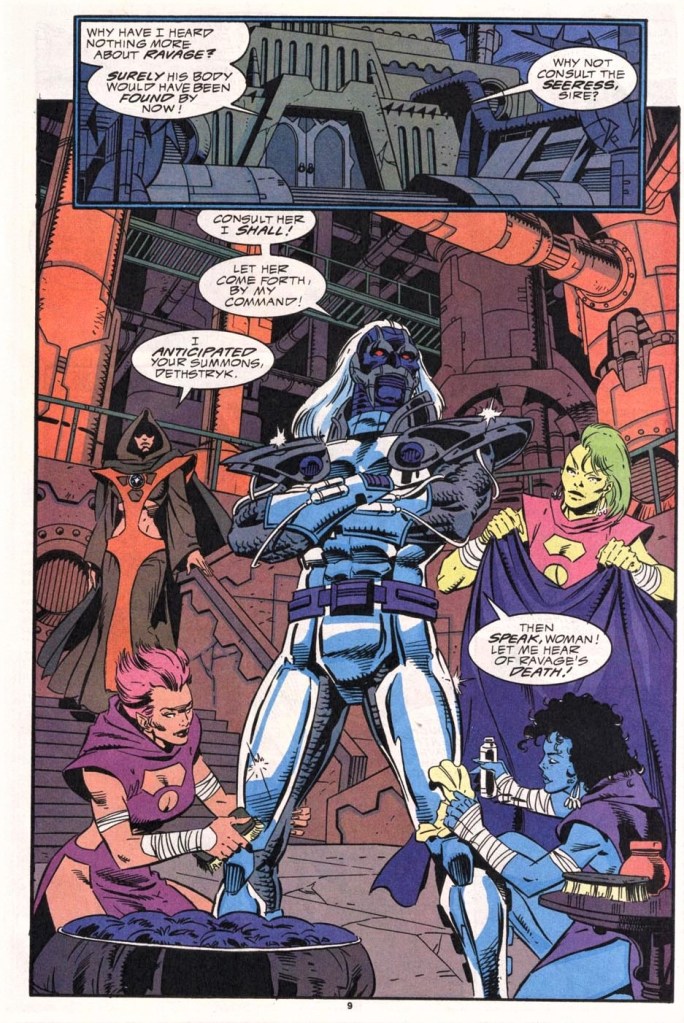
I wonder if SJWs, socialists, Communists and the radicalized feminists will find this image offensive…

In terms of storytelling, this comic book is a big improvement over the last issue. While issue #4 was pretty much limited to Ravage just struggling to survive, this one had more elements of discovery and surprise which made it feel fresh. Ravage having his hands energetic and getting bothered deeply by it was a nice touch to spice up the character while building him up to be potentially more powerful. I also enjoyed the sub-plot in which Tiana, who has been portrayed as an erotic damsel-in-distress since issue #1, finally gets to do something important with trying to free the troubled youth Dack. Not only that, there is also another sub-plot involving a race of aquatic creatures that seek to invade the surface.

Conclusion

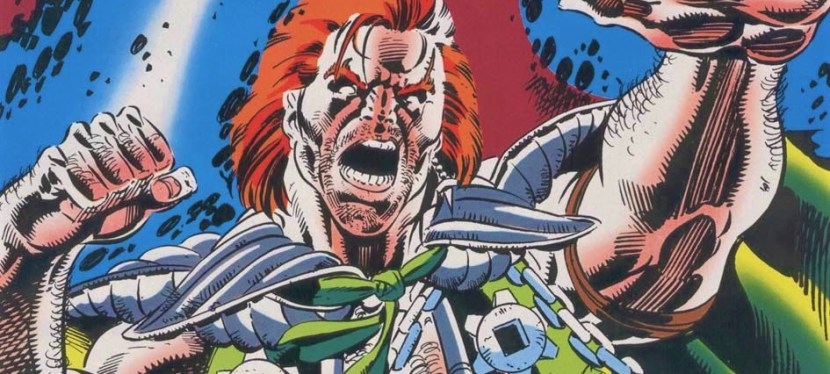
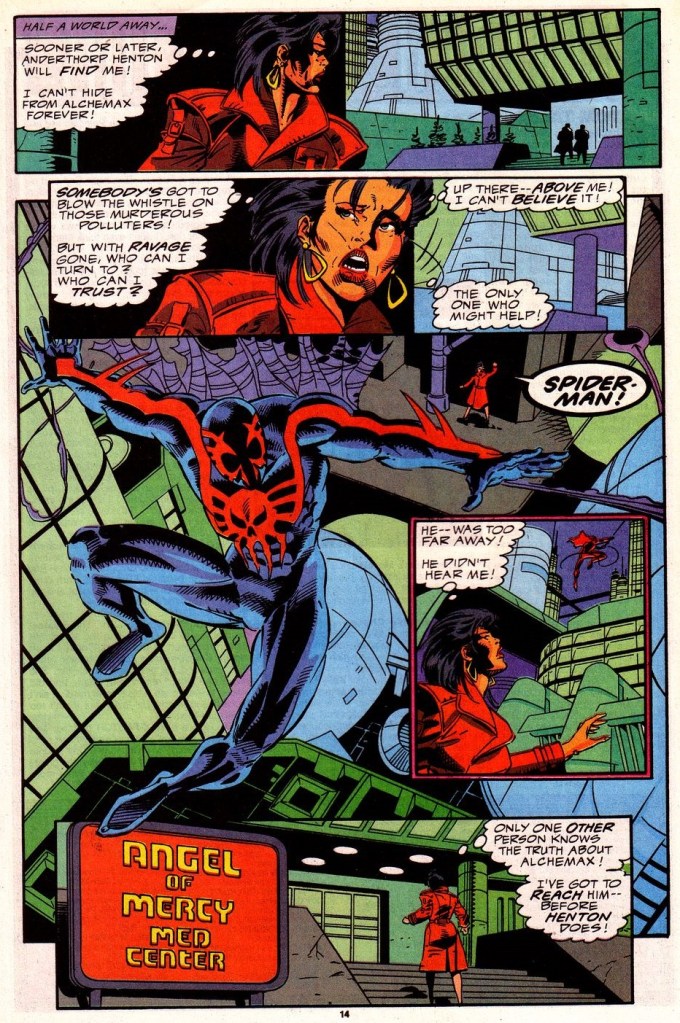
Spider-Man 2099’s very brief appearance!

Ravage 2099 #5 (1993) is fun to read and surprisingly engaging as it is a big improvement over issue #4. Considering the uneven quality of this particular series, it’s nice to see Stan Lee make storytelling improvements just as they are needed. Still the quality of dialogue is sub-par and there were corny lines like Ravage saying, “You’re cornier than breakfast cereal!”

If you are seriously planning to buy an existing hard copy of Ravage 2099 #5 (1993), be aware that as of this writing, MileHighComics.com shows that the near-mint copy of the regular edition costs $8 while the near-mint copy of the newsstand edition costs $24.

Overall, Ravage 2099 #5 (1993) is satisfactory.

+++++

Thank you for reading. If you find this article engaging, please click the like button below and also please consider sharing this article to others. If you are looking for a copywriter to create content for your special project or business, check out my services and my portfolio. Feel free to contact me as well. Also please feel free to visit my Facebook page Author Carlo Carrasco and follow me at HavenorFantasy@twitter.com
A Look Back at Ravage 2099 #3 (1993)

Disclaimer: This is my original work with details sourced from reading the comic book and doing personal research. Anyone who wants to use this article, in part or in whole, needs to secure first my permission and agree to cite me as the source and author. Let it be known that any unauthorized use of this article will constrain the author to pursue the remedies under R.A. No. 8293, the Revised Penal Code, and/or all applicable legal actions under the laws of the Philippines.

Welcome back, Marvel 2099 fans and superhero comic book geeks! Are you ready for another trip into the high-tech future of Marvel’s comic book universe through the storytelling of the late Stan Lee? This is about the 3rd issue of the Ravage 2099 monthly series.

For the newcomers reading this, Ravage is an original character co-created by Stan Lee and artist Paul Ryan for the 2099 universe of Marvel Comics. By comparison, 2099 started in the 1990s with its own versions of Spider-Man, Dr. Doom and the Punisher. As such, Ravage stood out simply because he was different from them and that includes being idiotic and chaotic as a lead character.

Having already reviewed the first two issues (read my recent review), it became clear to me that Ravage started to deteriorate as a person even as he strived hard in doing what he thought was right. There are two established villains in the story and so far, Ravage does not look any different from them since he proved to be so chaotic, he became a danger not only to the thugs but also to law enforcers. As such, he is a danger to the public.

To find out if anything will improve creatively and artistically, here is a look back at Ravage 2099 #3, published in 1993 by Marvel Comics with a story written by Stan Lee and drawn by Paul Ryan.

The cover.

Early story

The story begins moments after Alchemax forces abducted Tiana from Ravage and Dack who find themselves busy with armed enemies on the street. The young Dack got hit by a gun blast. Somehow, Dack was brought to the nearest medical facility for treatment and placed in a medi-cell for questioning.

Already alone in the room, Dack is trapped and a bearded man delivering some candy arrives. It turns out it is Ravage in disguise and he wanted to make sure the youth was fine. Dack tells reveals that he was question for hours. Ravage updates Dack that Tiana was probably half-way to Hellrock, and he intends to get her back.

Meanwhile, armed personnel spot Ravage on surveillance video and rush to get him…

Quality

Most likely the portrayal of Tiana being helpless will turn off radical feminists and SJWs reading this.

To put things straight, this particular story has a retro vibe which reminds me of certain sci-fi and adventure comic books of the 1950s to the 1970s. This is not surprising given Stan Lee’s own style of plotting and writing. Like in issue #2, creative baggage was less of a hindrance and this allowed Lee and Paul Ryan to craft another action-hero tale that is straightforward and easier to follow. Unlike the previous issue, this one has stakes raised near the end of the story which is refreshing and it also involves a nice change of location. Compared to how he acted in issue #2, Ravage here begins to act more heroic and showed willingness to sacrifice something to help someone. He still is a chaotic person to be with, only this time he is in the company of a different kind of walking characters. To say the least, this story is an improvement over its predecessor.

Conclusion

Ravage in action inside Dak’s medi-cell.

I can say that Ravage 2099 #3 (1993) is surprisingly a satisfying read. It definitely is not great but the traditional elements of sci-fi, action adventure storytelling lifted its quality. It should be noted that the act of heroism on the part of Ravage begins here and the predicted rivalry between him and the villain Dethstryk (who looks generic as the leader of a band of baddies) finally starts.

If you are seriously planning to buy an existing hard copy of Ravage 2099 #3 (1993), be aware that as of this writing, MileHighComics.com shows that the near-mint copy of the regular edition costs $8 while the near-mint copy of the newsstand edition costs $24.

Overall, Ravage 2099 #3 (1993) is satisfactory. That being said, I don’t recommend spending any more than $1 for it.

+++++

Thank you for reading. If you find this article engaging, please click the like button below and also please consider sharing this article to others. If you are looking for a copywriter to create content for your special project or business, check out my services and my portfolio. Feel free to contact me as well. Also please feel free to visit my Facebook page Author Carlo Carrasco and follow me at HavenorFantasy@twitter.com

A Look Back at On Deadly Ground

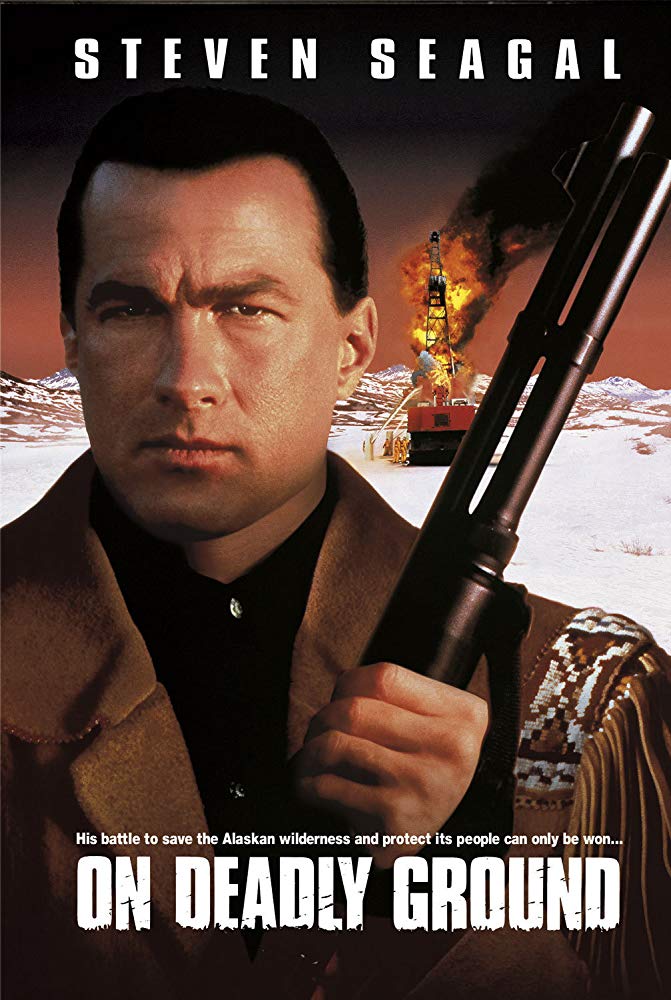
Way back in 1994, Warner Bros. released the action movie On Deadly Ground which marked the directorial debut of its star Steven Seagal. The movie had a poster that easily attracted the attention of avid Steven Seagal fans and eventually the film lured quite a lot of moviegoers to the cinemas.

ODG1
Even though it had a boring design, this image at cinemas excited Steven Seagal fans and moviegoers craving for action.

I never saw it in the cinemas due to a lack of time and money. Instead I saw On Deadly Ground on VHS format (and later on cable TV) in the comfort of home. That comfort however turned into disappointment after watching it.

For starters it’s a Steven Seagal movie which guarantees lots of hard-hitting action with lots of swearing. What makes it feel unique was its focus of the environment and its very forced concept about a very greedy top executive of an oil company is creating danger towards the environment as his team rushes to complete an oil rig called Aegis One in Alaska.

The execution of the movie, to say the least, is rather poor. Just about every character in the movie is one-dimensional. When it comes to action, it is typical (and very predictable) Seagal as the star gets to fight lots of bad guys without ever being hurt by them! Ironically Seagal in the film expresses pain over the treatment of his wounds.

ODG6
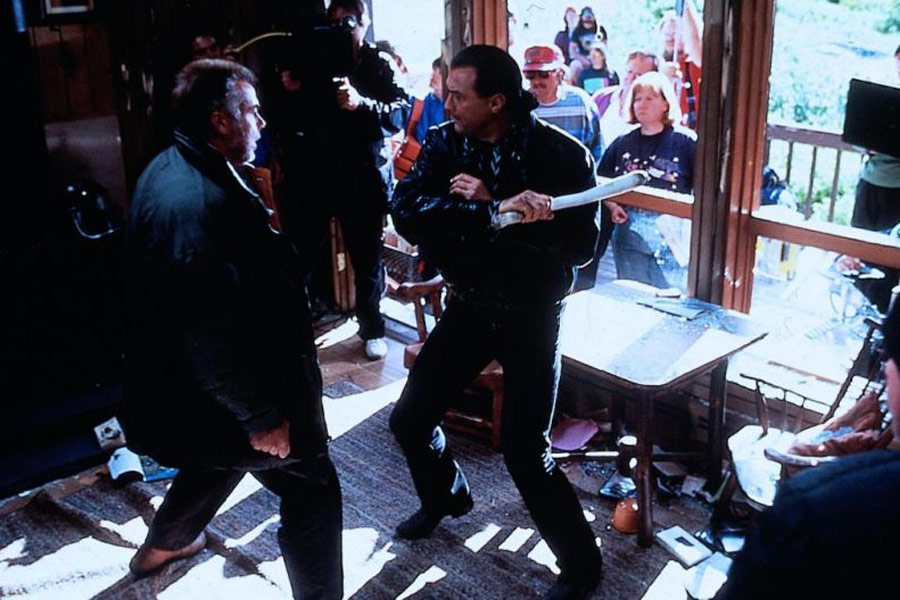
Star-director Steven Seagal and the film crew working on an action sequence.

And then there is the emphasis on the environment. The movie narrowly portrays the fictional oil company as the force of danger to nature and threat to indigenous people of Alaska because it is led by Michael Jennings (played by Michael Caine) who is too greedy and desperate to beat a deadline  and prevent the oil rights from reverting back to native Alaskans.

That’s right! Jenning’s Aegis had the oil rights for twenty years and all they could do is try to launch an oil refinery so near the end of the time period. Does it really take that long to construct an oil rig? What exactly did Jennings do during those twenty years? I mean, he acquired the oil rights from the natives and I could speculate he did not prioritize the construction of any oil-related business project using those same rights. Perhaps Jennings spent years touring the world, suddenly was advised that his corporation has financial trouble and only then did he go to work to make oil rig.

More on the environment, Steven Seagal plays Forrest Taft who initially serves Jennings. He eventually checks the computers of the company to find out that faulty equipment has been used and the delivery of better and more reliable equipment is coming in way too late. Taft even asked Jennings (who eventually learned about Taft’s unauthorized computer access) how much money is enough and this predictably leads to a scene in which Taft gets set up to die in an explosion.

ODG2
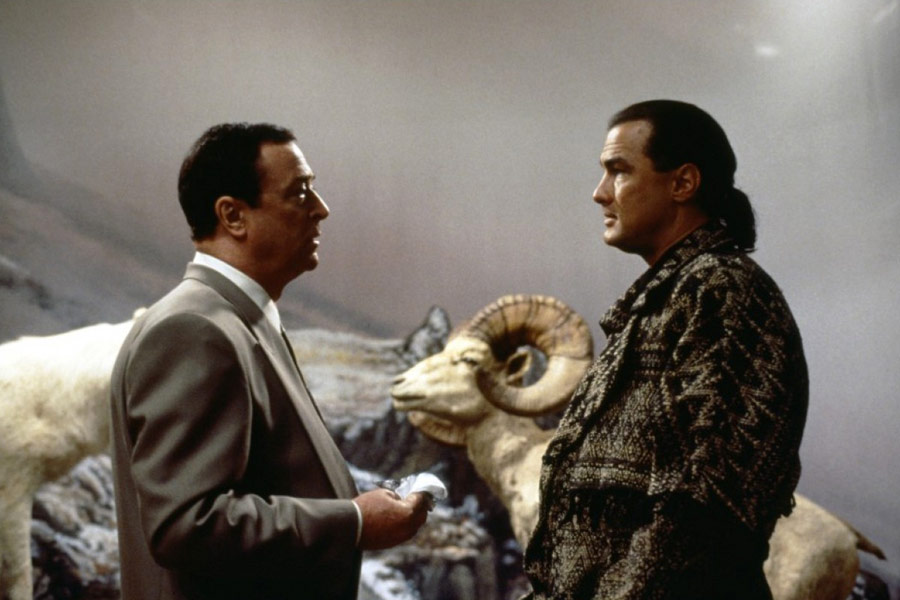
Michael Caine and Steven Seagal.

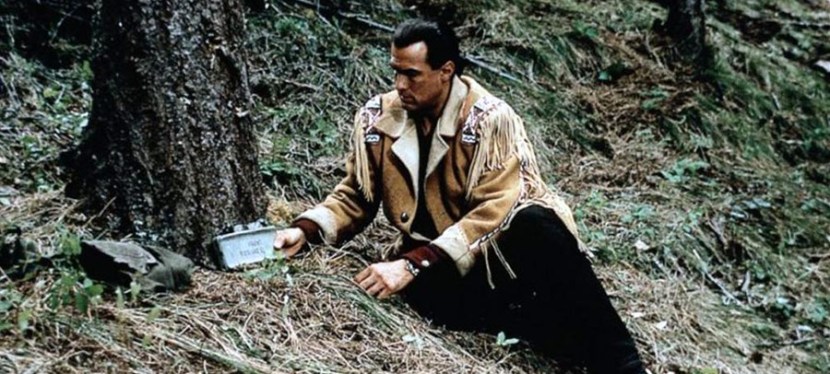
Unfortunately for Jennings and the other bad guys, Taft survived and got assistance from native Alaskans. Very predictably, he makes a comeback, collects weapons, performed a few destructive operations before proceeding to Aegis Oil’s rig to cause further destruction and kill bad guys!

Then the film ends with Taft giving a speech at the Alaska State Capitol focused on uncontrolled pollution, environmental destruction and big businesses’ contribution to environmental decline.

ODG4
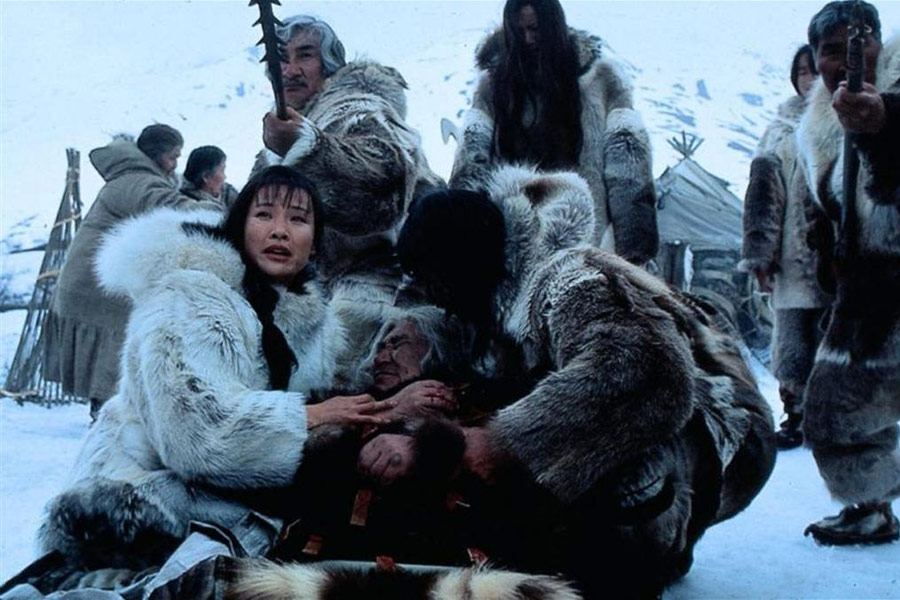
Chinese actress Joan Chen pretending to be a native tribe member.

It’s funny how Taft got to deliver his speech. He was not arrested for causing the oil rig’s devastation nor was held accountable for killing other people. Where were the local authorities who could have initiated an investigation? Even without Michael Jennings, the oil company could have gone to the local authorities or the federal government to accuse Forrest Taft for murder and even acts of terrorism! Also where in the world are those staunch, loudmouth environmental activists, SJWs and climate change activists? The damage caused by Taft on the oil rig clearly caused damage to the natural environment with those toxic fumes from the explosions! Logic was clearly thrown out for the sake of senseless violence.

When it comes to performances, this movie is a showcase of shallow acting and cinematic expressions. Not only are the characters one-dimensional and the script really had no character development, the actors really had no where to go as far as acting is concerned. Chinese actress Joan Chen plays Masu who only serves as the English-speaking expository dialogue delivery person to help the audience understand the norms and concerns of a native tribe. Shari Shattuck  (who is an author and has her own Facebook page) played the pretty, bland and straight-forward special assistant to Michael Jennings. R. Lee Ermey, who is best known for playing military officers, plays the leader of a group of mercenaries who got defeated too easily by Seagal.

In terms of directing and overall presentation, this movie is clearly nothing more than a vanity project of Steven Seagal. There were many moments in the film that looked like it suggested viewers to worship and idolize Seagal. The pacing of the film is very lackluster overall.

Poorly directed scenes? One of them is the excessively violent torture scene of Hugh Palmer (played by a then 73-year-old Richard Hamilton) which showed no restraint on the part of filmmakers. The scene, which was clearly designed to make moviegoers see the evil of Michael Jennings through the acts of his henchmen, would have worked better had the on-screen torture been reduced and shortened.

More on the movie’s violence, the scene showing Forrest Taft easily beating up multiple oil workers in response to the mistreatment towards a native man was unnecessary and overly long. Taft looked more like a senseless superhero who does not care about humanity and laws. And then there was that hand-slap game between him and “the man’s man” Big Mike (Mike Starr). The presentation of violence and bloodily injuring a man as means of enlightenment is senseless.

Ultimately On Deadly Ground is a worthless action to film to watch and I believe only die-hard Steven Seagal fans will love it. It was a very bad movie back in 1994, it’s even worse by today’s standards. On Deadly Ground is filled with bad ideas turned into film. A pro-environment concept presented as a senseless action film is a big waste. And then there is the old stereotype that a giant corporation’s head is unabashedly evil, inhuman and greedy (note: not all corporate heads of billion-dollar corporations are like that).

As such, I should say that you should never waste your time nor your money on this piece of crap.

+++

Note: This retro movie review was originally published at my old blog Geeks and Villagers. What you just read was the updated and expanded version. As such, this retro movie review is the most definitive version.


Thank you for reading. If you find this article engaging, please click the like button below and also please consider sharing this article to others. Also my fantasy book The World of Havenor is still available in paperback and e-book format. If you are looking for a copywriter to create content for your special project or business, check out my services and my portfolio. Feel free to contact me as well. Also please feel free to visit my Facebook page Author Carlo Carrasco and follow me at HavenorFantasy@twitter.com