A Look Back at Action Comics #689 (1993)

Welcome back superhero enthusiasts, 20th century pop culture enthusiasts and comic book collectors! Today we go back to the year 1993 to take a close look at one of the tales of the Reign of the Supermen storyline told through an issue of Action Comics.

When Adventures of Superman #500 (1993) was released, it launched the Reign of the Supermen storyline (which focused on the tales of the Eradicator, Steel, Superboy and Cyborg Superman) and the comic book creators working on Superman comic books came up with lots of new concepts and storytelling ideas to sell to fans of the Man of Steel. Along the way, there was some suspense regarding the state of the supposedly dead Superman.

With those details laid down, here is a look back at Action Comics , published in 1993 by DC Comics with a story written by Roger Stern and drawn by Jackson Guice.  
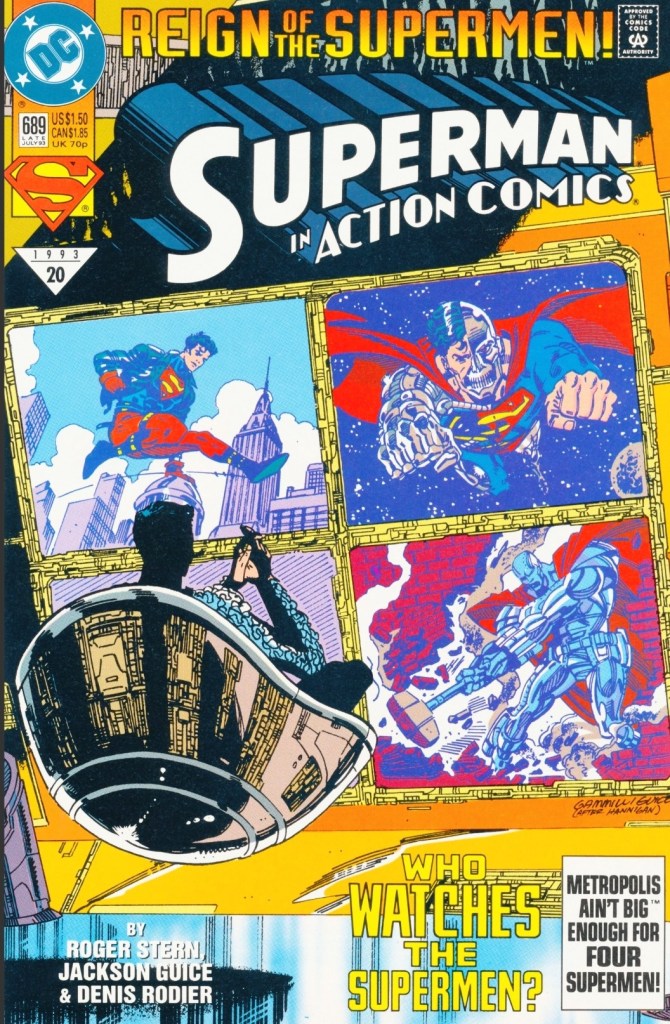
The cover.

Early story

The story begins in Metropolis when a major infrastructure of the city got heavily damaged leaving both Supergirl and Superboy (the lone teenager among the Supermen who emerged mysteriously after the death and funeral of Superman) no choice but to prevent the loss of human lives.

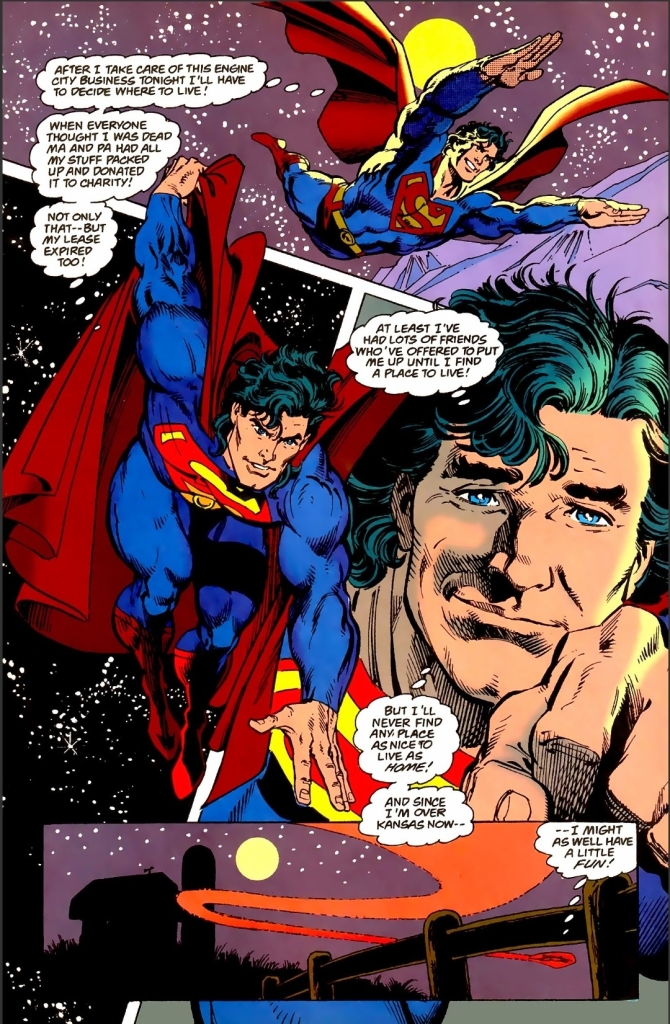
As the struggle in Metropolis continues, the Regeneration Matrix inside the Fortress of Solitude suddenly overloads with energy and breaks open. A man in Kryptonian garb wakes up feeling disoriented in the presence of several robots of the fortress. The man commands the robots to tell them what has been going on.

A short time later, the man uses the Kryptonian technologies of the fortress to examine simultaneous videos while receiving verbal updates from one of the robots. He gets informed that all individuals operating under the name of Superman have been monitored before he woke up. Carefully the man the captured footage of Superboy, the Eradicator, Steel and Cyborg Superman.

He is convinced that things have gotten completely out of hand and the name of Superman will not be turned into a franchise. He decides that something must be done and he has to get to Metropolis…

Quality
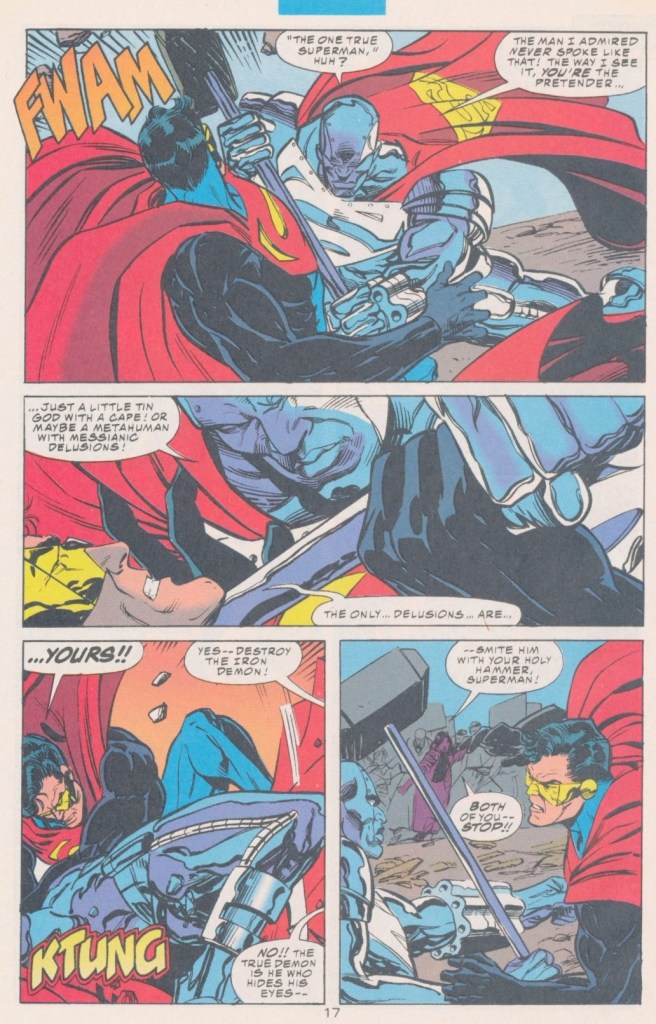
Steel and the Eradicator fought each other.

This chapter of the Reign of the Supermen storyline has a lot of developments moving simultaneously with the spotlight being shared among Superboy, Supergirl, Lex Luthor, Jonathan Kent, Martha Kent, Steel and the Eradicator plus the traditional supporting characters of Lois Lane and Jimmy Olsen. To say the least, it will take an effort for any reader to grasp the many plot developments and all the details crammed into this single comic book.

By looking at the plot developments, Superboy’s plot does not have much depth. Apart from seeing him and Supergirl helping the people affected by the disaster, you will see his interactions with (and his perception of) her and Lex Luthor getting frustrated because Superboy rejected his offer to work for Lexcorp. Superboy is not so interesting here.

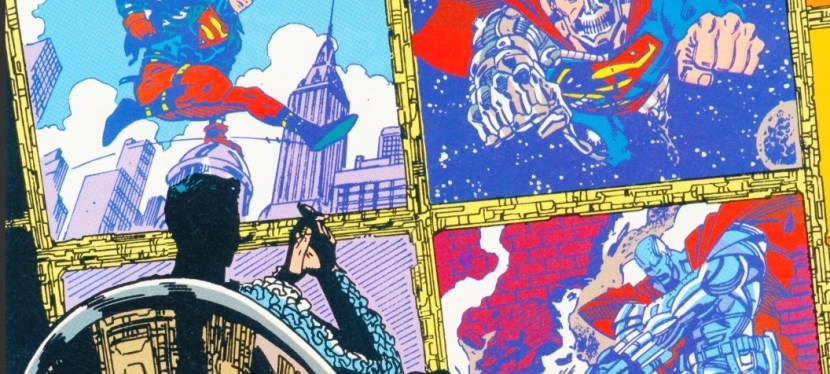
The other plots such as Jonathan Kent expressing his strong belief that Clark Kent is the true and the definitive Superman, the conflict between Steel and the Eradicator, and the mysterious man (Superman actually) inside Fortress of Solitude are the more engaging ones to follow. It was only right that the cover of this comic book focused on the newly returned Superman monitoring the other Supermen while inside the fortress.

What made this comic book interesting was the creative team’s exploration of the actual meaning of heroism, people’s fear and confusion while dealing with the existence of four Supermen, and humanity’s exploitation of the presence of powerful beings for financial gain or greater influence over the people.

Conclusion
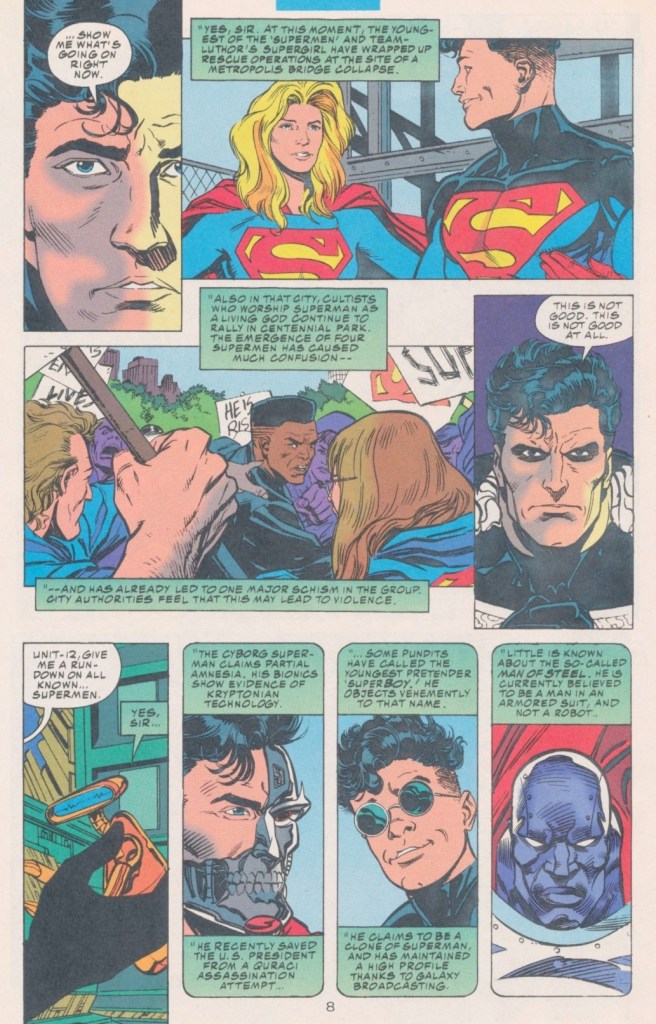
The mysterious man inside the Fortress of Solitude monitors recent events and who the Supermen are.

Action Comics (1993) is crammed and had a lot of plots dramatized. This was intentionally done because DC Comics at the time had momentum with the Reign of the Supermen storyline and it was inevitable that they started building up for the next stage that eventually became the return of the iconic Superman and re-establishing his prominence within the shared post-Crisis universe.

Overall, Action Comics (1993) is satisfactory.

+++++

Thank you for reading. If you find this article engaging, please click the like button below, share this article to others and also please consider making a donation to support my publishing. If you are looking for a copywriter to create content for your special project or business, check out my services and my portfolio. Feel free to contact me with a private message. Also please feel free to visit my Facebook page Author Carlo Carrasco and follow me on Twitter at  @HavenorFantasy as well as on Tumblr at https://carlocarrasco.tumblr.com/ and on Instagram at https://www.instagram.com/authorcarlocarrasco
A Look Back at Superman #79 (1993)

Welcome back superhero enthusiasts, 1990s pop culture enthusiasts and comic book collectors! Today we go back to the year 1993 and explore a notable chapter of the post-Crisis DC Comics universe through the Superman monthly series.

Months after DC Comics published the death of Superman with the best-selling Superman (1993), the publisher went on to shake things up with the Reign of the Supermen storyline. One of the four Supermen was Cyborg Superman who first appeared in Adventures of Superman #500 (1993) and had his first story in Superman #78 (1993).

With those details laid down, here is a look back at Superman , published in 1993 by DC Comics with a story written and drawn by Dan Jurgens.   

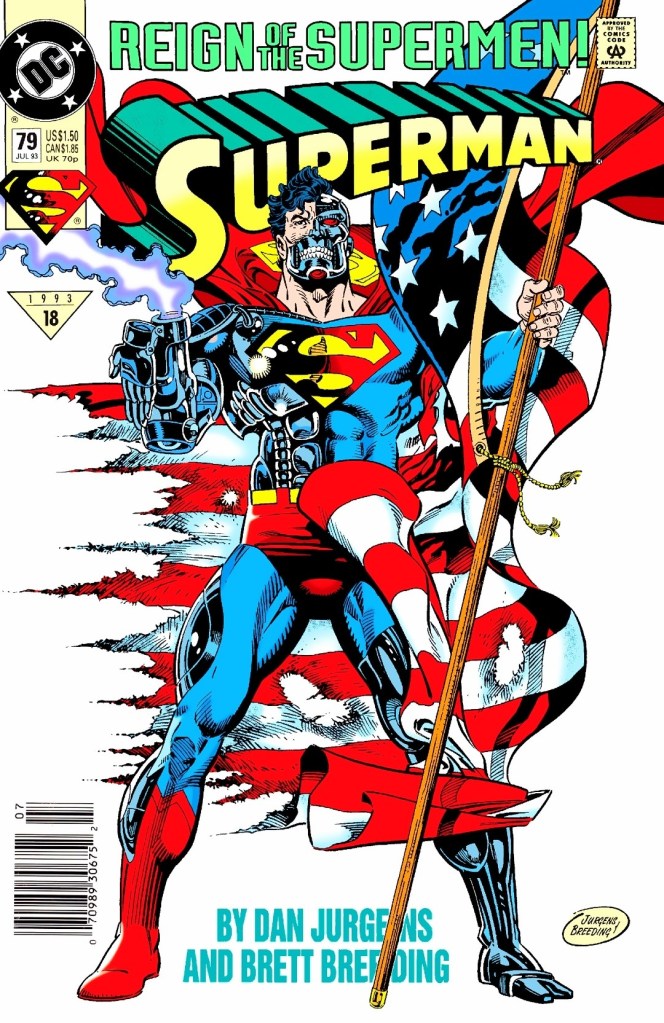
The cover.

Early story

The story begins inside a dark part of The Daily Planet with journalist Ronald Troupe starting his work in the absence of Clark Kent. Since Superman’s death, the very accomplished Kent has been absent and was perceived to have died somehow while covering Doomsday’s rampage through Metropolis. 

With Kent absent, the newspaper lost one of its best writers. This opened an opportunity for Ronald Troupe to approach Perry White to fill Kent’s slot and work. White, who was close with Kent, values hungry reporters and challenged Troupe to bring him a story so big, he could not turn it down.

With the sudden presence of the Supermen, Troupe viewed Cyborg Superman as a major subject to report about…

Quality

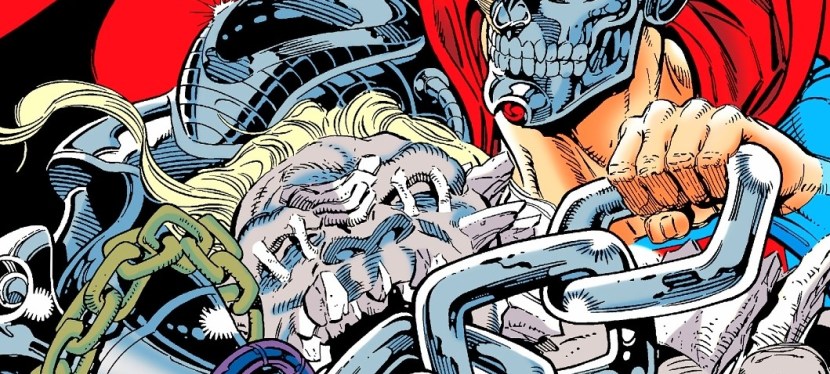
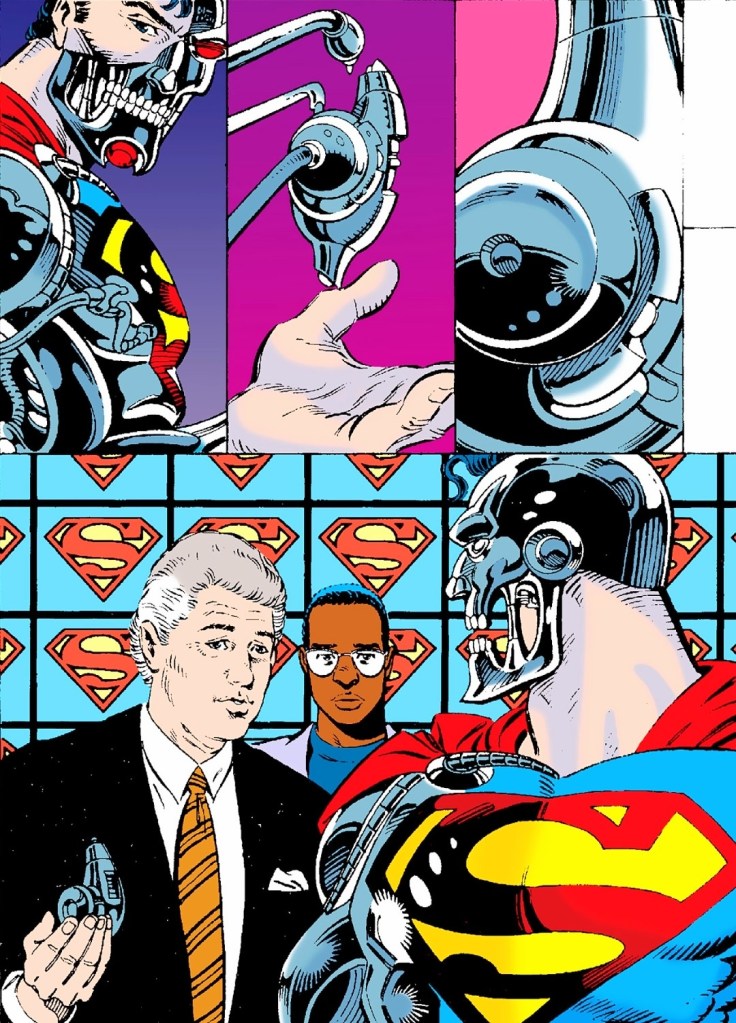
The evil Cyborg Superman handing over a device to US President Bill Clinton. This image is strangely symbolic as both of them are evil figures – one is fictional and the other is real. Clinton’s legacy of empowering Palestinian terrorists through the mass murderer Yasser Arafat still remains.

I want to start with the approach Dan Jurgens took to come up with this particular Reign of the Supermen story. Instead of telling the tale through the viewpoint of the more established Daily Planet journalist Lois Lane or photographer Jimmy Olsen, Jurgens instead used the newcomer Ronald Troupe who happened to be a hungry journalist tasked with coming up with a compelling report about Cyborg Superman. This creative approach resulted in a very fresh look at the events involving the caped cyborg complete with the use of a journalistic narrative Troupe wrote on his computer (the paragraphs are stylishly displayed on each page). The writing done was pretty lively to read from start to finish.

I do have a problem with how specific events turned out. To ensure that Troupe would encounter Cyborg Superman, the established character Max Lord (who is working directly with the US President over very sensitive matters) very unrealistically had his government-provided limousine stop (while entering the White House gate half-way) and actually got out to meet Troupe only because the reporter convinced him too easily. Even back in the 1990s, such a scenario is very unrealistic and no person working with the US President would ever stop to give a reporter special attention while compromising security of the White House.

And then there was the short sequence in which Troupe – already within the White House perimeter with several defense turrets already firing energy blasts – miraculously managed to get close to Cyborg Superman without getting hit was also very unbelievable. Very clearly, Troupe is this comic book’s magical black man.

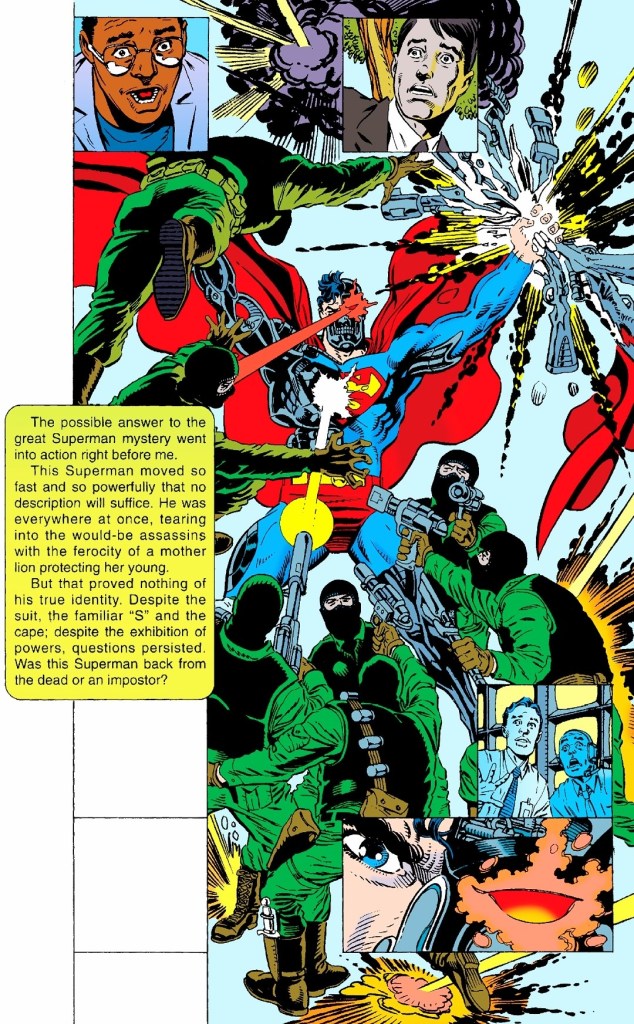
To come up with the superhero spectacle, elements of Islamic terrorism (represented by the fictional Qurac and its terrorists) attacking the White House plus Cyborg Superman’s sudden involvement were implemented. Quite predictably, the caped cyborg became the centerpiece of the action. I can say the spectacle here was fresh and intriguing to see.

Conclusion

Cyborg Superman fights the terrorists of Qurac.

Superman (1993) has a very unique approach on storytelling but the above-mentioned unbelievable turnout of events plus Ronald Troupe being the magical black person (literally protected by plot armor) somewhat ruined the reading experience for me. By the time the story ended, the anticipated pay-off to everything that was built-up ended up weak and unsatisfying. To be clear, this is not a badly made comic book but its flaws really ruined it. Also by today’s standards, Cyborg Superman is a very evil character and having him with the American flag on the cover is disgusting.

With regards to geopolitics, having Bill Clinton as the US President made this comic book age very badly. As President, Clinton empowered Palestinian terrorists and anti-Semitic people through the mass murderer Yasser Arafat (a real-life demon) while disrespecting Israel and its people. People who love abortion, political correctness (which leads to wokeness), victimhood and LGBTQ rights also benefited from Clinton’s sinister leadership. By today’s standards, having Clinton and Cyborg Superman appear together strongly symbolize real-life evil and fictional evil in a rather creative way.

It was destiny that his wife Hillary Clinton lost the 2016 US Presidential Election to Donald Trump. This is because the Clinton legacy remains very bad for the whole world. Trump, who is now the US President once again, is already working to make serious corrections while also restoring dignity in America.

Overall, Superman (1987) is not worth your time. Only those who are really obsessed with the Reign of the Supermen storyline can enjoy it. For those looking for the iconic Superman, better look for another comic book!

+++++

Thank you for reading. If you find this article engaging, please click the like button below, share this article to others and also please consider making a donation to support my publishing. If you are looking for a copywriter to create content for your special project or business, check out my services and my portfolio. Feel free to contact me with a private message. Also please feel free to visit my Facebook page Author Carlo Carrasco and follow me on Twitter at  @HavenorFantasy as well as on Tumblr at https://carlocarrasco.tumblr.com/ and on Instagram at https://www.instagram.com/authorcarlocarrasco
Retro Gaming Ads Blast – Part 8

Welcome back readers, fellow geeks and electronic gaming fans!

In this edition of the Retro Gaming Ads Blast (RGAB) series, we will take a look at another batch of retro gaming print ads from the 1980s and 1990s.

For the newcomers reading this, Retro Gaming Ads Blast (RGAB) looks back at the many print ads of games (console, arcade, computer and handheld) that were published in comic books, magazines, flyers and newspapers long before smartphones, social media, the worldwide web and streaming became popular. To put things in perspective, people back in the 1980s and 1990s were more trusting of print media for information and images about electronic games and related hardware.

With those details laid down, here is the newest batch of retro gaming print ads for you to see and enjoy…

1. Enemy Zero print ad

I should say Sega did a solid job by making this intriguing and eye-catching print ad for Enemy Zero.

The first time I saw this print ad of Enemy Zero in the late 1990s, I was intrigued by its visual concept and it got me interested to learning more about the game. Enemy Zero was a sci-fi video game developed by Warp and released as a console-exclusive on the Sega Saturn. Since I never owned a Saturn, I never got to play the game but I was inspired to learn more about Warp (which developed the hit game D). As it turns out, Enemy Zero started as a project for PlayStation but because of Sony’s failure to fulfill the pre-orders of D on PlayStation (100,000 copies ordered but less than 30,000 copies printed by Sony), Warp’s head Kenji Eno decided to make Enemy Zero exclusive to the Sega Saturn. Enemy Zero was published by Sega worldwide while Warp published it in Japan, and the game sold between 500,000 to 700,000 copies (based on Eno’s claim).

2. Bionic Commando print ad

For the American market, Capcom showed what the game box and front cover art would look like, then added the details and two screenshots for readers to examine.

Back in the late 1980s, I played Bionic Commando and managed to finish it after enduring lots of challenges along the way. It was a very unique adventure game as it used a highly unusual method of moving from one platform to the next by means of a futuristic grappling gun. This particular print ad showcased what the game’s actual box looked like (with cover artwork made for North America) and used two screenshots from the game. This ad hardly captures the excitement and intensity that awaited gamers and yet it manages to give people a clear look at the grappling concept. While the North American version of the game has certain content altered, it still had the same gory ending (and Adolf Hitler as the main villain) as the Japanese version.

3. RoboCop print ad

This served as an extension of the impact of the very violent 1987 movie.

RoboCop made huge impact on moviegoers as well as people who love science fiction and the R-rated action films Hollywood studios released in the 1980s. That being said, it was not surprising that a video game of RoboCop was released on the Nintendo Entertainment System (Family Computer in Japan) by Data East and the print ad they came up with cleverly used imagery from the movie poster and the screenshots showed exactly what RoboCop fans expected to see such as the enemy robot ED-209 and thugs. This game strongly reflects the business trend of the 1980s when companies made merchandise and adaptations of R-rated blockbuster films to sell to kids and teenagers.

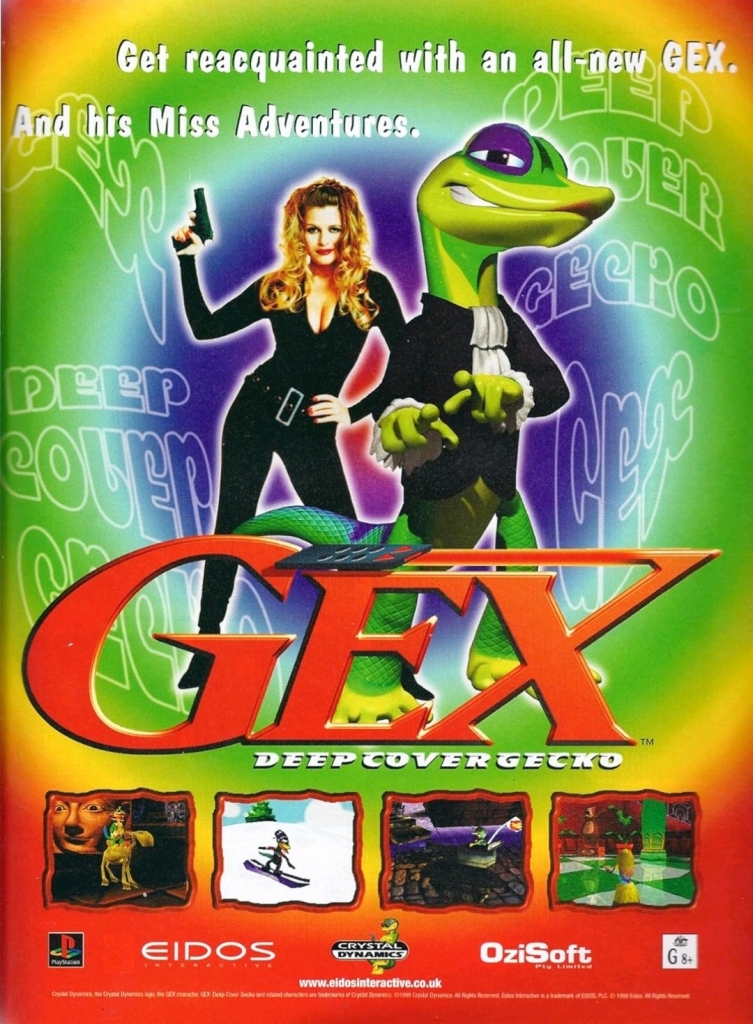
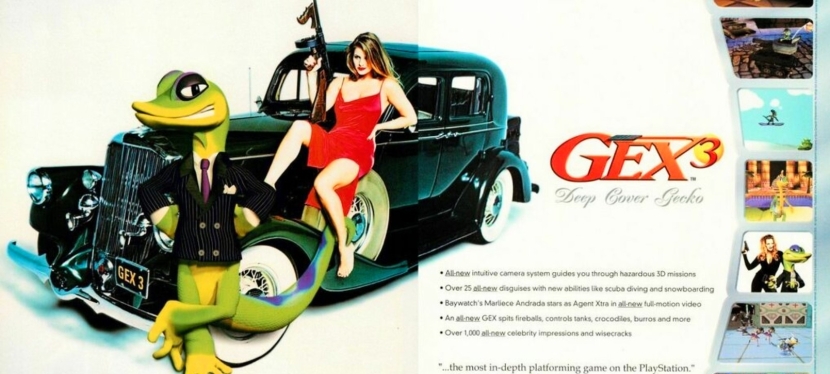
4. Gex 3: Deep Cover Gecko print ads

This print ad for Europe had a James Bond vibe.
March 1998 Playmate of the Month on the hood of the car looking at Gex.
The 2-page print ad of Gex 3: Deep Cover Gecko.

In 1999, Eidos Interactive – the company behind the wildly popular Tomb Raider games of the decade – became aggressive marketing Gex 3: Deep Cover Gecko for PlayStation and Nintendo 64. They were so aggressive, they featured actress and Playboy’s Playmate of the Month (March 1998) Marliece Andrada alongside their star character Gex in the marketing which was not limited to America. For the newcomers reading this, a multimedia approach was implemented on the narrative of the game’s PlayStation version which explains why it has full-motion video sequences featuring Andrada as the character Agent Xtra. As seen in these print ads, Eidos Interactive had Andrada looking pretty and sexy to really sell the game.

5. Barkley Shut Up and Jam! print ad

Anyone here a Charles Barkley fan?

I remember the many types of basketball video games that were released on game consoles back in the 1990s. While there were NBA video games that had in-depth rosters of players with seasonal gaming in mind, there were other basketball-related video games that were not about the said league but featured an NBA star. In this print ad, publisher Accolade prominently featured NBA star Charles Barkley to promote the game Barkley Shut Up and Jam!, posted some words emphasizing sports intensity, and showed one screenshot to assure gamers that this is a basketball game. While the critical reception was mixed, the game must have sold enough to convince Accolade to release a sequel two years later with Barkley still the endorser.

6. The Death and Return of Superman print ad

This print ad clearly aimed for the fans of the comic books as well as gamers looking for an action-packed game to play.

Now this is one very eye-catching print ad that appeared in comic books and magazines in the 1990s. Anyone who knows comics would recognize the grey fist (with sharp bones protruding on the knuckles) belonging to Doomsday who killed Superman in Superman (1993), and the bloody presentation on the famous S was very aggressive for its time. The game itself was an adaptation of the two storylines (published in 1992 and 1993 respectively) that saw Superman’s death, his return and the appearances of new Supermen. While sales figures are not available, The Death and Return of Superman eventually attracted mixed reviews from the critics.

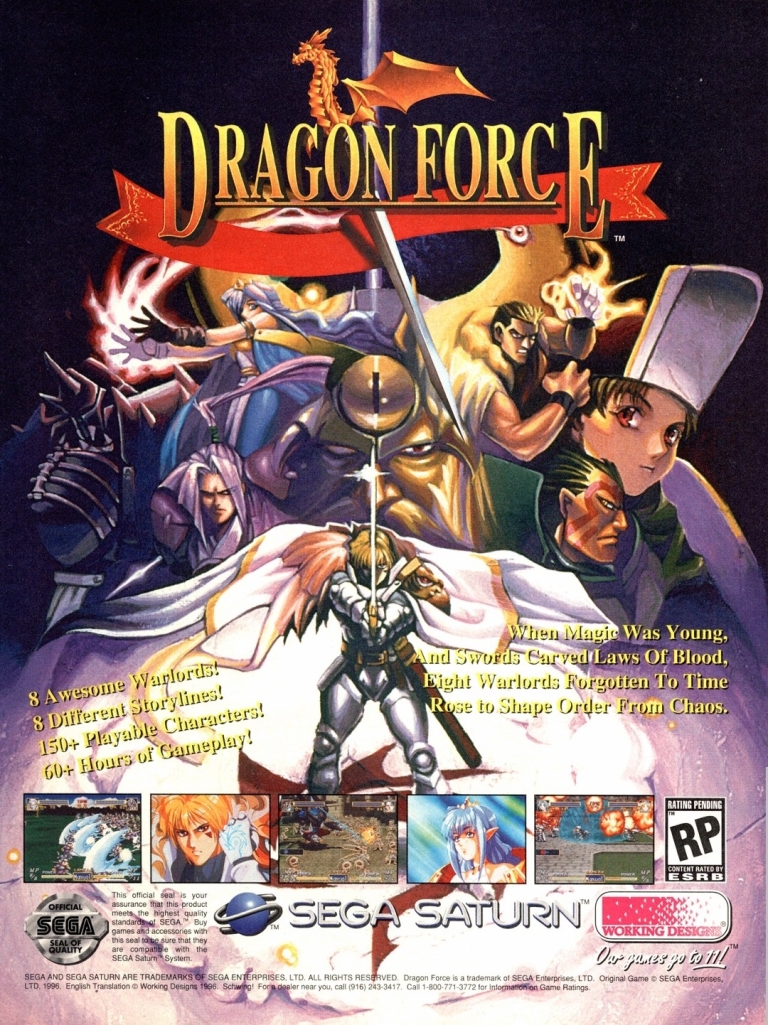
7. Dragon Force print ad

This was printed in magazines at a time when Working Designs had a strong business relationship with Sega.

While the Sega Saturn was undeniably a huge commercial disappointment in North America, the console still had some great games that was widely praised by game critics and heavily bought by gamers. One of those outstanding games on the console was Dragon Force (developed by Sega and J-Force in Japan, localized in America by Working Designs) which received great critical acclaim and achieved commercial success both in Japan and in America. The popular magazine Electronic Gaming Monthly named Dragon Force as the Saturn Game of the Year as well as Strategy Game of the Year in 1996. As a Working Designs release, this print ad has an ambitious fantasy concept visually emphasized, detailed lines of descriptions and screenshots that strongly appealed to the gamers, anime enthusiasts and those who love fantasy. This ad is also a sad reminder that the business relationship between Sega and Working Designs went downhill afterwards (read: Bernie Stolar) and the sequel Dragon Force II was never released outside of Japan.

+++++

Thank you for reading. If you find this article engaging, please click the like button below, share this article to others and also please consider making a donation to support my publishing. If you are looking for a copywriter to create content for your special project or business, check out my services and my portfolio. Feel free to contact me with a private message. Also please feel free to visit my Facebook page Author Carlo Carrasco and follow me on Twitter at  @HavenorFantasy as well as on Tumblr at https://carlocarrasco.tumblr.com/ and on Instagram at https://www.instagram.com/authorcarlocarrasco
A Look Back at Superman #83 (1993)

Welcome back superhero enthusiasts, 1990s culture enthusiasts and comic book collectors! Today we go back to the year 1993 to take a close look at one of the many tales published through the Superman monthly series.

For the newcomers reading this, DC Comics published the Funeral for a Friend storyline set after Superman’s death (Superman ). Funeral for a Friend explored the impact Superman’s death had on local society, the civil and political stakeholders, as well as DC’s many superheroes who were connected with the icon (read my retro reviews here, here, here and here). Of course, DC brought the Man of Steel back to life which led to the Reign of the Supermen storyline. This obviously meant concluding the Funeral for a Friend storyline.

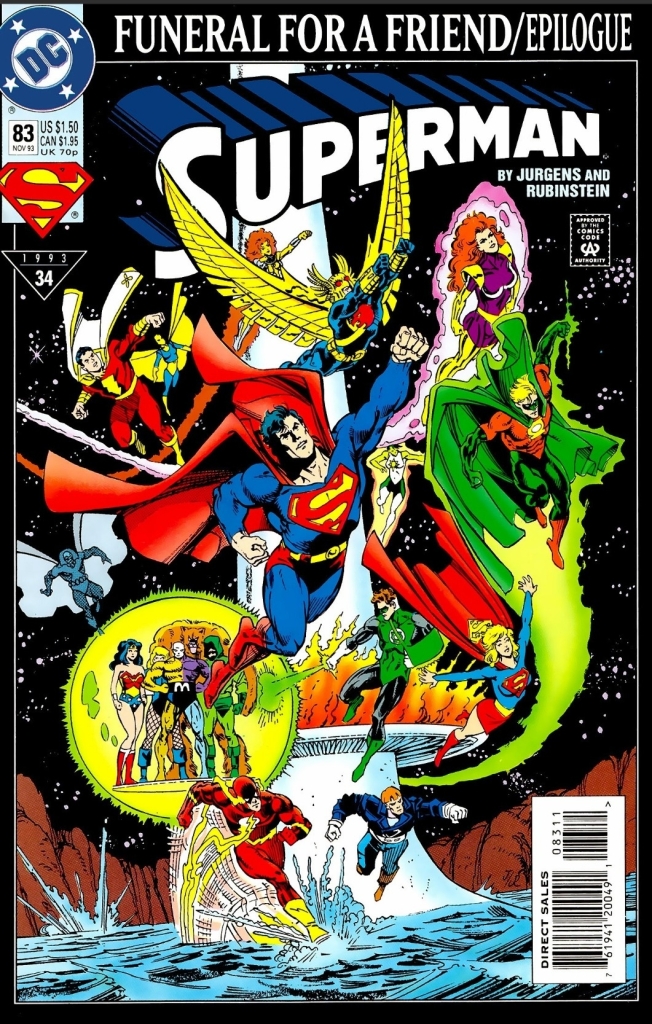
With those details laid down, here is a look back at Superman #83, published in 1993 by DC Comics with a story written and drawn by Dan Jurgens with ink work by Joe Rubinstein. This is the epilogue of Funeral for a Friend.

The cover.

Early story

The story begins with Superman meeting an arriving Batman (note: Azrael playing the role as Bruce Wayne had been paralyzed by Bane) in the presence of Commissioner Gordon in Gotham City. He tells Batman that it was time for them to go to a certain ceremony which catches Azrael knowing nothing about it all forcing him to just play along. Batman resorts to making an excuse and turns Superman down, even though he learns that the entire Justice League will be involved to take care of the Engine City problem. Not wanting to spark Superman’s suspicion, Batman leaves Superman and Gordon behind. Superman then flies away.

Meanwhile, Lex Luthor, Supergirl and personnel fly towards Engine City. Luthor is obsessed with accumulating Kyptonite at the site…

Quality

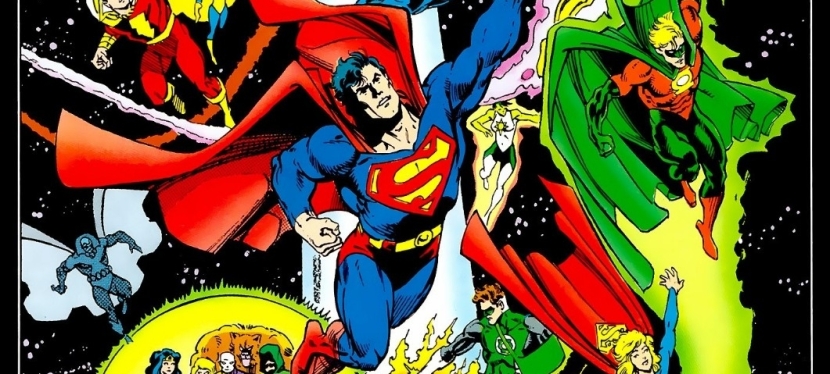
Superman, Wonder Woman, Green Lantern and the Flash with Lex Luthor and Supergirl (in the background).

As the conclusion of the Funeral for a Friend storyline, this is a mixed bag of creative concepts. It has scenes that developed established supporting characters such as Lois Lane, Jimmy Olsen, Cat Grant and Superman’s parents Jonathan and Martha Kent. The main story of this comic book has a lot more to do with the Justice League than Superman himself as a result of a huge crisis in which an actual coastal city could collapse, fall into the sea and potentially poison the aquatic life.

That’s not to say that Superman does not have sufficient presence in this comic book. In fact, the Man of Steel has scenes that highlight his humanity, his leadership role among the Justice League and how he is still adjusting to life after getting killed by Doomsday. What Superman fans won’t find here is superhero action versus an enemy.

Still on the Superman relevance of this comic book, Lex Luthor’s obsession with accumulating as much Kryptonite as he could reflects his diabolic nature as well as his cunning moves with distorting people’s perception. Even though he does not commit any acts of violence, Luthor’s manipulative tactics even in the presence of many superheroes showed that he simply won’t stop at anything to get what he wants and what benefits him.  

Speaking of more characters, Green Lantern (Hal Jordan) here got a good piece of the spotlight as he emphasized why Engine City should fall into the Pacific Ocean which he relates to the destruction of Coast City. Through his dialogue, you can feel his bitterness and the impact that the Coast City tragedy had on his worldview. You will also see Aquaman, Wonder Woman, Guy Gardner and others participate in the talks.

Conclusion

Pay close attention to the details, Superman fans.

Superman #83 (1993) is a nicely crafted story that happens to be more about the Justice League dealing with a big problem with Superman present. As the epilogue to the Funeral for a Friend storyline, this comic book tied up certain loose ends but ultimately focused more on building up details and tension for future events. As this story took place a short time after Superman physically returned from the dead, readers will see a still-adjusting Man of Steel here and this clearly shows that the funeral is indeed over.

Overall, Superman #83 (1993) is recommended.

+++++

Thank you for reading. If you find this article engaging, please click the like button below, share this article to others and also please consider making a donation to support my publishing. If you are looking for a copywriter to create content for your special project or business, check out my services and my portfolio. Feel free to contact me with a private message. Also please feel free to visit my Facebook page Author Carlo Carrasco and follow me on Twitter at  @HavenorFantasy as well as on Tumblr at https://carlocarrasco.tumblr.com/ and on Instagram at https://www.instagram.com/authorcarlocarrasco
A Look Back at Superman #78 (1993)

Disclaimer: This is my original work with details sourced from reading the comic book and doing personal research. Anyone who wants to use this article, in part or in whole, needs to secure first my permission and agree to cite me as the source and author. Let it be known that any unauthorized use of this article will constrain the author to pursue the remedies under R.A. No. 8293, the Revised Penal Code, and/or all applicable legal actions under the laws of the Philippines.

Welcome back superhero enthusiasts, 1990s culture enthusiasts and comic book collectors! Today we go back to the year 1993 and explore a chapter of the Reign of the Supermen storyline through one of the issues of the Superman monthly series.

To put things in perspective, DC Comics fulfilled its promise to kill the iconic Man of Steel in Superman (1993) which sold a whole lot of copies and the daring death concept made Superman a hot news item. After a brief period showing what the world is like without Superman, DC resurrected him in Adventures of Superman #500 which spawned the different Supermen and a new storyline (the Reign of the Supermen) which took effect on the four Superman monthly series of the time.

With those details laid down, here is a look back at Superman , published in 1993 by DC Comics with a story written and drawn by Dan Jurgens.  

The cover.

Early story

The story begins with Lois Lane still thinking about Superman as she drives her car on a rainy night. At the moment, she still has not learned to live without him. As she is granted access into a facility of Lexcorp, she carefully thinks about the sudden number of many people around the country who claimed to have seen Superman.

Inside the facility, Dr. Meyer meets her and tells her that had met the Man of Steel sometime prior and he believes that the certain person who saved him and others was definitely the same person. Being skeptical, Lois Lane asked him if some other superhero saved them from certain death. In response, he shows to her an image of the heroic figure captured by security cameras. Lois recognizes the face and head even though some parts were shadowed…

Quality

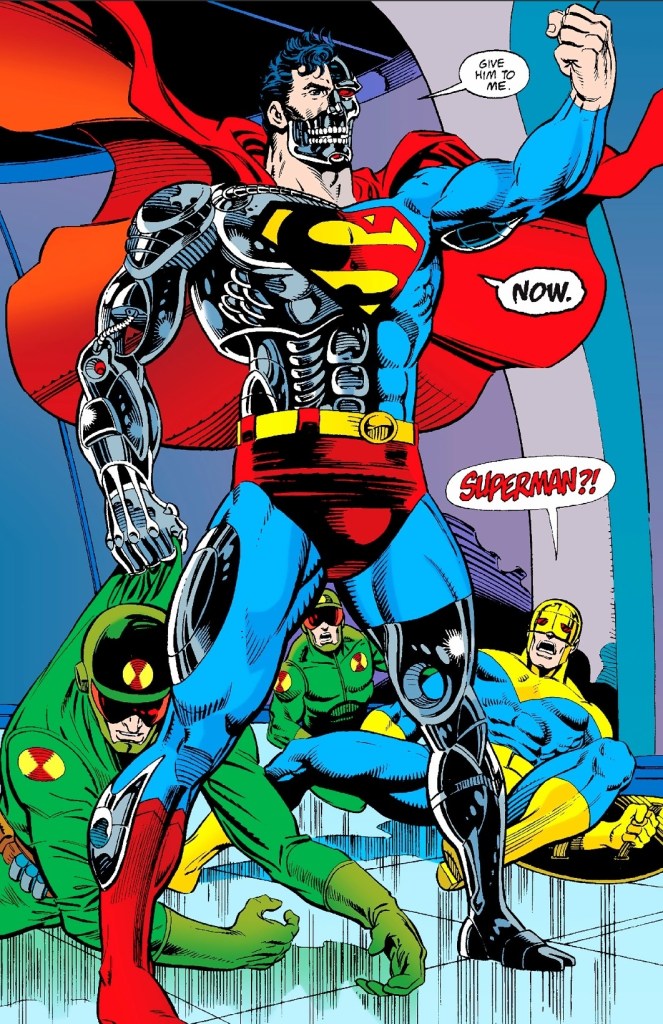
Cyborg Superman in full appearance.

Starting with the storytelling, I can say that this is one solid tale that really pokes the curiosity regarding Cyborg Superman…is he the real Superman or some very clever and capable impostor? Dan Jurgens really knows his Superman stuff and he used a clever approach on arousing the readers’ curiosity while still managing to move the story forward. As one of the early chapters of the Reign of the Supermen storyline, it was very obvious that things were set in motion to set up future post-death Superman stories.

The most engaging parts of this tale were the scenes between Lois Lane and Cyborg Superman (note: he sure looks like a Terminator-inspired take on the Man of Steel which itself was a daring concept back in 1993). Lois Lane here is clearly intelligent and for personal and professional reasons, she would not settle for words as definitive answers but have evidence scientifically analyzed right in front of her. Once again, this is a lively reminder that in the post-Crisis universe of DC Comics, Lois Lane is persistent on verifying facts to realize the truth (which is something clearly missing in today’s world of social media and news media outlets serving as loudspeakers for political forces).

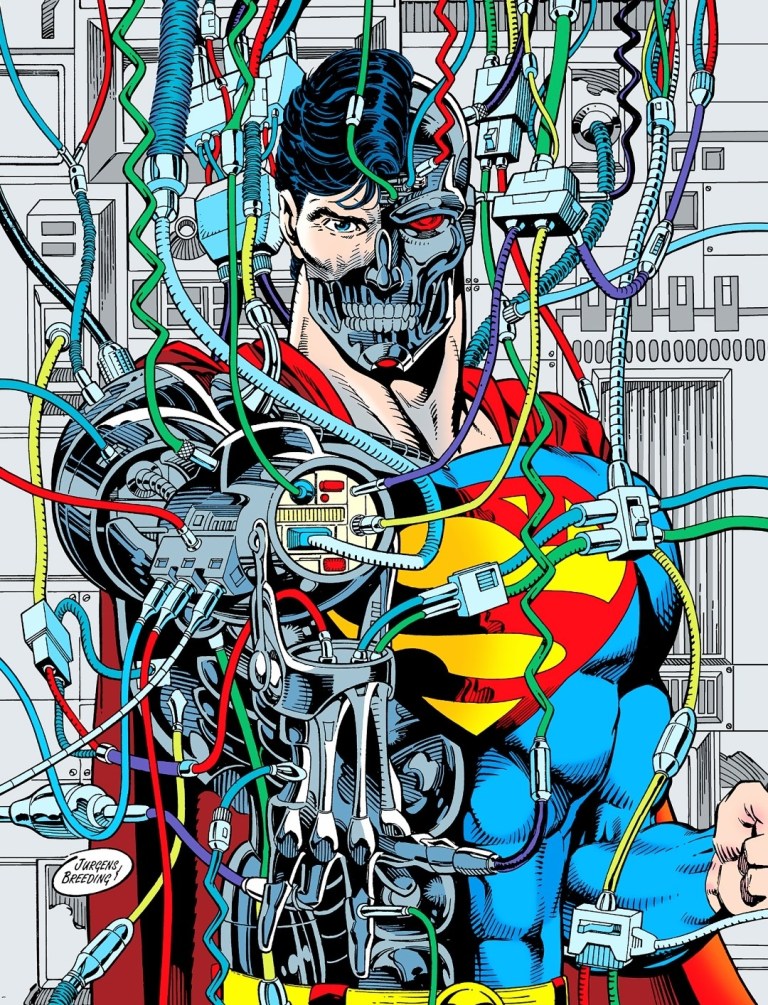
While the storytelling remains good all these decades, what really aged badly in this comic book was the bastardization of Superman’s iconic imagery with some robotic influences of the Terminator mixed in that made him look science fictional in appearance. Of course, Cyborg Superman was just one of the Supermen in this storyline and the Reign of the Supermen concept was clearly an extension of DC Comics’ dishonesty behind the death and return of the Man of Steel. This also shows DC’s irresponsible handling of one of America’s icons. Let’s be honest with ourselves here…how many of you really want to see Cyborg Superman in live-action form in a future DC superhero movie from Warner Bros. and James Gunn?

Conclusion

How many of you have this poster of a very bastardized image of Superman in your homes right now?

While Superman (1993) has a good story told and added to the mystery about the resurrection of Superman, it ultimately served as a build-up platform to set up further stories not only about the Man of Steel but also that of Doomsday (note: a big rematch happened a few years later). The image of Cyborg Superman is clearly a defamation of the iconic look of the Man of Steel and that alone really brought the overall entertainment value of this comic book way down in my view. I find it baffling that there was no major backlash nor an outrage from Superman fans back in 1993 over this.

Overall, Superman (1993) is serviceable.

+++++

Thank you for reading. If you find this article engaging, please click the like button below, share this article to others and also please consider making a donation to support my publishing. If you are looking for a copywriter to create content for your special project or business, check out my services and my portfolio. Feel free to contact me with a private message. Also please feel free to visit my Facebook page Author Carlo Carrasco and follow me on Twitter at  @HavenorFantasy as well as on Tumblr at https://carlocarrasco.tumblr.com/ and on Instagram at https://www.instagram.com/authorcarlocarrasco

A Look Back at Adventures of Superman #500 (1993)

Disclaimer: This is my original work with details sourced from reading the comic book and doing personal research. Anyone who wants to use this article, in part or in whole, needs to secure first my permission and agree to cite me as the source and author. Let it be known that any unauthorized use of this article will constrain the author to pursue the remedies under R.A. No. 8293, the Revised Penal Code, and/or all applicable legal actions under the laws of the Philippines.

Welcome back superhero enthusiasts and comic book collectors! Today we explore a key chapter in the post-Crisis era of DC Comics through a Superman comic book. This time, however, we go revisit a comic book that literally served as a bridge between the Funeral for a Friend storyline and the eventual Reign of the Superman storyline. I am talking about the 500th issue of the Adventures of Superman monthly series.

To put things in perspective, the Funeral for a Friend storyline dramatized the immediate aftermath of Superman’s sudden death which paved the way for comic book creators to develop not only DC superheroes (affiliated with Superman specifically) but also the supporting characters linked with the Man of Steel in new and creative ways. Not only that, there was even a months-long hiatus on all Superman-related comics before Adventures of Superman was released. Back in the old days when Internet connection and online news were not yet common, I heard lots of buzz about DC resurrecting Superman from the dead which added to the anticipation of the 500th issue of Adventures of Superman.

With those details laid down, here is a look back at Adventures of Superman , published in 1993 by DC Comics with a story written by Jerry Ordway and drawn by Tom Grummett.

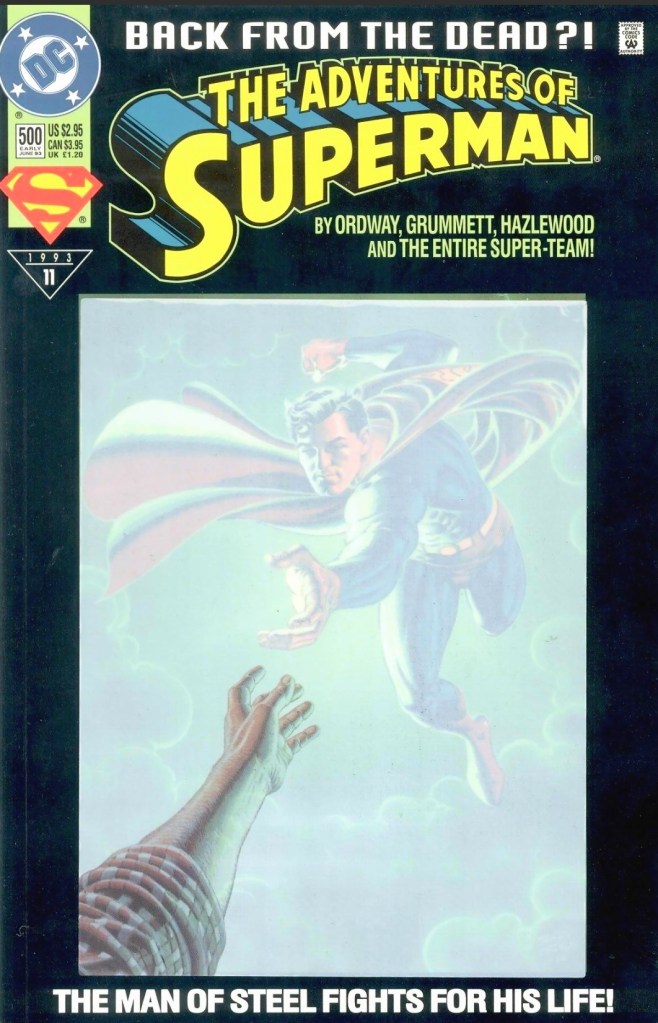
The cover of the premium version of this comic book.

Early story

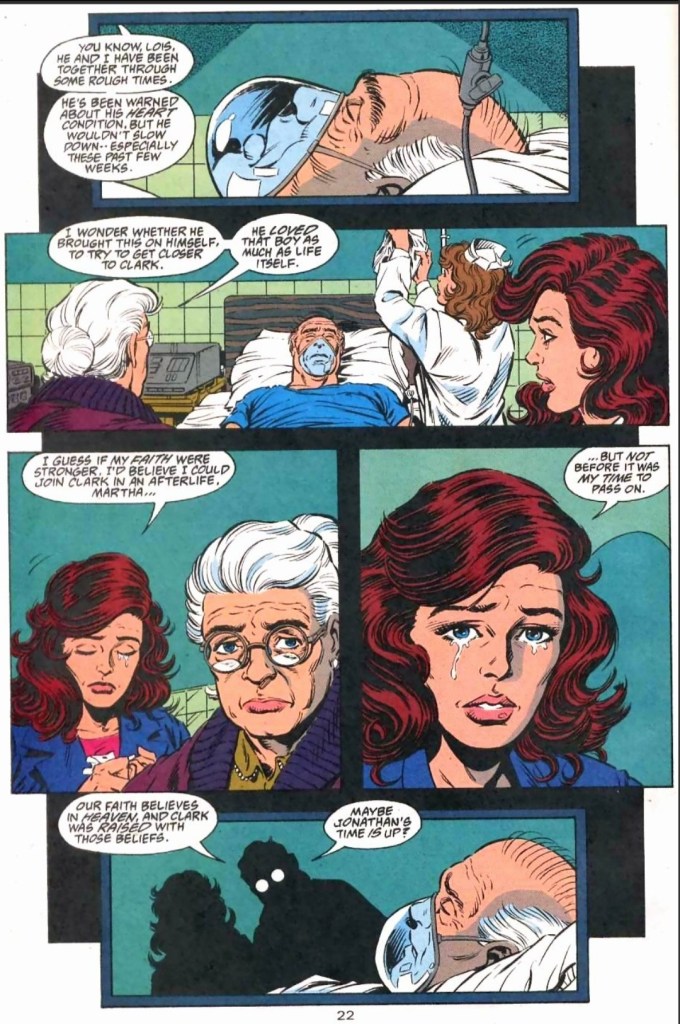
The story begins inside a Kansas hospital where medical professionals are trying to revive Jonathan Kent who lost consciousness. Martha Kent is present witnessing the efforts happen. As his physical body is being worked on, Jonathan Kent finds himself in a dream-like realm and to his shock, he meets his dead son Clark who finds himself being pulled into the bright light in the distance. Refusing to let go, Jonathan Kent accidentally tears off Clark’s clothes which reveal him as Superman in his iconic outfit. Superman tells his adoptive father to rejoin the living.

Suddenly two wraiths appeared and escorted Superman into the light. Still defiant, Jonathan then flies himself into the light to follow his son.

Back in the real world, Martha carefully monitors her husband’s health reading. After being assured by the medical staff that they won’t give up on her husband, Martha is surprised to see Lois Lane who arrived all the way from Metropolis…

Quality

Lois Lane with Martha Kent and the recovering Jonathan Kent.

Let me get straight to the point about this Superman story…this is a very dramatized approach on bringing back Superman from the dead without necessarily going all-out. As we comic book geeks know by now, the Reign of the Superman events launched with this comic book serving as a launch pad and that meant that people had to go through many comic books before finally getting to see Superman himself in resurrected form.

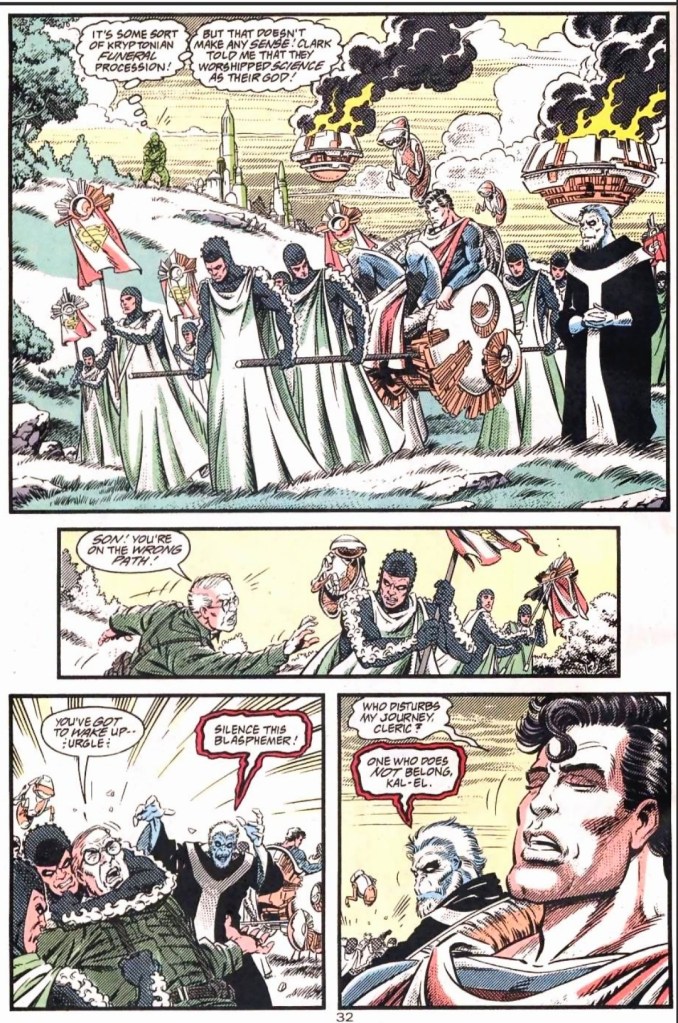
More on the story itself, the main feature here is Jonathan Kent’s struggle to follow Superman in the dream-like realm (note: DC’s version of the afterlife which is clearly not spiritual) as he was motivated by his love for him as well as his belief that the world still needs the Man of Steel as their beacon of hope. To be very clear, Jerry Ordway and Tom Grummet nicely executed their presentation of Jonathan Kent and his uncompromising effort to get his son back. The creative team’s imagination really was set into high gear which resulted in Jonathan revisiting a familiar place from his old days as a soldier, getting himself into a lair of demons, flying deep into space and visiting the realm’s own version of Krypton. Very truly, this comic book’s protagonist is Jonathan Kent and the iconic Superman was more of a supporting figure.    

While the Jonathan Kent tale is good to read, Superman’s return from the dead here ended up more as a teaser of things to come (note: the Reign of the Supermen). Considering the big promise that came with this comic book, it is indeed a disappointing pay-off towards all the build-up. Not only that, the side stories are a mixed back. The respective scenes of Lois Lane and Jimmy Olsen added weight to the narrative while the scenes of Gangbuster were pointless and looked more like hollow script filler. As for Cat Grant’s scene, it was designed to make readers feel sorry for her.

As for the scenes – each done by different creative teams – showing the new Superboy, the Eradicator, the black Man of Steel and the Cyborg Superman, these revelations really did not work to recover from the disappointing conclusion of the main story. They were more like creative distractions designed to promote what was coming in the other Superman monthly series of the time.

Conclusion

In the dreamy realm, Jonathan Kent pursues his adopted son Superman who gets treated like a living idol. The father-and-son dynamic is the most entertaining part of this tale.

Even back in the old days, Adventures of Superman (1993) was a disappointing read and it was a highly dramatized effort by DC Comics cautiously expressing that Superman’s death was nothing more than a highly deceptive publicity stunt with Dollar signs in mind.

Within the context of this comic book, the resurrection of Superman was essentially a half-step and his eventual full return in comics did not happen until months later (note: after many Reign of the Supermen stories were published). More on the resurrection aspect of this comic book, I can clearly say that Superman – no matter how iconic he is and no matter what comic book creators tried – will never ever become a beacon of hope nor a true savior for people in real life. It really does not matter that many people bought copies of Superman (the death) believing truly that they would witness the end of the American icon and witness a Superman-less future. What mattered here were the deception and the irresponsible use of a pop culture icon committed by DC Comics. Superman (1993) was the gigantic deception that sold millions while Adventures of Superman (1993) was the big follow-up deception.

The resurrection of Superman in this story does NOT make him a more significant DC Comics icon at all. I know that there are die-hard fans out there who love to compare the Man of Steel with Jesus Christ but such comparisons and forced attempts to link them together are pathetic and worthless. Superman is not real and even if he was, he could never overcome death nor could he save people. The resurrection of Lord Jesus can never be matched and only He saved people and led them to salvation in the presence of His Father, the Lord God.

By today’s standard, this comic book is much more disappointing and even worth less as a piece of American comic book history. While the work done by the Ordway-Grummett team here was not really terrible, it was the dishonesty and deception of DC Comics that led to this. In fairness to the creators, bringing back Superman after all the hype and belief invested related to his death was indeed a major obstacle for them. You could feel sorry for Ordway-Grummett.

Overall, Adventures of Superman (1993) should be avoided. If you really want to read it, try borrowing a copy. Just don’t spend anything on it.

+++++

Thank you for reading. If you find this article engaging, please click the like button below, share this article to others and also please consider making a donation to support my publishing. If you are looking for a copywriter to create content for your special project or business, check out my services and my portfolio. Feel free to contact me with a private message. Also please feel free to visit my Facebook page Author Carlo Carrasco and follow me on Twitter at  @HavenorFantasy as well as on Tumblr at https://carlocarrasco.tumblr.com/ and on Instagram at https://www.instagram.com/authorcarlocarrasco