Retro Gaming Ads Blast – Part 33

Welcome back readers, fellow geeks and electronic gaming fans!

In this edition of the Retro Gaming Ads Blast (RGAB) series, we will take a look at another batch of retro gaming print ads – including arcade flyers – from the 1980s and 1990s.

For the newcomers reading this, Retro Gaming Ads Blast (RGAB) looks back at the many print ads of games (console, arcade, computer and handheld) that were published in comic books, magazines, flyers, posters and newspapers long before smartphones, social media, the worldwide web and streaming became popular. To put things in perspective, people back in the 1980s and 1990s were more trusting of print media for information and images about electronic games and related products.

With those details laid down, here is the newest batch of retro gaming print ads for you to see and enjoy…

1. E.T. the Extra-Terrestrial Atari 2600 print ad
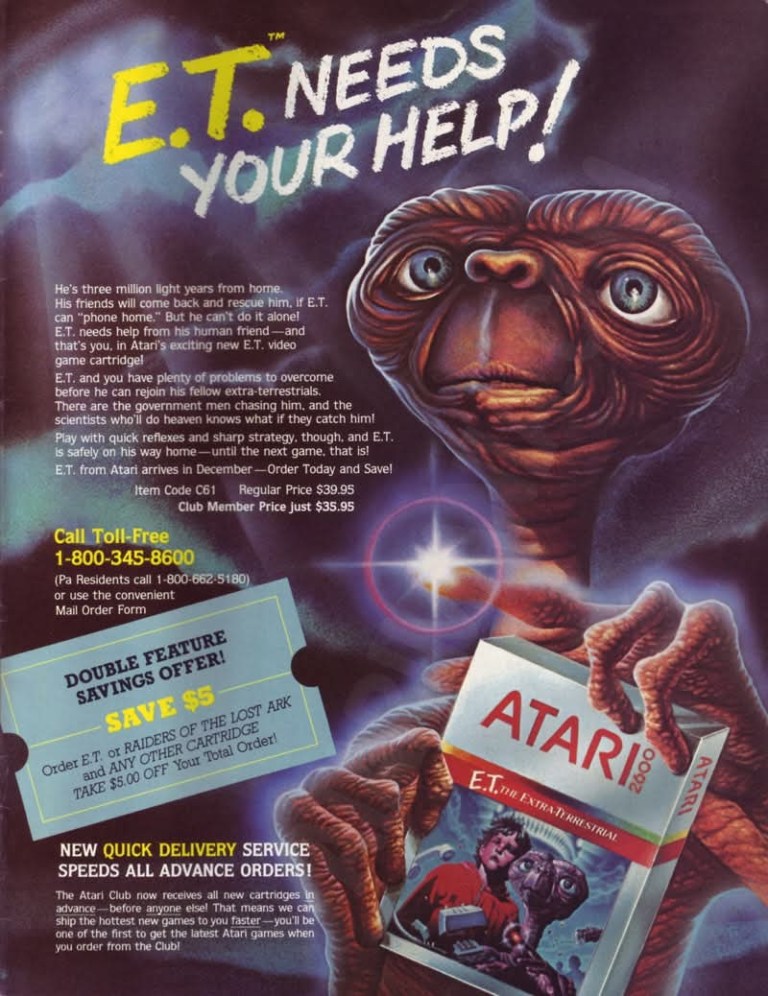
If you have seen Steven Spielberg’s 1982 movie, were you able to play the Atari 2600 video game? I did!

Atari invested a lot on its video game based on Steven Spielberg’s E.T. the Extra-Terrestrial as the film was a massive box office success. In addition to their Atari 2600 video game print ad showing E.T. with Elliot, they ran another print ad with a concept of the sci-fi character needing people’s help. They came up with original artwork showing E.T. holding a box of the Atari 2600 E.T. video game, then posted details about how to acquire a copy of the game (with prices for regular customers and club members) and posted a toll-free 1-800 phone number. They also offered a $5 discount for those who order the E.T. or Raider of the Lost Ark video game and another cartridge. This old ad had commerce written all over it.

2. Bulls vs. Lakers and the NBA Playoffs Sega Genesis print ad
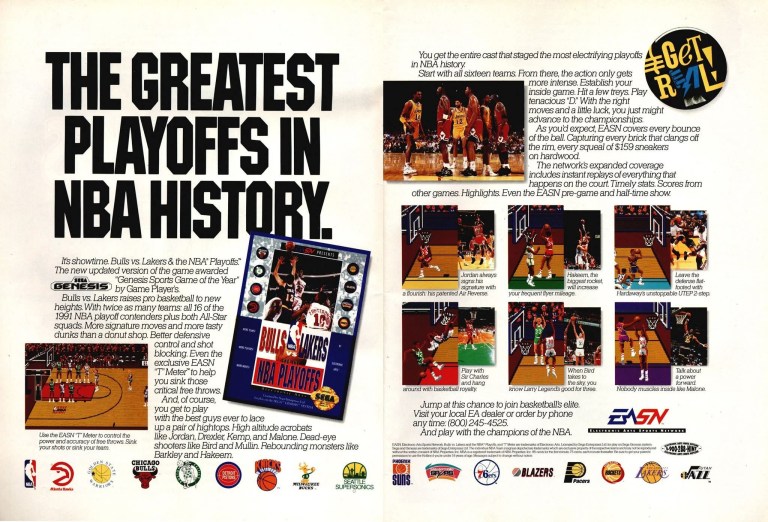
Before NBA Live, there was this old NBA video games series by Electronic Arts.

Based on the 1990-91 NBA season and the NBA finals match-up between the Chicago Bulls and the Los Angeles Lakers, Bulls vs. Lakers and the NBA Playoffs was Electronic Arts’ exciting game for the Sega Genesis which already had lots of sports-loving gamers. They made a 2-page print ad that was cleverly designed to make both gamers and NBA fans excited. It is not an accident that the ad showed comparative images (in-game footage and real-life basketball photos) of NBA superstars like Larry Bird, Michael Jordan, Karl Malone and Charles Barkley on the right. With the strong visual presentation, emphasis on popular NBA players and other details posted, this old ad is still fun and exciting to look at.

3. Japanese Smash T.V. print ad
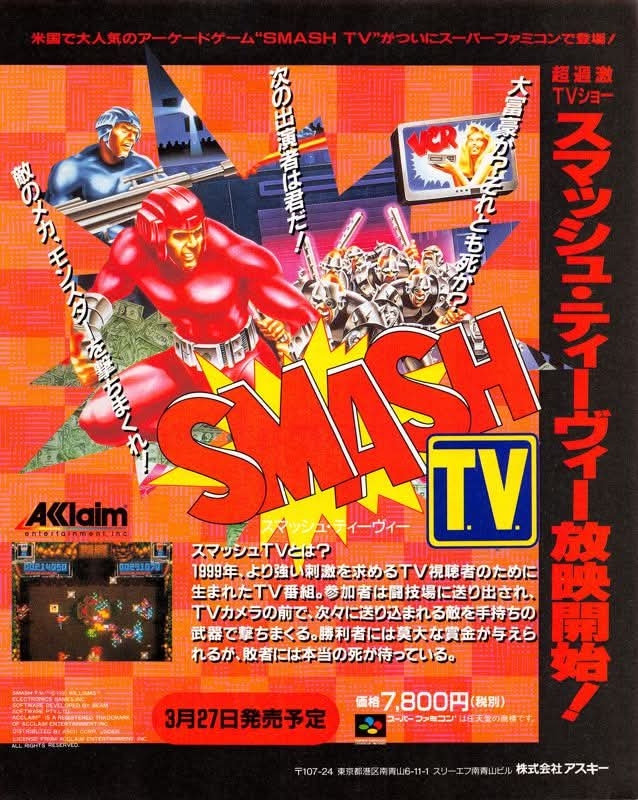
The Japanese print ad of Smash T.V.

Yes, it is true! The console port of the arcade classic Smash T.V. was released on the Super Family Computer (Super Famicom) in Japan back in the 1990s. While I cannot understand the Japanese text shown on the ad above, it still looks exciting as the official artwork plus a screenshot of the game were displayed. The revealed retail price of 7,800 Yen is alone eye-catching as there were many games in Japan launched below that price in the next console generation. I can only wonder how many gamers in Japan bought and enjoyed Smash T.V.

4. U.S. Championship V’Ball arcade flyers
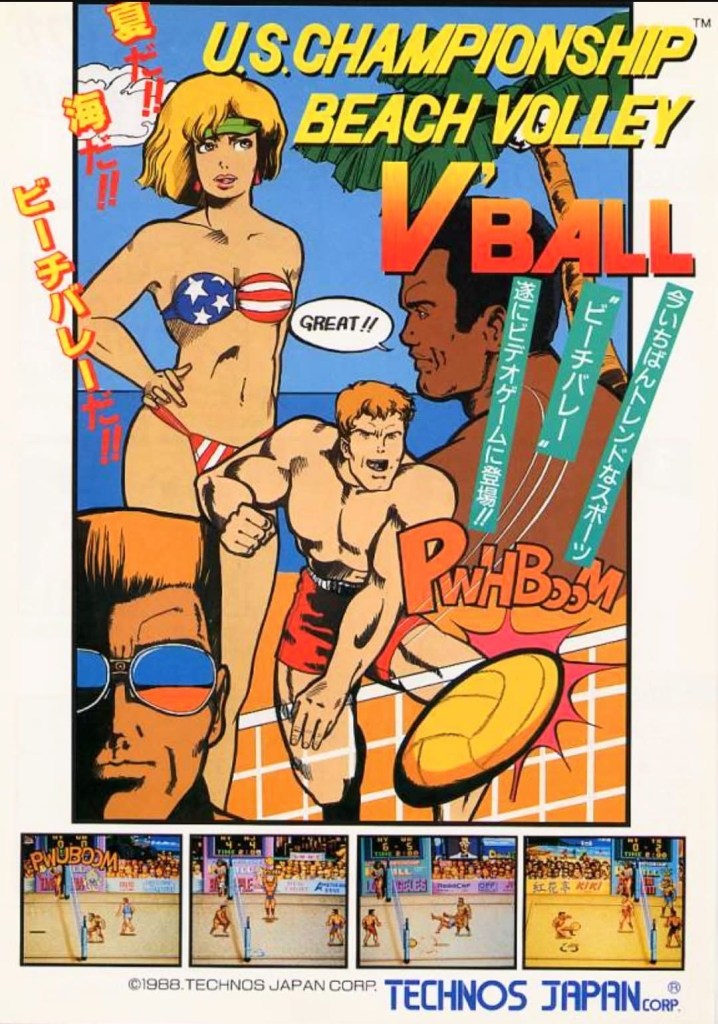
The very colorful and striking arcade flyer for the Japanese market.
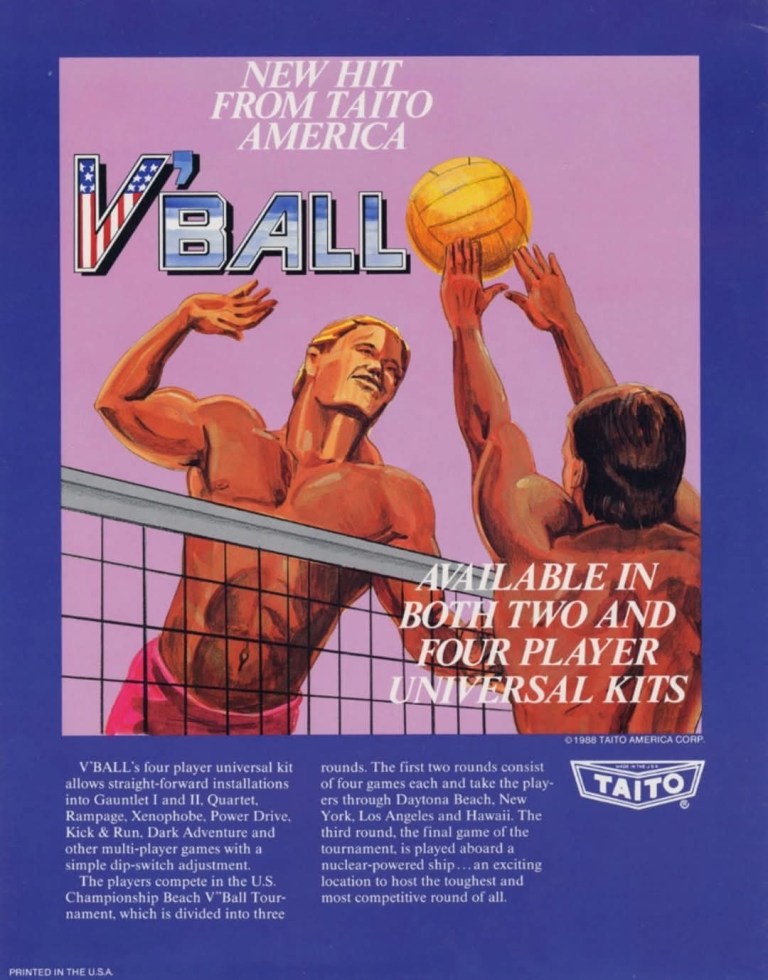
The American arcade flyer.

In 1988, Technos – the company behind the Double Dragon video games – released U.S. Championship V’Ball in video arcades in Japan and in America. The way it was promoted in Japan, Technos came up with an arcade flyer that had a comic-inspired hand-drawn artwork that easily gave viewers a strong American beach volleyball vibe. For the American arcade market, Taito (licensed by Technos) used different artwork showing two men in action. If you ask me, the Japanese arcade flyer is more dynamic to look at. Regardless of art style and presentation, both arcade flyers emphasized beach volleyball to gamers clearly.

5. Pitfall 3D: Beyond the Jungle print ad
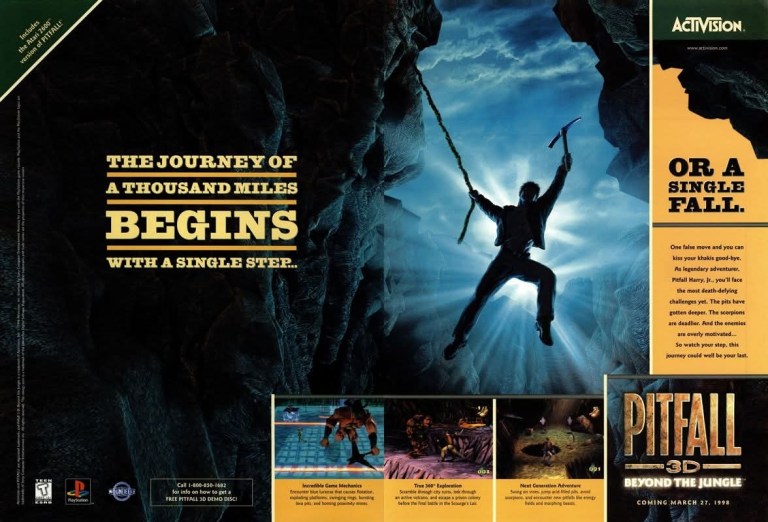
The 2-page print ad of Pitfall 3D: Beyond the Jungle.

When Activision decide to make a new Pitfall video game with polygonal graphics and with 3D platform gameplay, it was not surprising at all as this was the trend that defined 1990s gaming. In 1998, Pitfall 3D: Beyond the Jungle was released for the PlayStation and it received a divisive reception from the critics. If you look closely at the print ad, the words “Next Generation Adventure” was written in the lower-right part and it was clear the game’s quality did not justify them.

6. Atari 2600 and games print ads
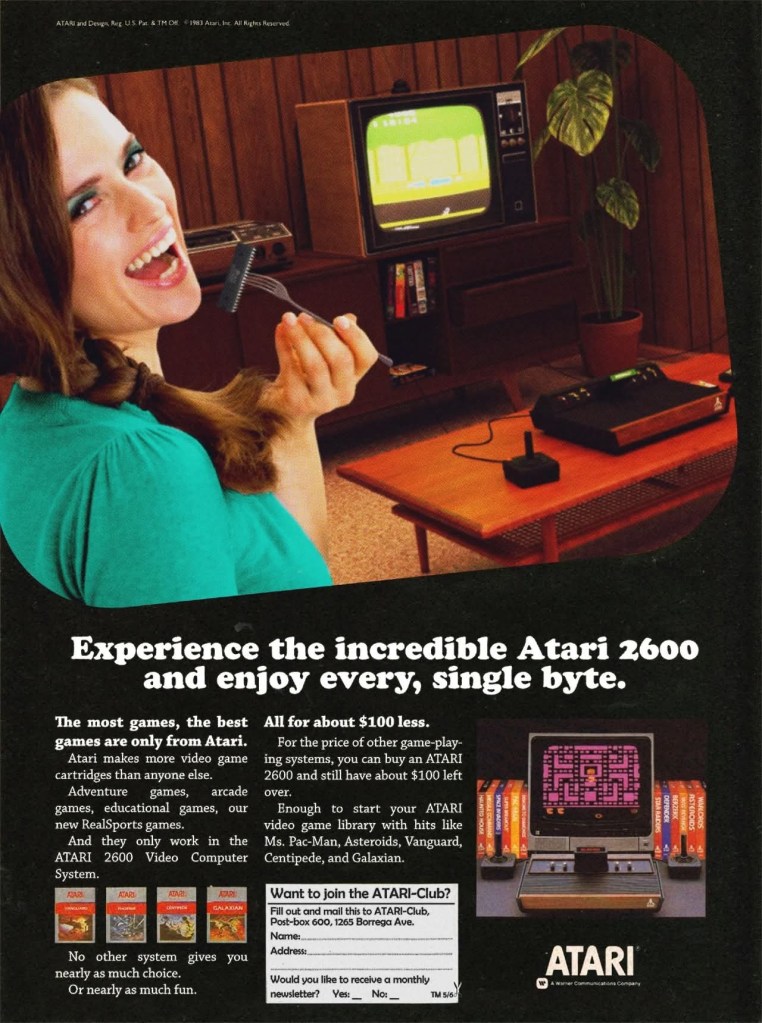
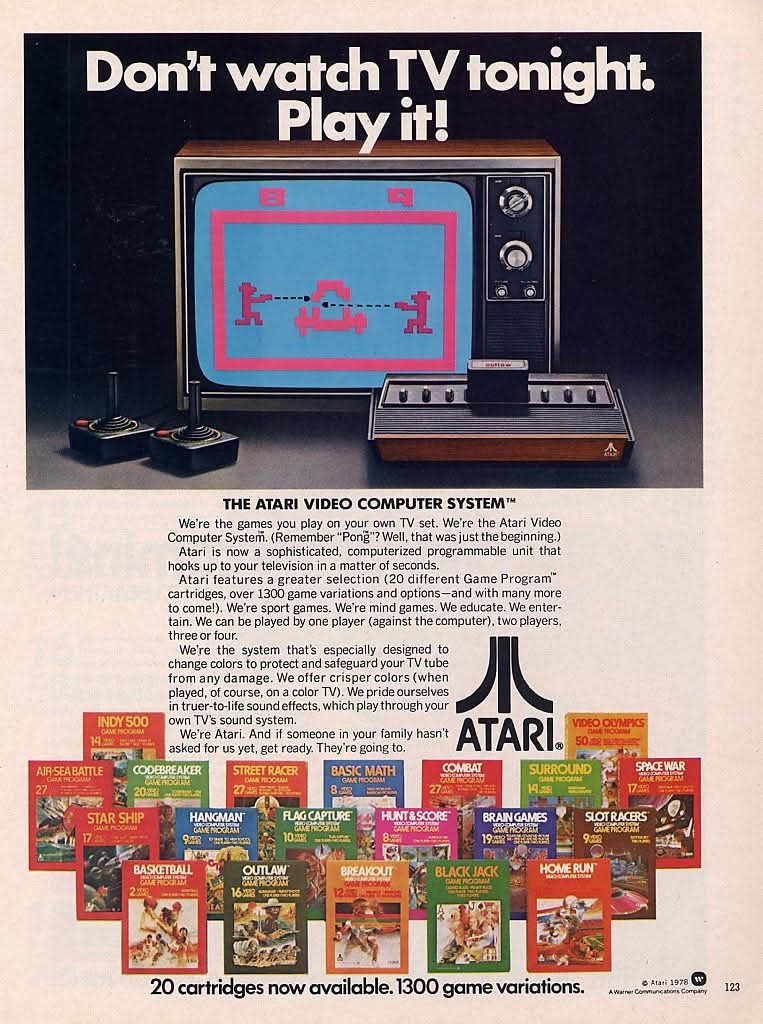
Our household had an Atari 2600 console and many games.
Atari’s promotion of its console, the games and interactive entertainment with the TV.

For a number of years decades ago, Atari dominated the video game console market in America with the Atari 2600 sold in the millions. While Atari today is no longer the video game giant it used to be, there is no denying the fact that they really changed the way people enjoyed the use of their television sets in American homes by offering them lots of video games for the Atari 2600 console. By looking at the above print ads, you can see that the company was not only aggressive with their marketing but also made interactive electronic entertainment more acceptable to countless families.

7. Burning Rangers North American print ad
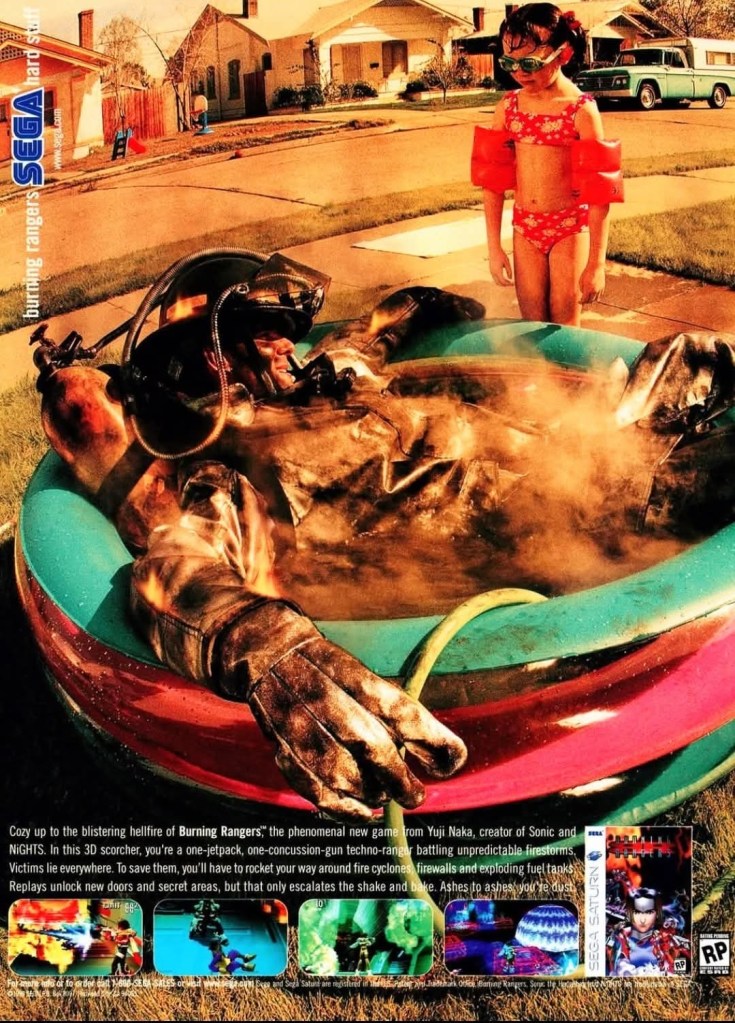
I remember this ad from video game magazines I read in 1998.

Released in 1998 for the Sega Saturn, Burning Rangers was a high-quality exclusive game. To promote it in America, Sega came up with the print ad showing a few screenshots and a dominating image of a fire fighter cooling down on a kid’s personal pool. The image emphasized the element of fire in the game even though it lacked the more sci-fi elements used on the characters and setting. It should be noted that by 1998, the Sega Saturn was no longer in high demand in America as gamers overwhelmingly chose PlayStation and Nintendo 64 (N64) consoles and games. In retrospect, this was one of Sega’s final hard marketing moves done with a Saturn game.

+++++

Thank you for reading. If you find this article engaging, please click the like button below, share this article to others and also please consider making a donation to support my publishing. If you are looking for a copywriter to create content for your special project or business, check out my services and my portfolio. Feel free to contact me with a private message. Also please feel free to visit my Facebook page Author Carlo Carrasco and follow me on Twitter at  @HavenorFantasy as well as on Tumblr at https://carlocarrasco.tumblr.com/ and on Instagram at https://www.instagram.com/authorcarlocarrasco
Retro Gaming Ads Blast – Part 31

Welcome back readers, fellow geeks and electronic gaming fans!

In this edition of the Retro Gaming Ads Blast (RGAB) series, we will take a look at another batch of retro gaming print ads – including arcade flyers – from the 1980s and 1990s.

For the newcomers reading this, Retro Gaming Ads Blast (RGAB) looks back at the many print ads of games (console, arcade, computer and handheld) that were published in comic books, magazines, flyers, posters and newspapers long before smartphones, social media, the worldwide web and streaming became popular. To put things in perspective, people back in the 1980s and 1990s were more trusting of print media for information and images about electronic games and related products.

With those details laid down, here is the newest batch of retro gaming print ads for you to see and enjoy…

1. Operation Wolf American and Japanese arcade flyers

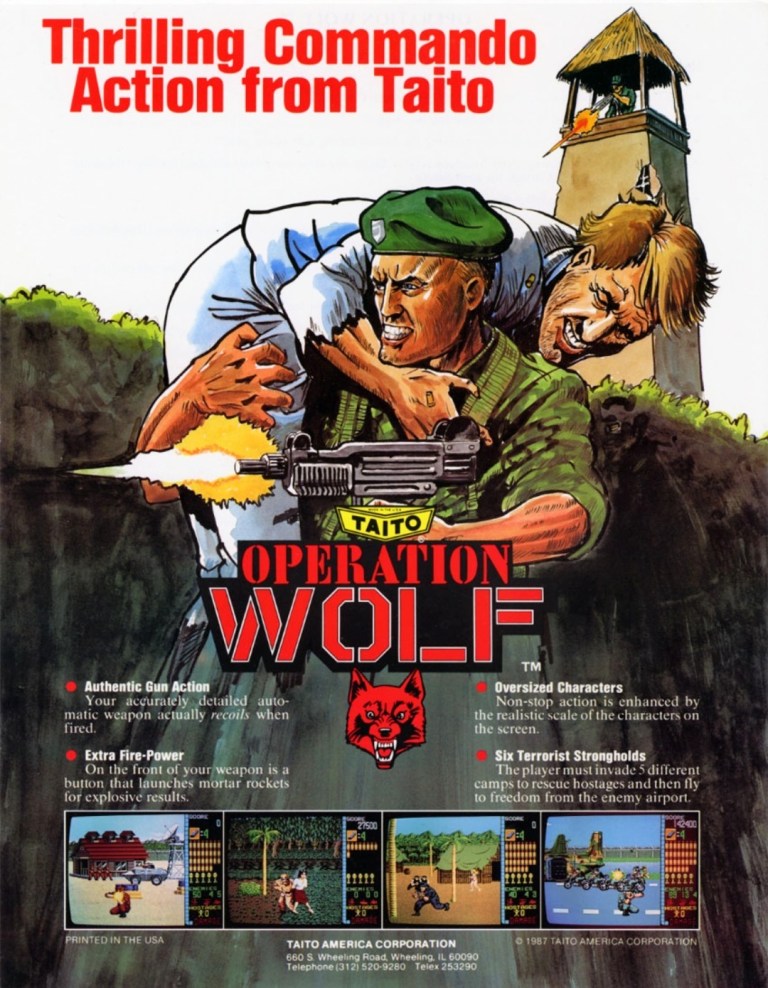
Operation Wolf for American arcades.
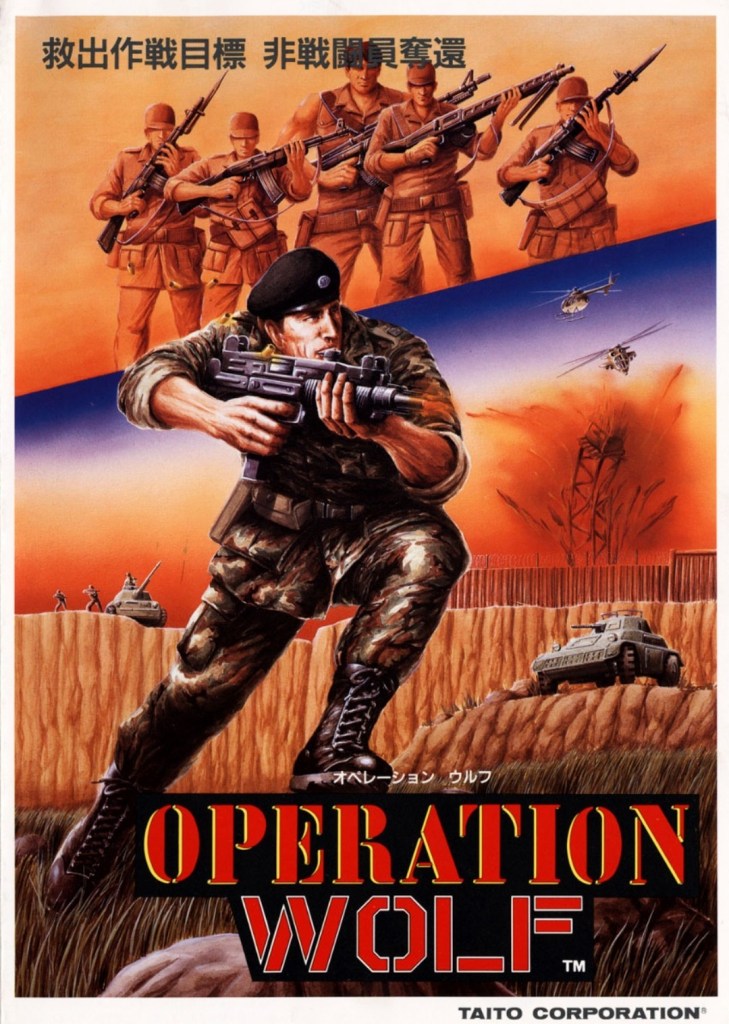
Operation Wolf for Japan.

In the late 1980s, Taito achieved massive success in arcades around the world with Operation Wolf. Released during the late stage of the Cold War and with many militaristic action movies already released by Hollywood, Operation Wolf attracted a lot of money from countless players as well as praise from game critics. For the American market, Taito came up with a colorful yet gritty looking arcade flyer that had nice hand-drawn artwork and enough details and screenshots to give readers a useful look at what to expect. The Japanese arcade flyer meanwhile has an even grittier looking original artwork that strongly emphasized war, guns and action. In retrospect, I look both arcade flyers a lot.  

2. Centipede Atari 2600 and Atari 5200 print ad

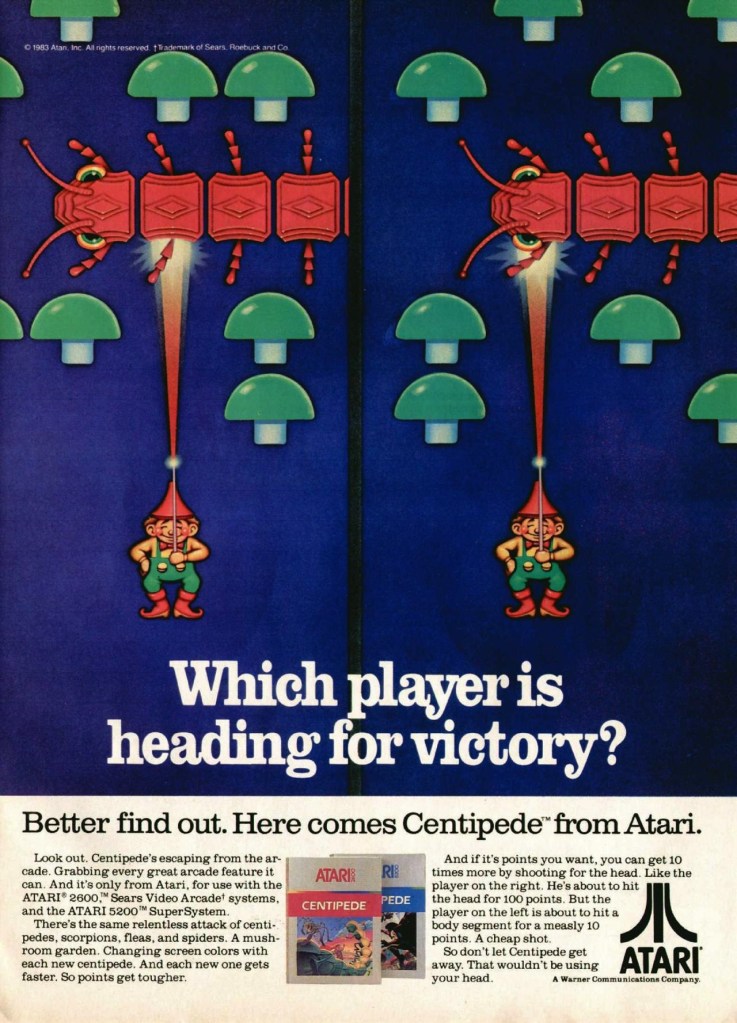
I played Centipede a lot on Atari 2600.

While I completely missed out on the arcade version of Centipede, I managed to play its Atari 2600 version a lot. Ultimately, the simple game design and unique challenges resulted in lots of fun-filled bouts in my experience. To promote the game’s versions on Atari 2600 and Atari 5200, the game giant came up with this particular print ad that had two near-identical artworks that reflect the concept of Centipede. The ad also has some catchy expressions in the text description. This old ad is still fun to look at.

3. Atari RealSports print ad

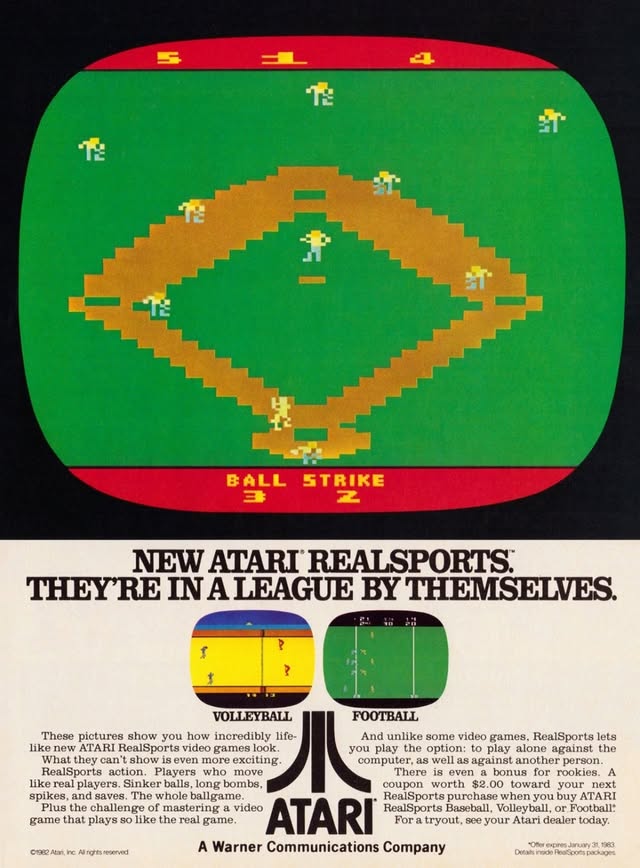
Long before EA sports video games, there was this.

Way back in 1982, Atari launched its RealSports line of sports video games mainly to revitalize sports gaming for their consoles. In fact, RealSports was the result of a critical and aggressive ad campaign by competitor Intellivision which had its Sports Network series of games. In this RealSports print ad, a large image of Atari’s baseball game was used probably to emphasize the scope of the field. The ad had screenshots of the volleyball and football games, while the text description reflected Atari’s aggressive response to Intellivision. This ad is an early example of competition between rival game console makers focused on sports gaming.

4. Lethal Enforcers Sega CD print ad

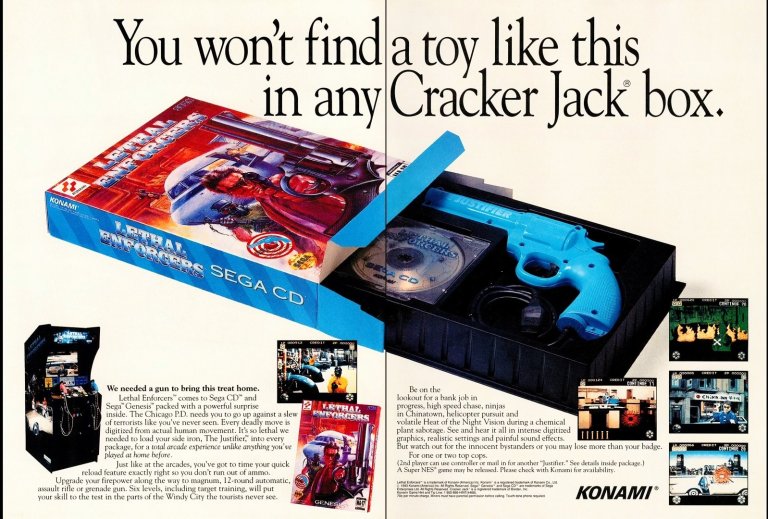
When was the last time you bought a video game with a hard copy and a peripheral bundled together?

Porting light gun games from the arcade to the console is very difficult and tricky to do. This is what Konami did in the early 1990s when they released a version of the arcade hit Lethal Enforcers on the Sega CD console and the package had a light gun with the game on disc. To promote the Sega CD version, Konami came up with a 2-page print ad with the catchy line “You won’t find a toy like this in any Cracker Jack box.” In addition, their ad had a few paragraphs of descriptive text to not only excite gamers but also gently inform them that Lethal Enforcers was also available on the Sega Genesis (note: this console is required for the Sega CD add-on to work) and the Super Nintendo Entertainment System (SNES). Overall, this old ad has a strong visual approach and a clever marketing strategy.

5. Pitfall II: Lost Caverns Atari 2600 print ad

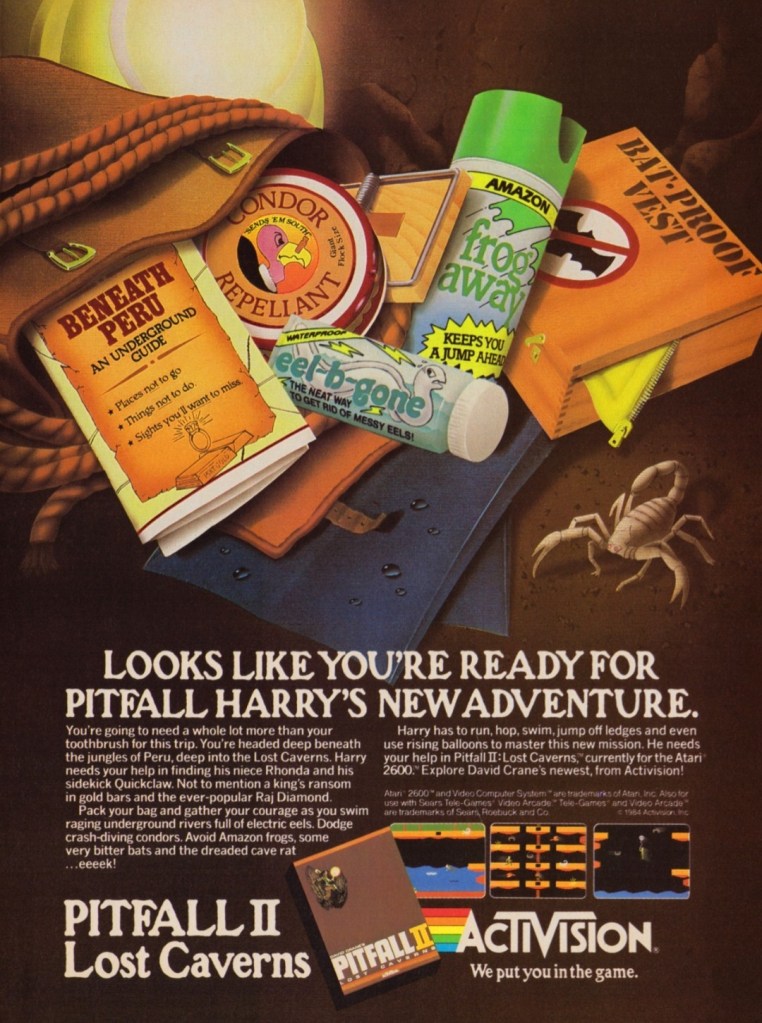
A very stylish layout to promote the game.

In 1982, Activision struck gold with the huge success of Pitfall! which became an influential model of designing platform games. Of course, the publisher (now owned by Microsoft) did not stop there as they went on to make the sequel Pitfall II: Lost Caverns to not only keep the success going but also to exceed the standard they set with the first game. Activision came up with a print ad that not only told gamers of Pitfall Harry’s next adventure but also express humor visually. In line with Activision’s policy of crediting its creators (note: Atari was notorious for refusing to credit its game makers during this era), game designer David Crane was acknowledged in the ad.

6. Team USA Basketball print ad

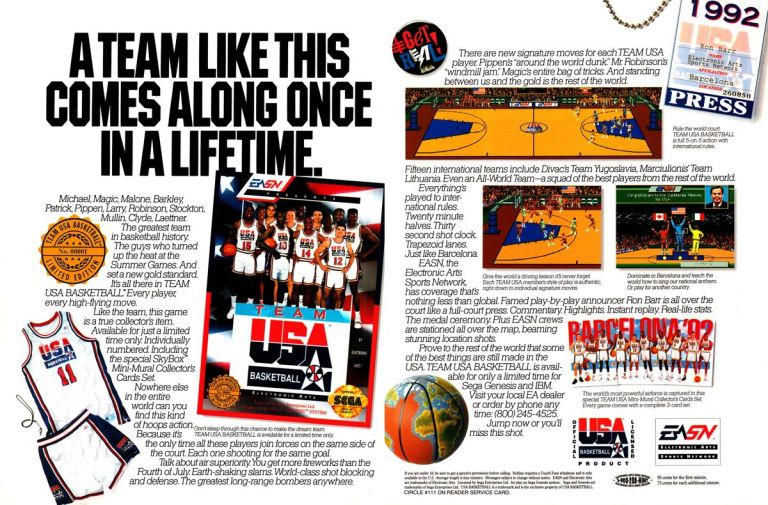
See your favorite NBA player from the 1990s?

In 1992, a lot of people were obsessed with the Dream Team Olympic basketball squad of the United States as its roster had NBA legends like Larry Bird, Magic Johnson, Michael Jordan, Karl Malone, Charles Barkley and David Robinson to name a few. In fact, the Dream Team became the most popular attraction among all teams in any sport of any country that participated in the summer Olympics in Barcelona. Knowing how popular the squad really was, Electronic Arts (EA) made the video game Team USA Basketball and released it on the Sega Genesis which was already a popular console for sports video games. EA came up with this eye-catching 2-page print ad that strongly emphasized the Dream Team, international basketball gaming, and the company’s tested design on 2D basketball video games. In retrospect, this print ad is still amusing and exciting to look at.

7. Jungle Hunt Atari 2600 and Atari 5200 print ad

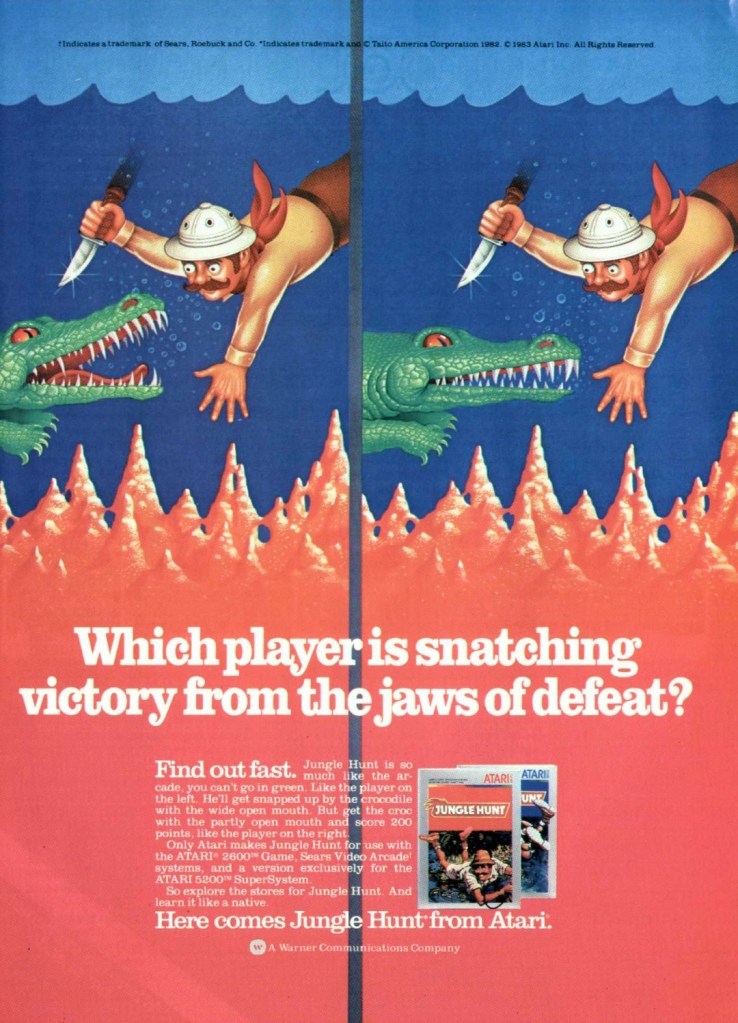
Do you fine the parallel artworks amusing or disturbing?

Following the huge success of Jungle Hunt (previously titled as Jungle King), Atari saw potential Dollar signs and made a deal with Taito to publish ports under their own brand for the Atari 2600, Atari 5200 and 8-bit computers. As with the Atari console ads of Pitfall II: Lost Caverns and Phoenix, Atari came up with a print ad that featured two parallel artworks that look similar with each other as they promoted Jungle Hunt for Atari 2600 and Atari 5200. To their credit, the artworks used were detailed and eye-catching, and the descriptive line of words displayed carried a possible reference to 1975’s Jaws.

8. GameShark print ad

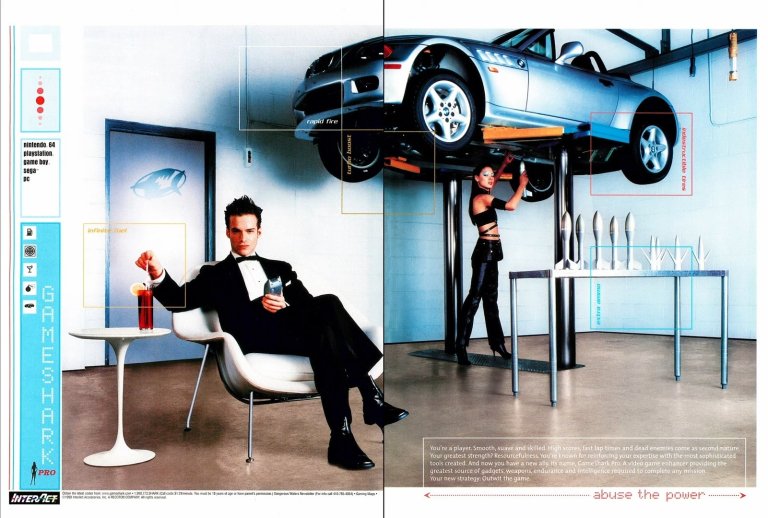
A James Bond-inspired way of promoting GameShark.

Remember GameShark? For the newcomers reading this, GameShark is the brand of a line of products released on different video game consoles and personal computers (Windows specifically) that gamers use to cheat in video games.  GameShark was popular at a time when not too many people had access to the Internet nor did gamers had the means to search for cheats online, and codes were needed to enable cheating. GameShark became so popular, more ambitious and stylish print ads were realized such as this James Bond-inspired 2-page ad. On face value, this ad looked like it was a promoting a particular game but ultimately it was about promoting GameShark with style, cool and some sexiness.

+++++

Thank you for reading. If you find this article engaging, please click the like button below, share this article to others and also please consider making a donation to support my publishing. If you are looking for a copywriter to create content for your special project or business, check out my services and my portfolio. Feel free to contact me with a private message. Also please feel free to visit my Facebook page Author Carlo Carrasco and follow me on Twitter at  @HavenorFantasy as well as on Tumblr at https://carlocarrasco.tumblr.com/ and on Instagram at https://www.instagram.com/authorcarlocarrasco
Retro Gaming Ads Blast – Part 12

Welcome back readers, fellow geeks and electronic gaming fans!

In this edition of the Retro Gaming Ads Blast (RGAB) series, we will take a look at another batch of retro gaming print ads from the 1980s and 1990s. In addition, there will be a few flyers of arcade games.

For the newcomers reading this, Retro Gaming Ads Blast (RGAB) looks back at the many print ads of games (console, arcade, computer and handheld) that were published in comic books, magazines, flyers and newspapers long before smartphones, social media, the worldwide web and streaming became popular. To put things in perspective, people back in the 1980s and 1990s were more trusting of print media for information and images about electronic games and related products.

With those details laid down, here is the newest batch of retro gaming print ads for you to see and enjoy…

1. Contra arcade flyer

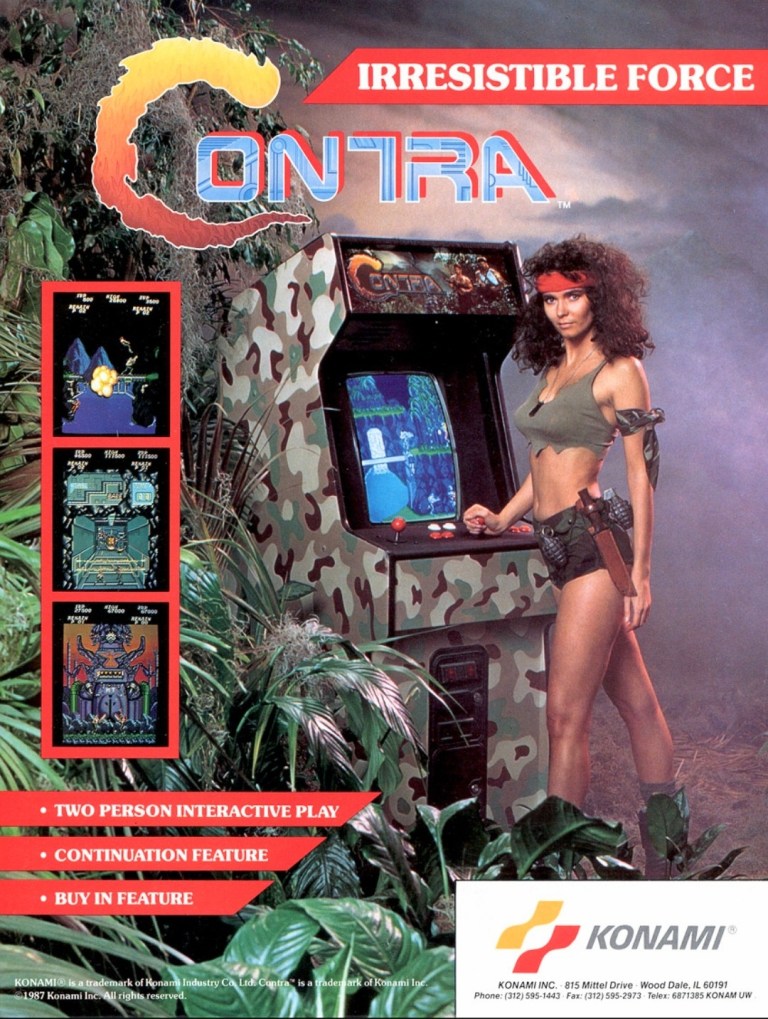
A clever visual concept by Konami towards gamers and arcade operators.
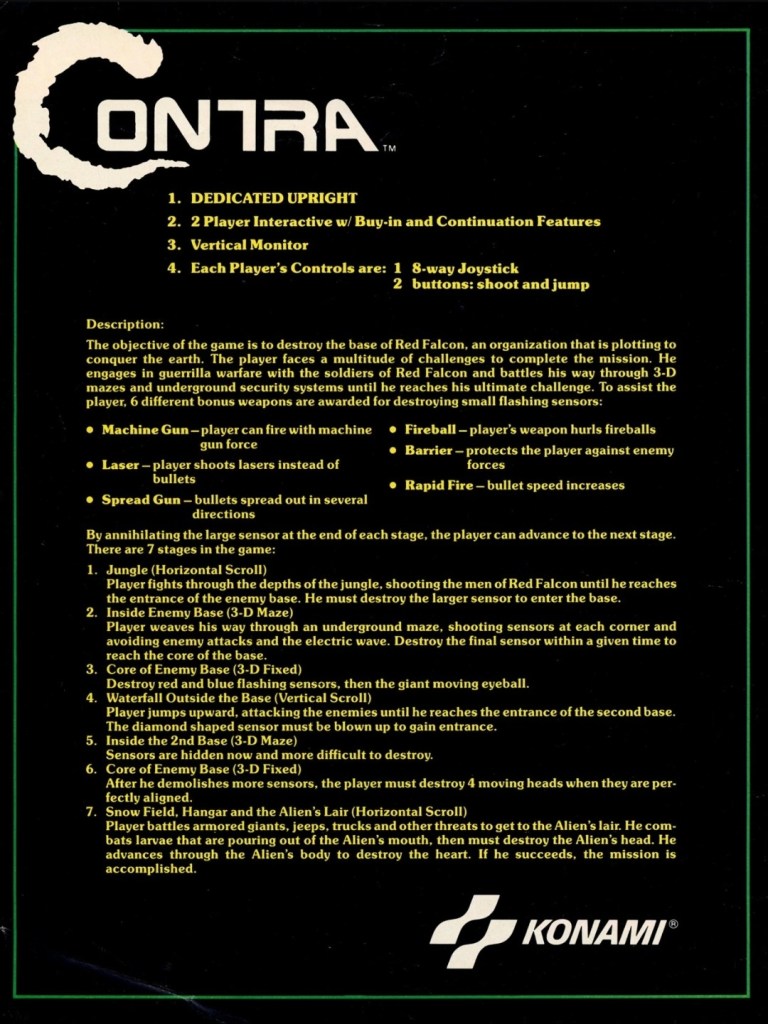
Details on the other side of the flyer.

Before it established itself as a popular gaming franchise with console gamers, Contra truly started in the arcades in 1987. First released in Japan on February 1987, Konami went on to release the game in arcades in the United States a month later and the flyer you see here was the Americanized promotion they came up with. Instead of hiring male actors or models to play soldiers, they hired a slim lady to appear with a female Rambo look standing in front of a Contra arcade machine. On the other side of the flyer are details that players and arcade operators can learn from. By today’s standards, this arcade flyer of Contra is still eye-catching and even amusing to look at.

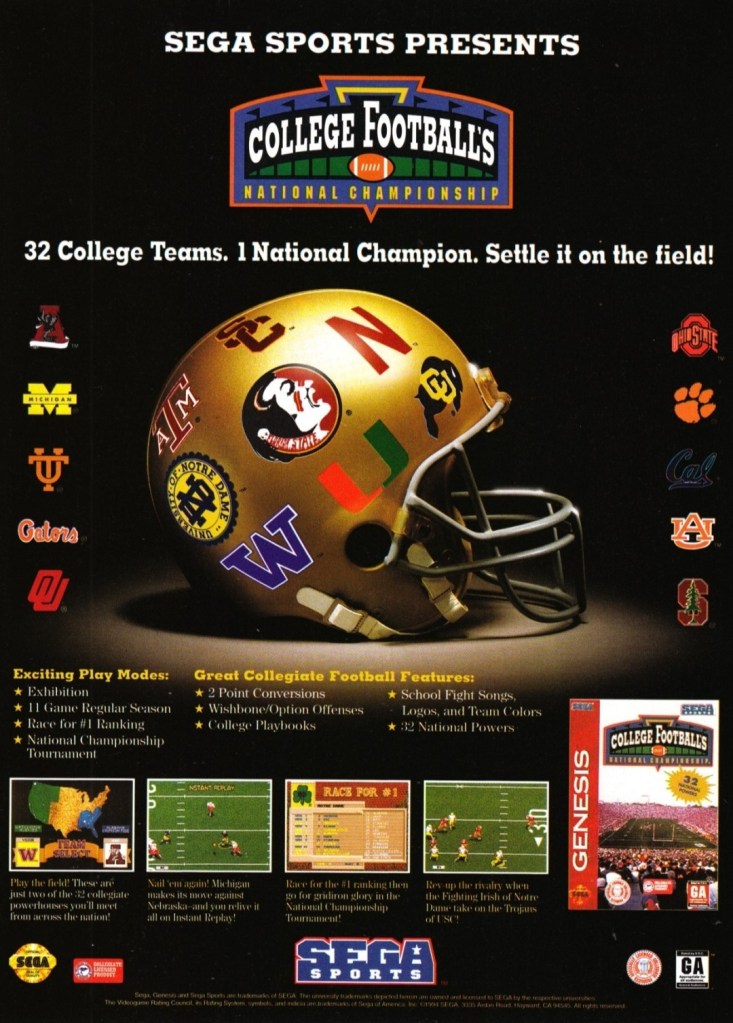
2. College Football’s National Championship print ad

This ad has a strong visual appeal to gamers who like football.

This is another one of those video game ads I saw while reading comic books in the 1990s. College Football’s National Championship was a Sega Genesis-exclusive American football video game published by Sega (with the Sega Sports brand) to capitalize on gamers who want college football to play with at home. This print ad has a nice visual presentation of the college teams’ logos, screenshots and details of what gamers could expect when they buy and play the game. College Football’s National Championship received mostly positive reviews and it must have sold well because Sega went on to release a sequel to this game.

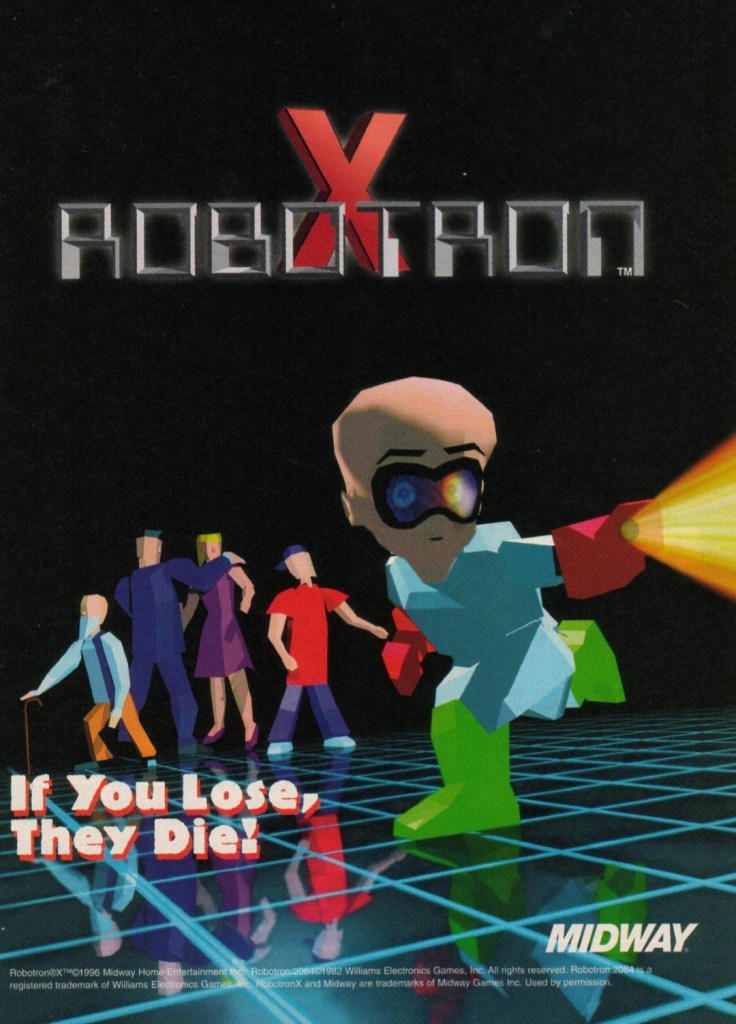
3. Robotron X print ad

This Robotron game was made at a time when 3D polygons became common for making video games.

Having played the classic game Robotron: 2084 on PC back in the 1980s, I was very surprised to see this print ad in 1996 promoting a brand new Robotron game for PlayStation as well as Windows PC. For the newcomers reading this, Robotron: 2084 was a classic which heavily influenced game designers who went on make other fan-favorite games like Smash TV and Llamatron. What makes Robotron X notable apart from being an official follow-up to the classic game was the fact that it was made at a time when game developers did their stuff to modernize gaming with 3D polygons for visuals while trying to come up with gameplay inspired by the classics. While Robotron X did not make a major impact on gaming, the classic Robotron: 2084 went on to be released in several multi-platform compilations such as Williams Arcade’s Greatest Hits, Midway’s Greatest Arcade Hits, and Midway Arcade Treasures.

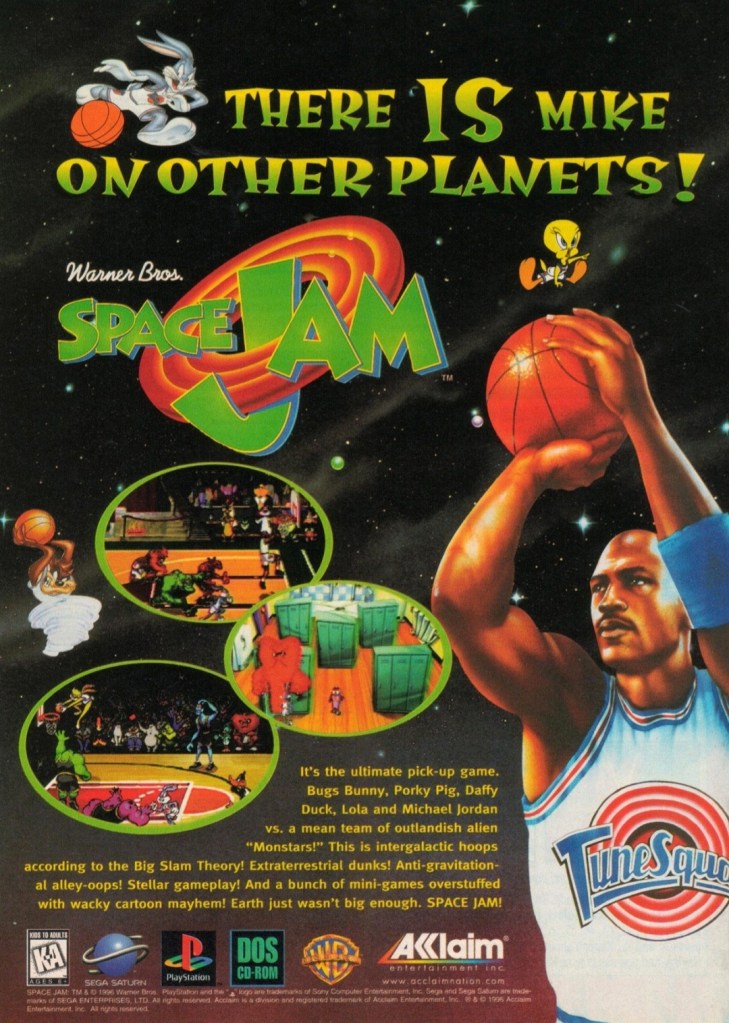
4. Space Jam game print ad

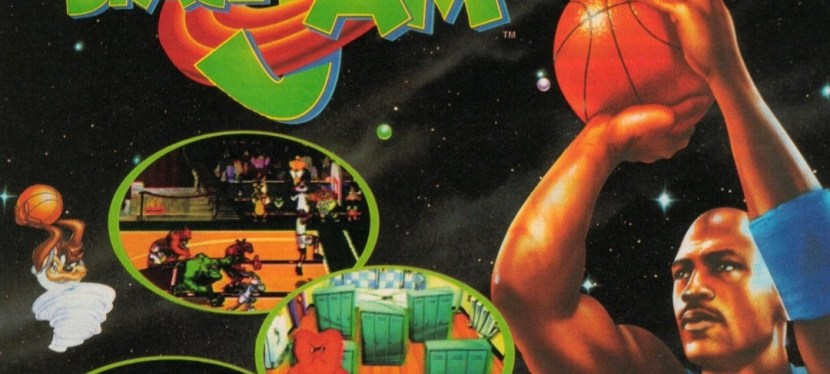
If you saw the movie in 1996, were you able to play this video game adaptation?

What makes 1996 a memorable year for basketball fans was the Michael Jordan’s return to prominence (having previously retired for less than two years before returning to the NBA in 1995) and leading a very powerful Chicago Bulls team to what was their 4th NBA championship title. In that same year, Jordan starred in the live-action/animated movie Space Jam which grossed an impressive $250 million worldwide. On the same month the movie came out, the Space Jam video game adaptation was also released on PlayStation and Sega Saturn. This print ad was part of the multimedia hype of the movie and the game itself had a very similar design and visuals concept with NBA Jam but ultimately it failed to become a hit with critics and gamers. Not even the combined visual might of Jordan and Warner Bros. characters could achieve success.  

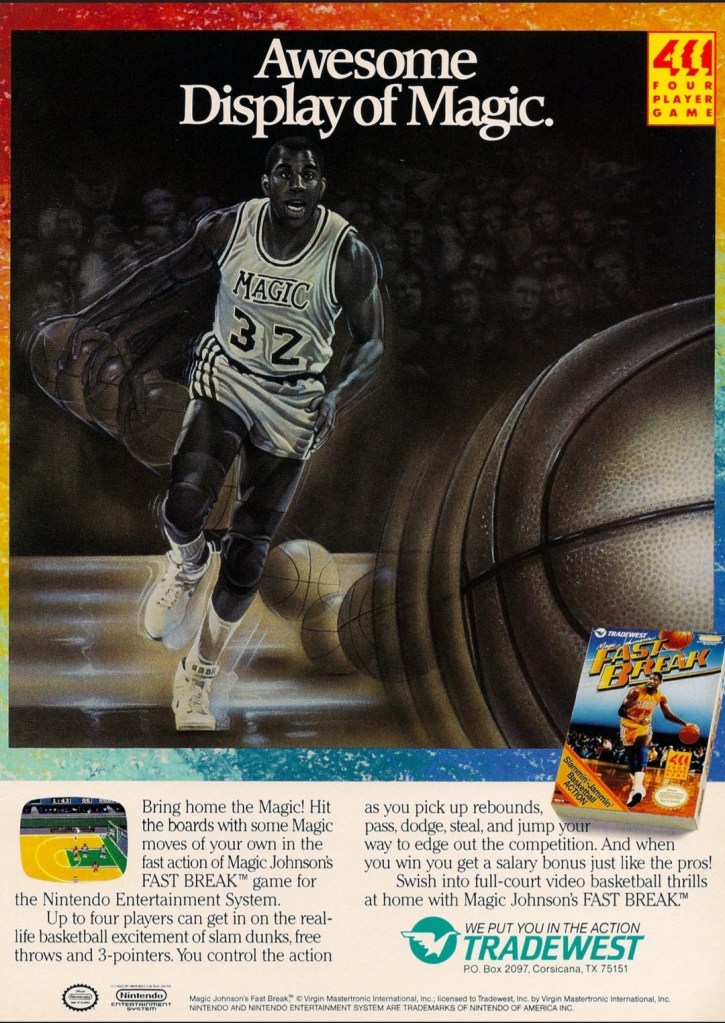
5. Magic Johnson’s Fast Break print ad

Still on basketball video gaming, the side-scrolling Magic Johnson’s Fast Break game was released on the Nintendo Entertainment System (NES) for console gamers to enjoy. Unsurprisingly, this ad had nice black-and-white art work of Magic Johnson as the dominant figure while leaving little space left to show the game box and only one screenshot. The real meat of this print ad are the details laid down in text description.

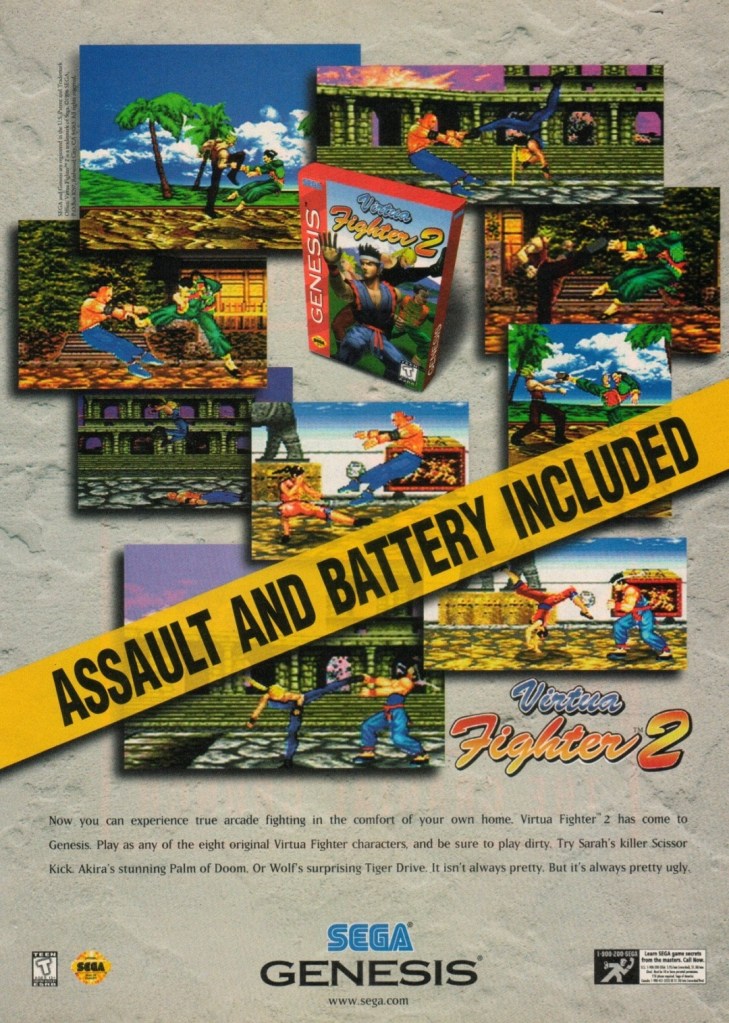
6. Virtua Fighter 2 for Sega Genesis print ad

Clearly a late effort by Sega to sell something to its many Genesis owners/fans in America at a time when PlayStation and Nintendo 64 started dominating 5th console generation sales.

In the history of arcade gaming and fighting games, Virtua Fighter 2 was a worthy follow-up to its groundbreaking predecessor. VF2 also made its way on the Sega Saturn which essentially maintained the great gameplay and 60 frames-per-second animation even though the 3D polygonal graphics were noticeably lower in quality compared to its arcade version. With VF2 in the arcades and on Saturn selling well, I was surprised to see this print ad of Sega releasing a totally different version of the game on the aging Sega Genesis console. Virtua Fighter 2 on Genesis had 2D graphics, sprites for the characters and a side-scrolling visual design. In fairness, the game developers exerted effort to recapture some of the gameplay elements within the Genesis limitations and 2D graphics. This print ad is a reminder of Sega’s American division selling a product to the remaining active Genesis owners.

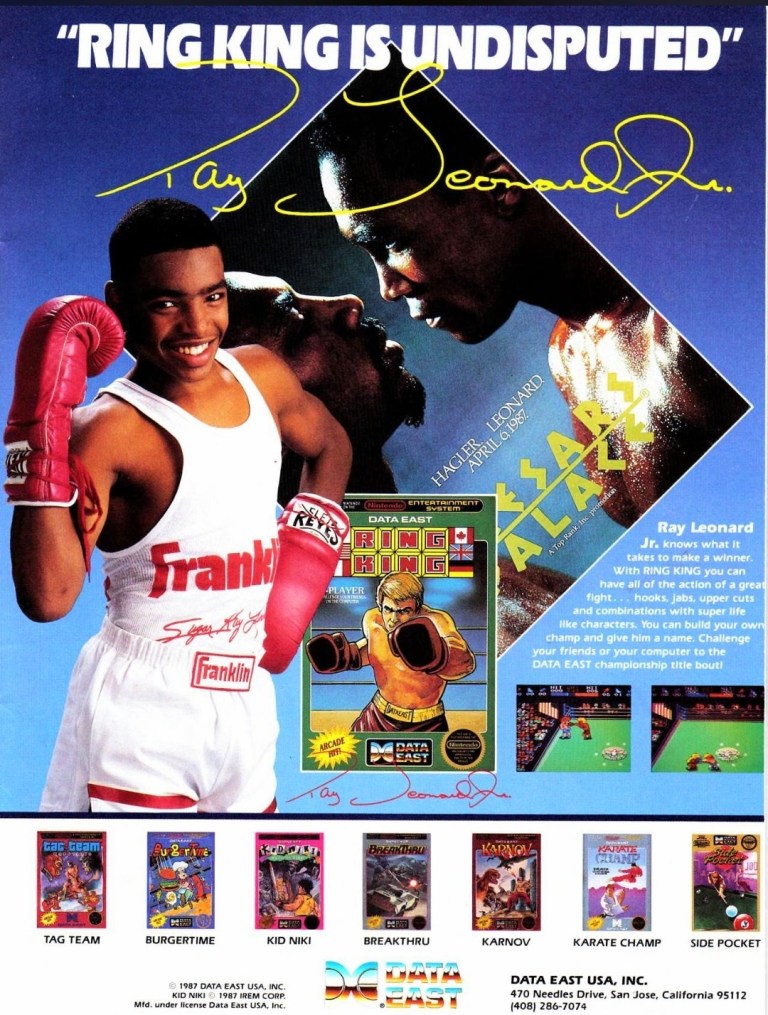
7. Ring King print ad

Ring King itself clearly lacked promotional space in this ad.

In 1987, Data East released their arcade hit game Ring King on the Nintendo Entertainment System (NES) and prepared this print ad involving Ray Leonard, Jr. (on the foreground in boxing gear) and conveniently with the famous Sugar Ray Leonard and Thomas Hearns (with the promo of their first fight together in the background). Also conveniently, the company inserted their other games on the lowest part of the ad. Ultimately, the presence of Ring King itself was minimized only showing the game cover and two screenshots. This is clearly an eye-catching ad but there was not enough emphasis on the game itself.

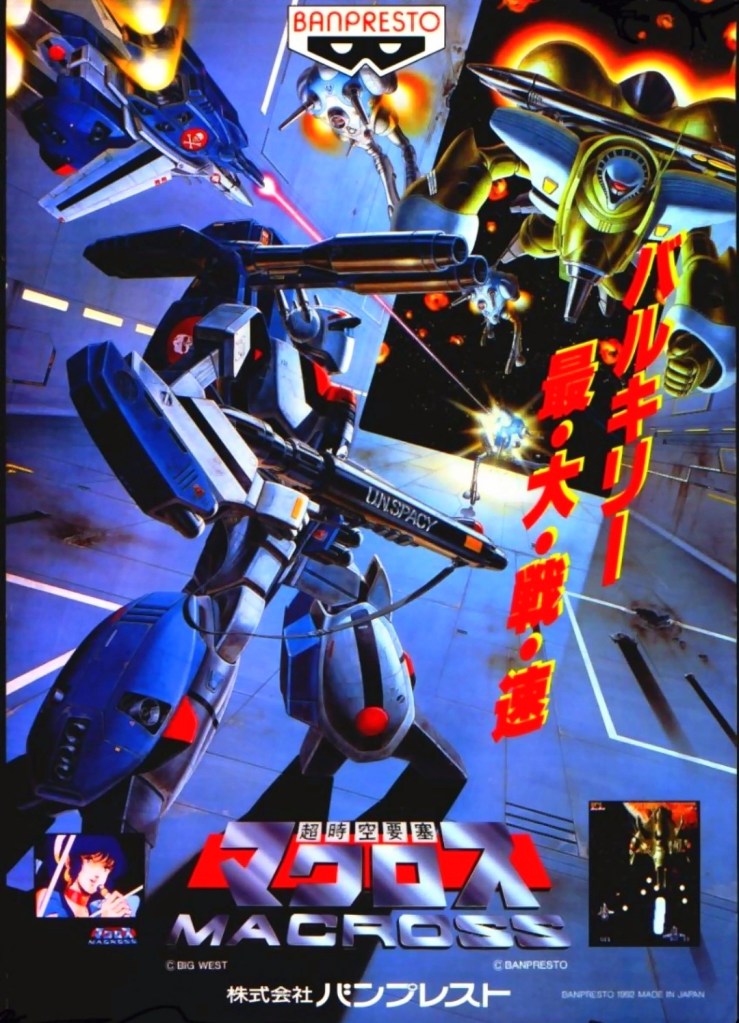
8. Super Spacefortress Macross arcade flyer

The arcade flyer released only in Japan.

Have you ever seen the classic anime movie Macross: Do You Remember Love? I really love watching that movie and I played and finished the video game adaptation on PlayStation in 1999. What I never got to play was the arcade game adaptation of it which was released by Banpresto in Japan in 1992. This flyer promoting the game has a strong visual presentation thanks to the artwork made for it. Only one screenshot was shown as well as a clip from 1984 the animated movie (note: the arcade game itself has some images directly from the film plus some newly created ones added) but this ad still had what it takes to capture the attention of the many Macross fans in Japan. This arcade game was eventually released with an English translation in America and Australia.   

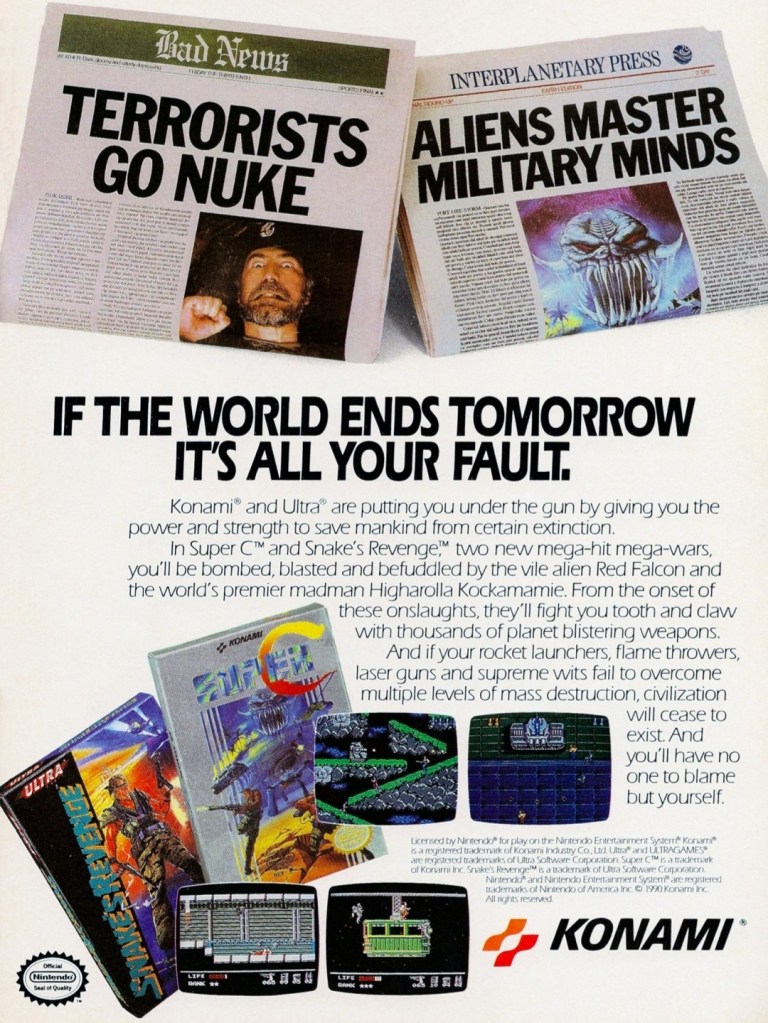
9. 2-in-1 print ad featuring Super C and Snake’s Revenge

A memorable and intriguing print ad from Konami promoting sequels.

This is one of the ads that Konami came up with to promote at least two games using a single-page ad format. I saw this ad in many comic books I read decades ago and its visual concept always caught my attention especially since I played the console game Contra a lot. At the high end of the ad were two fictional newspaper headlines highlighting the respective conflicts of Snake’s Revenge (with a nuclear danger concept) and Super C (with emphasis on alien invaders). These two games were sequels to the classics Metal Gear and Contra, and Konami clearly knew how to take advantage of the older games’ success and do their best to sell the sequels to gamers who love action-packed gaming as well as fantasized armed conflicts. Like the 2-in-1 ad showcasing Contra and Jackal, this was Konami’s aggressive move to sell war-inspired games to the NES userbase which was mostly composed of children and teenagers.

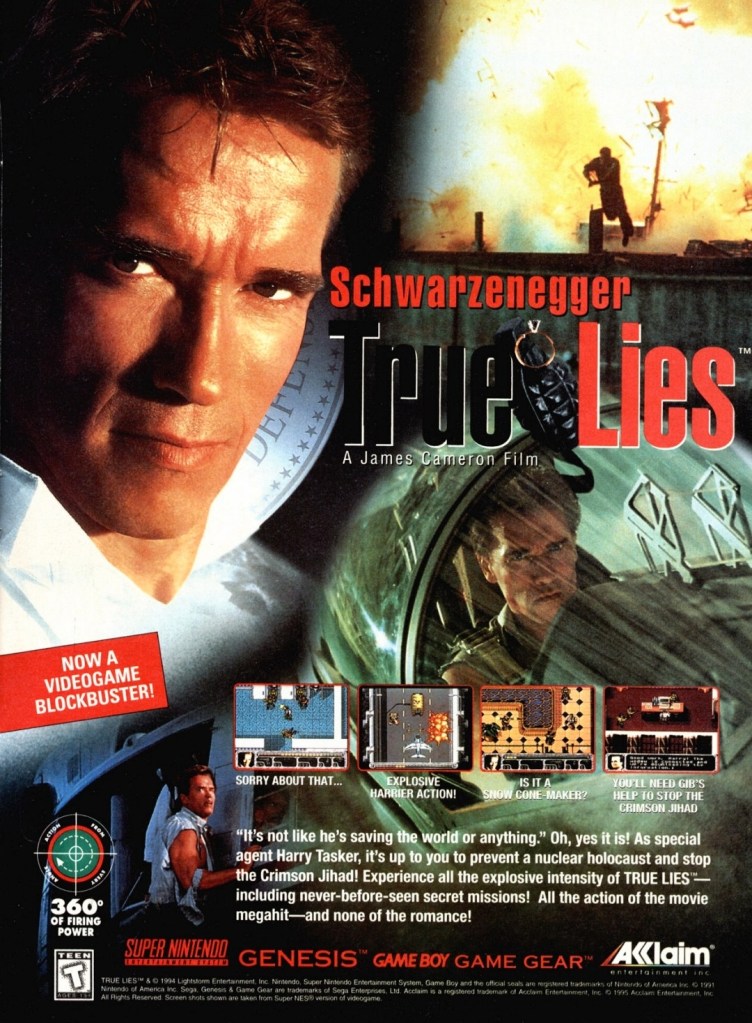
10. True Lies game print ad

There is nothing like taking advantage of the imagery of a Hollywood superstar to promote a video game based on the related movie.

Here is a video game ad I saw in many comic books I read in 1994-1995. True Lies (starring Arnold Schwarzenegger) was one of the big summer season movie hits of 1994 and the video game was part of the business tie-ins with the film. The people who made this print ad made the smart moves of showing not just one but three images of Schwarzenegger to promote the game while leaving some space to show what the game looked like. The True Lies game even had stills from the movie to emphasize the flow of the plot.

+++++

Thank you for reading. If you find this article engaging, please click the like button below, share this article to others and also please consider making a donation to support my publishing. If you are looking for a copywriter to create content for your special project or business, check out my services and my portfolio. Feel free to contact me with a private message. Also please feel free to visit my Facebook page Author Carlo Carrasco and follow me on Twitter at  @HavenorFantasy as well as on Tumblr at https://carlocarrasco.tumblr.com/ and on Instagram at https://www.instagram.com/authorcarlocarrasco