Disclaimer: This is my original work with details sourced from reading the comic book and doing personal research. Anyone who wants to use this article, in part or in whole, needs to secure first my permission and agree to cite me as the source and author. Let it be known that any unauthorized use of this article will constrain the author to pursue the remedies under R.A. No. 8293, the Revised Penal Code, and/or all applicable legal actions under the laws of the Philippines.
Welcome back superhero fans, 1990s arts and culture enthusiasts, Ultraverse fans and comic book collectors! Today we revisit the Ultraverse through the monthly series of The Solution.
In my previous retro review, The Solution itself was not really present in the story which was both a shock and a major disappointment. The Solution #14 (1994) refocused mainly on past villains who debuted in the early part of the monthly series and it sent a clear sign that a rematch with The Solution is bound to happen.
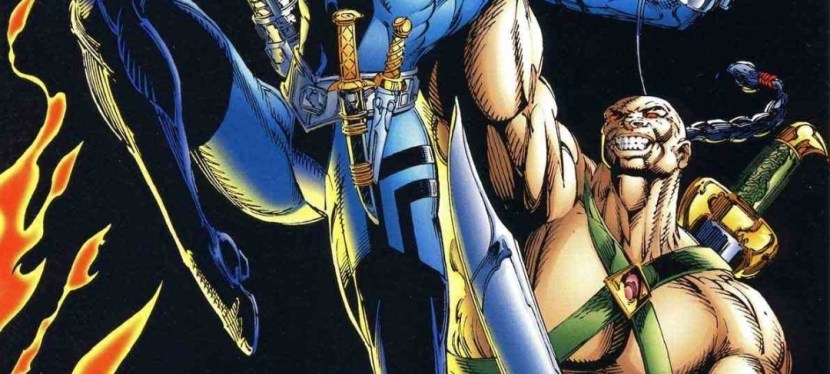
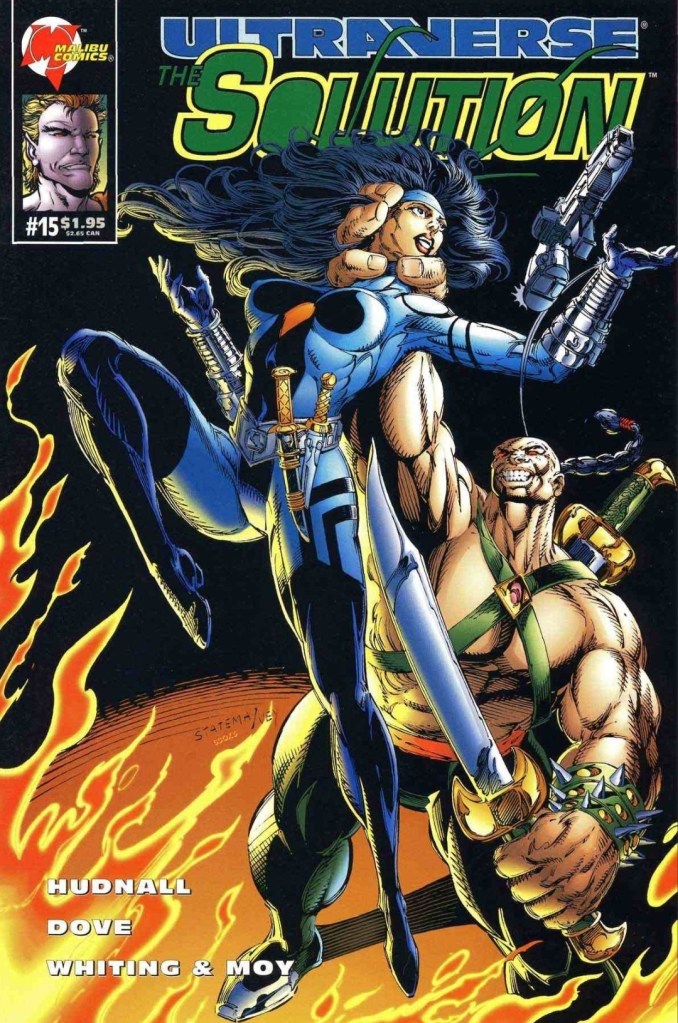
With those details laid down, here is a look back The Solution #15, published by Malibu Comics in 1995 with a story written by the late James Hudnall and drawn by George Dove.
The cover.
Early story
The story begins with Dropkick inside a dark room. Tech comes in searching for him and turns the light on. She is surprised to see Dropkick with a new look complete with face paint. Dropkick insists that his new look will last and he saw the future. The man then surprises Tech once more by instantly changing into casual clothes. She then reveals to him that she found a way to get her company back.
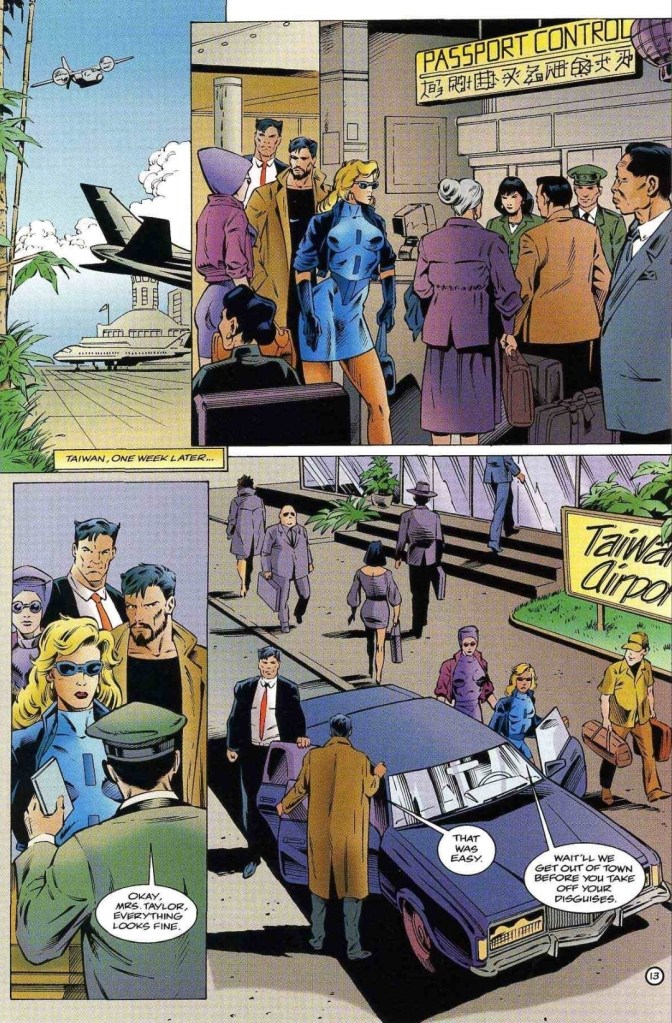
Moments later in a meeting with Dropkick, Outrage and Shadowmage, she reveals that while searching online for information about what the Dragon Fang gang has been doing with her company, she found a memo about a meeting that was set to happen the next week somewhere in Taiwan. The heads of the gang are supposed to be there and for Tech, this is the opportunity to take them on.
As the exact location of the meeting remains unclear, Tech states that they will need to travel overseas as she needs to be near a place to check out the electronic systems. For Dropkick, the whole meeting could be a trap and he states that the Dragon Fang gang knows Tech can read their computers.
Even though she is certain that the trap is real, Tech states that they cannot pass up the opportunity to take on the enemy…
Quality
Can you recognize anyone on this page?
Now this is more like it! The Solution is indeed back and this story is pretty much a big pay-off to all the build-up done in the villains-focused story of the previous issue. Take note that this story took place just a short time after the very wild storyline told in issues #9, #10, #11 and #12.
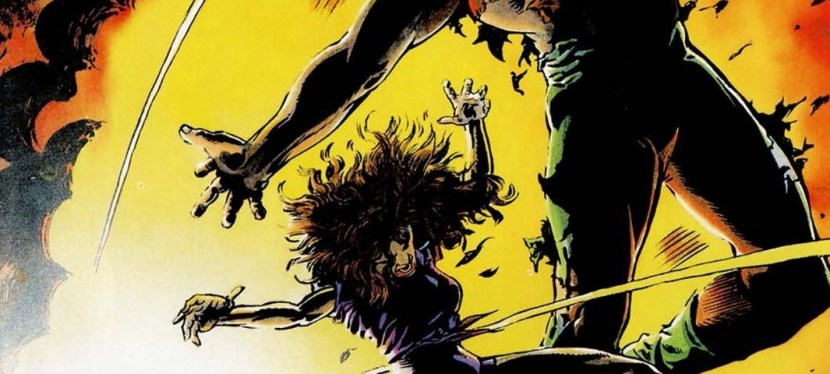
To make things clear, there is a conflict in the story which should resonate with The Solution fans who read the early issues of the series that launched in 1993. There is indeed a rematch between the titular team and the villains (plus Casino in this issue) which fortunately was very well done and proved to be worth the wait and the build-up. Speaking of conflict, there was this surprising development that happened within the side of the villains and that alone added more depth to the plot as well as more tension to the rematch with Tech and her teammates.
Artist Greg Dove did a fine job drawing this story and he knows when to use dynamic visuals when it comes to emphasizing impact. Thanks to Dove, Casino in this issue has that femme fatale look on her face. His take on Tech, her teammates and the three other villains is also good to look at.
Conclusion
The Solution with Dropkick in his new look.
The Solution #15 (1995) marks the series’ return to normalcy (meaning fun, intrigue and engagement) and it is indeed a worthy pay-off to the disappointing previous issue. The conflict told within this particular comic book is just the start and as I reached the ending, I can say that I am anticipating what would happen next. There is a lot for fans of The Solution to enjoy here.
Disclaimer: This is my original work with details sourced from reading the comic book and doing personal research. Anyone who wants to use this article, in part or in whole, needs to secure first my permission and agree to cite me as the source and author. Let it be known that any unauthorized use of this article will constrain the author to pursue the remedies under R.A. No. 8293, the Revised Penal Code, and/or all applicable legal actions under the laws of the Philippines.
Welcome back superhero enthusiasts, 1990s culture enthusiasts and comic book collectors! Today we go back to the early 1990s and explore a part of the Valiant Comics shared universe through the Harbinger monthly series.
In my previous retro review, Sting, Faith, Kris and Flamingo adjusted themselves to normal living. As far as they are concerned, several months had passed for them during their time in the unknown world during the events of Unity. For their real world, however, very little time had passed. They also took a renewed effort to search for powered beings like themselves as part of their plan to protect themselves and be able to take down the Harbinger foundation in due time.
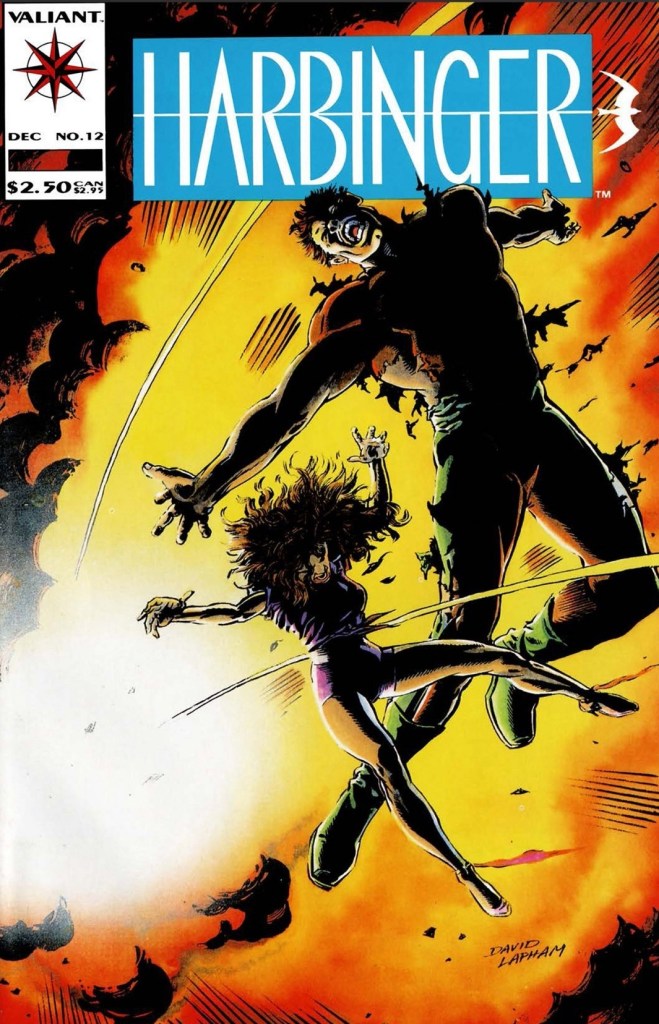
With those details laid down, here is a look back at Harbinger #12, published in 1992 by Valiant Comics with a story written and drawn by David Lapham.
The cover.
Early story
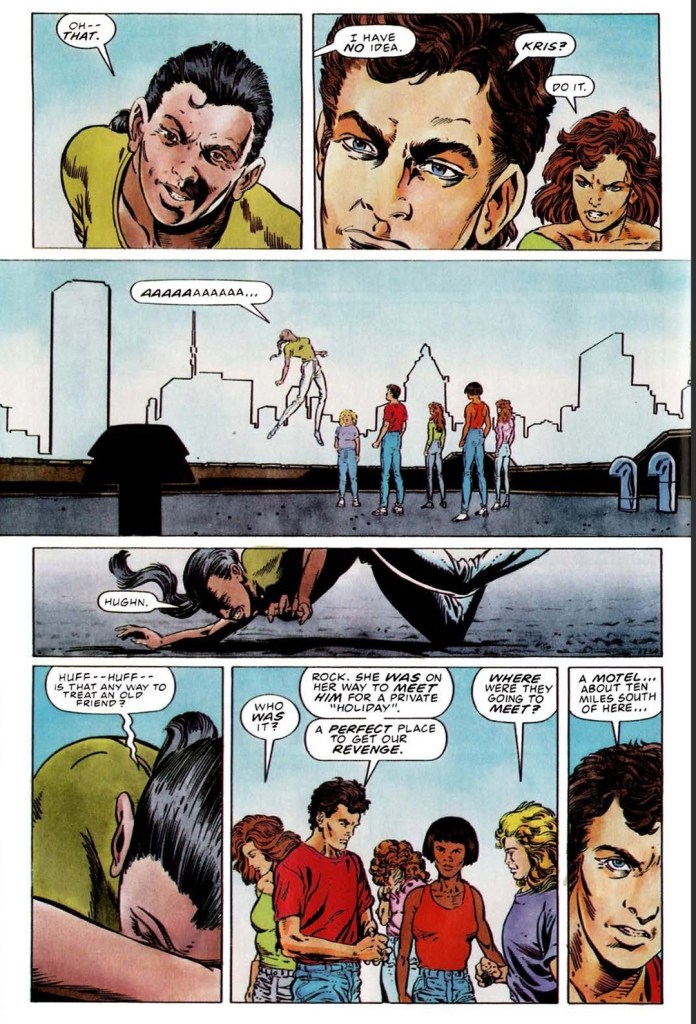
The story begins during the wee hours of September 4, 1992 inside the rented house occupied by Sting, Flamingo, Kris and Faith. Flamingo wakes up from another nightmare causing her to unintentionally burn part of her bed. Her teammates rush in to comfort her and it turns out Flamingo just had her third nightmare of the week which reflects her sadness over the death of their late teammate Torque. In response to this, Sting takes Faith with him to fly out and do some information gathering at the Harbinger office in New York.
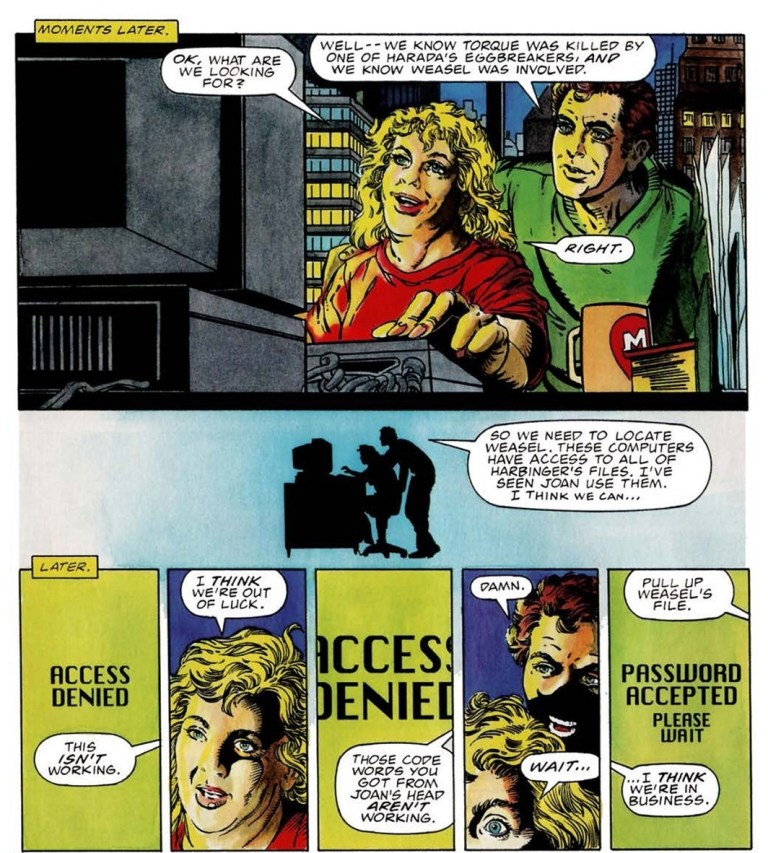
It turns out Sting had been covertly breaking in to the said office in recent times primarily to get information about the latest moves of the one organization that wants them defeated. After sneaking into the New York office of Harbinger, Sting uses his power on a Harbinger employee named Joan to get codes from her to get into the organization’s computer network…
Quality
Clearly Sting and his teammates are becoming as bad as their counterparts at the Harbinger foundation. Sting looks like he is destined to become sinister and unstoppable as his target Toyo Harada.
Considering how I felt after reading issue #11, this comic book series indeed took a turn to a new creative direction under David Lapham’s writing (note: this is the 2nd Harbinger story Lapham wrote). Not only did Sting and his teammates gain a new member with Shatiqua, they daringly pursued another dangerous mission that could be described as reckless and even idiotic. Even though they knew that the Harbinger foundation was strongly powerful and had many powered young adults as opposition, revenge over the death of Torque motivated them to take on their enemies head-on one member at a time.
David Lapham successfully portrayed Sting and his team to be as ruthless as Harbinger which strongly symbolizes the blurring of the boundary between good and evil. With regards to Sting, I saw a powerful teenager who could someday grow to be an evil leader similar to his rival and main target Toyo Harada. The mere fact that revenge was the objective for the team shows how dark Sting has turned even though he believes that he and his teammates are victims trying to survive and be free from the present danger of the Harbinger foundation.
Along the way, this comic book shows Flamingo at her most emotional state as she still clings on to the ate Torque. Her portrayal in this comic book is quite believable as it reflects the difficulties that teenagers in real life experience when it comes to letting go of the past and struggle to move forward as they carry bitterness and pain with them.
If you are looking for superhero spectacle, there is a lot to enjoy here. I won’t say how it is presented because that is something you yourselves should read and discover.
Conclusion
Breaking in and hacking into a private company’s network are crimes that Sting and Faith are comfortable with.
Harbinger #12 (1992) is a very solid read! What Jim Shooter established for this series with the first ten issues, David Lapham carefully moved the narrative forward to a new direction while still maintaining the elements that defined the main characters, why they exist and what they are fighting for. At this stage in the Harbinger series, Sting, Faith, Flamingo and Kris (plus new member Shatiqua) continue to operate as a team while disregarding the laws and morality because they truly believe that they are victims and moving targets of Harada and the Harbinger foundation. This comic book also has an excellent mix of storytelling, characterization and superhero action while still feeling like it is all grounded with reality (note: the X-Men comics published the same year as this had more fantasy elements). Right now, I’m happy with the way Lapham is handling the story and I’m looking forward to the next issue.
Overall, Harbinger #12 (1992) is highly recommended!
To be clear, I find Square Enix’s business relationship with Team Xbox lacking. The HD remastered version of Legend of Mana was very noticeably released on multiple platforms but not on Xbox. Tactics Ogre: Reborn was announced for future release for multiple platforms except Xbox. Still on Square Enix, the Final Fantasy VII remake as well as the announced sequel are exclusive to Sony’s platforms. The exclusions are clear and disturbing. Why Square Enix excluded the Xbox Series X, Xbox Series S and the Xbox One (which still has many millions of console users until now) as platforms to sell the above mentioned games remains a mystery although there is speculation that Sony Corporation and its PlayStation executives made a secret deal with the JRPG giant to specifically hurt Xbox without affecting Nintendo and Steam. Realistically, Microsoft pointed out that Sony pays game companies for blocking rights to keep games off Xbox Game Pass. Read all about it here, here and here.
While these developments are disturbing and also annoying, I still wish that Square Enix would remaster one of its classic JRPGs and release it on Xbox platforms similar to what they did with the remastered Chrono Cross. That classic RPG I’m referring to is none other than Xenogears.
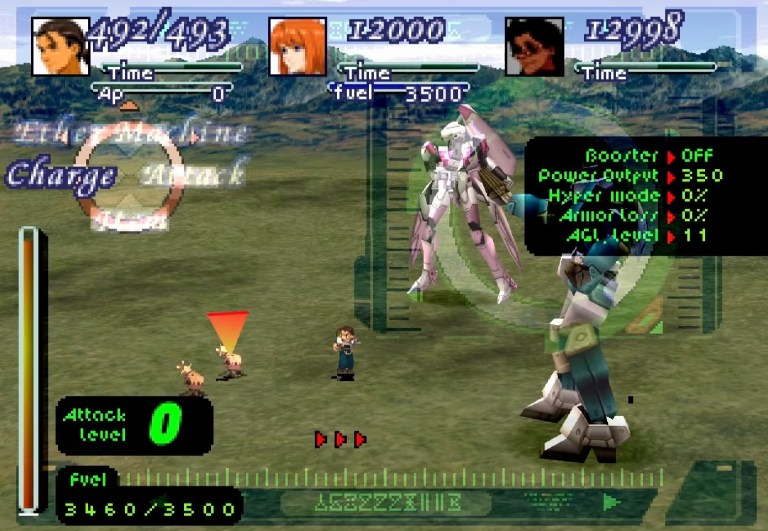
Xenogears’ battle system allowed individual persons and giant robots (called gears) to engage in battle simultaneously. Observe how the approach on in-game scale was done here.
I played Xenogears on the original PlayStation console way back in 1998 but I never got to finish it due to my academics and other external matters. It also did not help that the CD-ROM of the PlayStation deteriorated.
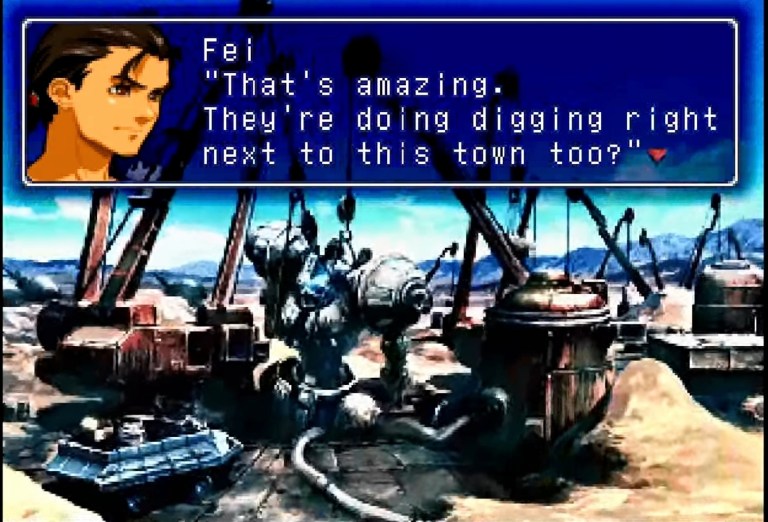
Regardless, I had a lot of enjoyment during my limited time with the said JRPG, the design of which was led by Tetsuya Takahashi. The fictional concept of Xenogears took a lot of inspiration from real-life forms of religion as well as concepts from certain intellectuals to establish the story themes, the fictional cultures and historical backgrounds within the game. At the same time, the game had this in-depth universe composed of different settings for gamers to explore. In my experience, I felt immersed into the game’s universe and I still remember the moments I got astonished discovering not only the many locations and landmarks but also the many non-playable characters (NPCs presented as 2D sprites) in the form of local communities and the in-game cultures.
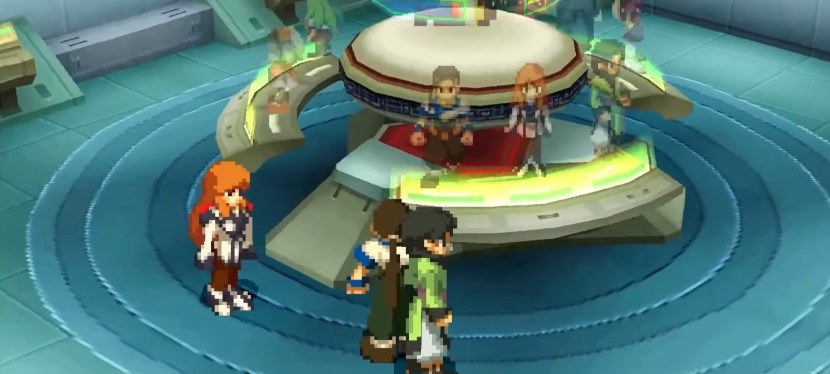
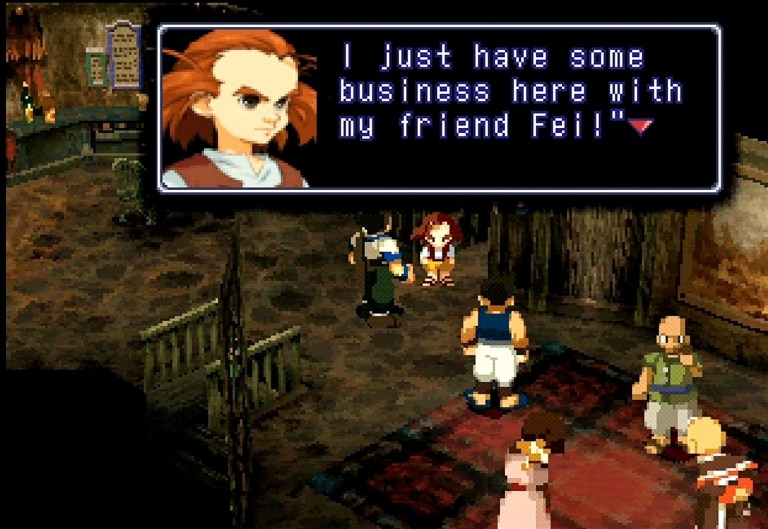
Xenogears had 3D polygonal environments and 2D sprites for the characters and creatures who move around.
In this classic JRPG, you play as Fei and you will explore a lot, fight a lot and interact with lots of characters as you go along.
While Xenogears had a science fiction concept, it still had lots of settings and gameplay features that made it feel like a fantasy. I love the way how the creative team’s artists implemented their art styles on the environments, the characters, the machines, the interiors of places and more. Visually, this game saw the use of 2D sprites for the characters who move along a 3D polygonal environment which can be explored creatively by a camera that can be adjusted by the players. As such, this approach done in Xenogears made the game look and feel a lot like Grandia.
While Xenogears’ battle system had key elements that were common with other JRPGs, there was a clear emphasis on hand-to-hand combat that took a lot of inspiration from martial arts as well as 2D fighting games of the decade. There were these martial arts-inspired combos which required button combinations and timing which were fun to watch happen. There were also these death blows which were really rewarding when pulled off correctly. Of course, there were still some magic attacks that were nicely presented.
What made Xenogears stand out is the use of giant robots or gears in the game. Not only did the game allow me to travel with the gears, it also allowed me to engage with enemies (both the large and the small ones standing on the floor/ground) with a fully functional battle system that emphasized size, scale and impact altogether. Similar to the other battle system, the gears battle system fun and engaging in my experience. I can never forget the moment I first saw my gear crush a huge enemy with a lot of impact to seal the victory. Travel using gears, however, was hampered somewhat by the creative team who implemented platform gaming elements (note: this includes jumping from one platform to another without falling down to your death) and the controls were not really responsive enough. This is something Square Enix should consider improving if they ever remaster Xenogears.
The battle system with the individual characters is a lot of fun and also unique as the combat emphasizes combos and martial arts.
The artistic approach used in Xenogears remains captivating.
Right now, I would love to replay Xenogears and complete it but I prefer the game should be remastered and be released for Xbox consoles. I have no intention of buying a new console from Sony and Nintendo to play Square Enix JRPGs that are missing on Xbox consoles. JRPGs on Xbox are not exactly lacking (note: Eiyuden Chronicle: Hundred Heroes will be released via Xbox Game Pass in 2023 while Persona RPGs are coming to Xbox soon) but it would be great not only for Xbox gamers but also Square Enix itself to remaster Xenogears and release it on the Xbox ecosystem. That being said, I believe Xenogears itself would make a great addition into Xbox Game Pass (XGP) which already has many millions of subscribers worldwide!
Think about it carefully. Having a remastered Xenogears for sale on Xbox and also listed on Xbox Game Pass will not only be good for the Xbox ecosystem but also for Square Enix to not only sell games but also reach out to the XGP subscribers who could enjoy the said JRPG and add a lot of new players that the JRPG giant could not reach before. Not only are more Square Enix role-playing games are needed on XGP right now (note: adding Chrono Cross into it will be delightful), they can also benefit nicely as the Xbox ecosystem is gradually becoming the premier ecosystem for RPG enthusiasts in this console generation. Xbox-exclusive RPGs like Starfield, The Outer Worlds 2, Fable as well as future sequels of The Elder Scrolls and Fallout will collectively generate big game sales as well as increase the number of gamers in the Xbox ecosystem and Xbox Game Pass subscribers will grow big as well. The growth will be even bigger once Team Xbox’s acquisition of Activision Blizzard gets approved. For Square Enix to miss out on fast growing Xbox ecosystem in favor of Sony’s blocking rights will be a regrettable move.
Going back to Xenogears, I want to make it clear to Square Enix that now is the time to remaster it and release it on Xbox as well as other platforms. That being said, I also urge Team Xbox’s chief Phil Spencer, executive Aaron Greenberg and the Xbox Game Pass team to reinvigorate the business relationship with Square Enix and try to convince them to release Xenogears and other classic JRPGs into XGP and the Xbox game store. To the Xbox gamers and RPG enthusiasts reading this, I encourage you to contact Square Enix and Team Xbox to have Xenogears and other JRPGs (both classic and modern) released on the Xbox consoles and Windows PC.
In closing this piece, posted below are Xbox-related videos plus a few Xenogears-related videos for your enjoyment.
Disclaimer: This is my original work with details sourced from reading the comic book and doing personal research. Anyone who wants to use this article, in part or in whole, needs to secure first my permission and agree to cite me as the source and author. Let it be known that any unauthorized use of this article will constrain the author to pursue the remedies under R.A. No. 8293, the Revised Penal Code, and/or all applicable legal actions under the laws of the Philippines.
Welcome back superhero enthusiasts, 1990s culture enthusiasts and comic book collectors! Today we go back to the early 1990s and explore a part of the Valiant Comics shared universe through the Harbinger monthly series.
In my previous retro review, Sting, Faith, Kris and Flamingo finally arrived home after spending many months away during the events of Unity. While so much time had passed for them, very little time on Earth actually moved forward. At this stage, getting back to normal living was inevitable even though they still have a conflict with the Harbinger foundation.
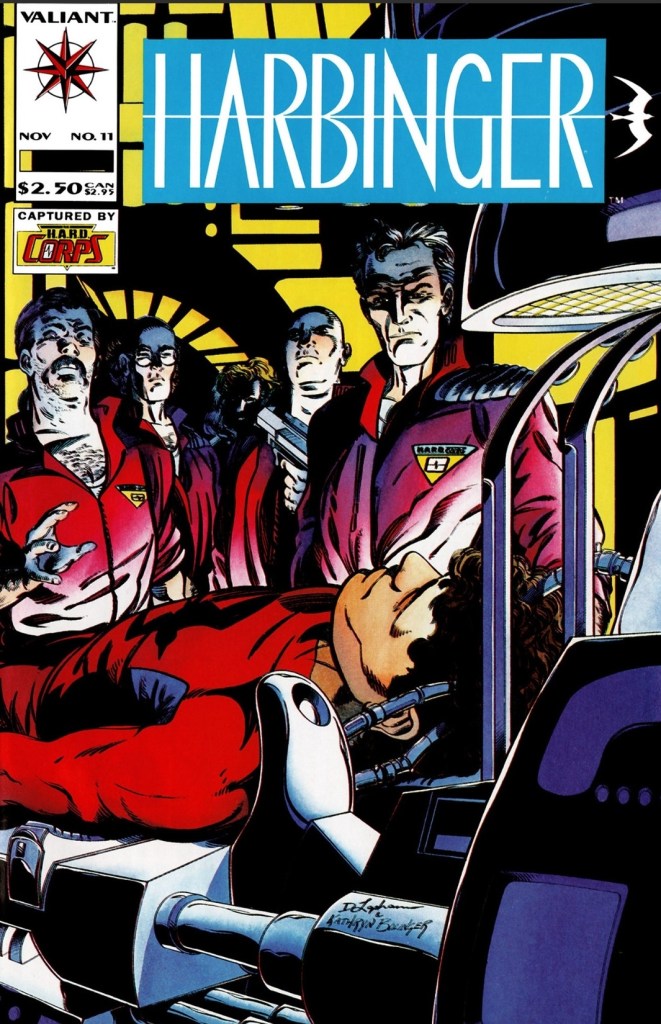
With those details laid down, here is a look back at Harbinger #11, published in 1992 by Valiant Comics with a story written and drawn by David Lapham. This comic book marks takes place after the end of Unity.
The cover.
Early story
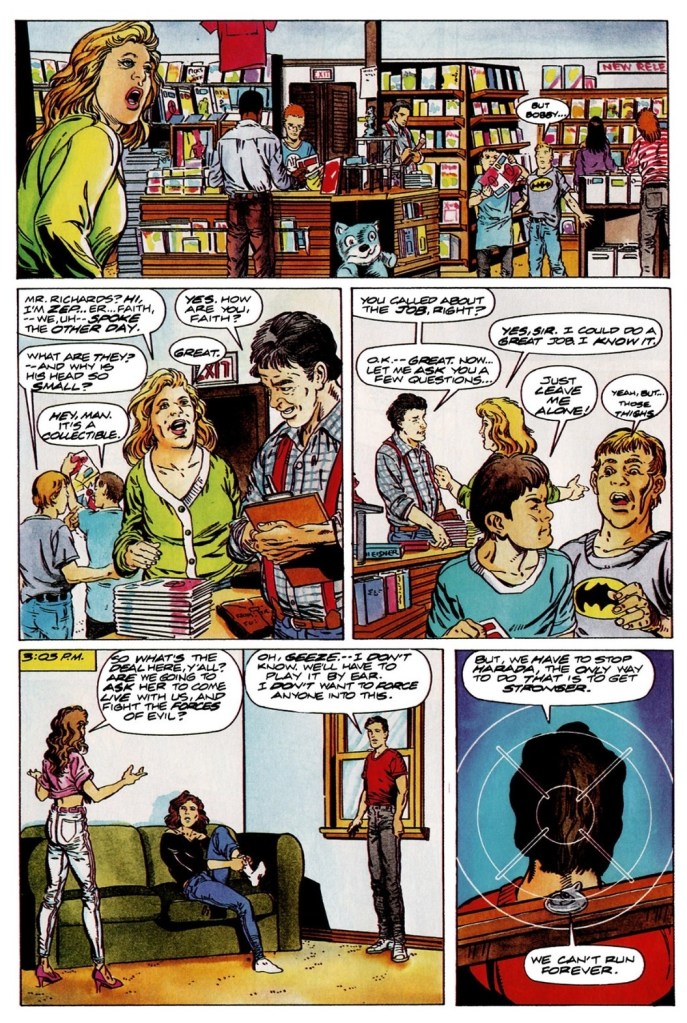
The story begins with Faith telling Kris and Sting that she’s about to go to a big job interview. While the two conversed, Faith notices a blimp floating in the sky. To her, it seems that it has floated up there really long.
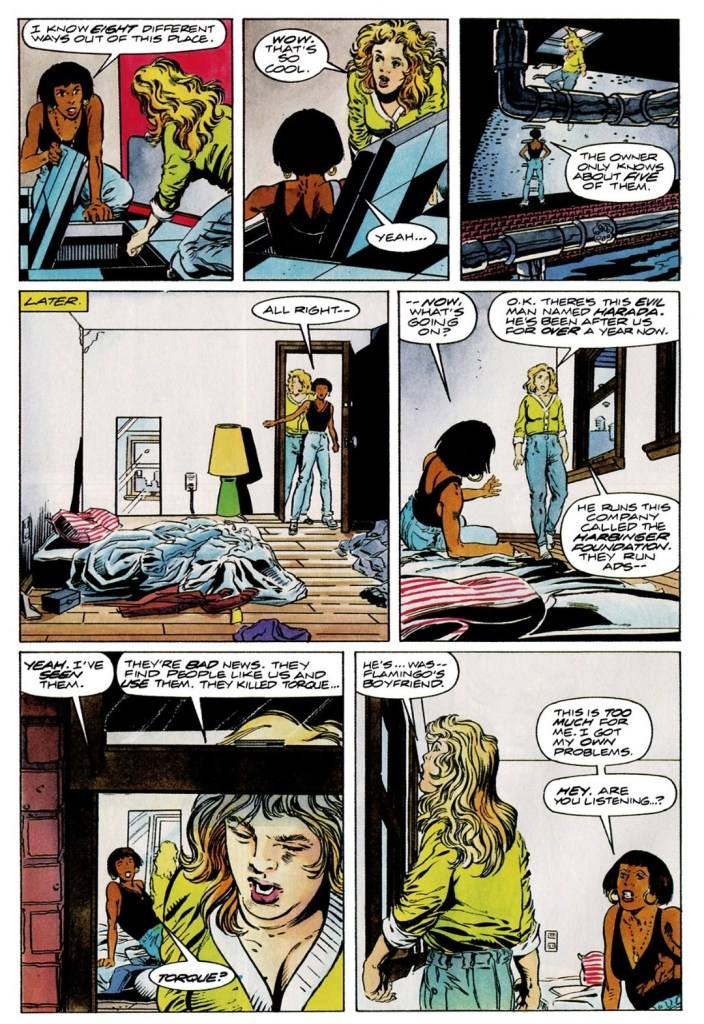
After being reminded of their planned meeting with Shatiqua, Faith flies off into the city for the job interview at a local business called Comics Jungle. Kris then approaches Flamingo whom she notices to be sounding down. Flamingo states that she has been thinking about the late Torque (father of the baby Kris had) and expresses her concern about the possibility of Shatique joining their team. Flamingo adds that she does not think they will ever get safe…
Quality
Faith and Shatiqua interact.
To begin with, this story marked artist David Lapham’s first time to write a Harbinger tale. Building up on what happened in the late stage of the previous issue, Lapham utilized H.A.R.D. Corps (already one of the established regular titles of Valiant Comics) for the Valiant universe crossover element. The good news here is that Lapham made good use of portraying H.A.R.D. Corps as the focused covert operations team that just so happens to be tracking Sting whom they perceive to be very powerful and too dangerous to be left free in society. This aspect of the story brings up parallels between H.A.R.D. Corps and the sinister Harbinger foundation which instantly blurred the line that separates good and evil.
As I don’t want to spoil the plot, I can confirm that as I read the comic book until the end, I literally felt the vibrations of change happening in the sense that a new direction for the Habinger series was materializing.
When it comes to the characters, Lapham did a good job developing the main characters while also shedding a good amount of the narrative on H.A.R.D. Corps’ members. There is a lot of characters to see but the good thing is that the narrative was not overwhelmed by the exposition and multiple speaking parts.
Conclusion
While Faith goes to the city comic book store for her job interview, Kris, Sting and Flamingo discuss internal matters not knowing they are being targeted.
Harbinger #11 (1992) delivers a fine mix of crossover, spectacle (note: lots to enjoy here) and characterization that also succeeds in telling its own concept while giving readers a hint of what changes could come soon to Sting, Faith, Flamingo and Kris. With Lapham as the new writer, the story is surprisingly very good and engaging to read. You will see a lot of entertaining elements from the previous issues within this comic book with some new intrigue added that made this particular Harbinger tale fresh to read. Lastly, I should say that the addition of H.A.R.D. Corps really added some depth into the story and the spectacle.
Overall, Harbinger #11 (1992) is highly recommended!
Welcome back, my readers and fellow Christians! In this newest edition of my Christian Music Appreciation (CMA) series, we will focus on Running, an original worship song from Planetshakersreleased through their album REVIVAL (click here for the official page of the album) For the newcomers reading this, the previous Planetshakers worship songs I examined and analyzed in the CMA series were How I Praise, All, Great Outpouring, 247 365, Encounter Song and So Good. Let me share to you also that Planetshakers will be returning to the Philippines with worship events scheduled! In fact, Planetshakers has been touring internationally to lead people to the Lord with music and powerful worship!
If you want to discover and learn more about Planetshakers, I encourage you to click here (Facebook page), here (Instagram), here (Twitter) and here (YouTube). To know more about Planetshakers itself, visit https://www.planetshakers.com/
Before getting into the analysis of the Biblical relevance of Running, posted below for your reference are the lyrics. Words and music of this song were credited to Andy Harrison and Joth Hunt.
VERSE 1
Who You are is holy
Nothing in this world compares
Hidden in Your glory
Are treasures far beyond compare
PRE-CHORUS
Beauty on beauty, wonder on wonder
Lord there’s none like You
Closer and closer, You draw me in so
I will run to You
CHORUS
I’m running, running to You
I’m longing, longing for You
I’m pouring, my affection on You
‘Cause all I want is You, all I want is You
VERSE 2
Who You are is worthy
All creation bows to You
All You do is perfect
Every word is proven true
BRIDGE
Holy, holy Lord almighty
There is none like You
Worthy, worthy, You are worthy
There is none like You
TAG
All I want is You
To begin with, let’s take a close look at the lyrics of Verse 1 of the song: Who You are is holy, Nothing in this world compares, Hidden in Your glory, Are treasures far beyond compare.
The Verse 1 lyrics emphasize that our Lord is holy and His holiness can never be matched by anyone nor anything in this very divided world we live in. As God is our creator, He is also our source and the ultimate planner. Therefore, we only worship, honor and glorify the Lord. The Lord is the one we approach. Run to God, His Son Lord Jesus and the Holy Spirit! Learn from the scriptures below…
No one is holy like the Lord,
For there is none besides You,
Nor is there any rock like our God.
1 Samuel 2:2 (NKJV)
Keep exalting the Lord our God facedown before his glory-throne, for he is great and holy!
Psalms 99:9 (TPT)
And He is the radiance of His glory and the exact representation of His nature, and upholds all things by the word of His power. When He had made purification of sins, He sat down at the right hand of the Majesty on high, having become so much better than the angels, to the extent that He has inherited a more excellent name than they.
Hebrews 1:3-4 (NASB)
Moving on, we have the Pre-Chorus lyrics which go as follows: Beauty on beauty, wonder on wonder, Lord there’s none like You, Closer and closer, You draw me in so, I will run to You.
The Pre-Chorus lyrics emphasize that the Lord God is much greater than us and the whole world we live in. The greatness of the Heavenly Father can never be matched and as He is our creator, it is only our destiny and responsibility to be faithful to Him, to honor Him and be with Him above everything else. All the glory, all the praise and all the prioritizing belong to the Lord! We move to the Lord because our rightful place is with Him! Do not forget that the Heavenly Father sent His Son Jesus to save us. Learn from the following bible scriptures below…
There is none like You, Lord;
You are great, and Your name is great in might.
Who would not fear You, O King of the nations?
For it is Your due!
For among all the wise men of the nations
And in all their kingdoms,
There is none like You.
Jeremiah 10:6-7 (NASB)
For great is the Lord and greatly to be praised; He also is to be [reverently] feared above all so-called gods.
1 Chronicles 16:25 (AMPC)
And I will vindicate the holiness of My great name which has been profaned among the nations, which you have profaned among them. Then the nations will know that I am the Lord,” declares the Lord God, “when I show Myself holy among you in their sight.
Ezekiel 36:23 (NASB)
“Are you tired? Worn out? Burned out on religion? Come to me. Get away with me and you’ll recover your life. I’ll show you how to take a real rest. Walk with me and work with me—watch how I do it. Learn the unforced rhythms of grace. I won’t lay anything heavy or ill-fitting on you. Keep company with me and you’ll learn to live freely and lightly.”
Matthew 11:28-30 (MSG)
But everyone my Father has given to me, they will come. And all who come to me, I will embrace and will never turn them away.
John 6:37 (TPT)
Next, take a close look at the following lines from the Chorus: I’m running, running to You, I’m longing, longing for You, I’m pouring, my affection on You, ‘Cause all I want is You, all I want is You.
The Chorus clearly magnifies our purpose with the Lord and this, I believe, is the basis of the worship song’s title. As children of the Lord, we are meant to come to Him, open our hearts to Him and have unwavering faith in Him. Posted below are more holy scriptures about coming to the Lord…
Now that we know what we have—Jesus, this great High Priest with ready access to God—let’s not let it slip through our fingers. We don’t have a priest who is out of touch with our reality. He’s been through weakness and testing, experienced it all—all but the sin. So let’s walk right up to him and get what he is so ready to give. Take the mercy, accept the help.
Hebrews 4:14-16 (MSG)
Lord, you are so good to me, so kind in every way and ready to forgive, for your grace-fountain keeps overflowing, drenching all your devoted lovers who pray to you.
Psalms 86:5 (TPT)
Jesus said to him, I am the Way and the Truth and the Life; no one comes to the Father except by (through) Me.
If you had known Me [had learned to recognize Me], you would also have known My Father. From now on, you know Him and have seen Him.
John 14:6-7 (AMPC)
Jesus replied, “Loving me empowers you to obey my word. And my Father will love you so deeply that we will come to you and make you our dwelling place.”
John 14:23 (TPT)
Next, the lyrics of Verse 2 are as follows: Who You are is worthy,All creation bows to You, All You do is perfect, Every word is proven true.
After that, here are the lyrics of the song’s Bridge: Holy, holy Lord almighty, There is none like You, Worthy, worthy, You are worthy, There is none like You.
Collectively Verse 2 and the song’s Bridge emphasize the greatness, the almighty power and love of the Lord. He is faithful and He always keeps His promises. He is also our Source, our Creator and the Way Maker. The Lord is worthy of all the praise and faith from us. The Lord is almighty and nothing else can ever compare to him. No idol and no form of opposition will ever come close to the Lord’s power and holiness. Learn from the following scriptures below…
But God demonstrates His own love toward us, in that while we were still sinners, Christ died for us.
Romans 5:8 (NASB)
But you, O Lord, your mercy-seat love is limitless, reaching higher than the highest heavens. Your great faithfulness is infinite, stretching over the whole earth.
Psalms 36:5 (TPT)
For God did not send the Son into the world in order to judge (to reject, to condemn, to pass sentence on) the world, but that the world might find salvation and be made safe and sound through Him.
John 3:17 (AMPC)
Nevertheless in Your great mercy
You did not utterly consume them nor forsake them;
For You are God, gracious and merciful.
Nehemiah 9:31 (NKJV)
And I will make of you a great nation, and I will bless you [with abundant increase of favors] and make your name famous and distinguished, and you will be a blessing [dispensing good to others].
Genesis 12:2 (AMPC)
The Lord has done great things for us! We are glad!
Psalm 126:3 (AMPC)
Because Your lovingkindness is better than life,
My lips shall praise You.
Thus I will bless You while I live;
I will lift up my hands in Your name.
Psalm 63:3-4 (NKJV)
Come on, everyone! Let’s sing for joy to the Lord! Let’s shout our loudest praises to our God who saved us! Everyone come meet his face with a thankful heart. Don’t hold back your praises; make him great by your shouts of joy! For the Lord is the greatest of all, King-God over all other gods! In one hand he holds the mysteries of the earth, and in the other he holds the highest mountain peaks. He’s the owner of every ocean, the engineer and sculptor of earth itself! Come and kneel before this Creator-God; come and bow before the mighty God, our majestic maker!
Psalm 95:1-6 (TPT)
Indeed, the lyrics and title of Running are holy and anointed! This worship song by Planetshakers is a strong reminder about who our Lord is and why we are meant to be with Him, follow Him and honor Him eternally. As faithful children of God, our destiny and purpose are with Him. We are meant to come into His presence, be ready to follow His commands and preach His Word in this very divided world we are currently living in. Musically, Running is motivating and solemn at the same time. It is an ideal song to worship the Lord during Sunday worship services or during prayer events with the spiritual family.
Thank you for reading. If you find this article engaging, please click the like button below and also please consider sharing this article to others. Sharing this Christian piece means spreading the good news of the Lord to others. It can help you save the unsaved and the lost souls out there. Also please consider making a donation to support my publishing of faith articles and CMAs.
If you are the kind of gamer who loves playing vertical scrolling 2D shooters that have that unique arcade aesthetic, then you should be delighted to know that Raiden IV x Mikado remix will be released on Xbox Series X, Xbox Series S and Xbox One early next year, according to the official announcement at Xbox.com.
Xbox gamers will get to play Raiden IV x Mikado remix in early 2023.
To put things in perspective, posted below is the excerpt from Xbox.com announcement by Nicholas Odmark. Some parts in boldface…
High-octane action soars onto the scene in Raiden IV x Mikado remix, coming to Xbox Series X|S and Xbox One in early 2023! The core gameplay of this series includes the classic vertical scrolling and top-down aerial combat that the shoot ’em up genre is famous for. However, this title’s arsenal of gameplay modes, remixed music, new play styles, and more are what set it apart from the competition.
Arcade Origins – Raiden was first released in Mikado Game Center arcades throughout Japan in April 1990 by Tecmo. After a few decades of additional titles and a new developer in Moss, Raiden IV was first released in 2007. By 2008, it had made its way from arcades to the Xbox 360. And now, over six years after the release of Raiden V on the Xbox One, Raiden IV x Mikado remixaims to establish itself as the most definitive version of this title on Xbox to date.
Game Modes – Raiden IV x Mikado remixcomes outfitted with several exciting game modes. Arcade Mode hails from the original release of Raiden IV, and sports two difficulties, Light for beginners and Original for advanced players. It also utilizes the Flash Shot scoring mechanic, meaning the faster you take down enemies, the higher your score will be. This encourages playing near the top of the screen to hit enemies as they spawn, which of course brings with it a high level of risk. Additional Mode has the same mechanic, but adds two new stages along with new enemy bullet patterns.
This is what the game will look like on Xbox.
OverKill Mode, first introduced in Raiden IV: Overkill, adds two new missions and replaces the Flash Shot scoring system with one of its own. After destroying a larger enemy, they’ll remain on-screen for a few seconds, offering you a chance to earn a higher score bonus the more you keep attacking them. However, that means turning your attention away from new enemies who spawn during that time. In Score Attack Mode, every stage is available to replay for the highest score. And finally, Boss Rush offers you a quick shortcut to every end-of-stage boss without having to fuss with completing every level again.
Turn Up the Volume – Named for the addition of remixed background music in collaboration with Game Center Mikado, Raiden IV x Mikado remix features tracks from legendary artists such as the Go Sato Band, Heavy Metal Raiden, O.T.K., and more. This soundtrack also includes live performances, new arrangements, and allows players to choose between the original Raiden IV background music or the remixed version.
Choose your Ship – On top of selecting your game mode and music preference, you also have three different ships to choose from, each with their own strengths and weaknesses. The Fighting Thunder ME-02 is the most balanced, with respectable weapon strength and speed. The Raiden MK-II is the classic ship of the series, sacrificing speed for higher damage. And finally, the Fairy is the smallest and fastest of all the ships and is meant for players who are seeking a challenge.
Play Your Way – While you might think those are enough options to choose from, Raiden IV x Mikado remix isn’t done yet. You also get to select a play style, each of which drastically changes the game. Solo Play is pretty self-explanatory, while Dual Play lets you and a buddy play together, complete with couch co-op. Double Play on the other hand allows one player to control two ships at the same time, offering a unique and challenging spin on whichever game mode you pair it with.
It’s really nice that Raiden IV x Mikado remix is coming to Xbox consoles sometime early next year. I missed out on Raiden IV when it was released on Xbox 360. I also missed out on Raiden V on Xbox One. Anyway, having more arcade games on the Xbox ecosystem is always a welcome development.
Watch out for Raiden IV x Mikado remix on Xbox Series X, Xbox Series S and Xbox One in early 2023.
In closing this piece, posted below are Xbox-related videos – including details about Sony’s pathetic reaction to Microsoft’s acquisition of Activision Blizzard – for your viewing pleasure.
Disclaimer: This is my original work with details sourced from reading the comic book and doing personal research. Anyone who wants to use this article, in part or in whole, needs to secure first my permission and agree to cite me as the source and author. Let it be known that any unauthorized use of this article will constrain the author to pursue the remedies under R.A. No. 8293, the Revised Penal Code, and/or all applicable legal actions under the laws of the Philippines.
Welcome back superhero enthusiasts, 1990s culture enthusiasts and comic book collectors! Today we go back to the early 1990s and explore a part of the Valiant Comics shared universe through the Harbinger monthly series.
In my previous retro review, things got totally wild as Sting, Faith, Flamingo and a pregnant Kris made their way into the middle of a war in an unknown, far-away place within the Unity crossover storyline. Even though Sting and Kris already have major challenges ahead of them related to an upcoming birth of a child, they have no choice but to help their side of powered figures (including Magnus the robot fight, Solar, X-O Manowar and others) win against Erica Pierce.
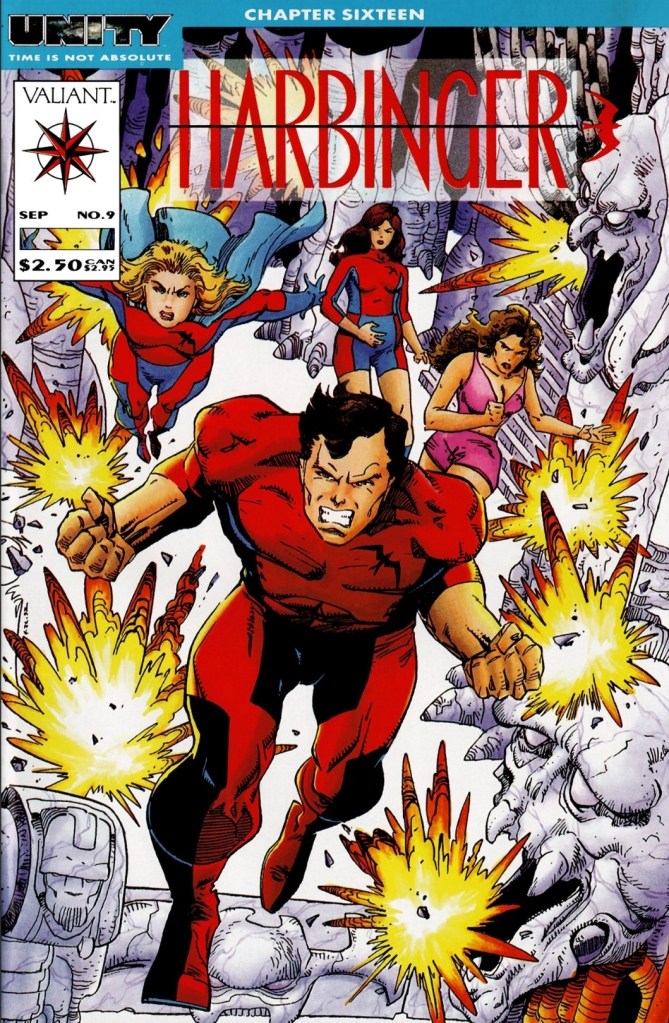
With those details laid down, here is a look back at Harbinger #9, published in 1992 by Valiant Comics with a story written by Jim Shooter and drawn by David Lapham. This comic book marks the 16th chapter of the Unity storyline.
The cover.
Early story
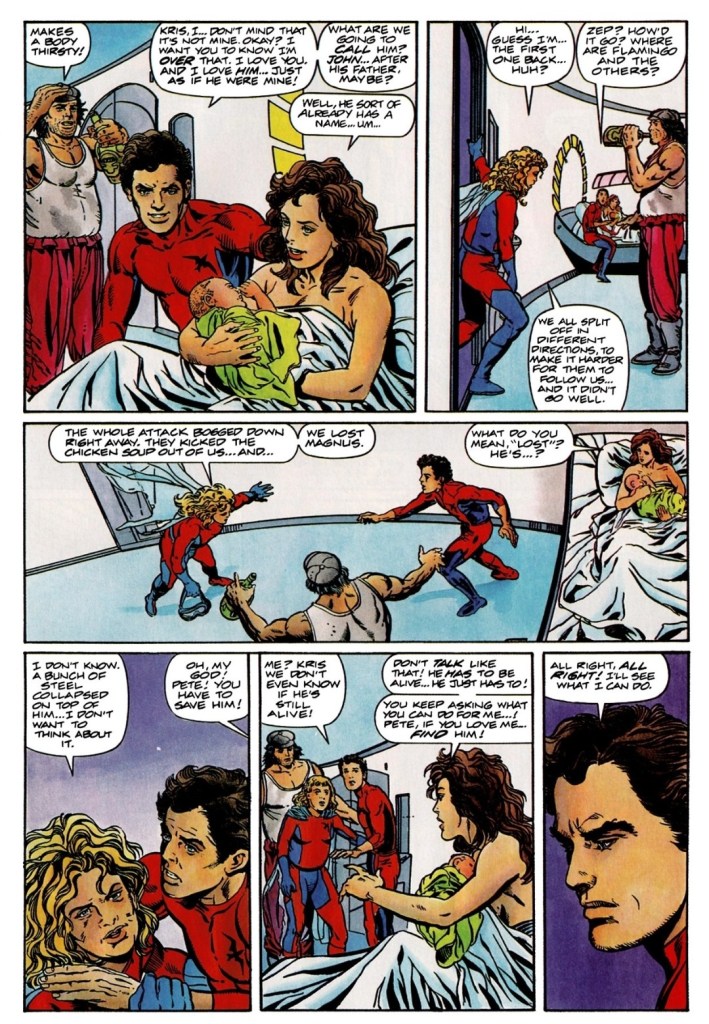
The story begins on day number 157 of Unity. Needing immediate help for his girlfriend Kris who is about to give birth, Sting flies to Armstrong who is about to acquire a bottle of liquid painkiller. Minutes later, Sting and Armstrong arrive at a high-tech place where the pregnant Kris is waiting.
Supported by Armstrong and touched by Sting, Kris eventually gives birth to a baby boy. Even though he knows that the baby is not biologically related to him, Sting still expresses his love to Kris and the child.
Suddenly, Faith arrives feeling exhausted. She said she came from battle and their group lost Magnus…
Quality
Sting, Flamingo and Faith with the other major Valiant Comics figures on a mission.
To cite the obvious, this is another high-quality story crafted by Jim Shooter who successfully told the exploits of Sting and his teammates while also highlighting crucial developments on the heroes’ campaign against Erica Pierce within the Unity storyline.
When compared to the events of issue #8, the stakes are much higher this time around not only for Sting, Faith, Kris and Flamingo but also for the other major figures of Valiant’s comic book universe of the time. This is very fitting as Erica Pierce, the so-called Mothergod, took steps closer on achieving her goal that would mean complete disaster for everyone. The notable thing about the way Jim Shooter crafted the narrative within this comic book is that tension gradually rises as the story goes on which leads to something really powerful happening on the final page (note: you must read it yourselves).
On character development, Sting and Kris are the ones who got characterized most. Through Sting, you will realize that even though he is very powerful, his immaturity added to his struggle on achieving goals and setting his priorities straight. Also the way he expressed his love to Kris knowing that the father of the newly born baby was none other than their late teammate Torque, I felt he said it half-heartedly mainly to give her assurance (which he could fail to give). Kris also gets her own share of the spotlight as she embraces her new role as a teenage mother.
More on the Unity story, fans of Magnus, Archer and Armstrong, Rai and Eternal Warrior will have something to enjoy here.
Conclusion
Kris is now a mother and Sting is not the father of the child.
Harbinger #9 (1992) maintains many powerful elements that made the previous issue a great read. The difference is that this comic book has not only the stakes raised higher, but also the drama and the progressive development of Sting and Kris. In here, you will see Sting not only as a powerful teenager struggling with his priorities, but also as a key player in the struggle against Erica Pierce. Those who follow the Unity story will see a lot of engaging stuff from start to finish here.
Overall, Harbinger #9 (1992) is highly recommended!
Disclaimer: This is my original work with details sourced from reading the comic book and doing personal research. Anyone who wants to use this article, in part or in whole, needs to secure first my permission and agree to cite me as the source and author. Let it be known that any unauthorized use of this article will constrain the author to pursue the remedies under R.A. No. 8293, the Revised Penal Code, and/or all applicable legal actions under the laws of the Philippines.
Welcome back superhero enthusiasts, 1990s culture enthusiasts and comic book collectors! Today we go back to the early 1990s and explore a part of the Valiant Comics shared universe through the Harbinger monthly series.
In my previous retro review, Sting, Faith, Kris and Flamingo struggled with the completely unexpected new reality that their teammate Torque had died. As they mourned, Toyo Harada and his foundation just kept on operating and preparing themselves for a future conflict with the protagonists. Harada specifically perceives Sting as the most dangerous object for his organization to deal with.
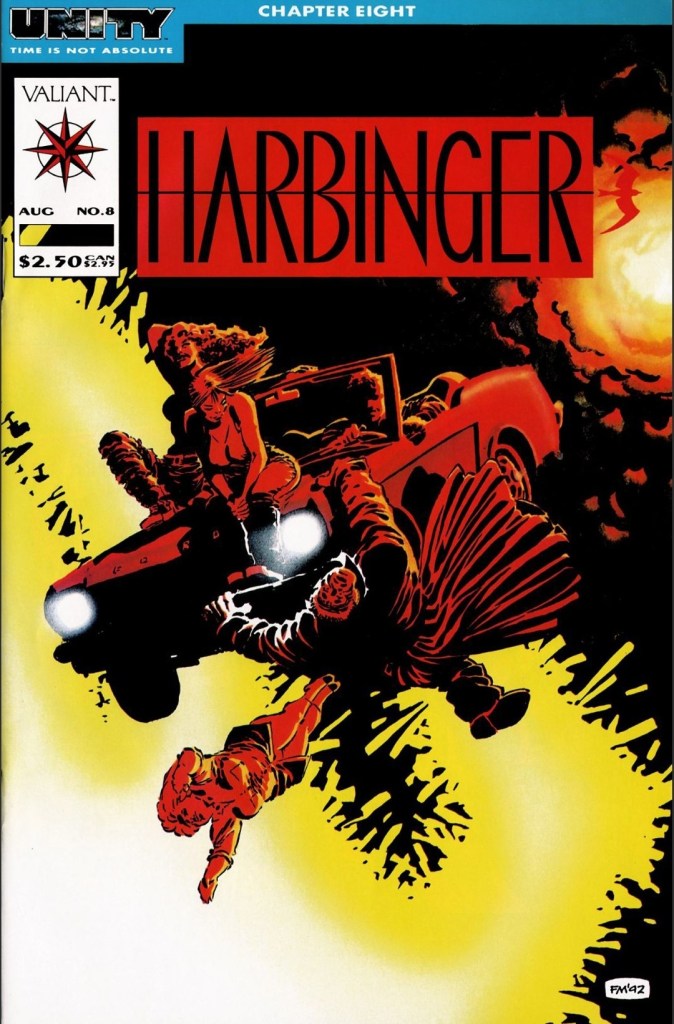
With those details laid down, here is a look back at Harbinger #8, published in 1992 by Valiant Comics with a story written by Jim Shooter and drawn by David Lapham.
The cover.
Early story
The story begins on April 4, 1992 inside the nice home of Dr. Heyward. There, Heyward, his wife and their two kids are enjoying the company of Faith, Sting and Flamingo. Upstairs, Kris could not fit jeans as she has gained weight. Heyward’s wife Moni arrives, offers her new clothes to wear and shares with her some insight about being in a relationship.
After dinner, Sting and Dr. Heyward have a nice chat with drinks. At the kitchen, Kris and Moni begin to talk about pregnancy with Flamingo present. As soon as Kris says that she is thinking about asking Dr. Heyward about getting an abortion, Flamingo tells her not to do it as the baby inside her all that is left of their dead teammate Torque.
Just as Kris begins to play dumb and divert attention away, a weirdly dressed teenager suddenly appears inside the home. He identifies himself as Geoff McHenry the geomancer…
Quality
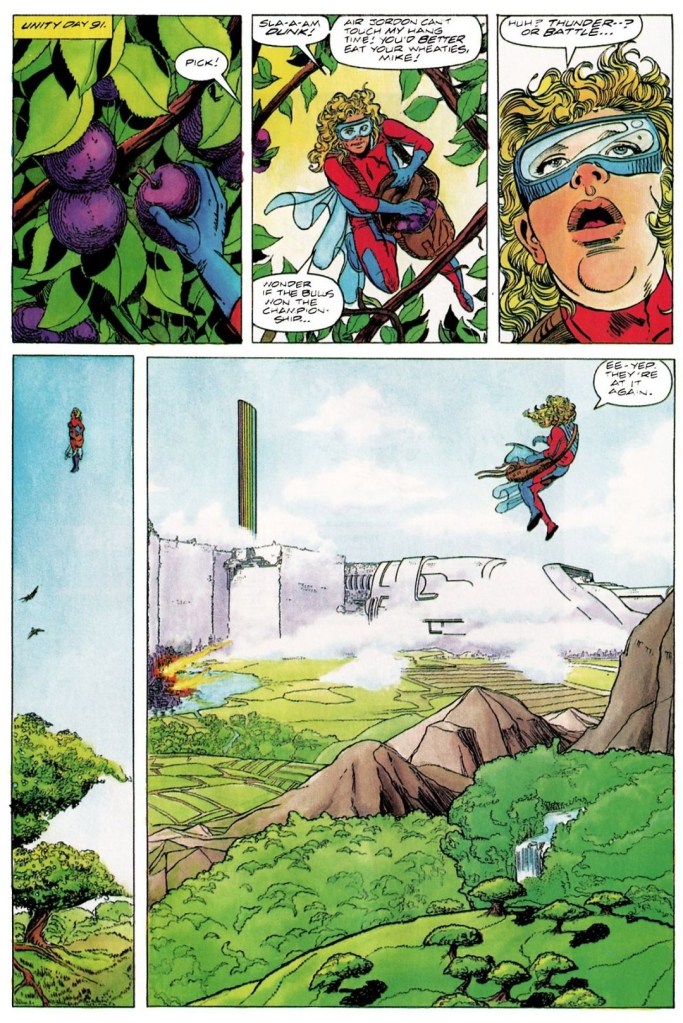
Faith collects and then flies high for a grand view.
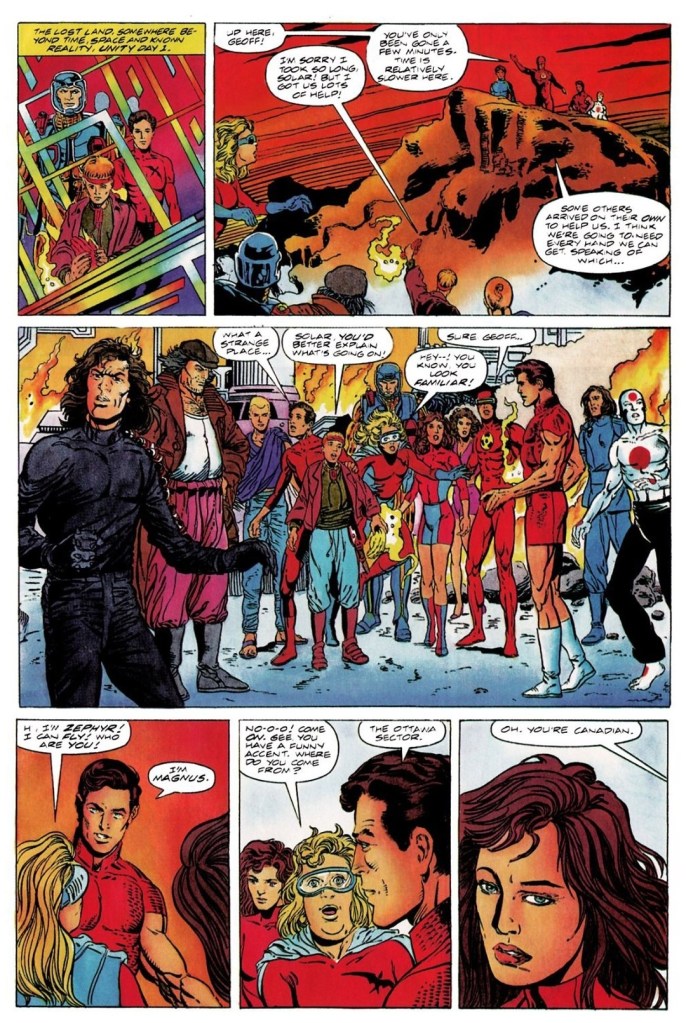
To get straight to the point, this issue of Harbinger is easily the wildest story I’ve read in this series and for a very obvious reason – it is part of the Unity crossover storyline that established the Valiant Comics universe’s overall concept. For the newcomers reading this, Unity was published in 1992 composed of eighteen chapters – beginning with Unity #0 – which saw story parts told in issues of other Valiant titles like Eternal Warrior, Archer & Armstrong, Magnus Robot Fighter, X-O Manowar, Rai and Solar Man of the Atom.
That being said, the story here is not only wilder than ever but also really went higher with its flight of fantasy which really impacted the protagonists. In her, Sting, Faith, Flamingo and even the pregnant Kris get recruited to join what turned out to be a major battle waged by a group of adult heroes (Solar, Eternal Warrior, Archer & Armstrong, X-O Manowar, Rai and others) against Erica Pierce (the Mothergod) who is obsessed with destroying the universe as she wield immense power.
More on the plot, the transition of Sting and his teammates going into battle on an unknown realm progressed very smoothly which surprised me. As there are lots of battle scenes and other forms of superhero spectacle to see, the creative team managed to maintain a compelling narrative that moved at a medium pace which makes following the exploits of the powered teenagers easy to do. Sure, you get to see the other Valiant Comics heroes share the spotlight in this comic book but Sting and his teammates are the clear protagonists.
Even though there are lots of battle scenes, Jim Shooter still succeeded in setting up a good amount of character development scenes which resulted in clear development of Sting and Kris. Not only that, Shooter convincingly captured the impulse of youth and the false sense of maturity on the part of Sting who at this point has to take special care of Kris, think about the future of becoming a father while dealing with pressure from the other Valiant superheroes who need him to really advance against Erica Pierce. This comic book’s script is very strong and richly layered!
Conclusion
Sting and his teammates stand along with the other heroes of the Valiant Comics universe.
Being the eight chapter of the Unity crossover storyline, Harbinger #8 (1992) has this almost perfect mix of the epic superhero conflict, spectacle and characterization while maintaining sufficient focus on the exploits Sting, Faith, Kris and Flamingo. At this point of the monthly series, Sting (note: whose immense power was portrayed here) and Kris are preparing themselves for the future while failing to realize they are not really mature enough to deal with both the anticipated parenthood and the Unity conflict at hand. This comic book is a must-read as it works excellently both as a standalone story as well as a chapter of Unity. That being said, I’m looking forward to the next issue already.
Overall, Harbinger #8 (1992) is highly recommended!
Disclaimer: This is my original work with details sourced from reading the comic book and doing personal research. Anyone who wants to use this article, in part or in whole, needs to secure first my permission and agree to cite me as the source and author. Let it be known that any unauthorized use of this article will constrain the author to pursue the remedies under R.A. No. 8293, the Revised Penal Code, and/or all applicable legal actions under the laws of the Philippines.
Welcome back superhero fans, 1990s arts and culture enthusiasts, Ultraverse fans and comic book collectors! Today we revisit the Ultraverse through the monthly series of The Solution.
Under the direction of the late James Hudnall, issues #9, #10, #11 and #12 told a very wild and compelling story about The Solution that literally was out of this world and gave readers a wide view of the vastness of the Ultraverse. Issue #13 meanwhile saw The Solution involved in a crossover storyline that involved Prototype, Solitaire and the Night Man. Just what happened next in The Solution series?
With those details laid down, here is a look back The Solution #14, published by Malibu Comics in 1994 with a story written by the late James Hudnall and drawn by Huang Nguyen.
The cover.
Early story
The story begins when an armed, muscular man carrying two large guns sees Dropkick. He immediately fires at him. Then he sees Shadowmage and Tech and then fires at them. It turns out they are just non-moving physical models. The aggressive use of weapons is called Incoming. He is a Communist Cambodian man who was hardened by the events in his native country and he served the tyrant Pol Pot by killing others. He is living with brutality and unstoppable rage which makes him dangerous to The Solution.
In New York, Black Tiger anticipates the arrival of a van carrying heroin set to be released to buyers. Suddenly a gang of thugs serving the Pump appear heading attacking the van. Black Tiger suddenly comes in and kills many of the thugs.
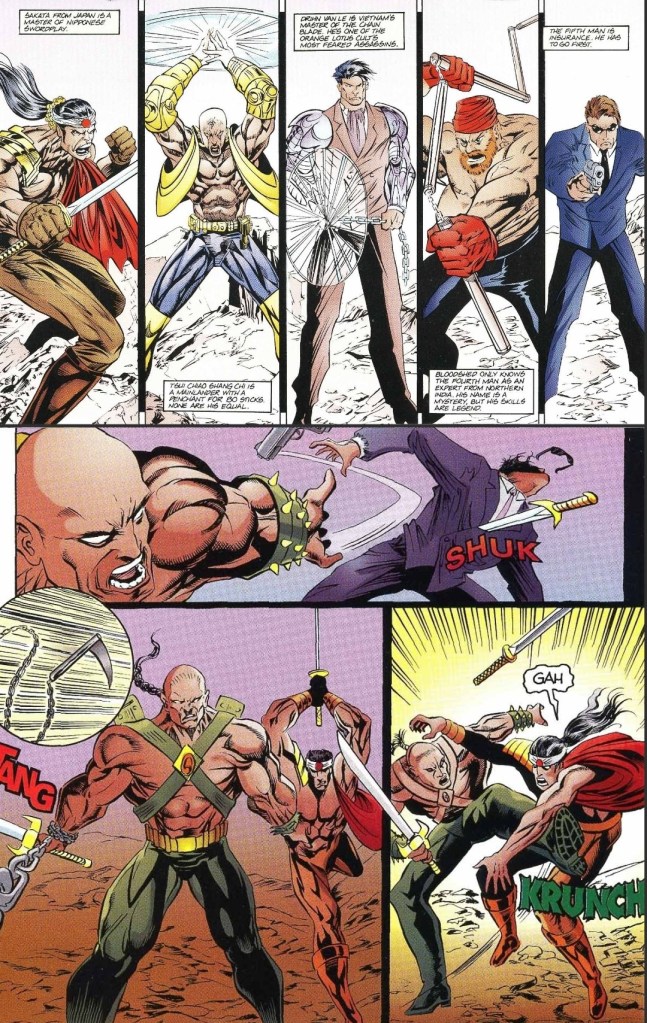
On a far-away location in Hong Kong, a fighter called Bloodshed finds himself surrounded by five other fighters who are determined to kill him…
Quality
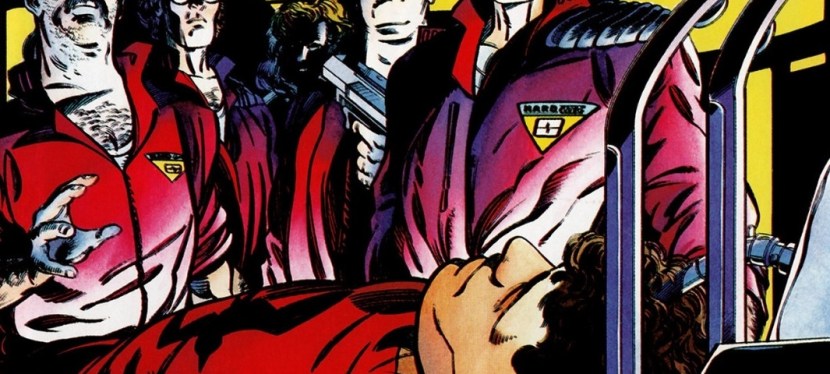
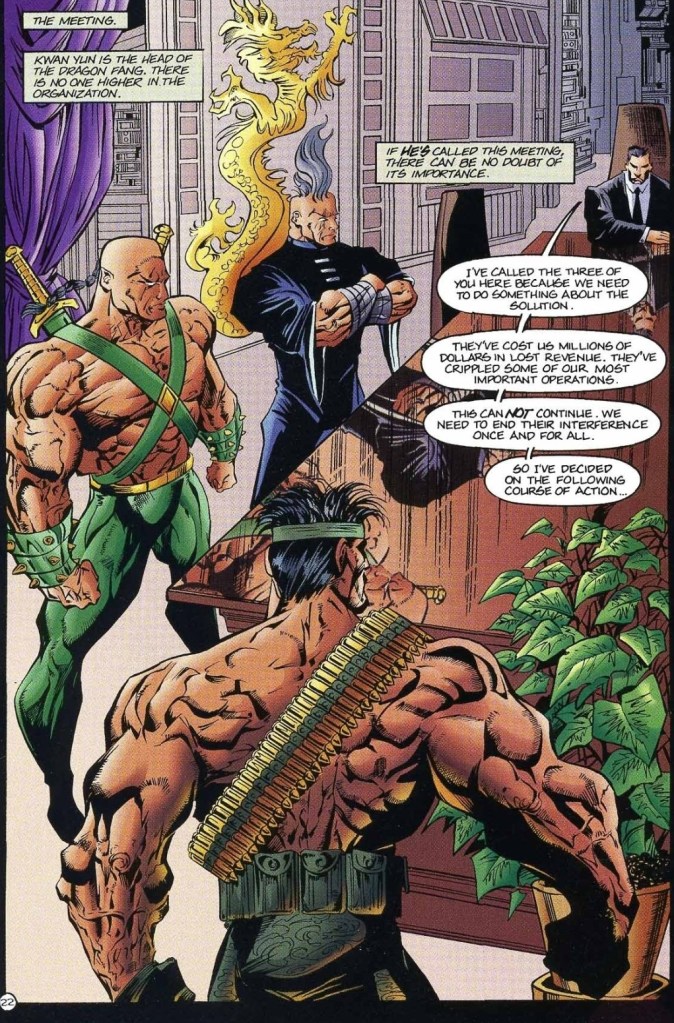
The three assassins in a meeting for a mission against The Solution.
I’ll get straight to the point here. This comic book has the most jarring story I have read about this series and even among all the Ultraverse comic books I have read so far. The story was truly a build-up of an opposing force composed of assassins who are serving one powerful boss who really targets The Solution. It’s so alienating to read this tale that never really had Tech, Outrage, Dropkick, and Shadowmage at all.
More on what was presented here, Hudnall exerted effort to build up the three assassins (note: they all appeared in issue #1) not merely as villains but as characters with background details that emphasize their personalities. Incoming is a veteran Communist who lives with intense violence which is connected to the events that happened in his past. Considering his background and how he appears, Incoming looks like a fantasized version of Rambo but in Asian form that modern day Communists in America (read: SJWs, diversity freaks, inclusion freaks and socialists) would love to have in their Satanic Leftist movement. Black Tiger, who has this uncanny offensive capability, is similarly violent as he witnessed lots of killing, rapes, robbery and drug deals in his life and went on to join the Dragon Fang gang. Bloodshed meanwhile grew up with opium acquired by his family, joined a gang at a young age and got trained with violence to rise up.
As the three assassins were being prepared for an anticipated rematch with The Solution, the story here really looked like it was crafted to be a direct follow-up to issue #1. That being said, The Solution’s impact against crime was also emphasized with some interesting details told.
On the visual side of things, Huang Nguyen gave this comic book a new but not so polished look. There’s not enough visual detail on his art on the characters. In fact, the three assassins were not that recognizable to me when I first read this comic book and I had to go back to issue #1 to view how they looked in it. On action, Nguyen’s work looks sub-par in quality and presentation. There were even some cartoonish moments along the way.
Conclusion
Five against Bloodshed.
The Solution #14 (1994) is so far the weakest story I’ve read in this series as well as one of the weakest Ultraverse stories I’ve read so far. It is truly a build-up for an upcoming conflict with The Solution which so happens to focus mainly on the villains. You won’t find The Solution themselves here at all and this for me is a turn-off. Ultimately, the story feels hollow and the assassins Incoming, Black Tiger and Bloodshed are themselves not too interesting as Ultraverse villains.
Overall, The Solution #14 (1994) is unsatisfactory.
Disclaimer: This is my original work with details sourced from reading the comic book and doing personal research. Anyone who wants to use this article, in part or in whole, needs to secure first my permission and agree to cite me as the source and author. Let it be known that any unauthorized use of this article will constrain the author to pursue the remedies under R.A. No. 8293, the Revised Penal Code, and/or all applicable legal actions under the laws of the Philippines.
Welcome back superhero enthusiasts, 1990s culture enthusiasts and comic book collectors! Today we go back to the mid-1990s which was a pretty wild time for comic collectors. To be more specific, this newest retro comic book review revisits the Ultraverse through The Night Man monthly series.
In my previous retro review, the Teknight armor remotely controlled by J.D. Hunt and his son broke into a prison to free the defeated Apocaloff. Unsurprisingly, the Night Man arrived to stop Teknight’s operation even though the police were not willing to get involved with the vigilante. Eventually, Teknight and Apocaloff were defeated thanks to a masked man who fired a canister from a distance. The Night Man approached the masked man and discovered that he is someone essential in life.
With those details laid down, here is a look back The Night Man #10, published in 1994 by Malibu Comics with a story written by Steve Englehart and drawn by Kyle Hotz.
The cover.
Early story
The story begins one week in the past with the shooting of a man witnessed by his lady companion in the presence of three men wearing dark clothes. As the lady agonizes over the injured man, the three men move away, got chased by police officers, and escaped after climbing over a fence.
Moments later, the police isolated the scene of the crime and Johnny Domingo’s father Eddie (the head of Playland security) talks with one of the police officers about what happened. At 3AM the next morning, Eddie returns to the scene of the crime and looks at the blood and the white outline where the victim was marked. At 4:25 AM, with Eddie no longer present, the white outline begins to move and leave the scene of the crime.
In the present day, Eddie and his son Johnny (still in costume as the Night Man) enter an office at Playland…
Quality
J.D. Hunt calls for the production of a new and improved Teknight armor.
After reading back-to-back issues that had Apocaloff as the main opposition for the Night Man, this comic book not only made a drastic change of storytelling direction but also came up with something could change the way readers perceive the titular hero.
For one thing, having Eddie know that his son and Night Man are one and the same person is quite striking and this became even more evident when they have this very meaningful private talk early in the story. That exchange of dialogue is a must-read. Next, while Night Man made clear he prefers to continues his vigilante acts against evil without his father’s involvement, he accepts the suggestion of moving into Playland as he knew the place a lot since childhood and found it advantageous for his covert operations.
Along the way, a brand new and highly unusual villain got introduced here and provided the Night Man a new form of challenge. The battle between the titular hero and the new villain was well executed and the special attention to detail during key moments were amusing to read.
With regards to the killing that took place at the start of this comic book, there is a sub-plot related to it and it includes a reference to a key event in the past within the Ultraverse which itself is connected with Night Man’s origin.
Conclusion
Kyle Hotz’s art made the images look creepy. Even the Night Man himself looks creepy.
The creative team of Englehart and Hotz set the stage for the new direction of storytelling while succeeded in telling an engaging standalone story in The Night Man #10 (1994). The Night Man fans and Ultraverse fans will have a lot of things to enjoy in this comic book. I personally liked the way the creative team executed story twists and added depth to the plot.