Retro Gaming Ads Blast – Part 36

Welcome back readers, fellow geeks and electronic gaming fans!

In this edition of the Retro Gaming Ads Blast (RGAB) series, we will take a look at another batch of retro gaming print ads – including arcade flyers – from the 1970s to the 1990s.

For the newcomers reading this, Retro Gaming Ads Blast (RGAB) looks back at the many print ads of games (console, arcade, computer and handheld) that were published in comic books, magazines, flyers, posters and newspapers long before smartphones, social media, the worldwide web and streaming became popular. To put things in perspective, people back in the 1980s and 1990s were more trusting of print media for information and images about electronic games and related products.

With those details laid down, here is the newest batch of retro gaming print ads for you to see and enjoy…

1. Super Contra North American arcade flyer
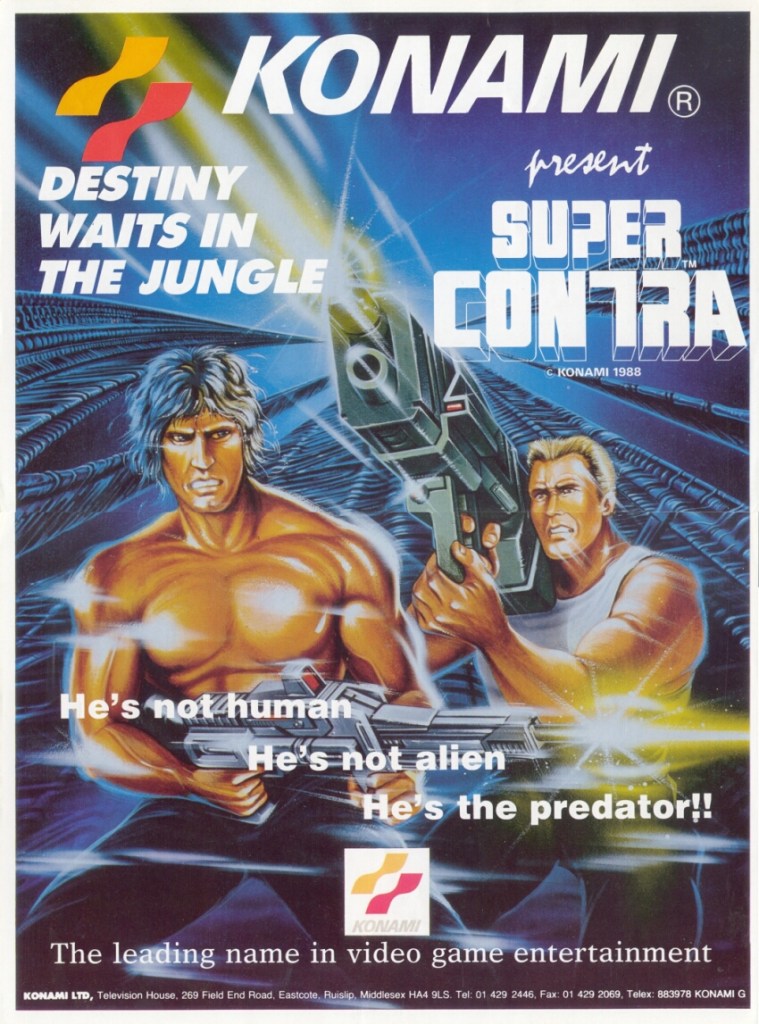
Have you seen many Hollywood action movies of the 1980s? Does this arcade flyer remind you of something?

After Konami struck gold with Contra in 1987, it was inevitable that sequels and spin-offs will be made. In 1988, they released the follow-up Super Contra in the arcades and to promote it in America, the company came up with artwork that easily gave gamers the impression they are seeing Sylvester Stallone as a fantasized Rambo and another armed guy who might remind them of Arnold Schwarzenegger’s character in Commando or Dutch in Predator. To capitalize on the movie references even more, the American arcade flyer had the line “He’s not human. He’s not alien. He’s the predator!!” As it was the 1980s, this creative approach to promotion was not surprising as Konami and its game makers were influenced by Hollywood movies.

2. Double Dragon II: The Revenge North American arcade flyer
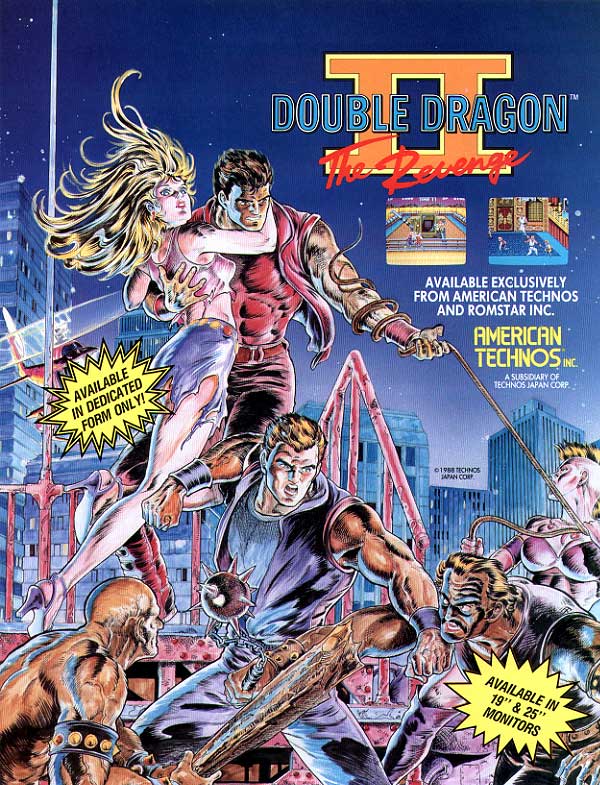
The artwork used in this arcade flyer remains intriguing to look at.

I never played Double Dragon II: The Revenge in the arcade, but I played it on the Nintendo Entertainment System (NES). That being said, I was surprised to see how this old North American arcade flyer has the same hand-drawn artwork used on the cover of the NES version. Take note that the arcade game was released in 1988 while the NES port was released in early 1990. I can only guess that Technos decided to use the same artwork not only for convenience but to have a definitive image emphasizing Double Dragon II to gamers wherever they are.

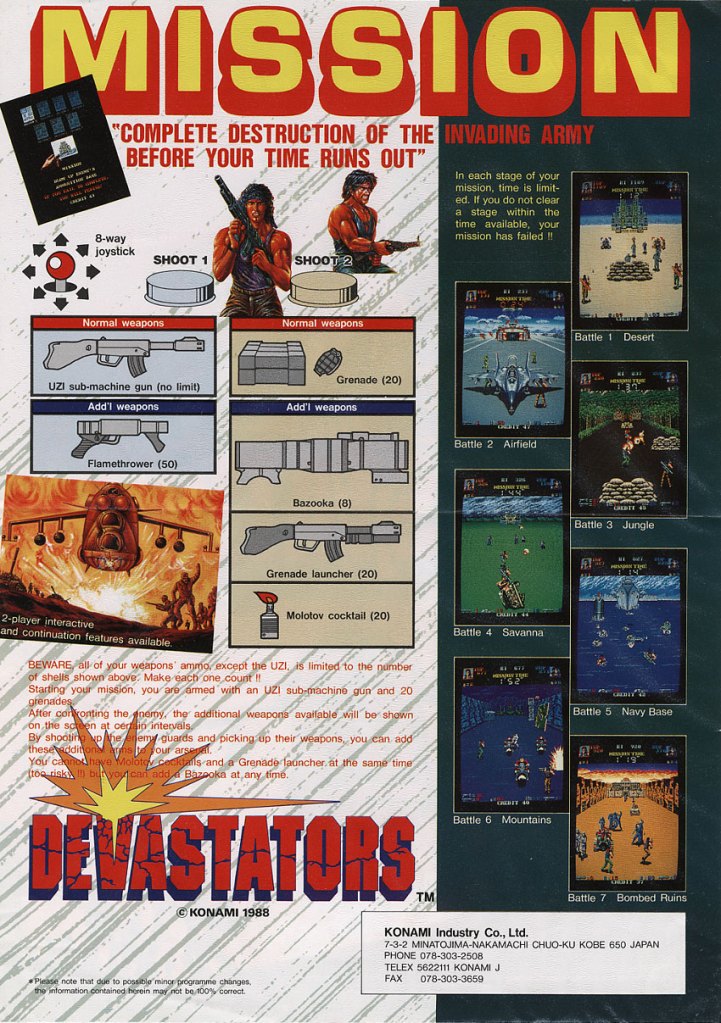
3. Devastators North American arcade flyer
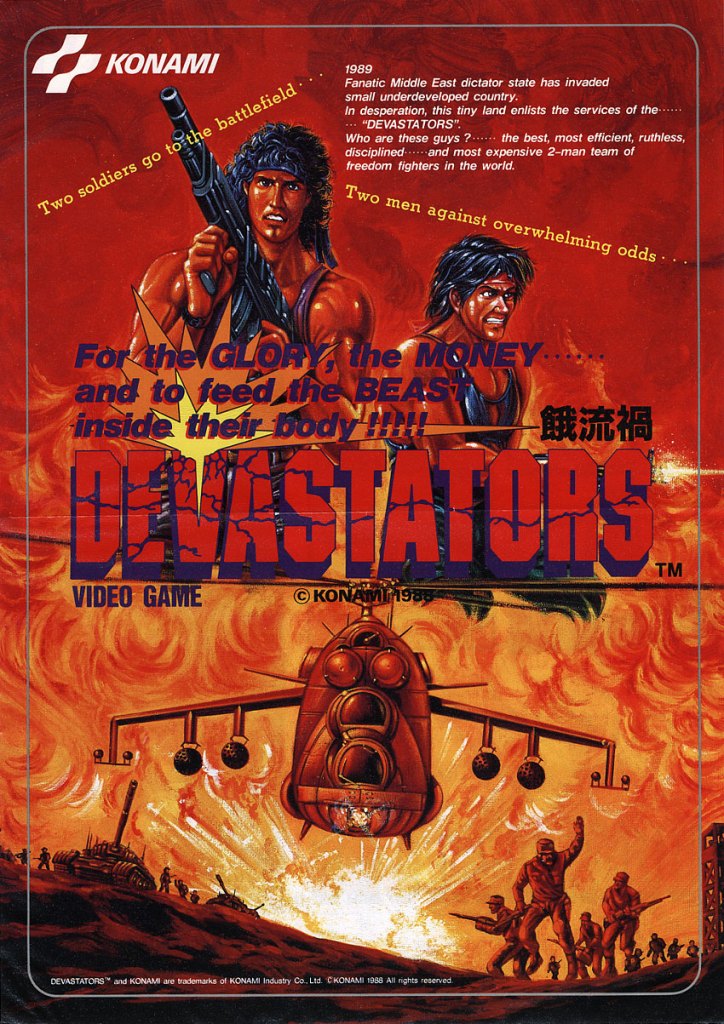
The front.
The rear.

Devastators is another Konami arcade game that had a strong war theme and it was influenced by Hollywood action films of the 1980s. This particular arcade flyer for the North American market is almost identical with the Japanese arcade flyer as both have the same artwork on the front and almost the same visual layout on the rear. The most obvious difference is the use of English text for the North American flyer.

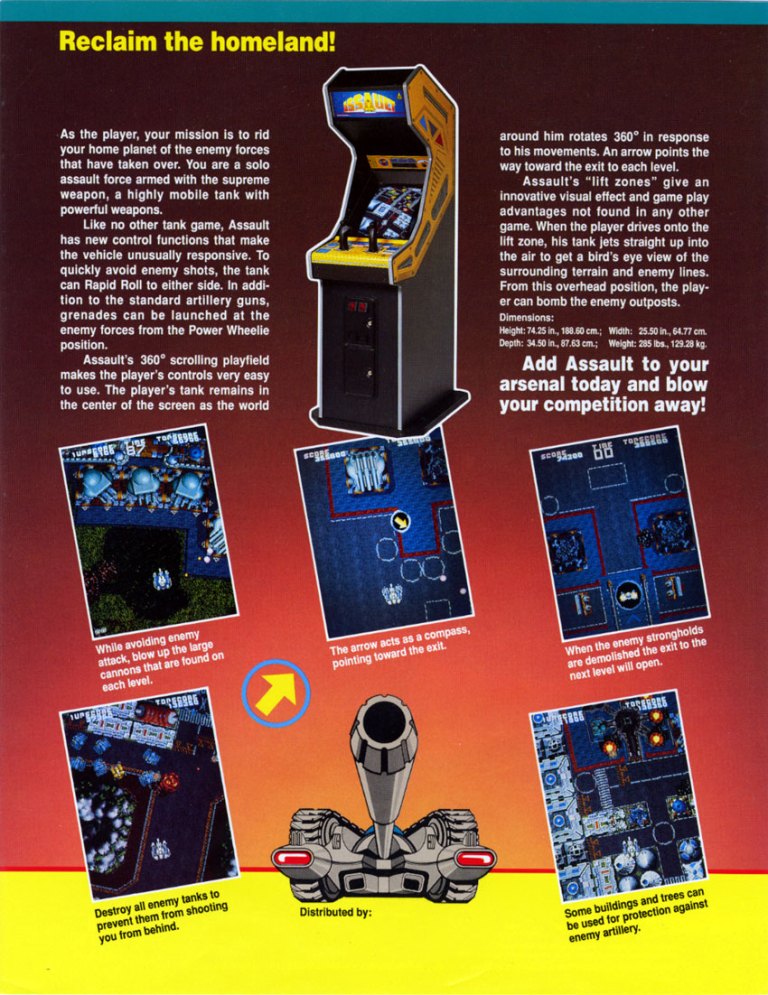
4. Assault North American arcade flyer
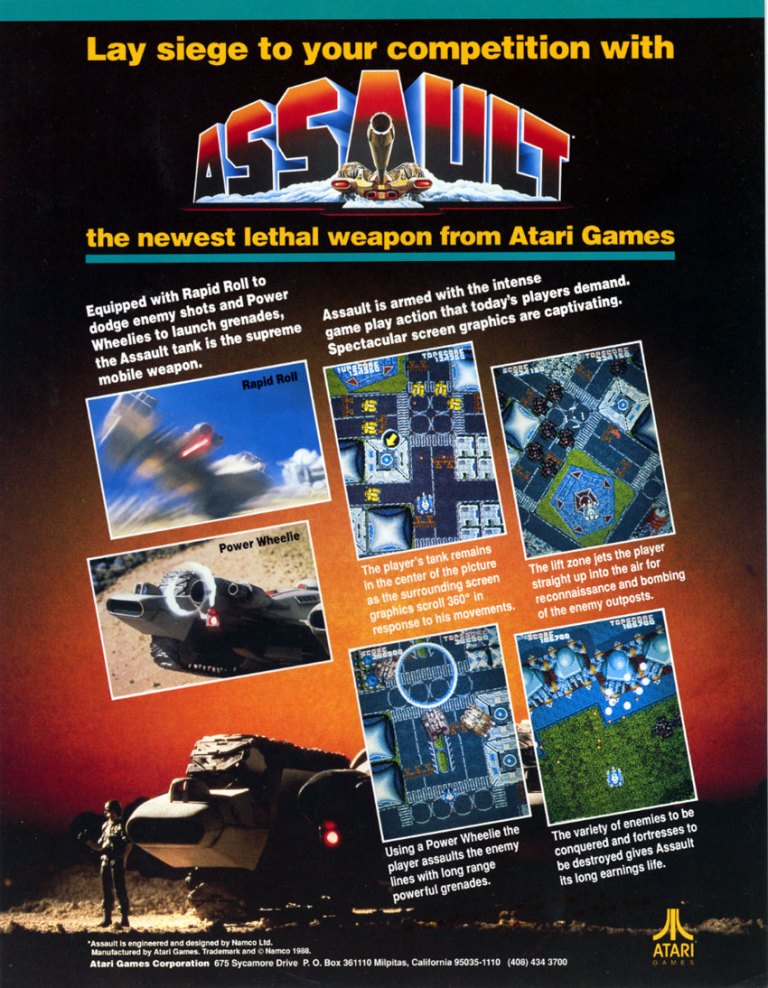
The front.
The rear.

Released in American arcades by Atari, Assault is a multi-directional shooter that had a twin-stick control layout (similar with the classic Battlezone) and players experienced intense battles as well as immersive visual effects such as sprite scaling and environment rotation of up to 360 degrees. To promote the game (this originated in Japan by Namco), Atari came up with this arcade flyer that had selected screenshots and descriptive text on both the front and the rear (which showed the arcade cabinet). Assault was a hit with gamers at the arcades and it was not released on consoles until 2009.

5. Sega CD print ad
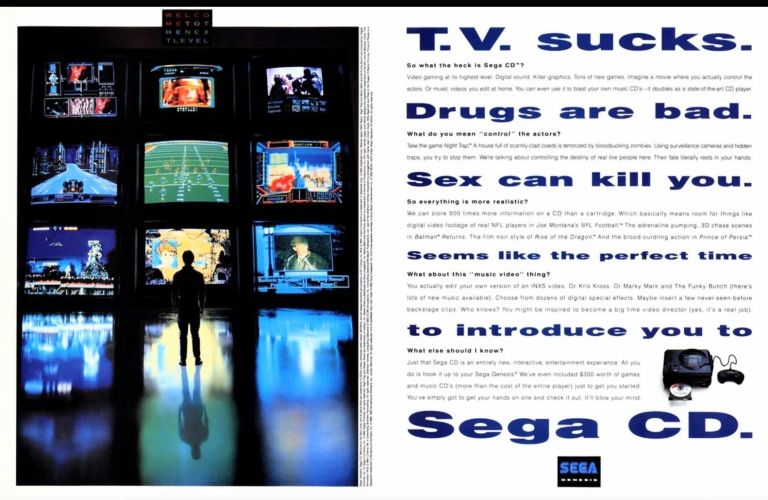
Having a socially relevant message can be catchy but it leaves little room for excitement.

As the Sega Genesis console became a huge commercial success in North America, Sega itself became ambitious about what CD-ROM technology would do for video games. Sega in Japan tasked its Consumer Products Research and Development Labs to create a CD-ROM add-on which resulted in the Sega CD (Mega-CD in other parts of the world) which launched in America in 1992. To promote the add-on towards existing Genesis console owners as well as potential new customers, Sega of America came up with the above 2-page print ad that had a social message on the right and an image of a man standing in front of large monitors (showing Sega CD game footage) on the left. While it looked like an odd way of promoting video game hardware, it still remains catchy to see.

6. Panasonic 3DO print ad
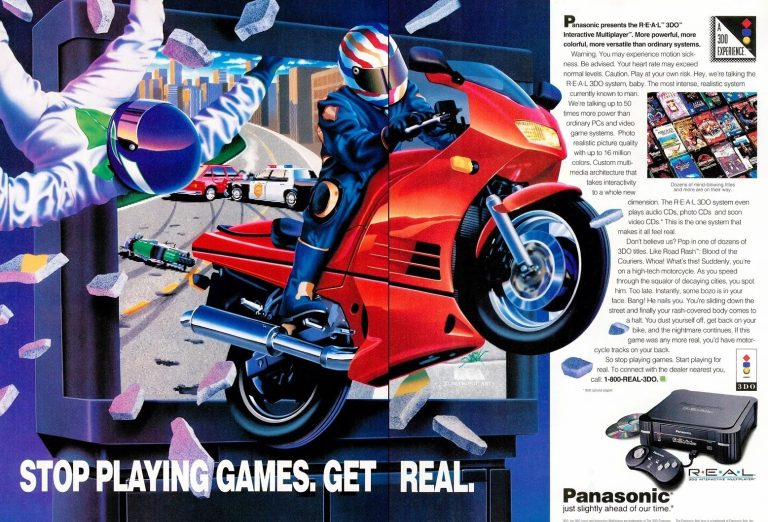
Panasonic knows how to promote entertainment hardware for people’s homes.

Still in the field of CD-ROM gaming, Panasonic had competitive presence in video gaming when its Panasonic FZ-1 R.E.A.L. 3DO Interactive Multiplayer (with technology licensed by The 3DO Company) was launched in America in 1993. If you look at the print ad closely, you will notice that the descriptive text emphasized the multimedia entertainment aspect more than video gaming. The dominating artwork used does not come from a particular video game as it was made to emphasize home entertainment in general. It’s not surprising that the Panasonic 3DO and other 3DO machines from other manufacturers failed commercially.

7. Shaq Fu print ad
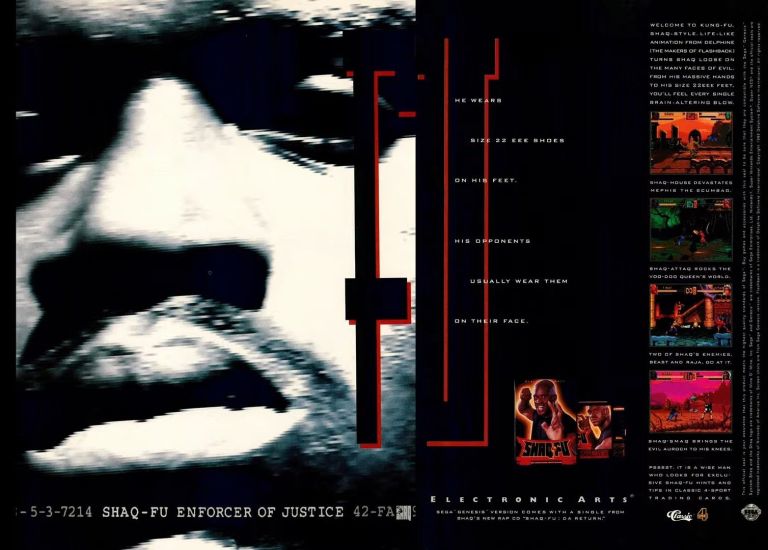
The close-up of Shaquille O’Neal’s face on the left made him looked less recognizable.

Yes, it is true! There was indeed a video game endorsed by Shaquille O’Neal and it was not a basketball game. Shaq Fu is a 1994 2D fighting game with adventure elements and a story in which gamers play O’Neal as martial artist (note: O’Neal himself participated in the game’s production). To promote the game, Electronic Arts came up with a 2-page print ad that had a very odd black-and-white close-up image of O’Neal’s face on the left leaving small screenshots and hard-to-read text on the right (even though there was some vacant space remaining. I remember seeing this ad while reading a video game magazine and the ad ended up looking more like a promotion of O’Neal (already an NBA superstar) than the game itself. By today’s standards, this print ad is an example of a marketing misfire.

8. Kasumi Ninja print ad
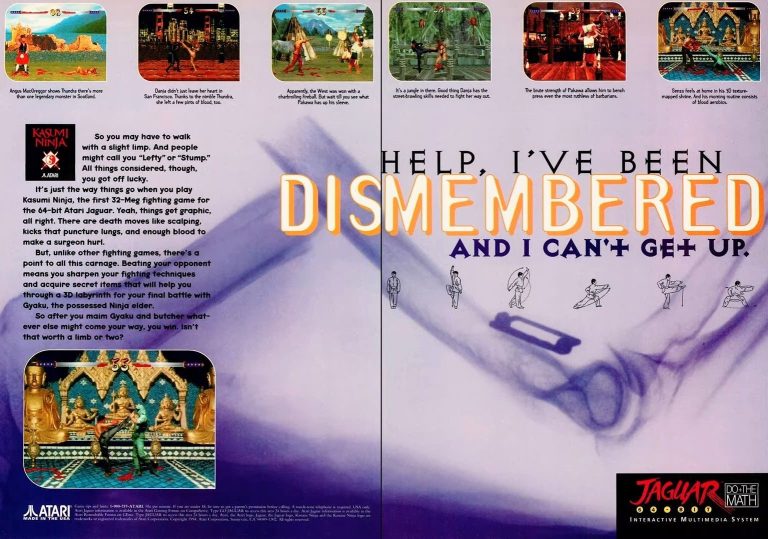
Do you even remember seeing this print ad in magazines?

Remember the 1990s video game trends of digitized human images and disturbingly violent 2D fighting games sparked by Mortal Kombat? The Atari Jaguar-exclusive game Kasumi Ninja was made to capitalize on those trends and it failed badly. Apart from the low sales of the Jaguar console, Atari as publisher came up with the above 2-page print ad that was not appealing to gamers’ eyes and it had almost no excitement overall. This is another marketing misfire.

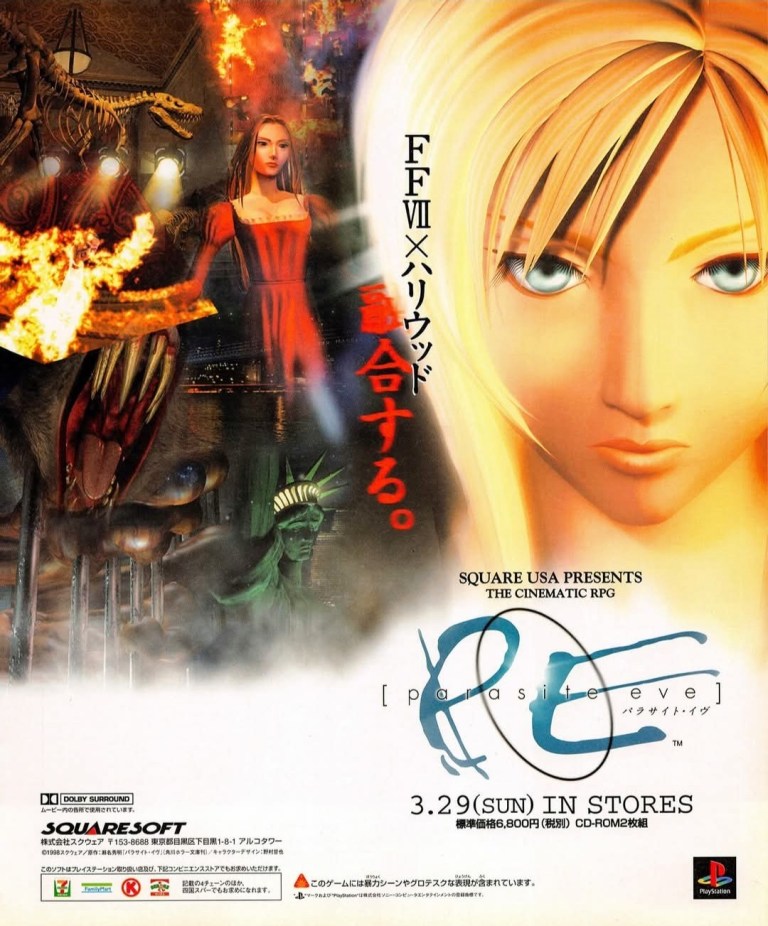
9. Parasite Eve North American and Japanese print ads
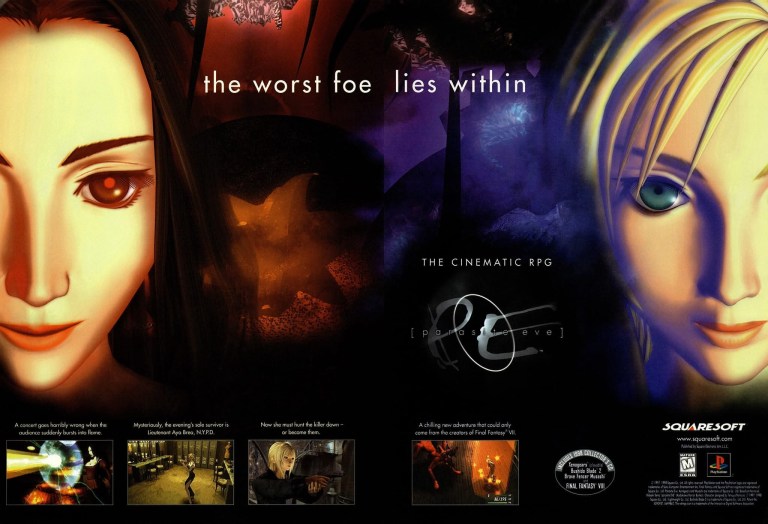
Following the successful release of Final Fantasy VII, this ad excited PlayStation gamers and JRPG enthusiasts for Parasite Eve’s 1998 release in America.
A stronger horror presentation in this print ad for the Japanese market. There were already a lot of people in Japan who enjoyed horror.

Starting in the mid-1990s, Squaresoft (now Square Enix) really became aggressive with video game creativity and experimentation as they launched several new projects that eventually got released on PlayStation in the late 1990s until 2000. One of those daring new projects was Parasite Eve which was a role-playing game (RPG) that had visual elements – particularly pre-rendered backgrounds – and a style of exploration that reminded gamers of Resident Evil. The game was a sequel to the Japanese science fiction horror novel of the same name and it involved the creativity of Final Fantasy creator Hironobu Sakaguchi (credited as producer). To promote the game, the 2-page North American print ad had protagonist Aya Brea on the right and the enemy on the left with a cryptic line placed strategically between them. The North American ad clearly stated that the game is a cinematic RPG. By comparison, the Japanese print ad of Parasite Eve has a strong horror vibe which is not surprising because of the novel’s horror elements and the fact that Squaresoft was capitalizing on the popularity of horror-related entertainment in Japan. By today’s standards, Parasite Eve is truly a product of the late-1990s and it has a dedicated fanbase.

+++++

Thank you for reading. If you find this article engaging, please click the like button below, share this article to others and also please consider making a donation to support my publishing. If you are looking for a copywriter to create content for your special project or business, check out my services and my portfolio. Feel free to contact me with a private message. Also please feel free to visit my Facebook page Author Carlo Carrasco and follow me on Twitter at  @HavenorFantasy as well as on Tumblr at https://carlocarrasco.tumblr.com/ and on Instagram at https://www.instagram.com/authorcarlocarrasco
Retro Gaming Ads Blast – Part 25

Welcome back readers, fellow geeks and electronic gaming fans!

In this edition of the Retro Gaming Ads Blast (RGAB) series, we will take a look at another batch of retro gaming print ads – including arcade flyers – from the 1980s and 1990s.

For the newcomers reading this, Retro Gaming Ads Blast (RGAB) looks back at the many print ads of games (console, arcade, computer and handheld) that were published in comic books, magazines, flyers, posters and newspapers long before smartphones, social media, the worldwide web and streaming became popular. To put things in perspective, people back in the 1980s and 1990s were more trusting of print media for information and images about electronic games and related products.

With those details laid down, here is the newest batch of retro gaming print ads for you to see and enjoy…

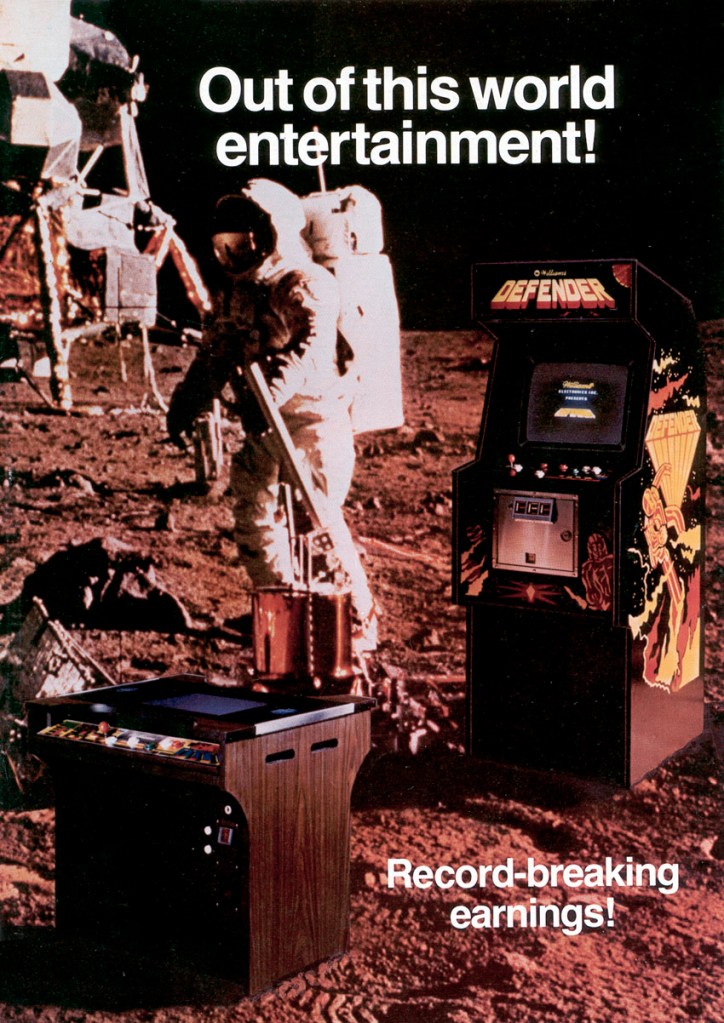
1. Defender arcade flyer

Perhaps Atari did not have enough original artwork of Defender to be used in this arcade flyer. So they ended up using footage of an astronaut on the moon.

Very long ago, I played the classic game Defender a lot on the Atari 2600. Strangely enough, I never played its arcade version as my visits to arcades were quite limited as I was so young back then. When it comes to the arcade flyer of Defender, I find the use of stock footage of an astronaut on the moon as the artistic backdrop baffling because the game’s concept was all about fighting back alien invaders and protecting the citizens. Ironically, the image blended well with the photos of two arcade machines showcased.

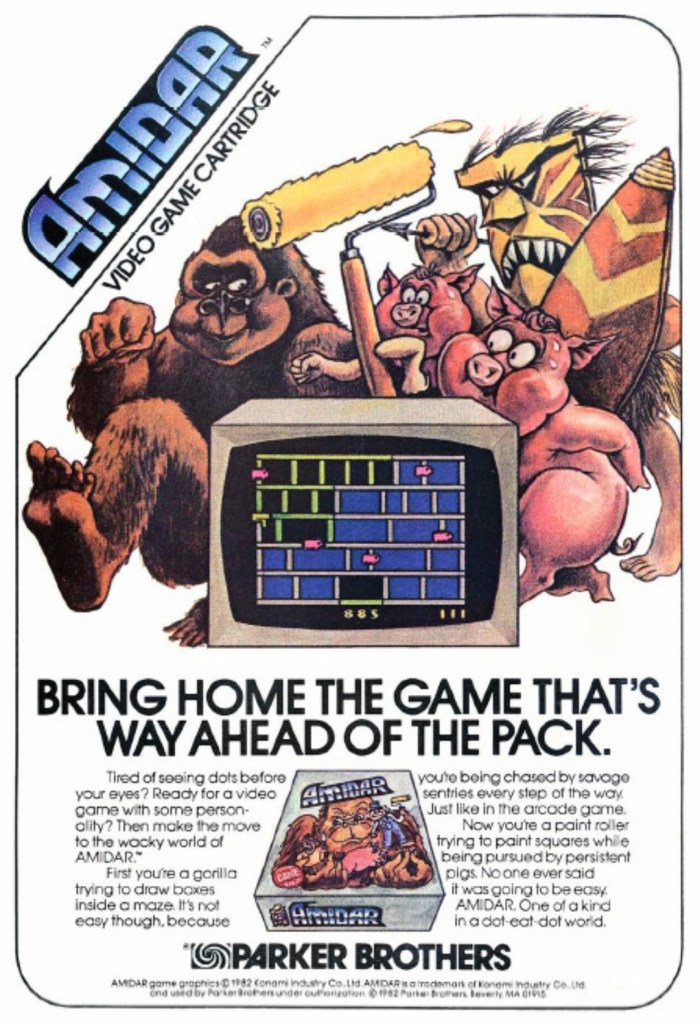
2. Amidar Atari 2600 print ad

Does this ad make you think about King Kong or animals?

When I was a young boy, I saw this Parker Brothers print ad of Amidar appear in many superhero comic books I read. I never played the game on the Atari 2600 nor in the arcades. Each time I saw this ad, I always wondered how the game played and what its creative concept was all about. The constant showing of a giant gorilla on the game box cover reminded me of King Kong.

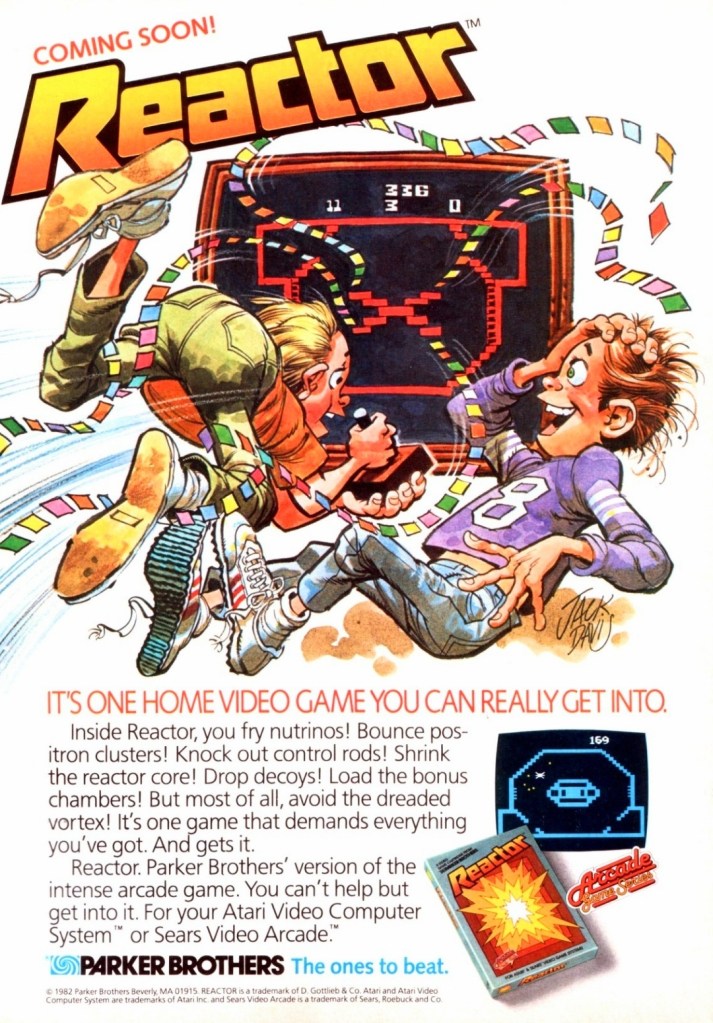
3. Reactor Atari 2600 print ad

Parker Brothers made this ad imagining gamers getting very engaged with reactor once they start playing it.

Reactor was one of those video games that was somewhat influenced by the subject of nuclear technology, particularly about the nuclear reactors. This is another game I never played on console nor in the arcades. This Reactor print ad by Parker Brothers for the Atari 2600 has a visual style and creative concept that I still find fascinating to look at.

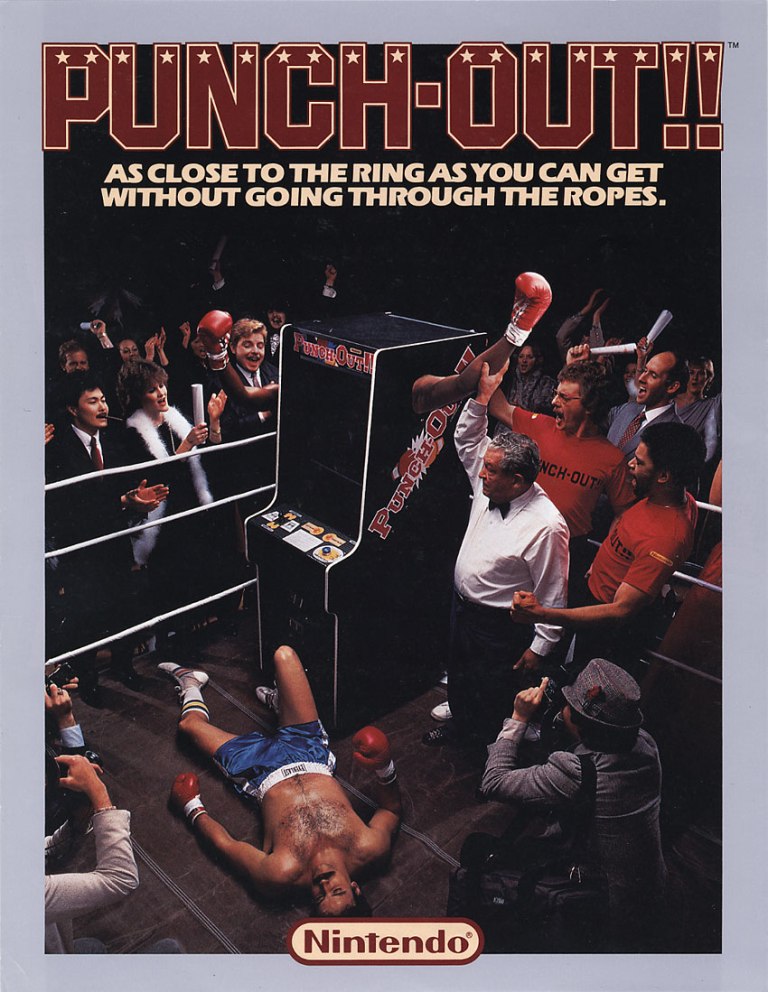
4. Punch-Out!! arcade flyer

This was years before Nintendo hired Mike Tyson to endorse the console version of Punch-Out!!

In 1984, Nintendo released the original Punch-Out!! game in the arcades and literally punched its way through to the top of American arcades that year while also scoring big in other arcades around the world. While the game proved to be very playable and a lot of fun, it could be argued that the intriguing image Nintendo used for the North American arcade flyer – a boxer down after literally getting beaten by the Punch-Out!! machine – made an impact on both gamers and arcade operators.

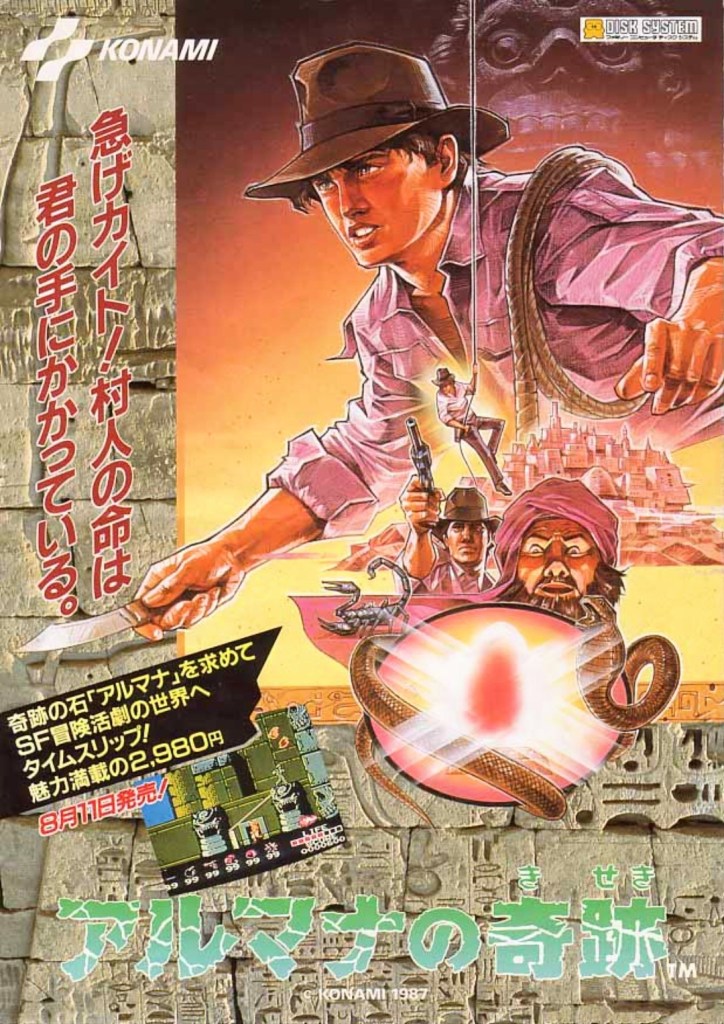
5. Arumana no Kiseki flyer

Is the famous Indiana Jones theme music playing inside your mind right now as you look at this art?

Released in 1987 on the Disk System of the Nintendo Family Computer (Famicom) in Japan, Arumana no Kiseki was one of the many 2D adventure games Konami released that entertained gamers. When compared to Castlevania – strongly influenced by American horror movies – this game was very influenced by the Indiana Jones movies of Steven Spielberg which is very evident in this promotional flyer.

In fact, some gamers who could not read the Japanese title actually thought this was an official Indiana Jones video game because the artwork was so suggestive. Having played and finished the game myself, I can say that Arumana no Kiseki was simply an Indiana Jones-inspired adventure game that had its own creative concept and unique settings and characters.

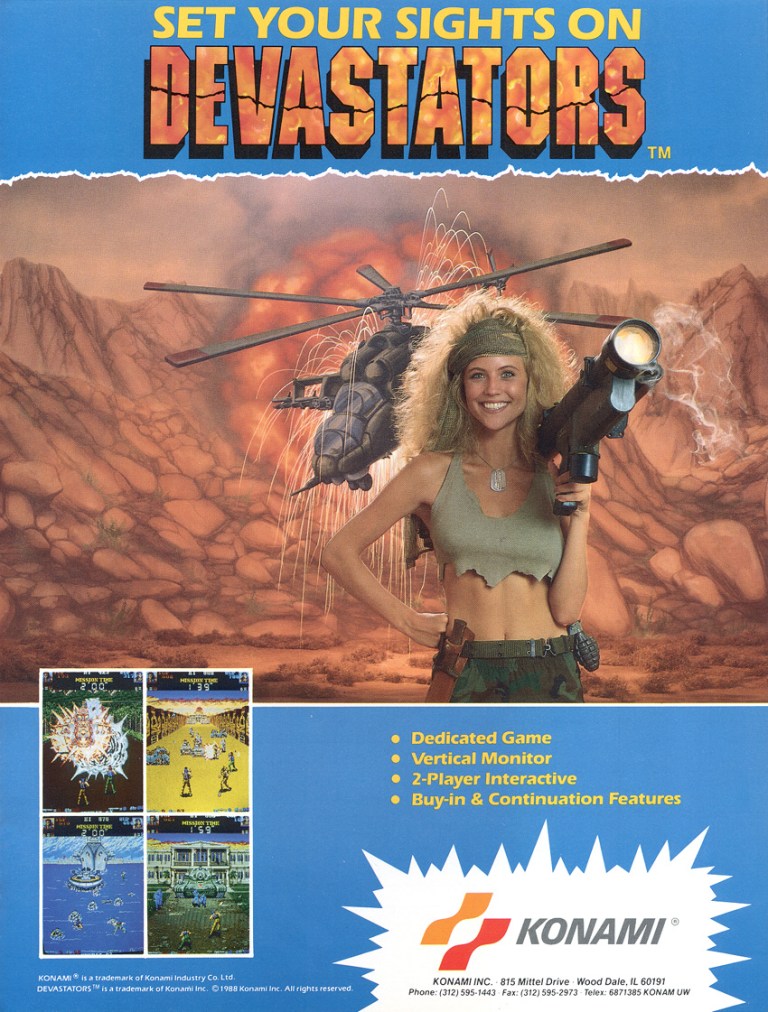
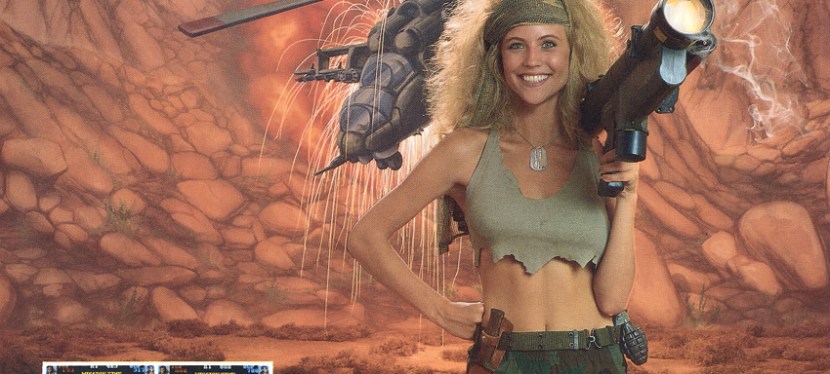
6. Devastators arcade flyer

The 1980s female Rambo smiling towards you.

By looking at the track record of Konami closely, you will notice that many of their games in the 1980s were influenced by Hollywood movies and they hired pretty or sexy models for their arcade flyers. This arcade flyer of Devastators is no exception and you can clearly see the Rambo-inspired lady smiling while carrying a weapon. Devastators itself had strong Rambo vibes for its concept.

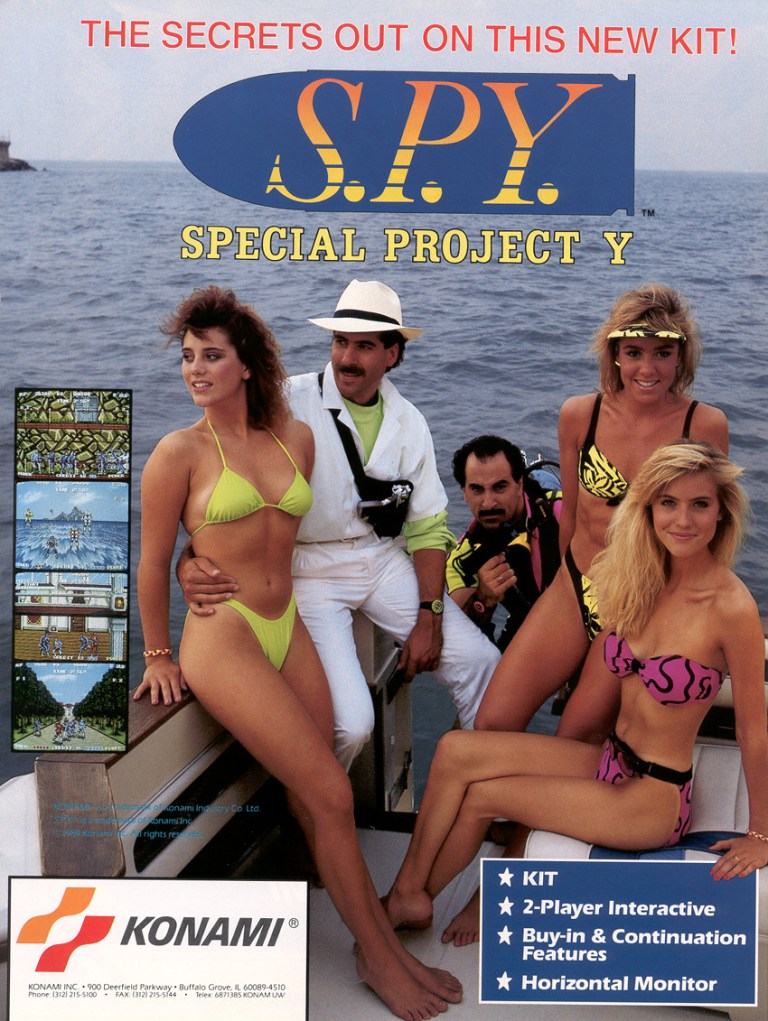
7. S.P.Y. Special Project Y arcade flyer

Somehow the picture of this flyer reminds me of Miami Vice.

Still with Konami, S.P.Y. Special Project Y is 1989 arcade game that featured action sequences in which players fight against countless enemies in order to progress with the minimal story. This game had certain spy movie elements and to promote it, Konami came up with this arcade flyer showcasing three sexy women wearing swimwear accompanied by two men who looked more like operators or schemers. Can you imagine yourself as an arcade operator looking at this flyer trying to decide to buy the game?

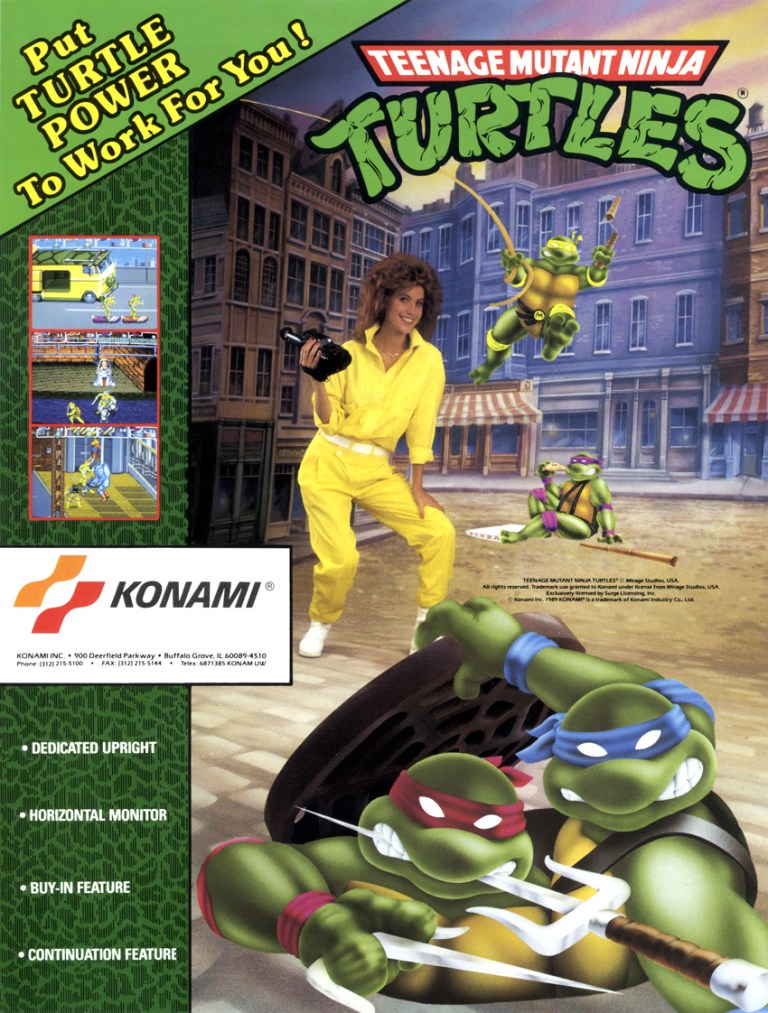
8. Teenage Mutant Ninja Turtles arcade flyer/poster

This arcade flyer is still great and exciting to look at, even if your not a TMNT fan.

Now this is one of the most definitive arcade games Konami ever made. Released in late 1989, Teenage Mutant Ninja Turtles became a massive arcade hit in North America constantly attracting lots of fans and casual gamers to play at each machine. The demand was so great, Konami had no choice but to hire a company to manufacture more machines. When it comes to promoting the game, Konami cleverly used a mix of artworks for the TMNT characters and fantasy environment while having a hired model playing April O’Neil blending in smoothly.

Having seen the 1980s animated series myself, I can say that the ad makers struck gold when it came to making a promotional image that Teenage Mutant Ninja Turtle fans can easily recognize and go to the arcade to play the game.

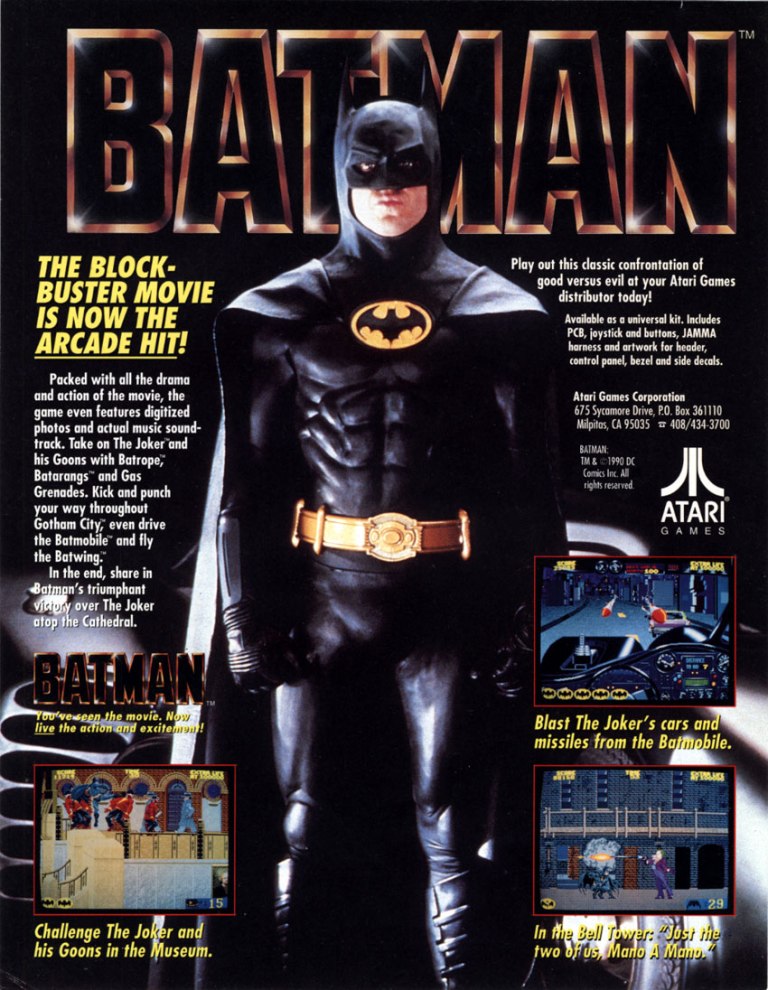
9. Batman arcade flyer

If you saw the 1989 movie, did you play this in the arcade?

The live-action Batman movie of 1989 was simply inescapable as there was so much hype, merchandising and promos connected with it. When it came to video games, it was not surprising that a lot of companies talked with Warner Bros. and eventually Atari made the official arcade game based on the movie (for insight on the production, watch PatmanQC’s video by clicking here). This early-1990s arcade flyer had a simplistic approach showing a few screenshots and descriptive text while having the live-action Batman (note: Michael Keaton in costume) dominating in the middle. Simplistic yet effective in telling gamers and arcade operators what to expect.

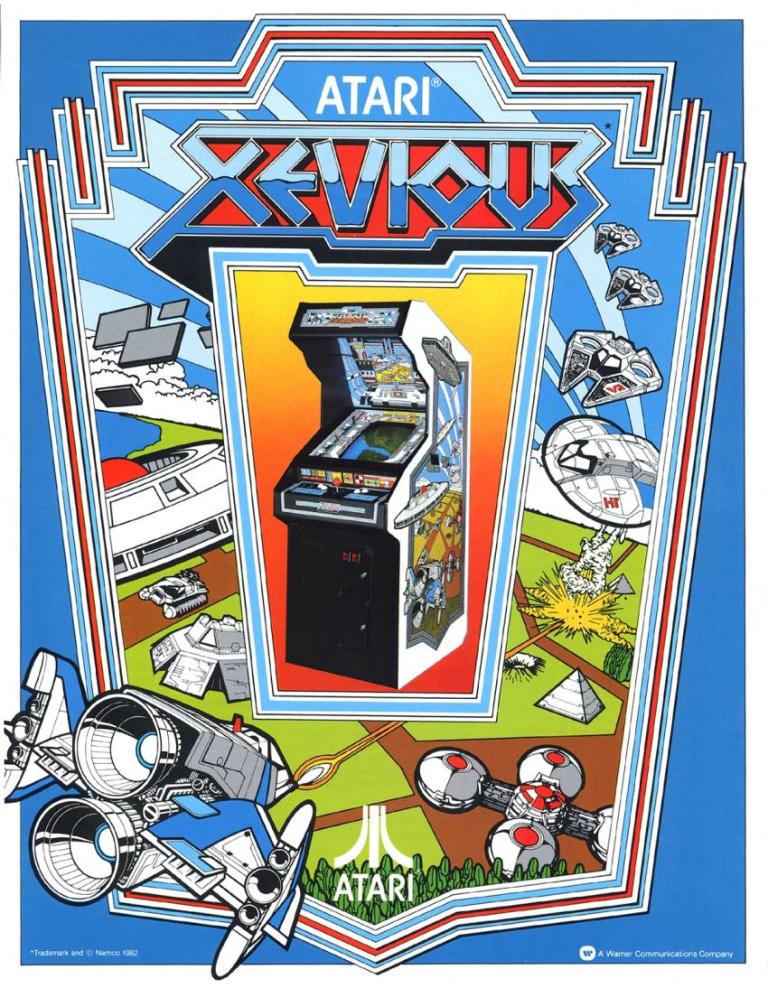
10. Xevious arcade flyer

This arcade flyer is exciting and creative to focus on.

Xevious is a long-running series of video games owned by Namco. Since the early 1980s, several Xevious video games were released on arcades, consoles and mobile devices. Believe it or not, the original Xevious game was published by Atari for North American arcades and the company came up with this dynamic looking flyer to promote it. The arcade flyer really looks dynamic due to the hand-drawn art surrounding the photo of the machine. Even by today standards, this flyer still looks modern and energetic.

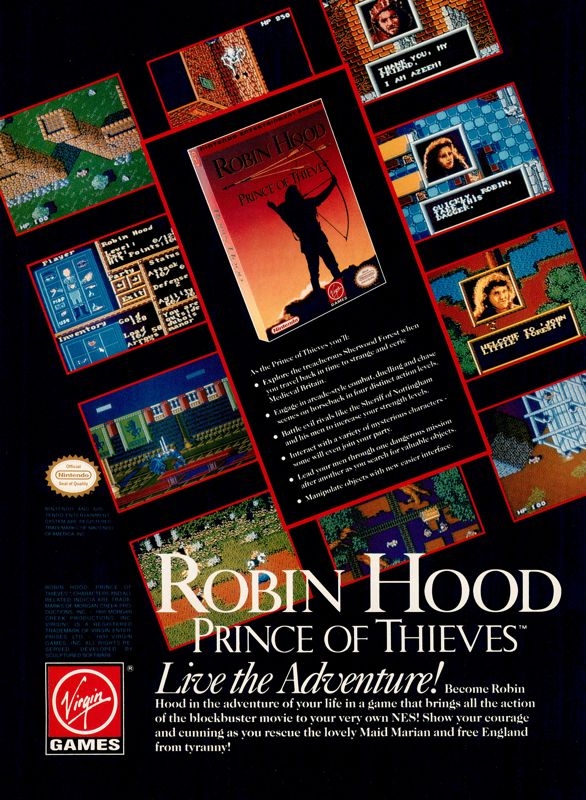
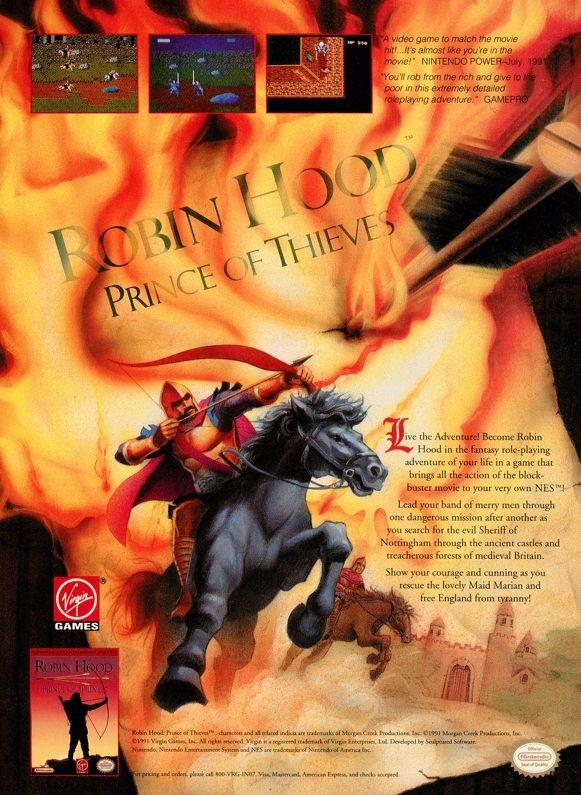
11. Robin Hood: Prince of Thieves print ads

Tell me if this ad makes you want to play the game.
Original artwork here was meant to immerse viewers into the fantasy setting of the game based on the movie.

If you saw the 1991 movie Robin Hood: Prince of Thieves, were you able to play the video game adaptation? Robin Hood: Prince of Thieves on the Nintendo Entertainment System (NES) was notable for being specially featured in the Nintendo Power magazine and its game design was truly ambitious at the time. To promote the game and take advantage of the movie’s popularity, Virgin Games came out with two print ads targeting movie fans and NES gamers.

The first print ad above had lots of selected screenshots surrounding the game’s box and crammed the descriptive text. The 2nd print ad had original artwork to emphasize the fictional setting and used only three screenshots. Looking at both print ads, it was clear that the ad makers had no permission to use the likeness of Kevin Costner as Robin Hood. The same with other actors and their characters. Regardless, the ads still reminded me enough of the movie while keeping me informed about the video game.

+++++

Thank you for reading. If you find this article engaging, please click the like button below, share this article to others and also please consider making a donation to support my publishing. If you are looking for a copywriter to create content for your special project or business, check out my services and my portfolio. Feel free to contact me with a private message. Also please feel free to visit my Facebook page Author Carlo Carrasco and follow me on Twitter at  @HavenorFantasy as well as on Tumblr at https://carlocarrasco.tumblr.com/ and on Instagram at https://www.instagram.com/authorcarlocarrasco