A Look Back at Backlash #1 (1994)

Disclaimer: This is my original work with details sourced from reading the comic book and doing personal research. Anyone who wants to use this article, in part or in whole, needs to secure first my permission and agree to cite me as the source and author. Let it be known that any unauthorized use of this article will constrain the author to pursue the remedies under R.A. No. 8293, the Revised Penal Code, and/or all applicable legal actions under the laws of the Philippines.

Welcome back superhero fans, 1990s arts and culture enthusiasts and comic book collectors! Today we continue revisiting the Wildstorm universe as it was under the Image Comics banner back in the 1990s. Recently, I reviewed back-to-back issues of Jim Lee’s WildC.A.T.S: Covert Action Teams that involved Chris Claremont and his creation Huntsman (click here, here, here and here) which ultimately expanded the lore of the team within the Wildstorm universe of the time while developing Zealot tremendously.

Still within the Wildstorm universe of the 1990s, it’s time to shift to another key figure – Backlash (civilian identity: Marc Slayton) co-created by Jim Lee and Brett Booth (follow him at Twitter and visit his blog). To put things in perspective, Backlash and WildC.A.T.S’ popular Grifter (Cole Cash) have something in common other than being highly capable fighters – they were teammates within Team 7 long before StormWatch (note: Backlash first appeared in StormWatch in 1993) and WildC.A.T.S were formed. In fact, Team 7 also had Michael Cray (Deathblow), Jackson Dane (Wetworks) and John Lynch (who appeared in early WildC.A.T.S issues and went on to be the mentor in Gen13) who went on to become important Wildstorm figures in the present day.

In 1994, a 4-issue mini-series titled The Kindred was published featuring Backlash and Grifter with a story written by Jim Lee, Brandon Choi, Brett Booth (who illustrated) and Sean Ruffner. Months after that mini-series ended, a regular series focused on Backlash was launched.

With those details laid down, here is a look back at Backlash , published by Image Comics in 1994 with a story written by Ruffner, Jeff Mariotte and Booth. Booth was the artist.
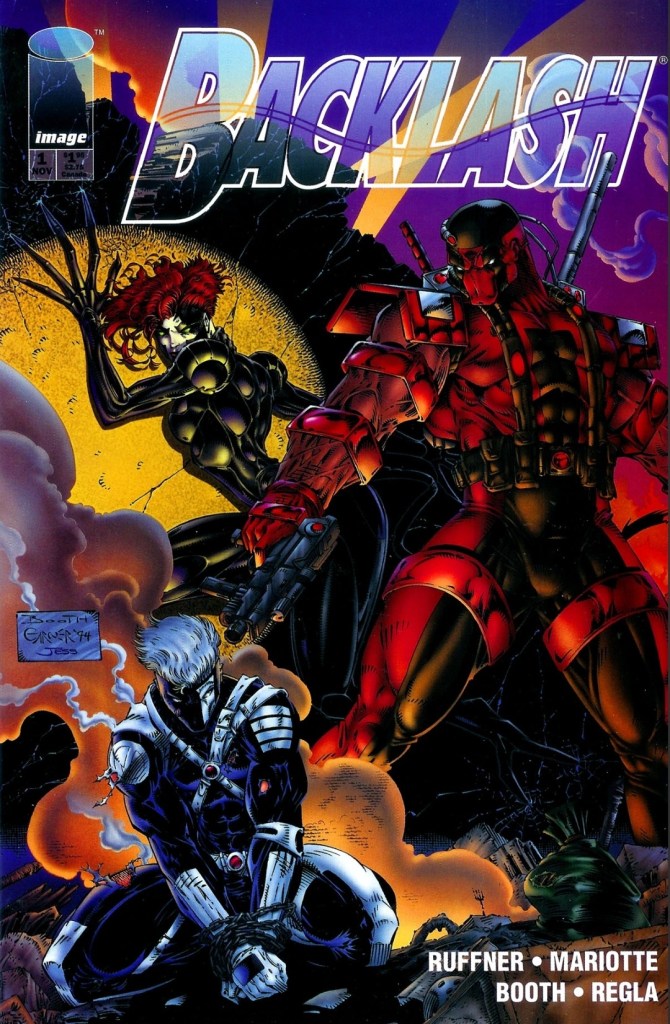
The cover.

Early story

The story begins with Backlash quietly infiltrating the Edward H. Levi Federal Penitentiary, a facility designed to control the growing population of criminal super-powered beings (SPBs). Eventually two armored guards pass by and as soon as one of them notices signs of the break-in, Backlash takes them down using his psionic whip and hard action.

After subduing two more pairs of guards, Backlash enters a large place that has prisoners contained in what he refers to as “aquariums”. Two of the prisoners recognize him. He finally reaches the cell of a red-headed lady named Amanda Reed – also known as Taboo – who has been imprisoned for murder. Backlash makes an offer – if she helps him, he will get her out of the prison…

Quality
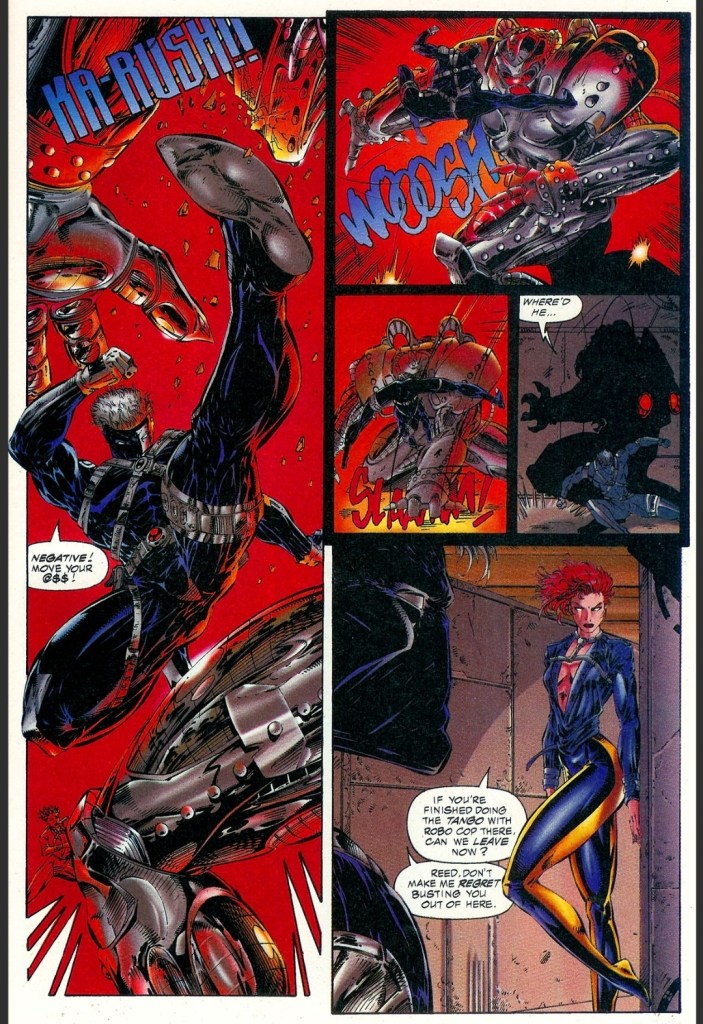
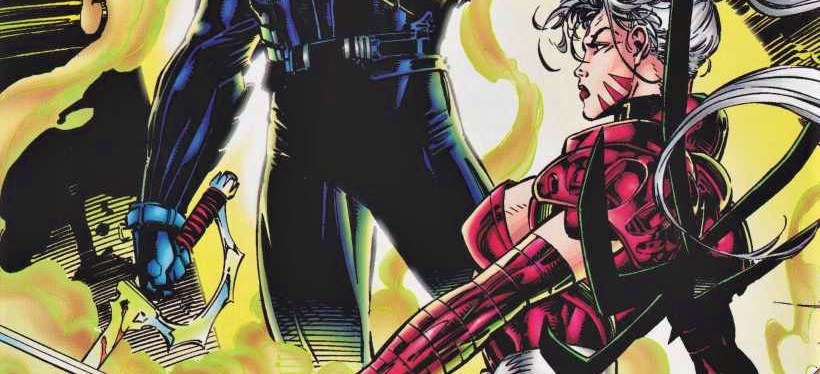
Backlash struggling on the way of getting out with Taboo.

Let me start with the story. This comic book has an unusual approach on its plot in which the flashbacks are more prominent than the present-day tale of Backlash freeing Taboo and getting out of the prison. The good news here is that the flashbacks are pretty engaging to read and they solidly fulfilled the writers’ goals of immersing the readers with useful story details and building up the tension while also emphasizing Backlash’s personality and what motivates him deep from within. To put it short, the flashbacks are the most important features of the storytelling and they also have the most interesting scenes (including an encounter with Pike who previously appeared in the early issues of WildC.A.T.S). The present-day view of the plot lack engagement compared to the flashbacks but the creative team succeeded in emphasizing Taboo, what she is capable off and why she is feared.

The characterization of Marc Slayton is pretty good in my view. By the time I reached the end of this comic book, I found him to be a really intriguing protagonist. Backlash is definitely not inspiring but the irony is that his personality and purpose within the Wildstorm universe of the time were compelling enough to follow.

When it comes to the art, Brett Booth’s work here is still good to look at as I follow the story. Be mindful that this was his work when he was very young and as seen in this comic book, he definitely proved his talent, his art style was clearly distinct and he was capable of coming up with really good action scenes that really made Backlash a notable Wildstorm action hero. It should be noted that Booth illustrated this comic book with dynamism in mind.

Conclusion
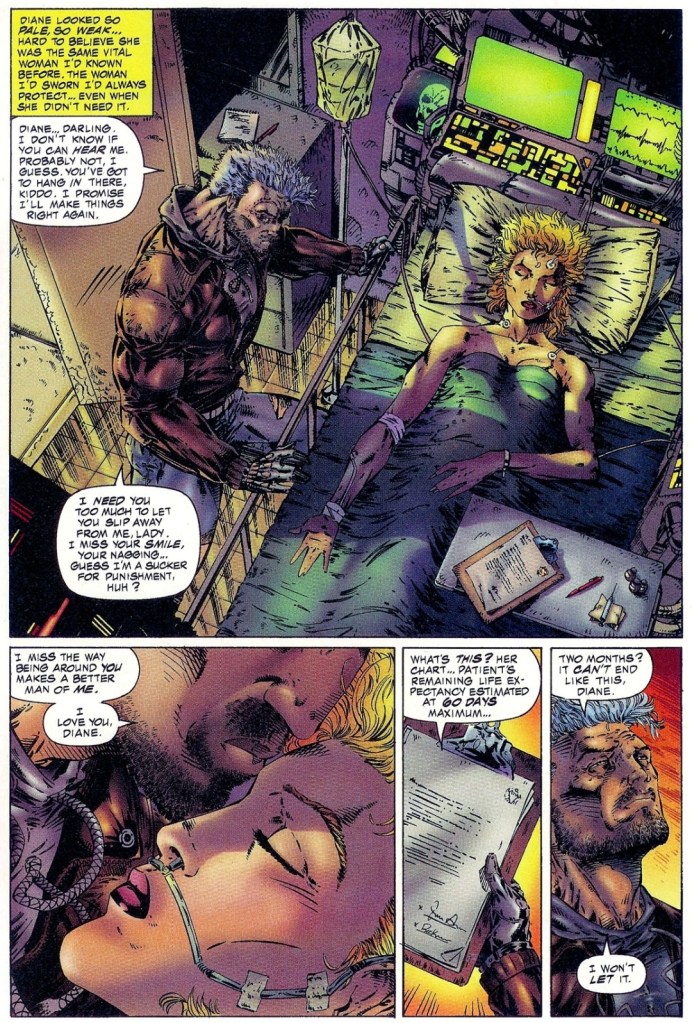
A key scene from the past of Marc Slayton/Backlash nicely drawn by Brett Booth.

Backlash (1994) is fun and compelling to read. The flashbacks are strangely the most engaging parts of the plot and they succeeded in getting me oriented with the protagonist, what has been going on and what the stakes are right at the start of this particular series. Combined with the still-good-to-view art by a very young Brett Booth, this comic book has a lot of fun stuff to enjoy especially for those who are obsessed or simply wanting to discover more about the Wildstorm universe of the 1990s.

Backlash (1994) is recommended.

+++++

Thank you for reading. If you find this article engaging, please click the like button below and also please consider sharing this article to others. If you are looking for a copywriter to create content for your special project or business, check out my services and my portfolio. Feel free to contact me with a private message. Also please feel free to visit my Facebook page Author Carlo Carrasco and follow me on Twitter at  @HavenorFantasy as well as on Tumblr at https://carlocarrasco.tumblr.com/ and on Instagram athttps://www.instagram.com/authorcarlocarrasco/
A Look Back at WildC.A.T.S: Covert Action Teams #13 (1994)

Disclaimer: This is my original work with details sourced from reading the comic book and doing personal research. Anyone who wants to use this article, in part or in whole, needs to secure first my permission and agree to cite me as the source and author. Let it be known that any unauthorized use of this article will constrain the author to pursue the remedies under R.A. No. 8293, the Revised Penal Code, and/or all applicable legal actions under the laws of the Philippines.

Welcome back superhero fans, 1990s arts and culture enthusiasts and comic book collectors! Today we continue revisiting Jim Lee’s flagship title under the Image Comics label – WildC.A.T.S: Covert Action Teams!

For the newcomers reading this, I’ve been doing retro reviews of WildC.A.T.S that had Chris Claremont and Jim Lee collaborating together during the early Image Comics years following their previous works together on X-Men comic books while they were at Marvel. Issue #10 of WildC.A.T.S saw the debut of Claremont’s very own Huntsman while Zealot became the major character among her teammates (note: Voodoo had the 2nd most amount of page presence while the rest made very short appearances). In issue #11, the stakes were raised as most of the WildC.A.T.S got captured by the new super villainess Tapestry and Voodoo remained possessed, leaving Zealot as the only free team member who – out of fear – had to reach out for reinforcements (note: brand new characters who happened to have history with Zealot). In issue #12, Zealot and Huntsman really struggled clashing with the Troika while the reinforcements were on their way. What happened saw new revelations about Zealot and the plot expectedly built up the anticipation of the next big conflict.

The issue I am about to review is the conclusion of the current storyline Claremont wrote and  Lee illustrated which, so far, expanded the lore of the WildC.A.T.S within the WildStorm universe of the time. So far, I’ve been enjoying re-reading WildC.A.T.S issues to , seeing what kind of creative stuff Claremont and Lee could make while being free from the restrictions and limitations of Marvel Comics.

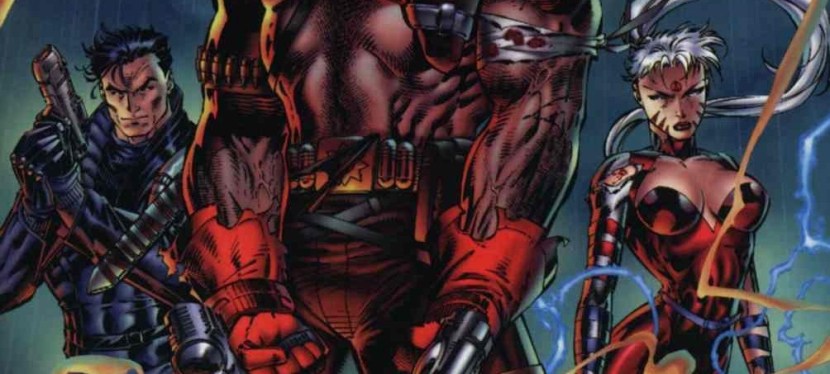
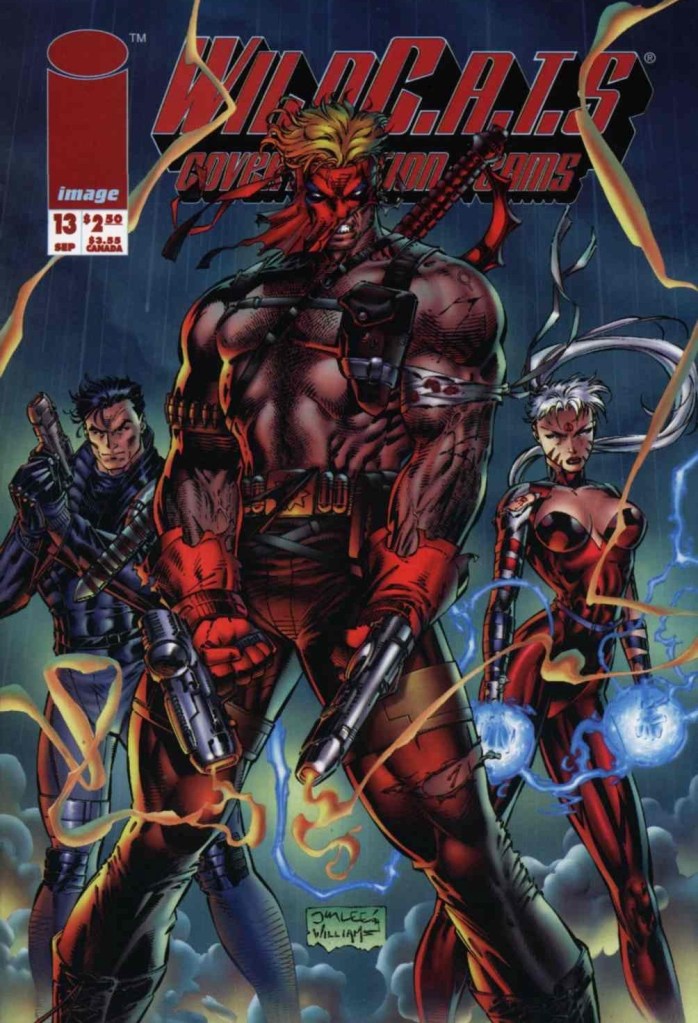
With those details laid down, here is a look back at WildC.A.T.S: Covert Action Teams , published by Image Comics in 1994 with a story written by Chris Claremont and drawn by Jim Lee.

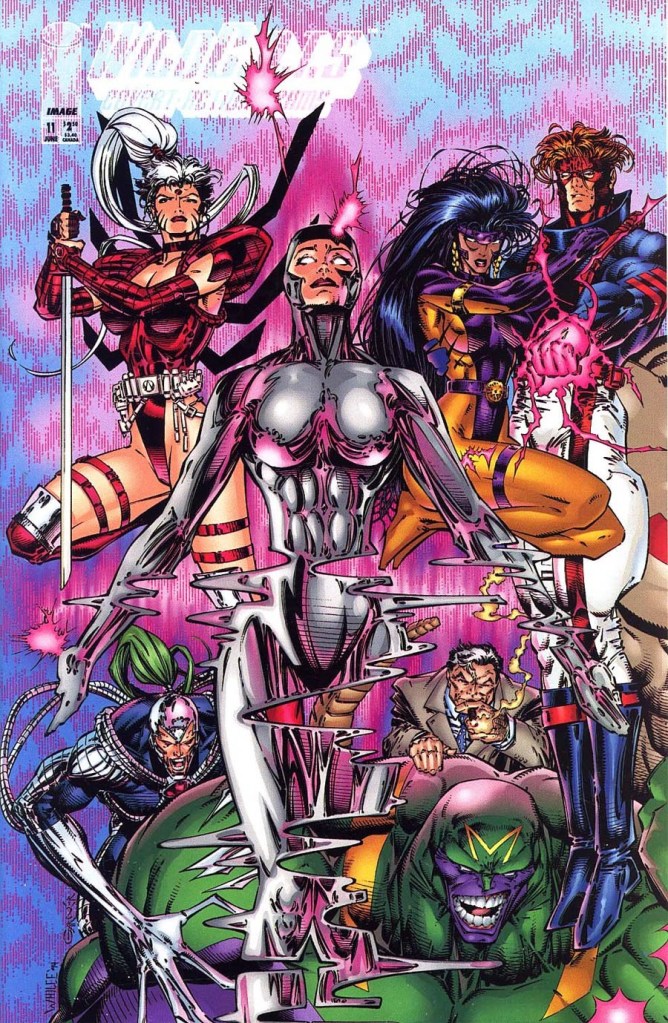
The cover.

Early story

The story begins with the possessed Voodoo – now looking frail and ugly as a result of Raksha’s hunger for flesh – attacking Jacob Marlowe’s two trusted assistants who arrived to help her. Deep inside her body struggling with Raksha’s possession, Pris manages to stop her attack – Voodoo’s face restored to normal – and warns Jules and Stansfield that Jacob and her teammates have been turned into evil by Tapestry and that Zealot may still be free.

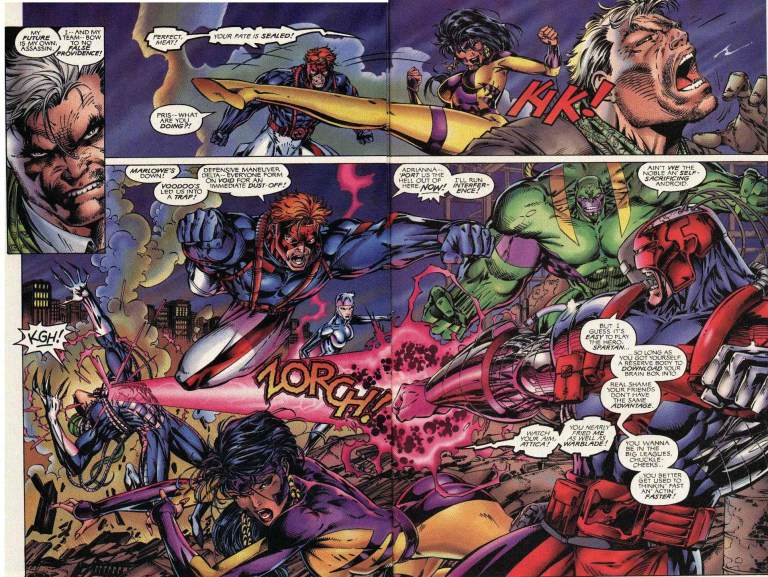
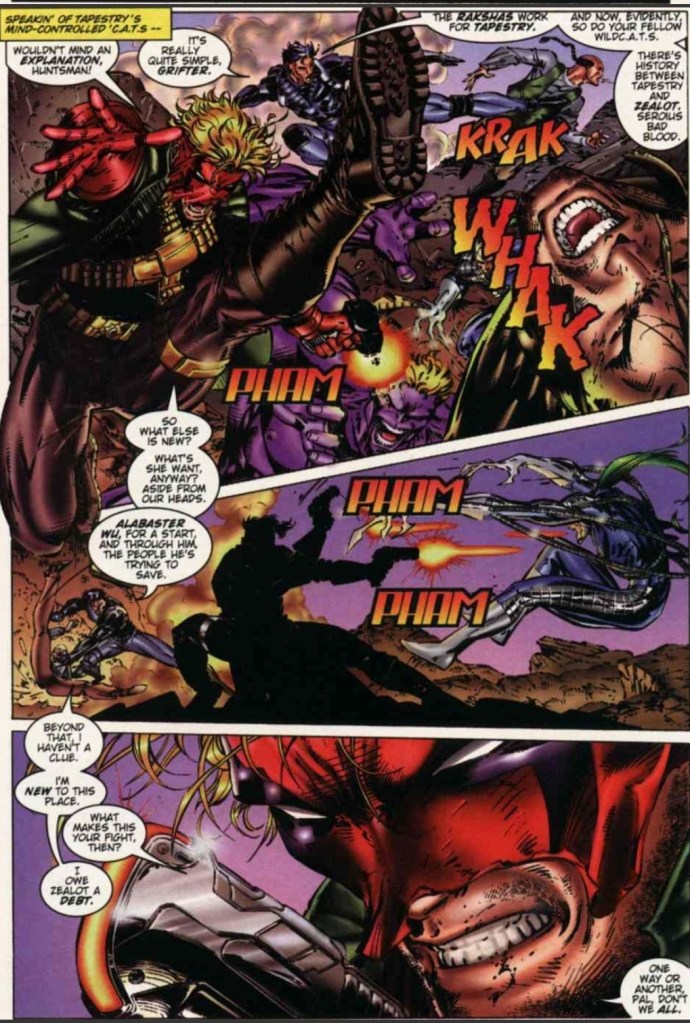
Meanwhile, Grifter, Hunstman, Zealot, Savant, Soldier and Mr. Majestic fight the mind-controlled WildC.A.T.S – Spartan, Maul, Jacob Marlowe and Warblade – and Alabaster Wu who are acting under Tapestry’s evil. As Grifter shoots Maul and kicks Jacob Marlowe’s head, Huntsman reveals to him that Tapestry and Zealot have a history together while Alabaster Wu was trying to save his people…

Quality

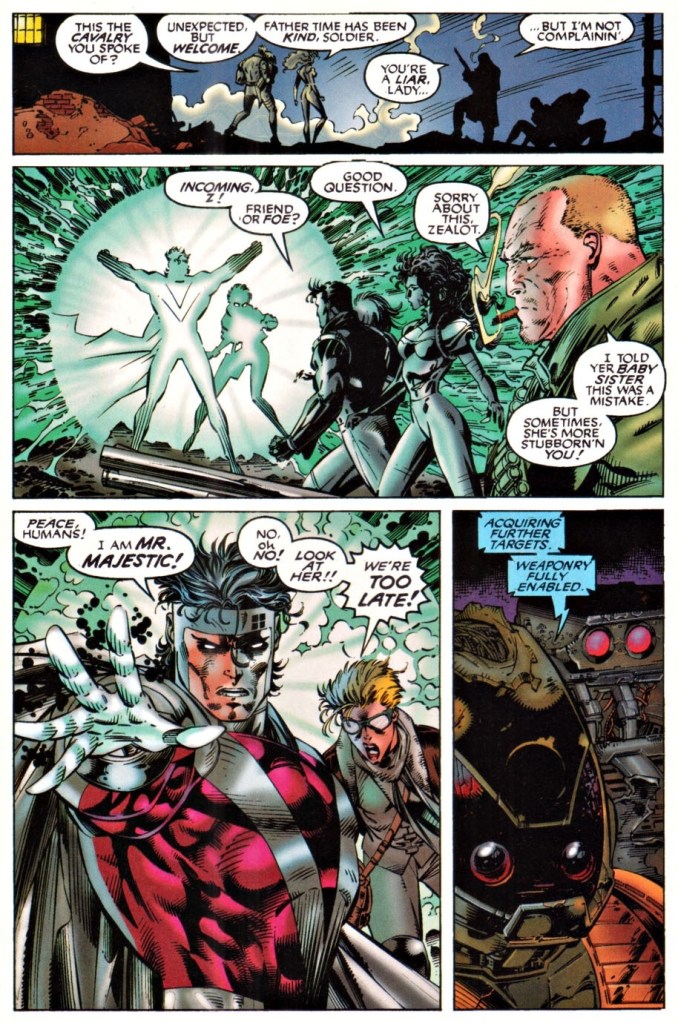
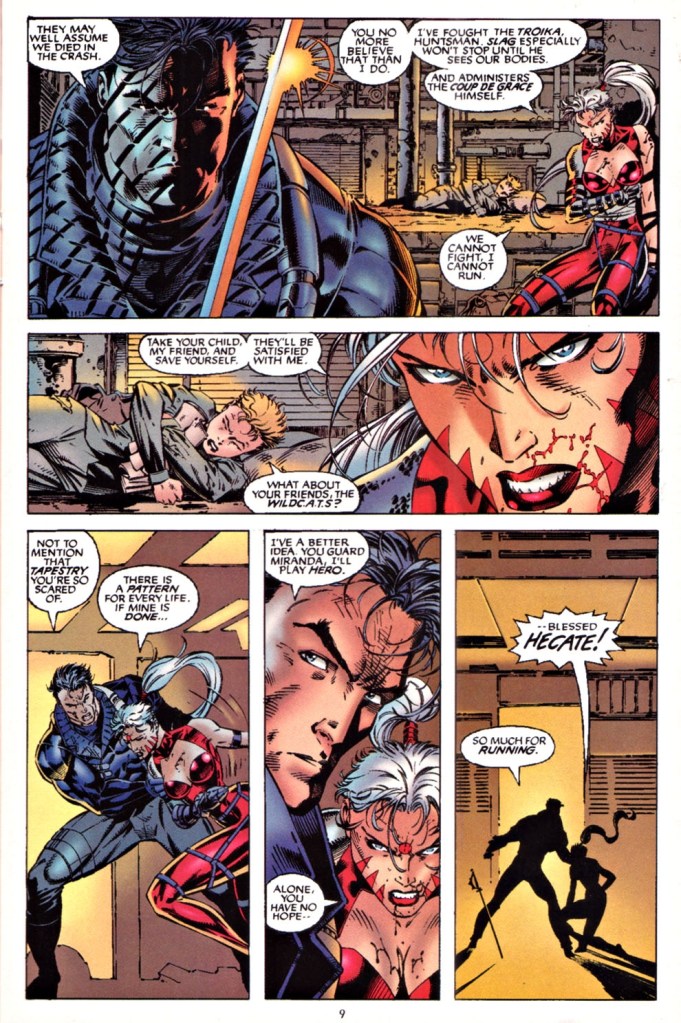
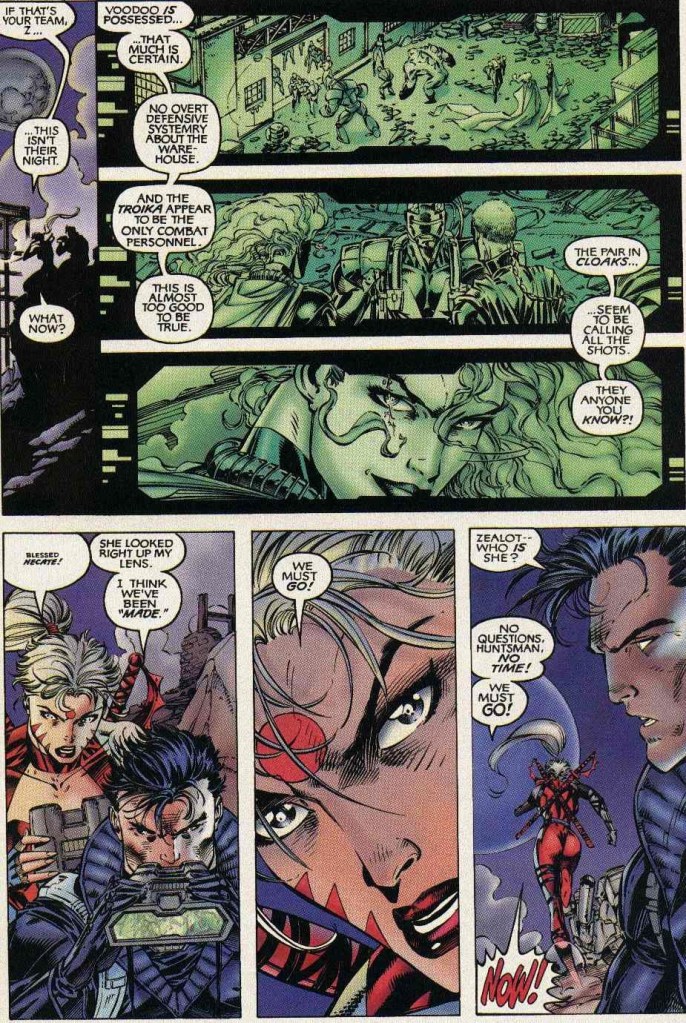
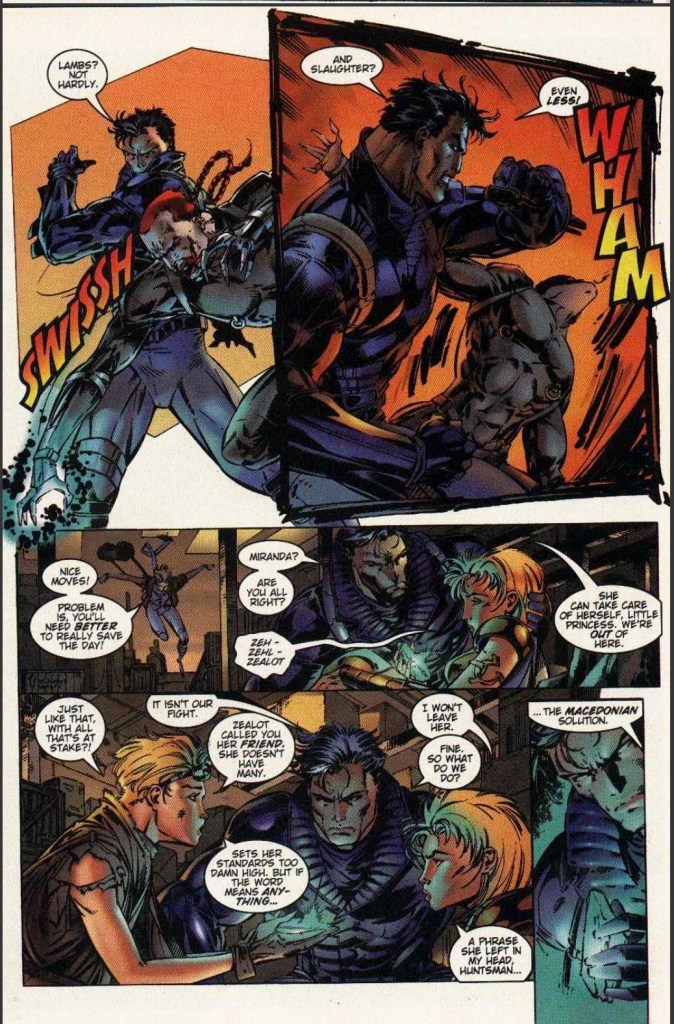
Chris Claremont’s Huntsman contributes solidly into the story even though he is not protagonist.

As expected, this storyline-concluding issue delivers the natural progression of what started in issue laced with lots of solidly fun action, key character interactions and more notably the further development of Zealot supported by Huntsman. To put it short, if you enjoyed the previous works of the Claremont-Lee creative team and you enjoy the early, bombastic ways of WildC.A.T.S, then this comic book should delight you.

Without spoiling the entire plot, this comic book concludes the storyline that started in issue and it also marked the end of Claremont-Lee’s collaboration on this particular volume of the WildC.A.T.S comic book series. What is very notable in my view is the way Claremont emphasized the evolution of Zealot not only as a WildC.A.T.S member but also her very own personality as well as her very own spot within the WildStorm universe.

It is in this storyline where you will see Zealot being much more than just a fearless, hard-fighting warrior who lives by the strict standards of the Coda. In this particular comic book, her greater purpose is realized (and you will realize that in a particular scene with Savant late in the story) and the interactions she has with the Huntsman, her sister Savant and others really brought out more of her personality. This is clearly Zealot redefined just as Claremont expanded the lore of the WildC.A.T.S.

Fans of Grifter should be happy to learn that their favorite character (who returned at the end of issue ) joined the big battle and Claremont’s prepared dialogue of him made him more livelier than his usual portrayal in this comic book series. Huntsman, meanwhile, is his usual honorable self but gets to define his place among the WildC.A.T.S through action. His companion Miranda (now wearing armor thanks to Zealot) plays a short yet notable key role in the story.

The reinforcements composed of Mr. Majestic, Savant and Soldier each have a stronger presence in this story which is expected and they don’t just talk and do some action…they also contributed to the plot and what Savant knew emphasized the essence of the conflict between Zealot and Tapestry.

As for the super villainess herself, Tapestry is very convincingly evil and this comic book shows exactly why the fearless Zealot deeply fears her and why she is a danger to everyone. While she has a very sinister agenda, Tapestry’s confirmation of her origin (in the form of dialogue) and what her place is between the Daemonites and Kherubim will intrigue readers, most especially WildC.A.T.S fans. As for her conflict with Zealot, this comic book will show you how they are connected with each other and what elements connect them together. Their spectacle-filled duel here is a must-see and you will enjoy it a lot when you pay attention to the details (read Savant’s expository dialogue) as the action happens.

When it comes to artwork, fans of Jim Lee should know that this comic book has some of very best pieces of art the famed creator ever made during his time with Image Comics. Very clearly, Lee took his time designing the shots and when to really go out with great visual detail as the story went on.

Conclusion

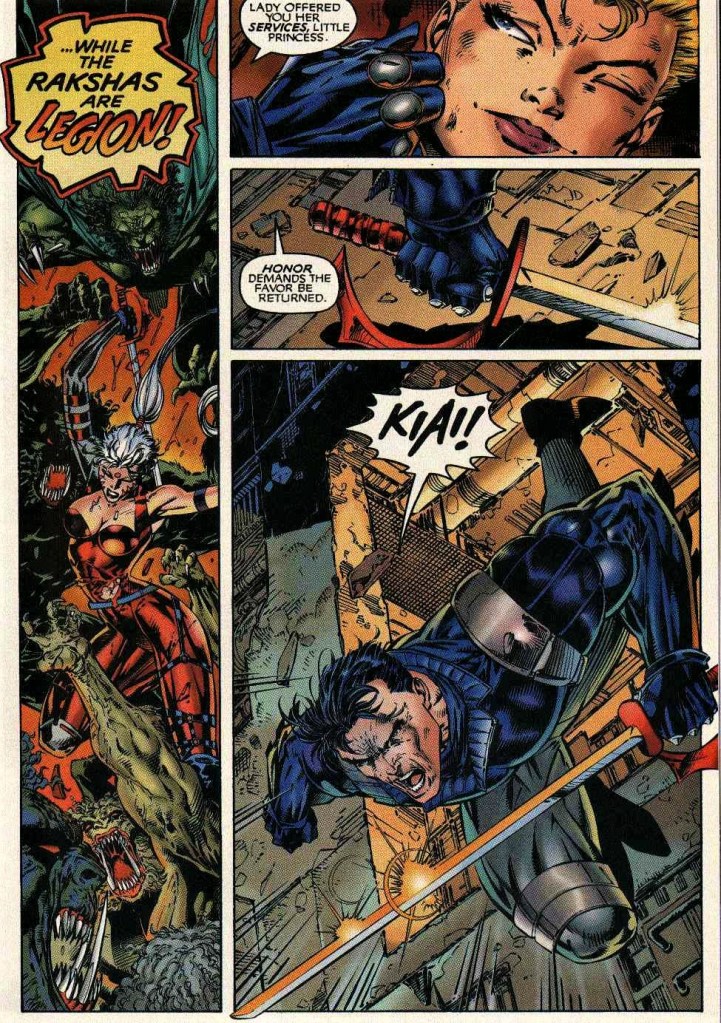
In the heat of a battle against the other WildC.A.T.S, Grifter and Huntsman still managed to talk.

I can say that WildC.A.T.S: Covert Action Teams (1994) is still a great comic book as it solidly and satisfyingly concluded the 4-part storyline that Chris Claremont came up with in this collaboration with Jim Lee. More on the storyline itself, Claremont took a really daring approach on presenting the titular team by having Zealot in the lead (with his creation Huntsman as the 2nd major player) and then putting most of the other team members on the background which effectively emphasizes the presence of the very wicked Tapestry (truly the definitive parallel to Zealot) along with the Troika (note: this is their best and most action-packed portrayal).

While this WildStorm universe-building story concept could put off some Claremont-Lee team fans who expected to see a WildC.A.T.S story fashioned like what was seen in the creators’ past X-Men works, this particular storyline for me is still a great read and its concept is commendable.

I should also state that the themes of omnipotence, legacy and destiny are all well defined in this comic book which made the 4-part storyline make more sense to read and analyze. More on Zealot, the way Claremont developed her will make you think deeply about how you should perceive her, how you think her place within the WildC.A.T.S will affect her teammates, etc. This comic book and its three immediate predecessors all have very solid writing by Claremont!

Overall, WildC.A.T.S: Covert Action Teams (1994) is highly recommended!

+++++

Thank you for reading. If you find this article engaging, please click the like button below and also please consider sharing this article to others. If you are looking for a copywriter to create content for your special project or business, check out my services and my portfolio. Feel free to contact me with a private message. Also please feel free to visit my Facebook page Author Carlo Carrasco and follow me on Twitter at  @HavenorFantasy as well as on Tumblr at https://carlocarrasco.tumblr.com/ and on Instagram athttps://www.instagram.com/authorcarlocarrasco/
A Look Back at WildC.A.T.S: Covert Action Teams #12 (1994)

Disclaimer: This is my original work with details sourced from reading the comic book and doing personal research. Anyone who wants to use this article, in part or in whole, needs to secure first my permission and agree to cite me as the source and author. Let it be known that any unauthorized use of this article will constrain the author to pursue the remedies under R.A. No. 8293, the Revised Penal Code, and/or all applicable legal actions under the laws of the Philippines.

Welcome back superhero fans, 1990s arts and culture enthusiasts and comic book collectors! Today we continue revisiting Jim Lee’s flagship title under the Image Comics label – WildC.A.T.S: Covert Action Teams!

Previously, I reviewed WildC.A.T.S #11 which served as a build-up issue with the titular team and their place within the WildStorm universe in mind. Considering how much the narrative in issue #10 was driven through Zealot’s struggles and her meeting the Huntsman (his debut), issue was alienating as the two mentioned characters had significantly lesser exposure. Of course, it is noted that issue saw the rather heavy entry of Tapestry, an eroticized and highly manipulative villainess who not only encountered the fearless Zealot ages prior but also scared her deep inside. Out of fear and desperation, Zealot summoned her long-time ally Savant who in turn reached out to Soldier (who also knew Zealot) and Mr. Majestic (only mentioned by name). Issue also saw the rise of the Troika (Attica, Slag and H.A.R.M.) in terms of exposure and even character development.

At this stage, it was clear that franchise creator Jim Lee literally gave author Chris Claremont the driver’s seat to develop the WildC.A.T.S franchise significantly and lead it to a new, bold direction. It was clearly the most unconventional WildC.A.T.S story published at the time!

With those details laid down, here is a look back WildC.A.T.S: Covert Action Teams , published by Image Comics in 1994 with a story written by Chris Claremont and drawn by Jim Lee.

The cover.

Early story

The story begins with the Huntsman driving the high-tech motorcycle with Miranda and an ailing Zealot seated in the side-car. They are being chased and attacked by the Troika from above (Attica and Slag riding on H.A.R.M. in its aircraft form) firing several rockets at them. While the rockets caused huge explosions on the city street, Attica states he will consider the attack on their targets successful only he sees their dead bodies.

Meanwhile inside a facility, Tapestry continues to deeply manipulate the mind of Warblade among the captured WildC.A.T.S members. Already Jacob Marlowe and even the cybernetic Spartan have been manipulated to do her bidding. As Tapestry continues working on Warblade in the presence of Soma and the others, the Raksha-possessed Voodoo hungers for new meat.

Moments later, as Voodoo goes out agonizing over the craving, a vehicle – with Jacob Marlowe’s loyal assistants Jules and Stansfield – arrive. Deep inside Voodoo, a conflict between her and the Raksha occupying her body begins… 

Quality

Mr. Majestic is the WildStorm universe’s parallel to DC Comics’ Superman!

Like issue , this comic book continues to build-up the WildC.A.T.S lore but with notable differences. For one thing, the story moved forward more while also having the intensity build up constantly leading to the set-up of the upcoming conflict between Tapestry’s troops (along with the manipulated WildC.A.T.S) and Zealot with Hunstman (and the incoming reinforcements). To put it short, the exposition in this story was less and the plot noticeably progressed more.

When it comes to the significance of the characters, this time the narrative’s spotlight shifted back more on Zealot and Huntsman which was the right move pulled off by the creators as Tapestry was already established as the new force of evil for the good guys to deal with. As for the new characters introduced in the previous issue, Tapestry has a smaller share of the spotlight while Savant and Soldier are present again but only after much of the action had passed. It is also in this issue that Mr. Majestic appears at last marking the start of his involvement in the conflict.

As for Zealot and the Huntsman, their alliance in this story has progressed more as well. Under Chris Claremont, the fearless Zealot was portrayed to be struggling very hard as she became more vulnerable than ever! This is Zealot that has to be seen! As for Huntsman, he truly is an effective fighter. So much so, he sure can fit into the WildC.A.T.S and keep up with their action. Still, Huntsman is indeed an honorable man as he still dedicates himself in protecting Miranda (who is a lot more than she appears) while making his moves to help Zealot at her most vulnerable time.

When it comes to the visuals, this is one Jim Lee-drawn comic book that I found unusually alienating to look at. His penciled art are still here but in certain pages, they looked odd as they were inked by other people. The ink work done on page 17 really stood out with a very high contrast look.

Conclusion

By this point of the storyline, Zealot and Huntsman are clearly the major characters.

While it is essentially a build-up issue, the entertainment value in WildC.A.T.S: Covert Action Teams (1994) went up as the story progressed more, the spotlight shifted more on Zealot and Huntsman (clearly the two major characters for this storyline) and the exposition and explanations were lessened. The ironic thing is that readers will see less of the titular team (as most of them were captured and being manipulated by Tapestry) here. The presence of Savant, Soldier and Mr. Majestic here is pretty light which is understandable as the focus on Zealot and Huntsman was deeper this time. Ultimately, this comic book sets the readers up to for the inevitable big battle in the next issue.

If you are seriously planning to buy an existing hard copy of WildC.A.T.S: Covert Action Teams (1994), be aware that as of this writing, MileHighComics.com shows that the near-mint copy of the regular edition costs $20 while the near-mint copy of the newsstand edition costs $60.

Overall, WildC.A.T.S: Covert Action Teams (1994) is highly recommended.

+++++

Thank you for reading. If you find this article engaging, please click the like button below and also please consider sharing this article to others. If you are looking for a copywriter to create content for your special project or business, check out my services and my portfolio. Feel free to contact me with a private message. Also please feel free to visit my Facebook page Author Carlo Carrasco and follow me on Twitter at  @HavenorFantasy as well as on Tumblr at https://carlocarrasco.tumblr.com/and on Instagram at https://www.instagram.com/authorcarlocarrasco/
A Look Back at WildC.A.T.S: Covert Action Teams #11 (1994)

Disclaimer: This is my original work with details sourced from reading the comic book and doing personal research. Anyone who wants to use this article, in part or in whole, needs to secure first my permission and agree to cite me as the source and author. Let it be known that any unauthorized use of this article will constrain the author to pursue the remedies under R.A. No. 8293, the Revised Penal Code, and/or all applicable legal actions under the laws of the Philippines.

Welcome back superhero fans, 1990s arts and culture enthusiasts and comic book collectors! Today we continue revisiting Jim Lee’s flagship title under the Image Comics label – WildC.A.T.S: Covert Action Teams!

Last time around, I reviewed the 10th issue of the WildC.A.T.S series which saw the reunited work of Chris Claremont and Jim Lee who previously worked together on making many memorable X-Men comic books during their time with Marvel Comics (note: check out three retro reviews of Claremont-Lee X-Men comics by clicking here, here and here).

Being free from the constraints and hurdles of Marvel, WildC.A.T.S showed what Claremont added to Lee’s superhero team while also unveiling the Huntsman (Claremont’s own creation). Even as the story – which had Zealot as the lead character followed by Voodoo and Huntsman – had lots of build-up and the rest of the WildC.A.T.S only had a minor share of the spotlight, Lee still managed to make the story filled with a good amount of spectacle for readers to enjoy. I really liked WildC.A.T.S a lot and in my view, it has aged well.

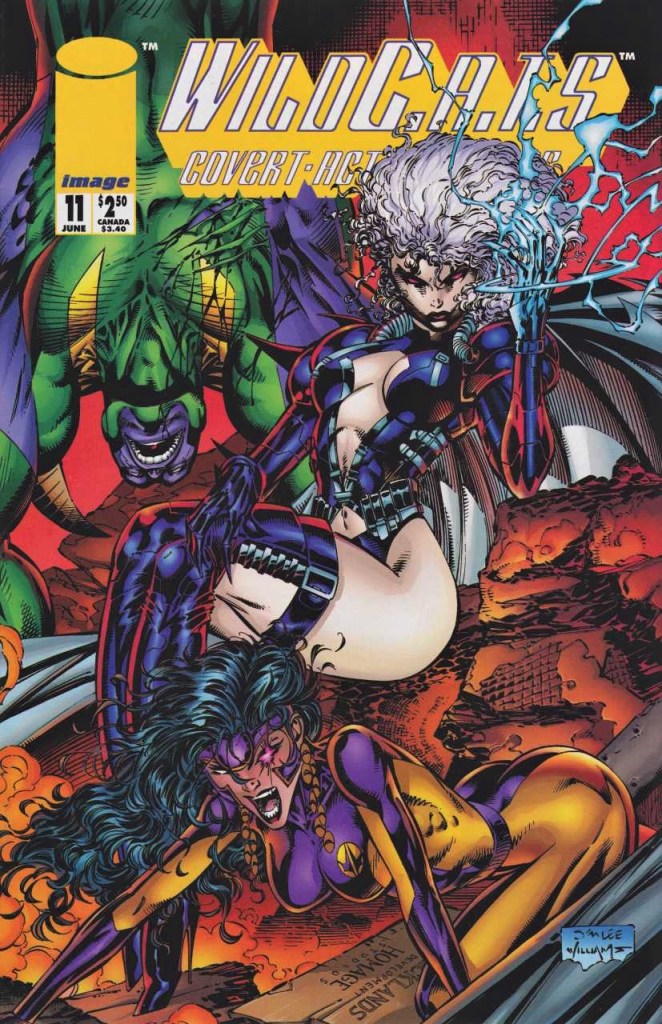
With those details laid down, here is a look back WildC.A.T.S: Covert Action Teams , published by Image Comics in 1994 with a story written by Chris Claremont and Drawn by Jim Lee. Scott Williams is in-charge with the ink work. This comic book has a variant cover edition with the cover art done by While Portacio.

The cover.
The variant cover edition with art by While Portacio.

Early story

The story begins moments after Jacob Marlowe secretly met with Alabaster Wu. The WildC.A.T.S – composed of Spartan, Warblade, Void, Maul and the possessed Voodoo – find themselves facing with the Troika – composed of Attica, Slag, H.A.R.M. and Providence – who came in by surprise with the intention to overwhelm them. Providence states that Jacob Marlowe’s destiny is sealed with doom.  

Just after Marlowe expressed defiance, the Raksha-controlled Voodoo knocks him out with a hard kick from behind. This surprises Spartan who immediately jumps into action and orders his teammates to form on void for an immediate dust-off. The battle between the Troika and the WildC.A.T.S starts, Attica hits Warblade. Void then discovers that some force is preventing her from teleporting. It turns out, Providence manipulated the quantum field. Using tremendous power, Providence overwhelms Void which puts the WildC.A.T.S into serious trouble.

Meanwhile on the streets of Brooklyn, Zealot, Huntsman and the teenager Miranda are riding fast together. Zealot says that the communication with her team has gone off-line and she only has their current position…

Quality

Even the fearless and disciplined Zealot is scared of the new super villain Tapestry.

I’ll start first with the presentation of characters and related developments. While the WildC.A.T.S themselves appeared a lot more here than in the previous issue, they did not end up as the dominating characters in the narrative. Even Zealot and Huntsman had reduced shares of the spotlight. This is because Claremont’s script introduced a few yet clearly significant characters while remaining focused on building up tension in relation to the growing presence of a new force of evil (note: the ugly and scary looking monsters called Raksha are connected with them) on Earth with two distinct figures as evil leaders – Soma and Tapestry. As the WildC.A.T.S fell short of achieving any heroics, their new statuses as targets and tools of Tapestry ultimately made sense in the plot. This is a rather daring way Claremont used to tell a WildC.A.T.S tale that has the titular team in their most vulnerable state yet.

While Soma does have an intimidating presence, it is obvious that Tapestry (who has an eroticized design and is the self-declared weaver of souls and shaper of fate) is the most visceral supervillain here and I had the impression that she was planned to be a major enemy towards the WildC.A.T.S comparable with Helspont. Even the fearless warrior Zealot fears Tapestry.

In a clear move to expand the lore of the WildC.A.T.S series within the WildStorm universe, this comic book saw the entry of Savant (an important associate of Zealot’s) and Soldier (the WildStorm’s own parallel to DC Comics’ Sgt. Rock) plus the mention of Mr. Majestic. Savant and Soldier are not just mere additional characters thrown into the mix but they each have established places within the WildStorm universe that just have not been seen by readers at the time of publishing. Claremont wrote Savant and Soldier as individuals who both knew Zealot from some time before and, more importantly, he made them believable to read even though this comic book only showed little of them.

When it comes to character portrayals, Claremont’s creativity showed Attica clearly having much more personality just as the Troika returned (late in issue ). The head of the Troika in this comic book was presented as a business-dealing killer who does not hesitate to tell his client to beware of Zealot and Grifter (note: he was last seen in issue #8) as those two are the most dangerous WildC.A.T.S members. Attica’s companion Slag is more expressive here and while H.A.R.M.’s mechanical perspective is emphasized more which reminds me somewhat of the cinematic Terminator reading commands internally. Indeed, there was inspiration behind Claremont’s writing.

With regards to the plot, this comic book has a simple story structure that just so happens to have lots of exposition, explanations and the introduction of new characters destined to become more important later. Combined with the art of Jim Lee, the story still works on engaging and entertaining me. Re-reading this story is still a lot fun after all these decades.

Conclusion

WildC.A.T.S in bombastic action with the Troika.

Given the way it was crafted and structured by Claremont, WildC.A.T.S: Covert Action Teams (1994) is easily the most unconventional tale of the series at the time of its publication. Unsurprisingly, Jim Lee’s art here is of top-notch quality and he continued to excel in providing readers the adulterated superhero spectacle while also making the more character-focused scenes look interesting (note: there are flashbacks to WildC.A.T.S during Tapestry’s examination of Jacob Marlowe’s memories). As the WildC.A.T.S – without Grifter and Zealot specifically – were at their most vulnerable, this could alienate the die-hard fans who are expecting the usual stuff they love (note: bombastic action against bad guys with character moments in between) to pour in. What I want readers and the die-hard fans to understand is that they should pay close attention to the growing force of evil under Tapestry (who even scares the very brave Zealot) and think about it as a suitable addition into the WildC.A.T.S lore within the WildStorm universe of the time. This comic book also shows that there is more to be explored beyond the conflict of the Kherubim and the Daemonites. That being said, Chris Claremont and Jim Lee’s combined works here are still very solid, a lot of fun and even intriguing to read.

If you are seriously planning to buy an existing hard copy of WildC.A.T.S: Covert Action Teams (1994), be aware that as of this writing, MileHighComics.com shows that the near-mint copy of the regular edition costs $30 while the near-mint copies of newsstand edition and the signed edition cost $90 and $60 respectively. The near mint-copies of variant cover edition (Whilce Portacio art) and the signed variant covered edition cost $30 and $90 respectively.

Overall, WildC.A.T.S: Covert Action Teams (1994) is highly recommended!

+++++

Thank you for reading. If you find this article engaging, please click the like button below and also please consider sharing this article to others. If you are looking for a copywriter to create content for your special project or business, check out my services and my portfolio. Feel free to contact me with a private message. Also please feel free to visit my Facebook page Author Carlo Carrasco and follow me on Twitter at  @HavenorFantasy as well as on Tumblr at https://carlocarrasco.tumblr.com/and on Instagram at https://www.instagram.com/authorcarlocarrasco/
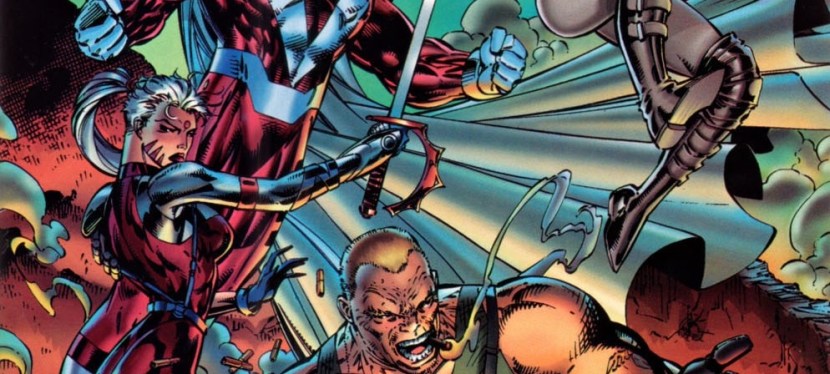
A Look Back at WildC.A.T.S: Covert Action Teams #10 (1994)

Disclaimer: This is my original work with details sourced from reading the comic book and doing personal research. Anyone who wants to use this article, in part or in whole, needs to secure first my permission and agree to cite me as the source and author. Let it be known that any unauthorized use of this article will constrain the author to pursue the remedies under R.A. No. 8293, the Revised Penal Code, and/or all applicable legal actions under the laws of the Philippines.

Welcome back superhero fans, 1990s arts and culture enthusiasts and comic book collectors! Today we continue revisiting Jim Lee’s flagship title under the Image Comics label – WildC.A.T.S: Covert Action Teams!

The next WildC.A.T.S comic book up for review here was a collaborative work between Chris Claremont and Jim Lee. For the newcomers reading this, Claremont and Lee worked together for a time at Marvel Comics on the X-Men comic books. The 1991 comic book X-Men #1 was their best-selling work together selling over eight million copies! Behind the scenes Marvel, however, there were conflicts and ultimately Claremont’s very long run with the publisher ended in X-Men #3 which was also drawn by Lee.

It should be noted that back in the early 1990s, Claremont and Lee worked under the watch of then X-Men books editor Bob Harras. Moving forward to the early years of Image Comics, Lee had a lot more freedom of creativity and control plus the power to publish. He not only launched WildC.A.T.S but also had his own line of connected properties (later referred to as WildStorm) like Stormwatch, Gen13, Team 7, Backlash and more.

As WildC.A.T.S started to establish itself among the many, many superhero comic books released, it was only a matter of time before Jim Lee and Chris Claremont started to reunite and create something without the obstacles they faced during their time with Marvel Comics.

With those details laid down, here is a look back WildC.A.T.S: Covert Action Teams , published by Image Comics in 1994 with a story written by Chris Claremont and Drawn by Jim Lee. Scott Williams in-charge with the ink work.

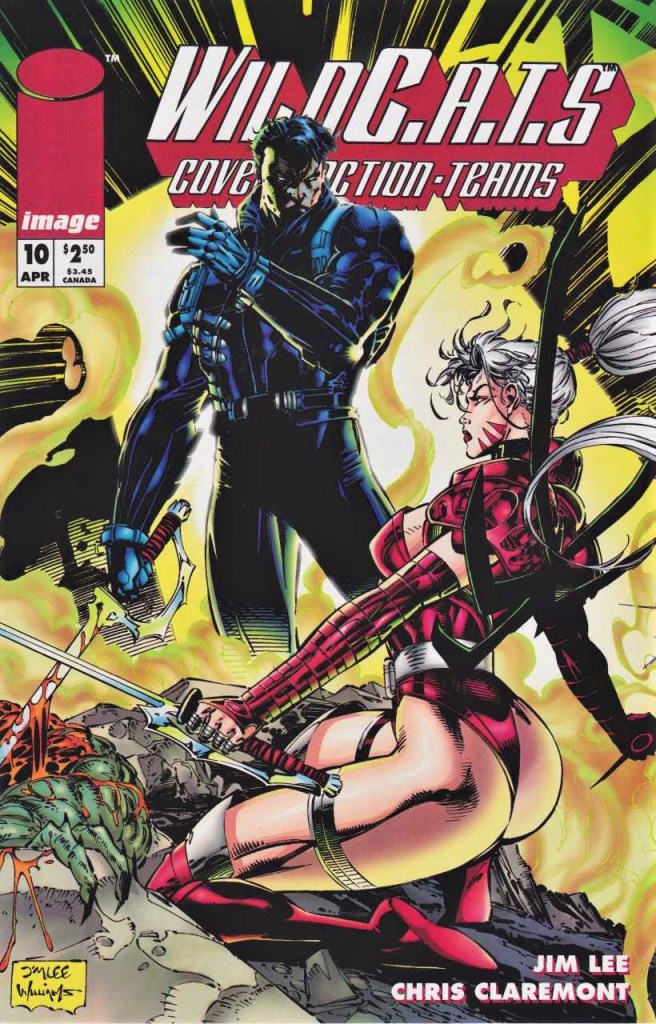
The cover.

Early story

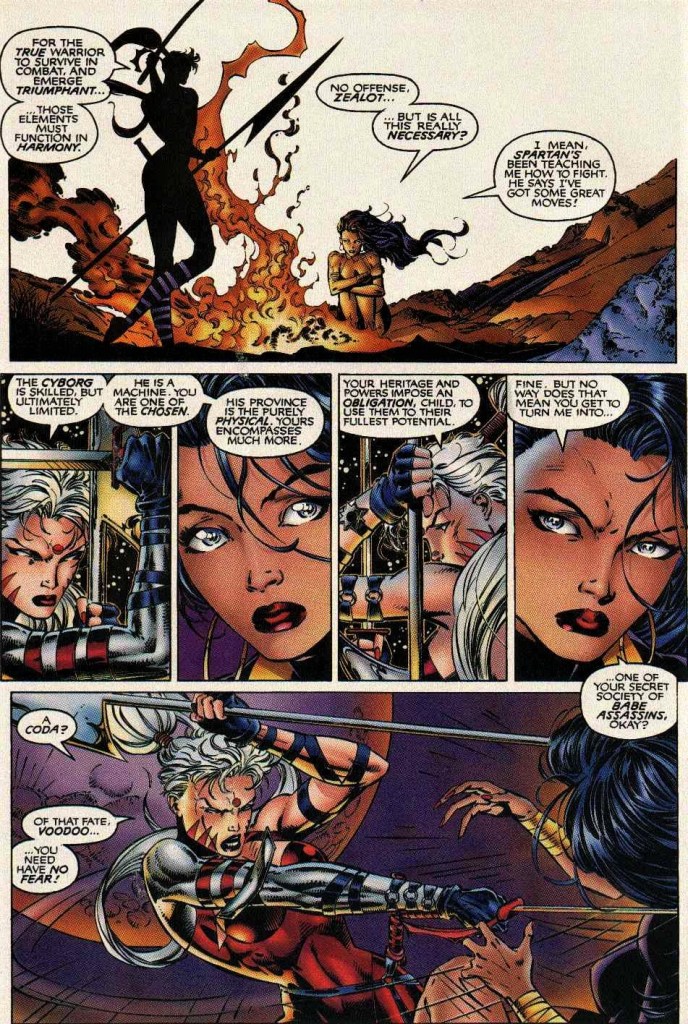
The story begins with Zealot teaching Voodoo lessons about combat at a beach outside of New York City during the night. As the lecture goes on, Vodoo asked her warrior teammate if the lessons are really necessary as her beloved Spartan had been teaching her how to fight. Zealot then reminds her that Spartan is a cyborg and is ultimately limited. More notably, she calls Voodoo one of the chosen (note: she is a Daemonite-Kherubim-human hybrid with a power referred to as the Sight) and that she has a heritage and powers that impose an obligation to use them to their fullest potential.

After a slight verbal conflict that resulted in Zealot to strike Voodoo down, corner her and lecture her some more, a huge ship suddenly appears in the air and crashes near them. Even though the crash created a powerful impact, Zealot is able to hear gun fire from aboard the ship and her teammate spots a man on the deck. Suddenly the man got shot from behind and falls down near the two WildC.A.T.S members. The man faintly calls for help…

Quality

The first-ever appearance of Chris Claremont’s Huntsman!

Before focusing on the plot, I want to start first with one of the things Chris Claremont is well known for…characterization. Given the way the story was structured, Zealot and Voodoo had the most amount of spotlight among the WildC.A.T.S members who appeared here. It is through Zealot’s portrayal where you will see Claremont really work on her development as a character. Right here, Zealot remains fearless and deadly as before and at the same time, she is more principled and even a bit more philosophical than ever before. It is also in this comic book where you will really see her speak a lot and express herself a bit more emotionally.

Meanwhile Voodoo, in relation to what happened in the story, is presented radically differently as a result of her getting possessed by one of the Raksha. Before possession, she was portrayed to be the young learner who carries a false sense of maturity deep inside which is natural for many teenagers and young adults.

Next, there is the introduction of Claremont’s very own creation called the Huntsman! To be clear, his debut is action-packed and early on he was shown to be skillful, deadly and even comparable with Zealot in terms of combat and efficiency. He is shown to be honorable and dedicated, especially when it comes to defending a teenage girl in the middle of a dangerous environment that has the Raksha which is a race of very frightening and deadly monsters. Given the way the story was written, only bits of the Huntsman’s personality and background were shown.

On the plot itself, there is this new conflict brewing and instead of showing Helspont or the Daemonites as the antagonists, the Raksha comes in as the new force of evil that the WildC.A.T.S are destined to face. There is also a bit of mystery here, particularly with the arrival of the ruined ship and the desperate attempt of the new character Alabastar Wu to meet with Jacob Marlowe whom he has an established connection with. The said ship is just part of a puzzle about people struggling with the Raksha. As this is clearly the first of a multi-part story Claremont came up with, the answers are meant to be revealed later.

The writing, unsurprisingly, has a good amount of depth and nice details (both literally and visually) scattered throughout this comic book. This makes re-reading a must and I can say that I found it worth doing.  

Conclusion

Zealot lecturing Voodoo reminds me of scenes from old X-Men comics (written by Chris Claremont) that showed Storm guiding Kitty Pryde.

While you will see the titular team only late in the story as the spotlight was focused more on Zealot, Voodoo and the Hunstman which was crucial on building up the new story concept, WildC.A.T.S: Covert Action Teams (1994) is a very unique comic book that features the great stuff you can expect from Chris Claremont and Jim Lee. As expected, the writing by Claremont was consistently solid and when it came to spectacle, Lee successfully delivered the stuff that ensured entertainment. I personally enjoyed re-reading this comic and each time I reached the end, I ended up anticipating the next issue strongly.

If you are seriously planning to buy an existing hard copy of WildC.A.T.S: Covert Action Teams (1994), be aware that as of this writing, MileHighComics.com shows that the near-mint copy of the regular edition costs $20 while the near-mint copies of the twice-signed (two signatures) and newsstand editions cost $60 each.

Overall, WildC.A.T.S: Covert Action Teams (1994) is highly recommended!

+++++

Thank you for reading. If you find this article engaging, please click the like button below and also please consider sharing this article to others. If you are looking for a copywriter to create content for your special project or business, check out my services and my portfolio. Feel free to contact me with a private message. Also please feel free to visit my Facebook page Author Carlo Carrasco and follow me on Twitter at  @HavenorFantasy as well as on Tumblr at https://carlocarrasco.tumblr.com/and on Instagram at https://www.instagram.com/authorcarlocarrasco/
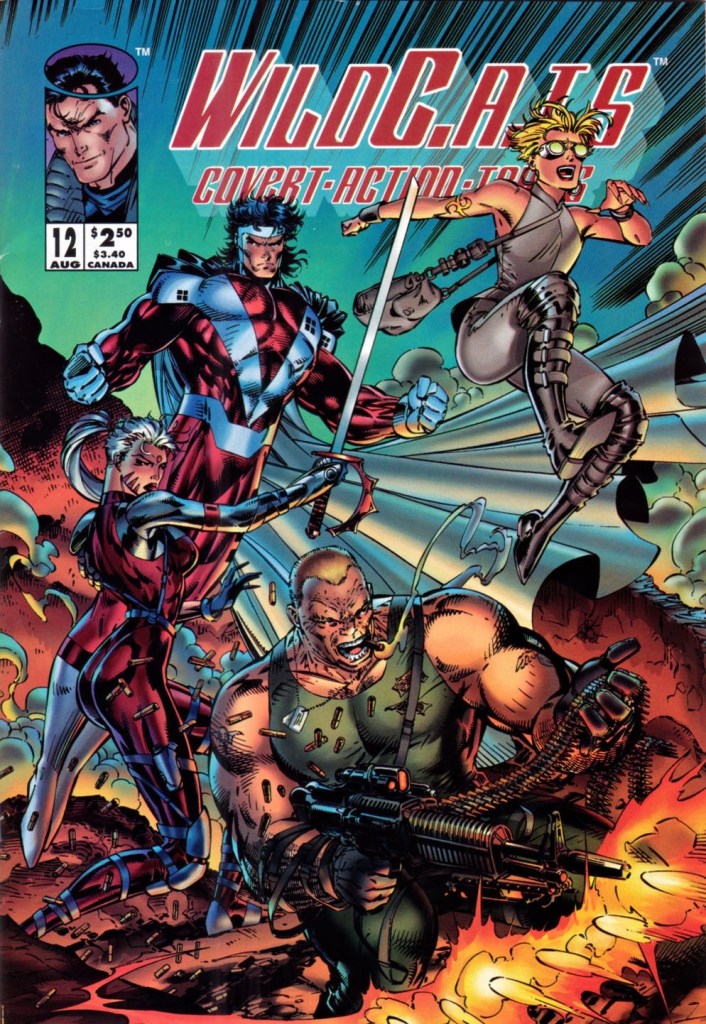
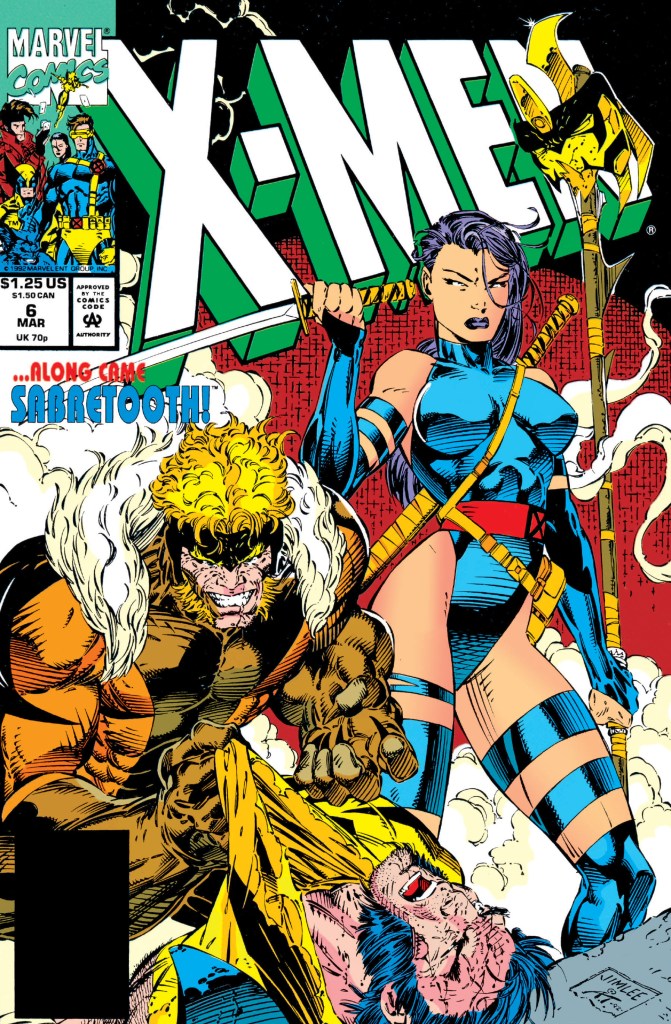
A Look Back at X-Men #6 (1992)

Disclaimer: This is my original work with details sourced from reading the comic book and doing personal research. Anyone who wants to use this article, in part or in whole, needs to secure first my permission and agree to cite me as the source and author. Let it be known that any unauthorized use of this article will constrain the author to pursue the remedies under R.A. No. 8293, the Revised Penal Code, and/or all applicable legal actions under the laws of the Philippines.

Welcome back, superhero enthusiasts, fans of the 2099 universe of Marvel Comics, 1990s culture enthusiasts and comic book collectors! Today we revisit the adjective-less X-Men comic book series that first launched in 1991 and it has been quite some time since my last retro review of one of the early issues drawn by Jim Lee got published. For the newcomers reading this, my retro review of X-Men (1992) had Wolverine encountering Omega Red.

With those details laid down, here is a look back at X-Men , published by Marvel Comics in 1992 with a story plotted and drawn by Jim Lee, scripted by Scott Lobdell and inked by Art Thibert.

The cover.

Early story

The story begins inside a facility in Berlin. Cyclops and Beast easily knocked out the armed guards there with Jubilee following them. As they slowly walk and talk, Omega Red suddenly appears out of nowhere surprising them and hitting Beast directly on the head.

As Omega Red quickly subdues Cyclops with his coils, Jubilee tries to use her power to help her teammate. The Russian, however, unleashes his lethal pheromones into the air which weakens Jubilee. After Omega Red knocks her out, he communicates with Matsuo. It turns out Wolverine still could not be located since he escaped from them.

Elsewhere, Wolverine is being revived by someone…

Quality

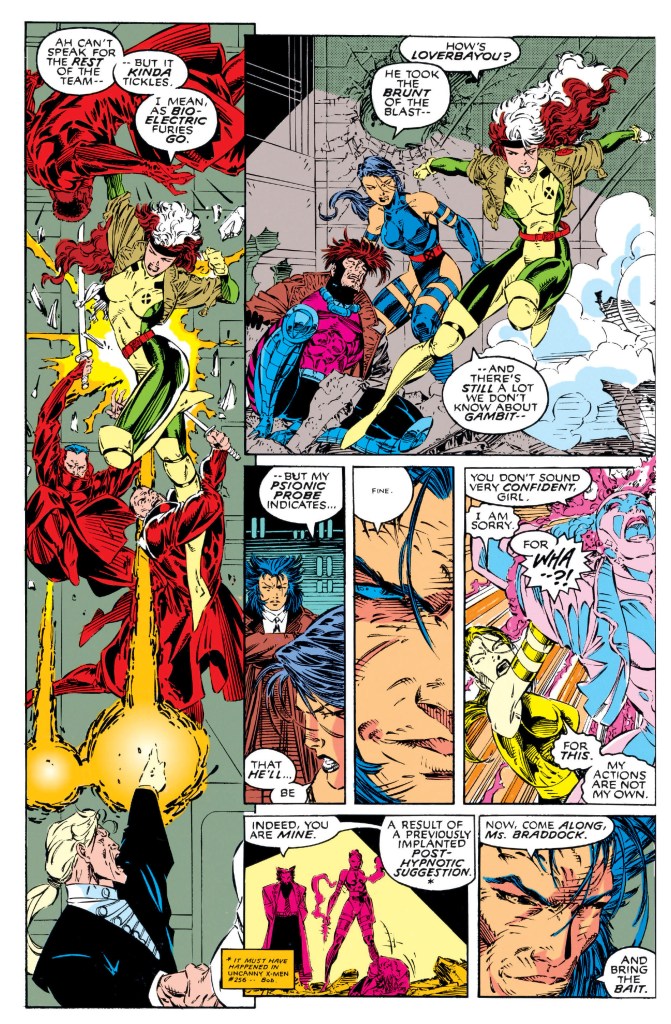
Members of the Blue Team in action.

Being the 3rd issue published after the departure of Chris Claremont (last work was X-Men #3), this comic book daringly continues to expand the lore of X-Men with paramilitary concepts, the further exploration of the untold story from Wolverine’s past as a special operative, and the growing threat against the X-Men posed by Omega Red and the organization that revived him. This was clearly Jim Lee’s vision and his way of modernizing the X-Men into the 1990s. It is unsurprisingly grittier in presentation when compared to how the X-Men were presented during Claremont’s time and fortunately the story was told satisfyingly.

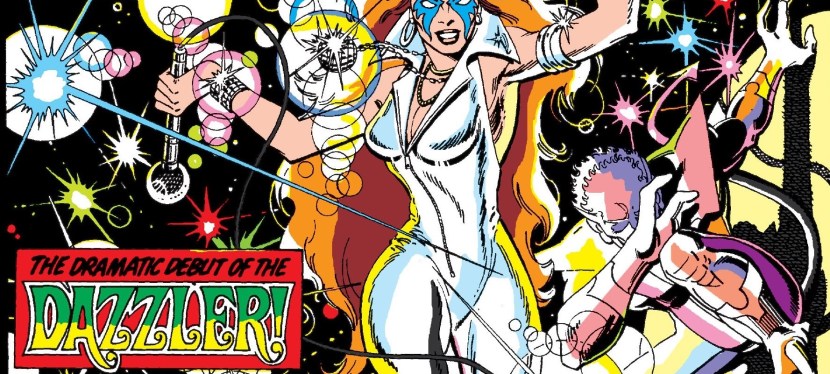
I say satisfyingly because this comic book even made room to bring back Dazzler, Longshot and the monstrous Mojo all modernized by Jim Lee. Their insertion into the story really came out of nowhere and felt really jarring after getting myself immersed into the current X-Men story. At this point in the series, the creative team led by Lee really wanted to shake the X-Men storytelling and keep things fresh, if not interesting, for the fans. Speaking of Dazzler, the character made her first appearance way back in 1980’s Uncanny X-Men #130, was featured in her own monthly series and became a regular in the X-Men in the mid-1980s. As such, her sudden return in this comic book was pretty much an opportunity by the creative team to link the present-day X-Men with the X-Men from the mid-1980s which resulted added variety.

Conclusion

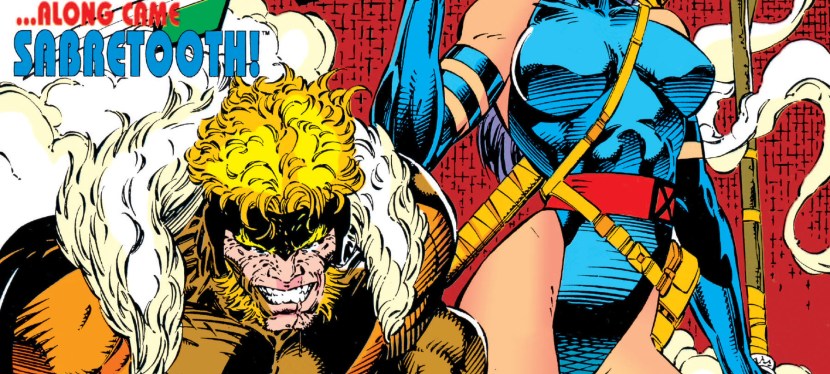
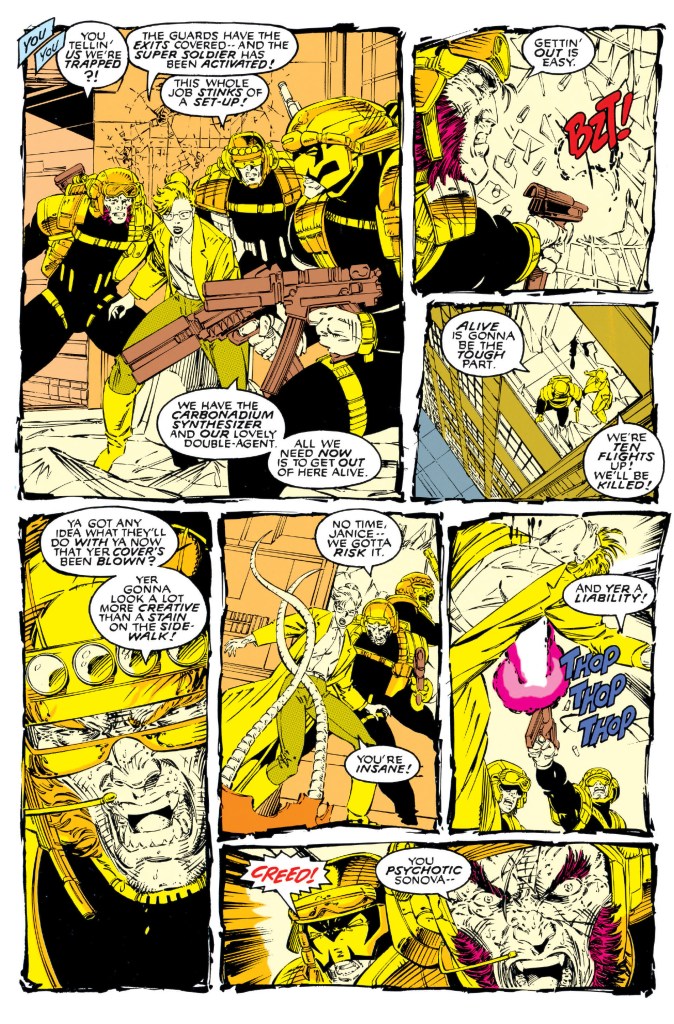
When Wolverine and Sabretooth were CIA operatives.

While X-Men (1992) indeed has a more bloated narrative as more characters were crammed in, more flashback scenes and attempts to add moments of twists and intrigue, I still had fun reading it. Unlike the previous two issues under the direction of Jim Lee, this comic book requires a more concentrated reading in order to fully grasp the narrative while also paying attention to the return of Longshot, Dazzler and the others. More on the X-Men themselves, you will get to see the Blue Team in action and really struggle against the group that has Omega Red. When it comes to intriguing character moments, you will see here the start of the build-up on the respective stories of the Psylocke-Kwannon storyline as well as Gambit’s connection with Sabretooth.

If you are seriously planning to buy an existing hard copy of X-Men (1992), be aware that as of this writing, MileHighComics.com shows that the near-mint copy of the regular edition costs $40 while the near-mint copies of the newsstand and Toy Biz editions cost $120 and $100 respectively.

Overall, X-Men (1992) is recommended.

+++++

Thank you for reading. If you find this article engaging, please click the like button below and also please consider sharing this article to others. If you are looking for a copywriter to create content for your special project or business, check out my services and my portfolio. Feel free to contact me as well. Also please feel free to visit my Facebook page Author Carlo Carrasco and follow me at HavenorFantasy@twitter.com

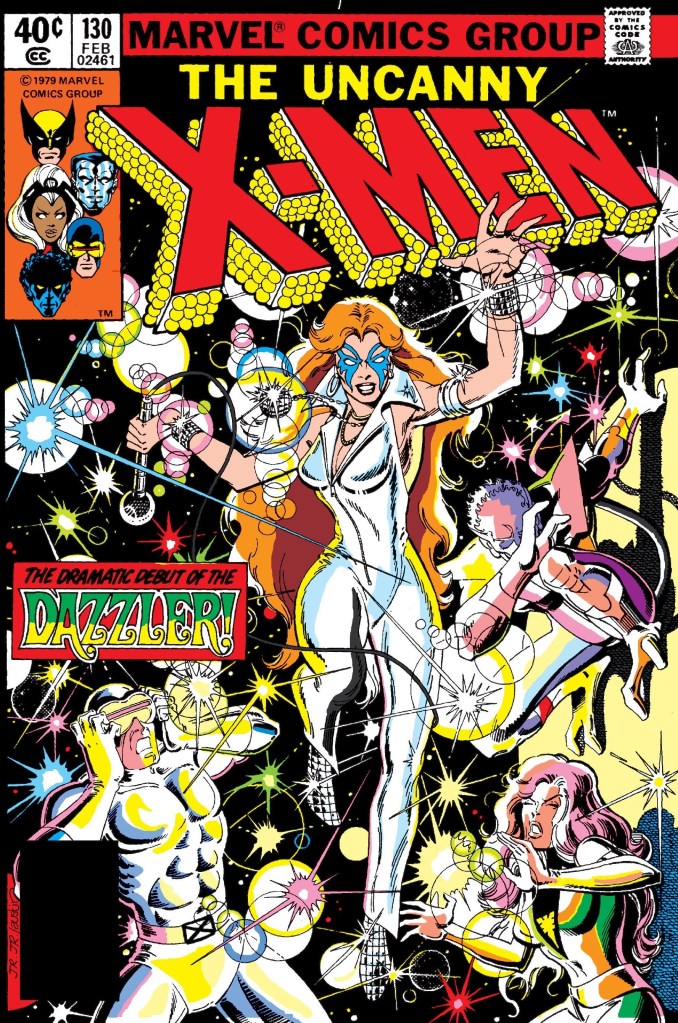
A Look Back at Uncanny X-Men #130 (1980)

Disclaimer: This is my original work with details sourced from reading the comic book and doing personal research. Anyone who wants to use this article, in part or in whole, needs to secure first my permission and agree to cite me as the source and author. Let it be known that any unauthorized use of this article will constrain the author to pursue the remedies under R.A. No. 8293, the Revised Penal Code, and/or all applicable legal actions under the laws of the Philippines.

Welcome back, X-Men fans, superhero enthusiasts, 1980s culture enthusiasts and comic book collectors! Today, we look back at the year 1980 specifically the time when the Uncanny X-Men monthly series was spearheaded by legendary creators Chris Claremont and John Byrne. In fact, we will examine here the comic book debut of Dazzler, a mutant with the ability to convert the vibrations of sound into light and energy beams. Dazzler is quite unique among all superheroes as she has been portrayed as a singer, an actress, a model and got associated with other Marvel superheroes. Marvel Comics went on to actually publish a regular comic book series about Dazzler which lasted over forty issues.

To say the least, the creation of Dazzler is quite intriguing as it involved a commission by an American record label for a special project with a disco queen character as the core concept and that Marvel Comics itself would develop the superhero (in the form of a singer) and that an actual singer will be produced by the said record label. Then Marvel editor-in-chief Jim Shooter wrote a treatment for the project which turned from an animated special into a live-action film. As creative process for Dazzler went on at Marvel, Tom DeFalco (who later succeeded Shooter as editor-in-chief) wrote her creation while John Romita, Jr. did the character design. The name Dazzler was the result of a suggestion by Roger Stern. There also was some Bo Derek influence on the creation of Dazzler.

While the special project did not happen due to the financial problems of the record label, Marvel went on to formally introduce Dazzler in the pages of an Uncanny X-Men comic book handled by Claremont-Byrne team.

With those details laid down, here is a look back at Uncanny X-Men , published by Marvel Comics in 1980 with a story co-written by Chris Claremont and John Byrne. Byrne drew the art.

The cover.

Early story

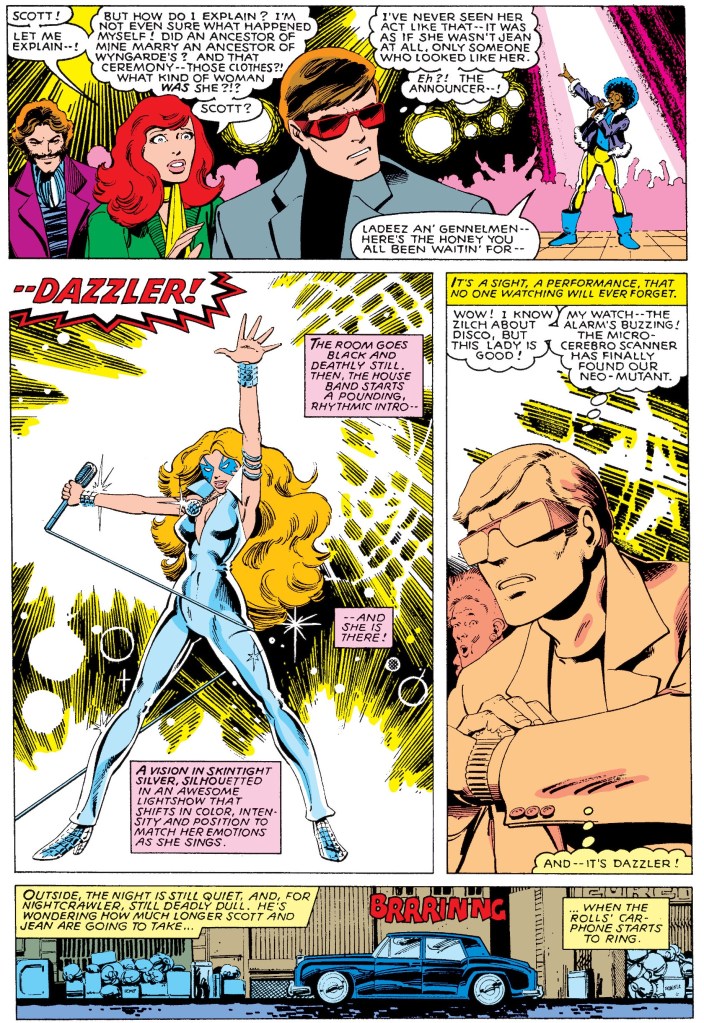
The story begins on Delano Street in Lower Manhattan. Scott Summers/Cyclops, Jean Grey and Nightcrawler had just arrived on a mission to locate a mutant (detected by Cerebro) not knowing that they themselves are bring monitored by a hidden sinister force. With Nightcrawler left in-charge of guarding their Rolls Royce, Scott and Jean enter a deteriorating building only to find a club on an upper level full of lights, loud music, dancing and a lot of people. They begin to start searching for the detected mutant.

Outside, a truck parks on the other side of the same street where the X-Men’s Rolls Royce was parked at. Inside the truck one of the operators communicates to a certain Mr. Shaw who states that the Hellfire Club is proud. Over at the Hellfire Club’s headquarters, Sebastian Shaw and Jason Wyngarde talk about the X-Men members searching the disco. Wyngarde moves on with his plan to subvert Jean Grey and gather her into their fold…

Quality

Dazzler’s very debut on this page.

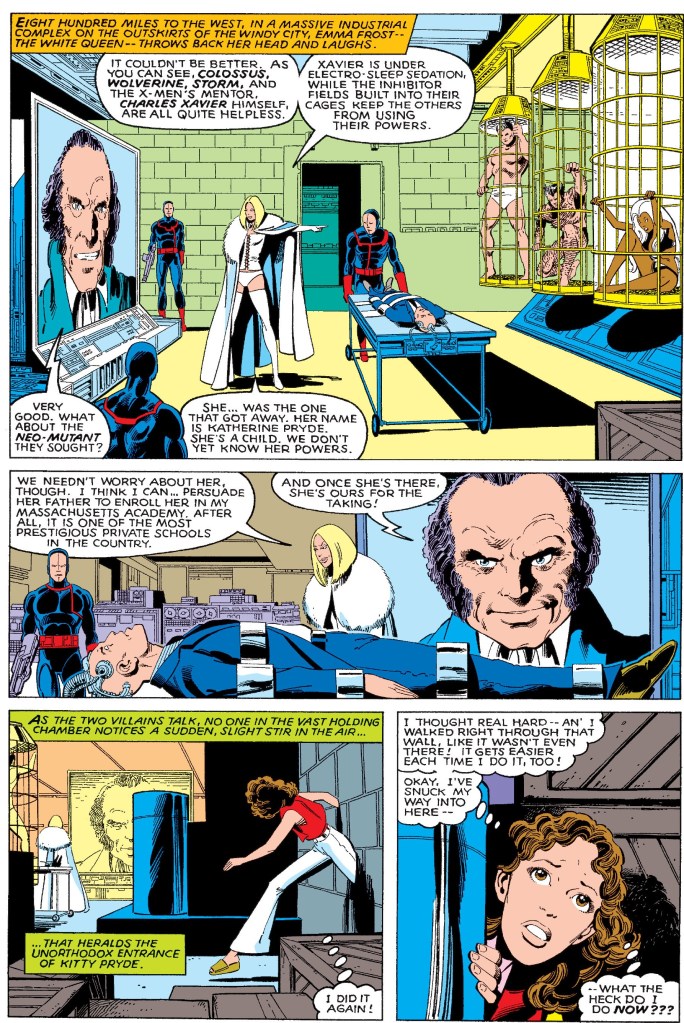
The storytelling is great which is not surprising as this was done by Claremont and Byrne. It is clear that there was a good amount of preparation done which explains this comic book’s excellent ways on emphasizing the following story points: the build-up of the Hellfire Club as a potent force of evil that await the X-Men, Kitty Pryde/Shadowcat’s growing involvement, the vulnerability of Jean Grey, the build-up of the Phoenix, and the debut of Dazzler. Along the way, the creative team also ensure that the dialogue was rich (the same thing also with the thought balloons Claremont came up with), the emphasis of super powers made sense, the action scenes were satisfying and there was a good amount of suspense here.

I love the way Dazzler’s first-ever appearance was handled as it happened just after an intriguing scene about Jean Grey’s vulnerability took place. Her debut also occurred at a point when Jean and Scott seemed to be failing to find her. Of course, the 1970s disco vibe was very strong with Dazzler.

Conclusion

The plot thickens…

Without a doubt, Uncanny X-Men (1980) is a classic X-Men tale by the Claremont-Byrne team who succeeded in not only introducing Dazzler into Marvel’s comic book universe but also with strongly emphasizing the Hellfire Club as a powerful opposition which went on to have a key part in the legendary Dark Phoenix storyline that followed. Dazzler meanwhile became a very popular superhero of Marvel’s going into the 1980s. For the modern-day comic book reader, this comic book can be quite challenging to read as it is very wordy (typical of Claremont).

If you are seriously planning to buy an existing hard copy of Uncanny X-Men (1980), be aware that as of this writing, MileHighComics.com shows that the very fine copy of the regular edition costs $1,407 while the fine copy of the newsstand edition costs $1,013.

Overall, Uncanny X-Men (1980) is highly recommended!

+++++

Thank you for reading. If you find this article engaging, please click the like button below and also please consider sharing this article to others. If you are looking for a copywriter to create content for your special project or business, check out my services and my portfolio. Feel free to contact me as well. Also please feel free to visit my Facebook page Author Carlo Carrasco and follow me at HavenorFantasy@twitter.com

A Look Back at Uncanny X-Men #304 (1993)

Disclaimer: This is my original work with details sourced from reading the comic book and doing personal research. Anyone who wants to use this article, in part or in whole, needs to secure first my permission and agree to cite me as the source and author. Let it be known that any unauthorized use of this article will constrain the author to pursue the remedies under R.A. No. 8293, the Revised Penal Code, and/or all applicable legal actions under the laws of the Philippines.

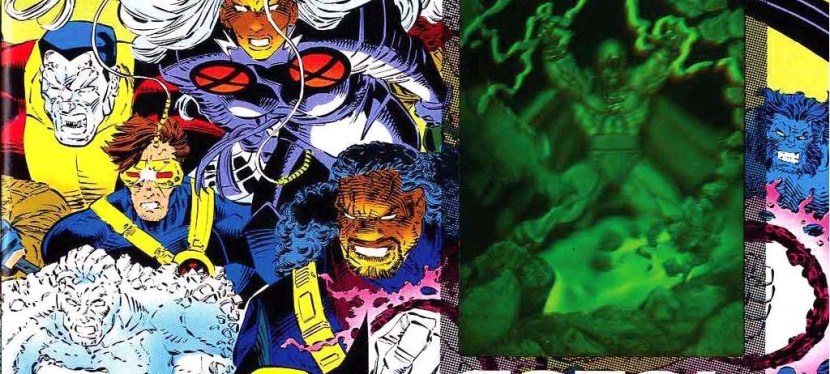
Welcome back, X-Men fans, superhero enthusiasts, 1990s culture enthusiasts and comic book collectors! Today we go back to the 30th anniversary celebration of the X-Men which took place in 1993. Back then, Marvel Comics went full blast with the anniversary celebration of their mutants by releasing related merchandise, posters and comic books with gimmick covers (note: read my retro review of 1993’s X-Men #25) that came with high prices.

To put things in perspective regarding 1993, Marvel’s X-Men line of comics had monthly series of Uncanny X-Men, X-Men (Volume 2), X-Force, X-Factor, Excalibur, Wolverine and Cable. X-Factor marked the start of the Fatal Attractions storyline which was the basis for the X-Men 30th anniversary celebration. X-Force was released and it not only brought Cable back but also Magneto.  

Then came the 3rd chapter of the Fatal Attractions storyline which was published in Uncanny X-Men . Not only did that particular comic book bring together many mutants and moved the storyline forward to a crucial stage (note: tension leading to it was built up in Uncanny X-Men , Uncanny X-Men #303 and also in X-Men Unlimited #1), it also served as the very celebration of the 30th anniversary of the X-Men (although it was not the storyline’s conclusion as the plot continued in X-Men , Wolverine and Excalibur ).

So did this particular, anniversary celebrating issue of the Uncanny X-Men succeed with its objectives? Has it aged well through the decades? We can all find out in this look back at Uncanny X-Men , published in 1993 by Marvel Comics with a story written by Scott Lobdell and drawn by John Romita, Jr., Jae Lee, Chris Sprouse, Brandon Peterson and Paul Smith.

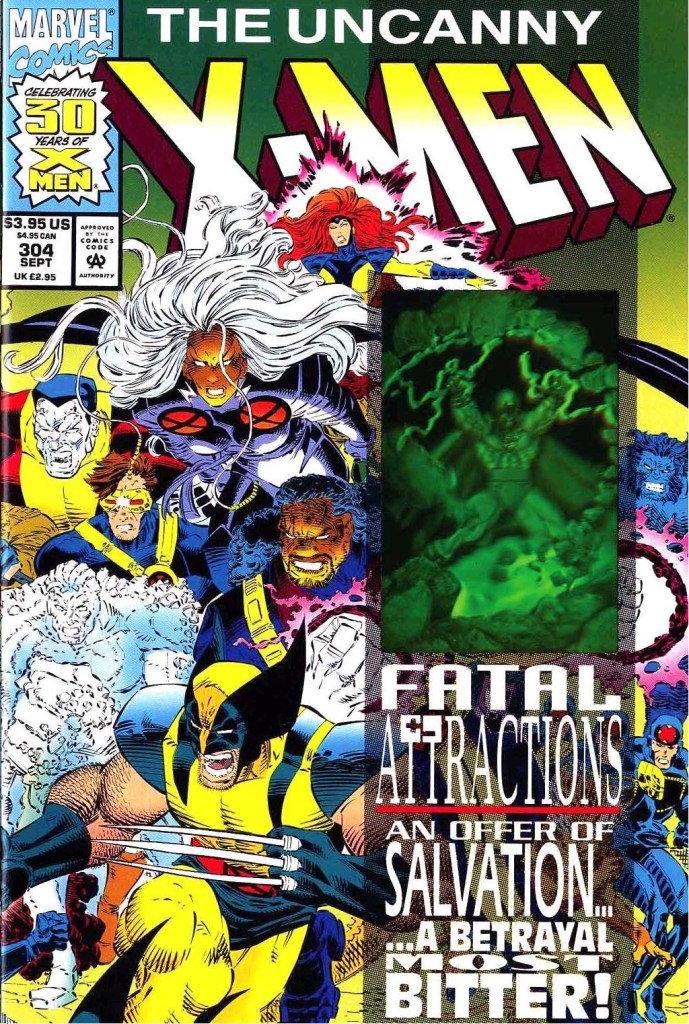
The cover.

Early story

The story begins with division among the Acolytes who learned that their lord Magneto actually survived (note: refer to 1991’s X-Men #3 by Chris Claremont and Jim Lee). They ganged up against their leader Fabian Cortez for betraying Magneto. After pushing his now rebellious team members away, Cortez reminds them that for several months already, they have been continuing Magneto’s work on behalf of mutantkind. Suddenly Exodus appears to them and describes himself as the voice of Magneto and will guide mutants to rise and mentions paradise for the faithful mutants. After subduing Cortez and tempering the tension among the Acolytes, Exodus tells them to prepare themselves for ascension. This frustrates Cortez who realizes that he no longer holds leadership.

Over at the X-Men’s headquarters, Charlez Xavier is personally disturbed over the death of Illyana Rasputin, the sister of Colossus. He starts questioning himself as Illyana’s death under his watch makes his years-long mission (of convincing his fellow mutants to leave their old lives to take risks to fight for a world that fears and hates them) doubtful and tries to figure out how he could present himself in front of them. A holographic image of Lilandra appears to him.

In outer space, inside the space station called Avalon, Magneto stares at planet Earth. With nobody around him, he speaks apologizing to his followers for he cannot save them all. He also mentions that he was wrong in previously believing that he could rescue each and every one of them from humanity as he recently realized that Earth, for the moment, is doomed.

After walking an unspecified distance inside Avalon, Magneto picks up his old helmet and wears it…

Quality

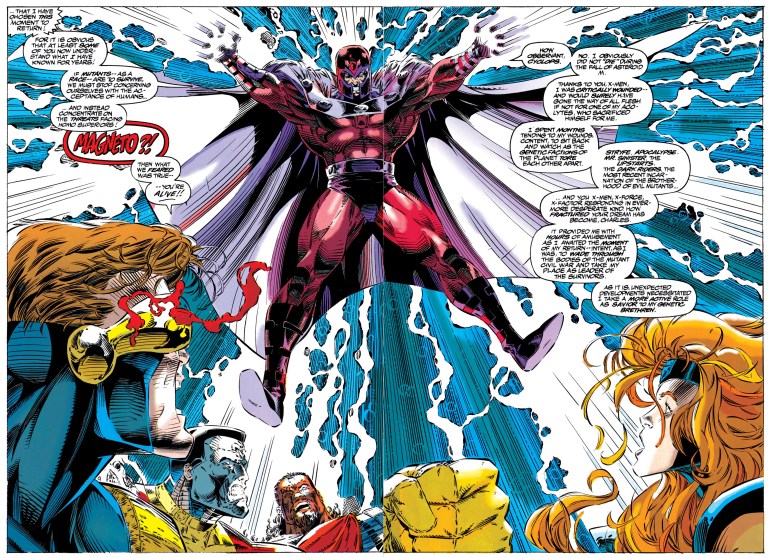
This 2-page art by Brandon Peterson is easily the best looking part of the comic book.

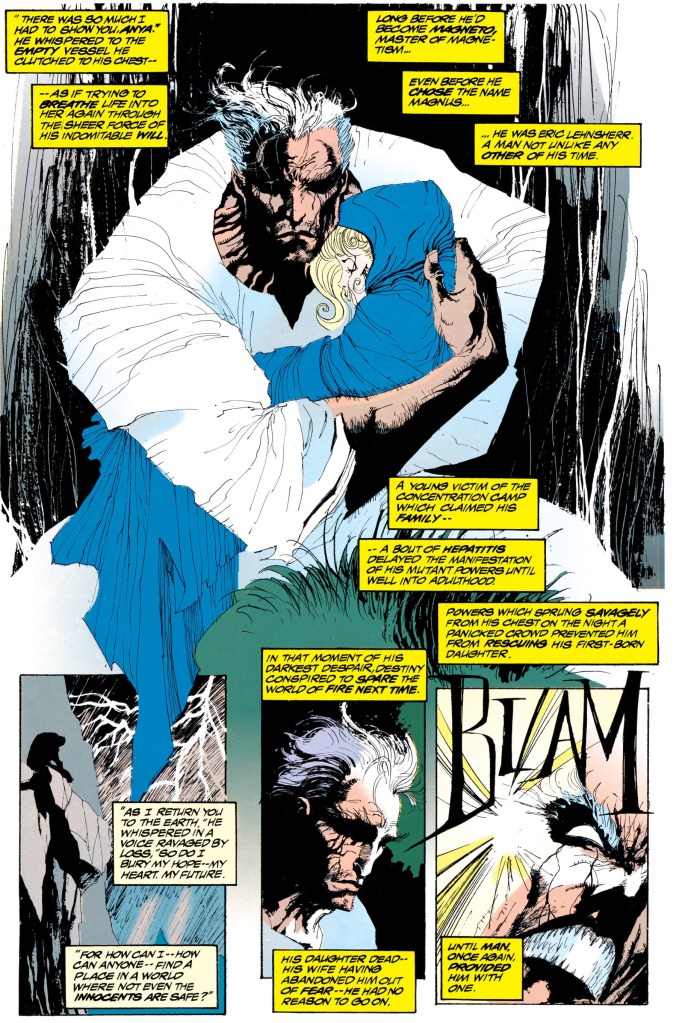
I will start with the visual aspect of this comic book. The artistic quality ranges from fine to weird which should not be surprising since this one involved five artists. The 4 pages drawn by Brandon Peterson (who was once a regular artist on Uncanny X-Men) made the X-Men, Magneto and the Acolytes look not only good but also intense. The Peterson art here is artistically similar to the respective styles of Marc Silvestri and Jim Lee of that particular time. Jae Lee’s art on the flashback of Magneto’s life (during the time of the Nazi occupation in Europe) is undoubtedly very stylized. While his art brings out the intensity of Magneto’s painful past, certain images can be a little challenging to understand especially to readers who focus strongly only following the plot and details. John Romita, Jr.’s art, for me personally, often looks rough and there were times I hardly recognized the characters. The other artworks by Paul Smith and Chris Sprouse have cartoonish aesthetics.

This is Jae Lee’s artistic contribution to the comic book. I found it weird that Magneto’s hair was shown as white during his past with the Nazis.

As for the plot, I can clearly see that a hard effort was made to compose a story that would push the Fatal Attractions storyline forward, establish a turning point and still become worthy of celebrating the 30th anniversary of the X-Men franchise. I can say that the storytelling is somewhat bloated. Early in the story, it was made clear that the respective sections showing Exodus with the Acolytes, Charles Xavier and Magneto pointed to an eventual confrontation that happened during the funeral of Illyana Rasputin.

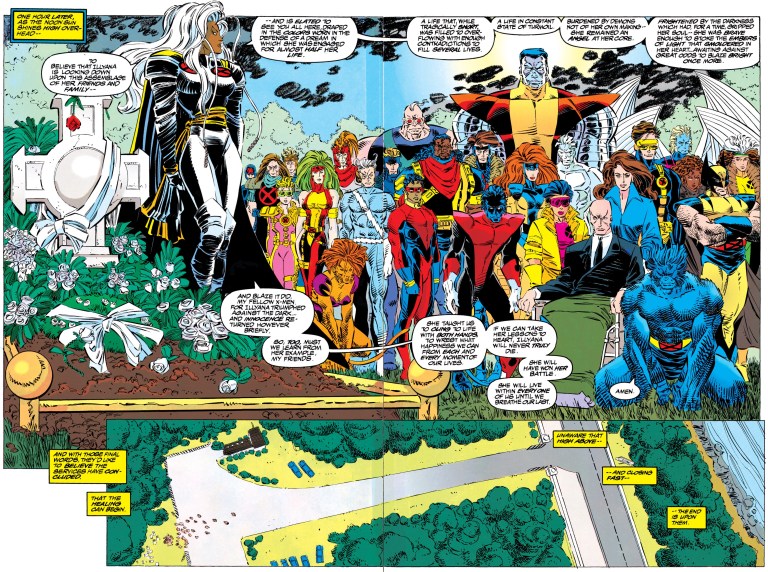
As the build-up continued with the flashback of Magneto’s life, the fan service short scene of Kitty Pryde and the unfeeling Colossus (note: their romance was highlighted in Uncanny X-Men many years prior), and the talk scene between Bishop and Banshee, the pace of the story slowed down dramatically. By the time the attempt to move the narrative back to the core plot was made with the funeral scene (composed of the X-Men, X-Force and X-Factor), the pace was still really way down. By the time the conflict with Magneto, Exodus and the Acolytes stated, the pace recovery was incomplete and as such, seeing the scene unfold was very jarring (and not even the pages of Colossus’ frustration towards Professor X could solve the narrative pacing problem).

Unsurprisingly, the conflict was written to be overly dramatic complete with lengthy pieces of dialogue here and there. That being said, references to past comic books were established as Magneto once again emphasizes his beliefs about the human-mutant conflict using violence (while also side-stepping Jean Grey’s psionic powers to allow the Acolytes to come in undetected).

Human-mutant conflict aside, themes about faith, religion, idolatry salvation are clearly used. Magneto, who has a tremendous record of villainy and his previous leadership of the X-Men proved useless, was portrayed to be a walking wicked idol whose followers cannot do anything except idolize him and cause violence out of dedication to him. They really could not realize that idolatry is foolish and unholy which further adds to chaos on the world. As Magneto deceived himself to be the savior and lord of mutants, he further causes more pain and destruction to others around him. In short, Magneto will always be stuck with his wicked nature and clearly does not deserve heavenly authority no matter how hard he believes himself to be a savior.

The classic rivalry between Xavier and Magneto here was portrayed dramatically and yet I cannot help but think that their conflict was nothing more than a repeat of past encounters with the state and future of mutants at stake. To be fair, what happened here served as a logical build-up for the shocking encounter between Professor X and Magneto in X-Men .

Conclusion

Nobody among the X-Men (except Charles Xavier), X-Force, Excalibur and X-Factor cared to dress properly for the funeral.

To be clear, even though I am an avid X-Men fan, I find Uncanny X-Men (1993) hard to be engaged with and hard to enjoy. Efforts to make it a worthy celebration of the X-Men are very clear but it’s just not entertaining nor compelling to read. As for the X-Men traitor scene, the revelation was not that shocking as the foreshadowing made it too obvious. At best, this comic book served as a warm-up for X-Men which itself paid-off nicely. Being more than sixty pages long (including the advertisement and bulletins), this comic book has too much creative baggage which ultimately hampered its storytelling. It’s not terrible. It’s really not that great to read. What I experienced way back in 1993 with this comic book is just the same as I re-read it. It has not aged well.

If you are seriously planning to buy an existing hard copy of Uncanny X-Men (1993), be aware that as of this writing, MileHighComics.com shows that the near-mint copy of the regular edition costs $20, while the near-mint copies of the signed-and-numbered edition and the newsstand edition cost $120 and $60 respectively.

Overall, Uncanny X-Men (1993) is satisfactory.

+++++

Thank you for reading. If you find this article engaging, please click the like button below and also please consider sharing this article to others. If you are looking for a copywriter to create content for your special project or business, check out my services and my portfolio. Feel free to contact me as well. Also please feel free to visit my Facebook page Author Carlo Carrasco and follow me at HavenorFantasy@twitter.com

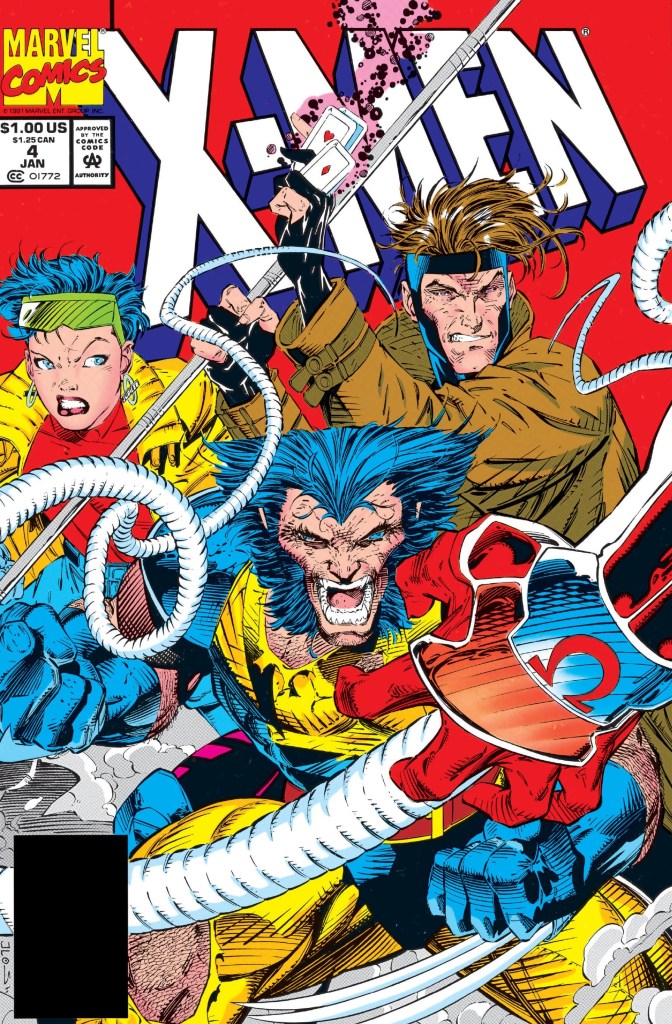
A Look Back at X-Men #4 (1992)

Disclaimer: This is my original work with details sourced from reading the comic book and doing personal research. Anyone who wants to use this article, in part or in whole, needs to secure first my permission and agree to cite me as the source and author. Let it be known that any unauthorized use of this article will constrain the author to pursue the remedies under R.A. No. 8293, the Revised Penal Code, and/or all applicable legal actions under the laws of the Philippines.

Welcome back, superhero enthusiasts, comic book collectors and X-Men fans! Previously, I reviewed X-Men #3 (1991) which, at the time of its release, marked the end of the era of Chris Claremont who spearheaded the development and storytelling of the X-Men since the mid-1970s. Along the way, he clashed with X-Men books editor Bob Harras behind the scenes at the headquarters of Marvel Comics which was a factor to his departure. It is notable that Claremont returned to Marvel in 1997 as editorial director.

Going back to 1991, Marvel had Jim Lee as their top-notch talent to sell loads of X-Men comic books to buyers. Inevitably as Claremont departed, Marvel bet big on Lee and supported his move to set a new creative direction for the X-Men.

With those details laid down, here is a look back at X-Men , published in 1992 by Marvel Comics with a story by Jim Lee and John Byrne. Lee drew the comic book with Scott Williams as the inker.

The cover.

Early story

The story begins in a secret facility in the South Pacific. A sleeping figure wakes up and the men wearing protective suits near him carefully observe his moves. Suddenly, the men died horribly. The figure, with white-colored skin and long blond hair, says, “Who has brought me back from the dark domain of death? Who has summoned Omega Red?”

Behind a protective window, a man starts talking to Omega Red and he shows him a picture of Wolverine (in his civilian identity). Omega Red recognizes Logan…

Quality

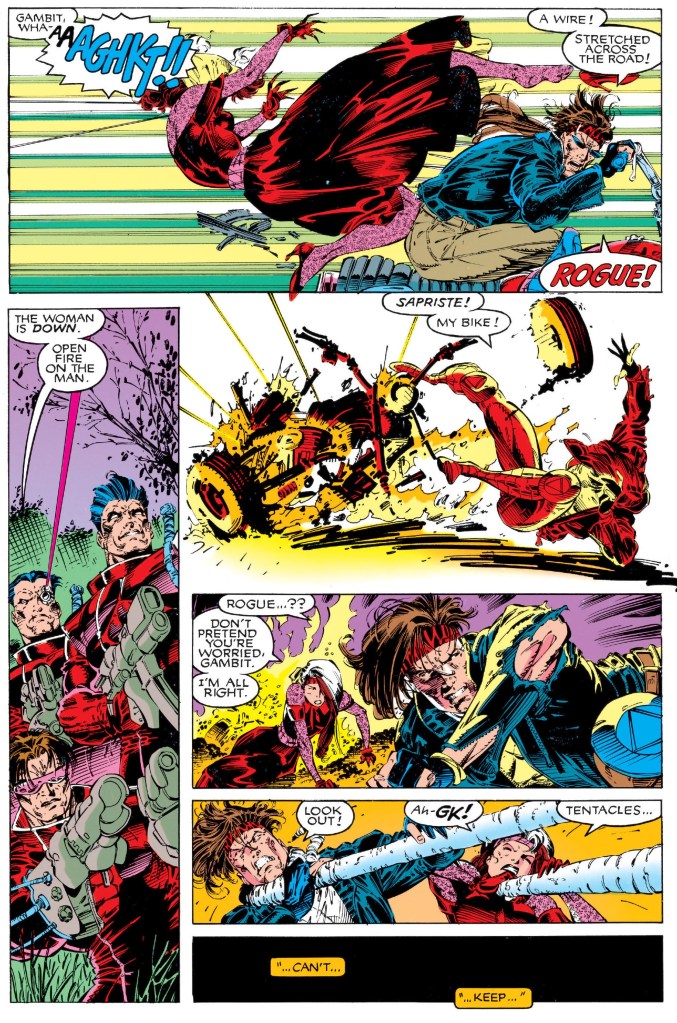
Gambit and Rogue in the heat of action.

Being one of the first X-Men comic books published in the so-called post-Claremont era, this comic book has a solid story and a lively presentation of the X-Men’s Blue Team members. I figured that John Byrne delivered the solid dialogue given his previous experience of working on X-Men comics (as an illustrator) as well as being the writer and artist of the memorable The Man of Steel mini-series (with DC Comics, rebooting Superman in the post-Crisis era).

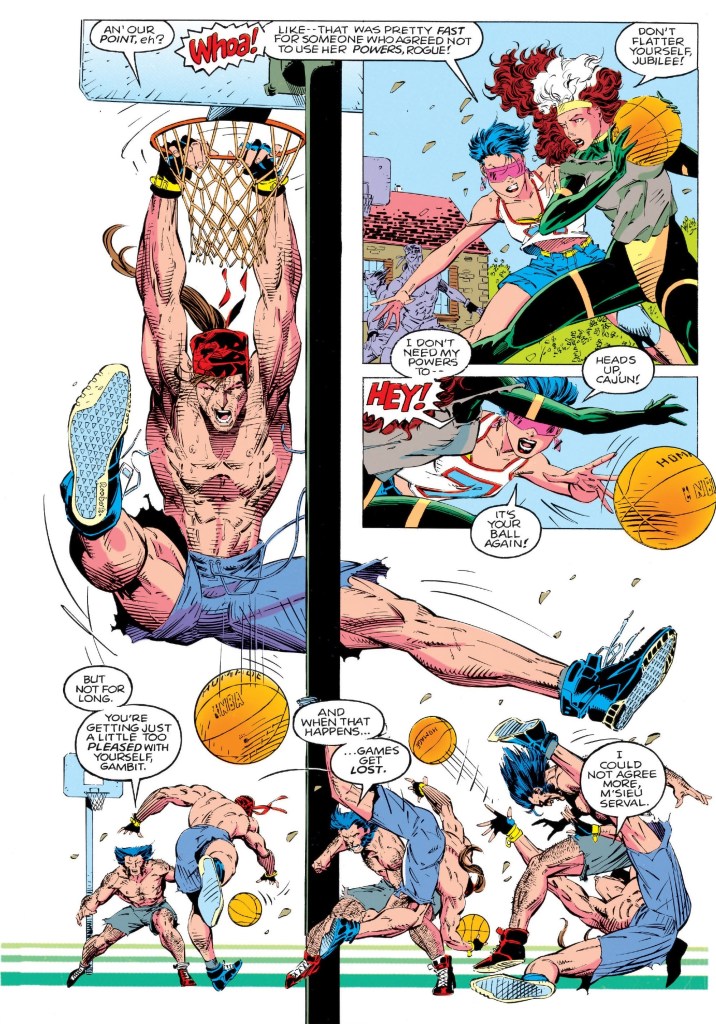
While the basketball scene had true-to-character portrayals of Wolverine, Gambit, Psylocke and Jubilee complete with stylish dialogue per character, there is consistency on the portrayal of Moira MacTaggert who is understandably struggling to recover given the events of X-Men to . The same goes with Charles Xavier. The way the script was written with strong focus on the established characters, it’s almost as if Chris Claremont never left.

The biggest feature of this comic book is the debut of the deadly mutant Omega Red who is of Russian heritage and Russia’s own parallel to the United States’ own super soldier Captain America. In pop culture, Omega Red is one of the top villains in comic books ever and this comic book sets up his sudden rise to prominence. Symbolically, Omega Red is a co-creation of Jim Lee and John Byrne and it is pretty fitting for this comic book of the post-Claremont era to feature him.

Conclusion

You love basketball?

There is no doubt that even by today’s standards, X-Men (1992) is a great read and a landmark issue in X-Men comic book history. Given its content, this one will always be remembered as the start of Omega Red who later on proved to be one of the deadliest villains Marvel’s mutants ever encountered. The villain went on to appear in the video games X-Men: Children of the Atom, Marvel Super Heroes vs. Street Fighter and Marvel vs. Capcom 2.

If you are seriously planning to buy an existing hard copy of X-Men (1992), be aware that as of this writing, MileHighComics.com shows that the near-mint copy of the regular edition costs $125 while the near-mint copy of the newsstand edition costs $375.

Overall, X-Men (1992) is highly recommended!

+++++

Thank you for reading. If you find this article engaging, please click the like button below and also please consider sharing this article to others. If you are looking for a copywriter to create content for your special project or business, check out my services and my portfolio. Feel free to contact me as well. Also please feel free to visit my Facebook page Author Carlo Carrasco and follow me at HavenorFantasy@twitter.com

A Look Back at X-Men #3 (1991)

Disclaimer: This is my original work with details sourced from reading the comic book and doing personal research. Anyone who wants to use this article, in part or in whole, needs to secure first my permission and agree to cite me as the source and author. Let it be known that any unauthorized use of this article will constrain the author to pursue the remedies under R.A. No. 8293, the Revised Penal Code, and/or all applicable legal actions under the laws of the Philippines.

Welcome back, X-Men fans, superhero enthusiasts and comic book collectors! Today I’m about to review another Chris Claremont-Jim Lee comic book of the X-Men from 1991.

Before getting to the retro comic book review, let’s take a look back at history. Marvel Comics started publishing comic book of the X-Men in 1963 which involved the combined talents of Stan Lee and Jack Kirby. The original X-Men members were Cyclops, Beast, Marvel Girl, Angel and Iceman all under the mentorship of Charles Xavier (AKA Professor X). That monthly series was not a strong seller and was weak compared to the other monthly titles of Marvel. Although Roy Thomas and Neal Adams were brought in to reinvigorate the X-Men series with new characters, success in sales did not materialize and eventually the series was turned into a reprint series (from issues #67 to #93).

In 1975, Len Wein and Dave Cockrum made Giant-Size X-Men which introduced a new team. Along the way, Wein (who was also the editor-in-chief of Marvel at the time) hired Chris Claremont to become the lead writer of the X-Men series starting issue #94 which was released that same year. Claremont redefined the X-Men by developing the characters deep inside and emphasized their respective personalities. As the years passed by, Claremont wrote notable X-Men storylines such as The Dark Phoenix Saga, Days of Future Past, Mutant Massacre, and Fall of the Mutants to name some. Not only did Claremont write The New Mutants, he also co-created many other characters that became part of the X-Men franchise.

Then came the year 1991. The launch of the new X-Men monthly series (focused on the Blue Team led by Cyclops) saw sales tremendous success with issue #1 and by that time Jim Lee was established as one hot new creators under Marvel. Behind the scenes, however, Claremont clashed with then X-Men books editor Bob Harras. Eventually, issue of the 2nd X-Men monthly series marked the end of the X-Men era of 1975-1991.

I should say that I enjoyed reading issue #2 in which Claremont wrote a story that not only raised the stakes but also pushed the entire group of mutants to the edge. We will find out soon enough if Claremont’s X-Men era of 1975-1991 will end strongly in this retro review of X-Men , published in 1991 by Marvel Comics with a story by Claremont and Jim Lee (who also illustrated).

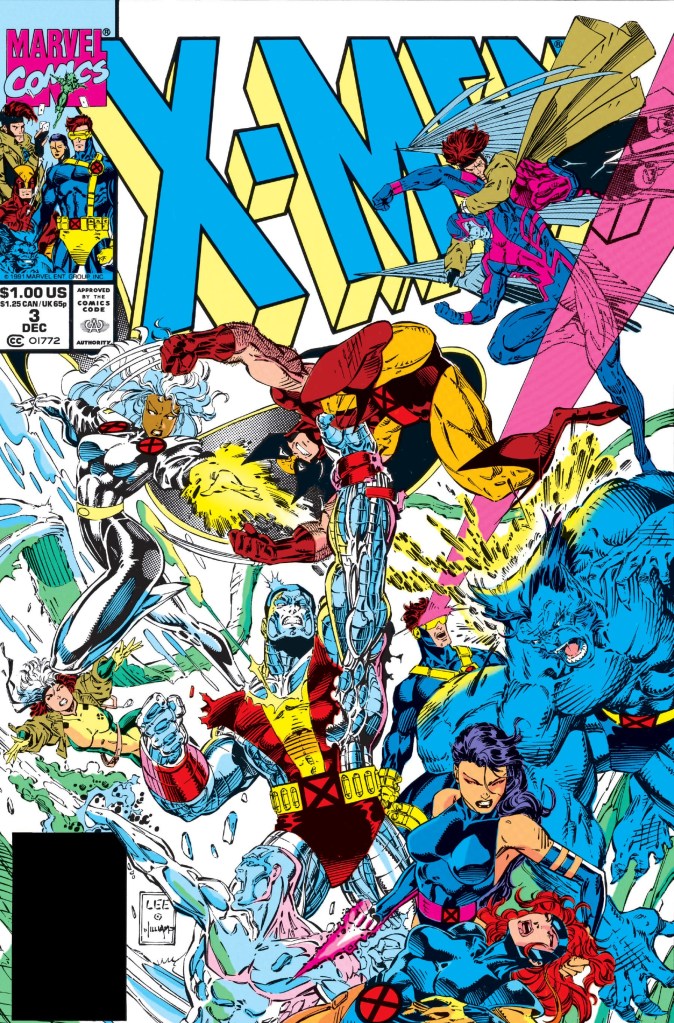
The cover.

Early story

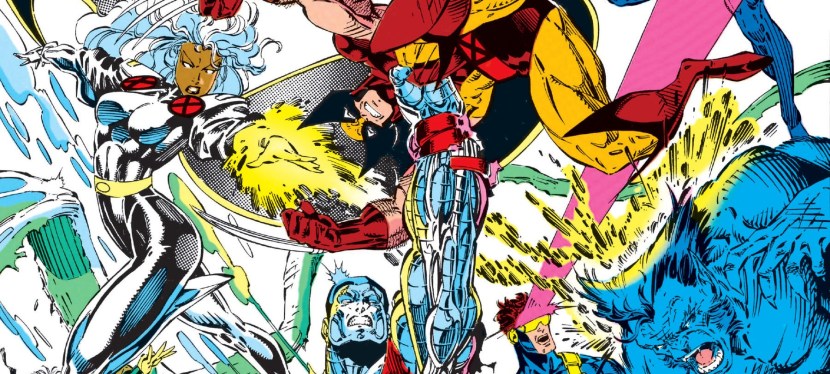
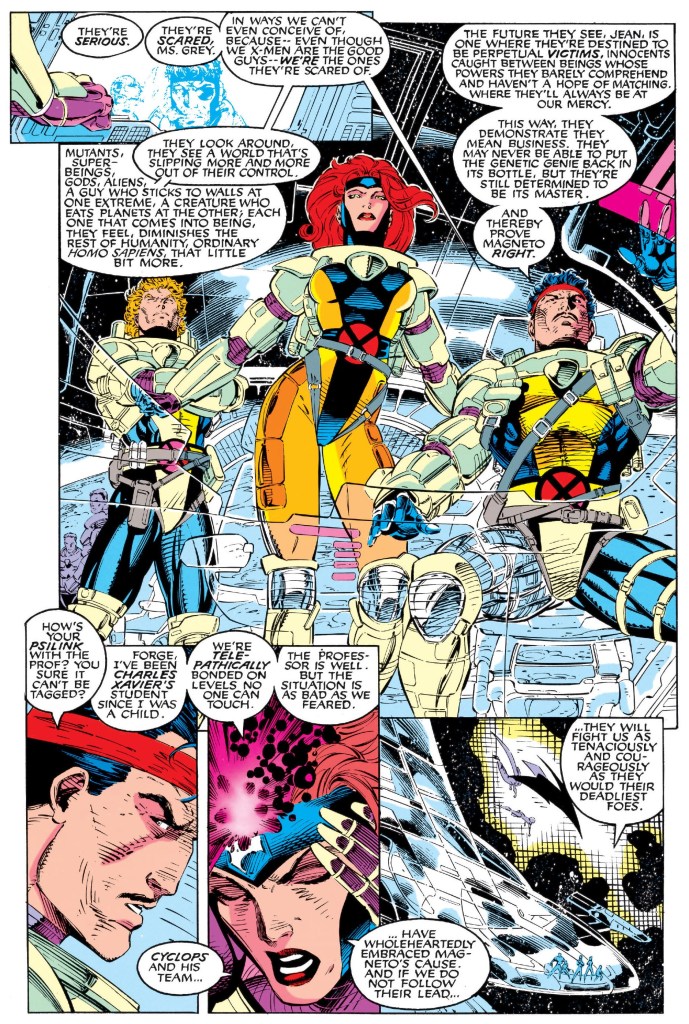
The story begins in outer space. Members of X-Men’s Gold Team (composed of Archangel, Storm, Jean Grey, Forge, Iceman, Colossus and Banshee) fly stealthily towards Asteroid M where Magneto and his Acolytes are with Charles Xavier and Moira MacTaggert held captive. With the exception of a few, members of the X-Men Blue Team were brainwashed by MacTaggert to follow Magneto.

On Earth, the plasma cannon is being prepared to destroy Asteroid M. Nick Fury warns his colleagues about the possibility of tremendous damage if ever Asteroid M hits the surface of the planet. Valerie Cooper tells him that the firing trajectory has been calculated to blast the target away and into deep space. An exchange of words follows over diplomacy and following orders issued by the leaders.

Over at Asteroid M, Charles Xavier is alone in a room with a wide view of the Earth and space. Behind the scenes, Fabian Cortez points to Xavier as Magneto’s deadliest enemy. He asked his master why not use Moira MacTaggert’s procedure (to brainwash and turn) on Xavier. Magneto, already suffering physically, does not want Xavier turned but be broken…

Quality

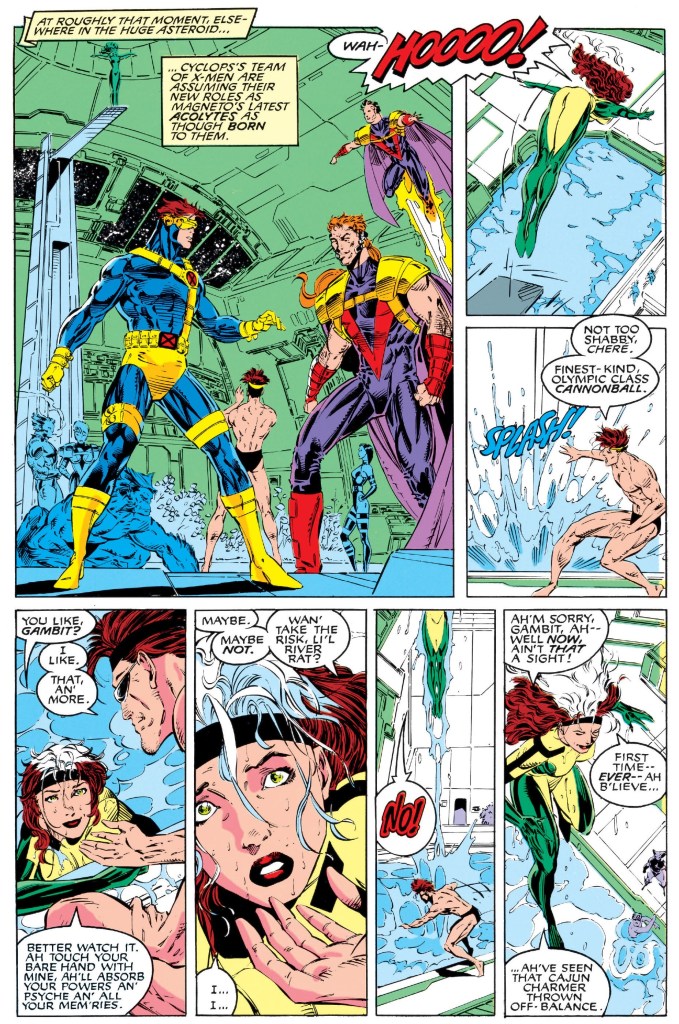
X-Men Blue Team members relaxing at Asteroid M in the presence of the Acolytes.

Like in issue , the story here is very engaging and highly dramatic. While it paid close attention to Magneto’s ruthlessness as well as his rage towards Moira who committed something unethical to him in the past, the story managed to focus enough on the X-Men which involves both the Blue Team and Gold Team mixed up. While this comic book’s cover shows a battle royale between the Blue and Gold teams, there is a lot of substance beyond the action. I’m talking about moments spent on the mutants of Xavier which was done in a satisfying manner (never felt crammed nor forced) considering the page limits of this comic book. Not only were the X-Men moments executed smoothly, there were pulled off efficiently and orderly.

More on the story, what adds intrigue is the group of Acolytes whose field leader Fabian Cortez has not only gotten very close with Magneto but also does something significant to him along the way. By this issue, the Acolytes led by the master of magnetism have gotten more established as a worthy opposition against Xavier’s mutants. This story also showed that the Acolytes were here to stay, and Fabian Cortez himself is very led by wickedness and ambition. Cortez is also an example about the distortion of righteousness

When it comes to defining the characters, Xavier and Magneto clashing together about their respective dreams about mutants is unsurprisingly epic to read. In this particular conflict, both Marvel icons were portrayed very dramatically and their respective expressions were indeed intense. Adding further intrigue to their clash is Moira’s long-past act of manipulating the very genetics of Magneto which itself raises serious questions about her perception, decision-making and ethics. In some ways, Moira looked more villain-like.

As expected, the art of Jim Lee is great to look at. There were some signs, however, that the very wordy script resulted an increased numbers of panels per page. Fortunately, the art did not look rushed and maintained a clear narrative. Also the action scenes are great to look at which is not surprising.

Conclusion

The Gold Team of the X-Men travel towards Asteroid M in a cloaked vehicle.

To put it straight, X-Men (1991) is an epic read highlighting the very conflict between Magneto and Xavier over the course of mutants and their place in the world of humans. This comic book, which has a very powerful ending, was indeed a very satisfying way to conclude the Xavier-Magneto conflict as well as Chris Claremont’s long-term stint with the X-Men comic book franchise. Back in 1991, this one really looked like the end of an era both in-story and in real life. Of course, what this comic book achieved ultimately became temporary because Magneto was revived for the Fatal Attractions storyline in 1993 (celebrating X-Men’s 30th anniversary) and Chris Claremont himself returned to Marvel Comics some years later. Still, on its own, this comic book is worth reading and adding to your collection, even if you are not an X-Men fan. It is significant enough as a piece of X-Men history from the time when Jim Lee was with Marvel.

If you are seriously planning to buy an existing hard copy of X-Men (1991), be aware that as of this writing, MileHighComics.com shows that the near-mint copy of the regular edition costs $9 while the near-mint copies of the Chris Claremont-signed edition, the signed newsstand edition, the newsstand edition and the Toy Biz edition cost $16, $26, $16 and $21 respectively.

Overall, X-Men (1991) is highly recommended!

+++++

Thank you for reading. If you find this article engaging, please click the like button below and also please consider sharing this article to others. If you are looking for a copywriter to create content for your special project or business, check out my services and my portfolio. Feel free to contact me as well. Also please feel free to visit my Facebook page Author Carlo Carrasco and follow me at HavenorFantasy@twitter.com