A Look Back at Amazing Spider-Man #381 (1993)

Disclaimer: This is my original work with details sourced from reading the comic book and doing personal research. Anyone who wants to use this article, in part or in whole, needs to secure first my permission and agree to cite me as the source and author. Let it be known that any unauthorized use of this article will constrain the author to pursue the remedies under R.A. No. 8293, the Revised Penal Code, and/or all applicable legal actions under the laws of the Philippines.

Welcome back superhero enthusiasts, 1990s culture enthusiasts and comic book collectors! Today we go back to the year 1993 and explore a part of the Marvel Comics universe through one of the many tales of the Amazing Spider-Man comic book series.

To put things in perspective, 1993 was another busy year for the iconic Spider-Man who not only had four monthly series of his own but also appeared in the Venom: Lethal Protector mini-series, the 14-part Maximum Carnage crossover and in Marvel’s major crossover The Infinity Crusade. As expected, Spider-Man survived through those storylines.

With those details laid down, here is a look back at Amazing Spider-Man #381, published in 1993 by Marvel Comics with a story by David Michelinie and drawn by Mark Bagley.  
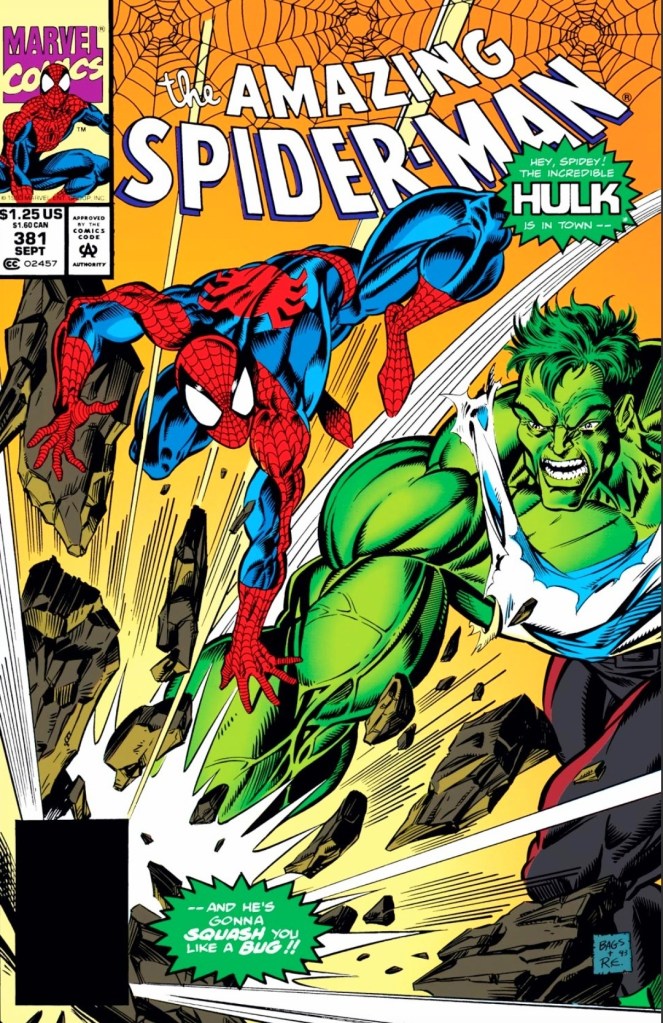
The cover.

Early story

The story begins inside the airport in New York where the incredible Hulk/Bruce Banner himself had just arrived from Scotland. Due to his tremendous size, his physical presence easily distract the people around him. Dr. Leonard Samson surprises Banner and informs him of an upcoming scientific demonstration and the scientists behind it have developed something that could have ramifications for people who got exposed to gamma radiation. Samson explains that there is a radiation virus that releases repressed emotions. The Hulk rejects Samson and leaps to the air above towards an unknow destination.

At a school yard in lower Manhattan, two kids bully another kid into giving them his lunch money. Spider-Man suddenly arrives to stop trouble and immediately the two bullies ran away…

Quality
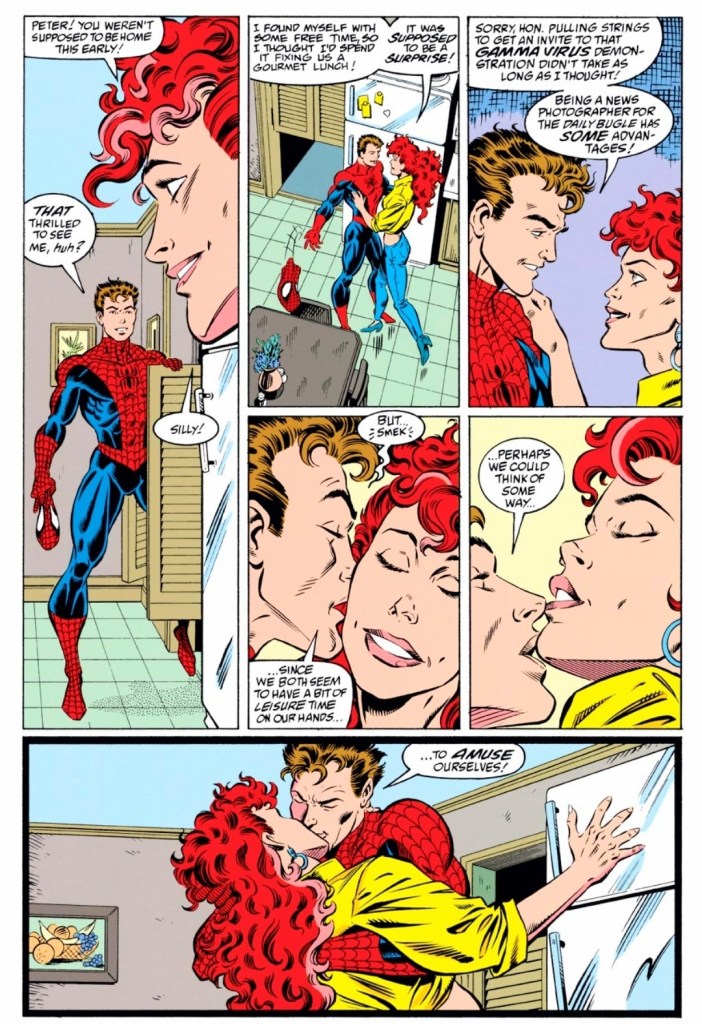
Quality time between Peter Park and wife Mary Jane.

I can say that is one of the more interesting crossovers between Spider-Man and the Hulk who at this stage in Marvel’s comic book history retained his intelligence and personality while in his huge, green-skinned form. Adding variety to the crossover was the presence of Doc Samson who was already an established and notable supporting character in comic books featuring the Hulk.

Set after the events of Maximum Carnage, the Infinity Crusade and Hulk’s time in Scotland (as told in Incredible Hulk #407), this story shows life in New York gradually normalizing. The peace, as it turns out, was only temporary as the big-time scientific demonstration in this story leads to a series of unfortunate events that compels Peter Parker to take action as Spider-Man.

The tale was nicely structured and the creative team took its time to build-up the story concept, the character motivations and execute the superhero spectacle at an overall medium pace. There is simply no boring scene nor any wasted moments. The appearances of Samson and the Hulk in this Spider-Man tale were nicely integrated and they each had their own impact on the plot. There is a lot of stuff here that fans of both Spidey and the green giant can enjoy.

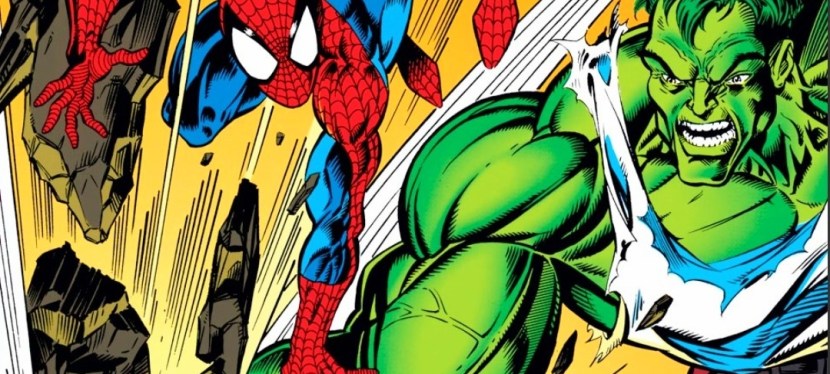
When it comes to the art, I found Mark Bagley’s take on the Hulk distinctive and intriguing to look at. The final shot of this comic book is a must-see.

Conclusion
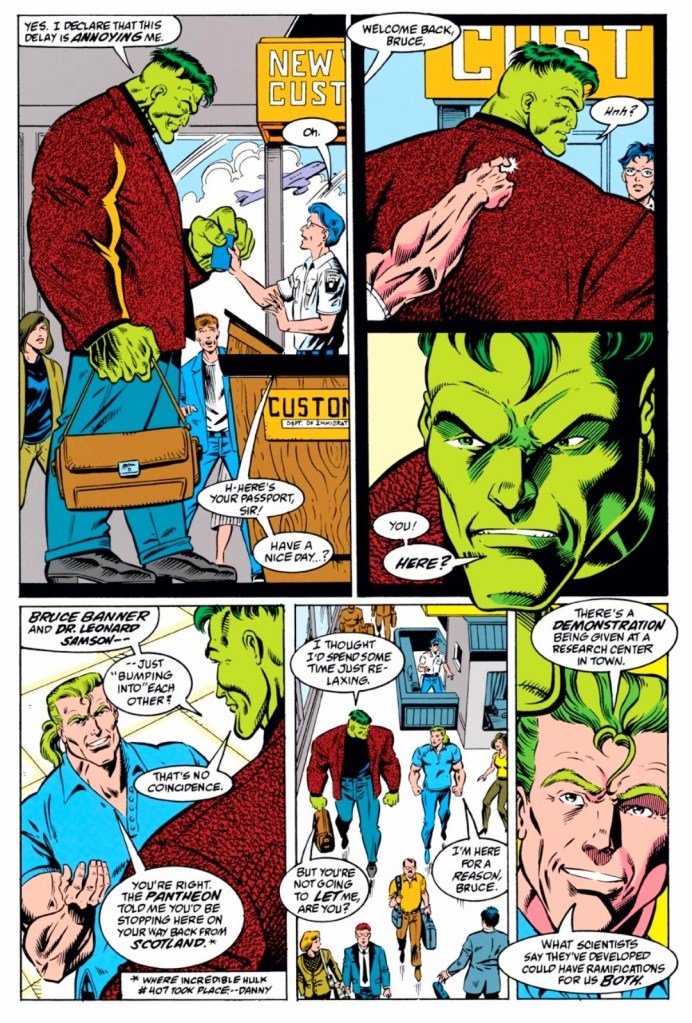
Hulk and Doc Samson at the airport.

While there clearly is no villain, Amazing Spider-Man #381 (1993) still turned out to be a fun read complete with a fine crossover between Spider-Man, Doc Samson and the Hulk. Apart from the lack of space for character development, nothing here felt half-baked with the executions of the storytelling and the spectacle. This is a fun read and it was also a modern take on the personal encounter between Hulk and Spidey during the 1990s. This comic book has something enjoyable that fans of the two Marvel icons won’t find in any of the Marvel Cinematic Universe (MCU) movies and shows.

Overall, Amazing Spider-Man #381 (1993) is recommended.

+++++

Thank you for reading. If you find this article engaging, please click the like button below, share this article to others and also please consider making a donation to support my publishing. If you are looking for a copywriter to create content for your special project or business, check out my services and my portfolio. Feel free to contact me with a private message. Also please feel free to visit my Facebook page Author Carlo Carrasco and follow me on Twitter at  @HavenorFantasy as well as on Tumblr at https://carlocarrasco.tumblr.com/ and on Instagram at https://www.instagram.com/authorcarlocarrasco
A Look Back at Web of Spider-Man #90 (1992)

Disclaimer: This is my original work with details sourced from reading the comic book and doing personal research. Anyone who wants to use this article, in part or in whole, needs to secure first my permission and agree to cite me as the source and author. Let it be known that any unauthorized use of this article will constrain the author to pursue the remedies under R.A. No. 8293, the Revised Penal Code, and/or all applicable legal actions under the laws of the Philippines.

Welcome back superhero enthusiasts, 1990s culture enthusiasts and comic book collectors! Today we go back to the year 1992 and explore a part of what was back then the 30th anniversary celebration of Spider-Man

In what was back then a unique approaching to celebrating the anniversary of an American icon, Marvel Comics published not one but four specific Spider-Man comic books that had holographic covers and more pages than the usual. Each of those special comic books were from a different Spider-Man monthly series. Back in 2020, I published a retro review of one of those gimmick cover comic books from the Spider-Man monthly series.

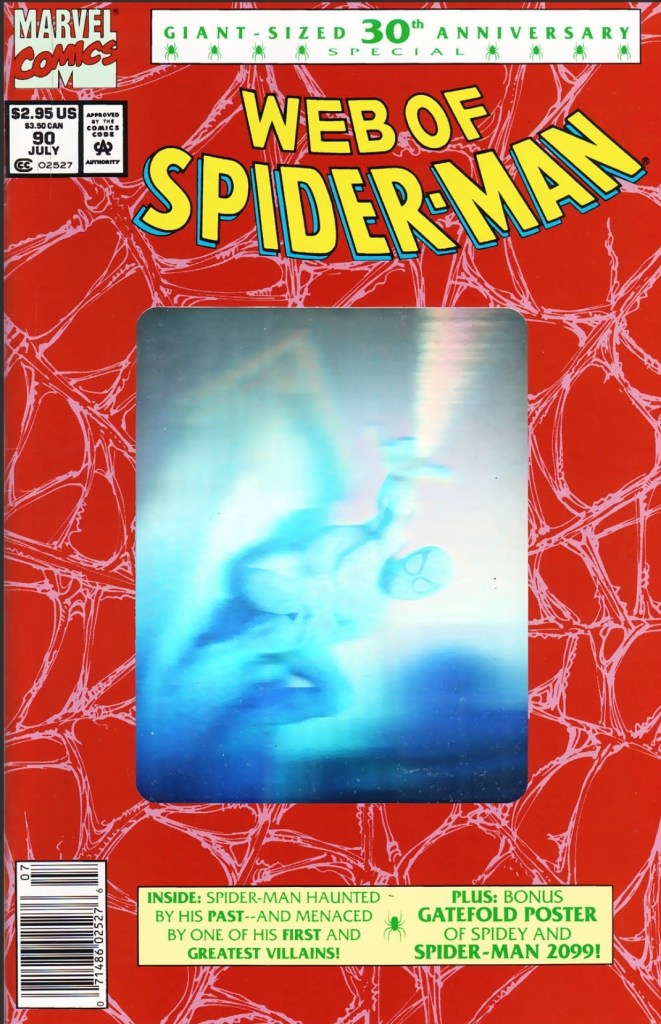
With those details laid down, here is a look back at Web of Spider-Man #90, published in 1992 by Marvel Comics with a story by Howard Mackie and drawn by Alex Saviuk.  

The cover.

Early story

The story begins inside an office in Los Angeles. A hat-wearing businessman has several varied figures of Spider-Man near him and recalls the time when the iconic hero participated in one of his events as the Masked Marvel. Moments later, the businessman’s wife arrives and together they departed in a limousine.

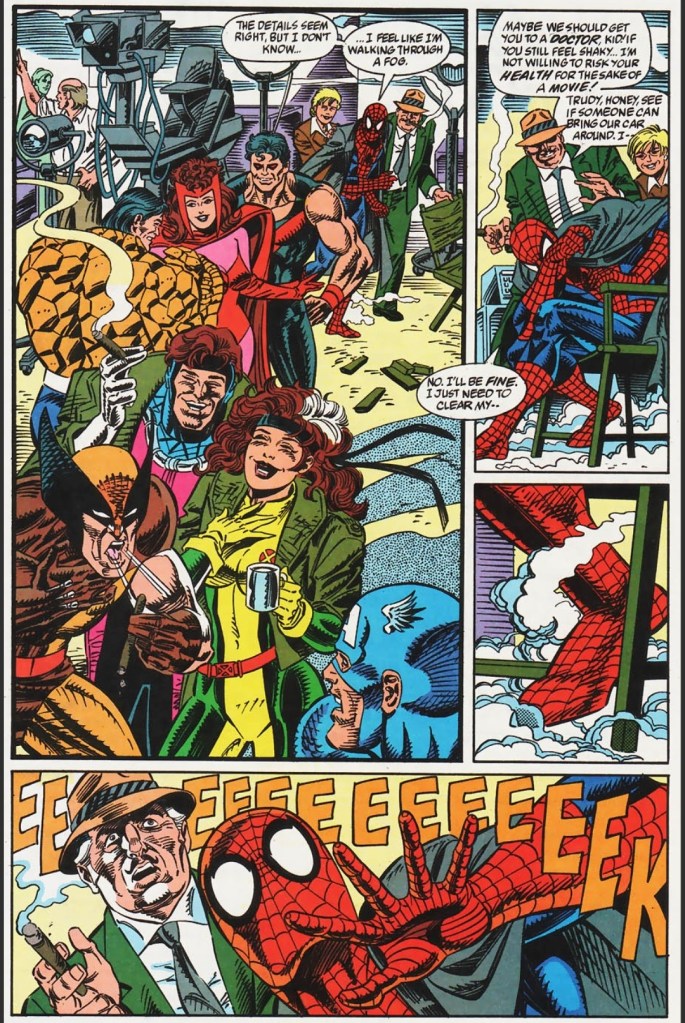
At the South Bronx in New York, Spider-Man chases a speeding car with one of its passengers firing a gun at him. Suddenly, his spider sense bothers him a lot and when he looks around, he suddenly sees Galactus standing with members of the Avengers, the X-Men and the Fantastic Four lying down helpless on the ground…

Quality

Spider-Man on the set of an entertainment project. It’s a lively reminder about how sickening Hollywood (AKA Commiewood) can get.

To make things clear and without spoiling the plot, this story deals with illusions and the distortion of reality. Quite ironically, the said distortion made it a challenge to follow the narrative and I can say that a good amount of the spotlight was on the businessman. Spider-Man is clearly the protagonist here but it made sense for the creative team to focus a bit on the businessman (who has been doing entertainment showcases for a long time) to justify the core concept about the conflicts between what is real and what is imaginary.

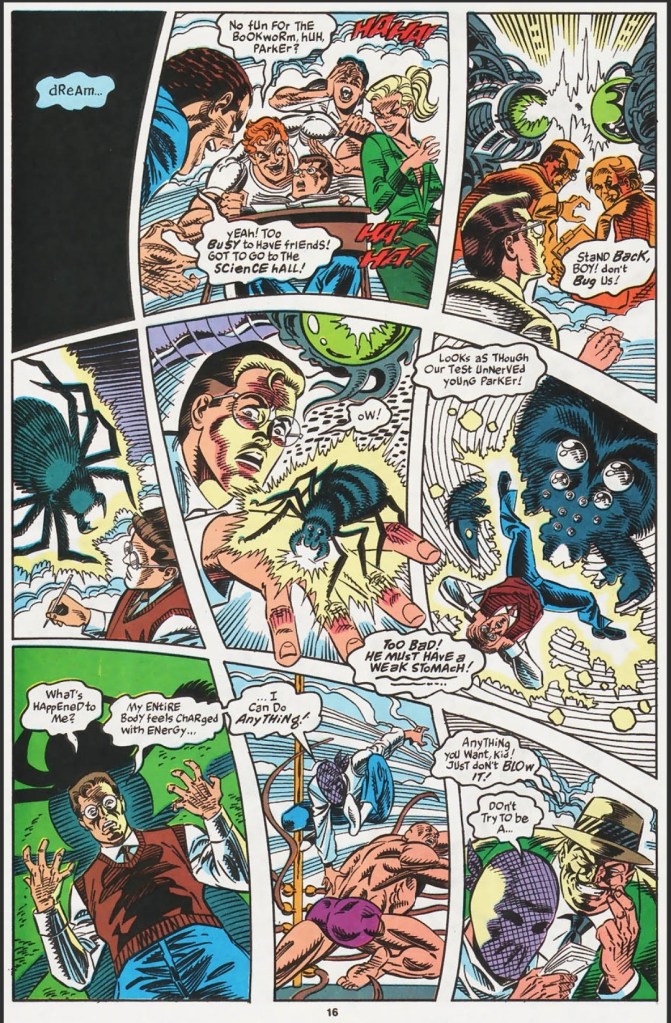
In relation to the illusion aspect of the story, you will get to see established Spider-Man arch-villains such as the Green Goblin, the Hobgoblin and Venom taking on the superhero himself. As the creative team focused more on providing a great amount of spectacle, there clearly was no room left for character development on Spider-Man. Don’t expect to see Peter Parker in dramatic moments nor see him interact with the established supporting characters.

If there is any moral lesson to learn from this comic book, it would be this – living with a powerful delusion (the result of personal obsession mixed with the personal failure to separate illusion from reality) can lead you to the wrong directions in life.

Conclusion

To justify the 30th anniversary celebration, distorted flashbacks into Peter Parker’s past were presented here.

Web of Spider-Man #90 (1992) does not have much depth for those who seek engaging storytelling. That being said, the story itself is not memorable nor would it leave a long lasting impact on you. This comic book was made to entertain readers with lots of action and wild fantasy images that eerily justify its concept about illusion and reality conflicting each other. In fairness to the creative team, the said conflict was consistently visualized and there were some dialogue that related to it in a somewhat philosophical manner. The comic book’s entertainment value is satisfying enough although it does not justify the holographic cover that was part of the gimmick with celebrating Spider-Man’s 30th anniversary. As for who was the main antagonist of the comic book, I simply encourage you all to read and find out for yourselves.

Overall, Web of Spider-Man #90 (1992) is satisfactory.

+++++

Thank you for reading. If you find this article engaging, please click the like button below, share this article to others and also please consider making a donation to support my publishing. If you are looking for a copywriter to create content for your special project or business, check out my services and my portfolio. Feel free to contact me with a private message. Also please feel free to visit my Facebook page Author Carlo Carrasco and follow me on Twitter at  @HavenorFantasy as well as on Tumblr at https://carlocarrasco.tumblr.com/ and on Instagram at https://www.instagram.com/authorcarlocarrasco
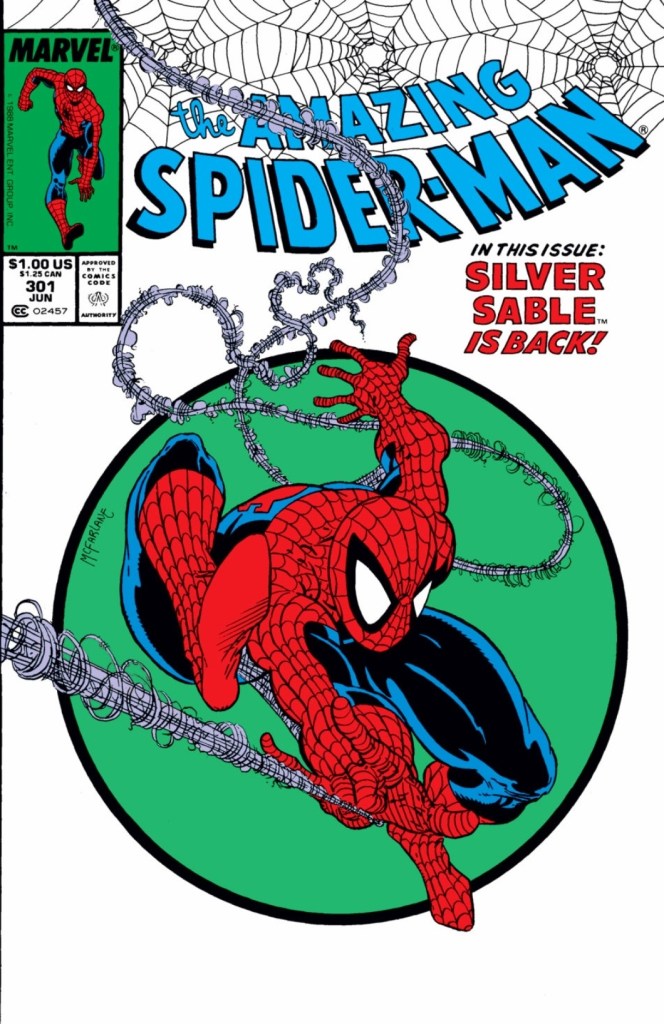
A Look Back at Amazing Spider-Man #301 (1988)

Disclaimer: This is my original work with details sourced from reading the comic book and doing personal research. Anyone who wants to use this article, in part or in whole, needs to secure first my permission and agree to cite me as the source and author. Let it be known that any unauthorized use of this article will constrain the author to pursue the remedies under R.A. No. 8293, the Revised Penal Code, and/or all applicable legal actions under the laws of the Philippines.

Welcome back superhero enthusiasts, 1980s arts and culture enthusiasts, Marvel Comics fans and comic book collectors! Today we go back to the 1980s and examine a small part of the Marvel Comics universe through a tale of the Amazing Spider-Man monthly series.

Back in the year 1988, Spider-Man fans enjoyed and got very intrigued with the first-ever Venom storyline which climaxed in Amazing Spider-Man . Some of you might be wondering what happened after the 300th issue of the series.

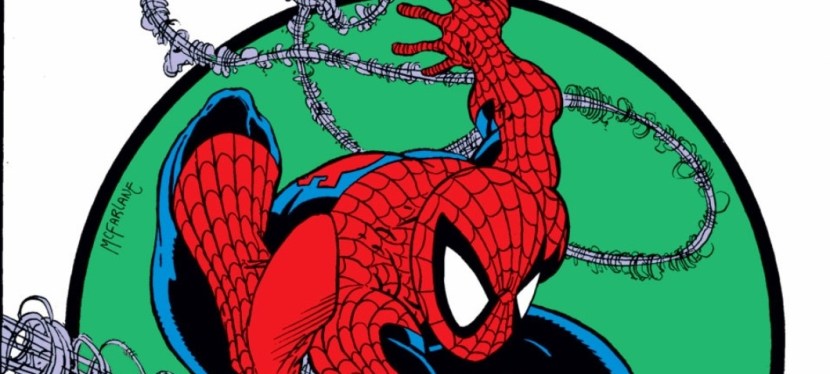
With those details laid down, here is a look back at Amazing Spider-Man #301, published in 1988 by Marvel Comics with a story written by David Michelinie and drawn by Todd McFarlane.

The cover.

Early story

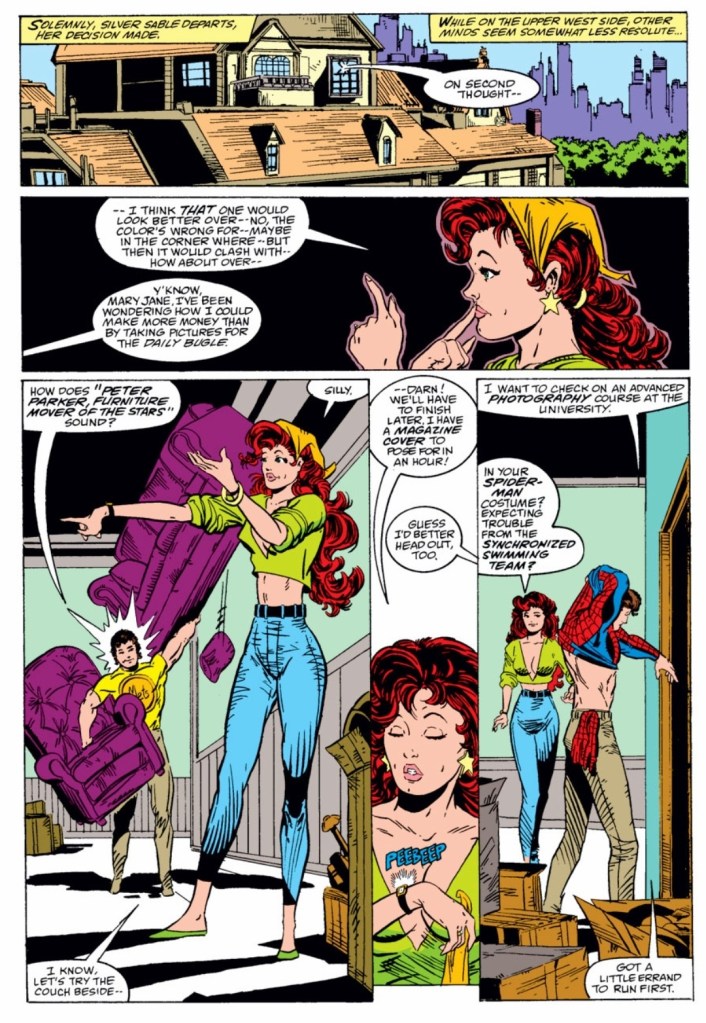
The story begins with a group of armed personnel doing a mission inside a building. In the middle of the corridor, several over-head turrets pop out and fire paint balls at the team which used shields for protection. Moments after, they communicate with an executive called Mr. Cruz by means of live video feeds. Cruz tells them they failed the test.

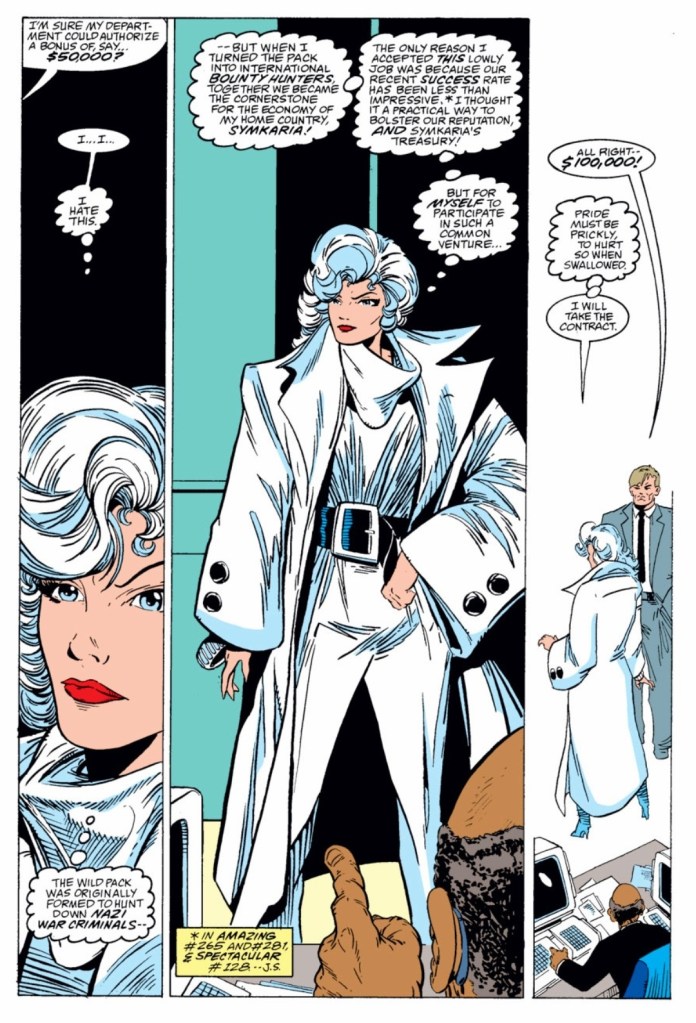
Shortly after, Mr. Cruz and Silver Sable meet with Mr. Pruett and discuss key aspects about the Pruett building’s security. It turns out Pruett himself advertised his building as being the safest locale in New York. Cruz tells him that Silver Sable’s Wild Pack team was fine to a certain extent but he feels much more confident if Sable herself would test building security. After some thinking about her team – international bounty hunters –, their role with the economy of her home country of Symkaria and the less-than-impressive success her team achieved recently, she accepts the contract from Pruett worth $100,000.

Meanwhile at another location within the city, Mary Jane Parker carefully decides where should her husband Peter (carrying a sofa and a large seat with his own super strength) should put furniture in their home. MJ then has to rush to attend a magazine cover photo session while Peter has to go out and check on an advanced photography course at a university…

Quality

The new couple Peter and Mary Jane Parker together with domestic life.

This is one of the more unique Spider-Man tales of the 1980s I have read. Silver Sable herself is the big feature of this comic book, even overshadowing the famous web-slinger. As this was published years before the Silver Sable and the Wild Pack monthly series launched, David Michelinie portrayed the character as a professional business woman who also happens to be a very capable physical fighter and infiltrator while carrying with her the pride of her homeland Symkaria. Through Silver Sable, you can see the richness of Michelinie’s writing and feel the uniqueness of her personality which makes her stand out among the many other supporting characters or heroes Spider-Man ever interacted with.

As a story set shortly after the climax of the Venom storyline, Peter Parker is portrayed to be in the middle of a transition having gone through college and recently getting married with Mary Jane. Even with the challenges and complications of life, he still finds himself stuck with the perceived obligations of the superhero life. There is also a sub-plot here about a white-haired man searching for him.

Going into the plot itself, Peter Parker could not contain himself from going out again in full costume and web-swinging as Spider-Man as he finds Mr. Cruz a suspicious figure. While it looks like the right thing to do for any superhero, it shows weakness in Peter Parker’s struggle to balance his life. The use of irony is nicely portrayed here.

Conclusion

This is how Silver Sable looked like in the late 1980s.

While the good-versus-evil element of the story is very subtle, Amazing Spider-Man #301 (1988) still succeeded in engaging and entertaining me primarily due to David Michelinie’s very solid storytelling and characterization. Unsurprisingly, Michelinie’s script is brought to life with Todd McFarlane’s fine art from start to finish. Don’t expect Spider-Man nor Silver Sable get to fight some dangerous villain in personal combat as the plot is more about suspense and intrigue laced with some twists. Still, there is plenty of superhero action to enjoy here and McFarlane’s art remains impressive. Silver Sable is very well defined in this comic book and by the end, you will get a solid grasp of herself and her background. This comic book is a must-read before you jump into the Silver Sable and the Wild Pack comic book series.

Overall, Amazing Spider-Man #301 (1988) is highly recommended.

+++++

Thank you for reading. If you find this article engaging, please click the like button below, share this article to others and also please consider making a donation to support my publishing. If you are looking for a copywriter to create content for your special project or business, check out my services and my portfolio. Feel free to contact me with a private message. Also please feel free to visit my Facebook page Author Carlo Carrasco and follow me on Twitter at  @HavenorFantasy as well as on Tumblr at https://carlocarrasco.tumblr.com/ and on Instagram at https://www.instagram.com/authorcarlocarrasco
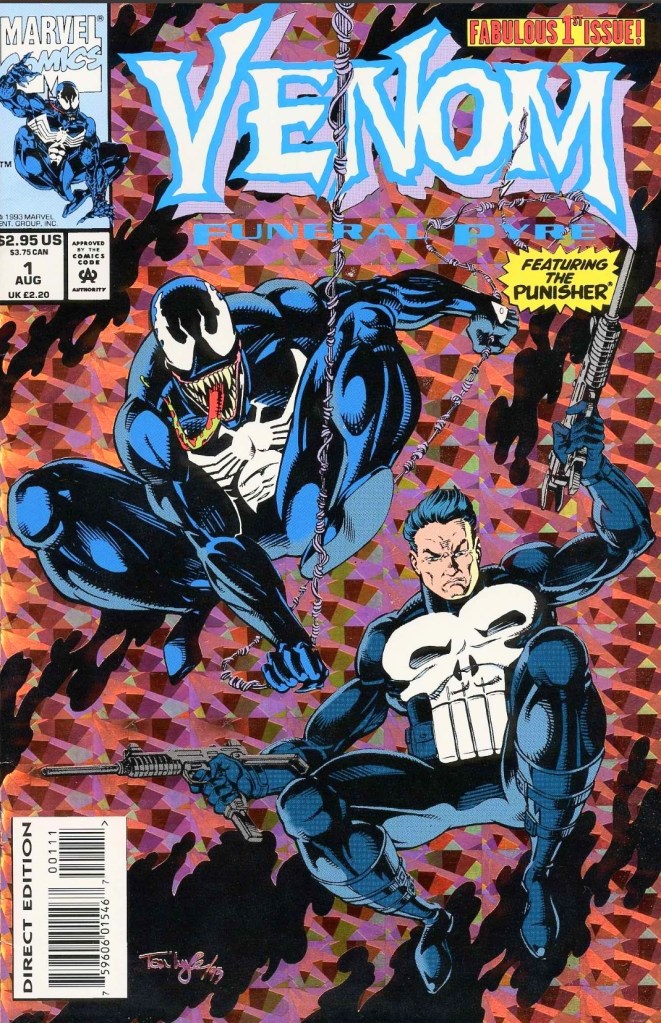
A Look Back at Venom: Funeral Pyre #1 (1993)

Disclaimer: This is my original work with details sourced from reading the comic book and doing personal research. Anyone who wants to use this article, in part or in whole, needs to secure first my permission and agree to cite me as the source and author. Let it be known that any unauthorized use of this article will constrain the author to pursue the remedies under R.A. No. 8293, the Revised Penal Code, and/or all applicable legal actions under the laws of the Philippines.

Welcome back superhero enthusiasts, 1990s arts and culture enthusiasts, Marvel Comics fans and comic book collectors! Today we go back to the year 1993 and explore a part of Marvel Comics’ universe through the first-ever limited comic book series featuring one of Marvel’s most iconic supervillains – Venom.

Previously, I wrote about Venom with his appearances in What If comic books (click here and here) as well as in issues of Venom: Lethal Protector (click here and here). Venom also appeared in the disappointing crossover comic book Spider-Man Meets Spider-Man 2099.

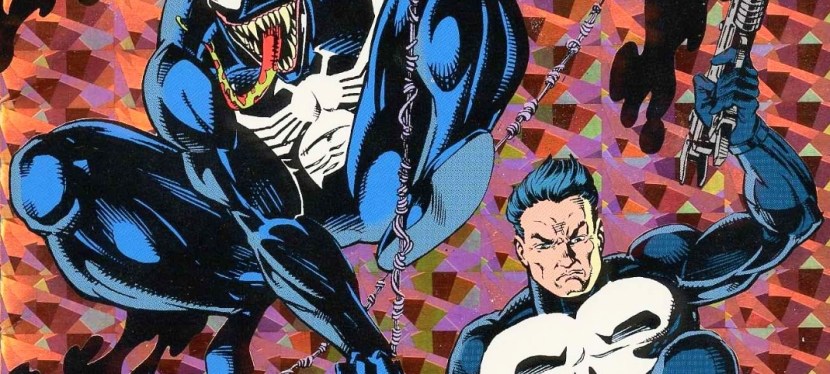
Moving back to the year 1993, the Venom: Lethal Protector limited series ended and Marvel went on to release a 2nd limited series composed of three issues complete with an all-new creative team. That series was Venom: Funeral Pyre and the most notable thing is that Venom gets to be with the Punisher (read my other retro reviews that include the character here, here, here and here).

With those details laid down, here is a look back at Venom: Funeral Pyre published in 1993 by Marvel Comics with a story written by Carl Potts and drawn by the late Tom Lyle.

The cover.

Early story

The story begins on the streets of Oakland, California. There, a young guy named Gray Russell watches gang members severely beat up another guy which disturbs him deeply. He is part of the gang. A short time later, he rides with the gang in a car which hits a man (who managed to have his young nephew move out of harm’s way).

Somehow the man survived and moves to another direction deliberately to lure the gang away from his nephew. As the gangsters move towards a local building, Gray separates from his harsh companions to find a phone booth. Gray finds Calvin (the nephew of the man who got hit) nearby and decides to comfort him. From a distance, they heard the gangsters beat Calvin’s uncle to death.

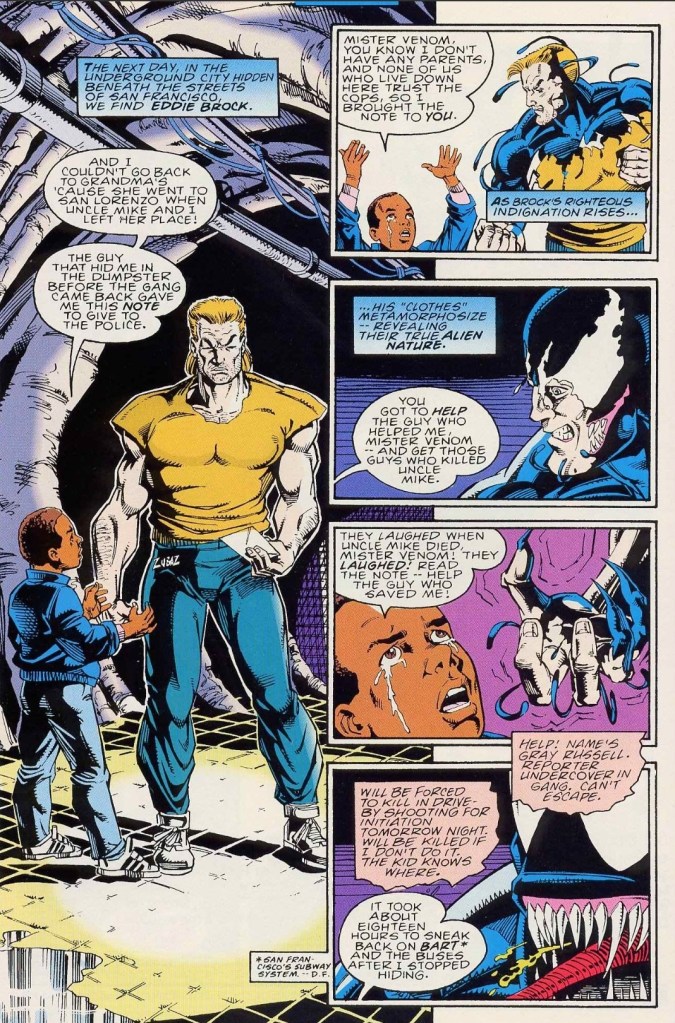
The next day in the underground city beneath San Francisco, Calvin meets Eddie Brock and hands him a note meant for the police. As Calvin reveals more details, Eddie gradually turns into Venom with his alien costume covering up his body. After learning of the death of Calvin’s uncle and hearing the young boy’s plea for help for Gray (an investigative reporter in secret within the gang), Venom agrees to help him as it is their mission to save the innocent and destroy the guilty…

Quality

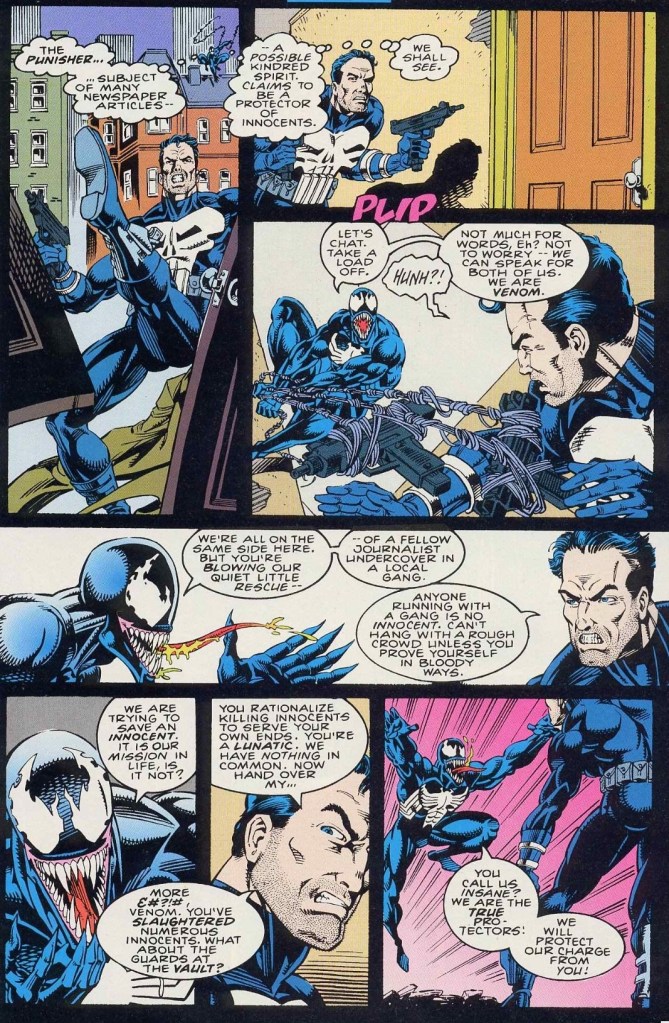
Punisher and Venom’s first-ever encounter with each other.

I want to start first the with the overall presentation crafted by the Potts-Lyle creative duo. In terms of story and setting, this comic book has a very strong urban crime vibe which is not a surprise given the fact that Carl Potts wrote lots of stories of the Punisher and his personal war against criminals. That being said, the tone is very different compared to what was shown in Venom: Lethal Protector and other Venom tales that got published before this comic book. Very clearly, this story is dark, gritty and even disturbing to read due to the subject matter of crime and senseless violence caused by people who are obsessed with violence. The fantasy elements of Venom: Lethal Protector are unsurprisingly absent here.

Carl Potts’ take on Venom’s personality is technically an extension of what was established previously. Venom, who is truly a murderer on the loose, continues to live with his very distorted code by helping the innocent by means of using violence and death on others he personally views as guilty. His getting involved in the turf of crime here is, however, a fresh approach on the super villain now acting “heroic” helping Calvin who lost his uncle. Being a former journalist himself, Eddie Brock “relates” with the investigative journalist involved with the gang.

The other major character – the Punisher – is his typical self in this story. He gets involved in the conflict in Oakland not purposely but accidentally as he was just passing by in his weapons-filled van as he heard the local police communication on local crime. The only thing notable about the way the Punisher is portrayed here is his first-ever interactions with Venom which is a crossover scene filled with a decent amount of hard action.  

Gray, the investigative journalist, is presented here as technically the third major character of the story. In some ways, he even overshadows Venom and the Punisher in key parts of this comic book. He is not really an interesting character himself but there are some interesting Marvel universe details shown from his personal memories. What is clear about this uninteresting character is that the creative team planned something with him in a key role within the core concept of this mini-series.

As for the plot itself, it clearly has a dark and gritty concept of street crime in 1990s Oakland which itself plays a big part of the build-up of the story and the eventual crossover between Venom and the Punisher. The problem is that the build-up has an uninteresting character with Gray involved and there is a lot of exposition to go through before the Venom-Punisher encounter.

The encounter between Venom and the Punisher here came with the superhero comics crossover trope of the players misunderstanding the situation and each other, and getting into a conflict very early on. Both characters have their respective obsessions and so-called codes of purposes, which predictably leads them into conflict as they stayed hard-headed towards each other. While it is flawed, the Venom-Punisher crossover here is the highlight as well as the relief from having to read all the exposition and build-up.

Conclusion

A scene like this could inspire Black Lives Matter terrorists, SJWs, woke activists and North American socialists to become violent and cause havoc around America.

Venom: Funeral Pyre (1993) is a flawed comic book that happens to highlight the Punisher and Spider-Man’s greatest nemesis of the time. It delivered on its promise of showcasing the two characters – a cold-hearted anti-crime vigilante and an alien costume-equipped murderer – in a crossover but the pay-off was barely enough when you take into account the build-up, the exposition and the involvement of the uninteresting third player named Gray. Compared to what was shown in Venom: Lethal Protector, this comic book clearly has an urban crime flavor which Carl Potts strongly implemented. As for the art, Tom Lyle showed he is really good in visualizing Venom, the Punisher and street gang wars.

Overall, Venom: Funeral Pyre (1993) is serviceable. Definitely this is not the fabulous 1st issue described on the foil cover.

+++++

Thank you for reading. If you find this article engaging, please click the like button below, share this article to others and also please consider making a donation to support my publishing. If you are looking for a copywriter to create content for your special project or business, check out my services and my portfolio. Feel free to contact me with a private message. Also please feel free to visit my Facebook page Author Carlo Carrasco and follow me on Twitter at  @HavenorFantasy as well as on Tumblr at https://carlocarrasco.tumblr.com/ and on Instagram at https://www.instagram.com/authorcarlocarrasco
A Look Back at Venom: Lethal Protector #4 (1993)

Disclaimer: This is my original work with details sourced from reading the comic book and doing personal research. Anyone who wants to use this article, in part or in whole, needs to secure first my permission and agree to cite me as the source and author. Let it be known that any unauthorized use of this article will constrain the author to pursue the remedies under R.A. No. 8293, the Revised Penal Code, and/or all applicable legal actions under the laws of the Philippines.

Welcome back superhero enthusiasts, 1990s arts and culture enthusiasts, Marvel Comics fans and comic book collectors! Today we go back to the year 1993 and explore a part of Marvel Comics’ universe through the first-ever limited comic book series featuring one of Marvel’s most iconic supervillains – Venom.

In my previous retro review, the core concept of the Lethal Protector limited series started to really take shape as issue #3’s plot got more intriguing and interesting to read while emphasizing other powerful forces Venom himself simply could not easily overwhelm. It is also the issue in which Venom’s past act of a certain murder comes to haunt him. The problem I had with that comic book was the creative team’s dramatization of Eddie Brock’s personal history which essentially ruined whatever mystery Venom had. Eventually, the comic book ended with Venom getting into trouble again.

With those details laid down, here is a look back at Venom: Lethal Protector published in 1993 by Marvel Comics with a story written by David Michelinie and drawn by Ron Lim.  

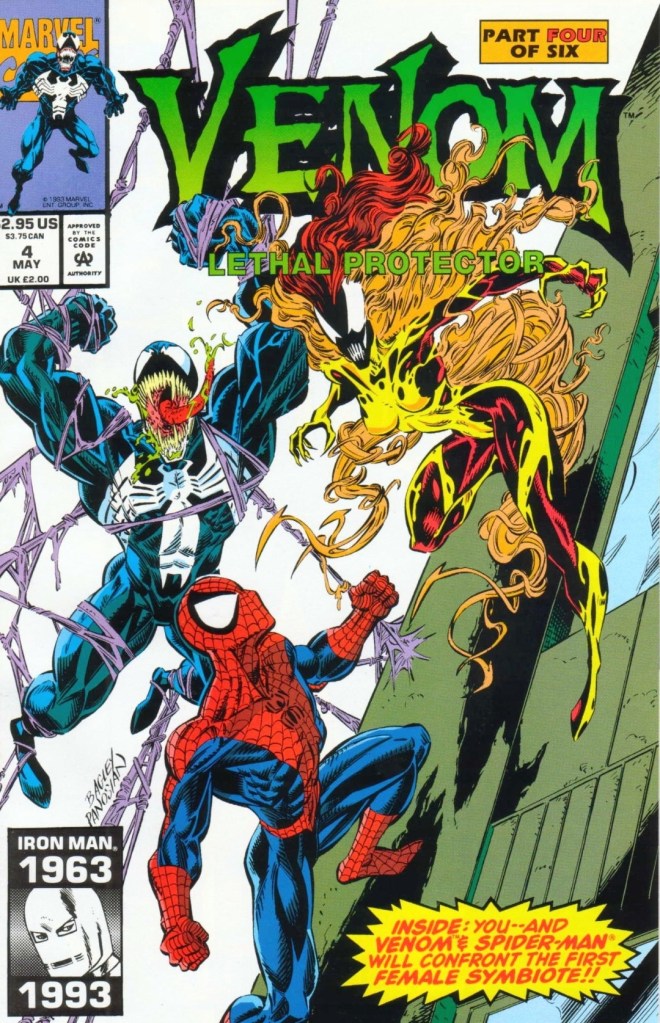
The cover.

Early story

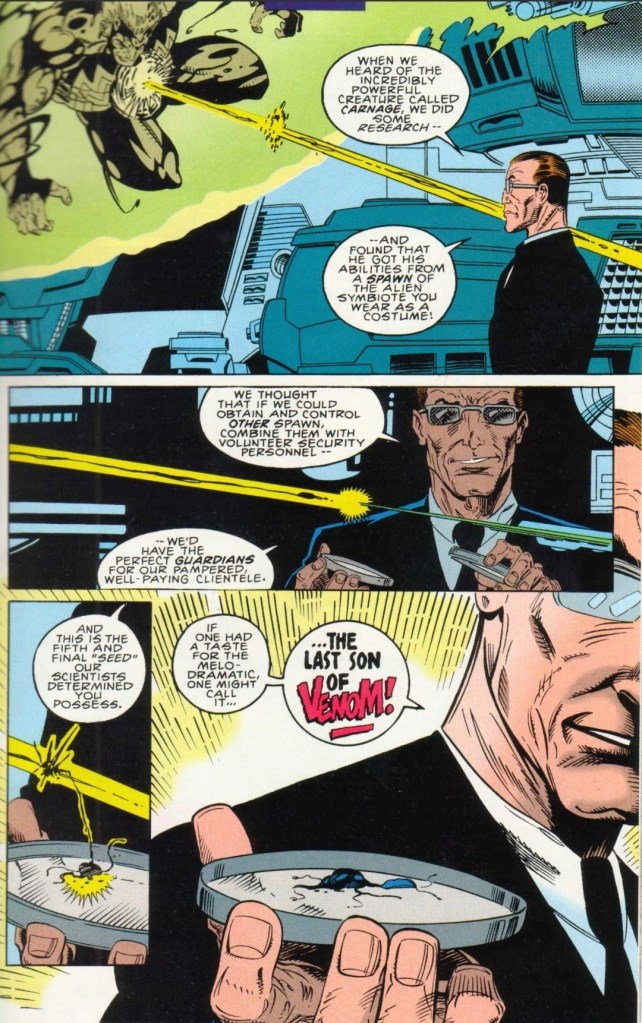
The story begins inside a high-tech facility in the Mojave Desert. Inside, Venom is in captivity floating off the floor with high-tech machines keeping him prisoner. He is a captive of the Life Foundation and they have successfully extracted another spawn from Venom’s symbiote which causes tremendous pain on the part of Eddie Brock. It turns out, a total of five “seeds” have been extracted and the organization has big plans with them.

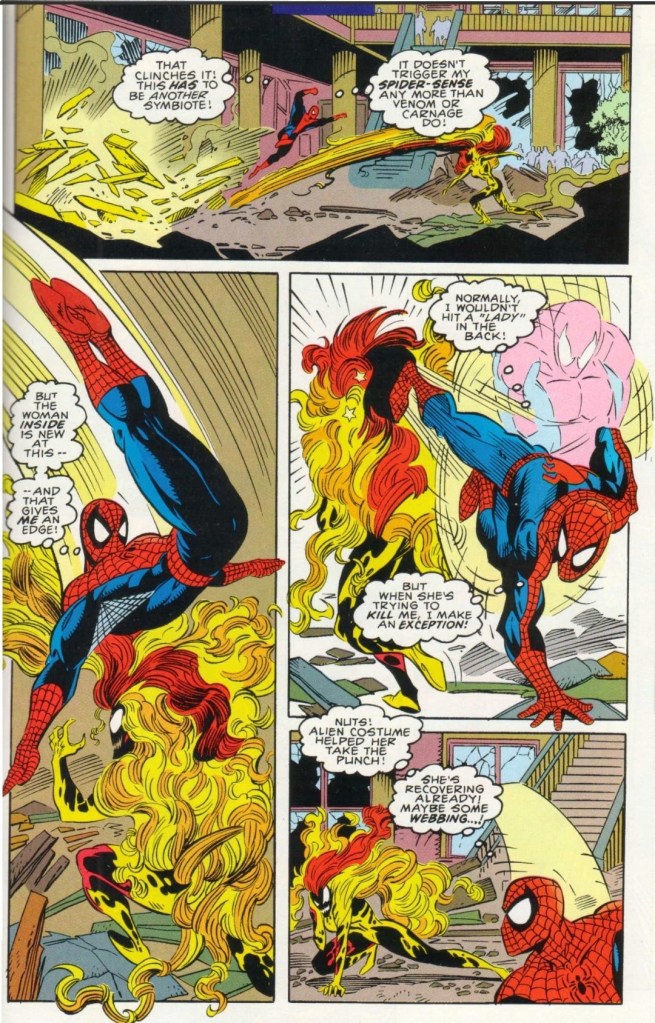
Over at Sta. Cruz in California, Spider-Man spends some of his precious time to stop some local criminals from causing anymore danger to the people. During his telephone talk with Mary Jane, he admits that has not been able to track Venom down but he has a new lead about weird creatures that have been spotted locally. A short time later, Spider-Man arrives at a shopping mall where tremendous damage of property have happened. As soon as he catches a lady and prevents her from hitting the pavement, he is shocked to see a long-haired woman wearing a living alien costume with features that are so similar to that of Venom. The symbiote-wearing woman (Scream) tells Spider-Man directly that breaking him in half will make the “little exercise” a complete success…

Quality

Spider-Man takes on the “female Venom”

To start with what is very obvious and clear, this story has Spider-Man overshadowing Venom in terms of literary presence as the plot has the titular character limited to captivity under the tight grasp of the Life Foundation. Given Spider-Man’s previous appearances in this limited series serving as a convenient tool for exposition, you will easily feel the Amazing Spider-Man monthly series’ vibes taking over this comic book’s narrative as Marvel’s icon became the protagonist of the story complete with spectacle and problem solving that drive the plot forward. This is not surprising as David Michelinie was already the lead writer of the Amazing Spider-Man monthly series and it only makes sense to shift the focus on the famous webslinger since his deadliest enemy (who has this very distorted belief about protecting the innocent and keep on murdering people he finds antagonistic) could not contribute much to the story while in captivity.

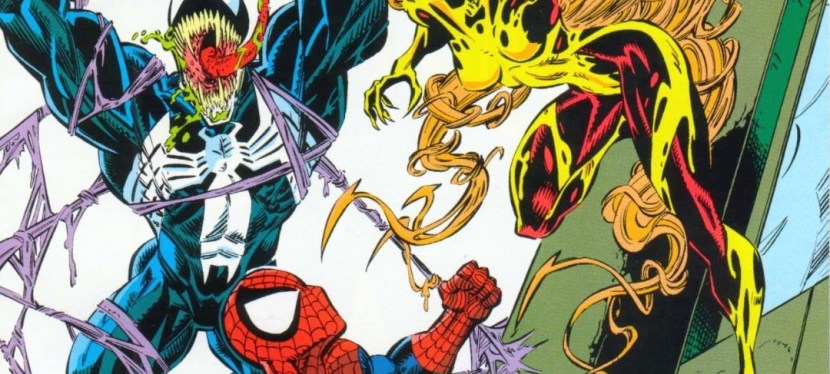
As reflected in the nice cover of this comic book, it is also Spider-Man who faces off with the “female Venom” herself Scream which leads to yet another Spidey-versus-symbiote villain battle but with a catch – Scream is simply inexperienced in battle and does not have any real strategy to deal with New York’s webslinger. That battle noticeably does not last very long and the short amount of superhero spectacle here paved the way for the creative team to make Spider-Man sneak into enemy territory and closer to Venom.

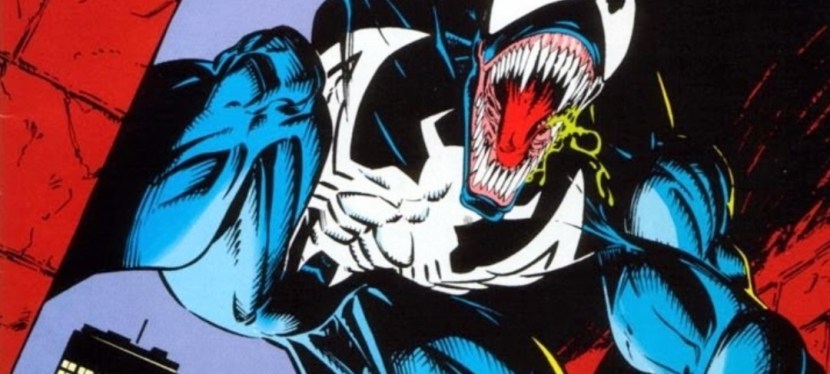
In terms of visual quality, I can say that things went way down as Ron Lim replaced Mark Bagley here. Lim’s art style of drawing people has this generic aesthetic on the characters’ faces – Mary Jane and Eddie Brock are barely recognizable. While Lim’s artistic take on Venom is clearly a big letdown compared to Bagley’s Venom (note: always looking menacing and unique), he ironically did a decent job visualizing Scream. Lim’s most dynamic shots of superhero action lacked impact. Regardless, Lim’s art is not so appealing compared to Bagley’s. Also it is quite noticeable that Lim drew Venom to be much bulkier with exaggerated muscles.

Conclusion

The most notable concept in this comic book.

Considering all the details I mentioned above, Venom: Lethal Protector (1993) is technically an Amazing Spider-Man comic book that just so happens to have Venom much less significant in this particular part of his own limited series. There really was not much room for the creative team use as far as Venom is concerned. Of course, this is all part of a build-up heading into the final two parts of this limited series and it is obvious that Venom would become prominent again. This comic book’s most notable feature was its concept about the Life Foundation extracting seeds from Venom’s living costume but considering what happened, there was not much room to really build-up on the idea that more symbiote-wearing people will emerge. Scream was essentially a warm-up. Ultimately, Spider-Man fans will have a lot to enjoy here while Venom fans will not have much to enjoy.

Overall, Venom: Lethal Protector (1993) is serviceable.

+++++

Thank you for reading. If you find this article engaging, please click the like button below, share this article to others and also please consider making a donation to support my publishing. If you are looking for a copywriter to create content for your special project or business, check out my services and my portfolio. Feel free to contact me with a private message. Also please feel free to visit my Facebook page Author Carlo Carrasco and follow me on Twitter at  @HavenorFantasy as well as on Tumblr at https://carlocarrasco.tumblr.com/ and on Instagram at https://www.instagram.com/authorcarlocarrasco
A Look Back at Venom: Lethal Protector #2 (1993)

Disclaimer: This is my original work with details sourced from reading the comic book and doing personal research. Anyone who wants to use this article, in part or in whole, needs to secure first my permission and agree to cite me as the source and author. Let it be known that any unauthorized use of this article will constrain the author to pursue the remedies under R.A. No. 8293, the Revised Penal Code, and/or all applicable legal actions under the laws of the Philippines.

Welcome back superhero enthusiasts, 1990s arts and culture enthusiasts, Marvel Comics fans and comic book collectors! Today we go back to the year 1993 and explore a part of Marvel Comics’ universe through the first-ever limited comic book series featuring one of Marvel’s most iconic villains – Venom.

In my previous retro review, Eddie Brock returned to his hometown of San Francisco following the events of Amazing Spider-Man (1993). Living with his very distorted belief of protecting the innocent by doing unrelenting acts of violence on others, he begins to get involved with helpless people who happened to be hounded by agents of a certain private organization that wields power. Along the way, Spider-Man arrives in the city find Venom.

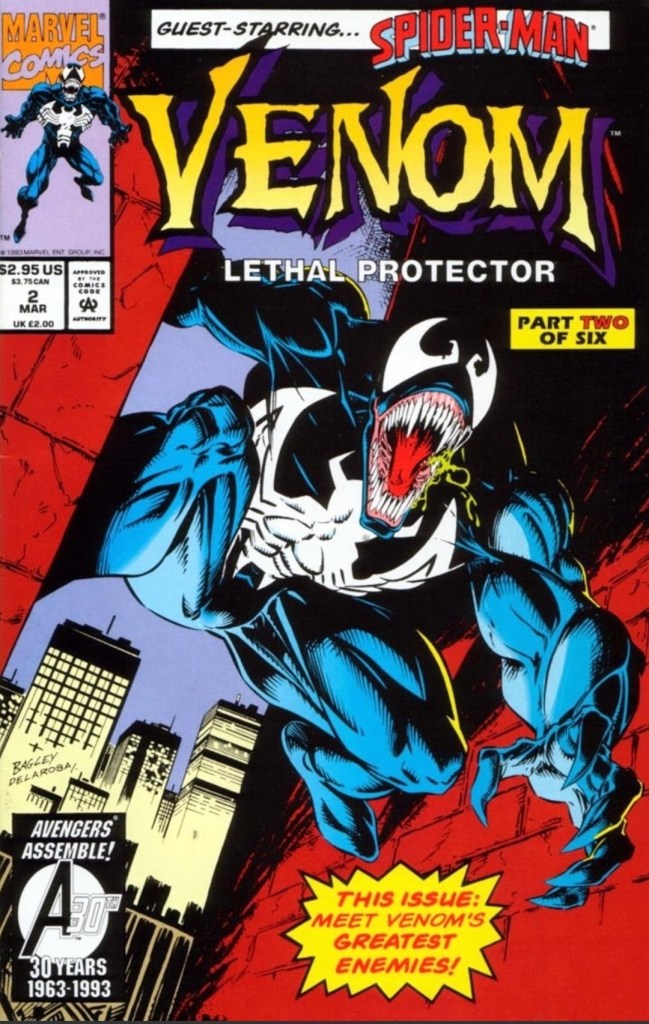
With those details laid down, here is a look back at Venom: Lethal Protector , published in 1993 by Marvel Comics with a story written by David Michelinie and drawn by Mark Bagley.

The cover.

Early story

The story begins deep underneath the city of San Francisco. Venom, who is caught by the large mechanical fist of a walking mech (piloted by a man working for Roland Treece’s organization), finds himself on the deeply buried section of the city and around them are vagrant people who settled and became residents of a local society that the rest of America does not even know exists.

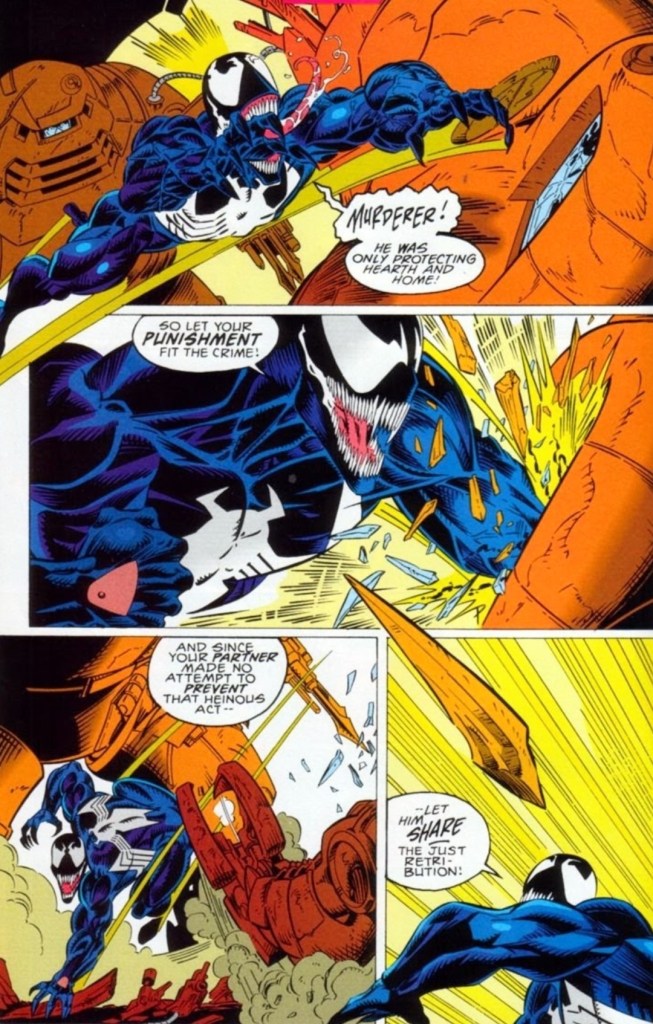
As the local residents caught the attention of the pilot, Venom breaks free by smashing the mechanical fist into pieces. Another mech suddenly jumps into place near the first one. In response to the first mech’s sudden killing of a local resident (who was armed with a shotgun), Venom jumps to it and kills the pilot inside by punching into the cockpit. Venom then grabs a long sharp object and kills the pilot of the other mech with it.

While the locals were hostile and afraid of Venom, the other people (who were assisted on the surface by Venom) come to support him and tell their fellow underground residents that he is not their enemy. One of the local council members stated that a meeting at the council hall will be held and Venom will attend it…

Quality

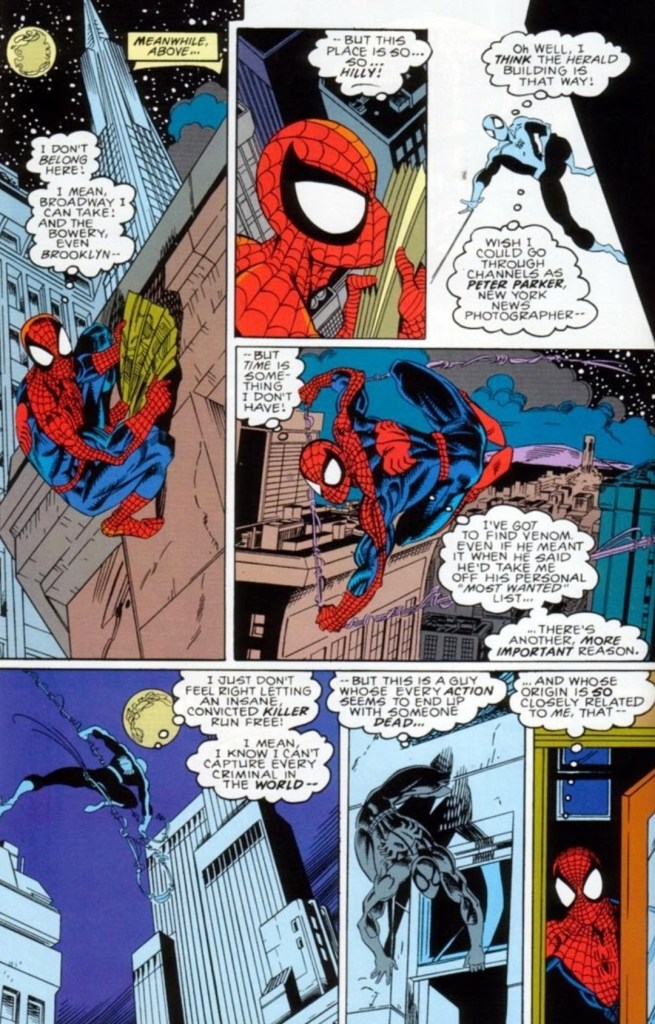
With exposition in mind, Spider-Man here does most of the detective work. Understandably, he is not involved with the superhero spectacle.

Compared to issue , this story has a more interesting setting which is the buried and forgotten section of San Francisco which was the result of the 1906 earthquake. Showing that the lost section has a local population composed of homeless people and those who reject the modern society above was a bright idea nicely executed by the Michelinie-Bagley team as it added some depth into Marvel Comics’ own version of San Francisco.

It was also in the underground city and with the residents where we get to see Venom do his own distorted acts of heroism backed by killing, and see how he fared when trying to win the trust of the locals whose members include those who read about him in the news and those who completely know nothing about him.

Through his interactions with the underground people, Eddie Brock is portrayed to be a bit more human compared to what happened in issue . For a man who has gotten very used to using extreme forms of violence and committing multiple acts of murder, it is surprising to see Brock looking and acting more civil in the presence of Americans (and perhaps illegal immigrants) who settled deep underground and established their own rules (note: Eddie Brock does not care about rules while having the alien costume). Still, you will see Venom engage in violent superhero action and even do a bit of detective work.

As with the previous issue, the iconic Spider-Man got a good share of the spotlight in the story as he searches for details about Venom which leads him to finding his rival’s estranged father. Spider-Man’s presence here is noticeably lessened compared to issue and his own search for answers creatively served as exposition. Don’t expect to see any superhero spectacle from Spider-Man.

Without spoiling details and names, I should state that this comic book marks the debut of a ream of armed mercenaries led by a powerful man who lost a son because of what Venom did in Amazing Spider-Man #315 (1989).

Conclusion

The violent nature of Venom displayed.

Venom: Lethal Protector (1993) is a marginal improvement over the first issue in terms of storytelling and setting. Part of the big build-up that happened in issue started to get paid-off in this comic book which allowed for the plot to move forward at a more satisfying pace. Venom and Spider-Man share the spotlight again, but this time the edge goes to the black-wearing murderer who also has the benefit of being part of the superhero spectacle here. At this point of the mini-series, Venom is not only facing elements of the Treece organization (which has been organizing something that could impact San Francisco and its people) but also a new force of opposition that is related to something he did a few years prior. That being said, Venom is first and foremost a murderer that Marvel wanted to make big money out of.

Overall, Venom: Lethal Protector (1993) is satisfactory.

+++++

Thank you for reading. If you find this article engaging, please click the like button below, share this article to others and also please consider making a donation to support my publishing. If you are looking for a copywriter to create content for your special project or business, check out my services and my portfolio. Feel free to contact me with a private message. Also please feel free to visit my Facebook page Author Carlo Carrasco and follow me on Twitter at  @HavenorFantasy as well as on Tumblr at https://carlocarrasco.tumblr.com/ and on Instagram at https://www.instagram.com/authorcarlocarrasco
A Look Back at What If #4 (1989)

Disclaimer: This is my original work with details sourced from reading the comic book and doing personal research. Anyone who wants to use this article, in part or in whole, needs to secure first my permission and agree to cite me as the source and author. Let it be known that any unauthorized use of this article will constrain the author to pursue the remedies under R.A. No. 8293, the Revised Penal Code, and/or all applicable legal actions under the laws of the Philippines.

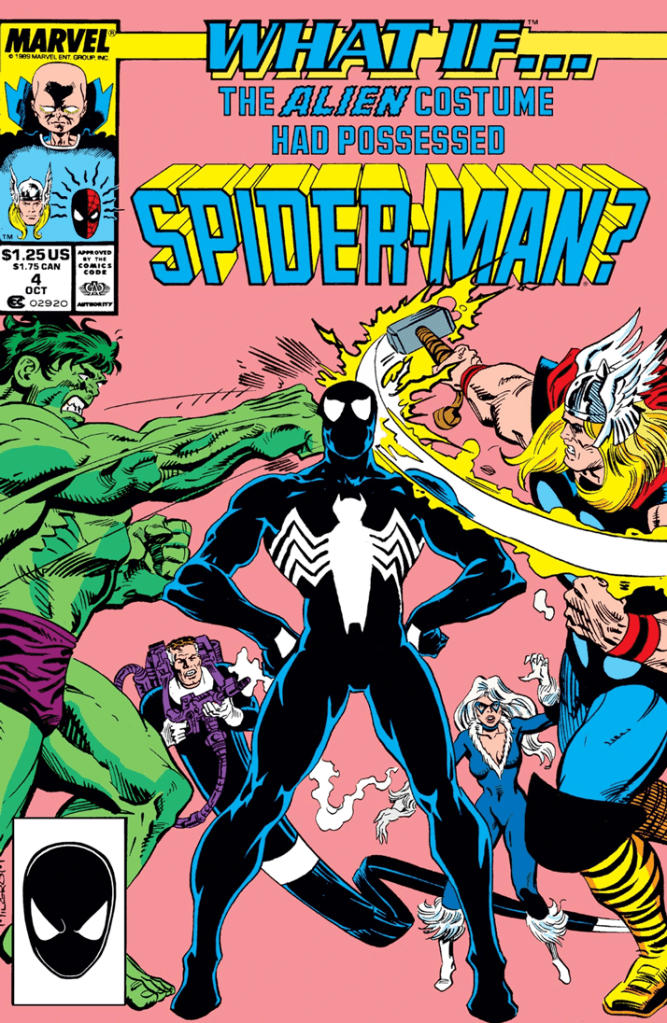
Welcome back superhero fans, 20th century arts and culture enthusiasts, Marvel Comics fans and comic book collectors! Today we go back to the year 1989 and explore a part of Marvel Comics’ universe through the reimagined tales emphasized in the What If monthly series (Volume 2).

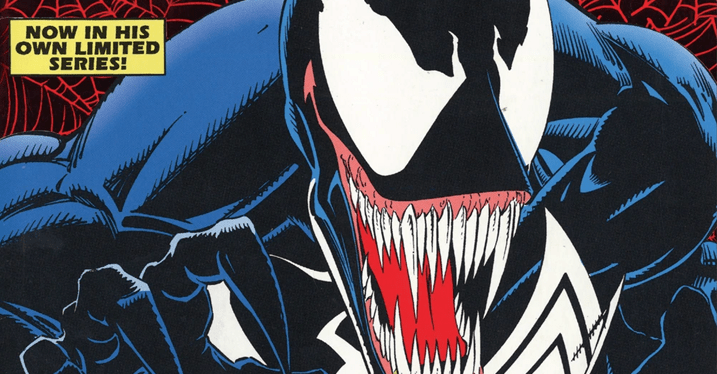
For the newcomers reading this, I previously reviewed a variety What If comic books which you can find by clicking here, here, here, here, here, here, here and here. The joy of reading a What If comic book was the exploration of alternate outcomes in relation to the stories that have been counted by Marvel Comics as canon or official fictional history within their shared comic book universe. In this retro review, we will explore a key event from Spider-Man’s time with the alien costume (symbiote) which is related with the events of Secret Wars and the eventual establishment of his deadliest nemesis Venom.

With those details laid down, here is a look back What If , published in 1989 by Marvel Comics with a story written by Danny Fingeroth and drawn by Mark Bagley.

The cover.

Early story

The story begins with the Watcher examining Spider-Man’s involvement with the Secret Wars that took place on a faraway planet created by the Beyonder. There, his costume got damaged beyond  repair and he acquired a new one made of what he perceived to be an advanced form of material. After successfully returning home, Spider-Man goes through some mysterious developments and he could not understand why he remains fatigued even as he spent more time sleeping.

With the help of Mr. Fantastic at the Fantastic Four headquarters, Spider-Man learns that his new costume is a living entity that has attached itself to him mentally and physically. As Mr. Fantastic uses a sonic blaster, Spider-Man and the alien costume got separated at last. Some time later, the alien costume re-attached itself to Spider-Man who eventually used church bells loud sounds to separate it. The alien costume would go on to the find Eddie Brock to form Venom.

The alternate reality begins with Spider-Man having a joyful reunion with Black Cat shortly after coming back from Secret Wars. Learning from her advise to have himself checked properly, he visits Dr. Connors (the Lizard) for examination and testing…

Quality

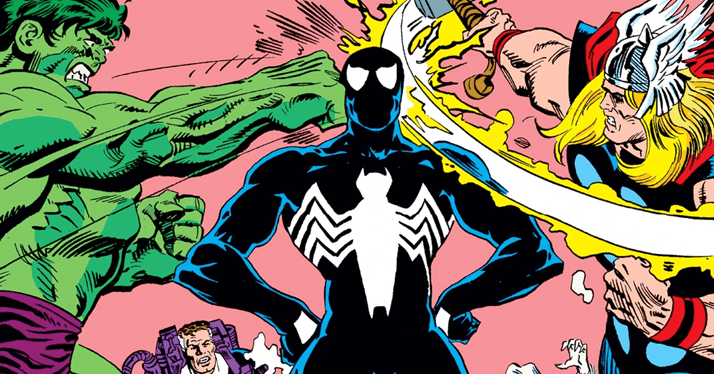
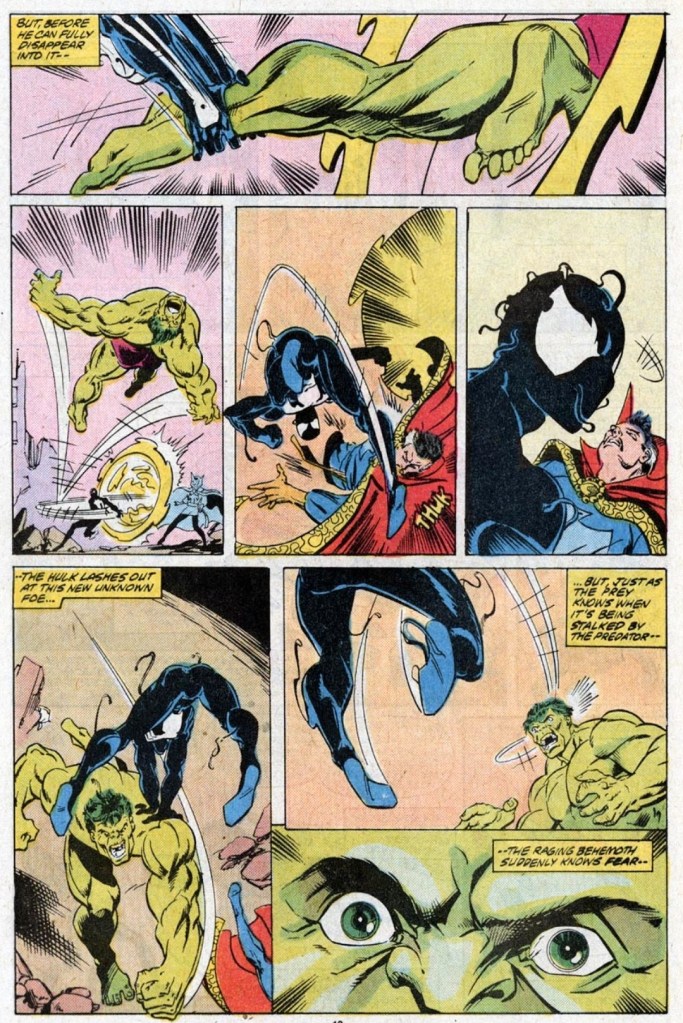
The possessed Spider-Man takes on Dr. Strange and the Hulk without hesitation.

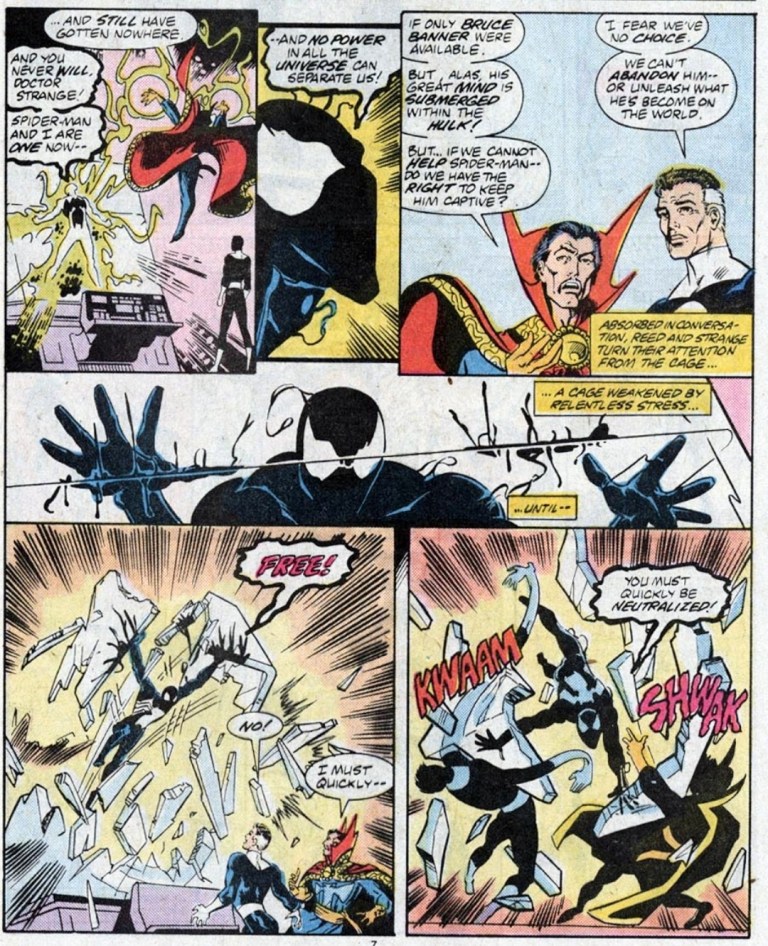
To say that Danny Fingeroth’s script is very deep is an understatement. Specifically, this story is a great exploration of alternative events that not only affects the iconic Spider-Man/Peter Parker but also other elements of the Marvel Comics universe of the time. The concept of the alien costume fully bonding with Peter Parker with Mr. Fantastic and even Dr. Strange failing to help is indeed suspenseful and intriguing to read thanks to Fingeroth’s very solid writing. In fact, the story even shows Spider-Man as being possessed by the symbiote (complete with dialogue) and when you witness Peter Parker struggling to control himself consciously (while wrestling with the alien costume), you will really feel his pain. I should also state that there is a lot more about Spider-Man told here that goes beyond the possession which really turned out to be very compelling to read in my experience. This is easily the most engaging alternate portrayal of Spider-Man as we know him and it should be read by as many people as possible.

Along the way, this comic book portrays the alien costume as an insatiable being and the implementation of dialogue for it (structured in a way as using the vocal ability of the powered being it bonded with) gave it a very unique personality of its own. This is something that was not portrayed in the early appearances of Venom in which Eddie Brock does the talking and reacting to unseen messages from the symbiote. That being said, the alien costume here symbolizes possession within the Marvel Comics shared universe and its unknown state really challenges not only the intelligence of the superheroes but also their ability to decide on what final action to take with regards to sentient life.

As staged by the writer, the story’s narrative occasionally shifts away from Spider-Man to follow other characters such as Black Cat (Peter Parker’s love at the time), Mr. Fantastic (in a great portrayal of his proficiency in science and as a responsible superhero), Thor and others which made the reading experience really immersive in relation to emphasizing how this alternate reality affects others. You will get to see the Captain America, the Hulk, Iron Man, the Wasp, Captain Marvel, the Fantastic Four and the Avengers here.

Those who are fond of superhero spectacle will have a lot to enjoy here. Mark Bagley carefully paces the action scenes and he uses visual dynamism during the right moments.  

Conclusion

Through dialogue, the alien costume is portrayed as a sinister force.

I can say it out loud…What If (1989) is one of the best Marvel Comics alternate reality stories I have ever read and the creative team of Fingeroth-Bagley crafted an epic tale that goes beyond the featured question of “What if the alien costumer had possessed Spider-Man?”. The comic book works excellently as both a Spider-Man story as well as a Marvel superheroes struggle. The story touches on relevant topics such as possession, killing and scientific exploitation. This is a must-have comic book!

Overall, What If (1989) is highly recommended!

+++++

Thank you for reading. If you find this article engaging, please click the like button below and also please consider sharing this article to others. If you are looking for a copywriter to create content for your special project or business, check out my services and my portfolio. Feel free to contact me with a private message. Also please feel free to visit my Facebook page Author Carlo Carrasco and follow me on Twitter at  @HavenorFantasy as well as on Tumblr at https://carlocarrasco.tumblr.com/ and on Instagram at https://www.instagram.com/authorcarlocarrasco/

A Look Back at Venom: Lethal Protector #1 (1993)

Disclaimer: This is my original work with details sourced from reading the comic book and doing personal research. Anyone who wants to use this article, in part or in whole, needs to secure first my permission and agree to cite me as the source and author. Let it be known that any unauthorized use of this article will constrain the author to pursue the remedies under R.A. No. 8293, the Revised Penal Code, and/or all applicable legal actions under the laws of the Philippines.

Welcome back superhero enthusiasts, 1990s arts and culture enthusiasts, Marvel Comics fans and comic book collectors! Today we go back to the year 1993 and explore a part of Marvel Comics’ universe through the first-ever limited comic book series featuring one of Marvel’s most iconic villains – Venom.

To put things in perspective, the origin of Venom started within the events of the 1980s series Secret Wars which took place in a far-away planet. As a result of that series, Spider-Man returned home wearing the alien symbiote as a costume which turns out to have a mind of its own. After Spider-Man successful separate himself from the symbiote (again) using the loud bells of a church, the living costume eventually found a desperate Eddie Brock and bonded with him to form Venom. In the late 1980s comics of Amazing Spider-Man, Venom became the deadliest enemy Spider-Man ever faced.

Going into the early 1990s, Venom’s popularity continued to grow tremendously. He became one of Marvel’s most popular non-hero type of characters and helped sell a lot of comics for the publisher. Knowing they had something to sell, Marvel approved a 6-issue limited series showcasing Venom. It was also the most anticipated comic book among collectors right after DC Comics killed Superman with Superman (1993).

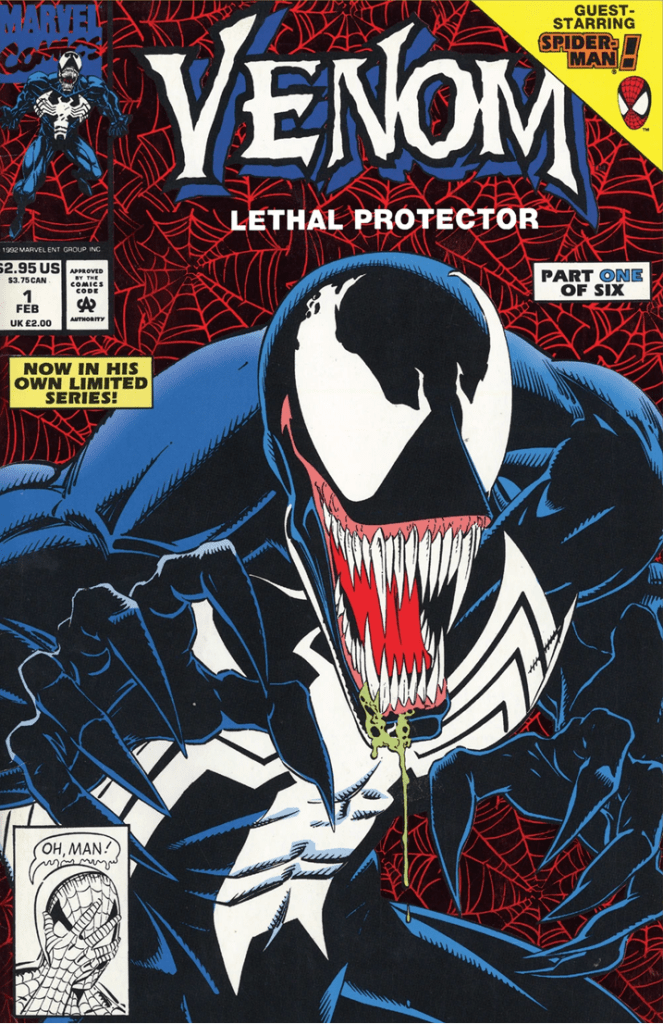
With those details laid down, here is a look back at Venom: Lethal Protector , published in 1993 by Marvel Comics with a story written by David Michelinie and drawn by Mark Bagley.

The cover.

Early story

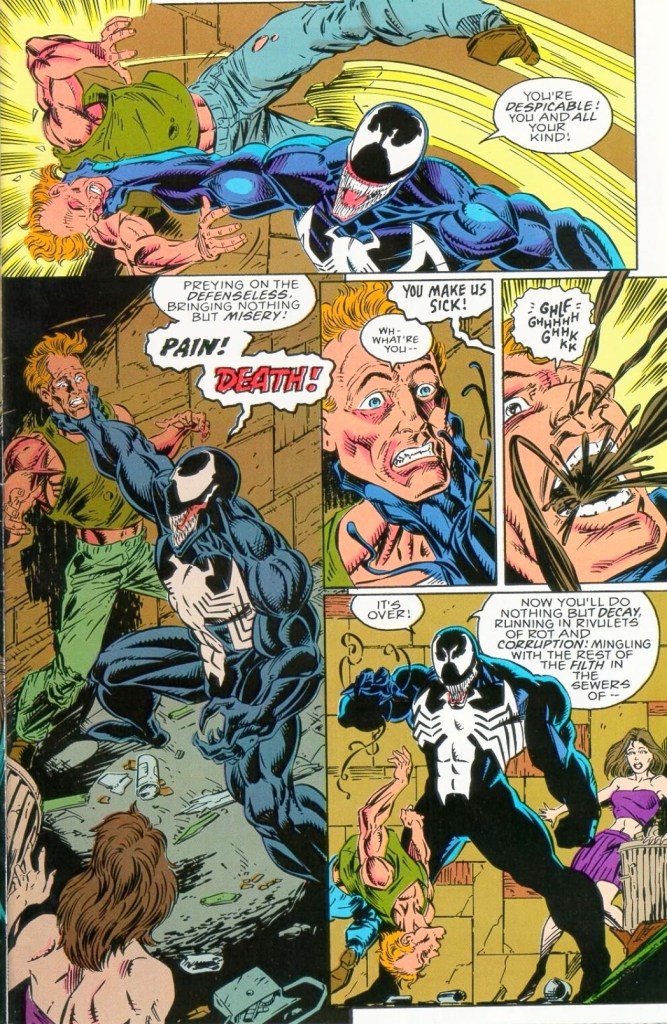
The story begins in San Francisco, California. Deep within the city, a man cornered a lady at the dead end of an alley. Just as he was about do something bad to her, Venom leaps in at them. Totally surprised, the man was easily grabbed by Venom who lifted him and hit the wall bodily. Using his costume, Venom then chokes the man to death through the mouth and nose. Venom then picks up the lady’s purse and gives it to her. As soon as Venom leaves, the shocked lady runs away screaming.

Venom swings and leaps as he travels through the city. While traveling, Eddie Brock tells his living costume that while their hatred towards Spider-Man got reconciled a bit, the said superhero also helps the innocent. Eddie then reveals that he was born in San Francisco and they can start a new life together in it. Secretly, Venom turns into Eddie Brock in his civilian form. As Brock walks down the sidewalk, police officers nearby recognize him. It turns out. Eddie Brock was listed by police as a wanted person…

Quality

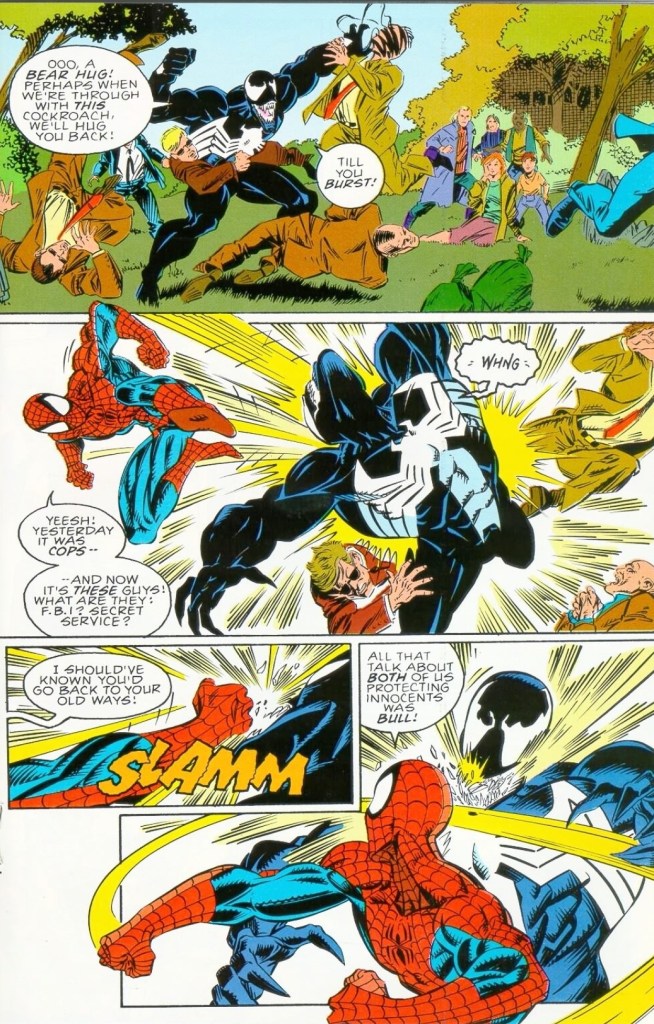
Spider-Man and Venom face each other unexpectedly.

Focusing on the plot, this story took place after the events in Amazing Spider-Man (1993) which was released AFTER this particular comic book. As a standalone Venom story, this one clearly portrays him more of a vigilante in the sense that he goes up against a new force of evil that happens to be pouncing on people that Venom believes to be innocent and powerless. Unsurprisingly, Venom does not seek the help of law enforcers to help the innocent but rather he takes violent action to help the victims, going as far as to kill the so-called bad guys. The bad guys in this story work under a powerful man whose son was killed by Venom a few years prior. Within the context of this comic book, the new force of evil was introduced in subtle ways.

With extensive experience writing tales about Spider-Man and Venom, David Michelinie clearly redefined Venom’s beliefs here. Venom believes in protecting the innocent but he is much more violent and is relentless with cruelty which makes him a clear opposite of Spider-Man. Yet in a way, Venom sure talks and acts in a rather psychotic way and this alone makes him a very unlikable comic book protagonist.

Along the way, the iconic Spider-Man got a rather huge chunk of the spotlight in this comic book making him the 2nd lead next to Venom. I remember back in 1993 when there were Venom fans who complained about Spider-Man literally stealing the thunder away from his greatest enemy while there were a few Spider-Man fans who defended the icon’s guest participation in the story as he has always been linked with Venom’s origin. Considering the lack of depth in the plot, I can say Spider-Man appearance her served as a somewhat helpful filler.  

Conclusion

Helping victims does NOT justify killing. This makes Venom a major turn-off as a comic book protagonist.

Venom: Lethal Protector (1993) is a comic book that can be alienating, especially when you are not a Venom fan. I find Venom too evil and too unbelievable to be a heroic figure even though he strong believes in protecting and helping the innocent. In my view, he is more of vigilante living with the delusion of achieving something worthwhile as he interacts with people who happen to be not assisted by the many, many Marvel Comics superheroes. It is not surprising that Venom definitely will never be a good role model. He is a murderer and the act of helping victims never justifies murder. The comic book’s plot lacks weight and Mark Bagley’s art looked a little rushed. What made this comic book interesting are Venom and Spider-Man themselves. Yes, there is a lot of superhero spectacle here but don’t expect anything new when you see Spider-Man and Venom resume their violent rivalry. This comic book is unsurprisingly a warm-up of things to come within its series. It is not a terrible literary work. It’s just not really good and it did not deserve the hype and sales of its time.

Overall, Venom: Lethal Protector (1993) is serviceable.

+++++

Thank you for reading. If you find this article engaging, please click the like button below, share this article to others and also please consider making a donation to support my publishing. If you are looking for a copywriter to create content for your special project or business, check out my services and my portfolio. Feel free to contact me with a private message. Also please feel free to visit my Facebook page Author Carlo Carrasco and follow me on Twitter at  @HavenorFantasy as well as on Tumblr at https://carlocarrasco.tumblr.com/ and on Instagram at https://www.instagram.com/authorcarlocarrasco
A Look Back at What If #17 (1990)

Disclaimer: This is my original work with details sourced from reading the comic book and doing personal research. Anyone who wants to use this article, in part or in whole, needs to secure first my permission and agree to cite me as the source and author. Let it be known that any unauthorized use of this article will constrain the author to pursue the remedies under R.A. No. 8293, the Revised Penal Code, and/or all applicable legal actions under the laws of the Philippines.

Welcome back superhero enthusiasts, 1990s arts and culture enthusiasts, Marvel Comics fans and comic book collectors! Today we go back to the year 1993 and explore a part of Marvel Comics’ universe through the reimagined tales emphasized in the What If monthly series.

Several years ago, I bought myself a trade paperback collection of the 1987 Spider-Man storyline Kraven’s Last Hunt written by J. M. DeMatteis and drawn by Mike Zeck. That particular storyline was very notable not just for its dark approach to storytelling and visualization, but it also explores what would happen had Spider-Man been defeated and someone very obsessed took his place and go on a rampage disguised as Spider-Man. The storyline also explored how Kraven perceived Spider-Man without ever knowing the defining traits of the man behind the mask – Peter Parker. Eventually, Marvel Comic went on to revisit Kraven’s Last Hunt and explored what would happen had Kraven actually killed Spider-Man through their What If? monthly comic book series.

With those details laid down, here is a look back at What If , published in 1990 by Marvel Comics with a story written and drawn by Richard Howell.

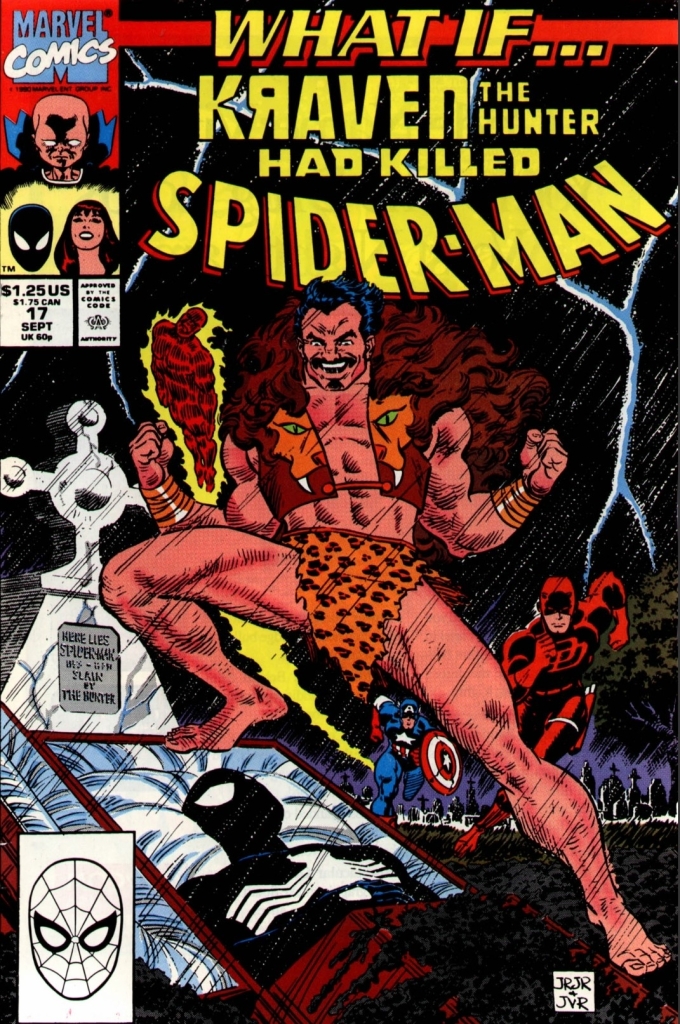
The cover.

Early story

The story begins with the Watcher revisiting key moments from the Kraven’s Last Hunt storyline. History then takes a turn towards the unexplored when Kraven, armed with a gun, shoots and kills Spider-Man. As the dead webslinger lies in a coffin, Kraven celebrates his victory with a lot of passion believing that he struck back at what he perceives to be the meaninglessness of the world. Kraven is quite mad as he equates spiders with Spider-Man as well as the decline of civilization.

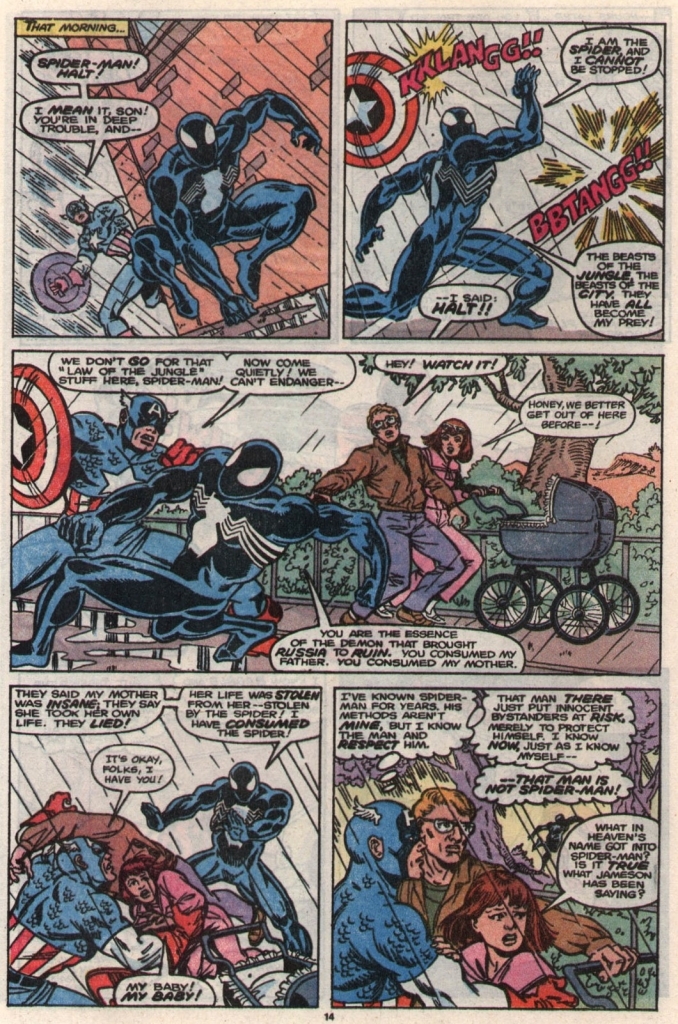
After fearlessly and grotesquely eating spiders, Kraven wears a black body tight costume that looks almost the same as that of Spider-Man’s. While he is victorious, Kraven is not satisfied and he becomes obsessed by becoming Spider-Man and prove himself superior to him. He then moves into the city whose people are familiar with Spider-Man and also are unprepared with who is coming to them.

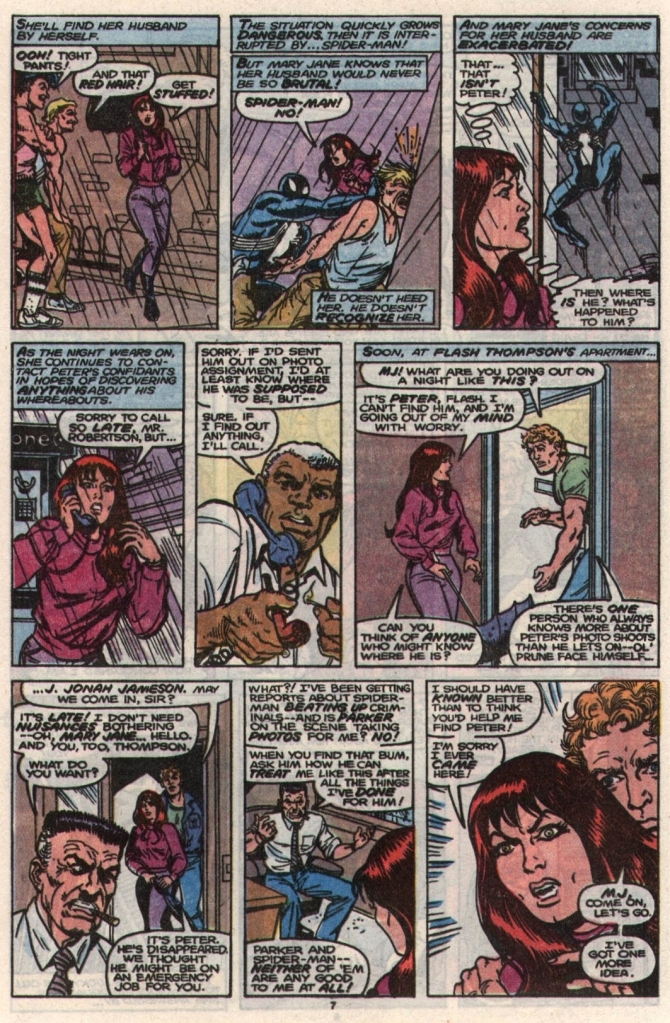
In an apartment, Spider-Man’s wife Mary Jane Parker is alone and worried. As she does not know that her beloved Peter Parker has been killed, she cannot help but agonize over the strain of his double-life as a civilian and as a superhero. Determined to find Peter, she walks out during the rainy night and is spotted by two men focused on her.

Suddenly the new Spider-Man (Kraven) appears and in an apparent effort to help Mary Jane, he grabs one of the men and brutally pushes the man’s head on to a nearby wall. As Kraven does not recognize Mary Jane, the wife realizes that the Spider-Man she just saw is definitely not her husband. This only makes her wonder again where he is and what happened to him. She then starts calling others for help…

Quality

In addition to being ruthless, Kraven disguised as Spider-Man resembles Venom.

I’ll start with the visuals. This comic book took a serious effort to come close to capturing the look and visual tone of the Kraven’s Last Hunt storyline which I enjoyed. Richard Howell visualized the characters, the situations and details properly and there was not a single moment when the visuals overwhelmed the narrative. Howell’s artistic take on the characters is simplistic but they remain recognizable which is a plus. The superhero spectacle was presented with a clear and clean approach, and there were a few key moments of action that got highlighted with some dynamism.

As for the story itself, what I found surprising and also pleasant here was the presentation of Mary Jane Parker as the main character instead of Kraven. This makes sense as Kraven himself was the major attraction of the Kraven’s Last Hunt storyline while Spider-Man was out of commission. In the context of this What If story, it only made sense to have Mary Jane as the central figure. Going back to Kraven, Howell captured the essence of the character well when compared to his version in Kraven’s Last Hunt.

In terms of plotting, telling the story through the viewpoint and actions of the superhero’s concerned wife really works well. Without spoiling the plot, you will see Mary Jane get involved with three notable superheroes – including the iconic Captain America – and even with other notable Spider-Man supporting characters such as Flash Thompson and the irresponsible print media figure J. Jonah Jameson. Interactions aside, the plot works sufficiently as a couple of series of events take place before the big confrontation with Kraven (as the new Spider-Man). By the end of it all, I can say that the story is entertaining, engaging and intriguing to read.

Conclusion

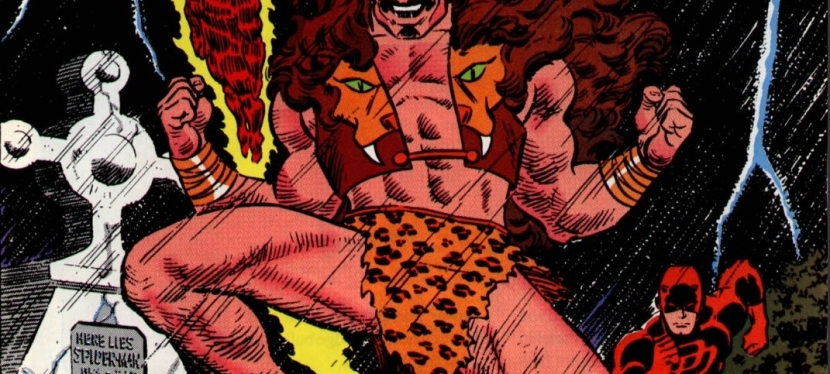
Mary Jane Parker goes out in pursuit of her husband Peter Parker/Spider-Man who happens to be dead already at this particular point of the story.

I can say that What If (1990) is pretty captivating read and it is a worthy literary companion to Kraven’s Last Hunt. Of course, to really enjoy this alternative tale cleverly told by Howell, you must read Kraven’s Last Hunt first. Otherwise, you would not feel the impact of this comic book very much. I also liked how the death of Spider-Man (note: Spider-Man got killed in another What If tale that itself is worth reading) impacts Mary Jane, how it impacts the superheroes who know him, and most notably how it impacts the fragile relationship between society and superheroes. Lastly, this comic book has one of the more significant portrayals of Spider-Man’s most beloved woman. This is indeed a great story.

Overall, What If (1990) is highly recommended!

+++++

Thank you for reading. If you find this article engaging, please click the like button below, share this article to others and also please consider making a donation to support my publishing. If you are looking for a copywriter to create content for your special project or business, check out my services and my portfolio. Feel free to contact me with a private message. Also please feel free to visit my Facebook page Author Carlo Carrasco and follow me on Twitter at  @HavenorFantasy as well as on Tumblr at https://carlocarrasco.tumblr.com/ and on Instagram at https://www.instagram.com/authorcarlocarrasco
A Look Back at Spider-Man 2099 #39 (1996)

Disclaimer: This is my original work with details sourced from reading the comic book and doing personal research. Anyone who wants to use this article, in part or in whole, needs to secure first my permission and agree to cite me as the source and author. Let it be known that any unauthorized use of this article will constrain the author to pursue the remedies under R.A. No. 8293, the Revised Penal Code, and/or all applicable legal actions under the laws of the Philippines.

Welcome back, superhero enthusiasts, 1990s culture enthusiasts and comic book collectors! Today we revisit the world of 2099 within the universe of Marvel Comics back in the 1990s, specifically through the Spider-Man 2099 monthly series.

In this retro review, the Venom 2099 storyline continues (for my previous reviews, click here, here, here and here). Since my previous review, the futuristic Venom has been captured by Spider-Man and is now in the custody of Alchemax where Miguel O’Hara (Spider-Man of 2099) holds considerable power and authority. As seen in issue #38, Miguel’s rage was clearly affecting him and pushed him to the point of wanting revenge (by means of death, no less) over the death of Dana.

With those details laid down, here is a look back at Spider-Man 2099 #39, published in 1996 by Marvel Comics with a story written by Peter David and drawn by Andrew Wildman.

The cover.

Early story

The story begins with Miguel O’Hara, still impacted by Dana’s death and what he personally discovered about Venom, walking through the offices of an Alchemax building where several employees greet him formally which he does not seem to enjoy. He walks into a laboratory where he sees the two that compose Venom – Kron Stone and the symbiote (living costume) – contained separately with hard glass containers.

Kron Stone, who is related to the powerful Tyler Stone and was responsible for the death of the family of Jake Gallows/Punisher 2099, was declared dead which puzzles Miguel. As the two exchange words, it turns out Kron and Miguel knew each other from long ago. Upon the orders of Miguel, the scientists left the laboratory which gave their boss more privacy to exchange words with the trapped Kron who called him gutless.

Miguel then releases Kron from containment (but still separated from the symbiote), declares terms for their private fist fight (which Kron accepts), and begins to fight him…

Quality

Spider-Man, in his form as Miguel O’Hara, spends time with Xina.

Not surprisingly, the high level of quality and engagement of the writing here is successfully maintained by Peter David and it is very clear to me that he had planned to dramatically shift the direction of the Spider-Man 2099 series and impact the key characters as the story of Venom 2099 went on.

That being said, Peter David went on to not only show Miguel literally burning with rage but also dramatized his move towards the extreme. Not only do we get to see Miguel really abusing his Alchemax authority, he also gets violent with Kron Stone who was powerless without the symbiote. These scenes clearly show that the border that separates good and evil got blurred which showed a very dark side of Miguel O’Hara struggling with his rage, emotions and whatever sanity he still has left.

To be clear, the story here was not purely about Miguel and Kron. There is also the scene in which a cooled down Miguel spends time with Xina who made clear to him her reaction over Dana’s death. Peter David also took the opportunity to not only show more of the return Vulture 2099 but also brought in the 2099 version of Green Goblin simply called Goblin who clearly has an agenda against Spider-Man which adds to the suspense and the overall narrative of the series. The appearance of Goblin also sheds light on the nature of vigilantism and elements of chaos within the 2099 universe.

Conclusion

Miguel and his half-brother Kron Stone begin their fight.

I can say that Spider-Man 2099 #39 (1996) is a very solid read. Not only did the Venom 2099 storyline reflect the serious changes on the characters, it is also led to a bold new direction for the monthly series. Carrying on the dramatic stuff from the previous issues, this comic book also serves as a character examination on Miguel O’Hara which will compel not only the fans but also comic book readers to reflect about what they knew about Spider-Man of the far future and speculate as to how he will turn out and how he would impact the people around him.

If you are seriously planning to buy an existing hard copy of Spider-Man 2099 #39 (1996) be aware that as of this writing, MileHighComics.com shows that the near-mint copy of the regular edition costs $80 while the near-mint copy of the newsstand edition costs $240.

Overall, Spider-Man 2099 #39 (1996) is highly recommended.

+++++

Thank you for reading. If you find this article engaging, please click the like button below and also please consider sharing this article to others. If you are looking for a copywriter to create content for your special project or business, check out my services and my portfolio. Feel free to contact me with a private message. Also please feel free to visit my Facebook page Author Carlo Carrasco and follow me on Twitter at  @HavenorFantasy as well as on Tumblr at https://carlocarrasco.tumblr.com/