A Look Back at Wonder Woman #15 (1988)

Disclaimer: This is my original work with details sourced from reading the comic book and doing personal research. Anyone who wants to use this article, in part or in whole, needs to secure first my permission and agree to cite me as the source and author. Let it be known that any unauthorized use of this article will constrain the author to pursue the remedies under R.A. No. 8293, the Revised Penal Code, and/or all applicable legal actions under the laws of the Philippines.

Welcome back, superhero enthusiasts, comic book collectors and Wonder Woman fans! Last time around, the Challenge of the Gods storyline concluded and it really had a lot of twists and profound surprises that really shook the foundation of the post-Crisis Wonder Woman monthly series that was spearheaded by George Perez and Len Win. The Challenge of the Gods started strongly in issue #10 and as each issue was released, the narrative got more intriguing and ultimately served its purpose on defining Wonder Woman as the ever-willing and pure Queen of Superheroes. Along the way, there was significant development of Queen Hippolyte who has been struggling between ruling her fellow Amazons and being a mother to Diana/Wonder Woman.

As the Challenge of the Gods was full of elements of fantasy and Greek mythology, it can be quite challenging for any comic book creator to start the next chapter of the Wonder Woman monthly series’ narrative without reusing the mentioned elements.

In the case of the next Wonder Woman comic book for review here, I can say that the creators literally brought Wonder Woman into the realm of realism and intrigue. With those details laid down, here is a look back at Wonder Woman #15, published by DC Comics in 1988 with a story written by George Perez and Len Wein. Perez illustrated the comic book.

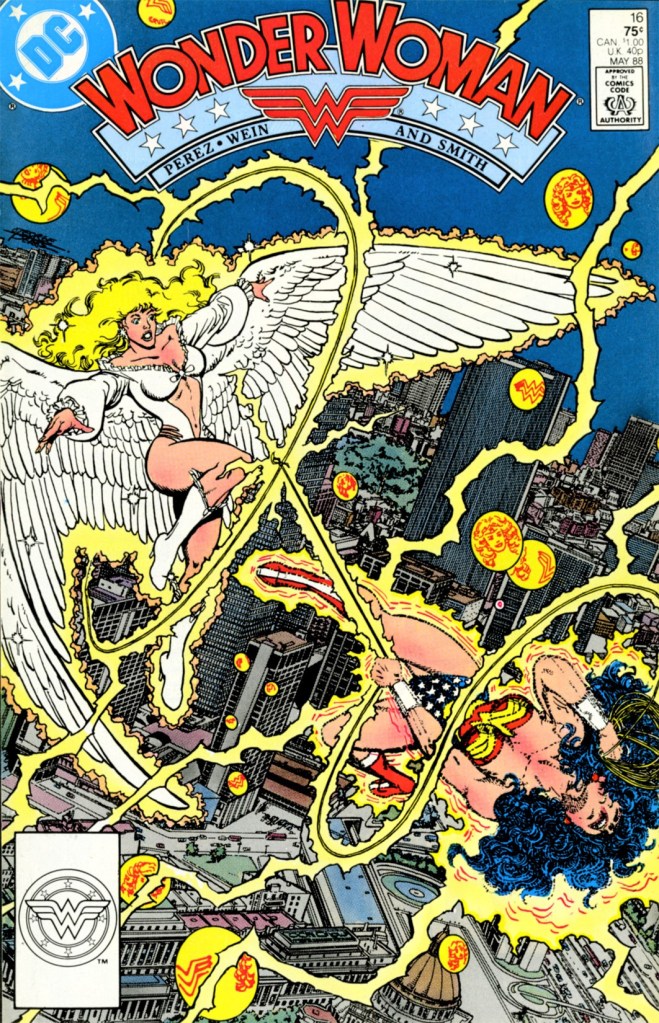
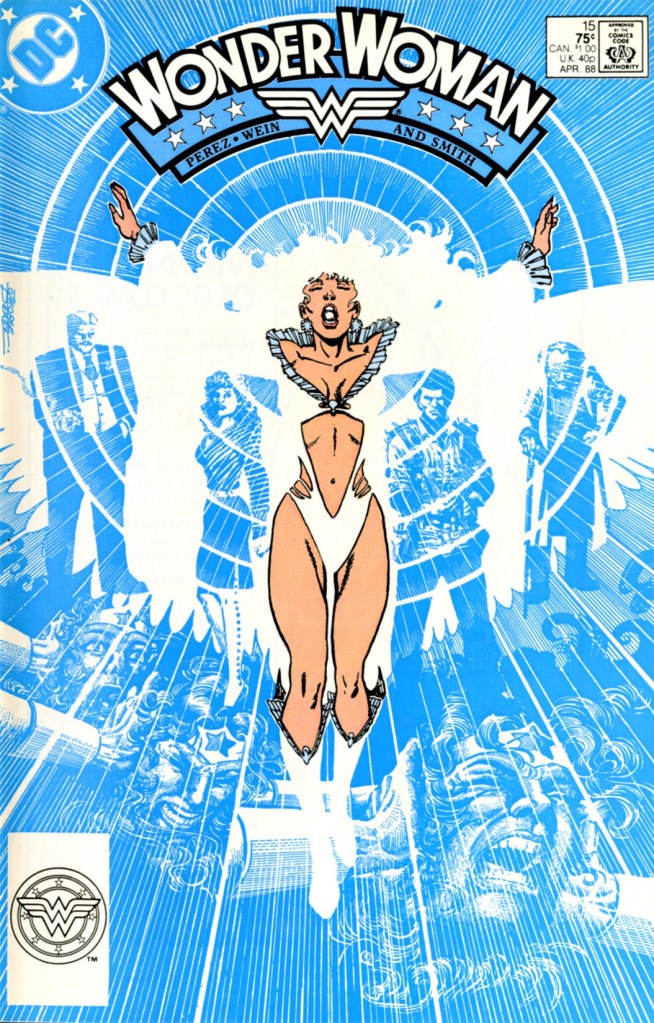
The cover.

Early story

The story begins with Wonder Woman having a very vivid dream about a certain great hero. After waking up from it, she feels that trying to keep up with all the events of the world must be taking its toll on her. She expressed that she is ill-prepared to deal with new sensations.

“In this world, man and woman long for these feelings. They cherish them. I’ve read how they have even died for them,” Diana said. “And that truly frightens me.”

While Diana is staying at the Kapatelis residence, it turns out Julia (mother of Vanessa) is overseas. She wishes that Julia is with her to discuss what she has been feeling.

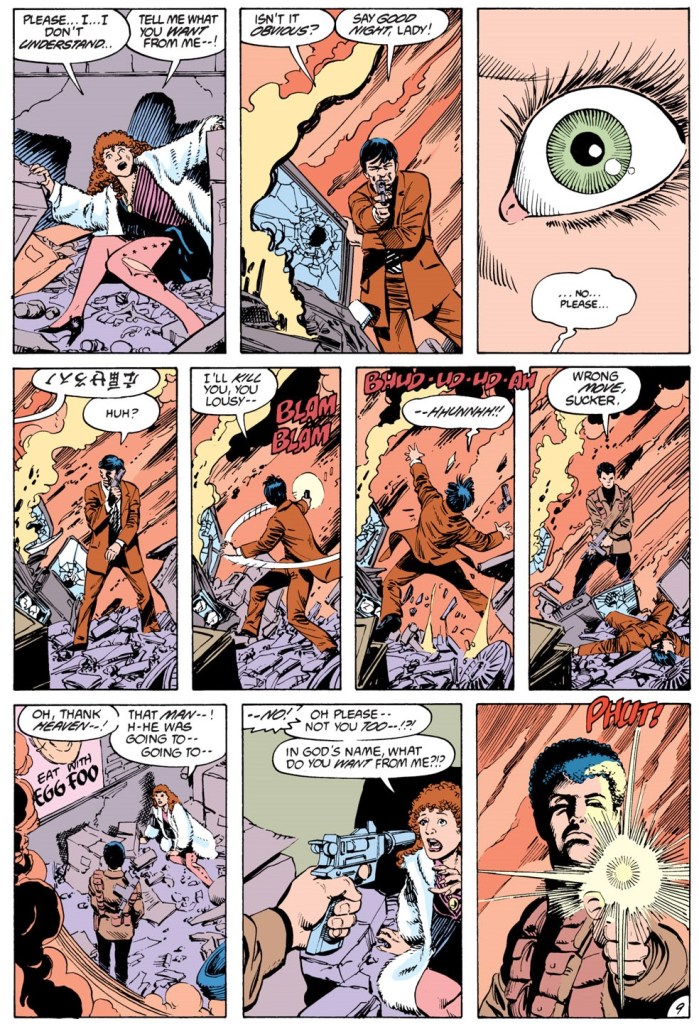
Meanwhile at the Ogawa headquarters in Boston, an armed man is using one of the company’s computers to acquire classified information about a subject referred to as Valerie Beaudry. A security guard arrives and decides to investigate as he realizes that his fellow guard was missing (knocked unconscious already). The infiltrator makes short work of him and leaves the building with the acquired information…

Quality

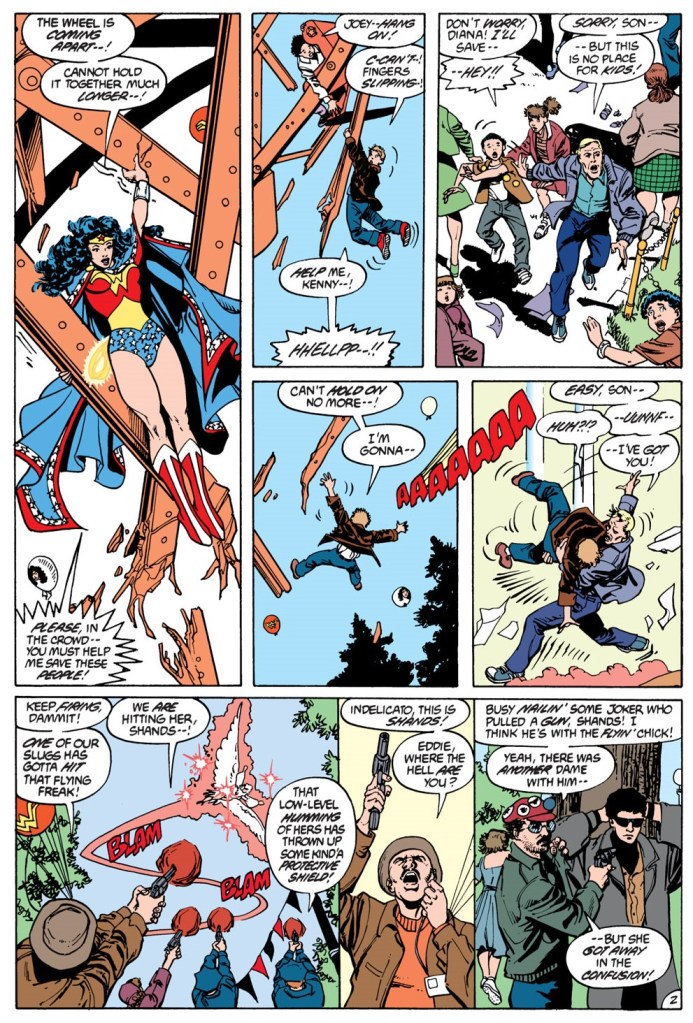
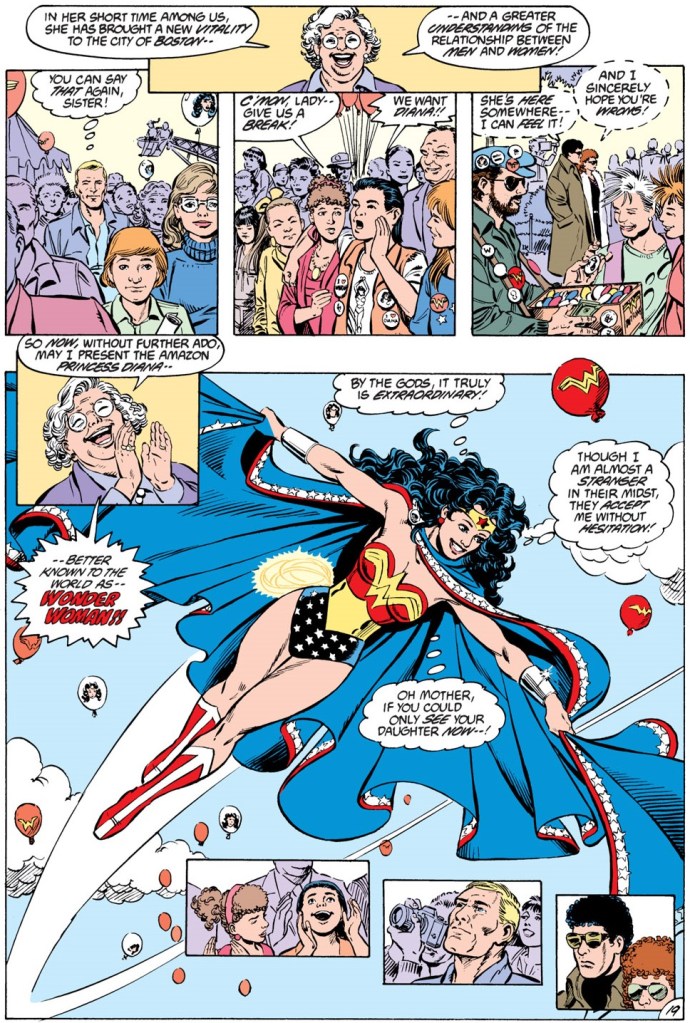
Wonder Woman appears at a major public event.

I can start with the sudden change of tone for the storytelling. Gone are the fantasy and mythology elements of the Challenges of the Gods storyline and fully implemented in this comic book are the elements of intrigue, suspense, assassination and even sci-fi. The story itself is more grounded with reality as far as the post-Crisis DC Comics universe goes and because it is well written, the sudden change of tone and style never felt jarring to me.

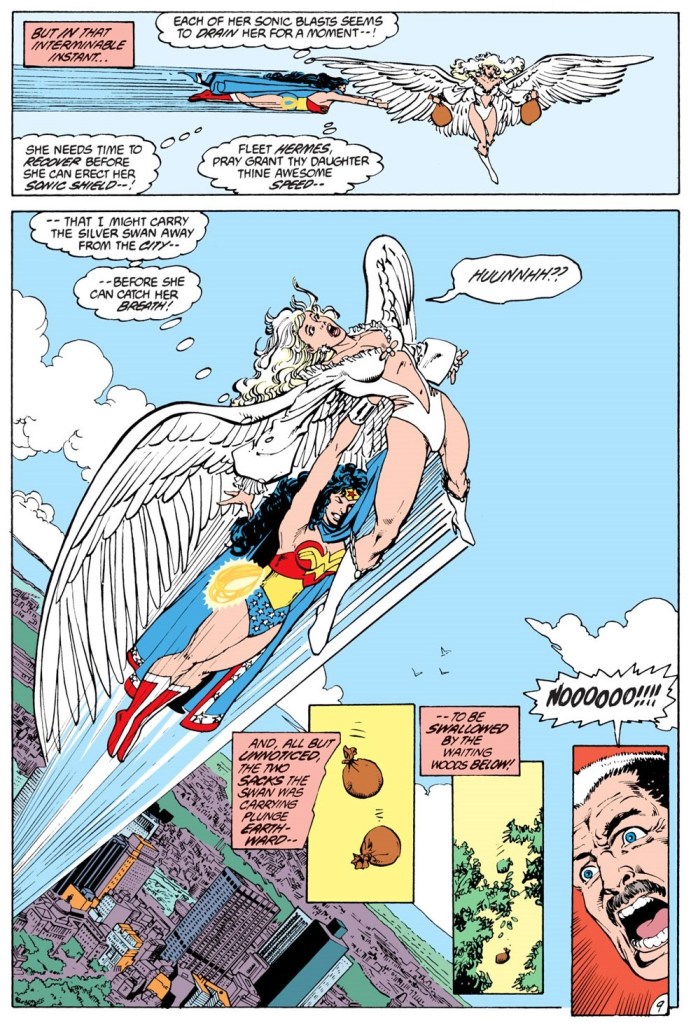
While the 9th issue of this monthly series introduced a modern Cheetah, this comic book introduced the modern Silver Swan in the form of Valerie Beaudry (who appears on the cover). The good news here is that the creators took their time in gradually building-up details about Valerie and how she became Silver Swan. By the time Silver Swan appears in the presence of Wonder Woman, her personal details and traits have been developed in a satisfying way. Unlike Wonder Woman #9, Silver Swan’s appearance in this comic book stretches on into the next issue.

Along the way, more new characters were introduced and the most notable ones are connected with Valerie Beaudry. Maxine Sterenbuch, who eerily resembles Wonder Woman’s teenage pal Vanessa but in adult form, has a close connection with Valerie over a period of many years. There was also Henry Cobb Armbruster, a tycoon who wield tremendous power and has been hiring assassins to do his bidding.

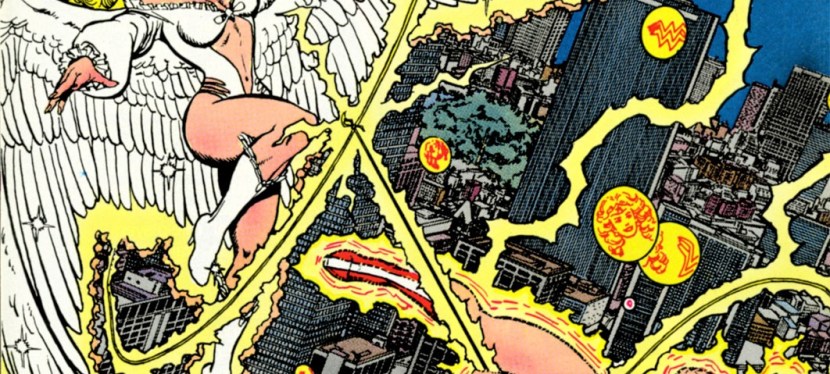
Going back to Wonder Woman herself, this issue explores more of her struggle with not only learning more about man’s world and its many divisions, but also the feelings she starts having as she connects more with other people – most notably with one of DC’s biggest icons. To have Julie Kapatelis absent left the creators room to have Diana not only bond more with daughter Vanessa but also strive more on analyzing what she learns in man’s world. The scene in which Wonder Woman notices a huge printed image of her is a vivid reminder about how negative and foolish idolatry is on people.

Conclusion

Intriguing action scene.

Even though it has no fantasy and mythology elements, Wonder Woman #15 (1988) is still a great comic book to read and it succeeds in progressing Diana’s discovery and learning of man’s world. Its introduction of the post-Crisis Silver Swan is memorable and her build-up (specifically her background story) is pretty engaging.

If you are seriously planning to buy an existing hard copy of Wonder Woman #15 (1988), be aware that as of this writing, MileHighComics.com shows that the near-mint copy of the regular edition costs $35 while the near-mint copy of the newsstand edition costs $70.

Overall, Wonder Woman #15 (1988) is highly recommended!

+++++

Thank you for reading. If you find this article engaging, please click the like button below and also please consider sharing this article to others. If you are looking for a copywriter to create content for your special project or business, check out my services and my portfolio. Feel free to contact me as well. Also please feel free to visit my Facebook page Author Carlo Carrasco and follow me at HavenorFantasy@twitter.com
A Look Back at Ravage 2099 #8 (1993)

Disclaimer: This is my original work with details sourced from reading the comic book and doing personal research. Anyone who wants to use this article, in part or in whole, needs to secure first my permission and agree to cite me as the source and author. Let it be known that any unauthorized use of this article will constrain the author to pursue the remedies under R.A. No. 8293, the Revised Penal Code, and/or all applicable legal actions under the laws of the Philippines.

Welcome back, superhero enthusiasts, comic book collectors and fans of Marvel. Today we revisit the original 2099 universe that Marvel Comics launched in the 1990s. We go back to the said universe through the eyes of Ravage 2099, the original 2099 character co-created by the late Stan Lee and artist Paul Ryan.

Before proceeding with my next retro comic book review of Ravage 2099, I want to stress that there was a time when the late Steve Ditko nearly launched Ravage 2099 with Stan Lee. For the newcomers reading this, Steve Ditko and Stan Lee are recognized for co-creating the iconic Spider-Man and to even imagine the two creators almost getting involved with the 2099 universe’s original hero is intriguing.

Marvel tried to get Ditko to work with Lee on Ravage 2099 early on. Then Marvel Comic editor-in-chief Tom DeFalco revealed that, on behalf of Lee, he called Steve Ditko who eventually attended a meeting which reunited them. After having a terrific discussion with Lee, Ditko cordially turned down the project. DeFalco stated that Ditko just did not agree with some of the philosophical underpinnings.

“Steve walked away, and I could tell he was really thrilled to have seen Stan,” DeFalco added.

With that short history over, here is a look back at Ravage 2099 #8, published in 1993 by Marvel Comics plotted by Stan Lee, scripted by Pat Mills and Tony Skinner and drawn by Gran Miehm. This was Stan Lee’s final work of writing a Marvel 2099 story.

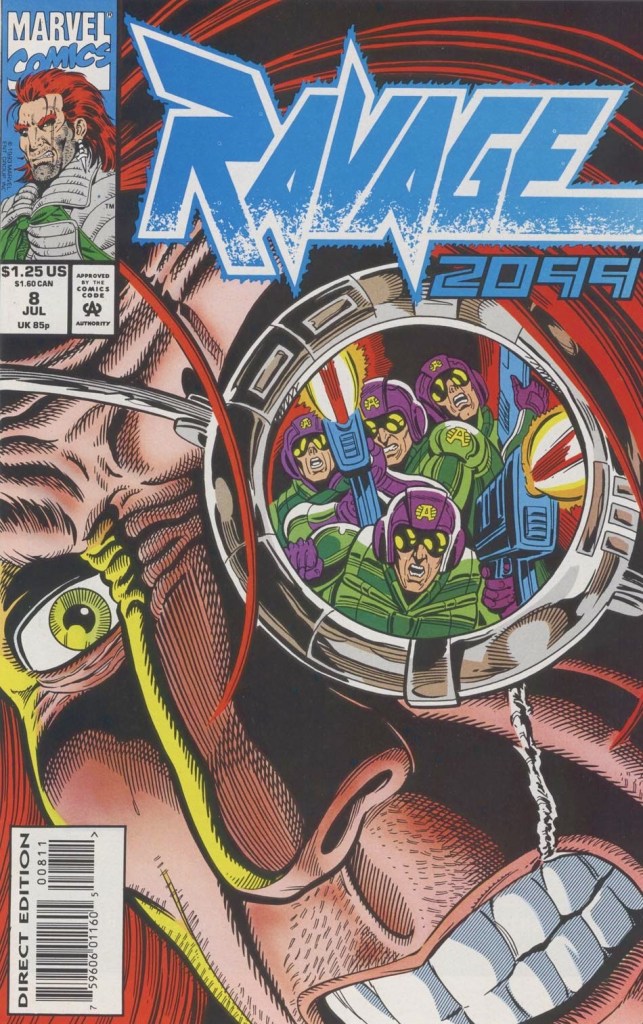
The cover.

Early story

The story begins with a weakened Ravage, Tiana and Dack already in trouble as a Public Eye battle copter approaches them. The three just escaped from an underwater city using an old vehicle from the Fantastic Four. While Tiana expressed that there is no way they could outfight or outfly Public Eye, Dack reminds her that Ravage is their only hope and because of him, they got away from the aquatic beings and survived.

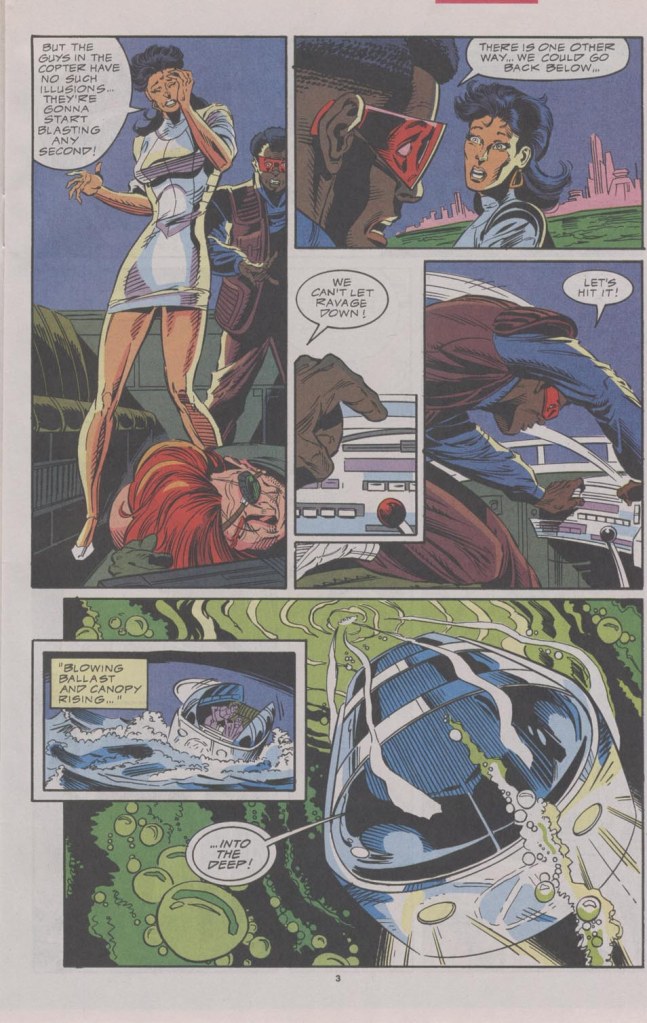
Dack then send their vehicle (which instantly blew ballast and raised a canopy) under water to escape from Public Eye. The effort was futile as the battle copter captures their vehicle and pulls it out of the water using a magnetic beam.

Knowing this development, Anderthorp Henton makes a confidential holo-call with Dethstryk and tells him that Ravage is in his possession. Henton also states that he intends to kill Ravage. Dethstryk demands Henton to deliver Ravage to him, insisting that it should be he who should kill him.

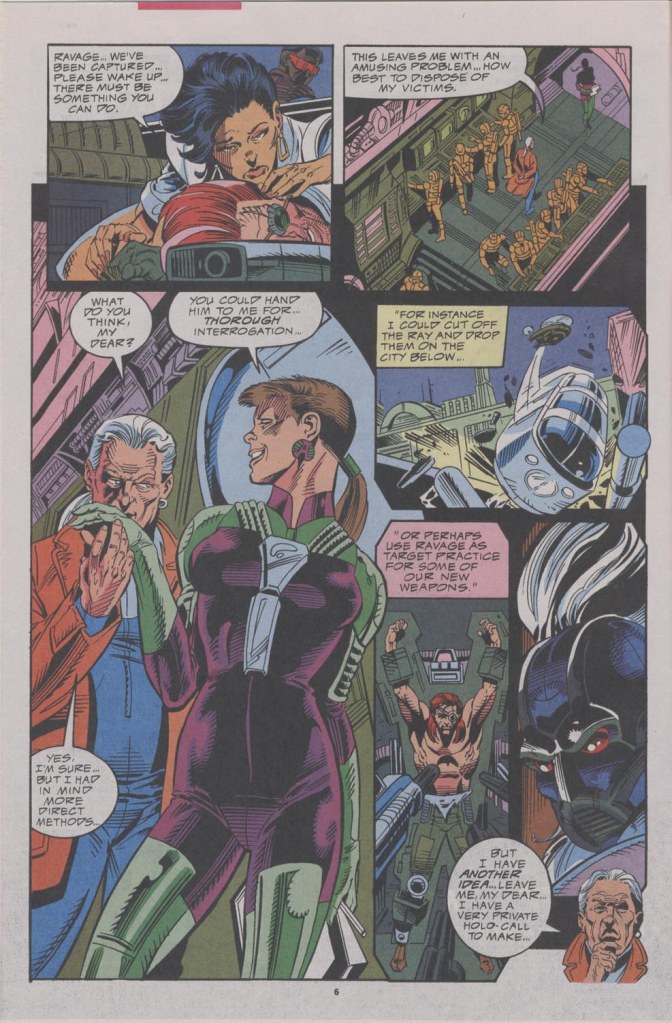
While captured in transit, Ravage struggles to write his instruction to his companions to take his gloves off…

Quality

Henton and his team with Ravage and his companions captured.

Finally, after going through the first seven issues that resulted unsatisfying plots, recycling of character elements and forcibly stretching the narrative, this particular issue has a story that combines doubtful heroism with a believable objective. Of course, it should be noted that Stan Lee provided the plot while leaving the scripting and pacing to two other writers who eventually took over the writing duties of Ravage 2099.

There were some improvements to the quality of the dialogue and narration (by Ravage). This comic book’s story was paced decently and there was not a single moment of stretching the narrative unrealistically. By this stage of the series, Ravage’s status as a heroic figure improved once again as he was given a purpose to fulfill. While we have seen him help Tiana or Dack escape from the bad guys, this story has him being more strategic and more determined to really solve a mystery while overcoming opposition.

Henton in this story, fortunately, is not a repeat of his cruel, cold-hearted self from the previous issues. This story reveals his link with Dethstryk and new insight as to who or what really controls Alchemax and its top officials. As such, there were some unexpected elements that transpired in the story.

Visually, Gran Miehm provided decent art and for the most part, Ravage and the other characters remained recognizable although I notice Dack looking more like a young adult than the teenager he really is.

Conclusion

Dack makes a move to help them get away.

Ravage 2099 #8 (1993) was Stan Lee’s last work with this particular series of the 2099 universe and thanks to the new writers who took scripting duties, this one has a satisfying story, higher quality dialogue and a more focused narrative. In retrospect, it was already too little and too late to salvage the Ravage 2099 series due to the inconsistent and overall weak storytelling that dominated the first seven issues.

If you are seriously planning to buy an existing hard copy of Ravage 2099 #8 (1993), be aware that as of this writing, MileHighComics.com shows that the near-mint copy of the regular edition costs $14 while the near-mint copy of the newsstand edition costs $42.

Overall, Ravage 2099 #8 (1993) is satisfactory.

+++++

Thank you for reading. If you find this article engaging, please click the like button below and also please consider sharing this article to others. If you are looking for a copywriter to create content for your special project or business, check out my services and my portfolio. Feel free to contact me as well. Also please feel free to visit my Facebook page Author Carlo Carrasco and follow me at HavenorFantasy@twitter.com
A Look Back at Prime #19 (1995)

Disclaimer: This is my original work with details sourced from reading the comic book and doing personal research. Anyone who wants to use this article, in part or in whole, needs to secure first my permission and agree to cite me as the source and author. Let it be known that any unauthorized use of this article will constrain the author to pursue the remedies under R.A. No. 8293, the Revised Penal Code, and/or all applicable legal actions under the laws of the Philippines.

Welcome back, superhero enthusiasts, comic book collectors and fans of the Ultraverse! Today, we will revisit the Ultraverse through the exploits of Prime who has already established himself in the city of New York (the result of Kevin Green and his mom’s move into the city).

Not only have we seen Prime fight a gigantic monster (that reminds me a lot of Japan’s Godzilla) to save New York and its many people, we have seen Turbo Charge getting involved with him with a superhero-related passion.

What will happen next to Prime? Will Turbo Charge get even more involved in helping the people of New York? We can all find out in this look back at Prime #19, published in 1995 by Malibu Comics with a story written by Len Strazewski and Gerard Jones, and illustrated by Dave Cockrum (X-Men) and Tim Hamilton.

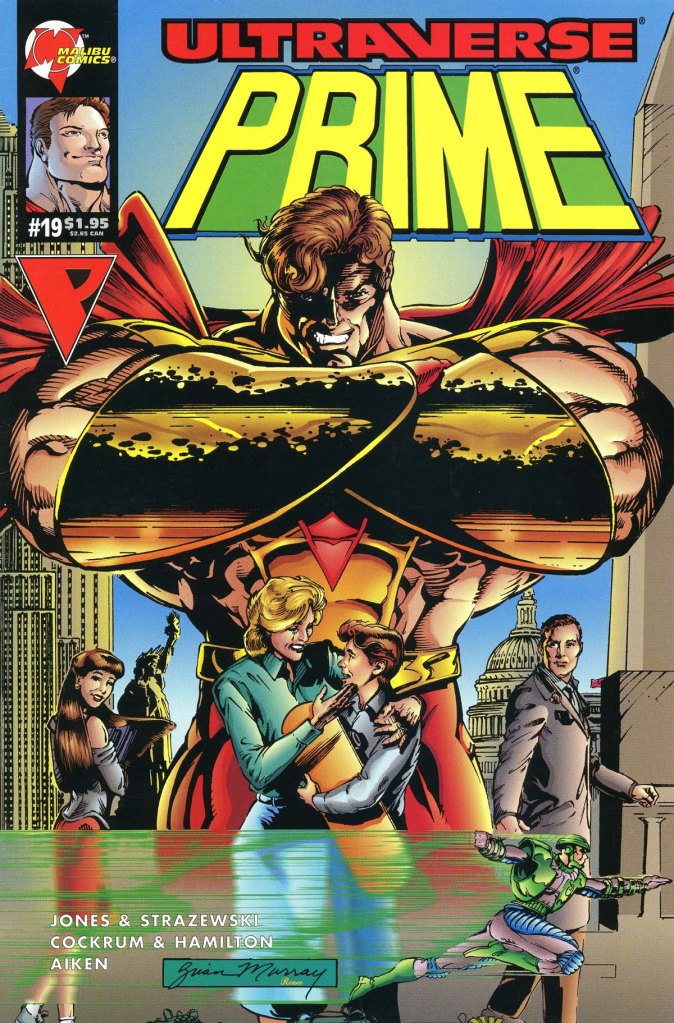
The cover.

Early story

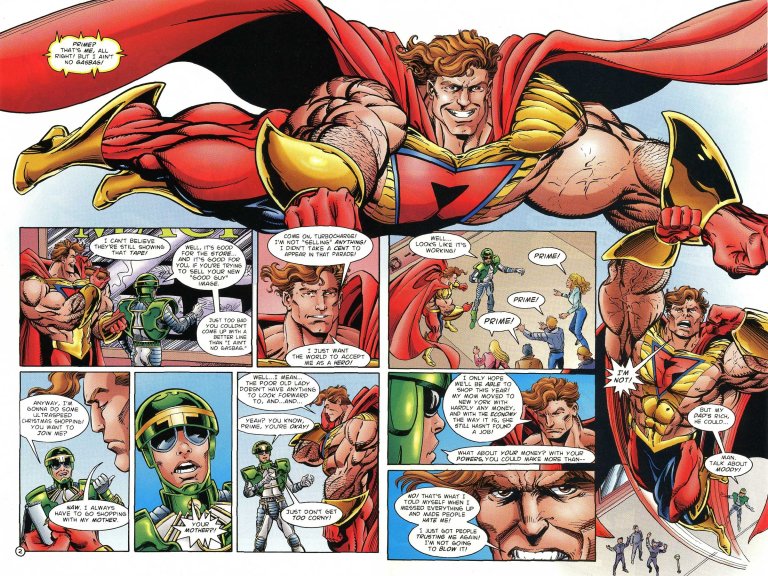
The story begins with Prime flying just above ground in the view of the many people attending the Macy’s Thanksgiving Day Parade in New York. Already he has been identified as the city’s newest Ultrahero.

Sometime later, within the city, Prime and Turbo Charge are watching television sets from outside a retailer’s window. As they talk about being in the spotlight, some fans approached Prime. The more Turbo Charge talks about taking advantage of the public trust and special abilities for financial gain, Prime rejects his suggestion as he remembers how he messed up previously.

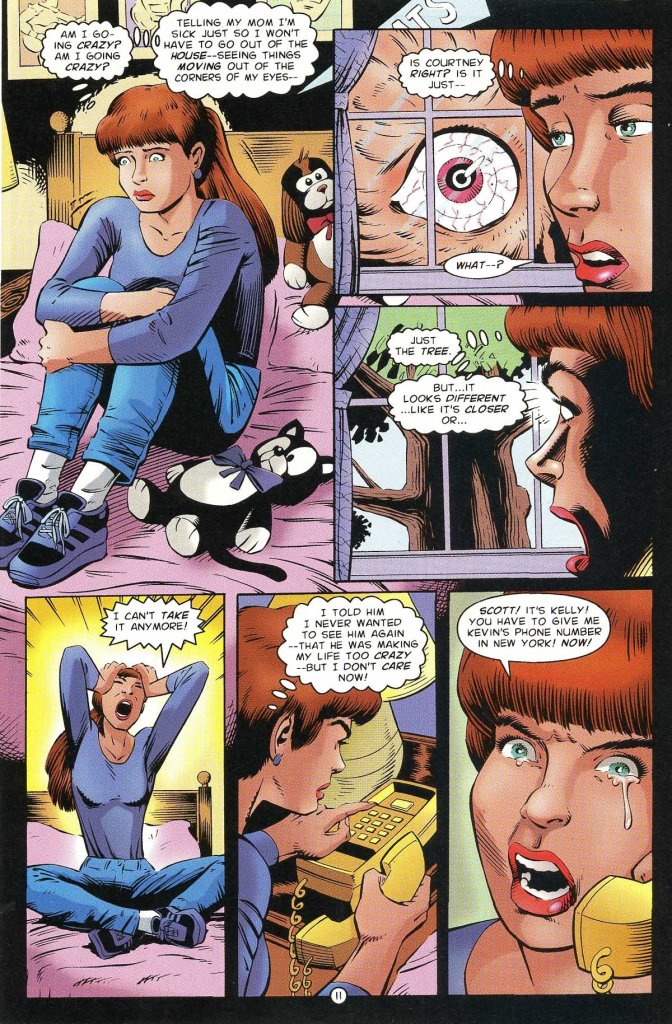
Meanwhile at Canoga Park, California, Kelly (Kevin’s romantic interest) is approached by Courtney (her best friend) who asked her what is she nervous about and what’s wrong with her lately. After their short talk, Kelly separates from her (who has a negative view of Kevin) and enters home at last. Suddenly a monster appears just outside the front door…

Quality

Kelly getting desperate.

I can confirm that the writing is rich and this story is much-more character-driven than the previous issue. The good news here is that there is a lot of engaging stuff and characterization to enjoy.

As before, Kevin’s struggle with balancing his personal life and his superhero ego together continues to be felt here. Not only has he been struggling with the media’s suspicion of Prime as a predator with teenagers, he also had difficulty talking with Turbo Charge (a teenager like Kevin) when it comes to sensitive bits of information that might expose his personal life. The way Strazewski and Jones wrote the script in dramatizing Kevin’s personal struggle came with really natural dialogue which made it all believable to read.

Within this story are three sub-plots about Kevin’s father, Kelly and Turbo Charge. Kevin’s father knows the whole truth about his son which makes him a valuable target by spies. Kelly’s struggle with monstrous visions are driving her nuts like never before. Turbo Charge meanwhile has a father who is well connected with the powerful in Washington, D.C. and the private sector. These sub-plots are well-written and add a good amount of depth and variety to the story.

As this issue was illustrated by Dave Cockrum and Tim Hamilton, there are noticeable changes in the aesthetics on Prime, Kevin and other related characters here and there. I just wish that the comic book pointed out which pages were drawn by whom. This is a fine-looking comic book.

Conclusion

Prime and Turbo Charge in New York.

Prime #19 (1995) is a very solid read mainly due to the strong characterization and the mentioned sub-plots (one of which finally got resolved in a satisfying manner). The more you follow Kevin’s story and his adjustment with life in New York, the more this comic book draws you in. There is also a short yet effective round of superhero spectacle that complete it. More importantly, this story keeps Prime’s story moving forward and even Kevin’s mother got a good amount of the spotlight.

If you are seriously planning to buy an existing hard copy of Prime #19 (1995), be aware that as of this writing, MileHighComics.com shows that the near-mint copy of the comic book costs $10.

Overall, Prime #19 (1995) is recommended.

+++++

Thank you for reading. If you find this article engaging, please click the like button below and also please consider sharing this article to others. If you are looking for a copywriter to create content for your special project or business, check out my services and my portfolio. Feel free to contact me as well. Also please feel free to visit my Facebook page Author Carlo Carrasco and follow me at HavenorFantasy@twitter.com
A Look Back at Freex #10 (1994)

Disclaimer: This is my original work with details sourced from reading the comic book and doing personal research. Anyone who wants to use this article, in part or in whole, needs to secure first my permission and agree to cite me as the source and author. Let it be known that any unauthorized use of this article will constrain the author to pursue the remedies under R.A. No. 8293, the Revised Penal Code, and/or all applicable legal actions under the laws of the Philippines.

Welcome back, superhero enthusiasts, comic book collectors and fans of the Ultraverse! Today we will revisit the Ultraverse following the team of misfits called Freex. In my past Freex review, we saw the first appearance of Contrary who went on to become one of the more intriguing members of the superhero team UltraForce. As seen in the UltraForce monthly series, Contrary proved to be very intelligent, very resourceful and has what it takes to manipulate the behaviors and direction of even the likes of Hardcase (the team leader), Prototype and Prime.  

Of course, before the events of UltraForce happened, many of Contrary’s traits and operations were first explored in the Freex monthly series. To learn more about her, here is a look back at Freex #10, published in 1994 by Malibu Comics with a story written by Gerard Jones and drawn by Ben Herrera.

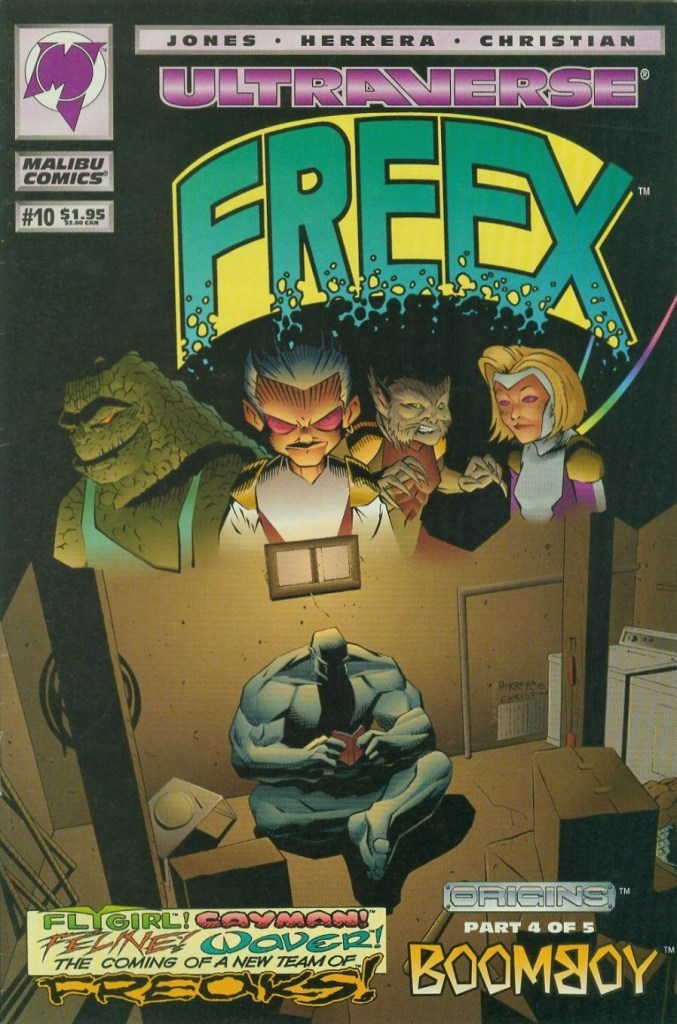
The cover.

Early story

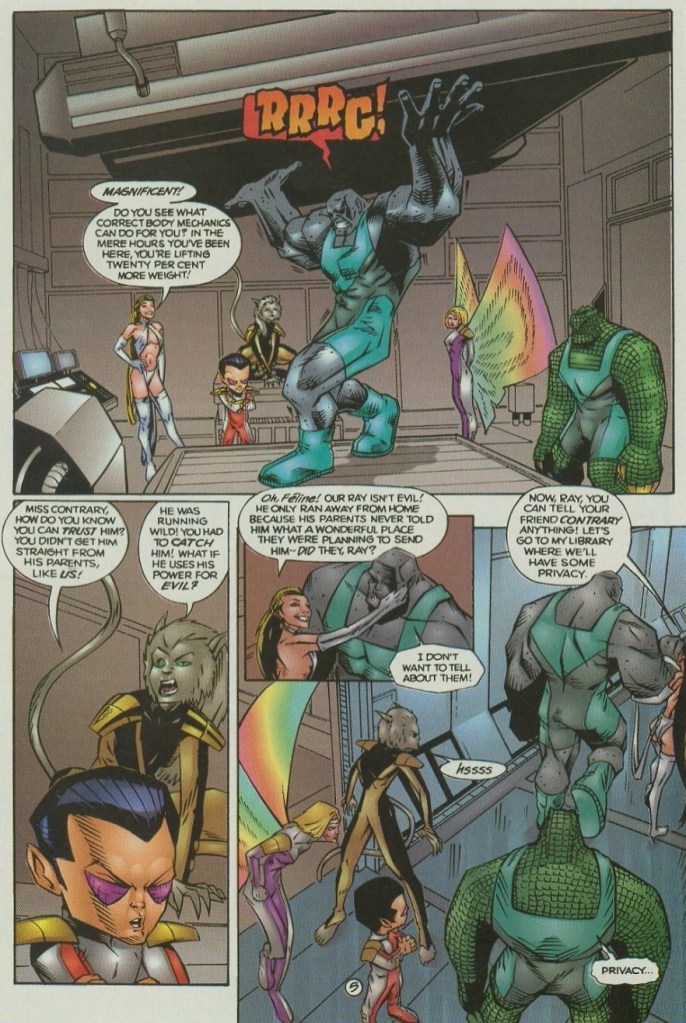
The story begins inside a secret facility. Ray/Boom Boy of Freex has just been abducted and is restrained in the presence of Contrary who is just seating near him looking sexy and comfortable. Knowing that Boom Boy has no chance to escape and fight back, she releases him and mentions that she has other students who will fight for her.

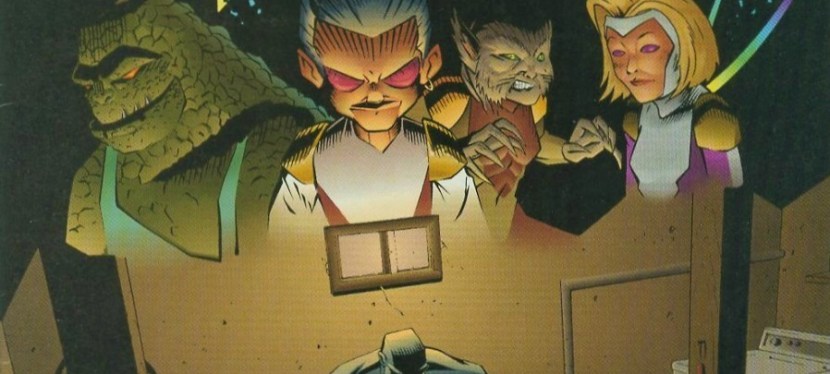
Slowly, Contrary leads him into another place of the facility telling him that he’s not locked up (like a prisoner) but rather he is home (implying there is a place for him at the facility). She introduces him to her Academy for the New Elite with her students engaging in a training session against drones and obstacles. Her students are Feline, Waver, Flygirl and Cayman.

Meanwhile, members of the Freex are still homeless and are trying to figure out how to find Boom Boy… 

Quality

The Freex, without Boom Boy, struggling.

I want to start with the writing. This issue was clearly less about Freex and more of Boom Boy (note: his personal origin emphasized) and Contrary and her academy of people with powers and special abilities. Creatively, this story has strong X-Men vibes in it which I personally enjoyed. I do confirm that the writing is strong on storytelling, characterization and dialogue.

While the previous issue introduced her briefly, Contrary is heavily emphasized in this issue. Apart from being resourceful and highly intelligent, she is also erotic with her appearance (so much of her skin exposed always) and at the same time she is well portrayed as a mentor to her students complete with traits of motherly care to them. In comparison with what I’ve seen in X-Men comic books, Contrary is like a combination of Charles Xavier and Emma Frost with some traces of Moira MacTaggert. I should also state that Contrary has a keen perception on finding outstanding or special individuals that she can help develop in more ways than one.

Going back to Boom Boy, this comic book really redefined him not only as a questionable member of Freex but also as an Ultraverse character in general. By reading this story, you will not only relate with Boom Boy but also experience the challenge he is having on whether to decide to be with his old pals or join Contrary’s academy (which itself is inspired by Xavier’s School of Gifted Children in X-Men comics) to really leave his past behind and move forward personally.

While this comic book is heavy with characterization and exposition, there is still a good amount of superhero to enjoy here. The good news is that artist Ben Herrera showed a lot of creative stuff with the spectacle.   

Conclusion

This scene has very strong X-Men vibes.

Freex #10 (1994) is a great Ultraverse comic book! I really found this particular issue to be very engaging from start to finish. As a story about the Freex themselves, this one saw their story as desperate nomads move forward a lot. Still the standouts of the story are Boom Boy and Contrary. If you have not read any issues of UltraForce yet, I highly recommend reading this so you can get to know Contrary better as she is one of the core UF members.

If you are seriously planning to buy an existing hard copy of Freex #10 (1994), be aware that as of this writing, MileHighComics.com shows that the near-mint copy of the comic book costs $11.

Overall, Freex #10 (1994) is highly recommended!

+++++

Thank you for reading. If you find this article engaging, please click the like button below and also please consider sharing this article to others. If you are looking for a copywriter to create content for your special project or business, check out my services and my portfolio. Feel free to contact me as well. Also please feel free to visit my Facebook page Author Carlo Carrasco and follow me at HavenorFantasy@twitter.com
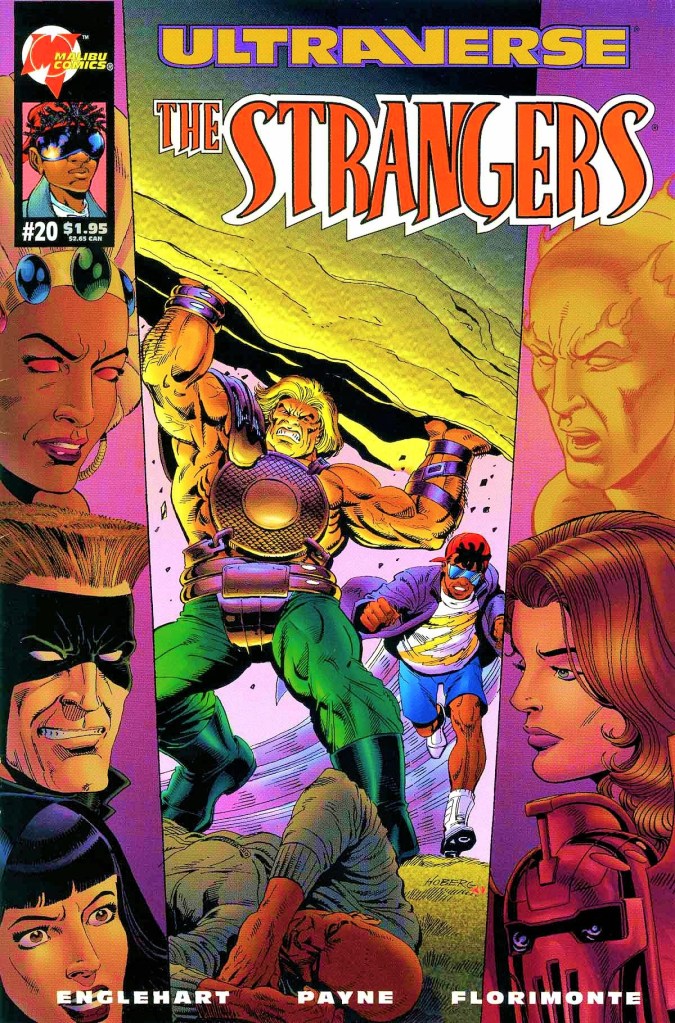
A Look Back at The Strangers #19 (1995)

Disclaimer: This is my original work with details sourced from reading the comic book and doing personal research. Anyone who wants to use this article, in part or in whole, needs to secure first my permission and agree to cite me as the source and author. Let it be known that any unauthorized use of this article will constrain the author to pursue the remedies under R.A. No. 8293, the Revised Penal Code, and/or all applicable legal actions under the laws of the Philippines.

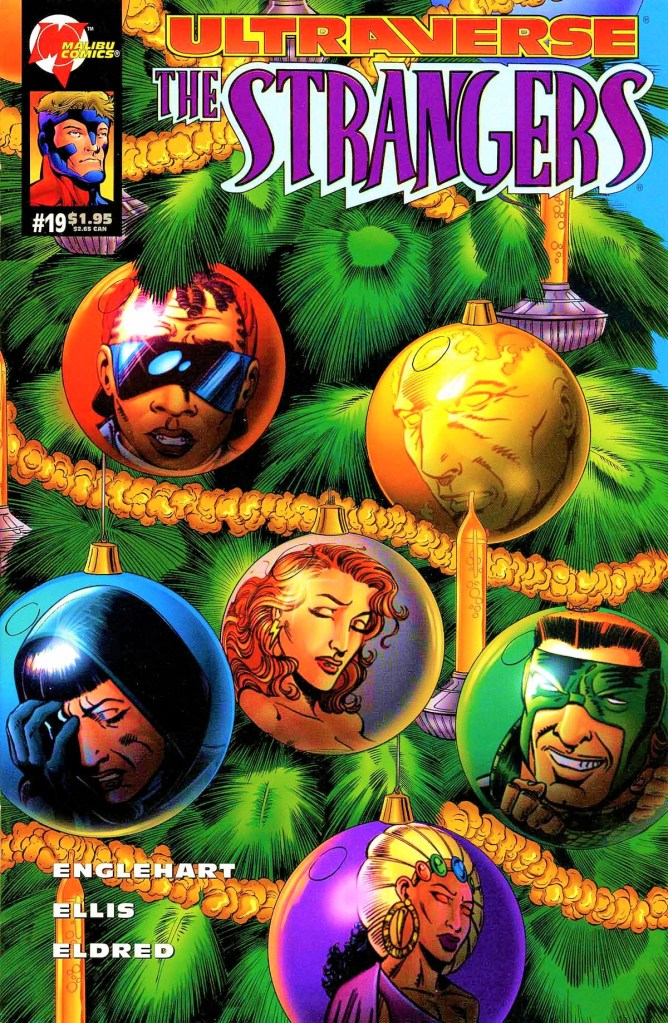
Welcome back, superhero enthusiasts, comic book collectors and fans of the Ultraverse! In this retro comic book review, we will revisit The Strangers in one of their later stories published in 1995. In issue #18, things got more complex as The Strangers not only had a genuine opposition to deal with but also another group of individuals with varied powers. For this new review, the story took place even way after issue #18 as there was a 100-page finale that took place in Night Man Annual #1 and The Strangers Annual #1.

To find out what happened next to the superhero team and its members, here is a look back at The Strangers #19, published in 1995 by Malibu Comics with a story written by Steve Englehart and drawn by Steve Ellis.

The cover.

Early story

The story begins in a private place where members of The Strangers each take time of silence across the floors. Noticeably absent was Atom Bob. Lady Killer recalls Atom Bob as her lover, their team’s brightest star and, unfortunately, a betrayer towards them all. She remembers several moments from recent times such as realizing Atom Bob’s desire to do something heroic, realizing that power to equal another one’s power is the better power, and the time he asked her to marry him. Deeply hurt by the betrayal, Lady Killer cries.

For his part, Grenade is feeling the anguish over the betrayal given the fact that they have been really close friends since childhood. When Grenade had trouble entering college, Atom Bob encouraged him to join him in enrolling at art school. The betrayal was so painful, he releases his anger using a bit of his power. A teammate appears behind him to try to talk sense to him…  

Quality

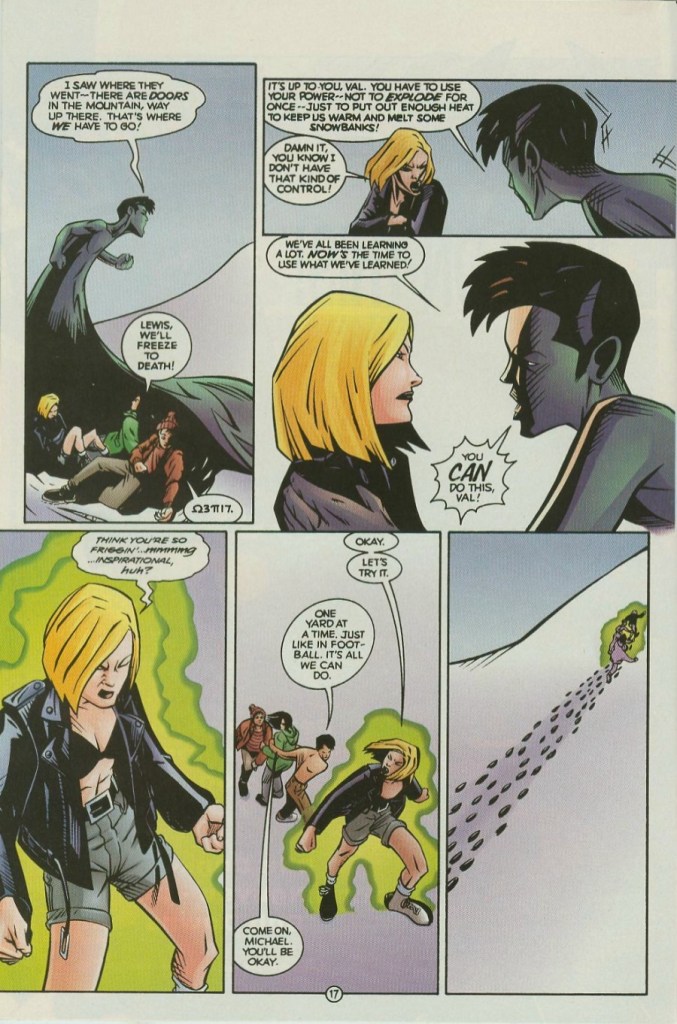
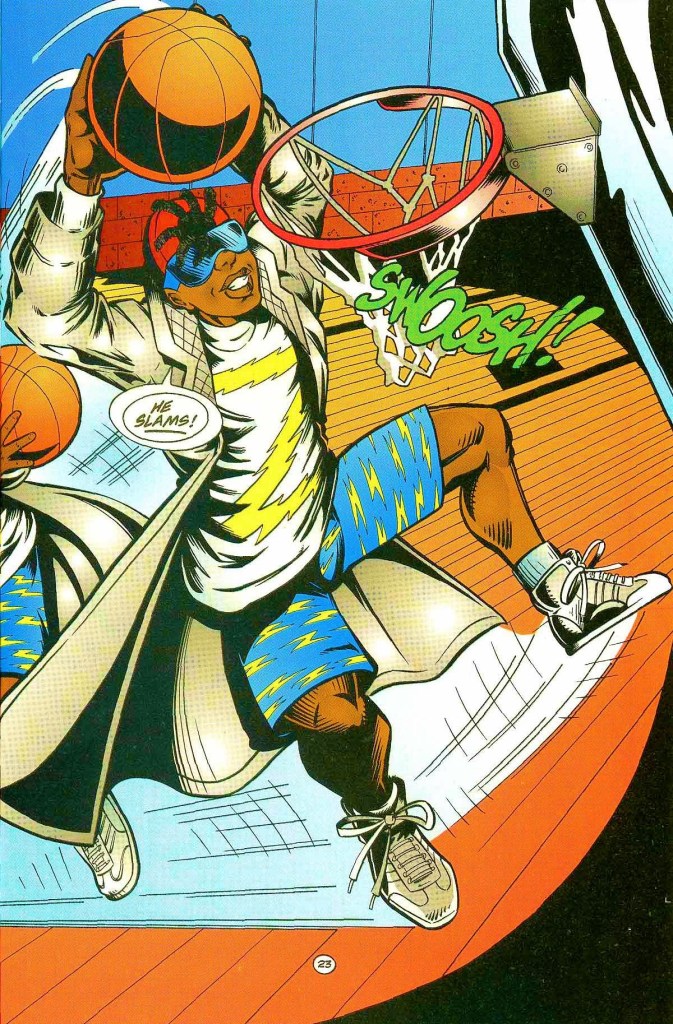
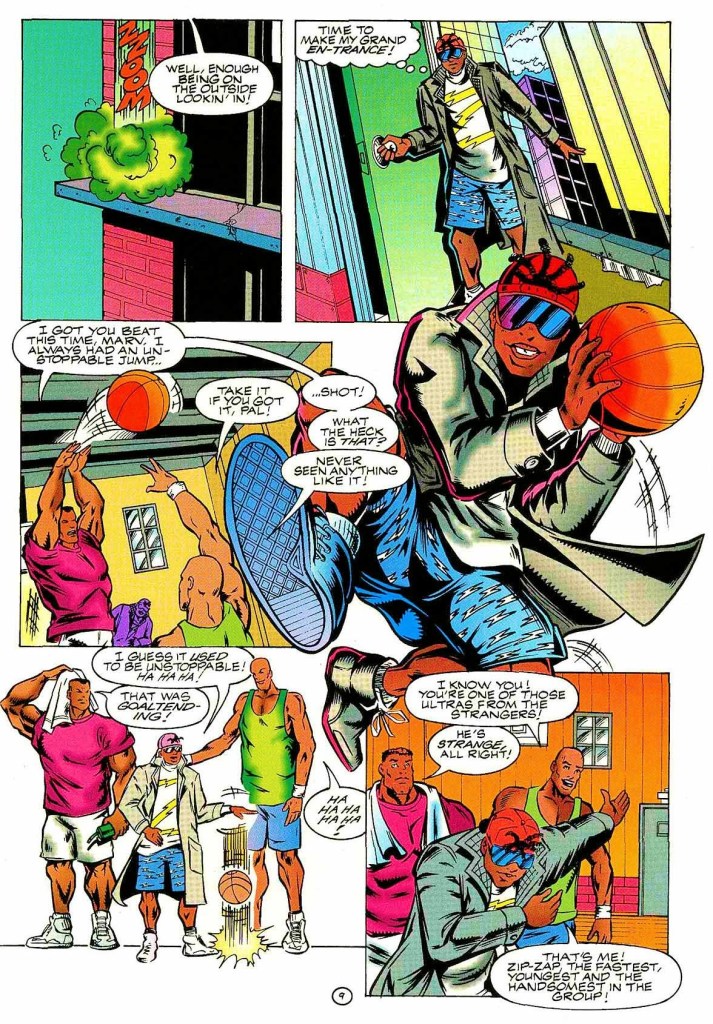
A very touching scene between Yrial and Zip-Zap.

Firstly, I should say that the writing done by Steve Englehart here is very rich with a strong emphasis on dramatizing the Strangers deeply. The dialogue written for each character reflects not only their emotions but also what is living within their respective hearts and what is in their minds. The character development is also rich and I love the way Englehart further developed the sister-brother-like bond between Yrial and Zip-Zap. As for Lady Killer, her pain will most likely resonate with readers who experienced betrayal and the loss of a loved one.

Secondly, the betrayal by Atom Bob really shows its emotional impact on the team. This one is not only a heavy burden on the characters but also a wave of shock via reading which long-time Strangers fans (who dedicatedly followed Atom Bob’s thoughts and exploits) can strongly relate with. Atom Bob’s overall value as a Strangers member is easily reevaluated in this comic book and his personal connections with Grenade, Yrial, Spectral, Zip-Zap, Electrocute and, most notably, Lady Killer are strongly emphasized. This should compel readers to revisit the early issues of The Strangers.

Of course, I should state that this comic book is not a pure emotion ride. There are still some scenes of action and spectacle that still make sense with the narrative. A certain character from The Strangers #4 makes a return here and another intriguing character appears here. They are both worth discovering.

The art done by Steve Ellis is very good, and his style is eerily very similar to that of Rick Hoberg. There were several images that reminded me of Hoberg’s take on each character.  

Conclusion

Lady Killer painfully remembering what happened.

There is no doubt about it. The Strangers #19 (1995) is another very good Ultraverse comic book to read and collect! Not only does it succeed in serving as the aftermath to the stories in in Night Man Annual #1 and The Strangers Annual #1, it also fulfilled its purpose in raising the stakes for the Strangers who are struggling with the pain and shock of Atom Bob’s betrayal. If you love character development, you will love this one.

If you are seriously planning to buy an existing hard copy of The Strangers #19 (1995), be aware that as of this writing, MileHighComics.com shows that the near-mint copy of the comic book costs $11.

Overall, The Strangers #19 (1995) is highly recommended!

+++++

Thank you for reading. If you find this article engaging, please click the like button below and also please consider sharing this article to others. If you are looking for a copywriter to create content for your special project or business, check out my services and my portfolio. Feel free to contact me as well. Also please feel free to visit my Facebook page Author Carlo Carrasco and follow me at HavenorFantasy@twitter.com
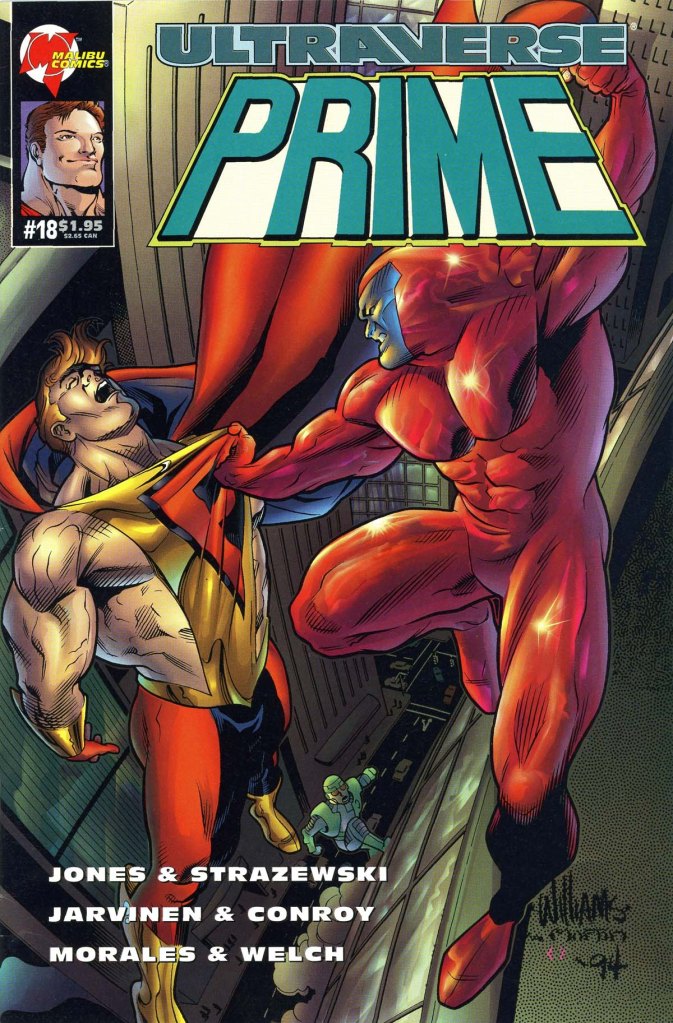
A Look Back at Prime #18 (1994)

Disclaimer: This is my original work with details sourced from reading the comic book and doing personal research. Anyone who wants to use this article, in part or in whole, needs to secure first my permission and agree to cite me as the source and author. Let it be known that any unauthorized use of this article will constrain the author to pursue the remedies under R.A. No. 8293, the Revised Penal Code, and/or all applicable legal actions under the laws of the Philippines.

Welcome back, superhero enthusiasts, comic book collectors and fans of the Ultraverse! In this return to the Ultraverse, we will examine another mid-1990s issue of Prime who became a resident of the City of New York as a result of Kevin Green and his mother relocating there.

Last time around, a huge monster (clearly inspired by Godzilla) arrived in New York and Kevin had no choice but to change into Prime to save people. While his heroic act saved lives and spared the city from further damage, Prime still was not spared from the growing speculation that he molested children in California (which by today’s standards is a ravaged state as a result of unrestrained influence of the Left as well as economic complications).

So what will happen next to Kevin/Prime the more time he spends in New York? We can find out more in this look back at Prime #18, published in 1994 by Malibu Comics with a story written by Len Strazewski and Gerard Jones, and drawn by Kirk Jarvinen and Keith Conroy.

The cover.

Early story

The story begins with Prime (standing behind a podium with a crowd in front of him) and the people getting surprised when Turbo Charge (note: his debut in issue #17 was overshadowed by the events of that comic book) suddenly arrived on stage holding civilian clothes and declaring he is Prime’s new partner.

Turbo Charge whispers to Prime that he arrived to help him by pretending that the clothes are his (note: the clothes actually belong to Kevin). He then speaks out to the audience stating distorted details. Just as members of the news media start asking Turbo Charge questions, Prime grabs him and flies away to leave the crowd behind.

As they got far enough, Prime tells the Turbo Charge he has no intention to accept him as a partner…

Quality

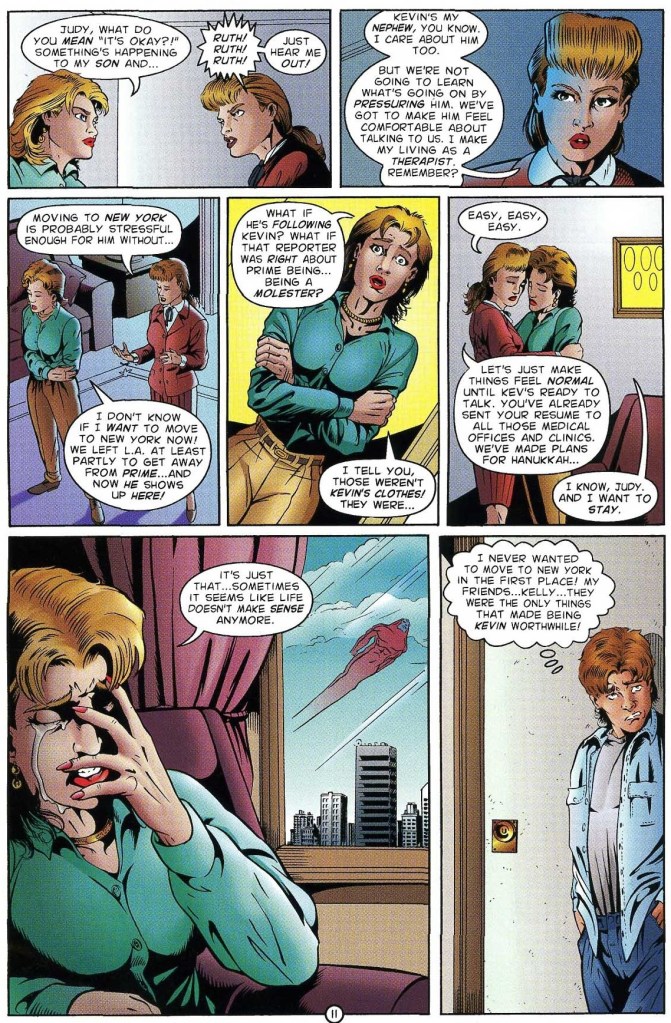
Prime’s private life as Kevin remains hard as ever.

As mentioned already, Turbo Charge’s debut in issue #17 was overshadowed by what happened in that comic book. That being said, the story here made up for it not only by investing more pages to emphasize Turbo Charge but also dramatize his personality which was done in a pretty satisfying fashion. Like Prime, Turbo Charge’s life has gotten complicated as a result of his ability of super speed and his personal desire to do good even though he is a teenager with so much to learn.

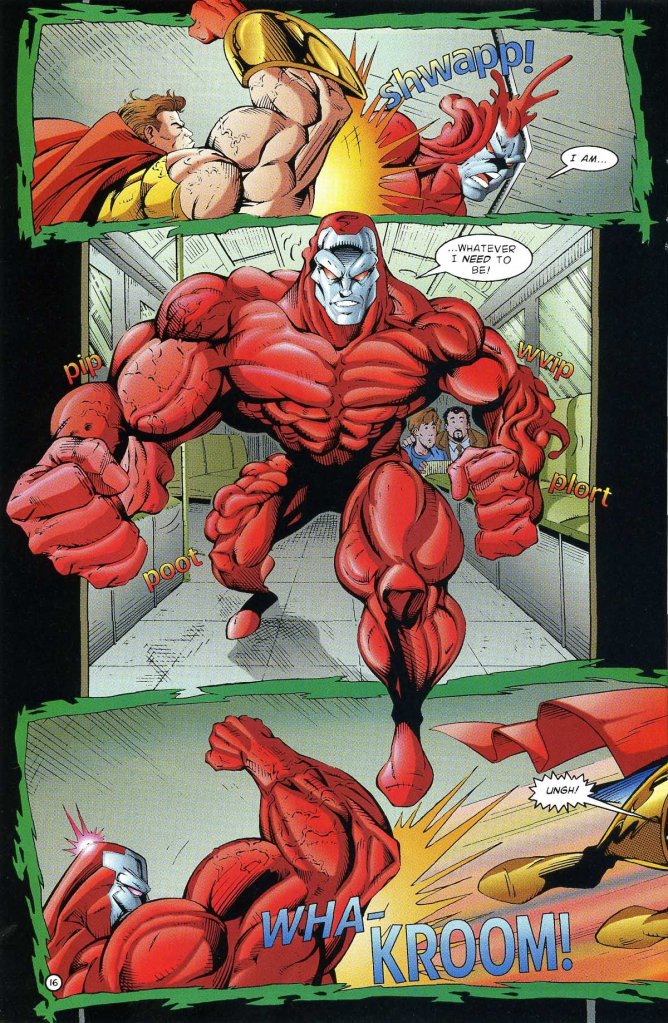
What I find delightfully surprising in this comic book is the presence of Manhattan Project, a powerful character whose dedication to protect New York’s people from ultras (which he wants to neutralize) leads him to a big fight with Prime which alone has to be seen. It is quite enjoyable.

As for Prime himself, there is a good amount of pages dedicated to his alter ego as Kevin still struggling to adjust to life in New York. It should be noted that key elements from issue #17’s story impacted her perception of Prime (a secret Kevin still keeps successfully). The characterization here for the protagonist is really good.

Conclusion

The fight between Prime and Manhattan Project is a must-see.

Prime #18 (1994) is a really good read. It has a fine balance of storytelling, characterization and spectacle from start to finish. I should also state that the New York setting is looking good as far as telling Prime’s story goes.

If you are seriously planning to buy an existing hard copy of Prime #18 (1994), be aware that as of this writing, MileHighComics.com shows that the near-mint copy of this comic book costs $10.

Prime #18 (1994) is recommended.

+++++

Thank you for reading. If you find this article engaging, please click the like button below and also please consider sharing this article to others. If you are looking for a copywriter to create content for your special project or business, check out my services and my portfolio. Feel free to contact me as well. Also please feel free to visit my Facebook page Author Carlo Carrasco and follow me at HavenorFantasy@twitter.com
A Look Back at Mantra #18 (1995)

Disclaimer: This is my original work with details sourced from reading the comic book and doing personal research. Anyone who wants to use this article, in part or in whole, needs to secure first my permission and agree to cite me as the source and author. Let it be known that any unauthorized use of this article will constrain the author to pursue the remedies under R.A. No. 8293, the Revised Penal Code, and/or all applicable legal actions under the laws of the Philippines.

Welcome back, superhero enthusiasts, comic book collectors and fans of the Ultraverse! We take another journey into the Ultraverse through the exploits of Mantra whose story and character development got more intriguing since after the conclusion of the Archimage Quest.

Last time around, Lukasz and Eden took their relationship even further The infiltration of Aladdin’s secret facility took place and Mantra even met a certain tycoon (best known for interacting with The Strangers). The events of the last issue then continued into the Godwheel mini-series and into this next Mantra comic book I’m about to review.

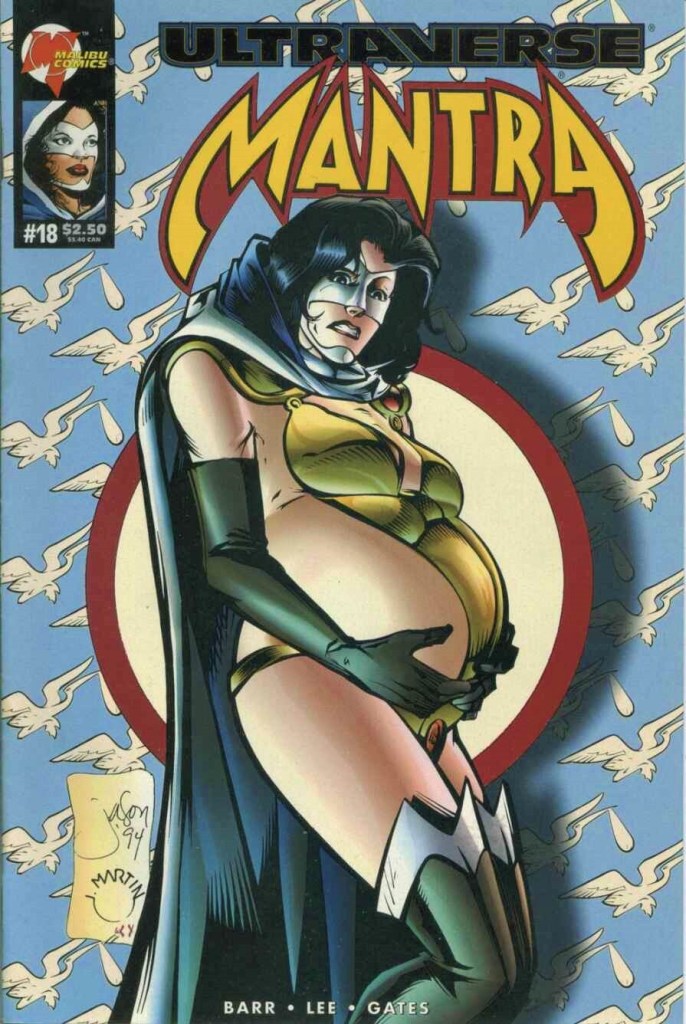
Are you excited yet? What do you hope to see with regards to Lukasz and Eden? We can find out what happens next in Mantra #18, published in 1995 by Malibu Comics with a story written by Mike W. Barr and drawn by Scott Lee.

The cover.

Early story

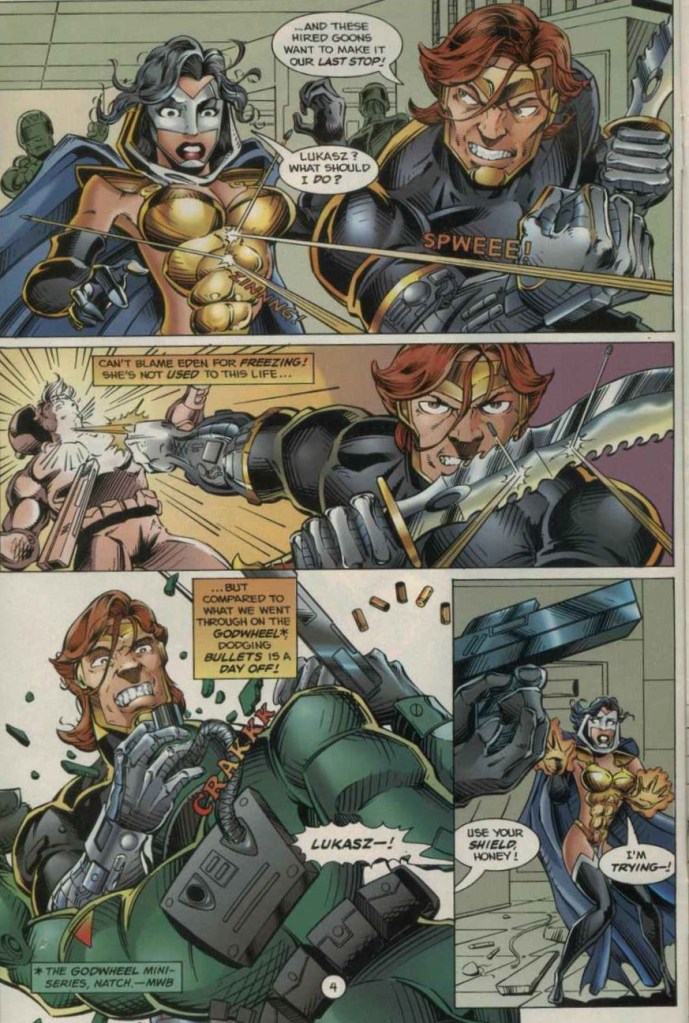
The story begins inside a high-tech facility. An executive named Paul expressed that the laboratory will never be operational in time for the new year as a result of what happened previously. Several armed men are on the floor searching.

Suddenly, a pink portal opens with Lukasz (in a male body) and Mantra (now occupied by Eden’s soul) coming out. The two just came back from much struggle in another realm and Eden has not yet fully familiarized herself with Mantra’s body and magic. Noticing Eden/Mantra’s hesitation, Lukasz takes action against the armed men. Eden slowly blasts a few enemies before Lukasz saves her from being attacked from the rear.

Suddenly, someone from nowhere throws a few gas grenades at them…

Quality

The romance weakened by the art style.

Starting with the storytelling, the plot in this comic book can be quite jarring with regards to Lukasz and Eden as this one took place after the Godwheel mini-series. How Eden fully became Mantra (which is her rightful body of flesh in the first place) is fully explained in the said mini-series.

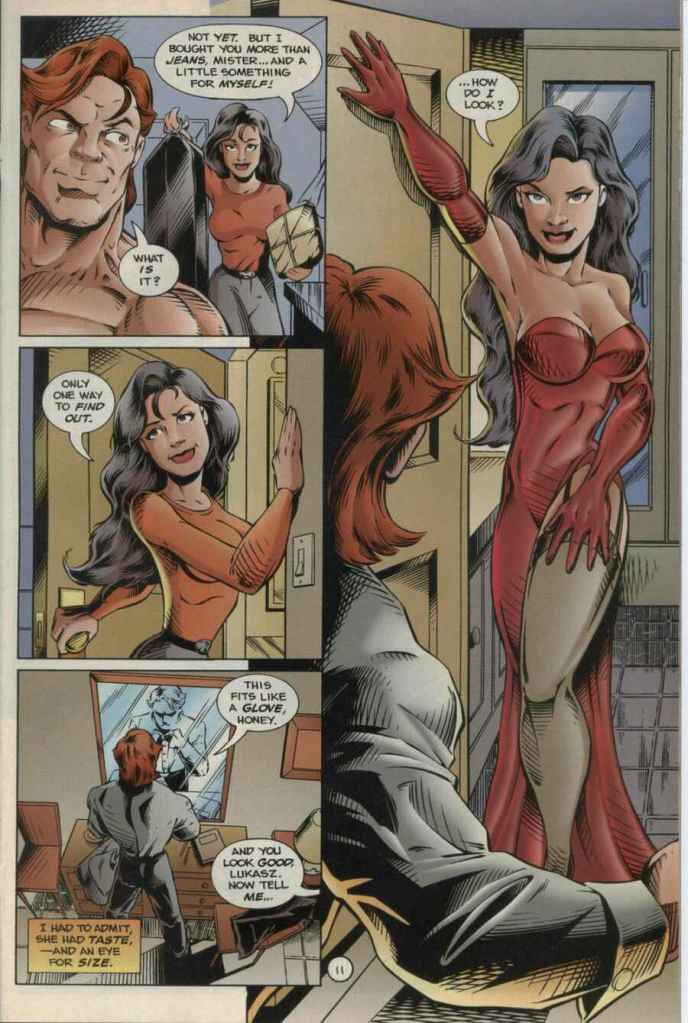
The romance between Lukasz and Eden here is easily the biggest selling point of this comic book. After going through rough action and misadventure in Godwheel, it is in this comic book where the two really express love for each other in the flesh. This is a welcome change considering how long we’ve seen Lukasz occupy Eden’s body followed by Lukasz and Eden being spiritually linked with each other. This one marks the start of a new chapter of the Mantra series. As for what the cover of the comic book showed, that is something you will have to discover for yourselves and it is worth the read.

Sadly, I should state that I found the art by Scott Lee here looking sub-par. There is this cartoony aesthetic to all the characters and there were shots in which their bodies looked disproportionate from certain angles. Lee’s take on visualizing Boneyard, Warstrike, NecroMantra and others all looked cartoony. This is the weakest looking Mantra issue I’ve read as of this writing.

Conclusion

Lukasz in a male body, Eden in Mantra form.

Once again, author Mike W. Barr succeeded in advancing the story and character developments with Mantra #18 (1995) putting the series into another storytelling phase with Lukasz (the long-time Mantra) and Eden as separate, living beings more involved with each other than ever before. The art quality this time went down a lot but the storytelling saved the comic book from turning into a disaster.

If you are seriously planning to buy an existing hard copy of Mantra #18 (1995), be aware that as of this writing, MileHighComics.com shows that the near-mint copy of the comic book costs $21.

Overall, Mantra #18 (1995) is satisfactory.

+++++

Thank you for reading. If you find this article engaging, please click the like button below and also please consider sharing this article to others. If you are looking for a copywriter to create content for your special project or business, check out my services and my portfolio. Feel free to contact me as well. Also please feel free to visit my Facebook page Author Carlo Carrasco and follow me at HavenorFantasy@twitter.com
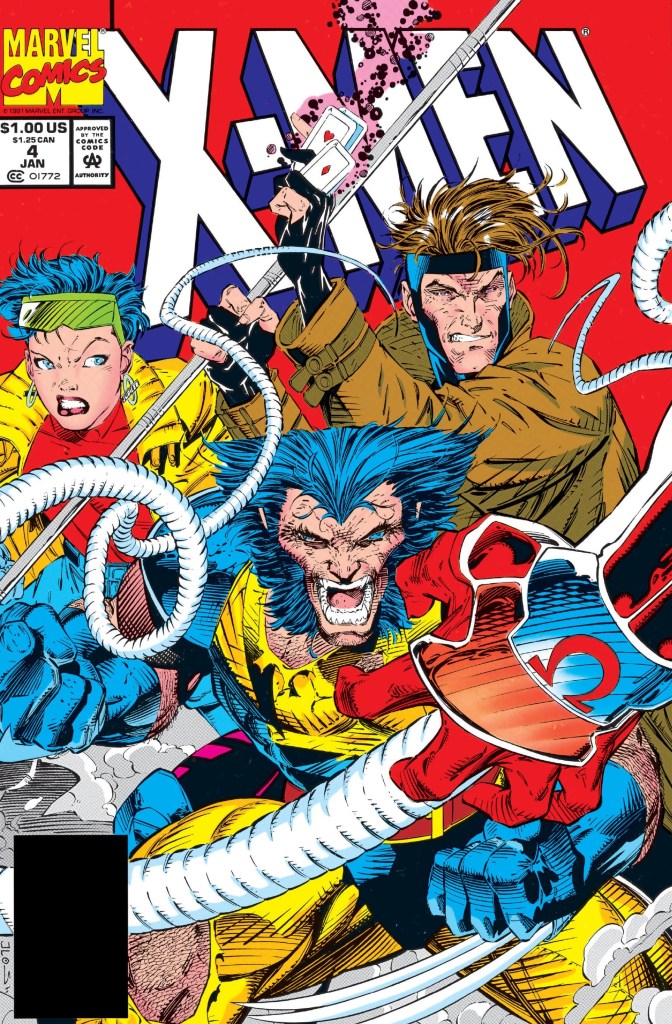
A Look Back at X-Men #4 (1992)

Disclaimer: This is my original work with details sourced from reading the comic book and doing personal research. Anyone who wants to use this article, in part or in whole, needs to secure first my permission and agree to cite me as the source and author. Let it be known that any unauthorized use of this article will constrain the author to pursue the remedies under R.A. No. 8293, the Revised Penal Code, and/or all applicable legal actions under the laws of the Philippines.

Welcome back, superhero enthusiasts, comic book collectors and X-Men fans! Previously, I reviewed X-Men #3 (1991) which, at the time of its release, marked the end of the era of Chris Claremont who spearheaded the development and storytelling of the X-Men since the mid-1970s. Along the way, he clashed with X-Men books editor Bob Harras behind the scenes at the headquarters of Marvel Comics which was a factor to his departure. It is notable that Claremont returned to Marvel in 1997 as editorial director.

Going back to 1991, Marvel had Jim Lee as their top-notch talent to sell loads of X-Men comic books to buyers. Inevitably as Claremont departed, Marvel bet big on Lee and supported his move to set a new creative direction for the X-Men.

With those details laid down, here is a look back at X-Men #4, published in 1992 by Marvel Comics with a story by Jim Lee and John Byrne. Lee drew the comic book with Scott Williams as the inker.

The cover.

Early story

The story begins in a secret facility in the South Pacific. A sleeping figure wakes up and the men wearing protective suits near him carefully observe his moves. Suddenly, the men died horribly. The figure, with white-colored skin and long blond hair, says, “Who has brought me back from the dark domain of death? Who has summoned Omega Red?”

Behind a protective window, a man starts talking to Omega Red and he shows him a picture of Wolverine (in his civilian identity). Omega Red recognizes Logan…

Quality

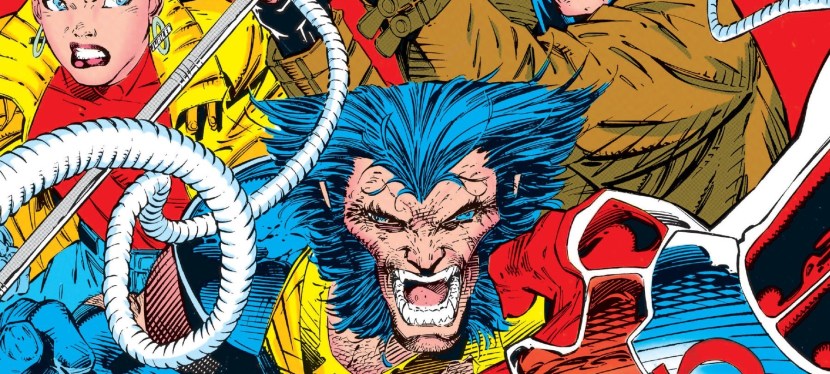
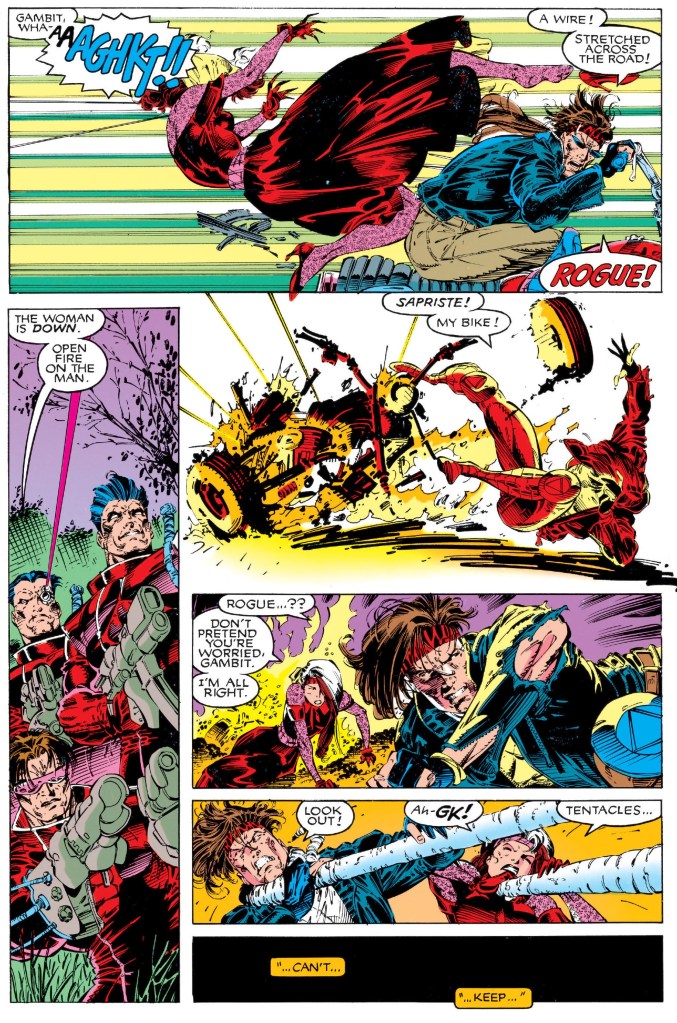
Gambit and Rogue in the heat of action.

Being one of the first X-Men comic books published in the so-called post-Claremont era, this comic book has a solid story and a lively presentation of the X-Men’s Blue Team members. I figured that John Byrne delivered the solid dialogue given his previous experience of working on X-Men comics (as an illustrator) as well as being the writer and artist of the memorable The Man of Steel mini-series (with DC Comics, rebooting Superman in the post-Crisis era).

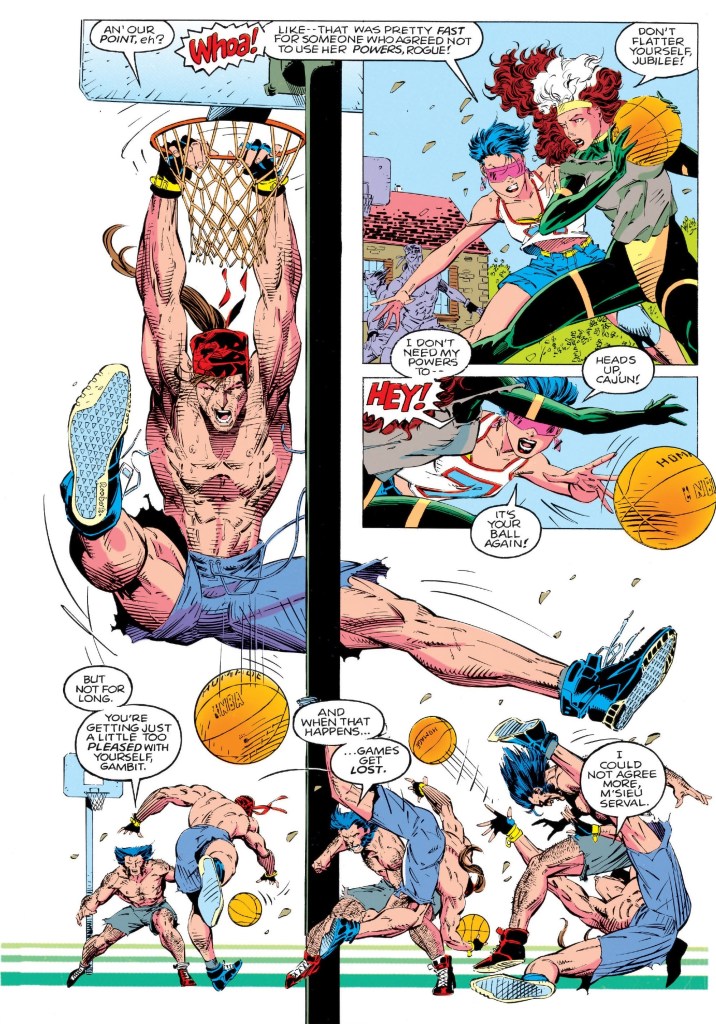
While the basketball scene had true-to-character portrayals of Wolverine, Gambit, Psylocke and Jubilee complete with stylish dialogue per character, there is consistency on the portrayal of Moira MacTaggert who is understandably struggling to recover given the events of X-Men #1 to #3. The same goes with Charles Xavier. The way the script was written with strong focus on the established characters, it’s almost as if Chris Claremont never left.

The biggest feature of this comic book is the debut of the deadly mutant Omega Red who is of Russian heritage and Russia’s own parallel to the United States’ own super soldier Captain America. In pop culture, Omega Red is one of the top villains in comic books ever and this comic book sets up his sudden rise to prominence. Symbolically, Omega Red is a co-creation of Jim Lee and John Byrne and it is pretty fitting for this comic book of the post-Claremont era to feature him.

Conclusion

You love basketball?

There is no doubt that even by today’s standards, X-Men #4 (1992) is a great read and a landmark issue in X-Men comic book history. Given its content, this one will always be remembered as the start of Omega Red who later on proved to be one of the deadliest villains Marvel’s mutants ever encountered. The villain went on to appear in the video games X-Men: Children of the Atom, Marvel Super Heroes vs. Street Fighter and Marvel vs. Capcom 2.

If you are seriously planning to buy an existing hard copy of X-Men #4 (1992), be aware that as of this writing, MileHighComics.com shows that the near-mint copy of the regular edition costs $125 while the near-mint copy of the newsstand edition costs $375.

Overall, X-Men #4 (1992) is highly recommended!

+++++

Thank you for reading. If you find this article engaging, please click the like button below and also please consider sharing this article to others. If you are looking for a copywriter to create content for your special project or business, check out my services and my portfolio. Feel free to contact me as well. Also please feel free to visit my Facebook page Author Carlo Carrasco and follow me at HavenorFantasy@twitter.com
A Look Back at Prime #17 (1994)

Disclaimer: This is my original work with details sourced from reading the comic book and doing personal research. Anyone who wants to use this article, in part or in whole, needs to secure first my permission and agree to cite me as the source and author. Let it be known that any unauthorized use of this article will constrain the author to pursue the remedies under R.A. No. 8293, the Revised Penal Code, and/or all applicable legal actions under the laws of the Philippines.

Welcome back, superhero enthusiasts, comic book collectors and fans of the Ultraverse! By now, many of you should be familiar with Prime who was one of the main heroes of the Ultraverse as published in the 1990s by Malibu Comics. Many times in comics, Prime fought with lots of thugs, some very notable enemies (check out Prime #5), got involved with other notable ultras as part of a team (check out UltraForce #0 and #1), got involved awkwardly with ladies like Mantra and the mother of Kelly, and more.

Surely, Prime (who is a teenage boy named Kevin under all the muscle) went through a lot. Now how about seeing the overly muscular ultra hero take on a monster about as large as Godzilla? We can all find out in this look back at Prime #17, published by Malibu Comics in 1994 with a story written by Len Strazewski and Gerard Jones, and drawn by John Statema.

The cover.

Early story

The story begins somewhere on the bottom of the ocean. King Atalon raises an entire island to the surface of the sea claiming it will be new court of his and his people. Doing so, he releases a gigantic monster to the surface and immediately it encounters a ship. The monster grabs two men from the ship and eats them.

In the city of New York, Kevin Green and his mother have a meal together in a first-rate deli. His mother expresses her thoughts about how hard it was for him to move away from California at a short notice, leaving behind his school and his friends. She stressed that something had to be done in response to what happened to their family.

She recalled that Kevin’s father acted so strangely and left them. That being said, she did not want to make the situation worse by smothering him. Kevin thought to himself how could he tell her mother the truth that he and Prime are one and the same, and he went through different versions of his alter-ego each with a different attitude.

As Kevin and his mother traveled via the subway of the city, the giant monster in the Atlantic Ocean continues to create havoc moving towards New York…

Quality

A possible Godzilla reference spotted.

From a storytelling point of view, this comic book felt like the start of a new chapter in the life of Kevin/Prime. The sudden relocation to New York sparked Kevin to look back at the events he went through in the past year which, in my opinion, helped serve as an exposition dump to help readers – especially new ones – catch up with all the details on Prime. It was also interested to learn that Kevin’s mother is from New York and her action on having themselves relocate all the way from the West Coast was convincingly done. I also like the drama that unfolded when the mother brought Kevin to a spot to view the Statue of Liberty from a distance only to be shocked and hurt over the fact that the statue’s head is missing. Through really nice dialogue, you can feel the mother’s pain.

The highlight of this comic book is the uncanny match-up between Prime and the Godzilla-sized monster. While the battle between them was not too long, showing Prime struggle with fighting the monster while thinking a lot about strategizing, searching for weaknesses and even expressing concern for his mother all added a good layer of depth to bother the hero and the encounter.

Visually, I like the work done here by John Statema. His art on the monster was clearly Godzilla-inspired but he gave it a unique look of its own, especially with the way he drew its scaled which Prime found to be very tough. I also enjoyed Statema’s take on the events that happened in Prime’s life as seen in the exposition dump early in the comic book.

Conclusion

The big exposition dump.

Prime #17 (1994) is a fun read and definitely has the look and feel of a new turning point in the life of a superhero. It has excellent dialogue, a pretty nice build-up leading to the big battle between Prime and the monster, and most notably there is a good amount of dramatizing through Kevin’s mother.

If you are seriously planning to buy an existing hard copy of Prime #17 (1994), be aware that as of this writing, MileHighComics.com shows that the near-mint copy of the comic book costs $8.

Overall, Prime #17 (1994) is recommended.

+++++

Thank you for reading. If you find this article engaging, please click the like button below and also please consider sharing this article to others. If you are looking for a copywriter to create content for your special project or business, check out my services and my portfolio. Feel free to contact me as well. Also please feel free to visit my Facebook page Author Carlo Carrasco and follow me at HavenorFantasy@twitter.com
A Look Back at Ravage 2099 #7 (1993)

Disclaimer: This is my original work with details sourced from reading the comic book and doing personal research. Anyone who wants to use this article, in part or in whole, needs to secure first my permission and agree to cite me as the source and author. Let it be known that any unauthorized use of this article will constrain the author to pursue the remedies under R.A. No. 8293, the Revised Penal Code, and/or all applicable legal actions under the laws of the Philippines.

If there is anything that truly defines the 2099 universe of Marvel Comics, it is the sci-fi element. Science fiction that not only shows one possible future of Marvel’s United States but also how immense futuristic technology is present all around the people who are undoubtedly impacted by it all. Whether it is within the metropolis (think Spider-Man 2099) or in the wilderness (think X-Men 2099), the sci-fi element clearly defines the 2099 universe.

In the middle of it, there was Ravage (co-created by the late Stan Lee and artist Paul Ryan) who went from a corporate executive to a violent rebel. In my last review, Ravage escaped the toxic island and returned to the metropolis only to realize that his pals Dack and Tiana have been captured again.

To find out what happens next, here is a look back at Ravage 2099 #7, published in 1993 by Marvel Comics with a story written by Stan Lee and drawn by Paul Ryan.

The cover.

Early story

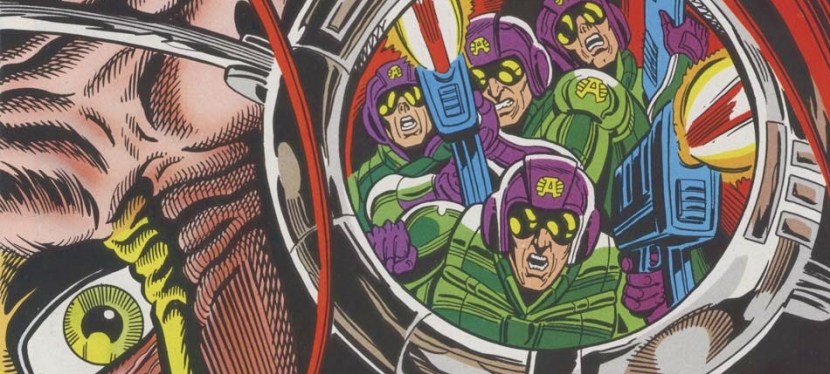
The story begins with Ravage struggling to save Dack and Tiana from different captors, both already separated from each other. Ravage springs into action taking control of the remaining section of the Fantastic Four’s Fantasticar and decides to try to save Dack while facing floating armed personnel. After successfully getting to two armed men hit each other, Ravage chases the flying craft and thanks to his gadget, he is able to hit one of the craft’s personnel.

After a few moments of struggle, Ravage manages to save Dack. He tells the young guy he will drop him off somewhere safe. Dack tells him that he will be blasted on sight by the Public Eye personnel and this convinces Ravage to take him on his dangerous attempt to rescue Tiana from the aquatic invaders…

Quality

I wonder if the social justice warriors (SJWs), the feminists, the socialists and so-called progressives will find this scene offensive to their feelings and beliefs.

Let me first point out the obvious weaknesses of the script Stan Lee wrote: repetition and lack of creative ideas. Alchemax’s Anderthorp Henton being portrayed as ruthless and evil towards his loyal employees yet again – check. Tiana captured again – check. Dack captured again – check. Anderthorp Henton being nice to ladies – check. Tiana being eroticized visually in a state of helplessness – check. Having these repetitions seem to be Stan Lee’s way of filling the script just to ensure there are 22 pages of story to be made.

In fairness to the late Lee, he did something new for this comic book – revealing the underwater lair of the aquatic invaders and having Ravage and Dack involved. The change of environment made this comic book look and feel refreshing, and this added a lot to the science fiction element of the 2099 universe of Marvel. However, it was all a temporary place to show off Ravage doing something heroic. In terms of storytelling, Lee missed out on the opportunity to emphasize to readers why they intend to invade the surface, why are they obsessed on eliminating the human race, and what is the true value of their planned on experiment on naked Tiana (other than learning how to process oxygen).

Another positive point here is Ravage doing heroic acts at last. It’s all technically a repeat of the title character saving his companions but ultimately it helps this comic book achieve its goal of portraying Ravage as a determined and flawed hero. It definitely is much better than his struggle to survive in the toxic island.

Conclusion

An action-packed chase.

As usual, Ravage 2099 #7 (1993) is another flawed comic book like the previous issues. It has, however, more good stuff than bad stuff. True, the repetition of creative elements hurt it but it still has enough entertainment value to justify a read.

If you are seriously planning to buy an existing hard copy of Ravage 2099 #7 (1993), be aware that as of this writing, MileHighComics.com shows that the near-mint copy of the regular edition costs $8 while the near-mint copy of the newsstand edition costs $26.
Overall, Ravage 2099 #7 (1993) is satisfactory.

+++++

Thank you for reading. If you find this article engaging, please click the like button below and also please consider sharing this article to others. If you are looking for a copywriter to create content for your special project or business, check out my services and my portfolio. Feel free to contact me as well. Also please feel free to visit my Facebook page Author Carlo Carrasco and follow me at HavenorFantasy@twitter.com