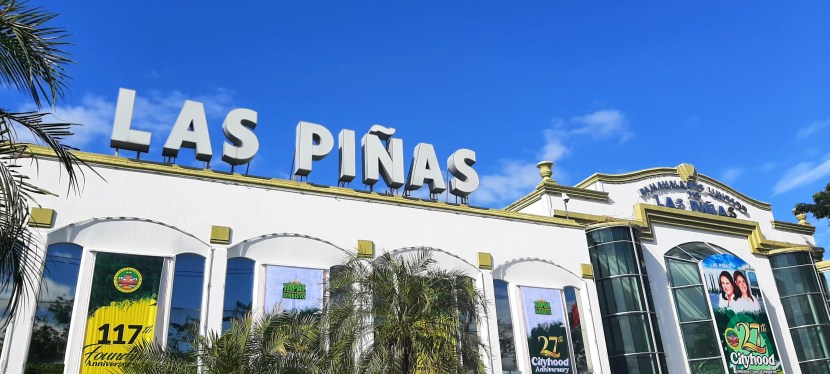
Recently in the City of Las Piñas, more than seven hundred local Ayuda para sa Kapos ang Kita (AKAP) formally received financial assistance distributed by the City Government, according to a Manila Bulletin news report.
To put things in perspective, posted below is an excerpt from the news report of the Manila Bulletin. Some parts in boldface…
The city government of Las Piñas distributed financial assistance to over 700 Las Piñeros, amounting to P3,000, to beneficiaries of the Ayuda para sa Kapos ang Kita (AKAP) program on Dec. 3.
Las Piñas Mayor April Aguilar said the beneficiaries of the AKAOP program will help them with their daily expenses.
Aguilar said the beneficiaries include members of the ERPATs organization, persons with disabilities (PWDs), senior citizens, and other vulnerable sectors in the community.
She said that through AKAP, the city government continues to strengthen programs that provide protection and much-needed support to families who need it the most.
The mayor expressed her gratitude to the Department of Social Welfare and Development (DSWD) and team leader Jessica Estevis for overseeing and assisting in the payout.
Let me end this piece by asking you readers: If you are a resident of Las Piñas City, what is your reaction to this development? Were there many AKAP beneficiaries among the members of your local community?
For more South Metro Manila community news and developments, come back here soon. Also say NO to fake news, NO to irresponsible journalism, NO to misinformation, NO to plagiarists, NO to reckless publishers and NO to sinister propaganda when it comes to news and developments. For South Metro Manila community developments, member engagement, commerce and other relevant updates, join the growing South Metro Manila Facebook group at https://www.facebook.com/groups/342183059992673
The World Bank (WB) sees the economy of the Philippines making a gradual recovery in 2026 and 2027 fueled by strong domestic demand, according to a news report by BusinessWorld. The WB also stressed that corruption is unacceptable.
To put things in perspective, posted below is an excerpt from the report of BusinessWorld. Some parts in boldface…
THE WORLD BANK (WB) sees a gradual recovery for the Philippines in 2026 and 2027, after growth slowed this year due to weaker investment and sluggish consumption, compounded by a corruption scandal and a string of natural disasters.
In its latest Philippines Economic Update released on Tuesday, the multilateral lender trimmed its Philippine gross domestic product (GDP) growth forecast to 5.1% for this year from 5.3% in its June report. For 2026, it lowered its Philippine GDP growth forecast to 5.3% from 5.4% previously.
The World Bank also cut its Philippine GDP growth projection for 2027 to 5.4% from 5.5% previously.
These latest projections are below the government’s 5.5-6.5% growth goal for this year and the 6-7% target for 2026 to 2028.
“To borrow from Torsten Slok, chief economist at Apollo (Management), it’s a Nike swoosh pattern. He describes the US economy, and I’m describing our forecast for the Philippines as a kind of Nike swoosh. We have a dip in 2025, and then we have a gradual recovery in 2026 to 2027,” World Bank Senior Economist Jaffar Al-Rikabi said during a briefing.
He noted the average growth of the Philippines over 2025 to 2027 will be lower than 2024 when GDP expanded by 5.7%.
“For 2025… the growth is largely weighed down by domestic factors. In particular, lower construction activity and weaker consumption growth,” he said.
The Philippine economy expanded by a weaker-than-expected 4% in the third quarter, bringing nine-month growth to 5%, as the pace of household final consumption expenditure and government spending slowed amid a corruption scandal.
Mr. Al-Rikabi also noted the deceleration in fixed investment and private consumption due to higher-than-expected number of natural disasters that hit the Philippines this year.
“But for 2026 to 2027, we think that it’s likely that external factors will weigh more heavily on growth, largely slower export demand,” Mr. Al-Rikabi said.
The US imposed a 19% tariff on most goods from the Philippines starting August, dampening export demand.
The World Bank said the Philippine economy’s growth will pick up in 2026 and 2027, fueled by strong domestic demand.
“Private consumption is projected to strengthen as inflation stays low, employment remains robust, and monetary easing lowers interest rates, making it easier for businesses and households to borrow,” it said in the report.
According to the World Bank, private consumption, which accounts for more than 70% of the economy, is projected to expand by 4.8% this year, slowing from 4.9% in 2024. This is expected to pick up to 5.3% in 2026 and 5.4% in 2027.
The World Bank said investment is likely to recover as public infrastructure projects regain momentum, while recent liberalization reforms in telecommunications, transport, logistics and renewable energy improve the business climate.
The multilateral lender also expects headline inflation to average 1.8% this year, describing the pace as “very moderate” and a key source of resilience. This forecast is slightly above the Bangko Sentral ng Pilipinas’ (BSP) 1.7% projection for 2025 and the 1.6% average recorded in the first 11 months.
‘CORRUPTION IS UNACCEPTABLE’ – Even as the Philippine economy will see a gradual recovery in the next two years, Mr. Al-Rikabi noted risks are tilted to the downside, with “more prominent” domestic drivers.
“There is a continued challenge of heightened perceptions around governance risks. This could, if it continues, erode investor confidence. It could delay public investment execution, and it could weaken growth,” he said.
The World Bank economist also noted there may be delays in fiscal and structural reforms amid the current domestic environment, “which could slow consolidation and weigh on growth over the medium term.”
A corruption scandal involving anomalous flood control projects has already triggered protests, slowed economic activity, and shaken investor confidence in the country.
“From the World Bank perspective, corruption is unacceptable,” World Bank Country Director for the Philippines, Malaysia, and Brunei Zafer Mustafaoğlu said during the same briefing.
“The World Bank considers it detrimental to any country and has been fighting against corruption in all the member countries that we operate in,” he added.
Mr. Mustafaoğlu said the Philippine government could take this opportunity to increase transparency and modernize its budget execution system “that could actually support longer-term growth and can increase investment confidence (and) can increase long-term potential growth,” he said.
Let me end this post by asking you readers: What is your reaction to this recent development? Did you think the national economy will recover gradually in 2026 and 2027 as the World Bank predicted? With inflation being low, do you feel confident about spending for your needs and wants in the short term?
Recently in the City of Las Piñas, over one thousand five hundred persons with disabilities (PWDs) received free school supplies from the City Government and no less than Mayor April Aguilar herself witnessed the distribution, according to the local government’s social media post.
To put things in perspective, posted below is an excerpt from the City Government’s social media post. Some parts in boldface…
More than 1,500 PWDs (Persons with Disabilities) and their families happily received the free school supplies from the City Government of Las Piñas.
Mayor April Aguilar, together with Elderly PWDs and PDAO Focal Person Ronald Monfero and CSWDO Head Lowefe Romulo, led the Awarding and Distribution of School Supplies for PWD in the city. Each bag contains school supplies, umbrella, lunch box, alcohol, and tumbler to ensure everyone is prepared for their studies.
The moment became emotional when Mayor April met especially the PWD beneficiaries. Feeling the joy and love in every hug, smile, and story with families.
PWDs and parents have extended their gratitude to the local government for its continuous program that helps, cares, and gives hope.
Let me end this piece by asking you readers: If you are a resident of Las Piñas City, what is your reaction to this development? Are you satisfied with what the City Government released to the PWDs? Has the City Government’s support for local PWDs been good over the past 12 months?
For more South Metro Manila community news and developments, come back here soon. Also say NO to fake news, NO to irresponsible journalism, NO to misinformation, NO to plagiarists, NO to reckless publishers and NO to sinister propaganda when it comes to news and developments. For South Metro Manila community developments, member engagement, commerce and other relevant updates, join the growing South Metro Manila Facebook group at https://www.facebook.com/groups/342183059992673
Recently in the city of Parañaque, local police officers arrested three foreign nationals – two Koreans and one Indonesian – for possessing illegal drugs and their alleged involvement in the trade of drugs, according to a Manila Bulletin news report.
To put things in perspective, posted below is an excerpt from the Manila Bulletin news report. Some parts in boldface…
Southern Police District (SPD) Drug Enforcement Unit (DEU) operatives arrested three foreign nationals identified as newly tagged high-value individuals (HVIs) for their involvement in the illegal drugs trade, and in possession of 100 grams of shabu and 20 pieces of ecstasy pills during an operation in Parañaque City.
The SPD identified the suspects as Hoon, 46, and Jaypo, 34, both Korean nationals, and Raptor, 31, an Indonesian. They were arrested at around 1:43 a.m. inside Room 3310 of SBM Condotel on J. Gabriel Street, Barangay Baclaran.
Police said members of the DEU, in coordination with Parañaque City Police Substation 1, conducted a buy-bust operation after the suspects were confirmed as newly listed HVIs due to their alleged involvement in illegal drug activities.
Seized from the suspects were 100 grams of shabu worth P680,000 and 20 pieces of ecstasy tablets valued at P34,000.
According to police, Hoon will be charged with illegal sale of dangerous drugs, while Jaypo and Raptor will face charges for illegal possession of drugs under Republic Act 9165, or the Comprehensive Dangerous Drugs Act of 2002.
The suspects are currently detained at the SPD-DEU custodial facility pending the filing of formal charges.
Let me end this post by asking you readers: What do you think about this recent development? If you are a resident of Parañaque, are you concerned that there could still be more foreign nationals engaging in the trade of illegal drugs within the city?
For more South Metro Manila community news and developments, come back here soon. Also say NO to fake news, NO to irresponsible journalism, NO to misinformation, NO to plagiarists, NO to reckless publishers and NO to sinister propaganda when it comes to news and developments. For South Metro Manila community developments, member engagement, commerce and other relevant updates, join the growing South Metro Manila Facebook group at https://www.facebook.com/groups/342183059992673
As Israeli Ambassador Dana Kursh recently met with Philippine National Police (PNP) acting chief Lt. Gen. Jose Melencio Nartatez, Jr., the national police force vowed to strengthen its cooperation with the Jewish state as it seeks improvements over several important matters of law enforcement, according to a news article by the Philippine News Agency (PNA).
To put things in perspective, posted below is an excerpt from the PNA news article. Some parts in boldface.
The Philippine National Police (PNP) on Wednesday vowed to strengthen its cooperation with the Israeli government to improve intelligence sharing, modernize police training programs, and adopt best practices in public safety and community policing.
This was after acting PNP chief Lt. Gen. Jose Melencio Nartatez Jr. received Israeli Ambassador to the Philippines, Dana Kursh, during a courtesy call at the PNP headquarters in Camp Crame, Quezon City on Tuesday.
He said the meeting highlighted the enduring friendship between the Philippines and Israel as they explored ways to expand cooperation in key areas, such as security, capacity building, and information sharing.
“International cooperation provides us access to advanced technologies, training, and operational strategies in order for the Philippine National Police to strengthen its capabilities in crime prevention, emergency response, and overall community safety,” Nartatez said in a statement.
During the discussions, both sides identified practical initiatives for intelligence sharing, personnel exchanges, and joint training programs.
Through these collaborations, Nartatez said, the PNP aims to strengthen its capabilities in crime prevention, emergency response, and overall community safety.
For the newcomers reading this, this is not the first time that the PNP interacted and cooperated with Israel. In 2020, the PNP signed a security equipment deal with Israel. The recent meeting is about strengthening the ties between them with law enforcement in mind as the PNP wants to achieve safer communities and be able to respond faster in public safety matters in line with the directive of President Ferdinand “Bongbong” Marcos, Jr., to modernize the national police and promote international partnerships.
Knowing how sophisticated Israel really is on economics, cyber security, military technology and achieving peace, I believe that the PNP can benefit a lot from the Jewish state to achieve its goals with the long-term in mind.
One notable crisis that should be solved is cybercrime which is so rampant here in the Philippines and the number of Filipinos getting victimized keeps on rising. The PNP has its own teams focused on cybercrime and they have been busy searching for the criminals online to capture and prosecute them. Israel has the resources, the advanced technologies and the skills that will help the PNP a lot on its campaign against cybercrime. That said, having renewed Israel-PNP cooperation is crucial and I personally support it!
Praise and thank the Lord for this new development. Praise and thank Him for better ties between Israel and the Philippines.
To my fellow Filipinos reading this, I encourage you to accept the truth that Israel is the land God designated specifically for the Jewish people (read Genesis 35:10-12) and His command must be followed without hesitation. If you want to be blessed further by the Lord, do so by loving and blessing the Jewish people (Genesis 12:1-3). I did my part when I was in Israel. Also, let me remind you all that the ties between the Jews and Christians are truly biblical!
I encourage you all to pray to the Lord God in support of Israel, to love and bless the Jewish people, and pray for the peace of Jerusalem.
Images created with artificial intelligence (AI) applications that got shared on social media continue to fool people. It is unfortunate because AI is so accessible through apps and online, people can use them and create fake stuff that easily capture people’s attention.
For starters, look what happened in Japan when someone used generative AI to create a fake image about a bear on a road, shared it online and scared the local community. This was during the time when bear attacks in Japan increased.
Recently, deception caused by AI-generated imagery took its toll in parts of Southeast Asia. To put things in perspective, posted below is an excerpt from the technology article of VnExpress.net. Some parts in boldface…
When Thu saw a viral video purportedly showing a woman and her grandchild trapped in floodwaters in central Vietnam, she almost shared it until some things made her pause.
Thanh Thu first encountered an AI hoax last month when she believed a photo showing dozens of people clinging to rooftops during flooding in Thai Nguyen Province in the north was real. The grainy quality made the picture convincing at first glance.
“But on closer look, it made no sense as multiple helicopters were hovering just above the water yet not rescuing anyone,” she says
That experience made her more cautious. So when she saw the new flooding video, she examined it again and noticed the grandmother’s face was blurred and distorted, while nearby people appeared calm, chatting casually with water only reaching their knees.
“The footage was heart-breaking at first and gave me a strong urge to share it, but I realized in time that it was AI-generated just to attract views,” the 28-year-old in HCMC says.
In recent months, her social media feeds have been filled with photos of friends posing in destinations around the world, their faces retouched to look like models. But when she noticed that photos from various friends had identical settings, with only their faces changed, she realized the images were AI-generated.
In Hanoi, Hoang Viet, 27, has also been fooled by AI-generated content. A nature enthusiast, he once spent more than an hour watching a TikTok video about a supposed “rainbow mushroom” and even took notes for research. “Later I did more research and asked experts only to find out the species does not exist at all,” he says.
He recalls being frightened by clips of “sea monsters revived” or wild animals jumping on trampolines, all low-quality videos resembling security footage but drawing tens of millions of views. “All of them were fake.” After these experiences, he now cross-checks any information using reliable news sources or academic materials before accepting it as true.
The rise of tools such as OpenAI’s Sora, Google’s Veo 3 and Runway this year has caused a surge in AI-generated images and videos, from staged travel photos to recreated images with deceased relatives.
According to digital transformation expert Dr. Dinh Ngoc Son, AI-generated content is designed to exploit emotions and curiosity. “Sensational or unusual information always spreads faster,” he says. “As AI improves realism, the spread becomes stronger, creating an emotional whirlwind that is difficult to control.”
He says authenticity and digital ethics have become major challenges. As generative AI advances, the line between real and fake is becoming increasingly thin. He cites fabricated flood rescue clips and deepfake news anchors as examples.
In July Malaysian newspaper The Star reported that a couple in Kuala Lumpur drove 300 kilometers to a tourist destination only to find it did not exist and had been entirely produced by AI. “When users share such content without verification, it distorts public perception and undermines trustworthy information platforms,” Son says.
Cybersecurity specialist Ngo Minh Hieu, known as Hieu PC, says many people unknowingly expose personal data by uploading their photos to AI-powered editing apps. “With just a smartphone, anyone can create AI products,” the founder of the “Anti-Scam” project says. “While many use them for fun, scammers increasingly exploit them to deceive those who are less tech-savvy.”
At a national seminar on online fraud prevention in late October, Deputy Minister of Public Security Pham The Tung warned that criminals are taking advantage of AI and deepfake technologies to defraud citizens. On Oct. 28 anti-scam platform Chongluadao.vn issued a new alert about fraudsters using AI to manipulate e-commerce livestreams.
They take real sales videos, modify the sellers’ appearances to look physically disabled or ill, and re-upload them to solicit purchases from sympathizers. Scammers also create dozens of fake accounts to leave emotional comments, leveraging the bandwagon effect to deceive more viewers.
As someone who once bought products on livestreams of disabled people out of sympathy, Thu says the AI scam leaves her increasingly bewildered. “Now, when even images of those people can be faked, I do not know what to believe.”
To combat AI-driven misinformation, Son says joint action is needed from individuals, society and authorities. Individuals must improve their fact-checking skills, while the journalism and education industries should strengthen digital media literacy, he says.
Very clearly, AI has no soul and AI applications are being used for the wrong and irresponsible reasons. Not only are there tech users who use AI to make images or videos to grab people’s attention, there are criminals, fraudsters and scammers who use AI to steal money or information. This should remind you that technology can be abused a lot and affect people negatively.
An example of AI-generated imagery. (credit to VnExpress.net)
Let me end this piece by asking you readers: What is your reaction to this development? Are you able to tell if a video you saw is generated by AI? Do you think a lot of people are abusing AI to grab people’s attention and increase their social media followers? Is your local government unit using AI through public services? Do you know anyone who became a victim of scammers who used AI?
Recently in the city of Parañaque, police officers organized a successful buy-bust operation which resulted in the arrest of a man who was found with a firearm and illegal drugs worth P374,000, according to a Manila Bulletin news report.
To put things in perspective, posted below is an excerpt from the Manila Bulletin news report. Some parts in boldface…
Authorities arrested a man in possession of P374,000 worth of shabu and a firearm during a buy-bust operation on Saturday, Nov. 22.
The Southern Police District (SPD) identified the suspect as “Christopher,” who was apprehended by the Parañaque City Police Station Drug Enforcement Unit (SDEU) along Lopez Jaena Extension, Barangay San Dionisio, Parañaque City. Recovered from the suspect were 55 grams of shabu, a .45-caliber pistol, and a black sling bag.
Christopher is now detained at the Parañaque City Police custodial facility and faces charges for violations of Sections 5 and 11, Article II of Republic Act 9165 (Comprehensive Dangerous Drugs Act of 2001) and Republic Act 10591 (Comprehensive Firearms and Ammunition Regulation Act).
Let me end this post by asking you readers: What do you think about this recent development? If you are a resident of Parañaque, are you concerned that there could be more people secretly moving around your local community carrying illegal drugs and guns?
For more South Metro Manila community news and developments, come back here soon. Also say NO to fake news, NO to irresponsible journalism, NO to misinformation, NO to plagiarists, NO to reckless publishers and NO to sinister propaganda when it comes to news and developments. For South Metro Manila community developments, member engagement, commerce and other relevant updates, join the growing South Metro Manila Facebook group at https://www.facebook.com/groups/342183059992673
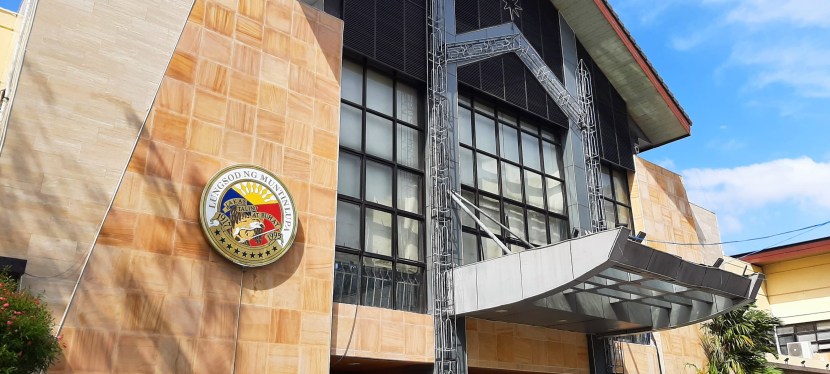
Recently the City Government of Muntinlupa formally started the process of revising its zoning ordinance as well as its Comprehensive Land and Water Use Plan (CLWUP), according to a news report by the Daily Tribune.
To put things in perspective, posted below is an excerpt from the news report of the Daily Tribune. Some parts in boldface…
The local government of Muntinlupa City has begun revising its Comprehensive Land and Water Use Plan (CLWUP) and its Zoning Ordinance, nearly 10 years after the last updates, Mayor Ruffy Biazon announced.
The revision aims to address environmental changes and the city’s increasing vulnerability to flooding.
This move follows a recent Spatial Strategies workshop led by the City Planning and Development Office. Mayor Biazon stressed that community input is critical, as local barangays are the first to witness changes and identify needs in their areas.
“The workshop is timely because we already need to update the CLWUP and the Zoning Ordinance since it has been almost 10 years,” Biazon said, citing the city’s proximity to Laguna Lake as a major factor.
“Over time, there have been changes in the environment and in the needs of the city,” he added.
The mayor also stressed the need to review development plans for lakeshore communities to properly guide the city’s priorities.
Let me end this post by asking you readers: What is your reaction to this recent development? If you are a resident of Muntinlupa City, do you think the revisions of the zoning ordinance and the CLWUP will be done in due time and will help make the city more resistant to future flooding?
For more South Metro Manila community news and developments, come back here soon. Also say NO to fake news, NO to irresponsible journalism, NO to misinformation, NO to plagiarists, NO to reckless publishers and NO to sinister propaganda when it comes to news and developments. For South Metro Manila community developments, member engagement, commerce and other relevant updates, join the growing South Metro Manila Facebook group at https://www.facebook.com/groups/342183059992673
During his recent address at a high-profile forum in Pasay City, Philippine President Ferdinand “Bongbong” Marcos, Jr., stated that the nation will use nuclear technology to deal with plastic pollution and it will involve foreign partners, according to a news article published by Nuclear Engineering International.
To put things in perspective, posted below is an excerpt from the news article of Nuclear Engineering International. Some parts in boldface…
Philippines President Ferdinand Marcos Jr has said the Philippines is committed to partnering with international organisations to tackle plastic pollution using nuclear technology. He was addressing the International Atomic Energy Agency (IAEA) International High-Level Forum on the Nuclear Technology for Controlling Plastic Pollution (NUTEC Plastics) in Pasay City.
“It affects biodiversity, public health, supply chains, and the lives of our coastal and urban communities. Addressing it requires going beyond regulation and advocacy. It requires technology that is credible, scalable, grounded in rigorous science,” he said.
“And that is why the Philippines is proud to champion the NUTEC Plastics Initiative of the IAEA. NUTEC Plastics embodies the kind of innovation that we need – solutions that merge advanced nuclear applications with environmental protection, to translate scientific progress into tangible benefits for industry and for society.”
Marcos said the Philippine Nuclear Research Institute of the Department of Science & Technology, together with the Industrial Technology Development Institute and industry partner Envirotech, had developed a new process that transforms low-value plastic wastes into durable, commercially viable materials under the Post-Radiation Reactive Extrusion of Plastic Wastes Project (PREx).
“The PREx Prototype House stands today as a tangible output of this initiative. But beyond a demonstration of breakthrough nuclear technology, it is a prototype of the future circular economy,” he added. Radiation technology enhances polymer properties, reduces material degradation, and creates new industrial uses for plastics, Marcos said.
He also referred to the marine microplastics monitoring laboratory established with the IAEA at the University of the Philippines Marine Science Institute. The laboratory equips Filipino researchers with the tools to quantify microplastics pollution with scientific precision. “Data generated here informs global models, strengthens policy interventions, and helps us track the real-time impact of plastics on marine ecosystems,” he added.
He said the Philippines was committed to building networks with regulators, scientists, investors and community stakeholders, as the Republic Act 12305 (Philippine Nuclear Law) signed in September.
This establishes a comprehensive regulatory framework covering nuclear safety, security, safeguards and the peaceful applications of nuclear technology.
“Our engagement with the IAEA and our support for science-based responses to plastic pollution reflect that same conviction: that durable progress comes not from acting alone, but from strengthening the international system that makes such cooperation possible,” Marcos said.
IAEA launched the NUTEC Plastics initiative in 2021 to help countries use nuclear science to monitor and reduce plastic pollution. The programme now supports more than 100 member states, including the Philippines, in tracking microplastics in coastal areas, identifying different types of plastics, and applying reliable, cost-effective laboratory methods based on harmonised global protocols. It also trains scientists and promotes radiation technologies that turn low-value plastic waste into useful materials.
The role of nuclear science and technology in helping countries tackle the global challenge of plastic pollution is the focus of a major IAEA event that opened on Tuesday in Manila. The International High Level Forum on NUTEC Plastics will showcase concrete results achieved by this flagship initiative launched by the IAEA in 2020.
Addressing the NUTEC Plastics Forum, IAEA Director General Rafael Mariano Grossi said: “Looking at plastic pollution from the atomic level allows us to understand microplastic pollution and its movements through marine ecosystems, which supports well-informed policy decisions to deal with it. And by using irradiation we can reduce the amount of plastic waste by turning it into valuable products like building materials.”
Masato Kanda, President of the Asian Development Bank (ADB) told the forum’s opening session that, in the Philippines, ADB is planning a $1bn programme to develop a sustainable and resilient blue economy. “Complementing this, we are harnessing digital solutions to simulate the flow of plastic pollution in the Pasig River to help rejuvenate this important waterway. We are also deepening our collaboration with the IAEA across the board: from food security to energy transition.”
NUTEC Plastics presently works with 53 countries to improve plastic recycling and develop bio-based plastics, and with 102 countries to monitor marine microplastic pollution. Every day, the equivalent of 2000 garbage trucks full of plastic are dumped into the world’s oceans, rivers and lakes. Every year, 19-23m tonnes of plastic waste leaks into waterways, disrupting habitats and livelihoods. Since plastic is not biodegradable, it breaks down into ever smaller fragments, which eventually degrade into microplastics. Microplastics can easily infiltrate into ecosystems and the food chain through water, air and soil.
Radiation can transform plastic waste into durable, high value materials and products. It can also create biodegradable bio-based plastics as an alternative to conventional petroleum-based plastics. To date, eight countries have NUTEC upcycling projects underway in cooperation with commercial partners. Argentina, Indonesia, Malaysia and the Philippines are at the forefront in demonstrating the feasibility of using irradiation to recycle plastic waste to produce construction materials, industrial additives, railway ties and other durable products. These countries have already tested prototype processes and are moving toward pilot-scale industrial production.
Let me end this post by asking you readers: What is your reaction to this recent development? By having many foreign partners, are you convinced the Philippines will be able to end its plastic pollution crisis using nuclear technology and other related solutions?
Recently in the city of Parañaque, elements of the National Bureau of Investigation (NBI) found a new scam hub inside a condominium unit and arrested a Chinese nation, according to a Manila Bulletin news report.
To put things in perspective, posted below is an excerpt from the Manila Bulletin news report. Some parts in boldface…
A Chinese national has been arrested in a reported scam hub in Parañaque City, the National Bureau of Investigation (NBI) said.
In a statement, the NBI identified the foreigner as Li Zhenjie who was arrested last Nov. 21 during the service of a Warrant to Search, Seize, and Examine Computer Data (WSSECD) by operatives of the bureau’s Cybercrime Division (NBI-CCD). It also said that seized were “devices containing critical social engineering scripts.”
Li has been charged before the Parañaque City Prosecutor’s Office for social engineering schemes in violations of Section 4(b)(1) of Republic Act (RA) No. 12010, the Anti-Financial Account Scamming Act, in relation to RA 10175, the Cybercrime Prevention Act of 2012, it added.
The NBI said its application for the issuance of a search warrant was based on confidential information on “a sophisticated scam operating from a condominium unit in Parañaque City.”
It said the information stated that “the perpetrators were using spoofed contact numbers, impersonating agents of the New Haven Police Department in Connecticut, USA, and the Federal Bureau of Investigation (FBI) in Washington.”
Let me end this post by asking you readers: What do you think about this recent development? If you are a resident of Parañaque, are you concerned that there could be a lot more secretive scam operations handled by Chinese nationals within the city? Do you think the suspect could be a spy working for Communist China? What do you think makes Parañaque such an attractive destination for scam operations?
For more South Metro Manila community news and developments, come back here soon. Also say NO to fake news, NO to irresponsible journalism, NO to misinformation, NO to plagiarists, NO to reckless publishers and NO to sinister propaganda when it comes to news and developments. For South Metro Manila community developments, member engagement, commerce and other relevant updates, join the growing South Metro Manila Facebook group at https://www.facebook.com/groups/342183059992673