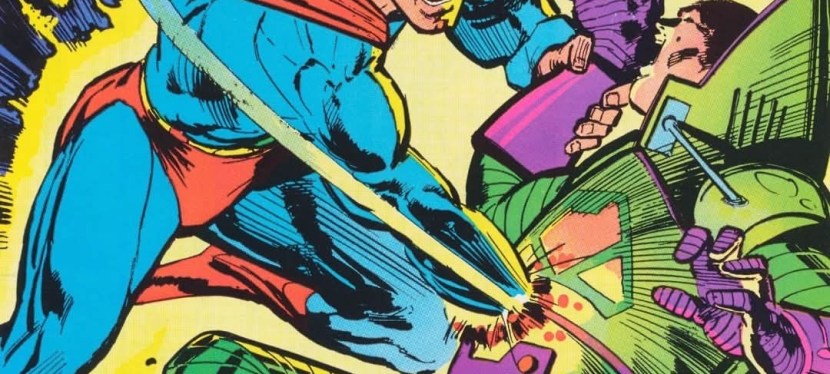
A Look Back at Superman #412 (1985)

Welcome back superhero enthusiasts, 20th century pop culture enthusiasts and comic book collectors! Today we go back to the mid-1980s to take a close look at one of the many tales published through the original Superman monthly series (first launched in 1939).

For the newcomers reading this, the original multiverse of DC Comics formally ended with Crisis on Infinite Earths (1985-1986). That being said, a lot of DC’s monthly comic book series had respective tales the reflect the closing period of the old multiverse (which lasted for decades) and the Superman monthly series of the era was part of the trend.

With those details laid down, here is a look back at Superman , published in 1985 by DC Comics with a story written by Cary Bates and drawn by Curt Swan.  
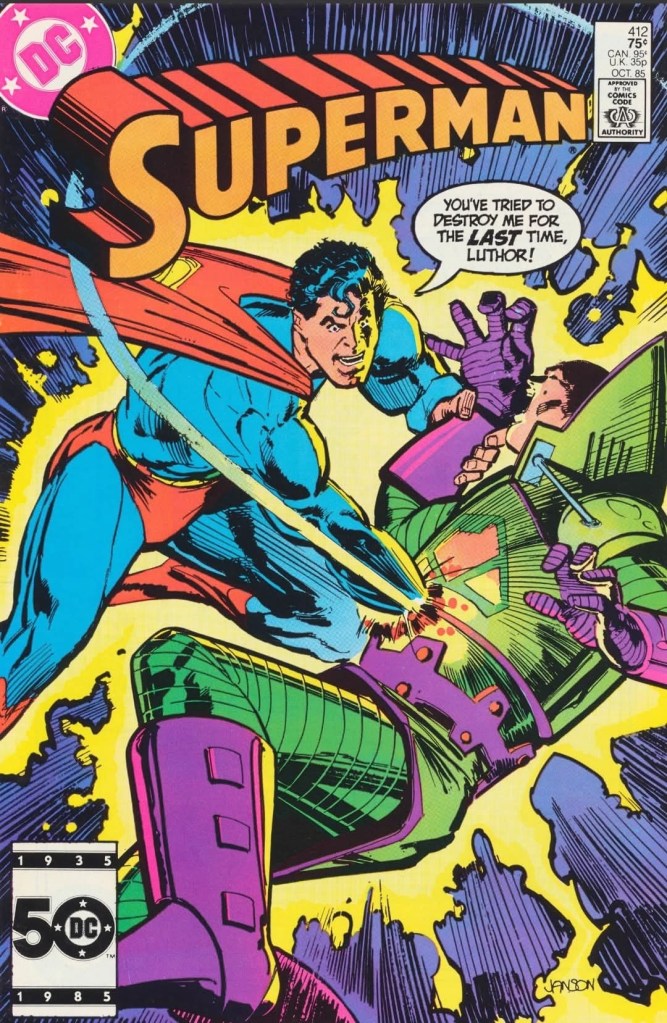
The cover.

Early story

The story begins at the unemployment bureau in Metropolis. Clark Kent, who recently lost his jobs with WGBS and the Daily Planet, stands in line and waits for his turn. Being unemployed, Clark feels troubled and other people nearby recognize him.

As his turn at the counter starts, Clark senses something and decides to get out quickly. He enters the emergency exit, changes into Superman and flies out of the building. It turns out a high-rise building accident has occurred and already several pieces of sharp glass have been falling down. To prevent further harm, Superman uses his heat vision to convert the falling glass and collectively turn them into a growing molten ball. He brings the giant molten ball to the top of the building (still in construction/expansion) and meets the hard-hat workers before flying away.

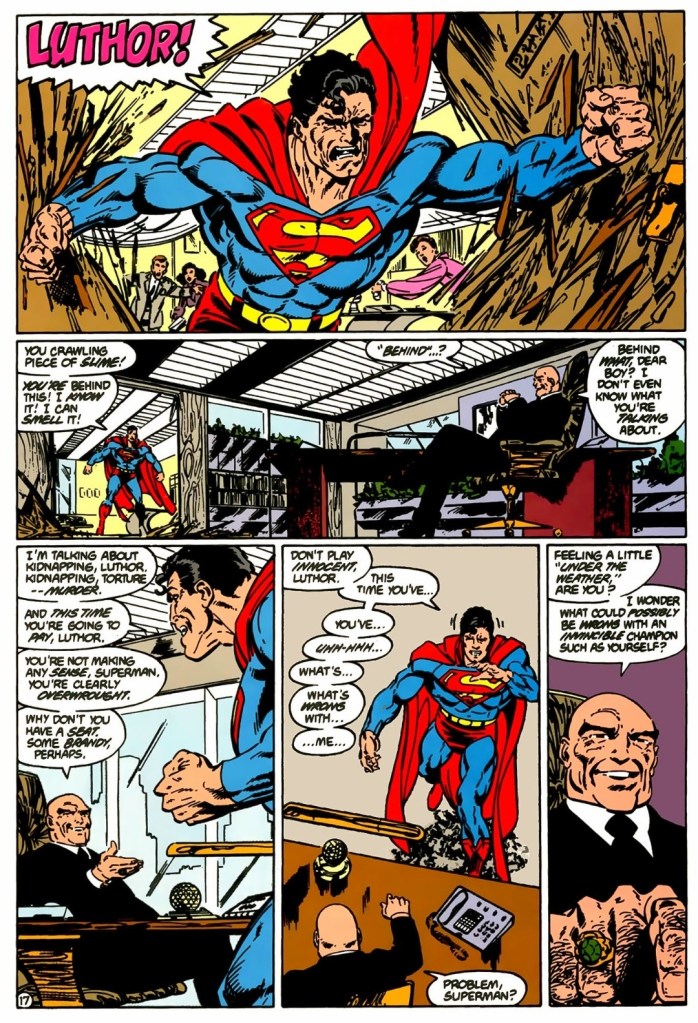
Elsewhere, Lana Lang announces news to TV viewers regarding the dismissal her of close friend Clark Kent which was the result of the fake headline news story about Superman and the NASA satellite. In another location, Lex Luthor is very pleased watching the same broadcast knowing his plan of ruining Superman succeeded and got Clark Kent as a fake news casualty. Luthor is not done with Superman yet…

Quality
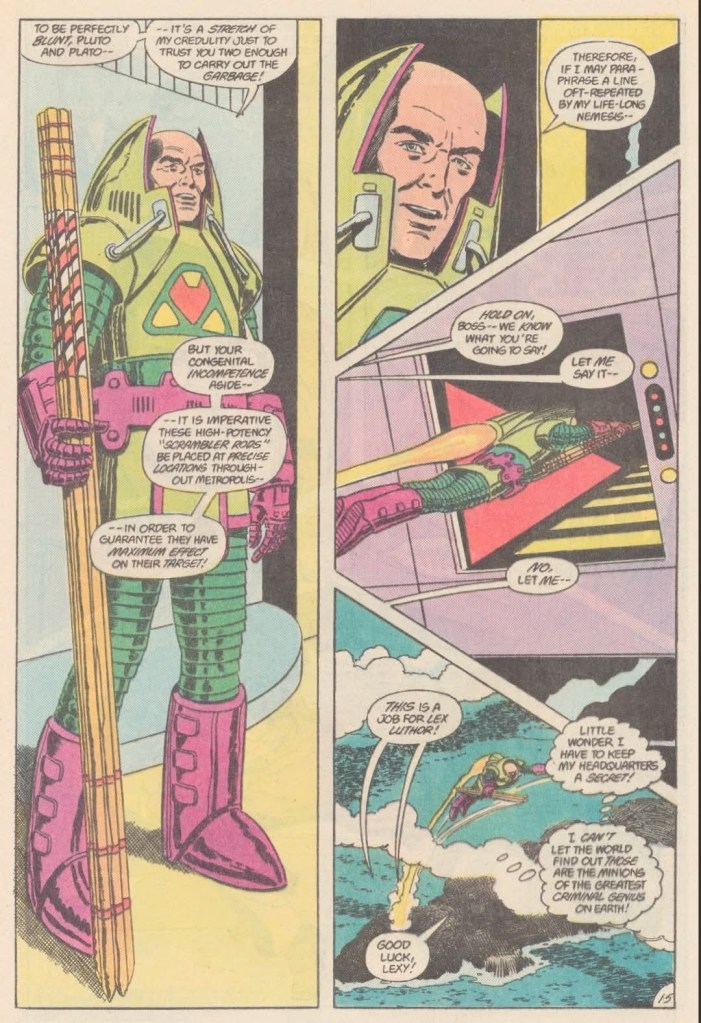
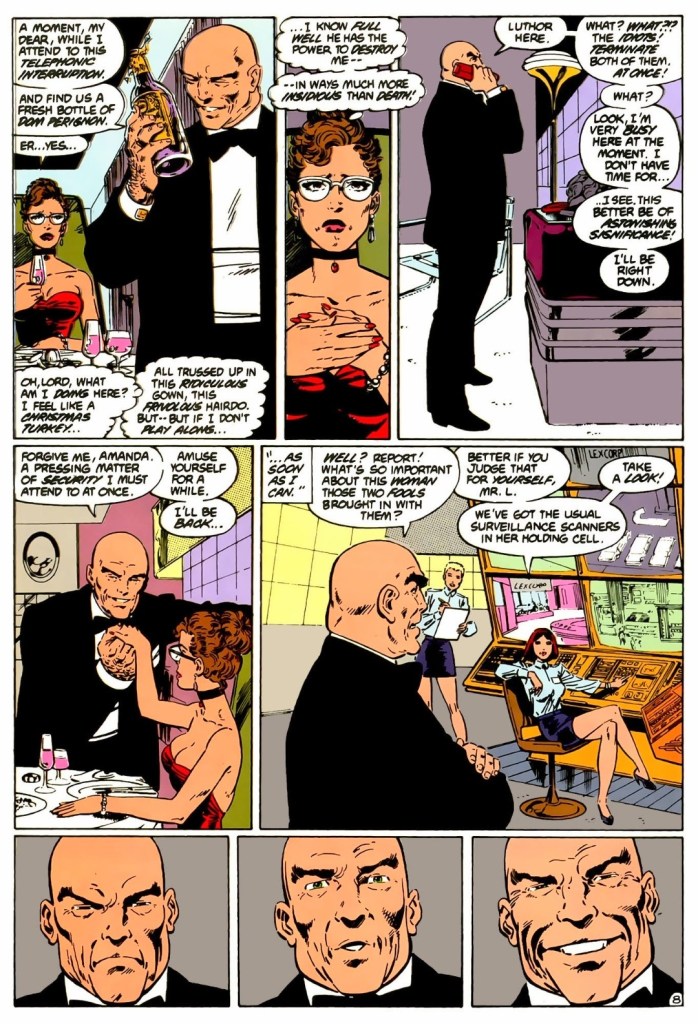
Lex Luthor here is ruthless, strategic and obsessed with defeating Superman.

I really like this Superman tale. This is a story about Superman who is still dedicated to doing acts of good by helping people with problems even though he is socially in deep trouble being unemployed as Clark Kent. Not only is the unemployment aspect relevant, the consequences of fake news and their negative effect on people made this tale more socially relevant with today’s world of fake news and unethical journalism.

Going back to Superman, it is clear that the embarrassment and unemployment of his civilian identity impacted him as a superhero. This is evident when Lana Lang accused him of betraying Clark Kent resulting in a fake news story that led to the firing by WGBS and the Daily Planet. Lana, who does not realize Superman and Clark are the same person, blamed the Man of Steel that the firing of Clark is so devastating to her as she cares for him so much (note: Clark and Lana were romantically involved during their teenage years at Smallville).  

The powerful writing by Cary Bates does not end there. In this comic book, you will see Lex Luthor execute his other plans to ruin Superman whom he personally accused over the loss of his family and his own world Lexor (click here and here for references). This is a Luthor who is not simply being evil but also someone who is well organized, strategic and even fearless. By this stage, the criminal mad scientist Luthor has accumulated a lot of resources to have his own headquarters, technologies and a dedicated staff. In some ways, Luthor in this comic book eerily resembled his financial tycoon version in the post-Crisis era (click here and here for relevance).

I should also state that the personal encounter between Superman and Luthor here is a great pay-off to the build-up that preceded it. You readers should see it for yourselves because to reveal more in this review will ruin it.

Conclusion
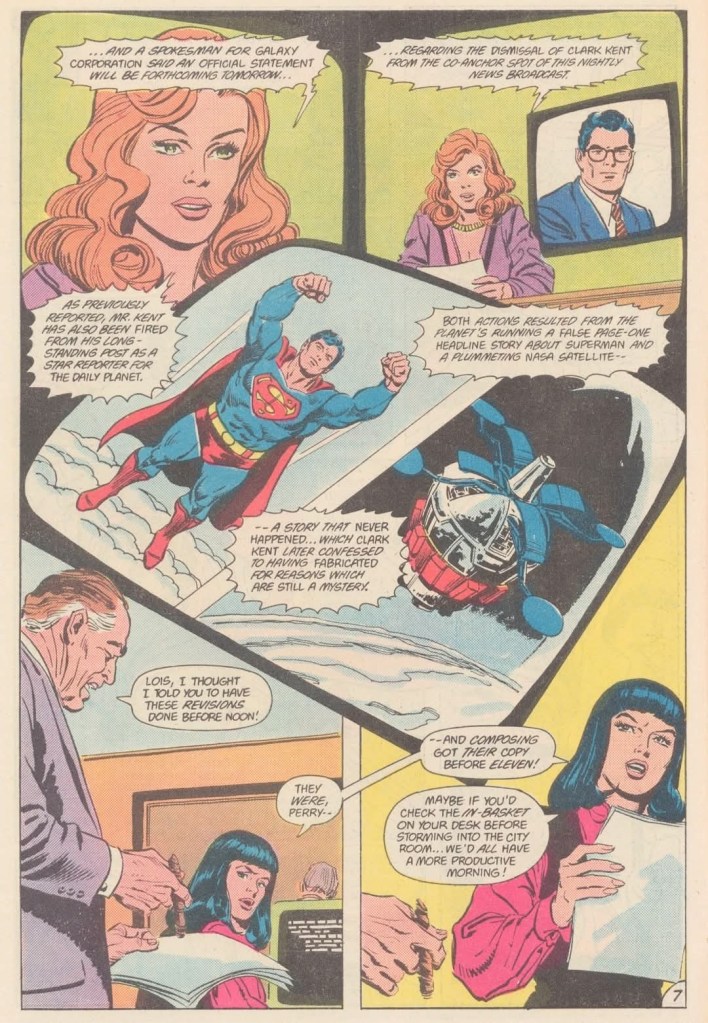
As Lana Lang delivers the news to TV viewers regarding Clark Kent and Superman, tension is brewing over at the Daily Planet.

Superman (1985) is undeniably a great Superman story published during the very late stage of the original multiverse (note: Superman #423 was one of the final tales of Superman of this particular era. Superman was part of the post-Crisis era). The portrayal of Superman being disturbed by the huge setback he suffered as a civilian is really compelling to see and his encounter with Lex Luthor really brought the tension and suspense to high levels. At the same time, the consequences of Superman’s actions (including those of his civilian form as Clark Kent) are very evident and nicely dramatized by the Bates-Swan team. You really feel that the creators were wrapping up their Superman stories and decided to move this series to a new direction knowing that the original multiverse will end. This is a must-read tale!

Overall, Superman (1985) is highly recommended.

+++++

Thank you for reading. If you find this article engaging, please click the like button below, share this article to others and also please consider making a donation to support my publishing. If you are looking for a copywriter to create content for your special project or business, check out my services and my portfolio. Feel free to contact me with a private message. Also please feel free to visit my Facebook page Author Carlo Carrasco and follow me on Twitter at  @HavenorFantasy as well as on Tumblr at https://carlocarrasco.tumblr.com/ and on Instagram at https://www.instagram.com/authorcarlocarrasco
A Look Back at Superman #1 (1987)

Welcome back superhero enthusiasts, 1980s pop culture enthusiasts and comic book collectors! Today we go back to the year 1987 and explore a notable chapter of the post-Crisis DC Comics universe through the iconic Superman.

To put things in perspective, DC Comics rebooted its entire shared universe in 1986 after the conclusion of Crisis on Infinite Earths. They published the 6-part The Man of Steel mini-series to reboot the iconic Superman and modernize him with the creative leadership of John Byrne. By the time the mini-series ended, the new background stories, the supporting characters and creative foundation of the post-Crisis Superman were established. That being said, a brand new Superman monthly series led by Byrne was inevitable.

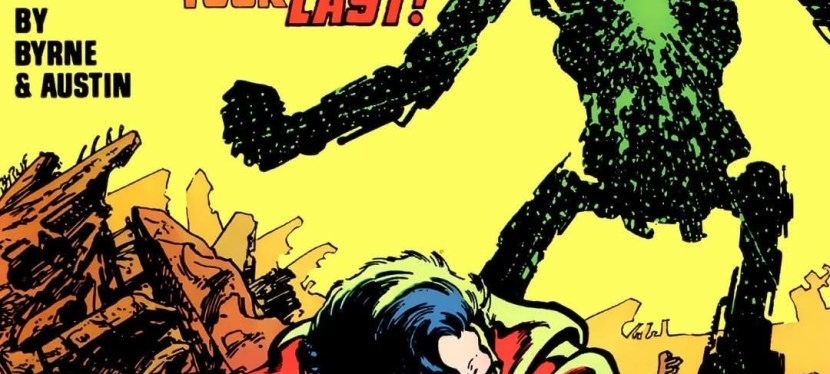
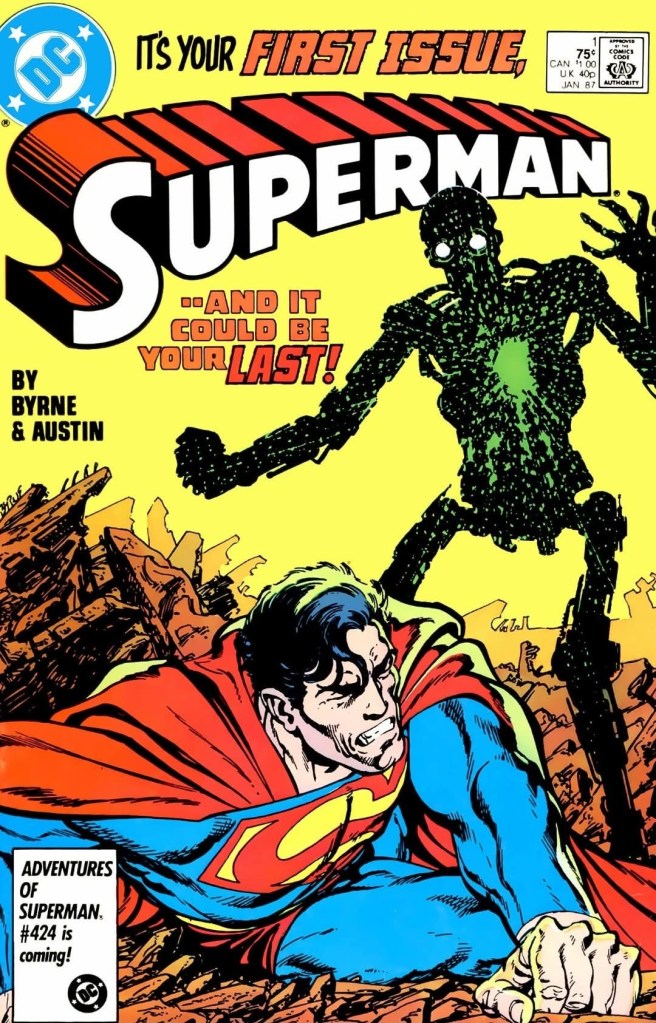
With those details laid down, here is a look back at Superman , published in 1987 by DC Comics with a story written and drawn by John Byrne.  

The cover.

Early story

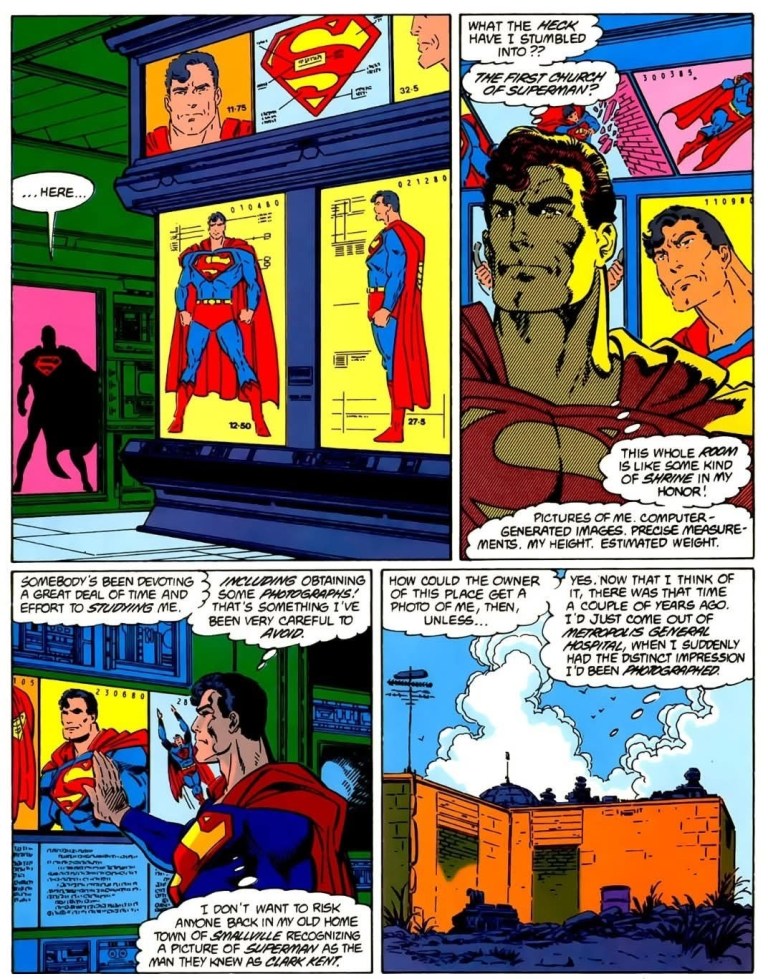
The story begins with Superman smashing his way through into a secretive, high-tech facility. Noticing so much technology, he begins to wonder why would anyone abandon such a facility. As he slowly makes his way inside, he finds several images of him displayed confirming that someone has been devoting a great deal of time and effort to research him. This makes him concerned that someone in his old home town of Smallville could recognize a picture of Superman as their fellow resident Clark Kent.

As he keeps searching, he finds the body of a dead scientist whose neck was broken. He also notices the corpse’s fingerprints are the same as those found on the truck outside of the facility. The truck itself was involved in the theft of his Kryptonian rocket. After finding more nasty evidence, Superman digs deep down underneath the facility then lifts a huge part of the ground with the said structure on top. He lifts up everything and brought them all into space free from the reach of people below.

Superman then flies off to Metropolis to change into Clark Kent to meet with Lois Lane at the city park…

Quality

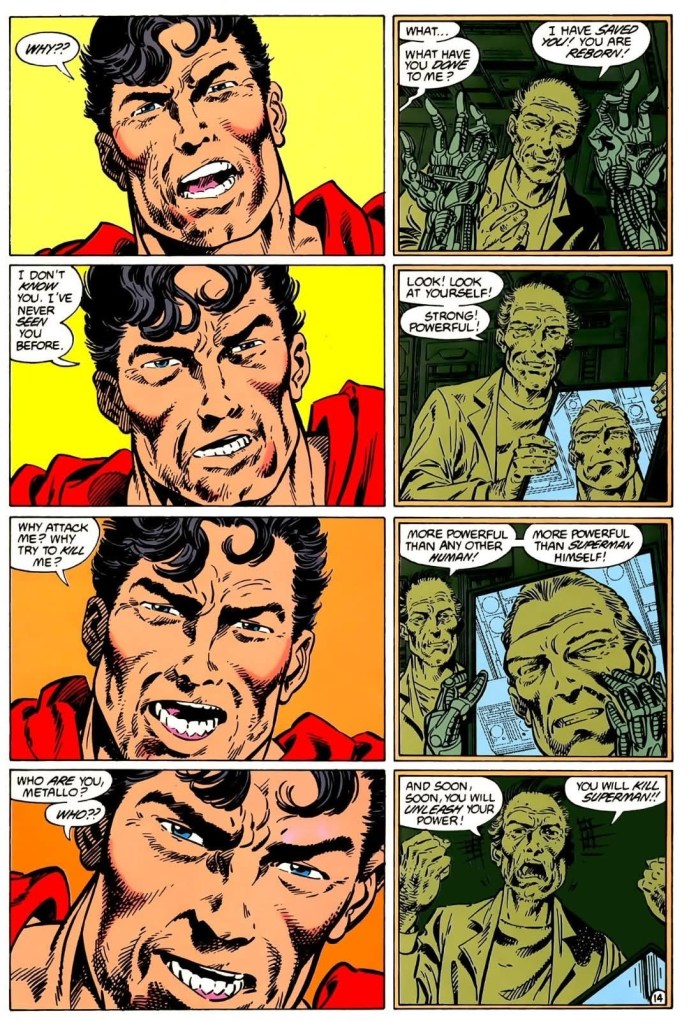
I like the way John Byrne told parallel narratives with Superman in the present on the left, and flashbacks of Metallo on the right.

To begin with, this tale written by John Byrne is another inspire piece of work published at a time when the post-Crisis shared universe of DC Comics was still new and expanding. Byrne really defined Superman’s place in the shared universe by modernizing it with the 1980s in mind and he came up with a story introducing the post-Crisis version of Metallo while coming up with a sub-plot of a mad scientist who was not only obsessed with Superman but also was involved with the said super villain.

The plot is clearly well-structured which starts with Superman doing believable detective work of his own which led to the discovery of the mad scientist whose intense research pose a danger to the Man of Steel. Having dual identities and social responsibilities to live up to, Superman also takes the time to adjust to his normal life as Clark Kent at a time when he has to socialize with his Daily Planet colleague Lois Lane. Without spoiling the plot, I can say that you will see the iconic superhero ranging from being mighty to becoming vulnerable, weakened and suffering tremendous pain. How Byrne handled the transition of Superman is excellent.

The sub-plot of the mad scientist obsessing over discoveries about Superman is short and yet highly significant. For one thing, Superman himself has been very careful on keeping his dual identities secret and yet someone managed to secretly photograph him and come up with a lot of information – including the destroyed world of Krypton and the Kryptonian legacy of the hero – that could expose his deepest secrets and ruin his life entirely. The mad scientist’s obsession has strong sci-fi elements related to UFOs and aliens from deep space.

For the Man of Steel, this is too dangerous and also too personal to be left behind untouched. This aspect of the story makes this old tale more relevant in today’s world of drones with cameras, CCTV systems, hacking and the potential of users (or artificial intelligence) who could collect information on people without their consent.

The post-Crisis Metallo looks inspired by the Terminator and appears in human form. He goes by the name John Corben who previously got fatally injured in a car crash and subsequently was taken by the mad scientist (who transplanted the man’s brain into a robotic body). It should be noted that the said scientist also has an obsession about Kryptonians which led to his plan to send a chosen warrior to go against Superman supposedly to prevent Earth from getting conquered. How Metallo and his physical fight with the Man of Steel is a must-read.

Conclusion

Imagine yourself discovering a secret room filled with information and pieces of evidence and visual references about you. This should resonate with people whose privacy got violated. Also try imagining people inside the offices of tech giants with collected information and images about you.

Superman (1987) is still a great read. It has a complex approach on portraying the battle between good and evil without losing focus on the storytelling and the expansion of Superman’s post-Crisis lore. Its sub-plot of the mad scientist and his obsession on Superman will resonate with people who feel vulnerable over the loss of their private information in today’s world of social media, abusive technology giants and artificial intelligence-driven surveillance systems. There is also a lot of superhero action for readers to enjoy, and the spectacle is never silly nor outlandish to look at. Oh yes, seeing Superman in a vulnerable state and getting actually hurt is believable to see.

Overall, Superman (1987) is highly recommended!

+++++

Thank you for reading. If you find this article engaging, please click the like button below, share this article to others and also please consider making a donation to support my publishing. If you are looking for a copywriter to create content for your special project or business, check out my services and my portfolio. Feel free to contact me with a private message. Also please feel free to visit my Facebook page Author Carlo Carrasco and follow me on Twitter at  @HavenorFantasy as well as on Tumblr at https://carlocarrasco.tumblr.com/ and on Instagram at https://www.instagram.com/authorcarlocarrasco
A Look Back at Superman #2 (1987)

Disclaimer: This is my original work with details sourced from reading the comic book and doing personal research. Anyone who wants to use this article, in part or in whole, needs to secure first my permission and agree to cite me as the source and author. Let it be known that any unauthorized use of this article will constrain the author to pursue the remedies under R.A. No. 8293, the Revised Penal Code, and/or all applicable legal actions under the laws of the Philippines.

Welcome back superhero enthusiasts and comic book collectors! Today we explore a key chapter in the post-Crisis era of DC Comics through a Superman comic book. This time, however, we go back to the 1980s, specifically the time when the legendary John Byrne led the direction of developing and modernizing Superman.

After the critical and commercial success of the 1986 limited series The Man of Steel led by John Byrne, the stage was set on telling more stories of what was back then the modernized Superman. In 1987, the monthly series simply titled Superman launched and its first issue had the Man of Steel up against Metallo (also modernized by Byrne). Just before that particular story ended, Metallo was taken away.

With those details laid down, here is a look back at Superman , published in 1987 by DC Comics with a story written and illustrated by John Byrne.

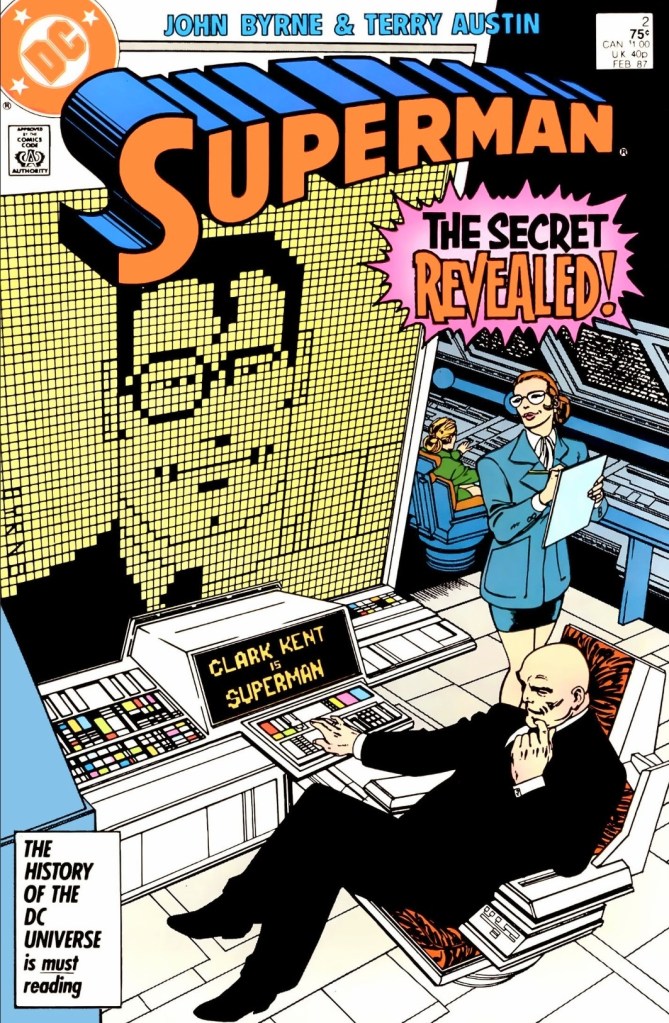
The cover.

Early story

The story begins inside a high-tech facility of the powerful business tycoon Lex Luthor who has been obsessed with Superman since their first encounter. In the presence of many female employees (wearing suits, short skirts and high heels), he watches many huge monitors showing the image of a certain lady standing among bystanders.

His employee Amanda tells him that based on their computer-enhanced analysis of all available news footage of Superman in action, the lady in the monitor appeared in public and she first appeared with the crowds weeks after the Man of Steel prevented a space plane from crashing. Luthor begins to speculate the lady could be connected to Superman and tells two other employees to find her, and he would not tolerate any delays.

Luthor then faces Amanda, holds up her left hand with his two hands and tells her she may join him for dinner that evening. When Amanda expressed that she has a prior commitment (gently rejecting Luthor), Luthor discreetly hurts her hand forcing her to accept his invitation.

Luthor then enters a laboratory with his employees there wearing protective suits. Near them is the restrained body of Metallo whose metallic chest is open with a huge piece of Kryptonite (installed as his power source) fully exposed…  

Quality

Superman and the tycoon Luthor.

Let me get straight to the point about this Superman story…this one has Lex Luthor as the main character with Superman having the supporting role. That is NOT a bad thing at all because John Byrne cleverly crafted the story showing how Luthor – who is no longer the criminal mad scientist of the previous multiverse of DC Comics – remains the most brilliant and powerful opposition that Superman cannot simply defeat. Being a billionaire, Luthor has vast financial, scientific and technological resources that enable him to overwhelm Superman and even get to the individual people that the Man of Steel cares the most. Luthor also is aware of how laws work and he knows that Superman’s dedication of following the rule of law is a weakness.

About Superman, this comic book shows the more human and more vulnerable side of him. You will the Man of Steel with a wide emotional range moving from caring to getting outraged within a few pages. Along the way, the hero’s secret begins to break down which alone would make you wish to help him. This is a clever portrayal of DC’s icon.

More on the plot itself, this comic book highlights Clark/Superman’s personal connection with small town sweetheart Lana Lang who ends up getting abducted and tortured by Luthor’s forces. Along the way, the breaking down of Superman’s secret identity was very well dramatized and the pacing was excellent. I should state that the ending is a must-see and surely it will make you realize the dynamics of absolute power.

Conclusion

The post-Crisis Lex Luthor is not only a brilliant super villain, he also has his own approach on socializing and getting results.

Superman (1987) is undoubtedly very brilliant and great to read! From start to finish, John Byrne crafted a story that carefully balanced fantasy with realism while also emphasizing Luthor as the greatest enemy of Superman, as well as dramatizing the hero’s relationships with the Smallvile people of his past. Considering how powerful he really is, Superman here was portrayed to be at a major disadvantage against Lex Luthor in more ways than one. Luthor here is not just one very powerful tycoon, he is also one totally absolute danger towards others and he even has his own style of charisma. This is clearly a great way of modernizing the Superman-Luthor rivalry in the post-Crisis era and 1980s America in general. This is classic superhero literature that should be read!

Overall, Superman (1987) is highly recommended!

+++++

Thank you for reading. If you find this article engaging, please click the like button below, share this article to others and also please consider making a donation to support my publishing. If you are looking for a copywriter to create content for your special project or business, check out my services and my portfolio. Feel free to contact me with a private message. Also please feel free to visit my Facebook page Author Carlo Carrasco and follow me on Twitter at  @HavenorFantasy as well as on Tumblr at https://carlocarrasco.tumblr.com/ and on Instagram at https://www.instagram.com/authorcarlocarrasco
A Look Back at Superman #76 (1993)

Disclaimer: This is my original work with details sourced from reading the comic book and doing personal research. Anyone who wants to use this article, in part or in whole, needs to secure first my permission and agree to cite me as the source and author. Let it be known that any unauthorized use of this article will constrain the author to pursue the remedies under R.A. No. 8293, the Revised Penal Code, and/or all applicable legal actions under the laws of the Philippines.

Welcome back superhero enthusiasts, 1990s culture enthusiasts and comic book collectors! Today we go back to the early 1990s and explore a key chapter in the post-Crisis era of DC Comics through a Superman comic book.

Previously, I reviewed Adventures of Superman #498 (1993) and Superman: The Man of Steel #20 (1993) which were chapters of the Funeral for a Friend storyline. In Superman: MOS , a large funeral took place which involved several special guests as well as other DC superheroes who paid tribute to Superman. The entire city of Metropolis is struggling to move forward as the sudden of Superman really impacted all the people, especially on Lois Lane.

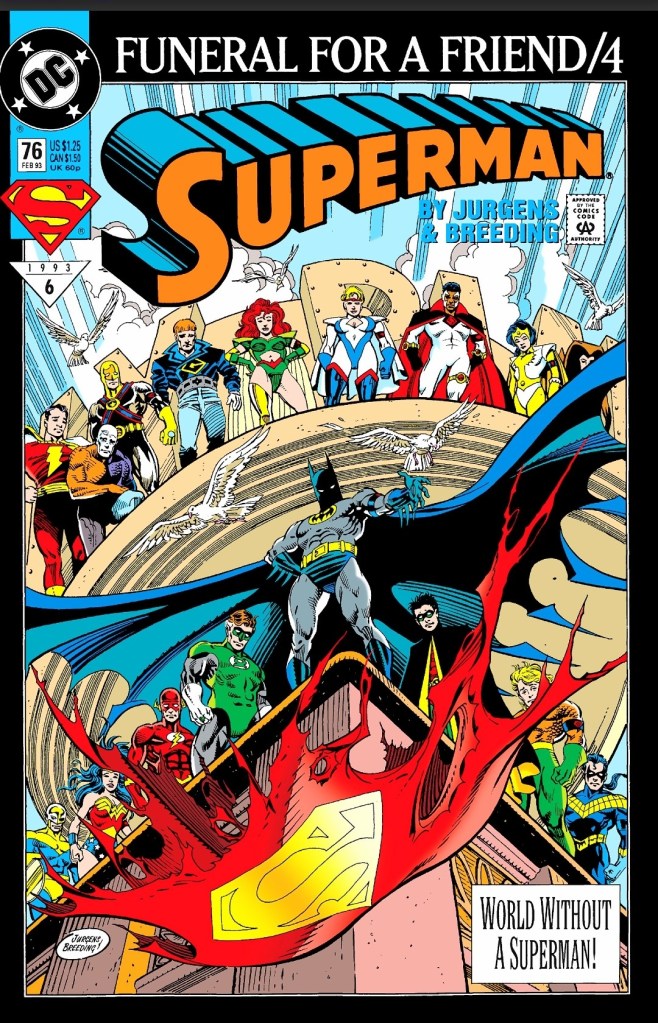
With those details laid down, here is a look back at Superman #76, published in 1993 by DC Comics with a story written and illustrated by Dan Jurgens. This comic book marked the fourth chapter of the Funeral for a Friend storyline.

The cover.

Early story

The story begins with Shazam (AKA Captain Marvel) arriving at the rooftop of the Daily Planet where the Flash, Batman, Wonder Woman, Green Lantern, Maxima and others are present. The whole city is experiencing a very somber Christmas season as the death and burial of Superman remains very strong on the people.

On the streets of Metropolis, a long-haired guy named Mitch walks down in the rain feeling troubled not only because Superman died but also due to the fact that their home got smashed during the encounter with the unstoppable Doomsday. Mitch then arrives at a gathering of people outside of a building’s front door. There are several reporters covering a lady speaking to them with a microphone. She tells them that she is Mrs. Superman…

Quality

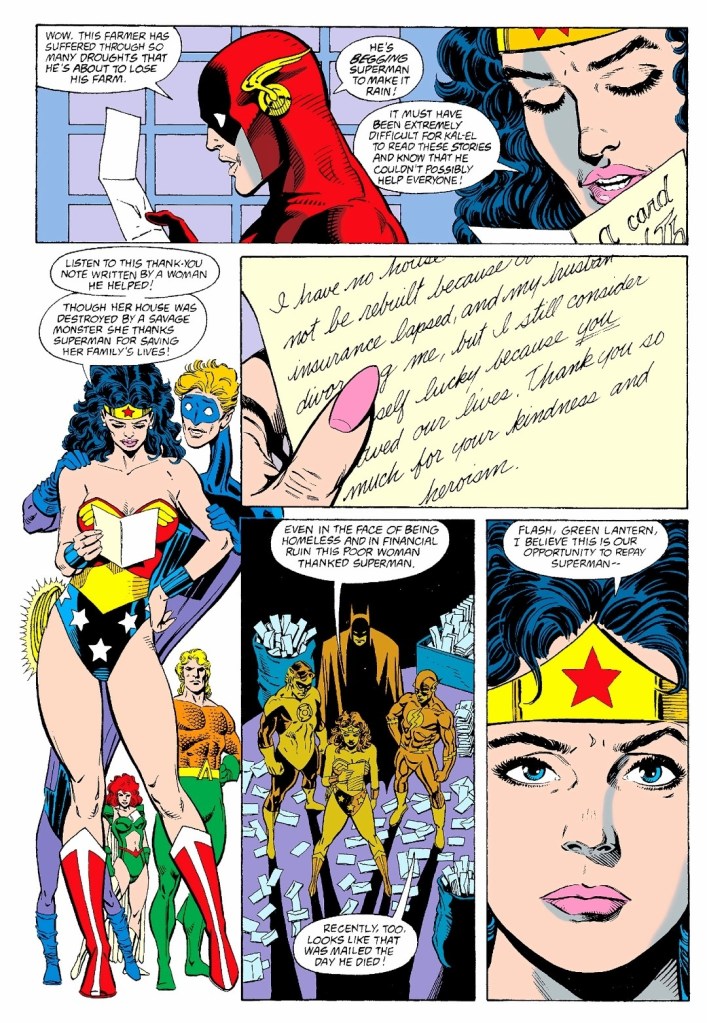
Wonder Woman reads a letter.

Being the 4th chapter of the Funeral for a Friend storyline, Dan Jurgens crafted a story that not only dramatized the post-disaster situation of Metropolis but also had notable twists and developments that proved to be worth reading.

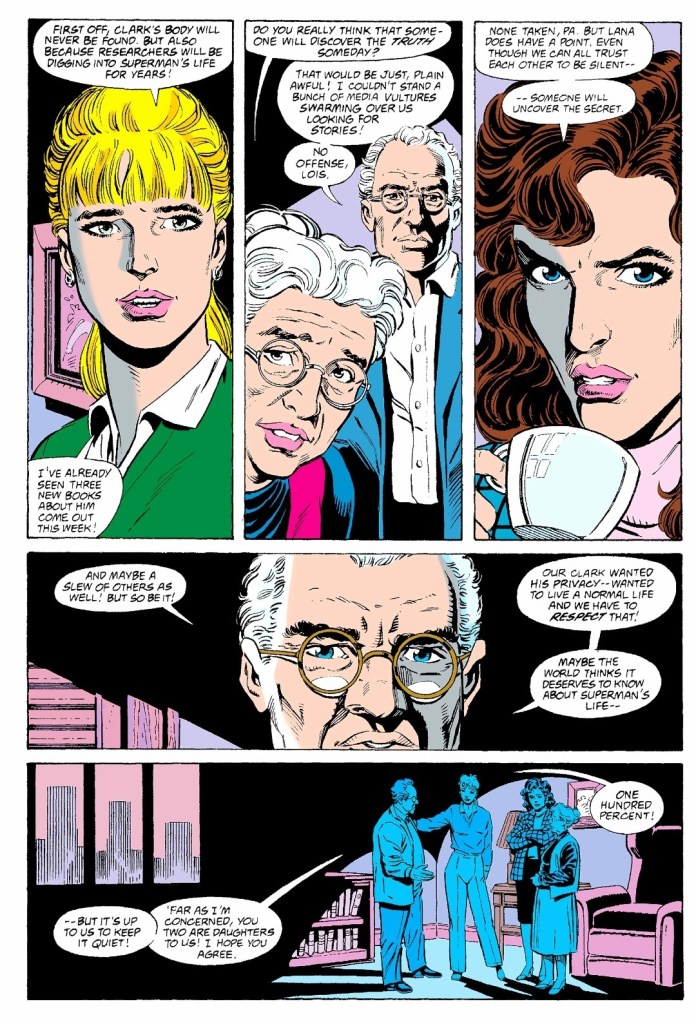
For one thing, this comic book has Lois Lane reunited at last with Clark Kent’s earthly parents Jonathan and Martha which was not only really dramatic but also had very rich dialogue written. By this point in this particular storyline, Lois Lane has gone through waves of deep emotions and pain, while getting stressed with journalistic work. As such, there is this dramatic pay-off that happened during the reunion with the elderly Kent couple.

What is most notable here is the scene in which Superman’s super-powered allies visit a local post office that literally got flooded with lots of mail from around the world addressed to the Man of Steel. On face value, such a scenario looked silly but the way Dan Jurgens crafted the dialogue and the images, the post office scene became believable and sensible to read. This shows that superheroes like Aquaman, Wonder Woman, the Flash and others do have hearts to be caring and sensible to the people.

The scene of the ordinary guy Mitch is significant as well. Clearly the character symbolizes the poor and struggling American who remembers how a complete stranger like Superman came along, stood up to fight for Mitch’s family and died in the process (while Mitch’s father was absent).

This comic book is also a Christmas tale. How Christmas was dramatized here has to be seen and you readers should get a copy of this comic book to find out why. It should be noted that there are themes of reconciliation and the nuclear family that made the Christmas tale meaningful.

Conclusion

Lana Lang, Lois Lane and the elderly Kent couple.

Even without the presence of the Man of Steel and no good-versus-evil conflict, Superman #76 (1993) is a great read as it pushed forward the Funeral for a Friend storyline while successfully telling a meaningful Christmas tale of its own complete with a very unique portrayal of the Justice League and Superman’s allies. How people deal with emotions and stress over Superman’s death was portrayed as highly believable and Dan Jurgen’s writing here was done with really high quality.

Overall, Superman #76 (1993) is highly recommended.

+++++

Thank you for reading. If you find this article engaging, please click the like button below, share this article to others and also please consider making a donation to support my publishing. If you are looking for a copywriter to create content for your special project or business, check out my services and my portfolio. Feel free to contact me with a private message. Also please feel free to visit my Facebook page Author Carlo Carrasco and follow me on Twitter at  @HavenorFantasy as well as on Tumblr at https://carlocarrasco.tumblr.com/ and on Instagram at https://www.instagram.com/authorcarlocarrasco
A Look Back at Superman: The Man of Steel #18 (1992)

Disclaimer: This is my original work with details sourced from reading the comic book and doing personal research. Anyone who wants to use this article, in part or in whole, needs to secure first my permission and agree to cite me as the source and author. Let it be known that any unauthorized use of this article will constrain the author to pursue the remedies under R.A. No. 8293, the Revised Penal Code, and/or all applicable legal actions under the laws of the Philippines.

Welcome back superhero enthusiasts, 1990s culture enthusiasts and comic book collectors! Today we go back to the early 1990s and explore a key chapter in the post-Crisis era of DC Comics through a Superman comic book – the first full appearance of Doomsday!

To those of you who read my retro review of Adventures of Superman #498 (1993) – which was the opening chapter of the Funeral for a Friend storyline – you might be wondering why I decided to revisit the Death of Superman storyline so suddenly. It all comes down to context related to Superman’s eventual death and what killed him. Not only did Doomsday become a very important part of DC Comics’ gallery of super villains having achieved the killing of the Man of Steel, the oversized monster became part of DC’s further comic book universe reboots as well as part of multimedia adaptations of DC Comics stories specifically in the Smallville TV series as well as in 2016’s Batman v. Superman: Dawn of Justice.

Indeed, Doomsday’s place in American pop culture is sealed and that shows how much of an impact was made by the unstoppable super villain co-created by Dan Jurgens, Brett Breeding, Jerry Ordway, Louise Simonson and Roger Stern. Doomsday was conceived way back in 1991 during the brainstorming session of the Superman comics writers and editors of the time.

With those details laid down, here is a look back at Superman: The Man of Steel #18, published in 1992 by DC Comics with a story written by Louise Simonson and drawn by Jon Bogdanove. This comic book marked the beginning of the Death of Superman saga.

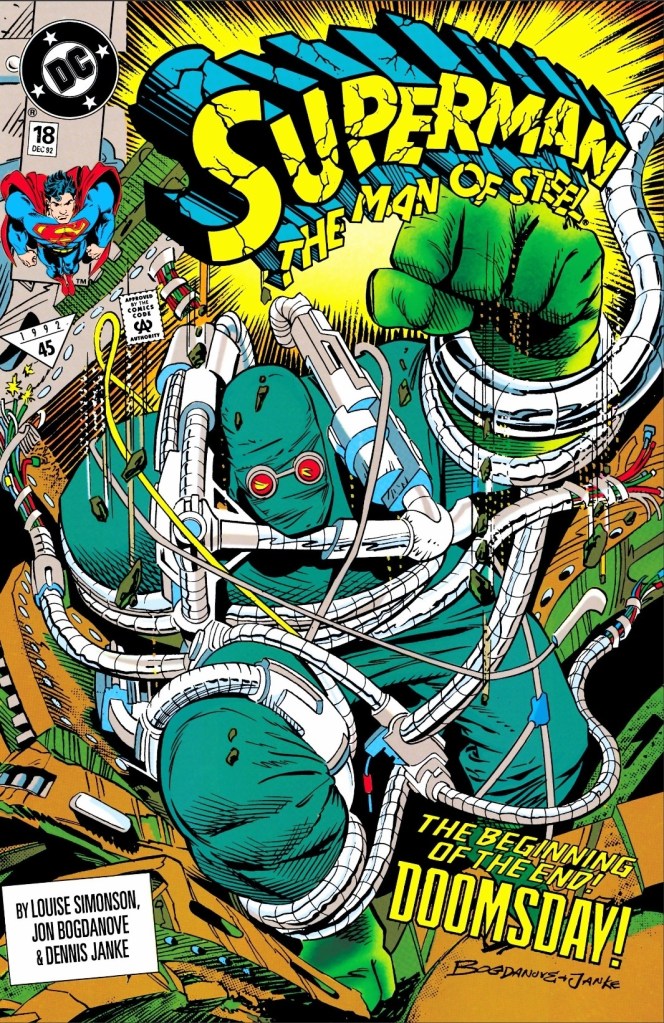
The cover.

Early story

The story begins deep underground as the left fist of a covered, large being keeps punching the metallic wall to get out of containment. As the punches keep on pounding the wall, the glove gets torn revealing a fist with gray skin and sharp bones protruding through the knuckles. After making its way out of containment, the earth shakes and the animals got disturbed as the creature – mostly covered with an alien body suit  with only the left arm freed – makes its way from deep underground.

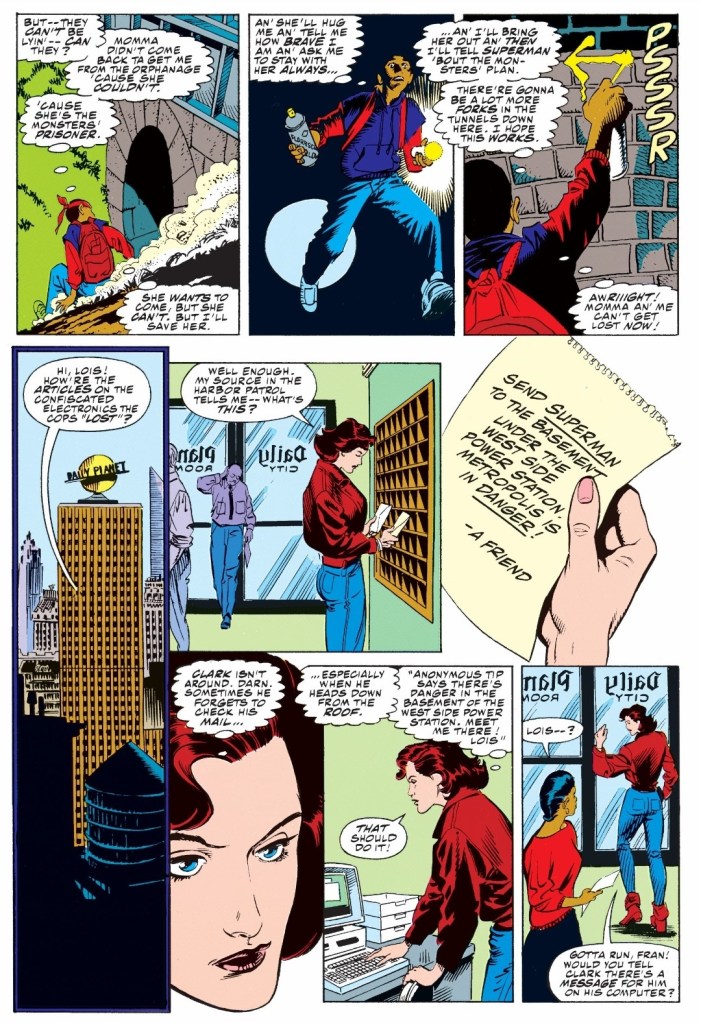
Miles away within the city of Metropolis, a young black boy buys a spray paint container (which has a fluorescent yellow paint that glows in the dark) inside a hardware store. In response to the curiosity of the store owner, the boy denies that he would use the glow-in-the-dark pain on a subway wall. The boy has a very tough task ahead of him as he will be going after monsters.

At a power station, a group of intelligent creatures make their way to steal electricity for their war machines…

Quality

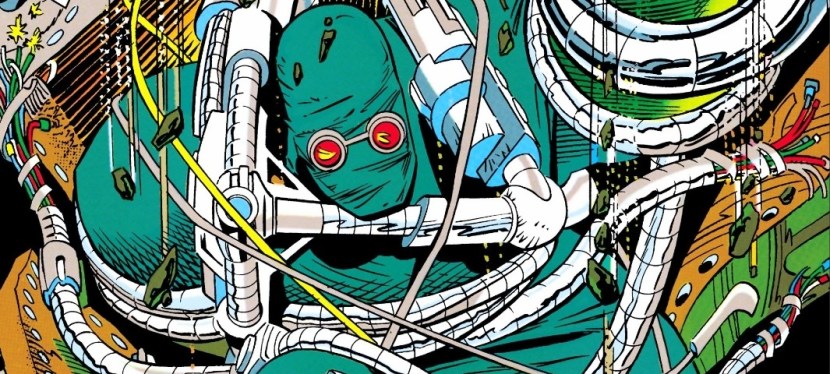
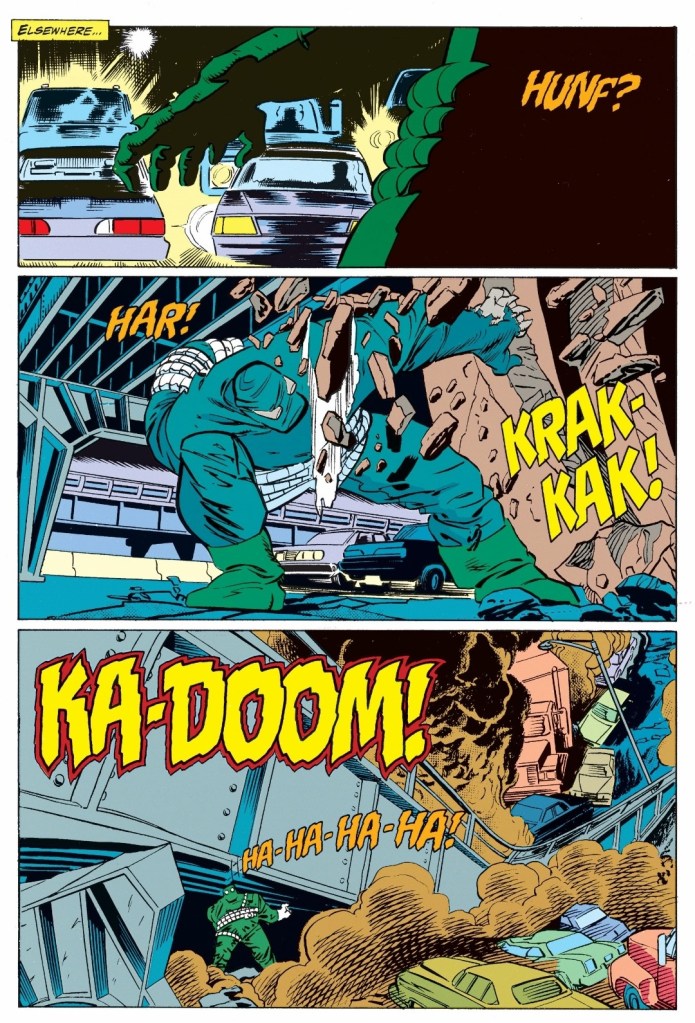
Even with only his left arm free, Doomsday still caused massive destruction causing injuries and deaths to others.

To make things clear, this comic book tells two stories that moved in parallel together. The first story involving Superman, Lois Lane and the affairs that involved the mentioned young black boy is the typical good-versus-evil superhero tale. What made that story standout was Lois Lane’s involvement as she got into trouble facing the opposition before Superman came in to save the day. As before, seeing Lois Lane talk to Superman in the presence of others while keeping his identity secret remains engaging to read. This tale was good enough to read.

The other story that follows the sudden appearance and the early rampage of Doomsday is the more engaging one to read. This was clearly a build-up for the Death of Superman concept but it was highly effective, well-paced and clearly defined by the creative team. Not only will you see Doomsday’s unstoppable power of destruction, you will witness his complete disregard of life – animals and humans – which strongly hints the an immense danger that Superman, the Justice League America (JLA) and the people of Metropolis are not prepared for. Like the Terminator, Doomsday cannot be reasoned with as massive destruction and death are his core elements. Within the pages of this comic book, it can be viewed that Doomsday was designed for endless waves of destroying life and anything that gets in the way.

Lastly, I should state that Simonson and Bogdanove presented Doomsday not only to be destructive but also as a frightening force that people in real life would not want to see realized.

Conclusion

The other tale that involved Lois Lane and the young black boy.

Superman: The Man of Steel #18 (1992) remains a very powerful read. Yes, it is a build-up of Doomsday and the Death of Superman saga but it remains highly significant as it kicked-off the creative change of direction of DC’s Superman creative teams going towards tragedies that Superman and his allies cannot easily stop. This one marked start of Doomsday’s eventual high rise not only in comics but also in pop culture in general. That being said, this comic book is a must-have in your collection.  

Overall, Superman: The Man of Steel #18 (1992) is highly recommended.

+++++

Thank you for reading. If you find this article engaging, please click the like button below, share this article to others and also please consider making a donation to support my publishing. If you are looking for a copywriter to create content for your special project or business, check out my services and my portfolio. Feel free to contact me with a private message. Also please feel free to visit my Facebook page Author Carlo Carrasco and follow me on Twitter at  @HavenorFantasy as well as on Tumblr at https://carlocarrasco.tumblr.com/ and on Instagram at https://www.instagram.com/authorcarlocarrasco
A Look Back at Superman III comic book adaptation (1983)

Disclaimer: This is my original work with details sourced from reading the comic book and doing personal research. Anyone who wants to use this article, in part or in whole, needs to secure first my permission and agree to cite me as the source and author. Let it be known that any unauthorized use of this article will constrain the author to pursue the remedies under R.A. No. 8293, the Revised Penal Code, and/or all applicable legal actions under the laws of the Philippines.

Welcome back superhero enthusiasts, 1980s culture enthusiasts and comic book collectors! Today we go back to the year 1983 which saw the theatrical release of Superman III that featured the late Christopher Reeve as the cinematic Man of Steel.

The 1980s was a very different time with regards to Hollywood’s handling of superhero movies. The concept of a shared cinematic universe was decades away from realization. Warner Bros. back then relied on the Salkind family to produce Superman movies and the first flick in 1978 proved to be a major hit for both viewers and critics while also establishing Christopher Reeve as the definitive live-action Superman for countless people. Unsurprisingly, a sequel was released in the early 1980s which continued box office success for the stakeholders and only led to the approval of another sequel.

Along the way, the late Richard Pryor (a major comedian already) appeared on TV and talked about Superman II which eventually led to him getting hired for Superman III. The movie was released in 1983 making a little over $80 million worldwide while also getting a noticeably weaker reception from critics. More notably, Richard Pryor had a huge chunk of the film’s spotlight as Gus Gorman while the overshadowed Christopher Reeve managed to stretch his cinematic art on playing Clark Kent and Superman (note: there is also the memorable Clark versus Superman battle). Superman III very clearly had a lot more comedy in its presentation. As part of the movie’s marketing, an official comic book adaptation by DC Comics was published.

With those details laid down, here is a look back at the Superman III comic book adaptation,  published by DC Comics in 1983 with a story written by Cary Bates and art made by the late Curt Swan and Sal Amendola.

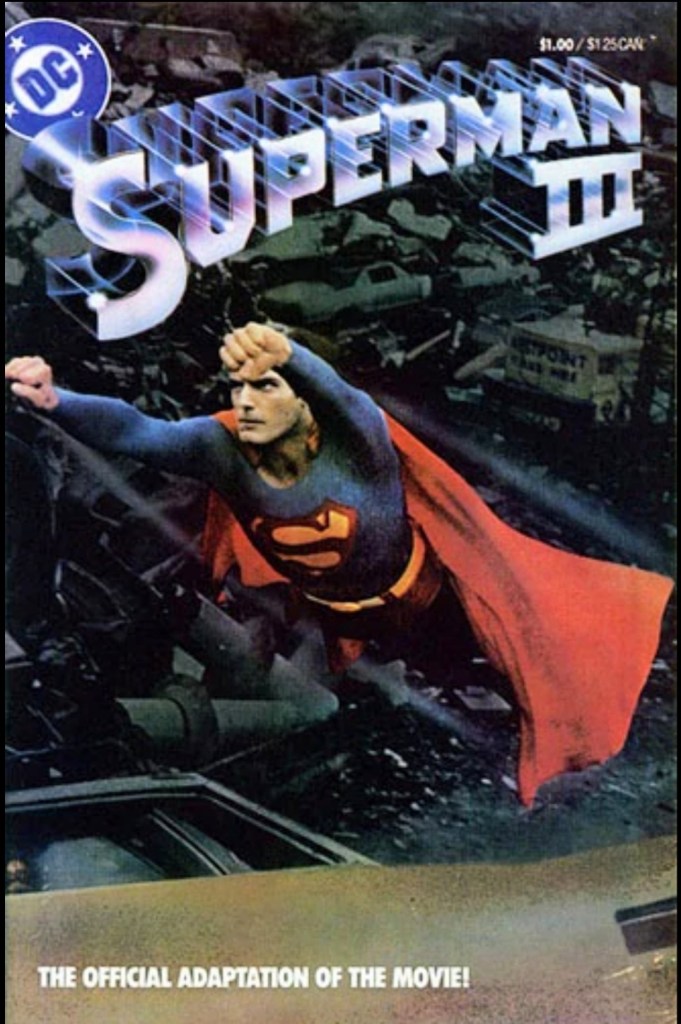
The cover.

Early story

The story begins inside the unemployment bureau of Metropolis. There, August “Gus” Gorman was told after 36 weeks of chronic unemployment, he is no longer eligible for financial assistance (read: welfare) from the city. As he was about to light his cigarette, he noticed computer job ad on the match. Gorman proceeds to the Archibald Data Processing School where he gets enrolled with several others. In front of others, Gorman does something on a computer which impressed the instructor a lot.

Over at the Daily Planet, Clark Kent/Superman, Lois Lane and Jimmy Olsen meet with Perry White at his office. Kent will be returning home to Smallville and make a news story out of it. White gives Kent his approval and then tells Lois she deserves a vacation.

Hours later, Kent and Jimmy Olsen ride the bus together going to Smallville but their ride stops as a result of a huge fire damaging a large chemical plant. A police officer reveals to Olsen that the scientists inside are worried about the plant and its stuff getting destroyed by the fire.

Kent carefully leaves the bus and discreetly changes into Superman to help solve the problem. Olsen, meanwhile, sneaks past the authorities to get to the burning chemical plant.

Over at Webcoe Industries, company head Ross Webster and his sister Vera learn that more than $85,000 worth of company funds was stolen by someone within. Just outside the office, Gus Gorman enters his fancy looking sports car which Webster, Vera and Lorelei notice. Webster asked how could one of their computer technicians afford such a vehicle worth $75,000…    

Quality

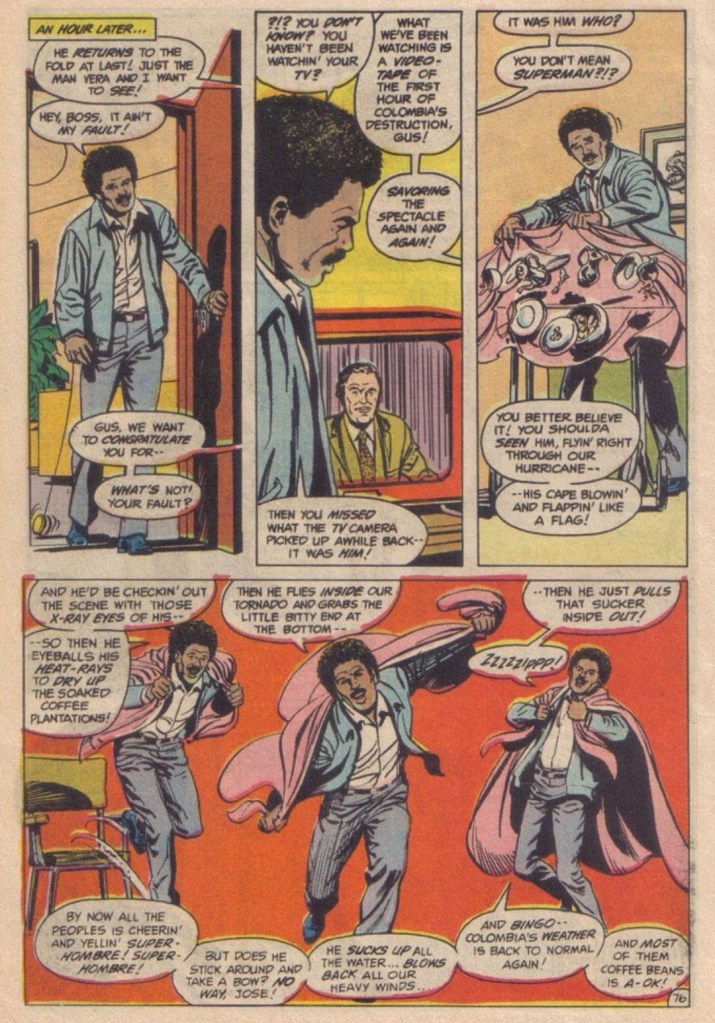
This is a creative way the comic book team used to dramatize Gus Gorman scene revealing and acting the bad news to his boss Ross Webster whose plans were thwarted by Superman.

While it is understandable that not all scenes and not all character moments from the movie  made it on print media, this comic book still managed to capture the film’s essence for the most part. The creative team pulled off their own interpretations of the events and made something entertaining and engaging even though they had to deal with the major challenge of summarizing the movie’s plot and establishing a workable comic book narrative.

I should state that the comic team creatively avoided making in-depth references about liquor and smoking which were obvious in the movie. You will not see Superman drinking liquor at a bar nor will you see Gus Gorman referring to tar listed on a cigarette pack. I suppose this was done to ensure the comic book would be released widely and be acceptable to very young readers and the parents watching them.

The battle between evil Superman and Clark Kent is best viewed in the movie. This one is a shorter and less detailed version of it.

When it comes to establishing the clear lead among all the characters featured, Superman fans should be delighted to know that the Man of Steel is indeed more prominent than Gus Gorman. Take note that in the movie, Richard Pryor’s Gus Gorman overshadowed Christopher Reeve’s Superman/Clark.

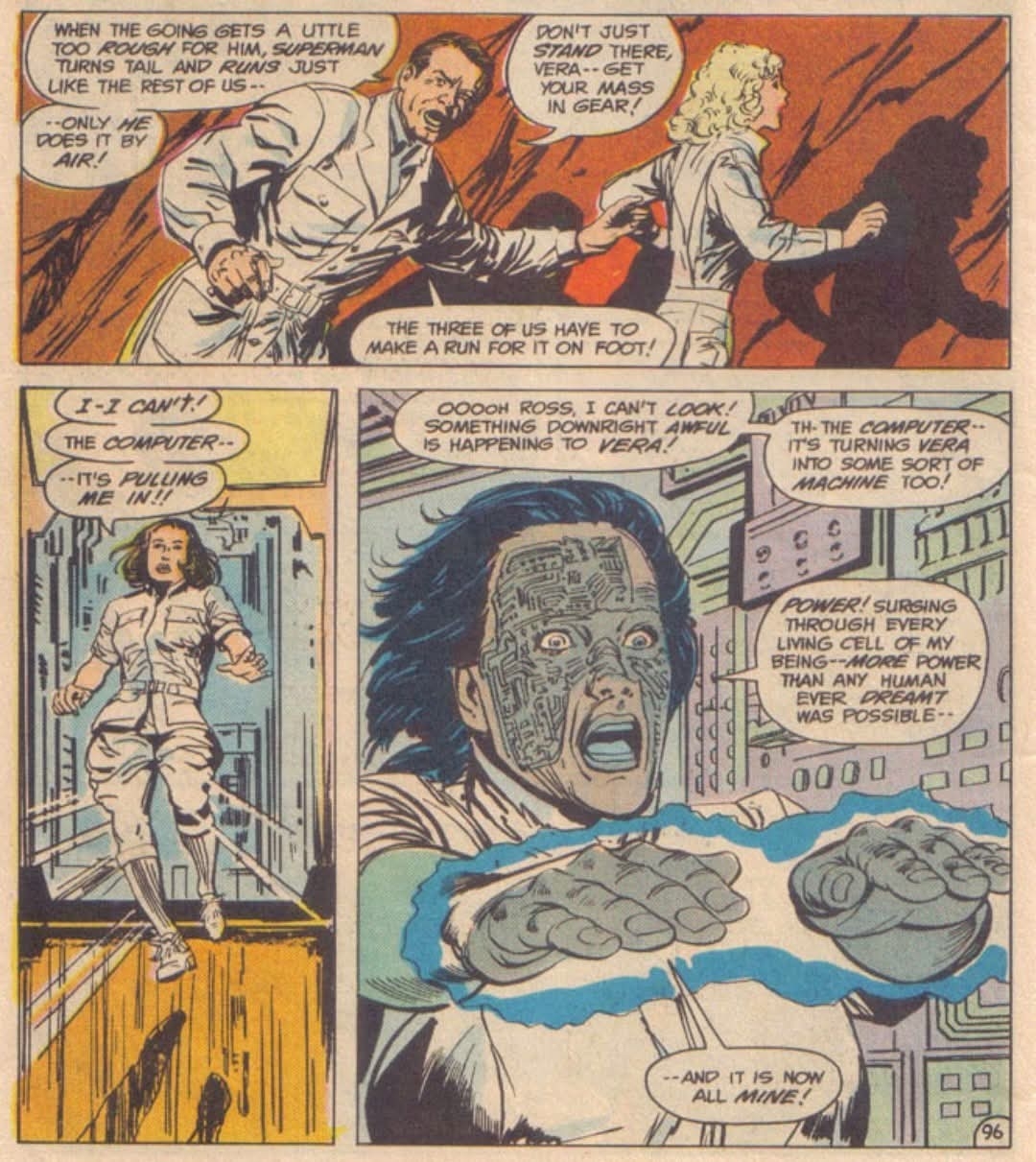
Remember the frightening sequence of Vera getting captured and turned into a cybernetic figure by the Super Computer? This is what it looks like in comic book format.

The art done by Curt Swan and Sal Amendola is decent and it seems to me that their time on visualizing Cary Bates’ script was indeed limited. That being said, it was not surprising to me that, with the exception of Ross Webster in one specific image, none of the characters resembled their cinematic counterparts. Clark Kent/Superman never resembled Christopher Reeve, and Gus Gorman looks nothing like Richard Pryor. Clearly, the artists’ focus was visualizing the narrative which they succeeded.  

Conclusion

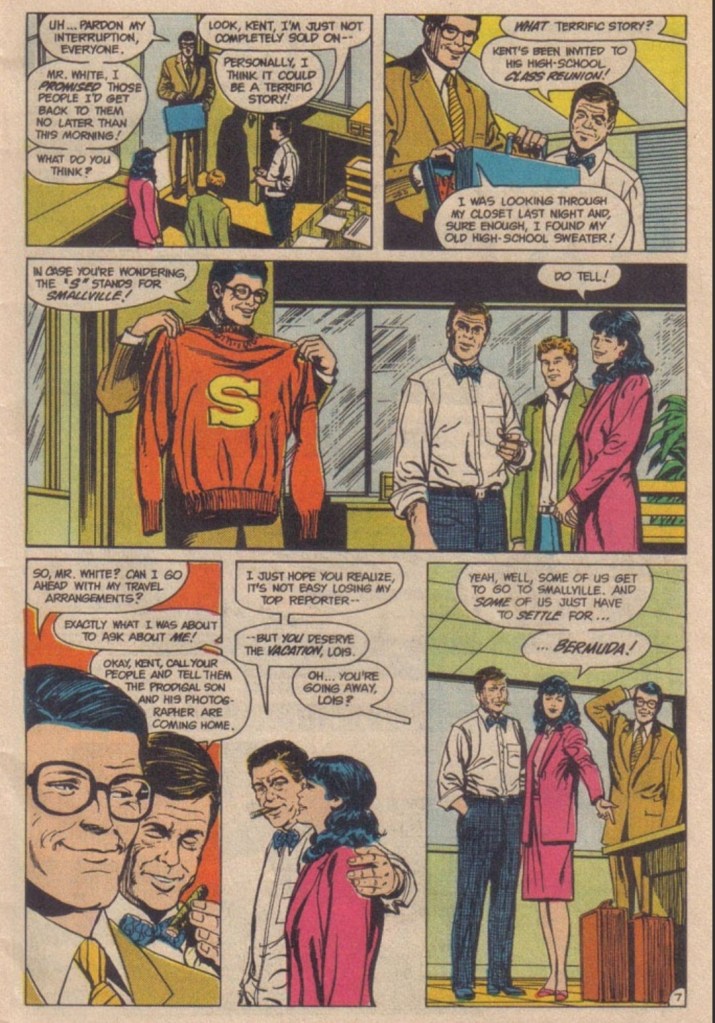
Clark Kent, Lois Lane, Jimmy Olsen and Perry White in the Daily Planet.
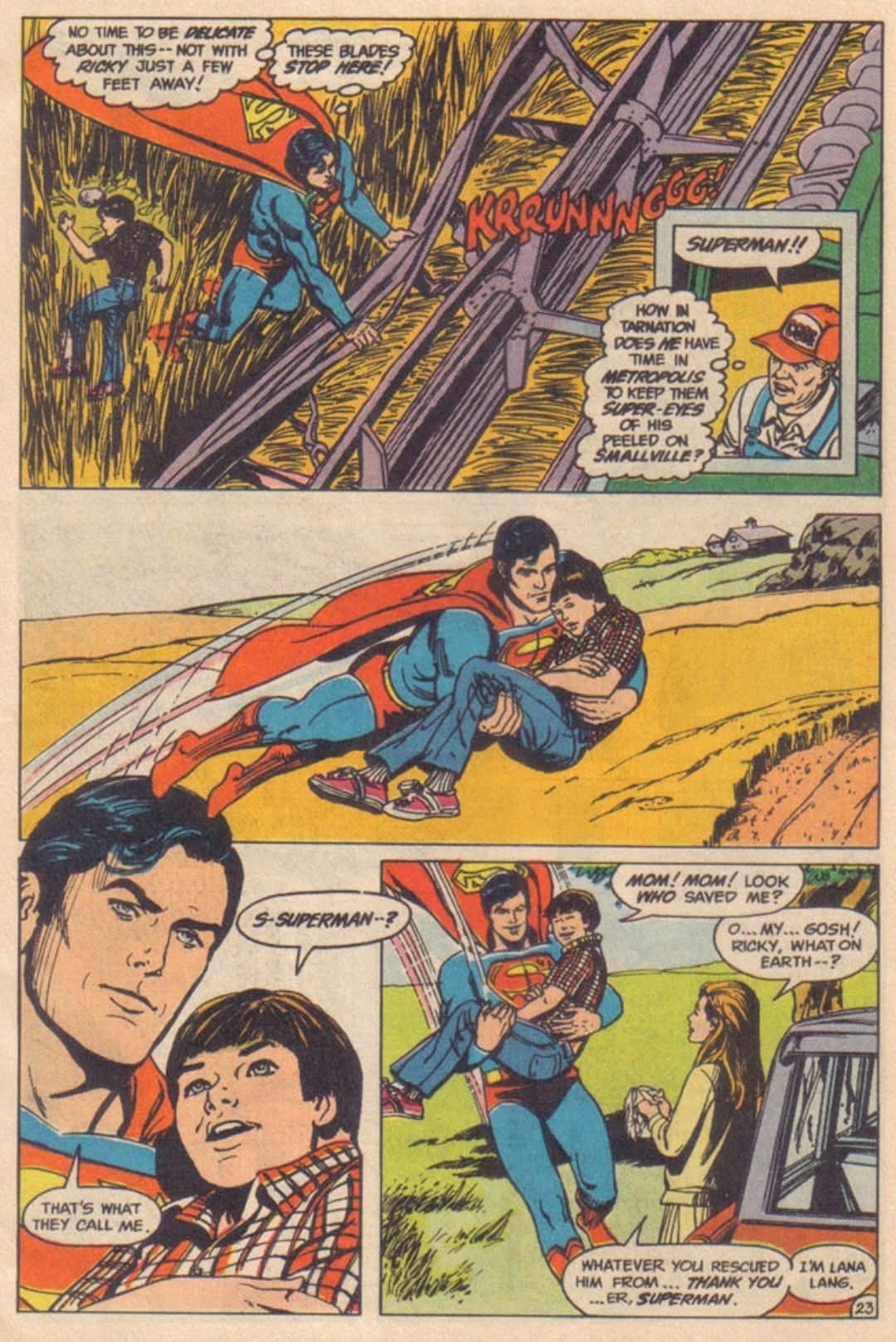
Superman saving Lana Lang’s son from certain death.

Having seen the Christopher Reeve/Richard Pryor movie in the cinema and on cable TV since 1983, I can say that Superman III (1983) is a decent adaptation. It’s not 100% faithful but it is still a worthy read as it will give you the movie’s concept and entertainment values in literary form. If you really want to full essence of film along with the cinematic moments (note: the Superman-Clark battle is the cinematic highlight) all intact, then your obvious choice is to watch the movie. If you are turned off by the movie’s wacky comedy, then the comic book adaptation will deliver to you the more serious approach on telling Superman III’s story. Let me repeat that Superman is more prominent than Gus Gorman in this comic book.

Overall, Superman III (1983) is satisfactory.

+++++

Thank you for reading. If you find this article engaging, please click the like button below and also please consider sharing this article to others. If you are looking for a copywriter to create content for your special project or business, check out my services and my portfolio. Feel free to contact me with a private message. Also please feel free to visit my Facebook page Author Carlo Carrasco and follow me on Twitter at  @HavenorFantasy as well as on Tumblr at https://carlocarrasco.tumblr.com/ and on Instagram at https://www.instagram.com/authorcarlocarrasco/

A Look Back at Superman #100 (1995)

While this old comic book may not be the best-selling Superman story of the 1990s, it is for me the most significant one as well as creator Dan Jurgens’ best work ever on the Man of Steel. I’m talking about Superman #100.

Cover
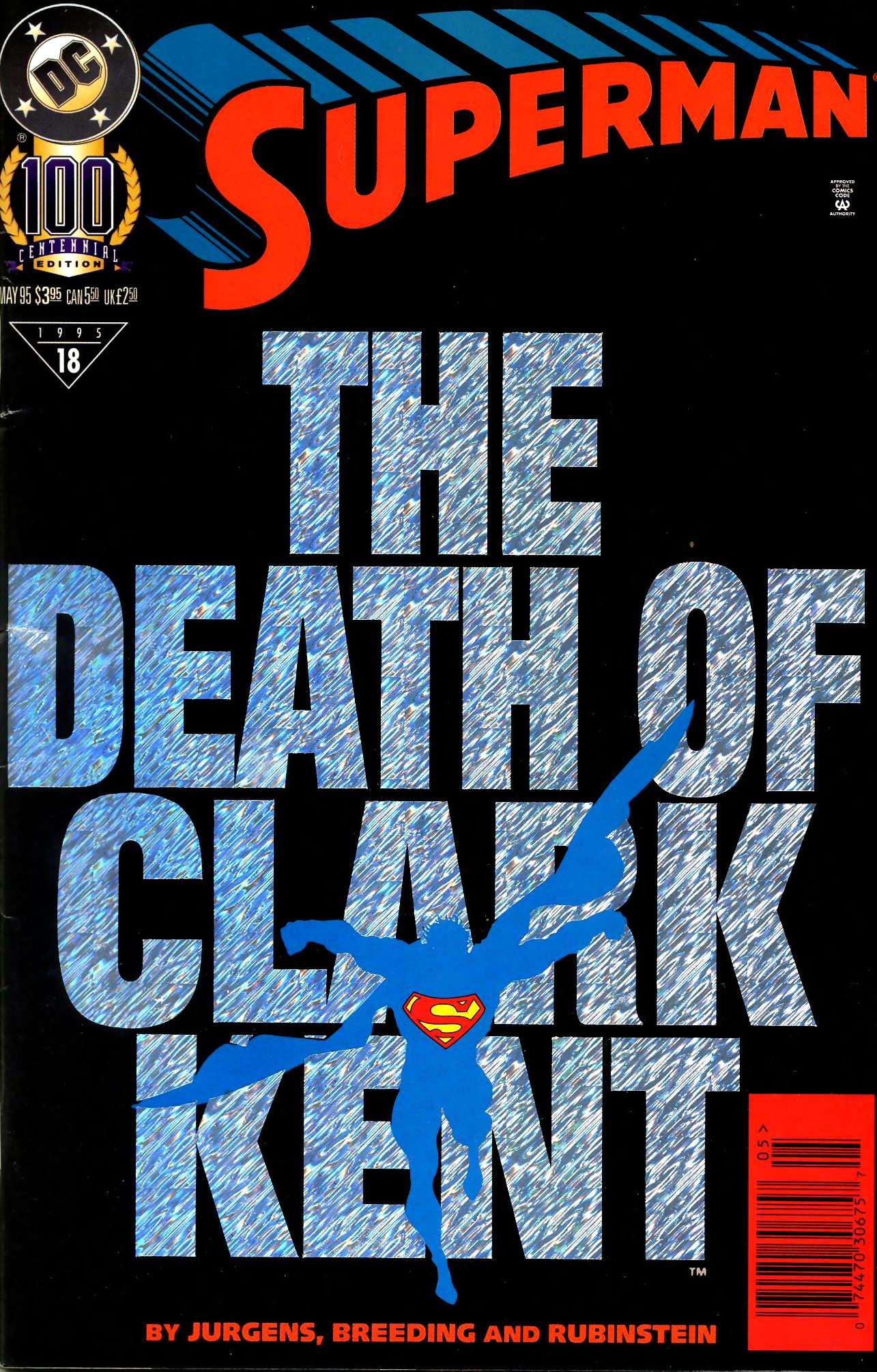
The cover.

Released in 1995 by DC Comics, Superman #100 came out with a special cover that highlighted the title “The Death of Clark Kent”. It was released with a hefty cover price of $3.95 for the United States and was pretty thick. It was written and illustrated by Dan Jurgens, the same man who worked on the best-selling Superman (The Death of Superman climax).

Early story

The story begins with Clark Kent carrying a deformed Superman object (with makeshift glasses and a knife “stabbing” the letter S) and just feet behind him was his officemate Jimmy Olsen. Hidden mostly from Olsen’s view, the object signifies that someone knows that Clark Kent and Superman are one and the same person. Carefully, Clark hides it away and starts chatting with Jimmy who is very concerned of him.

Clark recently has been struggling over the fact that someone knows his secret identity. After carefully dismissing Jimmy, he moves out as Superman to take of business before the madman (who knows his identity) makes his next move.

Superman visits his parents Jonathan and Martha Kent at their home in Smallville. He expresses to Jonathan that he believes that the madman is someone he knew from his past: Kenny Braverman (Conduit).

Quality

If there is anything that defines this comic book, it is the in-depth storytelling done by Dan Jurgens complete with intense character development as well as exploration of people from his past (all connected to Smallville).

The plot structure is quite simple. Conduit knows Superman/Clark Kent personally and is always at least a step ahead of the superhero complete with strategies mess with him personally. Superman, who came back from the dead and has been struggling to fit in with the times, finds himself at his most vulnerable state not as a super-powered guy but as a human being. To analyze things here, Superman is about to get suffer and lose a lot again but not with the temporary death he got from fighting Doomsday, but rather the demise of his personality as Clark Kent.

Art2
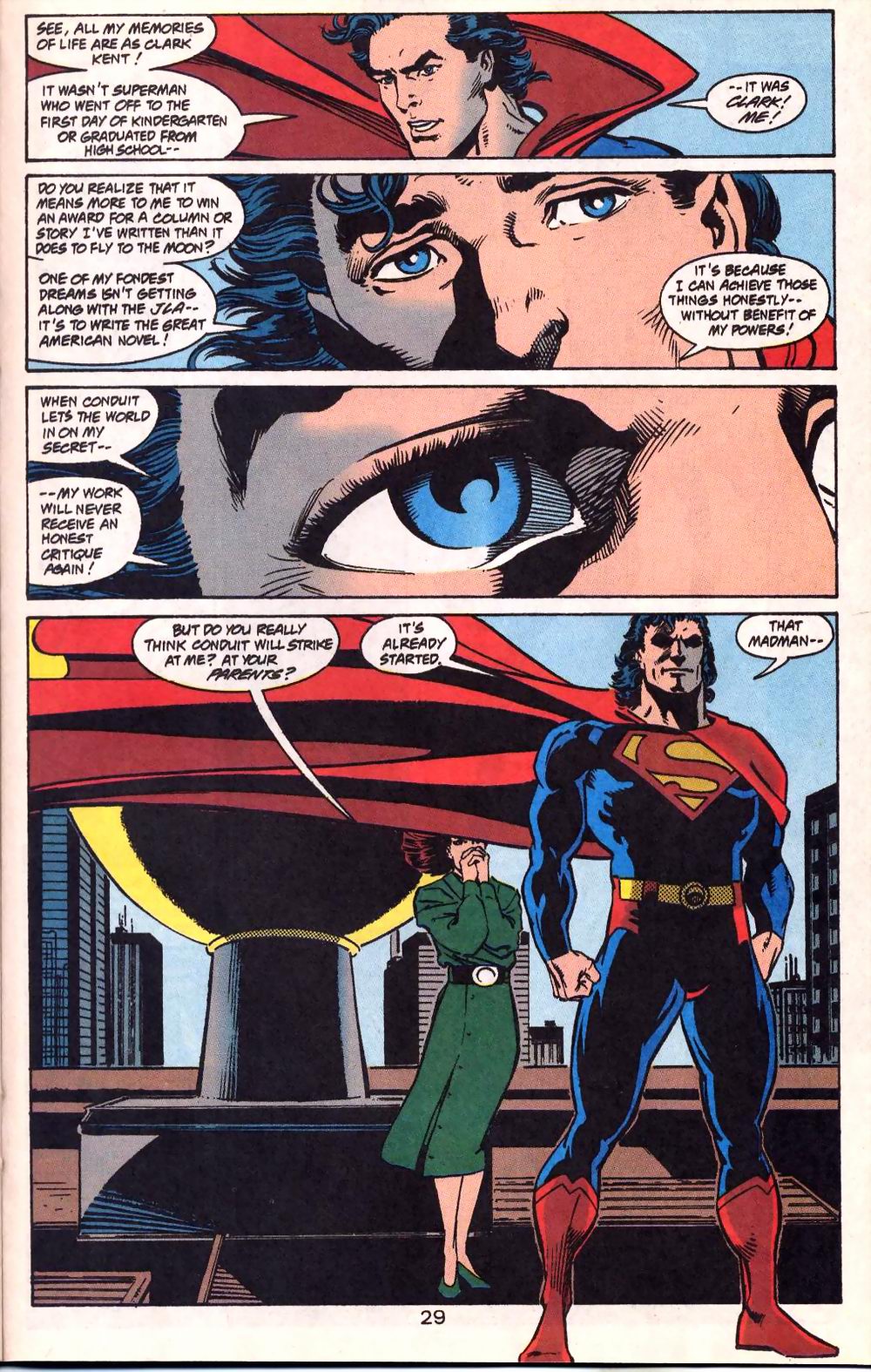
Truly one of the best Superman dialogue and characterizations ever thanks to Dan Jurgens.

Think about it. As Clark, Superman has a career, a social life, grew up the American way, intends to spend his life with Lois Lane and has ambitions of simple living that mean more to him than being with the Justice League America (note: writing the next great American novel).

The great thing here is that writer-artist Dan Jurgens humanized Superman a whole lot in this comic book and his work is excellent. Superman #100 opens up the discussion about what life would be like for the Man of Steel once his identity as Clark Kent gets ruined. The story also connects with Superman’s past (within the post-Crisis universe of DC Comics) and sheds light on his relationships with not only his parents but also with Pete Ross and Lana Lang (Clark’s ex-GF). When it comes to putting Superman in danger, Conduit’s approach is more convincing than Doomsday’s unstoppable power of destruction.

By the time I got immersed with Dan Jurgen’s storytelling and character development, the action scenes involving Superman felt justified. More importantly, this comic book shows the famous superhero being pushed to the limits in terms of personality tolerance and determination.

Conclusion

We live in an age in which established entertainment franchises get ruined by sequels or spin-offs or reboots which were mishandled by creators who tried to reinvent stuff only to fail and disappoint the fans.

Look at Star Wars Episode VIII: The Last Jedi. Director Rian Johnson had complete creative control on telling an engaging and fun Star Wars tale but ended up deforming it (disregarding Star Wars’ most defining elements), focused mainly on subverting people’s expectations and left many long-time fans disappointed and angry.

Art1
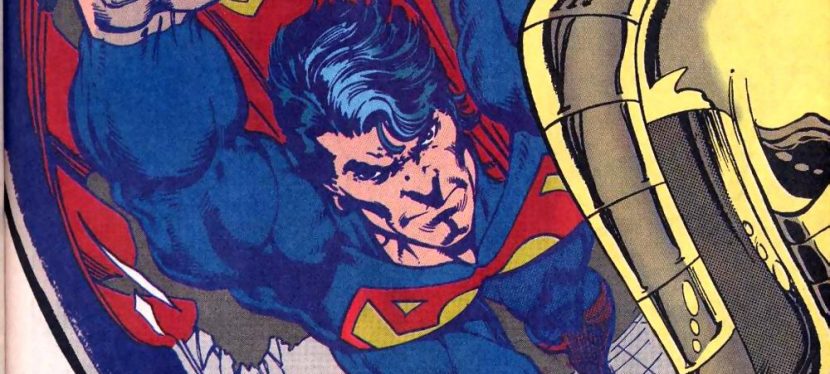
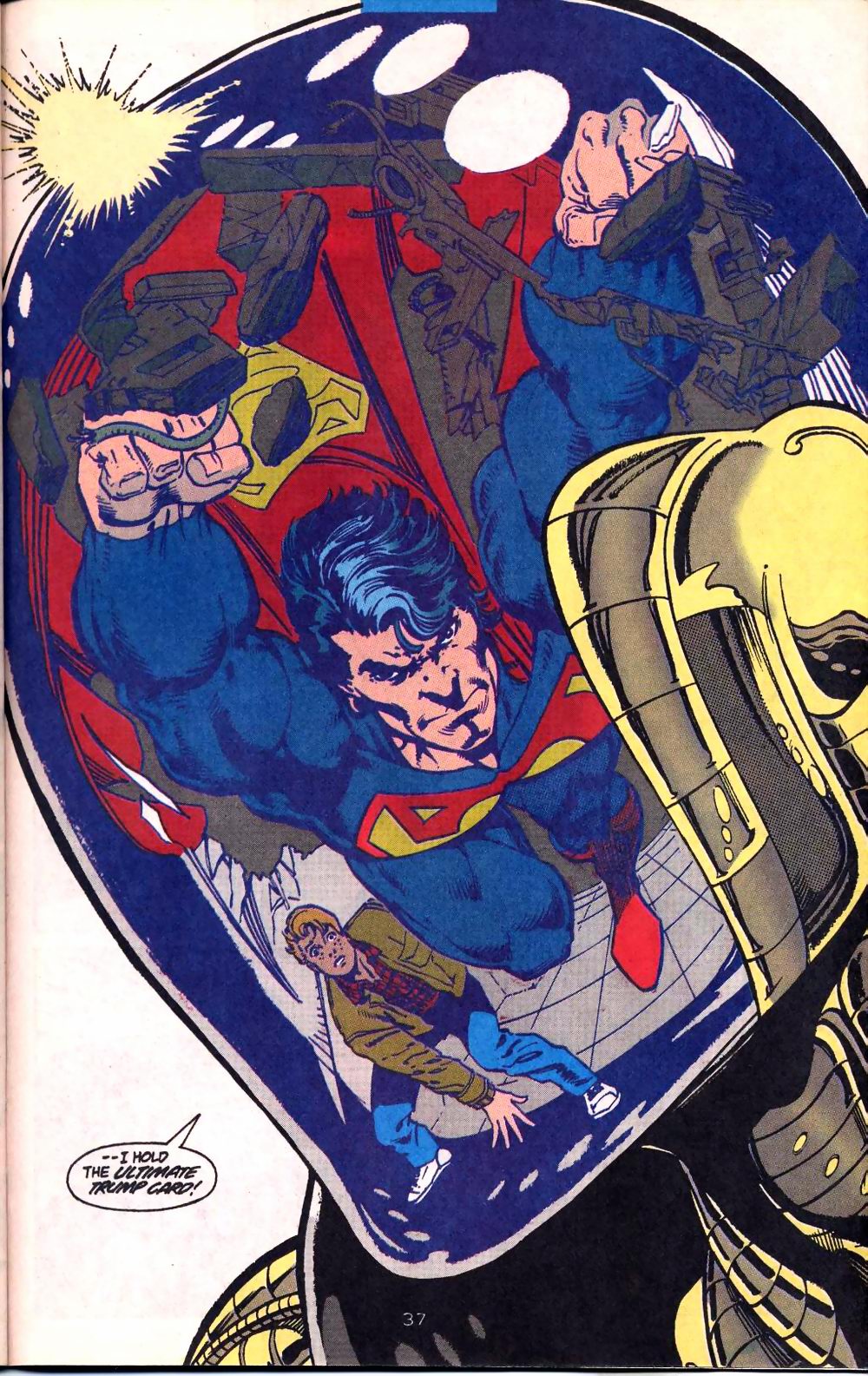
Superman going after Conduit.

Going back to Superman #100, Dan Jurgens succeeded in redefining the American icon while maintaining respect of the established past of the character and kept the elements that defined Superman. His story about the demise of Superman’s secret identity was a very fresh concept and, for a time, it paved the way for opportunities to take the Man of Steel into new creative directions without disappointing fans.

Personally, I would love to see Warner Bros. produce a new standalone Superman movie with Henry Cavill as the superhero and adapt the core elements of Jurgens’ work in Superman #100 into the screenplay. Cavill already proved he could portray Superman/Clark very humanly in Man of Steel.

Overall, Superman #100 is highly recommended.


Thank you for reading. If you find this article engaging, please click the like button below and also please consider sharing this article to others. Also my fantasy book The World of Havenor is still available in paperback and e-book format. If you are looking for a copywriter to create content for your special project or business, check out my services and my portfolio. Feel free to contact me as well. Also please feel free to visit my Facebook page Author Carlo Carrasco and follow me at HavenorFantasy@twitter.com