Retro Gaming Ads Blast – Part 21

Welcome back readers, fellow geeks and electronic gaming fans!

In this edition of the Retro Gaming Ads Blast (RGAB) series, we will take a look at another batch of retro gaming print ads – including arcade flyers – from the 1980s and 1990s.

For the newcomers reading this, Retro Gaming Ads Blast (RGAB) looks back at the many print ads of games (console, arcade, computer and handheld) that were published in comic books, magazines, flyers, posters and newspapers long before smartphones, social media, the worldwide web and streaming became popular. To put things in perspective, people back in the 1980s and 1990s were more trusting of print media for information and images about electronic games and related products.

With those details laid down, here is the newest batch of retro gaming print ads for you to see and enjoy…

1. Galaxian for Atari print ad
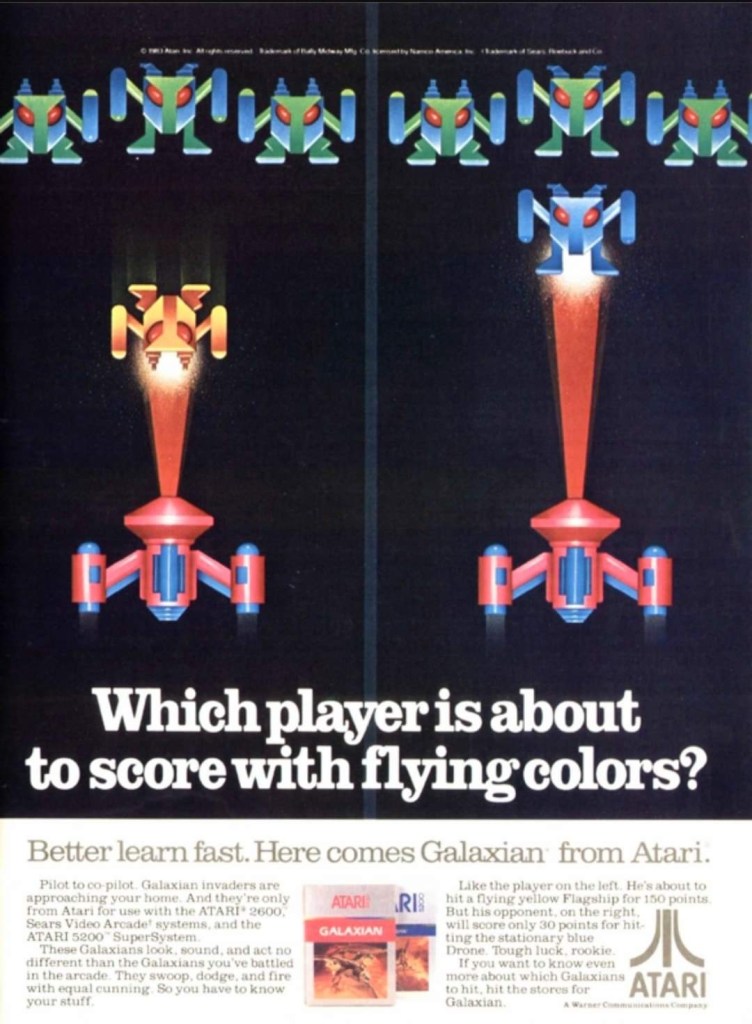
A unique approach to the art done by the advertisers.

Developed by Namco, Galaxian was a 2D sci-fi shooter that debuted in arcades in 1979. It was so successful and widely acclaimed, it got ported to varied game consoles and home computers as the years passed by. For its release on the Atari 2600 and Atari 5200, this print ad was created to catch the attention of fans and gamers by utilizing artwork that resembled the look of 2D sprites from the game. That being said, no screenshots of Galaxian on the Atari consoles were shown because the artwork used looked detailed and were attention-grabbing already.

2. 1943: The Battle of Midway arcade flyer
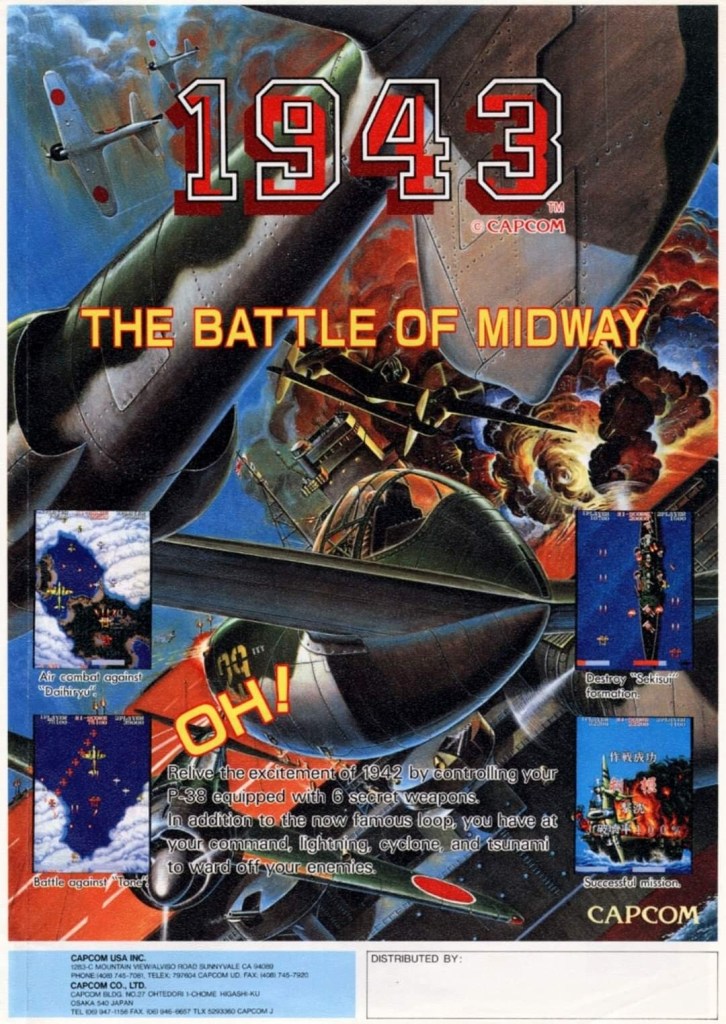
This is a fine looking flyer.

In 1987, Capcom released in the arcades 1943: The Battle of Midway which was their follow-up to 1942. The arcade flyer itself was designed to strongly promote the game using a combination of screenshots, short-but-clear text descriptions and the great looking piece of artwork which really emphasized the World War II concept. Behind it all, this game was made by Japanese developers with the Western markets in mind and the irony is that the game has players control Americans fighting the Japanese fleet.

3. Top Gunner arcade conversion kit flyer
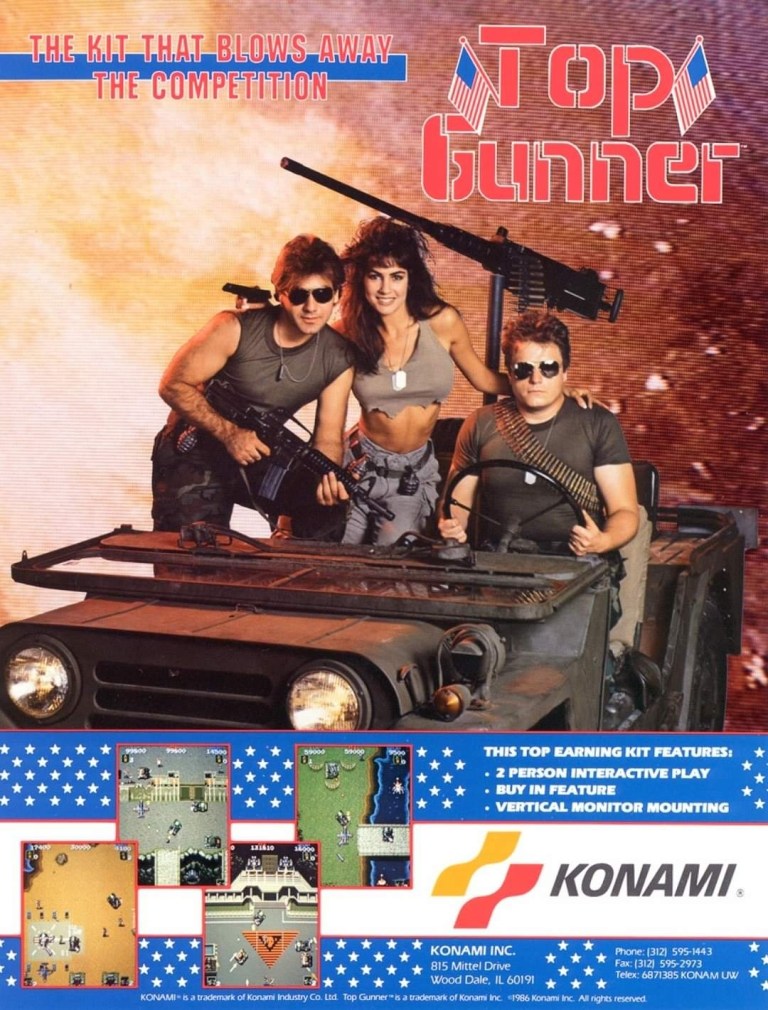
Show this nice looking image to the woke nut or modern day Communist near you. Watch and observe his or her reaction.

To make things clear, Top Gunner is actually the run-and-gun game Jackal and the alternative titles was mainly used in North American arcade distribution and also reflected Konami’s move of coming up with titles inspired by blockbuster movies of the time. To promote its 1986 arcade release in America as a conversion kit, the advertisers had three models playing soldiers on a military jeep to immerse gamers into the core concept of the game – moving armed military jeeps from one location to another while fighting bad guys. The approach used for the visual concept is indeed inspiring, especially during the Cold War. Top Gunner/Jackal became a hit in both arcades and consoles.

4. Joust for Atari print ad
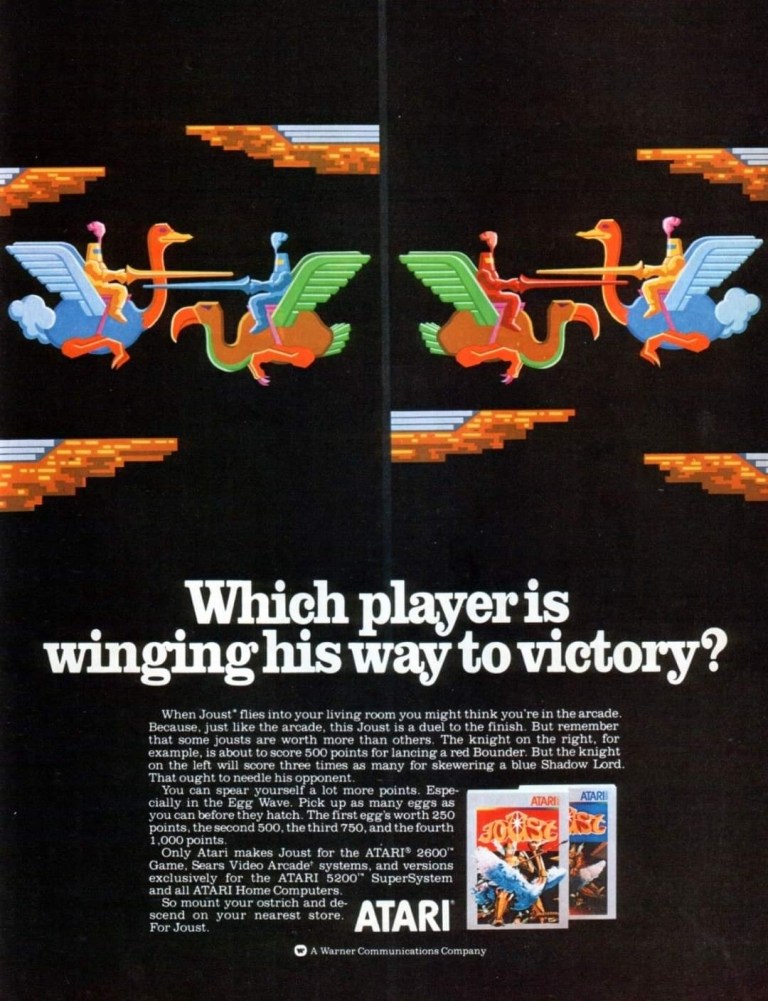
While I played Joust on console, I don’t remember seeing this print ad before.

Made by Williams Electronics, Joust was one of those early 1980s arcade games that eventually made its way to the Atari 2600 console which was massively popular in North America. Strangely enough, the artistic approach Atari’s advertising came up with for the console version of Joust was similar with that of the ad of the Atari version of Galaxian (see item above) in which artwork was used to resemble the 2D sprites of the game. Regardless, the images of this ad showed what a joust looked like – a martial game between two armed combatants going against each other while riding an animal.  

5. Kid Chameleon print ad
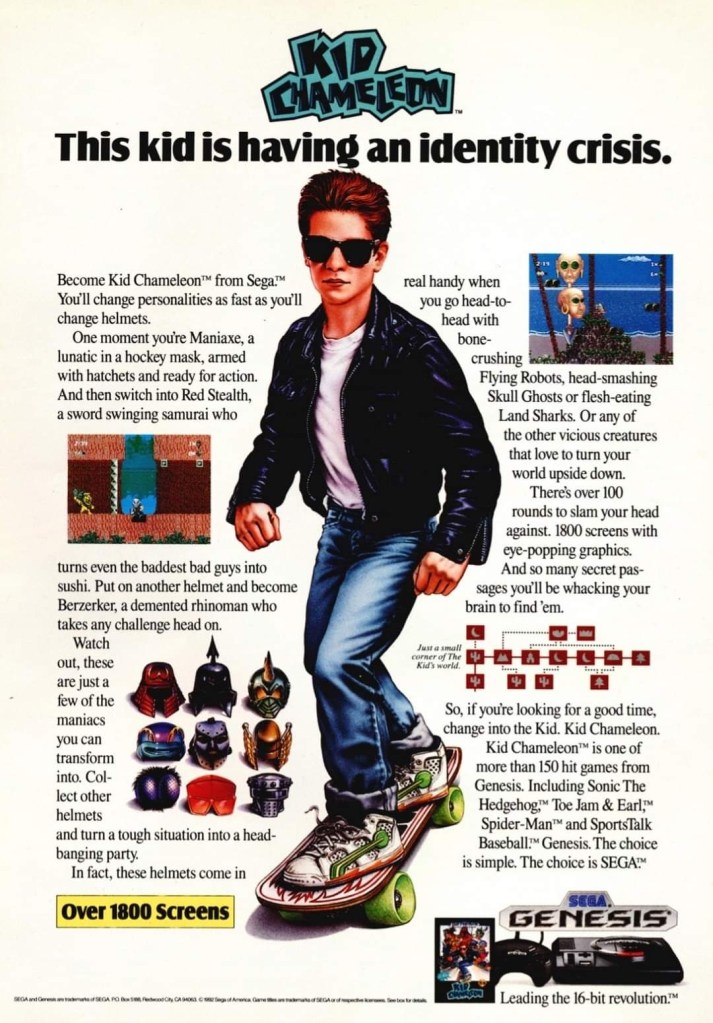
Can you relate with Kid Chameleon’s identity crisis?

During the early years of the Sega Genesis, Sega of America exerted efforts to make new games that were not only exclusive to their console but also stand out among the many 2D side-scrolling adventure games by coming up with a protagonist with a unique personality that could somehow resonate with young kids and teenagers.

Developed by their internal experts (Sega Technical Institute), the company released Kid Chameleon in 1992 and they came up with the above print ad that had detailed hand-drawn art of the lead character as well as a wordy text description which was a clear attempt to help young gamers (including teenagers) get connected with both the game and the protagonist. The advertisers even had space to spare to accommodate two screenshots of the game.

6. Terminator 2: Judgment Day (AKA T2: The Arcade Game) for Sega Genesis print ad
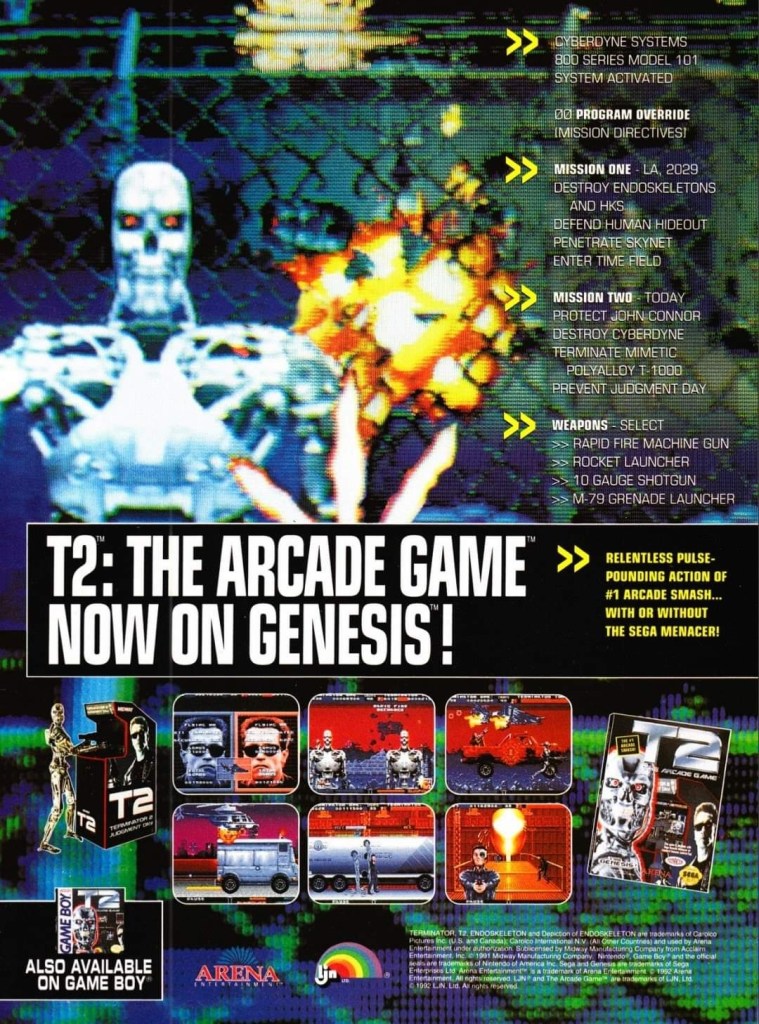
This print ad appeared on the many comic books I read long ago.

Back in the early 1990s, Terminator 2: Judgment Day was a massive success in the global box office and this resulted in Arnold Schwarzenegger’s popularity to soar very high while also establishing the Terminator as an essential pop culture figure. Apart from comic books and merchandise, video games based on the movie were made and the one that stood out the most was the arcade shooter game initially titled Terminator 2: Judgment Day (later retitled as T2: The Arcade Game).

The arcade mega hit eventually got ported to the Sega Genesis and this print ad really looked flashy with its visual presentation showing screenshots and a zoomed-in look at how the Terminator T-800 looked like in the Genesis version complete with a few explosions in the background. It should be noted that this flashy print ad cleverly concealed the visual downgrades and the redrawn images as the Genesis itself could never come close to matching the high quality visuals of the arcade version.

7. CYBERPad print ad
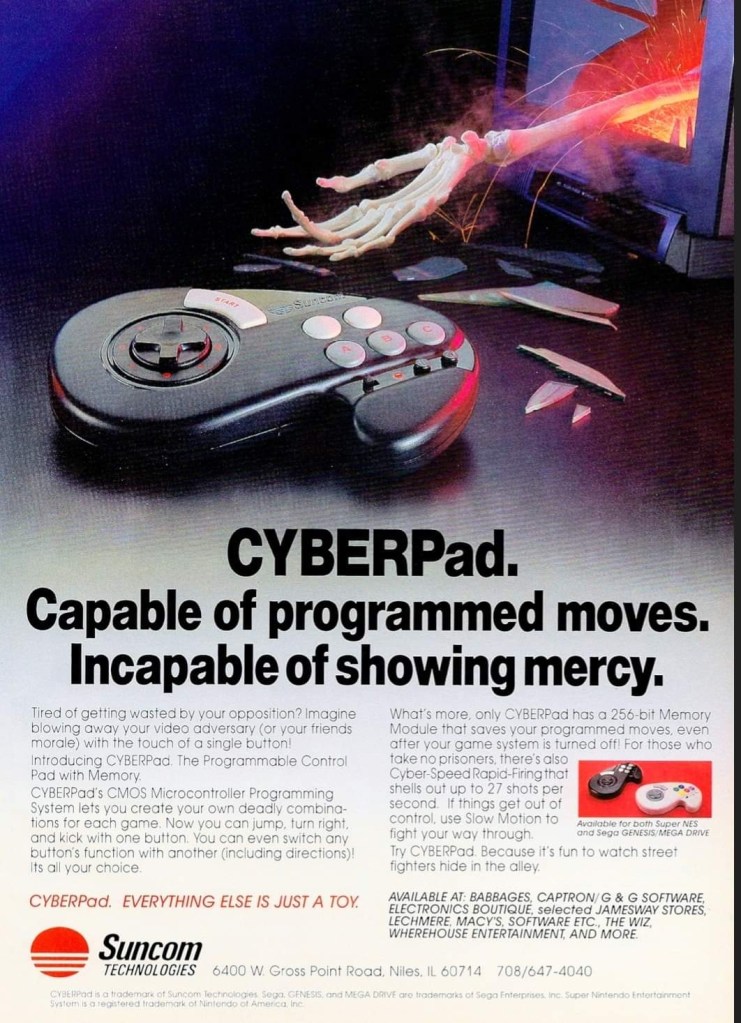
I never owned the CYBERPad, nor have I ever used one.

During the so-called 16-bit console generation (actually the 4th console generation), there were lots of licensed console peripherals made by independent companies in support of the Sega Genesis and Super Nintendo Entertainment System (SNES). The company Suncom Technologies came up with the CYBERPad controller for the two consoles and they boasted in their print ad that the product had a programmable control pad that allowed users to create combinations for each game with convenience in mind. The CYBERPad also allowed the saving of the programmable moves and it had a rapid-fire feature and even a slow-motion function. The CYBERPad was made to make the gameplay experience more user-friendly.

8. GamePro magazine sweepstakes print announcement
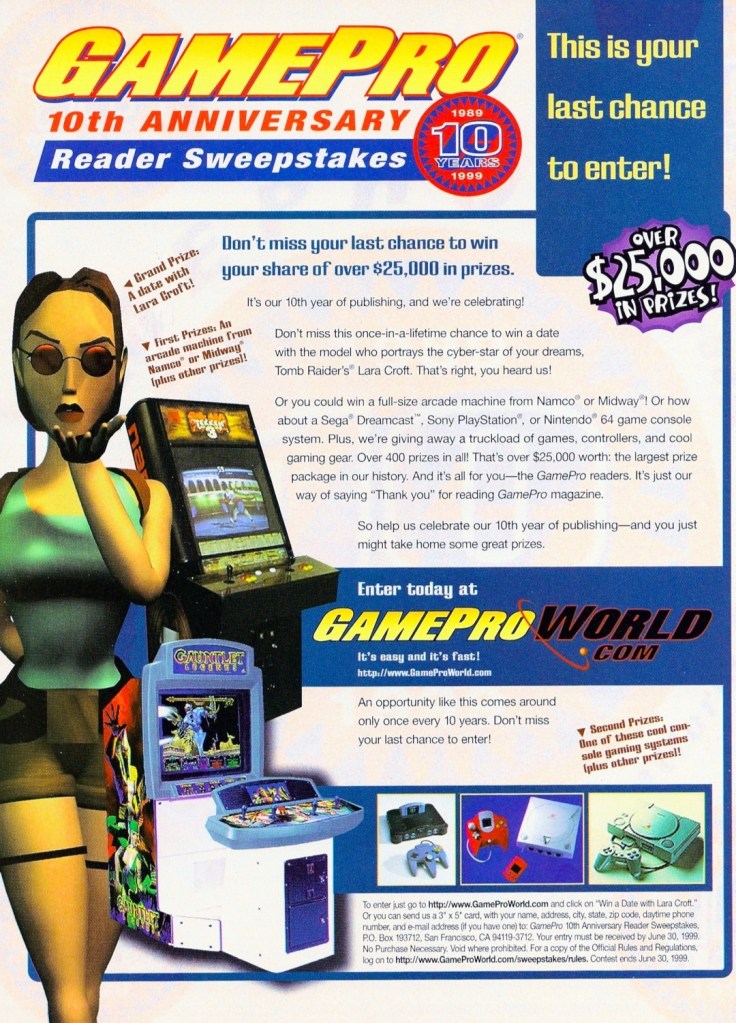
If you look closely, this print announcement by GamePro technically advertised the game consoles, the arcade game and Lara Croft to its readers.

In 1999, GamePro magazine celebrated its 10th anniversary and to keep on resonating with gamers and maintaining the loyalty of their fans, they organized a reader sweepstakes with prizes worth over $25,000 to be won by the few winners. GamePro boasted a date with an unnamed model who played the iconic Lara Croft (Tomb Raider). Certain arcade machines plus the modern consoles of the time – including the brand-new Sega Dreamcast – were also at stake. The way it was presented, this GamePro print announcement was enticing to read.

9. Smash T.V. for SNES print ad
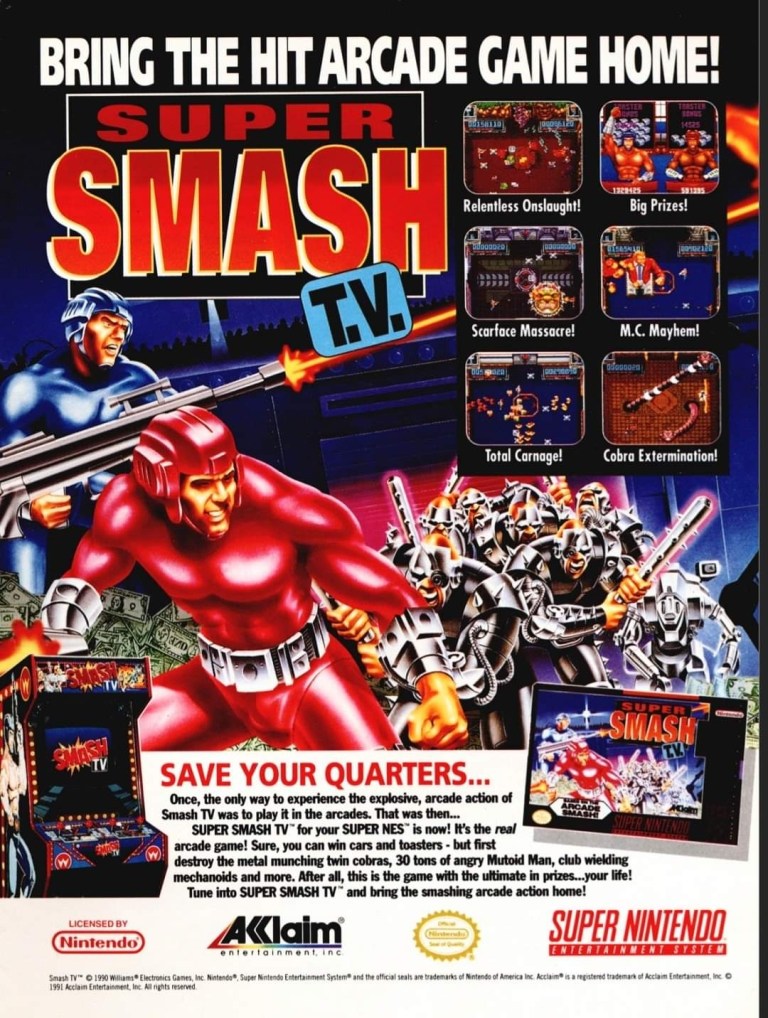
Smash T.V. was a lot of fun on both arcade and console.

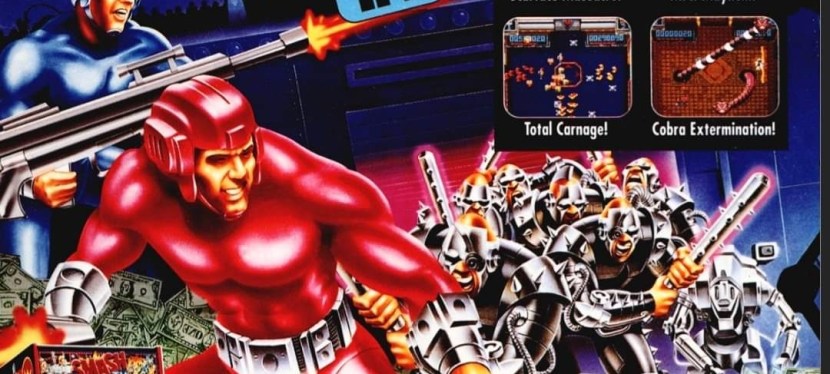
The arcade hit Smash T.V. made its way to the Super Nintendo Entertainment System (SNES) in 1992 and the publisher came up with a print ad that had captivating artwork, six screenshots and a text description that emphasized that a lot of fun awaits gamers on the console version. In my view, this old ad is still amusing to look at.

10. David Robinson’s Supreme Court print ad
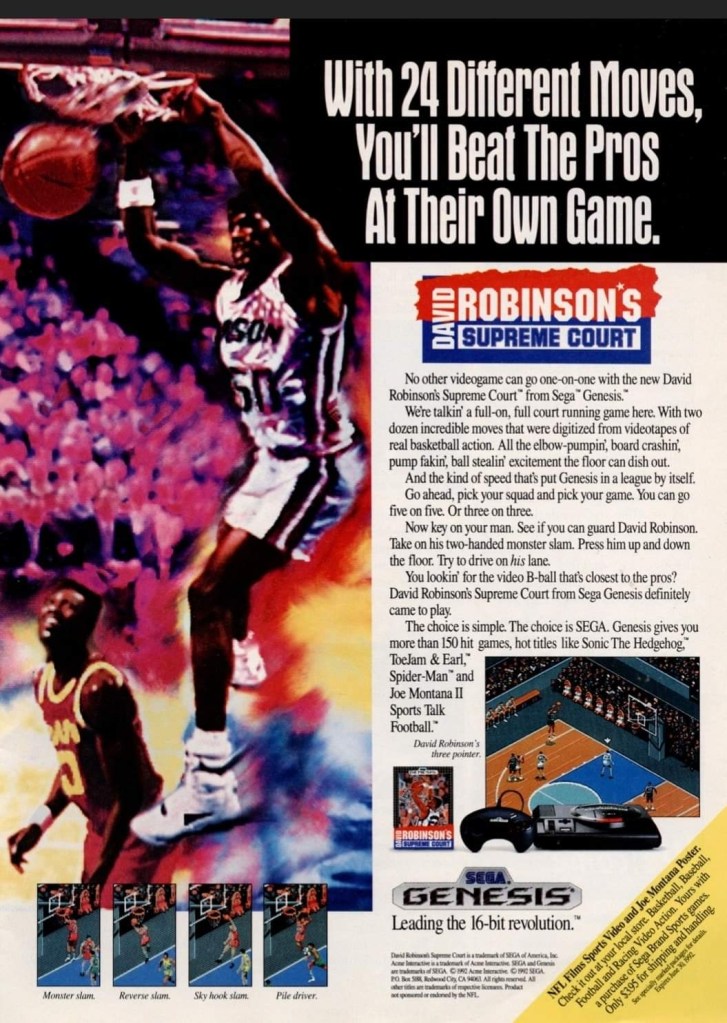
It was a smart move by Sega to get NBA superstar David Robinson as the endorser of this basketball video game exclusive on the Sega Genesis. This ad was published many years before Robinson finally won an NBA championship.

As part of its strategy in competing with Nintendo during the 4th console generation, Sega of America was focused on producing exclusive sports video games for the Genesis console backed by endorsements of sports professionals. In 1992, they released David Robinson’s Supreme Court on the Genesis and unsurprisingly their print ad used a large, stylized image of the NBA superstar dunking backed with an exciting text description plus screenshots showing the game’s use of the isometric view for gameplay. This is still worth looking at.

11. Taito’s “heat wave” print ad
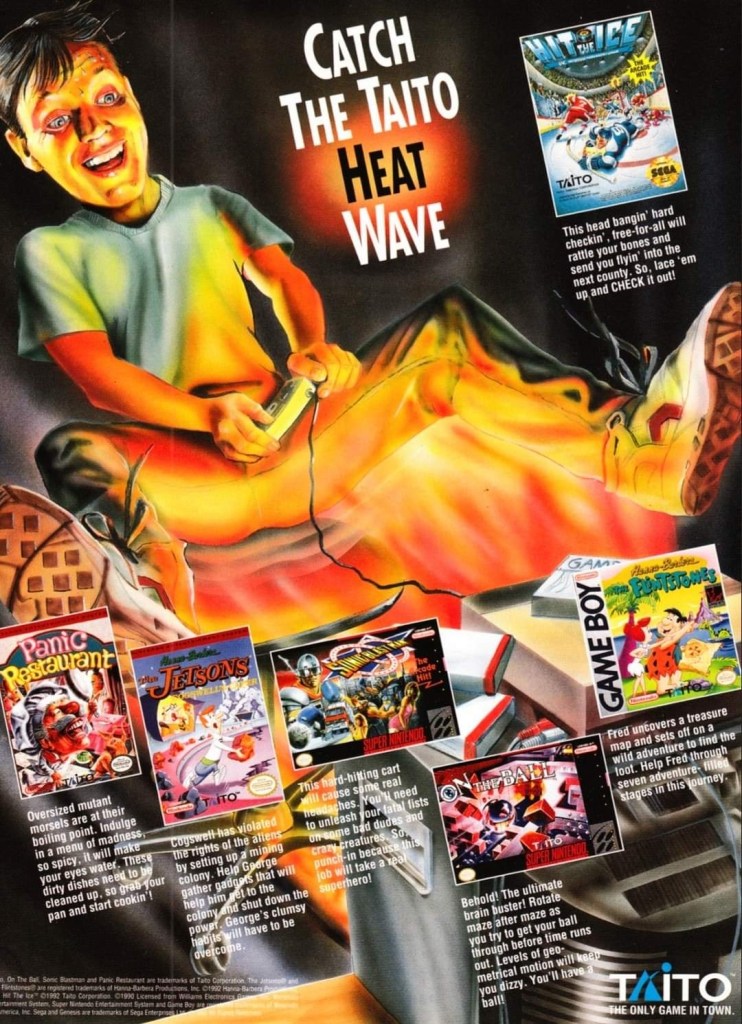
An amusing and creative way to sell video games.

If your company lacks money to effectively market your video games individually, you can try making a single ad promoting them together. This is what Taito did in this print ad which showcases multiple games for different platforms and they used artwork of a player experiencing the so-called heat wave. This is a nice stroke of creativity on the part of Taito.

12. Jurassic Park Interactive print ad
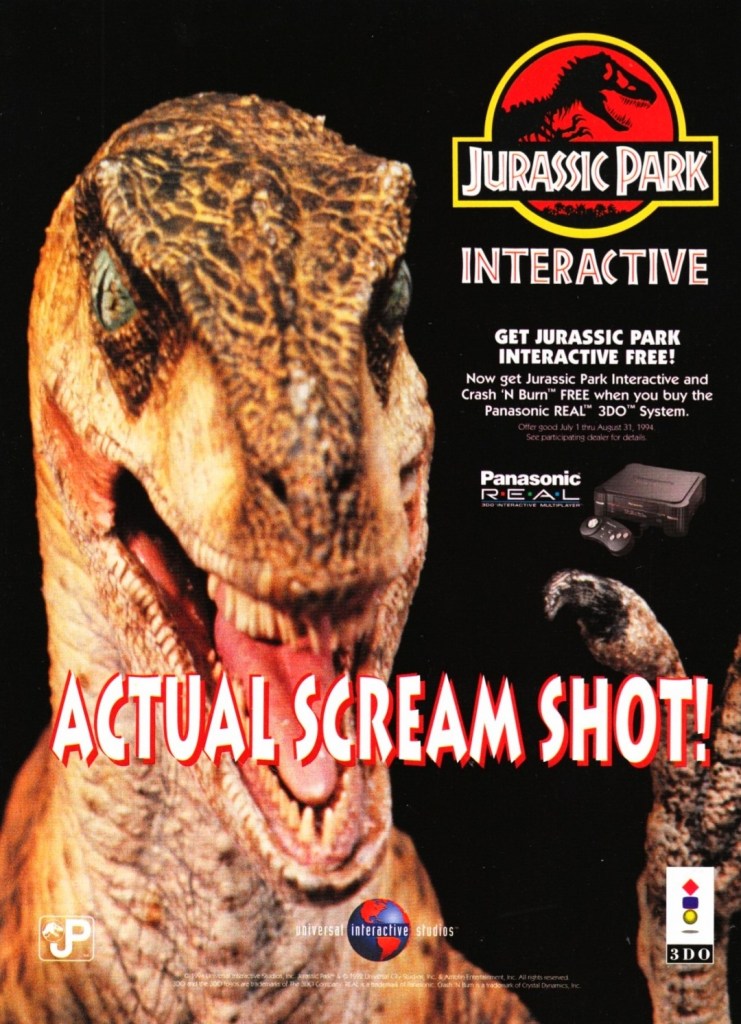
This was a creepy print ad promoting the 3DO-exclusive Jurassic Park Interactive.

When it comes to video game consoles, having exclusive games is essential as long as they are of high quality, highly playable and enjoyable. The 3DO company acquired a license of the Jurassic Park movie and made the exclusive game Jurassic Park Interactive hoping it would sell a lot and lift up 3DO hardware sales.

This print ad, which features a zoomed-in image of the Raptor from the game, was more focused on selling the 3DO console than the video game as seen on the descriptive text. 3DO ran a promo selling the console which would entitle the buyer to get Jurassic Park Interactive and another game free. Nothing was done to describe the console’s multimedia capabilities of showing videos, images and graphics of the game (which was essentially a collection of mini-games). This print ad shows ignorance on the part of the 3DO company and the ad maker as it showed desperation happening really early in the console’s life. Notably, Jurassic Park Interactive was the only video game adaptation to use actual footage (note: the faces of the actors were edited out) and music from the film.

13. RoboCop 2 print ad
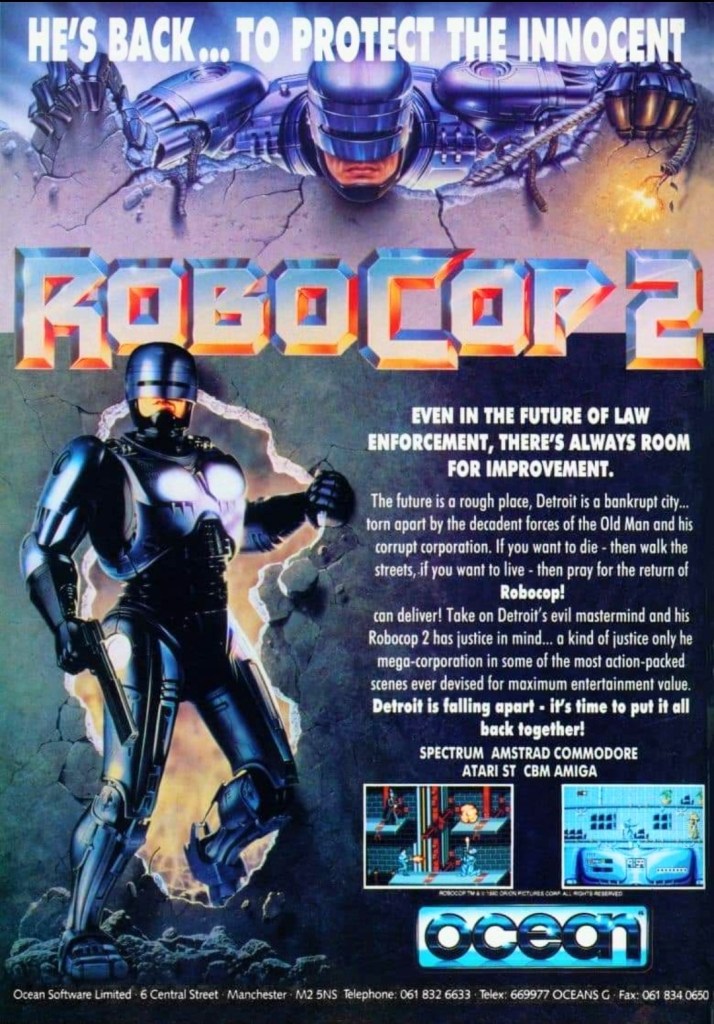
You want to become RoboCop to save the city of Detroit from criminals?

Way back in 1990, RoboCop 2 was a big hit in cinemas here in the Philippines and in some places around the world. As typical of the time, licenses to make video games based on the movie were released resulting in RoboCop 2 games for multiple platforms. The print ad featured two different images of RoboCop – one from the movie poster and the other from an official artwork. The descriptive text does a fine job to immerse readers into the story concept of the game but showing only two screenshots was a lackluster effort to sell the game.  

14. Star Trek: The Next Generation – Echoes from the Past print ad
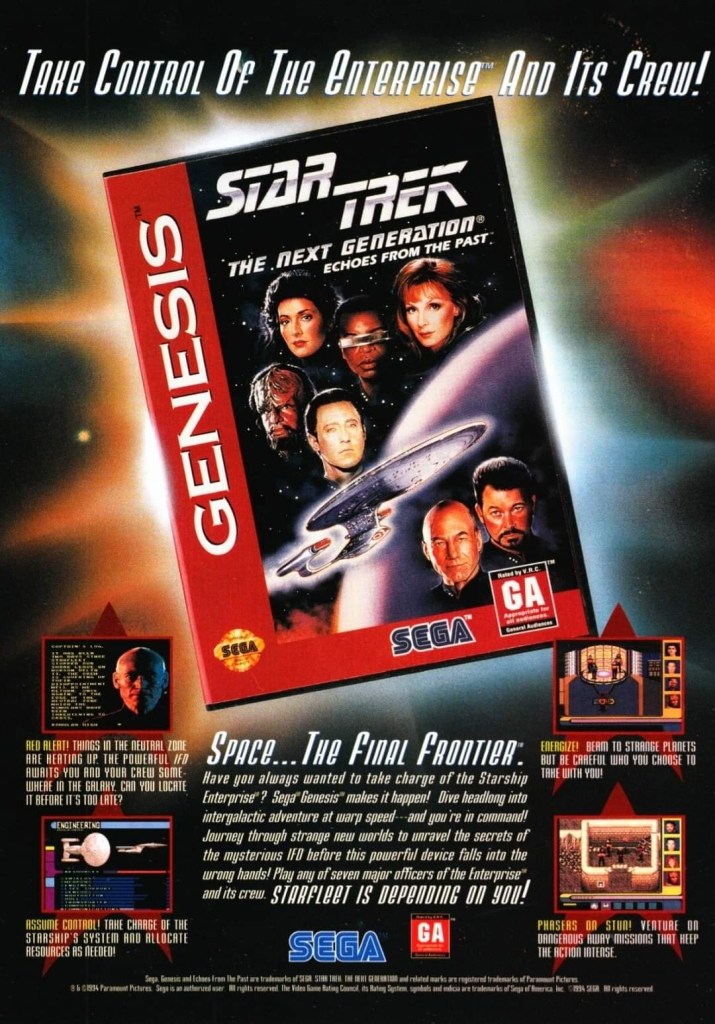
Space…the final frontier waiting for Sega Genesis gamers.

Released in 1994, Star Trek: The Next Generation – Echoes from the Past delivered the Star Trek TNG adventure experience to Sega Genesis gamers. In fact, it is the exact same experience that SNES gamers got the same year. In reality, Star Trek: The Next Generation – Echoes from the Past is actually a port of Star Trek: The Next Generation – Future’s Past on the SNES and the screenshots on the print ad are giveaways about it. In fairness to the ad makers, this print ad never attempted to deceive gamers that it promoted a totally different Star Trek TNG game.

15. Dinosaurs for Hire print ad
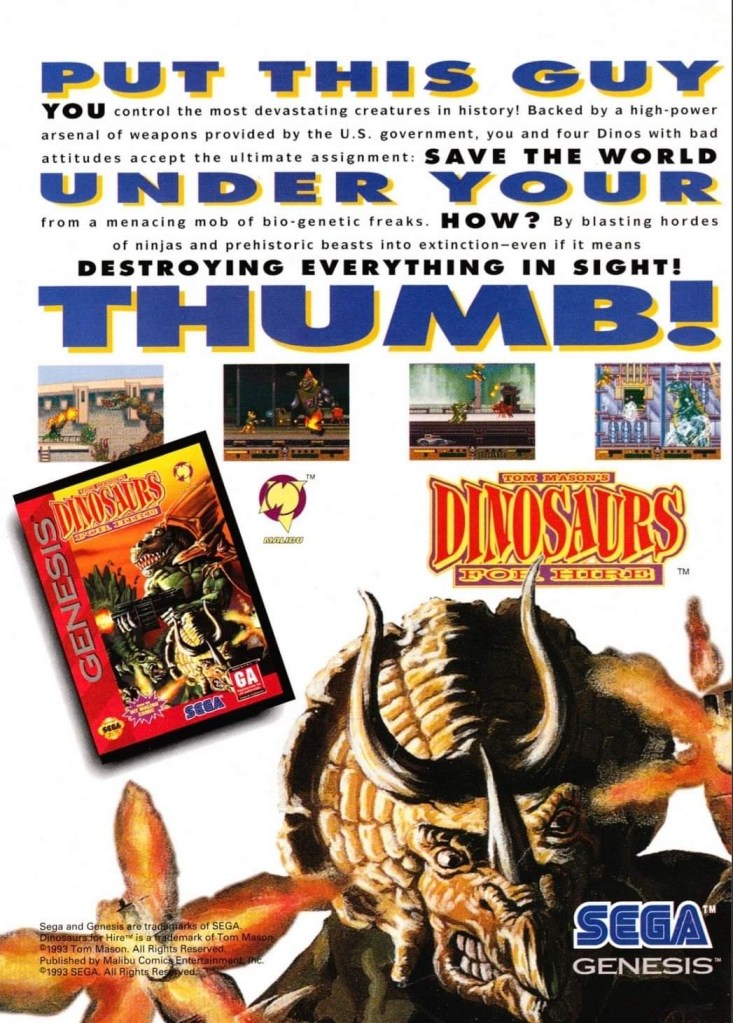
This print ad caught my attention and made me interested in the game and the comic book series. Even though it was small, Malibu Comics’ logo was still recognizable.

Dinosaurs for Hire (sometimes referred to as Tom Mason’s Dinosaurs for Hire) was a 2D side-scrolling platform adventure game based on the comic book series of Tom Mason. Published by Sega, it was a Genesis-exclusive game and this print ad had a catchy text description, a few screenshots and the eye-catching artwork of a triceratops facing the viewer. This print ad is still good to look at. If you’re thinking about searching for existing copies of the game, I encourage you to also read some Dinosaurs for Hire comic books before playing. By the way, Tom Mason also wrote several comic books of the Ultraverse.

+++++

Thank you for reading. If you find this article engaging, please click the like button below, share this article to others and also please consider making a donation to support my publishing. If you are looking for a copywriter to create content for your special project or business, check out my services and my portfolio. Feel free to contact me with a private message. Also please feel free to visit my Facebook page Author Carlo Carrasco and follow me on Twitter at  @HavenorFantasy as well as on Tumblr at https://carlocarrasco.tumblr.com/ and on Instagram at https://www.instagram.com/authorcarlocarrasco
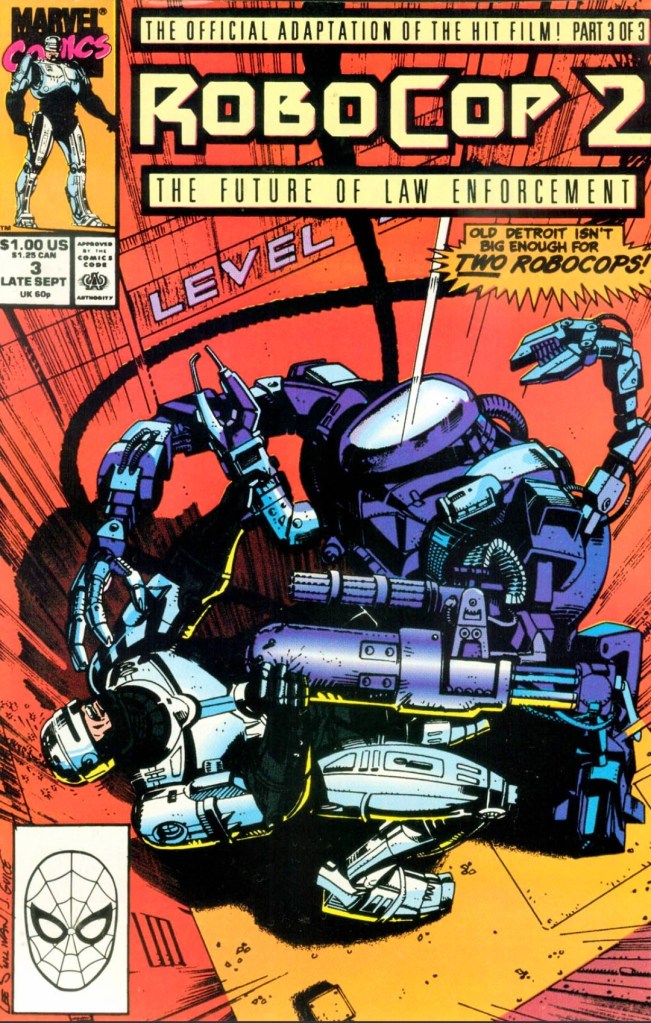
A Look Back at RoboCop 2 #3 (1990)

Welcome back superhero enthusiasts, 1990s arts and culture enthusiasts, Marvel Comics fans and comic book collectors! Today we go back to the year 1990 to take a close look at the concluding chapter of the comic book adaptation of the movie RoboCop 2 (1990).

In my previous retro review, I found the 2nd issue of the 3-part comic book adaptation mini-series that it lacked the impact of issue . It was understood that the comic book team was limited by the source material they had and the movie’s comedic scenes showing RoboCop not being his normal self were adapted. Those scenes did not translate into humorous comic book moments. At the very least, the build-up achieved by the comic book creators in issue (which includes several internal developments at Omni Consumer Products) sets the stage for the final issue.

With those details laid down, here is a look back at RoboCop 2 , published in 1990 by Marvel with a story written by Alan Grant and drawn by Mark Bagley based on the movie screenplay by Frank Miller and Walon Green.

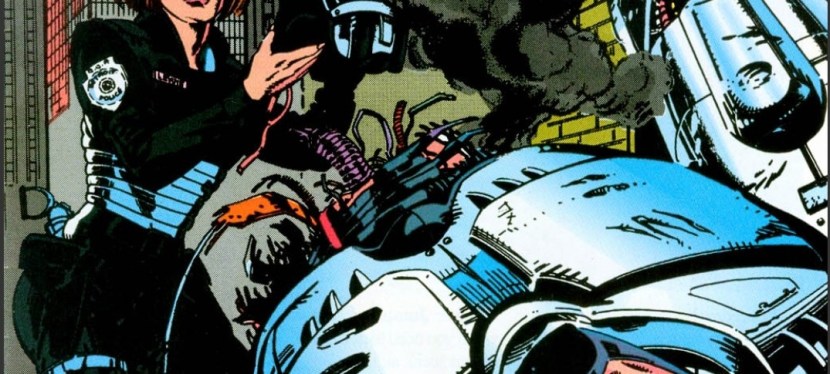
The cover.

Early story

The story begins in Detroit where OCP executives press RoboCop (Officer Murphy) for answers about the spying he recently did on his ex-wife. It turns out that his wife was so traumatized over his death, there were therapists, hypnotists and other treatments involved to help her recover. As a result of the spying, his ex-wife now believes her husband is still alive. In response to questions, RoboCop gave answers that the OCP guys wanted – he is no longer a husband, no longer human, no longer Alex Murphy and he is simply a machine. The private meeting between him and his ex-wife did not go well.

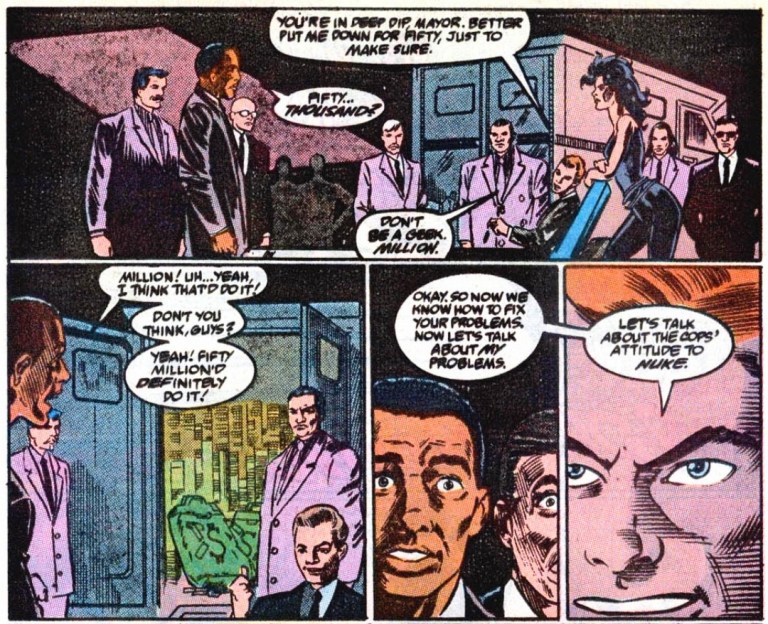
Meanwhile, the City Government of Detroit organizes a telethon in an attempt to raise funds needed to pay off the $37,985,300 they owe OCP. The mayor receives a very important call from former associates of Cain (RoboCop 2).   

Shortly after, OCP realizes that the City Government could pay soon and if they fail to foreclose Detroit, their stock will plummet. With the approval from the corporation’s chief, Dr. Juliette Faxx proceeds to launch RoboCop 2 with the mind of Cain inside it…

Quality

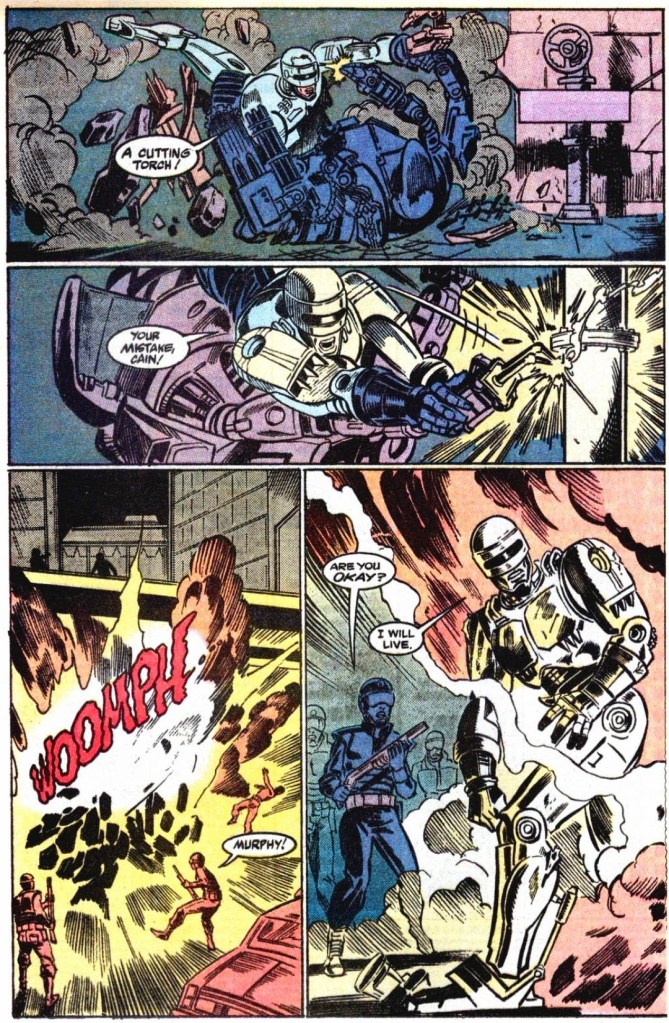
The battle between RoboCop and his bigger rival (Cain) is action-packed and fun to read.

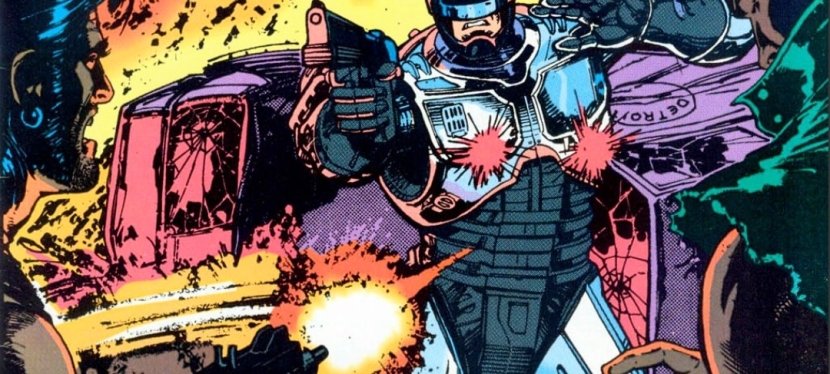
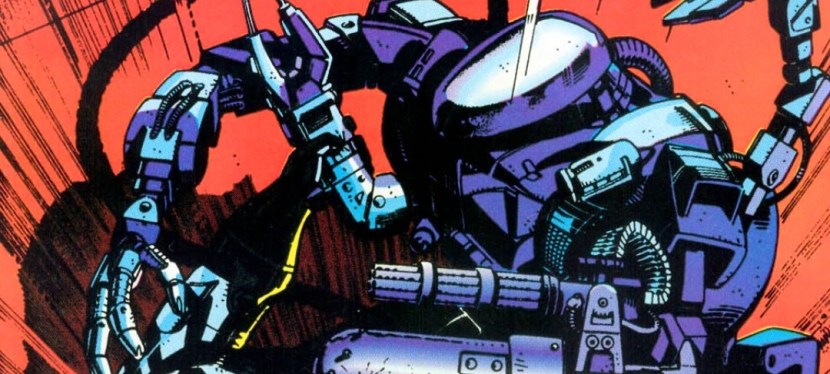
As it is clear that the imagery and plot developments of the movie screenplay were adapted by the comic book creators with their very own distinctive ways throughout the mini-series, this comic book succeeded in concluding its 3-part story. In fact, this is a huge pay-off to most of the build-up that took place in issues and . The much-awaited big battle between RoboCop and the Cain-controlled RoboCop 2 lasted eight pages and it was indeed action-packed and satisfying. Before the said battle took place, RoboCop 2’s debut is short, stylishly obscured visually and yet vicious to see.

Considering the huge amount of details the movie screenplay had, the Grant-Bagley duo managed to adapt the most relevant content efficiently while also telling a literary tale that is cohesive enough.

This scene did not appear in the movie.

What I found very notable is the fact that this comic book opened with RoboCop getting berated by OCP executives for his spying on his ex-wife. The said scene actually happened very early in the movie itself and to have it as an opener of this comic book added depth to RoboCop’s character development in this adaptation.

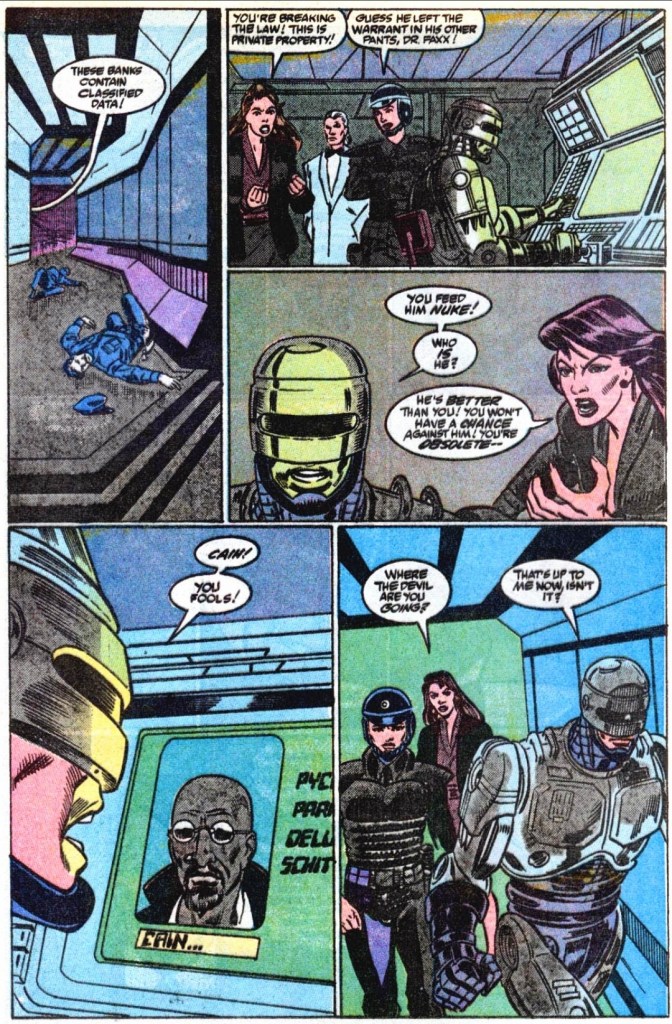
When it comes to weaknesses, there were times when Mark Bagley’s drawing of RoboCop 2 were off. RoboCop 2 was visually huge and intimidating in the movie but in this comic book, the size and scale were clearly lacking particularly in the shot where he is standing near OCP’s chief. The lack of visual details on RoboCop 2’s body showed signs of rush by the artist.

Conclusion

Is your local government leader making secret deals with criminals in real life?

RoboCop 2 (1990) is a nice pay-off to the build-up that preceded it and, more importantly, it was a satisfying mini-series conclusion. As a standalone comic book, it has a good amount of plot details, dialogue and action scenes that can delight RoboCop fans. As the conclusion of the 3-part adaptation of the 1990 movie, it has a stronger focus on RoboCop and the plot moved at a better pace than in issue . The storytelling is good and the spectacle was much improved.

Overall, RoboCop 2 (1990) is recommended.

+++++

Thank you for reading. If you find this article engaging, please click the like button below, share this article to others and also please consider making a donation to support my publishing. If you are looking for a copywriter to create content for your special project or business, check out my services and my portfolio. Feel free to contact me with a private message. Also please feel free to visit my Facebook page Author Carlo Carrasco and follow me on Twitter at  @HavenorFantasy as well as on Tumblr at https://carlocarrasco.tumblr.com/ and on Instagram at https://www.instagram.com/authorcarlocarrasco
A Look Back at RoboCop 2 #2 (1990)

Welcome back superhero enthusiasts, 1990s arts and culture enthusiasts, Marvel Comics fans and comic book collectors! Today we go back to the year 1990 to take a close look at the 2nd part of the comic book adaptation of the movie RoboCop 2 (1990).

In my previous retro review of Robocop 2 #1, I pointed out that the comic book was not a faithful adaptation of the movie but more of the creators’ creative interpretation of the movie script they had which resulted in a stylized presentation. It was a surprisingly enjoyable reading experience for me.

With those details laid down, here is a look back at RoboCop 2 , published in 1990 by Marvel with a story written by Alan Grant and drawn by Mark Bagley based on the movie screenplay by Frank Miller and Walon Green.

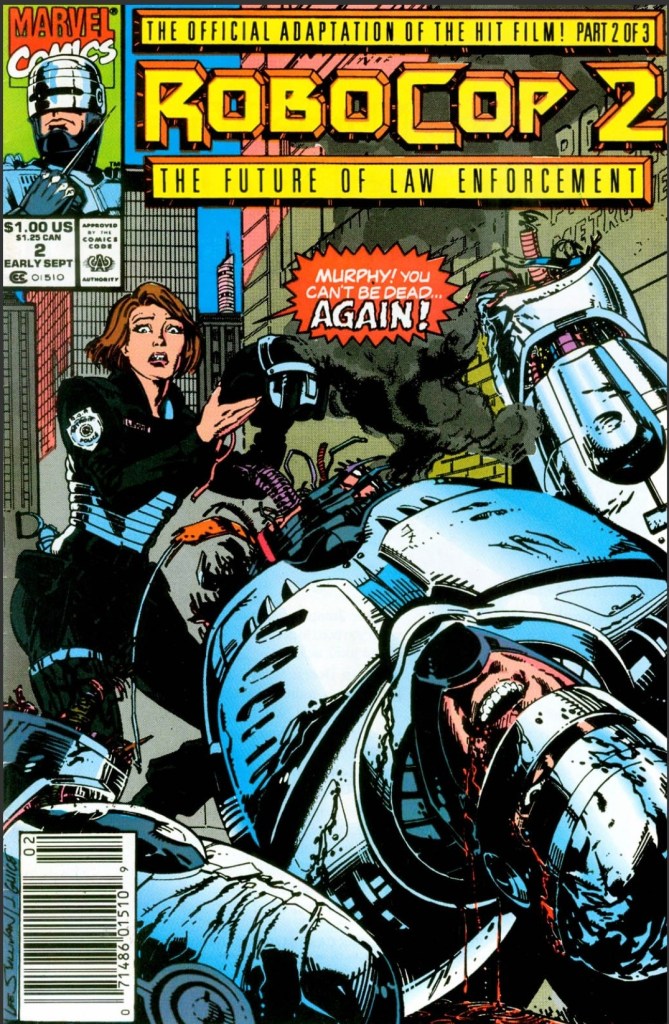
The cover.

Early story

The story begins in Detroit with RoboCop reduced into a very bad condition with most of his parts missing. The cops are still on strike and the ultra-addicting drug Nuke continues to spread through the city causing social problems. Cain and his gang are still on the loose, and his video statement (which emphasizes his gang’s defeat of RoboCop) spreads through the news cycles.

Inside a hideout, Cain and his loyal companions terrify and killed traitorous police officer Duffy for betraying them. Meanwhile at police headquarters, the support crew bumps heads with the Omni Consumer Products (OCP) executive who does not see RoboCop’s poor state as a problem. As far as OCP is concerned, getting replacement parts for RoboCop is very expensive.

Over at OCP, the psychologist executive Dr. Juliette Faxx begins researching criminals for the new RoboCop project…

Quality

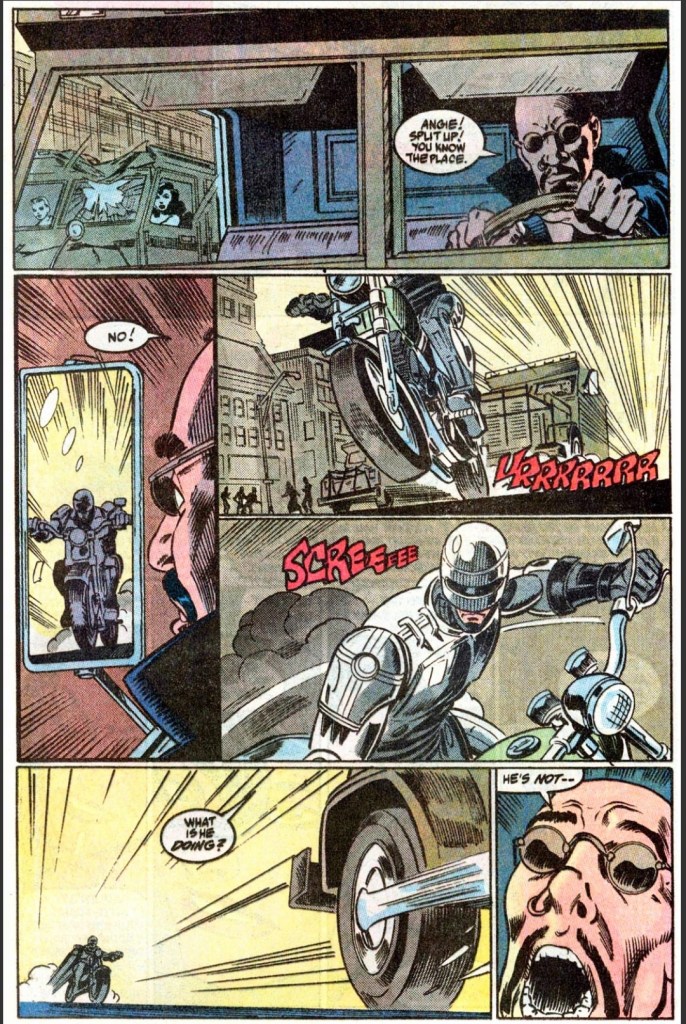
The motorized encounter between RoboCop and Cain here is shorter and much inferior compared to what the movie showed.

As with issue , this comic book followed the events and scenes of the film but left enough room for the creative team to make their stylized version suitable with the literary format. Mark Bagley, who is best known for drawing Spider-Man and Venom in the 1990s, came up with nice artwork that brought Grant’s script to life. There were a few shots here that were pretty graphic or brutal to see at the time of publication which makes me wonder why did the Comics Code Authority (CCA) give its approval to this comic book.

Without spoiling the plot, I can say that the creative team and editor Gregory Wright did a good job adapting scenes of the movie script to (fill up the pages) while also succeeding in setting up readers for the final conflict in the 3rd and final issue.

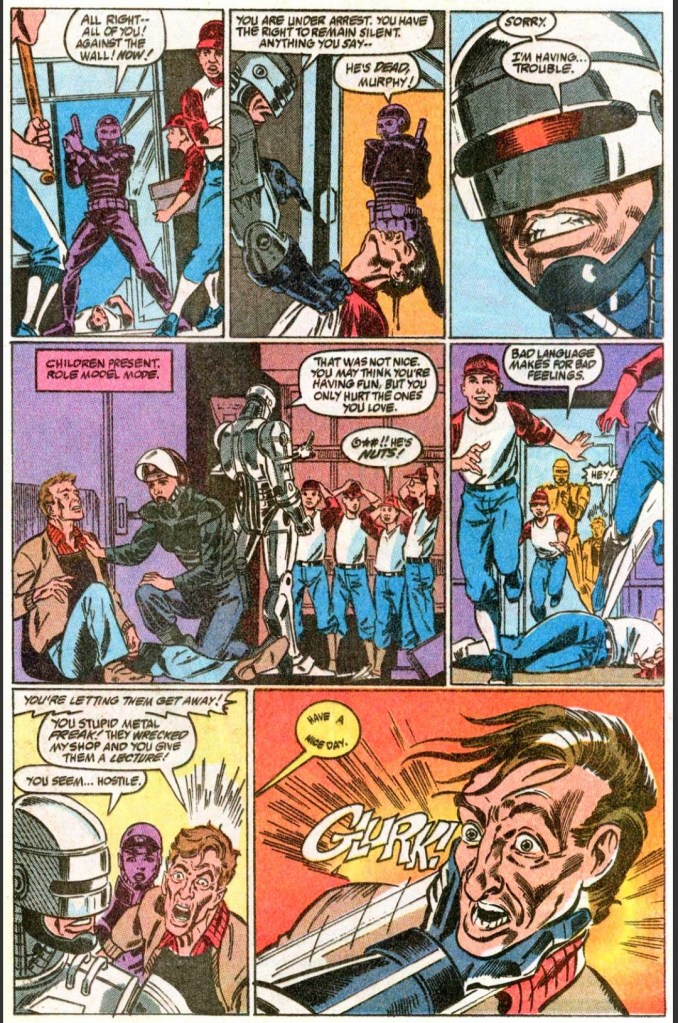
As a standalone reading material, this comic book will lead readers deep into the crisis of the police force as well as into the developments behind the closed doors of OCP. Due to the selected scenes of the film’s script, RoboCop has sufficient presence but lacked his normal personality. That being said, the movie’s comedic look of RoboCop acting very out-of-touched (hint: OCP tampered with his mind digitally) did not translate well into literary format. If you’re hoping to see solid storytelling with a consistent tone, you won’t find it here.

When it comes to action, there is just enough of it to keep the reading experience entertaining. Again, this comic book does not have the final conflict and the selected action scenes are rather limiting in terms of impact. If you want to see the police raid of the Nuke facility as well as RoboCop’s motorized chase with Cane, you are better off replaying the movie.  

Conclusion

There definitely is something wrong with RoboCop here.

Considering the selected movie script scenes for adaptation, RoboCop 2 (1990) lacks impact compared to the first issue. In fairness, this comic book was clearly meant to set-up readers for the next issue. If there is anything worth looking at within the 2nd issue’s pages, it would be the details that were highlighted during the internal developments at OCP and the police. As mentioned earlier, RoboCop is not his usual self for a significant portion of this comic book. While the engagement and fun factor are lower this time around, I’m still interested to read the next issue.

Overall, RoboCop 2 (1990) is serviceable.

+++++

Thank you for reading. If you find this article engaging, please click the like button below, share this article to others and also please consider making a donation to support my publishing. If you are looking for a copywriter to create content for your special project or business, check out my services and my portfolio. Feel free to contact me with a private message. Also please feel free to visit my Facebook page Author Carlo Carrasco and follow me on Twitter at  @HavenorFantasy as well as on Tumblr at https://carlocarrasco.tumblr.com/ and on Instagram at https://www.instagram.com/authorcarlocarrasco
What to watch on YouTube right now – Part 19

Welcome back, my readers, YouTube viewers and all others who followed this series of articles focused on YouTube videos worth watching. Have you been searching for something fun or interesting to watch on YouTube? Do you feel bored right now and you crave for something to see on the world’s most popular online video destination?

I recommend you check out the following topics and the related videos I found.

Larry Bird’s memorable big game of 1992 – If you love American basketball and the modern day NBA does not appeal much to you, then you should go back to the year 1992 when the legendary Larry Bird had his last big game before retiring. During his final years in the NBA, aging and a serious back injury hounded Bird as he kept on leading the Boston Celtics. In March 1992, the Celtics hosted the strong Portland Trailblazers and this was the game when Larry Bird scored 49 points and even registered a triple-double at the age of 35. That being said, watch the highlight video below…

Score PN’s Terminator 3: Before The Rise video – Score PN, a YouTube channel that is best known for its in-depth videos about the Resident Evil entertainment franchise, also produced videos related to The Terminator. Back in 2003, Arnold Schwarzenegger had a big cinematic comeback with Terminator 3: Rise of the Machines which I saw inside the cinema when it opened here in the Philippines. Back then, I was not even aware that a prequel comic book limited series of Terminator 3 was published and Score PN has a video about it which you can watch below. By the way, Score PN also produced videos about comic book adaptations of Batman movies which I highlighted previously.

Vizconde Massacre explanatory videos – Previously, I included Viva’s video showing the entire 1995 movie The Jessica Alfaro Story. For the newcomers reading this, Jessica Alfaro (played in the movie by Alice Dixson) was the star witness of the trial of the shocking Vizconde Massacre and it took her around four years to come out publicly. For legal reasons, The Jessica Alfaro Story film made alterations (creative liberties) to make a reference to the massacre without the Vizconde name. That being said, if you want to know more about the Vizconde Massacre of 1991, the trial that happened and the big decision the Supreme Court made in 2010, then you should watch these two explanatory videos. The third one analyzes the legal aspect of 2010 Supreme Court decision related to the massacre.

RoboCop 2 reaction videos plus arcade/console game documentary – Back in 1990, my friends and I got to watch RoboCop 2 inside the movie theater here in the Philippines and almost all the seats were filled at the time. While the movie was not memorable as it never came close to matching the uniqueness and cultural impact of the 1987 original RoboCop, it still managed to entertain enough people who eventually became fans. Like its predecessor, RoboCop 2 also had game adaptations for the arcade and consoles. Watch the videos below…

A look at the history of Area 51 arcade/console games – Back in the mid-1990s, Area 51 by Atari was a huge hit in the arcades in the West and was perceived as a comeback for the said company. Area 51 was so successful, it prevented Atari from falling into financial disaster and versions of the game were released for Windows PC, PlayStation and Sega Saturn. Not only that, a spiritual sequel to Area 51 was released in 1997 with Maximum Force. To learn more about Area 51’s place in gaming history, watch the video below…

Stand by Me movie reaction videos plus trivia video If you are fond of movies based on the writings of Stephen King, then Stand by Me (1986) should have been part of your watch list a long time ago. It was an acclaimed coming-of-age film directed by Rob Reiner and has been described by some as one of the most defining movies of the 1980s. It is no surprise that there are retro movie reviews, movie reaction videos and trivia videos about it. You can watch the selected movie reaction videos plus a movie trivia video below…

The liar and manipulator Abby Martin crushed by son of Hamas! It is very sickening that there are still people here in this world who chose to be evil and do the works of Satan. I am talking about Abby Martin, a self-declared journalist who is actually a liar and manipulator. Do not let her good looks and media style fool you. Abby Martin constantly condemns the nation of Israel as she clearly took sides with the terrorists and supports the Palestinian agenda of wiping out the Jewish state. She might as well be working with wicked leaders of Iran. Watch this video of Abby Martin getting crushed by the son of Hamas. Remember that Abby Martin is clearly working with the terrorists and murderers. Never let Abby Martin poison your minds!

The disappointing interview with the Xbox president Since early this year, gamers’ trust in Xbox weakened due to unexpected developments such as Microsoft deciding to release four Xbox-exclusive games to other consoles. Since then, a lot of Xbox fans have been speculating that in due time Xbox itself will change for the worse and eventually end to pave the way for Microsoft to become a multi-platform game publisher. That being said, the downward trend of Xbox continued as four of its game studios – Tango Gameworks, Alpha Dog, Roundhouse Studios and Arkane Studios – were suddenly shut down which sent shockwaves throughout the industry and attracted negativity to Xbox. Not only that, there was this very disappointing interview with Xbox president Sarah Bond which made things worse. Posted below is the video of the very interview itself plus one reactionary video from Geeks and Gamers.

+++++

Thank you for reading. If you find this article engaging, please click the like button below, share this article to others and also please consider making a donation to support my publishing. If you are looking for a copywriter to create content for your special project or business, check out my services and my portfolio. Feel free to contact me with a private message. Also please feel free to visit my Facebook page Author Carlo Carrasco and follow me on Twitter at  @HavenorFantasy as well as on Tumblr at https://carlocarrasco.tumblr.com/ and on Instagram athttps://www.instagram.com/authorcarlocarrasco
A Look Back at RoboCop 2 #1 (1990)

Welcome back superhero enthusiasts, 1990s arts and culture enthusiasts, Marvel Comics fans and comic book collectors! Today we go back to the year 1990 to take a close look at the comic book adaptation of the movie RoboCop 2 (1990).

Before getting to the new retro comic book review, I should state that my friends and I had a fun time watching RoboCop 2 in the cinema shortly after it opened here in the Philippines. Back then, I was not yet a comic book collector and I rarely visited comic book specialty stores. That being said, I was unaware that Marvel Comics actually published an adaptation in the form of a 3-issue mini-series.

With those details laid down, here is a look back at RoboCop 2 , published in 1990 by Marvel with a story written by Alan Grant and drawn by Mark Bagley based on the movie screenplay by Frank Miller and Walon Green.

The cover.

Early story

The story begins in Detroit where the cops are run by corporations and the streets have turned into red-alert war zones. Crime is overwhelming the city and the highly addictive narcotic poses the greatest threat facing societies. The surgeon general who made the public warning about nuke was killed and the crime boss Cain (leader of a cult of nuke addicts and pushers) claims responsibility. Through the news media, Cain tells the public that nuke will make people’s problems go away and people want its paradise.

Under the management of Omni Consumer Products (OCP), several of Detroit’s police officers go on strike demanding better terms from their employer. The City Government of Detroit under Mayor Kuzak missed a payment (in relation to them owing $37 million) and OCP begins to move to foreclose the city and its assets in accordance to the terms of the contract. Mayor Kuzak accuses OCP of engineering the police strike which made crime rampant.

Elsewhere in the evening, the cruel activities of the thugs got disrupted by the arrival of a police car. Even though the police car got destroyed by the thugs, RoboCop emerges and begins to fight back…

Quality

There is simply no holding back for RoboCop when it comes to doing police work at a time when many police officers are on strike while crime has turned more rampant in Detroit.

This opening issue of the mini-series sticks close the basic plot of the movie (right until after Cain’s gang dismantled RoboCop) although there were a few notable differences with the sequence of events and there were scenes that showed the creative team took liberties to make the story suitable with the literary format in mind. That being said, don’t expect to see the key moments of the movie look exactly the same in this comic book and don’t expect to see the characters here looking like the actors who played them on the big screen. In terms of visual and literary presentation, this adaptation has a lot in common with the Total Recall comic book adaptation which coincidentally was released the same year.  

For me, this is indeed a really readable comic book that has its stylized approach on telling the movie’s concept. OCP is the most powerful entity in the story while Cain and his gang are clearly the force of evil that strongly pose danger not only to Detroit’s people but even to the very divided police force. Nuke as the dangerous object of the plot clearly was inspired from elements of the real life war against drugs in 1980s America which made this story socially relevant.

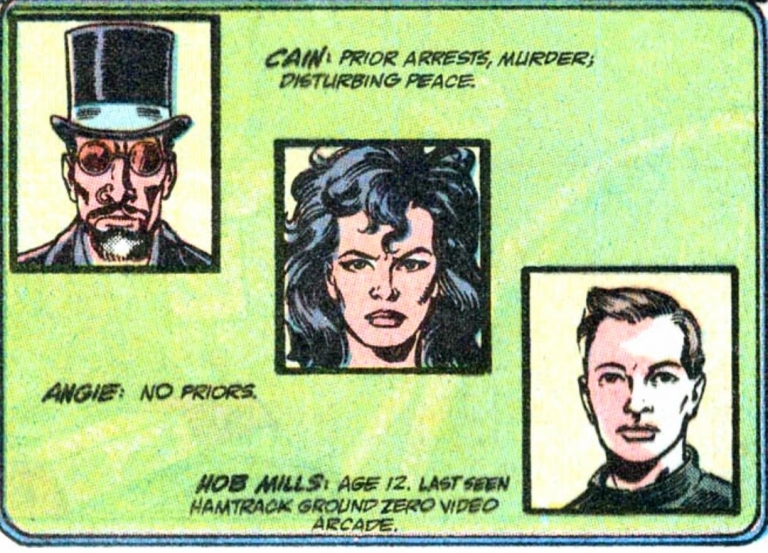
Very clearly these villains look nothing like actors Tom Noonan, Galyn Görg and Gabriel Damon.

Like in the movie, RoboCop here performs his law enforcement duty in an uncompromising manner even though memories of his past life as officer Murphy re-emerged deep inside. That being said, there are a few moments in which you might sympathize with the titular hero as this comic book pays close attention to the conflict between humanity and technology.

The action scenes here are sufficient but clearly don’t come anywhere close to the intensity of the film in terms of violence. Still, there is enough action for readers to enjoy.

When it comes to the visuals, the artwork done by Mark Bagley eerily looks comparable with Tom Lyle’s art in the Total Recall comic book of 1990. For the newcomers read this, Bagley became a popular artist through the Amazing Spider-Man monthly series and the Venom: Lethal Protector comic books that were released after years after this one. Having seen many of Bagley’s works published in 1992 to 1995, I can hardly recognize his art style in this comic book adaptation. The way he drew people’s faces in this comic book looks very different from those seen in Amazing Spider-Man issues. At the same time, Bagley’s own take on RoboCop has that balanced approach on depicting humanity with machinery while also making the hero look less bulky compared to the movie’s version.

Conclusion

Julie Faxx of OCP sure talks like a woke nut and rabid feminist in this scene.

RoboCop 2 (1990) is clearly not a faithful adaptation of selected parts of the movie but that’s not necessarily a bad thing. This is more about the Grant-Bagley team doing their own visual presentation of the movie script copy they had and ultimately they succeeded in making this comic book a stylized and worthy reading experience. This is indeed a surprisingly entertaining read and I can say that I am looking forward to reading the next issue.

Overall, RoboCop 2 (1990) is recommended.

+++++

Thank you for reading. If you find this article engaging, please click the like button below, share this article to others and also please consider making a donation to support my publishing. If you are looking for a copywriter to create content for your special project or business, check out my services and my portfolio. Feel free to contact me with a private message. Also please feel free to visit my Facebook page Author Carlo Carrasco and follow me on Twitter at  @HavenorFantasy as well as on Tumblr at https://carlocarrasco.tumblr.com/ and on Instagram at https://www.instagram.com/authorcarlocarrasco