A Look Back at Spider-Man #4 (1990)

Welcome back superhero enthusiasts, 1990s culture enthusiasts and comic book collectors! Today we go back to the early 1990s and explore a part of the Marvel Comics shared universe through a tale of the Spider-Man monthly series.

Having reviewed the first three issues of the Spider-Man monthly series written and drawn by Todd McFarlane (click here, here and here), I can say that the 5-part Torment storyline has a daring concept, adulterated imagery and clunky storytelling. Issues and saw Spider-Man in violent battles with the Lizard who is clearly not himself but under the control of the Haitian witch Calypso. It is inevitable Spider-Man, who has been in a long-lasting disadvantage so far, will somehow meet Calypso face to face.

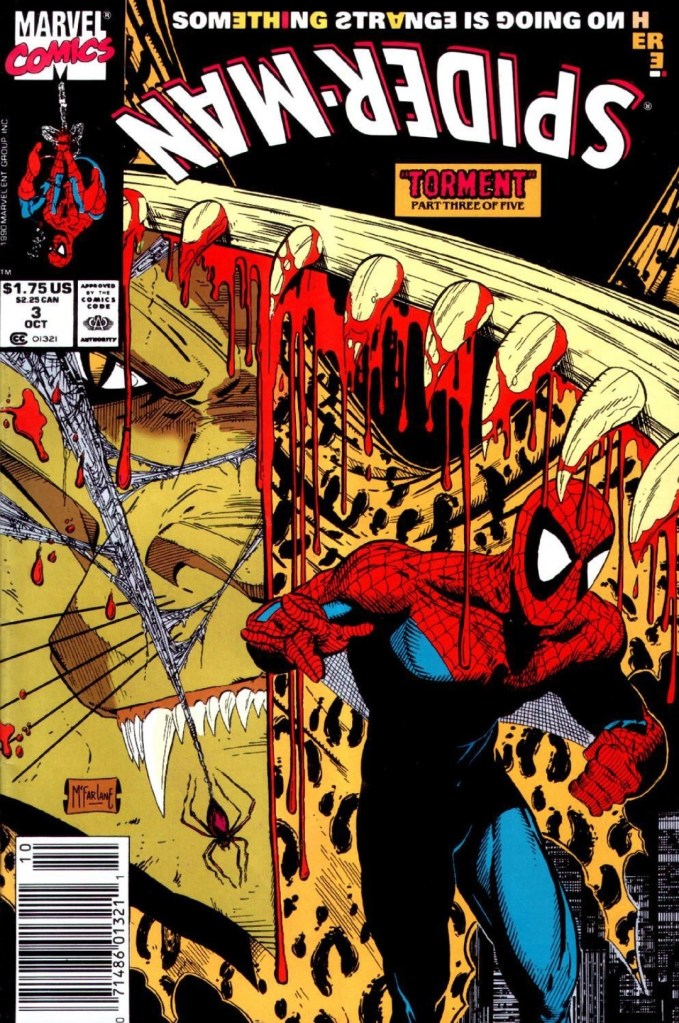
With those details laid down, here is a look back at Spider-Man , published in 1990 by Marvel Comics with a story written and drawn by Todd McFarlane. This is the 4th chapter of the Torment storyline.

The cover.

Early story

The story begins in a dirty alley deep within New York City. An exhausted and disoriented Spider-Man is shocked to see a grotesque looking Kraven with the vicious Lizard beside him. The moment made him remember what happened as a result of his previous with Kraven (note: refer to the Kraven’s Last Hunt storyline) which includes him getting buried temporarily with a grave designated to him.

Eventually Spider-Man sees through the illusion and realizes that Kraven is not in front of him but Calypso with the Lizard still under her full control. With an unspoken command from Calypso, the Lizard moves towards the weakened Spidey and carries him bodily…

Quality

This portrayal of Mary Jane having a good time again in the city without her husband is clearly filler and it did not add anything to the plot.

As anticipated, the webslinger finally met the Haitian witch who had been controlling the Lizard all along. With a mostly slow pace, the story has Spider-Man being helpless in the presence of two powerful enemies and McFarlane stylishly dramatizes moments from Calypso’s past showing her acceptance of evil ways (witchcraft), her personal connection with Kraven and her desire to have a new sacrifice done.

With Spider-Man restrained a lot for most of the story, it was not surprising to see Calypso have a good share of the spotlight to herself and the Lizard is clearly portrayed as her enforcer and assistant contrasting what was presented in the first 3 issues.

Unsurprisingly, the storytelling feels choppy although the slow pace allows readers to grasp Calypso’s intentions and her main purpose in the entire storyline. The lack of spectacle allowed McFarlane to implement long segments of suspense mixed with horror. With Spider-Man doing not so much, he’s technically a supporting character symbolizing the reader’s curiosity.

Conclusion

There is nothing like waking up in the presence of two evil figures while being restrained.

Compared with the previous, Spider-Man (1990) does not have much to show and has even less entertainment value. Unless you are a die-hard fan of Calypso (so twisted and demonic under McFarlane’s handling), this particular story won’t mean much to Spider-Man faithful. The webslinger is still helpless but this is all part of the build-up for the fifth and final chapter.

In fairness, what was shown here might inspire fans to revisit Kraven’s Last Hunt and read past Spider-Man comic books showing Calypso’s connection with Kraven (note: Spider-Man and Calypso were present in Amazing Spider-Man ). In my view, this comic book is not terrible but it does not have much entertainment value nor does it have anything engaging to show. I don’t feel so motivated to proceed with issue .

Overall, Spider-Man (1990) should be avoided.

+++++

Thank you for reading. If you find this article engaging, please click the like button below, share this article to others and also please consider making a donation to support my publishing. If you are looking for a copywriter to create content for your special project or business, check out my services and my portfolio. Feel free to contact me with a private message. Also please feel free to visit my Facebook page Author Carlo Carrasco and follow me on Twitter at  @HavenorFantasy as well as on Tumblr at https://carlocarrasco.tumblr.com/ and on Instagram at https://www.instagram.com/authorcarlocarrasco
A Look Back at Spider-Man #3 (1990)

Welcome back superhero enthusiasts, 1990s culture enthusiasts and comic book collectors! Today we go back to the early 1990s and explore a part of the Marvel Comics shared universe through a tale of the Spider-Man monthly series.

I previously reviewed issues (click here) and (click here) which were also the first two chapters of the Todd McFarlane-led Torment storyline. McFarlane had this grand vision of a dark and more violent concept of telling a Spider-Man story and it involved another rematch with the Lizard (Dr. Connors) and some connections with the Kraven’s Last Hunt saga of 1987 (read my retro reviews by clicking here and here). McFarlane’s vision was daring but his writing style and the sub-par quality of his storytelling really brought down the overall quality of Spider-Man and .

With those details laid down, here is a look back at Spider-Man , published in 1990 by Marvel Comics with a story written and drawn by Todd McFarlane. This is the 3rd chapter of the Torment storyline.

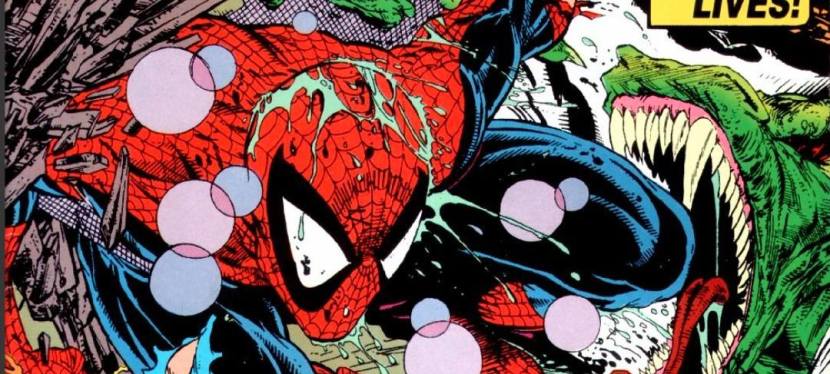
The cover.

Early story

The story begins at the rooftop of a building in New York City. Up there, the Lizard relentlessly attacks Spider-Man causing some damage on the building. Having recovered previously, Spider-Man manages to hold his ground and punches a solid structure that hit the Lizard hard.

Meanwhile at another part of the city, the evil Haitian Voodoo priestess Calypso communicates with the Lizard telling him to take the fight against Spider-Man easy, avoid killing him and make him suffer first. Calypso is obsessed with making the webslinger an example to the world.

The fight between Spider-Man and the Lizard continues causing even more damage. Spider-Man, who has been poisoned, is having trouble concentrating as the Lizard keeps attacking him violently. Spider-Man wonders why the Dr. Connors’ (the Lizard) blood lust is so consuming…   

Quality

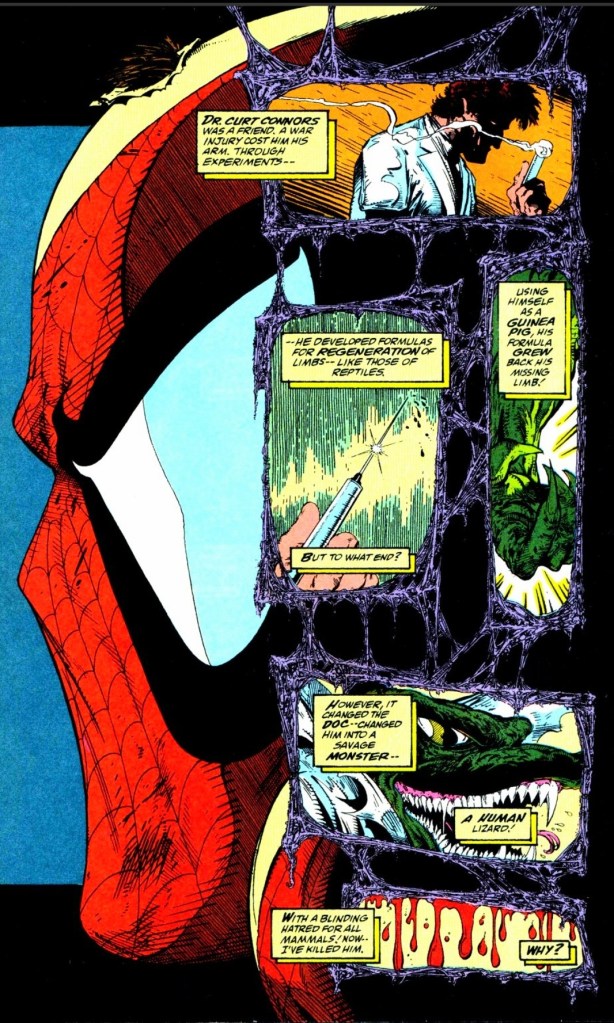
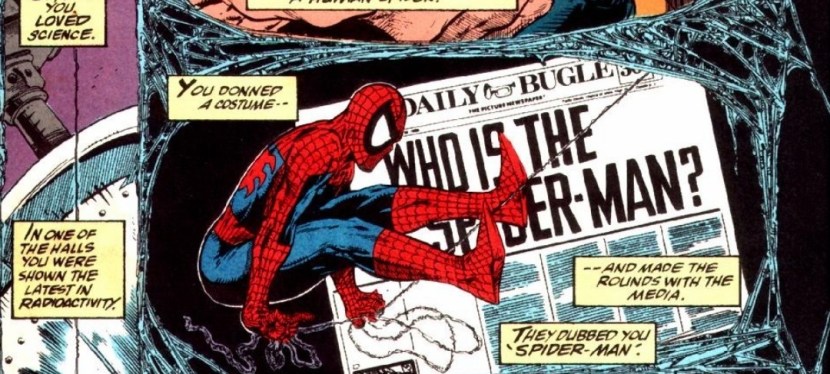
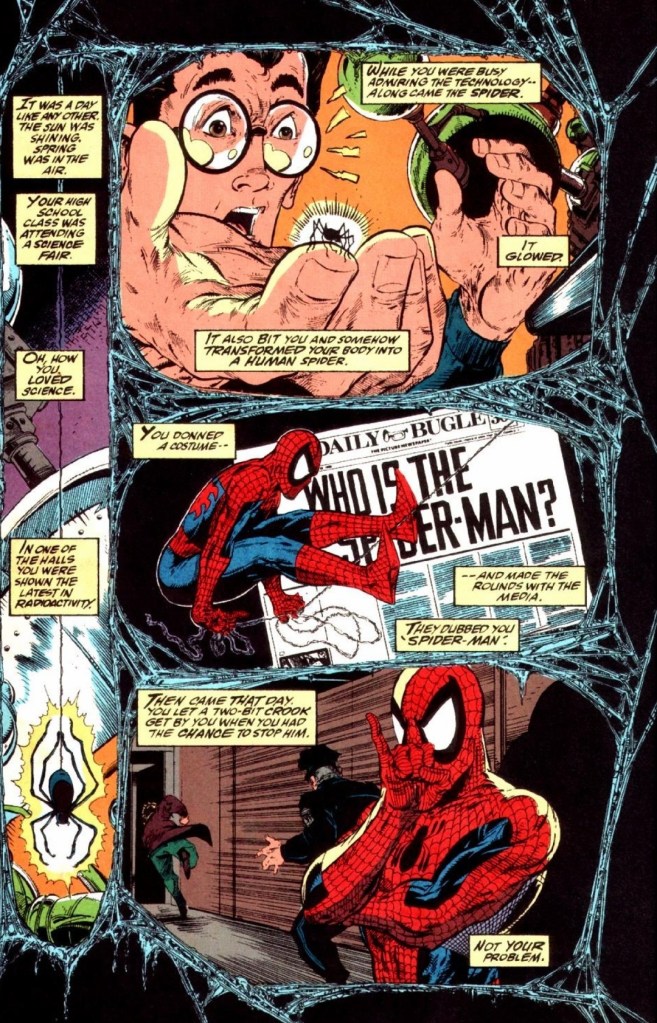
Todd McFarlane’s way of visualizing Spider-Man’s origin.

To get straight to the point, this comic book is simply a natural progression of the hard-hitting conflict between Spider-Man and the Lizard that started in the previous issue. In fact, this comic book shows the resumption of the battle (after a pause happened in the late stage of issue showing the fight temporarily halting which gave Spider-Man some minutes to rest).

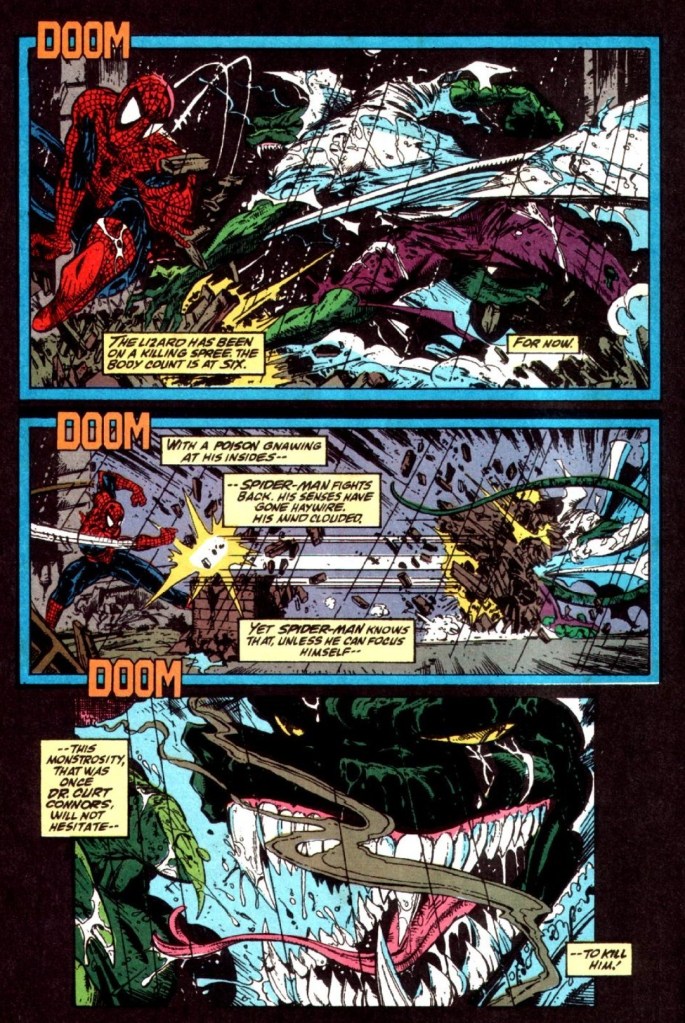
At this stage, Spider-Man has gotten even more vulnerable and damaged. Apart from struggling with the very violent attacks of the Lizard, his own spider sense becomes a major hindrance on his mind (he could not concentrate) as the sounds of “doom-doom-doom” caused by Calypso’s sorcery becomes very unbearable. Like the previous issue, Spider-Man gets close to death and if there is anything new here it is showing the iconic superhero messed up in the garbage.

Along the way, this comic book sheds some spotlight on Mary Jane Parker (Spider-Man’s wife) who has been spending time in the city dealing with the absence of her husband. The Mary Jane scenes felt more like filler to the script by McFarlane.

Conclusion

This comic book shows the resumption of the violent battle between the Lizard and Spidey.

Apart from continuing the story, Spider-Man (1990) does not have much to show. Todd McFarlane’s visuals are great and consistently remained high (and even gory) on details, but his weak writing made this one a chore to read through. Being the 3rd chapter of the Torment storyline, this one is predictable and the pay-off is minimum. At this stage, it is clear that something huge is coming up on the last two chapters of the storyline.  

Overall, Spider-Man (1990) is satisfactory.

+++++

Thank you for reading. If you find this article engaging, please click the like button below, share this article to others and also please consider making a donation to support my publishing. If you are looking for a copywriter to create content for your special project or business, check out my services and my portfolio. Feel free to contact me with a private message. Also please feel free to visit my Facebook page Author Carlo Carrasco and follow me on Twitter at  @HavenorFantasy as well as on Tumblr at https://carlocarrasco.tumblr.com/ and on Instagram at https://www.instagram.com/authorcarlocarrasco
A Look Back at Amazing Spider-Man #252 (1984)

Welcome back superhero enthusiasts, 1980s arts and culture enthusiasts, Marvel Comics fans and comic book collectors! Today we go back to the year 1984 to examine a small part of the Marvel Comics universe through a tale of the Amazing Spider-Man monthly series.

By now, you readers should be aware that I reviewed a lot of comic books about Spider-Man and his deadliest enemy Venom. It is already established through comic book history that the iconic webslinger is responsible for the establishment of Venom as he brought into the world the alien costume (the symbiote) coming from deep space (as told in the Secret Wars limited series), and he also became responsible for the destruction of Eddie Brock’s career in journalism. Of course, Venom did not debut immediately after Spider-Man’s return from Secret Wars and there was a lot more about the symbiote when it was with Peter Parker.

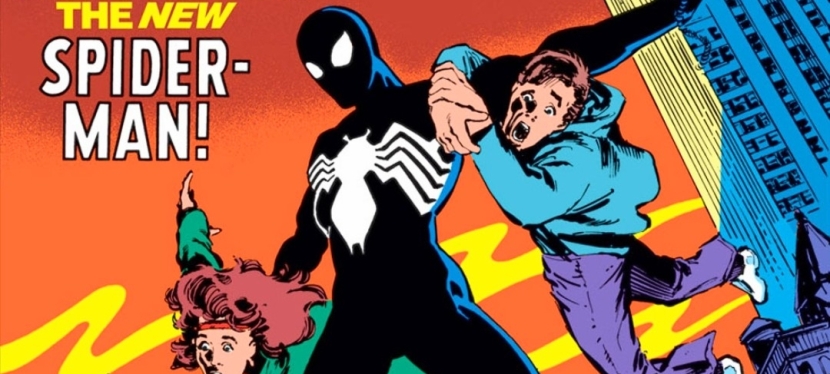
With those details laid down, here is a look back at Amazing Spider-Man , published in 1984 by Marvel Comics with a story written by Roger Stern and Tom DeFalco, and drawn by Ron Frenz. This comic book marked the first appearance of the alien costume.

The cover.

Early story

The story begins inside the New York headquarters of the Daily Bugle. It has been observed that several superheroes such as Captain America, Thor, Spider-Man, Iron Man, the X-Men and the Avengers have been missing this resulted in a rise of crime. Publisher J. Jonah Jameson and editor-in-chief Joe Robertson discuss the newest edition of their newspaper.

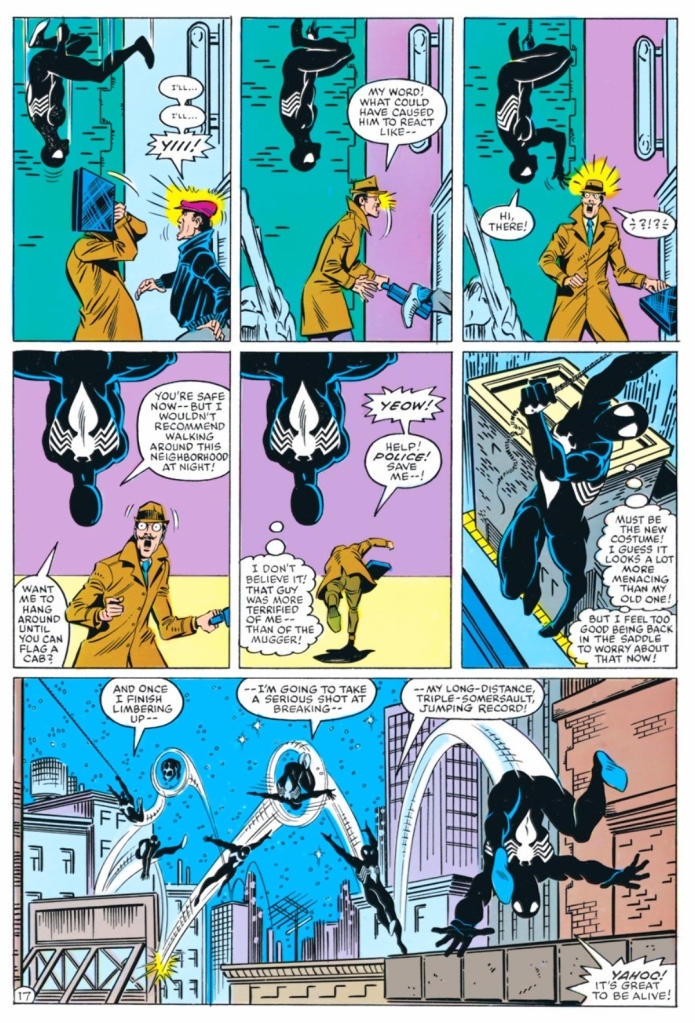
Meanwhile over at Central Park where police officers and others stand by an area that was closed off, a physical structure suddenly appears spreading bright light to onlookers. Suddenly Spider-Man (wearing a new dominant black costume) leaps out of the structure carrying Dr. Connor (the Lizard) surprising the people.

After realizing they have returned home at last after spending lots of time and struggle in deep space (Secret Wars), Spider-Man could not help but feel jubilant to be home. As the police officers don’t realize that they are talking with the same webslinger due to the new costume, one of them was about to draw his gun which prompted the superhero to use his web on him.

Suddenly, the Avengers, Captain America, Thor and Iron Man emerge from the physical structure which provided Spider-Man relief as he thought that only he and Dr. Connors made it home. With the people focusing on the other superheroes, Spider-Man and Dr. Connors slowly exited. Connors asked him what are they going to tell the world about all they have seen and experienced in deep space…

Quality

Spider-Man’s first night in New York wearing the alien costume .

I really like this story. I first read this a long time ago and I re-read it all over again for this retro review, and still this story engaged me a lot. There is a lot of richness in the script and you will get to see Peter Parker transitioning into a series of major changes that await him. Without spoiling the plot, there is no hero-versus-villain element here at all. It is all about Spider-Man who just arrived home from a major conflict (and also one of the most significant comic events ever published by Marvel Comics) and the alien costume saga truly began right here. The Venom debut did not happen until a few years later in reality.

In accordance to what was established in Secret Wars (not to be confused with the 2015 series of the same name) and the standards of then editor-in-chief Jim Shooter, the creative came up with a tale that not only showed a different Spider-Man but also portrayed him in ways that defied the tropes and creative ideas the preceded this comic book.

For one thing, Peter Parker is literally like a fish out of water here. As far as the whole world is concerned, only days passed when the superheroes went to deep space. But for the webslinger, a lot more time passed as so many battles, discoveries and intriguing events took place for him along with the others. That being said, Peter Parker’s perception of reality and track of time really got messed up and the weight of Secret War’s events really turned out overwhelming on him. This was well dramatized in the scene wherein Peter – who realized that so much time had passed – he had to call his aunt May fearing that she must be worried sick over him. There was also the moment when by walking down the street, he realized how much he missed not only his home but also the local surroundings.

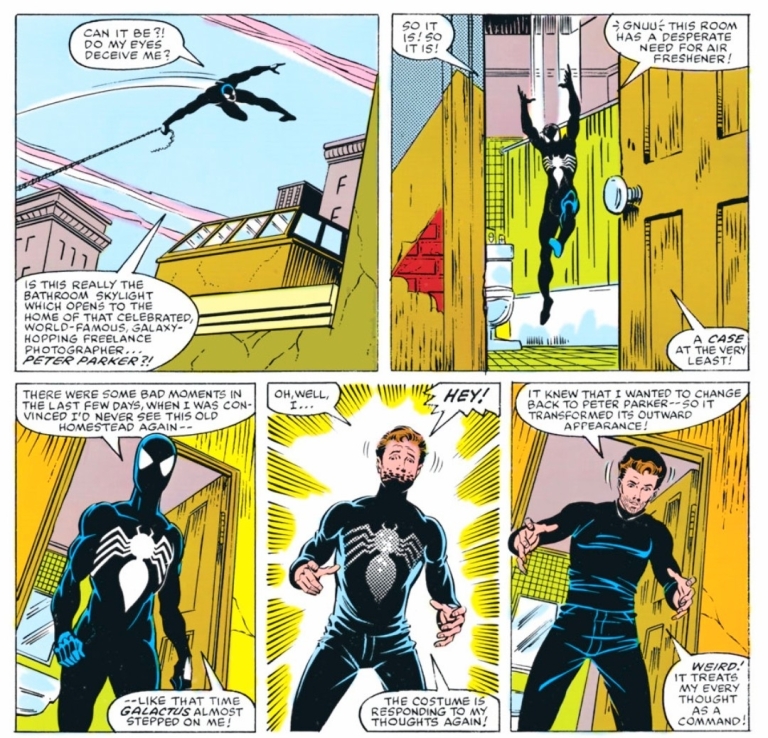
It was also in this comic book when Peter started getting more oriented with the alien costume he first got in Secret Wars (which was actually published after this comic book) and started to enjoy the benefits with the way it responds to his thinking. Of course, at this stage, he has yet to realize the unfortunate truth about the living costume he brought home and this story really kicked off a new and profound stage in the comic book history of Spider-Man

Conclusion

When Spider-Man finally arrived home after spending so much time during Secret Wars.

Amazing Spider-Man (1984) is still a great comic book to read all over again. This was released during the time when Secret Wars (1984) was still being published and years before Venom’s big debut in the series’ 300th issue. In my view, the alien costume saga was a big turning point in the literary history of Spider-Man and the creators who got involved in this comic book really sowed the seeds of compelling and intriguing events that followed. What is intriguing is that all of these significant developments started when a Marvel Comics reader from Illinois came up with the idea of a new costume for Spider-Man, wrote to them and the publisher responded to acquire his idea for over $200 (click here).

This comic book is also a reminder of how significant Jim Shooter’s rule at Marvel Comics really was and I can say that the Marvel’s literary universe of the 1980s should not be ignored.

Overall, Amazing Spider-Man (1984) is highly recommended!

+++++

Thank you for reading. If you find this article engaging, please click the like button below, share this article to others and also please consider making a donation to support my publishing. If you are looking for a copywriter to create content for your special project or business, check out my services and my portfolio. Feel free to contact me with a private message. Also please feel free to visit my Facebook page Author Carlo Carrasco and follow me on Twitter at  @HavenorFantasy as well as on Tumblr at https://carlocarrasco.tumblr.com/ and on Instagram at https://www.instagram.com/authorcarlocarrasco
A Look Back at Spider-Man #2 (1990)

Welcome back superhero enthusiasts, 1990s culture enthusiasts and comic book collectors! Today we go back to the early 1990s and explore a part of the Marvel Comics shared universe through a tale of the Spider-Man monthly series.

In my previous retro review, Todd McFarlane told a tale of the iconic web-slinger with intense build-up leading to another rematch with his old nemesis the Lizard (Dr. Connors). While the writing was pretty weak, McFarlane still managed to tell a tale with a strong element of horror and supernatural stuff. McFarlane’s approach with visual violence and graphic stuff was clearly adulterated. What was presented daringly tested the limits allowed under the Comics Code Authority (CCA).

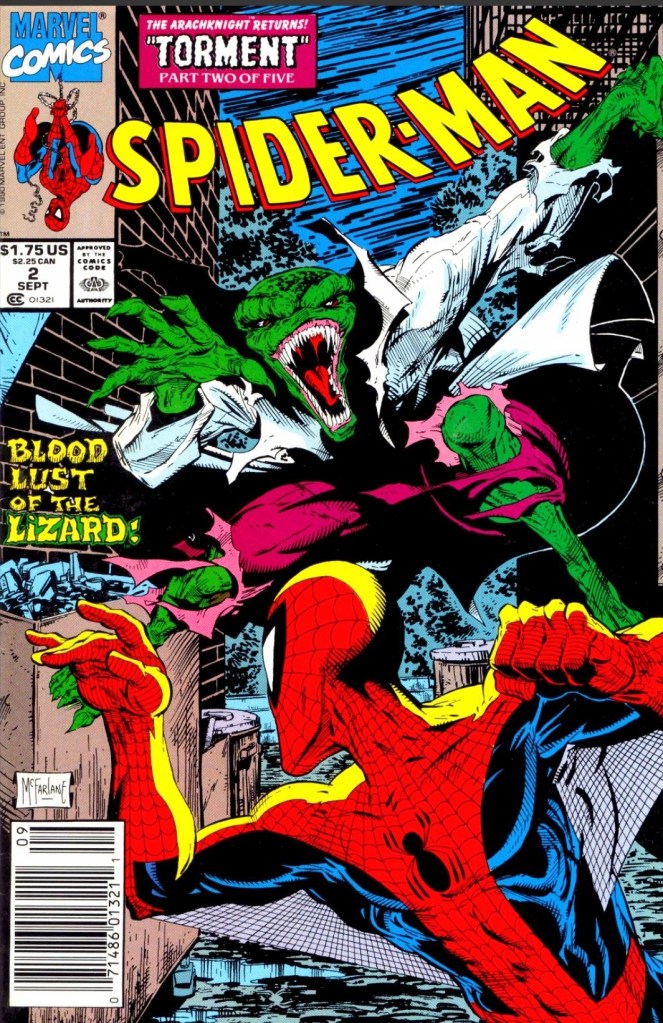
With those details laid down, here is a look back at Spider-Man , published in 1990 by Marvel Comics with a story written and drawn by Todd McFarlane. This is also the 2nd chapter of the Torment storyline.

The cover.

Early story

The story begins in New York City where two men got suddenly murdered by the Lizard in an alley during the night. The next morning Peter Parker reads the newspaper (showing the photograph and the news story of the Lizard’s murder of the two men) while having a breakfast moment with his wife Mary Jane. As soon as his wife mentions the word “monster”, Peter takes a 2nd look at the newspaper’s photograph and finally notices the bloody writing “CNNR” on the alley wall which makes him realize that the Lizard is back again.

Feeling very troubled, Peter leaves Mary Jane quietly and dresses up as Spider-Man to go out once again.

Elsewhere in the city, a sorceress uses her evil method of crafting a potion which creates an unrelenting sound of disturbance which Spider-Man hears. As the sound goes on, his focus and Spider Sense get overwhelmed…

Quality

A quick look at the origin of the Lizard by McFarlane.

While the writing by McFarlane remains weak, he still succeeded in making this story a marginal improvement over the previous issue in terms of moving the plot forward, paying off a good chunk of the build-up in issue , and establishing his own visual corner (inspired by horror and adulterated stuff) within the Spider-Man franchise of comics of the time.

The biggest feature here is the physical conflict between Spider-Man and the Lizard. As expected, McFarlane drew the big fight with a lot of intense action, powerful violence (note: it was clear the editorial team recommended moves to tone down the graphic violence), suspense and a good amount of horror. Not only does the big fight move the story forward, it allowed McFarlane to dramatize Spider-Man as a vulnerable hero who not only has to cope with the disturbance from the sorceress far away, but also deal with the poison he got from the Lizard. That being said, Spidey also struggles with his sanity and the new fact that the Lizard has turned into a murder machine which disturbs him a lot as he personally knew Dr. Connors.

Considering what happened here and in the previous issue, there is still a greater force of evil that awaits Spider-Man and the Lizard happens to be an ultra-violent tool.

Conclusion

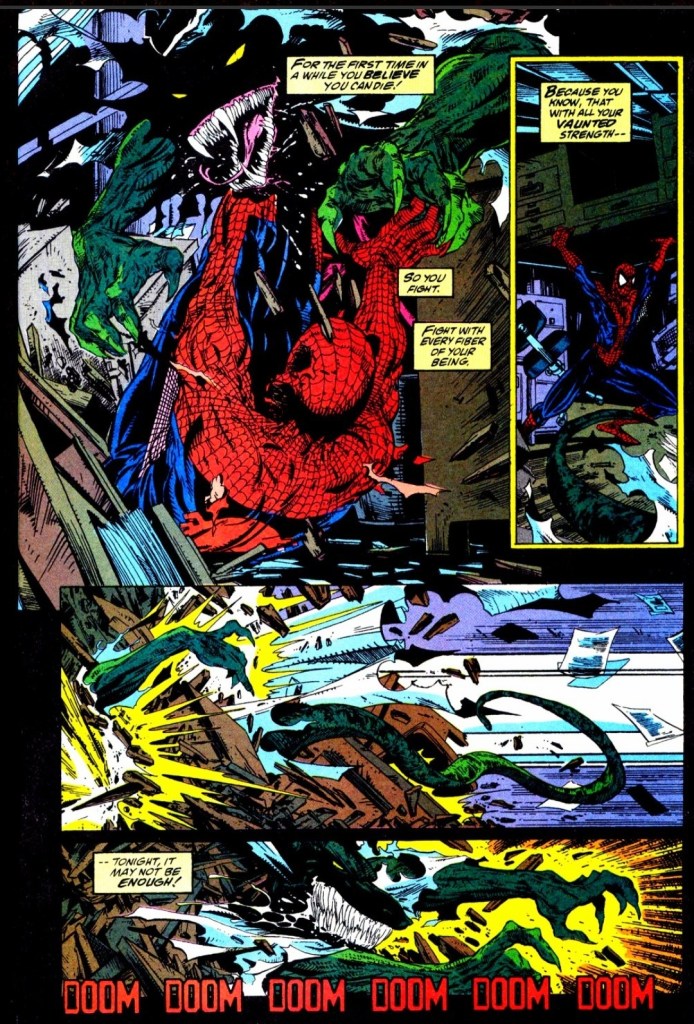
Many times Spider-Man finds himself in a disadvantage while fighting the Lizard.

Being the 2nd chapter of the Torment storyline, Spider-Man (1990) is a slight improvement over the previous issue in terms of moving the story forward, spectacle and dramatization. While the big fight between Spider-Man and the murderous Lizard is clearly the big feature of the story, McFarlane does a good job portraying Spider-Man as vulnerable and on the edge towards defeat. McFarlane’s writing here is still weak but the other positive elements achieved outweighed the weakness.

Overall, Spider-Man (1990) is satisfactory.

+++++

Thank you for reading. If you find this article engaging, please click the like button below, share this article to others and also please consider making a donation to support my publishing. If you are looking for a copywriter to create content for your special project or business, check out my services and my portfolio. Feel free to contact me with a private message. Also please feel free to visit my Facebook page Author Carlo Carrasco and follow me on Twitter at  @HavenorFantasy as well as on Tumblr at https://carlocarrasco.tumblr.com/ and on Instagram at https://www.instagram.com/authorcarlocarrasco
A Look Back at Spider-Man #1 (1990)

Welcome back superhero enthusiasts, 1990s culture enthusiasts and comic book collectors! Today we go back to the early 1990s and explore a part of the Marvel Comics shared universe through a tale of the Spider-Man monthly series.

Back in the late 1980s, Todd McFarlane proved to be a highly talented artist who helped Marvel sell a lot of issues of the Amazing Spider-Man series. McFarlane was also highly involved with the creation of Venom which not only became Spider-Man’s deadliest foe but also an icon of Marvel’s. In the year 1990, a brand new monthly series of Spider-Man was launched and it had Todd McFarlane writing and illustrating the tales.

With those details laid down, here is a look back at Spider-Man , published in 1990 by Marvel Comics with a story written and drawn by Todd McFarlane. This marks the beginning of the Torment storyline.

The cover.

Early story

The story begins in New York City where countless people walk to their respective destinations not realizing that the local hero Spider-Man was swinging above them. In a dirty alley, Spider-Man prevents an armed thug from harming a woman and leaves him hanging covered with a lot of web.

Elsewhere in the city, a sinister figure conducts a ritual, prays to evil forces and begins using magic.

In yet another location, a hideous creature emerges from the water. It’s the Lizard…

Quality

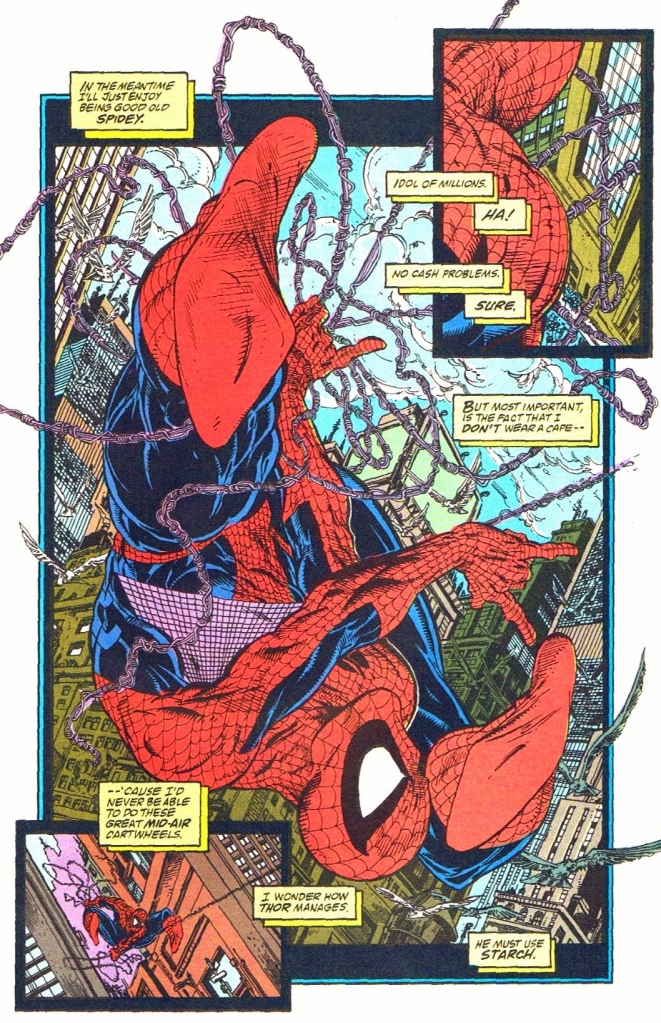
This page is an example of Todd McFarlane creating a travel sequence that allowed him to draw something great. It’s a classic example of moving back into the comfort zone.

To make things very clear here, this comic book is pretty shallow and hollow mainly due to its storytelling as this was the writing of a very young Todd McFarlane. There is no denying that his art here is great to look at from start to finish. In fact, this was one of McFarlane’s finest visual works ever with Marvel.

But if you look beyond the great visuals, the writing is very weak all throughout the issue. At best, this comic book is a grand-looking yet shallow set-up for the conflict of the Torment storyline complete with shared emphasis on the iconic web-slinger, the Lizard (looking more menacing than before) and Calypso (the one behind the magic and rituals).

In fairness to McFarlane, he added his own touch on emphasizing the personalities of Peter Parker and wife Mary Jane simultaneously as a couple. If you were used to seeing in-depth character development and witty dialogue about the two major characters as portrayed in the Amazing Spider-Man, Web of Spider-Man and Spectacular Spider-Man series of 1990, you won’t find them in this comic book. Under McFarlane’s writing, Spider-Man in this issue showed signs of sarcasm and cockiness in the first scene, and with Mary Jane he (as Peter Parker) expressed himself philosophically. To say the least, the portrayal of Spider-Man here is noticeably different under McFarlane.

The Lizard, a long-time rival of Spider-Man’s, was presented to be very violent and murderous in this issue. This was clearly McFarlane’s approach on emphasizing the force of opposition that awaits the iconic web-slinger and he obviously went for a more adulterated approach with the visuals. That being said, the violent content in this comic book is very unique and clearly stood out from the rest of the Spider-Man-related comics published by Marvel in 1990. Lastly, I should say that McFarlane’s visual take on the Lizard is the best I have seen.  

Going back to the visuals, McFarlane implemented strong elements of horror, darkness and grittiness which went along well with the adulterated approach to violence.  These mixed elements, as they turned out in reality, became part of McFarlane’s future works past Spider-Man.

Conclusion

McFarlane’s vicious and horrifying approach on visualizing the Lizard can’t be ignored. This Lizard makes the cinematic Lizard of the 2012 movie The Amazing Spider-Man look cartoony.

Spider-Man (1990) is a very mixed bag when it comes to literary enjoyment. It clearly has great artwork by McFarlane whose adulterated approach on expression and spectacle made it very unique. The writing by McFarlane (who was very young at the time of production) is clearly the big letdown although his own approach on portraying Spider-Man, MJ and the Lizard are very notable. Take note that this was Todd McFarlane starting with writing while doing the art (his true strength), and at this point in comic book history his talent on telling compelling stories would not be realized until a few years later (particularly with Spawn and Image Comics). Notably, his use of visual horror and darkness predates his work in Spawn which makes his Spider-Man take very distinct. Ultimately, this comic book served as a build-up for things to come in the Torment storyline. Don’t expect too much when acquiring this comic book.

Overall, Spider-Man (1990) is satisfactory.

+++++

Thank you for reading. If you find this article engaging, please click the like button below, share this article to others and also please consider making a donation to support my publishing. If you are looking for a copywriter to create content for your special project or business, check out my services and my portfolio. Feel free to contact me with a private message. Also please feel free to visit my Facebook page Author Carlo Carrasco and follow me on Twitter at  @HavenorFantasy as well as on Tumblr at https://carlocarrasco.tumblr.com/ and on Instagram at https://www.instagram.com/authorcarlocarrasco

A Look Back at What If #42 (1992)

Disclaimer: This is my original work with details sourced from reading the comic book and doing personal research. Anyone who wants to use this article, in part or in whole, needs to secure first my permission and agree to cite me as the source and author. Let it be known that any unauthorized use of this article will constrain the author to pursue the remedies under R.A. No. 8293, the Revised Penal Code, and/or all applicable legal actions under the laws of the Philippines.

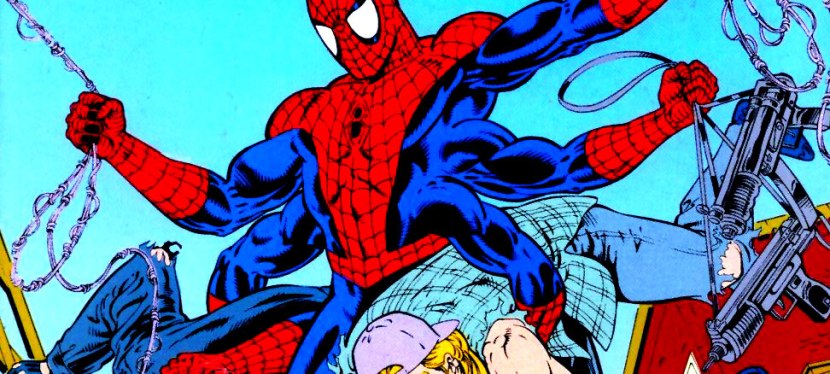
Believe it or not, there was a time when the iconic superhero Spider-Man had additional arms on both sides of his body which made him even more like a spider. Such a story was told in Amazing Spider-Man #100 and #101 published decades ago by Marvel Comics.

In 1992, Marvel Comics published What If #42 to revisit the old crazy story and tell an alternate reality of it. Take note that this comic book we’re about to examine together was released the same year Marvel celebrated the 30th anniversary of Spider-Man.

Cover
A very eye-catching cover.

Here’s a look back at What If #42 written by Michael Gallagher and drawn by Kevin West. The hot question: What if Spider-Man had kept his six arms?

Early story

The comic book begins with the Watcher telling readers a recap of what happened to Spider-Man in Amazing Spider-Man #100 and #101. It is recalled that Peter Parker got fed up with being Spider-Man as it complicated his personal life with a bunch of problems. After he attempted to eliminate his super powers by creating and using a potion, Peter Parker suddenly grew four additional arms instead.

In reaction, Parker reached out to his friend Dr. Connors/Lizard (who was in Florida) who granted him access to his laboratory in Long Island. Tried as hard as he could, Parker could not come up with a solution.

Meanwhile, many miles away, the vampire Morbius harms the crew of a ship on the sea before diving into the water. Morbius gets overwhelmed by multiple sharks and dies. His death, as it turns out, marked the end of the solution to Spider-Man’s extra arms problem. Morbius had an enzyme unique only to vampire body chemistry which would have cured Spider-Man’s condition.

10
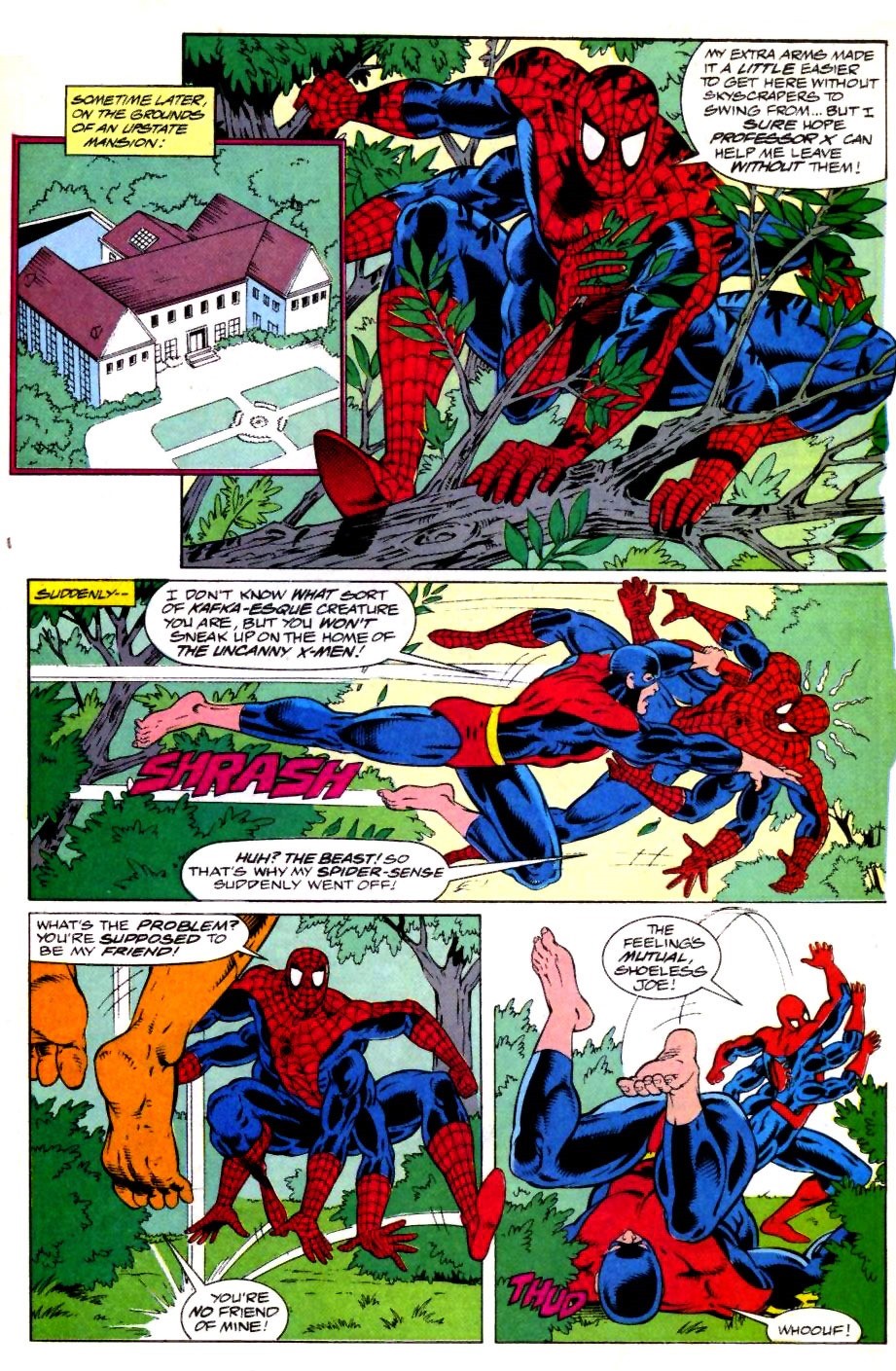
Spider-Man and Beast of the X-Men.

This leaves Spider-Man with an even longer lasting problem leading to a new reality.

Quality

The story is well written and nicely paced. There is a nice balance between storytelling, characterization and action here. As far as the alternate reality of events go, What If #42 is a smash in the sense that it nicely explores what would happen not only to Peter Parker had he actually kept those extra arms of his, but also what would happen to the people around him as well as balance of superheroes in the state of New York. If you just imagine yourself as Peter Parker having four extra arms, try visualizing how your personal life got destroyed and your connections with people you care about getting strained or even cut off. Nobody in real life would want to end up living like a freak, and this concept is well emphasized with Spider-Man.

Character development on Spider-Man is well done. As you read his lines and thoughts, you will feel the pressure and hassle he is experiencing with the extra arms. You’ll wonder how his Aunt May would react not only to those new arms but also his prolonged absence. As Peter Parker becomes very determined to find a solution in the absence of Morbius, you’ll even relate with his struggle. On top of these, the dialogue was well written and there were even a few intriguing moments.

I also enjoyed the way the comic book creators emphasized the shared universe of Marvel Comics here. You will see the X-Men and Fantastic Four plus several more Marvel characters make appearances.

Along the way, there is a nice scene at the Daily Bugle (the newspaper where Peter Parker works as a photographer) showing how sinister and abusive J. Jonah Jameson really is as he remains obsessed with destroying Spider-Man by means of distorted presentation of news. In this age of fake news, sinister propaganda, distorted views and local community print media publications being operated by people who don’t really know journalism, the Daily Bugle scene is pretty relevant by today’s standards.

As such, Michael Gallagher’s script and story structure here are very strong. For the art, Kevin West did good work. Not only was I able to recognize the Spider-Man-related characters and other Marvel superheroes, West’s notably made the Lizard look visceral enough and the same can be said of his take on Venom. The comic book art had a nice flow as the story was told and West provided enough impact on the action scenes.

Conclusion

What If #42 is a pretty good comic book to read exploring how things would have been had Spider-Man kept those extra arms and really looked truly spider-like. Apart from the good quality of storytelling and visuals, the presence of other Marvel Comics universe characters further add some depth into the story as Peter Parker struggled to find a solution to his problem.

7
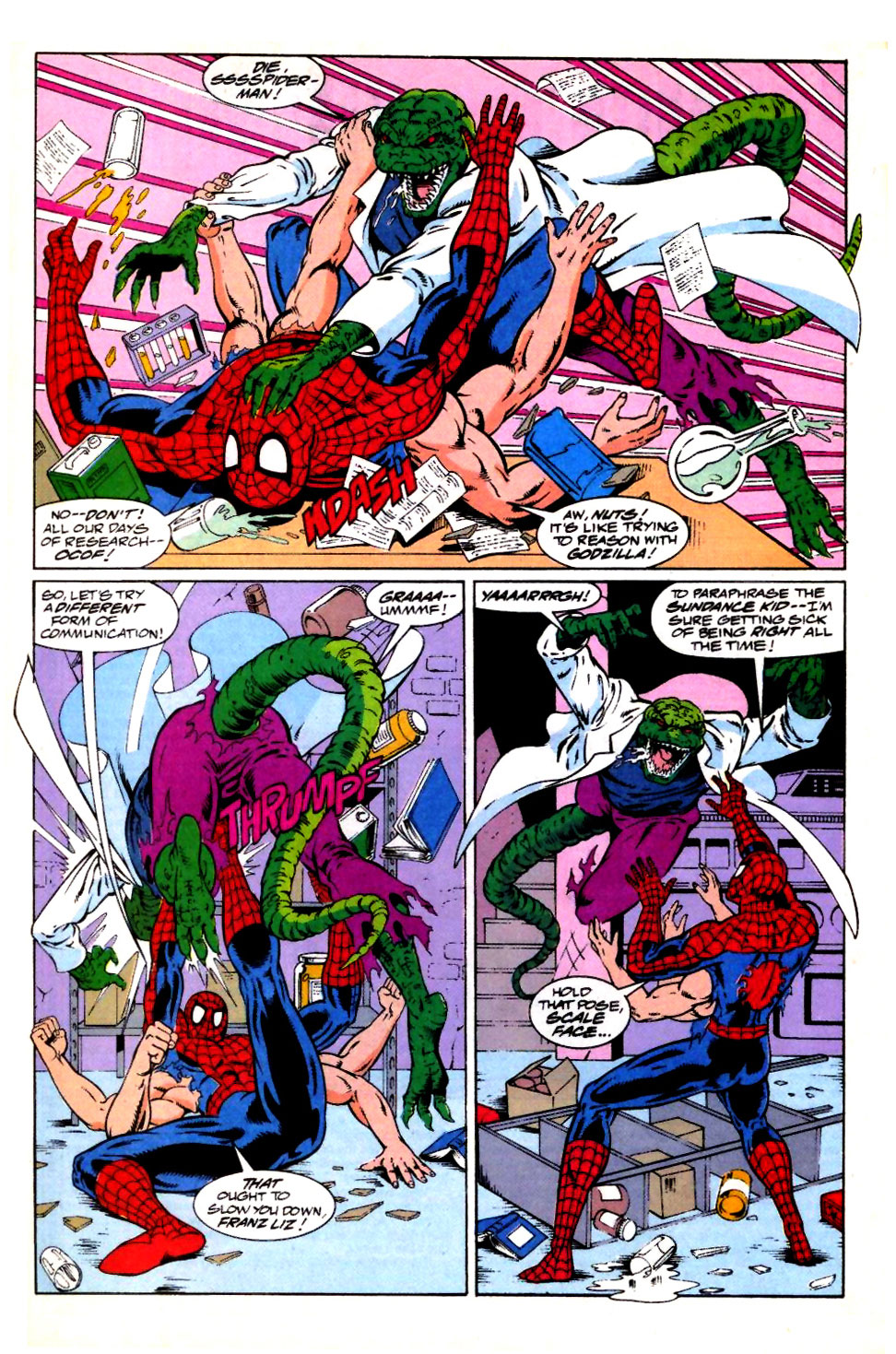
Spidey and Lizard!

This is the kind of story that I don’t believe we will ever see happen on the big screen. It’s just too jarring and even shocking for Sony Pictures and Marvel Studios to actually show Tom Holland as Spider-Man with extra arms. Such a cinematic move will surely outrage fans and might even put a dent on the credibility and believability of the Marvel Cinematic Universe.

If you are seriously considering buying an existing hard copy of What If #42, be aware that as of this writing based on the ratings of MileHighComics.com, a near-mint copy of the regular edition is at $12 while the near-mint copy of the newsstand edition is priced at $39.

Overall, What If #42 is recommended.


Thank you for reading. If you find this article engaging, please click the like button below and also please consider sharing this article to others. If you are looking for a copywriter to create content for your special project or business, check out my services and my portfolio. Feel free to contact me as well. Also please feel free to visit my Facebook page Author Carlo Carrasco and follow me at HavenorFantasy@twitter.com