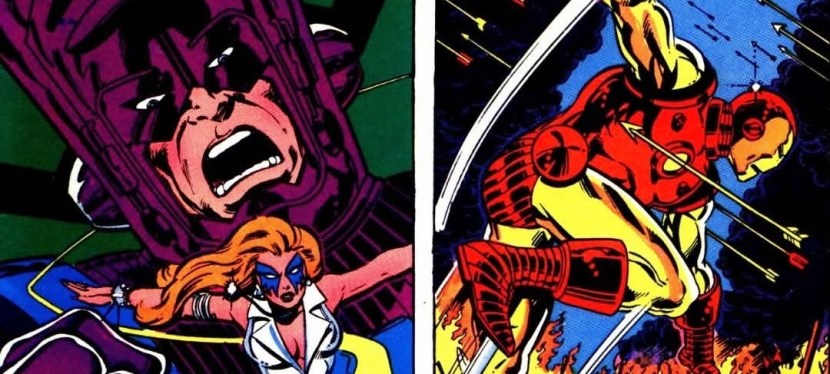
A Look Back at What If #33 (1982)

Welcome back superhero enthusiasts, 1980s arts and culture enthusiasts, Marvel Comics fans and comic book collectors! Today we go back to the year 1982 to examine alternate stories of the Marvel Comics shared universe chronicled through the original What If monthly series.

Back in the early 1980s, Dazzler quickly became popular among comic book readers and a standalone monthly series was launched no so long after her debut in Uncanny X-Men #130. Earl on in her monthly series, Dazzler eventually encountered Galactus (the classic nemesis of the Fantastic Four) in a wild tale involving the galaxy. On the other hand, Marvel Comics published a wild tale of the conflict of Iron Man and Dr. Doom (also the nemesis of the Fantastic Four) involving time travel and the presence of King Arthur in Iron Man . Eventually, Marvel decided to make alternate tales of the mentioned stories of Dazzler and Iron Man and publish them through an issue of What If.

With those details laid down, here is a look back at What If , published in 1982 by Marvel Comics with a Dazzler story written by Dan Fingeroth and drawn by Mike Vosburg, and the Iron Man story written by Steven Grant and drawn by Don Perlin.
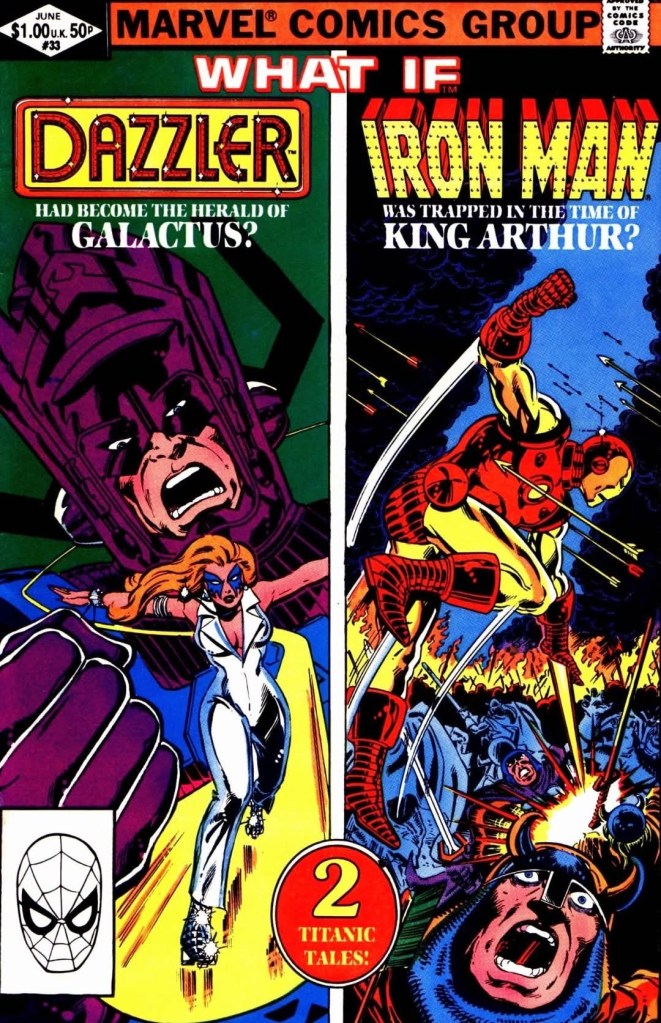
The cover.

Early story

What if Dazzler had become the herald of Galactus? – The story begins with Dazzler standing in the presence of Galactus, Terrax and Drone R-II. After Galactus renders his judgment on Terrax by banishing him to the depths of a black hole, he tells Dazzler she has proven herself worthy to become his new herald. As Drone R-II reminded his superior of the fact that previous heralds were forced to leave service due to their own moral codes and added that Dazzler will do the same, she questions them and stated that she does not belong in deep space and wants to go home. Galactus tells her that Earth is a planet he has sworn to devour and by becoming his herald, he will perhaps spare her home world. Dazzler finds herself cornered and reluctantly joins Galactus as his new herald. Immediately, Galactus sends her out to deep space for her first task…

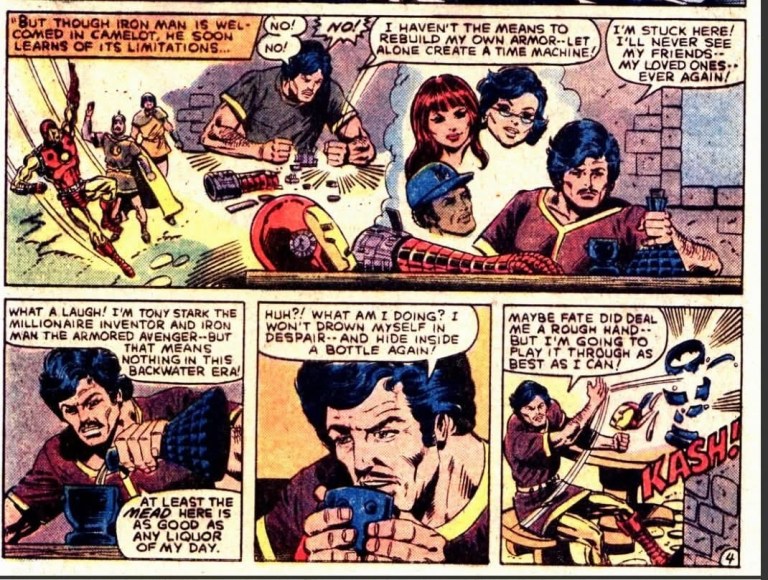
What if Iron Man had been trapped in King Arthur’s time? – The story begins in the past wherein Doctor Doom and Iron Man found themselves during the time of King Arthur. After separating themselves by taking different sides – Iron Man with King Arthur and Doom with Morgana LeFay – they decide to set their differences aside for the common goal of creating a crude time machine to return to the future. Instead, Doom takes advantage of the time machine by shocking Iron Man and leaving him behind in the past. With Doom back in the future, Iron Man struggles moving on the ground only to encounter Morgana LeFay. Believing that there is no pleasure in breaking a helpless man, Morgana spares Iron Man and tells him to return to King Arthur with her pledge…  

Quality
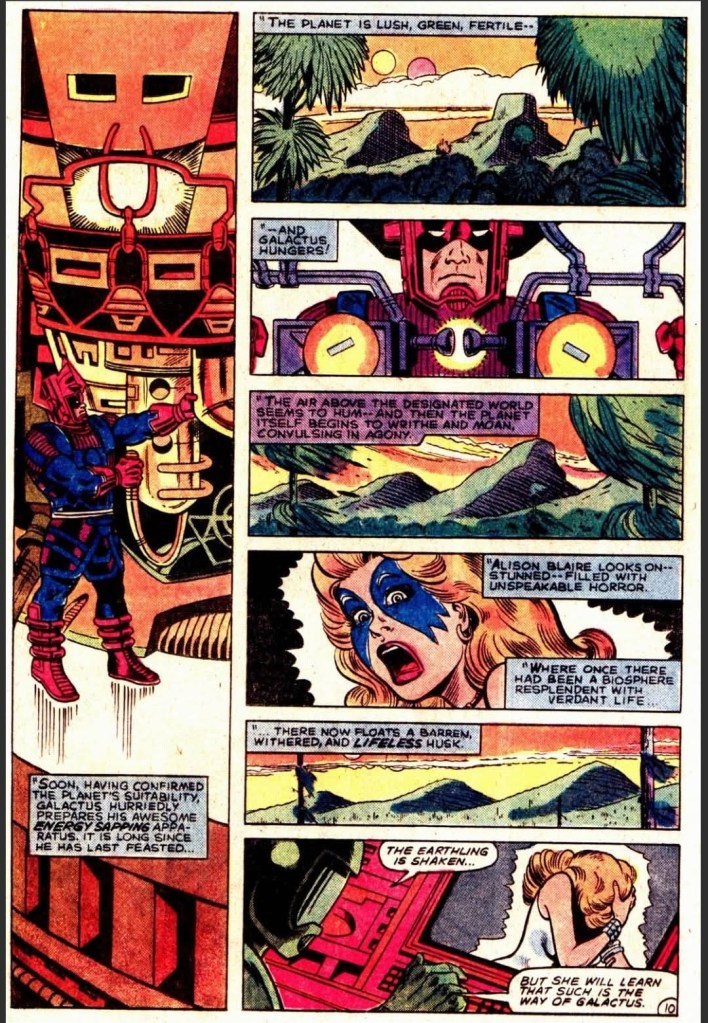
After doing advanced work, Dazzler can only watch and witness the loss of life as her master Galactus consumes the planet.

I can start with the good news for you all…the two featured stories in this What If comic book are great to read from start to finish!

With the Dazzler tale, I enjoyed how Danny Fingeroth told the alternate reality story of the dazzling heroine becoming Galactus’ herald and working immediately to serve him. Not only does Dazzler carried tremendous powers she did not have before, she was able to quickly travel through deep space and visit planets that are suitable for her master’s consumption. Even as she wielded tremendous power, Dazzler still retains her conscience and does some analyzing of situations.

Of course, she still retained her human nature throughout and there are moments when she felt defeated or shocked which alone made her a questionable herald. Galactus himself is pretty much in character in this tale and it is very engaging to see how his actions impact not only the beings of the cosmic realm of the Marvel universe but also on Dazzler herself. Without spoiling the plot, I can say the ending is captivating and truly is worth the build-up.
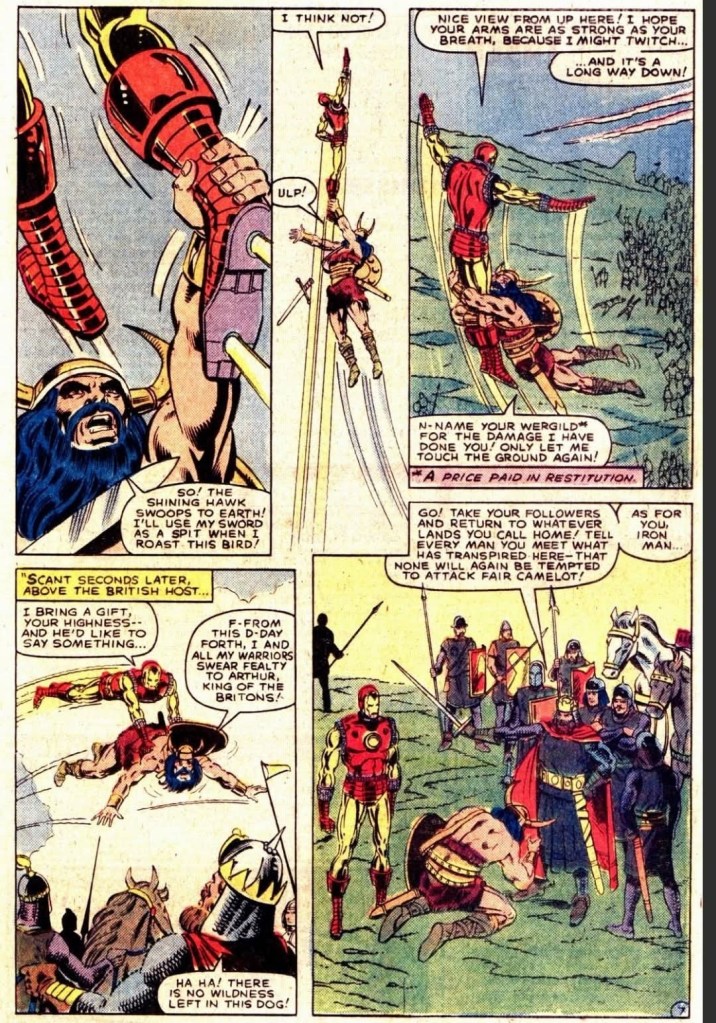
The stranded Iron Man makes an impact on a battle favoring King Arthur.

Regarding the Iron Man tale, the creative team came up with the concept of having the armored superhero actually stranded in time (left behind by Doctor Doom) and getting burdened by many factors. With Doom gone early in the plot, this effectively made Iron Man the main focus and his involvement in the conflict between King Arthur and Morgana really raised the stakes.  

Not only does Iron Man have to deal with conflicts, he also became vulnerable as the era of King Arthur had very low forms of technology which made the superhero’s desire to return to the future an effort against the impossible. As the story went on, Iron Man makes impact on the conflicts between the forces of King Arthur and Morgana and the good news here is that the creative duo of Steve Grant and Don Perlin made it all believable and serious to follow.  

Conclusion
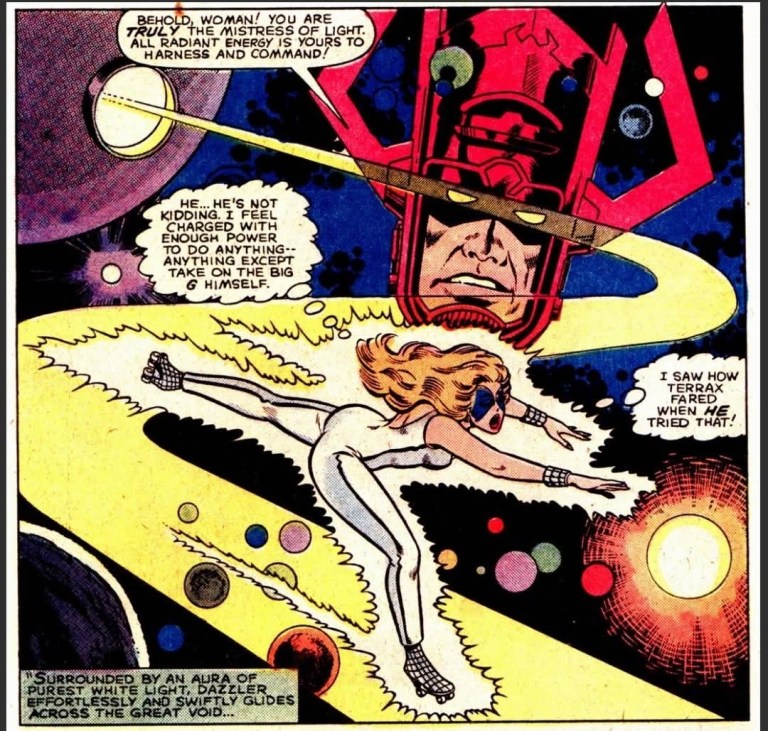
Dazzler the new herald of Galactus.
Tony Stark struggles initially with being stranded in the past.

I can say that What If (1982) is a great read! The respective tales of Dazzler and Iron Man are captivating, intriguing and enjoyable to read. The creative teams of each story succeeded in building up their respective concepts, moved the established superhero to daring creative directions, and delivered powerful conclusions. This issue of the old What If series has to read as it is a true escape from reality!

Overall, What If (1982) is highly recommended!

+++++

Thank you for reading. If you find this article engaging, please click the like button below, share this article to others and also please consider making a donation to support my publishing. If you are looking for a copywriter to create content for your special project or business, check out my services and my portfolio. Feel free to contact me with a private message. Also please feel free to visit my Facebook page Author Carlo Carrasco and follow me on Twitter at  @HavenorFantasy as well as on Tumblr at https://carlocarrasco.tumblr.com/ and on Instagram at https://www.instagram.com/authorcarlocarrasco

A Look Back at G.I. Joe: A Real American Hero #2 (1982)

Welcome back superhero enthusiasts, 1980s culture enthusiasts and comic book collectors! Today we go back to the early 1980s to explore Marvel Comics’ handling of a series based on the wildly popular military-themed franchise of toys – G.I. Joe: A Real American Hero.

Last time around, G.I. Joe members were sent to an island to rescue a very important woman who was kidnapped by Cobra. Along the way, the Joes faced stiff opposition and the duo of Snake-Eyes and Scarlett infiltrated the headquarters facing off with Cobra Commander and the Baroness. The comic book itself was indeed engaging and fun to read.

With those details laid down, here is a look back at G.I. Joe: A Real American Hero published in 1982 by Marvel Comics with the main story written by Larry Hama and drawn by Don Perlin.

The cover.

Early story

The story begins when the United States discovers its research station in the North Pole has been attacked and left in ruin. The damage found indicates that it has been wiped out in a commando-style raid, all station personnel were found dead and all the records were missing.

After carefully assessing the available information about the ruined American base, General Austin decides to send the G.I. Joe team to the North Pole. This resulted in cutting short the respective leaves of Stalker, Breaker, Scarlett and Snake-Eyes.

After being dropped at the North Pole, the selected G.I. Joe members carefully make their way to the Russian base and decide to watch from a distance…

Quality

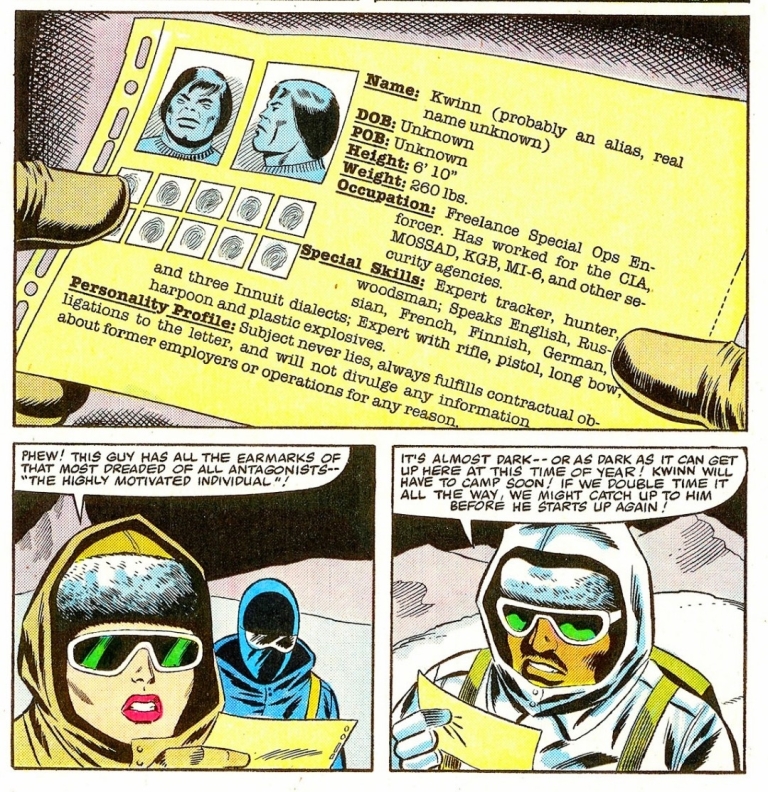
The character Kwinn is the most interesting character in this story.

When compared to what happened in issue , this comic book’s concept is smaller in scale but allows room for readers to get to know the Joes closely and follow the simplified plot which itself has details that are worth looking into.

When it comes to entertainment value, don’t expect a repeat of the bombastic action of the previous comic book. Expect to see lesser action but with more suspense and a stronger emphasis on the complexities that come with the world of espionage which itself is never simple.

That being said, the force of opposition here is not Cobra at all but something different. The new character Kwinn is a freelance operative who is quite formidable and he sure has extensive experience that enables him to outsmart the Joes. On top of that, Kwinn’s strong adherence to his principles and code of honor made him quite a pretty deep character which are nicely reflected into the story itself. For this reason alone, this is a must-read G.I. Joe tale.

Conclusion

Have you ever experienced your leave getting canceled suddenly?

With G.I. Joe: A Real American Hero (1982), the creative team of Larry Hama and Don Perlin took a very different approach that shifted away from the classic G.I. Joe/Cobra rivalry and deep into the world of espionage with a really engaging and refreshing tale. As the story features much lesser characters, you will get to know Stalker, Breaker, Scarlett and Snake-Eyes better. Kwinn is easily the most interesting and most compelling character of this comic book. While the story is fun and engaging, it may not delight fans who love to see the Joes fight the Cobra terrorists.

Overall, G.I. Joe: A Real American Hero (1982) is recommended.

+++++

Thank you for reading. If you find this article engaging, please click the like button below, share this article to others and also please consider making a donation to support my publishing. If you are looking for a copywriter to create content for your special project or business, check out my services and my portfolio. Feel free to contact me with a private message. Also please feel free to visit my Facebook page Author Carlo Carrasco and follow me on Twitter at  @HavenorFantasy as well as on Tumblr at https://carlocarrasco.tumblr.com/ and on Instagram at https://www.instagram.com/authorcarlocarrasco
A Look Back at G.I. Joe: A Real American Hero #1 (1982)

Welcome back superhero enthusiasts, 1980s culture enthusiasts and comic book collectors! Today we go back to the early 1980s to explore Marvel Comics’ launch of a comic book series based on the wildly popular military-themed franchise of toys – G.I. Joe: A Real American Hero.

For the newcomers reading this, Hasbro launched the G.I. Joe: A Real American Hero toyline in 1982 which was actually a revival of the original G.I. Joe series of toys (sized 12 inches) in the 1960s and 1970s. G.I. Joe: A Real American Hero toys had a new format for its action figures influenced by the success of the Micronauts and Star Wars toys. Veteran writer Larry Hama (the same guy behind the memorable Wolverine #75 of 1993) was already working for Marvel and was developing the concept of a new comic book about elite commandos fighting terrorists. Such development happened before the 1982 relaunch of G.I. Joe, and eventually Marvel’s editor-in-chief Jim Shooter approached Hama for a new comic book project based on Hasbro’s military toyline. Eventually a series of developments followed that saw the creation of the evil organization Cobra, the core villain Cobra Commander and more.

The impact of G.I. Joe as a licensed comic book series turned out positively as it helped attract new readers at the newsstands and it developed a strong following with young readers who were not highly interested with superheroes.  

With those details laid down, here is a look back at G.I. Joe: A Real American Hero published in 1982 by Marvel Comics with the main story written by Larry Hama and drawn by Herb Trimpe.

The cover.

Early story

The story begins with an Amtrak train traveling between New York City and Washington, D.C. Inside the nuclear physicist Dr. Adele Burkhart who previously served as one of the brains behind the Doomsday Project. It turns out, Burkhart was declared a traitor for denouncing the military claiming that she was misled by them to work on the said project. Inside the train, she has several security personnel guarding her as she is on her way to testify in front of a certain congressional committee.

As she speaks during a press conference inside one of the train’s cars, several flying soldiers of Cobra attacked the exterior of the train. In front of Burkhart, a few of the journalists turned out to be elements of Cobra led by the Baroness. The Baroness and her companions succeed in defeating the bodyguards and kidnapped Burkhart by means of flight.

At the Pentagon, the kidnapping of Burkhart compels the military to call in their special counter-terrorist group called G.I. Joe for a rescue operation. The stakes are high as they know that they cannot let Cobra keep Burkhart long enough to use her and they cannot let her die as the whole world is aware that they considered her an embarrassment. They ordered Colonel Clayton Abernathy (code name: Hawk) to assemble the Joe Team composed of Clutch, Flash, Breaker, Rock ‘n Roll, Scarlett, Stalker, Short-Fuse and Snake-Eyes…

Quality

Dr. Burkhart held hostage by Cobra and in the presence of Cobra Commander, the Baroness and many terrorists.

To get straight to the point, the main story (Operation: Lady Doomsday) was carefully structured by Hama to tell a story engagingly while also functioning to introduce readers to the characters and immersing them into the illustrated literary universe of G.I. Joe that is noticeably separated from the popular cartoon series. It is a classic portrayal of good versus evil laced with militarism and espionage.

The story moved at a medium pace and the approach on build-up and pay-off was executed carefully. There were scenes that had a sufficient amount of details regarding the plot or character moments (as opposed to development) that made the reading experience immersive. In short, there was no rush in the narrative while the pace never slowed down to a halt (no boring moments).

That being said, you will get to see lots of scenes that focus on the side of G.I. Joe as well as on the side of Cobra which is led by Cobra Commander (who is obsessed and scheming) followed by the Baroness (who is more focused on achieving goals but cannot do so without authority). You will see a certain gap between Cobra Commander and the Baroness which shows something seems off within their terrorist organization. This served as a creative contrast with G.I. Joe being more straightforward with the way they organize themselves.

The only weakness this comic book has is the fact that with so many characters from both the good and the bad sides, identifying them was pretty challenging especially when their military uniforms obscured their looks. Characters like Cobra Commander, Snake-Eyes, Scarlett, Rock ‘n Roll, Stalker and the Baroness are instantly recognizable.

As the main story remains a really good read, the 2nd story (Hot Potato) also written by Hama but drawn by Perlin served as a nice additive to this comic book.

Conclusion

G.I. Joe starts getting ready for the high-stakes rescue mission.

G.I. Joe: A Real American Hero (1982) is indeed a very solid reading experience. This is a strong introduction of the literary version of G.I. Joe and its portrayal of good versus evil remains believable and compelling. I also enjoyed the way the creators balanced the build-up of tension, plot and character moments with spectacle or twists utilized as pay-off. Lastly, I should say that this comic book has lots of action for you to enjoy and the execution of the action scenes made sense within the context of the stories. Remember that this marked the beginning of a memorable long run of G.I. Joe comics that reached into the 1990s. This one is a true classic and it should remind you that there was a time when political correctness and wokeness did not get in America’s way of fighting terrorists.

Overall, G.I. Joe: A Real American Hero (1982) is highly recommended!

+++++

Thank you for reading. If you find this article engaging, please click the like button below, share this article to others and also please consider making a donation to support my publishing. If you are looking for a copywriter to create content for your special project or business, check out my services and my portfolio. Feel free to contact me with a private message. Also please feel free to visit my Facebook page Author Carlo Carrasco and follow me on Twitter at  @HavenorFantasy as well as on Tumblr at https://carlocarrasco.tumblr.com/ and on Instagram at https://www.instagram.com/authorcarlocarrasco

A Look Back at Bloodshot #7 (1993)

Disclaimer: This is my original work with details sourced from reading the comic book and doing personal research. Anyone who wants to use this article, in part or in whole, needs to secure first my permission and agree to cite me as the source and author. Let it be known that any unauthorized use of this article will constrain the author to pursue the remedies under R.A. No. 8293, the Revised Penal Code, and/or all applicable legal actions under the laws of the Philippines.

It’s been quite some time since I last reviewed a Valiant comic book. Previously, I reviewed Bloodshot #6 (1993) which not only had the first appearance of Colin King (AKA Ninjak) but also had some of the spotlight on my native Philippines as a destination. To be specific, back in the 1990s, it was rare for the Philippines to get mentioned or visualized in American superhero comic books.

Anyway, we can return to the 1990s universe of Valiant Comics following the misadventure of Bloodshot in this look back at Bloodshot , published in 1993 by Valiant Comics with a story by Kevin VanHook and art by Don Perlin.

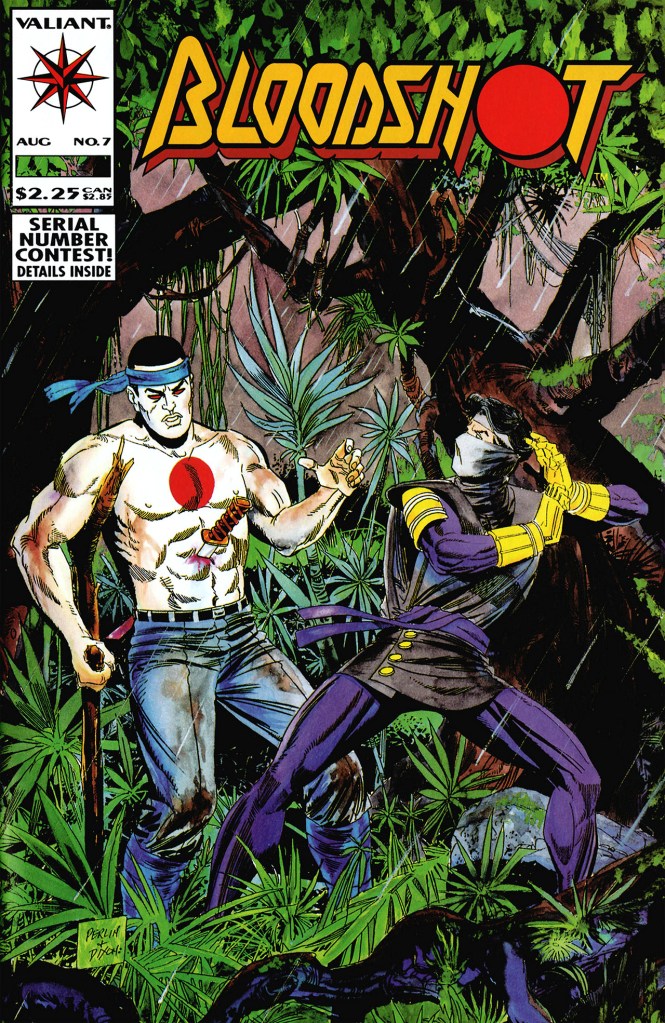
The cover.

Early story

The story begins 1,500 feet in the air above the Philippines with Leigh falling down followed by Bloodshot with the airplane leaving them. After some struggle, Bloodshot manages to grab her boot which turned out helpful as Leigh had been controlling her fall by gliding on the air currents. After breaking the fall, the boot of Leigh slips off separating the them. Bloodshot falls on the jungle’s foliage while the other landed safely.

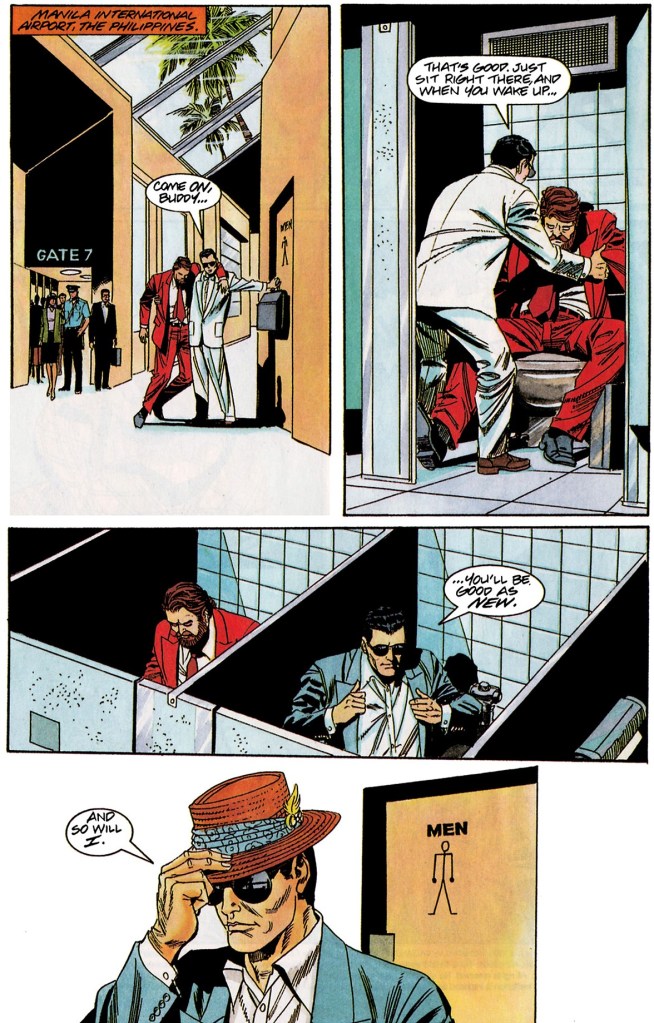
Over at the Manila International Airport, the secret assassin Marco is weak and was assisted by a certain guy and placed on one of the toilets in the restroom. After being left there alone, Marco wakes up and leaves the restroom to make a telephone call. He does not realize that the same man who assisted him is trailing him.

Back in the jungle, Bloodshot gradually adjusts himself to get moving just as his nanites are healing his fractured right leg and broken rib. With no time to lose, he decides to continue his mission even though he is still injured….

Quality

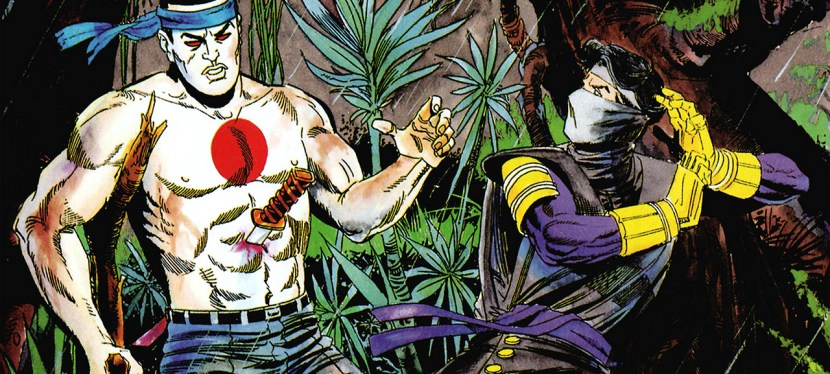
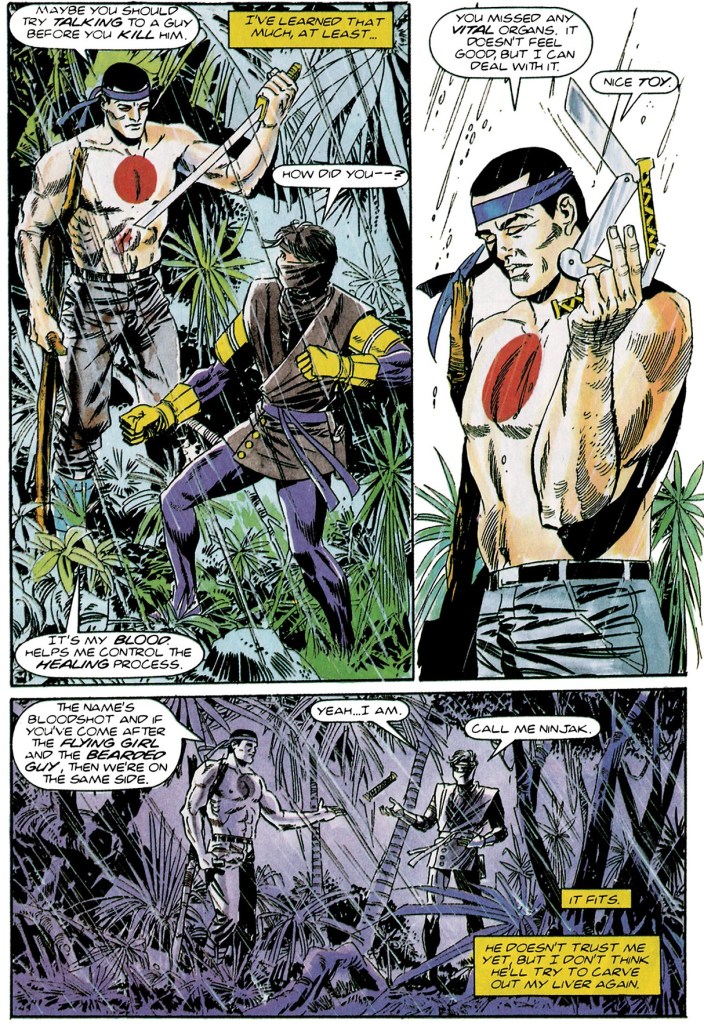
Bloodshot and Ninjak in the jungle in the Philippines.

I can say that this comic book has a stronger story and better spectacle. It is indeed a solid payoff to the build-up in issue . Kevin VanHook took his time in pacing the story allowing readers to follow the details behind the events while giving ample spotlight to other characters. Bloodshot is still in the center of the story only this time he’s a lot more vulnerable and less capable as an action hero. As seen in the cover of this comic book, he truly is vulnerable and therefore he is presented more as a survivor striving hard to complete his detective work no matter the costs.

This is not a straightforward action tale. There is still a good amount of intrigue and espionage that happens in the Philippines (as Valiant’s creators imagined it). It should be noted that this comic book marks the first-ever appearance of Ninjak in his costumed form (note: Ninjak appeared in Bloodshot in his civilian form as Colin King) as well as the first-ever personal encounter between Ninjak and Bloodshot (which was written to be believable). Artist Don Perlin cleverly crafted the way Ninjak performs action and evasive maneuvers setting the basic standards that other artists would do later in further comic book featuring the character (who eventually got his own monthly series in 1994).

Conclusion

At the Manila International Airport…

Bloodshot (1993) is a great comic book to read and it also happens to be one of the more memorable character debuts Valiant Comics ever published in the 1990s. The debut of Ninjak in his costume alone makes this one a must-have and it so happens that the story and art were both of very good quality. The gritty realism applied to the tone of the presentation makes the story believable and there never was a moment when the events felt outlandish.

Going back to Ninjak, the character went on to become one of Valiant’s most original and major superheroes of all. In 1994, the Ninjak monthly series launched big time with an issue #1 that had a chromium cover and the great Joe Quesada drew the cover and interior art. In 2015, Valiant Entertainment launched another Ninjak series.

If you are seriously planning to buy an existing hard copy of Bloodshot (1993), be aware that as of this writing, MileHighComics.com shows that the near-mint copy of the comic book costs $40.

Overall, Bloodshot (1993) is highly recommended.

+++++

Thank you for reading. If you find this article engaging, please click the like button below and also please consider sharing this article to others. If you are looking for a copywriter to create content for your special project or business, check out my services and my portfolio. Feel free to contact me as well. Also please feel free to visit my Facebook page Author Carlo Carrasco and follow me at HavenorFantasy@twitter.com

A Look Back At Bloodshot #1 (1993)

Disclaimer: This is my original work with details sourced from reading the comic book and doing personal research. Anyone who wants to use this article, in part or in whole, needs to secure first my permission and agree to cite me as the source and author. Let it be known that any unauthorized use of this article will constrain the author to pursue the remedies under R.A. No. 8293, the Revised Penal Code, and/or all applicable legal actions under the laws of the Philippines.

You must have heard about the live-action Bloodshot movie (starring Vin Diesel) that failed to make big bucks at the box office. Then you must have learned about Valiant Comics.

To understand Bloodshot before reviewing the early-1990s comic book Bloodshot , here’s a look at the history of Valiant Comics.

1
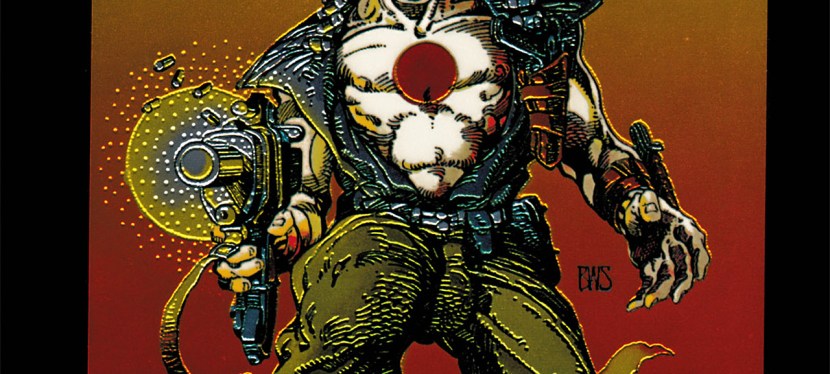
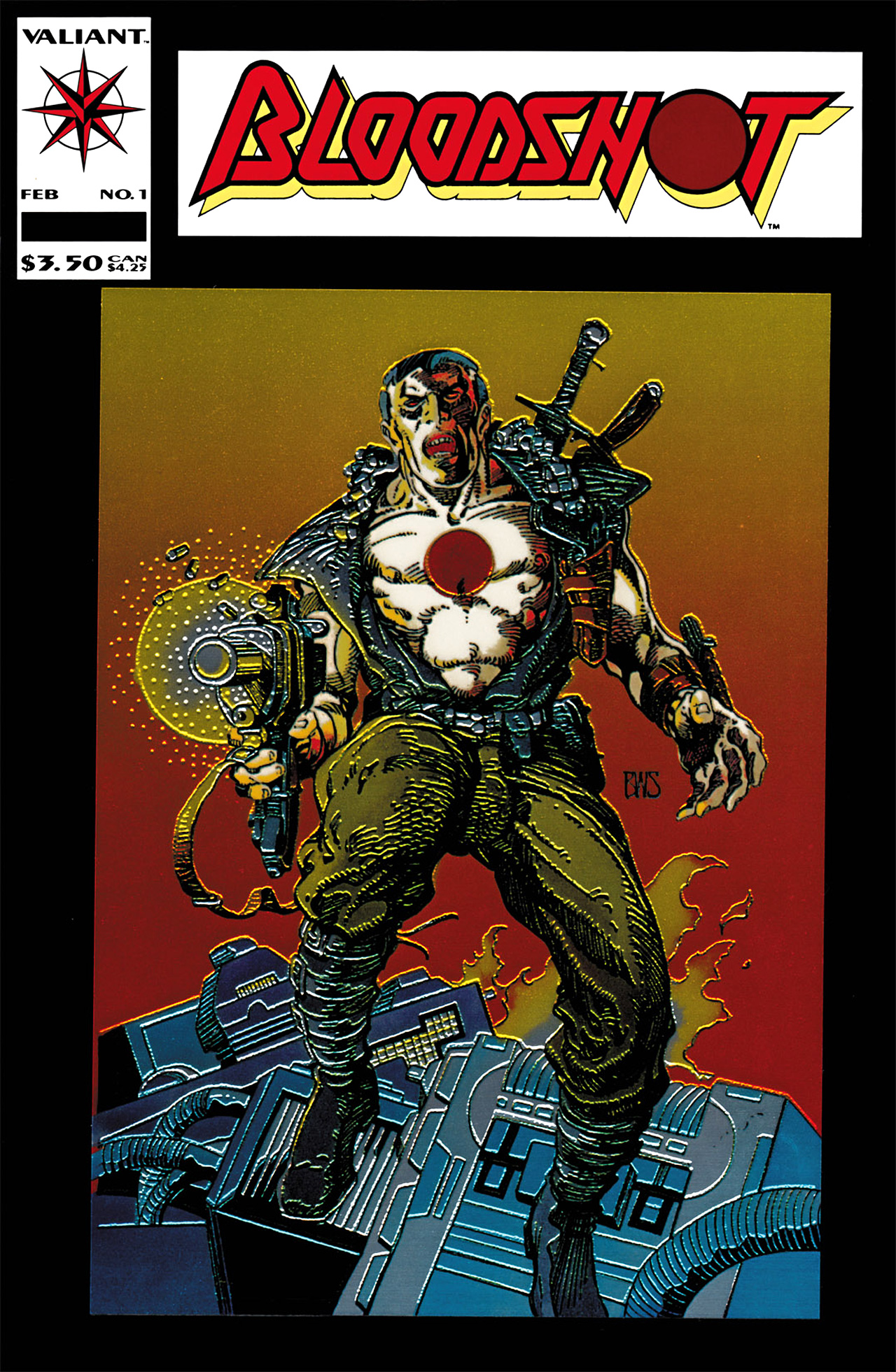
The cover with chromium and Bloodshot drawn by Barry Windsor-Smith.

In the late 1980s, a team composed of former Marvel Comics Editor-in-Chief, former Allman Brothers Band manager Steve Massarsky and some investors failed in their bid to acquire Marvel Enterprises. Instead of letting their failure stop them, they went on to establish Voyager Communications with the backing of Triumph Capital. Voyager then created the imprint Valiant Comics which went on to launch its first titles in 1991 with Magnus, Robot Fighter (which started in the 1960s in comics published by Gold Key) and Solar, Man of the Atom (also started in the 1960s through Gold Key comics).

Subsequently Valiant’s first original superhero Rai was introduced followed by other original properties like Harbinger and Eternal Warrior. It was within the pages of Eternal Warrior Bloodshot made his first appearance followed by a first full appearance in Rai #0.

Then in November 1992, the same month DC Comics released Superman (The Death of Superman, Valiant released Bloodshot with a cover price of $3.50 (cover dated February 1993) and a very eye-catching chromium cover of Bloodshot drawn by Barry Windsor-Smith.

Now that the history lesson is done, we can finally explore Bloodshot (written by Ken VanHook and drawn by Don Perlin) in this retro comic book review.

Early Story

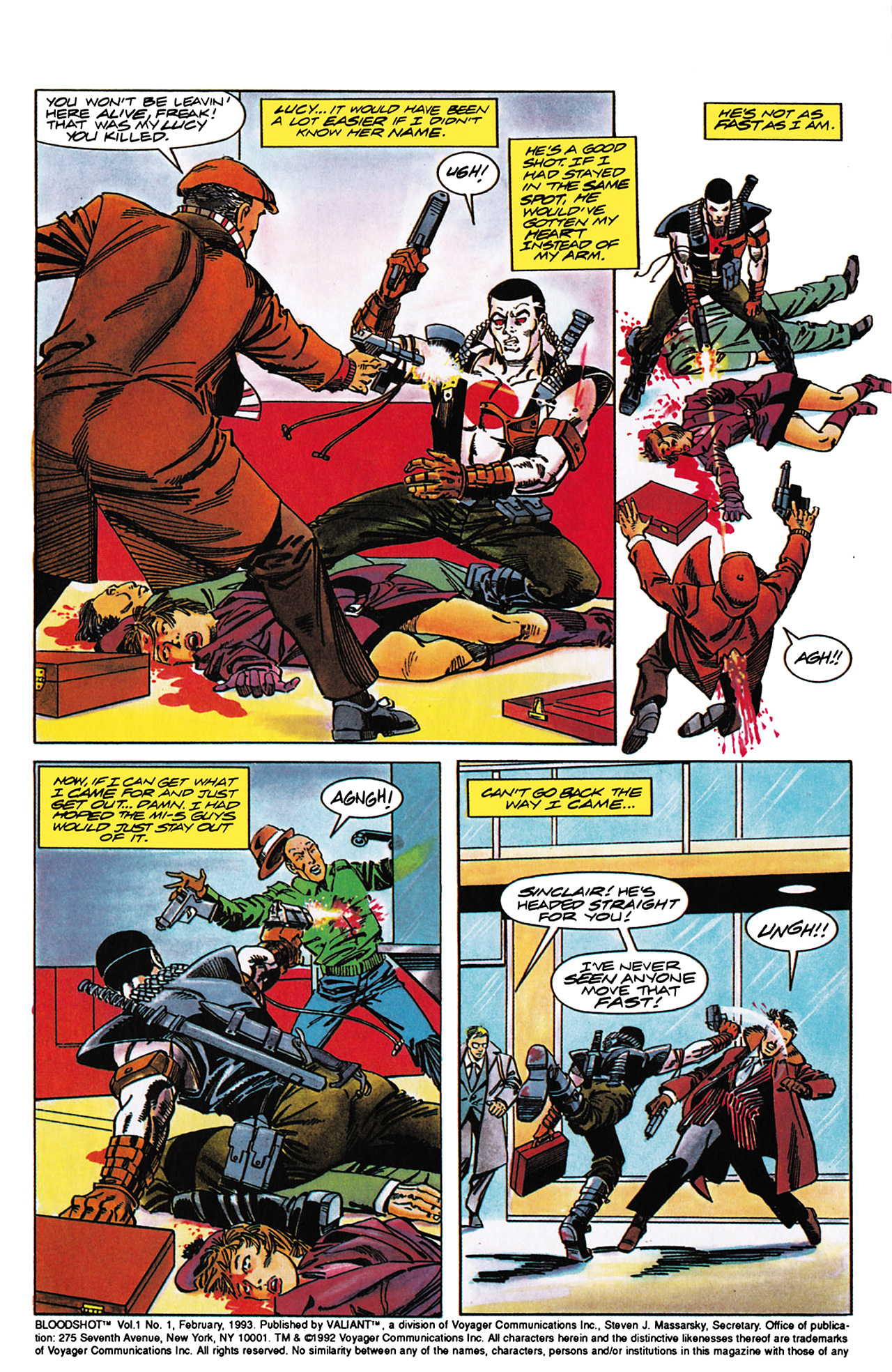
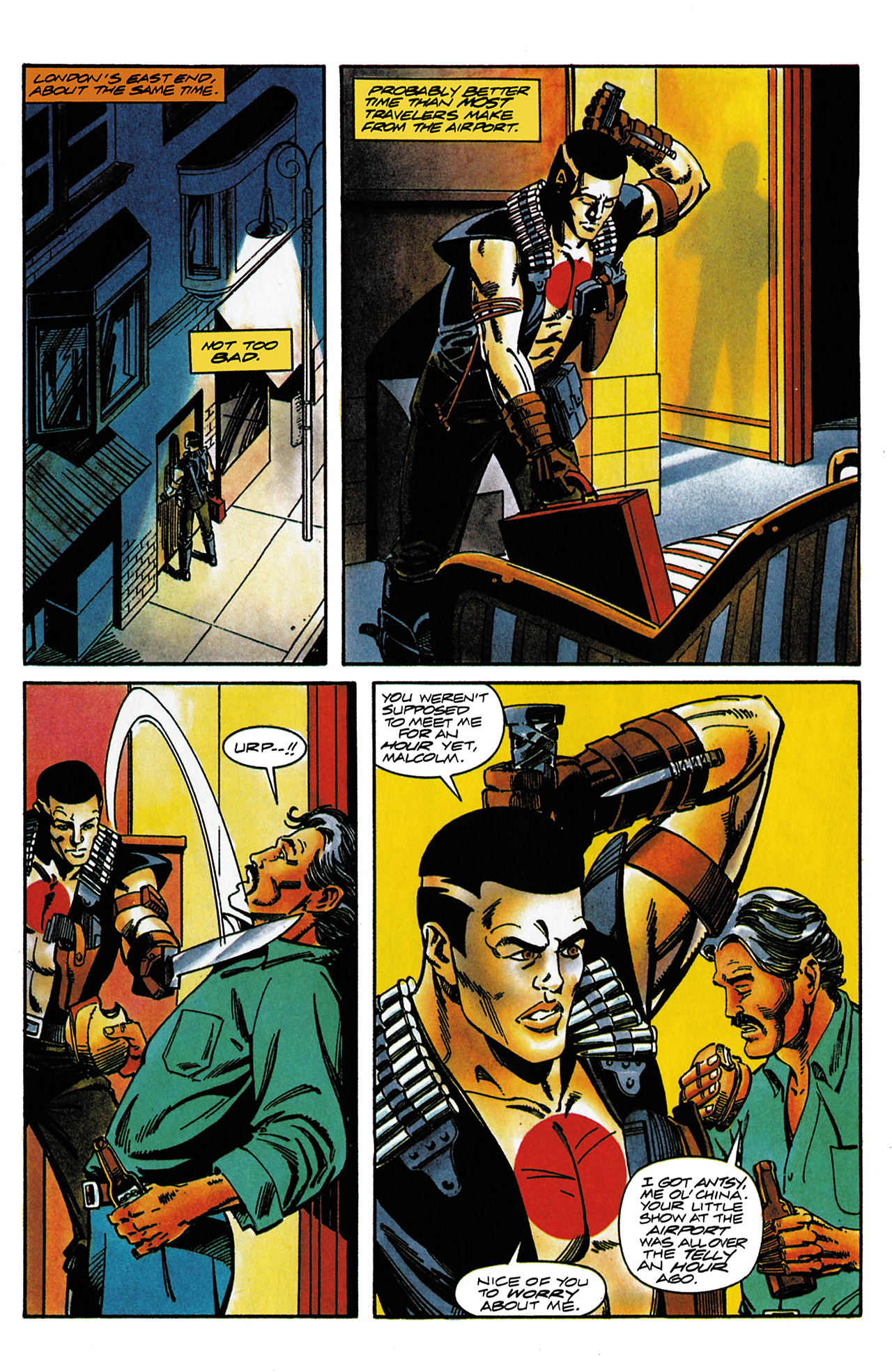
The story begins at Heathrow Airport in the United Kingdom. Immediately after a man and a woman (both wearing coats and hats) performed an exchange with a briefcase, two other men (also wearing coats) reacted to them but Bloodshot jumps into the action firing his gun, taking a shot to his arm and grabbing the briefcase. Bloodshot escapes from the airport.

4
Adulterated action!

Behind the scenes, an old man meets with Thompson and Otomo informing them that Bloodshot was an experiment of theirs under Project Rising Spirit. The project was disrupted when a young blonde male got to Bloodshot and adjusted one of the devices. The young guy was caught by one of the operators until Bloodshot (still bald and naked) got up, attacked the personnel (freeing the young guy), gathered data from their computers and escape.

The old man noticed Bloodshot’s rampage at Heathrow Airport and was able to identify him. He issues orders to Thompson and Otomo.

“I want him returned—I do not care the condition,” he said.

Quality

Looking beyond the eye-catching chromium cover, Bloodshot from the early 1990s is actually engaging and intriguing to read. While it is a superhero comic book, it sure has a dark and gritty tone as well as being noticeably grounded with reality.

With the spectacle, the action is violent and somewhat bloody. It may look tame by today’s standards but back in the 1990s, this was exceptional and it really aimed towards older comic book readers. To put things in perspective, comparing this comic book with the typical Marvel or DC Comics superhero comic book is like comparing an R-rated action film to a PG-13 action or adventure film. Don Perlin’s artwork has a nice flow when it comes to the action and the dialogue scenes.

The writing by Kevin VanHook is good even by today’s standards. I like the way he handled expository dialogue in the first half of the comic book and from that point on, the spotlight was on Bloodshot and his exploits.

There are some weak spots in this comic book. There really was no room for real character development with Bloodshot. The comic book eerily reflected the hero’s approach to doing things: no slowing down, time to take action from here.  That’s not to say it is a brainless read but rather the plotting is decent and relied on the spectacle to make up for the absence of character development. That being said, Bloodshot as a hero who was a victim under his handlers, is hard to like. Based on this comic book alone, he is a rampaging killer looking as evil as the bad guys. It does not help that he is very unstoppable (because of nanites in his blood system which worked to enhance and heal him) and, at least in this comic book, there’s no real sense of danger for him.

When it comes to supporting characters like Sinclair and Malcolm, I can’t help but keep remembering Commissioner Gordon and butler Alfred Pennyworth in the Batman comics.

Conclusion

While it has some flaws in its presentation, Bloodshot is still good and fun to read. On face value, Bloodshot looks like a typical macho action hero with guns but he actually has an interesting personality even though character development was badly lacking in this particular comic book. I also enjoyed the creator’s approach on emphasizing realism by using gangs and secret sinister organizations (which conduct unethical scientific experiments on people) on the background showing that Bloodshot himself is small player in a dangerous game of secret operations.

11

As a standalone story, Bloodshot has more than enough good stuff to make up for its flaws and it is worth reading by today’s standards. This is the true value of the comic book that its flashy chromium cover does not reflect. In other words, this comic book is more than just a gimmick.

If you are a collector, be aware that as of this writing, Bloodshot is worth over $40 for a near-mint copy according to Mile High Comics.

Overall, Bloodshot (1993) is recommended. As a piece of amusement, the comic book is so much better than the Vin Diesel Bloodshot movie. That says a lot!


Thank you for reading. If you find this article engaging, please click the like button below, share this article to others and also please consider making a donation to support my publishing. If you are looking for a copywriter to create content for your special project or business, check out my services and my portfolio. Feel free to contact me with a private message. Also please feel free to visit my Facebook page Author Carlo Carrasco and follow me on Twitter at  @HavenorFantasy as well as on Tumblr at https://carlocarrasco.tumblr.com/ and on Instagram at https://www.instagram.com/authorcarlocarrasco