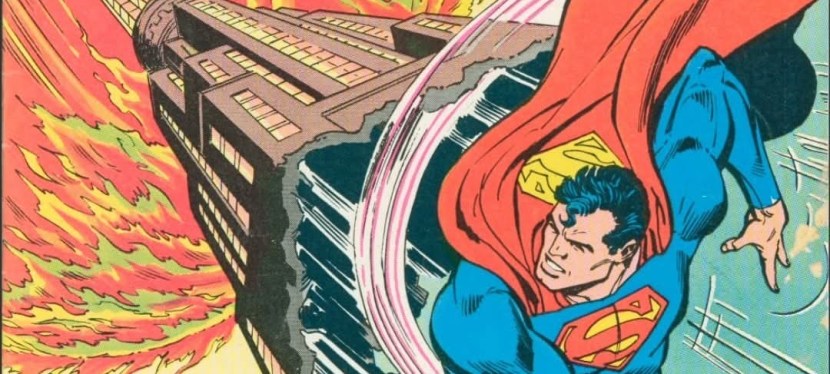
A Look Back at Action Comics #497 (1979)

Welcome back superhero enthusiasts, 1970s arts and culture enthusiasts, DC Comics fans and comic book collectors! Today we go back to the year 1979 to take a close look at a part of the DC Comics universe through a tale of the Action Comics monthly series.

Do you enjoy following stories with the “make-a-wish” concept as a key element? Or do you prefer seeing major events happen because someone else has the power to alter reality? I for one don’t enjoy those concepts very much and the element of wish-making really ruined the story of the glossy cinematic failure Wonder Woman 1984 (written and co-directed by Patty Jenkins). When it comes to Superman, the wish-making or the ability to seriously alter reality could be effect in storytelling when the right creators are involved.

With those details laid down, here is a look back at Action Comics , published in 1979 by DC Comics with a story written by Cary Bates and drawn by Curt Swan.
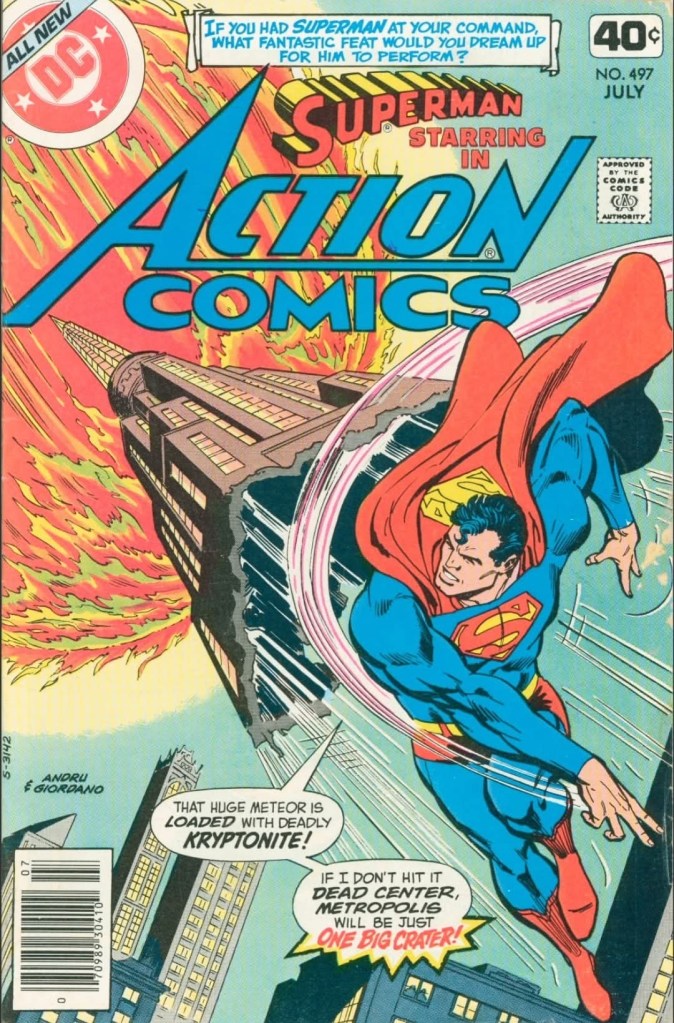
The cover.

Early story

The story begins inside a shed on a lot with three boys who have their own Superman club and support the Man of Steel’s never-ending battle for truth, justice and the American way. Arthur, who is up for drawing something for the next club newsletter, shared his idea (inspired by what he saw in a movie) about a gigantic meteor from outer space heading towards Metropolis which would compel Superman to save the city. Near the three boys is an empty chair reserved for a particular someone.

Many miles away deep within Metropolis, Clark Kent attends a conference in which Lana Lang delivers remarks to an audience of GBS affiliates. As Lana tells the audience that their news team is determined to maintain high standards of broadcasting, a uniformed door man causes a disturbance by telling everyone that a blackout has plunged the entire city into darkness.

Suddenly, the audience exited the venue and Lana notices that Clark is gone. Elsewhere, Superman quickly flies high and sees a giant meteor (the size of a stadium) on a collision course with Metropolis…

Quality
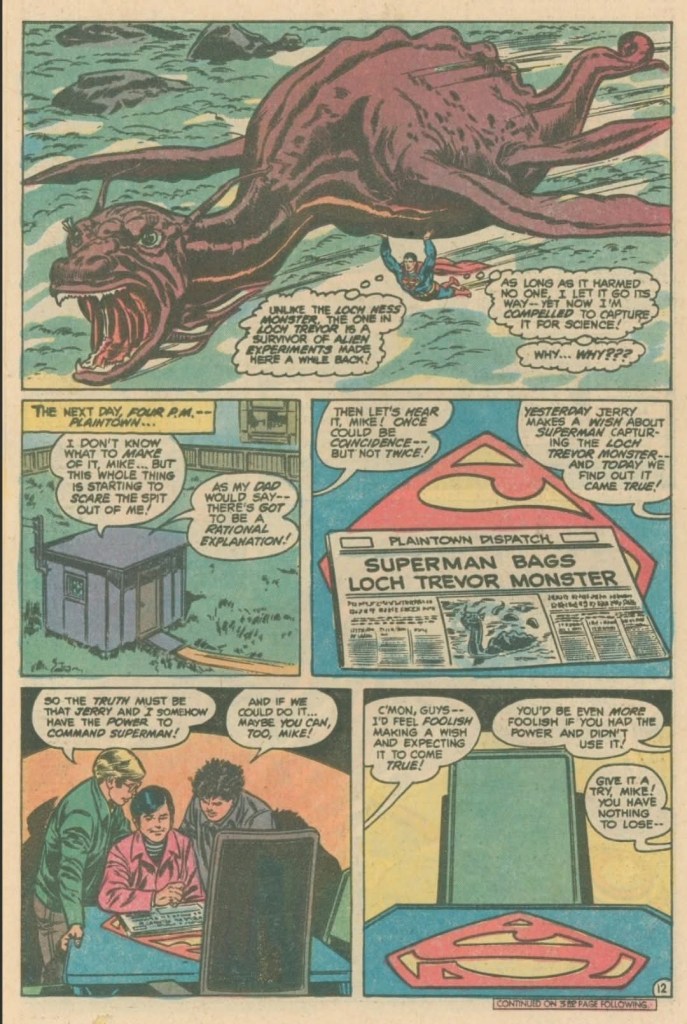
Do you wish you have the power to make superheroes do something as you wish?

Starting with the concept of reality getting seriously altered by someone with tremendous power, the said concept really brought the fantasy aspect of this Superman tale to a very high level. The Man of Steel ends up getting into unbelievable situations and do things that are amazing or shocking. In order words, the concept of altered reality (related to wishful thinking and intense imagination) actually works well in this tale thanks to the Bates-Swan duo.  

Of course, this is not simply a Superman story about wild events that compelled him to react. There are character-driven scenes that emphasize how Superman analyzes what has been going on and why he seems to be controlled or guided to do things that he had no intent of doing. This particular element of the story raises questions about the ethics of having so much power at hand and being able to command a more powerful person to do something (as a wish is made by the one who wields a lot of power).

Considering the wild events that happened throughout the story, I can say that the Bates-Swan duo successfully pulled off a worthy pay-off at the conclusion.

Conclusion
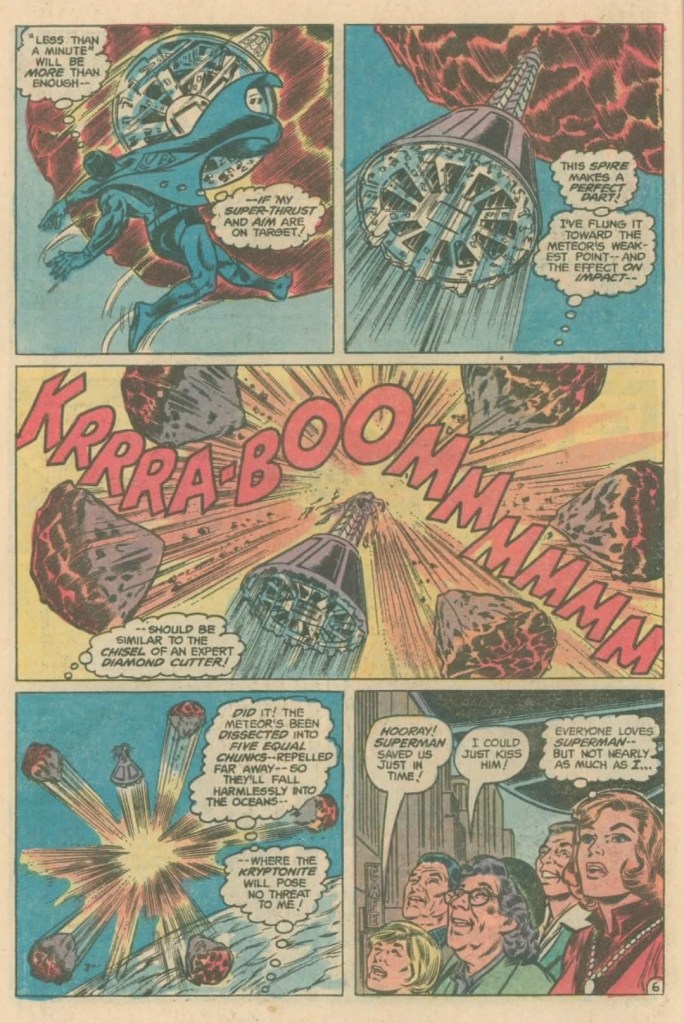
Superman saves Metropolis and many people once again. Lana Lang is among the people on the street.

Action Comics (1979) is an old Superman tale that is worth reading. While you won’t see Superman encountering any super villain, the fantasy elements and wild events more than made up for it. More importantly, the Bates-Swan duo was really careful with using the make-a-wish and reality altering concepts to make the plot believable while preventing it from becoming too outlandish. The result is a Superman tale that is entertaining to read.

Overall, Action Comics (1979) is recommended.

+++++

Thank you for reading. If you find this article engaging, please click the like button below, share this article to others and also please consider making a donation to support my publishing. If you are looking for a copywriter to create content for your special project or business, check out my services and my portfolio. Feel free to contact me with a private message. Also please feel free to visit my Facebook page Author Carlo Carrasco and follow me on Twitter at  @HavenorFantasy as well as on Tumblr at https://carlocarrasco.tumblr.com/ and on Instagram at https://www.instagram.com/authorcarlocarrasco
A Look Back at Superman #412 (1985)

Welcome back superhero enthusiasts, 20th century pop culture enthusiasts and comic book collectors! Today we go back to the mid-1980s to take a close look at one of the many tales published through the original Superman monthly series (first launched in 1939).

For the newcomers reading this, the original multiverse of DC Comics formally ended with Crisis on Infinite Earths (1985-1986). That being said, a lot of DC’s monthly comic book series had respective tales the reflect the closing period of the old multiverse (which lasted for decades) and the Superman monthly series of the era was part of the trend.

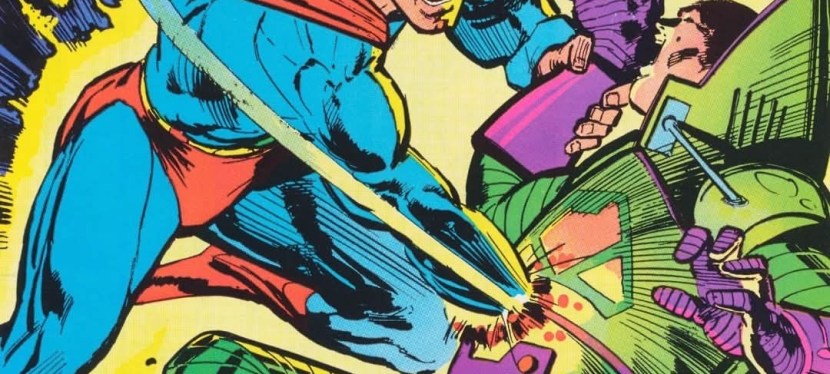
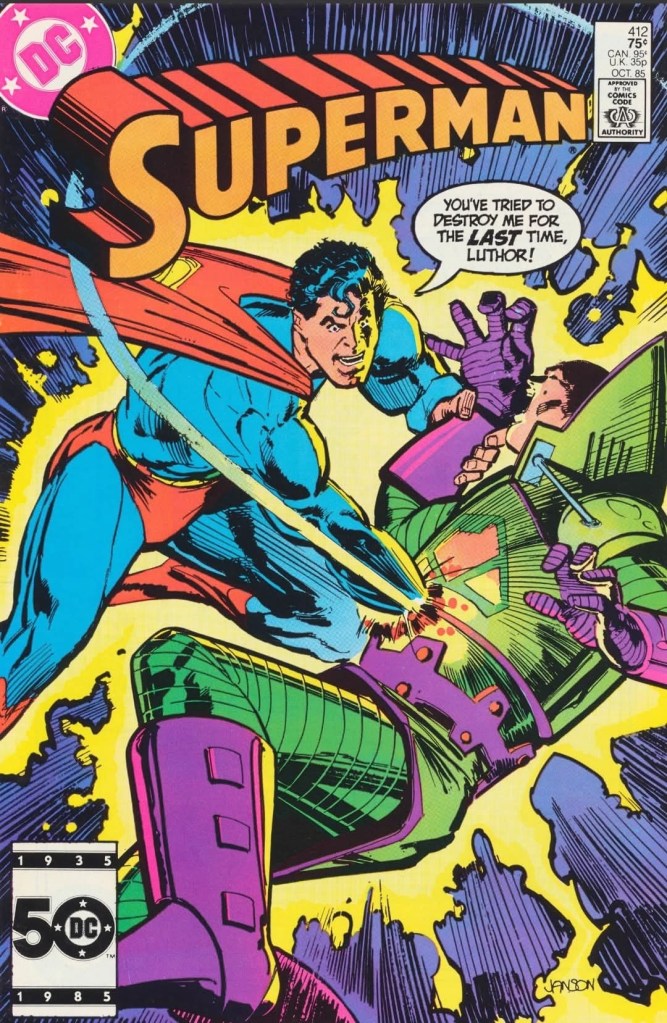
With those details laid down, here is a look back at Superman , published in 1985 by DC Comics with a story written by Cary Bates and drawn by Curt Swan.  

The cover.

Early story

The story begins at the unemployment bureau in Metropolis. Clark Kent, who recently lost his jobs with WGBS and the Daily Planet, stands in line and waits for his turn. Being unemployed, Clark feels troubled and other people nearby recognize him.

As his turn at the counter starts, Clark senses something and decides to get out quickly. He enters the emergency exit, changes into Superman and flies out of the building. It turns out a high-rise building accident has occurred and already several pieces of sharp glass have been falling down. To prevent further harm, Superman uses his heat vision to convert the falling glass and collectively turn them into a growing molten ball. He brings the giant molten ball to the top of the building (still in construction/expansion) and meets the hard-hat workers before flying away.

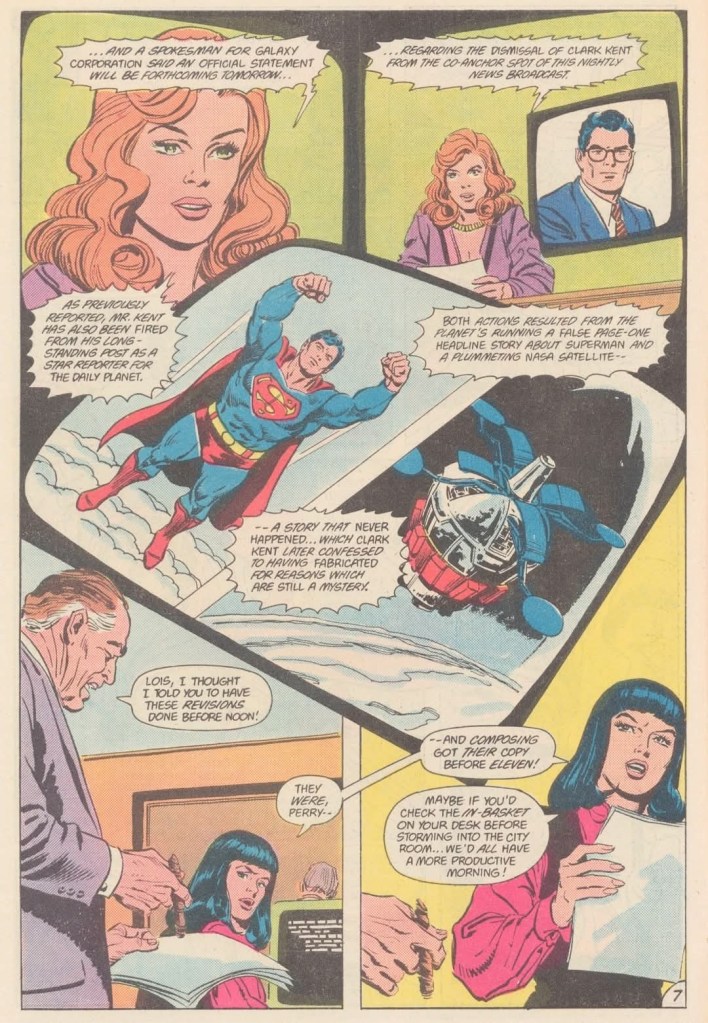
Elsewhere, Lana Lang announces news to TV viewers regarding the dismissal her of close friend Clark Kent which was the result of the fake headline news story about Superman and the NASA satellite. In another location, Lex Luthor is very pleased watching the same broadcast knowing his plan of ruining Superman succeeded and got Clark Kent as a fake news casualty. Luthor is not done with Superman yet…

Quality

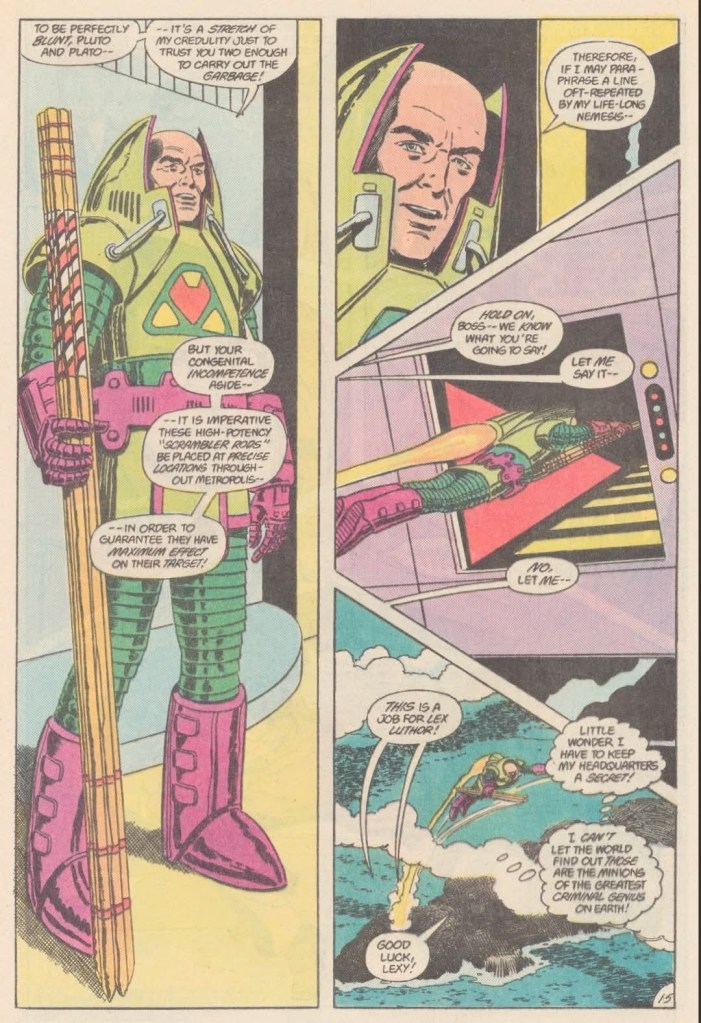
Lex Luthor here is ruthless, strategic and obsessed with defeating Superman.

I really like this Superman tale. This is a story about Superman who is still dedicated to doing acts of good by helping people with problems even though he is socially in deep trouble being unemployed as Clark Kent. Not only is the unemployment aspect relevant, the consequences of fake news and their negative effect on people made this tale more socially relevant with today’s world of fake news and unethical journalism.

Going back to Superman, it is clear that the embarrassment and unemployment of his civilian identity impacted him as a superhero. This is evident when Lana Lang accused him of betraying Clark Kent resulting in a fake news story that led to the firing by WGBS and the Daily Planet. Lana, who does not realize Superman and Clark are the same person, blamed the Man of Steel that the firing of Clark is so devastating to her as she cares for him so much (note: Clark and Lana were romantically involved during their teenage years at Smallville).  

The powerful writing by Cary Bates does not end there. In this comic book, you will see Lex Luthor execute his other plans to ruin Superman whom he personally accused over the loss of his family and his own world Lexor (click here and here for references). This is a Luthor who is not simply being evil but also someone who is well organized, strategic and even fearless. By this stage, the criminal mad scientist Luthor has accumulated a lot of resources to have his own headquarters, technologies and a dedicated staff. In some ways, Luthor in this comic book eerily resembled his financial tycoon version in the post-Crisis era (click here and here for relevance).

I should also state that the personal encounter between Superman and Luthor here is a great pay-off to the build-up that preceded it. You readers should see it for yourselves because to reveal more in this review will ruin it.

Conclusion

As Lana Lang delivers the news to TV viewers regarding Clark Kent and Superman, tension is brewing over at the Daily Planet.

Superman (1985) is undeniably a great Superman story published during the very late stage of the original multiverse (note: Superman #423 was one of the final tales of Superman of this particular era. Superman was part of the post-Crisis era). The portrayal of Superman being disturbed by the huge setback he suffered as a civilian is really compelling to see and his encounter with Lex Luthor really brought the tension and suspense to high levels. At the same time, the consequences of Superman’s actions (including those of his civilian form as Clark Kent) are very evident and nicely dramatized by the Bates-Swan team. You really feel that the creators were wrapping up their Superman stories and decided to move this series to a new direction knowing that the original multiverse will end. This is a must-read tale!

Overall, Superman (1985) is highly recommended.

+++++

Thank you for reading. If you find this article engaging, please click the like button below, share this article to others and also please consider making a donation to support my publishing. If you are looking for a copywriter to create content for your special project or business, check out my services and my portfolio. Feel free to contact me with a private message. Also please feel free to visit my Facebook page Author Carlo Carrasco and follow me on Twitter at  @HavenorFantasy as well as on Tumblr at https://carlocarrasco.tumblr.com/ and on Instagram at https://www.instagram.com/authorcarlocarrasco
A Look Back at Action Comics #481 (1978)

Welcome back superhero enthusiasts, 1970s arts and culture enthusiasts, DC Comics fans and comic book collectors! Today we go back to the year 1978 to take a close look at a part of the DC Comics universe through a tale of the Action Comics monthly series.

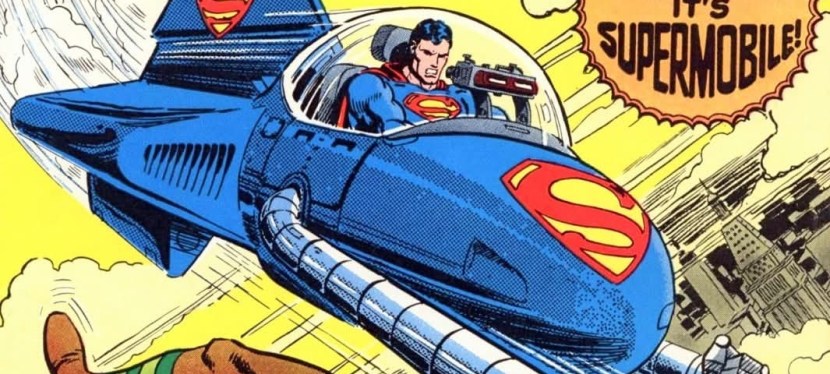
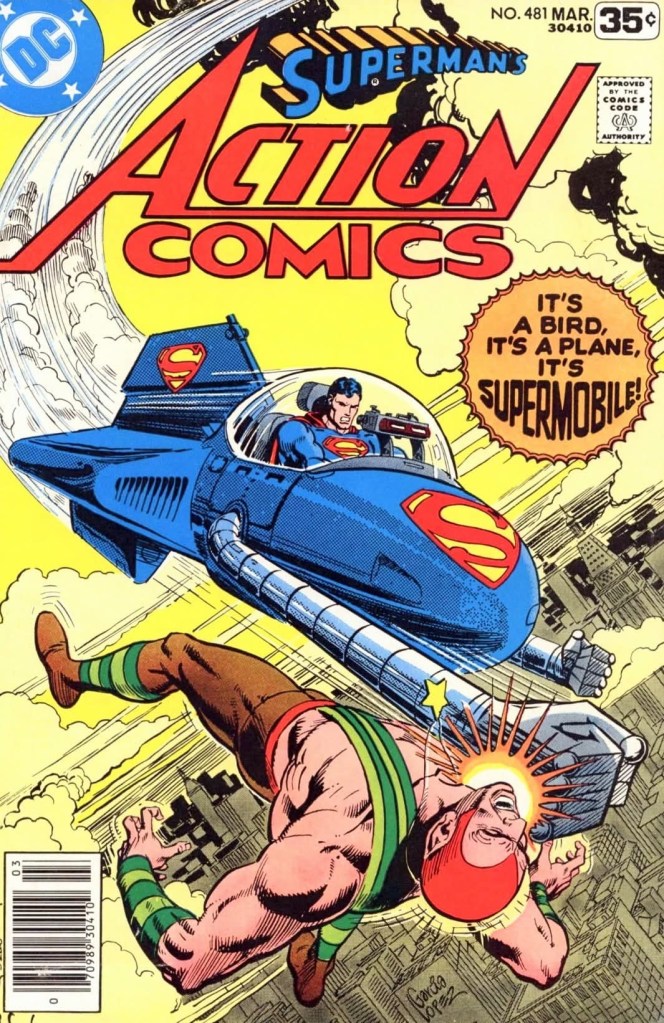
Believe it or not, there were times when Superman used advanced technology and machinery to achieve his goals, to win a battle or at least survive. This is something we people today can relate with since a lot us have smartphones and computers being used daily. As for the Man of Steel, there was a time when I saw an episode of Super Friends on TV in which a very vulnerable Superman had no choice but to use his personal flying vehicle called the Supermobile to travel and do something. It turns out, the Supermobile itself started in comic books.

With those details laid down, here is a look back at Action Comics , published in 1978 by DC Comics with a story written by Cary Bates and drawn by Curt Swan.

The cover.

Early story

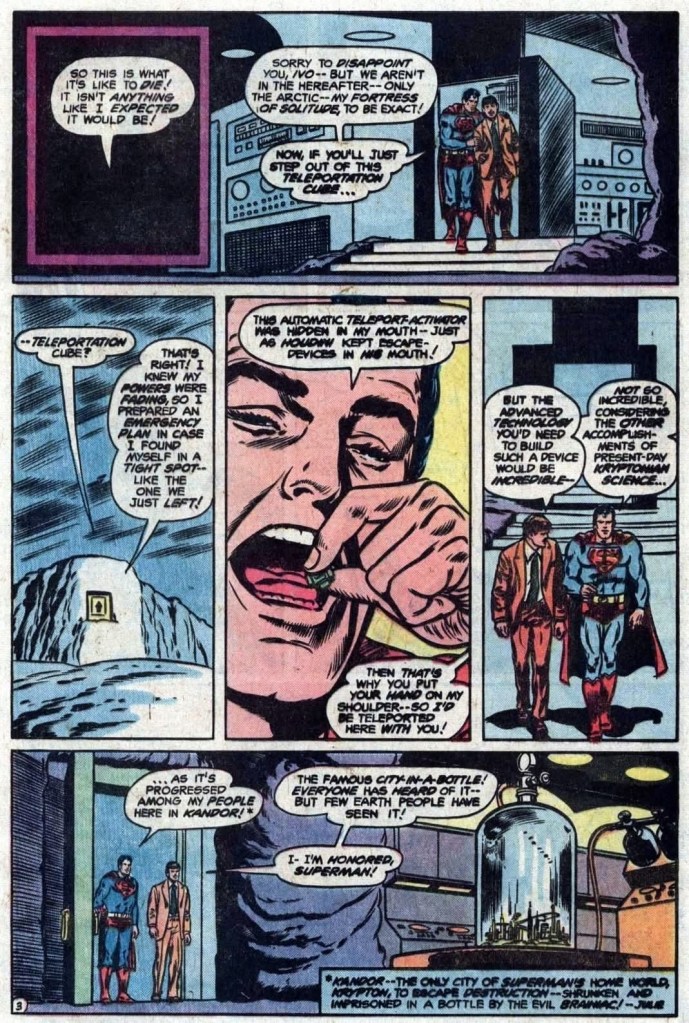
The story begins on a city street as Amazo (who recently gained the powers of Justice League members in a previous encounter) is about to strike a weakened Superman and Professor Ivo (who is responsible for Amazo) in front of many people. Amazo strikes but ends up smashing the part of the road as his targets vanished.

It turns out Superman and the professor were teleported safely all the way into the Fortress of Solitude. With his powers gone due to red radiation, Superman revealed that he made some preparations in relation to Amazo’s eventual rampage….

Quality

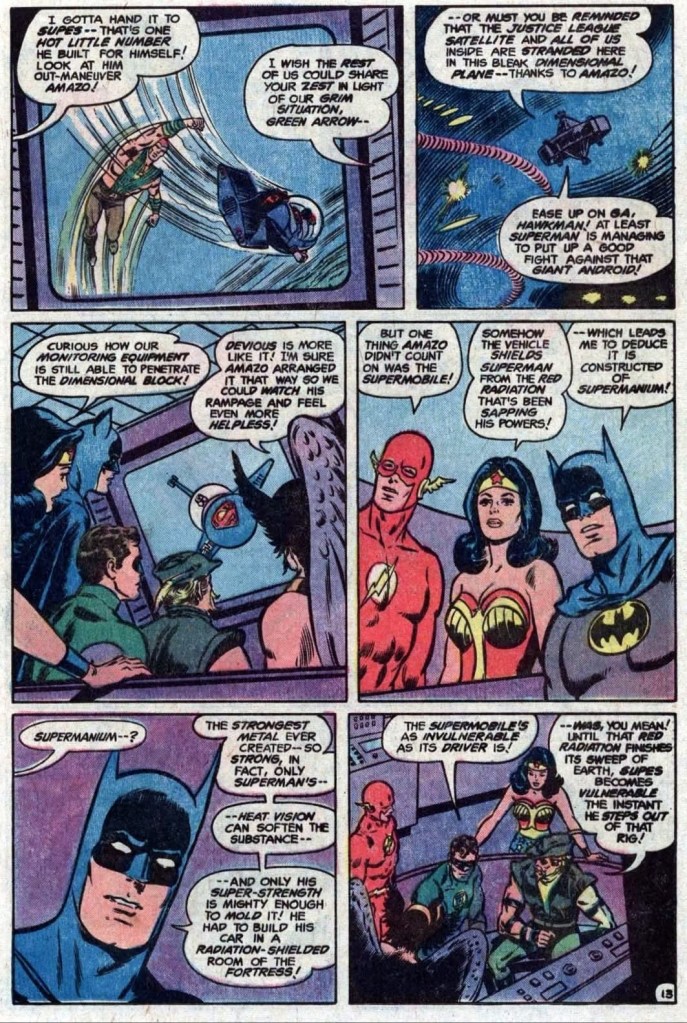
Exposition about the Supermobile in this page showing the trapped Justice League members.

This early, I want to point out that this comic book is not merely a shallow tale designed to introduce the Supermobile in lazy fashion. In fact, there is a lot of work done by the Bates-Swan duo here and this includes plot build-up backed with payoffs, lots of details that were revealed and, most notably, the story has a solid structure complete with smooth execution.

This story was preceded by an unfortunate series of events in which Amazo gained the powers of the Justice League members and had them trapped in space, while Superman got hit by red radiation and managed to get out for a new fighting chance. Here, Superman is powerless and vulnerable, and the fact that Amazo is so powerful, the unveiling and use of the Supermobile is clearly justified. Amazo himself is a fine example of a scientific creation gone wrong and seem inspired by the monster of Frankenstein in literature.

By looking close at the details, the dialogue and the execution of event, this is clearly not a rushed job to introduce the Supermobile. It is a sufficient story on its own and it even delivers a good amount of superhero spectacle to satisfy readers.

Conclusion

Superman and the professor inside the Fortress of Solitude.

Action Comics (1978) is indeed a satisfying and fun read. The build-up leading to the Supermobile’s debut is sufficient and the creators went on to keep building up the plot with Amazo getting bigger as a threat to not only against Superman but also against the Justice League. The Supermobile’s debut is justified and definitely it is not a cheap addition to the plot. The idea of Superman using a personal transport looked silly on face value but this comic book proved it is believable and sensible.

Overall, Action Comics (1978) is recommended.

+++++

Thank you for reading. If you find this article engaging, please click the like button below, share this article to others and also please consider making a donation to support my publishing. If you are looking for a copywriter to create content for your special project or business, check out my services and my portfolio. Feel free to contact me with a private message. Also please feel free to visit my Facebook page Author Carlo Carrasco and follow me on Twitter at  @HavenorFantasy as well as on Tumblr at https://carlocarrasco.tumblr.com/ and on Instagram at https://www.instagram.com/authorcarlocarrasco
A Look Back at Action Comics #438 (1974)

Welcome back superhero enthusiasts, 1970s arts and culture enthusiasts, DC Comics fans and comic book collectors! Today we go back to the year 1974 to take a close look at a part of the DC Comics universe through a tale of the Action Comics monthly series.

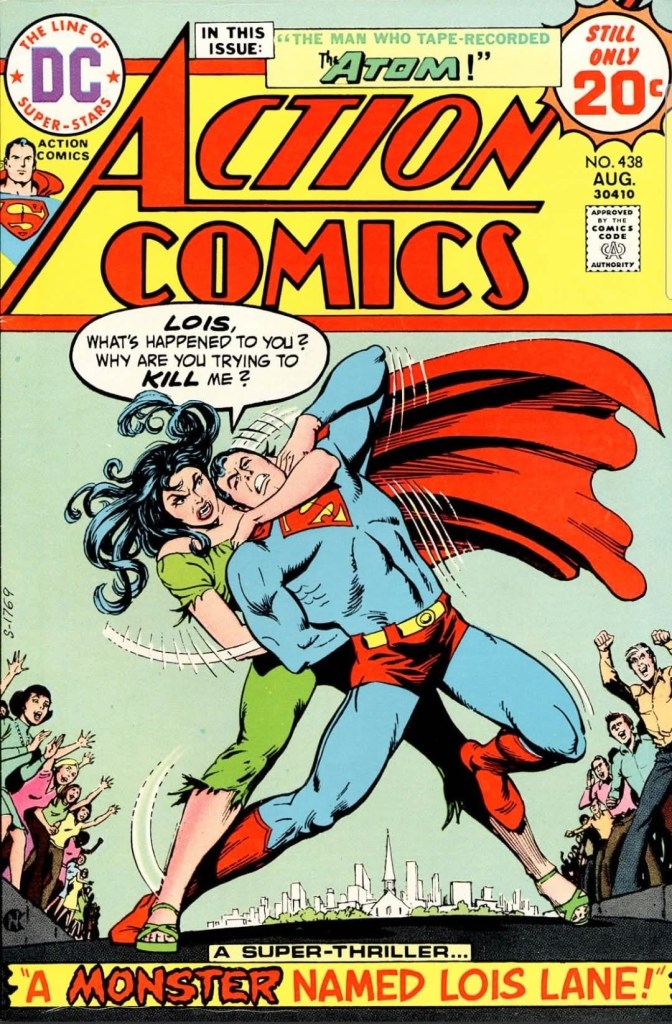
Throughout the superhero comics publishing history of DC Comics, Lois Lane is the definitive leading lady of Superman. Traits of her personality and journalistic work ethic got emphasized through her interactions with fellow reporter Clark Kent (Superman). At times, Lois Lane becomes a rival of Kent’s when it comes to getting the hottest scoop and getting the approval of their boss Perry White for publishing it on the next issue of the Daily Planet. But have ever seen Lane become a monster strong enough to take on Superman?

With those details laid down, here is a look back at Action Comics , published in 1974 by DC Comics with a story written by Cary Bates and drawn by Curt Swan.

The cover.

Early story

The story begins on the busy streets of Metropolis with Clark Kent and Lois Lane riding in a taxi. He gives her a very unique looking necklace as an advanced birthday gift which she gladly wears. Lois then kisses Clark on the lips which surprises him. Moments later, the taxi stops on a sidewalk as something inside happened. Seconds later, a monstrous woman emerges from the taxi which turned out to be none other than Lois Lane in a transformed state. The monster Lois gets out of the taxi, throws the necklace away and leaves Clark behind. The incident causes a commotion in the city.

Still inside the taxi, Clark discreetly changes into Superman and flies away to search for Lois Lane…

Quality

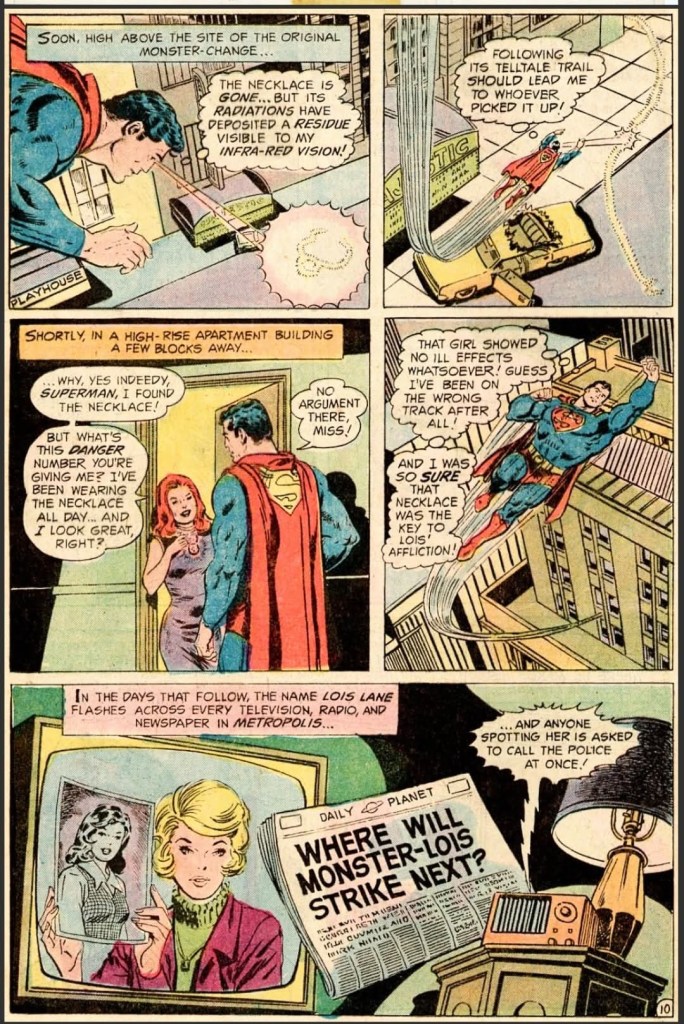
As Superman works to find monster Lois Lane, the media buzz about her begins on television. This was the time when social media was decades away from realization.

To begin with, the concept of this comic book is clearly outlandish and the creators decided to make a monster out of Lois Lane and explore what would happen to both the city and Superman. The good news here is that the storytelling has a firm structure and the dialogue – most notably that of Superman – still made sense and was believable to follow. Without spoiling the plot, I can say that Superman is still the main focus of the story and how he made moves to solve problems while still caring for Lois Lane is engaging to read.

In this comic book, you will see some interesting developments that emphasize how Clark Kent works within the limitations of his journalistic career and connections, how Superman takes responsibility things he did before, and how he works to protect his secret identity. The Bates-Swan duo really delivered the goods here.  

Conclusion

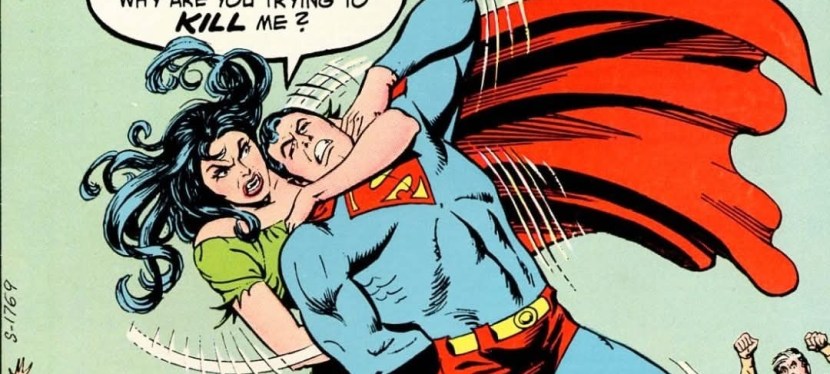
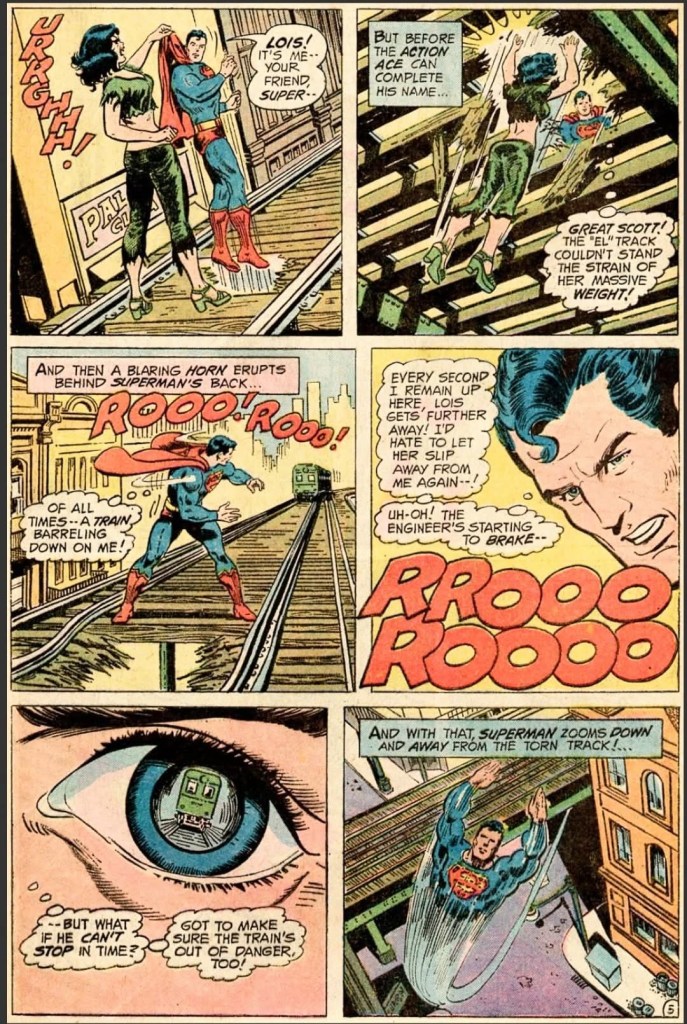
Superman has two problems to deal with – finding monster Lois Lane and preventing a train disaster from happening.

Action Comics (1974) is a fun read but it is not a brainless nor a low-intelligence tale. This is a tale about Superman relying less on his powers and using more of skills as civilian Clark Kent to handle the problem of monster Lois Lane. The story lacked the superhero spectacle of action but it still is entertaining to read, and the emphasis on Superman and Lois alone is worth reading. As for The Atom short story included, it is essentially a somewhat fun additive.

Overall, Action Comics (1974) is recommended.

+++++

Thank you for reading. If you find this article engaging, please click the like button below, share this article to others and also please consider making a donation to support my publishing. If you are looking for a copywriter to create content for your special project or business, check out my services and my portfolio. Feel free to contact me with a private message. Also please feel free to visit my Facebook page Author Carlo Carrasco and follow me on Twitter at  @HavenorFantasy as well as on Tumblr at https://carlocarrasco.tumblr.com/ and on Instagram at https://www.instagram.com/authorcarlocarrasco
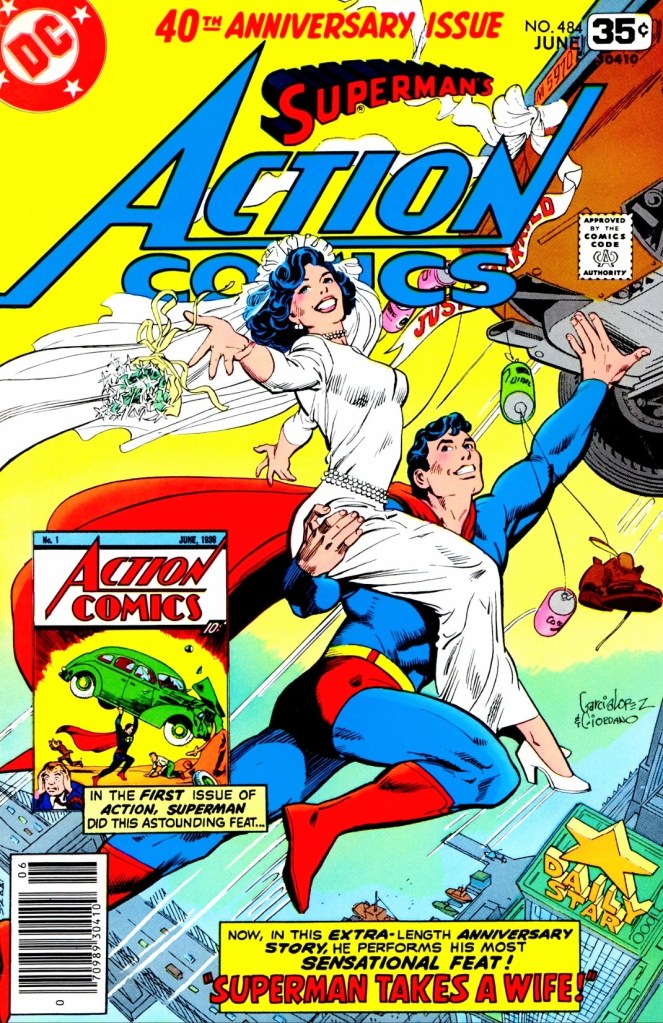
A Look Back at Action Comics #484 (1978)

Welcome back superhero enthusiasts, 20th century pop culture enthusiasts and comic book collectors! Today we go back to the year 1978 to take a close look at one of the many tales published through the original Action Comics monthly series (launched in 1938).

Long before Crisis on Infinite Earths happened, DC Comics had its convoluted multiverse. For the newcomers reading this, this meant that there were actually different versions of Superman and other DC superheroes, plus different universes or parallel worlds existing with each other. This particular Action Comics issue features a certain version of Superman and what happened to him and the related characters.

With those details laid down, here is a look back at Action Comics , published in 1978 by DC Comics with a story written by Cary Bates and drawn by Curt Swan.  

The cover.

Early story

The story begins in Metropolis of Earth-Two when four mechanical marauders fly through the city carrying bags of money taken from a bank. Superman (of Earth-Two) quickly flew after the mechanical marauders and uses his powers to beat them all. From a distance, Colonel Future (leader of the C-F Gang) observes Superman and analyzes his moves. It turns out, the gang is responsible for the mechanical marauders and Colonel Future believes that he can wipe out the Man of Steel.

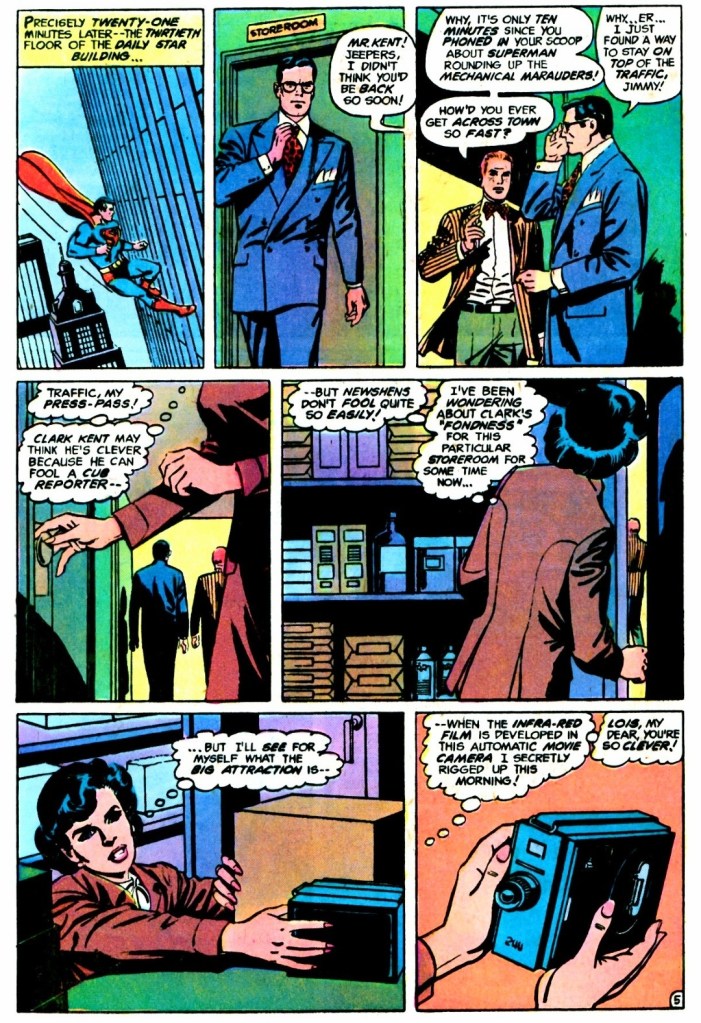
Superman returns quietly into the Daily Star Building and changes into civilian clothing as Clark Kent. His office mate Jimmy Olsen approaches him and together they walk and talk about what has been going on.

Behind them, Lois Lane silently enters the store room where Clark came out of. It turns out, she prepared a hidden camera inside hoping to capture evidence about Clark using the room. She has been suspecting that Superman and Clark Kent are one and the same person…

Quality

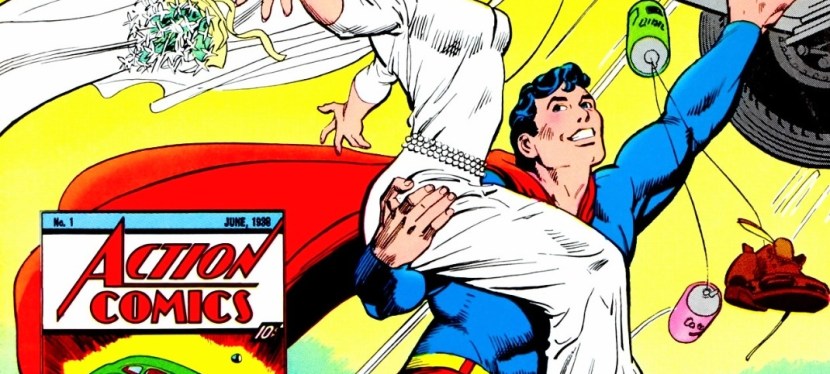
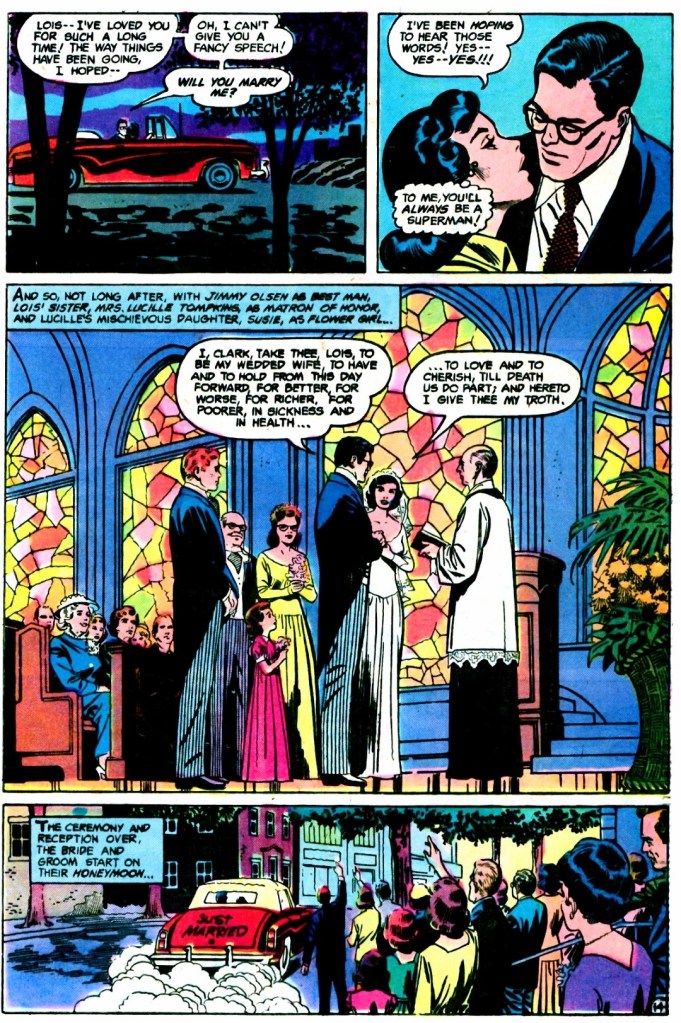
While it is clear that Superman – in his civilian form as Clark Kent – married Lois Lane, there is still a lot more to discover from the in-depth story written by Cary Bates.

I really like this pre-Crisis Superman story which is specifically set in Earth-Two of the DC multiverse. To make things clear, this is a tale showing Superman getting married to Lois Lane without impacting the mainstream version of DC’s icon at the time. Confused? That’s the consequence of having different versions of Superman complete with detailed parallel universes for each.

More on the core concept of this comic book, there is a lot more at stake – storywise and creatively – than meets the eye. Without spoiling the plot details, I can clearly say that the concept of Superman and Lois Lane getting married involves a daring plot which was executed nicely by the Bates-Swan duo resulting in a really intriguing reading experience for me. In other words, there is nothing simple with the presentation as the fantasy elements are really strong and the creative team took creative risks to emphasize the story while developing the key characters in new ways.

Still on the storytelling, the conflict between good and evil is emphasized not by struggle but rather the consequences which ultimately affect Superman and Lois Lane. The main opposition used by the Bate-Swan duo involves magic as a creative way to impact the Man of Steel and the narrative in general. There are some really intriguing moments about Superman (including his civilian identity as Clark Kent) and Lois Lane that await readers.

Conclusion

Lois Lane has an in-depth portrayal in this comic book, going beyond what the page shows you.

Action Comics (1978) is undoubtedly a very intriguing and surprising read. The creative team came up with ideas that subverted expectations and the execution was well done which made this a powerful and twisting read. Having read lots of Superman comic books through the decades, this comic book is one of the more surprising ones I have read. Finally, this one has a believable presentation about what married life between Superman and Lois Lane would be like reflecting the social norms at the time of publication.

Overall, Action Comics (1978) is highly recommended.

+++++

Thank you for reading. If you find this article engaging, please click the like button below, share this article to others and also please consider making a donation to support my publishing. If you are looking for a copywriter to create content for your special project or business, check out my services and my portfolio. Feel free to contact me with a private message. Also please feel free to visit my Facebook page Author Carlo Carrasco and follow me on Twitter at  @HavenorFantasy as well as on Tumblr at https://carlocarrasco.tumblr.com/ and on Instagram at https://www.instagram.com/authorcarlocarrasco
A Look Back at Superman #385 (1983)

Welcome back superhero enthusiasts, 20th century pop culture enthusiasts and comic book collectors! Today we go back to the year 1983 to take a close look at one of the many tales published through the original Superman monthly series (first launched in 1939).

Back in 1983, DC Comics published Action Comics which marked the 45th anniversary of Superman and celebrated it by executing things very differently – introducing the new look of Lex Luthor in battle armor and showing Brainiac in a more robotic body. I really loved reading Action Comics #544 for its very rich storytelling and modernizing the two classic super villains. With regards to what happened in Lex Luthor’s story in the comic book, his tale actually continued with the Superman monthly series afterwards.

With those details laid down, here is a look back at Superman , published in 1983 by DC Comics with a story written by Cary Bates and drawn by Curt Swan.  

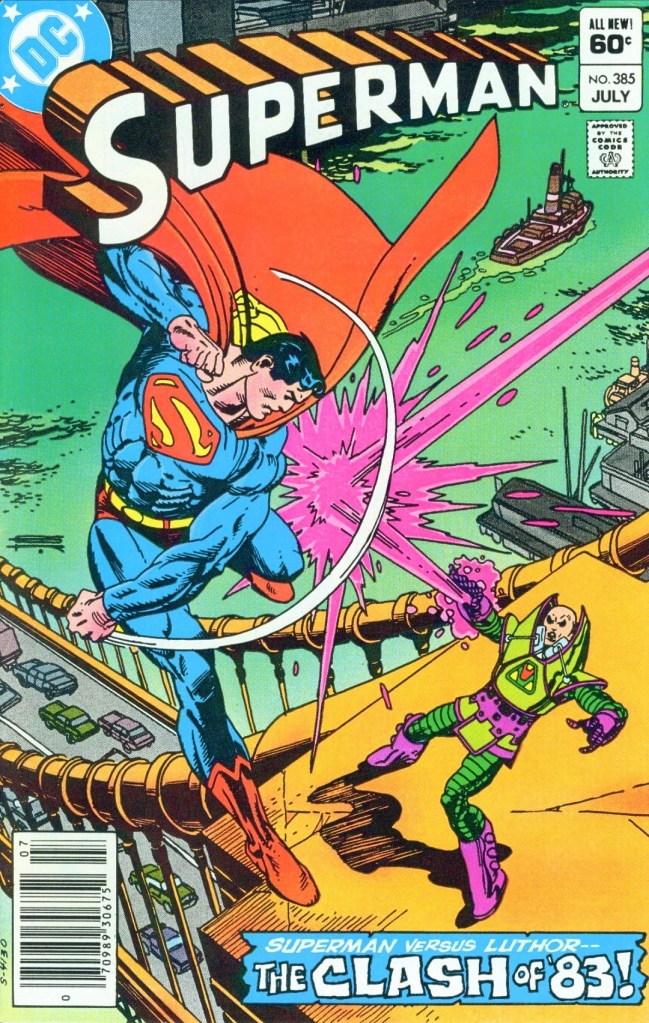
The cover.

Early story

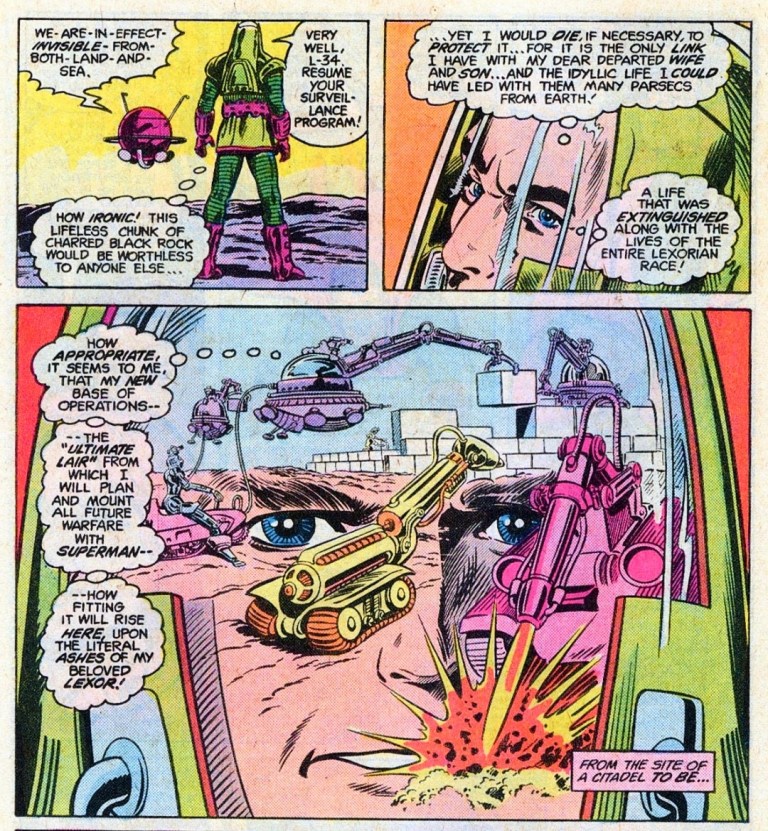
The story begins with the armored Lex Luthor alone and grieving in deep space surrounded by floating rocks. His world Lexor just got destroyed and his wife and child are gone. He blames Superman for being responsible of the massive destruction. He remembers the moment when he fired an energy blast at Superman which got deflected towards the neutrarod (a device Luthor made to shoot a steady stream of stabilizing neutrons into the planet’s unstable core) which started a chain reaction transmitted directly into the core. Lexor detonated but Superman and Luthor survived.

Using the intense power and technologies of his armor, Luthor moves an island-sized rock (a remaining piece of Lexor) towards planet Earth. He is determined to have his revenge against Superman and will stop at nothing to make it happen…

Quality

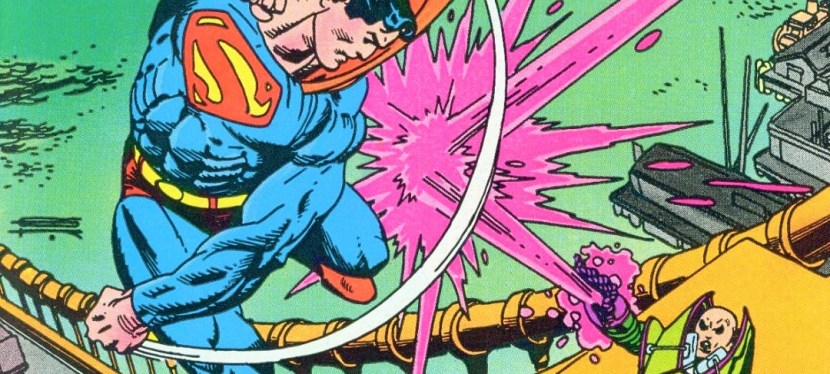
This is a great visualization of Lex Luthor (in his warsuit) by Curt Swan.

Through the decades, I have read lots of Superman comic books that involved Lex Luthor as the main antagonist. This particular story of good-versus-evil is actually very unique thanks to the approach taken by the Bates-Swan duo. To be clear, this is actually a build-up type of story done with the next conflict between Superman and Luthor in mind.

Without spoiling the plot, I can say that Luthor – following the events of Action Comics which really hurt him deeply – got a nice share of the spotlight and deservedly so. He is determined to get back at Superman whom he holds responsible for the destruction of Lexor and its many inhabitants (including Luthor’s wife and child). Luthor does not rush things as he is very focused on preparing himself first which reminds me of Batman’s approach to preparations. In some ways, Luthor has his own principles and he is not just being evil for the sake of it. There is this very human portrayal of him and Bates’ writing could make you even forget that he is a madman.

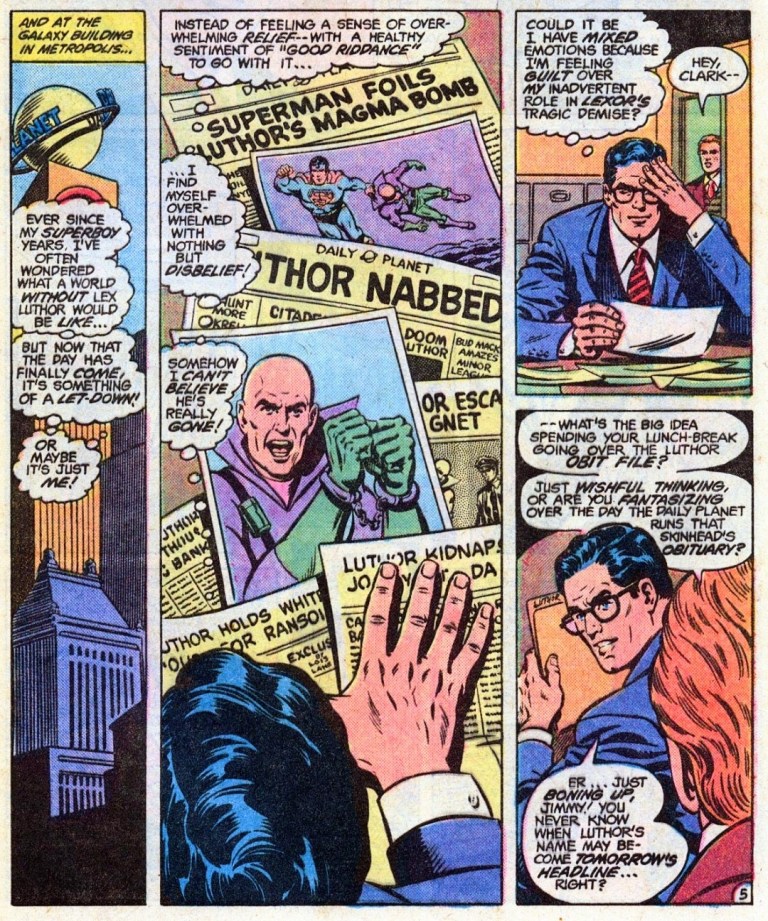
As for the Man of Steel himself, Bates wrote him to be really burdened by having his share of the responsibility of the billions of deaths of the people of Lexor. Instead of the focused Superman dedicated to doing good, you will see him feeling really uneasy and even distracted. He even commits huge blunders! This is a Superman who is showing signs of internal weakness and not even his civilian life as journalist Clark Kent could relieve the tension he is experiencing. I really like this portrayal of DC Comics’ icon.

But there is more! There is the sub-plot of Lois Lane taking a much-needed break from work to relieve herself and it sure is a really interesting portrayal of her. Even Perry White has his own share of the spotlight. There is also the spotlight on some obscure DC villains which actually added to the plot.

Conclusion

A very uneasy Clark Kent at work.

Superman (1983) is clearly a very engaging read and it is a worthy follow-up to what happened in Action Comics . I really like the way the armored Lex Luthor is portrayed here and the build-up for his upcoming conflict with Superman is really powerful. I’m really glad to have read this particular Superman-Luthor story and I can say that I am looking forward to the next issue to see what will happen.

Overall, Superman (1983) is highly recommended.

+++++

Thank you for reading. If you find this article engaging, please click the like button below, share this article to others and also please consider making a donation to support my publishing. If you are looking for a copywriter to create content for your special project or business, check out my services and my portfolio. Feel free to contact me with a private message. Also please feel free to visit my Facebook page Author Carlo Carrasco and follow me on Twitter at  @HavenorFantasy as well as on Tumblr at https://carlocarrasco.tumblr.com/ and on Instagram at https://www.instagram.com/authorcarlocarrasco
A Look Back at Action Comics #456 (1976)

Welcome back superhero enthusiasts, 1970s arts and culture enthusiasts, DC Comics fans and comic book collectors! Today we go back to the year 1976 to take a close look at a part of the DC Comics universe through a tale of the Action Comics monthly series.

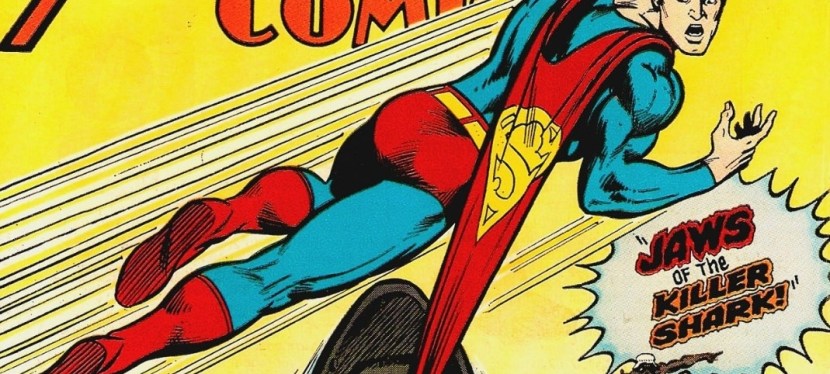
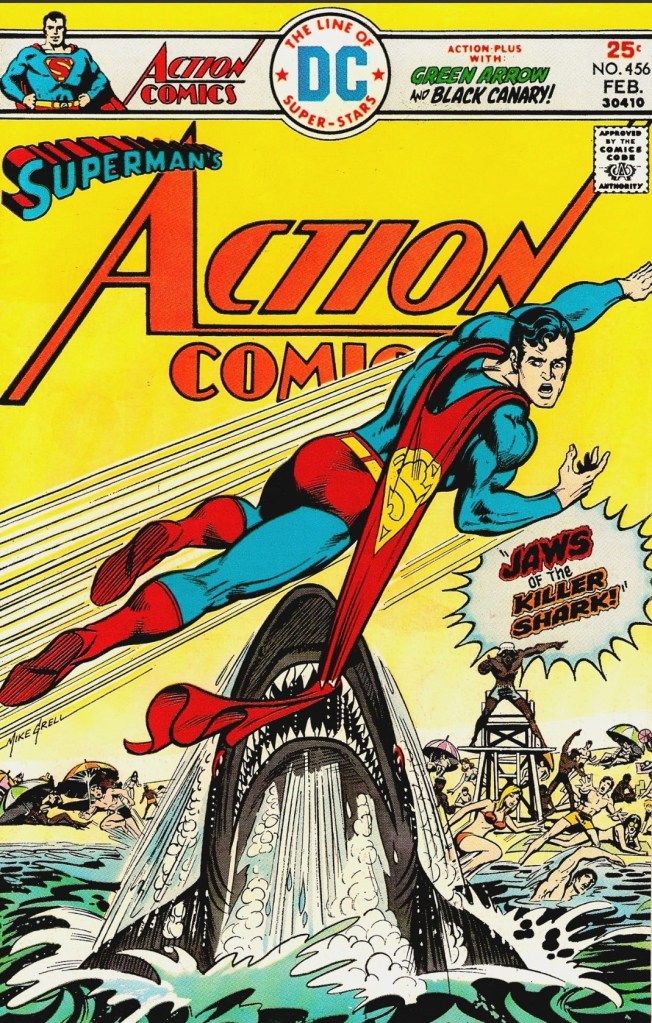
If you know your entertainment history, you should be aware that Steven Spielberg’s Jaws made a tremendous impact on millions of people who saw the film in cinemas in the mid-1970s. The massive success of the movie caused some people to become afraid of sharks which in turn convinced them to avoid swimming alone at sea. Over at DC Comics, it just so happens that they have a super villain who is actually a highly evolved shark called The Shark (Karshon).

With those details laid down, here is a look back at Action Comics , published in 1976 by DC Comics with a story written by Cary Bates and illustrated by Curt Swan.

The cover inspired by Steven Spielberg’s Jaws.

Early story

The story begins inside the Metropolis Aquarium where Captain Strong, young boy Jayson, young girl Jill and others closely watch a tiger shark swimming. What the viewers do not realize is that the tiger shark they are watching is a super shark (The Shark) whose evolution jumped by eons as a result of a freak nuclear accident from the previous years.

The Shark is a highly evolved mutant (half-fish and half-human) endowed with fantastic mental powers. The Shark previously encountered Green Lantern (Hal Jordan) who caused him to devolve back to his primitive form as a tiger shark.

At the aquarium, The Shark moves closely towards Captain Strong and Jayson with strong glass separating them. Suddenly, Jayson is turned into a pool of jelly on the floor and The Shark uses its power to form a large stream of water to break the way out of the Metropolis Aquarium and into the air.

Meanwhile, Lois Lane and Clark Kent are riding the metro-island ferry. A giant water sprout emerges near them…  

Quality

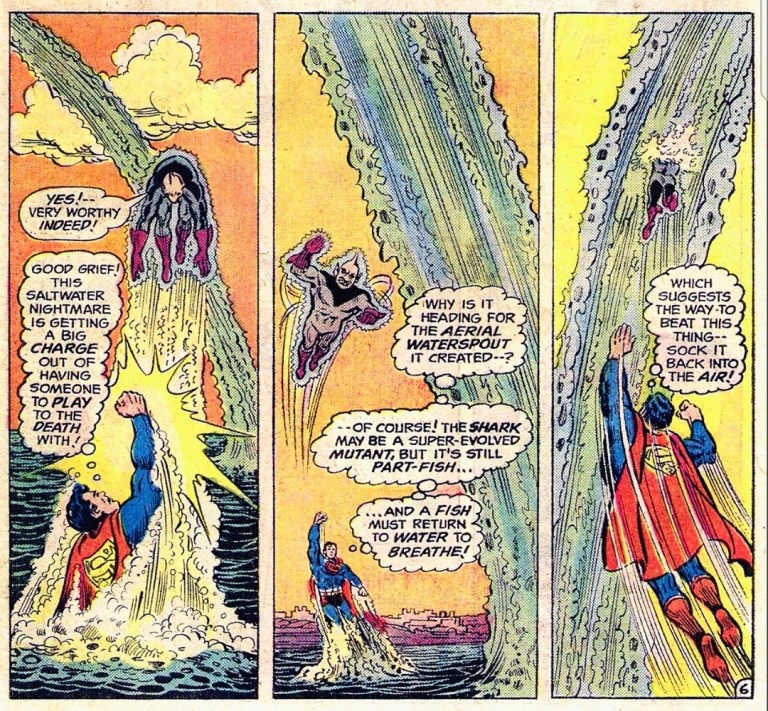
The struggle between Superman and The Shark starts.

While it was clear that DC Comics took a creative stab on people’s awareness of the movie Jaws, the Bates-Swan duo came up with a rather fantastic way of having Superman deal with The Shark. For one thing, the creators efficiently came up with exposition to keep readers informed about who The Shark is, why he exists and what his background was within the DC Comics shared universe. Next, the creators managed to make The Shark an actual threat to the people of Metropolis which serves as an efficient build-up for the inevitable conflict with Superman. The good news here is that Bates-Swan combined efforts turned out to be gripping and believable.

When compared to the many battles Superman had against the other powerful villains, the traditional collateral damage is pretty light in this story. This is because the creators used science fiction concepts and a little bit of real-world science to explain The Shark’s powers, how the water streams used by him got formed and why he has key advantages over Superman. These creative methods more than made up for the lack of hard action and there are explanations that made sense just before the story ends.

This comic book also contains a short, standalone Black Canary tale that ultimate served as added amusement that is not related with the Superman story at all. It should interest fans of Green Arrow.

Conclusion

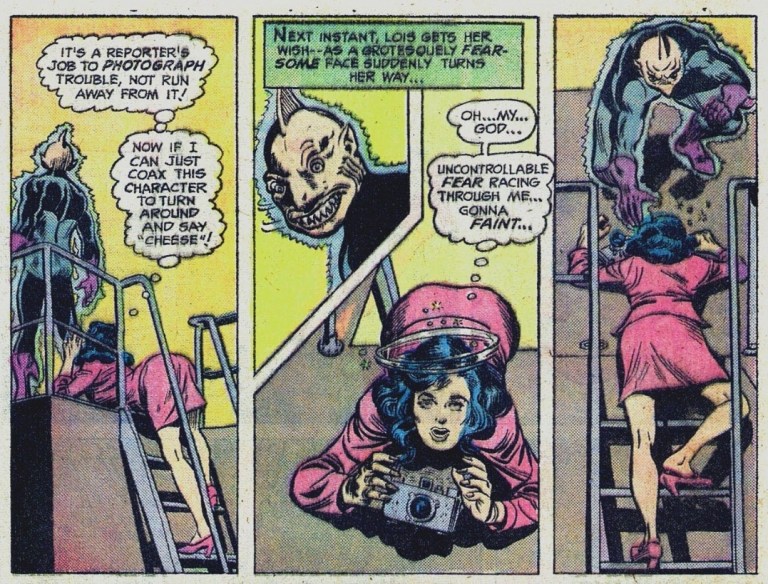
The Shark’s menacing face and power overwhelms Lois Lane.

Do not let the Jaws-inspired cover art fool you. Action Comics (1976) is actually an entertaining read thanks to the combined efforts of the Bates-Swan team. The Shark was a believable threat and the story was well written. To say that this comic book was just a cheap way of exploiting the popularity of Jaws by coming up with shark-related tale of Superman is not true. This old tale is a fun ride free from the politicized science and woke garbage that dominate modern-day entertainment.

Overall, Action Comics (1976) is recommended.

+++++

Thank you for reading. If you find this article engaging, please click the like button below, share this article to others and also please consider making a donation to support my publishing. If you are looking for a copywriter to create content for your special project or business, check out my services and my portfolio. Feel free to contact me with a private message. Also please feel free to visit my Facebook page Author Carlo Carrasco and follow me on Twitter at  @HavenorFantasy as well as on Tumblr at https://carlocarrasco.tumblr.com/ and on Instagram at https://www.instagram.com/authorcarlocarrasco
A Look Back at Superman III comic book adaptation (1983)

Disclaimer: This is my original work with details sourced from reading the comic book and doing personal research. Anyone who wants to use this article, in part or in whole, needs to secure first my permission and agree to cite me as the source and author. Let it be known that any unauthorized use of this article will constrain the author to pursue the remedies under R.A. No. 8293, the Revised Penal Code, and/or all applicable legal actions under the laws of the Philippines.

Welcome back superhero enthusiasts, 1980s culture enthusiasts and comic book collectors! Today we go back to the year 1983 which saw the theatrical release of Superman III that featured the late Christopher Reeve as the cinematic Man of Steel.

The 1980s was a very different time with regards to Hollywood’s handling of superhero movies. The concept of a shared cinematic universe was decades away from realization. Warner Bros. back then relied on the Salkind family to produce Superman movies and the first flick in 1978 proved to be a major hit for both viewers and critics while also establishing Christopher Reeve as the definitive live-action Superman for countless people. Unsurprisingly, a sequel was released in the early 1980s which continued box office success for the stakeholders and only led to the approval of another sequel.

Along the way, the late Richard Pryor (a major comedian already) appeared on TV and talked about Superman II which eventually led to him getting hired for Superman III. The movie was released in 1983 making a little over $80 million worldwide while also getting a noticeably weaker reception from critics. More notably, Richard Pryor had a huge chunk of the film’s spotlight as Gus Gorman while the overshadowed Christopher Reeve managed to stretch his cinematic art on playing Clark Kent and Superman (note: there is also the memorable Clark versus Superman battle). Superman III very clearly had a lot more comedy in its presentation. As part of the movie’s marketing, an official comic book adaptation by DC Comics was published.

With those details laid down, here is a look back at the Superman III comic book adaptation,  published by DC Comics in 1983 with a story written by Cary Bates and art made by the late Curt Swan and Sal Amendola.

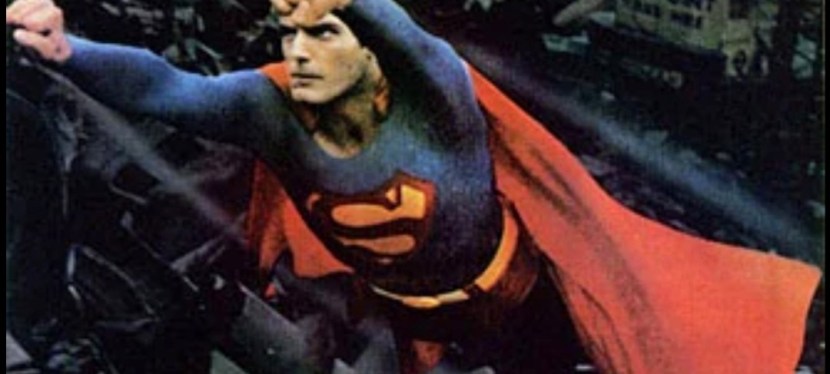
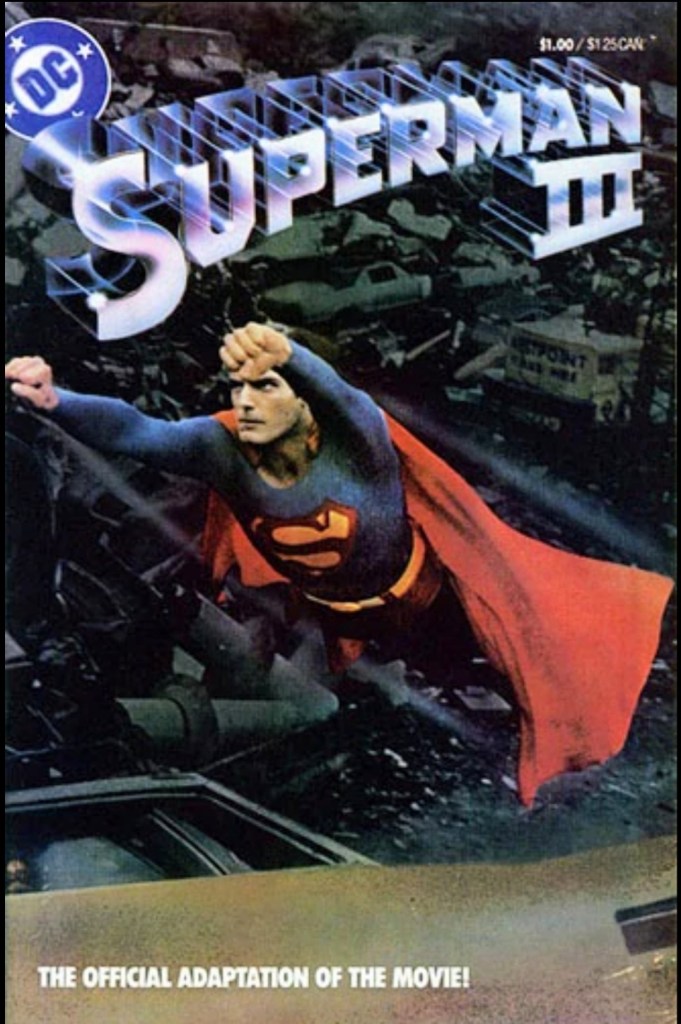
The cover.

Early story

The story begins inside the unemployment bureau of Metropolis. There, August “Gus” Gorman was told after 36 weeks of chronic unemployment, he is no longer eligible for financial assistance (read: welfare) from the city. As he was about to light his cigarette, he noticed computer job ad on the match. Gorman proceeds to the Archibald Data Processing School where he gets enrolled with several others. In front of others, Gorman does something on a computer which impressed the instructor a lot.

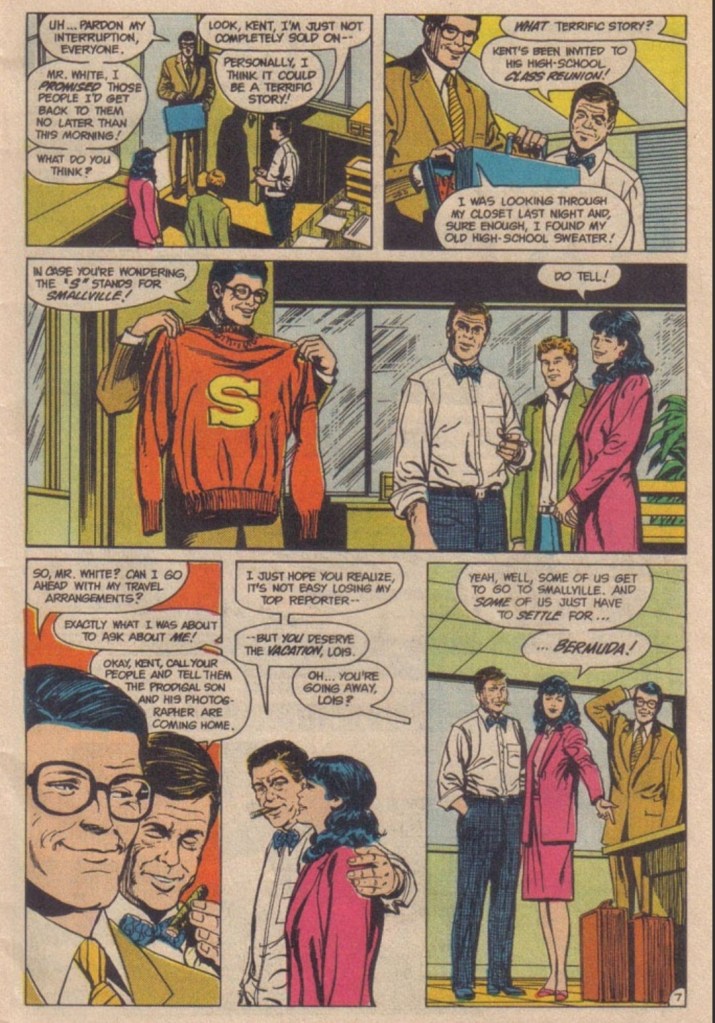
Over at the Daily Planet, Clark Kent/Superman, Lois Lane and Jimmy Olsen meet with Perry White at his office. Kent will be returning home to Smallville and make a news story out of it. White gives Kent his approval and then tells Lois she deserves a vacation.

Hours later, Kent and Jimmy Olsen ride the bus together going to Smallville but their ride stops as a result of a huge fire damaging a large chemical plant. A police officer reveals to Olsen that the scientists inside are worried about the plant and its stuff getting destroyed by the fire.

Kent carefully leaves the bus and discreetly changes into Superman to help solve the problem. Olsen, meanwhile, sneaks past the authorities to get to the burning chemical plant.

Over at Webcoe Industries, company head Ross Webster and his sister Vera learn that more than $85,000 worth of company funds was stolen by someone within. Just outside the office, Gus Gorman enters his fancy looking sports car which Webster, Vera and Lorelei notice. Webster asked how could one of their computer technicians afford such a vehicle worth $75,000…    

Quality

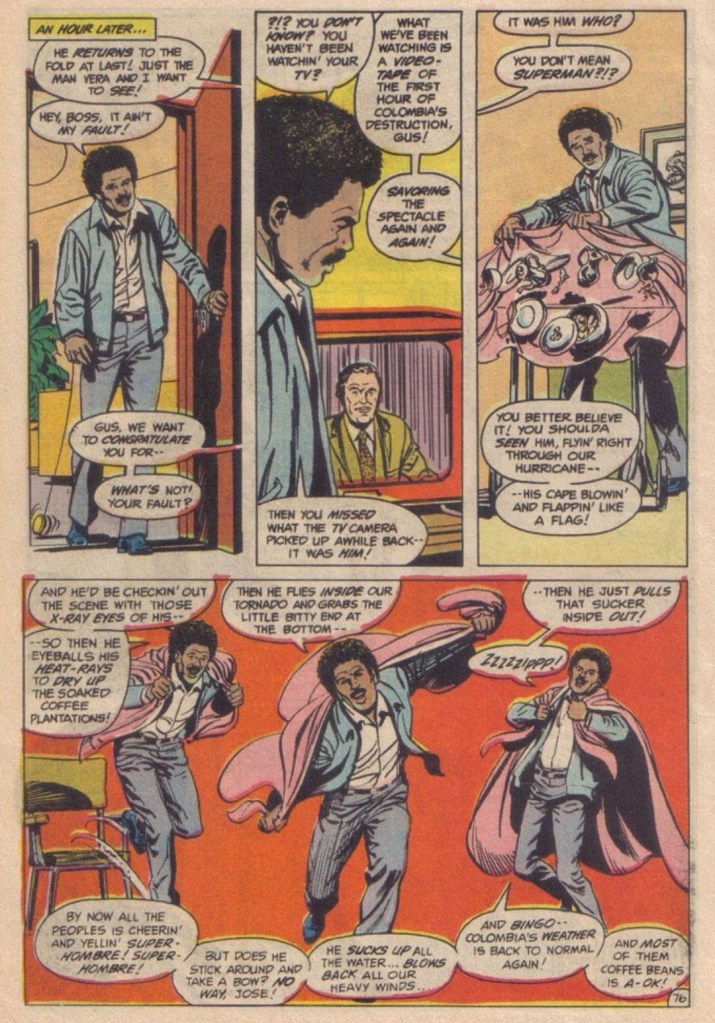
This is a creative way the comic book team used to dramatize Gus Gorman scene revealing and acting the bad news to his boss Ross Webster whose plans were thwarted by Superman.

While it is understandable that not all scenes and not all character moments from the movie  made it on print media, this comic book still managed to capture the film’s essence for the most part. The creative team pulled off their own interpretations of the events and made something entertaining and engaging even though they had to deal with the major challenge of summarizing the movie’s plot and establishing a workable comic book narrative.

I should state that the comic team creatively avoided making in-depth references about liquor and smoking which were obvious in the movie. You will not see Superman drinking liquor at a bar nor will you see Gus Gorman referring to tar listed on a cigarette pack. I suppose this was done to ensure the comic book would be released widely and be acceptable to very young readers and the parents watching them.

The battle between evil Superman and Clark Kent is best viewed in the movie. This one is a shorter and less detailed version of it.

When it comes to establishing the clear lead among all the characters featured, Superman fans should be delighted to know that the Man of Steel is indeed more prominent than Gus Gorman. Take note that in the movie, Richard Pryor’s Gus Gorman overshadowed Christopher Reeve’s Superman/Clark.

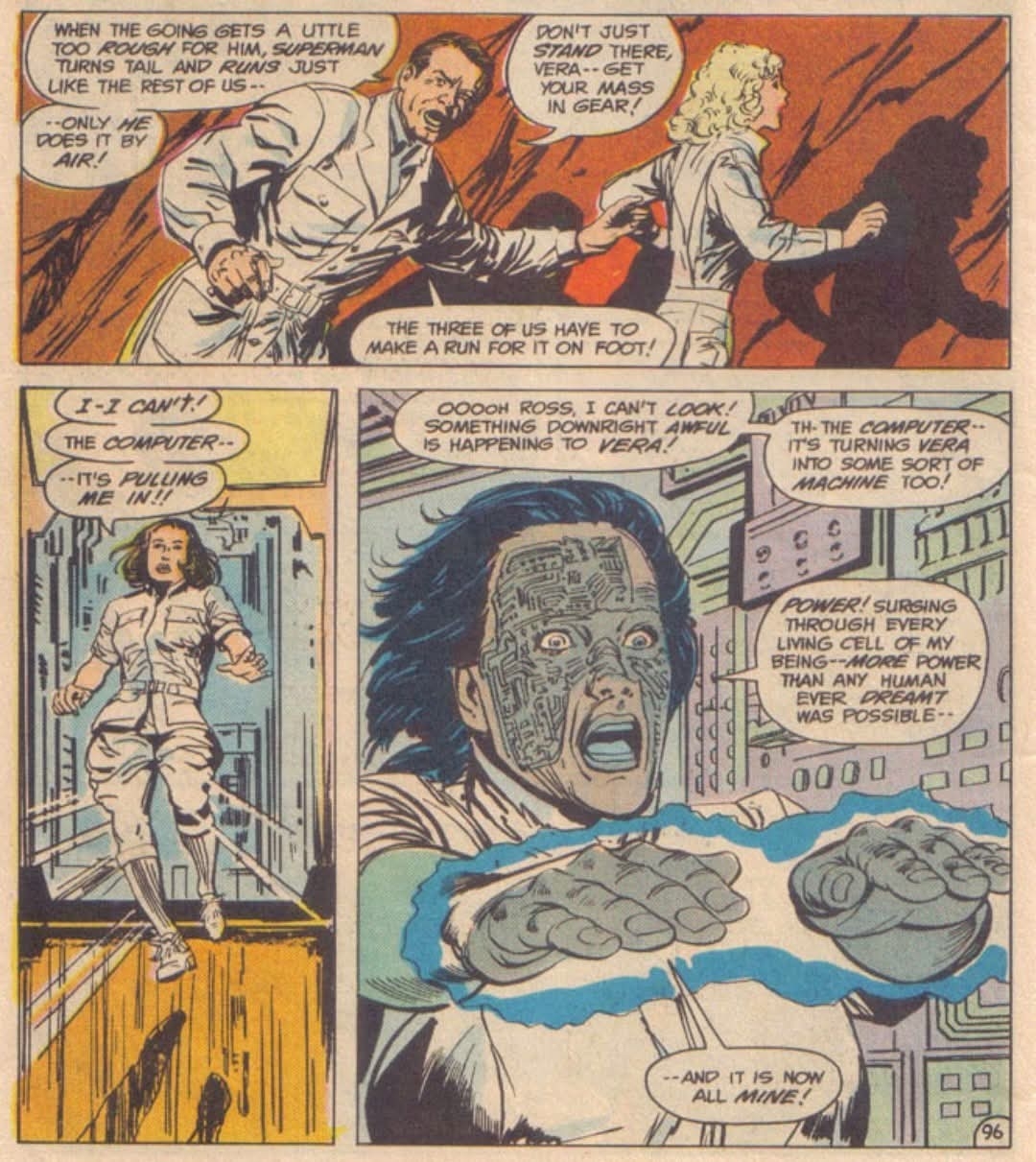
Remember the frightening sequence of Vera getting captured and turned into a cybernetic figure by the Super Computer? This is what it looks like in comic book format.

The art done by Curt Swan and Sal Amendola is decent and it seems to me that their time on visualizing Cary Bates’ script was indeed limited. That being said, it was not surprising to me that, with the exception of Ross Webster in one specific image, none of the characters resembled their cinematic counterparts. Clark Kent/Superman never resembled Christopher Reeve, and Gus Gorman looks nothing like Richard Pryor. Clearly, the artists’ focus was visualizing the narrative which they succeeded.  

Conclusion

Clark Kent, Lois Lane, Jimmy Olsen and Perry White in the Daily Planet.
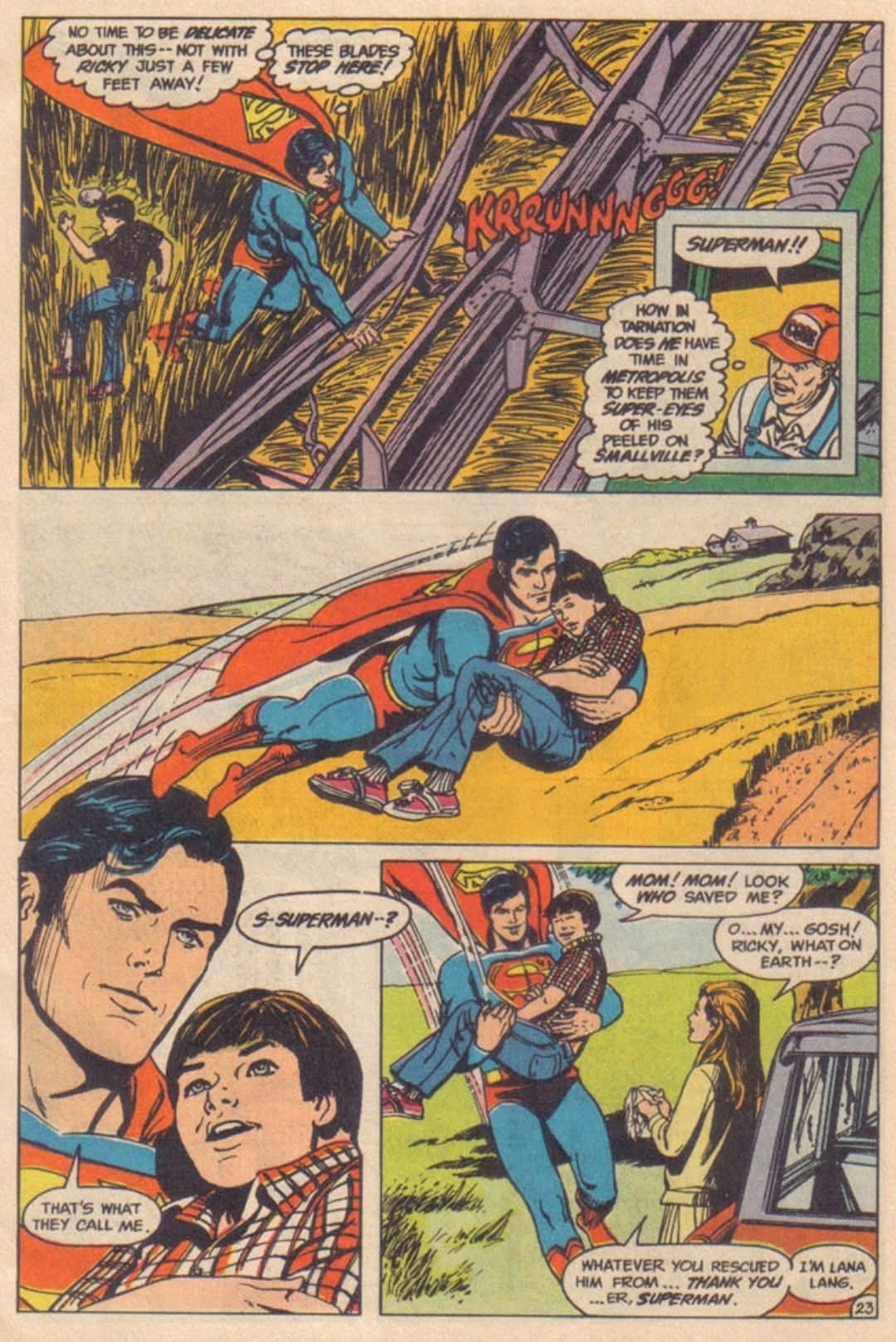
Superman saving Lana Lang’s son from certain death.

Having seen the Christopher Reeve/Richard Pryor movie in the cinema and on cable TV since 1983, I can say that Superman III (1983) is a decent adaptation. It’s not 100% faithful but it is still a worthy read as it will give you the movie’s concept and entertainment values in literary form. If you really want to full essence of film along with the cinematic moments (note: the Superman-Clark battle is the cinematic highlight) all intact, then your obvious choice is to watch the movie. If you are turned off by the movie’s wacky comedy, then the comic book adaptation will deliver to you the more serious approach on telling Superman III’s story. Let me repeat that Superman is more prominent than Gus Gorman in this comic book.

Overall, Superman III (1983) is satisfactory.

+++++

Thank you for reading. If you find this article engaging, please click the like button below and also please consider sharing this article to others. If you are looking for a copywriter to create content for your special project or business, check out my services and my portfolio. Feel free to contact me with a private message. Also please feel free to visit my Facebook page Author Carlo Carrasco and follow me on Twitter at  @HavenorFantasy as well as on Tumblr at https://carlocarrasco.tumblr.com/ and on Instagram at https://www.instagram.com/authorcarlocarrasco/
A Look Back at V #5 (1985)

Disclaimer: This is my original work with details sourced from reading the comic book, watching the V mini-series (Original Miniseries and The Final Battle) and the 1984 TV series, and doing personal research. Anyone who wants to use this article, in part or in whole, needs to secure first my permission and agree to cite me as the source and author. Let it be known that any unauthorized use of this article will constrain the author to pursue the remedies under R.A. No. 8293, the Revised Penal Code, and/or all applicable legal actions under the laws of the Philippines.

Welcome back, science fiction enthusiasts, comic book collectors and fans of the V entertainment franchise of the 1980s! Before I start this newest retro comic book review, I am happy to say that I recently published my retro review of V: The Original Miniseries which is one of the most in-depth retro reviews I wrote so far. I recommend you to read it now. If you are a fan and you are interested to buy yourself the original mini-series on Blu-ray disc format, head on to Amazon. Now we can return to the 1980s comic book series.

Last time around, Ham Tyler and Chris continued their operation which resulted getting reunited with the star child Elizabeth Maxwell (refer to V: The Final Battle mini-series of 1984). Meanwhile, Mike Donovan and Julie Parrish met with delusional astronomer Earl Meagan (patterned after Carl Sagan) who is obsessing with meeting Diana of the Visitors.

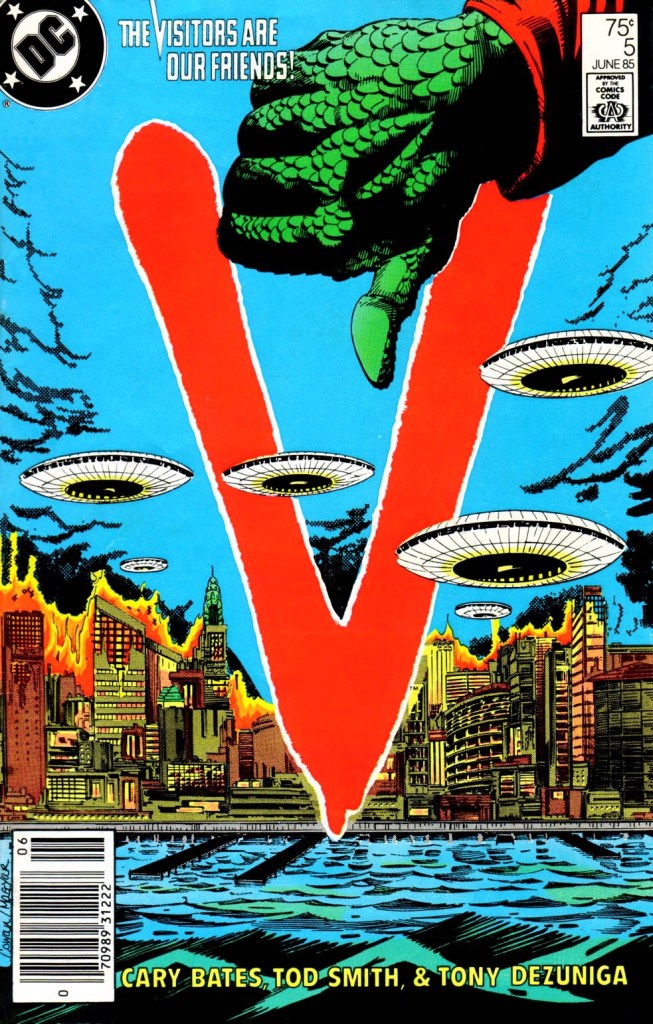
With those details laid down, here is a look back at V , published in 1985 by DC Comics with a story written by Cary Bates and drawn by Tod Smith.

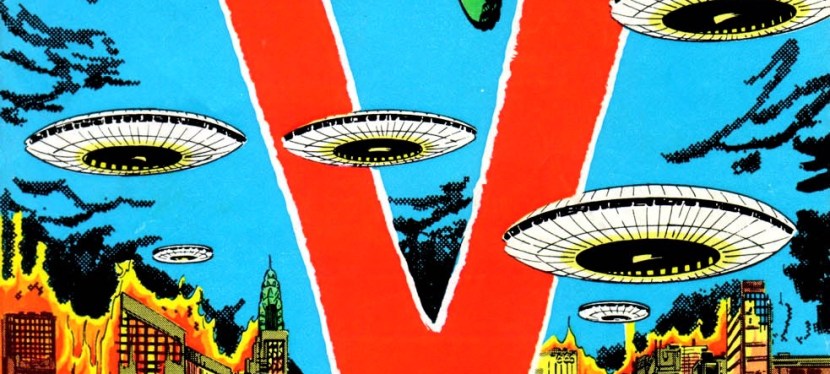
The cover.

Early story

The story begins with Diana, Linda and Charles watching a video message from the delusional Earl Meagan expressing his thanks to her (Diana) for accepting his peace proposal for a summit of peace between the humans and the Visitors. He expressed more of his delusion stating that he is confident that both of their races will benefit from the meeting.

Diana explains to her powerful companions that they have a lot to gain by turning one of Earth’s most influential figure to their side. After Diana left, Linda expresses that their commander has gone too far. Charles tells her what she is thinking of.

On Earth, in the presence of Ham, Chris and Bates, a weakened Elizabeth recalls her time with Kyle when they went into hiding away from the Visitors’ search team. She then makes mental contact with Kyle.

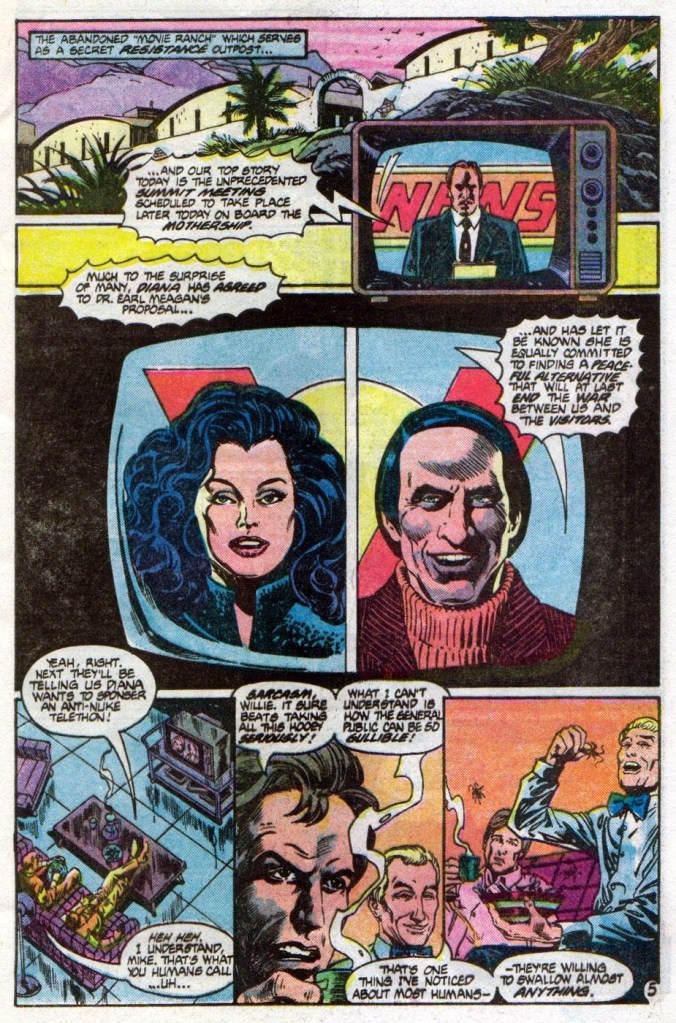
Elsewhere, as Mike Donovan and Willie watch the newscast about the peace summit between Diana and Earl Meagan set to happen soon, Julie Parrish personally tells the astronomer (by the helipad within a city) that he just can’t go as such a meeting is suicide. Still delusional, Meagan tells Julie that she is no different from her short-sighted friend Mike, leaves her and rides the helicopter to push through with the summit…

Quality

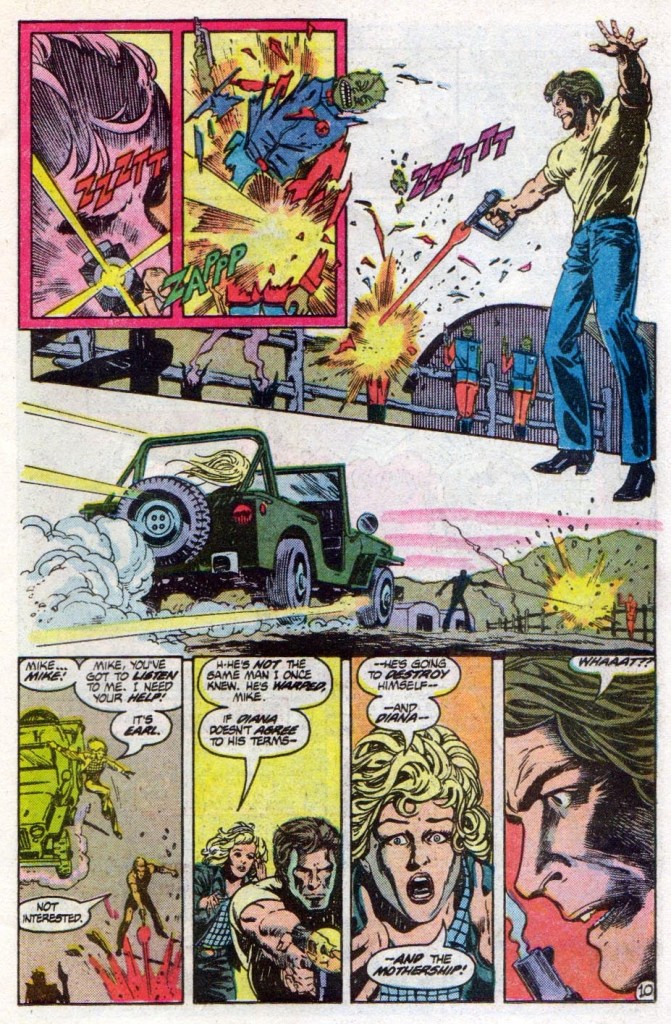
Realizing her mistake with the delusional astronomer Earl Meagan, Julie comes back to Mike.

First thing to mention is the good news that the quality of the writing and plotting by Cary Bates has the high quality maintained throughout. While the story about the peace summit between Earl Meagan and Diana is the highlight here, the other story (told through Ham and Chris) about the discovery of a secret camp where the Visitors conduct experiments on humans is itself very intriguing as it parallels what the Nazis did to prisoners during the dark days of World War II.

Going back to the highlighted plot of the comic book, Earl Meagan is not only delusional with his old belief that any extraterrestrial race capable of traveling through the depths of space is surely friendly and benevolent to humanity…he is completely wrong and a danger to his own people as clearly lost his touch with truth and reality. He is a perfect example of what happens when a scientist refuses to realize the limits of science and goes over the edge believing in the falsehood that another scientific breakthrough will prove him right and all others wrong. By today’s standards, Meagan can be compared with the radical socialists in America who foolishly believe that all foreigners (including criminals and terrorists) should be allowed free entry into their country without consequence and without responsibility, and at the expense of their fellow American citizens.

When it comes to characterization, I still recognize Ham and Chris as I remembered them from V: The Final Battle thanks to solid writing. Julie’s portrayal in this comic book, however, takes a drastic turn from powerful receiver of Earl Meagan in issue . More notably, it is refreshing to see the relationship between Mike and Julie getting strained as a result of Meagan.

Conclusion

The closest thing you can have about Carl Sagan betraying the entire human race in favor of aliens from outer space.

V (1985) is another solid tale about the conflict between the Resistance and the Visitors, but with Earl Meagan as the mad scientist with charisma who puts his fellow humans into more danger. It’s a worthy read from start to finish.

If you are seriously planning to buy an existing hard copy of V (1985), be aware that as of this writing, MileHighComics.com shows that the near-mint copy of the regular edition costs $28 while the near-mint copy of the newsstand edition costs $36.

Overall, V (1985) is highly recommended.

+++++

Thank you for reading. If you find this article engaging, please click the like button below and also please consider sharing this article to others. If you are looking for a copywriter to create content for your special project or business, check out my services and my portfolio. Feel free to contact me as well. Also please feel free to visit my Facebook page Author Carlo Carrasco and follow me at HavenorFantasy@twitter.com
A Look Back at V #4 (1985)

Disclaimer: This is my original work with details sourced from reading the comic book, watching the V mini-series (Original Miniseries and The Final Battle) and the 1984 TV series, and doing personal research. Anyone who wants to use this article, in part or in whole, needs to secure first my permission and agree to cite me as the source and author. Let it be known that any unauthorized use of this article will constrain the author to pursue the remedies under R.A. No. 8293, the Revised Penal Code, and/or all applicable legal actions under the laws of the Philippines.

Welcome back, science fiction enthusiasts, comic book collectors and fans of the V entertainment franchise of the 1980s! Before I start this newest retro comic book review, I am happy to say that I recently received at last my copy of V: The Original Miniseries on Blu-ray disc format! It definitely is a major upgrade and it is the best yet! That being said, looking back into the past, I got to watch V: The Original Miniseries on television, video tape, DVD and now on Blu-ray disc format from 1983 to this year! If you are a fan and you are interested to buy yourself the original mini-series on Blu-ray disc format, head on to Amazon. Now we can return to the 1980s comic book series.

Last time, a small team of the Resistance encountered the Visitors who arrived at an isolated small town in California to collect something precious which is the result of the aliens’ special ties with the locals. That story ended nicely.

With those details laid down, here is a look back at V , published in 1985 by DC Comics with a story written by Cary Bates and drawn by Tod Smith.

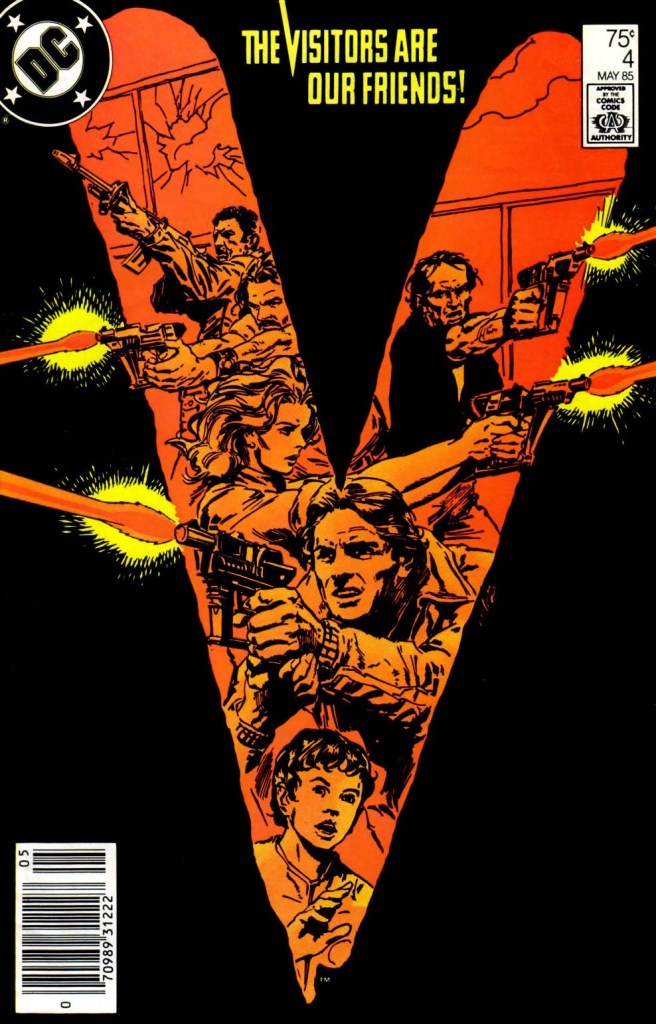
The cover.

Early story

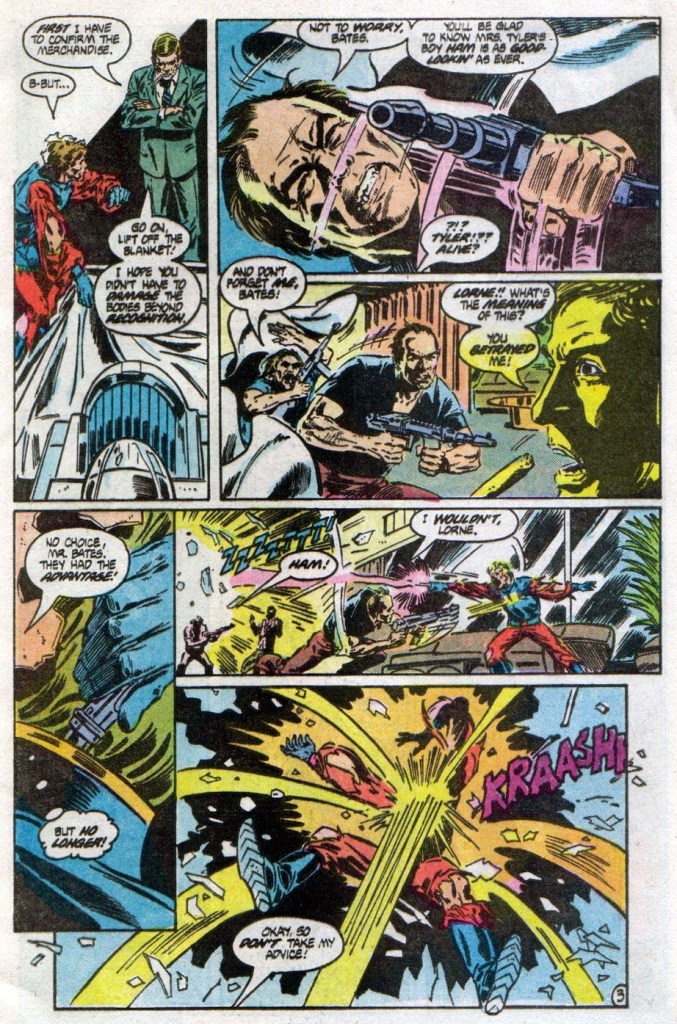
The story begins with Lorne, a Visitor whose fake human skin on his face got damaged a lot, his reptilian skin and eye have been exposed. He brought with him a transport (carrying what looked like human bodies) and tries to enter the Science Frontiers building to meet with a certain Mr. Bates.

Inside, Lorne meets with Bates who turns out to be his client and eagerly wants to get paid. Bates wants to see first the bodies brought to him and when Lorne pulls the blankets, Ham Tyler and Chris Farber suddenly come out to take on them both. Lorne is pushed out of a nearby window falling several feet down. Ham and Chris cornered Bates who turns out to be dealing with Diana of the Visitors.

Meanwhile in Los Angeles, Mike Donovan and Julie Parrish are having quality time together cherishing their relationship. They are enjoying the relief and relaxation after successfully surviving in a dangerous encounter with the Visitors at an isolated California town.

As they dance, Julie recognizes a well-known astronomer whose image appears on TV. She suddenly stops dancing and moves closer to the TV, leaving Mike puzzled…

Quality

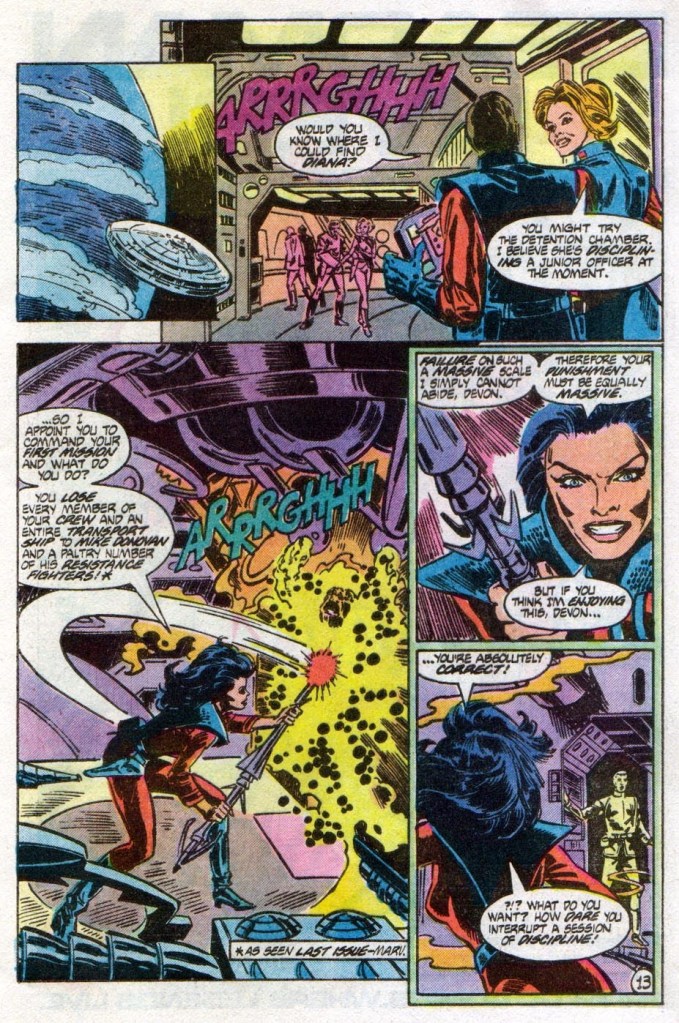
This shows how sadistic Diana is even towards her own people.

If there is anything that really stood out in this story, it is the entrance of astronomer Earl Meagan (modeled after Carl Sagan) whose presence not only attracts Julie but also rekindles the passion of science in her which she had during her days as a medical student (before the Visitors arrived). He was written to be highly intelligent and insightful which paves the way for the story to be laced with concepts about the so-called advancement of life forms that traveled through the galaxy and evolved. Meagan also symbolizes delusion resulting from scientific theories, as well as letting his own people down in favor of a foreign people.

More on the story, I should state that Cary Bates wrote this comic book to smoothly reconnect with V: The Final Battle by means of including the star child Elizabeth Maxwell who is now a young adult. The connections with the V TV productions solidified even further through more scenes of Diana whose evil nature and leadership tactics are dramatized here.   

Conclusion

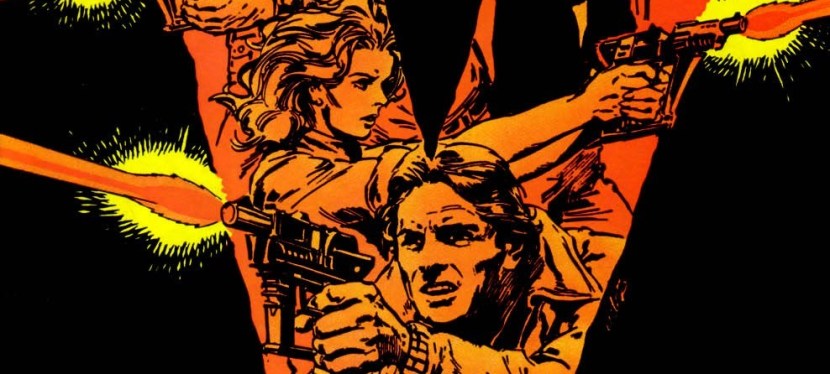
Ham and his pal take action!

The creative team delivered another solid and satisfying tale in V (1985). This time around, the narrative got shaken with the introduction of Meagan, the sudden change of attitude of Julie, and the build up for more intriguing events to come in.

If you are seriously planning to buy an existing hard copy of V (1985), be aware that as of this writing, MileHighComics.com shows that the near-mint copy of the regular edition costs $29 while the near-mint copy of the newsstand edition costs $38.

Overall, V (1985) is recommended.

+++++

Thank you for reading. If you find this article engaging, please click the like button below and also please consider sharing this article to others. If you are looking for a copywriter to create content for your special project or business, check out my services and my portfolio. Feel free to contact me as well. Also please feel free to visit my Facebook page Author Carlo Carrasco and follow me at HavenorFantasy@twitter.com