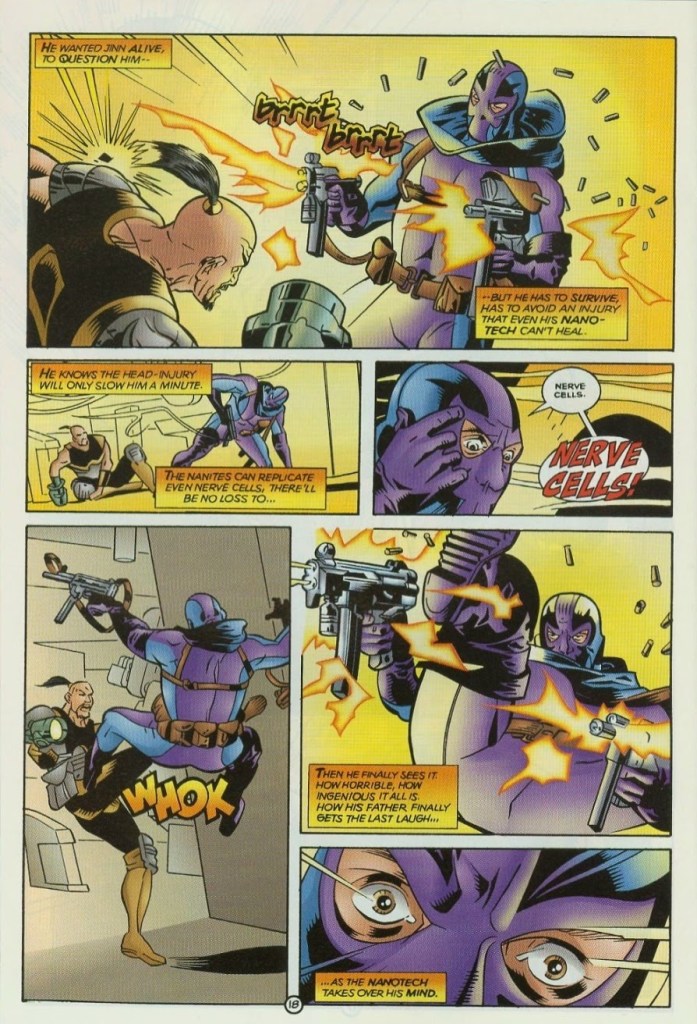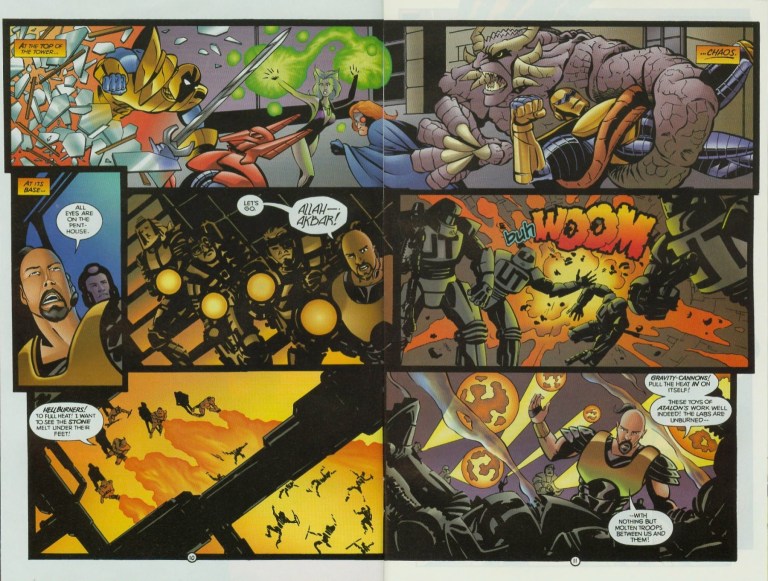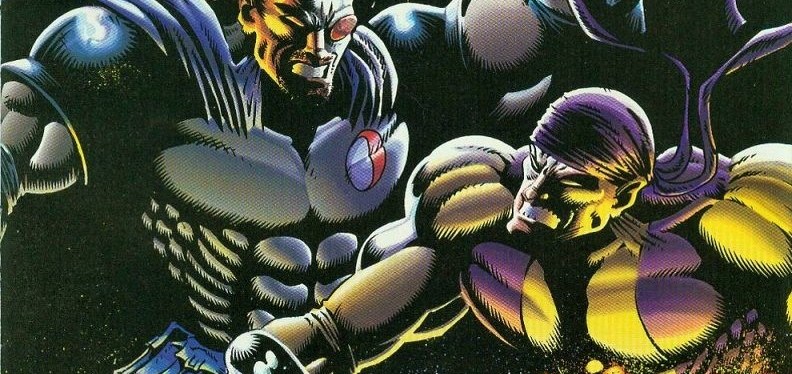
A Look Back at The Strangers #23 (1995)

Disclaimer: This is my original work with details sourced from reading the comic book and doing personal research. Anyone who wants to use this article, in part or in whole, needs to secure first my permission and agree to cite me as the source and author. Let it be known that any unauthorized use of this article will constrain the author to pursue the remedies under R.A. No. 8293, the Revised Penal Code, and/or all applicable legal actions under the laws of the Philippines.

Welcome back, superhero enthusiasts, comic book collectors and fans of Malibu Comics! I recently checked the publishing background of The Strangers and it showed that it only lasted a total of twenty-four issues. That means the end is nearing with regards to my doing retro comic book reviews about The Strangers. For the most part, I had a lot of fun reading these comic books and I can say that Steve Englehart always found ways to make each and every story fun to read and remain fresh.

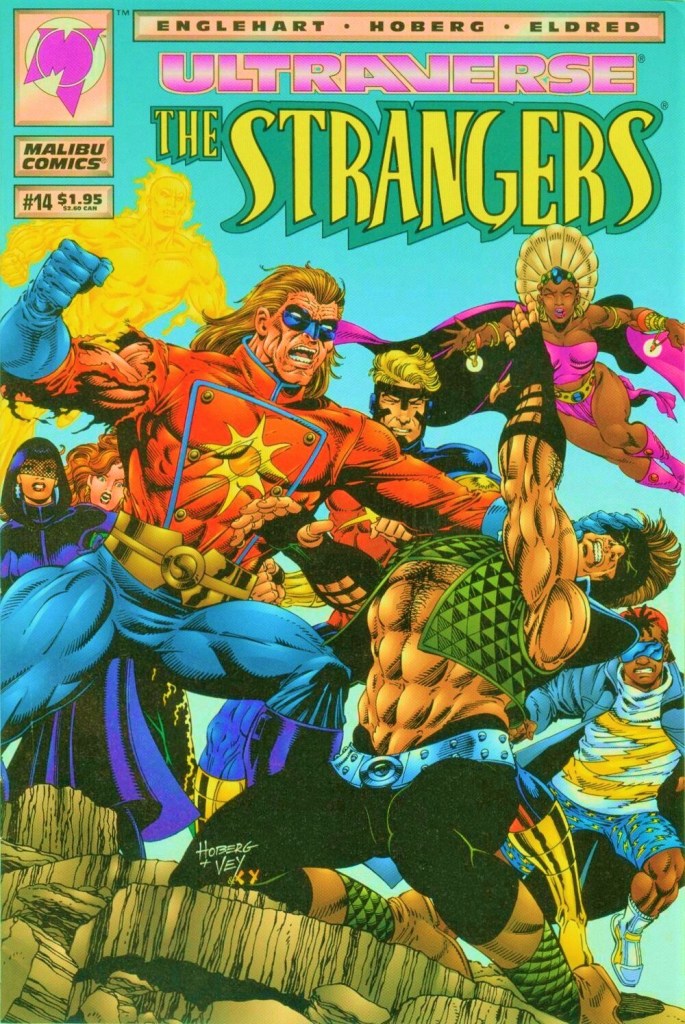
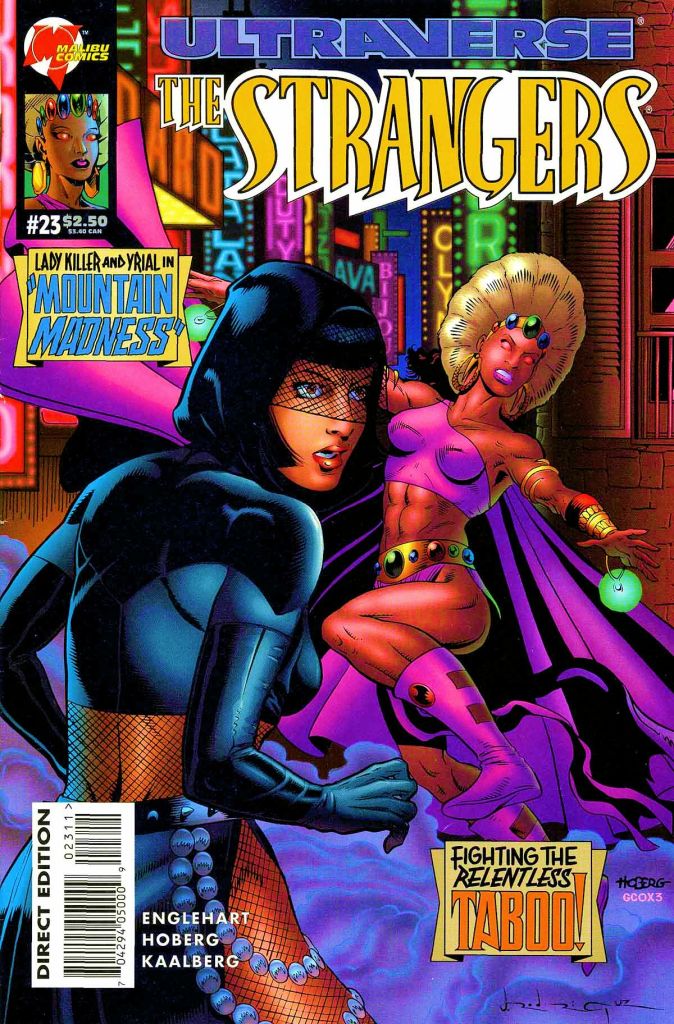
We are nearing the end of retro comic reviews of this particular comic book series and we can find out more what happens next in this look back at The Strangers , published by Malibu Comics in 1995 with a story written by Steve Englehart and drawn by Rick Hoberg.

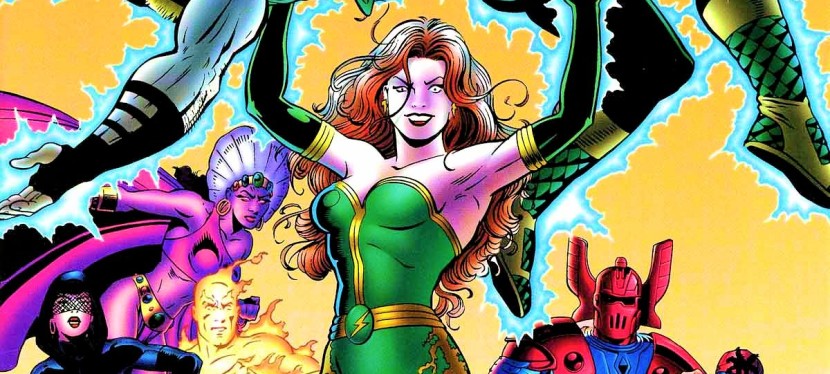
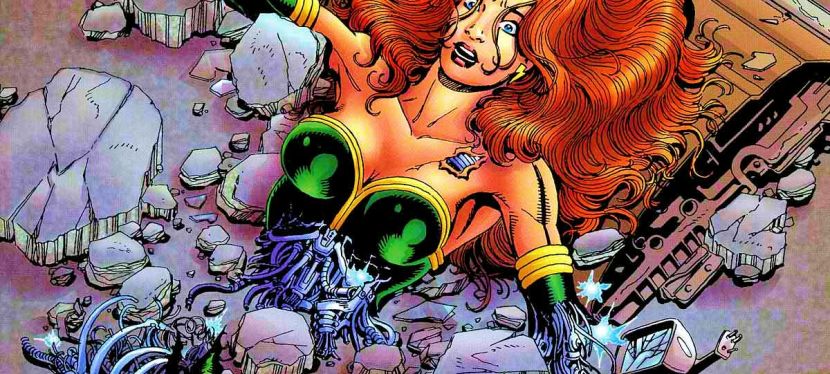
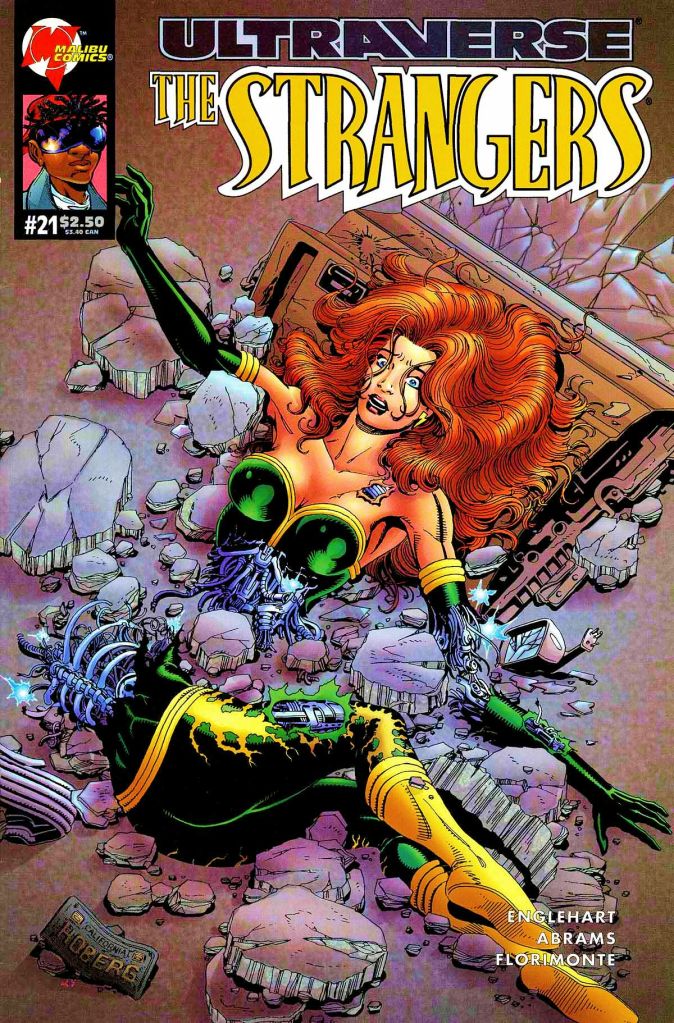
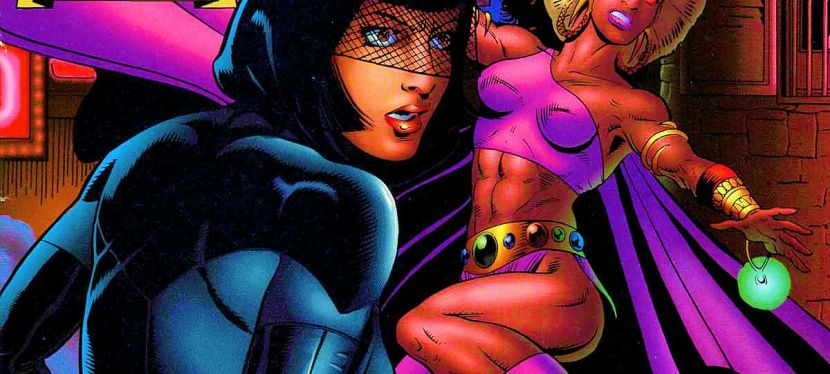
The cover.

Early story

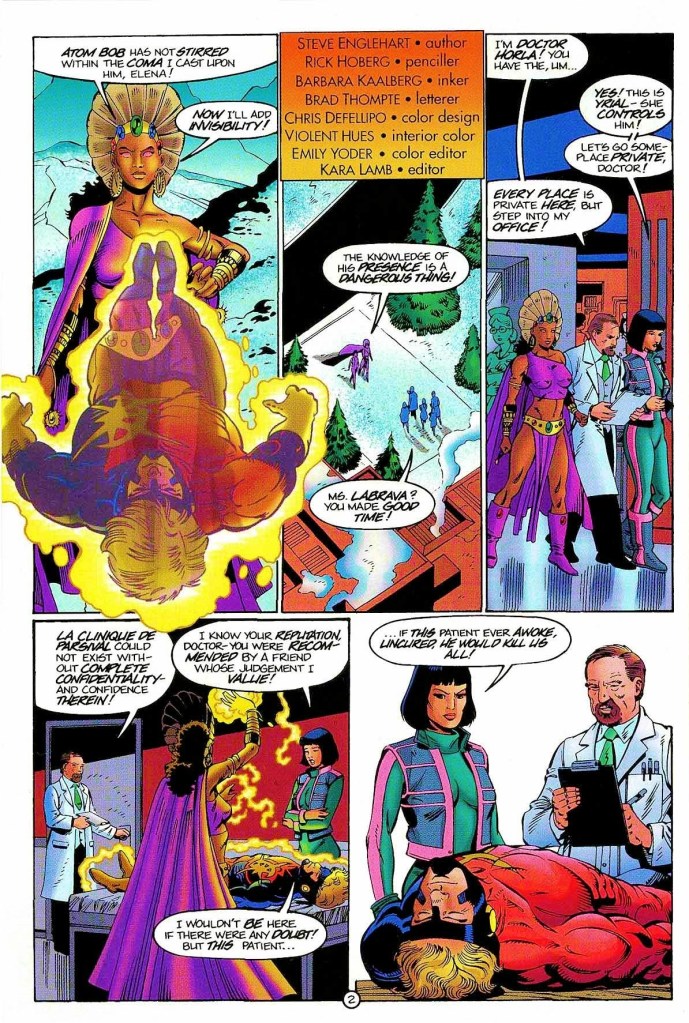
The story begins in Europe. Yrial and Lady Killer brought with them the comatose body of Atom Bob, the one man who loved the latter and betrayed their entire team. They entered a special and meet Dr. Horla. They presented Atom Bob to him as a patient and Dr. Horla expressed knowledge about the man’s power to change things which itself is very risky. As such, Lady Killer tells him that Atom Bob must remain comatose. The doctor assures her that they will report to them his condition every six months.

In response to the doctor’s suggestion of lobotomizing Atom Bob, Lady Killer rejects it and insists that if he can be returned to the man he was, then The Strangers will want him back.

After the meeting, Lady Killer and Yrial visit Andorra mainly to rest and relax. While having drinks at a fine place, a black man recognizes them. He begins to believe that Lady Killer and Yrial went there to find him and could have been working with the police in his native South Africa…

Quality

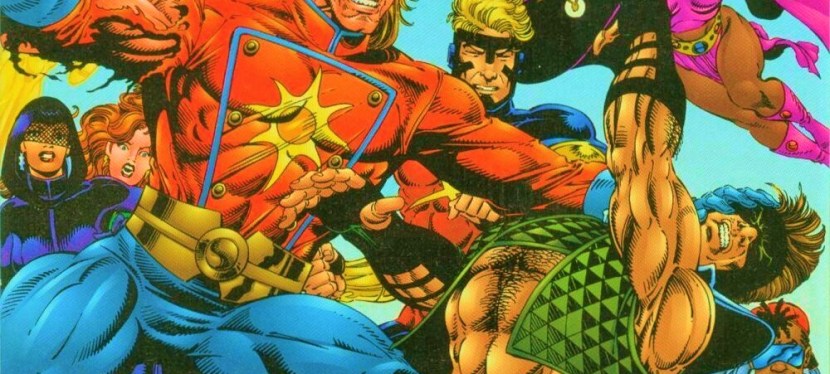
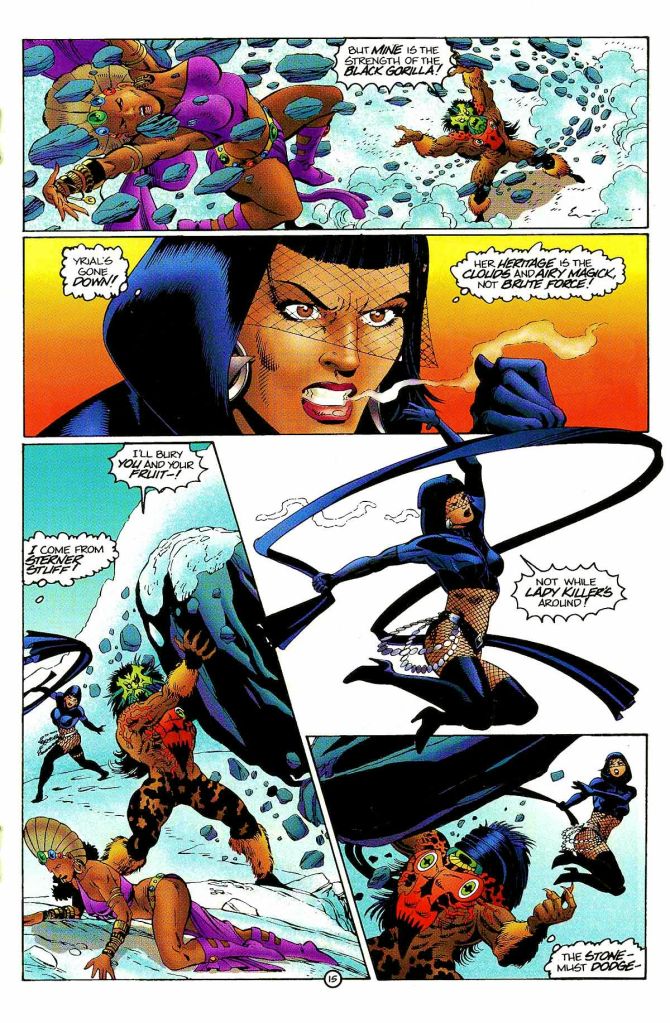
Yrial and Lady Killer in the heat of battle with a new enemy.

To make things clear, this particular story focuses mainly on Lady Killer and Yrial which is a nice change of pace given the events about their other teammates (as told in issues #21 and #22). Essentially, the story is not about the two Strangers’ friendship but rather a tale about a cursed man from South Africa who has been on the run for a long time. Without spoiling the plot, I can say that the cursed man’s encounter with Lady Killer and Yrial sparked the chain of superhero spectacle which contains lots of action that fans will enjoy.

Before the encounter, this story also serves as a continuation about The Strangers’ gradual adjustment to life without Atom Bob. By this time, Lady Killer’s stand as team leader has matured and became more decisive.

Given the way the story was structured, there was no room left for character development on Lady Killer and Yrial. That being said, the spotlight was more focused on the cursed man from South Africa and his motives were efficiently defined.

Conclusion

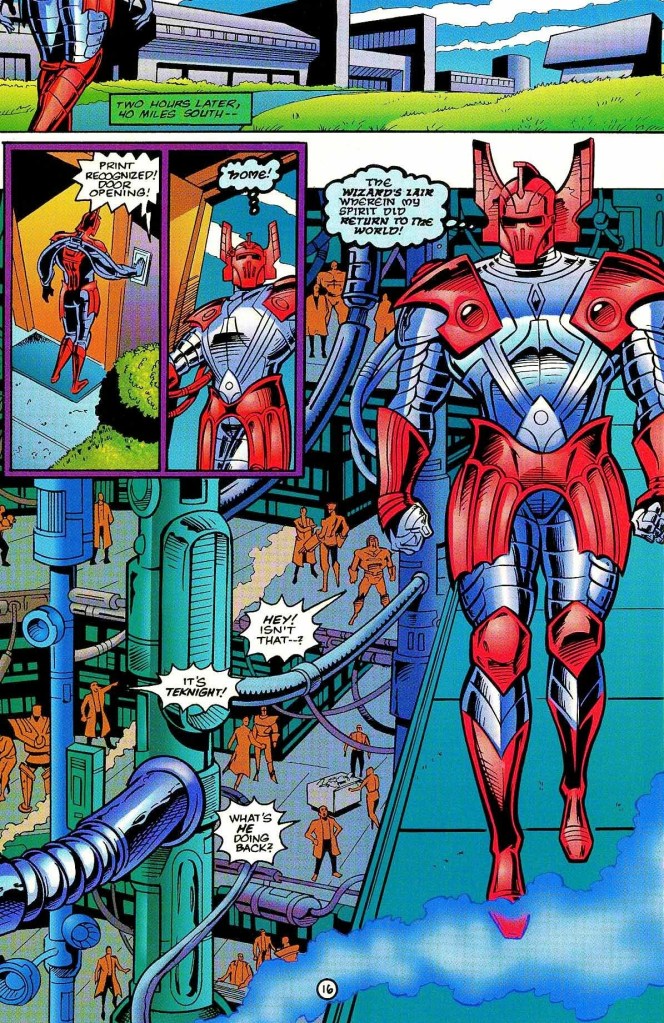
Bring Atom Bob into the clinic conveniently and invisibly.

To put it clearly, The Strangers (1995) is really the introduction of a new villain who gets into conflict with only two members of the team. It has enough spectacle to enjoy although the story may end up disappointing fans who expected to see the personalities if Yrial and Lady Killer get more developed. For the newcomers reading this, character development is one of the most defining factors of The Strangers monthly series.

If you are seriously planning to buy an existing hard copy of The Strangers (1995), be aware that as of this writing, MileHighComics.com shows that the near-mint copy of the comic costs $35.

Overall, The Strangers (1995) is recommended.

+++++

Thank you for reading. If you find this article engaging, please click the like button below and also please consider sharing this article to others. If you are looking for a copywriter to create content for your special project or business, check out my services and my portfolio. Feel free to contact me as well. Also please feel free to visit my Facebook page Author Carlo Carrasco and follow me at HavenorFantasy@twitter.com
A Look Back at Prototype #15 (1994)

Disclaimer: This is my original work with details sourced from reading the comic book and doing personal research. Anyone who wants to use this article, in part or in whole, needs to secure first my permission and agree to cite me as the source and author. Let it be known that any unauthorized use of this article will constrain the author to pursue the remedies under R.A. No. 8293, the Revised Penal Code, and/or all applicable legal actions under the laws of the Philippines.

Welcome back superhero enthusiasts, comic book collectors and fans of Malibu Comics! Today, I’ve decided to take a break from the Hostile Takeover storyline of the Ultraverse and focus more on the Prototype monthly series. Last time around, a new chapter in the life of Prototype pilot Jimmy Ruiz started and in the corporate world, he took a job that paid so much less than before.

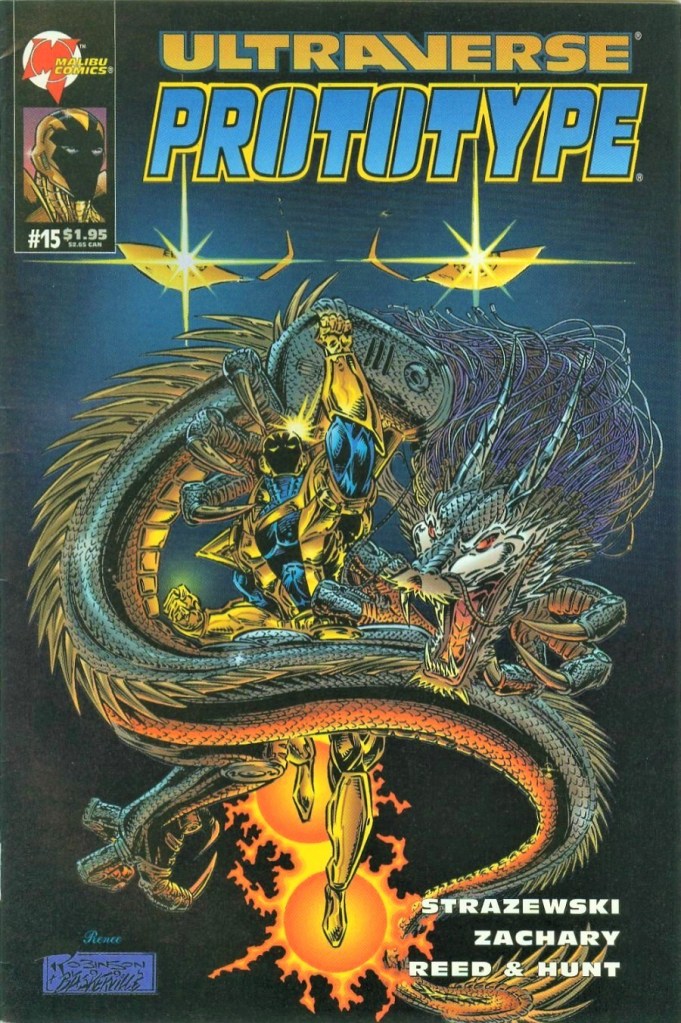
What exactly will happen to Jimmy? We can all find out in this look back at Prototype , published in 1994 by Malibu Comics with a story written by Len Strazewski and drawn by Dean Zachary.

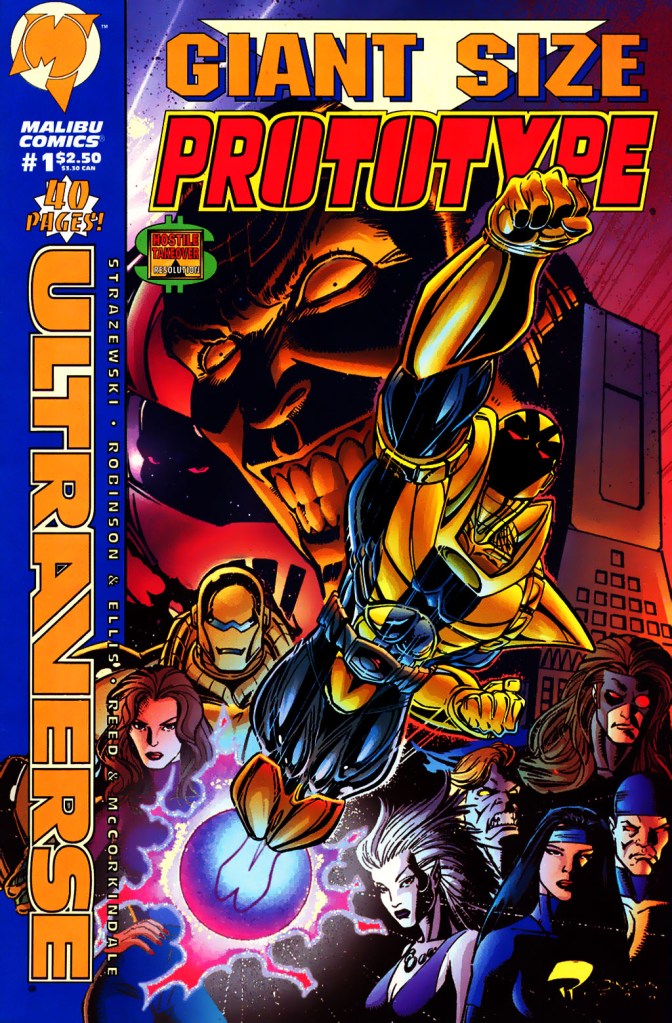
The cover.

Early story

The story begins inside a top-secret facility somewhere in the city of New York. A black man is going through the painful processes of cybernetic enhancements. His name is Donovan Jones and he is told by a shadowy figure that he is a failure and only their organization can turn him into something else…more than a human loser.

“You always were an ultra, Jones…and UltraTech knew this! But they never revealed this toyou,” said the shadowy figure.

Donovan Jones expresses his hatred for UltraTech. He also expresses his intention to destroy Prototype.

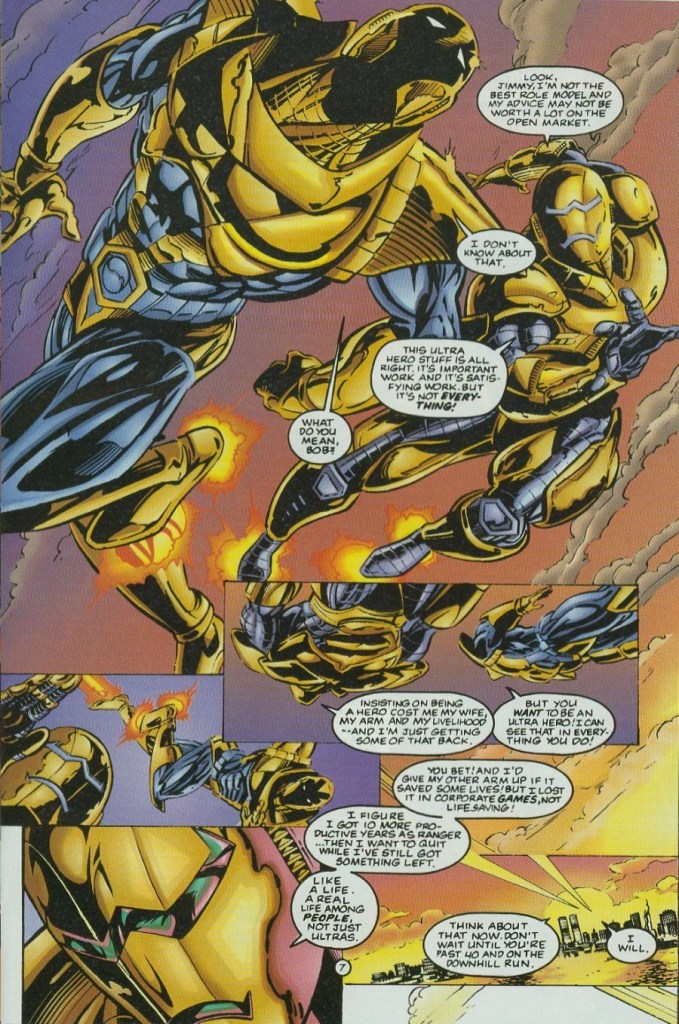
Elsewhere, a long vehicular bridge has been damaged. Helping the victims were Ranger (Bob Campbell) and Prototype (Jimmy Ruiz) trying to ensure that they could balance the bridge to prevent cars from falling over the edge. They managed to solve the problem paving the way for things to go back to normal. The affected people express their thanks and admiration to them.

As they fly away together, Bob and Jimmy talk about matters related to being ultra heroes. A short time later, Jimmy takes the train going to New Jersey as a civilian. He arrives at the facility of Direct Contact which is a division of NuWare. It turns out this is his first day of work with them and he is still struggling with the drastic changes now that his huge perks and privileges with UltraTech are no more…  

Quality

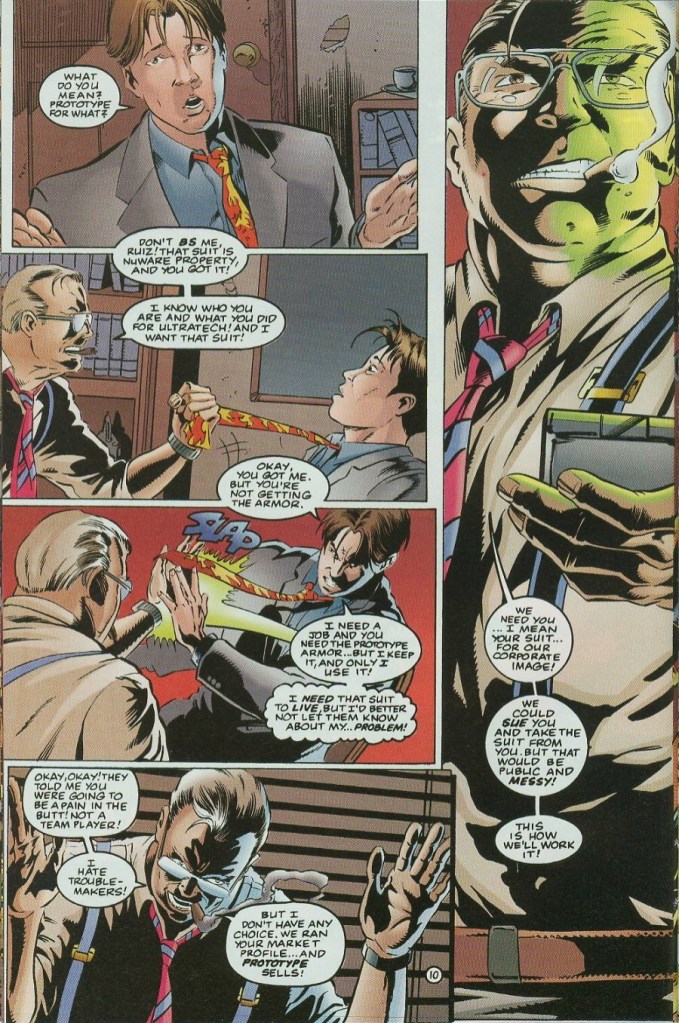
Jimmy Ruiz in a tough situation in front with his new boss on his first day at work.

I really like the story and the way Jimmy Ruiz was portrayed. This is really fine writing by Len Strazewski and it seems he organized a plan to not only redefine the protagonist but also change the status quo around him. I liked the way Strazewski set up the first-day-on-the-job struggles of Jimmy which really showed how fragile he is as a person without the armored suit to help him. His boss really was hard on him and made things a bit complicated for him as far as the use of Prototype is concerned under the control of NuWare. I also like the way Jimmy was portrayed in trying to be very responsible about his domestic life and the future ahead of him and his pregnant darling Angella.

Apart from the in-depth characterization, there is a good amount of superhero action to keep fans satisfied. The action was nicely drawn by Dean Zachary.

Conclusion

Prototype and Ranger.

Prototype (1994) is a lot of fun and pretty engaging. In fact, this comic book is a nice pay-off following the build-up that was done in issue . To see Jimmy Ruiz redefined as a person without the armor is compelling and the story was nicely structured by Len Strazewski. For serious Prototype fans, this is one comic book that is worth reading again and again. Lastly, this one has a very intriguing ending that you have to read and find out.

If you are seriously planning to buy an existing hard copy of Prototype (1994), be aware that as of this writing, MileHighComics.com shows that the near-mint copy of the comic book costs $14.

Overall, Prototype (1994) is highly recommended!

+++++

Thank you for reading. If you find this article engaging, please click the like button below and also please consider sharing this article to others. If you are looking for a copywriter to create content for your special project or business, check out my services and my portfolio. Feel free to contact me as well. Also please feel free to visit my Facebook page Author Carlo Carrasco and follow me at HavenorFantasy@twitter.com
A Look Back at Solitaire #10 (1994)

Disclaimer: This is my original work with details sourced from reading the comic book and doing personal research. Anyone who wants to use this article, in part or in whole, needs to secure first my permission and agree to cite me as the source and author. Let it be known that any unauthorized use of this article will constrain the author to pursue the remedies under R.A. No. 8293, the Revised Penal Code, and/or all applicable legal actions under the laws of the Philippines.

Some time ago, I reviewed the first issue of the Solitaire series of the Ultraverse. I also published my retro reviews of issues #2 and #7. What makes Solitaire an interest part of the Ultraverse is that he fights crime without fear and takes a lot of risks. He has a special healing ability and is quite proficient in doing his own detective work. Creatively, Solitaire is like a combination of Wolverine and Batman.

In the 1994 crossover storyline Hostile Takeover (which started in The Night Man #12), a series of events took off when the secretive villain Rex Mundi orders corporate player J.D. Hunt to do something about the unstable corporation UltraTech. Hunt hires The Solution to do his dirty work and even went as far as sending his newest weapon Teknight to New York (where UltraTech is). The Night Man also made it to New York continuing his own quest.

With those details laid down, the stage is set for Solitaire’s role in the 2nd chapter of Hostile Takeover and we can find out more in this look back at Solitaire , published by Malibu Comics in 1994 with a story written by Gerard Jones and drawn by Jeff Parker and Ernie Steiner.

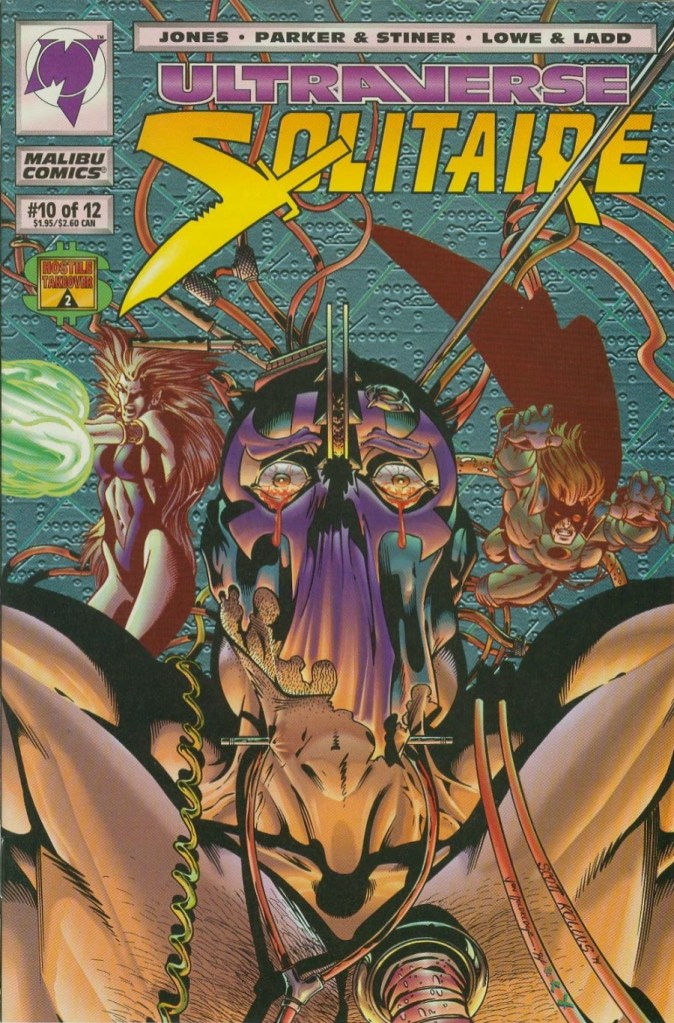
The cover.

Early story

The story begins with Solitaire moving through the city and meets several people at a public place. It turns out they are losing trust in him over something. As tension rises, the masked vigilante hears something that the others don’t which makes them think he is having a perception problem. Solitaire goes away searching for what he thought was an explosion. He saw nothing and this only confirmed that he cannot trust his own mind.

Elsewhere, Solitaire’s father (Mr. Lone) has a private meeting with top scientists. He expresses to them that his son has been wasting his money and points to it as another one of the scientists’ failures. After the meeting, a certain specialist approaches Lone and they negotiate something.

Back at his secret place, Solitaire talks with Iris about his current predicament. She tells him to do exactly what his mind is telling him not to do, and to go New York to stop the elder Lone…

Quality

This comic book has a good amount of action.

As far as the concept of Hostile Takeover goes, this one builds up on the corporate intrigue as it shows the evil Lone being involved with the events that took place. As for Solitaire himself, this story emphasizes his struggle not only with crime-fighting but himself. In connection with all the nanites inside his body, Solitaire struggles with a distorted perception and even control of himself.

When it comes to spectacle, this comic book has a good amount of action that is expected with Solitaire. Pretty satisfying to see.

Conclusion

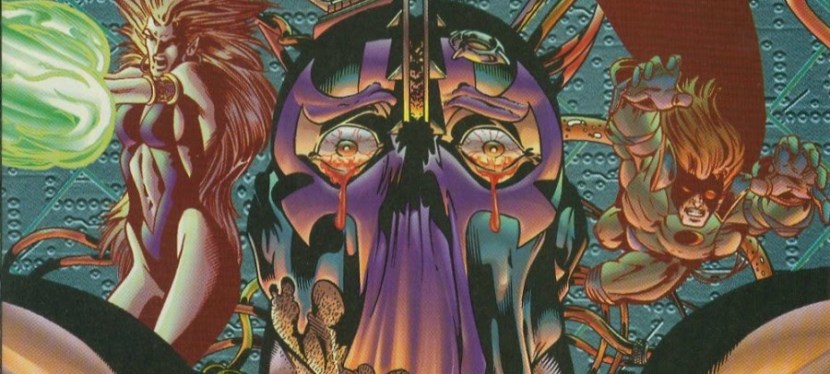
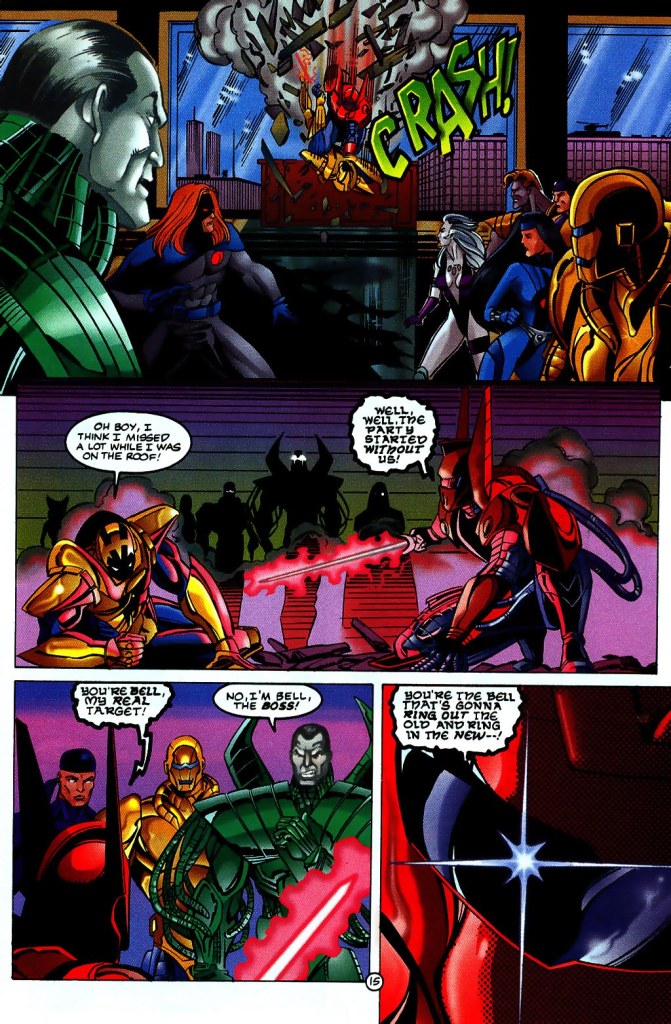
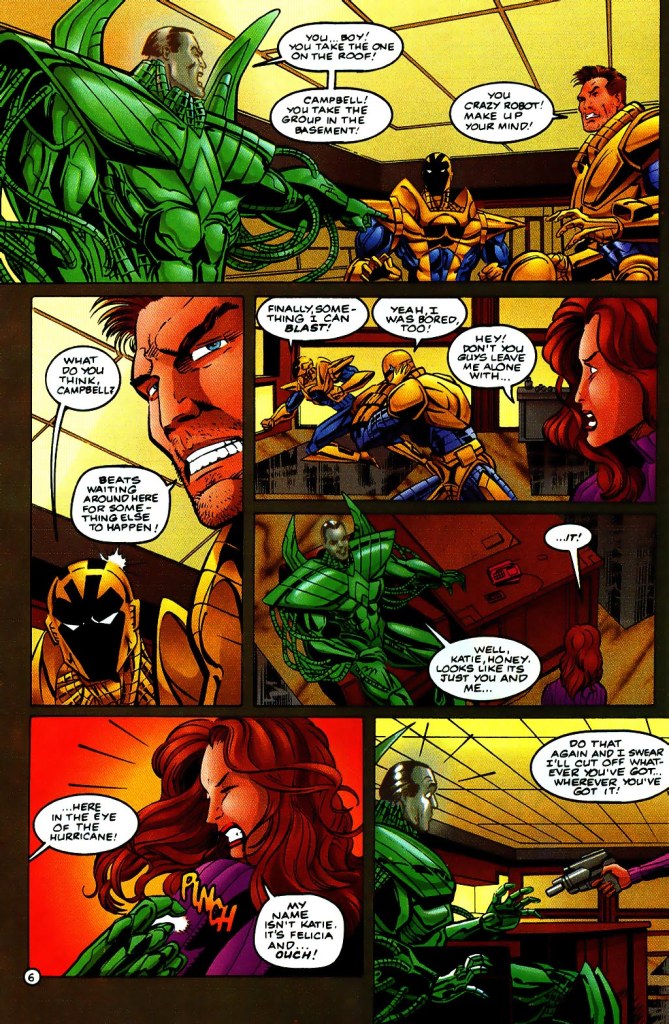
Prototype, Night Man and The Solution in their short appearance in this comic book.

In the context of the Hostile Takeover crossover, Solitaire (1994) is really a standalone story of its title character. It will please Solitaire fans but it will disappoint readers who are hoping to see him mix in with other established Ultraverse characters involved in the storyline like The Solution, Night Man and others. Solitaire really has no crossover with those characters which is a bummer. So far, this issue of Solitaire has the least amount of entertainment and engagement for me.

If you are seriously planning to buy an existing hard copy of Solitaire (1994), be aware that as of this writing, MileHighComics.com shows that the near-mint copy of the comic book costs $14.

Overall, Solitaire (1994) is satisfactory.

+++++

Thank you for reading. If you find this article engaging, please click the like button below and also please consider sharing this article to others. If you are looking for a copywriter to create content for your special project or business, check out my services and my portfolio. Feel free to contact me as well. Also please feel free to visit my Facebook page Author Carlo Carrasco and follow me at HavenorFantasy@twitter.com
A Look Back at The Night Man #12 (1994)

Disclaimer: This is my original work with details sourced from reading the comic book and doing personal research. Anyone who wants to use this article, in part or in whole, needs to secure first my permission and agree to cite me as the source and author. Let it be known that any unauthorized use of this article will constrain the author to pursue the remedies under R.A. No. 8293, the Revised Penal Code, and/or all applicable legal actions under the laws of the Philippines.

Welcome back superhero enthusiasts, comic book collectors and fans of Malibu Comics!

I don’t know with you but I personally enjoyed reading the crossover stories of the Ultraverse. The Strangers had nice crossovers with Hardcase and Prototype in different times. The crossover encounter between Prime and Prototype was very memorable. There also was the first grand crossover of the Ultraverse in Break-Thru #1.

While the Ultraverse no longer exists, for me it was the one superhero comic book franchise or imprint that truly defined superhero comics of the 1990s. Malibu Comics really had great talents and other comic book creators who produced lots of fun comic books to read. Their creators also knew what it took to make Ultraverse crossovers stand out.

Today, we will start a close look at another particular crossover storyline within the Ultraverse titled Hostile Takeover which involves The Night Man, Prototype, Solitaire, Sludge and The Solution! With those details laid down, here is a look back at The Night Man , published in 1994 by Malibu Comics with a story written by Steve Englehart with Len Strazewski and James Hudnall as co-plotters. The art was drawn by John Dennis.

The cover.

Early story

The story begins in the fancy office of J.D. Hunt as he receives a call from the secretive and sinister Rex Mundi. Mundi expressed disappointment in Hunt’s handling of the so-called Ultra Problem but went on to give him a chance to redeem himself. Mundi tells Hunt to take over Ultratech which has gotten into trouble caused by Gordon Bell. Hunt noted that Ultratech is to blame for the Strangers’ hijacking of his space shuttle as the security was handled by the said company.

 After talking with Mundi, J.D. Hunt observes his employees finishing work on a high-tech armor (Teknight) and then communicates privately with The Solution. During the meeting, Hunt reveals to them that he is a major stockholder of Ultratech and he needs them to find out if they got Gordon Bell running things. The Solution takes the job.

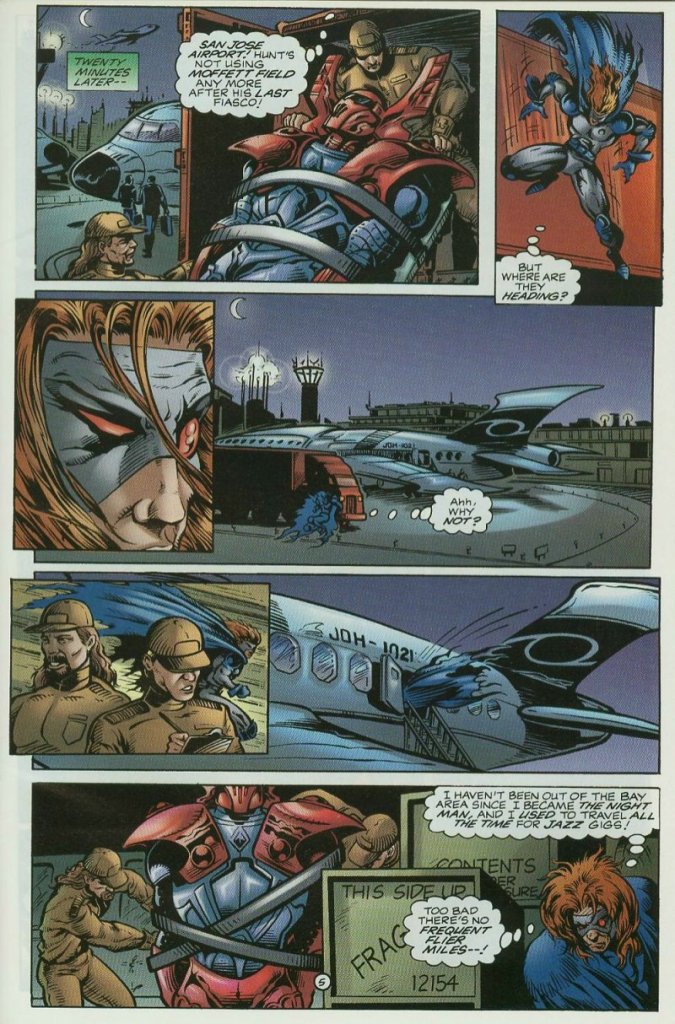
Elsewhere, the Night Man secretly jumps on the top of a moving truck which he knows carries NuWare’s secret project Teknight. Upon arrival at the airport of San Jose, California, Night Man carefully sneaks into an airplane which is where Teknight is loaded at…

Quality

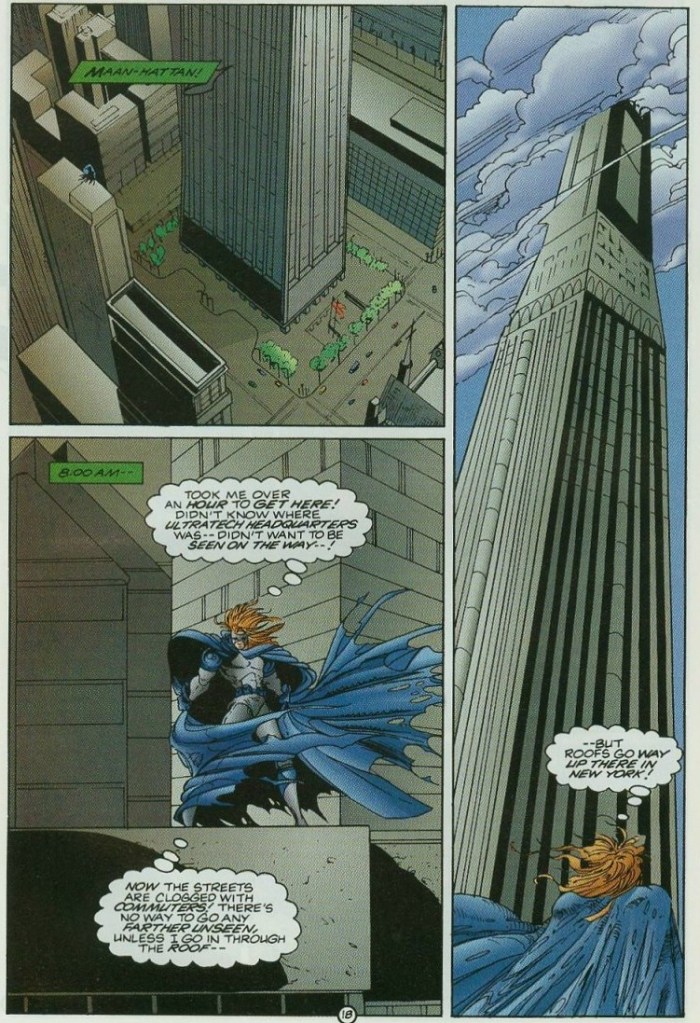
Imagine yourself being Night Man in New York and you do not have the technology nor the means to be able to rise up a skyscraper.

I’ll say it straight right now…the story of this comic book is nicely crafted. With Steve Englehart and the contributions of Len Strazewski and the late James Hudnall, this one score nice points when it came to building-up the concept behind Hostile Takeover which involves a strong sense of corporate intrigue (which was often present in comic books of Prototype). The presence of The Solution is pretty small (this is a Night Man comic book after all) but they contributed nicely to the build-up.

The story of Hostile Takeover was told mainly through the eyes of the Night Man. For the newcomers reading this, Night Man is a vigilante who also does a lot of problem solving similar to Batman. Unlike the mentioned comic book icon, Night Man does not have insufficient resources to back him up and pushes himself to travel around and complete his mission. In this comic book, you will see him really go as far as he could with tracking down the powered suit of armor of Teknight. You will also see him struggle and you might as well relate with his limitations.

There is not too much superhero spectacle to enjoy here but that’s okay because there is a nice amount of very interesting details presented in the build-up of Hostile Takeover’s concept.

Conclusion

Night Man on the pursuit as Teknight gets loaded into the jet.

Even though it lacked spectacle, The Night Man (1994) is still an engaging read and it should score well with readers or Ultraverse fans who enjoy detailed storytelling. This comic book succeeds in building up the concept of Hostile Takeover while setting up the crossover elements between key Ultraverse characters. The story also emphasizes more of Night Man’s struggle to get his mission done.

If you are seriously planning to buy an existing hard copy of The Night Man (1994), be aware that as of this writing, MileHighComics.com shows that the near-mint copy of the comic book costs $14.

Overall, The Night Man (1994) is recommended.

+++++

Thank you for reading. If you find this article engaging, please click the like button below and also please consider sharing this article to others. If you are looking for a copywriter to create content for your special project or business, check out my services and my portfolio. Feel free to contact me as well. Also please feel free to visit my Facebook page Author Carlo Carrasco and follow me at HavenorFantasy@twitter.com
A Look Back at The Strangers #22 (1995)

Disclaimer: This is my original work with details sourced from reading the comic book and doing personal research. Anyone who wants to use this article, in part or in whole, needs to secure first my permission and agree to cite me as the source and author. Let it be known that any unauthorized use of this article will constrain the author to pursue the remedies under R.A. No. 8293, the Revised Penal Code, and/or all applicable legal actions under the laws of the Philippines.

Welcome back, superhero enthusiasts, comic collectors and fans of 1990s comics culture! We go back to the Ultraverse to witness further events from The Strangers told during the late stage of their 24-issue run as a comic book series. In the previous review, Teknight became more prominent as a member of the team as Candy/Electrocute got heavily damaged which led the Strangers to having her repaired not in just any private facility but rather in the facility of a powerful organization.

And then something happened at the end of The Strangers #21.

With those details laid down, here is a look back at The Strangers #22, published by Malibu Comics in 1995 with a story written by Steve Englehart and drawn by Paul Abrams.

The cover.

Early story

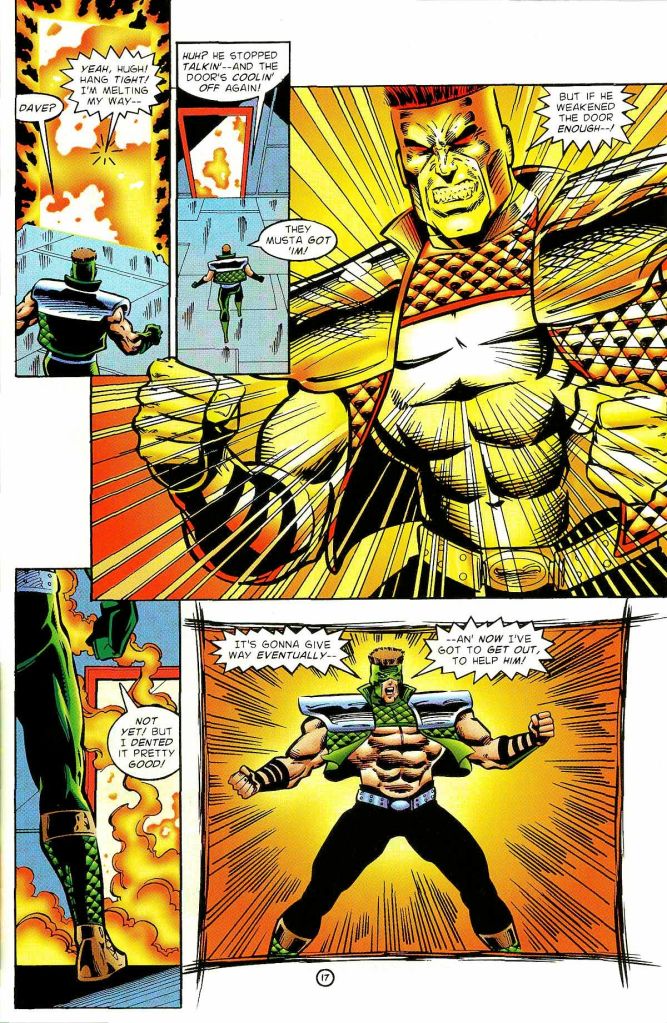
The story begins inside a high-tech facility when the newly repaired Electrocute gets up and attacks her teammates Grenade (her romantic partner) and Teknight. Electrocute is acting under someone’s control. In response to Teknight’s methodical approach on absorbing electric blasts from Electrocute, Grenade warns him about the how capable NuWare is when it comes to control and execution.

Even so, Teknight continues to stand until he gets overwhelmed by the lady’s power and ends up getting paralyzed. An executive walks near Teknight and Electrocute boasting that he loves seeing his designs in action and Grenade comes in to use his power on his romantic partner…

Quality

Grenade and the door.

Once again, Steve Englehart crafted another story that keeps this series fresh and fun to read. The story started with a good amount of action involving Grenade, Electrocute and Teknight. As I don’t want to spoil the plot, I can say that what happened after the action-packed opening sheds light on a new yet significant youth who wields a lot of power thanks to his father (clue: a powerful and ruthless executive who was involved not only with the Strangers but also with Mantra and Night Man). The story is very well structured and moves at a nice pace. Also I can say that the spotlight on the Strangers as a whole team was carefully balanced.

When it comes to character development, it is Grenade who clearly got a good dose of it. Apart from the usual display of his feelings towards Electrocute, this comic book dramatizes his effort to understand not only his lady and their new teammate Teknight, but also his realization about the delicate balance between being alive and being linked with technology.

Conclusion

I wonder how today’s SJWs, radical socialists and Black Lives Matter activists would react to this particular scene.

The Strangers #22 (1995) is another fun-filled superhero story which served its purpose in concluding the story that started in the previous issue. It also achieved its goal of emphasizing the role of NuWare (read: corporate intrigue) and the continued relevance of a certain corporate executive that the Strangers could not just get rid of.

If you are seriously planning to buy an existing hard copy of The Strangers #22 (1995), be aware that as of this writing, MileHighComics.com shows that the near-mint copy of the comic book costs $27.

Overall, The Strangers #22 (1995) is recommended.

+++++

Thank you for reading. If you find this article engaging, please click the like button below and also please consider sharing this article to others. If you are looking for a copywriter to create content for your special project or business, check out my services and my portfolio. Feel free to contact me as well. Also please feel free to visit my Facebook page Author Carlo Carrasco and follow me at HavenorFantasy@twitter.com
A Look Back at Prototype #14 (1994)

Disclaimer: This is my original work with details sourced from reading the comic book and doing personal research. Anyone who wants to use this article, in part or in whole, needs to secure first my permission and agree to cite me as the source and author. Let it be known that any unauthorized use of this article will constrain the author to pursue the remedies under R.A. No. 8293, the Revised Penal Code, and/or all applicable legal actions under the laws of the Philippines.

Welcome back superhero enthusiasts, comic book collectors and fans of the Malibu Comics! It’s been months since the last time I reviewed a comic book of Prototype. For me Prototype is one of the more defining characters of the entire Ultraverse and I really enjoyed reading each issue of the monthly series (which started in 1993 along with many other UV titles). Prototype is not a mere imitation of Marvel Comics’ Iron Man. In fact, the armored character has a lot more depth and the overall concept of the Prototype monthly series involves corporate intrigue.

Now we can see more of the armored ultra in this look back at Prototype , published in 1994 by Malibu Comics with a story written by Len Strazewski and drawn by Roger Robinson.

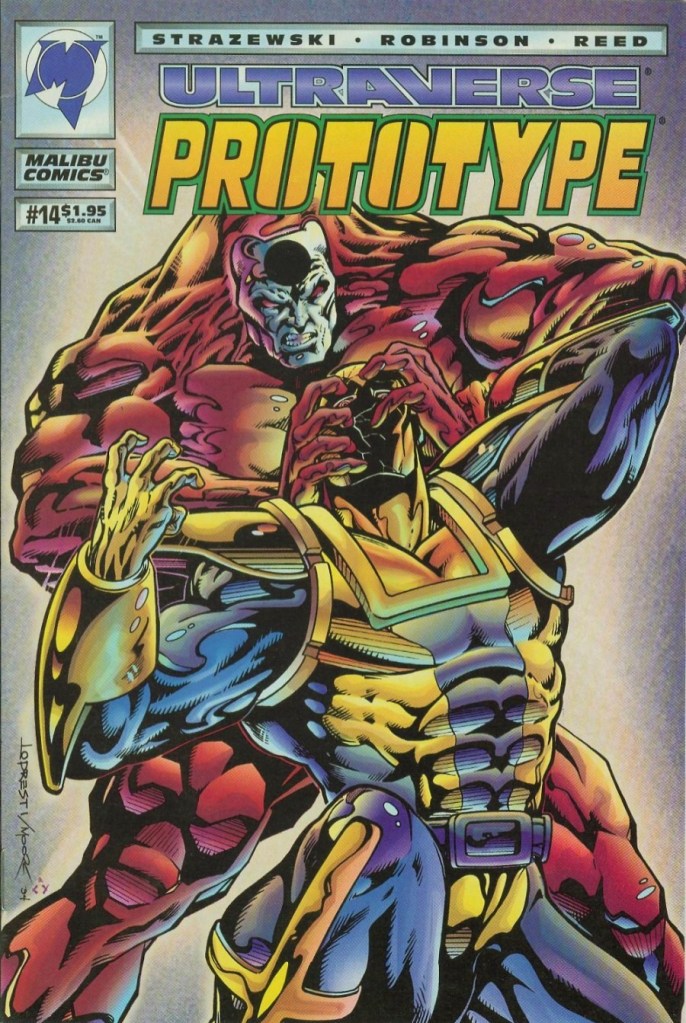
The cover.

Early story

The story begins inside a high-tech facility. An executive enters a room and approaches a powerful, technology enhanced being called Manhattan Project. He tells him to do his duty. In response, Manhattan Project (note: he appeared in Prime #18) grabs the executive by the throat and kills him.

Elsewhere, chaos strikes the city as the armored Gordon Bell unleashes his fury which Prototype, Ranger, Night Man and The Solution witnessed. Bell pointed at Prototype promising he will come back for him.

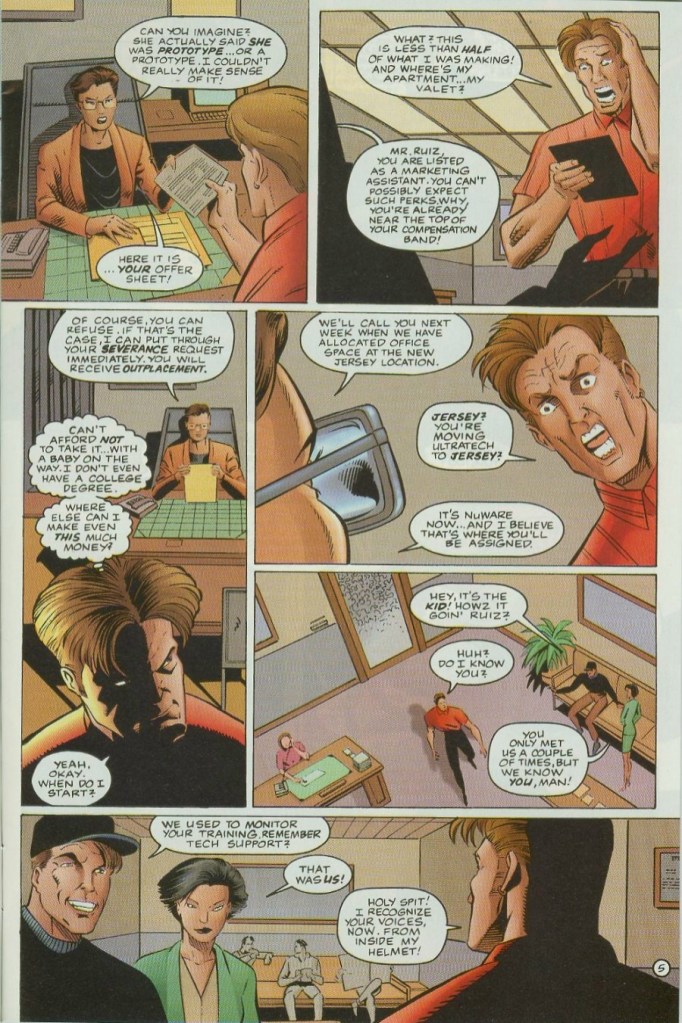
Some time later, Jimmy Ruiz (Prototype) visits and meets Lisa Lopez, the director of human resources. At this point, the destruction of Gordon Bell’s own office as well as the recent corporate merger put Jimmy in a bind with uncertainty. To his dismay, the job offered to him pays less than half of what he was making due to technical evaluations related to the merger. Even so, he decides to accept the new job…

Quality

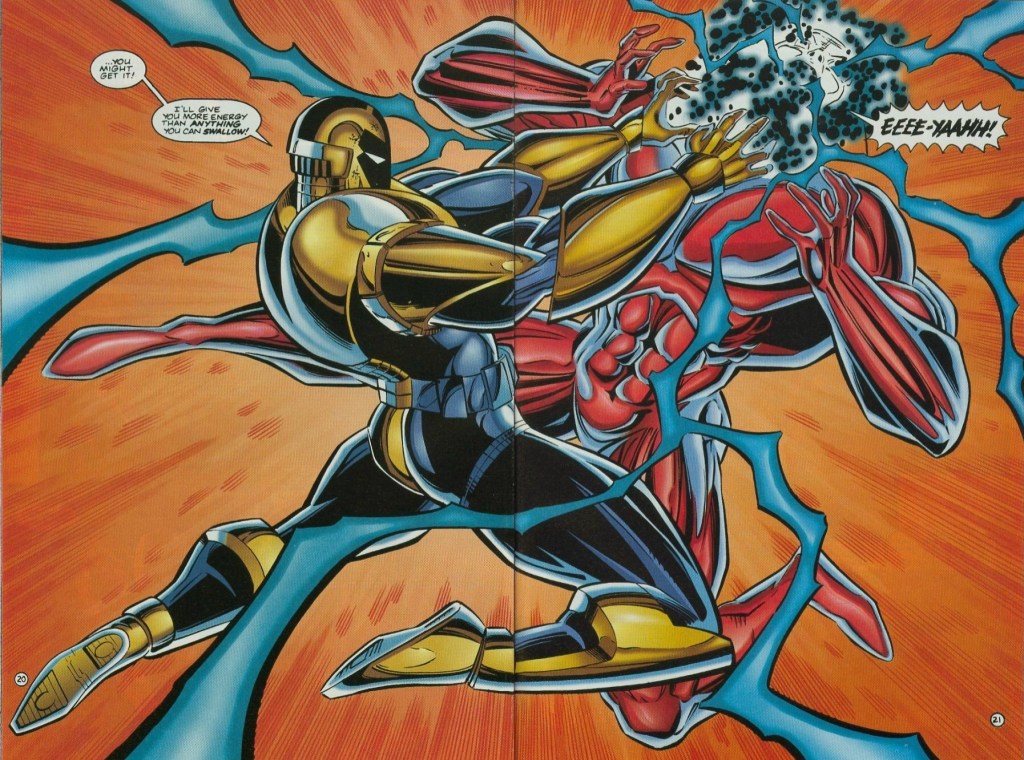
The money shot!

This is an enjoyable, character-driven story of Prototype. It is a refreshing way of presenting the title character after having read lots of Prototype comic books that had the spotlight divided between Jimmy Ruiz and Bob Campbell. The corporate intrigue continues nicely in this story but the stakes have been raised not only with NuWare and Ultratech, but also with Jimmy Ruiz.

The Prototype pilot finds himself in a new stage of his life, one that is full of uncertainty and pain as his high-paying job is no more and a lot of secret technology records got destroyed. Apart from a destroyed career, Jimmy also has to struggle with the power surging in him which requires him to use the Prototype armor to reduce the extra power.

Prototype encounters Manhattan Project in this issue and I can say that it was not only action-packed but also had a nice combination of intensity and emotions. The said encounter was short but every moment of it was very enjoyable to read.

Conclusion

Major career challenge for Jimmy Ruiz.

Prototype (1994) is a lot of fun to read and anyone who is true follower to Jimmy Ruiz will be happy to that there is very strong focus on him. It seems that this story marks the turning point of his life and sets the stage for more surprises and intrigue as the corporate world turned upside down.

If you are seriously planning to buy an existing hard copy of Prototype (1994), be aware that as of this writing, MileHighComics.com shows that the near-mint copy of the comic book costs $14.

Overall, Prototype (1994) is recommended.

+++++

Thank you for reading. If you find this article engaging, please click the like button below and also please consider sharing this article to others. If you are looking for a copywriter to create content for your special project or business, check out my services and my portfolio. Feel free to contact me as well. Also please feel free to visit my Facebook page Author Carlo Carrasco and follow me at HavenorFantasy@twitter.com
A Look Back at Freex #11 (1994)

Disclaimer: This is my original work with details sourced from reading the comic book and doing personal research. Anyone who wants to use this article, in part or in whole, needs to secure first my permission and agree to cite me as the source and author. Let it be known that any unauthorized use of this article will constrain the author to pursue the remedies under R.A. No. 8293, the Revised Penal Code, and/or all applicable legal actions under the laws of the Philippines.

Welcome back, Ultraverse fans, superhero enthusiasts, comic book collectors and all other geeks! Today, we revisit the Ultraverse for more 1990s comic book fun through another tale of Freex, the team of misfits who have no place to stay.

Last time around, the narrative of Freex suddenly got much stronger X-Men vibes as it was revealed that Freex member Ray/Boom Boy was brought in by Contrary (best known in UltraForce comics) to her team of students (each with different powers and abilities) called the Academy for the New Elite. The rest of the Freex eventually found their way to the secret base of Contrary’s academy.

With those details laid down, we can continue with this look back at Freex , published in 1994 by Malibu Comics with a story by Gerard Jones and drawn by Ben Herrera.

The cover.

Early story

The story begins inside the secret facility of the Academy for New Elite. There the surviving members of Freex (Valerie/Pressure, Lewis/Anything, Angela/Sweetface and Michael/Plug) are restrained. Plug can’t do anything except speak gibberish physically as his mind is still connected with the Internet.

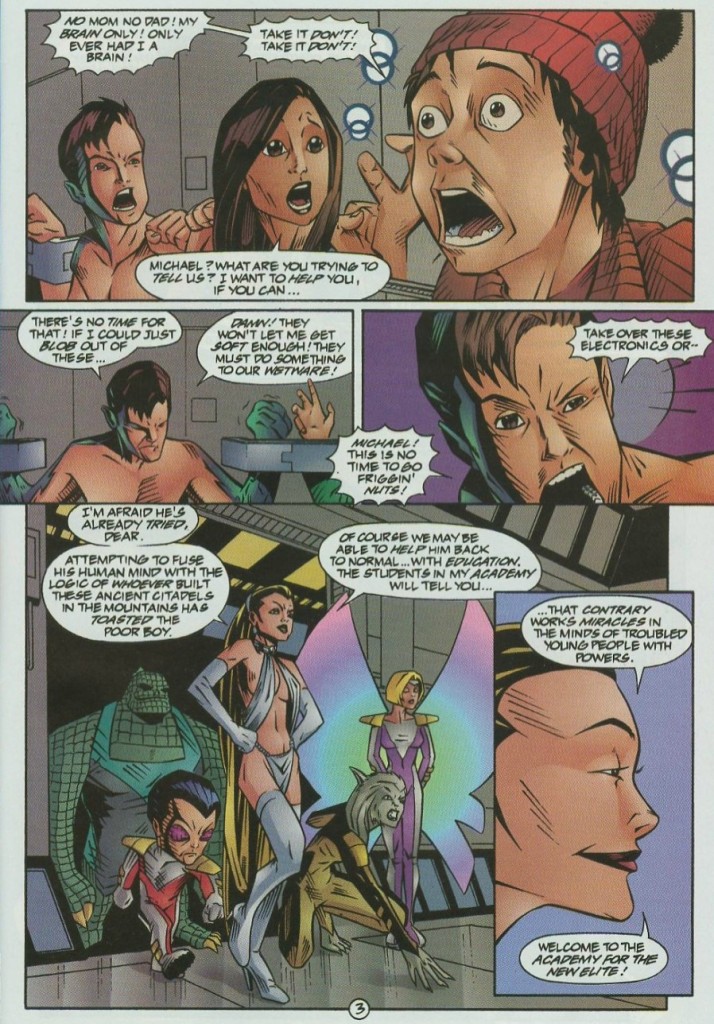
Contrary arrives with her students and she tells Freex that she herself works miracles in the minds of troubled young people with powers. She welcomes them to her academy. Valerie, who has often been a rebel, reacts by telling Contrary that she won’t brainwash her like her little “puppets”. In response, Contrary emphasized that her students joined her voluntarily.

Just moments after Lewis made an issue about their teammate Boom Boy getting abducted and asking what Contrary did to turn him against them, Boom Boy suddenly appears and rebukes him.

“She didn’t do nothing…except promise to teach me. Teach me everything my parents took away from me,” Boom Boy said. “I don’t want to be dumb anymore, Lewis.”

The Freex members are stunned…

Quality

Plug’s origin story is interesting but not engaging enough when compared with the main plot.

While the storytelling in the previous issue was a nice mix of surprise and intrigue, this comic book has an even more intriguing tale which really tested the bond that held Freex members together. A notable theme in the story is loyalty which was emphasized in the form of interactions between characters, as well as the student-mentor bond between the Academy’s students and their leader Contrary. It should also be stated that perceptions about becoming loyal to the leader and the struggle to win trust are nicely dramatized in this comic book.

More on the plot, I really enjoyed the confrontation between Contrary’s team and Freex as they symbolize the conflict between being nurtured (educated as students) and being free (freedom that comes with being social outcasts). There are some really nice twists that you should discover for yourselves. Oh yes, the superhero spectacle here are fun to read.

Conclusion

Freex are the youth who are free as social outcasts while Contrary leads a team of youth who are trained and nurtured.

Freex (1994) is another solid entry in the monthly series. It has a more symbolic story and the dramatics have been ramped up. The story itself is pretty cohesive and combined with all the emotions and twists, it all makes sense. It even has key elements that will remind you about today’s developments and movements like the dreaded Cancel Culture, the sinister Democratic Socialists and the wicked Black Lives Matter movement. That being said, the side story emphasizing the origin of Plug just could not match the engagement of the main plot. Regardless, this comic book marks a notable turning point for the Freex as a whole.

If you are seriously planning to buy an existing hard copy of Freex (1994), be aware that as of this writing, MileHighComics.com shows that the near-mint copy of the comic book costs $14.

Overall, Freex (1994) is highly recommended!

+++++

Thank you for reading. If you find this article engaging, please click the like button below and also please consider sharing this article to others. If you are looking for a copywriter to create content for your special project or business, check out my services and my portfolio. Feel free to contact me as well. Also please feel free to visit my Facebook page Author Carlo Carrasco and follow me at HavenorFantasy@twitter.com
A Look Back at The Strangers #21 (1995)

Disclaimer: This is my original work with details sourced from reading the comic book and doing personal research. Anyone who wants to use this article, in part or in whole, needs to secure first my permission and agree to cite me as the source and author. Let it be known that any unauthorized use of this article will constrain the author to pursue the remedies under R.A. No. 8293, the Revised Penal Code, and/or all applicable legal actions under the laws of the Philippines.

Welcome back, superhero enthusiasts, comic book collectors and geeks! We go back yet again into the Ultraverse through the exploits of The Strangers which by this point are still adjusting over Atom Bob’s betrayal. The previous issue did not show much of the team as it told a mostly solo story of Zip-Zap.

With those details laid down, here is a look back at The Strangers #21, published in 1995 by Malibu Comics with a story written by Steve Englehart and drawn by Paul Abrams.

The cover.

Early story

The story begins inside a different type of aircraft. The Strangers, now with new member Teknight and old teammate Yrial, discuss matters about the unconscious Atom Bob whose body has been laid on a platform. In response to Yrial’s question about what should they do about him, Lady Killer (Atom Bob’s ex-lover) states that if a cure for him exists, they will find it. If no such cure exists, she states that the traitorous member should never wake up again.

After being informed by Lady Killer that she knows a private clinic in Europe that may have the solution to their problem, the Strangers get off the plane knowing that they should keep confidential what they just learned.

Shortly after watching Lady Killer’s private plane take off, Candy/Electrocute tells her teammates that they should just get away for a while. She decides to drive Grenade’s car. Suddenly, the car explored leaving Candy heavily damaged…

Quality

Here’s a look at Teknight, the new member of The Strangers.

This is another intriguing yet original story of The Strangers penned by Steve Englehart. To begin with, this is the first issue of this monthly series that saw Teknight actively taking part with the team and his being a new addition opened up really interesting conversations and interactions with existing team members like Grenade.

As the cover already shows, this one has spotlight on a severely damaged Candy. Still, it does not mean that this is a solo story about her (like Zip-Zap’s tale in issue ) rather it is still a team story with Candy’s tragedy serving as a major plot point. Along the way, there were some scenes focused on Teknight which opens up interesting background details about him. Zip-Zap, who had the spotlight for most of issue , proves his heroic value in this comic book.

There are other notable Ultraverse details here and there that would encourage you to check out other UV comic books. What exactly those details are is for you to read this comic book and find out for yourselves.

Conclusion

Zip-Zap doing something heroic.

The Strangers #21 (1995) is intriguingly enjoyable to read. Steve Englehart deserves a lot of credit for keeping the stories of this series fresh, fun and engaging. For his part, Paul Abrams did a fine job with the art and he successfully captured the overall style of presentation of the series and his take on the characters kept them recognizable to my eyes.

If you are seriously planning to buy an existing hard copy of The Strangers #21 (1995), be aware that as of this writing, MileHighComics.com shows that the near-mint copy of the comic book costs $27.

Overall, The Strangers #21 (1995) is recommended.

+++++

Thank you for reading. If you find this article engaging, please click the like button below and also please consider sharing this article to others. If you are looking for a copywriter to create content for your special project or business, check out my services and my portfolio. Feel free to contact me as well. Also please feel free to visit my Facebook page Author Carlo Carrasco and follow me at HavenorFantasy@twitter.com
A Look Back at The Strangers #20 (1995)

Disclaimer: This is my original work with details sourced from reading the comic book and doing personal research. Anyone who wants to use this article, in part or in whole, needs to secure first my permission and agree to cite me as the source and author. Let it be known that any unauthorized use of this article will constrain the author to pursue the remedies under R.A. No. 8293, the Revised Penal Code, and/or all applicable legal actions under the laws of the Philippines.

Welcome back, superhero enthusiasts, comic book collectors and fans of the Ultraverse. We revisit the Ultraverse once again to follow the continuing stories of The Strangers. Last time around, the team found itself struggling with adjusting to life without Atom Bob. For Lady Killer, the loss is very painful not only for her leadership of the team but also on her heart as she had a relationship with him.

What will happen next? How will the team move forward without Atom Bob? We can all find out in this look back at The Strangers , published in 1995 by Malibu Comics with a story written by Steve Englehart and drawn by Sam Payne.

The cover.

Early story

The story begins inside the home of a mother and her son enjoying indoor basketball. Their happiness got disrupted when a large, muscular man with blonde hair crashes through their door. With him is another man named M.C. who tells the lady that he and his companion want to “borrow” her son. As the mother resisted, the slimmer man knocks her out while Beater (the large guy) grabs her son.

Elsewhere, The Strangers react to the official trading card featuring Candy/Electrocute. Leon/Zip-Zap is familiar with the value of trading cards and he shows them his card of a basketball player called Missile Monroe from his days as a rookie.

As he is eager to have the trading card signed by the basketball player, Zip-Zap heads on to the city. On his way, he notices people gathered outside Holt’s Gym which he heard is the place where Missile Monroe works out at. He then uses his super speed to go past a few more people, climb up the wall, step on the ledge and look through the window. Zip-Zap sees the basketball player shooting indoors in the presence of a friend.

Sensing opportunity, Zip-Zap decides to sneak in and make his grand entrance to meet Monroe..

Quality

Zip-Zap slams!

I can start by saying that this comic book’s story is much less of The Strangers and more about their youngest and fastest member Zip-Zap. Rather than presenting a story about Zip-Zap going back to his old neighborhood, the story is about him meeting someone very important while taking advantage of his own celebrity status as a member of The Strangers (now known by the public) to get to him.

Other his personal obsession with a sports celebrity, this comic book also explores Zip-Zap’s determination to do something heroic without the presence of his teammates. As he is still a teenager, this part of the story alone is intriguing.

Also intriguing is the introduction of two new villains in this series, MC and Beater. How they became powerful and what their connection with Missile Monroe is something you readers should discover. I personally enjoyed what was revealed.

Other than heroic happenings, the story here explores the consequences that come with big money and lucrative deals. There is also the theme about social elevation with regards to the progress a person can make coming from the local communities to the big league. Also the events in this comic book will remind readers to respect the boundaries between them and the celebrities or important people they encounter in person.

Conclusion

Zip-Zap meets Missile Monroe and friend.

Even though it had much less of the team itself, The Strangers (1995) is a worthy and fun read. The story about Zip-Zap going solo temporarily for his pursuit was nicely crafted and the new characters introduced had personalities that were interesting, most notably with Missile Monroe. Apart from characterization, there is sufficient superhero spectacle to enjoy as well. Going back to Zip-Zap, anyone who loves the character will be pleased with the spotlight on him. I should also state that this story shows additional depth to Zip-Zap’s character.

If you are seriously planning to buy an existing hard copy of The Strangers (1995), be aware that as of this writing, MileHighComics.com shows that the near-mint copy of the comic book costs $14.

Overall, The Strangers (1995) is recommended.

+++++

Thank you for reading. If you find this article engaging, please click the like button below and also please consider sharing this article to others. If you are looking for a copywriter to create content for your special project or business, check out my services and my portfolio. Feel free to contact me as well. Also please feel free to visit my Facebook page Author Carlo Carrasco and follow me at HavenorFantasy@twitter.com
A Look Back at Freex #10 (1994)

Disclaimer: This is my original work with details sourced from reading the comic book and doing personal research. Anyone who wants to use this article, in part or in whole, needs to secure first my permission and agree to cite me as the source and author. Let it be known that any unauthorized use of this article will constrain the author to pursue the remedies under R.A. No. 8293, the Revised Penal Code, and/or all applicable legal actions under the laws of the Philippines.

Welcome back, superhero enthusiasts, comic book collectors and fans of the Ultraverse! Today we will revisit the Ultraverse following the team of misfits called Freex. In my past Freex review, we saw the first appearance of Contrary who went on to become one of the more intriguing members of the superhero team UltraForce. As seen in the UltraForce monthly series, Contrary proved to be very intelligent, very resourceful and has what it takes to manipulate the behaviors and direction of even the likes of Hardcase (the team leader), Prototype and Prime.  

Of course, before the events of UltraForce happened, many of Contrary’s traits and operations were first explored in the Freex monthly series. To learn more about her, here is a look back at Freex , published in 1994 by Malibu Comics with a story written by Gerard Jones and drawn by Ben Herrera.

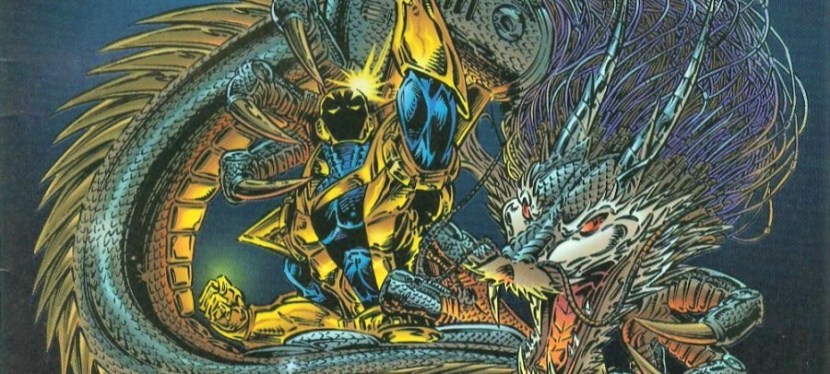
The cover.

Early story

The story begins inside a secret facility. Ray/Boom Boy of Freex has just been abducted and is restrained in the presence of Contrary who is just seating near him looking sexy and comfortable. Knowing that Boom Boy has no chance to escape and fight back, she releases him and mentions that she has other students who will fight for her.

Slowly, Contrary leads him into another place of the facility telling him that he’s not locked up (like a prisoner) but rather he is home (implying there is a place for him at the facility). She introduces him to her Academy for the New Elite with her students engaging in a training session against drones and obstacles. Her students are Feline, Waver, Flygirl and Cayman.

Meanwhile, members of the Freex are still homeless and are trying to figure out how to find Boom Boy… 

Quality

The Freex, without Boom Boy, struggling.

I want to start with the writing. This issue was clearly less about Freex and more of Boom Boy (note: his personal origin emphasized) and Contrary and her academy of people with powers and special abilities. Creatively, this story has strong X-Men vibes in it which I personally enjoyed. I do confirm that the writing is strong on storytelling, characterization and dialogue.

While the previous issue introduced her briefly, Contrary is heavily emphasized in this issue. Apart from being resourceful and highly intelligent, she is also erotic with her appearance (so much of her skin exposed always) and at the same time she is well portrayed as a mentor to her students complete with traits of motherly care to them. In comparison with what I’ve seen in X-Men comic books, Contrary is like a combination of Charles Xavier and Emma Frost with some traces of Moira MacTaggert. I should also state that Contrary has a keen perception on finding outstanding or special individuals that she can help develop in more ways than one.

Going back to Boom Boy, this comic book really redefined him not only as a questionable member of Freex but also as an Ultraverse character in general. By reading this story, you will not only relate with Boom Boy but also experience the challenge he is having on whether to decide to be with his old pals or join Contrary’s academy (which itself is inspired by Xavier’s School of Gifted Children in X-Men comics) to really leave his past behind and move forward personally.

While this comic book is heavy with characterization and exposition, there is still a good amount of superhero to enjoy here. The good news is that artist Ben Herrera showed a lot of creative stuff with the spectacle.   

Conclusion

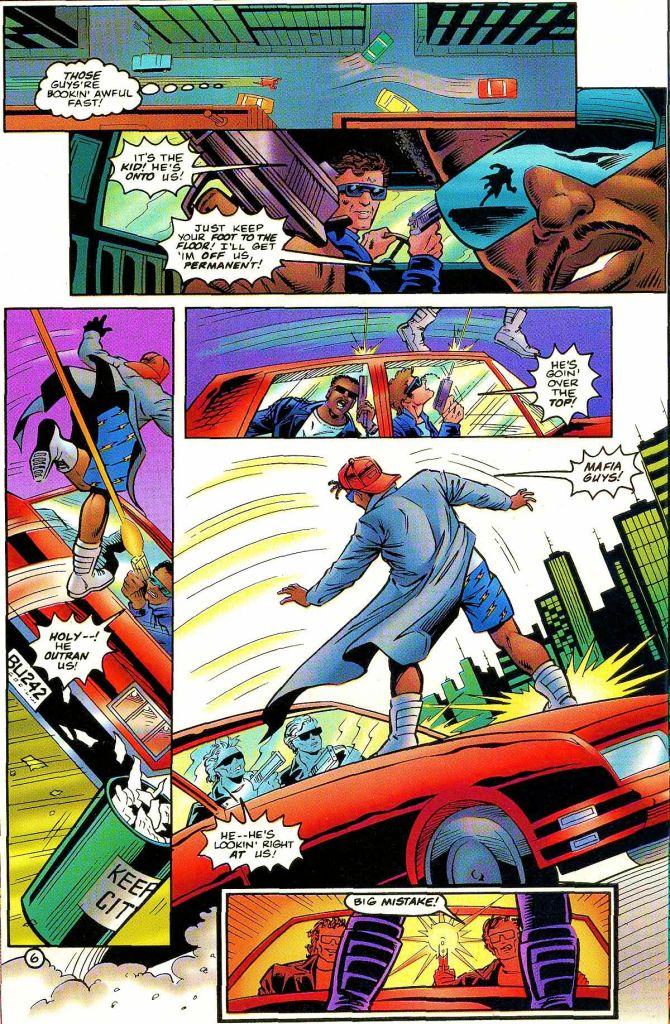
This scene has very strong X-Men vibes.

Freex (1994) is a great Ultraverse comic book! I really found this particular issue to be very engaging from start to finish. As a story about the Freex themselves, this one saw their story as desperate nomads move forward a lot. Still the standouts of the story are Boom Boy and Contrary. If you have not read any issues of UltraForce yet, I highly recommend reading this so you can get to know Contrary better as she is one of the core UF members.

If you are seriously planning to buy an existing hard copy of Freex (1994), be aware that as of this writing, MileHighComics.com shows that the near-mint copy of the comic book costs $11.
Overall, Freex (1994) is highly recommended!

+++++

Thank you for reading. If you find this article engaging, please click the like button below and also please consider sharing this article to others. If you are looking for a copywriter to create content for your special project or business, check out my services and my portfolio. Feel free to contact me as well. Also please feel free to visit my Facebook page Author Carlo Carrasco and follow me at HavenorFantasy@twitter.com