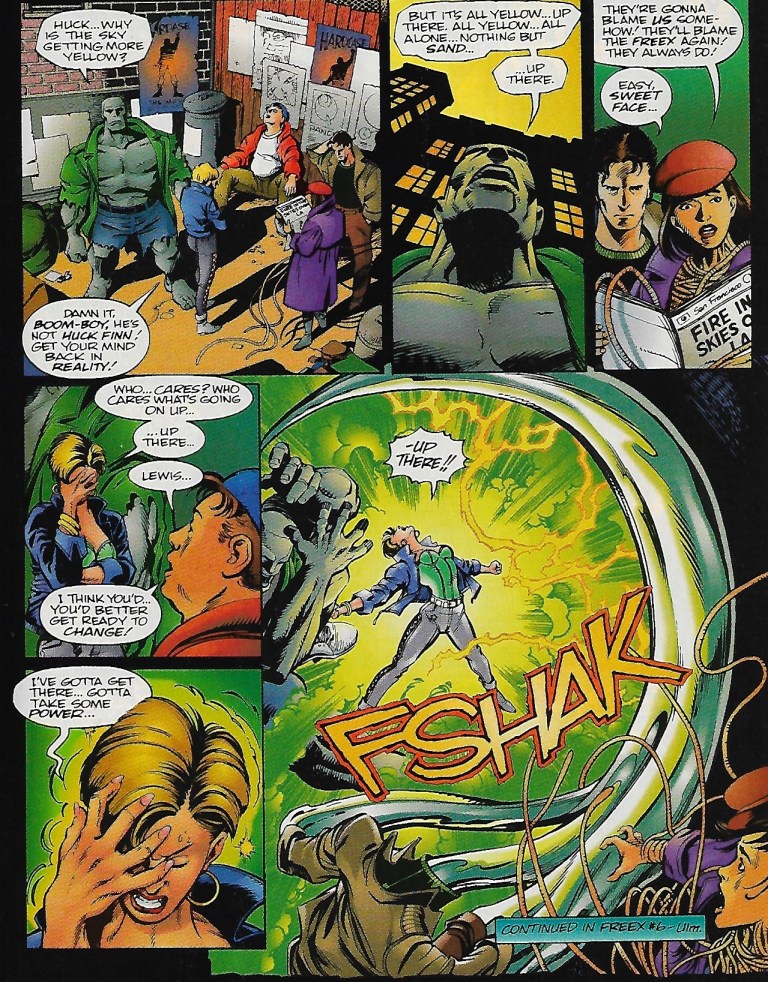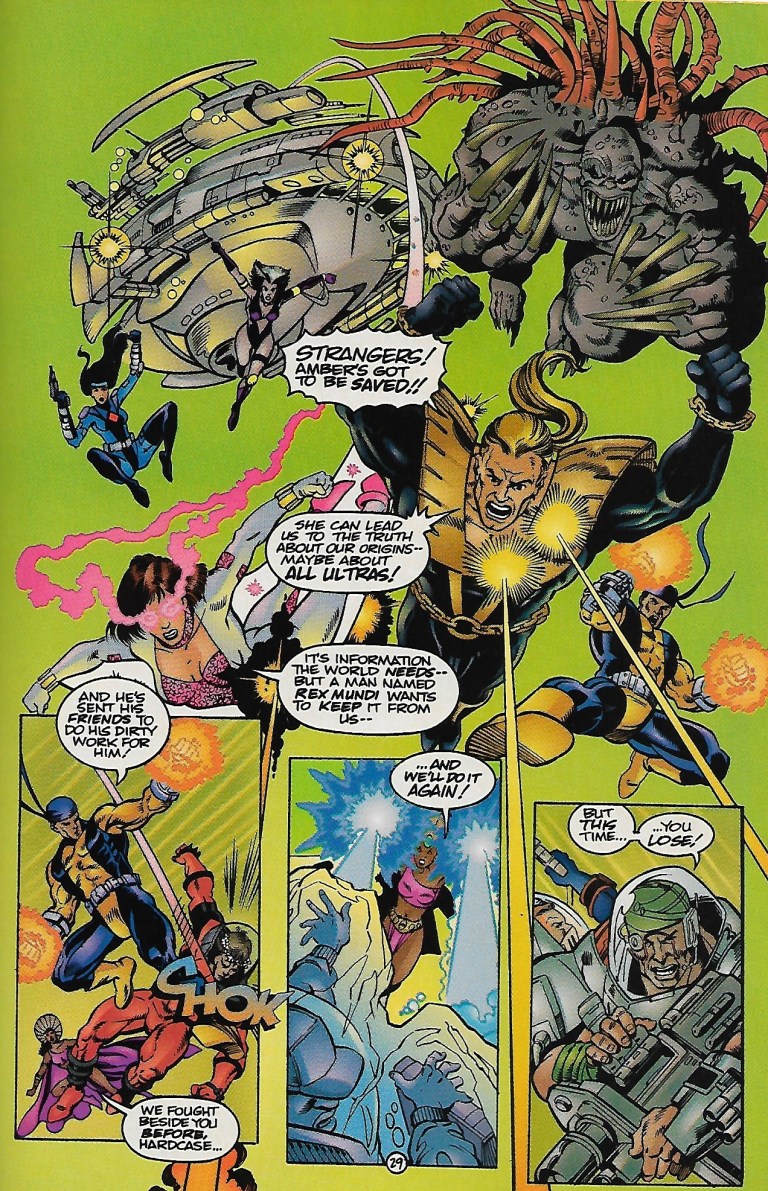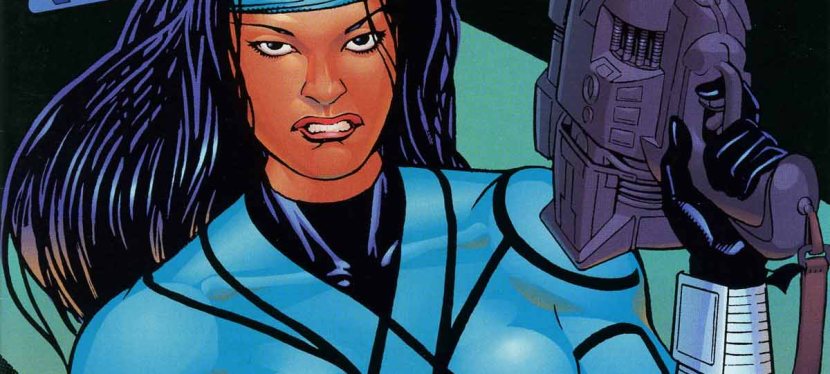
A Look Back at The Solution #6 (1994)

Disclaimer: This is my original work with details sourced from reading the comic book and doing personal research. Anyone who wants to use this article, in part or in whole, needs to secure first my permission and agree to cite me as the source and author. Let it be known that any unauthorized use of this article will constrain the author to pursue the remedies under R.A. No. 8293, the Revised Penal Code, and/or all applicable legal actions under the laws of the Philippines.

As this is another retro  review of another Ultraverse comic book written by the late James Hudnall, I encourage you to take time to check out his background and other works via Comic Book Resource’s report of his death on April 2019.

In memory of James Hudnall, here are his words published near the end of The Solution #7:

The Solution is a dream team for me. I’ve been wanting to mix the genres of fantasy and cyberpunk science fiction with the super-hero genre for some time. Add my love of Japanese animation and Hong Kong cinema and you can see where I’m coming from here. This series is designed to show us some of the more bizarre and dark sectors of the Ultraverse without, hopefully, falling into the trap many similar books do where they lay it on too thick. The Ultraverse is a complex and multi-faceted universe and our books explore different sides. Here I want to delve deep into the criminal and espionage arenas as well as the magic sub-cultures that exist.

The characters themselves have a rich and interesting history that I plan to slowly unveil as the series progresses. When you first meet someone, you usually don’t know that much about the person. The characters are rather deep, as we will discover, and their personalities and more complex than you’re probably used to seeing in comics.

Now we can start this look back at The Solution #6, the Ultraverse comic book published in 1994 by Malibu Comics with a story written by James Hudnall and illustrated by John Statema (with ink work by Dennis Jensen and Mark Stegbauer).
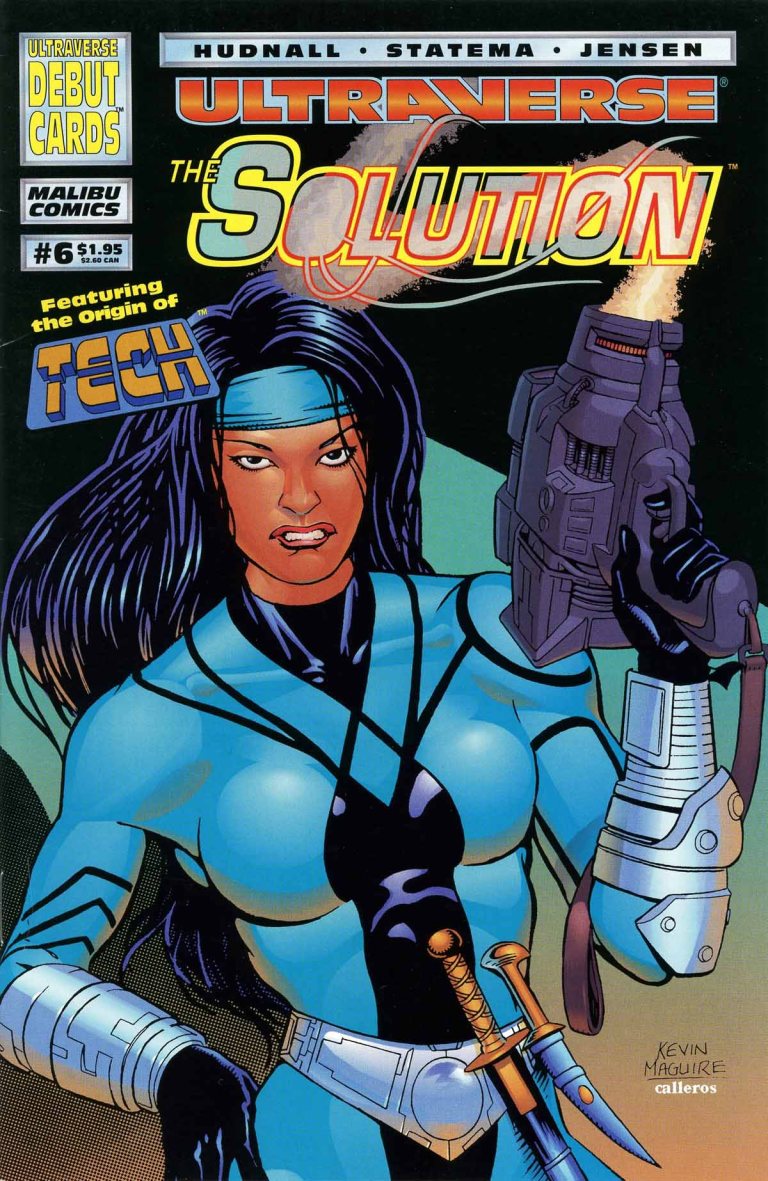
Cover
The cover.

Early story

The story begins with Lela Cho (Tech) alone paying respect to her father at his grave. She tearfully recalls what happened right after he died.

The narrative then shifts to 1993, specifically the day her father was about to get buried with many guests involved. Even though she is mourning, a man with blonde hair approaches her. His name is Kyle Sanders and he tells her she wants to talk to her about the corporation called Hypersonic. After receiving his business card, Lela feels a strange sense of dread creeping up on her.

A few days later, Lela attends a Board of Directors meeting at the headquarters of Hypersonic. She reminds them that she inherited all of her father’s shares in the company that makes her a majority stockholder and it was written in his will that she will assume his post as Chairman of the Board. Even though she already earned her Master’s Degree in Business at Harvard, the BOD members rejected her on the grounds that she’s too young and has no previous practical experience. They expressed that it would be better for her to work within the company and climb her way up.

Even though she got rejected and found herself alone, she decided not to give up and move forward by visiting NuWare, a corporation in San Francisco, California, that specializes on bio-tech implants (Wetware) that can make a person an Ultra…

Quality
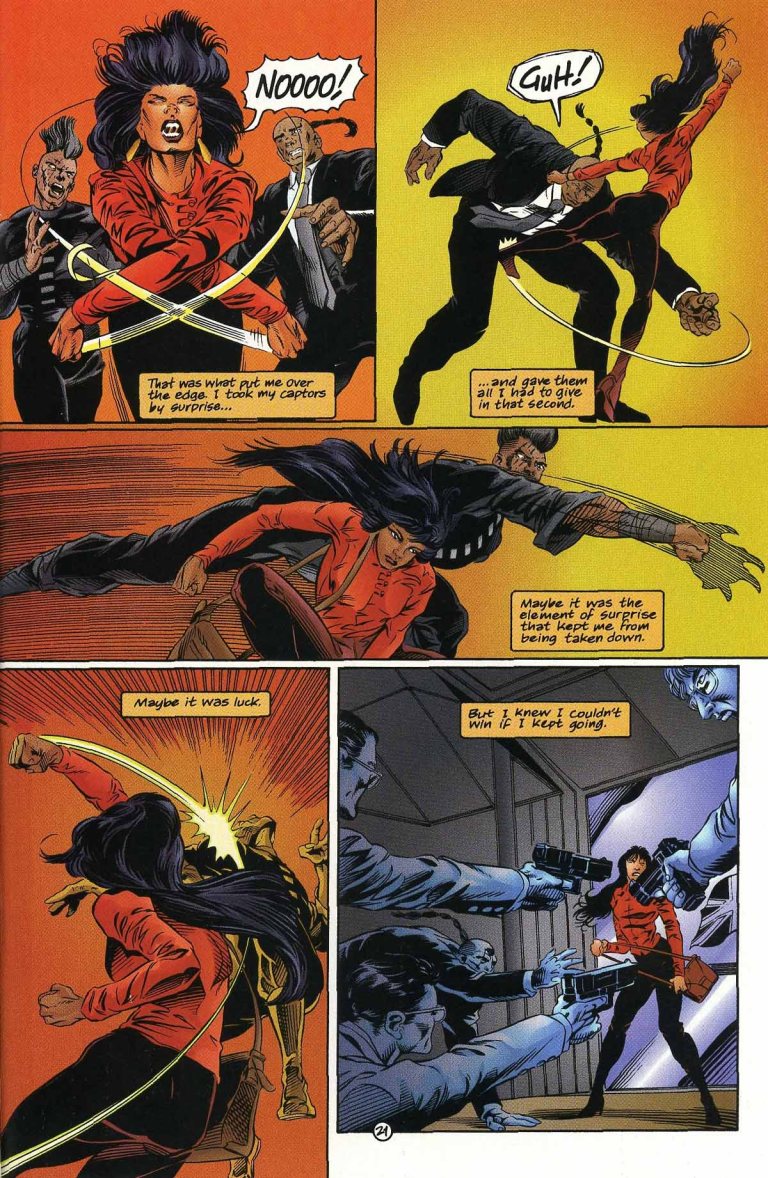
20
Lela Cho/Tech in action!

This is a very compelling, character-driven comic book, one of the best of the Ultraverse I read as of this writing. Clearly the late Hudnall achieved his goal of not only developing Lela Cho/Tech, but also defining her as a living part within the Ultraverse. Speaking of the Ultraverse, there is this nice and subtle connection with certain people regarding The Strangers.

Back to Lela Cho, her personality was very deeply defined by Hudnall. By the time you reach the end of this comic book, you should at least be caring about her even though her status as a super-rich lady trying to make her way up in business (while protecting herself) puts her on a different class. Ultimately her transformation into an Ultra is special to read and examine, even worthy of a cinematic adaptation.

Regarding the visuals, John Statema pulled of a great job. I love how the facial expressions he illustrated brought out the ranging emotions of the characters, specifically with Lela. When she’s mad, she really looks mad. When she is sad, you will see the sadness. Regarding action, Statema’s effort was decent.

Conclusion
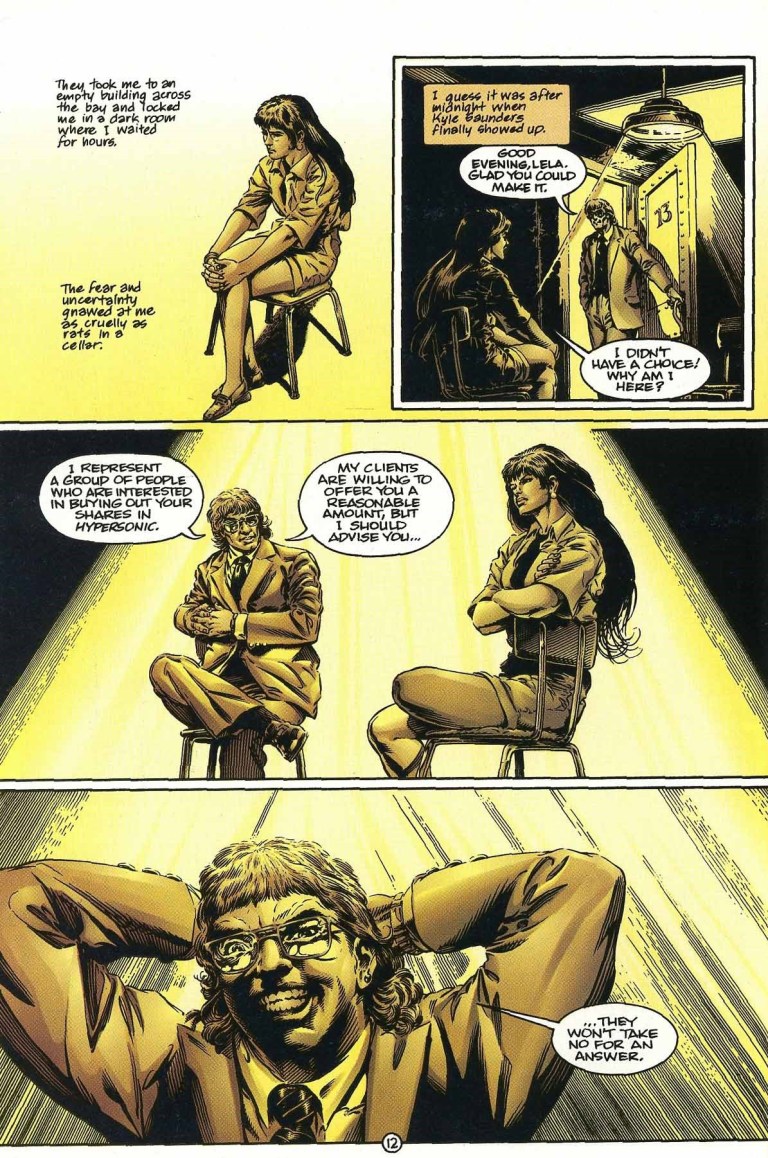
11
Really nice art and good choice with the colors for the light effect.

I really liked The Solution #6. From start to finish, it kept me very engaged and ultimately it made me understand Lela Cho/Tech much better, which also made me go back to re-reading the first issue.

If you are seriously planning to buy an existing hard copy of The Solution #6, be aware that as of this writing, MileHighComics.com shows that the near-mint copy of the regular edition costs $4.

Overall, The Solution #6 is highly recommended.


Thank you for reading. If you find this article engaging, please click the like button below and also please consider sharing this article to others. If you are looking for a copywriter to create content for your special project or business, check out my services and my portfolio. Feel free to contact me with a private message. Also please feel free to visit my Facebook page Author Carlo Carrasco and follow me on Twitter at  @HavenorFantasy as well as on Tumblr at https://carlocarrasco.tumblr.com/
A Look Back at The Strangers #4 (1993)

Disclaimer: This is my original work with details sourced from reading the comic book and doing personal research. Anyone who wants to use this article, in part or in whole, needs to secure first my permission and agree to cite me as the source and author. Let it be known that any unauthorized use of this article will constrain the author to pursue the remedies under R.A. No. 8293, the Revised Penal Code, and/or all applicable legal actions under the laws of the Philippines.

Previously, I took a look back at Hardcase #4 which marked the crossover between Hardcase and The Strangers. It was a fulfilling read in the sense that it built-up the initial connections between the Hollywood ultra (with Choice on his side) and the team. The crossover however continued in the other Ultraverse series titled The Strangers.

Join me on this look back at The Strangers #4, published in 1993 by Malibu Comics with a story written by Steve Englehart and illustrated by Rick Hoberg.

Cover
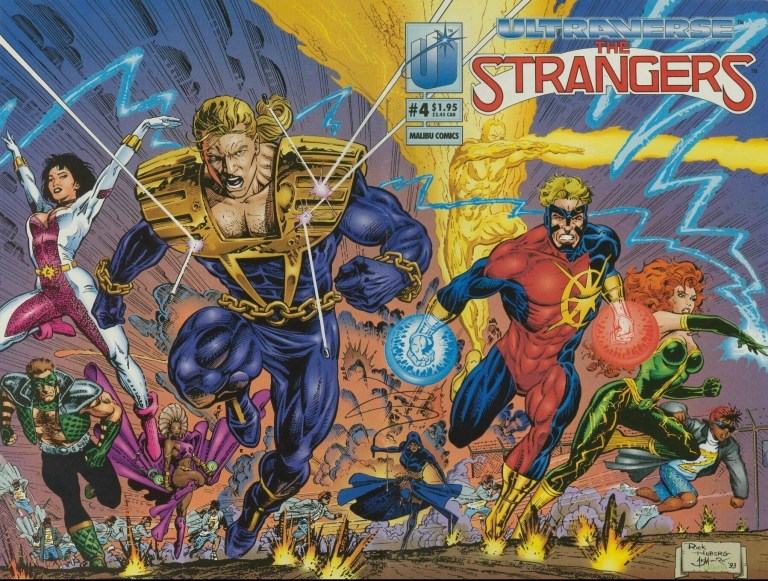
Same cover as Hardcase #4 but with the banner of The Strangers.

Early story

The story begins deep inside a secret facility with Hardcase and the Strangers already caught by Aladdin. Grenade tries his to break through the pink energy field separating them from Aladdin personnel but fails. The group is told that Aladdin has been watching ultras for some time and has developed was to neutralize anything ultras could do. It has been made clear to them that nobody will enter the pen until they all agree to join Aladdin.

After much talk, Hardcase and the Strangers managed to bring the energy field down and free themselves…

Quality

11
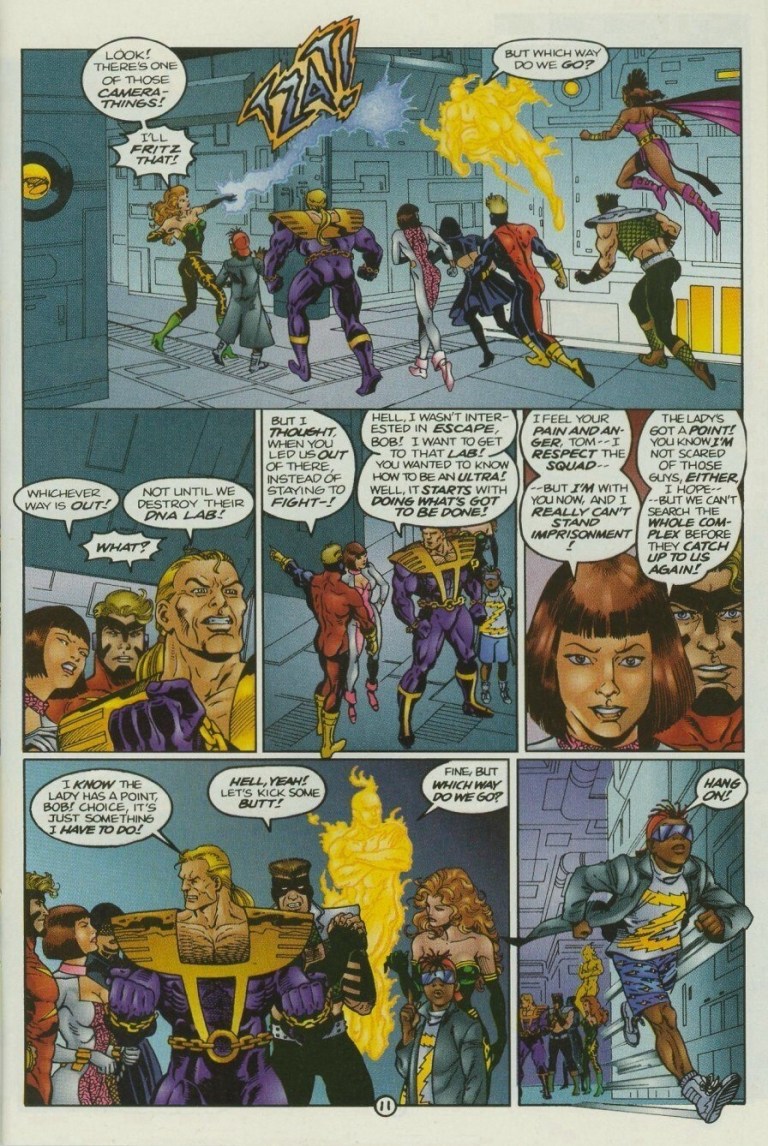
Hardcase, Choice and the Strangers inside Aladdin’s facility.

While Hardcase #4 served mainly as the build-up, this comic book serves as the big pay-off completely loaded with spectacle and fun! The creative team of Steve Englehart and Rick Hoberg, in coordination with the creative team of Hardcase, crafted this very memorable conclusion to the 2-part crossover of Hardcase and The Strangers.

Crossing over aside, this comic book provides readers a nice look at Aladdin, a secret society run by the American government focused on ultras (people with extraordinary abilities). Ultras who won’t help the government are put under lock-and-key mainly for the protection of society. Ultras who agreed to work for the government are authorized and supplied to help in the so-called grand scale.

The interactions between Hardcase (and Choice) with the Strangers that started in Hardcase #4 continued nicely in this comic book. The interactions went on to evolve into great team work in this misadventure. When it comes to superhero action, Rick Hoberg’s illustration is very wonderful to look at. Hoberg’s visual presentation on Hardcase and Choice was no less excellent, plus his art on the opposing ultras (working for Aladdin) was nicely done.

On the aspect of characterization, I liked how Yrial (the African lady who often reminds me of X-Men’s Storm) reacted so bluntly after admitting she had previous knowledge about Aladdin. There was also that nice exchange between Atom Bob and Choice, which made the guy feel idiotic and like a commercial. The exchange was noticed by Grenade and Electrocute which resulted some clever dialogue.

Conclusion

4
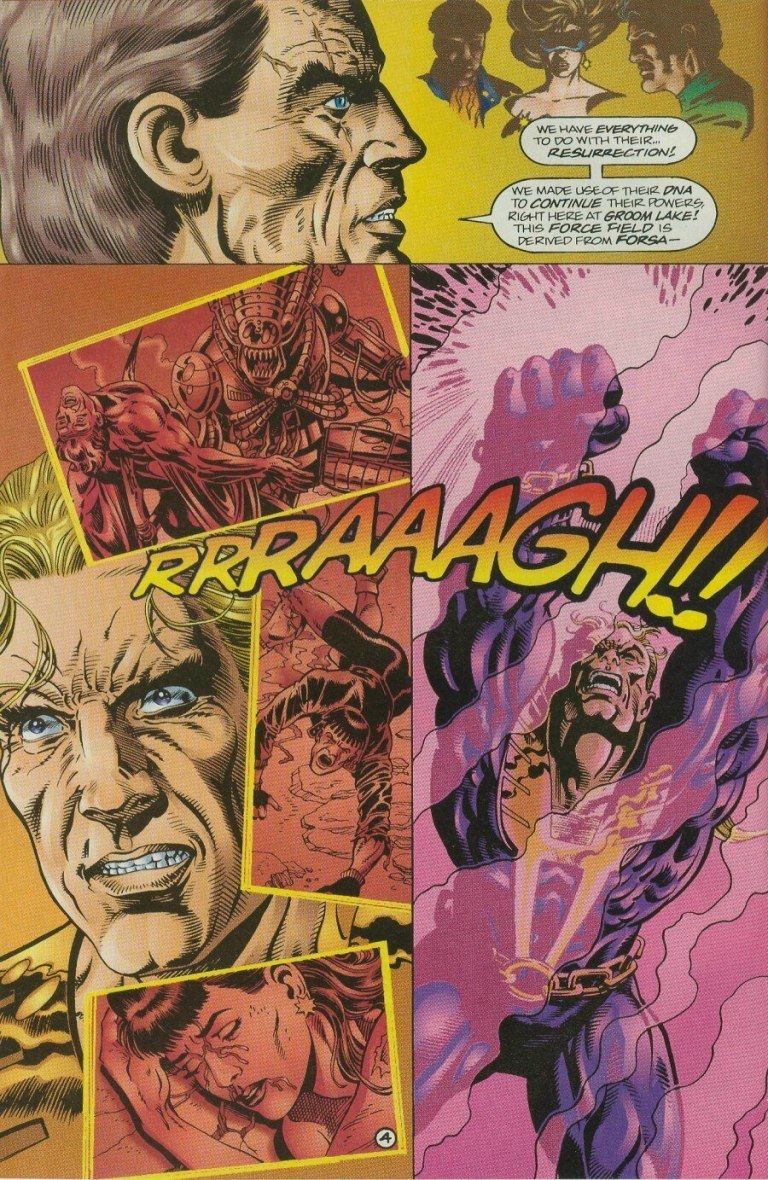
This page added more to Hardcase’s character. Nicely drawn by Rick Hoberg.

The Strangers #4 is excellent and worthy of being part of your collection of comic books. It is compelling and fun to read from start to finish. By the time the story ends, this comic book should make you care more about Hardcase and the Strangers.

If you are seriously planning to buy an existing hard copy of The Strangers #4, be aware that as of this writing,  MileHighComics.com shows that the near-mint copy of the regular edition costs $4. The near-mint copy of the newsstand edition is priced at $13.

Overall, The Strangers #4 is highly recommended.


Thank you for reading. If you find this article engaging, please click the like button below and also please consider sharing this article to others. If you are looking for a copywriter to create content for your special project or business, check out my services and my portfolio. Feel free to contact me as well. Also please feel free to visit my Facebook page Author Carlo Carrasco and follow me at HavenorFantasy@twitter.com


A Look Back at Hardcase #4

Disclaimer: This is my original work with details sourced from reading the comic book and doing personal research. Anyone who wants to use this article, in part or in whole, needs to secure first my permission and agree to cite me as the source and author. Let it be known that any unauthorized use of this article will constrain the author to pursue the remedies under R.A. No. 8293, the Revised Penal Code, and/or all applicable legal actions under the laws of the Philippines.

When done right by really talented people, superhero crossovers within the shared universe of a particular publisher can be fun to read. In this retro comic book review, we are about to explore one of the earliest Ultraverse crossovers ever published. To put things in perspective, the Ultraverse imprint was launched in 1993 by Malibu Comics, and there were several titles that debuted like Prime, Mantra, Hardcase, The Strangers and Prototype to name a few. Unsurprisingly, in-universe crossovers were bound to happen shortly after launch and create new opportunities of fun for fans and readers.

Here is a look back at Hardcase #4 published in 1993 by Malibu Comics with a story co-plotted by James Hudnall (writer) and Steve Englehart, and drawn by Roger Robinson.

Cover
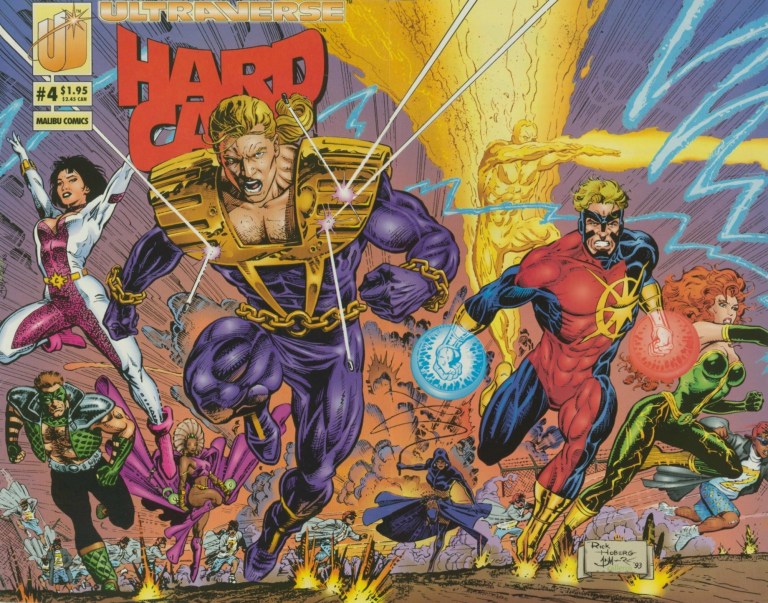
Really nice cover!

Early story

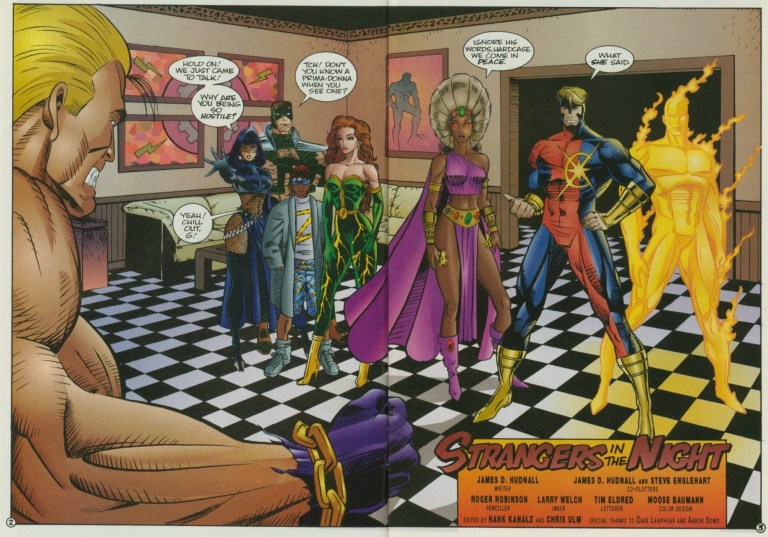
The story begins inside Hardcase’s home. He and Choice were surprised by the presence of The Strangers inside. While Hardcase was fuming mad, Lady Killer and her teammates tried to calm him down expressing they meant no harm and simply wanted to talk with him.

2
Imagine having strangers inside your nice home without your authority.

“Look—we’ve just come back from a fight with a bunch of ultras who wanted to kill Choice and me. And earlier today, another group showed up and took out part of my house. So, to put it mildly, I’m not exactly in a sociable mood,” Hardcase said calming down.

Eventually Hardcase and Choice talked with the Strangers….

Quality

7
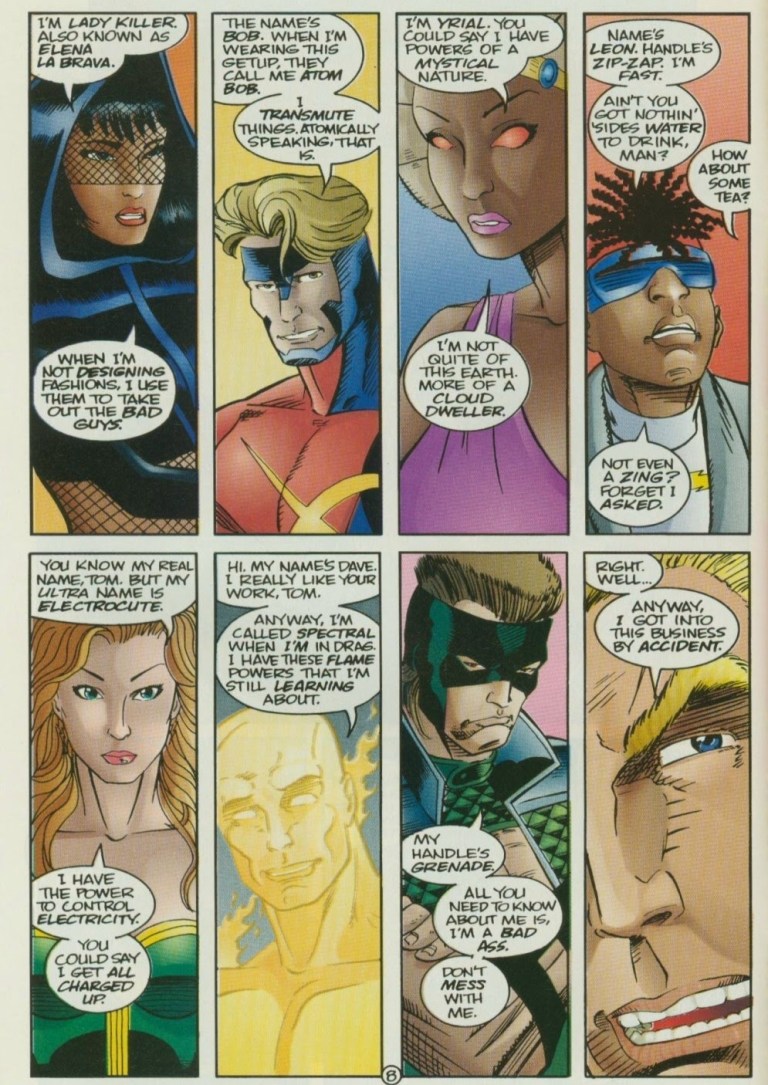
Meet the Strangers!

For the most part, this comic book is less about spectacle (unsurprisingly) but more about exposition and character interaction. This does not mean Hardcase #4 is boring, in fact it’s still compelling to read. In clever ways, this comic book has some very relevant stuff for Hardcase fans specifically lots of in-depth, additional details about him (including details about The Squad) and how he changed to be an ultra. In short, this one shows Hardcase’s origin and what happened afterwards. James Hudnall’s script here not only connected nicely with the final Squad moments in issue #1 but also deepened the details. By the time I finished reading Hardcase #4, the tragic event that opened Hardcase #1 made even more sense to me.

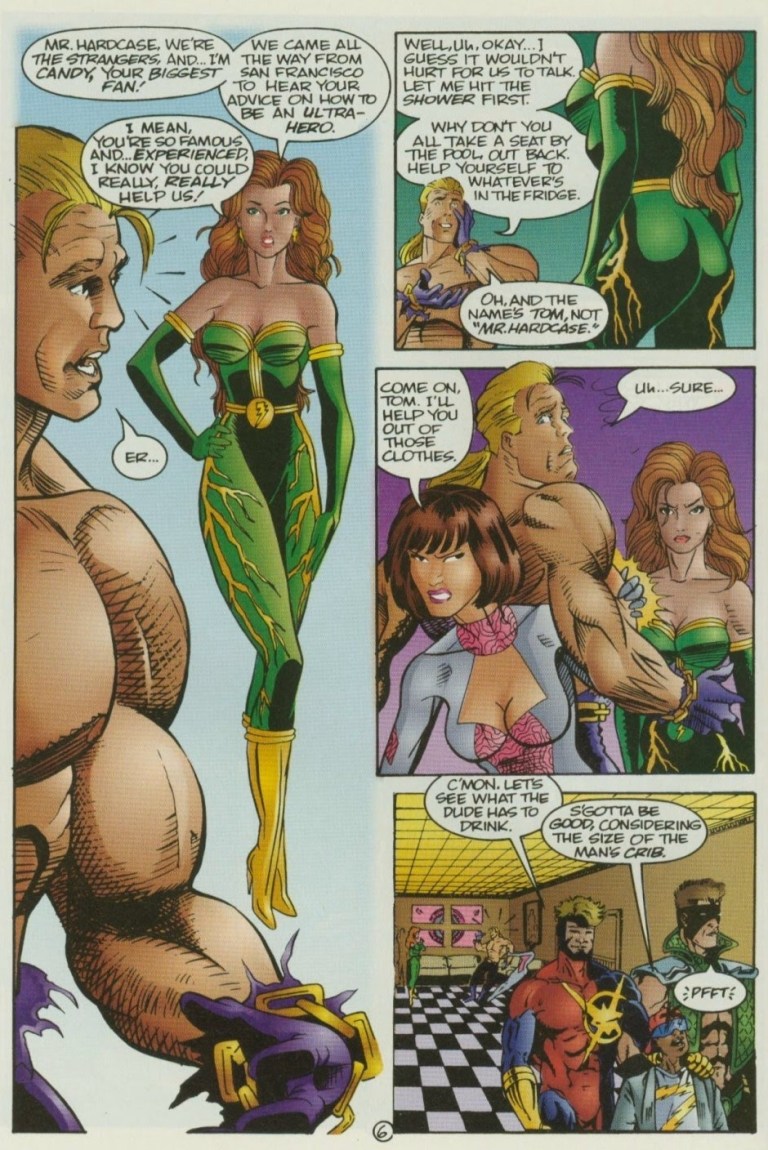
The writing is this comic book’s biggest strength not only because it fully explored more of Hardcase’s past but also due to the nice interactions Hardcase and Choice had with the Strangers. I really like the short scene when Atom Bob thought about getting Choice interested in him since he finds her really charming.

Hudnall’s writing was indeed full of exposition and yet it was nicely paced and I never felt lost with the narrative. I should also mention that the presence of the secretive organization called Aladdin is felt even strongly in the story, building up the suspense for it.

When it comes to the art, Roger Robinson did a decent job visualizing the characters. For the most part, each member of the Strangers as well as Hardcase and Choice were still recognizable visually. For the action scenes, which are not that many, his art was satisfactory.

Conclusion

5
The interactions are nice!

While Hardcase #4 lacked spectacle, its portrayal of the crossover between Hardcase and the Strangers still made it a good read. There is additional stuff for Hardcase fans and the interaction between him and the Strangers was nicely crafted. Ultimately, this crossover was the first of two parts leading to The Strangers #4.

If you are seriously planning to buy an existing hard copy of Hardcase #4, be aware that as of this writing, MileHighComics.com shows that the near-mint copy of the regular edition costs $4. The near-mint copy of the newsstand is priced at $13.

Overall, Hardcase #4 is recommended.


Thank you for reading. If you find this article engaging, please click the like button below and also please consider sharing this article to others. Also my fantasy book The World of Havenor is still available in paperback and e-book format. If you are looking for a copywriter to create content for your special project or business, check out my services and my portfolio. Feel free to contact me as well. Also please feel free to visit my Facebook page Author Carlo Carrasco and follow me at HavenorFantasy@twitter.com

A Look Back at Hardcase #3

Disclaimer: This is my original work with details sourced from reading the comic book and doing personal research. Anyone who wants to use this article, in part or in whole, needs to secure first my permission and agree to cite me as the source and author. Let it be known that any unauthorized use of this article will constrain the author to pursue the remedies under R.A. No. 8293, the Revised Penal Code, and/or all applicable legal actions under the laws of the Philippines.

I love it when improvements in comic books are pulled off in terms of writing, art and creativity.

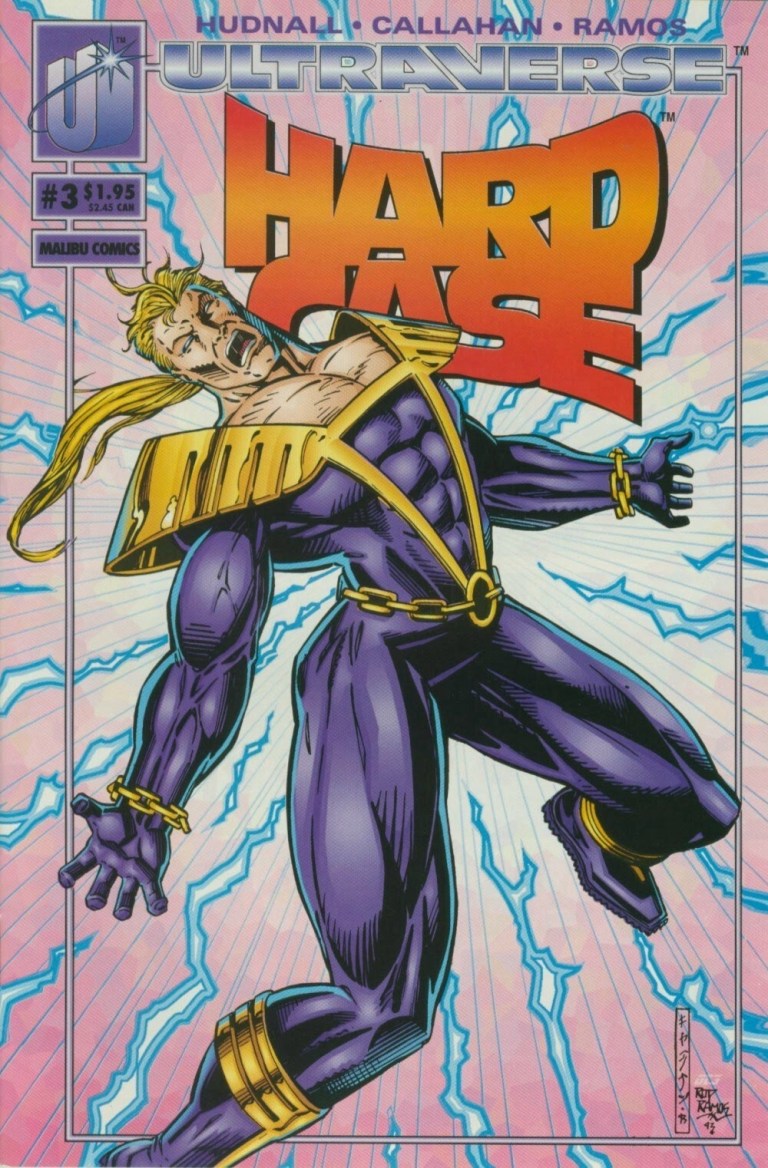
Let’s start this look back at Hardcase #3, published by Malibu Comics in 1993 under the Ultraverse banner with a story written by James Hudnall and drawn by Jim Callahan.

Cover
The cover.

Early story

The story begins in Mexico. To the surprise of armed, armored personnel, an explosion happened and Choice emerges. It turns out this was footage from the recent past being reviewed by two men in suits. They are aware that Choice is in California and has teamed up already with Hardcase. They speculate that the two are making their way to corporate headquarters.

The shadowy figure, a man who is not a man, in the room makes a decision.

“I’ve decided to provide you with some help for two reasons. One: I want to see Hardcase fall. Two: I want to test out a band of ultra-assassins I’ve concocted,” he said.

Elsewhere, Hardcase tells a police office that they were attacked. A man named Chuck arrives to talk to Hardcase. He is a friend of the sheriffs of Ventura and offers to help. Hardcase introduces him to Choice and tells him that armed assassins were after her to force her to return to the Choice corporation.

Suddenly, very eager TV news crews arrived to get the scoop compelling Choice and Hardcase to leave. What the two do not know is that they are being watched…..

Quality

15
Notable improvement on the art.

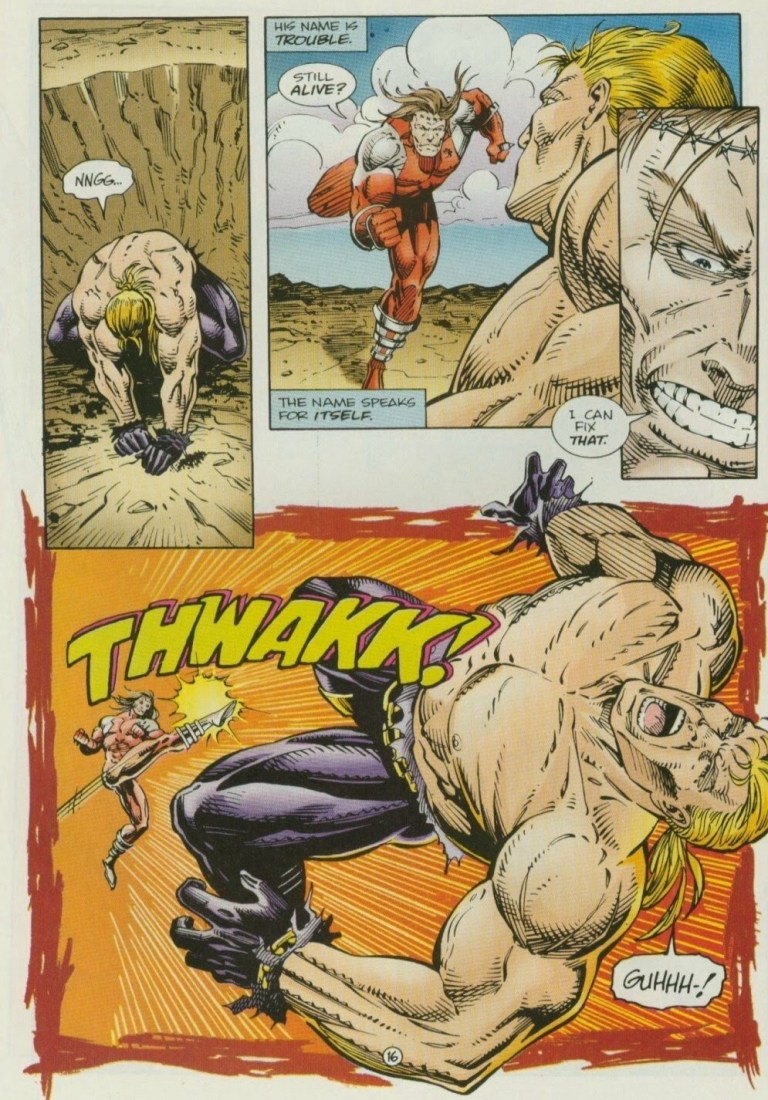
In describing the quality of this comic book, I am happy to say that the fun, engagement and strong creativity is back. This is definitely a major improvement over Hardcase #2.  For one thing, artist Jim Callahan returned to do the artwork and brought back the visual fun and flair of issue #1. There is a lot of action scenes in this comic book and each page is nicely drawn by Callahan. Nice impact on the hard blows too.

In terms of writing, James Hudnall did a good job balancing the spectacle with the narrative and characterization. The way Hudnall deepened the plot with intriguing new details is very solid, and he cleverly pulled off some twists here and there.

Conclusion

14
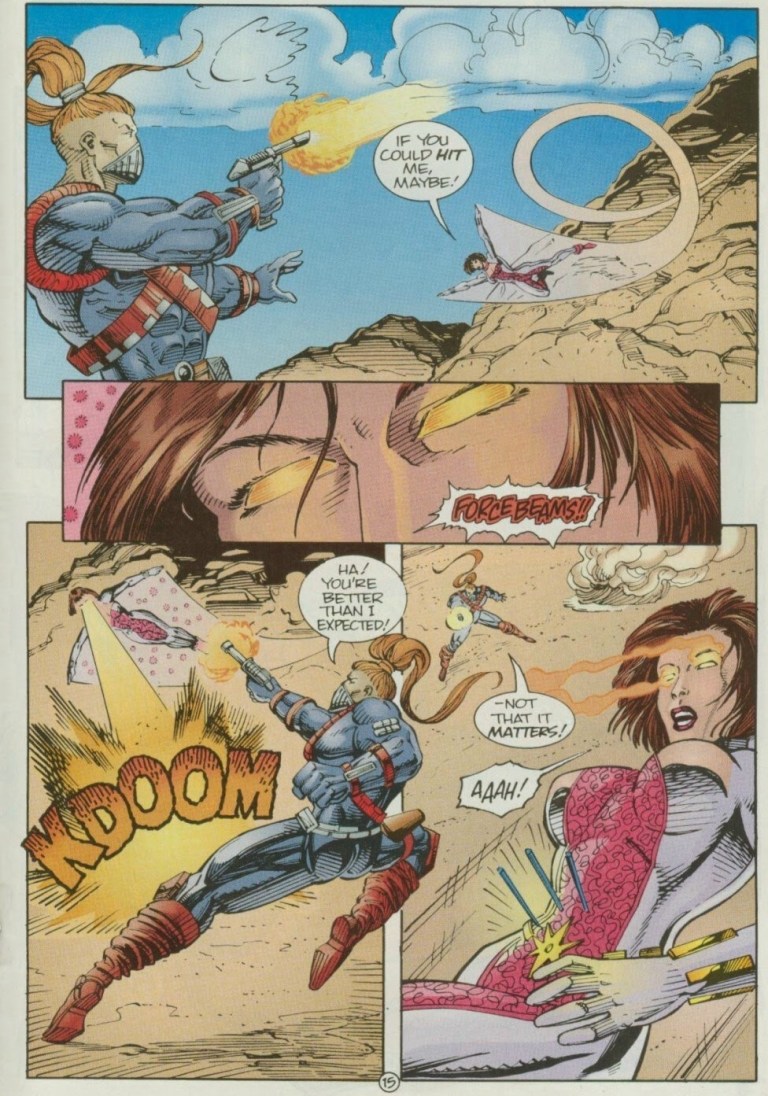
Choice in action.

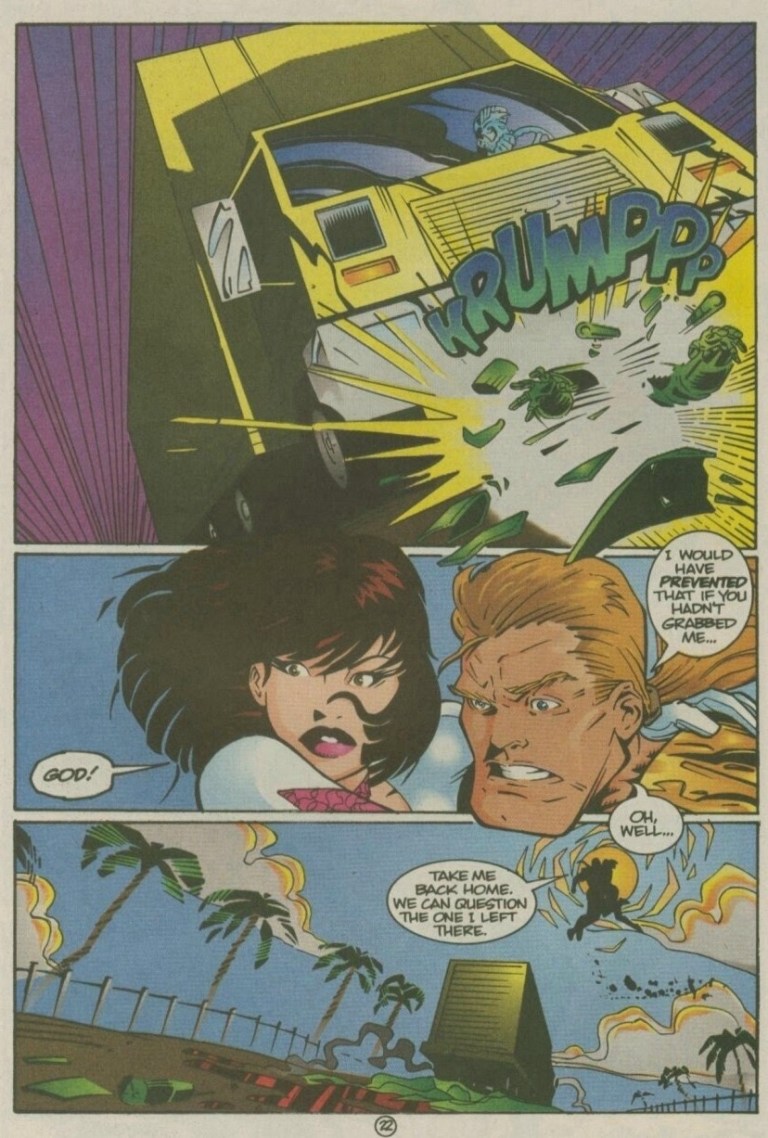
Hardcase #3 is a good comic book and it more than made up for the lackluster story in issue #2. It should be noted that this comic book efficiently links Hardcase with other elements of the Ultraverse’ shared universe, plus the final page delivered an excellent conclusion.

If you are seriously planning to buy an existing hard copy of Hardcase #3, be aware that as of this writing, MileHighComics.com shows that the near-mint copy of the regular edition and the newsstand edition cost $4 and $8 respectively.

Overall, Hardcase #3 is recommended.


Thank you for reading. If you find this article engaging, please click the like button below and also please consider sharing this article to others. If you are looking for a copywriter to create content for your special project or business, check out my services and my portfolio. Feel free to contact me as well. Also please feel free to visit my Facebook page Author Carlo Carrasco and follow me at HavenorFantasy@twitter.com

A Look Back at Hardcase #2

Disclaimer: This is my original work with details sourced from reading the comic book and doing personal research. Anyone who wants to use this article, in part or in whole, needs to secure first my permission and agree to cite me as the source and author. Let it be known that any unauthorized use of this article will constrain the author to pursue the remedies under R.A. No. 8293, the Revised Penal Code, and/or all applicable legal actions under the laws of the Philippines.

When it comes to engagement with the Ultraverse, I could never forget the impact that came with Hardcase #1 specifically with the way it introduced its title character Tom Hawke. Hardcase was presented as a superhero living with the guilt of surviving a major tragedy from the past that resulted the deaths of two teammates and the permanent brain damage caused on his girlfriend. As part of his moving on, he put his talents to good use as a movie actor.

That being said, let’s take a look back at Hardcase #2, published in 1993 by Malibu Comics with a story written by James Hudnall and art by Cranial Implant Studio.

Cover
The cover.

Early story

The story begins with a costumed lady on the run from something, distracting the many bystanders she passed. As she flies off the sidewalk, two armored men coming out of a truck fire their shots at her compelling her to activate her personal protective shield.

With explosions happening in the air near her, the two armored guys fly up to get near. One of them tells her to give up and come back to them. Suddenly the lady charged herself and fired beams from her eyes hitting one of the armored guys. She manages to escape.

Meanwhile, Tom Hawke/Hardcase attends the burial of Jamal. A brother of the deceased calls Hardcase’s attention and starts a conversation with him. Hardcase expressed how sorry he is for the death of Jamal and said that had he gotten to him sooner, he would have still been living. The survivor’s guilt really disturbs Tom.

5
At the burial of Jamal.

Suddenly, a group of youth approaches Hardcase asking for his autograph. Hardcase receives from Jamal’s brother a card for calling.

Over at San Diego, California, two men in business attire discuss their search for the costumed lady who got away. Near them are monitors of products endorsed by the same costumed lady. Her name is Choice and one of the executives stated that, according to a team analysis, she arrived in California to meet with Hardcase…

Quality

As a follow-up to the compelling launch issue, this comic book is nowhere as engaging. To be fair to the creators, some space had to be made to accommodate and introduce Choice to readers, and give Hardcase someone to interact with. In connection with the first issue, Hardcase is nicely portrayed with having the survivor’s guilt and the Jamal burial scene was helpful in fleshing out his character. James Hudnall delivered a good story overall, just not as deep as the first issue.

The art meanwhile, done by Cranial Implant Studio, really took a deep dive down in terms of quality. Jim Callahan’s art in the first issue was very good and the art in this comic book really failed to keep up with the artistic quality established. Cranial Implant Studio’s art has a very cartoony look done with sloppiness instead of precision. In fairness, the action scenes were decently drawn.

21
Really bad way of drawing the jaw of Hardcase done by Cranial Implant Studio.

Conclusion

Hardcase #2 does not deliver the gripping storytelling and spectacle of the first issue. It’s not a terrible comic book of the Ultraverse, just average in quality. At the very least, the introduction of Choice and her meeting with Hardcase added some intrigue for further stories to come. Indeed, the Hardcase monthly series went on to last 26 issues in total.

17
The art was rough but at least the action scenes were pulled off.

If you are seriously planning to buy an existing hard copy of Hardcase #2, be aware that as of this writing, MileHighComics.com shows that the near-mint copy of the regular edition costs $4 while the newsstand edition’s near-mint copy is at $8.

Overall, Hardcase #2 is worth buying below its cover price.


Thank you for reading. If you find this article engaging, please click the like button below and also please consider sharing this article to others. If you are looking for a copywriter to create content for your special project or business, check out my services and my portfolio. Feel free to contact me as well. Also please feel free to visit my Facebook page Author Carlo Carrasco and follow me at HavenorFantasy@twitter.com


A Look Back at Bloodshot #6 (1993)

Disclaimer: This is my original work with details sourced from reading the comic book and doing personal research. Anyone who wants to use this article, in part or in whole, needs to secure first my permission and agree to cite me as the source and author. Let it be known that any unauthorized use of this article will constrain the author to pursue the remedies under R.A. No. 8293, the Revised Penal Code, and/or all applicable legal actions under the laws of the Philippines.

When I was still collecting comics back in 1993, I was more focused on the X-Men 30th anniversary celebration and the expansion of the Marvel 2099 universe organized by Marvel Comics, and the launch of the Ultraverse by Malibu Comics.

Along the way, I heard some buzz about Valiant Comics and Defiant Comics. That same year, Valiant Comics generated a lot of buzz among comic book collectors with the launch of Turok: Dinosaur Hunter #1 and the release of Bloodshot #6. Why Bloodshot #6? It’s because of the literary debut of a character who went on to become an one of Valiant’s icons.

1
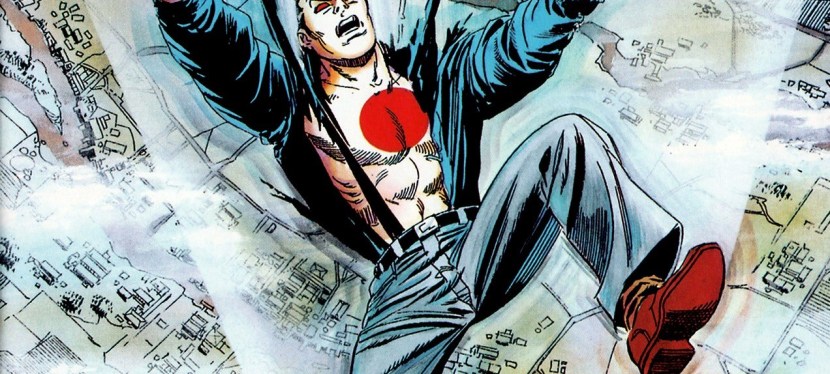
The cover.

Here’s a nice look back at Bloodshot #6 published in 1993 by Valiant Comics with a story by Kevn VanHook drawn by Don Perlin.

Early story

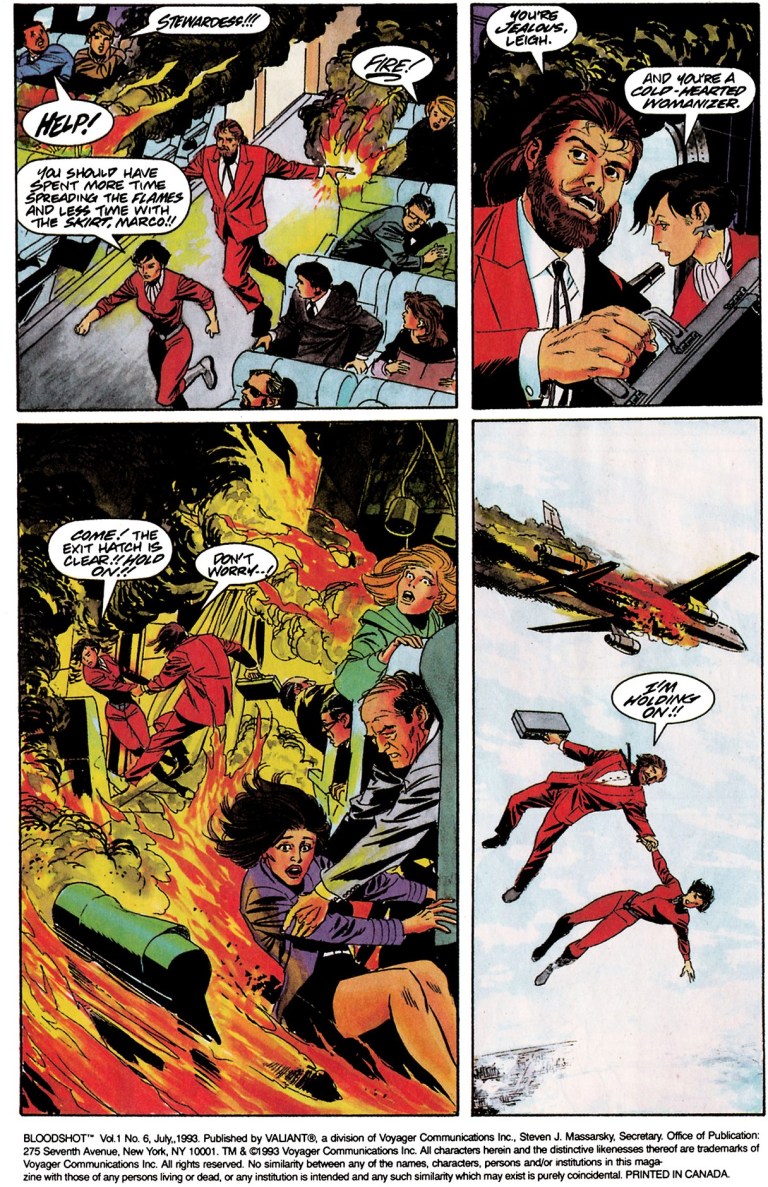
The story begins inside a commercial airplane flying over Sydney, Australia. There is a guy wearing reddish business attire socializing with a lady while standing. A lady in red approached him telling him that he should take his seat as they are in the glide path. The guy in red attire approaches a seat man wearing green business attire, asking him if the vacant seat near him was taken.

The seated man tells him to get away. The guy in red places his right hand on him causing a fire during the flight. What happened turned out to be an assassination. The guy and lady in red rush to the nearest emergency exit and it turned out their names are Marco and Leigh. They jump off the plane which explodes several feet away from them. Marco and Leigh left in the air not worried about falling down.

Meanwhile at the airport in London, Bloodshot arrives and is greeted by his pal Malcolm. They arrive back at their residence in London’s east end. Bloodshot has something to do. Over at France, Alicia Guerrero meets with Montblanc at his office and they discuss the courier assignments that involve acquiring a set of components and the three (of four) intercontinental flights that ended in tragedy.

Quality

7
Bloodshot shortly after arriving from the airport.

As far as storytelling goes, this comic book sure has a lot of intrigue and espionage leaving the title character Bloodshot with much less spotlight (in terms of narrative, not page appearance). It’s not a problem for me as a reader because the writer Kevin VanHook really took his time to emphasize what has been going on, what’s within the web of international secret operations (that involved killing and explosions) and what’s at stake. Of course, the deepening of the plot makes way for Bloodshot to get involved in a less action-oriented but more intelligent way. That being said, action scenes are subdued for the sake of storytelling. Along the way, illustrator Don Perlin did a good job visualizing the deep plot. Perlin also tried his best making the mission briefing of Bloodshot (which even for its time was cliched) look interesting.

Fans of Bloodshot who love action scenes of shooting and striking, as well as displays of his special abilities, won’t find much of such stuff here.

Conclusion

3
Tragedy high up in the sky.

To make things clear to those who are wondering, Bloodshot #6 is significant for fans of Valiant Comics as it marked the first appearance of Colin King who is actually the iconic Ninjak. That fact, however, does not really define the overall quality of this comic book and Colin King’s literary debut is very brief. That way I look at Bloodshot #6, it’s a good comic book laced with a good amount of intrigue and espionage.

For those who are based in the Philippines, Bloodshot #6 is one of the rare American comic books of the 1990s that mentions the Philippines (with Manila as a flight destination) and even showed a few images of it as a location.

If you are seriously planning to buy an existing hard copy of Bloodshot #6 of 1993, be aware that as of this writing, MileHighComics.com shows that a near-mint copy costs $28.

Overall, Bloodshot #6 is recommended for those looking for gripping, espionage storytelling with the title character. As a collector’s item, the comic book is a must-have for as long as Ninjak and Bloodshot remain popular.


Thank you for reading. If you find this article engaging, please click the like button below and also please consider sharing this article to others. If you are looking for a copywriter to create content for your special project or business, check out my services and my portfolio. Feel free to contact me as well. Also please feel free to visit my Facebook page Author Carlo Carrasco and follow me at HavenorFantasy@twitter.com

A Look Back at Prime #2

Disclaimer: This is my original work with details sourced from reading the comic book and doing personal research. Anyone who wants to use this article, in part or in whole, needs to secure first my permission and agree to cite me as the source and author. Let it be known that any unauthorized use of this article will constrain the author to pursue the remedies under R.A. No. 8293, the Revised Penal Code, and/or all applicable legal actions under the laws of the Philippines.

As seen many times in the history of American comic book publishing, there is the ever-present male superhero with the clean short hair, a muscular build, a tight body suit and a cape. Such a superhero has the so-called classic ability to fly and as well having superhuman strength. To put things in perspective, this is the so-called Superman influence on superhero comics. Superman is undoubtedly an icon of not just American pop culture but also of the United States culture in general.

Considering Superman’s iconic status, it is no surprise that many other publishers imitated the character to add some zest into their own superhero comic book franchise. For the Ultraverse of Malibu Comics, their own parallel to DC Comics’ Superman is none other than Prime (who is also inspired somewhat by Shazam/Captain Marvel).

Cover
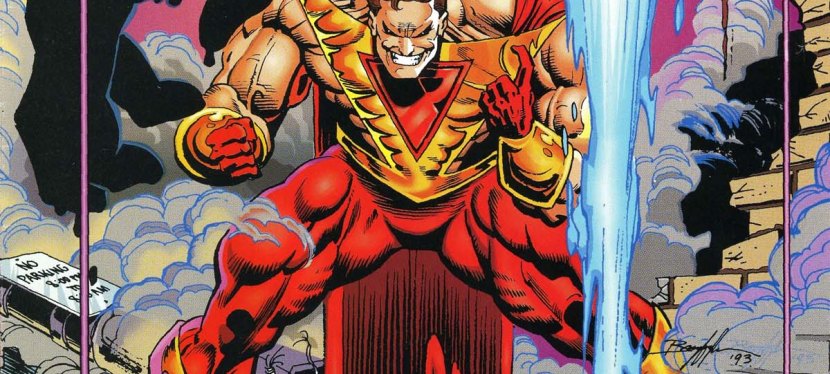
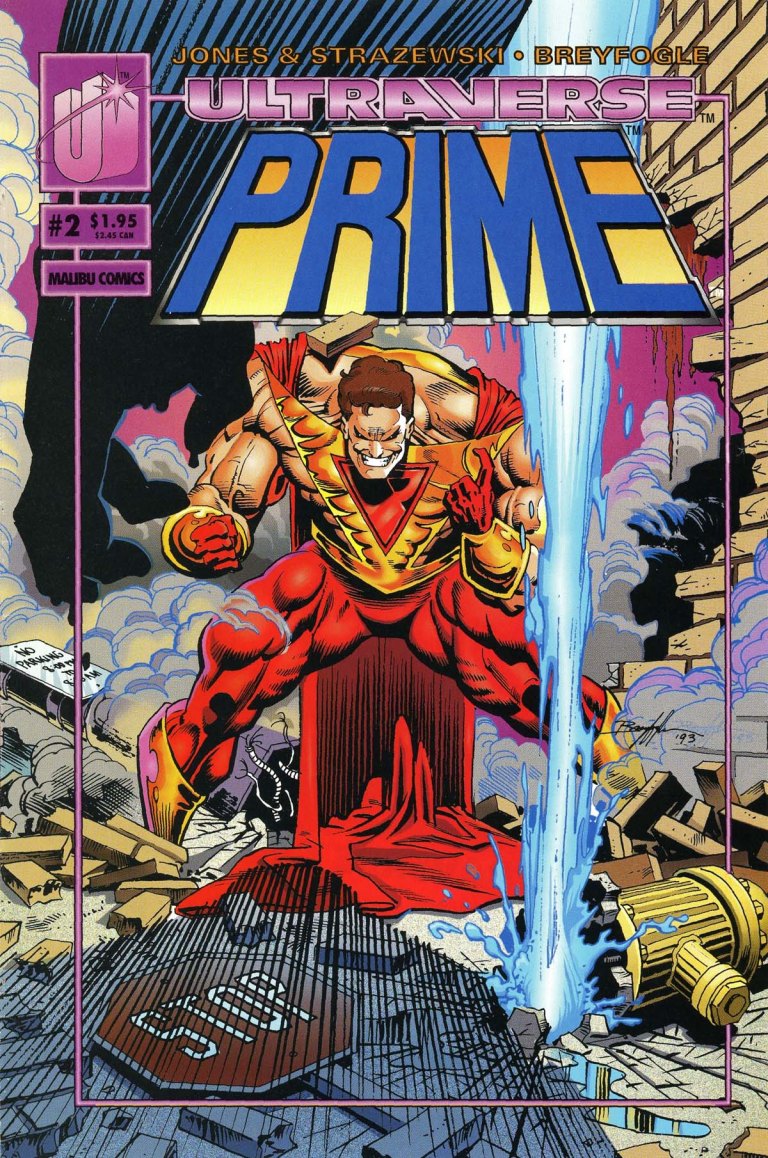
A great looking cover by the late Norm Breyfogle.

For this retro comic book review, we’ll take a close look at Prime #2, the Ultraverse comic book published by Malibu Comics in 1993 with a story co-written by Gerard Jones and Len Strazewski, and art by the late Norm Breyfogle. Previously, I reviewed Prime #1 which you can right here.

Early story

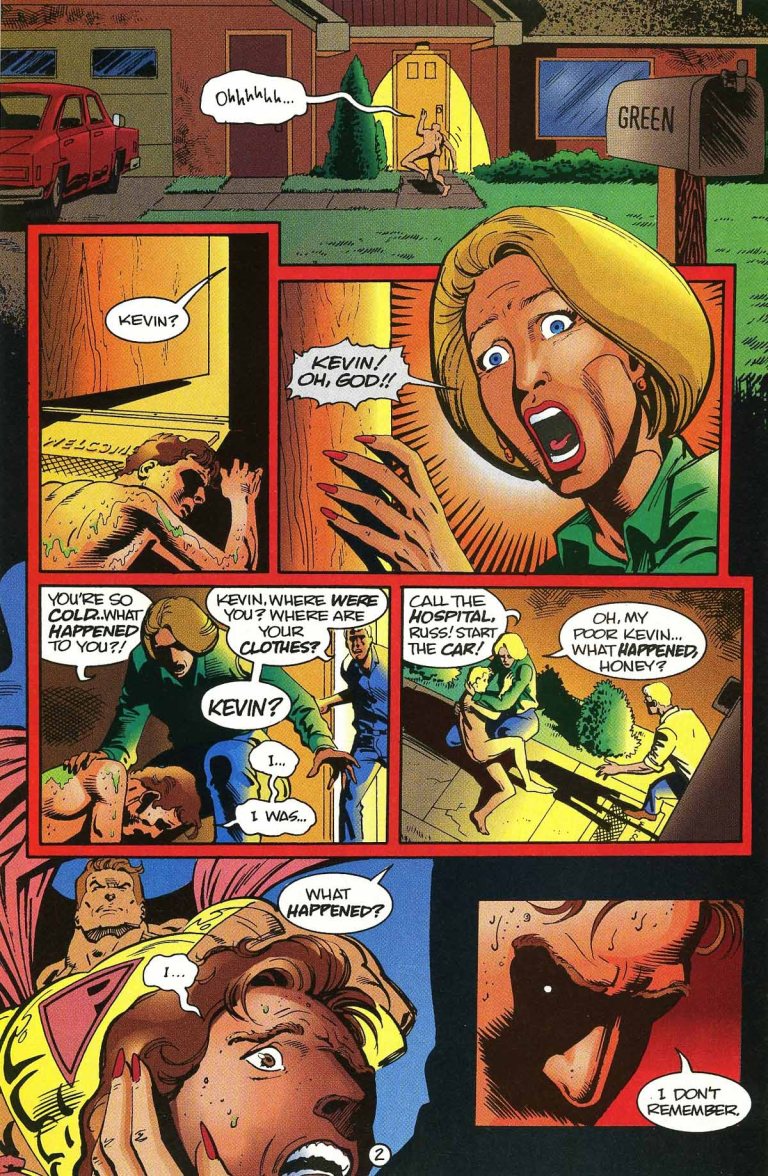
The story begins with teenager Kevin Green struggling heading home in the suburb at night completely naked. After Kevin falls down just outside the front door, his mother opens it and was shocked to see him naked (with some traces of green slim on his skin). Kevin could not recall what happened to him.

2
Imagine yourself being naked walking home in the middle of the night within the local community.

Shortly after, Kevin is in the hospital with his parents. The doctor could not figure out what’s wrong with Kevin and only stated that his failure to remember could be the result of psychological trauma. Alone in the room, Kevin watches TV news footage of Prime (himself under disguise) and his parents arrive. His mother tells him that he will be okay.

Meanwhile in a discreet location, two men are analyzing the recent appearance of Prime in Somalia. One of them orders the release of Organism 8….

Quality

Prime #2 is clearly a strong follow-up to the launch issue. Co-writers Gerard Jones and Len Strazewski crafted a story that took its time to flesh out Kevin Green/Prime while simultaneously building up suspense and details regarding a sinister force that has links with the government, and they won’t stop until they get their target Prime.

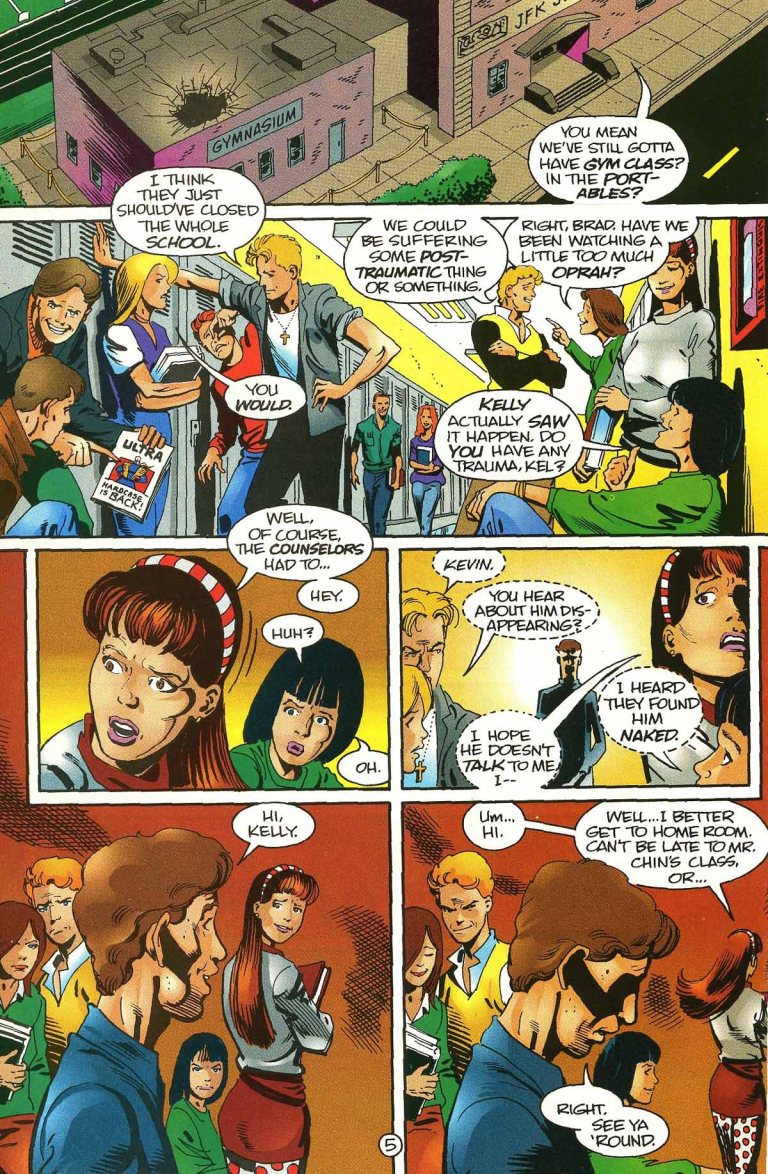
On character development, this comic book takes a deeper look at the private life of Kevin (who only appeared as himself at the end of issue #1) especially at his high school. Here, the school is still recovering from the damage Prime caused (including hurting the school’s coach).

The highlight in this comic book is the exploration of the friendship between Kevin and Kelly. As such, the suspense related to the two really started to build up given the fact that in issue #1, Kevin appeared in front of her not as himself but as his superhero form as Prime. Kelly found it cool that Prime talked to her although she’s disturbed to see him seriously injure their coach. Kevin himself is struggling with the weight of not only keeping his superhero identity secret but also with the consequences of the violence he caused as Prime. Even worse, many students in his school find him a freak but Kelly remains sympathetic to him.

5
At school…

Visually, this is still a very good looking comic book. Norm Breyfogle’s art is very lively whether he draws out the local community that Kevin belongs to, draws the action scenes, draws the monstrous Organism 8, and emphasizing more of Prime. I also love the way Breyfogle drew the facial expressions. For the newcomers reading this, Breyfogle’s style has a cartoonish look but never backs down with comic book-style spectacle.

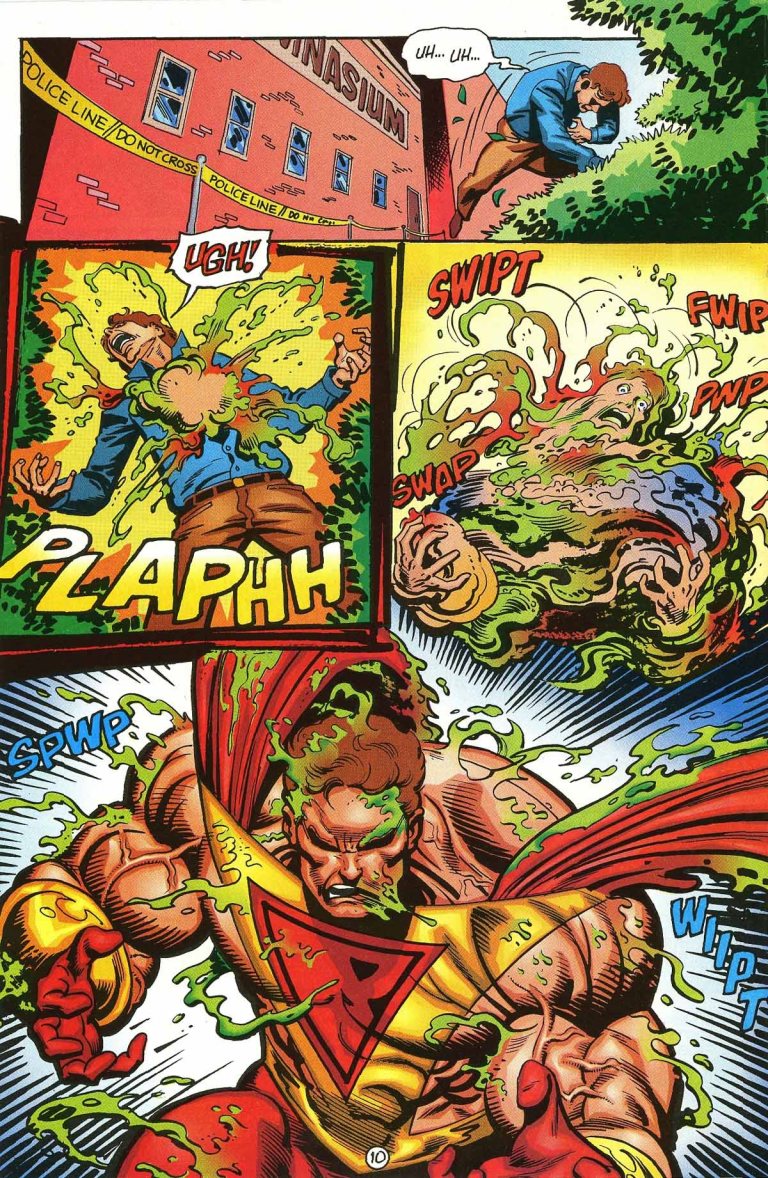
The spectacle of this comic book, unsurprisingly, looks very good. The action scenes show a lot of power and seeing Prime and Organism 8 hit each other is no less brutal.

Conclusion

10
Norm Breyfogle’s great visuals on Kevin Green becoming Prime!

While Prime #1 was a tremendous creative kick-off for its superhero and its own series, Prime #2 is a very solid progression. This comic book marked the beginning of the build-up of suspense as well as the friendship between Kevin and Kelly, and ultimately it was a fun and compelling reading experience.

If you are seriously planning to buy an existing hard copy of Prime #2, be aware that as of this writing, MileHighComics.com shows that the near-mint copy of the regular edition costs $4 while the near-mint copy of the newsstand edition costs $8.

Overall, Prime #2 is highly recommended.


Thank you for reading. If you find this article engaging, please click the like button below and also please consider sharing this article to others. If you are looking for a copywriter to create content for your special project or business, check out my services and my portfolio. Feel free to contact me as well. Also please feel free to visit my Facebook page Author Carlo Carrasco and follow me at HavenorFantasy@twitter.com

A Look Back At Freex #7

If there is any particular superhero comic book title I could compare Freex of the Ultraverse with, it’s Marvel’s famous X-Men. Similar to the mutants of the big M, Freex is a team of teenagers who each have different super powers or special abilities while struggling with being social outcasts. What makes them different is that the Ultraverse teenagers have no mature adult to look forward to for guidance. They don’t have a mansion to live in, and they have no choice but to move around constantly and survive the best way they could.

I took a look at the other existing back issues of Freex in my collection and what caught my attention was Freex #7.

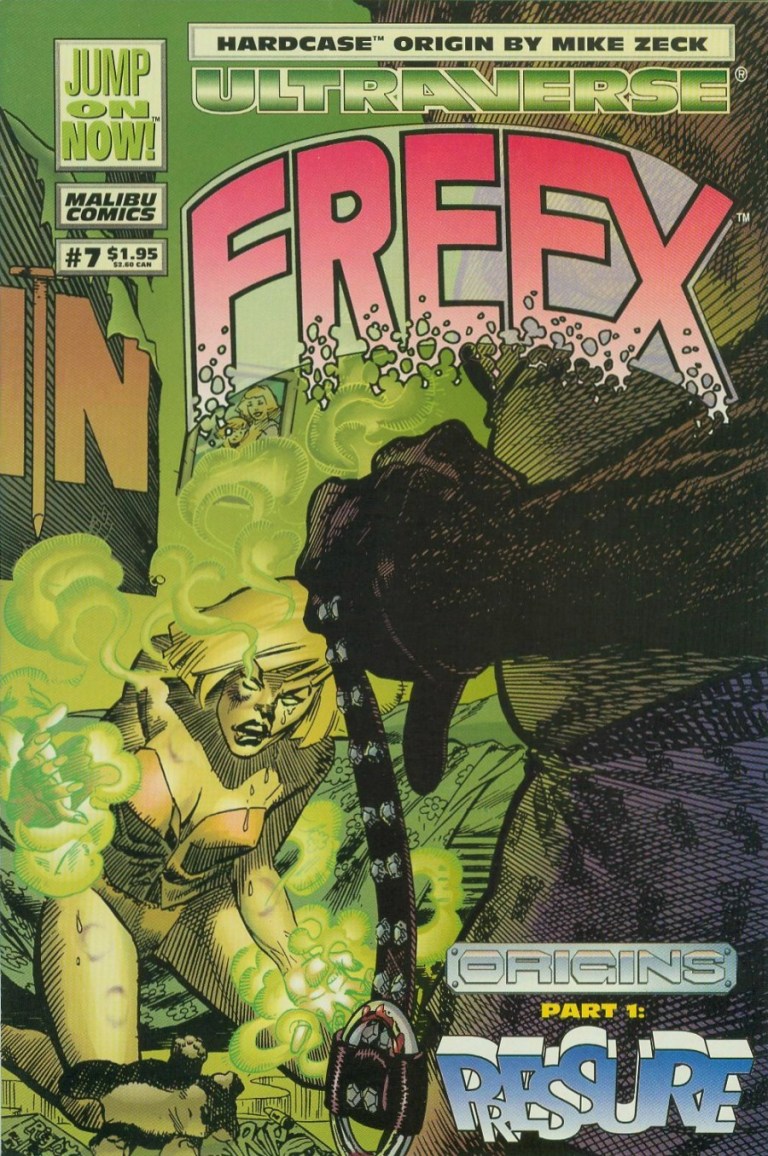
CoverFreex7
The cover.

Let’s now take a look back at Freex #7 and see what makes it unique (if not special).

Early story

The story begins with the Freex hastily stealing clothes from a store in city. While the others are desperately grabbing what they could (note: the store’s glass window was shown smashed already), Angela/Sweetface looks scared. One of her male companions tell her to be tough like Valerie/Pressure.

Just as they start leaving the store behind, the alarm system goes off. The sudden rush only adds pressure to them, causing Lewis/Anything to confront Michael/Plug only because the latter said something about team leadership. As Angela separates Michael and Lewis using her fleshy tentacles, Valerie loses her cool when Ray/Boomboy calls her by her codename. Valerie hits Boomboy with a blast of plasma. With their momentum disrupted by division and tension, Lewis tries to calm his teammates down but Plug won’t have any of it as he desires to find out about the source of all of their powers referred to as Wetware Mary. Plug finds a telephone booth and instantly transfers himself into it in the form of energy.

Freex7a
Division between members of Freex is common.

As the Freex remain divided, a local resident living nearby watches them from a distance.

Quality

The story written by Gerard Jones is pretty engaging mainly due to characterization (as opposed to storytelling and structuring). Through the dialogue, you can really sense the thoughts and emotions of each member of Freex, especially Valerie since this particular comic book focused on her origin. Without spoiling Valerie’s background, her origin was efficiently emphasized and never, ever felt dragging. By the time her origin story concluded, I got to understand Valerie better and why is she so mean. After the conclusion of the Freex’ story, there is also an Aladdin Datafile on Valerie who turned out to be 16-years-old, 5 feet and 9 inches tall, and even has a low threat assessment by Aladdin.

Adding further value to this comic book is a 2-page quick feature of Hardcase which shows a nice look back at his past before the establishment of The Squad.

Conclusion

Freex7b

From the past of Pressure.

Freex #7 is a good read. The story about the teenage social outcasts of the Ultraverse is well balanced in terms of characterization and action. Anyone who is a fan of Valerie/Pressure or female superheroes who are mean, angry and rebellious will find a lot to enjoy in this comic book. A near-mint copy of Freex #7 is worth $4 at MileHighComics.com as of this writing.

Overall, Freex is recommended.

Meanwhile, check out my retro review of Freex #1 right here.


Thank you for reading. If you find this article engaging, please click the like button below and also please consider sharing this article to others. Also my fantasy book The World of Havenor is still available in paperback and e-book format. If you are looking for a copywriter to create content for your special project or business, check out my services and my portfolio. Feel free to contact me as well. Also please feel free to visit my Facebook page Author Carlo Carrasco and follow me at HavenorFantasy@twitter.com

A Look Back at Mantra #1 (1993)

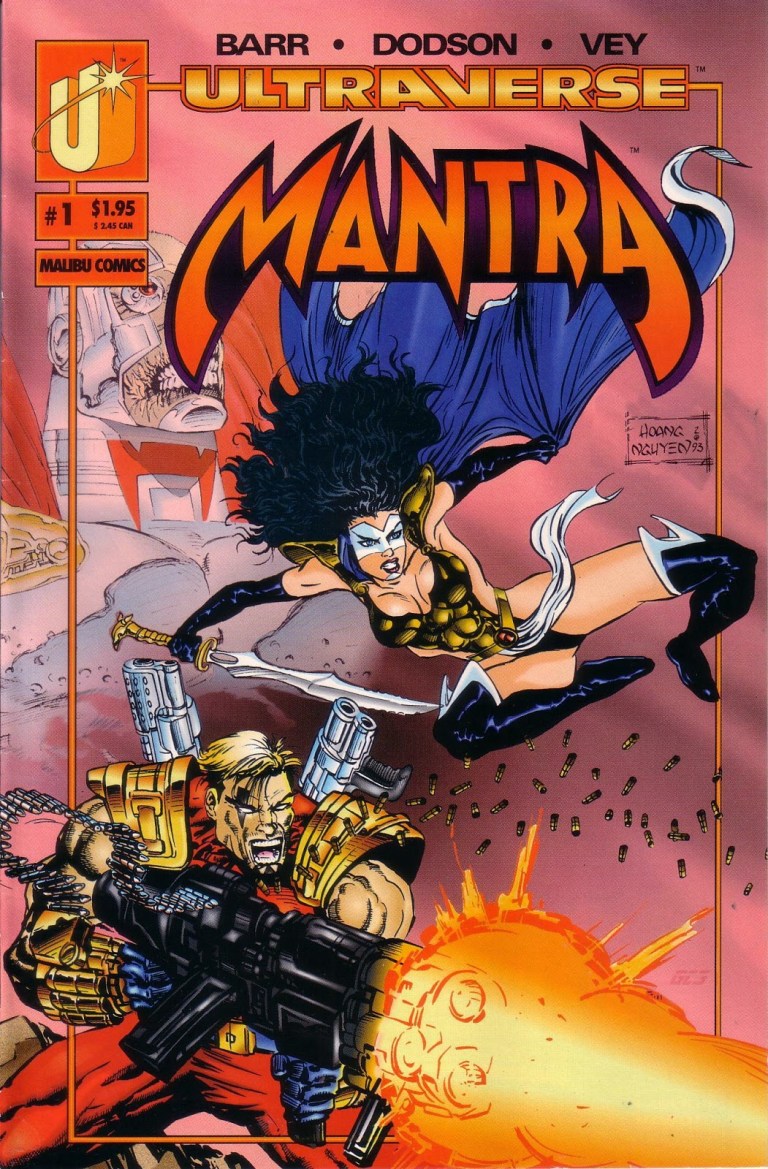
If there is any intriguing way of utilizing fantasy concepts to introduce a superhero (or superheroine) to readers, Mantra #1 from the Ultraverse published in 1993 by Malibu Comics is one fine example.

Mantra1
The cover of Mantra #1.

Early story

Written by Mike W. Barr with art by Terry Dodson, Mantra #1 was an Ultraverse launch comic book that follows Lukasz who is an eternal warrior belonging to a group of other warriors which had been fighting another group (led by eventual Ultraverse villain Boneyard) for several centuries.

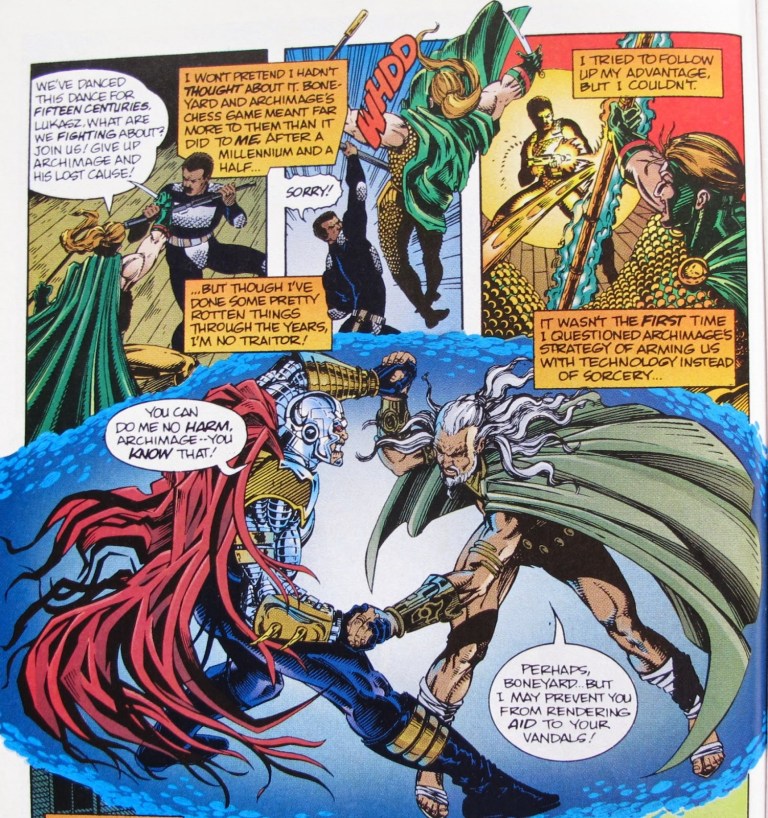
How did that conflict last that long? As told through the views of Lukasz, any individual warrior who dies will eventually be placed in a new body (often that of an existing person) and take control of it effectively displacing the its soul. Behind it all, Archmage, the leader of the warriors’ group that includes Lukasz, uses magic to ensure that each member will be reincarnated after dying.

Mantra2
A page for your viewing pleasure.

The story takes a major turn for the shocking and intriguing when something unfortunate happens to Archmage and that the protagonist himself gets killed again. Fortunately for him, he gets to live one more time but there is one major difference – Lukasz occupies the body of a woman named Eden Blake (and the revealing scene remains shocking).

At this point, I don’t want to spoil the rest of the story. If you want to find out how Mantra came to be, you just have to read the comic book yourselves.

Quality

From an analytical view, I still find Mantra’s concept very intriguing to this day. In terms of mysticism, it reminds me a little bit of George Perez’s take on Wonder Woman in the mid-1980s and in some cases Mantra/Eden Blake herself reminds me bit of Wonder Woman/Diana albeit in a more motherly way.

When it comes to storytelling, Mike W. Barr’s script is very solid and made very good use of the twenty-eight (28) pages of the comic book. Unsurprisingly, there was a good amount of expository dialogue and narration but it was handled efficiently. The first-person views of Lukasz/Eden Blake are truly immersive to read. Along the way, there were several scenes that were intriguing to read and there were some nice moments of unintentional comedy which helped balance the overall tone of the story.

To say the least, Mantra’s concept about dead warriors’ souls entering bodies of existing people to live again sheds light on the moral or psychological implications of such events. If you were a warrior who just died and eventually got a new lease on life by occupying the body of let’s say a software company’s chief executive officer, would you not be concerned as to what happened to the soul (of the body) you displaced? Would you not think about how your control of that displaced soul’s body would affect not only the person’s established life but also the personal association with other people? Truly Mike Barr’s writing got me hooked and Terry Dodson’s art really brought his concepts to life.

Conclusion

So what else could I say? Mantra #1 is highly recommended not only because of its story and concepts but also because this particular series lasted several issues more and, for the most part, Mantra’s adventures and misadventures have often been fantastic and fun.

Even though it is fact that the Ultraverse remained in limbo and Marvel Entertainment showed no intention to revive the franchise, Mantra is still a fun and engaging comic book series to read and this comic book is the golden start of it. Mantra #1 itself is one of the most defining superhero comic books of the 1990s ever published and its mature themes combined with strong fantasy concepts made it stand out among all of those other superhero comic books I spotted on the shelf of a BF Homes comic book store that I visited in July 1993.

You guys can order copies Mantra #1 online at ComicCollectorLive.com, at MileHighComics.com (a near-mint holographic cover version of the comic book is worth over $40) or by visiting your local comic book retailer selling old issues.

Author’s Note: This article was originally published at my old Geeks and Villagers blog. What you just read on this website is the most definitive version.


Thank you for reading. If you find this article engaging, please click the like button below and also please consider sharing this article to others. Also my fantasy book The World of Havenor is still available in paperback and e-book format. If you are looking for a copywriter to create content for your special project or business, check out my services and my portfolio. Feel free to contact me as well. Also please feel free to visit my Facebook page Author Carlo Carrasco and follow me at HavenorFantasy@twitter.com

A Look Back At Break-Thru #1

When done right, a crossover storyline showcasing a big mix of superheroes getting involved in a huge event can be memorable and worth revisiting years after getting published.

Back in 1993, Malibu Comics launched the Ultraverse which involved many talented creators. Right from the start, it was made clear that there was a shared universe occupied by The Strangers, Night Man, Prototype, Prime, Mantra, Hardcase and many others.

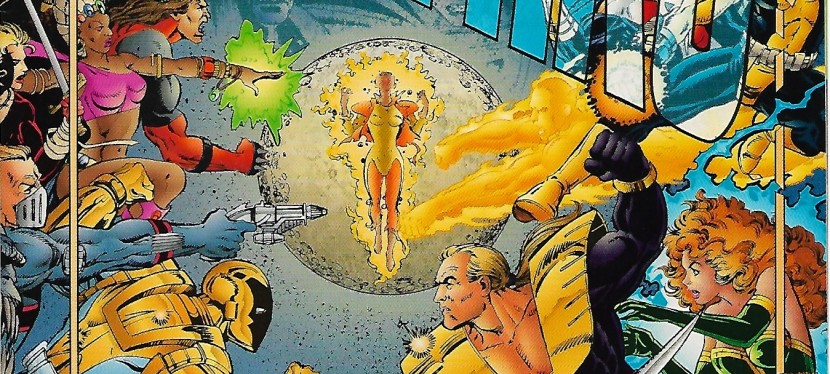
Before the end of 1993, Malibu launched Break-Thru #1 which started a new storyline that involved many of the above characters plus Firearm, The Solution, Sludge and Solitaire. Adding more punch to this comic book was Malibu’s hiring of legendary artist George Perez who worked on the classic Crisis on Infinite Earths maxi-series of DC Comics.

2019-10-17_074138~2.jpg
A great cover! One of the best ever for any Ultraverse comic book!

Here is a close look at Break-Thru #1 mainly written by Gerard Jones, drawn by George Perez and inked by John Lowe with colors by Moose Baumann. Credited as contributing writers were Steve Englehart, Mike W. Barr, Steve Gerber, James D. Hudnall, Tom Mason, George Perez, James Robinson and Len Strazewski.

Early story

The story begins immediately after the end of Exiles #4. A man falls to his death from the top of a tower thinking he was reaching the moon at night. Elsewhere, an airplane sharply goes up with too much altitude as the pilot obsesses with going to the moon

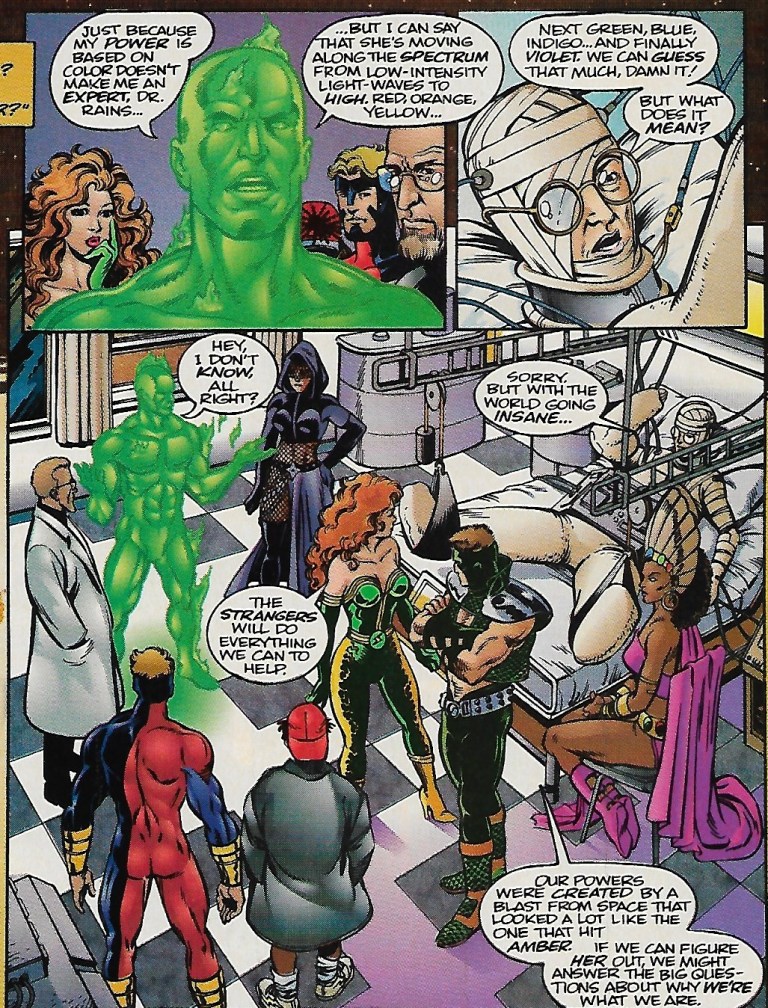
As it turns out, the media reports about people trying to reach the moon and getting restless. A member of Exiles lies helplessly on a bed with his entire body covered with medical materials for his injuries. A doctor presses him for answers and he claims to know that Amber, one of the Exiles members, looks a lot like a young lady floating over Los Angeles. He thinks she is responsible for the madness that has been going around the world.

The injured confirmed that the lady, floating high above with reddish energy around her, is none other than Amber. He claims, however, that he has no idea what happened but shared that she was already prone to volatile energy blasts.

Behind the scenes, members of Aladdin discuss what has been happening. One of them believes that Amber may hold important clues to the nature and origin of Ultras. The Aladdin people get distracted with noise caused by Eden Blake (Mantra in civilian form) who secretly eavesdropped on them pretending to be lost (note: a reference is made to Mantra #5 to explain her new employment with Aladdin.)

2019-10-17_075309~2.jpg
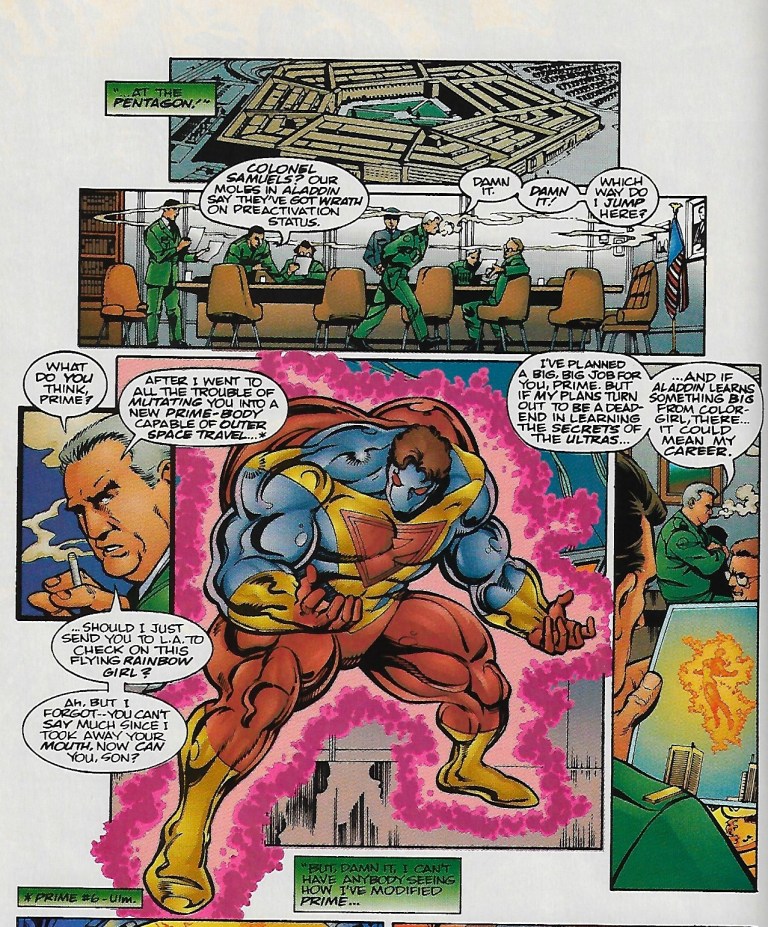
The military and Prime.

Aladdin decides to activate their own Ultra named Wrath. Over at the Pentagon, military officers discuss the information about Wrath they got received from their moles at Aladdin. Their leader wondered about sending Prime (with a modified look) on a mission but he can’t have anyone see how he modified the Ultra.

Meanwhile in the bowels of the Earth, a man who is not really a man watches…

Quality

In terms of storytelling, Break-Thru #1 has a nice build-up. It took its time making references to the many, many characters of the Ultraverse. By the end of the comic book, you will realize there are different kinds of Ultras: the solo Ultras, the corporate Ultras, the freelancers, the work-for-hire Ultras, the accidental Ultras and the like. With regards to emphasizing the shared universe, this comic book shows that connections with the individual comic books are tight. References in what happened in Exiles #4, Prime #6, Mantra #5 and others all helped build-up the concept of Break-Thru. The story is 35-pages long which, in my opinion, was sufficient not only to emphasize the conflict Break-Thru but also give readers enough space to get to know what exactly is going on, who are these many characters, what the institutions involved are, etc.

2019-10-17_075441~2.jpg
Mantra with Prototype.
2019-10-17_075133~2.jpg
The Strangers discuss what has been happening.

More on Break-Thru’s concept, I like the way the comic book emphasized how the sudden presence of multiple Ultras affected local societies, members of the public, the government, the secret groups and others. It also sheds light on how people, regardless of social class or status, react to the presence of people who carry special powers or have unusual talents over them. This reminds me of a key scene in the 2012 Avengers movie in which Col. Fury mentioned how the sudden presence of super beings caused a disturbance.

Spectacle? Unsurprisingly there is a good amount of action as well as incidental moments that kept the narrative entertaining.

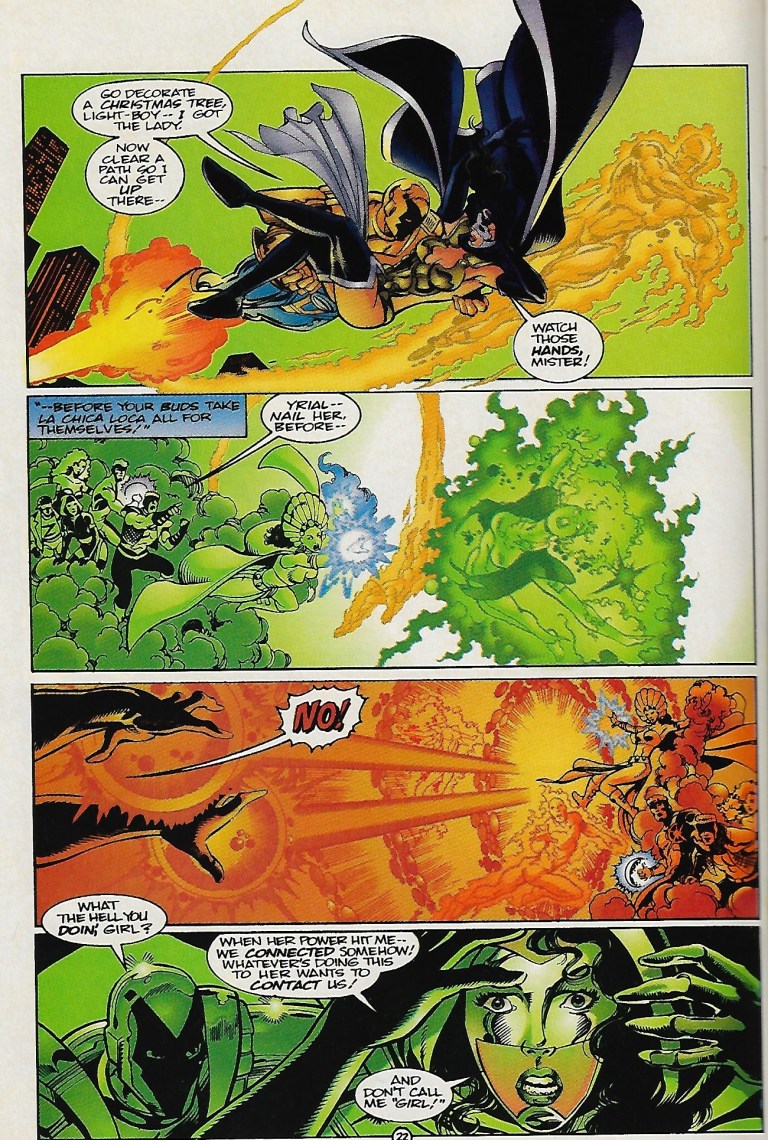
Visually, Break-Thru #1 is a great looking comic book thanks to George Perez who is famous for drawing multiple characters environments with his distinctive style complete with a high level of detail. There is not a single boring moment with his art and each panel has really nice visuals. The action scenes and incidental happenings (example: Valerie’s sudden burst of energy) come with a lot of punch.

2019-10-17_075541~2.jpg
Freex got affected.

Very notably, Perez’s take on each of the Ultraverse characters is very good to look at and in some ways, certain characters look a lot better than they did in their respective comic book series. A perfect example here is the team Freex whose characters look more human (in style) and more lively. Of course, I don’t mean to say that the illustrators of the Freex series did not do a good job.

Perez’s drawing of Mantra is very good. Similar results with The Strangers, Hardcase, Solitaire and Prototype. Very clearly George Perez carefully did his research on the characters and their respective designs.

Conclusion

2019-10-17_074728~2.jpg
Hardcase, Choice and The Solution on the move!

Overall, Break-Thru #1 is a great comic book to read and it reflects the high quality and deep engagement the Ultraverse had when it was still under the control of Malibu Comics (note: Marvel Comics acquired them and drastically changed the UV for the worse in the mid-1990s). It definitely still is one of the finest superhero crossover comic books of the 1990s and, personally, I found it to be more engaging than the launch issues of other crossover storylines like Zero Hour and The Infinity Gauntlet. If you are interested, Break-Thru continued in Firearm #4, Freex #6, Hardcase #7, Mantra #6, The Night Man #3, Prime #7, Prototype #5, Sludge #3, Solitaire #2, The Solution #4, The Strangers #7 and then in Break-Thru #2.

Break-Thru #1 is highly recommended and you can buy a near-mint copy of it for $4 at Mile High Comics’ website.


Thank you for reading. If you find this article engaging, please click the like button below and also please consider sharing this article to others. Also my fantasy book The World of Havenor is still available in paperback and e-book format. If you are looking for a copywriter to create content for your special project or business, check out my services and my portfolio. Feel free to contact me as well. Also please feel free to visit my Facebook page Author Carlo Carrasco and follow me at HavenorFantasy@twitter.com