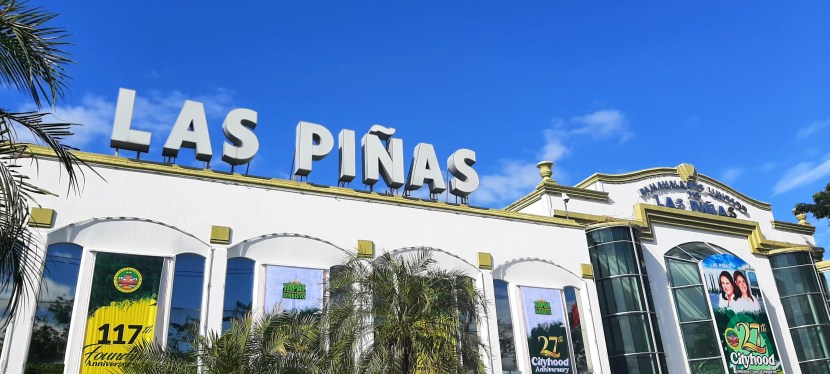
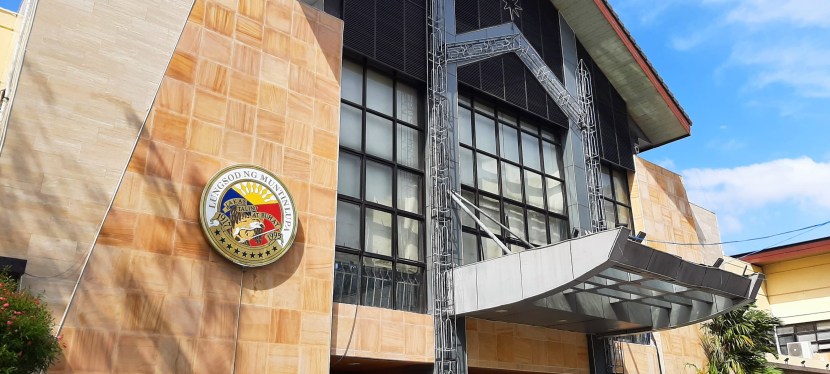
Close to three thousand residents of Las Piñas City who were affected by the recent typhoon received emergency nutrition services by the City Government, according to a Manila Bulletin news report.
To put things in perspective, posted below is an excerpt from the Manila Bulletin report. Some parts in boldface…
The Las Piñas City government provided emergency nutrition services to 736 families or 2,886 individuals who sought shelter in evacuation centers following the recent typhoon.
Mayor April Aguilar said the city government would continue to ensure that the nutritional needs of vulnerable residents are addressed, particularly during disasters.
Aguilar said that during emergencies, the city government make sure that families, especially children, pregnant and lactating women, senior citizens, and persons with disabilities, continue to receive the nutrition support they need.
The Barangay Nutrition Cluster, composed of nutrition workers from several barangays, conducted Nutrition in Emergencies (NiE) interventions in various evacuation centers across the city.
The services included rapid nutrition assessment, micronutrient supplementation, Vitamin A distribution, infant and young child feeding counseling, breastfeeding kits, deworming tablets, iodized salt and complementary food distribution, and management of acute malnutrition.
Let me end this piece by asking you readers: If you are a resident of Las Piñas City, what is your reaction to this development? Do you think the City Government is doing good enough to serve local residents whose lives were disrupted by natural disasters? Do you know anyone in the city who got trapped by flood?
Thank you for reading. If you find this article engaging, please click the like button below, share this article to others and also please consider making a donation to support my publishing. If you are looking for a copywriter to create content for your special project or business, check out my services and my portfolio. Feel free to contact me with a private message. Also please feel free to visit my Facebook page Author Carlo Carrasco and follow me on Twitter at @CarloCarrascoPH as well as on Tumblr at https://carlocarrasco.tumblr.com/ and on Instagram at https://www.instagram.com/authorcarlocarrasco
For more South Metro Manila community news and developments, come back here soon. Also say NO to fake news, NO to irresponsible journalism, NO to misinformation, NO to plagiarists, NO to reckless publishers and NO to sinister propaganda when it comes to news and developments. For South Metro Manila community developments, member engagement, commerce and other relevant updates, join the growing South Metro Manila Facebook group at https://www.facebook.com/groups/342183059992673
To put things in perspective, posted below is the entire statement of the US State Department by Secretary Marco Rubio. Some parts in boldface…
The Trump Administration has been clear: the International Criminal Court (ICC) is a corrupt and fatally politicized supranational court that has maliciously abused its authority and exceeded its mandate. We will not tolerate its assault on state sovereignty.
In furtherance of the diplomatic campaign we launched last month to address the ICC’s abuses of power, I am designating two ICC officials – President of the ICC, Tomoko Akane of Japan, and ICC Senior Trial Lawyer, Abdoulaye Seye of Senegal – pursuant to Executive Order 14203, “Imposing Sanctions on the International Criminal Court.” These individuals have directly engaged in efforts by the ICC to investigate, arrest, detain, or prosecute officials whose government has not consented to ICC jurisdiction.
The ICC has repeatedly attempted to assert authority over nationals of the United States and other countries that have not consented to its jurisdiction or ratified the Rome Statute. This sets a dangerous precedent for all nations.
Our whole of government campaign to dismantle the threat posed by the ICC to national sovereignty will be sweeping and we expect more countries to join our campaign by ending their funding and participation in this politicized and unaccountable court. The ICC’s ability to target American nationals and those of other non-States Parties must end. The Trump Administration stands ready to take additional measures, if necessary, to systematically dismantle the ICC until it is incapable of threatening American sovereignty.
Japan’s reaction – Prime Minister Takaichi Sanae described the sanctions against ICC president Akane as “very unfortunate.” She told reporters that her government will deal with the situation by “continuing communication with relevant nations including the United States.” Japan is known to have supported the ICC for many years already.
Let me end this piece by asking you readers: What is your reaction to this development? Do you support the US sanctions against the two ICC officials? Do you think other nations that are in conflict with the ICC’s encroachment and abuse of power will support rally behind the United States and support sanctioning of officials? If you live in a nation which has a working justice system, are convinced that the ICC is unnecessary?
Welcome back my readers, YouTube viewers and all others who followed this series of articles focused on YouTube videos worth watching.
Have you been searching for something fun or interesting to watch on YouTube? Do you feel bored right now and you crave for something to see on the world’s most popular online video destination?
I recommend you check out the following videos I found.
#1 Ashleigh Burton reacts to Dr. Strangelove or: How I Learned to Stop Worrying and Love the Bomb – When it comes to movies about the Cold War and the rivalry between the United States and the Soviet Union, Stanley Kubrick’s 1964 movie Dr. Strangelove or: How I Learned to Stop Worrying and Love the Bomb stood out with its very unique presentation backed with memorable performances by Peter Sellers and George C. Scott. The film was a satire about the Cold War tensions between America and Russia, and it gave moviegoers a unique look as to what could have happened behind the secured government offices and how each nation communicated with each other over the hotline. Kubrick’s film is so significant, it got featured in many movie reaction videos on YouTube and I had fun watching Ashleigh Burton’s reaction video. Go watch it now!
#2 Behind the Scenes Making of Resident Evil (1996) – It has been over thirty years since Resident Evil was first released and today it has grown into a multimedia entertainment franchise still driven by video game productions. Although many video game publications published a lot of articles about the original game from 1996, none of them captured the behind-the-scenes making at Capcom which the YouTube video below features. Even if you are not a Resident Evil fan, I still encourage you to watch it as you can learn a lot about the process, the hard work done by the Japanese and insight shared by Shinji Mikami.
#3 The Multi-million Dollar Theft With Fake Coupons – Over a decade ago, someone in the state of Arizona started an illegal operation using fake coupons which grew so dramatically, it became a shadow enterprise and two more people got involved. The operation of multiple fake shopping coupons robbed corporations several millions of Dollars and the one who started it got so rich she even bought herself many luxury vehicles. To find out the details about this true crime story, watch the video below and pay close attention.
#4 Austria Fought Back Against Islam – Massive immigration that includes Islamists who are obsessed with conquering new nations is very clearly dangerous and even toxic. With so many illegal aliens/immigrants and Muslims in Europe, it is clear that the future of the Europeans is looking more uncertain as time passes. Among them is Austria which boldly made changes to prioritize its own people and preserve its rich culture by pushing back hard against Islamists. Already there were Islamic scandals that were uncovered there in Austria. Watch and learn from the Fall of Nations video below.
#5 The Fall of BuzzFeed – Remember how popular BuzzFeed was? Even though a lot of people got lured by them, I never trusted BuzzFeed and I was never interested with their videos and other online gimmicks. BuzzFeed was also a very questionable participant in journalism no matter what they did to gain credibility. Fortunately for the world, BuzzFeed collapsed and deservedly so. To find out why, watch MAGAmark’s video below.
#6 Record-breaking Rainfall Hits Chiba Prefecture in Japan – Apart from being vulnerable to earthquakes which is connected with being located within the Pacific Ring of Fire, Japan also has its share of struggles with immense rainfall and flooding. Recently, record-breaking rainfall hit Chiba Prefecture causing a lot of flood and hardship for the Japanese. If you were a constant visitor to Japan, was there ever a time when you got caught in heavy rain and flooding there? Watch and learn from the Nippon TV video below.
#7 Role-playing Games About 1990s Anime – Believe it or not, there are indeed role-playing games (RPGs) based on anime properties that were popular in the 1990s. Of course, a lot of those anime-based RPGs were released only in Japan and some of them became playable with English translations through digital patches, emulation and fan-made translations. If you are into retro gaming, anime, RPGs and the 1990s, watch the Gaming Broductions video below.
#8 Assorted Pacific Rim Reaction Videos – When Pacific Rim was released in cinemas worldwide in 2013, I never bothered to watch it in the local cinema. Here in the Philippines, there was a lot of pre-release buzz that Manila would appear in the movie and so many local film buffs got excited. The movie eventually grossed over $400 million worldwide through theaters and a lot of people enjoyed its high-quality visuals, intense battles and the special attention to detail invested on the size and scale of the locations. The movie has been featured in several reaction videos and posted below are the entertaining ones to watch.
#9 Ranting for Vengeance Slams Video Essay Slop on YouTube – It is not a secret that YouTube is filled not only with artificial intelligence (AI) slop but also video essays made by individuals who arrogantly think of themselves as experts and wise creators. In his recent video, Ranting for Vengeance slammed the video essay slop on YouTube and explained in detail what kind of people created those videos, what their agenda and why people should not allow themselves to be influenced by them. I encourage you to watch the video below now.
#10 Shallow Focus is a Disease in Movies – There is a new trend that has influence the production of movies in Hollywood (AKA Commiewood) for many years now and it has literally become a disease which made the viewing of movies undesirable. The disease is shallow focus which occurs when the area of sharpness in front of a camera lens is very narrow which results in blurry backgrounds. Shallow focus is being abused in modern-day filmmaking and it is only getting worse. That said, I encourage you all to watch Rowan J Coleman’s video below and share it to as many film buffs as possible.
The Department of Energy (DOE) is identifying more potential sites in the Philippines for nuclear power facilities, according to a news report by BusinessWorld.
To put things in perspective, posted below is an excerpt from the BusinessWorld news report. Some parts in boldface…
THE DEPARTMENT of Energy (DoE) is identifying more potential sites for nuclear power facilities as the government targets 1.4 gigawatts of nuclear capacity by 2038.
Energy Undersecretary Giovanni Carlo J. Bacordo said the government is studying seven areas as possible locations for future nuclear power plants.
“There are two sites in Bataan, two sites in Palawan, one in Masbate, Pangasinan, and Camarines Norte,” Mr. Bacordo told reporters on Tuesday.
These sites have undergone initial assessment, with technical assistance from the International Atomic Energy Agency (IAEA) to determine whether the areas can safely host nuclear facilities.
“Nuclear energy is not simply about deciding to build a power plant. We must build the institutions, the regulatory system, the technical capability, the financing framework, and the public confidence to support it,” Mr. Bacordo said.
These sites will set the foundation as the Philippines works toward its goal of developing 1,200 megawatts (MW) of nuclear power generation by 2032. Beyond this target, the country is also considering the entry of 1,400 MW of nuclear capacity by 2038.
The DoE said the country’s progress on nuclear development heeds to the call of President Ferdinand R. Marcos, Jr. in his 2026 State of the Nation Address to revisit nuclear energy as part of efforts to strengthen energy security and bring down electricity costs.
The Philippines is positioning nuclear energy as part of efforts to diversify its energy mix, reduce emissions, and enhance energy security.
“Nuclear can add firm capacity and diversify the energy mix, but it does not replace the need for other technologies,” Energy Secretary Sharon S. Garin said.
Amid concerns over the safety of nuclear power, the DoE said public acceptance has increased, citing a Social Weather Stations survey that showed public approval of nuclear energy rose to 82% in 2024 from 79% in 2019.
While laying down the groundwork for nuclear energy sites, the DoE said it also focuses on addressing the remaining work across the IAEA’s 19 nuclear infrastructure issues, with priority areas covering electrical grid readiness; safety, security and safeguards; legal and regulatory requirements; emergency preparedness; nuclear fuel cycle and waste management; stakeholder involvement; and nuclear workforce development.
Let me end this post by asking you readers: What is your reaction to this recent development? Do you feel confident that nuclear energy will be realized in the Philippines in your lifetime? Did you encounter a lot of people living with nuclear fear?
Thank you for reading. If you find this article engaging, please click the like button below, share this article to others and also please consider making a donation to support my publishing. If you are looking for a copywriter to create content for your special project or business, check out my services and my portfolio. Feel free to contact me with a private message. Also please feel free to visit my Facebook page Author Carlo Carrasco and follow me on Twitter at @CarloCarrascoPH as well as on Tumblr at https://carlocarrasco.tumblr.com/and on Instagram athttps://www.instagram.com/authorcarlocarrasco
The Philippines, which hosted the summit of the Association of Southeast Asian Nations (ASEAN) and other related conferences, failed once again on attracting significant foreign direct investment (FDI) as the May 2026 FDI net inflow was counted at $210 million only making it the lowest in eleven years, according to a news report by the Manila Bulletin.
To put things in perspective, posted below is an excerpt from the Manila Bulletin news report. Some parts in boldface…
Foreign direct investment (FDI) net inflows into the Philippines plunged to $210 million in May, the lowest monthly total in more than 11 years as global economic volatility and geopolitical tensions prompted foreign companies to delay capital commitments.
According to the latest data from the Bangko Sentral ng Pilipinas (BSP), released on Monday, Aug. 10, the May figure represents a 64.7 percent contraction from the level recorded in May 2025 and falls below the previous record low of $200.43 million seen in March 2015.
The sharp monthly drop dragged total net inflows for the first five months of 2026 to $2.18 billion, a 33.4 percent decline from the $3.27 billion recorded in the same period last year.
According to the BSP, the cumulative decline was “driven by lower foreign net investments in debt instruments and reinvestment of earnings, which more than offset the increase in net equity capital investments (other than reinvestment of earnings).”
The central bank added that this trend “reflected lower intercompany borrowings from foreign direct investors and reduced earnings retained for reinvestment during the period.”
Among its components, the primary driver of the May shrinkage was the sharp fall in net investments in debt instruments, which tumbled 92.1 percent to $35 million from $440 million a year earlier.
As of end-May, debt instruments—which “consist mainly of intercompany borrowing or lending between foreign direct investors and their subsidiaries or affiliates in the Philippines”—totaled $1.25 billion, dropping by nearly half from the $2.48 billion recorded in 2025.
This five-month performance follows a challenging 2025, during which annual net inflows plunged to $7.79 billion from $9.40 billion in 2024. The BSP forecasts inflows to clock in lower at $7 billion before rebounding to $8 billion in 2027.
Let me end this post by asking you readers: What is your reaction to this recent development? Do you think hosting the ASEAN Summit will lead the Philippines to economic miracles and stronger FDI in the near future?
Thank you for reading. If you find this article engaging, please click the like button below, share this article to others and also please consider making a donation to support my publishing. If you are looking for a copywriter to create content for your special project or business, check out my services and my portfolio. Feel free to contact me with a private message. Also please feel free to visit my Facebook page Author Carlo Carrasco and follow me on Twitter at @CarloCarrascoPH as well as on Tumblr at https://carlocarrasco.tumblr.com/and on Instagram athttps://www.instagram.com/authorcarlocarrasco
As personnel of the City Government of Muntinlupa worked hard unclogging the drainage systems, Mayor Ruffy Biazon lamented the dumping of trash into them which resulted in flooding in different parts of the city, according to a Manila Bulletin news report.
To put things in perspective, posted below is an excerpt from the Manila Bulletin news report. Some parts in boldface…
Muntinlupa Mayor Ruffy Biazon lamented the dumping of trash into drainage systems, which contributes to flooding in various barangays.
Personnel from the Muntinlupa City government have been unclogging drainage systems in different areas.
Biazon said a tire was found in a drainage ditch on Narra Street in Lakeview, Barangay Putatan.
“Palaisipan talaga sa akin bakit sa aming declogging ng mga drainage sa iba’t ibang lugar sa Muntinlupa, may nakukuhang gulong na nakabara (It’s really a mystery to me why, when we declog drainages in various areas in Muntinlupa, we find tires),” he said.
He added that such obstructions are a major obstacle to the flow of water. The mayor has instructed the city’s Engineering Office to continue declogging operations.
However, he noted that because there are so many drainage systems, the Engineering Office cannot handle them all at once.
The mayor stressed the importance of barangay cooperation to ensure proper drainage flow.
“Hindi makakaila na ang basura ay may kontribusyon sa pagbaha. Kahit regular ang declogging pero patuloy pa rin ang walang pakundangan na pagkalat ng basura, mahihirapan tayong makamit ang efficient na pagdaloy ng ating drainage systems. Lahat tayo may responsibilidad sa pananatili ng kalinisan ng ating lungsod (It cannot be denied that garbage contributes to flooding. Even if declogging is done regularly, if garbage continues to be spread carelessly, it will be difficult for us to achieve efficient flow in our drainage systems. We all have a responsibility to maintain the cleanliness of our city),” he said.
Let me end this post by asking you readers: What is your reaction to this recent development? If you are a resident of Muntinlupa City, who do you think dumps trash into the local drainage systems? Were you trapped by flood during the heavy rain that happened on the weekend ending August 9?
For more South Metro Manila community news and developments, come back here soon. Also say NO to fake news, NO to irresponsible journalism, NO to misinformation, NO to plagiarists, NO to reckless publishers and NO to sinister propaganda when it comes to news and developments. For South Metro Manila community developments, member engagement, commerce and other relevant updates, join the growing South Metro Manila Facebook group at https://www.facebook.com/groups/342183059992673
Following his inspection in Las Piñas City, Philippine President Ferdinand “Bongbong” Marcos, Jr., announced that the government will push ahead with its waste-to-energy program, according to a news article by the Philippine News Agency (PNA). Metro Manila was recently hit hard by heavy rain during the weekend of August 8-9 and flooding happened in many parts of the metropolis as garbage clogged waterways.
To put things in perspective, posted below is an excerpt from the PNA article. Some parts in boldface…
President Ferdinand R. Marcos Jr. said Tuesday the government will push ahead with its waste-to-energy program as part of efforts to address garbage buildup in waterways and help mitigate flooding.
Marcos raised the issue after inspecting a high-vacuum self-priming drainage trailer pump in Barangay Zapote, Las Piñas City, amid heavy rains brought by two back-to-back tropical cyclones and the enhanced southwest monsoon or “habagat” in parts of Luzon.
The President said garbage had accumulated in waterways in nearby Parañaque City after floodwaters opened drainage channels, with high tide causing the waste to be trapped.
“Nakita niyo ‘yung mga picture, punong-puno ng basura ‘yung mga kanal na hindi naman galing sa Parañaque, galing sa ibang lugar ‘yun (You saw the pictures – the canals were full of garbage that did not come from Parañaque. It came from other places),” Marcos said.
He urged local government units (LGUs) and the public to dispose of waste properly, warning that garbage dumped indiscriminately could worsen flooding and cause significant damage.
Marcos said the government will continue its waste-to-energy program, which involves processing garbage to generate electricity.
“Kami naman sa pamahalaan, itutuloy na namin ‘yung sa waste-to-energy program. ‘Yun ‘yung kinukuha ‘yung basura at ito ay pino-process at ginagawang kuryente (For the government’s part, we will continue with the waste-to-energy program. It takes garbage, processes it, and turns it into electricity),” he said.
“Napakalaking bagay niyan kapag nagawa natin (That would be a very significant thing once we accomplish it).”
Marcos said waste-to-energy technology is already established, indicating that the government sees the program as a viable long-term measure for addressing the country’s waste problem.
Let me end this post by asking you readers: What is your reaction to this recent development? Do you think the national government will succeed with pushing forward with the waste-to-energy program?
Thank you for reading. If you find this article engaging, please click the like button below, share this article to others and also please consider making a donation to support my publishing. If you are looking for a copywriter to create content for your special project or business, check out my services and my portfolio. Feel free to contact me with a private message. Also please feel free to visit my Facebook page Author Carlo Carrasco and follow me on Twitter at @CarloCarrascoPH as well as on Tumblr at https://carlocarrasco.tumblr.com/and on Instagram athttps://www.instagram.com/authorcarlocarrasco
For more South Metro Manila community news and developments, come back here soon. Also say NO to fake news, NO to irresponsible journalism, NO to misinformation, NO to plagiarists, NO to reckless publishers and NO to sinister propaganda when it comes to news and developments. For South Metro Manila community developments, member engagement, commerce and other relevant updates, join the growing South Metro Manila Facebook group at https://www.facebook.com/groups/342183059992673
With growing demand for high-quality protein realized, the Philippines will keep importing more dairy products from the United States, according to a news report by the Manila Bulletin. It should be noted that the Philippines does not have a huge dairy production and local consumption of dairy (and other products that require dairy to be made) kept on growing.
To put things in perspective, posted below is an excerpt from the Manila Bulletin news report. Some parts in boldface…
The Philippines is expected to increase its imports of dairy products from the United States (US), driven by growing demand for high-quality protein and limited local dairy production, according to the US Dairy Export Council (USDEC).
USDEC Regional Director Dali Ghazalay said US dairy exports to the Philippines are on track to remain strong this year, as demand for dairy products continues to expand.
She said the demand is particularly strong when it comes to meeting the country’s nutrition needs, with dairy playing a crucial role in nutritionally adequate diets.
“The demand for dairy will still be very strong because of nutrition and what dairy can contribute to the nutrition needs of the Philippines,“ Ghazalay said on the sidelines of USDEC’s trade seminar on Thursday, Aug. 13.
Based on USDEC data, US dairy exports to the Philippines are estimated at around 143,000 metric tons (MT). Top exports include skim milk powder, buttermilk powder, and dairy permeate.
Currently, the Philippines is the top export destination for US dairy goods in Southeast Asia, according to USDEC.
Increased demand this year is expected to be driven by dairy products with high-quality nutritional protein, such as skim milk powder.
Ghazalay said demand is also on the rise for whey proteins and milk proteins, which are usually integrated into high-value-added products such as protein powder for fitness purposes.
Ultimately, she noted that increased dairy demand from the US is also a direct result of the country’s subpar domestic output, which remains unable to meet local demand.
“Local dairy production is still very small. And you do need to supplement that with different dairy ingredients to meet all these different products that the consumers here need,” said Ghazalay.
Let me end this post by asking you readers: What is your reaction to this recent development? Do you feel confident that nuclear energy will be realized in the Philippines in your lifetime? Did you encounter a lot of people living with nuclear fear?
Thank you for reading. If you find this article engaging, please click the like button below, share this article to others and also please consider making a donation to support my publishing. If you are looking for a copywriter to create content for your special project or business, check out my services and my portfolio. Feel free to contact me with a private message. Also please feel free to visit my Facebook page Author Carlo Carrasco and follow me on Twitter at @CarloCarrascoPH as well as on Tumblr at https://carlocarrasco.tumblr.com/and on Instagram athttps://www.instagram.com/authorcarlocarrasco
The Philippines, which has been struggling with weak economic growth and high inflation, attracted 3.7 million international visitors in the first 7 months of this year, according to a news report by BusinessWorld.
Be mindful that the words “international visitors” includes both foreign tourists as well as Filipinos who are based abroad who happened to return to the country as “balikbayan”. For insight, the Philippines attracted 5.9 million foreign tourists in 2025 plus over half-a-million Filipinos from overseas which combines for 6.4 million international visitors for the year. For the first half of 2026, the nation attracted 2.9 million foreign tourists.
To put things in perspective, posted below is an excerpt from the BusinessWorld news report. Some parts in boldface…
The number of Philippine international visitors grew to around 3.7 million as of July, buoyed by more relaxed visa policies, with growing markets seen in China, India, and Taiwan, according to the Department of Tourism (DoT) on Friday.
DoT Undersecretary Verna Esmeralda C. Buensuceso cited the figure, noting a 4.25% increase in tourist arrivals compared to last year.
“From January to July this year, the Philippines welcomed approximately 3.7 million international visitors, representing a 4.25% increase in visitor arrivals compared to the same period last year,” Ms. Buensuceso said during the launch of the 4th Travel Sale Expo 2026.
“We are seeing good growth from markets like China at 67%, India at 34%, and Taiwan at 11.21% growth, buoyed in large part by more liberal visa policies,” she added.
The tourism Undersecretary also noted sustained growth trajectories from the country’s traditional foreign markets such as the United States of America, Canada, and Japan, driven by additional flights.
The country is also experiencing double-digit to triple-digit growth in international arrivals from our Southeast Asian peers, such as Indonesia, Vietnam, Myanmar, Cambodia, Laos, and Timor-Leste, due to the ongoing ASEAN Summit 2026 where the Philippines serves as the host country.
“These are encouraging signs, but let me emphasize that our goal is not simply to increase the number of arrivals,” Ms. Buensuceso said.
“Our real goal is to increase the value of tourism. We want tourism to create more jobs, attract more investments, and generate more opportunities that reach communities across the country,” she added.
The tourism industry contributed 8.1% to the country’s gross domestic product (GDP) in 2025, down from 8.7% in the previous year, according to the Philippine Statistics Authority (PSA). It also employed around 7.70 million Filipinos in 2025.
Let me end this post by asking you readers: What is your reaction to this recent development? Do you think the DOT is padding the numbers on tourist arrivals to avoid embarrassment in the near future? Do you think the Philippines will be able to surpass 2025’s 5.9 million foreign tourist count by the end of this year? Do you believe that hosting the ASEAN Summit is actually helping the Philippine attract more tourists from its Southeast Asian neighbors?
Thank you for reading. If you find this article engaging, please click the like button below, share this article to others and also please consider making a donation to support my publishing. If you are looking for a copywriter to create content for your special project or business, check out my services and my portfolio. Feel free to contact me with a private message. Also please feel free to visit my Facebook page Author Carlo Carrasco and follow me on Twitter at @CarloCarrascoPH as well as on Tumblr at https://carlocarrasco.tumblr.com/and on Instagram athttps://www.instagram.com/authorcarlocarrasco
Following Russian President Vladimir Putin’s visit to Etorofu Island, Japan is considering a measure against Russia in response, according to a news report by Kyodo News. The Japanese have protested against the visit and tension with Russia is heating up.
Etorofu Island is located off Hokkaido and Japan has claimed it even though Russia has control of it. Historically, Russia – then the Soviet Union – seized Etorofu after Japan surrendered way back in World War II. The Russians call the island Iturup.
To put things in perspective, posted below is an excerpt from the news report of Kyodo News. Some parts in boldface…
Japan is considering taking some measure against Russia, following President Vladimir Putin’s visit to Etorofu Island, a senior Foreign Ministry official said Friday.
Putin made his first trip to the Russian-controlled, Japanese-claimed island chain off Hokkaido as president or prime minister Thursday, drawing a backlash from Tokyo, which called it “totally unacceptable.”
“We are considering what step to take going forward,” the official told reporters. An additional sanction is believed to be under consideration.
The islands, known in Japan as the Northern Territories and by Russia as the Southern Kurils, have long been at the center of a territorial row between the countries. The visit came as ties between Japan and Russia remain strained amid Moscow’s ongoing invasion of Ukraine.
Japan maintains that the island chain, consisting of Etorofu, Kunashiri, Shikotan and the Habomai islet group, was illegally seized by the Soviet Union soon after Japan’s surrender in World War II. Russia argues the seizure was legitimate.
On Thursday, the Japanese government summoned Nikolay Nozdrev, Russia’s ambassador in Tokyo, and lodged a strong protest over Putin’s visit, while Prime Minister Sanae Takaichi said the Northern Territories are an inherent part of Japanese territory “both historically and under international law.”
According to the Russian government, Putin visited a fish-processing plant, a hospital and a school and met with local residents.
The territorial dispute has meant the two countries have never signed a peace treaty after World War II.
Under former Prime Minister Shinzo Abe, Takaichi’s political mentor, Japan pursued closer ties with Russia in the hope of resolving the Northern Territories dispute. Abe met Putin 27 times during his tenure ending in 2020.
In 2018, the two agreed to accelerate peace treaty talks based on a 1956 joint declaration between Japan and the Soviet Union that called for the handover of two smaller islands — Shikotan and the Habomai islet group — after a peace treaty was signed.
The talks were suspended after Russia invaded Ukraine in 2022. Prospects for resuming negotiations remain dim as ties have deteriorated following Japan’s participation in U.S.-led sanctions against Moscow.
Let me end this piece by asking you readers: What is your reaction to this development? Do you think the diplomatic relationship between Russia and Japan will remain strained for the foreseeable future? Do you consider Russia’s seizure of Etorofu Island illegal?
Thank you for reading. If you find this article engaging, please click the like button below, share this article to others and also please consider making a donation to support my publishing. If you are looking for a copywriter to create content for your special project or business, check out my services and my portfolio. Feel free to contact me with a private message. Also please feel free to visit my Facebook page Author Carlo Carrasco and follow me on Twitter at @CarloCarrascoPH as well as on Tumblr at https://carlocarrasco.tumblr.com/and on Instagram athttps://www.instagram.com/authorcarlocarrasco