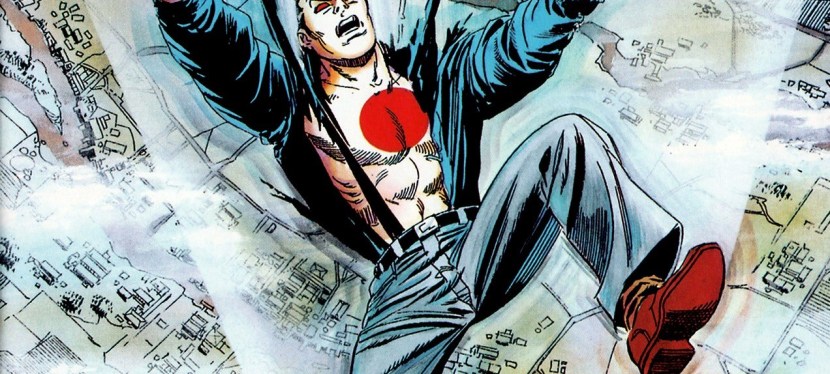
A Look Back at What If #42 (1992)

Disclaimer: This is my original work with details sourced from reading the comic book and doing personal research. Anyone who wants to use this article, in part or in whole, needs to secure first my permission and agree to cite me as the source and author. Let it be known that any unauthorized use of this article will constrain the author to pursue the remedies under R.A. No. 8293, the Revised Penal Code, and/or all applicable legal actions under the laws of the Philippines.

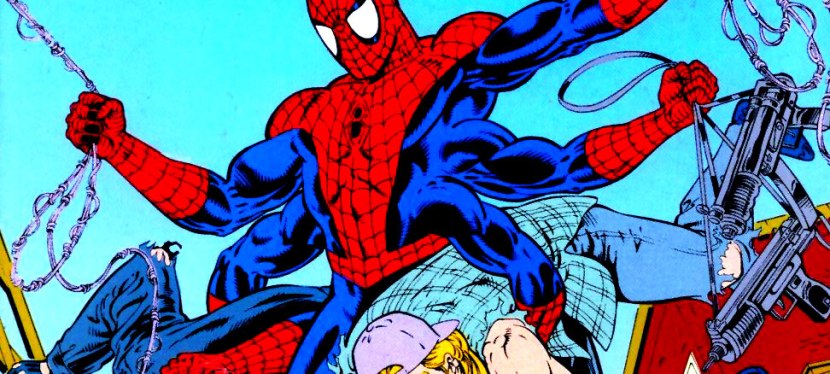
Believe it or not, there was a time when the iconic superhero Spider-Man had additional arms on both sides of his body which made him even more like a spider. Such a story was told in Amazing Spider-Man #100 and #101 published decades ago by Marvel Comics.

In 1992, Marvel Comics published What If #42 to revisit the old crazy story and tell an alternate reality of it. Take note that this comic book we’re about to examine together was released the same year Marvel celebrated the 30th anniversary of Spider-Man.

Cover
A very eye-catching cover.

Here’s a look back at What If #42 written by Michael Gallagher and drawn by Kevin West. The hot question: What if Spider-Man had kept his six arms?

Early story

The comic book begins with the Watcher telling readers a recap of what happened to Spider-Man in Amazing Spider-Man #100 and #101. It is recalled that Peter Parker got fed up with being Spider-Man as it complicated his personal life with a bunch of problems. After he attempted to eliminate his super powers by creating and using a potion, Peter Parker suddenly grew four additional arms instead.

In reaction, Parker reached out to his friend Dr. Connors/Lizard (who was in Florida) who granted him access to his laboratory in Long Island. Tried as hard as he could, Parker could not come up with a solution.

Meanwhile, many miles away, the vampire Morbius harms the crew of a ship on the sea before diving into the water. Morbius gets overwhelmed by multiple sharks and dies. His death, as it turns out, marked the end of the solution to Spider-Man’s extra arms problem. Morbius had an enzyme unique only to vampire body chemistry which would have cured Spider-Man’s condition.

10
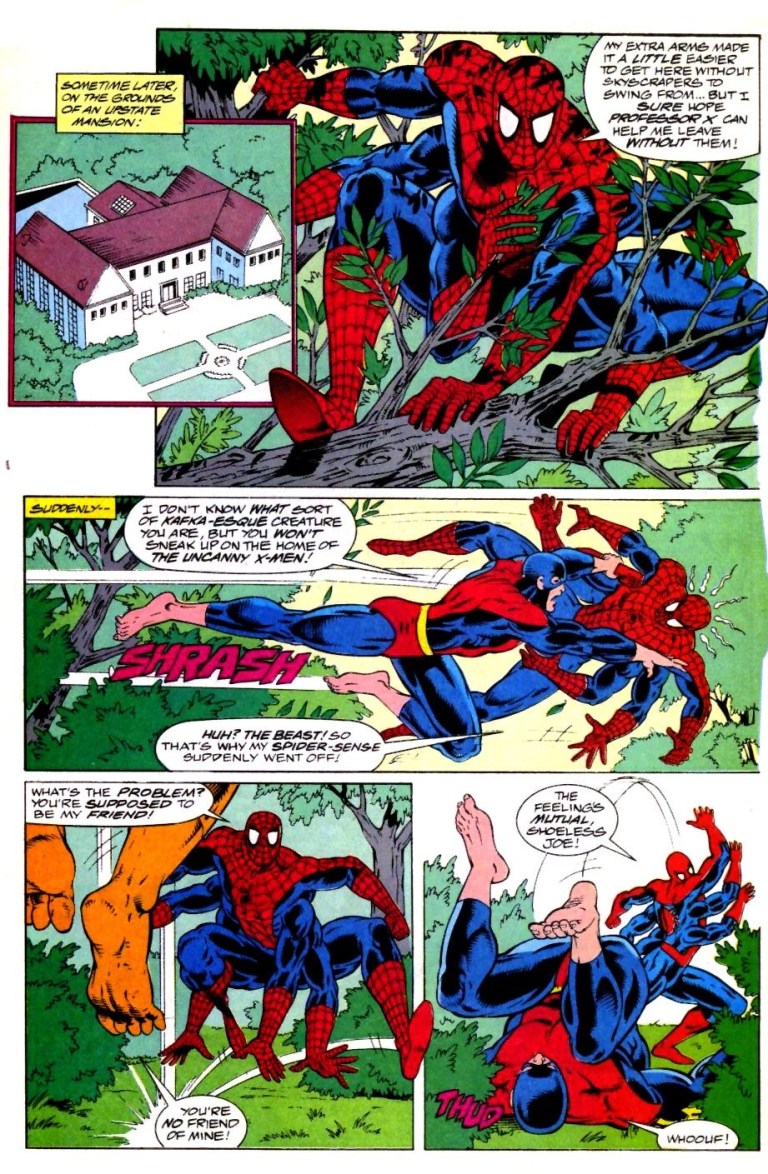
Spider-Man and Beast of the X-Men.

This leaves Spider-Man with an even longer lasting problem leading to a new reality.

Quality

The story is well written and nicely paced. There is a nice balance between storytelling, characterization and action here. As far as the alternate reality of events go, What If #42 is a smash in the sense that it nicely explores what would happen not only to Peter Parker had he actually kept those extra arms of his, but also what would happen to the people around him as well as balance of superheroes in the state of New York. If you just imagine yourself as Peter Parker having four extra arms, try visualizing how your personal life got destroyed and your connections with people you care about getting strained or even cut off. Nobody in real life would want to end up living like a freak, and this concept is well emphasized with Spider-Man.

Character development on Spider-Man is well done. As you read his lines and thoughts, you will feel the pressure and hassle he is experiencing with the extra arms. You’ll wonder how his Aunt May would react not only to those new arms but also his prolonged absence. As Peter Parker becomes very determined to find a solution in the absence of Morbius, you’ll even relate with his struggle. On top of these, the dialogue was well written and there were even a few intriguing moments.

I also enjoyed the way the comic book creators emphasized the shared universe of Marvel Comics here. You will see the X-Men and Fantastic Four plus several more Marvel characters make appearances.

Along the way, there is a nice scene at the Daily Bugle (the newspaper where Peter Parker works as a photographer) showing how sinister and abusive J. Jonah Jameson really is as he remains obsessed with destroying Spider-Man by means of distorted presentation of news. In this age of fake news, sinister propaganda, distorted views and local community print media publications being operated by people who don’t really know journalism, the Daily Bugle scene is pretty relevant by today’s standards.

As such, Michael Gallagher’s script and story structure here are very strong. For the art, Kevin West did good work. Not only was I able to recognize the Spider-Man-related characters and other Marvel superheroes, West’s notably made the Lizard look visceral enough and the same can be said of his take on Venom. The comic book art had a nice flow as the story was told and West provided enough impact on the action scenes.

Conclusion

What If #42 is a pretty good comic book to read exploring how things would have been had Spider-Man kept those extra arms and really looked truly spider-like. Apart from the good quality of storytelling and visuals, the presence of other Marvel Comics universe characters further add some depth into the story as Peter Parker struggled to find a solution to his problem.

7
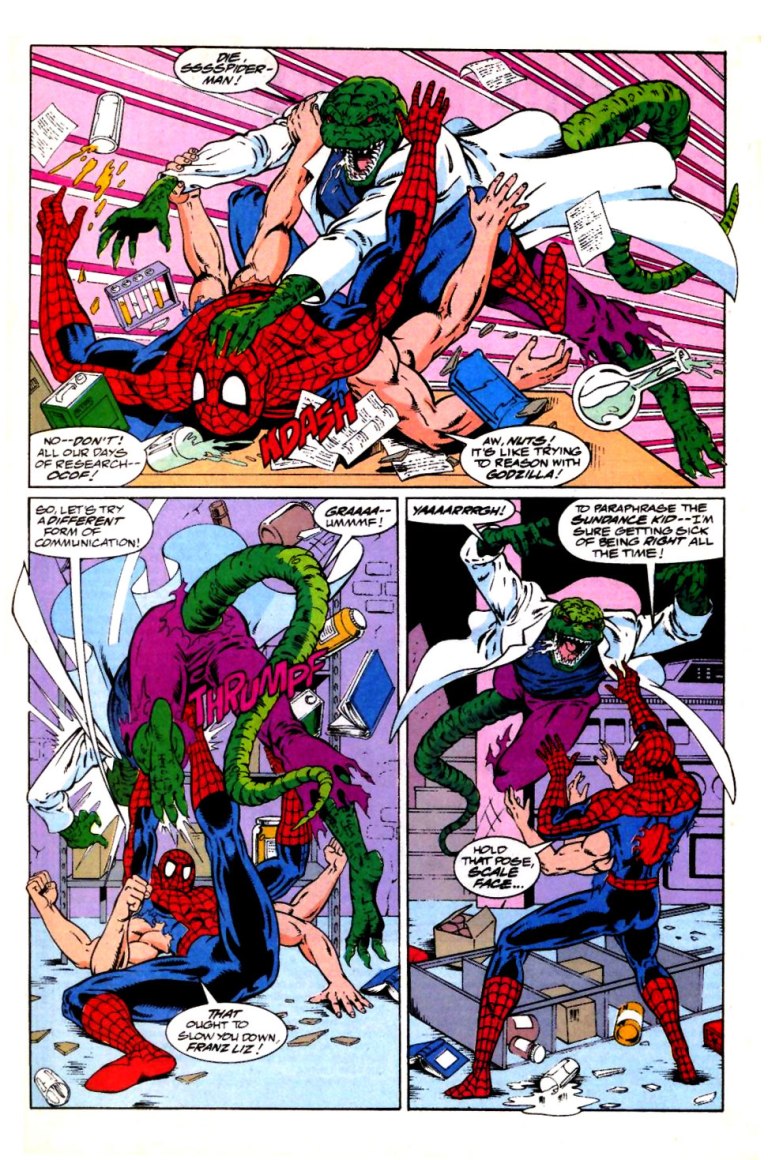
Spidey and Lizard!

This is the kind of story that I don’t believe we will ever see happen on the big screen. It’s just too jarring and even shocking for Sony Pictures and Marvel Studios to actually show Tom Holland as Spider-Man with extra arms. Such a cinematic move will surely outrage fans and might even put a dent on the credibility and believability of the Marvel Cinematic Universe.

If you are seriously considering buying an existing hard copy of What If #42, be aware that as of this writing based on the ratings of MileHighComics.com, a near-mint copy of the regular edition is at $12 while the near-mint copy of the newsstand edition is priced at $39.

Overall, What If #42 is recommended.


Thank you for reading. If you find this article engaging, please click the like button below and also please consider sharing this article to others. If you are looking for a copywriter to create content for your special project or business, check out my services and my portfolio. Feel free to contact me as well. Also please feel free to visit my Facebook page Author Carlo Carrasco and follow me at HavenorFantasy@twitter.com
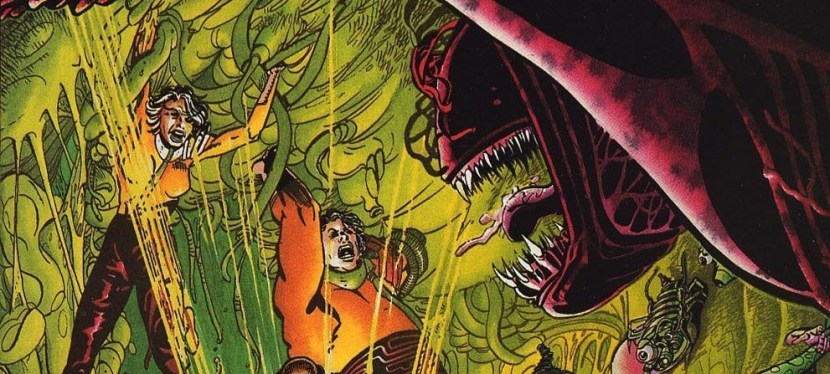
A Look Back at X-Men 2099 #3

Disclaimer: This is my original work with details sourced from reading the comic book and doing personal research. Anyone who wants to use this article, in part or in whole, needs to secure first my permission and agree to cite me as the source and author. Let it be known that any unauthorized use of this article will constrain the author to pursue the remedies under R.A. No. 8293, the Revised Penal Code, and/or all applicable legal actions under the laws of the Philippines.

When X-Men 2099 #1 was released in 1993, it was an instant hit with comic book collectors and became one of the top-selling comic books in America during its month of release. That was no surprise not simply because the comic book speculator boom was still in effect back then, but also because the X-Men 2099 monthly series was launched at a time when Marvel Comics spent a lot of money promoting the 30th anniversary celebration of the X-Men franchise and, on the other hand, agreed to expand the Marvel 2099 universe apart from Spider-Man 2099, Ravage 2099, Doom 2099 and Punisher 2099.

And there I was eager to witness how the 2099 universe got expanded through the futuristic X-Men whose adventures took place far away from New York. After reading the first two issues, I was hooked already on X-Men 2099. And then X-Men 2099 appeared at the shelves of the local comic book store with a rather intriguing cover.

Cover
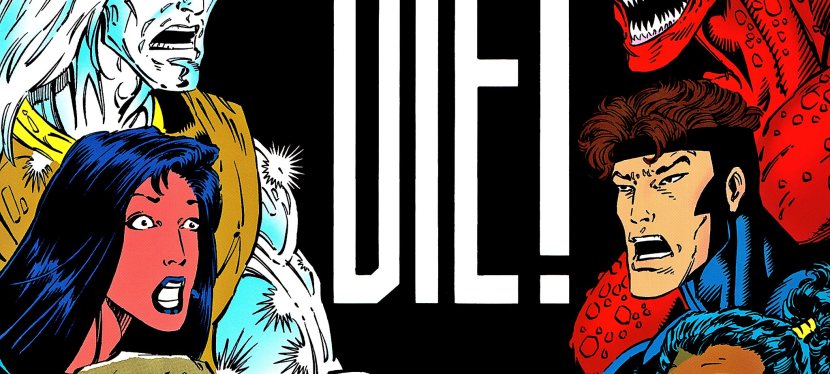
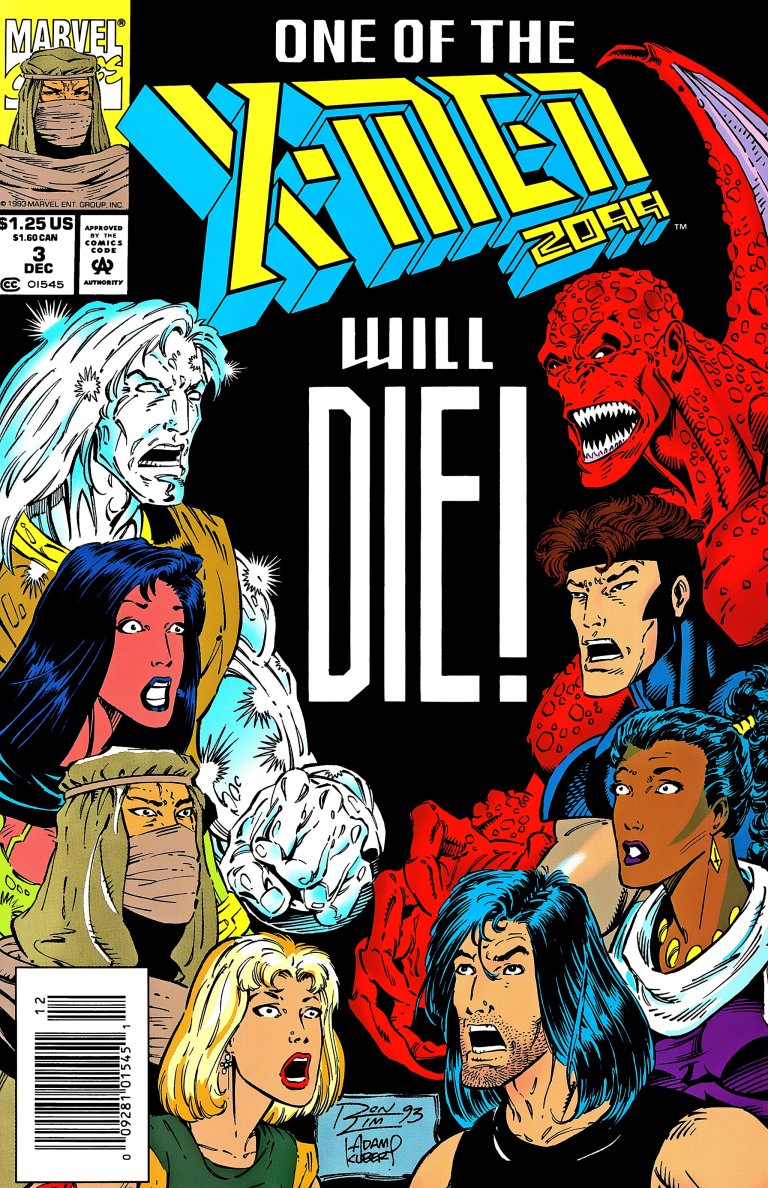
The intriguing cover complete with a coloring error (Tim’s red hair ended up black). 

I admit that after seeing that cover, I became more eager to find out if anyone from the futuristic mutants would actually die. By that time, the story that started with issue turned out to be a 3-part story with the objective of establishing X-Men 2099 to readers.

Anyway, let’s start with the retro comic book review of X-Men 2099 published in 1993 by Marvel Comics with a story by John Francis Moore and illustrations by Ron Lim.

Early story

Picking up shortly after the events of issue , the comic book begins with Xi’an’s cocooned body being transported back to headquarters by Junkpile (who turned traitor on the X-Men) while captured X-Men team members Meanstreak and Metalhead were placed into liquid-filled chambers. Team member Krystalin managed to elude capture while her teammates Serpentina, Cerebra, Skullfire and Bloodhawk are temporarily free.

4
The free X-Men members try to infiltrate the place to rescue their teammates.

Lytton, who took over the family corporation since the death of his father Noah Synge, is running a brutal operation. His sister Desdemona does not fully trust him. Bloodhawk flies and breaks into a building in Las Vegas causing trouble for the Synge security personnel.

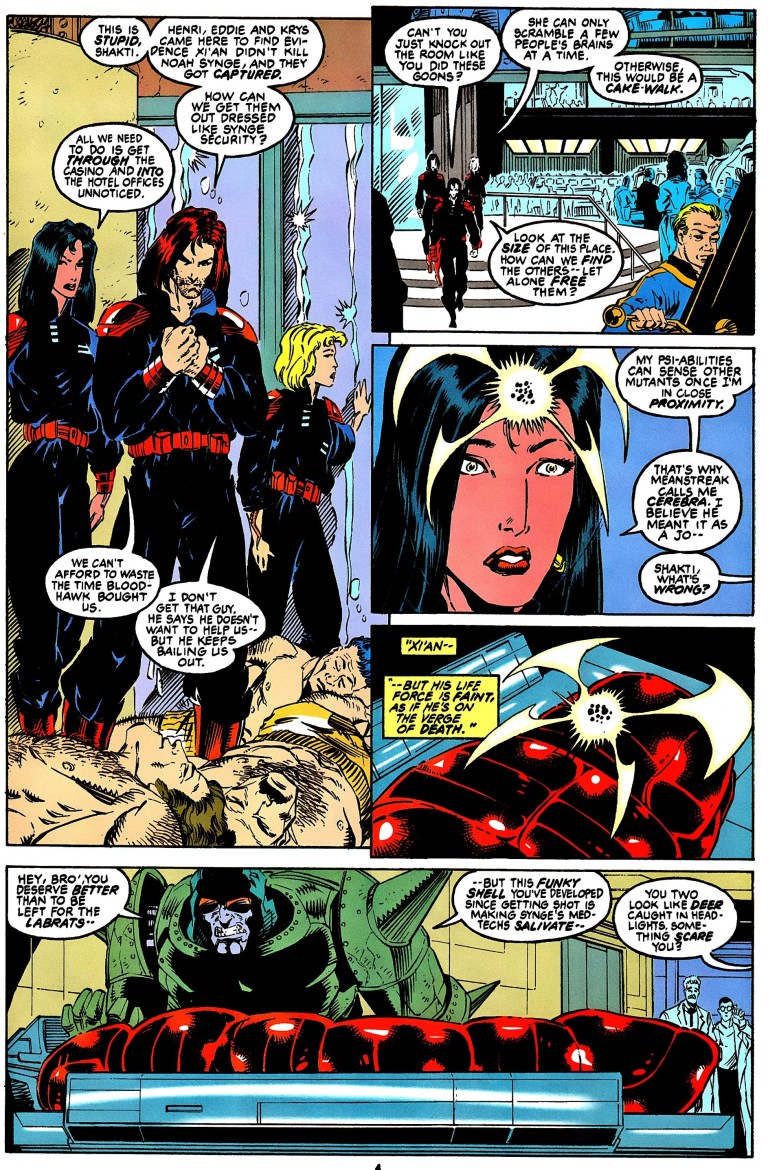
On the side of the chaos, Shakti/Cerebra, Tim/Skullfire and Tina/Serpentina quiet grab uniforms of Synge security personnel to infiltrate the place to rescue Meanstreak, Metalhead and their cocooned leader Xi’an…..

Quality

When it comes to storytelling, the creators delivered a satisfying ending to the 3-story arc complete with actually killing one of the X-Men 2099 members. John Francis Moore was successful in creating a 3-part story that ultimately gave me clear views of the respective personalities of each X-Men member (examples: Tim is the newcomer who is slowly finding his purpose, Shakti is the strong lady with leadership values who supports the leadership of the reformed Xi’an, Bloodhawk is a hard-headed rebel, etc.) while also succeeded in telling a cohesive story that placed the mutants in conflict with the Synge corporate family.

The twist regarding the murder of Noah Synge (the patriarch) was decently pulled off and the executed death of an X-Men 2099 member actually raised the stakes for the team. By the end of issue , the purpose of the futuristic X-Men became clear and was different enough from the mainstream X-Men. Unlike Charles Xavier’s mutants, Xi’an’s X-Men have to reclaim their heritage in a totally different America where corporations ruled the cities and outlaws ruled the wasteland and wilderness of the American southwest region. The X-Men of 2099 are nomadic and they don’t have the facilities nor a safe place to live in which Charles Xavier’s X-Men had.

5
Desdemona, Junkpile and the cocooned Xi’an.

When it comes to art, I noticed that Ron Lim exerted more effort not only with visualizing John Francis Moore’s script but added noticeable visual details on key moments in the comic book. Seeing Tim/Skullfire so enraged followed by a violent impact of action was unforgettable when compared to other highly charged, emotional scenes Lim drew in his other works. Lim also delivered good stuff with the action scenes and further visualized the look of Las Vegas of 2099. His design of Desdemona, however, really looks uninspired and generic.

Conclusion

On its own, X-Men 2099 is a good and fun comic book to read complete with a good amount of characterization. To really know the X-Men on a personal level, you really have to buy issues and . On the creative side of things, I like the fact that John Francis Moore kept references to Charles Xavier’s X-Men to a bare minimum which nicely kept a strong focus on the X-Men of 2099 and the world they live in.

For the comic collectors reading this, if you are seriously considering acquiring a hard copy of X-Men 2099 , be aware that according to Mile High Comics, a near-mint copy of the regular edition costs $4 while the near-mint copy of the newsstand edition is priced at $8.

Overall, X-Men 2099 is recommended.


Thank you for reading. If you find this article engaging, please click the like button below and also please consider sharing this article to others. If you are looking for a copywriter to create content for your special project or business, check out my services and my portfolio. Feel free to contact me as well. Also please feel free to visit my Facebook page Author Carlo Carrasco and follow me at HavenorFantasy@twitter.com
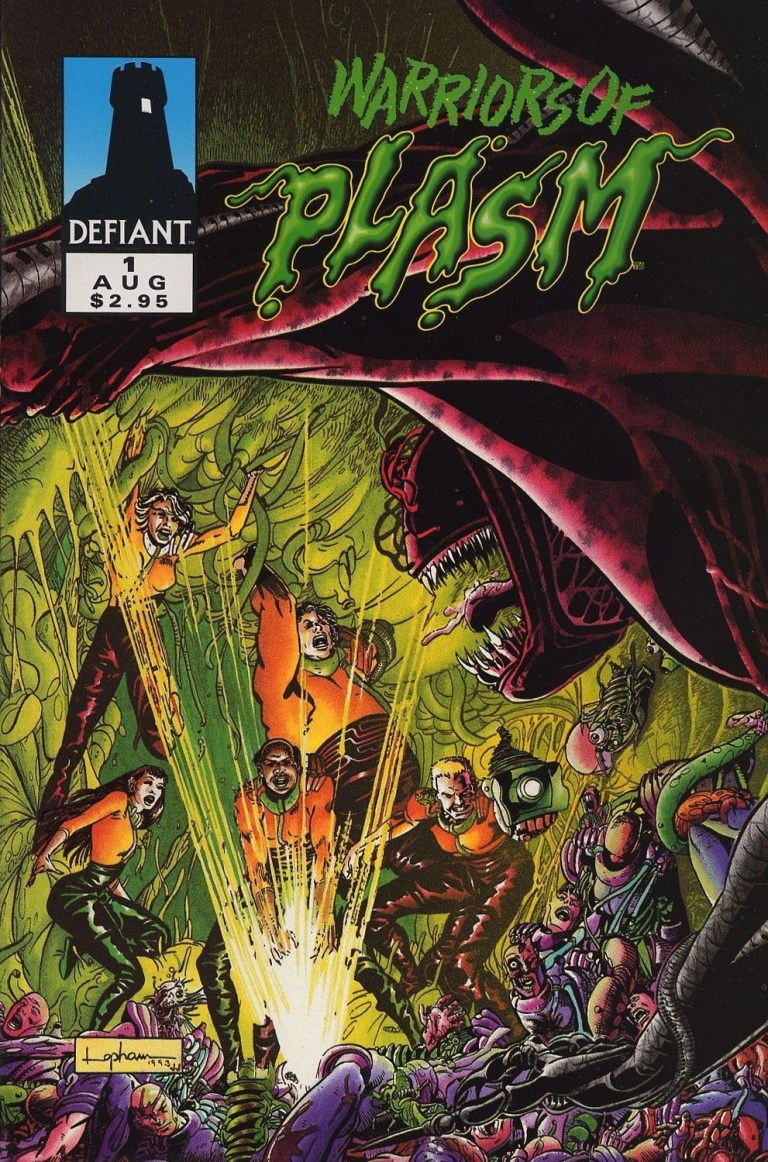
 

A Look Back at Punisher 2099 #1 (1993)

Disclaimer: This is my original work with details sourced from reading the comic book and doing personal research. Anyone who wants to use this article, in part or in whole, needs to secure first my permission and agree to cite me as the source and author. Let it be known that any unauthorized use of this article will constrain the author to pursue the remedies under R.A. No. 8293, the Revised Penal Code, and/or all applicable legal actions under the laws of the Philippines.

As already established here on my website, I reviewed several comic books of the Marvel 2099 line of superhero comics. I reviewed the respective launch issues of X-Men 2099, Spider-Man 2099 and Ravage 2099 to name a few.

Some of you must be wondering what was the first-ever Marvel 2099 comic book I bought back in the 1990s. Believe it or not, it was not Spider-Man 2099 (the one comic book that launched the Marvel 2099 line in late 1992). It was actually Punisher 2099 which I bought in December 1992 (comic book was cover dated February 1993).

You read that right. I was a latecomer on discovering the Marvel 2099 universe in the late 1990s. Prior to the launch of Punisher 2099, comic books of Spider-Man 2099, Ravage 2099 and Doom 2099 were already on the shelves of comic book stores.

One day in Makati here in the Philippines, I passed by a comic book stall in a department store and saw Punisher 2099 (which had a gimmick cover) and other 2099-related comic books displayed. After observing the available 2099 comics, I decided to buy Punisher 2099 not simply because of its gimmick cover but because I wanted to discover the 2099 universe through the futuristic version of the Punisher (which I’m not even a fan of).

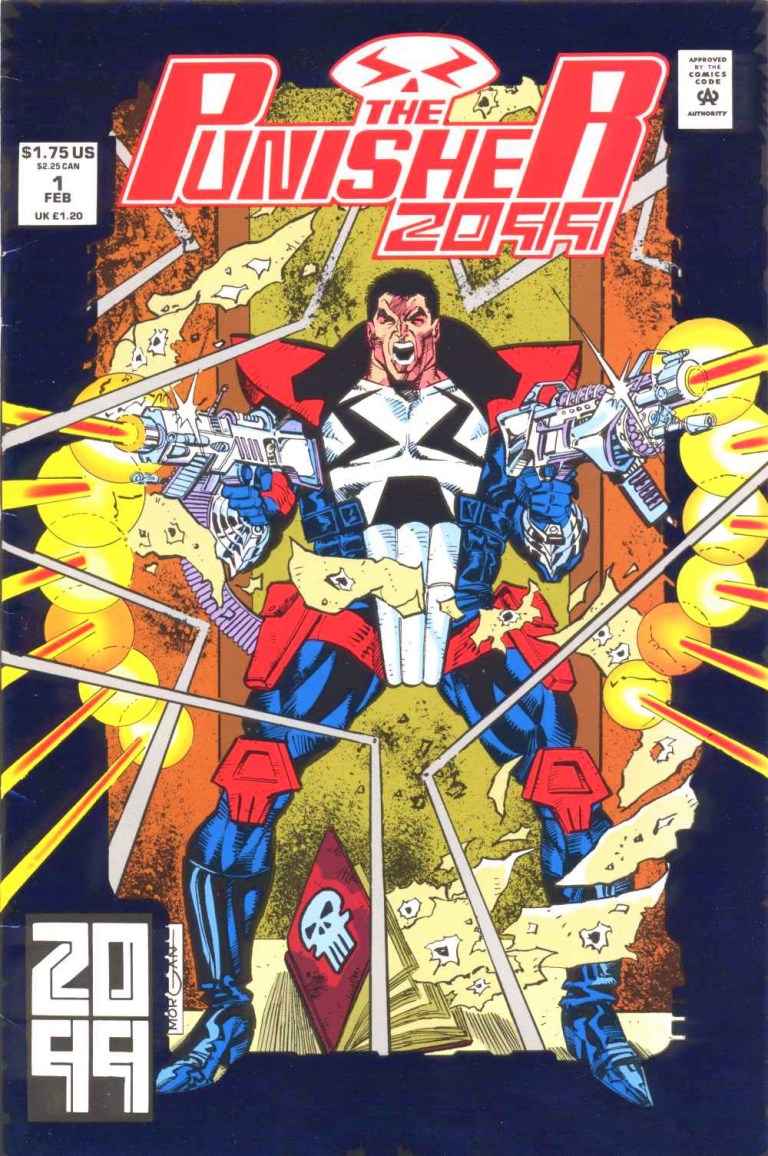
Here is my retro comic book review of Punisher 2099 published by Marvel Comics in late 1992 with a story by Pat Mills and Tony Skinner with illustrations done by Tom Morgan.

Cover
The cover.

Early story

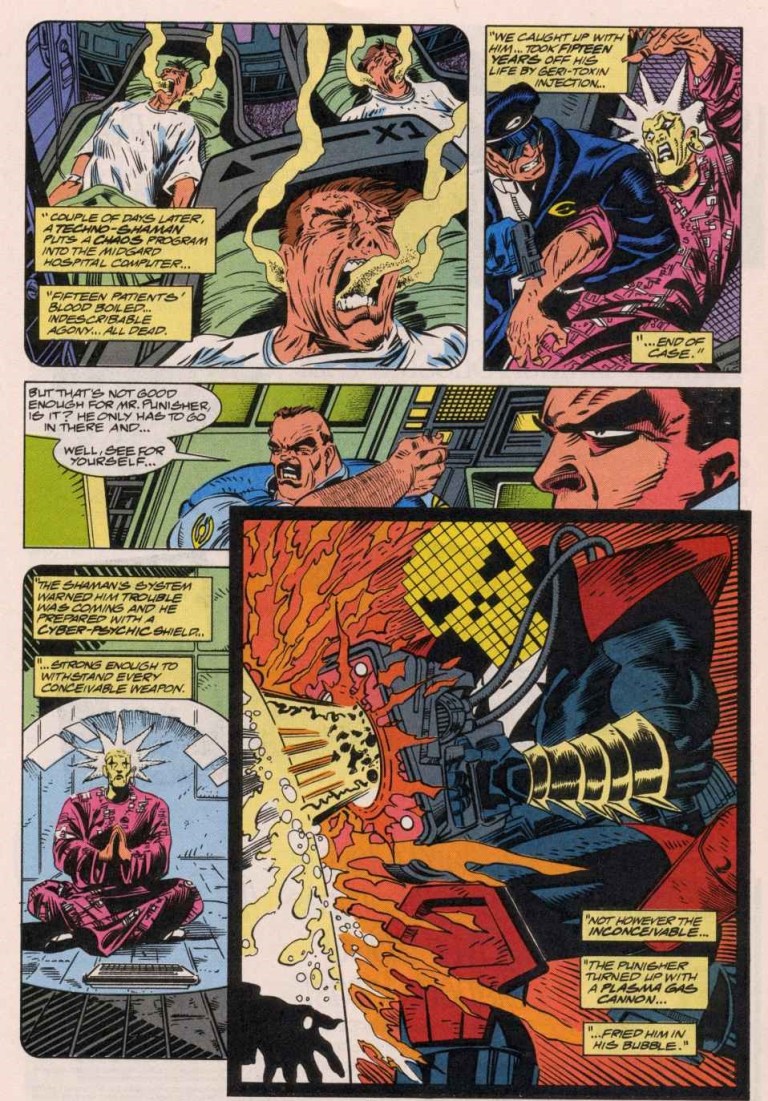
The story begins with a man running away from danger. Because he does not have enough money to summon law enforcement for protection (note: cities in 2099 are all run by corporations and even public services have been privatized), he easily gets ganged up and killed by crooks armed with surgical devices. They killed him to get his heart.

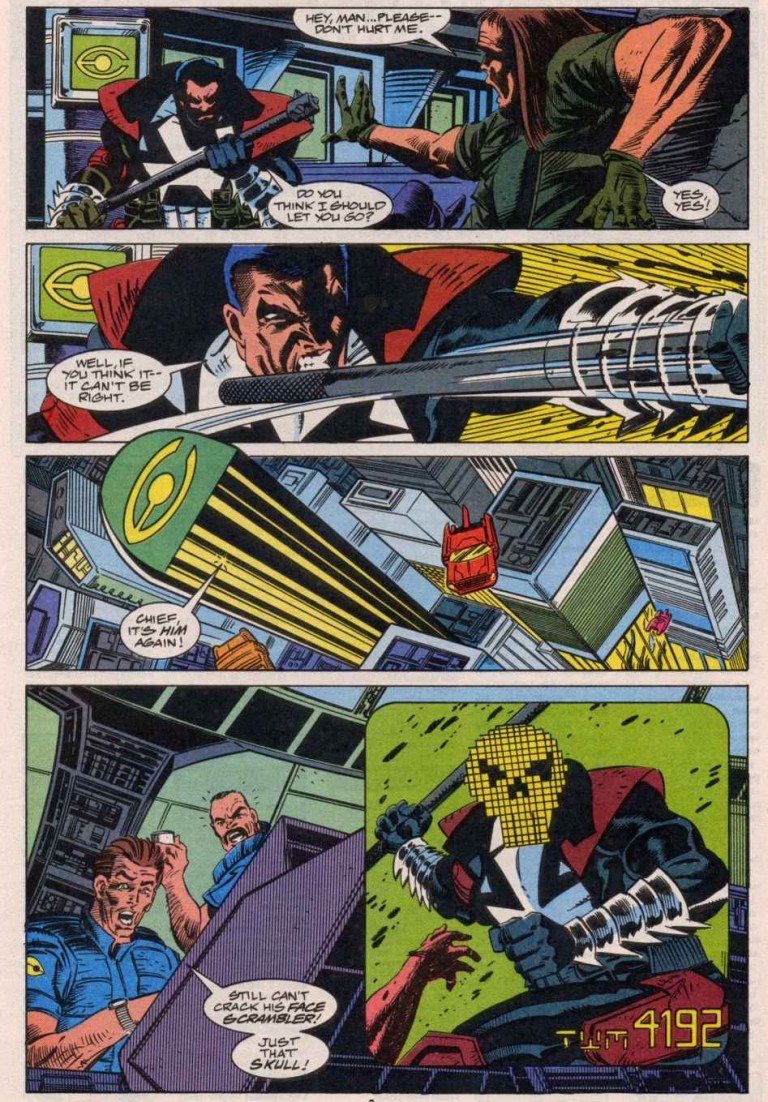
Shortly after, the Punisher of 2099 arrives and easily kills the crooks. His action caught the attention of Public Eye Police Force (note: a service of police protection that responds to transactions by paying clients) via the city surveillance system, the cameras of which are unable to identify him because his head is automatically covered digitally (the Punisher here has his own identity protection system).

86

Jake Gallows, who is Punisher 2099 himself, enters the office of Public Eye. He is an employed enforcer of theirs and he notices that his employer has been watching his acts of violence against criminals…..

Quality

When it comes to establishing Punisher of 2099, the creators of this comic book pulled of a decent job. They not only introduced Marvel’s vigilante of the far future efficiently, they also made him look interesting temporarily. They also did a nice job with connecting Jake Gallows with Frank Castle, the 20th century Punisher.

Still, Punisher 2099 #1’s clear weak point in presentation was the back story of Jake Gallows who became the Punisher as a result of his family getting killed by group of armed, wicked people. In concept, this is too similar to the origin of the original Punisher who also lost his family.

While the origin lacked creativity, the creative team at least tried something new by introducing Kron Stone as the first-ever villain for Punisher 2099. Kron Stone, if you know your 1990s Marvel 2099 history, was not only the son of Alchemax chief Tyler Stone (a key character in the Spider-Man 2099 series) but also went on to become Venom 2099 (who debuted fully in Spider-Man 2099 #35).

The creative team also made a nice move establishing Jake Gallows as an actual working law enforcer who took a huge risk as he also secretly made moves as a vigilante when he’s not working.

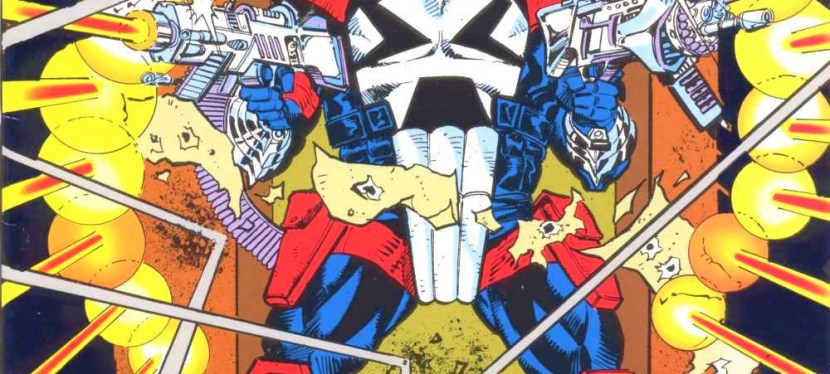
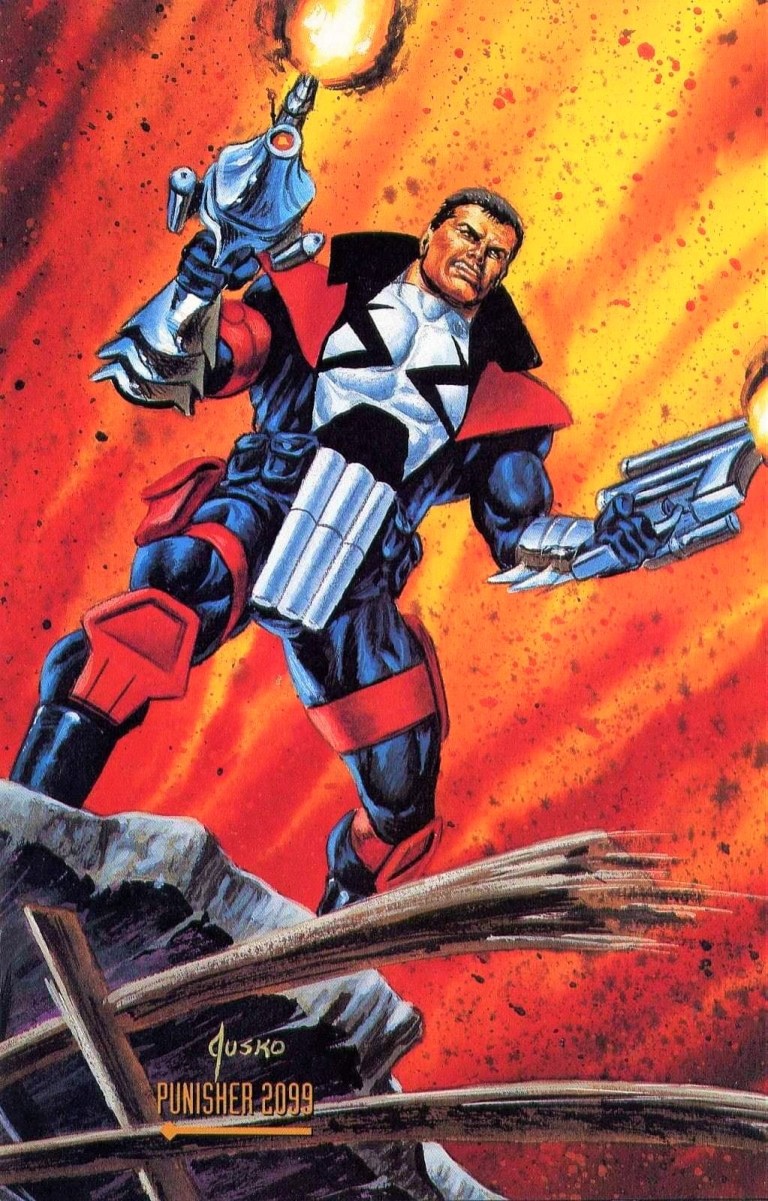
While the comic book writers did a decent job with the story and characterization even though they had less than 25 pages of storytelling, the art by Tom Morgan will only please readers who enjoy violent and gritty imagery. Personally, I’m not impressed with Morgan’s art and his work on the cover of this comic book is laughable. Punisher 2099’s character design (what’s with those three frontal tubes that formed the teeth of the skull design?) is really corny to look at and not even famous painter Joe Jusko could improve the character’s overall look.

JuskoCardPun2k99
Punisher 2099 as painted by Joe Jusko for the Marvel Masterpieces card series.

Conclusion

Given the fact that Punisher 2099 never became a significant character of Marvel Comics all these decades, I would suggest thinking very carefully before spending any money to buy or even rent Punisher 2099 . It’s not a terrible comic book, just flawed with some limited engaging stuff here and there. If you are really craving for early 1990s Marvel superhero stuff, then this one could be worth it.

If you are seriously considering acquiring an existing copy of Punisher 2099 , be aware that as of this writing, and according to the rates of Mile High Comics online, a near-mint copy of the regular edition costs $6 while a near-mint copy of the newsstand edition is priced at $16.

Overall, I say that it’s best to purchase a copy of Punisher 2099 BELOW its cover price.


A Look Back at What If #58 (1994)

Disclaimer: This is my original work with details sourced from reading the comic book and doing personal research. Anyone who wants to use this article, in part or in whole, needs to secure first my permission and agree to cite me as the source and author. Let it be known that any unauthorized use of this article will constrain the author to pursue the remedies under R.A. No. 8293, the Revised Penal Code, and/or all applicable legal actions under the laws of the Philippines.

In early 1994, I was still in high-school. There was a time when I passed by a local comic book store that showed a new What If? comic book displayed among the many new titles. That particular comic book caught my attention because of its key question: What if the Punisher had killed Spider-Man?

That comic book was What If #58 published by Marvel Comics with a story by Chuck Dixon and art by Gordon Purcell. Check out the cover below.

Cover
The cover of this comic book took a lot of inspiration from that of Amazing Spider-Man .

To put things in perspective, Spider-Man and Punisher are both heroes in the universe of Marvel Comics but with very drastic differences between them. Spider-Man/Peter Parker fights crooks and other types of bad guys while maintaining a lawfully good nature even as he struggles to live a normal, personal life. Punisher, who is privately Frank Castle, is a killer who is driven to fight criminals beyond the boundaries of the law. The Punisher resorts to extreme forms of violence and guns are his main weapons. Due to the tragic loss of his wife and children, Punisher lives to wage a one-man war against criminals which only reflects the huge loss of his humanity.

Spider-Man and the Punisher first encountered each other in Amazing Spider-Man . Through the years, the two would face-off again and again. In the mid-1980s, the Punisher went on to rise in high popularity with comic book readers as Marvel Comics published three regular series: The Punisher, The Punisher War Journal and The Punisher War Zone.

That being said, we take a look back at What If #58.

Early story

Without involving Marvel’s galactic Watcher, the comic book begins with the Punisher aiming his gun at a man seated behind his desk. It turns out Punisher is waiting for the police to arrive at the place they are in.

From this point, the story is told in flashback with Punisher narrating. He is with the Jackal on the roof top of a building in New York City. Even as the Jackal pushes him to shoot a certain target already, the Punisher decides not to do it. He stressed he wants to study the target.

“It seemed right. Taking down a high profile outlaw like Spider-Man looked like the right way to go,” Punisher thought. “And Jackal promised unlimited funding of my war on crime if I succeeded.”

6
Punisher doing research.

Gradually, the Punisher prepares himself to kill Spider-Man…

Quality

Let me start with the concept of this comic book. Exploring what would happen had the Punisher actually killed Spider-Man (note: this is so obvious from the cover) is a bold and clever story to tell. To put things in perspective, the Punisher’s attempt to kill Marvel’s iconic superhero happened way back in Amazing Spider-Man which was published way back in 1974. Very clearly, Punisher failed and Spider-Man went on to live and fight for good.

When it comes to storytelling, Chuck Dixon delivered a strong script and carefully crafted a standalone story that looks at the Punisher’s first-ever attempt to shoot Spider-Man but the narrative was more on the vigilante’s point-of-view. The dialogue was solid and the narration gives readers a good look at the personality of Frank Castle. I also liked the way the story was paced.

What also makes this comic book really good is that it shows in convincing fashion what else would have happened after the successful assassination of Spider-Man. Without spoiling the surprise, you can ask yourself how would Punisher react once he learned who Spider-Man really was, how would the many people who personally knew Spider-Man (whether good or evil) would react and what the state of crime in New York would be like.

10
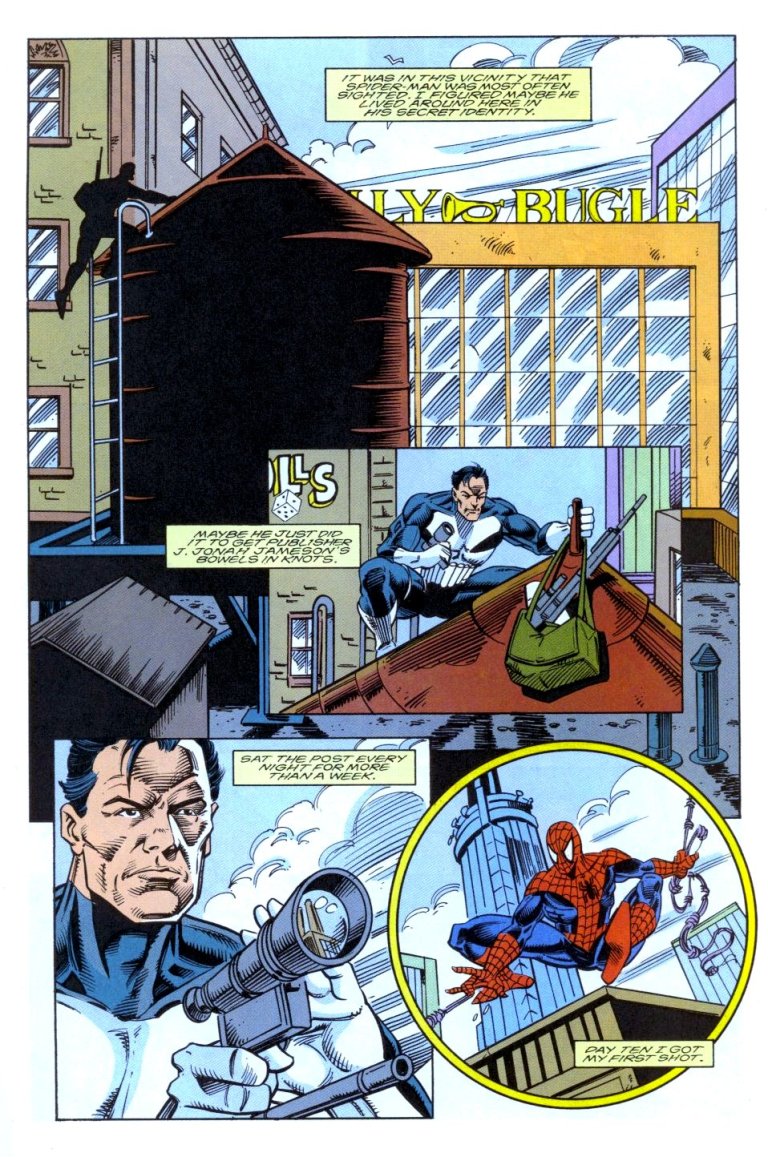
The Punisher anticipating Spider-Man outside The Daily Bugle.

As for the art, Gordon Purcell did a decent job. He captured what was back then modern day 1990s look of the Punisher (completely rejecting the way the character looked in Amazing Spider-Man ) and he knew how to present him from different angles regardless of what action was taken. On drawing Spider-Man, Purcell proved to be good. I noticed in some parts of the comic book, he tried hard to make Spidey look dynamic while traveling high above the streets of the city. The big money shot (in terms of illustration) for me was the moment Spider-Man got killed.

Conclusion

Overall, What If #58 is a good and fun comic book to read. Historically, this was released at a time when Spider-Man and the Punisher were both wildly popular. The decision to tell an alternate reality off Amazing Spider-Man was inevitable and ultimately was nicely pulled off.

If you are thinking about acquiring What If #58, as of this writing MileHighComics.com shows that a near-mint copy of the regular edition is at $26 while the near-mint copy of the newsstand edition is at $77.

What If #58 is recommended.


Thank you for reading. If you find this article engaging, please click the like button below and also please consider sharing this article to others. If you are looking for a copywriter to create content for your special project or business, check out my services and my portfolio. Feel free to contact me as well. Also please feel free to visit my Facebook page Author Carlo Carrasco and follow me at HavenorFantasy@twitter.com
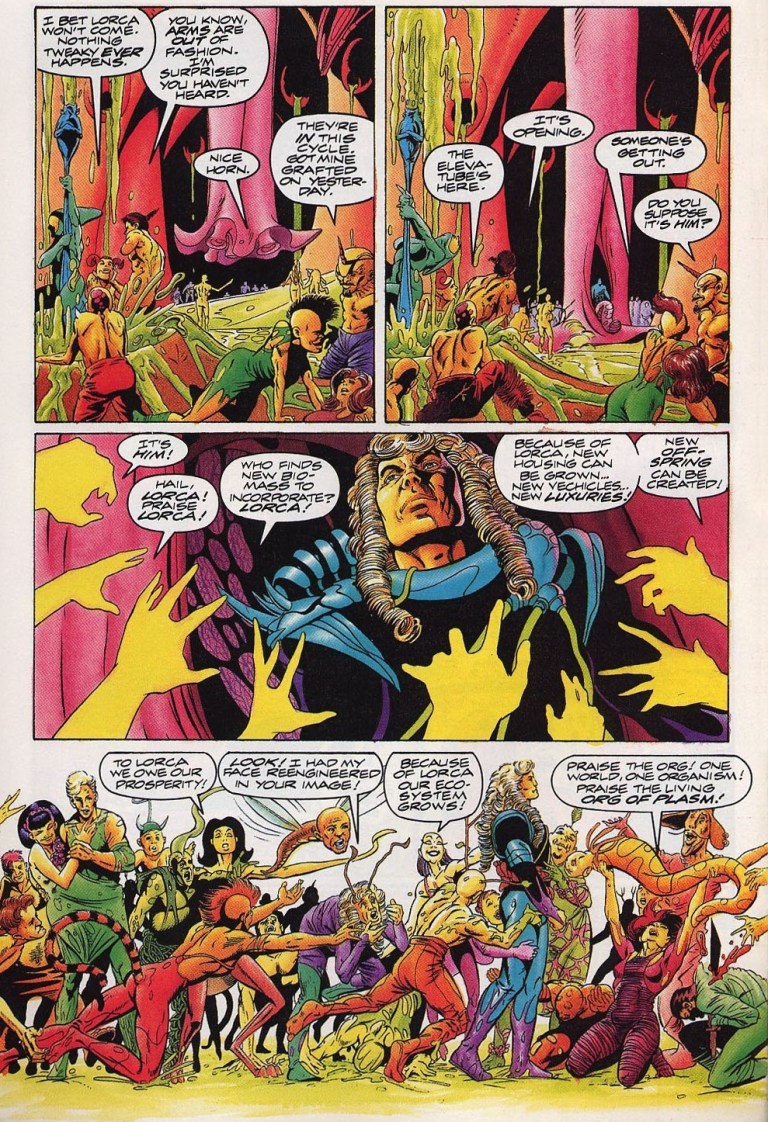
A Look Back at X-Men 2099 #26

Disclaimer: This is my original work with details sourced from reading the comic book and doing personal research. Anyone who wants to use this article, in part or in whole, needs to secure first my permission and agree to cite me as the source and author. Let it be known that any unauthorized use of this article will constrain the author to pursue the remedies under R.A. No. 8293, the Revised Penal Code, and/or all applicable legal actions under the laws of the Philippines.

As already mentioned in my retro review of X-Men 2099 #25, a new creative direction was taken for the futuristic mutants of Marvel (who got back together after being apart for long) and the monthly series itself while still maintaining connection with the rule of Doom 2099 (already driven by Warren Ellis as the writer) as the US President. That story ended with noticeable changes on the characters, especially on Xi’an who ended up nothing like the strong and driven X-Men leader he was in X-Men 2099 #1. As such Tim Fitzgerald/Skullfire, who went through a lot of emotional struggles and confusion, finally learned to be strong to become the mutants’ new leader.

In this review, we will take a look at the aftermath of the events that happened in the above-mentioned anniversary celebration issue. Series lead creators John Francis Moore and Ron Lim took another shot heading towards the new direction in X-Men 2099 published by Marvel Comics in 1995.

Cover
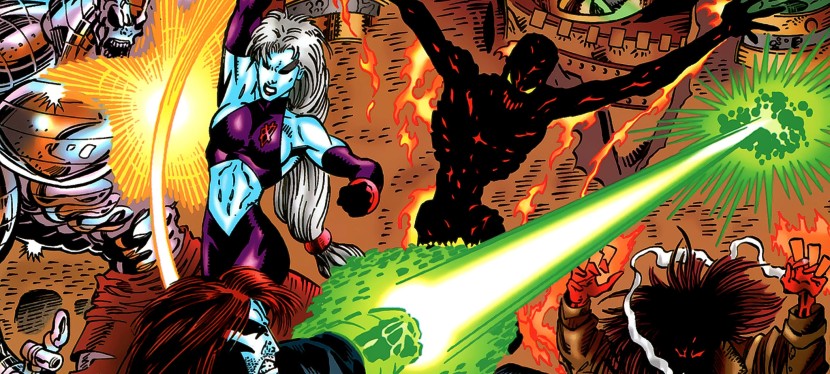
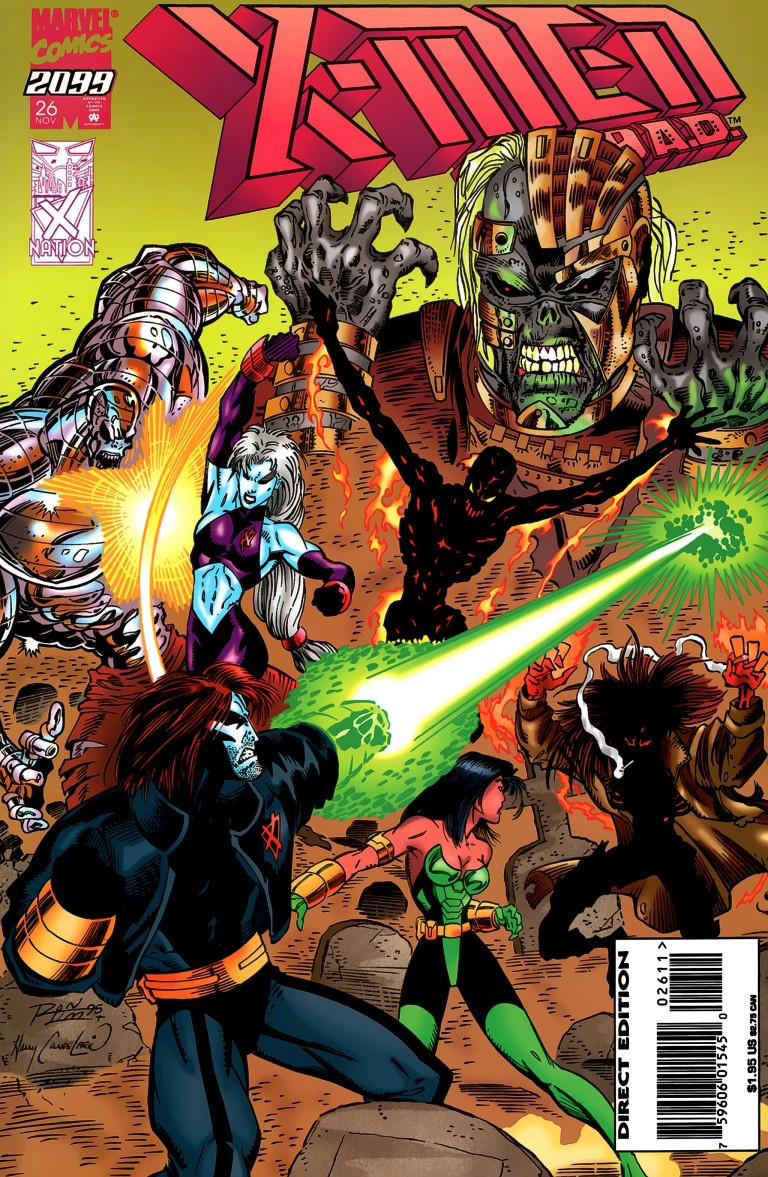
The cover by Ron Lim.

Early story

The comic book opens with Doom 2099’s Minister for Humanity Morphine Somers waking up and learns from his digital assistant that disaster happened in the White House (refer to Doom 2099 ).

The story then shifts to Halo City which is the walled mecca which continues to attract some hundreds of thousands of misfits, mutants and refugees who seek sanctuary from the mega corporations which have dominated societies in most cities around the United States. In the middle of the traffic jam going into the city, a man decides to get out of the taxi and head on by foot.

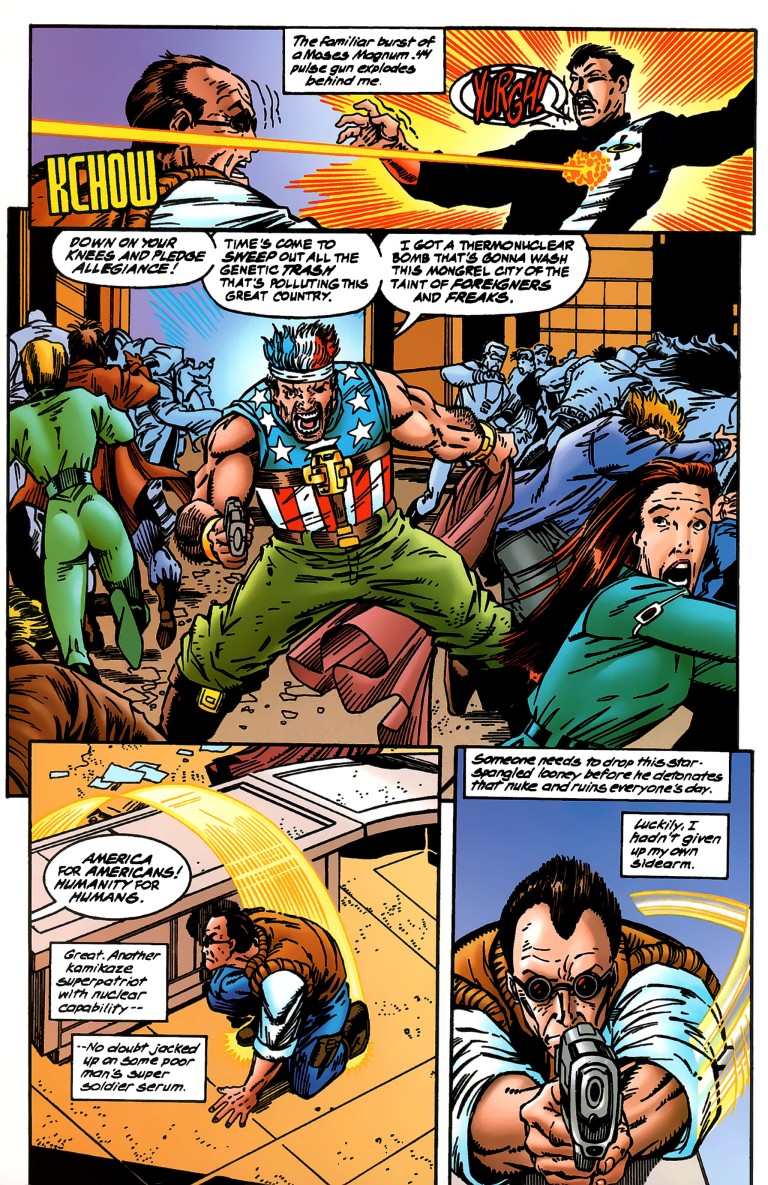
The man is identified as Gunnar Tristan, an entertainment journalist. As the city authorities examines Gunnar, a man wearing a shirt looking like the American flag fires a shot at one of the security personnel.

“Down on your knees and pledge allegiance! The time’s come to sweep out all the genetic trash that’s polluting this great country. I got a thermonuclear bomb that’s gonna wash this mongrel city of the taint of foreigners and freaks,” said the armed man.

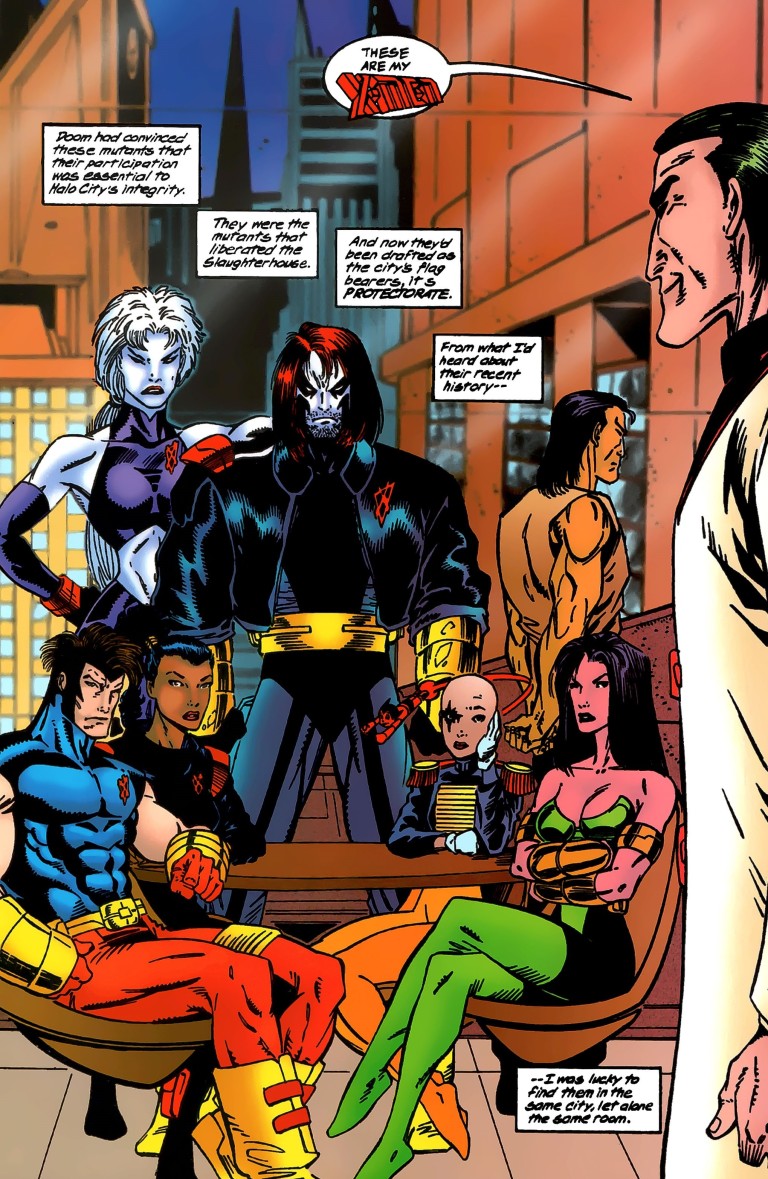
Just as Gunnar is about to fire, Henri Huang/Meanstreak of X-Men 2099 intervenes to prevent anymore danger from happening. Meanstreak is with teammate Krystalin and seen on their clothes are V-like symbols. They are now officially working for the city authorities as the mutant protectorate….

Quality

Clearly following up on the ending of X-Men 2099 , this story delivered strongly on showing the futuristic X-Men as Halo City authority members which is a drastic change from their past as outlaws and misadventure participants.

14
The X-Men as members working for the authorities.

A strong element in this comic book is character development and it shows the former X-Men leader Xi’ian feeling guilty and has gotten obsessed with healing sick people as a way to atone for his sins. At this point of time, Xi’an went from a bag guy into a reformed man (X-Men leader) into a bad guy again before ending up weak and confused. This puts him yet again into conflict with his long-time trustee Shakti/Cerebra (who by this time can be seen as a suitable team leader with a very strong moral direction). Skullfire meanwhile is feeling uneasy with his team working for an administration and it can be seen that the time he spent in the wilderness took its toll on him.

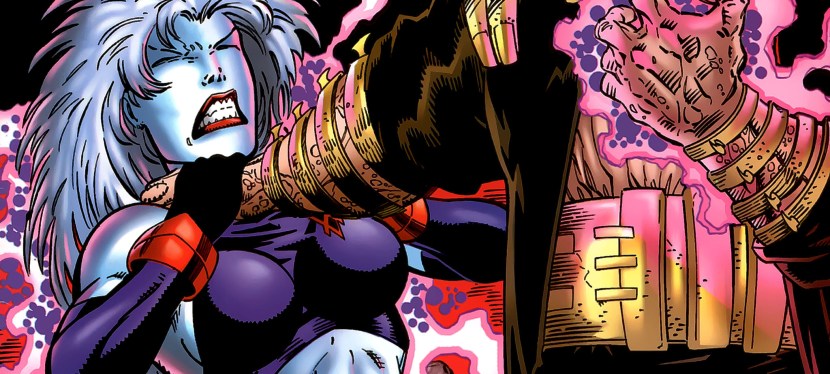
When it comes to art, Ron Lim pushed his creativity hard this time by establishing the overall look of Halo City and how it is transforming into a hot bed for people who don’t want to live in a place monitored always by mega corporations. On characters, I should say that Lim’s designs for the new villain group The Undead is not very captivating although one of them really looked horrifying. On action scenes, Lim continued to deliver the goods.

Conclusion

I should say that I like this comic book a lot. It’s got more character development scenes and story build-up with noticeably lesser spectacle (which is not a problem at all). Being the 26th issue of the X-Men 2099 monthly series, characterization really had to be prioritized by the creative team to emphasize the bold, new direction taken. Just to see the X-Men become authority members even though they are not really qualified is just intriguing!

What makes this particular old comic book special in a rather bizarre and accidental manner is the raging debate about how America of today should handle its immigration problems especially with hot topics like securing the borders, building the wall along the south border with Mexico, and deporting as many illegal immigrants (even those who have families in America, established business and paid taxes) as possible. Back in the year this old comic book was published, immigration was not such a hot topic and there were even more Democrats (including then US President Bill Clinton) who favored stricter moves to curb illegal immigration.

The presence of the armed man who despises foreigners and mutants is now more socially relevant to see. It’s so symbolic, you should look at the page below.

4
I wonder if anyone from the Democratic Party or the Political Left in America who support open borders had seen this page.

If you are seriously collecting comic books, be aware that as of this writing, MileHighComics.com shows that a near-mint copy of X-Men 2099 regular edition is worth $4 while the near-mint copy of the newsstand edition is worth $8.

Overall, X-Men 2099 is highly recommended.


Thank you for reading. If you find this article engaging, please click the like button below and also please consider sharing this article to others. If you are looking for a copywriter to create content for your special project or business, check out my services and my portfolio. Feel free to contact me as well. Also please feel free to visit my Facebook page Author Carlo Carrasco and follow me at HavenorFantasy@twitter.com
A Look Back at What If #9 (1990)

Disclaimer: This is my original work with details sourced from reading the comic book and doing personal research. Anyone who wants to use this article, in part or in whole, needs to secure first my permission and agree to cite me as the source and author. Let it be known that any unauthorized use of this article will constrain the author to pursue the remedies under R.A. No. 8293, the Revised Penal Code, and/or all applicable legal actions under the laws of the Philippines.

Long before the renaissance of Hollywood-produced superhero movies even started, the X-Men established itself as one of the most popular franchises of Marvel Comics. What some readers do not know was that while the X-Men indeed started in 1963 under Stan Lee and Jack Kirby, Marvel’s mutants actually started getting successful in the mid-1970s with the 2nd X-Men team (Cyclops, Wolverine, Storm, Sunfire, Nightcrawler, Colossus, Banshee and Thunderbird) handled by Len Wein and Dave Cockrum.

That new team literally made a splash with readers with the release of Giant-size X-Men in 1975. That comic book, which is very valuable now, saw Charles Xavier recruiting new mutants to form a new team with Cyclops being the only pioneer remaining. Subsequently the X-Men monthly series of that era saw lots of stories of this particular team solving problems and fighting evil. Along the way, Chris Claremont got hired as the new writer and then the rest was history.

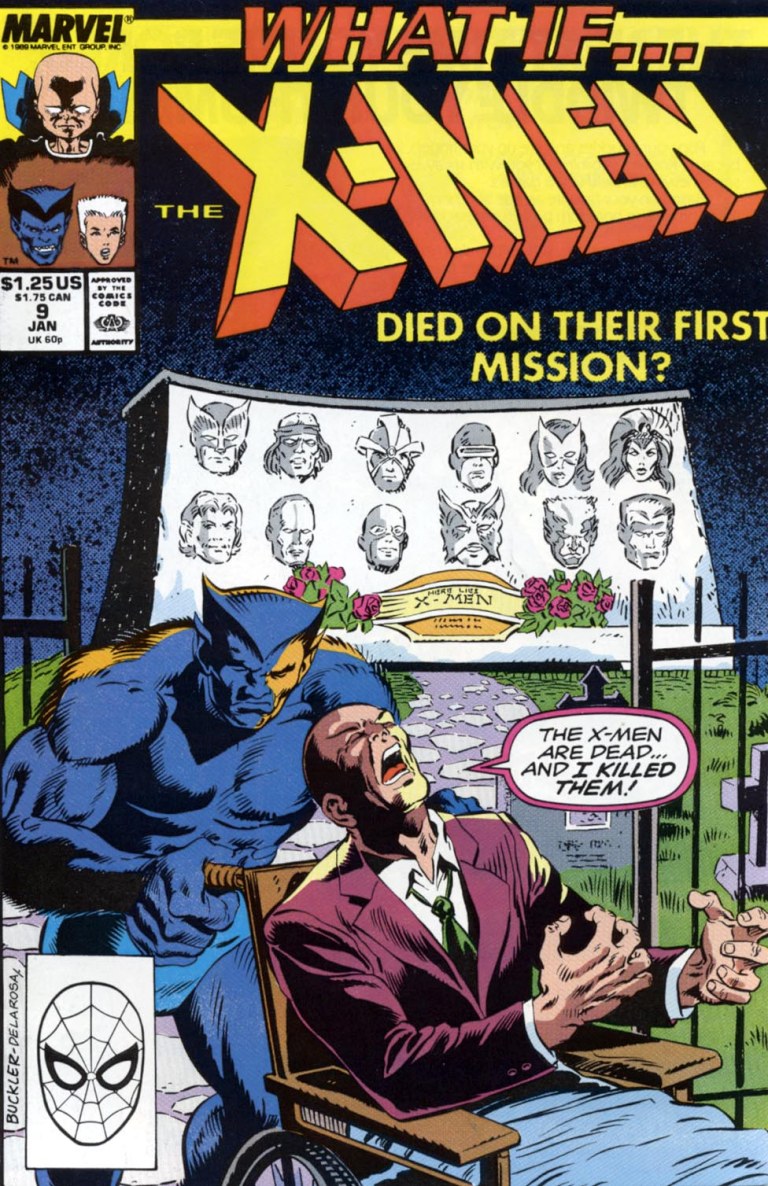
In this retro comic book review, we will take an interesting look at what would have happened had the 2nd team of the X-Men died on their first mission.

This is What If written by Roy Thomas, drawn by Rich Buckler and published by Marvel Comics in 1990.

Cover
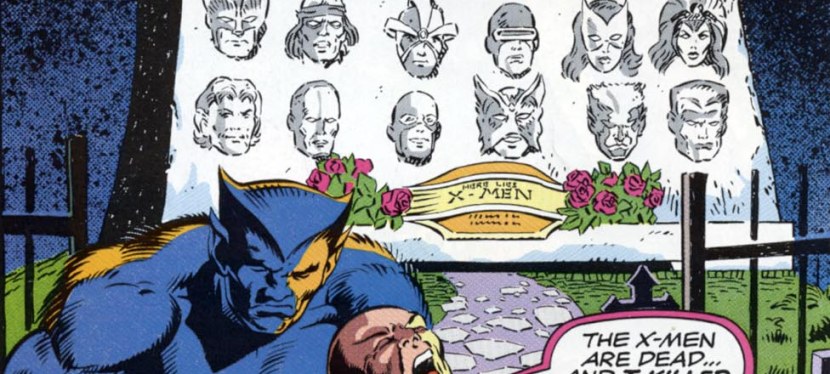
The cover.

Early story

The comic book begins with the Watcher of Marvel’s universe explaining what actually happened during the X-Men’s mission in Giant-size X-Men . Then he offers an alternate version of the events asking “What if…the new X-Men had died on their very first mission?”

The new reality begins in Scotland where Moira McTaggert receives a telegram from the United States. The message read that her friend Charles Xavier is ill which compels her to leave immediately. Before leaving, a little girl named Rahne comes to Moira followed by Craig who asserts his authority on her. Subsequently Moira and Rahne arrive at Salem Center, New York, greeted by Hank McCoy/Beast who confirmed that he was the one who sent the telegram to her.

Moira finally meets Xavier who expressed surprise to see her. As it turned out, Xavier had isolated himself in a room using Cerebro. After separating from Xavier, Beast explains to Moira what happened previously to Cyclops, Jean Grey, Havoc, Polaris and Ice Man on a far away island (read Giant-size X-Men ). Cyclops was fortunate enough to survive and return to Xavier who was compelled to use Cerebro to trace mutants around the world (note: the 2nd X-Men team).

2
When trouble hits the world…

This leads to events told in Giant-size X-Men but something drastic happened…

Quality

Storytelling is easily the strongest and most defining element of this comic book, especially if you are fortunate enough to read what happened in Giant-size X-Men from 1975. The alternate plot by Roy Thomas is pretty intriguing and highly dramatic, and yet it still manages to add some spectacle to maintain balance.

What If strongly delivered on what it promised what would have happened had the 2nd X-Men team died on their first mission complete with the narrative shifting dramatically through the eyes of Moira McTaggert, Xavier and Beast.

In terms of characterization, I really enjoyed the dramatization of the close friendship between Xavier and McTaggert. Having read lots of X-Men comic books through the decades, I should say that McTaggert was often limited to supporting roles or guest appearances. As seen in this comic book, she and Xavier made a solid pair of mentors. Lastly, the portrayal of Xavier being somewhat broken and regretful is wonderfully executed. Adding to that, the portrayal of McTaggert as a strong provider of direction and support for a fragile Xavier is memorable.

When it comes to the visuals, Rich Buckler scored nicely. The characters are all recognizable (with Beast looking a bit more visceral than how he actually appeared in the 1970s to 1980s) and their facial expressions were nice to see. Buckler also proved to be good with visualizing the action and the suspenseful parts.

Conclusion

1
Very nice artistic presentation by Rich Buckler. Readers of 1975’s Giant-size X-Men will be able to relate with this.

Overall, What If is a great comic book to read. It is the closest thing you can get when it comes to seeing Marvel’s mutants led by Xavier with McTaggert working behind the scenes together. Roy Thomas and Rich Buckler really scored a homerun with this non-canon X-Men story!

For the comic collectors reading this, based on the rates at MileHighComics.com as of this writing, a near-mint copy of this comic book’s regular version is $24 while the near-mint copy of the newsstand edition is priced at $51.

What If (1990) is highly recommended!


Thank you for reading. If you find this article engaging, please click the like button below and also please consider sharing this article to others. If you are looking for a copywriter to create content for your special project or business, check out my services and my portfolio. Feel free to contact me as well. Also please feel free to visit my Facebook page Author Carlo Carrasco and follow me at HavenorFantasy@twitter.com
A Look Back at X-Men 2099 #25

Disclaimer: This is my original work with details sourced from reading the comic book and doing personal research. Anyone who wants to use this article, in part or in whole, needs to secure first my permission and agree to cite me as the source and author. Let it be known that any unauthorized use of this article will constrain the author to pursue the remedies under R.A. No. 8293, the Revised Penal Code, and/or all applicable legal actions under the laws of the Philippines.

Back in the 1990s, comic books with gimmick covers and higher cover prices were abundant and also were easy targets for collectors. In the case of Marvel Comics, the concept of the “anniversary issue” was important because it gave them a chance to sell comics at a higher price.

To put things in perspective, many times back then Marvel would produce comic books with slightly more pages and a gimmick cover in celebration of a so-called anniversary such as the comic book series reaching its 25th or 50th or 75th or 100th issue and so on. Other anniversary celebrations include a character specific anniversary such as Spider-Man’s 30th anniversary celebrated with the comic book Amazing Spider-Man which had a lot of pages and a hologram cover.

Of course, such anniversary celebrations were implemented on the Marvel 2099 line of comic books. Check out my review of Spider-Man 2099 #25.

Right here we will take a look at the first-ever anniversary celebration issue of the X-Men of the far future with X-Men 2099 written by John Francis Moore and drawn by Ron Lim. This comic book was released in 1995 and Marvel already published multiple series of other franchises of their 2099 line. Prior to X-Men 2099 , the team saw its members separated from each other and went through lots of misadventures and unfortunate events before finally getting back together.

Cover
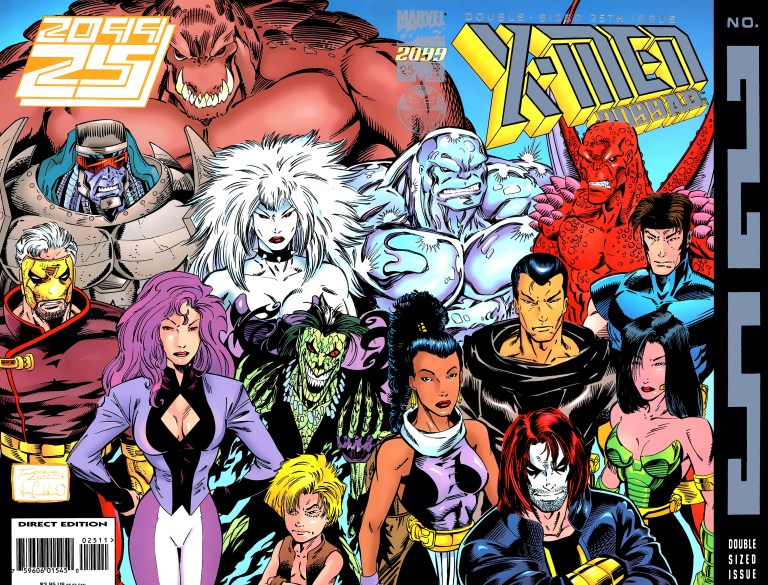
The full cover drawn by Ron Lim.

Early story

X-Men 2099 begins with a research of Xi’an and his band of mutants being presented by the Minister of Humanity (Morphine Somers) to the President in their airship flying above California.

“I see in this current generation of X-Men an untapped potential,” said the President. “Now, tell me you have finally relocated them.”

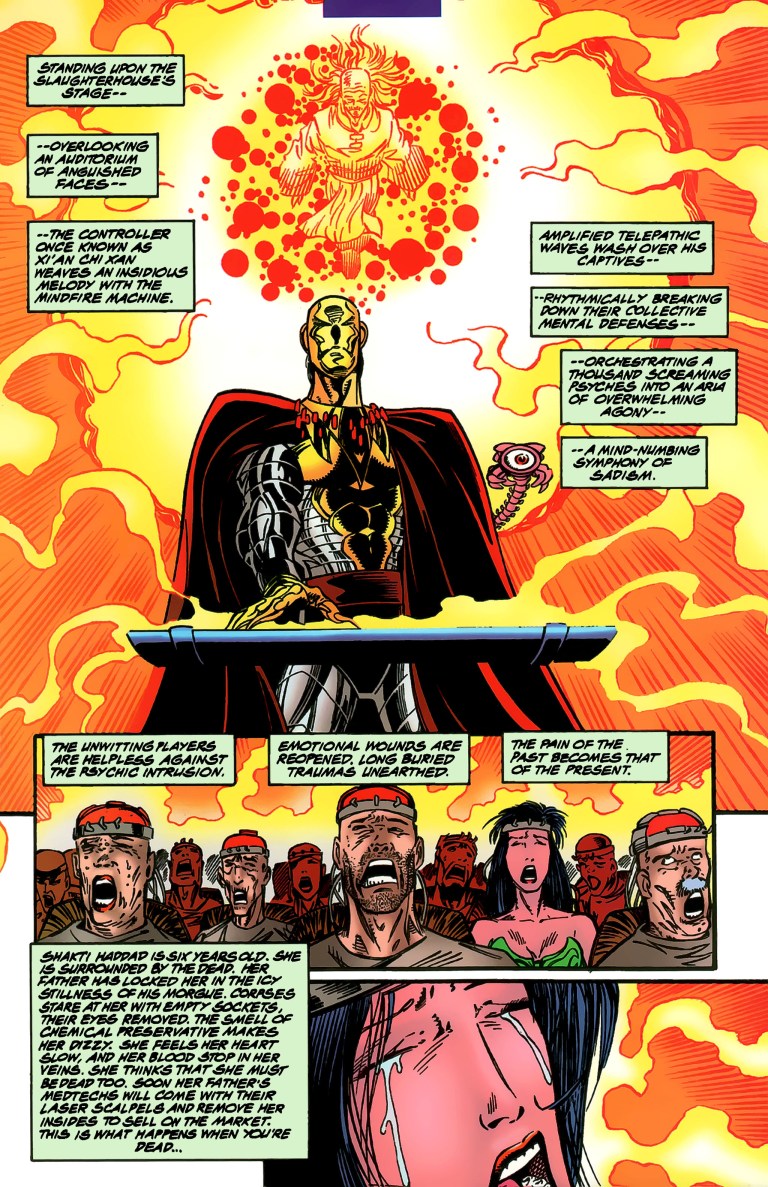
The story then shifts to the slaughterhouse of the Theater of Pain wherein a restrained Shakti/Cerebra is standing helpless next to Brimstone Love and a masked Xi’an who are about to execute a sinister plan. Shakti speaks out against them and tells Brimstone that they are parasites preying on the pain and vulnerability of innocent people. Brimstone insists that the weak and helpless provide sport for the rich and powerful, and that his group was founded for the select powerful few who crave for and pay a lot for performances. Xi’an, who had a sinister past before getting reformed to revive the X-Men (before reverting back to evil due to Zhao’s invasion of his mind), only emphasized the theater’s importance.

Defiant, Shakti tries to reach deep into Xi’an and turn him around.

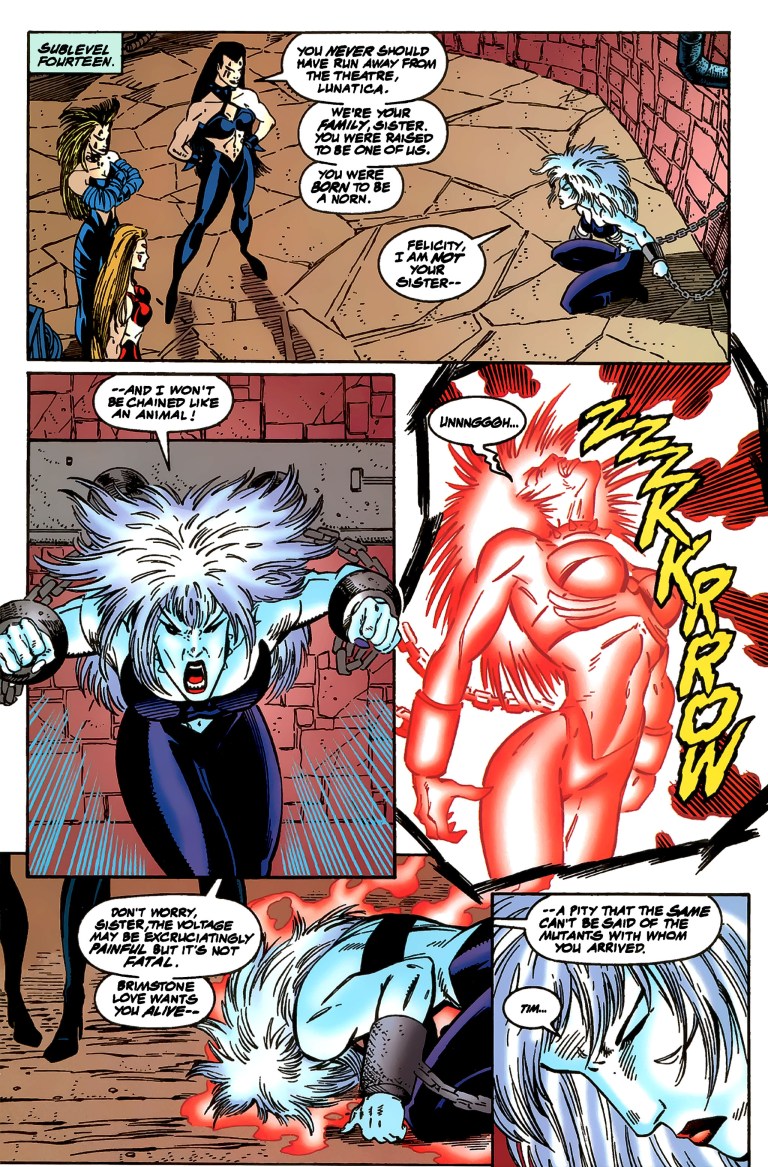
Elsewhere, the former Theater of Pain member Luna (who by this time got close with Tim/Skullfire) is chained and is confronted by her sisters in the theater. Skullfire meanwhile is in the waste disposal center where he meets someone who betrayed their team. They both thought about setting aside their differences to do something before time runs out…

Quality

19
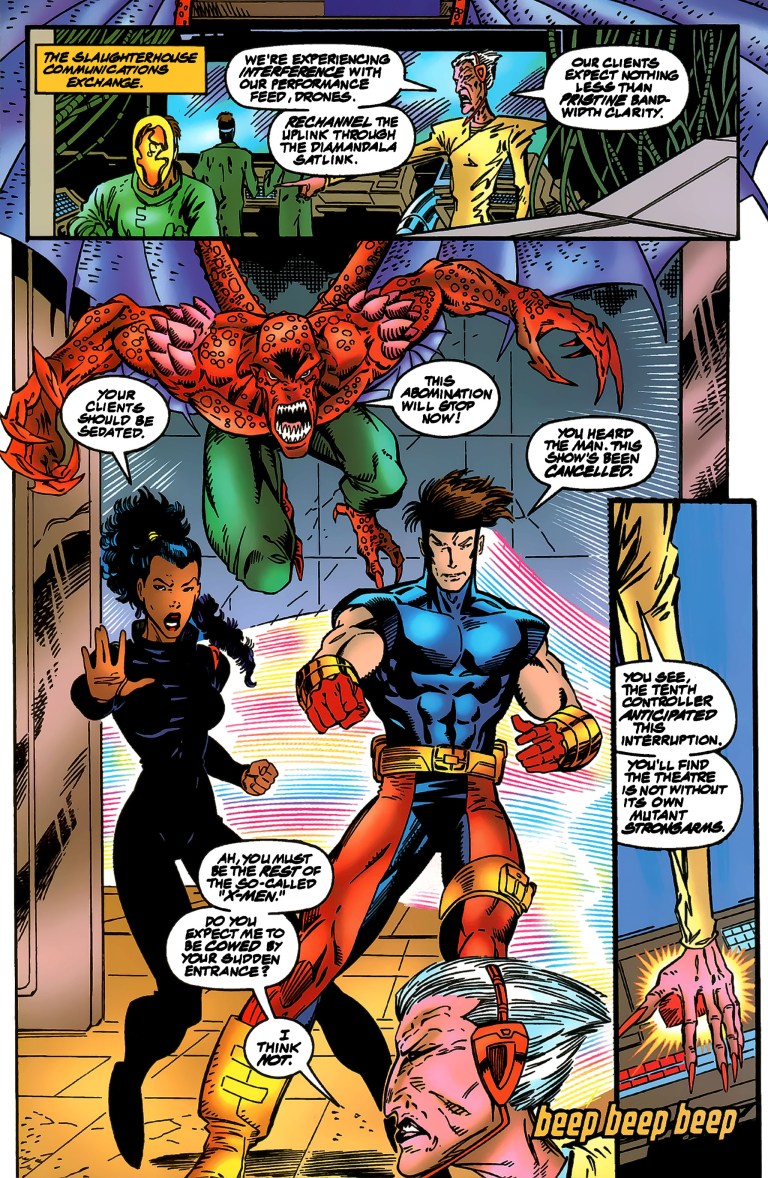
X-Men 2099’s Krystalin, Meanstreak and Bloodhawk get into the action.

In terms of visuals, I can say that Ron Lim’s art is pretty good and, most likely in tandem with the writer, took careful steps to control the pace enough to keep readers entertained without ever making things look disorienting. When there is action, the pace moves fast and the impact of the action done is always visible. As seen throughout the X-Men 2099 series, the look of the southwestern region of America is always striking and I like the fact that the wilderness setting comes with lesser presence of futuristic technology (compare this to what was seen in 2099’s New York) which gives this comic book a more laid-back concept.

When it comes to the storytelling, character development is nicely emphasized in this comic book. If you read enough of the early comic books (let’s say the first ten issues) and paid close attention to the futuristic X-Men, you will be able to relate with their struggles which add a lot of depth to the usual good-versus-evil storytelling here. Without spoiling the story, I should say that this comic book concluded with a believable new direction emphasized which in turn made me want to look to the next issue. It’s that strong of an ending!

16
It sure is intriguing to see Shakti, one of the most prominent X-Men 2099 members, really suffer along with others.

I also liked the way this comic book emphasized the connections between the Theater of Pain with the Chosen (another group of villains) and most notably with Zhao (a previous leader of the X-Men before Xi’an’s time).

As for in-universe crossing-over, this comic book nicely ties up with Doom 2099 which, at the time of publishing, was under the creative direction of Warren Ellis who is now one of the best comic book writers.

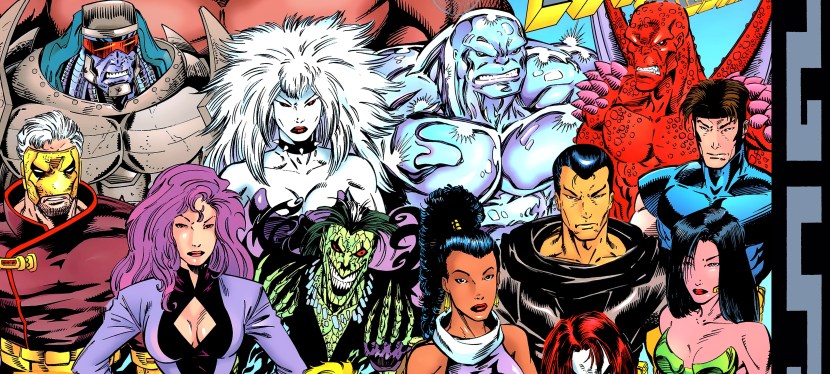
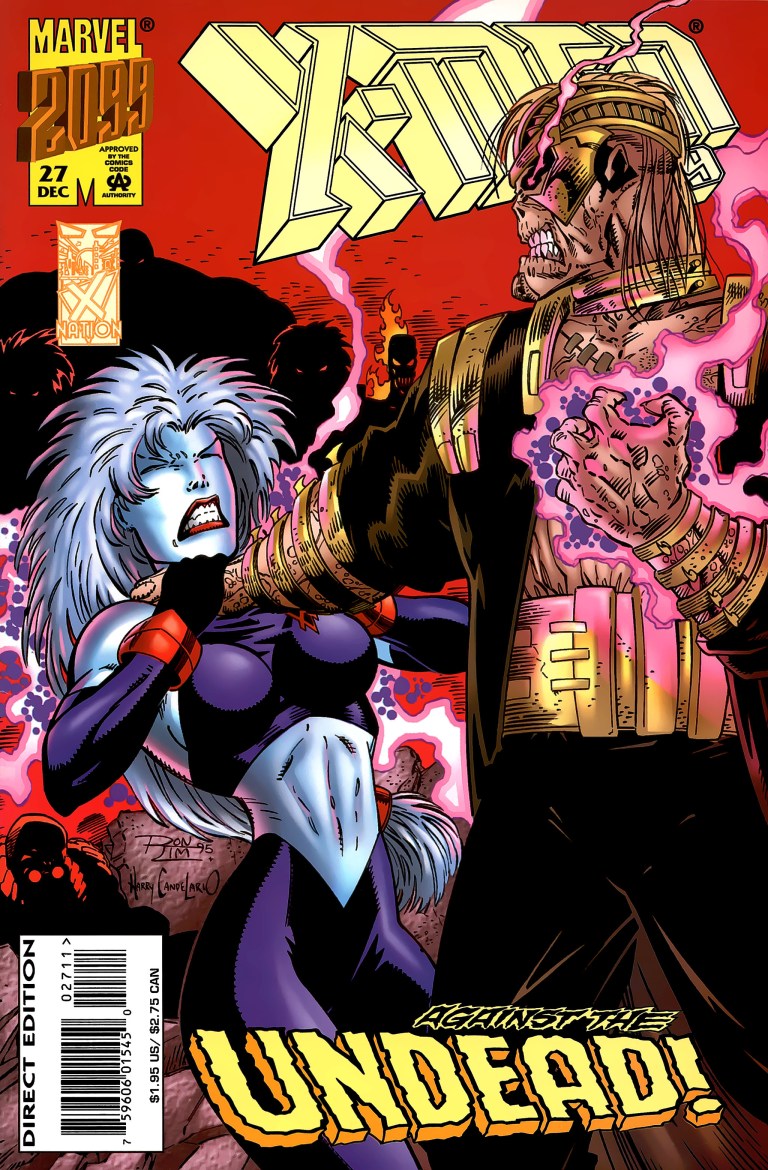
If there is anything I have an issue with, it’s the cover art. It has a few characters who appeared on the cover, most notably Desdemona, and yet were absent in this comic book’s story. They ended up looking like cover art filler. Not a problem but distracting and meaningless.

Conclusion

Let me make it clear here…I really like this comic book. It definitely has the best and most engaging story of the X-Men of 2099 ever and that’s because this particular monthly series had an extensive build-up on all the characters since issue #1 and issue executed a great payoff.

In retrospect, the X-Men drastically changed since the start of issue and this includes members who went far away or decided to exclude themselves. X-Men 2099 tied up most the loose threads not only by having the team members back together but also emphasized how much they developed over the past few years (in real life, that is). This is also the kind of comic book that will make you want to revisit the very start of its series and rediscover the characters.

5
Luna in chains.

If you are seriously collecting comic books, be aware that based on the listings of MileHighComics.com as of this writing, as a near-mint copy of the comic book’s regular edition is $4 while a near-mint-copy of the deluxe edition (with gimmick cover) is at $6. X-Men 2099 #25’s newsstand edition is worth $8 for a near-mint copy.

Overall, X-Men 2099 is highly recommended. The creators outdid themselves and made the best story of titled characters. Truly, this comic book is where the mutants of 2099 really got defined in their respectful place within the Marvel Comics universe of the 1990s.


Thank you for reading. If you find this article engaging, please click the like button below and also please consider sharing this article to others. If you are looking for a copywriter to create content for your special project or business, check out my services and my portfolio. Feel free to contact me as well. Also please feel free to visit my Facebook page Author Carlo Carrasco and follow me at HavenorFantasy@twitter.com


A Look Back At Bloodshot #1 (1993)

Disclaimer: This is my original work with details sourced from reading the comic book and doing personal research. Anyone who wants to use this article, in part or in whole, needs to secure first my permission and agree to cite me as the source and author. Let it be known that any unauthorized use of this article will constrain the author to pursue the remedies under R.A. No. 8293, the Revised Penal Code, and/or all applicable legal actions under the laws of the Philippines.

You must have heard about the live-action Bloodshot movie (starring Vin Diesel) that failed to make big bucks at the box office. Then you must have learned about Valiant Comics.

To understand Bloodshot before reviewing the early-1990s comic book Bloodshot , here’s a look at the history of Valiant Comics.

1
The cover with chromium and Bloodshot drawn by Barry Windsor-Smith.

In the late 1980s, a team composed of former Marvel Comics Editor-in-Chief, former Allman Brothers Band manager Steve Massarsky and some investors failed in their bid to acquire Marvel Enterprises. Instead of letting their failure stop them, they went on to establish Voyager Communications with the backing of Triumph Capital. Voyager then created the imprint Valiant Comics which went on to launch its first titles in 1991 with Magnus, Robot Fighter (which started in the 1960s in comics published by Gold Key) and Solar, Man of the Atom (also started in the 1960s through Gold Key comics).

Subsequently Valiant’s first original superhero Rai was introduced followed by other original properties like Harbinger and Eternal Warrior. It was within the pages of Eternal Warrior Bloodshot made his first appearance followed by a first full appearance in Rai #0.

Then in November 1992, the same month DC Comics released Superman (The Death of Superman, Valiant released Bloodshot with a cover price of $3.50 (cover dated February 1993) and a very eye-catching chromium cover of Bloodshot drawn by Barry Windsor-Smith.

Now that the history lesson is done, we can finally explore Bloodshot (written by Ken VanHook and drawn by Don Perlin) in this retro comic book review.

Early Story

The story begins at Heathrow Airport in the United Kingdom. Immediately after a man and a woman (both wearing coats and hats) performed an exchange with a briefcase, two other men (also wearing coats) reacted to them but Bloodshot jumps into the action firing his gun, taking a shot to his arm and grabbing the briefcase. Bloodshot escapes from the airport.

4
Adulterated action!

Behind the scenes, an old man meets with Thompson and Otomo informing them that Bloodshot was an experiment of theirs under Project Rising Spirit. The project was disrupted when a young blonde male got to Bloodshot and adjusted one of the devices. The young guy was caught by one of the operators until Bloodshot (still bald and naked) got up, attacked the personnel (freeing the young guy), gathered data from their computers and escape.

The old man noticed Bloodshot’s rampage at Heathrow Airport and was able to identify him. He issues orders to Thompson and Otomo.

“I want him returned—I do not care the condition,” he said.

Quality

Looking beyond the eye-catching chromium cover, Bloodshot from the early 1990s is actually engaging and intriguing to read. While it is a superhero comic book, it sure has a dark and gritty tone as well as being noticeably grounded with reality.

With the spectacle, the action is violent and somewhat bloody. It may look tame by today’s standards but back in the 1990s, this was exceptional and it really aimed towards older comic book readers. To put things in perspective, comparing this comic book with the typical Marvel or DC Comics superhero comic book is like comparing an R-rated action film to a PG-13 action or adventure film. Don Perlin’s artwork has a nice flow when it comes to the action and the dialogue scenes.

The writing by Kevin VanHook is good even by today’s standards. I like the way he handled expository dialogue in the first half of the comic book and from that point on, the spotlight was on Bloodshot and his exploits.

There are some weak spots in this comic book. There really was no room for real character development with Bloodshot. The comic book eerily reflected the hero’s approach to doing things: no slowing down, time to take action from here.  That’s not to say it is a brainless read but rather the plotting is decent and relied on the spectacle to make up for the absence of character development. That being said, Bloodshot as a hero who was a victim under his handlers, is hard to like. Based on this comic book alone, he is a rampaging killer looking as evil as the bad guys. It does not help that he is very unstoppable (because of nanites in his blood system which worked to enhance and heal him) and, at least in this comic book, there’s no real sense of danger for him.

When it comes to supporting characters like Sinclair and Malcolm, I can’t help but keep remembering Commissioner Gordon and butler Alfred Pennyworth in the Batman comics.

Conclusion

While it has some flaws in its presentation, Bloodshot is still good and fun to read. On face value, Bloodshot looks like a typical macho action hero with guns but he actually has an interesting personality even though character development was badly lacking in this particular comic book. I also enjoyed the creator’s approach on emphasizing realism by using gangs and secret sinister organizations (which conduct unethical scientific experiments on people) on the background showing that Bloodshot himself is small player in a dangerous game of secret operations.

11

As a standalone story, Bloodshot has more than enough good stuff to make up for its flaws and it is worth reading by today’s standards. This is the true value of the comic book that its flashy chromium cover does not reflect. In other words, this comic book is more than just a gimmick.

If you are a collector, be aware that as of this writing, Bloodshot is worth over $40 for a near-mint copy according to Mile High Comics.

Overall, Bloodshot (1993) is recommended. As a piece of amusement, the comic book is so much better than the Vin Diesel Bloodshot movie. That says a lot!


Thank you for reading. If you find this article engaging, please click the like button below, share this article to others and also please consider making a donation to support my publishing. If you are looking for a copywriter to create content for your special project or business, check out my services and my portfolio. Feel free to contact me with a private message. Also please feel free to visit my Facebook page Author Carlo Carrasco and follow me on Twitter at  @HavenorFantasy as well as on Tumblr at https://carlocarrasco.tumblr.com/ and on Instagram at https://www.instagram.com/authorcarlocarrasco

A Look Back at X-Men Adventures #13 (1993)

Disclaimer: This is my original work with details sourced from reading the comic book and doing personal research. Anyone who wants to use this article, in part or in whole, needs to secure first my permission and agree to cite me as the source and author. Let it be known that any unauthorized use of this article will constrain the author to pursue the remedies under R.A. No. 8293, the Revised Penal Code, and/or all applicable legal actions under the laws of the Philippines.

It’s funny how adaptations of adaptations turn out in real life. Long before the first live-action X-Men movie was released, an animated TV series (popularly referred to as X-Men: The Animated Series or X-Men TAS) was produced and arguably brought together the fans of both the X-Men comic books along with the animated X-Men followers.

Along the way, Marvel Comics went on to publish a monthly comic book series called X-Men Adventures which themselves were adaptations of the animated series (which itself adapted stories and concepts from the comic books).

The adaptation-of-an-adaptation approach went deep further when the animated series adapted loosely the story of the classic X-Men comic book storyline Days of Future Past (by legends Chris Claremont and John Byrne) which resulted a story told in two episodes on TV. And then there was also a comic book adaptation that followed starting with X-Men Adventures which is the subject of this retro comic book review.

1
The cover.

Early story

Written by Ralph Macchio and drawn by Andrew Wildman, the comic book begins in the dark future of 2055 in New York. The city is in ruins and mutants on the loose are being hunted by Sentinels. A very old Wolverine appears to help two loose mutants but ends up getting stunned with them by Bishop who turns out to be helping the automated authority of the Sentinels.

As he turns over the captured mutants, the Sentinels betray Bishop telling him that they no longer required him. Afterwards, Bishop and Wolverine (who woke up) each carry a person under the watch of a Sentinel. Suddenly, the two other mutants use their powers to attack the Sentinel and Wolverine followed to back up their efforts. The Sentinel however grabbed Wolverine.

Quality

3
A very old Wolverine in the dark future of 2055.

With the exception of some liberties, this comic book closely followed what was told in the first of the 2-episode Days of Future Past animated adaptation. As a comic book story, the story was heavily loaded with details and exposition designed to orient readers about the setting and why the future became a time of darkness in relation to the rise of machines having ultimate power over people.

While the time travel concept of the literary classic involved the mind of Kitty Pryde going into the past, this comic book used the more common concept of having Bishop travel back through time physically which easily reminds me of Kyle Reese arriving from the future in 1984’s The Terminator.

The build-up leading to Bishop’s move to travel back through time was nicely done by the creative team. There was a lot of exposition followed by an incoming attack complete with explosions happening just as Bishop is about to leave. In short, the pay-off was worth it.

The engagement did not end there. In fact, it continued nicely as Bishop meets the X-Men in 1993 with the details of his mission carefully unveiled. Professor Charles Xavier’s reaction to future history (Sentinels taking control of the world) was dramatic and worth re-reading.

As with his other works in the X-Men Adventures comic book series, Andrew Wildman’s art is very good to look at and he knows how to make each scene look engaging whether it’s just an exchange of dialogue between characters or an action scene loaded with a lot of impact.

Conclusion

While it is only half of a 2-issue adaptation of a 2-episode animated adaptation of the Days of Future Past literary classic, X-Men Adventures is still a fun-filled reading experience complete with a lot of engaging moments.

19
The money shot by Andrew Wildman!

If you are a serious collector of comic books, be aware that, as of this writing, a near-mint copy of X-Men Adventures costs $6 while its newsstand edition copy is worth $21 in near-mint condition according to Mile High Comics.

Overall, X-Men Adventures is highly recommended. Both dedicated X-Men fans as well as newcomers will have something a lot to enjoy with it.


Thank you for reading. If you find this article engaging, please click the like button below and also please consider sharing this article to others. If you are looking for a copywriter to create content for your special project or business, check out my services and my portfolio. Feel free to contact me as well. Also please feel free to visit my Facebook page Author Carlo Carrasco and follow me at HavenorFantasy@twitter.com
A Look Back at Wonder Woman (2017)

Disclaimer: This is my original work with details sourced by means of watching the movie and doing research. Anyone who wants to use this article, in part or in whole, needs to secure first my permission and agree to cite me as the source and author. Let it be known that any unauthorized use of this article will constrain the author to pursue the remedies under R.A. No. 8293, the Revised Penal Code, and/or all applicable legal actions under the laws of the Philippines.

I just love watching superhero movies, especially the ones that were well crafted by the filmmakers complete with solid storytelling, sufficient spectacle as well as memorable performances by the hired talents (both behind and in front of the camera).

Of all the superhero movies made by the forces of Hollywood starting with 1978’s Superman, I can clearly say that 2017’s Wonder Woman is my favorite. Don’t get me wrong. I did not limit myself to just DC Comics superhero movies. I saw all the X-Men movies and their spinoffs, almost all the Spider-Man flicks, almost all of the Marvel Cinematic Universe movies and even the obscure ones. Along the way, there were some great superhero flicks that became modern-day classics like Logan and Avengers: Infinity War.

Still it is the Gal Gadot-led, Patty Jenkins-directed Wonder Woman that I loved watching the most.

Let’s start with my retro review of Wonder Woman, the one film that arguably saved the DC Comics Cinematic Universe for Warner Bros.

WWposter1
The Wonder Woman movie poster from 2017.

Early Story

The story begins sometime after the end of Batman v. Superman: Dawn of Justice during which Diana finds a long lost photograph recovered by Bruce Wayne. Then she remembers her past in Themyscira where she grew up as the only little girl among the women called the Amazons and her mother is none other than Queen Hippolyta. Concerned that the wicked Aries is still alive, Hippolyta’s sister Antiope trains Diana (initially in secret until they were discovered) to be strong, brave and more capable than their fellow Amazon warriors.

One day, Steve Trevor arrives in Themyscira becoming the first-ever man Diana ever met. Tension rises when the Germans (from World War I Earth) arrive on their island causing the Amazons to fight in defense. A lot of people lost their lives, including someone very close to Diana.

While interrogated with the Lasso of Truth, Steve reveals who he is and what he has been doing. He states that back in his world, World War I is ravaging the world costing many people their lives. This causes Diana to stand up and stop the war somehow (she believes Aries is responsible). Queen Hippolyta disapproves of Diana’s analysis. After privately meeting with Steve, Diana then starts her move for a mission to stop the war in Man’s World.

Quality

Screenshot_20200228-213823_YouTube.jpg
Gal Gadot as Wonder Woman in the middle of German soldiers.

Let me start with the performances. Gal Gadot definitely IS Wonder Woman in this movie. Regardless of how many versions of Wonder Woman there are in comics, the Israeli actress truly captured the essence of Diana’s early development which includes her special place among the Amazons (note: she is the only Amazon who was born in Themyscira and grew up from infant into a mature woman), her fateful meeting with Steve Trevor, her entry into Man’s World and how she adapts with the events and people outside of Themyscira. Wonder Woman’s purity on saving the world, doing what is right and emphasizing love and compassion were all nicely translated into cinematic art by Gal Gadot. From doing the action scenes to saving people, speaking her mind among her fellow Amazons and interacting with others as she adapts with Man’s World, I really love Gadot’s work on bringing Wonder Woman to life. As her cinematic work is great, there is no doubt that Gadot will always be iconic to fans of the Queen of Superheroes and superhero enthusiasts in general in the decades to come right beside Lynda Carter (who played the icon on TV), Christopher Reeve (Superman), Robert Downey, Jr. (Iron Man) and Chris Evans (Captain America). Meanwhile, the portrayals of Diana as an 8-year-old girl as well as a 12-year-old were perfectly done by Lilly Aspell (who is truly skilled with horse riding) and Emily Carey.

QueenDaughter
Lilly Aspell as young Diana with Connie Nielsen as Queen Hippolyta.

Chris Pine is excellent as Steve Trevor who is portrayed to be very dedicated to his work, brave in what he does and still shows compassion instead of arrogance towards others. He also has great chemistry with Gal Gadot and, like in the comic books, their relationship is nicely translated on the big screen. Pine’s performance here is, in my view, the best superhero movie supporting role to date.

Screenshot_20200228-213746_YouTube.jpg
Chris Pine as Steve Trevor with Gal Gadot as Diana in disguise.

Connie Nielsen meanwhile is great in playing Queen Hippolyta and all throughout, there is always a sense of leadership complete with a touch of motherly love just like in the comic books. Her sister Antiope was nicely portrayed by Robin Wright as the one Amazon who taught Diana to be brave, strong and highly capable as an Amazon warrior.

Danny Huston, who played the lead villain in the 2009 movie X-Men Origins: Wolverine, played yet another military bad guy here but this time he’s a World War I German officer. He’s a villain with a purpose who not only fights for the glory of Germany but also strongly believes that war is natural and inevitable for humanity. In some ways, Huston’s Ludendorff reminds me Michael Shannon’s General Zod in Man of Steel.

Antiope
Robin Wright is excellent as Antiope.

When it comes to presentation, this film is Patty Jenkins’ 2nd movie as director (her debut was way back in 2003) and the great turnout of Wonder Woman as a high quality movie (as opposed to being a critical and commercial success) only proved yet again that the old saying in Hollywood – The director’s second movie is his/her best movie – is true. Jenkins, who also worked on television, not only prepared a lot to make this movie but also researched Wonder Woman, developed ways to get the most out of the cast members, tweak the written story of the film (by Allan Heinberg, Zach Snyder and Jason Fuchs) and, most notably, she led the production with a lot of passion. To put it short, Wonder Woman is a labor of love (and the No Man’s Land scene is iconic) that not only resonated with fans of the Queen of Superheroes but also with the film critics and moviegoers.

Regarding storytelling, I noticed that a key story from Wonder Woman’s origin in the comics (the contest of the Amazons) did not happen at all in the film. While there were die-hard fans of the icon who complained about it, I felt that the contest of the Amazons would have made this movie more complicated and surely would have lessened the impact of World War I as a key story element. Since the purpose of this movie was to emphasize Diana’s origin and her entry into Man’s World with a major mission, I believe that the contest of the Amazons can be made cinematically later in a future movie.

The way the story was told cinematically, it also captured Diana’s reactions to the events that happened around her. The scene in which she saw the village destroyed showed how death and destruction compelled Wonder Woman to accomplish her mission even though others find ending the war impossible. Along the way, the actors – specifically Gal Gadot – really added life into the narrative with their strong performances.

When it comes to on-screen humor, which is popular among moviegoers and is almost a requirement for most new superhero movies that come out, having it done by supporting players Lucy Davis and Saïd Taghmaoui was a clever move since it allows Gal Gadot to portray Wonder Woman without any performance disruption. Considering her short screen time, Davis as Etta Candy is really funny. The amount of humor in this film, in my view, was just right and never annoying.

Spectacle? Wonder Woman is loaded with action, stunts and exciting stuff! The action involving Wonder Woman was brutal and satisfying to watch, and Patty Jenkins’ use of slow motion on key moments was great (even comparable to John Woo’s past work) and at the same time not too excessive. The Themyscira battle between the Germans and the Amazons at the beach was engaging and strategically filmed. Also, it was fitting that the action ramped up nicely starting with the iconic No Man’s Land sequence. The final battle in the film, unsurprisingly, had lots of computer-generated images (CGI) which is understandable considering the fantasy element of Wonder Woman.

More on the action, I love the way Patty Jenkins had Gal Gadot, Robin Wright, Connie Nielsen and Chris Pine perform the action themselves which all made their characters even more believable. Of course, there were certain moments in which stunt doubles were used to do the more dangerous moments on behalf of the actors.

Screenshot_20200228-213315_YouTube.jpg
This happened just before the iconic No Man’s Land scene.

Apart from the core cast, a lot of the actresses playing the Amazons trained for several months not just to look the part but also to perform action sequences using weapons with actual skill. The stunt coordinators and specialists hired by the filmmakers deserve praise for contributing nicely on making the cinematic Amazons highly believable. This alone not only makes Wonder Woman stand out nicely among all Hollywood superhero movies but also reflects nicely what was portrayed in the comic books.

The production design is also top-notch. I love the scenic locations of Italy used for scenes set in Themyscira. The filmmakers also did a great job recapturing the look of World War I Europe from the historical pictures to the big screen. The costume designs were fantastic, and the standout designs were, unsurprisingly, the costumes of the Amazons which really made their fantasy culture look believable. The filmmakers decided to have much more colorful visuals instead of following the look of Man of Steel, Batman v. Superman: Dawn of Justice and Suicide Squad.

On the music, the work by Rupert Gregson-Williams was great. His rendition of the Wonder Woman theme was very lively to listen to. The same can be said about the music he provided in the memorable No Man’s Land scene which had a nice build-up as Wonder Woman made her first full appearance in costume on the field. Other tunes played in the film suited the scenes well.

If there were any weak spots in this movie, it would be certain shots of action that were not filmed with precision. I’m talking about filming action scenes way too close to the camera combined with music video-style editing that’s supposed to make film look flashy. It’s not only disorienting, it also took me out of the movie.

Conclusion

Overall, Wonder Woman is one of the best-ever superhero movies ever made and easily my favorite of them all. It has an excellent balance between storytelling, character development and spectacle, and Gal Gadot gave the performance of a lifetime not only by bringing Wonder Woman into life in cinematic form but also emphasizing what the Queen of Superheroes stood for. As part of the current DC Comics Cinematic Universe, this movie stood out by having optimism and heroism as core themes (as opposed to the dark, gritty and even cynical approach of Man of Steel, Batman v. Superman: Dawn of Justice and Suicide Squad) and, more importantly, by focusing strongly on Wonder Woman instead of building up for the Justice League movie (which was released months after this one).

Apart from high-quality production values and a strong creative approach, the cast and cinematic performances are easily among the best in the superhero movie genre. Chris Pine’s Steve Trevor is an excellent example of a supporting role that is engaging without ever overshadowing the lead role. By the end of the film, you will realize the impact that Queen Hippolyta and Antiope had on Diana’s personal development.

QH
Connie Nielsen made a great queen and mother in this movie.

Being strongly focused on heroism with optimism, director Patty Jenkins and her crew succeeded in making this film without ever succumbing to the extreme views of the Political Left in Hollywood and the loudmouth social feminists. When I see the battle between the Amazons and the German soldiers on the beach of Themyscira happen, I simply saw armed women defending their homeland not from men who intend to rape them but rather men who had no right to intrude in the first place. Even as there were scenes showing men in power in World War I Europe (putting Diana in a powerless position), there still was no feminist-inspired hatred towards men. Also the bond between Steve and Diana developing from friendship into a romantic relationship literally shut the door on extreme feminism.

As a Wonder Woman-focused story, this film succeeded on emphasizing the Queen of Superheroes to both long-time fans and mainstream moviegoers. This movie also had a nice mix of having a fantasy setting with Themyscira moving on to a historic setting with World War I Europe. On the origins of Wonder Woman herself, I don’t mind at all that the contest of Amazons was not told because this movie’s concept is already great to begin with and its running time of 141 minutes was just right.

Wondyclimb
Gal Gadot will be remembered for a very long time for her excellent portray of Wonder Woman in cinema.

With all the greatness it was made with, I kept coming back to Wonder Woman when replaying superhero movies here at the comfort of home. In the cinemas back in 2017, I saw the film three times. Ultimately, I can say out loud that Wonder Woman is highly recommended and it is truly essential!


Thank you for reading. If you find this article engaging, please click the like button below and also please consider sharing this article to others. Also my fantasy book The World of Havenor is still available in paperback and e-book format. If you are looking for a copywriter to create content for your special project or business, check out my services and my portfolio. Feel free to contact me as well. Also please feel free to visit my Facebook page Author Carlo Carrasco and follow me at HavenorFantasy@twitter.com

If you are looking forward to Wonder Woman 1984, check out my preview and opinion about the first movie trailer.