A Look Back at Spider-Man 2099 #39 (1996)

Disclaimer: This is my original work with details sourced from reading the comic book and doing personal research. Anyone who wants to use this article, in part or in whole, needs to secure first my permission and agree to cite me as the source and author. Let it be known that any unauthorized use of this article will constrain the author to pursue the remedies under R.A. No. 8293, the Revised Penal Code, and/or all applicable legal actions under the laws of the Philippines.

Welcome back, superhero enthusiasts, 1990s culture enthusiasts and comic book collectors! Today we revisit the world of 2099 within the universe of Marvel Comics back in the 1990s, specifically through the Spider-Man 2099 monthly series.

In this retro review, the Venom 2099 storyline continues (for my previous reviews, click here, here, here and here). Since my previous review, the futuristic Venom has been captured by Spider-Man and is now in the custody of Alchemax where Miguel O’Hara (Spider-Man of 2099) holds considerable power and authority. As seen in issue #38, Miguel’s rage was clearly affecting him and pushed him to the point of wanting revenge (by means of death, no less) over the death of Dana.

With those details laid down, here is a look back at Spider-Man 2099 #39, published in 1996 by Marvel Comics with a story written by Peter David and drawn by Andrew Wildman.

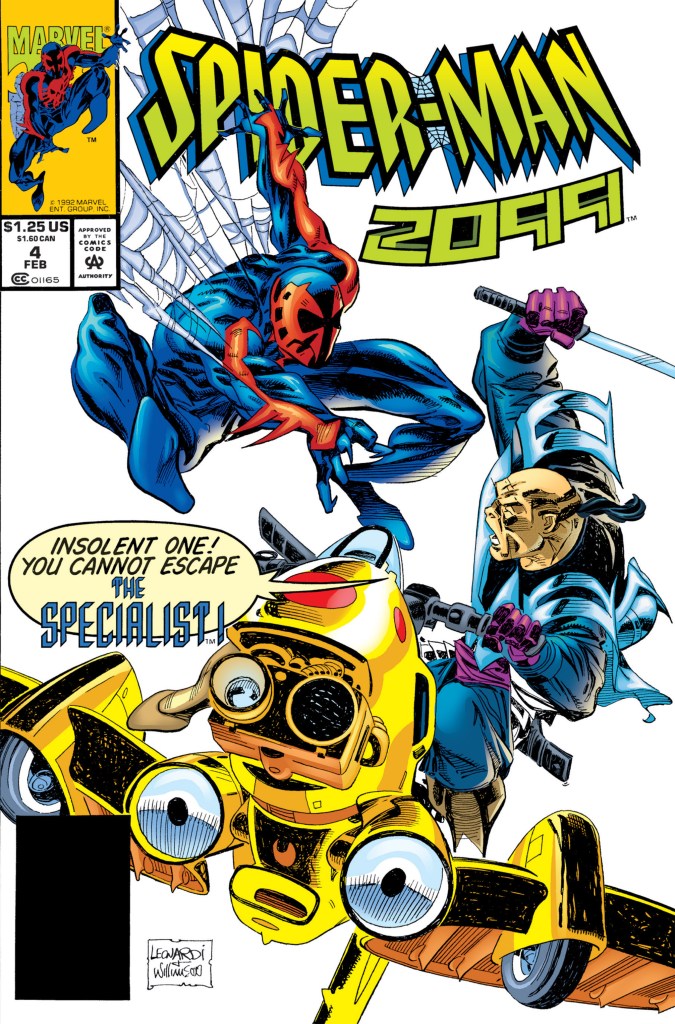
The cover.

Early story

The story begins with Miguel O’Hara, still impacted by Dana’s death and what he personally discovered about Venom, walking through the offices of an Alchemax building where several employees greet him formally which he does not seem to enjoy. He walks into a laboratory where he sees the two that compose Venom – Kron Stone and the symbiote (living costume) – contained separately with hard glass containers.

Kron Stone, who is related to the powerful Tyler Stone and was responsible for the death of the family of Jake Gallows/Punisher 2099, was declared dead which puzzles Miguel. As the two exchange words, it turns out Kron and Miguel knew each other from long ago. Upon the orders of Miguel, the scientists left the laboratory which gave their boss more privacy to exchange words with the trapped Kron who called him gutless.

Miguel then releases Kron from containment (but still separated from the symbiote), declares terms for their private fist fight (which Kron accepts), and begins to fight him…

Quality

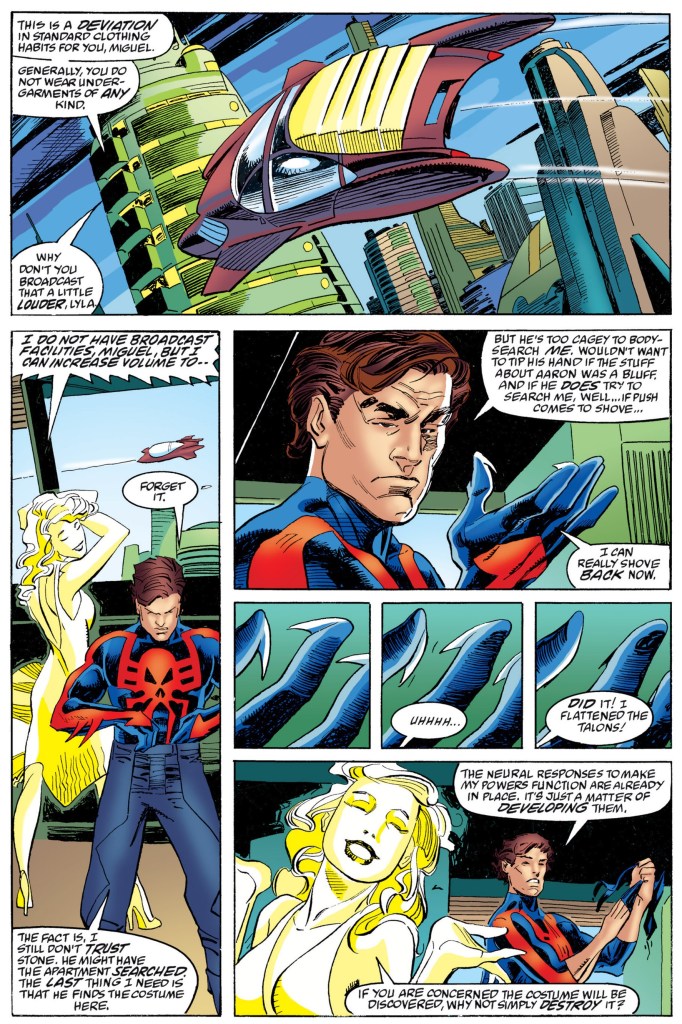
Spider-Man, in his form as Miguel O’Hara, spends time with Xina.

Not surprisingly, the high level of quality and engagement of the writing here is successfully maintained by Peter David and it is very clear to me that he had planned to dramatically shift the direction of the Spider-Man 2099 series and impact the key characters as the story of Venom 2099 went on.

That being said, Peter David went on to not only show Miguel literally burning with rage but also dramatized his move towards the extreme. Not only do we get to see Miguel really abusing his Alchemax authority, he also gets violent with Kron Stone who was powerless without the symbiote. These scenes clearly show that the border that separates good and evil got blurred which showed a very dark side of Miguel O’Hara struggling with his rage, emotions and whatever sanity he still has left.

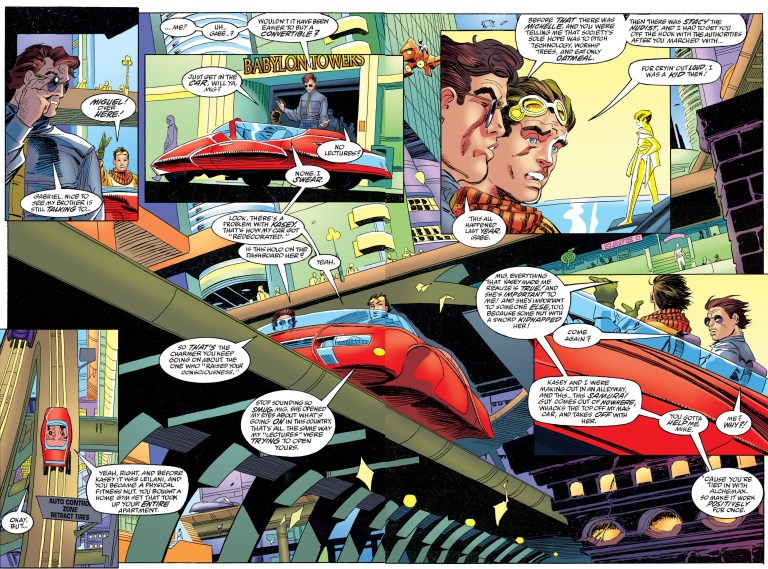
To be clear, the story here was not purely about Miguel and Kron. There is also the scene in which a cooled down Miguel spends time with Xina who made clear to him her reaction over Dana’s death. Peter David also took the opportunity to not only show more of the return Vulture 2099 but also brought in the 2099 version of Green Goblin simply called Goblin who clearly has an agenda against Spider-Man which adds to the suspense and the overall narrative of the series. The appearance of Goblin also sheds light on the nature of vigilantism and elements of chaos within the 2099 universe.

Conclusion

Miguel and his half-brother Kron Stone begin their fight.

I can say that Spider-Man 2099 #39 (1996) is a very solid read. Not only did the Venom 2099 storyline reflect the serious changes on the characters, it is also led to a bold new direction for the monthly series. Carrying on the dramatic stuff from the previous issues, this comic book also serves as a character examination on Miguel O’Hara which will compel not only the fans but also comic book readers to reflect about what they knew about Spider-Man of the far future and speculate as to how he will turn out and how he would impact the people around him.

If you are seriously planning to buy an existing hard copy of Spider-Man 2099 #39 (1996) be aware that as of this writing, MileHighComics.com shows that the near-mint copy of the regular edition costs $80 while the near-mint copy of the newsstand edition costs $240.

Overall, Spider-Man 2099 #39 (1996) is highly recommended.

+++++

Thank you for reading. If you find this article engaging, please click the like button below and also please consider sharing this article to others. If you are looking for a copywriter to create content for your special project or business, check out my services and my portfolio. Feel free to contact me with a private message. Also please feel free to visit my Facebook page Author Carlo Carrasco and follow me on Twitter at  @HavenorFantasy as well as on Tumblr at https://carlocarrasco.tumblr.com/
A Look Back at Spider-Man 2099 #38 (1995)

Disclaimer: This is my original work with details sourced from reading the comic book and doing personal research. Anyone who wants to use this article, in part or in whole, needs to secure first my permission and agree to cite me as the source and author. Let it be known that any unauthorized use of this article will constrain the author to pursue the remedies under R.A. No. 8293, the Revised Penal Code, and/or all applicable legal actions under the laws of the Philippines.

Welcome back, superhero enthusiasts, 1990s culture enthusiasts and comic book collectors! Today we revisit the world of 2099 within the universe of Marvel Comics as published back in the 1990s, specifically through the Spider-Man 2099 monthly series.

Back in 2020, I reviewed the three key issues of Spider-Man 2099 (click here, here and here) particularly with the entry of Venom 2099. While tragedy happened in issue #37 (a very powerful story), the futuristic Venom was still on the loose.

With those details laid down, here is a look back at Spider-Man 2099 #38, published in 1995 by Marvel Comics with a story written by Peter David and drawn by Andrew Wildman.

The cover.

Early story

The story begins with Spider-Man 2099 grieving over the death of Dana in the presence of Xina and two armed law enforcers. As one of the law enforcers approach him, Spider-Man hits and damages his helmet. The other law enforcer tells his companion to give Spider-Man some room. The grieving web-slinger asks where Venom 2099 is.

Meanwhile at another location, Miguel O’Hara’s mother saw the breaking news on TV about what the tragedy and Dana’s death. Her son Gabriel comes in and gets updated about what happened. As soon as he heard Dana’s name, he becomes concerned and focuses on the TV screen. As images of Spider-Man and Dana appeared, Gabriel begins to make a connection between them and punches the TV screen hard…

Quality

A very angry Miguel O’Hara using his corporate authority to find and get Venom 2099.

If you enjoyed the storytelling, tension and payoff that happened in issue #37, I can confirm to you that great stuff from that comic book continued smoothly in this comic book. As before, Peter David’s writing remains very engaging and gripping. So much so, issue #38 is a very believable and natural continuation of the events of the previous issue. In fact, the tension that started even as far as issue #35 continued in this comic book and at the same time David succeeded in developing the key characters further. Here, the death of Dana impacts not only Spider-Man/Miguel O’Hara, but also those connected with him.

Apart from the impact Venom 2099 left behind on those whom he victimized, the key selling point in this comic book was the portrayal of Miguel O’Hara wanting not only vengeance but also craves for the death of the vicious supervillain. I really find it very gripping to see Miguel using his authority as a high-ranking executive of his company to not only find Venom but also use company resources to get him. There was also the scene in which Miguel wants the captured living piece of Venom’s symbiote become dead which reflects the rage burning in him.

The way Peter David wrote Miguel’s rage is compelling not only because of the dramatics involved but also because it raises new questions about the personality and heart protagonist of the Spider-Man 2099 monthly series. I found myself wondering the following: Is Miguel O’Hara on the way to becoming a villain? Does he realize he is going off-track and could become a danger to others once he gets his way with Venom 2099?

When it comes to the visuals, Andrew Wildman did a really good job her. Not only was his art more detailed than what Rick Leonardi came up with, Wildman also brought to life the emotions of the characters through detailed facial expressions. Wildman also showed how skilled he is with pacing the story as well as being strategic on visualizing the spectacle.

Conclusion

Spider-Man 2099 in a very emotional state over the death of Dana.

I can clearly say that Spider-Man 2099 #38 (1995) is a great comic book to read. It is indeed a very worthwhile follow-up to the powerful and tragic story of issue #37 and the tension that started in issue #35 continued strongly in this comic book. Very clearly, Peter David carefully planned to shake up the Spider-Man 2099 series of the 1990s even as he built up Venom 2099 as the deadliest foe the futuristic Spider-Man faced. I should also state that the Spider-Man 2099 – Venom 2099 rivalry has a distinct style and flavor of its own, and there was simply nothing ripped off from the 20th century Spider-Man – Venom (Peter Parker and Eddie Brock) rivalry.

If you are seriously planning to buy an existing hard copy of Spider-Man 2099 #38 (1995) be aware that as of this writing, MileHighComics.com shows that the near-mint copy of the regular edition costs $80 while the near-mint copy of the newsstand edition costs $240. Spider-Man 2099 #38 (1995) also comes with a Venom 2099 cover edition which costs $200 for a near-mint copy.

Overall, Spider-Man 2099 #38 (1995) is highly recommended!

+++++

Thank you for reading. If you find this article engaging, please click the like button below and also please consider sharing this article to others. If you are looking for a copywriter to create content for your special project or business, check out my services and my portfolio. Feel free to contact me with a private message. Also please feel free to visit my Facebook page Author Carlo Carrasco and follow me on Twitter at  @HavenorFantasy as well as on Tumblr at https://carlocarrasco.tumblr.com/
A Look Back at X-Men #24 (1993)

Disclaimer: This is my original work with details sourced from reading the comic book and doing personal research. Anyone who wants to use this article, in part or in whole, needs to secure first my permission and agree to cite me as the source and author. Let it be known that any unauthorized use of this article will constrain the author to pursue the remedies under R.A. No. 8293, the Revised Penal Code, and/or all applicable legal actions under the laws of the Philippines.

Welcome back, superhero enthusiasts, 1990s culture enthusiasts, X-Men fans and comic book collectors! Today we revisit the X-Men monthly series of the 1990s and look back into the one of the comic books that was released in 1993 which was the year Marvel celebrated the 30th anniversary of the X-Men franchise. To be more specific, the comic book in this retro review took place right after the death of Colossus’ sister and just before the big Fatal Attractions stories in Uncanny X-Men #304 (1993) and X-Men #25 (1993).

With those details laid down, here is a look back at X-Men #24, published by Marvel Comics in 1993 with a story written by Fabian Nicieza and drawn by Andy Kubert.

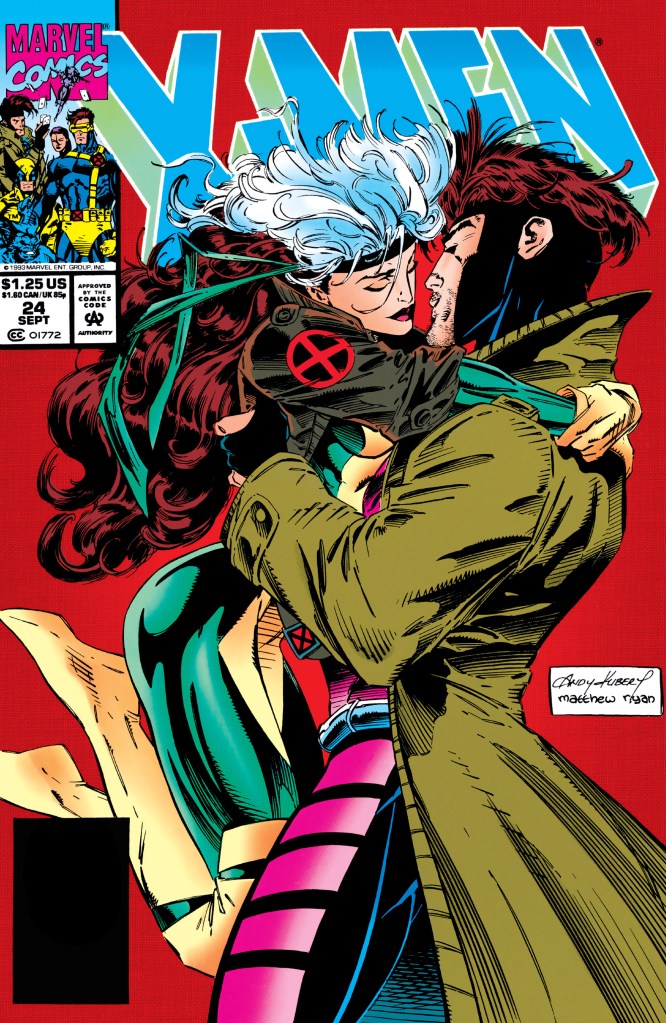
The cover.

Early story

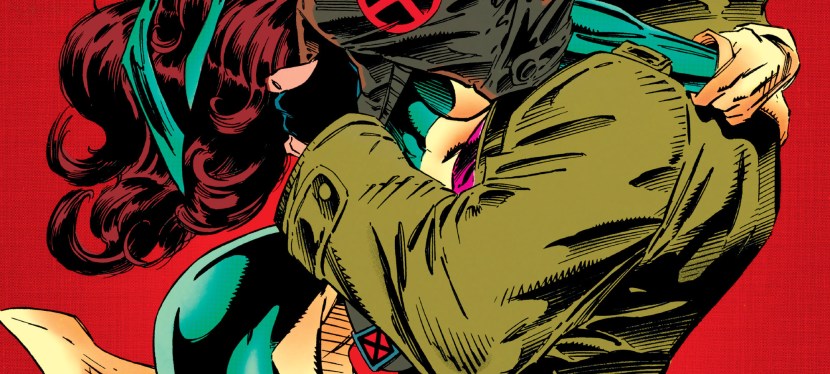
The story begins inside a high-end restaurant wherein Rogue and Gambit, both dressed in formal attire, have dinner and spend quality time together. Their private talk turns awkward when Rogue asks him about his silence about his wife (refer to X-Men ). Gambit, in his attempt to change the subject, asks Rogue why other people do not know her real name. This leads them into staring at each other in silence.

Over the mansion, Dr. Moira McTaggert and Banshee are reunited while Charles Xavier and Beast are inside the laboratory working and analyzing as to how Illyana Rasputin died. Over at a local airport, Jean Grey and Cyclops are reunited…

Quality

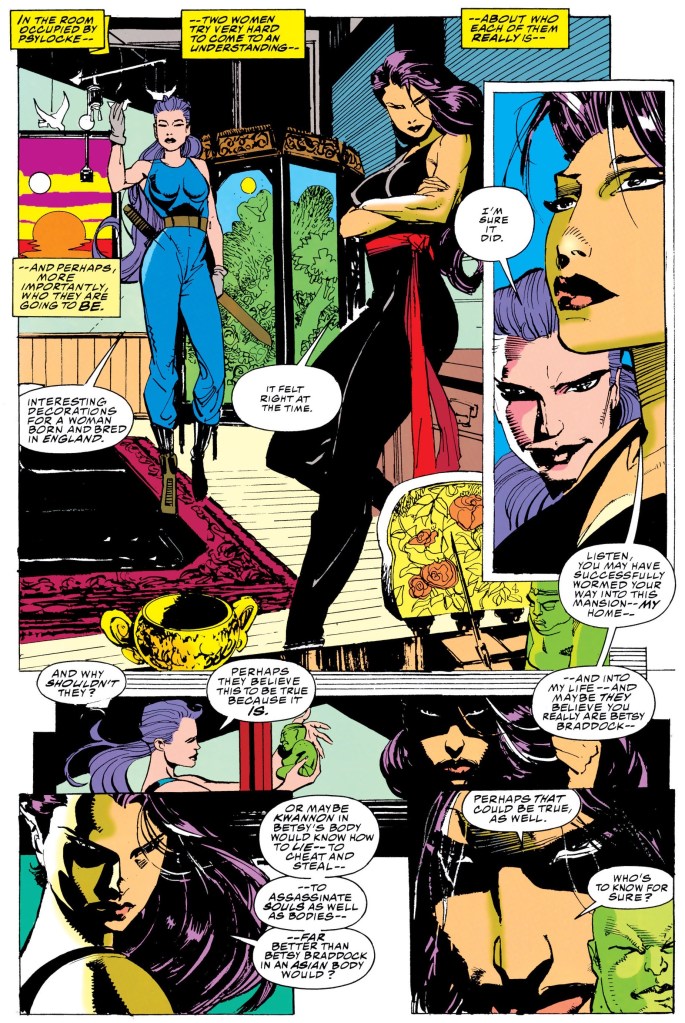
Psylocke and Revanche.

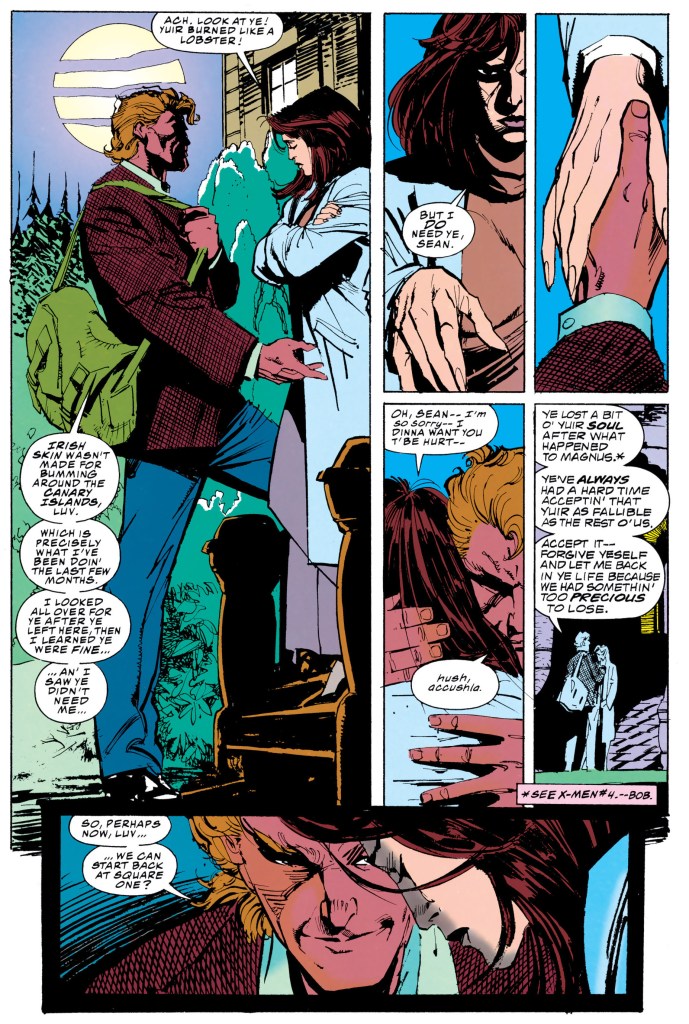
Have you heard about the expression “the calm before the storm”? That truly reflects what this comic book is all about. X-Men #24 (1993) was all about build-up of information and character developments, getting specific X-Men characters reunited, tying up some loose ends from the past while also building up tension for near-future events and more. There is no battle between good and evil here as this was written to set up the characters for specific storylines that were set to happen and Fatal Attractions was just a part of them. No superhero action here, just lots of dialogue plus romance, suspense and melodrama.

If there is anything notable here, it is the romantic time Rogue and Gambit have together. While their relationship got deeper, Fabian Nicieza also opened up the possibility that secrets between the two could still derail their romantic connection. Eventually, their relationship got strained as seen in X-Men #33 (1994).

This comic book also took time to explore further the mystery between Revanche and Psylocke, and also the negative impact Illyana’s death towards Jubilee. All throughout, Nicieza’s dialogue is solid and captured the personalities of each character.

To Andy Kubert…why did you draw Cyclops’ eyes like this?!

As for the art, I noticed there is a drop in the quality of Andy Kubert’s work in this comic book. The way I see it, his work looked rushed especially when compared to his more polished works in X-Men to 23, X-Men and others. As far as his X-Men works of 1993 are concerned, this is easily Kubert’s weakest work.

Conclusion

Banshee and Moira reunited.

X-Men #24 (1993) is easily the build-up comic book leading to the massive, highly dramatic events that took place in Uncanny X-Men , X-Men , the wedding of Cyclops and Jean Grey, the Phalanx Covenant storyline, and more. As the 30th anniversary was the most dominant event of the X-Men in 1993, this comic book served its purpose in getting key characters together as well as giving something meaningful (as opposed to being entertaining) for dedicated X-Men fans to enjoy and relate with. That being said, this comic book won’t resonate with newcomers or readers who decide to read this as their personal introduction into the lore of the X-Men within the Marvel Comics shared universe of the time.

If you are seriously planning to buy an existing hard copy of X-Men #24 (1993) be aware that as of this writing, MileHighComics.com shows that the near-mint copy of the regular edition costs $40 while the near-mint copy of the newsstand edition costs $120.

Overall, X-Men #24 (1993) is satisfactory.

+++++

Thank you for reading. If you find this article engaging, please click the like button below and also please consider sharing this article to others. If you are looking for a copywriter to create content for your special project or business, check out my services and my portfolio. Feel free to contact me with a private message. Also please feel free to visit my Facebook page Author Carlo Carrasco and follow me on Twitter at  @HavenorFantasy as well as on Tumblr at https://carlocarrasco.tumblr.com/
A Look Back at X-Men #33 (1994)

Disclaimer: This is my original work with details sourced from reading the comic book and doing personal research. Anyone who wants to use this article, in part or in whole, needs to secure first my permission and agree to cite me as the source and author. Let it be known that any unauthorized use of this article will constrain the author to pursue the remedies under R.A. No. 8293, the Revised Penal Code, and/or all applicable legal actions under the laws of the Philippines.

Welcome back, superhero enthusiasts, 1990s culture enthusiasts, X-Men fans and comic book collectors! Today we revisit the X-Men monthly series of the 1990s and look back into the past between Sabretooth and X-Men member Gambit which was hinted in X-Men #28 (1994). Within the context of that comic book I previously reviewed, Sabretooth was already living in a contained manner in the mansion of Professor X who views him as a patient who could be rehabilitated even though he has an established record of murder and damage. At that particular time, Gambit and Rogue were in a relationship but certain things from the Cajun’s past could negatively affect them both.

With those details laid down, here is a look back at X-Men , published by Marvel Comics in 1994 with a story written by Fabian Nicieza and drawn by Andy Kubert.

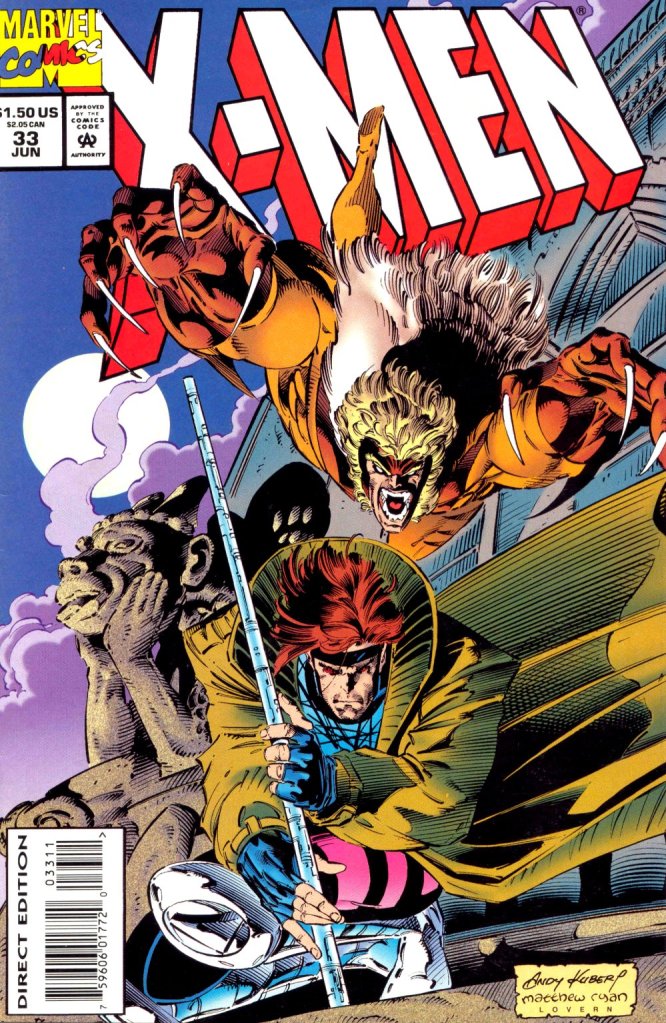
The cover.

Early story

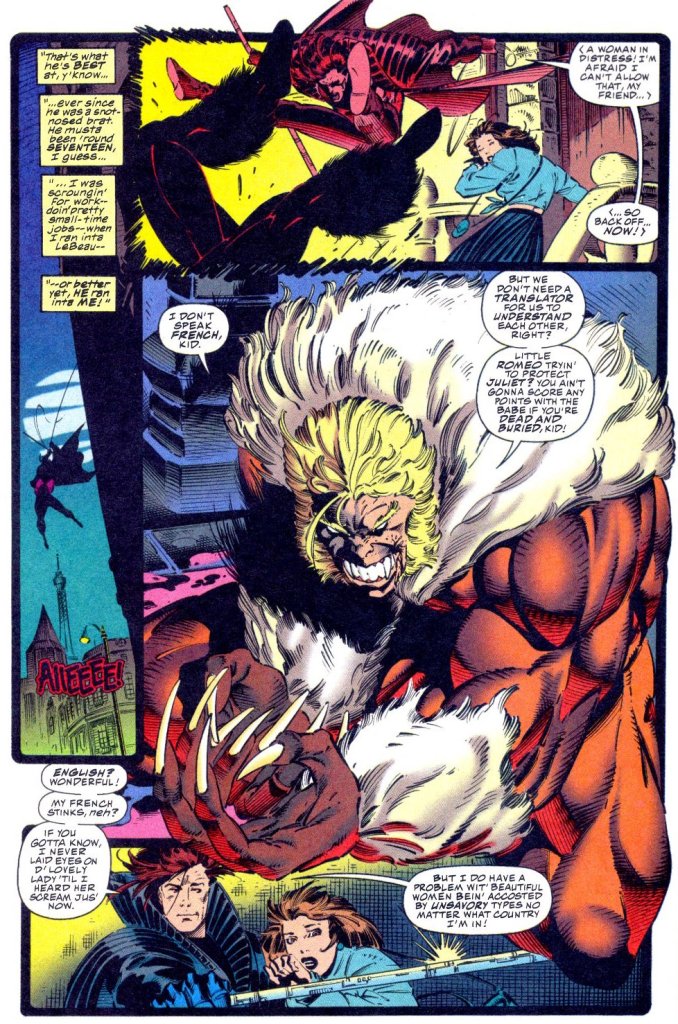
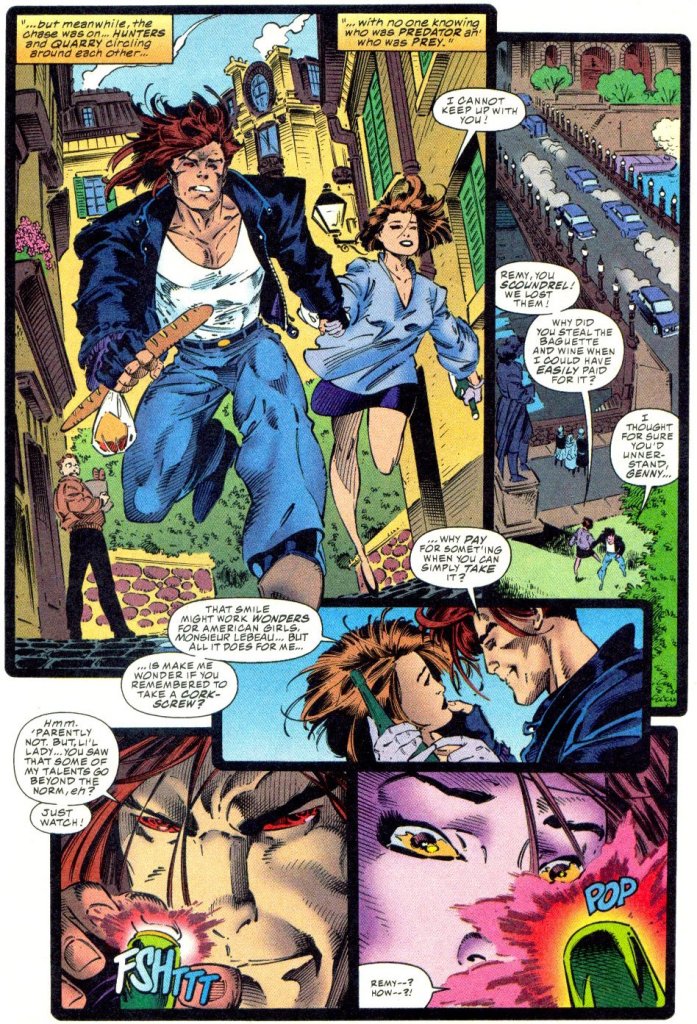
The story begins in the past with a much younger Gambit (wearing a dark coat and holding a rod) traversing through the city of Paris in France. As he moves, Gambit spots a pretty lady in distress in the presence of a huge man with an unusual look. He kicks the man out of the way and tells him to back off. It turns out, the man was none other than Sabretooth (in his more classic comic book look) who responds saying that Gambit won’t score any points with the lady he just saved if he were dead and buried.

Gambit sticks close with the lady and says some words back to Sabretooth. He flashes a card and charges it, revealing his mutant power to the beastly man. Sabretooth leaves promising he will be back.

In the present day, it turns out the restrained Sabretooth has been recalling the past and sharing the details to Rogue standing some feet away from him inside the mansion. Using a highly advanced devise, images of Gambit and the lady from the past are displayed in the form of holograms right in the view of Rogue. She tells him to keep telling her more about what happened in Paris…

Quality

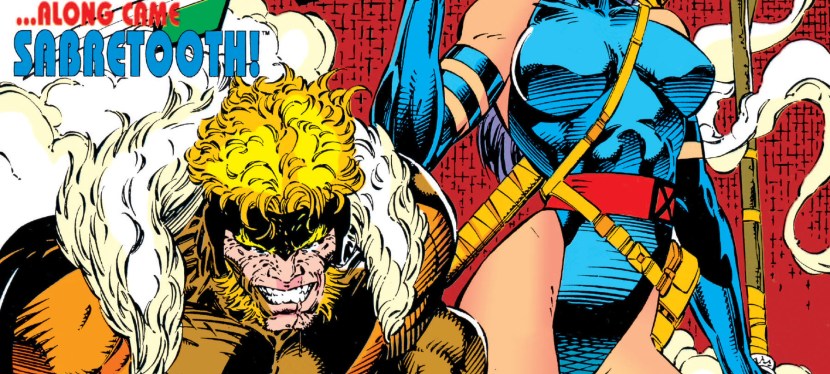
Andy Kubert’s own take on Sabretooth and his classic look remains impressive.

This comic book has a very rich script by Fabian Nicieza who smoothly transitions from the past to the present while succeeding in telling a very cohesive story. Without spoiling the plot, I can say that by reading this comic book as well as the earlier issues, you will question the state of the relationship of Gambit and Rogue, and you will also reflect about Sabretooth’s purpose in X-Men lore.

The tale from Gambit’s past was beautifully told and it really gave me a new look into the personality and mindset of the character. Long before he joined the X-Men, Gambit was an impulsive and cocky guy who became a member of a guild of thieves through adoption (meaning he has yet to earn his place). This version of the Cajun was undisciplined and did not take life seriously. Young Gambit also had a thing with ladies and he showed no signs of cleverly betraying a woman in favor of materialism.

Believe it or not, the most interesting character here is actually Sabretooth who appears in both the past and the present. The way he was portrayed here, young Sabretooth was cunning and knew how to be strategic and paced himself even though he had key physical advantages to overwhelm young Gambit. Sabretooth in the present day is more mature and more articulate, especially during his storytelling and interactions with Rogue. The way Sabretooth’s dialogue was structured in telling about the past was very engaging and you can see he clearly understood what happened between him and Gambit.

While the story is great, the art done by Andy Kubert is very good. However, I believe it was a missed opportunity for Kubert to redesign Gambit from the past because the famous X-Men member does not look any different from the other version. In the scenes about the past, Gambit does NOT look like a 17-year-old at all and his hair style and length are just the same! As for drawing the younger version of Sabretooth, Kubert made him more menacing and more detailed while sticking close to his original comic book look.

Conclusion

The 17-year-old Gambit with the pretty lady in France.

X-Men (1994) is one of the most intriguing X-Men stories I read that took place after the Fatal Attractions storyline and the wedding of Jean Grey and Cyclops. In fact, it is also the most memorable X-Men comic book I ever read in 1994 all thanks to the great work by Fabian Nicieza whose script was finely visualized by Andy Kubert. This is one very engaging read and by the time I finished it, I really felt the impact it had on Gambit and Rogue’s relationship. More notably, it made rethink about Gambit and his place with the X-Men.

If you are seriously planning to buy an existing hard copy of X-Men (1994) be aware that as of this writing, MileHighComics.com shows that the near-mint copy of the regular edition costs $30 while the near-mint copy of the newsstand edition costs $90.

Overall, X-Men (1994) is highly recommended!

+++++

Thank you for reading. If you find this article engaging, please click the like button below and also please consider sharing this article to others. If you are looking for a copywriter to create content for your special project or business, check out my services and my portfolio. Feel free to contact me with a private message. Also please feel free to visit my Facebook page Author Carlo Carrasco and follow me on Twitter at  @HavenorFantasy as well as on Tumblr at https://carlocarrasco.tumblr.com/
A Look Back at X-Men #29 (1994)

Disclaimer: This is my original work with details sourced from reading the comic book and doing personal research. Anyone who wants to use this article, in part or in whole, needs to secure first my permission and agree to cite me as the source and author. Let it be known that any unauthorized use of this article will constrain the author to pursue the remedies under R.A. No. 8293, the Revised Penal Code, and/or all applicable legal actions under the laws of the Philippines.

Welcome back, superhero enthusiasts, 1990s culture enthusiasts, X-Men fans and comic book collectors! Today we revisit the X-Men monthly series of the 1990s and look back at what happened after the ending of X-Men #28 (1994). For those who missed out on my previous X-Men retro review, issue showed the X-Men being disturbed by the presence of Sabretooth living as a prisoner/patient in the mansion under the authority of Charles Xavier. Along the way, the wedding of Jean Grey and Cyclops is nearing.

With those details laid down, here is a look back at X-Men #29, published by Marvel Comics in 1994 with a story written by the Fabian Nicieza and drawn by Andy Kubert.

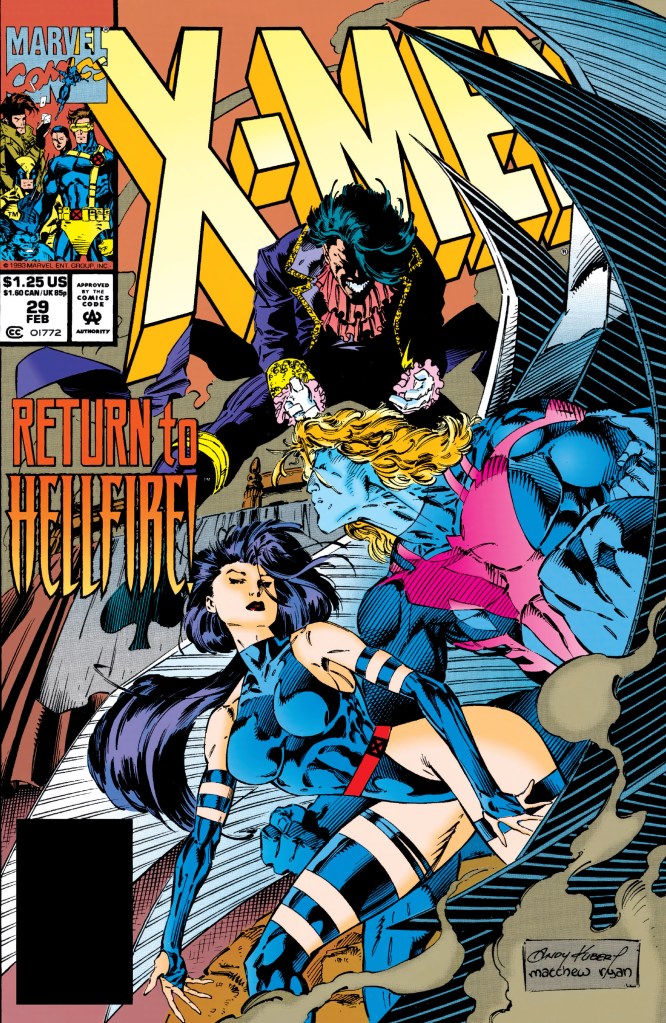
The cover.

Early story

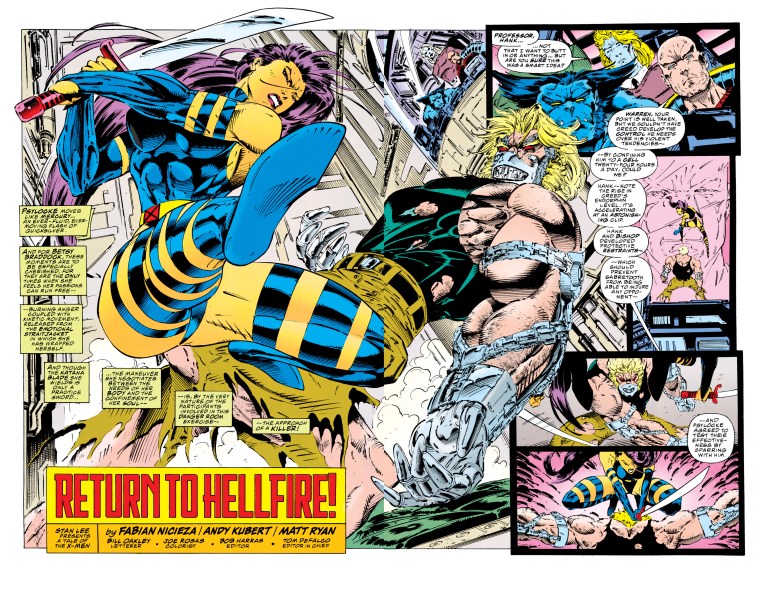
The story begins inside the danger room wherein Psylocke and Sabretooth (wearing cybernetic restraints on his arms as well as a mask) engage in a sparring session while being monitored by Professor X, Warren Worthington/Archangel and Hank McCoy/Beast. Warren expresses concern about the session and Xavier replies by saying that they could not have Sabretooth develop the control he needs over his violent tendencies by having him contained in a cell every day.

After some struggle, Psylocke gains the upper hand and tells Sabretooth that she sparred without using her mutant abilities (solely out of deference to his reduced capabilities caused by the restraints) and insisted she still fought to win.

After the danger room session, Warren leaves and thinks a lot as he takes time out to watch Cyclops and Jean Grey leading the wedding preparations outdoors. Jubilee passes by with lots of mail, hands over to Warren an unusual looking envelope, then leaves. As he opens the envelope, Psylocke arrives hearing Warren talking to himself as he reads the letter. It turns out to be an invitation from the Hellfire Club…

Quality

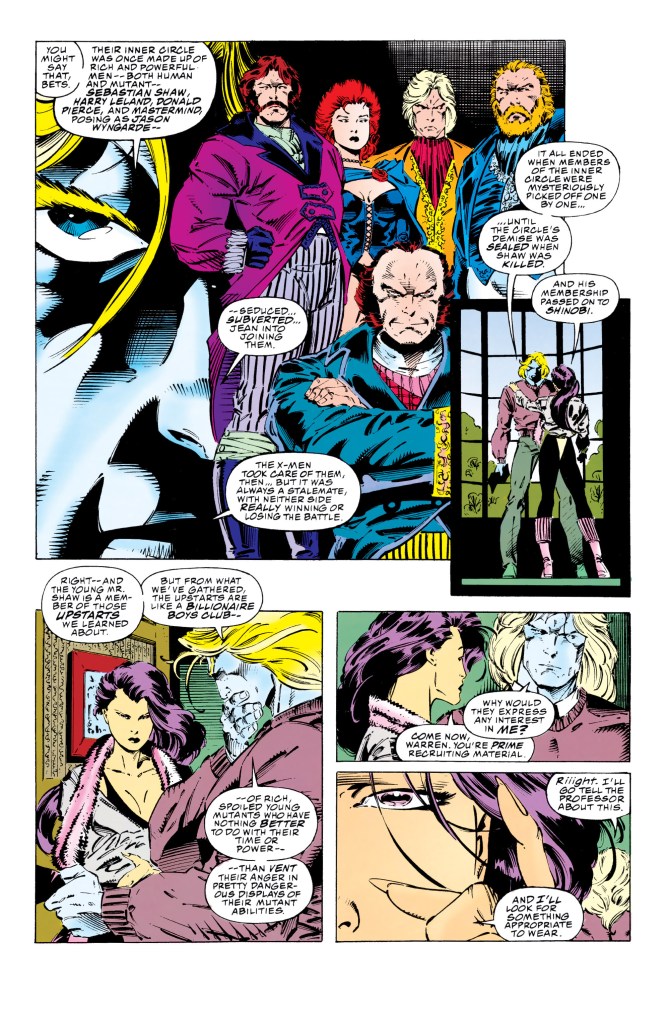
Expository dialogue and details laid down to help readers understand the Hellfire Club.

To put things in perspective, the Hellfire Club within the Marvel Comics universe is a fictional high-class society which became a formidable force of opposition for the X-Men. Their debut during the Dark Phoenix Saga is very memorable and since that time, varied comic books – specifically X-Men comics – revisited the club from time to time.

Within the pages of this particular comic book, the Hellfire Club itself went through some changes in terms of membership and organizational structure kind of similar to the X-Men themselves. In this case, the son of Sebastian Shaw – Shinobi – gains tremendous power and even went as far as revealing to Warren/Archangel his ambitious plan to re-establish the Inner Circle and have the mentioned X-Men member (one of the pioneering students of Charles Xavier) part of it as the White King.

A key element in this story is self-pity which Archangel and Shinobi Shaw both share. For these two, there are key parts of their past that are so hurtful they respectively question their existence and purpose. Quite symbolically, Archangel and Shinobi both have fathers involved with the Hellfire Club and Psylocke herself was familiar with the club’s presence in London. More on Archangel himself, his self-pity really puts him in a very awkward place among the X-Men, especially at a time when he is supposed to be happy for his long-time teammates Jean Grey and Cyclops about to get married.

In a way, X-Men #29 was an inspired attempt to reconnect the past with the contemporary times with the Hellfire Club as the enduring factor. In my opinion, Fabian Nicieza’s work here is solid.

Conclusion

Easily the best-looking images in the comic book. Andy Kubert really rocked with this!

X-Men #29 (1994) is symbolically a quick and yet inspired way of updating readers about the state of the Hellfire Club and hint what potential conflicts they could have with the X-Men of the 1990s. Psylocke and Archangel are the most prominent X-Men members to follow here and they both have past connections with the Hellfire Club which itself is changing as Shinobi Shaw gained power. Its story is pretty intriguing and there is a descent amount of spectacle to be enjoyed. The selling point here is the story concept itself backed with solid writing by Nicieza who seem to have researched the Hellfire Club carefully. Given the legacy behind the X-Men and the fictional club, this comic book will appeal more to long-time fans of the X-Men. Reading this as a first-time discovery of the club will surely challenge newcomers.

If you are seriously planning to buy an existing hard copy of X-Men #29 (1994) be aware that as of this writing, MileHighComics.com shows that the near-mint copy of the regular edition costs $30 while the near-mint copy of the newsstand edition costs $90.

Overall, X-Men #29 (1994) is recommended.

+++++

Thank you for reading. If you find this article engaging, please click the like button below and also please consider sharing this article to others. If you are looking for a copywriter to create content for your special project or business, check out my services and my portfolio. Feel free to contact me with a private message. Also please feel free to visit my Facebook page Author Carlo Carrasco and follow me on Twitter at  @HavenorFantasy as well as on Tumblr at https://carlocarrasco.tumblr.com/
A Look Back at X-Men #28 (1994)

Disclaimer: This is my original work with details sourced from reading the comic book and doing personal research. Anyone who wants to use this article, in part or in whole, needs to secure first my permission and agree to cite me as the source and author. Let it be known that any unauthorized use of this article will constrain the author to pursue the remedies under R.A. No. 8293, the Revised Penal Code, and/or all applicable legal actions under the laws of the Philippines.

Welcome back, superhero enthusiasts, 1990s culture enthusiasts and comic book collectors! Today we revisit the X-Men monthly series of the said decade, specifically on the 28th issue which takes place after the events highlighted by the 30th anniversary the X-Men (read my retro reviews of Uncanny X-Men #304 and X-Men #25), and before the wedding of Scott/Cyclops and Jean Grey (X-Men ).

With those details laid down, here is a look back at X-Men , published by MarvelComics in 1994 with a story written by the Fabian Nicieza and drawn by Andy Kubert.

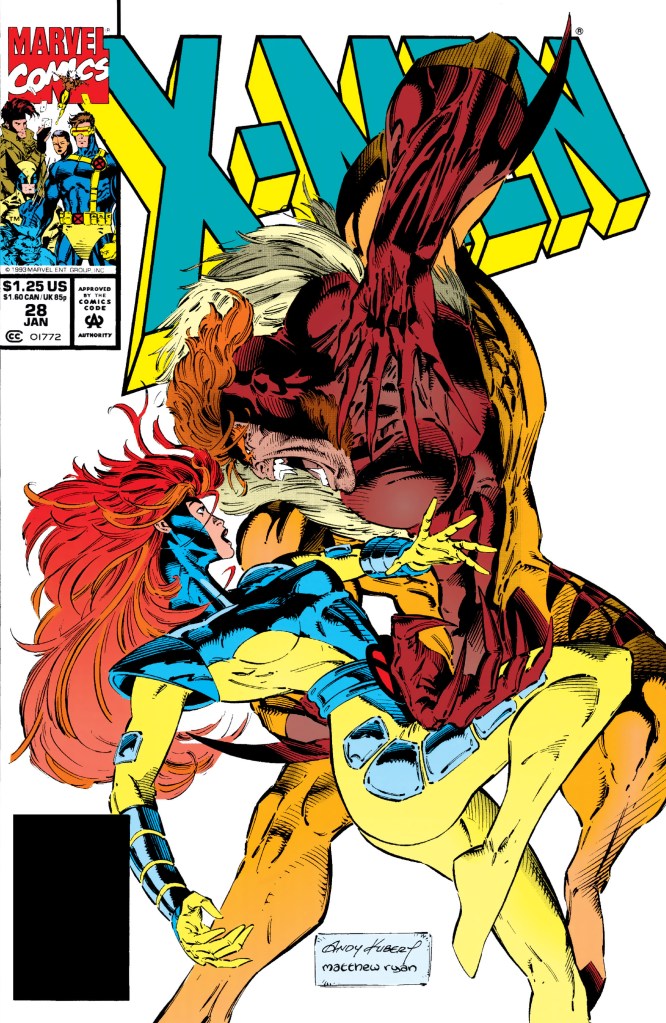
The cover.

Early story

The story begins with Jubilee running through the woods desperately. She suddenly finds Wolverine on the ground. As she turns, she sees Sabretooth moving directly at her for the kill.

Jubilee suddenly wakes up from her nightmare. Jean arrives to comfort her and gets told that within the nightmare, all the X-Men were killed. Jean telepathically reaches out to Scott, Ororo/Storm and Hank/Beast and calls for an immediate private meeting outside Charles Xavier’s mansion.

Shortly after, Jean, Cyclops, Storm and Beast meet at a local pub to discuss a very questionable move recently made by their leader Charles Xavier…accepting Sabretooth into the mansion as a patient…

Quality

I really liked this scene between Professor X and two of his original X-Men members.

Let me start by confirming that this is one of the best X-Men scripts I have read from Fabian Nicieza as X-Men strongly tackled the issues it raised regarding the disturbing presence of Sabretooth on the established team of mutants. For one thing, it is dramatic to read how Jean Grey, Cyclops, Beast and Storm expressed their opinions about their boss Charles Xavier who decided to take an established animalistic killer like Sabretooth into their shared place of residence. Even though they have high-tech measures to ensure security and containment, Sabretooth is still a constant emotional problem to the X-Men.

The presence of Sabretooth brings to light Xavier’s legacy of bringing Wolverine and Rogue into the X-Men many years prior, as well as sensible questions about the X-Men founder himself. How much impact did Ilyana’s death and Colossus’ departure have on Xavier? Is Xavier losing his sanity since he erased Magneto’s mind? Is Professor X really in control with leading the team while working on several other things at the same time?

More on Sabretooth, apart from being a major disturbance, he was shown to have known Gambit from some time in the past and if you read his dialogue (while in the presence of Rogue and Gambit) closely, the French city of Paris is mentioned and it has something to do with Gambit and Sabretooth’s previous encounter. This was a build-up to a big revelation a few issues later.

Conclusion

Psylocke was no match for Sabretooth.

X-Men (1994) is not your typical good-versus-evil X-Men story but rather a dramatized look at the team feeling very uneasy mainly because of the presence of an animalistic killer within their household. In retrospect, the concept of having Sabretooth in the Xavier mansion is daring and also refreshing as it opened up opportunities for the creative team to explore new dimensions on many of the affected X-Men members. In relation to that, this comic book was published just months after Marvel published a Sabretooth comic book mini-series.

If you are seriously planning to buy an existing hard copy of X-Men (1994) be aware that as of this writing, MileHighComics.com shows that the near-mint copy of the regular edition costs $30 while the near-mint copies of the signed-and-numbered edition and the newsstand edition cost $200 and $90 respectively.

Overall, X-Men (1994) is highly recommended.

+++++

Thank you for reading. If you find this article engaging, please click the like button below and also please consider sharing this article to others. If you are looking for a copywriter to create content for your special project or business, check out my services and my portfolio. Feel free to contact me with a private message. Also please feel free to visit my Facebook page Author Carlo Carrasco and follow me on Twitter at  @HavenorFantasy as well as on Tumblr at https://carlocarrasco.tumblr.com/
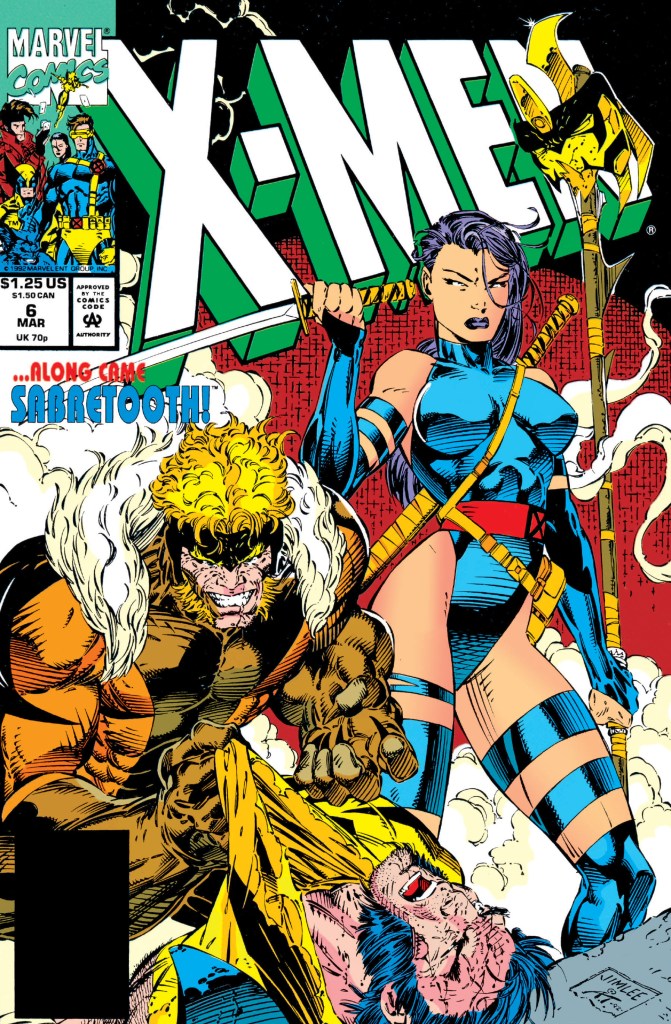
A Look Back at X-Men #6 (1992)

Disclaimer: This is my original work with details sourced from reading the comic book and doing personal research. Anyone who wants to use this article, in part or in whole, needs to secure first my permission and agree to cite me as the source and author. Let it be known that any unauthorized use of this article will constrain the author to pursue the remedies under R.A. No. 8293, the Revised Penal Code, and/or all applicable legal actions under the laws of the Philippines.

Welcome back, superhero enthusiasts, fans of the 2099 universe of Marvel Comics, 1990s culture enthusiasts and comic book collectors! Today we revisit the adjective-less X-Men comic book series that first launched in 1991 and it has been quite some time since my last retro review of one of the early issues drawn by Jim Lee got published. For the newcomers reading this, my retro review of X-Men (1992) had Wolverine encountering Omega Red.

With those details laid down, here is a look back at X-Men , published by Marvel Comics in 1992 with a story plotted and drawn by Jim Lee, scripted by Scott Lobdell and inked by Art Thibert.

The cover.

Early story

The story begins inside a facility in Berlin. Cyclops and Beast easily knocked out the armed guards there with Jubilee following them. As they slowly walk and talk, Omega Red suddenly appears out of nowhere surprising them and hitting Beast directly on the head.

As Omega Red quickly subdues Cyclops with his coils, Jubilee tries to use her power to help her teammate. The Russian, however, unleashes his lethal pheromones into the air which weakens Jubilee. After Omega Red knocks her out, he communicates with Matsuo. It turns out Wolverine still could not be located since he escaped from them.

Elsewhere, Wolverine is being revived by someone…

Quality

Members of the Blue Team in action.

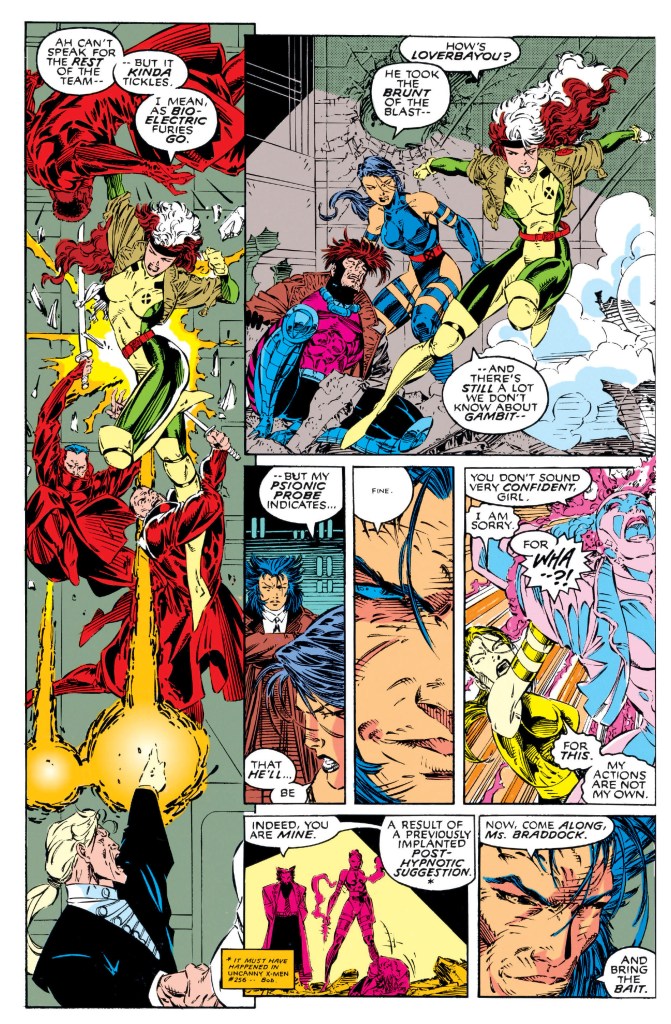
Being the 3rd issue published after the departure of Chris Claremont (last work was X-Men #3), this comic book daringly continues to expand the lore of X-Men with paramilitary concepts, the further exploration of the untold story from Wolverine’s past as a special operative, and the growing threat against the X-Men posed by Omega Red and the organization that revived him. This was clearly Jim Lee’s vision and his way of modernizing the X-Men into the 1990s. It is unsurprisingly grittier in presentation when compared to how the X-Men were presented during Claremont’s time and fortunately the story was told satisfyingly.

I say satisfyingly because this comic book even made room to bring back Dazzler, Longshot and the monstrous Mojo all modernized by Jim Lee. Their insertion into the story really came out of nowhere and felt really jarring after getting myself immersed into the current X-Men story. At this point in the series, the creative team led by Lee really wanted to shake the X-Men storytelling and keep things fresh, if not interesting, for the fans. Speaking of Dazzler, the character made her first appearance way back in 1980’s Uncanny X-Men #130, was featured in her own monthly series and became a regular in the X-Men in the mid-1980s. As such, her sudden return in this comic book was pretty much an opportunity by the creative team to link the present-day X-Men with the X-Men from the mid-1980s which resulted added variety.

Conclusion

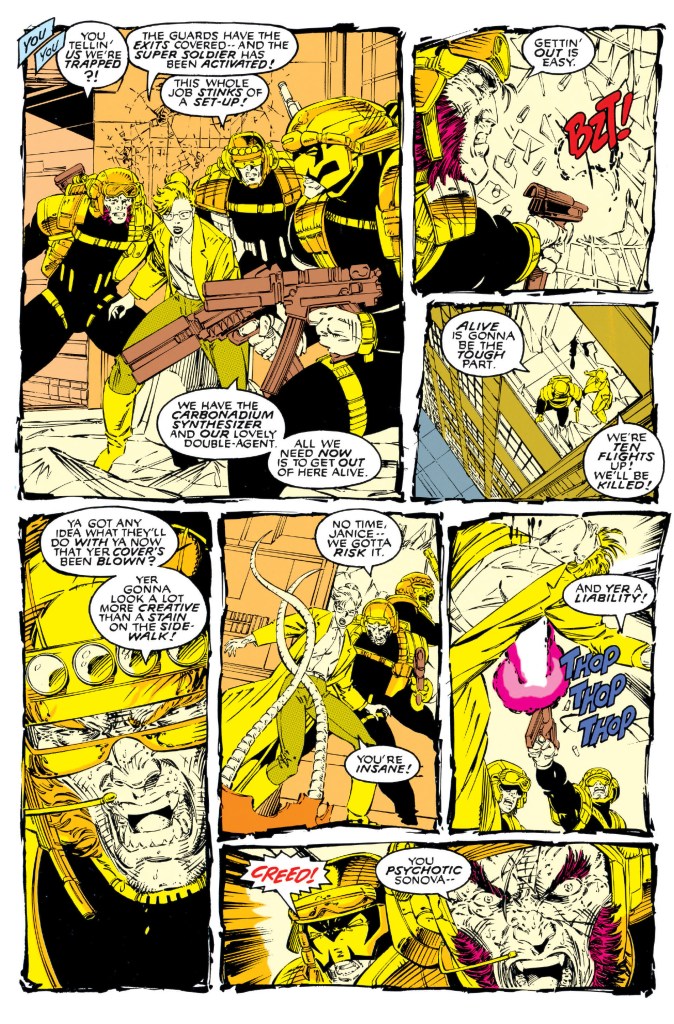
When Wolverine and Sabretooth were CIA operatives.

While X-Men (1992) indeed has a more bloated narrative as more characters were crammed in, more flashback scenes and attempts to add moments of twists and intrigue, I still had fun reading it. Unlike the previous two issues under the direction of Jim Lee, this comic book requires a more concentrated reading in order to fully grasp the narrative while also paying attention to the return of Longshot, Dazzler and the others. More on the X-Men themselves, you will get to see the Blue Team in action and really struggle against the group that has Omega Red. When it comes to intriguing character moments, you will see here the start of the build-up on the respective stories of the Psylocke-Kwannon storyline as well as Gambit’s connection with Sabretooth.

If you are seriously planning to buy an existing hard copy of X-Men (1992), be aware that as of this writing, MileHighComics.com shows that the near-mint copy of the regular edition costs $40 while the near-mint copies of the newsstand and Toy Biz editions cost $120 and $100 respectively.

Overall, X-Men (1992) is recommended.

+++++

Thank you for reading. If you find this article engaging, please click the like button below and also please consider sharing this article to others. If you are looking for a copywriter to create content for your special project or business, check out my services and my portfolio. Feel free to contact me as well. Also please feel free to visit my Facebook page Author Carlo Carrasco and follow me at HavenorFantasy@twitter.com

A Look Back at X-Men 2099 #14 (1994)

Disclaimer: This is my original work with details sourced from reading the comic book and doing personal research. Anyone who wants to use this article, in part or in whole, needs to secure first my permission and agree to cite me as the source and author. Let it be known that any unauthorized use of this article will constrain the author to pursue the remedies under R.A. No. 8293, the Revised Penal Code, and/or all applicable legal actions under the laws of the Philippines.

Welcome back, superhero enthusiasts, fans of the 2099 universe of Marvel Comics, 1990s culture enthusiasts and comic book collectors! Today we revisit the X-Men 2099 comic book series by focusing on the 14th issue of the series. As recalled in X-Men 2099 #10, team leader Xi’an reverted back to his more sadistic personality as demons from his past came back to overwhelm him. In the issues that followed, Xi’an went away from the X-Men followed by Tim/Skullfire who himself has gotten more wild and more aligned with their leader. They also encountered Luna, the former member of the Theatre of Pain. As the three went around more, something even more significant happened to Xi’an (note: this was part of the build-up leading to the big events in X-Men 2099 #25).  

With those details laid down, here is a look back at X-Men 2099 , published by Marvel Comics in 1994 with a story written by John Francis Moore and drawn by Ron Lim.

The cover.

Early story

The story begins on an island where the big-time personality Danielle has a mansion. She is about to start spending quality time with a man named Alexi. It turns out Danielle has wings with feathers that are colored to resemble a rainbow. She floats with Alexi as they enjoy the function of the zero-gravity chamber.

After grabbing her, Alexi surprises Danielle by suddenly flying up several feet high above using a gadget he equipped. In a very cold manner, he lets go of her causing her to land hard on the sea below. Alexi then flies away to an unknown destination.

Meanwhile at the ranch house of Zhao which the X-Men have been staying at since Xi’an left them, Skullfire returns and this time Luna is with him. The sight of Luna enrages Henri/Meanstreak as he encountered her before when she was still a member of the Theatre of Pain. As the tension intensified, Henri tries to go after Luna but Skullfire stands in the way and reveals that Xi’an has joined the Theatre of Pain.

This shocks Henri and Krystalin. For Shakti, however, it was expected…

Quality

Luna’s presence causes a disturbance with the team.

In this comic book, John Francis Moore really kept on focusing on developing the X-Men while keeping the narrative fresh with twists and the occasional moments of shock. While the cover of this comic book expressed the return of the other X-Men member Eddie/Metalhead (who stayed behind and separated from Xi’an’s mutants), the story here surprisingly had much less focus on the X-Men of 2099 and focused more on the Freakshow (which Metalhead is now part of).

Adding more depth to the surprise change of focus, the Freakshow here developed quite a lot as the group visits a new place and meets with a new group of people led by someone Mama Hurricane (head of the Freakshow) knew. As the development of the Freakshow went on, so did the creative team’s continued emphasis of the lore of the 2099 universe in the western region of the United States.

Conclusion

The Freakshow is the major team of focus in this comic book.

X-Men 2099 (1994) is one of the more unusual stories that John Francis Moore and Ron Lim came up with. The X-Men themselves ended up with a minority of the narrative although the revelation of Xi’an taking sides with a super villain literally left some vibrations for readers. This plus the stronger focus on the Freakshow and the addition of Alexi as a powerful newcomer to the saga added to the build-up leading to X-Men 2099 . The good news here is that the story was solidly told by Moore and did not have a single boring moment for me.

If you are seriously planning to buy an existing hard copy of X-Men 2099 (1994), be aware that as of this writing, MileHighComics.com shows that the near-mint copy of the regular edition costs $30 while the near-mint copy of the newsstand edition costs $90.

Overall, X-Men 2099 (1994) is recommended.

+++++

Thank you for reading. If you find this article engaging, please click the like button below and also please consider sharing this article to others. If you are looking for a copywriter to create content for your special project or business, check out my services and my portfolio. Feel free to contact me as well. Also please feel free to visit my Facebook page Author Carlo Carrasco and follow me at HavenorFantasy@twitter.com

A Look Back at X-Men 2099 #10 (1994)

Disclaimer: This is my original work with details sourced from reading the comic book and doing personal research. Anyone who wants to use this article, in part or in whole, needs to secure first my permission and agree to cite me as the source and author. Let it be known that any unauthorized use of this article will constrain the author to pursue the remedies under R.A. No. 8293, the Revised Penal Code, and/or all applicable legal actions under the laws of the Philippines.

Welcome back, superhero enthusiasts, fans of the 2099 universe of Marvel Comics, 1990s culture enthusiasts and comic book collectors! Today we revisit the X-Men 2099 comic book series by focusing on the tenth issue which, I assure you, continues more intrigue carried over from the previous issue as well as the further development of the futuristic team of mutants.

With those details laid down, here is a look back at X-Men 2099 , published by Marvel Comics in 1994 with a story written by John Francis Moore and drawn by Ron Lim.

The cover.

Early story

The story begins shortly after the fall of Zhao with Xi’an looking over his inactive body. Xi’an wants Zhao’s body left outdoors for coyotes to feed on but Shakti tells him that the defeated X-Men master is still conscious. The X-Men noticed something very different about Xi’an and to Krystalin, he has an edge to his voice that she never heard before. Victor tells them that their leader was once a ruthless man during their time together as members of the Lawless.

Zhao’s mutants arrived and one of them tells Xi’an that his victory of their master doomed them all…

Quality

Long-time X-Men fans will recognize the Savage Land.

Like the previous issue, the storytelling by John Francis Moore is the strongest factor of this comic book. While issue marked the significant turning point for Xi’an as well as exposing the history of the X-Men between the time of Charles Xavier and Zhao, this story further develops the 2099 mutants’ leader and set up new subplots. I still remember from the first time I read this comic book, I was boggled as to what direction the X-Men of 2099 were heading to.

More on the story, it is very engaging to see Xi’an sliding back to his old violent ways and this creates a large cloud of darkness for the X-Men as he is their leader. Victory Ten Eagles is convincingly written to be believable and lively as Xi’an’s Lawless teammate, and he certainly is not a mere expository dialogue tool. On another aspect of the story, as the cover art showed, Luna makes a return and John Francis Moore excellently developed Skullfire’s personality going further to the point of recklessness and becoming impulsively lost. Skullfire in this comic book has drastically changed from his subdued personality in the early issues. More on the team of mutants, Shakti slowly begins to emerge into a leader figure among her teammates.

When it comes to the art, Ron Lim’s work here is good and he showed consistency when it comes to presenting the look of the future of 2099 far away from the East Coast (where Spider-Man 2099 and others are located at). Lim’s presentation of the power of Skullfire is a must-see!

Conclusion

Xi’an’s portrayal in this comic book is one of the strongest selling points of this comic book.

X-Men 2099 (1994) is a very solid story to read. It successfully showed more of the new direction the X-Men were heading to as Xi’an and Skullfire develop further as solo figures. At the same time, this comic book showed more of Skullfire and Luna getting more involved with each other. The writing by John Francis Moore is so good, the lack of the good-versus-evil conflict does not hurt it at all. The conflict is within Xi’an and Skullfire.

If you are seriously planning to buy an existing hard copy of X-Men 2099 (1994), be aware that as of this writing, MileHighComics.com shows that the near-mint copy of the regular edition costs $30 while the near-mint copies of the newsstand edition and the signed edition cost $90 and $60 respectively.

Overall, X-Men 2099 (1994) is highly recommended!

+++++

Thank you for reading. If you find this article engaging, please click the like button below and also please consider sharing this article to others. If you are looking for a copywriter to create content for your special project or business, check out my services and my portfolio. Feel free to contact me as well. Also please feel free to visit my Facebook page Author Carlo Carrasco and follow me at HavenorFantasy@twitter.com

A Look Back at X-Men 2099 #9 (1994)

Disclaimer: This is my original work with details sourced from reading the comic book and doing personal research. Anyone who wants to use this article, in part or in whole, needs to secure first my permission and agree to cite me as the source and author. Let it be known that any unauthorized use of this article will constrain the author to pursue the remedies under R.A. No. 8293, the Revised Penal Code, and/or all applicable legal actions under the laws of the Philippines.

Welcome back, superhero enthusiasts, fans of the 2099 universe of Marvel Comics, 1990s culture enthusiasts and comic book collectors! Today we revisit the X-Men 2099 comic book series by focusing on its ninth issue. Since issue , the connection between the mutants of 2099 with the original team founded by Charles Xavier was vague. Sure, Xi’an made verbal references to Charles Xavier and Magneto but there was nothing concrete with regards to his team adapting the team name of the classic X-Men.

With those details laid down, here is a look back at X-Men 2099 (1994), published by Marvel Comics in 1993 with a story written by John Francis Moore and drawn by Ron Lim.

The cover.

Early story

The story begins shortly after the X-Men left the town. Without Eddie/Metalhead (who chose to be left behind), Xi’an and his team arrive at a facility in the middle of nowhere. It turns out, they have been following the coordinates in relation to Krystalin’s assignment to investigate and Xi’an determined there was something odd about her voice during their last communication.

Krystalin suddenly appears to her teammates with Victor Ten Eagles right behind her. Victor was a companion of Xi’an’s during their days together with the group referred to as the Lawless. While the two former Lawless members talk, Skullfire, Shakti and Meanstreak notice there is something very odd with Krystalin. Xi’an notices something is definitely wrong and he remembers that when the Lawless disbanded, he and Ten Eagle never parted on friendly terms.

Suddenly, a very old Asian man appears in front of them floating in the air. He reveals his name as Zhao and he refers to them as his X-Men…

Quality

X-Men 2099’s leader Xi’an in trouble. This page reveals some threads from his past and the concept that Saigon in Vietnam hosted the 2016 Olympics.

Starting with the storytelling, the script was clearly written with a lot of confidence on the part of John Francis Moore as he expands further the lore of America of 2099 through the team of mutants. For one thing, it uses its own version of Marvel Comics universe history (note: one possible history since 2099 was one possible future of the Marvel universe) to establish the link between Charles Xavier’s original X-Men with the mutants of 2099 complete with what happened in between. While I won’t spoil what exactly happened, I can assure all of you reading this that something very intriguing happened and Zhao is not just a mere 2099 character. I also liked the concept about the sad state of mutants in the far future and why extremists emerge claiming to be their hope and tell them to join the movement without hesitation. The pacing of the story was smooth and there was sufficient build-up with the X-Men history that led to a nice payoff when the big revelation was made.

As the art on the cover symbolizes, there is something really wrong with the X-Men 2099 leader. In the previous issues, there were signs of Xi’an getting haunted by his past with the Lawless and this comic book marks a significant change in his portrayal. He also tried to be strong as team leader even though he kept some really undesirable secrets away from them. All of that build-up paid off well here. Clearly, this was one of John Francis Moore’s strongest scripts on the X-Men of 2099.

When it comes to spectacle, there is some superhero action here visualized in both the present-day story and the historical flashbacks. Artist Ron Lim paced the flow of the images properly and was creative with the way he framed what happened.

Conclusion

The X-Men and Zhao.

X-Men 2099 (1994) has a great story concept which successfully and clearly establishes the connection between the original X-Men of Xavier with Xi’an’s X-Men. At the same time, this comic book starts a new chapter in the life of the 2099 mutants’ leader whose dark and painful past keeps disturbing him deeply. At the time of its release, the X-Men of far future were portrayed to be nomadic trying to survive and search for other mutants. This makes them distinct from the mainstream X-Men of the time and ironically they become similar with Freex of the Ultraverse.

If you are seriously planning to buy an existing hard copy of X-Men 2099 (1994), be aware that as of this writing, MileHighComics.com shows that the near-mint copy of the regular edition costs $30 while the near-mint copy of the newsstand edition costs $90.

Overall, X-Men 2099 (1994) is highly recommended!

+++++

Thank you for reading. If you find this article engaging, please click the like button below and also please consider sharing this article to others. If you are looking for a copywriter to create content for your special project or business, check out my services and my portfolio. Feel free to contact me as well. Also please feel free to visit my Facebook page Author Carlo Carrasco and follow me at HavenorFantasy@twitter.com