Remember the big meeting between United States President Donald Trump and Philippine President Ferdinand “Bongbong” Marcos, Jr., over a month ago? A 19% tariff by America on Philippine goods was set and now the government of the Philippines is seeking exemptions specifically for exports of agricultural commodities, electronics, vehicle tires, bags and aircraft parts, according to a BusinessWorld news report.
To put things in perspective, posted below is an excerpt from the news report of BusinessWorld. Some parts in boldface…
THE PHILIPPINES is asking the US to exempt exports of agricultural products and other goods from the 19% tariff imposed by US President Donald J. Trump, a Trade official said on Thursday.
Trade Undersecretary Allan B. Gepty said the government is seeking US tariff exemptions for exports of agricultural commodities, electronics, vehicle tires, bags and aircraft parts.
“We submitted a list of products we asked the US to exempt from the imposed tariff rates, because these are key and complementary items. And some of them, in fact, are not even produced or manufactured there (in the US),” he told senators at a Senate briefing on the tariff set by Washington on Philippine exports.
“The immediate need right now is we want to negotiate for an exemption, because we want to protect our industries whose main export market is the US,” he added.
The US began imposing a 19% tariff on Philippine goods starting Aug. 7.
“We already submitted to the US the products that should be exempted from the reciprocal tariffs,” he said.
Mr. Gepty said about 23% of the country’s total exports to the US are exempted from the 19% tariff.
In June, the United States was the top destination for Philippine-made goods amounting to $1.22 billion, 35.2% higher from the same month a year ago. Around 53% of the Philippines’ total exports to the US were semiconductors and electronics, Mr. Gepty said.
The US has yet to set new global tariffs for semiconductors and pharmaceuticals. Mr. Trump had earlier said he plans to announce higher tariffs on imports of semiconductors, but companies that plan to build manufacturing facilities in the US would be exempted.
“Ninety-nine percent of our semiconductors as of now are still exempted, there’s still no problem” he said. “If the 100% continues, that’s a big problem,” he added.
Mr. Gepty said most of the semiconductors are made by US companies in the Philippines and exported to the US. He noted the higher tariffs would pose problems for the US supply chain, particularly for its defense industry.
Meanwhile, the Philippines has not formally granted zero tariffs on US products, as negotiations over a reciprocal trade agreement remain ongoing, he said.
Let me end this post by asking you readers: What is your reaction to the recent developments? Do you think the Philippines will succeed in getting an exemption from the Trump tariff on key exports?
For the newcomers reading this, the Philippines BPO sector (sometimes referred to simply as the call center industry even though many local firms have gone beyond taking calls) is now a major part of the national economy with more than 1.7 million Filipinos employed, $35 billion in annual export revenues and the United States of America (USA) alone is the single largest market with 2024 export revenues reported at $25 billion (reported by BusinessMirror).
In the Filipino perspective, call centers are very important because they offer a lot of high-paying jobs for Filipinos who badly need employment. The so-called call center effect on local society and economics includes new stores and food vendors opening up nearby, the opening of new convenience stores operating 24/7, the established restaurants nearby serving customers around-the-clock, and the opening of new branches of banks. Of course, the income Filipinos earned from their BPO jobs enabled them to acquire new things, pay their bills, subscribed to digital services, and move into better residences while helping their families make ends meet.
Having been a call center agent myself a very long time ago, I have witnessed such socio-economic developments happen whenever a call center is present and I was in Cebu province.
To put things in perspective, posted below is an excerpt from the news article of the PNA highlighting the reaction of the DTI. Some parts in boldface…
Diversification will help cushion the possible impact of the proposed “Keep Call Centers in America Act,” aimed to protect local jobs by removing federal grants to companies that have call centers outside the United States.
The business process outsourcing (BPO) industry contributes a big part to the Philippine economy, with employment of around 1.4 million in 2024 and revenues of about USD38 billion. Around 70 percent of clients are based in the US.
Department of Trade and Industry (DTI) Secretary Cristina Roque said there are no discussions yet with officials of the Information Technology and Business Process Association of the Philippines (IBPAP) but expressed openness to talk about possible measures to help the sector.
“But for us, (the) DTI, of course, we’ll continue to help the IT-BPO (and) IBPAP businesses in whatever they need from us. Of course, we’ll assist the same way we’ve assisted in the past,” she said.
“We can’t just look at the US as the only market. The world is the market. If you look at their population as compared to the world, it will show you that we should really find other avenues to explore.”
Next, the Information Technology and Business Process Association of the Philippines (IBPAP) confirmed it is still evaluating the potential impact of the Keep Call Centers in America Act of 2025. For insight, posted below is an excerpt from the BusinessWorld report. Some parts in boldface…
THE IT & Business Process Association of the Philippines (IBPAP) said it is still evaluating the potential impact of the proposed Keep Call Centers in America act.
“It talks about US call centers so I really do not know who that will affect with the way that it is worded,” IBPAP President and Chief Executive Officer Jonathan R. Madrid said on the sidelines of an ECCP AI Forum.
“We need to understand it a little bit more. I think I know what their intention is. But I don’t know the likelihood of this passing. Obviously it is something we are monitoring, and with the way that it is worded, we need to study it more,” he added.
Introduced in the US Senate last month, the bill aims to impose restrictions on US firms outsourcing their call center operations.
In particular, the bill, if signed into law, will render employers outsource call center work overseas ineligible for new federal grants or guaranteed loans.
“I am speaking to the American Chamber of Commerce; we are discussing it and we will see. But we are all aligned on how we will manage this,” he said.
“While the bill is still in the early stages of the legislative process, we remain committed to keeping our stakeholders informed, providing timely guidance, and ensuring that the Philippine IT-BPM industry is well-positioned to adapt and thrive in a changing regulatory environment,” he said.
Philippine Institute for Development Studies Senior Research Fellow John Paolo R. Rivera said that the proposed bill poses a “clear risk to the Philippine IT-BPM industry, especially in the call center segment.”
“By restricting access to US federal grants, contracts, and loans for companies that offshore customer service jobs or do not properly disclose them, the bill raises the regulatory and reputational costs for offshore operations,” he said via Viber .
He said the Philippine industry has been evolving beyond voice-based call centers, which are less exposed to call center-specific legislation.
“We now see strong growth in high-value services such as finance, healthcare information management, legal process outsourcing, software development, and data analytics,” he said.
With the US Senate’s proposal to bring back call centers to the US, he said that the Philippines must continue to move up the value chain to reduce exposure to such policies.
“While the bill underscores vulnerabilities in our call center export model, it also reinforces the importance of accelerating investment in high-value, tech-enabled services where the Philippines can maintain global competitiveness,” he added.
Rizal Commercial Banking Corp. (RCBC) Chief Economist Michael L. Ricafort said the bill could be “a potential drag on future growth of the industry.”
For this year, the IT-BPM industry is expected to generate $40 billion in export revenue and increase its workforce to 1.9 million.
To examine the details of the Keep Call Centers in America Act of 2025, click here and here.
Let me end this post by asking you readers: What is your reaction to the recent developments? Do you think the IT-BPM sector of the Philippines has what it takes to protect itself from whatever effects the Keep Call Centers in America Act of 2025 could create if ever it gets signed into law? Do you personally know anyone who is working in a BPO firm or a call center here in the Philippines? What kind of assistance do you think the national government will offer to the IT-BPM sector? Do you think the existing call centers should search for English-speaking clients in England, Ireland, Scotland, Israel and the like?
Recently, Israel and its technology and cybersecurity companies saw potential in the Philippines as an emerging and interesting market for cybersecurity solutions, according to a Philippine News Agency (PNA) news article. Israel also noticed the Philippines’ strong potential for long-term business partnership.
To put things in perspective, posted below is the excerpt from the PNA news article. Some parts in boldface…
The Israeli Embassy to the Philippines as well as Israeli technology and cybersecurity companies on Tuesday acknowledged the potential of the country as an emerging market for cybersecurity solutions.
In a cyber roadshow initiated by the Israel Economic Mission to the Philippines held in Taguig on Tuesday, Economic Counsellor Ofek Venecianer highlighted the country’s rapid digital transformation, cyber threat exposure, and its strong potential for long-term business partnership.
She also cited President Ferdinand R. Marcos Jr.’s speech during his recent State of the Nation Address (SONA), wherein he stressed the need for digitalization for the Philippines to keep up with its neighboring countries and do business with them.
In an interview, Venecianer said the level of interest from Israeli cybersecurity firms in the Philippine market is “one of the highest in Asia,” with many Israeli companies actively seeking to enter or expand in the country.
Venecianer cited Israel’s security situation, which she said led to it being one of the countries with the most advanced technology.
“It is very natural for Israel to look towards the US and Europe, but now Asia is a growing market and the Philippines specifically is really an interesting market for them,” she said.
“They really understand the potential in the market and they are approaching us actively to have our assistance in entering the Philippine market, but I also [look at] it the other way around, with Philippine entities and agencies from the government and the private sector reaching out and seeking cybersecurity solutions.“
Eight Israeli companies specializing in various cybersecurity fields, from cloud and data protection to securing physical devices, joined the event to meet with government agencies, private companies, and academic institutions.
Venecianer said some of these companies already have local partners, while others are considering expanding operations in the Philippines.
Israel Deputy Ambassador Ester Buzgan, meanwhile, cited the importance of the similarities in the cultural orientation of Israelis and Filipinos. She also pointed to the Philippines’ English proficiency and strategic role in Southeast Asia as factors that make it more attractive for Israeli firms.
“We do business with friends, and Filipinos and Israelis share that connection of trust,” Buzgan said.
In opening the event, Ambassador-designate Dana Kursh said the Philippines’ ongoing digitalization presents a critical opportunity to integrate strong cyber safeguards at the outset. She also cited the long-standing relationship between the Philippines and Israel, making the country attractive to Israeli companies.
“I think that what connects both of our people is basically three F’s —family, friendliness, and faith. It’s something that connects us, and its something that is present both in the Philippines and in Israel,” Kursh said.
This newest development shows the continuing growth of Israel-Philippines ties with cybersecurity in mind. Here in the Philippines, a lot of scammers are still hounding Filipinos through email and mobile devices, and some people became victims of cybercrime. These trends and unfortunate events only show that the Philippines still needs to do more to ensure cybersecurity not only for the citizens but also for enterprises of all sizes. That being said, a strong engagement with the Jewish state on cybersecurity will be beneficial to the Filipino people. Also beneficial is the increased trade and Israeli investments coming in once cybersecurity gets better.
To my fellow Filipinos reading this, I encourage you to accept the truth that Israel is the land God designated specifically for the Jewish people (read Genesis 35:10-12) and His command must be followed without hesitation. If you want to be blessed further by the Lord, do so by loving and blessing the Jewish people (Genesis 12:1-3). I did my part when I was in Israel. Also, let me remind you all that the ties between the Jews and Christians are truly biblical!
I encourage you all to pray to the Lord God in support of Israel, to love and bless the Jewish people, and pray for the peace of Jerusalem. Pray to Him so that Israel-Philippines ties and cooperation will keep growing stronger and more resilient no matter what happens around the world.
In recent times, Israel’s Minister of Economy and Industry Nir Barkat visited the Philippines and he has officially confirmed that the Jewish state and the nation of Filipinos are starting the process for initial negotiations for a free trade agreement (FTA), according to a news article by the Philippine News Agency (PNA). If an FTA is realized sometime in the future, it would mean more Israeli investments coming into the Philippines.
To put things in perspective, posted below is the excerpt from the PNA news article. Some parts in boldface…
The announcement of the Philippines and Israel’s intention to pursue free trade agreement (FTA) talks is certain to bring in more Israeli investments into the country.
Visiting Israel Minister of Economy and Industry Nir Barkat said the Philippines and Israel “actually are starting the process” to initiate negotiations on a free trade deal.
“Usually, it takes few years to sign an FTA. By defining that we will, many investors will start collaborating now,” he told reporters on the sidelines of a reception in Taguig City on Tuesday night.
“When investors see that in a year, two years, at some point in time, there’s going to be an FTA, they (start) to invest already. The impact of announcing that we will be doing a deal together is quite immediate.“
Barkat said Israeli firms are eager to expand businesses on a number of areas, specifically agricultural technology and food technology in the Philippines.Israel, he said, is also intent on growing its already robust trade with the country.
“My goal is to have 10 times more trade in 15 to 20 years with all countries, including the Philippines. In order to scale to such volumes of trade, we need to put foundation for long term infrastructure, and that’s what we’re doing in this visit,” he told the Philippine News Agency in a separate interview.
Barkat said he sees the Philippines as a partner that could aptly “complement” Israel both by scale and scope.
In his 4th State of the Nation Address on Monday, President Ferdinand R. Marcos Jr. said the Philippines is ready to receive local and foreign investors, especially on agriculture.
This newest development shows the continuing growth of Israel-Philippines ties with trade in mind. Even though Israel remains fighting the Palestinian terrorist group Hamas in Gaza, the Jewish state still manages to have economic breakthroughs (click here and here). Given the fact that Israel won the 12-day War over terrorist state Iran, that alone is enough to be confident about Israel’s economy and the prospects of Israeli enterprises and entities investing overseas. Besides, the Philippines can benefit not only from the finances of Israeli investments, but also from Israel’s advanced technologies and job creation for Filipinos.
To my fellow Filipinos reading this, I encourage you to accept the truth that Israel is the land God designated specifically for the Jewish people (read Genesis 35:10-12) and His command must be followed without hesitation. If you want to be blessed further by the Lord, do so by loving and blessing the Jewish people (Genesis 12:1-3). I did my part when I was in Israel. Also, let me remind you all that the ties between the Jews and Christians are truly biblical!
I encourage you all to pray to the Lord God in support of Israel, to love and bless the Jewish people, and pray for the peace of Jerusalem. Pray to Him so that Israel-Philippines ties and cooperation will keep growing stronger and more resilient no matter what happens around the world.
Recently in Parañaque City, elements of the Criminal Investigation and Detection Group (CIDG) seized more than P120 million worth of substandard Apple products and arrested two suspects, according to a Philippine News Agency (PNA) news article.
To put things in perspective, posted below is an excerpt from the news article of the PNA. Some parts in boldface…
Operatives of the Criminal Investigation and Detection Group (CIDG) arrested two individuals and seized substandard Apple products worth PHP121.4 million in Parañaque City.
In a statement on Monday, CIDG acting chief Brig. Gen. Romeo Macapaz said the suspects “Crissa” and “Charles” were caught in the act of selling assorted Apple products such as iPhone, Apple Watch and accessories without the required clearance from the National Telecommunications Commission (NTC) and registration from the Department of Trade and Industry (DTI), during the operation in a residential compound in Barangay Tambo on July 19.
This act violates Articles 18 and 50 of Republic Act 7394 or the Consumer Act of the Philippines, in relation to Section 2 of NTC Memorandum Circular 08-08-2004A.
The CIDG seized nine boxes of Apple iWatches (225 units), 14 boxes of MagSafe chargers (531 units), 92 boxes of AirPods (4,580 units), including seven boxes of charger adaptors (2,652 units), 37 boxes of charger sets (6,664 units), 18 boxes of iPhone accessories (1,033 units), one box of car chargers (70 units), 10 boxes of charging cords (1,740 units), two boxes of handheld fans (87 units), three boxes of hair dryers (77 units), three boxes of Beats Solo headphones (126 units), one unit of iPhone 16, and one box of earphones (110 units) with estimated market value of PHP121.47 million.
Let me end this post by asking you readers: What do you think about this recent development? If you are a resident of Parañaque, do you consider the selling of substandard technology products a major problem in the city? Who do you think is responsible for the many substandard products of Apple that entered Parañaque?
For more South Metro Manila community news and developments, come back here soon. Also say NO to fake news, NO to irresponsible journalism, NO to misinformation, NO to plagiarists, NO to reckless publishers and NO to sinister propaganda when it comes to news and developments. For South Metro Manila community developments, member engagement, commerce and other relevant updates, join the growing South Metro Manila Facebook group at https://www.facebook.com/groups/342183059992673
Recently in the city of Parañaque, NBI agents arrested two people and seized illegal vape products that have been estimated to be worth almost P4 million, according to a news article by the Philippine News Agency (PNA). This development is the result of a successful entrapment operation by the NBI.
To put things in perspective, posted below is an excerpt from the PNA news article. Some parts in boldface…
The National Bureau of Investigation (NBI) has arrested two individuals and seized PHP3.9 million worth of illegal vape products in an operation in Parañaque City.
In a press briefing, NBI Director Jaime Santiago identified the suspects as Ace Garcia and Reginald Llanto, who were arrested by operatives of the NBI’s Cavite North District Office (NBI-CAVIDO-North) on Wednesday.
According to the NBI, the CAVIDO-North received information on the sale and distribution of illegal vaporized nicotine and non-nicotine products.
After presenting a sample, the NBI received a certification from the Department of Trade and Industry – Office for the Special Mandate on Vaporized Nicotine and Non-Nicotine Products (DTI-OSMV) that the vape products submitted were considered “unregulated and substandard.”
Operatives conducted an entrapment against the two suspects, resulting in the seizure of 49 master cases which contain 8,200 pieces of vape pods and 1,600 pieces of vape devices, among others, with an estimated value of PHP3.92 million.
Let me end this post by asking you readers: What do you think about this recent development? If you are a resident of Parañaque, do you think the sale and distribution of illegal vaporized nicotine and non-nicotine products in the city will only get worse over the next six months?
For more South Metro Manila community news and developments, come back here soon. Also say NO to fake news, NO to irresponsible journalism, NO to misinformation, NO to plagiarists, NO to reckless publishers and NO to sinister propaganda when it comes to news and developments. For South Metro Manila community developments, member engagement, commerce and other relevant updates, join the growing South Metro Manila Facebook group at https://www.facebook.com/groups/342183059992673
Welcome back fellow geeks, Blu-ray collectors and movie buffs!
When it comes to watching movies – both old and new – the best place for me is still the movie theater. The very large screen, high-tech sound systems and comfortable seats of the cinema all make the theater viewing experience very immersive which streaming apps and the home theater setup could never match. The cinema experience is always better than streaming.
That being said, it is disappointing for me – as a resident of Muntinlupa City here in the Philippines – that local theaters in Alabang had to close down. The original cinemas of Festival Mall, which first opened in 1998 and grew from six to ten screens, are no more. Before they were all closed down, those cinemas had deteriorated over time and I still remember how bad the projection in one of their premium cinemas was when I saw Star Trek Into Darkness in 2013. It was like I was watching a VHS copy of the movie on their screen. It was that bad!
This year, the 4-screen cinemas of Commercenter in Filinvest City had closed down (refer to my past blog posts by clicking here and here) and it is very unfortunate not just for me but also for others who enjoyed watching movies at that mall. In my experience, Commercenter was my favorite local place to watch movies at and the cinema operators were consistent with maintaining each screen, the comfortable chairs and the sound systems. At the same time, it was pretty convenient for me to park the car in the basement parking (really spacious), climb up to the cinemas at the 2nd floor (ticket counter and snacks counter were beside each other), enjoy a movie, and visit a local store or a restaurant within the mall after leaving the cinema.
With the closure of Festival Mall’s original cinemas and Commercenter cinemas, that is a combined loss of ten screens along with the many seats and equipment combined. Along the way, many people who worked directly in those lost cinemas either became unemployed or got re-assigned to a new task within the local establishment. Sadly, not too many people here in the Philippines are talking about the jobs lost with the closure of cinemas.
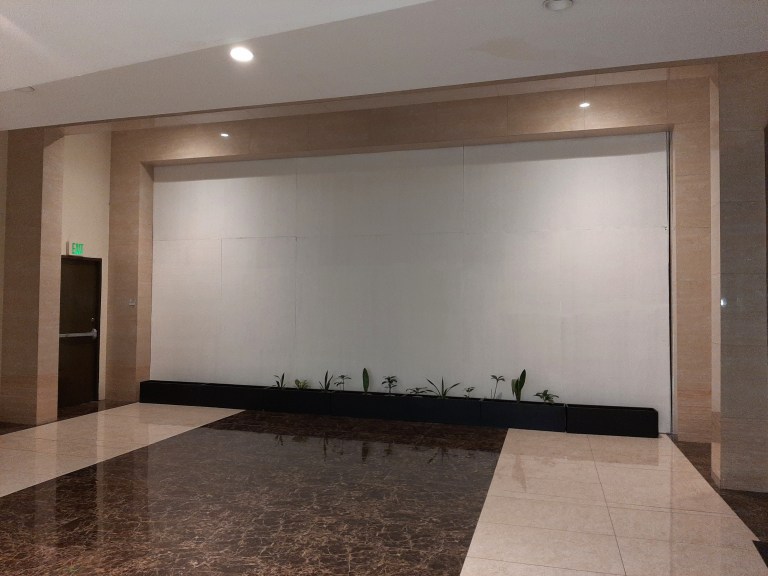
Cinemas of Commercenter have been closed down since March 15, 2025.
This brings me to my next point – BusinessWorld published an article exploring the current struggle of Philippine cinemas in what is now the post-pandemic era. For the newcomers reading this, the Philippines economy has been growing strongly year-by-year after the COVID-19 period ended but the nation’s cinema industry is still struggling in terms of sales and attracting paying customers. The Filipinos’ love for streaming is huge factor but there are also other reasons why not enough moviegoers are supporting cinemas.
To put things in perspective, posted below is an excerpt from the BusinessWorld article. Some parts in boldface…
KAREN LUSTAÑAS, 30, tries to watch a movie in the Philippine capital at least once a month, if the budget allows it.
“I try to save time and money for films that I really want to see,” she told BusinessWorld in a Facebook Messenger chat. “I can barely afford it, but if I’m a fan of the director or actors, I really have to watch it.”
“Otherwise, I’ll just watch it on a streaming platform,” she added.
As good as the movie industry is in imagining alternate realities, it didn’t see this one coming. Five years after the coronavirus disease 2019 (COVID-19) decimated the box office here and all over the world, movies are still struggling to come back.
Philippine gross movie ticket sales fell 3.7% year on year to $45.5 million (P2.5 billion) last year, a far cry from the $144.5 million posted in 2019, before the pandemic hit, according to US-based box office revenue tracker Box Office Mojo. In 2020, gross sales plunged 95% to $7.7 million.
Global cinema ticket sales fell 8.8% last year to €28 billion (P1.8 trillion) from 2023, the first annual drop since COVID-19, the European Audiovisual Observatory (EAO) said last month.
Regular movie ticket prices cost P300 to P400 in Metro Manila, or about half the daily minimum wage. On the other hand, the basic monthly subscription to streaming platforms like Netflix, Max (HBO) and Disney+ costs P150 to P250, and the titles are virtually endless.
“If you think about it, it’s really worth it and more practical to go with Netflix,” Ms. Lustañas, a freelancer, said.
The annual Metro Manila Film Festival (MMFF) grossed P800 million last year, hitting the target but failing to top 2023’s record P1 billion despite a week-long extension.
The pandemic forced people to watch movies at home, aiding streaming services like Netflix, whose revenue grew 14% annually to more than $39 billion last year from 2019, according to computations by BusinessWorld using data from the company’s website. Netflix subscribers also doubled to about 300 million over the five-year period.
Since 2020, local box office hits have been few and far between. The latest was Star Cinema’s My Love Will Make You Disappear starring Kim Chiu and Paulo Avelino, grossing P12 million on its opening day in March.
“Today, going to the cinema is a more intentional experience, rooted not just in the movie being shown but in the overall ambiance that brings the film to life,” Hamm E. Katipunan, Ayala Malls’ Asset Management head, said in an e-mailed reply to questions.
“It’s not just about waiting for blockbusters to hit streaming sites; Filipinos appreciate the good feeling of watching movies that are truly worth experiencing on the big screen,” he added.
While cinemas run by Ayala Malls, SM Supermalls and other mall chains have diversified their offerings, a pattern has emerged in the top-grossing Filipino films that have drawn people to cinemas.
GMA Pictures and Star Cinema’s co-production Hello, Love, Again starring Alden Richards and Kathryn Bernardo set the record for the highest opening day gross for a local film with P85 million in November, surpassing the P75-million gross from The Super Parental Guardians in 2016.
‘FORMULAIC STORIES’ – It shows that Filipinos watch a movie mainly because of its main cast, Film Development Council of the Philippines (FDCP) Chairman Jose Javier Reyes told a news briefing in March, citing a council-funded study involving 800 respondents.
“They can’t afford to go regularly to the movies anymore,” he said. “The biggest blow is that people don’t repeat screenings. They just wait for it to go on streaming platforms.”
The study, done in 2024 in collaboration with De La Salle University to explore the evolving habits, preferences and challenges shaping the local film industry, found that Filipinos from the A, B, and a small part of the C socioeconomic classes regularly watch movies.
The study, which will be released in July as part of the launch of FDCP’s Philippine Film Industry Roadmap, also found that streaming services have become the primary platform for 67% of Filipinos.
Only 21% still frequent cinemas, with many complaining about repetitive movie themes and high ticket prices.
Though stars are still the main movie drawer, the study also found that Filipinos are “sick of formulaic stories,” Mr. Reyes said. He added that the roadmap, mandated by the government, would shed light on how to better support the industry.
In October last year, President Ferdinand R. Marcos, Jr. placed the Film Academy of the Philippines under the Department of Trade and Industry (DTI) to boost Filipino film development.
Trade Secretary Ma. Cristina A. Roque earlier said the budget for the film industry would increase next year as part of the roadmap. She noted that other countries have been using movies and the creative industry to boost tourism and trade.
Mr. Reyes said movie outfits should improve the quality of their films to boost their success overseas. “In the Philippines, star power is important, but the moment you cross borders, there’s a market for people who are more interested in the material itself,” he pointed out.
Rico V. Gonzales, head of distribution at Warner Bros. Pictures Philippines, said the company supports the local industry by distributing two to three Filipino movies yearly, along with the usual foreign releases from Warner Bros. and Universal Pictures.
“It’s part of the goodwill of the company to help local producers who don’t have a distribution arm, compared with the likes of Star Cinema and GMA Pictures, which have the power to do it themselves,” he said.
The current state of the cinema industry of the Philippines is disappointing and the future looks uncertain as of this writing. While a lot of my fellow Filipinos chose streaming to watch movies in the comfort of their home, I prefer watching movies on Blu-ray and 4K Blu-ray disc format. The most phenomenal 4K Blu-ray experiences I had was Top Gun: Maverick and that movie never failed to amaze me each time I saw it using my 4K Blu-ray disc player. I also enjoyed watching my 4K Blu-ray copies of Casablanca, Interstellar, Total Recall (1990), and Star Trek: First Contact.
Going back to the state of cinema here in the Philippines, I did not watch a single movie in the cinema in 2024. In fact, the last time I saw a movie on the big screen locally was Sound of Freedom in 2023 (read my review by clicking here). This is because the new movies that were released in 2024 did not interest me at all and the fact that a lot of new Hollywood movies had woke garbage in them turned me off. Not only that, there were times when news movies from overseas were not even released in Philippine cinemas at all such as Jesus Revolution (note: I had to buy the movie on Blu-ray just to watch it).
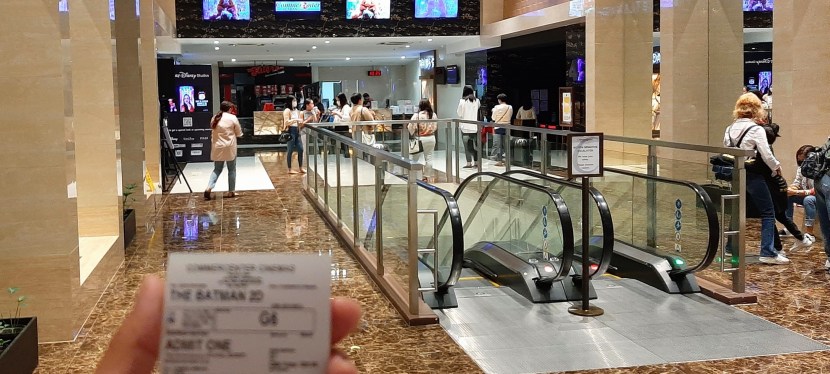
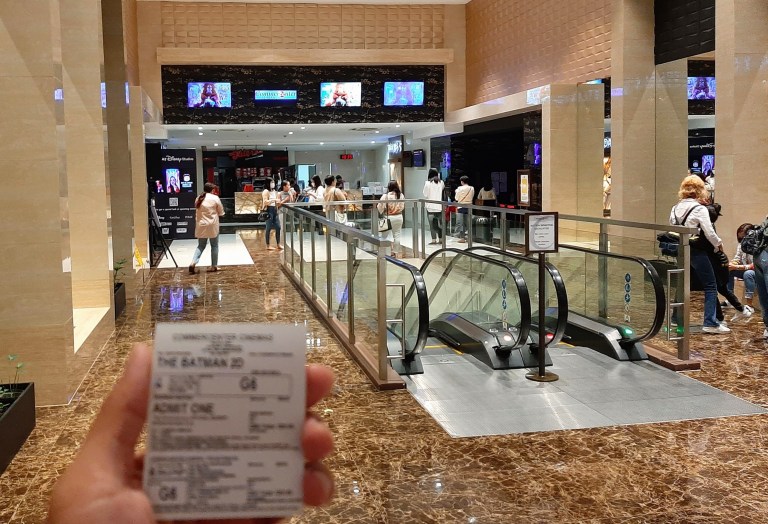
I saw The Batman at Commercenter’s cinema on March 2022.
As of this writing, the direction of the entire cinema industry of the Philippines remains uncertain and so far there were no real breakthroughs that happened. That being said, I still remember when in 2015, there were long lines of moviegoers at Commercenter waiting to enter the cinemas to watch Jurassic World. Such a memory won’t be repeated here in Alabang and without its cinemas, Commercenter’s value as a place for fun has gone way down.
Following the recent announcement of several medicines declared exempted from the value-added tax (VAT), nineteen more medicines became VAT-exempt as a result of the recommendation of the Food and Drug Administration (FDA) to the Bureau of Internal Revenue (BIR), according to a news article by the Philippine News Agency (PNA).
To put things in perspective, posted below is an excerpt from the PNA news article. Some parts in boldface…
Nineteen maintenance and lifesaving medicines have been included in the list of those exempted from value added tax (VAT), benefiting more people.
Bureau of Internal Revenue (BIR) Commissioner Romeo Lumagui Jr., during the Bagong Pilipinas Ngayon briefing on Thursday, said nine medicines were included under Revenue Memorandum Circular (RMC) 59-2025 issued on June 11, 2025 while the other 10 are covered by RMC 62-2025.
He said the inclusion of the medications for VAT exemption was based on the recommendation of the Food and Drug Administration (FDA).
Of the total, seven of these medicines are for cancer treatment; three each for diabetes, hypertension and mental illness; one each for high cholesterol, kidney disease, and tuberculosis.
“Ang mga ito ay mga maintenance at lifesaving medicines na ngayon ay hindi na papatawan ng VAT. Isang kongkretong hakbang para mas mapagaan ang gastuhin ng mga pasyente (These are maintenance and lifesaving medicines that will now be exempt from VAT. This move is a concrete step to lower patients’ expenses),” Lumagui said.
The BIR chief said both the Corporate Recovery and Tax Incentives for Enterprises (CREATE) law and the Tax Reform for Acceleration and Inclusion (TRAIN) law provide VAT exemptions on certain health products.
He said BIR coordinates with the FDA and the Department of Trade and Industry (DTI) among others to monitor compliance among pharmaceutical companies and drugstores regarding this price changes.
Let me end this post by asking you readers: What is your reaction to this recent development? Were you surprised that a lot more medicines were declared VAT-exempt?
For more South Metro Manila community news and developments, come back here soon. Also say NO to fake news, NO to irresponsible journalism, NO to misinformation, NO to plagiarists, NO to reckless publishers and NO to sinister propaganda when it comes to news and developments. For South Metro Manila community developments, member engagement, commerce and other relevant updates, join the growing South Metro Manila Facebook group at https://www.facebook.com/groups/342183059992673
Recently officials of the Department of Trade and Industry (DTI) met with the executives of Pan Pacific International Holdings Corporation (PPIH) – the company behind the popular Don Quijote stores – and they discussed opportunities of trade expansion, according to a news article by the Philippine News Agency (PNA).
To put things in perspective, posted below is an excerpt from the news article of PNA. Some parts in boldface…
Trade Secretary Cristina Roque has met with executives of Pan Pacific International Holdings Corporation (PPIH) to expand trade opportunities for Philippine products.
PPIH is the Japanese retail powerhouse behind Don Quijote and Don Don Donki store chains.
In a statement on Tuesday, DTI said the meeting, held on May 19 in Tokyo, centered on expanding the sourcing of Philippine products for inclusion in PPIH’s global store network, particularly in Japan, the United States, and other Asian markets.
The recent engagement with PPIH officials is in line with President Ferdinand R. Marcos Jr.’s directive to deepen trade and investment ties with key global partners, with the representatives from both parties eyeing collaborative solutions to address regulatory and packaging requirements, facilitating smoother entry of Philippine products into foreign retail markets.
During the meeting, PPIH expressed strong interest in increasing the visibility of Filipino-made goods in their retail ecosystem, both as standalone Philippine-branded products and as ingredients or components for Japanese-packaged offerings tailored to local markets.
PPIH identified food and wellness items, natural and sustainable home goods, and unique lifestyle products as key areas of sourcing interest.
They also expressed interest to connect directly with more Philippine exporters and manufacturers, beyond current intermediaries, to gain better access to new and trending products.
“We welcome every opportunity to introduce Filipino products to the world — especially through partners who share our commitment to innovation, inclusion, and excellence. As we work toward a more dynamic and future-ready Bagong Pilipinas (New Philippines), engagements like this underscore our dedication to creating new market avenues for Filipino enterprises,” Roque said.
DTI said that while PPIH noted that opening a Donki store in the Philippines remains a long-term consideration, executives acknowledged that a successful sourcing partnership with the Philippine government and exporters could play a significant role in including the Philippines in future regional expansion plans.
Let me end this post by asking you readers: What is your reaction to this recent development? Do you think that PPIH will proceed with trade expansion opportunities with the Philippines this year? Do you think that a strategic partnership will be realized soon?
Koshidaka Holdings, a leisure services firm based in Japan, will be investing P2.5 billion in the Philippines and plans to launch its first store this year, according to a Philippine News Agency (PNA) news article. This development is related with the Department of Trade and Industry’s (DTI) recent meetings with corporations in Japan. Kodaka Holdings has more than six hundred outlets in Japan and the Philippines is a key part of its planned expansion in Southeast Asia.
To put things in perspective, posted below is an excerpt from the PNA news article. Some parts in boldface…
Japanese leisure services firm Koshidaka Holdings Co. Ltd. will be investing PHP2.5 billion in the country, with its first store set to open this year, Department of Trade and Industry (DTI) Secretary Ma. Cristina Roque said.
In a virtual briefing Tuesday, Roque said Koshidaka is aggressive on its plans to expand in the country to bring its karaoke business and onsen-style (hot spring) spas as well as opening women’s fitness studios in Philippine malls.
The Japanese firm is scouting for 30 locations to establish its business here before growing to 100 sites nationwide.
Koshidaka is one of the 13 firms and business organizations that Roque met during her recent visit in Tokyo as a follow-through of the agency’s investment missions in Japan.
These firms include Nidec Corp., Ibiden Co., Ltd., Etoile Kaito & Co., Inc, Adastria Co., Ltd., Sumitomo, Fujifilm Holdings Corp., Chodai Co., Ltd. Taiheiyo Cement Corp., Fast Retailing, JR East, and Koshidaka Holdings Co., Ltd as well Keizai Doyukai and Keidanren.
“We also check on their plans, what their plans are in our country for expansion and also for growth,” Roque said.
Earlier, Koshidaka announced that it would establish a Philippine subsidiary to offer a new style of karaoke entertainment.
Koshidaka said its expansion in the Philippines is a key initiative in its Southeast Asia growth strategy, with the country’s large market and economic development.
“Aside from the entertainment, they also want to open a gym that’s really just focused on women all over the country, and they also want to focus on creating Japanese onsen in the malls or in different areas that are of interest to them,” Roque said.
“So they’re actually coming first quarter this year to really explore the different locations where they can open.”
Let me end this post by asking you readers: What is your reaction to this recent development? Do you find Koshidaka Holdings’ karaoke and onsen-style spas interesting? Have you tried any of Koshidaka Holdings’ businesses in Japan before?





 Author Carlo Carrasco