Welcome back fellow geeks, Blu-ray collectors and movie buffs!
When I was a young boy, I saw the science fantasy film Krull inside the movie theater here in the Philippines. In the decades since, I saw Krull occasionally on cable TV. I never owned a copy of the movie on DVD or Blu-ray.
For the fans of the 1983 movie reading this, be aware that Krull is now available on 4K Blu-ray Steelbook and you can order it online right now.
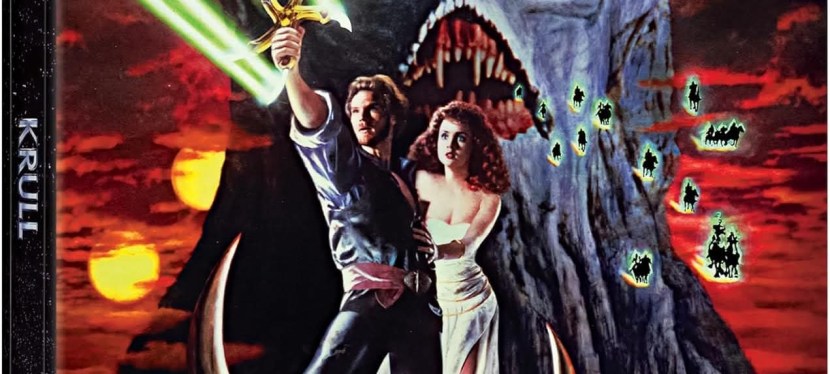
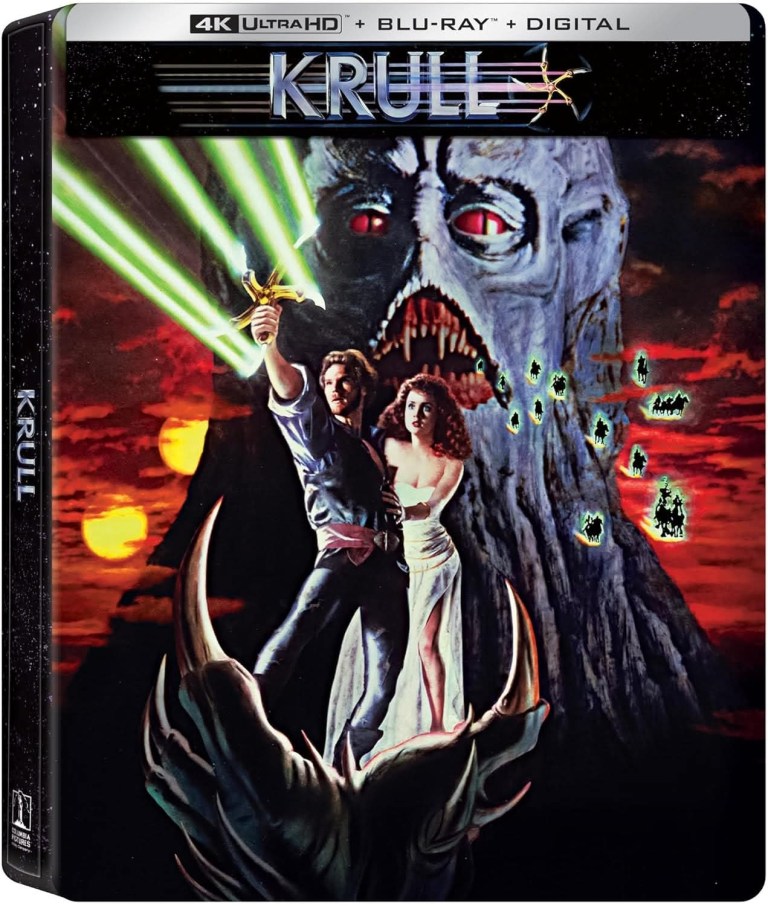
The cover of Krull 4K Blu-ray steelbook.
This is what you will get when you purchase Krull 4K Blu-ray steelbook.
For the 4K Blu-ray purists reading this, it has already been confirmed that Krull will be rendered in native 4K by default! Moving further, posted below are the technical details from the Blu-ray.com page.
Video
Codec: HEVC / H.265
Resolution: Native 4K (2160p)
HDR: Dolby Vision, HDR10
Aspect ratio: 2.39:1
Original aspect ratio: 2.39:1
Audio
English: Dolby Atmos
English: Dolby TrueHD 7.1 (48kHz, 24-bit)
English: DTS-HD Master Audio 5.1 (48kHz, 24-bit)
English: DTS-HD Master Audio 2.0 (48kHz, 24-bit)
Subtitles – English SDH
Discs – 4K Ultra HD, Blu-ray Disc, Two-disc set (1 BD-100, 1 BD-50)
Digital – Digital 4K, Movies Anywhere
Packaging – SteelBook
Playback – 4K Blu-ray: Region free, 2K Blu-ray: Region A
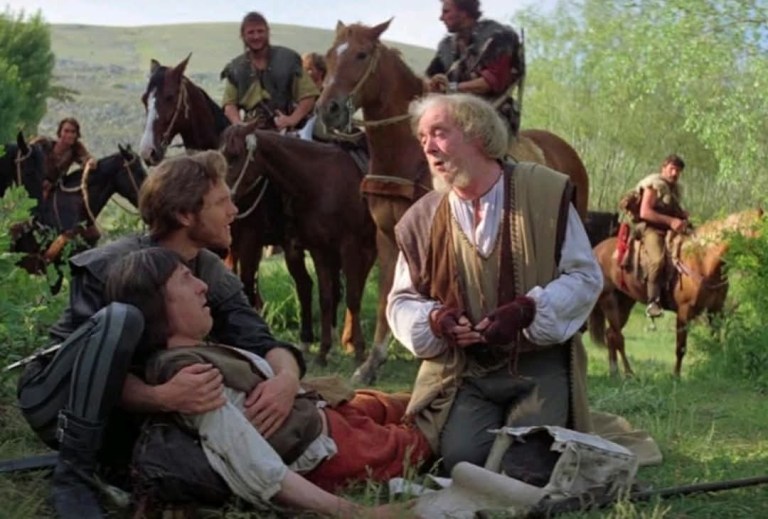
A scene from Krull. (photo source – IMDB.com)
I am not a fan of Krull but it still is entertaining to watch again from time to time. One of things I like the most about it is the fact that its visual effects involved practical effects as well as optical effects. The cinematography of real-life locations remains very pleasing to the eye which makes the film a lively reminder that computer-generated imagery (CGI) will never match the detail, scale and beauty of location shooting. When it comes to the cast of the film, Ken Marshall plays a likable hero and the supporting cast include a very young Liam Neeson and Robbie Coltrane.
If you wish to join a group of movie enthusiasts and talk about cinema, cinematic trends, Blu-ray releases and more relevant stuff, visit the Movie Fans Worldwide Facebook group at https://www.facebook.com/groups/322857711779576
Welcome back fellow geeks, Blu-ray collectors and movie buffs!
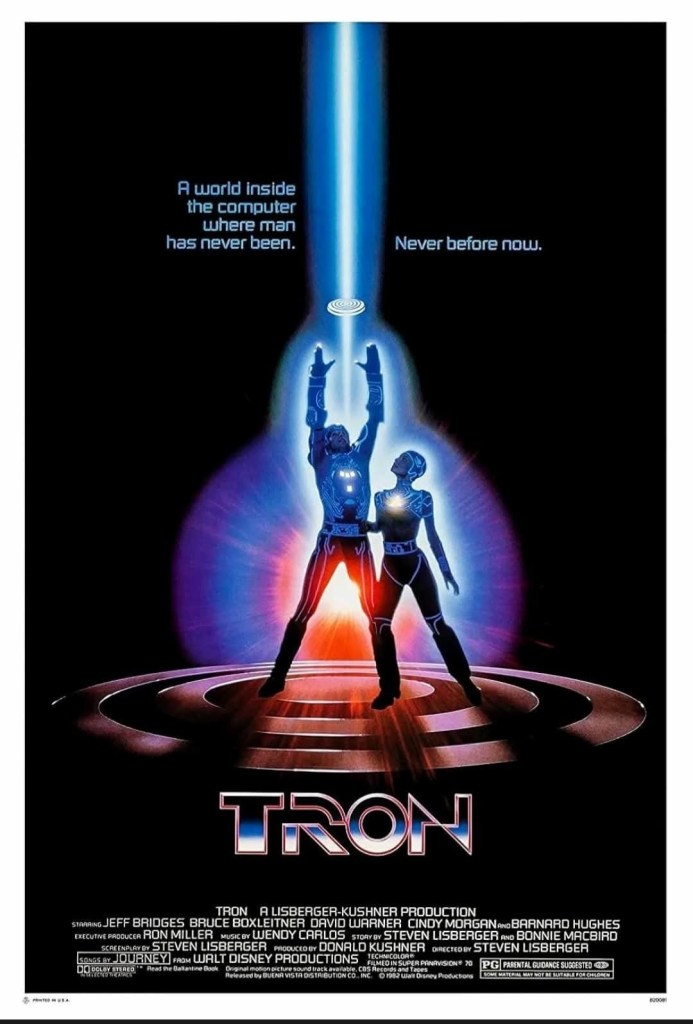
More than forty years ago, I first saw Tron on home video and despite the limitation of the format, I was astounded by the science fiction film directed by Steven Lisberger. For me, Tron is truly a one-of-a-kind type of movie that had a very mesmerizing setting (the digital world), video gaming elements included in the narrative, an early look at computers becoming significant in business and society, mind-blowing visual effects and the performances of the memorable cast that include Jeff Bridges (Flynn), Bruce Boxleitner (Tron), David Warner (Ed Dillinger) and Cindy Morgan (Lora).
Originally released in 1982, TRON opened the gateway to a bold new universe of computer-generated wonder, inspiring a generation with its visionary storytelling and pioneering special effects.
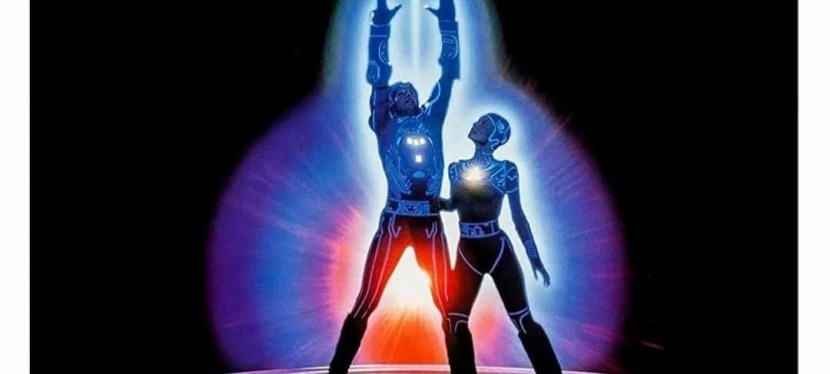
Front of Tron 4K Blu-ray in Steelbook form.
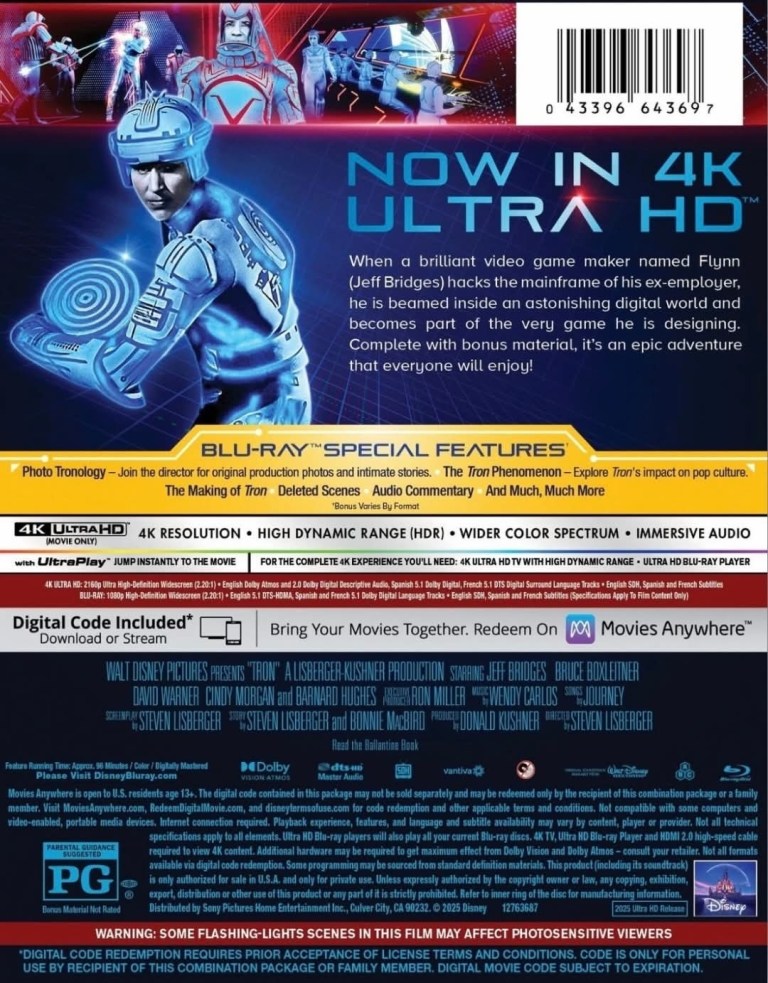
The back of Tron 4K Blu-ray Steelbook.
TRON was digitally scanned and carefully restored by The Walt Disney Film Restoration team, who corrected dirt, warping, and other imperfections to ensure pristine image quality. The work was supervised by director Steven Lisberger.
When a brilliant video game maker (Jeff Bridges) hacks the mainframe of his ex-employer, he is beamed inside an astonishing digital world and becomes part of the very game he is designing. It’s an epic adventure that everyone will enjoy! Some flashing-lights sequences or patterns may affect photosensitive viewers.
For the 4K Blu-ray purists reading this, it has already been confirmed that Tron will be rendered in native 4K by default! Moving further, posted below are the technical details from the Blu-ray.com page.
Video
Codec: HEVC / H.265
Resolution: Native 4K (2160p)
HDR: Dolby Vision, HDR10
Original aspect ratio: 2.20:1
Audio
English: Dolby Atmos
English: Dolby TrueHD 7.1
Audio descriptive
Subtitles – English SDH, French, Spanish
Discs – 4K Ultra HD, Blu-ray Disc, Two-disc set (1 BD-66, 1 BD-50)
Playback – 4K Blu-ray: Region free, 2K Blu-ray: Region A
While it is a fact that the Walt Disney Company (AKA the Woke Disney Company) does not an excellent record on releasing its popular and best movies on 4K Blu-ray, I think Tron 4K Blu-ray deserves attention and if its 4K visuals are of top-notch quality with the involvement of the movie director, I just might consider it for purchase someday. Very soon, we will see some reviews of Tron 4K Blu-ray before the September 16 release.
If you wish to join a group of movie enthusiasts and talk about cinema, cinematic trends, Blu-ray releases and more relevant stuff, visit the Movie Fans Worldwide Facebook group at https://www.facebook.com/groups/322857711779576
To make things clear, Nausicaä of the Valley of the Wind is just one of many Studio Ghibli feature films that will be playing through SM Cinema branches with the Studio Ghibli Fest 2025 launching today. Other Studio Ghibli feature films include My Neighbor Totoro, Spirited Away, Princess Mononoke, The Wind Rises and Ponyo. All of those anime productions were directed by Miyazaki but in my personal anime viewing experience, Nausicaä of the Valley of the Wind remains the most memorable one.
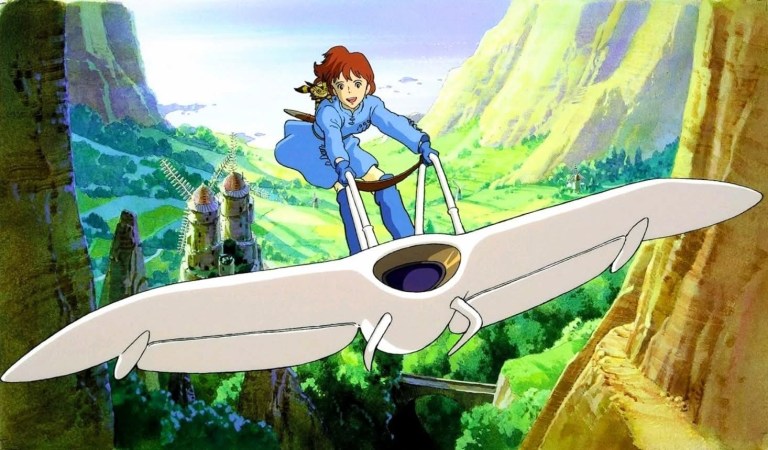
A captivating piece of art from the 1984 anime feature film of Hayao Miyazaki.
To put things in perspective regarding the Studio Ghibli Fest 2025, posted below is an excerpt from the lifestyle news article of GMA Network. Some parts in boldface…
The Studio Ghibli Fest 2025 is happening this month, and six films from the highly acclaimed Japanese animation studio will be screened in select local cinemas.
SM Cinema announced the happy news on its social media pages last August 31.
“Six worlds. Endless wonder. One big screen. From Totoro’s forest to Chihiro’s spirit world, journey back into the imagination of Hayao Miyazaki and experience the timeless magic of Studio Ghibli,” it said.
Several classic Studio Ghibli films will be screened in select SM Cinemas nationwide from September 10 to 16.
Here is a list of the films part of the Studio Ghibli Fest 2025: Spirited Away, My Neighbor Totoro, Princess Mononoke, The Wind Rises, Ponyo, (and) Nausicaä of the Valley of the Wind.
These are the SM Cinema branches around the country showcasing the Studio Ghibli anime feature films. (source – SM Cinema)
Why Nausicaä of the Valley of the Wind is significant
Among the works of Hayao Miyazaki, Nausicaä of the Valley of the Wind is the one that resonates with me the most and I have a long history of viewing the anime feature film. The first time I saw it was in its mid-1980s, butchered English-dubbed version titles Warriors of the Wind on home video. Being so young back then, I was not aware of the original Japanese version and I simply enjoyed what was presented in English. The leading lady Nausicaä was renamed as Princess Zandra while the Ohm were referred to as gorgons.
For the newcomers reading this, the 1980s was not exactly a good time of anime productions being released in the West in English and alterations for the Western market was the norm. Warriors of the Wind was more than 20 minutes shorter than the original Japanese version.
In the early 2000s, Nausicaä of the Valley of the Wind was released uncut with a new English-dubbed version (plus English subtitles with the original Japanese audio) involving the talents of Patrick Stewart, Uma Thurman and Alison Lohman. The footage that was missing in Warriors of the Wind easily made the new version – released on DVD in 2005, Disney Blu-ray in 2011, GKIDS and Shout! Factory Blu-ray in 2017, and limited edition steelbook Blu-ray in 2020 – a must-buy for both fans and anime enthusiasts who enjoy classics.
I myself acquired the 2005 DVD of Nausicaä of the Valley of the Wind by trading an old video game for it and enjoyed it a lot. I saw both the English-dubbed and English-subtitled versions in different times, and the complete footage added to my enjoyment of it. If I were to make comparisons, I prefer the 1984 film over Princess Mononoke (I had a Blu-ray copy of it).
Nausicaä of the Valley of the Wind on Blu-ray disc format (limited edition steelbook version) is still available for purchasing online and you only need to click here. I wonder when will a 4K Blu-ray version of it be announced.
The Japanese movie poster from 1984.
What it is lacking for me is the experience of watching Nausicaä of the Valley of the Wind on the big screen inside the movie theater. This is why I am personally interested in replaying it at an SM Cinema branch during the week-long Studio Ghibli Fest 2025. At the same time, it is rare for anime classics to be screened in movie theaters here in the Philippines. As much as I love watching movies on Blu-ray or 4K Blu-ray format in the comfort of home, the cinema experience is still the best way to watch a movie. Definitely better than streaming!
If you wish to join a group of movie enthusiasts and talk about cinema, cinematic trends, Blu-ray releases and more relevant stuff, visit the Movie Fans Worldwide Facebook group at https://www.facebook.com/groups/322857711779576
Welcome back fellow geeks, Blu-ray collectors and movie buffs!
When it comes to watching movies – both old and new – the best place for me is still the movie theater. The very large screen, high-tech sound systems and comfortable seats of the cinema all make the theater viewing experience very immersive which streaming apps and the home theater setup could never match. The cinema experience is always better than streaming.
That being said, it is disappointing for me – as a resident of Muntinlupa City here in the Philippines – that local theaters in Alabang had to close down. The original cinemas of Festival Mall, which first opened in 1998 and grew from six to ten screens, are no more. Before they were all closed down, those cinemas had deteriorated over time and I still remember how bad the projection in one of their premium cinemas was when I saw Star Trek Into Darkness in 2013. It was like I was watching a VHS copy of the movie on their screen. It was that bad!
This year, the 4-screen cinemas of Commercenter in Filinvest City had closed down (refer to my past blog posts by clicking here and here) and it is very unfortunate not just for me but also for others who enjoyed watching movies at that mall. In my experience, Commercenter was my favorite local place to watch movies at and the cinema operators were consistent with maintaining each screen, the comfortable chairs and the sound systems. At the same time, it was pretty convenient for me to park the car in the basement parking (really spacious), climb up to the cinemas at the 2nd floor (ticket counter and snacks counter were beside each other), enjoy a movie, and visit a local store or a restaurant within the mall after leaving the cinema.
With the closure of Festival Mall’s original cinemas and Commercenter cinemas, that is a combined loss of ten screens along with the many seats and equipment combined. Along the way, many people who worked directly in those lost cinemas either became unemployed or got re-assigned to a new task within the local establishment. Sadly, not too many people here in the Philippines are talking about the jobs lost with the closure of cinemas.
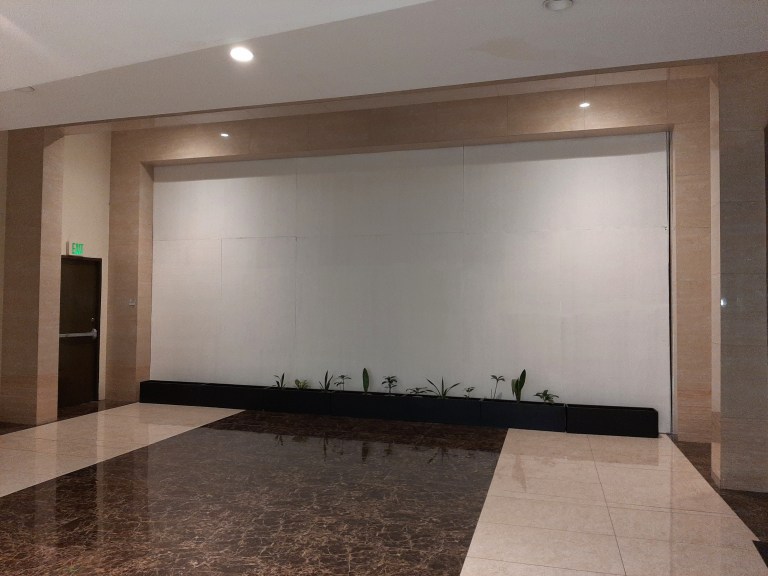
Cinemas of Commercenter have been closed down since March 15, 2025.
This brings me to my next point – BusinessWorld published an article exploring the current struggle of Philippine cinemas in what is now the post-pandemic era. For the newcomers reading this, the Philippines economy has been growing strongly year-by-year after the COVID-19 period ended but the nation’s cinema industry is still struggling in terms of sales and attracting paying customers. The Filipinos’ love for streaming is huge factor but there are also other reasons why not enough moviegoers are supporting cinemas.
To put things in perspective, posted below is an excerpt from the BusinessWorld article. Some parts in boldface…
KAREN LUSTAÑAS, 30, tries to watch a movie in the Philippine capital at least once a month, if the budget allows it.
“I try to save time and money for films that I really want to see,” she told BusinessWorld in a Facebook Messenger chat. “I can barely afford it, but if I’m a fan of the director or actors, I really have to watch it.”
“Otherwise, I’ll just watch it on a streaming platform,” she added.
As good as the movie industry is in imagining alternate realities, it didn’t see this one coming. Five years after the coronavirus disease 2019 (COVID-19) decimated the box office here and all over the world, movies are still struggling to come back.
Philippine gross movie ticket sales fell 3.7% year on year to $45.5 million (P2.5 billion) last year, a far cry from the $144.5 million posted in 2019, before the pandemic hit, according to US-based box office revenue tracker Box Office Mojo. In 2020, gross sales plunged 95% to $7.7 million.
Global cinema ticket sales fell 8.8% last year to €28 billion (P1.8 trillion) from 2023, the first annual drop since COVID-19, the European Audiovisual Observatory (EAO) said last month.
Regular movie ticket prices cost P300 to P400 in Metro Manila, or about half the daily minimum wage. On the other hand, the basic monthly subscription to streaming platforms like Netflix, Max (HBO) and Disney+ costs P150 to P250, and the titles are virtually endless.
“If you think about it, it’s really worth it and more practical to go with Netflix,” Ms. Lustañas, a freelancer, said.
The annual Metro Manila Film Festival (MMFF) grossed P800 million last year, hitting the target but failing to top 2023’s record P1 billion despite a week-long extension.
The pandemic forced people to watch movies at home, aiding streaming services like Netflix, whose revenue grew 14% annually to more than $39 billion last year from 2019, according to computations by BusinessWorld using data from the company’s website. Netflix subscribers also doubled to about 300 million over the five-year period.
Since 2020, local box office hits have been few and far between. The latest was Star Cinema’s My Love Will Make You Disappear starring Kim Chiu and Paulo Avelino, grossing P12 million on its opening day in March.
“Today, going to the cinema is a more intentional experience, rooted not just in the movie being shown but in the overall ambiance that brings the film to life,” Hamm E. Katipunan, Ayala Malls’ Asset Management head, said in an e-mailed reply to questions.
“It’s not just about waiting for blockbusters to hit streaming sites; Filipinos appreciate the good feeling of watching movies that are truly worth experiencing on the big screen,” he added.
While cinemas run by Ayala Malls, SM Supermalls and other mall chains have diversified their offerings, a pattern has emerged in the top-grossing Filipino films that have drawn people to cinemas.
GMA Pictures and Star Cinema’s co-production Hello, Love, Again starring Alden Richards and Kathryn Bernardo set the record for the highest opening day gross for a local film with P85 million in November, surpassing the P75-million gross from The Super Parental Guardians in 2016.
‘FORMULAIC STORIES’ – It shows that Filipinos watch a movie mainly because of its main cast, Film Development Council of the Philippines (FDCP) Chairman Jose Javier Reyes told a news briefing in March, citing a council-funded study involving 800 respondents.
“They can’t afford to go regularly to the movies anymore,” he said. “The biggest blow is that people don’t repeat screenings. They just wait for it to go on streaming platforms.”
The study, done in 2024 in collaboration with De La Salle University to explore the evolving habits, preferences and challenges shaping the local film industry, found that Filipinos from the A, B, and a small part of the C socioeconomic classes regularly watch movies.
The study, which will be released in July as part of the launch of FDCP’s Philippine Film Industry Roadmap, also found that streaming services have become the primary platform for 67% of Filipinos.
Only 21% still frequent cinemas, with many complaining about repetitive movie themes and high ticket prices.
Though stars are still the main movie drawer, the study also found that Filipinos are “sick of formulaic stories,” Mr. Reyes said. He added that the roadmap, mandated by the government, would shed light on how to better support the industry.
In October last year, President Ferdinand R. Marcos, Jr. placed the Film Academy of the Philippines under the Department of Trade and Industry (DTI) to boost Filipino film development.
Trade Secretary Ma. Cristina A. Roque earlier said the budget for the film industry would increase next year as part of the roadmap. She noted that other countries have been using movies and the creative industry to boost tourism and trade.
Mr. Reyes said movie outfits should improve the quality of their films to boost their success overseas. “In the Philippines, star power is important, but the moment you cross borders, there’s a market for people who are more interested in the material itself,” he pointed out.
Rico V. Gonzales, head of distribution at Warner Bros. Pictures Philippines, said the company supports the local industry by distributing two to three Filipino movies yearly, along with the usual foreign releases from Warner Bros. and Universal Pictures.
“It’s part of the goodwill of the company to help local producers who don’t have a distribution arm, compared with the likes of Star Cinema and GMA Pictures, which have the power to do it themselves,” he said.
The current state of the cinema industry of the Philippines is disappointing and the future looks uncertain as of this writing. While a lot of my fellow Filipinos chose streaming to watch movies in the comfort of their home, I prefer watching movies on Blu-ray and 4K Blu-ray disc format. The most phenomenal 4K Blu-ray experiences I had was Top Gun: Maverick and that movie never failed to amaze me each time I saw it using my 4K Blu-ray disc player. I also enjoyed watching my 4K Blu-ray copies of Casablanca, Interstellar, Total Recall (1990), and Star Trek: First Contact.
Going back to the state of cinema here in the Philippines, I did not watch a single movie in the cinema in 2024. In fact, the last time I saw a movie on the big screen locally was Sound of Freedom in 2023 (read my review by clicking here). This is because the new movies that were released in 2024 did not interest me at all and the fact that a lot of new Hollywood movies had woke garbage in them turned me off. Not only that, there were times when news movies from overseas were not even released in Philippine cinemas at all such as Jesus Revolution (note: I had to buy the movie on Blu-ray just to watch it).
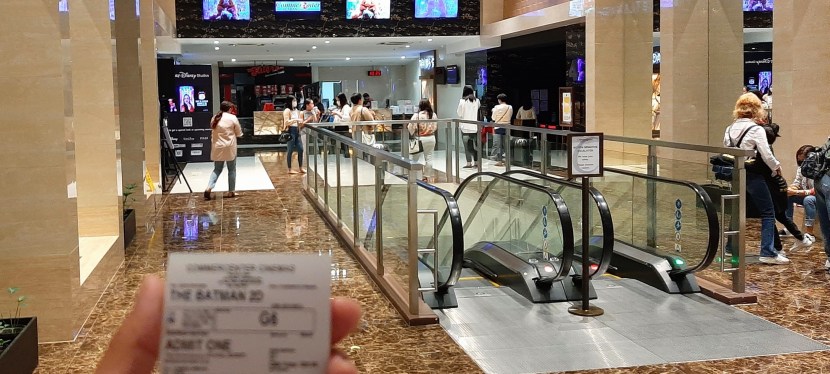
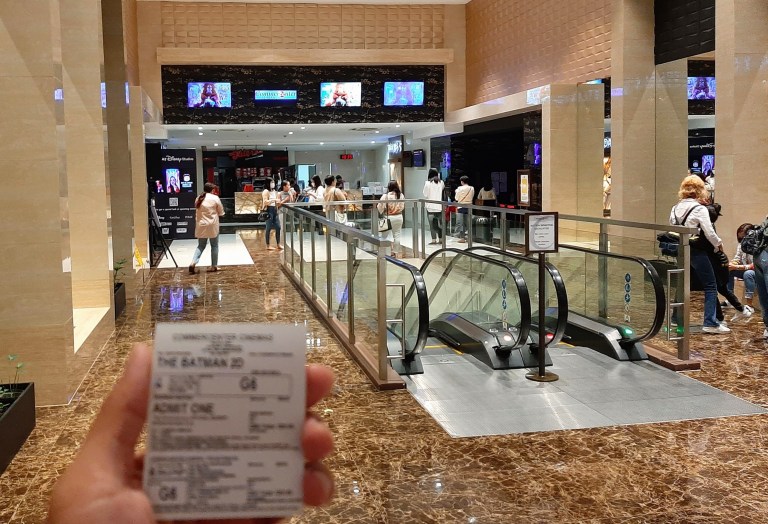
I saw The Batman at Commercenter’s cinema on March 2022.
As of this writing, the direction of the entire cinema industry of the Philippines remains uncertain and so far there were no real breakthroughs that happened. That being said, I still remember when in 2015, there were long lines of moviegoers at Commercenter waiting to enter the cinemas to watch Jurassic World. Such a memory won’t be repeated here in Alabang and without its cinemas, Commercenter’s value as a place for fun has gone way down.
Welcome back fellow geeks, Blu-ray collectors and movie buffs!
Shane, the classic Western film from 1953 directed by George Stevens, is all set for a 4K Blu-ray release on July 15, 2025 and already the publisher Kino Lorber is already accepting orders online.
Shane 4K Blu-ray from Kino Lorber.
Posted below are the technical details of the Shane 4K Blu-ray sourced from its Blu-ray.com page. For the 4K visuals enthusiasts reading this, Shane will be in native 4K resolution.
Discs – 4K Ultra HD, Blu-ray Disc, Single disc (1 BD-100, 1 BD-50), Digital – Digital copy included
Packaging – Slipcover in original pressing
Playback – 4K Blu-ray: Region free, 2K Blu-ray: Region A
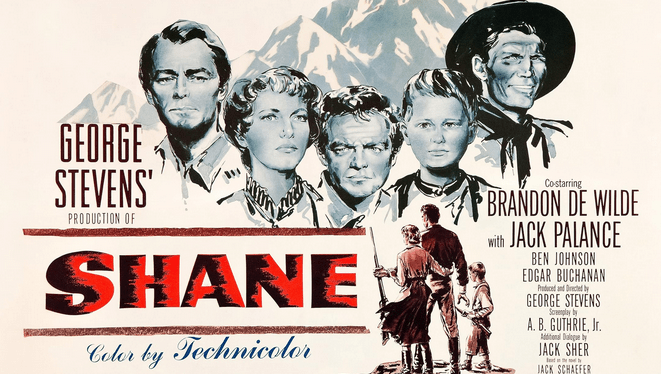
The movie poster of Shane.
Personally, I have not seen Shane in full. Apart from seeing selected scenes of it within the 2017 superhero film Logan, I saw Shane partially on cable TV a few times. I am personally interested to watch Shane entirely in native 4K and for this reason alone, Shane 4K Blu-ray is a future purchase for me. I am also aware that the 1953 film was based on the novel from 1949, and in 1993 the movie was selected for preservation in America’s National Film Registry by the Library of Congress as being “culturally, historically, or aesthetically significant”.
As for the Western genre of American films, my interest in Westerns from the 1950s, 1960s and 1970s has grown over time. I am not interested anymore in modern movies pumped out by Commiewood (note: woke stuff here and there) and I did not even see a single new movie in the cinemas in 2024. That being said, Shane is something I want to watch in 4K in the comfort of home soon. Here is hoping that the film restoration and remastering will be of top-notch quality.
If you have decided already to order Shane 4K Blu-ray this early, you can do it through Kino Lorber by clicking here.
Welcome back fellow geeks, Blu-ray collectors and movie buffs!
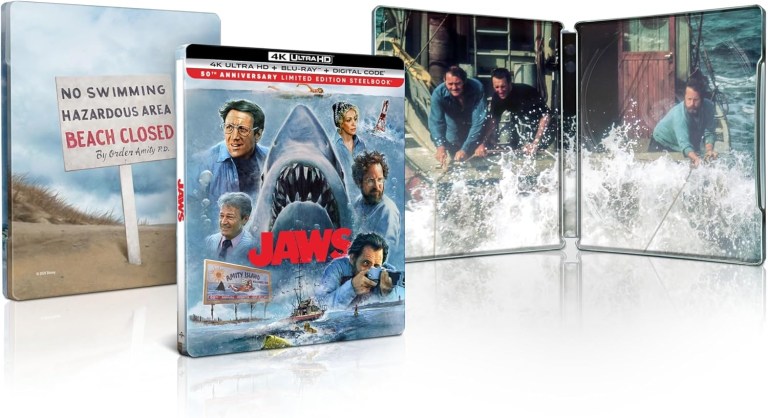
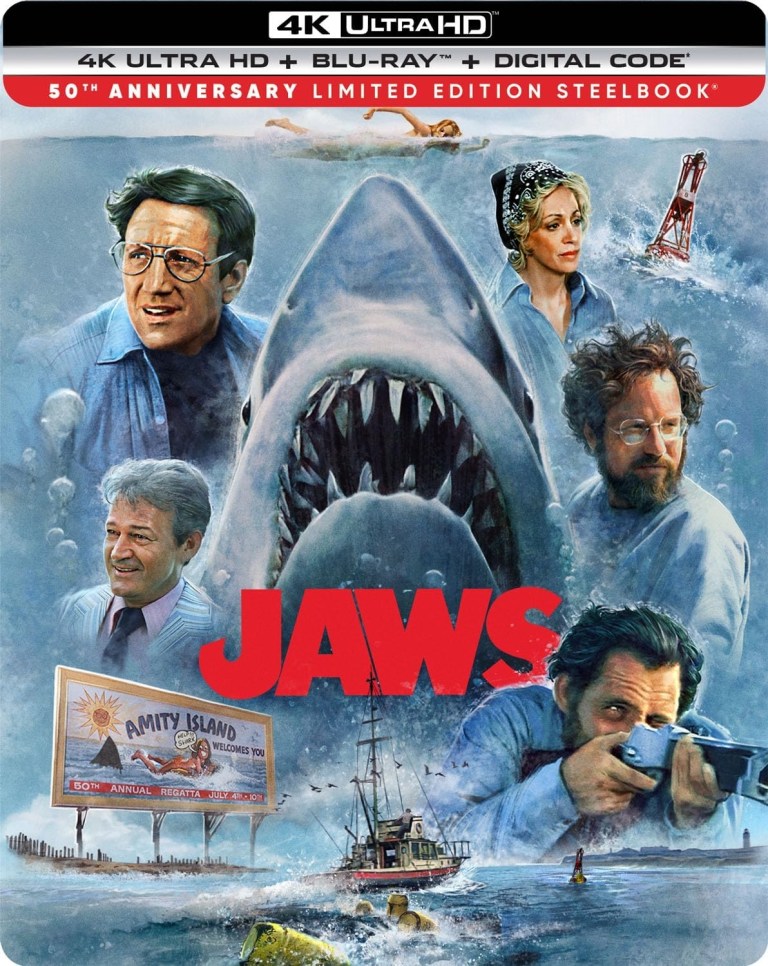
If you love Steven Spielberg’s classic film Jawsand if you are determined to collect the latest thing about it, be aware that the Jaws 50th Anniversary 4K Blu-ray SteelBookwill be released commercially on June 17, 2025. In relation to that, customers are welcome to order it in advance by clicking here.
This is the 4K Blu-ray SteelBook set of Jaws. (photo source – Amazon)
Posted below are the technical details of the Jaws 50th Anniversary 4K Blu-ray SteelBook sourced from its Blu-ray.com page,
Video
Codec: HEVC / H.265 (70.80 Mbps)
Resolution: Native 4K (2160p)
HDR: Dolby Vision, HDR10+
Aspect ratio: 2.35:1
Original aspect ratio: 2.39:1
Audio
English: Dolby Atmos
English: Dolby TrueHD 7.1 (48kHz, 24-bit)
English: DTS 2.0 Mono
French: DTS-HD HR 7.1
Spanish: DTS 5.1
Subtitles – English SDH, French, Spanish
Discs – 4K Ultra HD, Blu-ray Disc, Three-disc set (1 BD-100, 2 BD-50), Bonus View (PiP), BD-Live
D-Box, Social network features
Digital – Digital copy included
Packaging – SteelBook, inner print
Playback – 4K Blu-ray: Region free, 2K Blu-ray: Region A
Although I never saw Jaws inside the movie theater, I saw it multiple times from local TV to cable TV, and DVD. It truly still is one of Steven Spielberg’s best works to this day and it should be stated that filmmakers encountered a lot of problems during production at the time. To animate the killer shark, they used physical stuff while shooting on the ocean extensively. Computer-generated graphics and digital editing were not the standard back then. I have yet to view the classic film on high-definition and it should be stated that the Jaws 4K Blu-ray has been available for years now.
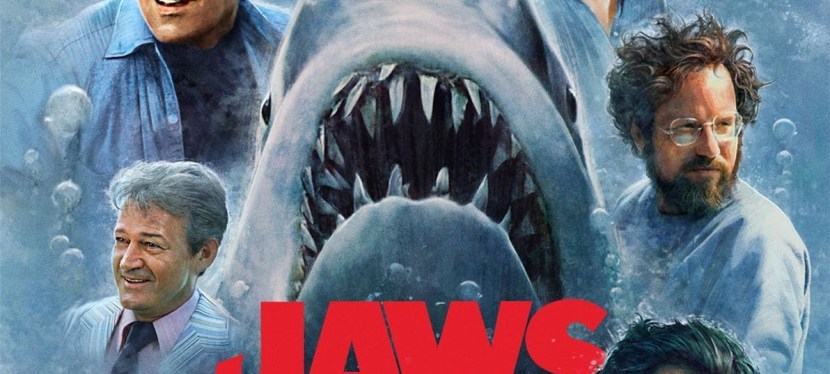
Mark your calendars for June 17, 2025. (photo source – Amazon)
If you have decided already to order the more affordable and simpler 4K Blu-ray copy of Jaws, click here. If you really want the upcoming 4K Blu-ray SteelBook edition, click here.
Welcome back fellow geeks, Blu-ray collectors and movie buffs!
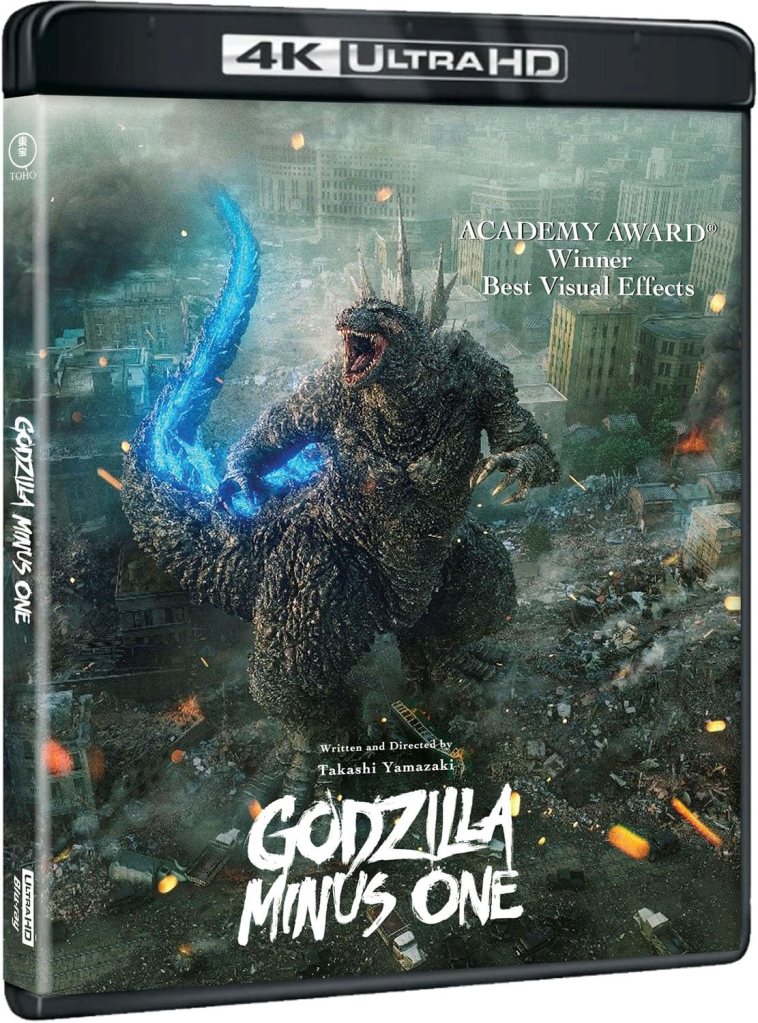
Have you been searching for something intense, action-packed and thrilling to add into your collection of 4K Blu-ray movies? Be informed that Godzilla Minus One4K Blu-ray is now available on the market and you can order it online right now.
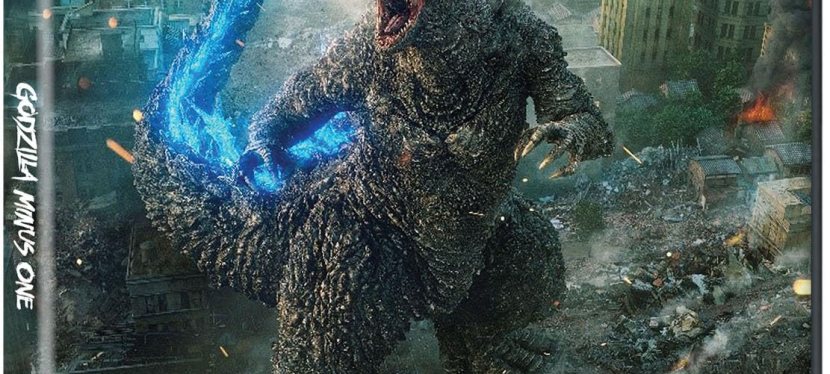
This is what Godzilla Minus One 4K Blu-ray looks like.
Posted below are the technical details of Godzilla Minus One 4K Blu-ray sourced from its Blu-ray.com page,
Video
Codec: HEVC / H.265 (62.89 Mbps)
Resolution: Native 4K (2160p)
HDR: Dolby Vision, HDR10
Aspect ratio: 2.39:1
Original aspect ratio: 2.39:1
Audio
Japanese: Dolby Atmos
Japanese: Dolby TrueHD 7.1 (48kHz, 24-bit)
English: Dolby TrueHD 5.1 (48kHz, 24-bit)
Subtitles – English, English SDH, French, Spanish
Discs – 4K Ultra HD, Blu-ray Disc, Two-disc set (1 BD-100, 1 BD-50)
Playback – 4K Blu-ray: Region free, 2K Blu-ray: Region A
For the newcomers reading this, Godzilla Minus One is the Japanese-produced Godzilla movie from Toho, directed by Takashi Yamazaki and released in 2023. It was a commercial and critical hit, and it even won the Academy Award for Best Visual Effects. I previously wrote about Godzilla Minus One prior to its release in cinemas.
Due to the fact that Toho’s acclaimed giant monster movie was never released in cinemas here in my native Philippines, pursuing Godzilla Minus One 4K Blu-ray is the next option for me. I really wanted to see the film in local cinemas for the genuine in-theater experience of watching a Japanese-produced Godzilla film. For some reason, Toho did not release Godzilla Minus One in Philippine cinemas even though they released Shin Godzilla in the country in 2016. For the meantime, I have my Criterion Collection Blu-ray of Gojira (1954) to enjoy before my 4K Blu-ray of the latest Godzilla film finally arrives.
If you have decided already to order a copy of Godzilla Minus One 4K Blu-ray, click here.
If you wish to join a group of movie enthusiasts and talk about cinema or movies in Blu-ray and 4K Blu-ray, visit the Movie Fans Worldwide Facebook group at https://www.facebook.com/groups/322857711779576
Disclaimer: This is my original work with details sourced from watching the movie and doing personal research. Anyone who wants to use this article, in part or in whole, needs to secure first my permission and agree to cite me as the source and author. Let it be known that any unauthorized use of this article will constrain the author to pursue the remedies under R.A. No. 8293, the Revised Penal Code, and/or all applicable legal actions under the laws of the Philippines.
Welcome back, readers and movie enthusiasts! Chances are you must have heard about the controversy and debates over Sound of Freedom, a movie about the child trafficking which was made years ago but only got released this year after overcoming many hurdles. The film starring Jim Caviezel as real-life hero Tim Ballard and directed by Alejandro Monteverde, was released at a time when wokeness in Hollywood got so feverish a lot of movies were no longer interesting for me.
In case you missed the news, the low budget Sound of Freedom performed beyond expectations in the American box office and has since been making waves gradually in cinemas around the world. The film opened officially here in the Philippines on September 20 and I finally saw it in the local theater.
With regards to the controversy about Sound of Freedom, I urge you to reject the Leftists’ constant ranting against it and make the effort to see it yourselves. If you take into account the conceptualization of the movie, it is almost a decade old now and efforts to write the script happened years before QAnon even started (for context, watch Midnight’s Edge video by clicking here). Blatant accusations of QAnon conspiracy theory against this film are simply false and officially denied by Tim Ballard. Communist-filled Hollywood (Commiewood) and the woke mob are simply lying to stop people from seeing the movie.
With those details laid down, here is my review of Sound of Freedom.
The official movie poster.
Early story
The story begins in Honduras when a pretty lady visits the home of a father who has one young daughter and one young son, and convinces him to have them audition into modeling. The audition happened in a different location (filled with the man’s two kids and many others) and as the father was not allowed to be present, he was asked to return in the evening. By the time he returned, the place was empty and the children were kidnapped. They secretly shipped to another country.
In America, Tim Ballard and his time successfully apprehended a man for possessing and distributing child pornography. Tim’s teammate points out to him that although they have arrested many child predators, they could not even save a single child from exploitation and abuse…
Quality
I will start first by saying that this movie was not made to entertain viewers but to emphasize the real-life problems of child trafficking, kidnapping, the abuse of minors, sex trafficking and why slavery today still has many millions of victims (including minors).
This movie closely examines the struggles that come with fighting the syndicates (that kidnapped children and sell them) and the customers (who paid to illegally acquire children for their wicked desires) as told through the eyes of Tim Ballard (Jim Caviezel) who is clearly feeling the heavy stress of his US Homeland Security job (which takes a lot of strength, sacrifice and sheer will to do). Ballard himself has many kids with his faithful and supportive wife (Mira Sorvino) and therefore he can easily relate with the parents whose children got kidnapped and sold in other countries.
Caviezel is mostly subtle with expressing Ballard’s emotions as well as his verbal expressions with the other people he interacted with. This is not to say that Caviezel’s act is wooden, rather he is straightforward with portraying a man who feels disturbed by the collective stress of his duty (but still far away from the breaking low-point). Even though he is getting worn down, Ballard’s sheer determination to save a specific kidnapped-and-abused daughter for a Honduras-based father is nicely captured by Caviezel.
The efforts of fighting the criminals who pounced on children involves a lot of hurdles to overcome. I’m not just talking about Homeland Security agents taking down people in America who engaged in child pornography but also going after the very criminals overseas who kidnapped children, shipped them from one nation to another and sell them as “models” to pedophiles. As such, Ballard’s efforts involves spending time overseas (away from his family), making local connections and secretly working his way into different locations where the risks of getting killed are high.
Again, this tale is not about entertaining viewers as it works on emphasizing to them how extremely difficult it is to bring down the criminals in real-life. The good news is that this film is nicely directed by Monteverde whose cinematic style is simplistic and yet engaging to watch. There is a clear subtle approach on showing what little violence the film has. As for scenes of child abuse, there is nothing graphic to see (left ambiguous) nor was there anything intense about them. While I am certain that some parts of the story involved liberties in order to establish a functional cinematic narrative, this movie strives hard with realism while also avoiding becoming preachy with its message (expressed in subtle fashion) about human trafficking, child slavery and the business involving pedophiles and kidnappers.
Conclusion
Sound of Freedom was clearly made to inform the world that children are still being kidnapped, used for illegal transactions, transported around the world and sold to the predators. This real-world problem continues to happen somewhere every single day and there are simply not enough law enforcers who could fight the criminals and rescue the kidnapped minors. Nor do the law enforcers have the resources to stage major rescue operations while facing off with armed criminals and their bodyguards.
While it is told through Tim Ballard, this movie is not about him and his profession. It is about the extreme difficulties that law enforcers – both domestic and overseas – have to go through to save the very young victims. The story was told with consistent realism and subtlety which make it very believable to watch. Jim Caviezel is indeed a solid performer and his portrayal of Tim Ballard will easily remind you that true heroes are the ones who bravely face tremendous odds to achieve their goals (for good) while still maintaining their sanity no matter how hopeless the situations appeared.
Sound of Freedom is a cinematic call to action to make others aware about the ongoing menaces of sex trafficking, kidnapping, abuse of minors and the cartels (demonic people) that profited from their evil trade. Like Steven Spielberg’s Schindler’s List, this film was made for reflective viewing and not for amusement. Indeed, God’s children are not for sale and this is the truth that the bashers of this movie do not want you to realize. There is also the biblical truth to the popular quote from the film. Read the holy scripture below…
Behold what manner of love the Father has bestowed on us, that we should be called children of God! Therefore the world does not know us, because it did not know Him. Beloved, now we are children of God; and it has not yet been revealed what we shall be, but we know that when He is revealed, we shall be like Him, for we shall see Him as He is. And everyone who has this hope in Him purifies himself, just as He is pure.
Whoever commits sin also commits lawlessness, and sin is lawlessness. And you know that He was manifested to take away our sins, and in Him there is no sin. Whoever abides in Him does not sin. Whoever sins has neither seen Him nor known Him.
Little children, let no one deceive you. He who practices righteousness is righteous, just as He is righteous. He who sins is of the devil, for the devil has sinned from the beginning. For this purpose the Son of God was manifested, that He might destroy the works of the devil. Whoever has been born of God does not sin, for His seed remains in him; and he cannot sin, because he has been born of God.
In this the children of God and the children of the devil are manifest: Whoever does not practice righteousness is not of God, nor is he who does not love his brother.
1 John 3:1-10 (NKJV)
To put things politically, you must be wondering why the Satanic Left – Democrats, Communists, socialists, Marxists, liberals, the SJWs and the woke extremists – keep on bashing and hating Sound of Freedom. Here is why…because the Leftists are themselves pro-crime (example: “Defund the police.”) and they have made efforts to weaken law enforcement which emboldened the criminals such as robbers, murderers, kidnappers, smugglers, rapists, terrorists, molesters, illegal immigrants and, of course, the pedophiles. The Leftists are clearly wicked and they are lots of them present not only in government but also in showbiz, the mainstream media and other sectors of societies. The Leftists care less about the children and nuclear family, and this is why they want more drag queens and homosexuals to go after the children without law enforcers blocking them. The Leftists are okay with children getting kidnapped, abused and raped. In short, those in the Left are okay with being evil and doing what Satan wants.
I saw Sound of Freedom at the local cinema.
The Leftists are very afraid of Sound of Freedom and remember that it is the one notable movie that almost never got released. That being said, you must watch the movie whenever you have chance to do so.
Welcome back, fellow geeks, Blu-ray collectors and movie buffs from around the world! If you are an enthusiast of giant monster movies and if you have gotten tired with what Hollywood has been releasing, there is a brand new Godzilla (Gojira in Japanese) movie from Japan’s Toho which will be released in cinemas before the year ends…Godzilla Minus One (Japanese title: Gojira Mainasu Wan).
The official movie poster for the Japanese market.
To get started about this new Japanese Godzilla movie, I encourage you to watch the official trailer (English subtitles included) below…
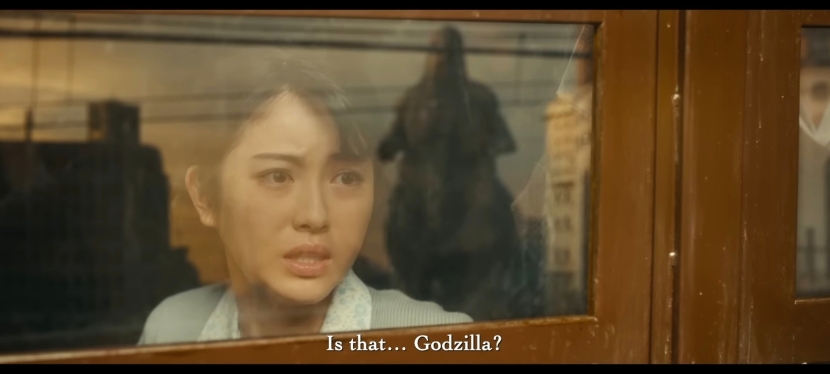
The way the details and visuals were presented in the movie trailer, the filmmakers showed Godzilla as a terrifying giant whose presence brings certain death and destruction to those near it. The trailer made Godzilla looking like it intends to kill people. What I find interesting about the core concept of this upcoming movie is that the iconic monster wreaks havoc in Japan a short time after the end of World War II. This emphasizes that Japan is economically weak and struggling to recover from the tremendous losses suffered from the said war. Also spotted were efforts by the filmmakers to replicate the look of post-WWII Japan.
If you know your world history, you should be aware of the facts that America dropped atomic bombs in Hiroshima and Nagasaki in August 1945 which compelled Japan (then a major military force with the Axis powers) to surrender unconditionally. Putting that historical context into the realm of fantasy by Toho, Godzilla Minus One shows what would happen had the giant monster invaded Japan while it was still in a very weakened state.
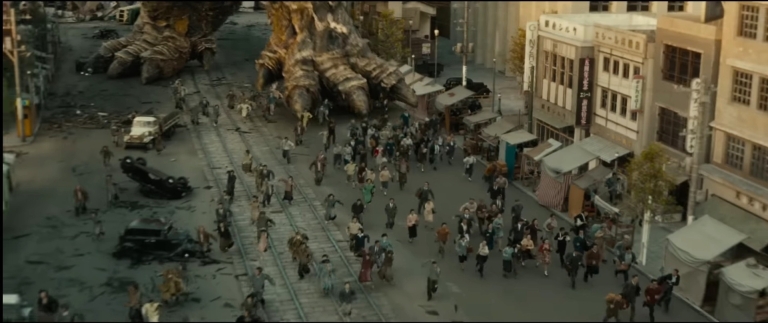
This is a terrifying image of people running away from Godzilla whose steps were causing destruction.
Considering the post-World War II background, it is not yet clear to me if this movie will serve as a prequel to the original Gojira movie of 1954. What is clear is that the filmmakers are daringly making something new with Japan’s icon and their creative approach looks radically different from Toho’s previous Godzilla release in 2016 (note: read my retro review of Shin Godzilla).
Considering the many Godzilla movies released – including those from Hollywood studios – being original with telling a story about the monster is indeed very hard to do. That being said, I am interested to see how the post-World War II setting, the new story and characters, and the giant monster itself will be executed on-screen. If the trailer indicates anything, it looks like Godzilla Minus One could turn out as a dramatic disaster movie (than a monster movie) and could come close to what the 1954 original movie presented.
As of this writing, there are not too many international markets for cinematic releases listed in Godzilla Minus One‘s IMDB page. Being based here in the Philippines, I can only hope that the Japan-made movie will be released in local cinemas which could be a bit tricky given the fact that Shin Godzilla had a limited release here in 2016. I really want to watch this upcoming movie in the local cinema, especially IMAX, but that would depend on how the distribution here in the Philippines will be executed. At the same time, watching a Japanese-made Godzilla movie would be a nice break from the MonsterVerse Godzilla that has been around for years now. Honestly, I’m getting tired of Hollywood’s current version of Japan’s icon.
A very menacing Gojira image from Toho promoting Godzilla Minus One. If you look very closely, you can see some of the giant monster’s teeth red with blood.
If Godzilla Minus One does not get screened locally for some reason, its potential Blu-ray (and possibly 4K Blu-ray) release in the future would be the next option to watch it. Regardless, watch out for this new movie in cinemas in a few months’ time.
It’s been two days since cinemas around Metro Manila officially reopened which is a welcome move not because I personally want to watch movies on the big screen inside the theater but because the local cinema industry will contribute to the economic recovery of our nation from this ongoing COVID-19 crisis. That being said, I urge you readers – who got fully vaccinated locally – who love watching movies to take time out to support the local cinema operators and their employees by visiting their venues, buying tickets over the counter and watch movies on the big screen while following the local health protocols (note: local cinemas have invested a lot in making their venues safe and sanitized).
Be reminded that streaming will NEVER match the grandeur and immersion of the cinema! The cinema is always better than streaming. Movie venue choices aside, local moviegoers now have the opportunities to watch A Quiet Place Part II and the big blockbuster Dune (2021).
Going back to the topic of economic recovery, there is no doubt that the COVID-19 crisis combined with all the restrictions imposed by the local, regional and nation authorities brought down the national economy in 2020 along with all the economic sectors and the employees. All of these also translate into a major loss of tax revenue for the local governments, provincial governments and the national government.
In the case of the local cinema industry, the shutdown of cinemas since the pandemic started in March 2020 resulted a huge, collective industry loss of revenue according to a BusinessWorld report. I’m talking about many BILLIONS of Pesos lost!
To put things in perspective, posted below is an excerpt of the BusinessWorld report. Some parts in boldface…
The cinema industry had P19 billion in foregone revenue from March 2020 to September this year, Film Development Council of the Philippines (FDCP) Chairperson Mary Liza Diño-Seguerra said in a Teams video interview.
The loss had ballooned to P21 billion as of Oct. 11, Charmaine N. Bauzon, president of Cinema Exhibitors Association of the Philippines, told PTV News.
Local government units, which charge 10% amusement tax per movie ticket, lost P1.09 million daily from the country’s more than a thousand movie screens, according to estimates by the National Tax Research Center.
“We earned P11.5 billion yearly from the box office [before the pandemic],” Ms. Seguerra said. “We sold about 52 million tickets each year.”
Cinema operators get 50% of ticket sales, while the other half goes to producers, who then give as much as a quarter to the distributor, who’s in charge of marketing and distributing the film to the public.
Last year, cinemas in areas under a more relaxed quarantine made a measly P327,000, Ms. Seguerra said.
Take note that before the pandemic started, the local cinema industry as a whole had a work force of 300,000 employees and those who lost their jobs and income really suffered. In the City of San Juan, the Manila Bulletin reported about the reopening of local cinemas there with Mayor Francis Zamora issuing statements and leading the inspection on the venues. Posted below is an excerpt from the Manila Bulletin article.
San Juan City Mayor Francis Zamora led the inspection of cinemas in the city starting with the Greenhills Promenade Cinema.
Zamora inspected the health and safety protocols of the cinema such as the disinfection process of the establishment and the procedure of buying the tickets, which can be done before entry to the cinema or online, new seating arrangements with strict physical distancing, and the guidelines of actual movie viewing under the new normal.
“I know how Filipinos miss watching movies in silver screens which have been shut down for almost two years due to the pandemic, but now the long wait is over. With the approval of the IATF, we are allowing the opening of our cinemas in the city, provided that we take extra care and observe stringent protocols as we are still facing threats of COVID-19 despite the easing of restrictions to Alert Level 2,” Zamora said.
“I want to personally make sure that our cinemas in San Juan will be safe for all of us, not only for the moviegoers but for the employees of these establishments as well,” he added.
During Alert Level 2, the operational capacity of several businesses has been increased to accommodate more customers. It has also eased down quarantine restrictions in various indoor establishments and recreational venues including movie houses and cinemas.
Under the Inter Agency Task Force (IATF) guidelines, cinemas can accommodate up to 50 percent of its maximum venue capacity, but only those who are fully vaccinated will be allowed entry into the cinemas.
For added insight, posted below are two news videos for your viewing…
Once I again, I urge you readers based in Metro Manila and in nearby provinces who got fully vaccinated to come out to support our local cinema operators and make a contribution to economic recovery as you enjoy watching on the big screen again.
Let me end this piece by asking you readers: Now that cinemas within Metro Manila have reopened, are you planning to revisit them and watch movies on the big screens anytime soon? Does Dune (2021) interest you a lot? When was the last time you saw a movie inside the movie theater? Do you realize that as a paying customer, what you pay helps not only movie producers and cinema operators but also their employees and the varied government units (that collect amusement taxes)?
Thank you for reading. If you find this article engaging, please click the like button below and also please consider sharing this article to others. If you are looking for a copywriter to create content for your special project or business, check out my services and my portfolio. Feel free to contact me as well. Also please feel free to visit my Facebook page Author Carlo Carrasco and follow me at HavenorFantasy@twitter.com
For more South Metro Manila community news and developments, come back here soon. Also say NO to fake news, NO to irresponsible journalism, NO to misinformation, NO to plagiarists, NO to reckless publishers and NO to sinister propaganda when it comes to news and developments. For South Metro Manila community developments, member engagements, commerce and other relevant updates, join the growing South Metro Manila Facebook group at https://www.facebook.com/groups/342183059992673














 Author Carlo Carrasco