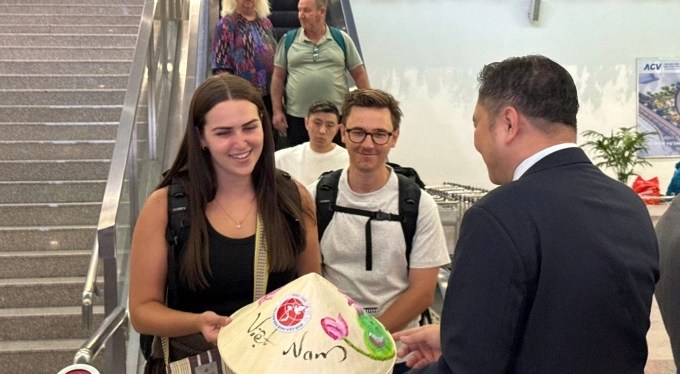
If you are traveling through an airport operated by the Civil Aviation Authority of the Philippines (CAAP), prepare yourself as the passenger service charge has officially been raised since April 21, according to a Philippine News Agency (PNA) news article.
To put things in perspective, posted below is an excerpt from the report of the PNA news article. Some parts in boldface…
A higher passenger service charge (PSC) has been imposed in all airports operated by the Civil Aviation Authority of the Philippines (CAAP) starting April 21.
“The increase, primarily adjusted based solely on inflation from 2015 to present, underwent the required public hearing with various stakeholders, as well as the necessary publication,” the aviation authority said in a news release late Monday.
It added that the adjustment supports CAAP’s efforts to enhance passenger experience and improve airport facilities and operations.
In Memorandum Circular 019-2025 signed on April 4, the PSC for international flights rose to PHP900 from PHP550.
From the PHP200 PSC for domestic flights, the rate will be PHP350 for international airports; PHP300 for principal class 1 airports; PHP200 for principal class 2 airports; and PHP100 for community airports. CAAP operates 44 commercial airports.
Let me end this post by asking you readers: What is your reaction to this recent development? Do you think the hike of the passenger service charge at CAAP airports has been justified? How much did you pay recently at a CAAP-operated airport?
Disclaimer: This is my original work with details sourced from my personal experiences and observations during the Israel pilgrimage tour I joined and what happened during my free time. Anyone who wants to use this article, in part or in whole, needs to secure first my permission and agree to cite me as the source and author. Let it be known that any unauthorized use of this article will constrain the author to pursue the remedies under R.A. No. 8293, the Revised Penal Code, and/or all applicable legal actions under the laws of the Philippines.
Welcome back, readers and fellow followers of the Lord! This is the 10th chapter of my ongoing series of articles about the holy nation of Israel with recollections about the experiences and discoveries I had during the pilgrimage tour I joined with my local church (hosted by strategic partner Behold Israel). To see my previous Israel tour articles, click here, here, here, here, here, here, here, here and here. No matter what happens in this twisted world we live in, I will always stand with Israel and my faith in the Lord remains uncompromising!
In this latest edition of my Israel 2023 series, I share with you what I experienced when our pilgrimage tour group visited the Southern Steps (also referred to as the Southern Stairs and Rabbi Stairs) located at the lower part of the Southern Wall of the Temple Mount in the Old City of Jerusalem.
Thanks to our dedicated local tourist guide, our tour group had a meaningful visit there and we spent several minutes observing the place. Our time at the steps concluded with a bible teaching led by New Life Philippines Pastor Edwin Tugano. In my personal experience, I felt something from the Lord there as I realized the biblical relevance of the holy site as well as insight regarding what the place was like thousands of years ago.
This is me at the Southern Steps in Jerusalem, Israel.
The site is very significant as it is the place that served as one of the main entrances from the south to the Temple Mount during the time of Lord Jesus. In fact, people coming from the City of David going north to the Temple Mount used the Southern Steps very long ago. Also, the Southern Steps became a useful place where rabbis and their disciples gathered for faith lessons and this explains why the said steps are also called the Rabbi Stairs. Physically, the steps were hundreds of feet wide which provided abundant space for congregating and teaching.
As many centuries had passed since Lord Jesus ascended to Heaven, there were physical changes that happened at the Southern Wall of the Temple Mount and this is evident as visitors today cannot access the mentioned sacred site above (where the Jewish temples used to be) using the Southern Steps. This is because there is noticeable expansion of the Southern Wall blocking the steps’ upward access to the Temple Mount. I myself had touched that wall and noticed how its stone quality and colors differed from the rest of the Southern Wall.
I brought the Passion Translation Holy Bible with me at the Southern Steps. After taking this image, I climbed up the steps, reached the Southern Wall and touched it.
Regardless, the step themselves – composed of the original stones from Jesus’ time (those steps with the rougher stones) plus newer ones (added to fill the gaps) leading to the Southern Wall – are still there and climbing them required methodical walking. The Southern Steps today are widely visited by faithful Christians from around the world as it is a holy site and it is very likely that Lord Jesus Himself climbed the steps going to the Temple Mount. There is no doubt that Lord Jesus and His disciples also gathered at the steps for teachings. The holy site should remind you about the significance of Lord Jesus’ presence in Jerusalem.
In my experience there at the Southern Steps with my tour companions, I felt the holiness of the place and that became more evident as I opened the Holy Bible during the bible teaching led by our pastor right there. During our time there, I noticed another pilgrimage tour group was present with us several feet away.
Did Pentecost happen at the Southern Steps?
Our pilgrimage tour group in the foreground, and another group in the background. The Southern Steps is an essential place for Christians to visit in Israel.
By reading the biblical reference of Pentecost and connecting it with my observations of the holy site, I can say that the Southern Steps is a possible place where Pentecost may have happened. I can even say that it is a more suitable place – where about three thousand Jews got baptized after the apostle Peter preached the good news – than the Upper Room (itself a popular location in many paintings and artworks dramatizing Pentecost).
Take a close look at the biblical record of Pentecost below…
When the Day of Pentecost had fully come, they were all with one accord in one place. And suddenly there came a sound from heaven, as of a rushing mighty wind, and it filled the whole house where they were sitting. Then there appeared to them divided tongues, as of fire, and one sat upon each of them. And they were all filled with the Holy Spirit and began to speak with other tongues, as the Spirit gave them utterance.
And there were dwelling in Jerusalem Jews, devout men, from every nation under heaven. And when this sound occurred, the multitude came together, and were confused, because everyone heard them speak in his own language. Then they were all amazed and marveled, saying to one another, “Look, are not all these who speak Galileans? And how is it that we hear, each in our own language in which we were born? Parthians and Medes and Elamites, those dwelling in Mesopotamia, Judea and Cappadocia, Pontus and Asia, Phrygia and Pamphylia, Egypt and the parts of Libya adjoining Cyrene, visitors from Rome, both Jews and proselytes, Cretans and Arabs—we hear them speaking in our own tongues the wonderful works of God.” So they were all amazed and perplexed, saying to one another, “Whatever could this mean?”
Others mocking said, “They are full of new wine.”
But Peter, standing up with the eleven, raised his voice and said to them, “Men of Judea and all who dwell in Jerusalem, let this be known to you, and heed my words. For these are not drunk, as you suppose, since it is only the third hour of the day. But this is what was spoken by the prophet Joel:
‘And it shall come to pass in the last days, says God,
That I will pour out of My Spirit on all flesh;
Your sons and your daughters shall prophesy,
Your young men shall see visions,
Your old men shall dream dreams.
And on My menservants and on My maidservants
I will pour out My Spirit in those days;
And they shall prophesy.
I will show wonders in heaven above
And signs in the earth beneath:
Blood and fire and vapor of smoke.
The sun shall be turned into darkness,
And the moon into blood,
Before the coming of the great and awesome day of the Lord.
And it shall come to pass
That whoever calls on the name of the Lord
Shall be saved.’
“Men of Israel, hear these words: Jesus of Nazareth, a Man attested by God to you by miracles, wonders, and signs which God did through Him in your midst, as you yourselves also know— Him, being delivered by the determined purpose and foreknowledge of God, you have taken by lawless hands, have crucified, and put to death; whom God raised up, having loosed the pains of death, because it was not possible that He should be held by it. For David says concerning Him:
‘I foresaw the Lord always before my face,
For He is at my right hand, that I may not be shaken.
Therefore my heart rejoiced, and my tongue was glad;
Moreover my flesh also will rest in hope.
For You will not leave my soul in Hades,
Nor will You allow Your Holy One to see corruption.
You have made known to me the ways of life;
You will make me full of joy in Your presence.’
“Men and brethren, let me speak freely to you of the patriarch David, that he is both dead and buried, and his tomb is with us to this day. Therefore, being a prophet, and knowing that God had sworn with an oath to him that of the fruit of his body, according to the flesh, He would raise up the Christ to sit on his throne, he, foreseeing this, spoke concerning the resurrection of the Christ, that His soul was not left in Hades, nor did His flesh see corruption. This Jesus God has raised up, of which we are all witnesses. Therefore being exalted [j]to the right hand of God, and having received from the Father the promise of the Holy Spirit, He poured out this which you now see and hear.
“For David did not ascend into the heavens, but he says himself:
‘The Lord said to my Lord,
“Sit at My right hand,
Till I make Your enemies Your footstool.” ’
“Therefore let all the house of Israel know assuredly that God has made this Jesus, whom you crucified, both Lord and Christ.”
Now when they heard this, they were cut to the heart, and said to Peter and the rest of the apostles, “Men and brethren, what shall we do?”
Then Peter said to them, “Repent, and let every one of you be baptized in the name of Jesus Christ for the remission of sins; and you shall receive the gift of the Holy Spirit. For the promise is to you and to your children, and to all who are afar off, as many as the Lord our God will call.”
And with many other words he testified and exhorted them, saying, “Be saved from this perverse generation.” Then those who gladly received his word were baptized; and that day about three thousand souls were added to them.
Acts 2:1-41 (NKJV)
Take note that verse 2 of Chapter 2 in the Book of Acts specifically mentioned “house” which is not limited to houses. In fact, in the Old Testament of the Bible, the Jewish temple is referred to as the house – as in the house of the Lord. The place of worship of the Lord!
Still within biblical context, “house” – as seen in verse 36 with “house of Israel” – also symbolizes family and lineage in the Holy Bible. “House of Israel” refers to the entire nation descended from Abraham through Jacob and Isaac and that includes the Jewish people (descendants) who were present in Jerusalem during Pentecost. For relevance of the house of Israel, read 2 Kings 7:1-16 in the Holy Bible – God’s words for King David passed through the prophet Nathan.
In the foreground are the Southern Steps and the Southern Wall of the Temple Mount. In the background is more of Jerusalem. (source – screenshot taken from the Instagram video of Hananya Naftali)
As it was an essential form of access into the Temple Mount, the Southern Steps also served as a natural place of gathering, spacious enough to accommodate thousands of Jews. As mentioned earlier, these wide and spacious holy stairs are a more suitable place than the Upper Room for Pentecost to happen.
Also take note that verse 41 of Chapter 2 of the Book of Acts mentions that there were around three thousand Jews who got baptized and helped the church of Lord Jesus grow a lot on the day of Pentecost itself (for relevance, read John 3:3 in the Holy Bible). This also means that there were between fifteen thousand to thirty thousand people in Jerusalem who witnessed Pentecost happen. Having been at the Southern Steps myself, I can easily visualize the whole place – from the steps themselves and the space between them and the City of David in the south, plus the whole stretch of the Southern Wall – being filled with lots of people on that very day. Having attended the bible teaching led by our pastor who stood at the steps facing us south, I can visualize the apostle Peter preaching to thousands of Jewish people there long ago.
Our pastor Edwin Tugano (standing on the ancient steps facing us) led the bible teaching for me and my pilgrimage group companions.
There is absolutely no way that the 3,000 people who received Christ and got baptized would fit inside the Upper Room at the time of Pentecost. When the apostle Peter preached, he was not surrounded by only a tiny group of people but by a huge crowd who listened. The other apostles were with Peter back then. This should remind you that the artists responsible for the paintings and artworks portraying Pentecost happening inside the Upper Room or within an indoor place with walls and a roof did not fully understand the biblical record of Pentecost. In other words, those artists got it wrong and the Bible proves they are wrong. This should remind you to maintain faith in God’s Word, not in man-made artworks.
Once again, the Southern Steps is a possible site of Pentecost. It may not be definitive but it definitely is more suitable than the Upper Room for congregating and preaching in front of thousands. The other possible places where Pentecost may have happened include the Royal Stoa (which was intact at the Southern Wall covering its length and was located high above the Southern Steps) and at the Jewish Temple itself.
While the exact location of Pentecost remains unresolved, I encourage you all to always keep faith in the Lord and His Word knowing that Pentecost truly happened as it was an anointed by the Lord to happen. Location is one thing, but the Holy Bible and the Holy Spirit are always essential to our faith in Lord Jesus.
Conclusion
It was destiny from the Lord for me and my pilgrimage tour group to visit the Southern Steps. I felt the unction from the Holy Spirit to capture this very moment upon arrival there.
I can say that me and my pilgrimage tour group companions were blessed by the Lord during our time at the Southern Steps. Simply thinking about Lord Jesus teaching His followers at the steps is uplifting There clearly is a lot to learn and discover by being at the holy site and having the Bible for reference. I thank Lord Jesus for blessing us, for our pastors and our local tour guide, and for the anointed experience at the Southern Steps. I definitely will revisit those steps when I return to Israel.
Israel is a great and holy place to visit! Visit Israel with the Holy Bible! Pray to the Lord wholeheartedly and reveal to Him your heart’s desire to visit Israel to deepen your faith in Him. Always be the fearless and aggressive church of Lord Jesus! Follow the light of Lord Jesus, keep on praying to support Israel, learn to love and bless the Jewish people and pray for the peace of Jerusalem.
Watch out for more Israel 2023 travel articles here. There is more to come!
By pointing to the VAT refund for foreign tourists (click here and here), the Department of Tourism (DOT) is looking forward to growth in tourism revenue this year, according to a BusinessWorld news report.
To put things in perspective, posted below is an excerpt from the report of the BusinessWorld news report. Some parts in boldface…
THE Department of Tourism (DoT) said tourism revenue is expected to rise this year, aided by the new tax refund for tourists.
“2024 was a banner year for Philippine tourism, with international spending reaching around P760 billion, a 126% recovery rate (from pre-pandemic levels). Our goal was always to exceed that, which we achieved the previous year,” Tourism Secretary Ma. Esperanza Christina G. Frasco said on Monday.
She said that the value-added tax (VAT) refund for foreign tourists and DoT’s collaboration with the Department of Trade and Industry (DTI) will encourage more visitor spending.
She added such measures will allow the country “to exceed its international visitor receipts as well as domestic tourism receipts from the year before.”
On Monday, the DTI and DoT signed a memorandum of agreement (MoA) to strengthen coordination in promoting tourism-related industries, participate in joint trade and tourism missions, develop sustainable tourism-related enterprises, and encourage the growth of micro, small and medium enterprises (MSMEs).
“Through this MoA, we will give our tourism MSMEs the platform to avail of the programs of the DTI, especially in supporting the expansion of their livelihood and businesses,” Ms. Frasco said.
Let me end this post by asking you readers: What is your reaction to this recent development? Do you think the VAT refund for tourists will actually result in an increase of tourism revenue in the Philippines this year?
The troublesome Russian streamer Vitaly Zdorovetskiy won’t be leaving the Philippines any time soon as he will be formally charged for what he committed in public recently, according to a news article by the Philippine News Agency (PNA). He was presented to the media in the presence of Department of the Interior and Local Government (DILG) Secretary Jonvic Remulla.
To put things in perspective, posted below is an excerpt from the report of the PNA news article. Some parts in boldface…
Department of the Interior and Local Government (DILG) Secretary Jonvic Remulla on Monday said Russian vlogger Vitaly Zdorovetskiy will have to stay longer in the country to face criminal charges for harassing and insulting Filipinos for content.
Remulla said Zdorovetskiy will not be deported until such time that a final verdict is handed down by a Philippine court.
“Babala na rin ito (This is also a warning). People have to take responsibility for the content they create. It is not a license to shame or to hurt or to besmirch anyone,” Remulla said in a press conference in Quezon City.
Remulla said the Russian, arrested April 2 in Pasay, is under the custody of the Bureau of Immigration “as an undesirable alien and a flight risk.”
At least five criminal charges were filed against Zdorevetskiy, including a case in Boracay Island where he allegedly insulted a windsurfing instructor.
“He has been making vlogs and making money out of disrespecting people. But not in our own land. We will not allow him to insult and disrespect any Filipino,” Remulla said.
During the press briefing, the moderator had to remind the Russian to behave after he was seen murmuring and making gestures apparently aimed at the DILG chief. Remulla said he heard Zdorevetskiy cursing at him.
Let me end this post by asking you readers: What is your reaction to this recent development? Do you think the way the local authorities are handling Vitaly Zdorovetskiy will send a strong message to troublesome foreign streamers that they will be held accountable if they harass locals while staying in the Philippines? Do you think Congress should pass new laws to deal with problematic vloggers and live streamers? Should the national government be more active in dealing with streaming platforms whose account holders include troublesome streamers and vloggers? Do you think the government Russia will do something about the arrested Vitaly Zdorovetskiy?
Based on the tourism revenue counted for the month of January 2025, Philippines tourism is off to a strong start with more than P65 billion, according to a Philippine News Agency (PNA) news article.
To put things in perspective, posted below is an excerpt from the news article of the PNA. Some parts in boldface…
The Philippines earned USD1.1 billion or PHP65.3 billion tourism revenues in January 2025, exceeding pre-pandemic levels in 2019, the Department of Tourism (DOT) said Thursday.
Data as of Feb. 28 showed that the earnings came from various activities, products, and services related to tourism, 136.1 percent higher than the USD821 million or 151.46 percent higher than the PHP43 billion recorded in January 2019.
“The recovery of Philippine tourism from the period of the pandemic in terms of revenues translates to thousands of jobs created for Filipinos, providing livelihood opportunities for many, especially in our rural and underserved areas,” Tourism Secretary Christina Garcia-Frasco said in a news release.
The country’s tourism income grew by 71.4 percent in terms of US dollars, compared to the USD652,255,773.51 recorded in January 2024.
Philippine peso revenues also soared by 78.81 percent from PHP36,508,238,043 in January 2024.
Frasco reported the Philippines achieved an all-time high tourism revenue of approximately PHP760 billion in 2024.
The DOT recorded the Philippines’ tourism revenues based on Visitor Sample Surveys, records from the previous arrival/departure cards, shipping manifests, and the current eTravel system.
A total of 1,167,908 foreign travelers visited the country in the first two months of 2025. Data as of March 1 showed that about 25.31 percent of the visitors came from South Korea.
South Korea has been the country’s top source of tourists since 2023, which is expected to boost further with the appointment of South Korean star Seo In-Guk as “celebrity tourism ambassador for the Philippines” last month.
While the P65.3 billion tourism revenue for January 2025 looks great for the Philippines, it remains to be seen if it could maintain the pace until the end of the year. In order to match the record P760.5 billion tourism revenue of 2024, the Philippines needs to attract P63.375 billion per month this year. If Philippine tourism can achieve P65 billion per month, that would translate to P780 billion by the end of the year.
Let me end this post by asking you readers: What is your reaction to this recent development? Do you think the Philippines will be able to gross more than P760.5 billion in tourism revenue this year? Has your local government unit (LGU) been active in promoting local tourism?
If you are traveling to Israel very soon and if you love unique, tasty and high-quality meals, I encourage you to read this blog post by Debbest Israel. I would love to visit some of the restaurants (listed in the blog post) upon returning to Israel in the near future.
Having been to Israel myself, I can say that you will find a lot of great or dynamic places to eat in. There is always something for the food enthusiast or tourist with different tastes or preferences.
To put things in perspective, posted below is an excerpt from the GMA News report. Some parts in boldface…
Despite the nationwide ban of Philippine offshore gaming operators (POGOs), 29 foreigners, including the alleged Chinese boss, were arrested after authorities raided a guerilla operation inside a resort in Silang, Cavite.
According to John Consulta’s report in 24 Oras on Wednesday, the Philippine National Police Criminal Investigation and Detection Group (CIDG) first discovered the illegal operation of the POGO and shared the information with the Presidential Anti-Organized Crime Commission (PAOCC).
“Mayroong confidential informant na nagpunta sa office, na sinabi niya na may kakaibang nangyayari na doon sa resort, may mga nagda-drop na mga Chinese,” said Police Lieutenant Colonel J Gatdula, CIDG Cavite chief.
(There was a confidential informant who went to the office and said that there’s something sketchy happening at the resort as there were Chinese people dropping by.)
While most of those who were arrested are Chinese, six others are citizens of Myanmar. A Chinese man who was alleged to be the boss denied the accusations.
“No, no boss,” he said.
CIDG Cavite said the POGO workers arrived at the resort last December. They were using laptops instead of desktop computers, with each person using a mobile WiFi instead of an internet router.
Authorities confiscated electronic equipment that were allegedly used for scamming activities.
“Ito yung sinasabi nating nagtatago sa mga resorts, sa mga apartments […] Sa harap pa lang makikita mo na mayroong mga transaction ng cryptocurrency scam,” said PAOCC Undersecretary Gilbert Cruz.
(This is what we have been saying that they could hide in resorts or in apartments […] You can even notice at the facade that they were cryptocurrency scam transactions happening.)
“Dapat wala na sila dito. Kung may mga passports ‘yan, dapat tourist passports lang sila,” he added.
(They should no longer be here. If they have passports, it should be tourist passports.)
Let me end this post by asking you readers: What is your reaction to this recent development? Did you notice any suspicious activities happening within your local community? Do you think there could be a lot more POGO-related operations happening inside resorts around the country? How many Chinese nationals are living in your local community right now?
For more South Metro Manila community news and developments, come back here soon. Also say NO to fake news, NO to irresponsible journalism, NO to misinformation, NO to plagiarists, NO to reckless publishers and NO to sinister propaganda when it comes to news and developments. For South Metro Manila community developments, member engagement, commerce and other relevant updates, join the growing South Metro Manila Facebook group at https://www.facebook.com/groups/342183059992673
To put things in perspective, posted below is an excerpt from the news article of the PNA. Some parts in boldface…
Philippine tourism earned an all-time high revenue of PHP760.5 billion in 2024, translating to a 126.75 percent recovery rate from the 2019 pre-pandemic levels.
Revenues from inbound tourism expenditures — representing the total amount spent by non-resident visitors — were 9.04 percent higher compared to the PHP697.46 billion in 2023.
Department of Tourism (DOT) data showed earnings surpassed the estimated PHP600.01 billion in 2019 by an impressive 26.75 percent.
“With these figures, it is clear that the Philippine tourism industry is not only bouncing back but also evolving and expanding, contributing significantly to the nation’s economic stability and growth. In the past year, we have witnessed remarkable growth in tourism revenue, which has surpassed previous records,” Tourism Secretary Christina Frasco said Monday.
“This achievement is not just a statistic. It translates to thousands of jobs created for Filipinos, fostering economic resilience and enabling families to thrive,” she added.
She attributed this growth to the pro-tourism policies of the Marcos administration that prioritized the sustainable development of Philippine tourism resources.
“These policies focus on enhancing infrastructure, promoting heritage conservation and investing in skills development programs for our workforce, among others. We believe that the growth of tourism should be inclusive and equitable, empowering local entrepreneurs and communities,” she said.
Based on the World Travel and Tourism Council data, international tourists spend at least USD2,073 per capita.
From an average of nine nights in 2019, tourists are now staying an average of over 11 nights in the country, while 70 percent are repeat visitors.
Continued collaboration with stakeholders from the private sector also garnered about 63.18 percent repeat visitors in 2023, the DOT said.
Tourist arrivals – While falling short of its original target of 7.7 million, the DOT said the country still recorded growth in the number of foreign visitors last year at 5,949,350, up by 9.15 percent from the 5.45 million foreign guests recorded in 2023.
South Korea maintained its position as the top source of foreign tourists, with arrivals increasing to 1,574,152 from 1,455,977 in 2023, garnering more than 26.46 percent of the total market share.
Frasco cited the country’s “effective strategic marketing initiatives, enhanced air connectivity and strengthened cultural exchanges” for the sustained number of Korean tourists to the Philippines.
“Furthermore, the Philippines’ growing reputation as a prime destination for incentive travel has played a key role in this positive trend, attracting an increasing number of Korean companies hosting their reward trips for their employees in the Philippines’ world-class tourist destinations,” she said.
The United States ranked second, with 1,076,663 visitors in 2024, increasing from 1,041,305 in 2023. Enhanced connectivity, including nonstop flights from San Francisco to Manila by United Airlines and from Seattle to Manila by Philippine Airlines contributed to the growth of the market.
Japan, meanwhile, emerged as a standout market with a 22.84 percent growth in arrivals, reaching 444,528 visitors from its previous year’s 361,862.
The surge was attributed to aggressive tourism campaigns and strategic partnerships with Japanese travel agencies that paved further awareness and interest in the Philippines as a travel destination.
Though significantly lower than the pre-pandemic figures, China showed signs of recovery with 313,856 arrivals compared to 264,922 in the previous year.
This can be attributed, the DOT said, to the increased number of flights from 2023, both commercial and chartered, including the first half of 2024, connecting China directly to Cebu, Bohol, and Davao.
Cruise ships also started to arrive during the second half of 2024, with the new visa waiver program becoming an important factor for the improved numbers.
Other consistent contributors included Australia (299,286) and Canada (269,300). Emerging markets like Taiwan and Singapore demonstrated strong growth momentum, with arrivals reaching 213,833 and 198,471, respectively.
The introduction of direct flights to Kalibo in Aklan and Puerto Princesa in Palawan, as well as the growth of niche markets such as English as Second Language (ESL) learning and diving, contributed greatly to the visits of guests from Taiwan.
The United Kingdom likewise sustained its position among the top contributors with 178,656 visitors, driven by a keen interest in heritage tourism and adventure activities. Meanwhile, Malaysia emerged 10th with 99,881 registered arrivals in 2024.
The DOT said the Middle Eastern market similarly showed promising signs of recovery in 2024.
The United Arab Emirates (UAE) posted a remarkable 668.34 percent recovery rate from its 2019 figures, reflecting increased air connectivity and a surge in interest in the Philippines as a leisure destination. Qatar followed closely, with an impressive 832.87 percent recovery rate, and Saudi Arabia with 66.54 percent growth.
Likewise, Oman and Bahrain registered more than 200 percent recovery rates from the 2019 number of arrivals, the DOT said.
Those in the top 25 source markets which have fully recovered as compared with 2019 data included Australia (102.63 percent), Canada (109.26 percent), Hong Kong (106.79 percent), UAE (668.34 percent), Italy (143.02 percent), Spain (111.08 percent), Guam (200.19 percent), New Zealand (100.50 percent) and Switzerland (102.01 percent).
Let me end this post by asking you readers: What is your reaction to this recent development? Do you think it is safe to call 2024 a successful year of tourism for the Philippines with regards to the record-high tourism revenue achieved? Do you think the Philippines will be able to attract at least 6 million foreign tourists this year?
Recently at the Ninoy Aquino International Airport (NAIA) Terminal 1, two Chinese nationals who tried to leave the country using fake visas were intercepted by operatives of the Bureau of Immigration (BI), according to a GMA Network news report.
To put things in perspective, posted below is an excerpt from the GMA News report. Some parts in boldface…
Operatives of the Bureau of Immigration (BI) arrested two Chinese passengers who attempted to leave the Philippines using counterfeit visas.
According to the BI, passengers Wang Dingku, 31, and Su Zhengkun, 25, were intercepted at the Ninoy Aquino International Airport Terminal 1 after trying to board a flight bound for Bangkok, Thailand, on Sunday.
The BI said the travelers presented themselves at the immigration counter for departure formalities when the immigration officers noticed discrepancies in their visas. This prompted the BI officers to refer the documents to the forensic documents laboratory for checking, which later confirmed the documents as fake.
The BI said the Chinese passengers also allegedly used the counterfeit documents to enter the country.
The two will be charged with violating the Philippine Immigration Act before the BI board of commissioners, which will issue the order for their summary deportation.
Let me end this post by asking you readers: What is your reaction to this recent development? Do you think the Chinese nationals living within your local community used fake documents to enter the Philippines and will use them to go overseas?
For more South Metro Manila community news and developments, come back here soon. Also say NO to fake news, NO to irresponsible journalism, NO to misinformation, NO to plagiarists, NO to reckless publishers and NO to sinister propaganda when it comes to news and developments. For South Metro Manila community developments, member engagement, commerce and other relevant updates, join the growing South Metro Manila Facebook group at https://www.facebook.com/groups/342183059992673
To put things in perspective, posted below is an excerpt from the Manila Bulletin news report. Some parts in boldface…
Persons harboring foreign workers of Philippine Offshore Gaming Operators (POGOs) will be prosecuted, the Bureau of Immigration (BI) warned on Wednesday, Jan. 8.
“Harboring illegal aliens is a serious offense, and we will pursue violations with utmost resolve,” said Immigration Commissioner Joel Anthony Viado.
He stressed that “the BI will not hesitate to file charges against anyone found violating Section 46 of the Philippine Immigration Act of 1940.“
Section 46 of the Philippine Immigration Act prohibits the “bringing of alien in the Philippines who is not lawfully entitled to enter or reside there, concealing or harboring an alien who is not lawfully entitled to enter or reside there, and attempting, conspiring with, or aiding another to commit any of the prohibited acts.”
Viado issued the warning after the BI revealed that over 11,000 foreign workers of POGOs failed to leave the Philippines on the Dec. 31, 2024 deadline.
For continuing to remain in the Philippines, the bureau said these aliens will be arrested and will face deportation proceedings, he said.
“Anyone who enables these individuals to remain in the Philippines illegally will face the consequences, and the law is clear, and there will be no exceptions,” he stressed.
Let me end this post by asking you readers: What is your reaction to this recent development? Are there many foreign workers of POGOs secretly living within your local community right now? Do you think there are still POGOs secretly operating in your city?