Better than Streaming: The Transformers: The Movie 4K Blu-ray coming out soon

If you love the Transformers in hand-drawn animation and if you have a 4K Blu-ray collection to build up, then you should be happy with the news that The Transformers: The Movie 4K Blu-ray will be available for purchase in a few months’ time.

The said 4K Blu-ray release (which also contains the Blu-ray for 1080p viewing) is from Shout Factory, a company that is well known for releasing Blu-ray and 4K Blu-ray discs of movies loaded with lots of extra stuff that make them very ideal for collecting.

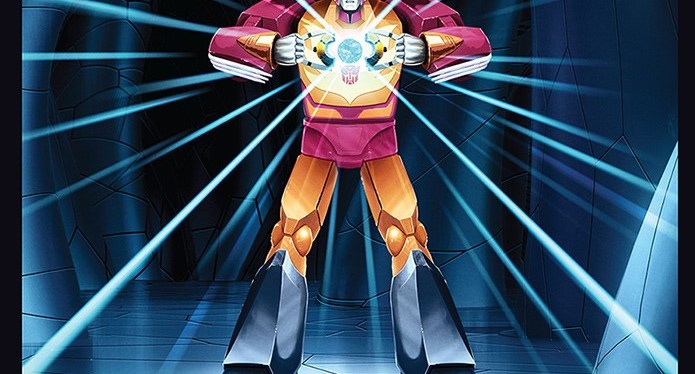
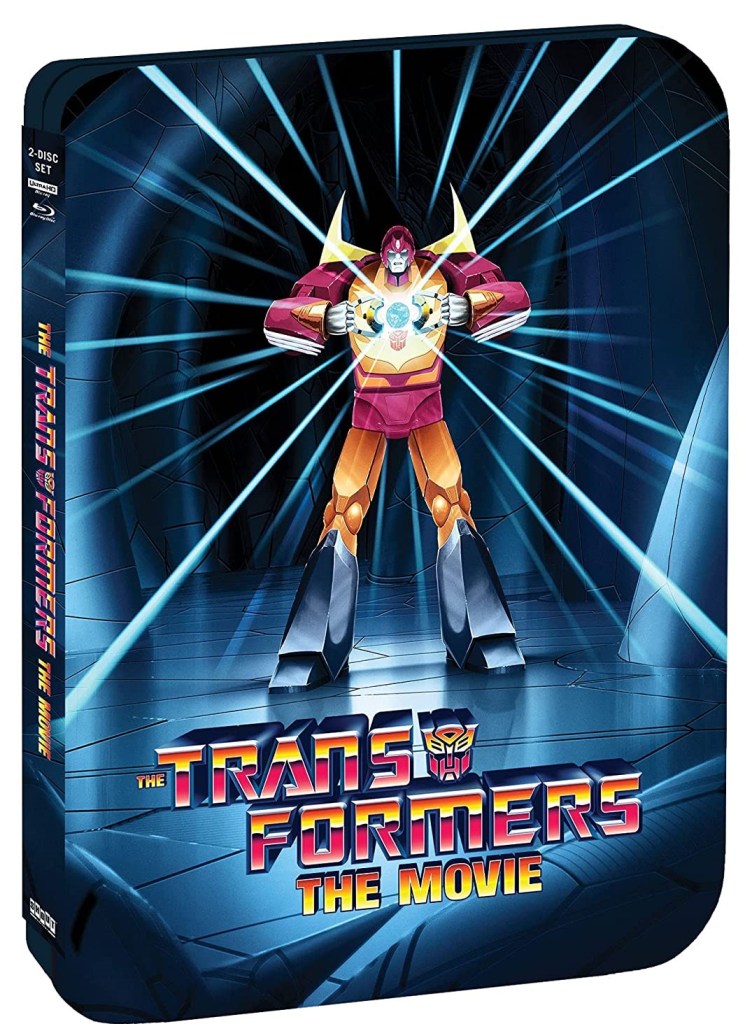
The SteelBook edition.

So what exactly will you be getting with The 4K Blu-ray combo of The Transformers: The Movie? To put things in perspective, here first are the technical specs from the Blu-ray.com page…

Video

Codec: HEVC / H.265

Resolution: Native 4K (2160p)

HDR: Dolby Vision, HDR10

Aspect ratio: 1.85:1

Original aspect ratio: 1.85:1

Audio

English: Dolby Atmos

English: DTS-HD Master Audio 5.1 (48kHz, 24-bit)

English: DTS-HD Master Audio 2.0 (48kHz, 24-bit)

Subtitles

English SDH, Spanish

Discs

4K Ultra HD

Blu-ray Disc

Two-disc set (1 BD-66, 1 BD-50)

Playback

4K Blu-ray: Region free

2K Blu-ray: Region A (B, C untested)

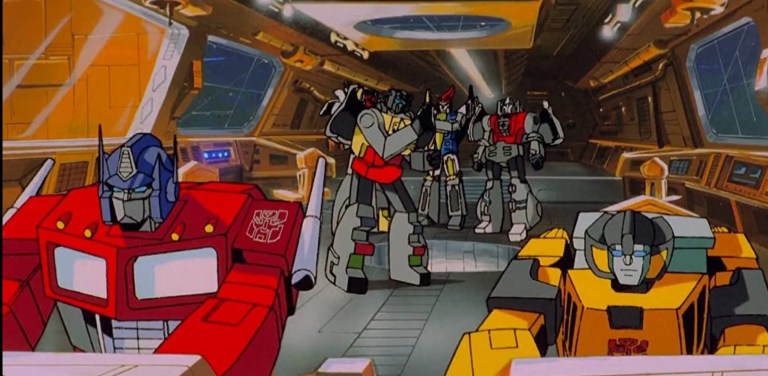
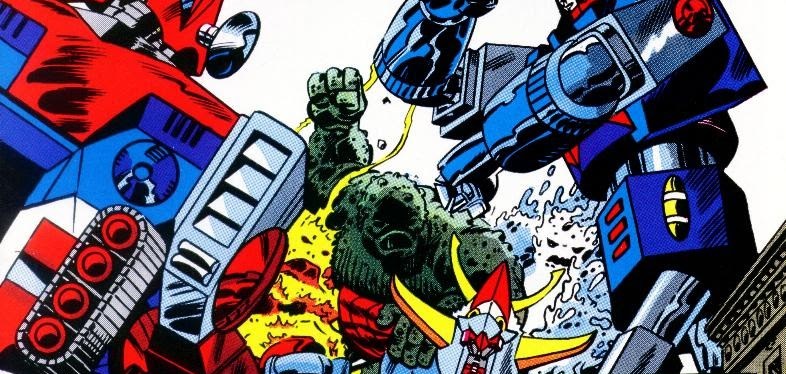
The Autobots and Dinobots in a scene in the movie.

Now here is an excerpt from another page at Blu-ray.com that shows what you can expect from the new release.

Shout Factory will also issue two additional 35th anniversary editions of THE TRANSFORMERS – THE MOVIE —a standard 4K Blu-ray + Blu-ray combo pack, and a Blu-ray + DVD combo pack. THE TRANSFORMERS – THE MOVIE 35th Anniversary Edition 4K Blu-ray + Blu-ray combo pack includes the all-new 4K transfer of the movie in widescreen alongside the HD full frame version and new bonus material. THE TRANSFORMERS – THE MOVIE 35th Anniversary Edition Blu-ray + DVD combo pack features the movie in HD full frame on Blu-ray as well as a widescreen edition on DVD, alongside new bonus material. These configurations will be available for pre-order later this summer from Shout! Factory. (The SteelBook can already be pre-ordered at Amazon).


Under license from Shout Factory, THE TRANSFORMERS – THE MOVIE SteelBook and standard 4K Blu-ray will also be released in the UK this September.


Description: In the year 2005, the Autobots and the Decepticons are still locked in battle, but a deadly new force enters the fray–a giant killer planet known as Unicron. The heroic Autobots must fight for their own survival and to save their home planet from destruction. A classic of 1980s animation, based on the popular TV series.


Special Features and Technical Specs:

  • NEW 4K TRANSFER FROM ORIGINAL FILM ELEMENTS
  • New Feature-Length Storyboards, including deleted, alternate and extended sequences
  • New Fathom Events 30th Anniversary Featurette, including Stan Bush’s acoustic performances of “The Touch” and “Dare”
  • ‘Til All Are One – A comprehensive documentary looking back at THE TRANSFORMERS: THE MOVIE with members of the cast and crew, including story consultant Flint Dille, cast members Gregg Berger, Neil Ross, Dan Gilvezan, singer/songwriter Stan Bush, composer Vince Dicola and others!
  • Audio Commentary with Director Nelson Shin, story consultant Flint Dille and star Susan Blu
  • Featurettes
  • Animated Storyboards
  • Trailers and TV Spots
  • Optional English and Spanish subtitles for the main feature

As of this writing, Amazon.com has a live page for those who want to order the SteelBook edition of The Transformers: The Movie 4K Blu-ray. You can also order it via Shout Factory.

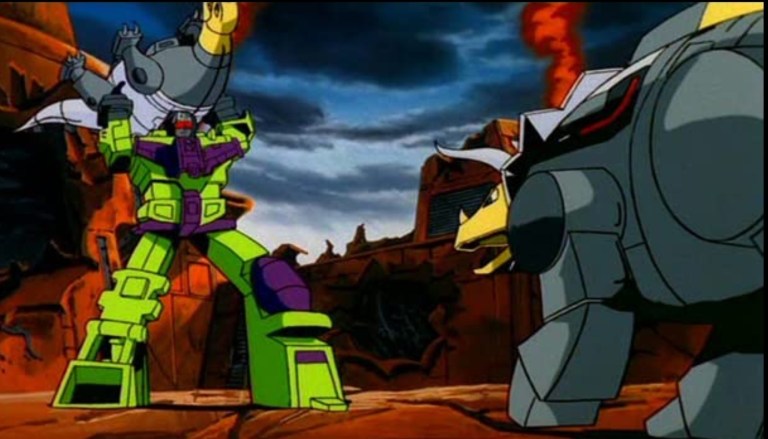
Devastator and the Dinobots!

As a kid, I got to watch many episodes of The Transformers animated series on television. I eventually saw The Transformers: The Movie on home video and its presentation came with a lot of impact related to the deaths of several characters (including the most controversial death), the noticeable rise of on-screen violence and the more futuristic, sci-fi setting and environments.

Even if you are not a fan of The Transformers, this upcoming 4K Blu-ray release is a blessing. Even if you are not interested in the older, hand-drawn presentation of The Transformers, the animated movie itself should interest you as it has solid performances not only from long-time favorites Peter Cullen (Prime) and Frank Welker (Megatron) but also from Hollywood legends Orson Welles, Leonard Nimoy and Robert Stack. Think about that! Welles, Nimoy and Stack…Citizen Kane, Spock and the Unsolved Mysteries icons in this Transformers film!

For more on The Transformers: The Movie, watch this in-depth video retrospective by Oliver Harper. I highly recommend it and I also encourage you all to follow Oliver Harper via his social media channels.

Let me end this piece by asking you readers: Does the upcoming 4K Blu-ray release of The Transformers: The Movie excite you? If you saw the 1980s animated series of The Transformers, how many episodes were you able to watch? Were you able to watch The Transformers: The Movie in the cinemas back in 1986?

You may answer in the comments below. If you prefer to answer privately, you may do so by sending me a direct message online.

+++++

Thank you for reading. If you find this article engaging, please click the like button below and also please consider sharing this article to others. If you are looking for a copywriter to create content for your special project or business, check out my services and my portfolio. Feel free to contact me as well. Also please feel free to visit my Facebook page Author Carlo Carrasco and follow me at HavenorFantasy@twitter.com
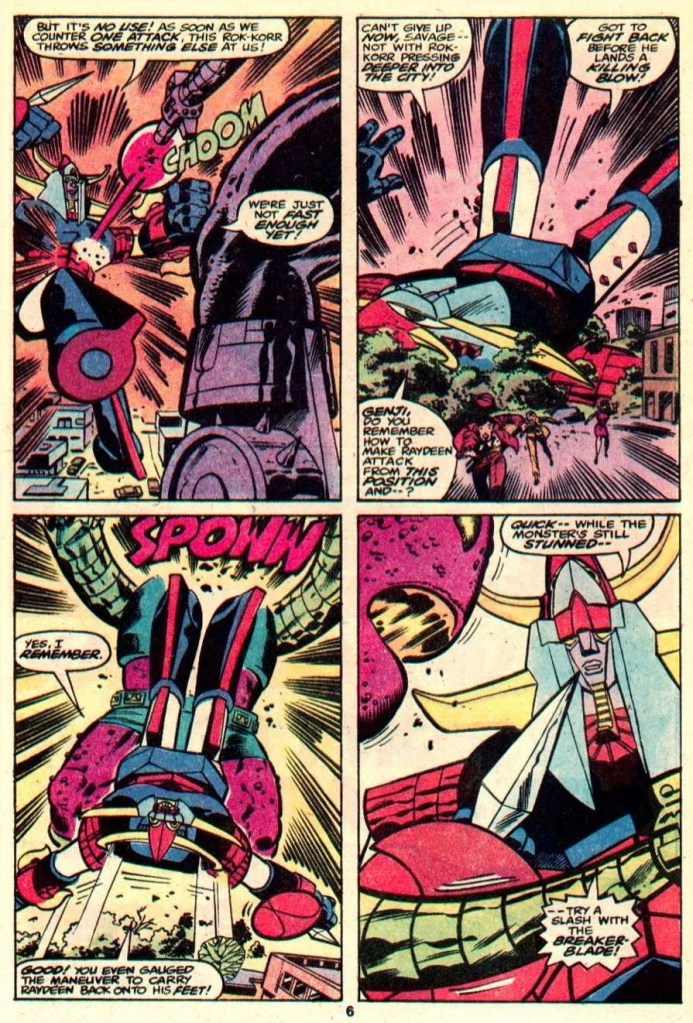
A Look Back at Shogun Warriors #3 (1979)

Disclaimer: This is my original work with details sourced from reading the comic book and doing personal research. Anyone who wants to use this article, in part or in whole, needs to secure first my permission and agree to cite me as the source and author. Let it be known that any unauthorized use of this article will constrain the author to pursue the remedies under R.A. No. 8293, the Revised Penal Code, and/or all applicable legal actions under the laws of the Philippines.

When it comes to showcasing giant robots fighting other robots or monsters, there is no denying that Japan is the leader. In my lifetime, I have seen lots of episodes of varied anime TV series, some anime feature films as well as OVAs (original video animation) of such a genre of entertainment made by lots of Japanese creators. While I never saw any episodes of Brave Raideen nor any episodes of Chōdenji Robo Combattler V, I saw episodes of Dangard Ace on home video.

As seen already in issues #1 and #2 of the Shogun Warriors comic book series, the giant robots were adapted but not their respective original concepts and characters the Japanese established. As such, an all-new concept with Westerners in mind was implemented for the said series.

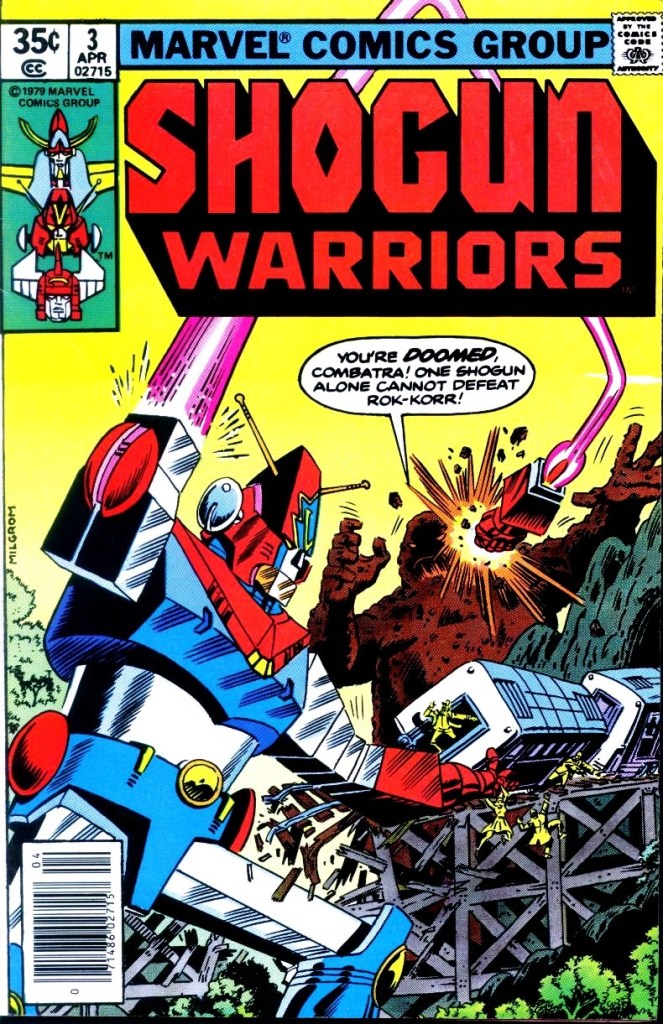
With those details laid down, here is a look back at Shogun Warriors #3, published by Marvel Comics in 1979 with a story written by Doug Moench and drawn by Herb Trimpe.

The cover.

Early story

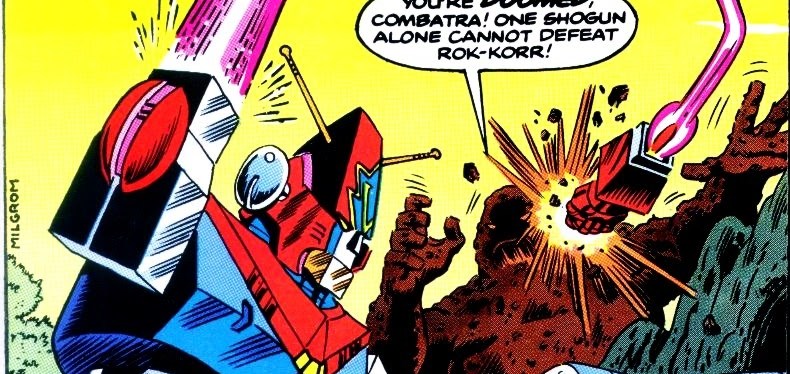
The story begins with Raydeen, Combatra and Dangard Ace on the field facing three giant enemies (each one representing a different element – fire, earth and water). Right near them is the train (on an elevated track) that they just saved which Combatra (piloted by Genji Odashu) notices.

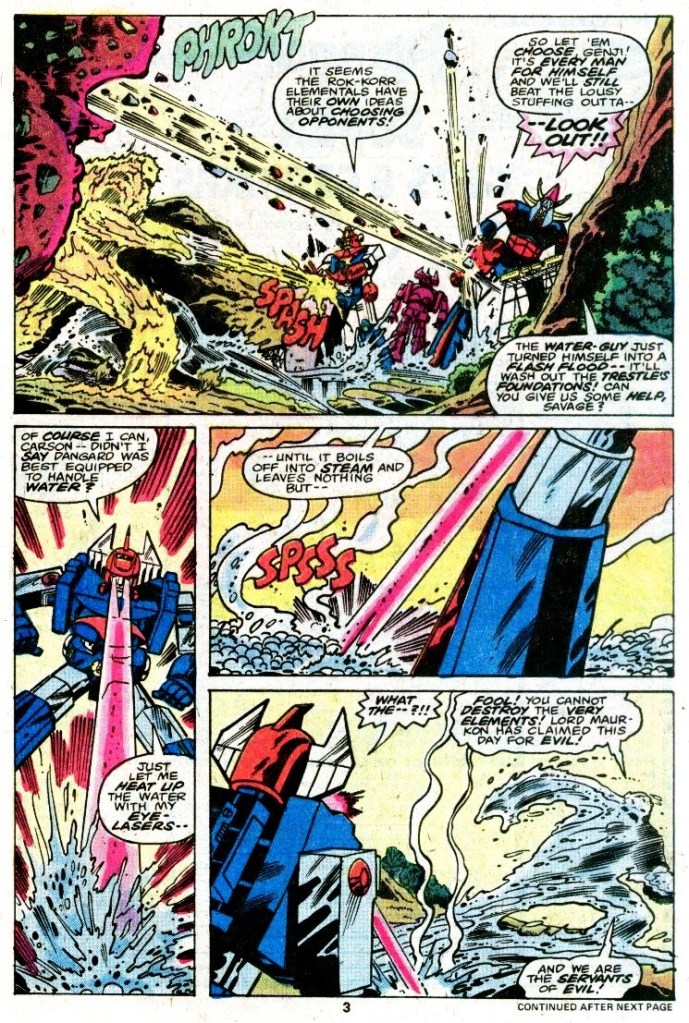
The battle begins with Dangard Ace taking on the water monster while Raydeen and Combatra take on the fire monster and earth monster respectively. During the heat of battle, the stalled train begins to fall as the elevated track gets damaged…

Quality

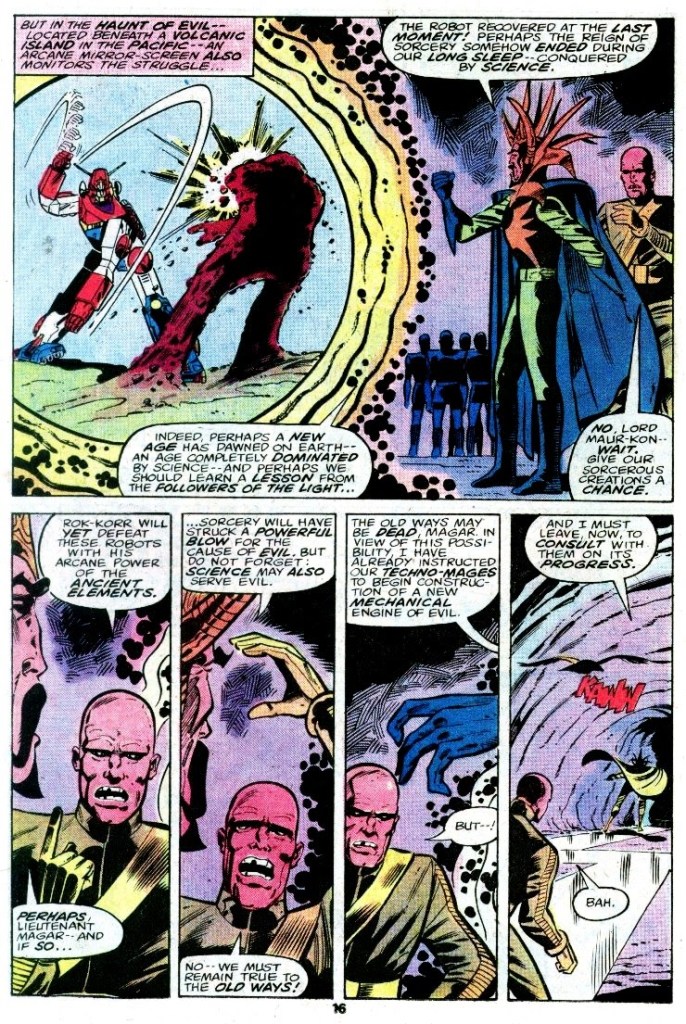
The bad guys watch behind the scenes during the battle.

To be clear and specific, this comic book creatively rebounded when it comes to spectacle. Compared to issue #2, this one has a lot of action scenes mixed with suspense and some talk scenes that were supposed to be intriguing. When it comes to exposition, this one is a refreshing change from what happened in issue #2. The exposition was clearly lessened but the creators still managed to insert some scenes to dramatize and explain to readers what the villains are up to and why sorcery is a core element of their power (which kinda explains how they were able to make giant monsters that are capable of talking). Interestingly, this comic book shows that there is division between members of the forces of evil.

Fans who love the three giant robots will have something fun to read. Take note, however, that the action scenes per robot are short and even predictable with the way the spectacle turned out. If you are looking for character development on their respective pilots, you won’t see any here.

Conclusion

Dangard Ace, Raydeen and Combatra fighting their respective counterparts.

Shogun Warriors #3 (1979) does not have much depth but still managed to deliver the goods when it comes to showcasing giant robot spectacle. On the aspect of fun, this one is an improvement over the exposition-heavy issue #2 but that is not saying much. It should be noted that, like the first two issues, this comic book has less than twenty pages of art and story. More notably, there is not much new here other than the very lame and corny attempt by the creators for the big reveal they came up with at the end.

If you are seriously planning to buy an existing hard copy of Shogun Warriors #3 (1979), be aware that as of this writing, MileHighComics.com shows that the near-mint copy of the comic book costs $35.

Overall, Shogun Warriors #3 (1979) is satisfactory.

+++++

Thank you for reading. If you find this article engaging, please click the like button below and also please consider sharing this article to others. If you are looking for a copywriter to create content for your special project or business, check out my services and my portfolio. Feel free to contact me as well. Also please feel free to visit my Facebook page Author Carlo Carrasco and follow me at HavenorFantasy@twitter.com
A Look Back at Shogun Warriors #2 (1979)

Disclaimer: This is my original work with details sourced from reading the comic book and doing personal research. Anyone who wants to use this article, in part or in whole, needs to secure first my permission and agree to cite me as the source and author. Let it be known that any unauthorized use of this article will constrain the author to pursue the remedies under R.A. No. 8293, the Revised Penal Code, and/or all applicable legal actions under the laws of the Philippines.

Long before Pacific Rim (2013) presented giant robots and monsters slug it out on the big screen with a strong emphasis on action and scale, there were varied animated series of such giants shown in television sets in Japan way back in the 1970s. Then by the end of the decade, Marvel Comics published the Shogun Warriors comic book series in relation to a business deal with Mattel.

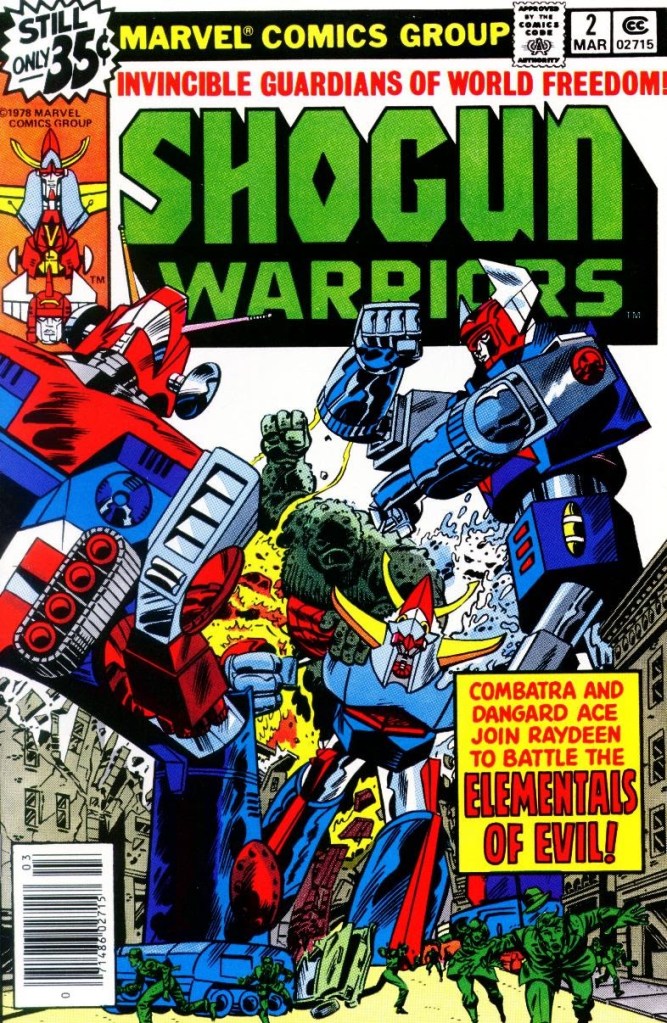
Last time, only one giant robot was heavily featured as a defender for human civilization as it became a target by a force of evil that unleashed a giant monster. That robot was Raydeen and as a result of what happened, something led to the unveiling of Combatra and Dangard Ace.

To find out more, here is a look back at Shogun Warriors #2, published by Marvel Comics in 1979 with a story written by Doug Moench and drawn by Herb Trimpe.

The cover.

Early story

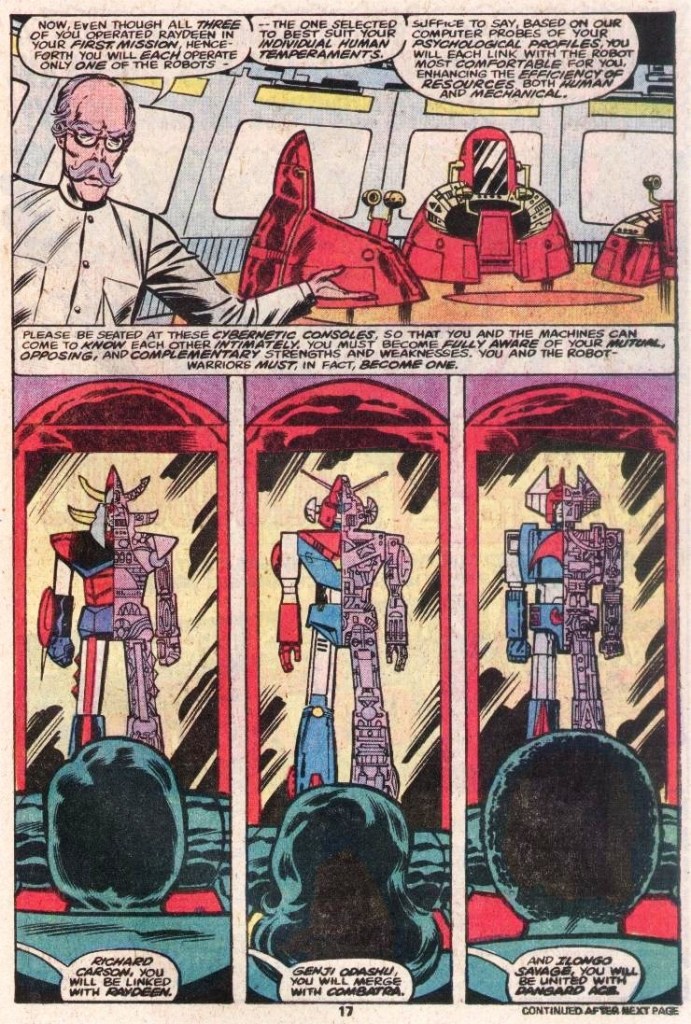
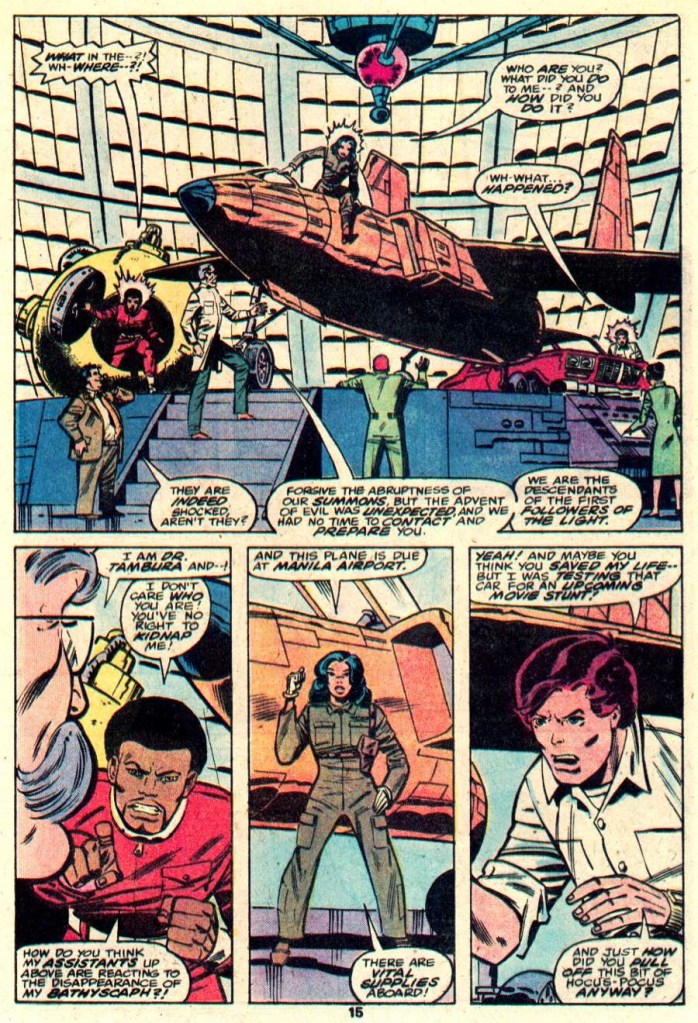
The story begins at the secret facility of Shogun. There the three pilots – Genji Odashu, Ilongo Savage and Richard Carson – are being briefed by Dr. Tambura explains to them that their first mission piloting Raydeen was not a failure at all. While acknowledging that the giant monster Rok-Korr is still a threat, he states to them that giant robots Combatra and Dangard Ace will be deployed and controlled by them.

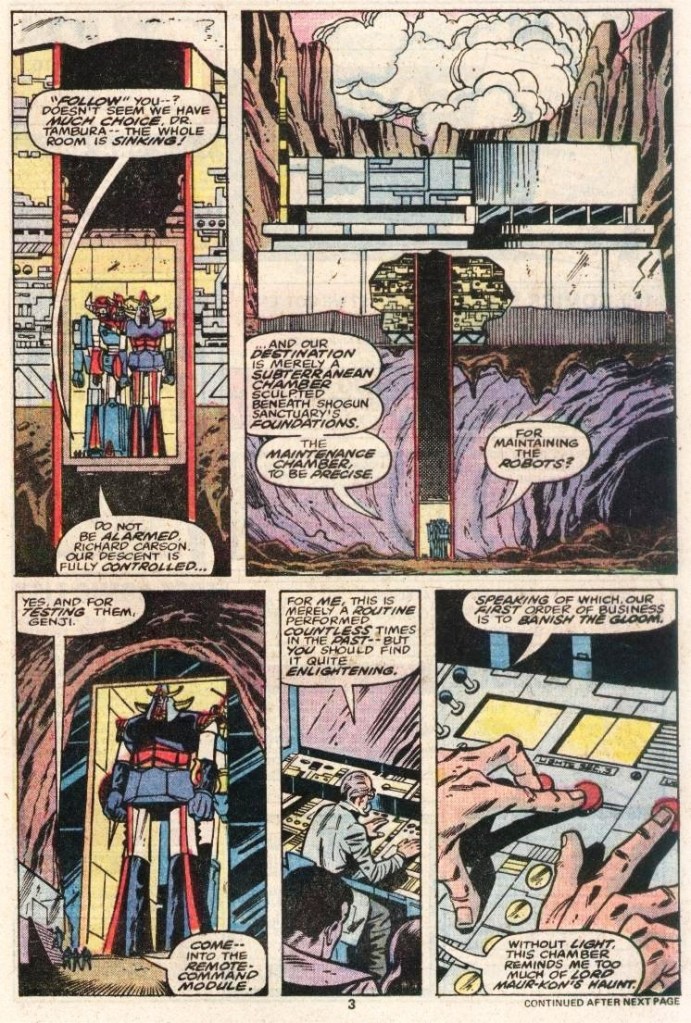
After giving them a quick tour of their subterranean chamber (where the robots receive maintenance and get tested), Dr. Tambura bring the three pilots into another place filled with high-tech controls. From there, they watch Dangard Ace, Raydeen and Combatra perform in field tests via remote control.

Meanwhile on a different island, the evil leader Maur-Kon rallies his so-called dark agents to rise and work together in seeking vengeance for their defeat in the great war chaos as they have found the forces of eternal good anticipating them. After much talk, Maur-Kon and his minions bow and kneel over bubbling magma murmuring evil phrases…

Quality

The three pilots get assigned with each robot.

Like the previous issue, this comic book has less than twenty pages of story and art. This results another heavy load of exposition or information dump on readers, and the narrative had a rushed pace. With regards to the battle between Raydeen and the giant monster, there is indeed a continuation of it. The giant monster was given some personality.

Again, there is no real character development here. The three pilots were not written to display any personality nor did the writer exert any effort to make readers relate with them. Instead, you will see them in training in speed beyond belief.

The highlight here is that Dangard Ace and Combatra finally got revealed and emphasized. Be warned, however, that there is lesser spectacle in this comic book and the story predictably served as a setup for what could be a more promising battle.

Conclusion

The pilots and the Shogun Warriors (the robots) go deep down.

Shogun Warriors #2 (1979) suffered from pretty much the same problems as issue #1. The noticeable difference here is that there is lesser action and lesser giant-sized spectacle shown here. That is not exactly surprising as the creators had to sacrifice something to make way for further explanation of the comic series’ grand concept.

If you are seriously planning to buy an existing hard copy of Shogun Warriors #2 (1979), be aware that as of this writing, MileHighComics.com shows that the near-mint copy of the regular edition costs $35 while the near-mint copies of the price-less and the Whitman editions cost $350 and $35 respectively.

Overall, Shogun Warriors #2 (1979) is less than satisfactory.

+++++

Thank you for reading. If you find this article engaging, please click the like button below and also please consider sharing this article to others. If you are looking for a copywriter to create content for your special project or business, check out my services and my portfolio. Feel free to contact me as well. Also please feel free to visit my Facebook page Author Carlo Carrasco and follow me at HavenorFantasy@twitter.com
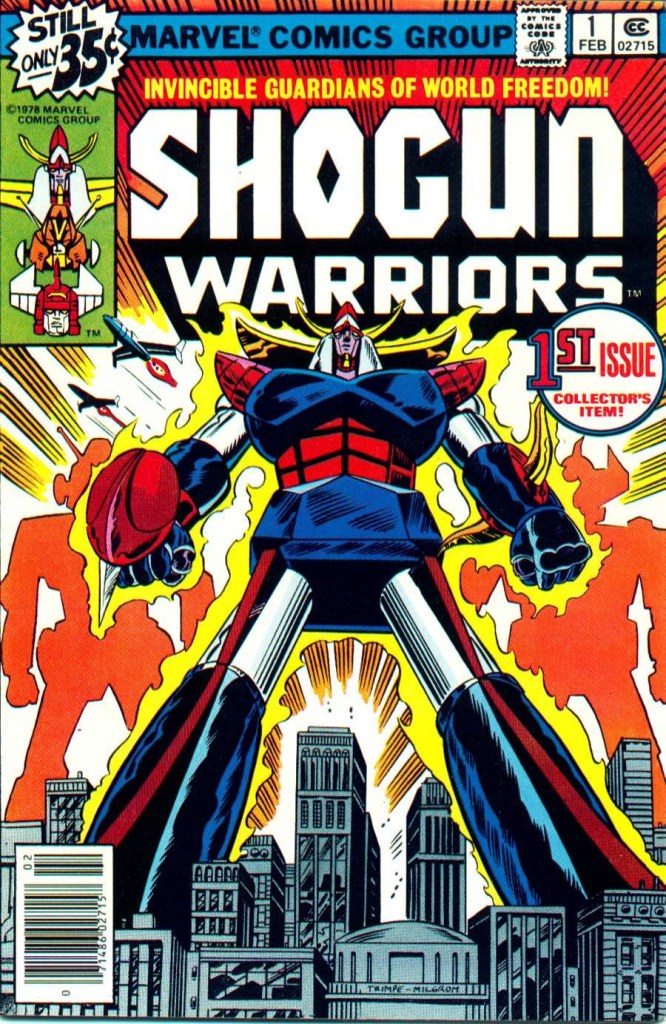
A Look Back at Shogun Warriors #1 (1979)

Disclaimer: This is my original work with details sourced from reading the comic book and doing personal research. Anyone who wants to use this article, in part or in whole, needs to secure first my permission and agree to cite me as the source and author. Let it be known that any unauthorized use of this article will constrain the author to pursue the remedies under R.A. No. 8293, the Revised Penal Code, and/or all applicable legal actions under the laws of the Philippines.

If you are fond of giant robots from Japanese pop culture as well as giant monsters and scenes of city structures getting destroyed, then you might want to take a look at the Shogun Warriors comic book series that was published by Marvel Comics from 1979 to 1980. To put things in perspective, Shogun Warriors was made possible through licensing deals and back in the 1970s, Marvel Comics had the rights to publish comic book about Japan’s famous icon Godzilla.

Specifically, Shogun Warriors involved Marvel Comics and Mattel which in turn organized a line of imported toys from Japan based on varied Japanese shows about giant robots. Among the many giant robots of the toy line, the robots Raideen, Combattler V and Dangard Ace became the featured fighting-for-good robots of the Shogun Warriors comic book series. For the literary works, Raideen was renamed as Raydeen while Combattler V was renamed as Combatra. Dangard Ace’s name was left unchanged.

With those details laid down, here is a look back at Shogun Warriors #1, published in 1979 by Marvel Comics with a story written by Doug Moench and drawn by Herb Trimpe.

The cover.

Early story

The story begins in the outskirts of Tokyo in Japan where giant robot Raydeen fights a large, tentacled creature enhanced with cybernetics. As the people on the street below them run away from the ongoing destruction, the monster fires a shot at Raydeen who blocks it but subsequently gets tied with one of the tentacles. The giant robot, which is operated by three pilots inside, breaks free and continues to fight the monster.

As the battle rages on, the city continues to get damaged heavily affecting the people…

Quality

Technically the organization kidnapped three people to be the pilots of their robots for Earth’s defense.

Having seen a lot of anime TV series episodes about giant robots, I’m familiar already with the storytelling formula that often focuses first on the human characters and their struggles before shifting the narrative on the giant robots that often fight large monsters or opposition robots. This particular comic book has some of that but the way the story is structured, it is different and can be a bit jarring.

Doug Moench structured the story to have Raydeen and the monster fighting in the present time followed shortly by a flashback that took place just hours prior. The flashback, which occupies 9 of the comic book’s 18 pages, is heavily filled with exposition meant to introduce readers to the three pilots Genji Odashu/Ilongo Savage/Richard Carson, what Earth defense force The Followers of the Light is, and why there are giant monsters ravaging the world. The exposition’s writing felt crammed and rushed for reading although it still succeeds in establishing the comic book’s grand concept.

When it comes to spectacle, this comic book is loaded with giant robot action and it is quite varied in style and execution. The funny thing is that you will only get to see Raydeen in action as this is an introductory story with only 18 pages of story.

The dialogue is a bit of a mess here, particularly with the early Raydeen scenes. As the battle with the monster goes on, there are these lines of dialogue reflecting the conversations between the pilots inside Raydeen who are not shown talking until late in the comic book.

Conclusion

Raydeen and the giant monster in battle.

Shogun Warriors #1 (1979) has a nice concept and its Westernized take on portraying giant robots and human characters is clearly different from the way things were done in the varied giant robot anime TV series of Japan. There is clearly no Japanese style melodrama as this one has its characters portrayed straight with a touch of American science fiction. That being said, do not expect to see the Japan-made characters of Raideen, Combattler V and Dangard Ace appear here as new characters were made in their place. The comic book’s story structure is a bit jarring to follow and the heavy exposition dump makes reading a bit of a chore. It is fun to read but not great. Those of who are fans of Combatra and Dangard Ace will be disappointed about the near-total absence of those robots.

If you are seriously planning to buy an existing hard copy of Shogun Warriors #1 (1979), be aware that as of this writing, MileHighComics.com shows that the near-mint copy of the regular edition costs $63 while the near-mint copy of the Whitman edition costs $35.

Overall, Shogun Warriors #1 (1979) is satisfactory.

+++++

Thank you for reading. If you find this article engaging, please click the like button below and also please consider sharing this article to others. If you are looking for a copywriter to create content for your special project or business, check out my services and my portfolio. Feel free to contact me as well. Also please feel free to visit my Facebook page Author Carlo Carrasco and follow me at HavenorFantasy@twitter.com
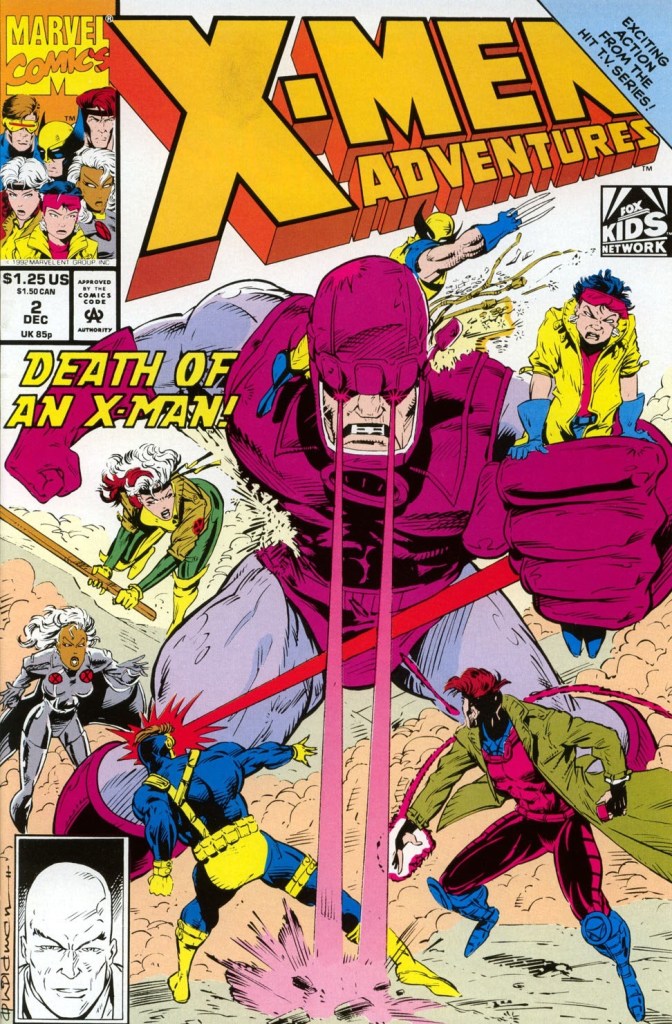
A Look Back at X-Men Adventures #2 (1992)

Disclaimer: This is my original work with details sourced from reading the comic book and doing personal research. Anyone who wants to use this article, in part or in whole, needs to secure first my permission and agree to cite me as the source and author. Let it be known that any unauthorized use of this article will constrain the author to pursue the remedies under R.A. No. 8293, the Revised Penal Code, and/or all applicable legal actions under the laws of the Philippines.

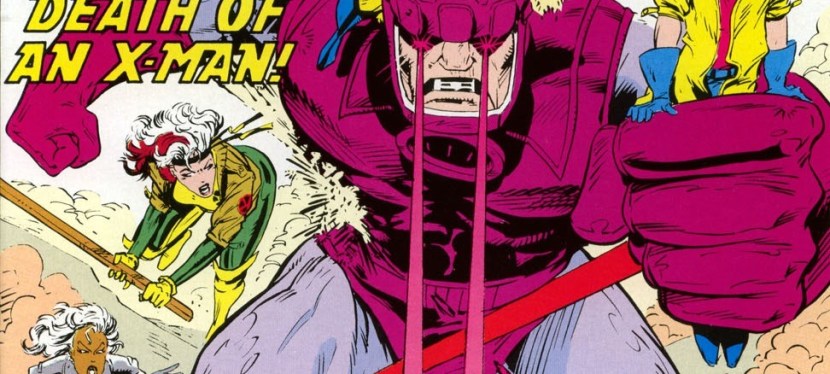
Having read lots of X-Men comic books, I should say that I always find the Sentinels (first appearance in The X-Men #14 in 1965) to be more memorable as enemies of Marvel’s mutants. On face value, they only look like oversized, human-like robots but I always find them to be formidable opponents of the X-Men. These machines are not only built with sophisticated technologies, they are able to push the X-Men to their limits during battle.

These anti-mutant robots, by the way, were ranked by IGN at #38 in their Greatest Comic Book Villains chart. Long before that, the Sentinels were the featured anti-heroes in the classic X-Men comic book storyline Days of Future Past and it was no surprise that they were also featured in the 2014 movie X-Men: Days of Future Past.

And then in the early 1990s, the Sentinels were shown in the first episode of the X-Men animated series on television. The said series was also adapted into an “as seen on TV” comic book series by Marvel called X-Men Adventures.

This brings me to this look back at X-Men Adventures #2, published in 1992 by Marvel Comics with a story by Ralph Macchio and drawn by Andrew Wildman.  

The cover.

Early story

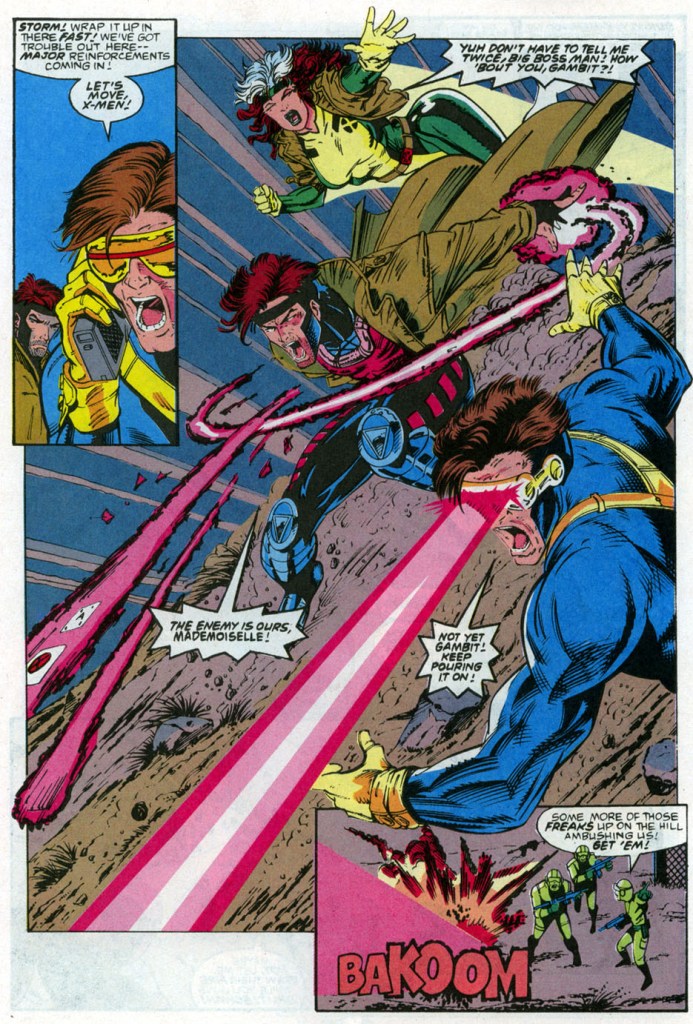
The story begins with Morph suffering from a nightmare. As he emerged from the vision, he finds himself with Storm, Beast and Wolverine. Together they work to infiltrate a federal government facility which houses the Mutant Affairs Department. Outside the walls of the facility, Rogue Gambit and Cyclops watch from a distance. Cyclops fires his optic blast at the vehicle that just dropped reinforcements that he believes were sent to stop their teammates.

Storm and her teammates break through a door instantly pushing off the security personnel followed by Beast knocking an additional guard. At the room containing the computer, Beast begins to access key information their team has been seeking…

Quality

The Sentinels and the X-Men!

Let me start with the storytelling. As an adaptation of one of the early episodes of the animated series, this comic book does a fine job of recapturing its essence complete with a nice balance between plot, exposition and spectacle. Considering the fact that the animated series was aimed for children, it’s quite intriguing to see the TV episode carrying really heavy themes – apart from the prejudice the mutants suffer from – like top federal government operations, expensive defense and weapons programs, government intrusion into people’s private lives, attempts to require minorities to get registered, etc. Those themes also made it in this comic book which made it feel like it was part of the mainstream X-Men comics of the time.

Compared to the first episode as well as its literary adaptation, this one emphasizes the Sentinels as tools of the government as part of their very expensive program to seek and monitor mutants among their citizens. Mutant Affairs director Peter Gyrich is clearly the villain who has no super powers but has the resources of the federal government and their authority to take action on mutants he perceived to be dangerous.

On the visuals, Andrew Wildman performed a solid job making each page look interesting and detailed enough. While his drawings made each character recognizable to me, it is in the spectacular scenes where he really shines. Wildman’s drawing of the Watcher on the final page of the comic book, however, looks laughable.

Conclusion

Andrew Wildman’s dynamic drawing of the X-Men in action.

While X-Men Adventures #2 is not exactly a literary classic, it is indeed a very solid adaptation of one of the earliest episodes of the animated series of the 1990s. It succeeded on telling a compelling and enjoyable story even though it emphasized the above-mentioned serious themes. As for the iconic Sentinels, this one succeeded in explaining what they are and their place in Marvel’s universe is.

If you are seriously planning to buy an existing hard copy of X-Men Adventures #2 (1992), be aware that as of this writing, MileHighComics.com shows that the near-mint copy of the regular edition costs $8 while the near-mint copy of the newsstand edition costs $26.

Overall, X-Men Adventures #2 (1992) is recommended.

+++++

Thank you for reading. If you find this article engaging, please click the like button below and also please consider sharing this article to others. If you are looking for a copywriter to create content for your special project or business, check out my services and my portfolio. Feel free to contact me as well. Also please feel free to visit my Facebook page Author Carlo Carrasco and follow me at HavenorFantasy@twitter.com
A Look Back at RoboCop versus The Terminator #2 (1992)

Disclaimer: This is my original work with details sourced from reading the comic book and doing personal research. Anyone who wants to use this article, in part or in whole, needs to secure first my permission and agree to cite me as the source and author. Let it be known that any unauthorized use of this article will constrain the author to pursue the remedies under R.A. No. 8293, the Revised Penal Code, and/or all applicable legal actions under the laws of the Philippines.

Previously, I found RoboCop versus The Terminator #1 an underwhelming crossover comic book. This was due to the way the story was structured and it had a protagonist who was not interesting to follow. It does not help that RoboCop himself did not appear much in the story while the Terminators were nothing more than window dressing.

Now that the exposition and build-up has been done in the first comic book, we can find out if RoboCop and the Terminator will finally become more prominent in this look back at RoboCop versus The Terminator #2, published in 1992 by Dark Horse Comics with a story written by Frank Miller and drawn by Walt Simonson.

Cover
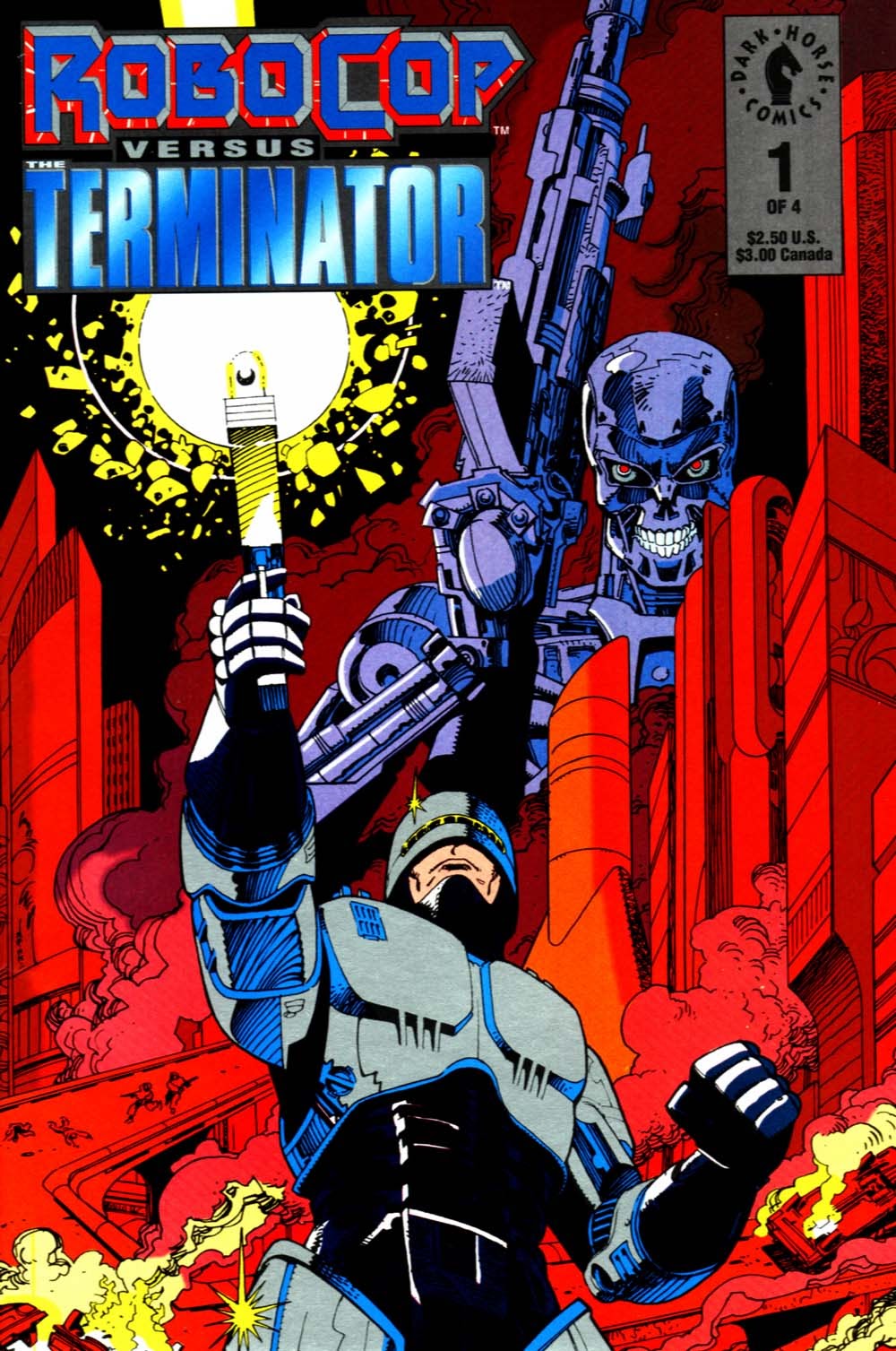
The cover.

Early story

The story begins in the dark future. A young boy finds himself in the middle of a war zone surrounded by explosions and blasts. With a broken leg, he crawls up the steps of a ruined place only to find himself facing a T-800 Terminator which kills him. The Terminator, acting like a human, raises the boy’s dead body to other Terminators which raised and clenched their firsts to acknowledge victory.

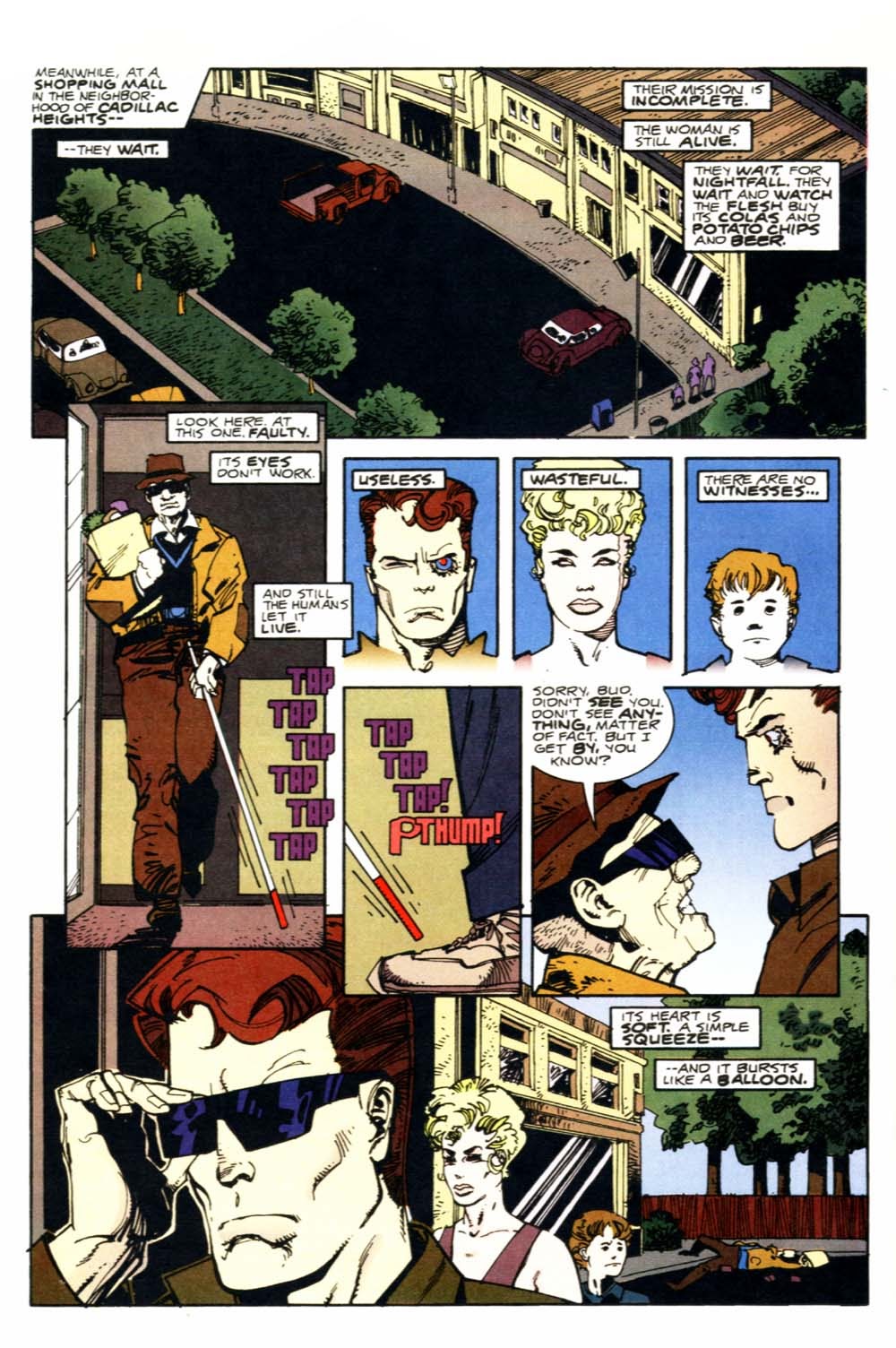
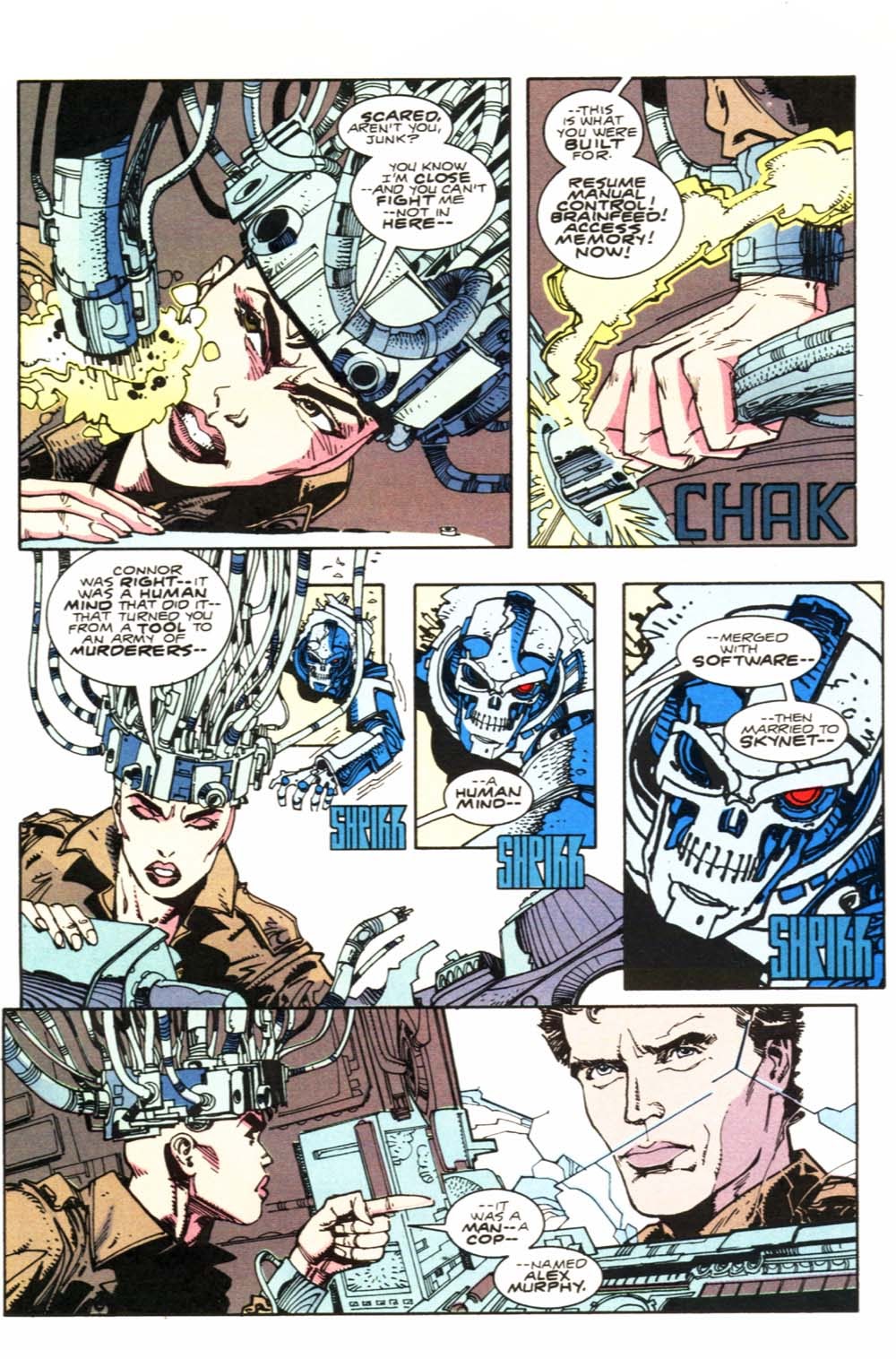
The story then moves back to 20th century Detroit, Michigan. An ED-209 operating for the city hospital fires at a dog until it got stopped by police officers. RoboCop arrives and enters the hospital with his gun catching everyone’s attention. He enters the room where the young lady from the far future is resting. Knowing that RoboCop is responsible for Skynet and the eventual war between man and machines, she remains hostile towards him.

In response to RoboCop’s inquiry about the weapon used during the shooting incident (that happened at the end of issue #1), the lady responds saying, “You really don’t get it. Do you, monster? Well, you will get it when they plug you into Skynet in a copy of years—when your mind makes the Terminators possible—when you mind starts a war that wipes us out, maybe then you’ll get it!”

Even though he is mostly machine and has been computerized RoboCop (Alex Murphy) was compelled to deeply analyze what the lady from the future said. He decides to investigate…

Quality

24
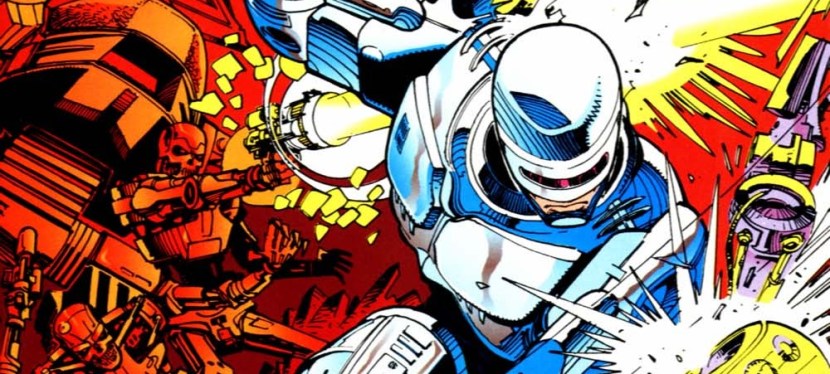
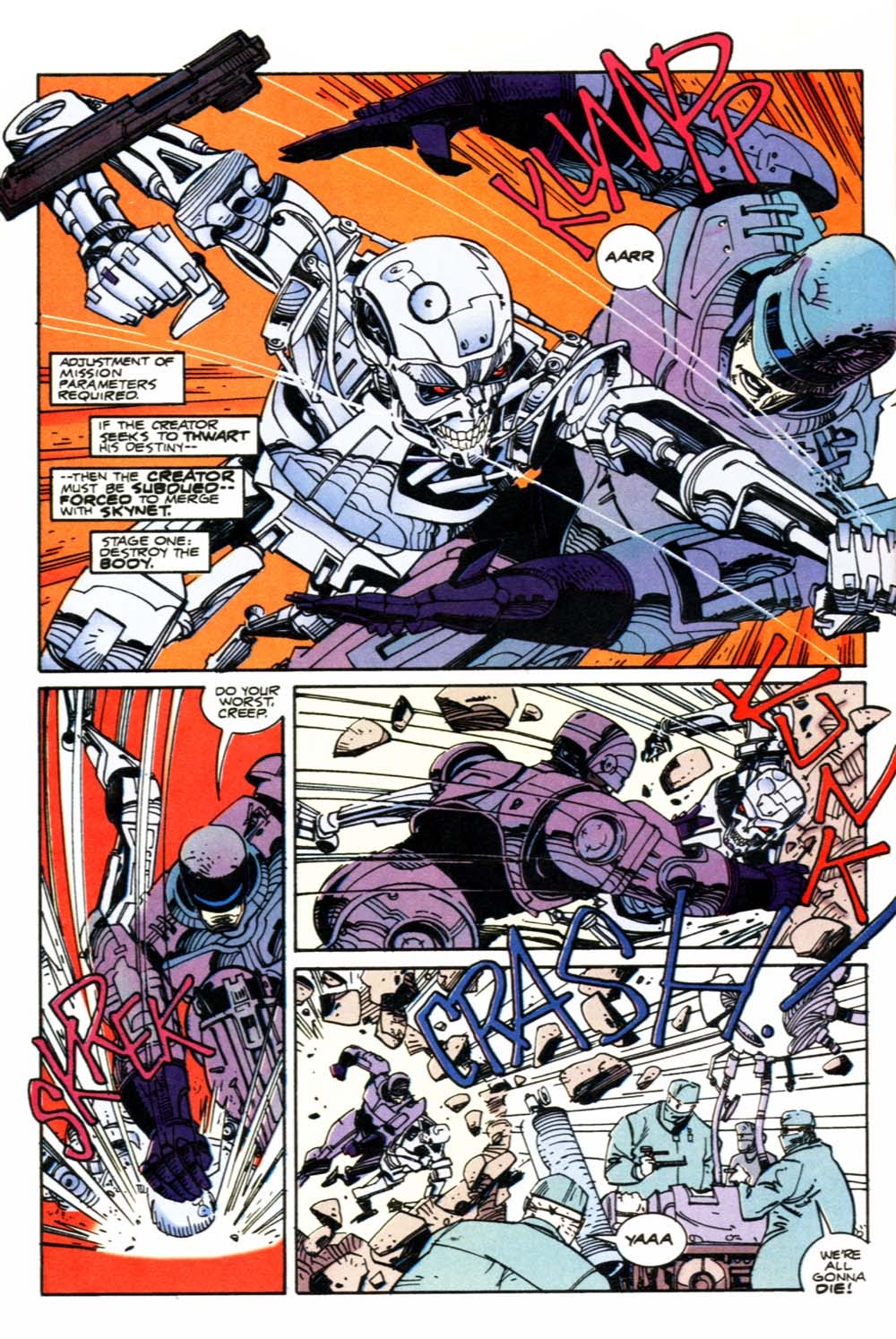
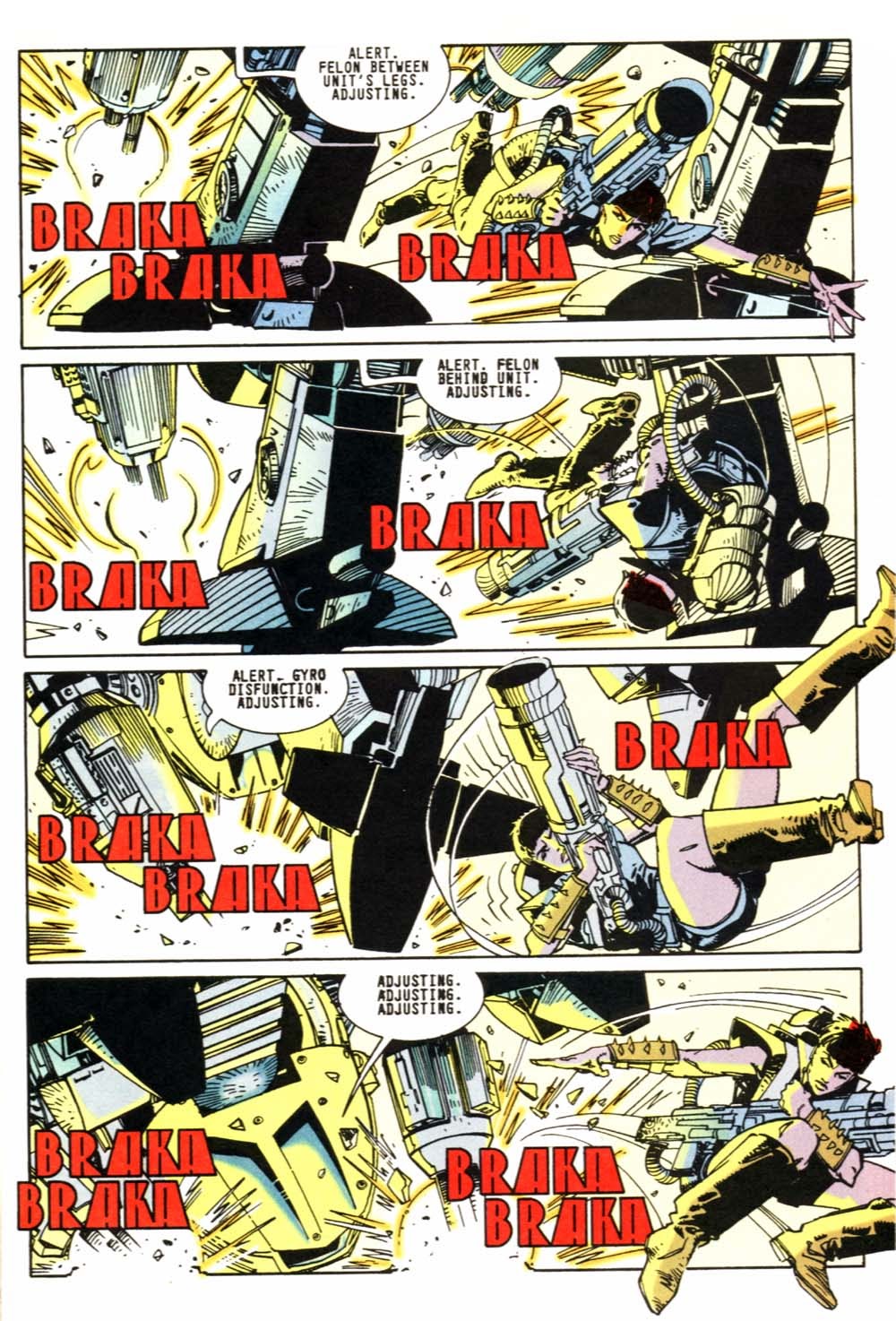
Hard-hitting action between the two pop culture icons is plentiful and satisfying!

With regards to presentation, I should say that the creative team bounced back big time here delivering lots of fun stuff about RoboCop and the Terminator. The plot, for the most part, is well written and there was a lot of room to have Detroit’s cyborg cop go into conflict with more than one Terminator finally paying-off the build-up that dominated the first issue. There were even a few scenes of dark humor spotted here and there. When it comes to fusing the respective creative elements of the RoboCop and Terminator intellectual properties, this was nicely pulled off. Even ED-209, a rival of RoboCop’s in the movies, got involved in battling a T-800. When it comes to the art, Walt Simonson’s work here is satisfactory at best. He does a decent job visualizing the hard action between RoboCop and the T-800 but there is that cartoony aesthetic of Simon’s that I found to be out of place within this crossover.

Conclusion

14
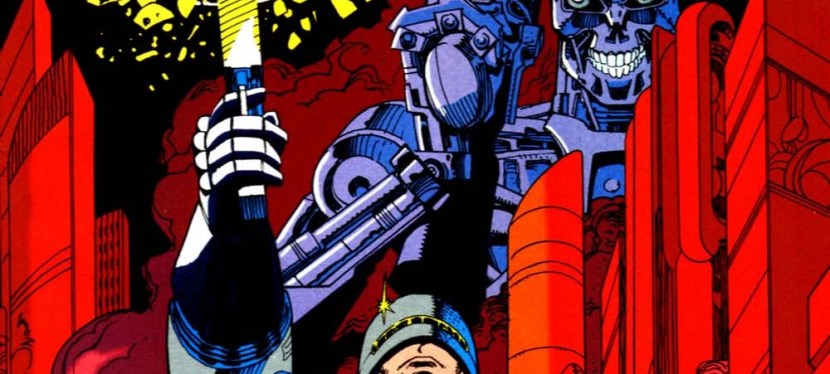
Three Terminator units in different sizes.

I’m happy to say that fans of both RoboCop and the Terminator will have a lot of good stuff to enjoy in RoboCop versus The Terminator #2. The build-up and heavy exposition in the first issue paid off nicely in this comic book. Those who got annoyed with the lady from the future will be relieved that her spotlight in this issue was heavily reduced. As expected, the fight between RoboCop and the T-800 is brutal and plentiful although the impact could have been stronger had someone else illustrated this comic book. By the end of the story, I was very satisfied and ended up looking forward to the next issue.

If you are seriously planning to buy an existing hard copy of RoboCop versus The Terminator #2 (1992), be aware that as of this writing, MileHighComics.com shows that the near-mint copy costs $6.

Overall, RoboCop versus The Terminator #2 is highly recommended!


Thank you for reading. If you find this article engaging, please click the like button below and also please consider sharing this article to others. If you are looking for a copywriter to create content for your special project or business, check out my services and my portfolio. Feel free to contact me as well. Also please feel free to visit my Facebook page Author Carlo Carrasco and follow me at HavenorFantasy@twitter.com
A Look Back at RoboCop versus The Terminator #1 (1992)

Disclaimer: This is my original work with details sourced from reading the comic book and doing personal research. Anyone who wants to use this article, in part or in whole, needs to secure first my permission and agree to cite me as the source and author. Let it be known that any unauthorized use of this article will constrain the author to pursue the remedies under R.A. No. 8293, the Revised Penal Code, and/or all applicable legal actions under the laws of the Philippines.

Back in the early 1990s, I was already a fan of the Terminator and RoboCop mainly due to their respective first movies released in the 1980s which became cinematic classics. While RoboCop 2 never came close to the quality of the 1987 original movie, Terminator 2: Judgment Day literally rocked the cinemas and went on to become one of the greatest film sequels ever made. Back then, there was a lot to be excited for over the two entertainment franchises.  One day during my high school days (note: there was no social media and Internet access in the Philippines was not yet established), I learned from reading a comic book industry magazine that a crossover comic book mini-series matching the Terminator and RoboCop together. That news excited me a lot and before the end of 1992, I bought myself a copy of the comic book RoboCop versus The Terminator #1 (note: this one has gone out of print).

With the history explained, let’s all take a look back at RoboCop versus The Terminator #1, published in 1992 by Dark Horse Comics with a story by Frank Miller (note: the same successful comic book creator who actually worked on RoboCop movies in Hollywood) and art by Walt Simonson.

Cover
The cover.

Early story

The story begins in the far future wherein human society has been ruined and the world became a constant battleground of a war between powerful machines and desperate humans. Inside a facility being invaded by the machines, a lady working for the rebels has been using computers (via brainfeed) in the battle with Skynet. As far as she knows, leader John Connor has been right in telling her that it was a human mind that merged with software and got linked with Skynet. She points to the 20th century historical figure Alex Murphy/RoboCop as the one responsible for the war.

Before Skynet’s machines reach her, she strips naked and made a desperate trip back through time. She successfully makes a hard landing into the middle of a city in a time before the war. After struggling with the sudden change, she arms herself and sets off to kill Alex Murphy…

Quality

16
Something is off with the pacing of the action here.

Let me start that this particular mini-series has a very intriguing concept that made it stand on its own (as opposed to simply referencing core concepts of the movies). This is about RoboCop’s technology being used to establish Skynet and this launch comic book emphasized that nicely.

When it comes to storytelling done with this particular comic book, things felt very uneven. For a comic book that strongly focused on the Terminator and RoboCop, this was mainly the story of the rebel lady from the future whose mission was to eliminate officer Alex Murphy in a bid to change the future. While she is portrayed to be highly determined and works by action, the character is never interesting and not worth investing your attention to.

For his part, RoboCop was literally placed on the backseat in this story and he makes his first appearance in the 2nd half starting with crime-busting. Considering the lack of spotlight, the sci-fi icon himself is not even interesting to follow which is disappointing.

The clear representation of evil here is Skynet and its army of Terminators. To say the least, the machines here make a worthy menace to read and somewhat made up for RoboCop and the lady rebel being uncompelling characters.

When it comes to the art, I should say that Walt Simonson’s visuals are not great to look at. There were crooks that had a cartoony aesthetic on the faces, Terminators that don’t even come close to their cinematic designs and some images looked rushed. At least Simonson’s RoboCop looks recognizable and was satisfactory with the action.

Conclusion

6
The target: Alex Murphy/RoboCop.

I still remember how underwhelmed I got after completing RoboCop versus The Terminator #1 the first time way back in 1992. It’s even more underwhelming by today’s standards. Of course, the comic book was essentially a build-up issue with the pay-off supposed to happen in the remaining issues. Its best selling point is the fusion of RoboCop and Terminator concepts that helped establish its own universe.

If you are seriously planning to buy an existing hard copy of RoboCop versus The Terminator #1 (1992), be aware that as of this writing, MileHighComics.com shows that the near-mint copy of the regular edition costs $17 while the near-mint copy of the platinum edition costs $170.

Overall, RoboCop versus The Terminator #1 (1992) is satisfactory. That being said, I would not recommend paying a lot of money for this comic book. Find a near-mint copy priced below $10.


Thank you for reading. If you find this article engaging, please click the like button below and also please consider sharing this article to others. If you are looking for a copywriter to create content for your special project or business, check out my services and my portfolio. Feel free to contact me as well. Also please feel free to visit my Facebook page Author Carlo Carrasco and follow me at HavenorFantasy@twitter.com
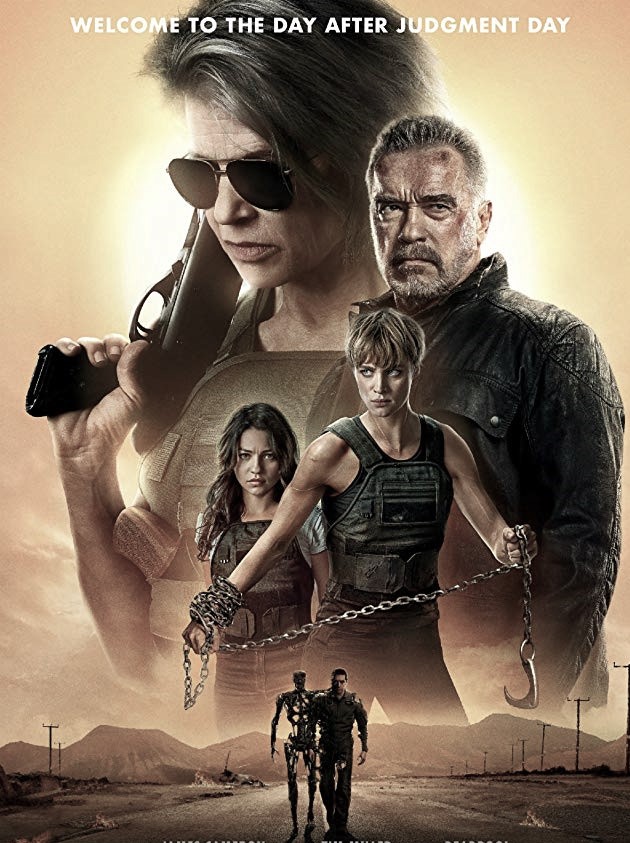
Carlo Carrasco’s Movie Review: Terminator: Dark Fate

I will just say it straight and clearly – the Terminator film franchise is truly unnecessary today and, having seen its debut in the year 1984 (written and directed by a very young James Cameron), I should say that the saga really ended with 1991’s Terminator 2: Judgment Day (Cameron’s masterpiece).

Out of curiosity, instead of anticipation, I got to watch Terminator: Dark Fate at the local cinema. Having been disappointed with Terminator 3: Rise of the Machines, Terminator: Salvation (a bad movie notorious for Christian Bale’s loss of self-control) and Terminator: Genisys (the most insulting and most screwed up film of the franchise), I had low expectations for Dark Fate.

Ultimately, I left the cinema disappointed yet again although the experience was not as bad as that of 2015 (with Genisys).

Screenshot_20191113-134912_YouTube.jpg
Clearly, the filmmakers took inspiration from Star Wars: The Force Awakens and mix the more established film franchise stars (in supporting roles) with the younger actors.

To put it short, Terminator: Dark Fate took creative inspiration from 2015’s Star Wars: The Force Awakens. This means it was made with recycled concepts, told the story through its new characters (played by actors who are much younger and who are supposed to appeal to younger viewers) and back them up with the old, more iconic actors (Arnold Schwarzenegger and Linda Hamilton) limited to supporting roles. When it comes to presentation, this new movie felt more like a roller coaster ride than an actual story laced with spectacle stage-by-stage.

That is pretty much how Terminator: Dark Fate turned out. It does not matter that this was directed by Tim Miller, the guy behind 2016’s Deadpool. It does not matter that the great James Cameron got involved with producing and story credit (he shared with a few other names). It does not matter that this movie was made with a large budget of $185 million and relied heavily on computers to generate the visuals (which look fake most of the time). Whatever the preparations made, they did not matter at all because Terminator: Dark Fate is a rushed and creative disappointment that does not deserve your time nor your money.

The movie opened with archived footage of Sarah Connor expressing the darkness of the future coming. This was immediately followed by a scene set in 1998 showing Sarah and her son John living in an age in which Judgment Day did NOT occur on August 29, 1997. Suddenly another Terminator T-800 Model 101 (another Schwarzenegger-type Terminator) appears and actually kills John Connor leaving Sarah in turmoil.

Screenshot_20191113-135025_YouTube.jpg
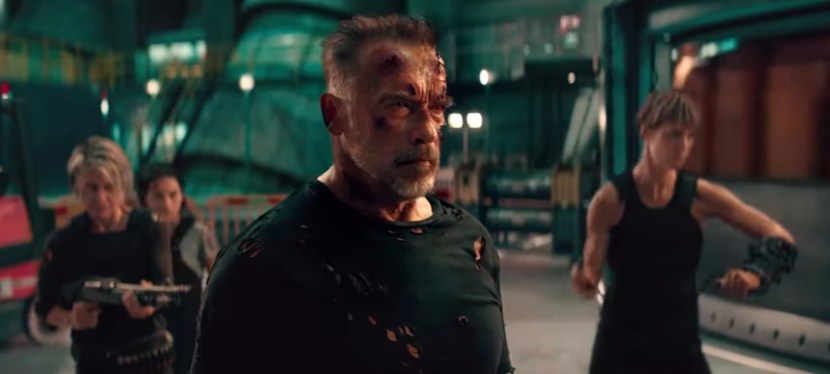
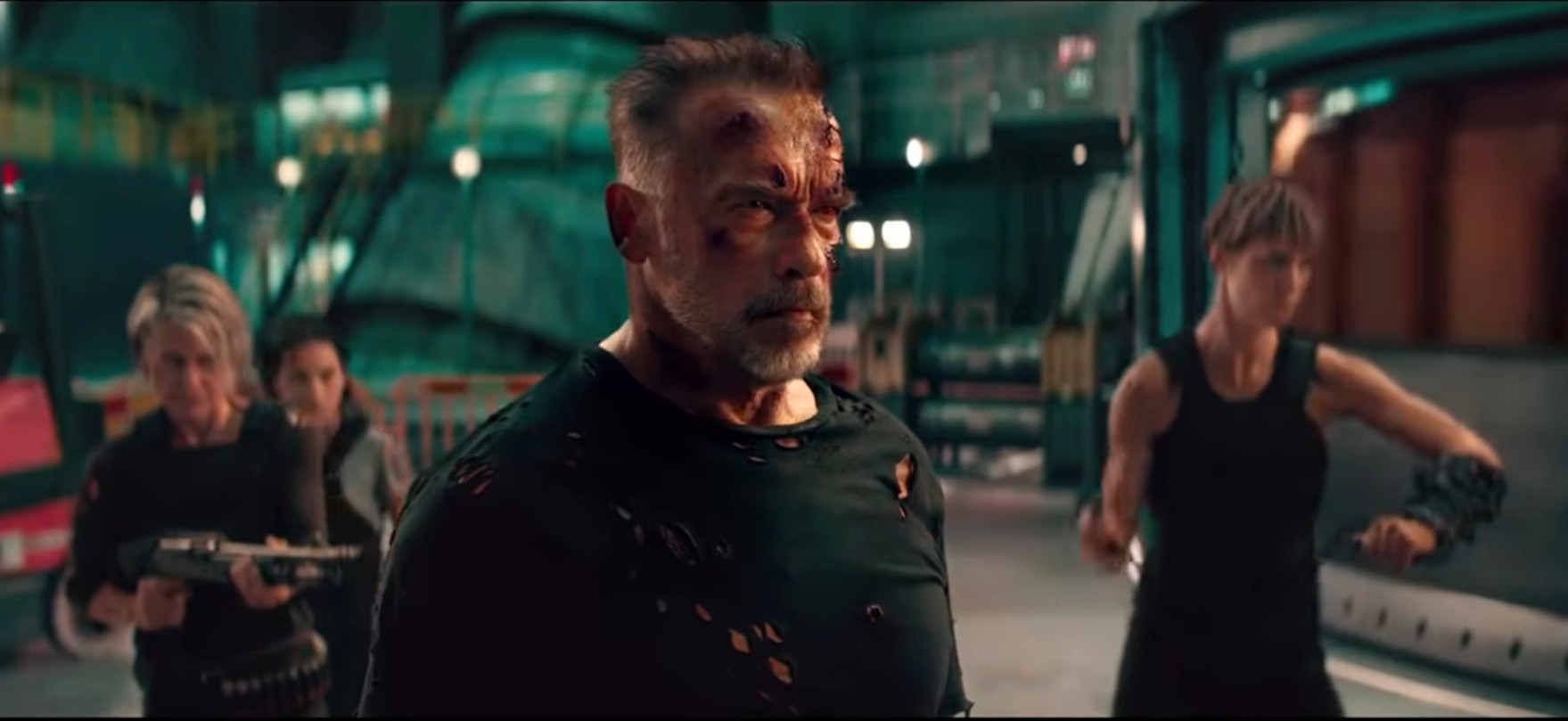
This is the protector sent through time by the human resistance.

John Connor, who has been a central story element in the 1984 and 1991 (memorably played by Edward Furlong) movies as he was destined to be the human resistance leader in the war with Skynet, was eliminated so quickly in the opening of this new movie very similar to how the character of Dwayne Hicks (played by Michael Biehn in the James Cameron-directed Aliens) got killed in a very dismissive way in the beginning of Alien 3. This move was nothing less than cynical, ill-conceived and even a daring disservice to Terminator fans.

From this point on, Terminator: Dark Fate turns into a “what if John Connor was dead and a new future war followed?” type of story.

Even though Judgment Day got prevented in relation to what Sarah and John achieved in Terminator 2, a new war between man and machines in the far future still occurs only this time Skynet is no more and the new enemy artificial intelligence (AI) this time is called Legion. This new story concept, by the way, is pretty insulting to any fan who loved the first two films directed by James Cameron as those flicks told a complete saga.

Screenshot_20191113-135131_YouTube.jpg
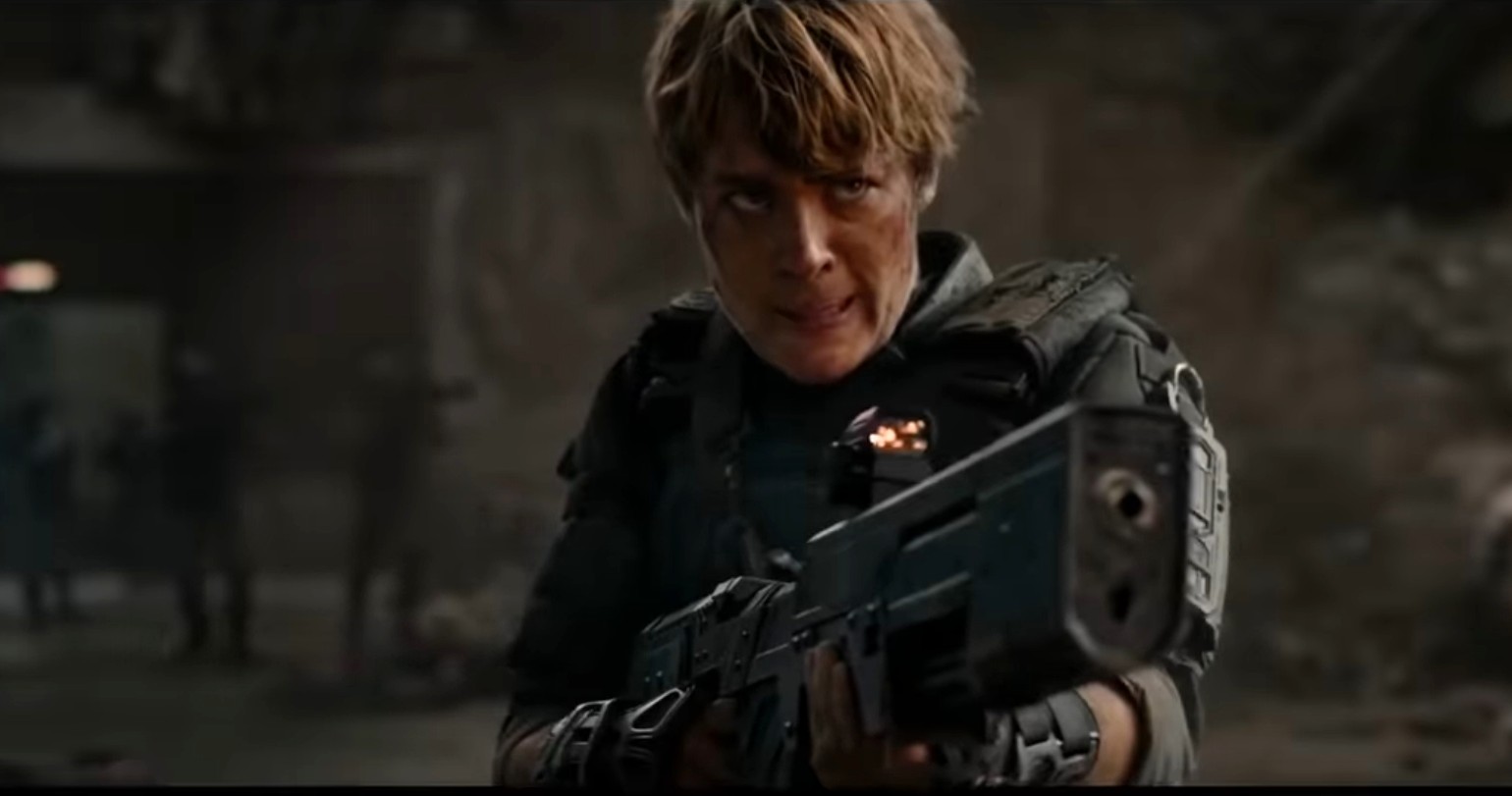
This is the new, future leader of the human resistance.

And then the plot of The Terminator got recycled. A human fighter is sent back through time to protect a person who is destined to become the leader of the human resistance. Also sent back through time is a Terminator designed to look human and infiltrate society with a mission to kill the future human resistance leader. This is essentially what Terminator: Dark Fate truly is and even though Sarah Connor returned (plus another Terminator T-800 played by Schwarzenegger), there really is nothing new, nothing fresh and nothing worth enjoying.

When it comes to quality, this movie does not have much standing for it. The new characters are not engaging at all and their respective performers really had nowhere to go to engage moviegoers. Mackenzie Davis playing the new combat-ready protector only served to beef the film with action and there is nothing compelling about her act, nor did the script provide anything to make her androgynous character memorable. The new human resistance leader played by Natalia Reyes is forgettable and unbelievable even though she tried hard being dramatic. Compared with Sarah Connor in 1984’s The Terminator, the chosen one Dani Ramos in the film was transformed from a struggling, working-class person into a brave fighter in a very rushed and unconvincing manner. Also, if you take a close look at Natalia Reyes, she is too short to be a figure of authority, too small to use weapons and her act is clearly sub-par in terms of quality making her big misfire in terms of casting. The performance, script and directing really had no depth when it comes to developing the characters.

The new Terminator (Rev-9) played by Gabriel Luna was nothing more than an uninspired attempt to outdo the T-1000 of Terminator 2. Luna was decent with playing cold and emotionless but when he acts human to infiltrate human society, he’s just generic at best.

Screenshot_20191113-135243_YouTube.jpg
This is the new cinematic villain that won’t stop to kill the future leader of the human resistance. Oh, the computer-generated visuals are often fake to look at.

As for Arnold Schwarzenegger and Linda Hamilton returning, it is sad for me to say that these two iconic performers of the film franchise got wasted. Sarah Connor in this movie was poorly written and this modern version ruins the legacy the character had since 1991. Schwarzenegger meanwhile played another T-800 Terminator whose adjustment into human society turned out to be unconvincing, even outlandish. A Terminator adjusting into domestic human life? Totally unbelievable!

If there is anything to admire in this ill-conceived movie, it is Schwarzenegger’s delivery of his lines as the Terminator. He was over 70-years-old at the time of filming and he no longer has the super fit, muscular build he was famous for but he still proved to be excellent in being robotic with the dialogue. Sadly, this good stuff from the ex-governor of California was not enough to save this movie from its dark fate.

The film has a lot of action and there is a notable variety of it here. Even though action-packed and the action quality is an improvement over Terminator 3, Salvation and Genisys, Terminator: Dark Fate is ultimately a ride that can only provide temporary relief from the pain of the weak script. Oh, the use of fake-looking CGI hurts the action and stunts

Conclusion

TermiDF
Let this be the LAST Terminator movie and let it fade away. How? By NOT spending your precious time and money on it.

Terminator: Dark Fate clearly failed to be a solid film and definitely it is NOT worthy of being the official follow-up (the “real Terminator 3”) to the first two films written and directed by James Cameron. Cameron’s involvement with this movie did not really improve the situation of the deteriorating Terminator film franchise and even worse, this big disappointment taints his record of excellence as a producer. Director Tim Miller, in my opinion, should go back to superhero film making or try directing a brand new project of science fiction that does not involve an established intellectual property.

Bottom line – Terminator: Dark Fate is absolutely not recommended. You definitely should NOT spend your money on this movie (the cinema, future release on streaming services, Blu-ray, DVD, etc.). The movie is also woke garbage and the product of DEI (diversity, equity and inclusion).

If you want to experience the cinematic greatness of the Terminator film franchise, go back to watching The Terminator and Terminator 2: Judgment Day instead.


Thank you for reading. If you find this article engaging, please click the like button below and also please consider sharing this article to others. Also my fantasy book The World of Havenor is still available in paperback and e-book format. If you are looking for a copywriter to create content for your special project or business, check out my services and my portfolio. Feel free to contact me as well. Also please feel free to visit my Facebook page Author Carlo Carrasco and follow me at HavenorFantasy@twitter.com
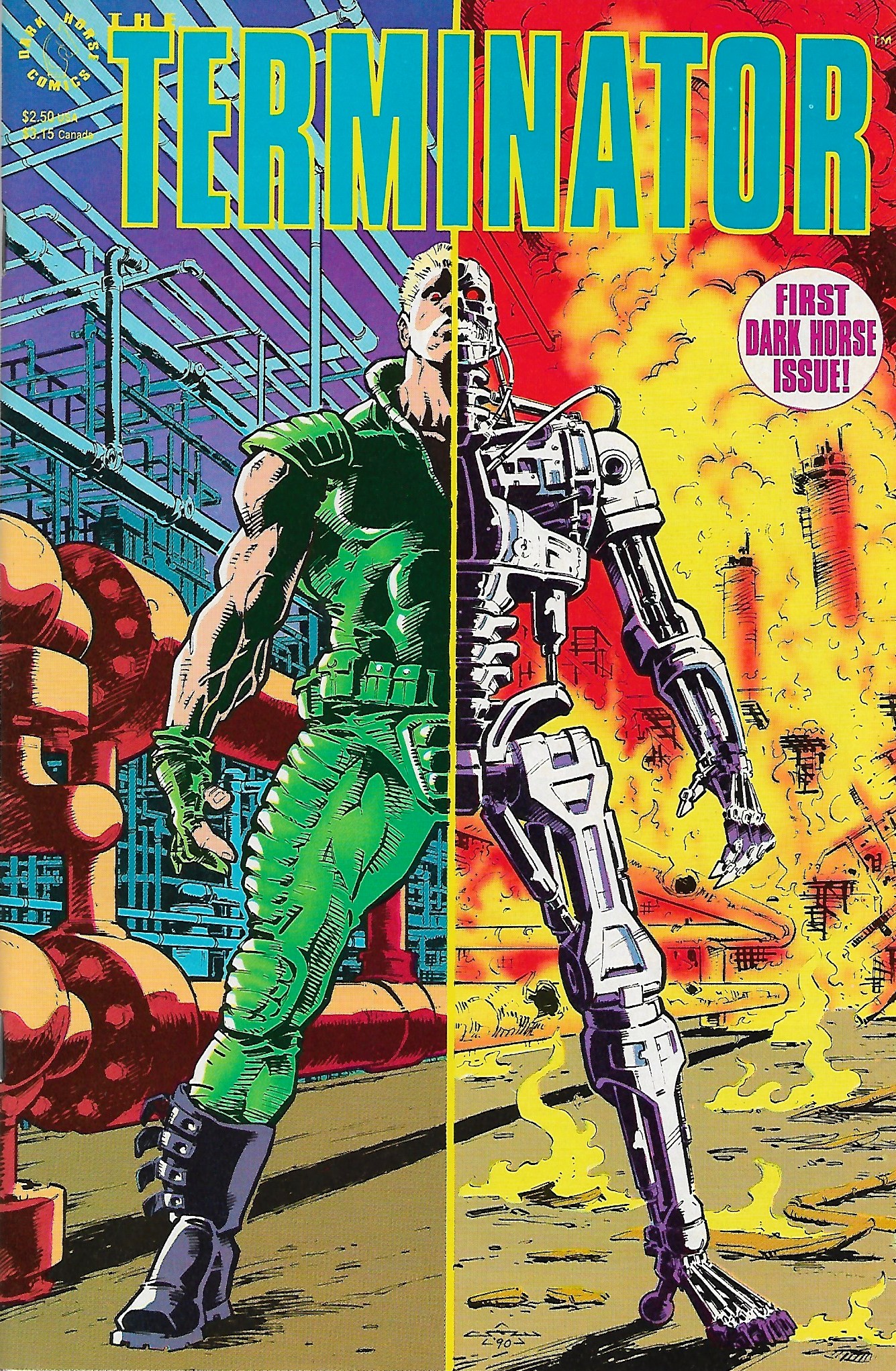
A Look Back At The Terminator #1 (1990)

Way back in 1984, a low-budget movie titled The Terminator became a hit with moviegoers which greatly helped the careers of Arnold Schwarzenegger, Linda Hamilton and writer-director James Cameron. Terminator 2: Judgment Day became a massive hit worldwide in 1991 establishing the Terminator franchise as an important one leading to more movies (released in 2003, 2009 and 2015), video games and even a TV series. Oh yes, the upcoming film Terminator: Dark Fate will be released very soon and it now involves James Cameron.

Way back in 1990, a follow-up to the 1984 classic was released that did NOT involve Schwarzenegger, Cameron and Hamilton at all. The follow-up was a 4-issue mini-series titled The Terminator and was published by Dark Horse Comics which back then was licensed to do comic books of the Terminator franchise.

This is my review of The Terminator #1, written by John Arcudi and drawn by Chris Warner with ink work by Paul Guinan.

2019-09-30_082047~2.jpg

Early story

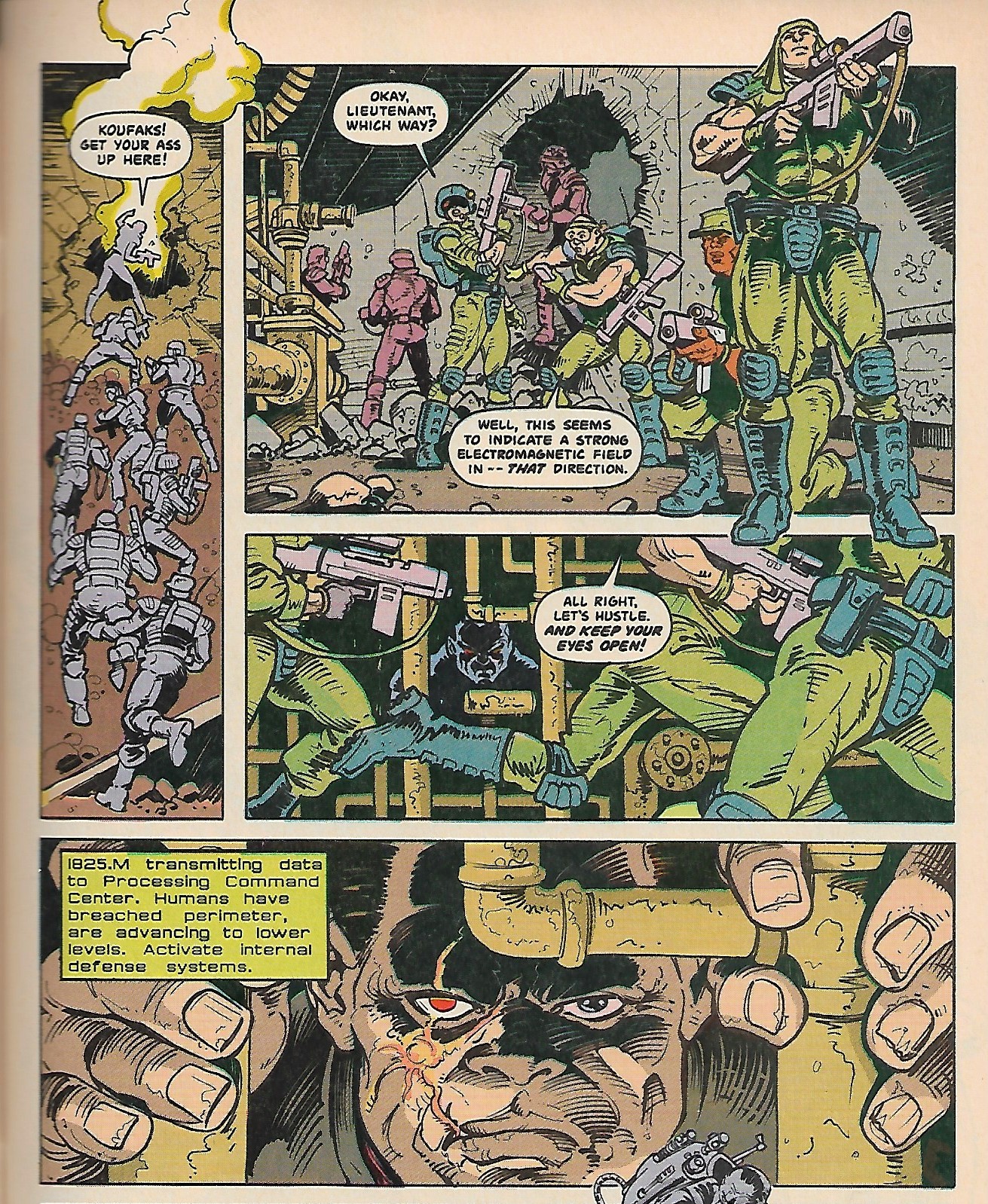
The comic book opens in the year 2029. In the ruins of Los Angeles, a band armed humans struggle against the machines of Skynet during the night. They infiltrate a facility to find one of Skynet’s time displacement chambers which they learned previously from their leader John Connor. Thanks to Connor’s intervention, Skynet’s attempt to change history failed but the big catch is that only a prototype of the time displacement chamber was discovered. The final model of the chamber remains.

2019-09-30_082201~2.jpg

As the armed guys make their way through, a Terminator watches them secretly….

Quality

When it comes to the writing, I can clearly see that John Arcudi (best known for The Mask) exerted effort to make this comic book relevant to the 1984 movie using key details such as the humans operating on the field only at night time (because Skynet will easily detect them during the day). Arcudi, however, expanded a bit on the franchise’s cinematic elements by emphasizing the use specific machines (steel-and-chrome wombs or tissue-generating chambers) to cover Terminator units with flesh and blood, and most notably, the use electronic communication between Terminator units which resemble telepathy among humans.

Cyberdyne, the fictional corporation heavily emphasized in Terminator 2, made an appearance in this comic book. With regards to Skynet, Arcudi emphasized that the living network was a lot more resourceful than what the movies suggested. The comic book has a nice build-up and along the way, the use of expository dialogue was pretty efficient and they are quite helpful for readers to grasp the story and key details.

With regards to the art work, Warner’s art style has that somewhat cartoony aesthetic on not just the humans but even on the machines. There were several Terminator units displayed without the flesh and from the way they were drawn, I could not even tell if those units were the T-800 type. Warner’s drawings on the physical environments carry a good amount of detail.

2019-09-30_082306~2.jpg
Terminator stealthy approach captured nicely.

While Warner’s drawing has a cartoony aesthetic, the illustrated action is pretty violent and has quite an impact in some shots. There are some bloody images and implied nude shots as well.

Conclusion

What can I say? I bought The Terminator #1 at the Hobby Con this past weekend out of pure curiosity. After reading it thrice, I should say that I found this comic book proving to be better than what I expected. It is a surprisingly good read and the fact that this was published roughly a year BEFORE the release of Terminator 2: Judgment Day, I found this to be a worthy follow-up to the 1984 movie. In fact, it’s so good a follow-up I’d rather read it than waste my time watching Terminator 3: Rise of the Machines, Terminator Salvation and the very awful Terminator: Genisys.

As such, I declare that The Terminator #1 is recommended.


Thank you for reading. If you find this article engaging, please click the like button below and also please consider sharing this article to others. Also my fantasy book The World of Havenor is still available in paperback and e-book format. If you are looking for a copywriter to create content for your special project or business, check out my services and my portfolio. Feel free to contact me as well. Also please feel free to visit my Facebook page Author Carlo Carrasco and follow me at HavenorFantasy@twitter.com
Transformers at Toycon 2019

During the recent Toycon at the SMX Convention Center in Pasay City, I took time out to take a look at the displays of the Transformers.

To be clear, the Transformers I got oriented with as a youth was way back in the 1980s when the animated series (specifically Generation One) was released which also saw the rise of the popularity of the accompanying toy line. I also have fond memories of the 1986 film The Transformers: The Movie.

Frankly speaking, I’m not too fond of the modern Transformers that appeared in the movies directed by Michael Bay. As such, I took pics of the Transformers at the exhibits of Toycon with nostalgia in mind.

To enlarge, just click the pictures.

20190629_125115.jpg
Generation One Transformers mixed with characters from The Transformers: The Movie.

20190629_125209.jpg
Devastator (Constructicons), Dinobots, Insecticons plus some Autobots and Decepticons on display.

And then I found more Transformers on display for sale (along with other figures) at one of the vendors at the main exhibition hall during Toycon.

20190629_122405.jpg
At the table of one of the vendors.

Going back to the exhibit, there were two sets of the Transformers that really caught my attention as they expressed strong messages.

20190629_142803.jpg
I really admire this showcase.

20190629_142757.jpg
Yes to God!

In ending this, I’d like to read a verse from the Holy Bible for all of you readers.

So they said, “Believe on the Lord Jesus Christ, and you will be saved, you and your household.” (Acts 16: 31)

To the guys who prepared the Transformers carrying messages opposing drugs and expressing God’s love during the exhibit at Toycon this year, you did the right thing! Praise the Lord always! Believe in Him! Never let your faith in the Lord weaken!


Thank you for reading. If you find this article engaging, please click the like button below and also please consider sharing this article to others. Also my fantasy book The World of Havenor is still available in paperback and e-book format. If you are looking for a copywriter to create content for your special project or business, check out my services and my portfolio. Feel free to contact me as well. Also please feel free to visit my Facebook page Author Carlo Carrasco and follow me at HavenorFantasy@twitter.com