A Look Back at Amazing Spider-Man #387 (1994)

Welcome back superhero enthusiasts, 1990s arts and culture enthusiasts, Marvel Comics fans and comic book collectors! Today we go back to the 1990s to examine a small part of the Marvel Comics shared universe through a tale of the Amazing Spider-Man monthly series.

In my previous retro review, Spider-Man had a match-up with his arch-enemy the Vulture who returned with a strong obsession within. The rematch is significant not only because it the two have a rivalry that lasted decades in reality, but also because the story was structured to function as a light reintroduction of Adrian Toomes (Vulture) for new Spider-Man fans of the 1990s.

With those details laid down, here is a look back at Amazing Spider-Man , published in 1994 by Marvel Comics with a story written by David Michelinie and drawn by Mark Bagley.
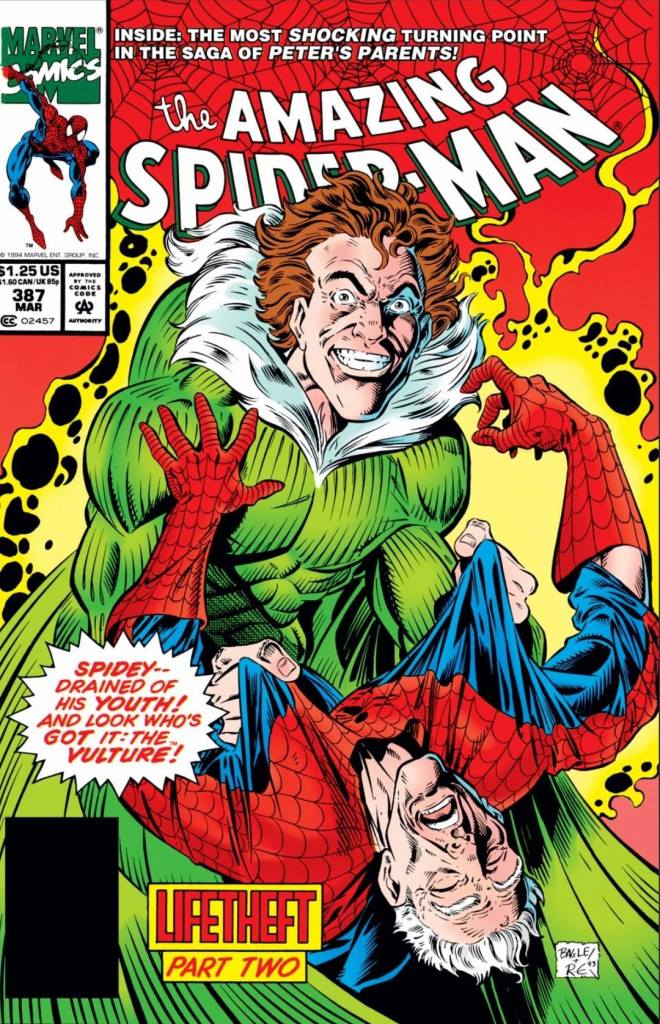
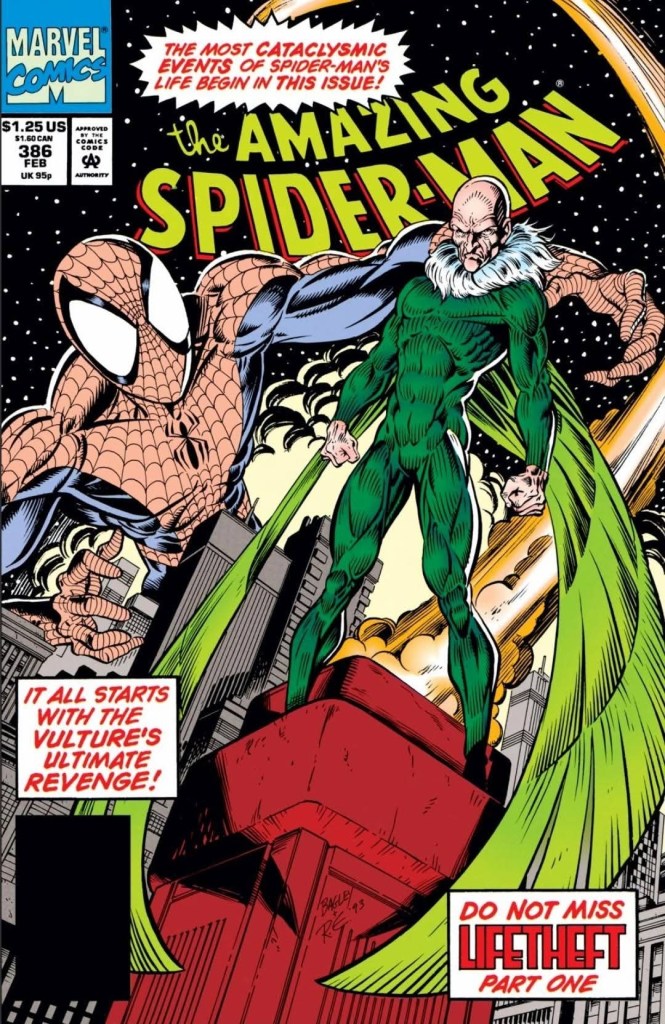
The cover.

Early story

The story begins with the Vulture absorbing energy and the youth of Spider-Man using the Juvenator in front of Dr. Sanchez. As a result, Adrian Toomes/Vulture physically turned much younger with rejuvenated skin, cancer getting health, a stronger body and his hair grown back. He declares himself as the new vital Vulture. Spider-Man is down on the floor clearly weakened and with a change of his body’s shape.

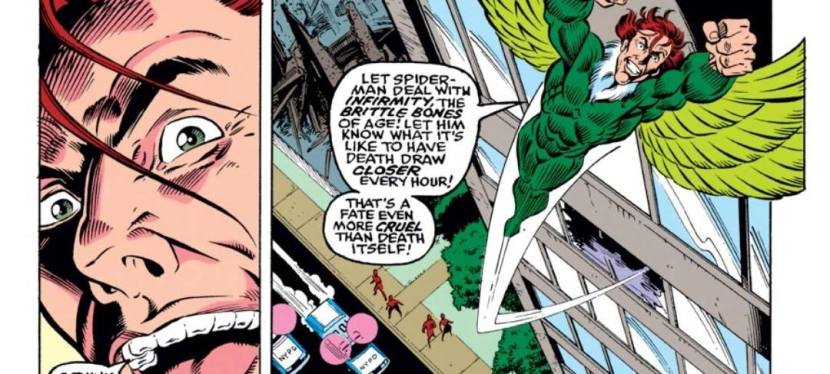
Instead of taking the opportunity to kill Spider-Man, the Vulture decides to fly away knowing that his long-time rival will have to deal with brittle bones of old age. As Dr. Sanchez tries to help him, Spider-Man feels exhausted, his lungs feeling gummy and his ears ringing. Knowing that police officers are coming, the webslinger decides to get away and leave Dr. Sanchez behind.

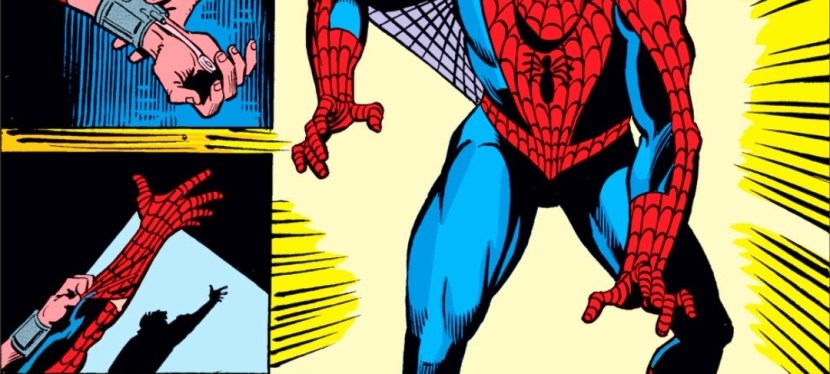
Moments later at the top of the building, the weakened Spider-Man takes his mask and glove off realizing that he has turned into an elderly man…

Quality
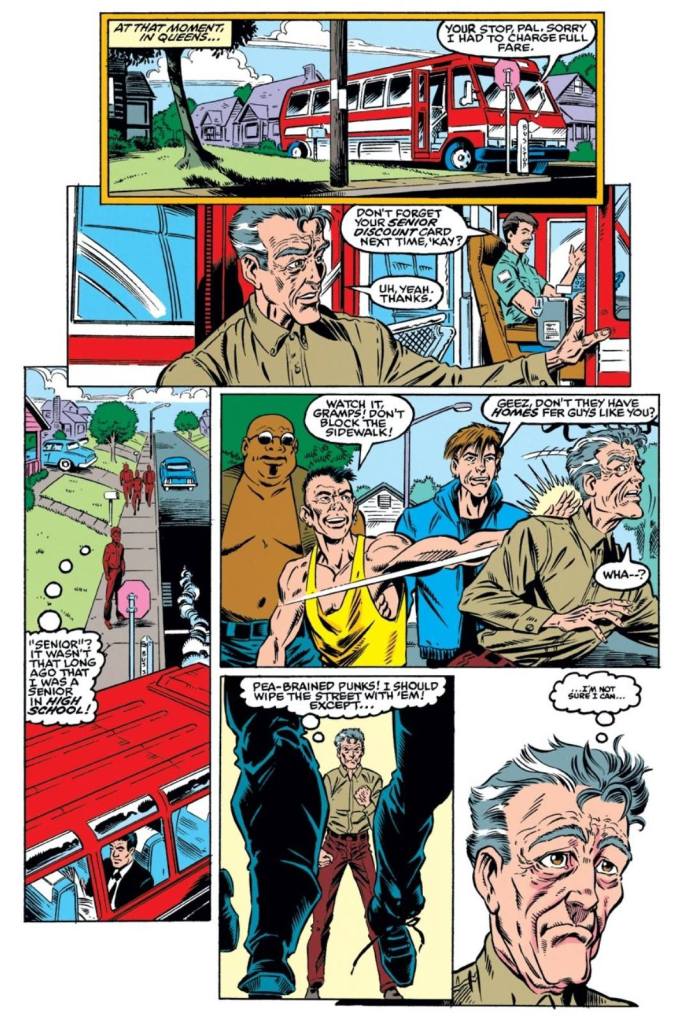
Can you recognize Peter Parker?

To get straight to the point, this continued rematch between Spider-Man and the Vulture is so outlandish (backed with the science fiction approach to life energy and the so-called fountain of youth), it almost felt like it was a story crafted for the What If series of comic books. In fact, the sudden aging of Peter Parker into an actually elderly man getting into close calls with two notable family members made this tale even more suitable for the What If series (note: What If #4 of 1989 had a severely aged Peter Parker in it).

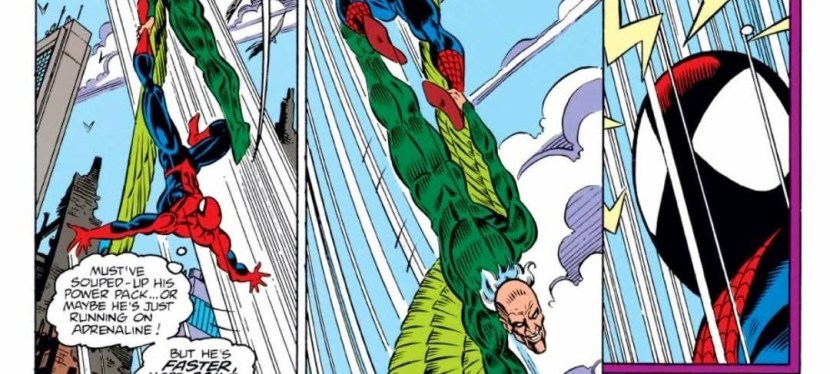
Still on the storytelling aspect of this comic book, the creators used the fountain of youth concept to pull off a significant twist on the enduring Spider-Man/Vulture rivalry. As Spider-Man grew so old, the Vulture became much younger which in turn convinced him he could reinvent himself and put his genius of electro-magnetism to great use.  

To make things clear, this tale is not purely a Spider-Man/Vulture rivalry with sci-fi twists. In fact, there is more to the plot than meets the eye here as the Juvenator machine becomes an important element of the story (leading to something intriguing in the next issue), and a sinister revelation concluded this comic book.

Conclusion
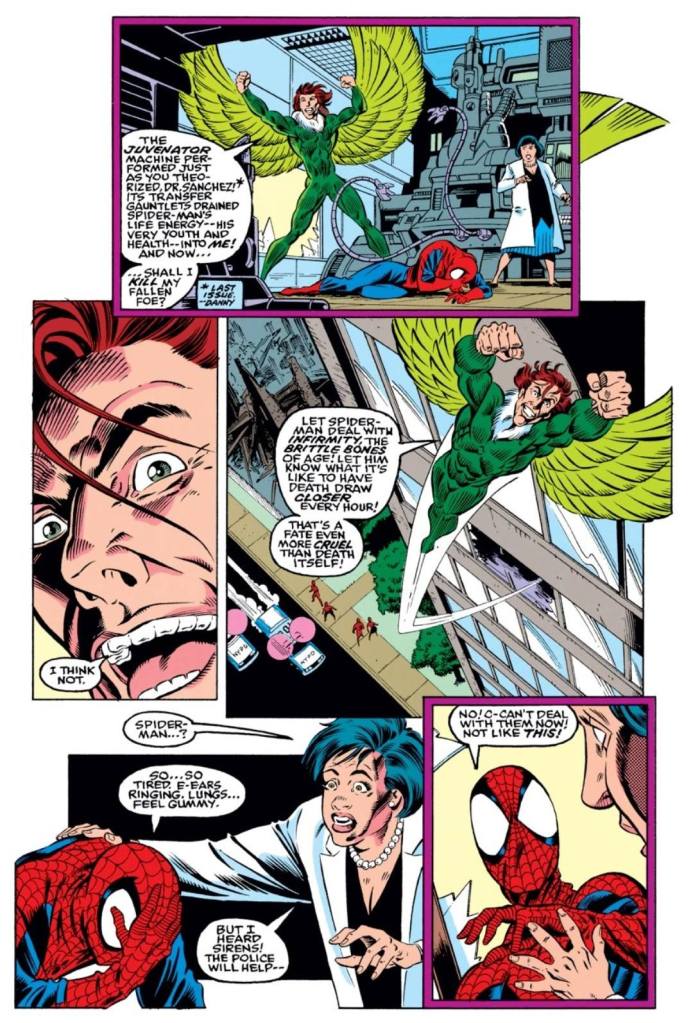
The Vulture rejuvenated into a young man at the expense of Spider-Man.

Amazing Spider-Man (1994) is a solid follow-up to the previous issue and it also was a radical attempt to twist the Spider-Man/Vulture rivalry a lot reaching to the point of making it look and feel like a What If story. There is a good amount of suspense, character development and enough superhero spectacle that paid-off the build-up nicely. Ultimately, this tale is actually a part of a short storyline leading to the intriguing events of issue .  

Overall, Amazing Spider-Man (1994) is recommended.

+++++

Thank you for reading. If you find this article engaging, please click the like button below, share this article to others and also please consider making a donation to support my publishing. If you are looking for a copywriter to create content for your special project or business, check out my services and my portfolio. Feel free to contact me with a private message. Also please feel free to visit my Facebook page Author Carlo Carrasco and follow me on Twitter at  @HavenorFantasy as well as on Tumblr at https://carlocarrasco.tumblr.com/ and on Instagram at https://www.instagram.com/authorcarlocarrasco
A Look Back at Amazing Spider-Man #386 (1994)

Welcome back superhero enthusiasts, 1990s arts and culture enthusiasts, Marvel Comics fans and comic book collectors! Today we go back to the 1990s to examine a small part of the Marvel Comics shared universe through a tale of the Amazing Spider-Man monthly series.

Following a serious of unfortunate events that kept Spider-Man away from his wife Mary Jane (read my retro reviews by clicking here, here and here), the Amazing Spider-Man creators decided it was time to have the iconic webslinger in a new rematch with the classic villain The Vulture (specifically Adrian Toomes whose first appearance was in Amazing Spider-Man in 1963). What makes Toomes Vulture notable (note: there were other versions of Vulture in Marvel’s history) is that he is an old man who happens to be a brilliant electrical engineer who proved to be a very capable criminal. He is also a co-founder of the Sinister Six.

With those details laid down, here is a look back at Amazing Spider-Man , published in 1994 by Marvel Comics with a story written by David Michelinie and drawn by Mark Bagley.

The cover.

Early story

The story begins in the prison complex at Ryker’s Island. Adrian Toomes (Vulture) is inside his prison cell working on a small device with a guard watching from his back. It turns out the device has a tractor beam and Toomes uses it on the guard to physically slam his body on the sliding door of the prison cell. Toomes then uses the tractor beam to pull the metal bars of the other side of the cell to create an opening. He equips himself with mechanical wings and flew out of his cell and reach the speed boat prepared by two companions.

At the residence of May Parker, Peter and his Aunt May talk with an investigator. It turns out Aunt May hired the investigator to follow and observe Richard and Mary Parker. When asked by Peter, she tells him she does not think Richard and Mary are his parents. As far as the investigator is concerned, there is nothing suspicious with Richard and Mary Parker. He tells peters that his aunt needs professional help (related to Alzheimer’s Disease)…

Quality

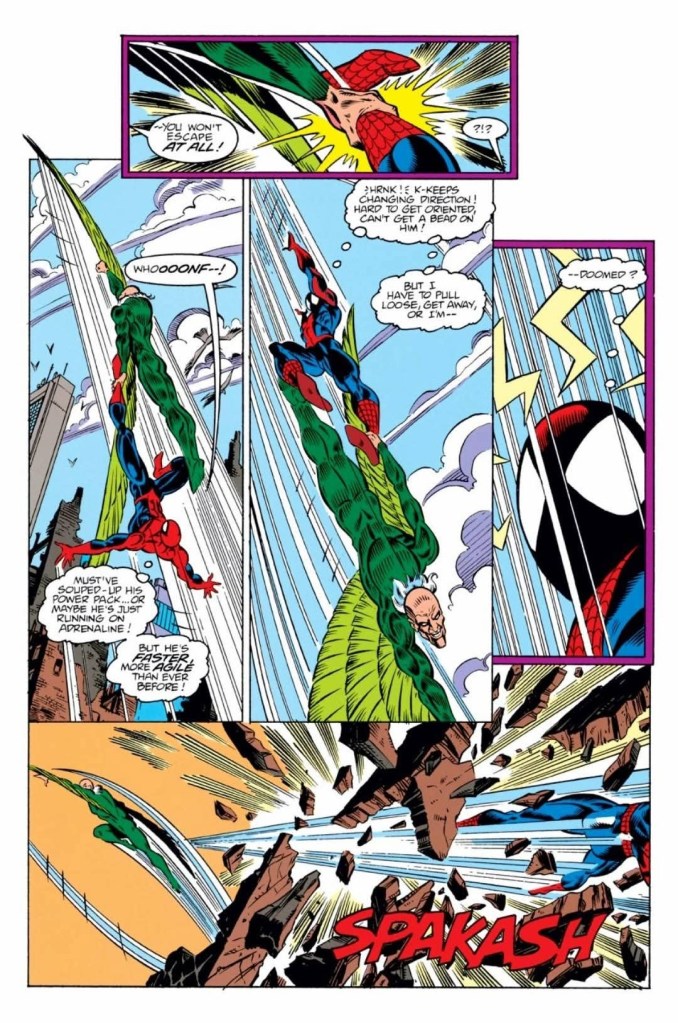
The physical conflict between Spidey and the Vulture is intense to see!

Perceived as modern during the time of publication, the conflict between Spider-Man and the Vulture in this comic book utilized the concept of everlasting youth with science fiction (combined with the villain’s own obsession). This in turn resulted in a unique approach executed by the Michelinie-Bagley duo to make something new with the rematch between Spidey and his winged nemesis.

The Vulture here is not only very obsessed with obtaining everlasting life as there is something deep inside him that has been raging. This explains why the winged super villain is more visceral in his battle with Spider-Man which Mark Bagley visualized with dynamism and intensity. For the newcomers reading this, the two have fought each other a lot since the 1960s and this 1994 rematch was very unique. The Vulture here is not unhinged but rather strategic while being obsessed, and this made him even more dangerous for Spider-Man.

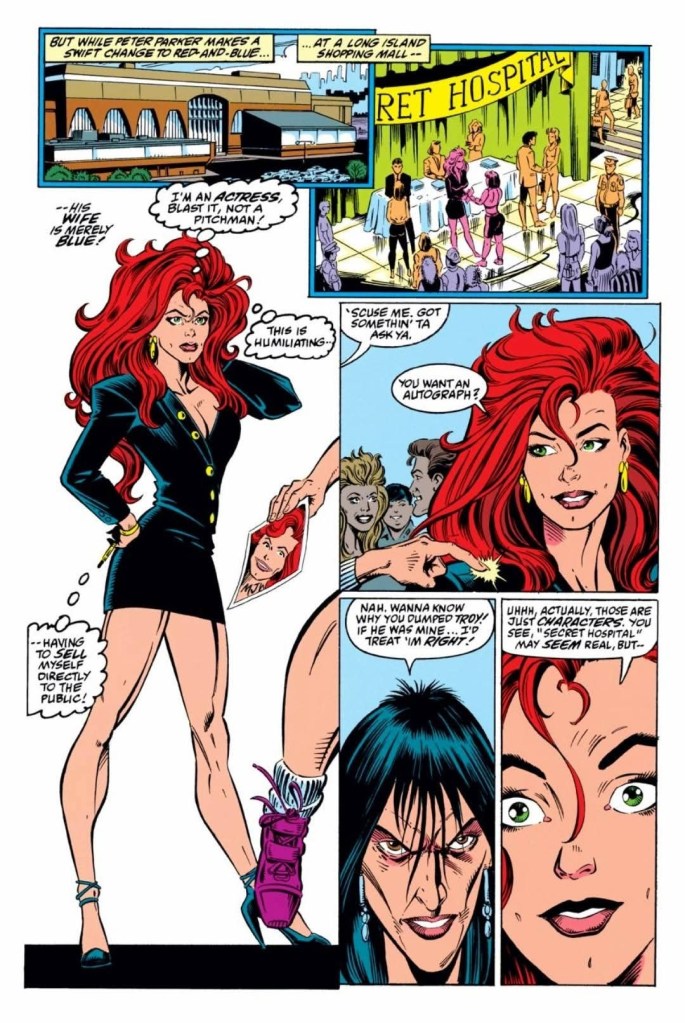
Apart from the promised rematch, this comic book continued building up the tension for the eventual tragedy in Peter Parker’s life (which happened in Amazing Spider-Man ) while also dramatizing the lasting hardships Mary Jane experiences as Peter’s wife. Peter Parker meanwhile is focused on his family and his intention to find professional help for Aunt May smoothly connected with his rematch with the Vulture.  

Conclusion

Mary Jane Parker participates in a promotional event of her TV show in a shopping mall.

There is a lot to enjoy in Amazing Spider-Man (1994). The rematch between the Vulture and Spider-Man is engaging and intriguing to read. There is also a good amount of suspense applied on the main plot as well as on the sub-plot about Aunt May being suspicious about Richard and Mary Parker. The result here is a reading experience that is entertaining and also balanced with regards to tone and storytelling.  

Overall, Amazing Spider-Man (1994) is recommended.

+++++

Thank you for reading. If you find this article engaging, please click the like button below, share this article to others and also please consider making a donation to support my publishing. If you are looking for a copywriter to create content for your special project or business, check out my services and my portfolio. Feel free to contact me with a private message. Also please feel free to visit my Facebook page Author Carlo Carrasco and follow me on Twitter at  @HavenorFantasy as well as on Tumblr at https://carlocarrasco.tumblr.com/ and on Instagram at https://www.instagram.com/authorcarlocarrasco
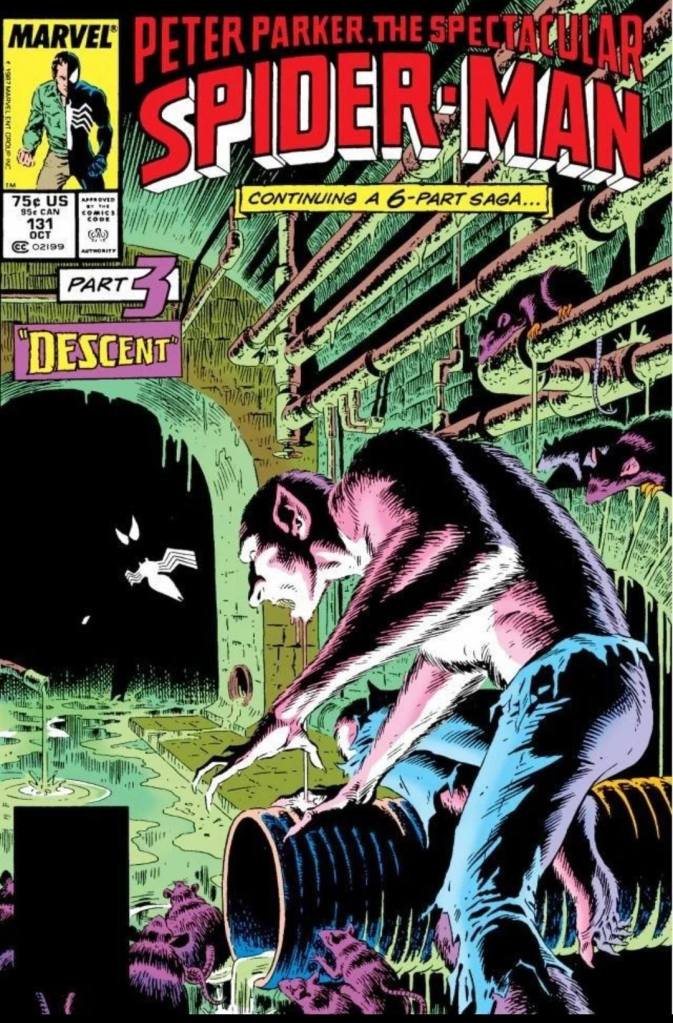
A Look Back at Peter Parker, The Spectacular Spider-Man #131 (1987)

Welcome back superhero enthusiasts, 1980s arts and culture enthusiasts, Marvel Comics fans and comic book collectors! Today we go back to the year 1987 to examine a small part of the Marvel Comics shared universe through a tale of the Peter Parker, The Spectacular Spider-Man monthly series.

For this particular review, we will explore the 3nd chapter of classic storyline Kraven’s Last Hunt. The storyline started in Web of Spider-Man (read my retro review by clicking here) and progressed further in Amazing Spider-Man (read my retro review by clicking here) and creators J. M. DeMatteis and Mike Zeck crafted it to last six chapters.

With those details laid down, here is a look back at Peter Parker, The Spectacular Spider-Man , published in 1987 by Marvel Comics with a story written by J. M. DeMatteis and drawn by Mike Zeck.

The cover.

Early story

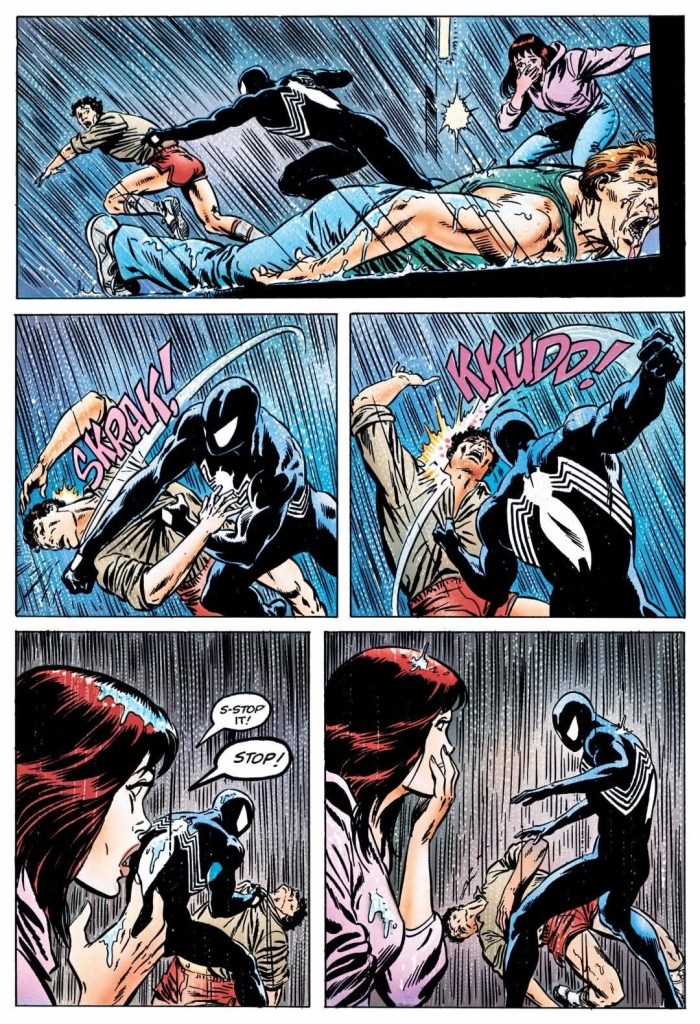
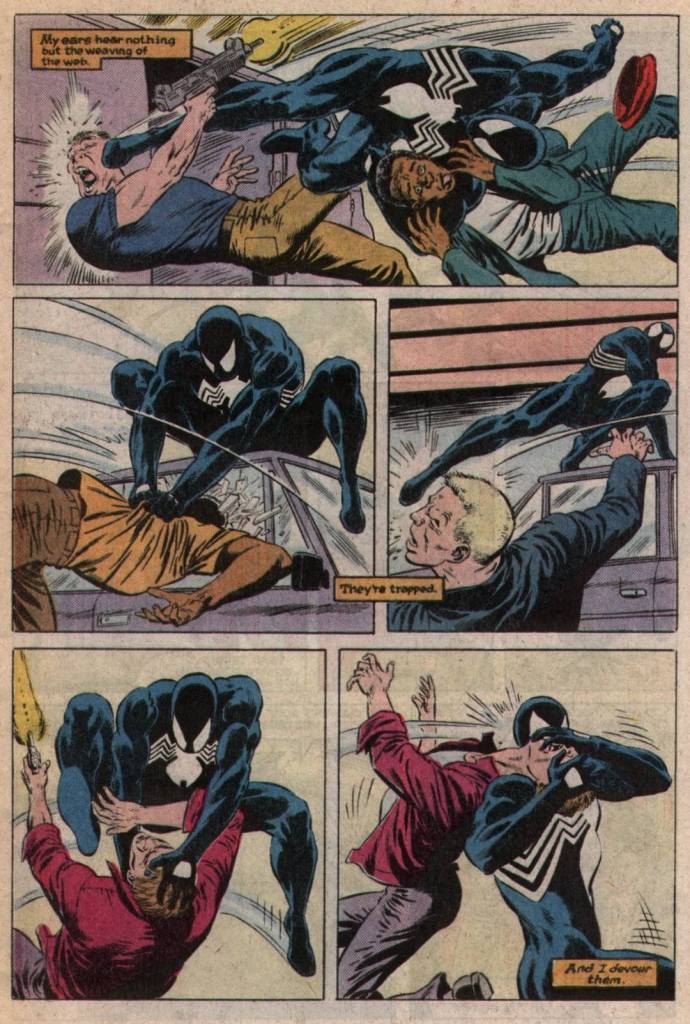
The story begins inside a facility in New York City on a rainy night. Men inside work quietly moving heroin from one vehicle to another. Suddenly Kraven – wearing a black costume believing he is Spider-Man – breaks in and fearlessly attack the men who are already armed. Using very violent force, Kraven beats the men and killed the last one. Eventually, police officers and detectives broke into the facility which compels Kraven to get away fast and leaves them no opportunities to catch up. One of the detectives mentions that fifteen suspects have been hospitalized because of the individual they perceive as Spider-Man.

After climbing to the top of a building, Kraven takes his mask off. He thinks deeply about his victory over Spider-Man and becoming him. He believes he has consumed the spider’s prey and proved himself to be superior in every way. Regardless, Kraven’s obsession continues as he seeks the final proof.

Elsewhere in the city, Vermin pulls a woman into an alley and then comes out on the street as a police car approaches him…

Quality

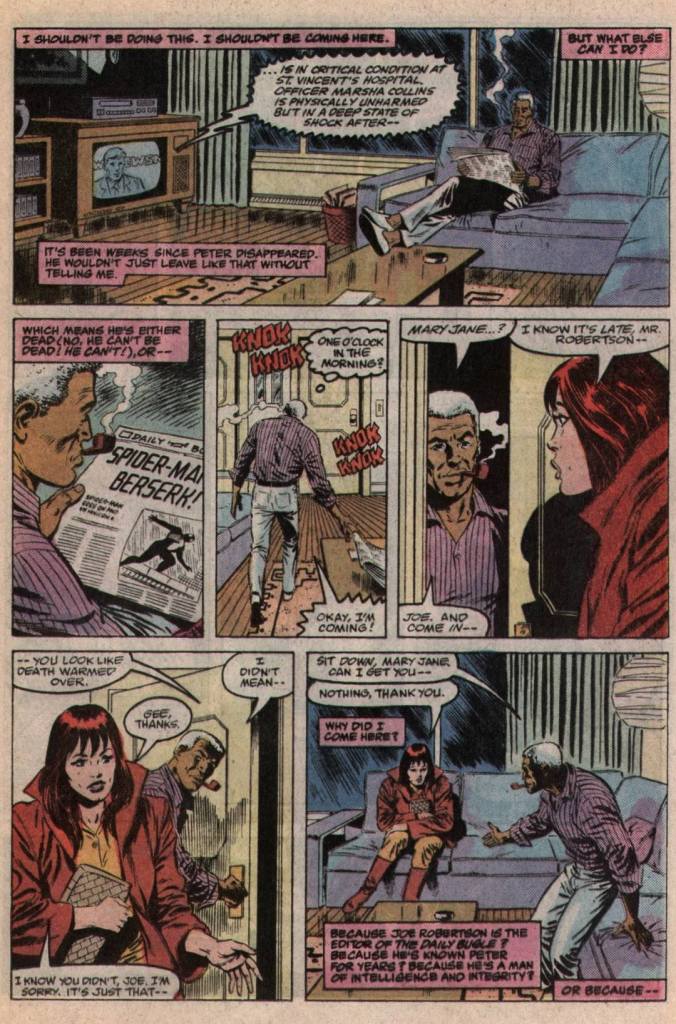
A key scene showing how Mary Jane and Joe Robertson react to the absence of Peter Parker who was buried alive by Kraven.

In this 3rd chapter of the Kraven’s Last Hunt storyline, the iconic Spider-Man is absent again but his presence is still felt through the way people perceive him and through two notable characters who personally knew Peter Parker. At this point in the storyline, Kraven truly believes he has not only replaced Spider-Man but became even more significant than him. Kraven’s obsession with achieving both greatness and significant placed him on a collision course with Vermin, and I can say that the conflict between the them is a powerful feature of the story. Once again, DeMatteis proved how compelling his script really is and Mike Zeck easily brought the said script to life with strong imagery.

As with the previous two chapters, the darkness and grittiness of the storyline are lively which resulted in a very atmospheric reading experience. The DeMatteis-Zeck duo knew exactly how to engage readers using a powerful script and images that range from being action-packed to looking very disturbing.

Speaking of character development, Mary Jane here shows how the continued absence of her husband is wearing herself down and making her even more worried. Mary Jane is a lively symbol about how we readers miss Spider-Man and how uncertain we feel about the future of comic book storytelling without the iconic superhero.

Conclusion

Without any concern whatsoever, Kraven’s Spider-Man brutally hits the criminals with powerful strikes.

Peter Parker, The Spectacular Spider-Man (1987) is a powerful 3rd chapter of the Kraven’s Last Hunt storyline. At this point, Kraven continues to not only be Spider-Man but make others feel his impact as he strives to be greater than the genuine Spider-Man. Vermin has turned more prominent in this comic book and the big conflict between him and Kraven is a huge pay-off to what was built-up since Amazing Spider-Man . Right now, I am looking forward to the next chapter of Kraven’s Last Hunt.

Overall, Peter Parker, The Spectacular Spider-Man (1987) is highly recommended.

+++++

Thank you for reading. If you find this article engaging, please click the like button below, share this article to others and also please consider making a donation to support my publishing. If you are looking for a copywriter to create content for your special project or business, check out my services and my portfolio. Feel free to contact me with a private message. Also please feel free to visit my Facebook page Author Carlo Carrasco and follow me on Twitter at  @HavenorFantasy as well as on Tumblr at https://carlocarrasco.tumblr.com/ and on Instagram at https://www.instagram.com/authorcarlocarrasco
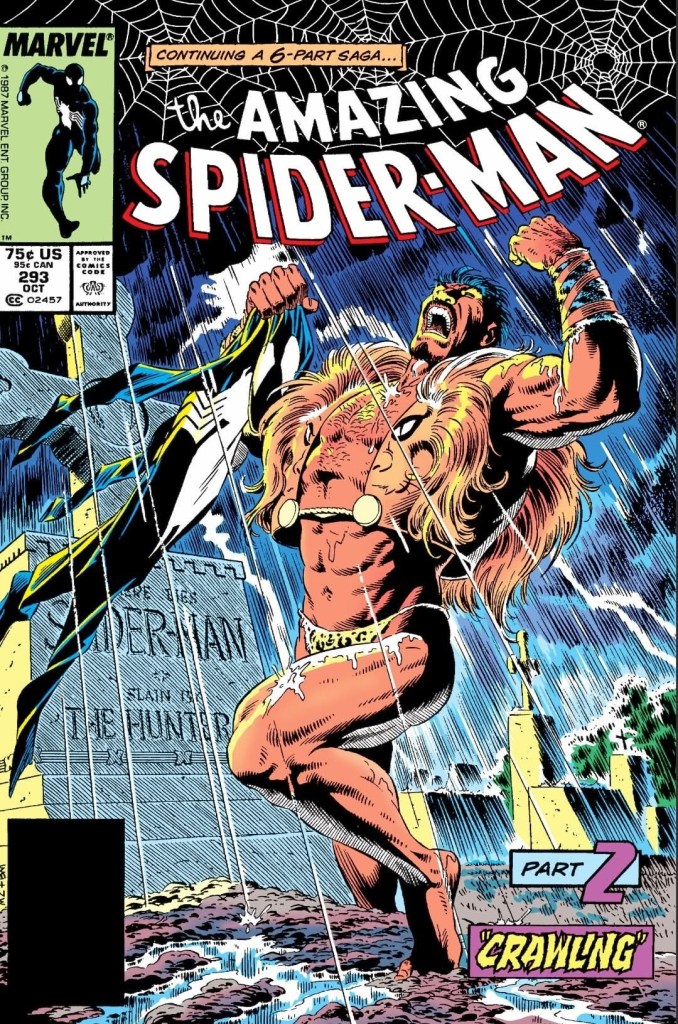
A Look Back at Amazing Spider-Man #293 (1987)

Welcome back superhero enthusiasts, 1980s arts and culture enthusiasts, Marvel Comics fans and comic book collectors! Today we go back to the year 1987 to examine a small part of the Marvel Comics shared universe through a tale of the Amazing Spider-Man monthly series.

For this particular review, we will explore the 2nd chapter of classic storyline Kraven’s Last Hunt. The storyline started in Web of Spider-Man (read my retro review by clicking here) and creators J. M. DeMatteis and Mike Zeck crafted it to last six chapters.

With those details laid down, here is a look back at Amazing Spider-Man , published in 1987 by Marvel Comics with a story written by J. M. DeMatteis and drawn by Mike Zeck.

The cover.

Early story

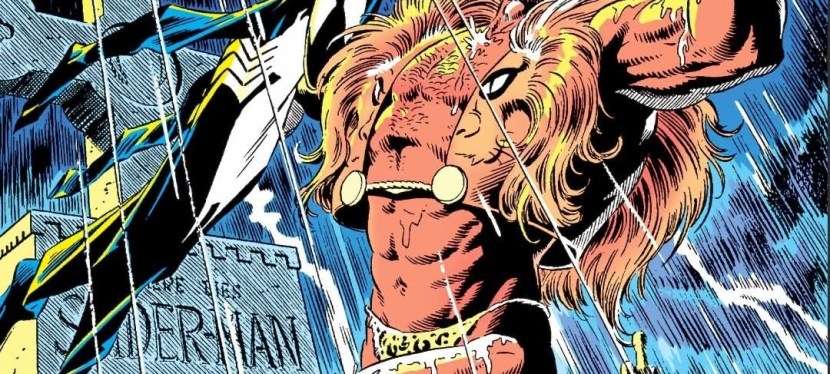
The story begins on a rainy night as a tall figure wearing a black costume and mask stands over the grave stone that read “Here lies Spider-Man slain by the Hunter.” The figure takes off his mask revealing Kraven who delightfully laughs believing he has achieved greatness by defeating Spider-Man, burying him and taken his identity.

Elsewhere in New York City, a woman struggles with walking down the sidewalk during the rain. As a rat runs near her, she loses her balance and falls on the road. Suddenly, a manhole near her opens revealing the hand of an unseen creature which pulls the lady down to the sewer. Moments later, she finds herself surrounded with rats and toxic materials. Slowly, the Vermin approaches her…

Quality

This is Kraven’s Spider-Man in action! How people perceive Spider-Man is an emerging theme in this storyline.

Considering what happened in Web of Spider-Man , it is not a spoiler to point out that the iconic Spider-Man is not really present in this very comic book. That being said, writer J. M. DeMatteis shifted the spotlight on Kraven – now in a Spider-Man costume and being the webslinger we know – while leaving some of it for Mary Jane Parker and Vermin.

Following what was established in the first chapter of Kraven’s Last Hunt, Kraven here continues with his obsession over his destiny while remembering lessons he learned not only from his personal past but also the legacy he inherited from his family. In his other obsession of becoming Spider-Man, Kraven went to the extreme being with countless spiders, consuming green liquid believing that spiderness will come into him, and more. Some may perceive him as a mad man while others might see him being mystical somewhat.

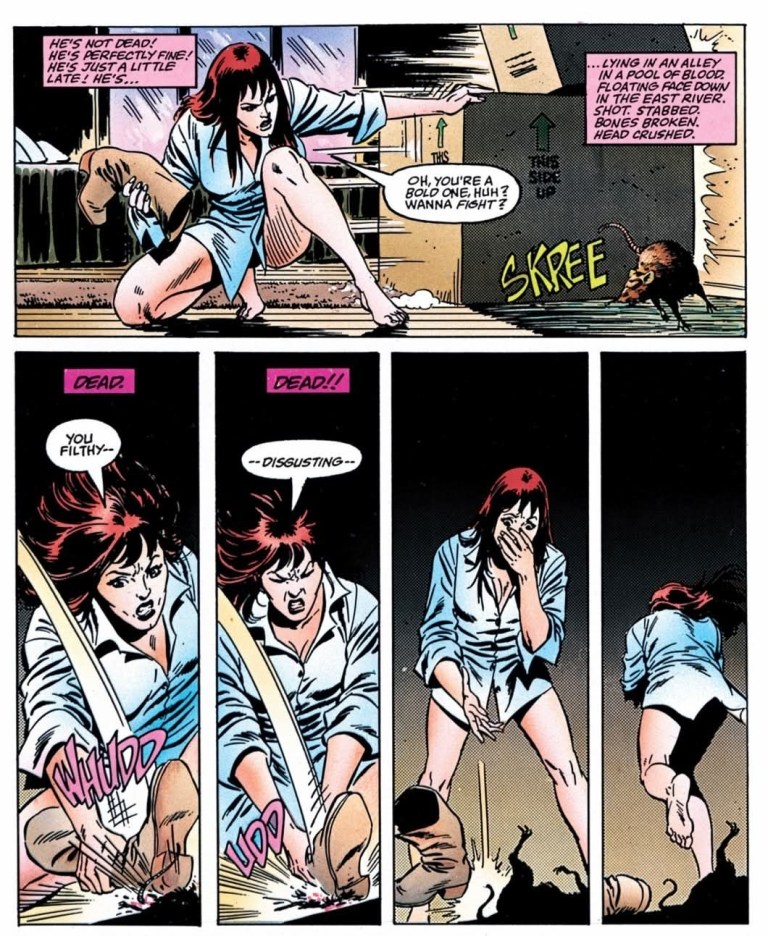
The DeMatteis-Zeck duo excelled in developing Mary Jane in this story as she feels uneasy over her husband’s absence. She really feels the weight of inconveniences and loneliness that come being married to a superhero who is far away doing something or being captured by a capable enemy. Mary Jane’s personality here shows signs of fragility too.

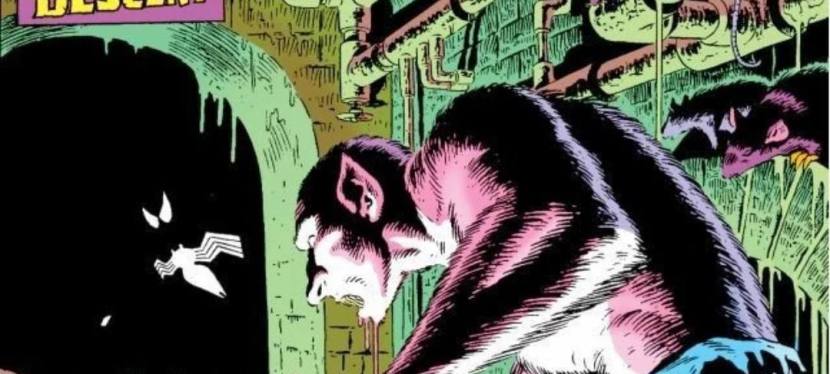
Vermin – the rat-like monster – is portrayed as an eater of human beings who turns out to be afraid of Spider-Man and he still remembers his past conflict not only with him ut also with Captain America. Vermin is a tragic character and the presence of rats in different parts of the story suggest that his presence in the storyline will only grow stronger. Some readers might find Vermin an abomination while there might be others who could get sympathetic towards him.

The plot itself has a strong structure and builds up nicely on what was established in the first chapter of this storyline. This time around, Kraven becomes Spider-Man and how he is perceived by others – who do not know the truth that Peter Parker is temporarily gone – is an emerging theme of the storyline.

Conclusion

Alone in the apartment, Mary Jane took action against the rat.

Filled with gritty darkness, drama and suspense, Amazing Spider-Man (1987) is an engaging 2nd chapter of the Kraven’s Last Hunt storyline. Even though Spider-Man is not present here, the DeMatteis-Zeck duo succeeded in making the tale compelling to read from start to finish. What they did to develop Mary Jane and Vermin added depth not only to this comic book but to the storyline as well. Right now, I am convinced to read the next chapter of this storyline.

Overall, Amazing Spider-Man (1987) is highly recommended.

+++++

Thank you for reading. If you find this article engaging, please click the like button below, share this article to others and also please consider making a donation to support my publishing. If you are looking for a copywriter to create content for your special project or business, check out my services and my portfolio. Feel free to contact me with a private message. Also please feel free to visit my Facebook page Author Carlo Carrasco and follow me on Twitter at  @HavenorFantasy as well as on Tumblr at https://carlocarrasco.tumblr.com/ and on Instagram at https://www.instagram.com/authorcarlocarrasco
A Look Back at Amazing Spider-Man #320 (1989)

Welcome back superhero enthusiasts, 1980s arts and culture enthusiasts, Marvel Comics fans and comic book collectors! Today we go back to the year 1985 to examine a small part of the Marvel Comics shared universe through a tale of the Amazing Spider-Man monthly series.

For this particular review, we will explore the first chapter of The Assassin Nation Plot storyline that took place within the Amazing Spider-Man series.  

With those details laid down, here is a look back at Amazing Spider-Man , published in 1989 by Marvel Comics with a story written by David Michelinie and drawn by Todd McFarlane.

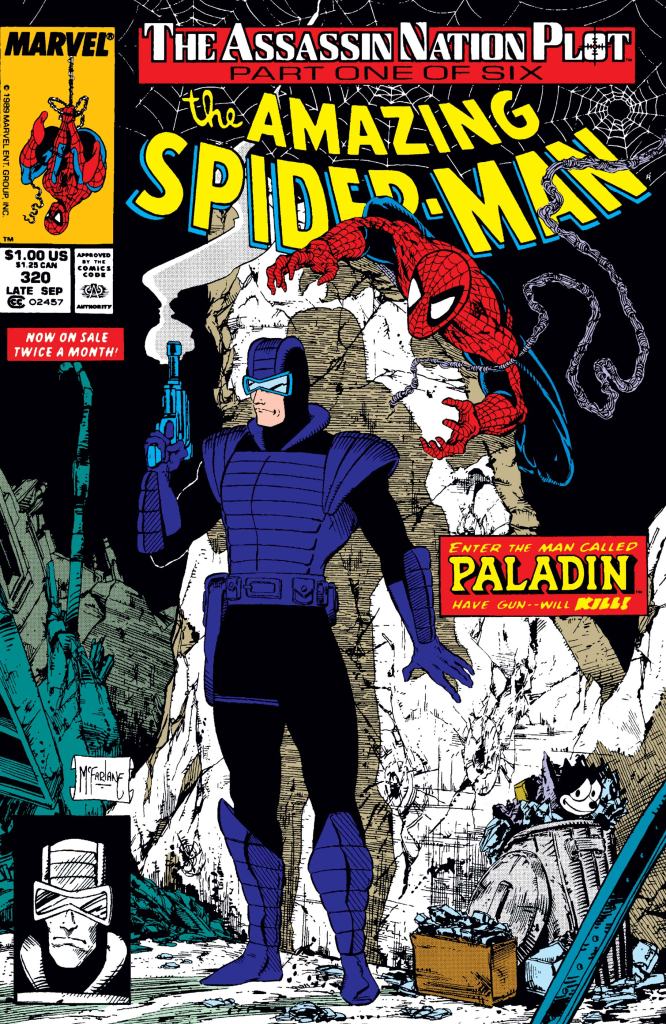
The cover.

Early story

The story begins inside Empire State University where Peter Parker – working as an assistant in the science lab – takes advantage of the free time and resources to create web fluid using a new formula. He notices that the acetylene torch does not even leave a smudge on the new web he made.

To his surprise, his boss doctor Evan Sloan catches him doing an interesting experiment. Parker comes up with a convincing excuse for the experiment which spares him from getting into trouble. After promising doctor Sloan he will get on the neutron project first thing in the morning of Thursday, Parker leaves, secretly changes into Spider-Man and equipped his brand new web. He then leaves the university and moves deep into the city…

Quality

Peter Parker and Mary Jane having a discussion.

I really like the story David Micheline came up with as the start of The Assassin Nation Plot storyline. This is clearly not your typical good-versus-evil superhero tale starring the webslinger. Instead, there are layers of secrecy, suspense and intrigue that involves a powerful private organization, private armies and diplomats.

Instead of facing off with super villains, Spider-Man finds himself in the middle of something very big brewing behind the scenes, and that puts him in deep danger. That being said, Michelinie’s approach on building up the details of the plot moved very smoothly and the payoff for each buildup was executed on a timely manner. The buildup of details was never boring nor too slow to absorb, and Todd McFarlane excelled with visualizing the plot while still delivering dynamic superhero action.

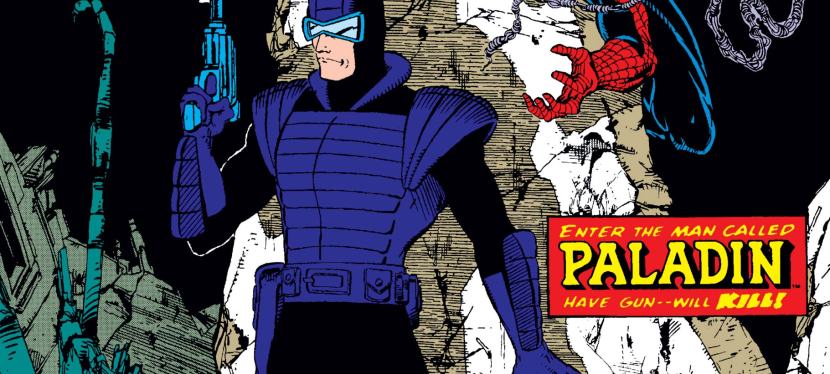
I should mention that the character Paladin has a strong presence in the story and there were moments when he outweighed Spider-Man in terms of importance.

Conclusion

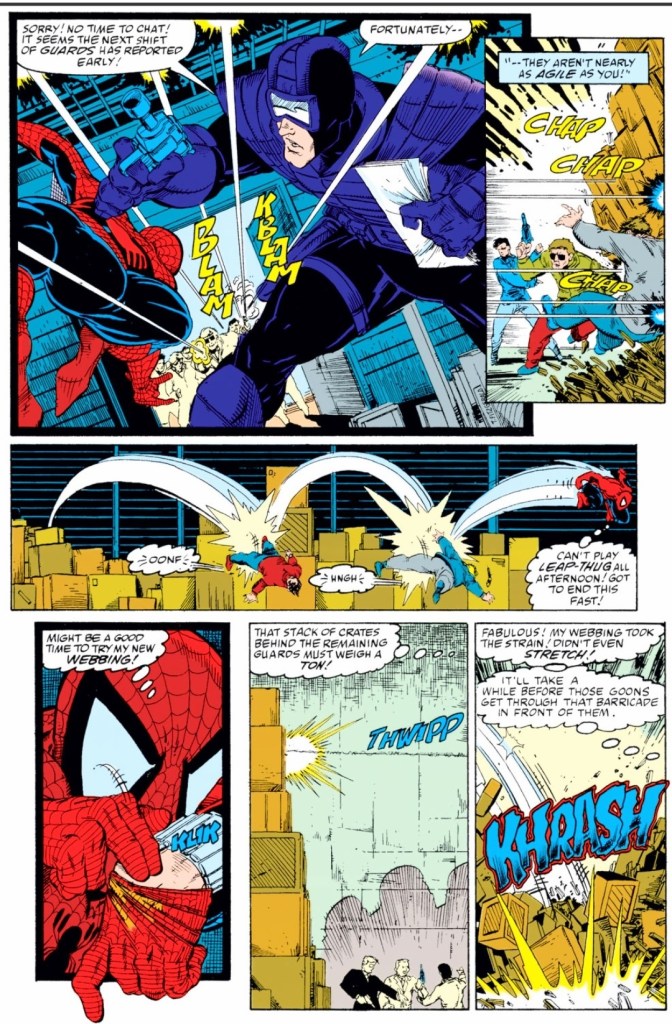
Spider-Man and Paladin targeted by armed guards.

Amazing Spider-Man (1989) is indeed a very solid story to read and a powerful start of The Assassin Nation Plot storyline. With the way the core concept was presented, this comic book symbolically showed that there are high stakes and other matters that are clearly too overwhelming for Spider-Man to deal with. The story is nicely paced and the creative team knew when and how to execute worthy payoffs for each buildup. By the time I reached the end of the comic book, I became convinced to read the next chapter of this storyline.

Overall, Amazing Spider-Man (1989) is highly recommended.

+++++

Thank you for reading. If you find this article engaging, please click the like button below, share this article to others and also please consider making a donation to support my publishing. If you are looking for a copywriter to create content for your special project or business, check out my services and my portfolio. Feel free to contact me with a private message. Also please feel free to visit my Facebook page Author Carlo Carrasco and follow me on Twitter at  @HavenorFantasy as well as on Tumblr at https://carlocarrasco.tumblr.com/ and on Instagram at https://www.instagram.com/authorcarlocarrasco
A Look Back at Amazing Spider-Man #259 (1984)

Welcome back superhero enthusiasts, 1980s arts and culture enthusiasts, Marvel Comics fans and comic book collectors! Today we go back to the year 1984 to examine a small part of the Marvel Comics universe through a tale of the Amazing Spider-Man monthly series.

In my previous retro review, additional stress in Peter Parker’s life was realized when Mary Jane revealed to him that she knows he and Spider-Man are one and the same. Some time later when things calmed down, Spider-Man went to the headquarters of the Fantastic Four eventually finding out the shocking truth about the alien costume he has been wearing since the events of Secret Wars.

With those details laid down, here is a look back at Amazing Spider-Man , published in 1984 by Marvel Comics with a story written by Tom DeFalco, and drawn by Ron Frenz.

The cover.

Early story

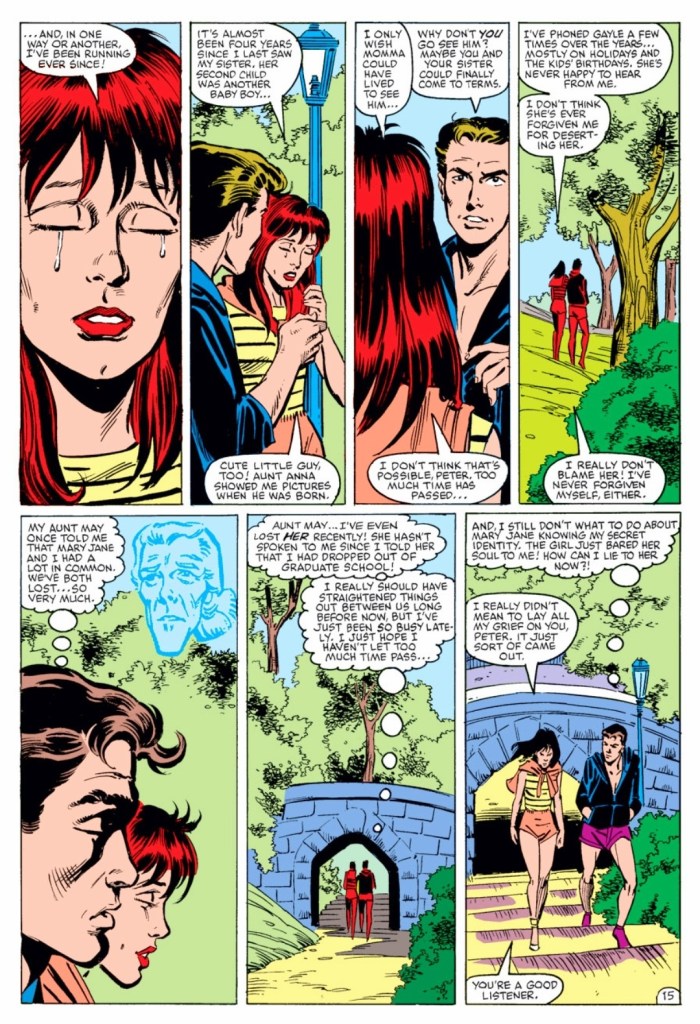
The story begins in New York City where Peter Parker and Mary Jane casually spend time walking within a large park. Knowing that Peter is already feeling uneasy about her knowing his secret identity as Spider-Man, Mary Jane reveals to him stories of her past and the domestic challenges that she, her sister and their parents went through.

Elsewhere in the city, the Hobgoblin makes his moves expressing his intention to engage with the business side of crime…

Quality

Mary Jane Watson and Peter Parker spending a lot of quality time together at the park.

When it comes to developing a supporting character with sheer depth, this comic book really stands out as Spider-Man literally got pushed to the side. The main story here focuses closely on Mary Jane whose experiences with her family from the past got dramatized big time. You will see flashbacks of her youth, her closeness with her sister and mother, and tension she went through when her father became stressed and resentful. The DeFalco-Frenz duo really set up the blocks of past developments that built up Mary Jane’s personality and her portrayal here is clearly a major character turning point in Spider-Man’s corner of the Marvel Comics shared universe of the time.

As for her relationship with Peter Parker/Spider-Man, Mary Jane here is less of a romantic partner and more of a friend looking for a shoulder to cry on. While it is a fact that several comic books in the 1970s showed Mary Jane and Peter romantically linked, her portrayal in this comic book marked a major turning point of her personal development and her destiny with the webslinger. The writing by DeFalco here is very rich with drama and believability.

Conclusion

Flashbacks from Mary Jane’s past with her family.

Amazing Spider-Man (1984) is still significant to read after all these decades. Mary Jane, who eventually got married to Peter Parker, has been redefined very heavily in this tale and she eventually became one of the most essential Spider-Man-related characters in the years that followed. Looking back at this old story (which happened shortly after Spider-Man separated from the alien costume), it was clear that Marvel Comics decided Mary Jane would be the definitive leading lady of Spider-Man.

Overall, Amazing Spider-Man (1984) is highly recommended.

+++++

Thank you for reading. If you find this article engaging, please click the like button below, share this article to others and also please consider making a donation to support my publishing. If you are looking for a copywriter to create content for your special project or business, check out my services and my portfolio. Feel free to contact me with a private message. Also please feel free to visit my Facebook page Author Carlo Carrasco and follow me on Twitter at  @HavenorFantasy as well as on Tumblr at https://carlocarrasco.tumblr.com/ and on Instagram at https://www.instagram.com/authorcarlocarrasco
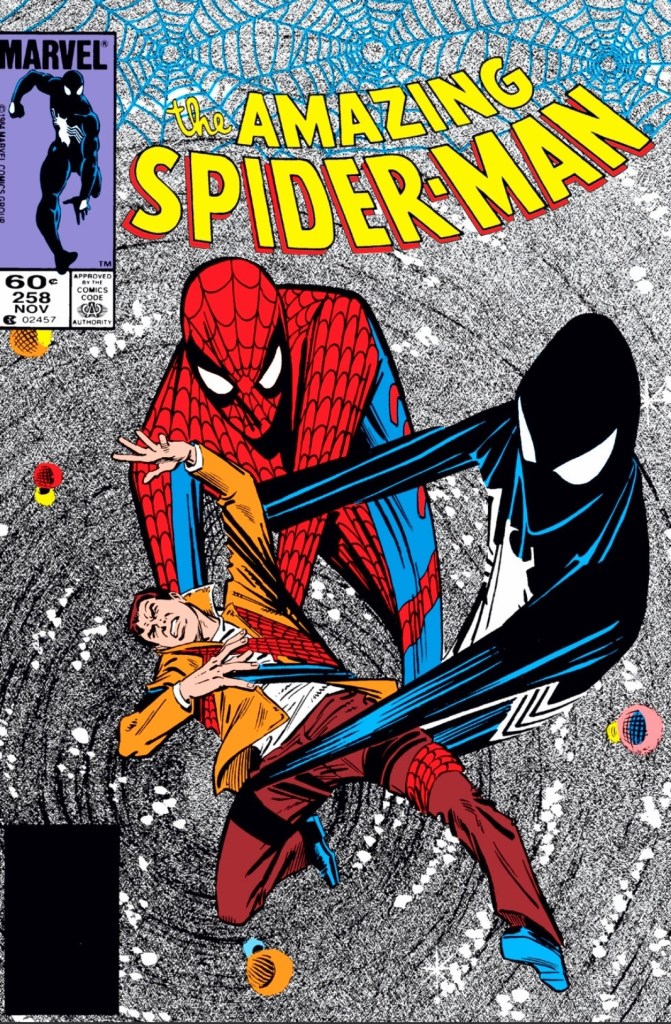
A Look Back at Amazing Spider-Man #258 (1984)

Welcome back superhero enthusiasts, 1980s arts and culture enthusiasts, Marvel Comics fans and comic book collectors! Today we go back to the year 1984 to examine a small part of the Marvel Comics universe through a tale of the Amazing Spider-Man monthly series.

In my previous retro review, Puma had encountered Spider-Man not once but twice. During the first encounter, Black Cat got in the way to defend her beloved webslinger. A short time later, Mary Jane Watson gets involved unexpectedly and the story ended with something that struck Peter Parker very deep inside.

With those details laid down, here is a look back at Amazing Spider-Man , published in 1984 by Marvel Comics with a story written by Tom DeFalco and drawn by Ron Frenz.

The cover.

Early story

The story begins inside Peter Parker’s apartment in New York City. He is struggling deep inside as he is shocked by Mary Jane’s revelation that she knows he and Spider-Man are one and the same person. She tells him that she knew his secret for years. Peter then begins to think that this is all Puma’s fault.

As Mary Jane begins to leave, Peter tries to talk with her. She tells him that he will deny everything and that she cares about him. She added that knowing his secret identity is why she originally left New York. She had to get away from him (and Spider-Man).

Suddenly, Black Cat arrives through the window. Her presence causes Mary Jane to realize something about them…

Quality

Very clearly the alien costume has its own intelligence and is the main reason why Peter Parker remained exhausted and sleeping too long.

I really like the writing of this comic book. Tom DeFalco showed strong consistency with developing the newcomer (and a formidable foe) Puma and his rivalry with Spider-Man, while also leaving sufficient room to develop Peter Parker who is now in deeper stress dealing with the complexities of his connections with Mary Jane and Black Cat.

What is most notable about the plot is the finally crafted resolution to Peter Parker’s use of the alien costume (the symbiote from Secret Wars that would later bond with Eddie Brock to form the murderous Venom) by having the Reed Richards and Johnny Storm of the Fantastic Four involved in a captivating manner. I won’t reveal what happened but I can assure you readers that this particular plot element alone makes this comic book very worthy of your time and attention. That being said, Spider-Man’s saga took a serious turn from here.

As with the previous issues, Ron Frenz’s fine art really brought DeFalco’s script into life here and this includes Spider-Man’s crossover with the mentioned Fantastic Four members, dynamic shots of the webslinger and fine dramatic expressions on characters’ faces.

Conclusion

With Black Cat and Mary Jane both present with Peter Parker, the tension and uncertainty grew only stronger.

Amazing Spider-Man (1984) is yet another great read from the DeFalco-Frenz duo. The stakes were raised higher and the pay-offs were really solid in this comic book. As mentioned earlier, this story marked the resolution of Spider-Man’s bond with the alien costume, and also paved a new path for future tales of the webslinger. Spider-Man’s crossover with Reed Richards and the Human Torch (which lasted several pages) is easily one of most crucial scenes of entire Marvel Comics stories of the year 1984 and its significance would be realized in relation to the origin and further tales of Venom.

Overall, Amazing Spider-Man (1984) is highly recommended.

+++++

Thank you for reading. If you find this article engaging, please click the like button below, share this article to others and also please consider making a donation to support my publishing. If you are looking for a copywriter to create content for your special project or business, check out my services and my portfolio. Feel free to contact me with a private message. Also please feel free to visit my Facebook page Author Carlo Carrasco and follow me on Twitter at  @HavenorFantasy as well as on Tumblr at https://carlocarrasco.tumblr.com/ and on Instagram at https://www.instagram.com/authorcarlocarrasco
A Look Back at Amazing Spider-Man #375 (1993)

Welcome back superhero enthusiasts, 1990s arts and culture enthusiasts, Marvel Comics fans and comic book collectors! Today we go back to the year 1993 and examine a small part of the Marvel Comics universe through a tale of the Amazing Spider-Man monthly series.

In my previous retro comic book review, the insane murderer Venom returned to antagonize Spider-Man by targeting his parents. While it was a fact that Venom – who knew Spider-Man’s true identity – got into close contact with Aunt May (symbolizing the danger he poses on the Peter Parker’s family) a few years prior, going after the mother and father of Peter really raised the stakes.

With those details laid down, here is a look back at Amazing Spider-Man , published in 1993 by Marvel Comics with a story written by David Michelinie and drawn by Mark Bagley. This comic book marked the 30th anniversary of Amazing Spider-Man (1963).

The cover.

Early story

The story begins inside one of the facilities of the closed amusement park in Brooklyn. In his vicious form, Venom tells Richard and Mary Parker (both restrained) that they belong to him and declares that he would protect them from Spider-Man.

When Richard Parker asked why would he think that they would have anything to do with Spider-Man, Venom realizes that the couple does not even know their son is the webslinger. Venom tells the couple that their innocence is what he is sworn to preserve.

Over at Manhattan, Spider-Man swings back to the Daily Bugle building and discreetly changes his clothes before moving in as photographer Peter Parker. Inside one of the offices, J. Jonah Jameson reaches out to Silver Sable by telephone…

Quality

Peter Parker had to commit a crime by trespassing into Anne Weying’s residence. His disguise as Spider-Man does not protect him from the law.

I have mixed feelings about this follow-up to the great story of the previous issue. For one thing, David Michelinie’s script had a completely different tone and direction even though he intended this comic book to conclude what issue started. Another thing is that this story has even more characters added in which clearly diluted the intensity of the Venom-Spider-Man rivalry that was so intense in the previous issue.

There are two sub-plots – one of which deals with someone from Eddie Brock’s past – that were emphasized with sufficient details and the creative team integrated them into the main story. It seems that the creators intended to make the main story look grander in scope while sacrificing the very elements that made issue a great and intense reading experience.

Remember the suspense and danger that came with Venom targeting the older Parker couple? Those elements are almost totally absent in this comic book even though this story concluded the previous issue’s conflict build-up. Richard and Mary Parker are both present as captives of Venom but there really is no tension nor any sense of danger here due to the drastic change of tone and direction in the script.

I should also stress that the introduction of Anne Weying (previously Anne Brock) as Eddie Brock’s ex-wife looked and felt like an afterthought inserted into the story. While Anne’s presence brought out some traces of humanity and sanity from Venom during the 2nd half of the story, it did not add much impact on the conflict between the webslinger and the symbiote-wearer murderer. Ultimately, the creative team had to do something to explain the story build-up on Venom’s part leading into the Lethal Protector limited series which is set in the city of San Francisco.

And then there was the presence of Silver Sable’s team called the Wild Pack. The Wild Pack is the result of J. Jonah Jameson’s agreement with Silver Sable with the objective of achieving a journalistic exclusive for the Daily Bugle. This particular sub-plot is really lousy and not even the dynamic looking action sequences involving the Wild Pack could hide lousiness.

If there is anything symbolic about the script, it is the emphasis on family as well as the impact that comes with elements of the past emerging unexpectedly. In this very comic book, you will get to see Eddie Brock/Venom react like a sane person in response to the sudden re-appearance of his former wife. No matter what the creative team did here, I can say that the Spidey/Venom conflict did not really intensify (note: the dynamic action scenes did not solve the shortcomings) and there was no reason to worry about the captive Parker couple.

Conclusion

The insane murderer Venom with the parents of Peter Parker.

Considering the great stuff and raised stakes that made issue a very compelling read, Amazing Spider-Man (1993) is clearly a disappointing conclusion. This is not a terrible comic book as it has some good stuff for fans to enjoy but the overall presentation of the creators here is not too great due to their approach with the storytelling (with two sub-plots that did not add much). Overall, I am glad I never bought this comic book (with flashy cover and more pages) at full price in 1993.

Overall, Amazing Spider-Man (1993) is satisfactory.

+++++

Thank you for reading. If you find this article engaging, please click the like button below, share this article to others and also please consider making a donation to support my publishing. If you are looking for a copywriter to create content for your special project or business, check out my services and my portfolio. Feel free to contact me with a private message. Also please feel free to visit my Facebook page Author Carlo Carrasco and follow me on Twitter at  @HavenorFantasy as well as on Tumblr at https://carlocarrasco.tumblr.com/ and on Instagram at https://www.instagram.com/authorcarlocarrasco
A Look Back at Amazing Spider-Man #374 (1993)

Welcome back superhero enthusiasts, 1990s arts and culture enthusiasts, Marvel Comics fans and comic book collectors! Today we go back to the year 1993 and examine a small part of the Marvel Comics universe through a tale of the Amazing Spider-Man monthly series.

In early 1993, the supervillain and murderer Venom was in very high demand among Marvel readers and comic collectors. The Venom: Lethal Protector mini-series launched with issue selling a lot of copies and it portrayed Spider-Man’s greatest enemy as a very twisted and violent makeshift hero who dedicated himself to protecting what he (Eddie Brock specifically) to innocent people. As Venom was one of the few supervillains who knew Spider-Man’s true identity, the creative team behind the Amazing Spider-Man series decided to raise the stakes temporarily by having him encounter Peter Parker’s parents (the ones that appeared in Amazing Spider-Man ).

With those details laid down, here is a look back at Amazing Spider-Man , published in 1993 by Marvel Comics with a story written by David Michelinie and drawn by Mark Bagley.

The cover.

Early story

The story begins inside the bunker beneath the grounds of the deserted Brooklyn amusement park. As Eddie Brock struggles to lift a very heavy piece of equipment, the symbiote forms over his body helping him lift it up above the head. Venom is obsessed with killing Spider-Man and Eddie Brock remains totally bitter over the webslinger’s responsibility on destroying his career. Eddie sees a page of the Daily Bugle on the wall and it contains a news photo of Peter Parker with his mother and father.

At New York’s famous Central Park, Peter, wife Mary Jane and his parents enjoy quality time skating on ice. Aunt May is standing on a wooden platform watching them…

Quality

Lots of intense action scenes in this comic book for fans and readers to be entertained with. The action scenes are not mindless as they serve as reflections of Venom’s powerful quest for revenge.

To begin with, I can say that this tale by David Michelinie is a very intense and dramatic read and it added a new layer of depth into the enduring rivalry between Spider-Man and Venom. At this point in Marvel Comics’ shared universe history, the two icons have encountered each other so many times, the time was right for Michelinie to raise the stakes and have the elderly Parkers (note: Aunt May excluded) as the new targets of Venom (already made obvious on the cover which in turn added tremendous stress on the part of Spider-Man and his wife.

For the newcomers reading this, Eddie Brock’s journalistic career was destroyed over the Sin-Eater story as a result of Spider-Man’s public revelation of Stanley Carter as the said figure (note: Brock’s Sin-Eater article series was based on interviews with Emil Gregg who actually turned out to be a delusional neighbor of Carter’s).

As Brock’s life went way downhill with his reputation destroyed, his hatred of Spider-Man grew and so did his quest for revenge. That being said, what happened in this particular comic book was a very reflective extension of what happened years prior. Anyone who has basic knowledge of the origin of Venom and early appearances of Brock in comics will be able to understand the intensified rivalry in this tale.  

Apart from the great story, this comic book has lots of superhero spectacle for readers to enjoy. That being said, the smashing action of the fight between Spider-Man and Venom was clearly made to be more violent which suitably reflected the supervillain’s lust for revenge. Spidey, meanwhile, had no choice but to avoid causing any more damage or harm as Venom goes after him in public surrounded with lots of bystanders. Along the way, you will see a key moment of the insanity of Venom which served as a useful pause of the fight. Finally, when it comes to the art, this comic book has some of the finest artworks I have seen from Mark Bagley.

Conclusion

At the time of this comic book’s publication, Venom was one of the few supervillains who knew Spider-Man and Peter Parker are one and the same person. The inclusion of Peter’s parents only added to the raising of the stakes.

Amazing Spider-Man (1993) is undeniably a great read complete with intense action scenes, lots of intrigue and, most notably, a rock solid development of the Spider-Man-Venom rivalry. This is the kind of story that will compel long-time Spider-Man fans to revisit Venom’s origin as well as Spider-Man’s involvement with the Sin-Eater. At the same time, this tale will help readers understand the insanity and murderous mind of Venom that took place not only in the Venom: Lethal Protector mini-series in also other mini-series about the symbiotic killer that Marvel published throughout the 1990s.

Overall, Amazing Spider-Man (1993) is highly recommended!

+++++

Thank you for reading. If you find this article engaging, please click the like button below, share this article to others and also please consider making a donation to support my publishing. If you are looking for a copywriter to create content for your special project or business, check out my services and my portfolio. Feel free to contact me with a private message. Also please feel free to visit my Facebook page Author Carlo Carrasco and follow me on Twitter at  @HavenorFantasy as well as on Tumblr at https://carlocarrasco.tumblr.com/ and on Instagram at https://www.instagram.com/authorcarlocarrasco
A Look Back at Spider-Man #1 (1990)

Welcome back superhero enthusiasts, 1990s culture enthusiasts and comic book collectors! Today we go back to the early 1990s and explore a part of the Marvel Comics shared universe through a tale of the Spider-Man monthly series.

Back in the late 1980s, Todd McFarlane proved to be a highly talented artist who helped Marvel sell a lot of issues of the Amazing Spider-Man series. McFarlane was also highly involved with the creation of Venom which not only became Spider-Man’s deadliest foe but also an icon of Marvel’s. In the year 1990, a brand new monthly series of Spider-Man was launched and it had Todd McFarlane writing and illustrating the tales.

With those details laid down, here is a look back at Spider-Man , published in 1990 by Marvel Comics with a story written and drawn by Todd McFarlane. This marks the beginning of the Torment storyline.

The cover.

Early story

The story begins in New York City where countless people walk to their respective destinations not realizing that the local hero Spider-Man was swinging above them. In a dirty alley, Spider-Man prevents an armed thug from harming a woman and leaves him hanging covered with a lot of web.

Elsewhere in the city, a sinister figure conducts a ritual, prays to evil forces and begins using magic.

In yet another location, a hideous creature emerges from the water. It’s the Lizard…

Quality

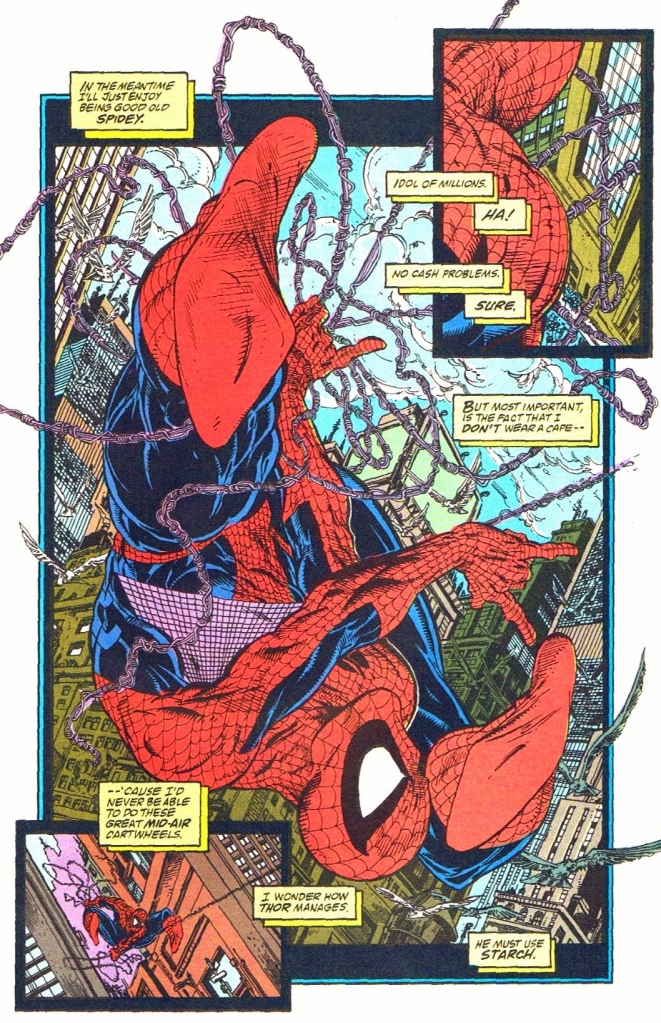
This page is an example of Todd McFarlane creating a travel sequence that allowed him to draw something great. It’s a classic example of moving back into the comfort zone.

To make things very clear here, this comic book is pretty shallow and hollow mainly due to its storytelling as this was the writing of a very young Todd McFarlane. There is no denying that his art here is great to look at from start to finish. In fact, this was one of McFarlane’s finest visual works ever with Marvel.

But if you look beyond the great visuals, the writing is very weak all throughout the issue. At best, this comic book is a grand-looking yet shallow set-up for the conflict of the Torment storyline complete with shared emphasis on the iconic web-slinger, the Lizard (looking more menacing than before) and Calypso (the one behind the magic and rituals).

In fairness to McFarlane, he added his own touch on emphasizing the personalities of Peter Parker and wife Mary Jane simultaneously as a couple. If you were used to seeing in-depth character development and witty dialogue about the two major characters as portrayed in the Amazing Spider-Man, Web of Spider-Man and Spectacular Spider-Man series of 1990, you won’t find them in this comic book. Under McFarlane’s writing, Spider-Man in this issue showed signs of sarcasm and cockiness in the first scene, and with Mary Jane he (as Peter Parker) expressed himself philosophically. To say the least, the portrayal of Spider-Man here is noticeably different under McFarlane.

The Lizard, a long-time rival of Spider-Man’s, was presented to be very violent and murderous in this issue. This was clearly McFarlane’s approach on emphasizing the force of opposition that awaits the iconic web-slinger and he obviously went for a more adulterated approach with the visuals. That being said, the violent content in this comic book is very unique and clearly stood out from the rest of the Spider-Man-related comics published by Marvel in 1990. Lastly, I should say that McFarlane’s visual take on the Lizard is the best I have seen.  

Going back to the visuals, McFarlane implemented strong elements of horror, darkness and grittiness which went along well with the adulterated approach to violence.  These mixed elements, as they turned out in reality, became part of McFarlane’s future works past Spider-Man.

Conclusion

McFarlane’s vicious and horrifying approach on visualizing the Lizard can’t be ignored. This Lizard makes the cinematic Lizard of the 2012 movie The Amazing Spider-Man look cartoony.

Spider-Man (1990) is a very mixed bag when it comes to literary enjoyment. It clearly has great artwork by McFarlane whose adulterated approach on expression and spectacle made it very unique. The writing by McFarlane (who was very young at the time of production) is clearly the big letdown although his own approach on portraying Spider-Man, MJ and the Lizard are very notable. Take note that this was Todd McFarlane starting with writing while doing the art (his true strength), and at this point in comic book history his talent on telling compelling stories would not be realized until a few years later (particularly with Spawn and Image Comics). Notably, his use of visual horror and darkness predates his work in Spawn which makes his Spider-Man take very distinct. Ultimately, this comic book served as a build-up for things to come in the Torment storyline. Don’t expect too much when acquiring this comic book.

Overall, Spider-Man (1990) is satisfactory.

+++++

Thank you for reading. If you find this article engaging, please click the like button below, share this article to others and also please consider making a donation to support my publishing. If you are looking for a copywriter to create content for your special project or business, check out my services and my portfolio. Feel free to contact me with a private message. Also please feel free to visit my Facebook page Author Carlo Carrasco and follow me on Twitter at  @HavenorFantasy as well as on Tumblr at https://carlocarrasco.tumblr.com/ and on Instagram at https://www.instagram.com/authorcarlocarrasco