

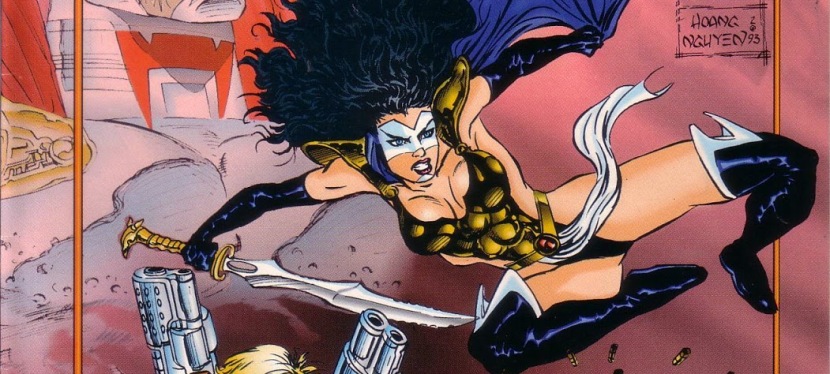
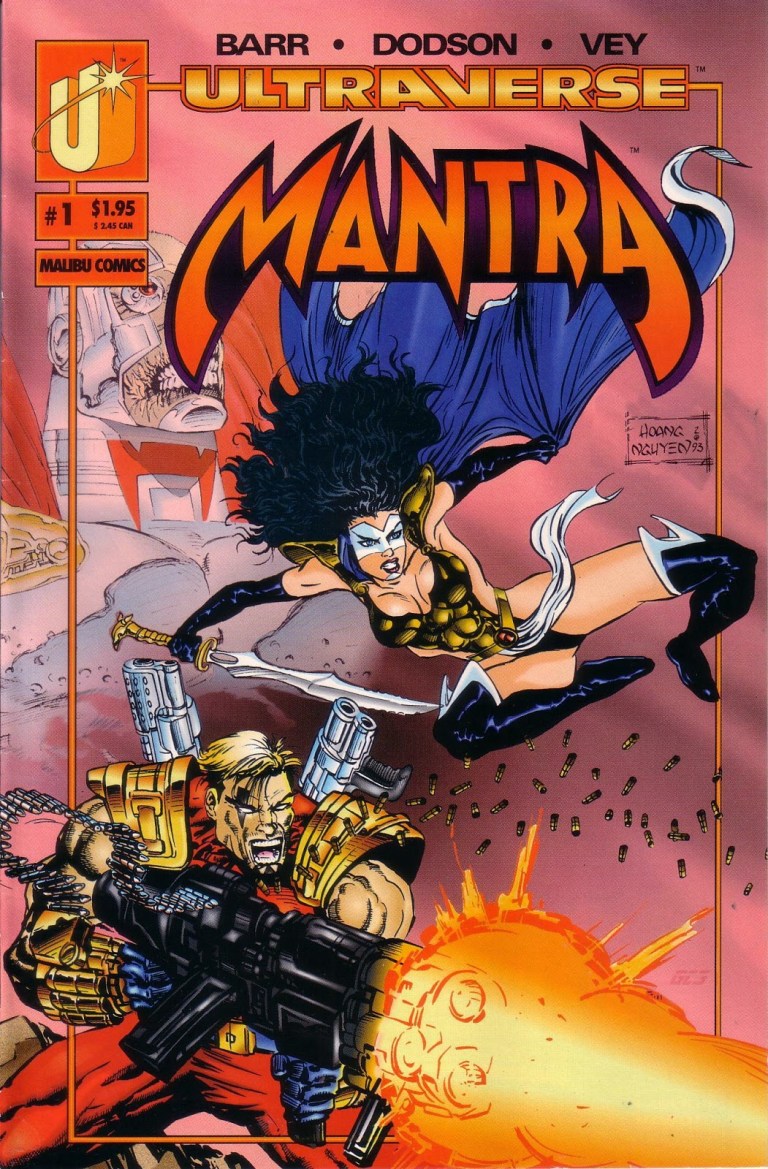
If there is any intriguing way of utilizing fantasy concepts to introduce a superhero (or superheroine) to readers, Mantra #1 from the Ultraverse published in 1993 by Malibu Comics is one fine example.
Early story
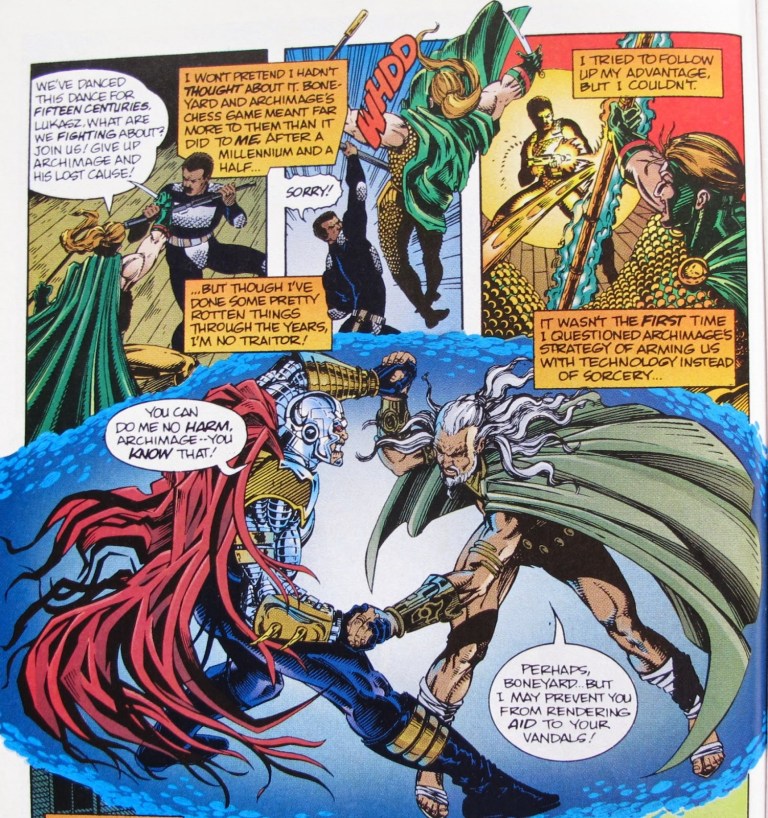
Written by Mike W. Barr with art by Terry Dodson, Mantra #1 was an Ultraverse launch comic book that follows Lukasz who is an eternal warrior belonging to a group of other warriors which had been fighting another group (led by eventual Ultraverse villain Boneyard) for several centuries.
How did that conflict last that long? As told through the views of Lukasz, any individual warrior who dies will eventually be placed in a new body (often that of an existing person) and take control of it effectively displacing the its soul. Behind it all, Archmage, the leader of the warriors’ group that includes Lukasz, uses magic to ensure that each member will be reincarnated after dying.
The story takes a major turn for the shocking and intriguing when something unfortunate happens to Archmage and that the protagonist himself gets killed again. Fortunately for him, he gets to live one more time but there is one major difference – Lukasz occupies the body of a woman named Eden Blake (and the revealing scene remains shocking).
At this point, I don’t want to spoil the rest of the story. If you want to find out how Mantra came to be, you just have to read the comic book yourselves.
Quality
From an analytical view, I still find Mantra’s concept very intriguing to this day. In terms of mysticism, it reminds me a little bit of George Perez’s take on Wonder Woman in the mid-1980s and in some cases Mantra/Eden Blake herself reminds me bit of Wonder Woman/Diana albeit in a more motherly way.
When it comes to storytelling, Mike W. Barr’s script is very solid and made very good use of the twenty-eight (28) pages of the comic book. Unsurprisingly, there was a good amount of expository dialogue and narration but it was handled efficiently. The first-person views of Lukasz/Eden Blake are truly immersive to read. Along the way, there were several scenes that were intriguing to read and there were some nice moments of unintentional comedy which helped balance the overall tone of the story.
To say the least, Mantra’s concept about dead warriors’ souls entering bodies of existing people to live again sheds light on the moral or psychological implications of such events. If you were a warrior who just died and eventually got a new lease on life by occupying the body of let’s say a software company’s chief executive officer, would you not be concerned as to what happened to the soul (of the body) you displaced? Would you not think about how your control of that displaced soul’s body would affect not only the person’s established life but also the personal association with other people? Truly Mike Barr’s writing got me hooked and Terry Dodson’s art really brought his concepts to life.
Conclusion
So what else could I say? Mantra #1 is highly recommended not only because of its story and concepts but also because this particular series lasted several issues more and, for the most part, Mantra’s adventures and misadventures have often been fantastic and fun.
Even though it is fact that the Ultraverse remained in limbo and Marvel Entertainment showed no intention to revive the franchise, Mantra is still a fun and engaging comic book series to read and this comic book is the golden start of it. Mantra #1 itself is one of the most defining superhero comic books of the 1990s ever published and its mature themes combined with strong fantasy concepts made it stand out among all of those other superhero comic books I spotted on the shelf of a BF Homes comic book store that I visited in July 1993.
You guys can order copies Mantra #1 online at ComicCollectorLive.com, at MileHighComics.com (a near-mint holographic cover version of the comic book is worth over $40) or by visiting your local comic book retailer selling old issues.
Author’s Note: This article was originally published at my old Geeks and Villagers blog. What you just read on this website is the most definitive version.
Thank you for reading. If you find this article engaging, please click the like button below and also please consider sharing this article to others. Also my fantasy book The World of Havenor is still available in paperback and e-book format. If you are looking for a copywriter to create content for your special project or business, check out my services and my portfolio. Feel free to contact me as well. Also please feel free to visit my Facebook page Author Carlo Carrasco and follow me at HavenorFantasy@twitter.com


