Retro Gaming Ads Blast – Part 16

Welcome back readers, fellow geeks and electronic gaming fans!

In this edition of the Retro Gaming Ads Blast (RGAB) series, we will take a look at another batch of retro gaming print ads – including arcade flyers – from the 1980s and 1990s.

For the newcomers reading this, Retro Gaming Ads Blast (RGAB) looks back at the many print ads of games (console, arcade, computer and handheld) that were published in comic books, magazines, flyers and newspapers long before smartphones, social media, the worldwide web and streaming became popular. To put things in perspective, people back in the 1980s and 1990s were more trusting of print media for information and images about electronic games and related products.

With those details laid down, here is the newest batch of retro gaming print ads for you to see and enjoy…

1. A-Jax North American arcade flyer
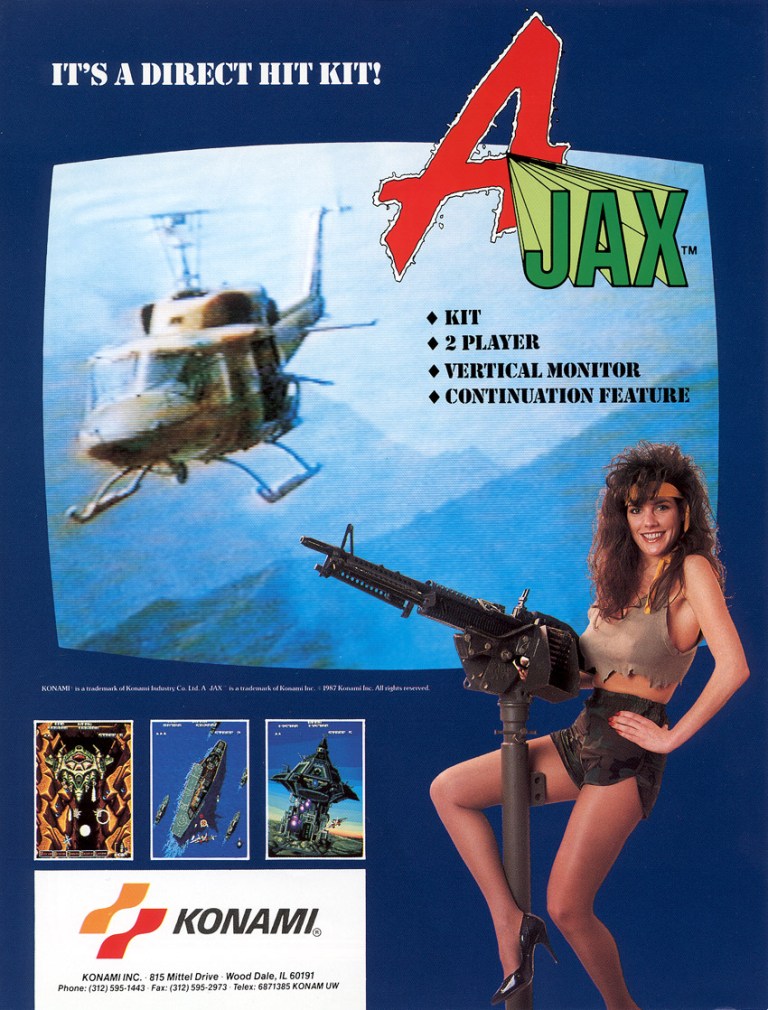
Another one of Konami’s arcade flyers showing a pretty fashion model with a touch of militarism.

A-Jax (also referred to as Ajax) is another one of the many military themed games Konami released for the arcades in the 1980s. It was a 2D vertically scrolling shooter in which players use aircrafts to shoot enemies both in the air and on the ground. The game was a hit in Japanese arcades and Konami came up with the North American arcade flyer showing three screenshots, an archive footage shot of a military helicopter and a sexy lady (with a light military look) with a machine gun. The style of presentation was similar in style with the North American arcade flyers of Contra and M.I.A.: Missing in Action.

2. The Combatribes print ad
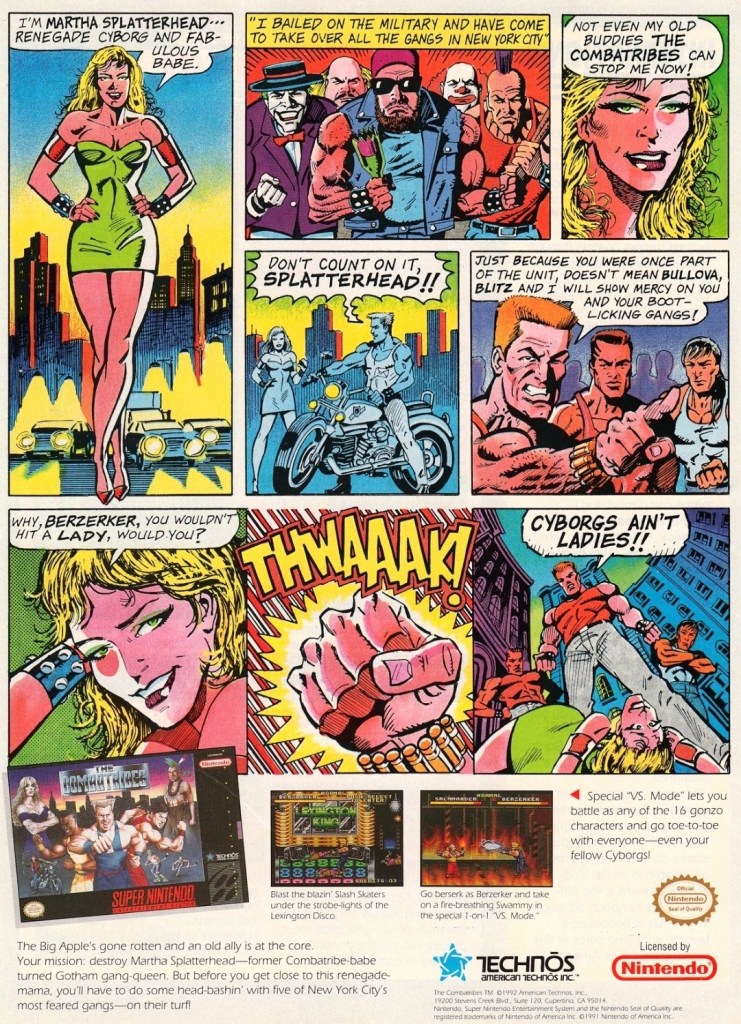
The short comic book approach was used to emphasize the setting and concept of the video game.

Technos, the Japanese company behind the wildly popular Double Dragon games franchise, proved to be successful with the arcade release of The Combatribes. In an attempt to keep the wave of success moving, Technos released The Combatribes on the Super Nintendo Entertainment System (SNES) in 1992 and someone involved with the North American marketing came up with the idea of creating a comic book-style presentation for the print ad. Creatively speaking, the comic book approach was done to emphasize the story and visual concepts of the game, and entice readers to play it. By today’s standards of video game marketing, this print ad’s approach is both unusual and notable.

3. Dead or Alive 2 Dreamcast port print ad
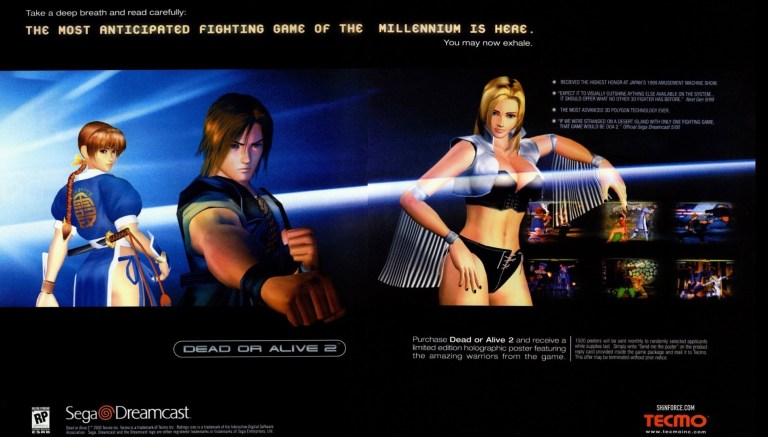
This was a wide print ad that appeared on magazines and it sure was eye-catching. It was an effective way to promote the game and inform people of the Sega Dreamcast’s presence in the market.

When Dead or Alive 2 was released in the arcades in 1999, a lot of gamers were astounded by it as developer Team Ninja (led by Tomonobu Itagaki) made it much bigger and a lot better than its 1996 predecessor. Team Ninja really went all out making the sequel utilizing Sega’s NAOMI arcade technology, inviting martial artists to do motion-capture, and having a very ambitious game design. Since the game was developed with the NAOMI hardware, porting the game for the Sega Dreamcast was reportedly convenient and smooth for the developers who went on to add more gameplay features and modes. Publisher Tecmo came up with this wide print ad (promoting the Dreamcast release) showcasing three characters, six screenshots and text descriptions emphasizing the universal acclaim the game received. The promotional approach was simple yet effective.  

4. Jet Moto (PC version) print ad
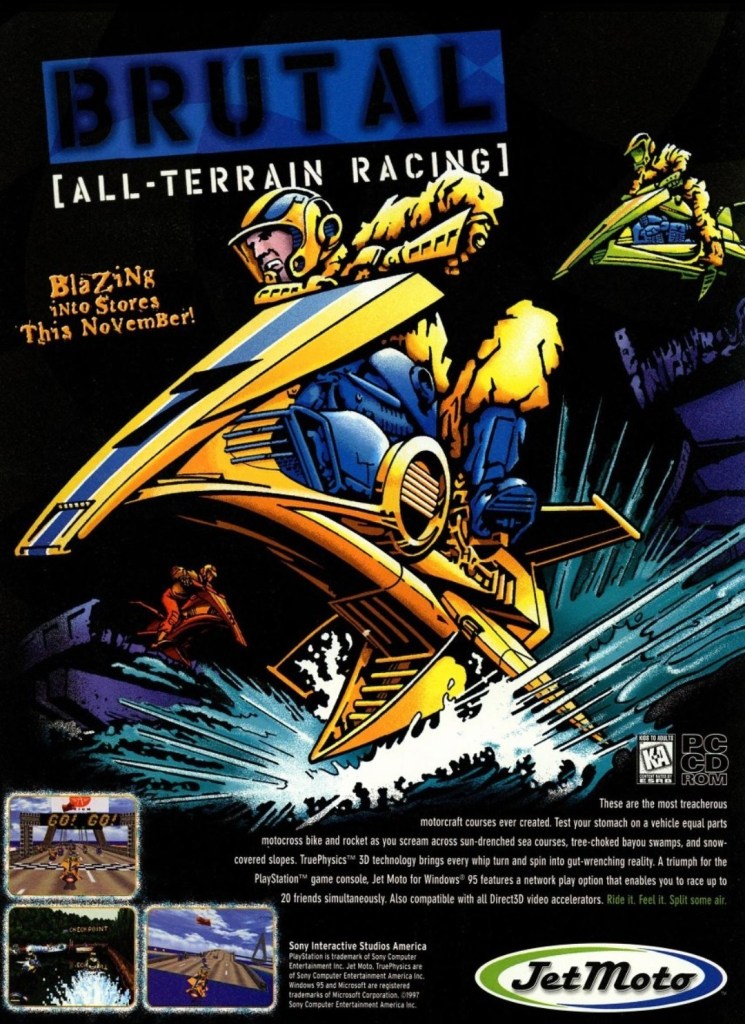
From PlayStation to PC.

In November 1996, the futuristic all-terrain hoverbikes racing game Jet Moto was released on the PlayStation which went on to sell well and attract mostly positive reviews. Sony Computer Entertainment eventually released a version of the game for the personal computer (PC) in November 1997. As seen in the above print ad, the network play option and compatibility with Direct3D video accelerators were emphasized as such features resonated with the interests of PC gamers of the era. This print ad showed how willing Sony was to release PlayStation hits on PC back then.

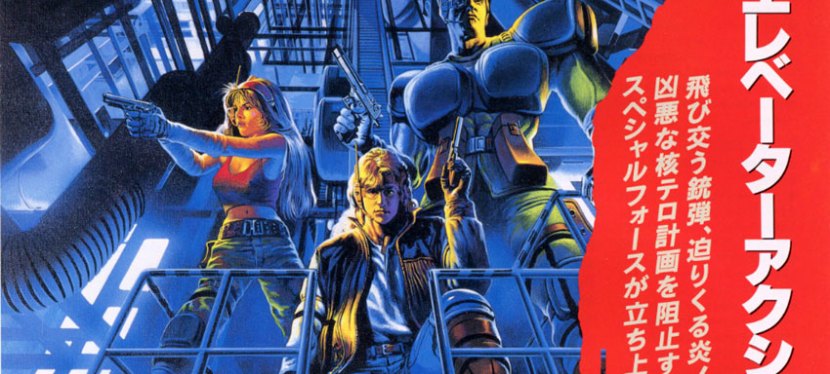
5. Elevator Action Returns Japanese arcade flyer
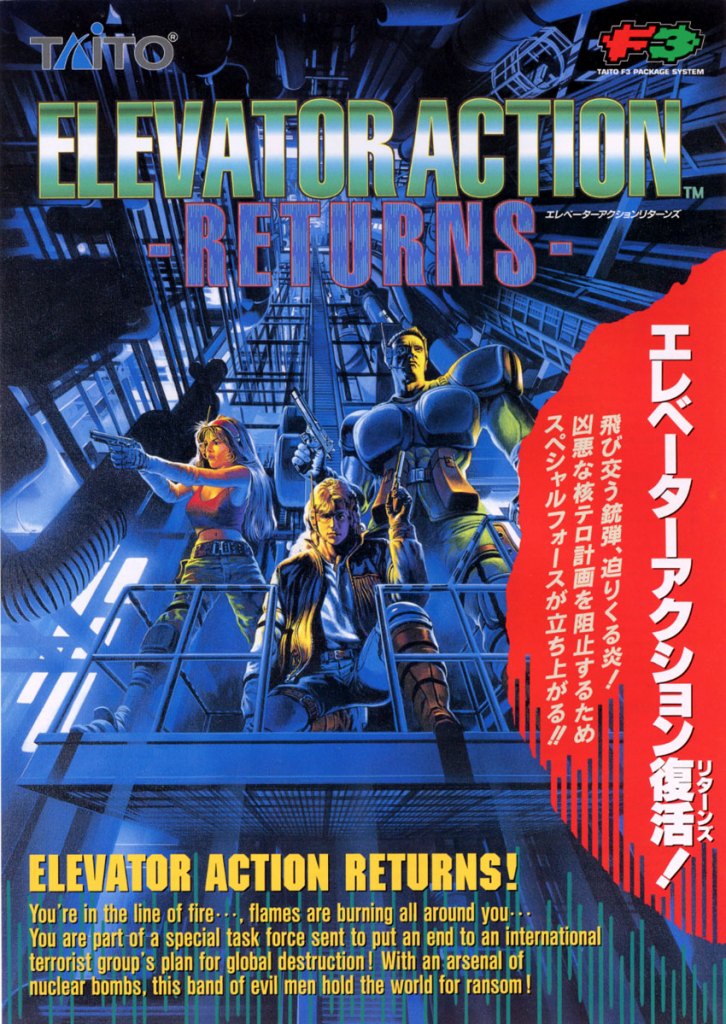
Great looking art on the front.
The rear of the flyer.

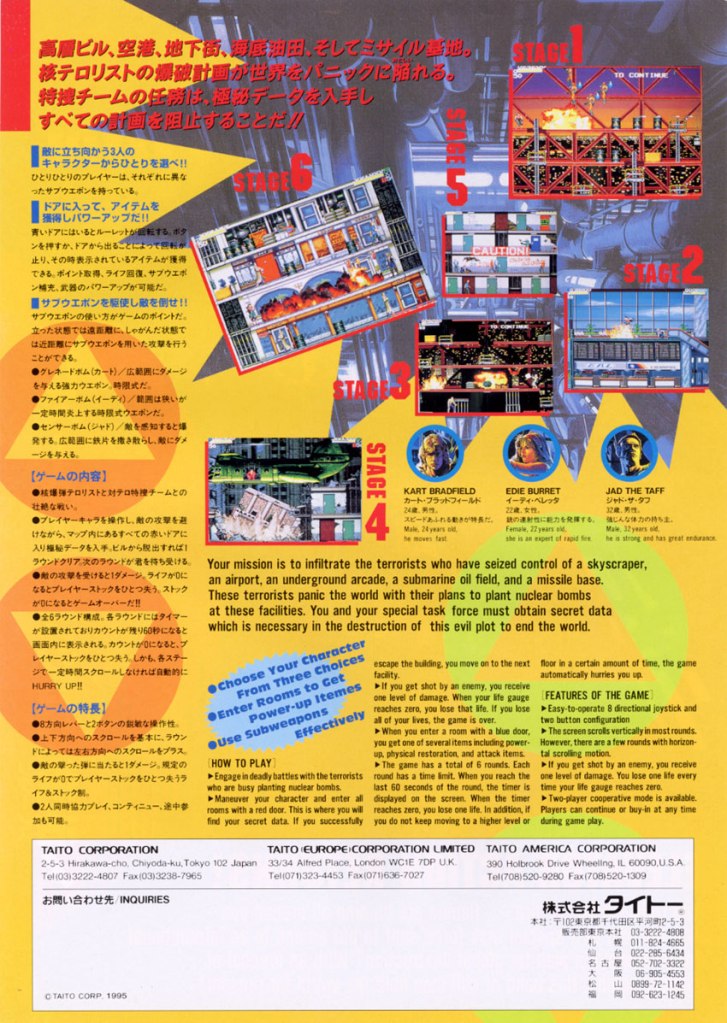
When Taito released Elevator Action Returns (also titled as Elevator Action II in other nations) in the arcades in 1994, it became a hit as gamers enjoyed its action-packed gameplay, ambitious 2D visual presentation and varied level designs that clearly went beyond its 1983 predecessor. The front of the Japanese arcade flyer has really nice art showing the three playable protagonists on an elevator on their way to do their mission. The back of the flyer shows screenshots (which emphasized the varied level designs), text descriptions explaining how the game played (English version printed), and what the features are. Another text description confirmed that terrorists are the antagonists that players will be dealing with which was reflective of the rise of Islamic terrorism in the 1990s. Oh yes, if you look closely you will the word “item” misspelled as “items”.

6. Sunset Riders print ads
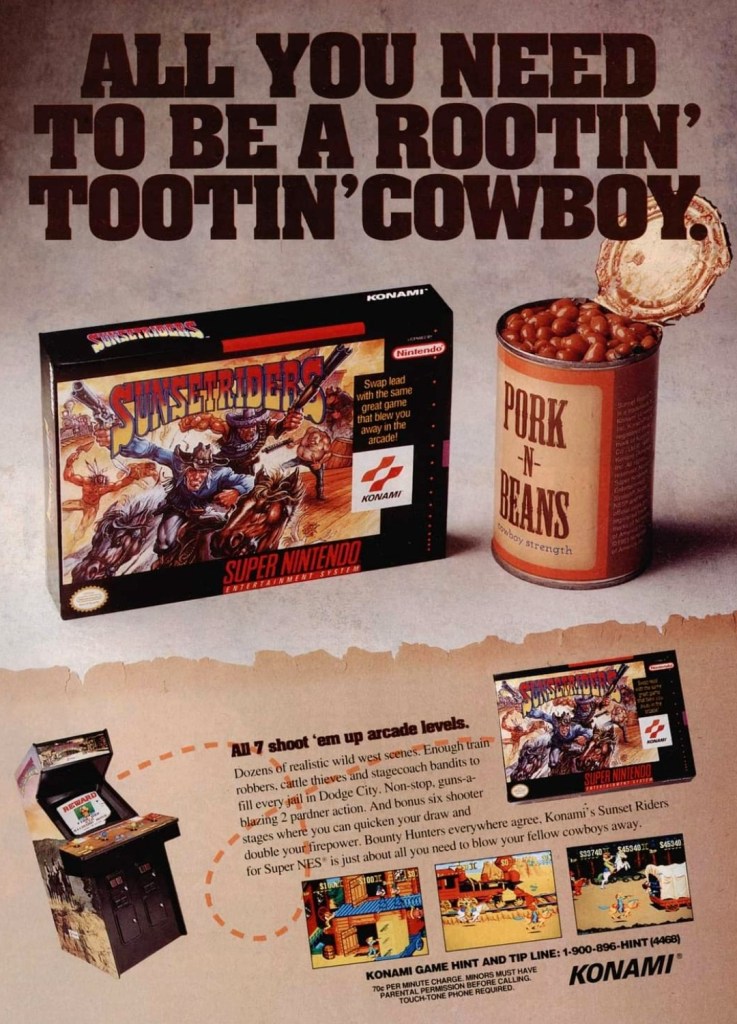
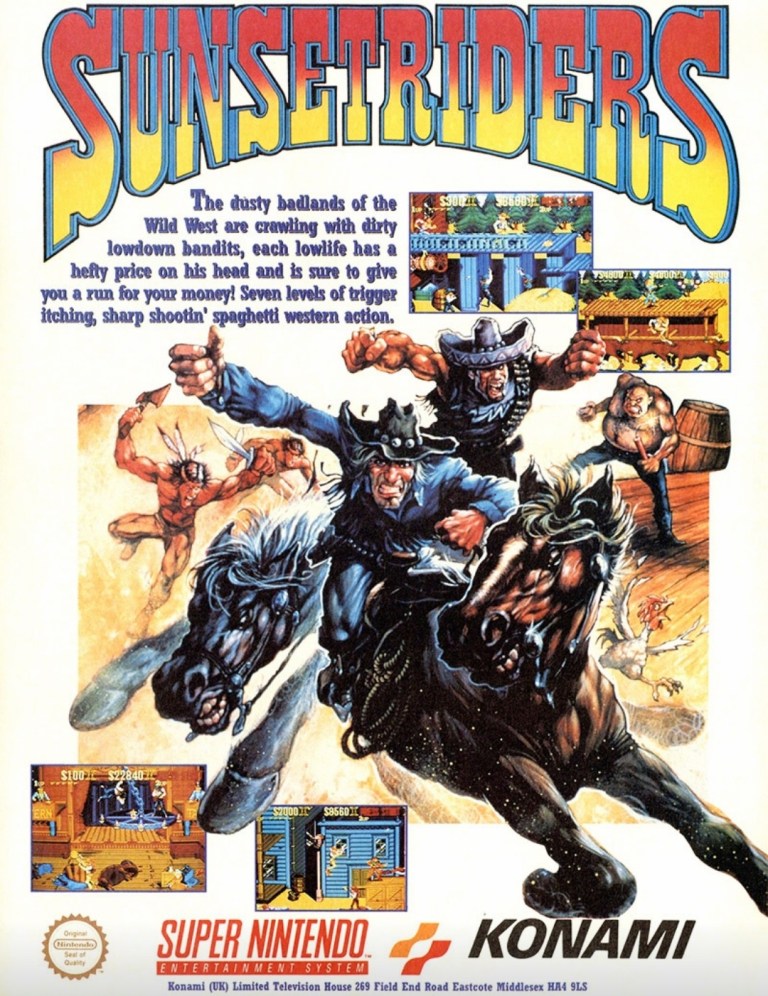
The Sunset Riders arcade machine, the SNES version, screenshots and a can of pork-and-beans on this ad.
This print ad appeared in some comic books I read long ago.

After enjoying a lot of success in the arcades with their 1991 game Sunset Riders, Konami went on to release ports of it to the Sega Genesis in 1992 and the Super Nintendo Entertainment System (SNES) in 1993. With regards to conversions and procedural/artistic changes between the arcade and console ports, the SNES version had few changes implemented compared to the one released on the Genesis. As seen in one of the print ads of Sunset Riders on SNES, it came with 7 arcade levels, 2-player mode and additional shooter stages. What the print ads did not reveal were notable replacements of specific characters in key parts of the game such as the dynamite-tossing female bandits getting replaced by male bandits, North American Indian villains getting replaced with outlaws, etc.  

7. Jackal Japanese arcade flyer
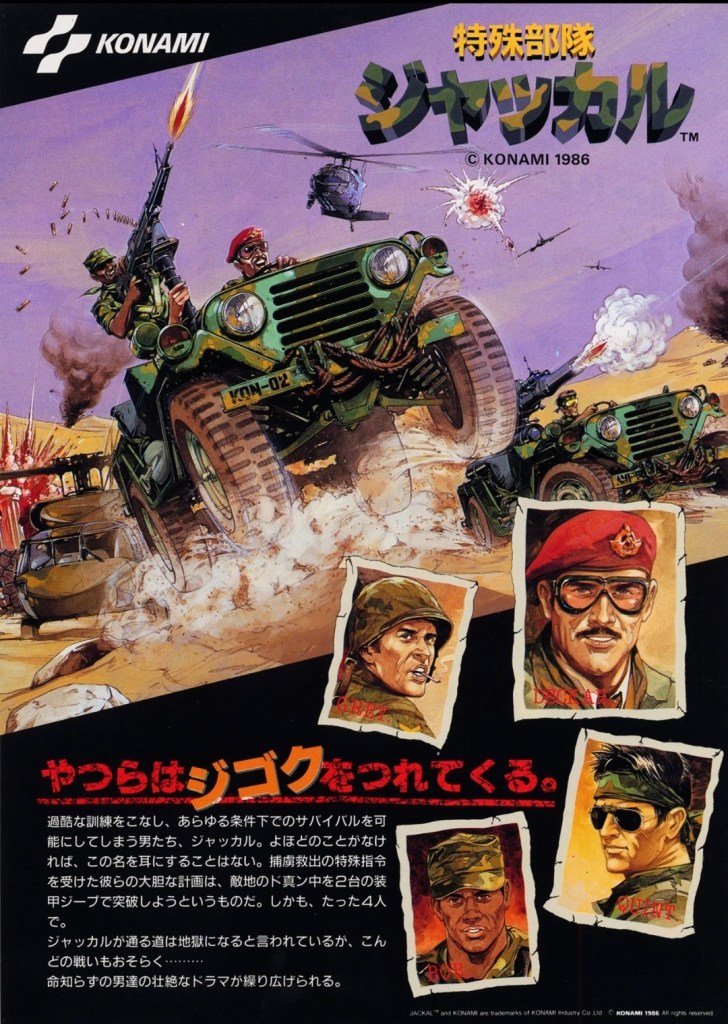
Whoever was the artist Konami hired truly delivered great-looking art!

Konami’s military themed game Jackal (Japanese title: Tokushu Butai Jackal) debuted in Japanese arcades in October 1986 and became a hit. The Japanese market arcade flyer had great looking artwork on the front that strongly emphasized the very concept of the game (players move military jeeps to shoot at enemies as they move into enemy territory). One of the characters (the one wearing the red beret) somewhat resembles the late Sean Connery which only shows that someone within Konami’s development team took inspiration from movies. This arcade flyer’s front still looks great.

8. Aliens North American arcade flyer
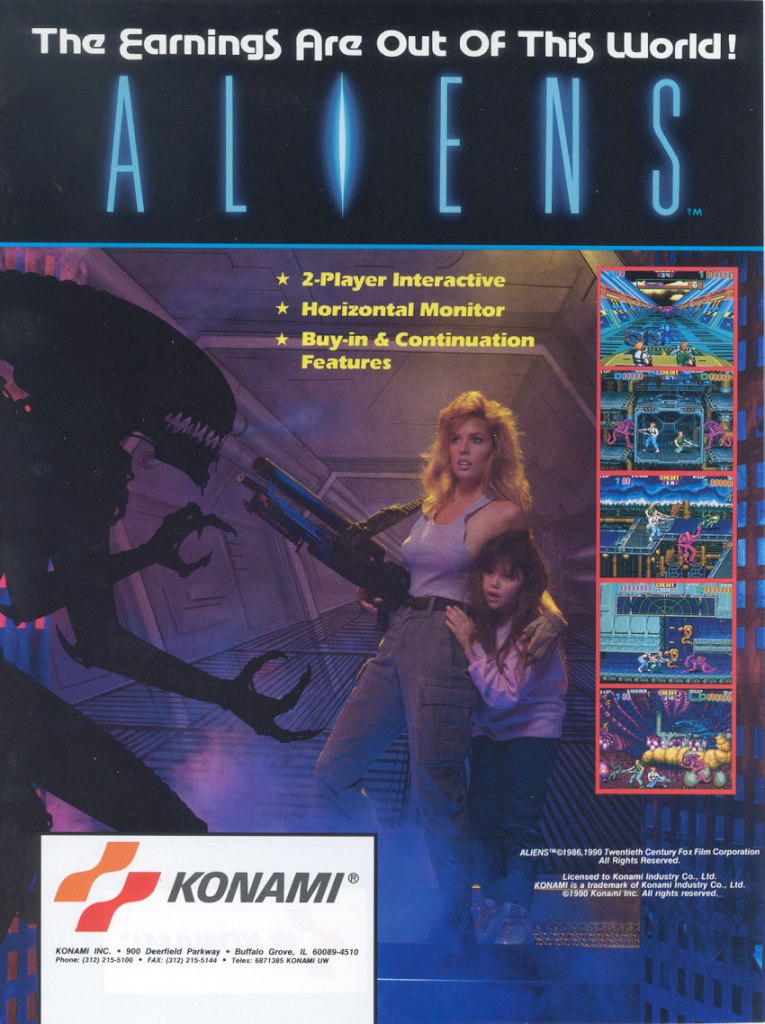
A good amount of effort was done to truly capture Aliens’ concept using hired models (as Ripley and Newt), a Xenomorph physical model and a suitable background.
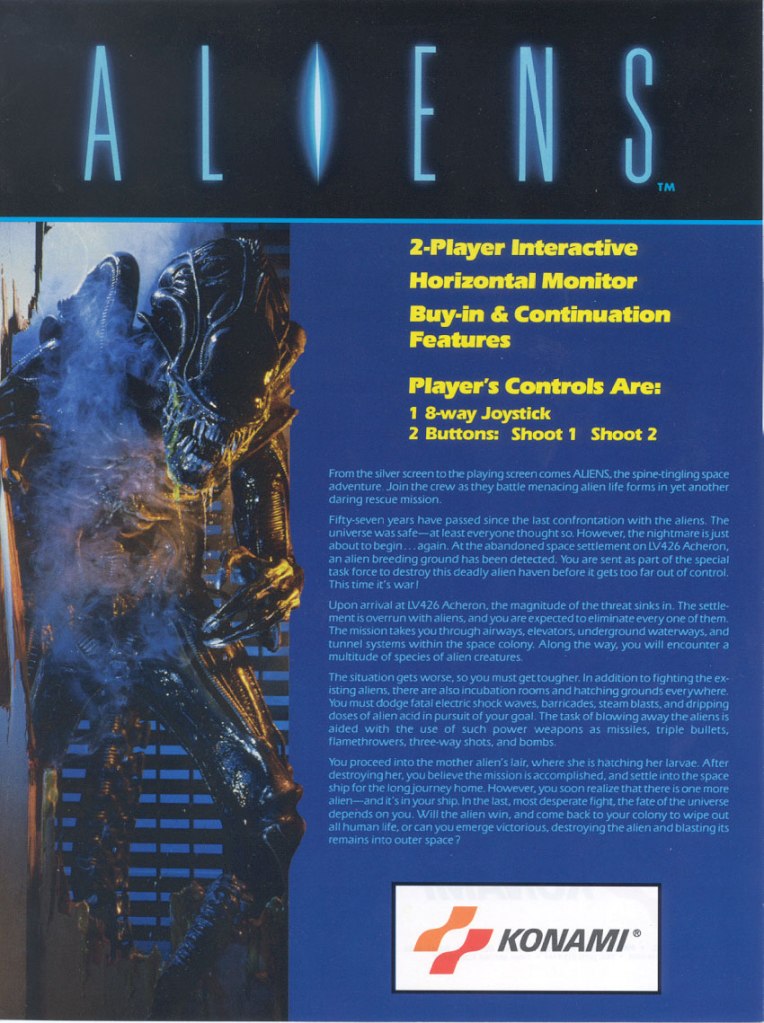
The key details presented on the rear of the flyer. The Xenomorph’s presence adds tension.

In 1990, Konami released their ambitious arcade game Aliens which was loosely based on the 1986 movie that starred Sigourney Weaver and was directed by James Cameron. As Konami’s Aliens license was only temporary and the movie was so highly regarded, the Japanese company’s marketing team really had to exert extra effort to truly capture the film’s sci-fi horror concept in order to make a strong presentation towards arcade operators and their paying customers (the gamers).

Apart from showing screenshots on the front, the creative team hired a blonde model as Ellen Ripley holding a gun and a young girl as the character Newt, and have them pose convincingly in front of a Xenomorph model (darkened in the foreground). On the back of the flyer, the team heavily revealed the details using the text description to emphasize the gaming experience and story concept. The technical details, meanwhile, were presented in simplistic, easy-to-follow fashion. Aliens was a smash hit in the arcades and there are long-time gamers who regard it as one of the best game adaptations of the 1986 movie. This arcade flyer is a strong reminder that the featured game was never ever ported to any game console nor to any personal computer.

+++++

Thank you for reading. If you find this article engaging, please click the like button below, share this article to others and also please consider making a donation to support my publishing. If you are looking for a copywriter to create content for your special project or business, check out my services and my portfolio. Feel free to contact me with a private message. Also please feel free to visit my Facebook page Author Carlo Carrasco and follow me on Twitter at  @HavenorFantasy as well as on Tumblr at https://carlocarrasco.tumblr.com/ and on Instagram at https://www.instagram.com/authorcarlocarrasco

Retro Gaming Ads Blast – Part 11

Welcome back readers, fellow geeks and electronic gaming fans!

In this edition of the Retro Gaming Ads Blast (RGAB) series, we will take a look at another batch of retro gaming print ads from the 1980s and 1990s. In addition, there will be a few flyers of arcade games as well as promotional posters of a notable console game that was released only in Japan.

For the newcomers reading this, Retro Gaming Ads Blast (RGAB) looks back at the many print ads of games (console, arcade, computer and handheld) that were published in comic books, magazines, flyers and newspapers long before smartphones, social media, the worldwide web and streaming became popular. To put things in perspective, people back in the 1980s and 1990s were more trusting of print media for information and images about electronic games and related products.

With those details laid down, here is the newest batch of retro gaming print ads for you to see and enjoy…

1. M.I.A.: Missing in Action arcade flyer

This is an effective way of catching the attention of both players and arcade operators. I can imagine the woke, the SJWs and rabid feminists getting easily offended by this.

Konami was a very prominent producer of games back in the 1980s. Not only did the company produce high-quality and enjoyable military-themed games on consoles and computers, Konami also made its presence felt in the highly competitive sector of arcade games. In 1989, they released the arcade conversion kit of M.I.A.: Missing in Action and this flyer is the best know promotion of it. M.I.A.: Missing in Action is the follow-up to Konami’s hit game Rush’n Attack.

Visually, the flyer’s display of four screenshots combined with a dominating photographic image of prisoners of war (POWs) getting delightfully released by an attractive female Rambo-type rescuer were designed to catch the attention of young adult and adult gamers. The text descriptions (note: there were more details on the back of the flyer), however, were geared towards arcade operators who were looking for new games to acquire without the hassle of having to buy an entire arcade cabinet. That being said, this flyer was a clever way to appeal to arcade operators and the people who love playing arcade games.

2. Fonz arcade flyer

Simplistic yet effective to look at. If you are an arcade operator, this flyer conveniently has key information displayed.

Believe it or not, Sega was already active in arcade games way back in the 1970s. In this particular flyer, Sega’s arcade game Fonz (also called Moto-Cross, Man T.T.) offered players the unique experience of driving a digital vehicle using actual handlebars on the machine that were meant to create an immersive and realistic feel. If you look closely, the flyer has lots of details written with arcade operators and players in mind.

3. Haunted Castle arcade flyer

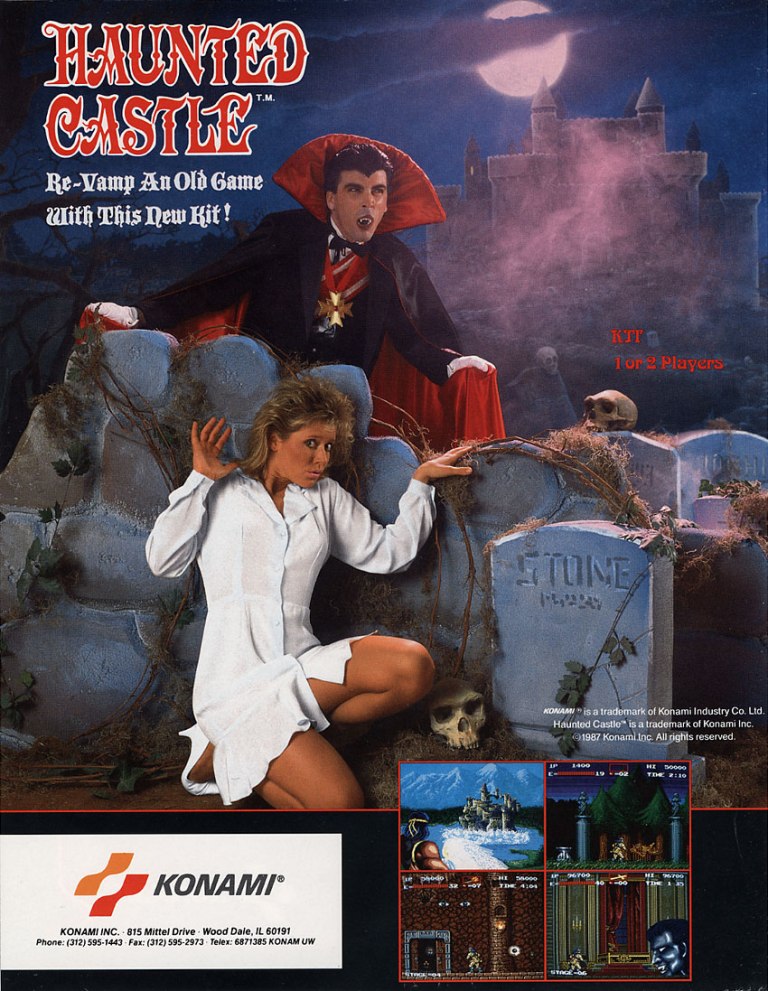
Indeed, this game is part of the Castlevania game franchise. It was one of the first Castlevania games released for arcades.

Arguably, Konami is best known for the Castlevania game series which covered handheld gaming devices, personal computers, video game consoles and even arcades. Haunted Castle (Japanese title: Akumajō Dracula) is the 2nd arcade game of the Castlevania franchise and it is not a port of any console game. Like the arcade flyer of M.I.A.: Missing in Action, this one was crafted to lure the attention (and money) of arcade operators looking for conversion kits to replace their old games. The visual presentation is eye-catching and even though the Castlevania brand was nowhere to be seen, Castlevania fans could tell this this arcade offering was part of their favorite game franchise.  

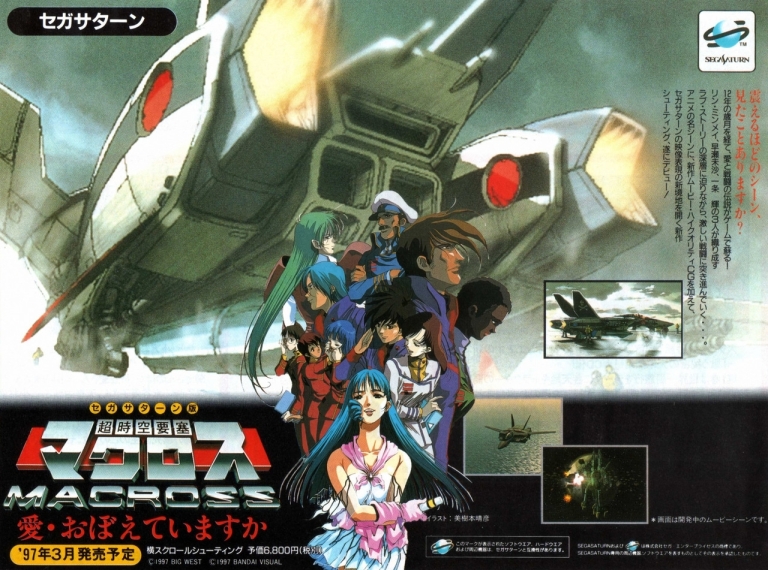
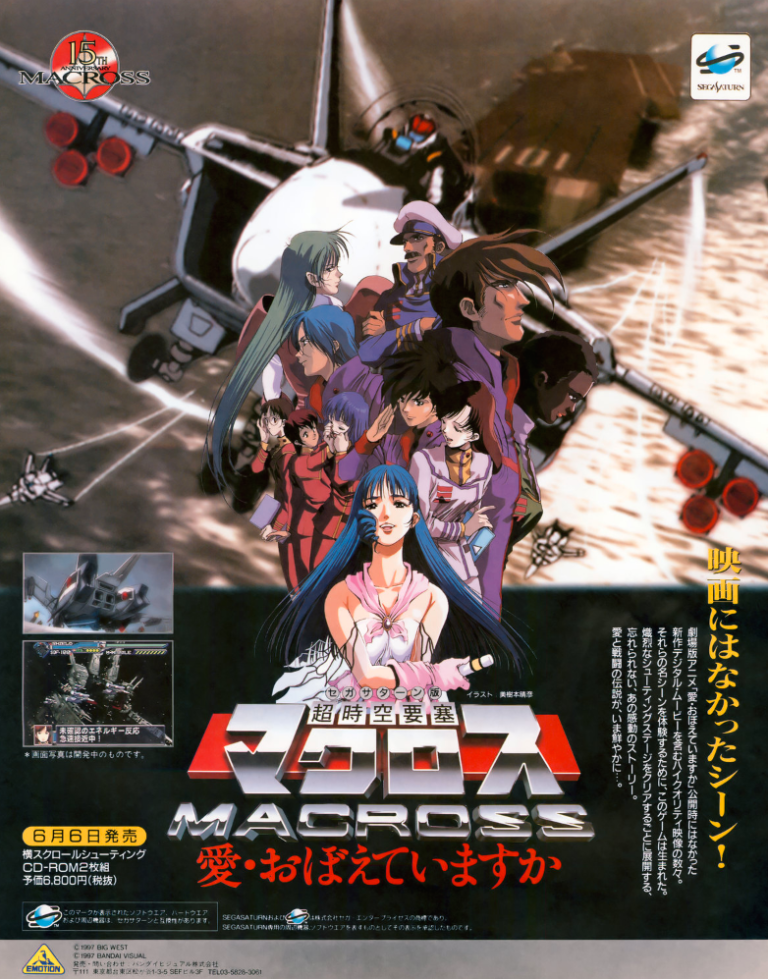
4. The Super Dimension Fortress Macross: Do You Remember Love? flyer and poster

The poster promoting the release of the game for Sega Saturn in Japan.
The flyer promoting the Sega Saturn game’s 1997 release as well as the 15th anniversary of Macross.

In 1997, the 15th anniversary of the Macross multimedia franchise was celebrated in Japan and among the highlights was the release of The Super Dimension Fortress Macross: Do You Remember Love? on the Sega Saturn. To promote the game and the franchise itself, lots of flyers and posters were released in Japan. If you look at the illustrated images on the promotional materials closely, you will realize that they are not from the original 1982-83 Macross anime TV series but rather from the The Super Dimension Fortress Macross: Do You Remember Love? animated movie of 1984 (read my retro movie review by clicking here).

While it might be baffling to some as to why the original anime TV series was not used as the source material for the 15th anniversary celebration through gaming, the 1984 anime feature film was actually more adaptable for a video game project (read my retro review by clicking here). It is so obvious, you just have to ask yourselves this question – how can the game developers compress the entire concepts of the 36-episode Macross anime series into one game while ensuring fun gameplay? Regardless, the game was a lot of fun to play and I enjoyed playing the PlayStation version in 1999.

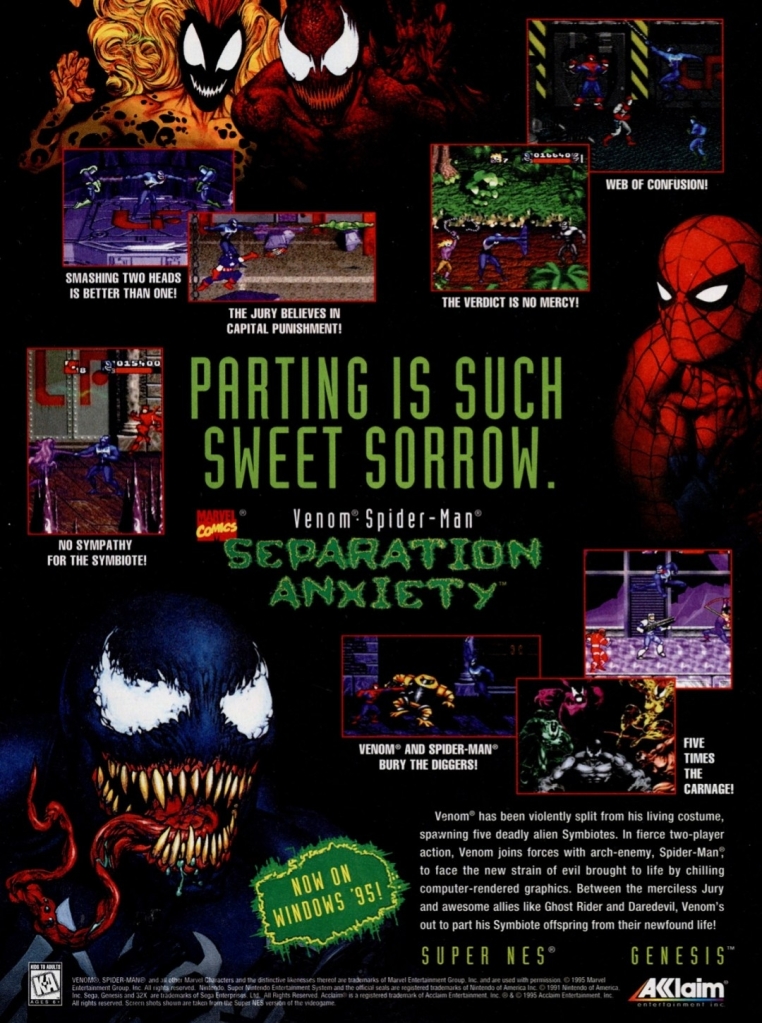
5. Venom/Spider-Man: Separation Anxiety print ad

A clear effort to sell the game to gamers as well as fans of Spider-Man and Venom.

In 1994, Acclaim released Spider-Man and Venom: Maximum Carnage (based on the 1993 comic book storyline Maximum Carnage) on Super Nintendo Entertainment System (SNES) and Sega Genesis ultimately becoming popular with comic book fans and gamers who enjoyed sidescrolling beat-them-up games.

Subsequently, Acclaim and develop Software Creations reunited to release the sequel Venom/Spider-Man: Separation Anxiety a year later on the two leading 16-bit consoles as well as on personal computer (PC). If there is anything notable about this eye-catching print ad, it is the fact that its visual presentation (with graphics on-par with the previous year’s game) cleverly hides the fact that it did not have much new to offer gamers with regards to gameplay and story cutscenes (which the previous game prominently had). Eventually, this game attracted weaker reviews from game critics and has since been forgotten.

6. Tecmo Super Bowl SNES print ad

From the time when Tecmo was still a strong producer of sports video games.

In 1991, Tecmo Super Bowl was released on the aging Nintendo Entertainment System (NES) and because its game design greatly entertained gamers, it became a tremendous commercial success. Not even the very high launch price of $54.99 stopped it from selling a lot.

To keep the commercial success and public interest going, Tecmo announced a new version of the game for the more powerful SNES console with the simple title of Tecmo Super Bowl. If you look closely at the print ad, you will notice that gameplay screenshots were not used at all. Instead, they showed images of the nicely illustrated art works they prepared as eye candy for the game with the intention of making it look cinematic. This is very curious because gameplay itself was the main selling factor of the NES version of Tecmo Super Bowl. I can only guess that Tecmo was not ready to show gameplay images by the time this print ad was made.

7. X-Men 2: Clone Wars print ad

The art used is too alienating for promoting this game.

During the age of the 16-bit consoles, there was a variety of X-Men video games released and produced by different companies. In 1993, an X-Men game published by Sega was released exclusively on the Genesis console which turned out to be fun for gamers and received mostly positive reviews from the critics. Sega went on to publish the sequel X-Men 2: Clone Wars and this print ad caught my attention because of how exaggerated the characters looked. It’s so strange, it’s as if the artist took visual reference from a somewhat blocky 3D polygonal portrait then tried to make them look hand-drawn. I wonder if anyone from Sega regretted this.  

+++++

Thank you for reading. If you find this article engaging, please click the like button below, share this article to others and also please consider making a donation to support my publishing. If you are looking for a copywriter to create content for your special project or business, check out my services and my portfolio. Feel free to contact me with a private message. Also please feel free to visit my Facebook page Author Carlo Carrasco and follow me on Twitter at  @HavenorFantasy as well as on Tumblr at https://carlocarrasco.tumblr.com/ and on Instagram at https://www.instagram.com/authorcarlocarrasco