Retro Gaming Ads Blast – Part 27

Welcome back readers, fellow geeks and electronic gaming fans!

In this edition of the Retro Gaming Ads Blast (RGAB) series, we will take a look at another batch of retro gaming print ads – including arcade flyers – from the 1980s and to the year 2000.

For the newcomers reading this, Retro Gaming Ads Blast (RGAB) looks back at the many print ads of games (console, arcade, computer and handheld) that were published in comic books, magazines, flyers, posters and newspapers long before smartphones, social media, the worldwide web and streaming became popular. To put things in perspective, people back in the 1980s and 1990s were more trusting of print media for information and images about electronic games and related products.

With those details laid down, here is the newest batch of retro gaming print ads for you to see and enjoy…

1. Tutankham print ad
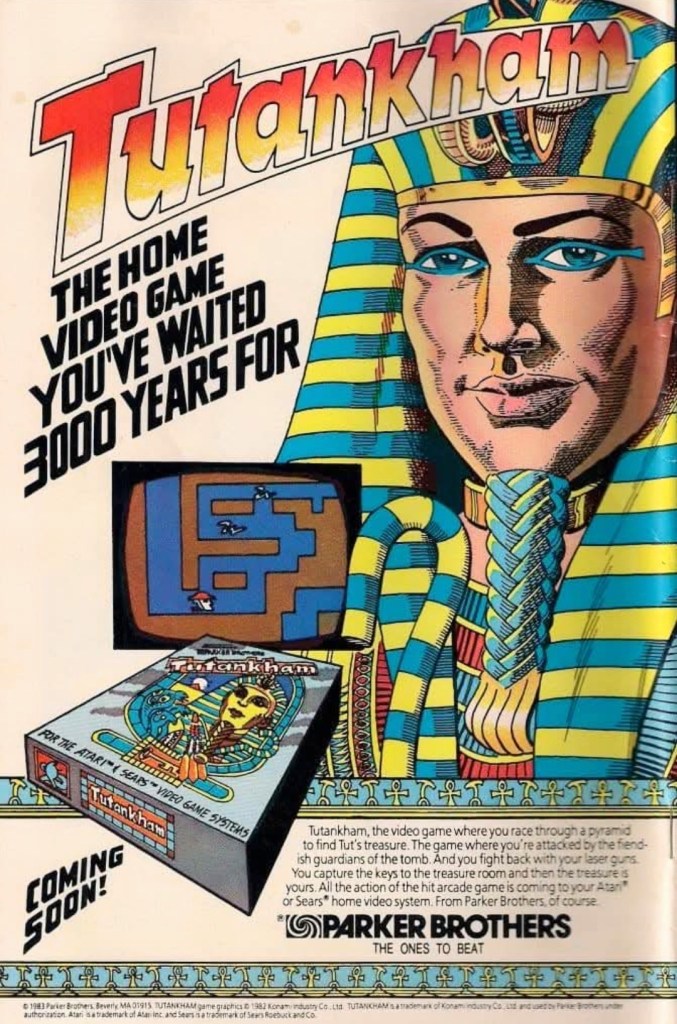
This print ad appeared in several comic books in 1983.

First released in the arcades in 1982, Tutankham is a 2D adventure game that had a mix of shooting, maze exploration and puzzle-solving with Egyptian settings and concepts. It made its way to the Atari 2600 published by Parker Brother, and it was this specific version I played. This game print ad appeared in comic books I read in 1983, and the people who made it implemented a hand-drawn art of the Egyptian pharaoh Tutankhamun dominating the space to emphasize the Egyptian setting. In fact, this ad made me think more of Egypt and left little to give me an idea of the game design.  

2. Star Trek arcade flyer
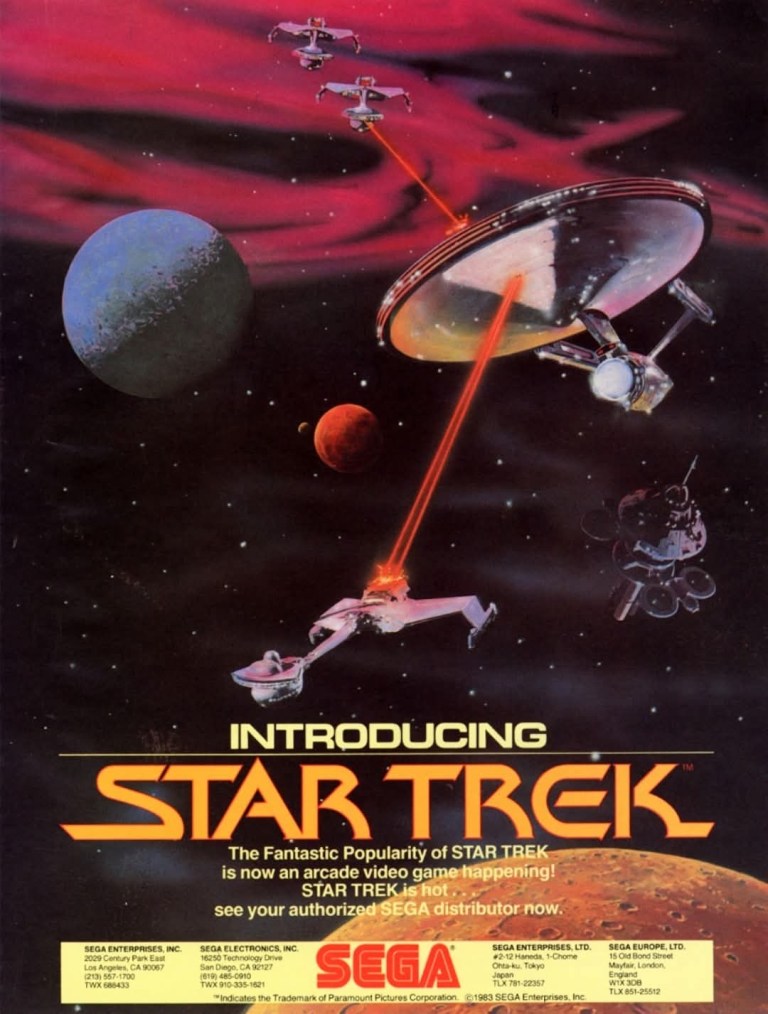
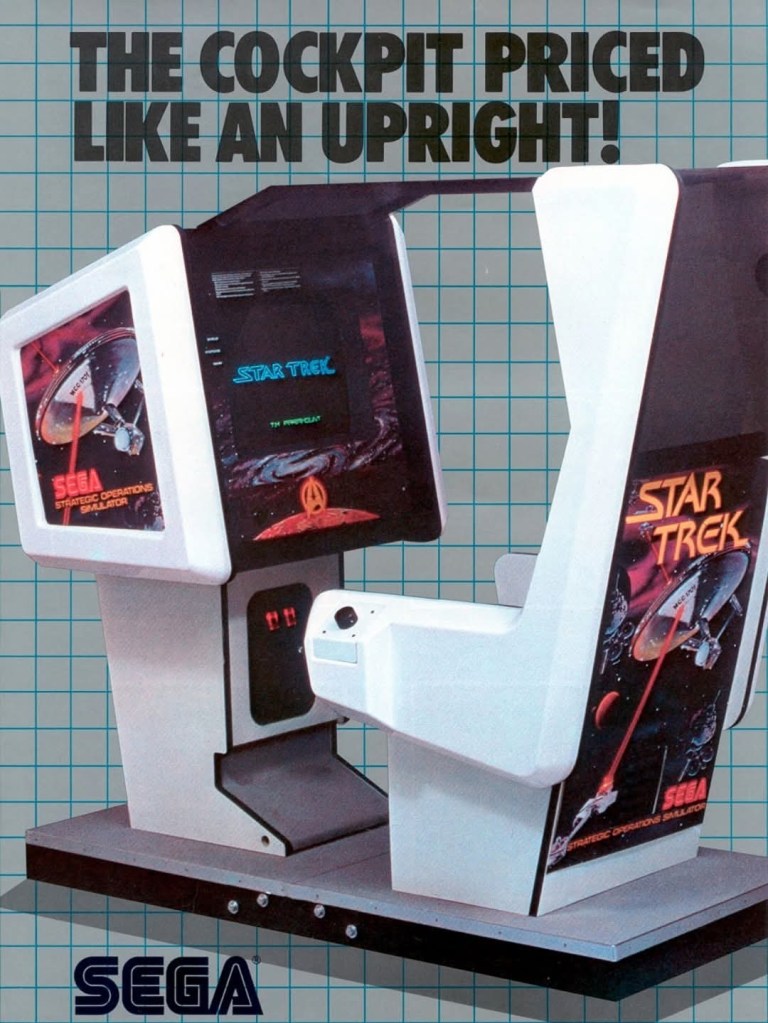
The clever use of classic Star Trek imagery was used in this initial flyer by Sega.
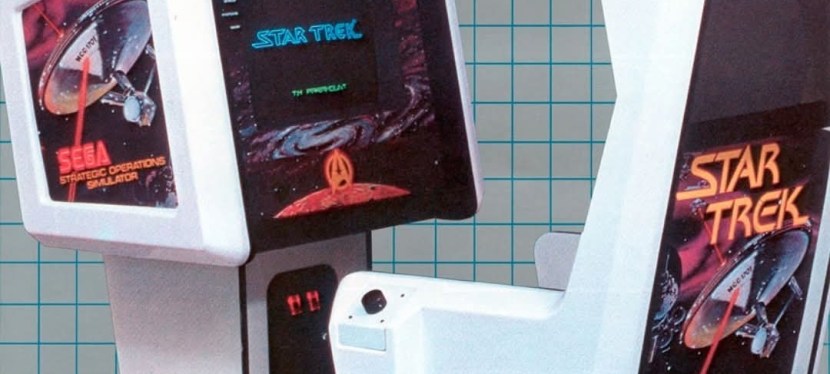
Back in the 1980s, a futuristic design for an arcade machine like this one was mind-blowing.

I never played the Star Trek arcade game (full title: Star Trek: Strategic Operations Simulator) Sega released in 1983. I only saw its graphics and gameplay during an episode of Starcade. With its game design and visual presentation, Star Trek was a very ambitious arcade project for its time and Sega really went in to promote it. The initial arcade flyer (first one above) was meant to grab the attention of both gamers and arcade operators. The next arcade flyer (2nd one above) showed the ambitious design of the arcade machine made with player immersion in mind.

3. Battlezone arcade flyer
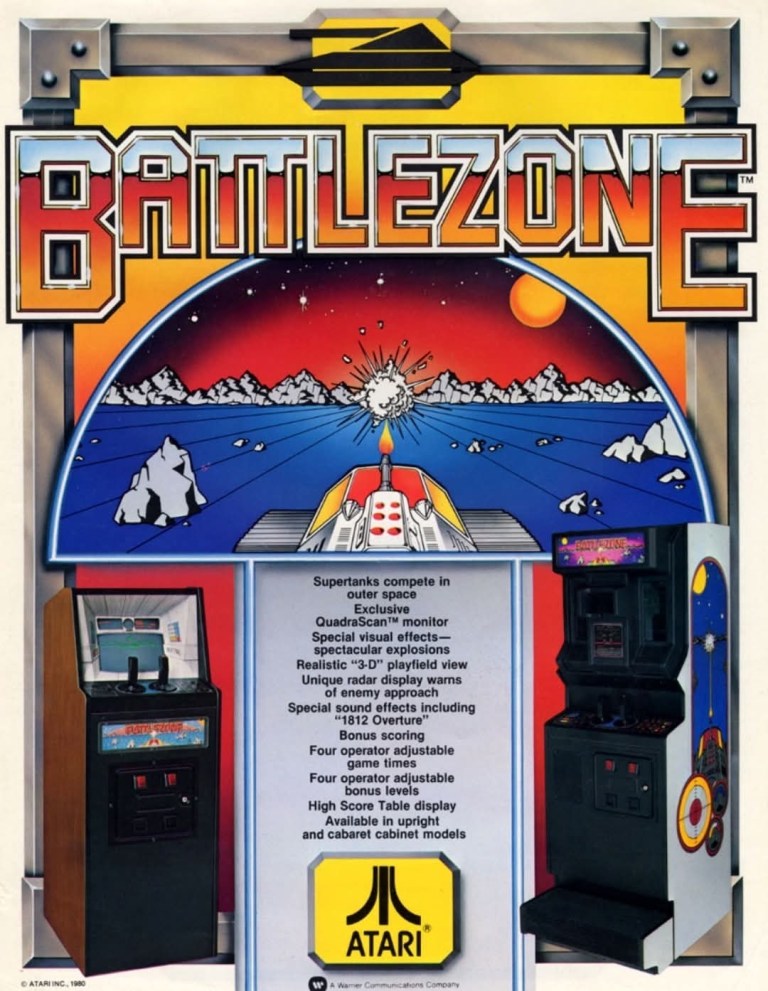
While the hand-drawn artwork was too detailed for the arcade game’s graphics, it still emphasized strongly the concept of the game.

In the history of video games, Battlezone was a groundbreaking game both visually and with game design. It was designed to give gamers an immersive experience of driving a tank with 3D graphics, fun gameplay and a first-person view. Its own history is worth researching. Atari knew it had to heavily promote their ambitious game and the arcade flyer above featured nice hand-drawn artwork while also showing the two types of Battlezone machines that arcade operators can choose from. Battlezone went on to become a highly influential arcade game.

4. Chrono Cross North American print ad
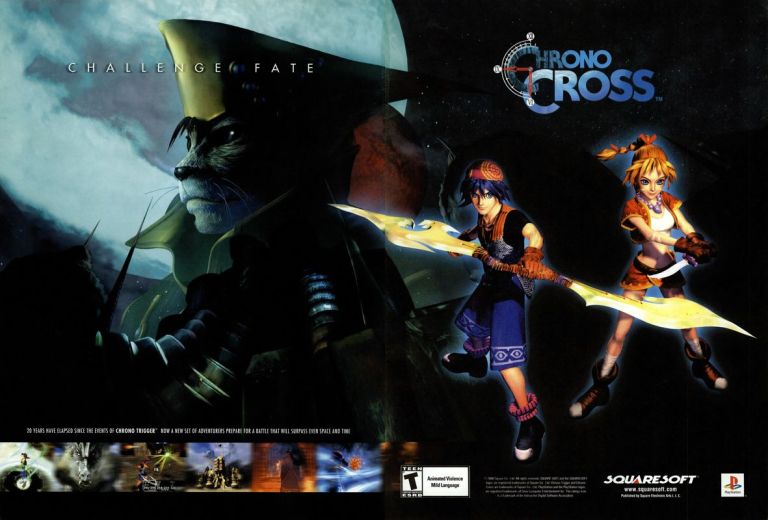
Arguably, this print ad was aimed at RPG enthusiasts, Chrono Trigger fans and gamers looking for something adventurous to play.

First released on PlayStation in Japan, Chrono Cross made its way to the said console in America just a few months before the PlayStation 2 launched there. While there was a risk that came with releasing the ambitious follow-up to the classic Chrono Trigger so late in the PlayStation’s life, Squaresoft (now Square Enix) still went on to aggressively promote Chrono Cross in America. This 2-page print ad that appeared in many gaming magazines remains captivating to look at. As typical of the time, 3D polygonal models and the epic-looking art were used in dominating fashion leaving the small space (lower-left corner) to display a few gameplay screenshots and other 3D art. Still it a fun game to play and this should remind you that Chrono Cross was recently remastered for modern consoles.

5. Ms. Pac-Man arcade flyer
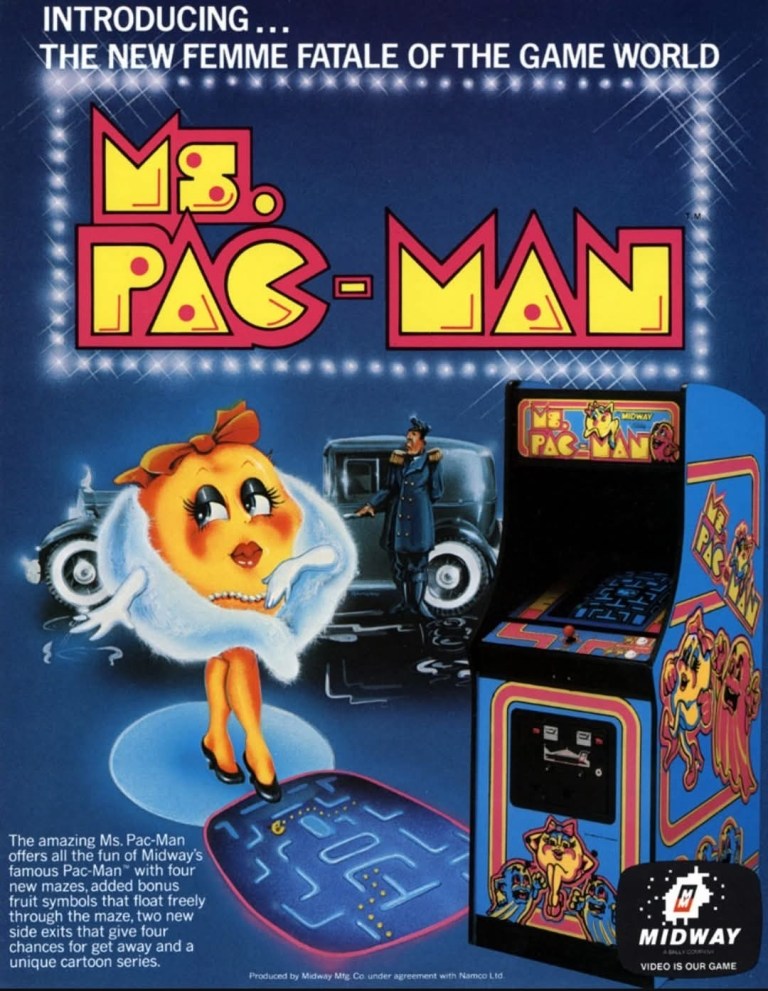
The wife of Pac-Man and the machine.

Given the fact that Pac-Man was so massively successful, it was not surprising that a sequel had to be made and released on as many arcades as possible. Ms. Pac-Man was the sequel and it was released in arcades in 1982 eventually achieving huge commercial and critical success. To promote the game, Midway’s ad makers came up with an ad showing unique art of Pac-Man’s wife looking glamorous (with a driver and a vehicle in the background) and a photograph of the arcade machine on the right. This also was one of the early arcade flyers to use the words “femme fatale”.

6. Centipede arcade flyer
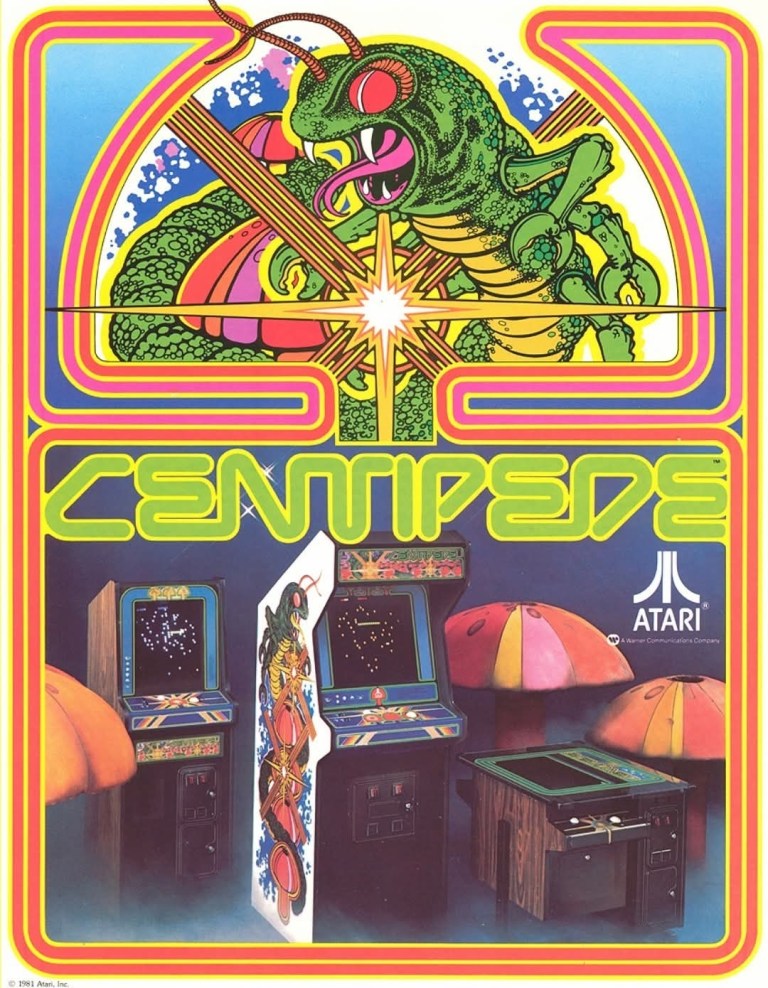
Three machines of Centipede for arcade operators to choose from.

Centipede is another arcade classic from Atari. Released in 1981, a lot of players enjoyed the game’s simplistic and yet addicting design of shooting an incoming centipede and its remaining portions that move down the field. Similar to the Battlezone arcade flyer, this game’s flyer had nice art of a centipede on the top and images arcade machines. Even by today’s standards, this flyer remains eye-catching.

7. Tempest 2000 print ad
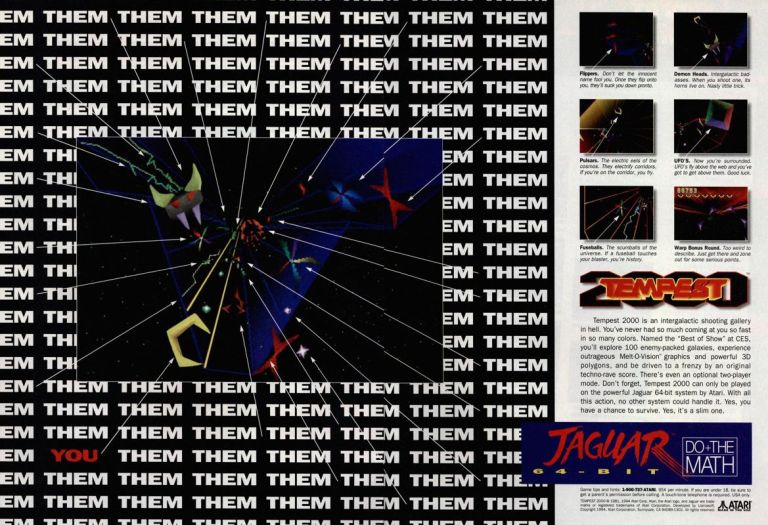
This 2-page print ad of Tempest 2000 is still captivating to look at.

Back in the 1990s, Atari went on to release their Jaguar console which was promoted as a 64-bit machine. At a gaming convention, the company met with prospective game developers over Jaguar projects and one of the developers volunteered to do Tempest (a memorable Atari arcade game). This resulted in the development of Tempest 2000 which was a remake of the classic.

As a Jaguar-exclusive game, Atari came up with an eye-catching 2-page ad showing off the 3D visual presentation (6 gameplay screenshots and one original artwork) while boasting in the text description that Tempest 2000 was named the “Best of Show” at the Consumer Electronics Show (CES). The game was released in 1994 attracting mostly positive reviews from game critics and was one of the best-selling Jaguar games (note: Tempest 2000 can now be played in the Atari 50 collection). With the Atari legacy and presentation combined, this print ad remains captivating to look at.

8. Alien vs Predator print ad
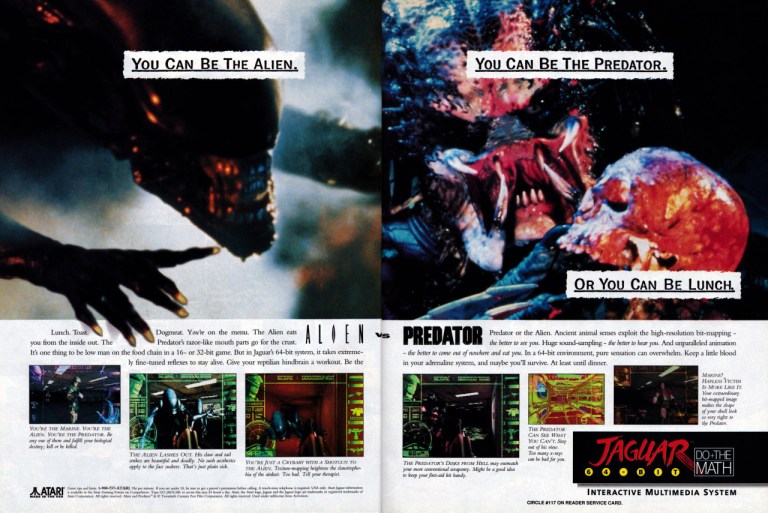
Arguably the most defining and most entertaining game on the Atari Jaguar.

If there is any game that truly defined enjoyment and the technological features of the Atari Jaguar, it is the 1994 first-person shooter Alien vs Predator. At the time of its release, it was one of the most immersive games of the Alien vs. Predator crossover franchise and it allowed players to experience what fighting the Predator or the Xenomorph was like. The game also allowed gamers to play as a Colonial Marine (human soldier).

To sell the game, Atari came up with a 2-page ad highlighting the Aliens on one page and the Predator on the other. As the Predator was shown with a grotesque human skull, the use of photographs (most likely sourced from the movies) strongly emphasize the game was aimed at the mature audience among gamers. Six screenshots of gameplay were displayed by the ad makers who were clearly aware of the high popularity of first-person shooting games. Alien vs Predator was a critical and commercial success, and its print ad is arguably the most memorable one of any Atari Jaguar game ever made.

+++++

Thank you for reading. If you find this article engaging, please click the like button below, share this article to others and also please consider making a donation to support my publishing. If you are looking for a copywriter to create content for your special project or business, check out my services and my portfolio. Feel free to contact me with a private message. Also please feel free to visit my Facebook page Author Carlo Carrasco and follow me on Twitter at  @HavenorFantasy as well as on Tumblr at https://carlocarrasco.tumblr.com/ and on Instagram at https://www.instagram.com/authorcarlocarrasco
Retro Gaming Ads Blast – Part 26

Welcome back readers, fellow geeks and electronic gaming fans!

In this edition of the Retro Gaming Ads Blast (RGAB) series, we will take a look at another batch of retro gaming print ads – including arcade flyers – from the 1980s and 1990s.

For the newcomers reading this, Retro Gaming Ads Blast (RGAB) looks back at the many print ads of games (console, arcade, computer and handheld) that were published in comic books, magazines, flyers, posters and newspapers long before smartphones, social media, the worldwide web and streaming became popular. To put things in perspective, people back in the 1980s and 1990s were more trusting of print media for information and images about electronic games and related products.

With those details laid down, here is the newest batch of retro gaming print ads for you to see and enjoy…

1. Asteroids Deluxe arcade flyer

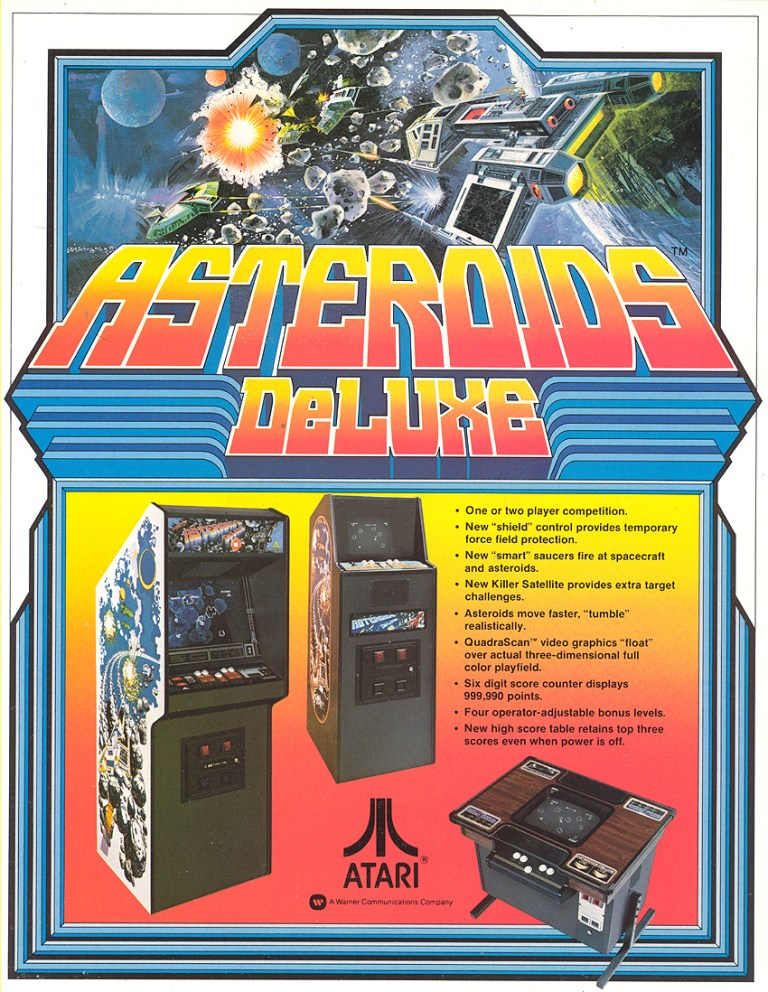
The arcade flyer for North America.

Given the fact that Asteroids was a massive hit for Atari in the arcades, it was not surprising that a sequel was made called Asteroids Deluxe. In preparation for its 1981 release, Atari made this Asteroids Deluxe arcade flyer showing three machine that arcade operators can choose from complete with technical details displayed. They even emphasized the QuadraScan video graphics as a technological advancement with regards to graphics. By today’s standards, this arcade flyer is still sensible with regards to promoting the game to both arcade operators and players.

2. Missile Command arcade flyer

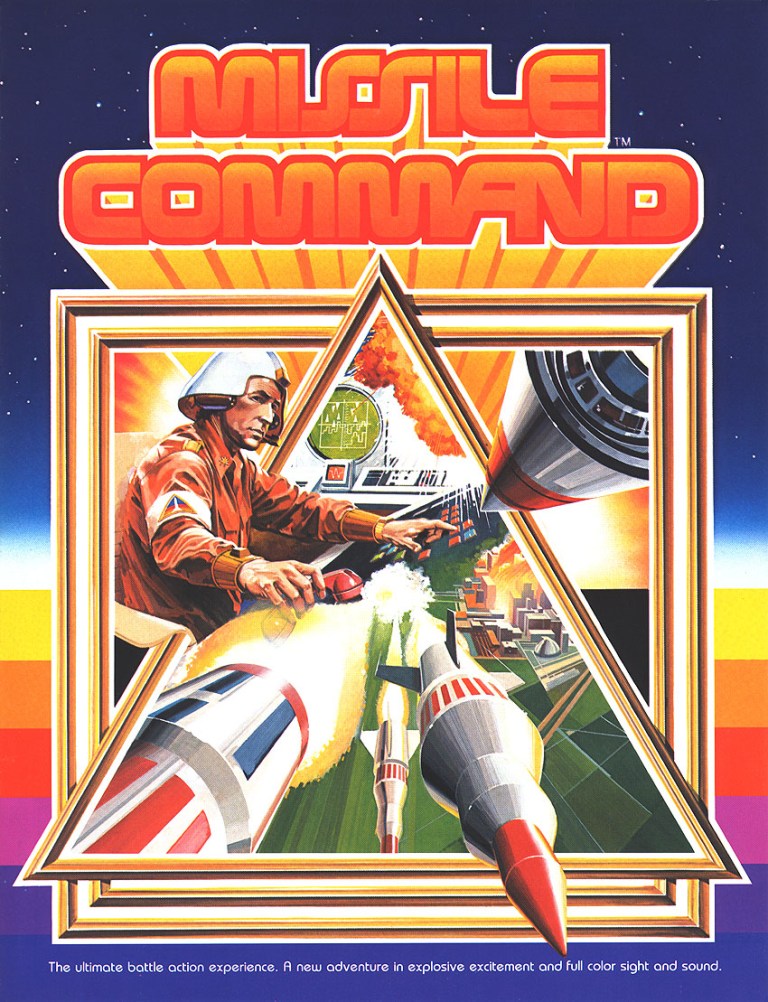
Engaging art work on display at the front of the arcade flyer.

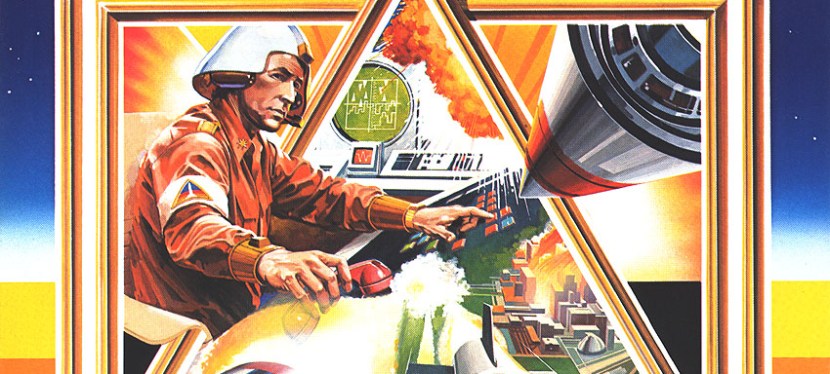
Released in the arcades in 1980, Missile Command is a classic game from Atari and its concept of defending cities from incoming enemy missiles proved to be relevant with people living with the fear of a nuclear missile attack during the days of the Cold War. In my experience, I mainly played the Atari 2600 version and it was only recently I finally started playing the arcade classic on my Xbox Series X using the Atari 50 Collection software. As for the arcade flyer itself, Atari simply used highly detailed painted art for the front which clearly emphasized the science fiction portrayal of a military officer using a console inside a base to come up with defensive response to incoming ballistic missiles. The game was a massive hit in the arcades and in my view, Atari’s simply yet direct way of promoting the concept of Missile Command with the arcade flyer remains compelling to look at.

3. Gun.Smoke European arcade flyer

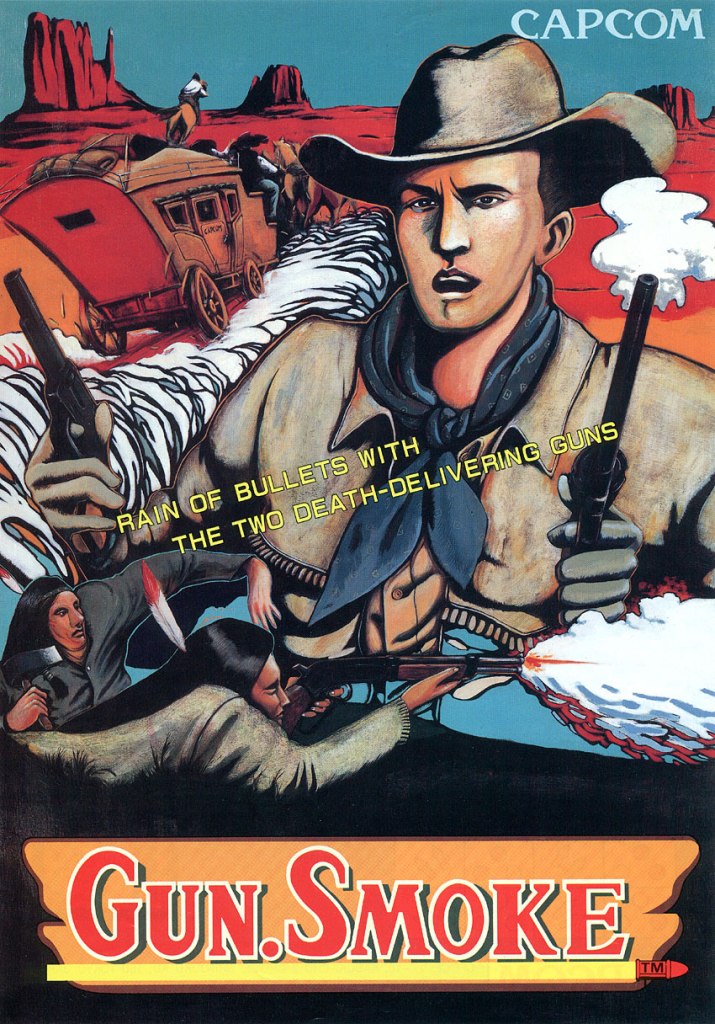
Nice art on the front of this arcade flyer for the European market.

Long before they struck gold with Street Fighter II, Japanese company Capcom scored a hit with gamers in the arcades with 1985’s Gun.Smoke. It was a vertically scrolling run-and-gun game with an Old West setting and it was designed by Yoshiko Okamoto (Final Fight and Street Fighter II). To promote the game for European arcades, Capcom simply used hand-drawn artwork for the arcade flyer’s front which emphasized the Wild West setting, and an American Cowboy and bounty hunter named Billie Bob who is the playable character gamers got to play. In my view, the artwork gave the game a strong Wild West image that is also memorable.

4. Sei Senshi Amatelass arcade flyer

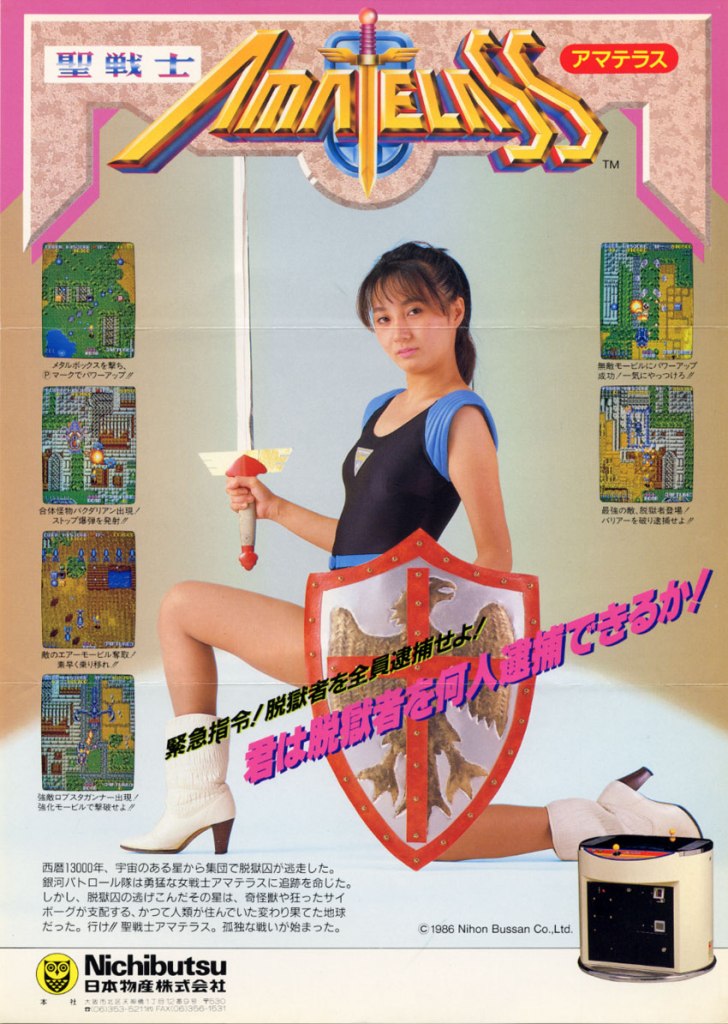
Does the model look sexy or tough?

Released in Japanese arcades in 1986 by Nichibutsu, Sei Senshi Amatelass is a vertical scrolling run-and-gun game with a science fantasy concept. To promote the game and really sell its concept, Nichibutsu hired a model posing with a sword and a shield in fantasy inspired costume. Using the remaining spaces of the flyer, some screenshots and an image of the arcade machine were displayed. This flyer showed the company exerting effort to sell Sei Senshi Amatelass with a touch of beauty and subtle sexiness.

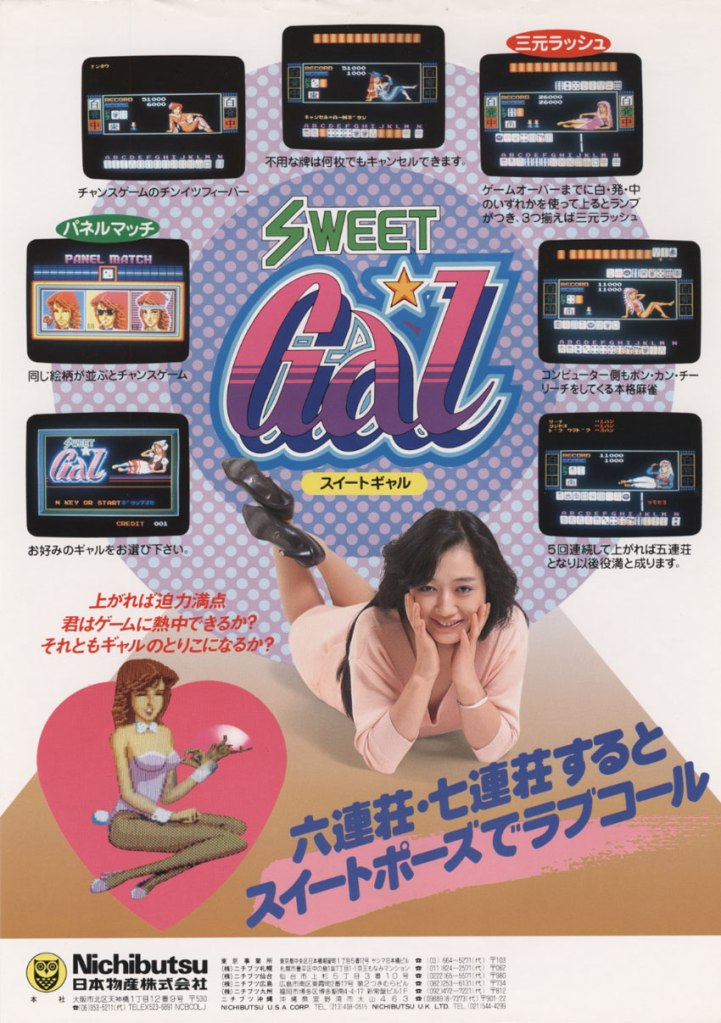
5. Sweet Gal arcade flyer

Seriously, are you interested in playing mahjong in digital form?

Here is another digital mahjong arcade game from Nichibutsu…Sweet Gal. As typical of the company, a model was hired to add subtle sexiness into the promotion of the game and they even added a digital image of a sexy girl. Sweet Gal clearly was promoted to attract men who enjoy playing mahjong in electronic format and there were some arcade spots in Japan that catered to such mahjong enthusiasts.

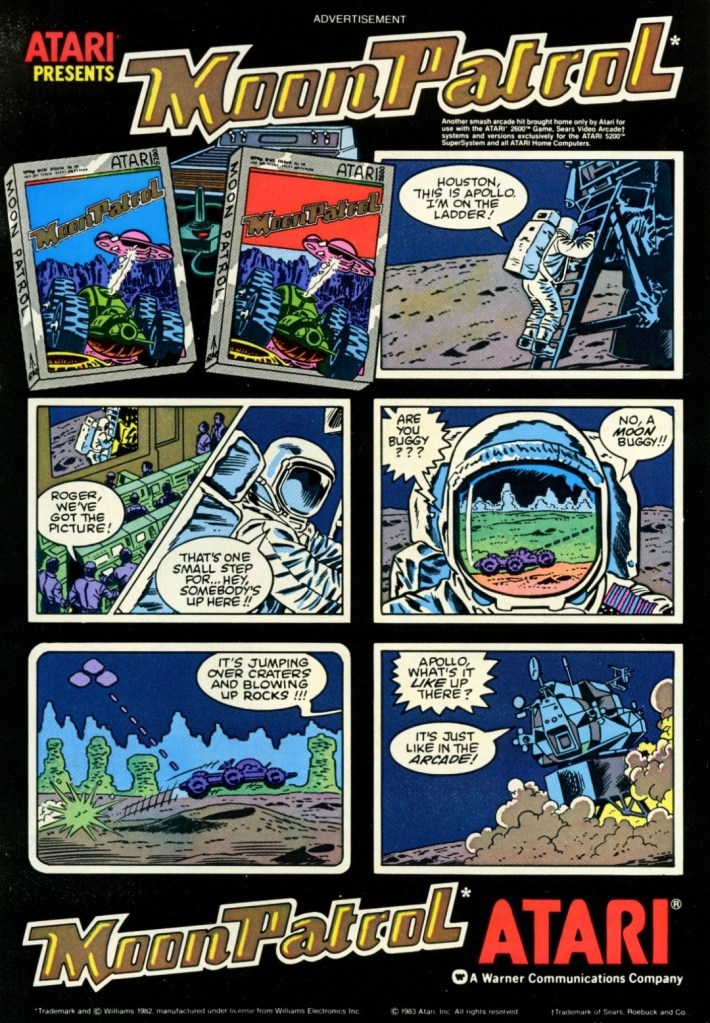
6. Moon Patrol print ad

This is a fun-looking, comic book style way of promoting a video game.

Here is one of those video game print ads I saw while reading comic books back in the early 1980s. Moon Patrol is a sci-fi, side-scrolling game by Atari known for introducing full parallax scrolling in side-scrolling games. Instead of showing screenshots of the console versions of the game, this print ad used nice looking hand-drawn artworks presented with a comic book-inspired style to emphasize the concept. I still remember how captivating this ad and its super short story was the first time I saw it. It was enough to make me interested in the game.

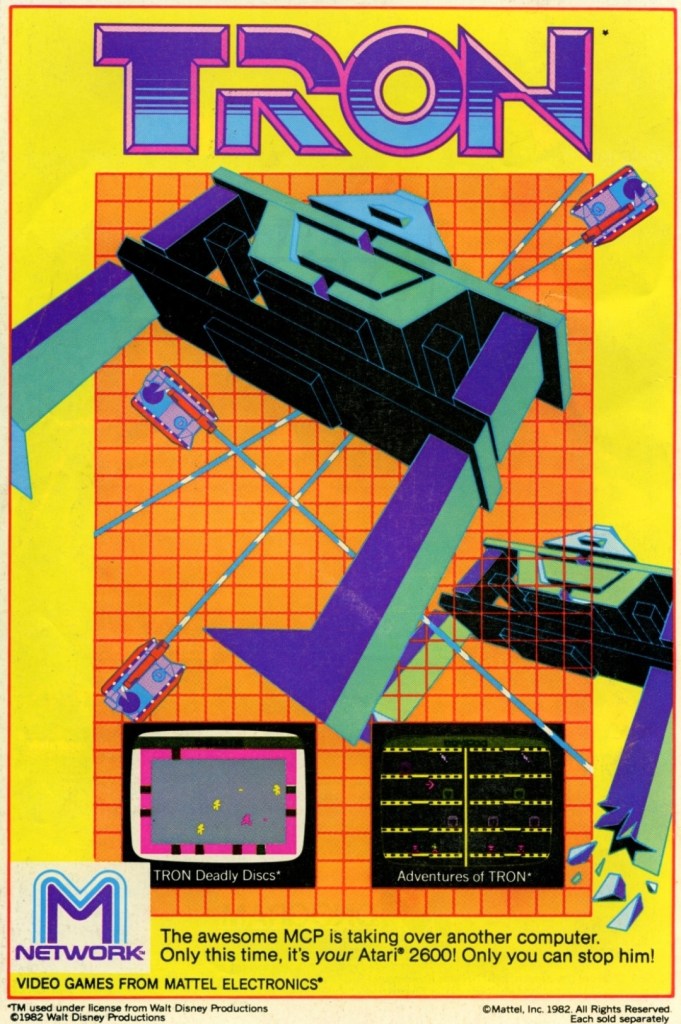
7. Tron Atari 2600 games print ad

Calling all Tron fans to look at this.

I was very captivated by the 1982 sci-fi movie Tron which I saw on home video. It had very flashy computer-generated visuals, a very memorable story and the fine performance by Jeff Bridges. Tron was also very reflective about the video game culture of its time. When I first saw this print ad while reading a comic book, I was really excited. If you look closely, it had nice artwork dominating the space and screenshots that each promoted the games Tron: Deadly Discs and Adventures of Tron. Even though the graphics were primitive, I still recognized the Tron-related images which added to my excitement.

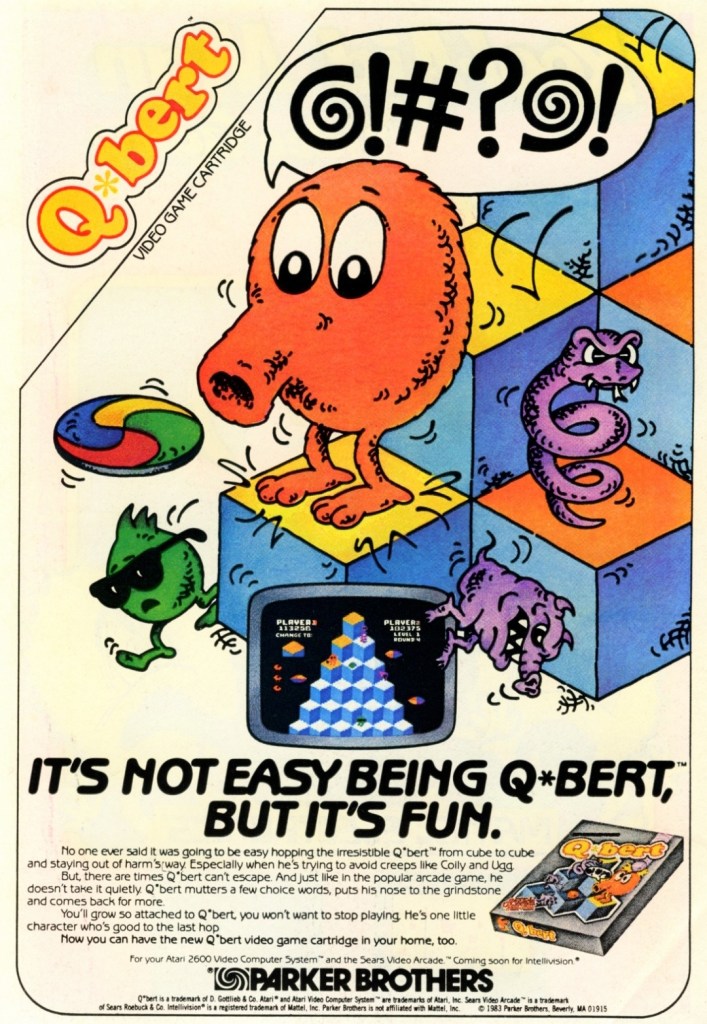
8. Q*bert print ad

This print ad by Parker Brothers really captured the essence of the game.

The puzzle-oriented 2D action game Q*bert became an arcade hit in America shortly after its 1982 release and even went on to become one of the highest grossing arcade games in 1983. Q*bert is one of those 2D games that cleverly blended puzzle play with 3D-like movement and avoidance of both obstacles and enemies. As expected, the game made its way into gaming console and this particular print ad had artwork that strongly captured the very essence of the game complete with the very catchy line “It’s not easy being Q*bert, but it’s fun.”

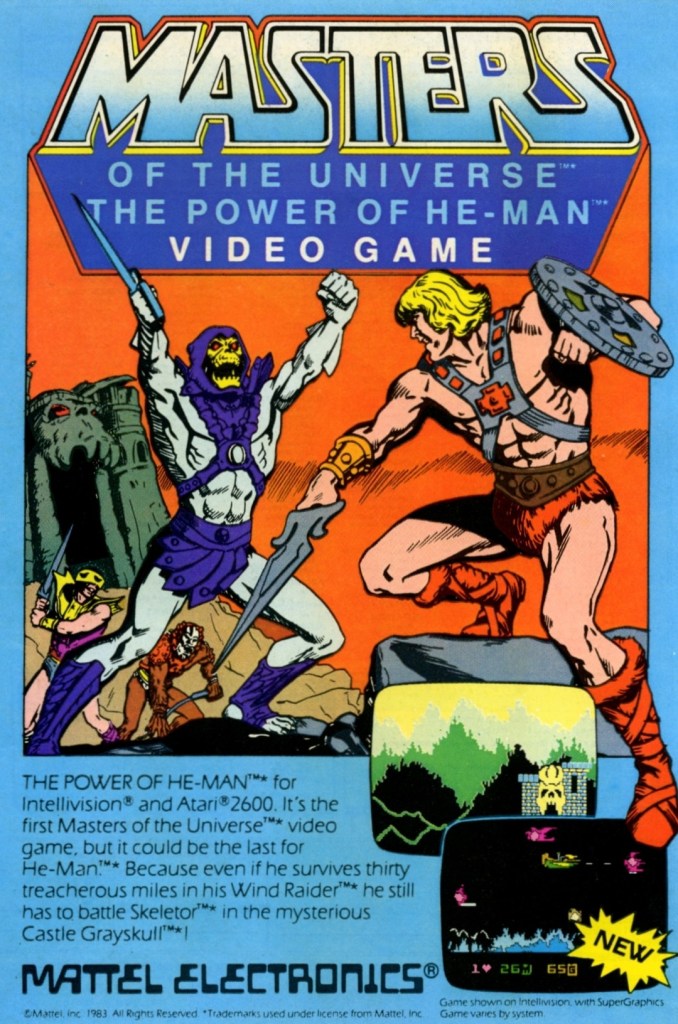
9. Masters of the Universe: The Power of He-Man print ad

Calling all He-Man fans.

I saw this print ad of Masters of the Universe: The Power of He-Man (for Atari 2600 and Intellivision) while reading a comic book long ago. Like the Tron games ad, this made me excited as I was fond of watching the He-Man cartoon series of the 1980s. While the selected screenshots caught my attention, it was the hand-drawn art of He-Man facing off with Skeletor and his minions that captivated me simply because it reminded me of the animated series. This is a fine example of promoting a video game that would instantly resonate with fans of He-Man and the Masters of the Universe franchise.

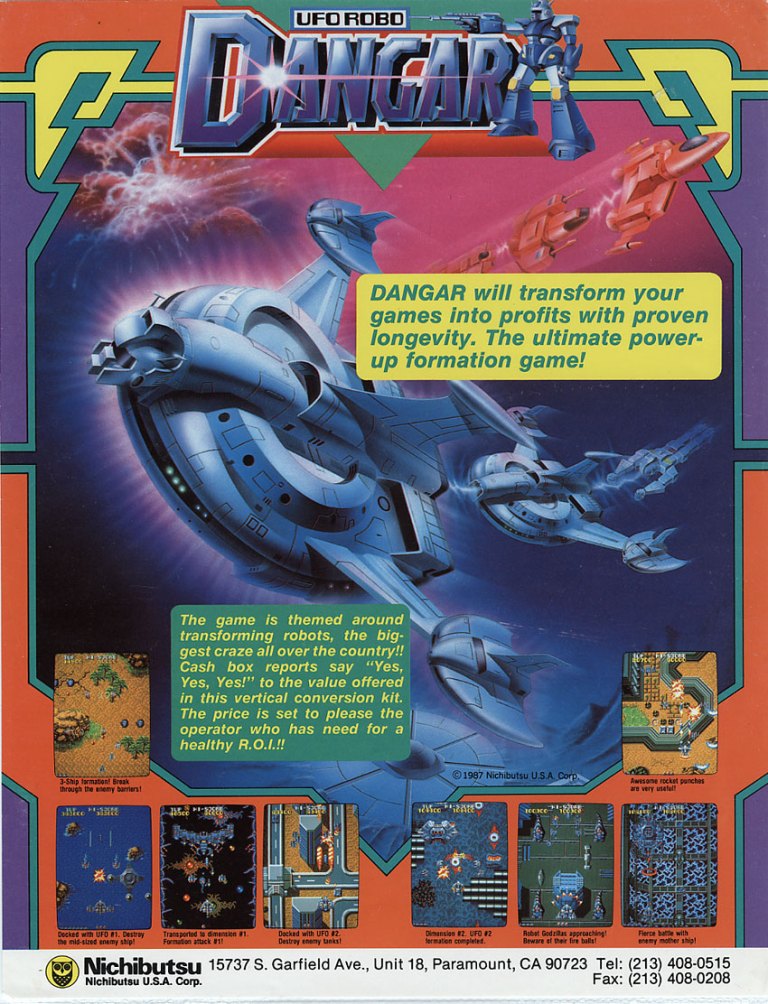
10. UFO Robo Dangar North American arcade flyer

The giant robot concept of this game gave some viewers the impression that it was based on some giant robot anime series from Japan even though the art work used does not suggest it.

Here is another arcade game from Nichibutsu but for the North American market and without the use of a model and without the subtle sexiness. UFO Robo Dangar is a 2D vertically scrolling science fiction shooting game and players get to control a giant robot (composed of flying vehicles that merged into one mechanical body) that has to go through countless waves of enemies in order to advance from one level to another. The arcade flyer used nice looking sci-fi art of ships with the game’s title having a robot and several screenshots of the game. The flyer even made a hard pitch towards arcade operators that UFO Robo Danger will transform their games into profits with proven longevity.

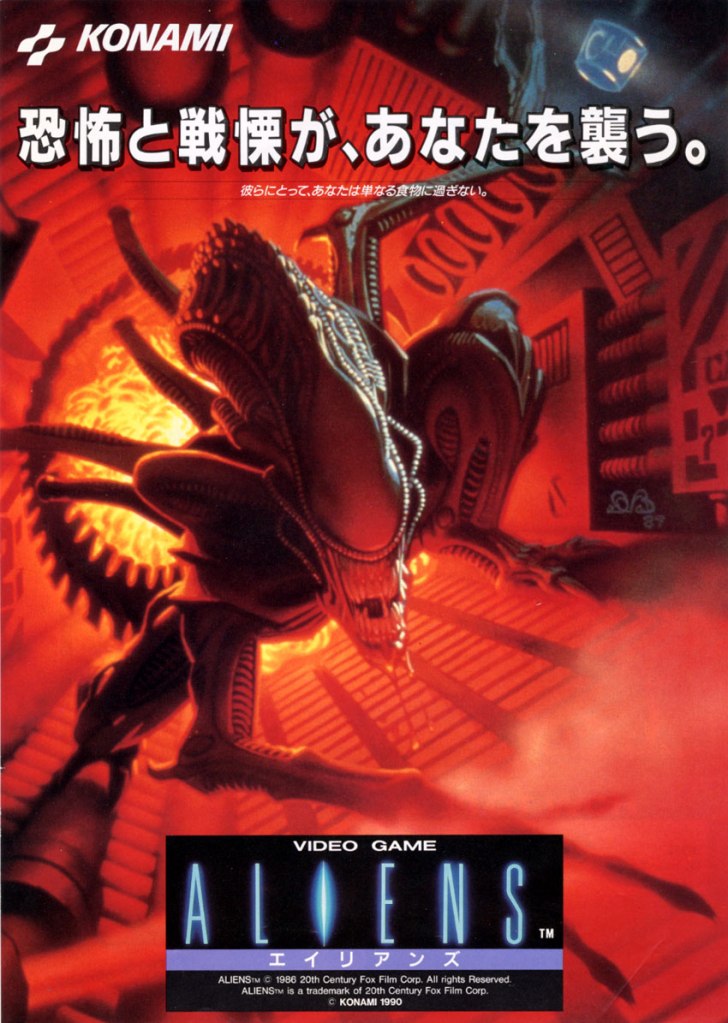
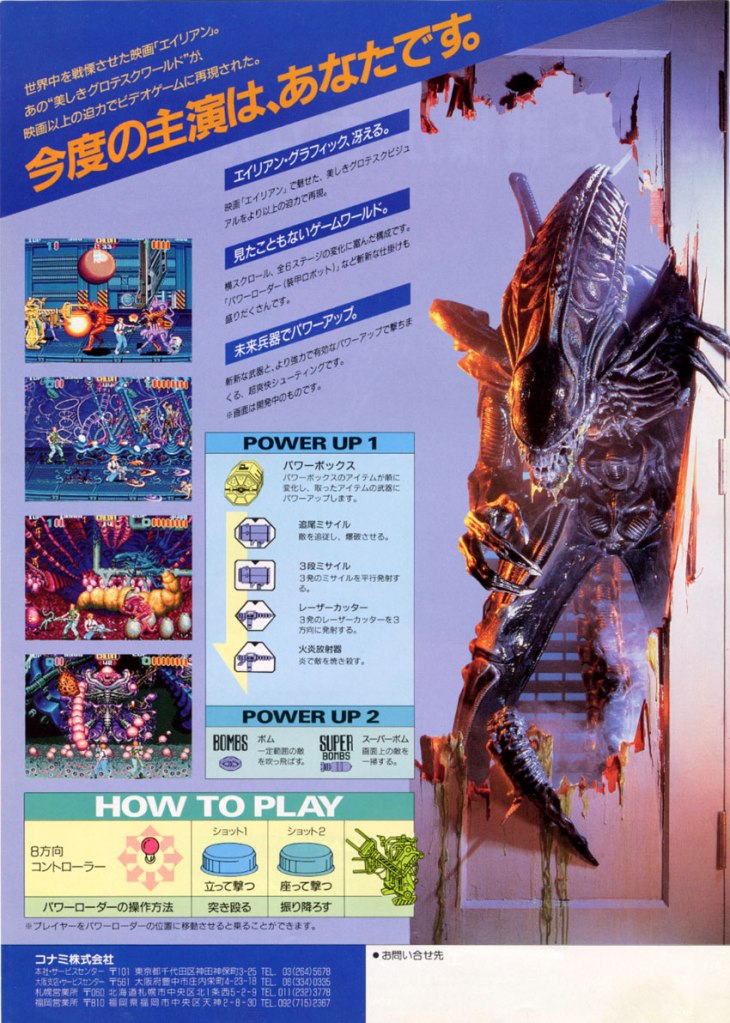
11. Aliens Japanese arcade flyer

The front.
The other side of the flyer of the 1990 arcade hit Aliens.

Quite arguably, Konami’s 1990 arcade hit Aliens is the best video game of any game design to be based on the 1986 film directed by James Cameron. Not only was Aliens a big hit in the arcades, it also won an award from the American Amusement Machine Association (AAMA). Aliens was released in Japanese arcades in February of 1990 and Konami released an arcade flyer that was much more visually striking than its North American arcade flyer. The front had detailed artwork of the Xenomorph while the rear had the instructions and screenshots presented in an orderly manner. The photograph of the Xenomorph alien was added intensity on selling the game. This is still a great looking arcade flyer.

+++++

Thank you for reading. If you find this article engaging, please click the like button below, share this article to others and also please consider making a donation to support my publishing. If you are looking for a copywriter to create content for your special project or business, check out my services and my portfolio. Feel free to contact me with a private message. Also please feel free to visit my Facebook page Author Carlo Carrasco and follow me on Twitter at  @HavenorFantasy as well as on Tumblr at https://carlocarrasco.tumblr.com/ and on Instagram at https://www.instagram.com/authorcarlocarrasco