A Look Back at Harbinger #1 (1992)

Disclaimer: This is my original work with details sourced from reading the comic book and doing personal research. Anyone who wants to use this article, in part or in whole, needs to secure first my permission and agree to cite me as the source and author. Let it be known that any unauthorized use of this article will constrain the author to pursue the remedies under R.A. No. 8293, the Revised Penal Code, and/or all applicable legal actions under the laws of the Philippines.

Welcome back superhero enthusiasts, 1990s culture enthusiasts and comic book collectors! Today we go back to the early 1990s and explore a part of the Valiant Comics shared universe through the Harbinger monthly series.

For the newcomers reading this, Harbinger was created by former Marvel editor-in-chief and Valiant founder Jim Shooter (note: read my retro reviews of his works here, here, here, here and here) and artist David Lapham. Harbinger follows a few teenagers with unique abilities or powers who got involved with the Harbinger Foundation, an organization established by Toyo Harada who dreams to change the world as people know it.

With those details laid down, here is a look back at Harbinger #1, published in 1992 by Valiant Comics with a story written by Jim Shooter and drawn by David Lapham.
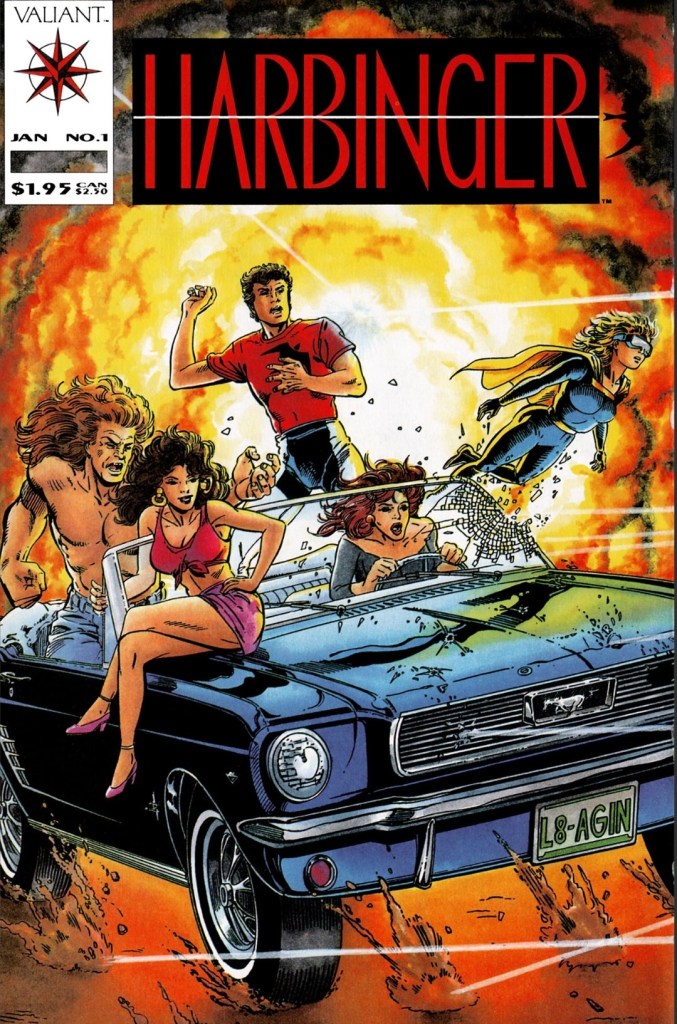
The cover.

Early story

The story begins at 2:35 PM of June 2, 1991. Pete and his companion Kris are riding a car floating high above the road being followed by a helicopter. After Pete manages to communicate with the helicopter’s operators, they even settle down by landing on a road with no traffic. As Pete and the helicopter people begin talking, three people – Weasel, Eel and Lump – quickly rushed in to subdue Pete and Kris. After Pete manages to free himself from Weasel and Lump, he uses his power to lift up the car Kris drove (note: Kris is no longer in the car) and uses it as a weapon to hit Lump.

Just as Kris hits Eel on the stomach, Pete notices that the gasoline was leaking out of the car which Eel ignites with her electricity causing a huge explosion. Pete and Kris managed to survive the blast and together they fly off to a motel to rest and reorganize themselves.

The next morning, they have a meal together and Kris examines a newspaper. She notices another one of the Harbinger Foundation’s print ads reaching out to people who find themselves different or notice strange things around them. The two fugitives realize that the said foundation somehow made involved youth become dangerous. Remembering that people write and send letters to the Harbinger Foundation, Pete comes up with the idea of intercepting letters…

Quality
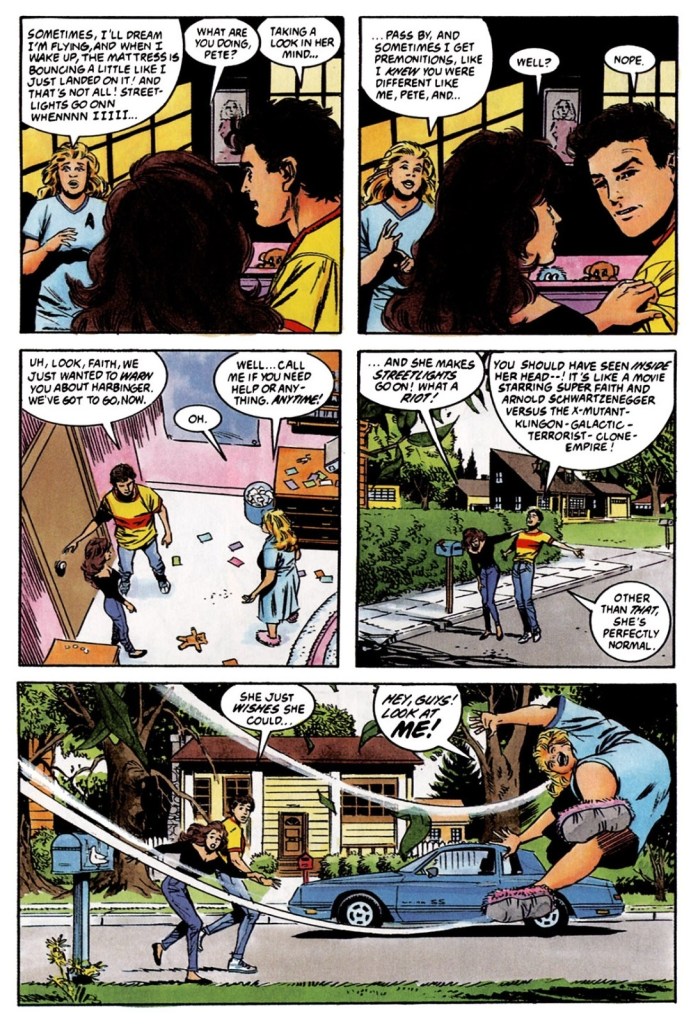
Pete, Kris and Faith.

This is one very engaging story to read. While story concepts about super-powered teenagers being desperate and struggling to realize their purpose while facing evil is not new, this comic book has a concept that remains unique even by today’s standards. Instead of seeing a group of powered teenage outcasts escaping society’s authorities or taking refuge in the home of a caring person, this comic book follows teenagers who are being targeted by a powerful organization as one of them – Pete – personally got involved with them before.

The story written by Jim Shooter is deliberately paced at a moderate level which allows readers to be able to absorb the details before moving from one chapter to the next. Along the way, Kris and Pete get to meet other powered characters like Faith, Flamingo and John. In between the introductions of the three mentioned characters, Shooter’s script managed to set up enough space for character development and interactions between the characters which have been executed to be believable. Even key elements of youth such as insecurity, fear, angst and the false sense of maturity are portrayed along the way. I should state that Shooter dramatized these characters like they were real people.

As for the Harbinger Foundation itself, it complete lacks visibility and its exposure was limited to the print ad and mentions. Still, the foundation is a clear and present danger to Pete and his companions as it has powered youth members who are dedicated to it and they also have heavily armed personnel working for them.

If you are fond of superhero spectacle, I can say that the action scenes were executed in accordance to the narrative. The spectacle of this comic book was clearly made to emphasize the plot elements and not serve as eye candy. That being said, this is a unique way of enjoying superhero spectacle.

Conclusion
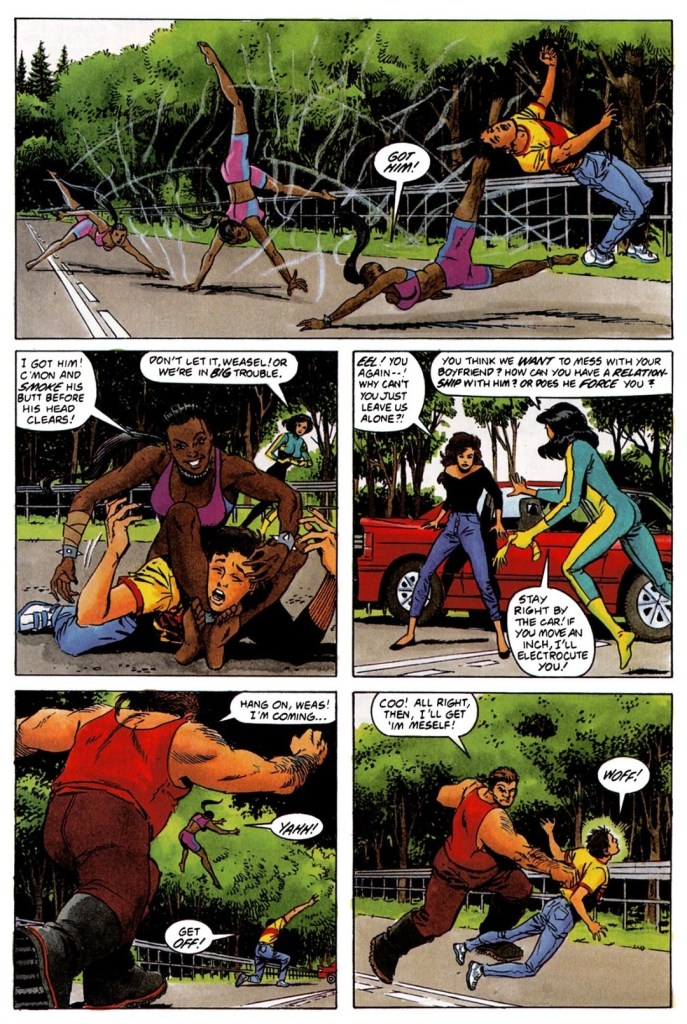
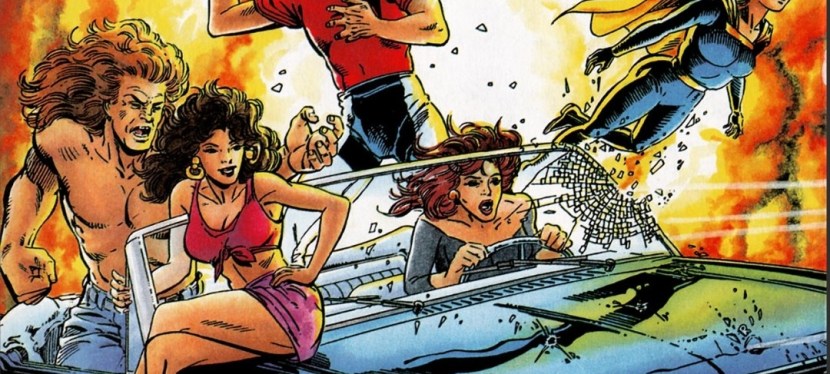
The Harbinger Foundation’s pawns Weasel, Eel and Lump take on Pete and Kris.

Harbinges #1 (1992) is a pretty engaging comic book of Valiant and at the same time it is also one of the more unique portrayals of powered teenagers who are living with tremendous odds tilted at them. The tone of the story really felt grounded in reality (the early 1990s specifically) and the character moments, action and incidents were all executed in a believable fashion.

Overall, Harbinger #1 (1992) is highly recommended!

+++++

Thank you for reading. If you find this article engaging, please click the like button below and also please consider sharing this article to others. If you are looking for a copywriter to create content for your special project or business, check out my services and my portfolio. Feel free to contact me with a private message. Also please feel free to visit my Facebook page Author Carlo Carrasco and follow me on Twitter at  @HavenorFantasy as well as on Tumblr at https://carlocarrasco.tumblr.com/ and on Instagram at https://www.instagram.com/authorcarlocarrasco/
A Look Back At The H.A.R.D. Corps #1

The 1990s was a decade of excess when it comes to superhero comic books. Apart from the persistent hoarding of comic books and the quest for profit, there were also these wide superhero franchises (or superhero universes) that popped up and even challenged Marvel Comics and DC Comics. Malibu Comics launched the Ultraverse while Valiant Comics came up with its own universe.

Valiant established itself nicely with popular characters like Bloodshot, X-O Manowar, Turok and Ninjak, and each one had its own regular series of comic books published. When it comes to teams, there was H.A.R.D. Corps (H.A.R.D. stood for Harbinger Active Resistance Division).

During the recent Hobby Con held at Las Piñas City, I luckily found myself a copy of The H.A.R.D. Corps #1 and read it for the first time ever. This is my review of the comic book which has a cover drawn by the great Jim Lee.

RCO002_1472443923.jpg
Cover with art by Jim Lee.

Early story

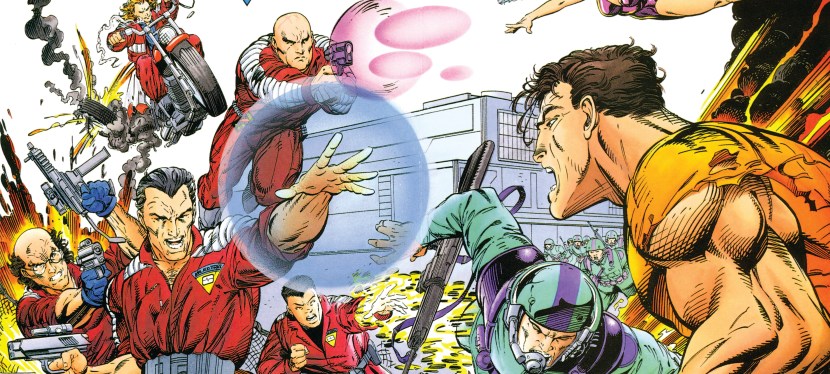
The story begins with the 5-member team in the middle of a mission inside the secured facility of the Harbinger Foundation. Under fire from the facility’s armed personnel, the team (riding a floating vehicle) struggle to find their way and evacuate. Along the way, an oversized man called Big Boy grabbed one of their members and separated him from the others. With the situation getting worse, the captured member got “brain popped” (a remote form of self-destruction via the neural flash implanted inside the person’s brain). The remaining four manage to get away by means of aerial transport provided by their company.

Then a section of the facility exploded causing financial damage to Mr. Harada who decided to visit and inspect the site.

RCO017_1472443923~2.jpg
Expository information done cleverly.

Some time later, the H.A.R.D. Corps enjoy the privacy and security at their headquarters in the Nevada desert. Team members Shakespeare, Major Palmer, Softcore, Hammerhead and Superstar wait for instructions at the debriefing room.

Quality

The H.A.R.D. Corps #1 is very well written by David Michelinie. Within twenty-two pages, Michelinie loaded enough details to explain the comic book’s core concept efficiently while at the same time he managed to tell an engaging story with a light touch on character development (note: there were many characters and there was not enough space for further personality emphasis). By the time the story ended, I really felt enlightened, entertained and wanting to find out what would happen next.

Michelinie’s handling of expository dialogue was done very efficiently. I’m talking about the private briefing done by an executive of the Cartel explaining to a recovering man named Kim (who was almost killed during the Los Angeles Riot) what H.A.R.D. Corps is, why the Cartel is in a race against Harada who has been manipulating Harbingers (persons with unique abilities). The Cartel opposes Harada with neural implants.

More on the team, H.A.R.D. Corps members are people who have gone through training programs and each of them had neural implants in their heads which enable them to mimic Harbinger powers (one at a time) through signals broadcast from a base station. Each of them was comatose and the use of the implants reversed the coma.

RCO007_1472443923~2.jpg
Some action for you.

When it comes to visuals, the art by David Lapham (inked by Bob Layton) was pretty good. I like the high amount of detail placed on the surroundings in most of the panels. Action shots had a good amount of impact.

Conclusion

This comic book from late 1992 is a good and engaging read. I really enjoyed it and I like its core concept about a team of enhanced individuals who are technically living properties of very business-minded people opposed to Harada. Even by today’s standards, H.A.R.D. Corps concept really stands out among all superhero team comic books.

The H.A.R.D. Corps #1 is recommended and you can acquire a near-mint copy of it for only $4 at MileHighComics.com (as of this writing).

A Look Back at The Solution #1

Back in the 1990s, there was a flood of superhero comic books that introduced brand new heroes, teams and even anti-heroes. A strong contributor to this was the market presence of Image Comics, Valiant Comics, Malibu Comics and other smaller publishers that tried their best to gain shares in what was back then the highly lucrative superhero comic book market which was long dominated by Marvel Comics and DC Comics.

With Malibu Comics, their Ultraverse franchise of superhero comics was a blast and I had a lot of fun reading comic books of The Strangers, Prime, Hardcase, UltraForce, Mantra, etc.

For this review, here is my look back at the Ultraverse team comic book The Solution #1 (September 1993).

RCO001_1469696446~2.jpg
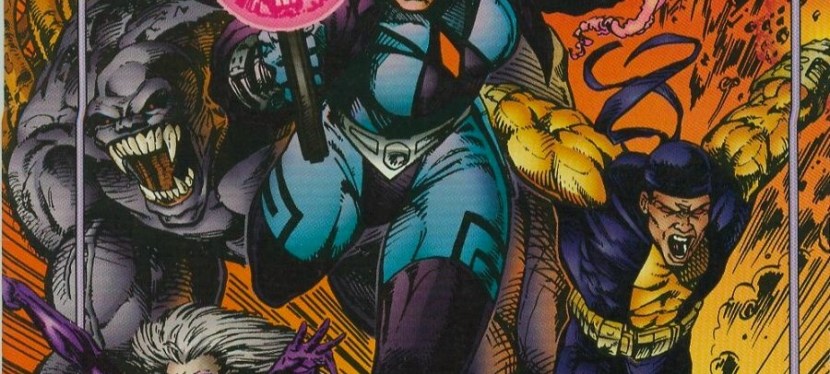
The front cover.

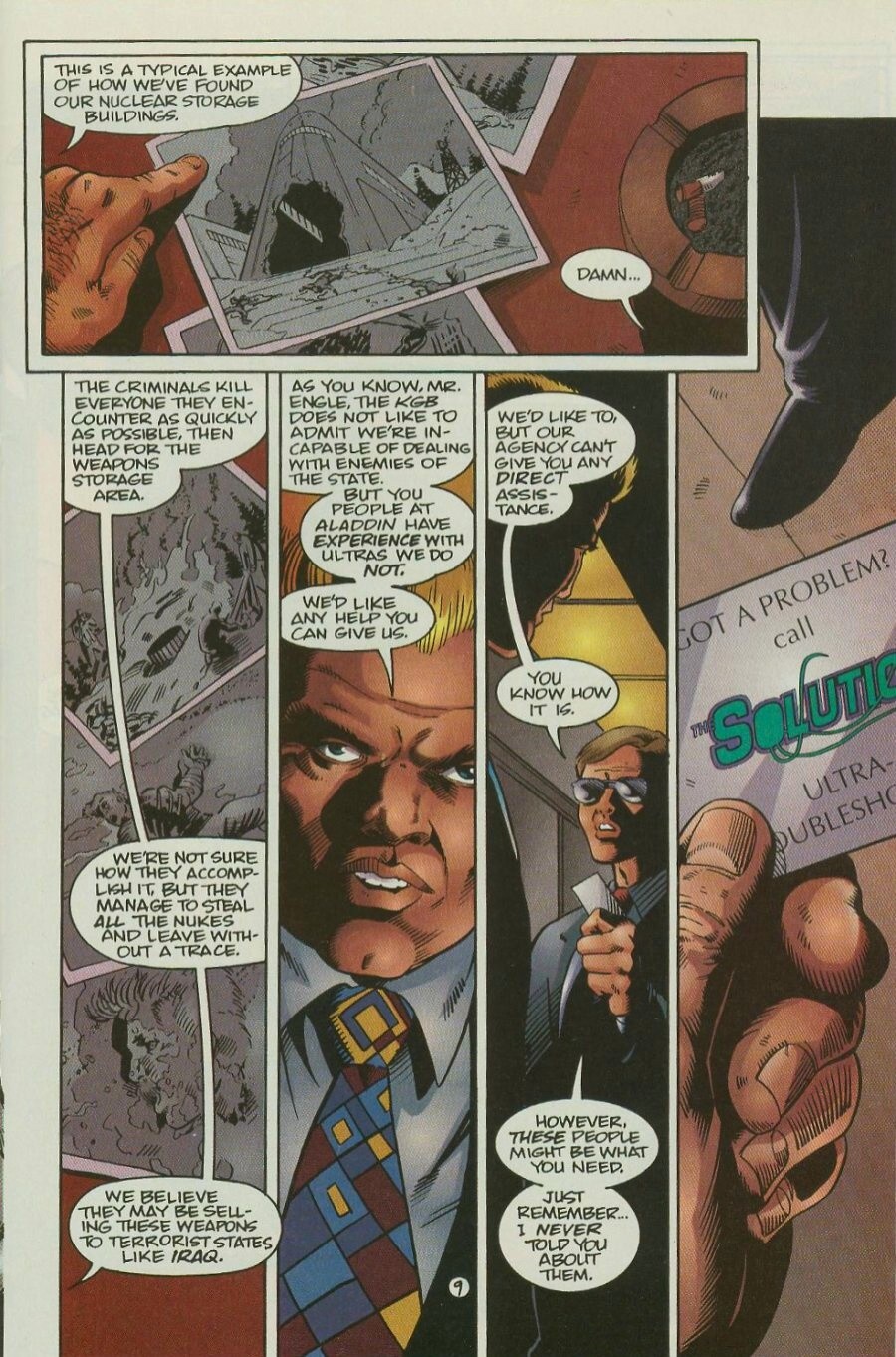
Written by the late James Hudnall and drawn by Darick Robertson (inked by John Lowe), the story begins when Russian personnel get killed by a team of deadly people whose purpose is to raid the nuclear storage buildings.

As a result, several nuclear warheads were taken away without a trace. A KGB agent discusses the tragedy with an Aladdin agent and seeks help. In response, the Aladdin agent recommends to him The Solution.

“We’d like to (help) but our agency can’t give you any direct assistance. You know how it is. However these people might be what you need. Just remember…I never told you about them,” the Aladdin agent said.

RCO022_1469696446~2.jpg
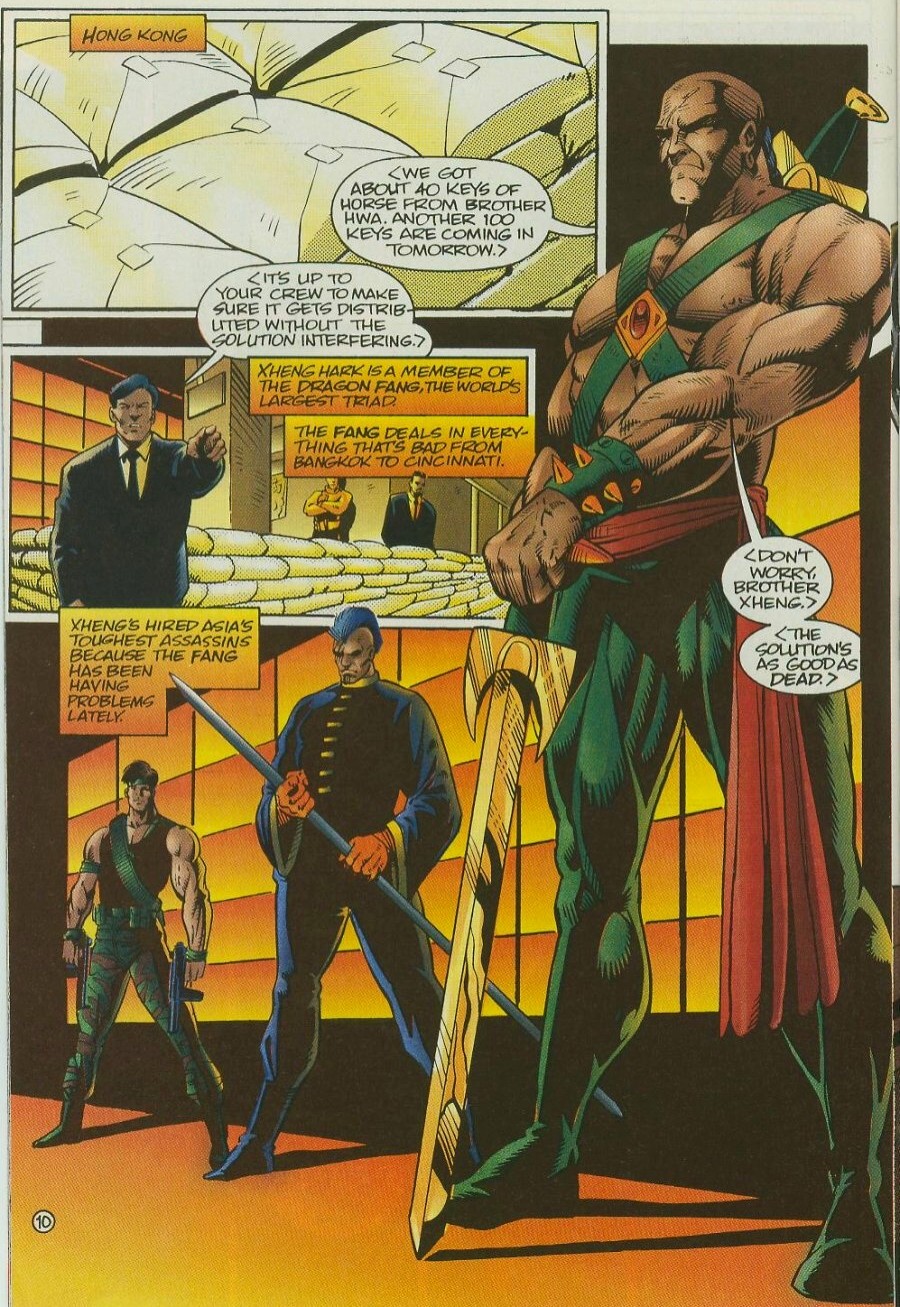
Meet The Solution.

In Hong Kong, a member of the triad instructs his hired assassins to distribute a shipment of illegal substances without getting any interference from The Solution. Predictably, the said team happens to be with them in their secret venue which starts a wave of martial arts, shooting and use of magic.

Enough with the plot. The Solution is a team of super-human mercenaries composed of Lela Cho/Tech (the leader), Eara/Shadowmage, Vurk/Outrage and Dropkick. Quite literally, whenever a major problem happens someone will call The Solution (the answer) to solve it for a fee.

In terms of character design, The Solution has a rather visceral look which was clearly emphasized on the cover art. Outrage, for example, looks very monstrous and one could easily mistake him for an evil figure.

RCO011_1469696446~2.jpg
Obvious antagonists.

Illustrator Darick Robertson’s art is nice to look at and when the action happens, he sure delivers the goods making the hard action moves look intense. Even showing characters firing their guns look intense. The violence in this comic book is quite bloody and the opening scenes really show that.

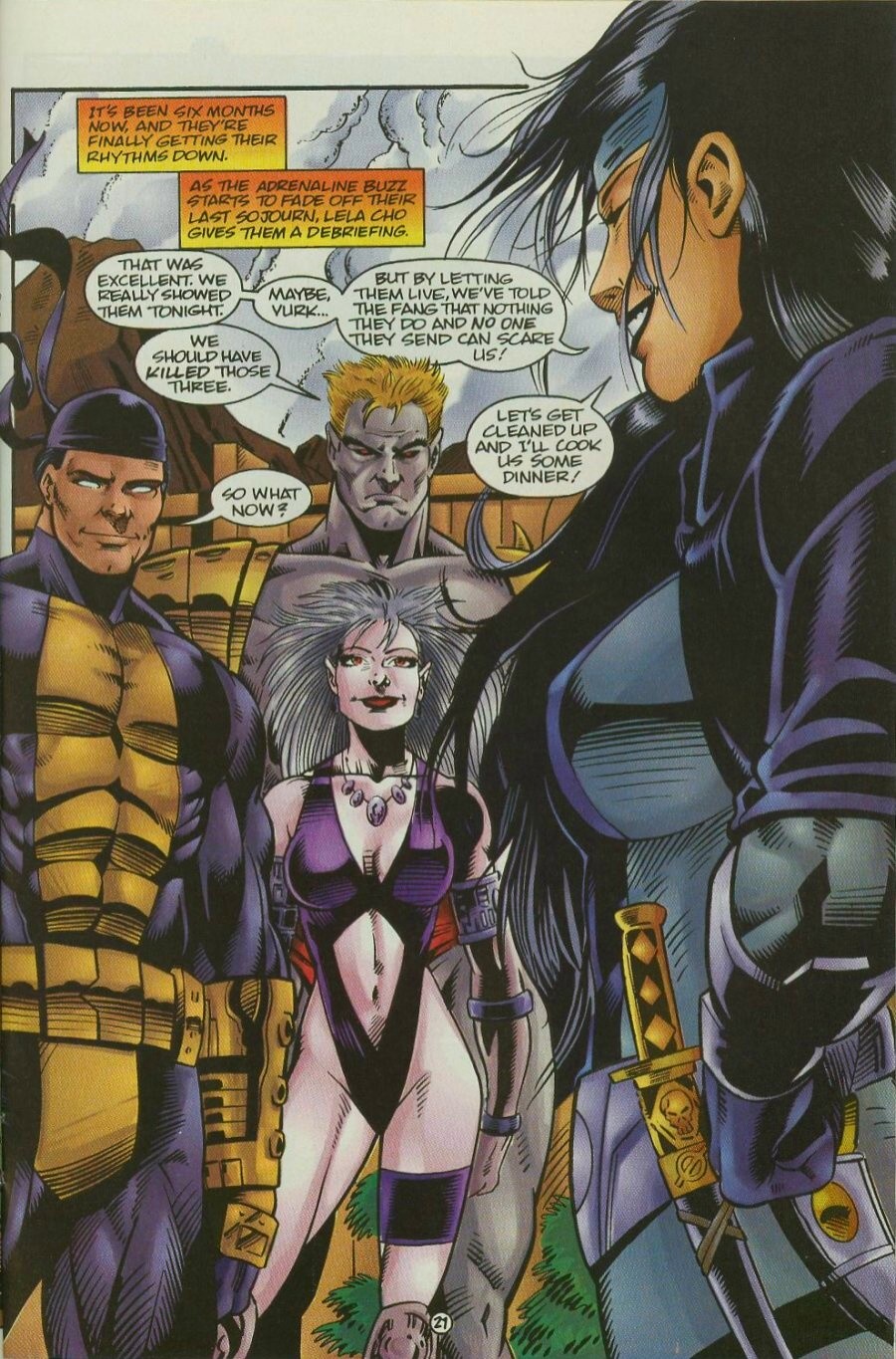
Even with the non-action, talking scenes, Robertson’s art makes the members of The Solution look believably human. Facial expressions are good and they quite match the dialogue written. The team shot on page 21, which shows Lela Cho in the foreground talking to her teammates in the background, really looks nice.

In terms of writing, I found this comic book to be a bit bloated in terms of details and plot. Most notably, the pace of the story moves very fast and while it does its job establishing The Solution (and part of its purpose as a team-for-hire), the circumstances and the team’s place within the Ultraverse, the story felt really crammed even though there were 28 pages of story and art. I noticed that while the comic book is about The Solution, it ended up showing a total of three different teams (including the hired assassins).

In terms of character development, there was clear focus on Lela Cho which is not a surprise since she is the team leader. It turns out Lela has lots of vested interests in the corporate world and instead of being in a fancy office, she goes out in the field to get things done. She has a very direct, personal access to information online by means of wetware embedded in her skull. She also has a touch of business in her approach with leading The Solution.

“Our potential client has a problem with some Ultras. They want us to take care of it,” Lela Cho said on page 23.

RCO010_1469696446~2.jpg
You got a problem? Call The Solution!

While it may not look as prominent as The Strangers or UltraForce as far as Ultraverse superhero teams go, The Solution stands out nicely for it is unique and its team-for-hire concept is very interesting. When I first read this comic book long ago, I was convinced to pursue the succeeding issues. Even by today’s standards, this old comic book remains fun and engaging.

The Solution #1 is recommended.


Thank you for reading. If you find this article engaging, please click the like button below and also please consider sharing this article to others. Also my fantasy book The World of Havenor is still available in paperback and e-book format. If you are looking for a copywriter to create content for your special project or business, check out my services and my portfolio. Feel free to contact me as well. Also please feel free to visit my Facebook page Author Carlo Carrasco and follow me at HavenorFantasy@twitter.com

A Look Back At Prime #1

As a comic book collector, 1993 was a notable year. That year Marvel organized the 30th anniversary celebration of the Avengers and the X-Men (which I’m a fan of). Image Comics meanwhile released a lot more comics showcasing the works of many creators apart from the publisher’s Seven Founding Fathers. Over at DC Comics, Superman was brought back to life but after they started the Reign of the Superman storyline. Oh yes, there was Valiant which scored hits with Turok #1 and even partnered with some Image Comics creators to produce the Deathmate crossover comic books.

At one corner was Malibu Comics which made a brave entry into the highly competitive superhero genre of comic book publishing in America by launching the Ultraverse, a line of superhero comic books which was the result of brainstorming by several comic book creators (many who previously worked with Marvel and DC Comics).

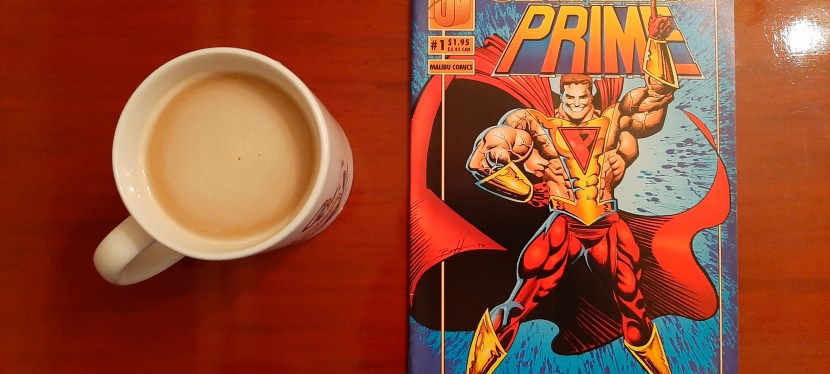
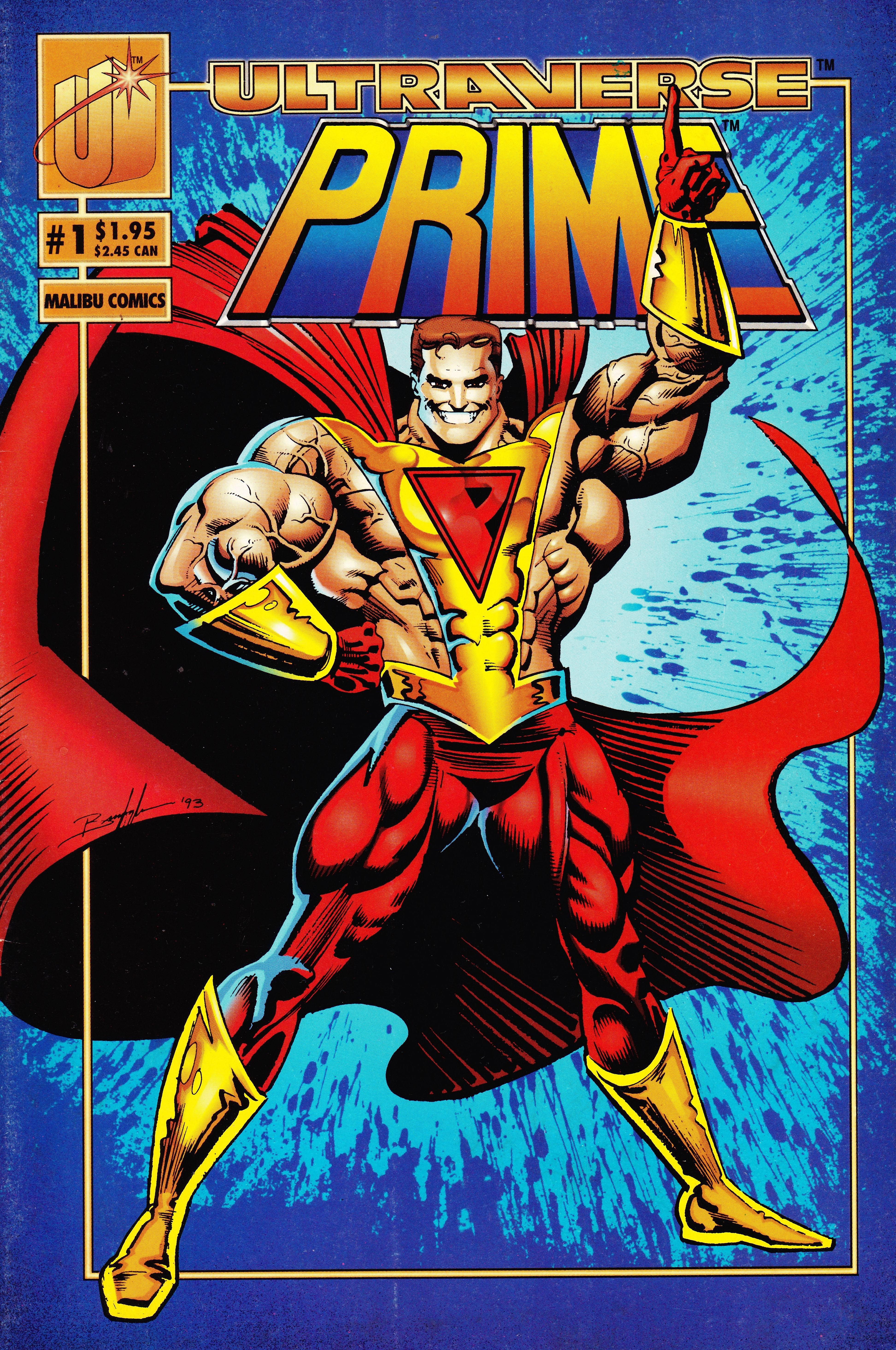
They launched a lot of comics (all those with #1 on their covers) which made it on the walls and shelves of local comic book stores I visited. Among the many Ultraverse launch comic books displayed was Prime #1 which had a great cover drawn by the late Norm Breyfogle.

CoverPrime
The cover with nice art.

Co-written by Len Strazewski and Gerard Jones with art by Breyfogle, the comic book introduces readers to Prime, an overly muscular, caped man who tries to do something good but is quite flawed with his approach.

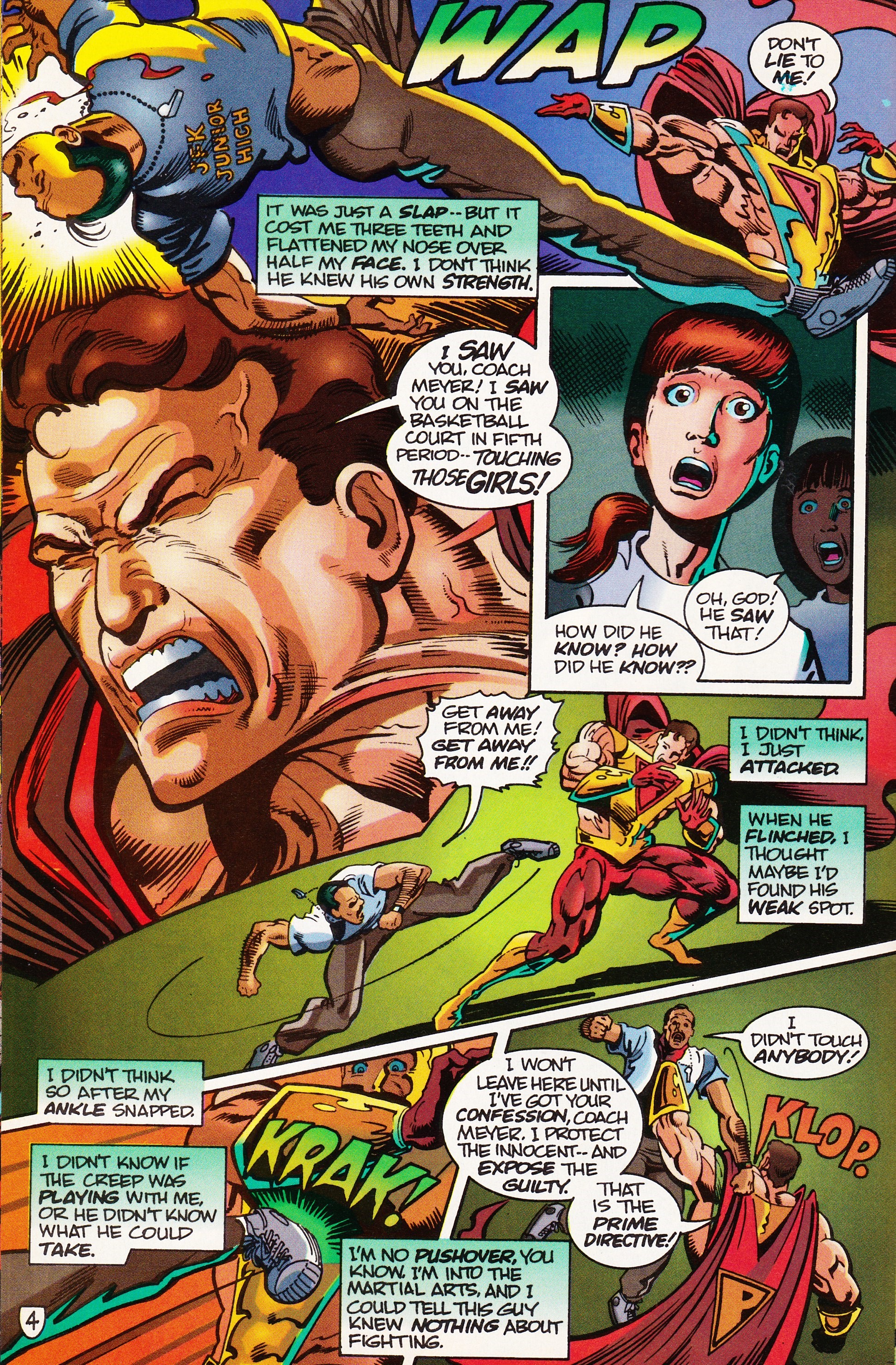
The story begins when Prime confronts a junior high school coach named Meyer accusing him of being a pervert. Meyer reacts surprised since he personally does not know Prime (“Who are you? What are you?”). He claims that he does not know what exactly the big guy knows. At the side were two high school girls witnessing the encounter.

And then Prime said his words, “I saw you, coach Meyer! I saw you on the basketball court in fifth period..touching those girls!”

Prime2

Prime3

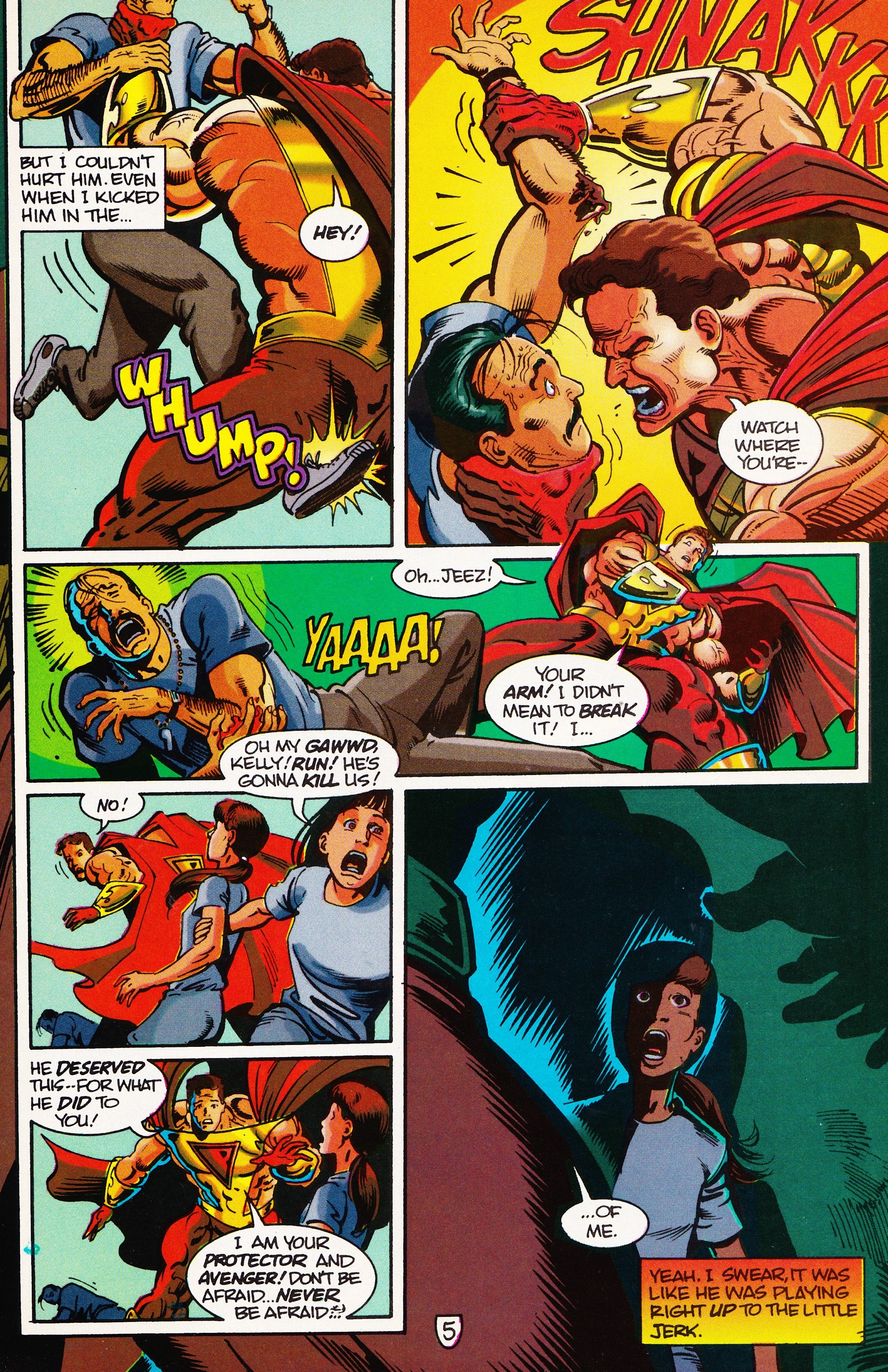
The coach fought back causing Prime to react. Because the hero was not aware of his strength, he miscalculated with his grip on Meyer breaking his arm unintentionally. Prime’s reaction clearly showed his realizing his mistake.

The incident scared the one of the girls away and carelessly Prime tries to explain himself to the other girl standing by. He even called himself as the girl’s “protector and avenger”, telling her not to be afraid of him.

As it turned out, the incident was a recently past event within the narrative of the comic book which is a nice touch. The coach, already injured, gave his testimony expecting cash from a shadowy organization collecting information not only about Prime but the Ultras (the in-universe term referring to beings with super powers).

That’s as far as I will go with telling the plot details. Prime #1 should be read from start to finish and the good news is that old copies of it can be found online at affordable rates and there are lots of copies in overall good condition.

Other notable elements of Prime #1 worth discussing, without spoiling the plot, is the way the story was structured by Strazewski and Jones. At least for 1993, it somewhat defies the tradition of following the views of the protagonist. Instead, Prime is emphasized through the views of others from the injured coach to the soldiers and the media. This approach does not necessarily make Prime a supporting player in his own comic book but rather it was an efficient way of showing how he thinks and acts, what he is capable of doing and how he reacts to others. By the time the comic book ends (with a very intriguing ending no less), you will get to know Prime a lot.

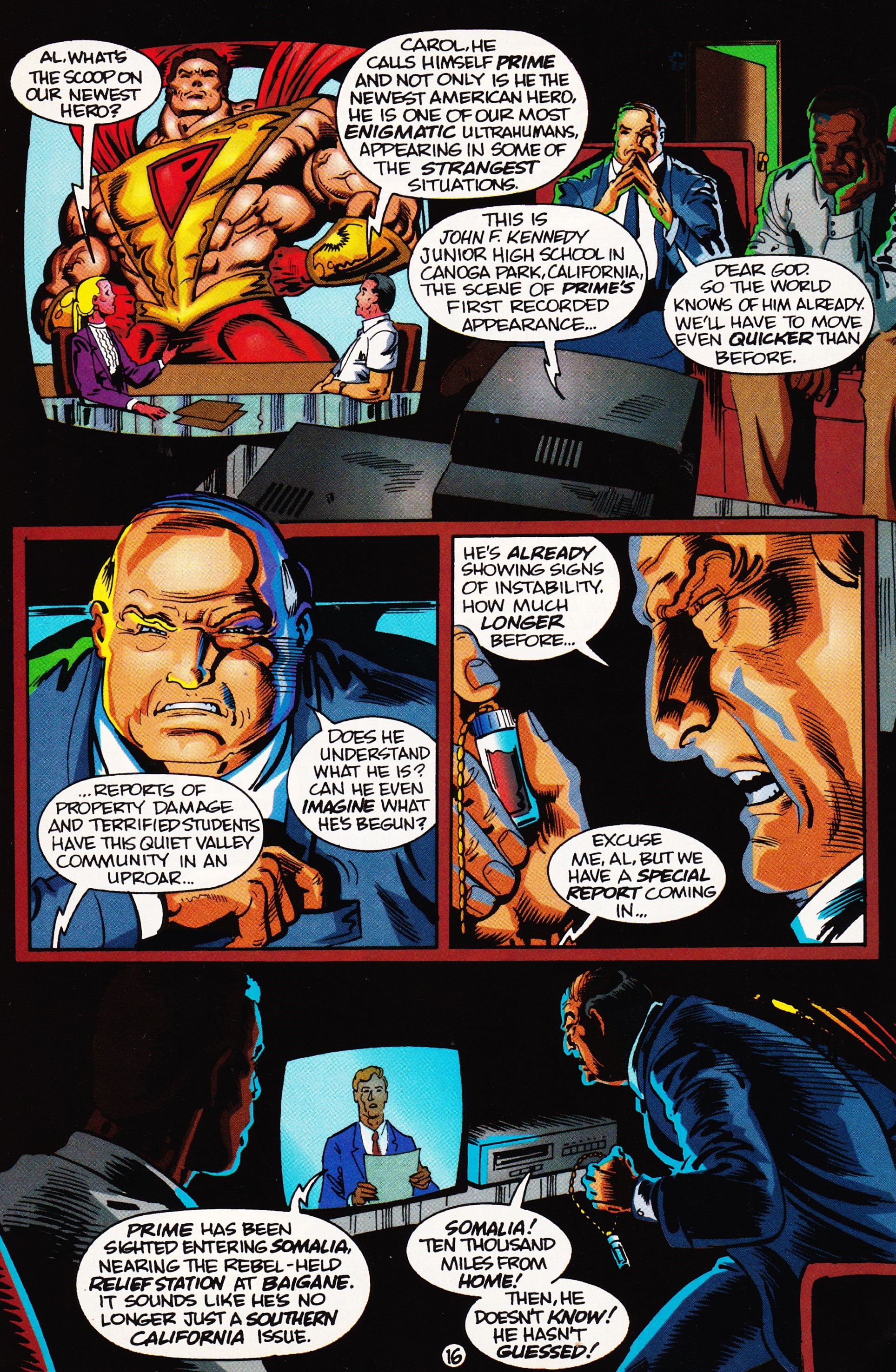
I also liked the way the writers used corporate media as a key element on exploring the connecting elements of the Ultraverse. Hardcase is shown briefly while a reference was made on Prototype. Check out the page posted below on how corporate media looks at Prime.

Prime4
Corporate media exposure and conspiracy efficiently told in one page.

When it comes to the art, the late Norm Breyfogle (1960-2018) delivered visuals that had that cartoony look and yet the visual expressions are quite mature, even dark and gritty. It is a very nice approach and it is no surprise, looking back, that Breyfogle went on to draw a lot more issues of Prime for Malibu Comics. Breyfogle died on September 24, 2018 due to heart failure in Michigan. Before making his mark on the Ultraverse, the late artist drew a lot of comic books for DC Comics and is known for his contributions on Batman.

More on hero himself, Prime is a flagship character of the Ultraverse and the combined talents of the writers and artist were major factors behind it. On face value, Prime looks like the Ultraverse answer to DC Comics Superman but in reality he has a lot more common with Shazam/Captain Marvel. I can explain why but that means spoiling the plot more here.

Overall, Prime #1 is still a very good old superhero comic book to read. It is fun and intriguing from start to finish. Considering its very good quality and being a nice showcase of the talents of the creators, Prime #1 is one of the best Ultraverse launch comic books. It is too bad, however, that there are no signs from Marvel Entertainment (note: Marvel Comics acquired Malibu Comics in the mid-1990s) whatsoever on the possible revival of the Ultraverse which remains in limbo under them.

Even so, I still say that Prime #1 is highly recommended.


Thank you for reading. If you find this article engaging, please click the like button below and also please consider sharing this article to others. Also my fantasy book The World of Havenor is still available in paperback and e-book format. If you are looking for a copywriter to create content for your special project or business, check out my services and my portfolio. Feel free to contact me as well. Also please feel free to visit my Facebook page Author Carlo Carrasco and follow me at HavenorFantasy@twitter.com

Also if you are interested to join an Ultraverse-related community online, I recommend the Facebook group here.